DID you know that a drastic change to your appearance could get you stopped at the border?
Even something as simple as a haircut could result in extra questions if you look unrecognisable.
Brits must look similar to their photo or could actually be stopped at the borderCredit: AlamyEven a drastic haircut like Erling Haaland’s could mean extra checksCredit: instagram/erling
The Norwegian sportsman has been called ‘unrecognisable’ after trading in his long blond locks for a buzzcut.
Sign up for the Travel newsletter
Thank you!
But a change so drastic could result in travel trouble.
Alicia Hempsted, Travel Insurance Expert at MoneySuperMarket said: “Haaland’s new haircut is a perfect example of how much a simple change in appearance can make you look totally different.
“While changing your hairstyle does not automatically mean that you need a new passport, looking substantially different from your passport photo could lead to additional checks when boarding a flight or arriving at border control.
“Changes such as growing or shaving off significant facial hair, a major change in hairstyle or colour, or substantial weight loss or gain can all alter the way you look.
“If your appearance has changed significantly since your passport photo was taken, it’s worth checking the latest government guidance well before your trip. This gives you time to replace your passport if necessary, rather than discovering a potential issue when you’re already travelling.”
In another case, one woman was almost stopped from boarding because she looked so different to her passport photo.
In her document, Alisha Maria, an LA beauty blogger had a full face of makeup and a fringe.
But didn’t look the same while travelling ditching her full glam look for no makeup and having her hair up.
Looking too different from a passport photo could result in extra border checksCredit: Home Office/PA Wire
In a TikTok video she said: “They almost didn’t let me on my flight because they said I don’t look like my passport.“
In her comments, others had added that they had similar experiences.
One wrote: “They almost didn’t let me back into the US from Australia because I didn’t look like my passport photo and my drivers license had expired.”
Another added: “I had the same issue! I missed my flight due to questioning.”
Long Lost Family is back with a new emotional episode on Thursday, where three brothers are reunited with a long-lost sister
Long Lost Family: Brother realises he’s already met his sister
A Long Lost Family guest makes an astonishing discovery on Thursday’s episode.
The emotional ITV series, hosted by Davina McCall and Nicky Campbell, sees the hosts strive to reunite family members who have never met, including twins separated at birth and young mothers who had to give up their babies.
In an exclusive clip obtained by the Mirror of Thursday’s episode, it sees guest Marie looking for her birth father. Marie is a train conductor working for Greater Anglia railways. She lives in Norfolk where she has lived her whole life.
Marie grew up with her grandparents after her 17-year-old mother couldn’t look after her. She had a good childhood in a busy household as her grandparents had six children still living at home when they took on Marie.
The guest had some contact with her mother growing up but she was largely absent from her life. When Marie was 16, she wanted to know more about her birth father and confronted her mother. Marie recalls: “I just blurted it all out: ‘Where’s my dad?’, I wanted to know about my father!”
Marie was surprised to learn her birth father’s name and the fact he had visited her in hospital when she was born. In another shock, Marie discovered that her birth father had chosen her name. She admits: “That really touched me. Must have cared for me to do that.”
Over her life, Marie has often wondered about her birth father, wondering where he is and did he have more children, meaning she could have long-lost siblings. Marie emotional admits: “Even on the train, even at work, I’m constantly looking at people all the time wondering are they related to me.”
Sadly, Long Lost Family’s intermediaries are unable to find any trace of James in the UK but after uncovering his birth certificate they discover that before meeting Marie’s mother, James had been married and had three sons – Anthony, Paul and Ian.
The team manage to locate the brothers living in the same county as Marie, Norfolk. While Anthony wishes to meet Marie, he does not want to appear on camera, so Nicky goes to meet with Paul and Ian, who admit they didn’t really know their father or know where he is after years of trying to find him.
In an exclusive clip of the moment, it sees Nicky tell Paul and Ian about Marie, explaining that she works as a train conductor for Greater Anglia railways and lives in Norfolk too.
This discovery leaves the siblings floored especially as one of the brothers remarks: “I get the train to go to work in the mornings”, confirming it’s Greater Anglia railways. He adds: “So she could well be on that train taking my ticket, amazing.”
The brother is then shown a photograph of Marie, who he instantly recognises, as he exclaims: “Wow. I recognise her on the train. Yeah. Now I see the face, yeah. That’s amazing.”
He adds: “A couple of weeks ago, I actually had a slightly longer conversation with her. Yeah, talking about how they’re changing the timetables. I’ve always wanted to have a sister” to which Nicky sweetly replies: “Well you’ve got one and you never knew it!”
To which the guest admits: “No, 60 years I didn’t know. I live so close as well, all under our doorstep.”
The other sibling then reveals he recognises Marie from the train too, saying: “I think I may have done, I may have walked past, that’s uncanny! Looking forward to seeing her.”
Viewers will have to wait and see how Marie takes the news, and of course, the heartwarming and emotional reunion.
Long Lost Family returns at 9pm to ITV and ITVX on Thursday 3rd September
A NEW theme park deal is letting you buy a 2027 annual pass which includes visiting for the rest of 2026 for free.
Merlin – who operates 20 top UK attractions including all the major theme parks – has launched a mega September deal on their annual passes.
You could get three months FREE access to 20 top attractionsCredit: AlamyBoth passes include access to events like Halloween and ChristmasCredit: Altontowers.com
Anyone buying a Gold or Platinum Merlin Annual Pass for 2027 can visit all of the attractions for free for the rest of the year.
This means three extra months free on top of the 12 months of 2027.
Sign up for the Travel newsletter
Thank you!
Merlin 2027 Annual Passes with FREE 2026 access
It also includes some of the top events including Fright Nights at Thorpe Park and Alton Towers‘ Scarefest, along with Christmas at Legoland.
The Gold Merlin Annual Pass includes 485 days of attraction access as well as additional extras worth £250.
Eating breakfast in a South Dakota coffee shop, Gloria Steinem was all too aware of the couple eyeballing her from the next booth. He was sporting chains. She wore leather pants and what Steinem later recalled as “an improbable hairdo.” The place was packed with tough-looking, mostly male bikers pumped about a huge rally they were attending. Steinem, returning from a Sioux powwow honoring ancient tribal women, knew she wasn’t in her element.
Finally, the leather-clad woman came over and spoke up. “I just want to tell you how much Ms. magazine has meant to me over the years — and my husband too,” she told an astonished Steinem.
There was a time, the woman said, when rolling down the road meant perching on her husband’s back seat. But now she had her own sweet ride: “I even put ‘Ms.’ on my license plate, and you should see my grandkids’ faces when Grandma rides up on her purple Harley!”
The image of that breezy, boisterous grandma stayed with Steinem for years. “I’ve come to believe that inside, each of us has a purple motorcycle,” she wrote in her 2015 memoir. “We have only to discover it — and ride.”
Steinem, the co-founder of Ms. Magazine and for six decades a charismatic leader who urged women to pursue self-affirmation, political power and equality both in the workplace and at home, died Wednesday at her home in New York City, according to her foundation’s social media pages. She was 92.
“Gloria lived true to her independent spirit, always with curiosity and a great sense of humor,” the posts said.
An activist, journalist, and relentless traveler who said she went for 20 years without spending more than eight consecutive days in her New York apartment, Steinem described herself as “an entrepreneur of social change.”
“I raise money. I talk. I write. I tell stories. I want to do justice to the women I meet,” she told The New Yorker in 2015.
Steinem, who struggled with stage fright most of her life, talked with women at gigantic conferences and in intimate kaffeeklatsches. At book signings and on barstools, she sought their stories, sometimes re-telling them in her essays and on her countless speaking tours. Her portfolio of issues was vast, from sexual violence, female genital mutilation and racism to the more mundane injustices that helped fuel a movement for sweeping social change.
At one campus visit, the discussion turned to men who expect women to pick up after them. A young Japanese woman, silent for most of the increasingly raucous session, stood up, turned around to address 500 other audience members and said: “When my husband leaves his underwear on the floor, I find it quite useful to nail it to the floor.”
She had never before said a word in public, she told the cheering crowd.
Steinem had a “gift for empathy,” New York Times columnist Gail Collins wrote when the feminist icon turned 80 in 2014.
“Women who read about her or saw her on TV felt that if they ran into her on the street, they would really get along with her. And women who actually did run into her on the street felt the same way. More than a half-century into her life as an international celebrity, she remains stupendously approachable, patient with questions, interested in revelations.”
Gloria Steinem, left, and Pat Carbine, two of Ms. magazine’s founding editors, in 1980.
(Dave Pickoff / Associated Press )
Famously attractive, Steinem over the years gave hope to young women who wanted to “stand up for their rights without being called man-haters,” Collins wrote. “She was evidence that it was possible to be true to your sisters while also being really, really attractive to the opposite sex.”
At the same time, she alienated the religious right with her fervent pro-choice advocacy. When Lands’ End featured an interview with Steinem in its 2016 catalog, outraged readers threatened a boycott. Company officials then cut their ties with the woman they had headlined as a “legend.”
Steinem first drew public notice when she was in her 20s and struggling to establish herself as a freelance writer. Her breakthrough story was a funny, scathing account of her two weeks as a Playboy “bunny” — a scantily clad cocktail waitress at Hugh Hefner’s Manhattan nightclub.
In some ways, the story backfired. Steinem became known not as a crusader for women but as a former bunny. For several years, her magazine assignments continued to veer toward “women’s page” topics — in 1964, she wrote about textured stockings for the New York Times — and even after she delved into serious political issues for New York magazine, she wasn’t taken as seriously as she would have liked.
In 1968, a Washington Post columnist described her as “the mini-skirted pinup girl of the intelligentsia.” Two years later, a headline in the Los Angeles Times read, “Gloria: Beautiful Brain in Ditto Body.”
Meanwhile, the women’s liberation movement had propelled itself into the mainstream, ignited by writers like Betty Friedan. For Steinem, though, it became a passion only after she covered a meeting during which women opened up about their illegal abortions. The event was held to protest a legislative hearing on abortion where the only witnesses were 14 men and a nun.
“Suddenly I was no longer learning intellectually what was wrong. I knew,” Steinem recalled in 1983. “I had had an abortion when I was newly out of college, and I told no one. If one in three or four adult women shares this experience, why should we be made to feel criminal and alone?”
Nearly 60 years after her unwanted pregnancy, Steinem dedicated her memoir to the British physician who arranged her abortion after she agreed to two conditions.
The first was that she never reveal his name. (She did, long after his death.)
The second: “You will do what you want to do with your life.”
Born on March 25, 1934, in Toledo, Ohio, Steinem didn’t attend school regularly until seventh grade. Most winters, her father Leo, an ebullient, 300-pound dreamer who was often in debt, would drive the family down back roads in a trailer, stopping here and there to sell antiques he’d picked up along the way.
Ruth Steinem, Gloria’s mother, was a former journalist who was hospitalized for long periods with severe mental health problems. From the age of 11, after her parents divorced and her older sister Susanne left home, Gloria often cared for her mom.
In an essay, “Ruth’s Song (Because She Could Not Sing It),” Steinem recalled her mother cutting her arm when she smashed a window to escape the Nazi invaders that only she could see. “I remember a long Thanksgiving weekend holding on to her with one hand and holding my eighth-grade assignment of ‘Tale of Two Cities’ with the other,” Steinem wrote.
Despite her patchy schooling, Steinem received a scholarship to Smith College, where she graduated Phi Beta Kappa after majoring in government. After spending two years in India on a fellowship, she worked briefly for an international youth organization funded by the CIA.
Basing herself in New York in 1960, she quickly became known for her stylish prose, sharp wit, and striking appearance. Within a decade she was “Gloria-Steinem-the-antiwar-gorgeous- bachelor girl who was pictured with Henry Kissinger in Time and Life…,” according to a breathless 1970 account in the Los Angeles Times.
But she was also the Gloria Steinem who helped start New York magazine, who wrote insightfully about the intersection between racism and sexism, and who in 1971 became the first woman chosen to address an annual banquet of the Harvard Law Review.
She zeroed in on the school’s failings.
“There is a course on international whaling law but none on women’s rights internationally,” she told the black-tie gathering. “An eminent professor of administrative law said as late as last night that he didn’t know what the Equal Employment Opportunity Commission was. The same man replied to a request that at least one full-time female professor be hired by answering that women faculty brought problems because of ‘sexual vibrations’…”
The following year, Steinem, with several other feminist journalists, founded Ms. Its first, tentative edition, a 40-page insert into New York magazine, sold out in eight days.
The debut issue of Ms. included pieces on gender stereotypes, lesbian relationships, and job discrimination. It also featured an open letter from 53 prominent women — including tennis great Billie Jean King, singer Judy Collins and Steinem — who revealed that they had undergone abortions.
While the magazine’s monthly circulation eventually topped 500,000, it also fueled skeptics. “I’ll give it six months before they run out of things to say,” newscaster Harry Reasoner predicted on national TV.
Ms. also took flak from some of Steinem’s sister feminists, who contended that it cast women as victims. As new waves of feminists confronted different issues, some became exasperated by Steinem’s seemingly perennial role as the face of the women’s movement.
“Guys in the media chose Gloria as our leader,” said feminist writer Susan Brownmiller in 2016. “A lot of us, our hope is that eventually, history will straighten this all out and say, no, Gloria came in a little later, and her very loyal supporters have backtracked that history.”
Steinem remained a contributing editor to Ms. for 15 years.
Gloria Steinem at home in New York City, 2010.
(Annie Leibovitz / Penguin Random House)
Meanwhile, she was crisscrossing the country, campaigning for liberal Democratic candidates, fighting laws restricting abortion, and urging legislators to adopt the Equal Rights Amendment.
“Like Sky Masterson, the wandering gambler in Damon Runyon stories, I’ve been in more hotel rooms than the Gideon Bible,” she wrote, “and he didn’t wash his hair with hotel soap, eat from vending machines, or sit up late organizing with the hotel maids.”
In 2013, President Barack Obama gave Steinem the Presidential Medal of Freedom, the nation’s highest civilian honor.
Her books include a 1983 essay collection, “Outrageous Acts and Everyday Rebellions”; a 1986 portrait of Marilyn Monroe; her 2015 memoir, “My Life on The Road”; and works on aging and self-esteem.
Over the years, Steinem had longstanding romantic relationships with a number of men but vowed never to marry or have children.
However, at 66, she broke her vow and married David Bale, a British businessman and animal rights advocate. By then, the institution of marriage had changed for the better, she later explained.
“We spent 30 years in the United States changing the marriage laws,” she said. “If I had married when I was supposed to get married, I would have lost my name, my legal residence, my credit rating, many of my civil rights.”
Three years after their marriage, Bale died of brain cancer. Steinem’s stepchildren include the actor Christian Bale.
At 80, Steinem celebrated her birthday by riding an elephant in Botswana.
In the following years, she campaigned for Hillary Clinton, spoke at the Women’s March on Washington, helped save her hometown’s last abortion clinic and gave numerous interviews denouncing President Trump’s views on women. She was the subject of an off-Broadway play and was honored by Rutgers University with the Gloria Steinem Endowed Chair in Media, Culture, and Feminist Studies.
For fun, she danced. When asked by TV hosts, she occasionally demonstrated a well-worn soft shoe routine, though her heart was with the tango.
“It’s a sick, authoritarian dance,” she told a reporter, “but I loved it.”
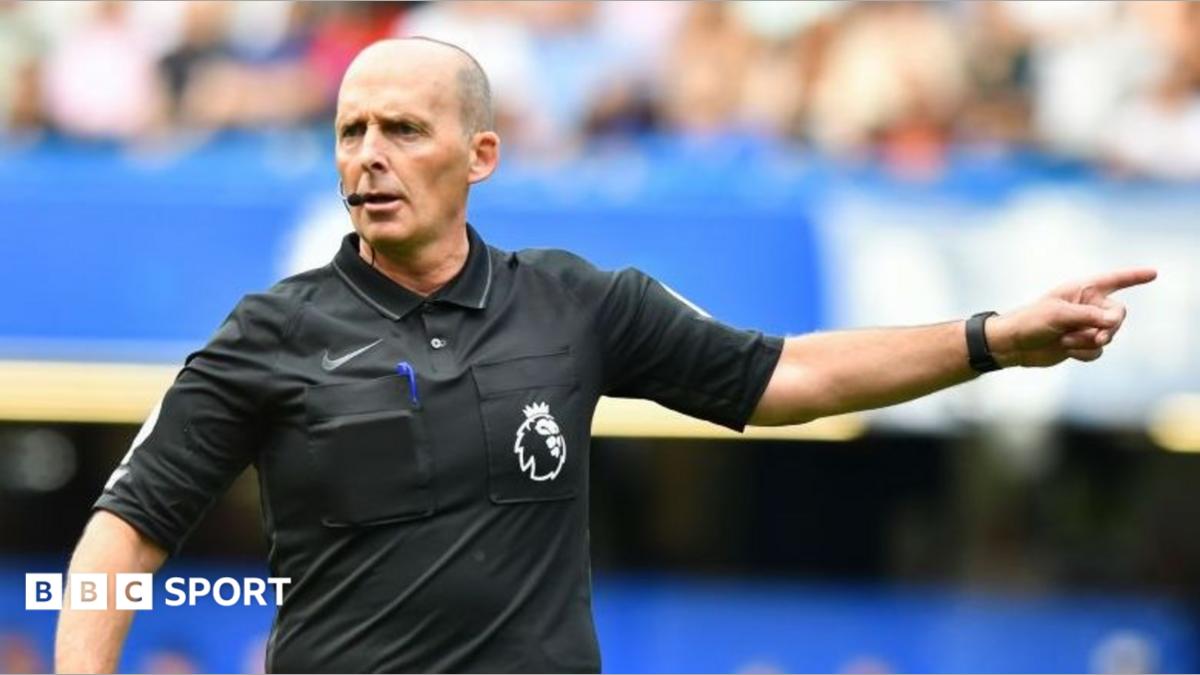
Former Premier League referee Mike Dean says he used set himself mini-challenges during matches “as a laugh”.
Appearing on Jamie Vardy’s podcast, Dean said he would see how long he could go without blowing his whistle, or stay inside the centre circle.
“We used to say ‘we’ll kick off now. Right, see how long we can go without blowing a whistle’,” Dean said.
“I’ve done that a few times in the Premier League, before VAR obviously – went 20, 25 minutes without blowing a whistle.
“I used to do another thing. I used to stand in the centre circle – see how long I could stay in the centre circle before I had to leave.
“That was just me joking about. I got about 15 minutes once.”
BBC Sport understands that referee figures consider Dean’s claims to be unfounded, which would be historical and go back to the pre-video assistant referee era before 2019 when Pro Ref was under different leadership.
It is not the first time Dean has courted controversy for his media statements.
The Spurs defender should have been penalised for pulling Marc Cucurella’s hair.
After retiring, Dean said in an interview that he did not intervene because he wanted to save referee Anthony Taylor from extra “grief”.
“I didn’t want to send him up because he is a mate as well as a referee,” Dean said.
Dean enjoyed a 28-year career as a professional official, stepping down from on-field officiating in 2022 and retiring after spending the 2022-23 season as a full-time VAR.
The 58-year-old began officiating in 1985 and progressed from refereeing in the Football League 10 years later, and then to Premier League in 2000.
Dean refereed the 2008 FA Cup final and 2011 League Cup final at Wembley.
Experts have given their take on where the Pound is
The Pound is slipping(Image: Cristian Blázquez Martínez via Getty Images)
Experts have urged Brits to buy holiday cash now as the Pound is expected to weaken over this week’s market chaos with a warning that “it’ll hit wallets immediately”. Bond yields have risen sharply, increasing the cost of government borrowing and renewing concerns about whether Britain’s growing public-debt burden is sustainable.
Although higher yields can sometimes support a currency by offering investors better returns, Sterling has weakened as markets focus instead on inflation, rising debt costs and the Government’s limited financial room ahead of the Budget. The Bank of England is expected to hold interest rates at 3.75% this month, leaving it caught between supporting economic growth and preventing higher energy and import costs from fuelling another wave of inflation.
For households, a weaker Pound could mean more expensive holidays, fuel, food and other imported goods. Rising gilt yields can also push up swap rates, placing further pressure on fixed mortgage pricing just as many borrowers prepare to refinance.
Dave Huggett, founder of Lucid Foreign Exchange, said there was no need to be patient when buying your holiday cash.
He added: “Higher gilt yields and worries about debt sustainability tend to weigh on the Pound. Not always straight away and not always by much, but it’s one more thing dragging on sentiment. When investors get nervous about a country’s finances, they usually want more reward to hold that currency, or they just move their money elsewhere.
“So what do you do? Buy it all now, or hold in the hope of a recovery. The answer to that always lies in the need, not the want. If you’re buying currency to go on holiday, you basically get what you’re given. ‘Getting it right’ on a few thousand Pounds still doesn’t really move the dial. But if the numbers are bigger, and the situation can afford a bit more patience, then zooming out and looking at the situation objectively often pays.”
Iain Thompson, director of Evolve Finance, said everything was affected by a weaker Pound.
He added: “A sliding Pound is a quiet inflation tax on everyday households. When the Bank of England holds interest rates down while government borrowing costs climb, currency markets lose confidence, causing Sterling to steadily weaken against the Dollar and Euro. For the average person, this isn’t just an abstract financial chart – it’ll hit wallets immediately.
“A weaker Pound means everything the UK imports, from petrol to supermarket groceries, becomes instantly more expensive, keeping domestic inflation sticky. Holidaymakers will feel the sting the fastest at the exchange bureau. If you have a trip planned over the coming months, waiting and hoping for a sudden Sterling recovery is a high-risk gamble.
“While predicting currency is never guaranteed, the downward pressure is real. If your holiday budget is tight, locking in half of your travel cash now protects you from worst-case rate drops, ensuring a sudden currency dip won’t derail your family holiday budget before you even pack your bags.”
He added: “Rising UK gilt yields are a double-edged sword for the Pound. At first, they boost Sterling’s appeal, a fatter carry-trade return over rival currencies. But soon markets ask why yields are climbing: borrowing costs rising as investors fret over debt sustainability, with the UK’s debt pile racing toward £3 trillion.
“That leaves the Bank of England boxed in; raise rates to choke off the inflationary wave from Brent crude above $95 or hold rates down to protect growth. My money’s on Sterling grinding lower, toward $1.30 and €1.13 ahead of the 28 October Budget, as fiscal deficits erode investor confidence.
“For consumers, a weaker Pound means pricier holidays abroad and imported inflation with higher supermarket bills, fuel costs, and goods prices. Elevated yields also lift swap rates, pushing fixed mortgage pricing higher. Anyone with confirmed overseas costs should buy currency in tranches now, hedging against further falls without gambling on timing.”
Prem Raja, head of trading floor at Currencies 4 You, said people could save as much as €230.
He added: “The rise in gilt yields is not automatically good news for Sterling. UK 10-year borrowing costs reached 5.29%, their highest since 2007, but the Pound still fell below $1.35. Investors appear more concerned about inflation, debt costs and the Government’s limited room ahead of the October Budget than attracted by higher yields.
“The Bank of England is expected to hold rates at 3.75% this month. If markets scale back expectations of a later rise, Sterling could lose another 1-2% over the coming months. GBP/EUR is around €1.16-€1.17, but €1.15 is realistic if fiscal concerns grow. GBP/USD could retest $1.33-$1.34, although US developments matter too.
“Travellers would notice that: a 2% fall means roughly €230 less when exchanging £10,000. I would not tell everyone to buy everything now, but anyone with a confirmed Euro or Dollar requirement should consider securing part of it and staggering the balance. That limits the risk of further weakness without committing everything at one rate.”
Anita Wright, chartered financial planner at Ribble Wealth Management, said a weaker Pound arrived in people’s shopping baskets within weeks, not months.
She added: “Everyone will watch the Pound against the Dollar and Euro. That’s the wrong yardstick. Those currencies are run by governments with the same problem so the Pound can look stable at the bureau de change while quietly losing purchasing power where it matters the supermarket, the petrol station, the energy bill.
“The real test of a currency is what it buys at home, and on that measure Sterling has been slipping for some time. What’s actually going on is this. The BoE holds bank rate down while the gilt market demands 5% and more. That gap gets filled by the Bank buying gilts, which is printing money by another name.
“More Pounds chasing the same goods. Diesel is already tightening and Britain imports most of its energy and much of its food, so a weaker Pound arrives in your shopping basket within weeks, not months. On holiday money swapping Pounds for Euros just moves you from one leaking boat to another.”
He added: “Sterling is not staring at an instant cliff edge, but the warning lights are flashing. With 10-year gilt yields around levels last seen in 2008 and the Pound slipping below $1.35, markets are telling Britain the free lunch is over. Higher borrowing costs squeeze the Treasury, unsettle mortgage markets and make imported goods, fuel and holidays more expensive if the Pound weakens further.
“For families, this is felt at the airport exchange desk, in supermarket prices and in the next remortgage quote. I would not tell people to gamble on currencies, but anyone with a known Euro or Dollar cost in the next few months may prefer certainty over trying to outguess a very twitchy market. Waiting for a stronger Pound is starting to look like a heroic assumption.”
Nouran Moustafa, practice principal and IFA at Roxton Wealth, said the weak Pound could be seen in airports.
She added: “The Pound is being squeezed from both sides. UK borrowing costs are rising, but markets still expect the Bank of England to hold Bank Rate at 3.75% this month. Sterling has already slipped to around $1.35 and €1.16. For households, this becomes painfully real at the airport.
“A weaker Pound means your hotel, meals and spending money abroad quietly become more expensive without the price tag changing. But I would not tell somebody to panic-buy thousands of Euros today based on a currency forecast. Nobody can reliably call Sterling over the next few weeks.
“If you know you need €2,000 or $3,000 for a trip, buying it in stages is far more sensible than gambling your entire holiday budget on one exchange-rate prediction. The bigger warning is this: when markets lose confidence in government finances, ordinary people eventually feel it. The bond market may look boring. Its consequences absolutely are not.”
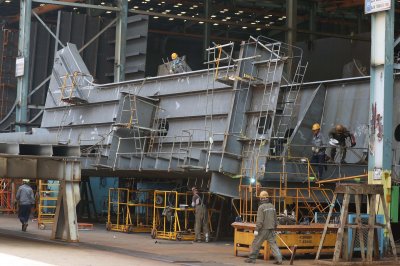
Workers weld at Okpo Shipyard of Daewoo Shipbuilding & Marine Engineering Co. in Geoje, South Korea, in 2022. File Photo by Yonhap/EPA
Sept. 3 (UPI) — South Korean shipbuilders are pouring investment, technology and expertise into a U.S. maritime industry struggling with shrinking capacity, worker shortages and competition from China, offering Washington a potential path to rebuild American shipyards without sending ship construction overseas.
The growing partnership also raises a difficult question: How much foreign participation is the United States prepared to accept in an industry considered essential to national security?
The issue has gained urgency following a White House directive aimed at increasing competition and capacity in the U.S. maritime industrial base. The administration’s plan allows greater use of foreign shipbuilding expertise under certain conditions, including investment in American shipyards, training U.S. workers, transferring production technologies and developing domestic supply chains.
Limited shipyard capacity and a shortage of skilled workers remain major obstacles to expanding the U.S. Navy fleet, according to Shelby S. Oakley, director of Contracting and National Security Acquisitions at the U.S. Government Accountability Office.
“The capacity of the existing yards and the size and skill level of the current workforce are certainly a limiting factor when it comes to the U.S. Navy’s ability to increase the size of the fleet,” Oakley told UPI.
Oakley said meeting Navy shipbuilding goals will require expanding existing yards or adding new ones, increasing the skilled workforce and making greater use of technology and automation. Without those changes, she said, the Navy will struggle to meet its fleet targets.
South Korea could provide part of that capacity.
Under a broader $350 billion U.S.-South Korea investment framework, Seoul has committed $150 billion specifically to shipbuilding cooperation, with another $200 billion intended for strategic investments in other sectors.
South Korea moved toward implementing the maritime portion in June when the Korea-U.S. Strategic Investment Corporation, Korean policy finance institutions and shipbuilders HD Hyundai Heavy Industries, Hanwha Ocean and Samsung Heavy Industries agreed to identify projects and coordinate financing.
The arrangement combines something Washington needs: capital and industrial expertise.
For decades, U.S. commercial shipbuilding has lost ground to Asian competitors. China now dominates global commercial ship construction, while South Korea and Japan retain substantial production capacity. The United States accounts for only a fraction of global commercial output.
President Donald Trump recently elevated shipbuilding capacity to a national security priority, directing his administration to look abroad for models that could help rebuild the U.S. maritime industrial base.
“I have determined that it is in the national security interest of the United States to increase domestic shipbuilding capacity,” Trump said in the memorandum, pointing to the October 2025 U.S. Finland Agreement on icebreaker construction as a model for cooperation with foreign companies.
China adds urgency to that effort.
China’s enormous civilian shipbuilding industry supports an expanding naval industrial base, allowing shipyards, suppliers and skilled workers to serve both commercial and military production. That industrial scale has made shipbuilding an increasingly important element of U.S.-China strategic competition.
The United States faces a different reality. The Government Accountability Office reported this year that Navy and Coast Guard shipbuilding programs have repeatedly exceeded budgets and fallen years behind schedule, while yards face skilled-worker shortages, capacity constraints and fragile supplier networks.
South Korea offers an alternative source of expertise. Its yards have decades of experience with modular construction, automation, digital design and high-volume production. Korean companies also build sophisticated naval vessels, including Aegis-equipped destroyers and submarines.
Hanwha Ocean and Hanwha Systems acquired Philly Shipyard for $100 million in 2024, giving the conglomerate a direct U.S. manufacturing foothold. Hanwha subsequently announced plans for billions of dollars in additional investment to expand the yard and introduce Korean shipbuilding technology.
Hanwha employs nearly 30,000 workers at Hanwha Ocean’s Geoje Shipyard in South Korea, where advanced manufacturing and automation help produce more than 40 ships a year.
“In the coming years, we will continue to bring trainers to develop our workforce at the Hanwha Philadelphia Shipyard as well as transfer technology to expand commercial and naval shipbuilding capacity,” Hanwha Defense USA spokesman James Hewitt told UPI.
Hanwha Ocean also completed a major overhaul of the Military Sealift Command dry cargo ship USNS Wally Schirra at Geoje in March 2025. The seven-month project was the first large-scale regular overhaul of a Military Sealift Command vessel awarded to a South Korean yard.
HD Hyundai Heavy Industries is pursuing a different route.
Rather than acquiring a U.S. yard, HD Hyundai has developed partnerships with American shipbuilders. The company and Huntington Ingalls Industries are cooperating on shipbuilding technology and production, including an August pilot program to expand automated welding at HII’s Ingalls Shipbuilding yard in Mississippi.
“The United States is a strong ally and a key business partner for us,” said Hannae Choi, Executive Vice President at HD Hyundai Shipbuilding and Offshore Engineering.
Such arrangements offer Washington a possible compromise: Korean companies can bring capital, technology, automation and production methods into American yards while training U.S. workers and developing domestic supply chains.
That distinction — foreign investment in U.S. shipbuilding rather than shifting construction overseas — has emerged as a key dividing line for the domestic industry.
The Shipbuilders Council of America supports foreign investment when it expands U.S. shipyard capacity but opposes sending construction abroad, said Danielle Hagen, the council’s executive vice president for communications.
“If South Korean capital and automation expertise flow into American facilities, employ American workers and produce American-built hulls, that model is consistent with our longstanding position,” Hagen told UPI.
“The SCA’s concern has never been the nationality of capital, but whether the work, the workforce and the industrial capability remain here in the U.S.,” she said.
Federal law has long restricted construction of U.S. naval vessels in foreign shipyards, while the Jones Act requires vessels operating in U.S. coastwise trade to be U.S.-built, U.S.-owned and U.S.-crewed.
“Any foreign partner needs to operate their U.S. yard as a genuinely American enterprise, with real decision-making authority here,” the council said, adding that foreign acquisitions should face national security scrutiny and continued congressional oversight.
Despite the backlog at U.S. yards, bipartisan opposition remains strong in Congress to building Navy vessels overseas. Rep. Jared Golden, D-Maine, a member of the House Armed Services Committee, has been among lawmakers seeking to preserve domestic construction requirements and prevent naval shipbuilding from migrating to foreign yards, including South Korea and Japan.
Those concerns extend beyond jobs. Modern warships contain classified systems, sensitive designs and specialized supply chains. Greater participation by even close allies raises questions about intellectual property, cybersecurity and control over technologies considered essential to U.S. military power.
Few U.S. allies, however, can match South Korea’s shipbuilding scale, speed and technical expertise. The emerging model seeks to use those capabilities to increase production in the United States rather than substitute foreign yards for American ones.
Whether that approach succeeds will depend not only on transferring Korean technology and manufacturing expertise into U.S. yards, but also on Washington’s ability to integrate those investments into a broader shipbuilding strategy.
Managing competing demands for Navy ship construction and repair requires such an approach, Oakley told UPI. A 2025 GAO report found that the Navy lacked a comprehensive strategy for managing the private shipbuilding and repair industry on which it depends, complicating efforts to coordinate investment, yard capacity and workforce needs.
The challenge is magnified by China. Its dominance of commercial shipbuilding has created a vast network of yards, suppliers and skilled workers that the United States cannot quickly replicate. South Korea cannot close that gap alone, but its capital, technology and expertise could help expand U.S. capacity as American yards modernize, train workers and rebuild supply chains.
For Washington, the central policy question is whether greater South Korean participation can strengthen U.S. shipbuilding capacity without creating a new dependence on foreign production.
The Iran conflict and disruption to the Strait of Hormuz are forcing major oil importing countries to rethink how they source crude. Countries that once relied heavily on nearby Middle Eastern suppliers are increasingly turning to producers in the Americas and Africa, accepting longer voyages and higher shipping costs in exchange for greater energy security.
Japan Diversifies Its Oil Supplies
Japan is among the clearest examples of this shift. Before the conflict, more than 90% of its crude came from the Middle East, benefiting from short and relatively inexpensive shipping routes.
Since Gulf exports were disrupted, Japanese imports from the United States have surged. Between March and June, Japan imported more than 4.5 million metric tons of US crude, compared with less than 1 million tons during the same period in 2025.
The alternative comes with a cost. US crude takes roughly nine days longer to reach Japan, increasing freight expenses and requiring refiners to adjust their delivery schedules.
Stay ahead of the geopolitical week.
MD Briefing delivers expert analysis across five global fronts — the Indo-Pacific, energy, geoeconomics, European security, and the Middle East — every Monday morning. Free.
Asia Looks Beyond the Middle East
Japan is not alone. South Korea and India are also increasing purchases from suppliers in the Americas and Africa as Middle Eastern shipments decline.
China, the world’s largest crude importer, has relied heavily on strategic reserves to cushion the impact of the conflict. As those reserves are drawn down, Chinese buyers could return to international markets and intensify competition for crude from alternative producers.
The Americas Emerge as Major Suppliers
The disruption has created a major opportunity for oil exporters outside the Middle East.
US crude exports reached a record 61.6 million metric tons in the second quarter of 2026, up 43% from a year earlier. Brazil, Argentina and Guyana have also recorded strong export growth.
Brazilian shipments to India, for example, were three times higher in the first half of 2026 than during the same period in 2025.
Longer Routes, Higher Costs
The new trade patterns are considerably less efficient.
A tanker travelling from major Gulf terminals to India’s western coast can take only three to five days. A shipment from Brazil to the same destination can take around 25 days.
Longer journeys mean higher tanker demand, greater freight costs and more complicated logistics. Yet importers are increasingly willing to absorb those costs because dependence on a single vulnerable supply corridor carries its own risks.
Avoiding Strategic Chokepoints
The shift is also about reducing exposure to vulnerable maritime routes.
The Strait of Hormuz remains a major risk, while geopolitical tensions have reduced traffic through the Suez Canal. Drought has also constrained the Panama Canal.
As a result, importers are increasingly valuing suppliers whose shipping routes can bypass these chokepoints.
A New Global Energy Map
The emerging pattern is creating a more geographically dispersed oil market.
Middle Eastern producers will remain crucial because of their enormous reserves, low production costs and established infrastructure. But Asian buyers are unlikely to forget the disruption caused by the Hormuz crisis.
Regular purchases from new suppliers can therefore become a form of insurance, even after Gulf exports recover.
Analysis
The most important change is that energy security is beginning to outweigh pure economic efficiency.
For decades, Asian refiners benefited from buying Middle Eastern crude because geography made it cheaper and faster. The Iran conflict has exposed the vulnerability of that model. A short shipping route is of limited value if a single geopolitical crisis can disrupt it.
The result could be a lasting diversification of global oil trade. Importers are unlikely to completely abandon Middle Eastern crude, but they may maintain larger relationships with US, Latin American and African suppliers to create alternative sources of supply.
This means the cost of energy security will increasingly be reflected in the global oil market. Longer voyages, higher freight rates and more complex supply chains may become the price importers are willing to pay for resilience.
The broader shift is therefore from an oil market designed primarily around efficiency to one increasingly designed around redundancy and geopolitical risk.
Expect a rich fall season of ambitious, revelatory shows across Los Angeles museums this fall, including blown glass, taxidermy and landmark retrospectives of work by Doyle Lane, Laura Andreson, Roy DeCarava and Mavis Pusey.
For years, Hollywood has talked about a federal film and television tax credit that could help the industry combat the growing number of productions fleeing overseas.
This week, the entertainment business got a glimmer of hope.
After more than a year of quiet work from California lawmakers, industry lobbyists and Hollywood unions to build a bipartisan coalition, President Trump endorsed the effort in a post on Truth Social, providing a major boost to the issue.
If passed, a federal incentive is expected to help draw some productions back to the Golden State, industry experts and advocates said. While it probably won’t immediately end Southern California’s production crisis — as many states now have established film hubs stocked with experienced crews and more generous tax breaks — an added federal credit could certainly help make California more competitive, they said.
“I will put our crews and our talent against any talent anywhere in the world,” said Rep. Laura Friedman (D-Glendale), a former producer who has been pushing for a national film tax credit. “If we have a level playing field upon which to shoot, where we are not much more expensive than other locations, productions will come back to Los Angeles.”
Trump’s Truth Social post came after a meeting with actor Jon Voight, one of the president’s designated Hollywood ambassadors who has played a key role in lobbying for the film industry and advocating for a federal tax credit. Though Trump has had frosty relations with Hollywood, particularly since many heavyweights did not support his presidential campaign, the industry’s jobs push aligns with his focus on re-shoring work, marking a rare moment of agreement.
Speaking to reporters in the Oval Office, Trump said Wednesday that he has done “a lot of work” in the last week to get something done on federal tax incentives for the film and television industry.
Trump said he has spoken to streaming giant Netflix; Ari Emanuel, chief executive of TKO Group Holdings Inc.; and “many others,” and that he is hopeful there will be a bipartisan push to revive productions in Hollywood with “big subsidies and big credits.”
“We don’t give anything and we should,” Trump said, referring to proposed tax breaks for U.S. productions. He added that he wants legislation to “match” what other countries are offering.
Now, lawmakers must hammer out the details of that legislation.
The bill will have a Republican sponsor from a state known for film and TV production, but Friedman declined to name the person, saying she was waiting for Republicans to make their internal decision about that lead lawmaker.
The bill is likely to go through the House Committee on Ways and Means. While exact provisions are still being negotiated, the expectation is that the credit will be stackable with states’ incentives — similar to how Canada’s tax credit works. A 20% federal tax credit on all labor costs — including for salaries of actors and crew members — is being discussed.
An earlier proposal from Sen. Adam Schiff (D-Calif.) had called for a baseline labor-based tax credit of 15% to 20%, in addition to bonus add-ons for indie productions among others, a Schiff spokesperson said.
Schiff has previously noted that 45% of all U.S. films and scripted TV shows were shot internationally last year, up from about 33% in 2022.
Having Schiff and Trump on the same side of this national tax credit is emblematic of the odd bedfellows the effort has gathered.
The Motion Picture Assn. studio lobbying group has released a statement backing the proposal, as have unions such as the Screen Actors Guild — American Federation of Television and Radio Artists, the Directors Guild of America and the International Alliance of Theatrical Stage Employees.
“I am in strong agreement with the President,” Schiff wrote Monday in a post on X. “Congress should immediately take up and pass a federal film tax incentive to bring back these good-paying jobs that we’ve lost to other countries.”
Production incentive experts say any national film tax credit will need to have a seamless process, one with minimal red tape.
One idea is to make the national production incentive an overlay that’s attached to states’ incentives, so the federal government doesn’t need a separate agency to vet the same criteria, which could slow the process, said Peter Marshall, managing principal of media insurance services at Epic, an insurance broker and consultant.
Parameters will also need to be clear, and the program easy to access, said Kathleen Thompson, vice president of tax incentives at payroll service Cast & Crew.
“There is an excitement and an energy and a hopefulness right now from the production community,” she said. “I’ve certainly gotten notes from clients, potential clients and industry colleagues that are very excited about the possibility of this passing and becoming a reality.”
“California is still the leader in production,” said Joe Chianese, senior vice president at Entertainment Partners, which tracks production incentives worldwide. “Producers would like to stay home if they can, but it boils down to the math.”
But even with the improvements to California’s film and TV tax credits, the state’s program still has limitations.
California has an annual funding cap of $750 million, has designated application windows and does allow the cost of actors’ salaries — a major driver of movie budgets — to be counted toward the tax breaks.
Beyond the program, the Golden State is just more expensive than other U.S. locales, and some filmmakers have criticized the red tape that makes shooting in L.A. more difficult.
“Can we be more competitive with a federal incentive? Absolutely,” Thompson said. “Can it completely turn the tide? I don’t know, but I hope so for our industry and our state.”
Industry stakeholders say they are hoping for quick movement on the issue, particularly since it will probably take more than a year after any tax credit is passed for producers to start making plans to move filming back to the U.S. due to lengthy production timelines for movies and TV shows.
“There is a ticking clock,” said Marshall of Epic. “If something isn’t done by the end of the year or in sight, there will be a further solidification of offshoring.”
For Peter Max-Muller, owner of The Ruby, a North Hollywood contemporary clothing rental business, the loss of film and TV shoots in L.A. is one of many threats his business faces, in addition to the use of AI production.
His sales typically mirror the production data from the nonprofit FilmLA, which recorded a 13% drop in shoot days in L.A. County in the second quarter over the same period a year ago.
The goal of a federal incentive, Max-Muller said, “is that we get that runaway production back.”
It’s why Friedman said she is pushing to get the tax credit legislation done as soon as possible.
“The film industry is deep in the identity of Los Angeles,” she said. “And it’s worth saving.”
Staff writer Ana Ceballos contributed to this report.
The Italian Grand Prix has been declared a heat-hazard race as high temperatures continue in the country following the summer heatwave.
A heat hazard is an official designation for an event where it is forecasted that temperatures will be more than 31C at some point during the race on Sunday.
The ambient temperatures around Monza, north-east of Milan, are expected to be in the mid-30C region all weekend.
They peaked at 36C on Wednesday afternoon near Milan’s Linate airport.
The ruling means drivers can use a system that flows cooled liquid, such as glycol, through a system of pipes in a fireproof top worn under their overalls.
The cooling kit is not mandatory, but any driver who chooses not to use it has to carry 5kg of ballast in their car to ensure they do not have a competitive advantage.
A plane passenger has been left feeling ‘stupid’ after allowing a child to sit in their pre-book plane seat just to stop the youngster and their ‘entitled’ mum from moaning throughout the journey
They feel ‘stupid’ for swapping seats (stock)(Image: Getty Images)
But one passenger has been left frustrated after a parent expected them to give up their paid-for window seat so their child could sit in it instead. Taking to Reddit, the traveller admitted they understood why the youngster wanted the window seat, but felt it shouldn’t automatically become their responsibility to move.
They said: “Please stop expecting random adults to give up the window seat they paid for just so your child can look out the window.”
The passenger explained that they had specifically chosen and paid for the window seat, but were made to feel guilty after arriving at their row to find a child already sitting in it.
They added: “A child was already sitting in my window seat when I got to my seat. His mother saw me, and when I told her it was my seat, she said, ‘Oh please let him sit, he’ll fall asleep in 10 mins, and then you can take your seat.'”
Although they didn’t really want to give up their place, the traveller said they felt pressured with everyone around them watching, so eventually agreed.
Unfortunately, the child didn’t fall asleep after 10 minutes – or even during the flight.
The passenger said they waited around half an hour before asking the mother again if they could have their seat back, but were met with another plea.
She replied with four words that made the passenger livid, which were: “He’s getting cranky, please.”
Once again, the passenger didn’t feel able to argue and ended up spending the entire flight sitting in an aisle seat instead of the window seat they had paid for.
They said: “So I spent the whole flight in someone else’s seat, it was an aisle seat, eyeing her, and feeling stupid for not just saying no. It honestly ruined my mood.”
The experience prompted them to share a wider message to parents, arguing that a child’s disappointment shouldn’t mean a stranger has to give up the seat they’ve specifically chosen.
They added: “I understand your child is cranky. I understand they really, really want the window seat. But, that’s a you problem, book it and pay for it in advance.”
The traveller insisted they had nothing against children wanting window seats, but felt parents shouldn’t simply assume another passenger will give theirs up.
“I paid for my seat. I chose my seat. I would like to sit in my seat,” they wrote.
Reaction
The post sparked plenty of debate, with many users sympathising with the passenger and agreeing that parents should book the seats their children want rather than relying on other passengers to move.
One user said: “I’m also cranky, bored, and wanting to look out of the window.” Another user added: “If it goes down in a fiery mess, I want them to know which body is mine.”
A third user said: “I hate when people think they should get a free pass to everything just because they have a kid. Your kid is not anyone else’s responsibility.”
THINK Travelodge stays are just for a quick pitstop? Think again.
Britain’s popular budget hotel chain actually has many hotels in some of the most spectacular corners of the UK, putting amazing adventures right at your doorstep.
We’ve rounded up affordable Travelodge stays in some of the UK’s most stunning spotsCredit: Shutterstock EditorialStay in the Outdoors Capital of the UK which is home to the Glenfinnan Viaduct from £27 a nightCredit: Getty
From waking up at the foot of Ben Nevis to sleeping a stone’s throw from the oldest occupied castle in the world, we’ve hunted down 10 of the most breathtaking Travelodge stays across the country.
With rooms starting from just £25 a night, here are the epic mountain, island, and seaside getaways that prove you don’t need to fork out for a fantastic UK getaway.
Sign up for the Travel newsletter
Thank you!
Travelodge Fort William
Imagine waking up at the foot of Ben Nevis, the highest mountain in the UK, without paying a penny of premium for the privilege.
This Travelodge is in the proper Highlands, with Glen Nevis on your doorstep and Loch Linnhe glimmering nearby.
Plus the Glenfinnan Viaduct (yes, the Harry Potter one that the Hogwarts Express chugs over) is just up the road.
Did you know that Fort William is the Outdoor Capital of the UK?
This means you’re steps from world-class walking, climbing and mountain biking with a stay at this budget base.
Most hotels wouldn’t dream of charging this little for views like this, but that’s where the reliable Travelodge steps in.
Book a room at Travelodge Fort William from £27 per night.
Travelodge Burford Cotswolds
Explore beautiful Burford in the Cotswolds with a stay in an affordable TravelodgeCredit: Alamy
Burford is one of the UK’s most idyllic villages, with its honey-coloured stone cottages and pretty high street that tumbles down to the River Windrush.
You’d expect to pay boutique B&B prices for a base this pretty, but here you’re staying in the heart of the Cotswolds for less than a train ticket.
With rolling countryside, beautiful churches and chocolate box charm surrounding you on every side, it’s the kind of setting people would pay a fortune to photograph.
With a stay at this Travelodge, you simply walk out the front door straight into it.
Book a room at Travelodge Burford Cotswolds from £39 per night.
Travelodge Windsor Central
Your Travelodge hotel for the night will cost less than your entry into Windsor castleCredit: Getty
Staying here puts you three minutes’ walk from Windsor Castle, the oldest and largest occupied castle in the world. You can even see it from some of the rooms.
Here you’re a genuine stone’s throw from royal history, plus Windsor & Eton Central station is right next door for an easy hop into London.
Staying this close to a royal residence for under £30 a night is most certainly a bargain.
In fact, even the ticket to the castle costs more than your hotel (£32 for adults when booked online). But if you want to keep it free, the town’s cobbled streets and riverside walks are all on your doorstep.
Book a room at Travelodge Windsor Central from £26.99 per night.
Travelodge Kendal
Stay at Travelodge Kendal for access into the sprawling landscapes of the Lake DistrictCredit: Getty
Kendal is your gateway into the Lake District, England‘s largest national park packed with dramatic landscapes. Here, fells, lakes and stone walls can be seen within minutes of checking in.
History lovers can wander over to Sizergh Castle or Kendal Castle, both a short walk away.
This is a national park that pulls in visitors from across the globe, yet you can base yourself here for less than the cost of a meal out.
It’s an unbeatable base for anyone wanting a slice of that classic Lakes scenery.
Book a room at Travelodge Kendal from £37 per night
Travelodge Porthmadog
Stay in the beautiful Welsh village of Porthmadog with Snowdonia on your doorstepCredit: Getty
This stay drops you right at the edge of Snowdonia National Park, with Mount Snowdon itself and the pretty village of Portmeirion both within easy reach.
Porthmadog is also home to a historic narrow-gauge steam railway, a proper slice of Welsh heritage.
Castles, coastline and mountains all sit within a short drive, making it one of the most scenically-stacked locations on this list.
Few budget stays put you this deep inside a national park. At £25 a night, it’s one of the best-value bases in Wales.
Book a room at Travelodge Porthmadog from £25 per night
Travelodge Stratford-upon-Avon
Stays at Travelodge Stratford-upon-Avon start from £29 per nightCredit: GettyCome back from a day’s exploring Stratford-Upon-Avon to a swanky Travelodge bar and loungeCredit: Travelodge
Sleeping in Shakespeare’s hometown is an amazing experience, whether you’re in a fancy hotel or budget – so you might as well save the money and go for the affordable option.
Stratford-upon-Avon’s thatched cottages, the Royal Shakespeare Theatre and the famous playwright’s birthplace are all within walking distance of this hotel.
Warwick Castle, one of England’s most spectacular medieval fortresses, is only a short drive away too.
And with stays from £29 a night, history buffs and theatre fans are getting some serious bang for their buck here.
Book a room at Travelodge Stratford-upon-Avon from £29 per night
Travelodge Blackpool South Shore
You can see the striking Blackpool skyline from the windows of Travelodge Blackpool South ShoreCredit: AlamyStay in a clean and comfortable room in Travelodge Blackpool South ShoreCredit: Travelodge
This hotel looks straight out over Blackpool’s famous seafront, with views of the Tower and all three piers from the promenade.
Soak up the British seaside holiday nostalgia with visits to the beach, arcades, fairground, and by tucking into a chippy tea for dinner.
From the action-packed tower to the rides at Pleasure Beach, you’ve got a ton of entertainment within walking distance.
Plus you get jaw-dropping views of Blackpool‘s famous skyline, which has been newly-transformed by Aviktas, the theme park’s massive new gyro swing ride.
Book a room at Travelodge Blackpool South Shore from £40.99 per night
Travelodge Ryde, Isle of Wight
Bag an island staycation with this affordable stay in Ryde on the Isle of WightCredit: Alamy
With a stay at this seaside Travelodge, you’ve got a long sandy beach, Victorian pier and scenic seafront all within easy reach.
There’s even hovercraft and ferry terminals in Ryde to make it super easy to get there from Portsmouth or Southsea.
The Isle of Wight has a totally different pace to the mainland, with secret sandy coves and sleepy, postcard-perfect villages. And Ryde makes for the ideal budget-friendly base.
For £25 a night, an island staycation suddenly feels a lot more accessible.
Book a room at Travelodge Ryde from £25 per night
Travelodge Hayle, Cornwall
Stay in Hayle on the North Coast of Cornwall in an affordable TravelodgeCredit: Getty
Hayle sits right on Cornwall’s dramatic north coast, with the golden sands of Hayle Towans and the wider St Ives Bay just minutes away.
This stretch of coastline looks less like your typical British beach and more like somewhere abroad, with its turquoise water and wild dunes.
St Ives itself, with its museums and galleries, pretty harbour and historic lighthouse, is only a short hop down the road.
Cornish staycations usually come with a hefty price tag, but this is a rare budget way in.
Book a room at Travelodge Hayle from £40 per night
Travelodge Llandudno
Take a cable car up to Great Orme Head in LlandudnoCredit: GettyTravelodge Llandudno has a prettt white exterior and is just 200m from Llandudno PierCredit: Trip Advisor/Travelodge IIandudno Management
Llandudno combines Victorian seaside charm with a breathtaking mountain backdrop – and there’s an impressive historical site on your doorstep here, too.
Days here are best spent strolling the elegant pier, or riding the cable car up the Great Orme headland for spectacular views over Snowdonia’s peaks.
This hotel is only 13 minutes’ drive from Conwy Castle, one of the UK’s best-preserved medieval castles built in the 13th century.
It’s rare to stay somewhere with such impressive landscapes and historical sites sandwiched together, but its even more rare when you can stay there for as little as £35 a night!
Book a room at Travelodge Llandudno from £35 per night
ON most holidays the hotel is just the place you sleep between the actual highlights found in the local area.
You dump your bags, find the pool, and spend the rest of the week trekking out to beaches, theme parks, waterparks and attractions that cost an extra small fortune in entry tickets.
One affordable hotel sits directly inside Spain’s PortAventura WorldCredit: Supplied
But as a holiday expert who’s worked in travel for years now, I’ve got a bank of places where the hotel is THE main event.
We’re talking lodges where elephants wander past your balcony, a futuristic hotel built directly across an active Formula 1 circuit and a full-blown Wild West town with hyper-coasters right outside your bedroom door.
Best of all, you can book the flights, accommodation and headline experience in a single package.
Here are six stays where checking in feels like buying a front-row ticket to something massive.
1. Stay inside a zoo: Magic Natura Animal Waterpark and Polynesian Lodge Resort, Benidorm
Stay in a Polynesian-style lodge on-site at Magic Natura Animal Aquapark ResortCredit: Jet2holidays
Magic Natura isn’t just ‘near’ a wildlife park – the entire resort is actually in Terra Natura Benidorm.
You stay in wooden, Polynesian-style lodges scattered across the landscape, with private wooden terraces looking straight into enclosures filled with elephants, rhinos and big cats.
Sitting outside your room with a morning brew watching an elephant amble past is basically breakfast with Sir David Attenborough…minus Sir David Attenborough, I assume.
Hotel guests get free, direct access to both Terra Natura and the neighbouring Aqua Natura waterpark, which packs in massive multi-lane slides, splash zones and animal keeper talks.
It completely eliminates the daily trek between different attractions because the zoo, waterpark, and hotel are all in the same place.
And I tracked down a 5-night bed and breakfast stay here from £263pp, flying direct from London Luton on 5 October.
The deal
Book a 5 night bed-and-breakfast stay at Magic Natura Animal Waterpark and Polynesian Lodge Resort from 5 October, with return flights from London Luton, for £263pp.
2. Stay on an F1 racetrack: W Abu Dhabi Yas Island
You can stay overlooking the Yas Marina Circuit at the W Hotel in Abu DhabiCredit: Getty
Lots of hotels overlook race circuits but the W Abu Dhabi is built directly on top of one.
The futuristic glass structure spans the Yas Marina Circuit, with the actual Formula 1 track running straight beneath the hotel building.
Your balcony, the main pool deck, and the restaurants look directly down onto the tarmac, meaning even outside Grand Prix weekends you’ll regularly see supercars testing or track-day drivers tearing past below your room.
On selected evenings, the circuit runs the free TrainYAS programme, opening the track to the public.
You can literally jog or walk an entire lap of the Abu Dhabi Grand Prix circuit, pass straight underneath your own hotel, and then head upstairs for a buffet breakfast.
Good luck finding a Travelodge that offers that.
You’re also sitting right on Yas Island, which means Ferrari World, Warner Bros. World and Yas Waterworld are right on your doorstep.
Outside of Grand Prix week, the prices drop significantly, and I found a 7-night bed and breakfast holiday here from £640pp, including return flights from London Stansted on 9 September.
The deal
Book a 7 night bed-and-breakfast stay at W Abu Dhabi – Yas Island from 9 September, with return flights from London Stansted, for £640pp.
3. Stay like a rock star: Hard Rock Hotel Marbella, Spain
You can order a Fender guitar, bass or a Crosley vinyl turntable to your room at Hard Rock MarbellaCredit: Roberto Lara FOTOGRAFIA
Most music-themed hotels slap a framed guitar on the lobby wall and call it a day.
Hard Rock Hotel Marbella lets you order an actual Fender guitar, bass or a Crosley vinyl turntable straight to your room through their complimentary Sound of Your Stay programme.
The guitars come with high-spec headphones, which is a very thoughtful touch for both aspiring rock stars and everyone staying in the room next door.
The music theme runs right through the property, from live acoustic sets and proper jazz bands to poolside DJ sessions that feel genuinely curated rather than an animator playing cheesy pop tunes beside the buffet.
It’s strictly Adults Only, sits right near the Puerto Banús marina and features two distinct pool zones – one built for day parties, and a quiet one built for recovering from them.
And the best part is, you don’t need a rock star’s bank balance to book it either.
I spotted a 5-night bed and breakfast holiday from £353pp, with direct flights from London Gatwick on 31 October.
The deal
Book a 5 night bed-and-breakfast stay at Hard Rock Hotel Marbella from 31 October, with return flights from London Gatwick, for £353pp.
4. Stay inside a Wild West theme park: PortAventura Hotel Gold River, Spain
The Wild West-themed Hotel Gold River sits within the PortAventura Theme ParkCredit: PortAventura Theme Park
Hotel Gold River recreates a full 19th-century American gold-rush town, complete with timber storefronts, an authentic saloon, a sheriff’s office, and rooms set inside Wild West-style buildings.
And at this hotel, you are literally sleeping inside PortAventura World, with a private hotel entrance dropping you straight into the park.
PortAventura packs six themed lands and world-class rollercoasters, including the massive Shambhala and the stomach-churning Furius Baco.
Younger kids get the dedicated SesamoAventura Sesame Street land, while Ferrari Land sits right next door.
The biggest win for families here though is pure convenience: you can enter the park, pop back to your room for a siesta or a swim, and head back out for the evening shows without paying for daily parking or coach transfers.
When you consider that park tickets are bundled into the package, the price is borderline ridiculous.
I found 5 nights room-only with direct flights from Birmingham on 4 October for just £255pp. Bargain.
The deal
Book a 5 night room-only stay at PortAventura Hotel Gold River from 4 October, with return flights from Birmingham and theme park tickets included, for £255pp.
5. Stay in a palace with its own funfair: Haydarpasha Palace, Antalya
Stay at a palace with its own on-site funfair at Haydarpasha PalaceCredit: Jet2holidays
Haydarpasha Palace looks like someone took a historic European railway station, an Ottoman palace and a family theme park, then decided there was absolutely no reason not to mash them all together.
This massive 5-star resort features multi-lane waterslides, bowling alleys, kids’ clubs and its own seasonal funfair complete with a Ferris wheel and bumper cars inside the grounds.
Because it’s a fully all-inclusive set-up, all your food, drinks and most of the entertainment are wrapped into the upfront cost.
The hotel links directly to its private sandy beach via an underground tunnel beneath the coastal road, meaning families can easily spend a full week here without ever running out of things to do or leaving the resort perimeter.
You can grab a 5-night all inclusive stay here from £348pp, including direct flights from London Gatwick on 31 October.
The deal
Book a 5 night all-inclusive stay at Haydarpasha Palace from 31 October, with return flights from London Gatwick, for £348pp.
1. Stay at a world-class entertainment resort: Rixos Premium Seagate, Sharm El Sheikh
Rixos Premium Seagate in Sharm El Sheikh hosts mega festivals, international DJ sets and moreCredit: booking.com
Standard ‘hotel entertainment‘ usually means a mini-disco and someone from the animation team attempting a questionable tribute act.
Rixos operates in an entirely different universe.
Across their Sharm El Sheikh resorts, the brand hosts legitimate festival-grade productions, touring international DJs and headline pop stars – Enrique Iglesias and Jennifer Lopez have both performed exclusive concerts for Rixos guests.
Even during an ordinary week, the scale of entertainment is massive.
Alongside nightly stage shows and live bands, the resort includes a huge on-site waterpark, multiple swimming pools, a private coral reef beach and over a dozen speciality restaurants and bars – as part of its premium all-inclusive offering.
And I found a 5-night all inclusive break here from £505pp, with direct flights from London Gatwick on 7 December.
The deal
Book a 5 night all-inclusive stay at Rixos Premium Seagate from 7 December, with return flights from London Gatwick, for £505pp. Secure your holiday with a £19pp deposit.
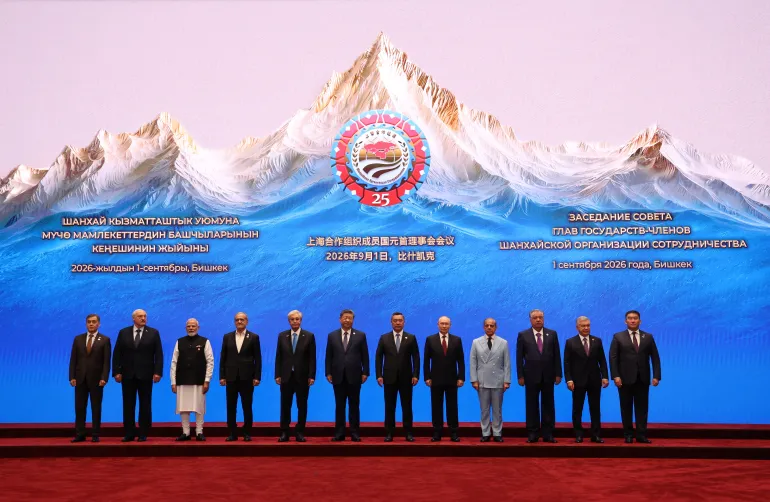
Bishkek, Kyrgyzstan – It was a round table of some of the most influential men in the world. Representing Russia, China, India, Iran, Pakistan – and when they extended to the Shanghai Cooperation Organisation Plus – Turkiye, as well as the United Nations Secretary-General, Antonio Guterres. Gathered here in Kyrgyzstan were countries at the centre of some of the world’s biggest geopolitical tensions.
What brings them together is not necessarily agreement on everything. It is the space to pursue their interests outside a Western-led framework. Moscow sees that space as evidence of a changing world.
Recommended Stories
list of 3 itemsend of list
“Over the 25 years since its inception, the Shanghai Cooperation Organisation has evolved into one of the independent and influential centres of the emerging multipolar world,” Russian President Vladimir Putin told the summit.
The organisation, he said, had grown from six founding members in 2001 into what he described as the world’s largest regional association.
Shanghai Cooperation Organisation leaders at their summit in Bishkek, September 1, 2026. [Vyacheslav Prokofyev/AFP] (AFP)
Kyrgyzstan is a small, mountainous, landlocked country with Russia to the north and China next door. The calculation is more immediate: how do you balance between giants?
As Europe and the United States are increasingly looking towards Central Asia, Kyrgyzstan needs to balance relations with all of them.
Shairbek Dzhuraev, president of the Crossroads Central Asia think tank, said the timing of the summit is particularly important.
“The members in the room are precisely heavyweights that are directly involved in key geopolitical conflicts of the day,” he said.
That balancing act is not new. Since independence in 1991, Central Asian states have largely operated through what is known as a multi-vector foreign policy.
Bishkek – like other Central Asian nations – operates by keeping Russia close and building ties with China, while keeping open doors to Europe and maintaining healthy relations with Washington.
For Kyrgyzstan, it is less about choosing sides than keeping options open, underscored by its geography. Being landlocked means dependence on transport corridors and being mountainous makes infrastructure more difficult. Dependence on imported energy and external markets leaves the economy exposed to shocks beyond its borders.
“The biggest weakness of Kyrgyzstan, geopolitically and geographically, is the dependence in terms of transport routes, in terms of energy, in terms of economic relationships”, Dzhuraev puts it bluntly.
So diversification becomes more than an economic ambition. Kyrgyzstan, being one of the smaller members, cannot dictate the SCO’s agenda. But it helped to shape the language.
For decades, Central Asia was viewed largely through the prism of the powers surrounding it. But the wars in the region and beyond have changed that – Russia is under sanctions, so is Iran, China is looking west, Europe is looking east. Suddenly the geography has acquired new value with highways, railways, pipelines, trade corridors, power networks and the periphery is becoming a strategically important passageway. Dzhuraev said: “Kyrgyzstan wanted the summit declaration to recognise that transformation, Central Asia’s movement into the centre stage of international politics”.
The Shanghai Cooperation Organisation is increasingly seen as a counterweight to US influence — a grouping through which China and Russia can advance a different vision of the global order. But the SCO is too diverse for a simple East-versus-West confrontation. That description comes with a qualification that the SCO is not a unified anti-American bloc.
Its members have competing interests, different relationships with Washington and, in some cases, deep disagreements with one another. The question is not whether the SCO rejects the West, it is whether it can resist being defined entirely in opposition to it.
Iran brings that to the centre stage – where geopolitical theory meets a much more immediate crisis. Tehran and Washington have returned to confrontation after more than a month of relative calm. Iranian President Masoud Pezeshkian used the SCO summit to put the diplomatic question directly on the table.
“I state explicitly that if the United States returns to its commitments under the aforementioned memorandum of understanding, the Islamic Republic of Iran will immediately take reciprocal action,” he said.
The Islamabad MoU signed in June collapsed, with Tehran and Washington blaming each other for violating its terms. Iran’s Foreign Minister, Abbas Araghchi, also called on Washington to return to what its president signed under the MoU. “In that case, everything can be put back on the right track,” he said.
For the SCO, however, Iran is not simply a diplomatic issue – it is an economic one. Washington has renewed sanctions on Tehran and expanded the threat of penalties for those doing business with Iran. For Central Asia, that matters, particularly for countries whose economies are deeply intertwined with Russia and increasingly connected to Chinese trade networks. Dzhuraev is sceptical whether countries such as Kyrgyzstan comply fully with sanctions, “The declaration will most likely not match the reality,” he said. “China and other countries have already rejected what they describe as unilateral sanctions.”
The reality is that sanctions can hurt, as they have hurt Iran and Russia. Not as intended for economic collapse, but they brought pain for the masses and put a spanner in their economies. But enforcement across a region built around cross-border trade is another matter. For Central Asian economies, complete compliance is difficult because the economic relationships are too dense, which is quite different from Western compliance. Both with Iran and Russia, transport and trade links have been growing steadily, so countries are unlikely to simply switch them off overnight.
Russian President Vladimir Putin, right, and Iranian President Masoud Pezeshkian during their meeting on the sidelines of the Shanghai Cooperation Organisation summit in Kyrgyzstan, Tuesday, Sept. 1, 2026. (Vyacheslav Prokofyev/Sputnik/Kremlin Pool Photo via AP)
That makes the SCO summit an important political moment.
Not necessarily because its members can defeat the sanctions regime, but because they can collectively signal where they stand on unilateral pressure.
When you speak to delegates from the global south, there is also a broader message: that the SCO is becoming a forum where countries that do not necessarily agree on everything can nevertheless agree on one principle: they want room to manoeuvre.
Putin calls that the emergence of a multipolar world, Pezeshkian is using the forum to keep diplomacy with Washington alive on Iran’s terms, China is defending its economic relationships, India is pursuing its own strategic interests, and Kyrgyzstan is trying to make sure none of these relationships closes the door to another.
But there is a second question confronting Kyrgyzstan — and it is not sitting around the summit table. How much of its rise belongs to Kyrgyzstan itself?
As transit trade has risen, the economy has been growing rapidly, wages have increased, construction has accelerated and exports have increased.
There is visible momentum in Bishkek, with new roads and buildings appearing to fill the empty spaces. Extraordinary circumstances have generated a lot, such as the war in Ukraine, which has altered regional trade and expanded Chinese investment. When trade routes shifted, money and demand moved across borders. The government is proud that much of the recent development has been undertaken without the external borrowing that characterised earlier periods. But buildings alone do not create a productive economy. External momentum can be a dangerous foundation for long-term growth, as Dzhuraev points out. “Productivity is growing. Exports are rising. More goods are being produced domestically. But much of the momentum remains connected to external factors — particularly the Russia-Ukraine war and Chinese investment. One of the biggest drivers of poverty reduction has been rising salaries.”
The harder question is what comes next? Where are the productive sectors that will sustain those incomes? Agriculture could be an obvious answer as Kyrgyzstan is an agricultural country. But glaciers are melting and climate change is having an impact. Plus, its long-term capacity to generate higher-value growth remains uncertain. That may ultimately be the more important story behind this summit. Not the speeches, the flags, nor the declaration.
Kyrgyzstan wants to convert geography into leverage and its vulnerabilities into options. But the wider questions remain, whether Central Asia can move from being the space between Russia, China, Iran and Europe to becoming a centre of its own? As well as whether today’s economic growth can survive when the external forces driving it inevitably change?
Kyrgyzstan finds itself at the centre of a changing region that brings opportunity but also pressure. Between the giants, keeping every door open may be the most important strategy of all.
Spain has found no evidence that Moroccan authorities planned or orchestrated the massive migrant surge into the Spanish enclave of Ceuta in July, Prime Minister Pedro Sánchez told parliament. His comments come amid conflicting accounts over whether the unprecedented border crossing was a spontaneous migration event or a coordinated operation designed to overwhelm Spanish border controls.
A Massive Border Surge
More than 70,000 migrants entered Ceuta from Morocco during the July 30 to 31 crisis, overwhelming local authorities and creating a major humanitarian and political challenge for Spain.
The scale of the movement has raised questions about how such a large number of people were able to reach the Spanish enclave within such a short period.
Sánchez Rejects Moroccan Involvement
Sánchez told lawmakers that neither Spain’s diplomatic services, the European Commission nor international organisations had provided evidence showing that Morocco had planned or carried out the incident.
Stay ahead of the geopolitical week.
MD Briefing delivers expert analysis across five global fronts — the Indo-Pacific, energy, geoeconomics, European security, and the Middle East — every Monday morning. Free.
However, he acknowledged that Moroccan security forces allowed crossings to continue during a critical 10 hour period on July 30, when arrivals reached their peak.
Sánchez said Spain had not yet determined whether this reflected deliberate inaction or an inability to control the situation.
Police Report Raises Questions
The government’s position has been complicated by a police report that reportedly described the influx as a planned and phased operation rather than a spontaneous movement.
According to reports on the document, Moroccan security forces were initially deployed in smaller numbers near the Tarajal crossing and did not make a serious effort to disperse the crowds. Some uniformed officers were also allegedly seen directing people towards the crossing.
However, the report did not identify individual officers or provide independently verified evidence that Moroccan authorities had ordered the operation.
Morocco Denies Enabling the Crossing
Moroccan authorities have rejected accusations that they deliberately facilitated the mass movement into Ceuta.
The controversy has nevertheless put renewed pressure on Spain’s relationship with Morocco, a crucial partner in controlling migration across the western Mediterranean.
Conflicting Accounts in Spain
The allegations have also created a political problem for Sánchez’s government.
Spanish authorities have previously attributed the surge largely to misinformation circulating online and the activities of smuggling networks. Reports suggesting possible Moroccan involvement therefore challenge part of Madrid’s explanation for how the crisis developed.
Spain’s police leadership has also pushed back against claims that an official police report conclusively blamed Morocco for orchestrating the incident.
Why Morocco Matters to Spain
Morocco plays a central role in Spain’s efforts to manage migration from North Africa. Any deterioration in bilateral cooperation could make it harder for Madrid to control future crossings and could turn migration into a wider diplomatic dispute.
Ceuta and Melilla are particularly sensitive because they are Spanish territories located on the North African coast and represent the European Union’s land borders with Africa.
Analysis
The central issue is no longer simply whether thousands of migrants crossed into Ceuta, but who enabled the conditions that made the surge possible.
Sánchez’s position protects Spain’s strategically important relationship with Morocco and avoids directly accusing Rabat without conclusive evidence. At the same time, the reported police findings create a credibility problem for Madrid because they suggest that Moroccan security forces may have played some role in allowing or directing the movement, even if they do not establish government-level planning.
The distinction between deliberate orchestration, passive border enforcement and inability to control the crowd is therefore crucial. Evidence of Moroccan officials physically facilitating crossings would not necessarily prove that the Moroccan state ordered the operation.
For Spain, the episode also exposes the vulnerability of Ceuta’s border to sudden mass movements and information campaigns. For Morocco, the accusations carry diplomatic costs because migration cooperation is an important component of its relationship with Spain and the wider EU.
The immediate challenge for Madrid is to establish what happened without turning an unresolved border investigation into a diplomatic confrontation with Rabat.
Escape to Jamaica for 7 nights with a stay at the stunning 5* Sandals Ochi in Ocho Rios.
12:00, 03 Sep 2026Updated 13:11, 03 Sep 2026
We’re giving Premium subscribers a chance to enjoy a luxury five-star holiday for two in Jamaica!
The lucky winner can look forward to relaxing at the five-star Sandals Ochi Beach Resort in a standard room on an All-Inclusive basis, surrounded by tropical gardens, beautiful pools and that unmistakable laid-back Jamaican atmosphere. Spend your days soaking up the sunshine, enjoying the resort’s restaurants and bars, or simply relaxing with a cocktail in hand.
The prize will also include round-trip flights from London (via Miami) as well as resort transfers to and from the airport.
Don’t miss this opportunity to experience the holiday of a lifetime! To enter, simply fill out your details using the form below.
This competition is open until 23:45pm on Sunday, October 4, 2026.
Love Island host Maya Jama’s mysterious role in the Gentlemen season two has been revealed.
Hayley Anderson Screen Time TV Reporter
11:28, 03 Sep 2026
Netflix releases The Gentlemen season 2 trailer
Love Island icon Maya Jama has made her debut in The Gentlemen season two on Netflix.
A number of new faces are being welcomed into the fold of Netflix’s epic crime drama The Gentlemen season two, including Downton Abbey star Hugh Bonneville.
But someone who subscribers may not have been expecting to see in the eight-part second outing is Love Island presenter Maya Jama as it marks her first major scripted TV debut.
The only other acting experience that the 32-year-old has had was in a breif cameo role for Katherine Ryan’s The Duchess on Netflix six years ago.
With The Gentlemen season two now ready to binge-watch, fans are eager to find out all there is to know about Maya Jama’s role.
When does Maya Jama appear in The Gentlemen season 2?
It isn’t long before Maya Jama pops up on our screens as she features in the first episode of The Gentlemen season two.
She is mostly seen speaking to Kaya Scodelario’s Susie Glass but shows up once again in episode four.
Maya Jama’s The Gentlemen season 2 role explained
Maya Jama portrays a character named Aisha in the second season of The Gentlemen on Netflix.
She plays the wife of one of Eddie Horniman’s (played by Theo James) criminal associates, Prince Amir bin Abdullah al-Hadidi, brought to life by actor Amra Mallassi, reports the Express.
Susie Glass (Kaya Scodelario) describes her as a “clever girl” and “aspirational”, saying: “Looks after herself and everyone who comes within her orbit. She moved out to the Middle East five years ago to work in hospitality. Now she’s snagged herself a seat at the royal table.”
Talking about her experience shooting The Gentlemen, Jama described creator Guy Ritchie as “very personable” to Variety.
She continued: “He’s really kind and nice. He doesn’t feel as intimidating as you’d think, being who he is. He’s very personable and he would be like, ‘Yeah, you’re doing well’, and reassure me, which was really nice.
“He’s just really involved and kind of a genius to watch, because everyone’s practising their lines and then he says something that’s way better than the original. You just feel like you’re in the presence of greatness.”
“You don’t take anything for granted,” said James Aldrete, a Democratic strategist in Austin, who’s watched for years as his party wandered fruitlessly in the campaign desert. “But there is beautiful native wildlife that grows in the desert, and it’s blooming right now.”
The question — for the moment, at least — is why California hasn’t budged while Texas has become a surprise battleground.
The answer involves individual personalities, demographics and political headwinds.
You’re reading the L.A. Times Politics newsletter
George Skelton and other analysts cover the insights, legislation, players and politics you need to know. In your inbox Monday and Thursday mornings.
By continuing, you agree to our Terms of Service, which include arbitration and a class action waiver. You agree that we and our third-party vendors may collect and use your information, including through cookies, pixels and similar technologies, for the purposes set forth in our Privacy Policy such as personalizing your experience and ads.
Of the two contests, the fight for Texas’ open Senate seat appears to be much closer. Election handicappers rate it a toss-up.
The Democrat, state Rep. James Talarico, is a highly gifted campaigner and prodigious fundraiser. But arguably the best thing he has going for his candidacy is his Republican opponent, Atty. Gen. Ken Paxton, whose history of scandal, shady dealings and moral lapses trail him like dirty footprints on a white carpet.
In the race for governor, Republican Greg Abbott is facing Democratic state Rep. Gina Hinojosa as he seeks an unprecedented fourth term — “a big ask of voters,” in the words of J. Miles Coleman, who analyzes elections at the University of Virginia’s Center for Politics. Sabato’s Crystal Ball, the center’s forecasting project, recently moved the gubernatorial race to “likely Republican,” a shift away from “Safe Republican.”
“One of the external factors that’s making Texas competitive is the degree of wind in Democratic sails,” said Jim Henson, director of the Texas Politics Project at the University of Texas in Austin.
Whether it’s anti-establishment anger, directed at the party in power, or frustration with Trump, his war-making and failure to deliver the sterling economy he promised, “when you think of the problems Republicans are having at the national level … that’s helping Democrats here as well,” Henson said.
Henson, who conducts polling statewide, said another reason Texas is more competitive than California is simple mathematics: “Democrats [haven’t] fallen quite as far in Texas as Republicans have in California.”
Texas doesn’t register voters by party. But weighting political surveys by demographics and following election results, Henson expects about a 10% Republican turnout advantage in November. By contrast, registered Democrats outnumber registered Republicans in California by nearly 2 to 1.
Yet another reason Texas appears to have grown more competitive is the apparent discontent of Latino voters, an increasingly important part of the state’s burgeoning electorate.
In recent years, as the country cleaved, California emerged as the unofficial capital of blue America, offering a political, social and cultural counterweight to Texas, the unofficial capital of red America. The two states anchor the Democratic and Republican parties, respectively, and are key to their financial well-being and the success of their candidates nationwide.
A Democratic toehold in Texas would instantly scramble long-standing political calculations, starting with the 2028 presidential race.
“It changes the narrative. It changes the demographic strategy,” Madrid said. “It changes the 270 [electoral college] map. It changes the whole strategy.”
In short, a November win would be more than symbolic, or gratification after years of Democratic futility. It would be a political earthquake.
Carlos Queiroz has been reappointed as head coach of Ghana’s men’s national team.
The 73-year-old, who had two spells as assistant manager at Manchester United under Sir Alex Ferguson, took charge of the Black Stars in April and led the side to the last 32 at this year’s Fifa World Cup, where they were beaten 1-0 by Colombia.
Queiroz appeared to announce his own departure on social media shortly after that defeat, but the Ghana Football Association (GFA) has decided to re-engage him for another spell in charge following internal discussions.
The GFA has not announced the length of his new deal but said he will prepare the team for “a successful new phase on the international stage”.
“The GFA believes Queiroz’s extensive international experience, technical expertise and knowledge of the Black Stars position him strongly to lead the team into this next chapter,” a statement added.
Queiroz has previously led Iran, Portugal and Egypt at major tournaments and has had stints in charge of South Africa, Colombia and Qatar.
Further details on his mandate will be announced by the GFA in due course.
Queiroz will begin his second spell in charge of the West Africans with qualifiers for the 2027 Africa Cup of Nations, which begin later this month.
The Black Stars are yet to announce the dates and venues for their first two fixtures in Group C, where they have been drawn alongside Ivory Coast, The Gambia and Somalia.
US President Donald Trump celebrated on Truth Social what he called the “biggest oil deal in history” – a 100-year concession on 17 oil fields in Venezuela that would secure 65 billion barrels of oil.
Around the same time, QatarEnergy informed Edison, one of its biggest European customers, that force majeure on its liquefied natural gas (LNG) deliveries would continue until early November. Five more cargoes were cancelled, taking the total to 29, or about 3.8 billion cubic metres of gas.
The contract has run since 2009 and normally covers roughly a tenth of Italy’s annual consumption. Edison has kept supplying its customers by finding replacement cargoes elsewhere, including in the US.
For decades, the bargain between Washington and the Gulf was clear. The US protected the region and kept its sea lanes open; Gulf producers supplied the energy on which the global economy depended and settled their sales in dollars to benefit the US economy.
That bargain has been turned on its head. America no longer simply protects Gulf energy. It competes with it, and increasingly profits when the Gulf cannot deliver due to insecurity.
Six months of war have reportedly impacted Qatar’s LNG exports significantly. Other Gulf countries like Kuwait, Saudi Arabia and the UAE have seen a substantial drop in oil exports as well. Meanwhile, US oil and gas have moved into the space left behind, with US energy giants raking in record-high profits.
It is important here to distinguish between the US as a government and the dense network of private interests that operates around it. Washington wants strategic leverage over Iran and continued influence over the Gulf states. Energy companies want access to reserves, favourable regulation, profitable prices and new customers. Trump brings the two together under the banner of energy dominance. State power opens the door; private capital walks through it.
Israel adds another layer. Chevron operates its two main offshore gas fields, owning almost 40 percent of the Leviathan gasfield and 25 percent of the Tamar gasfield. Leviathan is expanding after a $35bn agreement was signed last year to increase exports to Egypt.
Israel is therefore not an independent energy rival to the US in the way Qatar is. Its growing role as an Eastern Mediterranean gas hub is tied to a US operator and fits comfortably within a US-backed regional system linking Israel, Egypt and Jordan.
Chevron is the thread running through much of this story. It has major interests in US production, controls Israel’s most important gas assets and is positioned to expand in Venezuela. This does not mean Chevron determines foreign policy. It does show how easily the exercise of American power can translate into commercial opportunity for American companies.
Israel is also determined not to let the confrontation with Iran end on terms it considers not to be in its interest. The US-Iran memorandum of understanding signed in June fell well short of Israeli war aims. Israel said it was not bound by all its provisions, insisted on freedom of action in Lebanon and briefly resumed attacks while the US was trying to sustain negotiations.
For Israel, ceasefires have tended to be pauses, not settlements: opportunities to regroup while preserving the option of striking again. The reasons are chiefly strategic. Israel wants to prevent Iran from rebuilding its nuclear, missile and regional capabilities, while Israeli leaders fear accepting a deal and looking weak ahead of elections.
The consequences of Israel pushing for continuous conflict align with US energy interests. Continued pressure on Iran keeps the Strait of Hormuz insecure, Gulf exports vulnerable and risk premiums for energy transport high. Israel and US energy companies do not need to be following a common plan for their interests to reinforce one another.
Price is where the argument becomes clearest. Trump talks constantly about cheap oil, but US producers cannot prosper if it becomes too cheap. A Dallas Federal Reserve survey found that US companies needed an average price of about $43 a barrel to operate existing wells and $66 to drill new ones profitably. The two main Permian basins sit at roughly $61 to $62.
Trump therefore needs a narrow band: oil cheap enough to contain inflation, but expensive enough to keep shale, fracking and export investment alive. Gulf insecurity helps maintain it. The disruption need not be catastrophic. It only has to keep prices at a point where the next American well makes economic sense.
This may help explain the attraction of a no-war, no-peace outcome. A full regional war could close Hormuz, send prices soaring and threaten Chevron’s Israeli operations. A durable settlement would remove the risk premium, restore confidence in Gulf supply and limit Israel’s freedom of action.
Managed insecurity sits conveniently between the two: enough restraint to protect US-linked production, but not enough diplomacy to make Gulf energy entirely dependable again.
Israel keeps Iran under pressure. Washington retains leverage over its allies. US producers gain customers and commercially supportive prices. The danger lies in the convergence: Several powerful actors now have something to gain from preventing the crisis from reaching a final resolution.
The Gulf still holds vast reserves and enjoys production costs US companies cannot match. But reserves alone no longer decide market power. Reliability does. Only an estimated 3.5 to 5.5 million barrels a day can bypass Hormuz through Saudi and Emirati pipelines. The rest remains exposed to a single point of failure, despite decades of arms purchases, foreign bases and security guarantees.
The greatest threat to the Gulf’s energy future is not depletion. It is that customers learn to live without it. Every delayed tanker strengthens the case for an Atlantic alternative. Every Qatari cargo replaced by US LNG creates a relationship that may endure long after the war.
US power once rested partly on protecting the flow of Gulf energy. It now rests increasingly on replacing it.
The views expressed in this article are the author’s own and do not necessarily reflect Al Jazeera’s editorial stance.
Walking through downtown Santa Barbara, it’s impossible to not turn your head when you see it: those marshmallow-like plaster walls, wiggly wrought ironwork and tile that looks as though it belongs in a palace you’d stumble upon in a storybook.
This is the effect architect Jeff Shelton’s signature design has on viewers: the ability to pluck you out of the monotony of the day, if only briefly.
When asked why he thinks this is so, Shelton is quick to point to the tried-and-true architectural methods of the past, which he proudly uses. Buildings, he said, had to be designed “to act more independently” in serving the needs of their specific inhabitants. A window’s primary purpose, for example, was to allow the ideal amount of light to enter.
“So therefore they had taller windows,” he said, sitting opposite me in his Fig Avenue office in downtown Santa Barbara, surrounded by endless sketches and pattern mock-ups.
Shelton obsesses over other design details that are often overlooked in modern architecture yet instinctively felt when you encounter them: high ceilings, for one (his are 14 to 18 feet from the ground floor), as well as smaller touches like ironwork, stonework and glass. Crucially, all are made by people, designed by people — “nothing,” he said, “out of the catalog.”
Before going solo, Shelton spent a decade working in downtown Los Angeles with architect Brenda Levin on projects including the Bradbury Building and Grand Central Market. He then returned to his hometown of Santa Barbara, where he has designed 90 buildings since 1994, many of them within Santa Barbara’s Historic Landmarks District, commonly referred to as El Pueblo Viejo.
Following Santa Barbara’s 1925 earthquake, which destroyed much of downtown, new construction in the area was required to adopt the Spanish Revival style, which, according to the city’s website, “is key to the identity and beauty of Santa Barbara.” New buildings in the district must draw inspiration from Andalusia and Southern Spain and incorporate elements such as tile, terra-cotta, plaster and ironwork.
For Shelton, the guidelines are merely a reference. When designing, he doesn’t “try to make it like Spain at all,” he said, rather matter-of-factly. “I try to just use the materials and proportions and the craft of what’s so great about being in Spain.”
That approach shines through in his many projects near his Fig Street office, a 10-block radius Shelton has dubbed the “Fig District,” where 10 of his most lauded projects lie, inadvertently creating a kind of architectural museum in the heart of downtown.
Seeing them requires little more than a two-hour self-guided tour, carving your own path or following the map on Shelton’s website. By the end of the excursion, you, too, may ask yourself the same question I did: Why did we ever stop building this way?
Shelton didn’t have an answer. He could only promise to never stop.
“Every building I do is my last building,” said Shelton, now 68. “If I die tomorrow, at least I put everything in this last building.”
Without further ado, here are designs by Shelton all located in the Fig District, including iron gates designed by his brother, David.