The U.S. Navy’s supercarrier USS Abraham Lincoln is now in Thailand for a much-deserved and highly publicized liberty port call. The carrier had gone 286 days without making such a stop, with much of that time spent executing grueling combat operations against Iran. The ship has been run very hard, relying on at times a rickety conveyor of sea replenishments to continue operating for months on end, and it has the scars to show for it. The Lincoln looks very much worse for wear, with so-called “running rust” and algae caked all along the sides of the hull, as well as around the edges of the flight deck and sponsons on either side. It’s something of a startling appearance for one of the most powerful ships on the planet and a major symbol of U.S. power projection, but it is also a reminder of what the vessel and its crew have endured for months on end.
The Lincolnarrived in the Thai port of Laem Chabang earlier today. The carrier did make a stop in Guam in December 2025 and reportedly made another one somewhere in the Middle East in July. However, in both cases, these have been characterized as brief logistical stopovers that did not offer any real opportunity for personnel onboard to disembark. Thai media reports say the carrier is expected to remain in Laem Chabang through the end of the weekend.
After over 200 days at sea, U.S. aircraft carrier arrives in Thailand | ABS-CBN News
“Our arrival in Laem Chabang provides a well-deserved opportunity for our Sailors and Marines to rest and recharge. It also underscores the strong and enduring partnership and alliance between the United States and Thailand,” Rear Adm. Robert E. Loughran, commander of Carrier Strike Group 3 (CSG-3), said in a statement in a press release today. “What this strike group has accomplished is truly historic. I could not be prouder of the exceptional professionalism and expertise demonstrated by every member of this team during our operations in the U.S. Central Command area of responsibility.”
An official picture the US Navy has released of the USS Abraham Lincoln arriving in Thailand today. USN
Lincoln and its strike group had left port in San Diego in November 2025 for what was originally expected to be a routine cruise in the Pacific. The carrier, its air wing, and escorts were subsequently directed to the Middle East and arrived in that region in January 2026.
Two of the Arleigh Burke class destroyers assigned to CSG-3, the USS Michael Murphy and the USS Spruance, are still understood to be operating in the Western end of the Indian Ocean. A third destroyer in the strike group, the USS Frank E. Petersen Jr., accompanied the Lincoln to Thailand and is now docked in a separate port in Sriracha, near Laem Chabang. The Ticonderoga class cruiser USS Robert Smalls also helped escort the carrier, and that warship “also arrived in Map Ta Phut, Thailand for their own scheduled port visit,” according to the Navy.
As mentioned, Lincoln definitely looks like it’s been at sea more or less continuously for the last nine and a half months or so. Pictures and videos of the ship in Laem Chabang seen throughout this story plainly show big dark rust stains all around the hull and other similar signs of wear elsewhere. There is also a bright green ring of algae layered on the hull at the waterline. While carriers have very large crews and usually keep the ship’s appearance up relatively well while on cruise, there is only so much that can be done out of port on particularly long deployments, where all resources are focused on sustained high-tempo combat operations.
USS Abraham Lincoln seen arriving in Laem Chabang, Thailand, today. Thananuwat Srirasant/Getty ImagesAnother look at the Lincoln arriving in Thailand today. ANTHONY WALLACE / AFP via Getty ImagesA closer look at the side of Lincoln‘s hull, with ‘running rust’ and algae plainly visible. ANTHONY WALLACE / AFP via Getty Images
“It’s terrible. I think they should be ashamed,” John Phelan told members of Congress at a hearing last year after being shown pictures of a very worn-looking Arleigh Burke class destroyer, the USS Dewey, during a stopover in Singapore. “Would you want to go on that ship?”
A picture of the USS Dewey covered in “running rust” during a recent port visit in Singapore is shown at the confirmation hearing for Secretary of the Navy nominee John Phelan on January 27, 2025. Senate Armed Services Committee capture
Lincoln‘s current condition is, of course, an extreme case that is the result of very specific operational circumstances. The carrier has already been in the news for weeks now due to the aforementioned morale issues, which family members of those onboard have been very vocally calling attention to through the media. One sailor had to be rescued last month after deliberately jumping overboard. There were reports that at least one other individual onboard had attempted to do the same. President Donald Trump and Secretary Pete Hegseth, among others, have pushed back on concerns about mental health and other issues on the ship. In a statement shared on social media on August 16, Navy Adm. Brad Cooper, head of U.S. Central Command (CENTCOM), acknowledged, but still downplayed, the seriousness of the mental health situation, in particular.
At the same time, the carrier’s marathon deployment is indicative of larger shipbuilding, readiness, and other issues that the Navy continues to struggle with. Strains on the service carrier fleets in particular have been steadily building for years and are now becoming a low-level crisis. The USS Gerald R. Ford wrapped up a historic 326-day-long deployment in May. The Navy has publicly said that the USS Theodore Roosevelt, which is set to begin its latest cruise soon, could be away from home for at least eight months. The longer the ships remain deployed, the longer they typically have to spend in port afterward, further compounding the situation with each passing day during months-long extensions. This all has very worrisome cascading impacts on even routine maintenance cycles, let alone deep overhauls and upgrade efforts, as well as personnel management matters, as we have explored in detail in the past.
USS Abraham Lincoln in Guam in December 2025. USN
“It’s my earnest attempt to really try to keep those [deployments] at seven months,” Chief of Naval Operations Adm. Daryl Caudle, the Navy’s top officer, said during a question-and-answer session at Fort Meade, Maryland, Monday, which was livestreamed. He also said he wanted a Navy “that can sustain a seven-month deployment and still give our combatant commanders the amount of naval force they need to accomplish their missions, solve their key operational problems, and make sure they have all the naval force necessary to do what they need to do.”
The Lincoln‘s visibly worn state certainly draws new attention to the stress on America’s carrier fleets as personnel onboard are now finally getting a much-earned reprieve in Laem Chabang.
WHEN it comes to girl groups going solo, there can only ever be one really successful member, while the others trail behind pretending to be happy for them.
Jade is enjoying huge success as a solo artist despite being the one member of Little Mix who didn’t want to take a breakCredit: ZUMA Press Wire/ShutterstockPerrie, Leigh-Anne and Jade went on hiatus in 2022 and have each spoken about the possibility of a reunionCredit: Getty Images for Warner Bros
In terms of their UK counterparts, Cheryl led the way for Girls Aloud and – although she’s not known for her music – Victoria Beckham will always be the standout Spice Girl.
As for Little Mix, it’s Jade Thirlwall who’s come out on top after her debut releases were met with huge critical and commercial success.
Sign up for the Showbiz newsletter
Thank you!
While her bandmates Leigh-Anne Pinnock and Perrie Edwards haven’t totally flopped – all three girls landed at number three with their solo albums – 33-year-old Jade’s highs have unfortunately highlighted their lows.
Leigh-Anne has turned her attention to reality TV after landed a stint on the upcoming series of Celebrity TraitorsCredit: WireImageThe Sun told last week how Perrie has split with her management company and record labelCredit: Getty Images
A well-placed insider told The Sun: “Perrie and Leigh are ready to come back now.
“They’ve done what they needed to do and would announce a Little Mix tour tomorrow if they could.
“It’s kind of ironic that Jade didn’t want the hiatus but she’s had the most success.
“But as much as she is, in her own words, Little Mix’s biggest fan, for Jade it’s just not the right time. She knows she’ll never get this chance again.”
Speaking of a possible Little Mix comeback, Perrie confessed recently she’s “ready and raring” while Leigh insisted she’s “a hundred per cent” behind getting back together.
Meanwhile, Jade has been a bit more coy in terms of timings. The Angel of My Dreams hitmaker said recently: “There will be a Little Mix reunion.”
But, suggesting her focus is elsewhere for now, she added to Capital: “It doesn’t matter how long that takes.”
We’re told Jade knows it’s not the right time for a break in her solo careerCredit: RedfernsBut Leigh and Perrie are waiting for the moment she’ll get back on stage with themCredit: JMEnternational for BRIT Awards/
We’re told that there is nothing but love between the three girls and they are as close as ever but Perrie and Leigh know that the more successful Jade becomes the longer they’ll have to wait to be back on stage with her.
Our source added: “Perrie and Leigh are super proud of Jade.
“They always knew she’d go on to do great things. They’ve each found the perfect balance as working mums but Jade doesn’t have kids so, for now at least, it’s all about her career.
“Perrie and Leigh just hope that it won’t be too much longer before Jade can clear some space in her schedule so they can be together again.”
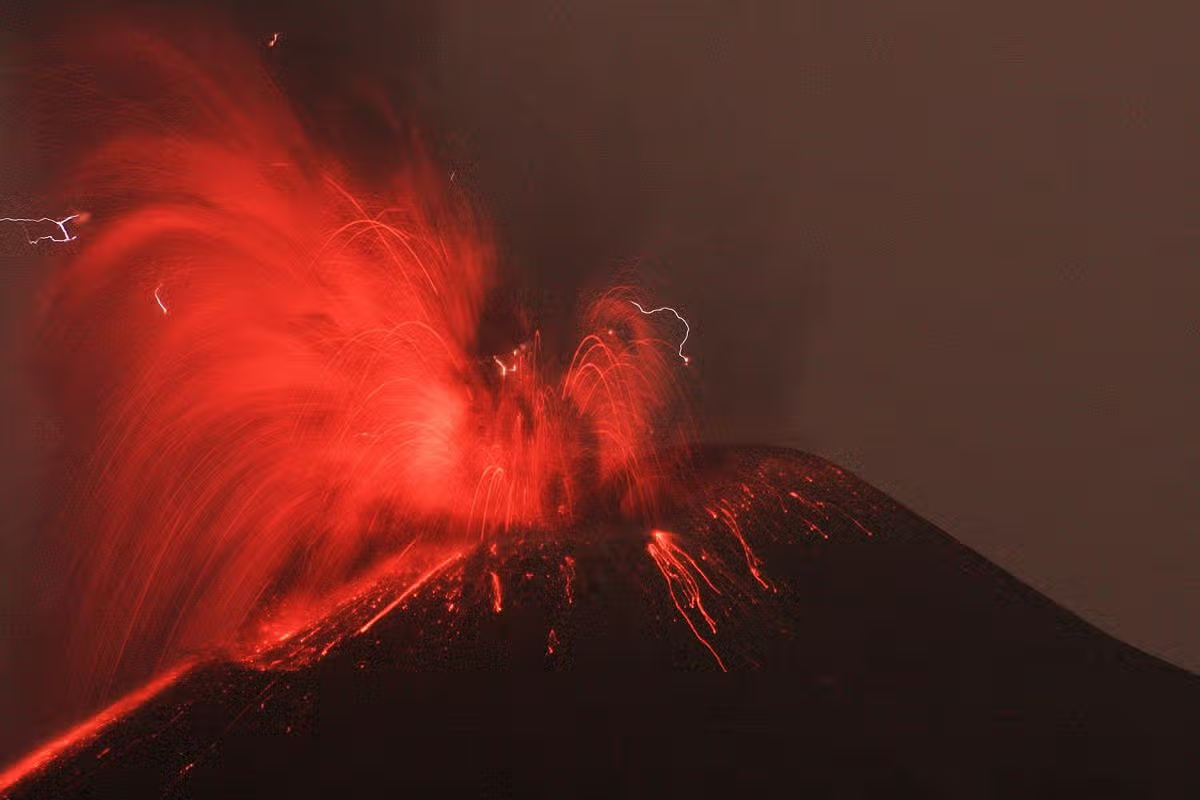
Hundreds of flights have been suspended after an airport had to be closed because of the ash cloud caused by a volcanic eruption. Tens of thousands of passengers have been left stranded. 209 flights were suspended after ash from Anak Krakatau blew into the airspace near Jakarta’s Soekarno-Hatta International Airport on Sunday.
Soekarno-Hatta is the main airport in Indonesia. The volcano started erupting on Friday night and there were two more eruptions on Sunday. More than 22,000 people have been hit by the suspension of flights, which has hity major international routes.
There is no tsunami warning linked to the eruption in the Sunda Strait between Java and Sumatra. The health minister has urged residents to stay indoors and wear face masks.
Local newspaper Kompas said schools cancelled activities on Saturday after students reported eye irritations. Fishing vessels have also been grounded amid health concerns.
Resident Aldi Candra Prayogi told Kompas it felt like “small grains of sand had gotten into my eyes” and he is having to clear the path outside his home every five minutes.
Anak Krakatau emerged from the sea in 1927 inside the caldera formed by the catastrophic, climate-altering eruption of the original Krakatoa volcano in 1883.
Indonesia’s Geological Agency said the volcanic island located in Indonesia’s Sunda Strait between the main Java and Sumatra islands had shown signs of activity since Friday before erupting for 30 seconds at 3.53am.
CCTV footage showed lava flares from the volcano. No casualties were reported and no evacuation order was issued. The nearest settlement is more than 16 kilometres (10 miles) away, but authorities warned residents and visitors to stay at least three kilometres (2 miles) from the active crater.
Volcanic ash spread across parts of Jakarta and Lampung province on Sumatra’s southern tip, Indonesia’s centre for volcanology and geological hazard mitigation said. AirNav Indonesia closed airspace around Soekarno-Hatta and Halim Perdanakusuma airports in Jakarta, as well as four other airports, including Radin Inten II Airport in Lampung, because of volcanic ash.
By mid-afternoon, the closure had affected 516 flight movements, with 202 in Jakarta’s Soekarno-Hatta airport alone, affecting about 22,800 passengers, on Sunday. The airport was ordered closed until at least 5.30pm.
Indonesia’s directorate general of civil aviation said it was closely monitoring the eruption’s impact on air travel and co-ordinating with airlines, airport operators, air navigation services and the meteorology agency.
“Safety remains our top priority in every operational decision,” Lukman F Laisa, ministry of transportation director general of civil aviation, said in a statement.
He warned flight schedules could face cascading disruptions affecting aircraft rotations, fleet availability and terminal capacity as airlines work to restore operations.
The eruption also disrupted services at Bali’s I Gusti Ngurah Rai International Airport and at Medan.
Indonesia’s volcanology agency and the Darwin Volcanic Ash Advisory Centre identified two ash clouds using satellite imagery. One plume rose to 20,000 feet (6,100 meters) and drifted northeast over Jakarta, Banten, West Java and nearby waters. A second cloud reached 50,000 feet (15,200 meters) and spread over parts of Banten, Lampung and Bengkulu provinces, the southern Sunda Strait and sections of the Indian Ocean west of Sumatra.
Lana Saria, head of Indonesia’s geological agency, said activity at Anak Krakatau has intensified since July, with Sunday’s eruption the strongest during the current period of unrest.
The repeated eruptions indicate a continued supply of magma and volcanic gases beneath the volcano, she said, though officials cannot predict whether a larger eruption will occur.
“We continue to evaluate the volcano’s development based on all monitoring data, not solely on the number of eruptions or the height of the ash column,” Ms Saria said in a video briefing.
She said the main hazards include volcanic ash, high concentrations of gas and the ejection of hot rocks and other material around the crater area.
SEEING the Northern Lights tops many a traveller’s bucket list.
The problem is, they can be elusive and costly to find and because they are at the whim of nature, there are never any guarantees . . . until now, that is.
Jo Kessell beams in front of the Aurora borealisCredit: SuppliedJo poses in front of the Arctic TrainCredit: Supplied
There is a new Northern Lights Train in Norway which promises to take you where there’s a greater chance of spotting the Aurora Borealis than ever before. It costs £115pp and looks so good I booked a ticket.
Meeting point: Narvik Station, high in the Arctic Circle. Waiting on Platform 1 is a four-carriage train, guide Lill and buckets of white stuff. It’s been snowing non-stop from thick, heavy clouds.
Sign up for the Travel newsletter
Thank you!
Spotting the Aurora normally requires a clear sky, so these conditions are far from ideal. Do we really have a chance of seeing them? Lill consults an app and smiles. “Yes,” she says.
The three-hour experience includes a 90-minute stop in the Arctic wilderness and, as the train pulls off, lights are dimmed to better see the Aurora.
After we’ve rattled past Narvik’s fjord and suspension bridge, a fellow passenger points excitedly at the window. Outside, a green plume is painting the sky.
Well I never — our first sighting.
From here, we climb north into the mountains towards the Swedish border. This historic track was built in 1902 and is still used to transport iron ore from Sweden’s Kiruna mines to the port of Narvik and beyond.
Our destination is Katterat — a remote, 373m-high (1,224ft) outpost accessible only by train or foot.
There’s no light pollution or civilisation and, thanks to its altitude, the sky is usually clear here when elsewhere else it’s not.
Once we’ve arrived and descended on to the platform, nobody budges — we’re too busy looking up.
Streaking overhead are bands of green criss-crossing a starlit sky.
Necks crane, photos are taken and the excitement is palpable. A trail leads to a makeshift camp where there are snowshoes to try, fires to warm hands and an indigenous Sami tent called a “lavvu” for shelter, with hot drinks, biscuits and sausages.
Despite the sub-zero temperatures (it’s -20C), nobody cares about warming up because we’re all too fixated on the sky show.
One moment the aurora shines to the right, the next to the left.
They come, they go; they fade, they flare; they keep us guessing, eyes peeled. It’s a magical night.
This train is one of many ways to chase the Northern Lights but there’s still magic to be found when the Green Lady plays shy.
On an excursion with Arctic Moments the next night, we sip hot chocolate and toast cinnamon buns on a fire in a Narnia wonderland.
No Aurora but happy memories with photos included in the package.
Narvik’s also a superb base for other adventures. There’s downhill skiing — it’s hosting the 2029 FIS Alpine World Ski Championships — as well as cross-country skiing, considered Norway’s national sport.
I give it a go but it’s harder than it looks — even on flat terrain.
There are also historical links. A fierce World War Two naval battle was fought and lost in Narvik in 1940 — Norway was occupied by Germany afterwards — and the town’s War Museum tells this story.
A new boat excursion even sends a drone underwater so you can see the shipwrecks on the ocean floor.
Narvik has everything from self-catering apartments to hotels offering Scandi-style breakfasts — think herring and smoked salmon — to the deluxe glass cabins of Camp 291, which cling to the mountainside.
This is my favourite accommodation, with superb fjord views.
Hiring a car allows you to explore even further. Polar Park is home to lynxes, musk oxen, moose and wolves. I’m taught how to howl and, amazingly, they howl back.
Best of all is the Arctic fox experience. You get to feed them but be prepared — they’re playful and love nothing more than clambering all over you.
For a final treat, I head to Narvik’s floating Arctic Sauna where a hole and a ladder lead directly from the heat into the chilly sea.
But the ultimate thrill is the Aurora Borealis. Travellers have been trying to find the best and most reliable way to see them.
Norway’s Northern Lights Train may just be the coolest way to do just that.
GO: NARVIK, NORWAY
GETTING/STAYING THERE: Four nights’ B&B in Narvik with Best Served Scandinavia is from £1,995pp including return flights with Norwegian Airlines, hire car, activities, entrance to Polar Park, one night in a glass cabin and the Northern Lights Train. See best-served.co.uk.
OUT & ABOUT: The Northern Lights Train costs £115 for adults, £58 for under-17s; under-6s go free. See arctictrain.com.
For driving advice for winter roads in arctic Norway, see northernnorway.com.
MORE INFO: See norwegian .com and visitnarvik.com.
When partygoers in Ibiza were enjoying a fun evening of drinks and good music, the last thing they expected was for a 90s icon to take to the stage and start DJing
09:49, 06 Sep 2026Updated 09:49, 06 Sep 2026
They soon realised who was DJing (stock image)(Image: Getty Images/EyeEm)
Ibiza is the perfect holiday destination for people who want to let their hair down and dance the nights (and maybe days) away. From Pacha to Amnesia, there are so many clubs to choose from that will guarantee you a good night filled with good music, and whoever is DJing is likely to put on a really good show.
But people were left gobsmacked when a woman got up to DJ in the party capital, and they realised who was performing. She’s a complete legend who has a whopping nine number one singles under her belt and two number one albums.
Have you guessed who it might have been DJing in Ibiza yet? Here are some other clues…
She rose to fame with four other bandmates, and their hits included ‘Too Much,’ ‘Holler / Let Love Lead the Way,’ and, of course, if you hadn’t already guessed it, ‘Wannabe’.
But it was 52-year-old Mel C holding it down on the decks playing millennial banger after banger in Ibiza, and her set went down a storm with fans.
Content cannot be displayed without consent
Mel C was bringing the vibes and the sass as she boogied in an outfit that showed her rock-hard abs – she is Sporty Spice after all.
Kevin Coundon, who posts on Instagram as @mr.kevin.at.home, shares lifestyle content and more, and on top of his video of Mel C, he wrote: “POV: Ibiza finally starts playing music for the millennials”.
First off, Mel remixed ‘King of my Castle’ by Wamdue Project, which came out in 1997, then a snippet of ‘You’ve Got the Love’ by Candi Staton was remixed, too. Then, the last snippet showed Mel C singing along to DJ Rui Da Silva’s ‘Touch Me’.
Kevin captioned his video: “Who decided Ibiza had an age limit anyway? Good music, an incredible crowd and one of those nights where you completely forget what time it is… and we did!”
In the comments, people raved about how much of a “legend” she is, saying “she was the most last Saturday” when they saw her DJing.
“Wow, I wish I was there,” someone wrote, with another saying that she was “an icon and goals”.
Another wrote: “What a night”. Someone else noted: “Our kind of party.”
A different social media user also said: “Always thought Mel would smash it as a DJ. Mixy Spice now. I liked her solo stuff.”
One more also responded: “That’s Sporty Spice? Wow, playing the tuuuunnnneeesss.”
THE summer holidays might only just be wrapping up, but I’m already deep in the database looking at where you should be booking for Summer 2027.
Before you accuse me of wishing the year away, there’s method in the madness.
Book ahead for a 2027 family holiday and you can secure a break from £45ppCredit: GettyWe’ve picked five top spots for couples and five for families across ten completely different coastlinesCredit: Getty
Securing your booking now gives you plenty of time to spread the cost, turning a peak summer holiday into a manageable monthly payment.
I crunched live booking numbers to track down the resort areas where early bookers are securing the lowest average monthly direct-debit payments per person.
Couples are booking breaks from an average of just £40pp a month, while family packages are getting snapped up from just £45pp a month.
So, instead of clogging the list with ten resorts on the same two Spanish islands, I’ve broken down five top spots for couples and five for families across ten completely different coastlines – counted down from five to one.
FAMILIES: 5. La Cala de Mijas, Costa del Sol – £42pp a month
La Cala de Mijas is a sunny Spanish spot with a more peaceful feel than the resorts of the Costa del SolCredit: Alamy
La Cala de Mijas is my top shout for families who want all the convenience of the Costa del Sol without being swallowed by the high-rise noise of the massive resorts.
It still feels like an authentic seaside town, with a wide sandy beach, a flat seafront promenade for buggies, and family tavernas that won’t cause an argument when the bill arrives.
Our booking data shows families booking in September 2026 to spread the cost until Summer 2027 are paying an average of £51pp a month for this resort.
I managed to beat that, though. I found a 7-night bed & breakfast stay at Gran Hotel Costa del Sol from £460pp, flying directly from London Luton on 25 August 2027.
Spread across 11 monthly payments, that specific deal comes out at just £42pp a month.
The direct garden access onto the sand here is brilliant too, meaning you can step straight off your breakfast terrace onto the beach without navigating busy coastal roads.
Book a 7 night bed-and-breakfast stay at Gran Hotel Costa del Sol from 25 August 2027, with direct return flights from London Luton, from £460pp.
COUPLES: 5. Mellieha, Malta – £46pp a month
Mellieha Bay is home to the largest beach in MaltaCredit: Getty
Malta serves up a brilliant hybrid of sun, sea, and exploring, and Mellieha is the ultimate base if you want a proper beach holiday.
Mellieha Bay is the largest sandy stretch on the island, while the historic village sits elevated on the hill with open-air bistros overlooking the coast.
Couples booking early in September 2026 are locking in Mellieha for an average of £55pp a month.
But I found a 7-night self-catering stay at Luna Holiday Complex from £510pp, flying directly from Newcastle on 24 August 2027.
Spread across 11 monthly payments, that works out at just £46pp a month.
What makes this complex a steal is its rooftop panoramic pool deck – it’s a quiet, adult-friendly sanctuary looking out over Gozo, allowing you to avoid the busier beach crowds when you just want a relaxed afternoon swim.
Book a 7-night self-catering stay at Luna Holiday Complex from 24 August 2027, with direct return flights from Newcastle, from £510pp.
FAMILIES: 4. Agadir, Morocco – £57pp a month
Agadir holidays can cost you as little as £50pp a month if you book nowCredit: Getty
Agadir is a fantastic shout if you want an exotic North African beach trip that remains entirely hassle-free for kids.
The broad sandy bay is backed by a wide, paved promenade custom-built for evening pushchair walks, while modern resort hotels take the stress out of daily parenting.
The data reveals families booking early in September 2026 are spreading the cost at an average of £50pp a month for Agadir.
I found a 7-night all-inclusive stay at Allegro Agadir from £625pp, flying directly from Manchester on 24 August 2027.
Split across 11 monthly payments, the deal works out at £57pp a month.
Landing a full all-inclusive stay with meals, drinks, and snacks in August for under £650pp total is a massive result.
The on-site highlight is the property’s dedicated, shaded kids’ splash park that lets younger children cool off out of the intense midday sun.
Book a 7-night all-inclusive stay at Allegro Agadir from 24 August 2027, with direct return flights from Manchester, from £625pp.
COUPLES: 4. Caleta de Fuste, Fuerteventura – £52pp a month
Caleta de Fuste in Fuerteventura is a relaxing resort just 10 minutes from the airportCredit: Alamy
Caleta de Fuste is built for couples who want a chilled holiday without feeling stranded in the middle of nowhere.
The horseshoe bay keeps the Atlantic waters calm and flat, the marina is packed with waterside bars, and the resort sits barely 10 minutes from the airport – meaning you go from arrivals to the sunlounger in record time.
Booking data shows couples locking in summer 2027 trips this September are averaging £53pp a month here.
But I found a 7-night all-inclusive stay at SMY Tahona Fuerteventura from £570pp, flying directly from London Gatwick on 25 August 2027.
Spread across 11 monthly payments, that deal costs just £52pp a month.
The standout feature at this hotel is its low-rise bungalow layout built around three separate pool zones, allowing you to easily find a quiet sunbathing corner away from the main bar.
Book a 7-night all-inclusive stay at SMY Tahona Fuerteventura from 25 August 2027, with direct return flights from London Gatwick, from £570pp.
FAMILIES: 3. Los Cristianos, Tenerife – £51pp a month
Los Cristianos is the ideal spot for families to visit in Tenerife, with Siam Park nearbyCredit: Getty
Los Cristianos is a classic for a reason: it makes family travel feel effortless.
You get a sheltered sandy beach, flat walking paths, loads of kid-friendly restaurants, and quick access to Siam Park just down the road.
Families booking in September 2026 to spread payments out until next summer are averaging £49pp a month for Los Cristianos.
I found a 7-night half-board stay at Sol Arona Tenerife from £558pp, flying directly from Bristol on 25 August 2027.
Across 11 monthly payments, that works out at £51pp a month.
For energetic kids, this place has a massive on-site climbing block and outdoor play zone, giving toddlers and kids a safe space to burn off their final energy reserves before dinner while parents grab a drink at the pool bar.
Book a 7-night half-board stay at Sol Arona Tenerife from 25 August 2027, with direct return flights from Bristol, from £558pp.
COUPLES: 3. Lloret de Mar, Costa Brava – £36pp a month
Lloret de Mar is home to some beautiful beaches and landscapes outside of its party zonesCredit: Getty
While Lloret de Mar has a famous reputation for high-energy nightlife, there is far more to the town than neon lights.
The main beach is enormous, the surrounding Costa Brava cove scenery is gorgeous, and cheap direct train links into Barcelona make day trips effortless.
Couples securing their 2027 spot in September 2026 are paying a destination average of £49pp a month.
When I went deal-hunting, I found a 7-night half-board stay at Clipper Affiliated by FERGUS from £395pp, flying directly from London Luton on 25 August 2027.
Split across 11 payments, that brings the cost down to just £36pp a month.
This hotel’s central location is perfect too – it sits tucked just two streets back from the main beach, giving you a quiet pool area during the day while keeping the coastal nightlife and seafront dining within a two-minute walk.
Book a 7-night half-board stay at Clipper Affiliated by FERGUS from 25 August 2027, with direct return flights from London Luton, from £395pp.
FAMILIES: 2. Sidari, Corfu – £49pp a month
Sidari in Corfu has beautiful beaches with bright blue water – and you can stay there for cheapCredit: Getty
Sidari takes the runner-up family spot because of the sheer quality of the local beach infrastructure, offering shallow waters, traditional tavernas, and the iconic Canal d’Amour rock formations right around the corner.
Families booking early in September 2026 are locking in Sidari for a resort average of £48pp a month.
I found a 7-night self-catering stay at Megali Luxuries from £543pp, flying directly from London Gatwick on 20 August 2027.
Divided across 11 monthly payments, that deal works out at £49pp a month.
Booking self-catering here is a smart move because the property sits directly adjacent to Sidari’s main strip of family-run Greek tavernas, where you can get authentic local dinners without spending a fortune.
Book a 7-night self-catering stay at Megali Luxuries from 20 August 2027, with direct return flights from London Gatwick, from £543pp.
COUPLES: 2. Magaluf, Majorca – £52pp a month
Magaluf is an ideal Spanish spot for couples, with plenty of bars and restaurants to spend evenings chilling inCredit: Getty
Hear me out: if your ideal couples’ break involves stylish beach clubs, modern seafront dining, and not being forced into bed by 9:30pm, modern Magaluf is one of the best-value options on the island.
The main beach is immaculate, high-end hotel refurbishments have elevated the waterfront, and quiet Palma Nova sits right next door.
Couples getting their 2027 plans sorted in September 2026 are averaging £47pp a month.
I spotted a 7-night bed & breakfast stay at Sol Guadalupe from £595pp, flying directly from London Luton on 25 August 2027.
Spread across 11 monthly payments, that deal costs £54pp a month.
The hotel features a huge lagoon-style pool setup with underwater lounger jets, giving you a sleek, high-end resort feel just a short walk from the seafront.
Book a 7-night bed & breakfast stay at Sol Guadalupe from 25 August 2027, with direct return flights from London Luton, from £595pp.
FAMILIES: 1. Gerani, Crete – £52pp a month
Gerani is a village in Crete near Chania, which has a pretty harbourfront and maze-like old townCredit: Alamy
Gerani takes the number one family spot on our board as an absolute value anomaly.
Tucked near Rethymnon, this peaceful Cretan village is built for families who want space, wide beaches, and a slow, authentic Greek pace away from commercialised tourist hubs.
Our booking data shows families getting in early in September 2026 pay an average of just £45pp a month to spread the cost to Summer 2027 – the single lowest family figure on the map.
And I found a 7-night bed & breakfast stay at Hotel Ideon from £575pp, flying directly from London Luton on 23 August 2027.
Divided across 11 monthly payments, that featured deal comes out at £52pp a month.
The highlight here for families is the studio room setup – every room features a wide balcony looking out over olive groves towards the sea, giving you a peaceful, spacious base for a fraction of standard hotel prices
Book a 7-night bed-and-breakfast stay at Hotel Ideon from 23 August 2027, with direct return flights from London Luton, from £575pp.
COUPLES: 1. Tholos, Rhodes – £33pp a month
Rhodes is one of the more affordable Greek islands – especially if you stay in TholosCredit: Getty
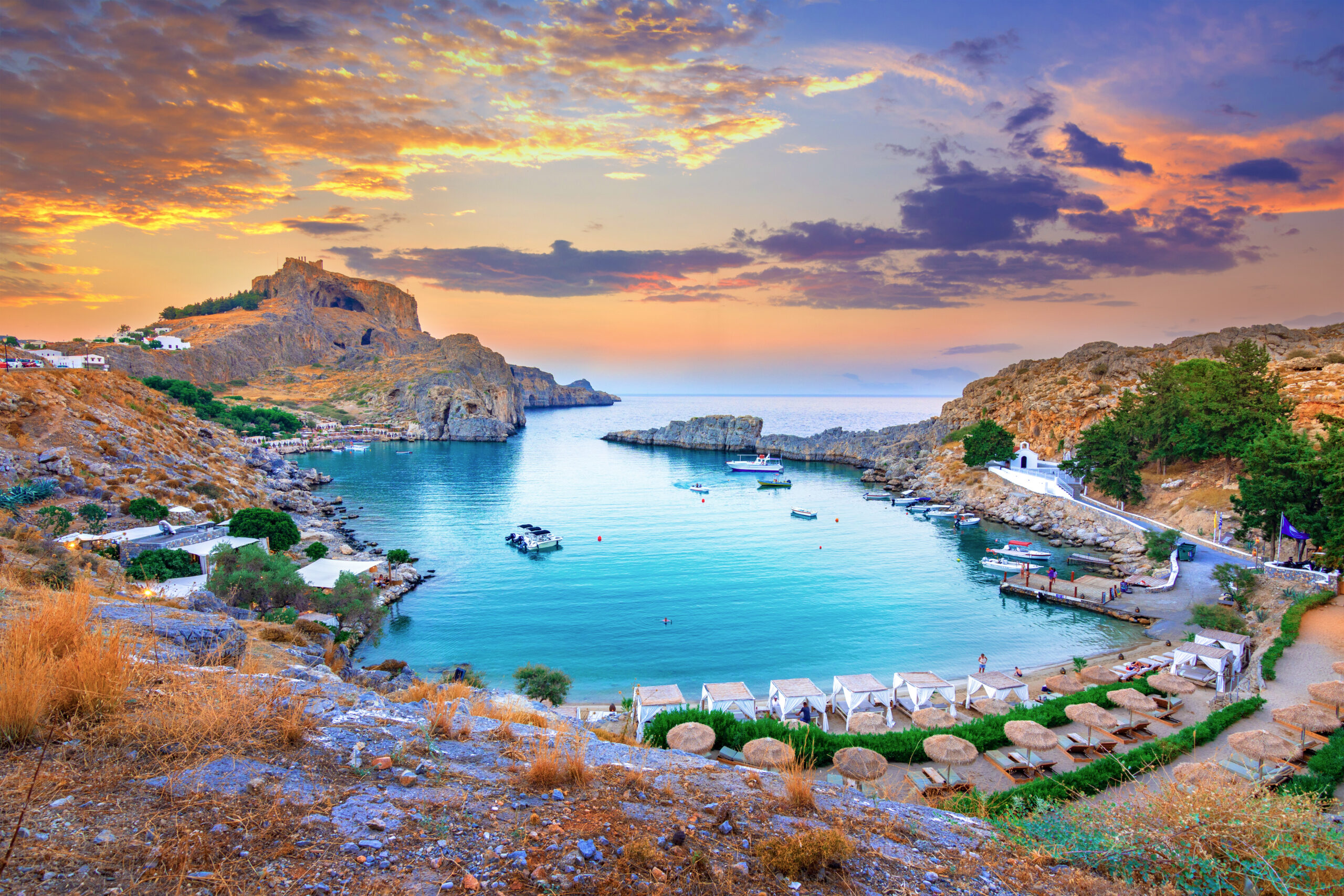
Taking the absolute overall crown is Tholos (also known as Theologos) on the breezy west coast of Rhodes.
It is infinitely more relaxed than Faliraki or Rhodes Town, serving up traditional tavernas, uncrowded beaches, and incredible Mediterranean sunsets.
This is the single cheapest destination average in our database: couples booking in September 2026 pay an average of just £40pp a month to spread payments until Summer 2027.
I found a 7-night self-catering stay at Sunlight Studios from £365pp, flying directly from London Luton on 25 August 2027.
Across 11 monthly payments, that featured deal costs just £33pp a month.
At under £38pp a month, that is quite literally the cost of one takeaway each – and a week under the Greek sun lasts a whole lot longer.
Book a 7-night self-catering stay at Sunlight Studios from 25 August 2027, with direct return flights from London Luton, from £365pp.
IF you need a loud announcement to tell you when it’s time to board, you might be in trouble at certain airports.
More silent airports are being introduced all over the globe – and these ones have no background noise, but it means you could potentially miss your flight.
Helsinki Airport was the first ever airport to go ‘silent’Credit: AlamyBristol Airport was the first UK to enforce the quiet policyCredit: Alamy
Silent airports were first launched in 2015 to create a calmer, less stressful environment for travellers.
Essentially these are terminals that significantly reduces certain sounds like general boarding calls, final calls, and flight updates – or gets rid of them altogether.
Sign up for the Travel newsletter
Thank you!
Airports Council International (ACI) Angela Gittens previously told CNN Travel that silent airports are designed to “create a calm, relaxed ambiance.”
She added: “Passengers can wind down while they wait for their flight to board in the common airside lounges, commercial, and food and beverage areas.”
Kara said: “Returning from Amsterdam Schipol Airport and having checked what gate I would be flying from, I headed straight there and sat down with my headphones on, waiting to board.”
London City Airport is the second silent airport in the UKCredit: Alamy
Kara continued: “Yet I didn’t realise the gate had changed until I saw a group of people from the corner of my eye all get up and start running.
“It was only when I saw the women leaving the boarding gate desk that I asked and she told me the gate had moved to one on the other side of the airport.
“So while they can be “less stressful” – keep an eye on your flights.”
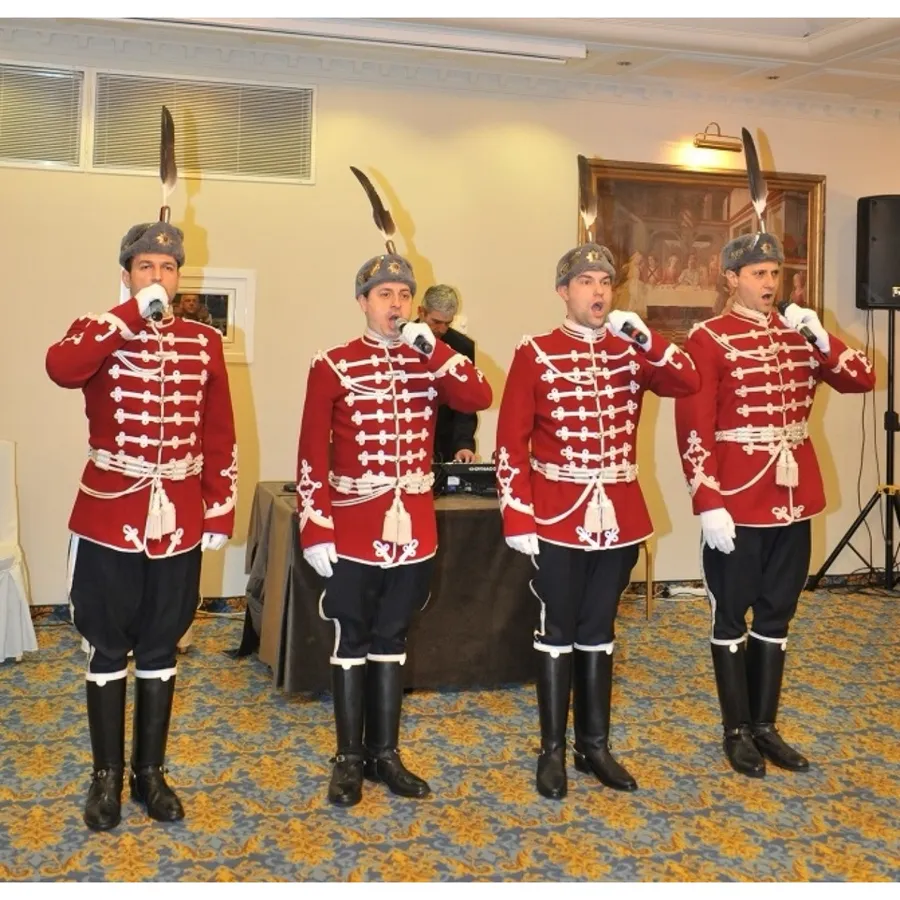
This article outlines the historical significance of Unification Day in Bulgaria, a holiday celebrating the 1885 merger of the country with Eastern Rumelia. The source explains that after centuries of Ottoman rule, a peace treaty briefly established a large Bulgarian state before international powers divided the territory once again. This partition led to years of civil unrest and organized resistance against the decision to keep the southern region under foreign influence. The narrative culminates in the successful revolutionary actions in Plovdiv that joined the two regions together. Ultimately, the text highlights how this pivotal event remains a cornerstone of Bulgarian national identity and history.
Anti-imperialism was a non-negotiable pillar for Hugo Chávez. (Archive)
Tatuy TV is celebrating its 19th anniversary at a very difficult time in our history as an independent nation. With a people engulfed in daily hardship and our sovereignty compromised on several fronts, the outlook is clearly bleak.
In this editorial, we take a close look at the situation in Venezuela, not to sink us further into despair, but to reject the normalization of the current course.
We refuse to accept this neocolonialism as inevitable or even desirable. Gaining clarity on the current context is essential for us to regroup and rebuild our future.
The Pessimism of the Intellect
Although this story did not begin on January 3 (and we must analyze how we reached that point), recent months have been marked by a dizzying political shift in favor of the bourgeoisie – both domestic and foreign – and US imperialism. Our current condition as a country is one of completely compromised sovereignty.
If oil revenues go into an account at the US Treasury Department, and the national government has to submit a budget in order to have its own resources (partially) released, if judicial and electoral bodies are appointed under US tutelage, if the most important laws are drafted in consultation with the White House and Chevron executives, if the imperial army can come and go as it pleases and bomb whatever it wants on national soil, what is truly left of an independent nation?
In what world can a country that maintains criminal sanctions against our people, that bombed Venezuela and kidnapped its president, be an “ally”? The US ambassador struts around “inspecting” infrastructure and hospitals as if he were the overseer on a plantation, escorted by the adeco [anti-Chavista opposition] deputy foreign minister [Oliver Blanco], who smiles like a good little Yankee lapdog.
We could dwell on the battle of numbers surrounding the recent “historic” oil agreement with the Trump administration. However, the analysis is quite clear. The Rodríguez government has already rolled back national control and participation in the oil industry to disastrous levels, and this deal will offer even less favorable terms for the country.
Plain and simple, Venezuela’s oil reserves, even if they formally remain its property, have been placed at the service of an empire seeking to halt its decline. That gringo monster that sows death and destruction throughout the world now runs on Venezuelan fuel.
Selling Snakeoil and Hoping it Trickles Down
If in recent years there was any gap between a policy of class reconciliation in the face of economic blockade and a discourse that retained certain key elements of the Bolivarian project, that gap has now closed completely.
Gone are any notions that PDVSA can produce oil, that housing is a right and not a commodity, that land should belong to those who work it, and so on, not to mention terms like “socialism” or “anti-imperialism,” which have disappeared entirely.
Instead, today the goal is exclusively to create the best possible conditions for capital. Laws must be reformed, assets denationalized and privatized, evictions carried out in both rural and urban areas, foreign currency handed out to the bourgeoisie without restraint, and labor regulations made more flexible – whatever it takes so that the wealthy can feel confident they will earn even more money.
And then the trickle-down effect will follow. All the key tenets of the neoliberal discourse of the past 40 years are now commonplace in the national government’s rhetoric: that we must attract investment because that is the only way to create jobs, and that the only way to have schools and hospitals is by subordinating the energy industry to the United States and its corporations.
There is no better example of this surrender to foreign capitalist interests than the fact that half the country is permanently in the dark so that corporations can continue to extract their profits from our subsoil.
Nor is the avalanche of reversals anywhere near over. Still to come are the government’s plan to privatize state assets, the labor reform tailored to [business lobby] FEDECÁMARAS’ interests, the downsizing of the state in the name of “efficiency,” and the restructuring of a debt as massive as it is illegitimate, all aimed at deepening Venezuela’s dependence even further.
Tragedy and Farce at the Same Time
For years, internal debate was suppressed and repressed because we were under siege by imperialism and the fascist international. It did not matter that the discussion was about the best way to resist without sacrificing the project. We had to remain silent in the face of all kinds of abuses, since if the right-wing opposition came to power, it would dismantle all the gains of the revolution and hand over the oil on a silver platter to the United States.
And now the official propagandists want to prove that you can square the circle, that what has all the hallmarks of colonial surrender and submission is in fact a “win-win” strategic advance.
There is no mistake more serious and outrageous than taking the people for fools. For months we heard that we had to prepare for people’s war, that the U.S. would face its own “Vietnam 2.0” and would not receive a single drop of oil if it were to attack Venezuela. No one wanted a bloodbath, but it was asserted that we had to asymmetrically resist against imperialist aggression. Then after January 3 we were told that we didn’t have enough weapons and that being a vassal of the empire is not so bad.
Another central argument was internationalism. We were told that despite all the setbacks and internal contradictions, Venezuela was still on the “good side,” the side of multipolarity. And that was not a lie. Venezuela maintained relations with Cuba and sent oil there – albeit less than in the past –, supported Iran, fiercely defended the Palestinian cause, and denounced imperialism in multilateral forums.
Today, Venezuela’s foreign policy is no different from that of any other country subordinate to Washington. Not a drop of oil for Cuba, zero support for Iran, an alliance with the Gulf monarchies, silence on Palestine, and restored ties with Israel. Strategic relations with Russia and China are being sidelined, and their companies are gradually being displaced to make way for those authorized by Trump.
Those who adapt and justify any scenario are opportunists who lack principles. The sole objective is to remain in power, even if it means implementing the exact opposite of what was previously proclaimed. The current leadership simply concluded that the best bet for staying in power was to be as useful as possible to imperialism.
History Is Not Over
In the not-so-distant past, the Venezuelan people reclaimed their dignity, which had been stripped away by one group or another for centuries, and emerged as the protagonists of their own history. They did so under the leadership of Comandante Chávez. Grassroots struggles propelled Chávez to Miraflores presidential palace, and he, as an “outsider,” changed the rules of a game that had until then been reserved exclusively for the elites.
This phenomenon was no historical accident. It was not the result of oil at $120 a barrel. It was a heroic creation, born of struggle, critical thinking, and a clear vision: socialism. Along the way, mistakes were made; old vices were ignored, and new ones were created. We must be willing to debate all of this with humility and honesty.
However, we will not renounce Chávez simply because his legacy was trampled upon by those who represent the very opposite of the Bolivarian project, yet cling to the image of the Comandante to inherit a legitimacy they never deserved.
Revolution does not happen through shortcuts. The struggle is also for historical memory. And here, those who want to be the Titanic’s orchestra just to hold onto their positions or small fiefdoms are free to do so. But they should at least have the dignity not to pretend that this course has anything to do with Chávez and Bolívar.
The empire is making plans for Venezuela’s future while different factions fight to become the lackey government of the moment. The challenge, both in our nation and across the continent, is to reorganize our equals, the working people who have nothing to lose but their chains. Starting over does not mean starting from scratch.
From our media front, as well as in the political spaces where we participate, we will do our part to bring these struggles to light and sharpen our collective consciousness. Imperialism and its lackeys will not have the final say. The Venezuelan people will once again become protagonists and set the wheels of their history in motion.
The views expressed in this article are the author’s own and do not necessarily reflect those of the Venezuelanalysis editorial staff.
It’s been a remarkable year for Bad Bunny, one of pop music’s biggest stars. After winning multiple trophies earlier this year at the Grammys, including album of the year for “Débi Tirar Más Fotos,” he can add another accolade: Emmy winner.
The Puerto Rican rapper and singer, also known as Benito Antonio Martínez Ocasio, won his first Emmy for variety special (live) on Saturday for his historic Super Bowl halftime show. It was the first Spanish-language halftime show, a 13-minute spectacle that transformed a football field into a variety of scenes including a sugar cane field, bodega, wedding party and casita, like the one in his 2025 San Juan residency. It also featured performances by Lady Gaga and Ricky Martin. Mikael Wood, The Times’ pop music critic, called it “a busy and colorful performance that drew lines between the traditional folk forms of his native island and the throbbing reggaeton beats that have made him an icon to young people around the globe.”
Bad Bunny served as a producer on the show. It won seven Emmys overall, including for directing for a variety special and music direction.
Also honored at Saturday’s ceremony was Mariska Hargitay for her documentary “My Mom Jayne,” about her mother Jayne Mansfield, a Hollywood actor who died in a car accident when Hargitay was 3 years old. Hargitay also received an Emmy for directing the film and Tony Hardmon won for cinematography. The movie, which premiered at the Cannes Film Festival last year, had a limited theatrical run before being released on HBO in June 2025. Hargitay won an Emmy in 2006 for lead actress in a drama for playing Det. Olivia Benson in “Law & Order: Special Victims Unit.”
In an interview with The Times last year, Hargitay said, “Making this film has been so extraordinary to me and totally reframed the narrative for me,” about Mansfield and the struggles she encountered over her brief but celebrated career. The film also revealed that Hargitay’s biological father was Nelson Sardelli, a former entertainer, and not Mickey Hargitay, the man who raised her and Mansfield’s second husband.
The first pair of Emmy ceremonies, formerly called the Creative Arts Emmys, are held over two nights, two weekends before the Primetime Emmy Awards, and honor many of the behind-the-scenes workers and craftspeople in television. An abridged version of the ceremonies will be broadcast Sept. 12 on FXX and stream on Hulu the following day.
Here is a list of winners from Saturday’s ceremony:
Milo Boyd wanted to see how best to learn a bit of Spanish before heading on holiday, putting Preply, Rosetta Stone and Battersea Spanish language school to the test
Cue a string of mysterious words from the cheery bartender I’d nervously tested out my very limited Spanish on. When she stopped speaking, I took that to be my turn.
“¿Me puede dar tres cervezas y tres tortillas?”
After the bartender looked confused for a moment, a miracle happened. Three beers and three tortillas arrived. If you’ve ever spent time learning a language, then you’ll know how toe-curling it can be to try it out, in the wild, for the first time.
Without an expert tutor to pick through your dodgy accent or an encouraging classmate to wait patiently while you remember what the Spanish word for ‘I’ is (yo, incidentally), it’s easy for it all to fall apart.
And on several occasions during my week in Bilbao, it did. Fumbled orders turned to English halfway through; garbled questions were met with blank stares. But when it works, it’s a fantastic feeling that almost lets you forget all the traumatic memories of KS3 French lessons.
If you do want to pick up a bit of a language before heading on holiday, how best to go about it? I put three different ways of learning to the test and found one clear winner.
The evening classes
It’d been ten years since I was last in a classroom, and I was nervous. Would my classmates like me? Would they all be really young? Would they all already know Spanish for some reason?
It’s certainly daunting going back to school, all these years on, however shiny your new pencil case is. Battersea Spanish could not have done a better job of easing me through the first-day jitters.
The South London school bills itself as a cultural hub where learners can immerse themselves in Spanish film nights, cava and conversation sessions in the on-site bar, a Spanish book club, live flamenco performances and much else.
In the first session of the term, learners get a free glass of wine, which really helps get things going. I love this way of learning. The teachers are warm, encouraging and just strict enough that you make sure to do your homework, while my classmates were lovely. Committing to an hour and a half each week, along with an hour of revision, means progress feels gratifyingly quick.
The downside? Getting there! Having to travel somewhere after work is a slog, especially on the cold winter evenings, but well worth the journey.
The app
Duolingo. Babbel. LinQ. Pimsleur. There are now almost as many language-learning apps as there are languages. Having previously spent too much time with the green owl, I gave Rosetta Stone a go.
The interface is a little simpler and more classic-feeling than Duolingo, but I prefer it. Learners choose a category (shopping, travel, food and drink, etc.) and are then shown stock photos of people doing something, with a description alongside.
‘Como comida’ is written next to a photo of someone eating food, with the words spoken out loud. Rosetta Stone works through repetition, having the learner listen to, read, and speak versions of a sentence several times, adding new words along the way.
For me, it’s a perfect app. None of the bells, whistles and premium add-ons that make language learning feel like you’re playing Angry Birds. Just straightforward, comprehensive, and vocabulary-expanding.
The downside? These apps are great if you’ve already got a bit of the language and want to expand it, or are naturally confident when trying them out. Otherwise, the move from private learning on your phone to real-world experience can be particularly daunting.
The tutor
Sitting on a bench in my local park, the summer morning sun lighting up the duck pond, I flicked open Preply and Lucia appeared. We chatted for 40 minutes, with her leading me through the words for family members and basic questions you might get asked at a party.
The major strength of one-on-one tuition is the extra time and attention you get to root out little issues before they grow into big ones, and to put everything you’ve been learning over the past week into practice. Taking a language from the textbook page into real life is probably the best, quickest way to make it stick, while building a rapport with a tutor can turn lessons from a dutiful slog to a fun cultural exchange.
From my experience, Preply tutors are lovely and affordable.
The downside? I have one major issue with Preply. It’s one that has made me start and then cancel a learning plan on three separate occasions. Preply requires learners to buy blocks of at least four hours, which get renewed on a 28-day cycle. While this encourages commitment and regular learning, the lack of flexibility is frustrating, as is the cycle length. If you start a subscription the day after payday, next month it will fall two days before. For anyone balancing a household budget, this is a big downside.
The verdict
For me, nothing beats in-person classroom learning. The accountability it requires is key to learning a language; the social scene it offers makes learning fun; and the combination of reading, writing, speaking and listening means all bases are covered.
If you’re going to learn a language, why not commit and really throw yourself into it? Battersea Spanish is based in London only, but there are plenty of similar schools across the UK, whichever language you’re learning.
While her trophy cabinet is overflowing with gold medals and world title belts, perhaps her greatest legacy is leaving women’s boxing in a vastly better place than she found it – that Serrano trilogy lifting women’s boxing to new heights.
Taylor broke through the barriers with a grace which belied the obstacles she faced yet her quiet determination and humble nature will serve as an example of what can be achieved by belief, hard work and a refusal to accept her lot as young girls can now walk the path she laid.
Fierce inside the ring yet unassuming outside of it – even factoring in an impulse-buy speedboat, since sold – superlatives such as trailblazer, icon and Ireland’s greatest sportsperson are not hyperbolic, for Taylor’s status as a legend is in no way cliched.
She has indicated she will remain in the sport, but for now, there is time to savour an extraordinary career, with her place among boxing’s greats set in stone.
Irish boxing is going to be a lesser place.
“I’m retired now so I can eat what I want, but I’m just going to enjoy a nice celebration and look back on a dream ending to a dream career.
“My story is the story of everyone in this room: we all have our ups and downs. I think people resonate with your vulnerabilities and your successes – saw me cope with the heartbreak of Rio, the Chantelle Cameron loss and personal difficulties.
Upon arrival at the FIFA U-20 Women’s World Cup, Infantino remained tightlipped on his re-election as FIFA president.
Published On 6 Sep 20266 Sep 2026
FIFA president Gianni Infantino is staying mum on the leadership challenge he faces as a result of his failed plan to sell rights to private investors in the World Cup, and he declined to answer questions about his re-election upon arrival at the Under-20 Women’s World Cup in Poland.
Infantino, who faces continuing pressure and the prospect of a criminal case, was in the stands speaking with Polish football federation president Cezary Kulesza as hosts Poland faced Argentina on the opening day of the tournament on Saturday.
Recommended Stories
list of 4 itemsend of list
However, when he arrived at the Arena Katowice, the 56-year-old avoided questions about his future at the global governing body for football.
“There will be a lot to say, but there will be a right place and a right time to say this. It’s not today, it’s not here, but here and today, we are enjoying football,” Infantino told British broadcaster Sky News outside the venue.
“We are continuing at FIFA, of course, to work to give every corner of the world a chance, an opportunity, a dignity, to find ways and means for them to become better and to participate and to celebrate football, which we all love.”
Infantino did not answer when asked if he had considered resigning or whether he still intends to stand for a fourth term next year.
Infantino had mostly kept out of the spotlight in the weeks since his World Cup sell-off plan fell apart amid opposition from many FIFA member nations and some of his own officials.
The European nations — a quarter of the 24-team field — backed down on a boycott threat last week, citing assurances from FIFA that the plan would not be revived.
Legal action over the original attempt continues, and Europe has a leading role in efforts to oust Infantino ahead of next year’s FIFA election.
A court filing by FIFA on Thursday accused UEFA of running a “smear campaign against FIFA and its leadership” as the European football body seeks discovery of evidence related to the FIFA Forward Enterprise plan.
Infantino infuriated football leaders worldwide in July, shortly after the World Cup ended, when his plan for a $20bn subsidiary controlling FIFA commercial rights, including the World Cup, was revealed by British daily The Times.
The spinoff was to be 20 percent owned by investors led by a New York fund created by Joshua Kushner, whose initial money was to pay offers of $20m to each of FIFA’s 211 member federations. They were given a mid-September deadline to accept.
The FIFA president dropped his proposal within four days. UEFA had support from the Asian Football Confederation and North American football body CONCACAF, and there was criticism of the plan and of Infantino from senior FIFA officials.
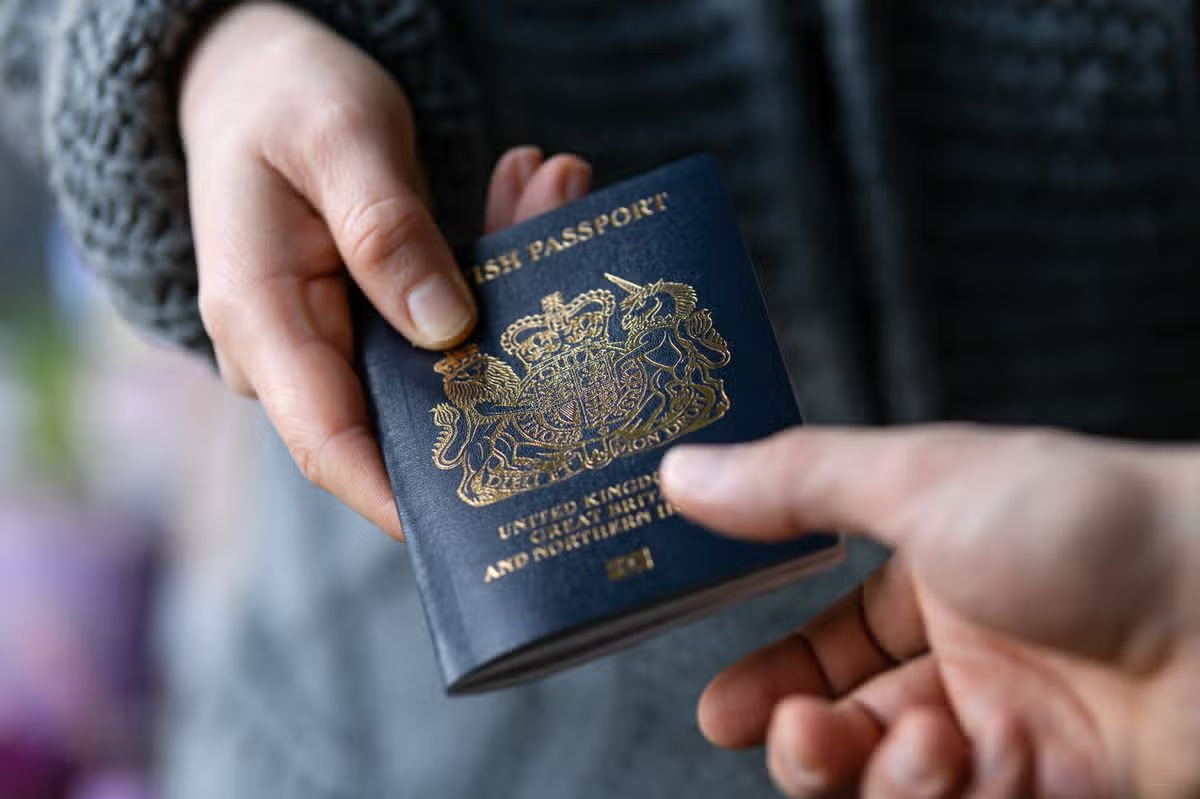
Passports should be scanned electronically from today
A change in EU border rules comes into force on Sunday, meaning everyone from the UK heading into Europe from today could face longer queues. The European Union has been rolling out a new Entry/Exit System (EES), which sees everyone from the UK entering countries like France, Spain, Greece and Portugal having to wait for a machine to enter biometric data.
That includes having your picture taken, having fingerprints scanned and allowing the machine to take a copy of your passport. The system was launched at the end of last year, but queues were so long – sometimes around four hours – that the machines were switched off at some borders and a new date for full use was set – September 6, 2026.
EES was originally planned to go live in 2022 but has been repeatedly delayed due to technical problems and then to avoid peak travel times. It was officially launched in October 2025 and was supposed to be fully rolled out within six months.
By April this year, there had already been severe queue delays, with passengers missing flights, and Greece temporarily suspended EES – followed by suspensions at multiple other EU borders. Those suspensions are supposed to end today.
Airlines have called for the EU to extend the suspension until the end of this year. And there are reports that not everyone will face EES, with France reportedly suffering technical problems that could see it out of use this week.
The fingerprinting kiosks at Port of Dover and London St Pancras are not currently working. A Eurotunnel spokesperson told The Guardian it is “awaiting confirmation from the French authorities on the timing of this next phase”.
A source told The Guardian some countries, including Greece, may continue to use manual checks rather than the automated system despite the September 6 deadline.
Airlines trade body Iata last week called for an official extension, saying there are still delays and still reports of missed flights.
A European Commission spokesperson said: “We are in close and constructive contact with those few member states where some adjustments are needed at certain border crossing points. And during an additional period of operational adjustment that is needed at these few operational border crossing points, the commission stands ready to provide additional support to these member states.”
Thinking of heading to Europe’s Christmas markets this year? Here are some destinations you can reach directly on Eurostar, making them ideal for a day trip or a quick overnight break
Cities such as Lille are easy to reach via Eurostar(Image: Sylvain Lefevre/Getty Images)
A European Christmas market is an amazing way to get into the festive spirit. The historic city backdrops, authentic food and drink, and unique gifts all make it a must-do in the run up to Christmas.
Eurostar can be a good alternative to flying for short breaks, as it allows you to get to the heart of the city for a day trip or quick overnight stay, without the hassle of the airport. (Although do factor in the logistics of getting to London from where the trains depart).
If you’re already starting to count down the days until Christmas, we’ve got you covered with some of the top markets you can reach by Eurostar this winter…
1. Lille Christmas Market
Lille is Eurostar’s shortest route from London at around 90 minutes, so it’s ideal for a Christmas market day trip. Lille Christmas Market takes place on Place Rihour, just a 15-minute walk from the Eurostart terminal, making it an easy location to get to.
The event runs from November 19 to December 30, and is open seven days a week with Fridays and Saturdays seeing the event stay open until 10pm. In the square you’ll find a huge Ferris wheel covered in lights and around 90 wooden chalets selling food, drink, and crafty items. It’s relatively small compared to some of Europe’s other giant markets, but Lille’s red-brick Flemish architecture and cobbled streets make the whole city perfect for a Christmas break.
2. Paris – La Défense Christmas Market
Paris has a few festive markets around the city, and La Défense Christmas Market is the largest, running daily from mid-November until early-January, with exact dates not confirmed yet for 2026.
Running on La Défense Esplanade, it includes an ice skating rink, carnival rides, and hundreds of stalls selling mulled wine, tartiflette, and raclette. However, it’s worth noting that the market can get incredibly busy as it’s in a Paris business district, so you may want to visit during off-peak times.
Another option is the Tuileries Garden Market, set in a park between the Louvre and Place de la Concorde, a sprawling market which takes up about half a mile of space. It runs for about six weeks from mid-November, again no dates are confirmed yet, and features 80 wooden chalets, a Ferris wheel, and lots of festive activities in this lively space.
3. Brussels – Winter Wonders
Brussels has a compact city centre that makes it ideal for a short break, and from the Eurostar station you can take a quick 10 minute journey to get to Winter Wonders. Taking up several streets in the Belgian capital, this sprawling Christmas market runs from November 27 to January 3 and features over 200 stalls.
At the heart of the market, in the beautiful Baroque Grand-Place, you’ll find the giant Christmas tree and a sound and light show. The market also has an ice rink and Ferris wheel, and closes daily at 10pm, so you can enjoy the festive atmosphere when the sun goes down and the Christmas lights turn on.
4. Antwerp Christmas Market
Eurostar launches a new direct service to Antwerp on December 14, and this city full of unique architecture, from ornate medieval buildings to quirky art nouveau structures, is the ideal backdrop to enjoy a Christmas market.
In the centre you’ll find the Grote Markt and Handschoenmarkt full of handmade crafts, local treats like Antwerp’s hand-shaped biscuits, a huge ice rink and plenty of festive bars. An adjacent street is turned into a giant light tunnel, perfect for exploring after dark, and the market is open until midnight on Fridays and Saturdays for festive night owls.
5. Amsterdam Christmas Market and Village
Amsterdam, Eurostar’s longest direct route from London, has multiple Christmas markets and events, but perhaps its best-known takes place in Museumplein, the city’s largest square. This area, popular with tourists thanks to its several attractions such as the Van Gogh Museum, is transformed into a Christmas village complete with live entertainment, 45 festive stalls, and a roaming acappella choir.
But if you prefer something a little less traditional, visit the Funky Xmas Market on December 20 in Westerpark. The event brings together the work of artists and creatives from across this colourful city, with lots of unique and quirky ideas for loved ones who are difficult to buy for.
6. Rotterdam – Scandinavian Christmas markets
Enjoy the ultimate hygge atmosphere at one of Rotterdam’s Scandinavian Christmas markets, which are held in traditional Seamen’s Churches across the city. Rotterdam has always had close ties to Scandinavia thanks to its large harbour, so you can enjoy the Scandi-vibes at traditional Norwegian, Danish, and Swedish markets, which are mostly held during November.
If you’re visiting in December, then Deliplein Winterplein is a two-week community festival where the Katendrecht neighborhood is turned into a winter wonderland. It kicks off with a parade and tree lighting, and includes lots of live music events, visits from Santa, and creative workshops. It’s a more community-focused alternative to the usual touristy Christmas markets.
Have a story you want to share? Email us at webtravel@reachplc.com
The EU’s Entry/Exit System (EES) is now in place and, while most travellers are familiar with the biometric checks, a travel expert warns it’s the lesser-known rules that are catching people out
07:10, 06 Sep 2026Updated 07:10, 06 Sep 2026
Passport holders could get “caught out” (stock image)(Image: Getty Images)
Lots of tourists may be feeling nervous about travel delays this year after reports emerged airports could face a new wave of chaos. Some of this worry has stemmed from the fact that EES, which stands for Entry/Exit System, has come into place this year – this is an automated digital IT system developed by the European Union to register non-EU nationals each time they cross the external borders of participating European nations.
However, if you’re due to travel and want to know what to expect, there’s some expert advice you may want to take on board. A few simple travel tips can make all the difference to helping the start of your holiday go more smoothly.
This year marked the first summer that the EU’s new Entry/Exit System (EES) has been in operation and, while you’ve likely seen reports about lengthier queues at certain airports, for most holidaymakers, it’s simply another aspect of travelling that requires a bit of adjustment. If you’re bound for countries such as Spain, France, Italy, Portugal or Greece, here’s what you need to be aware of before you fly.
Travel expert Ricky Durrance, of package holiday specialists Teletext Holidays, says that, while everyone’s heard about the biometric checks, it’s the minor regulations that are tripping people up. He issued some guidance to help travellers.
Don’t get caught out
One of the least well-known aspects of EES is that your registration is tied to your passport, not to you personally. So, if you’ve renewed your passport since you last visited an EU country, you’ll be treated as a first-time traveller, even if you’ve previously completed biometric registration.
That means providing fingerprints and a facial scan once again at the border. So, you’ll need to allow extra time.
“Many travellers would assume once they’re already in the system that’s job done,” said Ricky. “But EES is tied to the passport, not the person, so don’t be caught out by unexpected enrolment.”
Can things be sped up?
Depending on where you’re departing from, you may even be able to complete part of the process before you set off. The EU’s free Travel to Europe app allows travellers using participating border crossings to upload passport details and a facial image up to 72 hours before departure, helping make the process even smoother.
It’s worth checking whether your airport supports it before you travel. If you’ve booked a package holiday, border delays can have a knock-on effect on transfers, so check with your travel agent whether your departure airport supports early enrolment and allow extra time on arrival.
What about kids?
Families should also bear in mind that every traveller has their own EES record, children included. Each child will require their own passport and facial image check, although under-12s are exempt from providing fingerprints, which helps to speed things up slightly.
It doesn’t apply in every country
The good news is that EES isn’t applicable across the board. Popular holiday hotspots including Turkey, Egypt, Morocco and Tunisia fall outside the Schengen Area, meaning British tourists heading there won’t need to complete EES checks.
For anyone weighing up destinations, it’s simply another factor worth taking into account alongside the weather, budget and the kind of break you’re looking for. Check whether your chosen destination requires EES before you travel.
“Like any new system, there’s always a settling-in period,” added Ricky. “The important thing is not to let the headlines put you off travelling. Millions of people are still enjoying holidays across Europe.
“If you know what to expect, allow a little extra time where needed and make sure your passport is up to date, the whole process should be straightforward.”
As dilemmas go, it’s an unusual one: saddle up a giant squid or board a submersible for a voyage to the bottom of the ocean. In the end, I find myself drawn to a fierce-looking merhorse and tentatively take the reins. High above, my daughter glides by on a flying fish, metallic fins flapping, while her Dad is battling stormy seas at the helm of a huge conch shell. A ride on the Carrousel des Mondes Marins (marine worlds carousel) – a three-storey steampunk merry-go-round inspired by Jules Verne’s novel Twenty Thousand Leagues Under the Sea – is one of the highlights of a visit to Nantes. A surreal fairground ride, a work of art and a homage to the city’s most famous son. It’s also a lot of fun.
On the banks of the Loire, 30 miles from the Atlantic ocean, Nantes is a city whose fortunes were built on the sea. As a young boy growing up near the docks in the 1830s, Verne dreamed of being a ship’s captain, but it wasn’t to be. Instead, he embarked on a series of journeys of the imagination, channelling his wanderlust into novels such as Around the World in 80 Days and Journey to the Centre of the Earth. The last of Nantes’ shipyards closed in the 1980s, but Verne’s unique vision provided the inspiration for a radical art and regeneration project, Les Machines de l’Île, that has breathed life into the abandoned quays and warehouses of the Île de Nantes, the river island that was home to the city’s docks.
This is now the stomping ground of the Grand Éléphant, a 12m-high mechanical pachyderm that carries passengers on tours of the island, spraying bystanders with water from its trunk. I’d seen photos but nothing prepares you for the thrill of turning a corner and seeing the real thing lumbering towards you. You can learn about the magic behind the machinery at the nearby Galerie des Machines, where the creators bring a mechanical menagerie of strange creatures to life.
Théo Mercier’s ‘Fossil Opera’, one of the temporary art installations of Le Voyage à Nantes 2026 festival. Photograph: Martin Argyroglo
The Verne connection also inspired the name of the city’s summer arts festival, Le Voyage à Nantes, which transforms streets, parks and public spaces into an open-air art gallery from July to September. Our visit coincides with the festival’s opening weekend, and the squares and avenues of the elegant Graslin districtare busy with DJ sets, food stalls and people checking out the new artworks. In the Place Graslin, a beautiful square built – like much of Nantes – from chalky-white tuffeau stone from the Loire valley, some kind of cataclysmic eruption has been conjured up in front of the opera house. Huge ammonites appear to have been forced up from beneath the earth, engulfing cars in a mountain of rubble, their doors wide open, radios playing, as though abandoned in haste.
Just yards away, children are playing in the dancing water fountains of the square, while the white-aproned waiters of art nouveau brasserie La Cigale weave through the pavement tables delivering seafood platters to diners unfazed by the apocalyptic scene before them. Titled Fossil Opera, the artwork is a commentary on consumerism and the fleeting nature of human endeavour, and is one of about a dozen site-specific installations that have appeared in the city, as if by magic.
Even outside the summer months, there is plenty to discover in France’s sixth largest city. Each year, a handful of the festival installations are selected to become permanent fixtures, which has resulted in an impressive collection of contemporary public art, from Les Anneaux, a series of 18 giant steel rings on the Quai des Antilles, which frame views of the Loire and light up at night, to Tadashi Kawamata’s Belvédère de l’Hermitage, a viewing platform inspired by a swallow’s nest, which juts over a sheer cliff.
La Cigale, an art nouveau brasserie on Place Graslin. Photograph: Hemis/Alamy
All of these cultural highlights, old and new, are linked by the Ligne Verte, a 12-mile (20km) green line painted on the pavement. We follow the trail through the Passage Pommeraye, an exquisite 19th century glass-roofed shopping arcade; past the imposing Château des ducs de Bretagne, a moated 15th-century castle; stop off at the excellent Musée d’arts de Nantes, which houses an impressive collection of international art spanning seven centuries; and finish up at the peaceful Jardin des Plantes, a charming (and free) botanical garden which is home to a handful of modern art installations and a good cafe. From here it’s a short stroll to the Lieu Unique, a cultural space and concert venue in the factory that once produced the city’s beloved buttery LU biscuits.
And there’s more to come. The Jardin Extraordinaire is a newly created garden and climbing wall in a disused granite quarry in the Bas‑Chantenay district. The exotic planting, waterfall and paddling pools were inspired by descriptions in Verne’s novel, The Mysterious Island. The nearby Chantenay docks have been colonised by studios, music spaces and the Little Atlantique Brewery, housed in a 19th-century former oil mill. Opposite the quarry, a derelict industrial building is being transformed into a new riverside cultural hub, the Cité des Imaginaires, which will eventually provide a home for an expanded Jules Verne museum. It’s an ambitious project: creative, unconventional and looking to the future. I’m sure Jules Verne would approve. Joanne O’Connor
Winter’s Journey, a seasonal festival of concerts, temporary light installations, artworks and gastronomic events, runs from 21 November to 3 January.
Basel, Switzerland
Swimmers in the Rhine beside Basel Cathedral. Photograph: Hemis/Alamy
Unless you’re a professional who makes their way to the Art Basel fair every year, chances are Switzerland’s third largest city will have passed you by – or rather you will have passed it by. Basel is one stop before Zurich on the fast train from Paris, but to whiz through would be a mistake. For art and design lovers, it is the perfect city to explore on a long weekend.
Basel bills itself as “the city of art and culture on the Rhine”, and it lives up to its boast. Stroll around the charming old town and marvel at the cathedral before enjoying a cold beer at one of the many cafes. If temperatures soar, you might want to join local people with a dip in the Rhine.
Once you’ve done all that, you need to engage with the area’s art offerings. Within the city, the Kunstmuseum holds more than 300,000 works spanning eight centuries, with big hitters such as Monet, Van Gogh and Warhol, while Museum Tinguely is home to the work of the idiosyncratic Swiss sculptor Jean Tinguely and his dada-esque machines.
But the two real draws are on the outskirts of the city. Fondation Beyeler in the suburb of Riehen is home to an impressive collection of modern and contemporary art, and always has a blockbuster exhibition (currently Pierre Huyghe) to check out. A short bus or train ride across the German border in Weil am Rhein isthe Vitra Design Museum, home to one of the world’s largest permanent exhibitions of modern furniture design.
Miniatures of designer chairs at the Vitra Design Museum near Basel. Photograph: Sipa US/Alamy
Before you admire the furniture collection, take a walk around the campus, where you can marvel at the main museum building designed by Frank Gehry; the Vitra Schaudepot – which houses the furniture collection – designed by Herzog & de Meuron; Zaha Hadid’s former fire station; and Tadao Ando’s conference centre. There is a beautiful garden bythe Dutch designer Piet Oudolf, and the recently added Doshi Retreat for a moment of quiet reflection designed by theIndian architect Balkrishna Doshi, his first completed project outside India and the last he worked on before he died in 2023.
That’s half the day gone, so time to head inside. In lots of ways, exploring the Schaudepot is like walking through a giant doll’s house, with the rooms filled with instantly recognisable furniture icons from the 19th century to today, including works by Verner Panton, Le Corbusier, Alvar Aalto and Charles and Ray Eames. The museum also puts on temporary exhibitions. And if all of that has exhausted you, head to the VitraHaus Café, which serves a delicious lunch. Max Benato
The Volkshaus, a boutique hotel in the old town, has doubles from 152 swiss francs (£138) room-only
Lübeck, Germany
The ‘wonky’ Holsten Gate in Lübeck. Photograph: SW Travel Imagery/Alamy
Unless you’ve read Buddenbrooks, Thomas Mann’s epic family saga, you may not have heard of Lübeck. But in the middle ages, this port city in Germany, 70km north-east of Hamburg, was one of the richest and most powerful places on Earth. Today, despite the best efforts of the RAF to destroy it in 1942, it remains a beautifully intact medieval gem.
The old town is a Unesco world heritage site. It sits on an island in the centre of the city, encircled by the rivers Trave and Wakenitz, and the water is a good place to start exploring. My boyfriend and I hired an electric boat (€49 for up to six people) and spent an hour circumnavigating and gazing at its distinctive seven church spires.
Back on dry land, we set off on a guided walking tour, starting at the imposing – if wonky – Holsten Gate. We took in the five red brick churches the spires belong to (two have doubles), and climbed one of them, St Petri’s viewing tower, for a panoramic view. We also stopped at the 800-year-old town hall on the marketplace.
But just as fascinating was what lies behind the gothic splendour. At one time, there were 180 hidden alleyways and courtyards threaded through the old town, and about 80 remain. These labyrinthine lanes were built behind wealthy merchants’ mansions to house the poor. Today, the restored cottages are sought-after and the flower-filled, cobbled alleys are charming to explore.
To better understand Lübeck’s past, we visited the European Hansemuseum in the old castle monastery. It tells the story of the Hanseatic League, the powerful trade network that stretched from England to Russia and gave Lübeck (“the Queen of the League”) its wealth in the middle ages and its status as a free city state right up to 1937.
In a nearby palace, the Museum Behnhaus Drägerhaus displays 19th- and early 20th-century German and European art, including work by Edvard Munch, who visited Lübeck and painted its salt warehouses. Just round the corner is the Günter Grass-Haus, where the writer regularly stayed (he died in Lübeck in 2015).
Lübeck has three natural open-air swimming areas, one on the island. And the seaside isn’t far away – we had a day trip to Travemünde, a historic resort town with miles of sandy beach, taking a scenic river ferry there (90 minutes) and a 20-minute train back.
The old town of Lübeck is encircled by the rivers Trave and Wakenitz. Photograph: Acnakelsy/Getty Images/iStockphoto
In town, the medieval Schiffergesellschaft (Seafarers’ Guild) is now a traditional Hanseatic restaurant, with long communal tables. Alongside North Sea fish and Holstein meat dishes are vegetarian versions of labskaus, a sort of hash.
Sadly, we couldn’t visit Buddenbrookhaus, the museum dedicated to the novel, as it is being renovated. It is expected to reopen in 2030 – which gives you plenty of time to read Mann’s 864-page doorstopper. Like Lübeck itself, it is worth the effort. Rachel Dixon
Parma Cathedral and the octagonal baptistery. Photograph: Peter Adams/Getty Images
Parma is just far enough off Italy’s main travel routes to discourage the huge crowds of tourists that flood the likes of Venice and Florence. Most travellers reach this tranquil Italian gem by flying into Milan or Bologna, followed by an hour’s train ride. It is definitely worth that extra effort, as I discover a city that ticks every box for a weekend getaway: fabulous museums and frescoed churches without long queues or the need to book a timeslot in advance; friendly, affordable trattorie and osterie showcasing a feast of local food and wines; and, if you time it right, the chance to catch an opera composed by locally born Giuseppe Verdi in the intimate Teatro Regio.
The historic centre of Parma is small and easily explored on foot, taking me past an array of architectural masterpieces. I kick off at the grand Piazza Duomo, dominated by the imposing 900-year-old romanesque cathedral. Everyone’s eyes are drawn up to the ornate cupola, decorated with a captivating illusionist fresco by local Renaissance artist Antonio da Correggio. Next to the cathedral stands the early gothic Battistero, an octagonal baptistery whose bare, minimalist exterior contrasts with an incredible explosion of colours from the 13th- and 14th-century paintings that cover the interior. Then, tucked away behind the Duomo, I come upon the entrance of the medieval Monastero di San Giovanni Evangelista, whose cloisters and garden are a peaceful oasis. Entry to the monastery and cathedral is free.
Parma’s big must-see is the monumental Palazzo della Pilotta, a baroque complex of palatial museums, a library and remarkable 400-year-old theatre, all included in a single €18 entry ticket. Just by the Parma river that slices the city into two, the palazzo was built by the Farnese family, whose patronage created most of the city’s Renaissance monuments. The Teatro Farnese, made almost entirely of wood, is rarely used as a venue today, but a visit remains an incredible experience. I leave most sightseeing time, though, for the Pilotta’s landmark Galleria Nazionale di Parma, a treasure trove of old master paintings. It may not quite rival the collection of the Uffizi, but I enjoy the chance to just turn up without booking in advance and quietly appreciate works by Leonardo da Vinci, Fra Angelico, Canaletto and Tintoretto without being surrounded by crowds.
Antonio Correggio’s Assunzione della Virgine in the cupola of Parma’s Duomo. Photograph: Gordon Sinclair/Alamy
Sightseeing is only part of Parma’s attraction, however, as this is one of Italy’s food capitals. I walk into the rustic, raucous OsteMagno bar, where everyone is tucking into tagliere – wooden boards piled with razor-thin slices of cured ham, the famous prosciutto crudo di Parma, artisan salami and crumbly aged parmigiano reggiano cheese, accompanied by a glass of the local’s favourite tipple, fizzy red Lambrusco wine, which is a lot more drinkable than I expect.
This is not a city to seek out chic, gourmet restaurants, but rather one of the many traditional trattorie such as Da Antonia, whose eponymous owner has overseen the cucina for more than 50 years, or the 120-year-old Trattoria Corrieri, serving up generous plates of homemade pasta for less than €15. John Brunton
El Sardinero beach, Santander. Photograph: Miguel Moya/Alamy
Often dismissed as little more than a ferry terminal – somewhere to stop overnight if you want to take your dog to Europe or lower your carbon footprint – the port city of Santander is undergoing something of a cultural renaissance. It’s already blessed with a spectacular bay facing the Cantabrian mountains, wide sandy beaches, grand, colonnaded plazas and superb food, but the opening of new art spaces and museums in the coming months will put the Cantabrian capital firmly on the weekend-break map.
Leading the way on 8 September is Faro Santander – a new cultural centre in a grand historical building housing a 1,000-piece art collection belonging to Banco Santander, including works by Velázquez, Goya, Titian, Rubens and Picasso. Different parts of the collection will be shown at different times.
With its ornate white facade facing the bay, the Pereda building was previously the bank’s headquarters, but has been transformed into a striking, 21st-century museum space by Pritzker prize-winning British architect David Chipperfield.
Santander’s moment in the spotlight will extend into 2027 when Madrid’s Reina Sofia Museum opens its first outpost, set in a similarly grand neo-Renaissance building just a few metres away from Faro Santander. The museum will house the Archivo Lafuente, with paintings, sculptures and manuscripts, including major collections on dadaism and the Spanish civil war, as well as art from Spain, North America and Latin America.
Faro Santander and Archivo Lafuente will form two points on a kind of “art triangle”, along with architect Renzo Piano’s 2017 Centro Botín contemporary art centre just over the road. With a bijou but impressive permanent collection, including works by Matisse, Juan Gris, Joaquín Sorolla and Mark Rothko, the Centro Botín sits on the waterfront like a giant, stilt-mounted, 60s alarm clock sawn in half.
Renzo Piano’s Centro Botin. Photograph: Nick Hatton/Alamy
Spaniards cottoned on to Santander’s charms long ago, and the seafront is lined with elegant fin-de-siècle villas built when well-heeled Madrileños discovered that the city’s Atlantic breezes were the perfect respite from the Spanish capital’s infernal summer. More than 100 years later, while Britain was experiencing its own heatwave, I followed their lead. Temperatures were in the balmy high 20s as I ambled past toddlers building sand castles and teenagers frolicking in the surf on El Sardinero beach, just 15 minutes by bus from the city centre.
The centre itself is wonderfully walkable and there’s an unhurried, laid-back vibe in the streets, grand plazasand narrow alleys near the gothic cathedral, lined with bars serving pinchos – the Cantabrian equivalent to tapas.
After tucking into tender, grilled squid, laced with gutsy garlic and olive oil, at Mesón Rampalay on a leafy square, I spent a fascinating couple of hours at Mupac – the Museum of Prehistory and Archaeology of Cantabria, just a few minutes’ walk away from Faro Santander.
The museum, which is home to one of Spain’s most important prehistoric collections, features excellent interactive displays, and in 2027 it is moving to a brand new, multimillion-euro building. By next year, it seems, Santander will be not just the capital of Cantabria, but a capital of culture too. Eddi Fiegel
The trip was provided by Faro Santander. Abba Santander, near the Centro Botín,has stylish doubles from €66 room-only
A terrifying moment unfolded aboard a Qantas flight from Queenstown to Sydney when flames erupted from its left engine shortly after takeoff. The aircraft was diverted to Christchurch, where it landed safely. Videos capturing the flames were shared on social media.
Michelle Keegan has reportedly quit a drama just weeks before she was set to begin filming and now a former Doctor Who star has is said to have taken over the role
22:32, 05 Sep 2026Updated 22:44, 05 Sep 2026
Michelle Keegan is said to have quit her ‘meaty’ role in a new drama just weeks before she was set to begin filming (Image: Getty Images for L’Oreal)
The actress, 39, is said to have been gearing to take on the part of a working class barrister in a new series that has been penned by Sherlock creator Steve Thompson, with cameras set to roll from November.
But it’s now thought that Michelle, who has to Palma, 18 months, with husband Mark Wright, has pulled out of the project in what is being called a “huge blow” for the production.
A source said: “Michelle was really keen to take on the meaty role, but the heavy filming schedule would take her away from daughter Palma for too long.
According to reports, former Doctor Who actress Jodie Whittaker has been drafted into the role instead but fans of Michelle will soon be able to see her in in Netflix drama The Woods, which is based on the Harlan Coben thriller of the same name.
Speaking to The Sun, the source added: “The hours were quite intense and the project was starting straight after her Netflix drama The Woods and she just couldn’t commit. She is dedicated to her acting career, but like all working mums has to prioritise being there for her family, juggling work, parenting and being present for Palma.”
Michelle shot to fame when in 2008 when she was cast as Tina McIntyre on Coronation Street, and stayed with the soap for seven years before making a permanent exit when the much-loved Rovers barmaid was killed off as part of a whodunnit plot. Since then, she has Michelle has become one of the most famous actresses in Britain, starring in top-rated programmes like Brassic and Ten Pound Poms.
Michelle previously starred in Fool Me Once for Netflix, which was based on Coben’s 2016 thriller, but this time round, she will play Lucy Silverfield, who helps her former partner, played by Tom Bateman. In
When the latest adaptation of The Woods was first announced, Coben said in a statement: “The Woods is a haunting and very personal story. It has everything you expect from us – twisty, turning, gasp-inducing – but at the core is a story of old love and yearning.
“Working with a cast led by Tom Bateman, Michelle Keegan, Mandeep Dhillon, Pearce Quigley, James Buckley, Tom Allen – it’s an embarrassment of riches.”
Penned by Danny Brocklehurst, the upcoming eight-part thriller begins with a mysterious disappearance 20 years ago that leaves a family devastated.
When new evidence comes to light that convinces barrister Paul ‘Cope’ Copeland (played by Bateman) his missing sister could be alive after all, he begins a relentless investigation to unearth the truth.
The Mirror has contacted Michelle’s representatives for comment
If there’s one thing Jed Wheeler and Marcus Ruiz Evans agree on, it’s that things in California need to change.
The state sends too much money to Washington, they say, and is both politically and culturally out of step with a country that lacks its openness and vitality.
“We can solve our own problems and don’t need to wait on a government 3,000 miles away,” said Wheeler, echoing Evans’ suggestion that Democratic-leaning California would be far better off going it alone as a separate country.
They sharply disagree, though, on the matter of how and precisely when California should seek a divorce from the other 49 states.
Evans is pushing a ballot measure that would put the question of secession before voters in 2018, believing the time has never been so ripe to form a breakaway nation. Wheeler is working to create a pro-secession political party, looking a dozen or more years down the road when its candidates hold office, and fears that a premature vote would undermine the effort.
In short, the effort to cleave California faces a crackup of its own.
At least four proposals are floating about to reshape the state in some fashion, including two that would split up California along different axes. All work at cross-purposes, and the result is varied degrees of hostility among proponents; none of the plans seems likely to reach fruition anytime soon, if ever.
That is something they have in common.
Since 1849, when the state was remade in a rush of greed and ambition, there have been more than 200 efforts to split apart, pull away or otherwise reimagine the vast empire known as California. Not one has succeeded.
The latest, most conspicuous attempt, a proposed ballot initiative fueled by anti-Trump sentiments and titillated national media coverage (those wacky Californians!) seems destined to fall short of qualifying for the ballot, barring a sudden change in fortune.
Supporters of the measure, led by Evans, have until July 25 to collect nearly 600,000 valid signatures to place an independence measure before voters in November 2018. The group, which received the go-ahead to collect signatures at the end of January, has yet to reach a quarter of that number, according to the California secretary of state’s office.
The group has also not reported raising any campaign contributions, according to the secretary’s office, which oversees elections.
Evans, 40, a former government affairs consultant now working full-time on the “Calexit” campaign, insisted a robust signature-gathering process was underway, engaging thousands of volunteers in 82 chapters across the state. However, the precise number collected was unknown, he said, because of the loose structure of his pro-secession group, Yes California.
“Some are mailing them in. Some are holding them. Some are taking them directly to their county registrar of voters,” he said. Asked to assess the odds of making the ballot, Evans responded, “Good. I won’t say great.”
The effort, uphill from the start, has not been helped, he said, by reports linking the Calexit movement to Russia, which Evans called preposterous and unfair. The co-leader of Yes California is Louis Marinelli, a former San Diego-area Assembly candidate now teaching English in Russia, where, among promotional activities, he appeared last fall at a Kremlin-backed pro-secession conference in Moscow.
“It has definitely been damaging to us getting big donors and hurting our ability to bring on new members because of clouding the issue without accurately reporting all the facts,” Evans said, citing the organization’s 44,000 “likes” on Facebook as just one example.
Nor, he said, was it beneficial when Nigel Farage, a leading proponent of Britain’s exit from the European Union and prominent Trump supporter, recently flitted into California to talk up a vague plan to split the state down the middle, creating a coastal “West California” and interior “East California.”
“They’re trying to confuse people,” Evans huffed. “Classic Trump.”
It seems Evans and his pro-secession movement might have found an ally in Wheeler and others working to form a political party dedicated to achieving state independence. Many tenets of the left-leaning California National Party — the state needs to keep more of the money it sends to Washington and establish home-grown policies on issues such as immigration and healthcare — echo those propounded by Yes California.
The nascent party has taken no official position on the 2018 secession drive. But Wheeler, the party’s vice chairman, believes the initiative would lose, damaging the independence movement. Better, he said, to elect sympathetic lawmakers under the National Party banner who could then work to bring about California’s eventual departure.
“We’re trying to be very pragmatic and realistic where we are as a movement,” said Wheeler, 36, who works for a digital media company in San Francisco.
While “the idea of having a ballot initiative is seductive and appeals to a lot of people,” he said, “you can’t harvest the crop without the work of planting the seeds, then tilling the soil and all that stuff first.”
In California’s far north, a determined group of dissenters have done that labor for decades — so far to no avail.
Efforts have been underway since before World War II to break off more than a dozen rural counties and combine them with a chunk of southern Oregon to form Jefferson, the nation’s 51st state.
The impetus is the same that drives backers of secession: the notion of a far-off government (in this case, Sacramento) ignoring local sentiments and a sense of being outnumbered and outvoted by a population whose social and political views are at odds with the prevailing (in this instance, conservative) culture. The proposed flag — a pair of Xs, or double cross — captures the animating sentiment.
“We really don’t have fair representation,” said Terry Rapoza, 67, a leader of the Jefferson movement in Shasta County, where he sells T-shirts and other souvenir clothing in Redding.
He cited recent passage of a 10-year, $52-billion road repair and transportation bill; the hike in gas taxes, he said, will have much less impact in urban California than in rural stretches, where people might drive 20 miles to the grocery store, or a dozen miles to pick up their mail.
But he has little use for secession, which strikes him as bizarre — would the new California nation have its own nuclear arsenal and U.N. representative, he wonders — and fruitless in ending the urban-rural divide he blames for persistently short-changing his part of the state.
There’s something wrong and even vaguely un-American, he suggested, about trying to break the country apart. “We want to add a star to the flag,” Rapoza said. “Not take one off.”
Keys appeared on course for a first fourth-round appearance at her home slam since 2023 after taking a commanding third set lead against Olympic champion Zheng.
But the 2025 Australian Open winner would miss a match point and lose each of the final seven games in a 1-6 7-6 (7-3) 7-5 loss that stunned the crowd.
The 31-year-old Keys said she felt as though she “couldn’t play tennis anymore” in the final set.
“I obviously got off to a really good lead, and then I got really scared, like I couldn’t swing [the racquet],” Keys said.
“I felt like I couldn’t play tennis anymore. It just felt like it was a much bigger deal than just playing a tennis match all of a sudden.”
Keys, who lost the 2017 US Open final to fellow American Sloane Stephens, went out in the fourth round at the other three majors in 2026.
“I feel like I’ve been struggling for a while now. I’m going to have to make some sort of changes,” Keys said.
“I just kind of keep putting it off because that’s how the tennis world works. It’s just to the point where I actually need to do something about it.”
Anisimova, beaten by world number one Aryna Sabalenka in last year’s US Open final, lost in straight sets to Russian-born Austrian 24th seed Anastasia Potapova.
The 25-year-old was visibly frustrated with herself throughout the contest, losing her serve twice in the first set and four times in a topsy-turvy second.
Meanwhile, two-time champion Naomi Osaka fought back from a break down in the decider to see off Belgian 23rd seed Elise Mertens.
Osaka, seeded 13th, won 6-3 3-6 7-5 to set up a last-16 match against second seed Elena Rybakina.
Kazakhstan’s Rybakina, who knows she will be guaranteed to become the new world number one if she reaches the semi-finals, demonstrated her quality in a 7-6 (8-6) 6-3 victory over Ukraine’s Yuliia Starodubtseva.