A brand new season of Love Is Blind UK has finally returned to Netflix
Ciara has joined the pods hoping to find love(Image: Tom Dymond/Netflix)
A Love Is Blind UK star looks completely different in an unearthed throwback snap.
Love Is Blind UK has returned for its third instalment, with a fresh group of singles taking to the pods in the hopes of finding their perfect match. As ever, they will go on blind dates, narrowing down their potential love interests along the way.
They will only meet face to face for the first time if they decide to take their relationship to the next step and become engaged. Then, will they move in together and plan their wedding day, but for some, the process is not without its difficulties.
A synopsis reads: “Love is Blind: UK returns to Netflix for a third series which promises high drama, raw emotion and plenty of romance.
“The latest group of hopeful singles, each one searching for their Mr. or Mrs. Right, will step into the iconic Pods for a string of blind dates. From behind a wall, they are all hoping to form a connection so deep that they’re willing to put their hearts on the line by agreeing to marry without ever having seen each other.”
Now, eight episodes have been released on Netflix, with viewers having to wait until next week to find out who gets married, or who, if anyone has been left at the altar.
But as fans binge watch the brand new release, there is one star that appears to be unrecognisable in unearthed throwback pics.
Pilates Instructor Ciara Murphy, from London, is looking for someone who values her for “more than just her looks”. The now 30-year-old is a fan of the finer things in life and has been single for a year, having been cheated on in every relationship in the past.
Content cannot be displayed without consent
Now, the star is looking for her forever love, hoping the pods will help her find the one. Exploring her connections, Ciara admitted on the show that she did in fact used to be a brunette, as she showed off her now-blonde locks.
Over on Ciara’s Instagram page, which she regularly posts selfies from her adventures, the star is known for her bright blonde hair, in recent snaps, but throwback pics confirm her natural colour.
In one post, from 2023, she can be seen smiling at the camera, with Christmas decorations in the background, captioning her post: “merry christmas.”
Whether Ciara finds love on the show though, fans will need to tune in to find out.
Former Maj. Gen. John Bruce Medaris, the military director of the nation’s unmanned space program who after a seemingly miraculous recovery from cancer devoted his remaining years to the Episcopal priesthood, has died of the disease, it was learned Sunday.
Medaris was 88 when he died Wednesday at his summer home in Highlands, N.C., after a long struggle against bone and lung cancer. The announcement was made by friends in Florida and reported by United Press International.
He had commanded the Army’s early space program, the Army Ballistic Missile Agency, when it orbited America’s first satellite on Jan. 31, 1958. The program was soon turned over to the civilian control of the new National Aeronautics and Space Administration.
Col. Pat Patterson of Maitland, Fla., a friend of Medaris’ for 47 years, said the former general had picked the nation’s first team of space scientists, both military and civilian, “and I have never seen a team surpass that one.”
The historic team that built those first missiles was headed by German scientist Wernher Von Braun, father of the Saturn V rocket that was to send Americans to the moon and a pioneer in the development of Germany’s wartime V-2 rocket. Kurt H. Debus, the Kennedy Space Center’s first director, was another team member.
The expatriated German scientists that included Von Braun had been sent after the war to Ft. Bliss, Tex., and later transferred to the small north Alabama cotton town of Huntsville where Medaris became their commander.
There was little sense of urgency about the nation’s embryonic space program until the Korean War broke out in 1950. Then seven years later, on Oct. 4, 1957, the Soviet Union launched the 184-pound Sputnik I, the world’s first orbiting satellite.
On Dec. 6, Medaris’ team tried to respond by sending a three-pound satellite into orbit, but the Vanguard rocket which was to have propelled it rose two feet off its Cape Canaveral launch pad and exploded into a giant fireball.
America finally got into space Jan. 31 when a Jupiter C booster hurled the 31-pound Explorer I into orbit. The satellite discovered the Van Allen Radiation Belt.
Medaris was born in Milford, Ohio, and at 16 lied about his age to get into the Marines. After a couple of years, he resigned and tried his hand at business, where he made but then lost a fortune.
Medaris entered the Army as a second lieutenant and came through 300 days of World War II combat unscathed.
An ordnance expert, he served as chief of the first Army contingent to Argentina from 1949 to 1952, and in 1955 was named commander of the Ballistic Missile Agency.
He became known as an aggressive, often arrogant commander who would roll over anyone in his way. He even carried a swagger stick for emphasis.
But in 1964, four years after retiring from the service, he was stricken with bone cancer and told he had only 18 months to live. Eighteen months later he was not only still alive, but the cancer somehow had gone into remission.
“The thought had sometimes crossed my mind that perhaps a power, or whatever it was, was keeping me intact because there was some important job that I was destined to do,” he said in a 1970 interview.
He told the Los Angeles Times in a 1982 interview from Cape Canaveral, where he had gone as an honored guest to watch the launch of the space shuttle Columbia, that he decided to repay the debt by service to his church.
He said he originally intended to become only an Episcopal deacon but “soon I found myself irresistibly forced into (other) situations.” He thus became the Very Rev. John B. Medaris, rector of Anglican churches in Maitland and Orlando, Fla.
In recent years, the International Aerospace Hall of Fame made Medaris a fellow, its highest award. The Army awarded him the first Medaris Award to Army Space Pioneers.
In the meantime, the cancer resurfaced in 1970 but again went into remission, returning only recently.
Although he had become a man of God, he did not lose the aggressiveness that had marked his military days and remained particularly critical of the decisions made many years earlier that separated military and civilian space objectives.
A beach in the UK has been named among the top ten best in the world, beating all sorts of exotic destinations thanks to its white sands and clear turquoise seas that visitors love
This article contains affiliate links, we will receive a commission on any sales we generate from it. Learn more
This unspoilt beach was ranked alongside lots of exotic destinations(Image: Getty Images)
If you were aiming to visit one of the world’s best beaches, you might think this would involve an extremely long flight, and possibly a boat to an island or trek through a rainforest to reach it.
But one of the best beaches in the world is right here in the UK, and it has been revealed in a ranking by Big 7 Travel. Its list of the 50 Best Beaches in the World includes many destinations you’d expect, from the Seychelles to Sri Lanka, but only two European destinations made the top ten, only one of which is in the UK.
The list explains the reason for the Cornish beach’s ranking, saying: “Hidden beneath towering granite cliffs in Cornwall, Porthcurno Beach is easily one of England’s most beautiful. The entire Cornish coast is known for its rugged coastline and significantly better weather than the rest of the UK, and with the clear waters and bright sands of Porthcurno Beach, it’s easy to imagine that you’re in the tropics.”
Found just a few miles from Land’s End, Porthcurno Beach is reached by a sloping coastal path and is surrounded by cliffs to protect it from high winds. This bay has soft golden sands and clear blue waters, and during the summer months there are usually safe places to swim marked out by the lifeguards.
When it’s low tide, the sea rolls back to expose a walking route to the neighbouring beach of Pedn Vounder; just be careful to check the tide times for your return, as people sometimes find themselves cut off. Overlooking the beaches is the iconic Minack Theatre, where a variety of plays and family shows are on the schedule, with incredible cliffside views as the backdrop. While it looks like something from Roman times, the theatre was designed by Rowena Cade and opened in 1932.
Another unique creation of Rowena’s was the Porthcurno Wendy House, which she designed for her lucky nieces and nephews. This playhouse was carved into the granite rockface of the cliffs and had a fireplace, glass windows, and two storeys of rooms. Sadly, it’s now closed to the public, but you can still see the exterior when you’re on the beach.
Porthcurno is a small village, which adds to its charm and the remote vibes of the beach. You’ll find a few facilities such as a pub and a couple of shops. But there’s one unique attraction that you might not expect. The village was once home to the world’s largest submarine station, and at the PK Porthcurno Museum of Global Communications you can learn about its role in WWII. You can even explore the tunnels that were built to protect its infrastructure in case of an attack.
Aside from Porthcurno, only three other UK and Ireland locations made it into the top 50. Luskentyre Beach in Scotland was praised for its white sands and rugged mountain scenery, while Keem Beach was named as “one of Ireland’s true hidden gems. Whitesands Beach in Wales was also on the list, with the guide stating: “While the coastline looks its wildest during winter, on a clear summer’s day, the sea views can rival those of any beach in the world.”
Ten best beaches in the world according to Big 7 Travel
Anse Source d’Argent – Seychelles
Entalula Beach – Philippines
Pink Beach – Indonesia
Sandy Lane Beach – Barbados
Ee Motu Beach – Cook Islands
Whitehaven Beach – Australia
Matira Beach – Bora Bora, French Polynesia
Cala Macarella – Menorca, Spain
Porthcurno Beach – England
Mirissa Beach – Sri Lanka
Have a story you want to share? Email us at webtravel@reachplc.com
If you were once a child dragged to the British coastline, seemingly regardless of the time of year or weather, then you too will know how beautiful but also bleak it can be
The seaside town splits opinions(Image: Getty Images/iStockphoto)
Bleak or beautiful? When it comes to the UK coastline, it can be difficult to know what you’re going to get.
Camber Sands, Morecambe and Cromer are all picture-perfect places that belong on a postcard when the sun is shining and the chippy fryers are bubbling away.
But, when the clouds roll in and the temperatures drop, leaving the prom deserted but for the hopeless sound of ignored arcade machines, such beauty is replaced by a bleakness.
If you were once a child dragged to the British coastline, seemingly regardless of the time of year or weather, then you too will feel this particular brand of wist deep within yourself.
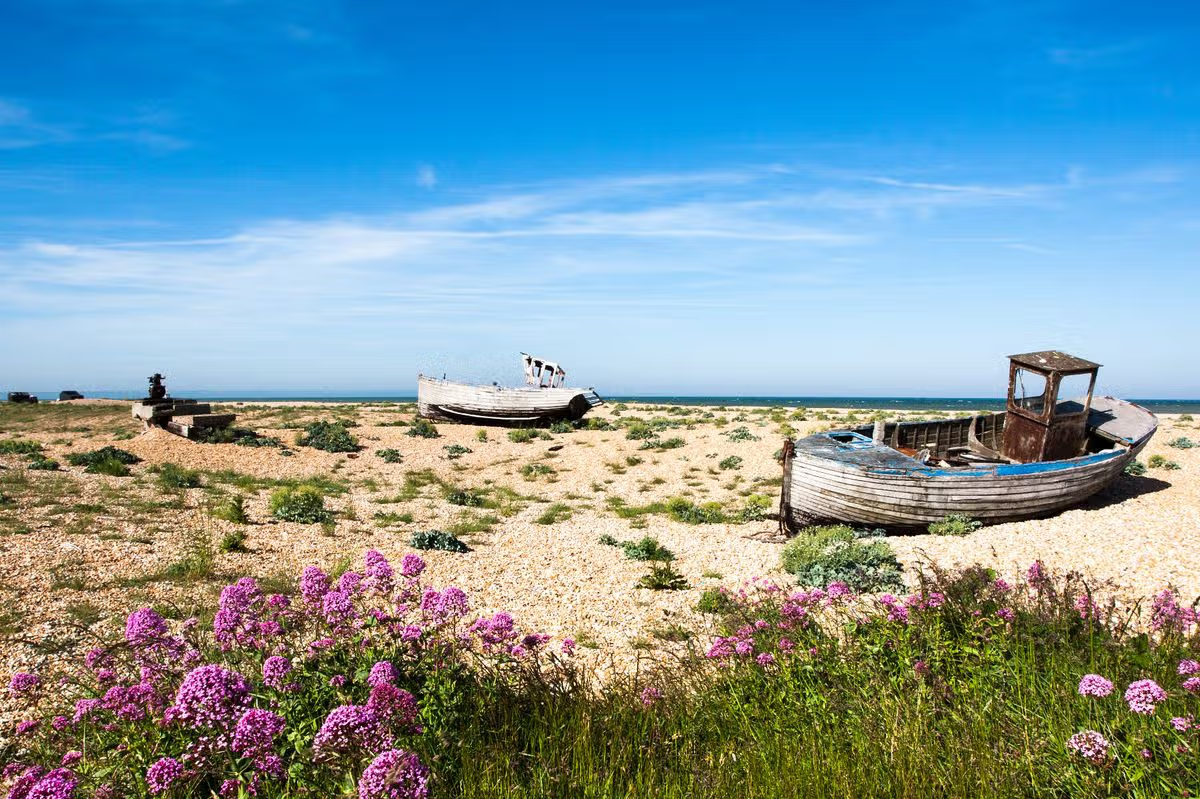
Inarguably, the bleak jewel in the Dungeness crown is its twin nuclear power plants, which once whipped a patch of nearby sea into a whirlpool but have lain dormant and decommissioned for the past 19 years.
The unique feel of the place has been best captured by artist, filmmaker, gay rights activist, and gardener Derek Jarman, who turned his home into Prospect Cottage—a point of pilgrimage for his fans and those who love the way he carefully manicured the garden into a concentrated miniature form of Dungeness.
But not everyone is a fan. In fact, many are left cold by Dungeness’ charms.
“Bleak is an understatement,” one detractor of the place recently wrote on Reddit. Another added: “Bleak to Dungeness is like ‘a wee bit cold’ in Antarctica. The missus loved it though…” A third wrote: “I find it dismal down there. Old nuclear power station for a view.”
Others love Dungeness and how different it feels from other parts of the UK.
The science writer Ben Goldacre recalled his experience of riding through Dungeness on the small railway that takes day-trippers down the coastline.
“The Romney, Hythe and Dymchurch Railway has a strange, dreamlike existence, on the border between fantasy and reality. You leave toytown in a cute miniature train, surrounded by excited children. But Disney, this is not. Suddenly, you’re riding through real life: past clothes lines, collapsing breezeblock walls, an abandoned washing machine in a back garden, chuffing along behind a miniature steam train. Finally, you’re ferried across a beautiful, windswept shingle peninsula, spotted with railway carriage houses and abandoned shipping containers. Then you are delivered to the foot of a nuclear power station,” Ben wrote.
“This meeting of toy train sets and grim industrial purpose is what makes the Romney, Hythe and Dymchurch Railway so perfect.”
Ben is not alone. Dungeness was named the seventh-best beach town in the UK in Which?’s survey of the British public last year. The consumer organisation surveyed more than 3,800 people about their experiences of UK seaside destinations and their opinions on beaches, scenery, food and drink offerings, accommodation, tourist attractions, and value for money.
The elevation of Dungeness into the top ten is a major scoop for the Kentish settlement, which languished in 35th place the year before.
DENVER — The Dodgers are putting closer Edwin Díaz on the injured list for the second time this season, this time with inflammation on the right side of his neck, manager Dave Roberts said before the game against the Colorado Rockies on Tuesday.
The Dodgers are going to have Dr. Robert Watkins, who specializes in spine injuries, examine at Díaz’s neck in L.A. on Wednesday morning, Roberts said. He’s set to undergo imaging.
“It’s something he felt [Monday] night,” Roberts said before the Dodgers’ 7-6 win against the Rockies on Tuesday. “We don’t know if it’s something that has been there the last, call it, week or whatever but it showed its head last night. So we’re going to address it.”
The move comes after Díaz gave up nine runs and recorded three blown saves in a span of six appearances.
“I know Edwin is — I don’t know if it’s encouraged, but just know that there could be a reason why the stuff is not playing like it has in the past,” Roberts said. “And the neck, obviously, there’s ties with the whole body, the arm, and all that stuff matters. So I’m personally excited to kind of find something that kind of make us understand what’s going on.”
“We’ll know more after seeing Dr. Watkins,” Roberts said, “but given where he’s at, I don’t see a situation where he’d be out for the year.”
Díaz has only made 16 appearances for the Dodgers this season, recording an 11.85 ERA and 6.01 FIP. He spent three months on the IL after undergoing surgery to remove loose bodies from his elbow in late April.
After collecting a save in a 4-2 win over the Seattle Mariners on July 29 in his first appearance back, Díaz was unable to show command in subsequent outings. He blew saves on consecutive days against the Arizona Diamondbacks on Aug. 7-8, and then blew a 4-2 lead last Thursday against the Milwaukee Brewers — which proved critical for the Dodgers in losing the head-to-head tiebreaker against the Brewers as the division leaders jostle for playoff seeding.
During the Dodgers’ 11-5 victory over the Colorado Rockies on Monday night, Díaz pitched the ninth inning and gave up three runs and four hits.
With Díaz no longer an option in save situations, left-hander Tanner Scott is set to slide into that role.
“I just wait for the phone to ring, I don’t care when,” Scott said after a four-out save Tuesday. “You get the adrenaline rush when your name’s called and just go out there and pitch.”
On Tuesday, Roberts turned to Scott to get the final out of the eighth inning, with runners on first and second in a two-run game. He induced left-handed pinch hitter Brett Sullivan to ground out to third.
Back out for the ninth he gave up a one-out double to Jake McCarthy’s and a two-out RBI single to Willi Castro. But the run was of no consequence.
“He’s been great,” Roberts said of Scott’s contributions this year, in multiple roles. “Tanner doesn’t complain. He’s always ready, wants to pitch, wants to help his teammates, his team. And certainly, given how last year went, for him to come back and right the ship, he’s been our most consistent reliever by far. I trust him, and I feel like you can use him in any situation.”
The Dodgers also recalled right-hander Emmet Sheehan on Tuesday as a multi-inning option out of the bullpen. Sheehan, optioned to triple A at the trade deadline for a reset, made two starts for Oklahoma City.
“I got the hang of it a little bit last year in the playoffs,” Sheehan said of pitching in relief. “I have the routine that I would have for starting, and that I have for coming out of the bullpen. So comfortable doing either one or whatever they want me to do.”
Ohtani may be ready for next step
Dodgers two-way player Shohei Ohtani appeared to throw two simulated innings in his bullpen session on Tuesday, for a total of about 45-50 pitches.
When Roberts asked how it went, he said Ohtani gave him a thumbs up.
Roberts did not rule out the possibility of Ohtani throwing live batting practice back in Los Angeles as his next step.
“I could see that,” Roberts said.
Serving as the designated hitter Tuesday, Ohtani hit a two-run homer in the third inning. It was his third homer in two games and his 30th of the season. He’s reached the 30 home-run mark in six straight seasons.
“You’ve got to be available, you’ve got to be a high-performer,” Roberts said of the feat. “And Shohei this series is back to being who he is. I like the at-bat quality. I like the swing decisions. And obviously he’s hitting homers out with breaking balls, fastballs, a curveball tonight. When he goes, it certainly adds a lot of energy to our offense.”
Crude oil and natural gas supplies have been disrupted worldwide by the United States-Israel war on Iran, but one energy sector appears to be cashing in – coal.
This week, South Africa’s thermal coal producer Thungela Resources said it had doubled its half-year profits as the war has forced more countries to buy the fuel.
Recommended Stories
list of 4 itemsend of list
Although abundant and relatively cheap to produce, coal is considered one of the dirtiest fossil fuels.
Mining it causes water pollution, and burning it releases enormous amounts of carbon into the atmosphere, which contributes to global warming.
In recent months, several countries, especially in Asia, have reversed or delayed promises to scale back on coal production.
Global coal consumption was already rising in 2025 with the Eurasia region and the US using the fuel to power artificial intelligence data centres, according to the World Bank.
Here’s what we know:
Members of Extinction Rebellion stage a protest with a figure depicting South African Minister of Mineral and Petroleum Resources Gwede Mantashe outside the Investing in African Mining Indaba conference in Cape Town, South Africa, on February 9, 2026 [Esa Alexander/Reuters]
Why is more coal being used?
The US-Israel war on Iran has triggered a global energy crisis. Soon after strikes on Tehran began on February 28, Iran closed the Strait of Hormuz, through which about one-fifth of the world’s oil and liquefied natural gas (LNG) supplies were shipped during peacetime.
Negotiations to reopen the strait are ongoing.
Its closure has reduced oil and gas supplies and caused oil prices to soar, prompting many countries to fall back on the most readily available alternative to keep the power on – coal.
While coal prices have also risen, the fuel is still much cheaper than oil – and is more readily available.
No region has been more impacted than Asia, which largely depends on the Gulf for its energy needs. About 82 percent of oil and gas shipments through the Strait of Hormuz went to Asia in 2022, according to the US Energy Information Administration. China, India, Japan and South Korea were the top destinations.
Besides being unable to ship exports through the strait, Gulf countries caught up in the conflict have also been badly impacted by Iranian strikes. Qatar, for example, was forced to declare force majeure on its delivery contracts in March when Iranian drones hit its Ras Laffan oil facility – the world’s largest LNG complex – forcing it offline. Iran’s attacks had knocked out 17 percent of Qatar’s LNG exports by March, state officials said.
Similarly, the United Arab Emirates’s Das Island LNG terminal, Fujairah oil terminal, Ruwais Refinery Complex and other energy sites have been attacked during the conflict. Facilities in Saudi Arabia and Oman have also been hit.
Where has coal use increased?
According to an analysis by the energy data company Ember, coal output will rise globally by 1.8 percent by the end of 2026 compared with 2025 in a “worst-case” scenario.
This represents a notable uptick considering that countries are meant to be transitioning away from coal, experts said.
Since the war began, several Asian countries have announced plans to increase coal-fired electricity generation.
Japan has lifted restrictions on older, high-emission coal plants to cope with the energy shocks while South Korea has delayed the shutdown of coal-powered plants it promised to wind down by 2040.
In Bangladesh, the government at first imposed power cuts, closed universities and rationed fuel sales for vehicles before announcing it had ramped up coal-powered electricity generation.
Thailand, the Philippines and Vietnam have also increased coal-powered electricity generation to preserve dwindling gas reserves.
In Pakistan, data from the National Electric Power Regulatory Authority showed that by July, electricity generated from imported coal had risen by 90 percent compared with the same period the previous year.
China and India already consume 70 percent of the world’s coal and are also major producers. In India, where electricity demand is increasing partly due to more intense heatwaves, the government plans to launch several new coal-mining projects that will see global supplies increase by 2.5 billion tonnes a year, according to the Global Energy Monitor.
Germany also said it won’t jeopardise electricity generation because of earlier climate promises it made while Italy has pushed back its coal phase-out plans from late 2025 to 2038.
Who is making a profit from coal?
Indonesia is the top coal exporter by a wide margin, followed by Australia and Russia.
In March, Jakarta reversed previous plans to curb coal production and reduce oversupply in a bid to benefit from the rising prices. Prices were set at $131.85 per tonne in July, compared with $102.20 in the previous year.
South Africa’s Thungela, meanwhile, reported doubled profits from January to June, compared with the same period of 2025, driven largely by higher production from its Ensham mines in Queensland as well as higher demand and higher prices at both Ensham and its South Africa operations.
Production at Ensham rose by 38 percent in the first half of the year – during the peak of the conflict – to 2.2 tonnes, compared with 1.6 tonnes in the previous period.
The company reported 4.80 South African rand ($0.30) in headline earnings per share – or HEPS, a primary metric of profitability used in South Africa. That’s up from 1.92 rand ($0.12) in June last year.
In a statement, Thungela said prices will likely remain high as European and Asian markets prepare for winter.
What does this mean for the drive for clean energy?
In 2021, more than 40 countries, including Indonesia and Vietnam, promised to scale back coal use at the COP26 global climate summit. India and China did not sign up, however. Last year, South Korea joined the Powering Past Coal Alliance, which helps coal-dependent economies transition away from the fuel.
However, the Middle East crisis has upset those plans largely because many countries do not have sufficient renewable energy-generating capacity to fall back on, said Nick Hedley, an energy transition analyst at South Africa-based Zero Carbon Analytics.
“For the likes of Bangladesh, it’s easy to lift coal use when global gas supplies are disrupted because the country invested heavily in coal infrastructure in recent decades, and much of that capacity has been sitting idle,” he said.
“Coal becomes cheaper than imported gas when gas prices surge. Importantly, coal still cannot compete with renewables on cost,” Hedley added.
It’s not all doom, however. Analysts noted that upticks in some places are being offset by long-term declines in coal use in places like Europe.
China’s domestic coal production also fell this year as the government tightened oversight following a deadly explosion in May at the Liushenyu coal mine, where 82 people died. Beijing has also made large investments in renewables.
In addition, the breakdown of global fossil energy supply chains could make clean alternatives more competitive and force more countries to invest in them, Hedley pointed out.
“The lesson here is that Asian countries need to speed up their shift to clean energy and electrification to safeguard themselves against future global crises,” he concluded.
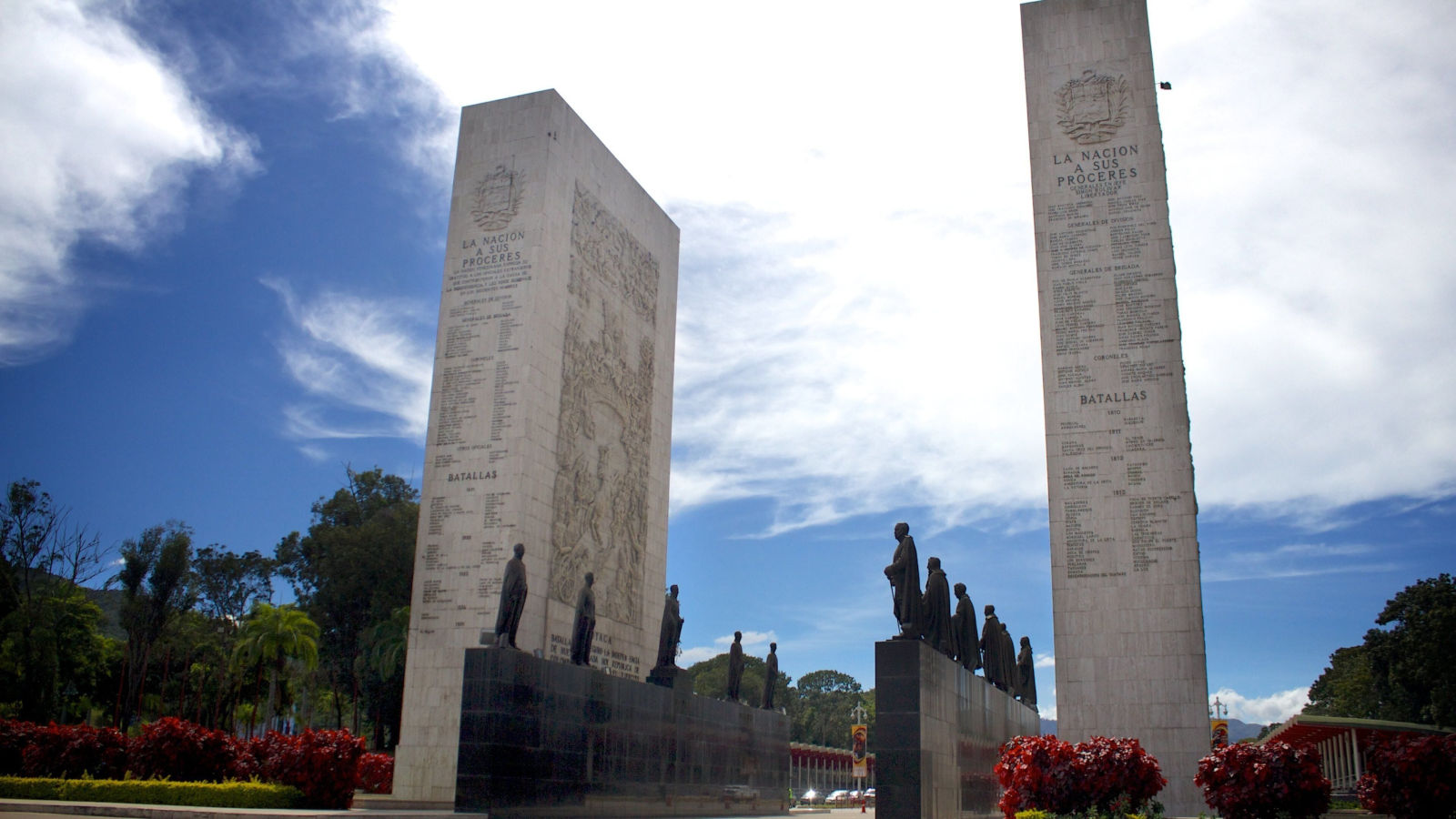
Monument to independence heroes in Caracas. (Archive)
Reflect. Think about yourself, about those around you, and you will reach the same conclusion as I have. Since the signing of the disastrous economic adjustment package with the International Monetary Fund in February 1989, Venezuela has never experienced such a unanimous feeling of bewilderment, contained anger, and repulsion at others deciding for us.
In October 2025, a Hinterlaces survey had 83% of respondents state that they would be willing to confront a foreign military invasion. The attack came [on January 3], we were denied the possibility of resistance, and now we face an invisible invasion. An insolent foreign presence that barely appears on screen, but tramples us, crushing the executive, legislative, judicial, and moral attributes of sovereignty one after the other, stealing over $13 billion worth of oil from us in just half a year, resources that no one knows where they have gone, and remodeling our country so that the plundering can continue indefinitely.
Along with the looting, a shroud of opacity has fallen over Venezuela, relegating everything that matters to mystery, except for occasional voices that infiltrate informal media. María Alejandra Díaz Marín warns us from Colombia about the attempt to remove all constitutional limits that hinder the looting. Mario Silva contrasts what politicians used to say and what they say now. Ramsés Reyes confesses that he “spits blood.” José Sant Roz proclaims in Ensartaos: “I tremble with indignation when I hear people say ‘Iran is not Venezuela,’ ‘Cuba is not Venezuela.’”
Comparisons are odious, but more odious is avoiding them to escape self-criticism.
For my part, I preach that anger is a more valuable natural resource than the oil and gold that the US is plundering from us, because anger is infinitely renewable and more fruitful than resignation. I admire all the countries that have shaken off the yokes of empires. I appreciate those who reproach us for apparently having stopped doing the same. I do not even invoke the sacred wrath of the [1813] Decree of War to the Death, which liberated what are now six countries. The assertion that Venezuela is not like this or that country reiterates that freedom and sovereignty do not fall from the sky nor are automatically defended. They are conquered through the extreme pedagogy of the unbearable.
Venezuela is not Iran. Nothing could be truer. Since 1941, Iran had been living under the dictatorship of Shah Reza Pahlavi. The nationalist Majlis movement succeeded in having Mohammed Mossadegh appointed as prime minister in 1951, and he nationalized the oil industry. The hegemonic countries blockaded the Iranian state from selling oil. In 1953, the CIA and MI6 incited street demonstrations, a military coup ousted Mossadegh, and Shah Reza Pahlavi was installed as a dictator, handing over oil to Europeans and yankees and presiding over a repressive autocracy. Only in 1979, after an endless 37 years of fierce monarchical dictatorship and the continuous theft of oil by foreign powers, did waves of Iranians depose the puppet and confirm that autonomy is not gifted: it is defended. They took their affirmation of cultural identity to the extreme. They faced the selective assassination of their scientists and leaders until they became impregnable. They won wars against neighboring Iraq, instigated and armed by the United States, and now against the US Empire itself. They divided their defensive system into “mosaics” capable of continuing to resist when others would have fallen. We are not like the admirable Iranians. But they teach us a rough path to become like them.
We are not like the Cubans. When José Martí arrived in Caracas in 1881 and first visited the statue of Simón Bolívar, it had already been 57 years since we had gained independence and formed what are now six countries. The Liberator included in the Panama Congress of 1826 the goal of the emancipation of Cuba, Puerto Rico, and Hispaniola, and planned to achieve it with an expedition that domestic secessionism thwarted. The Apostle [Martí] and Cuba still had to endure a bitter lesson. For Martí, death in his first battle. For his homeland, the humiliation of an independence interfered with by the US invasion of 1898, and a sovereignty tarnished by the Platt Amendment. And still remaining was the bitter record of 60 years of dictatorships and corruption covered up by the United States, until Commander Fidel Castro arrived and put a stop to it. Martí never felt humiliated because in his time Cuba was not like Venezuela. He sacrificed his fragile existence in the Promethean attempt to overcome it, and his legacy pierces our conscience like red-hot iron.
China is not like Venezuela. Starting from 1848, it was attacked by England amid the Opium Wars. Through the Infamous Treaties, Western powers filled it with military bases and puppet governments. Starting in 1931, the Japanese invaded Manchuria; the rest of the world threatened, blockaded, or ignored China. Only after a bitter century of humiliations could the country, in 1948, resume the arduous path that led it to becoming the world’s leading power.
No, Venezuela is not Algeria, or Vietnam, or Korea, or Afghanistan, or India, or Pakistan, or Somalia, or Yemen. Venezuela preceded them. In 1810, we had a foolish homeland that had to learn to stand on its feet, and in 1825 it taught the world lessons. Today we must understand, along with so many admirable nations, that there is no independence greater than that which is conquered, nor sovereignty greater than that which is defended.
Once again, the current metropolis [the US] is losing its hegemony. Its bases are demolished, its mercenaries put to flight. Its Congress denies funds for its reckless aggressions, its energy sources slip away, its fraudulent unbacked currency vanishes, emerging powers surpass it in economy, social advantages, science, culture, and defense. The path diverges between the road to extinction and that of Utopia.
What Venezuela needs to relearn is to be like Venezuela.
Translated by Orinoco Tribune. Minor edits by Venezuelanalysis.
Kaia Gerber says she had an exorcism after her parents believed she was “possessed” as a child.
While promoting her new FX series “The Shards” on the podcast “The Mitch Churi Chat Show,” the 24-year-old actor and model recalled her experience working with Ryan Murphy on “American Horror Stories” (co-created by Brad Falchuk).
Gerber played a teenage ghost in the 2021 “Horror Stories” spinoff trapped inside the historic Rosenheim Mansion, also known as the Murder House from the first “American Horror Story” season. Concerned about the spooky Los Angeles estate — which served a convent for nuns for half a century — Gerber said her mother, supermodel Cindy Crawford, gave her holy water to take on set.
“She was like, ‘I don’t want you to get possessed,’” Gerber said. “I was told I was possessed as a child.”
Gerber — who during the interview sat next to her co-star Homer Gere — shared that she was “haunted” her whole life.
“I do feel as though I attract beings from the other dimension, in a very casual and chill way,” said Gerber, who was also a cast member in “American Horror Story: Double Feature” (the 10th season of the FX anthology series) in 2021, where her character was involved in an alien abduction.
When questioned by host Mitch Churi if the actor-model had undergone an exorcism, she revealed that she “actually” did.
“They played a didgeridoo all over me. That’s how they did the exorcism,” Gerber said. “That actually did happen. I’ve never talked about it, but it actually did happen.”
The sacred wind instrument — which is created from a eucalyptus tree trunk or branch naturally hollowed out by termites — was developed a thousand years ago by the Aboriginal community in northern Australia and is often used in cultural ceremonies.
Some didgeridoo instrumentalists believe its low-frequency sound waves can foster a state of health and harmony for those in the Aboriginal community. An online search showed no info on it being used in an exorcism.
Regardless, the “Bottoms” actor revealed to the Australian podcast host she was “all healed” now that she was promoting the ’80s slasher TV series, which is based on the autofictional novel by Bret Easton Ellis centering on privileged high school seniors who are stalked by a killer known as the Trawler.
In response to her spiritual update, Churi said, “that’s the devil speaking, I don’t know who to trust.”
In early results from the special election runoff to complete the congressional term of disgraced former Rep. Eric Swalwell, state Sen. Aisha Wahab was in the lead late Tuesday by a narrow margin.
Wahab (D-Hayward) is competing against Melissa Hernandez, president of the Bay Area Rapid Transit Board and the former mayor of Dublin.
According to Associated Press results, Wahab had 51.0% of the vote to Hernandez’s 49.0% as of 10:11 p.m. with 62% of votes counted.
Swalwell’s District 14 seat has been vacant since he resigned in April amid sexual assault allegations, which he has repeatedly denied.
Wahab and Hernandez were the finalists in the June 16 special primary, in which the top two finishers regardless of party affiliation advanced to Tuesday’s special election.
The two also will compete, once again, in the fall in a slightly redrawn district for a full term that begins in January 2027.
Both versions of the district are contained entirely within Alameda County in the East Bay. The current district includes Hayward, Livermore, Pleasanton and Union City, as well as parts of San Leandro, Fremont and Dublin.
The two candidates are both Democrats, but Wahab leans more progressive, while Hernandez is generally considered the more moderate candidate.
Earlier this summer, Wahab initially emerged as the clear front-runner. She placed first in both the June 16 special primary for the partial-term seat and the June 2 primary for the full-term seat — leading Hernandez by more than 20 percentage points in both races.
But the race became much more competitive after the pro-Israel lobbying group American Israel Public Affairs Committee funneled millions into campaign materials designed to defeat Wahab, who has publicly criticized Israel’s military actions in Gaza and called the humanitarian crisis there a genocide. Hernandez has said she supports Israel’s right to defend itself, but neither candidate has made the conflict a core part of their campaign.
United Democracy Project, a super political action committee backed by AIPAC, spent $1.2 million on the race in August in support of Hernandez and in opposition to Wahab, according to Federal Election Commission records. Another group, Bold America, which has received funding from United Democracy Project, has recently spent about $1.7 million supporting Hernandez.
In total, around $3.7 million in outside funding has been spent to promote Hernandez’s campaign since mid-July, compared to around $400,000 spent in support of Wahab’s campaign during the same time frame.
Over the course of the campaign, Hernandez has more than doubled Wahab’s fundraising and spending. However, both candidates ended July with roughly even amounts of cash in the bank.
Times staff writer Clara Harter contributed to this report.
BOSTON — Olivia Nelson-Ododa scored 18 points and Kennedy Burke had 17 to lead the Connecticut Sun to an 85-77 win over the Sparks at TD Garden on Tuesday night.
Diamond Miller finished with 13 points for the Sun, who played a game in Boston for the third straight year before moving next season to Houston.
Rae Burrell finished with 19 points for the Sparks (12-23). Nneka Ogwumike added 18 and Dearica Hamby scored 15.
Nelson-Ododa also had 11 rebounds and scored 13 points in the first half for the Sun (9-25). Leila Lacan had 10 assists and Saniya Rivers scored 11 points off the bench. Burke was three for four from beyond the arc.
The Sun took a 7-2 lead off a pull-up three-pointer by Miller. Leading 46-40 at halftime, the Sun went on an 8-0 run that started with a driving layup by Nelson-Ododa, who was fouled and completed the three-point play. Burke added a three-pointer and Miller made a layup to force the Sparks to take a timeout.
A former US State Department advisor on Syria tells Al Jazeera’s ‘This is America’ the improved relationship between Washington and Damascus makes sense. Syria’s new leadership’s priorities overlap with US interests – regional stability and containing armed groups.
Beirut, Lebanon– Not long after the fall of the Syrian President Bashar al-Assad in December 2024, the new government was keen to hunt down members of the former regime.
Al-Assad and his brother fled the country hours before the capital Damascus fell to the advancing armed opposition, leaving many top officials and military commanders to fend for themselves.
Recommended Stories
list of 3 itemsend of list
Many of them reportedly fled and crossed to neighbouring Lebanon where some top officials were spotted openly in capital, Beirut.
Now the Syrian government is trying to get them extradited for war crimes committed during the uprising, which began in 2011.
“We are seeking to boost the international judicial cooperation to pursue members of the former regime and extradited to Syria to complete judicial procedures and process,” judge Mustafa al-Qassem, an aide to the Syrian justice minister, said in an interview with state television.
Former officials felt they were safe in Lebanon due to their close connections with Hezbollah or their network with figures in Lebanon’s military. Some had built connections in Lebanon over the years, including during Syria’s occupation of Lebanon, which ended in 2005.
But that’s no longer the case.
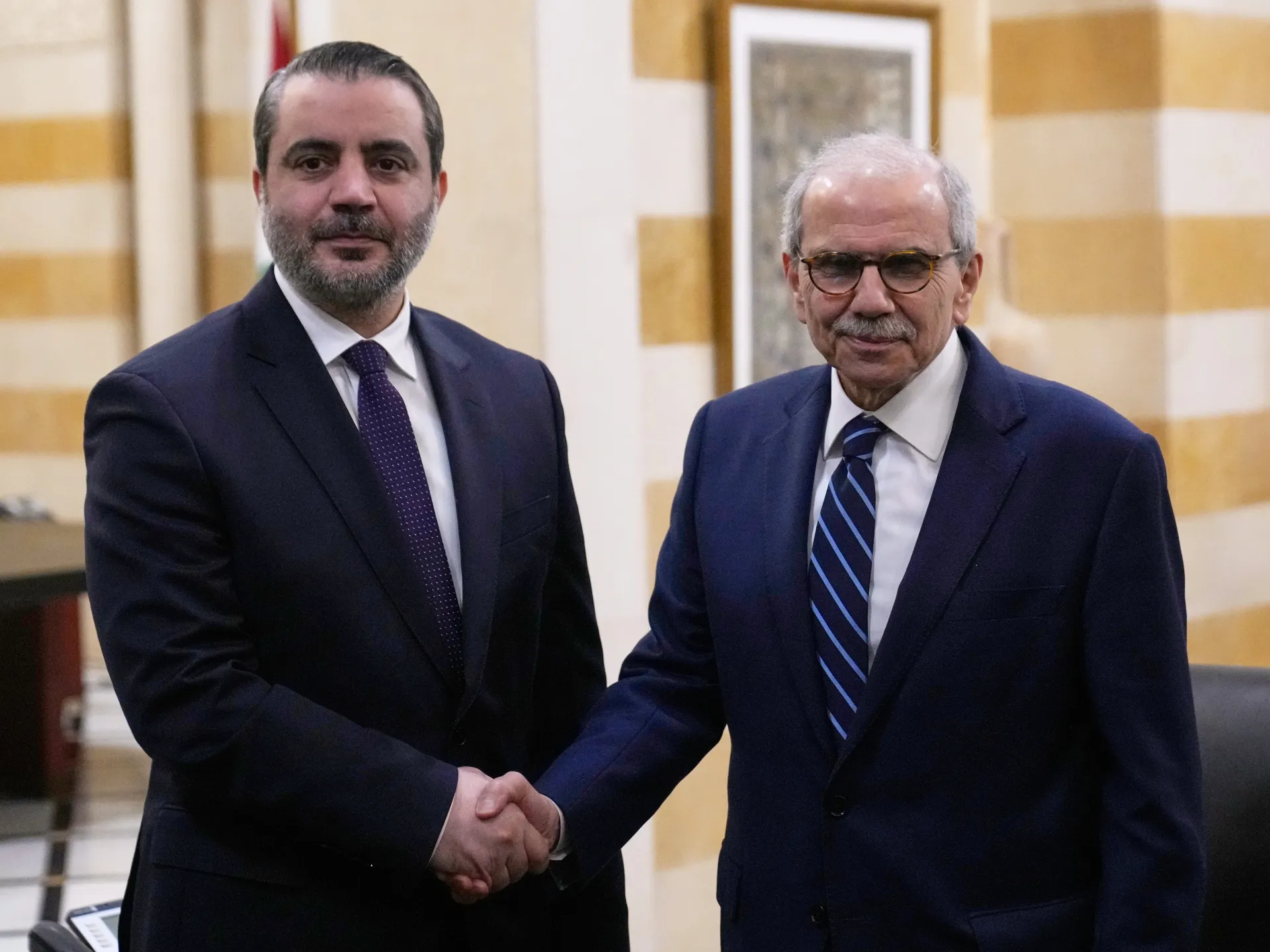
Adel Issa, a former major general in al-Assad’s Syrian Army, was arrested recently in Lebanon after staff at the Syrian embassy reportedly tipped off authorities after he came in to do paperwork. A top Lebanese prosecutor announced on Tuesday that Issa would be extradited to Syria to face trial due to alleged crimes he committed during his military service.
But there are other former al-Assad regime officials who are in Lebanon and whom Syrian authorities also want returned to face justice.
Last week, al-Assad, his brother Maher and his cousin Atef Najib were all sentenced to death by a Damascus court. Bashar and Maher al-Assad were sentenced in absentia because they are in exile in Moscow, where they fled after the regime fell.
Their presence in Russia likely protects them from extradition. But the case brings to attention important issues about remaining regime figures in Lebanon and their potential extradition to Syria.
Regime officials in Lebanon
On December 8, 2024, the five-decade reign of the al-Assad regime ended when Bashar left Damascus for Moscow. As rebels entered Damascus, al-Assad fled without telling many of his top officials who then had to sort out their own escapes.
Sources with knowledge of the whereabouts of former regime members said the top figures – such as the al-Assads or the former head of the National Security Bureau Ali Mamlouk – are in Moscow or the United Arab Emirates.
However, Jamil al-Hassan, the former head of the Air Force Intelligence Directorate, is thought to be in Lebanon. Last year, media reports suggested that Syria and France have called on Lebanon to arrest and extradite al-Hassan.
Aside from him, Bassam al-Hassan, a former Republican Guard commander who was in al-Assad’s inner circle, was tracked down to a Beirut apartment by a US broadcaster last year. He had been responsible for procuring weapons and liaising with Syria’s chemical weapons programme, which the regime used against its own people.
Hezbollah’s role
Syrian and European sources intimately familiar with the details said most former regime officials still in Lebanon are now in Tripoli’s Jabal Mohsen neighbourhood or in parts of the northern region of Akkar, which borders Syria. Estimates on the number of former regime officials in Lebanon are imprecise, experts said, because many have either moved to third countries, sometimes with false passports, or have been smuggled back into Syria.
One source familiar with the issue, speaking on background because he wasn’t authorised to share information publicly, said that in the early days after the fall of the regime, former government figures set up training camps in Lebanon’s Bekaa Valley. However, the source said, the camps have since been shut down by Hezbollah and the Lebanese army.
On August 4, Hezbollah leader Naim Qassem said his party was open to a meeting with Syria’s leadership. The group fought side by side with the al-Assad regime in Syria’s war and is, therefore, viewed negatively by many Syrians. But Hezbollah has said it has no desire for bad relations with Syria’s new government.
“Russia shelters the family and its fortunes while so far declining to fund a restoration [of the al-Assad regime], and Hezbollah, under disarmament pressure, needs calm with Damascus more than it needs a [battle on the] Syrian front,” Nanar Hawach, the International Crisis Group’s senior analyst on Syria, told Al Jazeera.
Syria has been under pressure from the United States to intervene in Lebanon against Hezbollah although experts believe Syrian President Ahmed al-Sharaa and his government are aware that such a move could lead to widespread regional unrest and undermine the domestic authority they are working to establish, including from figures still in Lebanon.
For years, Syria had a paternal relationship and view towards neighbouring Lebanon. The Syrian military entered Lebanon in 1976 when Bashar’s father, Hafez al-Assad, was in power and occupied large swaths of the country until 2005 when a popular uprising pushed Bashar al-Assad to withdraw his troops.
The younger al-Assad and Syria still exerted their influence in Lebanon via local allies, including Hezbollah, until the regime’s demise in 2024. Since then, Syria’s new government under al-Sharaa has indicated a willingness to have a more balanced and egalitarian relationship with Beirut.
To date, no Syrian regime figures accused of committing atrocities have been returned from Lebanon. That’s why, with extradition approved, Issa’s case could be so groundbreaking. While they have not yet faced trial, many former regime officials are either under foreign sanctions and/or worked in key regime roles that contributed to severe crimes against the Syrian people.
Earlier this year, Syrian authorities asked Lebanese security forces to hand over more than 200 senior officers who fled to Lebanon after the fall of Bashar al-Assad, according to a Reuters agency investigation that showed how the neighbouring country was a hub for insurgent plotting.
Lebanon’s parliament has passed a law to abolish capital punishment, making it the first country in the Middle East to do so. That has contributed to the controversy over the extradition process with Syria, which does apply the death penalty.
Wadih al-Asmar, cofounder and president of the Lebanese Centre for Human Rights, said a number of the Syrian officials in Lebanon would have committed crimes during the occupation period and, therefore, the Lebanese judiciary “has a duty and obligation” to prosecute some of these figures.
Al-Asmar said his organisation has received asylum requests from Syrians afraid to return to their country but none had been military figures connected to the former regime.
But other ex-regime officials, particularly those in Europe, could have those connections. And the landmark trial in Damascus last week that sentenced the al-Assad brothers and their cousin to death could be a concern for European and other states when extraditing wanted figures to Syria.
Experts said Beirut’s desire to have a positive relationship with Damascus will likely supersede human rights concerns related to the death penalty for former regime figures. Still, al-Asmar said: “Lebanon cannot, without violating international law and its own law, send back any person to a country where he can face the death penalty.”
He added: “It’s a very complicated situation, and I believe the only way out for the Lebanese government and the Syrian government with respect to the state of law is for Syria to abolish the death penalty.”
A street located in a popular UK seaside town has been deemed totally “magical”. In fact, people think it’s so beautiful, they’ve compared it to “being in Italy”
The street is located in a UK seaside town (stock image)(Image: new zealand transition via Getty Images)
Indeed, many visitors reckon it’s so charming it feels as though you’ve walked straight into a postcard, and it’s just one of numerous Welsh gems that people simply can’t get enough of. It previously came to wider attention on TikTok after UK Hidden Gems posted a video of the area, showcasing just how breathtaking it can be to wander around in Pembrokeshire.
Alongside the clip, UK Hidden Gems wrote: “Hidden just steps from the harbour, this narrow cobbled lane is lined with colourful doors, flower boxes and twinkling lights that feel absolutely magical as the afternoon light softens.
“Even though it’s one of Tenby’s best-kept secrets, walking here makes you feel like you’re wandering through a postcard.”
Unsurprisingly, Tenby is a wonderful place to explore in general, as the seaside town remains enormously popular. There’s a wealth of sights to take in and savour throughout the town.
Content cannot be displayed without consent
Pembrokeshire’s Hidden Gem: The Magical Cobbled Lane in Tenby
Dozens of individuals have left comments since the footage was posted, eager to share their opinions and suggestions. The clip has also been watched thousands of times.
One person said: “Love Tenby. It’s a beautiful place. Last visited 15 years ago. So happy it’s not been ruined. Will now consider going again.”
Another added: “Oh wow, it’s like a little Italy.” A third replied: “OMG! I was there only last week.
“I came out purely by mistake to the back entrance of a gift shop and stumbled on this purely by chance. I was amazed. Great find.”
Meanwhile, a fourth also commented: “This is a beautiful place to visit and even more stunning in person.”
One more also chimed in with: “We go tomorrow. It’s one of the most beautiful places I’ve been to.”
How to Find Tenby’s Picture-Perfect Street Off Lower Frog Street
UK Hidden Gems shared some information for those who fancy a visit. It was pointed out it’s situated off Lower Frog Street, Tenby.
They describe is as a “quiet nook with instant cosy vibes and tonnes of photo charm”. It’s reportedly an especially picturesque location to check out during golden hour or just before sunset.
This is when the lane is said to glow “in the best way”. It certainly appears to be the ideal place to discover and wander through on a bright day.
Indeed, many confessed they adore Tenby as they consider it so stunning. It’s difficult not to agree.
The latest episode of Olivia Atwood’s The Price of Perfection took an unexpected turn
Olivia caught the attention of a mystery man in the latest episode of her ITV show, The Price of Perfection(Image: ITV)
The ITV presenter caught a mystery man’s eye.
Olivia Attwood briefly paused her ITV2 show, The Price of Perfection, to address a flirty encounter. The former Love Island star, 35, returned with the latest episode of her hit show on Tuesday (August 18) night.
This instalment focused on all things face lifts, and followed Olivia as she journeyed around London trying to uncover what treatments are available for young women looking to transform their faces.
But the presenter was interrupted when she visited a clinic where one surgeon was performing a full face and neck lift.
As she explained the procedure to the camera, a man with his face blurred walked by and seemingly shot a flirtatious look at Olivia.
Spotting his lingering look, the ITV host turned back to the camera and joked: “In your dreams, do you know what I mean?”.
She went on to add: “That’s honestly what it’s been like since I took my wedding ring off. It’s actually, it’s just like let me [live].”
The former TOWIE cast member was married to footballer Bradley Dack for just over two years, before they called it quits in January.
Season 3 of The Price of Perfection is now streaming on ITVX, and the just-aired third episode features a cameo from TOWIE star Dani Imbert.
A synopsis for the instalment teases: “With so many techniques and brands offering to slice and sculpt our face, Olivia looks at the options the under fifties are looking at.
“At just 28, TOWIE’s Dani Imbert has a brow lift but is left unhappy with the results. Newly single Sophie tries a thread lift for a ‘snatched’ look. Amy, exhausted by the cost of facial maintenance having spent £150,000 on fillers, opts for a short scar mini facelift, a procedure with mixed online reviews.
“Olivia also joins a surgeon performing a full face and neck lift on business owner Brit, learning the real differences between SMAS and deep plane approaches, and what may have delivered Kris Jenner’s headline grabbing result.”
Olivia Attwood: The Price of Perfection is available to stream on ITVX
I hadn’t planned to enjoy any of this. As summer light fell on Stac Pollaidh – the summit’s teeth bared, the views stretching across the surreal emptiness of Assynt – I found myself ankle-deep in blanket bog next to a hiking path, back bent, hacking at the tough terrain with a heavy-duty mattock. Farther up the hillside, another hunched figure was cutting a deep brown scar into the moor grass and, while he worked, I stood back to look at my efforts. At my feet was a cross drain that I’d unblocked and repacked with new stonework to prevent storm damage and aid runoff from the path. A burble began to trickle, slow yet clear across the sparkling bedrock. It felt a little like appreciating a masterwork in a museum.
I’d come to Wester Ross with a bucket and spade, not for a beach break at particularly gorgeous Achmelvich or Clachtoll nearby, but with the notion of giving something back to the hills. The Outdoor Access Trust for Scotland (Oats) is a steward of many of the Highlands’ most famous mountains – developing, building and repairing paths and habitats – and I’d joined a group of volunteers for a two-day stint on the north-west Highlands’ most visited peak. Factoring in a free stay at Ullapool youth hostel and the promise of a home-cooked communal meal in return, plus an acceptable midge-free forecast, I’d driven north from Edinburgh the night before in a buoyant mood.
Oats’s purpose is to promote sustainable public access and these days that’s largely done through voluntourism, with helpers set to work lifting, resurfacing and filling pathways, yielding landscape-scale results. Iconic if traffic-heavy mountains such as An Teallach, Lochnagar and Braeriach are annual priorities, as are a throng of glens and estates from Skye to the Cairngorms. (Due to this summer’s devastating fires, some events in the north Cairngorms may be changed to a different location or postponed.) The trust’s volunteers even regularly get to work on the Lairig Ghru, arguably Britain’s most unforgiving mountain pass.
Volunteers repairing the hiking path on Stac Pollaidh
It might sound like all hard graft, but it’s not. Volunteers learn new practical skills and gain awareness of mountain path design and the causes of erosion – mostly a combination of human misuse and increasing extreme weather conditions – in settings with extraordinary views. No experience is required, but volunteers must be used to spending time outdoors, have good physical fitness and be capable of using hand tools.
We started that first morning from Stac Pollaidh’s car park, a space transformed by Oats two years ago to accommodate four times more vehicles – a result of the mountain’s accessibility from the North Coast 500, which hurtles past (from Kylesku to Ullapool) only five miles east, at the end of the road. But everyone comes with the same motivation. As we climbed the open moorland, Assynt’s surrounding sea of lochans (small lochs) sparkled. Stac Pollaidh’s summit, to the north, appeared even more welcoming with its porcupine ridge under a sky as blue as a newborn’s eye.
From below the hilltop to the lower forest’s edge, we worked the path – unclogging ditches, removing invasive grasses, dredging, stabilising the soil, repacking stone drains, replanting edges – all while the mountain came to life. Trail runners, dog walkers and hikers from across Europe weaved up the slopes, stopping to ask what we were doing. A French school group trooped past, the pupils plastered with blue Braveheart face paint. A Dutch couple stopped to offer biscuits. Everyone swallowed the stunning views of Suilven to the north.
Looking from Stac Pollaidh towards Suilven. Photograph: Rebecca Cole/Alamy
Our group of seven volunteers – including two New Zealanders; three retirees, one from Inverness, one from Stirling and another from Forfar; and an Edinburgh IT worker using his annual corporate volunteer days – appreciated the smiles.
To a newcomer, the Highlands’ mountain paths may appear to have always been there, as if part of the landscape’s DNA. But as Oats’s volunteer coordinator Eva Kupska said, they are “always evolving and always at risk from erosion, because of the influences of nature and man … and it is our job to conserve them”.
Every volunteer is vital. Post-Brexit, with a lack of EU funding streams, Eva told me there is a drastic need for a public fund for path maintenance and habitat restoration, and the charity simply doesn’t have the manpower to tackle the deteriorating pathways or native tree planting alone. To complicate matters, some of the most popular mountain paths are on privately owned land, with no access to any public funding.
There are a further 12 one-day, plus three- and five-day, maintenance and conservation events scheduled to take place this year, including some dedicated tree-planting trips. It’s a joyful shared experience. That first afternoon, flasks of hot tea were unscrewed and homemade fruit loaf was shared. There was the warm smell of flowering heather and the earthy stink of the bogs, along with the satisfaction of time well spent in the wild.
Ullapool, where Mike stayed in the youth hostel. Photograph: Eleanor Scriven/Getty Images
That evening, back in Ullapool, the harbour abuzz with tourists eating fish suppers and gulls circling above the trawlers, we stood in the sea-view kitchen of Ullapool youth hostel sharing life stories and the day’s experience. There are plenty of excellent dinner options, including The Seafood Shack and The Dipping Lugger, but we settled on a night of each other’s company (delightful), local beers (necessary) and a giant gurgling stockpot of Eva’s courgette and tomato risotto (terrific). And boy, did I sleep well.
The next day brought a gossamer mist to the hills of Wester Ross. We arrived earlier, picked up where we’d left off and, largely, never complained as the sun slowly cracked through the clouds. But best of all was seeing our progress as we worked down the mountain, step by step, always avoiding the fragile vegetation at the path’s edges, creating something better and more sustainable for tomorrow. A staycation with a purpose – and it felt good.
The trip was provided by Outdoor Access Trust for Scotland, with support from VisitScotland. To register as a volunteer and to sign up for events on the annual path maintenance days programme, visit Oats’s volunteering portal. Overnight accommodation in a youth hostel or a bothy, plus evening meals and transport to and from the restoration site, are included
HOUSTON — Rookie George Klassen gave up one hit in a career-high seven scoreless innings and Josh Lowe homered to lead the Angels to a 3-1 win over the Houston Astros on Tuesday night.
Klassen (2-1), who was making his fifth career start, also set a career mark by striking out seven. He gave up only a first inning single to Jose Altuve.
Cam Smith hit a solo homer off José Fermin with no outs in the eighth to cut the lead to 3-1. But Ben Joyce pitched a scoreless ninth to get his third save and send the AL West leaders to their third straight loss.
Houston starter Cristian Javier (1-4) gave up five hits and two runs in four innings.
The Angels scored all three of their runs with two out for their second win in three games.
The Angels had runners on first and second with two outs in the third when an RBI single by Nolan Schanuel made it 1-0.
Lowe extended the lead to 2-0 with his shot to the seats in left field with two out in the fourth.
The Angels got things going again with two out in the fifth when Schanuel singled to right field. Zach Neto followed with an RBI double that left them up 3-0.
Isaac Paredes walked with two out in the first before Altuve’s single, but Klassen struck out Daulton Varsho to end the inning. The Astros didn’t have another baserunner until Paredes walked to start the fourth. Klassen walked Altuve with none out in the seventh, but retired the next three batters, with two strikeouts, to end his night.
Aug. 18 (UPI) — Stocks fell on all three major U.S. indices Tuesday as investors were spooked by elevated bond yields and the prospect of higher oil prices as the war between the United States and Iran drags on without apparent resolution.
Tech stocks led the downturn as the Nasdaq Composite dropped by 1.3%, followed by losses on the S&P 500 (0.6%) and the Dow Jones Industrial Average (0.2%).
Most analysts put the blame for the markets’ poor showing on news that 30-year Treasury yield surpassed 5.3% for the first time since the global financial crisis in 2007, reflecting sagging demand from global buyers willing to underwrite sovereign U.S. debt.
Concerns over rampant government deficit spending and the United States’ burgeoning debt of nearly $40 trillion are pushing treasury yields higher, analysts noted.
The shorter 10-year Treasury, meanwhile, ended above 4.7%, compared to below 4% before the start of the Iran War in February.
Rising “T-bill” yields are considered a danger signal for the broader economy and consumer spending because they can have the knock-on effect of pushing up virtually all borrowing costs, from auto loans to mortgages.
The latter is being reflected in costlier mortgage rates. A 30-year, fixed-rate mortgage on Tuesday stood at 6.75% after ending last week at 6.69%.
Meanwhile, oil prices on Tuesday reached their highest level in more than two weeks after President Donald Trumpthreatened to “bomb” Oman if it interferes with his plans to open the strategic Strait of Hormuz.
The benchmark Brent crude futures traded around $91 per barrel, while U.S. West Texas Intermediate crude futures rose to $84 per barrel.
Weekly insights and analysis on the latest developments in military technology, strategy, and foreign policy.
As its defense against Russia grinds on and with the future of foreign military assistance never assured, Ukraine is ramping up procurement of its new, domestically produced “Equalizer” aerial glide bomb, according to the Ukrainian military. Brave1, the Ukrainian defense technology incubator, on Tuesday provided us with some new details about this weapon, which extends the range and accuracy of so-called dumb bombs by adding guidance kits and pop-out wings.
Also known by its Ukrainian name “Vyrivniuvach,” this bomb first broke cover in May, which you can read more about in our initial story on the topic here. It was developed by the Ukrainian company DG Industry with the Brave1’s support.
Ukraine’s Equalizer glide bomb. (Bravae1)
While glide bombs have been used to great effect by both sides, Kyiv has had to rely on donated weapons like the U.S.-made Joint Direct Attack Munition-Extended Range munition (JDAM-ER) and the French-made AASM-250 Hammer bomb. The Ukrainian Air Force also makes extensive use of the U.S.-supplied Small Diameter Bomb (SDB), which is smaller and also has pop-out wings.
The Ukrainian Air Force began launching JDAM-ERs in March 2023 and SDBs that November, though the use of the latter wasn’t officially confirmed until May 2024. The weapons became critical for striking Russian targets over the front lines because they allowed Ukrainian jets to release them from standoff distances and better avoid Russian air defenses.
A JDAM-ER under the wing of a Ukrainian MiG-29. (Via X)
Russia, meanwhile, produced its own crude glide bomb earlier in the war and it has become a highly problematic and deadly threat for Ukraine to contend with since. Now Ukraine is building its own.
As we noted in our earlier piece, the weapon had cleared trials and is ready for combat, giving Ukraine a domestically produced standoff munition that could augment its current arsenal of donated ones and provide a more secure supply chain given the uncertain nature of foreign assistance. One of our outstanding questions at the time was whether the Equalizer would have independent propulsion, a modification that provides this class of munition with a significant boost in range beyond the “dozens of kilometers,” Brave1 claims it can reach. By comparison, the stated JDAM-ER range is more definitive, able to hit targets about 45 miles away.
It’s worth noting that Ukraine’s French-supplied Hammer precision-guided bombs also feature a rocket booster. This feature is of unique utility for Ukraine, which often slings its glide bombs via pop-up launch profiles from low level executed by its fighter and attack aircraft. This is due to the extremely heavy air defenses near the front lines.
You can see a Ukrainian MiG-29 launch two Hammers in the following video.
A video of the moment of release of two French-supplied AASM-250 Hammer guided bombs from a Ukrainian MiG-29 fighter jet.
The pilot of this particular airframe, 27-year-old Captain Oleksandr Myhulia, perished while performing a combat mission on August 12, 2024.… pic.twitter.com/yNEbbaFUPt
— Status-6 (War & Military News) (@Archer83Able) August 14, 2024
The Equalizer “has no motor,” Brave1 spokesman Yurii Voronkov told us.
“A major challenge was the lack of an engine, as navigation and control rely entirely on the bomb’s own inertia and aerodynamics,” he explained. “Naturally, this demands precise calculations, structural balancing, and extensive testing.”
“The main difficulty lay in combining several critical factors: speed, high g-forces, and aircraft integration,” the Brave1 spokesman added. “This is precisely the type of system where even millimeters are critical, and choosing the right components directly impacts the structure’s effectiveness and resilience.”
“The weapon was designed with high-precision targeting and compatibility with current Ukrainian aircraft and systems,” Voronkov stated. While designed for Ukrainian Su-24, Su-27, and MiG-29 jets, it can also be used with donated F-16 and Mirage fighters, though it “has to receive additional certification for usage on F-16s and Mirages.”
Ukraine had no guided aerial bomb. Now it does.
DG Industry, a Brave1 participant, has completed all required trials and declared the weapon ready for combat after 17 month of development. The bomb carries a 250 kg warhead, hits targets dozens of kilometers behind enemy lines,… pic.twitter.com/EXP0PiLOHl
“The bomb also has modern guidance algorithms that promote better targeting and accuracy,” he noted, without providing additional details.
“Structurally speaking, the product differs from both Russian and foreign counterparts,” Voronkov added. “During development, the developers researched existing systems, incorporating real combat experience and feedback from the military. As a result, the product integrates all the advantages of existing solutions while addressing their shortcomings.”
Voronkov declined to elaborate, but highlighted that “everything—from the wings to the flight controller software—was developed in Ukraine, with the exception of the chips and microcircuits. In terms of the component base, approximately 90% consists of Ukrainian, European, and American parts. Overall, the company managed to avoid critical dependence on foreign components.”
Ukraine began developing the Equalizer two years ago over concerns about the future flow of arms into the country, Voronkov said. Given that with the war dragging on, the U.S. has stopped donating weapons to Ukraine and other nations, like the Netherlands, have as well, it was not an academic exercise.
The Netherlands spearheaded an international effort to provide F-16s to Ukraine and donated about two dozen of its own. (Dutch MoD)
“In 2024, a team of developers asked themselves a practical question: what happens if foreign arms supplies stop?” Voronokov proffered. “Ukraine needed its own capabilities to help its military carry out combat missions independently. That marked the beginning of their mission to develop a domestic guided aerial bomb.”
“By May 2025, following a series of successful tests, the team proved the concept was viable and decided to move forward,” the Brave1 spokesman added. “They transitioned to producing the initial prototypes and scaling up manufacturing. Naturally, it was a gradual process—the team continued refining the product and fine-tuning specific technical solutions, work that remains ongoing to this day.”
“Brave1 supported this project from its inception in 2024,” Voronkov stated. “We aim to back innovations right from the start because it gives teams a real shot at success. We recognized the chance that the project would reach completion and prove its capabilities quickly, but we were equally aware it might take much longer. In the end, going from concept to the first working prototype took 17 months.”
DG Industry is one of “at least eight manufacturers working on glide bombs altogether,” Voronkov noted.
“The guided aerial bomb itself isn’t just a single product—it represents a technology that has now emerged in our country,” Yaroslav Vinnytskyi, Head of Defense Technologies at Brave1, told us. “It will continue to evolve, and its application can be scaled across various types and sizes. Mastering this technology is a major milestone, providing additional capabilities for both manufacturers and the armed forces.”
As we noted earlier in this story, the Equalizer “is already being officially purchased for supply to the Armed Forces of Ukraine,” Colonel Vladyslav Voloshyn, head of the Central Department of Innovation Activities of the Armed Forces of Ukraine, told the Ukrainian Ukrinform media outlet.
📌 The Ukrainian guided aerial bomb Vyrivniuvach (also known as Equaliser or Leveller) has already completed testing and is officially being procured for use by the Ukrainian Air Force.https://t.co/BPFH8XCzRA
Voloshyn noted that Russia has increased its daily use of glide bombs from about 180 last year to more than 300 this year. It remains unknown when the Equalizer will arrive on the battlefield for Ukraine at scale, or when the other options will either.
Given what these weapons can bring to the table if they truly work as advertised, for Kyiv they cannot come soon enough.
Witney Carson will be dancing for two on the upcoming season of “Dancing With the Stars.”
The professional ballroom dancer revealed her pregnancy Monday on “Good Morning America,” stating that although she’s excited for the experience, it is also “daunting.”
“I’ve never been this far along pregnant and competing on ‘Dancing With the Stars,’” said Carson. “I don’t know if it’s ever been done. So you guys will definitely see a big bump.”
The competitive dancer has two boys — 5-year-old Leo and 3-year-old Jet — with husband Carson McAllister. The two have been married since 2016.
The 32-year-old has competed on 15 seasons of the popular reality dance show. Last year, she took home the top prize alongside Australian conservationist Robert Irwin; in 2014, she took home her first Mirrorball Trophy alongside actor Alfonso Ribeiro.
In the coming season, Carson also revealed that she will hit the dance floor with comedian Guillermo Rodriguez, the Mexican talk show personality best known as a sidekick to Jimmy Kimmel on “Jimmy Kimmel Live!”
“It wasn’t on my bingo card to compete on ‘Dancing With the Stars’ and be four months pregnant, but I think that it’s a beautiful thing,” said Carson on “GMA.” “I want to feel empowered. I want to see what my body can do. And hopefully Guillermo could be right there beside me and we can work as a team.”
In an interview with the Hollywood Reporter, the dancer revealed that she was “extremely sick” in her first trimester and “dropped out of things” that she had been contracted to participate in, but after discussing the matter with her husband as well as executive producer Deena Katz, she decided to continue with the competition.
Carson was first in the spotlight in 2012 during the ninth season of the Fox series “So You Think You Can Dance,” then joined the “Dancing With the Stars” troupe in 2013 for the 16th season. This summer, she made a special appearance as a guest judge on the spinoff series “Dancing With the Stars: The Next Pro,” where 12 up-and-coming dancers compete for a pro-dancer spot on the popular main series.
Season 35 of “Dancing With the Stars” will premiere with a two-night episode on Sept. 15 and 16.
Earnings Call Insights: ZTO Express (Cayman) Inc. (ZTO) Q2 2026
Management view
“In the second quarter of 2026, the express delivery industry grew 4.2% in volume year-over-year as anti-involution policies continue to gain traction, competition became increasingly rational and the overall industry pricing
Seeking Alpha’s Disclaimer:This article was automatically generated by an AI tool based on content available on the Seeking Alpha website, and has not been curated or reviewed by humans. Due to inherent limitations in using AI-based tools, the accuracy, completeness, or timeliness of such articles cannot be guaranteed. This article is intended for informational purposes only. Seeking Alpha does not take account of your objectives or your financial situation and does not offer any personalized investment advice. Seeking Alpha is not a licensed securities dealer, broker or US investment adviser or investment bank.
WASHINGTON — Federal regulators have given preliminary approval for a cryptocurrency venture tied to President Trump and his family to operate a digital-asset bank, a decision that has drawn immediate condemnation from Senate Democrats who are now pushing legislation to bar such an action.
Sen. Elizabeth Warren (D-Mass.), the top Democrat on the Senate Banking Committee, and nine other Senate Democrats introduced a bill Saturday that would bar the president, the vice president, their immediate family members and other senior government officials from owning or controlling banks.
The measure was proposed a day after the Office of the Comptroller of the Currency — which is part of the Trump administration — granted conditional approval for World Liberty Trust Co. to become a trust bank. The firm was founded in 2024 by two of Trump’s sons and the sons of Steve Witkoff, the Trump administration’s special envoy to the Middle East.
If the firm gets final approval, it would not act like a conventional bank and take deposits or make loans. Instead, the chartered bank would be able to issue and manage cryptocurrencies and digital assets. But the move would grant new financial powers to the Trump family’s crypto business, which has already shown to be profitable for the president in his first year back in the White House.
Trump’s financial disclosures show the president has earned more than $1.2 billion from crypto-related projects as he has pushed to deregulate the digital-asset industry. He hauled in more than $500 million from his World Liberty Financial business selling new crypto products and is a significant owner of the firm through an entity called DT Marks DEFI LLC, which holds about a 38% stake.
Aside from World Liberty Financial, Trump last year took in more than $600 million from sales of souvenir-type “meme” coins stamped with his likeness.
Trump’s crypto windfall has lately fueled Democrats’ argument that the president stands to personally gain from the same regulatory apparatus he oversees, and has led to acrimonious negotiations in Capitol Hill over how to regulate the industry.
The White House said Tuesday “there are no conflicts of interest.” But the recent decision by federal regulators in relation to World Liberty Financial is now giving more ammunition to Democrats, who have pushed for more ethical guardrails to crack down on the Trump family’s crypto ventures.
“This is the most brazen act of self-dealing our financial system has ever seen — and Congress cannot allow it to stand,” Warren said in a statement. “The Ending Presidential Corruption in Banking Act will close the door on this kind of unprecedented corruption.”
Sen. Angela Alsobrooks (D-Md.) said the decision to allow a Trump-linked crypto firm to charter its own bank is “injecting risk into our financial system and fueling the Trump family’s business endeavors.”
“It is Congress’ responsibility and duty now to rein in this corruption and ensure that bank charters, deposit insurance, and other banking licenses cannot be handed out to entities influenced or controlled by any President’s family,” Alsobrooks said in a statement.
David Wachsman, a spokesperson for World Liberty Financial, disputed the criticism, saying the preliminary approval is “great news for consumer and investor protection advocates and for the American financial services industry.”
“Critics are missing the point: World Liberty Financial is running towards regulation and continuous oversight, not away from it,” Wachsman said in a statement. “World Liberty Trust Company’s national charter will ensure robust and permanent regulatory supervision from the OCC, a federal banking regulator, that will outlast the Trump administration.”
Wachsman said World Liberty will be required to provide weekly reports about its operations that will be subject to independent reviews. He added that federal banking laws such as anti-money-laundering rules and consumer protection statutes will be “directly applicable and enforceable.”
The White House did not comment directly about the administration’s involvement with the World Liberty application to charter a bank. But in a statement, the White House disputed claims that the president’s decisions in office have financially benefited him and his allies.
“All of President Trump’s investment holdings are in held in fully discretionary accounts managed by independent third-party financial institutions,” Anna Kelly, a White House spokesperson, said in a statement. “The President only acts in the best interests of the American public — which is why they overwhelmingly re-elected him to this office, despite years of lies and false accusations against him and his businesses from the fake news media.”
Kelly added: “There are no conflicts of interest.”
DENVER — Dodgers manager Dave Roberts called right fielder Kyle Tucker into the visiting manager’s office at Chase Field a week and a half ago, just to catch up.
Roberts had run into Tucker’s wife Samantha and their 5-month old baby that morning in Arizona. And he saw it as a good time to check in.
“When you start to struggle and you internalize … you find yourself going dark, and that’s a lonely place,” Roberts said Tuesday, before the Dodgers’ 7-6 win against the Rockies. “So I think that for me, trying to proactively pull conversations out of him, talk about life, talk about baseball, it just kind of opens things up, and I think that it’s freeing.
“He’s a cerebral guy by nature, internalizes a lot. But still, for me, he’s with a new ballclub, he’s scuffling, so I want to get that out of him.”
Scuffling is a mild way of describing Tucker’s struggles this season. He described it as the “first time in [his] life” that he’s had a season with so many offensive false starts. After being named an All-Star in each of his previous four seasons, Tucker is on pace for the worst offensive year since his 2018 debut season with the Astros.
On Tuesday, he finally ended his career-high hitless streak at seven games, with a double up the right-field line in the fourth inning (although he grounded out once and struck out twice in his other plate appearances). He’d gone 26 straight at-bats without a hit.
So much about Tucker’s year has been head-scratching.
Take his plate discipline, for example. Traditionally known for his strike-zone control, Tucker’s chase rate has been up this season. But even when he trimmed it to 21.6% in July (not as low as the last two years but even with his 2023 season), his production at the plate didn’t respond accordingly.
One of the biggest mysteries has been his extreme home/road splits. Entering Tuesday, he had a solid .822 OPS on the road and a paltry .558 OPS at Dodger Stadium.
Asked about the contrast earlier this week, he said he didn’t have a theory.
“If I knew, I’d probably have figured it out by now,” he said. “But that’s just kind of how it’s gone.”
Recently, his woes have followed him into the outfield. The day after he failed to reel in a flyball in the right-field corner at Dodger Stadium, he had a far worse drop Monday at Coors Field.
In the seventh inning of the Dodgers’ 11-5 victory against the Rockies, Tucker seemed to camp right under a shallow fly. But as it fell, he twisted and put one knee down before dropping the ball.
“There’s indecision, and catching a baseball at your ankles kind of speaks to where his head is at right now,” Roberts said. “It’s not from lack of effort, or care. It’s just right now, I think he’s kind of fighting. So we’ve got to keep supporting him.”
Tucker isn’t the only player who’s struggling. Mookie Betts has been hot and cold at the plate. Teoscar Hernández hasn’t been slugging the way he’s accustomed to. And before arriving in Colorado, the team was in a collective slump.
Tucker, however, is in the first year of a four-year, $240-million contract. And so far the Dodgers haven’t seen the version of him that elevated the Cubs’ offense in the first half of last year and was a steady part of the Astros’ lineup during a run of sustained success.
“Whether it’s my first year or 10th year with a team, I think it’d be frustrating regardless,” Tucker said. “But it’s not like I’m frustrated just because I’m playing at home or anything. Whether it’s on the road or at home, it would be frustrating, just not helping the team win games.”
He slid into his most recent slump during the Dodgers’ last homestand, but the Colorado altitude didn’t immediately work its magic when the team went back on the road.
During Monday’s SNLA broadcast, analyst Eric Karros suggested sending Tucker to Arizona for a reset.
The less extreme version would be sitting Tucker for several games in a row.
“I’m not at the point where it’s like a three-day, three-game reset situation, something like that,” Roberts said Tuesday afternoon.
He did, however, give Tucker a day off Saturday, saying he saw Tucker’s frustration as he continued to struggle offensively at Dodger Stadium. And Tuesday, he said he hadn’t decided whether to start Tucker against Rockies left-handed starter Kyle Freeland the next day.
“It’s tough because, I mean, I feel like I’ve tried just about everything,” Tucker said. “And every time I feel like I’m turning a corner, I get hit with a roadblock. But, you can’t stop. You just got to keep going, try and at least pick out the positives, and just try and ride with that. Just keep on moving to the next day and hope for something to build.”