Passengers have been issued a stark message about being caught up in airport delays
The airline has issued a stark warning to all passengers(Image: rparys/Getty)
Peak travel season is here, with many Brits jetting off on their summer holidays. Thousands of holidaymakers are flocking abroad over the next few weeks.
The system is used at airport arrivals and departures in the EU and the Schengen area. Travellers have been urged to get to airports even earlier than usual so they aren’t caught up in queues, especially when returning to the UK.
Now, Ryanair boss Michael O’Leary has issued a stark message to anyone flying on his airline this summer. He has admitted the airline will not wait for anyone stuck in queues, and that the flight will carry on as scheduled.
While on the Telegraph’s Travel Expert podcast, host Simon Calder asked: “If I were a passenger, say at Milan Bergamo Airport, and was stuck in a mile-long queue, how long are you going to be waiting for me? And if you can’t wait for me, what are you going to do?”
Mr O’Leary replied: “Nothing. We will not wait for anybody. If you are stuck, if you are not at the boarding gate when we finish boarding, the plane is going without you.
“We are not delaying our flights for people who are stuck in passport control queues. They have to show up at the airport earlier, but they have to be at the boarding gate; otherwise, they are not flying.”
Travel expert Simon previously branded the entry and exit system a “Euro shambles”. He named Milan Malpensa, Lisbon, Paris Charles de Gaulle, Frankfurt and Copenhagen as the airports with the “worst” delays.
Simon previously said on the podcast: “From what I have experienced, and certainly one of them is Milan Malpensa. The fingerprint stuff took an hour, and I was the first one off the EasyJet plane from Gatwick.
“Then, I went through the other terminal to check out and it took 45 minutes that time but they wanted those fingerprints again, which is absolutely not in the rules.”
He added: “I have heard terrible stories from Lisbon, other places frequently mentioned, Paris Charles de Gaulle and Frankfurt.
“Both of them are huge hubs where you have got a lot of people flying from various regional airports across the UK into Paris and Frankfurt to connect.
“That’s okay if you are going intercontinental but if you are trying to connect to somewhere in Europe it is awful.”
IF you’re trying to figure out which country is the absolute cheapest for a summer getaway, you’re asking the wrong question.
After digging through thousands of our Summer 2026 bookings, the data made one thing blindingly obvious.
Holiday expert Rob Brooks has found the cheapest resorts to book in popular holiday destinationsCredit: Rob Brooks
The biggest savings don’t come from swapping Spain for Turkey or Greece for Tunisia. They come from swapping one resort for another.
In almost every major holiday destination, there is one specific pocket quietly delivering far better value than the rest.
Sometimes it’s because it sits just a few miles outside a famous hotspot, and other times it’s simply because a place hasn’t shaken off an old reputation it no longer deserves.
The upshot is that you can bag the exact same week in the sun for a fraction of the cost just by shifting your search field a few miles down the coast.
I’ve crunched the numbers to find the cheapest resort in each of Britain’s favourite holiday spots to show you exactly where the system is breaking in our favour.
10. Hammamet, Tunisia – 18 per cent cheaper
Hammamet in Tunisia is one of the cheapest resorts to stay inCredit: The Russelior Hotel & Spa
Tunisia has quietly become the ultimate value play for guaranteed Mediterranean sunshine without the inflated price tags of Egypt or Turkey, but Hammamet is the real standout.
Our booking data has it tracking at 18 per cent cheaper than the average holiday in Tunisia, serving up massive white sand beaches and a proper, historic old town and marina that gives it way more character than a standard, purpose-built resort strip.
I spotted a seven night stay at The Russelior Hotel & Spa, flying from Gatwick in September, from £350pp on a Bed & Breakfast basis.
And the thing I love most at this property is their dedicated, ultra-quiet saltwater lagoon section hidden at the back.
It completely bypasses the noisy main freshwater pools, giving you a high-end, peaceful oasis for a rock-bottom price.
Book a holiday: Hammamet
If you click on a link in this box, we will earn affiliate revenue
Book a seven night stay at The Russelior Hote & Spa, with return flights from London Gatwick from September 19, for £350pp.
Rob suggests skipping Albufeira and Vilamoura and booking an affordable stay in Praia da LuzCredit: Getty
The Algarve is dominated by high-premium names like Albufeira and Vilamoura, which completely swallow the search traffic and explains why Praia da Luz routinely slips under the radar.
But bookings here are coming in 26 per cent cheaperthan the Portugal average despite sitting on one of the prettiest, cliff-backed horseshoe bays on the coastline.
You can lock in seven nights atOasis Beach, flying from Stansted at the end of September on a self-catering basis, from £365pp.
Because the seafront is packed with incredible independent seafood spots, saving cash on the board is a no-brainer.
The biggest perk at this complex is that the clifftop walking trail starts literally right outside the reception gates, leading you directly up to the famous Rocha Negra headland for an elite sunset view without paying the premium prices of the frontline bars.
Book a holiday: Portugal
If you click on a link in this box, we will earn affiliate revenue
Book seven nights atOasis Beach, flying from London Stansted on September 30 on a self-catering basis, from £365pp.
Helios Bay Chloraka in the Paphos area of Cyprus offers breaks 27 per cent cheaper than the average Cyprus holidayCredit: Helios Bay
When people look at Cyprus, not many people know that Chloraka even exists.
The data shows it is averaging 27 per cent cheaper than the Cyprus baseline while offering the exact same sea views and Mediterranean weather.
It’s a brilliant, simple switch if you don’t mind being slightly outside the main tourist hub.
I tracked down an early autumn week at Helios Bay from £460pp.
Don’t let the 3-star rating fool you – this place has an incredibly loyal following of repeat guests, and the easy local transport right outside the hotel is a big reason why.
The main municipal bus stop sits directly outside the hotel entrance, running a direct link straight into Paphos harbor every 10 minutes for pocket change, allowing you to entirely skip expensive car rentals or daily taxi fares.
How’s that for a hack?
Book a holiday: Cyprus
If you click on a link in this box, we will earn affiliate revenue
Book a seven-night room-only stay at Helios Bay from September 28 for £460pp.
7. Naama Bay, Sharm el Sheikh, Egypt – 28 per cent cheaper
Rob recommends booking a holiday to Naama Bay to enjoy a trip to Egypt on a budgetCredit: Getty
Egypt has firmly established itself as a luxury-for-less destination, but the soaring popularity of its newest five-star resorts has started pushing average prices up.
Naama Bay completely bucks that trend, tracking at 28 per cent less than the average Egypt holiday while still putting you right in the heart of Sharm El Sheikh.
You can spend a week at Falcon Hills from £500pp, flying direct from Liverpool – and that’s all inclusive as well!
It’s a massive favorite for return visitors because it’s set back slightly from the central bustle, and this hotel even has a complimentary, on-site dive partnership.
The hotel runs a free daily shuttle to a private, sheltered coral reef section on the coast, meaning you can snorkel with incredible marine life straight from the shore without shelling out for an expensive commercial boat excursion.
Book a holiday: Egypt
If you click on a link in this box, we will earn affiliate revenue
Book a seven-night all inclusive holiday at Falcon Hills from September 30 with return flights from Liverpool for £500pp.
6. Nuevo Horizonte, Fuerteventura, Canary Islands – 34 per cent cheaper
Book a holiday to Nuevo Horizonte in Fuerteventura and save up to 34% on a Canary islands holidayCredit: Getty
The Canaries are Britain’s ultimate holiday safety blanket because the weather is a safe bet all year round, but the downside is that peak-season markups can be savage.
That’s why Nuevo Horizonte is such a smart data loophole, sitting at 34 per cent cheaperthan the Canary Islands average.
I found an all inclusive week at the Globales Costa Tropical, flying from Bournemouth, from £390pp.
You are paying for Fuerteventura’s legendary white beaches here rather than a flashy marble reception lobby, which is a trade I will make every single day.
And being in Fuerteventura, this hotel’s bike hire program is a massive bonus.
The hotel rents out high-spec cycles from the front desk for next to nothing, and because the coastal path running directly into neighbouring Caleta de Fuste is entirely flat, you can cruise into town for an evening out without ever paying a euro for a taxi.
Book a holiday: Fuerteventura
If you click on a link in this box, we will earn affiliate revenue
Book a seven-night all inclusive stay at the Globales Costa Tropical from September 29, flying from Bournemouth, from £390pp.
5. Sarigerme, Dalaman, Turkey – 38 per centcheaper
Rob found a week-long, all inclusive stay at the X Life Hotel in Sarigerme for £470ppCredit: X Life Hotel
Turkey is always at the top of my list for sheer value, but Sarigerme is currently outperforming the market, running 38 per cent lower than the average Turkish booking.
It is infinitely calmer and more unhurried than Bodrum or Marmaris, making it the perfect spot to turn your phone off for a week.
I clocked a seven-night all inclusive break at The X Life Hotel, flying direct from Bristol, from £470pp.
Because it’s strictly an adults-only property, the vibe around the grounds is incredibly laid-back.
The hotel also has a specialised beach shuttle – they run an exclusive, free tractor-pulled shuttle wagon that shuttles guests down to their private sand lot all day, which sounds a bit quirky but is an absolute lifesaver for bypassing the intense midday Turkish heat on the sun-baked sand tracks.
Book a holiday: Turkey
If you click on a link in this box, we will earn affiliate revenue
Book a seven-night all inclusive break at the X Life hotel from September 2, with return flights from Bristol, for £470pp.
Visit Mgarr in Gozo to shave up to 40% off your Malta holidayCredit: Getty
Gozo is essentially Malta with the brakes tapped, and hopping on the quick local ferry drops your holiday bill by a staggering 40 per cent compared to the main island average.
Mgarr is a stunning harbour town where the water is crystal clear and the pace of life is completely relaxed.
A week at the Grand Hotel here starts from £495pp at the end of September on a room-only basis.
Booking room-only is a smart play here too, because the hotel sits directly above the active harbour, putting the island’s best independent seafood tavernas right at your feet.
And I’ve got a great tip for this hotel too: head down to the docks at 7am, because the local fishermen will sell you the catch of the day directly from their boats for pennies, and the harbour restaurants will happily grill it up for your dinner for a tiny prep fee.
Thank me later.
Book a holiday: Malta
If you click on a link in this box, we will earn affiliate revenue
Book a seven-night room-only stay at the Grand Hotel from September 30 from £495pp.
3. Malgrat de Mar, Costa Brava, Spain – 42 per cent cheaper
The cheapest Spanish resort Rob found in his analysis was Malgrat de Mar in SpainCredit: Getty
Spain will always dominate summer bookings, but Malgrat de Mar has come out as the cheapest major Spanish resort in my entire analysis, sitting at 42 per cent less than the average Spain hol.
It gives you an incredible balance of wide beaches, long promenades, and proper tapas bars that don’t fleece you for chips.
If you just want a cheap week in the sun, the Alegria Cartago Nova is hard to ignore at £205pp for seven nights, flying direct from Stansted.
The location does all the heavy lifting here, and the real insider secret is that the hotel sits just a two-minute stroll from the coastal train line, giving you a direct, traffic-free route straight into central Barcelona for less than the price of a pint.
Book a holiday: Spain
If you click on a link in this box, we will earn affiliate revenue
Book a seven-night stay with breakfast at the Alegria Cartago Nova from September 30, flying direct from London Stansted, for £205pp.
2. Montecatini, Tuscany, Italy – 59 per cent cheaper
Visit Montecatini in Tuscany, Italy for a surprisingly affordable break in a gorgeous spa townCredit: Getty
This was the absolute wild card of all the data I poured through.
Italy is rarely associated with budget package holidays, yet the Tuscan spa town of Montecatini came in at a mind-blowing 59 per cent cheaper than the national average.
The logic is simple: instead of paying eye-watering city-centre hotel rates in Florence or Pisa, you use this beautiful historic town as your base and commute in.
I spotted a week at the Boston Hotel from £285pp on a room-only basis.
And while you’re here, take the historic Funicolare cable car from the town centre up to Montecatini Alto.
It’s an ancient, red funicular railway that drops you into a medieval hilltop square packed with family-run trattorias where a proper plate of handmade Tuscan pasta costs a fraction of what you’d pay near the main tourist landmarks down in Florence.
Book a holiday: Italy
If you click on a link in this box, we will earn affiliate revenue
Book a seven-night room-only stay at the Boston Hotel, with return flights from London Stansted, for £285pp.
Kavos came out on top with holidays here up to 69% cheaper than the average Greek holidayCredit: Getty
Across every single piece of data I analyzed for Summer 2026, Kavos delivered the biggest saving on the board, dropping an incredible 69 per cent below the average holiday anywhere in Greece.
I know the immediate reaction because Kavos has carried a rowdy party reputation for decades, but if you look past the main strip, the landscape has changed completely.
It now boasts excellent boat trips across to Paxos and some of the cheapest food and drink prices in Greece.
Take the Oula Maisonettes, where a week from Gatwick starts from just £255pp on a self-catering basis.
The property is run by a local family who harvest their own lemons directly on the grounds – perfect in a G&T, I might add.
So the insider play here is hitting up the pool bar for their homemade lemonade or evening cocktails – it’s entirely made from scratch using their own grove fruit and costs next to nothing compared to the commercial town bars.
I first went to this hotel in 2018 and it’s only grown in popularity since. Easy pick.
Book a holiday: Greece
If you click on a link in this box, we will earn affiliate revenue
Book a seven-night self-catering stay at the Oula Maisonettes from September 25, including return flights from London Gatwick, from £255pp.
Champions Northampton will host Newcastle Red Bulls on the opening day of the 2026-27 Prem rugby season.
Saints beat Exeter to lift the trophy for the second time in three seasons in June and start the new campaign at home on Friday, 25 September.
The Chiefs are also at home for their first game, with Gloucester set to visit Sandy Park on the Saturday.
Elsewhere across the opening weekend, Harlequins are at home to Bath on Friday, Sale host Bristol on Saturday evening and Leicester play Saracens in the only match on Sunday.
The 2026-27 Prem final will be held on Saturday, 19 June 2027 at the Allianz Stadium, Twickenham, with the season to take a series of breaks around international fixtures.
After five rounds in six weeks through September and October, there will be a four-week Prem break through November for the autumn matches of the Nations Championship.
With European competition beginning in December there are four Prem rounds across six weeks until January, before a 10-week league pause again in February and March for the Six Nations.
While no club has been relegated from the Prem or promoted up from the Champ since Saracens in 2020 and 2021, this has now been formalised as part of a series of changes to English rugby voted through in February, as the league moves towards a franchise-style model.
An exterior view of the International Criminal Court (ICC) in The Hague, The Netherlands, on March 11, 2025. Chad on Monday announced its formal withdrawal from The Hague. File Photo Robin Utrecht/EPA-EFE
July 28 (UPI) — Chad has announced it is withdrawing from the International Criminal Court, days after a U.S. official urged the central African nation to consider doing so and amid a concerted U.S. campaign seeking to dismantle the court.
In an official communique made public Monday, Chad’s Ministry of Foreign Affairs said it notified United Nations Secretary-General Antonio Guterres of its decision to withdraw from the Rome Statute, the treaty establishing the court, following what it described as an “in-depth examination” of its operations.
The ministry said the court’s effectiveness “has remained limited and uneven in light of the expectations that led to its creation,” alleging an anti-African bias and noting that its first nine investigations concerned situations in Africa. The ICC currently lists 17 situations under investigation.
Chad also highlighted that six of the seven people in the court’s custody are being prosecuted in connection with situations in Africa.
“Taken together, these objective factors explain the perception, widely shared among numerous states and their populations, that the court’s judicial activity has remained durably concentrated on the Global South in general and on the African continent in particular, which have consistently been victims of a form of political instrumentalization of the ICC,” the ministry said.
It called on the African Union and member stats to reconsider the future of what it called an “apparently biased system” and to strengthen the African judicial mechanisms instead.
The decision, which is to take effect in one year, comes amid an intensified U.S. campaign against the ICC following the court’s issuance of arrest warrants for Israeli Prime Minister Benjamin Netanyahu and former Defense Minister Yoav Gallant over alleged war crimes and crimes against humanity in Gaza.
Earlier this month, U.S. Secretary of State Marco Rubioannounced a campaign seeking to “dismantle the threat posed by the International Criminal Court to U.S. sovereignty.”
The United States is not a member of the ICC, and although the Trump administration has taken a more aggressive stance toward the court, the United States has long rejected the cour’s assertion of jurisdiction of U.S. nationals without Washington’s consent.
Four days before Chad announced its decision to withdraw from the ICC, Foreign Minister Abdoulaye Sabre Fadoul spoke with U.S. Under Assistant Secretary of State for African Affairs Frank Garcia Jr..
A statement from Chad said the call was made at the request of the United States. During the call, Garcia expressed the United States’ concerns about the ICC’s operation and requested that Chad review its membership, which Fadoul said Chad would.
“The United States welcomes Chad’s decision to withdraw from the ICC and join the growing number of nations reclaiming their sovereignty from this flawed institution,” the State Department’s Bureau of African Affairs said in a statement.
“The United States will never surrender its sovereignty to an unaccountable global tribunal, and we are launching a comprehensive, whole-of-government campaign to end the ICC’s illegitimate overreach. We call on all other ICC members to withdraw from the Rome Statute.”
The announcement comes days after Venezuela announced it was withdrawing from the ICC.
Burkina Faso, Mali and Niger all announced their withdrawals from the court in June 2026.
It was at 11:21 a.m. on Sunday, June 21, that things started to fall apart. Aliyu Muhammad was in the Malali area, Kaduna, northwestern Nigeria, working underneath a car when he missed a call from his wife. When he called back, someone else answered and asked him if he knew the owner of the phone.
“He said whatever he would tell me are just unconfirmed suspicions,” he recounted. “Then, he told me some women saw my wife and suspected she was a child kidnapper. I told him that I left her at home and she was supposed to attend an event. He said that’s exactly what she told them, but the people, seeing a stranger with a hijab and niqab talking to some children while there is a high rate of kidnapping, were suspicious. He asked me to send a representative since I wasn’t around.”
The man who called introduced himself as the Mai Anguwa (community head). Aliyu sent his friend, Suleiman Isa, to fill in for him. Fortunately, the man knew the friend.
Ummulkhairi left her home in Sabon Gari Marraraban Jos, Kaduna, that morning to attend an Islamic lecture in Madrasat Tashiyhul Iman, an area she wasn’t familiar with. This led her to ask a group of children for directions. However, being a fully covered Muslim woman with a hijab and a face veil (niqab), some of the residents profiled her as dangerous. They mistook her for a child kidnapper. Within a short time, a mob gathered, and they eventually killed her, then set her body on fire, despite attempts to save her life.
The Kaduna State Police Command claimed that officers attempted to save her life, but the mob stormed the police station, overpowered them, and forcefully took Ummulkhairi out. However, eyewitness accounts tell a different story.
Zainab Musa, Ummulkhairi’s sister-in-law, who was at the scene, said it was the Divisional Police Officer (DPO), CSP Abdullahi S. Akai, who handed her over to the mob, and that she tried to pull Ummulkhairi away from him but to no avail. Other witnesses, including Ummulkhairi’s co-wife, Hussaina Sani, corroborated this account.
HumAngle visited the police station in Marrarraba Jos, where sources said the DPO “had been transferred to the Force Headquarters for investigation”. On the afternoon of Jul 16, we met DSP Mansir Hassan, the Kaduna Police spokesperson, who said he could not answer any questions because the case is under investigation and officers were not allowed to comment outside the earlier press statement.
The compound of the Police Station in Marrarraban Jos, where it happened. Photo: Hauwa Saleh Abubakar/HumAngle.
After she was lynched, the DPO visited her house with some journalists, who interviewed him right in their compound at the centre of the family’s grief.
“[The DPO] lifted his trousers to show us the injury he sustained from the mob. He even told us that his car was damaged, and all I could think was how any of that concerns us,” said Aminatu Isa Abdullahi, Ummulkhairi’s mother-in-law.
On the day it happened
As Aliyu struggled to reach the scene after the phone call, each passing second deepened his fears. “It was hard to get a bike from where I was in Malali Low-cost, so I had to walk,” he recalled. “While I was walking, I was anxiously calling my friend [Suleiman], but his number wasn’t connecting. I rushed to get my brother-in-law in Kawo Park, and we flagged down a bike.” He also called Zainab, his sister, who in turn contacted Ummulkhairi’s colleagues, who were also supposed to attend the event.
The bike ride felt slow that day, and Aliyu’s anxiety worsened as he started receiving calls from people asking where he was as the crowd was becoming more erratic. When they reached the Marrarraban Jos Bridge, he saw cars and lorries parked on the road. The motorcyclist dropped them on the other side, and they continued on foot.
He saw smoke from a distance. Then, as if on cue, his second wife called.
“They have killed her,” she said.
Those words echoed in Aliyu’s head. He was struggling to hear what she was saying because she couldn’t stop crying, and when he started to ask questions, she couldn’t respond. Instead, she ended the call.
“When I arrived there, I saw her friend. They were all crying,” he said.
Eventually, he saw his sister and second wife returning with a piece of clothing he immediately recognised as his wife’s hijab. The lemon-green fabric was torn.
The last thing Ummulkhairi was wearing – her shoes, torn hijab, and cell phone, which were later returned to the family. Photo: Hauwa Saleh Abubakar/HumAngle.
Aliyu had spent the previous night with Ummulkhairi. Every evening, even on the nights he stayed with his second wife, he would stop by to see her and the children. Every morning, before leaving for work, he did the same.
The evening before Ummulkhairi was killed was no different. She told him about her day, served him tuwo and vegetable soup, and they talked as they usually did.
“I will always remember this as the last meal I had from her,” he said.
The following morning, when he returned for his daily greetings, he found her seated at her favourite place, with her Qur’an open in front of her. “She reminded me to greet a sick neighbour who was her friend. I told her I would do so when I return,” he recalled.
It was then she informed him about the programme in Madrasat Tashiyhul Iman to which she was invited. He wished her well, and she asked the children to pray for him.
Neither of them knew they were saying the final goodbye, nor did he know that hours later he would be standing at the police station, where her remains were.
“I saw my wife’s body, burned and covered with a leaf,” Aliyu recounted.
That day, he granted some interviews to journalists before the police released Ummulkhairi’s body to the family. “We returned her home and buried her,” he said. It was only afterwards, he said, that another loss struck him. “The phone you saw me give my daughter earlier was her phone, and something that further triggered me was when it was returned to me, I realised that I didn’t even think where her things were. The Mai Anguwa sent someone to give it to me, but he returned her shoes to me himself.”
Witnesses to tears
When Suleiman Isa answered Aliyu’s call for help that morning, he didn’t know how the day would fracture his friend’s life. He arrived before the situation spiralled, helping to secure Ummulkhairi inside the police station. Believing she was safe, he stepped out to answer a phone call and meet a potential business customer. When he returned to the police station, he didn’t know she had already been dragged out and handed to the mob.
“I started asking people where she was, and they told me that she had already been killed. At that point, my head turned, and I just started crying,” Suleiman recounted.
He walked through the back entrance to the main gate, where Ummulkhairi’s body lay. “Some of us tried to stop the burning, after which we covered her body in leaves and put her on a stretcher,” he said. The family later took her home for burial.
Although Suleiman and Ummulkhairi were not particularly close, he said the events of that afternoon left him shaken.
Hussaina Sani in Ummulkhairi’s living room. Photo: Hauwa Saleh Abubakar/HumAngle.
Grief was the last reason Ummulkhairi visited Hussaina Sani, her co-wife. Now, it is the reason Hussaina spends her day in the family compound, where Ummulkhairi lived, helping to hold together the space she left behind.
Though the two women lived in different neighbourhoods and rarely saw one another, their relationship was warm whenever they met, Hussaina recounted.
She had rushed to the police station after their husband called to tell her what had happened. When she arrived, Ummulkhairi had already been placed in a separate room. Inside the station, Hussaina encountered two women accusing her co-wife of being a child kidnapper.
“They seemed angry, saying that they would not tolerate what happened. One of them got into a scuffle with the police officers,” she recounted. Unable to stay silent, Hussaina confronted one of the women herself. “I got upset and asked her if she saw her kidnapping any child. The woman said her child was kidnapped before. I asked her if it was Ummulkhairi who was responsible, and we kept going back and forth.”
Outside, the crowd grew increasingly restless. Police officers fired tear gas over the station walls in an attempt to disperse them, but it did little to calm the situation. Soon, stones began raining into the compound.
The officers moved the women into another room for safety and told them that reinforcements had been called. They also said Ummulkhairi would be transferred to Kaduna. Then the DPO arrived.
“The first thing he said was, ‘Where is the culprit?’ Our sister-in-law then said, ‘Do you mean to say the suspect?’ and pointed to the room she was kept in. However, he came out dragging her, and my sister-in-law demanded to know where he was taking her. When she couldn’t stop her, she helped Ummulkhairi remove her niqab, and the DPO reached for her hijab, but Ummulkhairi held onto it tighter.” Despite the sister-in-law’s attempt to pull her back, he still pulled her outside and handed her to the mob.
They heard her scream as the mob descended on her, but none of them could intervene because of the overwhelming crowd. Hussaina’s voice started rising as she recalled the events of the day.
She rejected the police’s account that the crowd had stormed the station.
“I have no idea how many people there were,” he voice cracked. “There were hundreds, including men, women, and even children. At one point, both roads were filled with people; how could she even fight them?”
Their sister-in-law, Zainab, ran into the streets pleading with the crowd to listen, explaining that Ummulkhairi was innocent. No one did. At one point, a police officer grabbed Zainab and warned that if she didn’t lay low, the mob might turn on her as well. Zainab was later taken out through a backdoor.
The ones left behind
Aliyu Muhammad, Ummulkhairi’s husband, in his sitting room. Photo: Hauwa Saleh Abubakar/HumAngle.
On the morning of July 2, when HumAngle visited, Ummulkhairi’s home was thick with grief. In the midst of it, her children were playing about. Nearby, her mother-in-law, sister, and co-wife were moving around the hearth, trying to fill in the space her absence had left behind. The grief had thickened into the walls, but its weight was evident, even when they welcomed me with a warm smile.
If Ummulkhairi were there, she would have woken up for dawn prayers, swept the house, and ensured her children were bathed and fed. She would have thrown danwake (bean dumplings) into a pot over the fire, like she did the day she was killed, and sliced pieces of onions into the hot oil. She would have plated it on the colourful plates her sister was now washing.
Afterwards, she would have taken down her bag from the wall and revised what she would teach her students in her next class or left for school. If she did go to school, she would have returned around 2 p.m. Had I visited then, she would almost certainly have insisted on serving me a plate of food, even if it meant going without herself.
“Tell me about Ummulkhair,” I asked as I sat across from her younger sister, Ruqayyah Abbah, on the multicoloured mat in the sitting room. Ruqayyah had travelled from Gombi, Adamawa State, in northeastern Nigeria, after the news wrecked their home. She paused, as though weighing the question, before she started to speak.
“Ummulkhairi had always taken care of the people around her. Ever since I knew her, she had always been one to feed and take care of any child. I can confidently say she is the kindest among us all,” she started. “But in a span of a day, all that was taken away when she was wrongly accused. I know she is innocent because I have known her all my life, and even if she wasn’t my sister, I would have said the same.”
Ruqayyah recounted memories from when they were kids, how Ummulkhairi, who is fondly called Ummi by her family, always stayed away from fights, even when she was teased. As a child, she often preferred to play alone.
A photograph of Ummulkhairi (left) with friends during her secondary school years. Photo: Hauwa Saleh Abubakar/HumAngle.
Ummi Abba Gambo was her maiden name. She attended Gombi Primary School and Government Girls Secondary School, Gombi, for her secondary school. After marrying and relocating to Kaduna State, she enrolled in an Islamic school. Upon graduating, she was retained as a teacher due to her diligence. She taught both the children and adult sections. She last visited her family home nine months ago for her father’s funeral.
“I would say she was the most easily terrified person I know. She always avoided things that would put her in scary or uncomfortable situations. After how she was attacked that day, even if they had left her alive, I don’t think she would have avoided being traumatised by the whole situation,” Ruqayyah said.
When the news of Ummulkhairi’s death reached Gombi, it landed first in Ruqayyah’s ear. That morning, she and their mother had been trying to reach Ummulkhairi to talk about her youngest daughter’s education.
“She hasn’t been put in school yet due to financial problems, and our mother wanted to send her the money. After Zuhr (midday) prayers, I tried her number to let her know, but I couldn’t reach her,” she recalled. “I informed my mother, and we decided to call her later in the day, not knowing that she had already been killed at that point. By the time he called me, they were either about to go bury her or were coming back from it.”
The details came in bits and pieces, because the grief hit before she could hear the rest of it. She learnt about the gut-wrenching details from their older sister, whom she called after she managed to stop crying.
Ruqayyah arrived at Marraraban Jos on Tuesday, June 23, two days after the incident, but the reality of her sister’s death did not fully settle until she reached the family home. The first sign of absence was the lack of phone calls from her sister, who often called en route to see how her journey was going and to ask what she wanted to eat when she arrived. That had been the routine every time she travelled to Kaduna in the past.
This time, the phone never rang, at least not from Ummulkhairi.
Ruqayyah Abbah in Ummulkhairi’s home. Photo: Hauwa Saleh Abubakar/HumAngle.
“To think she couldn’t find safety in the police station. What’s the point of authorities that can’t protect someone in that situation?” The anger found its root in her voice. It wasn’t just that her sister died; it was that the system designed to protect her failed to. Her voice softened as one of Ummulkhairi’s daughters walked into the room.
Seeing her nieces and nephews the day she arrived, she said, was the moment the reality of the loss finally overwhelmed her.
“I just hope the government gets us justice, so that these children and their father can get some peace. I feel so bad for the children. I know how much their mother loved them and how she could breathe for them if she could,” she added.
Ruqayyah reached for a lemon-green storage box filled with the things her sister treasured. Inside were photographs from her youth and with her family. In one, she was holding one of her children, her eyes looking straight into the camera. In another, she was with friends, her face glowing with the promise of youth.
As we looked through the pictures, three of her children gathered around, adding the little they knew to the history her sister was sharing. It was then that her second son, Usman Aliyu, brought me her favourite Qur’an, its battered pages, evidence of her love.
Ummulkhairi’s second son, Usman Aliyu, holding her favourite Qur’an. Photo: Hauwa Saleh Abubakar/ HumAngle.
Ummulkhairi is not the only victim of mob violence in Nigeria. It has become a recurring feature of public life in Nigeria, fuelled by distrust of formal justice systems and the widespread belief that communities must protect themselves.
Suleiman Usman Yusuf, a security consultant and human rights advocate, said the roots of the problem lie not simply in public anger, but institutional failure.
“The biggest reason is institutional failure compounded by deliberate impunity. When citizens repeatedly watch genuine criminals walk free, whether because evidence disappears, witnesses are intimidated, prosecutors receive phone calls, or judges grant bail to [people] who return to terrorise the same communities, a dangerous conclusion takes root in the public mind: that the formal justice system is not for them,” he said.
He added that mob justice is not primarily a product of ignorance or barbarism. It is a deeply wrong response to a system that has consistently failed to deliver consequences.
“People do not burn suspects because they enjoy violence. They do it because they have been taught, through repeated experience, that violence is the only language that produces results,” he added. “The second layer is impunity for the mobs themselves. When a crowd kills someone, and nothing happens, that crowd becomes a template. The next community that is angry enough simply follows the same script.”
Ummulkhairi on her school graduation poster. Photo: Hauwa Saleh Abubakar/HumAngle.
He pointed to a pattern stretching across more than a decade. “We saw it with the Aluu Four in 2012. We saw it with Major General Idris Alkali in 2018. We saw it with Deborah Samuel in 2022. We are seeing it now with Malama Ummulkhairi in 2026.”
Although the incidents occurred years apart and in different parts of the country, he said, they shared a common thread.
“Nobody was ever made to pay a price serious enough to deter the next mob,” he said.
Suleiman believes legislation remains necessary, but it must be matched by visible accountability. He argues that Nigeria needs at least one high-profile conviction that would send an unambiguous message across the country to stop the cycle. He has been advocating for the Prohibition and Protection of Persons from Lynching, Mob Action, and Extrajudicial Bill passed by the Senate in 2017 to be signed into law. He has written formal letters to the House of Representatives, the President of the Senate, and others.
Amnesty International recorded at least 555 victims of mob violence in Nigeria between 2012 and 2023, with 33 people burnt to death. The regions with the highest cases were the North West (100) and the South West (98), mostly as a result of being accused of witchcraft, theft, blasphemy, or taking part in rituals.
In Ummulkhairi’s family, however, mob violence is no longer a mere figure. It is a loved one, whose absence is felt every second. Her mother collapsed after hearing the news of her daughter’s death. Family members in Gombi said she remained in a state of deep distress, unable to eat or move normally after the incident. Due to pre-existing issues with hypertension and back pain, the journey was impossible for her to make down to Kaduna, but every time she remembered how her daughter died, the memories triggered another health crisis.
Aminatu Isa Abdullahi, Ummulkhairi’s mother-in-law, in their home. Photo: Hauwa Saleh Abubakar/HumAngle.
The last meal Ummulkhairi prepared for her family was danwake, but it was forgotten when the news reached the family. The next day, it was thrown into a basket as it had started to spoil. What happened next will haunt their paternal grandmother, Aminatu Isa Abdullahi, forever.
Twelve-year-old Usman, Ummulkhairi’s second son, attempted to eat the spoilt meal. “He looked at us and vowed that he must eat it even if it was spoiled,” Aminatu recounted. They watched him as he shoved handfuls into his mouth, an attempt to save his mother’s last meal, further breaking their hearts.
“One day I was sitting with her youngest daughter, and she said to me: ‘Will you stay with us until our mother comes back?’” That was another exchange that shattered Aminatu’s heart, and recalling the memory made her break down in tears. She promised her she would stay as long as she was needed, not having the heart to explain that her mother was never returning.
Aminatu called for justice. Her prayers echoed through the wall, her pain spreading through it. When she arrived at Marraraban Jos after she got the news, the town was in uproar. As they tried to get a bike to take them to the house, someone warned her to stop crying so hard in case people suspect they are Ummulkhairi’s relatives and try to attack them too.
“We couldn’t even do the funeral bath for her; we just had to sprinkle water on her burnt body,” Aminatu said. She had declined to see the body, afraid of what would stick in her memory. “They bought some security personnel with guns around the house, and all I could think was what they thought they were trying to protect when we had already lost her.”
Hamza Dantani, a human rights lawyer, has since submitted a petition calling for a thorough investigation into the circumstances of this case. The alleged negligence contravenes the Police Act 2020 and violates Sections 33 and 34 of the 1999 Nigerian Constitution, which protect the fundamental rights to life and dignity.
A history of violence
About seven years ago, Marraraban Jos started having security issues; before then, stories like that were tales coming from far-away places. Sometimes, others from neighbouring villages would call residents to ask if they saw kidnappers approaching their side. This earned the neighbourhood its nickname, Sambisa.
Things have eased up a little for the neighbourhood, as it was a lot worse three years ago. They hardly went a week without someone being kidnapped there. The men formed a night neighbourhood watch to protect what they could. The women at home live with anxiety every time their husbands and sons go out, not knowing how the night would end up for them. Aliyu was among the men who used to patrol the community.
Ummulkhairi’s family moved to the neighbourhood in 2020 and had lived in their current house for about two years. Right behind the house stretched acres of empty land, extending beyond what the eyes can see.
“The men usually go out around 11 p.m. to start their patrol. Sometimes, they come back with wounds as a result of hiding in the bushes. I sometimes hear gunshots from my room, especially when one of our neighbours was kidnapped. I started to sleep fully dressed; I would wear trousers and keep a hijab beside me just in case I get kidnapped,” said Habiba Muhammad, Ummulkhairi’s friend and neighbour.
Habiba Muhammad in Ummulkhairi’s sitting room. Photo: Hauwa Saleh Abubakar/ HumAngle.
Recently, residents said kidnapping rates had reduced, but cattle and animal rustling still happens often around that area. Still, they have never seen security personnel posted to their neighbourhood. Years of living with fear had made residents increasingly suspicious of strangers. There were times when people fled their homes simply because they feared an attack was coming.
“We can’t leave because we don’t have money to go elsewhere, and even if they kidnap us, they won’t get much. When we used to run, I would go to my grandmother’s place in Kaduna town. It disrupts our children’s education too; sometimes, they close up the schools when the kidnappings worsen. But now, I have accepted this fate; I don’t want to run anymore,” Habiba said.
This anxiety is shared with several other people HumAngle spoke to in the area. However, some unanimously agreed that even though kidnapping was common in their part of Marraraban Jos, child kidnapping on its own rarely happens.
“Sometimes when they can’t find the men, they will kidnap their wives, except in some circumstances where they would kidnap an entire family,” she said. Habiba recalled the experience of one neighbour whose family was attacked. “Because his wife was pregnant and couldn’t walk, they beat her up and abandoned her on the way. They also threw down one of her children when he peed on their body, and he even broke his arm.”
The unoccupied land behind Ummulkhairi’s house. Photo: Hauwa Saleh Abubakar/HumAngle.
Retracing memory
Aliyu has a lot to say about Ummulkhairi; her loss is overwhelming.
“She was very kind to me, and there were many times I would be in distress, and she would offer warmth and support, even when we were going through hard times,” he recalled. “This place you are sitting in used to be her favourite place, and when she is not busy with other tasks, she prefers to sit there and study her books. Sometimes, other women from the neighbourhood come in so she can help them with theirs.”
Ummulkhairi’s favourite sitting place in her sitting room. Photo: Hauwa Saleh Abubakar/ HumAngle.
As he dug into his memory to answer the questions, his second son lay down the mat as he slyly tried to take his father’s phone as he spoke. When he succeeded, his legs swung in an upward motion as he lay on his stomach, playing with the phone as we spoke about his mother, a contrast from the young child who shoved pieces of spoiled food in his mouth over a week ago.
“There are so many things I can tell you about Ummulkhairi, but I don’t even have the words. God knows I have suffered such a great loss; the only thing I can do now is pray for her,” he said.
Uba Sani, the Kaduna State Governor, has claimed that “about 41 persons have been charged with culpable homicide. And about 41 went through investigation also; that’s 82. Thirty suspects have also been charged with unlawful assembly”.
A June 24 report shows that 24 alleged suspects – 20 males and 4 females – have been arraigned on charges of criminal conspiracy, inciting public disturbance, mischief, mischief destruction of public and police property, and culpable homicide.
This news reached Aliyu and his family through social media. “They said they were taken to court, but I don’t know much about that. The video I saw showed some people lined up, but I couldn’t really see their faces clearly; I only recognised one face, an old man that I see around,” he explained.
The family, still waiting for answers about the circumstances surrounding Ummulkhairi’s death, felt excluded from the process meant to deliver justice. “No one briefed us; we have to depend on rumours for information. Her youngest son told me yesterday that if they get justice for what was done to their mother, he thinks he will be better, and I could only try not to cry,” Aliyu’s brother, Abubakar Muhammad, added.
Ummulkhairi’s school bag hanging on the wall of her sitting room. Photo: Hauwa Saleh Abubakar/HumAngle.
The recorded videos of the lynching are also a huge wound to the family, and they couldn’t bring themselves to watch them. “I cannot watch these kinds of videos. I avoid social media for that reason. I usually only go in to respond to condolence messages,” Aliyu said. He wished people cared more about how things like this would affect them.
Abubakar said Aliyu often told him that he was worried about his wife during the past few months due to the loss of her father, as it seemed to be taking a toll on her. But even then, she had continued to live life as she always had.
“The most painful part was hearing what the oldest son was saying about taking vengeance for what was done to his mother. I tried to placate him. I even tried to close his mouth, but he pushed my hand away. Things like this can only be solved by justice; only that can give us relief. And if this keeps happening, no one is safe,” Abubakar said.
Ummulkhairi did not disappear with the smoke that burned her alive in broad daylight that day. She is present in the edges and corners of the house, on the walls where her bag lies, in the kit where she once kept everything that matters, and in the memories of her loved ones.
“Furious,” which premieres Monday on Hulu, is technically a serial killer story, since there are multiple murders committed by a single character, but happily that is the least of it.
Broadly speaking, these kinds of stories — powered by a stop-them-before-they-kill-again clock, making their antagonists out to be finicky geniuses or horror movie monsters instead of opportunistic mediocrities — strike me as a low form of fiction. But “Furious” is as much relationship drama as procedural, animated by a quartet of excellent performances, with some things to say about abuse, exploitation and love along the way.
Although “Furious,” created by Elizabeth Meriwether (“New Girl,” “Dying for Sex”), acknowledges an inspirational debt to the 1987 Theresa Russell-Debra Winger film “Black Widow,” all it really preserves are a couple of names, the idea of a female serial killer and an emotional relationship with the woman hunting her. The killer is Catherine (Lola Petticrew), a petite young woman who goes about in a variety of wigs, under a variety of names, careful to mask in public. Her murdering is not a compulsion but a mission, like Jeanne Moreau in “The Bride Wore Black.”
Her nemesis is Alice Black (Emmy Rossum), a former police detective now answering phones for the FBI. She became persona non grata in the NYPD after identifying her detective boyfriend (Jake Lacy as Marshall) as the person who put her in the hospital, because, you know, cops. One day a request comes from former colleague Danny Kelly (Scoot McNairy) to assist him in investigating the homicide we see Catherine commit at the top of the series.
Various elements of the crime bring to mind an earlier killing; Alice believes they’re connected and might have something to do with sex trafficking or, eventually, a Jane Doe cold case. This brings her to the desk of Nora Washington (Quincy Tyler Bernstine), who also happens to be running the very FBI department Alice has been hoping to join. “You requested my squad,” says Nora. “Why do you want to work in the basement on sex crimes and crimes against children — do you hate yourself?” Maybe she does — she orchestrates internet dates where foreplay is a fistfight, and has some relevant trauma in her past.
Catherine (Lola Petticrew), a petite young woman whose murdering is not a compulsion but a mission.
(Sarah Shatz / Disney)
Sharing scenes with the other principal characters, intense or sensitive as the moment requires, Alice is the hub around whom the series revolves and hurtles forward. Danny, who found himself isolated in the department when he said he believed her, is her only friend. (“But here’s the crazy s—. You don’t … talk to me anymore, either.”) Nora, who has a hard edge and a drinking problem, has a few things to teach her, sometimes with a quote from Balzac (“Laws are spiderwebs through which the big flies pass and the little ones get caught”) and Beckett (the dead “make a noise like feathers”) or a tale from Greek mythology. (“I’m not a former cop. I went to a fancy school, and I’m very smart,” she says, very drunk.)
As to Catherine, she is a mix of a sly fox and a wounded bird. She may be manipulative and murderous, but as we’re given reasons to dislike her victims, a collection of rich white people — with one sad exception — and because Alice feels connected to her in some way, and because she’s had a terrible life, there is not a little of the protagonist in her antagonist. There are some sad ironies stitched into the plot, and an upsetting late twist, though the show doesn’t wallow in it. We understand that Catherine has her reasons, and in a strange way we want to see her carry out her mission. She may be a killer, but she isn’t the villain.
It’s not perfect. We are not surprised at least as much as we are. Some of the plot points strain credulity. There are some old-school jurisdictional clashes between the police and the FBI (as in every fourth episode of “The Closer”), and a heaping helping of professional jealousy within departments.
But the show stays fascinating less for the plot than for the performers. Rossum attacks her role as if playing a Greek tragedy. (The hair redoubles the impression.) McNairy, one of TV’s most likable actors, brings warmth. Petticrew evokes broken innocence. Bernstine finds new notes in a role that typically runs to cliche.
For the record:
1:42 p.m. July 27, 2026An earlier version of this article stated that actor Steve Way was born with spinal muscular atrophy. He has muscular dystrophy.
I also want to mention the great Hope Davis as the sister of a victim, the son of a well-connected mogul with something to hide, and especially Steve Way, as Alden (“Ramy”), a force for good in Catherine’s life, and for humor in the series; born with muscular dystrophy, he manages some excellent physical comedy in his motorized wheelchair. The direction (Brian Kirk helmed the first two episodes) is crisp and matter of fact, staying out of the way, which is all you can ask when the writing is good and the actors are too.
Welcome to a special cricket edition of our Who am I? game.
The rules are simple. For each day of The Hundred there’s a cricketer, taking part in this year’s tournament, who we want you to identify in as few attempts as possible.
After each wrong guess you unlock a new clue. The sooner you guess the answer, the more points you score.
Three is a good score, four or five points is exceptional.
Take part and return for more tomorrow.
Today’s player and clues set by BBC Sport’s Marc Higginson.
After more quizzes? Go to our dedicated Sports Quizzes page and sign up for notifications to get the latest quizzes sent straight to your device.
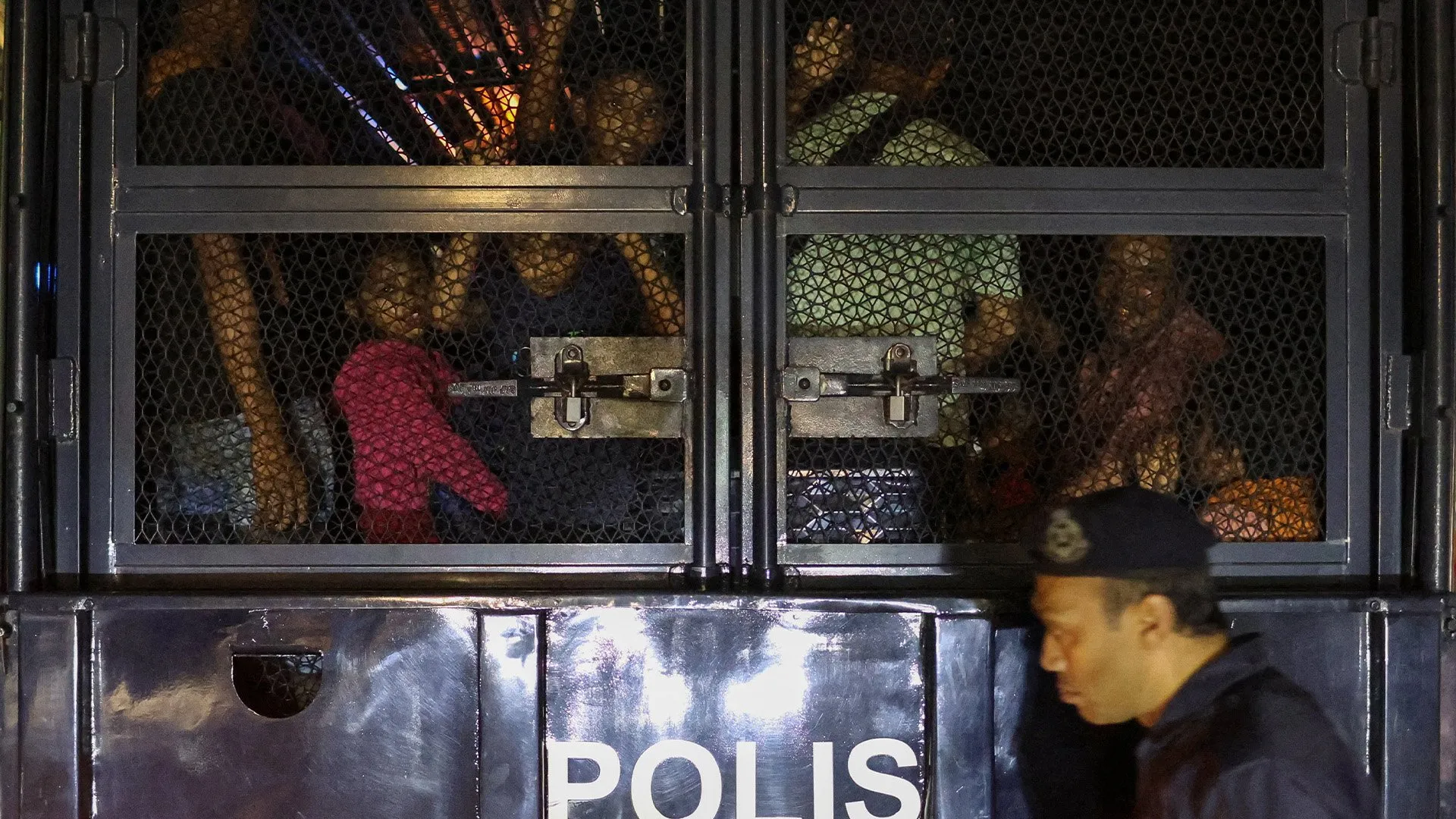
Malaysian police have detained more than 100 Rohingya refugees and asylum seekers who were seeking help from the UN after they were evicted from their homes. A rise in online hate speech and misinformation has led to more harassment of the group in Malaysia.
Major central banks are confronting an increasingly difficult inflation landscape as multiple price pressures converge, raising questions over whether policymakers can continue treating inflation shocks as temporary.
The U.S. Federal Reserve, the Bank of Japan and the Bank of England all meet this week against a backdrop of elevated inflation driven by rising energy costs, geopolitical tensions, supply chain disruptions, fiscal stimulus, labor market tightness and climate related risks.
While central banks have traditionally argued that isolated price shocks eventually fade without requiring aggressive monetary tightening, economists warn that today’s inflation environment is no longer defined by a single disruption but by several overlapping forces reinforcing one another.
Inflation remains well above target
The Federal Reserve’s preferred inflation measure, the Personal Consumption Expenditures (PCE) Price Index, is expected to remain significantly above the central bank’s 2 percent target.
Stay ahead of the geopolitical week.
MD Briefing delivers expert analysis across five global fronts — the Indo-Pacific, energy, geoeconomics, European security, and the Middle East — every Monday morning. Free.
Economists expect headline PCE inflation to stand at 3.7 percent and core inflation, which excludes food and energy, at 3.3 percent.
Inflation has remained above the Fed’s target for more than five consecutive years, complicating expectations that price growth will naturally return to normal levels.
Energy prices return as a major concern
Renewed military tensions in the Middle East have pushed crude oil prices sharply higher, adding fresh uncertainty to the global inflation outlook.
Brent crude briefly climbed above $100 per barrel before easing, while volatility in oil markets has increased as conflict around the Gulf and Red Sea threatens global energy supplies.
Higher crude prices have translated into rising fuel costs, with average U.S. gasoline prices now more than 30 percent above levels recorded a year earlier.
For central banks, energy inflation remains particularly difficult because monetary policy cannot directly resolve geopolitical conflicts or supply disruptions.
Food inflation adds further pressure
Food prices are emerging as another source of concern.
Annual U.S. food inflation already stands near 3 percent, while forecasts suggest stronger El Niño weather conditions could reduce agricultural production and lift global food prices over the coming months.
Some projections indicate food inflation could approach 5 percent next year, adding further upward pressure to overall consumer prices worldwide.
Unlike financial market volatility, rising food and fuel costs directly affect households and often shape public perceptions of inflation more than broader economic indicators.
Core inflation refuses to ease
Although policymakers often focus on core inflation because it removes volatile food and energy prices, underlying price pressures remain stubbornly elevated.
Persistent wage growth, continued strength in consumer spending and resilient labor markets have prevented meaningful progress toward the Fed’s inflation target.
Economists also warn that prolonged increases in food and energy prices eventually feed into broader consumer prices, making it increasingly difficult to separate temporary inflation from structural trends.
Tariffs and artificial intelligence create new price risks
Additional inflationary risks are emerging from trade policy and technological investment.
President Donald Trump’s renewed tariffs on imported goods could increase costs across multiple industries, while continued demand for artificial intelligence infrastructure has intensified shortages in advanced semiconductor markets.
Higher chip prices are expected to affect consumer electronics and industrial production, creating another potential source of inflation in manufactured goods.
Meanwhile, expansionary fiscal policies and strong financial conditions continue to support consumer demand, limiting the slowdown in prices that central banks have been seeking.
Strong labor markets complicate policy
Employment conditions remain exceptionally resilient across advanced economies.
In the United States, unemployment has remained near historically low levels, while wage growth above 3 percent continues to support household spending.
Although robust labor markets are generally viewed as positive for economic growth, they also contribute to persistent service sector inflation by increasing business labor costs.
This has made it harder for central banks to achieve price stability without risking slower economic growth.
Analysis: Inflation risks are becoming structural
The challenge facing central banks is no longer whether one inflation shock will fade but whether multiple overlapping shocks are creating a new inflation environment.
Energy markets remain vulnerable to geopolitical conflict. Climate related disruptions continue to threaten food production. Trade barriers are increasing production costs, while the rapid expansion of artificial intelligence is reshaping industrial demand and supply chains. At the same time, strong labor markets and expansionary fiscal policies continue to support consumer spending.
Individually, policymakers can argue that each of these factors is temporary or outside the influence of interest rates. Collectively, however, they reinforce one another and increase the likelihood that inflation remains above target for longer than anticipated.
For the Federal Reserve and other major central banks, the risk is no longer simply misjudging one temporary shock. The greater challenge is determining whether today’s inflation reflects a lasting structural shift in the global economy. If these pressures persist simultaneously, policymakers may be forced to maintain higher interest rates for longer, even at the cost of slower growth, making the path back to price stability significantly more difficult than markets currently expect.
Twenty-five years after “Is This It,” the Strokes are as big as they’ve ever been — and not just among old heads eager to relive the wasted glamour of the early-2000s garage rock revival. Go to a Strokes gig these days — they’re playing arenas and headlining festivals like next month’s Just Like Heaven in Pasadena — and you’ll find teens and twentysomethings in the audience; open up Instagram and there’s frontman Julian Casablancas dispensing viral hot takes on the New York City subway. On Spotify, the band’s most-streamed song isn’t the Giuliani-era “Last Nite” but “The Adults Are Talking,” which came out at the beginning of the COVID-19 pandemic — a feat of cultural endurance unmatched by any of the Strokes’ Gen X or millennial peers.
So what better time to drop a new album full of arcane jokes, baffling vocal affects and light conspiracy theorizing?
The group’s first LP since 2020’s Grammy-winning “The New Abnormal,” “Reality Awaits” is easily the nuttiest entry in the Strokes’ catalog, with a spooky opening track, “Psycho S—,” in which Casablancas, his voice slathered in AutoTune, ushers the listener “past the hall of judging dead into the bed of nightly dread.” (Sexy!) “Falling Out of Love” is a lilting robo-country ballad about dancing alone under acid rain; “Liar’s Remorse” is a voice-and-guitar lament about submitting to artificial intelligence that Casablancas croons for some reason in a terrible Caribbean accent.
Then there’s “Lonely in the Future,” in which Casablancas name-drops John Legend and Josh Groban, appears to ding Harry Styles for cribbing the beat from the Strokes’ “Hard to Explain” and informs Anthony Fantano, the popular internet music critic, that he “would not recognize art in any age.”
Philosophically, “Reality Awaits” feels less like a Strokes album than like a Casablancas solo record or an effort by his other band, the Voidz, which he’s used for the last decade or so as a kind of finsta for his harder-edged sociopolitical musings. “Going Shopping,” the LP’s lead single, casts a condescending eye on anyone insufficiently troubled by what the singer views as the creeping tyranny of a super-rich ruling class: “The worse reality gets, the less you want to hear about it / Solidarity can be difficult when you got cool stuff to lose.” That “Going Shopping” is the album’s jauntiest cut — with a music video that restages Paul Simon’s “You Can Call Me Al,” no less — only sharpens the critique.
Yet every now and then the Strokes, who absolutely ripped at Coachella in April, lock into a groove with the springy precision that’s been the band’s signature since the beginning. “Dine N’ Dash,” “Going to Babble On,” “Lonely in the Future” — it’s pure pleasure to hear the guitars in these songs slashing away over a rhythm section as crisp and nimble as this one. For all they’ve absorbed from their forbears, the Strokes don’t sound like anybody else, even when they seem to be trying to, as in “The Fruits of Conquest,” which suggests early Maroon 5 having a go at the Rolling Stones’ “Miss You.” (Obviously, I mean this as a compliment.)
You can view the indelibility of the Strokes’ style as the reason the band makes so many wacky decisions on “Reality Awaits”; looked at differently, the band is taking advantage of its persistent success to spend a bit of creative capital. Either way, Casablancas doesn’t actually seem worried at all in “Going Shopping” when he voices some anxiety about how long he can continue to matter. “I’ve been thinking about what I want to say,” he sings, “But I’m an old man now — at least that’s what they tell me anyway.”
LaMonte Wade Jr. drew a bases-loaded walk that forced home the go-ahead run in a four-run ninth inning, and the Houston Astros came back to beat the Angels 6-4 on Monday night.
The Astros rallied on a hit, two walks, two errors and two hit batters to hand the Angels (42-65) their ninth loss this season when leading after eight innings.
Houston (53-55) trailed 4-0 after three, but Taylor Trammell homered for a second straight game and the fifth time this season to cut it to 4-1 in the fourth.
Jeremy Peña doubled leading off the eighth against Ryan Zeferjahn, extending his hitting streak to nine games. Yordan Alvarez hit an RBI single to make it 4-2.
José Fermin (3-2) hit Trammell with a pitch leading off the ninth. Christian Walker singled and Trammell scored to make it 4-3 when second baseman Vaughn Grissom let Lucas Spence’s potential double-play grounder go through his legs for a costly error.
Sam Bachman entered and got an out before walking Alvarez intentionally to load the bases. Bachman grazed Isaac Paredes with a pitch to tie it, and Wade walked to give Houston the lead. Alvarez scored the final run when Jose Altuve reached on a fielding error by Bachman.
Tatsuya Imai didn’t make it out of the first inning for the third time this season in a start for Houston. He gave up a sacrifice fly to Nolan Schanuel and an RBI single to Grissom before AJ Blubaugh came in to get the final out of the inning.
Grissom hit his seventh homer — off Blubaugh — and Jo Adell blooped an RBI double to make it 4-0 in the third.
Cristian Javier (1-1) followed Blubaugh and struck out seven over five shutout innings for the win. Josh Hader walked two in the ninth before earning his 13th save.
Angels starter Walbert Ureña gave up a run on two hits in six innings and left with a 4-1 lead. Fermin got one out and was charged with three runs — one earned.
Up next: Astros RHP Peter Lambert (8-5, 3.03 ERA) starts Tuesday against Angels LHP Reid Detmers (3-7, 4.05).
An engineer walks inside a laboratory of Taiwan Semiconductor Research Institute at a Science park in Hsinchu county, Taiwan. Photo by RITCHIE B. TONGO/ EPA
July 27 (Asia Today) — Growing artificial intelligence demand and stronger trade barriers are rapidly reshaping the production and supply chains of South Korea’s major manufacturing industries, the Bank of Korea said Monday.
The central bank said Taiwan has become South Korea’s second-largest semiconductor export destination as the AI supply chain draws Korean memory-chip producers closer to Taiwanese manufacturers.
Meanwhile, South Korean automakers are increasing production in the United States and expanding hybrid vehicle exports as tariffs and U.S. industrial policies make direct exports less competitive.
The findings were included in the Bank of Korea’s Map of Production and Supply Chains for South Korea’s Major Manufacturing Industries. The report used data from 2024 and 2025 to examine 11 industries, including semiconductors, automobiles, steel, shipbuilding and petrochemicals.
South Korean semiconductor exports to Taiwan nearly tripled from $12.78 billion in 2022 to $36.77 billion in 2025.
Taiwan’s share of South Korea’s semiconductor exports increased from 9% to 19.9%, moving it from the fourth-largest export destination to the second largest.
China remained the largest destination, but its share fell from 53.1% in 2022 to 40.3% in 2025.
The central bank attributed the change to a shift in demand from conventional dynamic random-access memory chips to graphics processing units and high-bandwidth memory used in AI systems.
The AI semiconductor supply chain generally involves U.S.-based Nvidia designing graphics processors, Taiwan Semiconductor Manufacturing Co. producing and packaging the chips and Samsung Electronics and SK hynix supplying high-bandwidth memory.
That structure has increased the volume of South Korean semiconductor products shipped to Taiwan.
Semiconductors have also become more important to South Korea’s overall manufacturing sector.
Domestic semiconductor production rose from 74 trillion won in 2014 to 210.8 trillion won in 2024 ($50.4 billion to $143.6 billion). Its share of total manufacturing production doubled from 5% to 10.1% during the same period.
Production remains heavily concentrated in the greater Seoul area, which accounted for 82.3% of the national total. The Chungcheong region accounted for another 14.7%.
Major facilities in the Seoul metropolitan region include Samsung Electronics plants in Hwaseong, Pyeongtaek and Giheung and SK hynix’s plant in Icheon.
China’s growing influence was most apparent in South Korea’s automobile import market.
The share of vehicle imports from China increased from 3.5% in 2022 to 37.2% in 2025. Chinese-made vehicles accounted for about 70% of South Korea’s electric vehicle imports by value in 2025.
The report attributed the increase to China’s price competitiveness and its extensive supply chain covering vehicles, batteries and components.
The United States remained South Korea’s largest automobile export market in 2025. Shipments were valued at $30.15 billion and accounted for 41.9% of total finished-vehicle exports.
However, the United States’ share of South Korea’s electric vehicle exports fell from 33.6% in 2022 to 5.2% in 2025.
The central bank said U.S. subsidies, local production requirements and tariff barriers had weakened the competitiveness of electric vehicles manufactured in South Korea and shipped directly to the United States.
South Korean automakers have responded by expanding U.S. factory operations while increasing exports of hybrid vehicles.
Hybrids’ share of South Korea’s finished-vehicle exports rose from 11.6% in 2022 to 20.4% in 2025.
The shift reflects automakers’ efforts to respond to slowing electric vehicle demand and insufficient charging infrastructure by offering vehicles that combine electric motors with internal combustion engines.
New York City Mayor Zohran Mamdani has announced a new plan to sell grocery baskets at city-run stores at 30% below retail prices. The baskets will be sold at five city-run stores and are his latest effort to offer savings to New Yorkers.
“Are you mad?” says a fellow guest over dinner at our campsite. “I heard you’re here on a long-distance cycle ride with your toddlers.”
I am in Orne, a region in Normandy, with my sister Issy and our three-year-old sons, Sid and Ralph. The landscape folds around us in green-over-green – hedgerow, oak, mossy manor wall – then opens into meadows where Percheron horses graze, knee-deep in wildflowers. Deer leap from the bocage. Cidre and poiré have been pressed here since the middle ages. The villages are sandy stone, blue- and green-shuttered; roses against the boulangerie.
And yes, we are biking through it with the boys in child seats on the back, camping along the way in places found through the France Vélo Tourisme website. Over five days, we’re travelling 130km (80 miles) from Rémalard-en-Perche to Domfront, mostly along the Véloscénic – a 450km voie verte (a “greenway” car-free route) that runs from Mont-Saint-Michel to Paris – but looping off it to explore the fairytale chateaux and villages of the Perche, a historic former province. Issy is intrepid and a serious cyclist (the Lycra kind) but the best I can say is I cycle Sid to nursery, and I haven’t slept under canvas since, well, Glastonbury. So two or three hours’ cycling a day is probably enough …
Slightly rumpled from the overnight ferry to Caen from Portsmouth, we pull into Forest View, a campsite three miles south of Rémalard. Jean-Louis from the local bike hire shop is waiting with our ebikes. He’d insisted. I’d resisted: they can’t carry both a child seat and panniers so we’ll rely on Jean-Louis and a patchwork of kindly hosts to move our bags between stops. We test our bike legs on La Route Royale, an intermediate-level 25km circular route, and within an hour of leaving the campsite, climbing the hill to the pretty church of Moutiers-au-Perche for lunch, I realise Jean-Louis was right. The ebikes are the difference between a holiday and a heart attack.
There were plenty of stops so the kids could stretch their legs. Photograph: Ellie Fazan
The route is flat, but to really see the Perche you have to venture off it, and once you do, the land begins to roll and hills come without warning. The boys, strapped in behind us, are not light. But they are also loving it: pointing, laughing, bursting into Old MacDonald every time they see a horse, cow, tractor or sheep. It’s going so well that Issy and I are debating another few hours cycling or even a cider tasting on the way home, when a pause in the singing alerts us to the fact that both children have been lulled to sleep, heads wobbling from side to side, and so we take them back to the campsite to rest.
Graham Allen bought Forest View three years ago and built wooden camping pods especially for cyclists after watching them arrive “laden like donkeys”. Inside there’s a cosy bed and a skylight that we watch the stars through. Across the field there are hot showers. And in the informal restaurant, more like a kitchen/living room, home-cooked food at a shared table. Along France’s greenways, the number of Accueil Vélo accredited stops (accommodation for cyclists that offer breakfast, basic repair kits and help with luggage, among other things) has tripled since 2019.
After some seriously good sleep, eggs on toast and frantic sorting of stuff, we spend the next day on the Dîtes-le Avec des Fleurs loop: through the oak forest of Réno-Valdieu and past the Manoir de la Moussetière, one of the fortified manor houses typical of the Perche. Even on the open roads, there are just a handful of cars, and some steep climbs reward us with wonderful views. The freewheel back down leaves the boys shrieking with delight. At La Chapelle-Montligeon, a church rises out of the fields, and here we picnic on the bank of a lake.
Denis Hurtaud was also cycling this route when he took a detour from the greenway and stumbled on Café de la Place in the sleepy village of Courgeon. “The terrace was full of yellow flowers and there were old-fashioned oilcloths on the tables. Dappled sunlight fell across the courtyard,” he says. Over lunch, he overheard the owner say he was planning to retire and, by the end of the meal, he had decided to buy it. Today it is a bistro, village shop, bike repair station, art gallery, music venue and a lifeline to locals.
It’s Accueil Vélo-accredited too. No shower yet, but we pitch our tent in the garden and Denis has saved us some dinner. We sit at a long table in the last of the light, doves cooing in the church tower, eating chicken cooked in cider, a Perche speciality. Locals drift in and out. A neighbour’s child arrives with a plate of warm crepes for us.
The next day, we ride 8km up the greenway to Mortagne-au-Perche for the market. The queue for the season’s first strawberries goes around the block. A man turns dripping chickens on a spit. The radishes are obscenely pink, the asparagus oh so plump. At the Bar du Marché, locals drink coffee and scratch scratchcards in the sunshine. We join them. Our boys are knackered; both have absolute meltdowns and it’s hard work getting them back on the bikes, so we head directly to Carrouges, where we are to camp at the Parc Naturel Régional Normandie-Maine, in an orchard behind the moated, red-brick Château de Carrouges.
Pretty Moutiers-au-Perche was an early lunch stop. Photograph: Hemis/Alamy
The Parc is Accueil Vélo too, but the woman at the office says only five or six tents pitch up a year and we have the orchard to ourselves. Just us, a roast chicken and some baguettes, with the kids playing dinosaurs in long grass. Once Sid is snoring I pour myself a cidre – from local apples – and write. It is so quiet you can hear the flapping of birds’ wings. Then the storm comes. I’m a tent pole down (Glastonbury?) and the rain hits canvas like gravel. I lie clinging to Sid as the thunder tears the sky open above us, questioning every life choice that has led me to a walled orchard in Normandy with a small child and half a tent.
By morning, the rain has stopped. The orchard glistens. Issy emerges from the next-door tent having not slept either. We push on through the spa town of Bagnoles-de-l’Orne to Domfront, a town on a rocky outcrop dominated by a medieval keep. The sun bursts out again and the kids race up the ruined stones. Our home for the night is the Cabane des Deux Chênes, a handbuilt cabin on stilts between two old oaks. A secret room for the children in the rafters. A Nordic bath on the terrace, a hug after the rain.
On our last morning, we stop at the Ferme de l’Yonnière, Jérôme Forget’s farm just down the road, where he makes AOP Poiré Domfront. Pear trees take decades to mature, Jerome tells us, which is why most people stopped planting them, and why poiré went out of fashion. But he has planted a thousand. Next spring, he’ll start taking cyclists, too.
Back at the cabane, Jean-Louis comes to pick us up in his van and drives us, talking in French the whole way: about the pear trees and horses and the lanes we have just cycled. The most beautiful place in the world, he says, and I don’t disagree. Against the odds, it’s been a brilliant family holiday and Issy and I are already planning to come back next summer and do the whole thing. Perhaps we are mad after all.
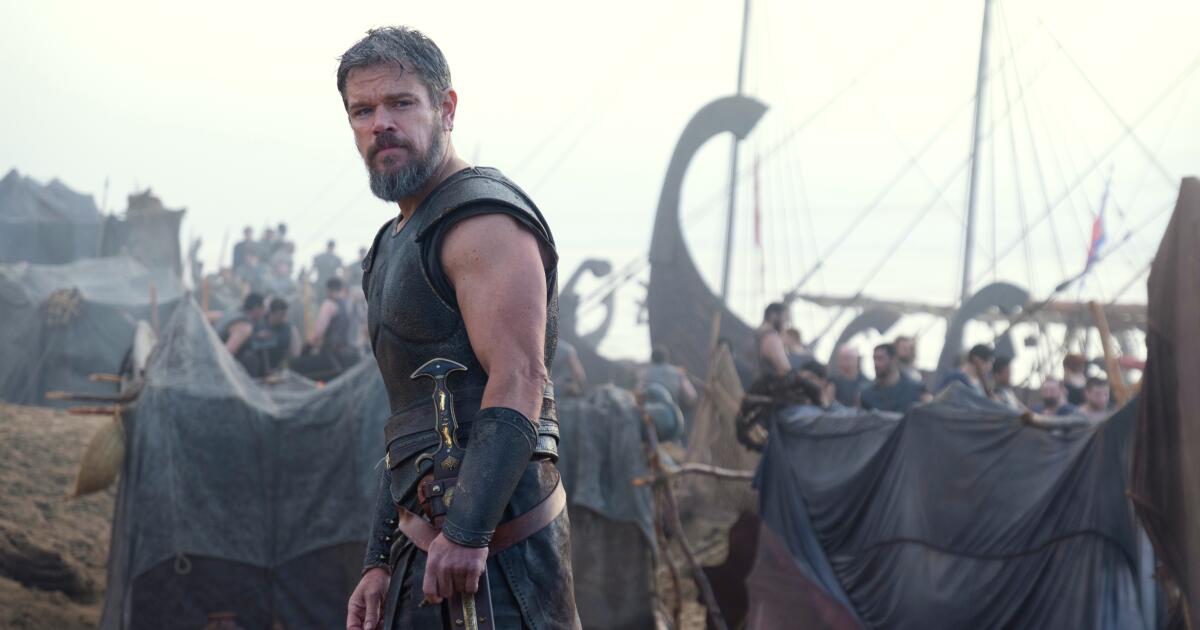
Emily Wilson, whose translation of Homer’s “The Odyssey” published in 2017 served as inspiration to Christopher Nolan when crafting his blockbuster adaptation of the nearly 2,800-year-old poem, has some thoughts on the film.
In a biting missive for the London Review of Books, the British American classicist dissected Nolan’s work with a scalpel so sharp that he may need to borrow some of Matt Damon’s armor to read it all the way through. Last fall, the acclaimed director quoted Wilson’s translation when telling Empire magazine why he was drawn to the story. “I think it’s the Emily Wilson translation that begins, ‘Tell me about a complicated man,’” he said. “The genius of the character, the cleverness, the inventiveness of him, that was a huge part of what interested me. He’s not just a soldier. He’s an amazing strategist, a very wily person.”
Wilson, although admittedly “humbled” by the nod from the filmmaker, wrote: “But I would be ashamed to have written any part of this script.”
A professor of classical studies at the University of Pennsylvania, Wilson has also translated Seneca and Euripides, as well as Homer’s “Iliad.” In her takedown of the film, she likens Nolan’s nearly three-hour epic to Peter Jackson’s “Lord of the Rings” trilogy and “Game of Thrones” and says that, by the end, she “almost expected everyone to break into Elvish.”
Earlier this month, The Times’ film critic, Amy Nicholson, wrote that “Nolan has sacrificed Odysseus himself to serve his own needs, scrapping the character’s prickly personality to Trojan-horse a message about how empires collapse. … Aghast at the ways of men, he’s dug his own Circe-like fingers into Homer to manipulate the tale into a moralistic ‘Oppenheimer’ prequel.”
Wilson appears to share the sentiment.
“Unlike some of Nolan’s other films,” she wrote, “‘The Odyssey’ is not boring, thanks to the source material, which is impossible to mess up entirely. It’s a family-friendly audiovisual spectacle, like an elaborate Fourth of July fireworks display — and with about the same level of narrative and emotional depth.”
When casting was announced for the film, it was no surprise that culture wars broke out over the choice of Oscar-winning actor Lupita Nyong’o to play Helen of Troy, with Elon Musk leading the charge.
Nolan responded, telling the Telegraph earlier this month before the film hit theaters, “These conversations that happen before people see the film — they’re always irrelevant, because no one having them knows what the film actually is yet.”
According to Wilson, Nolan’s race-neutral casting had “nothing progressive about it.”
“Most of the non-white actors — Zendaya, Lupita Nyong’o, Himesh Patel, Corey Antonio Hawkins, Travis Scott — play versions of the Black best friend, whose only role in the drama is to provide aid to the white protagonist,” she wrote.
Wilson zeroes in on the portrayal of Homer’s female characters in another major critique: “There are more female characters than in most Nolan movies, thanks to the source material. But none of them has much to say, in contrast to the [characterizations] in the poem.”
Where Charlize Theron’s Calypso ought to have been angry, funny, skilled in rhetoric and libidinous, according to Wilson, she’s “an unpaid therapist.” On Anne Hathaway’s Penelope, Wilson writes that the script “gives her nothing to do except yearn for Matt Damon, for reasons unknown.” And Zendaya’s Athena “turns out to be a vulnerable victim of war, or perhaps a projection of Odysseus’ conscience — not a scheming and bloodthirsty war goddess.”
And then there’s the human cost of war — the central theme of the film, and one that Wilson says contradicts Homer’s poem.
“The representation of Odysseus as a reluctant warlord makes a nonsense of the movie’s imagined world,” she writes. “We are not shown that war or killing are bad, only that good men sometimes feel bad about it — a very different point. Any serious depiction of violence, ancient or modern, must show the perspectives of the victims as well as the perpetrators, and the Homeric poems easily clear the bar — but Nolan doesn’t.
“The film asks us both to be horrified at war and to celebrate the action-movie sequences in which the reluctant warrior finally gets his hands on his bow and the blood starts flowing.”
Since Nolan announced “The Odyssey” back in December 2024, various versions of the poem have been in high demand at bookshops and libraries — especially the only English version written by a woman: Wilson’s 2017 translation. Louise Brockett, spokeswoman and head of communications at W.W. Norton, told USA Today that domestic sales of Wilson’s translation surpassed a million copies this year.
Concluding her critique of Nolan’s “Odyssey,” Wilson says the release of the movie is “still an event to celebrate.”
“In what we are told is the streaming era, this epic is bringing audiences back to cinemas. In what we are told is a time of declining literacy and the ‘death of the humanities,’ translations of The Odyssey, including mine, are flying off the shelves.”
Nolan spent $250 million making “The Odyssey,” and on opening weekend the film brought in a total of $264.1 million worldwide, according to studio estimates.
Trading was temporarily halted as the Kospi dropped to its lowest level since April after shares in chipmakers Samsung Electronics and SK Hynix fell sharply.
ADVERTISEMENT
ADVERTISEMENT
The Kospi was down 10.5% at 6,051.19 in overnight trading. Samsung’s shares tumbled 12%, while SK Hynix’s shares were down 12.7%.
A big factor driving the selling of AI-related shares, analysts said, is the expectation that competition from Chinese AI start-ups and chipmakers might undermine gains for global companies whose shares have skyrocketed due to the AI frenzy.
A 466% jump in the price of Chinese chipmaker CXMT on its trading debut Monday has underscored such concerns. CXMT raised at least $8.6 billion (around €7.6bn) in its initial public offering on Shanghai’s tech-oriented STAR exchange.
Most other Asian markets also fell, with Tokyo’s Nikkei 225 down 4% at 62,350.18. The Taiex in Taiwan skidded 3.9%. Hong Kong’s Hang Seng edged 0.1% lower, to 25,178.21, while the Shanghai Composite index lost 1% to 3,820.52.
In Australia, the S&P/ASX 200 bucked the regional trend, gaining 0.6% to 8,944.40.
Elsewhere, oil prices extended their declines as US and Iran refrained from attacks for a third straight day.
Officials in the Middle East said mediators had made progress in getting the two sides back to negotiations.
Brent crude, the international standard, fell 0.8% to $85.16 a barrel. US benchmark crude oil lost 0.9% to $81.86 a barrel.
Stocks on Wall Street drifted to a mixed close Monday. The S&P 500 gained less than 0.1% and the Dow Jones Industrial Average rose 0.5%. The Nasdaq composite fell 0.2% for its fourth straight loss.
Growing up in Inglewood, Andrew Hernandez heard plenty about the Olympics. Since L.A. was awarded the Games almost a decade ago, the 18-year-old watched preparations slowly improve the infrastructure of his hometown. He still never thought he would ever be able to attend.
Until now.
LA28 and the Rams donated 1,000 free tickets to 10 nonprofit organizations Monday, giving local youth such as Hernandez a seat at Olympic flag football or swimming competitions in 2028.
The tickets are the first gifts from LA28’s community ticket program, which launched in November with a $5 million inaugural donation from the Rams. When Rams coach Sean McVay delivered the news to members of the nonprofits at Rams training camp Monday, kids’ jaws dropped as the group broke into applause.
Hernandez, a member of South L.A.-based Brotherhood Crusade, posed in the group behind a giant commemorative Olympic ticket.
“Having grown up in Inglewood, you don’t really have the funds to [go to sporting events],” Hernandez said. “So if it wasn’t for programs like this or the Rams giving out tickets, a person like me, I would have never had imagined I’d be in a stadium watching the game. It’s opened my eyes.”
In addition to Brotherhood Crusade, A Place Called Home, After School All-Stars, Al Wooten Jr. Heritage Center, Boys & Girls Clubs of Metro L.A., Heart of Los Angeles, Project Blue, Social Justice Learning Institute, Swim Up Hill and YMCA of Metro L.A. were selected by the Rams and LA28 for their investment in local youth and their presence in communities near Olympic venues.
“The local organizations receiving these tickets today are groups that we work closely with year-round to uplift and support our neighbors all across the Los Angeles region,” Rams president Kevin Demoff said in a statement. “This investment ensures that the people and nonprofits that commit themselves to Los Angeles are able to experience this once-in-a-lifetime event right in their hometown.”
The Boys & Girls Club Metro L.A. started increasing awareness about the Games about three years ago. Members, ranging from 6 to 18 years old, participated in youth Olympic events and met Olympic and Paralympic athletes. But as excitement for the Games grew, many kids were already saying they couldn’t afford to go. They asked Kim Washington, the club’s vice president of philanthropy and marketing, whether they could at least watch events on TV at the club.
“Having this opportunity to have tickets for these kids and families, it’s going to be beyond their wildest dreams,” said Washington, who volunteered in the opening ceremony at the 1984 L.A. Olympics.
Rams running back Blake Corum, left, signs a T-shirt during an L.A. Olympics ticket donation ceremony at Rams training camp on Monday.
(Eric Thayer / Los Angeles Times)
Each organization will distribute tickets directly to members. The donated tickets are for two of the most in-demand Olympic sports. Flag football is making its Olympic debut and was among the new sports that sold out through its ticketing availability during the first ticket drop. Swimming, one of the marquee sports of the Summer Games, will take place in SoFi Stadium, which will be transformed into the largest Olympic swimming venue in history.
Paralympic swimmer Jamal Hill founded Swim Up Hill with a goal to teach underprivileged children how to swim. The 2021 bronze medalist primarily works with second to fourth-graders, with a significant number coming from the L.A. Unified School District. Some have already voiced ambitions to become Olympians or Paralympians.
“You see something happen, something that you consider magnificent or magical … it says, ‘Wow, now I want to do this,’” Hill said. “Whether or not you end up doing that, it puts you on a path of just thinking bigger, going above and beyond, having the incentive of self-driven goals that just ultimately build better community members.”
After selling a record 4 million tickets in the first drop this year, Olympic tickets go back on sale this week. Fans who registered for the ticket lottery with a Visa credit card received information Monday about time slots to purchase tickets during the Visa presale that runs July 29-31. Email notifications for time slots in the second drop that begins Aug. 10 and lasts until Aug. 20 will hit inboxes between Aug. 6-7.
When Olympic tickets went on sale in April, fans were shocked and frustrated at high prices, a 24% service fee and limited availability for key events. LA28 has tried to keep tickets affordable, but hearing that nearly half of the tickets are under $200, including the service fee, and 75% are under $400 is still a steep price for many fans. Half of the 1 million tickets priced at $28 were scooped up during the locals presale in April, but more will be made available in the next drop.
Individuals, organizations and community leaders interested in participating in LA28’s community ticket program can access more information at la28.org. The Rams’ initial $5-million donation is expected to fund several more ticket donations to local organizations in the coming months.
Although he grew up near SoFi Stadium, Hernandez, who will be a freshman at San José State in the fall studying civil engineering, had never attended a major live sports event until this year. Through Brotherhood Crusade, he went to a Rams game. It only made him more excited for future opportunities.
“It almost helped me with my goals,” Hernandez said. “I’m like, ‘You know what, I want to be in that space again.’ I want to be able to afford a ticket and go to games. That’s kind of why I want to go to college, want to get an engineering degree, and make sure that maybe I can take my kids one day to a Rams game. The next time the Olympics come back, I can be able to get my own ticket and go.”
US President Donald Trump says talks with Iran are continuing during a pause in US military strikes, adding he believes there is ‘a good chance’ of a breakthrough but warning military action could resume if negotiations fail.
Regulator proposes checks on 453 US-registered jets over seats that may be incorrectly installed.
Published On 28 Jul 202628 Jul 2026
The US aviation authority has warned that seats on hundreds of Boeing 737 MAX planes could have been installed incorrectly and may require inspection.
The Federal Aviation Administration (FAA) said on Monday that the issue relates to 453 jets registered in the US and proposed requiring airlines to inspect the seats.
Recommended Stories
list of 2 itemsend of list
If not installed correctly, the seats could come loose during an emergency landing and “injure passengers and crew members”, the FAA said, adding that they could also “block the aisle and slow an evacuation”.
The proposed order would apply only to US-registered planes because the FAA does not regulate foreign airlines.
Regulators in other countries, however, often follow FAA orders when the issue affects aircraft operating in their markets.
A Boeing spokesperson told the Reuters news agency that the company had issued guidance to operators on the matter in December 2025.
“We support the FAA making that guidance mandatory,” the spokesperson said in an email.
The warning adds to years of scrutiny of Boeing’s safety record.
A cabin panel blew off an Alaska Airlines 737 MAX 9 in January 2024, forcing an emergency landing and prompting the FAA to ground 171 jets.
Investigators later found that the panel was missing four key bolts.
The scrutiny intensified after a spate of other accidents around the world, as well as the death of Boeing whistleblower John Barnett in March 2024 while he was providing evidence for a safety lawsuit against the firm.
In June 2025, the US National Transportation Safety Board said Boeing had failed to provide adequate training, guidance and oversight to prevent the Alaska Airlines incident.
There are nearly 2,300 737 MAX jets operating around the world, including 823 in the US, according to aviation advisory and intelligence firm IBA.
DAN Osborne has lashed out at online trolls in a rant over negative comments as he “steps up” amid his split from wife Jacqueline Jossa.
The former TOWIE star, 35, took to Instagram stories today to address the trolls as he had a few choice words for them.
Dan Osborne has lashed out at trolls for leaving negative comments on his postsCredit: danosborneofficial/ InstagramHe had some choice words for the hatersCredit: danosborneofficial/ Instagram
While sitting in his car, he began: “Hello people, just a little rant from me. So this is gonna have to go over two videos.
“I posted a picture of me and my kids, obviously posted the picture of me and my girls when we went to London, had a beautiful time and the same happened when I posted with Ted as well when I took him to Bruno Mars.
Sign up for the Showbiz newsletter
Thank you!
“I find myself having to delete negative comments from people on pictures of me and my kids.
“I don’t understand why anyone should have to do that, and also I do appreciate the nice comments of course.
“There are people who say thing like, ‘well done for stepping up’ or being a good dad or whatever. I don’t ever want praise for that because I think that’s what every man should do for their kids.”
The Celebrity Big Brother star continued: “I also don’t understand why anyone should have to delete any comments on any picture.
“All of us are different, all of us are cracking on with our own lives, doing our own thing, we’re all from different thoughts and different beliefs.
“There should never be any negative comments. When you look at the people who leave these negative comments, you look on it, these people are not f***ing normal.
“They look like their auditioning for The Hills Have Eyes movie, they look like their probably married to their own brothers or sisters, they’re not normal people.
“Someone has to say it, I don’t like to be judgemental but you’re not normal.
“And if you do view yourself as normal and you are one that trolls people and leaves negative comments, then I promise you you’re not normal.
“You need to take a long hard look at yourself, you’re f***ing weird, just be nice or don’t say nothing.”
It comes after he split from wife Jacqueline Jossa in MarchCredit: GettyThey share daughters Ella and MiaCredit: Getty
Dan concluded his rant by telling his viewers he felt better “after letting it off my chest” and thanked his true supporters.
He’s dad to daughters Ella, 11, and Mia, eight, with now ex-wife Jacqueline.
Dan is also dad to son Teddy, 12, from a previous relationship.
A source close to Dan told The Sun at the time: “Everyone knows they’ve had their troubles, but after spending some time apart this year, they’ve decided to make the split permanent.
“Their two daughters are their main priority.”
Our insider revealed: “After all Jac’s been through, she’s finally had enough. They’ve been living separate lives all this year and she’s over it.
“There’s only so many times she can put herself through living in limbo and taking him back.
They were together for 13 yearsCredit: InstagramThe Sun recently revealed that Dan has moved on with model Etila SantiagoCredit: instagram
“She has mentally checked out and Dan has panicked.
“He’s worried the grass isn’t greener and has had the shock of his life that he’s pushed Jac too far this time.”
It comes after Essex lad Dan kept in touch with Brazilian Etila, 33, after a holiday romance in May.
And insiders claim the news has ruffled estranged wife Jacqueline’s feathers as the 33 year-old EastEnders star watches him enjoy a new lease of life with a stunning model.
A source close to Jac and Dan told The Sun: “Jacqueline is trying to focus on work and the girls, but it’s hard not to notice that Dan seems to have moved on so quickly.”
Earnings Call Insights: Simpson Manufacturing Co., Inc. (SSD) Q2 2026
Management View
CEO Michael Olosky framed Q2 around execution through mixed construction conditions, saying, “Despite ongoing market challenges, we are making solid progress advancing our strategic priorities.”
On Q2 drivers, CEO
Seeking Alpha’s Disclaimer:This article was automatically generated by an AI tool based on content available on the Seeking Alpha website, and has not been curated or reviewed by humans. Due to inherent limitations in using AI-based tools, the accuracy, completeness, or timeliness of such articles cannot be guaranteed. This article is intended for informational purposes only. Seeking Alpha does not take account of your objectives or your financial situation and does not offer any personalized investment advice. Seeking Alpha is not a licensed securities dealer, broker or US investment adviser or investment bank.
Megan Keith was the sole Scottish representative in the women’s 10,000m after McColgan dropped out.
Despite a swell of cheers from the crowd at every pass, the Inverness runner was unable to replicate the iconic 2022 performance of her compatriot, finishing ninth in a time of 32:22.11.
Canada’s formidable Olympic hammer champion Ethan Katzberg drew gasps of awe from the Glasgow crowd with his herculean throw of 80.97m, which set a Commonwealth record.
But the biggest cheers in the hammer were reserved for Scotland’s Chris Bennett, competing in his fourth and final Games.
He finished fifth with his longest throw of 69.48m, clearly emotional as he wrapped up a 24-year career.
Alexander Thomson – who trains just down the road at Victoria Park and had fought back from knee surgery – finished ninth in the T38 100m final.
Jemma Reekie comfortably booked her place in the semi-finals of the 800m, finishing second in her heat with a time of 2:03.09 behind England’s world indoor 1,500m champion Georgia Hunter Bell.
Erin Wallace also booked her place in the semi-finals with a time of 2:03.15, but Mena Scatchard just missed out on qualification by 0.06 seconds after finishing fourth in her heat.
In the early sessions, Stephen Mackenzie got Scotland off to a strong start as he progressed to the men’s long jump final on Wednesday.
A second-round leap of 7.75m was enough to see him through in eighth place.
Meanwhile, hammer thrower Angela McAuslan-Kelly progressed to the women’s final, with a throw of 60.59m in the first round securing her place.