Month: July 2026

Spain defeats Argentina in extra time in thrilling World Cup final

This summer’s World Cup was so good, nobody wanted it to end.

So Spain and Argentina played on and on in Sunday’s final, through 90 minutes of regulation time and then through a 15-minute extra period before Ferran Torres gave Spain the only goal it needed to claim the title with a 1-0 victory over the defending champion at a sold-out MetLife Stadium.

It was an epic finish to an epic tournament, one that set records for everything from attendance and TV viewers to games played and goals scored. And it was almost certainly the last World Cup for Argentine captain Lionel Messi, 39, who finished his record-setting sixth tournament as the all-time leader in games (34), assists (12) and goal contributions (33).

His parting gift was a silver medal, a handshake from President Trump and a hug from the King of Spain. But none of those were the prize he wanted most, so when he left the stage after receiving his medal, he broke down in tears.

A swarming Spanish defense made him little more than a spectator for most of the match. So while Argentina came into the final leading the tournament in goals per game, it also became the first team to go 90 minutes without a shot in a World Cup final. It was outshot 20-2 for the game, and Spanish keeper Unai Simón, who gave up just one goal in eight matches, was not forced to make a save in registering his seventh clean sheet.

He was named the outstanding keeper of the tournament.

That allowed Torres, who started just once in the tournament, to become the hero.

“Honestly, I can’t believe it. I just am trying to enjoy it, but I don’t know what’s happening,” Torres said. “I didn’t think too much. I just saw the ball coming to me and I just shot with the power of all the Spanish people.”

Spain's Ferran Torres celebrates after scoring in extra time against Argentina in the World Cup final Sunday.

Spain’s Ferran Torres celebrates after scoring in extra time against Argentina in the World Cup final Sunday.

(Julio Cortez / Associated Press)

Rodri, Spain’s captain and the anchor of the team’s smothering defense during its unbeaten World Cup run, won the Golden Ball award as the outstanding player of the tournament. He was equally stunned.

“I’m in shock,” he said. “I cannot express [my feelings] in words. I’m like in a cloud.”

For Rodri, who also led Spain to a European Championship two years ago, Sunday’s victory capped a personal two-year struggle to return from a ruptured anterior cruciate ligament he sustained in 2024, a month before he hobbled onstage with crutches to receive the Ballon d’Or award as the world’s best player.

“It’s been a really tough time,” said the midfielder, who broke the World Cup record for completed passes in the tournament with 747. “I just want new generations to see my example as an opportunity to when you go down, you can rise again. This is my philosophy my entire life.

“Sometimes things go well, things go wrong. But always the positive.”

Highlights from Spain’s 1-0 win over Argentina in the World Cup final on Sunday.

The only goal came seconds into the second extra-time period, with defender Pedro Porro sending a long cross to the left post for Nico Williams, who headed it back into the center of the box for Torres, a second-half substitute who buried the left-footed volley that would give Spain its second World Cup title.

Torres, who entered the game just past the hour mark, is the fifth man to come off the bench and score in a World Cup final and the first since Germany’s Mario Gotze, whose extra-time goal beat Argentina in 2014. Williams, who got the assist, was also a late-game substitute.

“We are world champions. I am very proud,” Luis de la Fuente, Spain’s coach, said through an interpreter after his team ran its unbeaten streak to a record 38 games.

“I’m very happy for my players. We’ve won in all the categories. We’ve grown together. We reached this stage today thanks to their talent, to their attitude, to their comportment, to their values and to the huge footballing talent.”

The goal ruined a superhuman effort by Argentine keeper Emiliano Martínez, who made 11 saves while playing with a fractured right ring finger that will require surgery. That’s two more saves than he had over the rest of the tournament.

But the moment that may have sealed Argentina’s fate came in the final minutes of second-half stoppage time when Enzo Fernández clattered into Spanish center back Pau Cubarsí at midfield, flipping him head over heels. Fernández had been booked minutes earlier for dissent, and the second yellow card led to his expulsion, forcing Argentina to finish shorthanded.

Spain wasted little time exploiting the advantage and appeared to have scored six minutes into extra time when Williams banged in the rebound of a Martínez save, only to have Slovakian referee Slavko Vincic wave it off, ruling that Spain’s Mikel Merino had fouled Argentine defender Nicolás Otamendi in the buildup to the goal.

Spain star Lamine Yamal is congratulated by FIFA President Gianni Infantino, left, and President Trump.

Spain star Lamine Yamal in congratulated by FIFA President Gianni Infantino, left, and receives his medal from President Trump following Spain’s win over Argentina in the World Cup final Sunday.

(Justin Setterfield / Getty Images)

The capacity crowd of 80,663, matching the second-largest of the tournament’s 104 games, booed Trump when he appeared on a videoboard during the national anthem and again when he walked onto the pitch for the postgame awards ceremony.

During the victory ceremony after the final of last summer’s Club World Cup, played at the same stadium, Trump remained on the podium to celebrate with Chelsea’s players and was seen on TV pocketing one of the winners’ medals. On Sunday, after Trump joined FIFA President Gianni Infantino presenting the World Cup trophy to Rodri, the Spanish captain motioned to Trump to move to the left side of the stage. As Spain lifted the trophy, Infantino escorted the president off the podium and away from the celebration.

When Argentina gave the trophy back to Spain, it likely marked a passing of the torch. Argentina has played in three of the last four World Cup finals, but the average age of its starting lineup Sunday was more than 30, making it the second-oldest to play in a final behind the 11 Brazil used to win in 1962. And it got a bit older when Otamendi, 38, came on for 28-year-old Lisandro Martínez, who left with an apparent injury just before the end of the first half.

Argentina star Lionel Messi reacts after losing to Spain in the World Cup final.

Argentina star Lionel Messi reacts after losing to Spain in the World Cup final.

(Pamela Smith / Associated Press)

Spain, meanwhile, had the sixth-youngest roster of the 48 teams. Two of La Roja’s starters — teenagers Cubarsí and wunderkind Lamine Yamal — hadn’t even been born when Messi made his World Cup debut in 2006.

“The way this team has matured, it built every day,” said Rodri, the third-oldest starter on the team despite being just 30. “We faced different opponents. Of course, lots of European opponents. But different moments and different types of games and we managed to play all of them.

“We grew in this sense and this generation is making history for our country.”

A history that de la Fuente said is just beginning.

“This team has a long way to go,” he said. “We are already thinking to what is next, what is coming up.”

Sports Editor Iliana Limón Romero and staff writers Jad El Reda and Eduard Cauich contributed to this report.

Spain players celebrate after defeating Argentina for the World Cup title on Sunday.

Source link

Resort ‘heroes’ filmed carting away towels being used to claim sunbeds

Tourists say people were putting the towels on the beds first thing then not coming back until 4pm

Resort ‘heroes’ filmed carting away towels being used to claim sunbeds

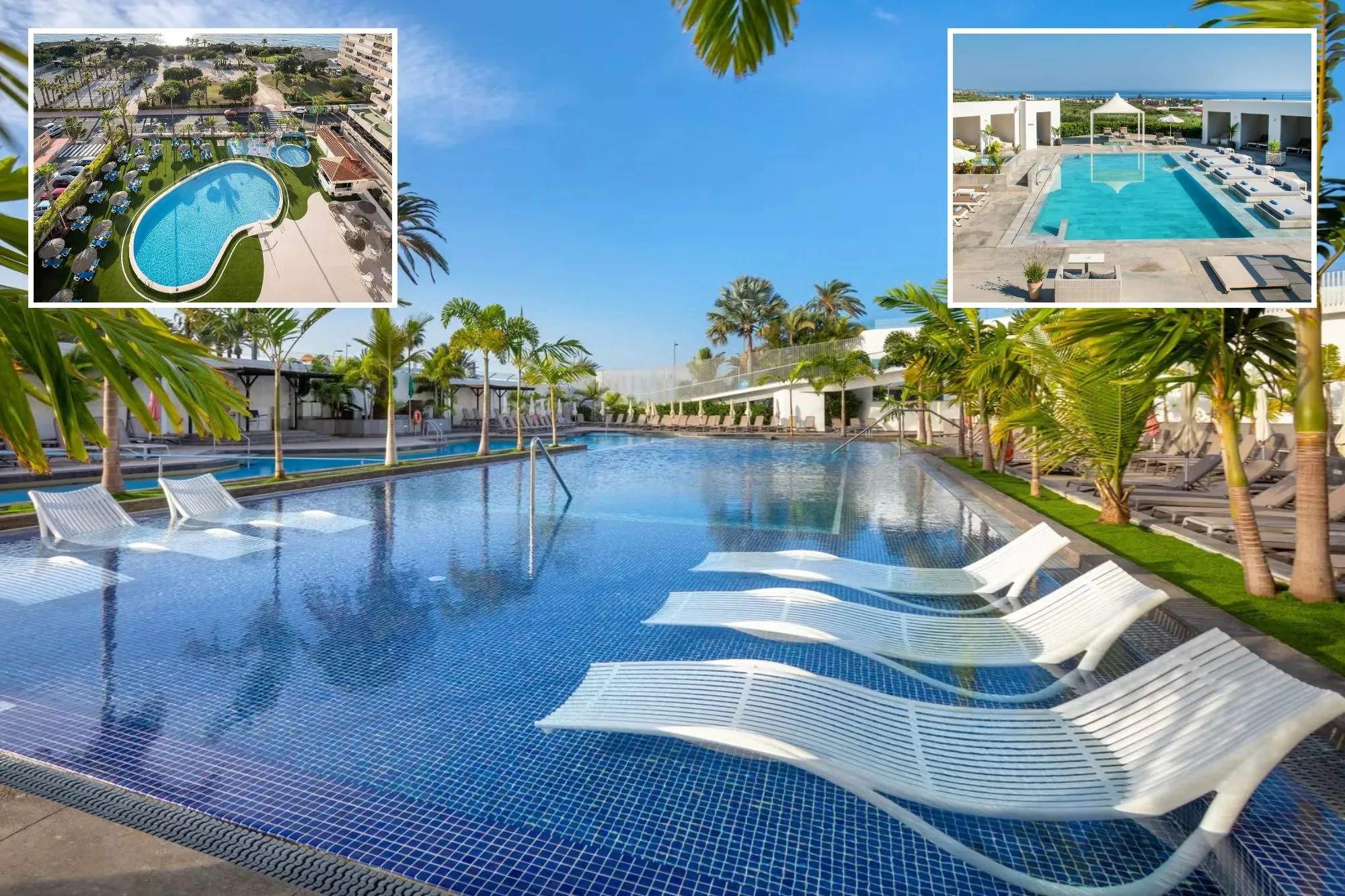
Resort workers have been hailed heroes after being filmed removing piles of towels from unoccupied sunbeds reserved by holidaymakers. The viral clip has delighted travellers fed up with people claiming loungers for hours without using them.

It was filmed at Camping Le Marsouins in Argelès-sur-Mer, near Perpignan, France. With several holiday resorts now introducing rules to stop guests reserving sunbeds they are not using, staff at the campsite decided to take matters into their own hands.

The clip, which has racked up over three million views and 80,000 likes, showed two members of staff in yellow and red uniforms collecting towels from empty loungers. They piled the abandoned towels onto a single sunbed, freeing up the rest for guests who are actually using the pool

Vir Ginie, who filmed the video, explained why staff stepped in. She said: “The idea is to free up unoccupied sun loungers. People come and leave their towels as soon as the pool opens, then leave and come back around 4pm, for example.

“So the loungers are unavailable for people at the pool and, in high season, it causes problems and annoys the other holidaymakers.”

The clip reignited the long-running debate over holidaymakers reserving poolside loungers for hours before returning to use them.

One viewer said: “About time – all hotels should be doing this.” Another said: A big round of applause for these staff members.

“This is exactly how it should be in every hotel.” While a third said: “All hotels should do this.”

Source link

US releases footage of ninth consecutive night of strikes on Iran | US-Israel war on Iran

NewsFeed

The US military carried out its ninth consecutive night of strikes on Iran, targeting military command centres, air defence systems and coastal surveillance facilities, according to CENTCOM. The US military said it hit maritime capabilities, missile and drone launch sites, and communications networks.

Source link

Protests continue in Houston over ICE killing of Lorenzo Salgado Araujo | News

Hundreds of protesters have rallied in Houston in the US state of Texas to demand justice for Lorenzo Salgado Araujo, a Mexican man shot dead by an Immigration and Customs Enforcement (ICE) agent this month.

Protesters marched from Ervan Chew Park on Sunday and briefly shut down a bridge on Dunlavy Street, according to local media and videos posted online. They held banners that read, “Abolish ICE” and “Justice for Lorenzo”.

Recommended Stories

list of 3 itemsend of list

Salgado Araujo, a 52-year-old Mexican national, was fatally shot by an ICE agent on July 7 while he was driving his construction crew to a job site in Houston. The protests came amid mounting scrutiny of United States President Donald Trump’s aggressive immigration crackdown.

According to The Associated Press news agency, encounters with ICE and other immigration agents have resulted in at least 10 deaths since the start of Trump’s second term in January last year. Two of those happened in the days after Salgado Araujo’s killing in the states of Maine and Florida.

After the shooting in Houston, ICE claimed Salgado Araujo had used his vehicle to try to ram an agent who fired his weapon in self-defence. But witnesses contradicted ICE’s version of events, and a statement issued on Thursday by the US attorney for the Southern District of Texas made no mention of any collision between Salgado Araujo’s van and a law enforcement vehicle nor did it explicitly state that the officer feared for his life.

In a video posted online by the Party for Socialism and Liberation, a campaign group, an activist at Sunday’s march called for further protests to shut down the city.

“We need to show ICE, the Trump administration and the entire country that the city of Houston is not to be messed with,” the protester said.

“We cannot just sit here and let ICE hunt and murder more of our daughters, our brothers, our uncles. If we want justice, we have to demand it,” she said.

The activist said the “shutdown” of Houston, the fourth largest city in the US, will take place on Friday.

Sunday’s protest followed similar rallies held across the country on Saturday, including in Portland, Maine, where, on July 13, Joan Sebastian Duran Guerrero, a 26-year-old Colombian man, was fatally shot during a traffic stop in nearby Biddeford.

On Saturday, Duran Guerrero’s family paid tribute to the father of a three-year-old girl, telling the Telemundo news network that he still had “many dreams to fulfil”.

Democratic lawmakers, meanwhile, have demanded an investigation into ICE’s hiring practices after it was alleged that the officer responsible for Duran Guerrero’s killing had a history of mental health issues and had subjected his ex-wife to violent and threatening behaviour.

Bennie Thompson, a Mississippi congressman and the top Democrat on the Committee on Homeland Security in the US House of Representatives, told AP that the officer’s alleged violent history “directly call[s] into question the supposed vetting and training ICE does of its recruits”.

After the killings, the Trump administration’s top immigration enforcement official, Tom Homan, said the agency would start a “short pause” on traffic stops. And on Sunday, he announced ICE will now require at least one agent to wear a body camera during vehicle stops.

“I want the American people to see what the officers saw when they took that action,” he told the Fox & Friends Weekend programme on the Fox News network.

Trump, meanwhile, has urged the agency to continue traffic stops despite the killings.

“We must be strong, tough, and smart, and we CANNOT give up one of I.C.E.‘s most important and effective Crime Fighting tools, THE TRAFFIC STOP!” Trump wrote in a post on his Truth Social platform on Wednesday. “Once we do, we are playing right into the criminal’s hands.”

In addition to the deaths, at least 13 people have been wounded since Trump’s immigration crackdown began, according to The Trace’s Gun Violence Data Hub. At least 52 people have also died while in ICE detention, according to Human Rights Watch.

As of January 2026, ICE had deported more than 540,000 people from the US.

Source link

Coronation Street star Jack P Shepherd’s wife Hanni shares adorable snaps with newborn three weeks after birth

SOAP actor Jack P Shepherd and his wife Hanni Treweek have given fans a glimpse of their new baby girl.

The Coronation Street star appears in family snaps alongside his press office partner and three-week old daughter.

Coronation Street star Jack P Shepherd’s wife Hanni has shared sweet snaps with their newborn Credit: instagram/@hannitreweek
The Corrie star and his wife welcomed their daughter just weeks ago Credit: Instagram

Alongside the pictures, Jack’s spouse wrote: “The best three weeks of my entire life with my baby girl.”

Looking glowing, the new mum can be seen in various pictures cradling the little one and pushing her pram.

Another photo showed the loved-up new parents sharing a kiss.

While they have kept the baby’s face out of shots, you can see her delicate hands and body in a range of tiny floral dresses.

SOAP BABY

Corrie’s Jack P Shepherd welcomes 1st child with wife Hanni & reveals sweet name


DAD REST

Jack P Shepherd ‘taking break’ from Corrie as he counts down to birth of child

Followers commented: “So gorgeous!!!”

A second added: “Awww, your lives will never be the same again… enjoy every moment of her.”

Jack’s wife Hanni looked chic as she pushed the pram and nursed a drink Credit: instagram/@hannitreweek
The couple have named their little girl Constance Ita Credit: instagram/@hannitreweek

A third gushed: “Look at those little toes! Precious!”

The David Platt actor and his wife have named their daughter Constance Ita Shepherd.

In February, Celebrity Big Brother winner Jack and Hanni revealed they were expecting their first child together.

Hanni shared the happy news on Instagram with a photo of the newborn and wrote: “Our beautiful baby girl has arrived, born peacefully at home, surrounded by love.”

Looking like a natural mum, Hanni shared the pics on social media Credit: instagram/@hannitreweek
The press officer looked content surrounded by their dogs while cradling her baby Credit: instagram/@hannitreweek

Jack, who plays David Platt in the ITV soap, met Hanni when she worked behind the scenes on the show.

They tied the knot July 2025 in a stunning wedding ceremony up in Manchester after popping the question in 2024 on safari in Africa.

After years of rejecting the idea of reality TV, Jack finally decided to take the plunge after being offered an impressive pay cheque on Celeb BB.

It’s thought he agreed to take part in Celebrity Big Brother to help pay for his wedding.

Jack entered the house alongside Mickey Rourke, Ella Rae Wise and JoJo Siwa.

The star – who is thought to make £250k a year playing David Platt – previously explained how they fell for each other at a mutual friend’s wedding.

Hanni shared a selection of snaps from the past few weeks Credit: instagram/@hannitreweek
The pair got together at a mutual friend’s wedding Credit: instagram/@hannitreweek
Their baby is just three weeks old Credit: instagram/@hannitreweek
Corrie star Jack as David Platt Credit: itv

The Coronation Street alumni will make his pantomime debut playing the lead role of the Prince in Sleeping Beauty in North Wales later this year.

The dad-of-three will star as the fairy tale prince starting from December 12 through to January 2.

The reality TV winner has played David Platt on Corrie for 26 years but it will be his first time ever starring in a Christmas panto.

Jack already has three children, two with his ex-fiancee and performing arts teacher Lauren Shippey.

The childhood sweethearts called it quits after 15 years and two children together.

Jack was just 14 years old when he began seeing Lauren.

In February 2009, the couple welcomed their first child together, a daughter called Nyla.

The couple then went on to have another baby, a son called Reuben, in December 2013.

Source link

Eurozone inflation confirmed at 2.8%: Will it be enough for the ECB to pause?

Eurostat’s final figures, published on Friday, showed annual inflation easing from 3.2% in May to 2.8% in June, the first decline since prices began accelerating in January, less than a week before the ECB’s Governing Council announces its policy decision on Thursday and decides whether June’s first interest-rate hike in nearly three years should be followed by another increase.


ADVERTISEMENT


ADVERTISEMENT

The details of the release lean towards a pause.

Core inflation, which strips out energy, food, alcohol and tobacco, slowed from 2.6% to 2.4%, energy inflation cooled from 10.8% to 8.5% and services eased from 3.5% to 3.2%, with the headline rate falling in 22 of the EU’s 27 member states.

Among the eurozone’s big four economies, Germany stood at 2.4%, France at 2%, Italy at 3% and Spain at 3.6%.

The numbers matter because of what came before.

In June, the ECB lifted its deposit facility rate from 2% to 2.25%, its first increase in nearly three years, after the war in Iran drove eurozone inflation to 3.2% in May, the highest reading since September 2023.

A reignited Iran war

The complication is that the shock behind that hike has returned.

Oil neared $120 a barrel in March before sliding to around $72 following an interim peace agreement at the end of June, but the truce has frayed badly this month.

The US and Iran have exchanged fresh strikes, Tehran has attacked ships and threatened regional energy exports, and Washington has reimposed sanctions and stepped up its naval blockade, pushing Brent crude back up to $87 a barrel on Friday.

That resurgence has revived the possibility of a surprise hike on Thursday, according to ING, although the bank still expects a hold, with a second increase more realistic in September.

Renewed conflict involving Iran

The complication is that the shock behind that June rate hike has returned.

Oil prices neared $120 a barrel in March before sliding to around $72 following an interim peace agreement at the end of June. However, the truce has frayed badly this month.
The United States and Iran have exchanged fresh strikes, Tehran has attacked commercial shipping and threatened regional energy exports, while Washington has reimposed sanctions and tightened its naval blockade, pushing Brent crude back up to $87 a barrel on Friday.

The renewed escalation has revived the possibility of a surprise rate hike on Thursday, according to ING, although the bank still expects the ECB to hold rates steady, viewing a second increase as more likely in September.

July is also not a forecasting meeting, giving policymakers cover to wait for updated economic projections before taking further action.

What Lagarde has signalled

Speaking at the ECB’s Sintra forum a few weeks ago, ECB President Christine Lagarde insisted June’s rate hike was not an “insurance hike” but a response to a genuine inflation problem. She noted that the ECB’s projections showed inflation returning to its 2% target only in late 2027, and only if monetary policy was tightened further.

Lagarde also refused to pre-commit to a policy path, saying “forward guidance is not in the cards” and that decisions would continue to be made on a meeting-by-meeting basis, guided by incoming economic data.

The ECB remains the only major Western central bank to have actually pulled the trigger.

The US Federal Reserve left its benchmark interest rate unchanged at 3.50%-3.75% in June, at Kevin Warsh’s first meeting as chair, although his hawkish tone unsettled markets.

The Bank of England also left its Bank Rate unchanged at 3.75% in a 7-2 vote, with two policymakers preferring an increase to 4.0%, while the Bank of Japan raised its policy rate to a 31-year high of 1.0%.

Source link

A Canterbury trail: my pilgrimage from the cathedral to the white cliffs of Dover | Canterbury holidays

Canterbury for Evensong. Is there a more delightful cluster of syllables in the English language? Old English, I should say, as æfensang comes from that tongue, an update on the Latin-derived “vespers”. But whatever you call the service, Canterbury Cathedral does it in style. How beautiful the singing from the choristers in their white and purple. How beautiful the light as it honeys the stone of the quire. I had been in the city only an hour or so, and considered this early evening worship a sort of overture for my stay.

What a relief to get inside the great stone building. The lovely old city was horrible with heat. A statue of Chaucer on High Street appeared overdressed in robe, cloak and hat. He held out a page inscribed with the opening lines of The Canterbury Tales: “When in April the sweet showers fall … Then people long to go on pilgrimages.” The bronze had been hot to the touch and I began to suspect that I’d made a mistake starting my own pilgrimage at midsummer.

Walking to the cathedral, I had passed the former site of the Royal Fountain, where the travel writer HV Morton stayed in 1939. Morton chose the inn because it was quiet, Canterbury being very noisy in his experience, forever busy with tourist traffic. “And who can deny,” he wrote, “that the mobility given to masses of people by the cheap motor-car and the motor-bus has revived a wave of secular pilgrimage in Protestant England within the past 20 years and multiplied relics in a way unparalleled since the heyday of the Middle Ages?”

‘Medieval air’ … the nave of Canterbury Cathedral Photograph: Alamy

One could voice similar sentiments now. Pilgrimage is having a moment and has been for a while. According to YouGov research for the British Pilgrimage Trust in 2025, 3.7 million British adults have already made a pilgrimage, and almost one in five are considering making one. What is going on?

Torin Brown is the man to ask. The pilgrim officer at the cathedral meets many arriving in the city on foot and others for whom it is the start of a long, challenging walk. “We’ve seen a resurgence in pilgrimage in the last 10 years, especially since Covid. People are looking back to the old ways in their search for meaning. Even those who declare themselves atheists are engaging in this ancient religious ritual of walking to sacred spaces.”

Canterbury’s popularity as a pilgrimage site was accelerated by the murder in the cathedral of archbishop Thomas Becket in 1170 and his speedy elevation to sainthood. His shrine was among the most popular in Europe.

There are a number of historic routes to Canterbury, among them the Pilgrims’ Way from Winchester, the Old Way from Southampton, and the Augustine Camino from Rochester. Sarah Mullally, the new archbishop, spent six days walking from St Paul’s Cathedral ahead of her installation in March this year. My plan was to walk the English leg of the Via Francigena, which links Canterbury with Rome. This would mean reaching Dover in a day – about 20 miles. I had an OS map, the Via Francigena app, and a pilgrim passport, which Torin stamped before my departure. “You are now part of this wonderful history and tradition of pilgrimage,” he said.

I wouldn’t be leaving until the following day, so there was time for a proper look around the cathedral. They were tuning the organ, the building echoing with eerie drones and groans, which somehow gave a medieval air. I sat in the nave, beneath a vault built during the reign of Henry IV, and watched as a woman with a silver bob worked her way down the south aisle, cleaning memorials and tombs. She had a feather duster in one hand, a yellow cloth in the other and carried a pale blue handbag in the crook of her left arm. Her name, she told me, was Cilla.

The Geoffrey Chaucer statue in Canterbury. Photograph: Slawek Staszczuk /Alamy

“I’m one of the Holy Dusters! We’re the lowest of the low!” In the cathedral hierarchy, she said, the volunteer cleaners were below the florists and the welcomers. “And the older I get, the more that suits me.”

Cilla didn’t seem the sort of lady whose age one asks, so I contented myself with observing that the building was beautiful. “Isn’t it! I grew up in Salisbury, so I’m used to a more modern cathedral, but this is growing on me. Well, it would after 47 years.”

And she went on her way up the north aisle, dusting recumbent effigies of archbishops and deans, not neglecting to wipe beneath the ruff of Sir John Boys, who died in 1612. Forget memento mori, here was the true equality of the grave, every great man coming to the same humble pass – his stone face tickled by the feathers of the Holy Duster.

Next morning, I was out at first light. The heatwave was intensifying and I wanted to get ahead of the sun. A gull sat high on the cathedral gate, looking down as I touched the scallop shell, symbol of pilgrimage, carved into the wooden door.

skip past newsletter promotion


The route is waymarked with the logo of the Via Francigena: a pilgrim carrying a staff. It follows the North Downs Way, so you can also look for the acorn sign.

Mist lay in the fields, working its alchemy. Copses became floating islands. Pylons were robot ramblers; I envied the length of their stride. Still, despite my shorter pace, I reached Shepherdswell by 8am and refilled my water bottle from a tap set into the church wall.

I had thought of stopping at this village and catching the train to Dover. To press on meant another 10 miles. But I was too much in love with the idea of walking to the coast – until the land, not my legs, gave out.

The Via Francigena walk follows the route of the North Downs Way. Photograph: Kay Roxby/Alamy

Over the next hours, I had cause to regret that decision. The sun, so gentle at rising, turned vicious. Nine felt like noon. What would noon feel like? The earth in field paths was hard and cracked. Nodules of flint lay around like bones. I considered lying down and adding my own. Pilgrimage? More like an act of atonement. Henry II, in penance for Becket’s murder, walked barefoot into Canterbury and was whipped by the monks. That was my whole vibe now.

Once in a while, I’d pass a garden and someone would look up from watering their roses and say good morning. I said it back, but wondered: “How can it still be morning?” Worst of all was a man floating in his pool, happy as a hippo in a mudhole. I was too Scottish and reserved to ask if I could join him.

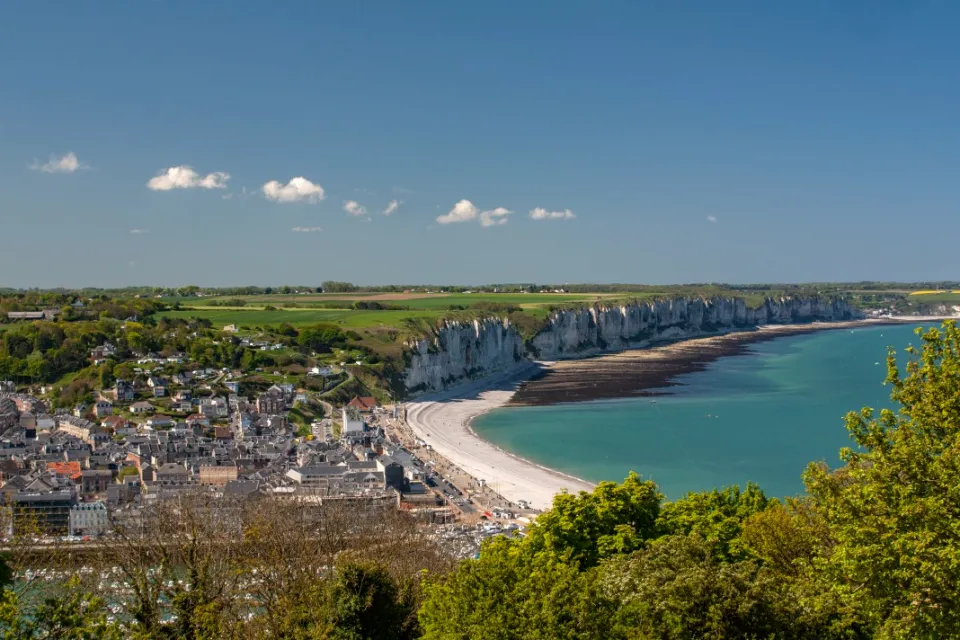
Arriving in Dover at midday, I went to the museum to get my pilgrim passport stamped. If continuing the Via Francigena, I’d catch a ferry to Calais. But I had another destination in mind. I passed a sign saying Welcome to England and another for Dame Vera Lynn Way and then there they were – the White Cliffs. So bright, so beautiful. The Channel was a blue haze; France a shadow.

I hope one day, before long, to be on the other side of that water, exploring the cathedrals of Europe. But, for now, this footsore pilgrim was on a more humdrum quest: ice-cream and a pack of blister plasters.

Source link

Nations Championship: Wales closing gap to world’s best – Jac Morgan

Wales finished a first season under Tandy with a record of three wins, against Japan, Italy and Fiji, from 12 Tests.

They are 11th in the world rankings – bizarrely moving up a place courtesy of the Azzurri’s heavy loss in Australia – as they count down to next year’s World Cup, when they face England, Tonga and Zimbabwe in the group stages.

“The squad has developed, particularly with our performances against Scotland and Ireland during the Six Nations, and then the win over Italy,” said Morgan.

“We were pleased with the victory over Fiji at the start of the summer as well because we know how difficult they are to beat.

“We just have to keep developing and we’ve been doing that as a squad. There are still plenty of lessons to learn, but the more we play together, the more experience we gain and the more we can improve.”

Morgan, who is now officially a Gloucester player after his summer move from Ospreys, missed eight Tests after suffering a shoulder injury against Argentina in Tandy’s first game.

The British and Irish Lions flanker says that Wales are leaving no stone unturned in their bid to close the gap as quickly as possible.

“We’re a very close group and everyone wants to get better,” said Morgan, who was captain for Tandy’s first game.

“I’m proud of the effort they’ve put in, not just over these last three weeks but throughout the whole season.

“It’s clear that everyone wants to learn, improve and continue developing together as a squad.”

Wales play four Nations Championship fixtures in November against Japan, New Zealand and Australia in Cardiff before facing another southern hemisphere opponent at finals weekend in Twickenham.

Source link

Inside Kyochon’s 72-brushstroke chicken method

1 of 4 | A visitor applies sauce to fried chicken with a brush at Kyochon F&B’s training academy in Osan, South Korea. Kyochon says preparing one chicken requires an average of 72 brushstrokes. Photo by Asia Today

July 19 (Asia Today) — “Dip the brush at least 1.2 inches into the sauce, shake it three times and brush each side of the chicken three times.”

The eyes of the participants followed Do Min-su’s hand as he moved a brush across freshly fried chicken Wednesday at Kyochon F&B’s training academy in Osan, about 30 miles south of Seoul.

Layers of glossy soy sauce spread across the crisp coating, demonstrating a preparation method the South Korean fried chicken company has maintained for decades.

Kyochon converted its former headquarters in Osan into an education and visitor center after moving its main office to Pangyo last year.

The academy opened in January as a place where domestic and international visitors can experience the company’s cooking methods and brand philosophy. About 9,600 people from 77 countries visited during its first six months, according to Kyochon.

The building has one underground level and three floors above ground. Its main experience area on the second floor covers about 4,973 square feet.

Training can be conducted simultaneously in three spaces called the Honey Room, Soy Room and Red Room. The floor also contains a brand exhibition area, cooking stations and a smart kitchen.

The exhibition traces Kyochon’s expansion beyond fried chicken into other food and beverage businesses.

Displays introduce the group’s Fermentation Workshop 1991 traditional liquor brand, Moon Bear craft beer and K&P Food, which produces the pickled radish commonly served with Korean fried chicken.

The cooking demonstration attracted the most attention.

Do, who leads Kyochon’s 1991 School team, lowered a 2.28-pound chicken into oil heated to 356 degrees Fahrenheit. The sound of frying filled the room as the aroma spread through the demonstration area.

The first frying took about 10 minutes.

Do said Kyochon fries chicken at a higher temperature than many other brands to create its characteristic crisp texture.

The chicken weighed about 1.62 pounds after the first frying because moisture had escaped during cooking.

The staff then shook off loose pieces of batter over a wire screen in a shaping process before frying the chicken again for one to two minutes.

Its final weight was about 1.41 pounds.

The two-stage process creates the thin, crisp coating associated with Kyochon chicken.

After the frying was completed, attention shifted to the application of sauce.

Kyochon calls its method the “333 sauce rule.” The cook dips the brush at least 1.2 inches into the sauce to collect garlic particles, shakes it three times and brushes each side of the chicken three times.

Preparing one chicken requires an average of 72 brushstrokes.

“The repeated brushwork ensures that the sauce is applied evenly so customers get the same flavor from every piece,” Do said.

Restaurants may slightly adjust the amount of sauce in response to customer requests, he said, but they must remain within standards established by the company.

Across from the cooking area, a collaborative kitchen robot repeatedly moved its mechanical arms as visitors watched through a glass partition.

The robot automatically handled battering and both stages of frying.

Kyochon said 33 of the robots are operating at 25 restaurants in South Korea, while four are in use at three overseas locations, including restaurants in the United States.

The company plans to expand kitchen automation by developing additional battering equipment and robots capable of applying sauce.

After the demonstration, participants took up their own brushes.

They applied sauce with varying levels of skill, finished their own chicken and concluded the program by eating the food they had prepared with side dishes.

Kyochon is developing Kyochon 1991 School as a program for introducing Korean fried chicken culture to international visitors.

The company works with 11 organizations, including the Korea Tourism Organization and the Korean Food Promotion Institute, to offer programs for foreign tourists.

It has also held culinary exchange events with visiting international chefs.

Beginning next year, Kyochon plans to add programs in which visitors can make pickled radish, traditional Korean fermented sauces and traditional alcoholic drinks.

“The Osan academy was created to allow visitors to directly experience the cooking philosophy and brand competitiveness Kyochon has developed,” a company representative said.

“We will expand our education and experience programs, create more opportunities to engage with customers in Korea and overseas and develop the academy into a center for promoting the value of Korean fried chicken.”

— Reported by Asia Today; translated by UPI

© Asia Today. Unauthorized reproduction or redistribution prohibited.

Original Korean report: https://www.asiatoday.co.kr/kn/view.php?key=20260719010006513

Source link

Trump: Latest strikes on Iran ‘in honour’ of killed US military personnel | US-Israel war on Iran

NewsFeed

US President Donald Trump said the latest strikes on Iran, now in their ninth consecutive night, were carried out ‘in honour’ of American military personnel killed in Jordan and Iraq. The latest casualty figures bring the total number of US service members killed since the war began to 17, with more than 420 others wounded.

Source link

Struggling family given fresh start from millionaires ‘feel like we’ve won lottery’

A stuggling family was given a much needed lifeline from a millionaire couple

A struggling family couldn’t hide their emotions after a wealthy couple gave them a fresh start.

They felt like they’d “won the lottery” after the wealthy pair cleared their £6,000 worth of debt and handed the father a chance to pursue his dream of breaking into property development.

The emotional moment happened during an episode of Rich House, Poor House, which originally aired in 2024. At the time, viewers were joined by Kev and Emma Wing, along with their twins Mollie and Peyton, who live in a two-bedroom rented house in Derbyshire.

Seeing how the top 1% live, they swapped lives for a week with world champion football freestyler Liv Cooke and her partner Gal Ozery, who split their time between a lavish manor house in Lower Bagthorpe, Nottinghamshire, and Los Angeles.

The two families couldn’t be more different as the Wings live on a mere £78.25 a week after bills and with money short, meanwhile enjoyed Liv and Gal enjoy the high life with a generous £2,000 budget at their fingertips.

During the swap, the Wings, who are a football-mad family, splashed nearly £1,000 on souvenirs at their beloved Derby County shop and Kev got behind the wheel of a £195,000 Lamborghini.

And his aspiring Lioness daughters received coaching from Ryan Hopper, who works with professional players including Bruno Fernandes and Diogo Dalot.

While Liv and Gal enjoy wealth far beyond the Wings’ wildest dreams, they lack the one thing Liv yearns for most – children. Liv said: “Having a child and making our family unit is the only thing we’re missing.”

Things then took a turn when the couple were left stunned to discover that the Wings had no savings whatsoever and were £6,000 in the red.

Liv, who amassed her wealth through property development, and Gal, who heads up a company supplying private jets and luxury watches to ultra-wealthy clients, were keen to help the family so they decided to offer them a much needed lifeline.

Liv told the couple: “We’ve seen the sacrifices that you two have made for the girls and you’ve got a beautiful life. We’ve decided that we’d like to pay off that debt for you and give you that chance.”

Kev and Emma broke down in tears as Gal continued: “We hope that this makes you feel like every day when you get up, you’re excited for the day and you’re ready to build.”

Emma whipped away her tears as she replied: “I’ve got nothing to say other than thank you so much.” The generosity didn’t stop there as the millionaire pair wanted to help Kev pursue his dreams of getting on the property ladder.

Liv turned to Kev and said: “If you do want to pursue your interest in property, I’d be more than happy to train you up… we can do it slow, we can do it alongside your job so there’s no risk there but if we can get you in that market, getting on the ladder, I think that would be the real life-changing thing.”

Visibly moved said: “It does feel now like we’ve won the lottery.” His favourite part of the lifestyle swap was spending time with his family, adding: “It’s like Christmas every day.”

You can catch up on Rich House, Poor House on Channel 5.

Source link

World Cup final: How Donald Trump, Justin Bieber and Shakira starred

As well as Trump’s appearance, the other big talking point in the lead up to the final was the Super Bowl-style half-time show.

While the mid-game break is usually for players to recover from first-half exertion, coaches to give a team-talk and fans to buy food and drinks, this time it was extended to allow a mini-concert to take place.

There were some big names featured – Madonna, BTS, Coldplay and Shakira, whose song ‘Dai Dai’ is the official anthem of the World Cup – all starred, while there was also an appearance by Justin Bieber.

After getting a pep talk from Ted Lasso and his assistant coach Beard, Bieber changed the pace of the otherwise energetic performances with an acoustic guitar version of ‘Everything Hallelujah’.

The half-time interval lasted 27 minutes, but did it work? The reaction among fans was a bit mixed – but inside the Match of the Day studio, the assessment by former England striker Wayne Rooney was pretty blunt.

“I thought it was crap,” he said. “I thought the performances were bad. The timings were bad. Just let us play football.”

Meanwhile, the closing ceremony before the match was similar in style to many other such ceremonies with loud music, dancing on the pitch though with the addition too of a somewhat dramatic speech by actor Cruise.

Source link

Usha Vance, Vice President JD Vance welcome birth of 4th child

July 19 (UPI) — Second lady Usha Vance gave birth Sunday to her fourth child, JD Vance announced, making him the first sitting vice president in more than 150 years to welcome the birth of a child.

“We are excited to announce that our baby boy, Alec Neel Vance, was born this morning,” JD said in a statement.

“Usha and the baby are happy and healthy, and our kids are overjoyed to meet their little brother.”

The Vances have three other children: two sons, Ewan and Vivek, ages 9 and 6, respectively; and a 4-year-old daughter, Mirabel.

“The incredible military doctors and staff members of Walter Reed [National Military Medical Center] and the White House Medical Center and the White House Medical Unit have been a blessing,” JD continued.

“We are deeply thankful for all they have done for our family.”

Usha — a lawyer who resigned from Munger, Tolles & Olson on the day her husband was tapped to be Donald Trump‘s running mate in 2024 — announced her fourth pregnancy in January with a due date of late July.

With the birth, the Vances became the first vice presidential couple to welcome a child while in office since Vice President Schuyler Colfax’s wife, second lady Ellen Maria Colfax, gave birth to Schuyler Colfax III in 1870.

President Donald Trump delivers a prime-time address to the nation from the East Room of the White House on Thursday. Pool photo by Saul Loeb/UPI | License Photo

Source link

AJ Odudu sparks fears she could quit ITV after shows delayed and axed

Rumours are rife that Big Brother presenter AJ Odudu is considering a move from ITV to the BBC after her reality fashion show M&S: Dress the Nation was axed and CBB got delayed

AJ Odudu has sparked speculation that she may cut ties with ITV to pursue bigger roles at the BBC. The 38-year-old TV presenter has reportedly landed a role on a celebrity version of a hit BBC show – just as ITV has axed and delayed some of her major projects.

A new report has suggested AJ will soon be swapping her stylish gladrags for Lycra as a contestant on the celebrity version of Gladiators. Her casting in the physical trial show comes as ITV has axed reality fashion competition M&S: Dress The Nation, which AJ co-hosted alongside Vernon Kay, 52.

There are also fears that Celebrity Big Brother may never return to screens – having been ditched for 2026 and amid rumours it may not return in 2027. AJ hosts Big Brother and the celeb-packed version of the show alongside Will Best – with the pair helming the franchise since it returned on ITV in 2023.

Celebrity Gladiators would mark a triumphant return to the BBC for AJ, who was a frontrunner to win Strictly Come Dancing in 2021, only for an injury to force her out of the competition. A source has told The Sun: “The timing of this is particularly interesting because, since she did spectacularly well on Strictly in 2021, she hasn’t done any big shows for the Beeb. Instead, she seems to have focused her energies on ITV — but now a couple of her shows are facing the chop, and Gladiators has come along.

“It will leave some people in TV Land wondering whether she might be considering making a long-term move back to where things really took off for her.” The Mirror has contacted AJ’s representatives for comment.

AJ is not the only Big Brother host to be heading to the BBC this autumn, as her co-host Will Best, 41, will also be on the national broadcaster as a contestant on the 2026 season of Strictly.

After his appointment was announced, Will declared: “I can’t quite believe it…I’m doing Strictly! What an absolute dream. Albeit a pretty terrifying one”.

He continued: “I’ve been lucky to do lots of live telly before, but absolutely nothing like this. And I cannot wait! I have no idea if I can actually dance, but bring on the sequins, bring on the quicksteps, bring on the dance floor! I’m going to try to enjoy every minute of it.”

The 2026 season of Strictly will see Emma Willis, Josh Widdicombe and Johannes Radebe take over as hosts following the shock exit of Tess Daly and Claudia Winkleman at the end of last year.

Will will join Paralympic cyclist & swimmer Dame Sarah Storey, EastEnders star Lacey Turner, Australian pop singer Delta Goodrem, hairdresser Chris Appleton and former Love Island contestants Dani Dyer and Cach Mercer in the 2026 line-up. Shirley Ballas, Anton Du Beke, Motsi Mabuse and Craig Revel Horwood are set to return as judges.

The BBC is hoping fans of the long-running dance show will enjoy the new line-up of presenters, with Chief Content Officer Kate Phillips decreeing back in May: “Emma, Johannes and Josh’s chemistry is undeniable. There’s been so much speculation and hype, so I’m relieved we can share the news with the public at last.

“I’d like to thank all the brilliant people we saw before making this tough decision. But the most beloved ballroom in the UK always leads the way, and in a Strictly first we have chosen three outstanding hosts to take up the mantle.

“Along with our amazing Strictly team, who are busy planning fabulous and unforgettable treats for this new series, I know this terrific trio can’t wait to join our judges and pros to bring us must-see TV on the BBC this autumn.”

Like this story? For more of the latest showbiz news and gossip, follow Mirror Celebs on TikTok , Snapchat , Instagram , Twitter , Facebook , YouTube and Threads .


Source link

World Cup 2026: 16 titles in five years – why Spain are a dominant force

When Spain appointed Luis de la Fuente as head coach in December 2022, few expected him to deliver the Nations League (2023), European Championship (2024) and World Cup (2026) in so short a time frame.

Spain had just been knocked out of the World Cup by Morocco in the last 16 in Qatar and the federation needed a replacement after Luis Enrique left his role.

“They went with this guy [De La Fuente] who understood the style and the system,” added Balague.

“It was a very risky decision – I don’t think anyone thought he would be so successful.”

It appeared risky because De La Fuente took charge of Spain, who have won three of the past five men’s European Championships – (2008, 2012, 2024) – without having managed a big club.

After retiring as a player in 1994, De La Fuente spent 15 years in different roles with a succession of different clubs, including managing in the lower Spanish leagues, youth roles and assistant coach positions – before he took charge of Spain’s youth teams.

“De la Fuente knew most of these players from the academies and they are growing as a team,” former Spain midfielder Juan Mata told BBC Sport.

“This is not only a team for the present, but also a team for the future.”

Since being appointed senior boss after stints in charge of the under-19s, under-21s and at Olympic level, De La Fuente has implemented a culture of respect for their rivals, for the process and preaching patience and calmness.

“Most of you are younger than me and you need to respect experience,” the 65-year-old told journalists at his pre-match news conference in New York on Friday.

“Once we finished the game, there were footballers who said ‘coach, now what else is there to win as we have won everything in all the categories’.

“We came to the conclusion that what remains is the next match in September because this team are relentless.”

The success of the national teams and Spanish coaches has spilled over to club football.

Despite Pep Guardiola’s decision to leave Manchester City after 10 trophy-packed years, at least a quarter of the managers who start the 2026-27 Premier League season are Spanish.

Spain are now unbeaten in their last 38 matches in all competitions, the longest ever run by any European or South American team in history.

Source link

Africa Shield: Why securing development is becoming a new security priority | News

As Africa’s economies expand and become more technologically advanced, governments face a growing challenge: protecting the chemical, biological, radiological and nuclear (CBRN) materials used in healthcare, industry, research and mining from theft, diversion or misuse.

For decades, security discussions on the continent focused largely on armed groups, “terrorism” and conflict. But as healthcare systems expand, mining grows and trade accelerates, governments are managing increasing quantities of sensitive CBRN materials essential to development.

Their growing use is driving demand for stronger regulation, oversight and enforcement.

CBRN security covers radioactive sources used in cancer treatment, chemicals used in manufacturing and mining, biological materials handled in laboratories, and technologies with both civilian and security applications.

Most materials are used safely every day, but weak regulation, inadequate oversight or theft can allow them to be diverted for criminal or malicious purposes.

“The same materials that strengthen healthcare, scientific research, mining and industry can also become security risks if poorly managed,” Mubarak Aliyu, a Nigeria-based political and security risk analyst, told Al Jazeera. “The challenge is not to restrict development, but to ensure that innovation is matched by effective oversight, secure handling practices and robust regulatory systems that prevent diversion or misuse without slowing economic progress.”

Securing growth

Held July 14-16 in Tunis, Tunisia, the Africa Shield 2026 Regional Counterproliferation Workshop brought together more than 100 participants from across Africa, including law enforcement officials, military representatives, policymakers and national coordinators responsible for implementing United Nations Security Council (UNSC) Resolution 1540, which requires states to prevent non-state actors from acquiring weapons of mass destruction and related materials.

The workshop was led by the International Counterproliferation Program of the US Defence Threat Reduction Agency (DTRA), in partnership with the European Union Chemical, Biological, Radiological and Nuclear Centres of Excellence Risk Mitigation Initiative and the United Nations Interregional Crime and Justice Research Institute.

Now in its sixth edition, Africa Shield helps African governments strengthen their ability to prevent, detect and respond to CBRN risks through training, coordination and capacity building.

The workshop examined how governments can ensure that materials used for peaceful purposes remain secure as industries expand and cross-border links deepen.

The discussions highlighted a practical challenge: ensuring that the systems protecting these materials develop alongside the industries and services that depend on them.

From response to prevention

Africa Shield reflects a move from responding to CBRN incidents after they occur towards preventing vulnerabilities before they are exploited.

Rather than reacting only after a crisis, the programme focuses on reducing risks through stronger border controls, export monitoring, emergency preparedness and closer coordination between agencies.

Law enforcement, military and policy officials participate in discussions during the Africa Shield 2026 workshop in Tunis [Handout/Andrea Chaney/Defense Threat Reduction Agency]

Through partnerships with African governments and international organisations, Africa Shield contributes to the implementation of UNSC Resolution 1540.

Major Brittany Brown, the coordinator of DTRA’s Global Threat Reduction Africa Region Counter Weapons of Mass Destruction Program, said Africa Shield provides an opportunity for participating countries to “exchange expertise and lessons learned” while deepening partnerships to address increasingly complex transnational security challenges.

Brown said the programme had enabled African countries to “clearly demonstrate their ownership of the counterproliferation problem set”, describing it as “a critical multilateral investment” that strengthens cooperation across the continent.

Her comments reflect a wider shift in international security cooperation, with external partners increasingly focusing on strengthening national institutions and capabilities rather than creating long-term dependency.

Tunisia’s hosting of the workshop underscored the regional nature of the challenge. Positioned between North Africa, the Mediterranean and the Sahel, the country sits at the intersection of major trade and transport routes.

As those networks become more interconnected, the same corridors that facilitate commerce can also be exploited to move chemicals, radioactive sources and other controlled materials across borders.

The enforcement gap

The success of Africa Shield will depend not only on training and cooperation, but on whether governments can translate those efforts into stronger institutions and more effective enforcement.

Many African countries already have legal frameworks regulating chemicals, radioactive materials and strategic trade, but implementation remains uneven.

Authorities often face shortages of funding, specialised personnel and modern equipment needed to inspect shipments, monitor facilities and investigate possible violations.

Existing trafficking networks involving weapons, narcotics and other illicit goods demonstrate the difficulty of monitoring Africa’s vast borders and expanding trade routes. The same weaknesses could create vulnerabilities around the diversion and unauthorised movement of controlled materials.

The expansion of trade under the African Continental Free Trade Area adds another layer of complexity. Governments must strengthen security measures without undermining the trade and investment the agreement is designed to promote.

Managing that balance will require governments to strengthen security systems without creating barriers that slow legitimate trade.

“Monitoring shipments, securing materials and sharing intelligence across borders are daily struggles compounded by limited resources and exploited smuggling routes,” Phil Efe Benard, country director of the African Chamber of Content Producers (ACCP) Nigeria, told Al Jazeera. “We cannot rely solely on foreign partners. Building our own intelligence, forensic capacity and regional networks is essential, ensuring partnerships are built on African capacity, not dependency.”

Why it matters

Africa Shield reflects a broader evolution in Africa’s security priorities, expanding the focus beyond traditional threats to the institutions, regulations and technical expertise needed to safeguard increasingly modern economies.

For African governments, that means stronger customs systems, closer coordination between regulators, border agencies and security services, and greater investment in specialised capabilities.

For the challenge is ensuring that security and development advance together.

“Economic development and security should mutually reinforce each other. By enhancing oversight and promoting the responsible management of sensitive and hazardous materials, we can create an environment where innovation can thrive safely,” Kupagme told Al Jazeera.

Ultimately, Africa Shield is about more than preventing the misuse of controlled materials. It reflects a growing recognition that economic transformation brings new security responsibilities.

“One of the biggest obstacles is that CBRN security depends on consistent implementation rather than policy commitments alone,” Aliyu said. “Many countries still struggle with monitoring cross-border shipments, securing sensitive materials, enforcing regulations and sharing timely information with neighbours. Closing these gaps requires sustained investment, stronger institutions and greater trust between national authorities.”

Source link

World Cup 2026: Spain’s Lamine Yamal ‘completes football’ with victory over Argentina

Spain and Lamine Yamal have grown through the tournament to leave him with the world at his feet and football’s two greatest prizes in his pocket.

As well as having glorious natural gifts, he is also Spain’s lucky charm. They completed their domination of the international stage with Ferran Torres’ decisive 106th-minute strike in extra time.

Lamine Yamal has yet to lose for his country in the 28 competitive matches he has played. He has started 13 games at major tournaments and won all of them – the longest 100% win rate of any European player across major tournaments when starting.

He also became – along with 19-year-old Spain team-mate Pau Cubarsi – just the fourth and fifth teenagers to start a World Cup final and win, after Pele for Brazil in 1958, Italy defender Giuseppe Bergomi in 1982 and Kylian Mbappe with France in 2018.

Spain coach Luis de la Fuente spoke afterwards of his “sincere gratitude” to Lamine Yamal.

“He has played great football that will help him to mature and be even a greater footballer than he already is,” he said.

“He really sacrificed for the collective good. This is very important in my squad. In my opinion he played a great World Cup.”

And this is not simply a special talent, it is a special talent with a special temperament.

He shrugged off Argentina’s obvious attempts to intimidate him as he regularly came into close contact with Nicolas Tagliafico in particular.

Former England goalkeeper and BBC Sport pundit Joe Hart summed it up well.

“Not only did Lamine Yamal not react,” he said. “He stood up to it. He was not rattled and he did not back down. He had the entire team trying to smash him.

“He just stayed real cool. It was real standout performance from him.

“Lamine Yamal is 19 years old. What a beautiful day for him. He’s 19 and has completed football.”

With virtually his whole career in front of him, and taking in the experience and influence of Spain team-mates such as his captain and player of the tournament Rodri, there is every chance Lamine Yamal will add more successes like this before he is done.

Source link

TUI adds major new alcohol policy from November 1

Economy passengers will continue to receive a complimentary beer or wine served with their main meal, but will now be required to pay if they want additional alcoholic beverages

A carrier has changed its rules concerning alcohol on board flights, leaving passengers with mixed responses.

TUI Airlines offers economy passengers up to three free alcoholic drinks on long-haul flights, but passengers will now have to pay for drinks from November 1.

Customers will continue to receive complimentary soft drinks throughout their flight as well as a complimentary beer or wine served with their main meal. However, they will now be required to pay for additional alcoholic beverages onboard.

Adults with existing bookings affected by the change will receive a £12.50 refund per flight, each way.

Passengers in the premium cabin will not be affected.

Passengers took to social media to respond to the change.

One Tiktok user said: “Good, I am glad. I sat on a 10-hour flight to Mexico last year, a wedding group of about 20 adults where absolutely pissed before even getting on.

“TUI still served them for about 7 hours. I was fuming; it was like a flight to Ibiza with 18-year-olds.”

Another user said: “All alcohol should be banned from airports and aeroplanes, it causes too much trouble.”

Others were angered by the change, with one Tiktok user saying: “TUI are dead to me.”

Another said: “It shouldn’t have to be a blanket ban for everyone. People just need to have more control. Many just enjoy one or two drinks, and I don’t see an issue with that.”

“Sadly, some people ruin it for everyone else.”

Earlier this year, Ryanair boss Michael O’Leary told The Times that airports should be banned from serving alcohol to passengers prior early flights to reduce disruption.

A Ryanair spokesperson subsequently told Metro: “The problem is not drinking on board one-hour flights; the excessive drinking occurs in airport terminals where no limits are placed on alcohol consumption, especially during flight delays.

“Ryanair have several processes in place to manage disruptive passengers onboard, including crew’s discretion to limit the number of drinks permitted to be purchased inflight.”

Ryanair introduced a €500 fine for disruptive passengers in June 2025.

Intoxication is a regular cause of trouble on aircrafts. Civil Aviation Authority statistics for 2019 showed that there were 390 occasions when airlines reported “difficulty in controlling intoxicated, violent or unruly passengers”.

By 2023, the number had risen to 1,245 incidents, and in 2024 it remained over 1,000.

Being drunk on a plane is a criminal offence and can be punished by a fine of up to £5,000 and two years’ imprisonment.

Source link

BBC World Cup Final viewers say same thing about Robbie Williams’ appearance

Robbie Williams headlined the World Cup 2026 closing ceremony alongside Nicole Scherzinger and Laura Pausini

The World Cup 2026 closing ceremony dazzled audiences around the globe ahead of one of the most anticipated finals in recent memory, as Spain prepared to face Argentina for football’s greatest prize.

Robbie Williams headlined the spectacular pre-match entertainment, taking to the stage alongside Nicole Scherzinger and Italian superstar Laura Pausini to set the scene for a historic occasion.

The star-studded ceremony served as the perfect curtain-raiser before Spain and Argentina kicked off in the World Cup Final, with millions of fans tuning in from across the world to watch the spectacle unfold.

Yet while the occasion was steeped in sporting drama, many viewers found their attention drawn elsewhere — specifically to Robbie Williams and the bedazzled blue tracksuit the Angels hitmaker chose for his moment in the global spotlight.

Within minutes of his set getting underway, social media was awash with reactions, with some fans struggling to even recognise the pop icon.

“I didn’t recognize Robbie Williams,” one viewer admitted, while another marvelled, “love seeing Robbie Williams.”

Others were simply fixated on his bold fashion choice. “I’m feeling the @robbiewilliams bedazzled track suit…,” one admirer wrote.

Some fans were also struck by a rather unexpected resemblance. “Robbie looks a bit like Paulie from The Sopranos,” with another joking, “Why has Robbie Williams come dressed as Donald Trump reports the Daily Star.

Someone else added, “Robbie Williams is absolutely brilliant before the start of the World Cup.”

Elsewhere, for the first time in World Cup history, there was a half-time show featuring performances by Madonna and Justin Bieber.

While some viewers were loving the performances, especially from Madonna, other fans, including pundit Wayne Rooney, were not as keen.

When asked what he thought about the star-studded performances, Wayne replied with such honesty.

“I’ll be honest, mine (highlight) was when it finished. I like a lot of those artists, but I thought it was c**p,” he said.

“I did, honestly. It just didn’t get me going. I want the football to come back on.”

Source link