WASHINGTON — The 101st Congress convened its second session today, facing an agenda suddenly expanded by the emergence of democracy in Eastern Europe and a plan to cut Social Security taxes at home.
Lingering issues also abound, including child care, capital-gains taxes and deficit reduction.
Not waiting for President Bush to send up his own budget and legislative proposals, the Senate almost immediately began debating a far-reaching plan for cleaning up the air–a bill that is more costly and more sweeping than the President wants. Opposition is based more on geography and competing regional interests than on party lines.
The first day of the session was marked by friendly reunions. Rep. Jack Brooks (D-Tex.) told colleagues he’d nearly died of a pancreas ailment during the long break, and he accepted hugs and applause on the House floor.
Outside, a half dozen House members arrived on bicycles after a two-block trip from a congressional office building to call attention to plans for Earth Day in the spring.
On a more substantive matter, Sen. Daniel Patrick Moynihan (D-N.Y.) formally introduced a bill to reduce Social Security taxes–an idea that prompted a full-scale White House attack when he proposed it last month. Moynihan says workers are being deceived because their Social Security taxes are being used to make the federal deficit appear far smaller than it is.
“These are insurance contributions, they are premiums paid,” Moynihan told a news conference. “They do not belong to the government. If we are not going to save them, we should return them.”
His bill, which has drawn widespread interest but few sponsors, would roll back the tax increase that took effect Jan. 1 and reduce another scheduled for next year. That would save a worker with income over $51,300 about $600 and leave the Social Security system with just enough money to pay retirees’ checks, Moynihan said.
The Bush Administration says such cuts would lead to reductions in benefits or to efforts to raise other taxes.
Sen. Ernest F. Hollings (D-S.C.), a member of the Budget Committee, did what is seldom done in Congress these days: He introduced a bill proposing a tax increase. He recommended a 5% national sales tax that would exempt food, health care and housing.
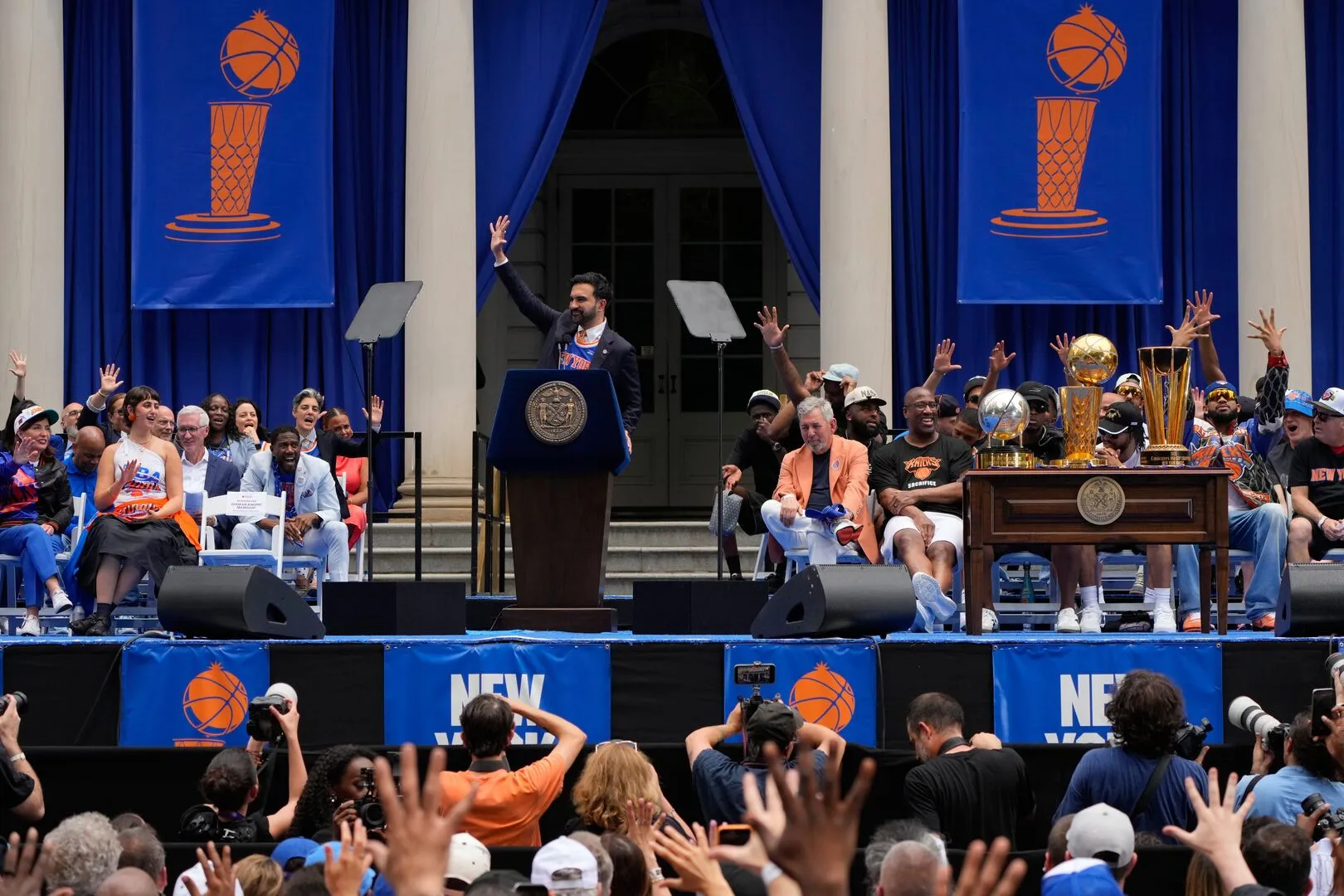
That was what the backup point guard wrote on X, followed by three laughing-until-crying emojis, soon after he was stopped by two police officers who apparently did not recognize him as a Knicks player during the team’s championship parade in Lower Manhattan.
A video that has gone viral on social media shows Kolek skipping along the parade route next to a barrier meant to keep fans off that part of the street, using one hand to hold a beer and the other to slap hands with fans.
At one point, an officer stepped in front of Kolek to block his path while another gently grabbed him by the shoulders and motioned for the confused player to go back in the direction from which he came.
An unidentified man who had been accompanying Kolek quickly stepped in, and then officers allowed him to pass.
To be fair to the officers, Kolek — wearing a Knicks hat, Knicks T-shirt and gym shorts — looked like he could have been one of the estimated 2 million fans attending the parade.
And he’s not the most recognizable player on the team. Kolek has made one start in 103 game appearances during his two years with the Knicks, averaging almost 10 minutes a game. He did not make it into an NBA Finals game but played in eight postseason games this year, averaging 3.5 points and 6.6 minutes a game.
It doesn’t appear that the very brief run-in with the law dampened Kolek’s mood, based on the parade videos he posted on his Instagram. One showed his view of the massive crowds on either side of the street; another showed him throwing confetti while singing along to “New York, New York;” and another showed him standing outside the railing on a moving float while dancing and cheering.
And, yes, one showed the incident with parade security, along with the caption “I hoop bro I swear” and four laughing-until-crying emojis.
The New York Knicks celebrated their first NBA title in 53 years with a frenzied ticker-tape parade through Manhattan. The Knicks, along with finals MVP Jalen Brunson were awarded keys to the city by Mayor Zohran Mamdani in front of thousands of fans.
All five goals were scored in the final 30 minutes as the match in Los Angeles erupted to life in closing stages.
Published On 18 Jun 202618 Jun 2026
Johan Manzambi scored a late brace after coming on in the 71st minute, following goals from Ruben Vargas and Granit Xhaka as Switzerland erupted late for a 4-1 victory over 10-man Bosnia and Herzegovina to top Group B at the World Cup.
The last three Swiss goals at the Los Angeles Stadium followed the 80th-minute dismissal of Bosnian defender Tarik Muharemovic, who was sent off for hauling down Breel Embolo to deny an obvious goalscoring opportunity, in a dramatic finish to the match on Thursday.
Recommended Stories
list of 4 itemsend of list
When it was all finished, Switzerland, with one win and a draw, were in command of the group despite an unexpected 1-1 draw against Qatar in their tournament opener.
Qatar and Canada play in Thursday’s later Group B clash in Vancouver, where the winner will draw level on points with the Swiss side that’s looking to progress to the knockout phase for a fourth consecutive World Cup.
Bosnian substitute Ermin Mahmic scored with a thunderous volley in second-half stoppage time for Bosnia and Herzegovina, who remain on one point.
Ermin Mahmic scored his team’s only goal against Switzerland [Harry How/Getty Images/AFP]
But the Balkan side will need to be more adventurous in their group finale against Qatar to have any chance of progressing after offering little against the Swiss.
All five goals they have conceded have come after the 70th minute, including the equaliser in their 1-1 tournament-opening draw against Canada.
Yet it looked for long stretches like Bosnia’s cagey approach would work until Switzerland coach Murat Yakin sent on Manzambi.
Shortly after his own introduction, Vargas got free on the left and curled in an outswinging cross towards the back post.
Amar Memic tried to head clear, but Manzambi instinctively met the second ball near the penalty spot and thumped a vicious side volley that had too much power for Bosnian goalkeeper Nikola Vasilj.
Any realistic hopes of a positive Bosnian result ended six minutes later when referee Joao Pinheiro had no choice but to produce a red card for Muharemovic’s late challenge from behind.
Four minutes later, Vargas found the bottom right corner after Embolo held the ball up near the spot and then played it to his open teammate to his left.
Vargas was the provider when Manzambi completed his brace in the 90th minute, and after Mahmic pulled a goal back, the veteran Xhaka converted from the penalty spot seven minutes into second-half stoppage time.
The classic Chicano film “Zoot Suit” is celebrating its 45th anniversary this year in style.
The Golden Globe-nominated movie, featuring a lead performance by Edward James Olmos, was based on a stage play penned by legendary screenwriter and director Luis Valdez, who drew inspiration from a pamphlet about the 1942 Sleepy Lagoon murder case and the riots that it sparked.
On Thursday it was announced that the flick will be screened at The Ford amphitheater on July 8 to honor its notable benchmark and enduring legacy. The special screening will include a conversation with Valdez, Olmos and actor-educator Cristina Frías, who will discuss the movie’s production, influence and place in the L.A. film canon.
“‘Zoot Suit’ changed the way our stories could be seen on screen,” Olmos said in a statement. “It gave voice to a history that many people had never been taught and showed the beauty, strength and complexity of the Chicano experience. Forty-five years later, the film continues to inspire because it is about more than one moment in time. It is about identity, dignity and the responsibility we have to remember where we come from.”
The screening will also feature a vintage car show put on by the Pachuco Car Club, which will showcase the rides reminiscent of the time period shown in the movie.
In June 1943, L.A. was engulfed in the lawlessness and violence that became known as the Zoot Suit Riots. The name is misleading because it suggests that the zoot suiters — the young Mexican, Black and Filipino men and boys who wore the flamboyant outfits — were the perpetrators.
The attacks by servicemen and white Angelenos on zoot suiters, derided as “gamin dandies” in The Times, were driven by prejudice and the anti-immigrant attitudes of the era. The roots of the unrest can be traced to events that occurred more than a year earlier — such as the incarceration of Japanese Americans after Pearl Harbor, as well as the murder of a young man, which was later known as the Sleepy Lagoon murder case.
In his 1981 review of the film, The Times’ former film critic Kevin Thomas praised Valdez’s direction and the strength of the cast.
“Valdez has captured well many of the elements of the era that contributed to the fate of the Sleepy Lagoon defendants — the sensationalist press, the feverish patriotism of wartime and the rampant bigotry directed at all minorities,” Thomas wrote. “At the same time, Valdez makes clear that various people outside the Mexican-American community helped in the struggle to mount an appeal for the Sleepy Lagoon defendants. And he questions the entire validity of the switch-bladed, cynical pachuco mystique as [Daniel Valdez’s] Henry comes to realize that El Pachuco [Olmos] is at once his best friend — and worst enemy.”
The original 1979 Broadway run of the “Zoot Suit” play catapulted Olmos to the national stage and led to him getting a Tony nomination for best featured actor in a play.
“It was a monumental moment in time, and we captured lightning in a bottle,” Olmos told The Times in 2023. “Not only did it change the course of Latinos in theater but it touched the very soul of the culture. It was catching the voice of the pachuco.”
WASHINGTON — The White House pushed back Thursday against growing bipartisan criticism of a negotiated settlement to the war with Iran, arguing its concessions to the Islamic Republic were contingent on its conduct and essential to securing peace.
The administration’s defensive posture came as details of the framework agreement, known as a memorandum of understanding, were finally shared with the public, revealing a raft of compromises with Tehran long opposed by Republicans.
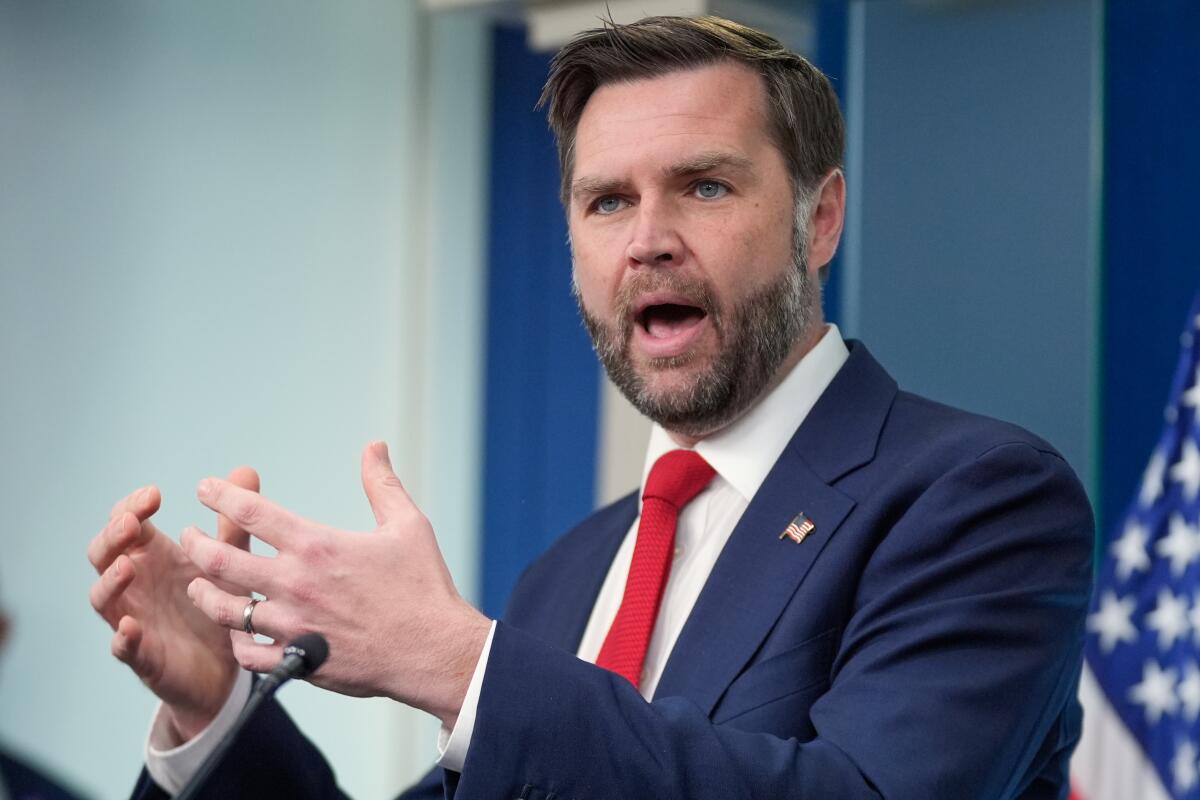
Vice President JD Vance, who helped negotiate the deal, told reporters Thursday that the deal was structured to reward Iran for good behavior. But the text of the agreement suggests otherwise.
The Trump administration agreed to release billions of dollars in Iranian assets that were frozen and restricted by the United States “upon the implementation” of the memorandum — before any further actions are taken or additional negotiations begin. The president will issue sanctions waivers on Iranian oil, allowing Tehran to resume trading its most valuable export and breaking with decades of policy. And to facilitate that trade, boosting Tehran’s revenues, Trump agreed to immediately end a U.S. naval blockade of Iranian ports.
Still more concessions were offered to the Iranians, including a commitment by the U.S. administration to establish a fund of “at least $300 billion for the reconstruction and economic development of the Islamic Republic” — in effect providing reparations for the war Trump started.
“All required licenses, waivers and permissions needed for the relevant financial transactions will be granted by the United States of America,” the memorandum reads.
Taken together, the document reads as a stunning reversal of U.S. policy toward Iran after decades of concern across administrations in Washington — including throughout Trump’s two terms — that the Islamic Republic represents the nation’s greatest security threats as the world’s largest state sponsor of terrorism.
Criticism from Republican senators, in particular, has been sharp and swift.
Sen. Roger Wicker (R-Miss.), chairman of the Senate Armed Services Committee, said the $300-billion fund “would make Iran’s payoff under President Obama’s 2015 deal look like a pittance by comparison.” And Sen. Ted Cruz (R-Texas) accused the Trump administration of giving Iran money it would use to kill Americans.
“History demonstrates that giving billions of dollars to theocratic lunatics who want to murder us is an exceptionally bad idea, and I think, unfortunately, the president is receiving some really bad advice on this deal,” Cruz said. “I don’t want to see us send a penny to the ayatollah. And I hope that we don’t.”
The Obama-era deal, known as the Joint Comprehensive Plan of Action, included structured sanctions relief for Iran in exchange for concrete and verifiable steps by Tehran to dismantle much of its nuclear program — a framework that Republicans broadly criticized at the time.
By contrast, Trump’s agreement commits the United States to pursuing economic relief for Iran while providing no clarity about the future of Iran’s nuclear program — the very issue Trump cited as the rationale for launching the war.
The memorandum includes a pledge by Iran to never purchase or construct nuclear weapons — a vow the Islamic Republic has made multiple times before, including by signing the Nuclear Non-Proliferation Treaty, in a religious edict issued by the late supreme leader and in the Obama-era nuclear accord.
Vice President JD Vance speaks to reporters at the White House on June 18, 2026.
(Manuel Balce Ceneta / Associated Press)
Detailed negotiations over Iran’s nuclear program — including whether Tehran could continue domestic uranium enrichment, at what level, and under what monitoring regime — were left for another day.
For more than a decade, the U.S. intelligence community has assessed that Iran sought a threshold nuclear capability, securing the strategic advantages of a nuclear power without incurring the costs of openly pursuing a bomb.
The agreement does include a commitment by Iran to do its “best” to bring commercial shipping traffic through the Strait of Hormuz, a vital international waterway, back to prewar levels. But critics of the president said he had to make deep, historic concessions just to secure a status quo ante upended by the war he started. And in the document, Tehran agreed to refrain from imposing a toll on ships transiting the strait for only a 60-day period.
“Unless you were homeschooled by a day drinker, no one’s confident that Iran is going to do anything,” Sen. John Kennedy, a Republican from Louisiana, told reporters this week.
Sen. Bill Cassidy, Kennedy’s Republican counterpart from Louisiana, called the deal “the worst foreign policy blunder in decades” that would have President Reagan “rolling over in his grave.”
“Iran’s nuclear ambitions were not curbed, and they have learned that threatening the Strait of Hormuz works and will undoubtedly leverage it in the future. Now, Iran gets to build brand-new infrastructure under this deal,” Cassidy said.
“Before the war, the strait was open, Iran was being crushed by sanctions, and 13 service members were still alive,” he added. “Now, 13 Americans are dead, families have paid billions at the pump, sanctions will be lifted, and the bombing has stopped.”
Despite mounting criticism, Trump put his signature to the memorandum on Wednesday night while attending a dinner with the French president in Versailles, a palace infamous for hosting a treaty signing that disgraced Germany at the end of the First World War.
He defended the agreement while in Europe and suggested further concessions might be forthcoming, including recognition of Iran’s claimed right to enrich uranium and a new willingness to tolerate its continued ballistic missile development — another program that Trump had vowed to eliminate as a central war aim.
“He took America to war — killing 13 soldiers, thousands of Iranian civilians and costing taxpayers $60 billion — to get rid of Iran’s missile program. And now that he’s lost the war, he pretends like it’s no big deal,” said Sen. Chris Murphy, a Democrat from Connecticut.
“Just unforgivable,” he added. “What a charlatan.”
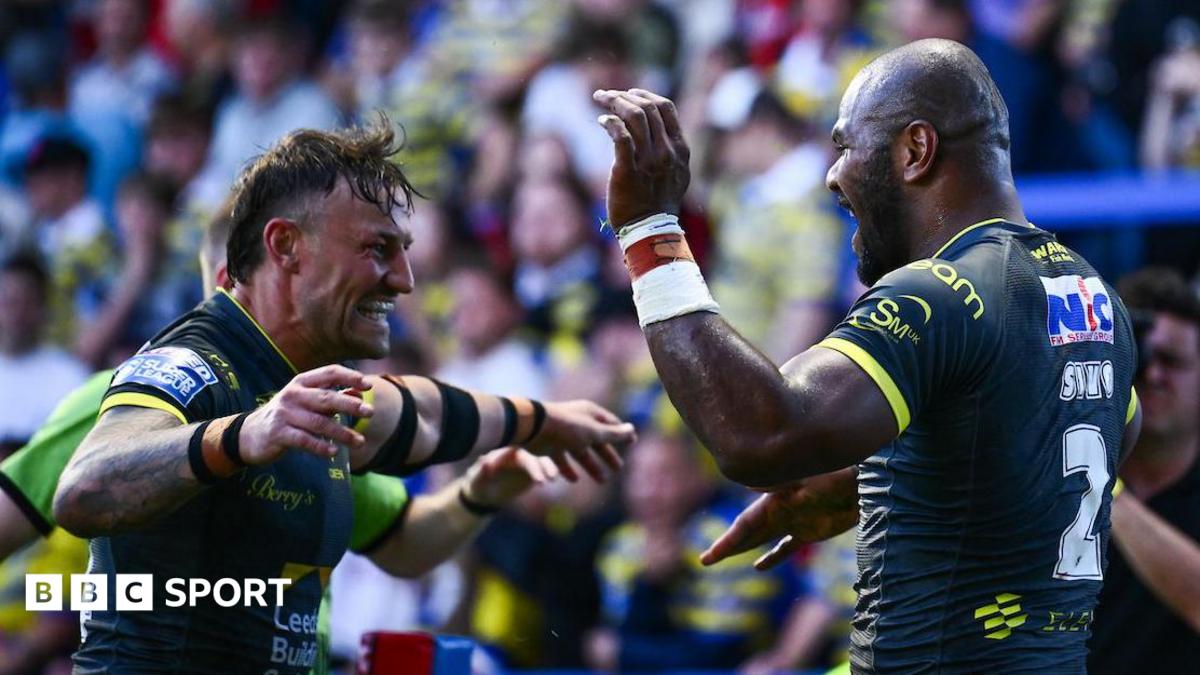
The Leeds winger’s 25 tries put him nine clear of the next best, Leigh’s Josh Charnley on 16.
In addition to leaving his mark on the game he left plenty on Warrington’s bruised defence, including Josh Thewlis who felt the full force of Sivo as the winger powered past him to score his second.
When Warrington took two points early in the piece, Ewan Irwin kicking the goal, it was presumably in the belief this could have been a tight affair.
But two tries in two minutes from Sivo and Brodie Croft, who has signed a three-year deal with Warrington starting next season, blew that plan out of the water and a third eight minutes later, Harry Newman gathering a high kick as Thewlis hesitated, really put the visitors in command.
Warrington were perhaps a touch unlucky that the Newman try stood with the Leeds centre looking a shade in front of the kicker when the ball went up but had that gone in their favour it would not have made much difference to the result.
Jake Connor kicked two of the conversions to give Leeds a 16-2 half-time lead and the direction of the game was set.
Miller, returning to the side after a three-match suspension was excellent, pulling the strings at full-back.
It was the Australian whose pass put in Chris Hankinson just three minutes after the restart and he then engineered a penalty when blocked by James Bentley two minutes later which Connor converted.
After Sivo secured his hat-trick shortly before the hour, Warrington staged a belated comeback in the final 20 minutes.
Matty Ashton finished off a nice move to give the home side their only try six minutes from time but it was too little too late and proved just a momentary pause in the Leeds celebrations.
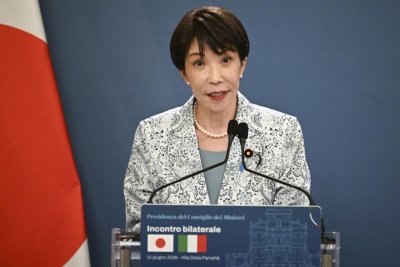
Japanese Prime Minister Sanae Takaichi speaks to the press during her meeting with Italian Premier Meloni at Villa Pamphilij in Rome, Italy, 15 June 2026. Photo by Riccardo Antimiani / EPA
June 18 (Asia Today) — Japanese Prime Minister Sanae Takaichi has left open the possibility of deploying the Self-Defense Forces to the Strait of Hormuz following an agreement between the United States and Iran to end hostilities.
“Nothing has been decided at this point,” Takaichi said Wednesday when asked about a possible deployment during a news conference marking the end of the Group of Seven summit near Évian-les-Bains, France, Japanese media reported Thursday.
Takaichi said Japan must closely examine the U.S.-Iran agreement and conditions in the region before making a decision.
The Strait of Hormuz is a critical shipping route for crude oil from the Middle East. Instability in the waterway could directly affect shipping, energy prices and Japanese industry because the country relies heavily on imported energy.
The U.S.-Iran agreement has shifted Japan’s immediate focus from preventing further fighting to securing freedom of navigation and considering its role in post-conflict efforts.
Even after fighting ends, naval mines and other threats to commercial vessels could remain. Japan would then have to determine whether its involvement should be limited to diplomatic support or include operations by the Maritime Self-Defense Force.
Security in the Strait of Hormuz and other major shipping routes was among the issues discussed at the G7 summit.
Japan faces the challenge of coordinating with its allies and partners while keeping any military involvement within the limits imposed by its pacifist Constitution.
“We will continue every possible diplomatic effort, including those related to reconstruction,” Takaichi said of the situation in the Middle East.
She said Japan would consider necessary measures to secure freedom of navigation through the strait and “steadily carry out what we are capable of doing,” including diplomatic efforts.
Britain, France and other countries have called for the unconditional reopening of the waterway and indicated that mine-clearing operations could be required. Japan has signaled its willingness to participate in a related joint statement.
Takaichi said Japan’s participation in such a statement would remain within constitutional limits.
The central issue is how extensively the Self-Defense Forces could participate.
Article 9 of Japan’s Constitution prohibits the use of force except in circumstances involving the country’s right to self-defense. Mine-clearing operations conducted while fighting continues could therefore be viewed as the use of force against the country that placed the mines.
Clearing mines left behind after a cease-fire, however, may be permitted under Japan’s Self-Defense Forces Act.
Japan deployed Maritime Self-Defense Force minesweepers to the Persian Gulf after the 1991 Gulf War cease-fire. The mission marked the Self-Defense Forces’ first operational deployment overseas and became a turning point in Japan’s debate over its international security role.
Takaichi’s remarks did not amount to an immediate deployment decision. They indicated, however, that Japan could consider participating in maritime security operations depending on implementation of the U.S.-Iran agreement and conditions in the Strait of Hormuz.
Japan’s possible role in the post-conflict Middle East – whether limited to diplomatic and reconstruction support or expanded to include Maritime Self-Defense Force operations – is expected to remain a major foreign and security policy issue.
United States President Donald Trump has taken to social media to boast about the state of the economy amid a looming peace deal between the US and Iran, which yesterday signed a memorandum of understanding (MoU) to end the US-Israel war on Iran.
In a post on his social media platform Truth Social, the president claimed that “OIL IS FLOWING” and added that “THE STOCK MARKETS ARE ROARING, JOBS ARE AT RECORDS, AND PRICES ARE DROPPING (AFFORDABILITY!)”
Recommended Stories
list of 4 itemsend of list
While some of his claims are accurate, others are misleading. Al Jazeera takes a look:
‘Stock Market Just Hit A RECORD High’
That is true specifically for the Dow Jones Industrial Average. That index hit a record high of 51,999.67 for its close on Tuesday amid the potential of a ceasefire and a rally for the newly listed SpaceX.
The Dow slipped from that high on Wednesday amid the US Federal Reserve’s announcement that it would maintain the benchmark interest rate in the target range of 3.5-3.75 percent, and closed down on Wednesday at 51,494.99. The Dow has since jumped 0.35 percent in midday trading on Thursday at 51,671.
The Nasdaq Composite Index and S&P 500 both slipped.
However, this may not directly impact the 38 percent of Americans who do not invest in the stock market.
“The idea that the stock market is doing well does not reflect people’s experiences. There’s a saying that the stock market is not the economy, and that’s an important thing to keep in mind,” Michael Klein, professor of international economic affairs at The Fletcher School at Tufts University, told Al Jazeera.
And that lived experience is at the petrol station and at the grocery store.
‘Prices are dropping’
Petrol prices have started to tumble in the last few days. The average price of a gallon of petrol (3.78 litres) on Thursday is at $3.99, according to the American Automobile Association (AAA), which tracks daily gas prices. That’s down from a high of $4.48 in May, but still well above $2.98, where prices were on February 28 when the US and Israel first struck Iran.
Despite the deal, experts believe that a petrol price decline will plateau for general consumers as the US strategic petroleum reserve, which earlier this week reached its lowest level since 1983, is refilled, all while oil extraction and shipping bottlenecks weigh on supply chains.
“The persistence of the price spikes is the key issue. Transportation, rerouting, insurance premiums, and manufacturing costs don’t normalise overnight, so even when oil stabilises, the cost base across the supply chain will stay elevated,” Tammy Kulesa, director of product marketing for supply chain execution at Blue Yonder, a supply chain management firm, said in remarks provided to Al Jazeera.
Mark Jones, professor of political science at Rice University in Houston, Texas, says prices will not return to prewar levels until the last quarter or close of 2027.
“Even once everybody believes the truce is going to hold [and] there’s no danger going through the Strait of Hormuz, those tankers take months to reach their final destination and come back,” Jones told Al Jazeera. “So the ability to replenish the stocks is going to take until, I think, the early fall [third quarter].”
Consumer inflation, which has jumped at the fastest pace in three years and is at 4.2 percent, has driven prices up on several key goods and has weighed on consumers. While energy prices have risen by nearly eight percent in the last two months alone, prices at the supermarket have jumped by 0.1 percent in May from the month prior after a 0.7 percent increase in April, with the highest increases in goods like bakery products, cereals, nonalcoholic beverages, as well as fruit and vegetables.
“There are real problems facing a lot of people. Prices are high, and wages have not kept up with prices. So people’s real purchasing power has fallen,” Klein said.
Supermarket chains have taken notice. Kroger, the largest supermarket chain in the US, said on Thursday that it will cut prices on thousands of products within its roughly 3,000 stores nationwide. This comes amid increased pressure from Costco and Walmart for value shoppers.
“Customers are being more deliberate with their spending and at times, shopping us selectively. We’re getting too many promotional trips and not enough of the full basket,” Kroger CEO Greg Foran said in a statement.
‘Jobs are at records’
Jobs are not at record levels, despite Trump’s assertions.
The US economy added 172,000 jobs in May. The highest during the second Trump term was 214,000, in March. By comparison, on average, 300,000 jobs were added monthly under his predecessor, former US President Joe Biden, a Democrat, with some months much higher – including July 2021, when the economy added 943,000 jobs, albeit that was on the back of the COVID-19 pandemic as businesses rushed to hire after massive layoffs.
Under Trump, there have been several months of limited job growth that have been hyper-focused on specific sectors like healthcare. On average, employers added only 15,000 jobs a month in 2025. Meanwhile, the US economy lost 92,000 jobs this year in February.
Layoffs are also on the upswing. Job cuts jumped 16 percent between April and May, marking the most layoffs since May 2020 during the height of the pandemic, according to Challenger, Gray and Christmas, with artificial intelligence (AI) as a driving force behind the cuts. Slightly more than 97,000 people lost their jobs in May.
‘Oil is flowing’
Overnight, 12.5 million barrels of crude oil travelled through the Strait of Hormuz, through which roughly a fifth of the world’s oil is normally shipped, according to US Vice President JD Vance. However, data from Kpler shows that travel through the strait is still low, with six verified crossings on June 17.
With the strait starting to open, oil prices tumbled to their lowest levels since the early days of the war as the temporary deal to end fighting and pull back sanctions elevated pressure on global supply.
Brent crude futures LCOc1 dropped $0.78 or one percent to $76.51 in midday trading.
Shipments of liquefied natural gas (LNG) have also ramped up, and a QatarEnergy LNG vessel has returned to Ras Laffan, where it has loaded more than 209,000 cubic metres, according to Kplr.
SUPERMODEL Irina Shayk runs rings around her rivals in a swimsuit held together by gold bands.
She also wore gold hoop earrings in a shoot for Spanish department store El Corte Ingles and showed off her wild side in a tiger-print bikini.
Sign up for the Showbiz newsletter
Thank you!
Irina Shayk stuns in a swimsuit held together by gold bandsCredit: El Corte Inglés/Txema YesteThe model was posing in a shoot for Spanish department store El Corte InglesCredit: El Corte Inglés/Txema Yeste
She has become one of the modern modelling industry’s greats after being discovered in her small Russian hometown of Yemanzhelinsk.
Irina, whose full name is Irina Valeryevna Irinahlislamova, received international recognition when she became the first Russian model to appear on the cover of the 2011 Sports Illustrated Swimsuit Issue.
As a child, she pursued her love of music while her mum Olga worked two jobs to provide for the family.
It’s no surprise that Irina has become the model with the 8th biggest social media presence, as she’s graced numerous magazine front covers, including GQ.
Irina was the first Russian model to appear on the cover of Sports Illustrated Swimsuit IssueCredit: AP:Associated PressIrina is mum to nine-year-old Lea — whose dad is her ex, Hollywood actor Bradley CooperCredit: Rex Features
The stunning star has also been ranked first in the 50 Hottest Russian Women list, which was compiled by Complex magazine.
When she’s not busy walking the catwalk or filming, Irina gets stuck in with charity work.
Irina has been heavily involved with the construction of a maternity ward in her hometown, Yemanzhelinsk, as well as helping to renovate the children’s section.
OpenAI, Anthropic—trillions in wealth are locked in private markets. Banks want in.
With valuations of nonpublic companies reaching record levels on the back of the AI boom, private-market access is increasingly becoming the defining battlefield for client acquisition in private banking.
Consider SpaceX’s public debut earlier this month. It was the largest initial public offering in history, adding $75 billion to its roughly $15.85 billion pre-IPO cash position and creating a market capitalization of over $1 trillion. Once OpenAI and Anthropic go public, the combined valuation of all three companies could be well over $3 trillion.
OpenAI filed an S-1 with the Securities and Exchange Commission June 8 for a confidential IPO. And Anthropic said Claude Code’s run-rate revenue has more than doubled since the beginning of 2026, underscoring how much wealth creation is taking place outside public markets.
“Much of the current innovation and growth is happening within private markets,” said David Frame, CEO of J.P. Morgan’s Global Private Bank. “Clients are increasingly seeking these opportunities,” he added.
According to a recent Titanbay/Campden Wealth report, the average ultra-high-net-worth investor (UHNWI) holds 20% of their portfolio in private equity, double the level two years earlier, and plans to raise that figure further.
Likewise, 86% of wealth advisers plan to increase private-market investments this year, with 47% raising allocations specifically to venture capital and growth, according to Hamilton Lane’s 2026 Global Private Wealth Survey.
Racing to Respond
The booming demand has led to a wave of new initiatives from banks and asset managers. In September 2025, Bank of America and Merrill launched the Alts Expanded Access Program for UHNWIs with a net worth of $50 million or more.
Morgan Stanley Investment Management launched its first-ever green private equity strategy, the North Haven Private Assets Fund, in May 2025. DBS Private Bank partnered with Hamilton Lane to launch PATH for Asian clients, while Goldman Sachs announced plans to invest $1 billion in T. Rowe Price to expand wealth-channel access.
But as interest in private equity rises, experts warn that private banks could be caught between long-term wealth building and growing demand for riskier assets. “There’s a dichotomy in the market,” George Walper, managing principal of CEG Insights, said. “Wealthy investors want more exposure to alternatives, to private markets—meaning more risk. At the same time, they want to be cautious and protect their assets.”
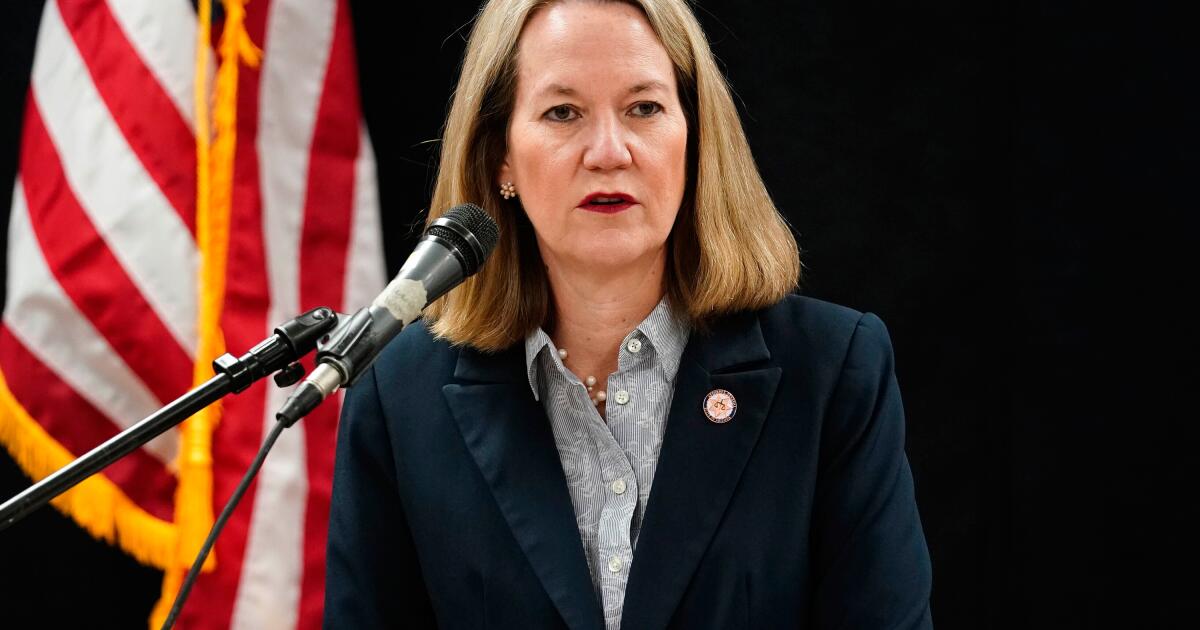
PHOENIX — Arizona Atty. Gen. Kris Mayes is dismissing a sprawling criminal case that alleged President Trump’s former chief of staff Mark Meadows, former New York City Mayor Rudy Giuliani and others tried to overturn Trump’s 2020 loss in the state.
The decision, announced Thursday, marks the third such fake elector case filed by states to be dismissed, though the Democratic attorney general is vowing to bring it back to a grand jury in hopes of securing another indictment.
The legal maneuver is aimed at getting around a Friday deadline for starting new grand jury proceedings after Mayes lost an appeal earlier this month. The appeal was filed after defense attorneys argued successfully that the original grand jury hadn’t been shown the relevant parts of a law that governs how presidential contests are certified.
Courts have dismissed similar cases in Michigan and Georgia, and a special prosecutor dropped a federal case in late 2024 that charged Trump with conspiring to overturn the 2020 election. Those cases ended after Trump defeated Democratic Vice President Kamala Harris in 2024. Cases related to the fake elector scheme remain in Nevada and Wisconsin.
The Nevada charges were dismissed in 2024 after a judge concluded Clark County, the state’s most populous county and home to Las Vegas, was the wrong venue for the case. Later that year, though, the case was refiled in Carson City, Nevada’s capital.
The Arizona case had been stalled for well over a year while Mayes pursued the appeal.
In Arizona, defense lawyers argued the law allowed for multiple slates of electors to be submitted to Congress in case the results were disputed. Federal law was amended in 2022 to specify that any given state could put forward only one slate of electors and that state governors are responsible for signing off.
Joe Biden won Arizona in 2020 by 10,457 votes.
The state attorney general has faced steep challenges in making her case.
It was filed nearly three and a half years after the 2020 election and levels complicated conspiracy charges against the 18 defendants. A dozen dismissal requests filed by defense attorneys have slowed progress in court.
The first judge on the case recused himself in late 2024 after an email surfaced in which he told fellow judges to speak out against attacks on Harris’ campaign for the presidency. The next judge ordered the case to be sent back to a grand jury.
Of the 18 Arizona defendants, two were former Trump aides, five were lawyers working for Trump and 11 were Republicans who submitted a document falsely claiming Trump won Arizona.
Three defendants have resolved their cases, including one who pleaded guilty to a misdemeanor charge.
The rest pleaded not guilty. Some said they signed the certificate in case Trump won court challenges and a new slate of electors was needed urgently before Congress’ Jan. 6 deadline to tally votes.
The case has factored into Arizona’s attorney general race, where both Republican challengers to Mayes have publicly said they will dismiss the charges if they were elected to the post.
Arsenal‘s opening bid for Jeremy Monga rejected by Leicester, Liverpool ready to offer a package approaching £86m for Yan Diomande and Arsenal preparing bid for Bradley Barcola.
Arsenalhave had their first bid for Leicester City and England Under-19 winger Jeremy Monga rejected – the 19-year-old one of the Gunners’ long-term targets for the summer. (Telegraph – subscription required) , external
Real Madrid are looking to continue their summer rebuild by signing a midfielder and a centre-back, with Chelsea and Argentina midfielder Enzo Fernandez, 25, being one of the options highly rated by the club. (ESPN) , external
The Toffees are yet to receive a formal offer for Barry, but if a bid arrives from German side RB Leipzig or any other club, Everton‘s football leadership group will decide how to proceed.(Liverpool Echo) , external
Tottenham are firmly in the mix to sign Anderlecht and Belgium midfielder Nathan De Cat, with Manchester Unitedamong the 17-year-old’s other admirers from the Premier League. (Teamtalk) , external
The Reds are also pursuing a central midfielder, centre-back and right-back after triggering 22-year-old Osasuna and Spain winger Victor Munoz’s 40m euro (£34.5m) release clause. (Football Insider) , external
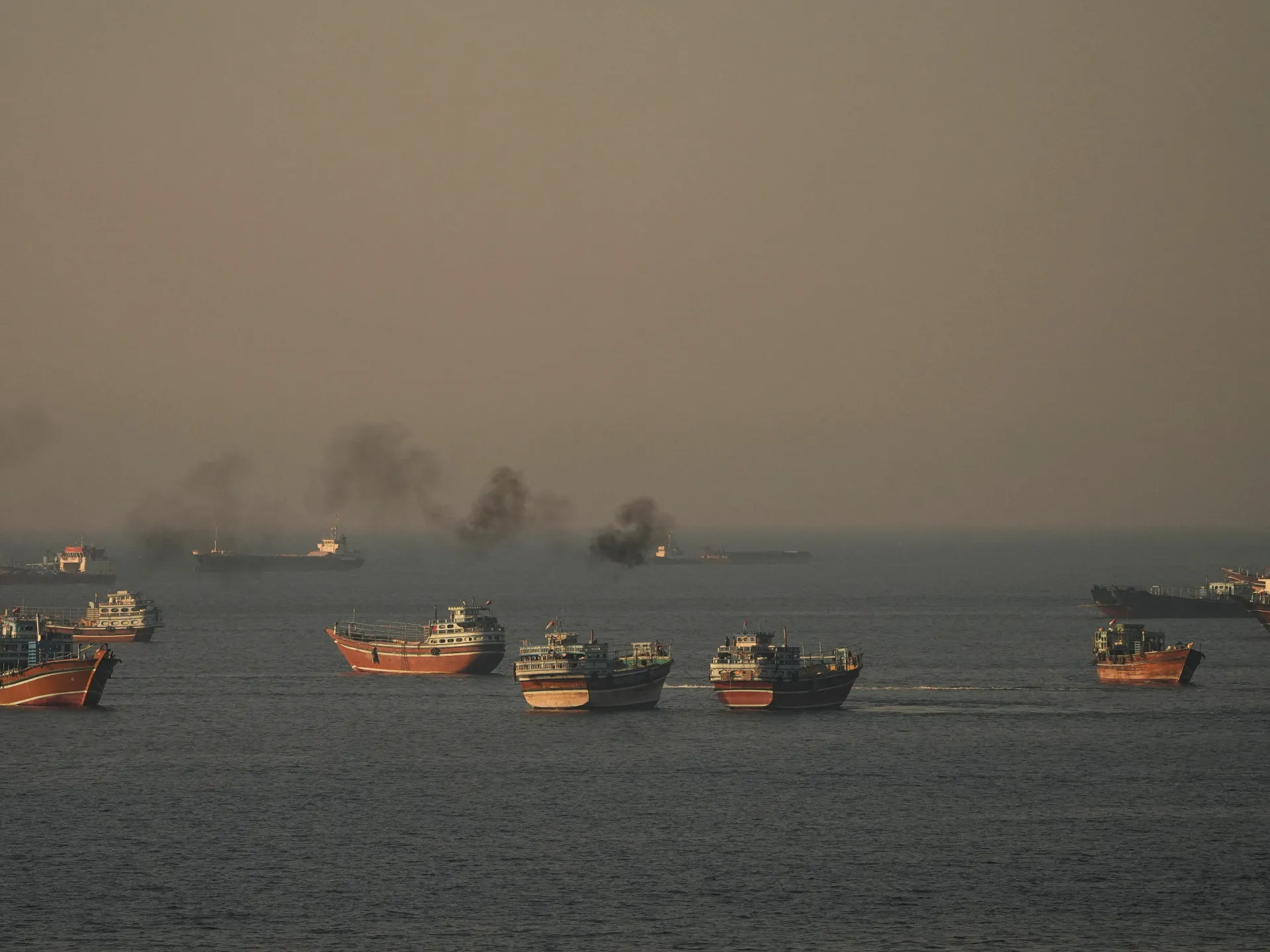
June 18 (UPI) — The U.S. military on Thursday lifted naval blockades in the Persian Gulf and Gulf of Oman, with reports showing that shipping vessels have departed the region through the Strait of Hormuz.
U.S. Central Command said in a series of posts on X that, following direction from President Donald Trump, blockades on maritime traffic along the coasts of Iran have ended.
Centcom noted, however, that the U.S. Navy will stay in the “general area” to be sure that “all aspects” of the peace agreement signed by the United States and Iran “are adhered to, obeyed and in full force and effect.”
Trump signed the agreement Wednesday at the Palace of Versailles in France after the G7 Summit wrapped up, which included among its 14 points reopening the Strait of Hormuz, which is a vital shipping route for the region and much of the world.
Iranian President Masoud Pezeshkian had signed the deal earlier in the day.
“American forces are not impeding the transit of vessels to or from Iranian ports,” Centcom said in one of the posts on X on Thursday.
“All U.S. military blockade efforts have ceased,” it said.
At least 12 energy tankers transited the Strait on Thursday, reopening a sailing route through which roughly 20% of the world’s oil supply is shipped around the globe, CNBC and the New York Post reported.
Among the vessels that transited the Strait were three Saudi Arabian supertankers, which together are carrying six million barrels of crude oil and are the kingdom’s first tankers to sail the shipping route since before the three-month-long U.S.-Iran war launched in February.
Vice President JD Vance also told reporters that more than 12 million barrels of oil had shipped through the Strait overnight Wednesday after the deal had been signed.
For years, the Boko Haram and the Islamic State West Africa Province (ISWAP) terror groups have told Muslims in Nigeria and the Lake Chad Basin that the world outside their camps is not merely corrupt, but that living in it constitutes unbelief. They reinforce this stance through the misinterpretation of scripture, selective history, and the authority of armed men. They use terms such as tawheed (monotheism), hijrah (migration), bay‘ah (allegiance), jihad, daulah (sovereign state), Darul Islam (abode of Islam), Darul Kufr (abode of unbelief), and takfir (excommunication).
To the ordinary ear, it may sound like religion, but beneath the vocabulary is a hard political claim: only their authority can certify Islam. Through this doctrine, they decide who is allowed to live, who must die, who is Muslim, who is no longer Muslim, which land is pure, which land is condemned, which ruler is apostate, and why a farmer, teacher, cleric, trader, voter, soldier, journalist, or civil servant can become a target.
The Takfir
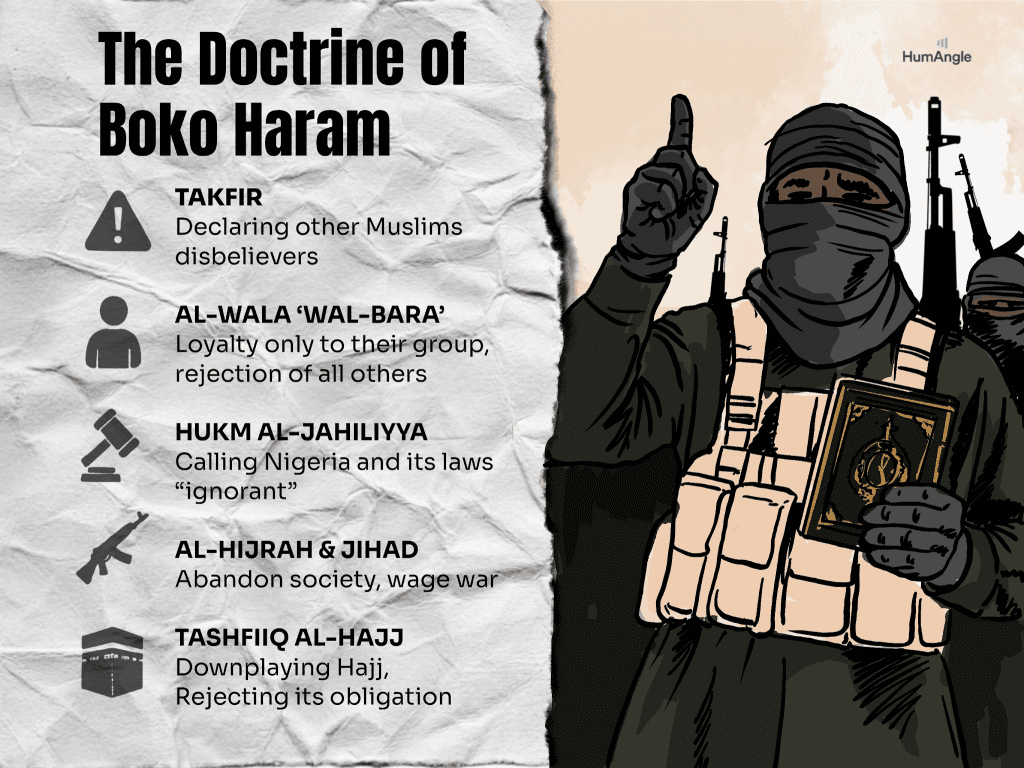
At the centre of this war is takfir, the act of declaring a professed Muslim to be an unbeliever. Mainstream Islamic scholarship treats takfir as a grave matter. It requires knowledge, evidence, context, intention, and due process. A Muslim does not leave Islam because he lives under a flawed state, or because he carries an identity card, works in a hospital, teaches in a school, votes in an election, or refuses to migrate to a forest camp – all of which the terror groups view as signs of belief in Western values.
Boko Haram, or Jama’atu Ahlis-Sunna Lidda’Awati Wal-Jihad, shortened as JAS, loyal to Abubakar Shekau, decreed that if you did these things, you were suspect. The most frightening part of Shekau’s doctrine was that he demanded others declare the same people unbelievers, too. If he declared a Muslim in Maiduguri an unbeliever because he lived under the Nigerian state, then ISWAP also had to declare that person an unbeliever. If ISWAP refused, Shekau’s logic turned against the group; they too became unbelievers because they failed to excommunicate those he had excommunicated.
This doctrine explains why JAS could kill villagers, denounce scholars, attack mosques, murder defectors, bomb displaced people, and fight ISWAP while still claiming to defend Islam. In Shekau’s universe, the circle of Islam narrowed until only his faction stood inside it. Everyone else stood outside the gate.
The doctrine of Boko Haram. Illustration: Akila Jibrin/HumAngle.
Colonial rupture and the question of authority
Abdulbasit Kassim, assistant professor of religion and classics at the University of Rochester, who specialises in the histories and cultures of Muslim societies in West Africa, places this doctrine inside a longer history. He argues that the question did not begin with JAS but reaches back into debates in Muslim West Africa over land, power, law, colonial rule, and the status of Muslims living under non-Islamic authority.
“Before colonial rule, much of what is now northern Nigeria, southern Niger, northern Cameroon, and western Chad belonged to a wider region known as Central Bilad al-Sudan. Muslim polities such as the Sokoto Caliphate and the Kanem-Borno Empire governed social, economic, political, and legal life through Islamic norms,” he said.
Colonialism disrupted that order. By conquering territory, the British introduced a hierarchy of laws in which Islamic law survived, but with a narrowed jurisdiction. Sharia courts continued in civil matters, especially marriage, inheritance, and family disputes. Criminal punishments under the Islamic canon became restricted, weakened, or rendered practically dormant.
“After 1999, when Zamfara State under Ahmad Sani Yerima revived the criminal aspect of Sharia, old tensions returned,” the professor added. “Some scholars and activists welcomed it as a restoration. Others argued that full Sharia could not operate inside a constitutional democracy where any law inconsistent with the 1999 Constitution could be struck down.”
JAS, evidently, did not emerge in a vacuum. Kassim said, “Mohammed Yusuf rejected Nigeria’s Sharia implementation because, to him, it remained trapped inside a secular constitutional order.” For him, it was not enough for a northern governor to introduce Sharia penal codes. The state itself had to be Islamic. Its sovereignty had to come from Islamic political precepts, not a constitution inherited from colonial rule. This is where the movement’s argument becomes more dangerous. It is not only saying that Nigeria fails to implement Sharia properly, but that the entire political foundation of Nigeria is illegitimate.
To Kassim, figures such as Ibrahim Zakzaky and Mohammed Yusuf shared one major point, even though their methods and movements differed. “They rejected the possibility of fully reconciling the Islamic juridical canon with Nigeria’s inherited secular constitutional order.”
This was the opening JAS exploited.
Screenshot of a 25-page book cover by Abubakar Shekau, where he explains his own interpretation of Islam, his arguments against the people he declared as Taghut and the arguments against Western schools.
Nigeria as Darul Kufr
After JAS’s leaders convinced followers that the Nigerian state was illegitimate, the movement moved to the next step: migration. If Nigeria is Darul Kufr, the abode of unbelief, then Muslims had a duty to leave it, they said. If JAS’s territory was Darul Islam, the abode of Islam, then migration into its territory became a religious obligation. The group took an old legal category and weaponised it to control territory, Kassim argued.
This was not abstract in Borno, Yobe, Adamawa, Niger, Chad, and Cameroon. It meant families were pressured, threatened, abducted, or killed. Villages were told to submit. People who remained under government control became suspects; those who cooperated with the military became enemies; those who joined the Civilian Joint Task Force (CJTF) and their families became legitimate targets in the eyes of the insurgents; and traditional rulers, clerics, teachers, and government workers became exposed.
Shekau then stretched the doctrine further.
According to Kassim, “Shekau held that Muslims living under the Nigerian state were no longer Muslim if they refused to migrate into JAS-held territory. ISWAP contested this. It did not accept Shekau’s blanket takfir against all Muslims living in government territory. ISWAP argued that such Muslims became unbelievers only if they gave material support to the Nigerian state or its security forces in the war against the insurgents.”
This difference shaped the split between the factions. ISWAP still accepted the larger jihadist fiction that the Nigerian state was illegitimate and that true authority flowed from the Islamic State. It still treated soldiers, political rulers, security officials, and those directly supporting the state’s war effort as apostates. It still imposed taxes, punishments, surveillance, recruitment, and control over civilians. It still placed armed authority above the lived Islam of communities that had practised the faith for generations.
The difference between Shekau’s terror and ISWAP’s brutal governance is the difference between reckless excommunication and structured coercion. One faction burned the village and shouted scripture. The other taxed the village, citing the doctrine. Both denied ordinary citizens the right to live safely and peacefully.
The internal civil war
Kassim captured this danger years ago in his 2018 study, JAS’s Internal Civil War: Stealth Takfir and Jihad as Recipes for Schism. He wrote that the internal war between JAS factions could only be understood through “a close reading of the constant stream of primary sources produced by the two factions”.
Kassim wrote a sentence that still sits heavily over this conflict: “Those who kill know why they kill, but the majority of those about to be killed will hardly understand why they are being targeted.”
Get our in-depth, creative coverage of conflict and development delivered to you every weekend.
Subscribe now to our newsletter!
That is the tragedy of takfir in the Lake Chad war.
A farmer on his way to the field may not know the difference between JAS and ISWAP doctrine. A displaced woman in a camp may not know what Shekau wrote about Darul Kufr. A trader at a market may not have heard of Abu Malik al-Tamimi, Anas al-Nashwan, or the arguments ISWAP sent to Islamic State scholars. A village imam may know the Qur’an, but not the way and manner in which insurgents interpret it. Yet their lives can be judged based on those interpretations.
Shekau saw ISWAP’s caution as a compromise and that is where the blood began to flow inward. Kassim explains that Shekau’s rigidity helped push internal revolt. Ansaru had earlier objected to JAS’s killing of Muslims and the violation of what its leaders considered the ethics of jihad. Later, Abu Musab al-Barnawi and Mamman Nur moved against Shekau from within the Islamic State framework. They accused him of extremism, arbitrary killing, and corruption of the cause.
What Boko Haram and ISWAP condemn. Illustration: Akila Jibrin/HumAngle.
Civilian life as suspicion
Kassim’s 2018 chapter recorded that Shekau viewed people living beyond JAS’s controlled territory as infidels and therefore legitimate targets within Darul Harb (abode of war). He also noted that Shekau’s position was harsher towards those who fled from JAS territory to areas controlled by the Nigerian state. In that logic, their camps, mosques, markets, and places of refuge could be attacked until they repented and returned.
ISWAP challenged part of this logic. Abu Musab al-Barnawi argued that Muslims who had always lived outside JAS territory could not be declared unbelievers merely for that reason. In his view, they crossed the line when they gave active or passive support to the Nigerian Army, the Civilian JTF, or other forces fighting the insurgents.
Abu Musab died in Kaduna, northwestern Nigeria, an area that both JAS and ISWAP consider Darul Kufr. This may partly explain ISWAP’s relative fluidity on the issue, compared with JAS.
HumAngle spoke to a former JAS shura member who later joined ISWAP. He subsequently completed the Nigerian government’s deradicalisation programme and now lives freely in Maiduguri. He says the Shekau faction does not recognise the Islam of Nigerians, Saudis, or anyone outside its creed. “To them, whoever is not with them is an unbeliever. Saudi Arabia is no different from a non-Muslim society in their imagination. It is simply another land of unbelief.”
He said ISWAP classifies Muslims living in Nigeria, Cameroon, Chad, Niger, and other states into categories. Those who can migrate but refuse to do so are sinners, not necessarily unbelievers. Their offence is treated as a major sin. The weak, the elderly, women, children, and those without means may be excused. Those who remain outside insurgent territory while openly challenging secular rule and calling people to Islamic governance may even be rewarded. In his telling, Mohammed Yusuf’s preaching before 2009 fits this category.
But those who join the democratic system, legislate, govern, enforce state authority, or fight under the security forces enter a more dangerous category. Politicians and legislators become tawaghit (false gods). Security officials become direct enemies. Soldiers, police officers, Civilian JTF members, and others who bear arms against the insurgents are treated as apostates whose blood is lawful to be spilt.
Doctors and teachers sit lower in ISWAP’s hierarchy of offence. They are not treated the same way as soldiers or politicians, but they still operate inside a system the group condemns.
This is the cold bureaucracy of ISWAP’s worldview. It sorts society by perceived allegiance, measuring sin by proximity to the state. The former Shura member called JAS a Khawarij-type movement because of its sweeping excommunication of Muslims. He said Shekau and his followers misused verses on oppression, migration, and disbelief. They took verses that classical exegetes treated with care and turned them into proof that any Muslim living in Darul Kufr had committed major shirk.
The key verse in their argument comes from Surah An-Nisa, where angels question those who wronged themselves and failed to migrate when Allah’s earth was spacious. ISWAP reads this as a grave warning against remaining in a land where Islam cannot be practised fully. Still, it leaves room for categories such as weakness, inability, and sin below disbelief.
The former shura member says Shekau’s faction then links this to another Qur’anic discussion of zulm (oppression), or wrongdoing, in which classical explanations connect the greatest zulm to shirk (polytheism). From there, JAS concludes that staying in Darul Kufr is not merely a sin but a state of unbelief. That leap is where the danger sits.
The former Shura member said JAS uses this belief to seize wealth, abduct people, kill travellers, attack farmers, and justify arbitrary violence.
Why Hajj became secondary to war
ISWAP and the wider Islamic State network, the former shura member explains, take a more layered position on Hajj (pilgrimage to Mecca), which is generally regarded by Muslims as one of the five pillars of faith. “They still recognise Hajj as an obligation for Muslims who have the means. But they argue that tawheed has been corrupted worldwide and that restoring it through jihad takes priority. In practice, a wealthy fighter should not spend money on Hajj. He should donate it for weapons.”
Islam makes Hajj one of its five pillars. ISIS and ISWAP do not always deny that in theory, but they demote it in practice. They turn the battlefield into a higher obligation that suspends pilgrimage, family obligations, learning, work, charity, and ordinary religious life.
The anonymous source says senior Islamic State scholars issued rulings that no mujahid should spend his money on Hajj when he can spend it on arms.
They take a religion structured around testimony, prayer, fasting, zakat, and pilgrimage, then reorder it around obedience to commanders and permanent war. The recruit is told that the world is corrupt, his parents are ignorant, his old imam is compromised, his country is unbelieving, his passport is a symbol of loyalty to kufr, and his only safe identity is inside the jama‘ah (the jihadists’ community). By the time he is asked to kill, the moral world that could have restrained him has already been dismantled.
Illustration: Akila Jibrin/HumAngle
Saudi Arabia and the battle for religious legitimacy
For Muslims around the world, Saudi Arabia holds Mecca and Medina, the two holiest sanctuaries in Islam. Millions perform Hajj under Saudi administration, yet jihadist ideologues have long denounced the Saudi state as apostate, accusing its rulers of alliance with Western powers, partial application of Sharia, participation in the United Nations system, and military cooperation with the United States and others.
Kassim points to Abu Muhammad al-Maqdisi, the Jordanian jihadist ideologue, whose writings attacked the legitimacy of the Saudi state. The argument is familiar in jihadist circles: Saudi rulers claim Sharia, but rule partly through artificial laws; they belong to the international state system; they support Western military campaigns; they host or cooperate with foreign military power; they have betrayed Muslims.
This is why jihadists can condemn Saudi rulers while still struggling over the status of Hajj. Some declare the rulers apostate but still accept that Muslims may perform Hajj because the holy places remain sacred. Others move closer to rejecting Hajj under Saudi authority or treating it as inferior to jihad.
The anonymous source says ISWAP and Islamic State circles call the Saudi royal and scholarly establishment “Ahl Salul”, a contemptuous distortion linking them to hypocrisy. They do not call them “A’l Saud” or “A’l Sheikh” with respect. They dismiss many Saudi scholars as apostates or compromised because they did not confront the Saudi state.
Who gets to define religion? The scholars of centuries? The community? The custodians of the holy cities? The legal schools? The state? The armed commander in the bush? JAS and ISWAP argue that authority belongs to the armed vanguard. That is why they reject Nigeria’s Sharia states, Saudi Arabia, Qatar, UAE, Afghanistan, Mali, Niger, Chad, and other Muslim-majority or Muslim-populated states.
The third generation of war
Kassim warned in the interview that the conflict is entering a third generation, which JAS described in one of its propaganda videos as “Jiyalit-Tamkin” (reinforcement generation). Many fighters were born into war and therefore did not sit through the early debates or learn the tradition deeply. They inherited fear, slogans, weapons, commanders, and survival inside an insurgent economy.
The first generation, including Mohammed Yusuf, Shekau, Mamman Nur, and others, had some level of Islamic training. One may reject their interpretations, but they tried to ground their actions in texts. Shekau himself wrote books and cited Usman Dan Fodio, even if, as Kassim notes, the citations were often erroneous and shallow.
The current generation is different. For many of them, jihad is the only economy they know, and now functions as the road to food, wives, money, status, revenge, protection, and belonging.
The former shura member says this is visible among the Shekau loyalists who remain under Bakura’s orbit. He says they suffer from a dearth of scholars and describes figures around the faction as lacking deep knowledge, with some retained by kinship, money, fear, or coercion rather than conviction. This is one of the most important revelations.
“The war is no longer driven only by men who believe they are restoring an Islamic order. It is also driven by men trapped inside a violent economy that needs theology to keep feeding itself,” the former shura member said. War has become a livelihood.
Ending the conflict requires more than defeating JAS’s ideology. Many actors are bound to the war by power, profit, survival, and identity, making violence harder to end than extremist beliefs.
Why the war endures
The state did not create JAS’s theology, but it gave the movement that emerged in northeastern Nigeria some of its most powerful stories. The killing of Mohammed Yusuf in 2009, mass arrests, military abuses, corruption, abandoned communities, failed justice, and the humiliation of civilians all became material for insurgent propaganda.
Across the Sahel, the same pattern repeats. Jihadist groups exploit weak courts, abusive soldiers, predatory officials, unresolved local disputes, ethnic suspicion, rural abandonment, and poverty. This is why Nigeria cannot bomb its way out of the conflict.
The anonymous former shura member rejected claims linking recent schoolchildren kidnappings in Oyo State to either ISWAP or JAS. According to him, the perpetrators are unlikely to belong to either group. Instead, they may be newly emerging terrorist cells, former Lake Chad insurgents, or criminal networks that have adopted the rhetoric, tactics, and imagery associated with the Lake Chad insurgency.
Nigeria now faces more than one threat. There are jihadist factions with doctrine, command structure, and transnational links. There are armed gangs with local motives. Some kidnappers borrow religious language. Some opportunists understand that the word Sharia can create fear, attract attention, or confuse investigators.
Bad analysis merges them all while good analysis separates doctrine, network, command, territory, language, and motive.
The need for precision
Experts say mainstream Islamic scholars must speak with more precision and courage. They must confront takfir clearly and explain why residence under a secular state does not erase religion. They must explain why bad governance does not give an insurgent the right to cancel the faith of millions, why Hajj cannot be demoted by men who need money for weapons, and why Sharia without mercy, restraint, due process, and qualified authority becomes rule by fear.
It is not enough to say JAS has nothing to do with Islam. That may comfort outsiders, but it does not answer the recruit who has heard verses, hadith, juristic language, and historical references.
Kassim admits he does not see a clear solution. The idea of restoring an Islamic state will remain as long as many Muslims see the Nigerian system as chaotic, unjust, corrupt, and unable to serve its people. The dysfunction of democracy strengthens the insurgents’ claim.
The insurgents do not need Nigeria to fail. They only need it to be failed enough for a young man to feel humiliated and for a farmer to distrust soldiers. It was enough for a displaced family to feel forgotten. Every abuse becomes a sermon for them.
Submission as the ultimate test
The fight against JAS and ISWAP is often framed as a fight to win back territory in Sambisa, Alagarno, Mandara, Marte, Abadam, Lake Chad, or the borderlands. But it is also about authority: Who defines religion? Who protects life? Who dispenses justice and punishes wrongdoing? Who can call another person an unbeliever?
This explains why the majority of JAS’s victims have been Muslims. The war has devastated Muslim villages, clerics, farmers, traders, women, children, and displaced families.
JAS and ISWAP are defending their monopoly over religion. And inside that monopoly, Daniel the priest, Ibrahim the imam, the displaced mother, the market trader, the farmer, the journalist, and the child on the road can all meet the same fate.
Spider-Man fans have been waiting years for this moment and now it’s almost here
Spider-Man Brand New Day will be released on July 31 (Image: Sony Pictures/Marvel)
Marvel fans have all said the same thing after an iconic character’s long awaited return in the upcoming Spider-Man film.
Just this week, an exciting trailer was released for Spider-Man Brand New Day, which will premier in cinemas on July 31. It has been teased: “The world may have forgotten Peter Parker, but he hasn’t forgotten them.”
The latest instalment takes place shortly after the events of No Way Home – the fourth of Tom Holland’s Spider-Man movies as it follows Peter Parker (Tom Holland) in a world that no longer remembers who he is.
In the clip, it appears that trouble is just around the corner though, as Spider-Man can be heard saying: “What is happening to me?
“I’m losing my mind. I am totally out of control. I’ve got to fix whatever this is right now.”
However, there is one iconic character that has stolen the show as fans were delighted to see the return of Mark Ruffalo – but more excitingly in his savage Hulk form.
The exciting trailer shows Peter seeking out DR Bruce Banner as he says: “You found a way of suppressing mutating DNA right?”
Dr Banner then replied: “If you see me with this off, then run”, showing him the device that prevents him from mutating into the Hulk. However, later scenes show his transformation into the green mutation, right in front of Spider-Man who states: “I didn’t know you could get that big.”
Content cannot be displayed without consent
Seeing savage Hulk return is a delight to Marvel fans who have not seen the character in the MCU for quite some time, somewhat completing Banner’s character arc.
But now, it appears the raging monster has made a return as the trailer teases a tense head to head. Commenting on YouTube, one person wrote: “Seeing Hulk back to his normal self genuinely made me happy.”
Another penned: “no dude literally like hulk back in the original form is like breathing nice fresh air!”
A third added: “I have friends who have had two kids since I’ve been waiting for the real hulk to come back.”
A fourth replied: “Spider-Man is depressed, Hulk is angry and Punisher is itching to tell us something… PEAK.”
A fifth echoed: “Love how Spidey did not know Hulk’s true size. He has only ever encountered Professor Hulk, not OG Savage Hulk. About time we got him back!”
One person said: “Ladies and Gentlemen, It has 8 years 1 month and 22 days since we saw Hulk. Now we’re back Baby!!”
Another commented: “Normal hulk has came .This is what every Marvel fan was wishing for.”
Spider-Man Brand New Day lands in cinemas on July 31
Justin Gaethje waited a long time to become an undisputed UFC champion.
Now the 37-year-old MMA star might have to wait another six months or so before fighting again.
Gaethje upset former two-weight champion Ilia Topuria with a technical knockout in a lightweight unification championship bout at the UFC Freedom 250 event Sunday on the White House South Lawn.
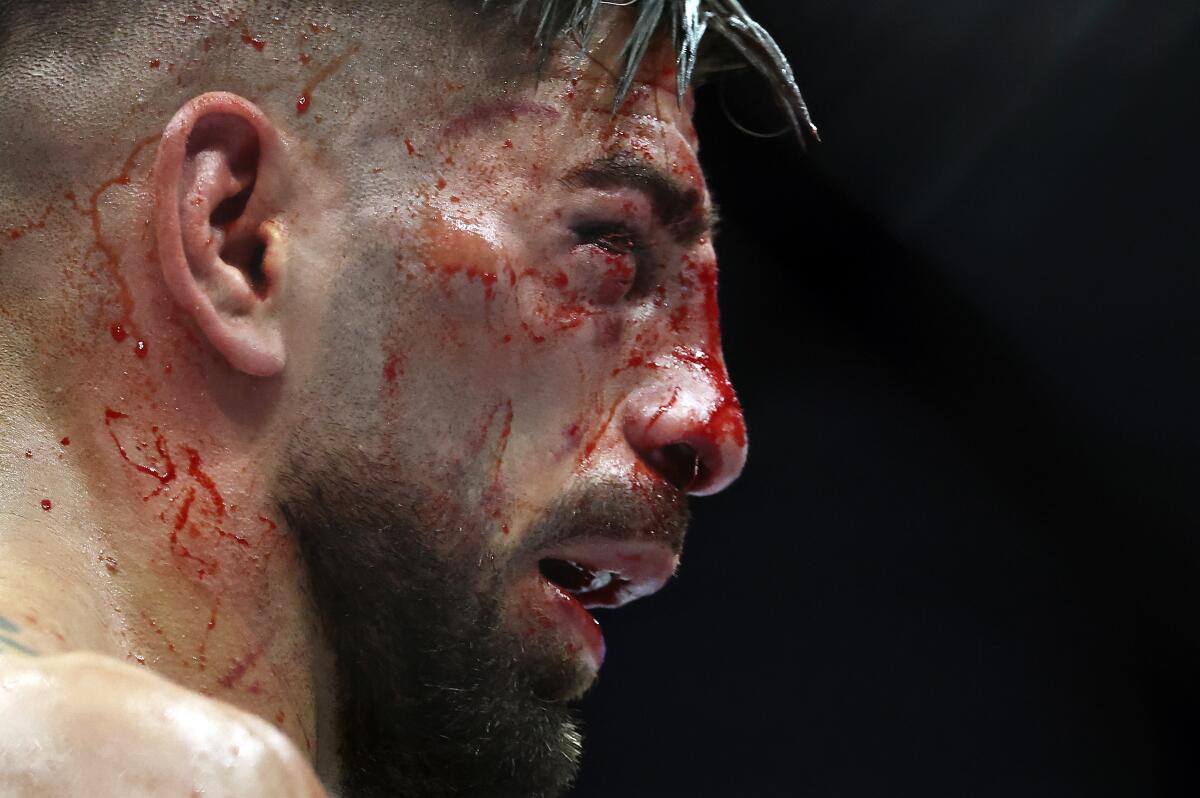
Topuria was a bloody and swollen mess by the time his corner stopped the fight between the fourth and fifth rounds. Gaethje executed a soaring back flip off the cage to celebrate his first undisputed belt, but it turns out that the former two-time interim champion also suffered significant injuries during the bout.
Both Gaethje and Topuria were among the five UFC Freedom 250 fighters who received 180-day medical suspensions from the Association of Boxing and Combative Sports Commissions, according to a list issued by the commissions and viewed by The Times.
Ilia Topuria suffered two broken orbital bones during his loss to Justin Gaethje at UFC Freedom 250 on June 14 in Washington.
(Chris Graythen / Getty Images)
Gaethje’s suspension can be shortened if he is cleared with negative MRIs for his right wrist and left knee. Topuria, who suffered two broken orbital bones, can return early if cleared by a an Oral and Maxillofacial Foundation specialist.
Both men also are required to serve mandatory rest days (45 for Gaethje, 60 for Topuria).
Alex Pereira, who lost his interim heavyweight title bout to Ciryl Gane by TKO, was medically suspended for 180 days or until he’s cleared with a negative maxillofacial CT scan. Undercard fighters Aiemann Zahabi and Steve Garcia also received 180-day medical suspensions.
Topuria won the UFC featherweight championship by knocking out Alexander Volkanovski in February 2024. He vacated that title a year later and in June 2025 defeated Charles Oliveira by knockout to claim lightweight belt.
In November, Topuria announced he was temporarily stepping away from fighting. Gaethje earned the interim lightweight title in January by defeating Paddy Pimblett by unanimous decision.
June 18 (UPI) — Sen. Elissa Slotkin, D-Mich., introduced a bill Thursday called the Protect Our Polls Act that would block the president from sending soldiers or federal agents to voting sites during elections.
The bill comes after President Donald Trump said he wouldn’t rule out sending the National Guard or Immigrations and Customs Enforcement to polling places in November.
“I’d do anything necessary to make sure we have honest elections,” The Hill reported Trump told reporters in May.
Slotkin said the bill would prevent Trump from “weaponizing our military and armed federal officers to interfere in our elections.”
The legislation, if passed, would require approval from Congress before a president could send uniformed military or federal law enforcement to polling sites. It would also require 48 hours’ notice to lawmakers, intel, legal justification and evidence that proves a state can’t handle a threat on its own.
The bill is backed by senators Tammy Baldwin, Wis.; Ruben Gallego, Ariz.; Mark Kelly, Ariz.; Amy Klobuchar, Minn.; Alex Padilla, Calif.; Jacky Rosen, Nev.; and Raphael Warnock, Ga.
In a statement, White House spokesperson Abigail Jackson told NBC, “If Democrats really cared about securing our elections, they would pass the SAVE America Act which includes commonsense election integrity measures supported by the vast majority of Americans.”
Federal and state laws already ban deployment of troops and agents from elections, except “to repel armed enemies of the United States.”
“The idea that a president would send troops or armed agents to polling places to intimidate voters is un-American and illegal,” Kelly said in a statement. “Federal law has protected polling places from military interference since the Civil War for a reason. President Trump has made clear he thinks he can ignore those limits. We’re making sure he can’t.”
Secretary of Homeland Security Markwayne Mullin said in March that he wouldn’t send agents to polling places without good reason.
“The only reason why my officers would be there is if there was a specific threat for them to be there, not for intimidation,” Mullin said. “There will be a reason for us to be there, and it’ll be known why we’re there.”
China calls for stronger representation for emerging economies.
China’s foreign minister says that emerging economies remain underrepresented in global governance institutions.
Presenting China’s new white paper on making global governance more equitable, minister Wang Yi argued that the role of the United Nations should be strengthened and developing countries should have a stronger voice in the world body.
In Beijing’s stated view, all countries should have an equal voice in global affairs, which means the Global South should have more representation.
China’s call comes as the world is engulfed in many armed conflicts and facing serious economic challenges.
But is Beijing now presenting itself as a leader of the Global South? And will it be able to garner enough support to play that role?
Presenter: Sami Zeidan
Guests:
Steve Tsang – Director of the SOAS China Institute
Cobus van Staden – Head of research at the China-Global South Project
Allen Carlson – Associate professor in the Government Department at Cornell University
A synopsis for the upcoming six-part show teases: “The Hairdresser Mysteries is an original, homegrown drama and a nostalgic nod to the 70’s which sees a high-end hairdresser, Lily Petal (Sally Phillips), opt out of the competitive city scene to buy a small village hairdressers at the top of a cobbled street.
“Everyone tells their hairdresser everything and soon she becomes the hub of her new village’s secrets and revelations. Using her own brand of uncannily developed hairdressing intuitive, empathy and understanding, Lily begins to solve the mysteries of the village.”
Coronation Street legend Wendi Peters will play Gloria Crudd in the series, who is another newcomer to the village hoping to make a fresh start with her ice cream parlour but soon finds her old life catching up with her.
Wendi, 58, is best known for playing Cilla Battersby-Brown in Coronation Street from 2003 to 2007, she returned to the cobbles once again in 2014.
In a first look of the new series, Wendi looks worlds away from Cilla as her character Gloria has a pastel pink copper coloured curly beehive hairdo adorned with jewellery pieces.
However, Wendi isn’t the only Coronation Street star in the new series as she is joined by fellow Weatherfield favourite Charlotte Jordan who is playing Clary Coombs – Lily’s ‘bright and analytical assistant and the Watson to her Shear-lock Holmes’.
Charlotte, 32, is best known for playing Daisy Midgeley on the cobbles from 2020 to 2025, where her character was involved in several huge storylines including the hard-hitting acid attack plot.
Joining the two Coronation Street favourites is Bridget Jones’ Diary legend Sally Phillips who plays the lead character, hairdresser Lily Petal, who opts out of the competitive city scene to buy a small village hairdressing salon at the top of a cobbled street.
You star Ben Castle-Gibb will play PC Adam Watson – an eager young copper in the local village who falls head-over-heels for salon assistant Clary.
Meanwhile, Ackley Bridge star Sunetra Sarker will play Wincey Evans – the village’s local chit-chatter with a reputation as a known gossip, while Clive Rowe plays Lonnie – the flamboyant manager of the local charity shop, and Holby City star Guy Henry plays Race Runard – the local village’s eccentric antiques dealer with a penchant for priceless teacup and saucer sets.
The Hairdresser Mysteries comes to BBC One and BBC iPlayer this July.
A bitter battle that exposed deep divisions over the direction of America’s conservation movement reached culmination with the announcement Wednesday that Sierra Club members had overwhelmingly rejected a campaign by immigration control advocates to control the venerable environmental group.
In what was termed the largest voter turnout in the Sierra Club’s 112-year history, more than 22% of the group’s 757,000 members cast ballots to select its governing board. The votes, which were submitted by members in March and April, were tallied Wednesday. The members elected a slate backed by the club’s leaders and which received more than 110,000 votes apiece.
By contrast, a slate of candidates seeking to bring a strong immigration control agenda to the club garnered only minimal support — former Colorado Gov. Richard Lamm, the best known, received 13,090 votes.
“I never argue with the voters. My congratulations to the winners,” Lamm said in an e-mail shortly after the results were announced. He declined to be interviewed.
Five seats were up for grabs on the club’s 15-member governing board. The election took place via mail and the Internet starting in March.
The election was the second time in less than a decade that the Sierra Club, arguably the nation’s most influential environmental group, has publicly wrestled with the issue of restricting immigration. Members voted to remain neutral on the issue in 1998, following a campaign that featured accusations that conservationists were resorting to immigrant bashing, and counterclaims that political correctness was leading to environmental cowardice. The same accusations were raised this year.
Despite the 1998 vote, an increasingly vocal group of environmentalists continued to argue that the Sierra Club needed to aggressively support strict immigration controls, citing the destructive effect of unchecked U.S. population growth on the nation’s natural resources.
Three prominent immigration control advocates — UCLA astronomy professor Ben Zuckerman, Wisconsin Secretary of State Doug LaFollette, and Paul Watson, leader of the group Sea Shepherd Conservation Society, already had won seats to the board in recent years, putting majority control within the grasp of the dissidents in this year’s election.
Sierra Club leaders said after the landslide vote that they hoped the rancorous dispute had finally been resolved.
“I thought the issue should have been laid to rest after 1998, and I certainly don’t see anything in these results to suggest [members] have had a change of heart,” said Sierra Club Executive Director Carl Pope.
“We are delighted that the turnout was so strong. This may have been the largest election turnout ever for a nonprofit organization other than the NRA,” the National Rifle Assn.
However, it quickly became clear on Wednesday that the losing side considered the issue far from resolved. Rather than seeing the results as evidence that Sierra Club members did not support an immigration platform, critics called it proof that dirty tactics by the status quo to promote their favorites had unfairly tipped the scales.
Some dissidents said they were holding out hope that a lawsuit filed recently in San Francisco Superior Court would result in a new election. The suit alleges that Sierra Club leaders violated state laws governing nonprofits by using club funds to promote candidates they had endorsed.
Club officials called the claims groundless. A similar suit by Lamm was withdrawn when Pope and other club officials threatened a countersuit.
“The Sierra Club just elected the best new directors money can buy — but with a lawsuit pending over unfair election practices, justice and truth may yet prevail,” said a losing candidate, Karyn Strickler.
Strickler, who said she did not advocate curbing immigration and was running as an independent reformer, said all candidates who collected petitions to be on the ballot were damaged by an “urgent election notice” to Sierra Club members that accompanied the ballot and warned of “outside groups” seeking to influence the club’s agenda. Under Sierra Club bylaws, some candidates are automatically placed on the ballot by current leaders; others can collect signatures to run.
The ballot notice referred to racist and anti-immigrant websites that had posted stories urging their visitors to vote for immigration-control candidates in the Sierra Club elections, and made similar links to animal rights groups and hemp proponents. As a result of the notice, critics argued that voters were pressured to stick with the candidates endorsed by the current leadership.
During the dawn of the modern environmental movement four decades ago, conservationists widely embraced the goal of global population control. Books such as “The Population Bomb” by Stanford professor Paul Ehrlich painted a dire portrait of a planet straining under man’s increasingly wide footprint.
Yet although many environmentalists still call for worldwide curbs on population, they are increasingly divided over the less-abstract issue of restricting the flood of newcomers to America. According to the U.S. census, the U.S. population, now more than 292 million, could surge by 50% over the next 50 years, largely because of immigrants and their children.
Former Wisconsin Democratic U.S. Sen. Gaylord Nelson, one of the founders of Earth Day, sided with immigration control advocates, supporting Cornell University professor David Pimentel.
The two had been active in the Carrying Capacity Network, a population control organization that advocates strict curbs on immigration.
Robert F. Kennedy Jr., the founder of Waterkeeper Alliance, lent his name to the election campaign to defeat Pimentel and the other insurgents. Actor Robert Redford and MoveOn.Org, the liberal activist network known for helping propel former Democratic presidential candidate Howard Dean to prominence, also opposed the anti-immigration candidates.
“I think the agenda of those looking to bring immigration to our organization was soundly defeated,” said Sierra Club President Larry Fahn. “We should now focus on reuniting the membership and getting back to our core mission: to protect the planet. And this year, we should focus on the mission most of us consider most important this year: defeating President Bush and his horrendous environmental policies.”
Yet Fahn conceded that anti-immigration candidates were unlikely to give up their fight.
“The debate will continue,” he said. “Many of them feel so passionate that they will continue agitating and never be pacified.”