- The U.S. House Financial Services Committee announced on Tuesday that it will hold a hearing on the CLARITY Act on July 17 in New York.
- The bill seeks to split oversight between the CFTC and SEC, providing regulatory clarity for


For a quarter century, Venezuelan politics has revolved around a single divide: chavismo versus anti-chavismo. Entire political careers were built around that struggle, as parties rose and fell according to their ability to interpret it. Leaders were judged less by what they proposed than by how effectively and fervently they opposed the regime.
No one has embodied that tradition more successfully than María Corina Machado. Her achievement was not simply electoral. She transformed anti-chavismo from a coalition of parties and personalities into something closer to a political identity.
That transformation helped make Machado the dominant figure in Venezuelan politics since 2024. It may also explain why the beast showing its fangs at the other side of the Western border deserves to be taken seriously by the opposition.
Political movements rarely remain the property of the people who built them. Over time, people begin to invest parts of themselves in them. They become attached not only to leaders, but to their own idea of what those leaders represent. Their loyalties gradually shift from individuals to identities, at that point, succession becomes possible.
Colombia’s recent election offers an intriguing illustration of how this process can unfold. At first glance, Abelardo de la Espriella’s victory looked like a victory for the Colombian Right. It may turn out to have been something more interesting.
De la Espriella did not defeat Uribismo. If anything, he inherited it. Many of his voters still admire Álvaro Uribe and some probably voted for him repeatedly. What changed was not their opinion of Uribe, but their sense of who now spoke most convincingly for the political tradition he created.
The Tiger did not campaign against Uribe’s legacy. He campaigned as its most uncompromising heir, as he described himself “más uribista que doña Lina” (Uribe ‘s wife). His appeal rested on a simple proposition: Uribe had been right all along, but those who claimed to represent his legacy lacked either the conviction or the will to carry it through to its logical conclusion. This is a very different kind of political challenge. It does not seek to replace a movement. It seeks to inherit it.
De la Espriella’s voters didn’t change their opinion of Uribe, but their sense of who now spoke most convincingly for the political tradition he created.
That possibility should sound familiar to Venezuelans.
The question is not whether Machado is losing support. By any reasonable measure she remains the dominant figure in the Venezuelan opposition. The more interesting question is whether anti-chavismo, having become an identity in its own right, could one day develop ambitions, expectations and frustrations that exceed her ability to contain them.
The strange thing about political victories is that they rarely belong entirely to those who achieve them. Over time, successful leaders create constituencies, expectations and myths that acquire a life of their own. What begins as a political movement gradually becomes a political identity, and once identities take root they stop asking permission from the people who created them.
The comparison that comes most readily to mind is Winston Churchill. The British prime minister lost the first election after the Second World War, in one of the great paradoxes of democratic politics. The standard explanation is that Britons decided the war had been won and wanted someone better suited to building the peace.
Bukele, Trump and Milei often feature more prominently in the imagination of many Venezuelans than the leaders who shaped domestic opposition politics before Machado.
The Venezuelan case may eventually present the opposite problem. Machado’s future challenger, once one emerges, is unlikely to argue that the struggle against chavismo has ended. If anything, the argument would be the reverse: not that Machado was wrong, but that she stopped too soon.
If such a figure were ever to emerge in Venezuela, it would likely appear first as a sentiment rather than as a politician.
One can already glimpse fragments of that sentiment across the Venezuelan diaspora, in Miami, Houston or Madrid among voters who remain deeply committed to the opposition but increasingly impatient with the pace of events, and Machado’s approach to Trump’s plan. Many admire Machado, some even revere her. Yet admiration and impatience are not mutually exclusive sentiments.
A decade ago, one of the most common criticisms of Machado was that she was too confrontational. Today, some of her critics seem to believe she has not been enough of a hardliner. The shift may appear subtle. It is anything but that.
What unites these constituencies is not necessarily ideology. Many disagree on policy, strategy and even on the nature of a future Venezuelan transition. What they seem to share is a growing impatience with the political habits that defined the opposition during the previous two decades. Their political reference points are increasingly international. Bukele, Trump and Milei often feature more prominently in their imagination than the leaders who shaped Venezuelan opposition politics before Machado.
The result is a political vocabulary that would have sounded unfamiliar not long ago. Arguments about negotiations and elections increasingly coexist with arguments about strength, authenticity, betrayal and whether the opposition has shown sufficient willingness to exercise power rather than merely seek it.
The Tiger represents a possibility: that the greatest challenge facing anti-chavismo in the years ahead may not come from its enemies, but from the unresolved question of what victory should look like.
None of this means that a Venezuelan Bukele is waiting in the wings, nor does it suggest that Machado’s position is immediately threatened. As things stand, the opposite appears true. But political identities rarely remain frozen in time. They absorb new influences, adapt to new frustrations and develop new aspirations. The question is whether anti-chavismo is beginning to do the same.
Perhaps someone like Abelardo The Tiger never comes. Perhaps Machado successfully leads Venezuela through a transition and remains the uncontested leader of the movement she helped build. That remains the most likely outcome.
But history suggests that political movements rarely remain suspended in a single moment forever. The forces that transformed Machado into the dominant figure of Venezuelan opposition politics, frustration, perseverance, impatience, conviction and a refusal to accept the permanence of chavismo, are not forces she alone controls.
That is why The Tiger matters. The point is not whether it materializes as a candidate, a faction or a movement. The point is that it represents a possibility: that the greatest challenge facing anti-chavismo in the years ahead may not come from its enemies, but from the unresolved question of what victory should look like.
For 25 years, Venezuelan politics revolved around how to confront chavismo. María Corina Machado provided the most compelling answer that question has yet produced. The shadow crouched in the woods is the possibility that a different question is beginning to emerge.
And predators have a peculiar habit. They tend to show up before people eventually give them a name.

MIAMI GARDENS, Fla. — World Cup tickets are expensive. Flights to North America are expensive. Hotel rooms in many places are expensive.
Then there’s the price of beer.
There are some fun — and yes, sometimes pricey — food and drink offerings at the venues playing host to the World Cup. A $75 caviar-topped tray of tater tots and a $40 empanada weighing in at 5 pounds for the daring or for sharing in Miami. Ribeye tacos for $8 in Guadalajara, Mexico. Something called a Twinkie cheeseburger that has nothing to do with dessert for $22 in Los Angeles.
Prices, in many cases, aren’t all that different from what U.S. fans would experience on NFL Sundays or college football Saturdays. But some international fans aren’t used to such pricing and are calling foul, especially over beer prices that can top $20.
“It’s unfair. It’s not right. It’s wrong,” said Thomas Schüller, an engineer from Germany in Toronto to watch his national team play over the weekend, as he held a beer that cost him 24.25 Canadian dollars (about $17). “It’s three times the cost of what I pay in my country.”
But is that stopping him?
“Well, no,” Schüller acknowledged.
There is clearly some sticker shock among international visitors to this World Cup, especially when it comes to the concession prices. In Europe, it’s not uncommon for beers to be perhaps around 4 or 5 euros (about $5-6).
There’s also no shortage of intrigue on the menu at the concession stands at stadiums across the U.S., Canada and Mexico.
“Never seen anything like it,” said Janine Arbetter, a fan from Austria, as she waited for a hot dog, chips and soda combo in Miami last week. The pre-tip price: $19.35, which included a discount for using Visa. “It’s a lot of food for a little snack.”
Some Argentina fans happily showed off their $34 lobster rolls from a match in Kansas City on social media, but in Toronto, the brisket sandwich with chips and a bottle of soda for nearly 40 Canadian dollars ($28) had some online commenters lamenting it as “robbery.”
“It’s OK, more or less, for the World Cup,” German fan Daniel Feldmann said of the food prices while watching a match in Vancouver last week.
FIFA, the sport’s governing body and the tournament organizer, has very specific rules on just about everything related to the World Cup — and there are guidelines that concessionaires have to follow as well. But prices can vary by market, as do the food and drink offerings. And that means the experience in one city might look, or taste, nothing like what’s offered in another.
The “Fancy AF Tots” for $75 at Miami Stadium aren’t really tots at all — it’s three deep-fried hash brown patties, with caviar, creme fraiche and chives. (For those who just want the caviar, it’ll be $70.) Southern California’s Twinkie cheeseburger is in fact a burger topped with a Texas Twinkie — a bacon-wrapped jalapeño stuffed with brisket and cream cheese.
But there’s also a slew of choices specific to a local market; for example, Vancouver offers short rib poutine along with a maple bacon smokie (smoked sausage topped with bacon onion jam that features Canadian maple syrup).
And in Miami, the signature offerings include pan con lechon (a Cuban-style sandwich with pork, infused with citrus mojo sauce and served on a toasted full Cuban loaf) and Empanada Mundial (the five-pound, handmade, chicken-and-cheese-stuffed dish named after the World Cup).
Both Vancouver and Miami have Sodexo Live as a food and beverage provider, and the typical game-day menus in both stadiums were revised a bit to accommodate a soccer crowd.
“We want it to feel like Miami when you’re here,” said Zach Williams, Sodexo Live’s vice president of operations at Miami Stadium. “Everything we do around the Miami Stadium, we want to make sure everybody understands that when they come here, they’re getting a Miami experience.”
In Mexico City, a beer could cost a day’s pay — literally. The daily minimum wage in Mexico City is just 315.04 pesos (roughly $18). Some beers at Mexico City Stadium were selling for between 299 and 310 pesos — about twice as much as fans would ordinarily pay in the same stadium when the World Cup isn’t in town.
But in Atlanta, where Falcons owner and stadium operator Arthur Blank promised the low concession prices he’s championed for many years would hold for the World Cup, pizza slices were $3, 32-ounce sodas were $4, a cheeseburger was $5, chicken tenders with fries were $6 and beers could be had for as little as $8.
Jonathan Arango, a 33-year-old from Greenville, S.C., was at a match in Atlanta with his wife, daughter and father.
“In total for what we got — three orders of tacos, a slice of pizza, two waters and a Coke — we spent like $50,” Arango said. “Compared to what we’ve paid at other events … it’s nice after you paid a lot for a ticket.”
And Schüller pointed out that even though the tournament does come around every four years, it still feels like a once-in-a-lifetime experience.
“The entire football world is having fun,” Schüller said, “so cheers to that.”
Reynolds writes for the Associated Press.
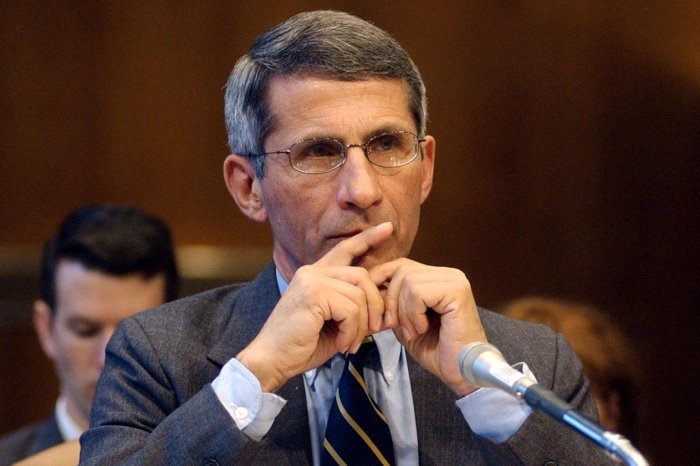
June 23 (UPI) — Sen. Rand Paul, R-Ky., said he has subpoenaed Dr. Anthony Fauci after the former infectious diseases official backed out on an agreement to testify on the COVID-19 pandemic.
The Hill reported that this is the first subpoena issued by Paul as chairman of the Senate Homeland Security and Governmental Affairs Committee.
“Last week, Anthony Fauci notified us that he will not voluntarily testify before the Senate Homeland Security and Governmental Affairs Committee, even though he had previously agreed to do so,” Paul wrote in a post on X on Tuesday. “Therefore, today we have issued a subpoena for him to publicly testify.”
The post on X included a photo of Rand appearing to sign the subpoena.
Last week, Anthony Fauci notified us that he will not voluntarily testify before the Senate Homeland Security and Governmental Affairs Committee, even though he had previously agreed to do so. Therefore, today we have issued a subpoena for him to publicly testify. pic.twitter.com/r9CS0z5UnC— Senator Rand Paul (@SenRandPaul) June 22, 2026
Paul has repeatedly clashed with Fauci over policies and recommendations during the COVID-19 pandemic. The senator accused Fauci of covering up U.S. research at a lab in Wuhan, China, which he said caused the coronavirus outbreak.
“We’ve been negotiating with him for material and for testimony,” Paul said in an appearance on CNBC on Tuesday.
“This has gone on for some time. He slow-walked us and slow-walked us. Finally agreed to come in voluntarily … then last week he says he’s not coming in.
“With this subpoena power, we will bring him in, unless he fights this in court.”
Fauci was the head of the National Institute of Allergy and Infectious Diseases during the COVID-19 outbreak until 2022. He was also a top medical adviser to Presidents Donald Trump and Joe Biden during the crisis.
A U.S. intelligence analysis initially found there was insufficient evidence to prove COVID-19 was leaked from a research lab in Wuhan. In 2025, the CIA adjusted its stance.
“CIA assesses with low confidence that a research-related origin of the COVID-19 pandemic is more likely than a natural origin-based on the available body of reporting,” an unnamed CIA representative said in a statement in January 2025.
During testimony in 2024, Fauci said he was open to both perspectives.
“I have repeatedly stated that I have a completely open mind to either possibility and that if definitive evidence becomes available to validate or refute either theory, I will readily accept it,” he said during his opening statement before a House committee hearing.

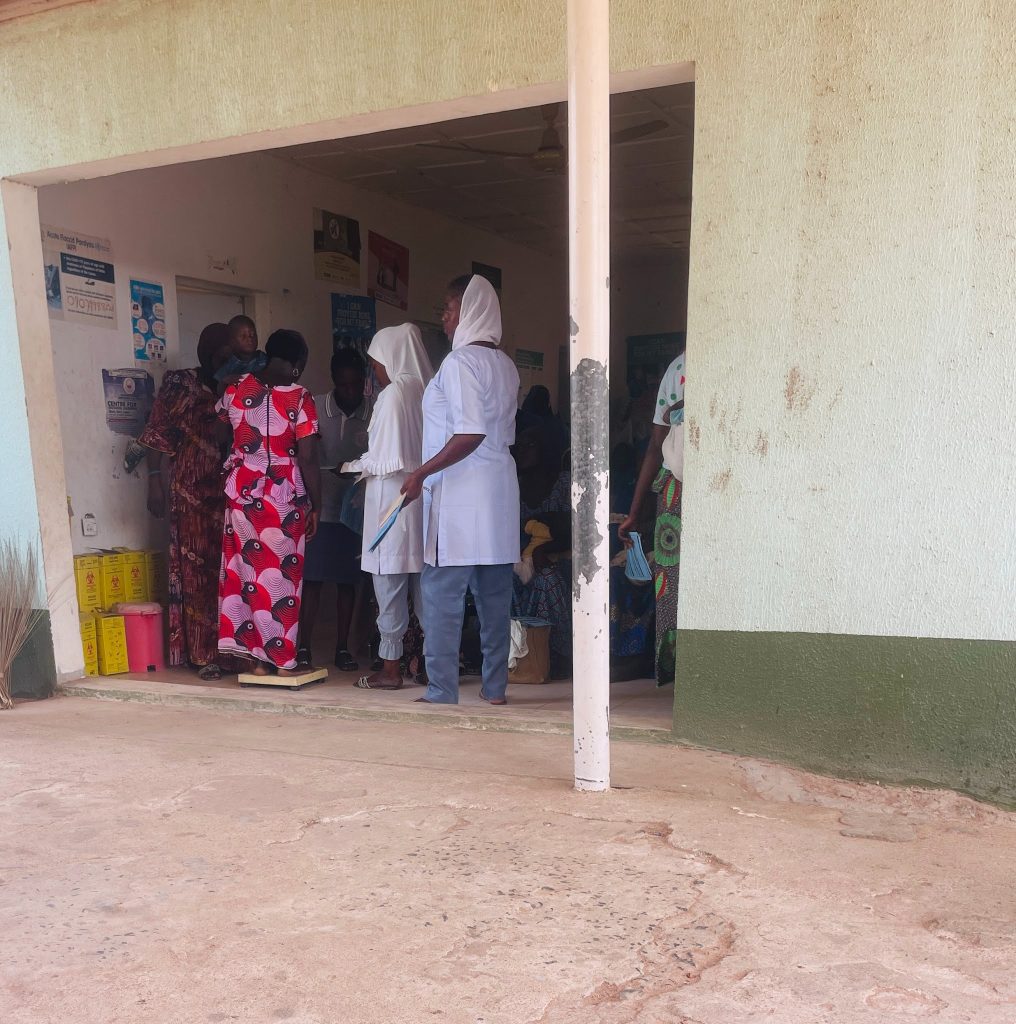
Every Thursday, 35-year-old Fatima Sani joins hundreds of other women from neighbouring communities across Demsa, a local government area in Adamawa State, northeastern Nigeria, to obtain Ready-to-Use Therapeutic Food (RUTF) for her one-year-old malnourished daughter at the Demsa Primary Healthcare Centre. The mother of nine has made several trips to the centre to ensure her daughter recovers from malnutrition. Her treatment includes RUTF, a paste made from powdered milk, peanuts, butter, vegetable oil, sugar, and a mix of vitamins and minerals. A sachet contains 500 calories and essential micronutrients.
“My youngest children are twins, and both of them were diagnosed with malnutrition,” Fatima told HumAngle. “One of them has been declared healthy and discharged by the centre, so I no longer bring him here, but I come to obtain RUTF for his twin, and hopefully, she recovers and gets discharged too.”
She noted that the twins were the only children in her household ever to be diagnosed with malnutrition in her household. When asked what the cause might be, Fatima replied: “Hunger.”
She sells fresh vegetables at the local market in Demsa, and her husband, whom she referred to as Sani, is a rice farmer. She explained that most of his harvest is kept for household consumption, while the rest is sold to meet other needs. Then, a disaster repeatedly washed away his produce.
“For three years in a row now, floods have been destroying my husband’s farm,” she said, adding that the destruction in 2025 left him devastated. “The rice had reached maturity, but on the expected day of harvest, the flood came and washed everything away.”
UNICEF, in its 2025 report, highlighted that flooding is worsening the nutrition crisis in Adamawa, as the destruction of farmlands, disruption of livelihoods, displacement of households, and damage to health and nutrition facilities have all contributed to reduced access to food and essential nutrition services in the state. This has led to a surge in malnutrition levels, doubling the previous year’s estimates and placing children, pregnant women, and lactating women at increased risk.
After the flood ravaged her husband’s farm, Fatima said, feeding her family became extremely difficult. “We now eat once or twice a day. Some days, there is nothing at all,” she said. She added that her husband, Sani, left Demsa about two months ago in search of greener pastures due to feeding difficulties in their household.
Helen Daniel, another woman who collects RUTF for her malnourished granddaughter at the healthcare centre in Demsa, told HumAngle that the 20-month-old child was almost dying when she first saw her. “I had gone to the village to check on my daughter when I noticed that my granddaughter’s ribs were visible. At close to two years, she could barely stand, and she was struggling to keep her head firm,” Helen said.
Her daughter and son-in-law are full-time farmers in Wuro-Laka, a nearby village in Demsa, so when floods ravaged rural communities around their area, including their farmland, they lost their only means of livelihood.
“Food is scarce, and they only eat what they can get,” Helen said.
Since she had seen women trooping into the Demsa Primary Healthcare Centre with their children who exhibited the same symptoms as her granddaughter, Helen returned to Demsa town with the child after her visit and headed there too. There, the child was diagnosed with malnutrition in March.
“This is my sixth trip to the centre, and I can boldly say there has been a significant improvement in my granddaughter’s health since I started feeding her the RUTF. She has gained weight, and I can’t wait for her to start walking,” Helen said.
Dr Innocent Agaba, Senior Registrar at the Department of Paediatrics, Modibbo Adama University Teaching Hospital, Yola, explained that malnourished children who are left untreated do not attain their full intellectual potential and may eventually die. “They will be duller than their peers, and they are literally going to be shorter and smaller than their peers,” he said.
His observation is consistent with global research. Studies by the World Food Programme, World Health Organisation, and UNICEF have found that childhood malnutrition and stunting are linked to poorer cognitive development, reduced educational outcomes and delayed physical growth, with long-term consequences that can persist into adulthood.
The paediatrician also noted that malnourished children are prone to health complications and organ failures.

According to the Integrated Food Security Phase Classification, armed conflict, inflation, and extreme weather are the main drivers of acute malnutrition in Northern Nigeria, which is affecting about 6.4 million children aged 0 to 59 months, as well as 786,000 pregnant and breastfeeding women.
The 2025 analysis shows that, of the 21 local governments analysed in Adamawa State, the malnutrition rate was reported to be in the Alert Phase (Phase 2), indicating a deteriorating nutrition situation requiring close monitoring and targeted interventions. Meanwhile, some LGAs in Borno were in the Critical Phase (Phase 4), meaning malnutrition levels had reached an emergency threshold, with a high risk of illness and death among affected children and urgent action was needed to prevent further deterioration.

The effects of repeated flooding on child nutrition are not limited to Demsa. Across Adamawa State, other flood-prone communities are facing similar challenges. In Imburu, a community in Numan Local Government Area of Adamawa State, families are also grappling with rising cases of malnutrition linked to the loss of farmland and livelihoods.
Twenty-one-year-old Shaawalatu Yakubu is one of the RUTF recipients at the primary healthcare facility in Imburu. She told HumAngle that her family is yet to recover from the devastating impact of last year’s flooding. The family relied on produce from their maize farm. Before the damage, she explained, her family’s needs were fully met, and her daughter was on a different meal plan that included soya beans and custard pap with milk, but now, the child is fed whatever is available.
“The flood washed away our maize farmland that reached maturity, including other farmlands and households in the area,” she said.
Get our in-depth, creative coverage of conflict and development delivered to you every weekend.
Subscribe now to our newsletter!
Shaawalatu, who resides in Ngbalang, a neighbouring community around Imburu, receives RUTF for her malnourished daughter every Wednesday. “The RUTF is free, and I have seen changes in my daughter since I started feeding her with the supplement,” she said.
Aisha Musa, whose son is being treated at Imburu Primary Healthcare Centre, said that the prices of foodstuffs in the area had gone up because most farmers are trying to make up for losses incurred in the previous flood. “One mudu of maize was ₦550 Naira, but now, it’s ₦750,” she said. To help her son tackle the crisis, she feeds him soya beans and guinea corn pap alongside the RUTF supplement.
An assessment conducted by the National Emergency Management Agency (NEMA) and the Adamawa State Emergency Management Agency (ADSEMA) in June 2025 found that over 9,000 hectares of farmland were destroyed by floods across Adamawa State, while over 23,000 people were displaced. Communities in Numan, including Imburu, Ngbalang, Lure, and Zangun, were severely flooded. Farmlands were submerged, and residents were forced to seek shelter in makeshift homes.

Every registered woman receives 14 packs of RUTF per child each week across the state’s nutrition centres. Two sachets are to be administered daily. However, there are times when supply is inconsistent, and the children don’t meet the feeding standard.
Norah Noel, a healthcare provider at a nutrition centre in Fufore, another flood-prone local government area in Adamawa, said that RUTF shortages affect recovery rates among malnourished children in the region and that, despite assistance from the Adamawa State government and humanitarian agencies, these shortages persist.
“Since last October, we haven’t had RUTF on the ground. The rate of malnutrition is increasing because we have plenty of cases that are coming,” she told HumAngle.
Norah stressed that children aged six to 10 months are among the most affected in the region, adding that more cases are recorded during the rainy season because repeated flooding in the area causes food scarcity.
The healthcare provider also explained that the Fufore facility, located in the town centre, is always overwhelmed with cases from neighbouring villages. Since there is a shortage of RUTF, Norah stated that the centre is seeking alternative measures to provide care for those affected, while critical cases are referred to larger healthcare facilities.
She explained that some people spend an average of ₦6,000 to ₦10,000 on transport to reach the centre, only to be disappointed by RUTF shortages.
“What we do is show them how to make Tom Brown,” Norah said. Tom Brown is a locally produced flour mixed with grains to prevent relapse in malnourished children.
While the healthcare centre carries out outreach in some of the rural communities in order to reach the malnourished children, Norah believes some children might never make it to the facility, especially those in inaccessible areas.
In June 2025, UNICEF revealed that over 400,000 children in Nigeria’s northeastern and northwestern regions would be at risk of imminent nutrition stockouts. This means a shortage of RUTF and Supplementary Food, with data indicating a reduction in overall partner and financial volume.
According to the paediatrician, it is important for malnourished children to complete their full course of RUTF, which can last several weeks or even months. Recovery is considered complete only when a child reaches the recommended weight-for-height Z-score or when their Mid-Upper Arm Circumference (MUAC) returns to a normal range.
Stopping treatment too early can undo any progress that has been made. “If a person begins to enjoy some benefits from some recovery and then stops, he just reverses back to his initial stage and returns to a pre-morbid state,” he said.
Yet for many families in rural Adamawa, completing treatment is often easier said than done. During the rainy season, flooding frequently cuts off access to healthcare facilities, making it difficult for caregivers to obtain RUTF or attend follow-up appointments.
Smith Jocthan, the Facility Manager at Demsa Primary Healthcare Centre, told HumAngle that residents from communities like Kodomun, who rely on the facility for RUTF, do not usually show up during the rainy season. Other residents in Fufore raised a similar concern.
“Their culverts have a problem. When it is flooding season, it’s not easy for them to come to the facility,” he said.
For health workers on the frontlines, these access challenges underscore a broader problem. Both Jocthan and Norah identified flooding as a major driver of the malnutrition crisis in Adamawa. In Demsa, Jocthan said, repeated flooding is affecting children’s well-being.

Beyond the physical barriers created by flooding, health workers say social and cultural factors also hinder efforts to tackle malnutrition. Jocthan noted that certain misconceptions also contribute to the slow recovery rate in the region, which leads to low rates of discharge among the malnourished children in Demsa. “One such tradition among some people is that a child under five years should not eat eggs. Because if they do, they will become thieves. We know eggs are a source of protein, but most children are denied the opportunity of getting that protein,” he said.
Despite the setbacks, he said the facility is making progress. “This is because many are educated on how to prepare local foods. Before, there was no knowledge of that,” Jocthan said.
In May, Médecins Sans Frontières (MSF), an international humanitarian organisation, warned that malnutrition is no longer a seasonal emergency but a permanent feature of Nigeria’s humanitarian landscape, especially in the northern region, where cases are extremely critical.
Dr Agaba stated that RUTF supplementation alone is far from enough. “One of the biggest challenges to dealing with malnourished children, especially in impoverished settings, is that people assume RUTF is enough,” he said. The paediatrician stressed the importance of other aspects, such as a healthy, well-fed mother, understanding of a balanced diet, and exclusive breastfeeding.
A study on the causes and effects of floods in Adamawa State has identified the opening of dams, excessive rainfall, rising water levels, and poor drainage as major factors.
When floods pushed families out of their homes in the Benue River Valley in 2025, Agoso Bamaiyi, an environmental scientist, noted that the overflowing of the Benue River through its tributary, the Gongola, is the main driver of flooding in the region. Even though the expert acknowledged climate change and global warming as contributing factors to the rising frequency and intensity of floods, he argues that the Benue’s overflooding remains the central cause in Adamawa. He says dredging the Benue River and constructing a reservoir dam will address the flooding situation.
In May, the National Emergency Management Agency (NEMA) met with the Adamawa State Governor, Ahmadu Fintiri, as part of its response to rising climate-related threats. Zubaida Umar, NEMA’s Director-General, disclosed that no fewer than 33 states are at risk of flooding this year, with Adamawa listed among the most vulnerable according to projections.
Governor Fintiri has said that his administration is preparing ahead of the disaster. While measures such as monthly sanitation and drainage clearing are already in place, he emphasised the need for continuous sensitisation of residents in high-risk areas and revealed the government’s plan to establish temporary shelters to accommodate displaced persons in the event of flooding.
Fintiri also advocated for stronger federal support so as to ease the impact of the flood on affected communities.
HumAngle reached out to the National Emergency Management Agency (NEMA) and the Adamawa State Management Agency (ADSEMA) for comments on their efforts to address the root causes of the flooding, but has not yet received a response.
With little clarity on what is being done to prevent future flooding, families continue to grapple with its consequences on their own. Helen is determined to nurse her granddaughter to full health. “I will make sure she eats well and is taken care of, and once she recovers, I won’t send her back to the village but will live with her instead. I’m not sure she can survive another cycle of hunger,” she said. Fatima shares a similar hope for her child. She wants her daughter to fully recover and eventually get cleared of malnutrition, just like her twin brother.

Time to break out the “Paper Rings”: Taylor Swift and Travis Kelce’s trip down the aisle is just around the corner.
Since Swift and Kelce’s engagement in August 2025, fans have been wondering when, where and how they’ll tie the knot — and looking for clues anywhere they can.
All of the signs indicate that wedding bells should be ringing any day now. Here’s everything we know so far.
Leave it to Taylor “Eras Tour” Swift to hold her wedding at the most iconic arena in the U.S. In early June, TMZ reported that the Swift-Kelce wedding would take place at New York City’s Madison Square Garden, with over 1,000 attendees.
Fans immediately jumped on board with the theory, since Taylor has played the venue eight times and famously loves the Big Apple. There’s also notably a “Blank Space” on the MSG calendar between June 28 and July 7. According to TMZ, Swift even secretly had a “massive stage” built offsite to use at the venue, which can hold up to 22,000 people.
The tabloid also broke the news that MSG was not the couple’s first choice wedding venue. Allegedly, they were hoping to tie the knot in Rhode Island, where Swift has an oceanside property, on June 13, but that plan fell through after it was leaked to the press.
Importantly, sources also said that while the celebratory reception is set for MSG, the ceremony will take place beforehand “somewhere more intimate.” Could Rhode Island still be on the table?
Though Swift and Kelce have kept their official wedding date under wraps, signs point to the upcoming Fourth of July weekend. Back in April, Page Six reported that the date was set for July 3, and last Monday, New York Mayor Zohran Mamdani helped legitimize the rumor at a press conference, addressing the city’s preparedness for a holiday weekend with a World Cup matchup at MetLife Stadium along with other high-profile events.
“We are the biggest city in the country,” he said. “We are used to big events, and we are incredibly excited for this one. We know it coincides with July 4, America 250, Taylor Swift’s wedding all happening at the same time.”
However, given TMZ’s report that the nuptials will take place before the massive reception, some outlets are speculating that vows may have already been exchanged.
Sightings of Swift and Kelce gathering separately in single-sex groups have prompted major speculation about the stars’ respective bachelor and bachelorette parties.
On Wednesday night, photographers captured Kelce meeting up with pals, including his brother and podcast co-host Jason Kelce, former Kansas City Chiefs teammate Ross Travis and comedian Druski at the members-only Bird Streets Club in West Hollywood.
Across the country, paparazzi captured images of an all-female group — that appears to include Swift and her childhood friend Abigail Anderson Berard — gathering at Swift’s Rhode Island estate. Armed security guards were also spotted on the property.
Unsurprisingly, Swift and Kelce have been tight-lipped about wedding details, but keeping an event this huge under wraps is an uphill battle. Page Six linked the duo to discreet wedding planner Mark Seed, and multiple outlets report that the couple required guests to sign a strict nondisclosure agreement before receiving any revealing information.
Even with the secrecy, rumors of drama have emerged. Swift’s ex-BFF Blake Lively (and her husband Ryan Reynolds) were reportedly not invited to the celebration, and Star reported that a number of guests complained about being invited without a plus one. These kinds of issues might sound familiar to anyone who’s ever planned a wedding — and most people don’t have to add security concerns into the equation.


FabrikaCr
Investors turned to defensive stocks on Tuesday as a sell-off in the tech sector accelerated. The selling in stocks seen as AI beneficiaries led some investors to take shelter in consumer staples names. Household prodicts giant Procter & Gamble (

JUNEAU, Alaska — A man with the same name and party affiliation as Alaska Republican U.S. Sen. Dan Sullivan on Monday challenged a decision by a top state elections official to disqualify his candidacy and remove him from the August primary ballot.
A court filing, on behalf of the challenger Sullivan by his attorneys, said the decision by Division of Elections Director Carol Beecher disqualifying him violates state and federal law. It asks that he be placed on the ballot. Sullivan, a retired teacher from the small fishing community of Petersburg, has maintained that he’s a qualified candidate for U.S. Senate and that election officials lacked a legal basis to boot him from the ballot.
The U.S. Constitution lays out three exclusive qualifications for the Senate, addressing age, citizenship and residency, his attorneys wrote.
“Nothing in Alaska law regulates in any way the private motivations that draw individuals to declare or campaign for office,” the filing by attorneys Jeffrey Robinson, Bryn Pallesen and Zoe Eisberg states.
Sullivan’s entrance into the race, days before the June 1 filing deadline, drew condemnation from Sen. Sullivan and the National Republican Senatorial Committee. They called the challenger a sham candidate and alleged he was working with Democrats to boost Democratic former U.S. Rep. Mary Peltola’s chances in the race. Peltola’s campaign and state Democrats have denied the allegation, as has the challenger.
Sen. Sullivan and Peltola are the highest-profile contenders in a race with more than a dozen candidates. It’s one of the most prominent U.S. Senate races in this year’s midterm elections — one both parties consider crucial to their efforts to control the chamber.
Steve Kirch, a spokesperson for the division, said the agency had no comment and does not discuss “ongoing reviews, investigations or related proceedings.” Beecher has previously noted that ballots are due to be printed on Sunday.
Alaska Department of Law spokesperson Sam Curtis said the agency will defend the division’s finding and looked forward to a swift ruling from the court.
On June 15, a week after Republican Lt. Gov. Nancy Dahlstrom announced an investigation into the challenger Sullivan’s run, Beecher disqualified him. She concluded that his declaration of candidacy “was not filed in order to declare an actual good-faith candidacy for the office of United States Senator, but was instead filed with a purpose to confuse or mislead and to thereby compromise the ballot’s fairness or neutrality.”
In announcing an investigation, Dahlstrom cited “credible allegations” that Sullivan declared his candidacy “in coordination with another candidate and campaign” with an intent to confuse and “manipulate” voters. But in removing the challenger from the ballot, Beecher did not mention finding any evidence of alleged coordination with Peltola or Democratic Party officials.
The challenger Sullivan, when asked in an interview with the Associated Press earlier this month if he’d had any contact with Peltola’s campaign, responded ”zero, none, zilch.”
Beecher said she based her decision on factors including that he had registered to vote as Daniel J. Sullivan Jr. and in conjunction with his candidacy changed his party affiliation to Republican. She cited similarities between his campaign website and the senator’s, and his work with a consultant whose clients have included some Democrats.
The form congressional candidates in Alaska complete asks them how they would like to be referred to on the ballot and their preferred party affiliation.
Beecher said she acted in line with a regulation that says a candidate’s name may not appear on a ballot with academic or professional titles or “in a manner that is confusing or misleading to voters or compromises the fairness or neutrality of the ballot.”
In response to questions from Democratic state Rep. Andrew Gray, legislative attorney Andrew Dunmire last week said the regulation cited by Beecher does not forbid placing Sullivan’s name on the ballot. He said the elections division could comply with it by designing the ballot in a way that allows voters to distinguish between both Sullivans.
It’s a position echoed by the attorneys for the challenger Sullivan.
The challenger initially had been certified and listed on the state’s candidate list as Dan J. Sullivan. The senator was listed as Dan S. Sullivan and denoted as the incumbent.
Alaska has open primaries in which the top four vote-getters, regardless of party affiliation, advance to the ranked-choice general election.
Bohrer writes for the Associated Press.
Welcome back to The Times’ Lakers newsletter, where the offseason is back in full swing.
The Lakers have the 25th pick in the NBA draft, which begins Tuesday at Barclays Center, tipping off what is expected to be a consequential, potentially roster-flipping offseason. Next week, the free agency frenzy kicks up. Players including Austin Reaves, Deandre Ayton and Marcus Smart must decide on their player options by June 29 at 8:59 p.m. PT. Free agents can start negotiations at 3 p.m. on June 30 and put pen to paper as soon as July 6 at 9:01 a.m.
Don’t expect the Lakers’ biggest question to be resolved by then.
LeBron James may drag his retirement debate into the summer as the 41-year-old considers stretching his career to a record-extending 24th season. Before we worry about one career that feels like it will never end, we’ll look at careers that are just starting.
Get all the Lakers news you need in Thuc Nhi Nguyen’s weekly newsletter.
By continuing, you agree to our Terms of Service, which include arbitration and a class action waiver. You agree that we and our third-party vendors may collect and use your information, including through cookies, pixels and similar technologies, for the purposes set forth in our Privacy Policy such as personalizing your experience and ads.
The crowd of reporters gathered around AJ Dybantsa’s table was four or five rows deep before the potential No. 1 pick even arrived for his interview at the NBA’s predraft media availability Monday. Across the ballroom at this luxe Manhattan hotel, Kansas guard Darryn Peterson, who any other year could be a lock for the top selection, fielded questions from an equally large gaggle of reporters.
This draft class is drawing attention for its incredible talent and depth. ESPN front office insider Bobby Marks said there are “three No. 1 picks” between Dybantsa, Peterson and Duke’s Cameron Boozer. The excitement shouldn’t stop at just the top of the group.
“What I love about the draft is Jalen Brunson went 33rd, Tyrese Maxey went 21st, Shai Gilgeous-Alexander went 11th, and Steph Curry went right after Johnny Flynn and Ricky Rubio,” ESPN college basketball analyst Fran Fraschilla said. “… Love the top four, also know this draft is such an inexact science.”
This draft is considered one of the deepest in a generation, even outside of the clear-cut top four of Dybantsa, Peterson, Boozer and North Carolina’s Caleb Wilson. But after the forward-heavy top tier, the group probably will be remembered for its talented and diverse group of guards. That’s not necessarily the best fit for the Lakers, who are targeting wings and bigs to build around Luka Doncic.
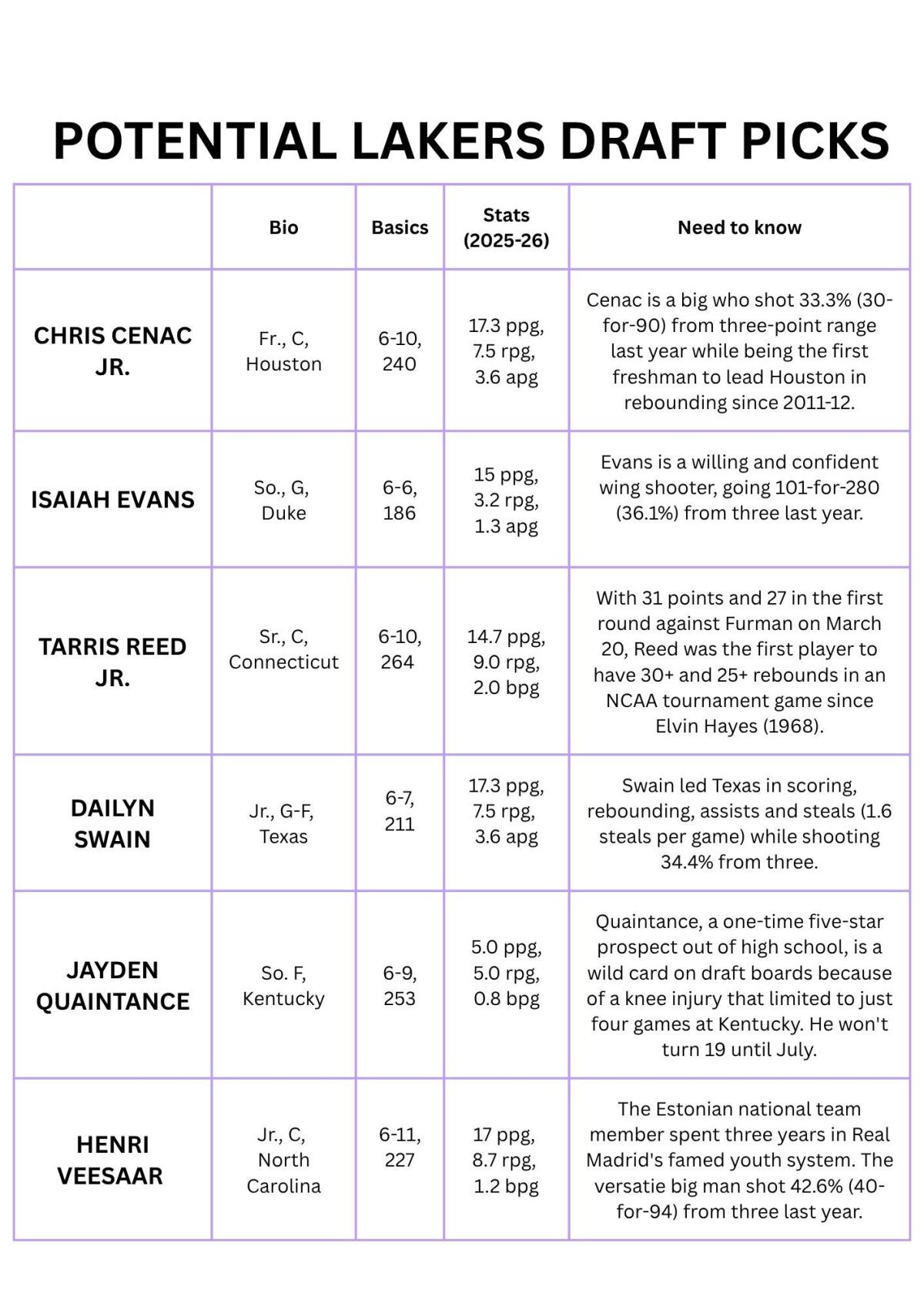
Mock drafts put prospects including Dailyn Swain, Isaiah Evans, Chris Cenac Jr., Tarris Reed, Henri Veesaar and Jayden Quaintance within the range of the Lakers’ 25th pick. But the draft unravels in unpredictable ways. Teams are approaching the later picks with caution and curiosity.

(Thuc Nhi Nguyen / Los Angeles Times)
“A lot of the teams in the 20s right now are trying to figure out who’s going to be there,” ESPN draft analyst Jeremy Woo said on a conference call with reporters. “I think 25 is right around where the talent pool kind of drops into that next tier of guys.”
Evans, a 6-foot-6 guard from Duke, said he wasn’t offended by prognostications that place him late in the first round. He cares only that he goes to “a city that is going to accept me.” Evans shot 36.1% from three-point range on 7.4 attempts per game last season for the Blue Devils, averaging 15 points and 3.2 rebounds.
Seeing the long list of sleeper picks who turned into All-Stars, MVPs and champions showed Swain that when he hears his name called Tuesday isn’t matter as consequential as what he plans to do next.
“Once I get drafted, whenever that is, I have the same opportunity as the next person,” Swain said. “So I’m just trying to take complete advantage of that and make the most of my opportunity.”
In young players, the Lakers look for “game processors, highly competitive, basketball IQ, team-first players,” president of basketball operations Rob Pelinka said at the end of the season. Those are qualities the Lakers can develop in their next key role player.
Pelinka called player development “a very important area for us to have Lakers excellence in.” Less than 24 hours after being eliminated by a much deeper Thunder team, Pelinka cited Oklahoma City second-year guard Ajay Mitchell as a success story the Lakers want to emulate. The 2024 second-round pick was a playoff game changer for the Thunder, averaging 22.5 points and six assists while shooting 56.3% from the field during Oklahoma City’s second-round sweep.
The Lakers, one year removed from drafting a promising player in the second round, are looking for similar growth from Adou Thiero.
The 6-foot-8 forward has the youth and athleticism Pelinka called “North Stars” for the team’s roster decisions. Compared to his older, ground-bound teammates, Thiero looked ready to leave the atmosphere on some of his rebound attempts.
Coach JJ Redick said multiple times during the season that this would be an important summer for Thiero. His rookie season was marred by persistent knee injuries, first to his surgically repaired left knee and then to his right knee after an MCL sprain kept him sidelined for months. He was not able to participate in summer league or much of the preseason.
Thiero said after the season that he anticipated playing summer league games with his offseason priority being to develop his shooting.
“Just getting the confidence to take the open shot when it’s there,” Thiero said. “Just keep building on my offensive game, try and get more comfortable with the speed of the NBA. … Try to be a little bit more of an impact player for the team.”
Thiero attempted three three-pointers in his rookie season and made one. During his G League appearances, Theiro averaged 15.4 points, shooting 62.5% from the field, and was nine for 14 from three. In college, he was a career 28.4% three-point shooter with 74 attempts in three years.
The Lakers start summer league in San Francisco on July 3 in the California Classic. The four-team event also includes the host Golden State Warriors, San Antonio Spurs and the Miami Heat.

Pesto ham sandwich with roasted tomato soup.
(Thuc Nhi Nguyen / Los Angeles Times)
Before starting the summer league circuit next month, I enjoyed some time at home this June. One of my favorite meals to make at home is a pesto sandwich with homemade roasted tomato soup. I usually like roasted chicken, but I used the ham I already had on hand on sourdough with harvarti and provolone cheese and homemade pesto. I make the pesto with basil, walnuts, Parmesan cheese, garlic and lemon. Instead of olive oil, I use avocado to bind everything together so it doesn’t soak through the bread as easily. You’re welcome to steal this hack for your next sandwich.
Lakers likely to select a big man or wing in first round of NBA draft
Plaschke: Lawrence Tanter was the Lakers’ smooth operator whose subtlety spoke volumes
Lakers promote Lawrence Tanter to special advisor for game presentation
As always, pass along your thoughts to me at thucnhi.nguyen@latimes.com, and please consider subscribing if you like our work!
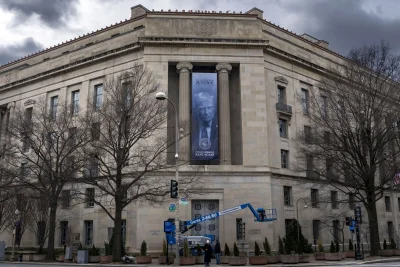

June 23 (UPI) — The Department of Justice subpoenaed four journalists for a grand jury hearing, though it later withdrew them after The Washington Post and the Wall Street Journal challenged them.
One subpoena was for Washington Post reporter Ellen Nakashima and was related to sensitive reporting on a national security matter, The Post said.
The department also issued subpoenas to three Wall Street Journal journalists, who also reported on national security issues, The Post reported.
“The government’s subpoenas to The Wall Street Journal and our reporters represent an attack on constitutionally protected newsgathering,” Ashok Sinha, chief communications officer for Dow Jones, said in May. “We will vigorously oppose this effort to stifle and intimidate essential reporting.”
At the time, the Journal said the Justice Department issued subpoenas for records on reporting about the Iran war, but it did not report at the time that federal officials were trying to force their testimony.
Olivia Petersen, spokesperson for The Washington Post, confirmed that Nakashima was subpoenaed, calling the move an unwarranted violation of press freedom and “another sign of the government seeking to compel journalists to become instruments of its investigations,” Politico reported.
The Post was fighting the subpoena in federal court in the Eastern District of Virginia in sealed proceedings when the department rescinded Nakashima’s subpoena, an official familiar with the matter told The Post.
The Justice Department also withdrew the subpoenas for the Journal, which had been fighting in the same court. None of the journalists testified before a grand jury, the official said. The reasons for the subpoenas are not clear, though the source said they relate to national security.
In January, the FBI raided a Post reporter’s home, and the Pentagon last year revoked journalists’ credentials for not signing an agreement about what they can report.

Meta has paused a new company-wide program of tracking its employees’ computer usage which has been plagued by internal frustration.
The program was started only two months ago as part of an effort by Meta to gather data on how people used computers, including mouse clicks and keystrokes, that could be used to train artificial intelligence (AI) models.
It was met immediately with upset from employees who were to have their every online action at work tracked and recorded, but also concerned about where the data was going and how it would be protected.
Meta halted the program on Monday after realising some of the collected data had been left potentially accessible to anyone inside the company.
A Meta spokesman confirmed to the BBC that the program, named internally the Model Capability Initiative (MCI), was “on pause for now” as the company investigates the issue.
“We have no indication at this time that any data was improperly accessed by Meta employees,” the spokesman added.
The pause follows weeks of blow-back from workers at the company, led by billionaire Mark Zuckerberg, to being tracked at work.
In an initial response to worker frustration – which was displayed in part through a petition signed by nearly 2,000 Meta workers demanding that the MCI program be cancelled – Meta said it would allow workers to not be tracked for up to 30 minutes at a time.
“That was just an attempt at damage control,” one current employee told the BBC. The person asked not to be identified.
Another Meta employee, who also asked not to be identified, said that while a lot of technical workers inside the company are open to the idea of improving its AI models and being more competitive in a field dominated by Anthropic and OpenAI, the fact that tracking “was forced on us, there was no consent” left people angry.
“I’ve never seen morale here so bad,” the employee said.
In addition to the tracking program, frustration inside Meta has grown as it has done extensive layoffs, and reorganised many employees and their work around AI initiatives, on which the company is spending up to $145bn (£109bn) this year alone.
Employees have even openly insulted management, external in an internal meeting on the AI-driven changes, according to a report in Wired.
While Meta has long had a reputation in the technology industry as a company that frequently reorganises internal teams around new projects, the changes and spending in an effort to catch up on AI feels like “chasing your tail”, a person who recently left Meta after several years said.
“The direction this company is going in is depressing”, the former employee said. “Exhausting and depressing.”

When the creators behind Universal Studios Hollywood’s soon-to-open “Fast & Furious” coaster discusses the attraction, they speak of it not only as the most grown-up, intense ride at the park, but also as one of the most extreme coasters in Universal‘s global portfolio. That means, in theory, a ride as vaunted as its Florida coasters Jurassic World VelociCoaster and Stardust Racers.
For riders, some of the perception of danger will come from the coaster’s location. Fast & Furious: Hollywood Drift is set on a hill between the park’s upper and lower lots. It will careen over, under and around guest escalators, and take attendees on a journey that includes multiple inversions and speeds of 72 mph, making it the fastest coaster at any Universal park. A particularly unique facet is the ability for its cars, each meticulously designed after a real vehicle, to rotate 360 degrees.
Todd Martens’ newsletter delivers news and commentary on the past, present and future of theme parks, right from the theme park capital of the world — Southern California.
By continuing, you agree to our Terms of Service, which include arbitration and a class action waiver. You agree that we and our third-party vendors may collect and use your information, including through cookies, pixels and similar technologies, for the purposes set forth in our Privacy Policy such as personalizing your experience and ads.
Plenty of coasters have the capacity to spin, but Universal has been hyping the high-speed “drift” sensation of its cars. Each ride vehicle will have distinct programming along the coaster’s 4,100 feet of track, and the hope is to create the feel of a stunt car just barely maintaining its control.
I like a coaster, but I’m also, I’ll admit, a tad squeamish. Hollywood Drift is expected to open by mid-summer, and at the time of writing, only Universal stakeholders had been on the attraction. Jon Corfino, the park’s lead creative executive, was one of those riders, so as he gave me a tour of the coaster, I pressed him to describe what the experience is like. Here’s what I learned.

A loop on Fast & Furious: Hollywood Drift.
(Todd Martens / Los Angeles Times)
The late, great theme dark designer Eddie Sotto once devised a simple formula for what makes a good coaster: Fear minus death equals fun. I wanted to ask Corfino just how scared I would be. Answer: Pretty frightened. Probably.
“It’s a high level of intensity, absolutely, for sure,” Corfino says.
And yet Corfino tried to calm my nerves. Hollywood Drift, he explained, is designed to feel relatively slick — polished, if you will.
“I’ve ridden coasters that I would say are high intensity, but they’re very aggressive,” he says. “They’re very rough. But if you look at what we tried to achieve here, it’s that you’re in a [car] vehicle. It’s very smooth. It’s not something that would be not natural for a car, if that makes sense.”
Well, except for the whole going upside down part. Based on Corfino’s assessment, we can expect some white knuckles, as Hollywood Drift will lift riders off their seats at multiple points.
“You definitely feel you’re coming out a couple times, and not the least of it is when you’re upside down,” Corfino says. The coaster will utilize a lap restraint that extends from the top.
“You’ll be holding on,” he says. “When you’re upside down, you’re holding on.”

Unversal Studios’ Hollywood’s Fast & Furious: Hollywood Drift is set to open this summer.
(Todd Martens / Los Angeles Times)
Corfino didn’t pinpoint the exact steepness of the drops on Hollywood Drift, but riders will encounter one immediately after launch. When exiting the show building, designed to look like a warehouse garage, Hollywood Drift will take a sudden dip off a cliff. The sharp drop is one of many.
Riders will encounter, for instance, a so-called “bunny hop,” which is typically a series of small hills that provide airtime. But Hollywood Drift will play with riders’ expectations through its terrain. Those mid-ride hills are “actually pretty darn steep,” Corfino says. And then before the ride ends, riders will go up, over and under Universal Studios’ most recognizable feature (except perhaps Stuart the Minion): its escalators.
“When you go up over the loop, that’s very steep. You’re coming straight down over the stairway and then underneath the stairway,” Corfino says.

The minicars of Fast & Furious: Hollywood Drift.
(Todd Martens / Los Angeles Times)
The coaster will feature four heavily detailed miniature cars as ride vehicles. These four-seaters — mimicking a Dodge Charger, Mazda RX-7, Nissan Skyline GT-R and Toyota Supra — all come complete with working taillights. And each has its own distinct sound effects, engine and brake noises that match their real cars. Guests will hear brakes each time the vehicle drifts or turns.
The minicars aren’t complete tiny re-creations. The odometers in the coaster cars, for instance, are for show only.
“The truth is I was really laboring,” Corfino says of the accuracy of the coaster cars. “They all have realistic sound effects, and when you hit the bottom, the big launch, I wanted to hear the NOS kick in. But you’re going so fast, at 72 mph, and with the wind, you’re not hearing anything. Quite frankly, your vision is even kind of shaky because you’re going so fast.”
That sort of attention to detail is what separates a Universal or Disney coaster from so much of the industry — even if riders will be clutching their restraints too hard to notice the discrepancies in each car’s engine roar.
I’m eager to get on the ride. I will, however, pretend I didn’t hear Corfino say that thing about “shaky” eyesight.

Dataland is now open in downtown Los Angeles. Theme park fans should give it a look.
(Carlin Stiehl / For The Times)

A media image distributed by Adobe and Walt Disney Imagineering is designed to show how AI software can be used in the design process.
(Adobe / Walt Disney Imagineering)
Generating attention this week was an announcement from Adobe and Walt Disney Imagineering, the creative arm of the company responsible for theme park designs, regarding a new AI partnership. AI is a term I generally believe is rightfully viewed with skepticism, especially when it comes to creative work. As a writer, I view utilizing AI to help craft a story as strictly forbidden; journalism, after all, is a storytelling art. But I’m not above tools that can help accelerate tedious aspects of the process, such as using AI to help transcribe an interview.
So places in which Adobe’s Firefly Foundry could, say, transform drawn 2D renderings into potential 3D models seem not entirely troublesome, especially for an industry in which one of the most time-consuming aspects is the build. And yet there were components of the announcement, as well as the press materials distributed with it, that made me cringe. The generation of on-demand, on-brand assets, for instance — one of the promised abilities of the software — is a job for an artist, not a computer.
And Adobe and WDI proved my point. Accompanying the press release was an image of Disneyland’s Haunted Mansion ride vehicles, the Doombuggies, as re-imagined by the program. A perfect, coffin-like design from Bob Gurr was now bedazzled with garish, grotesque imagery that had little similarity with anything in the Haunted Mansion. That the two companies viewed something this amateurish as a prime example of what the software could achieve should raise an eyebrow.
Have a theme park tale to share? Whether it was a good day or less-than-perfect day, I would love to hear about it. Have a question? A tip? A fun photo from the parks to share? Email me at todd.martens@latimes.com. I may feature your note in an upcoming newsletter.
Ride on,
Todd Martens

Changes are coming to Disneyland’s classic Autopia ride.
(Allen J. Schaben / Los Angeles Times)
Disneyland’s classic Autopia attraction is facing a deadline. The Disneyland Resort has already stated that the gas-powered minicars of Autopia would be on the way out in early 2027. Disneyland officials confirmed just a few weeks ago that the park has an agreement with the California Air Resources Board to retire the current engines next year. No closing or reopening date has been announced, and no details on the new cars have yet been released.
But, thanks to new reporting from environmental reporter (and former Times staffer) Sammy Roth, it’s been revealed that the theme park faces a strict deadline to begin making the switch. In a recent edition of Roth’s Climate Covered Goggles, the writer noted that due to an agreement with the board, Autopia in its current form must shut down by Feb. 1, 2027.
While that doesn’t shed any clarity on when the ride may reopen with refreshed vehicles, it at least provides a timeline as to how long it will likely exist in its current form.

The federal government can’t block benefits from the nation’s largest food aid program from being used to buy candy, soda and other sugary drinks, a judge ruled.
Monday’s ruling scuttles restrictions now in place or planned for the federally funded and state-run Supplemental Nutrition Assistance Program in 23 states. President Trump’s administration has not said whether it will appeal to a higher court.
U.S. District Judge Amy Berman Jackson, who sits in Washington and was nominated to the bench by former President Obama, said in her opinion that the ruling was because the federal government did not follow its own definition of “food.” She said it wasn’t a comment on whether the restrictions are a good idea.
“The federal defendants and the states may have a genuine desire to improve the health of SNAP households by encouraging healthy choices at the store, and they can take lawful steps to meet those goals,” she wrote. “But what they cannot do is violate the law and their own regulations along the way.”
Agriculture Secretary Brooke Rollins and Health and Human Services Secretary Robert F. Kennedy Jr. have encouraged states to limit what the food aid can be used to buy as part of the “Make America Healthy Again” campaign.
They reason that soda and candy fuel obesity, diabetes and chronic disease epidemics — and taking them off the menu would encourage healthier food choices.
The Agriculture Department has given 23 states so far permission to implement restrictions. Some have been implemented already, while others are queued to take effect in the coming months and years.
At least one state that was set to limit soda and candy purchases changed course earlier this year. Colorado’s human services board voted against implementing the ban after a March hearing in which SNAP beneficiaries and advocates said people would face stigmas if they mistakenly tried to use the benefits on prohibited items. They also said the rules were confusing because they would have allowed buying drinks with at least 50% fruit or vegetable juice, but not those with less.
While the goals are similar, the exact rules vary by state. Some wanted to ban both sugary drinks and candy, while others only sought to ban sugary beverages.
A legal challenge to the candy and soda ban — which includes items such as sports drinks in some states — was filed by SNAP beneficiaries in Colorado, Iowa, Nebraska, Tennessee and West Virginia.
Jackson said the main legal misstep in restricting what SNAP benefits could buy came because it ran contrary to Congress’s definition of “food.”
Under the law, SNAP benefits — formerly known as food stamps — can be used for “any food or food product for home consumption except alcoholic beverages, tobacco, hot foods or hot food products ready for immediate consumption.”
The government can waive requirements, but limiting use of the benefits to improve nutrition isn’t listed as a reason to do so. Yet when states asked the Agriculture Department to let them restrict purchases, their requests included using alternate definitions of “food.”
The Agriculture Department has not said whether it intends to appeal the ruling.
The case is among scores of challenges to Trump administration policies that hinge on whether the administration has the authority to change policies without congressional approval.
While it’s a big program helping nearly 39 million Americans — about 1 in 9 — buy groceries, SNAP is normally relatively low-profile. That’s been different since Trump returned to office last year.
Under his big tax and policy law signed last year, more recipients are subject to work requirements and states are being required to pay a larger share of administrative costs — and could be on the hook for benefit costs if their error rates are too high.
During a government shutdown last year, courts blocked the administration from cutting off benefits. Meanwhile, Rollins has said that there’s rampant fraud in the program.
Mulvihill writes for the Associated Press.

Julius Randle is headed back to New York, although he will be playing in a different borough this time around.
The Brooklyn Nets acquired the 12-year veteran after he spent the past two seasons with the Minnesota Timberwolves, multiple media outlets reported Monday night.
As part of the three-team deal, Minnesota will send Randle and the 28th pick in Tuesday’s draft to Brooklyn in exchange for the Nets’ No. 33 overall pick. In addition, Brooklyn will send veteran center Nic Claxton to the Chicago Bulls. The Timberwolves will receive Mo Gueye from Chicago but are expected to waive the third-year forward.
For Minnesota, the trade creates a $33 million trade exception as well as financial flexibility to seek free agents to play alongside superstar Anthony Edwards. Later on Monday, the Timberwolves came to terms with guard Ayo Dosunmu on a five-year, $112 million deal to remain with the team after being acquired from Chicago at the trade deadline.
Randle goes from a team that won 49 games in each of the last two seasons and three playoff series during that stretch to one that won just 20 games last year and a combined 78 over the last three seasons.
The Nets, who haven’t had a representative in the All-Star Game since Kevin Durant in 2022, will continue rebuilding with the No. 6 overall pick in the 2026 draft to go with the first-rounder they received from Minnesota.
The Lakers drafted Randle at No. 7 overall in 2014, with his first two NBA seasons coinciding with the final two of Lakers legend Kobe Bryant. After becoming a free agent in 2018, Randle played one season with the New Orleans Pelicans before becoming a three-time All-Star during five seasons with the New York Knicks.
In October 2024, Randle went to Minnesota as part of the deal that brought Karl-Anthony Towns to New York. Towns was a key member of the Knicks team that defeated the San Antonio Spurs in the NBA Finals and celebrated with a championship parade in Lower Manhattan last week.
During the 2025 postseason, Randle shook his reputation for fading in the playoffs, crediting his perseverance to a mentality instilled in him many years earlier by Bryant.
“I had a great mentor in Kobe that didn’t necessarily let me pout or get down on myself,” Randle said after scoring a career playoff high of 31 points during a conference semifinal game against Golden State. “His thing was always, ‘All right, what’s next? How can you get better? How can you improve?’ So I always just kind of took that mentality with me.”
While Randle hasn’t publicly commented on the trade, his wife Kendra posted a video to her Instagram Story of 9-year-old son Kyden, the oldest of their three children, stating that he’s “so excited” and “so happy” to be returning to New York.
“@brooklynnets fans he really wanted to make this,” Kendra Randle wrote as a caption to the video.
The Associated Press contributed to this report.

June 23 (UPI) — Acting Attorney General Todd Blanche announced Tuesday that 455 people have been charged in a variety of healthcare fraud schemes totaling $6.5 billion.
Blanche held a press conference to discuss what he called the “2026 national healthcare fraud takedown.” He said 455 people have been charged since June 8 across 56 U.S. attorney’s offices and 45 states and territories.
“These individuals participated in healthcare fraud schemes involving more than $6.5 billion in false claims submitted to Medicare, Medicaid and other healthcare programs,” Blanche said.
Blanche highlighted some of the indictments, including one of a corporate executive in Arizona who was charged for being involved in a $1 billion fraud scheme involving wound grafts.
“This alleged scheme cost Medicare over $1 million per patient,” Blanche said. “In total, our indictment charges 11 defendants for over $2 billion in fraudulent claims in connection to alleged wound care schemes.”
Blanche adds that the money fraudulently claimed in these schemes was used to purchase “multi-million-dollar homes,” cars, jewelry and the construction of a $4.6 million seaside hotel on in the Philippines.
“We’re taking back the money, the luxury cars, the jewelry, and these alleged fraudsters will face justice,” Blanche continued.
Blanche said nine task forces, 57 U.S. attorney’s offices and 41 state attorney general’s offices partnered to investigate healthcare fraud schemes.
Blanche also announced the creation of the West Coast Strike Force and the deployment of more federal prosecutors to bring charges against 295 defendants in Medicaid fraud cases.


Several Russian regions are facing fuel shortages because of Ukrainian attacks.
Published On 23 Jun 202623 Jun 2026
A Russian missile attack on the central Ukrainian city of Kryvyi Rih has killed at least three people, as Moscow struggles with the economic strain of the four-and-a-half-year Russia-Ukraine war.
Oleksandr Vilkul, the head of the Kryvyi Rih defence council, said in a post on Telegram on Tuesday that 25 people had been wounded in the attack, which he said used a cluster munition warhead.
list of 3 itemsend of list
“People died within 200 metres [660 feet] of each other because of this barbaric weapon,” Vilkul said, adding that a day of mourning would be marked on Wednesday.
Kyiv has previously accused Moscow of using cluster munitions, which scatter into smaller explosives when dropped.
Reacting to the attack, Ukraine’s President Volodymyr Zelenskyy called for more international pressure on Moscow to end the war and for quicker supplies of air defence systems.
“Every delay in implementing air defence agreements, every delay in supplies to protect Ukraine and Ukrainians is in effect a loss of life,” he wrote on Telegram.
Ukraine announced on Tuesday that its forces had targeted a railway bridge, a power plant and other key infrastructure in Russian-occupied Crimea.
Over the past few months, Russia and Ukraine have significantly ramped up attacks. As Moscow launches barrages of strikes on Ukraine, Kyiv in turn has targeted Russian refineries and infrastructure with its own drones.
Ukraine’s drone attacks have led to fuel shortages in Russia. Many regions across the country have reported restrictions on fuel sales and rising prices for oil products, creating concerns about the stability of Russia’s economy.
On Monday, the Moscow Exchange stock index fell by five percent before it rebounded slightly. It is still around its lowest level since March 2023, while the rouble weakened past the 75-mark against the US dollar for the first time since May 6.
The Kremlin dismissed concerns about the rouble’s weakness.
“The stability of the Russian economy, macroeconomic stability, is absolutely ensured,” government spokesperson Dmitry Peskov said on Tuesday.
Meanwhile, efforts to end the war have remained effectively frozen as United States President Donald Trump has shifted his focus to Iran.
Russian Foreign Minister Sergey Lavrov told foreign envoys in Moscow on Tuesday that the Americans seemed to be “abandoning any claim to the role of an objective mediator and are instead pursuing a course of escalating sanctions pressure on Russia”.

Walk into the Grammy Museum in downtown L.A., and you’ll see Clive Davis’ legacy everywhere.
The museum’s intimate performance space is named for the late record executive, and his visage greets guests at the front door. (Davis was the first million-dollar donor to the nascent Recording Academy archive and exhibition space.) His sprawling roster of acts — Bruce Springsteen, Miles Davis, Whitney Houston, Alicia Keys, Earth, Wind & Fire — defined an entire art form and business model as preserved in the Grammy Museum. Davis’ pre-Grammy gala was the most coveted invitation in music every awards season.
Davis’ death at 94 is “devastating,” said Michael Sticka, chief executive and president of the Grammy Museum. “Clive was always a north star of music and talent and artistry. We’re all lucky to have his legacy to look up to.”
Davis’ death marks the end of perhaps the most important and enduring career in the record industry. Sticka spoke to The Times about Davis’ remarkable longevity, creative vision and how a career like his will likely never be possible again.
Clive was a giant of the record business. How did his career shape the modern record industry?
His career was iconic. He really had a unique ability to not just bring an artist to their fullest potential artistically, but commercially. From attending Monterey Pop and first seeing Janis Joplin to Whitney Houston and Alicia Keys, I don’t think anybody had that ear in them the way that he did.
With Clive, what you got was not just hearing commercial viability, but an understanding of what was going on in the zeitgeist. That’s what propelled his career and legacy beyond most record executives.
His name’s on the building at Grammy Museum’s theater. What did he mean to the institution — not just for fundraising but as a living connection to music history?
He didn’t just donate to the museum. He donated his time, his historical knowledge of music, his firsthand perspective. He always kept tabs on what was happening in music. I always say the Clive Davis Theater is the toughest ticket in town for its intimacy and the level of programming we do. But he did an annual program at the museum where people could come hear stories directly from him. Once he decided he was in, he was all in.
His gala was the place to be every Grammy season too.
I don’t think anybody could gather a roomful of luminaries like that from entertainment, tech and politics in the way that Clive did. We were lucky to be a part of that. Even with the stature he had, he was still a physical presence there, he was approachable. He was always looked at as this living legend, but his legacy was continuously being built.
That’s true over the arc of his career, which saw him lead Columbia, Arista, J Records and more. He had a lot of resurrections as well as successes.
He had this ability to resurrect. Look at Santana and “Supernatural,” he was a producer on that album that was inducted into the Grammy Hall of Fame just last year. So many of us would just give up, but he just had this resolve to continue, and thank God he did.
The record industry is so different now than when he began his career. Artists find audiences on social media rather than being discovered by label executives. Is a career like his — a famous executive driven by their own taste and individual savvy — even possible today?
That’s true, artists break on social media before they’re even on record executives’ radars now. I don’t know if we’ll see that kind of career arc again. Clive had a rare combination of gravitas and being recognized so publicly. The man and his legacy are not going to be replicated.
Beyond the name on the theater, how do you hope the Grammy Museum will honor him with its programming in time to come?
I don’t know yet. We weren’t really prepared for this. We’re gonna have to sit down and think how to pay tribute to such a legacy. I think that the impact the Clive Davis Theater has, bringing in 120 artists a year — I couldn’t think of a more apropos name on the door.


Amy Sparwasser/iStock via Getty Images
Senators Elizabeth Warren (D-MA) and Bernie Moreno (R-OH) urged Congress to boost the payroll tax cap to save Social Security benefits, according to an op-ed piece published by the New York Times on Tuesday.
As the law currently stands, the payroll
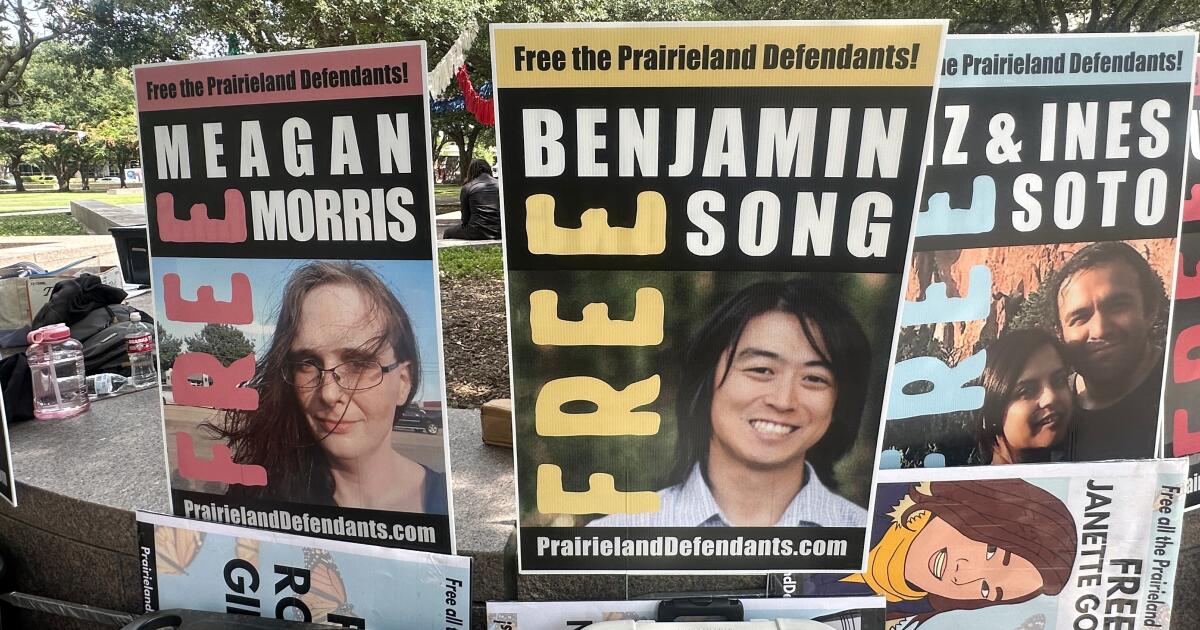
FORT WORTH, Texas — A demonstrator who shot and wounded a police officer outside a Texas immigration center last July 4 was sentenced to 100 years in federal prison Tuesday, while other protesters accused of having links to antifa were given multiple decades in federal prison.
Benjamin Song was convicted of attempted murder last March after prosecutors say he opened fire and wounded a police officer at the Prairieland Detention Center in Alvarado.
The seven other protesters sentenced Tuesday received prison terms ranging from 30 to 70 years.
“Our issue with this case has always been this isn’t a bunch of terrorists. This is a bunch of kids and young adults who really have a really big heart and really wanted their voice to be heard,” Philip Hayes, Song’s attorney, said outside the federal courthouse in Fort Worth. “It was never intended that anybody get hurt. It was never intended that any shots would be fired.”
He said his client would appeal the sentencing.
“Song, aside from this day, has had an impeccable life. A former Marine. A good student,” Hayes said. “He had a lot of good qualities that were just ignored. The judge went ahead and gave as much as he could.”
One of the defendants, Daniel Sanchez Estrada, was convicted of corruptly concealing a document and conspiracy to conceal documents. Others pleaded guilty to providing material support to terrorists rather than take their case to trial.
Prosecutors say the eight are members of antifa, a decentralized anti-fascist organization that has become a target of the Trump administration. They have denied any affiliation and maintain they attended the demonstration to show support for immigrants inside the detention center.
President Donald Trump last fall signed an executive order designating antifa a domestic terrorist organization, even though there is no domestic equivalent to the State Department’s list of foreign terror organizations.
Critics warn the case could have wide-reaching impact on protests given that organizations operating within the U.S. are supposed to be protected by First Amendment free-speech rights.
Short for “anti-fascists,” antifa is not a single organization but rather an umbrella term for far-left militant groups that confront or resist neo-Nazis and white supremacists at demonstrations.
Last week, federal prosecutors charged 15 people with impeding the Trump administration’s immigration crackdown in Minnesota. They claimed the demonstrators were members of antifa who conspired against the federal government to block arrests and deportations by setting up blockades around government buildings and throwing chunks of ice at federal vehicles, among other actions.
Stengle and Marcelo write for the Associated Press. Marcelo reported from New York.

Women’s T20 World Cup, Group 2, Bristol
Ireland 130-5 (20 overs): Lewis 59, Tector 28*; de Silva 1-12
Sri Lanka 131-4 (15.3 overs): Athapaththu 106*, Dulani 20; Prendergast 1-22
Sri Lanka won by nine wickets
Chamari Athapaththu hit a superb unbeaten 106 as Sri Lanka eased to a nine-wicket win over Ireland to keep their World Cup hopes alive.
Ireland were reduced to 18-3 in a sun-drenched Bristol before skipper Gaby Lewis (59) and Leah Paul (20) put on a 66-run partnership to help their side to a total of 130-5.
Sri Lanka captain Athapaththu raced to her best World Cup score, and the highest so far in the tournament, from just 61 balls, as victory was secured on 134-1 and with 4.3 overs to spare.
The Lions, who move up to four points, need to beat Scotland on Friday and hope results elsewhere go their way to secure a top-two spot in Group 2 and a place in the semi-finals.
Ireland have now lost all 21 of their World Cup games and the bottom side finish their campaign against West Indies on Saturday.


June 23 (UPI) — U.N. Secretary-General Antonio Guterres called for AI companies to disclose what the environmental impact of data centers will be by 2030 during a speech Tuesday at London Climate Action Week.
Guterres said that the AI boom and the world’s dependence on oil are driving the climate crisis and laid out plans to curb the damage.
“These crises may seem separate but they share the same destructive origin: fossil fuels,” Guterres said. “And they demand the same answer: a fast, fair transition to clean energy and a surge in adaptation, resilience and climate justice for those already facing climate harm.”
The United Nations’ seven-point plan for energy independence includes quickly cutting emissions to reach net zero emissions by 2050. This would mean the amount of greenhouse gases emitted into the atmosphere are balanced out by the amount of greenhouse gases removed from the atmosphere.
The plan also calls for an acceleration of developing and adopting clean energy, transparency from AI firms on their environmental impact by 2030, ensuring the transition to clean energy is equitable in its job creation and community support, investment in early warning systems, expanding funding for developing countries and combatting climate disinformation.
The United Nations said scientists it supports are warning that average annual temperatures are likely to exceed the 1.5-degrees Celsius above pre-industrial levels target set out by the Paris Climate Accords adopted in 2016. It notes that the United States withdrew from the agreement for the second time under President Donald Trump.
“Every fraction of a degree matters,” Guterres said.
As Africa navigates the challenges posed by the U.S.-Iran crisis, creating worldwide economic instability, the 52nd Ordinary Session of the Permanent Representatives’ Committee (PRC) called for consistent commitment to the peaceful resolution of disputes through dialogue and diplomacy. The 49th Ordinary Session of the Executive Council and the 8th Mid-Year Coordination Meeting (MYCM) between the AU, Regional Economic Communities (RECs), and Regional Mechanisms (RMs), scheduled to take place on 27 June 2026 in El Alamein, Egypt.
Chairperson of the AU Commission, Mahmoud Ali Youssouf, has acknowledged that the multifaceted challenges currently facing the continent, including geopolitical tensions affecting global supply chains, macroeconomic instability, delays in fertilizer imports, ongoing conflicts, and health emergencies such as the recent Ebola outbreak. He noted that external factors, including the closure of the Strait of Hormuz, continue to disrupt continental plans.
Despite these difficulties, the AUC chairperson affirmed the commission’s commitment to redoubling its efforts, implementing contingency plans, and reinforcing fiscal discipline. He stated that the 2027 budget would be an austerity budget, while underscoring the imperative to continue the post-SACA (Skills Assessment and Competence Audit) trajectory. He revealed that the AU currently operates with only 30% of its required staffing levels and approximately 25% of its global budget, including programs funded by statutory contributions.
That, however, Youssouf appealed to Member States for enhanced solidarity and material support, emphasizing that achieving the objectives of Agenda 2063 demands greater involvement and commitment. He reassured the Permanent Representatives’ Committee that the Commission is developing scenarios to address human and financial resource gaps and remains ready to work collaboratively with Member States to identify appropriate solutions.
He concluded by reaffirming the Commission’s dedication to strict budgetary discipline and its unwavering support to Member States. “The African Union should have the necessary human and financial resources to attain the objectives of Agenda 2063. I am aware of the difficulties that our member states are facing. The Commission is ready to find, together with you, the appropriate solutions to take up these challenges together,” said Mahmoud Ali Youssouf.
Ambassador Willy Nyamitwe, Chairperson of the PRC and Ambassador of the Republic of Burundi to Ethiopia, delivered a compelling address calling for unity, self-reflection, and action. He expressed gratitude to Member States for entrusting Burundi with steering the continental organization this year. Ambassador Nyamitwe highlighted the profound technological transformations reshaping economies and the rising expectations of African citizens.
Ambassador Nyamitwe cautioned against national positions that may unintentionally undermine continental unity, urging ambassadors to ensure that their decisions tangibly improve the lives of ordinary Africans. He stated that unity is not merely a virtue but a weapon and that history will judge not speeches but the courage to acknowledge mistakes and strengthen collective institutions. He called on the PRC to choose solidarity over division and vision over hesitation. “History will remember whether we strengthened the institutions entrusted to us. It will remember whether we chose solidarity over division and vision over hesitation. I have every confidence that this committee, the PRC, possesses the wisdom, the experience, and the determination required to meet these expectations. Together, let us continue building an African Union that is stronger, more effective, and more responsive to the aspirations of our peoples,” concluded Ambassador Willy Nyamitwe.
The official meeting was attended by Selma Malika Haddadi, Deputy Chairperson of the AU Commission, along with AU Commissioners, representatives of AU organs, and senior officials. The PRC will deliberate on reports from its Sub-Committees, the AU Commission, and other AU organs and specialized agencies. The Committee will subsequently adopt its report and the draft decisions for the 49th Ordinary Session of the Executive Council, scheduled for 24-25 June 2026 in El Alamein, Egypt.