If Scotland lose and finish with three points, there are a number of results they will need to look out for – they will want as many groups as possible with two teams finishing on fewer than three points.
In Group A, if Mexico beat the Czech Republic and South Korea beat South Africa, that would leave the team in third on one point.
The next best scenario would be a big South Africa win to leave South Korea in third with three points and a poor goal difference.
Wins for South Africa and the Czech Republic would spell bad news for Scotland, leaving the third-place finisher on four points.
One of the few games that take place before Scotland face Brazil that has a bearing on where Scotland could finish comes in Group B.
Bosnia-Herzegovina and Qatar meet three hours before Scotland play and, if they draw, both sides will have two points.
In Group D, Australia and Paraguay are second and third respectively and meet in their final game. The losers would end the group with three points, while a draw would leave both sides on four.
On we go to Group E. Ecuador and Curacao have one point apiece and play Germany and Ivory Coast respectively. Failure to win would mean whoever finishes third cannot better Scotland’s tally of three points.
In Group F, Scotland will be hoping second-placed Japan beat third-placed Sweden convincingly. A point for Sweden, though, would leave the third-placed finishers on at least four points.
The key fixture in Group G as far as Scotland are concerned is Egypt v Iran. A win for Egypt will ensure the team finishing third will have fewer than three points.
It is the same situation in Group H where Scotland fans will be rooting for Spain to beat Uruguay so the third-placed team can only finish on two points, while in Group I, a draw between Senegal and Iraq would mean the team in third will have just one point.
In Group J, Austria and Algeria – second and third respectively on three points – meet in their final group game, so Scotland would not want that to end in a draw.
DR Congo and Uzbekistan are vying for third place in Group K.
A win for Uzbekistan would give them three points but, with a goal difference of -7, they would need a big win against DR Congo and for Scotland to lose badly to move above them in the standings.
In Group L, a point or more for Croatia against Ghana could be bad news for Scotland as it would again leave the third-place finishers with four points.
A big win for Ghana, and Panama not beating England, would be Scotland’s ideal scenario from a mathematical point of view.
France has confirmed its first Ebola case in the country during the current outbreak, as a doctor returning from a humanitarian mission in the Democratic Republic of the Congo tested positive, French health authorities said.
In a statement on Wednesday, the French Health Ministry said the healthcare worker was operating in one of the areas where the virus was circulating.
Recommended Stories
list of 3 itemsend of list
“The patient is being treated at a leading healthcare facility, following strict biosafety protocols,” the ministry said. “All precautionary measures, including the patient’s isolation, were implemented upon arrival in France, with transfer to the hospital under secure conditions to prevent any risk of contamination,” it said.
An epidemiological investigation is under way to identify individuals who may have been in contact with the patient. They will be contacted by health authorities to self-isolate for 21 days, the statement added.
Since May, the northeastern Ituri province of the DRC has been the epicentre of an Ebola outbreak, which has killed more than 260 people and infected more than a thousand so far in the central African country. Cases have also been reported in neighbouring Uganda.
On May 17, the World Health Organization (WHO) declared the outbreak a “public health emergency of international concern”.
Most previous Ebola outbreaks in DRC were caused by a virus called Ebola Zaire, but this outbreak is caused by a different strain called Bundibugyo, for which there are currently no approved vaccines or treatments.
The first places to be investigated in a national independent inquiry into grooming gangs will be Oldham, Bradford and Keighley, and London.
The Statutory Independent Inquiry into Grooming Gangs, which will be chaired by Baroness Anne Longfield CBE, will compel individuals and institutions to explain what they “did or did not do to protect children from being sexually abused”, the organisation said.
The review will also examine if changes have been made in places where there have been past reviews, such as Oxford and Rotherham.
Abuse survivor Fiona Goddard, who resigned from the inquiry in October 2025, said it had been “a long fight”.
“Bradford has evaded inquiries for many, many years and it’s time that the full truth about what happened comes out,” she said.
Goodard left the panel over concerns that two of the shortlisted chairs had backgrounds in policing and social services.
Keighley and Ilkley MP Robbie Moore, who called on the government to include Bradford in the inquiry, said it marked “a significant turning point”.
“This inquiry must seek the truth – however horrific it may be. And bring about justice to those who have been failed for far too long,” he said.
If you buy books linked on our site, The Times may earn a commission from Bookshop.org, whose fees support independent bookstores.
Before her death in 1993, Mabel McKay — one of the last living dreamers of the Pomo Indian people — shared a prophecy while driving through the Sonoma hills. One day, this paradise would burn.
“Everything is going to go dry. Everything will burn. That’s my latest vision,” she said, gesturing to the idyllic landscape.
Startled, writer Greg Sarris asked what could be done to stop it.
“You live the best way you know how,” McKay replied.
Since her passing, Sonoma County experienced the most destructive wildfires in California history in 2017, only for another, more destructive fire to surpass it a year later. “She always used to say, ‘Whether you believe it or not, it’s true,’” Sarris recalls.
McKay and her visions are the inspiration behind Sarris’ latest work. His first novel in 28 years, “The Last Human Bear,” is loosely based on the spiritual leader McKay, whose wisdom and companionship served as a refuge to Sarris during a tumultuous childhood in Sonoma County.
A reluctant casino mogul
On a Monday morning in California, Sarris sits in his sleek office at the Federated Indians of Graton Rancheria in Rohnert Park. Sarris, 74, has served as chairman of the Federated Indians of Graton Rancheria for more than 30 years. In his office, diplomas and academic certificates crowd the walls. A framed poster for the 2023 film “Joan Baez: I Am a Noise” hangs nearby — she’s a close friend. Behind him, an American flag ripples in the distance outside the window, blurred by the summer heat.
Just up the road sits a multibillion-dollar tribe-owned casino, Graton Resort & Casino — a project the writer oversees. “I had never been in a casino. I have a PhD in modern thought and literature from Stanford,” says Sarris.
How does an accomplished author find himself at the helm of a multibillion-dollar casino enterprise? It’s a question that still puzzles Sarris. “I told them if we can raise our people and become a platform for social justice and environmental stewardship to benefit Indian and non-Indian alike, I’ll do it.”
Before his stint as a reluctant casino mogul, Sarris was a prolific author and university professor at UCLA and Sonoma State. In 2023, he was appointed a regent of the University of California by Gavin Newsom. Over the course of his career, he published six books, and his novel “Grand Avenue” became an HBO original film in 1996.
California’s Native history: revisited
From early in his career, Sarris wanted to depict Indians as he knew them, rather than as Hollywood depicted them. “We’ve been erased by Hollywood, because the idea of Indians has always been Plains Indians or Southwest,” Sarris explains. “It’s easier for Americans to access Buffalo Bill.”
Greg Sarris’ new novel “The Last Human Bear.”
(Josh Edelson / For The Times)
“California Indians have always been left out of the picture,” says Sarris.
“The Last Human Bear” is Sarris’ latest attempt to revive the legacy of California’s Native history. The novel follows Mary Hatcher, a Pomo Indian in Sonoma County, from Prohibition through the 21st century. It’s told in the first person through Hatcher’s compelling voice as she narrates the horror and heartbreak of her lifetime over the course of a century, echoing William Faulkner’s literary style, which influenced Sarris.
‘California Indians have always been left out of the picture,’ says Sarris.
“I’m curious why you want to know about me,” reads the first line. The novel unfolds like an oral storytelling tradition, driven by a voice that Sarris painstakingly crafted, evoking his conversation with McKay. “The voice comes. I have to call it, almost like a spirit,” says Sarris. “I wanted it to feel like an oral story.”
Hatcher — a Pomo shape-shifter who dodges prejudice by passing as Mexican in the novel — is a thorny protagonist, often cunning, scheming and unforgiving. “An American Indian woman is as richly complicated as anybody else. I wanted to show this rich and complicated character who’s negotiated a history that she’s showing you,” says Sarris.
Acclaimed Northern California writer and activist Rebecca Solnit, who has authored 17 books and is a friend of Sarris’, says that she was fascinated by his ability to evoke so many aspects of female life in “The Last Human Bear.” Solnit was especially moved by Sarris’ rendering of California’s tragic history. “It’s shocking, given how rich California’s Indigenous cultures were — 99 different language groups, mythologies, belief systems and linguistic traditions. Every North American Indigenous language family is represented in California. It’s weird how this history has been erased, and how horrific what happened was.”
Climate change and ongoing ecological disasters have made Indigenous perspectives more vital than ever, the author argues. “I think Indigenous people have been hugely influential in giving us a point of view in which we were never separate from nature,” she says. According to Solnit, Sarris’ novels are part of a broader resurgence of interest in Native culture.
In the early chapters of the “The Last Human Bear,” the protagonist gets a job on a ranch by posing as Mexican, since Indians were forbidden from working as housekeepers. What follows is a tale of tension, deception and a forbidden love that sours, reminiscent of Brontë novels.
Sarris hopes that the novel illuminates an uncomfortable history of Sonoma County that remains largely invisible, looming beneath the soil of wine country. The novel offers “a history of this county that a lot of people haven’t seen,” says Sarris.
“There were more Indian people right where we’re sitting per capita than anywhere else in the entire New World outside Mexico City, which was the Aztec capital,” says Sarris. “The genocide was so horrendous.”
Identity, revenge and a search for home are themes that arise throughout the novel — subjects Sarris knows well in his own life.
Greg Sarris feeds chickens at an organic farm across the street from Graton Resort & Casino, which he heads, in Rhonert Park.
(Josh Edelson / For The Times)
Uncovering a hidden Native heritage
In 1952, Sarris’ teenage mother gave him up for adoption, her family hoping to evade the embarrassment of their Jewish daughter becoming pregnant by a Native American Filipino man. Sarris grew up in a white family in Santa Rosa alongside three siblings. His adopted father, George Sarris, became abusive, causing Greg to flee the house with his adopted mother’s blessing. “God bless her. She let me go out and live on ranches and run with other people to get away from him.”
It was in these formative years that Greg became acquainted with Native American people in Santa Rosa, always feeling a mysterious pull toward them. It was these years that also shaped his sensibility as a writer. “I was a lost kid on the streets, so I was always paying attention to everyone, listening, and people would tell me stories.”
Native Americans lived on the fringe of town, often practicing healing ceremonies that were frowned upon by white Catholic families in the suburbs Sarris explains. “When I was 15, I met Mabel McKay, who I wrote the book about. I knew she did some of those strange things that I heard about, but I liked her,” he says. “I had no idea that I was related to these people. I thought I was a mixed-blood Mexican or Spanish.”
At age 30, Sarris uncovered the identities of his birth parents and learned of his Native heritage. He learned his birth mother was buried in a pauper’s grave at the Calvary Catholic Cemetery in Santa Rosa, with “nothing to mark her grave but an upside-down horseshoe that has her name in it.” In the opening pages of the novel, a dedication to her: Bunny Hartman.
Excitedly, Sarris presented proof of his Indian heritage to McKay, his trusted confidant. “I thought it was a big deal that I had Indian blood,” says Sarris. He showed McKay a photo of his father, which she met with indifference. Naturally, Sarris was disappointed. “She told me something later: ‘You’re never any more Indian than your experience.’”
A lifelong outsider
Questions surrounding the legitimacy of Sarris’ heritage haunted him for decades and ultimately informed the novel. Being adopted by a white family, only to be shunned by the Native community, perpetuated his lifelong feeling of being an outsider. “I keep thinking maybe I just got in with this group of people and my Indian relatives so that I would feel rejected again,” he says. “We gravitate towards what we know as home emotionally.”
“I didn’t grow up on a reservation. I’m fair-skinned,” he says. “Being adopted, it feeds into that feeling of not being good enough,” he says, adding: “Illegitimacy is a medicine in the end.”
In the Native American literary community, Sarris has often felt excluded from discourse. When in doubt, he reminds himself of his involvement with the tribe. “Who among them have done this much for their people?” he asks. “Who among them has given this much time and sacrificed a writing career for their people?”
Jane Fonda, the two-time Academy Award-winning actress and activist, struck up a friendship with Sarris through a shared cause. “We met during the campaign to secure health and safety setbacks that would finally prevent oil wells from being drilled within 3,200 feet of a community. Greg and the federated tribes helped us win that fight against Big Oil,” Fonda explained in an email.
“I can tell from his books and my time with him that he embodies indigenous wisdom and beliefs,” Fonda says. “I see Greg Sarris as a man who embodies the best of two worlds — the mercantile culture of Western civilization and the indigenous world that knows we are part of nature and interdependent with it. It’s a rare and valuable combination.”
Greg Sarris, who holds a PhD in literature from Stanford, inside the casino he works for to help fund his tribe’s future.
(Josh Edelson / For The Times)
Inside the polarizing casino kingdom
The Graton Resort & Casino, launched by Sarris over 12 years ago, now plays a vital role in supporting the Pomo Indian community. “I promised early on: roof over everyone’s head, an insurance policy in every pocket and a college degree paid for,” he says. “We give $2.5 million a year in perpetuity to the University of California, so that all California Indians can go to the University of California tuition-free.” The casino has funded theater programs, youth writing intensives and revenue sharing with neighboring tribes.
On the car ride to the casino, Sarris is riffing on his friendship with Grateful Dead member Mickey Hart, who bought Sarris a quarter horse as a gift. In the casino, Sarris eagerly greets his employees with a friendliness that betrays his repeated insistence that he’s a reclusive writer. He points out blown-glass flower sculptures, an embellishment he once saw at the Four Seasons in Paris. He walks past the baccarat room, where he hosts high rollers from Beijing, whom he boasts, “play $100,000 in a hand.”
Early on, news of the casino’s construction caused waves of controversy across Sonoma County — some of which resulted in death threats against Sarris’ life. Concerns that a casino would invite debauchery into the county circulated, which Sarris points out is ironic for a community predicated on wine: “Beyond whether gambling is right or wrong, what is implicit is their privilege and elitism,” says Sarris. “People were getting scared because these brown people, who were the poorest in Sonoma County, are suddenly going to have power.”
Admittedly, Sarris says their newfound wealth has not been without repercussions in the tribe. “People who have been traumatized with generational poverty are the most vulnerable to the lure of materialism,” he says.
When time catches up
In the final chapters of “The Human Bear,” the protagonist, at the end of her life, recalls: “Human Bears often like to even the score before they die.” Revenge is futile, she concludes. “If I was going to avenge our people, I would have to poison nearabout all of history.”
Sarris recalls a similar epiphany he had speaking with McKay. He explains Pomo Indians believed that each action had a consequence. “Ethnographers always said we’re a culture predicated on black magic and fear. No, we were cultures predicated on profound respect for the complexity of all life,” says Sarris.
Then, white men came and seemingly bent the laws of natural order. “The Kashaya Pomo word for white people was ‘miracles’, because they came in and killed everything and did all these things. Nothing could come back to them,” says Sarris.
He explained to McKay that he thought of the white man’s fate differently. “Look, there’s no water. There’s no air. Everything’s poison,” he says, gesturing around him to this vast, broken world. “It’s all come back. It just took time.”
Connors is a culture journalist from Sonoma County. She covers books, food, entertainment and offbeat Los Angeles. She’s currently at work on a book of essays about tourism in all its forms.
PEOPLE are only just realising that there is a secret cabinet in plane toilets.
The cupboards hold essential products to help passengers in need.
Sign up for the Travel newsletter
Thank you!
Period products are kept in a secret cabinet in plane toiletsCredit: GettyTatti Sorokina shared her experience with the secret plane cupboard on InstagramCredit: instagram @tatti.sorokina
Sanitary products are hidden behind airplane mirrors for flyers that have been caught short by an unexpected period.
Mum-of-two Tatti Sorokina took to Instagram to share her positive experience of the plane cupboard.
She filmed herself opening the mirror in the airplane toilet to reveal a cabinet of sanitary towels.
Some commenters were quick to qualify the video, with one writing: “Usually, passengers should not open this in the bathroom,
I sat down recently and counted — surprising myself — that I’ve notched visits to 24 of Mexico’s 32 states, for leisure or while reporting. Querétaro is a highland charmer. Nuevo León is the country’s muscular northern colossus. Campeche, a verdant beauty. Everywhere I go in this country, I find new wonders. Then I visited Colima, and it hit me that Mexico is an endless cornucopia that will never vanquish a traveler’s curiosity.
Never heard of button-sized Colima? Don’t fret. A lover of Mexico may be vaguely aware of its important port at Manzanillo, or the state’s spectacular volcano complex. Otherwise, Colima is not commonly on visitors’ radar. The tourism industry is consistently ranked among Mexico’s smallest.
Yet it is a refreshingly contained and relaxed culture, with foods that are only found here. The depth of its riches are laid out in an ambitious recent series of culinary guidebooks by a group called Colima Sabe.
Use these handy dining guides for all of your summer travel, near and far.
The state has international airports in Manzanillo and Colima, which you might call Burbank-sized, largely serviced by connecting flights from Mexico City. Weekend travelers also come in by road from Guadalajara. There is a smattering of mid-tier or boutique hotels in central Colima or the nearby village of Comala, and a few resort hotels in Manzanillo. If you go, here are a handful of to-do’s for a sure-to-be-surprising Colima journey.
Share via
Taste the tuba
Glass of tuba compuesta, a fermented drink made from the sap of the coconut palm.
(Daniel Hernandez/Los Angeles Times)
Colima’s traditional devotion to tuba, the coconut palm ferment imported from the Philippines hundreds of years ago, comes into focus as you traverse the region and notice vendors congregating on busy street corners or central plazas with gourds or jugs of a milky liquid. It is tart, crisp and infinitely cooling for tropical temperatures. Embrace the “compuesta” style: tuba poured over ice and adorned with crumbled nuts and ruddy red fruit chunks, turning the liquid pink. El Camellón de la Tuba, a well-known stand near central Colima, made the best that I tasted on my visit. Avoid tuba that looks too brown or tastes too vinegary. * El Camellon de la Tuba, Avenida Constitución 2008, Centro, 28017 Colima, @camellondelatubaoficial
Savor Nico Mejía’s restaurants in Manzanillo
Ceviche colimense by chef Nico Mejía.
(Daniel Hernandez/Los Angeles Times)
La Sal, breezy and surprising in a former carport at his mother’s home in Manzanillo, launched the fame of chef Nico Mejía as a destination cook in 2020. Earlier this year, he moved La Sal (Colima’s coastal lagoons produce excellent salt) to a plot directly on a beach facing the Pacific. The restaurant makes refined regional favorites like ceviche colimense and his tostada de pozole seco, and mixes cocktails with tuba. The white-walled Casa Rangel is Mejía’s power-meeting magnet for internationally inspired local fare. Not too far away, Mejía’s partner Melissa Santamaria Mora runs an excellent bakery called Santamaria. These are restaurants on par with any you’d see in Guadalajara or Mexico City. * La Sal Playa, Avenida Lázaro Cárdenas 797, Playa Azul las Brisas, 28217 Manzanillo, @lasalplaya_
Sip the prizewinning beers of Cervecería de Colima
Cervecería de Colima is one of Mexico’s most acclaimed breweries.
(Daniel Hernandez/Los Angeles Times)
Winner of the Copa Cerveza México 2025 for best large brewery, Cervecería de Colima has been my go-to for quality, consistency and innovation since I first tasted its pale ale, the Páramo. I’d hold it against any other in this style. Over the years, I’ve found that just about everything Cervecería de Colima brews is satisfying. I’ve enjoyed the session IPA called Piedra Lisa, the bright pilsner Colimita, and the brewery’s recent entrant in the nonalcoholic market, Colima Cero. The headquarters just outside Colima city offer tastings, and in February, co-founder Esteban Silva and his team opened a taproom in the city called Estación Colimita. When a restaurant anywhere in Mexico offers these beers, I know they know what they’re doing. * Estación Colimita, Avenida Constitución 1401-local 1, Jardines Vista Hermosa IV, 28017 Colima, @cerveceriadecolima
Take in coffee and casual dining in Comala and Colima
A cucumber and mezcal cocktail at a rooftop bar overlooking Colima’s central square.
(Daniel Hernandez/Los Angeles Times)
Comala is a postcard-ready pueblo a few miles north of Colima. Those familiar with Mexican literature will recognize the name matching the fictional town in Juan Rulfo’s 1955 novel “Pedro Páramo,” the groundbreaking book that Gabriel García Márquez said inspired his magical realism masterpieces. The connection is coincidental, yet a certain air of enchantment hangs over Comala’s cobbled streets and tiled rooftops. According to Silva, who lives near Comala, the restaurants worth noting here are Cuaxiote, De La Suerte, and Hacienda Pascual Nogueras with chef Alan Ramos. In Colima city for coffee and a nice meal, visitors should bookmark Puerto Café and Cumbre, a restaurant and bakery that stands out in a scene of growing maturity and ambition. * Cuaxiote, Degollado 81, Centro, 28450 Comala, @cuaxiote
Bite into Colima’s iconic pozole seco
Pozole seco is Colima’s signature regional dish.
(Daniel Hernandez/Los Angeles Times)
It is Colima’s most famous regional specialty: all the ingredients and most of the preparation of a traditional white pozole, only without the liquid that makes it a stew. Its origins are uncertain, with one tale suggesting that a cook at Manzanillo’s mercado left a pot of pozole over fire and forgot it. When she returned to find the broth dried out, the lore is the cook slathered the remaining mass of meat and hominy on a tostada, and pozole seco was born. Find it at the local markets, cenadurías, comedores, and the sit-down restaurants that ring Colima city’s central plaza, such as Ramos’ new ¡Aquí Es Colima! * Aquí Es Colima! Portal Morelos 1, Centro, 28000 Colima, @aquiescolimaporgloriadedios
Explore Colima’s ancient history
A ceramic figurine of the extinct Mexican dog breed tlalchichi, which was native to Colima.
(Daniel Hernandez/Los Angeles Times)
Colima’s major pre-Hispanic site is La Campana, a grid of streets and structural bases that is believed to have been settled as early as 1870 B.C. in Mexico’s Pre-Classic period. The archaeological zone sits right beside urbanized Colima. At the former hacienda community Nogueras near Comala, an impressive museum features historical and archaeological artifacts, and the restaurant Pascual mentioned above. The museum holds ceramics of a dog from ancient times that is native to Colima, similar to Mexico’s more well-known native hairless dog the xoloitzcuintle. Colima’s tlalchichi breed is similar, with shorter legs. Though now sadly it is extinct, the tlalchichi is the state’s unofficial mascot, incorporated in signage, marketing and touristy knickknacks. * Museo Universitario Alejandro Rangel Hidalgo Nogueras, Nogueras s/n, 28450 Nogueras, Comala, @alejandrorangel_udec
Among coffee geeks, “pilgrimage” isn’t too strong a word to describe visiting the Collingwood neighborhood cafe owned by barista/roaster/industry visionary Nolan Hirte and his wife, Shari. Nolan was one of the leaders who built on Melbourne’s early coffee culture, established by Italian immigrants and their daily espresso habits in the mid-20th century. After Nolan took a tour of America’s burgeoning third-wave coffee shops in the mid-2000s, he returned to Melbourne determined to push the expressive possibilities of filter coffee even further.
At the cafe, the drink menu — whether drip, espresso drinks or pour-overs — includes flavor descriptions that can resemble wine-tasting notes, but there’s nothing fussy about the experience, or the easygoing breakfast and lunch options. Pour-over freaks looking for the highbrow deep dive should walk two blocks to Aunty Peg’s, the Hirtes’ laboratory/counter/roasting facility, for two or three rounds of Panamanian geishas.
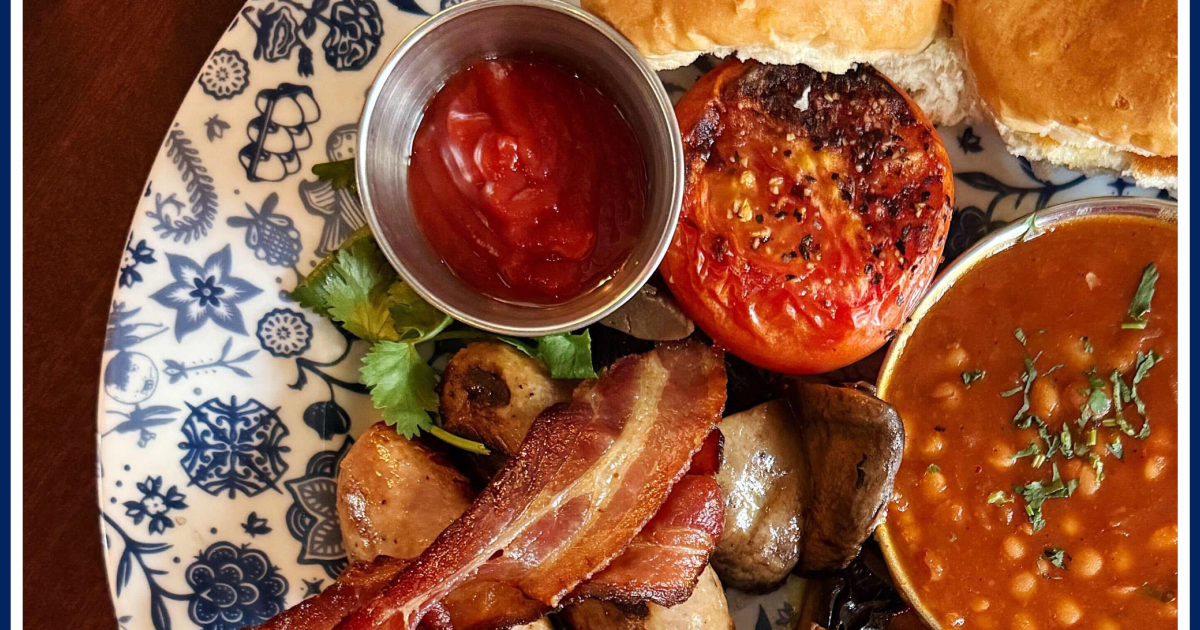
With more than a dozen locations across the United Kingdom and its first stateside location landing in Manhattan next year, Dishoom is hardly a secret. But each outpost offers a distinct vibe and set of influences, with the location in Shoreditch recalling an eccentric Iranian cafe by way of Bombay with mismatched furniture, bamboo blinds and gently frayed rugs. For breakfast, there are stuffed naan rolls, date and banana porridge or a Bombay-inflected take on a full English breakfast with akuri, bacon, peppery Shropshire pork sausages, masala beans, grilled field mushrooms, grilled tomato and buttered buns, best paired with fresh juice, chai or a sesame espresso martini. The all-day menu features well-established hits such as chicken ruby, lamb and veggie samosas and the famous black daal that’s slow-cooked for 24 hours, with a range of lassi yogurt drinks, Indian beers and cocktails that put a spin on the classics, such as the thandai mai tai with rum, almond milk, black pepper, cardamom bitters and house thandai syrup. The restaurant doesn’t accept dinner reservations, and lines can get notoriously long, but hospitable servers help pass the time with free chai and sherry samples.
When you live in Los Angeles, there are far worse fates than being stuck in the city all summer. Our thriving food capital draws diners out with sunlit farmers markets, midnight taco stands, multigenerational kebab shops and serene sushi dens. Community-oriented breweries, stylish wine bars and glimmering rooftop destinations round out the scene.
Whether you’re a lifelong Angeleno, new transplant or just passing through, you’ll want to get to know the 50 essential dining experiences that define eating in L.A. right now, from a pastrami sandwich at an iconic deli near MacArthur Park to a char-spotted tlayuda at a burgeoning food bazaar in West Adams and an L.A.-shaped churro from a rising Highland Park panadería.
Don’t miss our guide with nearly two-dozen new bar openings across the city. Finally, a handful of sparkling rooftops recently debuted across the city, offering vistas into neighborhoods we rarely spy from up above.
Thoughtfully compiled by our Food staff over the course of several months, we invite you to return to these lists whenever you’re seeking an answer to that perennial question: Where should I go next? — Danielle Dorsey
If You Go
(Giacomo Bagnara / For The Times)
There’s no easier way to get to know a new place than through its food. Wandering markets, eating at food stalls, sitting among locals and fellow travelers at the restaurants that embody a city. Its flavors and customs and ways of living are revealed to us over dinner or even a simple morning coffee.
And for those of us who are lucky enough to write about food for a living, traveling with an eater’s mindset gives us a deeper understanding of places we’ve read about in cookbooks and novels or seen in movies.
Each of us at L.A. Times Food keeps a running list of our favorite restaurants in some of the world’s great cities — and we want to share what we know with you. The recommendations that follow are not meant to be definitive for any given place. These are personal guides by dedicated eaters to some of the places we’ve loved during our wanderings around the globe.
If you’d like to share your own personal favorites with us, we’d love to hear from you in the comments below. — Laurie Ochoa
The Latin Quarter’s cobblestone Rue Mouffetard is a walking street lined with fishmongers, bakeries, cheese shops, produce stands and cafes. Once you’ve talked triple-cream Brillat-Savarin with the cheese pros at Androuet and admired displays of glistening seafood along Mouffetard (Poissonnerie Quoniam sells fresh oysters that you eat standing with an inexpensive glass of wine), there is lunch or dinner to consider. A wonderful choice is Otto, a modern izakaya-style project with MOF chef Eric Trochon, who provided menu guidance to proprietors Stéphane Offner and Tony Alvarez-Parage plus occasional turns at the binchotan-fueled grill when he’s not running his Michelin one-star restaurant Solstice 700 meters away. Observe the action in the open kitchen from your bar seat or find an intimate corner to enjoy Otto’s small plates — maybe “fish no chips” with black curry mayonnaise, razor clams with garlic butter or celery root beignets. Oh, and at lunch you can choose three dishes for €22. A terrific deal.
Tokyo isn’t one city. It’s many cities, and each is its own universe.
Occasionally — at a certain subterranean bar big enough for only seven people, or a sushi counter on the fifth floor of a random office building — I feel as if I’m stepping into another time or dimension.
Finding your way to any of the millions of restaurants, cafes, bars and shops (some are micro-businesses in an alley in a village in the city) can be like figuring out a many-layered puzzle. Like Tokyo, each experience is dense.
Use these handy dining guides for all of your summer travel, near and far.
The Japanese word for hospitality is omotenashi. But its meaning goes far beyond just customer service. Even the translations “wholehearted, selfless hospitality” or “flawless care” don’t cover all of the philosophies that make up omotenashi: magokoro (“true heart” or “sincere feeling”), ichigo ichie (“one time, one meeting”) and kuuki wo yomu (“reading the air”). The last refers to the intuitive ability to anticipate guests’ needs before they ask — an idea rooted in tea ceremony, which is rooted in Buddhism. It’s hard to grasp that level of selflessness.
Here are some of our favorite places to lose yourself in Tokyo. — Betty Hallock
A fine place to stop for a milk tea-centered breakfast or lunch after exploring the labyrinth of African, Indian and other international shops and food stalls inside Chungking Mansions — one of the last remaining film locations in Wong Kar-wai’s iconic “Chungking Express,” where Brigitte Lin’s drug-dealing retired actor is seen conducting her business in a blond wig, trenchcoat and sunglasses. Lan Fong Yuen, in the basement of Heath Mall (which is technically part of Chungking Mansions but has a separate street entrance), has its own historic pedigree. Late founder Lam Muk-ho is credited with originating silk-stocking milk tea (it’s strained through a long cloth filter), and possibly yuenyeung (milk tea mixed with coffee), at the still-operating Gage Street stall he opened in Central in 1952. He’s also said to have popularized the thick-cut Hong Kong-style French toast and pork-chop buns so familiar in our own San Gabriel Valley cafes, as well as “lo-ding” instant noodle dishes, especially the chicken-chop version. The Tsim Sha Tsui location opened in 2009 but has an older diner aesthetic that attracts tourists and locals who line up for the scene and affordable Hong Kong comfort food.
Heath Mall basement, Shop No. S09, Chungking Mansions, 44 Nathan Road, Tsim Sha Tsui, Kowloon, Hong Kong
The giveaway that Lima should be on every food lover’s wish list is not just that it is home to the reigning No. 1 restaurant in the world according to the most recent World’s 50 Best Restaurants ranking. Maido in Lima’s famed Miraflores neighborhood, a longtime magnet for fine dining, is where chef Mitsuharu “Micha” Tsumura is transforming Peru’s traditional Nikkei cuisine, integrating the flavors of the Amazon in his own blockbuster style.
But it’s what’s happening one neighborhood over, just about three miles away in Lima’s Barranco district that make Peru’s capital more than a stopover for a single splurge meal on your way to Machu Picchu. The epicenter of the food lover’s Barranco is the garden-lush culinary complex, Casa Túpac, home to Virgilio Martinez’s Central, named to the World’s 50 Best Restaurants’ “Best of the Best” list after its No. 1 ranking in 2023, and to Pía León’s Kjolle, the current 50 Best’s No. 9 restaurant in the world.
Use these handy dining guides for all of your summer travel, near and far.
Beyond those walls, several other food hubs have emerged. There is the growing constellation of Barranco restaurants that chef Juan Luis Martínez runs with his wife, designer Michelle Sikic. Their Mérito is currently No. 26. on the World’s 50 Best list; Demo is a morning-to-night cafe with beautiful breakfast dishes; and more recently they opened Clon, with accessibly priced a la carte expressions of Martínez’s Venuezulan-Peruvian cuisine.
A few short blocks away are Ricardo Martins’ pair of restaurants, Siete, a romantic spot with beautiful food and cocktails, and La Perlita, devoted to the chef’s nostalgic take on criolla cuisine. Then there is the venerable Canta Rana, run by an Argentine devoted to soccer and ceviche, and, more recently, the Chilean and American partners who created a mecca for coffee and chocolate lovers.
This is just a hint of the culinary activity happening in one of the world’s great food cities.
It’s puzzling, then, why the Michelin guide doesn’t waive its requirement that tourist boards or local governments pay a fee to have its inspectors visit the city. On the other hand, Lima is doing just fine without Michelin stars.
See for yourself with your own visit to Lima. The suggestions that follow are a delicious way to begin your adventure.
Yes, you should visit Mexico City. Don’t overthink it and don’t delay. Despite excessive tourism and rising gentrification fears, the seething capital of Mexico — 25 million souls strong — remains a top-tier international destination for any committed food lover. And the intensity of its dining scene seems to be only growing.
Sure, a wave of privileged remote workers oozing dollars and euros may have dampened the vibe for Mexico City natives, leading to protests. The post-pandemic issues of housing displacement and rising costs for locals are serious challenges that political leaders must address. Yet time and again, on every visit, the resiliency and passion that original defeños have for their gastronomical paradise proves to be boundless.
Use these handy dining guides for all of your summer travel, near and far.
I have traveled to Mexico City regularly since 2002 and lived there for nearly a decade. I won’t feel slighted if you prefer the dining advice of current residents, or from any of the numerous local dining guides online. But one thing about me, I have an aversion to hype, and tend to avoid the city’s contemporaneous food magnets where the ratio of foreigners to locals is too out of whack. (No, the Michelin-starred taqueria was never extraordinarily better than any others in its bracket.) Where my native friends go, I go.
Here are highlights of my top, top, top recommendations from my L.A. Times restaurant guides on Mexico City, plus a few more favorites. My goal here is to distill down your options for a concentrated, food-centric visit, from nostalgic jewels beloved by hardscrabble chilangos to the celebrated shrines of high-end chefs reaping the bounties of the Valley of Mexico.
Indiana Fever star Caitlin Clark called out officials following her team’s 86-77 win over the Phoenix Mercury on Monday. She was one of five players assessed technical fouls amid a fourth-quarter dustup that also involved former teammate DeWanna Bonner.
Clark was called for a personal foul at the 7:57 mark in the fourth quarter after getting tangled up with Bonner, who was trying to post up near the free-throw line. The two exchanged some words before things escalated as their teammates got involved. Clark appeared flabbergasted when she learned she received a technical foul for clapping while her teammate Myisha Hines-Allen and the Mercury’s Alyssa Thomas were in each other’s faces.
Bonner, Thomas, Hines-Allen and Fever guard Sophie Cunningham were also assessed technical fouls for their actions during the scuffle. Hines-Allen was later ejected from the game after earning another technical foul for pushing Thomas after being called for a foul in the very next play.
This marks Clark’s fifth technical of the season so far. Players who rack up eight technical fouls in a season must serve a one-game suspension.
“It’s ridiculous. I got a tech for clapping,” Clark said after the game. “We should all just go on the calendar now and pick a game that I’m going to be suspended for if I’m going to get technicals for clapping.
“If any technicals should be taken away, it should be that one,” Clark added. “I don’t understand it at all. … I’m going to play with emotion. I’m going to play with passion. And if they’re going to give me a technical foul for clapping, then so be it. That’s their choice.”
Caitlin Clark reacts during Monday’s game between the Indiana Fever and the Phoenix Mercury.
(Michael Hickey / Getty Images)
This was not the first time this season the two-time All-Star has been seen clapping toward other players or officials during a game. None of the previous occasions resulted in Clark receiving a technical foul. The star guard has been receiving more attention this season for her behavior during games outside of her play. The Fever reportedly plan to appeal the technical foul.
Clark led all scorers with 24 points while also dishing out nine assists in the Fever win, while Kelsey Mitchell added 22 points. For the Mercury, Kahleah Copper led with 20 points, while Thomas had 19 points, five rebounds and nine assists.
Bonner, a two-time WNBA champion, had signed a one-year contract with the Fever last season. She played in just nine games before parting ways with the team and eventually rejoining the Mercury, where she started her career. Fever fans could be heard booing Bonner at various times during Monday’s game at Gainbridge Fieldhouse in Indianapolis.
Fever coach Stephanie White said that Clark has to be aware of her technical fouls and that “there are some that we could do without.”
“There are natural things that happen that the energy of the game creates when you do get those,” White said. “But there are some that we can be a little bit more in control of. So, yes, we’ll continue to remind her, and I think she has to have an awareness.”
She also brushed off the incident as something “that … happens” in “a competitive sport.”
“As a group, we have to be able to have our moment and then regroup and play with poise and composure. It can’t continue to go on,” White said.
Dallas Wing guard Paige Bueckers and Golden State Valkyries forward Janelle Salaün are among the other players who have been assessed technical fouls this season for clapping after a play. Neither incidents involved taunting players from the opposing team, and both of those techs have reportedly been rescinded.
North Korea has revealed its largest-ever warship that leader Kim Jong Un says can carry nuclear-capable missiles. The 5,000-metric-ton destroyer is part of the country’s growing navy, which is set to expand sharply over the next five years.
Here’s a look at the viral moments and on-field controversies as well as the biggest players, best performances, goals and more.
Published On 24 Jun 202624 Jun 2026
Cristiano Ronaldo joined the party, Lionel Messi set a new record, Iran once again displayed their fighting spirit and Turkiye were shown the door.
The second round of the 2026 World Cup group stage had a fair amount of drama.
Recommended Stories
list of 4 itemsend of list
Al Jazeera breaks down the key moments:
Better late than never: Ronaldo strikes for Portugal
Unlike other high-profile strikers at the tournament who came out all guns blazing from the get-go, Ronaldo needed some time to open his account. But his two goals in Portugal’s 5-0 thrashing of Uzbekistan on Tuesday were enough to silence the critics as the 41-year-old became the first player in history to score in six World Cups.
Messi is saving his best for last
Age is just a number for Messi, who is celebrating his 39th birthday on Wednesday. His apparent last dance is bringing out the best in him as the Argentinian has set a new record for the most World Cup goals at 18 – a figure that is sure to increase with La Albiceleste now the number one favourites to add back-to-back World Cups to their trophy cabinet.
Is Messi “Mr Argentina”? It’s hard to argue otherwise with all five of the team’s goals scored by him. That also makes him the leading Golden Boot contender with one goal more than France’s Kylian Mbappe.
At this point in the tournament, Messi is the 2026 World Cup’s Golden Boot leader [Kai Pfaffenbach/Reuters]
Triple treat: Messi, Mbappe, Haaland score on same day, again
FIFA has come under criticism for a series of issues this tournament, but one thing it’s got spot on is the scheduling of Argentina, France and Norway games on the same day. For the second time in a row, fans were treated to back-to-back goals galore on Monday as Messi started the party with a brace before Mbappe did the same, and Erling Haaland topped it off with another double.
Norway’s ‘Viking row’ goes viral
Back at the World Cup after 28 years, Norway celebrated their round of 32 qualification in typical fashion: bringing out the famous “Viking row”. With the squad sitting in rows resembling those of a Viking longboat, captain Martin Odegaard began beating the drum to a joyous climax as thousands of Norwegians in the stadium also joined the fun.
Salah, Egypt celebrate on streets of Vancouver
It took Egypt an incredible 92 years to register their first World Cup win, so it wasn’t a surprise that they celebrated in style. Shortly after beating New Zealand 3-1 on Sunday, the Egypt squad was pictured on the streets of Vancouver with fans, singing and dancing to music blaring from a huge speaker. Mohamed Salah, nicknamed the “Egyptian King”, was the centre of attention yet again, held up on the shoulders of a teammate, as he grooved to the tunes.
Japan are Asia’s best hope at the tournament
While Asian teams enjoyed a great run during the first round of the group games, only one team – Japan – built on the momentum. After a 2-2 draw with the Netherlands in the first match, Japan thrashed Tunisia 4-0 in the next fixture on Saturday, collecting four points – the highest by an Asian team so far. According to Opta’s supercomputer, Japan have a 20.8 percent chance of reaching the quarterfinals and 9.41 percent probability of making the semifinals.
Persistent Iran fight hard to stay in contention
Despite travel restrictions imposed on them by the United States for their first two World Cup games, Iran have remained unbeaten with two draws. That keeps them alive in the knockout race, and with the squad now allowed to fly into the US from Mexico two days before their next match instead of one as was the case earlier, Iran can better prepare for their final group game on Saturday against Egypt in Seattle. A win would see them through while a draw might also suffice, depending on other results.
Turkiye’s talented team disappoints
From Arda Guler and Kenan Yildiz to Hakan Calhanoglu and Merih Demiral, Turkiye is filled with talent across all departments. But none of them could turn around Turkiye’s fortunes as they crashed out of the tournament after losing to Paraguay on Saturday. The early exit crushed the hopes of millions of Turkish fans, who waited 24 years to see their team return to the World Cup.
Turkiye’s Can Uzun and Kenan Yildiz look dejected after they were knocked out of the World Cup [Luisa Gonzalez/Reuters]
No Pulisic, no problem for USA
For years, Christian Pulisic has been the poster boy of the USA team, but the cohost nation proved that they can get the job done even in the influential winger’s absence. With Pulisic ruled out with a calf injury, Alex Freeman scored one, and the USA benefitted from a Cameron Burgess own goal as they sailed into the knockouts with a 2-0 victory on Friday against Australia.
Red-carded Almiron to go down in history
Paraguay midfielder Miguel Almiron made history, albeit for the wrong reasons, when he became the first player to be sent off at the 2026 World Cup for covering his mouth. Almiron – also handed a one-match ban – covered his mouth during a confrontation with Turkiye’s Mert Muldur. The straight red handed to him follows a new rule under which players are not allowed to cover their mouths to disguise what they are saying during confrontations with infringements leading to instant dismissals.
Brooklyn Beckham has shared a gushing post about his wife NicolaCredit: Instagram Brooklyn BeckhamHis post comes after David and Victoria left Brooklyn fuming with their posts on Father’s DayCredit: Getty
The famous family have been feuding for more than a year, with Brooklyn even issuing a brutal social media rant where he said he has no wish to reconcile with his parents.
But Brooklyn is in his own bubble with wife Nicola Peltz, and has now gushed how he “gets to do life” with her in yet another backhanded swipe directed at his family.
Taking to Instagram to mark a milestone with his wife, Brooklyn shared a smiley black and white photo of them and wrote a heartfelt caption.
“6 years ago I asked my best friend to marry me,” he began.
“You are my girl, my beautiful wife, and my whole heart.
“Every day with you feels like the best adventure, and I still can’t believe I get to do life with you.
“You make everything brighter, funnier, sweeter, and more magical just by being you.
David honoured his son Brooklyn on Father’s Day – a move that is said to have enraged himCredit: InstagramBrooklyn is in his own bubble with NicolaCredit: instagram/nicolaannepeltzbeckham
“I can’t wait to keep laughing, dreaming, and staying young with you forever.
“I love you more than words, Nicola,” he concluded.
Nicola commented on the post swiftly, writing: “I couldn’t possibly love you more. You’re my world, my rock and my soulmate.
“I love you a million times over and I love being your wife. Thank you for loving me so perfectly. My forever.”
Flocking to the comments, many fans were supportive of the pair.
One person wrote: “Awwww Happy Anniversary beautiful soulmates.”
While another penned: “Well done for putting your wife first, no one knows what goes on behind closed doors. Glad you are making each other happy.”
But others appeared to slam Brooklyn while supporting his mum and dad amid the rumbling family feud.
“Is that all you do all day, talk about how much you love your wife? We’ve all heard it by now,” said one.
“Team Posh all the way. Respect your parents,” penned a second.
This comes after both David and Victoria both marked Father’s Day by sharing snaps of all of their children – including Brooklyn.
But Brooklyn was left disgruntled by the posts which included him.
An insider told The Sun: “He’s fuming about it.
“He’s asked them to leave him alone and they just keep posting him.
“It just brings the whole thing up all over again. He wishes they’d leave it and leave him alone.”
The feud is rumbling on despite it being five months since Brooklyn unleashed his nuclear attack on his parents via an Instagram statement.
In a scathing statement, Brooklyn told how he grew up with “overwhelming anxiety” having been “controlled” by his parents most of his life.
His initial statement read: “I have been silent for years and made every effort to keep these matters private.
“Unfortunately my parents and their team have continued to go to the press, leaving me with no choice but to speak for myself and tell the truth about only some of the lies that have been printed.
“I do not want to reconcile with my family. I’m not being controlled, I’m standing up for myself for the first time in my life.”
WITH the warm weather staying, you don’t need to fly away to experience a destination that feels like abroad.
El Murrino Beachside Kitchen sits on East Cliff Beach, between Bournemouth and Boscombe Piers in Dorset.
Sign up for the Travel newsletter
Thank you!
El Murrino Beachside Kitchen in Bournemouth is said to feel like the MedCredit: Google mapsThe beach bar even has VIP cabanas you can bookCredit: El Murrino Beachside Kitchen
One recent visitor claimed the bar has “Mediterranean beach vibes”.
Another added: “The food was tasty and the atmosphere was like being abroad in Spain.”
A third agreed: “The sun was shining and the music made it feel like we were in Ibiza for the afternoon.”
Others even compared it to Miami, saying it feels like being on holiday abroad.
It doesn’t matter what time of day you visit as the kitchen serves breakfast, lunch and dinner.
Breakfast options include American pancakes for £8 and then when it comes to lunch or dinner you can grab a burger, salad, fish and chips or pizza for £14.
The beach bar sits right on the beach as wellCredit: Google mapsAnd in the summer they host live DJ sessionsCredit: El Murrino Beachside Kitchen
Even your four-legged friend won’t be left out with doggy ice cream available for £3.50 a tub.
And of course there are plenty of tipples on offer including cocktails for £9 or a pint for £6.50.
If you want to elevate your experience, there is the option to book a VIP Cabana for £75.
The cabana can be used by up to 10 people and includes two pizzas and four drinks or a bottle of wine or prosecco with your booking.
Each booking lasts two and a half hours.
If you don’t fancy booking a cabana there are plenty of picnic-style tables as well, surrounded by sand.
And during the summer months, you can also catch a live DJ session at the beach bar.
The beach bar is open each day until 11pm and makes for the perfect pitstop when exploring Bournemouth’s beaches.
A CLOSED English pier is set to be knocked down for good – with plans to build an entirely new one instead.
Victoria Pier in Hull has been closed for four years after being deemed ‘structurally unsafe’.
Sign up for the Travel newsletter
Thank you!
Victoria Pier has been in Hull for over 200 yearsCredit: CollectLocals have been asked to vote on a new design for Victoria PierCredit: Mason Clark Associates/Hull City Council
The historical structure, that stands over Humber Estuary, is instead set to be replaced with a new £1million pier.
The pier first opened in 1810, and later was known as Corporation Pier when it was used as a ferry terminal linking Hull and Lincolnshire.
It was renamed ‘Victoria Pier’ after Queen Victoria visited in 1854, but closed in June 2022 after deterioration and rotting, making it unsafe for people to stand on.
Now the plans are to knock it down and build a new one.
The FIFA World Cup has yet to provide a meaningful boost to U.S. economic activity, with business surveys, card spending data, and airline passenger traffic showing little evidence that the tournament is supporting demand, according to Pantheon Macroeconomics.
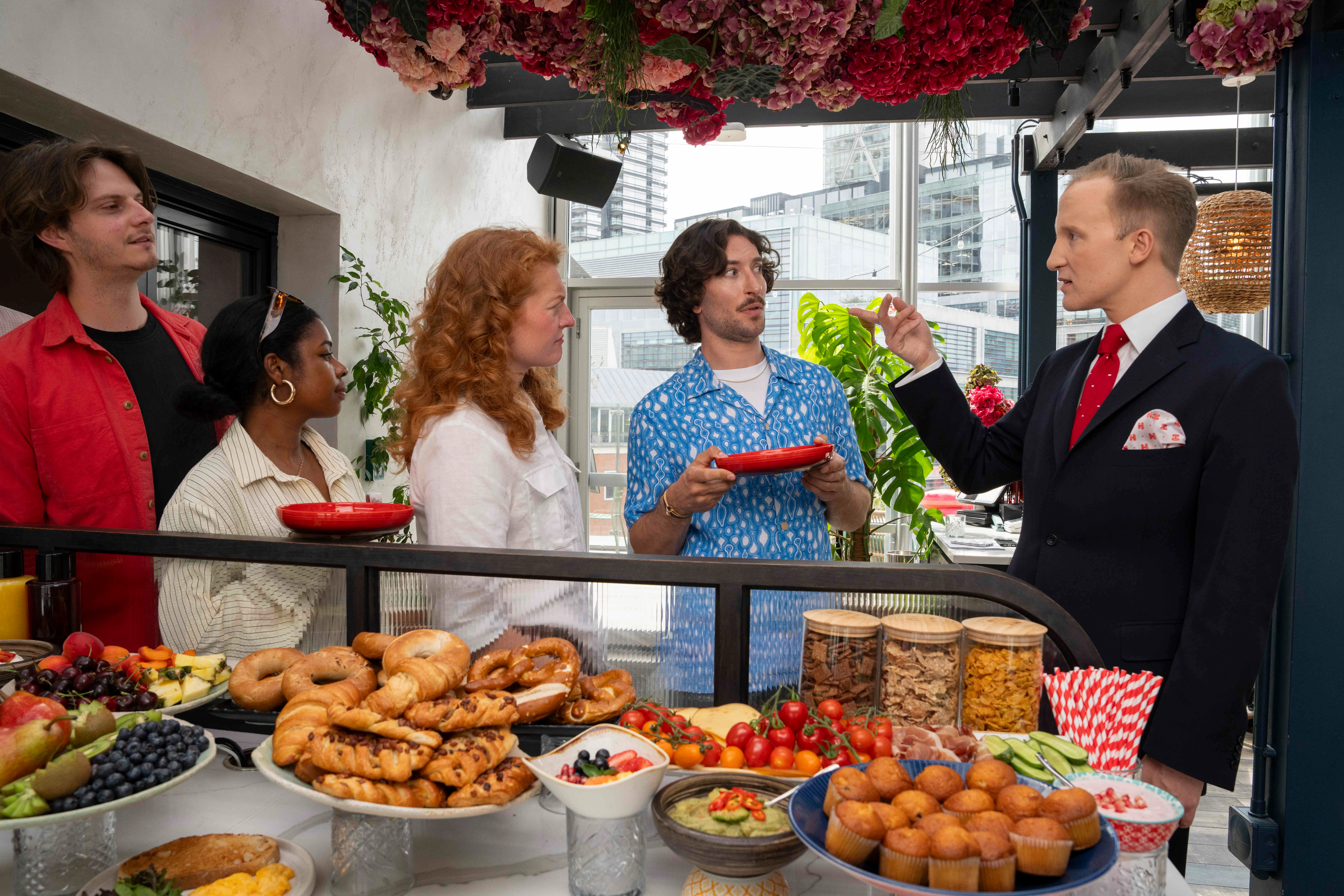
THE biggest hotel guest faux pas have been revealed – including jumping the breakfast buffet queue, washing undergarments in kettles and stealing from rooms.
Other frowned upon acts include reserving pool chairs with towels for long periods, leaving rooms excessively messy and being loud in the hallways late at night.
Sign up for the Travel newsletter
Thank you!
Jumping the breakfast buffet queue, washing undergarments in kettles and stealing from rooms are considered major hotel faux paxCredit: hotels.comPutting the incorrect number of guests in for a reservation is frowned uponCredit: hotels.com
Smoking or vaping in hotel rooms is also considered a no-no, as are putting the incorrect number of guests on the reservation and leaving alarms or phones to ring without turning them off.
While not reading reviews when booking and not collecting or cashing in rewards points are also viewed unfavourably.
In response, Hotels.com, which commissioned the research, is offering holidaymakers £100 in ‘Hotels.comCash’ for future trips after staying for 10 eligible nights through its rewards programme.
Melanie Fish, travel expert and spokesperson for the global marketplace, which has also teamed up with William Hanson for a ‘Grand Etiquette Hotel’ guide, said: “Small tweaks can make a world of a difference.
The vast majority of Brits believe they are considerate guestsCredit: hotels.comLeaving rooms excessively messy and returning late at night are big no-nosCredit: hotels.com
“Taking the time to check reviews or making the most of rewards can turn a good trip into a great one, and help your travel budget stretch further, too.”
Researchers found the vast majority (90 per cent) consider themselves to be considerate guests – although 39 per cent think residents have become less respectful in recent years.
Other divisive acts include hanging damp laundry on the balcony, not leaving a review after staying and being rude to staff.
Sneaking extra guests in and constant public displays of affection around the pool are also frowned upon by hotel guests.
WILIAM HANSON’S GRAND ETIQUETTE HOTEL GUIDE:
1. THE ART OF ENGAGING STAFF WITH DIGNITY – Treat every member of staff, from the cleaner to the manager, with genuine respect and an open ear.
2. HALCYON HALLWAYS (AND THE VIRTUE OF SILENCE) – Corridors are not thoroughfares for celebration, but shared spaces requiring a degree of restraint.
3. LIBATIONARY LESSONS – A well-enjoyed drink need not become a public performance. Moderation is key, particularly in shared spaces where one’s behaviour is on quiet display.
4. ON BURNING EMBERS AND BETTER JUDGEMENT – Hotel rooms are designed for comfort, not combustion. Lighting a cigarette indoors undermines both the space and the experience for future guests.
5. HOUSEKEEPING IS NOT AN ARCHAEOLOGICAL ACTIVITY – Keeping your space in reasonable order (not pristine, but certainly not chaotic) ensures that housekeeping can do their job efficiently.
6. LAVATION GENTILITY – The kettle, charmingly utilitarian as it is, exists for hot drinks only. Incredulously, some people attempt to use it for laundry.
7. BORROWING, OWNERSHIP, AND OTHER DANGEROUS ASSUMPTIONS – Hotels provide generously, but not without limits. Slippers and toiletries may accompany you home; larger items most certainly may not.
8. MARSHALLING ONE’S MORNING REPAST – The breakfast buffet is not a free-for-all, but a civilised ritual governed by the simple act of queuing.
9. THE FOLLY OF FLAG PLANTING BY TOWEL – Placing a towel on a sun lounger at dawn and vanishing until mid-afternoon is a practice best left unadopted.
10. LOYALTY, AND WHY IT GETS ONE FURTHER – By consolidating bookings and collecting rewards, one quietly accumulates tangible benefits.
Those polled were also asked which nationalities they consider to be the gold standard for politeness – and which ones they perceive to be rudest.
Japanese tourists came top for being the most considerate, followed by Sweden in second place, with U.K. respondents placing themselves third.
At the other end of the scale, Americans are regarded as the most impolite, just beneath those from Germany, according to Hotels.com research conducted through OnePoll.
William Hanson said: “Better hotel etiquette doesn’t just benefit others, it can directly enhance your own stay.
“At the heart of my guide is the idea that small, thoughtful behaviours add up to big rewards: from a better night’s sleep and improved service to savings on future trips.”
TOP 20 BIGGEST HOTEL FAUX PAS:
Being rude to hotel staff
Being really loud (e.g., loud hallway conversations, blasting music late at night or early in the morning)
Putting the incorrect number of guests on the reservation
Becoming drunk and annoying other guests
Not reading the reviews when booking
Smoking or vaping in hotel rooms
Not looking at the pictures when booking
Leaving rooms excessively messy at check-out
Washing undergarments or personal items in the in‑room coffee maker
Stealing items you’re not supposed to from the room
Jumping the queue at the hotel breakfast buffet
Reserving pool or beach chairs with towels or personal belongings for long periods
Playing music on a personal speaker at the pool
Allowing pets at the table in the hotel restaurant
Bringing children into the adults‑only pool
Sneaking extra guests into rooms
Walking through hotel hallways or common areas wearing only a robe or sleepwear
Not collecting reward points when booking
Not checking out on time
Leaving rubbish or room‑service trays in the hallway