Vucic is under pressure after months of antigovernment protests.
Published On 27 Jun 202627 Jun 2026
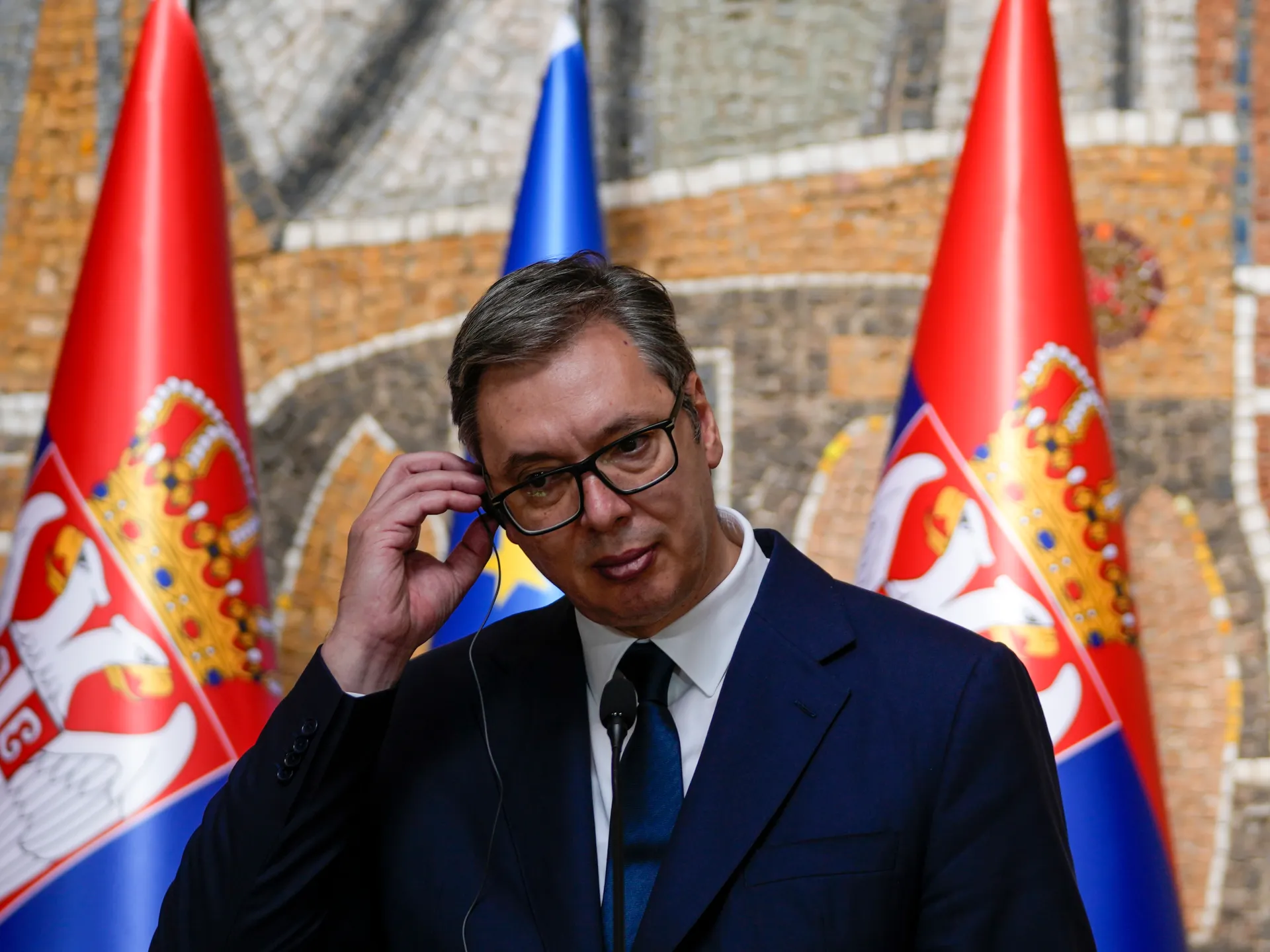
Serbia’s President Aleksandar Vucic says he will step down within “weeks”.
Vucic announced his plan to resign on Saturday, paving the way for early presidential and parliamentary elections.
Recommended Stories
list of 3 itemsend of list
This follows months of youth-led protests that shook his term as president.
“I will be president for only a couple of weeks, and then I will resign,” Vucic told his supporters at a pro-government rally in the capital, Belgrade.
“We will win more convincingly than ever before,” he said, telling the crowd he will help his right-wing Serbian Progressive Party at the upcoming elections and that this was probably the last time he would address them as Serbia’s president.
Vucic did not specify exactly when he would resign or when an election – for Parliament or for a new president – would be held.
The president’s second and last mandate was set to expire in mid-2027.
Vucic has gradually tightened his grip on power since his populist party took over the Serbian government 14 years ago.
The news of his resignation comes against the backdrop of months of student-led mass antigovernment protests that have rattled the country.
Tens of thousands of people have been rallying across Serbia since November 2024, when the Novi Sad rail station disaster killed 16 people and sparked mass anger at the government.
Hundreds of people were detained and Serbia’s police were accused of excessive force and arbitrary arrests by the European Union. The protests eventually led to the resignation of then-Prime Minister Milos Vucevic in January 2025.
Vucic, who has dominated Serbian politics for over a decade, has repeatedly called protesters “foreign agents”, accusing them of “fuelling divisions” and seeking to overthrow the government.
In response to Vucic’s rally, students are set to hold their own gathering on Sunday in Kraljevo, central Serbia, also promoting national unity while renewing calls for early elections.
AN iconic British singer is set to perform at the World Cup Final’s halftime show.
The musician, 52, has been booked to sing ahead of the game on the pitch at the MetLife Stadium in New Jersey, on Sunday, July 19.
Sign up for the Showbiz newsletter
Thank you!
A music legend has been revealed as a performer at the Word Cup Final’s halftime showCredit: Getty ImagesRobbie Williams shall take to the stageCredit: Getty
Robbie Williams will belt out his FIFAfootball anthem Desire with Italian pop star Laura Pausini, 52.
The singer is largely known from his time in Take ThatCredit: GettyRobbie also sang the Official FIFA Club World Cup anthem Desire prior to kick off in the FIFA Club World Cup 2025Credit: Getty
Earlier this month Noel Gallagher revealed he wasn’t too impressed with the line-up so far.
Asked on Talksport for his thoughts about performers booked he said: “I don’t like the razzmatazz of football.
“It’s been functioning perfectly for hundreds of years.
“They’re not really football people who are performing anyway, are they?”
Robbie began his music career in 1990 at the tender of of 16 years old.
The teen joined the hugely successful group Take That before dabbling in releasing solo music five years later.
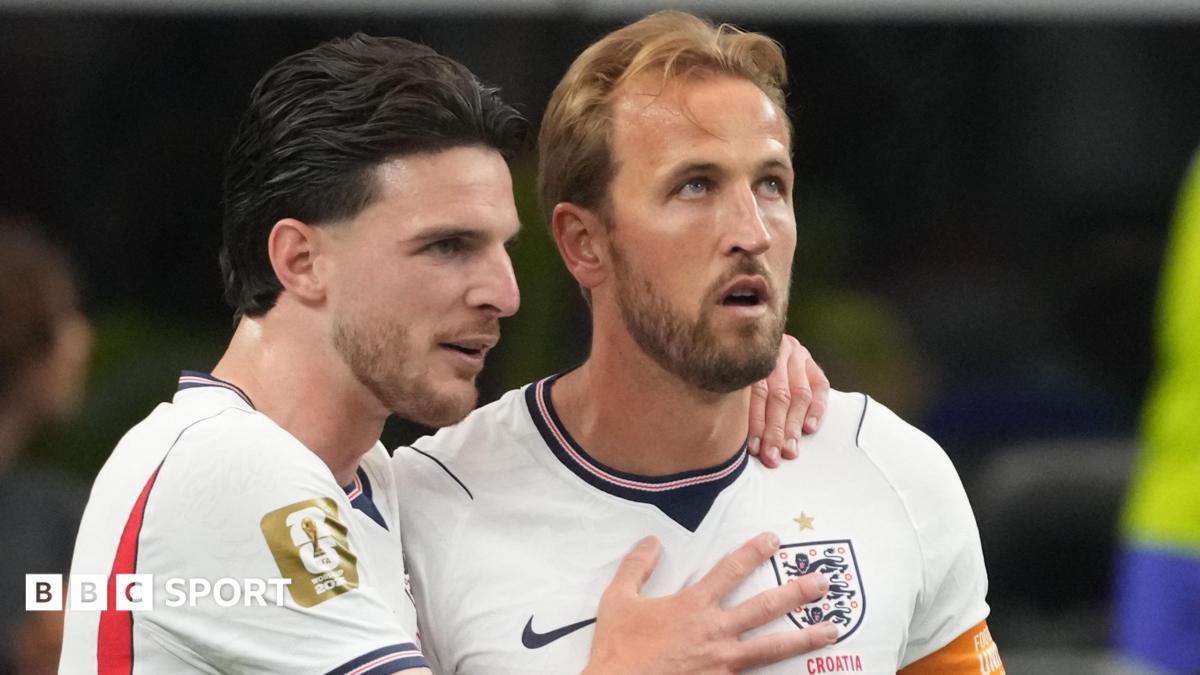
England play one of the eight best third-placed teams, but the distribution of the fixtures depends on which groups provide the qualifiers.
After it was confirmed Ghana had qualified as third in group L, it meant England had only two possible opponents – third place in group K or Senegal.
If DR Congo beat Uzbekistan in their final group K match at 00:30 BST on Sunday, England will play the third-placed team in that group.
That is almost certain to be DR Congo, bar a scenario whereby Portugal lose with a goal difference swing of seven between the teams. Then England would play Portugal.
If DR Congo draw or lose then England will play Senegal.
The knockout path is now set for England through to the quarters.
After DR Congo or Senegal, they would play the winners of Mexico or Ecuador in the last 16 in Mexico City on 5 July.
The potential quarter-final would be in Miami in 11 July against Brazil, Japan, Ivory Coast or Norway.
For a second day in a row, the United States has launched strikes on Iran, once again citing an attack against a commercial vessel as a motivation.
Saturday’s renewed attacks are the latest indication that a Middle East ceasefire, established as part of a June 17 memorandum of understanding between the US and Iran, might be at breaking point.
Recommended Stories
list of 3 itemsend of list
In a statement, US Central Command (CENTCOM), which directs military action in the Middle East, explained that the latest attacks came “at the Commander in Chief’s direction”.
“CENTCOM forces launched strikes today in direct response to continued Iranian aggression against commercial shipping,” the command centre wrote.
“U.S. military aircraft targeted Iranian military surveillance infrastructure, communication systems, air defense sites, drone storage facilities, and minelayer capabilities.”
Explosions were reported in southern Iran, around the village of Tahrui, near the port of Sirik, which was also the focal point of Friday’s US attacks. State media also indicated that Qeshm Island had been hit.
Responses to cargo ship strikes
Saturday’s strikes against Iran followed a similar playbook to Friday’s.
Early on Saturday morning, at about 4:30am Eastern US time (08:00 GMT), the Panama-flagged tanker Kiku was travelling through the Strait of Hormuz when it was reportedly hit by an unidentified projectile.
No crew members were injured, and no leakage was reported from its cargo.
CENTCOM said the ship had been carrying more than 2 million barrels of crude oil when it was hit by a “one-way attack drone”.
The website MarineTraffic.com indicates that the tanker left the Al Shaheen oilfield on Thursday and is due to dock in Fujairah, in the United Arab Emirates, on Sunday.
A similar sequence of events prompted Friday’s volley of US attacks.
In that case, a Singapore-registered container ship, the Ever Lovely, was struck by a drone as it sailed through the Strait of Hormuz on Thursday. No one on board was injured, and the boat continued on its travels.
But US President Donald Trump denounced the drone strike on Friday as a “foolish violation” of the June 17 memorandum.
By that evening, the US and Iran had exchanged fire, with the US targeting the area around Sirik, and Iran hitting US military installations in the Middle East.
CENTCOM referenced Friday’s actions in announcing the latest round of strikes.
“After yesterday’s U.S. strikes in response to the Iranian attack on M/V Ever Lovely, Iran was given a chance to honor the ceasefire agreement,” CENTCOM wrote.
Iran “elected not to”, it added, citing the Kiku drone strike. CENTCOM also maintained that commercial traffic through the Strait of Hormuz, a sticking point in ceasefire negotiations, would continue, with US military backing.
“U.S. forces remain vigilant, lethal, and ready,” CENTCOM said in its statement.
Controlling the strait
Central to the latest round of fighting is control over the Strait of Hormuz, a key artery for maritime traffic. Nearly 20 percent of the world oil supply passed through the narrow waterway in peacetime, as well as significant quantities of fertiliser and natural gas.
But after the US and Israel launched attacks on Iran on February 28, launching the present-day war, Tehran moved to shut down traffic through the strait, which sits between its shores and Oman’s.
Iran’s decision sent global fuel prices skyrocketing, and that generated pressure, both domestic and international, for the Trump administration.
The June 17 memorandum was designed to provide relief. Though it was a prelude to further negotiation, the deal called for the US, Iran and their allies to “declare the immediate and permanent termination of military operations on all fronts, including in Lebanon”.
It also outlined a 60-day period during which time Iran was to make its “best efforts” at allowing commercial traffic to transit through the Strait of Hormuz at no charge.
That part of the memorandum specified that Iran and Oman, the two countries that border the strait, would determine “future administration and maritime services” in the waterway.
But continued fighting in Lebanon has prompted Iran to threaten the strait’s closure once more.
Then, there is the question of the memorandum’s terms. Experts say the US and Iran have come to different understandings of how the June deal should be enforced.
Al Jazeera correspondent Resul Serdar Atas explained that Iran believes it should be allowed to restrict commercial traffic that does not have prior clearance to pass through the strait.
“Article Five of the memorandum of understanding, according to the Iranian officials, is clearly saying that any ship, whether it’s going through the Iranian territorial water or the Omani territorial water, has to be in full coordination with the Iranian authorities,” he said.
“But that is not understanding of Americans. The Americans are saying, ‘Well, if it is going through the Omani territorial waters, they do not need to coordinate with the Iranian authorities.’”
That, in turn, is leading to a disagreement over who is violating the terms of the ceasefire. The US sees Iran as violating the agreement by interfering with commercial vessels, while the Iranians perceive the US as breaking its commitment to stop fighting.
“That is the pattern,” Serdar Atas said. “For Americans, keeping the Strait of Hormuz open is quite important for the stability of the global economy. But for Iran, the Strait of Hormuz being under Iranian control is the ultimate deterrence and the biggest leverage.”
Tit-for-tat ‘could get out of hand’
Some of the hostilities are a result of the high level of distrust between Iran and the US, according Hassan Ahmadian, a professor at the University of Tehran.
He noted that Iran’s insistence that ships passing through the Strait of Hormuz receive its clearance could be read as a defensive action.
“I think the Iranians will not let go of this because obviously they want only commercial ships, according to the MoU, to pass through the strait. So any ship that doesn’t coordinate might be a military one, might carry military stuff,” Ahmadian said.
He believes that the latest flurry of US attacks may prompt Iran to halt any deliberations with the Trump administration as they seek to cement a peace deal.
The US side, meanwhile, is likely to face pressure from rising oil prices as the result of the renewed fighting, according to Harlan Ullman, a retired US naval officer and chairman of The Killowen Group, a global advisory firm.
Still, Ullman warned that the latest exchange of fire could spiral into an escalation in violence, rendering the memorandum of understanding moot.
“The agreements are very, very fragile, and this tit-for-tat could get out of hand,” Ullman said.
“If prices go up, as I suspect they will, that will be a moderating influence, and I think the United States will consider that rising oil prices are not good, and it will probably continue the negotiations. But right now, who knows?”
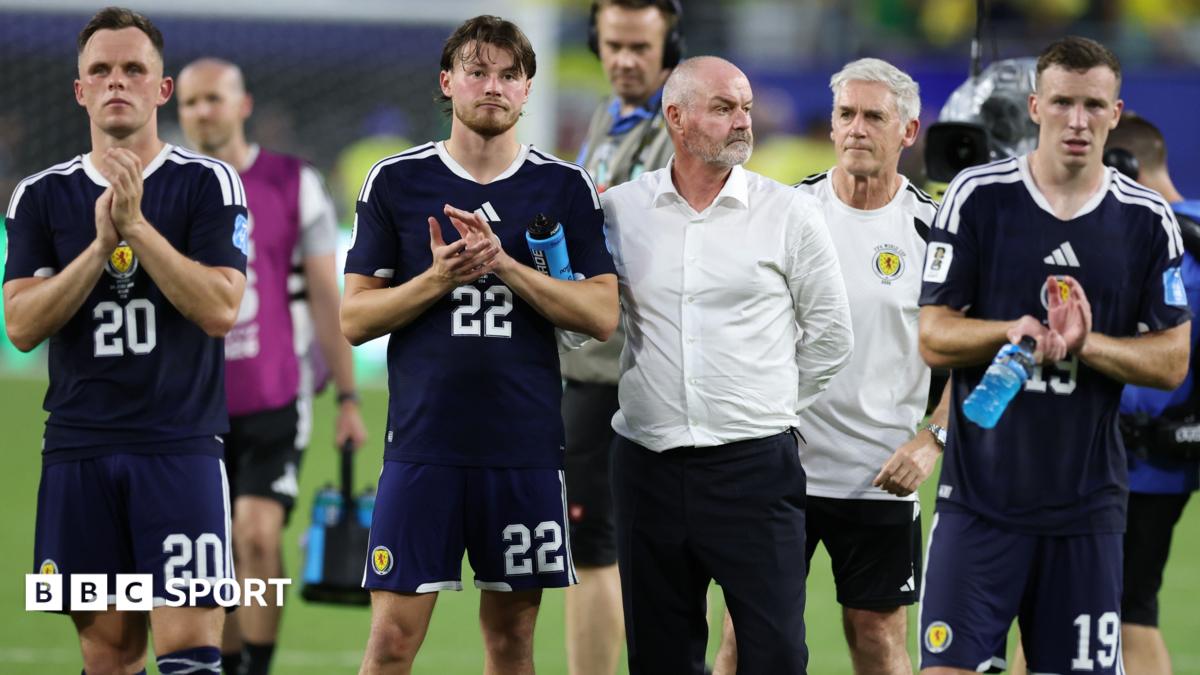
Scotland, who have played at each of the past two European Championships, booked their spot at a World Cup for the first time since 1998 in dramatic fashion with an unforgettable victory against Denmark at Hampden Park in November.
Backed by tens of thousands of fans who had travelled to the United States, John McGinn’s deflected strike against Haiti earned the country’s first win at a World Cup for 36 years.
That would be Scotland’s only goal of the tournament.
They lost to a second-minute strike by 2022 semi-finalists Morocco in their second match, so they entered their final group game against Brazil knowing a draw would probably be enough to send them through as one of the best third-placed teams.
However, first-half defensive errors would prove their undoing.
They once again conceded early when defender Scott McKenna was robbed of possession inside his own penalty area, gifting an opener to Vinicius Jr.
The Real Madrid forward was denied a second when the video assistant referee (VAR) deemed he had fouled Jack Hendry before rolling the ball past Angus Gunn, but just before half-time Scotland again gave the ball away near their own goal and Vinicius Jr nodded in at the back post to make it 2-0.
Matheus Cunha extended Brazil’s advantage after half-time and a late rally failed to yield a reply that would have improved Scotland’s goal difference.
HARRY Style’s ex girlfriend Nadine Leopold has just revealed that she’s pregnant with her first child.
The stunning Victoria’s Secret model, 32, took to Instagram to announce the amazing news with a series of black and white photos.
Sign up for the Showbiz newsletter
Thank you!
Harry Styles’ ex Nadine Leopold has revealed that she’s pregnantCredit: InstagramNadine and the singer dated between 2014 and 2015Credit: Getty
In the post Nadine compiled four snaps together showing her blossoming belly from different angles.
She cradles her bump and holds up a pregnancy test next to it in one picture, meanwhile others show her with her hands on her lower back to really flaunt the change in her figure.
Penned alongside the photos, Nadine said in the post’s caption: “The best is yet to come…” followed by emojis of a baby’s bottle and a white heart.
Fans of the star flooded the comment’s section with congratulatory messages.
STEP into your own David Attenborough show on a dreamy family staycay.
From a gorgeous country estate on the England/Wales border, to seal-spotting and wild swimming while kipping in sleepy Harleston
Sign up for the Travel newsletter
Thank you!
Be the queen of the castle exploring PowisCredit: Alamy Stock PhotoThe gorgeous country estate is brimming with nature on the England/Wales borderCredit: Supplied by PR
Marrington Escapes, Shropshire
Expect country-chic vibes at MarringtonCredit: Supplied by PRThe stunning Dingle Valley is home to all sorts of wildlifeCredit: Getty Images
Lifestyle Editor Catherine Bennion-Pedley and her gang found a gorgeous country estate brimming with nature on the England/Wales border.
A grazing pony, strutting pheasants and hopping hares are just a few of our neighbours on the glorious, family-owned Marrington Estate.
And we’ve spied them all before we even embark on an hour’s walk down through the stunning Dingle Valley, where the babbling River Camlad is home to crayfish, otters and kingfishers.
We’re kipping in one of the estate’s biggest properties, Marrington Farmhouse, which sleeps 10 under cloud-like duvets – although the dining room is better-suited to eight – and which comes with a kitchen proper cooks will love.
A large hot tub, The Traitors board game complete with cloak, a verdant lawn and an apple orchard brimming with harvest make it an idyllic spot and, come evening, we toast marshmallows on the firepit and stargaze.
Our welcome hamper includes pistachio sablés from What A Pickle! in the county’s foodie capital Ludlow and a bottle of zingy Shropshire Lady white wine using Solaris grapes from Kerryvale Vineyard, 10 minutes’ drive away.
But with little ones in tow, we resist a vineyard tour and tasting, £25 per person (Kerryvalevineyard.co.uk), and instead take a trip across the border to Wales on board a steam train.
The nearby Welshpool & Llanfair Light Railway trundles us through the rolling hills and, once we arrive in Llanfair, Poppy, seven, and Raffy, four, are thrilled when the friendly driver spots them looking on wide-eyed in awe and invites them into his cabin to pull the steam whistle.
Return tickets cost £27 per adult, £10 per child (Wllr.org.uk). We’re also close to several castles, from which we pick the striking 13th-century Powis Castle, a 20-minute drive away.
Its baroque terraces are a spectacular display of colour, and feasting on a cream tea, £7.50, among the blooms before a stroll through the woodlands is heavenly.
On our way back, we make a pitstop at The Nags Head Inn in Garthmyl for the Sunday roast of dreams, tucking into a delicate crab salad with watermelon and pineapple salsa, before tackling ginormous three-meat platters with all the trimmings in the lively dining space (Nagsheadgarthmyl.co.uk).
Two courses cost from £24.45, and we haven’t had a roast that good since!
Stays at Marrington Farmhouse, sleeping 10, cost from £30 per person, per night (Marringtonescapes.com).
Mendham Mill, Suffolk
Tree cheers for the setting of Mendham MillTrot along the coastline at Horsey GapCredit: Alamy Stock PhotoThe beaches are sealy amazingCredit: Shutterstock / Kirsty Nadine
Writer Ellie O’Mahoney and her family spotted seals and tried wild swimming while kipping in sleepy Harleston.
Paddling in canoes up the River Waveney, it feels like we are in the middle of a painting.
We’re staying at Mendham Mill Holiday Cottages on the Norfolk/Suffolk border, and canoes here are free to borrow, from which we spot newly hatched goslings, grazing cows and a hovering kestrel.
We’re bedding down in wheelchair-friendly North Meadow Cottage, which sleeps six, and our children, Elliot, 11, and Molly, nine, whoop for joy when they find the games room with table tennis and a pool table.
Later, we take a bracing swim in the river at the bottom of the garden, then warm up under the outdoor shower.
Norfolk is famous for its seal colonies, so we make the hour’s drive to one of the UK’s largest, Horsey Gap, to spot them (Horseygap.co.uk).
Close by is wooden marvel BeWILDerwood, where the kids burn off their energy exploring the treehouses, zip wires, mazes and slides.
Tickets cost from £20.95 for those over 92cm (Bewilderwood.co.uk). Another day, Framlingham Castle, inspo for Ed Sheeran’s Castle On The Hill, proves the perfect spot for playing warring knights.
Later, we get a Michelin-recommended taste of old-school Suffolk at The Peacock Inn in Chelsworth, a 14th-century Grade-II-listed pub in the prettiest of villages.
Battered haddock with koji tartar sauce, £18, is standout, while the mousse, £11, made with 85% chocolate from local chocolatier Pump Street is to die for (Thepeacockchelsworth.com).
Stays at Mendham Mill Holiday Cottages, sleeping six, cost from £35 per person, per night (Premiercottages.co.uk).
OR GO REALLY WILD…
The Reserve, Cheshire
Enjoy a family stay at The ReserveCredit: Supplied by PRThere’s lots to like about the Reserve’s lodgesCredit: Supplied by PRSwing into action at Chester ZooCredit: Supplied by PR
Wake up to giraffes as campmates at Chester Zoo, says Lifestyle Editor Catherine Bennion-Pedley.
Stuffing play balls with lucerne hay, my kids are thoroughly enjoying preparing teatime treats for giraffes with zookeeper Sophie, while learning about their surprisingly small poos and why their long tongues are black (to protect them from the sun, FYI).
The excitement continues when later we join an after-hours tour to catch a glimpse of nocturnal animals waking, including aardvarks, and learn about the incredible cancer-fighting superpower of naked mole rats.
By sleeping over, guests are helping the conservation efforts here and The Reserve’s reception, restaurant and bar ooze sophistication.
Welcome cocktails of sapling vodka, lime and honey – and juices for the kids – are quickly slurped, and the 51 lodges are swishly furnished, although our lakeside pad is without much of an actual lake view and comes with the buzz of traffic that leaves us feeling very much still in England when on our veranda.
Pricier lodges overlook the giraffe enclosure and, on our stroll to the plentiful breakfast, we spot the majestic creatures through gaps in the foliage.
As well as exclusive animal tours and fireside stories in the lounge, overnight guests also get to step into the zoo early, and it is undoubtedly one of the UK’s best – home to more than 500 species, including orangutans, elephants, leopards and lions.
All in all, our little ones think this is a roar-some mini-break.
Family stays for four at The Reserve cost from £306 B&B, including two-day zoo access (Chesterzoo.org).
Although England were always expected to progress from Group Two, the manner of their performances has still been impressive.
They racked up 200 or more against Sri Lanka and Scotland, scored an equally impressive 186-7 on a tricky pitch against West Indies at Lord’s, and romped home with 2.4 overs to spare in a chase of 164 against the White Ferns as Danni Wyatt-Hodge made an unbeaten 89.
“The goal was to win the group,” Edwards said.
“To go through unbeaten is really pleasing. Our batting has been particularly powerful and a real positive for us.
“I thought we bowled really well tonight on a good pitch. You saw how good that pitch was.
“We seem to be getting better with each game which is really good going into the business end of the tournament.”
England will not find out their semi-final opponents until Group One concludes on Sunday, but India or South Africa currently appear the most likely.
They also do not know whether they will play on Tuesday at 14:30 BST or Thursday at 18:30 BST.
Tuesday’s match has been arranged to suit Indian TV and India will play in that match should they qualify.
It means England will play on Thursday if anyone but India finishes second in Group One, but be switched to Tuesday if India take second spot.
“We obviously know now with the teams we are likely to play in the semi-finals, one are world champions of the ODIs [India] and one have played in every World Cup final for the last three years [South Africa] so it is not going to be easy,” Edwards said.
“But we are going in with the most confidence we have ever done into a semi-final and with a lot of belief.”
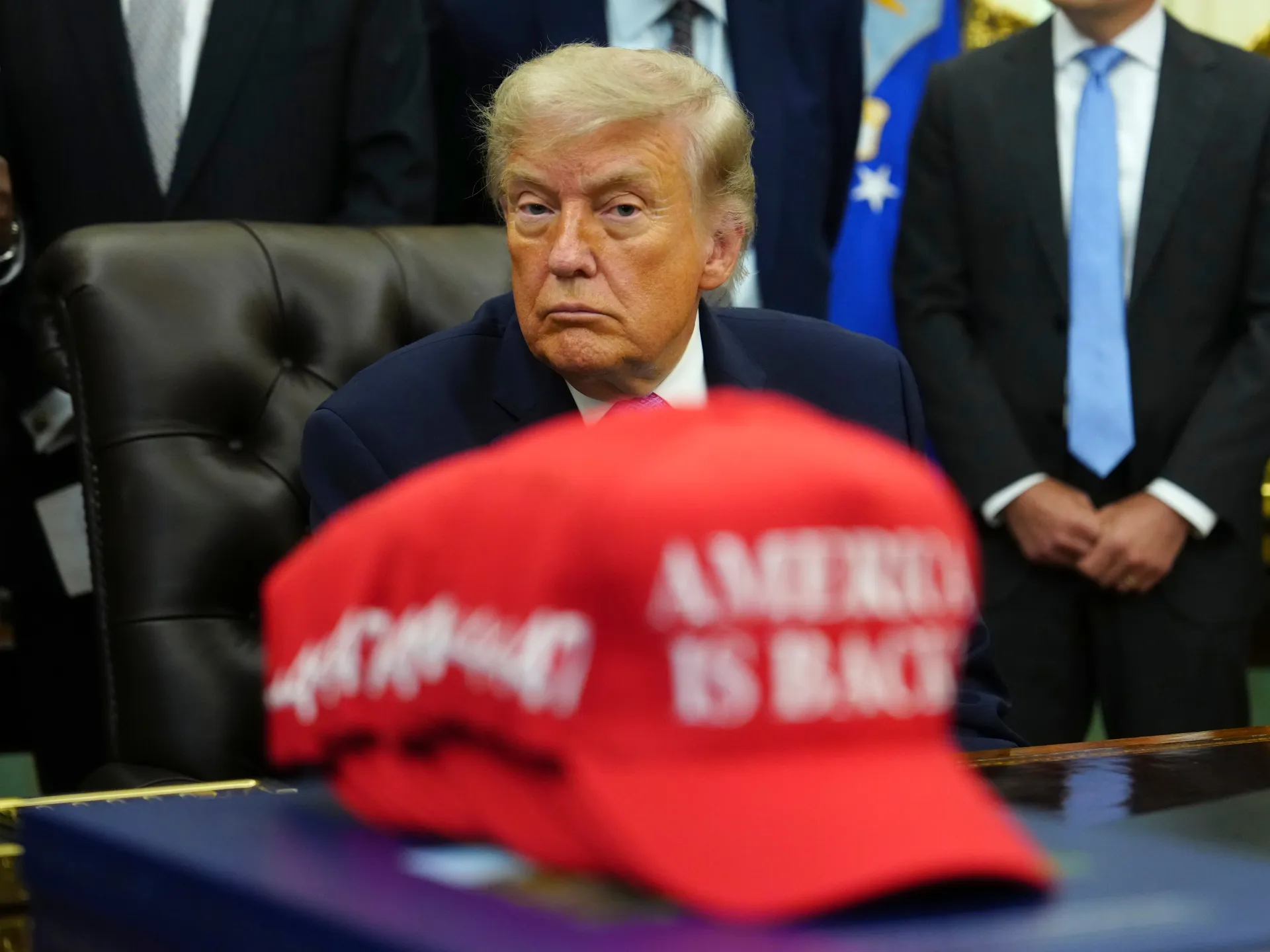
President Donald Trump released an image of the new, limited-edition design for U.S. passports to mark the 250th anniversary of the United States in a post on social media, which includes an image of him posing behind the Resolute Desk. Photo by Donald Trump/Truth Social
June 27 (UPI) — President Donald Trump released the new design for the cover of U.S. passports, which features an image of him on one side and the signing of the Declaration of Independence on the other side.
The updated design follows a State Department announcement in April that a “limited-edition” passport with Trump’s image on it would be available this summer to commemorate the 250th anniversary of the United States of America.
The “specially designed” passport is expected to be available only at the Washington Passport Agency in Washington, D.C., with no extra cost, although design options online or in other locations will retain the current design, the department said at the time.
Trump shared the image in a post on Truth Social on Friday, as did the official White House account on X, with that account referring to it as the “Patriot Passport.”
“The U.S.A.’s New passport, which says, “Welcome, but be good!” Trump said in the post, which included an image of the front and back of the new design.
The limited-edition passport will be available at the D.C. passport office starting on July 6, and people who would like to get one must schedule an in-person appointment at the agency, the State Department said on Friday.
The department also has scheduled two special passport acceptance events specifically for the limited edition version, the first on Aug. 22 and the second on Sept. 26, both of which will be held at the Washington Passport Agency.
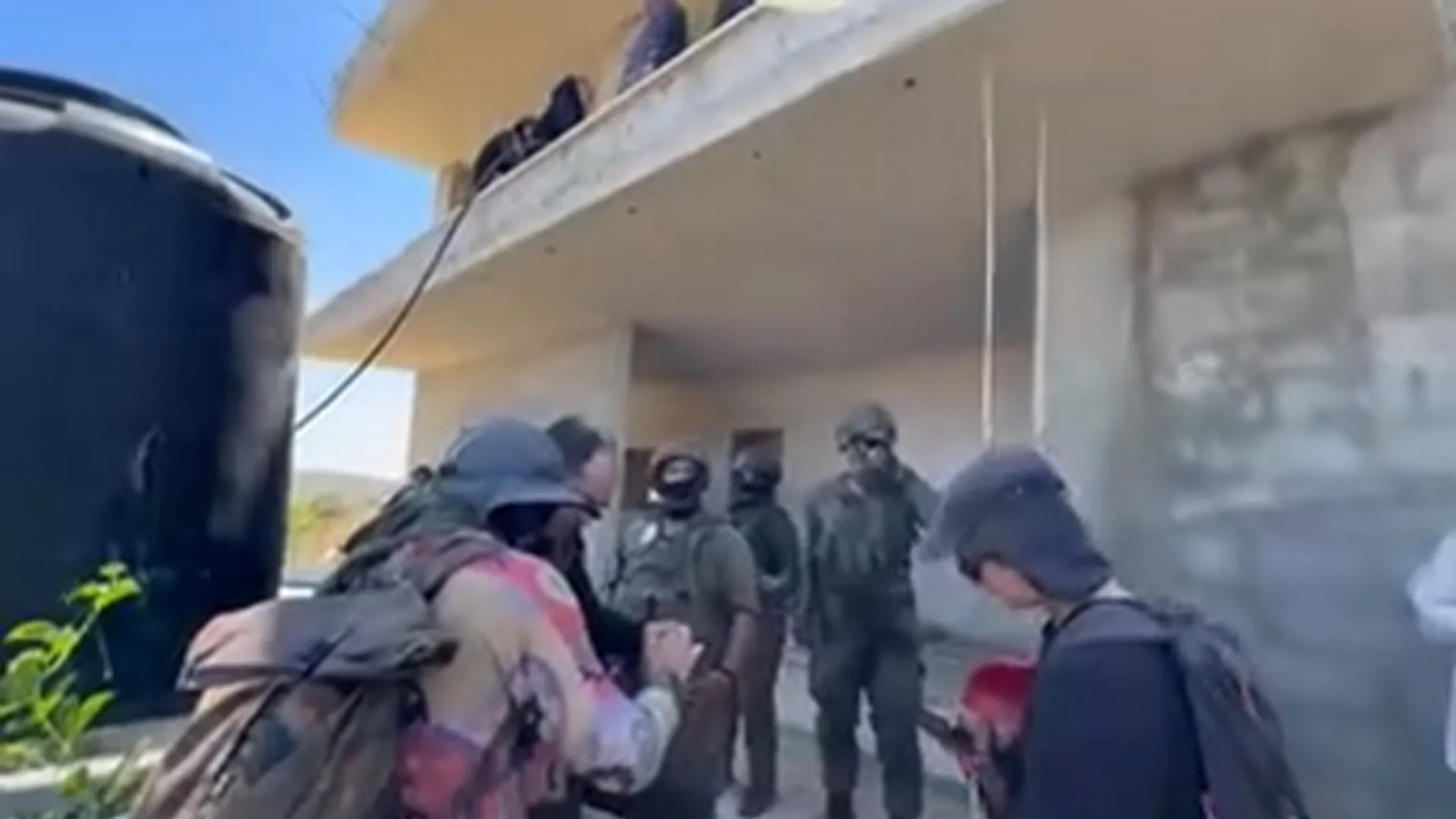
Videos show Israeli settlers, protected by Israeli soldiers, trying to seize a house under construction on the outskirts of the town of Qabalan, just south of Nablus, in the occupied West Bank.
LOOKING cool is no sweat for Kylie Jenner — thanks to her latest cosmetics creation.
The US beauty mogul posed in a see-through slip dress to help promote a powder which claims to be sweat and humidity-proof.
Sign up for the Showbiz newsletter
Thank you!
Kylie Jenner posed in a see-through slip dress to help promote a powder which claims to be sweat and humidity-proofCredit: Instagram Kylie CosmeticsThe model has provided the AI assistant’s voice for a pair of smart glassesCredit: Meta
It is the latest launch from her Kylie Cosmetics range, which has helped the 28-year-old rake in a £500million fortune.
Meanwhile Kylie, who is dating Oscar-nominated actor Timothée Chalamet, has provided the AI assistant’s voice for a pair of smart glasses.
She also helped design the £359 oval Starfire Kylie Edition shades for tech giant Meta.
Wearers can take photos and videos, make and answer phone calls, listen to music and interact with a virtual assistant voiced by Kylie.
Kylie also helped design the £359 oval Starfire Kylie Edition shades for tech giant MetaCredit: MetaThe new hi-tech specs come in 26 different styles and eight colour options
They include selections of Meta Adventurer (rectangular) and Meta Fury (squared) spectacles, as well as Meta Glasses by Kylie (with a slim oval shape).
They’re all “smart glasses”, which means they have built-in cameras, microphones, and an AI assistant – but not a display.
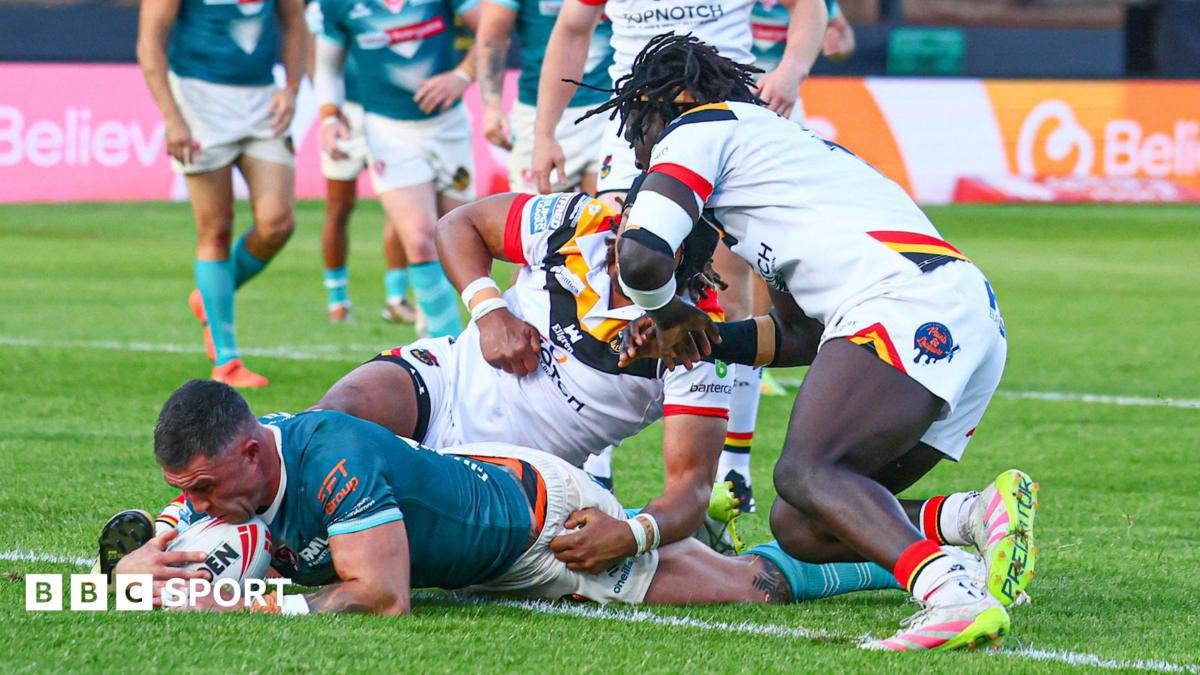
St Helens strongly came through an attritional contest with Bradford Bulls to move back up to fourth in Super League.
They were quickly 10-2 behind after a Phoenix Steinwede try, but from there the visitors fought back to take control.
Jacob Douglas and Curtis Sironen tries had them in front by half-time, but they dominated after the restart with 28 unanswered points and further scores from Jack Welsby (2), Joe Shorrocks and Jackson Hastings, who had a 20-point haul with eight kicks too.
The victory took Saints up two places in the table, level again with Wigan Warriors but with an inferior points difference.
Having faded after a good start, this was a third straight defeat for Bradford, who stay 11th in their first year back at this level.
This was Saints’ first visit to Odsal since 2014 and the home side responded to the sight of one of the great names of rugby league being back at this famous old ground.
It made for a very physical start following a hard-fought game at the Brewdog Stadium in March.
Hastings kicked an early goal for Saints, before Shane Wright was yellow-carded for a late hit on Chris Atkin.
With the Australian forward off for 10 minutes, Bradford scored 10 unanswered points, highlighted by Steinwede’s hard run into the line and a smart sidestep taking him over the line.
But that was the high point for the Bulls as the visitors turned the scoreline around with two tries in the space of seven minutes.
Winger Douglas finished well in the left corner to mark his debut with a try, coming in with injuries leaving a big hole in the backline.
Then second-rower Sironen, on his 100th St Helens appearance, proved unstoppable from close range as Paul Rowley’s side went in ahead at the break.
That advantage was extended within a few minutes of the restart as Welsby got his hand down to Hastings’ grubber kick before the ball went dead.
Shorrocks took advantage when his own little kick bounced up kindly to dive over. Hastings then grabbed a try of his own after Harry Robertson had parried down the Australian’s chipped kick to move the lead out to 20 points and effectively seal the success.
Welsby got his second and St Helens’ sixth try, but the match ended on a worrying note after a very serious-looking injury for Bradford forward Will Gardiner, who needed treatment on the field from both sets of medical teams before he was carried off on a stretcher.
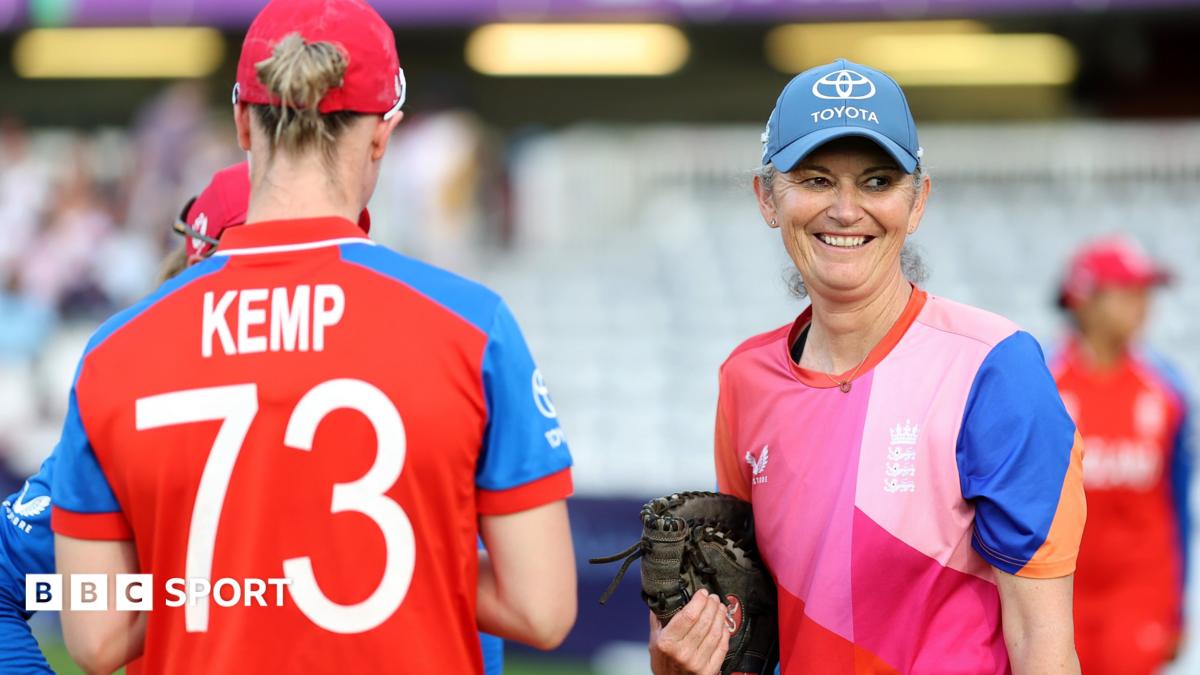
England’s winning run at the T20 World Cup continued with a rampant nine-wicket victory over New Zealand in their final group game at The Oval.
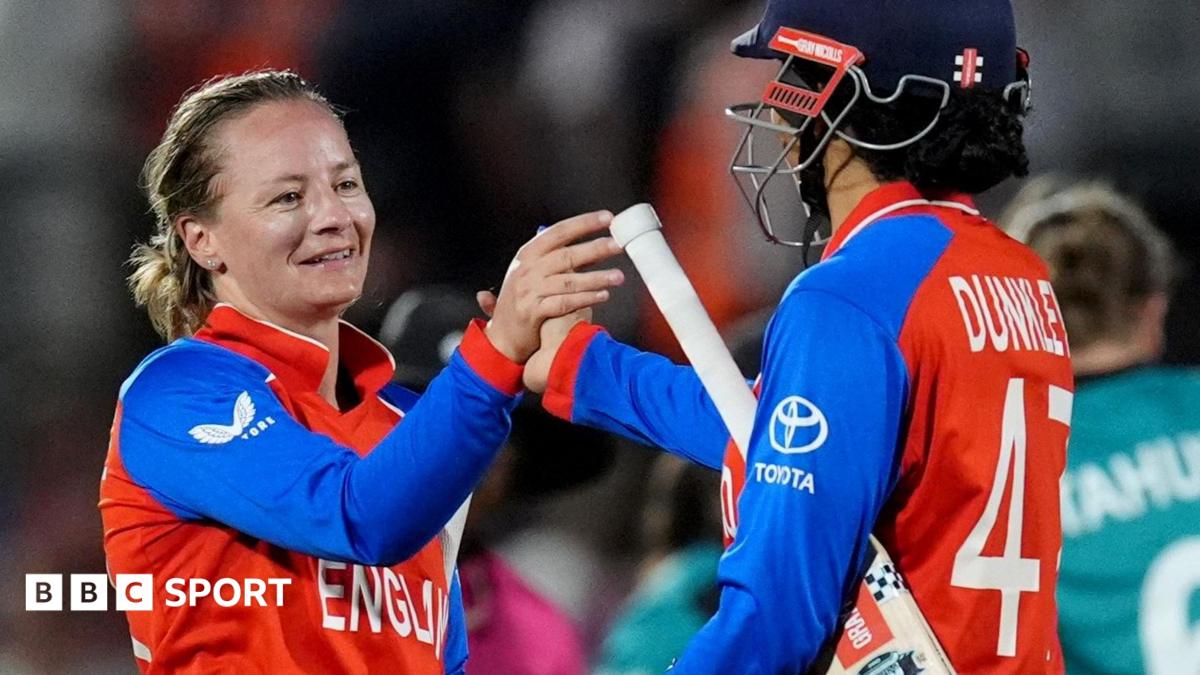
Already assured of top spot in Group 2 and with it a place in next week’s semi-finals, England built on the momentum of their four previous wins by cruising a chase of 164 with 16 balls to spare.
Danni Wyatt-Hodge, now the tournament’s leading run-scorer, kept up her superb form by crashing 89 not out. She was supported by Sophia Dunkley, who made 49 not out in their partnership of 128.
Defending champions New Zealand are a shadow of the side that won this title in 2024 but the dominant nature of England’s win only added to the sense of momentum around this side.
After limiting New Zealand early on, they took three wickets in four balls without conceding a run in limiting the White Ferns to 163-6.
Sophie Devine hit three sixes in a 14-ball 30 on her final international appearance but otherwise England were always in control.
Their semi-final opponents will be confirmed on Sunday, with India or South Africa appearing the most likely.
That match will take place on Tuesday afternoon or Thursday evening back at The Oval, where England’s women’s side have never lost any of their 11 matches.
Win that and they will return to Lord’s for the final on Sunday for a chance to win their first World Cup title since 2017.
Fifa World Cup 2026 fans were quick to take to social media to share their reactions to tonight’s coverage.
Hayley Anderson and Hayley Anderson Screen Time TV Reporter
21:29, 27 Jun 2026
ITV’s Fifa World Cup 2026 host Laura Woods. (Image: ITV)
Football fans voiced the same complaint minutes into tonight’s World Cup match on ITV.
Ahead of this evening’s match against Panama, England was sent through to the last 32 following matches against Croatia and then Ghana earlier this week.
So England fans were on a high prior to tonight’s game, which kicks off at MetLife Stadium in East Rutherford, New Jersey at 10pm UK time and 5pm US time.
However, just minutes into the coverage ahead of this evening’s match, viewers couldn’t stop themselves from flocking to X as two unexpected faces popped up on their screens.
Presenter Laura Woods welcomed none other than ITV legends Ant McPartlin and Dec Donnelly as they joined her at the channel’s stunning New York studio.
She asked about their opinion on tonight’s match, as well as about their own memories of previous World Cups but not everyone was happy to see the I’m A Celebrity hosts.
In fact, many commented that they were ‘switching off’ ITV’s coverage following their appearance.
“Ant and Dec FFS, I’ll switch back on at 9.55,” someone said on X (Twitter).
A second echoed: “Ant and Dec appeared. I switched to Five Live”, with someone else adding: “Ant & Dec being ‘interviewed’ during the World Cup may be the strangest thing I’ve seen during this whole event.”
Taking to X, a fan exclaimed: “Surely they could have got better than ant and dec for the World Cup, so annoying!”
Meanwhile, someone else asked: “No football people available tonight?”, as a fellow viewer sarcastically commented: “I was just saying to myself ‘We really don’t see Ant and Dec on the tellybox enough'”.
However, one fan defended the award-winning ITV duo, arguing: “Ant and Dec are much better than Neville and carragher.”
The last time England took centre stage was against Ghana which ended 0-0 at the Gillette Stadium in Boston.
Meanwhile, even though Scotland beat Haiti 1-0 in their first match of the World Cup 2026, they have since lost to both Morocco and Brazil.
The Fifa World Cup is available to watch on ITV and ITVX.
Jakob Davies, 25, suffered severe injuries after falling from a three-storey balcony during a stag do in Albufeira, Portugal, as his family launches a fundraiser to help him
Jakob Davies remains in hospital after falling from a balcony in Portugal(Image: Kennedy News and Media)
The devastated family of a Brit who plunged from a three-storey balcony during a stag do in Portugal fear his travel insurance may not cover his mounting medical bills because he had been drinking.
Jakob Davies, 25, remains in hospital in Faro after suffering catastrophic injuries in a fall at a hotel in Albufeira earlier this month. His loved ones say they are still waiting to hear whether his insurer will pay out after tests showed alcohol in his system.
The factory worker, who is from Scarborough, North Yorkshire, had travelled to the Portuguese party hotspot with around 30 work colleagues for a stag weekend on June 4.
His mum, Claire Gerrard, fears the family could be left facing huge costs after doctors warned Jakob he may never walk again without urgent surgery.
The 51-year-old woman said: “He’s totally on his own. I need to know what’s going to happen to him. He was told if you don’t have this operation immediately then you won’t walk again.
“He does have travel insurance but because of the alcohol that he’s drunk it’s not looking like they will pay. We’ve contacted the insurance company and they wanted all the reports so I sent the reports.
“The doctor gave Jakob his alcohol levels with his bloods done and it did show alcohol in his system, which unfortunately they will not pay out.
“25 [years old] on a stag party he’s not going to have none is he? They’ve not said no yet, we’re still waiting on information. I think it should be made more clear to people, especially to youngsters. You’re going on holiday to a stag party and you can’t drink, they don’t listen, they just go and have a drink.”
Jakob had chosen to stay behind at the accommodation on June 5 to play football while the rest of the stag group headed out.
But when his friends returned later that day, they were alarmed to see fire engines, police cars and ambulances rushing towards their hotel.
Claire expained: “I think there were about 30 of them and it was somebody from work’s stag party. It’s all really, really vague, Jakob has no recollection of it whatsoever.
“He had been playing football with some other guys, his party were leaving and Jakob had said ‘I’m going to continue to play football’.
“I don’t even think he remembers playing football but that’s what he was doing. When the party was returning back to the hotel there were fire engines flying past and then the police came past and then the ambulances came past and had turned into their hotel so they thought ‘oh gosh something is going on’.
“When they got there Jacob was unconscious on the floor with severe head injuries and broken bones, it looked pretty horrific initially. When they got him in the ambulance, he had regained consciousness and he was speaking but he wasn’t aware of what had happened.”
Believed to have fallen from a three-storey balcony, Jakob was initially taken to a local hospital before being transferred to a larger hospital in Faro.
Doctors later discovered he had suffered a serious head injury, broken feet and ankles, as well as fractures to both his L1 and L4 vertebrae.
Recalling the moment she learned about the horror fall, the worried mum said: “I got a phone call at around 11am on Saturday morning [June 6] to say Jakob’s fallen from a three-storey balcony. My initial feelings from then on were absolute dread.”
As Jakob continues his recovery overseas, family and friends have launched a GoFundMe appeal to help cover medical expenses and the cost of bringing him back to the UK.
Travel insurance experts warn that some policies contain exclusions relating to alcohol or drug use, although terms and conditions vary between providers. Holidaymakers are urged to check the small print of their policies before travelling, particularly if they are planning to drink while abroad.
Malachy O’Rourke opted for a tactical switch at the start of the second half and handed Niall Devlin the responsibility of tailing David Clifford.
The All-Ireland champions outscored Tyrone 0-5 to 0-2 across the opening 10 minutes of the half, Dylan Geaney and David Clifford (free) firing over from two-point range to extend their lead to five.
Darren McCurry was sprung from the bench in response, and immediately got into the action by nailing a difficult two-point free.
The Ulster side had a chance to level from the next attack, Donnelly feeding McElholm through, but his angle was quickly narrowed as Shane Murphy made a brave stop.
Kerry almost killed off the Tyrone charge on 50 minutes. Sean O’Shea, just on to the field, squared the ball to Dylan Geaney on the edge of the area, and with the goal gaping, his pass was over-hit.
The warning shot seemed to fire-up the men in white and red, as they hit the next three points, McElholm and McCurry shooting over, before McElholm put one between the sides blazing over via the crossbar with many waiting for the net to bulge.
Dylan Geaney was in inspired form and kicked the next three scores, including his second two-pointer.
Not to be outdone, McCurry landed his second two-pointer from a free, as Kerry were punished for failing to keep three players in attack. When Donnelly followed up with his third of the day, there was just one point between the sides with 15 minutes left.
McCurry and David Clifford started to have their own personal battle on the scoreboard with little to separate the sides, before Paudie Clifford landed a 45′ after a disputed effort which the Tyrone players felt went wide, only for the umpire to award the 45′.
Super-sub McCurry kicked his eighth and ninth points to leave one in it with three to play.
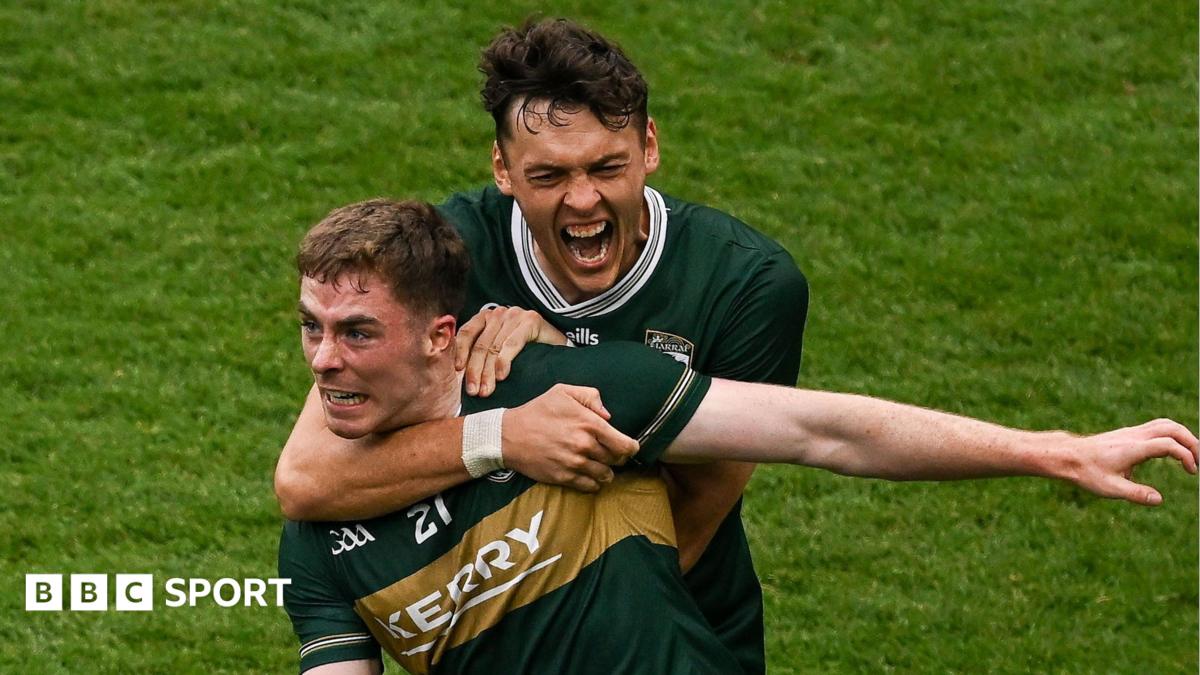
Paudie Clifford and McCurry traded efforts heading into the final play of the match, Kerry winning their own kick-out as Armin Heinrich finished to the net on the hooter as Tyrone desperately tried to win the ball back at the death.
June 27 (UPI) — Volkswagen is set to cut as many as 100,000 jobs, and end production at four of its plants, as part of a restructuring to better counter Chinese rivals in Europe.
The company is one of several German automakers that is making cuts as Chinese companies gain ground in both Germany and the rest of Europe, The Financial Times and Wall Street Journal reported.
BMW and Mercedes-Benz, as well as Stellantis and Renault, have lost market share in Europe as BYD, Chery and other Chinese brands have surpassed 10% of car sales on the continent after years of slow growth.
Volkswagen already had agreed with its employee’s unions to cut 50,000 jobs in Germany by the end of 2030 as part of making it “more efficient and leaner,” but some experts have questioned whether the increased moves will have their intended effect, the reports said.
“Every European player is losing today,” Thomas Besson, an auto market analyst at Kepler Cheuvreux, told The Times.
“This is a highly challenging situation for European carmakers,” Besson said, “because Chinese [manufacturers] are progressing [in Europe] at a much faster pace than expected, while [European manufacturers] continue to lose volumes in China and face very adverse conditions in the United States, notably due to tariffs.”
Volkswagen, which is Europe’s largest carmaker, would be dropping about 15% of its 660,000-person workforce, in addition to ending production at three Volkswagen plants and one Audi plant, CNBC reported.
The company also plans to reduce investments by about 15% — roughly $148 billion — over the next five years, while also launching new efforts at selling its products to compete with the Chinese companies.
“The entire [Volkswagen] group — including its brands and subsidiaries — must undergo profound change,” a company spokesperson told CNBC.
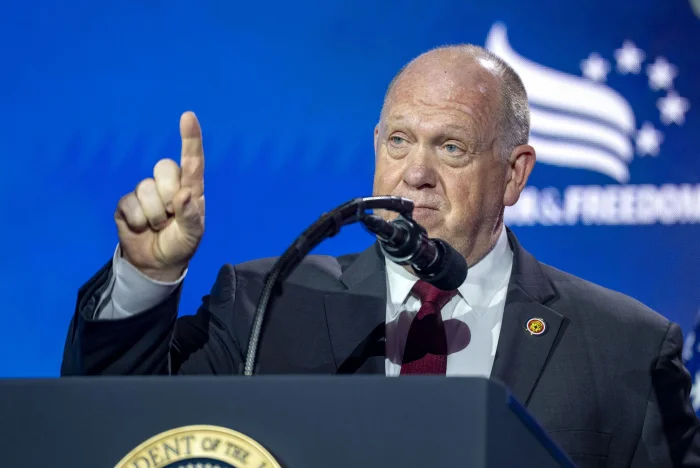
White House Border Czar Tom Homan speaks during the Faith and Freedom Coalition 2026 Road to Majority Policy Conference at the Washington Hilton on Friday. Photo by Bonnie Cash/UPI | License Photo
Had enough of the heat? Grab your bags and enjoy utter luxury with Club Med prices in July
This article contains affiliate links, we will receive a commission on any sales we generate from it. Learn more
Escape the heat with a dip in the pool on a luxury stay, for less(Image: Getty Images)
Club Med has officially unveiled an enticing selection of last-minute summer holiday offers, giving spontaneous travellers the chance to save up to 15% on last-minute breaks. Tailored for those prepared to jet off at a moment’s notice, this time-limited promotion delivers sunshine, sandy shores and luxury at a fraction of the usual cost.
Holiday seekers will need to move quickly, however, as spaces are restricted across selected dates and properties. To maintain the excitement, Club Med will be introducing fresh departure offers every Friday, reports the Manchester Evening News.
Renowned for its upmarket all-inclusive holidays, Club Med provides idyllic getaways to stunning locations across the globe. Each package bundles together high-end accommodation with fine dining, unlimited activities and childcare into one transparent price, allowing guests to unwind and savour a much-needed escape.
READ MORE:
From the sun-kissed coastal havens of Europe to the palm-lined shores of the Caribbean, we’ve compiled some of the finest resorts for a last-minute holiday you’ll treasure forever.
Club Med Magna, Marbella
The 12-acre Club Med Magna Marbella is a sun-soaked resort ideally situated for reaching central Marbella. Visitors can unwind beside the family lagoon pool and the adults-only Zen Zone or get involved in numerous activities such as padel tennis.
The resort also features outstanding dining experiences at the sophisticated Suenos restaurant and the Tierra Gourmet Lounge, which offers regional specialities such as jamón ibérico. Additionally, there are four distinct bars where guests can savour a holiday drink.
Travel dates are available until July, with new deals added every Friday
As the sun-kissed shores of Marbella continue to be a favourite amongst British tourists, holidaymakers can also discover reduced Spanish getaways with savings of up to £600 through TUI. Budget-conscious last-minute escapes are also on offer for under £500 with Love Holidays.
TripAdvisor users have given the resort glowing reviews, with one describing it as ‘THE family destination’. One visitor said: “Our stay was simply amazing, everything is thoughtfully designed with families in mind. Our 4-year-old absolutely loved the kids’ club… the food was exceptional. There were so many spaces to explore with our children, and a great range of sports and activities to enjoy – paddle, tennis, Pilates and more.”
Another guest did observe that the location was an “Isolated village, without much personality, but a hotel of good quality, made for sport and sun.”
On the whole, though, the prevailing view mirrored this assessment, stating: “Very good experience at Club Med Magna Marbella. Everything was perfect, buffet, kids club and entertainment.”
Club Med Da Balaia, Algarve
Perched atop the famous red cliffs of the Algarve, Club Med Da Balaia is a paradise for golf enthusiasts. Visitors can also unwind beside the unique natural eco-pool or try their hand at numerous activities, including flying trapeze and archery.
The resort also features excellent dining at the Balaïa Restaurant and the relaxed lounge, offering authentic Portuguese fare alongside stunning ocean vistas. There’s also a spa on-site providing bespoke treatments and ample indulgence.
The Algarve remains a firm favourite holiday destination for Brits seeking a getaway. Currently, Love Holidays has last-minute, room-only Portugal breaks from £119 per person, while Golf Breaks provides specially designed escapes for devotees of the sport.
At Club Med, TripAdvisor reviewers are full of praise for the resort, with one declaring: “Our stay at Club Med La Balaia was simply fantastic from start to finish. Set in a stunning location overlooking a beautiful, family-friendly beach, the resort offers the perfect balance of activity and relaxation.”
While one visitor mentioned the pool was “ok, maybe a bit warmer may have been ideal,” the overall sentiment mirrored this review: “We had an absolutely wonderful week at Club Med de Da Balaia…three young children, parents and grandmother. Everything was there for a successful holiday: sunny weather and beautiful surroundings.”
Cefalù, Sicily
The flagship Exclusive Collection Cefalù is a luxury resort superbly located on the iconic Italian island of Sicily. Guests can unwind in the restored 18th-century palazzo lounge or participate in numerous activities, including sunset yoga and Europe’s first stand-up paddleboarding school.
After an action-packed day, the resort features impressive dining options to satisfy every appetite. Visitors are then treated to a delectable Sicilian-inspired menu that perfectly captures the authentic flavours of the region.
Travellers unlucky enough to miss out on a Club Med stay could try booking a break to Italy with British Airways Holidays instead. Alternatively, Citalia offers a range of specially selected tours and holidays in the region.
Guest reviewers overwhelmingly praise the resort, with one hailing it as a ‘magical place’ where “the food is to die for’. They also praise the stunning views and say that just being 10-15 minutes away from Cefalu town in Sicily ‘is something very special.”
While one guest noted that, unlike some other Club Med locations, there was “no show at happy hour, no barbecue, no themed evening.”
Most, however, enjoyed their stay with another adding: “We had an absolutely exceptional time at Club Med de Céfalù! The setting is simply magical: breathtaking views of the Tyrrhenian Sea, elegant architecture perfectly integrated with nature, and a serene atmosphere that immediately invites relaxation.”
Club Med Palmiye, Turkey
Positioned south of Antalya close to the Taurus mountains, Club Med Palmiye is a beachfront resort nestled along a Mediterranean shoreline. Holidaymakers can opt to unwind beside the family pool or the adults-only Zen pool, or take part in numerous activities including flying trapeze and wakeboarding..
When it comes to dining, the resort provides multiple choices to cater for varying preferences. Guests can sample Turkish cuisine in a restaurant boasting a duck pond moat. There’s also a vibrant beach bar to enjoy as evening approaches.
Turkey’s southern coastline delivers budget-friendly entertainment and warm weather. Some other excellent bargains to the area include all-inclusive getaways with On The Beach, and Mr and Mrs Smith provide thoughtfully selected stays in upscale accommodations.
As you’d anticipate from Club Med, the Palmiye resort has also garnered numerous positive reviews on TripAdvisor. One said: “A great place for early birds and those who like to do a lot of different activities, to learn tennis and padel, circus trapeze, sailing basics and waterski.”
While one visitor mentioned slight annoyances with “long lines” for waterskiing, the overall verdict reflected the sentiment of an ideal family retreat. Another repeat guest proclaimed: “We came here after 2 years again, it was a good experience, so we come again, and we will come every year.”
For those contemplating a long-haul escape, the Punta Cana Resort in the Dominican Republic offers particular appeal to families.
A perfect choice for summer holidays, it features Club Med’s biggest water park, boasting more than 20 slides and splash zones, alongside a luxurious spa..
With a 4.4-star rating on TripAdvisor, guests commend the beautiful beach and the expert instructors who help families master new pursuits, including golf and tennis. Meanwhile, the Club Med resort in Marrakech has been described as a ‘magical destination’ where visitors can swap unpredictable weather for golden sunsets, colourful souks and the enchanting scent of spices wafting through the streets.
When Morocco reached the semi-finals of the 2022 FIFA World Cup, the achievement immediately transcended the boundaries of sport. It was the first time an African and Arab national team had reached that stage of the tournament. Yet what drew the greatest attention from international observers was not simply the result itself, but the way it confirmed changes that had already been unfolding elsewhere.
Football rarely exists in isolation. The fortunes of a national team often reflect deeper developments in governance, investment, youth development, and a country’s capacity to pursue long-term objectives. Morocco’s World Cup campaign brought into focus the broader transformation of a nation whose international profile has steadily expanded through diplomacy, infrastructure development, strategic investment, and regional cooperation.
That distinction matters. The World Cup did not create a new geopolitical reality for Morocco; it revealed one that had already taken shape. For several weeks, hundreds of millions of viewers encountered a Morocco that differed from the image long associated with the Kingdom. To many, Morocco had primarily been known as a tourist destination, a close European partner, or a North African state. Qatar 2022 introduced another image: a country capable of competing with football’s traditional powers, rallying a global diaspora, and projecting ambitions that extend well beyond its immediate neighborhood.
The scale of that exposure helps explain why the tournament proved so consequential. The 2022 FIFA World Cup reached an estimated audience of more than five billion people across television and digital platforms, giving Morocco a level of global visibility that few international events could ever provide.
Stay ahead of the geopolitical week.
MD Briefing delivers expert analysis across five global fronts — the Indo-Pacific, energy, geoeconomics, European security, and the Middle East — every Monday morning. Free.
This evolution reflects broader changes in the international system. Throughout much of the twentieth century, a state’s influence was measured primarily through military capabilities, economic strength, and diplomatic reach. While these pillars remain essential, they cannot fully explain how a country’s international image is shaped. In an era shaped by digital communication and instantaneous information flows, the ability to capture global attention, generate narratives, and engage international audiences has become another source of influence.
Football occupies a unique position within that landscape. No other sport crosses cultural, linguistic, and geographic boundaries with comparable ease. A World Cup captures the attention of governments, businesses, media organizations, and public opinion all at once. For several weeks, it places a country under a level of global scrutiny that no public diplomacy campaign could realistically achieve.
Morocco benefited from that exposure in remarkable fashion. Victories over Belgium, Spain, and Portugal naturally attracted worldwide attention. Yet the significance of Morocco’s campaign also lay in what it revealed about the Kingdom’s distinctive position at the intersection of multiple geopolitical spaces. Throughout the tournament, the Atlas Lions received support far beyond their domestic fan base. Celebrations unfolded across cities in Africa, the Arab world, and Europe. Those scenes illustrated something analysts had long observed but rarely witnessed so vividly: Morocco simultaneously belongs to several geopolitical spheres.
The team’s appeal was not built on sporting success alone. It also rested on a moral and ethical capital that substantially strengthened its international standing. Across much of the Global South, Morocco came to embody the possibility that a nation operating outside football’s traditional centers of power could challenge the established hierarchy without abandoning values deeply rooted in its own identity. Images of players embracing their mothers after victories, the importance given to family, and the respect shown toward opponents throughout the tournament resonated in ways that athletic performance alone rarely achieves.
Competitiveness, humility, and attachment to deeply held values combined to create a powerful sense of identification. That helps explain why Morocco inspired support far beyond its own borders.
Looking back, the 2022 World Cup stands out as a genuine turning point. It did not, by itself, redefine Morocco’s place in the world. What it did accomplish was introducing much of international public opinion to a modern Morocco—confident in its identity, proud of its history, and already engaged in a far-reaching process of transformation.
When Performance Becomes an International Language
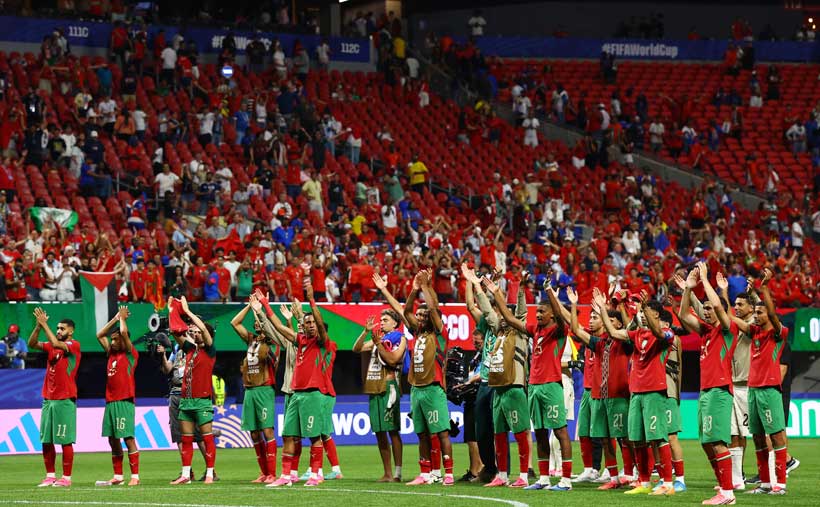
Morocco’s 1–1 draw with Brazil at the 2026 FIFA World Cup lends itself to a reading that reaches well beyond football. For decades, African national teams were largely viewed through the prism of isolated upsets against the sport’s established powers. Morocco now appears to have moved beyond that perception. Consistent results over several years have established the image of a team capable of competing regularly with the world’s elite.
This evolution reflects a broader pattern often found in international affairs. A country’s status rarely changes because of a single success. It changes when success ceases to be viewed as exceptional. The result against Brazil therefore says less about an unexpected sporting achievement than about Morocco’s growing place within world football’s established hierarchy.
The real shift is not that Morocco earned a result against Brazil. It is that such a result has become part of normal expectations.
The Foundations of Influence
Morocco’s growing stature on the football field is also the product of sustained investment in talent development. The Mohammed VI Football Academy has become one of the clearest expressions of that long-term strategy. With some of Africa’s most advanced training facilities, an integrated sports medicine center, and highly qualified coaching staff, the academy has helped build a generation of players capable of competing in the world’s leading leagues. The objective has never been limited to short-term success. It has been to establish the conditions for Moroccan football to remain competitive over time.
The success of this development model now extends well beyond the senior national team. Morocco won its first FIFA U-20 World Cup by defeating Argentina 2–0 in the final of the 2025 tournament in Chile. This dynamic illustrates the depth of the country’s football structure and suggests that recent achievements are part of a broader trajectory rather than an isolated cycle. The ability to produce successive generations of highly competitive players has become one of the defining features of Moroccan football.
Few countries possess the ability to inspire such diverse audiences. Morocco’s history, geography, and human ties connect it simultaneously to Africa, Europe, the Arab world, the Mediterranean basin, and, increasingly, the Atlantic community. Football has made that distinctive position visible in a way that few other instruments could.
A broader picture also emerges. Morocco’s achievements on the pitch have encouraged many foreign observers to look beyond football and discover a country they previously understood only in part. Behind the national team stands a state investing heavily in modern infrastructure, expanding its international partnerships, and strengthening its role across Africa while deepening its engagement throughout the Mediterranean.
Football has become one of the clearest expressions of that broader trajectory. It has drawn international attention to developments that were already reshaping the country.
It likewise strengthens one of Morocco’s most effective sources of soft power. Without replacing diplomacy, economic policy, or cultural outreach, football helps shape how the Kingdom is perceived abroad. Sporting success, world-class infrastructure, the organization of international competitions, and the presence of Moroccan players in Europe’s leading clubs all enhance the country’s visibility among audiences that may have little direct interest in political or economic affairs. Football has therefore become another instrument through which Morocco projects influence beyond its borders.
In today’s international environment, influence is measured not only by the ability to deter, but also by the capacity to inspire, attract, and unite. A successful national team can sometimes do more to strengthen a country’s international standing than demonstrations of hard power that no one hopes to witness.
Football, however, does not operate in a strategic vacuum. Its impact forms part of a broader national trajectory in which diplomacy, economic policy, institutional reform, and international partnerships reinforce one another.
Morocco’s return to the African Union in 2017, the expansion of its economic engagement across Sub-Saharan Africa, the implementation of major strategic infrastructure projects, and the consolidation of its diplomatic position on several regional issues all reflect a broader transformation whose significance extends far beyond sport.
The same pattern is evident in Morocco’s ability to organize major sporting events. The Africa Cup of Nations confirmed the results of years of investment in stadiums, transportation networks, and supporting infrastructure. Tournament management, logistical coordination, hospitality, and operational efficiency demonstrated capabilities already visible in other sectors of national development. The experience further strengthened Morocco’s credibility within international sporting institutions while reinforcing its reputation as a country capable of hosting events of global significance.
From Recognition to Projection
Against this backdrop, the decision to award the 2030 FIFA World Cup jointly to Morocco, Spain, and Portugal carries particular importance. Beyond its symbolic value, the decision reflects confidence in Morocco’s organizational capacity and in the institutional ecosystem that has been developed over many years.
In addition, the tournament carries a broader civilizational meaning. Its Moroccan, Spanish, and Portuguese framework creates a new narrative connecting Africa, Europe, the Mediterranean, and the Atlantic. For Morocco, this configuration reinforces the image of a country located at the intersection of these spaces and capable of transforming geography, history, and culture into instruments of dialogue, visibility, and influence.
Hosting one of the world’s most watched events requires more than modern stadiums. It demands political stability, efficient institutions, and the ability to coordinate complex operations over an extended period.
For that reason, the 2030 World Cup represents far more than another sporting milestone. It will serve as a large-scale test of credibility as well. For several weeks, Morocco will be observed by billions of viewers, thousands of businesses, and hundreds of official delegations. Few international events offer such an opportunity to showcase a country’s transformation before a truly global audience.
Morocco’s experience reflects another broader international trend. An increasing number of states now use major sporting events to support their integration into global political and economic networks. China’s Olympic Games, Qatar’s hosting of the 2022 FIFA World Cup, and Saudi Arabia’s expanding sports strategy all illustrate this evolution. Sport has become a platform through which countries project national ambition and shape how they are perceived abroad.
Morocco’s trajectory nevertheless stands apart. Unlike countries whose sporting influence depends primarily on financial resources, Morocco benefits from a combination of history, geography, and culture that allows it to engage multiple regions simultaneously. Few countries occupy such a position. At a time when the international system is increasingly fragmented by geopolitical rivalries, economic competition, and identity politics, that characteristic has acquired growing strategic value.
Football ultimately raises a broader question about the changing nature of power itself. For decades, influence was measured largely through military capabilities, economic resources, and demographic weight. Those factors remain fundamental, yet they cannot fully account for how countries are perceived today. The emerging international landscape increasingly rewards countries able to connect regions, facilitate exchanges, and build relationships across political, economic, and cultural divides.
From that standpoint, Morocco’s evolution may signal the emergence of what could be described as a connective power. Unlike traditional middle powers, a connective power derives its influence less from the resources it controls than from its ability to connect regions, facilitate exchanges, and create strategic interfaces between political, economic, and cultural spaces. Its comparative advantage lies not in domination, but in connectivity.
Football represents only one expression of that broader transformation. Infrastructure development, Atlantic initiatives, expanding African economic partnerships, growing human mobility, and the country’s capacity to host major international events all reinforce the same strategic trajectory. Taken together, they point toward a distinctive role for Morocco within the emerging international order.
Football, then, accompanies a much deeper national transformation. It reflects Morocco’s gradual evolution from a respected regional partner into a country whose initiatives and ambitions increasingly attract attention well beyond its immediate neighborhood. The Kingdom’s Atlantic vision, its expanding role across Africa, continuing investment in infrastructure, and ability to host major international gatherings all belong to the same strategic narrative.
The geopolitical importance of football lies precisely in its ability to make visible changes that often develop far from public attention. Sporting achievements can reveal broader shifts in economic development, diplomatic influence, and a country’s strategic positioning.
For Morocco, football has become one of the clearest mirrors of a broader national ambition. It is neither the source nor the principal driver of the Kingdom’s rise. Rather, it provides one of its most visible expressions. As Morocco strengthens its position between Africa, Europe, and the Atlantic, football continues to reflect changes that extend well beyond the sporting arena.
Behind the achievements of the Atlas Lions lies a Royal Vision that places human development at the center of national progress while pursuing a broader ambition: establishing Morocco as a connective power capable of linking Africa, Europe, the Mediterranean, and the Atlantic.
Football did not transform Morocco’s place in the world. It simply made that transformation impossible to ignore.