Spain is the most popular destination for UK holidaymakers
09:01, 06 Jun 2026Updated 09:01, 06 Jun 2026
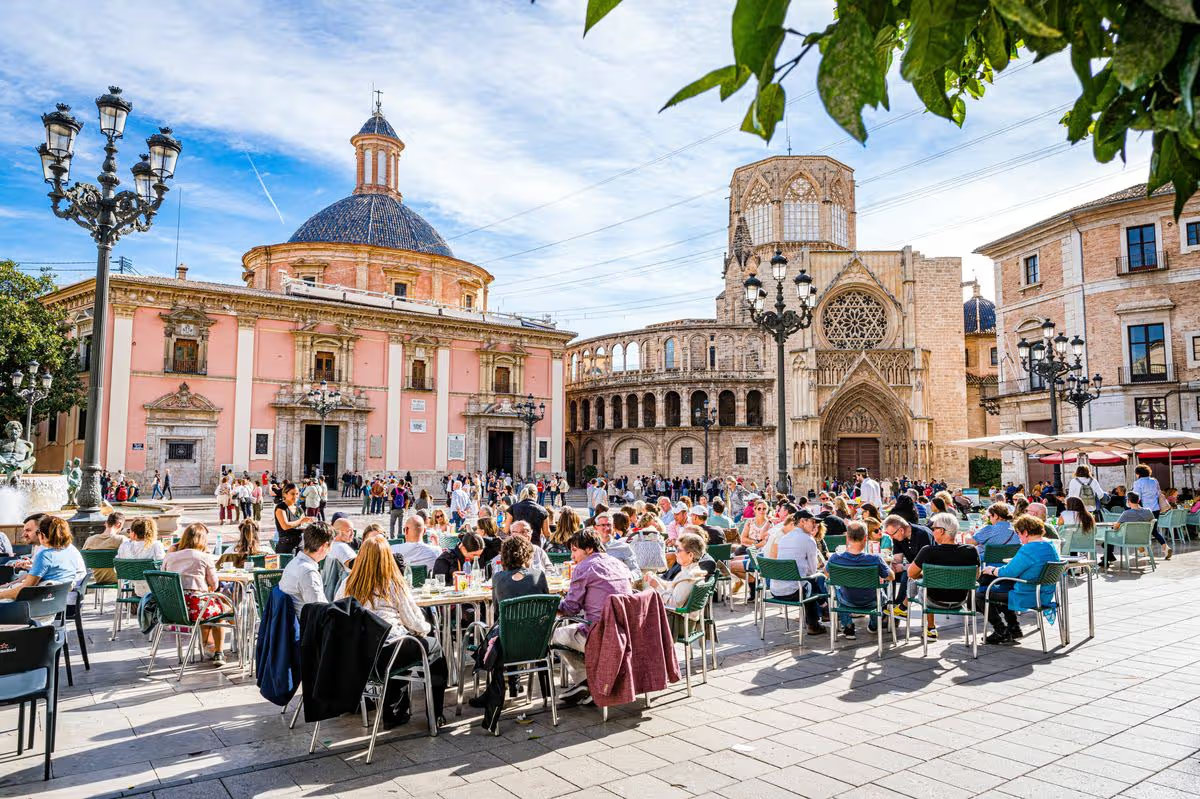
Millions of Brits head to Spain each year(Image: fcafotodigital via Getty Images)
Anyone planning a trip to Spain should act eight weeks before travelling, according to the latest Foreign Office advice.
The Foreign, Commonwealth and Development Office (FCDO) provides advice for travel to more than 220 countries and territories across the globe, covering everything from entry requirements and safety risks to health precautions and regulations. The FCDO recommends that those heading to Spain check the most up-to-date vaccination advice at least eight weeks before they set off, and find out where to get their vaccines and whether any fees apply.
Holidaymakers are directed to the Spain page on the TravelHealthPro website, which states: “Travellers [to Spain] should be up to date with routine vaccination courses and boosters as recommended in the UK. These vaccinations include for example measles-mumps-rubella (MMR) vaccine and diphtheria-tetanus-polio vaccine.”
It’s worth noting, however, that there are no certificate requirements for entry into Spain. Those visiting Spain are also urged to ensure their tetanus jabs are up-to-date.
TravelHealthPro guidance adds: “Travellers should thoroughly clean all wounds and seek medical attention for injuries such as animal bites/scratches, burns or wounds contaminated with soil.” TravelHealthPro also recommends that all holidaymakers make sure they have sufficient travel insurance.
It adds: “If visiting European Union (EU) countries, carry an European Health Insurance Card (EHIC) or a Global Health Insurance Card (GHIC) as this will allow access to state-provided healthcare in some countries at a reduced cost, or sometimes for free.
“The EHIC or GHIC, however, is not an alternative to travel insurance.”
The US military released footage showing what they say are military strikes on Iranian radar sites.
CENTCOM claims its forces shot down four Iranian one-way attack drones. Interceptions of strikes were also reported over Kuwait and Bahrain Saturday morning.
Authors: Marin Mae Ekstrom and Wilder Alejandro Sánchez*
The Organization of Turkic States (OTS) recently held a summit focused on “Artificial Intelligence and Digital Development.” While theMay 15 meeting itself did not offer any groundbreaking resolutions, all five heads of the OTS member states participated and reaffirmed their commitment to greater cooperation and integration. This summit was just one example in a series of events that demonstrate growing unity and collaboration among the Turkic states.
How far integration will go between Azerbaijan, Kazakhstan, Kyrgyzstan, Türkiye, and Uzbekistan is debatable. There are several regional initiatives that are bringing these countries, as well as other states across the Caucasus and Central Asia, together, including connectivity projects such as the Middle Corridor and the Uzbek-Kyrgyz-Chinese railway, as well as agencies such as the Shanghai Cooperation Organization and the Eurasian Economic Union.
However, to secure the success of most multilateral initiatives, bilateral relations between participating members must be consolidated. When ties between two countries are stabilized and routinely strengthened, a bilateral friendship serves as a building block for expanding to additional actors and ensuring constant, reliable dialogue and collaboration among all involved players.
Türkiye, the leader of the Turkic world in terms of population, economic strength, and growing global geopolitical influence, is leveraging shared Turkic heritage to deepen and cement engagement with other OTS members. Uzbekistan is a natural and important partner: as the most populous Central Asian state, it is the second-largest majority-Turkic state in terms of both language and population. The landlocked nation has the third-largest economy in the Turkic world and is rapidly developing economically and expanding its membership in international initiatives.
This commentary will thus provide an analysis of Ankara-Tashkent relations. However, while statements by presidents & joint economic and investment projects are important parts of this geopolitical puzzle, the true sign of integration between two nations often occurs at the cultural level.
BILATERAL POLITICAL AND ECONOMIC RELATIONS
Bilateral relations between Türkiye and Uzbekistan are particularly dynamic. It is noteworthy that high-level meetings occur quite regularly: Presidents Recep Tayyip Erdoğan of Türkiye and Shavkat Mirziyoyev of Uzbekistan met in Ankara on January 29, as part of the 4th meeting of the Joint Strategic Planning Group (JSPG). The two leaders signed several agreements, including the “Decision on Cooperation Mechanisms for Comprehensive Strategic Partnership Relations between the Republic of Türkiye and the Republic of Uzbekistan,” an agreement on health cooperation, a memorandum of understanding for the development of international transport corridors, and a memorandum of understanding for promoting cooperation in mining.
The two countries celebrated 34 years of diplomatic relations, and the Turkish state-run news agency Anadolu marked the occasion with a March op-ed; the essay described bilateral relations as evolving into a “comprehensive strategic partnership.” The Uzbek presidency has utilized the same wording to describe the current level of bilateral relations.
Trade between Türkiye and Uzbekistan has nearly tripled over the past decade, rising from USD$1.2 billion in 2016 to over USD$3 billion in 2025. Short and long-term trade targets amount to USD$5 billion and USD$10 billion, respectively. Türkiye is the fourth-largest trading partner of Uzbekistan, accounting for 3.7% of Uzbekistan’s foreign trade. Uzbekistan is not as high a trade priority for Turkiye: even in Central Asia, which is not Turkiye’s primary trade area, Kazakhstan is a larger overall partner. Although neither country is pursuing top trading status with the other, trade and engagement remain high priorities for both Ankara and Tashkent. The evidence clearly displayed that both nations have taken major strides to consolidate both political and economic engagement.
THE CULTURAL FACTOR
From a cultural standpoint, Türkiye has swiftly gained soft power traction in Uzbekistan. Turkish TV series and movies enjoy immense popularity in Uzbekistan: the appeal of Turkish media, coupled with expanded transit options between the two countries, has inspired a tourism boom to Türkiye. From January to October 2025, over 230 thousand Uzbek nationals traveled to Türkiye for various reasons, a 16.3% increase compared to the same period in 2024.
Conversely, Uzbek influence in Türkiye is also increasing. Turkish tourism to Uzbekistan is also rising: between January and April 2025, around 49,400 Turkish citizens visited Uzbekistan for tourism, a 57.4% increase compared to the same time period in 2024. Turkish businesses are also investing in Uzbekistan’s tourism sector: Turkish partners support 12 hotels and over 100 joint restaurants, and in 2025-2026, Turkish investors pledged to help finance 11 additional hotel projects.
Language is another area of soft power, as Turkish is one of the top five most popular foreign languages to learn in Uzbekistan. Factors, including the popularity of Turkish media, academic study, and career opportunities, have bolstered its appeal. Although the study of Uzbek in Türkiye is not as widespread, the linguistic overlap between the two makes it relatively easy for a native Turkish speaker to learn Uzbek and vice versa, making it a less daunting endeavor than the study of other languages.
Cultural relations and people-to-people diplomacy are sometimes overlooked in grand analyses of international relations, as analysts and scholars often focus on presidential summits, trade agreements, investment, or joint military initiatives. However, people-to-people relations, as well as cultural and public diplomacy, are important tools in a country’s toolkit for strengthening grassroots ties.
Generally speaking, the OTS and its member governments support initiatives to promote people-to-people relations and to continue developing a common Turkic identity. During the recent OTS summit, the five leaders reaffirmed their determination to deepen cooperation in digital transformation, innovation, artificial intelligence, connectivity, and sustainable economic development. More broadly, they highlighted their shared commitment to further deepening solidarity, mutual trust, and strategic cooperation within the Turkic World in line with the objectives of the “Turkic World Vision-2040.”
Specifically, the heads of state “laid a time capsule to officially launch the construction of the Center of the Turkic Civilization.” This Center has been described by regional officials as “a groundbreaking architectural complex that will utilize AI, VR, and holography to immerse visitors in the rich philosophy and history of the Turkic World.” Moreover, during the January meeting between Erdoğan and Mirziyoyev, the two heads of state signed a Cultural Cooperation Plan for 2026-2027. Thus, a key strategy for encouraging Turkish-Uzbek bilateral ties is to highlight their commonalities within the wider Turkic cultural and linguistic sphere.
DISCUSSION/CONCLUSIONS
Tashkent-Ankara relations are generally strong, but additional factors complicate their full level of engagement. Although Ankara is very much interested in increasing connectivity with Central Asia via the Middle Corridor and engaging with the Turkic world, those are not its primary objectives. Issues like the Russo-Ukrainian War & the Black Sea; the recent conflict between Iran against the United States and Israel, as well as the related spillover across neighboring Lebanon and Syria; and even the upcoming elections in Armenia, are all arguably higher priorities for Ankara. Domestically, Türkiye is facing its own obstacles, as Erdoğan maintains a tight grip on power while the Turkish economy remains plagued by rising inflation and currency depreciation.
Similarly, Tashkent wants to improve connectivity with Türkiye via the Middle Corridor, but it also wants to increase trade and investment with China and attract investment and partnerships from the Gulf States and India. A good example of this diversification of partnerships is Tashkent’s new airport, to be built via investments and partnerships with Saudi Arabia, Japan, and South Korea. Meanwhile, Moscow remains committed to maintaining its historical influence across Eurasia (President Mirziyoyev visited Moscow for the May celebrations of the Great Patriotic War, one of the few leaders to do so), while the current US administration is focused on transactional diplomacy to secure access to critical minerals and rare earth elements that Uzbekistan has in abundance.
Ankara’s engagement in recent years with Central Asia via the OTS, the Middle Corridor, and bilateral interactions has attracted widespread academic and scholarly interest. However, there is a predictable focus on diplomatic, security, and trade & investment analyses; for example, a 2024 analysis on Tashkent-Ankara relations published by theCentral Asia Caucasus Institute did not mention tourism, cultural diplomacy, or education (apart from military education).
That said, the frequently overlooked factors of cultural and public diplomacy will likely be critical to promoting long-term, successful cooperation between Türkiye and Uzbekistan: Turkish pop culture has had a strong influence in Uzbekistan, tourism is growing, and Turkish language study is increasingly popular there. population to learn Turkish. While Uzbekistan’s cultural and language appeal does not hold the same sway in Türkiye, the country is nonetheless growing in terms ofglobal soft power appeal indicators. Uzbekistan’srebranding as a globally-oriented and dynamic society steeped in rich Islamic and historical heritage -for example, by leveraging the legacy of legendary cities such as Bukhara, Samarqand, and Khiva- echoes the Kemalist model of a Türkiye embracing both modernity and its Ottoman historical legacy. Thus, framing the contemporary Uzbek national narrative as parallel to the Turkish one could help bolster its appeal in Türkiye and strengthen the sense of collective identity in the broader Turkic cultural space.
*Wilder Alejandro Sánchez is president of Second Floor Strategies, a consulting firm in Washington, D.C. He is also a non-resident fellow at Cfive, a think tank headquartered in Astana, Kazakhstan.
The opinions expressed are those of the authors and do not reflect the views or policies of any organizations with which the authors are affiliated.
Katie Price revealed her weight has dropped as she battles to get Lee Andrews out of jailCredit: Facebook/ Katie Price / BackgridThe star’s husband is still in jail in Dubai, with Katie revealing the toll the ‘stress’ is taking on herCredit: Instagram/@wesleeeandrews
But after she spoke to him, it emerged he “needs a six-figure sum” instead.
After finding this out, Katie shared her fears for Lee, and said she was worried “he would not be released anytime soon”.
Revealing details of her last phone conversation with Lee, Katie said on Thursday: “I’m absolutely knackered, it’s the second morning because I spoke to Lee yesterday and he wants me to go to the Al Awir prison because he’s given me permission to get all his phones, his belongings.
“So I’m going there now.
“I still need to hear back from his lawyer if I can get a visit to see him.
“It’s Wednesday and I go on Friday… time is running out.”
Katie admitted she was now able to reach her husband because she had a Dubai number for him in prison.
“I’m feeling knackered today, I’m excited, but excited for what? Because I don’t know if I’m seeing Lee but at least I now know he can ring me, I’ve got the Dubai number so at least I know he can ring me,” she added.
No stranger to coming through in a big moment, the Dodgers star was hoping to see a fastball up in the zone from Angels reliever Kirby Yates.
So Freeman stayed patient, working his way into a full count.
Then Yates gave him what he wanted — and Freeman delivered the 20th walk-off hit of his career.
The Dodger Stadium crowd erupted in celebration as Freeman watched the ball soar over the right-center field wall in the ninth inning of a 1-0 victory over the Angels.
Freddie Freeman hits a walk-off home run for the Dodgers in a 1-0 win over the Angels at Dodger Stadium on Friday night.
Freeman grinned as he rounded the bases. He threw a thumbs up at his teammates before they swarmed him in celebration. He finally had given the Dodgers something to cheer for after being held to just two hits over 25 at-bats.
“I’ve been feeling good lately,” Freeman said. “I was tweaking things early on, just trying to find a consistent feel for things. Sometimes it’s just get a couple of hits, get confidence and get going. Nothing really crazy. It’s the same routine, hitting some soft line drives at the shortstop, and things have been working.”
Through most of the game, the excitement was contained to a pitcher’s duel — a chess game of defensive plays, waiting to see who flinched first.
Dodgers pitcher Roki Sasaki was red hot in what would tie for his longest outing of the season. Sasaki, for the first time this season, threw triple digits in back-to-back appearances, topping 100.6 mph. The Japanese pitcher threw all three of his pitches harder than his yearly average.
Freddie Freeman watches his walk-off home run clear the wall in right-center field to cap a 1-0 win over the Angels at Dodger Stadium on Friday night.
(Ronaldo Bolanos / Los Angeles Times)
“I’ve been experiencing a lot of good and bad since 2024,” Sasaki said through interpreter Kensuke Okubo. “But I feel like I’m able to maintain this velocity. I think I’m confident about that, but I’m just keeping working on it to make sure I’m in a better place.”
With the speed uptick, Sasaki has also seen an inverse downtick in the earned runs column on his statline. His monthly ERA reached its zenith at 7.23 in his April starts, descending to its current 4.03 ERA.
In Sasaki’s best starts, the elevated velocity and pitch mix makes the right-hander lethal, giving him extended runway to pitch further into the game. Against the Angels (24-40), the elevated velocity allowed him to throw 4⅓ hitless innings in his career-high 11th appearance of the season. He pitched seven innings, giving up two hits and two walks while striking out 10.
It’s a return to how Sasaki looked when he played in Japan, manager Dave Roberts said. Confidence might be the clearest sign things are clicking. Sasaki thumped his chest after striking out Adam Fraizer in the fifth inning, a rare show of emotion.
“I certainly think we can all agree that the floor for Roki is much higher, and the expectation every time he takes the ball is high, and he’s earned that,” Roberts said. “If you look at the last six or seven stats, it’s been as good as any starter in the big leagues in the consistency of performance. So really proud of him and I know that he wants more, and the floor has just been raised.”
Dodgers pitcher Roki Sasaki delivers in the first inning of a 1-0 win over the Angels at Dodger Stadium on Friday night.
(Ronaldo Bolanos / Los Angeles Times)
Some quick thinking from second baseman Miguel Rojas also helped preserve Sasaki’s strong start. On Nick Madrigal’s sharp line drive in the third inning, the pitcher reached for the ball and popped it up with the tip of his glove. The ball ricocheted off its intended course, but Rojas nabbed it with his bare hand, throwing it to first where a lunging Freeman caught it. The play was initially ruled as an infield single, but it was overturned on review.
“When it hits off a pitcher — you’re already going, committed to one way, then you gotta make another,” Freeman laughed. “The old guy’s still got it.”
Madrigal would break the Angels’ hitless run in the fifth with a double off the left-field wall. But, he was left stranded when Sasaki induced a groundout before his strikeout of Frazier.
The Dodgers (41-23) didn’t fare much better against Angels starter Reid Detmers. In the fourth, Freeman singled and moved to third on a forceout on Kyle Tucker. But, with two outs on the board, Will Smith struck out.
Andy Pages squandered a potential scoring opportunity when he was caught stealing in the sixth. The center fielder, who went one for four, has struggled at the plate in recent games. Against Arizona this week, Pages batted .176, collecting only three hits.
As the innings dragged, both the Dodgers and the Angels failed to find momentum. Reliever Chase Silseth took over in the seventh for Detmers, who gave up just two hits, walked two and struck out six. Silseth silenced the opposing batters, issuing only a walk to Smith.
Edgardo Henriquez took over in the eighth, striking out the first two batters he faced. Then, he hit Zach Neto with a pitch, and after Neto stole second, the Dodgers found themselves in a precarious position with Mike Trout at the plate. Not for long, though, as Henriquez struck out Trout.
Roberts, who had watched Rojas and Santiago Espinal go a combined 0 for 4, pinch-hit for both in the eighth. To a roaring applause, Max Muncy entered the batter’s box, his first plate appearance since a scary collision with the Arizona Diamondbacks’ Ildemaro Vargas on Thursday. Muncy, though, went down swinging.
Tanner Scott took the mound in the ninth a day after he gave up a walk-off home run to Arizona’s Ketel Marte. Jo Adell hit a one-out single then moved to second on a sacrifice bunt by Donovan Walton. Roberts then put Blake Treinen into the game, and he got Oswald Peraza to ground out to first.
With Freeman’s sixth career walk-off home run, the Dodgers beat the Angels for the fourth consecutive time this season.
“Freddie just has aura,” Roberts said. “There’s not too many guys in baseball that you’d want in a game-winning situation, and Freddie does it once again.”
Angels second baseman Oswald Peraza walks back to the dugout after grounding out during the ninth inning against the Dodgers.
French activists who took part in a Gaza-bound foreign aid flotilla accuse Israeli forces of abuse and torture.
Published On 5 Jun 20265 Jun 2026
French anti-terrorism prosecutors say they have opened a preliminary investigation into suspected “torture” and “war crimes” over Israel’s alleged mistreatment of French activists who took part in a Gaza-bound aid flotilla last month.
The probe was opened on Friday following a referral from the foreign ministry late last month, said the national counterterrorism prosecutor’s office (PNAT), after activists on the Global Sumud Flotilla accused Israeli authorities of severe mistreatment during their detention.
Recommended Stories
list of 3 itemsend of list
Israel abducted and detained some 430 activists from about 40 countries after intercepting them in international waters on May 18 as they made the latest in a string of attempts to break the blockade on Gaza, which the United Nations and human rights organisations say is illegal, describing it as a form of collective punishment.
Israeli far-right National Security Minister Itamar Ben-Gvir attracted widespread condemnation after he posted a video mocking the flotilla activists while they were bound.
France banned Ben-Gvir from entry and, like several other allies of Israel, summoned the Israeli ambassador over the incident.
Several French activists described what they said was a violent and humiliating ordeal when eight of them returned to France on May 22.
Two of the more than 30 French people who were on board the flotilla were still hospitalised in Turkiye, they told reporters.
One returnee described a soldier groping and slapping her in a dark container, and being terrified that she would be raped.
Another recounted detained activists being put in what she called a “stress position”, on their knees with their foreheads on the ground for several hours, while the Israeli national anthem played on repeat.
‘Most severe case of ill-treatment’ in a decade
Speaking to Al Jazeera late last month, Suhad Bishara, legal director at Adalah, the Israeli legal centre for Palestinian rights, said that without accountability, Israel will continue to use violence against activists.
“Based on accounts received, and drawing on over a decade of representing flotilla participants, this appears to be the most severe case of ill-treatment documented in the past 10 years, potentially amounting to torture,” said Bishara.
Adalah lawyers have been informed of repeated physical violence resulting in serious injuries, prolonged stress positions, and sexual humiliation and harassment.
The Global Sumud Flotilla said it has documented at least 15 cases of sexual abuse.
Lawyers for French flotilla activists have said they plan to file a separate complaint on behalf of their clients over allegations of rape, torture and humiliation.
The activists have refused to meet with the French government to discuss their experiences, accusing it of supporting Israel’s genocidal war on Gaza.
Asked by the AFP news agency to respond to the claims of mistreatment, the Israeli prison service said the accusations were “entirely without factual basis”.
Francesca Albanese, an outspoken UN expert on the Palestinian territory, has said the treatment of the flotilla activists “is a luxury compared to what is inflicted on Palestinians in Israeli prisons”.
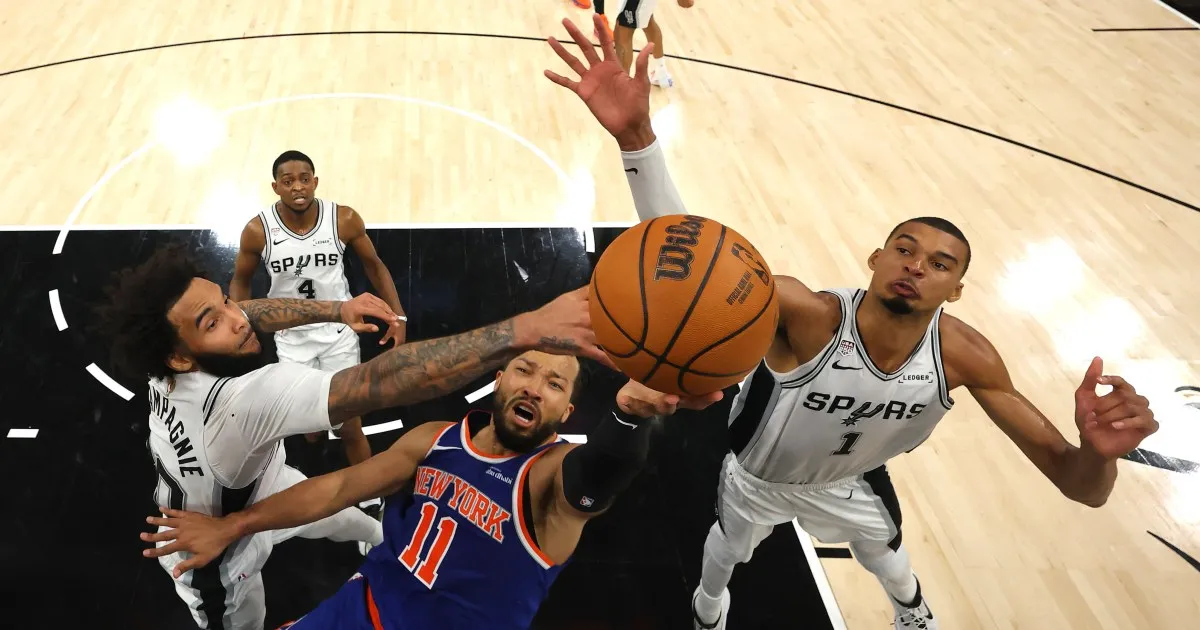
Jalen Brunson drilled the go-ahead free throw as the New York Knicks held off a furious San Antonio rally to beat the Spurs 105-104 and take a commanding 2-0 lead in the NBA Finals.
San Antonio player Victor Wembanyama had a crucial late turnover and missed a potential game-winner with two seconds remaining on Friday, leaving the Spurs in need of an unprecedented comeback when the best-of-seven series shifts to New York for games three and four.
Recommended Stories
list of 4 itemsend of list
No team has lifted the trophy after dropping the first two games of the Finals at home.
Michael Jordan’s 1993 Chicago Bulls and the 1995 Houston Rockets are the only other teams to win the first two games of the championship series on the road, and both went on to win titles.
The Knicks won their 13th straight game of the playoffs – the second-longest streak in postseason history – and will have a chance to close out their first title since 1973 in front of home fans at Madison Square Garden. United States President Donald Trump is scheduled to attend on Monday.
They had to withstand a scintillating fourth-quarter surge from the Spurs, who erased a 14-point deficit with a 14-0 scoring run.
Wembanyama shook off a slow start to score 22 of his 29 points in the second half, his three-point play with 57.3 seconds remaining giving the Spurs their first lead since the second quarter at 104-102.
It was tied at 104-104 with 9.5 seconds left when Wembanyama grabbed the rebound of a Brunson miss but turned it over with a bad pass into the back of teammate Stephon Castle.
Brunson scooped up the ball and was fouled, then made the first of two free throws to put the Knicks back in front.
San Antonio had one last chance, coming out of a time-out with 7.5 seconds left. They got the ball to their superstar, but his jump shot clanged off the rim.
“I threw that one away,” 22-year-old Wembanyama said. “I messed up. We didn’t play great as a team. We needed to win that game.”
Karl-Anthony Towns, who led the Knicks with 21 points and 13 rebounds, admitted he was praying when Wembanyama put the Spurs’ final attempt.
“A great player got a great shot, and it just didn’t go in,” Towns said.
‘What a ballgame’
For the second straight game, Towns delivered a stellar defensive performance that pushed Wembanyama out of his comfort zone.
“He’s a once-in-a-generation player,” Towns said. “You got to make it difficult on him. So, just utilising my experience, utilising my size, my skill, and just trying to make it difficult for him.”
Brunson and Mikal Bridges scored 20 points each, OG Anunoby added 17, and Landry Shamet scored 13 off the bench for the Knicks.
Wembanyama added nine rebounds, four blocked shots and two steals, and De’Aaron Fox scored 20 points for the Spurs.
Desperate not to head back to New York in a 2-0 hole, the Spurs attacked the paint early.
Wembanyama thrilled Spurs fans at the Frost Bank Center – where Knicks supporters were a vocal presence – with his first basket of the night, a left-handed dunk that gave the Spurs a 15-10 lead.
Fox’s alley-oop layup off a feed from Devin Vassell pushed the lead to 10 with less than two minutes to go in the first.
The Spurs pushed their lead to 12 before the Knicks responded in a tense second quarter, taking the lead for the first time, 49-48, on Landry Shamet’s layup with 3:39 left in the first half.
San Antonio regained the lead, but Towns’s three-pointer over Wembanyama gave the Knicks a 56-52 halftime advantage that they pushed to as many as 12 before taking an 84-75 lead into the fourth quarter.
“What a ballgame,” Knicks coach Mike Brown said. “It’s a fantastic ballgame. They made a run. We made a run. They made a run. We made a run.
“We could have folded a few times, but our guys just kept fighting … No matter what run they went on, no matter what time of the game, our guys just kept uplifting one another.”
Anyone who has been a new parent knows it’s not easy to do on your own — it really does take a village. And in the latest season of “The Four Seasons,” which returned to Netflix last week, Ginny, played by Erika Henningsen, finds her village as she navigates single parenthood after the sudden death of Nick, played by Steve Carell. While that may sound gloomy — no, terrifying — the comedy series created by Tina Fey, Lang Fisher and Tracey Wigfield keeps the laughs coming, whether they involve the central friend group spreading Nick’s ashes — morbid, I know, but I promise you’ll laugh — a malfunctioning breast pump or making friends with someone who loves to dig really big holes in the sand at the beach. Henningsen dropped by Guest Spot to talk about her character and what she hopes comes next if the show gets a third season.
And if you breeze through the second season’s eight episodes, there’s plenty else to watch this weekend. For more laughs, Mindy Kaling’s latest comedy series, “Not Suitable for Work,” premiered this week with three episodes. The TV creator spoke to Times TV writer Yvonne Villarreal about how the series touches on the heightened feelings Kaling experienced living in New York in her 20s, trying to break into comedy writing. But if you are looking for the complete opposite, the first two episodes of the newest iteration of “Cape Fear” are out today on Apple TV (you may remember the 1991 film version directed by Martin Scorsese and starring Robert De Niro, or even the 1962 version starring Robert Mitchum). The series, which inserts some modern elements and twists, stars Javier Bardem as the villainous Max Cady and Amy Adams as lawyer Anna Bowden, who our television critic says “is low-key forceful as his primary opponent.”
You are reading Screen Gab newsletter
Sign up to get recommendations for the TV shows and streaming movies you can’t miss, plus exclusive interviews with the talent behind your favorite titles, in your inbox every Friday
By continuing, you agree to our Terms of Service, which include arbitration and a class action waiver. You agree that we and our third-party vendors may collect and use your information, including through cookies, pixels and similar technologies, for the purposes set forth in our Privacy Policy such as personalizing your experience and ads.
Also in this week’s Screen Gab, our critics recommend a web short that will give you some background on “Backrooms,” as well as a horror film with a similar vibe, and a new nature documentary series. — Maira Garcia
Turn on
Recommendations from the film and TV experts at The Times
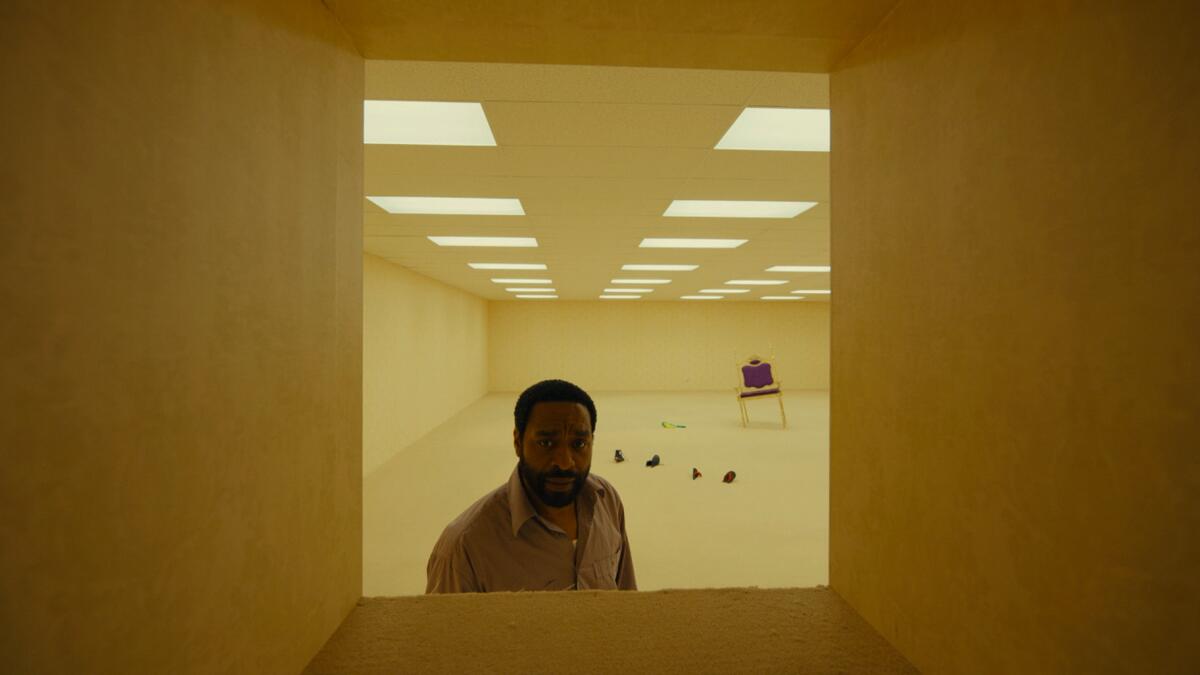
Chiwetel Ejiofor in “Backrooms,” which was inspired by Kane Parson’s surrealist web videos.
Last weekend, 20-year-old Kane Parsons became the youngest filmmaker to hit No. 1 at the box office with “Backrooms,” a surrealistic experiment about a furniture salesman (Chiwetel Ejiofor) drawn into a maze of humdrum office space. Peek into the movie’s lore on Parsons’ YouTube channel where his eight and a half minute short, “Presentation,” hints at why Mark Duplass was running around in a lab coat. Or let the feature stand as its own work and watch Simon Glassman’s “Buffet Infinity” instead. Told through snippets of local TV commercials, this morbidly hilarious horror tale is like plopping down on one of the backroom’s couches to channel surf. The bland muzak and cinematography are spot-on, as are the familiar breeds of low-budget pitchmen: the car salesman, the personal injury lawyer, the housewife. But once two neighboring restaurateurs duel over the rights to a special sauce — and one gets defamed and disappeared — these escalating, tense ads reveal a town under siege. Things have gotta be bad when the pawn broker starts rapping about his vast selection of knives. — Amy Nicholson
A pilosaurs in NBC’s “Surviving Earth.”
(NBC)
“Surviving Earth” (NBC, Peacock)
If computer animation is good for anything, it is its ability to bring prehistoric creatures to convincing conjectural life. From Willis O’Brien‘s stop-motion dinosaurs in “The Lost World,” to “Jurassic Park,” to the BBC’s “Walking With Dinosaurs,” we are ever glad to take that trip backward, in increasingly sharp detail. “Surviving Earth,” an eight-part nature documentary cum disaster movie cum action film, adds a thematic twist: extinction. With titles like “When the Earth Burned,” “When the Seas Died” and “When the Forests Collapsed,” it is, on the one hand, a dark tour through a long history of climate crises and population collapse; on the other, per its title, its relatively cheering theme is that life, generally speaking, can handle whatever the planet (or stray asteroid) throws at it. (Humans are not left off the hook; the two episodes out for review each conclude with a visit to our destructive modern world.) As in many nature films, the animals are framed in cute or suspenseful stories that largely involve family and community; territory and travel; and looking for food and not being food. (The more adorable the animal, the more likely it is to escape uneaten, and some of those baby dinos are precious.) It premieres Thursday at 8 p.m. on NBC, and new episodes air weekly, followed by a rebroadcast of “The Americas,” the network’s earlier present-day nature series, and stream on Peacock the next day. — Robert Lloyd
Guest spot
A weekly chat with actors, writers, directors and more about what they’re working on — and what they’re watching
Kerri Kenney-Silver as Anne and Erika Henningsen as Ginny in Season 2 of “The Four Seasons.”
(Emily V. Aragones/Netflix)
What if you found out you were pregnant? And then your partner died suddenly. Oh, and he hadn’t divorced his wife yet, so there’s no money to support yourself and a new baby. For some people, it would be enough to cause a meltdown and an existential crisis. But in Season 2 of “The Four Seasons,” Ginny takes it all in stride. The character, played by actor Erika Henningsen, forges ahead, has the baby — fathered by the now-deceased Nick — and ends up getting help from the most unexpected person: Anne, her partner’s ex.
The comedy series once again follows the close-knit friend group consisting of Jack (Will Forte) and Kate (Tina Fey), Danny (Colman Domingo) and Claude (Marco Calvani), and the new odd couple, Anne (Kerri Kenney-Silver) and Ginny. This season, they take trips to the Catskills, the Jersey Shore and Italy as they try to navigate grief following Nick’s death, supporting Ginny despite the awkwardness of her situation with Anne, and an international move by Danny and Claude after they decide not to have a child.
Henningsen discussed Ginny’s arc this season and how she connects with Anne, who finds purpose in caring for baby Gino (or Eugene, depending on whom you ask), and what it was like juggling multiple projects along with filming “The Four Seasons.” — M.G.
At the end of the first season of “The Four Seasons,” viewers were hit with a big surprise: Ginny is pregnant. And in Season 2, we see her further along and eventually with a baby. What was it like to play Ginny at this stage in her life, navigating single motherhood? Did you look to anyone for inspiration?
I feel like Ginny’s character arc in this season was a tightrope walk that our writers executed flawlessly. Because, let’s be honest, the situation between Anne and Ginny is a bit bizarre. To quote our show, “there is no Beyoncé song” for what to do when your recently deceased ex-husband’s pregnant girlfriend shows up on the group hiking trip! What myself and the writers really tried to highlight, especially in those early spring episodes, is how scared Ginny feels to be entering motherhood without a partner by her side and how that fear and grief become the dominating force behind her actions. She’s just scrambling for some semblance of confidence and security, to feel like she’s going to be “ready” when the baby arrives. But, as any real mom can attest, there is no ‘“ready” when it comes to a baby. You just take it one day at a time and figure it out as you go. I love that Ginny has that realization toward the middle of the season. She may not be the perfect mom to Gino, but she’s his mom, and getting to play the beach scene where Ginny takes one tiny bold step, alone, into motherhood was super special. In terms of inspiration, I was constantly texting two friends of mine who had just had babies for ways to walk, ways to lay down, ways to stretch, etc. Also, our incredible hair department head, JT Franchuk (shoutout, JT!), was on set with me every day, and I was lucky to have her as a confidant and sounding board as she was seven months pregnant when we began shooting Season 2.
You share many great scenes with Kerri Kenney-Silver, who becomes a surrogate mother to Ginny and grandmother to her baby, despite the history between them. How did you two navigate this dynamic, and what was it like working together?
Kerri Kenney-Silver is truly the greatest scene partner an actor could have for a litany of reasons. Kerri comes from an improv background but is also a technical wordsmith. She’s constantly throwing out new line readings and physical comedy to bounce off of, but is also deeply respectful of the words Tina Fey and company have crafted, so she’s equal parts anchor to a scene as well as a playmate. Kerri and I never tried to nail down one exact “right” way to play a scene. We were constantly adjusting the levers with each take, digging into one another versus backing off, casually throwing away a sentimental line versus staring into one another’s eyes. What we did agree on was to never judge these two characters. Some people might look at our character’s choices as debilitating or selfish, but we both found that Anne and Ginny deeply needed and wanted to be there for one another. In their own little “odd couple” way, they were choosing one another to get through the next tenuous, unknown chapter of life. Oh, and working with Kerri? As I’ve said, “if you’re gonna lose a Steve Carrell, just wait til you gain a Kerri-Kenney Silver.” She is obviously so talented, but also one of the warmest and most welcoming humans I have worked with. And she makes me snort-laugh on a regular basis.
You came up in theater and originated the role of Cady Heron in the Broadway production of “Mean Girls,” based on the film by Fey. You were on Broadway in “Just in Time” last year, too. What has it been like to balance your stage work with your TV work lately?
Honestly? It’s been a lot! I say that with 98% gratitude and 2% “so tired when is vacation?” exhaustion. Last year, I was doing press for “The Four Seasons” while opening a brand-new original Broadway show, while also recording Season 3 of the hit animated series I currently star in, “Hazbin Hotel” [Prime Video]. My days were spent doing interviews in the morning, rushing to Circle in the Square theater for “Just in Time” preview rehearsals in the afternoon, recording episodes of “Hazbin Hotel” on my dinner break, all before heading back to the theater for an 8 p.m. curtain. I remember there was one night I did a SAG panel with Tina, Kerry and Marco on 55th and Broadway that ended at 7:45, and I was in pincurls and fake eyelashes, ready to go onstage opposite Jonathan Groff at 8:15. It is definitely a balancing act, and one I would not be able to navigate without my team and my husband. Nonetheless, I wouldn’t have it any other way. I love how each discipline has started to inform the other: I’ve taken my spontaneity in the voice-over booth onto set, I’ve taken my trust in stillness in front of the camera onto the stage, and I’ve taken my discipline doing eight shows a week into everything. Getting to dip a toe into multiple pools of the entertainment industry is, I think, the only way my brain wants to operate.
If “The Four Seasons” gets a third season, where would you like to see Ginny go?
In a perfect world? I’d love if Danny/Claude planned a fabulous trip to a gay destination like Mykonos that the rest of the group somehow gloms onto. I remember visiting Fire Island for the first time a few summers ago at Tina’s recommendation and loving it so much. I texted her that I never wanted to leave and she basically wrote back, “Yup. Always follow the gays.” So, maybe we will do exactly that in Season 3. Also, on a very specific Ginny note, I will hopefully have a toddler in Season 3 as opposed to a baby (our babies on set were under 6 months old so they definitely fell into the “handle with care” category!), and my dream is to be able to hold one the way Diane Keaton holds her toddler in “Baby Boom.” It’s a perfect moment of physical comedy, and I aspire to re-create it.
What have you watched recently that you are recommending to everyone you know?
“Beef” Season 2 and the recent Rafael Nadal documentary, “Rafa.” Both Netflix. What can I say? I’m loyal. The entire cast in “Beef” is spectacular, and I love the genre-bending the showrunner weaves throughout. You never quite know where you stand, but the twists feel earned and character-driven as opposed to gimmicky. There’s one quasi-bottle episode set in an ER that felt perfectly surreal, claustrophobic and exactly what it feels like to be in the ER on bad health insurance (speaking from 21-year-old experience). “Rafa” is just … no words. I love a sports doc (“The Last Dance” [Netflix], “Prefontaine” [VOD], “The Endless Summer” [Tubi] — you name it), probably because, in my heart of hearts, I just want to be an athlete.
What’s your go-to comfort watch, the movie or TV show you go back to again and again?
I will never tire of watching “The Parent Trap” [Disney+]. It’s perfect. Chessy is a queer icon, Meredith Blake is the “villain” but also get that vineyard honey, one of Lindsay Lohan’s best performances, and what I wouldn’t give to have an ounce of the class that was Natasha Richardson. Every scene is perfect, there’s not a single “skip” on the soundtrack. Also a flawless Maggie Wheeler cameo! Nancy Jane Meyers: You outdid yourself.
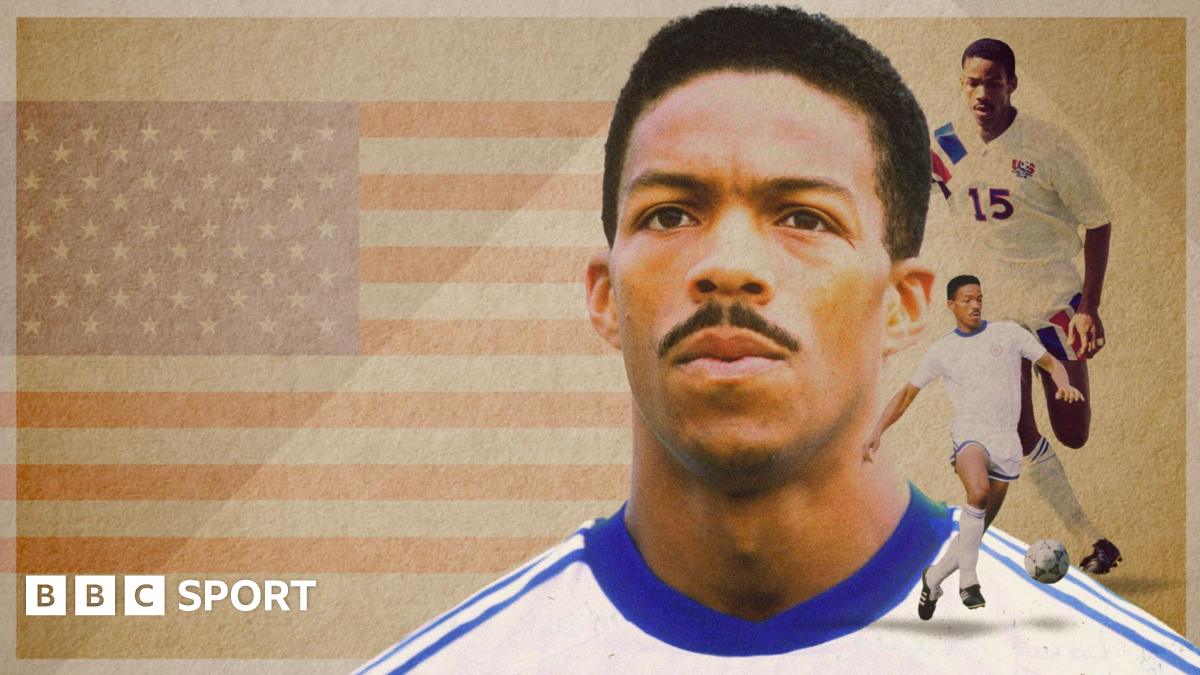
Football came to Armstrong, via a television set, in suburbia.
His family moved from the Southeast part of Washington DC when Armstrong was young and later settled in a largely white neighbourhood in Maryland, where he befriended a soccer coach’s son. One afternoon, the coach called Armstrong over to the television.
He was pointing to a Brazilian in a New York Cosmos jersey.
“It was Pele,” says Armstrong.
“His movement reminded me of a lot of the point guards that played basketball, but he was doing it with a ball at his feet.
“He was one of the few black players on the team, so that connected me.”
While Pele was popularising a game he’d learned barefoot on the streets of Brazil, much of the American grassroots version was being built on privilege.
Unlike the developing youth academies of Europe and South America, where clubs like Ajax and Barcelona were putting money into young talent, development in the US has long run on a pay-to-play model.
Families must meet significant costs or seek sponsorship to give their children a shot at advancing – creating a system that has seldom favoured those from less affluent households.
“It’s kind of antithetical to what this game’s all about,” says Frank Dell’Apa, who has spent 40 years as the Boston Globe’s football columnist, covering the game since the days of the original North American Soccer League (NASL).
“This is the simplest game with the easiest access. Everybody plays it around the world with no money, no soccer balls, no shoes. And here, we had just the opposite thing going on.”
Armstrong knows just how easily his story could have been different.
“If my folks didn’t move into the suburbs, then hands down I’m not playing soccer,” he says.
Socioeconomics was not the only hurdle.
The NASL going under in 1985 during Armstrong’s time as a college player limited professional pathways for him and his peers before their careers had even begun.
“For me, personally, that was crushing,” Armstrong says.
He turned to the Major Indoor Soccer League to play professionally, where his performances earned him a US men’s national team debut in 1987, followed by a spot at the 1988 Seoul Olympics.
“I remember being on the field, hearing the national anthem and just thinking ‘this is where I’m supposed to be’,” he says.
That same year, world football’s governing body Fifa had selected the USA to host the 1994 World Cup finals – the first time the tournament had gone to a country outside Europe or Latin America.
They would be under the global spotlight.
“The US was not a factor in world soccer at all,” says Dell’Apa.
“I remember Des playing a lot of games on artificial turf. It was hard for those guys. They had to fight to get into line-ups, to get a playing field, to get a stadium.”
With no elite outdoor professional league in the country, the player pool was a fragmented mix largely consisting of college, semi-pro and indoor players like Armstrong.
The federation looked to work around this by securing a core group of them on full-time contracts, essentially turning the national team into the country’s professional set-up. It was an unorthodox approach, not unlike something from the Eastern Bloc playbook.
They appointed a German-Hungarian head coach named Bob Gansler. Armstrong was now among a group of young players who were handed a near impossible task: qualify for the 1990 World Cup in Italy.
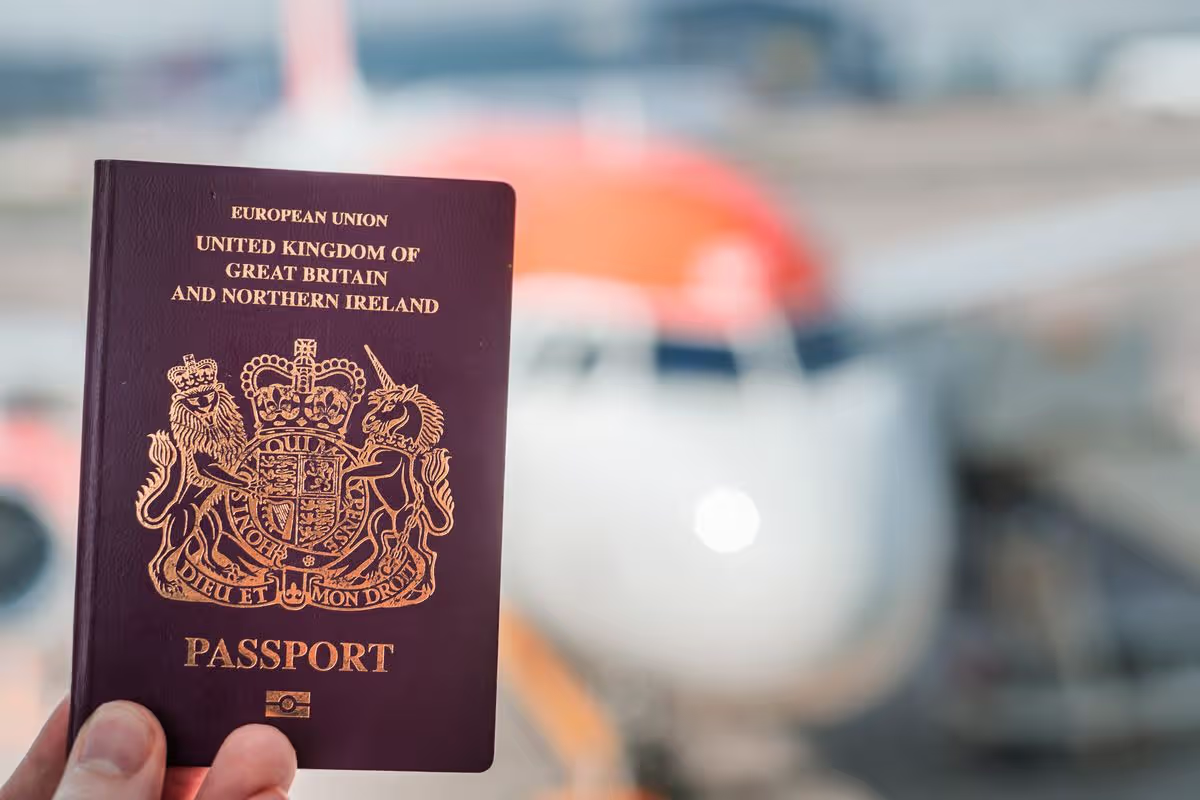
However, some holidaymakers could face an unwelcome surprise at check-in even if their document have months to years left before it expires.
This relates to the number of blank pages remaining in a passport. While many people focus on expiry dates, some countries require visitors to have one, two or even more completely blank pages available for entry stamps or visa stickers.
Travel experts warn that passengers who fail to meet these requirements could be denied boarding by airlines or refused entry on arrival.
Airlines are often responsible for ensuring passengers meet a destination’s entry requirements and can face penalties for transporting travellers who do not qualify for entry.
According to travel guidance published by Schengen, some destinations require at least two blank passport pages for visas and border stamps. The guidance warns that airlines may refuse boarding if passengers do not have sufficient space remaining in their passport.
The requirement can catch out frequent travellers whose passports are filled with entry and exit stamps from previous trips. Experts say many people mistakenly assume a passport is suitable for travel provided it remains in date.
For travel to the Schengen Area, for instance, passport rules already require Brits to ensure their passport was issued within the previous 10 years and remains valid for at least three months after their planned departure date. Some guidance also notes that travellers may need at least two blank pages available for visas and stamps where applicable.
A recent travel warning highlighted that a lack of blank pages can become a particular issue for frequent flyers and those taking multi-country trips. Countries may require empty pages for visa stickers, while immigration officials also need room for entry and exit stamps.
Travel experts recommend checking passport validity, issue dates and the number of remaining blank pages well in advance of departure. Unlike an expired passport, extra pages cannot simply be added to a modern British passport, meaning travellers who are running out of space may need to renew the document before travelling.
According to guidance cited by travel experts, some countries require between two and four blank pages depending on the destination and visa requirements. Travellers planning complex itineraries involving multiple countries are therefore advised to check entry rules carefully before travelling.
It’s said the 19th-century Parisian flâneur, intent on not rushing past the beauties of the street, would take a tortoise on a lead to set the pace. I thought about this as my donkey bent his head to another thistle and I turned my attention to the view, waiting for him to finish. Every way I looked, layers of mountains receded in deepening shades of eggshell blue. There were no sounds but the wind, the squeals of marmots and the giggles of my two young kids. I was extremely, uncomplicatedly happy.
Our donkeys were on loan from Burrotrek, a small outfit run by Swiss-born Denise Wirth. Twenty years ago, Denise spent four and a half months walking the Camino from Switzerland to Santiago de Compostela with two donkeys. She liked Spain, and she loved donkeys, so she settled on the idea of offering donkey treks in the Pyrenees. She has not looked back. For much of the year she is based where she settled, near Cadaqués, and offers a variety of self-guided itineraries through the vineyards in the foothills and along the Mediterranean coast, with trips lasting between a day and a week. But for the summer months, when temperatures soar, she relocates with her donkeys to Cal Jan de la Llosa in the province of Girona, a gorgeous ruin of a farm several miles up an unpaved track. From here, she lends her animals to people who, for whatever reason, have a romantic notion of what it might be like to take a donkey up a mountain.
Illustration: Guardian Graphics
My family (myself, Ulli, and our two kids, aged five and seven) bought Interrail passes (under-12s go free)and caught the sleeper down from Paris, crossed the border to Catalonia at Puigcerdà and, after a late lunch of tapas at the station bar, piled into a taxi for an hour’s drive up a long series of switchbacks to the farm. That first night we pitched our tents in a field behind the barn. The dark welled up from the valley floor and house martins shuttled through the dusk. We fell asleep to the rushing of the river and the occasional braying of a donkey.
The next morning we met our animals. We would be borrowing two donkeys, Om and Rebot, which we called Robot or, in moments of frustration, Roadblock. Om was described by Denise as “sporty”, and seemed up for most things, while Rebot was older and content to bring up the rear. Denise ran us through the basics: how to saddle them; how to groom them; how to check their hooves. A donkey can carry a fifth of its bodyweight, which meant around 30kg each. It was just as well, as we had a lot of stuff with us: a week’s worth of food and the explosion in camping gear that seemed to have occurred along with having children.
We had not taken our children to the mountains before, and I hadn’t had an interaction with a donkey since Bournemouth beach about 35 years previously. The learning curve was steep. The donkeys had a powerful sense of what they wanted, which didn’t always align with ours. Yet they were generally amenable, and we soon grew very fond of them. Denise waved us off with our children clutching the ropes and Om and Rebot trotting amiably behind them. She had suggested a loop that would take a week, with a mix of wild camping and mountain huts.
The going was easy, along wooded valleys, through pretty stone villages. At lunchtime, we tied the donkeys up to graze beside a stream while we splashed around, and then lay basking on the rocks, eating bread and cheese. Four hours in and I felt like Laurie Lee.
The path unwound along a series of thin rivers that burst out of the mountainsides
On the second night, we camped in a meadow during the worst storm I’ve ever known. It came out of a wide blue sky and suddenly it was hailing, the ground blanketed white. The donkeys stood stolidly beneath a tree, ears drooping. The downpour continued until dawn, the thunder like cannon fire. The kids, of course, slept through it, while Ulli and I sat up all night, watching their faces in the lightning. Were we out of our depth? Our tents were not meant for such weather and by morning the kids were the only dry things we had. The sun was out and the grass was steaming. We saddled the donkeys and carried on.
We dried out in Refugi dels Estanys de la Pera, a wonderful cabin alive with warm hospitality and good food. And then the path began to climb in earnest, winding up towards Andorra. At times it felt as though we were carrying two donkeys up the mountain. A group of Spanish hikers advised us to shout “arré,” an Arabic word imported by the Moors. It was unclear if it worked, but it gave us something to do. The donkeys took cautious, dainty steps, selecting each foothold before placing it. We were learning that they set the pace, and we should follow where they led.
‘A gorgeous ruin of a farm several miles up an unpaved track’ … camping at Cal Jan de la Llosa at the end of the walk
By the time we made the border at the Perafita Pass, at an altitude of 2,574 metres, we were in the cloud and giddy with success. We squatted in an ancient corral of stones and ate biscuits. But as we descended the cloud burned off and Andorra opened up before us. A vast plateau of long grasses and crooked, lightning-struck spruce trees, scattered with lakes in craters gouged by ancient glaciers. It was achingly beautiful, silent and wild. A herd of chamois, flushed from their hiding place, took off down the slopes at full pelt.
The path unwound along a series of thin rivers that burst out of the mountainsides, Riu de Perafita, Riu Madriu, rattling urgently along their rocky beds. We drank straight from springs bubbling out of the rocks and plunged into small pools, blisteringly cold. A herd of horses approached us one morning to examine their diminutive relatives, and Om and Rebot stood there, stoic as ever, until the horses galloped on.
I had worried this trip might be a hard sell to the kids, but their capacity to create fun proved boundless. Every time we stopped, and we stopped a lot, they found a stream to paddle in, a frog to play with, a marmot to sneak up on. The days weren’t long, six or seven miles at most, but if we try a walk at home we rarely get beyond the car park. The donkeys and the mountains meant they scarcely noticed we had tricked them into walking. In the evenings, they groomed the animals and charged about the camp. They ate everything we gave them – noodles, lentils, pasta – and fell asleep in seconds. It was a revelation.
Rebot the donkey set the pace
We spent our last night in Refugi de l’Illa, a vast, metal-clad, solar-panelled structure on a barren plateau that appeared to have touched down from space. We washed in hot water, drank wine at dinner and slept on a mattress. It was nice, but I hadn’t missed it. We were keen to get going again. As we walked back into Spain, the donkeys seemed to know they were nearing home. The path eased down across pastures of wild flowers and by dinner time on the eighth day we were back at the farm.
Some of my happiest moments as a parent are when I am doing something that I loved before having kids, but now with these brilliant, curious people – sharing the basic pleasures of cooking after a long day outside, or looking up at a sky bright with stars. We pitched our tent for one final night outside and reluctantly handed our donkeys back. They trotted into their field with the others, nosing each other’s necks in welcome. We were very sorry to see them go.
The trip was provided by Burrotrek; donkey hire from €55 a day including an introductory course and equipment. Half-board at Refugi de l’Illa, €61 adults/€48 children. Half-board at Refugi dels Estanys de la Pera, €46 adults/from €33.50 children
Lone Wolf by Adam Weymouth is published in paperback by Penguin on 25 June (£11.99). To support the Guardian, order your copy at guardianbookshop.com. Delivery charges may apply.
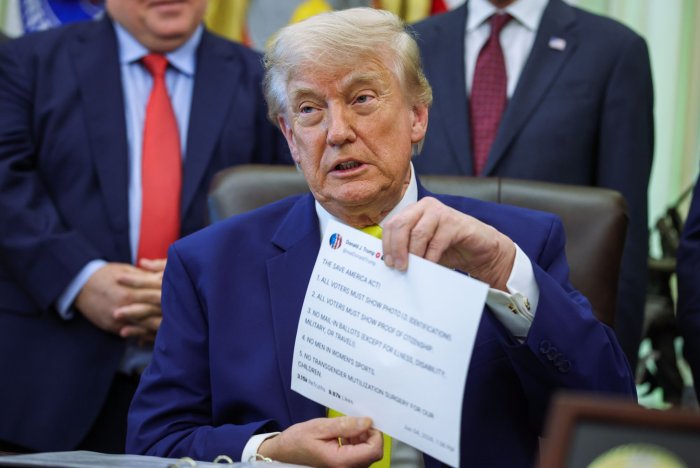
June 5 (UPI) — The Treasury Department on Friday issued an advisory that financial institutions, including banks and casinos, to “be vigilant” against signs of unlawful employment of illegal immigrants.
The Department’s Financial Crimes Enforcement Network, called FinCEN, in the advisory calls on the institutions employ methods to detect schemes covering up the employment of people who are not authorized to work in the United States.
Treasury Secretary Scott Bessent said in a FinCEN press release that part of the Trump administration’s crackdown on illegal immigration includes “securing our financial system.”
“This administration will not allow illegal aliens to abuse financial institutions to steal billions of dollars from hardworking American taxpayers,” Bessent said.
In order for non-immigrants to work in the United States, employers are required to petition with U.S. Citizenship and Immigration Services for eligibility, before a prospective employee either applies to the State Department for a visa or enters the country through a port of entry, according to USCIS.
FinCEN said in the release that the hiring, concealing and exploiting of workers without visas can give employers advantages over other businesses, depress wages, facilitate identity theft and steal tax revenue from the United States.
The agencies additionally said that the hiring of these workers can also help fund and assist criminal enterprises that include drug trafficking and human trafficking.
The financial institutions are being asked to watch out for red flags of shell companies, identity theft, fraudulently used social security and worker identification numbers, shell companies and a raft of other detectable signs of fraud.
In addition to depository institutions such as banks, credit unions, money services businesses and securities and futures firms, FinCEN has aimed the advisory at casinos, the insurance industry, mortgage companies and brokers, and the precious metals and jewelry industries.
The Treasury Department said that more than $2.5 billion in suspicious activity reported by financial institutions was linked to payroll fraud schemes in 2025 alone, noting one multi-year scheme that cost the United States more than $38 million in tax revenue.
President Donald Trump discusses renovations to the Lincoln Reflecting Pool and makes an announcement on coal in the Oval Office at the White House on Thursday. Photo by Samuel Corum/UPI | License Photo
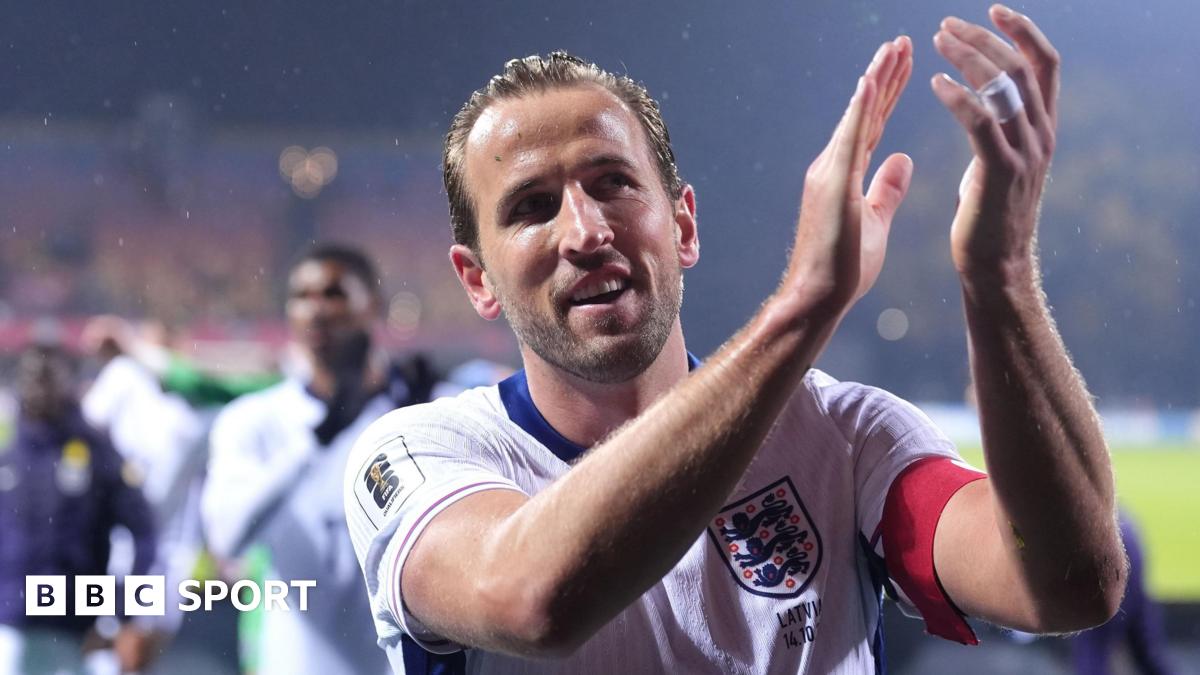
Harry Kane’s final task of the finest season of a magnificent career is to attend to unfinished business as England’s World Cup captain.
Kane is England’s ‘Mr Irreplaceable’ – as proved when Thomas Tuchel’s side were ominously toothless when drawing with Uruguay then losing to Japan in March friendlies at Wembley.
The 32-year-old’s fitness will be Tuchel’s biggest concern as they prepare to start their World Cup campaign against Croatia in Dallas on 17 June, not simply because of his status as England’s all-time record scorer with 78 goals in 112 games, but also because they have no-one remotely in Kane’s class.
If Kane stays fit, and in the remarkable form that brought him 64 goals in 56 games for Bayern Munich this season, England’s hopes will soar.
If not, the reverse applies.
As former England striker Chris Sutton told BBC Sport: “Harry Kane is so important that if he announced his international retirement this afternoon, everyone would instantly view England’s World Cup chances in a different, more pessimistic light.”
Silverware has come late in Kane’s career after barren years at Tottenham Hotspur, when even his stunning goalscoring numbers could not bring glory.
He is now making up for lost time by winning a second successive Bundesliga with Bayern Munich, then scoring a hat-trick as they beat Stuttgart 3-0 in the German Cup final.
And Kane now has his sights set on delivering the biggest prize of all as he leads England on their latest quest to end the search for men’s success stretching back to the 1966 World Cup win.
England’s countdown to their opening World Cup game continues when they play New Zealand in a friendly at Raymond James Stadium in Tampa, Florida, on Saturday (21:00 BST).
Kane has suffered the disappointment of losing successive European Championship finals with England to Italy and Spain, as well as a World Cup semi-final defeat by Croatia in 2018 and a quarter-final loss to France in Qatar.
Now Kane’s stellar form and fitness suggest the time might be right for England and their talisman to overcome the barrier that has brought 60 years of pain.
Hello! I’m Mark Olsen. Welcome to another edition of your regular field guide to a world of Only Good Movies.
It seems odd that the biggest news of the week was the fact that tickets for a movie went on sale, but apparently Christopher Nolan’s upcoming “The Odyssey” is no typical movie. Having already made tickets available for some shows a full year in advance, Universal put more of them on sale for the July 17 opening weekend of the Oscar-winning filmmaker’s ancient epic. There were reports of long online wait times, crashing ticketing systems and the kind of problems more often associated with pop stars than movie nerds.
“The Odyssey” will be playing in a variety of formats, with the Imax 70mm screenings among the most coveted. More venues than usual have also been announced as playing the film in 70mm, including the Village Theatre in Westwood. (A handy visual guide to the different fomats is on the film’s website.) While there is a hint of the ridiculous to some of this mania — popcorn buckets in the shape of Imax cameras and movie tickets going on the resale market for hundreds of dollars — there is no denying how exciting it is to see this kind of anticipation building around any movie.
Back to a ’90s phenomenon
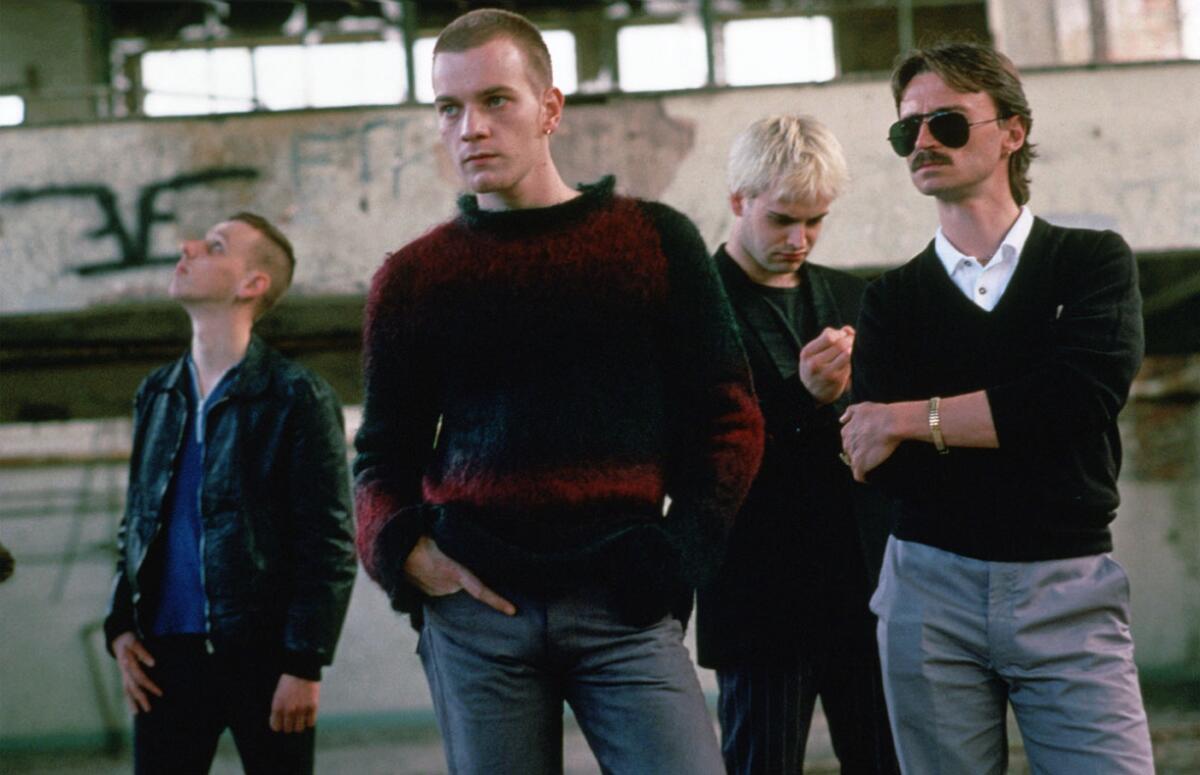
Ewen Bremner, left, Ewan McGregor, Johnny Lee Miller and Robert Carlyle in the movie “Trainspotting.”
(Liam Longman / Sony Pictures Classics)
When it first came out in 1996, “Trainspotting” was an instant cultural phenomenon, capturing the vibes of the “Cool Britannia” moment with its sparkling soundtrack, inventive, high-energy style and cast that included up-and-coming talents such as Ewan McGregor and Kelly Macdonald. It was only the second feature directed by Danny Boyle, who would go on to be an Oscar winner, mount an Olympics opening ceremony and remain a reliably exciting filmmaker all the way to his recent “28 Years Later.”
“Trainspotting” is now back in theaters in a 4K restoration for its 30th anniversary, having lost none of its brash vigor. In his original review, Kenneth Turan said of the film, “Exuberant and pitiless, profane yet eloquent, flush with the ability to create laughter out of unspeakable situations, ‘Trainspotting’ is a drop-dead look at a dead-end lifestyle that has all the strength of its considerable contradictions.”
Appearing like magic
Kathy Najimy, left, Bette Midler and Sarah Jessica Parker in the 1993 comedy “Hocus Pocus.”
(Disney)
Directed by Kenny Ortega, “Hocus Pocus” is one of those movies that has seen its fanbase grow steadily over the years — it is now much more beloved than it ever was on initial release. (It even inspired a 2022 sequel.) Bette Midler, Sarah Jessica Parker and Kathy Najimi play the Sanderson sisters, 17th century witches who find themselves inadvertently brought to modern day by a group of teenagers messing around with casting spells.
The film will play Saturday at the Gardena Cinema, featuring a live commentary from cast members Omri Katz, Thora Birch, Larry Bagby, Tobias Jelinek and Vinessa Shaw followed by a Q&A. This is a rare appearance by Katz in particular, who has retired from acting. Fans of the movie should make the effort to attend.
The Gardena, the last family-owned single-screen theater in Los Angeles, suffered a blow last weekend when a burst pipe flooded the venue. Though they are operational, a campaign has been started to help them recoup repair costs.
Examining the life of the mind
John Turturro in the 1991 movie “Barton Fink.”
(20th Century Fox)
Ranking the films of Joel and Ethan Coen has become a cottage industry of its own. Personally, I go back-and-forth on where to place 1991’s “Barton Fink,” which won the Palme d’Or at Cannes, as well as prizes for director and actor. The movie is by turns funny, disturbing and inscrutable (all good things), with John Turturro in the title role as an intellectual New York playwright who goes to Hollywood to write screenplays — and slowly goes insane.
The movie will play Friday in 35mm at Vidiots with an introduction from Noah Segan, who directed Turturro in one of the breakout titles from this year’s Sundance, “The Only Living Pickpocket in New York.” Hopefully, this will turn into a year in which Turturro gets some long-deserved accolades.
Christmas in June
Elliott Gould on the set of 1978’s “The Silent Partner.”
(Anwar Hussein / Getty Images)
There is something particularly charged about watching a Christmas movie at other times of year — an odd sense of dislocation and maybe even something a little naughty, a circuit-scrambling frisson. So it is particularly notable that as part of their salute to the independent studio Carolco Pictures (behind such films as “Basic Instinct,” “Terminator 2: Judgment Day” and “Reservoir Dogs”), the Vista will be showing 1978’s “The Silent Partner.”
Just the kind of tight and gripping thriller that people pine for all year round, “The Silent Partner” has a screenplay by Curtis Hanson, who would go on to make “L.A. Confidential.” Elliott Gould plays a Toronto bank teller who tries to rip off the thief (Christopher Plummer) who robs his branch wearing a Santa costume as a disguise. Soon they are both scheming against each other.
In his original review of the film, Kevin Thomas called it “tense and ingenious.” In a reconsideration of the film some months later, Charles Champlin called it “a stylish crime-suspense story, a cat-and-mouse game between Christopher Plummer as a clever, sadistic bank robber and Elliott Gould as a bored bank teller who sees a way out of his boredom and into riches.”
So much beauty
Brooke Adams and Sam Shepard in the 1978 movie “Days of Heaven.”
(Criterion Collection)
Terrence Malick’s 1978 “Days of Heaven” is still strikingly singular: a love story told with a stirring visual style. The film’s beauty — aside from its impossibly good-looking lead actors, Richard Gere and Brooke Adams — in part comes from gifted Spanish cinematographer Néstor Almendros, who made his American debut after a career in Europe that saw him working with filmmakers such as Eric Rohmer and François Truffaut. Almendros would win an Academy Award for the film.
The New Beverly will show “Days of Heaven” in 35mm Tuesday through Thursday as a double bill with Truffaut’s 1970 “The Wild Child,” shot by Almendros in black-and-white. Writing about “Days” in 1978, The Times’ Charles Champlin called it “an extraordinary and original visual experience and a movie which is thrilling in its uncompromised purity.”
Perverse fun
Ha Jung-woo, left, and Kim Min-hee in the 2016 movie “The Handmaiden.”
(TIFF)
Korean filmmaker Park Chan-wook was just president of the Cannes jury and has become a much-beloved figure on the international circuit for his wicked sense of humor and sharp sense of style. Nowhere is that on better display than his 2016 film “The Handmaiden,” which is somehow at once a period drama, a con-man thriller and an erotic lesbian romance. Vidiots will be showing the movie Sunday.
As Justin Chang wrote when the film was released, “Without sacrificing his taste for psychosexual perversity or his flair for violent grace notes, Park has given us a teasingly witty and elegant puzzle-box of a thriller whose pleasures are rooted not in visceral shock but in narrative surprise, and which wisely opts to seduce rather than pulverize its audience.”
In an interview at the time, Park said the film’s unpredictability was part of the project’s appeal. “That’s the exact kind of fun to be had with this film and the reason why I chose to make this film. Everything becomes a game of perception. Rather than to say it’s a difficult thing to navigate, it is fun to deal with. Not only for me as a filmmaker but for the audience to see that and engage in that game.”
New this week
Amy Nicholson reviews the latest attempt to make a movie out of a popular Mattel toy with the lightly-tongue-in-cheek “Masters of the Universe.”
Amy also reviewed the revival of the satirical “Scary Movie” franchise, with original stars Anna Faris and Regina Hall returning to make fun of such recent hits as “Sinners,” “Weapons” and “The Substance.”
The documentary “Time and Water” looks at climate change through the life and work of Icelandic writer Andri Snaer Magnason as directed by Sara Dosa, who had a hit with her last film “Fire of Love.” Robert Abele reviews.
One last thing…
This week, our colleagues at De Los launched a podcast hosted by Fidel Martínez and Suzy Exposito. The interview-style video podcast will feature conversations with the people shaping Latino culture in the United States.
The first episode features singer and actor Leslie Grace, who talks about her experiences working on the film “In the Heights” as well as being the star of the canceled “Batgirl.”
With its Venetian-style houses, crystal-clear waters and relaxed coastal charm, this gem could be the perfect alternative for families and couples looking for a quieter beachside getaway
This article contains affiliate links, we will receive a commission on any sales we generate from it. Learn more
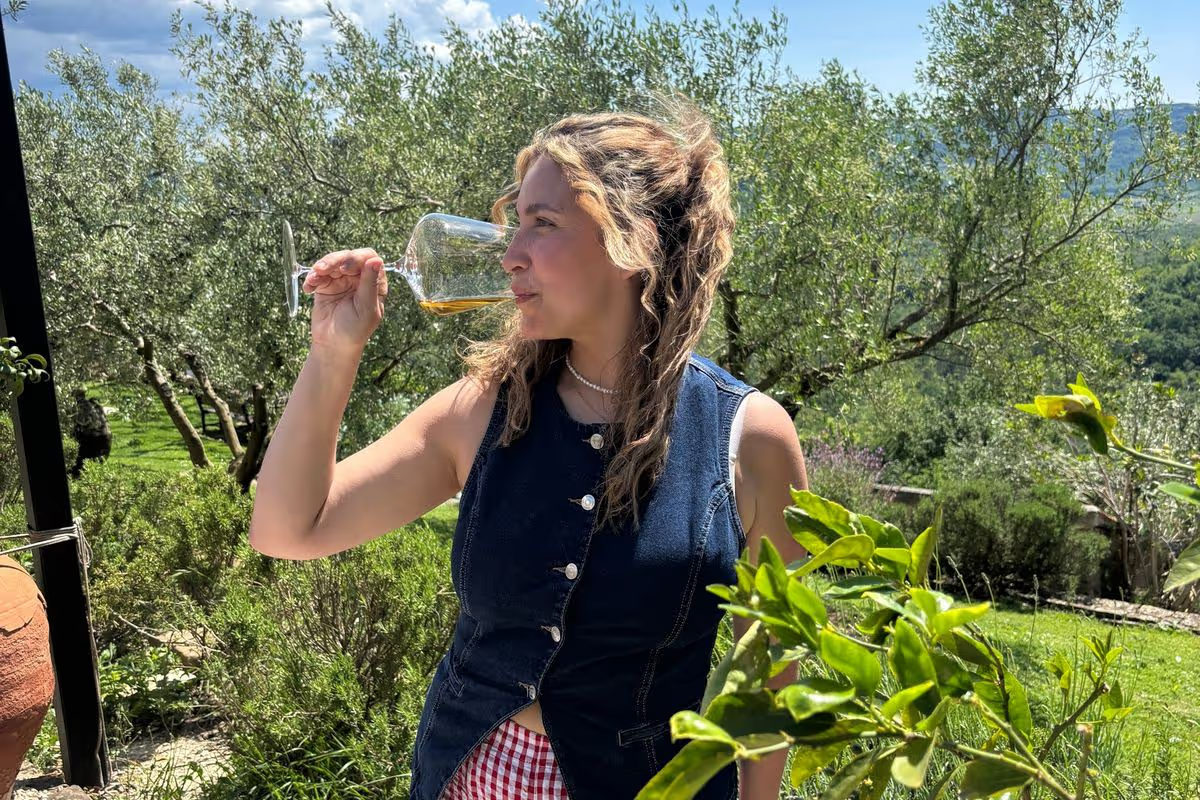
Carla spent five days exploring Croatia’s beautiful Istrian coastline(Image: DAILY MIRROR)
Millions of Brits will be jetting off in search of sunshine this summer, flocking to hotspots like Spain and Italy. But one destination still flying under the radar is the stunning Istrian coastline in Croatia.
With its Venetian-style houses, crystal-clear waters and relaxed coastal charm, Istria could be the perfect alternative for families and couples looking for a quieter beachside getaway without some of the price tags that come alongside Italian holidays. Which begs the question: Is Croatia the new Italy?
I spent five days exploring Croatia’s beautiful Istrian coastline to discover exactly what the region has to offer, from truffle hunting and wine tasting to national parks and medieval hilltop towns.
What stayed with me most about Istria wasn’t only the Roman architecture or the endless coastline, but the way the people seemed to carry centuries of wisdom so casually in conversation.
Standing beside an olive tree over a thousand years old in Brijuni National Park, our guide told us, “Olive trees are like your mother, they will always wait for you.”
It was such a simple sentence, yet it captured the patience and permanence woven into the region itself.
Located on Croatia’s largest peninsula, Istria is a hidden gem packed with history, culture and breathtaking scenery. Every season here has its own charm, but summer is when the region truly comes alive.
Alongside its peaceful beaches and picturesque forests, traces of Istria’s medieval past remain everywhere, from defensive hilltop towns to centuries-old churches and cobbled streets. It is a place that offers something for every kind of traveller.
Adventure lovers can enjoy water sports, zipline experiences and waterparks, while history enthusiasts can explore stunning medieval towns like Motovun and admire the Venetian Gothic architecture of Poreč.
Visitors can also immerse themselves in Istria’s famous food culture by meeting families who have run truffle farms for generations, tasting local wine and olive oil on mountain tops, and exploring national park islands complete with safari-style tours.
Later, while wandering through Pula’s ancient streets, we were taught another local saying: “Not everything is that bad if you have someone you can drink a beer with.”
That warmth and perspective seemed to define the city. Beneath the Roman arches and weathered stone is a place full of life, where history feels less like something preserved and more like something shared between people.
Unlike some of Europe’s busier summer destinations, Istria still feels authentic and relatively untouched. The coastline is dotted with charming harbour towns, hidden coves and waterfront restaurants serving freshly caught seafood and homemade pasta infused with the region’s famous truffles.
Truffle hunting was one of the most memorable experiences I had on my trip. What could have easily felt like a tourist activity instead became something personal and authentic.
Watching Sky, the truffle dog, sprint through the centuries-old farm was both impressive and strangely heartwarming. There was something special about seeing a tradition passed down for generations still carried out with so much passion. Our tour guide was in the process of teaching her 5-year-old daughter the family trade.
I was invited into an intimate truffle tasting experience where everything felt unhurried and local, from the stories shared around the table to the rich earthy flavour of the truffles themselves and the homemade elderflower cordial made from the family’s century-old elderflower berries.
It was one of those moments where Istria’s connection to food, family and tradition became impossible not to feel.
Holidaymakers can find surprisingly good value packages in the region. Jet2holidays currently offers a range of getaways across the Istrian Coast, including a seven-night stay at the three-star Arena Grand Kazela Eurocamp in Medulin from £759 per person, based on two adults sharing and departing from East Midlands Airport on 28 June 2026. The package includes 22kg baggage allowance and car hire.
Families looking for a luxury escape can stay at the four-star Keight Hotel Opatija Curio Collection by Hilton in Opatija from £949 per person, based on two adults and two children sharing, departing from Birmingham Airport on 2 October 2026. The seven-night stay includes return transfers and baggage allowance.
Meanwhile, couples searching for a more upscale coastal retreat can opt for the five-star Valamar Collection Marea Suites in Poreč, with prices from £1,749 per person departing from Manchester on 11 June 2026, or from £1,653 for families departing from London Stansted on 21 June 2026. Both packages include half-board accommodation, transfers and checked baggage.
Nature lovers will love exploring the breathtaking Brijuni National Park, a stunning island just off the coast near Fažana. The islands are home to Roman ruins, botanical gardens, a safari park and the former summer residence of Yugoslav leader Tito.
Brijuni added another layer to my time in Istria. It felt like stepping into a different world, despite being just a short boat ride away from the mainland.
The safari park was unexpected, with open landscapes where animals including zebras, elephants and ancient cows moved freely against a backdrop of coastal wilderness.
What stayed with me most, though, was being shown the preserved footprints of “Sunda,” a dinosaur that once roamed these islands millions of years ago. Standing there, it was hard to fully grasp the scale of time.
Elsewhere, visitors can wander through the Roman streets of Pula and visit its preserved amphitheatre, one of the largest surviving Roman arenas in the world. The city perfectly blends ancient history with a lively café culture and bustling marina atmosphere.
Pula reminded me of a more serene and personal version of Rome. It is impossible to overlook the Roman heritage here. Weathered stone gateways, historic temples and grand arenas emerge suddenly amidst the local coffee shops and residential blocks, echoing the architectural rhythm of the Italian capital.
I felt lucky to experience these things in a far quieter and more intimate way than you can in Rome or Florence.
For me, Istria felt like one of those rare places that quietly changes your pace without you realising it. I found myself slowing down, lingering longer over dinners, watching the light hit the old stone buildings and appreciating conversations that would normally pass by unnoticed.
There was something grounding about being surrounded by history that has survived for thousands of years, while life still moves so effortlessly around it.
Between the sea air, the crowded café terraces and evenings spent wandering through Pula’s streets, the region felt both deeply historic and incredibly alive at the same time.
It may be one of the most unusual hotel rooms I’ve ever stayed in – and it came with some quirky features that I’ll definitely be telling stories about for a while
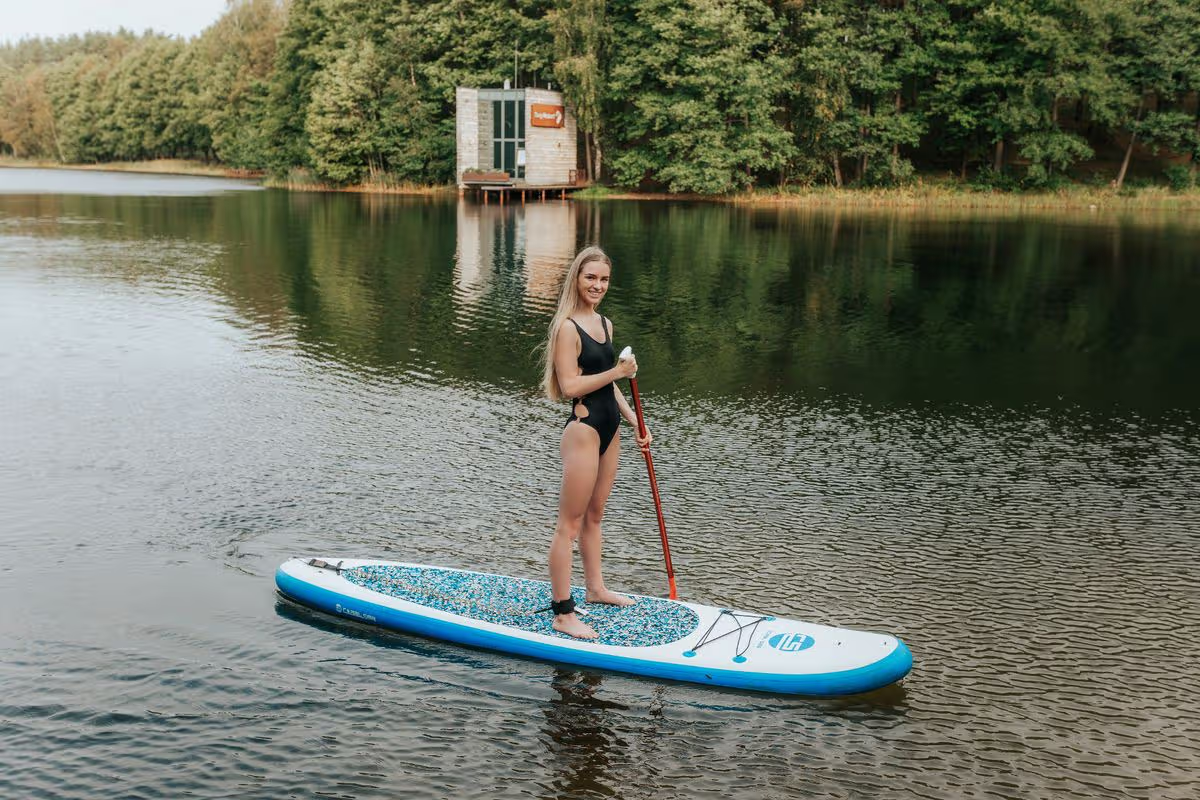
Tonyresort sits in the woods on then banks of a lake (Image: Comcast NBCUniversal)
Dropped off in the middle of a pine forest, miles away from the nearest major town or the rush of city life, I found myself in the middle of the Lithuanian wilderness.
With the tranquil sound of silence and occasional bird song only interrupted by the wheels of my suitcase clacking behind me, I made my way down a rocky path, unsure of where I was going.
But fortunately, I wasn’t lost. This was my home for the evening, as I arrived at what may be the most unusual hotel rooms I have ever stayed in.
You find me in Anupriškes, beside Lake Gilušis in the country’s medieval heartland, having just checked-in to TonyResort, a fairy-tale-like, remote, woodland retreat.
The one thing locals have pointed out to me about their country during my time touring Lithuania, is that it should be celebrated for its relaxation and adventure.
And I found all that and more when I arrived at the resort.
Do you have a travel story to share? Email webtravel@reachplc.com
The room
The tone was set as I walked into my room and found myself immediately drawn, almost magnet-like, towards its panoramic windows.
It may have been raining heavily, but that was not about to stop me from drawing open the curtains and stepping out onto a private terrace to marvel at probably the most beautiful picture-postcard views of nature I’d encountered anywhere.
Eventually, deciding not to catch a cold, I stepped back inside and poured myself a coffee, getting acquainted with the home comforts of the room itself.
Contemporary yet understated, the design of its interior was in typical Scandinavian-Baltic fashion, with pale woods and soft greys in keeping with its location.
It is clear that relaxation is a priority, as I lay back on a large, soft, and cosy plush mattress with soft bedding that felt like a good night’s sleep was assured.
The room was fully-equipped with the modern-day creature comforts you’d hope to find in your home away from home, from a flat-screen TV equipped with satellite channels, a powerful en-suite shower and free Wi-Fi. Across the site, it has 34 rooms, with VIP, family and standard variations.
The food
Despite its remote location, you are not far from finding a good meal, with its on-site restaurant just a two-minute walk from my lodging. Its menu largely leans into ‘comfort food’ serving up grilled dishes, ranging from its most expensive beef entrecote (€29) to its half chicken (€16).
What’s unique is that in some cases, guests can catch the fresh trout from a nearby lake themselves, before having it prepared for them. Personally, I found its secret weapon to be in its dessert menu, with its apple pie particularly flavorsome and moreish thanks to its rich cinnamon pastry.
Away from the kitchen, everything is driven towards embracing the outdoors, with lakeside walks, cycling trails, rope courses, horse riding, fishing and water sport possibilities. There’s also a sauna, hot tub and jacuzzi to enjoy.
Out and about
An enormous advantage of staying at the resort is that you are only a short drive away from what surely must be one of the most striking landmarks in the Baltics.
After a fifteen-minute journey through the countryside, I found myself at Trakai Castle, which, rising from the middle of Lake Galve, is on its own island.
Built in the 14th century, it felt very much like being in a fantasy film set as, joined by Lithuania Travel, I crossed its awe-inspiring drawbridge before entering its red-bricked, Gothic grandeur.
Despite extensive reconstruction in the 1900s, the museum features plenty of evidence of its time as one of Lithuania’s most important strongholds during the 14th and 15th centuries.
There was armour, coins, weaponry and artefacts on display as I wandered around its courtyard and tower rooms. But what I wasn’t expecting was that the highlight of my trip to Trakai wouldn’t be the castle.
Walking through the town itself was almost as visually memorable as the grand fort, with a collection of brightly-painted, green, red, and yellow wooden cottages creating the most beautiful streetscapes.
Teeming with nature, natural beauty, a sense of adventure, and an unmissable historic fortress within an easy distance, Tonyresort is a hidden gem that is worth getting yourself lost in.
While Kelsey Plum was out with an ankle injury for the past week, Sparks coach Lynne Roberts called her the “head of the snake” of the team’s offense.
Plum, who entered the night leading the WNBA in scoring, netted 27 points but couldn’t save the Sparks from a fourth-quarter collapse and a 104-96 loss to the Dallas Wings at Crypto.com Arena on Friday night.
The Sparks’ offense looked better, but it had no answers for the three-headed attack of Arike Ogunbowale, Paige Bueckers and Jessica Shepherd, who spearheaded the Wings’ 63% shooting effort in the fourth quarter to seal the win.
The Sparks have lost three consecutive games for the first time since last June. They lost to Connecticut on May 30 before a poor offensive outing against Las Vegas on Tuesday. With Plum, they eclipsed their 69-point total from that game by midway through the third quarter Friday.
But Dallas’ offense was too much for the WNBA’s worst defense.
The Sparks led by as much as nine in the second quarter but surrendered the lead late in the quarter as the Wings shot 55% to cut the lead to one by halftime.
The Sparks led 78-77 going into the fourth after a back-and-forth third quarter, but Dallas went on a 15-5 run to lead by eight. It was the only cold quarter for the Sparks, who scored just 18 points, with more than half of their offense coming from Plum.
It was a two-point game with under two minutes to play when Ogunbowale collected a rebound off her own shot to give the Wings a two-possession lead before Plum missed a three-pointer and a free throw.
Nneka Ogwumike notched a double-double with 13 points and 10 rebounds while Ariel Atkins scored 16 points.
Ogunbowale scored a game-high 30 points while Bueckers posted a career-high 14 assists and Shepherd had 22 points and 15 rebounds.
Wings guard Odyssey Sims left the court in a wheelchair in the second quarter after she twisted her left ankle coming down from a rebound attempt; she didn’t return. In the fourth, Aziaha James had to be carried off by her teammates after she got hit hard by an Ogwumike screen.
The Sparks will host the expansion Portland Fire (6-6) on Sunday, who lost a tight game against Phoenix on Friday night.
Wavebridge CEO Oh Jong-wook (L), KB Securities CEO Kang Jin-doo (C) and Canton Foundation Chairman Viv Diwakar pose after signing a memorandum of understanding at KB Securities headquarters in Yeouido, Seoul, on Thursday. Photo by KB Securities
SEOUL, June 5 (UPI) — South Korea’s KB Securities said Friday it teamed with global blockchain network operator Canton Foundation and domestic digital asset company Wavebridge.
The Seoul-based brokerage said the three firms would explore ways to take advantage of the Canton Network, a blockchain platform built for regulated financial markets, to support distributed ledger-based capital market transactions.
Over the longer term, they also hope to collaborate on adopting distributed ledger-based financial products in South Korea.
KB Securities said that its ultimate goal is to enable the issuance and cross-border distribution of financial products backed by Korean assets.
Enabled by smart contracts, Canton Network allows participants to exchange data and value for the trading of real-world assets.
Several major global financial organizations participate in the Canton ecosystem, including Goldman Sachs, BNP Paribas, HSBC and Nasdaq, according to KB Securities.
“The transition to a distributed ledger-based capital market is an essential step for future finance. This transformation is already moving from concept to execution globally,” KB Securities CEO Kang Jin-doo said in a statement.
Canton Foundation leader Viv Diwakar welcomed the three-way partnership.
“Korea’s capital markets have the institutional depth and regulatory foundation to move decisively in the shift to distributed ledger infrastructure,” he said.
“This partnership with KB Securities and Wavebridge is an important first step in building that future, and Canton Foundation is committed to supporting Korea’s leadership in this space.”
KB Securities is not publicly listed. The share price of its parent company, KB Financial Group, rose 4.51% on Friday, while the benchmark KOSPI plunged 5.54%.
The Day of Venezuelan Afro-Descendance celebrates José Leonardo Chirino’s uprising against the Spanish crown in 1795. (Venezuelanalysis)
“In my humble opinion, you have never known how to make coffee or Negroes. The former you leave too light, the latter too black.”
– Venezuelan poet and politician Andrés Eloy Blanco to US visitors, 1944
Contemporary racist attitudes in Venezuela have deep roots in the colonial period (sixteenth to nineteenth centuries). After independence, Venezuela constructed a national narrative that claimed to have overcome racism through miscegenation. We were (are) a “café con leche” (coffee with milk) nation, a blend in which racial differences had dissolved. But this supposed harmony concealed a persistent idea: whiteness remained the ideal, while African and Indigenous identities were seen as something to be diluted and gradually eliminated.
This whitening process was not only biological, but also cultural and political. Paradoxically, racism in Venezuela became invisible to those who practiced it and even to those who suffered from it, masked under the pretext that “here we are all mestizos.” However, we have seen that when political conflicts intensify, the mask of mestizaje falls away and colonial prejudices resurface.
The origin of an ideology
Although the validity of the term “race” has been questioned – on the grounds that we all belong to the human race and differ only in phenotypic traits – according to Venezuelan historian Luis Felipe Pellicer, “…if racism exists, race exists,” but only as an ideological construct of domination, and by no means as a scientific truth.
Racism emerged in Venezuela as a result of an exploitative and extractive economy that created a need for enslaved labor. Initially, this labor force consisted of Indigenous people and was later supplemented by individuals brought from the Atlantic coast of Africa. Countries such as present-day Ghana, Togo, Benin, Angola, and the Republic of the Congo were particularly affected.
Now, the issue of slavery in Africa has deeper roots that warrant a more comprehensive examination, but in the Americas this system underwent a transformation, and what began as an economic activity ultimately established ideas that created negative associations around those subjected to slavery, thereby inventing the political and social category of “blackness.” By merging the condition of slavery with skin pigmentation into a single concept, the colonial mindset ended up stigmatizing every cultural and vital expression of these groups, considering them inferior, ugly, and despicable.
One of the characteristics of enslavement in the Americas was dehumanization and its racial justification. That is to say, here the idea of enslavement due to war or debt repayment was abandoned. The automatic association was: you are a slave because you are a Black African, and vice versa. This phenomenon created the idea that all Africans and their descendants were predestined for servitude and forced labor.
The racist backlash
The recent incident in Madrid that saw supporters of far-right leader María Corina Machado shout slogans against Venezuelan Acting President Delcy Rodríguez reflects a deep social divide. Sectors of the opposition who identify – whether phenotypically or aspirationally – with a Eurocentric worldview and the ideal of “whiteness” believe that the exercise of power by groups they associate with or perceive as people of African descent constitutes a historical affront. For decades before the Bolivarian Revolution, epithets like “monkey,” “mulatto,” “zambo,” “bembón,” and “bad hair,” among others, paraded across TV screens and in the national press with complete normality and often disguised as jokes – another mechanism for propagating Venezuelan racism. Following his government’s post-2001 radicalization of revolutionary reforms, Hugo Chávez was himself notoriously called a “monkey” and prominently caricatured as such by Venezuela’s right-wing opposition.
It is no surprise, then, that the presence of figures such as Venezuela’s current acting president transcends the issue of political ideology to constitute a rupture in “quality,” a term used in eighteenth-century Venezuela. “What is quality or race?” asks Pellicer. “It is an idea of inferiority regarding a human group that is transmitted, corporeally, through sexual reproduction.” It is an affront, then, to the natural order of things, to the pyramid of colonial society that placed peninsular Spaniards at the apex and people of African descent at the base.
With the chant “Fuera la mona” (“Out with the monkey”), the Venezuelan far-right hurled an insult that reveals their undemocratic nature. But more importantly, these insults are not even linked to any incompetence in governance, but rather to what these groups perceive as “racial incompetence.” It is the expression of a wounded “whiteness” that uses racism as a defense mechanism against what they see as a displacement of their traditional privileges. It is, in essence, an attempt to restore a colonial order.
Racism is a power structure. “Colonial thought,” Pellicer observes, “invents the other, whether Indigenous, mestizo, mulatto, or Black, as well as the white self … thereby establishing the ideology of race as the primary marker of inequality, beginning with the invasion of the Americas.” The struggle for honor in the colony was a struggle for differentiation and political recognition. Today, the “animalization” of non-white political leaders is the continuation of that colonial war, which is why the Madrid slur is not a simple rudeness; it is an act of historical violence. It is the voice of the eighteenth century trying to silence the twenty-first. And at this point, one must ask: what is admirable about the idea that, based on skin color, some are more or less fit to govern a country?
The slave owner/racist does not see a person; he sees a tool, a piece of property, and for this to happen, the mind must adopt a psychopathic and callous mindset. The racist needs to strip the oppressed of their status as subjects in order to invoke a visceral fear of otherness that, if acknowledged, threatens their illusion of superiority. Choosing to be part of this ideological operation of domination today should be a source of shame, for it is the most glaring expression of a violence that heralds the end of humanity.
From Cortés to Díaz Ayuso
This exclusionary mindset is part of a transatlantic trend toward neocolonial revival that seeks to re-legitimize old hierarchies. A telling example is Spanish right-wing politician Isabel Díaz Ayuso’s recent visit to Mexico, where her proposal to celebrate the figure of Hernán Cortés serves as an ideological parallel to the “Fuera la mona” chants heard in Madrid. By attempting to portray the invasion and genocide in the Americas as a “civilizing” feat, Ayuso revives the logic of the “society of qualities”: a structure where moral and political superiority is an exclusive Hispanic and white inheritance, while Indigenous and Afro-descendant peoples are reduced to a state of barbarism remediable only through paternalistic tutelage.
This narrative is not merely a historical debate, but a contemporary validation of the racial hierarchy and justification for overthrowing processes of popular sovereignty in Latin America. Ayuso’s discourse seeks to reaffirm a “Hispanic identity” that views ethnic otherness as a threat to the values of Western civilization. In this sense, what happened in Madrid is a clear symptom of the reactionary neo-fascist wave sweeping large parts of the Global North and South.
Racist remarks
The trauma of Venezuela’s War of Independence (1810–1830) and the Federal War (1859–1863) created the need to invent a narrative in which Venezuelan society was free of conflicts and differences, and thus the persistence of racial and social tensions has been glossed over. However, it resurfaces in comments such as: “Fuera la mona”; “We need to improve the race”; “Black but refined”; “Money whitens.”
In 1948, conservative writer Arturo Uslar Pietri responded to Rómulo Gallegos’s presidential campaign by stating: “Anyone who speaks of blacks or whites, anyone who invokes racial hatred or privileges, denies the essence of Venezuela. In Venezuela, in political and social matters, there are neither whites nor blacks, neither mestizos nor Indigenous people. There are only Venezuelans .” This argument was almost exactly the same as that put forward by María Corina Machado when asked about the event at La Puerta del Sol, stating that it had occurred because of the fissures of hatred that Chavismo introduced into its discourse over 27 years in power.
The end of denial
As part of the commemoration of the Day of Venezuelan Afro-Descendance, established under the Hugo Chávez government in 2005 to be celebrated every May 10 [on the anniversary of the 1795 slave uprising led by José Leonardo Chirino], it is both pertinent and necessary to reflect on and understand that racism in Venezuela is a long-standing phenomenon that surfaces with particular virulence during times of political crisis. The historical association between power and whiteness, inherited from the colonial era and reinforced by twentieth-century positivist thought, remains alive in the minds of sections of society that refuse to accept the nation’s diversity, including among working-class communities through what is known as endoracism.
Understanding the origin of this phenomenon is the first step toward dismantling it. We must move from the false harmony of “café con leche” to true decolonial justice, where a person’s “quality” is not dictated by their “whiteness.” The Madrid incident reminds us that the battle for Venezuela’s mental independence far from over.
Rosanna Álvarez holds an MSc in History of Republican Venezuela from the Central University of Venezuela (UCV). She is a researcher at the Centro de Estudios Simón Bolívar and Fundación Hugo Chávez, as well as a writer at the Libertador 8 Estrellas magazine. She is the author of Venezuela vista e imaginada. Un recorrido visual por nuestra historia and host of the Bolívar Nuestro show on Radio del Sur.
The views expressed in this article are the author’s own and do not necessarily reflect those of the Venezuelanalysis editorial staff.
The Sidemen have taken a swipe at KSI after his shock exitCredit: Alamy Stock PhotoKSI revealed earlier this week he was splitting from the YouTube groupCredit: YouTube
Today The Sidemen put up a long post on their social media which seemed to criticise the way in which KSI did it.
They wrote: “Ideally, we would have loved the opportunity to give JJ the send off he deserved, a proper farewell video, time for everyone to process it, and a chance to celebrate everything we’ve built together.
“Unfortunately JJ released the news before we had agreed on a mutual way of letting our audience know.”
KSI posted a long video on Sunday afternoon which not only caught fans unaware but seemed to do the same for The Sidemen too.
He told fans the decision to walk away after 13 years was not one he took lightlyCredit: ITVBut The Sidemen say his statement announcing the move caught them ‘unaware’Credit: YouTube
They said: “His exit did not happen in the way any of us wanted it to. That has understandably left lots of you confused and we feel like we owe you some clarity.
“It’s difficult for us to address the situation and has taken some time, because we’re a group and not an individual.
“We don’t have a spokesperson as such and each of our opinions and feelings differ, which is why we’re using this shared statement.”
Though they did sound a note of positivity, starting off the statement by saying: “We as the Sidemen wish JJ the best and respect his decision to leave.
“We will be forever grateful for the amazing moments and memories we’ve shared together.”
They also signed off reassuring their fans: “This is the end of an era, but not the end of the Sidemen. The rest of us will continue to bring you Sidemen content with the same commitment and optimism we’ve always had.
“We look forward to continuing the journey with you all, and thank you for always supporting us through everything. Ethan – Harry – Josh – Simon – Tobi – Vik.”
In the video KSI posted he said: “This is honestly the hardest video I’ve ever had to make in my life.
“But after a lot of thought, I’ve decided that I’m no longer be doing sidemen videos. Today, 31st of May, will be my final Sidemen video.
“Even saying those words out loud doesn’t feel real.”
KSI went on to say: “The Sidemen have been such a huge part of my life for over 12-13 years.
“For almost half my life, this Sidemen has been my second family. We’ve grown up together. We’ve travelled the world together.”
He later added: “The truth is, nothing bad has happened. This decision is completely my own.
“Over the last few years, I’ve felt myself being pulled in a lot of directions than ever before.
“Between everything else in my life, I feel like I’ve been running at full speed at 100mph.
“I’ve spent so long trying to be everything for everyone. Trying to be everywhere. Trying to do it all. Trying not to let anyone down. But somewhere along the way, I started losing the balance in my own life.”
KSI went on: “I’ve found it hard to make enough time for myself. I’ve definitely found it hard to find time for my family. I’ve found it hard to make time for the people I love. And I’ve realised that something has to change.
“The Sidemen deserve somebody who can give 100%. And right now, I know I can’t do that. It just wouldn’t be fair to the boys.
“It wouldn’t be fair to you. And it wouldn’t be fair to myself. Walking away from something you love is painful. Trust me, it’s not been easy. But deep down, I know it’s the right thing to do.
“Those boys helped shape who I am today. And I hope in some small way I helped shape who they became too.”
KSI then went on to thank each of the men behind the successful YouTube channel, before thanking the crew and the fans who supported them on their journey.
Concluding his statement, KSI signed off by saying: “But for now, I need to focus on myself, and I need to focus on fixing my work life balance, just so I can finally focus on my health, and finally make time to see my family and make time to see my partner.”
SAN ANTONIO — Go crazy, New York. Or, perhaps more accurately, crazier.
The red-hot Knicks are going home, two wins away from an NBA championship that the capital of the world has been waiting to see for generations.
Jalen Brunson hit a go-ahead free throw with 9.5 seconds left after a turnover by Victor Wembanyama moments earlier, then Wembanyama missed a jumper at the end of New York’s 105-104 win over the San Antonio Spurs on Friday night for a 2-0 lead in the NBA Finals.
“What a ballgame,” Knicks coach Mike Brown marveled.
Karl-Anthony Towns had 21 points and 13 rebounds, while Brunson and Mikal Bridges each scored 20 for the Knicks. They have won 13 straight, the second-longest streak by any team in NBA playoff history.
“New York City showed up,” Towns said. “The fans showed up. The energy showed up. And we found a way to get it done.”
The Knicks are just the third team to win the first two games of a finals on the road, joining Michael Jordan and the 1993 Chicago Bulls, and Hakeem Olajuwon and the 1995 Houston Rockets.
Both of those teams won championships, the Bulls needing six games to oust the Phoenix Suns, the Rockets going home after winning those first two games in Orlando and sweeping the Magic. The Knicks, seeking their first championship since 1973, are in position to join them.
Wembanyama, after a very quiet first half, scored 29. De’Aaron Fox had 20 for San Antonio.
“We can’t change the past,” Wembanyama said, “We’re already thinking about Game 3.”
The series shifts to New York. Game 3 is at Madison Square Garden on Monday night.
New York Knicks guard Landry Shamet, left, celebrates with guard Mikal Bridges after making a three-pointer in the second half against the San Antonio Spurs in Game 2 of the NBA Finals on Friday.
(David J. Phillip / Associated Press)
President Donald Trump — a native New Yorker — plans on attending Monday. And ticket prices on the secondary market, for the worst seats at MSG, were approaching $9,000 apiece on Friday night, with Knicks fans evidently willing to pay tippy-top dollar just to be in the building as the team nears what would be its first championship in 53 years.
The Spurs were down 14 midway through the fourth and came all the way back — scoring the next 14 points to tie the game. Wembanyama’s three-point play with 57 seconds left gave the Spurs their first lead in nearly two full quarters, putting San Antonio up 104-102.
“We showed tremendous desperation, urgency and competitive response,” Spurs coach Mitch Johnson said. “Hopefully we can try to bottle that up … and try to play to that same level.”
But the Knicks got the last three, Brunson — the hero of Game 1 for the Knicks — getting them all.
Brunson scored on the next possession, just his seventh basket in 24 shots on the night, and the game was tied. Wembanyama missed a long jumper, OG Anunoby got the rebound for New York with 30 seconds left, the Knicks called time and the stage was set.
The Spurs got a stop, but Wembanyama threw the ball away. Brunson got fouled, the Knicks had the lead back and before long Spurs fans were filing out of the arena — possibly for the final time this season.
The Spurs called time with 7.5 seconds remaining. Fox took the inbound pass, then set up Wembanyama for a jumper that would have won it. The shot bounced off the rim, and it was over.
“We had to get a stop. We hadn’t gotten a stop all quarter,” Towns said.
They got their stop. Next stop: New York, where the hottest team in basketball knows an NBA title is just two wins away.