Tuchel has to take his own share of responsibility for this situation, having made some experimental selections leading up to these final preparations, including in the friendlies against Uruguay and Japan at Wembley in March.
Manchester City’s Phil Foden played up front against Japan. In the Uruguay game, Tuchel fielded Foden, Everton’s James Garner and Spurs striker Dominic Solanke. None of those made his World Cup squad.
Ivan Toney came on for the second half in Tampa after spending a year in the England wilderness, following a three-minute appearance in the friendly defeat against Senegal at the City Ground, Nottingham.
This, in effect, makes it even more important that Tuchel puts a line-up on the pitch against Costa Rica that is as close as possible to the one that will face Croatia. It will be an opportunity to find rhythm and momentum and build combinations before that tournament opener.
Tuchel did, at least, report no injuries from this first warm-up game, while he added: “The better the opponent gets, the better we will get.”
Kane’s goal came just before half-time, which heralded the mass changes, but Tuchel said: “I was happier with the second half. I thought we had more hunger and more desire. We played better but did not score.
“We didn’t play according to our plan in the first half. It slowed the game down, but it was better in the second half.
“We will acclimatise to the humidity and the sun while we are here. Tomorrow will be recovery day, then we have two days to prepare for Costa Rica. Then a chunk of players will get more minutes. The Arsenal players are in now, which is good because it gives us energy and quality, and then we have another one and a half days off.
David J. Rush, a former CIA officer who was arrested in May for stealing millions of dollars in gold bars and $2 million cash, allegedly set up a fake operation in order to convince a colleague to transfer the money to him. Photo by Chris Kleponis/UPI | License Photo
June 6 (UPI) — A former Central Intelligence Agency officer who was caught with $40 million in gold bars allegedly created a fake intelligence program in order to steal the money.
David J. Rush was arrested in May and charged with theft of public funds after he lied to the agency about his military history, education and pilot license, and was then accused of stealing the gold bars and $2 million in cash that was found in his home.
U.S. officials have now said that Rush created a fake intelligence operation, or “special access program,” related to the “continuity of government operations” that he used to convince another agent to transfer the money to his operation, The New York Times and The Washington Post reported.
“He made up a contract,” one of the officials told The Post.
Rush allegedly read in two CIA colleagues on the fraudulent operation, which he claimed was related to keeping the government running in the event of a catastrophic event, such as destructive weather or a military attack.
It is not clear how the former officer was able to create a secret program and obtain the funds without involving superiors in the agency, but he managed to convince one of the colleagues to purchase the gold and transfer it to him.
The fact that Rush managed to apply to and was hired by the CIA using false credentials has raised questions about the agency’s background checks and security when hiring, the Times and the Post reported.
Additionally, several former U.S. officials question how somebody could be hired and then assigned to a significantly sensitive intelligence-gathering program that is classified.
Rush was caught and charged after the agency conducted a review of expenses and could not locate the gold or cash he had requested.
President Donald Trump discusses renovations to the Lincoln Reflecting Pool and makes an announcement on coal in the Oval Office at the White House on Thursday. Photo by Samuel Corum/UPI | License Photo
Weekly insights and analysis on the latest developments in military technology, strategy, and foreign policy.
Welcome to Bunker Talk. This is a weekend open discussion post for the best commenting crew on the net, in which we can chat about all the stuff that went on this week that we didn’t cover. We can also talk about the stuff we did or whatever else grabs your interest. In other words, it’s an off-topic thread.
This week’s caption reads:
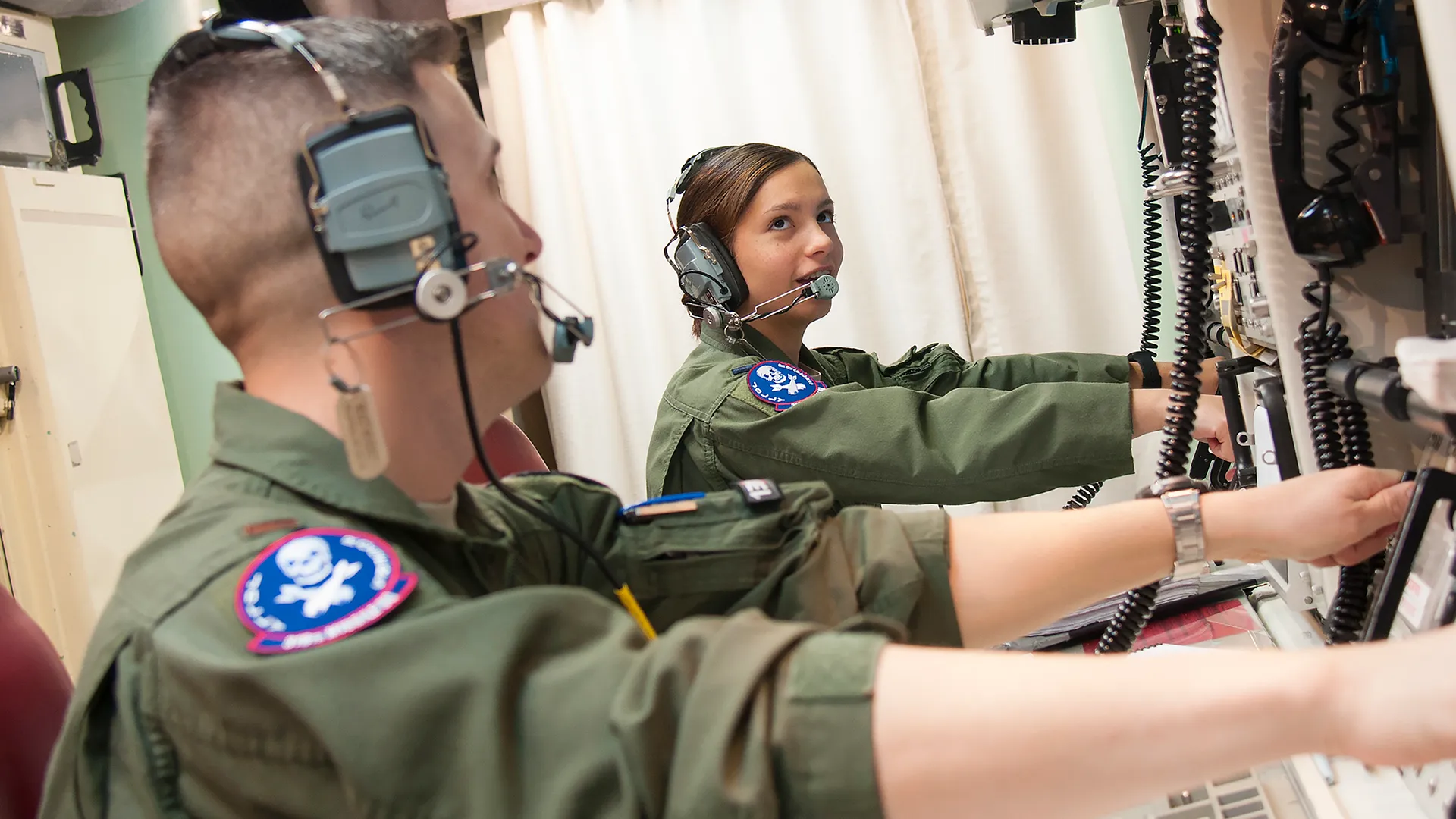
First Lt. Pamela Blanco-Coca, 319th Missile Squadron missile combat crew commander, and her deputy commander, 2nd Lt. John Anderson, simulate key turns of the Minuteman III Weapon System Feb. 9, 2016, in the E-01 Launch Control Center in the F.E. Warren Air Force Base, Wyo., Missile Complex. A properly conducted key turn sends a “launch vote” to any of a number of Minuteman III ICBMs in a missileer’s flight area, and two launch votes from two separate LCCs will enable a real-world launch when directed by the U.S. president. (U.S. Air Force photo by Senior Airman Jason Wiese)
Prime Directives:
If you want to talk politics, do so respectfully and know that there’s always somebody that isn’t going to agree with you.
If you have political differences, hash it out respectfully, stick to the facts, and no childish name-calling or personal attacks of any kind. If you can’t handle yourself in that manner, then please, discuss virtually anything else.
No drive-by garbage political memes. No conspiracy theory rants. Links to crackpot sites will be axed, too. Trolling and shitposting will not be tolerated. No obsessive behavior about other users. Just don’t interact with folks you don’t like.
Do not be a sucker and feed trolls! That’s as much on you as on them. Use the mute button if you don’t like what you see.
So unless you have something of quality to say, know how to treat people with respect, understand that everyone isn’t going to subscribe to your exact same worldview, and have come to terms with the reality that there is no perfect solution when it comes to moderation of a community like this, it’s probably best to just move on.
Finally, as always, report offenders, please. This doesn’t mean reporting people who don’t share your political views, but we really need your help in this regard.
THE friction between Sir Paul McCartney and Ringo Starr in 1970 will be brought to life in the upcoming Beatles biopic.
But I can reveal there is tension among the two actors playing the pop legends, too.
Sign up for the Showbiz newsletter
Thank you!
Cast from left: Harris Dickinson as John Lennon, Paul Mescal as Paul McCartney, Barry Keoghan as Ringo Starr, and Joseph Quinn as George HarrisonCredit: PAPaul Mescal as Paul and Barry Keoghan as Ringo
Oscar-nominated Barry Keoghan is playing drummer Ringo, alongside Gladiator II star Paul Mescal as Macca.
Sources on the set of the film, directed by Sam Mendes and due for release in 2028, have noticed that the relationship between the two Irish actors has become strained.
One said: “Barry has been rubbing people up the wrong way.
“His timekeeping is not always up to scratch and he often references that he is a parent — despite not living with his son.
“He also brings his brother Eric on set as his assistant, which doesn’t always bring out the best in his character.
“Barry is professional and can bring out the best in any script.
“But he can test the boundaries off-camera.”
Paul and Ringo, the last surviving members of the band, clashed in 1970, shortly before the group split in April that year.
Paul was preparing to release his first solo album, McCartney, just a few weeks before The Beatles album Let It Be was due to come out.
His bandmates wrote him a letter asking him to delay it, and Ringo hand-delivered it to Paul’s home in London.
Paul, who is now close friends with Ringo, later admitted it was the only time he threw someone out of his house.
The new screen project is a series of four biographical films based on the lives and careers of each member of The Beatles.
Joseph Quinn is George Harrison in the movieCredit: �2026 CTMG, Inc., All Rights Reserved.Harris Dickinson is John Lennon in the new film
The four intersecting biopics, written by James Bond screenwriter Jez Butterworth, will tell the story of the group from their humble beginnings in Liverpool to becoming the biggest band on the planet.
Stranger Things’ Joseph Quinn will portray George Harrison and Harris Dickinson stars as John Lennon.
Earlier this week, Harris and co-star Paul went to the Primavera Sound festival in Barcelona, where they were filming.
Of the four films, Mendes explained: “Each one is told from the particular perspective of just one of the guys. This is a chance to understand them a little more deeply.”
Even so, it sounds like there’s another meaty story behind the camera.
Reza’s sharpe move
Reza Amiri-Garroussi and Bella Sharpe have got back togetherCredit: Channel 4
MADE In Chelsea couple Reza Amiri-Garroussi and Bella Sharpe have got back together.
The pair, who first dated in 2024, have been spotted together in London.
It comes as Reza’s ex Ruby Adler announced her engagement to multi-millionaire Luxe Listings Sydney star Gavin Rubinstein after just a year of dating.
An insider said: “Reza and Bella split due to the pressures of filming Made In Chelsea. But now they’re taking a break from the show, they’ve reconnected.
“Reza always wanted to give the relationship another chance. With Ruby out of the picture, there’s nothing to stop them.”
Hopefully it’ll be second time lucky for these two.
CHLOE’S PRICE IS RIGHT
TOWIE’s Chloe Brockett is dating a new fellaCredit: Louis Wood
I can reveal the reality star is courting Essex lad Daniel Price, who used to romance Yazmin Oukhellou.
Chloe recently split with Love Island champ Jack Fincham.
A source said: “Chloe and Daniel have kept their relationship quiet. They are enjoying getting to know each other. He treats her well and she is happy.”
It’s not the first time Yasmin and Chloe have shared the same taste in men after they both had trysts with James Lock.
Small world . . .
BEBE AND JASON ON THE BALL
Bebe Rexha belted out hits in a denim corset teamed with a fluffy pink cardieCredit: Shutterstock EditorialJason Derulo ripped his shirt off to bust out some signature movesCredit: Shutterstock EditorialDerulo performing on stage at Capital’s Summertime BallCredit: Shutterstock EditorialLola Young was back on fine form as she sang her anthem Messy and expressed her gratitude to the crowd for their supportCredit: Shutterstock Editorial
POP’S finest didn’t let the relentless rain dampen their spirits yesterday as they took to the stage to perform for Capital FM’s Summertime ball at London’s Wembley Stadium.
Bebe Rexha belted out hits in a denim corset teamed with a fluffy pink cardie, Jason Derulo ripped his shirt off to bust out some signature moves, and superstar DJ Fatboy Slim got fans dancing.
Lola Young was back on fine form as she sang her anthem Messy and expressed her gratitude to the crowd for their support.
Opening up about her sobriety on the socials this week, she wrote: “Sometimes I feel like I am grieving an old version of myself that I have chosen to let go of. Even though I chose a path that is better and safer, there are days where it still all feels wrong.”
HOPEFULS GIVE XTINA ROLE A BURL
From left: Natalia Jacques, Gracie O’Brien and Cecilia PetrushCredit: SuppliedProducer Christina Aguilera and writer and director Steven AntinCredit: Maja Smiejkowska
CHRISTINA AGUILERA has cast three young stars to share the lead role in her upcoming production of Burlesque The Musical.
British newcomers Natalia Jacques and Gracie O’Brien will portray Ali, the waitress-turned-dancer played by Christina in the 2010 movie.
American Cecilia Petrush will also star in the role.
Writer and director Steven Antin said: “When Christina brought Ali to life in the film, she created something truly iconic.
“Bringing Burlesque from screen to stage is about honouring that legacy. These three exceptional actresses step into those heels not to imitate Christina, but to continue the legacy she began.”
Burlesque The Musical returns to London this September at the new West End venue The Arts At Marble Arch.
Netflix boosts brand
Netflix has added rape- accused Russell Brand’s hit film St Trinian’s on to the streaming serviceCredit: Getty
NETFLIX has added rape- accused Russell Brand’s hit film St Trinian’s on to the streaming service.
The actor and comedian starred in the 2007 movie about rebellious schoolgirls alongside Colin Firth and Rupert Everett.
Netflix added the flick under “comedies” last month.
Brand starred as crook Flash Harry who taught the schoolgirls about “the seven laws of crime”.
He is accused of three rapes, three sex assaults and an indecent assault on six women from 1999 to 2009.
His trial at Southwark Crown Court is due to start in October and is expected to take up to eight weeks.
The former TV and radio presenter denies all charges against him.
Rupert, who played headmistress Camilla Fritton in the film, claimed Brand behaved “perfectly well” on set.
He said: “There were a lot of beautiful women on St Trinian’s and there was never any scandal to do with Russell Brand.”
Sean sis: it’s real deal
LOVE Island star Sean Fitzgerald has uncovered a perfect match in Lola Deal, according to his sister.
Gaelic footballer Sean, who is in a couple with former police detective Lola, sealed their romance with a kiss at the villa in Majorca earlier this week.
The hunk’s sister Katie revealed: “I absolutely adore Lola.
“She is gorgeous, so sweet, kind, and the smile she puts on Sean’s face is really nice to see.
“As of right now in the villa, I think Lola is best suited to him.”
She said of her brother: “I would just like to see more of his goofy side that we all see at home.”
JEANIE IS OUT FOR B*WITCHED
Irish girl group B*Witched from left: Lindsay Armaou, Edele Lynch, Keavy Lynch and Sinead O’CarrollCredit: AlamyThey have revealed that the outfits in their 1998 hit video C’est La Vie were not actually plannedCredit: 2018 Lorne Thomson
THEY rose to fame in the late Nineties wearing double denim – but Irish pop band B*Witched have revealed that the outfits in their 1998 hit video C’est La Vie were not actually planned.
Twin sisters Edele and Keavy Lynch, who supported their brother Shane and his Boyzone bandmates last night, sat down with Biz on Sunday’s Emily ahead of their performance at London’s Emirates Stadium.
Edele said: “The day before we were doing the C’est La Vie video, our clothes got stolen from the record company and they never knew where they went.
“So in a panic they ended up going to Levi’s in the morning to just grab some clothes.”
She added: “I still have my outfit from the 1998 tour and I still fit into it. I don’t know if that is a good thing or a bad thing at this point. My eldest daughter borrows stuff all the time and I’m always coming across it.
“In the winter she wears this white fluffy jacket which I wore for the To You I Belong video.”
The twins, along with bandmates Sinead O’Carroll and Lindsay Armmaou, released their single Firefly on Friday ahead of an EP in August – but as they gear up for their 30th anniversary, they don’t plan on hanging up their jeans any time soon.
Edele explained: “We’ve realised that if we turn up without denim, we might as well not sing.”
Asked about the possibility of being in a campaign with Levi’s, the singer said: “I think they are missing a trick.”
KATE’S SEACRET TALENT
Kate Moss Watercolour is being auctioned to raise funds for Doodle Drop For Coral, a new campaign led by Project ZeroCredit: SuppliedKate has made her debut as an artist this week by unveiling her first watercolour for saleCredit: Getty
KATE MOSS has made her debut as an artist this week by unveiling her first watercolour for sale.
The supermodel painted a green and blue seahorse, left, which is being shown alongside new pieces by Rolling Stone bandmates Ronnie Wood and Keith Richards, Hollywood actress Sharon Stone and Guns N’ Roses legend Slash.
The collection is being auctioned online to raise funds for Doodle Drop For Coral, a new campaign led by Project Zero, the ocean conservation charity co-founded by Ronnie’s son TYRONE WOOD.
Kate has signed her seahorse by hand, writing: “Love, Kate Moss”, alongside a tiny heart.
The current bid stands at £285.
A nude portrait of Kate was painted by the late British artist Lucian Freud in 2002. It sold for £3.5million.
Tyrone told me: “Kate’s seahorse is one of those pieces that makes you smile.”
Nigella Lawson has revealed the secret ingredient she tucks into that keeps her skin looking young and plumpCredit: Shutterstock
NIGELLA LAWSON has revealed the secret ingredient she tucks into that keeps her skin looking young and plump.
The Great British Bake Off judge, left, said: “I’m a great believer in butter. I just eat what I want.
“I’m not punish-ing myself trying to look like a model. I just waddle over and enjoy myself.”
Speaking at London’s Japanese restaurant Nobu, Nigella insisted she will not jump on the tweakment bandwagon, adding: “Cosmetic work is a tyranny. I just think there’s no point.”
Remind me to include a tub of Lurpak on my shopping list.
Two amateurs with unforgettable names made their mark at Riviera Country Club on Saturday.
Asterisk Talley and Aphrodite Deng — both barely old enough to get behind the wheel — turned in remarkable performances in the third round of the U.S. Women’s Open, each proving she belongs among the best players in the game.
On a postcard day, Talley assembled a bogey-free round suitable for framing. The 17-year-old from Fresno had five birdies a day after a 75 put her in peril of missing the cut. By the end of her morning round, she had gone from an afterthought to a tie for 15th.
“I was just feeling like the hole was so big today,” said Talley, who has gone 22 consecutive holes without a bogey. “Couldn’t miss.”
According to Elias Sports Bureau, Talley’s 66 was the third-lowest round by a woman in a major championship since 1980. It was also the lowest score by an amateur in the final two rounds of a U.S. Women’s Open.
Deng, 16, made a similar splash later in the day, opening her round with three consecutive birdies to play her way near the top of the leaderboard. Last year, she became the first Canadian to win the U.S. Girls’ Junior Championship.
Asterisk Talley watches her tee shot on the fifth hole during the second round of the Chevron Championship tournament in April.
(David J. Phillip / Associated Press)
It’s rare for a player to go from junior champion to contender in the Open in back-to-back years, but not unheard of. In 1975, defending junior champion Nancy Lopez finished tied for second in the Open.
As of press time Saturday, the lowest round of the day — and the tournament — was the 75 of Charley Hull, a crowd favorite who has won three times on the LPGA Tour but is still looking for her first major victory.
Hull, who is English, is a colorful character who went viral during the 2024 Open for smoking a cigarette while signing autographs and playing. She finished second in that tournament at Lancaster (Pa.) Country Club.
Like Talley, Hull was in danger of missing the cut after opening with unspectacular rounds of 73 and 72. On Saturday, she had seven birdies and a bogey. That left her tied for sixth at the end of her round.
“I kind of like chasing,” Hull said of her move up Saturday. “I just find it more fun and just I can then be free and then just play golf how I want to play golf.”
Methodically moving up the board is No. 1-ranked Nelly Korda, the biggest needle mover in women’s golf. She collected five consecutive wins last season and seven overall. Though she finished in a runner-up spot at Erin Hills last year, she has yet to win an Open.
Korda frequently found trouble off the tee in the opening round and shot a 73, but came back strong Friday with a 67 and had two birdies in her first six holes Saturday.
“It was weird because I was striking it so well Monday through Wednesday, and all of a sudden I just really didn’t,” Korda said after her Friday round. “I had no idea what was going on [Thursday] with my driver. So I tried to figure it out on the range after the round and kind of got a little bit of something kind of going.”
A big story heading into the weekend was the rise of Alison Lee, who held the lead after Friday and is balancing motherhood with her chase for her first major championship. She is staying with her parents in Valencia, who are watching her 1-year-old son, Levi, while she plays.
Lee, who played at UCLA, cooled a bit Saturday with two bogeys in her first four holes and was midway through her round at press time.
Also in contention is Jennifer Kupcho, who shot a 66 on Thursday. If she continues to hold her position near the top of the leaderboard, and if former USC standout Allisen Corpuz is in the mix, it could get interesting.
Kupcho’s husband, Jay Monahan, caddies for Corpuz, who won the 2023 Open at Pebble Beach.
“Jay and I don’t talk about golf,” Kupcho said. “We get back, and we don’t talk golf. I think that’s one thing that’s been really good about our relationship. … If I do want to talk about it, I’ll talk to him, but he’s not going to bring it up to me.”
This article provides a historical overview of South Korea’s Memorial Day, an annual observance held on June 6th to honor those who perished during the Korean War. The text details the conflict’s origins in 1950, highlighting the unique military intervention by the United Nations and the involvement of global superpowers that eventually led to a 1953 stalemate. Because a formal peace treaty was never established, the two nations technically remain in a state of war separated by a demilitarized zone. On this public holiday, South Koreans participate in national mourning traditions, such as displaying the country’s flag and visiting gravesites to pay their respects. Ultimately, the source serves as a commemorative guide, explaining both the geopolitical sig …
Hundreds marched in Tunisia’s capital demanding press freedom and the release of political prisoners detained during President Kais Saied’s crackdown on dissent, which has jailed opposition figures including Ennahda party leader Rached Ghannouchi.
In response, the MoD spokesman said that, since coming to power in July 2024, the government had signed more than 1,400 major defence contracts, adding it was providing “a generational increase in defence spending… ensuring no return to the hollowed out armed forces of the past”.
Anthony Head, the British television actor who had roles in “Ted Lasso,” “Merlin” and most notably as father figure Rupert Giles in “Buffy the Vampire Slayer,” has died, his family announced Friday.
Head’s daughters Emily and Daisy Head confirmed his death to the Associated Press and said he died of complications from pneumonia. He was 72.
“Our grief is far greater than the hole he has left behind, but we know his legacy will live on, in the shows he was a part of, and in the audiences that love them,” Head’s daughters said in a statement to AP. “How lucky we are to know we are able to watch him doing what he loved, even when he is no longer with us.”
Head, a veteran of several BBC series including “Doctor Who,” became most familiar to American audiences in the late 1990s, playing Rupert Giles — a high-school-librarian-turned-magic-shop-owner and mentor to Sarah Michelle Gellar‘s titular character in “Buffy the Vampire Slayer.” He starred in a majority of episodes — 121 installments, according to IMDb — during the series’ run from 1997 to 2003. Head’s death follows those of fellow “Buffy” cast members Michelle Trachtenberg in February 2025 and Nicholas Brendon in March.
In addition to being Buffy’s advisor, Giles would go on to become a surrogate father figure to the slayer and her crew. In “Buffy” terms, Giles was a Watcher, a member of a council devoted to tracking and studying supernatural entities to keep evil forces at bay. Despite his stuffy demeanor and penchant for tweed, Giles was compassionate and had a rebellious streak, particularly in his youth. He would defy the rules set out for him by his job in order to save Buffy when he could.
Head’s portrayal of Giles left enough of an impression on audiences and series creator Joss Whedon that there was talk in 2001 of a Giles-centric spinoff. The series was planned to air on the BBC and was set to center on Giles and his sleuthing endeavors away from the main “Buffy” band. In the following years the potential miniseries evolved in to a one-off film, but Head finally confirmed in 2008 that the spinoff would not be moving forward. Whedon was “busy with another project, I’m tied up too, so at the moment I’d just say that it’s still out there,” Head told the BBC at the time.
After “Buff the Vampire Slayer” aired its final episode in 2003, Head continued his television work in British series including sketch series “Little Britain,” “The Invisibles” and “Free Agents.” His next prominent role would be in the fantasy series “Merlin” as Uther Pendragon, the King of Camelot and the father of would-be-king Arthur and sorceress Morgana Pendragon. The fantasy series premiered in 2008 and concluded in 2012.
In the following years he appeared in series “You, Me & Them,” “Dominion” and “Guilt,” among others. Head in recent years appeared in hit series “Bridgerton” and “Ted Lasso.” In the latter, co-created by Jason Sudeikis, Brendan Hunt and Joe Kelly, Head portrayed another Rupert — this time Rupert Mannion, a womanizing billionaire and ex-husband of soccer team owner Rebecca Welton (Hannah Waddingham).
Head, born Feb. 20, 1954, in London, was the son to documentary filmmaker Seafield Head and actor Helen Shingler. His older brother, Murray, is also an actor and singer.
Before Head became known for “Buffy the Vampire Slayer,” the actor gained a reputation among British audiences in the 1980s when he starred in a series of romantic ads for Nescafe Gold Blend instant coffee. The ads were later reshot for a U.S. audience for Taster’s Choice.
Head began his acting career in musical theater and has guest starred in series including “NYPD Blue” and “Highlander.” He appeared in a number of films, including in the Oscar-winning “The Iron Lady,” starring Meryl Streep as Margaret Thatcher.
Head is preceded in death by his partner, animal welfare activist Sarah Fisher. She died in 2025 at age 61.
Times staff writer Tracy Brown and the Associated Press contributed to this report.
Or try the locals’ fave, Lukács Thermal Bath, which has two outdoor pools, thermal pools and a sauna.
Entry costs £16.60, but upgrade to its beer spa, £62, and you can even sink into thermal water with therapeutic hops, while drinking unlimited beer from the taps beside (Lukacsfurdo.hu).
Feast on Ischler
Mezze around at TürkizCredit: Turkiz Budapest/Instagram
Step back in time at Bambi Cafe – opened in 1961, it still has red vinyl chairs and doily-like tablecloths from its Communist days.
Prices seem frozen too, with traditional Ischler cake of shortbread, jam and chocolate just £1.90, and a cappuccino £2.15 (Facebook.com/bambieszpresszo).
Find delicious sharing mezze, £13, at Türkiz (Turkizrestaurant.com), while in the Jewish quarter, a cocktail at Balagan is a must.
“Balagan” means chaos in Hebrew – this place is anything but – and the Runway Mango, mixed with Kendall Jenner’s tequila, £13, is like sipping an alcoholic Solero (Balagan.hu).
Spy crown jewels
Tour the Hungarian Parliament BuildingCredit: Getty Images/iStockphoto
The city’s Castle District is a UNESCO World Heritage site and the Buda Castle grounds are free to explore.
For the best views, climb the turrets of Fisherman’s Bastion or the 172 steps of Maria Magdalena Tower, £4.10 (Budacastlebudapest.com).
Admire the country’s crown jewels and more than 100 stained-glass windows at the Hungarian Parliament Building, where 50-minute guided tours cost £34 (Parlament.hu).
Later, check out the work of Budapest-born Robert Capa at the Contemporary Photography Centre, with 130 iconic images, from the D-Day landings to portraits of Picasso and Ingrid Bergman. Entry costs £11.80 (Capacenter.hu).
Meanwhile, the garden of sculptures at Koller Gallery is an unexpected and crowd-free delight, and entry is free (Kollergaleria.hu).
Hit the market
Fall for handmade stationery at Bomo Art – pretty designs include old city maps, fruit and foliage (Bomoart.hu).
You’ll find jewellery and ceramics by Hungarian designers tucked away in a courtyard at Paloma Artspace (Palomaartspace.hu), where Coque’ette has the softest leather purses, from £23 (Cqbrand.hu).
Fény Utca market on Sunday mornings has it all, from knitted animals to Harlequin’s mouth-watering rose-pistachio chocolates – and owner Krisztina happily offers samples (Fenyutcaipiac.hu).
Kip in a mansion
Bed down at Kimpton BemCredit: SuppliedHit the cute spa complete with steam room, hot tub and saunaCredit: SUPPLIED
Formerly a 19th-century mansion, the Kimpton Bem hotel has 127 boldly designed rooms inspired by Hungarian culture and folklore.
Expect Nespresso machines, power showers with Balmain toiletries and yoga mats.
Hit the cute spa complete with steam room, hot tub and sauna, then grab a stool to perch on at Bar Huso from 5-6pm for free fizz.
Feast on divine green-pea gnocchi, £15, at Agos restaurant, before heading up to Fennen Skybar for moreish Thirsty Madonnas – vodka, ginger and prosecco, £14 – as you watch the lights twinkle on the Danube.
PARIS — U.S. Defense Secretary Pete Hegseth gave a D-day anniversary speech Saturday that appeared to link immigration by sea to the wartime liberation of Europe, warning that the freedom won by Allied troops could prove temporary if leaders failed to defend it against today’s “invasion.”
Hegseth, speaking at the Normandy American Cemetery in Colleville-sur-Mer overlooking Omaha Beach in northwestern France during commemorations for the 82nd anniversary of the June 6, 1944, landings, said that today, “different European beaches are stormed by different dangerous ideologies.”
“Beaches in Spain and Italy and Greece and Bulgaria. Boats and men arrive,” he said.
“When will European capitals do something about that invasion? Or is it too late?” he added. “I pray not, and I believe not.”
Hegseth did not use the word “immigration,” but his remarks echoed broader Trump administration criticism of Europe over migration, borders and what U.S. officials have described as censorship of nationalist and far-right voices.
On Saturday, British Prime Minister Keir Starmer’s office condemned Vice President JD Vance’s remarks blaming immigration for the killing of Henry Nowak, an 18-year-old British student stabbed to death in Southampton, even though both Nowak and his killer were British.
In December, the Trump administration’s national security strategy warned that Europe faced the “prospect of civilizational erasure” and could become “unrecognizable” within 20 years.
CHICAGO — Leroy Sané scored a tiebreaking goal in the 57th minute, giving Germany a 2-1 win over the United States in a friendly on Saturday and a nine-game winning streak heading into the World Cup.
Kai Havertz put the four-time champions in front with a header from a free kick in the second minute but Antonee Robinson tied the score in the 37th with a left-foot volley from the top of the arc following Christian Pulisic’s corner kick.
Sané scored off a short pass from Havertz, a diagonal shot between the legs of Miles Robinson that appeared to take a slight deflection off the defender and beat goalkeeper Matt Freese to the far post.
The 16th-ranked United States has lost nine straight games to European opponents dating to 2022.
Hosting the World Cup for the first time since 1994, the Americans open against Paraguay on Friday, then play Australia and Turkey. The U.S. hadn’t lost its last match heading into a World Cup since 2002.
No. 10 Germany starts against Curaçao on June 14 in a group that includes Ivory Coast and Ecuador.
The match drew a sellout crowd of 63,636 to Soldier Field, site of the 1994 World Cup opener. Chicago refused to bid to host 2026 World Cup matches, citing what it said was a lack of financial assurances by FIFA.
The U.S. played without top defender Chris Richards, sidelined since tearing a pair of left ankle ligaments on May 17.
Germany was missing 18-year-old midfielder Lennart Karl, ruled out for the World Cup after injuring a thigh in training. Oliver Baumann started in goal as Manuel Neuer rested while recovering from a calf muscle issue.
Freese started in goal for the 15th time in 18 matches.
Die Mannschaft went ahead after Tyler Adams’ foul just outside the penalty area. Joshua Kimmich’s free kick was headed in by Havertz at the top of the 6-yard box for his 22nd international goal,
Robinson scored his fifth international goal after Jonathan Tah’s headed clearance attempt on Pulisic’s corner kick went just outside the area. Robinson celebrated with a cartwheel and a backflip.
Department reports raise concerns about increased espionage activity amid US-Israeli war with Iran, ceasefire talks.
The Pentagon’s intelligence arm has raised the assessed threat level on Israeli spying from “high” to “critical” in recent weeks, according to US media.
NBC News first broke news of the change on Friday, with The New York Times issuing its own report the following day.
Recommended Stories
list of 3 itemsend of list
The news outlets cited anonymous sources as saying the switch came in light of concerns over increasingly aggressive tactics related to the US-Israeli war with Iran.
They said the Pentagon’s Defense Intelligence Agency (DIA) had raised the alert level amid fears that Israel is increasingly attempting to surveil top US officials. The aim is allegedly to understand internal White House deliberations about ending the war.
US President Donald Trump and Israeli Prime Minister Netanyahu have publicly diverged in their approach to the war, which the US and Israel started on February 28.
Trump, on one hand, has repeatedly said he wants to bring the war to a close, amid mounting political pressure at home.
Netanyahu, meanwhile, has called for war to resume, despite an April 8 ceasefire. The fighting has been mostly paused since the temporary truce was announced, but efforts to reach a lasting agreement have repeatedly stalled.
The New York Times reported that, while Israel has been known to spy on the US, the DIA cited an uptick in activities beginning in late 2024, as the administration of US President Joe Biden increased pressure on Israel over its genocidal war in Gaza.
That increase continued into 2025, as Trump returned to the presidency and began deliberating about how to approach Iran.
The newspaper added that other recent intelligence assessments have also documented evidence that there are Israeli efforts to monitor Trump’s special envoy Steve Witkoff as well as Elbridge Colby, a top policy official at the Pentagon, and his deputy Michael DiMino IV.
Witkoff had been the lead negotiator in nuclear talks that preceded the initial US-Israeli attack on Iran in February.
Both NBC News and The New York Times cited unnamed US officials in their reports. The US Department of Defense did not immediately respond to a request for comment from Al Jazeera.
However, an unnamed spokesperson told both news organisations that the reports were “false”.
Still, the reported concerns are likely to raise questions over the close intelligence and military coordination between Israel and the US.
Washington has, for years, provided billions in military aid and weapons sales to Israel, including throughout the genocide in Gaza.
The US Congress is also currently debating a section of a new defence bill, which would integrate the two countries’ research and development for weaponry to an unprecedented degree.
While the US and its allies are known to regularly conduct intelligence operations on each other, officials told both NBC and The New York Times that Israel’s recent vigour was unique.
The New York Times reported that the increased DIA designation surpasses all current allies, as well as a handful of countries with more fraught relations.
Recent incidents included Israel’s military intelligence trying to plant listening devices at the DIA headquarters in 2021, according to the newspaper.
In 2025, Israel’s domestic intelligence agency, Shin Bet, was found to have tried to plant a similar device in a Secret Service vehicle, the report said.
Like the other Silicon Valley monopolies, Google habitually takes the side of Israeli occupation and war crimes in Palestine – the very term Palestine is not used by their highly influential maps app.
With a known history documented back more than 3,200 years, the name “Palestine” is the only term continuously used for the entire territory of the country lying between the Jordan River and the Mediterranean Sea.
Palestine is the most historically accurate term. But since 1948, when Zionist militias expelled the majority of the Palestinian population from the country by force, a new state, “Israel”, was established.
That state has never declared its borders.
Consequentially, when speaking about “Israel” it is unclear exactly what territory is being referred to. But Zionists of both the right and the “left” commonly claim the entire historic territory of Palestine as the “Land of Israel.”
The new report, by 7amleh (Hamleh), a Palestinian organisation advocating online rights, details how Google seems to almost go out of its way to eradicate the reality of Palestinian life.
In 2016, Google came under fire from Palestinians on social media when the terms “West Bank” and “Gaza” disappeared from Google Maps. Google said that the removal of these terms was down to a glitch and that they had never used the word Palestine in the first place.
(The West Bank and Gaza Strip are regions of Palestine that are important, since they represent the remaining Palestinian territories which Israel failed to occupy in 1948. In 1967, however, Israel took over those too.)
“Through its mapping and labelling,” the 7amleh report explains, “one can deduce that Google Maps recognises the existence of Israel, with Jerusalem as its capital, but not Palestine.”
There are further aspects of the way Google has wiped Palestinian life off the map though. As the 7amleh report maps in some detail, Palestinian villages in the Naqab (Negev desert) deemed “unrecognised” by Israel (inside of what is sometimes termed “Israel proper” – the territories of Palestine occupied in 1948) are not properly mapped by Google.
These villages are only visible in Google Maps “when zooming in very closely,” the report explains, “but otherwise appear to be non-existent. This means that when looking at Google Maps, these villages appear to be not there.”
The report details how small Israeli villages are “displayed even when zoomed-out, while unrecognised Palestinian Bedouin villages, regardless of their size are only visible when zooming in very closely.”
This is despite the fact that there “are in total 46 Bedouin villages in the Naqab, the majority of which existed before Israel’s creation in 1948. Some claim to have existed since the 7th century.”
Israel has repeatedly attempted to physically remove these villages, but has repeatedly failed, thanks to the resistance of the Palestinians who live there, and thanks also to national and international solidarity shown to those villages.
Their Israeli (lack of) status as “unrecognised” also means that the state refuses to connect the villages to basic services like water and electricity – despite the fact that nearby Israeli-Jewish settlements are given all the support possible.
As Basma Abu-Qwaider, one Palestinian Naqab villager, explains in the report:
Google Maps acts in a discriminatory manner towards the unrecognised village the same [way] as the Israeli government does. Google ignores the existence of these villages just like Israel and for me if you do not exist on the map it means that you are invisible and that’s exactly what Israel wants us to be.
This solidarity with Israeli racism expressed by Google’s helpful attitude towards Israel’s wiping of Palestinians quite literally off the map extends across the 1967 “Green Line” ceasefire boundary.
Palestinian villages even within the “West Bank” area of the Jordan Valley are not properly mapped by Google either. The report documents that while Israeli settlements “can be seen when looking at the larger area of the map” some Palestinian villages are only visible when zoomed in – and even that only as a result of pressure being put on by a human rights organisation.
Google also refuses to recognise or map the reality of Israel’s apartheid roads system for Palestinians.
As part of Israel’s ongoing settler-colonisation of Palestine, large parts of the West Bank – which is ruled by Israeli military decree – are prohibited access for Palestinians. Many roads are reserved for the use of Jews only.
Despite the illegality of these practices under international law, Google’s route-planning apps do not designate Israeli settlements in the West Bank as illegal.
7amleh’s report concludes: “Google Maps, as the largest global mapping and route planning service, has the power to influence global public opinion and therefore bears the responsibility to abide by international human rights standards and to offer a service that reflects the Palestinian reality.”
Google should be compelled to end its complicity with Israeli racism and apartheid.
The views expressed in this article belong to the author and do not necessarily reflect the editorial policy of Middle East Monitor.
Call “Scary Movie” lazy, dumb and offensive. It would enthusiastically agree. The lowbrow horror parody thrives on shtick about weed, race and genitalia. The only thing that scares it is high expectations.
But amid the rampant stupidity of the first “Scary Movie,” released in 2000, original director Keenen Ivory Wayans discovered two major talents: Regina Hall and Anna Faris. As heroines Brenda and Cindy, respectively, Hall and Faris were daffy, dopey and committed. Alongside a cast of Playmates (Carmen Electra, Shannon Elizabeth) and family members (Wayans brothers Marlon and Shawn), they played stupid like Shakespeare. In two decades since, both gave up the Ghostface to do better things: Hall in “Girls Trip” and “One Battle After Another,” and Faris in “Smiley Face” and “The House Bunny.” (Frankly, Faris deserves to be doing more.) If a sixth “Scary Movie” is going to lure them back for what the ensemble openly frets is a rebooquel — as in a reboot-sequel, here pronounced “re-booty call” — it better be good.
Fine, good is a stretch. The latest “Scary Movie,” which simply recycles the title “Scary Movie,” is as lazy, dumb and offensive as the others. But Hall and Faris, now playing the dotty mothers of the next generation of victims, are hilarious, romping about like their Brenda and Cindy have clearly been knocked on the head too often. (Brenda, fans of the franchise know, has technically already died twice.) I laughed 10 times, which makes this “Scary Movie” the best of the bunch — a pallid compliment.
Directing duties have shuffled to Michael Tiddes, a longtime Wayans collaborator, who gets gutsy performances from three of this entry’s newbies: Olivia Rose Keegan and Savannah Lee Nassif as Cindy’s estranged daughters, a pill-popper and a Wednesday Addams clone, and Ruby Snowber, maximizing every second of her feature debut as a high school tramp.
The Wayans clan left the series early on due to a contract dispute with Harvey and Bob Weinstein. Now seven have returned. Four Wayans (Craig, Keenan Ivory, Marlon and Shawn) co-wrote the script with Rick Alvarez; three more (Kim, Damon Jr., and Gregg) act in the film alongside Marlon and Shawn, who revive their characters Shorty, a stoner with a shrill cackle, and Ray, whose only personality trait is being gay. In one of many homages to “Sinners,” Ray promises a church he’ll act straight. Then he mimes tucking his manhood between his legs and dancing like Buffalo Bill in “The Silence of the Lambs.”
Yes, Shorty and Ray were also murdered in the first movie. No, it doesn’t matter. “Scary Movie’s” one genuinely ingenious move is to resurrect actors without shame. Jon Abrahams’ bad boyfriend (stabbed), Lochlyn Munro’s lout (slit throat), and Electra’s eye candy (pierced through the breast implant) are back, too, as are a pair of erotically linked survivors, Cheri Oteri’s news anchor and Dave Sheridan’s moronic cop, whose spittle-flecked chin is the grossest thing in a film that has a mall Santa costumed like “Terrifier’s” Art the Clown gifting a child a set of severed testicles.
“The Silence of the Lambs” remains the only horror film to win best picture at the Academy Awards. This “Scary Movie” has no delusions of that. Yet in the years since the last installment, 2013’s “Scary Movie 5” — a sequel so awful that even its own director, Malcolm D. Lee, later admitted, “It’s not worth your time” — the horror genre at-large has become ambitious, with “Sinners,” “The Substance,” and “Get Out” earning Oscar nominations and “Weapons’” witchy Amy Madigan seizing the supporting actress prize.
This “Scary Movie” makes fun of all four of those newer hits, as well as the recent rebooquels of “Halloween,” which was earnest, and “Scream,” which couldn’t decide what tone to hit. Each send-up is funny for at least an entire minute, a lifetime when you’re watching Marlon’s Shorty mug for the camera. Either Shorty has the most screen time or he’s just so excruciating that it feels like it.
I cannot make the straight-faced argument that the worst “Scary Movies” were held back by their source material. Still, it’s true that when the series was at its nadir, so few vibrant horror films were being made that it was stuck lampooning the now-forgotten Jessica Chastain chiller “Mama.” Likewise, when this “Scary Movie” takes a jab at Nicolas Cage’s more-kooky-than-tedious “Longlegs,” the limp gag of the creepy Shorthand (Chris Elliot), underscores that the movie itself just isn’t that interesting.
“Scary Movie” inserts two political jokes that earn a solid gasp-giggle-groan. Yet, the most grating new addition is a self-righteous student named Dei Meeks (Sydney Park), who polices the humor. The movie relishes killing the killjoy. A whole mob does her in; it’s the one death that feels angry. I’d have been happy to see her die in her first scene. Not that I empathize with canceled comics who posture as if they’re victims under attack, but it would do this country good if it could occasionally share a laugh.
Don’t waste one brain cell trying to deduce the assassin. The answer is surprising and satisfying. While the script’s hasty nods to “KPop Demon Hunters” and the biopic “Michael” make it feel like it was written on yesterday’s Kleenex, the immediacy allows “One Battle After Another’s” Teyana Taylor to acknowledge that Madigan’s Aunt Gladys stole her Oscar. Swilling tequila shots and hollering “Viva la revolución!,” she’s hysterical in the cleverest opening slasher scene since Drew Barrymore answered the phone in the 1996 “Scream.” I’d watch six more “Scary Movies” if Taylor starred in them. But like Hall and Faris, she deserves better.
‘Scary Movie’
Rated: R, for crude sexual content, graphic nudity, strong violence, and drug content and language throughout
WASHINGTON — It was perhaps a surprising private overture from OpenAI Chief Executive Sam Altman to Sen. Bernie Sanders.
The meeting between the two had come just after the Vermont senator announced a plan for the public to take a 50% ownership stake in artificial intelligence companies such as OpenAI, using their stock to create a public wealth fund that would spread the fortune generated by AI behemoths.
Altman told Sanders that he, too, wants the public to have equity in AI companies. Though the CEO said he couldn’t support Sanders’ threshold of 50%, he nonetheless wanted to work with him to advocate for the general idea, according to people with knowledge of the conversation.
The nearly hourlong meeting in Sanders’ Senate office this week, held at Altman’s request, highlighted the inherent tension between AI powerhouses and policymakers as Americans are increasingly asked to accept the costs of the AI boom even as many remain unconvinced of its direct benefits. Yet it’s also creating odd political bedfellows fueled by populism as politicians from Sanders to President Trump embrace giving the public a stake in AI’s growth.
Speaking to reporters Friday on Air Force One, Trump described a potential partnership “where the American people can benefit from the success of AI” and said executives from leading AI companies will visit the White House, perhaps in the coming week, to discuss the idea.
“There’s something very interesting about it, where it almost becomes a partnership with the American public,” Trump said.
When reporters noted to the Republican president that Sanders, a democratic socialist and political independent, had proposed public ownership in AI companies, he pointed to similarities in their coalitions. The economic views of Trump voters and those who have supported Sanders for president, Trump said, “aren’t that far apart.”
Trump has embraced government investment in private companies in his second term, scrambling his party’s politics. His administration last year secured a 10% stake in the struggling Silicon Valley company Intel, and it considered a government takeover of Spirit Airlines earlier this year, although the airline couldn’t reach a deal and ultimately closed.
Public backlash
The positioning of leading figures such as Trump and Sanders comes as concerns about AI are emerging far beyond Washington.
In Michigan, Democrats recently clashed over Gov. Gretchen Whitmer’s appearance with Altman at the site of a major data center. Candidates such as New York Democratic House candidate Alex Bores have also made AI regulation a campaign issue by tapping into voters’ unease about the technology.
“This is a real change to society,” Altman told reporters this week. “I think it’s possible both that people can use AI a lot and like using it and also have anxiety about what it’s going to do for the future.”
Data center projects across the country have drawn opposition from residents concerned about electricity demand, water consumption and environmental impacts. Some states once eager to attract the facilities, including Ohio and Virginia, have moved to reconsider tax incentives.
“We need to pass legislation right now that says there’s not going to be any further data center development until they agree to pay for their own electricity, build their own grids and pay for their own water supply,” Sen. Josh Hawley of Missouri, a leading Republican skeptic of Big Tech, told the Associated Press.
Before arriving in Washington, Altman stopped in Michigan on Monday to appear alongside Whitmer, a Democrat, at the site of a 1.65 million-square-foot data center project. Whitmer’s team said the project will create more than 2,500 union construction jobs.
But it also drew criticism from local activists and some fellow Democrats, including Rep. Rashida Tlaib of Michigan, who called the project “disgusting.” She said she was “so disappointed” in Whitmer.
“It’s a very controversial topic right now and it’s coming from the ground up,” Sen. Elissa Slotkin, another Michigan Democrat, said about the grassroots resistance. “People feel very strongly about it.”
Whitmer defended her appearance, telling reporters afterward that “one thing’s very clear: Everyone has a cellphone in our pocket.”
“We are all, more and more, consuming technology and data, and these data centers are going to get built. So, my thought is if we can hold them to a high standard and do it in Michigan, that’s the best way to do it,” she said.
The tensions extend beyond data centers. On college campuses, commencement speakers have been interrupted by boos when discussing artificial intelligence. About 70% of college students see AI as a threat to their job prospects, according to a 2025 poll by the Institute of Politics at the Harvard Kennedy School.
Altman acknowledged those concerns. He said that while “the impact on jobs has been less than many people in our field expected,” he understands “that college students have a lot of anxiety about the future.”
Washington seeks an AI bargain
The idea that AI’s expansion is inevitable is increasingly shared by leaders across the political spectrum, even as they disagree sharply about how to manage it.
That reality was at the center of Altman’s conversations in Washington. In addition to Sanders, Altman met with Trump administration officials such as Michael Kratsios, the White House’s chief science and technology advisor, and congressional leaders from both parties.
Sanders’ team emphasized that the two did not reach an agreement on the main points that the senator made to Altman, including the 50% figure to ensure that the public has decision-making power. The senator also expressed opposition to the growing spending on elections by the AI industry.
“Unfortunately, Sam Altman did not commit to any of those,” Sanders spokesperson Jeremy Slevin said.
Altman, emerging from the conversation, described it as “great,” though noting that the two “obviously don’t agree on everything.”
How AI should be governed
Congress this week released a bipartisan framework that would establish the first broad federal approach to AI regulation while temporarily preempting many state laws.
Anthropic, one of OpenAI’s top competitors, has proposed mechanisms for coordinating pauses on advanced AI development if systems become too powerful.
The Trump administration has also begun constructing its own oversight structure, signing an executive order to establish a process for reviewing national security risks posed by advanced AI systems before their public release.
Sanders said he found the administration’s move notable after years of warnings that regulation could slow American innovation.
“Even these guys are beginning to catch on that there are legitimate concerns that have to be dealt with,” Sanders said.
Cappelletti and Kim write for the Associated Press.
USC baseball lost 4-0 in Game 2 of the NCAA Chapel Hill Super Regional, meaning its season and quest to break a 25-year College World Series drought will come down to a single game on Sunday.
North Carolina (49-12-1) turned to DeCaro with its season on the line, the seventh career NCAA tournament start for the veteran right-hander. DeCaro delivered a complete-game masterpiece, allowing just two hits — singles in the first and fifth innings — with eight strikeouts and one walk on a career-high 117 pitches.
Outside of giving up a solo home run to Colin Hynek in the second inning, Govel had a strong performance. After throwing 153 pitches across two appearances in the NCAA regionals, including 64 pitches in Monday’s clinching win over Texas A&M, he gave up just five hits and struck out three over five innings and 83 pitches to keep the Trojans in the game. His final pitch was a crucial one, inducing an inning-ending double play with runners on the corners to hold the game at 1-0.
But for all of his great work, the day was all about DeCaro’s dominance.
North Carolina found success against the Trojans’ bullpen in the sixth. Erik Paulsen hit a 339-foot home run over the left-field corner wall to double the Tar Heels’ lead, just the second home run given up by USC’s Sax Matson all season. The Tar Heels added two more on sacrifice flies in the sixth and seventh innings, but failed to drive in more with the bases loaded in the seventh and ninth innings.
Game 3 will be Sunday, with time and broadcast information still to be determined.
Former Cuban president Raul Castro made his first public appearance in Havana since being indicted by the United States on murder charges linked to the 1996 downing of two civilian aircraft. He was cheered at an event commemorating the Interior Ministry, attended by military officials and Cuba’s Olympic wrestling champion.
Weekly insights and analysis on the latest developments in military technology, strategy, and foreign policy.
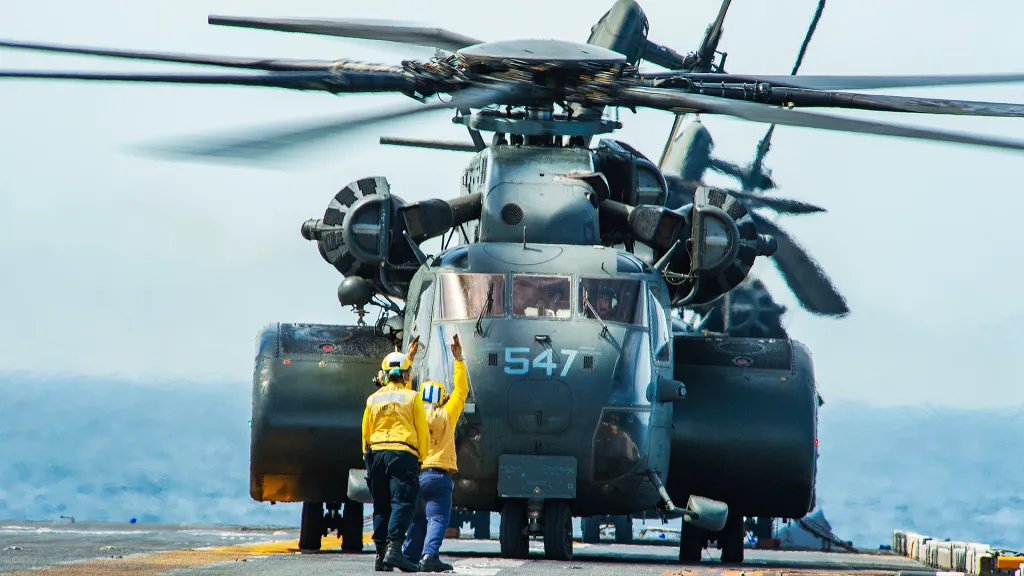
For decades, the massive MH-53E Sea Dragon helicopter has served as the Navy’s primary airborne mine countermeasure platform, dragging massive mine hunting sleds through waters all around the globe. However, the Sea Dragon’s days are now numbered, with the last 11 aircraft scheduled to sunset sometime next year. With the MH-53E’s demise on the horizon, we reached out to one of its former pilots, Steve Jones — a man who came to know this monster intimately during the Global War On Terror. He had plenty of stories to tell and provided us with a new understanding of the often misunderstood counter-mine mission.
The MH-53E’s mission is also, of course, extremely topical right now thanks to ongoing tensions with Iran. Secretary of State Marco Rubio recently told senators that the Islamic Republic mined “large segments” of the Strait of Hormuz, endangering shipping in the region.
As it currently stands, the mighty Sea Dragons, which are considered one of the military’s most dangerous to fly due to numerous fatal mishaps, are being phased out in favor of the smaller MH-60S Seahawk paired with a suite of new aerial mine countermeasures systems, as well as other new technologies, like uncrewed underwater and surface vessels. The Navy’s overall mine hunting force is going through a transition that is controversial, to say the least, with many questioning if the Pentagon is investing enough resources in this critical missions set.
Petty Officer 1st Class Rawad Madanat
With all these issues in play, in an exclusive, wide-ranging, two-hour interview, Steve Jones offered in-depth insights about the Navy’s airborne counter-mine mission, the Sea Dragon’s capabilities and dangers, current mine sweeping operations, as well as everything from what it was like to narrowly avoid getting entangled with a surfacing sub to his experiences ferrying celebrities like Robin Williams and Tom Jones around a war zone.
So, with the stage being set, let’s get into this incredible exchange.
Some of the questions and answers have been lightly edited for clarity.
Then-Navy Lt. Steve Jones in an MH-53E Sea Dragon. (Courtesy Steve Jones)
A: During the time that I selected, you could choose SH-60 Seahawks, you could choose CH-46E Sea Knights and the MH-53 Echo. You could choose SH-3 Sea Kings, but they were kind of winding down the H-3s, which is the same as the presidential helicopter Marine One that they fly now, but they were flying out of Norfolk and Puerto Rico, primarily for VIP transport.
So, I looked at the 53 for a lot of reasons. One, I liked the instructors that came from that community in the advanced helicopter training. And two, I just thought the helicopter just really looked awesome, and it was big, and so that’s why I chose it, and I just thought it would be a good personality fit, work fit for me, and it ended up being that way.
An MH-53E Sea Dragon, assigned to the “Blackhawks” of Helicopter Mines Countermeasures Squadron 15 (HM-15), takes off from the flight deck of the amphibious assault ship USS Wasp (LHD 1) during flight operations on the ship’s flight deck, April 5, 2025. (U.S. Navy photo by Mass Communication Specialist Seaman Soren V.P. Quinata) Petty Officer 3rd Class Soren Quinata
Q: What are the main differences between the Navy’s MH-53E and the Marines’ CH-53E Super Stallion?
A: It’s primarily the same aircraft. Except our aircraft has larger fuel sponsons, so we could carry more gas. The reason for that is ideally we’d want to be able to fly an hour to where the mission objective was, be able to stay on station for about an hour, and be able to fly back. That requires at least three and a half, four hours of gas and extra fuel in those side sponsors. And that allowed us to do that. So instead of a small sponson with two tanks, we had one big sponson with four fuel tanks that were inside each of the sponsons on either side of the aircraft.
Q: So how much gas would that larger sponson hold?
A: About 22,000 pounds of gas.
U.S. Navy Aviation Boatswain’s Mates (Fueling) prepare to refuel an MH-53E Sea Dragon helicopter, attached to Helicopter Mine Countermeasures Squadron (HM) 15, on the flight deck of the Nimitz-class aircraft carrier USS Abraham Lincoln (CVN 72). (Official U.S. Navy photo) Courtesy Asset
Q: Talk about the training and some of the biggest challenges of flying that huge aircraft.
A: Typical Navy training is two years of flight school, and then after flight school, we went to our Replacement Air Group, which we call the RAG, that was in Norfolk, Virginia. You spend about a year, or up to 10 months, in Norfolk, Virginia, learning primarily how to fly the helicopter, how to land the helicopter, and we do that in the combination with the Airborne Mine Countermeasure Squadron. We used aircraft from Helicopter Mine Countermeasures Squadron (HM) 14 to learn how to fly the different mission sets and learn aircraft familiarization. And then from there you either get assigned to HM-14, which was in Norfolk, Virginia, or HM-15, which was in Corpus Christi, Texas. HM-15 has now moved to Norfolk, Virginia. [Editor’s note: HM-14 sunsetted in 2022.]
Sailors assigned to the “Vanguard” of Helicopter Mine Countermeasures Squadron 14 (HM-14) posed for a photo in front of an MH-53 “Sea Dragon” helicopter prior to the squadron’s last flights Dec. 8, 2022. (U.S. Navy photo by Mass Communication Specialist 2nd Class Malachi Lakey) Mass Communication Specialist 2nd Class Malachi Lakey
The training takes about 10 months. Mine was a little bit longer because when I actually joined that community, the aircraft were down because of a crash off the coast of Corpus Christi, Texas. There was a problem called ‘thermal runaway,’ where the bearings in the main rotor head would fail, and they would seize together and get hot, and we lost a few sailors from HM-15. And until they figured out why and how to prevent it, it took about a year for those aircraft to come back up, so I was in Norfolk for maybe about a year and a half, almost two years, before I got to Corpus because of that bearing issue.
Q: What was it like when you finally got out there and learned how to fly while pulling a mine countermeasure sled?
A: There’s different types of equipment that you use and it takes a special kind of person to be able to maintain the situational awareness – both flying the aircraft and what’s happening in the back – because there’s dangers in the back. You have a very confined area, lots of equipment, and under lots of tension, and so the very first couple of times, the instructor is kind of handling everything, and you’re just kind of riding along.
An MH-53 Sea Dragon helicopter from the “Vanguards” of Helicopter Mine Countermeasures Squadron Fourteen pulling a Mark 105 Magnetic Influence Minesweeping System (SLED). (Photo by BOB HOULIHAN / NAVY VISUAL NEWS / AFP) BOB HOULIHAN
Then eventually you start to do more tasks, physical tasks, in terms of flying and maintaining a stable platform for the men and women that are working in the back, and then over time those skills translate into a larger situational awareness, where you’re now a mission commander – where you’re flying the aircraft, but also, conducting the mission in the back is your primary responsibility. The positions are second pilot or co-pilot, and then you become a Helicopter Aircraft Commander (HAC), which is like the captain, and then you become an Airborne Mine Countermeasures Mission Commander (AMCM MC), meaning you’re flying the aircraft, you’re the commander of the aircraft, but you’re also commanding the mission.
Lt. Cmdr. Jeff Spencer and Lt. Cmdr. Nik Bochette, assigned to the Vanguards of Helicopter Mine Countermeasures Squadron (HM) 14, perform a pre-flight check on an MH-53 helicopter. (U.S. Navy photo by Mass Communication Specialist Seaman Jessica L. Dowell/Released) Petty Officer 2nd Class Casey Hopkins
Q: Did you become a mission commander?
A: I did. So I was fully qualified in the MH-53 Echo in my squadron, so I was a mission commander. I worked the maintenance side, so I was the maintenance check pilot and functional check pilot. It takes a lot of maintenance, and then post maintenance, and you have to do post maintenance flights to be able to make sure the aircraft is safe for anyone else to fly. So I spend most of my time in those areas in that squadron.
A U.S. Navy Sailor with Helicopter Mine Countermeasures Squadron 14 guides an MH-53 helicopter from a vehicle carrier ship at Marine Corps Air Station Iwakuni, Japan, Sept. 14, 2022, after completion of aircraft maintenance. (U.S. Marine Corps photo by Cpl. Darien Wright) Cpl. Darien Wright
Q: What are the MH-53’s unique quirks and advantages?
A: One of the advantages was pure brute strength. You had three GE engines, so you could handle lots of torque, and the way that we hunted and swept for mines was pulling sleds in the water, which causes thousands and thousands of pounds of stress, so it’s really like a forceful instrument in the water. The operation requires the coordination of not only meteorologists and Operations Specialists, which are like intel specialists in mine warfare, but then you have the maintainer, you had two pilots and a crew chief, plus it could be up to four people in the back, depending on the type of gear you’re stowing in the back, so it really takes coordination from the front.
An explosive ordnance disposal technician, assigned to Explosive Ordnance Disposal Mobile Unit 5 Platoon 502, operates a communications system aboard an MH-53 helicopter belonging to Helicopter Mine Countermeasures Squadron (HM) 14. (U.S. Navy Combat Camera photo by Mass Communication Specialist 2nd Class Alfred A. Coffield) Petty Officer 1st Class Alfred Coffield
The disadvantage is that it’s a very expensive aircraft to operate. Every hour of flight, required 24 hours of maintenance, and if a squadron had 10 helicopters, which we did at one point in time, you’re looking at the largest deployable squadrons in the Navy, like 600-plus people to operate these aircraft.
With everybody working together, we advertise that we could be anywhere in the world in 72 hours, where there’s a mine threat. We could break down the helicopters, put them in a C-5 and then reassemble them anywhere in the world in 72 hours. After 9/11, for Operation Iraqi Freedom, we did deploy by C-5. We took half the helicopters to Sicily and the other half went to Bahrain and took 11 C-5s in order to move a squadron that size into those two locations, so big footprints, lots of money, lots of parts.
An MH-53E Sea Dragon assigned to the “Blackhawks” of Helicopter Mine Counter Measures Squadron 15 is offloaded from a U.S. Air Force C-5 Galaxy, March 14, 2003, at the U.S. naval base at Sigonella, Sicily. (Photo by Damon J. Moritz/U.S. Navy/Getty Images) U.S. Navy
Q: How fast could the Sea Dragons fly?
A: The 53 is a fast helicopter. One of the fastest out there. We were limited to 150 knots for airframe preservation. Under towing conditions, we typically flew between 18 and 25 knots, depending on the device in the water. Each vehicle had different performance parameters to properly deploy the device. Under rapidly changing conditions we always had to maintain proper speed and altitude control.
Q: The Sea Dragon has experienced a notoriously high rate of mishaps. Did that ever concern you? What do you think contributed to this record?
A: It did. If you’ve ever seen one or been on one, been close to one, or heard one, you’ve got 100-foot long machine with millions of moving parts, right?
Our maintenance crews were very good, I always felt safe flying. I think you have to if you choose to fly that particular weapon system, but there were a lot of accidents. And I knew folks that were killed in MH-53 accidents who I went to flight school with, and buddies.
Maintaining MH-53E’s
It’s a very complicated machine that did a very important mission, and accidents do happen, both mechanically, but also because of pilot error. In combination, you end up losing a lot of airframes. Besides the United States, there is only one other nation that flew that airframe, and that was the Japanese for their mine sweeping operation. It’s a very complicated, expensive machine, and that’s why not very many people flew it.
An MH-53E helicopter belonging to the Japanese Maritime Self-Defense Forces takes off during Marine Corps Air Station (MCAS) Iwakuni Friendship Day, May 5, 2004, at MCAS in Iwakuni, Japan. (Photo by Koichi Kamoshida/Getty Images) Koichi Kamoshida
Q: Did the danger concern you?
A: You know, you’re in your 20s, right? So you feel a little bit invincible. I’ll tell you a story. When I switched from 53s and started flying C-130s, after the Haitian earthquake, I flew into Guantanamo Bay, and my old squadron was there on the same ramp as we were. So I walked over to see who I still knew there, and they had a 53 turning on the deck there, and I was just going, ‘wow, I couldn’t believe I used to do that,’ and not thinking about how many things have to go right in order to have a good day. And I just kind of said to myself, ‘it’s really a young person’s game,’ because you gotta kind of hit the ‘I believe’ button on a lot of things, because there’s just a lot of opportunity for negativity to come in. Weather, environment, and then the mechanics of things.
MH-53 pilot Lt. Steve Jones in Bahrain, circa 2002. (Courtesy Steve Jones) Picasa 2.7
Q: What were the biggest factors contributing to the Sea Dragon mishaps?
A: With any aircraft system, the largest factor that contributes to any accident is the human factor. Yes, engines will fail, components will fail, but a lot of times it was human error that caused the ultimate catastrophe because when an emergency happens, you have three criteria in order to gauge when you should land.
The two critical ones are ‘land immediately,’ meaning if you do not ditch in the water or put the aircraft down, it is going to come apart in flight. The other critical criteria is ‘land as soon as possible,’ meaning as soon as you have a safe place to land, then you land as soon as possible. Then you have another condition where you can continue to fly, but flying is not recommended. And so that decision factor between land immediately and land as soon as possible, it’s a bit of a gray area, right? You have a set of skills you can fly, but you can never time when the aircraft is going to come apart.
Navy ‘Sea Dragon’ Helicopter Unsafe For Flight | NBC Nightly News
For example, in the Corpus Christi crash, they knew that they had a problem. I’m not second-guessing the pilot, but it was in that gray area between land immediately and land as soon as possible.
The aircraft commander chose to try to bring the aircraft closer to the beach, so you could survive a ditch, because putting a helicopter in the water – nothing is guaranteed, right? Then you have no control. However, bring it closer to the beach means you’re flying that much longer. So land immediately, there could have been more survivors.
Not to ‘Monday morning quarterback’ anything. I probably would have made the same call. And then with the new equipment that was put on the aircraft, there are lights now placed in a monitoring system that kind of took the gray area out of those decisions when it came to thermal runaway with the main rotor head. So now the decision is clear. Land immediately if certain indications happen, and land as soon as possible if certain indications happen. Prior to 2000, we didn’t have that.
Q: The Sea Dragon community has been well-documented for being neglected by the Navy. What was your experience when you were flying it? Why do you think that was?
A: It’s a unique mission set. It kind of came online during the Vietnam War and Haiphong Harbor, and clearing those mines, and then again in Desert Storm, when the USS Tripoli was hit by a mine.
Mining sea straits is a very cheap way to stop a huge navy, such as the one that we have in the United States. However, the Navy, in my opinion, didn’t necessarily see the value in that mission. There are very limited resources. There’s only so much money to go around, and large strike groups and ships just took priority. We were always probably a little bit underfunded, in my opinion, for a mission that’s important, which you can see today with the Strait of Hormuz. But it was definitely a huge problem that many people did not talk about during the first two Gulf Wars.
An Iranian mine-laying boat. (Iranian state media) (Iran State Media)
Q: Why was it a huge problem?
A: Well, when you try to move a carrier strike group into a small area like the Persian Gulf, by putting mines in the water, you create doubt in a captain’s head. The captain is responsible for thousands and thousands of lives, and the battle group commander is responsible for thousands and thousands of more lives, plus the strategic reason of why they’re there. If a mine is discovered, then everything has to pause. You can’t land Marines on the beach, you can’t move the strike group closer to the shore. The ability for you to project power ashore, all that kind of comes to an end.
Q: How does the MH-53E go about this unique mission set? Can you walk us through what a mission would look like from start to finish?
A: Depending on the intel, you’ll have a threat and the threat could be you suspect that there’s mines in the water, or that you know that there’s mines in the water. So, typically it’s ‘you suspect,’ right? And we used the AN/AQS-14, or “Q-14.” There’s about three different versions of the Q-14. It’s a side-looking sonar, which you drag in the water – we call it the fish. We would fly the fish at certain depths based on the terrain and what was in the water. That was called mine hunting.
MH-53 crew members and the AN/AQS-14 side-looking sonar. (Courtesy Steve Jones)
So initially you would always kind of begin with a hunting mission, where we could, or the OS operator, or the console operator would mark what they view as a mine-like contact. You’re really kind of looking at the sonar and distinguishing between man-made objects and natural objects. If you believe it’s a man-made object, and then you would mark a tape. You could also, real time, send that image back to the ship, but that capability came a little bit later.
We also had devices that allow you to sweep. A mine can be triggered by different mechanisms. Sometimes they’re triggered by contact.
Some mines are acoustically triggered, meaning you can set that mine to blow up for a certain type of ship acoustics. For instance, a destroyer has a different set of acoustics from an amphibious ship, from an aircraft carrier. If you want to let 1,000 destroyers pass you or a submarine and then wait for the aircraft carrier, you can tune it to that way. So we had devices that could mimic the sound signatures of different ships, and you could tow that in the water, you could tow it really fast. One of the reasons why we were successful is that we could do large areas of the ocean relatively quickly.
An MH-53E Sea Dragon from Helicopter Mine Countermeasure Squadron (HM) 15, aboard the multipurpose amphibious assault ship USS Wasp (LHD 1), performs Mine Countermeasure training using the MK-105 sled. (U.S. Navy photo/Lt. Cmdr. John L. Kline) U.S. Naval Forces Central Comman
The last piece for sweeping is the magnetic variation. Each ship is a metal hull, and as a ship is moving through the water, it has a magnetic signature, and then we have gear, which you could tune to mimic certain types of ships in the water, in order to have them explode behind the gear that we’re towing in the water.
So you hunt, that means you’re searching, and then you sweep, and then that means you’re clearing. Sometimes you can clear using other technology, such as sometimes the Avenger class ships would go in and sweep, and not us. Sometimes you would use dolphins to work with EOD teams in order to sweep mines. It just depends upon the threat, on what the second tool is used after you hunt.
Navy Dolphins Practice In Key West How To Find Mines In The Ocean
The most time that I spent was in the hunting phase of the mission set. In Bahrain, every week, a couple days a week, we would hunt. We would do the Strait of Hormuz. We would do the approaches into Saudi Arabia for the tankers. We would do the approaches into the Suez Canal, just to be sure that there are still no mines in that area.
That is for what we call change detection, meaning you map the ocean floor, and then over time, because of consistency, you’ll be able to tell if something changed. If something changed, then you went in to investigate further. It’s constant because the ocean floor is constantly moving, and then somebody could easily place a very cheap object that could be devastating.
An MH-53 Sea Dragon, Helicopter Mine Countermeasures Squadron 14 attached to USS Anchorage (LPD 23), controls an Mk-105 magnetic mine sweeping sled. (U.S. Navy Photo by Ensign Lindsay Lewis/Released) Ensi Lindsay Lewis
Q: Walk me through how a mission would take place.
A: The intel can be good sometimes, sometimes the intel is lacking. The weather has to be at a certain sea state in order for it to be successful, and you can’t do it at night, right? You have to do it during a daytime in littoral situation, so you’re pretty close to shore and you are susceptible to threats that are on the beach. That is the mission set and if you don’t know where the mines are, that’s why you begin with hunting. The Q-14 is a relatively quick device to deploy. You can pull it in the water relatively fast. Then you can real-time send images back, or you can collect tapes to study for that change detection.
When you’re going out for a mission, you’ll have your standard aircraft brief, where the crews get together and talk about the state of the aircraft, the conditions, the environmental conditions of today. And then you’ll get into the mission brief on where the ship is, or where the shore is, and where actually the square, or the box, or the rectangle is, where we’re going to conduct a mission. We talk about the distances from that point that we’re going to deploy the gear, because it takes time to be able to do that, and then we’ll enter what we suspect is a minefield or an area of interest from which we want to be able to tow in.
Minesweeper Exercise
Then we fly what we call tracks. It’s almost like rows on a field, like cornrows, and we go up, down, up, down, and you have to stay within track by feet, okay? If you, if you stray as little as 20 feet off track, then you have to redo that track, because you want to have a continuous picture of the ground. And so it may take two or three sorties to cover an entire minefield.
And then times where the device may have strayed off track. It takes time, but we can do it quicker than a ship doing it on its own, like the Avenger class ship, and so between the aircraft brief and the mission brief, and executing, it’s like a six, seven hour day in the heat or in the cold, depending on where you are.
This is the Navy’s Largest Helicopter | MH-53 Sea Dragon
There’s no air condition on that helicopter. So everybody’s working in those conditions based on the information that we bring back. Then the tactics folks that are supplied to us by COMINEWARCOM (Commander, Mine Warfare Command), which was our bosses, those intel folks will say what needs to happen next, meaning there’s nothing that needs to happen now, or we need to investigate this further. And then they pick the next tool for us to be able to deploy, or they go with the EOD and dive teams to go take a closer look.
Lt. Sean Johnson, left, and Cmdr. Derek Brady, commanding officer of Helicopter Mine Countermeasures Squadron (HM) 14, right, pilots a MH-53E Sea Dragon out to amphibious dock landing ship USS Pearl Harbor. (U.S. Navy photo Lt. Cmdr. Jeremy Braun/Released) Seaman Molly Evans
Q: How fast are you flying, and how high are you flying? How deep do the sleds go?
A: The helicopters are anywhere between 25 and 75 feet over the water, depending on the gear, because the speed in which we pull through the water is extremely important. You could go as fast as 25 knots in some cases, which is about the top speed, or you’d have to go as slow as 12 knots.
Mine Countermeasures Unit Drops a Slocum Glider from a MH-53E Sea Dragon
Q: How deep do the sleds go?
A: The depth of some of the gear is classified, or at least it was at my time. I’m not sure now, but you could go relatively deep. It’s under lots and lots and lots of tension, and the reason why you had to go very deep is that some gear has to be able to get to the sea floor at certain distances, because there’s also the subsurface fleet that is operating down there, and mines will affect them as well.
Q: What’s the tension like when you’re dragging a sled?
A: You’re looking at around 15,000 to 20,000 pounds of tension. The aircraft will kind of buckle. You look at the side of a 53, it has a crease from the tension that goes on it.
If there is a swell in the sea state, sometimes the Doppler radar – which would kind of track how fast you’re going forward, backwards, or sideways – it’ll go from forward to negative, meaning we’re actually getting pulled backwards by the sea state. And the engines would automatically just start – the torque would come in as the blade did a bigger bite out of the air. And the aircraft will kind of turn, because of the torque. It’ll kind of turn and whine, and you’re just flying an out of balance flight, nose down.
A US MH-53E military helicopter drags a MK 106 Combination escorted by two military Zodiak boats during an operation off the USS Ponce to clear mines from Khor Abdullah at the entrance to Umm Qasr port in the western Gulf, 29 March 2003. (Photo by RABIH MOGHRABI/AFP via Getty Images) RABIH MOGHRABI
Q: Did you ever have the sled get tangled up behind you?
A: Yes. It can get caught on things in the water, and the tension will spike. If the tension spikes too high, or the gear gets fouled in something, you always have the option to guillotine or cut the gear.
Q: Did the aircraft have other devices that helped in the mine hunting mission?
A: Yes. In addition to the Q-14, we had the Mk 104 acoustic device, mine chain cutting devices and the Mk 105, a huge gas generator, which produces electrical charges in the water for those magnetic-seeking mines that change the magnetic variation.
HM-15 Sailors Recover Mk 104
There’s at least six devices that I know of that are used for hunting mines, including something as simple as what we call a MOP, which is stands for Magnetic Orange Pipe, which is what they used in Vietnam.
Essentially you have this pipe, it looks like a telephone pole, which is about the size of a telephone pole or larger, and it’s orange. It has a positive charge on one end and negative on the other end. It’s just a magnetic pipe that we would tow in the water. It’s probably the easiest thing that you can tow, and the simplest, but it’s looking for those magnetic variations. The problem with the magnetic orange pipe is you can’t change it, so it’s set for a certain amount of tactics. You can see how that could become obsolete in today’s environment.
A US MH-53E military helicopter using a cable drags an MK 106 sled sent out from the USS Ponce as mine clearance takes place in Khor Abdullah at the entrance to Umm Qasr port in the western Gulf March 29, 2003. (Photo by RABIH MOGHRABI / AFP) RABIH MOGHRABI
Q: How does the Sea Dragon integrate with other mine hunting capabilities, like the Avenger class ships or other assets?
A: We worked as a team, but obviously we’re a tool in that larger mine warfare strategy. We were the speed aspect of that, meaning we could have left holes, but if you’re trying to move at the speed of war, then sometimes we were the tool that was required. And if you have 72 hours to be somewhere, speed is required. We could do that to be sure that the fleet can continue to do what it needs to do, but if you’ve got time, then you could sail a ship or move one of those slower small boats into that environment, that makes sense.
Q: Did you ever work together with Avenger class ships?
A: Maybe in the same AOR, but other than an exercise where you would see an Avenger class ship working the tow area, and then we will be working our tow area. It was under controlled condition. When I was doing change detection, and during work conditions, we were operating concentrated on our mission set, they’re probably concentrating on their mission set, and between the two pictures, they came together in the operation center to have a very clear picture.
A stock picture of the US Navy’s Avenger class mine-hunter USS Pioneer. USN
Q: When was the Sea Dragon actually used for this mission operationally? How did it perform?
A: It was used throughout Iraqi Freedom, from Shock and Awe to the pull-out to the drawdown. If not every day, every week there was change detection in mine operations, because it’s always a threat. It’s a very cheap weapon that non-state actors can get off the black market. One mistake or one mishap causes devastating consequences for the individuals on that ship, but also the mission, so it’s a constant threat, and still is a threat.
During my time, actively hunting for mines to be sure that those straits and those approaches remain clear, dominated my entire career in the community. From the time I started and then I towed to my last days in the squadron, which was in 2005.
A U.S. Navy sailor directs an MH-53E Sea Dragon helicopter launching March 28, 2003 at the port of Umm Qasr, Iraq. The helicopter was part of a mine clearing unit that cleared the way for the British Navy ship, Sir Galahad, that delivered the first wave of humanitarian aid in support of the U.S.-led Operation Iraqi Freedom. (Photo by Bob Houlihan/U.S. Navy/Getty Images) U.S. Navy
Q: How did the Sea Dragon perform?
A: I would say, since there was not a mishap, it performed as designed. It doesn’t mean that the mines were not there. During Iraqi Freedom, mines were put in the water, but we didn’t have the mishaps like we had before that I can recall. So I would say it was a success.
In this U.S. Navy handout mines are seen which were found on four Iraqi vessels that were intercepted in the Khor Abd Allah waterway by U.S.-led coalition forces March 26, 2003 in the Arabian Gulf. (Photo by Joseph Krypel/U.S. Navy/Getty Images) U.S. Navy
Q: Any close calls during any of your sled-towing flights?
A: I got disoriented one time with vertigo. Like I mentioned earlier, you’re on an out-of-balanced flight, so your ears are doing one thing, your eyes are doing another thing, and sometimes there’s low fog over the water early in the morning. Under tow there was a time where I got vertigo and put the aircraft in an undesired state, but there’s two pilots. I recognized it and told the aircraft commander ‘I’ve got vertigo.’ He took the control and saved it. Being that close to the ground, getting vertigo could have devastating effects, right? We just ended up releasing the gear that day.
Q: How do the big rearview mirrors help with towing?
A: Mirrors are super important for situational awareness when lowering the equipment into the water and for ensuring the tow cable is staying on track. The co-pilot is crucial while under tow because they are responsible for making sure the aircraft remains clear of obstacles and threats. The pilot flying will be head-down monitoring performance of the helicopter and the gear deployed. The pilot flying will maintain navigation in the minefield and overall safety. When flying, looking out of the windows was a brief luxury.
Q: Tell me about the time you encountered a surfacing sub while dragging your sled.
A: It was sometime in 2003 or 2004. We were flying over the Strait of Hormuz, towing a side-looking sonar to do bottom mapping. I’ve got a very loud helicopter in the air and a sonar that’s pinging on the bottom, so it probably was not a surprise where we were to the submarine, but their location was a surprise to us.
It’s a bright sunny day. The water looked beautiful, and we’re just doing a random tow. And all of a sudden, this big black submarine surfaced right in front of us. Just popped out of the water, and right in line with our track.
I think I was maybe 50 feet over the water and the gear is behind me. Now I have to turn like a semi truck, having to turn myself and the gear all at the same time to maneuver around the submarine. I said something like ‘holy shit’ and I remember I banked to the right because I think it was the easiest thing to do. There’s more space.
We ended up able to clear the sub, but it had a startling effect. So either they were in the wrong spot or we were in the wrong spot, I couldn’t tell you. But no one came and knocked on the door, saying that I did something wrong. So I’m gonna leave it as if they were in the wrong spot.
During his time flying Sea Dragons, Steve Jones saw a submarine – like the guided-missile submarine USS Georgia pictured here transiting the Strait of Hormuz – surface right in front of him as he was towing a mine sweeping sled. (U.S. Navy photo by Mass Communication Specialist 2nd Class Indra Beaufort/Release) Petty Officer 1st Class Indra Beaufort
Q: What was it like aerial refueling such a monstrous helicopter and did you use it operationally often?
A: Very intimidating at first. However, it is all about training. Yes, you are very close to the other airplane, but that is not your focus. Your focus is on check points. Align your check points and the aircraft will plug. Once you connect and position the aircraft above the wing and propeller wash, the ride is smooth. When I switched over the flying C-130s, it would have been nice to go full circle, but never got the chance to give fuel.
We almost did aerial refueling during a possible mission scenario, but the plan was scaled back and we ended ship hopping. I only used the boom in training. I’m sure it happened, but didn’t know anyone who did it. They were there for a reason, and we trained for it.
Pilot’s view of an MH-53E during aerial refueling.(Steve Jones)
Q: What’s the operational situation regarding Iran at the time you were flying?
A: Annoying. They have a lot of islands that are in the Persian Gulf that are their territory, and sometimes during operations, when you’re either delivering cargo or going to field a tow, it puts you in close proximity with those islands. At the same time, if it’s necessary, you could have your own boat team in the water as well. It was post-Cole [a reference to the October 12, 2000 attack on the USS Cole just a few years earlier by explosive-laden suicide boats at the port of Aden in Yemen. The blast ripped a 40-foot-wide hole near the destroyer’s waterline, killing 17 U.S. sailors and injuring nearly 40 other crew members.]
A Suicide Boat Attack Leaves the USS Cole Reeling from the Damage | Combat Ships | Smithsonian
So you have fishing boats in the water, and you don’t know who’s on that boat that is getting close to your ship. But when you got close to Iranian territory, they will speak up on the radio, and tell you to turn around, that you’re approaching their territory,. Even though you know exactly where you are, and you know exactly where this island is, they’re still going tell you are in violation of their airspace.
Then it’s always a constant threat, right? So, if I were to have to ditch a helicopter or airplane in the water, they’ve got boats in the water. You wouldn’t want to get captured by them, where they could say you are in violation of their sovereign territory by mistake, and then it becomes an issue.
We were flying helicopters without GPS, so you’re using visual navigation maps and whatnot. I’m sure there’s a GPS on those birds now, but at the time, I had a handheld GPS from Academy Sport, where I marked the islands myself, so I knew exactly where I was, or at least the best that I could manage with the equipment, to be sure that was in the right position.
Q: Did they ever directly threaten you while you were on those missions?
A: No. They talked about violating their airspace, but they never intercepted or anything like that. I think that would be a huge mistake. It would not be a good day for them.
Q: Tell us about other locales where Sea Dragons operated.
A: We had detachments in South Korea for the North Korean threat from underwater mines. We did exercises in the Pacific. We did exercises with Japan because there’s a threat of mine in those straits, like the Strait of Malacca.
There’s obviously a threat in the Pacific theater. But because of the situation with Operations Enduring Freedom and Iraqi Freedom, I spent most of my time in the Middle East.
An Mh-53E Sea Dragon from Helicopter Mine Countermeasures Squadron 14 deploys the Mk-105 sled from the USS Anchorage (LPD 23) well deck, part of air mine countermeasure operations during Rim of the Pacific (RIMPAC) exercise 2014. (U.S. Navy Photo by Ensign Lindsay Lewis/Released) Ensine Lindsay Lewis
Q: Were there any difference between operating in the Persian Gulf area and the Pacific, or Europe?
A: A lot of the effectiveness of what we do is dependent upon water. The salinity of the water, the sea state, the amount of garbage and trash that’s in the water. So those environmental threats change the tactics. That’s why you need to practice out there.
In terms of the purpose of the mission, that does not change, but how you go about it does change. If you’re closer to a near-peer actor, it’s going to require better intelligence, different types of equipment in order to counteract the threat. I would say the Iraqi Navy was not near-peer in terms of mine tactics, but the Chinese could probably be very different in terms of mine tactics. They would be a more sophisticated enemy in this case, which would heighten everything.
Chinese mine-laying AJX002 unmanned underwater vehicles seen during the military parade marking the 80th anniversary of victory over Japan and the end of World War II, in Beijing’s Tiananmen Square on September 3, 2025. (Photo by Greg Baker / AFP) GREG BAKER
Q: Did the Iraqi Navy or the Iraqis present a threat to your aircraft? Did they harass you, fire at you?
A: No, not during my time. I think maybe possibly during the first Gulf War. The threat was that there, it was always a threat when you’re operating close. So yes, something could have happened. They’ve got boats, they’ve got men in the water.
Q: What are your thoughts about the current MCM missions taking place now in the Middle East? Just how hard is it to clear an area of mines like the Strait of Hormuz?
A: I would say that it is difficult. All mine clearing operations are difficult because you’re talking about the needle in the haystack. Like literally, and you know they’re deploying something that can be hoisted by one person and thrown overboard into the water or by a machine, and you can deploy a lot of mines in a very short time in a concentrated, tactical way, or randomly. It really doesn’t matter, it’s still a threat.
I would say it is difficult because people talk about how narrow and small the Strait of Hormuz is, but you have to remember the earth is large, and there is just a sheer volume of water, and square miles or square kilometers on which something can happen.
It is a very daunting task, and so having more MH-53E helicopters probably wasn’t the solution for the future.
From reading, and then from hearing from my peers that are still in, the tactics are different, but also the equipment that they use to detect this threat is also different. It is faster. It is unmanned. You can deploy more assets quicker because you’re not relying upon one machine or two machines at one time being deployed.
What kind of sea mines is Iran using in Strait of Hormuz?
Q: What equipment are they using now? What are the differences?
A: I retired in 2017 and it has changed dramatically. For one, it is more integrated into the fleet, so you’ll have multi-mission capabilities, meaning an MH-60Ss can be used for different sets of missions, from delivering cargo, to deploying different sensor arrays. You have AI for detection assistance. You have side-looking sonar, which instead of being towed are now on underwater unmanned vehicles. So I think more of what you’re looking at now is a mission package of sensors that can be deployed.
When you have sensor sets, it’s integrated into the larger Navy strategic picture better. I think that that was lacking in the past in a way, because you have to cover such a large volume of area, you need more sensors and eyes to be able to do that, and I think that’s the strategy today.
A Sailor assigned to Explosive Ordnance Disposal Mobile Unit 5, describes the capabilities of the MK 18 Mod 2 Kingfish unmanned underwater vehicle and a remotely operated vehicle (ROV) to Japan Maritime Self-Defense Force Rear Adm. Yatsutaka Ebata, commander, Escort Flotilla 2, and Rear Adm. Tom Shultz, commander, Task Force (CTF) 76. (U.S. Navy photo by Mass Communication Specialist 1st Class W. Chase Stephens) Petty Officer 1st Class Chase Stephens
Q: Do you talk to any of the current pilots/crews of the last squadron flying them? What do they say about the current status of the fleet? Are they involved in the mine clearing operation in the Strait?
A: So I talked with folks, there’s still some folks that are still active duty. Some of them have transitioned out of the 53 pilot-wise and have transitioned into the MH-60S community and so they are deploying those tactics and new systems.
I would say it is probably still a neglected community in their opinion. Everybody’s fighting for resources, but I think when you’re talking about the current situation with Iran in the straight, there’s always a time where mine countermeasures become a very hot topic, because people do forget about it.
Q: Are the MH-53Es still performing airborne counter-mine missions?
A: I’m not sure.
Q: What other missions does the MH-53 community perform? Can you talk about your experience with those and what they entail?
A: When you have that much capability, you move a lot of things. And so we did a lot of moving cargo. I could move an F-14 Tomcat engine with the afterburner completely attached. I could move it at 150 knots from shore to ship internally, so I didn’t have to sling it underneath the aircraft in a pod. I can have the engine assembled together and be able to move it. So we moved things that the C-2 Greyhound couldn’t.
The primary mission was mines, the secondary cargo and people. We would do people movement, if a better ride wasn’t available to move an admiral or someone for an important meeting, then we would do so. Obviously, you know, it’s a very dirty ride.
Aviation Warfare Systems Operator 2nd Class Gavin Chatham prepares to push cargo out of an MH-53 Sea Dragon helicopter from Helicopter Mine Countermeasures Squadron 14 (HM-14). (U.S. Navy Photo by Mass Communication Specialist 2nd Class Michael Chen/Released) Petty Officer 2nd Class Adam Craft
Q: What admirals did you move?
A: I can’t remember the admirals, because they kind of all blend together, but we did move fun people. We did Tiger Woods for all the USO engagements. Blink 182. We did Tom Jones, Robin Williams, a number of NASCAR folks and other celebrities. We did a lot of that.
Q: What was Robin Williams like?
A: Funny. He was on from the time that we picked him up in Bahrain, and then giving him the brief. He liked talking with sailors and making jokes. Tom Jones was memorable because he’s got the hair right, and he didn’t want to wear a cranial or helmet on his head to mess up his hair before he did the show, and so that became a thing. But you know, the hair won out. The hair was not going to get covered by the helmet.
Robin Williams with MH-53E crew members, from left to right, LCDR Chuck Miller, Lt. Ray Jimenez and Lt. Kyle Leslie. (Steve Jones photo)
Q: What will the Navy miss when that last squadron is finally retired next year and there are no more Sea Dragons flying? Can the MH-60S handle the job?
A: With the Greyhounds going away, I think even with the CMV-22, which is a very capable aircraft, a very fast aircraft, but in terms of lift capacity internally, there’s something to that. If it’s outsized or weirdly shaped or is on wheels, the MH-53E is your catch-all aircraft. The Navy will miss that and the large numbers of people that we can move.
During the start Operation Iraqi Freedom, when I was in Sigonella we spent four days offloading the Marine Corps battalion landing team from the Iwo Jima on to Souda Bay for them to be flown into the northern part of Iraq. With those two helicopters and in one helicopter with Helicopter Detachment 4, we moved hundreds and hundreds of Marines from a ship to the shore for them to be staged in order to be moved into Iraq in a matter of days. I don’t think that same amount of capability in terms of volume of moving at that speed can be done with what’s available today. So I think they’re going to miss the kind of the ad hoc nature of having a big aircraft to move odd things. It’s good to be a generalist sometimes.
Sailors assigned to operations department aboard the aircraft carrier, USS Gerald R. Ford (CVN 78) transfer passengers to an MH-53E Sea Dragon, attached to the “Blackhawks” of Helicopter Mine Countermeasures Squadron (HM) 15. (U.S. Navy photo by Mass Communication Specialist 2nd Class Maxwell Orlosky) Petty Officer 2nd Class Maxwell Orlosky
Q: What about the mine countermeasures mission? Is there anything that the Navy will miss from the capabilities of the 53 from that standpoint?
A: I can’t speak on it with the new equipment, because I’ve never operated it, but I think what the Navy won’t miss is the price tag, and maybe the lack of full mission capability. We operated a lot of times in that partial mission capability, because of the complexity of the equipment and the machine, and then you have to get the equipment and the machine to work together, the machine being the helicopter. I don’t think the Navy will miss that part of it.
Q: Can the MH-60 do the job?
A: They can do the job, but they don’t conduct it the same way we did. They can’t pull big sleds like we did for underwater sonars because of power and tension. And you can’t send as many crew members in the back in order to make that mission successful. But the 60 is a very capable platform in order to conduct the mission the way they do it now.
Naval Aircrewman 1st Class Patrick Miller, assigned to the Dragon Whales of Helicopter Sea Combat Squadron (HSC) 28, operates the common console, used for both Airborne Laser Mine Detection System (ALMDS) (pictured) and the Airborne Mine Neutralization System (AMNS), aboard a MH-60S Sea Hawk helicopter. (U.S. Navy photo by Chief Mass Communication Specialist Shannon E. Renfroe (Released) Chief Petty Officer Shannon Renfroe
Q: What’s the difference between what they do and what you did?
A: They’re deploying sensor arrays and underwater vehicles from the thing, so they have standoff distance. They’re capable of not putting the helicopter in the same proximity to danger. They can’t put a Mk 105 in the water, but they don’t need to, because they have other types of technology to do it.
An MH-60S Sea Hawk helicopter, from the “Screamin’ Indians” of Helicopter Sea Combat Squadron (HSC) 6, lifts off the flight deck of the aircraft carrier USS Nimitz (CVN 68). (U.S. Navy photo by Mass Communication Seaman Bryant Lang) An MH-60S from Helicopter Sea Combat Squadron 6 lifts off the flight deck of the aircraft carrier USS Nimitz. U.S. Navy photo by Mass Communication Seaman Bryant Lang
Q: What was your most fear-inducing flight in the Sea Dragon?
A: For me, I was on the sea wall in Corpus Christi, Texas, about to do a towing training mission off the coast of Texas. In the 53 you have three engines, and then you have an auxiliary power unit – another gas turbine that’s above the cockpit.
The purpose of the auxiliary power unit is to run the hydraulics and various components and accessories when the engines and the rotor head aren’t turning. The idea is, once you get the engines going and the main rotor is turning, there is a shaft that goes from the main gear box into that auxiliary power unit, where all your generators and hydraulic systems are run. So we had the engines running, we were on the sea wall – we had a hanger, and then we had an apron, and right there was the Corpus Christi Bay.
(DoW courtesy photo)
I was taxiing out to take off from the helipad, and you’re over the water as soon as you take off from the sea wall. Well, that shaft sheared while I was taxiing up. I have to push the cyclic (the stick) forward in order to tip the rotor head forward to pull me along the ground. If you lose hydraulics in a 53 there is no amount of strength that you or the other copilot has to help to change the path of that helicopter.
When the shaft broke, it meant whatever condition that rotor head was in, it was not going to move, and that rotor head was in position for me to be able to take off, but I did not have enough power in order for me to lift off. Even if I lifted off, I probably would have just careened into the water.
So we were going in a situation where I heard it pop, and then all of a sudden the controls froze, and I told the co-pilot, Ty Jurica, that I was so concentrated at that point because I could not control the aircraft. I said ‘I don’t have control, I cannot move the controls.’ But Ty’s quick thinking noted that he could get the hydraulic power unit started again, which it takes time to spool up, but he was able to hit the start on the APU, and we managed to spool up to get hydraulics back, and as soon as the pressure came on at 3000 psi, I was able to move the controls again.
We stopped the aircraft where we were, and we shut it down at that particular time, but in a few seconds, maybe, we probably just would have taxiied off over the sea wall, and into a very bad situation.
(U.S. Navy Photo by Mass Communication Specialist 3rd Class Samuel Bacon/Released)
Q: What was your best memory of a mission you flew, or a moment during one of your missions in your time in the Sea Dragons? Put us in your shoes of what that was like.
A: Oh man, my best day there? There were a lot of good days. A lot of times, we would fly in formation – two ships going out to whether it was an aircraft carrier or whatever – and we would take off before sunrise. When you’re flying in formation low over the water, and the sun is coming up over the Persian Gulf, those are those are great days. Because everything is working. You have two planes actually going to conduct the mission and not training. I don’t care who you are, it’s always a lot of fun.
You’re going relatively fast. I mean, we’re not Hornets or whatever, but we were low and fast at that time for us, and we thought we were pretty cool.
You couldn’t touch us on those days.
(U.S. Air National Guard photo by Master Sgt. Matt Hecht/Released)
Author’s note: we added three additional sets of questions and answers to this story. We asked Jones about how fast the Sea Dragons could fly, how helpful the big rearview mirrors were when pulling a sled and what it was like conducting aerial refueling in the giant helicopter.
Flynn Byron finally found out what solider Rory Dickson was hiding during the latest episode of BBC’s Casualty as his romance with Stevie Nash left fans gobsmacked
Casualty’s Flynn Byron became concerned for the welfare of solider Rory Dickson(Image: BBC)
The ending of the latest episode of Casualty has left BBC viewers all saying the same thing.
Saturday’s (June 6) instalment of the medical drama finally revealed the deadly secret from Flynn Byron’s (Olly Rix) past, which explains his mysterious and fractured relationship with his former military trainer, Colonel Jack Bard (Mark Womack)
After noticing several injuries on the young man, Flynn has reached out to Rory several times, but has been silenced by Bard each time raising suspicions.
In the latest episode, Flynn rushed to hospital in the middle of the night to see Rory, who was brought in after being found drunk on a busy road. Rory received a mental health assessment before being released but Flynn was convinced that he was at risk of harming himself.
Flynn asked Rory to stick around so he can patch him up in his office and Rory later admitted that he’s being bullied by Bard, disclosing various horrific incidents that he has experienced at the barracks.
However, after Flynn secured Rory a place at a recuperation facility, the soldier vanished. A packet of drugs also went missing and Flynn headed out fearing the worst. Thankfully, Stevie found the medication in the hospital.
Flynn then got a call to say that Rory was in a critical condition after being hit by a car. Flynn rushed back to the ED to find Rory in cardiac arrest, but against all odds, managed to restart his heart.
Deeply affected by the events of the day, Flynn went out for a drink with Stevie Nash (Elinor Lawless) on the canal and the pair had an honest chat about her current struggles and they headed to a bar to shelter from the rain.
Flynn told Stevie that he started basic military training at the age of 17 with a boy called Adam, whose name was mentioned earlier in the boxset. Adam was also bullied by Bard and his ordeal led him to take his own life.
He signed a statement out of fear saying that Bard had nothing to do with Adam’s death but in an emotional moment, he explained that his fight to get justice for Rory is partly to make up for his past regrets.
Stevie sent Matty Linklaker (Aron Julius) a text to end their secret fling and she continued to drink with Flynn. He initially decided against sharing a taxi with Stevie but as he started walking in the rain and released that he wants to be with her.
He rushed back to the bar and was gutted to realise that he was too late as Stevie had already left in a taxi, leaving fans begging for next week’s episode already.
Taking to X, formerly known as Twitter, one fan penned: “I am SCREAMING at today’s #Casualty I will simply never recover.” Another added: “Those final scenes between Flynn & Stevie in tonight’s #Casualty were [flame emoji].”
A third person said: “That end montage with Stevie and Flynn? It’s all probably going to go pear shaped though when he finds out about Matty.”
A fourth person said: “That ending had me literally jumping up and down, next week needs to hurry up already.” Someone else agreed: “Today’s episode was intense and full of emotion.” Could a love story be on the horizon or have Flynn and Stevie missed their chance?
Casualty airs on Saturday nights on BBC One and now streams first on BBC iPlayer at 6am on the day of transmission
For emotional support, you can call the Samaritans 24-hour helpline on 116 123, email jo@samaritans.org, visit a Samaritans branch in person or go to the Samaritans website
A federal judge sided with California and other Democratic states on Friday in a preliminary injunction that blocked the Trump administration’s attempt to condition food benefits on compliance with the president’s policies on gender and immigration.
Twenty states and the District of Columbia filed a lawsuit in March against the Trump administration in U.S. District Court in Massachusetts, arguing that the “unlawful” and “unconstitutional” funding requirements are vague and designed to force policies on states.
Billions in federal funding are ultimately at stake, including money for school lunch programs that provide meals to 30 million children nationwide and food stamps that support about 40 million Americans living in low-income households.
“As the Trump Administration tries to use essential programs and billions in funding as leverage to advance their hateful, discriminatory agenda, California continues to fight to uphold the law and ensure that our communities can continue to access the funding they need to thrive,” said California Atty. Gen. Rob Bonta in a statement.
The policy shift from the United States Department of Agriculture marks another effort by the president to force left-leaning states to submit to his positions on hot-button political and cultural issues to receive government funding. California’s current budget relies on $174.5 billion in federal dollars, or roughly one-third of the overall state budget funds.
The funding conditions from the USDA relate to gender ideology, women and girls’ sports and immigration, according to the lawsuit.
States argue that the conditions do not explain what activities are prohibited for entities that receive grants. The USDA did not cite any law allowing the organization to impose anti-discrimination policies that go beyond federal law, the suit states.
The states that joined the lawsuit contend that they are left with the “unlawful” choice of adhering to the conditions or risk losing up to $74 billion in collective federal assistance from the USDA.
U.S. District Judge Myong Joun approved a preliminary injunction Friday and is expected to issue a memorandum later explaining the decision, according to the Associated Press.