Bill Cody, the Grand Ole Opry and longtime WSM Radio host who woke up listeners with his velvet voice and country music lore, has died. He was 67.
The Tennessee radio station confirmed Cody’s death on social media on Tuesday, writing, “It is with heavy hearts that we share the passing of our dear friend and beloved WSM voice, Bill Cody.
“A singular presence on WSM-AM Nashville for more than three decades, Bill welcomed listeners each morning on Coffee, Country & Cody with a broad smile, a conversational ease, and an unerring ability to make both artists and audiences feel at home. He joined WSM in 1994 and had Charlie Daniels as his first in-studio guest. He built more than a morning show; he created a gathering place rooted in his deep love for country music and the people behind it.”
In late May, Cody’s daughter Hannah Davis shared that the radio host had been admitted to the intensive care unit with heart and kidney failure. “After weeks of being on a roller coaster of emotions, tests, dialysis, medications, steps forwards and steps backwards, it was determined earlier this week that his only option for survival would be a double transplant, heart and kidney,” she wrote on Facebook. “We need a miracle and we know God is able.”
On Tuesday, she wrote that Cody had died peacefully surrounded by family and “was welcomed into heaven as thunder bellowed outside, and we laughed because we knew it was a band of angels rejoicing.”
With nearly 50 years on the airwaves across syndicated radio, television and film, Cody was honored with a star on the Music City Walk of Fame in the fall of 2024. His credits included the film “American Saturday Night: Live From the Grand Ole Opry,” the television show “Tennessee’s Wild Side” on PBS, “Ray Stevens’ Nashville” on RFD-TV, and GAC TV’s “Master Series.”
In 2008, the beloved Nashville host was inducted into the Country Radio Hall of Fame, and across his career, he earned multiple nominations from the Country Music Assn., the Academy of Country Music and Billboard for his contributions to broadcasting.
Born Trent Clutts on Dec. 16, 1958, in Huntsville, Ala., Cody was inspired to pursue a career in broadcasting during visits to a Kentucky radio station with his dad. His father was a Southern Baptist minister, and his Sunday morning sermons were broadcast on the radio in the afternoons. Cody couldn’t get enough of the goings-on at the station when the two would stop by to drop off cassettes.
In 1971, when the radio host was 17, he was hired as a night deejay at WVLK in Lexington, Ky., but the program director didn’t think “Trent Clutts” had the right ring for radio. Cody named himself after “Buffalo Bill,” one of the most famous showmen of the American Old West, and used the moniker for the rest of his career.
As a teenager, Cody noticed a girl named Rebecca during study hall and, according to Davis, winked at her from across the room. The wink sealed the deal and the two spent more than 50 years as a couple, welcomed three children — Luke, Hannah, and Levi, who died in 2025 — and eventually grandchildren, who called him PoPo. The family lived in Cross Plains, Tenn.
“Like so many of us at the Opry, Bill Cody lived out his dreams on the Opry stage. More times than I could count he and I would look at each other as if to say, ‘Can you believe we get to do this?’” Dan Rogers, executive producer at the Grand Ole Opry, wrote on social media.
“Even better, he made Opry audiences tuned in from around the world feel like they were here too, themselves a part of country music’s most famous show. Then, he’d get up early the next morning and — with that signature smile in his voice — tell everybody about it on his show.
“He was the best of friends to country music and to everyone who was a part of it. We’re sure going to miss him.”
SpaceX’s long-anticipated IPO is hours away from reshaping the fortunes of thousands of employees.
ADVERTISEMENT
ADVERTISEMENT
The listing, set for this Friday, is expected to mint millionaires not only among senior engineers and executives, but also among blue-collar workers, including cooks and welders, who received equity as part of their compensation packages.
The windfall is heavily concentrated around Brownsville, Texas, one of the poorest cities in the US, where SpaceX employs more than 3,000 people at its Starbase facility.
What makes this IPO unusual, even by Silicon Valley standards, is how far down the organisational chart the equity grants appear to have reached.
Some estimates cited by media reports put the total number of newly minted millionaires across the entire company at around 4,000. However, the figures could not be independently verified.
Michael Limas, a financial planner based in Brownsville, told Bloomberg that several of the company’s non-technical workers received stock options as part of their pay.
“SpaceX has been very friendly with options at various levels, from top to bottom. It’s something that’s unique to this area,” Limas stated.
One example cited by the investment research platform Moby illustrates the scale rather starkly. A welder’s initial equity grant of $10,000 (€8,650) is now reportedly valued at close to $880,000 (€762,000) ahead of the listing.
These individual figures reflect a broader picture of generous equity compensation that has been reported consistently across multiple outlets.
The IPO itself features a staggered lockup structure rather than the standard 180-day cliff that most companies employ.
According to the prospectus, it includes multiple early release windows, among them a performance-linked mechanism that would activate if the stock trades 30% above its IPO price on five out of ten consecutive trading days. That would allow some employees to access their new wealth within weeks of the debut.
Brownsville braces for the ripple effects
SpaceX’s impact on the region has already been striking, and the financial gains generated by the IPO are likely to amplify it.
Brownsville has long ranked among the most economically deprived cities in the US, with a median family income roughly a third below the national average, according to government data.
SpaceX arrived about a decade ago, establishing its Starbase launch facility on the Gulf of Mexico shore around 40 kilometres from the city centre.
The transformation since then has reportedly been marked by an influx of professionals from California and elsewhere. Rising housing costs have followed, as they often do when wealth becomes concentrated in a particular area.
According to several realtors and economists, the median housing prices in the broader Brownsville-Harlingen metro area have risen roughly 25% since 2020, from around $185,000 (€160,000) to $233,000 (€201,000).
Long-time residents, many of them on modest incomes, are feeling the pressure.
For many employees, the transition from holding shares they could not easily sell to having access to cash brings its own complications.
According to Bloomberg, wealth managers in the region describe a climate of considerable anxiety among staff, given the sense that this may be their single opportunity to build generational wealth and that getting the timing and tax planning wrong could be costly.
More than 100 SpaceX employees in the region reportedly pooled together to negotiate wealth-management terms collectively with the advisory firm Choreo, a move that helped them secure lower management fees by bringing between $1 billion (€865mn) and $5 billion (€4.33bn) in potential assets to the table.
Brownsville’s mayor, John Cowen, a sixth-generation resident of the area, has sought to frame the transformation in positive terms, arguing to US media that it is great for the city to be known as a place for investment.
Beyond SpaceX itself, other industrial projects have followed in the company’s wake, including building a liquefied natural gas export terminal near the Port of Brownsville.
Back in March, US President Donald Trump also announced the construction of a $300 billion (€260bn) oil refinery at the port, which could reportedly bring 500 full-time jobs.
Whether the IPO ultimately delivers on its promise, and how equitably its benefits filter through a city that has known far more hardship than prosperity, remains to be seen.
It’s just past midday and I appear to be inside a rain cloud. Soaked to the skin, my walking boots squelching through tufts of grass and black bog mud, I can hear hundreds of streams rolling off this wide mid-Wales peak, each vying to be the fastest. I’ve hiked around more than 8 miles (13km) of Hafren Forest trails to the top of Mount Pumlumon Fawr (Plynlimon), to reach a wooden post carved with the words Source of the Severn. And I’m here, alone, because I’m hoping to meet a river goddess.
It’s perhaps not as strange as it first sounds. Starting about 150 years ago, the folklorist John Rhys travelled across Wales to archive as many local myths as possible, and among them was the very tale that brought me to this peak: the story of the birth of the River Severn, in which three sisters – Hafren (Severn), Rheidolyn (Rheidol) and Gwy (Wye) – each choose their own route to the sea. My trip to the river’s source was itself a moment of mythically inspired travel, something that has been common practice in the British Isles for as long as we’ve told stories, not least as a means of passing them on.
The writer channels her inner goddess at the Gower peninsula, south Wales. Photograph: Ben Holbrook
Folklore is experiencing a revival in Britain, whether it’s in wild tales told around festival campfires or in the rise of Mabinogion-inspired romantasy fiction. I was here on my own adventure, travelling around the islands to rediscover our lost goddess myths and what they mean for modern womanhood, for my new book, No Fair Maidens. My journey took me from Somerset to Skye, from Gower to Eryri, and was less about archaeological sightseeing and more a journey into the landscape and waterways themselves: the river sources, lakesides, spring wells and seashores that feature so vividly in old lore.
Water, it seems, is often the site of powerful women and magical happenings. In Roman and perhaps pre-Roman times, Britannia was a network of waterways represented by goddesses, from Sulis’ hot spring in Bath to Coventina’s well near Carrawburgh on Hadrian’s Wall. For centuries, wells and river sources have been places of pilgrimage for people to bring their wishes, throwing in stones and coins and asking for help from forces unseen. They are also places where magic can sometimes cross over. In local Welsh myth, the Ffynone waterfall is regarded as a portal to the mystical Otherworld, where the goddess Rhiannon lived before riding her white horse into the real world to choose a husband. Up the road at Llyn y Fan Fach in the Bannau Brycheiniog (Brecon Beacons), the mountain lake is known as the home of a beautiful nymph who agrees to marry a mere mortal, only to return to the waters, taking her large dowry with her, when he breaks their covenant.
Legend has it that Ffynone waterfall is a portal to the mystical Otherworld. Photograph: Birds Online/Getty Images
The shores are also home to some of our most renowned female fighters. On the Isle of Skye, in the dark ruins of Dunscaith Castle on the edge of Loch Eishort, we meet Scáthach: a fearsome Scottish warrioress from eighth-century Irish mythology, who was tasked with training Celtic princes to become warriors. She was said to be invincible, wielding supreme combat skills and a giant spiked spear, leading many a man to seek out her tutelage. Today, it is easy to picture her on the battlements, battered by wind and rain, wearily awaiting the next wannabe hero.
Indeed, as I travel across the island, powerful women weave through our folklore so readily that they feel like a source code, even though their stories are mostly unmarked in the landscapes from which they come. In England on the River Stour, I hear the 12th-century legend of Gwendoline, who was said to have raised an army in Cornwall and seized the crown from her cheating husband’s dead hands, making her the mythic first queen of a peaceful, united England. Further down the road as I climb Glastonbury Tor, it’s the matriarchal myth of Avalon that’s calling me, the tale of a magical island of sisters bound by the powers of shapeshifting, healing and prophecy. It’s wild to imagine that Britain might once have been home to that benevolent circle of women.
Llyn y Fan Fach in Bannau Brycheiniog (the Brecon Beacons) has its own lady of the lake legend. Photograph: James Osmond/Getty Images
It seems as if, across Britain, the landscape is brought to life through story. As I discuss in my book, exploring the island through the lens of myth and folklore invites us to see Britain in a different light; as a place full of wonder, where wild and strange things are possible. And with more of us investigating how to build a stronger, healthier connection with the natural world, folklore and myth can create a kind of bridge, inviting us to see waterways less as “resources” and more as living beings with their own stories and a curious will of their own. This is Britain, but not as you know it; and perhaps by travelling through the landscape with myths as our guides, we might find new inspiration too.
Back on Mount Plynlimon, I was never quite sure how to go about meeting a river goddess, lacking the rituals and training our ancestors might once have known. But perhaps it was enough simply to know her story, so I could appreciate the land a little better. Whenever I see a river now, I can’t help saying hello, still in awe of how vast she has become, and how quickly she grew from nothing.
Kim Willis is the author of No Fair Maidens: A Wild Journey with the Lost Goddesses of Britain (Doubleday, £20). To support the Guardian, order your copy at guardianbookshop.com. Delivery charges may apply.
SEATTLE — Nneka Ogwumike scored a season-high 24 points against her former team, Kelsey Plum added 19 points and 11 assists, and the Sparks beat the Seattle Storm 88-83 on Wednesday night.
Ogwumike, who spent the last two seasons in Seattle, also grabbed nine rebounds to move into fourth on the WNBA career list, passing Rebekkah Brunson.
Cameron Brink added 15 points off the bench and Dearica Hamby grabbed 10 rebounds for the Sparks (6-6) in the Commissioner’s Cup game.
Natisha Hiedeman scored 16 points for Seattle (3-11), which has lost seven straight games. Dominique Malonga scored 15, Flau’jae Johnson added 14, Awa Fam had 12 and Jordan Horston 11 as all five Seattle starters scored in double figures.
Chance Gray made three free throws with 8:27 left in the fourth quarter to give the Sparks a lead, 72-70, they would not relinquish.
The Sparks were called for a defensive foul on a drive by Horston with 28.9 seconds left in the fourth, but it was overturned after a coach’s review. The Sparks took possession, leading 86-83, but Plum missed a long jumper and Seattle called a timeout with 12.1 left.
Seattle struggled to get off a quick shot and settled for a long three-pointer by Hiedeman that hit off the rim. Plum sealed it by making two free throws with 1.6 seconds left.
Protesters chant ‘Albania is not for sale’ as demonstrations swell against Kushner-backed luxury resort plan.
Published On 11 Jun 202611 Jun 2026
Thousands of Albanians have taken to the streets of the country’s capital, Tirana, in the largest protest yet against a luxury resort development backed by United States President Donald Trump’s son-in-law, Jared Kushner.
Protesters on Wednesday held signs that said “Albania is not for sale” and chanted “New Albania” outside Prime Minister Edi Rama’s office as the crowd stretched half a mile down one of the city’s main boulevards.
Recommended Stories
list of 3 itemsend of list
The project, expected to cost about 5 billion euros ($5.8bn), has provoked outrage in the Balkan country because of its location near a protected wetland home to flamingos, seals and sea turtle nesting sites.
Critics have also raised concerns about a lack of transparency surrounding the plans designed by foreign investors.
“This is the prime example of what has been happening in Albania for the last 35 years,” protester Leand Lakrori told the Reuters news agency. “So today, enough is enough.”
Protesters hold inflatable flamingos as part of a ‘Flamingo Revolution’ against Jared Kushner’s planned property in Albania, June 10, 2026 [AFP]
The protests, which erupted in the village of Zvernec on the southern coastline where the resort is planned, have been dubbed the Flamingo Revolution, in reference to the protected wetland at the development site that serves as a migratory stop for the birds.
Rama has sought to play down the ecological concerns, saying an environmental impact assessment would be completed and that the project would proceed responsibly.
“We are very proud of what we have done for the wildlife in Albania,” he said. “The European Commission has no reason to doubt our firm will to protect whatever has to be protected when it comes to wildlife and nature.”
EU warning
The European Union, which has said it could admit Albania and other Balkan countries by 2030, warned that alignment with European environmental law would be a condition of accession.
“Albania should refrain from action that could undermine the fulfilment of the closing benchmark,” said EU spokesman Guillaume Mercier. “We expect the Albanian authorities to act without delay.”
The protests are the latest test for Rama, who has been in power since 2013 and who many now blame for not eradicating widespread corruption or doing enough to improve basic services like healthcare.
Rama said he has made strides to deal with corruption by creating a special prosecution office, which has opened a series of high-profile investigations.
Still, clashes also broke out earlier this year as protesters demanded the resignation of Rama’s deputy, Belinda Balluku, over alleged corruption. Rama fired Balluku, but the mistrust remains.
“I’m here to protest, to finish this saga of the Albanian government. It’s always the same two parties,” protester Fabio Bracaj told Reuters. “We want a new era. We want a better country.”
The resort development is the brainchild of Kushner and his wife, Ivanka Trump, who described falling in love with Albania a few years ago while visiting on a yacht.
Opposition ignited last month when developers erected a fence around part of the Zvernec site. The fence was later removed following an outcry.
Rama has said the project will go ahead regardless.
Weekly insights and analysis on the latest developments in military technology, strategy, and foreign policy.
A novel kind of drone-based air defense system has been shown for the first time by German weapon manufacturer Diehl Defence. The Cobra 600, which has not previously been seen in public, combines a jet-powered drone platform with a missile rail armed with one of the company’s IRIS-T missiles, a weapon already used in short-range air defense systems and air-to-air applications. The new system immediately recalls recent Russian developments, which add short-range air defense missiles to its versions of the Shahed-136 long-range one-way attack drone, known locally as the Geran.
A rendering of the Cobra 600 in four-engine configuration. Polaris Raumflugzeuge
Cobra 600 is being presented at the ILA Berlin airshow, taking place this week in the German capital. The Cobra 600 is also known as the Airborne Launching and Attack System (AirLAS), and the program was launched last year.
The concept behind the Cobra 600 is that of a ‘missile taxi,’ in which the drone platform carries the IRIS-T missile over a considerable distance. All the while, the drone is meshed with a ground-based air defense system. Typically, this would be one of Diehl’s IRIS-T SLM or IRIS-T SLS systems. Of these, the IRIS-T SLS employs the same missile as the air-to-air variant — and therefore the same missile as the Cobra 600. The physical interface between the drone and the missile is a standard pylon as used on the Eurofighter jet.
A ground-based IRIS-T SLS system. Diehl DefenseAn IRIS-T air defense missile. Diehl Defense
As for the drone platform, this is provided by another German firm, the Polaris Raumflugzeuge aerospace start-up. It has a similar kind of efficient delta planform as the Shahed-136, with a modified flying-wing-like design. On the wingtips are mounted endplate vertical stabilizers. As displayed, the drone is powered by a pair of JetCat-P1000-PRO micro turbojet engines, each of which provides a maximum thrust of 20 pounds. However, the drone has intake ports for another two engines. It’s not clear if these are only intended to be fitted if heavier payloads are being carried, but it’s certainly a possibility. Concept artwork released by Polaris, as seen at the top of this story, shows a four-engine configuration, with the turbojets buried in the airframe and fed by much longer intakes, helping to shield them from detection.
The two JetCat-P1000-PRO micro turbojet engines on the Cobra 600. Thomas Newdick
Polaris Raumflugzeuge has already built a variety of drones in the same configuration, and the company eventually aims to scale this up to produce a spaceplane.
The MIRA II, an experimental drone powered by four turbojets and designed to test an aerospike rocket engine. The landing gear configuration may well point to that used on the Cobra 600. Polaris Raumflugzeuge
Drawing on its design heritage, the Cobra 600 drone has retractable wheeled tricycle landing gear, meaning that it can be reused in some scenarios. The drone therefore takes off and lands from runways, although it is also able to operate from suitable shorter airstrips, such as stretches of highway. It’s also intended to be cheap enough that commanders will also be willing to risk losing it in combat, or after it runs out of fuel.
The concept of operations has the Cobra 600 serving as an adjunct to a ground-based air defense system, extending its range considerably.
With the missile fitted, the Cobra 600 has a range of around 250 miles. This compares to around 25 miles for the ground-launched missile used in the IRIS-T SLM, or approximately eight miles for the missile used in the IRIS-T SLS.
An IRIS-T SLM system deployed. The radar vehicle is seen in the background. Diehl Defense
As such, the Cobra 600 has the potential to turn the ground-based IRIS-T into something a little closer to a long-range surface-to-air missile, in terms of the distance it can cover. Of course, this is only true in terms of absolute range, with the speed and maneuverability of the drone being far inferior to a long-range missile. Unless the target is nearby, or the Cobra 600 has been pre-positioned based on known target vectors, the reaction time it offers is strictly limited. The missile itself is also able to tackle a more limited range of potential targets than a dedicated long-range surface-to-air missile, some of which offer an anti-ballistic missile capability, for example.
On the other hand, the Cobra 600 offers the distinct advantage of being able to loiter in a given area, waiting for threats to emerge, or to perform combat air patrols to screen certain sectors. It is best viewed as a forward-positioned additional launcher for the ground-based IRIS-T, and is also entirely reliant upon that system (or a similar one) for its effectiveness. At the same time, leveraging existing ground-based air defense systems as a force multiplier is a clear advantage. Another possible operational scenario would involve setting the Cobra 600s up as interceptors on a runway, sitting ready for launch on a runway to defend against lower-end threats.
A close-up of the IRIS-T on the Cobra 600 drone. Thomas Newdick
In its current form, the Cobra 600 has no onboard sensors to detect targets other than the imaging infrared seeker head that’s integral to the standard IRIS-T missile.
In an operational scenario, a target for the Cobra 600 would be detected and identified by the ground-based air defense system to which it is ‘tethered.’ Connected via datalink, the ground-based system would vector the drone to the appropriate location. Using its own seeker, the IRIS-T would lock onto the target and be commanded to launch by the operator of the ground-based system. Of course, this presupposes that the datalink is not compromised by hostile interference or due to line-of-sight limitations, although SATCOM capability, like Starlink, would help keep redundant control over the drone beyond line-of-sight.
At this point, the mode of engagement is not dissimilar to the ground-based IRIS-T SLS, which features a lock-on-after-launch (LOAL) capability. This means it can fire missiles without first establishing the weapon’s lock on the target. After receiving target information in the form of three-dimensional coordinates, the missile uses inertial guidance during the initial stage of flight. Upon reaching the designated engagement altitude, its imaging infrared seeker activates and begins searching the predicted target area.
Another conceivable option would be to add some kind of sensor, such as an infrared camera, to the Cobra 600 drone platform, meaning that a ‘person in the loop’ could establish that the missile had locked onto the correct target.
A further option could be to ‘uncage’ the missile seeker and let it search across its field of view only when the Cobra 600 is in a designated ‘kill box,’ within which it would have authority to engage any target it acquires, reactively, and autonomously. Issues such as this clearly need to be addressed, based on combat requirements and ethical concerns.
As well as operating the Cobra 600 in conjunction with the IRIS-T SLM/SLS, it could also be integrated with other ground-based air defenses. According to Polaris, it could also be embedded with aircraft or in a maritime environment.
A rendering of the Cobra 600 in a maritime environment. Polaris Raumflugzeuge
The Cobra 600 has already completed its first flight tests, with a dummy IRIS-T missile fitted. Currently, the development effort is mainly funded by the company, but there has also been investment from at least one interested nation.
With the IRIS-T SLM/SLS combat-proven in Ukraine, experiences from this conflict have almost certainly helped inform the development of the Cobra 600.
The war in Ukraine also provides an interesting parallel to the Cobra 600, in Russia’s missile-armed adaptations of its Shahed/Geran drones.
According to Ukrainian accounts, as well as the rail-mounted missile on the top, these drones are equipped with a camera and a radio-frequency modem.
Russian forces are mounting Igla MANPADS on Shahed drones to target Ukrainian helicopters that intercept them. The drones carry a camera and radio modem, and the missile is launched remotely by an operator in Russian territory. pic.twitter.com/T5TKPHyhVu
However, the concept of operations for the missile-armed Russian drones is very different. While it gives the drones a means to engage Ukrainian fixed-wing aircraft and helicopters, it works more as a deterrent than as a genuinely useful tactical application. As we have noted in the past, the difficulty in obtaining a high degree of situational awareness and the limited agility of the drone raises questions about the effectiveness of these solutions. On the other hand, Russia has been working on a man-in-the-loop (MITL) control capability for the Shahed/Geran, which could potentially be used to operate the missile.
Considerably larger than the Shahed-136 design, the Cobra 600 will provide a higher performance delta overall. It is also jet-powered, and, with up to four engines, this would give more impressive response times and maneuverability than the Russian system.
Dogfight between MQ-1 Predator drone and Mig-25 Foxbat.mp4
The fast pace of development of the Cobra 600 reflects a growing need for ground-based air defenses more generally, after decades of neglect. There is also a need for less-expensive, less-exquisite solutions in this area, something that the Cobra 600 also addresses, with a price point that is significantly lower than a long-range surface-to-air missile (although with the various disadvantages outlined above). At the same time, the Cobra 600 may well end up being used against even lower-cost drones, for which the IRIS-T is still a very expensive solution.
The Cobra 600 reflects a broader shift in air defense thinking driven by the lessons of recent conflicts, particularly in Ukraine and the Middle East, where persistent drone threats, as well as cruise missiles, have exposed the limitations of traditional ground-based air defense architectures.
By combining the endurance and flexibility of a drone with the proven, off-the-shelf IRIS-T interceptor, the Cobra 600 offers a potentially cost-effective way to extend defensive coverage over greater distances and to put ‘shooters’ into contested areas that crewed systems would not be able to venture. While some questions remain about how the Cobra 600 would be integrated with existing operational doctrine, the concept highlights the growing demand for innovative, layered, and resilient air defenses as militaries seek to counter increasingly varied and numerous aerial threats.
A model suing Kanye West is speaking out about the alleged assault that lawyers for the rapper argue was his 1st Amendment right.
Jennifer An, an actor and model who competed on the 13th season of “America’s Next Top Model” in 2009, detailed the alleged assault — that she says happened in 2010 — in a new interview with the BBC’s “Fame Under Fire” podcast that was released Wednesday. In 2024, An filed a lawsuit against the “Heartless” rapper alleging he choked her and used his fingers to simulate oral sex during a music video shoot for La Roux’s “In for the Kill.”
“He had me sit in the chair in front of the camera, and I didn’t know what was going to happen. I was given no direction,” An told the BBC. “I was just told to sit in this chair, and then playback started, and then all of a sudden he just reaches a hand out and starts choking me, and I’m just not sure what’s happening, and then he pulled his other hand out and starts choking me with both hands and then starts smearing my makeup all over my face and sticking his hands inside of my mouth, which simulated oral sex.
“I remember feeling so suffocated, unsure, scared,” she said. An said she was 24 years old at the time of the alleged incident, her first foray into the industry. She told the outlet that, as it was happening, she hoped someone on the production side would call a halt to it.
“I remember him looking at me, like really intensely, and licking his lips a lot, my face was like so close to his,” she continued. “He reached a point that — I assume — he was very happy with himself, and he yelled something like, ‘This is art! I’m Picasso.’”
La Roux said she insisted the alleged assault be left on the cutting room floor, and in a 2024 Instagram exchange with An, the artist said, “I could never forget that, it was horrific,” according to court documents.
During the podcast episode, the BBC correspondent Anoushka Mutanda Dougherty asks if she can see the direct-message exchange between An and La Roux. She then reads aloud a message in which La Roux said, “I was in the room behind the monitor, begging the directors and everyone else to do something, but everyone was scared of him and did nothing.”
La Roux told An that West whispered to her, “I bet you think I just put women back about 10 years.” She said that she responded, “You just put women back about 500 years.”
Representatives for La Roux did not immediately respond to The Times’ request for comment.
The case has not yet gone to trial. In a motion to dismiss the civil suit — which was filed under New York City’s Gender-Motivated Violence Act and remains pending — attorneys for West didn’t deny the incident took place but, rather, argued that it was an artistic performance and therefore protected by the 1st Amendment.
Attorneys representing An in the case, Melissa Berouty and Christine Hintze, told The Times in an emailed statement: “While we respect the importance of artistic expression and the protections afforded by the First Amendment, dismissing this case on that basis would set a dangerous precedent. It would effectively grant immunity to perpetrators of unlawful abuse so long as their conduct occurred under the guise of artistic expression or within an artistic setting.”
They further said that An’s claims are supported by affidavits and written communications from multiple eyewitnesses, including La Roux.
Wales faced Slovakia in their first match at Euro 2016 on 11 June a decade ago and – 10 years on – then Wales boss Chris Coleman relives that day in Bordeaux.
In an interview with Nathan Blake for the new documentary series Iconic: The Summer that Changed Welsh Football, Coleman recalls the scenes that greeted the squad as they left their hotel .
June 10 (UPI) — Brad Lander, former New York City comptroller, appeared in a Manhattan court Wednesday after his arrest last year at 26 Federal Plaza, the site of the city’s major immigration court.
Police arrested Lander on Sept. 18 during his attempt, with other officials, to inspect holding rooms for detained immigrants. Police also arrested about 10 other officials, The Guardian reported.
Lander said that he pleaded not guilty to misdemeanor charges so he could question Immigrations and Customs Enforcement operations under oath, WABC-TV reported.
“Someone for the past year has been unreasonably obstructing the usual use of 26 Federal Plaza as an immigration court hearing, but the guilty party is ICE, the guilty party is not us,” Lander said.
Lander was ticketed on a violation for allegedly blocking an elevator bank on the 10th floor of the building. He testified Wednesday that he was there in his role as comptroller and that there were concerns that the holding rooms — usually used for much shorter periods of time — were crowded and unsafe, The Guardian reported. When the officials were not allowed to inspect the rooms, they sat down to wait.
The Guardian said that the trial unfolded “slightlysurreally — with an emphasis on the detail of alleged elevator blocking.”
“Were you trying to block the elevator?” asked Deidre von Dornum, Lander’s attorney.
“No,” Lander said, saying that the officials were there to inspect the rooms. “Our purpose was not to block the elevators.”
He said the elevator near him “did not ding, or open, during that time.”
Prosecutor Arial Cohen said Lander ignored multiple warnings to move.
Michael Bass, another attorney for Lander, said the comptroller was “concerned for the safety of his constituents.”
“Arrest is the bludgeon of suppression, and this case is yet another example of the administration’s suppression of political dissent,” Bass said.
Lander is running for the congressional seat held by incumbent Democrat Dan Goldman.
Weekly insights and analysis on the latest developments in military technology, strategy, and foreign policy.
NASA is moving to hire a contractor to assess whether or not a Boeing 737-73W can meet its needs for a new reduced-gravity testbed aircraft. The use of planes modified for this role is now new, and they are often called “Vomit Comets” because of the extreme maneuvers they perform to simulate zero-G environments and the physical side effects this often induces. However, there’s an unusual twist here with the specific plane that NASA is now eyeing: it currently belongs to the U.S. Air Force and is part of a “classified military program.” There is a strong possibility that the aircraft in question is a mysterious 737 that the service acquired in 2020, and that has been the subject of much speculation as to its purpose ever since.
NASA’s Armstrong Flight Research Center posted a contracting notice yesterday justifying a planned sole-source contract to Denmar Technical Services, Inc. in relation to “Reduced Gravity Modification” of the 737-73W aircraft. Earlier this year, signs had already emerged that NASA might be in line to get a heavily modified and highly secretive 737 from the Air Force, designated the NT-43A and commonly referred to by the callsign RAT55. However, yesterday’s notice does not appear to refer to the NT-43A, long used as an airborne signature measurement platform and described in the past as the world’s most secretive 737, which is based on a much older 200-series airframe. We will come back to this later on.
A stock picture of the NT-43A Radar Test Bed aircraft, also commonly known by the callsign RAT55. Phodocu
What NASA wants now
“NASA requires Denmar Technical Services, Inc. to conduct a feasibility assessment to determine the Boeing 737-73W’s suitability to perform the NASA reduced gravity mission; modify the aircraft cabin, if required, to support reduced gravity operations; perform overdue maintenance and inspections, perform airworthiness restoration tasks, and paint the aircraft exterior with NASA identifiers,” the contracting notice NASA released yesterday explains.
The notice adds that the aircraft, if modified, would be used, at least most immediately, “for the Reduced Gravity Test Bed Project in support of the agency [sic] need for performing validation testing on Space Suits in support of the Artemis program.”
Artemis is NASA’s current effort to return U.S. astronauts to the lunar surface. The Artemis II mission, conducted in April, involved the first fly-by of the Moon by a crewed spacecraft since the end of the Apollo program in the early 1970s. However, the spacecraft did not touch down on the surface. The goal now is for a crewed lunar landing to come in 2028. RAT55 was notably used to support the launch of the Artemis II mission and the subsequent recovery of the capsule after its return to Earth.
Back in January, NASA had put out a separate contracting notice calling for information about new options to provide “parabolic flight services” to simulate “reduced gravity environments, including microgravity” for testing and scientific research purposes. The Florida-based Zero-G corporation is currently the primary provider of these services to NASA, using a retrofitted Boeing 727-200 dubbed ‘G-Force One.’ You can read more about NASA’s general use of Vomit Comets in the context of that notice here.
Total Weightless! What Happened on my Zero Gravity Flight?
The Boeing 737-73W under consideration to be turned into a Vomit Comet “is owned by the United States Air Force (USAF). Denmar Technical Services, Inc. has specialized knowledge of this Boeing 737-73W aircraft as they are currently contracted by the USAF to modify the aircraft under a classified military program,” the contracting notice NASA released yesterday adds. “NASA does not have a ‘need to know’ regarding the details of the current modifications being made under the USAF contract and therefore is unable to provide modification details to another contractor or provide another contractor with access to the aircraft. The USAF will transfer ownership of the aircraft to NASA upon completion of the closeout tasks.”
“Denmar Technical Services, Inc. is uniquely positioned to close out work under their existing obligations while performing the feasibility assessment, maintenance, and any modifications required under this action,” the notice continues. “Additionally, due to the constrained timeline for the NASA Extravehicular Activity and Human Surface Mobility Program’s space suit testing for Artemis, NASA requires the assessment and overdue maintenance to be performed immediately upon contract award and any subsequent aircraft modifications to be complete no later than October 1, 2026. The timeline can only be supported if this requirement is fulfilled concurrently with the USAF closeout tasks.”
Denmar is a small aviation firm headquartered in Reno, Nevada. At the time of writing, its website lists a wide array of specialized design, modification, flight testing, and other work among its portfolios. This includes “advanced customized mission system development” that “encompasses the design of unique airborne operator interfaces, specialized emitters and sensors, system integration, and post-mission analytics and processing.” The company also describes itself as the “Nation’s leading experts on IR [infrared] and RF [radiofrequency] survivability, signature modeling, [and] agile software development for analysis and real-world operational assessments.”
In line with all this, Denmar is understood to have been the prime contractor behind the extensive modifications to RAT55. In April, the Air Force confirmed to TWZ that the NT-43A was “being transitioned to start the next phase of its career,” as reflected by its involvement in the Artemis II mission, “after decades of flights supporting the Air Force in various roles.” The aircraft, which is understood to have long called the secretive and remote Tonopah Test Range Airport (TTR) in Nevada home, has been seen much more publicly since then.
Best views of RAT55 yet. Dorsal sensor pod (EO ball) seen in detail here. Also shot inside. I wonder if this is going to be ported in full to a contractor (it is currently operated by a contractor) https://t.co/XoE1zGFN78
However, as NASA’s recent contracting notice makes clear, the 737 it is now looking at as a potential Vomit Comet is a much newer 700-series model. TWZ has reached out to the Air Force and NASA for more information.
The curious case of N712JM
As mentioned, it is very possible, if not highly probable, that the 737 NASA is now considering turning into a Vomit Comet is one that the Air Force acquired in 2020, which TWZ explored in-depth at the time. That aircraft, which is a -73W model, is still officially on the U.S. civil register, with the registration code N712JM. Federal Aviation Administration (FAA) records show that the preceding owner of this aircraft was Denmar, which acquired it in 2019. The plane’s history before that is murky, with Boeing delivering it in 2013 to East West Bank via a trusteeship with Wells Fargo Bank, per the FAA’s records.
N712JM had drawn particular attention in 2020 not just because of its transfer to the Air Force, but also because it emerged at that time wearing a green protective coating and otherwise looking like it had just rolled off the production line. It also had some unusual external features that raised questions about its role, as we explored at the time.
N712JM as it was seen in 2020. Reader submission
In 2020, Jon Ostrower, long-time aviation journalist and editor-in-chief of The Air Current, told TWZ the following:
“This is definitely an airplane that never made it to a formal finish you’d expect from a commercial airplane. The green finish is a protective coating applied to fuselages during manufacturing to protect from scratches and other damage. It is dissolved during painting. You can also still see the manufacturing (line) number as well. That’s from its original trip down the assembly line. There’s also quite a bit of instrumentation visible with sensor wiring leading into the cabin through the passenger windows. This type of arrangement points to a flight test setup of some kind.”
In 2020, N712JM conducted many test flights in U.S. military ranges off the coast of Southern California, flying various flight profiles, some of them quite unusual. The aircraft flew those sorties from Santa Maria Airport in California, and used the callsign STING 38.
What the Air Force has been using N712JM for to date is unknown. Per FAA, the aircraft has been and continues to be registered to an address at Bolling Air Force Base (technically now part of Joint Base Anacostia-Bolling) in Washington, D.C., which looks to belong to the Air Force’s Rapid Capabilities Office (RCO). The RCO has headed up multiple cutting-edge, high-priority programs over the years, including the development of the B-21 Raider stealth bomber and the X-37B reusable spaceplane. A 737-based platform could be configured to support an array of different research and development and test evaluation activities that would fall under the purview of RCO, as well as other stakeholders that this office might engage with.
A screen capture of the entry for N712JM in the FAA’s online database at the time of writing. FAA capture
There has also been some speculation over the years that N712JM might have transformed into an Air Force 737 with the serial number 21-0024, but this appears to still be unconfirmed. The 21-0024 serial has more recently become associated with other shadowy 737s tied to the U.S. military, which have civilian-style paint schemes and may also be on the U.S. civil register. One of them was notably spotted in 2025 at a U.S. forward operating location in El Salvador, sitting directly alongside an Air Force AC-130J Ghostrider gunship and a U.S. Navy P-8A Poseidon maritime patrol plane. This, in turn, raised questions about its involvement in the ongoing U.S. campaign of strikes on alleged drug smuggling boats in the Caribbean and the Eastern Pacific Ocean, as TWZ previously explored in detail.
21-0024, for reference. When I spotted it, FR24 was indeed calling it N712JM, though ADSBx had the BuNo and a different hex. https://t.co/3WwV3kxBC4
Interestingly, there have been several online flight tracking data ‘pings’ suggesting new activity related to N712JM at Colorado Springs Airport since at least February of this year. However, there do not appear to be any confirmed flights by the aircraft from there in that same timeframe. This airport notably sits adjacent to Peterson Space Force Base.
There is still a possibility that NASA could be looking at a different Air Force 737-73W for possible conversion into a Vomit Comet. As the contracting notice makes clear, the aircraft in question is currently in the classified realm. At the same time, this seems far less likely to be the case given everything that is known (and still unknown) about N712JM.
A separate question does exist now as to what effort the Air Force might be in the process of closing out that would allow it to transfer any classified 737 to NASA. TWZ has previously raised tangential questions about how the Air Force might fill the resulting gaps left by the highly-specialized RAT55 moving on to the next stage of its career. It is certainly interesting in its own right that NASA seems to be focused heavily at the moment on leveraging some of the most secretive 737s in existence today to support its much less sensitive needs.
More details may emerge if Denmar deems the “classified” Air Force 737 to be a suitable starting place to create a new Vomit Comet to support NASA’s reduced gravity training needs and the Artemis program.
Update: 3:45 PM EST –
In immediate response to our queries, NASA has directed us to an additional notice about the award of the sole-source contract, valued at $8.4 million, to Denmar Technical Services back on June 1.
“The contractor will modify a Boeing 737-700 aircraft to perform lunar-gravity parabolic flights to test NASA space equipment. Once modifications are complete, NASA Armstrong will own the aircraft and oversee aircraft operations out of NASA Johnson,” the notice says. “The aircraft will be used to validate astronaut lunar suits and associated crew systems required to support Artemis mission objectives. This can be done with the modified 737 aircraft in an operationally relevant, reduced-gravity environment prior to lunar mission execution.”
No mention is made here about the sourcing of the aircraft from the Air Force or its classified mission work, as outlined in the sole-source justification that was released yesterday.
BBC expert Steve Fletcher was given the task of restoring a sentimental item on the latest episode of The Repair Shop.
The Repair Shop guest was moved to tears on the BBC show(Image: BBC)
Emotions were at an all-time high during The Repair Shop as BBC’s Steve Fletcher and Dominic Chinea welcomed Robin into the workshop.
The guest had a large globe with him, which he explained was a ‘world clock’ and was built by his great-grandfather.
He commented: “It’s based on a grandfather clock mechanism. The idea is that the clock makes the globe rotate once every 24 hours. Then, using the numbers on the ring around the equator, you can see what the time is anywhere in the world.”
The BBC stars were blown away as they both called it ‘amazing’ before Robin confessed that he’s never known it to work in his lifetime.
Curious, horologist Steve asked if his great-grandfather was a clock-maker, as the guest explained that he wasn’t, he had been a mechanical engineer, but made the item in his spare time in the 1930s after retirement.
He added: “There’s a little newspaper cutting in here, according to the newspaper it’s supposed to chime every half hour. It took him five years to perfect.”
Sadly, Robin shared that his great-grandfather died when he was one year old, but he has memories of the item in his grandad’s dining room.
When asked what he wanted them to do with the unusual clock, Robin stated the idea would be to get it working, which is something his own father had wanted to do but never was able to.
He added: “If he’d have seen it working, I think it would have really been special to him if I could get it working now, in his memory, but also, grandfather and great-grandfather before that. Just to keep the family legacy going, as it were.
In the end, after the item was worked on by both Steve and Jonathan Wright, it was time for Robin to return to see the final restoration.
When the globe was revealed, which the experts managed to get working once again, Robin was blown away. He commented: “Wow! Well, it looks gorgeous, it really does look gorgeous. I’m… I am stunned, I really am stunned. Thank you. That’s a lovely sound, isn’t it?”
When Steve turned the clock strike on, Robin laughed as he struggled to hold back his emotions. He added: “Wow, that is so sweet. Sorry. I’d have loved my dad to have seen it and heard it. He’d have been thrilled. It’s really, it is emotional.
“Extremely emotional, but it’s magical, fabulous. We shall treasure it until it’s time to hand it on to the next generation.”
Steve added: “It’s been a real great challenge, so thank you very much for bringing it in.
The Repair Shop is available to watch on BBC iPlayer.
World governing body Fifa has struck a landmark deal with global players’ union Fifpro that means players will be represented when major decisions affecting the game are agreed.
Faced with a number of separate legal claims around player welfare, Fifa has agreed a memorandum of understanding with Fifpro, which it says “marks [a] paradigm shift in governance of professional football, with transfer system and player welfare standards”.
For the first time, Fifpro will have a veto over key areas of the game’s governance and also observer access, with speaking rights, at the powerful Fifa Council, the decision-making body of global football.
Fifa says it has struck the deal on the condition that all legal proceedings against it, initiated by Fifpro, are withdrawn.
In October 2024, Fifpro filed an “abuse of dominance” claim against Fifa around the overcrowded match calendar.
Earlier this week, former France midfielder Lassana Diarra reached a settlement, external in his damages claim, initially for 65 million euros (£56.1m), against Fifa and the Belgian Football Association after his contract was cancelled by Russian club Lokomotiv Moscow and he was subsequently denied a transfer to Charleroi in 2014.
One of the key elements of the agreement is that players will have greater protection from what are regarded as abusive practices, including forcing them to train on their own, withholding passports or abusing registration procedures.
In those circumstances, players will be able to cancel their contracts and still receive the payments they are due under those contracts, claim compensation for justifiable expenses and potentially demand an extra six months’ pay in damages.
Clubs that fail to respect their contractual obligations will face swifter and more effective sporting and financial consequences.
Fifpro president Sergio Marchi said: “This agreement represents an important step forward for football. Ensuring that players and their representatives have a meaningful voice in decisions affecting their careers is not only beneficial for footballers, but for the game as a whole.”
Speaking at the Azteca Stadium in Mexico City a day before the World Cup begins, Fifa president Gianno Infantino hailed the agreement.
“It’s about unity, about bringing everyone together,” he said.
“We’ve always been having dialogues. Now, sometimes you don’t agree, when you don’t agree, well, you can go and say it to everyone, or you can sit down and discuss and see what makes sense.
“So, we signed a memorandum of understanding with Fifpro, everything is agreed.”
Migrants say they are living in fear after a campaign group gave people living illegally in South Africa until June 30 to leave. Nigeria’s diplomatic mission in South Africa says many of those returning no longer feel safe to continue living or working in the country.
The United States government has faced sharp criticism from immigration and human rights experts due to the ongoing visa-related complications and entry denials for athletes and officials participating in the FIFA World Cup.
The censure of US President Donald Trump’s administration grew after top Somali football referee Omar Artan, who was set to officiate in World Cup games, was denied entry into the country this week.
Recommended Stories
list of 4 itemsend of list
“Human rights organisations and advocacy groups have repeatedly raised concerns regarding immigration enforcement practices and treatment of migrant communities in the US,” international sports lawyer Khayran Noor told Al Jazeera last month.
Noor said that while these debates are “independent” of football, they inevitably become relevant when a country hosts one of the world’s largest international gatherings.
“The challenge is that major sporting events rely not only on logistics and security but also on atmosphere and perception.”
UN High Commissioner for Human Rights Volker Turk called for a “massive rethink” of US immigration policies, saying that he hoped issues around “racial profiling, around surveillance, around immigration enforcement are not going to affect this World Cup in the way that they have already done”.
Although Artan returned home on Wednesday to a hero’s welcome and sporting a positive attitude, the incident rehashed the conversation on geopolitics and racism being cloaked by US visa denials ahead of the 48-nation, 39-day tournament starting on Thursday.
Fans from several countries, including Morocco and Scotland, who spent thousands of dollars on flights, hotels and tickets for the most expensive World Cup in history, have also reported having their travel documents denied or revoked just days before they were due to travel.
Here’s a look at the athletes, officials and fans affected by US visa complications:
Omar Artan: Somalia
Artan, 34, was set to make history as the first Somali referee to officiate at a World Cup, but his dream debut ended at Miami airport where he was denied entry into the country and flown back to Istanbul, despite having a valid US visa and all required documents.
The US Department of Homeland Security (DHS) confirmed to Al Jazeera on Monday that Artan was “determined to be inadmissible” to the country “due to vetting concerns”, despite having been listed as one of FIFA’s 52 World Cup referees.
Trump has targeted both Somalia and the Somali-American community with inflammatory rhetoric, at one time calling the community “garbage”, and has put Somalia on the US travel ban list.
Iranian World Cup squad and officials
Until last week, there was uncertainty over whether Iran’s football team would be granted visas by the US due to the ongoing US-Israel war on Iran, which has brought geopolitical tensions into the sports sphere.
The US awarded visas to all the players on Friday, just 10 days before their first match, but several members of the support squad were denied visas, including “key managerial and administrative members,” according to the Iranian football federation.
Iran’s team, whose base camp was to originally be in Arizona, will be based in Tijuana, in neighbouring Mexico, throughout the tournament, despite playing their entire group stage on the US West Coast.
The team will be able to enter the US the day before each of their three World Cup matches, the DHS said on Tuesday.
Media reports over the weekend quoted the Iranian ambassador to Mexico, Abolfazl Pasandideh, as saying that Iran’s team would have to enter and leave the US on the same day as they were playing, raising questions about logistics and whether it would affect team performance.
Aymen Hussein: Iraq
Iraq striker Aymen Hussein was detained for nearly seven hours and his phone inspected at Chicago’s O’Hare airport before he was eventually allowed into the country.
“Why is America hosting the World Cup if it is so hostile to foreign nationals?” the 30-year-old said after the incident.
Meanwhile, national team photographer Talal Salah was held for more than 10 hours, underwent similar phone checks, and was ultimately denied entry into the US.
Woodensky Pierre: Haiti
Woodensky Pierre, the only member of Haiti’s national football team who lives in the Caribbean country, was granted a late visa by the US government to play in the World Cup.
Pierre had been training with local players in an upscale area of Haiti’s capital, Port-au-Prince, as he awaited the visa, which was a “great moment for him, a moment of happiness”, an official of the Haitian Football Federation had said.
The midfielder from Cite Soleil was unable to play in a friendly against New Zealand because his visa was not approved by US authorities until it was too late. He landed at Miami airport around half-time with Haitian football officials and hoped to catch the last part of the game.
Breel Embolo: Switzerland
Swiss forward Breel Embolo was unable to travel with his team due to a flagged visa, but eventually caught up with them after being cleared to enter the US.
The snag was linked to a previous conviction over an altercation in Basel in 2018. Embolo had been convicted of making threats five years later, which he chose not to appeal, but it left his fate to be decided at a meeting at the US Embassy in Bern, where he made his case and was cleared for travel.
Is FIFA obligated to ensure visas?
FIFA’s bidding rules in 2017 for nations wanting to host this World Cup stated that visa processing “must be applied in a non-discriminatory manner”, with the caveat it must not “adversely affect the national immigration and security standards”.
Sports lawyer Noor explained that states understandably retain sovereign responsibilities regarding border control and national security, but global sporting events often require exceptional frameworks.
“This is not about requiring states to abandon immigration laws or surrender sovereignty.
“Rather, it is about asking whether hosting the world’s largest sporting events also carries responsibilities around meaningful inclusion and access,” Noor said.
FIFA president Gianni Infantino has fended off concerns and criticism, saying the global football body’s executives are not “kings of the world” and cannot override government decisions.
Infantino, facing questions from the media on the eve of the World Cup on Wednesday, said that FIFA is focused on being a “sports organisation” and will not intervene in helping the US determine approvals for entry into the country.
“We try always to find solutions – always,” Infantino said at a news conference in Mexico City. “But then we need to respect that we are not the kings of the world who can rule over governments and police forces and I don’t know what. We are a sports organisation; we try to do our best with the means that we have.”
KERRY Katona has stripped completely NUDE to pose with her fitness instructor boyfriend Paolo Margaglione.
The pair who met on Celebs Go Dating in early 2025 can be seen posing for a naked selfie in a bathroom mirror in his recent Instagram post.
Sign up for the Showbiz newsletter
Thank you!
Kerry Katona stripped nude to pose for a very steamy snap with her boyfriend PaoloCredit: Instagram/ @kerrykatona7The pair met on Celebs Go Dating and are very much in loveCredit: Instagram/ @kerrykatona7
Paolo held his iPhone as he snapped the racy photo with one arm around his stunning girlfriend.
Kerry posed and threw her arms around Paolo as he nuzzled into her neck.
In the caption of the post, Paolo penned: “Can we just take a minute to appreciate how lucky I am.
“I’ll shout it from the roof tops with pride, my woman is a certified BADDIE.”
Kerry commented on the photo dump, which included several other sweet photos, as well as the very racy one.
She penned: “Baby, you’ve made me cry.
“I truly love you and I too am eternally grateful for you.”
Kerry went on to say how Paolo is an amazing father and partner, gushing over how proud she is of him.
Last month, one year on from finding love on Celebs Go Dating, Kerry returned to the E4 show.
As Anna Williamson asked what the public support has been like for Kerry and Paolo since they got together, the mum-of-five admitted: “I found it really overwhelming.
“I think since I joined the agency people see me for who I really am rather than just reading a headline.
“People actually watched me fall in love, and the support I’ve had from people – it’s been so overwhelming – for people to be so invested in somebody who I’ve chosen to love.
“It’s been really overwhelming, I’m not sure how to deal with it.”
Wiping away tears with a tissue, Kerry continued after a pause: “Life is so good, it’s so unbelievable that it scares me.”
When Kings’ new head coach Peter Laviolette took a tour around the Los Angeles area, he thought he was only going to get a one-bedroom home with a view of the water. His children, though, piped in: “Make sure you get a four-bedroom,” Laviolette remembered his three children saying.
During Laviolette’s time away from the sport, the 61-year-old traveled to Scotland and watched his son play in the East Coast Hockey League. The time away has given Laviolette time to rethink his coaching, and after 30 years of coaching, including 23 as a head coach in the NHL, he’s bringing a trident approach to reshape culture and win games. Centering a hockey family is one part.
“For me, there’s three real important pieces,” Laviolette said. “First, build a family inside the locker room, inside the organization. Secondly, to really work to try and build the culture to get players and organizations to think about the choices they make and how that can affect the culture. And then the third part is the actual game on the ice, just making sure that every day from the start of training camp we work at the game.”
Los Angeles hired Laviolette to a three-year contract after he spent a year away from the sport. Laviolette’s coaching experience stretches 1,594 games, the ninth-highest career total, with six teams: the Capitals, Flyers, Islanders, Hurricanes and Predators. Most recently, he was fired by the Rangers in 2025 after two years with the team.
His postseason success might be the biggest draw for the Kings, who have seen middling success in the years since their second Stanley Cup title in 2014. Los Angeles made the playoffs each year since the 2021-22 season, but the team did not advance past the first round.
Meanwhile, Laviolette is only the fourth coach in hockey to lead three teams to the Stanley Cup Final. He last won with Carolina in 2006, but he earned two President’s Trophies in 2017-18 and 2023-24 with the Predators and the Rangers.
Kings general manager Ken Holland, left, and Peter Laviolette pose for a photo during the new coach’s introductory news conference Wednesday at the team’s training facility in El Segundo.
(Eric Thayer / Los Angeles Times)
Still, Laviolette, despite his track record of first-year turnarounds, is joining a team in flux. The Kings fired coach Jim Hiller after the Olympic break. Interim coach D.J Smith helped guide the team to an 11-6-6 finish, aided in part by a trade for Rangers winger Artemi Panarin, whom Laviolette has also coached.
“I had a really good relationship with Artemi in New York,” Laviolette said. “He’s one of the most talented players I’ve ever coached, and I’m really happy to get to work with him again. He’s an amazing talent.”
Using the winger to go on the prowl is one of the small changes Laviolette plans to bring. The Kings have historically prioritized defense in a league that has shifted to attacking. Los Angeles fell to 30th in goals per game last season (2.68), the first time the Kings averaged fewer than three goals since the 2021-22 season. The team was also 28th in power-play percentage at 17%. Laviolette acknowledged that Los Angeles needed to change, highlighting that an attack-forward mindset has been a keystone of his coaching.
“I don’t think it should be irresponsible to defense,” he said. “But through my experiences, and even just watching the playoffs right now, this is an attack-oriented game, and you have to be willing to move.”
Where does Panarin fit?
“He has the ability to be a game-breaker and a difference-maker,” Laviolette said. “He’s not just a goal scorer. He’s not just a playmaker. He’s elusive. He’s shifty.”
The goal for next season is to score 250 times, according to Kings’ vice president and general manager Ken Holland. The team scored 220 last season.
“We’ve got to get back to scoring more goals,” Holland said. “Part of that’s going to be personnel driven, part of that’s going to be probably style‑of‑play driven, mentality, and certainly the head coach has a lot to do with it.”
As Laviolette meets current staffers and decides whom to bring in, Holland is managing the phones to reach out to assistant coaches and players. Smith has definitively moved on. Phil Housley, whom Laviolette described as an “excellent coach,” could be another potential candidate. Housley worked with Laviolette as one of the Rangers’ assistant coaches between 2023 and 2025.
Still, it’s hard to say the Kings will be a Cup contender with Laviolette. His teams tend to dramatically decline two or three seasons after his hiring. He struggles to develop younger players, instead relying on veterans to carry the weight. Laviolette will have to amplify players like Quinton Byfield and Brandt Clarke, each a talented 23-year-old with high ceilings.
The Kings’ success will rest in how well Los Angeles adapts to Laviolette’s coaching trident. The veteran coach, to his credit, projected confidence.
“When you put those three things together,” he said. “You can really become an unstoppable force.”
Marius Borg Høiby and his mother, Norwegian Crown Princess Mette-Marit, attend a government’s party event in 2022 in Oslo, Norway. A Norwegian appeals court has denied Høiby’s request to leave custody because of his mothers’ illness. File photo by Lise Aserud/EPA
June 10 (UPI) — A Norwegian appeals court has denied a request from Marius Borg Høiby, son of Norwegian Crown Princess Mette-Merit, to leave custody because of his mothers’ illness. Høiby is behind bars while he awaits a verdict in his rape trial.
The court overturned a verdict by a lower court Monday that had ordered Høiby’s release before the verdict, which is expected June 15. Hoiby, 29, is facing 40 criminal charges and has been in custody since February.
Princess Mette-Merit, 52, has pulmonary fibrosis, a chronic lung condition, The BBC reported. Her doctors added her to a lung transplant list last week.
“We are very, very disappointed. I find the decision almost incomprehensible,” defense lawyer Ellen Holager Andenæs said to Norwegian news outlet VG, as cited by Nine.com.au.
Høiby had told the lower court that “sitting inside while I know Mum is so sick is unbearable,” The BBC said.
Høiby was detained before his trial after new allegations of assault and violating a restraining order. The appeals court disagreed with the lower court that had ordered his release, saying his risk of reoffending was “virtually unchanged” since its earlier decision.
“As the Court of Appeals sees it, this is not a question of will, but a question of ability, lifestyle and risk factors,” the ruling said. It noted that Høiby is not the only one in prison with a family member affected by serious illness and will not receive special treatment.
Høiby denies four counts of rape but had admitted to lesser charges such as drug possession and traffic offenses. The judges are also considering charges of violence, threats and abusive behavior within a relationship.
Høiby was born before his mother married Norwegian Crown Prince Haakon and is not a member of the royal family. He was first arrested in August 2024.
Weekly insights and analysis on the latest developments in military technology, strategy, and foreign policy.
U.S. President Donald Trump told reporters today that in the wake of overnight attacks between the U.S. and Iran, strikes on Iran will continue. Meanwhile, Iranian officials say they are “reviewing” whether to continue peace talks after one of the most serious exchanges of fire between the two nations since the April 8 ceasefire.
Though damage assessments are still ongoing in the wake of Iranian missiles and drones launched across the Middle East overnight, a U.S. official told TWZ Wednesday morning that so far, there have been no injuries among U.S. personnel reported and no indication yet of any damage to American installations. That’s despite Iranian claims to the contrary.
“Iran launched multiple missiles and drones and just about all were intercepted according to initial reflections from assessments that are ongoing,” the official told us, speaking on condition of anonymity to discuss operational details. “No reports of harm to any U.S. personnel; not aware of any damage to our locations at this time.”
Several videos emerging overnight claimed to show missile interceptions and explosions resulting from the latest Iranian kinetic actions.
Some showed missile interceptions over Muwaffaq Salti. As we have frequently noted, the base has been a major staging area for U.S. airpower in the region. It came under Iranian attack before the ceasefire, with an AN/TPY-2 missile defense radar there having been notably targeted.
Footage shows air defense interceptors engaging incoming Iranian ballistic missiles over Jordan.
Iran’s Islamic Revolutionary Guard Corps (IRGC) says it targeted Jordan’s Muwaffaq al-Salti Air Base, along with 20 other U.S. military sites across the region. pic.twitter.com/RxKHsNaQur
Additional video shows what appears to be an explosion in the distance as viewed from a CCTV camera in Manama in the wake of a claimed Iranian missile launch at Fifth Fleet headquarters. The extent of the damage, if any, is unknown.
CCTV footage shows an explosion in Bahrain’s capital Manama after what authorities say was an Iranian missile strike.
Iran’s IRGC says it hit US military bases in Bahrain, Kuwait and Jordan in retaliatory attacks for US strikes in the Strait of Hormuz. pic.twitter.com/4eKzhBa1np
The Islamic Revolutionary Guard Corps (IRGC)-connected Tasnim News Agency also posted a video it claims shows an attack on the Fifth Fleet. The short video shows what appears to be an explosion in the distance and again, there is no way to tell what, if any damage, was caused.
The Kuwaiti Foreign Affairs Ministry condemned the latest Iranian strikes and said the nation “reserves its full right to take all necessary measures to preserve its security and defend its territories and vital facilities, in accordance with international law and the United Nations Charter.”
بيان صادر عن وزارة الخارجية الأربعاء 10 يونيو 2026
تُعرب وزارة الخارجية عن إدانة دولة الكويت واستنكارها وبأشد العبارات، استمرار الاعتداءات الإيرانية الآثمة والمتكررة على دولة الكويت، والتي كان آخرها اليوم، في تصعيد جديد يُضاف إلى سلسلة الاعتداءات الإيرانية المتواصلة، ويُعد… pic.twitter.com/7H1TFQNqMv
Iran said its latest volley of kinetic actions were in response to what U.S. officials say were strikes on 20 Iranian targets in response to the helicopter downing.
The United States and Iran traded strikes overnight.
20 Iranian targets were hit by U.S. forces, including air defense systems and radar sites.
This latest flurry of strikes prompted comments about the future of diplomacy from both sides.
During a morning press conference, Trump said “we hit ’em hard yesterday, and we’re going to hit ’em again hard today, in case you miss it, in case you don’t turn on your television set, and we’ll see what happens with the deal.”
.@POTUS on Iran: “We hit them hard yesterday and we’re going to hit them again hard today… And we’ll see what happens with the deal. We were really close to a deal — but they keep tapping us along. They keep playing us for suckers because you know what? They dealt with some… pic.twitter.com/ScvGn14QFQ
— Rapid Response 47 (@RapidResponse47) June 10, 2026
Earlier on Wednesday, Trump told Fox News that there may be additional U.S. attacks that focus on “Iranian power plants and bridges.”
NEW: President Trump tells me he “may keep going” with strikes against Iran and is getting closer to targeting Iranian power plants and bridges.
The President also spoke about the U.S. military helicopter that was downed saying that an Iranian drone lodged between the two… pic.twitter.com/j5aQEIzi9s
The president’s comments to Fox follow statements he made on his social media outlet saying Iran has taken too long to agree to a peace deal.
“Iran’s Military is a complete and total mess,” Trump said on Truth Social. “Much of it, like their Navy and Air Force, doesn’t even exist anymore – They have been completely defeated. Iran is all talk and no action. The Bully of the Middle East is DEAD!!! They’ve taken too long to negotiate a deal that would have been great for them, now they will have to pay the price!!!”
Trump did not elaborate on what that price may be.
As we noted earlier in this story, Iran is reassessing the future of diplomatic negotiations aimed at ending the US-Israeli war against the country, according to the official Iranian IRNA news outlet.
“We have to review it,” Iranian Foreign Ministry spokesperson Esmaeil Baqaei told IRNA. “Diplomacy and the battlefield are not separate matters; rather, they run alongside and complement each other in safeguarding Iran’s interests and security.”
Baqaei stressed that Iran’s military and diplomatic tracks operate in coordination.
“Wherever the Armed Forces deem it necessary, they respond to the enemy with authority and strength, and last night’s events showed that Iran’s brave Armed Forces do not hesitate in defending the country,” he posited.
ایرانی وزارت خارجہ کے ترجمان اسماعیل بقائی کا کہنا ہے کہ حملوں کے بعد امریکا کے ساتھ مذاکرات کا ازسرنو جائزہ لے رہے ہیں، امریکا اور اسرائیل بار بار جنگ بندی کی خلاف ورزی کررہے ہیں۔
انہوں نے کہا کہ مذاکرات کو آگے بڑھانے کیلئے پرسکون ماحول بہت ضروری ہے، بدقسمتی سے واشنگٹن کے… pic.twitter.com/1nGcYA3fmN
Despite the flare-up in fighting and posturing by both sides, negotiations appear to be continuing.
“Following consultations with the United States, Qatari negotiators headed to Tehran this morning to meet with the Iranians in an attempt to bridge the remaining gaps,” CNN reported on its Arabic channel, citing a source. “The visit indicates that diplomacy remains active, despite an exchange of fire between Iran and the United States overnight—marking one of the most significant tests of the ceasefire to date. A US official told CNN that the United States believes these strikes will not derail the negotiations.”
مصدر دبلوماسي لـCNN: مفاوضون قطريون توجهوا صباح الأربعاء إلى طهران لسد الفجوات المتبقية مع أمريكا https://t.co/IIkMnAmHkt
At issue remains the future of Iran’s nuclear ambitions, the ongoing closure of the Strait of Hormuz, Tehran’s ballistic missile arsenal and support for proxies and the easing of U.S. sanctions. Whether the increased fighting between the two sides will derail these efforts remains an open question.
UPDATES
Iran claims it downed another U.S. MQ-9 Reaper drone overnight. While TWZ can’t verify that, we have noted that the loss of dozens of these drones to Iran and the Houthis have forced the U.S. Air Force to scramble for replacements.
A cargo ship came under small arms fire 88 nautical miles south of Balhaf, Yemen in the Gulf of Aden, according to the United Kingdom Maritime Trade Operations (UKMTO) monitoring organization.
“A cargo vessel has reported being approached by one craft with 6 armed persons onboard,” UKMTO explained. “There was an exchange of fire between the small craft and the cargo vessel’s Armed Security Team resulting in the small craft turning away. Authorities are investigating. Vessels are advised to transit with caution and report any suspicious activity to UKMTO.”
While details about who was involved are scant, this is the first attack in the region, near the Bab al-Mandeb Strait, since the Houthi rebels of Yemen threatened to shut the vital waterway down in support of Iran last week. You can read more about the implications of the Iranian proxy group closing the Strait on the U.S. military and the global economy in our prior reporting here.
In a post on X, CENTCOM on Wednesday announced it disabled an oil tanker trying to run the blockade of Iranian ports.
The incident took place at 11:14 p.m. on June 9, when a U.S. aircraft “fired precision munitions” into the engine room of the Palau-flagged M/T Settebello as it transited the Gulf of Oman.
The ship was attempting to transport oil from Iran, the command added.
In addition to the ships it disabled, CENTCOM said it has “redirected 134 ships that complied, and allowed 42 vessels supporting humanitarian aid to pass since initiating the blockade on April 13.”
You can read more about the other seven ships hit by CENTCOM here.
CENTCOM:
At 11:14 p.m. on June 9, U.S. forces disabled an oil tanker in the Gulf of Oman for the second consecutive day after another vessel violated the ongoing blockade by attempting to transport oil from Iran.
When it comes to the Strait of Hormuz and Gulf of Oman region, Trump took to social media to say the ongoing blockade of Iranian ports has devastated Tehran’s economy.
“The Fake News Media refuses to report how EFFECTIVE the U.S. Naval BLOCKADE is, the most successful Blockade in the history of Naval Warfare,” the president proclaimed on Truth Social. “NOTHING GETS THROUGH unless we want it to. IT IS A STEEL WALL! Iran is doing ZERO business, not paying their military, or any of their bills, and quickly becoming a FAILED NATION! Lots of oil is getting out. Praise be to Allah!”
President Donald J. Trump has taken to Truth Social again decrying the “fake news media” coverage of the naval blockade of Iran saying that it is a “STEEL WALL”, Iran is doing “ZERO business, not paying their military or any of their bills, and quickly becoming a FAILED NATION!”… pic.twitter.com/DcCHVebRX7
However, in a post on X, the Windward trade intelligence group said that “five Iranian-trading [liquified petroleum gas] LPG carriers have broken the U.S. blockade on Iranian ports,” Windward stated. “Four discharged in India, one in Pakistan. All five used the same playbook, spoofing and AIS blackouts to mask loading and destination. Yet all signaled their exit and/or entry through Hormuz via AIS. Three were already U.S.-sanctioned. A fourth sanctioned June 6. Two operated under false flags, making them legally stateless.”
However, the crude oil blockade is holding, Windward added.
“No Iran-trading VLCC tracked in Asia via Malacca, Sunda, or Lombok since May 4,” the organization noted.
Five Iranian-trading LPG carriers have broken the U.S. blockade on Iranian ports. Four discharged in India, one in Pakistan.
All five used the same playbook, spoofing and AIS blackouts to mask loading and destination. Yet all signaled their exit and/or entry through Hormuz via… pic.twitter.com/iWBqGHSrBl
U.S. Secretary of War Pete Hegseth is scheduled to visit CENTCOM headquarters in Tampa, Florida, today to discuss the ongoing situation with the head of that command, Adm. Brad Cooper, and engage with troops.
Secretary Hegseth will be traveling to Guantanamo Bay, Cuba and Tampa, Florida today to engage with troops at GTMO and CENTCOM, per Pentagon.
Despite efforts to quell the fighting between Israel and Hezbollah in southern Lebanon, the Israeli Air Force continues to strike targets in that country.
“Over the past day, the IDF struck Hezbollah infrastructure sites in the area of Tyre and in several areas in southern Lebanon,” the IDF stated on Telegram.
“In the area of Tyre, the IDF struck six infrastructure sites used by the Hezbollah terrorist organization to advance terror attacks against the State of Israel and IDF soldiers operating in southern Lebanon,” the IDF added. “Among the infrastructure struck was a site used by Hezbollah terrorists to launch explosive drones toward IDF soldiers.”
In southern Lebanon, “the IDF struck ready-to-use Launchers, terrorists who operated in the area in which IDF soldiers are operating, and additional terror infrastructure sites,” it claimed.
השמדת תשתיות טרור מהן הופעלו רחפני הנפץ נגד כוחותינו: חיל-האוויר וכוחות יחידת האיסוף 869 ממשיכים לפעול בדרום לבנון.
במהלך השבועיים האחרונים, הכוחות חיסלו בשיתוף חיל-האוויר יותר מ-20 מחבלים שפעלו לקידום מתווי טרור והיוו איום על כוחותינו. בנוסף הכוחות השמידו מספר תשתיות טרור… pic.twitter.com/Mysi9BMXHW
Hezbollah, meanwhile, attacked a gathering of Israeli troops with a missile, according to Tasnim.
The ongoing Israeli incursion into southern Lebanon and continuing presence in Syria has raised tensions with Turkey. Any direct conflict flaring up from the long-simmering animosity between two of the region’s most powerful militaries – though extremely unlikely – would be a far bigger deal than a dertailment of U.S.-Iran peace talks.
“We are fully aware of what the ultimate objective of the delusion of ‘Greater Israel’ is,” Turkish President Recep Tayyip Erdoğan said Wednesday, adding that Israel’s actions in Lebanon and Syria now threaten Turkey.
Turkish President Recep Tayyip Erdogan:
Israel’s attacks on Syria and Lebanon have reached a point where they also threaten Turkey.
— Ariel Oseran أريئل أوسيران (@ariel_oseran) June 10, 2026
The Turkish leader’s statements sparked a harsh response from Netanyahu.
“The antisemitic tyrant Erdogan, who perpetrates genocide against the Kurds, supports the terrorist organization Hamas, oppresses his own people, and imprisons political rivals, is the last one who can preach morals to the State of Israel,” the Israeli leader retorted. “The State of Israel and the IDF, the most moral army in the world, will continue to act forcefully against Iran and its proxies that threaten the Middle East and the entire world.”
הרודן האנטישמי ארדואן שמבצע רצח עם בכורדים, תומך בארגון הטרור חמאס, מדכא את בני עמו ושם בכלא יריבים פוליטיים הוא האחרון שיכול להטיף מוסר למדינת ישראל.
מדינת ישראל וצה”ל, הצבא המוסרי ביותר בעולם, ימשיכו לפעול בעוצמה נגד איראן ושלוחותיה שמאיימות על המזרח התיכון ועל העולם כולו.
— Benjamin Netanyahu – בנימין נתניהו (@netanyahu) June 10, 2026
The latest events in the Mideast region show that there is no immediate end in sight to the hostilities and we will continue to monitor developments here given the ongoing impacts on the U.S. military and global economy.
UPDATE: 3:01 PM EDT –
Trump claimed the price of oil will fall because of how much has been secretly moved out of the region.
“We’re taking about millions of barrels of oil,” the president told reporters Wednesday afternoon.
.@POTUS on Iran: “Did you know we’ve been taking out millions of barrels of oil? Nobody knows it. You know who doesn’t know about it? Iran — until right now. We took out, the other night, 22 ships.” pic.twitter.com/2odiLYXDJ3
— Rapid Response 47 (@RapidResponse47) June 10, 2026
On his Truth Social, Trump claimed that last month, he “directed our Great U.S. Military to execute a secret mission to support Oil Tankers and other Commercial Ships through the Strait of Hormuz.”
“Today, I am pleased to announce that this effort has resulted in more than 100 MILLION Barrels of Oil making its way through the Strait, and into the Open Market,” he added. “More than 200 Commercial Ships have safely traveled through the Strait. This wildly successful effort is because the UNITED STATES of AMERICA CONTROLS the Strait of Hormuz — NOT Iran. Their military is defeated, and their economy is lost. It’s over for Iran!”
BREAKING: President Trump says he directed the US Military to execute a “secret mission” in the Strait of Hormuz which resulted in over 100 million barrels of crude oil crossing through Hormuz. pic.twitter.com/bSYeetbHH4
— The Kobeissi Letter (@KobeissiLetter) June 10, 2026
However, TankerTrackers.com clarified that the president was referring not to Iranian oil, but Arab oil.
There is now a public misunderstanding regarding President Trump’s statement. It is not Iranian oil that he is talking about. Those are still trapped. Instead, it appears to be the secured convoys of Arab oil into the Gulf of Oman via the Strait of Hormuz. This explains why… https://t.co/fEgyzY3gnX
— TankerTrackers.com, Inc. (@TankerTrackers) June 10, 2026
UPDATE: 3:39 PM EDT –
Hegseth thanked troops at CENTCOM headquarters in Tampa, Florida, for their efforts in the Middle East.
.@SECWAR spoke with troops at U.S. Central Command:
“On behalf of the President of the United States—on behalf of the American people—I want to say how proud we are of the work @CENTCOM has undertaken.” pic.twitter.com/SkDuqzS3UW
The Secretary-General of the International Maritime Organization (IMO) “has expressed deep concern and strong condemnation of the attack on the tanker MT Settebello,” according to the organization.
“I strongly condemn any act from any party that endangers the lives of seafarers and the safety of international shipping,” said Secretary-General Arsenio Dominguez. “This is simply unacceptable. My thoughts are with the families of the three missing seafarers and with all those awaiting news of the crew members.”
Two Indian seafarers died and one was reported missing after the attack, according to The Hindu.
In a statement, AMC said due to the “robust lineup of upcoming films and strong advance ticket sales in the weeks ahead,” it needed to make some programming adjustments. Some of the major upcoming releases for June include Disney’s “Toy Story 5” and Steven Spielberg’s “Disclosure Day.”
Acts like Bebe Rexha, Paris Hilton, Kim Petras and Marren Morris were lined up to test out the new format next week, as a part of the Girls Night Live concert series.
The chain is partnering with live entertainment company Arena One to bring new technology to theaters. This tech would allow artists on a remote stage to see, hear and respond to the theater audience, in effect turning your local cinema into a stadium, the companies said. Fans who already purchased tickets have received refunds.
The series was initially marketed as a new draw to get customers to the theaters, but given the strong box office numbers so far this year, it’s clear the demand for theaters is already growing
Focus Features’ “Obsession” is now nearing $230 million in global box office revenue, according to Box Office Mojo, and is the studio’s highest-grossing movie at the domestic box office.
Most recently, “Scary Movie” topped the box office last weekend with a $105.5-million worldwide debut, ranking among the top five biggest R-rated comedy openings of all time.
AMC said it would announce new dates and additional artists for the interactive concert series in the coming months.
WASHINGTON — As Bill Clinton struggles with his draft history and President Bush his tax promises, they might look back wistfully at something that happened 40 years ago last week. Richard M. Nixon, in much worse trouble, talked his way out with a single TV appearance that became famous as the “Checkers” speech.
On Sept. 23, 1952, the newly minted vice presidential candidate of the Republican Party faced allegations that threatened to force him off the ballot and end his political career–the disclosure of an $18,000 fund set up for him by rich businessmen.
Nixon, a first-term senator from California, dealt with the crisis dramatically, gambling everything that the public could be won over to his side with a mixture of pathos and candor in a single speech.
He denied any impropriety in using the private fund. But that part is hardly remembered.
“One other thing I probably should tell you, because if I don’t, they will probably be saying this about me, too,” Nixon told a television audience of 60 million. “We did get something, a gift, after the nomination.”
He explained it was a black-and-white cocker spaniel that 6-year-old Tricia Nixon had named Checkers. “I just want to say this, right now,” said Nixon, in a fight to stay on the ticket with Dwight D. Eisenhower, “regardless of what they say about it, we are going to keep it.”
The “Checkers” speech also included Nixon’s famous reference to wife Pat’s “Republican cloth coat” to point out that she didn’t wear mink. He ended it with a defiant vow not to quit. He urged listeners to tell the Republican National Committee “whether you think I should stay on or whether I should get off.”
The outpouring of sympathetic support cemented his spot on the ticket.
The fund had been set up by Dana Smith, a Los Angeles lawyer who had been finance chairman for Nixon’s successful 1950 race for the Senate. Smith intended it to pay for Nixon’s political travel, printing and mailing of speeches and clerical help, which would not be reimbursed by the Senate.
Once the existence of “the millionaire’s club” exploded in headlines, it ballooned and overshadowed everything else in the 1952 campaign. Eisenhower’s advisers urged the general to dump Nixon and find himself a new running mate.
Nixon got scant comfort from Eisenhower, who told him: “I have come to the conclusion that you are the one who has to decide what to do,” Nixon recalled, in his book “Six Crises.” “I think you ought to go on a nationwide television program and tell them everything there is to tell, everything you can remember since the day you entered public life. Tell them about any money you have received.”
To others, Eisenhower insisted that Nixon prove himself “clean as a hound’s tooth.”
The GOP and the Senatorial Congressional Campaign Committee pledged the $75,000 to buy a half-hour in prime time for Nixon’s speech, which was broadcast from the 750-seat El Capitan Theater in Los Angeles–the same hall where the “Colgate Comedy Hour” and “This Is Your Life” originated.
An hour before he left for the theater, came a call from Thomas E. Dewey, a two-time losing candidate for president and then a member of Eisenhower’s inner circle. He insisted that Nixon end his broadcast with his resignation–and even resignation from the Senate.
“If they want to find out they’d better listen to the broadcast,” Nixon shouted at Dewey. “and tell them I know something about politics too.”
Nixon went on the air in the empty theater. “Not one cent of the $18,000 or any other money of that type ever went to my personal use,” he said. “Every penny of it was used to pay for political expenses that I did not think should be charged to the taxpayers of the United States.”
He listed his assets and his debts, in detail, then said of his wife, “Pat doesn’t have a mink coat. But she does have a respectable cloth coat. And I always tell her that she’d look good in anything.”
The next day, Nixon flew to Wheeling, W.Va., to meet with Eisenhower. Just as he was about to leave the plane, Eisenhower came up the steps.
“You didn’t have to come down here to meet me,” said Nixon.
“You’re my boy,” said the general. And Nixon wept.
Kane’s status as captain, talisman and main marksman is illustrated very simply by his all-time record of 79 goals in 114 England games.
And yet, at 32, he continues to add strings to his bow in a fashion that now makes him the complete player.
In Orlando, there was further evidence that Tuchel has effectively given Kane a roving commission to link, create and score – all tasks he performs superbly.
In the first half, there was even the sight of Kane picking the ball up in England’s own penalty area as they played out from the back, linking comfortably with his defenders.
And then, as half-time approached, he produced a stunning pass with the inside of his right foot from a deep position, taking out four Costa Rica defenders to find Anthony Gordon, who thought he had won a penalty only for the decision to be overturned after a video assistant referee review.
Tuchel’s willingness to allow Kane to roam freely, as he does for Bayern Munich, adds an intriguing layer to the German’s strategy.
It is clear that Kane possesses the natural game intelligence – described as “uncoachable” by former England striker Chris Sutton – to not only create but also still arrive with perfect timing in attacking positions.
Kane’s range of passing and vision enables him to find runners like Gordon or Saka, as well as Bellingham and Rogers when they make their trademark surges.
It may just give Tuchel and England an X-factor if they drive deep into the World Cup and have to unlock superior opposition.
No wonder Tuchel is reluctant to leave Kane out, even for a friendly, so central is he to his plans.
Monduli, Tanzania – When drought wiped out most of her family’s livestock, 30-year-old Nesirkar Loongidong’i, a Maasai mother of four from Selela village in northern Tanzania, found herself with very few options. The dry season had already killed most of their animals.
Today, she makes a living growing and selling drought-resistant livestock fodder.
“Before I planted fodder, I lost most of our goats. Now, people come from other villages to buy grass, and I can support my children. I don’t fear drought anymore,” Loongidong’i told Al Jazeera.
With the income, she has built a house and bought five goats.
Loongidong’i’s story is part of a much larger and fast-growing shift. Across northern Tanzania, Maasai women, part of a community of about 430,000 people, are turning fodder production from a survival tactic into a climate-adaptation business. The work is coordinated by the Pastoral Women’s Council (PWC) and is spreading across pastoral districts.
The PWC is a women-led membership organisation working across three northeastern districts, covering more than 28,000 square kilometres (10,810 square miles) and serving about 456,000 people, most of them Maasai pastoralists. Founded in 1997, it now counts around 6,500 members in 90 villages, with years of work focused on land rights, economic empowerment, and girls’ education.
For Loongidong’i, it all comes down to growing pasture grass without irrigation. Because demand remains steady, so does her income, and with it, her household’s stability. Today, she lives in a home with a metal roof, and nearby, her goats graze in a fenced area as their numbers slowly grow again.
According to Tanzania’s Ministry of Livestock and Fisheries, at least 306,358 animals, including cattle, goats, sheep, and donkeys, died between September 2021 and January 2022 due to prolonged drought. In Simanjiro district alone, 92,047 livestock were lost, wiping out livelihoods across pastoral communities.
In response, the PWC established 10 major grass seed banks across eight villages in Monduli and Longido districts. Today, about 75 hectares (185 acres) are under fodder production, with another 37 hectares (90 acres) expected to be added in the 2025-2026 season. Around 250 women directly manage these farms, while thousands of herders now depend on them for feed during dry seasons.
The impact is already visible. In 2025, a single seed bank earned 6.6 million Tanzanian shillings (about $2,500) from seed sales, along with 1,111 hay bales sold at 6,000 shillings ($2.30) each. For many women, this has shifted their role from dependents to economic providers.
Backed by organisations such as the Global Fund for Women and Oxfam, the PWC is now seen as offering a replicable model for protecting a livestock economy worth millions of dollars.
This shift is no longer limited to survival. Across northern Tanzania, it is becoming a quiet but steady form of enterprise, reshaping daily life in pastoral communities.
From survival to business
In Longido and Monduli, deep in northern Tanzania, Maasai life has been slowly changing. As traditional grazing patterns weaken under worsening droughts, women are increasingly taking on roles once tied only to herding, now growing pasture for income on open communal land.
Loongidong’i explains that what began as a way to survive dry years has now become a reliable source of income for many women. In the past, planting hardy grasses such as Cenchrus ciliaris was simply about keeping livestock alive. Today, it is also a business.
To respond to declining rainfall, women grow resilient species such as Rhodes grass (Chloris gayana) and Masai love grass (Eragrostis superba) on designated community plots. These grasses stay green longer than natural pasture during dry periods. Once harvested, they are bundled and sold to local herders as animal feed.
A member of the Naisho women’s group carries a sheep purchased through income earned from harvesting and selling fodder grass in Selela village, Monduli district, northern Tanzania [Courtesy of Pastoral Women’s Council]
“Seeds are also saved and traded later when demand rises,” Loongidong’i says, adding that this cycle now supports many households across arid areas.
Herding families also benefit during drought periods, when natural grazing disappears and these managed plots become a lifeline for livestock.
The seed bank project, managed by Naisho, the group Loongidong’i works with under the PWC, generated about 6.6 million Tanzanian shillings ($2,514) from seed sales, alongside more than 1,000 bales of grass. Small in scale, but steady in output, it has proven what organised local production can achieve.
For the Maasai, cattle are more than livestock; they are the centre of daily life, economy, and identity. When rains fail, the impact is immediate: animals weaken, and families struggle.
As in many pastoral communities, women carry much of the responsibility for daily survival, from food preparation to fetching water and caring for children. Now, alongside those roles, they are also becoming earners.
“Women who once depended entirely on their husbands now have their own income,” says Rachel Letiety, a founding member of the PWC. “Families are becoming more stable. Men are beginning to value women’s contributions, especially during droughts.”
Ongoing challenges
Still, the progress comes with challenges.
Loongidong’i says some farms are affected when weeds take over and when fences break, allowing livestock, and sometimes wild animals, to destroy carefully cultivated plots.
“I have seen invasive plants ruin large parts of our farms,” she says. “And sometimes animals enter and destroy what we have worked on for months. It is not easy to guard these fields every day.”
She also points to tensions within groups, where disagreements sometimes arise over responsibilities and how income is shared.
At present, with support from organisations such as Justdiggit, Trees for the Future, and Swissaid, around 200 women are directly involved in the project. Many more benefit indirectly, especially during drought periods when pasture becomes scarce.
Nesirkar Loongidong’i carries harvested fodder from the grass field maintained by her group in Selela village [Courtesy of Pastoral Women’s Council]
“This work prevents our cattle from dying and keeps them healthy,” says Nairiyamu Laizer, a mother of three and secretary of the Naisho group. “It also helps sustain the bulls we raise.”
“If all women take up this opportunity, these projects can lift our economy,” she adds.
“We harvest the grass and sell it; some buyers use it for cattle feed, others for thatching houses. We also grind some of it into animal feed,” she says.
For Loongidong’i and many Maasai women, growing fodder is no longer just about surviving difficult seasons. It has become a new beginning, reshaping livelihoods and the place of women in pastoral life.
“Now women help bring money into their homes,” she says, “and families are becoming more stable.”
This article is published in collaboration with Egab.





























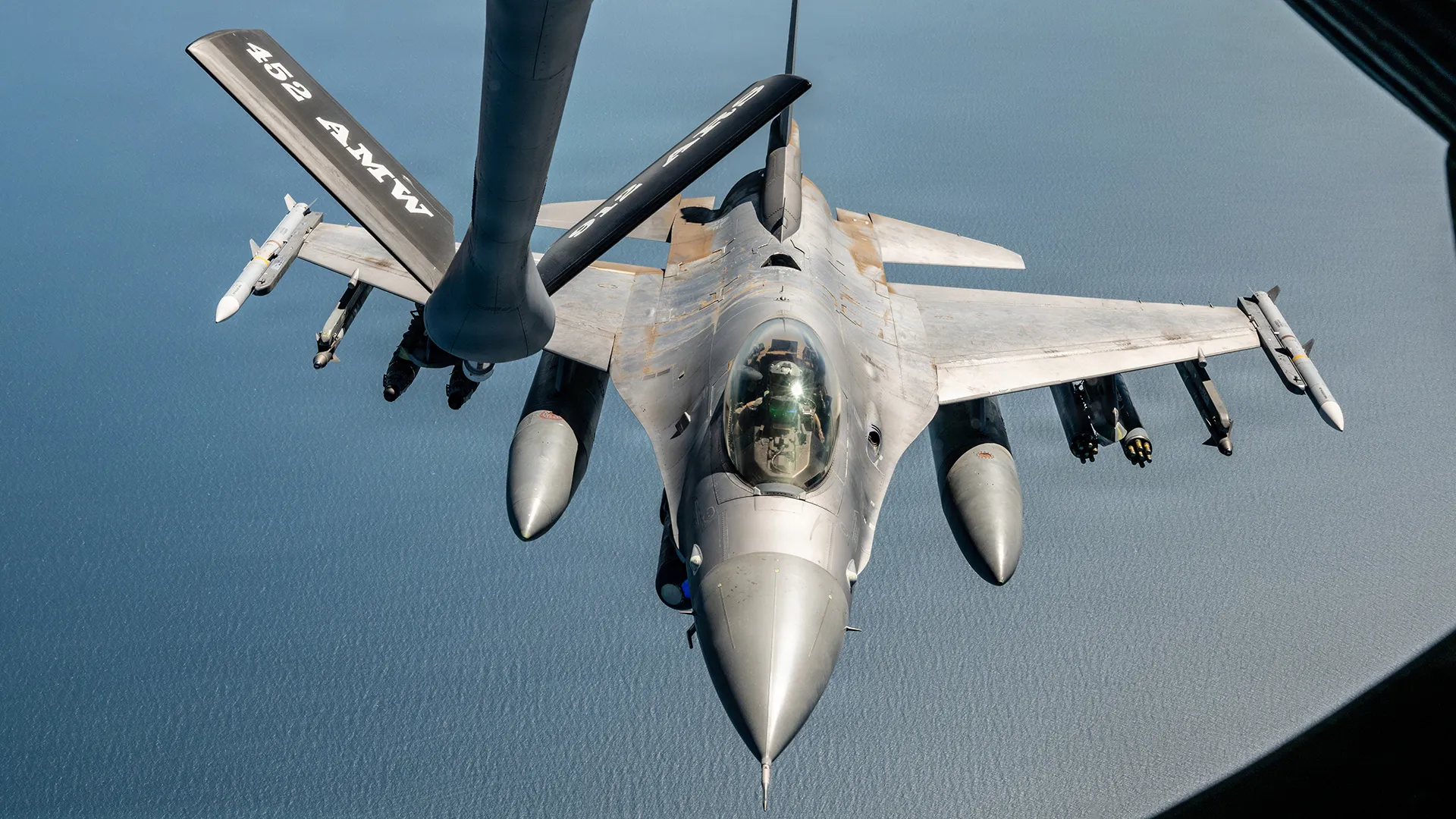





![A member of the Naisho women’s group carries a sheep purchased through income earned from harvesting and selling fodder grass in Selela village, Monduli District, northern Tanzania [Courtesy of Pastoral Women’s Council]](https://i0.wp.com/occasionaldigest.com/wp-content/uploads/2026/06/IMAGE-1-1780933228.jpg?w=640&ssl=1)
![Nesirkar Longidongi carries harvested fodder from her group’s grass field in Selela village. Income from fodder production has helped her improve her family's livelihood. [Courtesy of Pastoral Women’s Council]](https://i0.wp.com/occasionaldigest.com/wp-content/uploads/2026/06/IMAGE-4-1-1780933234.jpg?w=640&ssl=1)