Srinagar, Indian-administered Kashmir — The gold earrings were a gift from her father on her birthday just months earlier. But on March 21, as South Asia marked Eid‑ul‑Fitr, Masrat Mukhtar handed them over to an aid collection effort to help civilians in Iran trying to survive the US-Israel war on the country.
She was one of many in Indian-administered Kashmir who paused their customary rituals and celebrations on the auspicious day to contribute cash, household items, and personal assets for a people more than 1,000 miles away.
Her cousins followed, each bringing items of personal value. Families offered copper utensils, livestock, bicycles, and portions of savings. Children broke their piggy banks, sharing savings they had carefully collected over several years. Shopkeepers and traders handed over parts of their earnings.
“We give what we love. This brings us closer to them,” said Mukhtar, a 55-year-old woman from Budgam in the central part of Indian-administered Kashmir, before referring to a name by which the region has historically also been known. “This is what Little Iran does for its namesake. The bond persists through time and conflict.”
That bond, rooted in more than six centuries of historical connections, has taken on a much more overt presence during the war – drawing recognition from Iranian authorities, and concerns over some fund collection methods from Indian officials.
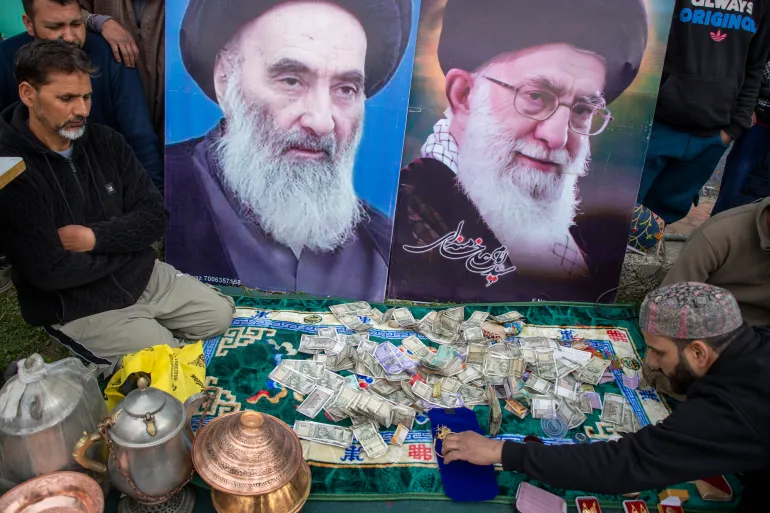
Cash donated for Iran at a collection drive in Indian-administered Kashmir [Junaid Bhat/Al Jazeera]
One daughter’s wealth, to another daughter
In Zadibal, a Shia-majority area of Srinagar – the biggest city in Indian-administered Kashmir – 73-year-old Tahera Jan watched neighbours contribute copper pots.
“Kashmiris traditionally collect these utensils for their daughters’ weddings. We chose to give them instead to daughters who lost mothers and sisters in the attacks,” Jan said.
Sadakat Ali Mir, a 24-year-old mini-truck driver, contributed one of the two vehicles he drives for his livelihood. Other contributors offered bicycles, scooters, and other essential items. Children, including nine-year-old Zainab Jan, handed over piggy banks.
To be sure, that Shia constitute between 10 to 15 percent of Indian-administered Kashmir’s population is a factor in why the war in Iran resonates so deeply in the region. But donations for Iran have extended well beyond Shia. Several Sunni families observed simpler Eid meals, redirecting household resources towards Iranian relief. Some shopkeepers closed early, while families adjusted daily routines to contribute.
Political and religious figures also participated. Budgam lawmaker Aga Syed Muntazir Mehdi donated a month’s salary to the relief effort. Imran Reza Ansari, a Shia scholar and leader of the People’s Conference party, noted public participation across communities.
Similar donation campaigns in support of Iranians have also been reported from Pakistan, Iraq and other countries.
But at the heart of this outpouring of support for Iran in Indian-administered Kashmir – which also witnessed large rallies after the killing of Iranian Supreme Leader Ayatollah Ali Khamenei on February 28 – are rare cultural ties that Kashmir and what was then Persia have shared for centuries.
Women arrive carrying kitchenware to donate at a relief drive for Iran in Budgam, Indian-administered Kashmir, Monday, March 23, 2026 [Mukhtar Khan/ AP Photo]
‘Little Iran’
Sufi scholar Mir Sayyid Ali Hamadani arrived in Kashmir from Hamadan in Iran in the 14th century, introducing religious practices, art forms, and Persian literary traditions. Persian architectural influences appear in historical mosques, and the Persian language has shaped local literature.
Irshad Ahmad, a scholar of Central Asian studies, said donation drives drew on this historical reservoir, with prayers, rituals, and art forms reflecting longstanding ties. Kashmir has historically been referred to as Iran-e-Sagheer, or Little Iran.
The donations carry personal and cultural meaning beyond financial value, said experts. “People are not only parting with objects; they are sharing emotional continuity,” Sakina Hassan, a lecturer on humanitarian practices in New Delhi, said.
More than 2,000 people have been killed in Iran during the war, which is on pause at the moment amid a fragile ceasefire brokered by Pakistan. The first round of direct talks between the United States and Iran in Islamabad last week broke down without a deal, and mediators are working on pushing the two sides towards new talks. The ceasefire is set to expire next Wednesday.
A volunteer auctions a donated copper vessel to raise cash for a relief drive for Iran in Budgam, Indian-administered Kashmir, Monday, March 23, 2026 [Mukhtar Khan/AP Photo]
Millions in donations
The scope of donations from Kashmir is significant. Estimates from local authorities place the value of contributions at up to six billion rupees ($64m), including cash, gold, jewellery, household items, livestock, and vehicles.
Collection points in Srinagar, Budgam, Baramulla – another major city – and the region’s northern districts were staffed by volunteers documenting donations.
Small contributions, including coins, piggy banks, and utensils, make up a large portion of total aid in terms of volume. Syed Asifi, a volunteer managing central Srinagar collections, said even individuals with limited means brought what they could.
Medical kits were assembled by local doctors, and supply drives were organised by students and educational institutions based on assessed needs in Iran.
The Iranian embassy in New Delhi acknowledged contributions in a post on X: “We sincerely thank the kind people of Kashmir for standing with the people of Iran through their humanitarian support and heartfelt solidarity; this kindness endures.” A video shared by the embassy showed a widow donating gold she had kept as a memento of her husband, who died 28 years ago.
That post was subsequently pulled down by the embassy, though the mission later posted again, thanking the people of India and Kashmir.
The embassy added that Kashmir’s contributions constitute a substantial portion of donations from India, with local sources estimating the Valley’s share at more than 40 percent of the total.
Jewellery donated by women for an Iran aid drive in Indian-administered Kashmir [Junaid Bhat/Al Jazeera]
Security concerns
But while the majority of donations are directed towards humanitarian purposes, Indian authorities have raised concerns about potential misuse. Jammu and Kashmir Police and the State Investigative Agency (SIA) have said some funds collected through door-to-door drives by unverified individuals could be diverted to local networks of separatists and armed groups.
“People depositing money directly to the Iranian embassy should not be worried,” said a senior official, speaking on condition of anonymity. “Collections by middlemen without transparent monitoring may not reach the intended recipients.”
Authorities have also asked volunteers to maintain records to ensure compliance with fundraising regulations.
There’s a reason for this concern, say Indian authorities.
They point to the example of 2023, where funds collected in southern Kashmir – ostensibly for humanitarian purposes – were allegedly instead funnelled towards rebel groups. Organisers of the Kashmir drives for Iran maintain that all efforts are humanitarian.
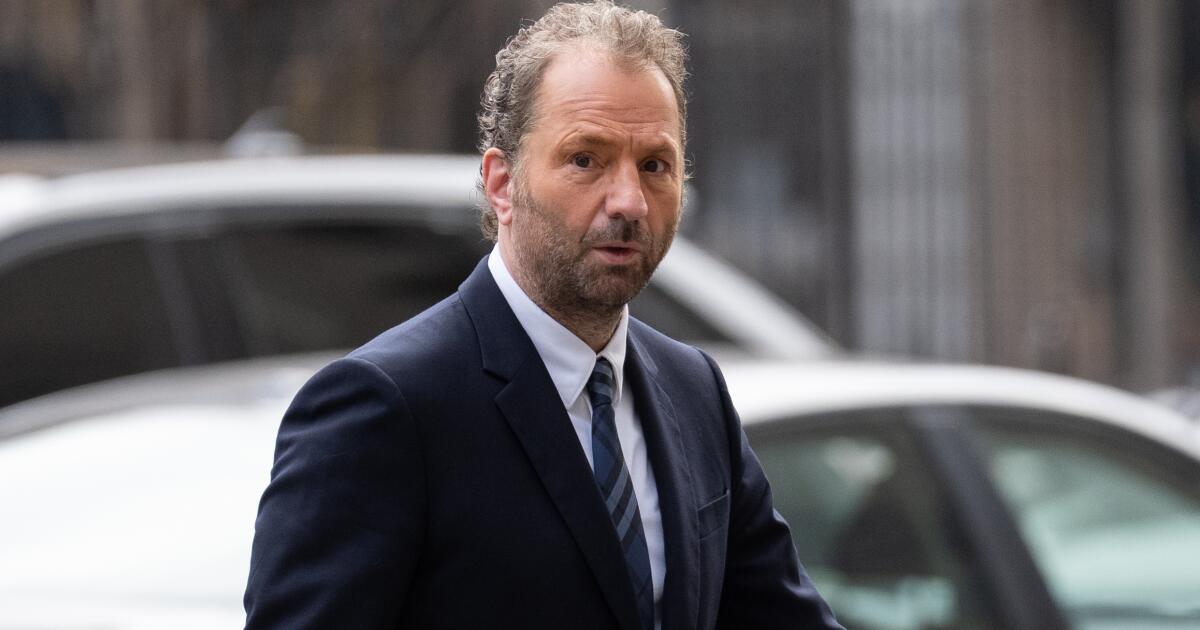
NEW YORK — Beverly Hills-based Live Nation and its Ticketmaster subsidiary faced a bruising courtroom loss Wednesday after a federal jury found that the company operated a monopoly over concert venues.
The verdict by a Manhattan, N.Y., jury came after a five-week trial and caps a closely watched case that could have far reaching effects across the music industry, potentially leading to the breakup of the companies.
Ticketmaster is the world’s largest ticket seller for live events, while Live Nation is a dominant force in the concert business.
The civil case began when the federal government alleged that Live Nation used its clout to engage in a variety of anticompetitive practices, including preventing venues from using multiple ticket sellers.
“It is time to hold them accountable,” Jeffrey Kessler, an attorney for the states, said in a closing argument. He called Live Nation a “monopolistic bully” that drove up prices for ticket buyers.
Jurors agreed. They found that Ticketmaster had overcharged consumers by $1.72 for each ticket. The judge will assess damages later.
Live Nation, which owns and operates hundreds of venues, countered that it did not violate U.S. antitrust laws, arguing that artists, sports teams and venues decide prices and ticketing practices.
“Success is not against the antitrust laws in the United States,” Live Nation attorney David Marriott said in his summation.
Live Nation said in a statement that the “jury’s verdict is not the last word on this matter,” noting the court had yet to rule on a motion it had filed to challenge its liability in the case.
The trial revealed some embarrassing internal communications, including emails from a Live Nation executive who called customers “so stupid” and said the company was “robbing them blind, baby.” The executive, Benjamin Baker, testified that the messages were “very immature and unacceptable.”
The original lawsuit, led by a cadre of interested parties including the federal government, 39 states and the District of Columbia, dates to 2024. It alleged that Live Nation and Ticketmaster monopolized various aspects of the live music industry, such as concert promotion, venue operations, artist management and ticketing services.
Live Nation manages more than 400 artists and controls more than 265 venues in North America, while Ticketmaster simultaneously controls around 80% of the primary ticket marketplace and also is increasing its involvement in the resale market, according to the lawsuit.
Last month, Live Nation secured an unexpected tentative settlement with the Department of Justice in which the company agreed to several structural changes to its business, including adjustments to ticketing deals with venues, capping service fees and paying a $280-million fine.
However, more than 30 states, including California, decided to proceed with the trial. California Atty. Gen. Rob Bonta praised these state-led efforts to protect consumers, even amid dwindling antitrust enforcement from the Trump administration, he said in a statement.
“This is a historic and resounding victory for artists, fans, and the venues that support them,” Bonta said. “We are incredibly proud of today’s outcome … this verdict shows just how far states can go to protect our residents from big corporations that are using their power to illegally raise prices and rip-off Americans.”
Though a verdict has been reached, remedies for how Live Nation will be held accountable for its actions are still being decided by the judge.
One possibility is that the companies could be split up, an outcome favored by critics.
National Independent Venue Assn. Executive Director Stephen Parker said Ticketmaster and Live Nation need to be separate for the industry to see change.
“Live Nation and Ticketmaster must be broken up now. Ticketmaster should not be permitted to participate in the ticket resale market. Live Nation should not be able to promote more than 50% of artists’ tours,” Parker said in a statement. “And the damages paid to the states should be remitted to the independent venues, promoters, festivals, and fans that have suffered under Live Nation’s monopolistic reign over the last 15 years.”
Serona Elton, attorney and interim vice dean at the University of Miami’s Frost School of Music, said that the separation of Live Nation and Ticket master seems to be “on the table,” but she said it’s too early to assess the verdict’s fallout on the music industry.
Elton said fans might notice small changes in pricing, but there are factors other than Live Nation that are contributing to high ticket prices, such as the secondary ticket market as well as supply and demand challenges.
The verdict, Elton said, “sends a message of support to music companies and professionals working in the live space who have felt like they have suffered financial consequences because of Live Nation’s behavior.”
The ruling is a small but necessary step toward achieving a balanced and competitive ticketing industry, said Hal Singer, a managing director of economic consulting firm Econ One, who specializes in antitrust and consumer protection issues.
Forcing a Ticketmaster sale probably is the only remedy that will bring real change, Singer said.
“We’re not out of the woods quite yet,” Singer said. “We’ve kind of tilted the probability.… It could change the competitive balance. But that requires that a meaningful remedy follows the liability. You need both.”
Fans and some artists have long groused about Ticketmaster, which was founded in 1976 and merged with Live Nation in 2010.
Dustin Brighton, director of government relations for the Coalition for Ticket Fairness, agreed that although the verdict is a landmark moment for fans, “it’s not the end of the road.”
“As the court considers remedies, the focus must be on restoring competition, increasing transparency, and ensuring fans have real choice,” Brighton said in a statement.
Times staff writer August Brown and the Associated Press contributed to this report.
Secretary of State Bill Jones, lagging in the polls for the Republican gubernatorial primary, on Monday asked the U.S. attorney’s office in Sacramento to investigate possible conflicts of interest between energy companies and the administration of Gov. Gray Davis.
For months, Jones has criticized Davis for hiring consultants during last year’s energy crisis who owned stock in companies that the governor alleged were gouging the state. Davis’ spokesman held $12,000 of stock in Calpine, a firm that won state contracts.
On Monday, Jones said the state Fair Political Practices Commission and the attorney general’s office, both controlled by Democrats, were not investigating aggressively enough.
Seizing upon recent reports that Davis met with then-Enron Chairman Kenneth L. Lay during the crisis, Jones called for a federal investigation.
“It is now time that the U.S. attorney’s office actively engage in this scandal and open an investigation into the conflicts of interest and insider dealings of Gov. Gray Davis and his administration,” Jones said at a Sacramento news conference. “Because we cannot get to the truth and we cannot get the entities entrusted by the people to do their jobs, we must now go to a higher authority.”
A spokeswoman for the U.S. attorney’s office declined comment.
Roger Salazar, a spokesman for the Davis campaign, said the governor had taken appropriate action against consultants who had conflicts, dismissing four last summer.
The chairwoman of the FPPC responded coolly to Jones’ allegations. “We do not comment on complaints or any investigative actions taken in response to those complaints,” Karen Getman said. “Nor do we allow the timing of our activities to be influenced by upcoming elections.”
Though Jones called for more disclosure into Davis’ contacts with the energy industry, he has different standards for the Bush administration.
Spokeswoman Beth Pendexter said Jones believes Vice President Dick Cheney does not have to disclose whom he met with while forming the national energy policy last year.
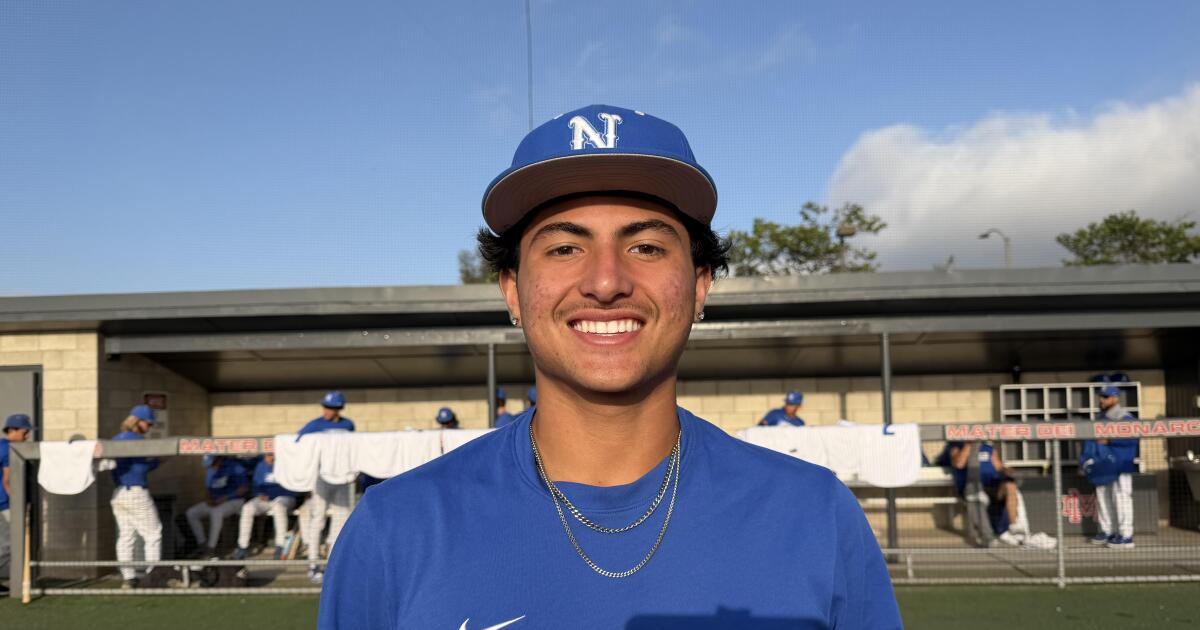
Wednesday was a day for big-time performances in the Big VIII League from Norco, Corona and Corona Santiago.
Jordan Ayala of Norco struck out 10 in five innings and finished with two hits and three RBIs in an 8-0 win over Eastvale Roosevelt.
Danny De La Rose went five for five with five RBIs in Corona’s 16-2 win over Corona Centennial. Logan Pascarella, Trey Ebel and Jesiah Andrade hit home runs.
Striker Pence hit a grand slam and finished with six RBIs in Corona Santiago’s 17-1 win over King. Troy Randall also homered and had two hits.
St. John Bosco 8, Santa Margarita 1: The Braves’ first four batters combined for nine hits. James Clark had three hits. Jaden Jackson homered.
Servite 9, Mater Dei 6: Eli Rubel contributed two hits and two RBIs for the Friars.
Orange Lutheran 3, JSerra 2: The No. 1 Lancers overcame a 2-0 deficit and won it on a walk-off sacrifice fly in the seventh.
St. Francis 3, Sierra Canyon 2: Jack Smith threw two innings of shutout relief to get the save for St. Francis. Cody Gallegos had two hits and two RBIs for Sierra Canyon.
Loyola 13, Crespi 4: Matthew Favela had two hits and three RBIs and Jack Murray drove in three runs for the Cubs.
Harvard-Westlake 1, Sherman Oaks Notre Dame 0: Evan Alexander struck out 11 and gave up one hit to help the Wolverines pull into a first-place tie with the Knights.
Chaminade 7, Bishop Alemany 0: Jackson Schroeder struck out eight with no walks in six innings and Isaac Hearn had a double and triple for the Eagles.
Ganesha 15, Bassett 0: Logan Schmidt struck out 14 of the 15 batters and hit two home runs in front of scouts ready to make him a first-round draft pick this summer.
La Mirada 1, Warren 0: Kaden Corns threw five scoreless innings for La Mirada.
West Ranch 4, Valencia 2: A three-run rally in the seventh included a home run from Connor Clayton.
Banning 4, Carson 2: Jacob Fernandez hit a two-run single in the seventh to hand Carson its first Marine League defeat.
Palos Verdes 1, Mira Costa 0: Jonah Cohen threw the shutout striking out six with no walks.
Huntington Beach 3, Fountain Valley 1: Jared Grindlinger gave up two hits in five innings to keep the Oilers unbeaten in the Sunset League.
Birmingham 8, Chatsworth 3: Carlos Acuna threw six scoreless innings with seven strikeouts and Adian Martinez had two hits and three RBIs.
El Camino Real 7, Taft 3: RJ De La Rosa went three for three with two RBIs and Ryan Glassman had three hits and two RBIs to lead El Camino Real. Jackson Sellz threw a complete game, striking out six with no walks.
Cypress 4, El Dorado 1: Landon Smith threw 3 2/3 innings of scoreless relief for Cypress.
Garden Grove Pacifica 3, Anaheim Canyon 2: Jack Waeger had two hits and two RBIs.
Royal 7, Camarillo 6: Tristen Hogan broke a 6-6 tie with an RBI single in the seventh. Matthew Stout homered.
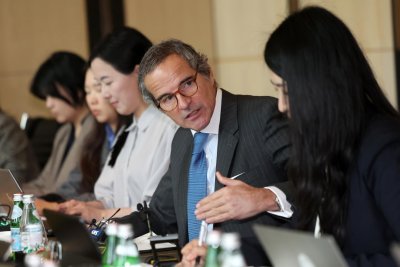
Rafael Grossi, director general of the International Atomic Energy Agency, speaks at a press briefing at the Four Seasons Hotel in Seoul on April 15. Photo by Asia Today
April 15 (Asia Today) — Rafael Grossi said Tuesday that North Korea has built a new uranium enrichment facility in the Yongbyon area, signaling a significant expansion of its nuclear capabilities.
Speaking at a press briefing in Seoul, Grossi said assessments by the International Atomic Energy Agency show North Korea’s nuclear activities have expanded across multiple facilities, including a 5-megawatt reactor, reprocessing plants and a light-water reactor.
He said the newly identified building appears similar in scale and infrastructure to the Kangson enrichment facility, indicating a substantial increase in uranium enrichment capacity.
“While it is difficult to calculate exact production levels without on-site access, the external features suggest a significant expansion,” Grossi said. “This points to a serious increase in the ability to produce dozens of nuclear warheads.”
The agency had previously monitored the construction of the facility, noting similarities in cooling and supply systems to existing enrichment sites.
Grossi also warned that nuclear weapons development fuels proliferation and accelerates arms competition, adding that such capabilities do not necessarily improve national security.
On South Korea’s potential pursuit of nuclear-powered submarines, Grossi stressed the need for strict safeguards under the Nuclear Non-Proliferation Treaty.
He raised concerns that nuclear material used in submarines could fall outside routine inspection regimes due to extended underwater operations, particularly if highly enriched uranium is used.
Grossi said South Korea would need to establish special procedures and coordination mechanisms with the agency to ensure transparency and prevent diversion of nuclear material.
He added that discussions with the government, navy and industry would follow if the project proceeds, noting that the development process would take years and involve multiple stages.
AFTER becoming the first Love Island star to make Forbes’ 30 Under 30 list, savvy Molly-Mae Hague has a nifty plan to ‘Fury-proof’ her finances.
With a staggering £22million in the bank and a second baby with boxer fiancé Tommy on the way, there are whispers that a watertight pre-nup featuring a “loyalty clause” is in the works.
Molly-Mae took Tommy Fury back a year ago after their shock split in 2024… but she’s determined to make sure he’s 100% dedicated to herCredit: GettyTommy surprised Molly with a romantic Ibiza proposal in 2023Credit: Instagram
Now sources close to the business-minded beauty say she is determined to make sure Tommy, 26, is 100 per cent dedicated to her before tying the knot.
An insider explained: “Molly has more than proved she knows a thing or two about making money and she knows full well what marriage could mean for her wealth.
“There’s been talk that she would want him to sign a contract before they commit any further, which would have a cheating clause and allow her the access to her money she feels she might need to move on.”
Molly was already a popular influencer when she appeared on Love Island in 2019 and met Tommy but her rise to super stardom and extreme wealth after the show is unprecedented.
Molly would not be the first woman to demand a cheating clause.
Catherine Zeta Jones is said to have included a similar one in the pre-nup prior to her 2000 wedding to fellow actor Michael Douglas.
It was reported that if he ever cheated he would have to pay Catherine £1million for every year they were married.
Justin Timberlake and Jessica Biel also allegedly have a clause in their prenup that would entitle Jess to £400,000 if he cheated.
It was late in the summer of 2024 that Molly dumped Tommy, telling her followers: “Never in a million years did I think I’d ever have to write this.
“After five years of being together I never imagined our story would end, especially not this way.”
The couple had been planning to move into a £5million mansion but after Tommy was accused of kissing a blonde beauty on a lads’ holiday to Macedonia, Molly stayed put in her £4million Cheshire home and booted Tommy out.
There’s been talk that she would want him to sign a contract before they commit any further, which would have a cheating clause
And while they now live in their new family home, we can reveal Molly has kept hold of her first mansion, which is solely in her use.
Molly was already a popular influencer when she appeared on Love Island in 2019 and met TommyCredit: RexMolly has started wearing her huge engagement ring againCredit: mollymae/Instagram..
Our insider said: “Molly has been very reluctant to sell the Cheshire home and knows it’s probably wise to keep hold of it as a back up.”
At the start of the year fans were shocked when Molly quietly announced she was expecting another baby with Tommy, and was already six months pregnant.
Pals say the star opted to have another child with Tommy because she was keen that her children all have the same father.
Another source adds: “Molly is very traditional in lots of ways and Tommy is, of course, also very old school, so they wanted to have more children together.”
A blended family was not an option for Molly, the source said.
Molly’s dream
“She wants her kids to have consistency like she had growing up. It’s one of the main reasons she got back with him.”
Casting doubt over their relationship, Tommy’s dad John Fury said in the family’s Netflix show, At Home With The Furys: “Molly is a lovely person, but she can’t help the life she’s been brought up in, it’s contrasting to ours.
“But she’s put up with some s*** hasn’t she, so fair play to her – she’s not a bad girl.
“I’m also going to be there to support them. Let’s see what happens.”
Tommy’s half brother and former world heavyweight boxing champion Tyson has also been critical of Molly’s career.
She wants her kids to have consistency like she had growing up. It’s one of the main reasons she got back with him.
Source
In the new series of his show he appears mocking of influencers, warning his daughter Venezuela: “If you are an influencer your private life is non-existent. Look at Tommy and Molly. If you want to make money out of doing nothing, basically privacy doesn’t exist.
“I’ve done a million-thousand achievements. I can write a table full of them. We’re just in an era where you can get famous for what? Getting our tits out on telly.”
But Molly, a dropout from the London College of Fashion, has come a long way since Love Island.
Forbes might have put Tyson at No3 in its ranking of the highest-paid athletes in the world, with his earnings being estimated at £120 million, but Molly is hot on his heels (wearing her sold-out Adidas shoe collection).
Pals say Molly opted to have another child with Tommy because she was keen her children all have the same fatherCredit: InstagramMolly has been very reluctant to sell the Cheshire home to keep it as a back up, revealed our insiderCredit: Refer to source
It was 6.30am, the cockcrow slot at Jubilee Park lido, and still not quite light. I hadn’t wanted to come this early – it was the only time I’d been able to book. But as I slid into the pool – heated to a delicious 29C – I realised it was a gift. Vapours rose dreamily into cool air laced with owl hoots and the whiff of dewy blooms, and I swam into a sunrise that became more vivid with every stroke. A man in the next lane paused to admire the reddening dawn too; he was hungover, he said, but had come to do his morning lengths nonetheless. A cure of sorts.
Bath, Harrogate, Buxton – Woodhall? This Lincolnshire village isn’t one of Britain’s headline spa towns. Most probably don’t know where it is – 18 miles (29km east of Lincoln, for the record. But at the turn of the 20th century, Woodhall Spa was among the most fashionable places to be seen, to be healed.
The Petwood Hotel, once the mess for wartime RAF officers. Photograph: Tim Scrivener/Alamy
Those wellness-seekers didn’t come, as I had, for the 90-year-old lido (open April to November). They came for the springs. In 1821, a hopeful entrepreneur sank a mine shaft here, prospecting for coal. He discovered water instead, which was found to be high in iodine and bromine, thought to be beneficial for everything from rheumatoid arthritis to gout. The first proper bath house was built in 1838; trains arrived in 1855. Woodhall Spa was on the map.
The village’s Edwardian heyday is long gone. The railway has closed, the baths are no longer in use – the original building is now a beauty salon. But Woodhall Spa still has a deeply restorative feel. With its broad, leafy avenues, red-brick and half-timber villas, protective shroud of trees, numerous cafes and delis, and promise of simple, bygone pleasures, it’s like a safety blanket; a place to escape the world’s horrors for a few days.
Tina Delaney, a director at Woodhall’s Cottage Museum, agrees. She came here on holiday from Bedford six years ago and ended up staying: “My husband describes it as moving 100 miles north, 80 years back in time.”
The little museum occupies a rare 19th-century prefab of yellow corrugated iron and documents Woodhall’s history, from its early fortunes to its part in the second world war. The 1st Airlanding Brigade trained here for Operation Market Garden, the ill-fated plan to seize bridges in the occupied Netherlands; of the 2,500 men who left, fewer than 500 returned. Many became prisoners of war. Also, Squadron 617 – the Dambusters – were briefly stationed at RAF Woodhall Spa; the officers’ mess was in the grandiose mock-Tudor Petwood Hotel. I wandered there after the museum and sat on the terrace, looking out across the elegant gardens with a half of Petwood Bomber ale.
The Kinema in the Woods, all rich reds and deep-plush seats, is housed in a converted 19th-century sports pavillion. Photograph: Sarah Baxter
While officers hung out at the hotel, lower ranks frequented the Kinema in the Woods. This late-19th-century sports pavilion was converted into a cinema in 1922 and nicknamed the “flicks in the sticks” by airmen, who were shown top-secret reconnaissance films here. It is now a cinephile’s delight. The lobby is all rich reds and movie memorabilia, with separate counters for popcorn and ices. In screen one, deep-plush seats face a stage through which a Compton organ sometimes rises, played by the resident organist – but sadly not for my showing. There was an intermission, though, during which I devoured local-made Dennetts’ apple pie ice-cream.
When I emerged the owls were hooting again and I headed back to Bainland, an 18-hectare (45-acre) holiday park of reclaimed-timber lodges on the edge of the village, large but nicely done. My lodge was smart and cosy, set on a teeny lake. The next morning I breakfasted outside, listening to acorns smack the decking, watching mallards skim through perfectly reflected trees.
I was in no rush. My plan was to borrow one of Bainland’s bikes and make the most of Lincolnshire’s flatness. First, I headed north-east. The railway, so key to Woodhall’s former prosperity, may be defunct but its old trackbed forms part of the off-road Spa Trail, an easy ride (around three miles) to Horncastle, via ancient woods and excellent sculptures: there are steel Viking ships and oversized plants, nodding to Sir Joseph Banks, the botanist on Captain Cook’s first Endeavour expedition, who grew up near Horncastle. Banks also brought the canal to Horncastle, transforming it from backwater to busy market town. The canal, which I followed briefly, is quiet and unnavigable now; these days, the town’s main trade is antique and secondhand stores. I browsed around, wishing I had a bicycle basket to load with dog-eared books and comedy toby jugs.
I also cycled the Water Rail Way, a mostly traffic-free route following the former Lincoln to Boston Railway, by the River Witham. In the middle ages, Lincolnshire had one of England’s greatest densities of monastic houses – abbey-averse Henry VIII called it “the most brute and beastly shire” – and the greatest concentration was in the Witham valley. I started at one, Kirkstead Abbey, where the merest sliver remains, and rode northward for six miles to another, in Bardney, where there was even less. But it was a joyful pedal, along the river, fenlands spreading either side, dotted with more sculptures, swans and defunct stations that now serve only walkers and cyclists.
Woodhall town centre is full of cafes and attractive streets. Photograph: Eye35/Alamy
Finally, I followed the same route a few miles south to Tattershall, home to the enormous, light-flooded Collegiate Church of Holy Trinity and one of England’s first brick-built castles. My timing was good, arriving just as National Trust guide Nigel was starting a tour of the castle’s moated 33.5 metre-high Great Tower. It was constructed in the 15th century by Ralph, third Baron Cromwell, treasurer of England, who wanted a show-off home befitting his self-importance. Nigel described it as “ eight million bricks and a fashion statement” – exposed brick was avant garde at the time.
We climbed up the storeys, from the vaulted basement buttery (used as a prison during the civil war) to the turreted roof. A superlative lookout – and power move – for Cromwell, it’s still the highest point around; Lincoln Cathedral’s gargantuan towers, visible when it’s clear, are 18 miles away. I looked north towards Woodhall Spa, too flat to be perceptible amid the fuzz of green, hidden despite being so close. Indeed, the ideal spot to hide away.
The trip was provided byBainland Lodge Retreats, which has lodges from £649 for four nights (sleeping two) and bike hire from £15pp. For more information see visitlincolnshire.com
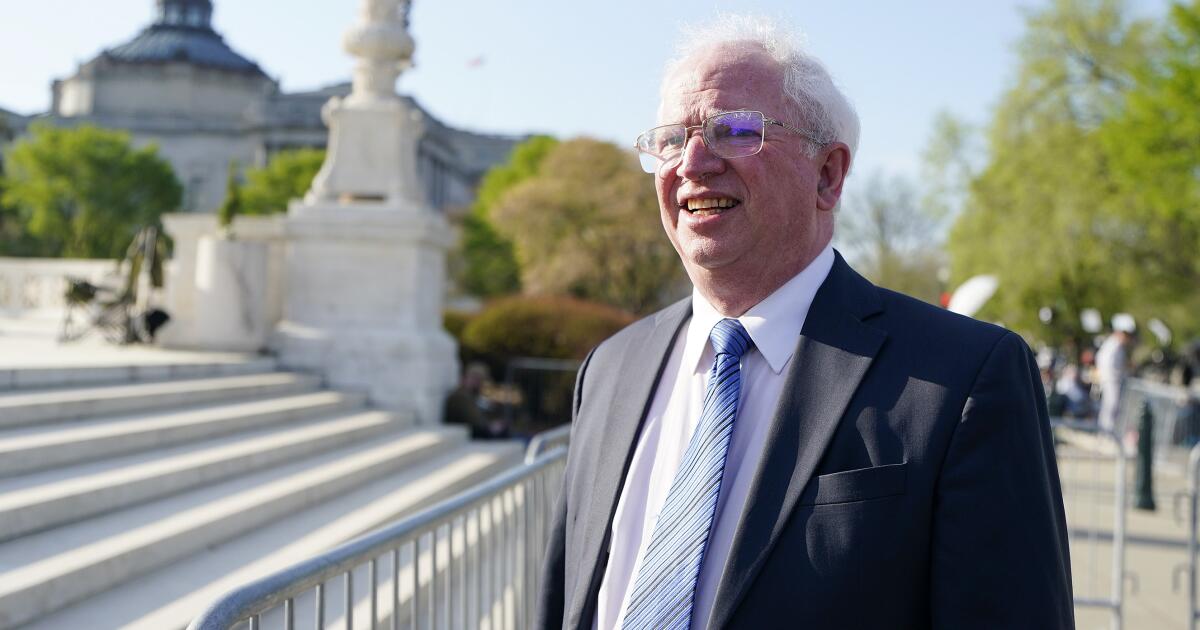
The California Supreme Court ordered attorney and former law school dean John Eastman disbarred on Wednesday for his role aiding the Trump administration’s attempt to overturn the 2020 election.
Eastman’s attorney, Randall A. Miller, told the Associated Press that the court’s decision “departs from long-standing United States Supreme Court precedent protecting First Amendment rights, especially in the attorney discipline context.” Miller did not immediately return an after-hours phone call seeking comment from The Times.
State Bar Chief Trial Counsel George Cardona said in a statement that the ruling “underscores that Mr. Eastman’s misconduct was incompatible with the standards of integrity required of every California attorney.”
“Today’s California Supreme Court order disbarring John Charles Eastman from the practice of law in California affirms the fundamental principle that attorneys must act with honesty and uphold the rule of law, regardless of the client they represent or the context in which that representation occurs,” said Cardona said.
The Supreme Court’s decision affirms a 2024 ruling from State Bar Judge Yvette Roland that Eastman be prohibited from practicing law.
In a marathon trial that lasted off and on from June to November 2024, the State Bar, which regulates lawyers in California, argued that Eastman was unfit to practice law for peddling bogus claims that fraud cost Trump the election and for promoting a fake-elector scheme to block the electoral count.
“It is true that an attorney has a duty to engage in zealous advocacy on behalf of a client,” Roland wrote in 2024 in a 128-page ruling. “However, Eastman’s inaccurate assertions were lies that cannot be justified as zealous advocacy.”
Roland found Eastman culpable of 10 of 11 counts of misconduct.
Eastman fomented “predictable and destructive chaos” when he stood beside fellow Trump adviser Rudolph W. Giuliani on Jan. 6, 2021, and told an enormous crowd at the Ellipse that the election had been fraudulent, the bar argued.
Eastman claimed he was acting in good faith, and as a vigorous champion of his client. But State Bar attorneys argued that “the evidence, including his often not-credible trial testimony, shows that he held — and still holds — truth and democracy in contempt.”
Despite Eastman’s repeated assertions that Joe Biden’s victory was illegal, Roland ruled, Eastman’s own words showed he knew that proof was lacking.
The judge cited an email that Eastman sent to a friend, Cleta Mitchell, on Nov. 29, 2020, acknowledging that fraud serious enough to sway the results could not be proved.
“It would be nice to have actually hard documented evidence of the fraud in the areas to which the analyses pointed,” Eastman wrote.
After the 2024 ruling Eastman responded on his Substack writing that he hoped the California Supreme Court or U.S. Supreme Court would “step in to put a stop to this lawfare that has become a serious threat to the First Amendment, the right of controversial clients and causes to legal representation, and more broadly to our adversarial system of justice.”
Eastman has a long history in California’s conservative legal circles. He was hired by Chapman’s law school in 1999 and was dean from June 2007 to January 2010, then continued to teach courses in constitutional law, property law, legal history and the 1st Amendment.
He retired in early 2021 after more than 100 Chapman faculty and others affiliated with the university signed a letter calling on the school to take action against him for his role in the Jan. 6 insurrection.
Wednesday’s decision is a bookend in a lengthy investigation into Eastman’s actions that began in 2021. In October of that year, the nonpartisan legal group States United Democracy Center filed an ethics complaint calling on the State Bar to investigate Eastman’s Jan. 6 actions.
Christine P. Sun, senior vice president of legal at the States United Democracy Center, said on Wednesday that the court’s decision is “part of a broader reckoning for those who seek to undermine the rule of law.”
“Eastman played a central role in the plot to overturn the 2020 election—pressuring state officials, advancing baseless claims in court, and promoting a fringe theory that the vice president could reject certified electoral votes,” Sun said in a statement. “His unethical actions have had real, lasting consequences for our democracy, and we applaud the California Supreme Court’s decision to disbar him.”
Staff writer Christopher Goffard contributed to this report
It was do or die Wednesday night at Intuit Dome and the Clippers did not do enough to keep their season alive, blowing a 13-point lead early in the fourth quarter and losing to the Golden State Warriors, 126-121.
Having rebounded from a franchise-worst 6-21 start to earn the next-to-last berth in the NBA play-in tournament, coach Ty Lue’s resilient bunch could not extend its historic comeback on its home floor.
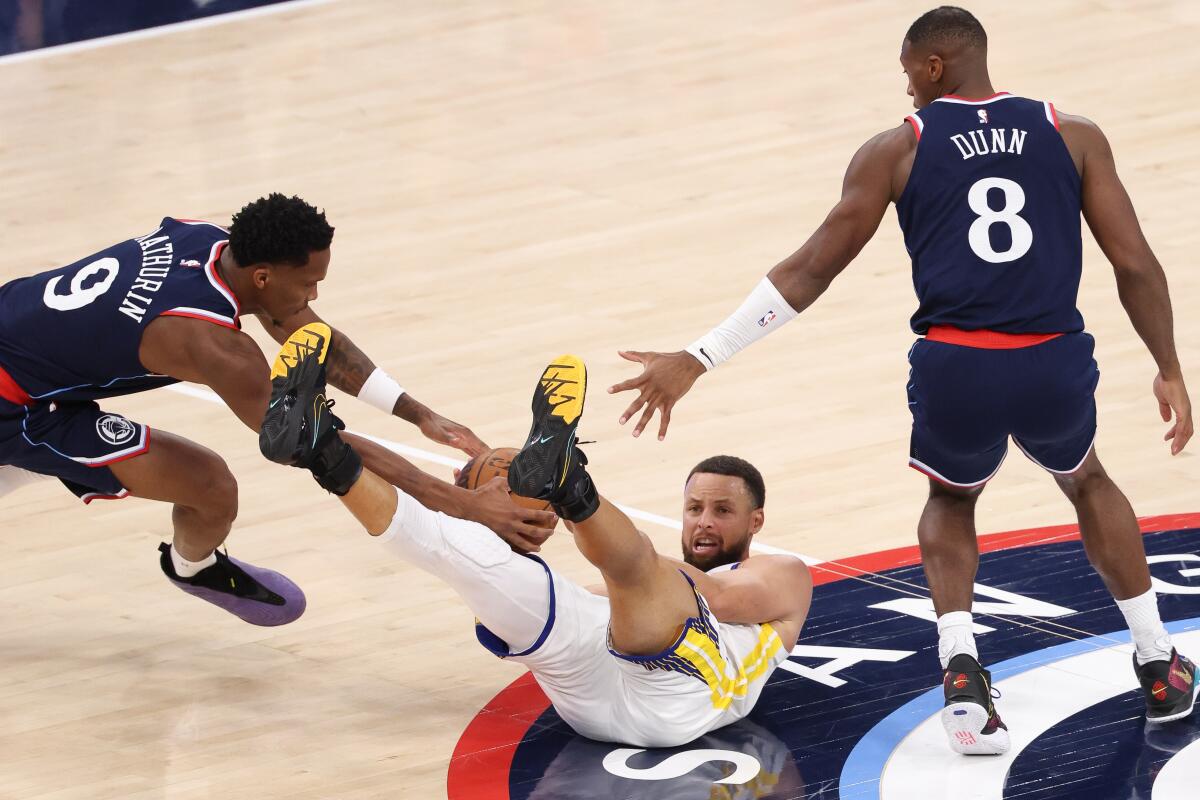
Stephen Curry led the Warriors with 35 points, Kristaps Porzingis and and Gui Santos each had 20 and Brandin Podziemski added 17. The Warriors were 19-of-41 from 3-point range.
Bennedict Mathurin scored 23 points while Kawhi Leonard and Darius Garland each added 21 points for the Clippers, who won three of the teams’ four regular season meetings, including a 115-110 victory in the same arena four days earlier.
The Clippers got off to a hot start, scoring 12 straight points to take a 10-point lead 3:19 into the game but Golden State used a 12-2 run of its own to tie it and took a 17-16 lead on Curry’s three-pointer just before the seven-minute mark. A 15-5 run put the Clippers back up 31-22 at the end of the first quarter.
Steph Curry falls to the court to grab a loose ball against Clippers Bennedict Mathurin and Kris Dunn in the third quarter.
(Allen J. Schaben / Los Angeles Times)
Porzingis’ three-pointer from the top of the key put the Warriors in front early in the second quarter but the Clippers closed the first half with a flourish. Draymond Green got assessed a technical foul and Leonard made the ensuing free throw to give his team a 10-point lead and the Clippers headed to the locker room ahead 61-53.
Back-to-back buckets by Jones Jr. pushed the Clippers’ lead to 10 points with 7:48 left in the third quarter, but again the proud Warriors responded on a rare four-point play by Curry to pull within four. The Clippers pushed the lead back to 11 before Golden State used a 5-0 run to creep within 89-83 heading to the fourth quarter.
Porzingis’ three-pointer whittled the Warriors’ deficit down to three with 8:16 left but Garland’s three-pointer pushed the margin back to eight with 6:36 left. Al Horford’s three-pointer gave the Warriors a 117-115 lead with 2:12 left, Lopez hit a pair of free throws to tie it with 1:51 left, but Curry, as he has done so many times in his career, sank a three-pointer to put his team up 120-117 with 50 seconds remaining and the visitors hung on.
IKawhi Leonard walks off the court after the Clippers’ season-ending loss.
(Allen J. Schaben / Los Angeles Times)
The Warriors’ reward is a flight to Phoenix where they will take on the Suns in a Friday night matchup to decide the eighth and final playoff seed in the Western Conference. The Suns had a chance to clinch the No. 7 seed Monday but lost at home to Portland, 114-110. Should the Warriors prevail they will meet No. 1-seeded and defending champion Oklahoma City in a best-of-seven series opening Sunday on the road.
A chart shows the number of pet insurance policies in South Korea rising sharply from 51,727 in 2021 to 251,961 in 2025. Graphic by Asia Today and translated by UPI
April 15 (Asia Today) — South Korea’s pet insurance market has expanded more than threefold in the past three years, but low enrollment rates continue to limit its growth, prompting insurers to step up marketing efforts.
According to industry data, the number of pet insurance policies in force reached 251,961 last year, up 55.4% from a year earlier. The figure has increased about 3.5 times from 71,896 in 2022.
New policy subscriptions have also risen steadily, while total premiums surpassed 100 billion won (about $75 million) for the first time, jumping from 28.8 billion won (about $21 million) in 2022 to 129.1 billion won (about $97 million) last year.
Despite the rapid growth, the market penetration rate remains low. Data from the KB Financial Research Institute show that only about 2-3% of pets are insured.
As of late 2024, about 15.46 million people in South Korea owned pets, with an estimated 7.63 million dogs and cats nationwide.
The low adoption rate contrasts with more mature markets such as Japan, where the pet insurance sector is valued at around 1 trillion won (about $750 million).
Industry officials say the market still has strong growth potential, driven by rising pet ownership and increasing veterinary costs. Government data show the average monthly veterinary expense per pet is about 37,000 won (about $28), though costs vary widely by clinic.
To raise awareness, insurers are expanding promotional efforts. Companies are launching supporter programs, hosting offline events and collaborating with influencers and pet trainers to reach potential customers.
For example, a pet-focused insurer recently launched a supporter program in which participants share their experiences using insurance products. Other companies have held in-person promotional events and partnered with well-known dog trainers to produce online content.
Analysts say high premiums and limited coverage remain key barriers. Calls are also growing for standardized veterinary pricing to reduce uncertainty in medical costs.
“As pets are increasingly seen as family members, interest in their health care is rising,” an industry official said. “Insurers are working to tap into latent demand by expanding coverage and improving price competitiveness.”
Rodríguez hosted US Energy Assistant Secretary Kyle Haustveit at Miraflores Palace. (Presidential Press)
Caracas, April 15, 2026 (venezuelanalysis.com) – The US Treasury Department’s Office of Foreign Assets Control (OFAC) issued two new general licenses on Tuesday facilitating transactions with Venezuelan state institutions.
for Venezuela on Tuesday: a commercial license (No. 56) and a financial license (No. 57), signaling a partial easing of restrictions while maintaining key controls.
General License 56 (GL56) authorizes US entities to negotiate and sign “contingent contracts” for future commercial operations in Venezuela. This allows firms to move forward with agreements, investments, or projects, though their final execution remains subject to separate OFAC approval.
The waiver maintains important restrictions, including a ban on payments in gold or cryptocurrencies, as well as prohibitions on transactions involving China, Russia, Iran, North Korea, and Cuba. It likewise forbids transactions involving Venezuelan debt and does not unblock currently frozen Venezuelan assets.
For its part, General License 57 (GL57) permits a broad range of financial operations with the Venezuelan Central Bank (BCV), as well as Venezuela’s public banks: Banco de Venezuela, Banco Digital de los Trabajadores, Banco del Tesoro, and entities in which these institutions hold a 50 percent or greater stake.
The allowed transactions include opening and managing accounts, conducting US dollar transfers, issuing loans, and providing banking services. The BCV was sanctioned in April 2019, effectively isolating Venezuela from international financial circuits and increasing costs for basic transactions.
The latest sanctions waivers are expected to facilitate financial flows to the Venezuelan economy, including the transfer of Venezuelan oil revenues that are currently controlled by the Trump administration. US authorities have returned a confirmed US $500 million out of an initial deal estimated at $2 billion, while US and Venezuelan officials have confirmed the purchase of US-manufactured medicines and hospital equipment using Venezuelan funds.
Analyst Hermes Pérez warned that reincorporation into the SWIFT system and establishment of US-based accounts could take several months due to security and technological requirements. Other economists argued that GL57 could allow the Central Bank to stabilize the Venezuelan foreign exchange system.
For several years, a parallel exchange rate between the US dollar and the Venezuelan bolívar has coexisted with the official one set by the Central Bank, often with a gap above 50 percent that fueled distortions in retail activities and currency speculation.
Since the January 3 military strikes and kidnapping of Venezuelan President Nicolás Maduro, the Trump administration has issued several licenses to expand US influence in the Caribbean nation, particularly in key economic sectors such as hydrocarbons and mining.
In parallel, Venezuelan authorities have promoted several pro-business reforms, while multiple Trump officials and corporate executives have come the South American country and held meetings with the acting government led by Delcy Rodríguez.
The latest waivers coincided with the visit to Caracas of a US Department of Energy delegation led by Assistant Secretary Kyle Haustveit. Rodríguez hosted the official on Wednesday in a work meeting at the presidential palace.
During a short, televised intervention, Rodríguez argued that OFAC licenses do not provide sufficient “legal certainty” and reiterated calls for Trump to lift unilateral coercive measures against the country.
“An investor requires greater legal certainty. A license does not provide long-term legal guarantees because it is subject to temporality,” she argued. Rodríguez claimed Washington and Caracas have “enough maturity” to establish “long-term” energy cooperation ties.
“We are working very hard on changes that can attract investment, and which can build an energy cooperation agenda with the United States,” she said.
Rodríguez additionally disclosed recent meetings with representatives from ExxonMobil and ConocoPhillips, stating that authorities have “taken into account recommendations” from oil majors in recent legislative overhauls. Both ExxonMobil and ConocoPhillips refused to accept hydrocarbon reforms under former President Hugo Chávez in the 2000s, later securing multi-billion-dollar arbitration awards against the Caracas as compensation for the nationalization of their assets.
Haustveit and the Energy Department delegation were also present on Monday during the signing of agreements with Chevron that granted the Texas-based conglomerate an increased stake in the Petroindependencia joint venture and awarded an additional extra-heavy crude bloc for exploration to the Petropiar mixed company. Chevron owns minority stakes in both joint enterprises with Venezuelan state oil company PDVSA.
Shell, Eni and Repsol are among the other energy giants to have recently advanced in deals with the Venezuelan government under the improved conditions of the new Hydrocarbon Law.
US Chargé d’Affaires in Venezuela Laura Dogu was also present at the Chevron deal-signing ceremony and the meeting with Haustveit’s delegation. However, the White House announced Wednesday that her post will be taken over by veteran diplomat John Barrett.
Barrett, who previously served as chargé d’affaires at the US Embassy in Guatemala since January 21, 2026, was recently accused by Guatemalan President Bernardo Arévalo of interference during judicial elections for the Constitutional Court held in March.
BRIDGERTON star Simone Ashley has stunned in a tiny Burberry bikini poolside as she revealed she’s back in the dating game after splitting from her lawyer ex.
The actress began dating high-powered entrepreneur Tim Sykes in the summer last year after they were spotted locking lips at the US Open in New York.
Sign up for the Showbiz newsletter
Thank you!
Simone Ashley looked incredible as she starred in the new Burberry High Summer campaignCredit: BurberryThe actress looked incredible as she stripped down to a tiny black bikiniCredit: BurberrySimone Ashley, who stared in Netflix hit Bridgerton, was also seen sizzling in a pink ensembleCredit: Burberry
Just a few months later, in December it was revealed they had parted ways reportedly “wanting different things.”
She was wearing the famous Burberry print triangle bikini as she laid at the edge of the pool.
Simone sizzled as she was spotted with water droplets rolling off her body.
Simone put on a leggy display as she was snapped poolsideCredit: BurberrySimone Ashley plays Kate Sharma in the hit Netflix series BridgertonCredit: LIAM DANIEL/NETFLIX
Elsewhere, Netflix star Simone put on a very leggy display as she posed on a bench wearing a black bikini cover-up.
She was also seen oiled up donning a pink bikini paired with a little gingham sarong.
Following her sad split Tino, Simone picked up her life and moved to New York.
Speaking on The Louis Theroux podcast, Simone said: “I moved to New York last year. I’m having the time of my life. I love it. It’s changed my life.”
But, it seems that is not all that has changed in the stars life as she made a candid admission.
She added: “At the moment, I’m dating. The plan is always to find love and have another great year in New York.
“I feel very ready for a relationship but I think it’s about finding the right person. I don’t get into situationships because it’s just a way to keep things vague. It’s not my style and I haven’t got time for that.”
Before her brief romance with Tim, Simone dated lawyer Constantin “Tino” Klein in the summer of 2022.
They called it quits back in January 2025.
After moving to New York, Simone confessed she is dating and ‘looking for love’Credit: GettySimone was snapped with her lawyer ex Tino Klein at Netflix’s annual BAFTA Awards afterparty at Chiltern Firehouse in LondonCredit: Getty
The new land will add playful puppy-themed fun to Chessington and comes with new rides, places for kids to play, as well as meet and greets with the much-loved hero doggy characters
This article contains affiliate links, we will receive a commission on any sales we generate from it. Learn more
The colourful new land will include four new rides(Image: Merlin)
Chessington World of Adventures has finally revealed the opening date of its long-anticipated PAW Patrol land, and parents will be pleased to hear that the gates will be open to meet the pups before May half-term.
From May 3, kids and their parents will be able to enjoy a brand-new and very colourful PAW Patrol-themed area at Chessington in a new £15 million immersive experience.
The date also coincides with the early May bank holiday, so parents may wish to book Chessington tickets now to avoid missing out on this paw-some experience. At the heart of the new land are four kid-friendly rides, each one inspired by a different pup from the brave crew.
The land’s four new rides are: Chase’s Mountain Mission, Marshall’s Firetruck Rescue, Skye’s Helicopter Heroes, and Zuma’s Hovercraft Adventure, which also claims to be the UK’s first ‘Drifter’ ride. The 1.4 acre land will also have three themed play areas, perfect for little pups to burn off energy, and include Rubble & Rocky’s Play Zone where they can climb and crawl through a maze of construction parts.
At The Flounder Boat Play, kids can enjoy a high-seas adventure with Captain Turbot, and there will also be themed food and drink offerings throughout the area. And of course, there will be a gift shop with plenty of PAW Patrol themed merch to take home as a souvenir. Regular meet and greets will also take place, so kids can get a photo with their favourite hero.
And if simply spending the day at Adventure Bay wasn’t enough, fans of the pups can also book a PAW Patrol themed room at the resort’s hotels. These colourful and fun rooms are fully-themed including bunk beds shaped like the pups’ rescue vehicles and colourful murals. Guests also enjoy early access to the park from 9am, allowing parents with young kids to get on the rides with minimal queues.
The park is the UK’s first and only land themed around PAW Patrol, a series that has become massively popular among pre-schoolers. The series airs on Channel 5 and Nickelodeon, as well as streaming on Paramount+.
Chessington isn’t the only park getting a new themed land this year. Over at Paultons Park guests will be able to enjoy the new Valgard — Realm of the Vikings land from May 16. This will include a new rollercoaster and swing ride.
Crealy Theme Park is also adding two new rides to its offerings for summer 2026, although dates are still to be confirmed. This includes Pirates’ Plummet, which claims it’ll be the tallest ride in the south west, and Rotor, an inverting flat ride which will spin passengers around and upside-down for a “heart pounding adventure”.
Have a story you want to share? Email us at webtravel@reachplc.com
A mum described the moment she was charged £55 for her daughter’s suitcase as ’embarrassing and humiliating’ after Ryanair staff claimed it was too big for the hand luggage sizer
Luana Botas says she was charged £55 after her daughter’s suitcase wouldn’t fit in Ryanair’s sizer(Image: Kennedy News and Media)
Luana Botas was travelling home from a six-day trip to visit family on April 3 when she was stopped at Budapest Airport over her daughter’s case.
The 43-year-old was told to put her seven-year-old’s hardshell case into the hand luggage sizer. She was then ordered to pay £55 when it was too large.
Project manager Luana however pointed out that the airline’s website says Trunki or “Trunki-style” cases can exceed the restrictions and still be accepted on board. A Trunki is a ride-on style suitcase aimed at toddlers.
The Ryanair website states children aged between two and 11 are allowed one Trunki case that can exceed the dimension limits of a small bag – 40 x 30 x 20cm. It says this extends to other brands with “similar dimensions” as well as Trunki cases.
The mum-of-one accepts that her daughter Maia Robinson was carrying a case that was 48 x 26 x 33cm, but believes it fits the description. Ryanair, however, says this exceeds the dimensions of a Trunki suitcase (46 x 20 x 31 cm).
Luana says she was fine travelling through Birmingham Airport, describing the moment as “embarrassing and humiliating”. She said: “I went through Birmingham Airport and no one bat an eyelid, it was absolutely fine.
“We had two backpacks and they were pretty much the same size. On Ryanair’s website, there’s a section that says kid’s luggage, like Trunki and other similar brands, are exempt from the strict limit.
“We were going through the boarding procedure at Budapest when a staff member signalled for me to put my daughter’s luggage in the sizer. My bag was fine, even though it was the same size.
“[My daughter’s case] only went halfway and because it’s a hard shell, it didn’t go all the way down. She asked me to pay the surcharge.
“I tried to explain to her that I had no issues going from Birmingham to Budapest and that a Trunki is allowed. I couldn’t get through to her in any way and boarding was almost complete.
“I said ‘even though I’m trying to explain to you that this is your own policy, you’re still going to charge me? And she said ‘yes I need a passport please’.”
Luana, from Birmingham, continued: “We went through the very embarrassing and humiliating procedure of me paying for a service that was exempt.
“I was genuinely in such shock. This was just a little pull-along for my daughter to enjoy.
“The policy on Ryanair’s website says similar brands are exempt. This was [bought online] and [the website] said it was under-seat cabin approved.
“It’s wrong to have a policy that you make an exemption for and then still charge me.”
A Ryanair spokesperson said: “This passenger’s bag exceeded the permitted dimensions, and they were correctly required to pay a standard gate baggage fee (£55) by the gate agent at Budapest Airport.”
WASHINGTON — Reviews to detect Medicare overpayments were done on fewer than 1% of the doctors who bill the federal health insurance program, a congressional investigator said Wednesday.
The reviews by Medicare’s private contractors are an important way to identify physicians who have been paid too much to treat the elderly and disabled, auditor William Scanlon said at a House Budget Committee hearing.
In the 2000 budget year, those private contractors reviewed the medical claims of 1,891 physicians out of more than 600,000 who billed Medicare that year, said Scanlon, who covers health issues for the General Accounting Office, the investigative arm of Congress.
Most Medicare payments are proper, Scanlon said. But the program “faces a difficult task in finding an appropriate balance between ensuring that Medicare only pays for services allowed by law and making it as simple as possible for providers to treat Medicare beneficiaries and bill the program.”
In 1999, payments made in error amounted to $11.9 billion, the government has reported.
At the hearing, government and academic experts said Congress should pay more attention to the financial health of the 36-year-old program. Government projections earlier this year predicted Medicare, a $240-billion program, would start running short of cash in about 15 years.
An official at the agency that runs Medicare promised a turnaround on all counts.
“In no way will we diminish our interest in fighting waste, fraud and error in the Medicare program,” said Ruben J. King-Shaw Jr., the chief operating officer for the Centers for Medicare and Medicaid Services.
“For the small percentage of people who take advantage of the system, we will continue our aggressive efforts to protect the funds that taxpayers have entrusted to us.”
Financial experts also told Congress that the goals of overhauling Medicare and adding a popular prescription drug benefit could be too much all at once.
“Medicare’s future will likely be written numerous times as health care changes and baby boomers move through the system,” said Marilyn Moon, a health economist at the nonpartisan Urban Institute.
There were also warnings about encouraging private health plans to compete with the federal program. President Bush promoted the idea this month.
Bush said he wants more health maintenance organizations and private health plans to compete for seniors’ business within the underlying Medicare program; 15% of the 40 million enrollees use private plans. Bush said such competition could bring better service, lower premiums and extra benefits, such as complete drug coverage.
But the government would have to make sure it helps all seniors, regardless of which plan they are in, said Comptroller General David Walker, head of the GAO.
“Separating winners from losers is a basic function of competition,” Walker said in a report to Congress.
Niall Currie has left his role as Portadown boss with immediate effect with two games of the Irish Premiership season remaining.
Currie took over as Ports boss for a second spell in October 2022 after previously managing the club between 2016 and 2018.
His last game in charge was Saturday’s heavy 4-0 defeat against relegation-threatened Crusaders in which Currie criticised his side’s “abysmal” performance.
Currie could not prevent the club from being relegated in the 2022-23 season, but he led the Ports back to the top flight at the first time of asking as they won the Championship title the following campaign.
They also reached the BetMcLean Cup final in 2024, but were beaten in the final by Linfield.
He then guided Portadown to an eighth place finish in their first campaign back in the Irish Premiership last season, two points off seventh and a spot in the European play-offs.
The club currently sit 10th with two games left to play, away to Ballymena United on Saturday and away to Bangor on Saturday, 25 April.
The 53-year-old has also managed Dundela, Carrick Rangers, Ards, Loughgall and Annagh United.
Pakistani officials are expecting a “major breakthrough” in talks between Iran and the United States on Tehran’s nuclear programme, sources have told Al Jazeera, as Islamabad steps up diplomatic efforts to end a war that has killed thousands of people.
The optimism on Wednesday came as a high-level Pakistani delegation, headed by Army Chief Asim Munir, arrived in Tehran to deliver a message from the US to the Iranian leadership, according to Iran’s Press TV broadcaster.
Recommended Stories
list of 4 itemsend of list
He was received by Iran’s Foreign Minister Abbas Araghchi, who expressed gratitude for Pakistan’s “gracious hosting of dialogue”. According to Press TV, Munir is also seeking to lay the groundwork for a second round of talks between the US and Iran.
Al Jazeera’s Osama Bin Javaid, who has been covering the US-Iran talks, said Pakistani officials were expecting “a major breakthrough on the nuclear front” and that the delegates were continuing to relay messages back and forth between Washington and Tehran.
The central sticking point remains the duration of any enrichment freeze by Iran and the country’s stockpile of 440 kilogrammes of highly enriched uranium.
“We know that both sides are essentially stuck on between five years of no enrichment to 20 years of no enrichment. And there is a solution in the middle,” Bin Javaid said.
“There’s also talk about what Iran will do with the 440kg of nuclear-enriched material that it has in the country. There are multiple options – whether sending it abroad to a third party or bringing it down to either uranium in its natural form or up to 3 percent,” he said.
“According to these sources, there’s major headway that has been made, and they’re expecting that the Pakistanis are going to be able to convince Tehran,” he added.
Shuttle diplomacy
The shuttle diplomacy by Pakistan came after talks between the US and Iran in Islamabad ended over the weekend without an agreement to end the war. Mediators are pressing for a compromise on three main issues: Iran’s nuclear programme, control of the Strait of Hormuz – which Tehran has effectively closed, causing a surge in global oil prices – and compensation for wartime damages.
The conflict, launched by the US and Israel on February 28, has killed more than 3,000 people in Iran and triggered retaliatory attacks by Tehran on Gulf countries. It has also reignited a conflict between Israel and Hezbollah in Lebanon, where Israeli forces have killed more than 2,000 people since March 2.
A ceasefire between Tehran and Washington on April 8 has halted attacks in Iran and the Gulf, but strikes by Israeli forces on Lebanon have continued.
Separately on Wednesday, Pakistan’s Prime Minister Shehbaz Sharif also travelled to Saudi Arabia as part of a regional tour that also includes stops in Qatar and Turkiye. Al Jazeera’s Bin Javaid said Sharif’s tour was part of a “double-pronged strategy”.
“While the Iranians are speaking to the Pakistani military chief, the Pakistani prime minister and foreign minister are talking to the Saudis and the Qataris. The day after, they go to Turkiye,” he said, with the aim of neutralising any detractors to a deal
Bin Javaid said the detractors include elements in Tehran, in Washington, DC, and most of all, Israel, “which does not want a peace deal and wants a perpetual war in the region”.
‘Very close to over’
The diplomatic push appears bolstered by optimistic comments from US President Donald Trump, who said late on Tuesday that the world should brace for an “amazing two days” and the war on Iran is “very close to over”.
White House Press Secretary Karoline Leavitt later said that further negotiations would likely be held in Islamabad, calling Pakistan-mediated discussions “productive and ongoing”.
“We feel good about the prospects of a deal,” she said on Wednesday.
In Tehran, Iran’s Ministry of Foreign Affairs confirmed that exchanges with the US have continued since the end of the talks in Islamabad. Spokesman Esmaeil Baghaei said “several messages have been exchanged through Pakistan” and that Iranian “positions have been expressed in those exchanges”.
Tensions remain, however.
A US Navy blockade on Iranian ports – which began following the end of the talks – remains in effect in the Strait of Hormuz. The US Central Command claimed it has turned back nine vessels as of Wednesday.
Iran’s military has denounced the blockade as a violation of the April 8 ceasefire. Iran’s Fars News Agency separately reported that a sanctioned Iranian supertanker had crossed the Strait of Hormuz despite the blockade, though it gave no further details.
Ali Abdollahi, the commander of Iran’s joint military command, has also threatened to halt trade in the region if the US does not lift its blockade. He warned that Iran would retaliate by blocking trade through the Red Sea, along with the Gulf and the Sea of Oman.
US president says the leaders of the two countries will speak for the first time in 34 years on Thursday.
Published On 16 Apr 202616 Apr 2026
United States President Donald Trump says the leaders of Israel and Lebanon will speak for the first time in 34 years on Thursday.
The announcement on Wednesday came a day after Israel and Lebanon’s envoys to the US held direct talks in Washington, DC, to discuss an end to Israeli attacks on its neighbour.
Recommended Stories
list of 4 itemsend of list
“Trying to get a little breathing room between Israel and Lebanon,” Trump wrote on his Truth Social platform.
“It has been a long time since the two leaders have spoken, like 34 years. It will happen tomorrow. Nice!”
The US president did not specify who will be involved in the talks.
Lebanon was drawn into the US and Israel’s war on Iran on March 2 after Tehran-aligned Hezbollah resumed attacks on Israel.
Hezbollah said the attacks were in retaliation for Israel’s killing of Iran’s Supreme Leader Ayatollah Ali Khamenei on the first day of the war, on February 28, as well as Israel’s near-daily violations of a ceasefire it agreed to in Lebanon in November 2024.
Israeli attacks since March 2 have killed more than 2,000 people in Lebanon and displaced more than 1.2 million others. The Israeli military has also launched a ground invasion in southern Lebanon, seeking to seize more territory and create what it calls a “buffer zone”.
Israeli Prime Minister Benjamin Netanyahu on Wednesday ordered the military to expand the invasion in southern Lebanon towards the east.
He said that Israel was pursuing negotiations with the Lebanese government alongside its military campaign against Hezbollah in hopes of disarming the armed group and achieving a “sustainable peace” with its northern neighbour.
The Lebanese government, which is not a party to the conflict between Israel and Hezbollah, is seeking a ceasefire and a withdrawal of Israeli troops from southern Lebanon.
Actor Ruby Rose’s public allegations of sexual assault against pop star Katy Perry have made their way to Australian officials, days after the former raised her claims on social media.
A spokesperson for the Victoria Police in Australia confirmed in a statement to The Times on Wednesday that its Melbourne Sexual Offences and Child Abuse Investigation Team launched an investigation into a “historical sexual assault that occurred in Melbourne in 2010” but did not confirm the identities of the involved parties. The spokesperson said police were informed that the alleged assault occurred “at a licensed premises” in Melbourne’s central business district, a metropolitan hub that hosts a number of nightclubs among other cultural establishments.
“As the investigation remains ongoing, it would be inappropriate to comment further at this stage,” the spokesperson said.
Representatives for Rose and for Perry did not immediately respond Wednesday to requests for comment.
Rose, the 40-year-old Australian actor known for “Orange Is the New Black” and the CW series “Batwoman,” accused Perry, 41, of sexual assault in a series of Threads posts over the weekend. In the comments section of a Complex Music post about Perry’s reaction to Justin Bieber’s Coachella set, Rose wrote “Katy Perry sexual assaulted me at spice market nightclub in Melbourne.” In other replies, Rose said the incident occurred when she was in “my early 20s” and alleged the “Teenage Dream” and “I Kissed a Girl” singer “bent down, pulled her underwear to the side and rubbed her disgusting” genitals on the actor’s face “until my eyes snapped open and I projectile vomitted on her.”
Perry — via a representative — denied the allegations in a Monday statement shared with The Times. “The allegations being circulated on social media by Ruby Rose about Katy Perry are not only categorically false, they are dangerous reckless lies,” Perry’s rep said.
“Ms. Rose has a well-documented history of making serious public allegations on social media against various individuals, claims that have repeatedly been denied by those named,” the statement said.
Rose, amid her departure from “Batwoman” in 2021, was accused by Warner Bros. Television of spreading “revisionist history.” When she publicly raised allegations of toxic working conditions against the series’ production team, the studio responded by noting it had parted ways with the actor after “multiple complaints” involving her workplace behavior.
Perry previously faced allegations of sexual assault in 2019 when an actor who starred in her “Teenage Dream” music video accused her of verbally bullying him during the video’s production and exposing his genitals to others without his consent during a party held separately from the shoot. Shortly after those allegations surfaced, a TV host in Georgia also reportedly accused the singer of harassing her that same year at an industry party.
During the weekend, Rose posted on Threads that she went to the police station to file a report about the alleged assault, despite expressing in an earlier post she had no interest bringing her allegations to officials. In another post shared Tuesday, Rose said she had “finalized all of my reports.”
“This means I am no longer able to comment, repost, or talk publicly about any of those cases, or the individuals involved,” she wrote, adding that she “can start the healing process now.”
WASHINGTON — The Justice Department recovered $2.3 million in cryptocurrency ransom that Colonial Pipeline paid to hackers whose cyberattack last month shut down its major East Coast pipeline, leading to gas shortages up and down the East Coast, authorities said.
Deputy Atty. Gen. Lisa Monaco said the FBI on Monday seized the majority of the ransom that Colonial Pipeline paid to hackers who used malware developed by DarkSide, a Russia-linked hacking group, to encrypt and lock up the company’s computer systems. The company, which Monaco credited with quickly alerting the FBI to the attack, said it paid the hackers $4.4 million in bitcoin to regain access to its systems.
“Today we turned the tables on DarkSide,” Monaco said, calling such ransomware attacks an “epidemic” that poses a “national security and economic threat” to the U.S. “This was an attack against some of our most critical infrastructure.”
Though the malware did not affect systems that operate the company’s pipelines, which stretch from New Jersey to Texas, Colonial discovered the hack on May 7 and closed its spigots for five days out of an abundance of caution. The pipeline supplies about 45% of the jet fuel, gasoline and heating oil consumed on the East Coast, and the shutdown sparked panic from drivers, who raced to top off tanks, leading gas stations to run out of fuel.
The Justice Department did not disclose how much Colonial paid in ransom, but the company’s chief executive told the Wall Street Journal last month that it made a $4.4-million payment in bitcoin. Colonial CEO Joseph Blount said the company paid the extortion demand because he was concerned a prolonged disruption of the pipeline would hurt the nation.
“I know that’s a highly controversial decision,” Blount told the newspaper. “I didn’t make it lightly. I will admit that I wasn’t comfortable seeing money go out the door to people like this.”
Ransomware hackers typically trick unwitting employees into opening an email and clicking on an attachment or a link, which then infects computer servers with malware that encrypts data and locks the systems. Victims must pay a ransom to the hackers to obtain a decryption key to unlock and recover the information. DarkSide’s malware poses a double whammy — it can also siphon out information, giving hackers more leverage because they can threaten to disclose sensitive data if they are not paid.
FBI Deputy Director Paul Abbate said DarkSide produces ransomware that it sells to hackers who conduct cyberattacks and share a percentage of their proceeds with the malware’s developers. DarkSide’s product is one of about 100 ransomware variants the FBI is investigating, Abbate said.
The bureau has been investigating DarkSide since last year, Abbate said, and has identified more than 90 victims of its ransomware in manufacturing, legal, insurance and healthcare industries. Working with other U.S. government agencies, the FBI identified “a virtual currency wallet” that the DarkSide hackers were using to collect payment from a victim, Abbate said.
The Justice Department then obtained a warrant to seize those bitcoins, officials said.
“The old adage ‘follow the money’ still applies,” said Monaco, the deputy attorney general. “That’s exactly what we do.”
The Colonial Pipeline attack was the latest in a series of ransomware assaults that has crippled government agencies, hospitals and businesses, including a major meat producer that was forced last week to idle plants, sparking concerns about potential increases in meat prices and shortages. A task force of more than 60 experts from industry, government and nonprofits issued a report in April that calls ransomware “a flourishing criminal industry that not only risks the personal and financial security of individuals, but also threatens national security and human life.”
The report, published by the nonprofit Institute for Security and Technology, estimates that nearly 2,400 governments, healthcare facilities and schools were victims of ransomware attacks last year. Ransom payments rose to $350 million last year, a 300% increase over 2019, the report says. The average such payment topped $300,000.
Cybersecurity experts and former federal prosecutors and agents blamed several trends for the increase. The rise of difficult-to-trace cryptocurrency has made it far easier for criminal gangs to collect payments, the experts said. Cybercriminals have also begun to increasingly operate within the borders of U.S. adversaries, particularly Russia. The Kremlin, for example, allows hackers to operate with impunity if they do not target Russian businesses or citizens and focus their energy on sowing chaos and confusion in the West.
The Biden administration is seeking to find ways to combat the rise. President Biden said he will discuss ransomware attacks this week with U.S. allies during a European trip, and bring up the subject during a June 16 meeting with Russian President Vladimir Putin. The Justice Department has launched a task force to better coordinate its approach to the crime wave. Justice Department officials said the Colonial Pipeline ransom seizure was the first such payment recovery by the task force. Justice Department officials could not say how many other ransoms they have recovered.
“This is a big deal,” said Scott Jasper, a lecturer at the Naval Postgraduate School and author of “Russian Cyber Operations: Coding the Boundaries of Conflict.” “The question is: Will this be big enough to change the behavior of DarkSide or of other cyber actors? It’s too early to tell. It’s a slow game, a long-term game. This is a significant, big business. This is a big enterprise.”
![Cash donated for Iran at a collection drive in Indian-administered Kashmir [Junaid Bhat/ Al Jazeera]](https://i0.wp.com/www.aljazeera.com/wp-content/uploads/2026/04/IMG_9741-1-1776318418.jpg?w=640&ssl=1)


![Jewelry donated by women for an Iran aid drive in Indian-administered Kashmir [Junaid Bhat/ Al Jazeera]](https://i0.wp.com/www.aljazeera.com/wp-content/uploads/2026/04/IMG_9748-1776318679.jpg?w=640&ssl=1)