



Month: April 2026

Five major issues affecting the FIFA World Cup with 50 days to go | World Cup 2026 News

With 50 days to go until the World Cup kicks off, FIFA and the tournament’s host nations face criticism over wide-ranging social, political and logistical issues surrounding the global event.

Canada and Mexico will cohost the tournament with the United States, which, alongside Israel, launched a war on World Cup participant nation Iran on February 28. While the war is currently under a fragile temporary ceasefire, Iran’s participation in the tournament remains uncertain.

Recommended Stories

list of 3 itemsend of list

Fans across the three host countries are in uproar over exorbitant ticket prices, which have affected sales and interest in the world’s most popular quadrennial sporting event.

Local politicians and the public have also raised concerns over the hike in transport fares on routes connecting match venues in the US.

Al Jazeera Sport takes a look at the growing concerns in the run-up to the tournament, which begins on June 11 with the opening fixture between Mexico and South Africa:

What’s the latest on Iran’s participation in the World Cup?

Iran’s football team is preparing for the championship. However, officials say a final decision on the team’s participation will be taken by the government and the National Security Council after they review the players’ safety in the US.

Iran had said last month that it would not participate in the tournament amid the war, especially if the host nation could not guarantee players’ security. It followed a social media post from President Donald Trump, where he suggested that the Iranian team’s safety and security could not be guaranteed in the US, where Iranians are scheduled to play all their games.

The Iranian football federation then asked FIFA to relocate its games from the US to Mexico. FIFA rejected the request.

FIFA chief Gianni Infantino said last week that Iran “has to come” to the tournament.

Iran will play all their group stage matches on the US West Coast. Should they advance to the knockouts, the remaining games would also be held in the US.

Outrageous commuter fare prices in US host cities

Fans can expect to pay nearly 12 times the regular $12.90 fare for a round-trip train ride from Manhattan’s Penn Station to the MetLife Stadium in East Rutherford, New Jersey, venue of the World Cup final and seven other major fixtures.

New Jersey Governor Mikie Sherrill and FIFA have chided each other on the $150 price tag for a roughly 15-minute, 14km (9-mile) ride; Sherrill said FIFA should bear the costs, while the global body hit back, saying it is not obligated to do so.

Train commutes to Gillette Stadium in Boston’s suburbs cost roughly four times the regular price ($20), while round-trip bus fares to Foxborough cost $95.

Host cities Los Angeles and Philadelphia have pledged to keep their transit fares unchanged, while Kansas City is offering a $15 round-trip fare to Arrowhead Stadium. Houston said it has added buses and train cars to serve fans but intends to keep fares at current levels: $1.25 for buses and light rail trains, and park-and-ride options ranging from $2 to $4.50.

High prices, low demand for match tickets

Sky-high ticket prices have left fans outraged at what they say is pricing that excludes supporters from the tournament. A lag in ticket sales for blockbuster matches, including hosts USA vs Paraguay, seems to be a testament to the high price tag.

FIFA put tickets on sale in December at prices ranging from $140 for Category 3 in the first round to $8,680 for the final. Later, it raised prices to as high as $10,990 when sales reopened on April 1.

The North American bid had initially promised tickets would be available for as little as $21; however, the cheapest ticket has been priced at $60. Most tickets cost at least $200 for matches involving higher-ranked teams.

FIFA announced another round of ticket sales on Wednesday to coincide with the 50-day countdown. Tickets will be available across categories 1 to 3 for all 104 matches on a first-come, first-served basis.

Pushback against immigration raids during World Cup matches

The Trump administration’s push for mass deportation and its efforts to tighten legal immigration pathways have spurred concerns about whether the World Cup’s international audience might be targeted by US immigration authorities.

Infantino was approached last week to pressure Trump to avoid immigration raids at this year’s tournament. Reporters suggested that agents from Immigration and Customs Enforcement (ICE) and Customs and Border Protection (CBP) were present at last year’s FIFA Club World Cup matches, though the Trump administration denied conducting enforcement efforts.

A report by The Athletic explained that FIFA executives have framed the possibility of an immigration moratorium as a potential public relations boon for the Trump administration. It also indicated that the executives hoped Infantino would leverage his friendly relationship with Trump to assuage any immigration-related fears.

Violence in Mexico raises fears over tournament security

World Cup cohost Mexico is also under the spotlight due to concerns for fan safety after a lone attacker opened fire on tourists near the country’s capital on Monday.

The accused opened fire on top of one of the Teotihuacan pyramids — a UNESCO World Heritage Site and one of Mexico’s most frequented tourist attractions — and killed one Canadian tourist and injured 13 others.

It raised questions about security protocols taken by Mexican President Claudia Sheinbaum’s government in the run-up to the global football tournament.

Sheinbaum said Mexico will beef up security ahead of the World Cup.

“Our obligation as a government is to take the appropriate measures to ensure that a situation like this does not happen again. But clearly, we all know — Mexicans know — that this is something that had not previously taken place,” she said on Tuesday.

Source link

Anyone with summer 2026 holidays booked warned ‘keep all receipts’ in new alert

Travel insurance specialist has issued advice, as cancellations and delays may happen

As airlines continue to navigate fuel supply challenges caused by the Middle East conflict, some flights may be disrupted, or fares may increase. Some energy bosses have claimed Europe only has six weeks’ worth of jet fuel left. Tom Vaughan, a travel insurance specialist at Confused.com, has offered advice for passengers with summer holidays coming up.

He also warned that cancellations and delays may happen, and stressed the importance of preparing in advance and knowing what to do if a trip is axed. “For Brits planning to travel this summer, it’s worth being aware that flight cancellations and delays could happen as airlines respond to operational pressures,” he said.

“Disruptions like this can leave travellers unsure about their rights and what steps to take next if they are affected. The good news is that UK passengers have rights if their flight is cancelled.

“Airlines should offer a refund or an alternative flight, even if your ticket was non-refundable.” If passengers do experience disruption, Tom has shared some steps to follow.

Firstly, he says travellers should contact their airline as soon as possible to confirm their options, including rebooking or a refund. He also recommends: “Keep receipts for any essential costs like food, accommodation or transport, as these may be reimbursed”.

Tom said passengers may still be entitled to assistance (such as meals or a hotel stay) while waiting for a new flight. “If you booked a package holiday, check if it’s ATOL protected and contact your travel provider for support”, he added.

The travel insurance specialist went on to say that people who pay by credit card “may have additional protection if things don’t go to plan”. Lastly, he urged people to review their travel insurance policy and speak to their insurer to understand what extra costs they could claim back.

He also says it is “always sensible” to take out travel insurance before going away. “Even if you are able to claim directly via the airline, an insurer can guide you on how to make a claim,” he explained.

Tom continued: “With the right policy in place, you may also be able to claim back for other parts of your holiday that were affected as a result. If you’ve recently experienced flight cancellations, our flight compensation guide will help to break down your options.”

Inflation climbed higher last month as the knock-on effects from the Iran war started to hit the cost of living for UK households. The Office for National Statistics reported an annual rate of Consumer Prices Index (CPI) inflation of 3.3% for March, increasing from 3% last month.

It meant inflation picked up to its highest level since December, with higher fuel prices a significant driver. The ONS indicated that fuel prices were the main area where the impact of the Iran conflict had already been reflected in their data.

While jet fuel costs have risen, the ONS said that air fares are based on previously booked flights, meaning that the March data was not yet impacted by inflation linked to the conflict. This means airfare inflation is likely to continue rising this year as higher jet fuel costs are passed on to passengers.

KLM has made several adjustments to its flight schedule for the coming month. The airline says: “This concerns a limited number of flights within Europe that, due to rising kerosene costs, are currently no longer financially viable to operate. There is no kerosene shortage. KLM will operate 80 fewer return flights to and from Schiphol, which is less than 1% of its European flights during that period.

“Passengers affected by these changes will be rebooked onto the next available flight. As these are destinations KLM serves multiple times a day — such as London and Düsseldorf — travellers can usually be accommodated quickly. KLM expects a busy May holiday period and is making sure passengers can travel to their holiday destinations as planned.”

In a new statement, Lufthansa has said: “The Lufthansa Group has secured (“hedged”) approximately 80 per cent of its kerosene requirements for 2026 and approximately 40 per cent for 2027 based, among other things, on the price of crude oil – both at pre-crisis price levels. With this level of hedging, we are in a better position than most competitors.”

Meanwhile, easyJet has said it is not currently seeing any disruption to flights and doesn’t plan to make any changes to its flight schedule.

Source link

How did The Testaments Aunts get their names?

The Handmaid’s Tale sequel has more layers than Disney Plus viewers might expect.

The Testaments fans have probably missed the sinister meaning behind the Aunts’ names.

Disney Plus is finally streaming The Handmaid’s Tale sequel, with five episodes already available to binge watch. It follows a fresh generation of women living under the oppressive rule of Gilead.

We focus on the story of Agnes (played by Chase Infiniti), the biological daughter of Handmaid’s Tale main character June Osborne (Elisabeth Moss). She grows up in Gilead completely content with the brutal system, but her life is turned upside down when new resident Daisy (Lucy Halliday) joins Aunt Lydia’s (Ann Dowd) school for wives.

Although she seems like just another student, Daisy is secretly a spy working with June and Mayday agents to overthrow Gilead.

Viewers have also been introduced to the Aunts responsible for educating the young women. But what’s the story behind their unusual names?

How do Aunts in The Testaments get their names?

The Aunts in The Testaments are named after commercial products that were popular among women in the pre-Gilead era.

It’s revealed in Margaret Atwood’s novels that the founding commanders introduced this tradition in an attempt to ease the transition into Gilead.

Each Aunt picks their name from a list of product names that are “familiar and reassuring” to them. These include the “names of cosmetic lines, cake mixes, frozen desserts, and even medicinal remedies”.

This is why the Aunts have unique names such as Aunt Estee (Eva Foote), seemingly named after Estee Lauder, or Aunt Gabbana (Zarrin Darnell-Martin), derived from Dolce and Gabbana.

Get Disney+ from £5.99

This article contains affiliate links, we will receive a commission on any sales we generate from it. Learn more
Content Image

£5.99

Disney+

Get Disney+ here

A Disney+ subscription is now available from £5.99 per month, offering hit shows like Andor, The Bear and Alien: Earth, plus countless titles from Star Wars and Marvel.

*Warning: Mild spoilers for The Testaments novel.*

But these brand names only hold meaning to the older generations living in Gilead. In The Testaments novel, main character Becka (Mattea Conforti) becomes an Aunt. She later learns about the “approved list” of names she can choose from for her new role.

Atwood writes: “Becka said the names were made from the names of products women had liked once and would be reassured by, but she herself did not know what those products were. Nobody our age knew, she said.”

Since Becka and Agnes have been raised in Gilead, they don’t have the same connection to the gender-specific brand names.

The Testaments is streaming now on Disney+

Source link

Meet New York’s talk radio king — and Marty Supreme’s landlord

Some billionaires put their money into space rocket launches. Others invest in longevity treatments to extend their time on Earth.

But when New York grocery and oil magnate John Catsimatidis tapped into his fortune for a passion project, he chose WABC, an AM radio station well past its glory years.

Catsimatidis , 77, acquired WABC in 2019 and has turned it into the most listened to talk station in the U.S., according to Nielsen data, reaching more than 400,000 listeners a week.

He is also on the air every day as part of the station’s award-winning evening program “Cats & Cosby,” where he and veteran journalist Rita Cosby hold a daily salon with like-minded friends and big-name political figures.

In a windowed studio overlooking Third Avenue in midtown Manhattan, Catsimatidis can be seen scrolling through his mobile phone and looking as if his mind is elsewhere while on the air. But he quickly snaps into delivering a concise opinion or question whenever Cosby directs him.

“John can look like he’s taking a little bit of a nap, but he’s always ahead of you in the conversation,” said radio consultant Jerry Crowley, who first gave Catsimatidis his own program at Salem Broadcasting’s WNYM.

Catsimatidis is among the circle of media commentators who speak regularly with President Trump, whom he’s known for 45 years and strongly supports. The relationship has made WABC part of the national political conversation.

In December, Trump revealed the U.S. military’s first land strike on Venezuela to Catsimatidis during a morning call into WABC, to the surprise of some national security TV correspondents.

Catsimatidis may become even more well-known soon thanks to his cameo role in the Oscar-nominated film “Marty Supreme,” which will be available April 22 to the 60 million U.S. subscribers of streaming service HBO Max.

“Marty Supreme” director Josh Safdie cast Catsimatidis as Christopher Galanis, a financial backer of the table tennis phenom played by Timothée Chalamet in the film. Safdie told Vanity Fair he liked Catsimatidis’ “larger-than-life regional business man” look, which he noticed when the mogul ran for New York City mayor in 2013.

Rita Cosby and John Catsimatidis in WABC's New York studio with former NY Gov. David Paterson and Edward Cox.

Rita Cosby and John Catsimatidis in WABC’s New York studio with former NY Gov. David Paterson and Edward Cox.

(Justin Jun Lee/For The Times)

Catsimatidis added some verisimilitude to the role as he once rented a basement apartment to Marty Reisman, the table tennis champion who inspired the film.

“He put 20 pingpong tables in there,” Catsimatidis said. “And he was such a hustler. He’d give you 18 points and he’d still beat you.”

The brief scene required five days of shooting. “Even though it was a pain in the ass to do so many takes, I admire Josh for being a perfectionist,” Catsimatidis said during a recent interview at his office, where a plate of peeled or cut fresh fruit is always nearby.

After the film’s Christmas release Catsimatidis was getting calls from people he had not heard from in years.

“I didn’t know how important a movie this was,” Catsimatidis said. “When Josh said he had a role for me, I said, ‘OK. Why not? It’s a new adventure.”

Catsimatidis has had more than his share of adventures.

His father was a lighthouse keeper, living in solitude on the Greek island of Kandelioussa for 16 years before entering a family-arranged marriage with his mother. The couple emigrated from Greece to the U.S. when Catsimatidis was a toddler.

Catsimatidis grew up in West Harlem and studied electrical engineering at New York University. But he showed a talent for selling as a teenager when he hawked bottles of aftershave lotion out of the trunk of his Buick. In the late 1960s, he bought out a 50% share in an upper Manhattan supermarket where he worked as a clerk and, to the chagrin of his parents, dropped out of college to work full time in the grocery business.

John Catsimatidis during a live broadcast of his WABC radio show "Cats & Cosby" at the station's New York studio.

John Catsimatidis during a live broadcast of his WABC radio show “Cats & Cosby” at the station’s New York studio.

(Justin Jun Lee/For The Times)

By the age of 25, he had opened 10 stores under the name Red Apple and was earning $1 million a year. In his 30s, he became a jet pilot and owned a regional airline. Investments in real estate and an oil refinery he bought out of bankruptcy have driven his current net worth up to $4.8 billion, according to Forbes.

Business success earned Catsimatidis a seat at the table in national politics. He backed the 1988 presidential campaign of fellow Greek American Michael Dukakis and donated to Bill Clinton. By 2016, he was aligned with Trump, as are most of the hosts on WABC, including Newsmax’s Greg Kelly and Fox Business Network’s Larry Kudlow.

Catsimatidis has been a fixture in the New York tabloids for decades, not always in a positive way as he’s had legal battles with unions at his businesses over the years. He now deals with the occasional furors that arise when managing outspoken on-air personalities in the current divisive political media environment.

He clashed with Rudy Giuliani, who is suing Catsimatidis for removing the former mayor from his hosting role at the station in 2024. Giuliani was pulled off the air after he refused to stop talking about false claims of voter fraud in the 2020 presidential election — a matter that cost Fox News $787 million in a defamation suit.

When WABC’s fiery morning host Sid Rosenberg is mentioned, Catsimatidis bows his head and performs the sign of the cross.

Rosenberg, a relentless Trump supporter, called New York Mayor Zohran Mamdani a “radical Islam cockroach” during an on-air rant last month. Catsimatidis had the host deliver an on-air apology and issued one of his own online.

Catsimatidis, who is also chief executive of the Gristides supermarket chain, is no fan of Mamdani’s policies and is among the New York business types who declared they would leave the city if the Democratic Socialist took office. But he said he maintains a cordial relationship with Mamdani and offered advice on the mayor’s proposal to open city-run grocery stores.

“I don’t care if you’re a socialist, a Republican, a Democrat or an independent,” he said. “As long as you have common sense.”

Catsimatidis made millions from buying New York real estate on the cheap in the 1970s when the city was in deep economic trouble. So he recognized a bargain when his Red Apple Media group bought WABC for $12 million from Cumulus Media.

WABC was the most listened-to station in the country during the heyday of top 40 radio in the 1960s — riding the wave of the Beatles — and well into the ‘70s. The station’s booming 50,000-watt signal at 770 on the AM dial reached 40 states.

WABC switched to an all-talk format in 1982 and boosted the careers of conservative radio personalities Rush Limbaugh and Sean Hannity.

The station’s fortunes declined under Cumulus, which was crushed by debt and losing ground to new competition from digital media.

The challenges did not discourage Catsimatidis, who recalls listening to WABC on his transistor radio as a student attending Brooklyn Tech High School in the 1960s. He loves the station’s legacy, and brought back its famous jingles with the dial position and call letters put to the tune of Rodgers and Hart’s “Manhattan.”

Catsimatidis even hired one of WABC’s legendary disc jockeys, Bruce Morrow — known to millions of baby boomers as Cousin Brucie. Morrow, now 89, plays oldies on Saturday nights.

But the investment has gone beyond nostalgia. After taking over, Catsimatidis told its president, Chad Lopez, to drop its weekend infomercials and replace them with locally produced shows. The decision meant walking away from $2.7 million in annual revenue, but Catsimatidis insisted.

“John said, ‘I want to make WABC great,’” Lopez said. “Once we went to more live and local programming, you could see the audience start coming in.”

The station also reduced its commercial load. A typical talk station carries up to 21 minutes of ads in an hour. WABC carries about six to eight minutes per hour at most.

WABC does not break out its finances, but Catsimatidis said it turns a profit, which he puts back into the business. The station has expanded its digital presence, creating podcasts of its daily programs and bite-size versions of longer interviews on the station for downloads.

Every bit of news made on the station’s programs is quickly turned into social media content. The livestream of the station attracts listeners in all 50 U.S. states and 176 countries. WABC programs are syndicated to 532 radio stations in the U.S., including 16 in California such as KINS in Eureka.

Catsimatidis speaks of grandiose-sounding plans to take on the BBC or replace the Voice of America with WABC content, while keeping an eye out for other distressed radio properties he could turn around.

“Whatever we can buy for nothing, we’ll buy,” he said. “They became distressed because of stupid management.”

Source link

Childbirths grow at record high pace in Feb.: data

The number of babies born in South Korea rose at a record high pace in February of this year, government data showed Wednesday. In this photo, taken Wednesday, a nurse looks after newborns at a hospital in Goyang. Photo by Yonhap

The number of babies born rose at a record high pace in February of this year, driven largely by an increase in childbirths by women in their 30s, government data showed Wednesday.

A total of 22,898 babies were born during the month, up a solid 13.6 percent from the same period a year earlier, according to findings by the Ministry of Data and Statistics.

The figure was the highest for the month since 2019, when 25,710 babies were born, and the growth pace was also the highest for any February since record keeping began in 1981, the ministry said

The number of newborns has been on an upward trend since July 2024.

The country’s total fertility rate, the average number of children a woman is expected to have in her lifetime, rose 0.1 from a year earlier to 0.93 in February.

The ministry said the recent rise in births was mainly led by women in their 30s, with the number of births per 1,000 women in their early 30s rising by 9.1 to 86.1 and the corresponding tally for women in their late 30s increasing by 9.2 to 61.5.

The number of births per 1,000 women in their late 20s only rose by 1.6 to 23.9.

The number of marriages in February declined 4.2 percent on-year to 18,557, turning lower after 22 straight months of increase, on the fewer number of working days due to the extended Lunar New Year holiday.

The number of divorces went down 15.6 percent on-year to 6,197 in the cited month, the data showed.

Meanwhile, the number of deaths dropped by 3.5 percent from a year earlier to 29,172, resulting in a natural population decline of 6,275.

Copyright (c) Yonhap News Agency prohibits its content from being redistributed or reprinted without consent, and forbids the content from being learned and used by artificial intelligence systems.

Source link

Brits face steep £350 costs in new rules for travelling to Europe with pets

BRITS are being warned of new travel rules to Europe that apply to all pet owners.

Under the new rules, Brits can no longer use an EU pet passport to enter the EU with their pets, even if they have a holiday home there or their pet passport was issued years ago.

Rules for Brits travelling with their pets have changed Credit: Getty

The new rules mean that Brits travelling with their dog, cat or ferret, must now instead get an Animal Health Certificate (AHC).

However, unlike the old passports these certificates are only single-use.

This means you will need a brand new certificate for every trip you take to the EU with your furry friend.

A spokesperson for the UK government’s Animal and Plant Health Agency said: “From 22 April, new EU rules change how GB residents travel to the EU with their pets, but holidays with your pets are still possible.

Read more on travel inspo

CHEAP BREAKS

UK’s best 100 cheap stays – our pick of the top hotels, holiday parks and pubs


GO ON

All the little-known websites for cheap or FREE tickets to gigs, theatre & festivals

“To avoid delays and ensure a smooth journey, pet owners residing in Great Britain should get an Animal Health Certificate if they’re travelling from Great Britain to an EU country.”

The UK government’s website adds: “EU pet passports may now only be issued to people whose main home is in the EU and should not be used by people who have holiday homes in the EU or visit seasonally.”

This means that any pet passports issued before April 22 this year are no longer valid.

Once you have the certificate, it can be used for up to six months of onward travel within the EU and then again for re-entering the UK.

Though pet owners will just have to make sure that their pet’s rabies vaccinations are still up to date.

Under the old rules, each person could travel with up to five pets, so for a family of four this would’ve meant up to 20 pets.

Now the rules mean that only five pets are allowed per vehicle, despite the number of people in the vehicle.

Though if you are travelling on foot, you can still have up to five pets.

An Animal Health Certificate (AHC) for pet travel typically costs between £99 and £350.

In comparison, an EU pet passport would have cost between £17 and £85.

Brits will now need a certificate to travel with their dog, cat or ferret Credit: Getty

As a result, getting a new AHC each time you travel with your pet will cost you more money than the old pet passport.

The government also warns though that different member states of the EU may have specific pet travel requirements, so pet owners should check the specific entry requirement of the country they are heading to before they travel.

The new rules will also not impact Brits from returning to the UK with their pets and when they do they will still be able to use their EU pet passport.

There are some cases where additional paperwork is also needed such as someone else travelling with your pet.

If this is the case, then your pet must travel within five days of yourself and the person who is travelling with your pet must have written permission to go alongside your pet’s travel document.

There are some exceptions to the new rules, such as if you are heading to a dog show or competition, sporting event or training programme.

In other related travel news, Brits have admitted to choosing holiday destinations based on their dog.

Plus, here are six UK hotels that are the best for dog-friendly visits with cosy rooms and animal goodie bags.

The new rules replace the EU pet passport needed previously Credit: Getty

Source link

All Saints’ Natalie Appleton’s son Ace Howlett towers over her as they attend immersive David Bowie event

NATALIE Appleton’s son Ace looked every inch the grown-up rockstar as he attended a new Bowie exhibition with his famous Mum.

​The pair posed on the red carpet at the opening night of David Bowie: You’re Not Alone at The Lightroom in London.

Natalie poses with her rockstar son Ace at the Bowie exhibition Credit: Getty
Natalie and Ace spent some quality time together at the event Credit: Getty
Natalie posed proudly on the red carpet alongside Ace who towered over her Credit: Getty

Ace is the son of the All Saints star and her husband, The Prodigy’s Liam Howlett.

​Natalie is around 5’5″, while her famous other half, Liam, is 6’1″, and it looks like Ace certainly inherited his Dad’s lofty genes.

The 22-year-old towered over his Mum as the mum-and-son duo posed for photographers at the showbiz event.

​Liam Howlett and Natalie have been together for 25 years after they met at V Festival in 2000.  They married in 2002, and Ace was born in 2004.

seeing double

All Saints’ Natalie Appleton shares picture of rarely seen daughter Rachel


ABSOLUTELY APPLETON

What you need to know about All Saints star Natalie Appleton

​Natalie also has an older daughter, Rachel, 33, from a previous relationship with Dreamboys stripper Carl Robinson.

Despite their fame, Natalie and Liam have kept their family life relatively private, choosing to let their son carve out his own path.

And it seems that approach has paid off, with Ace now making a name for himself on the London music scene in his own right.

​Following in the footsteps of his musical parents, Ace is bass guitarist for the Camden-based group, Pedestrian Band, with his proud Mum known to plug his music on her socials.

Ace’s band Pedestrian are still emerging on the London indie scene, but they’re already turning heads with their experimental sound.

The trio have released their debut EP and built a cult following, earning a reputation as one of Camden’s most exciting up-and-coming acts.

The exhibition received a thumbs up from Ace Credit: Getty
Ace’s Auntie is All Saints star Nicole Appleton Credit: Getty
Ace is making a name for himself on the Camden music scene Credit: Instagram/Natalie Appleton

Prodigy star Liam and Natalie have been a couple for 25 years Credit: Getty – Contributor

While he isn’t relying on his famous surname, Ace is well-connected in music, with cousin Gene Gallagher, son of Nicole Appleton and Liam Gallagher.

Meanwhile, Natalie and her sister Nicole shot to fame in 1996 alongside Shaznay Lewis and Melanie Blatt in the girl band All Saints.

The group proved a massive hit and brought fans songs like Pure Shores, Black Coffee, and Never Ever.

The foursome became huge stars, with Nicole and Natalie going on to date some big celebrities, before settling down with Liam.

Nicole once had a high-profile with Robbie Williams between 1997 and 1999, which included an engagement and a terminated pregnancy.

Natalie and Ace attended the launch of Lightroom’s latest exhibition of immersive Bowie content projected onto it’s 11-metre-high walls and floor.

​The hour-long experience features live recordings, interviews and unseen footage from the David Bowie Archive.

​With a huge sound system and Bowie as narrator, it’s considered the closest to experiencing the late icon live.

​David Bowie: You’re Not Alone will run at Lightroom near King’s Cross from 22nd April 2026.

Tickets are priced from £25 for adults and £15 for students and concessions.

Nicole Appleton and Liam Gallagher shortly after Gene was born in 2001 Credit: News Group Newspapers Ltd
All Saints were one of the biggest acts of the 90s Credit: Getty

Source link

Medieval English town’s abandoned lido is reopening this summer

AFTER countless delays and setbacks, an abandoned lido is finally re-opening after a year of regeneration work.

The newly-refurbished splash park in Cambridgeshire has reached its final development stages after construction began last year.

St Neots in Cambridgeshire will be welcoming a state-of-the-art splash park Credit: St Neots Aquatic and Leisure CIO

St Neots Splash Park will be located on Huntingdon Road in the medieval Cambridgeshire town, near to the popular Priory Park.

This space will replace the sealed up site of the historic St Neots Lido, which attracted swimmers for over 40 years.

Since its closure back in 2003, the space has been left abandoned, despite its appealing location.

The advancement of the project was triggered by a successful Independent Professional Playground Safety Inspection, and commencement date for the final commissioning schedule.

QUEUE KNEW!

I avoided dreaded EES airport chaos in Spain – how I skipped the mega queues

This work will be followed by a “soft opening” of the park, which has been confirmed for May 2, just in time for the bank holiday.

Details for the formal opening of the splash park are not confirmed, but are expected to be announced soon.

Attractions will include a leaping water arch, aqua tent, and more Credit: St Neots Aquatic and Leisure CIO
St Neots Town is located on the River Great Ouse in Cambridgeshire Credit: Alamy

The park’s construction has been no small feat, costing nearly £800,000 to build and requiring a £600,000 council grant.

Now, the site boasts a range of interactive features, including a leaping water arch, a hydro blast and an aqua tent, which forms a dome of water for children to play underneath.

It is also decorated with an appealing range of bright colours and LED lighting, activated using floor mounted buttons.

A spokesperson for St Neots Aquatic and Leisure said the opening will be “giving local families the first opportunity to enjoy this new inclusive outdoor play space”.

Source link

Private Credit Stress Test: What Breaks And What Holds

Private credit faces mounting stress from liquidity mismatches, fraud concerns, and macro pressures, even as bullish sentiment persists.

Private credit has avoided a “Lehman moment,” but pressure is building across liquidity, leverage, and transparency—raising doubts about how long the asset class can withstand its visible cracks.

Some investors have had enough. Consider the surge in redemption requests at firms like Morgan Stanley, Apollo Global Management, BlackRock and Blue Owl Capital. Each firm capped withdrawals at 5% per fund, and saw their stock prices plummet. At a glance, this exodus of money signals that an endgame could be near.

Larry Fink, the billionaire CEO of BlackRock, attempted to quell fears on an earnings call last week, insisting that institutional demand is accelerating. Meanwhile, financial regulators are raising red flags. Financial Stability Board Chair Andrew Bailey warned in an April letter to the G20 that geopolitical tensions, such as the ongoing conflict in the Middle East, could reduce asset quality and further strain private credit funds.

The dichotomy has finance pros scratching their heads, wondering what to make of a key part of the $15 trillion private markets ecosystem. If data from U.K.-based data company Preqin is correct, private credit could exceed $30 trillion by 2030. Even with solid fundamentals, private credit’s mounting liquidity concerns, leverage risks and macroeconomic pressures are testing its resilience.

The Liquidity Mismatch Problem

“This is not a single-firm story,” Former Nasdaq Vice Chairman David Weild told Global Finance. “It is sector-wide.”

Fink may be right; private credit offers compelling risk-adjusted returns, Weild, now an advisor at private-credit platform KoreInside, said. “However, if the claim is that you can deliver those returns inside a vehicle that promises quarterly or monthly liquidity to retail investors, one will inevitably discover that in times of market stress, the demand for liquidity will exceed the short-term supply of liquidity.”

Recent turmoil in private credit has raised questions about whether 2026 could bring a broader retrenchment. The industry faces growing scrutiny over fraud risks, regulatory pressure, and the impact of AI-driven disruption. Transparency concerns are also weighing on investor confidence, highlighted by automotive parts supplier First Brands Group, which has filed for bankruptcy protection and has allegedly concealed billions of dollars in debt from lenders, including exposure in private credit accounts held by BlackRock.

Software lending has come under particular focus, given its large share of private credit portfolios. AI-driven disruption is now raising concerns about future credit losses.

“The combination of AI-driven disruption in enterprise software valuations, tighter lending standards, and redemption pressure on the very BDC vehicles that would normally provide refinancing capacity creates a compounding problem,” Weild said. “Some private credit funds are already turning away software companies outright, given the impact of AI on that industry.”

What Needs To Change

Private credit bulls need to rethink “real structural challenges,” such as how capital is raised, how vehicles are structured, and what level of education advisors need going forward, said Prath Reddy, President of Percent Securities. A lack of accessible data, limited liquidity, and insufficient options for tailored exposure also give him pause.

“We are certainly in a stress scenario now,” said Reddy. “Leaving [these issues] unaddressed leaves a tremendous amount of capital on the table from wealth management channels.”

Private credit might be under the microscope, but some private equity players continue to cash in. Ares Management raised $9.8 billion for an opportunistic credit strategy, Adams Street Partners closed its $7.5 billion Private Credit III fund, and Carlyle Group raised $1.5 billion in initial funding for a new asset-backed finance vehicle.

“For private credit to keep working at this scale, liquidity structures, leverage levels, and repayment timelines all need to remain aligned as exits take longer and refinancing becomes more selective,” said Jun Li, EY’s Global and Americas Wealth & Asset Management Leader. Stress arises when those assumptions break down simultaneously.

“A true stress scenario would likely involve refinancing risk colliding with slower exits and shifting liquidity expectations, particularly if capital is locked up longer than anticipated and operating models are not built to absorb that pressure,” Li added.

Banks Reprice The Relationship

Jun Li, EY

Big banks—both competitors and partners to nonbank lenders—are trying to project calm.

JPMorgan Chase CEO Jamie Dimon, for example, downplayed concerns about the private credit sector on an April 14, 2026, earnings call. That’s in stark contrast to his take last year, when Dimon referred to the bankruptcy proceedings of First Brands and TriColor—two companies that relied on private credit—as “cockroaches.

JPMorgan Chase is now tightening certain relationships with private credit funds to limit exposure amid volatility. Goldman Sachs and Barclays are taking a similar risk-management stance.

“On one side, fundamentals still look supportive with institutional capital stepping in as banks pull back,” Li said. On the other hand, pressures are building around liquidity, leverage, and refinancing, which naturally raises systemic questions.

As Li put it: “This doesn’t look like an endgame, but it does look like a decisive moment.”

What’s Next

From here, Li is predicting that private credit will separate into managers who can operate through longer cycles, tighter liquidity, and greater scrutiny, and those who cannot.

“Some strategies may struggle, but the broader market is still evolving rather than unwinding,” Li added. “The outcome will depend less on a single shock and more on how well firms adapt to a more demanding environment.”

Other observers are more bullish. Attorney Derek Ladgenski, a partner specializing in private credit at Katten Muchin Rosenman, argued that experienced market participants will ultimately work through the sector’s challenges.

“The Avengers are closer to an endgame than private credit,” said Ladgenski. “The tombstone for private credit has been written many times before.”

Ladgenski said that while cyclical pressures exist across all asset classes, the deeper challenge in private credit is liquidity mismatch—an outcome, in part, of significant investor inflows chasing its strong historical track record and forward-looking returns.

Still, any “stickiness” will ultimately strengthen the sector, he added. “And the current sound bites and headlines regarding any death knells will be forgotten soon enough.”

Source link

Lakers beat Rockets in Game 2 with a new Big Three

Do the Lakers have a new Big Three?

LeBron James, Marcus Smart and Luke Kennard are putting in their bid to make it so.

They did the heavy lifting for the Lakers, combining for 76 points, 16 rebounds and 16 assists to carry the Lakers to a 101-94 win over the Houston Rockets in Game 2 of the Western Conference playoffs Tuesday night at Crypto.com Arena.

James had another near triple-double with 28 points, eight rebounds and seven assists to help the Lakers take a commanding 2-0 lead in the best-of-seven series. He capped his night with a two-handed dunk with 55.3 seconds left to make sure the Lakers didn’t blow a 15-point lead they built in the first half.

Lakers guard Marcus Smart, sprawled on the court, steals the ball from Rockets forward Kevin Durant during the first quarter.

Lakers guard Marcus Smart, sprawled on the court, steals the ball from Rockets forward Kevin Durant during the first quarter of Game 2.

(Robert Gauthier / Los Angeles Times)

Smart had 25 points, seven assists and two rebounds while his defense was outstanding once again. Smart, who was eight-for-13 from the field, drilled a big-time three-pointer late in the fourth quarter to give the Lakers an eight-point lead.

Kennard had 23 points, six rebounds and two assists. His two free throws with 14.3 seconds left capped the scoring.

And once again, the Lakers showed their clutch genes, this time doing so with Luka Doncic (Grade 2 left hamstring strain) and Austin Reaves (Grade 2 left oblique muscle strain), sitting on the bench injured.

The Lakers had the best clutch record in the NBA during the regular season, going 22-8 in games when the score was within five points in the final five minutes. The Rockets on the other hand, went 22-23 during clutch moments, ranking 16th in the league.

“We all got to pick up our play,” James said. “When you’ve got two big guns out like we have, we all got to pick up our play. And that’s all it’s about. We’re all just trying to contribute, make contributions in all facets of the game, pick up our play. Obviously, we’re missing Luka and missing AR, so we’re just trying to seize the opportunity. That’s all.”

Kevin Durant returned to play after missing Game 1 because of a right knee contusion, and he was sharp early on, scoring 20 points in the first half. But Durant had just three points in the second half and he had nine turnovers for the game.

With the Rockets hosting Game 3 on Friday night, James said he found no comfort in how the Lakers defended Durant.

“None. That just makes him even madder going into Game 3. No satisfaction,” James, who played 39 minutes and 12 seconds, said. “You know, we did our job. We did that. But the guy’s a first-ballot Hall of Famer and he’s going to make way more great plays than not. So, we don’t have no satisfaction. That game is over and done with, but it’s still a tall challenge.”

Lakers guard Luke Kennard takes the ball from Rockets forward Kevin Durant during Game 2.

Lakers guard Luke Kennard takes the ball from Rockets forward Kevin Durant during Game 2 of their first-round playoff series at Crypto.Com Arena on Tuesday.

(Robert Gauthier/Los Angeles Times)

The starting backcourt of Smart and Kennard, starting in place of Doncic and Reaves, had the kind of first-quarter scoring display Doncic is known for delivering.

Smart had 14 points in the first 12 minutes, shooting five for seven from the field and three for four from three-point range. Kennard had 10 points in the first, shooting four for six from the field and two for three from three-point range.

“Whether those guys are here or not, obviously we would love for them to be here,” said Smart, who played 35:29. “They elevate us to a whole other level, right? And we understand that. But they’re not and there’s nothing we can do about it but step our game up for those guys.”

During the regular season, Doncic, Reaves and James were the Big Three for the Lakers.

But James has two new mates to help the cause, and Smart and Kennard are holding it down.

It started in Game 1, when James, Smart and Kennard combined for 61 of the Lakers’ 107 points, 14 rebounds and 24 assists.

Houston forward Kevin Durant passes the ball under pressure from Lakers forward Rui Hachimura and center Jaxson Hayes.

Houston forward Kevin Durant passes the ball under pressure from Lakers forward Rui Hachimura and center Jaxson Hayes Tuesday night at Crypto.com Arena.

(Robert Gauthier/Los Angeles Times)

“We know throughout the game we’re going to have the ball in our hands the most, us three,” said Kennard, who played 41:58. “Again, it’s just playing within the flow of the game when we can. Seeing what adjustments they made earlier in the game and just trying to find ways to beat it. I thought we did a good job of staying poised and under control overall. … But, like I said, us three, we know we’re going to have the ball the majority of the time when it comes down to it and we have to be aggressive and look for the right play each time.”

Etc.

When asked about a report saying Reaves has progressed to one-on-one court work and what Doncic is able to do, Lakers coach JJ Redick said, “Yeah, no update on the timeline for either of those guys.”

“Austin has started a return-to-play [plan,] but we don’t have any timeline update for him,” Redick added. “And then Luka I think is gonna start some court work here soon. But again, no update on timeline.”

Redick was asked if Reaves returning to play meant he is starting some support work.

“Yeah. But he, again, it’s an upper-body injury versus a lower-body injury, so it’s different things,” Redick said.

Redick was asked one last time what return-to-play progression looks like for Reaves.

“That’s above my pay grade,” Redick said.

Source link

Virginia redistricting election results: Key takeaways from Democrats’ win | US Midterm Elections 2026 News

Virginia voters have narrowly approved a referendum to redraw the state’s congressional map, with about 51.5 percent voting yes and 48.6 percent voting no, and 97 percent of ballots counted, according to The Associated Press news agency.

The map redraws the boundaries of Virginia’s congressional districts, changes that can directly shape which party wins seats in the United States House of Representatives.

With most votes counted, the result remained close, but Democratic-leaning areas helped push it through.

The vote is part of a broader national fight over district lines – a battle that could decide who controls Congress.

Republicans in Florida, for instance, are planning a special session of the state legislature next Tuesday where they are expected to seek to redraw their state’s political map – a move that could help them gain as many as five seats, potentially wiping out any Democratic gain in Virginia.

Here are five key takeaways:

Democrats gain a major advantage in the House race

Currently, Virginia sends 11 members to the US House. At the moment, they comprise six Democrats and five Republicans.

The new map changes how those seats are drawn. By reshaping district boundaries, it makes most areas more favourable to Democrats by clumping together voters who lean towards the party strategically, while splintering communities that typically vote Republican.

  • Eight districts would be safely Democratic
  • Two would be competitive but lean Democratic
  • Only one would be safely Republican.

Because of this, Democrats could realistically win at least eight and possibly up to 10 of the 11 seats in the US house, instead of just six.

This shift follows a high-stakes political battle, with total spending estimated at $100m.

Democratic leaders, including Virginia Governor Abigail Spanberger, framed the new map as a direct response to efforts by US President Donald Trump and Republicans to redraw districts in their favour in other states.

However, even with this win, “there’s no guarantee they’ll send a delegation dominated by Democrats to Washington,” Al Jazeera’s Rosiland Jordan said, reporting from Virginia.

There are still six months until the midterm elections, and voter behaviour can shift. Even favourable maps can produce unexpected outcomes.

Virginia is one part of a bigger battle

Virginia is just one part of a bigger fight over who controls the US House.

After the 2024 election, Trump pushed Republican-led states to redraw congressional maps before the usual timeline to improve their chances in the 2026 midterms.

Republicans moved first in states like Texas, where new maps could give them up to five more seats.

Democrats responded with their own moves. In California, voters approved a plan backed by Governor Gavin Newsom that allowed lawmakers to draw a new, more partisan map. This is expected to give Democrats up to five extra seats.

The Virginia result fits into this bigger picture. If Democrats gain up to four seats there, it could help cancel out Republican gains in other states.

But the fight is not over. More changes could still happen, including in Florida, where Governor Ron DeSantis is looking at redrawing the map.

“Virginia just changed the trajectory of the 2026 midterms,” Democratic state House Speaker Don Scott said in a celebratory statement.

“At a moment when Trump and his allies are trying to lock in power before voters have a say, Virginians stepped up and levelled the playing field for the entire country.”

The measure has been approved by voters, but its future is still uncertain.

The Supreme Court of Virginia is expected to review ongoing legal challenges that could affect whether the new map takes effect. While the court allowed the vote to go ahead, it said it would examine the case in full if the measure passed.

The challenges focus on two key issues: Whether Democratic lawmakers followed the correct legal process when putting the proposal forward, and whether the wording on the ballot may have been misleading to voters.

A narrow win

Both parties were watching the vote closely.

Democrats were happy to win, even if it was close. Republicans, meanwhile, were relieved it wasn’t a big loss.

“Virginia Democrats can’t redraw reality,” said Republican Congressman Richard Hudson. “This close margin reinforces that Virginia is a purple state that shouldn’t be represented by a severe partisan gerrymander.”

Gerrymandering is the process of redrawing electoral maps in ways that can benefit one party over another.

Democrats said the tight result was partly down to voter confusion, which they blamed on Republican messaging. Democrats framed the effort as a response to Trump, promoting the plan with advertisements featuring former US President Barack Obama.

Opponents pushed back by pointing to past comments from Obama and Spanberger, both of whom have previously criticised gerrymandering, using that to question the Democrats’ position.

Gerrymandering is at the centre of the fight

The vote highlights the growing importance of partisan map-drawing in US politics.

Democrats say this balances Republican advantages elsewhere. Republicans call it a power grab in a competitive state.

Either way, redistricting is now a key tool shaping election outcomes, not just reflecting them.

Source link

I avoided the dreaded EES airport chaos in Spain

FROM flight cancellations caused by the Iran war to massive airport queues caused by new travel entry rules – going on holiday has never been so stressful.

Even myself – who travels abroad every month – approached the airport with trepidation this week.

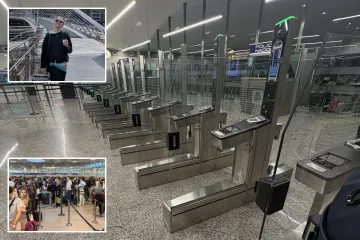
I managed to avoid the huge queues on a trip to Spain
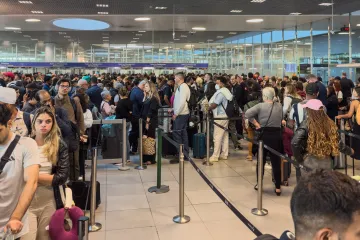
There’s been massive queues across Europe in recent weeks Credit: Alamy
With none of the e-gates open, I managed to still get to the front of the queue

My latest trip took me to the city of Bilbao, following the launch of new TUI city breaks to the Spanish city.

But before I could be excited for cheap wine and pinxtos, I was ready to be stuck in the airport for hours on end.

The new European rules – called the Entry/Exit System or EES – have resulted in massive problems especially at busy airports.

More than 80 passengers missed their Ryanair flight because of huge airport queues in Marseille, while over 100 people were left stranded when an easyJet flight to Manchester left without them.

‘APPY DAYS

New travel app to prevent huge airport queues as passengers wait up to 5 HOURS


TRAVEL ADVICE

Holiday warning for Brits as Foreign Office says ‘expect long airport queues’

The Sun’s Travel Reporter Alice Penwill was even stuck in queues for more than three hours at Lanzarote.

This is because of the requirement of biometric checks from all Brits which includes fingerprint scanning, and is a much slower process than passport stamping.

So after arriving late into Bilbao on a Friday, it’s safe to say I was prepared.

My first chaos-avoiding trick? Book a seat as close to the front as possible.

This will mean you can get off the plane as quickly as possible, meaning you can be at the front of the queue.

I was in row 5 out of 36, so was easily one of the first off the plane.

But this doesn’t always work depending on the airline and airport.

This is because many of them don’t have direct access to the airport via jet-bridge and instead offer the dreaded bus service to taxi you to the building.

Thankfully, there is a way to make sure you are still at the front of the queue even if you pile on.

The best way is to go to the very first bus, and go to the front doors.

Then, rather than piling to the back of the bus for a seat, stay in the middle of the doors on either side.

This means that you will be delivered directly to the airport security entrance and, no matter what side the doors open, you will be at the front.

Both of these tricks allowed me to be fewer than 10 people back when trying to get through airport security.

This still saw me waiting around 25 minutes and, frustratingly, unable to use the empty e-gates and instead stuck in the one-man security queue.

Not only that, but each person was taking at least 1-2 minutes due to the slow machines – so you can imagine how many hours that will take if there are more than 100 passengers on a flight.

But, it was reassuring when I saw how long the queue was behind me, and meant I avoided the majority of the queue.

The new EES rules explained

All non-EU nationals – which includes Brits – are required to register their details on their first visit to a Schengen area country.

This will be done by using specific EES machines which will be at airports, ferry terminals and the Eurostar terminals.

The machines will log your fingerprints, facial images and scan your passport as well.

Once you have registered (such as taking fingerprints and a photo), it is valid for three years, or until your passport expires if it is earlier than this.

EES does not cost anything and is free for all travellers.

I would also suggest that if concerned, fly to a smaller airport where there are fewer UK flights.

Bilbao only welcomes 1.6million tourists a year compared to Barcelona‘s 16million or Madrid’s 11million.

This means far fewer passengers travelling through the airport at any one time.

It is also worth avoiding arriving at the same time as other UK flights which you can easily see from airport departure boards.

This is because it is mainly Brits needing to do these checks, not other Europeans, so if there are lots of flights landing at the same time, this will see hundreds more passengers all queueing at the same time.

Airports which have been hit by the chaos recently have included Schipol Airport in Amsterdam, being a major hub, as well as Milan Airport in Italy and Lisbon and Faro Airport in Portugal.

Or – avoid it entirely by travelling to destinations which aren’t following the ne EES rules.

Greece became the first EU country to confirm that Brits are exempt from the rules in a bid to avoid the massive queues.

This means your trip to somewhere like Athens or Crete should be a much easier experience at the airport.

Safe to say I was ready for some Spanish wine…

Source link

Iran’s gunboat fires on container ship off Oman coast | US-Israel war on Iran News

The IRGC says the aggression came in response to what it described as the US seizure of an Iranian commercial vessel.

An Iranian gunboat has fired on a container vessel near the coast of Oman, according to a British maritime monitoring agency, in an incident that occurred hours after United States President Donald Trump said he would extend a ceasefire with Iran.

The United Kingdom Maritime Trade Operations (UKMTO) centre said on Wednesday that the ship’s captain reported that the vessel had been approached by a vessel of Iran’s Islamic Revolutionary Guard Corps (IRGC) before shots were fired.

Recommended Stories

list of 4 itemsend of list

It “has caused heavy damage to the bridge. No fires or environmental impact reported,” the agency added. No casualties were reported, and all crew members were said to be safe.

British maritime security firm Vanguard Tech said the ship was sailing under a Liberian flag and had been informed it had permission to pass through the Strait of Hormuz, one of the world’s most strategically important waterways.

Iranian news agency Tasnim, however, said the vessel had ignored warnings issued by Iran’s armed forces.

The incident followed a warning from the IRGC’s Khatam al-Anbiya Central Headquarters after what it described as the US seizure of an Iranian commercial ship in the Sea of Oman, the IRNA news agency reported.

It accused Washington of violating the ceasefire and carrying out “armed piracy” after allegedly firing on the Iranian vessel and disabling its navigation systems.

Trump extends ceasefire

Trump earlier announced he would delay a planned military attack on Iran after requests from Pakistan’s army chief Asim Munir and Prime Minister Shehbaz Sharif.

Writing on Truth Social, Trump said the decision was made because Iran’s government was “seriously fractured” and needed time to present a unified position.

“We have been asked to hold our Attack on the Country of Iran until such time as their leaders and representatives can come up with a unified proposal,” he wrote.

He added, however, that the US naval blockade of the Strait of Hormuz would remain in place and said the military had been ordered to stay “ready and able”.

The announcement marked a shift from comments made a day earlier, when Trump said it was “highly unlikely” he would extend the truce beyond Tuesday.

‘Positive and negative signals’ from Tehran

Al Jazeera’s Tohid Asadi, reporting from Tehran, said Iranian officials were sending mixed messages over the ceasefire and the prospects for negotiations.

“Tehran is saying they won’t negotiate under imposed terms and conditions … when we compare the initial 10-point and 15-point proposals by the Iranians and Americans, we can understand that the two sides are poles apart,” he said.

“The atmosphere is also clouded by this mistrust in Tehran towards the United States, as well as the simultaneous military rhetoric related to a potential failed negotiation … It is a warning that another round of confrontation may be ahead.”

He said Iran still viewed the Strait of Hormuz as a key source of leverage in any talks.

“It’s trying to exercise authority over the ships and vessels transiting this strategically significant chokepoint,” he said.

Asadi added that Iranian officials framed their regional position as based on mutual security. “Iranians are saying that the basis of their foreign policy behaviour, particularly when it comes to Israel, is security for all versus security for none,” he said.

Source link

Lufthansa jet fuel update as airline ‘in better position than most competitors’

The German airline is one of the biggest in Europe

Lufthansa has issued a statement after energy bosses claimed Europe has six weeks’ supply of jet fuel left. Fatih Birol, executive director of the International Energy Agency (IEA), warned there could be flight cancellations ”soon” if oil supplies remain restricted by the Iran war.

When approached for comment, Lufthansa told the Mirror that it claims to be in a better position than most competitors regarding its kerosene requirements. A spokesperson for the airline said: “The Lufthansa Group has secured (‘hedged’) approximately 80 per cent of its kerosene requirements for 2026.

“And approximately 40 per cent for 2027 based, among other things, on the price of crude oil – both at pre-crisis price levels. With this level of hedging, we are in a better position than most competitors.”

It comes as the airline announced it will cut 20,000 short-haul flights from its schedule this summer to save money amid rising jet fuel costs. Most of these cuts are due to the shutdown of its unprofitable CityLine fleet and the retirement of its 27 planes. The airline pointed out that jet fuel prices have more than doubled and noted labour disputes involving its employees.

A statement on the Lufthansa Group website reads: “In total, 20,000 short-haul flights will be removed from the schedule through October, equivalent to approximately 40,000 metric tons of jet fuel, the price of which has doubled since the outbreak of the Iran conflict. The schedule adjustments reduce the number of unprofitable short-haul flights across the Lufthansa Group network.

“The planned consolidation of the European network is being carried out across Lufthansa Group’s six hubs in Frankfurt, Munich, Zurich, Vienna, Brussels, and Rome. Passengers will therefore continue to have access to the global route network, particularly long-haul connections. However, due to the increase in jet fuel prices, this will be achieved significantly more efficiently than before.”

On Tuesday, April 21, the Prime Minister discussed the Government’s work to ease pressures caused by the Iran conflict with ministers and officials at a meeting of the Middle East Response Committee. A government spokesperson said: “The discussion focused on the Government’s ongoing work to ease pressures being felt here in the UK.

“This included the diplomatic activity to promote progress on negotiations, and bring back security and stability for the region, and the military planning to restore freedom of navigation in the Strait of Hormuz. The Prime Minister acknowledged that the impact of the war in the Middle East will be felt beyond the end of the conflict, and stressed the importance of protecting British families.

“They discussed a range of ongoing contingency planning, such as our work with fuel suppliers, airlines and international counterparts, to ensure people keep moving and businesses are supported. UK airlines are clear that they are currently not seeing a shortage of jet fuel, and it is right that the Government continues to work with industry to ensure we closely monitor the situation.

“They said it was right that this Government is introducing wider measures to strengthen long-term resilience, including measures announced today to accelerate breaking the link between gas and electricity prices to support families and businesses under pressure and exposed to volatile gas prices.”

Source link

Netflix plans to buy historic Radford Studio Center

Streaming entertainment giant Netflix is in negotiations to buy the historic Radford Studio Center lot in Studio City.

Netflix plans to purchase the Los Angeles studio that has been home to generations of landmark television shows, including “Gunsmoke” and “Seinfeld,” according to two people with knowledge of the pending deal who were not authorized to speak about it publicly.

The studio’s previous operator, Hackman Capital Partners, defaulted on a $1.1-billion mortgage in January. Investment bank Goldman Sachs took over the property and is in talks with Netflix to sell it for between $330 million and $400 million.

Representatives for Hackman and Netflix declined to comment on the planned sale.

Culver City-based Hackman Capital Partners and Square Mile Capital Management teamed up to buy the Radford Avenue property from ViacomCBS in 2021 with a winning bid of $1.85 billion, after a competitive battle for the 55-acre studio beloved by the television industry.

At the time, the staggering price tag underscored the value — and scarcity — of TV soundstages in Los Angeles as content producers scrambled for space to shoot TV shows and movies to stock their streaming services. It was one of the largest-ever real estate transactions for a TV studio complex in Los Angeles.

Since then, production has substantially declined in Southern California. L.A. continues to battle the loss of production to other states and countries, as well as the lingering effects on the industry of the pandemic and the 2023 dual writers’ and actors’ strikes. Cutbacks in spending at the major studios after a surge in streaming-fueled TV production have further damped film activity in the region.

Founded by silent film comedy legend Mack Sennett in 1928, the lot became known as “Hit City” in the decades after World War II as popular TV shows such as “Leave It to Beaver,” “Gilligan’s Island,” “The Mary Tyler Moore Show,” “The Bob Newhart Show” and “Will & Grace” were made there. The storied lot gave the Studio City neighborhood its name,

Netflix, which has a market cap of about $455 billion — more than double that of Walt Disney Co. — has maintained its dominance in the global streaming business with more than 325 million subscribers.

The Los Gatos-based company has production offices worldwide, including facilities in Albuquerque, Brooklyn, London, Madrid and Toronto.

Netflix had secured an $82.7-billion deal to buy Warner Bros. studios and streaming services in December, but withdrew from the bidding war in late February after Paramount Skydance offered $31 a share. As part of the switch, Netflix was paid a $2.8-billion termination fee.

Source link

UK inflation hits 3.3% as Iran war drives energy costs higher

Published on

The cost of living in the UK accelerated throughout March, propelled by a significant increase in petrol and diesel prices following the outbreak of the Iran war.


ADVERTISEMENT


ADVERTISEMENT

According to the Office for National Statistics, the annual consumer price inflation rate moved to 3.3% from 3% the previous month, a shift that matched the forecasts.

This inflationary pressure is largely attributed to an 8.7% monthly jump in motor fuel costs, which represents the sharpest rise seen since the summer of 2022, following Russia’s full-scale invasion of Ukraine.

Beyond the petrol stations, the fallout from higher energy prices has trickled down into airfares and food supplies, complicating the economic landscape for the government and the Bank of England.

UK Treasury chief Rachel Reeves noted that while the conflict is not a domestic one, it is directly pushing up bills for families and businesses across Britain.

Lindsay James, an investment strategist at Quilter, observed that “this morning’s inflation data showed CPI creeping back up to 3.3%, confirming that price pressures are re-accelerating rather than fading away since the outbreak of the war in Iran.”

While international markets have shown some signs of recovery in equity prices, the physical market for oil delivery into Europe remains under immense strain.

Experts suggest that a swift reopening of the Strait of Hormuz is the only viable path to unwinding the current inflationary trend, yet the situation remains volatile and unpredictable.

The Bank of England’s policy dilemma

The timing of this inflation surge is particularly problematic because it coincides with a period of cooling in the domestic economy.

Recent data from the labour market indicates that payrolled employment is falling and economic inactivity is on the rise, while wage growth has started to ease.

For the average British worker, the combination of rising essential costs and stagnating earnings growth creates a challenging environment for real purchasing power.

As for the Bank of England, this sudden spike in prices has disrupted the projected path of beginning to lower borrowing costs this spring.

Prior to the escalation of the Iran war, there was a growing consensus that the central bank would reduce its main interest rate from 3.75% as inflation appeared to be heading back toward the official 2% target.

However, with inflation now expected to potentially hit 4% in the coming months, the Monetary Policy Committee faces a much more difficult decision during its meeting next week.

There is a growing debate among economists regarding whether traditional interest rate hikes are the correct tool to address this specific crisis.

According to James “a rise in rates risks misdiagnosing the problem. This inflationary pulse is being driven by supply disruption, not excess demand. Higher interest rates will do nothing to increase the flow of oil or other goods from the Middle East.”

This sentiment suggests that the Bank of England may choose to maintain its current stance, keeping rates on hold while monitoring whether these price increases begin to manifest in higher wage demands across the broader economy.

Source link

World Cup 2026: Pick your favourite kits from the tournament

Scotland are back at the World Cup, after a 28-year hiatus. Steve Clarke’s men will be hoping to make it past the group stages for the first time in the nation’s history, but face a tough task in Group C, which they share with five-time winners Brazil and Africa Cup of Nations champions Morocco, as well as Haiti.

Their away kit comes in a bold coral colour, reminiscent of Scotland’s 1999 away strip.

Source link

Appeals court rules Texas can require Ten Commandments in school

Texas Attorney General Ken Paxton, seen here in April 2024, celebrated an appeals court ruling on Tuesday in favor of Senate Bill 10, which mandates public schools to display the Ten Commandments in all classrooms. Pool File Photo by Justin Lane/UPI | License Photo

April 22 (UPI) — A U.S. appeals court has ruled that Texas can require schools to display a copy of the Ten Commandments, finding the legislation that mandates the Decalogue in classrooms does not require students to believe in the religious teachings.

The Tuesday ruling from the Fifth Circuit Court of Appeals is a victory for Texas conservatives and Christians who have fought to further include religion in public spaces. The decision is expected to be appealed to the Supreme Court.

“This is a major victory for Texas and our moral values,” the state’s Republican attorney general, Ken Paxton, said in a statement.

“The Ten Commandments have had a profound impact on our nation, and it’s important that students learn from them every single day.”

Texas Gov. Greg Abbott signed Senate Bill 10 into law June 10, directing every classroom in all Texas public schools to display the Ten Commandments starting Sept. 1, but has been tied up in litigation since.

While proponents argue the Decalogue is foundational to American life, opponents state that mandating it in schools is an unconstitutional violation of the separation of church and state.

The American Civil Liberties Union, which represented multi-faith Texas families in the case, said it was “extremely disappointed” by the decision and expects the Supreme Court to reverse it.

“The court’s ruling goes against fundamental First Amendment principles and binding U.S. Supreme Court authority,” the ACLU of Texas said in a statement.

“The First Amendment safeguards the separation of church and state, and the freedom of families to choose how, when and if to provide their children with religious instruction. This decision tramples those rights.”

The appeals court on Tuesday ruled 9-7 to overturn a lower court’s preliminary injunction that found S.B. 10 likely unconstitutional.

In its ruling, the appeals court found S.B. 10 “looks nothing like a historical religious establishment.”

“S.B. 10 authorizes no religious instruction and gives teachers no license to contradict children’s religious beliefs (or their parents’). No child is made to recite the Commandments, believe them or affirm their divine origin,” the court said.

Source link