A California state senator alleges that police officers fabricated evidence to falsely accuse her of driving under the influence after she was T-boned at an intersection near the state Capitol.
Their motive, she claims, was discriminatory bias and a piece of legislation she wrote that law enforcement agencies did not like.
Now, she is suing the city of Sacramento alleging “a deliberate and unlawful campaign to falsely accuse, arrest, and discredit her.”
On Monday, state Sen. Sabrina Cervantes (D-Riverside) filed a federal lawsuit against the city as well as the police officers who cited her for driving under the influence in May. The Sacramento district attorney’s office declined to file charges after a blood test showed there were no traces of drugs or alcohol in her system.
Cervantes accuses officers of pushing forward with an arrest despite lacking probable cause and building a case against her based on false statements. She said officers submitted false information to the DMV, forcing her to retain a lawyer to stop her license from being suspended or revoked, according to the complaint.
The Riverside County legislator alleges that this conduct was in retaliation for a bill she authored seeking to restrict how law enforcement agencies store and use data from automatic license plate readers. She claims that officers discriminated against her as an LGBTQ Latina woman and provided more respectful treatment to the white woman who was at fault in the crash.
Cervantes further alleges that unknown parties within the Sacramento Police Department leaked news of her arrest to the press in a deliberate attempt to tarnish her reputation. Representatives for both the city and the Police Department said Monday that they were unable to comment on pending litigation.
“This case is about the abuse of power,” Cervantes’ attorney James Quadra said in a statement Monday. “Officers ignored the facts, fabricated evidence, and tried to turn a victim into a criminal.”
In September, Cervantes filed a government claim against the city, a necessary precursor to taking further legal action. Her lawsuit, filed in the District Court for the Eastern District of California, seeks damages for violations of federal civil rights and state law, including false arrest, unlawful search and seizure, and defamation.
The crash took place at 12:55 p.m. on May 19, 2025, when Cervantes’ car was hit by a driver who failed to yield to the right of way at an intersection in downtown Sacramento. The state senator was transported to a nearby hospital for treatment where officers met and interviewed her for hours, according to the complaint.
The complaint alleges that “despite clear damage to the vehicles showing that the other driver, a young white woman, had t-boned Senator Cervantes’ vehicle” the responding officer “treated the at-fault driver with a deference and respect which was not accorded to Senator Cervantes.”
At the hospital, one of the officers requested that Cervantes submit to a “subjective sobriety test” that included measuring her eye’s response to stimuli, according to the complaint. Cervantes said she was troubled by this request given that she broke no traffic laws and was the victim of a dangerous driver.
In order to obtain a warrant to obtain a blood draw, the officer “falsely claimed that Senator Cervantes had an unsteady gait, slurred speech, and an appearance of drowsiness,” the complaint alleges.
After news of the crash became public, a spokesperson for the Sacramento Police Department told reporters that “based on the objective signs, officers believed that Cervantes was under the influence of a central nervous system depressant.” Redacted test results Cervantes chose to share with the media showed she had a near-zero blood alcohol level, and the district attorney declined to file charges later that month.
Her lawsuit accuses parties within the Police Department of falsely telling the media she was driving under the influence “with the intent to harm Senator Cervantes because of her sponsorship of SB Bill 274 and her status as a Latina member of the LGBTQ+ community.”
The bill sought to restrict law enforcement’s use of automatic license plate readers, following concerns that the technology was being used to violate driver’s privacy and that data was being unlawfully shared with agencies outside of the state.
Civil liberty groups such as the ACLU have demanded that California police stop sharing automatic license plate reader data with out-of-state agencies that could use it to prosecute women traveling to seek abortion care.
In June, an investigation by Calmatters found that law enforcement agencies across Southern California, including the Los Angeles Police Department, violated state law by sharing information from automated license plate readers with Border Patrol and Immigration and Customs Enforcement agents.
Senate Bill 274 passed the state Senate and Assembly but was vetoed in October by Gov. Gavin Newsom, who sided with law enforcement agencies that expressed concerns over how the bill could hinder their ability to solve crimes.
The bill would have limited the lists agencies could use to monitor for certain cars, required enhanced data security and privacy training for officers and mandated that certain data be deleted after 60 days.
In a letter explaining his veto, Newsom wrote that the bill “failed to strike the delicate balance between protecting individual privacy and ensuring public safety.” He noted that, in instances such as cold cases, license plate data are needed to solve crimes beyond a 60-day window.
Neto launched a leadoff shot on Chris Sale’s first pitch, and Soriano (3-0) struck out 10 as the Angels won their third consecutive game. The right-hander gave up one run and three hits without issuing a walk, throwing 69 of his 96 pitches for strikes.
Soriano gave up a solo homer to Drake Baldwin and a single to Matt Olson in the first, then retired 19 straight batters before Mike Yastrzemski led off the eighth with a single.
Mauricio Dubón homered off Angels reliever Chase Silseth in the ninth. Atlanta put two on with two outs before Jordan Romano replaced Silseth and got Yastrzemski to fly out for his fourth save.
The Angels played without star center fielder Mike Trout, who exited Sunday’s game against Seattle after getting hit on the left hand by a 94-mph fastball in the eighth. Trout’s hand swelled so quickly he struggled to remove his batting glove, but X-rays were negative and he is listed as day to day.
Sale (2-1) entered 8-0 with a 1.24 ERA in 11 career games against the Angels, but Neto slammed the left-hander’s first pitch, a 95-mph fastball, for a homer to left field.
Angels star Zach Neto celebrates in the dugout after hitting a home run in the first inning against the Braves on Monday.
(Joe Scarnici / Getty Images)
Sale retired his next nine batters but fell apart during a three-run fourth in which the Angels drew two walks, were twice hit by pitches, had two runners forced out at the plate and hit one ball out of the infield.
Logan O’Hoppe walked and Yoán Moncada was hit by a pitch, both with the bases loaded, to account for two runs. Bryce Teodosio drove in a run with an infield single for a 4-1 lead.
Jorge Soler opened the fifth with a single, and Adell drove a first-pitch fastball 411 feet to left for a two-run homer — his first of the season — and a 6-1 advantage.
Up next: Braves RHP Reynaldo López (1-0, 1.64 ERA) opposes Angels LHP Yusei Kikuchi (0-1, 6.52) on Tuesday night.
In early spring, the California mountain town of Julian sits suspended between seasons. At more than 4,000 feet, up in the Cuyamaca Mountains, it rests among coastal live oak woodlands and Coulter pine forests. Snow sometimes dusts the surrounding slopes, melting by afternoon into damp earth as manzanita and mountain lilac begin to flower. Along Main Street, the mingled scents of woodsmoke and apple pie drift from storefronts.
It is here that my journey along State Route 78 begins, following its long eastward descent from the mountain forest into the stark badlands of Anza-Borrego Desert State Park, then skirting the southern edge of the Salton Sea, crossing the Algodones Dunes and continuing toward the Colorado River — a 140-mile corridor spanning one of the most dramatic ecological transitions across public lands in the American Southwest.
This road trip continues a series exploring California’s overlooked scenic highways, inspired in part by artist Earl Thollander’s “Back Roads of California,” whose sketches and travel notes celebrated a slower way of seeing. After tracing Highway 127 along the edge of Death Valley, the journey now shifts south.
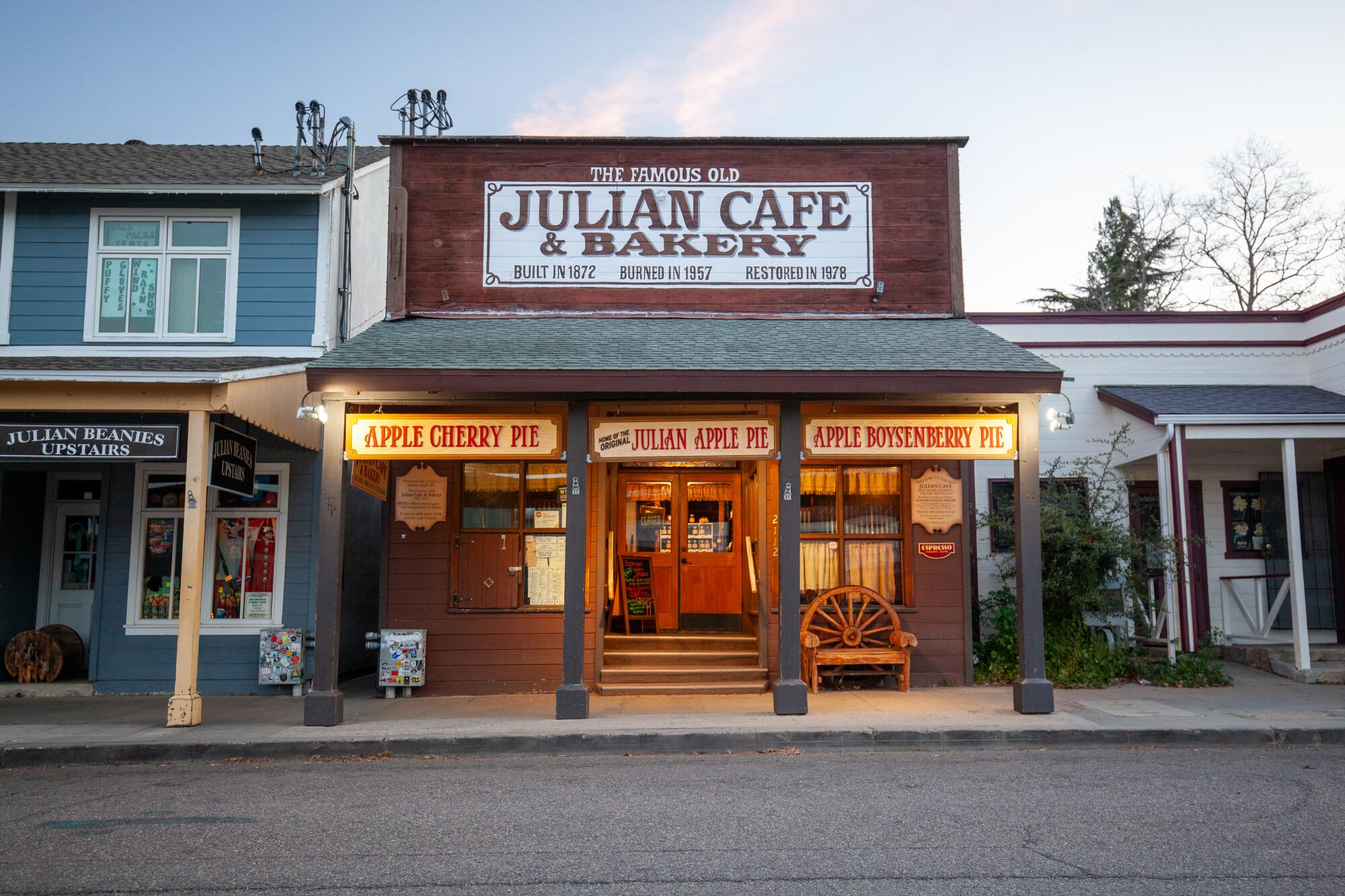
Julian Cafe and Bakery, the start of the trip off Route 78.
(Josh Jackson)
Within minutes of leaving town, the pavement twists downward through tight turns and steep grades as the mountain air begins to warm, the vegetation giving way to chaparral and scattered juniper, then to the stark silhouettes of ocotillo and Mojave yucca. By the time it reaches the Pacific Crest Trail crossing 12 miles east of Julian, travelers have already descended nearly 2,000 feet.
Here, the highway passes quietly into Anza-Borrego, homeland of the Kumeyaay, Cahuilla and Cupeño peoples. At nearly 650,000 acres — just smaller than Yosemite — the park unfolds as a vast mosaic of mountains, badlands and open desert valleys extending far beyond the reach of the pavement.
Wildflowers along the route.
(Josh Jackson)
Bri Fordem, executive director of theAnza-Borrego Foundation, said the landscape reveals itself slowly to first-time visitors. “I think a lot of people drive right by it and go, ‘Oh yeah, there’s a desert there,’” she said. “But when you stop and you go a little slower and take a closer look, a whole world opens up.”
That invitation begins at mile 18, where the Yaqui Pass Road turnoff leads northeast toward the desert basin and the gateway community of Borrego Springs. The 2.8-mile Borrego Palm Canyon Trail offers one of the park’s most accessible routes into the desert’s interior. Cholla gardens and brittlebush rise from pale alluvial slopes, and a seasonal stream leads to one of California’s few native fan palm oases.
In wet winters, the valleys beyond town awaken in color as sand verbena, desert sunflower, evening primrose and pincushion gather in brief, luminous blooms across the desert floor. The Anza-Borrego Foundation tracks these seasonal displays and offers guidance on how to witness them responsibly.
The short detour returns to Highway 78 along Borrego Springs Road, where the pavement drops abruptly through the Texas Dip near mile 27 — a stark, cinematic wash where scenes from the closing sequence of “One Battle After Another” were filmed. Wandering through the wash, the mind drifts not to the film but to the flash floods that move through this channel after heavy rains, sudden torrents cutting and reshaping the valley floor in a matter of hours.
Ocotillo plants rise up from the desert floor in Anza-Borrego Desert State Park.
(Josh Jackson)
The sun hangs in the middle of the sky as I drive toward one of the most rapidly changing shorelines in California. From almost any vantage point, the Salton Sea appears lifeless — a gray expanse rimmed with salt and windblown dust. But at its southern terminus, that impression begins to shift. The basin gathers into shallow wetlands where movement returns to the landscape.
Sixty miles from Julian, I turn onto Bannister Road and bump north along a gravel track for three miles into the basin, to a parking lot 164 feet below sea level. The lot sits within Unit 1 of the Sonny Bono Salton Sea National Wildlife Refuge. A short walk along an irrigation canal leads to a weathered observation deck rising two stories above a patchwork of saturated flats where saltgrass, iodine bush and cattail take root. Here, the Pacific Flyway compresses into a living mosaic of wings, water and soil. Each spring, hundreds of thousands of birds gather here to feed and rest before lifting north again, following migratory paths far older than the farms and highways that now define the valley.
The wetlands near the Salton Sea provide a vital habitat for birds.
(Josh Jackson)
The place overwhelms the senses: a wash of emerald against open sky, thousands of snow geese honking in chorus, orange-crowned warblers and Abert’s towhees singing in the trees, and the persistent tang of salt in the air.
I meet three birders standing quietly on the platform, scanning the horizon through binoculars and recounting the 73 avian species they had tallied over the last two days — burrowing owls, American avocets, sandhill cranes and black-necked stilts among them. For 30 minutes we watch a northern harrier on the hunt, dive-bombing blue-winged and cinnamon teal, though he always comes up empty. Between scans of the horizon, we bond over “Listers,” the 2025 documentary that turns obsessive birdwatching into both comedy and a tale of devotion.
A burrowing owl stands in the Sonny Bono Salton Sea National Wildlife Refuge.
(Josh Jackson)
Leaving the refuge, the vibrant color palette and moisture give way to muted browns and the returning austerity of desert air. By mile 97, the road rises to the Hugh T. Osborne Overlook, where the landscape shifts once again, opening into a vast ocean of sand.
The Algodones Dunes stretch toward the horizon in pale, wind-sculpted ridges, a narrow ribbon of shifting terrain running south into Mexico. The highway passes directly through their center.
From the overlook, the road reads as a line dividing two expressions of the same dune system. To the south lie the Bureau of Land Management’s Imperial Sand Dunes, where dune buggies and motorcycles trace arcs across bare slopes. North of the pavement, the North Algodones Dunes Wilderness holds a quieter terrain, where sunflower, ephedra and honey mesquite anchor the sand in subtle defiance of the wind.
A person walks along the Algodones Dunes.
(Josh Jackson)
Here the road becomes a boundary between different ways of moving through — and loving — the same landscape: speed and stillness, noise and silence, crowds and solitude.
By late afternoon, the final miles carry me east toward the Colorado River, where it meanders past willow and cottonwood. The light softened toward sunset, an evening echo of the same violet sky that hovered over Julian at the start of the day. After 140 miles, my road trip had come to an end. Yet as I pitched my tent that night, the motion of the landscapes lingered in mind.
The Colorado continued its long course south. Snow geese lifted north from refuge marshes. Wind reshaped the dunes, erasing the day’s tracks. Wildflowers that had briefly lit the desert floor would soon fade as heat gathered strength. The road ended, but the living systems it crossed moved steadily onward, already turning toward the next season.
Road trip planner: State Route 78
Highway 78 illustrated map.
(Illustrated map by Noah Smith)
The route: Julian to Palo Verde.
Distance: 140 miles (one way).
Drive time: 3 hours straight through; allow a full day for stops.
Best time to go: October through April. Summer temperatures frequently exceed 110 degrees.
Fuel and essentials:
Julian (Mile 0): Gas station, Julian Market and Deli, lots of restaurants.
Borrego Springs (Mile 18): Gas station, groceries, cafes.
Brawley (Mile 74): Gas station, restaurants.
Eat and drink:
Camping:
Lodging:
Hike and explore:
Safety notes:
Water: Carry at least 1 gallon per person per day.
Connectivity: Cell service is dependable along the route.
Wildlife: Watch for bighorn sheep and coyotes on the road, especially at dawn and dusk.
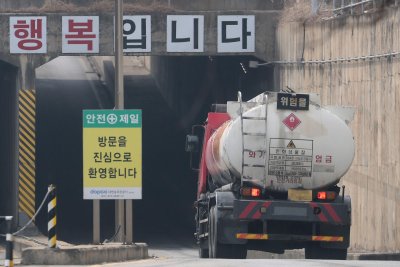
A fuel tank truck enters a tunnel in the city of Goyang, northwest of Seoul, in this file photo taken March 5, 2026. Photo by Yonhap
South Korea has secured an additional 60 million barrels of alternative oil supplies for May that will replace supplies from the Middle East that have been blocked due to the effective closure of the Strait of Hormuz, the government said Tuesday.
The country has secured a total of 110 million barrels of oil — 50 million for April and 60 million for May — so far from 17 countries, including Saudi Arabia, the United States, the United Arab Emirates, Brazil and Canada, Yang Ghi-wuk, deputy minister for trade, industry and resource security, said in a regular press briefing.
The amount secured for this month and May each represents about 60 percent and 70 percent, respectively, of monthly oil supplies to South Korea when things run as usual, he added.
Regarding the oil swap system introduced last week, Yang said the country’s major four refiners have submitted plans to borrow more than 30 million barrels under the program, with around 8 million barrels to be delivered this week.
Under the oil swap system, South Korean refiners can borrow crude oil from the national reserve and return the same volume once shipments of their crude supplies secured abroad arrive.
“Refiners have expressed interest in the oil swap system and are willing to utilize it,” he said.
Touching on naphtha, a crucial raw material in petrochemical manufacturing, Yang said he expects imports for the raw material to reach 770,000 tons this month, which will be equivalent to some 70 percent of the amount imported during the same month last year.
Also, the aggregate naphtha supply is projected to reach around 80 to 90 percent of the amount needed for the month on a normal basis when adding around 1.1 million tons of the material produced within the country, Yang added.
“We plan to work with companies to make efforts in securing naphtha supplies once the supplementary budget passes and the extra budget is allocated,” he said.
Copyright (c) Yonhap News Agency prohibits its content from being redistributed or reprinted without consent, and forbids the content from being learned and used by artificial intelligence systems.
A workers’ union at the World Cup venue has asked FIFA to keep ICE agents away from the venue to alleviate their fears.
Published On 7 Apr 20267 Apr 2026
A union representing about 2,000 food service workers at the Los Angeles Stadium has asked FIFA to keep United States Immigration and Customs Enforcement (ICE) away from World Cup operations in the city and warned workers could strike if their concerns are not addressed.
Unite Here Local 11, which represents cooks, servers and bartenders at the Inglewood venue, said on Monday that the workers remain without a labour contract as the World Cup approaches.
Recommended Stories
list of 4 itemsend of list
The union laid out three main demands to FIFA and stadium owner Kroenke Sports & Entertainment: A public commitment that ICE and Border Patrol will play no role in the tournament, protections for union jobs and working conditions, and support for affordable housing for hospitality workers.
Acting director of ICE, Todd Lyons, has said ICE would play a “key part” in the World Cup, a prospect the union said threatened worker and guest safety in Los Angeles.
Local 11 said it also wanted assurances that artificial intelligence and automation would not be used during the tournament to eliminate union jobs.
The union linked its labour demands to broader concerns over housing costs in the Los Angeles area, particularly in Inglewood, and called for support for a workforce housing fund, restrictions on short-term rentals and tax measures aimed at funding affordable housing and immigrant family protections.
“FIFA and its corporate sponsors will pocket billions from Los Angeles while refusing to even acknowledge the cooks, servers, and stand attendants who make this event possible,” Kurt Petersen, co-president of Local 11, said in a statement.
The union said it had repeatedly sought meetings with FIFA since Los Angeles was chosen as a host city, but had been ignored.
The venue is known as the SoFi Stadium, but has been rebranded to the Los Angeles Stadium for the World Cup due to sponsor clashes.
Los Angeles is set to host eight World Cup matches at the stadium, the first being the US against Paraguay on June 12.
In recent months Ant & Dec have spoken more about their televisual adventures both in front of the cameras and behind them as I’m A Celebrity South Africa kicks off
Ant McPartlin Declan Donnelly(Image: ITV)
Declan Donnelly, one half of the Ant & Dec presenting duo, has said they were stunned by an intruder at their lodge on I’m A Celebrity South Africa.
The pair are out in the region presenting the latest series of the ITV programme, which features 12 celebrities, including Gemma Collins, Sinitta, Seann Walsh and Sir Mo Farah, competing for victory.
Anthony McPartlin, 50, said to Declan on their podcast Hanging Out with Ant & Dec: “Didn’t you have a bush baby in your room?” The bush babies Anthony was asking about are a type of nocturnal primate.
In response, Declan, 50, said: “In my lodge was a thatched roof, and I came back from work and my fruit bowl — there was an orange on the side — and it had been half peeled, and there was wee on the worktop.
“Somebody came round — one of the guys who come to pick us up. I said, ‘Have you seen this? Looks like wee on the side and my fruit’s had a go at.’
“He went, ‘Oh, you’ve got bush babies. They live in the thatched roof and they come down and they come at your fruit, have a wee and then they go again.’”
This isn’t the only time Ant & Dec have spoken about their lives behind the television screens, with their podcast seeing the pair speak a little more about the famous people they’ve talked to and the hilarious incidents along the way.
Notably, the pair spoke earlier this year about what it was like when they met King Charles when he was the Prince of Wales in the early 2000s, and how Declan got distracted whilst meeting the then heir to the throne.
The interview, to mark the 25th anniversary of the Prince’s Trust — now the King’s Trust — with the future monarch took place at Highgrove House. Declan recalled how Charles said that he wanted to chat with Ant & Dec off camera before the interview began so they could get to know each other.
As a result, he invited them in for tea. However, Declan said he got a bit distracted by not knowing who was going to pour the tea.
He said: “So, we went in, sat in this room, and he came in and shook our hands and we sat down and they brought in this massive tray with a big teapot, teacups on it, biscuits and stuff, and we sat there and he’s talking to us.
“I’m sitting there going, ‘Who’s going to pour the tea? He’s not going to do it. Do we do it? Are we supposed to do this? Should one of us just dive in?’ I was really distracted.
“‘Has this been left for us to do because he’s not going to do it? So have we got to do this?’ I was really distracted through the whole thing. I kind of wasn’t listening to what he was saying because I was too worried.”
Declan’s comments came ahead of the pair’s travels to South Africa to film the I’m A Celebrity spin-off, which returns to screens at 9pm tonight on ITV.
Both European and Asian markets opened slightly lower on Tuesday as investors brace for US President Donald Trump’s deadline for Iran to either agree to a deal, or have their energy infrastructure targeted by air strikes.
ADVERTISEMENT
ADVERTISEMENT
The deadline falls at 8 pm Eastern Time (2 am CET), giving Iran until then to accept a deal that would keep the Strait of Hormuz open to all shipping or face what Trump has called the “complete demolition” of its civilian infrastructure, including every power plant and bridge in the country.
At the time of writing, Benchmark US crude is trading at $113.5 a barrel while Brent crude, the international standard, is around $111. Both prices are up around 1%.
The Euro Stoxx 50 and the broader pan-European Stoxx 600 are both up 0.5% as well.
The UK’s FTSE 100 is flat while Germany’s DAX 30 is around 0.2% higher, and France’s CAC 40 and Italy’s FTSE MIB have risen close to 1% each.
Over in Asia, there is a mixed reaction from markets in anticipation of the deadline.
South Korea’s Kospi has jumped 0.8% while Tokyo’s Nikkei 225 is effectively trading flat.
Hong Kong’s Hang Seng is down 0.8% while the Shanghai Composite is slightly higher by 0.3%. Additionally, Australia’s ASX 200 and Taiwan’s Taiex both rose 2%.
On Easter Sunday, President Trump renewed the threat publicly for the last time before the deadline stating that “Tuesday will be Power Plant Day, and Bridge Day, all wrapped up in one, in Iran. There will be nothing like it!!!”
US futures and precious metals
On Tuesday morning, US futures are all trading between 0.1% and 0.3% lower.
The moves follow a strong close on Monday as the S&P 500 rose 0.4%, coming off its first winning week in the last six. The Dow Jones Industrial Average added 165 points, or 0.4%, and the Nasdaq composite climbed 0.5%.
Monday also offered the first chance for US markets to react to a report from Friday that stated American employers hired more workers last month than economists expected.
These were encouraging signals for an economy that’s had to absorb painful leaps in costs for gasoline since the Iran war started.
The average price for a gallon of regular gasoline is nearly $4.12 across the country, according to AAA. It was below $3 a couple days before the US and Israel launched attacks to begin the war in late February.
In other trading, gold is up 0.77% at around $4,685 while silver is rose roughly 0.2% to $72.95 an ounce.
Adrian Kempe scored the only goal of the shootout in the second round, and the Kings tightened the Western Conference playoff race with a 3-2 win over the Nashville Predators on Monday night.
The Kings have played in overtime in seven of its last 10 games — and 32 this season.
Joel Armia opened the scoring for the Kings and Scott Laughton made it a 2-1 lead in the second period. Jared Wright has an assist in a career-best three straight games for L.A.
Steven Stamkos tied it 1-1 for the Predators and Roman Josi knotted it 2-2 early in the third.
Anton Forsberg made 29 saves in the win for the Kings. Saros made 26 saves for the Predators.
The Kings won 58.3% of the faceoffs in the game.
All three series matchups this season went to a shootout, including a 5-4 victory for the Predators in Los Angeles last Thursday.
Up next for Kings: vs. Vancouver Canucks at Crypto.com Arena on Thursday.
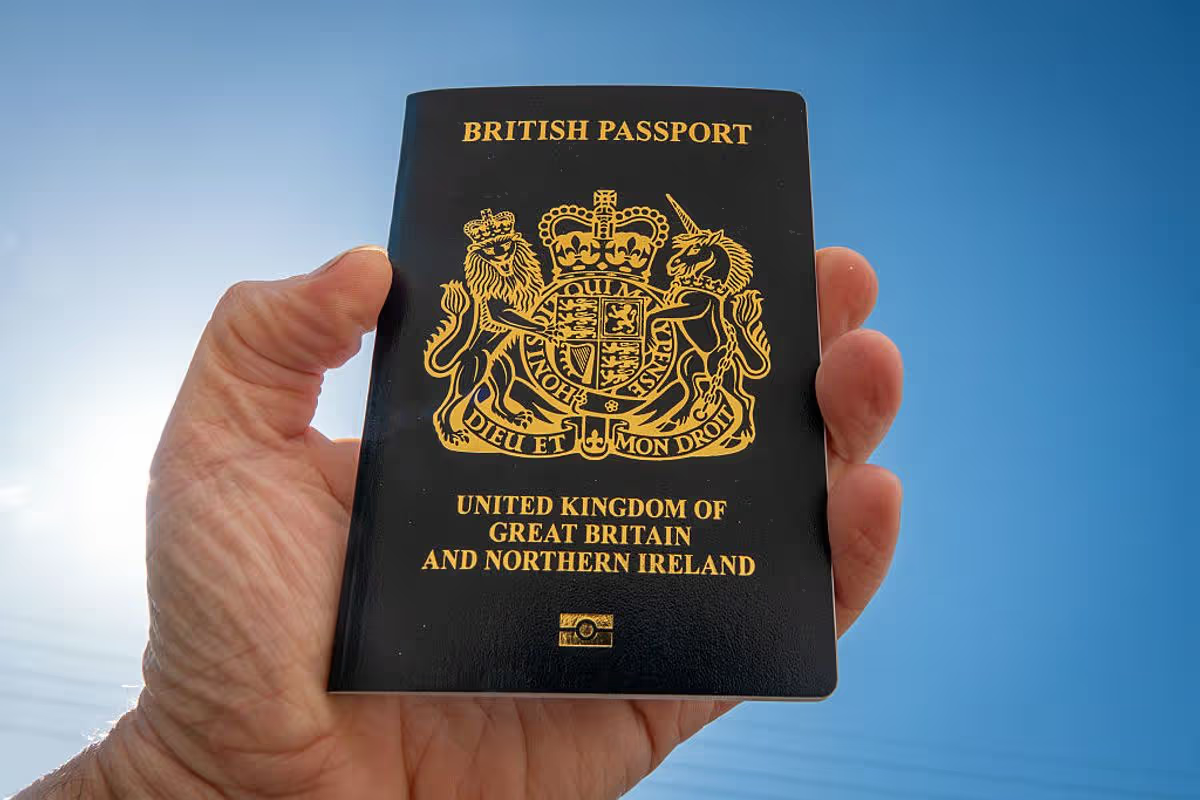
When booking holidays, you might forget to check when your passport expires. Different countries have their own rules on passport validity, with some requiring it to be valid for your entire trip while others for even longer.
To travel to Europe and Schengen countries, passports must be less than 10 years old before your departure date and valid for at least three months after your planned return date.
If your passport doesn’t meet these requirements, you’ll need to renew it. However, on Wednesday, April 8, the prices are set to increase.
A new passport application online currently costs £94.50 for an adult standard 34-page passport and a standard child passport costs £61.50.
The fee for a standard online application will then be £102 for adults and £66.50 for children.
Applications made by post are currently £107 for an adult and £74 for a child. Yet, as of tomorrow, these will go up to £115.50 and £80 respectively.
Other passport fees are set to increase this week. If you need a passport quickly, the fee for a premium one day service made within the UK will rise from £222 to £239.50.
If you apply for a UK passport overseas, this will increase from £108 to £116.50 for adults and £70 to £75.50 for children. Overseas standard paper applications will increase from £120.50 to £130 for adults and £82.50 to £89 for children.
The Home Office said of the increase: “The new fees will help the Home Office to continue to move towards a system that meets its costs through those who use it, reducing reliance on funding from general taxation.
“The government does not make any profit from the cost of passport applications.
“The fees contribute to the cost of processing passport applications, consular support overseas, including for lost or stolen passports, and the cost of processing British citizens at UK borders.”
It said that in 2025, 99.7% of standard passport applications from the UK were processed within three weeks when no further information was required.
If you are requiring a new passport and don’t want to pay the additional fees, it has been recommended to submit your application before the increase on Wednesday.
New passport prices
Adult standard online application from within the UK – £102
Child standard online application from within the UK – £66.50
Adult standard postal application from within the UK – £115.50
Child standard postal application from within the UK – £80
Premium one day application from within the UK – £239.50
Adult standard online application from outside the UK – £116.50
Child standard online application from outside the UK – £75.50
Adult standard paper application from outside the UK – £130
Child standard paper application from outside the UK – £89
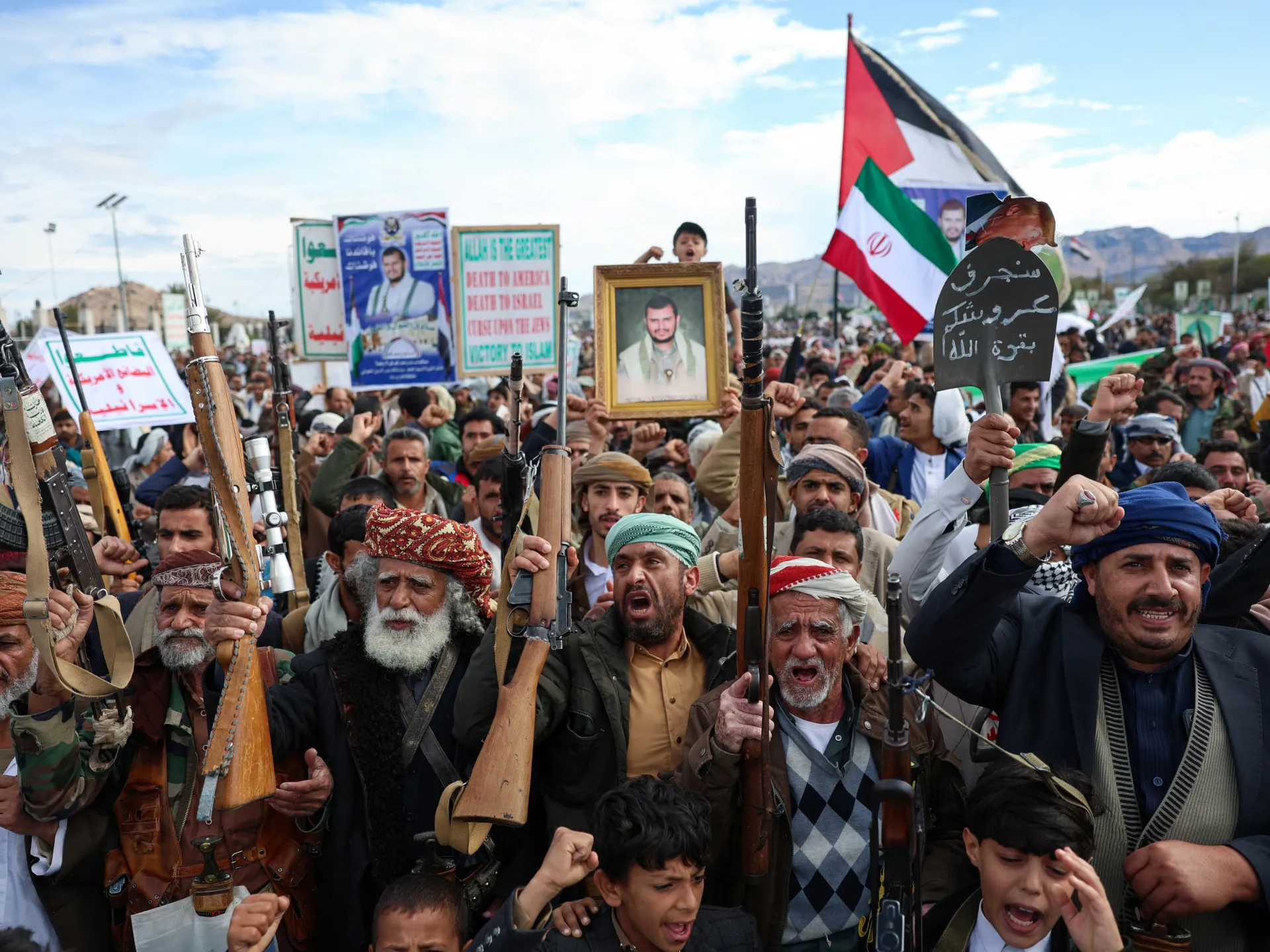
During the first month of the US-Israel war on Iran, the Houthis adopted a cautious approach, even though many expected them to move faster based on the nature of their close relationship with Tehran. This assessment is not wrong — the relationship is indeed strong — but what this view misses is that decision-making within the Yemeni group has increasingly become the product of an extended internal debate.
This debate goes back to the Houthis’ decision to launch military action in support of Gaza after Operation Al-Aqsa Flood on October 7, 2023. After the United States and Israel launched retaliatory strikes in March 2025, which lasted for two months, an agreement was brokered by Oman in May, bringing the fighting to a halt. This experience had a deep impact on the group.
Some Houthi leaders believe that the cost of that involvement over the past two years was high, not only in terms of military and leadership losses and civilian casualties, but also in terms of draining resources, damaging infrastructure and complicating the political track, especially with Saudi Arabia, which had put forward a roadmap for peace in Yemen in 2022.
This assessment did not remain at the level of abstract analysis; it became the basis for an internal discussion that produced two clear currents.
The first current leans towards caution. It seems that the previous experience proved that direct involvement does not yield strategic gains, but it does open costly fronts. This camp pushes for avoiding open confrontation, preserving existing understandings — especially with Saudi Arabia — and limiting action to political support or small, contained operations that do not drag the group into a large-scale escalation.
In contrast, there is another current that believes the present moment is crucial for the so-called “axis of resistance” created by Iran, and that absence or hesitation could cost the group its place in the post-war equation. For this current, this is a decisive moment to assert the Houthis’ presence, especially amid an expanding conflict and the likelihood of a reshuffling of the regional balance of power.
Two currents have shaped the Houthis’ decision-making over recent weeks. As a result, today the group has embraced neither full-scale engagement nor total absence. This was evident first in the escalation of political rhetoric during the first month of the war, then in the execution of limited, carefully calculated operations that began on March 27. There was a clear declaration of gradual intervention, close monitoring of developments, and a deliberate effort not to cross the red lines identified by the group’s military spokesperson, particularly those related to the Bab al-Mandeb Strait.
However, the balance between the two currents may become unstable at some point as the war escalates and widens regionally, and as Iranian and Houthi talk of a “unity of fronts” intensifies. The longer the conflict lasts, the less able the group will be to remain in this grey zone, and the stronger the pressure will be for deeper involvement.
With each new development on the ground, this internal debate may edge closer to a moment of decision: either entrenching caution as a long-term strategic choice, or shifting to broader involvement that may not be as gradual as was declared in Houthi statements.
What remains constant, however, is that the group has entered this phase with the accumulated experience of past years — a record that has taught it the cost of involvement and made it aware that entering a war is not merely a military decision, but an open-ended political, security, and economic trajectory. It has already paid that price in its previous confrontations with the US and Israel.
Thus, the question is no longer whether the Houthis will enter the war, but how they will enter and at what cost. Will they be able to set and maintain limits on their involvement? Will their calibrated entry avoid paying the full price? The answers to these questions will be made clear in the weeks to come.
The views expressed in this article are the author’s own and do not necessarily reflect Al Jazeera’s editorial stance.
The first tranche of these – 1,000 of them – were meant to be created this summer. But the government has now withdrawn those after the BMA announced it was taking strike action. It comes after 30,000 applicants applied for 10,000 jobs last summer, although some of these were foreign doctors.
Strictly Come Dancing star Carlos Gu opened up about his time on the show and whether he plans to return, following the recent exits of several of his co-stars
09:19, 07 Apr 2026Updated 09:19, 07 Apr 2026
Strictly stars Neil Jones, Carlos Gu, Karen Hauer, Amy Dowden, Kai Widdrington and Lauren Oakley
Carlos Gu has opened up about his future on Strictly Come Dancing amid a shake-up to the line-up. Since joining the show in 2022, the professional dancer has performed with three celebrity partners; Molly Rainford, Angela Scanlon and Karen Carney, who he lifted the Glitterball trophy with last year.
Reflecting on his transition from the competitive dance industry to television, he claimed it was “a completely different world” to what he’s been used to for the last 20 years.
Before Strictly, Carlos competed professional with Susan Sun, winning multiple competitions as a well-known duo.
Discussing the industry, the 33-year-old described it as “very challenging and hard”, but also “unstable” as he shed light on the realities of being a dancer.
“It doesn’t matter how hard you work or how good you are, you are the one always being judged and being chosen, your results are always unstable. You never know, today might be good but tomorrow might not,” he explained.
“We worked so hard for 20 years and we made our way there and everybody knows us, we come out, everyone knows Carlos and Susan.”
Reflecting on himself joining Strictly and not being given a celebrity partner in his first year, he added: “Then joining Strictly and not being given a partner made me realise I’m going back again to being chosen, because to have a partner or to not have a partner is out of my control, it doesn’t base on how good I am or how hard I am working, it’s not, it’s purely out of your control.
“I never worked in the TV world, it’s a completely different world,” he added.
Asked by Kate Thornton on her White Wine Question Time podcast about his future on the show, Carlos admitted he was yet to know if he will be returning.
Addressing the news of some of his co-stars leaving the show, he said: “I know we’ve heard, we’ve all seen the news but nothing confirmed by the BBC yet, so we’re waiting. I think they’re going to make the final announcement for all the cast.
“But like I said, being in a position not knowing if you’re going to stay or not is scary. We work so hard in our lives, but those things are out of your hands.”
In a statement announcing her exit, she told fans it was “the right time to close this chapter and take on new projects in other areas I’m passionate about”.
This comes after Tess Daly and Claudia Winkleman stepped away from their hosting duties after 11 years together on the main show.
Lawes spent his club career with Northampton Saints, winning two Prem titles, before joining French side Brive in 2024.
“I’m officially un-retiring from international duty and I’d love to play for England again but first and foremost I want to play well for Sale and we’ll see what happens after that,” he told Sale’s website, external.
ANOTHER airline is cracking down on passengers travelling with a certain travel item.
Singapore Airlines – often named one of the world’s best – has confirmed that new rules are being rolled out this month regarding the use of power banks onboard.
Sign up for the Travel newsletter
Thank you!
Singapore Airlines will only allow two power banks brought onboardCredit: Alamy
From April 15, travellers will only be allowed to pack two power banks in their hand luggage.
Anyone with more than two will have to surrender any other portable chargers before being able to board.
Not only that, but they must not be used onboard to charge any devices.
This follows on from previous rules that don’t allow the power banks to be charged using the onboard USB ports either.
The USB ports must only be used to charge items like mobile phones and tablets, not power banks.
The Civil Aviation Authority of Singapore (CAAS) explained: “Power banks must also not be charged on board the aircraft and passengers are advised not to use power banks to charge their devices during the flight.
“ICAO’s new requirement of a maximum of two power banks per passenger and restrictions on the charging and use of power banks on board flights seek to reduce the risk of fire while catering for passengers’ travelling needs.
“In consultation with the airlines, CAAS will provide some time for the airlines to do so and for passengers to familiarise themselves and have the requirements take effect only from 15 April 2026.”
A number of airlines around the world have been cracking down on power banks being taken onboard.
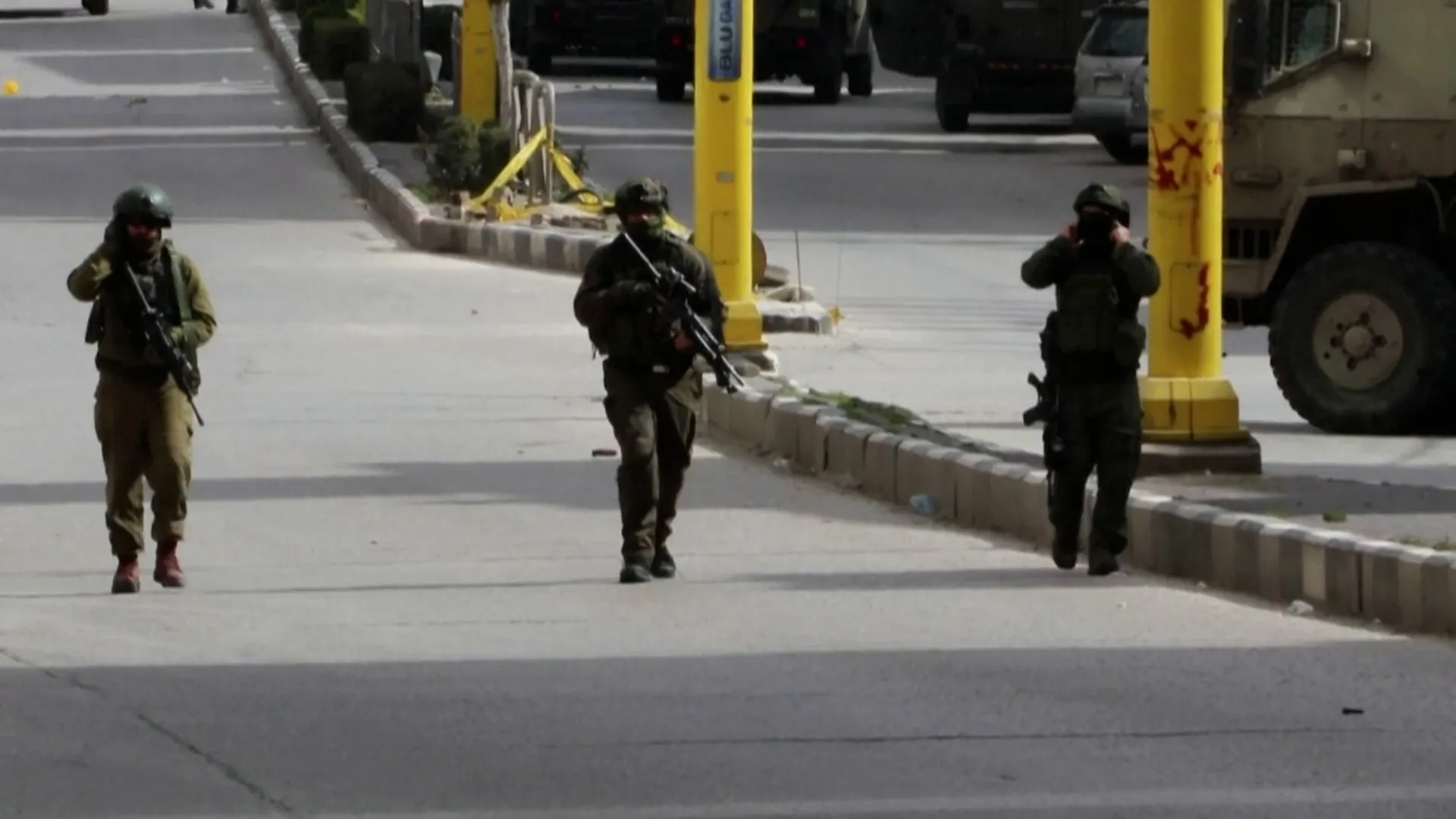
Israeli forces raided the Muslim Youth Association in Hebron, firing tear gas at Palestinians and shutting down the group’s headquarters. Troops confiscated and destroyed equipment during the raid.
A US-Israeli strike has caused extensive damage to a synagogue in Tehran, according to a video published by Iran’s semi-official Mehr News Agency. Footage shows civil defence workers amid the rubble, with Hebrew-language books scattered on the ground.
Giles Wood and Mary Killen have become staples on screens thanks to their Gogglebox stint – but away from the show the couple have faced their fair share of hardships
Joe Crutchley Screen Time Reporter
08:24, 07 Apr 2026Updated 08:24, 07 Apr 2026
Gogglebox Giles and Mary’s terrifying illness, rarely-seen children and marriage struggles(Image: CHANNEL 4)
Gogglebox’s Giles Wood and Mary Killen have become telly legends thanks to their stint on the Channel 4 show – but what do we know about their real lives?
Over the years, Giles and Mary – who live in Wiltshire – have had fans in stitches thanks to their witty banter and one-liners and comical takes on the telly highlights.
Away from the show though, both Giles and Mary have faced their fair share of hardships in their marriage, including a terrifying health scare. Here, we’re taking a look inside the couple’s lives.
Giles and Mary’s romance
Giles and Mary’s romance dates back decades, after meeting each other for the first time when they were just 21 years old. When they crossed paths, Giles was at Wimbledon Art School and Mary was a model.
The pair have been married for over 30 years, most of which time they have spent living at their cottage in Wiltshire.
Giles and Mary are also known for referring to each other with the nickname ‘nutty’ on the series. Mary has previously revealed that the nickname is in reference to The Nutty Professor cartoon strip.
She said: “We call each other ‘nutty’ because we both consider the other to be a bit mad. Certainly Giles has multiple personality disorder so he’s all sorts of people and one of them is a bit of a genius.”
Giles and Mary’s rarely-seen daughters
Giles and Mary also have two grown-up daughters together, who don’t feature on the show, although one was reportedly due to appear alongside Giles before deciding against the idea.
Little is known about Mary and Giles’ daughters however Mary once did give an insight into family life. Speaking to The Guardian about banning swearing in their house, Mary explained: “There’s so much on telly, I don’t want it in my own cottage. Giles swears occasionally because he’s always having minor accidents. Our children turn on him and tell him off. Poor Giles.”
Meanwhile, in 2021, Giles and Mary gave a rare look at their daughters after the couple posted a throwback photo of the family. In the picture, Mary and Giles could be seen holding their girls who wore a white shirt with their blonde hair styled in pigtails.
Gogglebox ‘saved’ Giles and Mary’s marriage
Despite appearing very close on the show, Giles and Mary have admitted to facing challenges in their relationship but credit the Channel 4 programme with bringing them closer together.
Giles recounted how their routine changed dramatically due to the show. He told MailOnline: “Working together on Gogglebox – watching telly at the same time – meant Mary and I suddenly no longer lived like two intimate strangers.
“Mary working from 6am till 8pm, then falling asleep slightly drunk at 9pm; me gardening from 1pm till 3.30pm, when I have lunch, and then going to bed at two in the morning after watching vintage horror films. It has definitely saved our marriage.”
Mary on the ‘closest she’s come to death’
In 2018, Mary revealed her near-death experience after contracting Legionnaires’ disease. Speaking to the Guardian, Mary said: “The closest I’ve come to death was contracting Legionnaires’ disease in 1999.
“I caught it from air conditioning in the Bahamas and developed something called Beau’s lines: white ridges across the fingernails which are a sign that your body’s shutting down for death.”
Coming out of the ordeal battered but alive, she confessed: “It knocked the stuffing out of me. I’ve never been quite the same since.”
Mary’s health ordeal
Years later though, Mary was struck by a severe bout of campylobacter food poisoning which she suspects came from “grubby” homegrown vegetables.
While on antibiotics during her treatment, Mary found herself unable to drink alcohol. She recalled: “Immediately afterward, I found I couldn’t face alcohol. I remember going to a house party on the Isle of Mull a short time later. All sorts of wonderful wines were being served and I couldn’t touch any of them.”
Surprisingly, the sudden aversion reminded her of pregnancy : “It made me recoil,” she explained to MailOnline. The condition she suffered from, campylobacteriosis, is an infection from bacteria commonly found in tainted food and water, and can lead to symptoms such as diarrhoea, cramps, and fever.
To continue their upward trajectory, Bemand, who has signed a new deal to stay with Ireland until the conclusion of the 2029 Women’s Rugby World Cup, has freshened up his squad and opted for a change of captain.
There are nine uncapped players in the 36-strong panel while winger Amee-Leigh Costigan, who captained the side throughout last year’s championship, and former co-captain Edel McMahon, are out.
The armband has been passed to returning back row Erin King, who Bemand believes is the ideal candidate to lead the green wave into a new cycle.
He said: “Erin embodies the Ireland player of the future of how she attacks training and how she is – honest, driven and a resilient player.”
The 22-year-old recently returned from the serious knee injury which forced her to miss last year’s World Cup and is relishing her new role.
King believes Ireland must target being competitive in both games against the top two and it is not an unrealistic goal.
They were well in the game at half-time in Cork last year when they trailed 7-5, only for England to blow them away in the second half to win 49-5.
At the World Cup in the summer, Ireland led 13-0 at the break before France came back with 18 unanswered points to progress to the last four.
“We know we are bridging the gap to the top two teams – France and England. They’ve been professional for a lot longer than us but the last few years of our professionalism is paying off now,” she said.
“Last year we held it to England for a good while so it would be great if we could compete for the full 80 [minutes] against them and get to get one up on France, we can definitely compete with them.
“With the squad we have, we can do things we’ve never done before. We just want to get going.”
Arrest comes after Roberts-Smith lost case against journalists who said he was involved in murders of unarmed Afghan men.
Published On 7 Apr 20267 Apr 2026
Former Australian special forces soldier Ben Roberts-Smith has been arrested at Sydney airport and is expected to face charges for alleged war crimes committed in Afghanistan, according to the Australian Broadcasting Corporation (ABC).
The 47-year-old was expected to appear in a court in New South Wales later on Tuesday over five counts of the war crime of murder, related to unarmed Afghan nationals who “were not taking part in hostilities at the time of their alleged murder”, Australian Federal Police Commissioner Krissy Barrett told reporters in Sydney on Tuesday, according to the ABC.
Recommended Stories
list of 4 itemsend of list
Barrett said the charges followed a “complex” investigation by the AFP news agency and the Office of the Special Investigator (OSI) dating back to 2021.
The arrest comes after Roberts-Smith lost defamation proceedings he brought against journalists who had reported he was “complicit in and responsible for the murder” of three Afghan men.
An Australian judge found in 2023 that those journalists had not defamed Roberts-Smith, a ruling that was upheld by the Full Court of the Federal Court of Australia in May last year.
Rawan Arraf, the executive director of the Australian Centre for International Justice, said the arrest was a “significant and long-awaited step for victims and affected communities” in Afghanistan, where Roberts-Smith was deployed multiple times.
“The proper investigation and prosecution of alleged war crimes by members of the Australian special forces in Afghanistan are essential to ensuring justice for Afghan victims and to Australia meeting its obligations under international law,” Arraf said in a statement.
About 39,000 Australian soldiers were deployed to Afghanistan as part of the United States and NATO-led operations against the Taliban and other armed groups over two decades.
Roberts-Smith’s case has drawn considerable scrutiny in Australia, including because prior to the charges, he had received the Victoria Cross medal for his fifth tour of Afghanistan, and was reportedly the most-decorated living Australian war veteran.
Meanwhile, former Australian army lawyer David McBride remains imprisoned in Australia over his role in revealing information about alleged Australian war crimes in Afghanistan.
Australian Senator David Shoebridge responded to the news of Roberts-Smith’s arrest by saying “Release David McBride” in a short post on X.
Weekly insights and analysis on the latest developments in military technology, strategy, and foreign policy.
An advanced imaging infrared seeker from a U.S.-made Terminal High Altitude Area Defense (THAAD) anti-ballistic missile interceptor looks to have been recovered largely intact in Syria. This could be a major intelligence loss that may allow adversaries to gain valuable insights into the capabilities of THAAD, which is being very heavily employed in the current conflict with Iran. THAAD has also been an important player in blunting previous Iranian missile barrages against Israel, and is a key component of the U.S. military’s global missile defense architecture.
A video, seen below, began circulating on social media earlier today showing the THAAD seeker, as well as other portions of the interceptor, on the ground. The clip is said to have been shot in the vicinity of the Syrian city of Suwayda in the southwestern corner of the country, though TWZ cannot immediately verify this independently. However, Suwayda is some 25 miles north of the border with Jordan and around 55 miles to the east of Israel’s internationally recognized boundaries. The U.S. military is currently reported to have THAAD batteries in Israel and Jordan.
As its name indicates, THAAD is designed to intercept short, medium, and intermediate-range ballistic missiles in the terminal phase of flight. Depending on a variety of factors, including the physical position of the launcher relative to the threat, the system can attempt intercepts against targets just as they begin their descent into Earth’s atmosphere.
A Missile Defense Agency graphic giving a very general overview of how THAAD executes an intercept using its organic AN/TPY-2 radar. MDA
After launch, the so-called “kill vehicle” at the front end detaches from the rocket booster at the rear. A shroud at the front, which covers the seeker and the rest of the kill vehicle, also breaks away. That shroud is also seen on the ground in the newly emerged video.
The remains of the THAAD interceptor’s nose shroud seen in the newly emerged video. capture via X
Freed from the shroud, the kill vehicle uses its conformal infrared seeker to find and home in on the target missile. In general, imaging infrared has the benefit of being a passive guidance method that is immune to radiofrequency countermeasures, such as jamming or decoys designed to mimic the radar signature of a real threat.
THAAD’s interceptors are hit-to-kill types that are designed to destroy their targets through sheer force of impact. As such, the kill vehicles do not contain any kind of explosive warhead. Each one does have several small rocket motors that help it precisely maneuver into position to slam into the incoming missile. These are collectively known as the Divert and Attitude Control System (DACS).
A graphic the Missile Defense Agency has released in the past, offering a general breakdown of the THAAD interceptor’s components. MDA
“The unique DACS provides two kinds of propulsion: one for attitude control and another for kill-vehicle maneuvering. The DACS uses six thrusters to provide roll, pitch, and yaw control for the interceptor,” according to L3Harris, which supplies this component of the interceptor. “These thrusters work together to precisely stabilize the interceptor-seeker field of view for proper target visibility. The seeker’s target data are then converted into maneuvering or divert commands that actuate the other four DACS thrusters as required. The four divert thrusters provide short, forceful pulses to quickly and accurately position the THAAD kill vehicle for target intercept.”
In the video, the entire kill vehicle is intact enough that the ports for some of these rockets are plainly visible.
Two of the ports through which rockets fire to help the THAAD kill vehicle maneuver can be seen in this capture from the video that emerged online earlier today. capture via X
The fact that the kill vehicle and shroud were recovered on the ground so close together and in relatively good condition points to a failure of some kind, but the exact circumstances remain unknown. What has since happened to the debris is also not known.
Gaining access to a THAAD interceptor seeker, as well as the rest of the kill vehicle, would give an adversary new insights into its performance envelope and other capabilities. That information could then be used in the development of new countermeasures, as well as tactics, techniques, and procedures to reduce the interceptor’s effectiveness. This would be on top of what Iran, as well as countries like Russia and China, have already been gleaning just from observing THAAD’s performance in the current conflict, as well as prior engagements.
Deep intelligence exploitation of the physical design of the seeker and the kill vehicle, as well as the materials used to make them, could be beneficial for supporting other developments, as well. The kill vehicle and the systems within have to survive the stresses of traveling at hypersonic speeds, typically defined as anything above Mach 5, as it screams toward its target. Adversaries like China could leverage this information to improve their own anti-ballistic missile capabilities or attempt to clone THAAD more directly.
A full-scale model of a THAAD seeker is prepared for a test in a high-speed wind tunnel. USAF
Though we do not know what happened to the THAAD seeker and the rest of the kill vehicle seen in the video, this may not be the last time we see such debris in Syria or elsewhere in the region, given how extensively these interceptors are being used as Iranian ballistic missile attacks continue.