HomeExecutive InterviewsLiquidity CEO Discusses UAE’s Strategic Advantage Despite Regional Turmoil
Liquidity CEO Ron Daniel says UAE operations remain resilient despite war risks, as Israeli firms expand after Abraham Accords normalization
Following the Abraham Accords, which normalized diplomatic relations between Israel and several Arab countries in 2020, more than 600 Israeli companies have begun operating in the United Arab Emirates (UAE). Among them: Liquidity, an AI-driven fintech direct lender that manages a multi-billion-dollar portfolio.
Liquidity’s largest office is now in Abu Dhabi, and its second largest in Tel Aviv. Liquidity CEO Ron Daniel spoke with Global Finance about the latest regional developments amid US and Israeli strikes on Iran.
Global Finance: How are you handling the situation?
Ron Daniel: Well, I have many people on the ground in the UAE and many people in Tel Aviv. In total, that’s more than half of my employees who are in a war zone right now. We are dealing with the situation daily. We continue business, but in both locations, a lot of work is done from home. Our first concern is the safety of our people. If someone wants to relocate to their home country, or outside the main cities, we finance that, but most of the team has been quite resilient.
From the UAE, only a few of our employees went back to their country of origin. Our office is open in Abu Dhabi, but most of our staff chose to work from home. We empower our staff to make the decisions that are right for them and their families. The company is functioning as normal; it’s a bit of a stressful time, but we hope it will end soon.
GF: Iran targeted the US-Israeli interests in the region. How is that affecting Liquidity?
Daniel: Yes, just before the war started, Iranian hackers published a direct threat through Telegram to Israeli companies. That meant we had to take additional measures. We contracted a private security company to ensure our office is safe and secure. Our employees are also able to contact them directly and receive advice for any security-related concerns. Thankfully, we’ve never had to use it because the Emirate authorities have been doing a good job in providing clear information and strong security.
GF: How have attacks on data centers in Bahrain and the UAE affected your business?
Daniel: The situation actually doesn’t affect our business, because our business is global, with multi-billion-dollar assets under management and capital deployed in over 45 verticals across 35 countries. Our research and development centers in Abu Dhabi are unaffected. I believe the UAE remains a very good location for data centers because it has affordable energy and ample land and I don’t see the security issue as a long-term threat. The UAE have intercepted most of the incoming drones and missiles. The region is, in my opinion, still a very good destination for investment.
GF: A big selling point for the UAE has always been its status as a safe haven for investment. Is that still true?
Daniel: I still think it’s a safe haven. If you look at the world, there really isn’t a 100% safe haven. Some investors have left the region, and I think it’s a mistake. It shows a lack of understanding of this region’s strategic advantage. At Liquidity, we don’t do politics. We do business, and as a business, the UAE has been and will remain a very significant hub for us. It sits between East and West, and geopolitically, they are OK with everyone, which is good for business. The security situation is a bit challenging, of course, but I believe it is temporary and will resolve itself relatively quickly. I chose to be in the UAE back in 2020 because it was a strategic location for us, and the current situation doesn’t change anything for me.
GF: You have been a strong advocate of normalization of relations between Israel and the UAE since 2020 – how do you see things evolving?
Daniel: I believe the region is heading towards a brighter future in the long run. I think, taking the fundamentals into account, it is a place that’s good for business and good for people. Overall, the situation doesn’t affect my feelings about the normalization process.
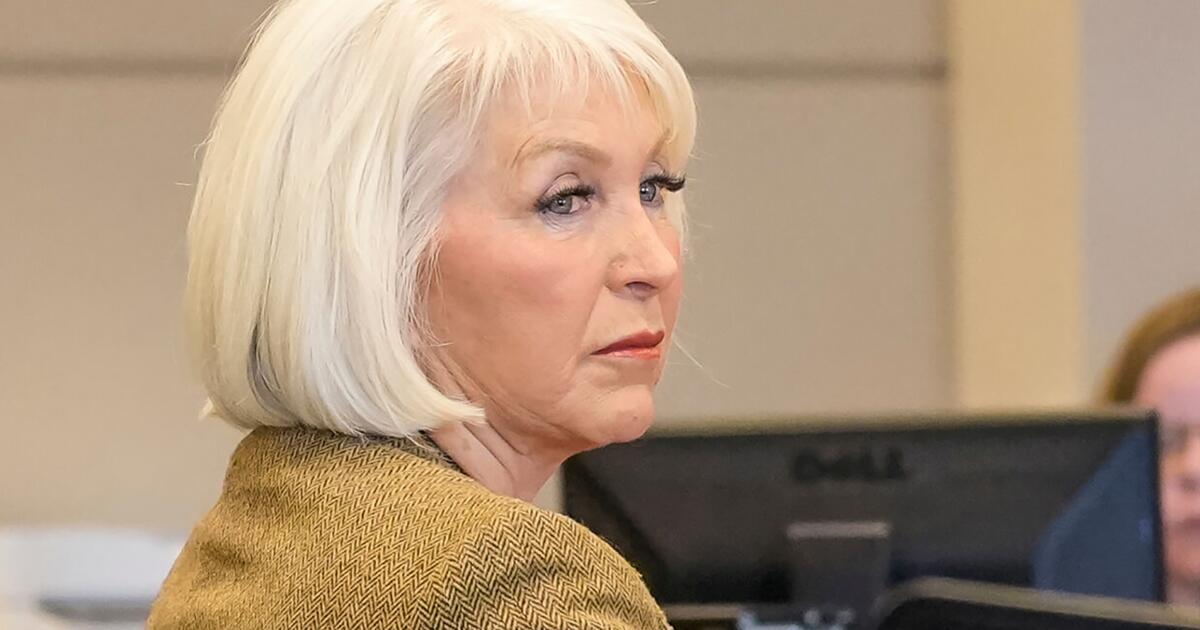
DENVER — A Colorado appeals court ruled Thursday that a former county clerk convicted in a scheme that sought to prove fraud in the 2020 presidential election should be resentenced because a judge wrongly punished her for statements protected as free speech.
Tina Peters is serving a nine-year prison term after being convicted of state crimes for sneaking in an outside computer expert to make a copy of her county’s election computer system during a software update in 2021. A photo and video of confidential voting system passwords were later posted on social media and a conservative website.
Calls for Peters’ release have become a cause celebre in the election conspiracy movement. President Trump has sought unsuccessfully to pardon Peters and pressured Colorado to set her free.
Judges on the Colorado Court of Appeals upheld her conviction in a 74-page ruling that rejected the notion that Trump has authority to pardon her state crimes. But they said a lower court judge should not have considered Peters’ continued promotion of election fraud conspiracies when he sentenced her in 2024.
One of Tina Peters’ lawyers, John Case, said the court’s ruling affirmed the importance of free speech.
“Tina Peters was punished for words that she used to criticize our insecure and illegal voting system,” Case said. “The decision affirms that people are free to speak what they believe in Colorado as well as the rest of the United States of America.”
Case said he would likely ask at resentencing for Peters to receive the approximately 540 days she’s served already. That would allow her to be freed.
Democratic Colorado Gov. Jared Polis, who has been considering granting clemency to Peters, praised the court’s decision for rejecting Trump’s pardon but upholding her free speech rights.
“This case has been very challenging and a true test of our resolve as a state to have a fair judicial system, not just for people we agree with but a fair system for Coloradans that we vehemently disagree with,” Polis said in statement.
Peters was the former clerk in Mesa County, in the far western part of Colorado, and convicted by jurors in the Republican stronghold that has supported Trump.
She was unapologetic when she was sentenced by Judge Matthew Barrett and insisted that she tried to unearth what she believed was fraud for the greater good. He ripped into her, calling her a “charlatan” who had used her position to “peddle snake oil.”
The appeals court found that Barrett violated her rights to free speech by punishing Peters for persistently alleging fraud in the 2020 election. They noted that because Peters is no longer serving as an election clerk, she can no longer engage in the conduct that led to her conviction.
“The trial court obviously erred by imposing sentence at least partially based on Peters’ protected speech,” Judge Ted Tow wrote in Thursday’s ruling.
The court sent Peters’ case back to a lower court for a judge to issue a new sentence.
Trump has threatened to take “harsh measures” against Colorado unless the state releases Peters. In February, Trump said Colorado was “suffering a big price” for refusing to release her.
Colorado Atty. Gen. Phil Weiser, a Democrat who is running for governor, has accused the Trump administration of waging a revenge campaign by choking off funds and ending federal programs over the state’s refusal to free Peters.
Weiser said in response to the ruling that the original sentence had been “fair and appropriate.”
“Whatever happens with her sentence, Tina Peters will always be a convicted felon who violated her duty as Mesa County clerk, put other lives at risk, and threatened our democracy. Nothing will remove that stain,” Weiser said in a statement.
The Justice Department inserted itself into Peters’ bid to be released while her state appeal was considered. The federal Bureau of Prisons also tried to get Peters moved to a federal prison. After both efforts failed, Trump in December announced a pardon for Peters.
However, the appeals court judges said they could find no prior example of a president pardoning someone for a state crime. And they rejected her attorney’s claims that Peters actions had been carried out while “defending a federal interest.”
“We have found no instance where the presidential pardon power has been stretched in such a way as to invade an individual state’s sovereignty,” they said, adding that the president’s pardon has “no impact” on the state’s case against Peters.
The Associated Press left messages with the White House for comment.
She was convicted of three counts of attempting to influence a public servant and one count each of conspiracy to commit criminal impersonation, first-degree official misconduct, violation of duty and failure to comply with the requirements of the secretary of state.
Peters’ lawyers didn’t deny that she used the security badge of a local man she pretended to hire to allow an associate of MyPillow CEO Mike Lindell to make a copy of the Dominion Voting Systems election computer server during an annual software update in 2021.
But they said she only wanted to preserve election data and find out whether any outside actor had accessed the system while ballots were being counted. They said she didn’t want the information made public.
Hip-hop star J. Cole is taking his basketball dreams overseas — again.
When ESPN reported Wednesday that the two-time Grammy winner has signed to play for the Nanjing Monkey Kings in the Chinese Basketball Assn., it might have sounded like an April Fool’s Day prank.
But it’s no joke. Cole’s longtime manager and business partner Ibrahim Hamad reposted the ESPN report on X and wrote that basketball “is still Life for my boy, even at 41.”
Videos and photos posted on social media, some of which were reposted by Hamad, show Cole at a Monkey Kings game wearing team gear and warming up with the other players. The “Work Out” rapper reportedly did not play in the game. One video shows Cole autographing an album for an excited fan.
Cole posted a video to the Chinese social media site Douyin saying he was in China and “excited” to be there.
Born Jermaine Lamarr Cole, the multiplatinum artist played basketball at Terry Sanford High in North Carolina and tried out for the hoops team at St. John’s as a walk-on while attending the university on an academic scholarship. Throughout his music career, Cole has incorporated basketball images and references into his lyrics, performances and cover art.
This will be Cole’s third stint as a professional basketball player. In 2021, the 6-foot-3 guard played three games for Rwanda’s Patriots Basketball Club of the Basketball Africa League, averaging 1.7 points and 1.7 rebounds in about 15 minutes a game.
The following year, he played five games for the Scarborough Shooting Stars of the Canadian Elite Basketball League, averaging 2.4 points and less than one rebound and assist in about 10 minutes a game.
On a recent episode of “Talk with Flee,” Cole spoke with fellow rapper Cam’ron about his lifelong “love and passion for basketball” even though he’s never been the best player on the court at any given time. He said playing professionally overseas has been “like me trying to scratch a last itch.”
“Like, yo, let me see if I could do this,” Cole said. “Could I train and be able to go play professional? Because these teams and these leagues are looking at it like, you know what, he not a—. He could come be on the court, and he could give our league some publicity.”
Cole mentioned the upcoming opportunity to play for Nanjing.
“I’m looking at the clock like, boy, I’m getting older. Like, this might be my last shot,” Cole, whose “The Fall-Off” album dropped Feb. 6 and tour starts July 10, said. “So I’m going to keep my word to them and show up and play in a couple games, although I know I’m not in the best of shape because of the album. But I’m going to go out there and have fun with it.”
Staff at the Children’s Medical Center organise activities to offer a joyful experience to children in hospital amid the ongoing US-Israeli war on Iran.
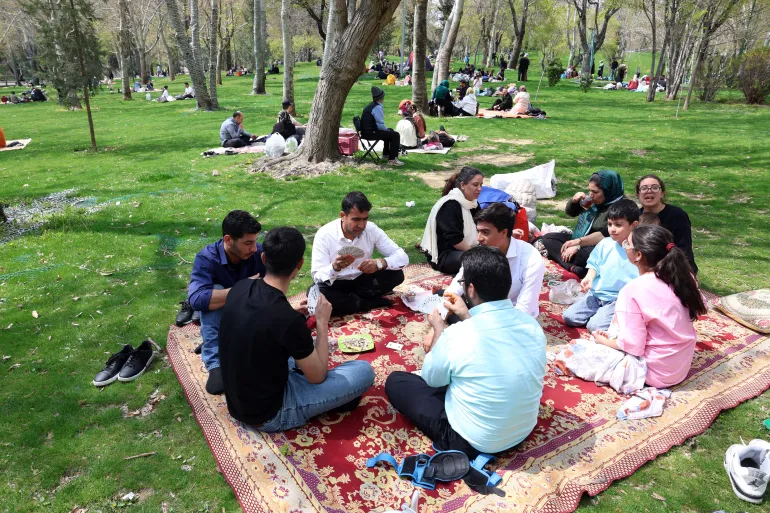
Tehran, Iran – Many Iranian families picnicked outdoors during daylight hours on Thursday for Sizdah Bedar, which marks Nature Day in the Persian calendar, despite the ongoing bombardment by the United States and Israel.
Thousands gathered at Pardisan Park, a sprawling complex northwest of Tehran, to spend time with loved ones as holidays for Nowruz, the Persian New Year, came to an end with politicians and commanders ordering more strikes and threatening to escalate attacks.
Recommended Stories
list of 3 itemsend of list
A short drive away near the downtown area of the capital, a group of doctors and healthcare providers tried to offer a joyful experience to children who could not go outside with their families due to illness.
Resident doctors and interns at the Children’s Medical Center, a hospital operating under the Tehran University of Medical Sciences, have been pooling their own money with some donations to organise activities for the children suffering from underlying health conditions.
The paediatric facility, and the adjacent Imam Khomeini Hospital, have not been impacted by strikes, unlike a number of other medical facilities in Tehran and across the country, some of which have had to suspend services.
But the bombs have rung out loud numerous times after hitting nearby areas since the start of the war over a month ago.
“The children and their families have been going through a lot of pressure and anxiety because they have to be in the hospital under these stressful conditions,” Dr Samaneh Kavousi, one of the organisers, told Al Jazeera.
Iranians celebrate Iranian Nature’s Day, called ‘Sizdah Bedar’ and marking the 13th day of Nowruz (Persian New Year), in a park in Tehran, Iran on April 2, 2026 [Abedin Taherkenareh/EPA]
“We’ve been trying to do what we can to relieve some of that anxiety,” she said.
During the Nowruz holidays that started on March 20, children were encouraged to draw and paint, and the artworks were on display on Thursday when their families came to celebrate at the hospital.
The main themes were the Haft Sin table and Sizdah Bedar, or the 13th day of the first month, which symbolises doing away with ill fortune.
Most of the children were very young, a few of them babies being held by fathers, mothers and siblings who came out to support them and keep spirits alive despite the hardships of caring for a sick family member amid the war.
Some danced together to children’s music, along with hospital staff wearing costumes of Toy Story’s Buzz Lightyear and characters from PAW Patrol, the popular animation series about brave puppies who work together to safeguard their community.
Others played with balls, had their faces painted, filled colouring books, or left palm prints on paper. The children also received a fun bag filled with toys and food.
Dr Zeynab Aalihaghi, another resident organiser of the event at the hospital, said that the facility is not tasked with treating children wounded during the war, but the number of its patients has declined compared to before the war.
She told Al Jazeera that up to about 400 children were being cared for in the hospital before the war, while less than 100 are now there. The doctor added that some parents have opted to take their children to paediatric facilities in other cities, which may be perceived as being safer at the time that the child needs treatment.
“But our emergency admissions have increased over the past two days, so it could mean that we might experience a new peak after the Nowruz holidays,” Aalihaghi said.
The doctor said she believes that, at its current state, the hospital is prepared to quickly bounce back to normal activity levels when the war ends.
Kavousi, the other doctor, said the facility faces no shortage of medicine at the moment, and hopes to be able to continue helping children and their families.
“Healthcare personnel are also under a lot of mental strain,” she said. “But we will continue to do our duty to serve our people and work to take away children’s pain.”
Jassim al-Budaiwi calls on UN Security Council to guarantee ‘uninterrupted navigation through all strategic waterways’.
Published On 2 Apr 20262 Apr 2026
The head of the Gulf Cooperation Council (GCC) has called on the United Nations to act to immediately halt Iranian attacks across the region, condemning the strikes as a “flagrant violation” of international law and the United Nations Charter.
Speaking at the UN Security Council (UNSC) on Thursday, GCC Secretary-General Jassim al-Budaiwi urged the council to “take all necessary measures” to bring an end to Iran’s attacks on Gulf countries.
Recommended Stories
list of 3 itemsend of list
The UNSC must “take all necessary means” to “protect maritime corridors and guarantee the uninterrupted maritime navigation through all strategic waterways” in the region, al-Budaiwi said.
He also stressed that the six GCC states – Saudi Arabia, Qatar, Bahrain, Oman, Kuwait and the United Arab Emirates – must be included in any talks or deals with Iran “to enhance regional security and prevent further escalation or the repetition of such attacks in the future”.
“The GCC reaffirms the urgent need to immediately halt these attacks; restore security, stability and calm in the region, and ensure the safety of air and maritime navigation, the safety of international supply chains, and the protection of global energy markets,” al-Budaiwi said.
Iran has carried out daily missile and drone attacks across the Middle East, including in Arab Gulf nations, since the United States and Israel launched a war against the country on February 28.
While Iranian officials have said they are acting in self-defence and striking US and Israeli-linked targets, the attacks have struck civilian sites across the Gulf, including several of the region’s critical energy facilities.
Iran also has effectively closed the Strait of Hormuz, a key Gulf waterway through which about one-fifth of the world’s oil and liquified natural gas supplies transit, sending global energy prices skyrocketing.
Reporting from the Emirati city of Dubai on Thursday evening, Al Jazeera’s Zein Basravi said frustrations are growing across the Gulf as the US-Israeli war on Iran drags on.
“The GCC countries were from day one – months before this war even began – trying to keep it from happening. But it was like trying to stop a slow-moving car crash. And effectively, that crash has happened in their front yard,” Basravi said.
He noted that 85 percent of the projectiles fired by Iran have targeted Gulf countries, with the UAE the hardest hit.
“Their primary threats are the retaliatory attacks by Iran,” Basravi said of the GCC. “And their primary focus is bringing that to an immediate close – and that means ending the conflict as soon as possible.”
PIANO Man Billy Joel has recorded a special interview to air during Eurovision thanks to his song named after host city Vienna, I can reveal.
Afterwards, Austrian singer Cesar Sampson, who finished third in 2018, will cover the song before the results are revealed.
Sign up for the Showbiz newsletter
Thank you!
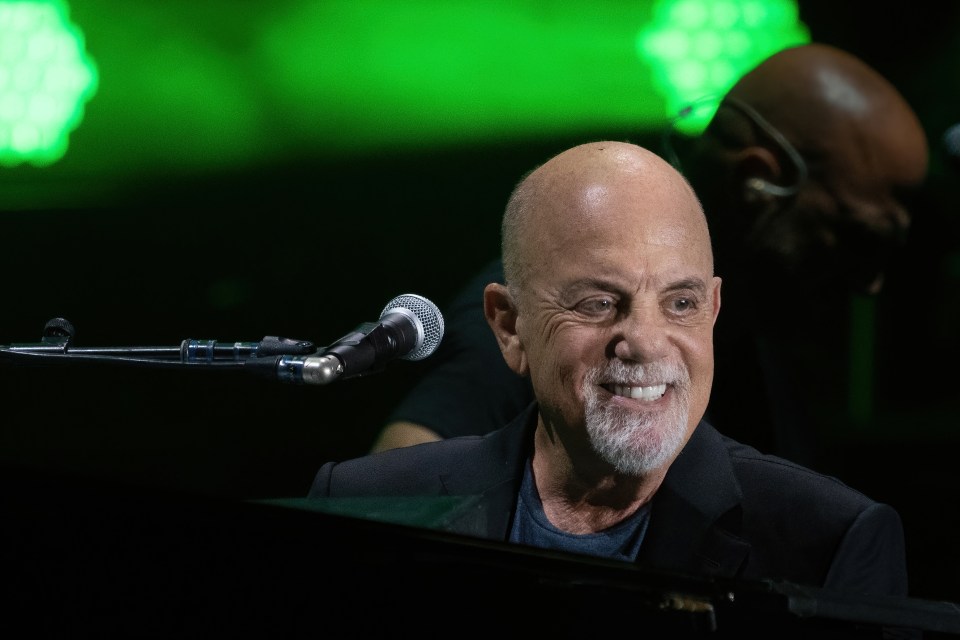
Billy Joel has recorded a special interview to air during Eurovision thanks to his song named after host city ViennaCredit: AFP
I’m told there were hopes Billy could fly over to make a surprise appearance at the contest.
But it was ruled out on health grounds.
Billy was diagnosed last May with a rare neurological disorder that can cause issues with hearing, balance and vision, although he is having physical therapy to treat it.
The musician has already cancelled all of his 2026 concerts, including shows in Edinburgh and Liverpool.
However, he did make a surprise appearance in Florida on January 2.
A source close to the singer, who will turn 77 a week before the final on May 16, said: “Billy has recorded an interview talking about his love for Vienna and his links to the city, which is all tied into his song.
“Organisers originally hoped he could perform but that was ruled out. They will be making a big deal of this very rare interview with him.”
He has sold more than 160million records and is one of the best-selling artists of all time.
Vienna was released in 1977 as the B-side to Just The Way You Are, and is now among his most popular tracks.
Ultravox’s 1980 hit, also called Vienna, is arguably even more popular.
But frontman Midge Ure certainly won’t be there, as he will be in the middle of a UK tour.
The 70th edition of the contest will take place at the Wiener Stadthalle arena after 166million tuned in to see Austrian singer JJ win with Wasted Love last year.
Celine Dion had been in talks to perform at the 2025 event in Switzerland, but it didn’t happen as she continued to battle Stiff Person Syndrome.
I’ll have to keep my fingers crossed that the Eurovision entries themselves provide plenty of entertainment instead.
On paper, the case is easy to make. The world’s largest proven oil reserves, a sector being reopened to private capital, sanctions that are no longer absolute but conditional, negotiable. There are new laws, new guarantees, new language around arbitration and contract security. For the first time in years, there is something that looks like a framework, perhaps even a government that exercises absolute power over the country while operating under US tutelage.
And yet, the expected cash tsunami remains elusive. This is because the people who would actually have to write the checks are not asking whether the opportunity is real, but whether it will still exist by the time it matters. No amount of lobbying or PR trips can compensate for almost 30 years of arbitrary abuses. After all, Delcy Rodríguez is not the first chavista “president” to court the private sector or offer guarantees.
The problem is not political risk in the abstract. It is that the legal environment investors are being asked to trust has not meaningfully changed. Judges remain largely unchecked, and contracts are still only as strong as the political relationships behind them. The closest thing to a guarantee is not an institution, but proximity: “I know a guy, who knows a guy, who knows Delcy.”
That may be enough to get a deal signed. It is not enough to guarantee the kind of long-term, multibillion-dollar investment Delcy needs.
Retroactive illegitimacy
There is also the question of who is actually making those commitments. The current governing arrangement, even with partial recognition from Washington, remains the residue of a deeply contested and improvised system. Its authority may be tolerated, even engaged with, but it is not settled. That matters, because any agreement reached today carries the risk of being revisited tomorrow, not necessarily by a hostile regime, but by future jurists attempting to unwind the ambiguities of the present. In other words, the risk is not just expropriation, but retroactive illegitimacy.
And then there is the country itself. The initial shock of alignment with the United States has created a perception of stabilization, but that perception rests on thin ground. Discontent is not ideological, it is material. Power rationing continues to shape daily life. The bolívar remains structurally weak, its periodic stabilizations undone by recurring cycles of depreciation. For most Venezuelans, the promised improvement in living conditions, expected to follow from these inflows, has yet to materialize in any meaningful way.
What investors are being asked to underwrite, then, is not just a country in transition, but a society that has not yet felt that transition in any tangible sense. That gap matters, because it is in that gap where pressure builds.
Contingency is not change
And even if one is willing to accept all of that, there is the question few are prepared to answer directly: what happens in two years?
The current opening in Venezuela is not just tied to internal dynamics. It is deeply contingent on a specific political configuration in Washington. A different administration, with different priorities, could decide that Venezuela no longer warrants the same level of attention, resources, or political cover. The approach taken by Donald Trump has been unusually direct. There is no guarantee that what follows will resemble it.
That matters more than investors tend to admit. Because what is being built today is not a self-sustaining system, but a politically supported one.
Under those conditions, the risk is not simply policy reversal. It is systemic drift. The incentives that currently bind the government to external actors can weaken, and with them, the logic that sustains the present arrangement. That does not require a dramatic rupture. Only time.
There is a way to make sense of this, and it requires going back, not forward. In structural terms, Venezuela today resembles 2017. Not in its specifics, but in the nature of the moment. Back then, the country hovered between sustained pressure that could force an opening, and a system learning in real time how to absorb that pressure and consolidate power instead. For a time, it was not clear which way it would go.
Until it became clear that the system had adapted faster than the pressure could escalate. What looked like a moment of transition became, instead, a lesson in survival. That is the part of 2017 that tends to be forgotten, not the protests, but the outcome.
What makes the current moment difficult to read is that it carries a similar ambiguity. There is an opening, but it is partial. There is pressure, but it is uneven. There are signals that point in different directions at once. Engagement with external actors, selective liberalization, a degree of flexibility that did not exist a few years ago. But none of that resolves the underlying question.
Is this the beginning of a transition, or another iteration of adaptation?
For investors, that distinction is more than academic. It determines whether the current opening represents a structural shift, or simply a temporary configuration that will be absorbed, reworked, and eventually reversed. Venezuela has already shown that it can look like it is about to change, while in fact learning how not to. Ultimately, this question is likely to be the one that holds meaningful investment back.
Unchecked power
There is, underlying many of these conversations, a quieter assumption that rarely gets stated outright. That under the right conditions, a system like Venezuela’s can be made to work. That a centralized authority, aligned with external actors and supported by technocratic management, can deliver stability without resolving deeper political contradictions. The long-held fantasy of the benevolent strongman.
It is an attractive idea. It is also one that Venezuela has consistently disproven.
The problem is not simply that power is concentrated, but that it is unconstrained. In such a system, predictability does not come from strength, but from rules. When those rules are absent, even proximity to power stops being a reliable safeguard.
The recent arrest of Wilmer Ruperti is a reminder of that. Ruperti was not an outsider testing the limits of the system. He was deeply embedded within it. If anything, he represents the kind of relationship many investors assume can mitigate risk.
And yet, under conditions of unchecked authority, those relationships can be redefined overnight.
In practice, this often produces the opposite of what investors expect, a system where decisions are centralized but not necessarily stable, and where alliances are strong until they are not.
Under these conditions, Venezuela does not favor all investors equally. It favors those who can operate within political constraints, tolerate legal ambiguity, and adjust quickly if those constraints shift. It is less hospitable to actors whose models depend on enforceable contracts, long time horizons, and institutional continuity.
Venezuela is not uninvestable, but it is not becoming normal either.
What is taking shape is something more ambiguous. It is open enough to transact and stable enough to operate in the short term, but uncertain in ways that are harder to measure. The legal framework remains contingent, the political authority behind it is still contested, and the external backing that sustains it is, by definition, temporary.
That does not eliminate opportunity, it defines it. Under those conditions, the question is not whether Venezuela works, but for whom, for how long, and under what assumptions about continuity that may not survive the life of the investment.
In that sense, the risk is not only that things go wrong, but that the terms under which they work are never fully settled.
WASHINGTON — President Trump’s White House ballroom won final approval from a key agency on Thursday, days after a federal judge ordered a halt to construction unless Congress allows what would be the biggest structural change to the American landmark in more than 70 years.
The National Capital Planning Commission, the agency tasked with approving construction on federal property in the Washington region, went ahead with the vote because U.S. District Judge Richard Leon’s ruling on Tuesday affects construction activities, not the planning process, commission spokesperson Stephen Staudigl said.
But despite the agency’s approval, the judge’s ruling and the legal fight over the ballroom could stall progress on a legacy project that Trump is racing to see completed before the end of his term in early 2029. It’s among a series of changes the Republican president is planning for the nation’s capital to leave his lasting imprint while he’s still in office.
The vote by the 12-person commission, including three members appointed by Trump, had initially been scheduled for March but was pushed to Thursday because so many people signed up to comment on it at the commission’s meeting. The comments were overwhelmingly opposed to the ballroom.
Trump tweaks the ballroom design
Before voting Thursday, the commission considered some design changes to the 90,000-square-foot ballroom addition that Trump announced aboard Air Force One on Sunday as he flew back to Washington from a weekend at his Florida home.
He removed a large staircase on the south side of the building and added an uncovered porch to the west side. Architects and other critics of the project had panned the staircase as too large and basically useless since there was no way to enter the ballroom at the top.
Trump gave no reason for the changes, but a White House official said the president had considered comments from the National Capital Planning Commission and another oversight entity, the U.S. Commission of Fine Arts, which approved the project earlier this year, as well as members of the public.
The official, who was not authorized to publicly discuss the ballroom design and spoke on the condition of anonymity, said that additional “refinements” had been made to the building’s exterior and that lead architect Shalom Baranes would present them on Thursday.
The ballroom, now estimated to cost $400 million, has expanded in scope and price tag since Trump first announced the project last summer, citing a need for space other than a tent on the lawn to host important guests. Trump demolished the East Wing in October with little warning, and site preparation and underground work have been underway since then. Officials said above-ground construction would not start until April, at the earliest.
Judge says Trump isn’t the owner of the White House
The National Capital Planning Commission is chaired by Will Scharf, a top White House aide who has spoken in support of the ballroom addition. The president appoints three of the members, and Trump named two other White House officials along with Scharf.
Trump went ahead with the project before seeking input from the National Capital Planning Commission and the Commission of Fine Arts, which he reconstituted with allies and supporters.
The National Trust for Historic Preservation, a private nonprofit organization, sued after Trump demolished the East Wing last fall to build the ballroom addition — a space nearly twice as big as the mansion itself. Trump says it will be paid for with donations from wealthy people and corporations, including him, though public dollars are paying for underground bunkers and security upgrades on the White House grounds.
The trust sought a temporary halt to construction until Trump presented the project to both commissions and Congress for approval. Leon, the judge, agreed but said that his order would take effect in two weeks and that construction related to security would be allowed.
That work continued Wednesday as new photos by the Associated Press show the site of the former East Wing bustling with activity as cranes stretched toward the sky.
The judge, who was nominated to the bench by Republican President George W. Bush, wrote in his ruling: “The President of the United States is the steward of the White House for future generations of First Families. He is not, however, the owner!” He concluded that the National Trust for Historic Preservation was likely to succeed on the merits of its claims because “no statute comes close to giving the President the authority he claims to have.”
Trump disputed that Congress must also approve his project.
“We built many things at the White House over the years. They don’t get congressional approval,” he told reporters in the Oval Office after the ruling.
Representatives for the House and Senate committees with jurisdiction over the project did not return telephone messages seeking comment. Congress is on spring break.
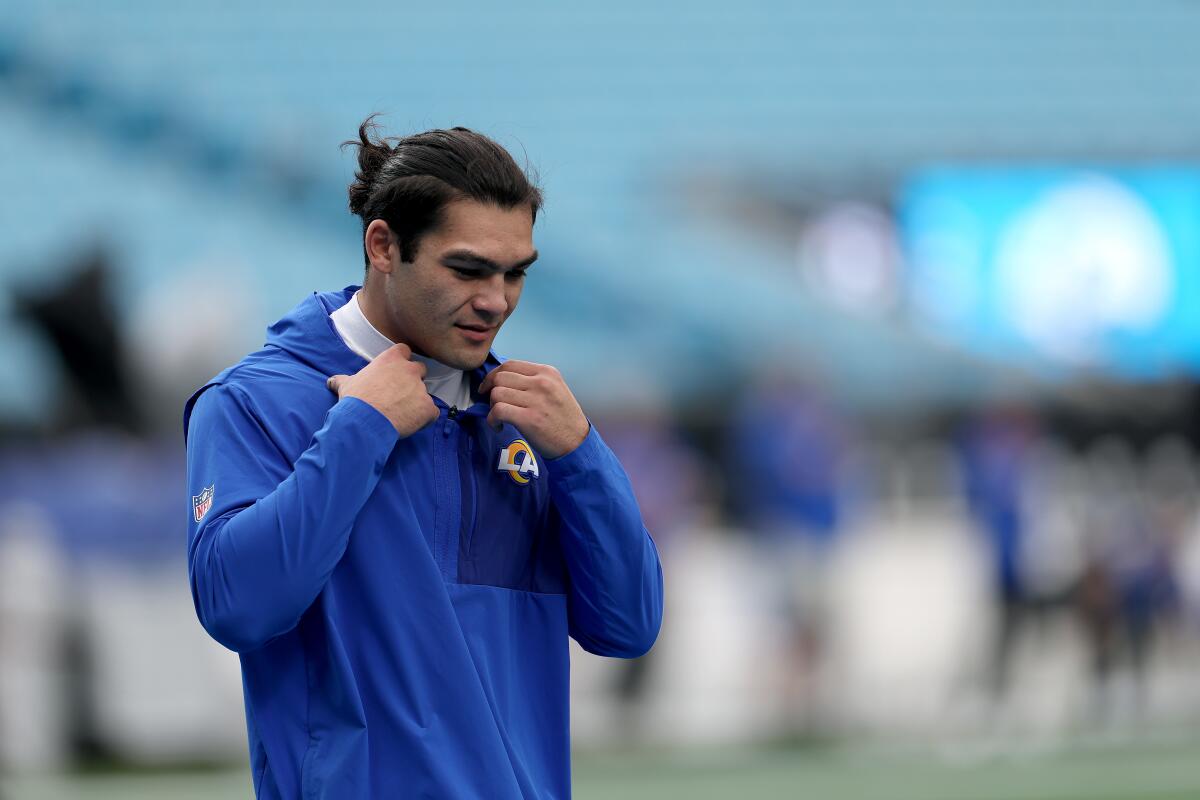
Rams wide receiver Puka Nacua warms up before a playoff game against the Carolina Panthers in January.
(Eric Thayer / Los Angeles Times)
Last week, a woman filed a civil lawsuit against Nacua, alleging that on New Year’s Eve he made an antisemitic statement during a group dinner and later bit her shoulder. Nacua’s attorney told The Times before the lawsuit was filed that Nacua “denies these allegations in the strongest possible terms,” and that Nacua would “pursue all available legal remedies in response to these false and damaging statements.”
During a livestream in December, Nacua criticized NFL officials and made a gesture regarded as antisemitic. Nacua apologized, and the Rams and the NFL issued statements condemning antisemitism and discrimination. But after the Rams’ loss to the Seattle Seahawks, Nacua criticized officials in a social media post from the locker room. The NFL fined him $25,000.
“The play on the field is amazing, and then with what the play has dictated and determined there is a responsibility in terms of representing all things not exclusive to just that,” McVay said Monday when asked about Nacua. “He knows that, those are expectations and we are hopeful that … this will be an opportunity for him to learn and grow, and we are hopeful that he’s a Ram for a really long time.
“But he understands what the responsibility is, not exclusive to just the production on the field.”
Snead described Nacua as a “young man, becoming,” who is “continuing to evolve” as a person and player.
“You need to be on your Ps and Qs in both categories,” Snead said, “both variables, right, to earn that type of contract.”
Tony Pastoors, the Rams’ chief operating officer, said “everything gets weighed” in the process.
“It isn’t just, ‘OK, turn it on on Sundays and make decisions from there,’” Pastoors said. “We have to take in every data point we can.”
April 2 (UPI) — A Colorado appeals court on Thursday threw out the sentence of Tina Peters, a former elections clerk, who was convicted in an election data case.
Peters was sentenced to nine years in prison in August 2024 on seven of the 10 counts for which she was charged.
She allowed an unauthorized person to make copies of voting machine hard drives that included classified information. The data from those drives was then leaked online by conspiracy theorists who falsely said it proved President Donald Trump correct in his assertion that the 2020 election was “stolen.”
Trump later pardoned Peters, but Colorado officials said he has no power to do so because she was convicted by the state. He has since pressured Colorado Gov. Jared Polis to pardon her.
The judges of the Colorado Court of Appeals ruled that District Judge Matthew Barrett wrongfully used Peters’ beliefs and promotion of election fraud conspiracy theories in his sentencing.
“We reverse her sentence because it was based in part on improper consideration of her exercise of her right to free speech,” the court wrote, sending her case back to the trial judge. Now Barrett must re-sentence Peters without using her beliefs to make the decision, the appeals judges said.
At the sentencing, Barrett said Peters had no remorse and called her a “charlatan” who abused her position to “peddle snake oil.”
“I am convinced you would do it all over again if you could,” The Hill reported Barrett said. “You’re as defiant as any defendant this court has ever seen.”
In its decision, the appeals court said her beliefs shouldn’t color the sentencing.
“Her offense was not her belief, however misguided the trial court deemed it to be, in the existence of such election fraud; it was her deceitful actions in her attempt to gather evidence of such fraud. Indeed, under these circumstances, just as her purported beliefs underlying her motive for her actions were not relevant to her defense, the trial court should not have considered those beliefs relevant when imposing sentence.”
The appeals court did not overturn Peters’ conviction and formally said Trump doesn’t have the power to pardon a person for state law offenses.
“The crux of Peters’ argument is that the phrase ‘Offences against the United States’ includes an offense against any of the states in the union,” the court wrote. “We join what appears to us to be every other appellate court that has addressed the issue and reject such an expansive reading of the phrase.”
Peters served as a clerk in Mesa County, Colo., whose county seat is Grand Junction, in western Colorado.
She was convicted on three counts of attempting to influence a public servant and one count each of conspiracy to commit criminal impersonation, first-degree misconduct, violation of duty and failure to comply with the requirements of the secretary of state.
UN experts say Israel ’emboldened by impunity’ for previous journalist killings in Lebanon, Gaza and the West Bank.
Published On 2 Apr 20262 Apr 2026
Three United Nations experts have called for an independent and thorough investigation into Israel’s recent killing of three journalists in Lebanon, denouncing the deadly incident as “another egregious attack on press freedom by Israeli forces”.
UN special rapporteurs Irene Khan, Morris Tidball-Binz and Ben Saul on Thursday noted that “journalists carrying out their professional duties in armed conflict are civilians and must not be targeted or made the object of attack”.
Recommended Stories
list of 3 itemsend of list
“The deliberate killing of journalists not directly participating in hostilities constitutes a serious violation of international human rights and humanitarian law and a war crime,” they said in a statement.
The Israeli military killed Al Mayadeen journalist Fatima Ftouni, her brother, freelance photojournalist Mohamad Ftouni, and Al-Manar’s Ali Shoaib in a targeted strike on their car in southern Lebanon on March 28.
Al Mayadeen and Al-Manar are pro-Hezbollah media outlets, and Israel accused Shoaib – without presenting any evidence – of being a fighter with the Lebanese armed group.
That claim was rejected by Shoaib’s colleagues as well as by the UN experts, who on Thursday also stressed that working for media outlets affiliated with an armed group does not mean journalists are directly participating in hostilities under international law.
“Israeli officials know this, yet they choose to ignore it – emboldened by impunity for their previous killings of journalists in Lebanon, Gaza and the West Bank,” they said.
In February, the Committee to Protect Journalists (CPJ) reported that Israel was responsible for two-thirds of all killings of journalists in 2024 and 2025.
More than 60 percent of the 86 members of the press killed by Israeli fire last year were Palestinian journalists reporting from the Gaza Strip amid Israel’s genocidal war in the coastal enclave, the advocacy group found.
After the killings in southern Lebanon last week, CPJ’s Middle East director Sara Qudah also warned that Lebanon is becoming “an increasingly deadly zone for journalists, despite their status as civilians who must not be targeted”.
“We have seen a disturbing pattern in this war and in the decades prior of Israel accusing journalists of being active combatants and terrorists without providing credible evidence,” Qudah said in a statement.
“Journalists are not legitimate targets, regardless of the outlet they work for.”
The UN experts also warned that Israel’s killing of Lebanese journalists is part of “an abominable push … to silence reporting on Israel’s current military action in Lebanon, and shut down news coverage of war crimes committed, just as it did in Gaza”.
At least 1,345 people have been killed and 4,040 wounded in intensified Israeli attacks across Lebanon since early March, according to the Lebanese Ministry of Health.
I went to the Santa Monica Mountains on the hunt for wildflowers.
I was nervous. What if I found absolutely nothing? I’d used data collected by plant lovers during previous blooms and checked on iNaturalist, a citizen science app, about where wildflowers had recently been noticed to discern where I’d be most likely to find blooms.
But, even then, I knew the unusual spring heat wave that prompted some wildflowers to bloom early could have also killed them. I knew the heat had already zapped the bright orange beauties at the Antelope Valley California Poppy Reserve. What if I’d already missed this annual springtime magic?
You are reading The Wild newsletter
Sign up to get expert tips on the best of Southern California’s beaches, trails, parks, deserts, forests and mountains in your inbox every Thursday
By continuing, you agree to our Terms of Service, which include arbitration and a class action waiver. You agree that we and our third-party vendors may collect and use your information, including through cookies, pixels and similar technologies, for the purposes set forth in our Privacy Policy such as personalizing your experience and ads.
It was with this level of eagerness and anxiety I recently entered the Santa Monica Mountains. I feel more than lucky to have discovered a resplendent rainbow of native plant blooms.
I hope you also witness this abundance on the three trails below. L.A. is forecast to have more springtime rain, and you know what they say about April showers!
If not, though, I want to underscore that regardless of their foliage, each hike offers its own unique adventure, one I’d take in any season.
Chaparral bird’s-foot trefoil blooms in thick patches throughout the Saddle Peak Trail.
(Jaclyn Cosgrove / Los Angeles Times)
1. Saddle Peak via Backbone Trail
Distance: 3.3 miles out and back Elevation gained: About 860 feet Difficulty: Moderate Dogs allowed? No Accessible alternative:Inspiration Loop Loop ADA Trail at Will Rogers State Historic Park
This 3.3-mile route to Saddle Peak takes hikers up a lush hillside with sweeping views of the nearby Calabasas Peak, the San Fernando Valley and, toward the top, the Pacific Ocean. Visitors will observe a landscape that features not only a diversity of wildflower species but also ancient sandstone formations.
You’ll start your hike by parking on the side of Stunt Road, a winding paved street with sharp turns popular among cyclists and drivers of very fast sports cars. There is limited parking here, so it’s good to either arrive early or hike this trail on a weekday. Additionally, the parking area on the side opposite the trailhead is near a steep drop-off so take good care if parking there.
The Saddle Peak Trail features multiple stretches where wildflowers grow close to the trail.
(Jaclyn Cosgrove / Los Angeles Times)
The trailhead sits just south of the road and is well-marked with large signs, including one that warns you that smoking, bicycles and dogs are prohibited on the trail. (Apologies to your cigar-loving circus canine.)
You will first take the short Stunt Road connector trail about 0.2 miles before bearing left, or east, onto the Backbone Trail to Saddle Peak. You’ll immediately start noticing wildflowers.
Chaparral bird’s-foot trefoil, clockwise, mini lupine, purple nightshade, showy penstemon, golden yarrow and large-flowered phacelia.
(Jaclyn Cosgrove / Los Angeles Times)
I have dubbed myself a “lupine freak” because of my obsession with this genus of plants — not because I enjoy howling at the moon once a month — and I paused just a third of a mile into this trail. “You look like a tiny little lupine,” I said to the short plant with purplish blue petals near my right foot. Turns out it was indeed a miniature lupine!
This would be the first of many delights. Within a half mile on the trail, I’d already spotted golden yarrow, bush poppy, purple nightshade and black sage abundant with purple blooms. And canyon sunflower covers substantial portions of this trail. This suggests the trail burned in recent years, as canyon sunflower is a fire follower.
There’s also a fair amount of California sagebrush, which you can run your fingers along and smell its delicious aroma (which I think smells like spicy Italian salad dressing).
The view from a bench at a lookout point near the Saddle Peak Trail in the Santa Monica Mountains.
(Jaclyn Cosgrove / Los Angeles Times)
As I hiked onward, I started to feel like Julie Andrews in “The Sound of Music” because the hills really were alive! I squinted at one plant I had no memory of seeing, a pink and green plant with bright pink and lemon chiffon-colored petals. Had I finally stumbled upon one of California’s rare, threatened or endangered plants?
I was so eager to Google this floral mystery. Later, I learned it’s a not-so-rare (but oh-so-beautiful) chaparral birdsfoot trefoil. It grew thick throughout the second leg of this trail, a real visual feast!
I briefly hiked through a lull where the trail was beautiful but not bursting with colors outside green and brown. Then, I came around another corner to find more trefoil, large-leaf phacelia and showy penstemon, which would be a great native plants-inspired drag performer name.
A massive sandstone rock wall along the Saddle Peak trail.
(Jaclyn Cosgrove / Los Angeles Times)
Very suddenly, after staring at plants for more than an hour, I looked up and realized I’d reached the massive ancient boulders. I watched as white-throated swifts dived in and out of the rock’s pockets where it might be considered tafoni (maybe!). Fun fact: These birds use “their saliva to glue a little cup of twigs and moss to the vertical wall” to build their nests, according to Cornell Lab of Ornithology.
You’ll take a few well-maintained sets of rock steps up, also navigating some rocky and, at times, somewhat washed-out portions of the trail. Take good care to look before you reach toward a rock for leverage so you don’t end up grabbing a danger noodle (read: snake).
About 1.3 miles in, you will crest a hill and be greeted with gorgeous views of the deep-blue ocean. From here, you can continue up to Saddle Peak, which features more massive rock formations.
I hiked over to a bench at an overlook point just past a few (invasive but pretty) Spanish broom plants. Here, I took stock of the day, savoring both the burrito I packed and the good day I’d had. I don’t know whether anyone would label it “super,” but I found myself chuckling over simply calling it a superb bloom.
The Musch Trail in Topanga State Park.
(Jaclyn Cosgrove / Los Angeles Times)
2. Backbone Trail to Musch Trail Camp
Distance: 2 miles out and back (with option to extend via a loop back) Elevation gained: About 200 feet Difficulty: Easier end of moderate Dogs allowed? No Accessible alternative: Musch Trail road, a 0.6-mile out-and-back trek on a paved path from the parking lot
This two-mile, out-and-back jaunt through Topanga State Park takes you through lush meadows and chaparral where you’ll be near destined to spot wildflowers and wildlife.
To begin your hike, you’ll park at Trippet Ranch and pay to park before heading out. The Musch Trail starts in the northeast corner of the lot. You’ll take the paved path just 1/10 of a mile before turning east onto the dirt path, the Backbone Trail.
Caterpillar scorpionweed with southern bush monkeyflower nearby, clockwise, purple owl’s clover, canyon sunflower, dodder over black sage, California poppy and western blue-eyed grass.
(Jaclyn Cosgrove / Los Angeles Times)
The ranch was originally called Rancho Las Lomas Celestiales by its owner Cora Larimore Trippet, which translates to “Ranch of Heavenly Hills.” You’ll find, as you hike through those hills covered in oak trees, black sage, ceanothus and more, that the name still rings true today.
I also spied significant blooms of orange-yellow southern bush monkeyflower, canyon sunflower, golden yarrow, a species of Clarkia, light purple caterpillar scorpionweed and exactly one blooming California poppy plant (just past the pond).
A mile in, you’ll arrive at Musch Trail Camp, a small campground with picnic tables and log benches. As you pause, listen to the songs of the birds. California quail, Anna’s hummingbird and yellow-rumped warbler are commonly spotted. Stay quiet enough, and you might just spot a mule deer, desert cottontail or gray fox. On a recent visit, I went to refill my water bottle at a spigot next to the camp, only to discover a Southern alligator lizard lounging in the path.
From the trail camp, you can either turn around or continue northeast to Eagle Rock, which will provide panoramic views of the park. From Eagle Rock, many hikers take Eagle Springs Fire Road to turn this trek into a loop. Regardless of which path you take, please make sure to download a map beforehand.
As the sun sets, golden light blankets the hillsides in Leo Carrillo State Park.
(Jaclyn Cosgrove / Los Angeles Times)
3. The Willow Creek and Nicholas Flats Trails
Distance: 1.9 miles with an option to extend Elevation gained: About 630 feet (excluding extension) Difficulty: Moderate Dogs allowed? No Accessible alternative:Sycamore Canyon Road
This 1.9-mile loop is a mostly moderate jaunt connecting two popular routes in Leo Carrillo State Park. As a bonus, you can head over to the beach after your hike, either to cool down, explore the tide pools or both!
To begin, you’ll park at Leo Carrillo State Park. An all-day pass is $12, payable to the ranger at the gate or via the machine in the parking lot. Once parked, you’ll head northeast to the trailhead. You’ll quickly come to a crossroads. Take the Willow Creek Trail east to officially start your hike.
You’ll gain about 575 feet in a mile as you traverse the Willow Creek Trail. I took breaks along the way to gaze at the ocean, watching surfers bobbing on their boards and a kite surfer trying to gain traction. You might spot coast paintbrush and California brittlebush, a flowering shrub that features yellow daisy-like flowers, on the path, along with several lizards.
California poppies growing amid invasive weeds, left, Coulter’s lupine and longleaf bush lupine observed in Leo Carrillo State Park last May.
(Jaclyn Cosgrove / Los Angeles Times)
A mile in, you’ll come to a junction in the trail where you have three-ish options. You can continue west to a branch of the Nicholas Flat Trail that will take you a mile back down to the parking lot. You can head south onto an ocean vista lookout point (which, though steep, I highly recommend). Or you can turn north onto another branch of the Nicholas Flat Trail.
I did a combination, hiking 235 feet up the lookout path, where I had one of those “Wow, I get to live here” moments. The ocean was varying shades of blue, from turquoise to cerulean to cobalt. I could clearly see in all directions, including about eight miles to the east to Point Dume. I was, once again, amazed to be alone in a beautiful place in a county of 10 million people.
Once I finished at this awe-inspiring point, I headed north onto the Nicholas Flat Trail, taking it about 2.3 miles — and about 1,100 feet up 🥵 — through laurel sumac and other coast sage scrub vegetation into the Nicholas Flat Natural Preserve. Along the way, keep an eye out for deerweed covered in its orange and yellow flowers along with scarlet bugler (which hummingbirds love). Other common sights here include Coulter’s lupine and small patches of California poppies.
If you start this hike early enough in the day, you can simply trek back to your car and change into your swimsuit for an afternoon at the beach. And if the tide is out, you might also be able to walk around the tide pools. You could hang out in the same day with both lizards and starfish, and even spy an endangered bumblebee on the trail and an octopus at the beach.
Please, go have yourself a remarkable Southern California day!
3 things to do
A person takes in the sunset on the beach in Venice.
(Michael Blackshire / Los Angeles Times)
1. Watch the sunset with new friends in Venice Sunset Club L.A. will host a free community gathering at 6:15 p.m. Thursday at Venice Beach. Guests will meet in front of Fig Tree (431 Ocean Front Walk #2402) before setting up camp on the nearby beach to watch the sunset together. Learn more at the club’s Instagram page.
2. Take a peaceful jaunt in L.A. L.A. for the Culture Hiking Club will host an adventure at 10:30 a.m. Saturday through Griffith Park. The group will take a 2.6-mile hike that includes the Ferndell Nature Trail. Afterward, guests will hang out at the Trails Cafe near the trailhead. Register at eventbrite.com.
3. Find a new kind of ‘dume’ scrolling in Malibu California State Parks needs volunteers to help remove invasive plants from 9 a.m. to noon Saturday at Point Dume. Park workers will guide participants on removing weeds while cultural resource staff will teach volunteers about the ecological and cultural importance of the site. Register at eventbrite.com.
The must-read
The Griffith Park Pool has remained fenced in and closed for six years, but there are plans now to renovate and reopen the pool.
(Gina Ferazzi / Los Angeles Times)
Who is ready to take a dip at the Griffith Park historic swimming pool? That might become a reality by July 2029. Times staff writer Christopher Reynolds wrote that city officials aim to give the facility at Riverside Drive and Los Feliz Boulevard, which dates to 1927, a three-year, $40-million facelift. The new design will feature two new pools and rehabilitate the site’s pool house. Officials closed the pool in early 2020 amid COVID-19 shutdowns and later discovered when they tried to refill it that the pool wouldn’t hold water.
I cannot wait to take a hike and then a swim at the same public park!
Happy adventuring,
P.S.
Are you ready to transition from hiking around native wildflowers to planting them? Come meet experts from the Theodore Payne Foundation and the California Native Plant Society at the L.A. Times Plants Booth during The Times’ Festival of Books at USC on April 18 and 19. If you sign up for the L.A. Times Plants newsletter, you’ll receive Jeanette’s Mix, a special packet of sunflower and California poppy seeds named for our beloved L.A. Times plants writer Jeanette Marantos, who died in February. I am volunteering at the booth on April 18 and would love to meet you!
For more insider tips on Southern California’s beaches, trails and parks, check out past editions of The Wild. And to view this newsletter in your browser, click here.
Last One Laughing fans have been waiting weeks to see who will be the last comedian standing.
18:10, 02 Apr 2026Updated 18:11, 02 Apr 2026
5 things you didn’t know about Last One Laughing’s Sam Campbell
Last One Laughing season two has continued to leave Prime Video subscribers in stitches but now a winner has been crowned at last.
WARNING: This article contains spoilers from Last One Laughing.
The hilarious competition returned for a second outing last month, starting off with 10 comedians doing all they can to stop themselves from cracking up.
Last One Laughing season two’s final episode was an intense watch but in the end, it was none other than Peep Show legend David Mitchell who was crowned this year’s winner.
Giedroyc was awarded fourth place after she couldn’t help but laugh during a head-to-head with Mortimer and his impersonation of a randy dolphin.
But the first ever Last One Laughing champion got kicked out when he giggled at Mitchell exclaiming: “I was just chadwicking!”
So it all came down to Mitchell and Sam Campbell but with just one minute left and no one cracking a smile, host Jimmy Carr announced there would be a tiebreaker.
Carr shared that the player who had made the most people laugh would be named as the season two winner which turned out to be David Mitchell.
Opening up after his win, Mitchell shared: “That was quite insane because I think we disappeared into a place where there was no laughter.
“I have to say, for all the bleakness at the end, I am delighted to win and I think that shows a want of character in me, but I was very pleased.”
Thankfully, Prime Video has already announced there will be plenty more to come from Last One Laughing in the not-so distant future.
It’s been revealed that, for the first time, there will be a Halloween special of the hilarious competition, which is expected to drop sometime in October.
Furthermore, there is going to be a third season of Last One Laughing released in 2027.
Jimmy Carr will return to host both the Halloween special and season three with Roisin Conaty acting as his deputy to challenge a new line-up of comedians to keep a straight face.
Last One Laughing is available to watch on Prime Video.
Companies whose stock prices have historically shown high correlation to movement in interest rates recently saw an all-time high as odds of rate hikes may seem more plausible for investors than rate cuts.
WASHINGTON — President Trump has privately discussed the possibility of firing Atty. Gen. Pam Bondi and replacing her with Environmental Protection Agency Administrator Lee Zeldin, three people familiar with the matter told the Associated Press on Thursday.
In those conversations, Trump has discussed his ongoing frustration with Bondi over her handing of the Jeffrey Epstein files and hurdles the Justice Department has encountered in investigations into Trump’s perceived enemies, the people said. The Republican president has mentioned other candidates but has raised Zeldin’s name as recently as this week, the people said.
The people were not authorized to publicly discuss the private conversations and spoke to the AP on the condition of anonymity.
No decision has been announced, and Trump has been known to change his mind on personnel decisions.
“Attorney General Pam Bondi is a wonderful person and she is doing a good job,” Trump said in a statement produced by the White House.
Zeldin, a former Republican congressman from New York, has been publicly and privately praised by Trump, who at an event in February described him as “our secret weapon.”
Bondi, a former state attorney general in Florida and a Trump loyalist who was part of his legal team during his first impeachment case, has been in her position for more than a year. She came into office pledging that she would not play politics with the Justice Department, but she quickly started investigations of Trump foes, sparking an outcry that the law enforcement agency was being wielded as a tool of revenge to advance the president’s political and personal agenda.
She has also endured months of scrutiny over the Justice Department’s handling of the Epstein files that made her the target of angry conservatives even with her close relationship with Trump.
Under Bondi’s leadership, the department opened investigations into a string of Trump foes, including Federal Reserve Chair Jerome Powell, New York Atty. Gen. Letitia James, former FBI Director James Comey and former CIA Director John Brennan.
The high-profile prosecutions of Comey and James were quickly thrown out by a judge who ruled that the prosecutor who brought the cases was illegally appointed. Other politically charged investigations have either been rejected by grand juries or failed to result in criminal charges.
Richer, Tucker, Balsamo and Price write for the Associated Press.
Every football program needs a Jessie Christensen on their staff. She’s the MacGyver of St. John Bosco High‘s program.
Before colleges had general managers or people in charge of operations, St. John Bosco hired Christensen in 2013 to be director of football operations. That means everything and anything is within her purview, from travel arrangements to parental and player communication to finances to dealing with college coaches.
“She was first the first of her kind. Now everybody has one,” coach Jason Negro said.
A former parent in the program, Taliuta Viliamu-Asa, said of Christensen, “She wears so many hats and ensures each year that the whole operations, academics study halls, grade checks, player feeding, banquet, games, media visitors, ball boys, volunteers, tailgate, middle school camps, and etc. are well planned out. She has a hand in it all to make sure every event, trip, fundraiser, football game and practically everything involving the football program results in being ran with careful planning for successful results.”
Always be nice to Christensen, for she has the keys to open any door.
This is a daily look at the positive happenings in high school sports. To submit any news, please email eric.sondheimer@latimes.com.
The U.N. Office of the High Commissioner for Human Rights wants authorities in El Salvador to reconsider constitutional and legal changes that allow life sentences for minors as young as 12. File Photo by Rodrigo Sura/EPA
April 2 (UPI) — The United Nations Office of the High Commissioner for Human Rights urged authorities in El Salvador to reconsider recent constitutional and legal changes that allow life sentences for minors as young as 12.
The agency warned Wednesday that the measure contradicts international human rights standards and obligations.
El Salvador’s Legislative Assembly approved the reform March 26, amending the country’s juvenile criminal law to permit life imprisonment for minors linked to criminal groups.
The change is part of broader constitutional changes promoted by President Nayib Bukele, and it expands the use of life sentences, previously authorized for adults, to include adolescents.
The reform accompanying a constitutional amendment promoted by the government of Nayib Bukele alters the juvenile justice system by removing previous maximum detention limits for crimes such as terrorism and organized crime, digital outlet Lexis reported.
The move is part of a broader tightening of criminal policy after ratification of a constitutional reform that authorizes life sentences for adults and now extends them to adolescents, with the stated goal of combating criminal networks and gangs.
Until now, Salvadoran law established that in severe cases, minors under 12 could face up to 10 years in detention, while those older than 16 could receive sentences of up to 15 years.
The new legal framework establishes life imprisonment as the only possible sentence for crimes such as homicide, femicide, rape and gang membership for those between ages 12 and 18, representing a major shift in the country’s juvenile justice model, Infobae reported.
The proposed measure was ratified with 57 votes in favor, marking a significant shift in the Central American country’s criminal policy.
In response to the U.N. statement, Bukele pointed to historical precedents. He recalled the implementation of the Juvenile Offender Law in 1994, adopted following U.N. recommendations, which he said contributed to conditions that enabled the growth of gangs in the country.
In a message on X, Bukele said past decisions, along with processes such as the deportation of Salvadorans during the administration of Bill Clinton, helped strengthen criminal structures that shaped decades of violence in El Salvador.
“So, no, thank you very much. Take your social experiments to other countries that have not suffered what we have suffered; maybe they will believe you (hopefully not). We are not going back to the past,” Bukele wrote.
¿Recuerdan el 27 de abril de 1994?
Tal vez ustedes no, pero nosotros sí.
El Salvador acababa de salir de una sangrienta guerra civil que dejó 85,000 muertos.
Luego, siguiendo sus recomendaciones, ese día se aprobó la Ley del Menor Infractor, bajo los mismos argumentos del… https://t.co/5zpwvbBqEw— Nayib Bukele (@nayibbukele) March 31, 2026
The office of high commissioner said the reform conflicts with the Convention on the Rights of the Child, which requires that children in conflict with the law be treated in a way that prioritizes rehabilitation and reintegration, and that detention be used only as a last resort and for the shortest possible time.
“Prolonged detention is deeply harmful to children, violates several of their rights and affects their development and well-being throughout life, reducing their chances of successful reintegration into society,” spokesperson Marta Hurtado said in a statement.
The agency added that improving prison conditions and ensuring full compliance with human rights standards for all detainees remain essential.
Salvadoran magistrates defended the reform, saying it is consistent with the Convention on the Rights of the Child because it does not impose a sentence without the possibility of release, the newspaper La Nación reported.
The government created a mechanism that allowed those sentenced to life imprisonment to seek a review of their sentence. Under certain criteria, this could allow them to regain their freedom in a controlled manner after 25 years in prison.
If a minor is convicted of more than one crime, the sentence review would take place after 35 years in prison. If the conviction involves an aggravated or extremely serious offense, the sentence may not be reviewed until 40 years have been served.
On March 27, El Salvador marked four years under a state of emergency aimed at combating gangs, which authorities blame for the majority of homicides in the country.
HE IS the working class boy from Wales who conquered Hollywood as Sir Elton John in Rocketman.
She’s the Louisiana-born Baywatch actress whose reality TV family want to be the nextKardashians.
Taron Egerton and Brooks Nader have become showbusiness’s hottest coupleCredit: BackGridBut Taron’s inner circle is sounding the alarm on the pair’s relatonshipCredit: SplashThe chaotic circus of Brooks’s life could derail Taron’s acting career, it is fearedCredit: Getty
But behind the steamy snogs, Taron’s inner circle is sounding the alarm.
For I can reveal, that the 36-year-old Kingsman heartthrob’s prestige acting career could be spectacularly derailed by the chaotic circus of Brooks’s life, and her ferociously protective, camera-hungry family.
As my insider warned: “This could all end in disaster. He doesn’t know what he has gotten himself into. She will eat him alive.”
But it is not just one Nader Taron has to contend with.
She also has a brood of high-flying sisters who all live together in Manhattan and keep a watchful eye on their big sis.
Dubbed the “Wannabe Kardashians”, Brooks and her photogenic sisters – Sarah Jane, Grace Ann, and Mary Holland – became smash hit reality stars when their show launched last year on Disney+.
If his relationship with Brooks hits a speedbump, Taron won’t just be dealing with a private heartbreak – he’ll be dealing with the wrath of the sisters and a Hulu camera crew capturing every excruciating detail.
As one insider summarised the situation: “Who knows if this is happily ever after. But it could spectacularly backfire for Taron if things get messy. The Nader sisters are brutal and unafraid to play dirty to protect their own.”
The Louisiana-raised siblings swapped the country for the bright lights of New York and Los Angeles, and they absolutely do not take prisoners.
In the first season of their show, which quickly became a guilty pleasure for millions of viewers, the sisters famously tore shreds into Brooks’s exes.
This could all end in disaster. He doesn’t know what he has gotten himself into. She will eat him alive
Insider
They had choice, cutting words for her former husband, advertising executive Billy Haire, whom she divorced in 2024, with Brook herself saying she married him “for rent purposes”.
When she was asked on a chat show what she thought about her ex remarrying, Brooks remarked: “Which ex?”
But the sisters saved their unfiltered venom for her Dancing With the Stars partner and ex-boyfriend, Gleb Savchenko.
The pair met when they were partnered on the dance show, and sister Grace Ann revealed they hit it right from the off.
Brooks and her protective, camera-hungry sisters have been dubbed the ‘Wannabe Kardashians’Credit: Instagram/BrooksNaderThe Kingsman heartthrob could be dealing with the wrath of her sisters and a camera crew capturing every detail if his relationship to Brooks hits a speedbumpCredit: Alamy
‘Highly dangerous tightrope’
She explained in eye-watering detail: “I can tell you firsthand, every time I visited Brooks’ trailer, the trailer was shaking — every single time.”
But Brooks’s whirlwind fling with the Russian dancer imploded months later, but made great reality television.
The sisters discovered he had left his phone in their flat and quickly went about searching the device while being filmed for the series.
Brooks said they were “shocked” by what they found. She said on the episode: “All these screenshots of my boobs. What the f— is this? There’s like a million girls in here. This is a week ago.”
She then found a contact labeled “Threesome girl, Joshua Tree,” and broke down in tears.
Gleb vehemently denied the allegations, but the truth hardly mattered once the Nader sisters went to war.
They cornered him both on-screen and off, acting as Brooks’s personal attack dogs.
Brooks later admitted that watching herself “crying on the bathroom floor” over the split was the hardest part of filming the show,
But she also issued a chilling warning to anyone who might doubt her family’s investigative skills, proudly claiming: “My sisters are my sources.”
With these glamorous private investigators, any misstep Taron makes is guaranteed to end up in the next season.
Reality television thrives on conflict, and the Nader sisters know exactly how to deliver it
Insider
This is exactly why Hollywood insiders are so nervous for the Welsh actor. A-list directors and prestige studios often shy away from actors embroiled in reality TV circus acts.
My insider added: “By aligning himself with a star whose life, heartbreak, and family drama are filmed for public consumption, Taron is stepping onto a highly dangerous tightrope. Reality television thrives on conflict, and the Nader sisters know exactly how to deliver it.”
But he does not seem deterred. The pair have been painting California red over the last week, looking thoroughly besotted with one another.
Since The Sun revealed earlier this week that they were dating, they’ve been spotted holding hands outside luxury steakhouses and grabbing intimate drinks at Shutters on the Beach.
Yet, as the romance heats up, there are dark whispers in Hollywood, with some questioning the authenticity of the sudden pairing.
A more cynical insider even suggested that the highly photographed romance might be a well-orchestrated PR stunt designed to mutually boost their profiles.
‘Extremely ambitious’
Taron, despite his undeniable talent, has slipped off the radar slightly since his meteoric run with Rocketman and the Apple TV+ prison drama Black Bird.
Meanwhile, Brooks is “extremely ambitious” and “desperate” to cement her burgeoning reality TV empire.
Still a source told The Sun, Taron is “very keen” on the swimwear model, but this highly public romance is a stark departure from his roots.
Born in Birkenhead but raised in the quiet seaside town of Aberystwyth, small-town boy Taron has until now kept his private life discreet.
Taron, above with Elton John, had his meteoric run with Rocketman and is said to be ‘very keen’ on the swimwear modelCredit: Instagram
When he burst onto the scene as a council estate rebel turned superspy in Kingsman: The Secret Service, he was praised for his grounded nature.
He dated assistant director Emily Thomas for six years, keeping the romance strictly low-key and away from red carpets before they quietly parted ways.
However, the famously cheeky star hasn’t been entirely mute about his romantic preferences or his prowess as a boyfriend in past interviews.
Speaking to Andy Cohen, Taron confessed he wasn’t looking for a specific body type, laughing as he admitted his actual preference.
He joked “I’m probably more of an a** man… I’ve got a big butt. Quite a big round butt. When we’re walking away hand-in-hand as a couple, it’s not going to look right [if she doesn’t]. It won’t work.”
He even doubled down while reading thirsty fan tweets online during a promotional tour, cheekily declaring to the camera, “I’m quite proud of my a**, actually.”
And when he does fall for someone, he falls incredibly hard.
Recalling a romantic gesture for his ex, Emily, he once revealed, “When my girlfriend and I first got together, I took her to Claridge’s hotel in London, and I had them deliver a necklace to the room.”
He has confidently described himself in the past as an “attentive, thorough, enthusiastic” lover.
But all the attentive enthusiasm in the world might not be enough to shield him from the Nader family.
Brooks is ‘desperate’ to cement her burgeoning reality TV empireCredit: Getty
This text details the significance of Malvinas Day, a national holiday in Argentina observed annually on April 2nd. The date serves as a solemn tribute to the soldiers who lost their lives during the 1982 conflict with the United Kingdom over the islands. Established in 2001, this observance replaced a previous holiday to focus specifically on the humanitarian efforts and the memory of the 649 fallen Argentine troops. Modern commemorations involve high-ranking officials and emphasize the ongoing mission to identify the remains of those killed in action. Overall, the source highlights how the nation honors its military history and maintains its claim to the territory through public remembrance.
LONDON — President Trump and his Defense Secretary Pete Hegseth have been damning of the U.K.’s naval capabilities. Their jibes may have stung in a country with a long and proud maritime history, but they do carry some substance.
The U.K. has been at the forefront of Trump’s ire since the onset of the Iran war on Feb. 28, when British Prime Minister Keir Starmer refused to grant the U.S. military access to British bases.
Though that decision has been partly reversed with the decision to permit the U.S. to use the bases, including that of Diego Garcia in the Indian Ocean, for so-called defensive purposes, Trump is adamant he was let down.
He has repeatedly lashed out at Starmer and branded the Royal Navy’s two new aircraft carriers as “toys.”
“You don’t even have a navy,” he told Britain’s Daily Telegraph in comments published Wednesday. “You’re too old and had aircraft carriers that didn’t work.”
The HMS Queen Elizabeth and the HMS Prince of Wales are the largest and most powerful vessels ever constructed for the Royal Navy, though smaller and less capable than the U.S. Navy’s main fleet carriers. However, they are widely considered to be highly capable, especially for coalition warfare, despite some technical issues that have afflicted them in their first years of service.
Hegseth, meanwhile, said sarcastically that the “big, bad Royal Navy” should get involved in making the Strait of Hormuz safe for commercial shipping.
For numerous reasons, the Royal Navy is not as big and bad as it used it to be when Britannia ruled the waves. But it’s not as feeble as Trump and Hegseth imply and is largely similar with the French navy, with which it is often compared.
“On the negative side, there is a grain of truth, with the Royal Navy being smaller than it has been in hundreds of years,” said Professor Kevin Rowlands, editor of the Royal United Services Institute Journal. “On the positive side, the Royal Navy would say that it’s entering its first period of growth since World War II, with more ships set to be built than in decades.”
Capabilities and preparedness
It’s not that long ago that Britain could muster a task force of 127 ships, including two aircraft carriers, to sail to the south Atlantic after Argentina’s invasion of the Falkland Islands, a British overseas territory. That 1982 campaign, which then-U. S. President Reagan was lukewarm about, marked the final hurrah of Britain’s naval pedigree.
Nothing on that scale, or even remotely, could be accomplished now. Since World War II, Britain’s combat-ready fleet has declined substantially, much of it linked to changing military and technological advances and the end of empire. But not all.
The number of vessels in the Royal Navy fleet, including aircraft carriers, destroyers frigates and submarines has fallen from 166 in 1975 to 66 in 2025, according to the Associated Press’ analysis of figures from the Ministry of Defense and the House of Commons Library.
Though the Royal Navy has two aircraft carriers at its command, there was a seven-year period in the 2010s when it had none. And the number of destroyers has halved to six while the frigate fleet has been slashed from 60 to just 11.
Diminished state
The Royal Navy faced criticism for the time it took to send the HMS Dragon destroyer to the Middle East after the war with Iran broke out. Though naval officials worked night and day to get it shipshape for a different mission than the one it was readying for, to many it symbolized the extent to which Britain’s military has been gutted since the fall of the Berlin Wall in 1989.
For much of the Cold War, Britain was spending between 4% and 8% of its annual national income on its military. After the Cold War, that proportion steadily dropped to a low of 1.9% of GDP in 2018, fuel to Trump’s fire.
Like other countries, Britain, largely under the Labour governments of Tony Blair and Gordon Brown, sought to use the so-called “peace dividend” following the collapse of the Soviet Union to divert money earmarked for defense to other priorities, such as health and education.
And the austerity measures imposed by the Conservative-led government in the wake of the global financial crisis of 2008-09 prevented any pickup in defense spending despite the clear signs of a resurgent Russia, especially after its annexation of Crimea and parts of eastern Ukraine.
No quick fix
In the wake of Russia’s full-blown invasion of Ukraine in 2022, and with another Middle East war underway, there’s a growing understanding across the political divide that the cuts have gone too far.
Following the Ukraine invasion, the Conservatives started to turn the military spending tide around. Since the Labour Party returned to power in 2024, Starmer is seeking to ramp up British defense spending, partly at the cost of cutting the country’s long-vaunted aid spending.
Starmer has promised to raise U.K. defense spending to 2.5% of gross domestic product by 2027, and the updated goal is now for it to rise to 3.5% of GDP by 2035, as part of a NATO agreement pushed by Trump. That, in plain terms, will mean tens of billions pounds more being spent — a lot more equipment for the armed forces.
The pressure is on for the government to speed that schedule up. But with the public finances further imperiled by the economic consequences of the Iran war, it’s not clear where any additional money will come.
The jibes will likely keep coming even though the critiques are unfair and far from the truth, said RUSI’s Rowlands, who was a captain in the Royal Navy.
“We are dealing with an administration that doesn’t do nuance,” he said.