What role has the United Kingdom played in Israel’s war on Gaza? We meet those who say it’s complicit in atrocities committed there.
During the Gaza war, protesters have flooded the streets of major British cities, calling on their leaders to cut off the supply of weapons and other military hardware to Israel.
The United Kingdom’s relationship with its ally is under scrutiny. Jeremy Corbyn, a British MP, set up the Gaza Tribunal to examine whether the UK’s support for Israel amounts to complicity. Doctors and aid workers gave emotional accounts of the horrors they saw while working in the Gaza Strip, and journalists presented evidence of weapons shipments and spy flights allegedly operating from a nearby British air force base. All were making the case that the UK’s unwavering support for Israel is no longer legally or morally justifiable.
In its final report, published on March 16, the Gaza Tribunal said the UK has failed in its duty to prevent genocide and has been complicit in atrocities. It also recommended that the UK end all military cooperation with Israel.
The UK government has yet to comment on the allegations.
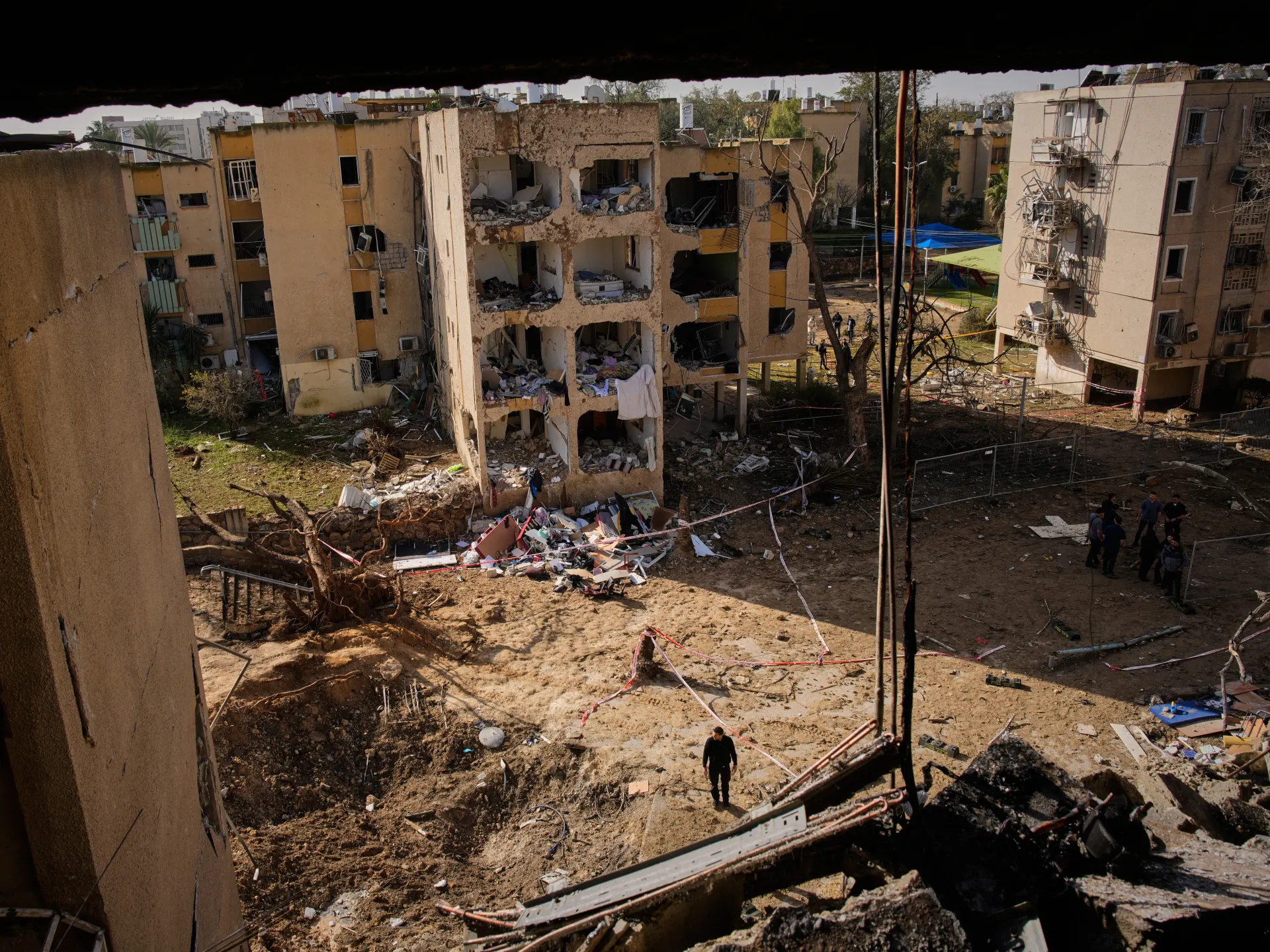
Iranian missiles have struck the towns of Arad and Dimona near an Israeli nuclear research centre in what Iran says was a response to an Israeli attack on its Natanz nuclear facility in Isfahan province.
At least 180 people were wounded in Saturday’s attack, and hundreds of people have been evacuated from the strategic towns as the Israeli-United States war on Iran is seemingly entering a new, more lethal phase of fighting.
Recommended Stories
list of 3 itemsend of list
Israeli Prime Minister Benjamin Netanyahu said his country had a “very difficult evening in the battle for our future”. There have been at least 4,564 people wounded in Israel, according to the Ministry of Health, since the start of the war on February 28.
Analysts said that while Israel has regularly waged military campaigns on Gaza, the occupied West Bank, Lebanon and elsewhere, it is rare for the Israeli public to feel the effects of war like it has over the past three weeks.
In Palestinian territory, including Gaza, Israeli forces have used disproportionate force against armed groups, who use rudimentary rockets to fire at Israel. Israel’s war on Gaza has been called a genocide by scholars and rights groups.
With Saturday’s high casualty count, the attacks in Arad and Dimona raise a question: Has Israel underestimated Iranian military capabilities?
What weapons is Iran using?
Defence analysts described Iran’s missile programme as the Middle East’s largest and most varied. Developed over decades, it contains ballistic and cruise missiles and is designed to give Tehran reach even despite its lack of a modern air force.
Iran has short- and medium-range missile systems and longer-range land-attack and antiship cruise missiles.
Iran’s short-range ballistic missiles have a range of roughly 150km to 800km (93 to 500 miles) and are built for nearby military targets and rapid regional strikes.
Their core systems include the Fateh variants: Zolfaghar, Qiam-1 and older Shahab-1/2 missiles. Their shorter range can be an advantage in a crisis. They can be launched in volleys, compressing warning times and making pre-emption harder.
Those medium-range systems include the Shahab-3, Emad, Ghadr-1, the Khorramshahr variants and Sejjil. They also have newer designs like Kheibar Shekan and Haj Qassem.
Iran’s land-attack and antiship cruise missiles include the Soumar, Ya-Ali and the Quds variants, Hoveyzeh, Paveh and Ra’ad.
The longest reaching ballistic missiles, the Soumar, have a range of 2,000km to 2,500km (1,243 to 1,553 miles). However, it was reported that two Iranian missiles were fired late on Thursday or early on Friday on Diego Garcia, the site of a joint US-United Kingdom military base in the Indian Ocean that is 4,000km (2,485 miles) from Iran. The UK said the attack failed, and an Iranian official denied firing the missile.
Former Iranian Supreme Leader Ali Khamenei had previously limited Iranian missile ranges to 2,200km (1,367 miles) but removed that limit after Israel’s 12-day war on Iran in June. The US joined Israel in that war as well, carrying out one day of attacks on Iran’s three main nuclear facilities.
“Iran has also used cluster munitions in its attacks on Israel. Each kind of warhead the Iranians have also uses a cluster warhead,” Uzi Rubin, founding director of Israel’s missile defence programme and a senior fellow at the Jerusalem Institute for Strategy and Security, told the US news agency Media Line.
What is a cluster munition or warhead?
Instead of a single explosive payload, a cluster warhead disperses multiple bomblets.
“The tip of the missile, instead of containing a big barrel of explosives, contains a mechanism which holds on to a lot of small bombs. And when the missile approaches the target, it opens its skin, it peels off and it spins around and the bomblets are released and released into space and fall on the ground,” Rubin told Media Line.
He added that Iranian cluster warheads may contain 20 to 30 bomblets or 70 to 80, depending on the missile.
These munitions are not new for Iran either. Iran reportedly also used cluster munitions in the 12-day war.
Amnesty International called Iran’s use of cluster munitions during that war a flagrant violation of international humanitarian law while Israel has also been accused of using cluster bombs in Lebanon.
Cluster munitions were banned in 2008 when the Convention on Cluster Munitions was adopted. Neither Iran nor Israel are signatories to the convention.
Why are they making an impact now?
An Israeli military spokesman said Israel’s air defence systems failed to intercept some of the Iranian missiles that hit Arad and Dimona despite being activated. He said Iran’s weaponry was not “special or unfamiliar” and an investigation was under way.
So why are these cluster munitions now making an impact? There are a few reasons.
For a ballistic missile equipped with cluster bomblets to be intercepted, it must happen before the payload opens and releases the submunitions. After the payload opens, the missile goes from a single point of attack to multiple points, making it difficult to stop.
On Thursday, The Times of Israel reported that the Israeli air force will start conserving interceptors. Military officials reportedly said at the time that Iranian cluster bombs are unlikely to cause significant harm if people have taken shelter and, therefore, may avoid shooting down some of them.
What is next?
In the next stage of the war, Iran, the US and Israel may continue to target important infrastructure.
The US and Israel struck Iran’s Natanz nuclear facility on Saturday, according to the Iranian Atomic Energy Organisation. This facility in central Iran is one of the country’s most important uranium enrichment sites, about 220km (135 miles) southeast of Tehran.
Israel previously struck fuel storage facilities in Tehran, leading to vast, toxic smoke over the Iranian capital. For its part, the US previously hit Kharg Island, Iran’s oil export hub, and threatened to do it again.
Iran has essentially closed the Strait of Hormuz, a vital chokepoint for global shipping and oil transport, and has targeted military bases and crucial energy infrastructure across Arab Gulf countries.
US President Donald Trump demanded the reopening of the strait and threatened to begin hitting energy infrastructure should Iran not comply.
“If Iran doesn’t FULLY OPEN, WITHOUT THREAT, the Strait of Hormuz, within 48 HOURS from this exact point in time, the United States of America will hit and obliterate their various POWER PLANTS, STARTING WITH THE BIGGEST ONE FIRST,” Trump wrote on Truth Social at 23:44 GMT on Saturday.
JESSIE J has been rushed to hospital following a car injury which left her with fears she’d ‘broken her neck’.
The singer, 37, has undergone an MRI scan following the incident as she updated fans on her health scare.
Sign up for the Showbiz newsletter
Thank you!
Jessie J was rushed to hospital for an MRI Scan following a shock car injuryCredit: instagram/@jessiejThe incident left her with fears she’d ‘broken her neck’Credit: instagram/@jessiejJessie has updated fans on her recovery as she continues to performCredit: instagram/@jessiej
Jessie is currently in China for her No Secrets Tour and suffered an unlikely injury after hitting her head on the roof of a car.
Taking to Instagram, the Price Tag hitmaker shared a clip of her climbing into a black vehicle at her latest concert, whilst admitting she “didn’t mind squashing in the back”.
The video then cuts to Jessie in hospital undergoing an MRI scan after suffering the neck injury.
In an additional update, whilst backstage at one of her shows, Jessie goes on to relay the severity of her condition.
But the star now seems to be doing well and is back performing shows just under a year since her diagnosis.
Jessie J diagnosed with breast cancer in 2025Credit: PAJessie underwent two surgeries during her health battle which included a mastectomyCredit: Getty
In 1994, then House Speaker Newt Gingrich promised to post all congressional proceedings on the Internet as a way of launching what he called a “civilizational upheaval” in which “regular people in little towns”–not well-moneyed lobbyists–would manage affairs in Washington. In 1996, the representative from Georgia, swayed by the futurism of writer Alvin Toffler, helped pass the Electronic Freedom of Information Act, which required federal agencies to grant Americans prompt access to any information in their databases that could help “ensure an informed citizenry.”
Three years later, Gingrich’s revolution, far from online, is nowhere in sight. Rather than complying with the 1996 law, most parts of the executive, legislative and judicial branches of the U.S. government stand in blatant violation of it.
While the Supreme Court of Mongolia has its own official Web site, the U.S. Supreme Court doesn’t, forcing Americans to search through unofficial Web sites in hope of finding its briefs and opinions. While the Congressional Research Service makes its reports on vital issues like HMO reform instantly available online to legislators, taxpayers, who fund those studies, can get them only through the mail from their members of Congress.
If you are a soldier who believes he was made ill by the military’s anthrax vaccine, for example, you might want to know what was said in Tuesday’s hearing of the House Committee on Government Reform, in which Rep. Henry A. Waxman (D-Los Angeles) and leading scientists discussed how the government should weigh a vaccine’s risks against its benefits. The full text of the hearing was available Tuesday to anyone who could afford a subscription to a private online data service.
Those hoping to access such supposedly public information on the Web, however, were out of luck. The House Government Reform Committee’s Web site lists transcripts from only a hodgepodge of committee hearings. The most recent transcript available at that site is from June.
Today, Sens. Patrick J. Leahy (D-Vt.) and John McCain (R-Ariz.) plan to hold a press conference in which they will release a study by two Washington public-interest groups on how federal agencies have failed to comply with the 1996 law. McCain and Leahy, along with David E. Price (D-N.C.) and Christopher Shays (R-Conn.) in the House, have introduced similar bills to require Congress to put Congressional Research Service documents online within 30 days. The measures currently are in the House and Senate rules committees.
Fundamental change won’t occur until national leaders like President Clinton, Senate Majority Leader Trent Lott (R-Miss.) and House Speaker J. Dennis Hastert (R-Ill.) call upon all government agencies to honor the letter and spirit of the 1996 law.
Reforming the Congressional Research Service is only a baby step toward the revolution that legislators promised so bombastically. But it’s as good a place as any to start.
To Take Action: Rep. David Dreier (R-San Dimas), chairman, House Committee on Rules, (202) 225-2305, www.house.gov/dreier, click on “Feedback”; Sen. Mitch McConnell (R-Ky.), chairman, Senate Committee on Rules and Administration, (202) 224-2541, e-mail, senator@mcconnell.senate.gov
Kaleena Smith averaged 31 points, seven assists and four steals a game this season while playing for the No. 1 program in the Southland, but her expanded leadership role is what earns her the honor of The Times’ girls’ basketball player of the year.
The 5-foot-6 junior point guard marshaled Ontario Christian to the CIF state championships in Sacramento for the first time in the program’s history and along the way her voice spoke almost as loudly as her game — surprising for someone who is not talkative by nature.
“Her numbers speak for themselves but the biggest difference in Kaleena this season has been her leadership,” Knights coach Aundre Cummings, said. “She’s always coming to practice first and leaving last, which teammates respect, but also knowing when to speak up.”
Smith has been nicknamed “Special K” for her talent and charisma, traits that make her one of the top national recruits in the class of 2027. She is garnering attention from multiple college programs. USC women’s coach Lindsay Gottlieb was even on hand to witness Smith score 23 points and contribute six assists in the Southern California regional semifinals against Etiwanda on March 8 and the state championship game against Archbishop Mitty at Golden 1 Center in Sacramento.
“I’m being more vocal, yes, because I’m gonna have to do that in college,” said Smith, who spent countless hours refining her mid-range jumper this winter. “As captain it’s one of my responsibilities.”
One hundred games into her high school career, Smith is living up to the hype thrust upon her when she was named MaxPreps’ national freshman of the Year in 2024. She passed the 2,000-point plateau when she scored 51 points against Esperanza in November.
Smith paced Ontario Christian to the Southern Section Open Division title as a sophomore and although the Knights were denied a repeat (she had 30 points and five assists in a finals defeat to Sierra Canyon) her stats are better in every significant category. Intertwined with her competitive spirit and winning mindset is the maturity and confidence of an upperclassman.
“Her leadership is what stands out,” sophomore teammate Tatianna Griffin said. “She’s a very quiet person. I’m not sure it comes naturally or not but when she says something we listen.”
Griffin’s own game has blossomed because of Smith’s willingness to give her the ball in clutch situations, and Smith has been a mentor to freshman Chloe Jenkins, who led the team in rebounds (11.3 per game).
Adding leadership to her basketball IQ, court vision, defense, quickness, shooting, passing and dribbling has made Smith a complete player, one who is poised for a senior season worth talking about.
As the United States-Israeli war on Iran enters its fourth week, the conflict seems to have escalated beyond President Donald Trump’s control.
The Iranian government has been able to endure the killings of its top political and military leaders and has launched retaliatory attacks on Israel and Gulf countries despite weeks of air strikes.
Recommended Stories
list of 4 itemsend of list
Tehran has also been able to impose a de facto blockade of the Strait of Hormuz, a narrow waterway through which a fifth of the world’s oil and liquefied natural gas supplies pass, sending oil prices soaring. Analysts said the conflict risks unleashing a global recession. And that has put pressure on Trump, prompting his administration to allow the sale of sanctioned Russian oil to try to ease the energy crisis and pressure allies to police the strait, so far unsuccessfully.
Trump’s response in how to deal with the situation has been anything but coherent.
On Saturday, Trump upped the ante, issuing a threat to “obliterate” Iran’s power plants if Tehran does not reopen the Strait of Hormuz within 48 hours. This came a day after he said the US was “winding down” its military operations in Iran.
Analysts said Trump launched the war without a clear goal and misjudged how Tehran would respond. The conflict has expanded across the Middle East.
So is Trump looking to exit the war – or escalate it?
From left, US Secretary of State Marco Rubio, President Donald Trump and Defense Secretary Pete Hegseth attend a cabinet meeting at the White House [File: Evan Vucci/AP]
Trump’s mixed messaging on the Iran war
Here’s a brief look at the changing statements from Washington:
Is the war winding up or widening?
While one statement from Trump signalled that the US is considering “winding down” the war on Iran, another one indicated that the conflict would widen in the coming days.
On Saturday, Trump posted on his Truth Social platform that Washington was “very close to meeting our objectives as we consider winding down our great Military efforts in the Middle East with respect to the Terrorist Regime of Iran”.
Trump listed the goals of the war as: completely degrading Iran’s missile capability, destroying its defence industrial base, eliminating the Iranian navy and air force, never allowing Iran to get even close to having nuclear weapons, protecting Middle Eastern allies, and guarding and policing the Strait of Hormuz.
Both Trump and Israeli Prime Minister Benjamin Netanyahu have claimed repeatedly in the past few days that Iranian military capabilities have been “completely destroyed” even as Tehran continues to retaliate against Israel and strike countries in the region.
US military officials said they have carried out heavy bombardments of Iran’s coast, including with bunker buster bombs, but still have not been able to limit Tehran’s capacity to disrupt the Strait of Hormuz.
On Saturday, Trump said the US “has blown Iran off of the map” and insisted that he has “met my own goals … and weeks ahead of schedule!” He also reiterated that Iran’s “leadership is gone, their navy and air force are dead, they have absolutely no defense, and they want to make a deal”.
Iranian leaders have consistently denied reaching out to the US with a ceasefire offer.
Just an hour later, Trump returned to his Truth Social platform with a warning for Iran.
“If Iran doesn’t FULLY OPEN, WITHOUT THREAT, the Strait of Hormuz, within 48 HOURS from this exact point in time, the United States of America will hit and obliterate their various POWER PLANTS, STARTING WITH THE BIGGEST ONE FIRST!” Trump wrote.
Iran has since responded by saying it will hit energy sites across the Middle East if its power facilities are targeted. It has already fired hundreds of missiles and drones on Gulf countries, targeting US assets as well as energy facilities.
Between Trump’s claims to be “winding down” operations and upping the ante later, his administration announced it is sending three more warships to the Middle East with about 2,500 additional Marines.
The US military said about 50,000 military personnel are already deployed for the war against Iran.
(Al Jazeera)
When will the war on Iran end?
That has been among the foremost questions posed to US officials, including Trump, since the war on Iran was launched on February 28.
The next day, Trump told the Daily Mail that “it will be four weeks or so. It’s always been about a four-week process.” A day later, Trump said at the White House: “We projected four to five weeks, but we have capability to go far longer than that.”
On March 8, Defense Secretary Pete Hegseth told the CBS TV network’s 60 Minutes programme: “This is only just the beginning.” The next day, the US president told the same channel that he thinks “the war is very complete, pretty much.” And the US military operation was “way ahead of schedule”.
Then, on March 9, Trump said one could say the war is “both complete and just beginning”. Later the same day, the president said: “We’ve already won in many ways, but we haven’t won enough” and promised to go further and harsher against Iran.
On March 11, Trump said: “We don’t want to leave early, do we? We’ve got to finish the job.”
Why did US and Israel launch strikes on Iran?
Responses to this question are perhaps the most telling about US posturing in the war against Iran.
On March 2, Hegseth said the attacks were aimed at ending “47 long years” of war by “the expansionist and Islamist regime in Tehran” and were launched because Iran refused to negotiate with the US.
Hours later, Marco Rubio, the secretary of state, told reporters the US knew Israel was about to strike Iran, adding that the Trump administration believed the US needed to launch a pre-emptive strike before Iran’s retaliation potentially targeted US forces. “We went proactively in a defensive way to prevent them from inflicting higher damage,” he said.
This sparked a massive row in Washington with critics saying Israel had forced the US into war with Iran. Soon Trump rebutted his top diplomat, saying: “They [Iran] were going to attack. If we didn’t do it, they were going to attack first. … So if anything, I might have forced Israel’s hand.”
The next day, the White House press secretary, Karoline Leavitt, concluded that Trump just had a “good feeling” that Iran would strike so Washington attacked Tehran.
The launch of the war came as Washington and Tehran were scheduled to meet for another round of talks that were started late last year. Before the war, their Omani mediator said a deal was “within reach”.
The US and Israeli assertion that Tehran was on the verge of making a nuclear bomb has not been backed up by the United Nations nuclear watchdog. Last week, US Director of National Intelligence Tulsi Gabbard also told Congress that Iran was not in a position to make an atomic bomb.
Some analysts said the Trump administration was convinced to go to war by Netanyahu, who has been seeking US military intervention in Iran for decades. They said Trump was buoyed by a swift US military operation in Venezuela and did not think through Iran’s strengths before going into the war. In January, the US military abducted President Nicolas Maduro in a military operation in Caracas that took two and a half hours.
US President Donald Trump, left, greets Israeli Prime Minister Benjamin Netanyahu at the White House on September 29, 2025, on the fourth of his six visits to the US during Trump’s second term, which began in January 2025 [Alex Brandon/AP]
What does the conflicting messaging mean for US strategy?
Analysts said the moving goalposts in the Iran war show the policy limits of the current Trump administration as well as its strategy, to some extent, of keeping off-ramps available.
Zeidon Alkinani, a Middle East analyst at the Arab Perspectives Institute, told Al Jazeera that in the earlier days of the hostilities, there appeared to be clearer targets and limited objectives.
“There now seems to be a more chaotic reaction,” he said. He described the attacks as increasingly reciprocal, suggesting strikes on oil or energy facilities could prompt further escalation.
Last week, Iran attacked energy facilities in Qatar and caused “significant damage”, knocking out 17 percent of Qatar’s liquefied natural gas (LNG) export capacity. Qatar produces 20 percent of global LNG supplies. Iran said the attack was in retaliation for Israeli attacks on a gas plant.
Paolo von Schirach, president of the Global Policy Institute, told Al Jazeera that Trump changes his mind “very quickly” and it is hard to predict what his next step could be in the war on Iran.
The analyst said it was unclear to him what “tools” Trump has to end the war.
“We look at his message saying the war is winding down. OK, good. Things are quiet. Maybe there is an off-ramp somehow. But now he says that if the Iranians don’t open the Strait of Hormuz, then we [the US] are going to unleash hell and what have you,” von Schirach noted.
“It is not quite clear to me what he wants and what the tools are to accomplish this.”
Von Schirach added that it would be difficult to predict whether the US could force Iran into submission, given its size and population. Using as a reference Iraq, where 150,000 American soldiers were deployed during the Second Gulf War, the analyst predicted that the US might need as many as half a million soldiers if Trump “wants to take over Iran”.
Tehran, Iran – Military and political authorities in Iran are projecting a message that “victory” is near as war with the United States and Israel continues to escalate, and air strikes and assassination attempts are reported across the country.
Massive joint US-Israeli air raids were recorded in multiple areas of the capital Tehran overnight into Sunday, and in central Iran’s Isfahan city in the morning, a day after Dezful and Andimeshk in western Khuzestan and several other cities were hit.
Recommended Stories
list of 4 itemsend of list
Israeli warplanes also conducted two separate sets of precision strikes on privately-owned residential units located in small towns in the green provinces of Gilan and Mazandaran to the north on Saturday, which appeared to be assassination attempts on officials.
Local authorities confirmed that several people were killed, but did not elaborate. Israeli and US media said a senior drone commander is believed to have been killed.
Nevertheless, top officials in Tehran said they were unyielding and focused on retaliatory attacks.
Parliament speaker and former Islamic Revolutionary Guard Corps (IRGC) commander Mohammad Bagher Ghalibaf said the fact that Iranian missiles struck Israel’s Dimona overnight shows that a “new stage of battle” has started where “Israel’s skies are defenceless”.
Majid Mousavi, aerospace commander of the IRGC, echoed the same statement about control over Israeli skies in a post on X on Saturday night, which came in response to the US and Israel declaring dominance over Iranian airspace.
“Pinpoint precision Seyed Majid, hit Dimona again,” chanted flag-waving pro-establishment supporters shown on state television broadcasts, calling on Mousavi for action.
Israel said more than 180 people were injured in Dimona, a southern city where its key nuclear facilities are also located, in addition to nearby Arad.
Ahmad-Reza Radan – Iran’s hardline police chief, who has been cited by Israeli media as being a target for assassination along with Mousavi, Ghalibaf and others – was seen briefly addressing a group of supporters in Tehran on Saturday night.
“Trump first threatened the European Union, then begged. Today, he has said he will come take Greenland if the Europeans don’t come. I want to tell the European Union that if they can’t hold on to Greenland, then send a request and we will come preserve it,” he said, followed by chants of “Alla akbar” (God is greatest).
Defence Ministry spokesman Reza Talaei-Nik said in a statement that attacks across the region will continue “until the complete halt and surrender of the enemy”.
The taunts are in line with the state’s messaging in recent days, including a written statement attributed to Mojtaba Khamenei, who was selected as the supreme leader after his father Ayatollah Ali Khamenei was assassinated on the first day of the war, but who has not been seen or heard.
The message said Iran’s enemies were being “defeated” and there is “particular unity” among supporters of the theocratic establishment.
Over the past week, the country’s top security official, commanders of the paramilitary Basij force of the IRGC, the government’s intelligence minister, and a number of other military and security personnel have been among those killed.
The government reports that a large number of residential buildings, hospitals, schools and other civilian facilities have also been impacted during the war, as state supporters control the city streets, squares and mosques to counter potential anti-government protests.
‘Say goodbye to electricity!’
The Iranian rhetoric quickly escalated on Sunday after US President Donald Trump issued a 48-hour ultimatum for Tehran to reopen the strategic Strait of Hormuz, a key water route for global energy export, or face strikes on its power plants.
In response, Iranian politicians and armed forces said they would strike back harder against the region’s energy facilities.
The IRGC-affiliated Mehr news agency released a map with graphics that showed power plants across the region, including in the United Arab Emirates, Saudi Arabia, Qatar and Kuwait, that could be attacked if Iranian facilities are hit. An accompanying message read, “Say goodbye to electricity!”
On Saturday night, state and IRGC-affiliated media circulated a different map, showing Doha and also marking the central offices of Al Jazeera network as potential targets, and said all residents of the Qatari capital were advised to evacuate immediately.
State television quickly issued a retraction and cited unnamed sources as saying the map was not official, but no explanation was provided about who circulated the image and why.
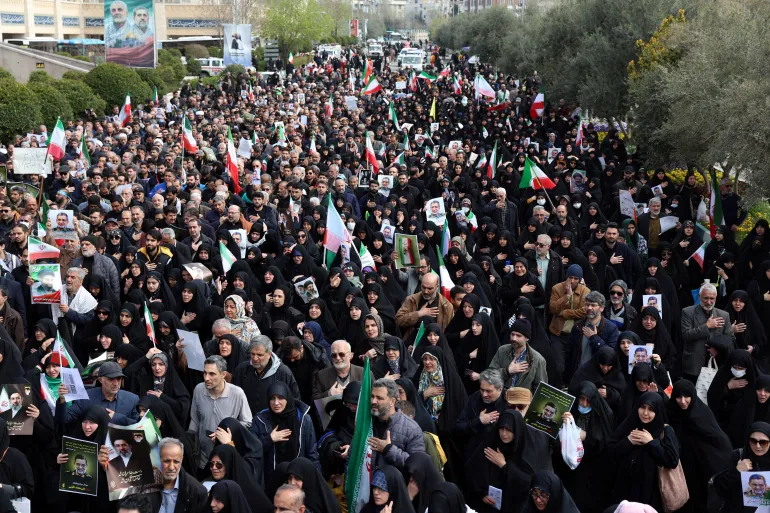
Iranians attend the funeral ceremony of Islamic Revolutionary Guard Corps (IRGC) spokesman Ali Mohammad Naini, who was killed in US-Israeli strikes, in Tehran on March 21, 2026 [AFP]
The all-around promises of escalation, particularly around bombing electricity facilities and other critical civilian infrastructure, have created additional concerns among many Iranians about the impact on daily lives and implications on the country’s future.
“If the main power plants are bombed, it’s not going to be just a brief disruption; it could stop the flow of everything from water to gas,” a Tehran resident told Al Jazeera, asking to remain anonymous due to security concerns. “It would be foolish to just punish the population like that.”
The US-Israeli forces have also struck natural gas facilities in southern Iran and bombed fuel reserves across Tehran, but authorities said fires and damage were contained quickly without creating major disruptions.
In an Instagram post to mark Nowruz, the Persian New Year, iconic footballer and nationally respected figure Ali Daei said this year’s celebrations were different because Iran is grieving for its people killed in the war.
“Wishing for a prosperous and free Iran, away from war and bloodshed, all about welfare and calm,” he wrote, drawing the ire of a number of state media, including the IRGC-affiliated Tasnim, which criticised Daei for not specifically condemning the US and Israel.
Proclamations, warnings under blackout
Meanwhile, the internet remains cut for more than 92 million Iranians for a 23rd day, becoming the longest shutdown in the country’s history, trailed only by a 20-day blackout imposed during the killing of thousands of anti-government protesters in January.
State media outlets continue to focus on successful IRGC attacks and present Iran as a country on the brink of being recognised as a world power, as they refrain from communicating details about the US and Israeli attacks or significant damage sustained.
Alaeddin Boroujerdi, a member of the national security committee of Iran’s parliament, told the state television on Sunday that the IRGC’s overnight attacks against Israel “opened a new page in shifting the balance of power and showed the victory of the Islamic Republic in this imposed war”.
The parliamentary committee’s spokesman, Ebrahim Rezaei, stretched the same line of thinking even further, and said in a post on X that Iran should demand to become a veto-yielding permanent member of the United Nations Security Council as a condition for ending the war. The lawmaker did not say how or when he expected that to happen.
Iran’s government has also demanded war reparations and guarantees against future aggression, but the US and Israel have been pushing to overthrow the Islamic Republic that came to power in a 1979 revolution.
Intelligence authorities advised the Iranian population on Saturday that even being a member of foreign-based news and war footage channels on Telegram and all other social media outlets banned by the state could violate national security laws.
The Iranian judiciary said that such channels are considered “terrorist” outlets and that sending any videos of impact sites or armed state checkpoints on the streets to them could carry maximum penalties like confiscation of assets and even execution.
State security authorities have emphasised that anyone who engages in anti-establishment protests will be treated as an “enemy”.
It’s not the first time the comedian has spoken out about his friendship with Britain’s Got Talent judge Amanda Holden, after fans raised the same question
13:26, 22 Mar 2026Updated 15:45, 22 Mar 2026
Amanda Holden was surprised that fans had doubted their chemistry
Amanda Holden‘s co-star and friend Alan Carr has set the record straight about their on-screen chemistry. The duo front a BBC travel series, in which they help renovate properties across Greece, Italy, and Spain. Along with their hard work, viewers have warmed to the pair’s humorous ways and heartfelt conversations – including a recent sad discussion about Amanda’s stillborn son Theo.
Joining Alan on the latest edition of his podcast, Life Is A Beach, Bob Mortimer discussed what it was like working with his co-star Paul Whitehouse on their series Mortimer and Whitehouse: Gone Fishing.
After admitting that they couldn’t present in a traditional way, he said the duo decided to take a more natural approach – one that has worked well over the years. “They just like it when we’re chatting,” he told Alan, to which he agreed.
“Yes, that’s true – it’s the chemistry people want, and you can’t fake that,” he went on to say.
Alan added that he’s often asked whether he genuinely likes Amanda, despite their obvious camaraderie on TV. “I mean, people go, ‘Do you really like Amanda?’ I couldn’t be in 40-degree heat in Greece knocking down a partition wall with someone I hate.
“Why would I sign up for that? You have to actually like the person, more than like, you have to really go, ‘Oh hello Amanda, right let’s have a laugh, what have you been up to?’ And I think you can’t actually fake that,” he clarified.
This isn’t the first time Alan has addressed questions about their friendship. On a previous episode of the show, Amanda was surprised that fans had doubted their chemistry.
Alan joked that viewers often comment on her distinctive laugh and ask how he “puts up” with it, to which she quipped: “This is an outrage!”.
Clarifying any lingering doubts, Alan added: “No, no, no. We couldn’t do this job if we didn’t like each other – it would be hell.” Amanda added: “There’s not a single other person I could do it with,” to which he replied: “No, it would have to be you.”
While the pair have enjoyed a successful run on the BBC show, they recently snubbed the idea of presenting Strictly Come Dancing together.
Amid speculation that they might replace Tess Daly and Claudia Winkleman, Amanda confirmed on her Heart Radio Breakfast Show with Jamie Theakston: “I want to say now that me and Alan are 100 per cent not doing Strictly. We’re so flattered to be in that mix, but we both are not doing it.”
Speaking to The Daily Mail, the Britain’s Got Talent judge insisted she also wouldn’t be able to fit the role into her already busy schedule juggling family life and her career.
“You see, I am already part of a big show, and I’ll happily carry on watching Strictly from the comfort of my lounge, but it takes up too many weekends, I’ve got to remember that I have children and a husband,” she revealed.
“But I just hope that they still have two females doing it, that’s my big thing. They need somebody super funny, and somebody that you wouldn’t expect.”
Putting forward who she believes could be good for the positions, she suggested The One Show’s Alex Jones, BBC Radio star Zoe Ball and comedians Katherine Ryan and Daisy May Cooper.
WASHINGTON — In session for rare weekend votes with the election fast approaching, Congress acted Saturday to keep the government running for another 24 hours but made little apparent progress in breaking a budget impasse.
Despite the action of the House and the Senate on the eighth stopgap spending measure since the fiscal year began Oct. 1, a weird limbo enveloped the Capitol as neither Republicans nor Democrats predicted a quick deal. Gone for the time being was the usual year-end pressure to adjourn. Instead, both sides seemed willing to wait to see who would blink first.
Negotiations focused on the handful of issues still dividing the parties, issues that might or might not influence voters at the polls Nov. 7. Among them were tax credits for school construction, proposed workplace safety regulations and measures to ease immigration law.
President Clinton, who forced the weekend votes by insisting that lawmakers pass daily stopgap budget measures, urged the Republican-led Congress to wrap up its budget work and include an increase in the federal minimum wage.
“I’m not trying to harass [Congress],” Clinton said at a news conference. “I’m just trying to get them to finish their job and go home.”
Clinton cited an agriculture spending bill he signed Saturday as a model of bipartisanship. The president said he signed the bill–which included milestone language easing a decades-old trade embargo on Cuba to allow U.S. agricultural exports–even though he was critical of provisions that would limit the effect of the trade opening.
In a GOP radio address, New Jersey Gov. Christine Todd Whitman called the budget showdown “a case in point” of Washington gridlock that voters will punish.
“I think we are ready for a change,” Whitman said. “And the difference between the parties is striking. Republicans at all levels of government work with people to accomplish results–not make excuses for why we can’t even try to solve them.”
Republican congressional leaders note that they wrapped a minimum-wage increase Clinton supports into tax legislation that he is holding up with a promised veto. And they accuse the White House of constantly shifting its goals on the two government spending bills for fiscal 2001 that have not been finalized.
“I tell you, I’ve reached the end of my rope,” said Sen. Ted Stevens (R-Alaska), chairman of the Senate Appropriations Committee. To illustrate his frustration, Stevens said in an interview on the Capitol steps that the administration had sought $3.5 billion in extra spending on a bill containing $106.8 billion for discretionary spending on education, health and other programs. Then $4 billion. Then $4.1 billion. And now, he said, the demand is up to $4.5 billion.
“What can you do?” Stevens asked.
To register his protest, Stevens was one of two senators to vote against the daily budget resolution. The other was Sen. Patrick J. Leahy (D-Vt.). Sixty-seven senators voted for the resolution.
Thirty-one senators–11 Democrats and 20 Republicans–were absent for what the chamber regarded as a ritual vote. Many missed it because of campaign events, a few for health reasons. California’s Democratic senators, Dianne Feinstein–who is running for reelection–and Barbara Boxer, were both absent.
The House vote for the stopgap measure was 339 to 7. All seven dissenters were Democrats, including Rep. George Miller of Martinez. Of the 86 representatives who were absent, 42 were Republicans and 44 Democrats.
Twelve of California’s 52-member House delegation did not vote. They were Feinstein’s opponent in the Senate race, GOP Rep. Tom Campbell of San Jose, and Reps. Brian P. Bilbray (R-San Diego), Ken Calvert (R-Riverside), Christopher Cox (R-Newport Beach), Matthew G. Martinez (R-Monterey Park), Howard P. “Buck” McKeon (R-Santa Clarita), George P. Radanovich (R-Mariposa), Joe Baca (D-Rialto), Xavier Becerra (D-Los Angeles), Tom Lantos (D-San Mateo), Pete Stark (D-Hayward) and Maxine Waters (D-Los Angeles).
The roll call showed the political importance of the vote to many House members–all wary of the potential charge that their absence would reflect an insensitivity to the possibility of a government shutdown.
Bilbray was the only California absentee in a tough reelection race. Other California incumbents in contested races, such as Reps. James E. Rogan (R-Glendale), Steven T. Kuykendall (R-Rancho Palos Verdes), Calvin Dooley (D-Visalia), Lois Capps (D-Santa Barbara) and Stephen Horn (R-Long Beach), all eschewed campaign events to remain in Washington for the vote.
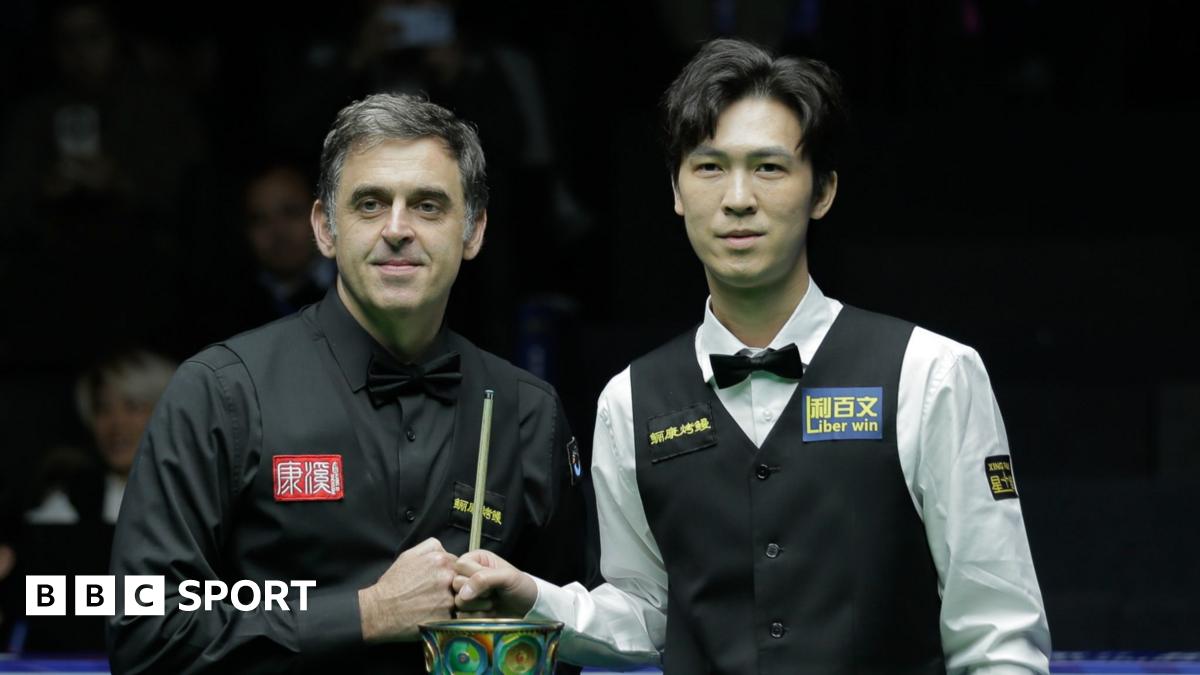
Thailand’s Thepchaiya Un-Nooh produced the snooker of his life, firing in a maximum 147 break and finishing with three consecutive centuries to beat Ronnie O’Sullivan 10-7 in the final of the World Open in Yushan.
The 41st seed toppled world number one Judd Trump in the semi-finals and came back from 4-0 down to beat arguably the sport’s greatest ever player in the final.
O’Sullivan hit the sport’s highest ever break of 153 on his run to a 66th ranking final and the 50-year-old Englishman had looked back to something approaching his best as he hunted down a 42nd ranking title – and first since January 2024.
“I just wanted to try my best because I didn’t know when I might be in another final again,” said 40-year-old Un-Nooh, whose only previous title came in the 2019 Shoot Out.
Seven-time world champion O’Sullivan had started the final quickly, reeling off the opening four frames in a run that included a 124 break, but the Thai world number 39 rattled off six consecutive frames thanks to some heavy scoring that included five breaks over 50.
O’Sullivan countered with three consecutive century breaks – 114, 116 and 136 – to regain the lead in a match of the highest quality, only for his opponent to level with a break of 77 then score three centuries of his own to clinch victory.
Un-Nooh’s unbelievable burst of scoring included breaks of 132 and 131, either side of his nerveless 147 in the penultimate frame, to provide a fitting climax.
The performance earned Un-Nooh a £175,000 purse in a season when he had failed to make it past the last 16 in any other tournament, while O’Sullivan had to be content with a £75,000 prize for the highest break.
“I just want to say well done to Thepchaiya who played unbelievable snooker,” O’Sullivan told the Yushan crowd.
“I watched him play against Judd Trump last night and he made the number one player in the world look second best. I was hoping he wouldn’t play like that today but he did – he gave me a good hiding, really.”
Under the guise of preserving secularism, this law allows the exclusion of people based on their religious identity.
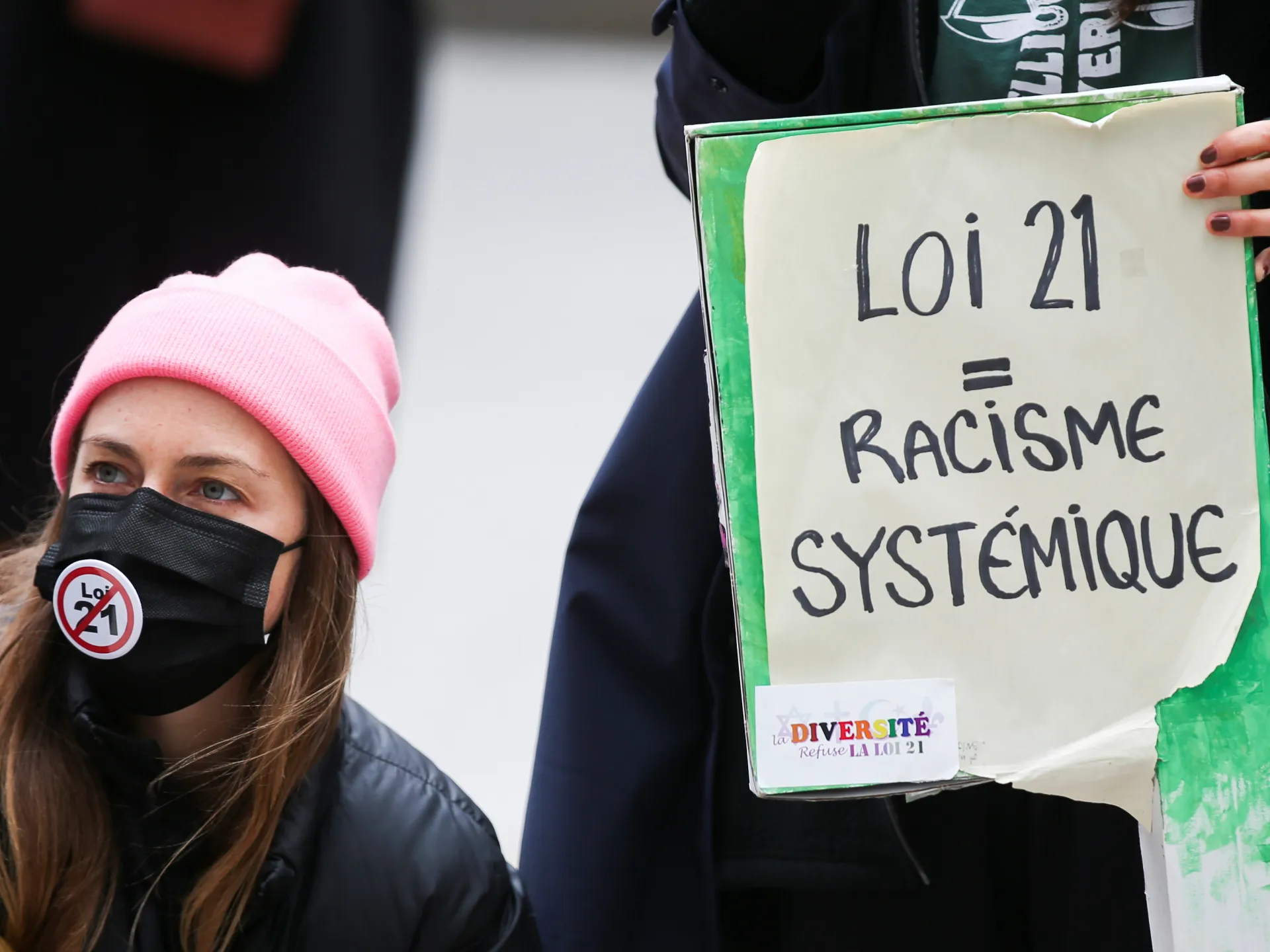
On Monday, the Supreme Court of Canada will begin a four-day hearing for one of the most consequential constitutional cases in the country’s recent history. At issue is Quebec’s so-called “secularism law”, known as Bill 21 – a law enacted in 2019 that prohibits certain public sector workers from wearing visible religious symbols at work.
It bars many public sector employees, including teachers, prosecutors, police officers, and judges, from wearing religious symbols such as hijabs, turbans, kippahs, and other visible expressions of faith while at work.
There is much at stake in this case that raises fundamental questions about religious freedom, equality, and the limits of state power in a constitutional democracy. In addition, another significant issue is that to get the bill passed, Quebec’s government had used the “notwithstanding clause”, a unique provision in Canadian law that allows it to override fundamental rights and freedoms. No other constitutional democracy in the world has a similar blanket override of fundamental rights and freedoms.
The Quebec government claims that the law is necessary to preserve the religious neutrality of the state. Yet Bill 21 does the opposite: by forcing some individuals to choose between their profession and their religious identity, the Quebec government is not remaining neutral – it is effectively excluding people of faith from public sector employment.
The use of this extraordinary, and until recently rarely used, constitutional mechanism has turned the spotlight on Bill 21 beyond the borders of Quebec and the debate over secularism and religious freedoms. It has become a test of how far a democratic government can go in limiting fundamental rights and freedoms.
Evidence before the courts shows that Bill 21 affects religious people of many faiths, including Jewish men who wear kippahs and Sikh men and women who wear turbans; but its impact falls particularly heavily on Muslim women who wear the hijab. For many Muslim women who wear headscarves, teaching and other public service careers have effectively been closed off.
The message of exclusion that this law sends to young people is especially troubling. Generations of young people in Quebec are being told that their full participation in public life requires abandoning visible aspects of their identity.
This is why the National Council of Canadian Muslims and the Canadian Civil Liberties Association launched the constitutional challenge against Bill 21. The Supreme Court of Canada must consider the implications, and possible limitations, of allowing governments to sidestep rights protections through pre-emptive use of constitutional override powers. The court’s decision will help determine whether constitutional rights in Canada remain meaningful constraints on government power, or whether they can be suspended whenever politically convenient.
These questions extend far beyond Canada. Across Europe and elsewhere, debates about secularism have increasingly centred on restrictions targeting religious expression, often impacting Muslim women in particular.
Canada often prides itself on being a model of multicultural democracy, one that accommodates diversity. Bill 21 challenges that reputation by testing whether neutrality can coexist with policies that effectively exclude people of visible faith from public service.
True secularism does not demand the erasure of religious identity. A neutral state does not require citizens to shed visible expressions of belief in order to participate fully in public life.
The Supreme Court of Canada now has the opportunity to reaffirm these principles and clarify that constitutional rights cannot be easily set aside. At a time when countries around the world are grappling with questions of belonging, pluralism, and the rights of minorities, the Canadian court’s ruling will send an important signal about whether liberal democracies are willing to uphold their commitments to freedom and equality.
We say this is not an abstract idea, but an imperative to demonstrate that commitments to freedom and equality are more than mere words.
The views expressed in this article are the author’s own and do not necessarily reflect Al Jazeera’s editorial stance.
Neil Sedaka, the singer and songwriter whose signature hits include “Calendar Girl” and “Breaking Up Is Hard to Do,” died of atherosclerotic cardiovascular disease.
The condition is caused by the buildup of plaque — meaning fats, cholesterol and other substances — in and on the artery walls, which can lead to events such as heart attacks, strokes and aneurysms. According to the American Heart Assn., atherosclerotic cardiovascular disease is the leading cause of death worldwide.
The musician’s death certificate, published Wednesday by the New York Post, also listed kidney failure as a contributing factor.
Sedaka died Feb. 27 in Los Angeles at age 86. The songwriter’s family previously told The Times that his death was sudden.
“Our family is devastated by the sudden passing of our beloved husband, father and grandfather, Neil Sedaka,” their statement read. “A true rock and roll legend, an inspiration to millions, but most importantly, at least to those of us who were lucky enough to know him, an incredible human being who will be deeply missed.”
Born and raised in Brooklyn, N.Y., Sedaka was a Juilliard-trained classical pianist who translated his skill to pop stardom in the 1960s. His popularity as a performer waxed and waned over the years, but he maintained a steady career writing hits for other artists for decades, collaborating with lyricists such as Howard Greenfield.
“Songwriting is a difficult undertaking that gets harder and harder because you have to top your past work,” Sedaka told The Times in 1996. “You have to keep proving yourself. … It’s wonderful to sing ‘Calendar Girl’ and ‘Breaking Up Is Hard to Do,’ but you need more than that. You have to break new ground. As an artist, I have to choose what I feel is good and hope that the public will go along with it.”
Sedaka is survived by his wife Leba; children Dara and Marc; and three grandchildren.
The provided text serves as an informational overview regarding Bihar Divas, an annual event commemorating the establishment of the Indian state of Bihar. This holiday traces its roots back to 1912, when the territory was officially separated from the Bengal Presidency during British rule. Beyond its administrative history, the source highlights the region’s rich cultural heritage, noting its significance to both Buddhists and Hindus through ancient landmarks and symbols. Modern celebrations involve large-scale festivals and government-sponsored cultural showcases designed to foster public participation and honor local traditions. Overall, the article functions as a historical and cultural guide …
NEW YORK — Arkansas Gov. Bill Clinton acknowledged Sunday that he had experimented with marijuana while a 22-year-old student in England in the late 1960s, an admission that could raise doubts about his past candor in answering questions about his personal conduct.
For five years, the 45-year-old Clinton has answered questions about whether he had ever used drugs by saying he had never broken a U.S. law. During a televised debate here with Democratic presidential rival Edmund G. (Jerry) Brown Jr., a questioner for the first time asked Clinton explicitly whether he had ever broken either a state, federal or a foreign drug law.
“When I was in England I experimented with marijuana a time or two,” he answered on the WCBS-TV broadcast, “and I didn’t like it. I didn’t inhale and never tried it again.”
Asked the same series of questions, Brown answered bluntly: “No.”
Clinton’s disclosure, which overshadowed one of the most substantive exchanges of the political season between the two rivals, is hardly unusual for a person of Clinton’s generation. Two of the Democratic presidential candidates in 1988 acknowledged similar behavior. And nothing Clinton said about his use of marijuana contradicted what he had said before.
But his decision until now to fend off drug-use queries with a narrow response, which could mislead voters into thinking he had never used drugs of any kind, was likely to add to concerns of those who regard him as less than straightforward.
Clinton said he did not believe the episode would hurt his candidacy, noting that other politicians had admitted to using marijuana and had suffered no apparent electoral consequences. He defended his previous denials by saying he had seen no need to volunteer a reply to something he had not been directly asked.
“Nobody’s ever asked me that question point blank,” he said, adding: “I said I’ve never broken the drug laws of my country, and that’s the absolute truth.”
It was the second time in a week that Clinton found it necessary to clarify previous statements on drugs.
On Thursday, a Clinton campaign aide, Betsey Wright, volunteered to the Los Angeles Times that the governor had never used cocaine or knowingly been around it.
The Times had contacted Wright to ask about a state police drug investigation in the mid-1980s of Clinton’s half-brother and a political contributor. After answering the questions, Wright said: “I assume from the questions that you were implying guilt by association in a state where everybody is associated. For that reason, when I verified with Gov. Clinton the answers to some of the questions, I asked him the following questions:
“ ‘Bill, have you ever used cocaine?’
“He replied, ‘No.’
“I said, ‘Bill, have you ever been in a room where you were aware there was cocaine?’
“He replied, ‘No.’ ”
When asked Friday why she had posed questions never asked by The Times, Wright said she had heard “rumors” that reporters were trying to place Clinton at parties where cocaine had been used. “I decided it was best to go ahead and put the issue on the table,” she said. (Interviews by The Times with some people said to have been in attendance at those parties have produced no evidence linking Clinton to the drug.)
Later Friday, Clinton called The Times to say that the campaign had not intended to provoke a story quoting him as denying cocaine use. Senior Clinton campaign officials said they feared such a story might be seen by the public as raising yet another question about his personal life.
Clinton’s Sunday acknowledgement of marijuana use while a Rhodes Scholar at Oxford came only three days after Clinton was asked by a member of the editorial board of the New York Daily News whether he had been asked previously about his drug use.
Clinton said that he had been asked such questions, and that his answer had always been that he had never violated a U.S. law.
Clinton campaign officials later described the new admission as an “elaboration” of Clinton’s previous comments and suggested that it and the earlier, narrow denials were merely two ways of looking at the same issue.
“Bill Clinton told the truth at every step of the way,” his chief strategist, James Carville, said. “It’s like the old saying about the guy who’s being sworn into office and he’s asked, ‘Do you swear to tell the truth, the whole truth, and nothing but the truth?’ and he answers, ‘Which one do you want?’ ”
Carville and other senior Clinton aides nevertheless expressed concern that the issue would be given undue prominence and further tar their candidate at a time when polls show that a large number of Democratic voters still harbor questions about Clinton’s personal record.
For his part, however, Brown chose not to make an immediate issue either of Clinton’s marijuana use or his handling of questions about it.
After denying that he had violated any drug laws, Brown demanded of a questioner: “Why don’t you lay off this stuff? What you did 10 or 20 years ago is not really relevant.”
But Brown himself was forced during the debate to respond to a new suggestion of impropriety in a Washington Post story detailing his ties to a company that paid a $400,000 settlement to the federal government after being accused of making exaggerated claims about a product said to help treat AIDS.
Brown, who served on the board of directors of a subsidiary to the company, Costa Mesa-based ICN Pharmaceuticals Inc., until he began his presidential campaign, said he had had “nothing to do” with the episode. He said his position gave him “no responsibility and no contact” with the parent firm.
Clinton did not press the issue during the debate, saying his own experience made him wary of “piling on.” But he suggested later in the day that justice was being done as he told a Bronx audience that “the press is finally starting to look at” a rival he believes has been treated too gently.
Clinton framed his response to the drug question during an era when the issue rose to political prominence.
In 1987, Supreme Court nominee Douglas H. Ginsburg was forced to withdraw his name from nomination after it was learned that he had used marijuana when he was a law-school professor.
But other politicians, including Sen. Albert Gore Jr. of Tennessee and Gov. Bruce Babbitt of Arizona, both 1988 Democratic presidential candidates, acknowledged using marijuana while in college and suffered no apparent political consequences.
Supreme Court Justice Clarence Thomas has also admitted to having used marijuana, but the issue was given only passing attention during his confirmation hearings.
Clinton, by contrast, has steadfastly refused to answer “have you ever” questions about drug use, adultery or other matters of personal conduct on grounds that they are not legitimate subjects of inquiry.
He has said it is legitimate, however, for an officeholder or a candidate to be questioned about violations of law, and has always responded to questions about his drug use by stating that he had adhered to U.S. drug laws.
Earlier in the morning, Clinton delivered what amounted to an impassioned political sermon to the enthusiastic congregation of an African Methodist church in a mostly black neighborhood in Queens.
But faced with continued criticism of his periodic use of an all-white country club to play golf–conduct that Clinton has said was a mistake–his message Sunday was in part a plea for redemption from a black community from which he has so far drawn deep support.
“I have seen myself turned into a cartoon character of an old Southern deal-maker by the tabloids and television in a total denial of my life’s work,” he said.
He told the congregation he had made “a foolish mistake.” And as he cited Scripture later, the congregation joined him in a sympathetic chorus to murmur “those who are without sin should cast the first stone.”
The hourlong debate here between Clinton and Brown, who participated via satellite from Wisconsin, was one of the better illuminations of the differences between the Arkansas moderate and the California populist-liberal.
Again and again, the two candidates clashed on issues ranging from economic policy to capital punishment to labor issues to Middle East strategy.
On economic issues, Brown advanced his proposal to overhaul the current tax systems and replace them with a 13% flat-tax as a “progressive tax” whose simplicity would “jump-start the economy.”
But Clinton, who favors a more conventional middle-class tax cut and an increase on taxes for the wealthy, again derided Brown’s idea as a plan that would benefit only the wealthy and would “triple taxes on the poor and raise taxes on the middle class.”
In answer to a question, Clinton said he favored capital punishment as well as a proposal to accelerate what is now the time-consuming process under which a death-row inmate may appeal his sentence.
But Brown described Clinton’s decision earlier this year to order the execution of a man whose lawyer claimed he was retarded as a “moral abomination.” He contended that the proposal to limit death-penalty appeals was part of a “systematic erosion of civil liberties” and said: “I would oppose it with every ounce that I have.”
Brown said he would favor a five-year moratorium on the manufacture of handguns. But Clinton, while describing himself as an advocate of gun control, said he was unsure whether he could embrace such an approach.
On Israel, Clinton defended what he described as a longstanding U.S. willingness to “wink” at Israeli settlements on the occupied West Bank and criticized the Bush Administration’s recent get-tough policy. But Brown bluntly said he regarded the settlements as “a problem.”
Asked about an issue important to labor unions, the two candidates made clear that their allegiance pulled them in different directions.
Clinton said he would favor placing young people in jobs of all kinds as part of a civilian corps to give them training for the future.
But Brown warned that the low wages paid to such employees would undermine working people and suggested that any such corps be limited to outdoor conservation efforts.
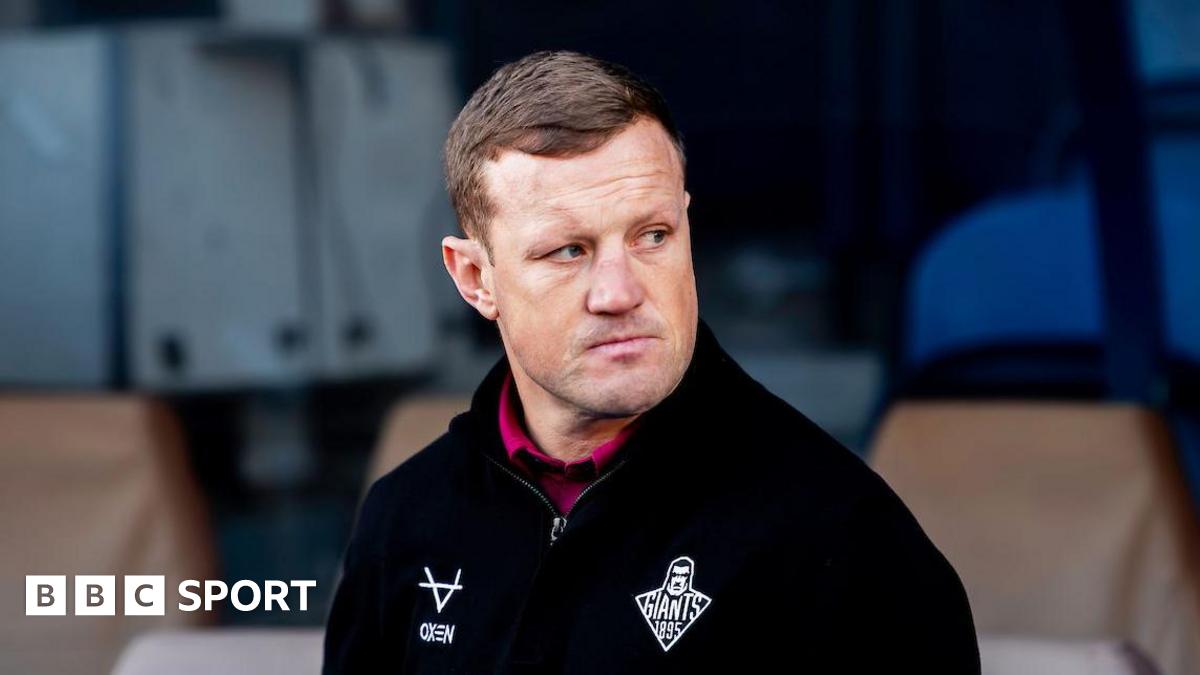
Huddersfield Giants have sacked head coach Luke Robinson after a poor start to the 2026 Super League season.
Giants have lost all of their opening five matches, leaving them without a point and bottom of the table.
Robinson began his second spell as Giants boss in September 2024, replacing Ian Watson, and went on to lose his first nine matches in charge before finally tasting success with a narrow victory against Hull FC at Magic Weekend last May.
Hampered by financial limitations, Robinson eventually guided the club to 10th in the final Super League standings last year.
This season, the 41-year-old has had to deal with a number of injuries to key players, including star full-back George Flanagan Jr, one of 16 first-team members who were unavailable during an injury crisis labelled as “unprecedented” by the club earlier this month.
Robinson was left looking a forlorn figure following his side’s defeat by Bradford Bulls on Friday night, which has ended up being his final match in charge.
He previously, but briefly, acted as interim head coach of Giants during the end of the Covid-affected 2020 season after Simon Woolford resigned, taking charge of the final eight matches of the campaign.
Director of rugby Andy Kelly will take charge of the first team until Robinson’s successor is appointed.
Huddersfield continue their Super League campaign with a trip to league leaders Wigan on Saturday [15:00 GMT].
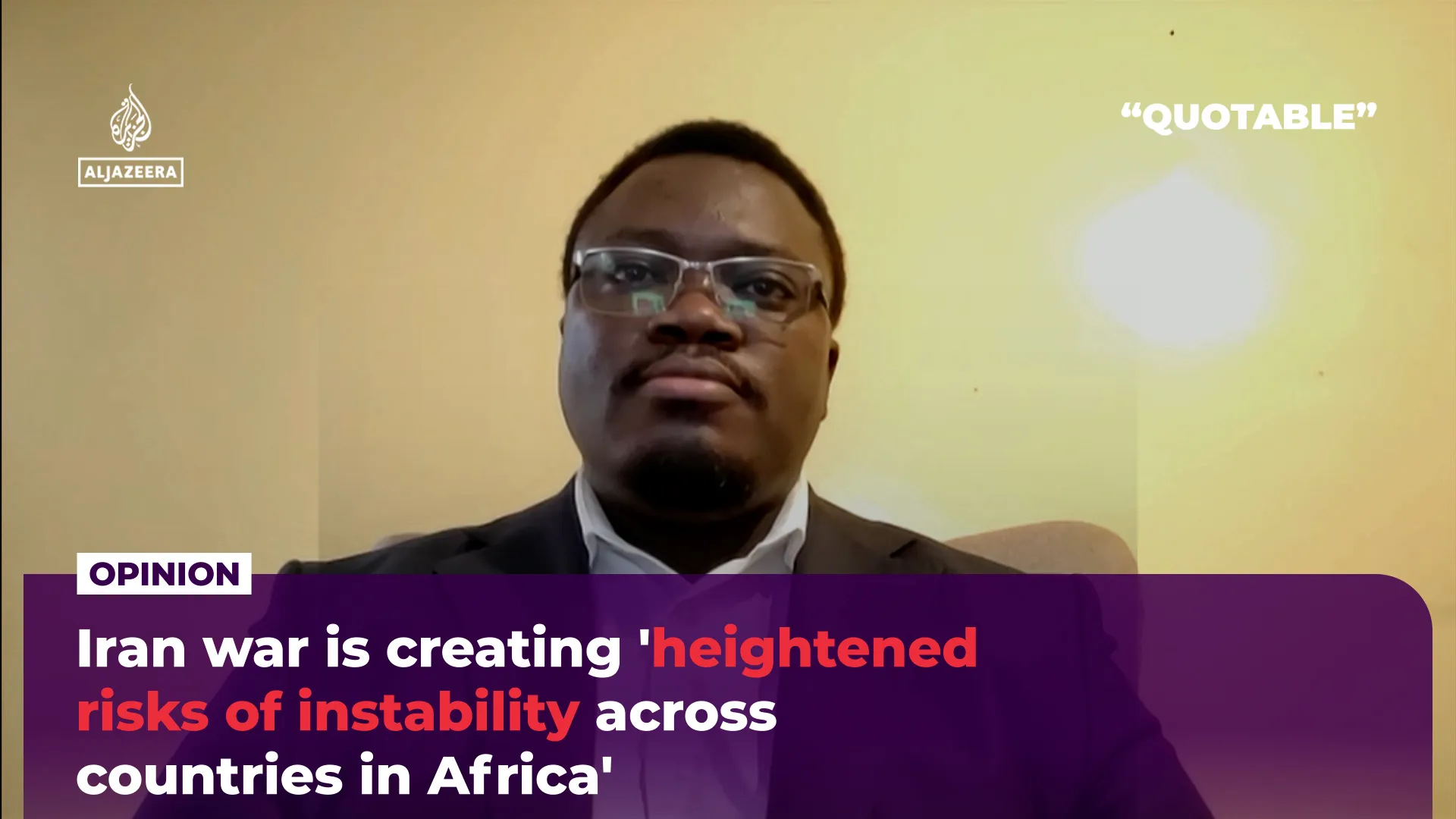
‘These are countries that face drought, food or economic difficulties that compound this crisis much farther.’
David Owiro, founder of the African Development Think Tanks, says that African countries are particularly vulnerable to the economic consequences of the US-Israeli war on Iran.
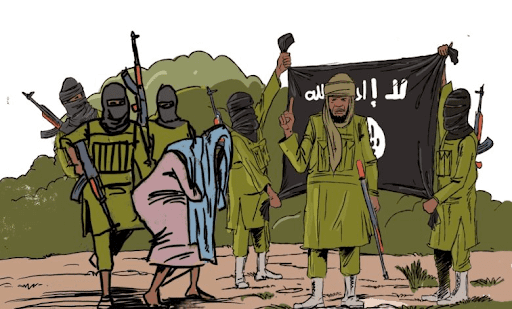
As Ramadan, the Islamic holy month of fasting, prayer, and reflection, entered its second week, specifically on March 5, terrorists from the Islamic State West Africa Province (ISWAP) attacked multiple military positions in Borno State, northeastern Nigeria, in a single night.
The attacks killed at least 16 soldiers and officers. The following day, a suicide car bomb detonated near Njimya village inside Sambisa Forest, forcing Nigerian troops to retreat.
That same week, Nigeria’s Minister of Defence, General Christopher Musa, convened a closed-door security meeting with President Bola Tinubu at the Presidential Villa in Abuja. When he came out, his explanation for the rise in attacks was unusually direct.
“As usual with the terrorists during the Ramadan period,” he told journalists, “they feel when they die, they are going to heaven, so they are ready to commit any offence or get killed because they believe there is a reward.”
He assured Nigerians that security forces had adjusted their strategies. “You can see in the past few days we’ve taken over those locations. We’ve killed their commanders and taken over their assets. We’ll continue to do more,” he said.
The assurance arrived against a backdrop of twelve confirmed attacks on Nigerian military bases since January 2025 — eleven of them in Borno State alone.
However, the violence did not stop.
On March 17, three suspected suicide bombings rocked Maiduguri, killing at least 23 people and wounding more than 100 others. The military said the attacks were carried out by “suspected Boko Haram terrorists”. Earlier, on March 6, terrorists from Jama’atu Ahlussunnah Liddaawati Wal Jihad (JAS), also known as Boko Haram, attacked Ngoshe in Borno’s Gwoza Local Government Area (LGA), abducting over 300 people and killing more than a hundred.
The real question is whether Ramadan genuinely drives this violence, or whether it merely overlaps with a war that was already escalating. HumAngle’s analysis of Armed Conflict Location and Event Data (ACLED)’s five-year data shows the answer is both.
But only one part of that answer is getting worse.
Sacred month recast as a season of war
Just as it encourages insurgents to migrate to Africa, the Islamic State, ISWAP’s parent organisation, has long designated Ramadan as what its propaganda formally frames as a “season of jihad and harvest”.
The ideological foundation reaches back to events central to Muslim memory.
Prophet Muhammad waged his first major battle, the Battle of Badr, in 624 CE, during Ramadan. The conquest of Mecca in 630 CE also fell within the month.
For ordinary Muslims, these are historical moments shaped by circumstances. For jihadist organisations, they are annual instructions.
While mainstream Islam understands Ramadan as a month of fasting, prayer, and restraint, jihadist ideology inverts this completely. In their reading, violence is not a departure from religion — it is its highest expression. For them, history is more than a context; it is a whole calendar.
JAS was the first Nigerian jihadi organisation to work from this theology, though inconsistently. Its former leader, Abubakar Shekau, was unpredictable. During his time, attacks came when opportunity appeared, not when doctrine demanded.
ISWAP, which split from JAS in 2016, partly over Shekau’s methods, brought a different discipline. Trained by Islamic State commanders who operate on fixed ideological cycles, ISWAP insurgents do not treat Ramadan as one month among twelve. They treat it as a deadline. For them, the 2026 attacks were deliverables.
What the data shows and what it doesn’t
Between 2021 and early 2026, Nigeria recorded 20,317 violent incidents involving armed groups: battles, explosions, and attacks on civilians, according to ACLED. Of these, 1,774 occurred during the months of Ramadan. That is roughly one in every twelve incidents nationally occurring in a month that lasts one in twelve months. On the surface, there is no obvious spike.
The total number of annual attacks also climbed sharply, from 3,269 in 2021 to 5,242 in 2025, a 60 per cent rise in four years. Ramadan months tracked that general rise without breaking dramatically above it. When you count incidents per day rather than per month — which is fairer, since Ramadan is only 30 days — the Ramadan daily rate of 9.5 attacks only sits slightly below the non-Ramadan daily rate of 10.2. If anything, the country as a whole is marginally quieter during Ramadan than outside it.
Illustration: Akila Jibrin/HumAngle.
But that national picture hides a more important local one.
Get our in-depth, creative coverage of conflict and development delivered to you every weekend.
Subscribe now to our newsletter!
Borno State alone accounts for 277 of Nigeria’s 1,774 Ramadan incidents — more than Zamfara and Kaduna combined, two states notorious for non-jihadi terrorism. Most of Borno’s violence traces to either ISWAP or JAS. And ISWAP’s Ramadan record tells a completely different story from the national trend.
In 2021, ISWAP recorded zero Ramadan attacks in the data. By 2022, that number rose to 7; by 2023, 16; by 2024, 12; and by 2025, 19. In the first three weeks of Ramadan in 2026, the figure had already reached 31, ISWAP’s highest Ramadan count on record as of the time of filing this report.
Every other major actor in the data, including communal militias from Kaduna, Zamfara, and Katsina, unidentified armed groups, and even the Nigerian military, shows a flat or inconsistent Ramadan pattern. ISWAP alone shows a line pointing upward, year after year, specifically during the holy month.
What does this mean at the national scale? ISWAP accounts for just 85 incidents across all Ramadan periods in the dataset — 4.8 per cent of all Ramadan violence in Nigeria. The majority of other attacks during Ramadan are carried out by non-jihadi terrorists, communal fighters, and unidentified groups with no relationship to the Islamic calendar whatsoever.
From the data, we can deduce that Nigeria’s broad Ramadan violence problem is a governance crisis. But ISWAP’s Ramadan violence problem is an ideological one — and it is the only one that is systematically growing.
The tactical evolution
What distinguishes ISWAP’s Ramadan 2026 campaign from previous years is not its scale, but its method.
The group has launched at least twelve coordinated attacks on military bases and infrastructure across Borno State since January 2025 alone — a pace comparable only to its 2018-2019 operational tempo, the period when it briefly seized Baga, the Lake Chad headquarters of the Multinational Joint Task Force.
The March 5 night assault hit multiple locations simultaneously.
In April 2025, fighters detonated IEDs on bridges along the Biu-Damboa road, cutting off military reinforcements to a surrounded town. This is a deliberate encirclement strategy designed to isolate and starve bases of supply.
The weapons have changed, too. ISWAP insurgents have used armed drones, rocket-propelled grenades capable of destroying armoured vehicles, and suicide car bombs. These are not the weapons of an organisation improvising from local materials; they suggest sustained external supply chains.
Reports indicate that foreign insurgents have also entered and compounded the situation. At least ten have been killed in the past two years during engagements with regional security forces, including a Senegalese national previously resident in Sweden. Cameroonian forces also killed additional foreign insurgents in February 2026 near the border.
The internationalisation of ISWAP’s fighter pool reflects the Islamic State’s central documented effort to reinforce its West African province ahead of what its propaganda calls the Ramadan offensive season.
State-backed regional cooperation, meanwhile, has deteriorated. Niger’s withdrawal from the Multinational Joint Task Force in March 2025 disrupted intelligence-sharing arrangements and opened corridors along the Nigeria-Niger border, which ISWAP has since exploited.
The geography of an insurgency
The ACLED data draws a line across Nigeria. To the North East of it, in Borno and Yobe, jihadist Ramadan operations follow a doctrinal tempo. But in the northwestern region – in Zamfara, Kaduna, and Katsina – and in the North Central, Ramadan-period violence is driven by land disputes, ethnic militia competition, and criminal enterprise. These conflicts share a calendar window, not a cause.
The distinction matters. Strategies built to counter ISWAP’s religious framing will not reduce militia attacks or cult violence in other states. Operations designed for terror suppression in Zamfara are poorly suited to ISWAP’s organised, doctrinally motivated attacks in Borno. Nigeria is not fighting one war during Ramadan. It is fighting several actors with different motives.
The northern Muslim-majority states make this clearest. Kano recorded 18 Ramadan incidents across five years. Jigawa recorded five. Gombe, three. These are some of Nigeria’s largest Muslim populations.
However, the infrastructure that turns a holy month into an operational order – the preachers, the propaganda, the pipeline from grievance to detonation – is not spread across Muslim Nigeria. It is concentrated, almost entirely, around Lake Chad.
Overall, Nigeria’s conflict is worsening across all months, actors, and regions. A 60 per cent rise in four years is a trend that contains every other story, and Ramadan does not create that trajectory. But for one group, in one geography, with one ideology, it sharpens it. And that group is growing faster, fighting harder, and planning more carefully than it was this time last year.
Like the mythical city of Brigadoon, Lisa Kudrow’s “The Comeback” has returned to television after many years away, with the difference that time has not stood still for its inhabitants, older in a changing world that values them less and which they navigate with less assurance.
Kudrow, who created and writes the series with Michael Patrick King, was in her youth a player in the twilight of network-dominated television, cast in a smart, influential show with wide, multigenerational appeal; in a quantitative sense, at least, everything would be downhill from there, as the medium transformed and transformed again. “The Comeback” premiered in 2005, just a year after the end of “Friends”; the first season addressed the rise of reality TV, and the next season, in 2014, riffed on dark, streaming “prestige” television.
The new (and final) season, which is both timely and speculative, addresses the impact of artificial intelligence on the medium and the industry, hinting at a dystopian future; this gives it a moral, even political component, not to say a sense of urgency. Not surprisingly, “The Comeback,” as a thing made by humans, comes down firmly on their side — it’s a manifesto at times — even as it acknowledges, uncomfortably, that computer-produced content might be “good enough.”
Once again, Kudrow plays Valerie Cherish, who, at 60 — the phrase “of a certain age” repeats throughout the series — still qualifies as a working actor. But she’s been pushed into the further reaches of the profession: Her two-season cozy mystery series, “Mrs. Hatt” (“part-time gardener, solves crime, husband is an ex-police chief”), is on no one’s radar but her own, having shown on Epix. A day’s work on a “no-budget” film is even less rewarding than she had imagined; she lasted all of two episodes on “The Traitors.” Paddling hard to stay current, to improve her brand, she bumbles through a podcast, “Cherish the Time,” without any idea what to do with that time; employs a social media person, Patience (Ella Stiller), with no discernible impact; and posts pictures of herself holding products in hopes of “future collabs.”
Still, she is not poor. Valerie and husband Mark (Damian Young), have moved from Brentwood to a condominium with a view in the (real life) Sierra Towers, overlooking the Sunset Strip, opening the latest “new chapter” in their lives, though just what that chapter for them is hard to say. Mark has lost his job in finance — “You told a joke at work at a time when jokes were illegal,” Valerie says, trying to cheer him, “no one cares now” — but left on a golden parachute; now he builds his day around pickleball. A potential role in a reality show, “Finance Dudes,” isn’t working out to anyone’s satisfaction. He’s on the verge of a three-quarter-life crisis.
When her self-promoting manager/publicist Billy (Dan Bucatinsky) comes to her waving an offer for a new series, for a new network, in which she’ll star, Valerie is more than intrigued, if taken aback when he tells her that it’s being written by AI. (He isn’t supposed to know.) Network head Brandon (Andrew Scott, as blandly discomfiting as his Moriarty on “Sherlock”) assures her that it is “within the Writers Guild agreement,” but that it is also a secret — which will account for a lot of comedy going forward, secrets and lies being the very stuff of the form. “AI is really extraordinary,” he tells Valerie. “After all, it picked you.”
It’s also created a wholly generic multicamera sitcom, “How’s That?,” in which Valerie’s character, Beth, as she describes it, “runs a cute, charming old New England B&B with the help of her hunk nephew, Bo — so Beth and Bo, B&B.” (“Viewers want a break from the complicated confusing storylines of all these dark streaming shows,” says a network exec.) Her eager supporting cast has no idea that the series is being written by anything other than its human faces, unhappily married couple Josh (John Early) and Mary (Abbi Jacobson). Josh, who thinks of himself as “the voice of women of a certain age,” is precious about the jokes he manages to get into the script; Mary couldn’t care less. Untalented writing assistant Marco (Tony Macht) only wants “to get, like, a really nice house.” The AI, meanwhile, is personified to the cast and crew, who know nothing about it, as someone named “Al,” who “works remotely.”
One by one, the old company is introduced into the new season, Valerie finds Jane (Laura Silverman), her former documentarian, working as a cashier at Trader Joe’s, having tired of scuffling as a filmmaker, “begging people to care about the things that I cared about.” When Valerie lets it slip that her new series is AI-generated — “but don’t tell anyone ‘cause that’s a secret” — Jane is inspired to pick up her camera again. Lance Barber will eventually rejoin as screenwriter Paulie G., Valerie’s old nemesis. Robert Michael Morris, who played Mickey, Valerie’s hairdresser and best friend, in earlier seasons, passed away in 2017; Jack O’Brien, as Tommy, occupies a version of that space here.
Valerie may be only moderately successful, but she isn’t a hack. She has an Emmy for “Seeing Red,” the drama at the center of Season 2. She pushes back against the costumer (Benito Skinner) who wants to put her in a caftan. She knows her craft and is nominally proud of belonging to a union. She’s not a diva, but she has her pride. And that she is loyal, even when it does her no good, makes her easy to like. Thrust half-wittingly onto this cutting edge — being the first in an AI comedy, Mark tells her, “is like saying, ‘I was the first one to eat an arm in the Donner Party’” — she is wholly sympathetic, and, eventually, as things bend toward horror in a last-act revelation, a hero.
Though the subject is serious, the approach this time is light and farcical. Partially abandoning the documentary aesthetic of its predecessors — the first season had the look of amateur video, and the second of guerrilla filmmaking — much of this season is shot as a conventional, non-meta television show, allowing us access to private conversations and meetings without having to account for Jane and her crew, or requiring the players to act as if they’re being watched. Paradoxically, without pretending to reality, it makes some things more real.
Playing himself, director James Burrows, whom Valerie convinces to helm her pilot, notes that the jokes AI writes might come fast but are never better than obvious. “Surprising only comes from a group of writers huddled in a corner beating themselves up to beat out a better show,” he says. And just as Valerie is not a character an algorithm could produce, Kudrow is not an actor a machine could ever imagine. She’s no Tilly Norwood, or Tilly Norwood at 60, or Tilly Norwood with quirks applied. There’s no one like her— other than her — for the learning machines to scrape.
You should never settle for “good enough” when better, or best, is available. But that choice is on you.
Plus, every time you drive, you can see the escalating average cost for a gallon of gas throughout the state that ranges from $5.77 in Orange County, $5.78 in San Diego County, $5.80 in Los Angeles County and $5.86 in San Francisco County to the high of $6.57 in Mono County, according to AAA.
It can easily make anyone think having fun is unaffordable.
Fortunately, our Travel and Experiences team has put together a list of 75 fun things to do for under $20.
On warm days, it’s hard to beat a ride on the swan boats at Echo Park.
They’re powered by foot paddles, and the pedaling is easy because you’re in no hurry. Maybe you’ll want to do a circuit of the lake (really a man-made reservoir). Maybe you’ll sidle up to the towers of whitewater rising from the mid-lake fountain.
Maybe you’ll wait until after dark (because the swans light up).
(Christina House / Los Angeles Times)
Experience L.A.’s esoteric history at the Philosophical Research Society (Los Feliz)
Cost: Free to visit, workshops and lectures from $10 and up.
Located at the intersection of Los Feliz and Griffith Park boulevards, the Philosophical Research Society has long been a place of mystery, intrigue and, for some, apprehension.
The Mayan Revival campus painted in Southwestern shades of clay, cream and sage was built in 1935 by the celebrated author and esoteric lecturer Manly P. Hall.
Today, it hosts a dizzying array of events each week including poetry readings, death cafes, sound baths, a weekly class on Buddhism, tarot and astrology salons and musical performances — some of which have a suggested donation of just $10.
If you visit, make sure to make time to browse the excellently curated metaphysical bookstore.
(Gina Ferazzi / Los Angeles Times)
Find the perfect meditation spot at the Self-Realization Fellowship Lake Shrine (Pacific Palisades)
Cost: Free.
Whether or not you’re familiar with the work of Paramahansa Yogananda, who founded the Self-Realization Fellowship in 1920, if you live in Los Angeles you owe him a debt of gratitude for the smattering of lush, meditative gardens in Southern California that are still open to the public today.
Among those is Lake Shrine, a beautifully landscaped 10-acre property in the Pacific Palisades surrounding a spring-fed lake that is dotted with quiet meditation spots.
It is free to visit, but you will need to make a reservation online before you go. (Reservations open each Saturday at 10 a.m. for the week ahead, and they can fill up quickly.)
(Wally Skalij / Los Angeles Times)
Cozy up with a flick at the Paramount Drive-In Theater (Paramount)
Cost: $14 per adult, $7 per kid (ages 3-11).
For a night out that feels as cozy as a night in, head to the Paramount Drive-In Theater. In the comfort of your own car, you can spread out, munch popcorn and make all the commentary you want without getting looks from other moviegoers.
Tickets are purchased on arrival, and the parking lot is huge, so you’re bound to secure a good view of the big screen. There is a concession store on site with candy, chips and drinks, but you are free to bring all the snacks you want from home. Recline your seat all the way back, relax and enjoy the show.
You’re reading the Essential California newsletter
Sign up to start every day with California’s most important stories.
By continuing, you agree to our Terms of Service, which include arbitration and a class action waiver. You agree that we and our third-party vendors may collect and use your information, including through cookies, pixels and similar technologies, for the purposes set forth in our Privacy Policy such as personalizing your experience and ads.
The week’s biggest stories
(Irfan Khan / Los Angeles Times)
Heat wave and environmental news
Los Angeles mayor, city council news
Cesar Chavez fallout
California governor’s race
Crime, courts and policing
What else is going on
Must reads
Other meaty reads
For your downtime
(Illustrations by Lindsey Made This; photograph by Myung J. Chun / Los Angeles Times)
Going out
Staying in
L.A. Affairs
Get wrapped up in tantalizing stories about dating, relationships and marriage.
Have a great day, from the Essential California team
Jim Rainey, staff reporter Hugo Martín, assistant editor, fast break desk Kevinisha Walker, multiplatform editor Andrew J. Campa, weekend writer Karim Doumar, head of newsletters
A FERRY route connecting the UK to Scandinavia could return after almost 20 years.
Brits could get a direct link to the ‘Gateway to the Fjords’ without setting foot on a plane.
Sign up for the Travel newsletter
Thank you!
A ferry route connecting Newcastle to Bergen could restartCredit: AlamyDFDS Seaways was the last company to operate the service which ended in 2008Credit: Alamy
There are talks of restarting a ferry route that could link Newcastle to Bergen in Norway for the first time in 18 years.
Historically, this route existed for over 140 years, and is being looked into being brought back by Newcastle City Council.
DFDS Seaways was the last company to operate the service – but this ended 18 years ago on September 1, 2008.
The crossing was usually overnight and the sailing lasted up to 22 hours – depending whether or not it stopped at Stavanger.
In 2022 Bergen Cruise Line revealed that it was hoping to re-introduce a ferry service between Newcastle, Stavanger and Bergen starting this year.
The Newcastle City Council leader Karen Kilgour said in January of this year that she would “love to see the return of the ferry.”
The service was first introduced in 1890, just two weeks before World War Two.
It continued on and off for over 140 years which resulted in a special relationship forming between the two cities with Bergen even providing Newcastle with a Christmas tree each year.
This tradition continued right up until 2022 – the giving of a Christmas tree stopped, but the cities’ mayors now swap baubles each festive season.
Talks about bringing back the ferry route are still in the works.
Despite a journey across the seas not being available, Jet2 has direct flights from Newcastle to Bergen, taking just one hour and 25 minutes.
One-way flights in April with Jet2 start from £69.
She said: “If you take a stroll around the cobbled streets you will find an array of quirky gift shops, cafes and bars, as well as the vibrant Bryggen Nightclub.
“And the one-day Norway In A Nutshell tour is a must (£192pp, see fjordtours.com), showcasing the best of this country’s breathtaking nature.
“The carefully curated experience begins early, taking you straight from the city centre through more than 60 miles of wild mountain terrain on the Bergen Railway.”
When it comes to eating, Emily says to head to the Skyskraperen restaurant at the top of Mount Ulriken.
Here you can try ‘traditional Nordic food surrounded by nature’ – like grilled trout or a duo of beef.
There’s plenty of places to stop for a drink too – grab a pint of locally brewed lager from Ægir at the Flåmsbrygga Hotel.
A COUPLE meeting up for the third time have already exhausted all the entertaining anecdotes they have to share.
Despite having only been on three dates, potential partners Jack and Lauren, not their real names, have already discussed the highlights of their respective lives and now have nothing of interest left to say to each other.
He said: “I thought my horizon-expanding trip to Japan would sustain at least a few months of dates. But Lauren’s already glazing over when I talk about riding the Shinkansen to Buddhist temples.
“The time I ran a marathon? Blown on the first date. As was the tale of when I thought I’d won the lottery. I should have known to keep something gripping in reserve, but I was just so pathetically desperate to maintain her attention.
“Now all I’ve got left to discuss is what happened to me during my actual daily life, which is boring as f**k. I’ll save Lauren the hassle of ghosting me by dumping her now.”
Hewitt said: “Jack’s being hasty, we can create our own fun stories. They’ll bring us closer together and when we break up we’ll have something to tell our next dates about.”