Month: March 2026

Creator of 90s hit movie Air Bud dies aged 63 after tragic fall from Hollywood stardom to living homeless on the streets

An image collage containing 1 images, Image 1 shows Buddy, the Golden Retriever star of "Air Bud," and his owner Kevin DiCicco, pose in a grassy field

THE creator of the 90s hit movie Air Bud has died aged 63 after a tragic fall from Hollywood stardom.

Kevin DiCicco’s death comes a year after he revealed he was homeless and battling health issues.

NINTCHDBPICT001069249258
Kevin DiCicco was dealing with homelessness and a series of health issuesCredit: Facebook/Gofundme
Golden retriever dog Buddy basketball-playing star of
Kevin DiCicco with Golden retriever dog Buddy, thee basketball-playing star of motion picture Air BudCredit: Getty

His sad passing on Saturday March 21 was confirmed by his brother Mark to TMZ.

Kevin was credited as a creator of the beloved 90s film Air Bud, about a lonely boy who befriends a stray dog who has a natural talent for basketball.

Together they experience the highs and lows of life as their friendship remains solid through a series of escapades.

Kevin had found Buddy the dog as a stray, transforming him into a star.

The duo originally found fame on America’s Funniest Home Videos before making a memorable appearance on David Letterman.

More to follow… For the latest news on this story keep checking back at The Sun Online.

Thesun.co.uk is your go-to destination for the best celebrity news, real-life stories, jaw-dropping pictures and must-see video.

Like us on Facebook at www.facebook.com/thesun and follow us from our main Twitter account at @sunbizarre.

Most read in Entertainment


Source link

Race Across the World Couple share worst experience – £50 for airport spag bol

Stephen and Viv have been to 60 countries but say this was their worst experience

RATW couple in airport lounge failure

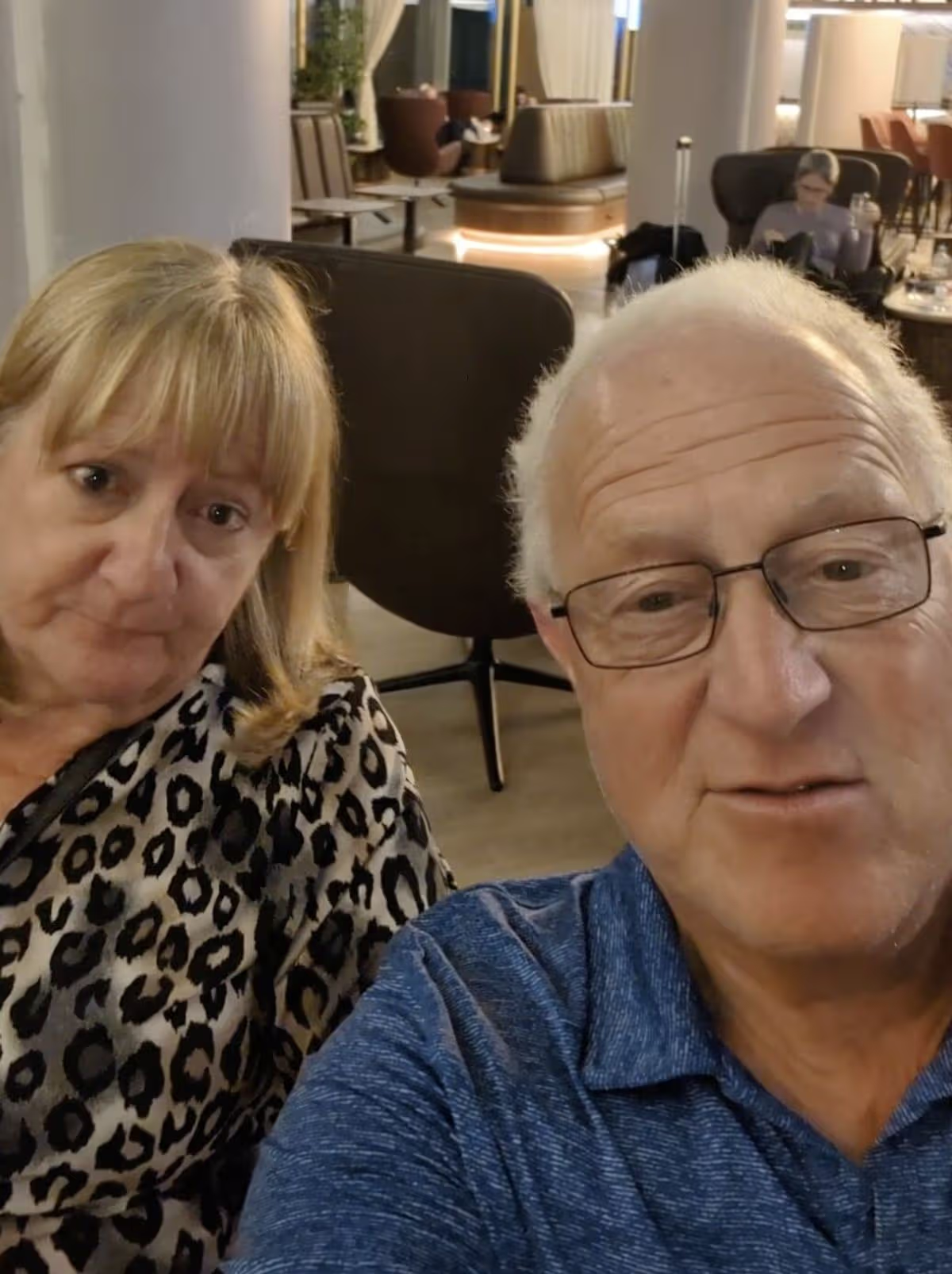
A couple who have travelled to 60 countries after appearing on Race Across the World have blasted a “shocking” airport lounge as the worst they’ve ever experienced. Stephen and Viv Redding, from Uppingham, Rutland were left stunned after paying nearly £50 to access what they thought would be a relaxing business class lounge.

Stephen, 64, and Viv, 68, visited the Avianca lounge while waiting for their flight to Bogotá before returning to London Heathrow, following a six-week trip around South America. They claim to have been met with “tasteless” food and shabby surroundings.

“We bought business class tickets because it was a long-haul flight and that way we can have flat beds and get a bit of sleep,” Stephen said. “We’d been led to believe that we would have lounge access [at the airport] but when we went up to the lounge, we were told that our tickets did not qualify.

“So we decided that we would pay for the upgrade because we knew we had over two hours to spare.”

Once inside, the couple, who appeared on the BBC travel show in 2024, say they were shocked by the poor quality on offer at the San Jose lounge. Stephen said: “There was only one meal available, tasteless and watery spaghetti bolognese.

“The pasta was cold, the sauce was not very nice. There was a little side bread thing that was dried and tasteless. We were given drinks tokens for a glass of wine, which meant we were only allowed one drink each – one glass of wine each!

“The place was not good. The seats weren’t comfy, the tables were shabby, it was not what we’d experienced from any other airport lounge that we’ve been to. And to be fair, there have been quite a few since Race Across the World two years ago.

“We’ve been to about 60 countries now and probably up to a dozen lounges across the globe and this is the worst lounge that we’ve ever been to.”

The pair raised their concerns with staff at the time but claim they were met with little interest. After returning home, they contacted Avianca to request a refund, but say their complaint was rejected. Stephen added: “We asked for money back because of the poor lounge quality but they have refused and rejected that claim and basically said that’s just the way it is.

“I must also say though that the flight with Avianca was absolutely spot on, I have no complaints at all.

“[That being said], we were disappointed and actually after being away for six weeks touring through the north of South America we were tired and just wanted to relax in a bit of comfort, but this did not fulfil our needs by any means.”

Source link

Scotland: Key questions for Steve Clarke in final pre-World Cup camp

Scotland assistant coach Steven Naismith hailed Curtis’ drive to move out on loan and not be content with being a squad player at Rangers.

“This desire, this instinctive nature to get chances,” Naismith added on BBC Sportscene when analysing the youngster’s weekend goal.

“He’s got a bit of pace, he’s direct, he commits defenders – these are all things that have caught the eye.”

Former Celtic and Hibernian midfielder Scott Allan added on the BBC’s Scottish Football Podcast: “When we don’t have Gannon-Doak, we don’t have someone who can really travel with the ball. Curtis does have that.

“Yes, he’s still developing and doesn’t always have that final ball, but that can be worked on. We aren’t blessed with a lot of pace, especially in the attacking areas.

“You have to have pace in those areas, especially when at times we’ll be forced back and when we’re then trying to get up the pitch. Players with pace can be the difference.”

Source link

Senate Republicans again block Democrats’ effort to stop Trump’s Iran war

March 25 (UPI) — Republican senators have again backed President Donald Trump‘s war against Iran, blocking a Democratic-led effort to curb his ability to wage war without congressional approval.

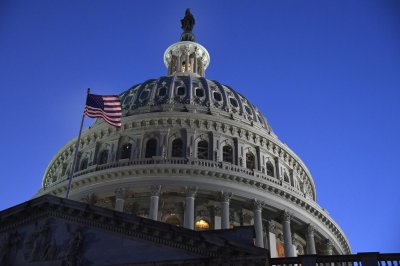
The Senate voted 53-47, mostly along party lines, on Tuesday evening to block Democrats’ war powers resolution, the third time Senate Republicans have blocked a resolution to require the removal of U.S. forces from hostilities against Iran unless Congress authorizes them.

Sen. Rand Paul of Kentucky was the only Republican to vote in favor of the motion with his Democratic colleagues, while Sen. John Fetterman of Pennsylvania was the only Democrat to vote against it with the GOP lawmakers.

Since the war began on Feb. 28, when the United States and Israel attacked Iran, Democratic lawmakers have argued the war is unconstitutional because only Congress has the power to declare war, while Republicans contend Trump is within his authority as commander in chief to defend the country.

Sen. Chris Murphy of Connecticut said he forced the vote Tuesday to have debate on Trump’s war in Iran.

“This is increasingly important because this war is spiraling out of control,” he said in a video posted to social media ahead of heading into the Senate.

“The cost of plastic just doubled, prices at the pump are sky high, the Strait of Hormuz is still shut down, new wars are breaking out in the region, we’ve had a dozen Americans killed, $2 billion being spent a day and for what!”

From the floor, Senate Minority Leader Chuck Schumer, D-N.Y., called on Republicans to vote in favor of the resolution, saying it was time for the war to come to an end.

“The war is expanding, and the Senate has an obligation to step in,” he said.

“I say to my Republican colleagues: if there was ever a time to stand up for the authority of the Senate, stand up for the powers given to us through the Constitution, the time is now.”

Sen. Jim Risch of Idaho, who has repeatedly argued against the war powers resolution, took to the floor again on Tuesday to say the Democrats were going to receive the same negative result as they had the two previous times.

Iran started the war, he said, pointing to the Iran hostage crisis of 1979 and stating that the Islamic regime has since killed thousands of Americans.

“The president of the United States said, ‘We have had enough.’ He had very good reasons to pull the trigger at the time that he did and… The fact of the matter is, we are in conflict,” he said, stating the Senate needs to back the Americans fighting in the war and their president.

“We all know this isn’t going to go on very long, but it needs to be done.”

The vote was held less than a week after Democrats used the war powers resolution to force a vote on Wednesday on a similar motion, which Republicans blocked in the same 53-47 outcome. Both Paul and Fetterman voted against their parties.

Source link

U.S. Battled Drone Incursions Over Key Bases At Home After Launch Of Epic Fury

Multiple recent drone incursions over U.S. bases housing strategic military assets amplify concerns The War Zone has been documenting for years about highly worrisome drone flights over these installations and critical capabilities. These incidents, as we’ve noted, present a risk to national and local security.

One of the drone overflights took place earlier this month at Barksdale Air Force Base in Louisiana, home of B-52 Stratofortress bombers and nuclear weapons storage facilities, and a key part of the airborne leg of America’s nuclear triad. Another was at an unspecified installation last month, the commander of U.S. Northern Command mentioned in recent written testimony for the Senate Armed Services Committee (SASC). Both situations took place after the U.S. began bombing Iran in a campaign that has included B-52, B-1 Lancer and B-2 Spirit bombers. It is unknown at this point if there is a connection, however, as we have frequently reported, the military is highly concerned about drones operating with near impunity over its facilities. In addition to interfering with flights and their potential use as weapons, drones can surveil and map the electronic emissions throughout a base, gaining insight into vulnerabilities. They can also photograph key areas and operations, providing additional valuable intelligence for any adversary.

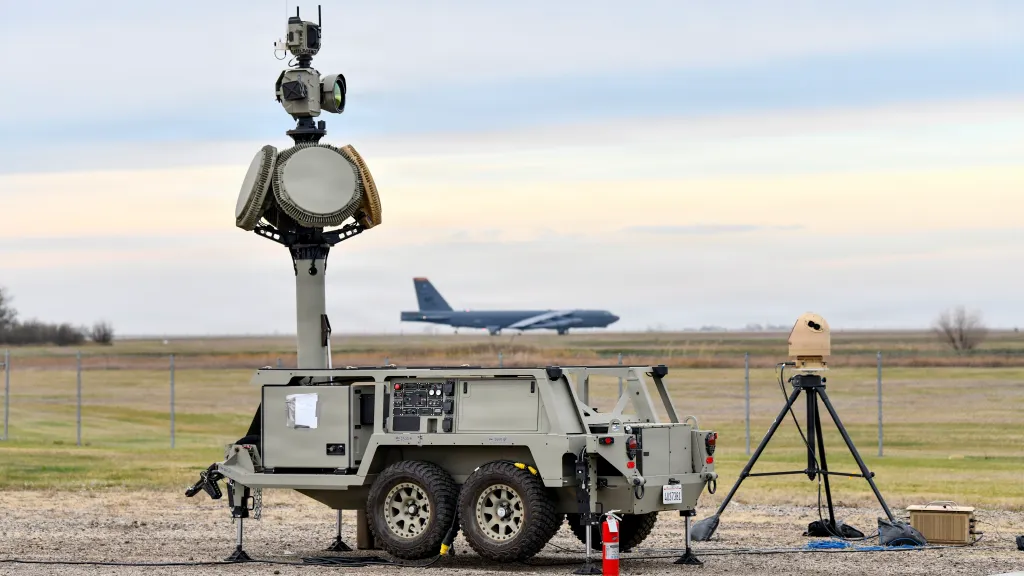
One of these incidents spurred NORTHCOM to deploy its new counter-drone fly-away kit, designed to give installation commanders the ability to detect, quantify, and defeat small drones that they cannot defend against on their own. We’ll discuss that in greater detail later in this story.

A B-52 Stratofortress from the 5th Bomb Wing taxis at Minot Air Force Base, N.D., Oct. 26. 2025. The U.S. Northern Command Counter-small Unmanned Aerial System fly-away kit, seen in the foreground, and operators were rapidly deployed to the North Dakota base as part of an exercise to demonstrate the command's ability to quickly support installation commander experiencing a drone incursion. (Department of War photo by John Ingle)
A B-52 Stratofortress from the 5th Bomb Wing taxis at Minot Air Force Base, N.D., Oct. 26. 2025. The U.S. Northern Command Counter-small Unmanned Aerial System fly-away kit, seen in the foreground, and operators were rapidly deployed to the North Dakota base as part of an exercise to demonstrate the command’s ability to quickly support installation commanders experiencing a drone incursion. (Department of War photo by John Ingle) John Ingle

The incursions at Barksdale began the week of March 9, a spokesperson for the 2nd Bomber Wing at the base told us, offering few details about what happened beyond saying “we are working closely with federal and local law enforcement agencies to investigate these incursions.”

The incident sparked a shelter-in-place order lifted later that day.

According to ABC News, a confidential briefing document dated March 15 stated that the “drones came in waves and entered and exited the base in a way that may suggest attempts to ‘avoid the operator(s) being located,’” the network reported. “Lights on the drones suggested the operators ‘may be testing security responses’ at the base.”

“Between March 9-15, 2026, BAFB Security Forces observed multiple waves of 12-15 drones operating over sensitive areas of the installation, including the flight line, with aircraft displaying non-commercial signal characteristics, long-range control links and resistance to jamming,” the document stated. “After reaching multiple points across the installation, the drones dispersed across sensitive locations on the base.”

The document added that more drone incursions could be expected and that they “pose a significant threat to public safety and national security since they require the flight line to be shut down while also putting manned aircrafts already inflight in the area at risk.”

It is not publicly known if there have been any additional incursions since the document was issued. Base officials declined to tell us.

A U.S. Air Force B-52H Stratofortress aircraft assigned to the 2nd Bomb Wing sits on the flightline at Barksdale Air Force Base, Louisiana, as part of Exercise Global Thunder 26, Oct. 19, 2025. Global Thunder is an annual command and control exercise designed to train U.S. Strategic Command forces and assess joint operational readiness. (U.S. Air Force photo by Senior Airman Laiken King)
A U.S. Air Force B-52H Stratofortress aircraft assigned to the 2nd Bomb Wing sits on the flightline at Barksdale Air Force Base, Louisiana. (U.S. Air Force photo by Senior Airman Laiken King) Senior Airman Laiken King

Another incident took place at an unspecified location in February as the U.S. was beginning to attack Iran.

“In the early hours of Operation EPIC FURY last month, a deployed [fly-away kit] successfully detected and defeated sUAS operating over a strategic U.S. installation,” Air Force Gen. David M. Guillot, the commander of NORTHCOM, explained in a written statement to SASC on March 19.

Guillot did not say which base or provide any other details. On Tuesday, a NORTHCOM spokesperson declined to specify which base Guillot was referring to but confirmed there were multiple incursions and personnel used the flyaway kit’s “jamming protocol.”

“We will not name the base nor the type of installation where our Flyaway Kit is deployed in order to preserve operational security,” NORTHCOM added. “Specifically, connecting the Flyway Kit to a specific base can potentially illuminate that base’s vulnerabilities to an adversary. Additionally, by confirming a specific Counter-small Unmanned Aircraft System (C-sUAS) platform, we would potentially give an adversary an advantage in circumventing our C-sUAS capabilities at that location.”

So far, NORTHCOM has only one fly-way kit, but more should be delivered “in the Spring of 2026,” Guillot added in his written statement.

The kit currently deployed is produced by Anduril. The company describes it as a “rapidly deployable, modular, and battle-tested counter-UAS system designed to detect, track, identify, and defeat Group 1-3 drones.” It uses Anduril’s Pulsar system for radio-frequency detection and electromagnetic effects to jam radio signals controlling drones. There are also drone-on-drone interceptors. You can read more about that in our story about the system here

Anduril’s counter-drone fly-way kit. (US Military)

While Guillot offered scant details in his written testimony, he provided some additional insights into the military’s efforts to counter drones over the homeland. His command is tasked with coordinating those efforts.

“We’ve seen an increase from last year in the number of detections over military installations over the course of the year.,” he said in response to a question from Sen. Eric Schmitt (R-MO), who represents Whiteman Air Force Base, home of B-2s used in Epic Fury. “Some of that might be due to the fact that we have more detection capability now than we did in the past, and then our ability to defeat them has improved. Whereas a year ago, almost every one that was detected was not defeated, now about a quarter of the ones that we detect we’re able to defeat. I pay particular attention to Whiteman and other strategic bases, whether submarine silos or aircraft, and work very closely with Admiral [Richard. A] Correll at STRATCOM to make sure that either through the services or through our own capabilities at NORTHCOM, we are protecting those vital locations from UASs.”

Northcom, Southcom Commanders Testify Before Senate Armed Services Committee 03.19.2026


Whiteman declined to comment about whether that base has seen any drone incursions, citing operational security concerns.

The incursions over Barksdale are reminiscent of those that took place over Langley Air Force Base in December 2023 that The War Zone was the first to report. It remains publicly unknown who operated those drones, which has been the case with incursions at military installations across the U.S. and Europe as well that we also were the first to write about.

That these latest drone flights took place in the wake of Epic Fury is alarming. Iran’s drone capabilities loom large in the mind of U.S. intelligence even here in the homeland. Also, it’s worth noting that B-52s at Barksdale sit almost entirely out in the open and, with just 76 of these airframes available across the force, they are extremely valuable assets and thus potentially very high-value targets. This is especially true since there are just a few that could be regenerated if any are lost. Moreover, Stratofortresses are expected to provide a large portion of U.S. conventional and nuclear aerial strike capabilities for decades to come.

We have been warning about the threat to American aircraft on flightlines from even the lowliest of drones for many years. These warnings have taken on new urgency after last year’s Ukrainian near-field attacks on Russian long-range aviation, dubbed Operation Spider Web. This operation alone suddenly turned what were once theoretical nightmares into very real possibilities.

We will continue to monitor this situation and provide updates when warranted.

Contact the author: howard@thewarzone.com

Howard is a Senior Staff Writer for The War Zone, and a former Senior Managing Editor for Military Times. Prior to this, he covered military affairs for the Tampa Bay Times as a Senior Writer. Howard’s work has appeared in various publications including Yahoo News, RealClearDefense, and Air Force Times.


Source link

’13 Going On 30′ is getting a Netflix reboot: The details

Less than 30 years after “13 Going On 30” made legions of young millennials want to be “big-time magazine editors,” the classic rom-com is getting a reboot.

Jennifer Garner, who starred in the 2004 original as the 30, flirty and thriving Jenna Rink opposite Mark Ruffalo’s Matt “Matty” Flamhaff, is executive producing the project. “People We Meet on Vacation” star Emily Bader and Logan Lerman, known for “Oh, Hi!” and “Perks of Being a Wallflower,” will star in the reboot.

Brett Haley, who directed Netflix’s “People We Meet on Vacation,” will reunite with Bader to helm the project.

In a statement to “Deadline,” Haley said, “‘13 Going On 30’ is one of those rare, perfect films. Funny, emotional, deeply human, with unforgettable performances from Jennifer Garner, Mark Ruffalo, and Judy Greer. I’m a longtime fan, so stepping into this reimagining comes with tremendous responsibility.”

“Jennifer Garner being on board as an executive producer, after playing such a big part of what made the original special, is especially meaningful,” Haley continued. “I also couldn’t be more excited to reunite with Emily Bader after ‘People We Meet on Vacation.’ She and the amazingly talented Logan Lerman are a magical pairing. I feel incredibly lucky to be trusted with something that means so much to so many people.”

In case you missed it (or were living under a rock in 2004), our former Los Angeles Times film critic Manohla Dargis wrote of the film: “Another iteration on the apparently indestructible body-switching premise, ‘13 Going On 30’ closely adheres to the essential gimmick and learning curve introduced to superior effect in the 1988 hit ‘Big.’

“After a disastrous birthday party and a foolish wish to become ‘30, flirty and thriving’ (some alliterative propaganda she’s read in a fashion magazine), Jenna wakes one morning to discover that she’s metamorphosed into an older, taller, somewhat curvier version of herself. Now played by Garner, the wild-eyed teenager comes face to face with a wish fulfillment of a life that comes with a designer Manhattan apartment, an executive position at a slick women’s magazine, a hockey-star boyfriend who likes to strip to Vanilla Ice, and row upon row of designer shoes.”

While mum’s the word on plot specifics, the script for the reboot is by Hannah Marks, who penned and directed “Mark, Mary, & Some Other People,” with revisions by Flora Greeson, who wrote “The High Note.”

Once news of the reboot broke online, social media chatter picked up, with fans speculating which eras the film may be set in. If, like the original, the protagonist wakes up as a 30-year-old in today’s modern world, some worry the flick won’t be as lighthearted as the original.

One user on Threads said, “The concept of a 13 Going on 30 where a teenager in 2009 now wakes up in THIS reality in her 30s feels like horror not romcom.”

Source link

Holy parades and earthly pleasures in Spain: Easter in Granada | Granada holidays

As I turned the corner on a narrow, cobbled street in Granada, I felt as if I had stumbled upon a slightly sinister re-enactment society. Mysterious men dressed in white robes and tall, conical, face-covering hats with slits for their eyes were followed by women in black dresses and mantillas, holding pillar candles and crosses, then children wearing caped cloaks, carrying baskets of prayer cards.

It was indeed a re-enactment of sorts, but deeply rooted in Catholicism, representing the Passion of Christ, staged during Holy Week (Semana Santa), which runs from 29 March to 5 April this year. Easter processions are held across the country, but this Andalucían city hosts one of the most authentic in Spain.

Unlike more celebratory parades, these are sombre affairs, as each of the 32 brotherhoods weaves its way through the streets with enormous floats (pasos) hoisted on the shoulders of scores of men (costaleros) who spend months preparing for this herculean task – a coveted role, often passed down from father to son. To rehearse, they carry heavy wooden tables through the streets after dark, which is a startling sight when you come across a team in training.

On the floats are larger-than-life figures of a weeping Virgin Mary and Christ on the cross, as well as precious icons normally sequestered in chapels. The bearers are hidden underneath, surrounded by velvet drapes, so all that is visible is their white-soled feet as they inch their way along. Every so often, a cheer rises from the spectators, when a difficult manoeuvre has been managed.

A float with a statue of the Jesus passes in front of the Alhambra, Granada Photograph: fotopress/Getty Images

Palm Sunday marks the first of eight days of processions, Good Friday being the busiest with six events throughout the city, but – having visited many times in an attempt to improve my Spanish – my personal favourites are on Maundy Thursday in the Albaicín, the Moorish quarter of the city. At San Miguel Bajo church at 5pm, the brotherhood of Aurora emerges to commence its seven-hour slow march with soulful renditions of saetas – flamenco-style religious songs – and then a brass band accompanies the statues as they pass by. Then, at midnight, the Cristo del Silencio procession moves in silence, guided by candlelight, the only sound a repeating muffled drum with Christ on the cross borne aloft by penitents in black cloaks. I have yet to stay awake until 4am for the finale at Granada cathedral.

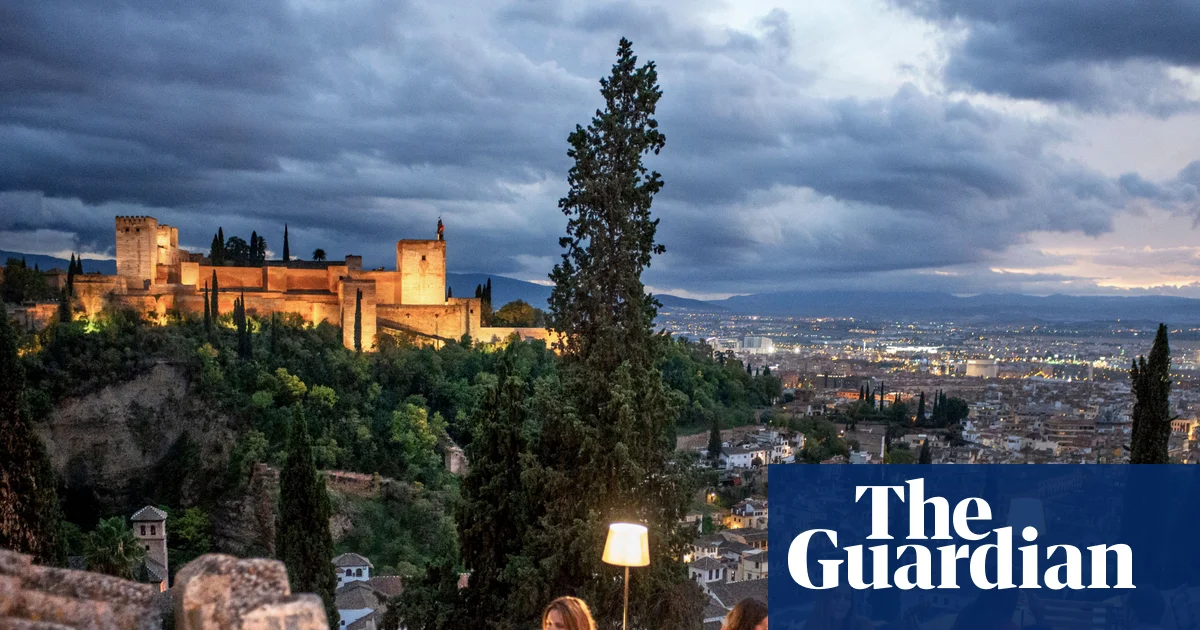
Whether or not you come to Granada at Easter to witness the processions, it’s a great time to visit, with the weather warming up and the streets coming alive. At the foot of the Sierra Nevada mountains – popular with skiers, cyclists and walkers – it’s my favourite city in Spain, with elegant architecture, lush gardens and varied cuisine. I can get pleasantly lost for hours in the meandering streets of the Albaicín, then walk down the steep slope to Plaza Nueva, great for people-watching, and on to the tree-lined boulevard by the Genil River, lingering at the art nouveau restaurant Las Titas (The Aunties). It’s a strenuous walk (or easy bus ride) up to Sacromonte, past the Roma caves museum, with magnificent views over the Alhambra (the Islamic palace and citadel, which is a Unesco world heritage site) and the entire city your reward.

Plaza Nueva and the Church of Santa Ana at night. Photograph: Japhotos/Alamy

The sociable Spanish eat outside in all weathers. At Easter, special foods include almond-based pastries such as piononos de Santa Fe – thin, rolled sponge cakes soaked in syrup, topped with toasted cream representing the Pope’s crown – and torta real de Motril, from a 150-year-old recipe of almonds, egg white and a shiny sugar crust, both sold in cafes and bakeries (panaderías) across town. You can also buy homemade pastries at some convents – look for the sign Venta de dulces. A savoury dish you will spot on Easter menus around the city is potaje de vigilia, a stew of cod, chickpeas and spinach.

But food here is special at any time of year – with plenty of meat-free choices too. Something to celebrate is the free tapa (often quite generous) with every drink from the bar, and drinks are cheap, at about €3 for a glass of wine or beer. A tapas crawl may take in La Goma in Calle Gracia, Bar Poë in Calle Verónica de la Magdelena and Tocateja in Calle Trinidad.

The menú del día at restaurants is great value – three courses for about €15, served on weekdays – followed by siesta time when shops close from 2pm to 5pm (except in the city centre), then open again, often until 10pm. For indoor eating, my latest discovery is the popular Mezze in Calle Laurel de las Tablas, opened last year by two British entrepreneurs and an Argentine chef. It serves eastern Mediterranean dishes, my choice being aubergine “meatballs”, stuffed artichokes and tempura mushrooms.

Flamenco at Jardines de Zoraya club in Granada

After that, you may fancy some flamenco, and there is no shortage of high-standard establishments. Jardines de Zoraya in Calle Panaderos is my favourite. What makes it extra special is the optional dinner you can order beforehand (show €25; dinner €32). I also love El Tabanco del tio Gregorio, a small flamenco club in Cuesta de San Gregorio (Friday and Saturday, €15).

Back on a religious theme, Granada has a host of ecclesiastical sites that are worth visiting. Many are built on the site of former mosques, including the Renaissance cathedral containing the lead coffins of the zealous Christian monarchs Isabella and Ferdinand (who notoriously expelled the Muslims and Jews in 1492), their daughter Joanna the Mad and her husband, Philip the Handsome. A short bus ride takes you to the Cartuja monastery, an over-the-top baroque monument with a picture gallery of sacred scenes and a secluded cloister garden planted with orange trees and aromatic plants.

The Easter Saturday procession starts from the Alhambra, and what could be a better backdrop? This magnificent monument attracts millions of visitors annually, so you need to book well in advance, but don’t be fleeced by the many “official” sites. Book via tickets.alhambra-patronato.es and pay €22.27. It’s free to walk up to the grounds and through the gardens ,though – a pleasant early evening stroll to avoid the crowds.

Convento de San Gregorio Bético (actually a church), next to an Arab souk, was reputedly once a wine warehouse and then a brothel. At noon each day, nuns gather to sing praises. As I sat listening behind the choir screen, it took me back to when I saved up pocket money to buy my first record in 1963: Dominique by The Singing Nun (6s 8d).

After a long day in this very walkable city, it’s sheer bliss to unwind at a hammam, my choice being Al Ándalus in Calle Santa Ana, where you can sip herbal tea between dips in hot, cold and steam baths. It’s another ancient custom the granadinos have kept alive.


Source link

‘Best defeat of my life’ – Bosnia-Herzegovina and the Welsh hero you’ve never heard of

Wales had endured more than half a century in the international wilderness, absent from major tournaments since the 1958 World Cup.

There followed decades of false dawns and agonising stumbles at final hurdles, until a golden generation of players emerged to inspire a new hope.

Bale, Aaron Ramsey and the rest had been around a while by the time the Euro 2016 campaign came around and, as those stellar talents approached their peak, they were ready to take Wales to new heights.

“There was definitely optimism, a quiet belief I would say,” says Hal Robson-Kanu, the former Wales forward who started up front against Bosnia.

“We’d begun to get results which typically you wouldn’t expect Wales to get at that level. We knew we could do something special.”

Having won three and drawn two of their first five qualifiers, Wales truly started to believe this could be their time when they beat Belgium – then ranked second in the world – in Cardiff.

Coleman’s side then missed the opportunity to seal qualification when they were held to a goalless draw by Israel but knew a point in Bosnia or at home to minnows Andorra would get them over the line.

And so to that night in Zenica, a hard, industrial city in the heart of Bosnia, soaked by driving rain.

Even with the security of the Andorra game to come, Wales could not hide their dejection after second-half goals from Milan Djuric and Vedad Ibisevic gave Bosnia a 2-0 win.

“It was the first game in that campaign we’d lost, so that feeling was just hurting us,” Coleman tells BBC Sport Wales.

“We were playing Andorra at home in our final game, we needed a point, and I remember thinking about our history, how we always fall at the last hurdle and I was thinking, ‘Come on, really?’ I fancied us to do something against Andorra, but you never know, do you?

“Then I was coming off the pitch. Our fans are to the left. I remember thinking, ‘They’re a bit joyful. We’ve just lost 2-0. Why are you doing this?’

“Then I saw Mark Evans (the Football Association of Wales’ head of international affairs), who had a look on his face. He said Israel won. And I swear he waited three or four seconds and then he said: ‘Cyprus two.’ He paused again and said: ‘Israel one, Cyprus two’.

“He said we’d qualified and then I just remember turning around and all the players were waiting for me because I think they knew before I did, and I just couldn’t contain myself. I just ran to anybody.”

Source link

From Pakistan to Egypt, Iran war drives up fuel prices in the Global South | Business and Economy News

As the United States-Israeli war with Iran sends tremors through the global economy, the poorest members of the Global South are the most exposed to the fallout.

In Asia, Africa and the Middle East, developing economies are bearing the brunt of surging energy costs prompted by the closure of the Strait of Hormuz and attacks on oil and gas facilities across the Gulf.

Recommended Stories

list of 4 itemsend of list

From Pakistan to Bangladesh and Sri Lanka, through to Jordan, Egypt and Ethiopia, policymakers are facing the double whammy of being both heavily dependent on imported energy and having limited financial firepower to absorb the shock of spiking prices.

In Pakistan, which imports about 80 percent of its energy from the Gulf and has lurched between economic crises for years, authorities have scrambled to roll out measures to conserve fuel.

Facing the depletion of the country’s petrol and diesel reserves within weeks, officials have closed schools, introduced a four-day working week for government offices, ordered half of the country’s public sector employees to work from home, and slashed fuel allowances for official business.

Pakistani Prime Minister Shehbaz Sharif said last week that he had decided against a proposed hike in petrol and diesel prices before the Eid Al-Fitr celebration, saying the government would “bear the burden” of rising costs.

Sharif’s announcement came after the government had earlier this month approved a 55 rupee ($0.20) rise in the price of a litre (0.26 gallons) of petrol or diesel.

While government subsidies have helped cushion the blow for the public, there are fears that petroleum prices will surge and bring economic activity to a halt if the war drags on, said S Akbar Zaidi, the executive director of the Institute of Business Administration in Karachi.

“The overall shock is quite severe, although it has not been fully passed on to consumers and to industry,” Zaidi said.

“I expect the next few weeks to make things far worse once the disruption and price factors pass through.”

bangldesh
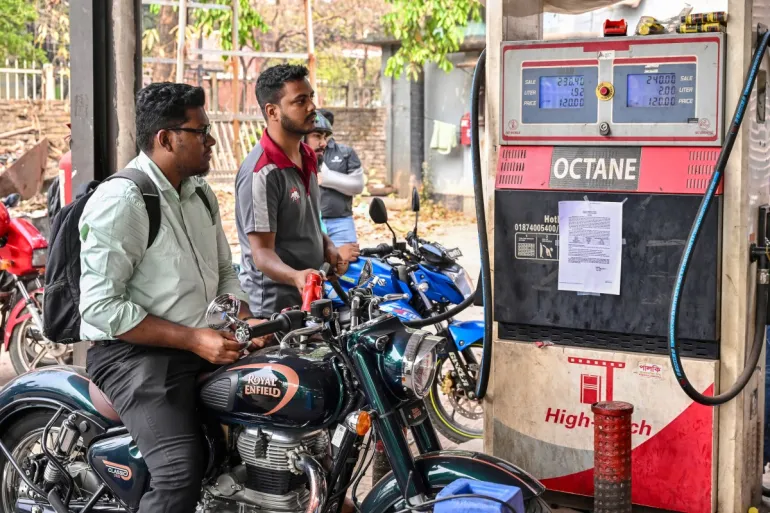
A man gets his motorcycle refuelled at a petrol station in Dhaka, Bangladesh, on March 9, 2026 [Munir Uz Zaman/AFP]

In Bangladesh, which imports about 95 percent of its oil and is expected to run through its fuel reserves within days, petrol pumps in some districts have run dry despite the introduction of fuel rationing.

Sri Lanka, which imports about 60 percent of its energy needs and is still reeling from an economic meltdown that began in 2019, has declared every Wednesday a public holiday and introduced a mandatory fuel pass for vehicle owners to conserve petrol and diesel, stockpiles of which are projected to run dry within weeks.

In Egypt, one of the biggest energy importers and among the most indebted economies in the Middle East, the government has ordered malls, shops and cafes to close by 9pm on weekdays and 10pm during weekends, and cut back on public lighting.

Facing growing pressure on public finances due to the government’s heavy subsidisation of fuel prices, Egyptian officials on March 10 announced price hikes of between 15 and 22 percent for petrol, diesel and cooking gas.

While acknowledging the burden on the public, Egyptian President Abdel Fattah el-Sisi said the move was necessary to avoid “harsher and more dangerous outcomes”.

“For a majority of developing economies, especially those already grappling with debt and high import dependence, they are facing a potent mix of inflation, currency pressures and fiscal strains,” said Yeah Kim Leng, a professor of economics at the Jeffrey Cheah Institute on Southeast Asia at Sunway University in Kuala Lumpur, Malaysia.

“The hardest hit are net energy and food importers, especially those with fragile macroeconomic foundations and pre-existing vulnerabilities that typified countries with low per capita income and high poverty rates,” Yeah added.

Pakistan, Bangladesh, Sri Lanka, Jordan, Senegal, Egypt, Angola, Ethiopia and Zambia are among the most at risk, according to a recent analysis by the Washington-based Centre for Global Development, which looked at factors including dependence on fuel imports, public debt levels and foreign exchange reserve/import ratios.

Currency depreciation

The weakening of many developing countries’ currencies against the US dollar – the result of investors buying the greenback amid heightened geopolitical uncertainty – has compounded the situation by further driving up costs.

“Countries such as Indonesia and the Philippines have already seen their currencies at near record lows even before the start of the conflict, making imports, including oil, much more expensive,” said Azizul Amiludin, a non-resident senior fellow at the Malaysia Institute of Economic Research in Kuala Lumpur.

Much as the fallout of the war poses particular challenges for governments in developing countries, the effect on citizens is disproportionate, too.

In less advanced economies, citizens spend much more of their pay cheques on fuel and food, leaving them more exposed to rising living costs.

At the same time, governments in developing countries have less capacity to provide a safety net for those at risk of falling through the cracks.

“In vulnerable economies, governments often attempt to shield their populations from price hikes by subsidising fuel and food,” said Yeah, the Jeffrey Cheah Institute professor.

“However, with depleted fiscal buffers and shrinking revenues, this becomes unsustainable. The ensuing austerity, combined with hyperinflation, can trigger widespread social unrest and a full-blown fiscal crisis.”

pakistan
Motorcyclists crowd a filling station and wait their turn to get fuel, in Lahore, Pakistan, on March 6, 2026 [K M Chaudary/AP]

With the US and Israel barely a month into their war and no clear timetable for its end in sight, many analysts expect things to get worse before they get better.

Khalid Waleed, a research fellow at the Sustainable Development Policy Institute in Islamabad, said rising transport costs would soon be felt at supermarket checkouts.

“Diesel is the backbone of Pakistan’s freight and agricultural economy,” Waleed said.

“Trucking costs have started climbing, and that will feed into everything from flour to fertiliser in the weeks ahead.”

Once Pakistan’s wheat harvest gets under way in April, food prices could spike well beyond their current levels, Waleed said.

“Combine harvesters, threshers, tractors for haulage from field to market, and the trucks that move grain from fields to flour mills and storage facilities all run on high-speed diesel,” he said.

“For a country where wheat flour is the single largest item in the food basket of the bottom two income quintiles, this is not a marginal concern,” Waleed added.

“If diesel prices stay elevated through April and May, Pakistan will harvest its wheat at the most expensive input cost in years, and that cost will transmit directly into food inflation at a time when households have almost no capacity left to absorb further price shocks.”

Source link

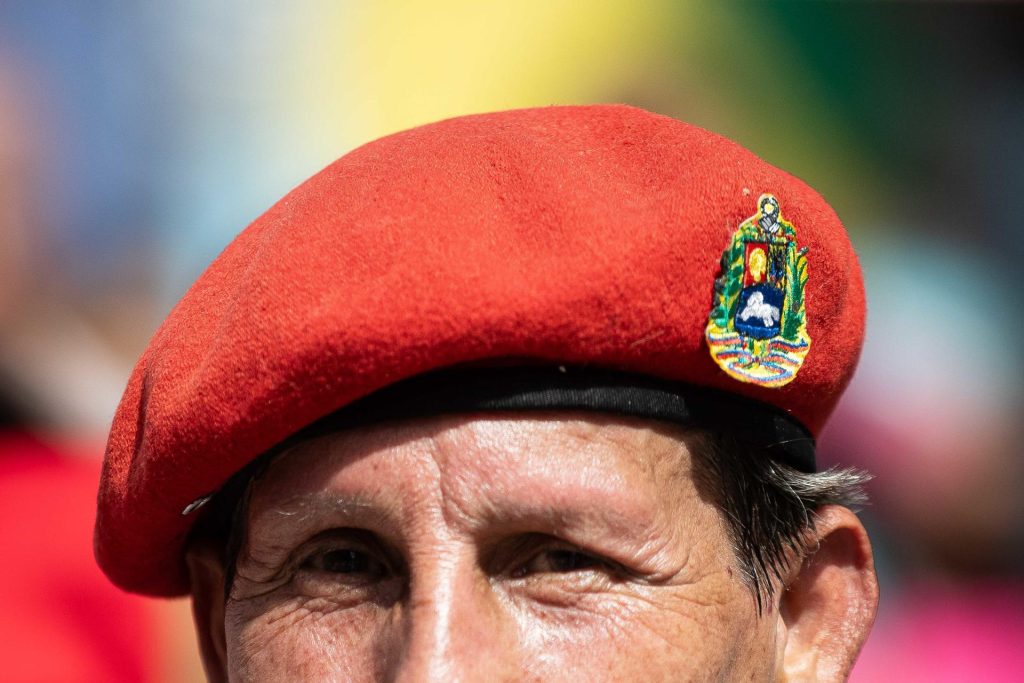
Venezuela: Between Imperial Intervention and Class Suicide

The oil reform and the stance regarding the war against Iran are key elements scrutinized. (EFE)

The early morning of January 3, 2026, marked a turning point in Venezuela’s recent history. An operation carried out by US forces combined airstrikes on Caracas and strategic military areas with a ground incursion that culminated in the abduction of President Nicolás Maduro and his wife, Cilia Flores, and their subsequent rendition to New York. The operation left more than 90 dead, including 32 members of the Cuban special forces who fought to protect Maduro, inflicting some damage on the imperialist forces before being killed.

While it is certainly strange that the United States could carry out the operation to kidnap Maduro and his wife without encountering significant resistance—beyond that offered by the innermost security ring, most of whom were of Cuban origin, like the aforementioned 32 martyrs—perhaps even more surprising are the statements made by Defense Minister Vladimir Padrino López. Weeks after Maduro’s kidnapping, Padrino asserted that it was impossible to deploy fighter jets at the time of the attack given the United States’ air superiority, with 150 aircraft. He thus acknowledged that, with the exception of the president’s personal guard and a few soldiers stationed near the residence, the Venezuelan Armed Forces did not respond to the imperialist aggression. 

We cannot speculate on military matters, since we are not experts and do not have all the necessary information on the issue. That falls outside our purview. In any case, Padrino López’s own words and the events that unfolded during the attack indicate that, for some reason or another, the decision was made not to respond militarily to the Delta Force attack in the early hours of January 3 in Caracas. 

To the surprise of many, Maduro’s abduction did not lead to an immediate or complete institutional collapse. Vice President Delcy Rodríguez assumed the interim presidency, backed by the Supreme Court and the National Assembly, headed by Jorge Rodríguez. This “two-pronged approach” allowed for a certain degree of formal stability to be maintained while the administration of the country’s strategic resources was reorganized and the implementation of policies to adapt to the new context was accelerated.

Coordination with Washington was immediate. On January 15, CIA Director John Ratcliffe – who just days earlier had overseen the aggressive operation alongside Donald Trump in Florida – visited Caracas and met with Delcy Rodríguez. A few days later, the reform of the Organic Law on Hydrocarbons was presented and approved. This timeline reveals an almost symbiotic alignment between Venezuelan authorities and the US administration aimed at ensuring that oil wealth flows under the empire’s supervision, while simultaneously safeguarding the interests of large corporations and international creditors. Whether this link is the result of betrayal or capitulation is, for now, irrelevant. However, what is becoming clearer every day is that, if this were a tactical retreat, it seems unlikely that it could be corrected without strategic direction. And the latter appears to be beyond the reach of the country’s new authorities.

The liquidation of oil sovereignty: from Chávez to Delcy Rodríguez

The recent reform of the Organic Law on Hydrocarbons (LOH) is not a minor amendment to the previous law, but rather the culmination of a process of gradual neoliberal regression that finally took shape in the substantial repeal of the 2001 law – a cornerstone of the Chavista social project and a historic achievement in the assertion of Venezuelan sovereignty.

The original 2001 law, enacted by Hugo Chávez as an Enabling Law, alongside subsequent reforms in 2006 and 2007, marked the peak of Venezuela’s oil nationalization. It established exclusive state ownership of hydrocarbons in the subsoil, PDVSA’s monopoly on international marketing, majority state control in all joint ventures, state planning of investment, and the priority allocation of revenue to social development.

Throughout the various phases of Maduro’s administration, and in the face of the economic crisis caused by brutal US-led sanctions, revenue-seeking policies were implemented in an effort to secure liquidity and foreign currency, which gradually eroded the Chavista socioeconomic structure. This laid the groundwork for the gradual privatization of national resources, even though commercial control and ownership of the oil remained formally in the hands of the state.

Furthermore, during the 2019–2024 period, Maduro granted operating licenses to Chevron and other foreign corporations that allowed for direct exploitation and marketing in certain areas, setting precedents for private control over production. These agreements, presented as “temporary exceptions” to revive output and alleviate the social burden of sanctions, established the framework of dependency that the 2026 reform ultimately consolidated legally.

The January 2026 reform promoted by the Delcy Rodríguez administration, designed in accordance with the requirements of January 9 Trump administration Executive Order 14373, completes this process of erosion and represents a substantial rollback of the economic foundations of Chavista social transformation. Many of the changes introduced reflect mechanisms imposed under the Anti-Blockade Law (2020) and the Special Economic Zones Law (2022), which loosened restrictions on the private sector’s role, primarily through broad tax exemptions and trade incentives, while the 2026 LOH eliminates any remaining obstacles to private operational control of that sector. Or, in other words: what under Maduro were exceptions designed to circumvent sanctions – particularly pressing in the context of the pandemic and post-pandemic period – are formalized in Rodríguez’s reform to institute open subordination.

First, the exclusive state ownership of hydrocarbons in the subsoil – which the 1999 Constitution reaffirmed as an inalienable principle and which even Maduro formally upheld – has been rendered meaningless. While Article 5 of the 2001 law stated that “hydrocarbons in the subsoil are the property of the Republic,” the 2026 reform establishes that foreign private operators can acquire property rights over production from the moment of extraction, allowing them to market it directly without the state involvement that characterized the original Chavista model. The qualitative difference from the Maduro era is that this direct commercialization is now generalized across the entire sector, and the geographical and temporal restrictions that maintained a prospect of state control have been eliminated.

Second, the reform permanently eliminates the state monopoly on international commercialization. The 2001 law and subsequent reforms stipulated that PDVSA was the only entity authorized to export. The 2026 reform allows Western conglomerates such as Chevron, ExxonMobil, Shell, and Repsol to directly market all or portions of production, thereby undermining the state’s sovereign authority to decide to whom to sell, under what conditions, and at what price. Private companies now determine the destination of shipments, negotiating directly with refiners and distributors, while the Venezuelan state receives only royalties and dividends subject to external control mechanisms.

This commercial subordination is further reinforced by a restrictive framework imposed by Washington: General Licenses 46, 50A, and 52 issued by the US Office of Foreign Assets Control (OFAC) strictly prohibit Venezuelan crude oil from reaching entities based in Russia, China, Iran, North Korea, or Cuba, extending the ban to any company that maintains ties of ownership or control with individuals from those countries. Far from restoring commercial autonomy, the 2026 reform institutionalizes these barriers: while transnational corporations are given carte blanche to negotiate directly with Western refiners, all transactions with Chavismo’s historical partners remain prohibited. The Venezuelan state is reduced to collecting royalties under foreign supervision, with no capacity to direct oil flows toward those markets that for years guaranteed the sustainability of the Bolivarian project. This leads to a situation as deplorable as it is surreal, where the Zionist entity has been able to receive Venezuelan crude without hindrance, while Cuba is left helpless against Washington’s strangulation.

Third, the reform abolishes state control over investment and exploitation. The 2001 law reserved for the state the right to plan investment. The 2026 reform allows private operators to unilaterally determine investment levels, the technology to be used, and reserve policy, eliminating any need for approval from Venezuelan authorities beforehand. Foreign companies acquire the right to import equipment and personnel without restrictions, operating under a regime of fiscal and legal extraterritoriality.

Fourth, the reform dismantles the framework for protecting social investments. The 2001 law stipulated that oil revenues must be allocated primarily to economic and social development. The 2026 reform includes provisions allowing for international arbitration to resolve disputes, prioritizing the protection of private investments over any social claims. Funds derived from oil production are subject to foreign control mechanisms. 

Lastly, the aforementioned OFAC licenses effectively establish an architecture of fiscal subordination that privileges foreign interests, with Venezuelan oil proceeds deposited in US Treasury-run accounts. By accepting these licenses – and with the additional stipulations of the reform – the Delcy Rodríguez administration is effectively subject to mechanisms for external validation of its budgets.

Oil reform and foreign oversight are not isolated processes: they constitute a neocolonial arrangement disguised as economic normalization, which maintains formal sovereignty while relinquishing operational control. In strategic terms, Venezuela has gone from being an actor with a relative capacity to define its energy policy— despite sanctions and threats — to a subordinate whose critical decisions are dictated by the United States. 

Condemning Iran: geopolitical alignment as submission

Structural subordination is also evident in foreign policy. In the face of the recent imperialist aggression against Iran, launched jointly by the United States and the Zionist entity on February 28, 2026, which left more than 200 dead in the first few hours (including 148 girls killed in the bombing of an elementary school in Minab), the Delcy Rodríguez government rushed to abandon its traditional alliance with Tehran. 

In an initial statement, it took a stance condemning both the imperialist aggression and the response of the attacked country, falling into a shameful and ridiculous position of neutrality. This official statement, issued on February 28 stated that the Venezuelan government “condemns and deeply regrets that the military option was taken against Iran” and expressed dismay over the civilian casualties. However, the text then went on to refer to “Iran’s inappropriate and reprehensible military reprisals against targets in various countries in the region.” In doing so, the Delcy Rodríguez administration denied the bombed country the right to self-defense, placing the aggressor and the victim on the same level.

This statement, which Foreign Minister Yván Gil ended up deleting from his social media accounts hours later, marks a definitive break with the anti-imperialist stance that Venezuela had been building for two decades. The condemnation of the response by Tehran – a historic ally of Chavismo and high-level strategic partner since 2022 – shows that alignment with imperialism is now a fait accompli.

The Venezuelan communiqué cannot be understood without considering the context: the complete opening of the oil sector to foreign capital, the aforementioned reception in Caracas of the CIA director, and the subsequent arrival of US Chargé d’Affaires Laura Dogu as a diplomatic representative, along with visits by US Secretary of Energy Chris Wright, US Interior Secretary Doug Bergum, and the head of US Southern Command, General Francis Donovan; all within a few weeks, prior to Trump’s own recognition of Delcy Rodríguez as Venezuela’s president.

The Rodríguez administration not only hands over the oil and refuses to stand up to the empire, but also politically legitimizes US hegemony, breaking with the internationalist and popular legacy that Chavismo had always fostered, defended, and pushed forward. The condemnation of the Iranian resistance – which undoubtedly amounts to a condemnation of the entire anti-Zionist Axis of Resistance and all peoples oppressed by the colonial entity – is presented as “international responsibility” and a “commitment to peace.” The new Venezuelan administration thus disguises its surrender of diplomatic sovereignty and buries the solidarity-driven, internationalist Venezuela that Chavismo led, both during Chávez’s and Maduro’s tenures.

Cabral’s Dilemma: betrayal of the Chavista project or class suicide

To fully understand what has happened in Venezuela, it is quite helpful to examine it in light of the political theory of Amílcar Cabral, the independence leader of Guinea-Bissau and Cabo Verde and one of the most incisive thinkers of African and Third World liberation. Cabral first formulated the concept of “class suicide” in his 1964 message to Guinean militiamen, later developing it in numerous speeches throughout the 1960s and 1970s, particularly in his address, “The Weapon of Theory,” delivered at the First Tricontinental Conference of the Peoples of Asia, Africa, and Latin America, held in Havana in January 1966.

In the context of Guinea-Bissau’s liberation struggle, Cabral further developed this theory by applying it to that specific reality in his work Guinea-Bissau: An African Nation Forged in Struggle, posthumously published in 1974. The Guinean petty bourgeoisie, formed under the Portuguese colonial administration, had to choose between joining the African Party for the Independence of Guinea and Cabo Verde (PAIGC) and its peasant base, renouncing their privileges as colonial officials, or remaining on the sidelines and eventually collaborating with Portugal. Cabral had no illusions about the difficulties of this choice. The historical dilemma of this petty bourgeoisie, according to Cabral, is strictly binary: “either it betrays the Revolution or it commits suicide as a class.” There is no third way, no middle ground, and no possible compromise. Any attempt to maintain a neutral stance ends, sooner or later, in subordination to imperialism and the betrayal of national interests.

Class suicide did not mean the physical disappearance of individuals, but rather the destruction of their particular class status. It entailed a radical and conscious transformation. As Cabral explained, the petty bourgeoisie had to “renounce the class position it occupies in social life” and “integrate itself with the popular forces – that is, with the workers and the peasants.” In other words: voluntarily abandon their privileges as an intermediate class, cease to be a class separate and distinct from the people, and fully identify with the popular forces as part of a project of national and social liberation. 

The betrayal of the revolution – the other option in this dilemma – occurs when the bourgeoisie preserves its class existence and its intermediary privileges through subordination to imperialism. It does not renounce its position, does not identify with the people, and does not dismantle its networks of privilege. On the contrary, it negotiates its corporate survival with the enemy, becoming a comprador bourgeoisie. This betrayal is not always explicit or conscious. It often presents itself as “realism,” “pragmatism,” or “tacticism.” But its result is always the same: the consolidation of structural dependence and the blocking of any emancipatory project aimed at true sovereign independence, an indispensable requirement for delinking from the imperialist system.

The theory of class suicide has profound methodological implications for political analysis. First, it establishes that national liberation cannot be led by the national bourgeoisie or by the petty bourgeoisie unless they have committed class suicide. Second, it demonstrates that formal independence does not equate to real liberation if the political leadership retains its character as a subordinate intermediary class. Third, it points out that the class struggle continues during the revolutionary process and that the principal contradiction is not always between the people and external colonialism, but also between the people and their own leadership that resists class suicide.

What sets the Venezuelan case apart is that the petty bourgeoisie – whether treacherous or capitulationist – is not the traditional colonial class that Cabral analyzed, but rather a bureaucratic bourgeoisie forged in the very process of revolutionary change. Over two decades of Chavismo, this class has accumulated experience in state administration, built autonomous power networks, developed a distinct corporate identity, and created a social base of support. Class suicide would mean renouncing all this historical accumulation, dissolving into the popular masses, and reconfiguring the project from the ground up by aligning with the proletariat and the communal project. Betrayal, on the other hand, allows for the preservation of bureaucratic and clientelist power structures by adapting them to the new framework of subordination. A bureaucratic bourgeoisie that controls the state and oil revenues has its own material interests that may conflict with a direct confrontation against imperialism.

In the wake of the rapid and radical changes implemented by the Delcy Rodríguez administration that we have described, we can observe with bitterness how the national bourgeoisie has ceased to administer independence – the original purpose of the Chavista project – and has instead come to manage dependence.

All of this is being presented, as one would expect, under the guise of Bolivarian continuity, the preservation of symbols, and rhetoric about historical responsibility, all of which serve to obscure the surrender of oil revenues to imperialist control, demolishing what was once the cornerstone of the Chavista social project. This is accompanied by a rupture or abandonment of historic alliances such as with Iran and Cuba, with national resources destined for the Zionist entity without question, in a shameful capitulation to US interests.

The 2026 oil reform is the key element of this submission: state ownership of oil – a pillar of the sovereign development project – is being dismantled in favor of corporate control and placed at the mercy of the US Treasury. This constitutes a sophisticated form of neocolonial domination because it hinders resistance to the brutal imperial agenda. Indeed, the masses are not facing an enemy in the form of a foreign occupation, but rather an elite that speaks their language, appropriates their symbols and folklore, and maintains a patriotic rhetoric, all while systematically dismantling the core foundations that Chavismo built over decades in its quest for a historic break with dependency.

Conclusion

The history of liberation struggles teaches us that if the revolutionary project is the lighthouse, the revolutionary class must be its operator. As such, its cause must be anchored in a historical strategy capable of guiding even the most difficult tactical retreats. But there can be no tactical retreat without strategy, nor strategy without the material foundations on which to sustain it. Economic independence is not a mere ideological ornament of the revolutionary process: it is its condition of possibility. When a nation’s sources of wealth are handed over to the empire’s management, when the revenue that fueled the social project is subjected to external control, and when the state voluntarily relinquishes the instruments that allowed it to decide on its own development, there is no room left for future strategic maneuvering. What is presented as prudence or realism is nothing more than, at best, the institutionalization of capitulation; at worst, of betrayal. 

Those same processes of national liberation have also shown that no revolution has survived without cadres willing to take on the risks demanded by the confrontation with imperial power. Revolutionary leaders are not called upon merely to manage structures, but to embody a historic will capable of sustaining the conflict to its final consequences. In the early hours of January 3, as the Venezuelan state apparatus sealed its commitment to servile negotiation, those willing to give their lives for that cause were the Venezuelan soldiers and 32 Cuban internationalists who fell defending the presidential residence. And in that event, both brutal and symbolic, lies the essence of the dilemma Cabral articulated decades ago: in the face of imperialism, there is no lasting middle ground between class suicide and betrayal. Everything else – the rhetoric, the symbols, the appeals to tactics – are merely transient ways of naming a decision that, sooner or later, history ultimately reveals.

Joan López and Alejandro Pedregal are members of the Anti-Imperialist Network (AIN), anti-imperialist.net.

The views expressed in this article are the authors’ own and do not necessarily reflect those of the Venezuelanalysis editorial staff.

Source: El Salto Diario

Note: there have been minor edits to the original version to clarify certain aspects of the oil reform.

Source link

Beloved rock star shares health update after undergoing surgery to remove three new brain tumours

NEW Found Glory guitarist Chad Gilbert has had surgery to remove three tumours in his brain after a tough battle with rare adrenal cancer.

The 45-year-old rocker went to A&E on February 20 after experiencing weakness in his leg that caused him to fall.

New Found Glory’s Chad Gilbert has had surgery to remove three brain tumoursCredit: Instagram / xchadballx
The guitarist was diagnosed with a rare adrenal cancer in 2021Credit: Instagram / xchadballx

It came three days after he struggled to control his left hand during a show in Nashville.

Taking to Instagram, Chad revealed how a CT scan showed three tumours in his brain, leading to emergency surgery to remove them.

The operation was a success and he felt improvements straight away.

He wrote on Instagram: “I regained function of my left hand immediately. My radiation oncologist described it like this: ‘this is not a fatal blow and not the end of your story, just the beginning of a new chapter.’

OVERLOOKED

Late MAFS star Mel Schilling was ‘gaslit’ by doctor & cancer misdiagnosed


RIGHT DIRECTION

Jane Fallon undergoes surgery after shock breast cancer diagnosis

“My recovery has been bumpy at times but I’m feeling much better now and getting stronger by the day.”

Chad thanked those who had checked in on his wife Lisa Cimorelli and their daughter, four, over the past month.

He continued: “More stories to come when my brain is working well again. Love you all and am looking forward to sharing more music and fun with you as we come out of this.”

Pictures accompanying the post showed him in a hospital bed at various stages in his recovery and ended with a smiling picture of him doing an activity with shapes to help his cognitive function.

Emo veterans Hawthorne Heights wrote: “We love you Chad! Keep fighting. The world is a brighter place with your riffs and positivity.”

Dashboard Confessional commented: “I love you bud.”

Another post branded Chad the “strongest man on the planet!”

Musician Chad, who was previously had a short marriage to Paramore’s Hayley Williams, was first diagnosed with cancer in December 2021 after wife Lisa found him unconscious in bed.

He was rushed to hospital and doctors found a large adrenal gland tumor that had spread to his liver. The tumour was surgically removed along with half of his liver and gallbladder.

Though he was declared cancer-free the following month, it returned in his spine in August, leading him to have a six-hour surgery to remove the affected vertebrate and replace it with an artificial disc.

There was more disheartening news the following year after nodules were discovered in his lungs.

He went through intense rounds of chemotherapy while continuing to perform and release music with New Found Glory.

The band’s latest album, Listen Up!, was released the same day Chad experienced issues with his hand on stage.

Florida rockers New Found Glory released their debut album in 1999, but it was with their third record, Sticks and Stones, that they achieved stardom.

My Friends Over You became a huge hit and the band’s lyrics inspired the names of more recent groups like All Time Low and The Story So Far.

Their success continued into the early noughties with the album Catalyst, which peaked at number three in the US, and the single All Downhill from Here.

He is recovering well following his latest opCredit: Instagram / xchadballx
Chad is the main songwriter for the punk veteransCredit: Getty
He was previously married to Paramore’s Hayley WilliamsCredit: Alamy

Source link

Trump says Iran wants to ‘make a deal’ as it continues to strike Israel and gulf nations

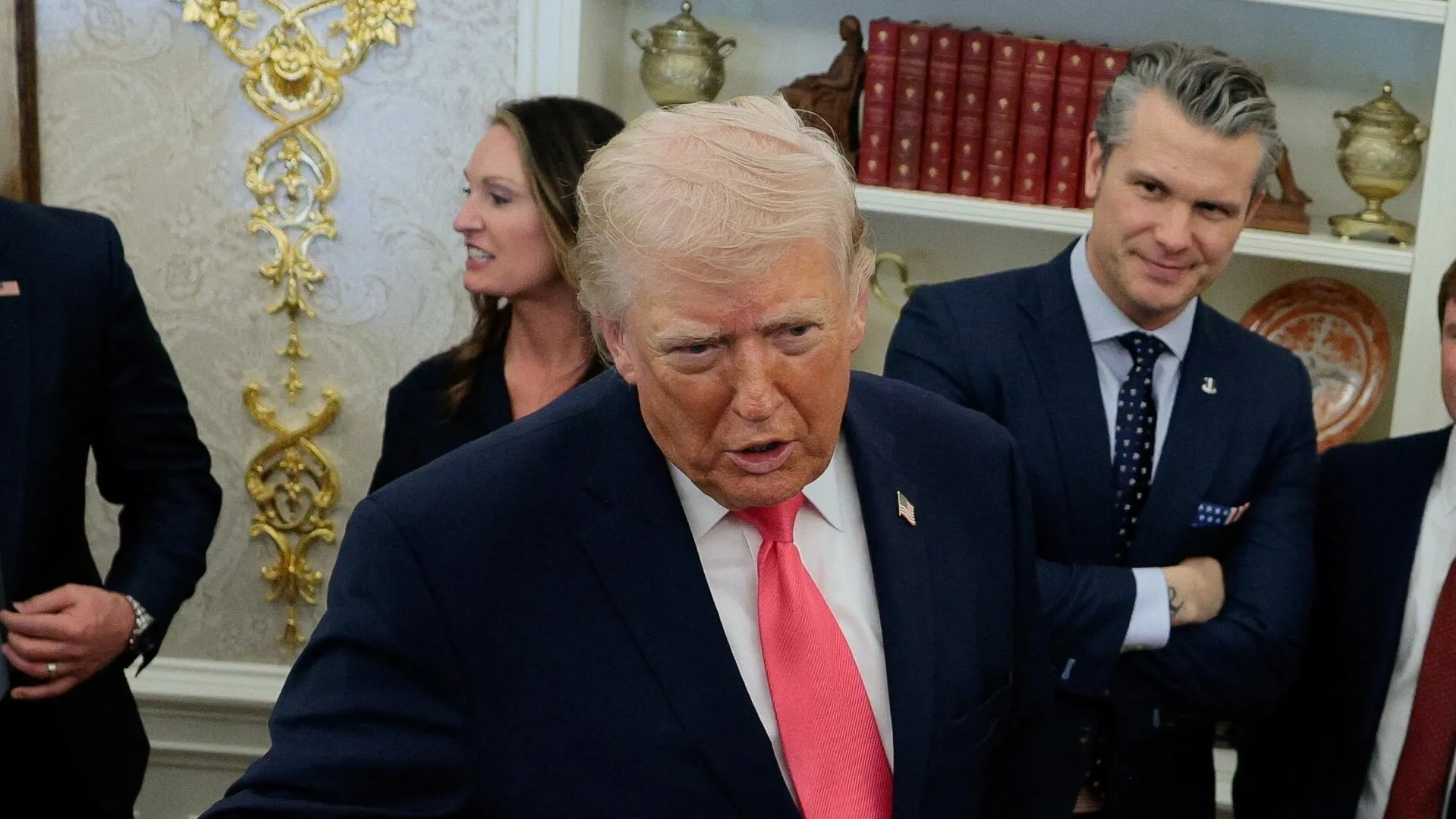
President Trump said Tuesday that Iran wants to “make a deal” with the United States to end the war in the Middle East, saying that negotiations are ongoing with the conflict in its fourth week.

Iran has publicly denied that talks are happening. But Trump told reporters during an Oval Office event that negotiations are underway and being led by Vice President JD Vance and Secretary of State Marco Rubio.

“I’d like to think we are in a good bargaining position,” Trump said.

Trump said he remains skeptical of Tehran’s intentions, saying he doesn’t necessarily “trust them,” but indicated that he is encouraged to continue talks after receiving what he described as a “very big present worth a tremendous amount of money” from Iran.

“I am not going to tell you what the present is,” Trump told reporters. But he said it was a “significant prize” related to “oil and gas” that signaled to him that he was “dealing with the right people.”

Conflicting messages over the diplomatic efforts between Washington and Tehran come as Pakistan has offered to host peace talks in Islamabad aimed at ending the hostilities, which have killed more than 2,400 people, further destabilized the Middle East and disrupted global oil markets.

“Pakistan welcomes and fully supports ongoing efforts to pursue dialogue to end the WAR in Middle East, in the interest of peace and stability in region and beyond,” Prime Minister Shehbaz Sharif wrote on X.

Any potential talks between the United States and Iran would face significant challenges. Key U.S. demands — particularly related to Iran’s ballistic missile and nuclear programs — remain difficult to resolve, even though Trump claims Iran has already agreed to concessions related to its ability to have nuclear weapons.

It is also unclear who within Iran’s leadership would be willing to negotiate, especially as Israel has vowed to keep targeting Iranian leaders after killing several already.

Trump has not publicly responded to Pakistan’s offer to act as an in-between for the United States and Iran. He also sidestepped a question about a New York Times report that said the Saudi crown prince, Mohammed bin Salman, has been pushing him to continue the war against Iran.

The president instead expressed confidence in his senior advisors handling the negotiations with Iran. He did not specify who U.S. officials are engaging with, but insisted they are “talking to the right people.”

When asked by a reporter why he had agreed to a cease-fire with the Iranians, Trump said: “They are talking to us, and they’re making sense.”

As the talks continue, Trump said that the United States is “way ahead of schedule” in its war with Iran, a nation that he said was so battered that it had no choice but to come to the negotiating table. Iran, however, showed on Tuesday that it still has firepower as it fired a new wave of missiles at Israel, Iraq and other gulf nations.

Iran fired at least 10 waves of missiles at Israel. In Tel Aviv, a missile with a 220-pound warhead slammed into a street in the city center, blowing out windows of an apartment building and sending smoke billowing. Four people suffered minor wounds, rescue worker Yoel Moshe said.

In Kuwait, power lines were hit by air defense shrapnel, causing partial electricity outages for several hours. Bahrain said it was attacked with missiles and drones, and that an Emirati soldier serving with its forces had been killed. The United Arab Emirates said air defense systems responded to similar attacks, and Saudi Arabia said it destroyed Iranian drones targeting its oil-rich Eastern Province.

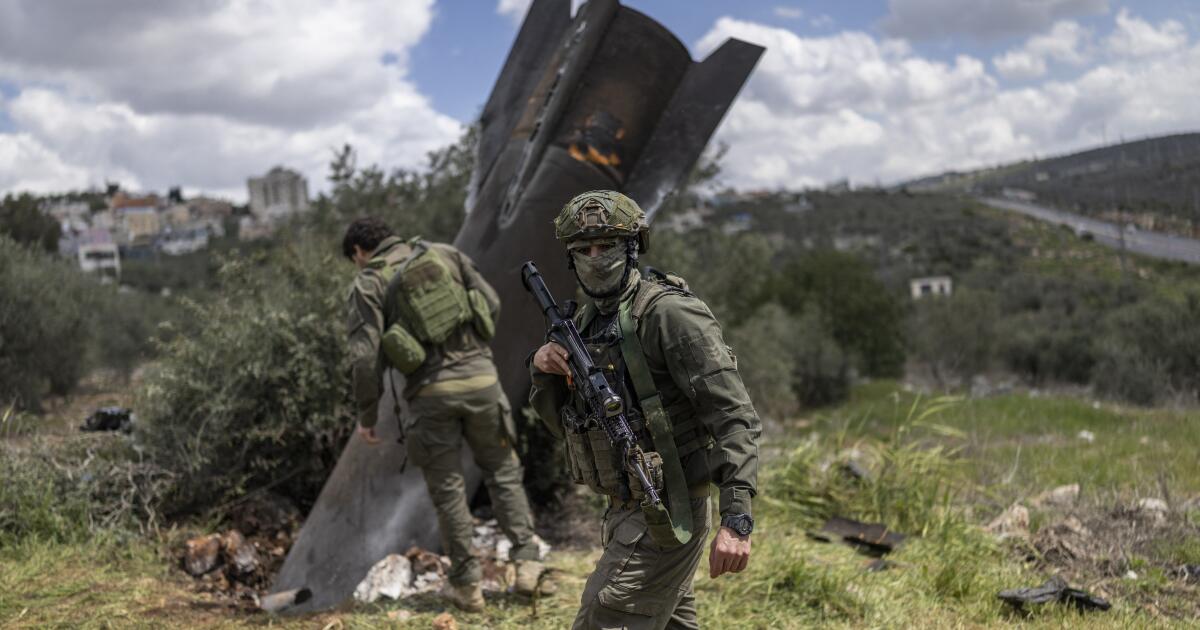
Israel pounded Beirut’s southern suburbs, saying that it was targeting infrastructure used by the Iran-linked Hezbollah militant group, and carried out an extensive series of strikes on Iranian “production sites,” without providing more information.

On Tuesday, Defense Minister Israel Katz said Israel intended to seize Lebanon’s south Lebanon to a create a “security zone.”

Speaking at an assessment meeting with the Israeli military’s chief of staff, Katz said the military would control up to the Litani River, a waterway that runs through south Lebanon, meeting the Mediterranean some 20 miles north of the border with Israel.

“Hundreds of thousands of residents of southern Lebanon who evacuated northward will not return south of the Litani River until security for the residents of the north [of Israel] is ensured,” he said.

His words were the clearest articulation yet of Israel’s plans in Lebanon, going far beyond the “limited and targeted ground operations” announced by the Israeli military earlier this month.

Lebanon, meanwhile, took steps to undercut Tehran’s influence in the country and its support for Hezbollah. In a statement released on X on Tuesday, Lebanese Foreign Minister Youssef Raggi said the government was expelling Iranian Ambassador Mohammad Reza Shibani and declared him persona non grata. He gave Shibani until Sunday to leave the country.

Hezbollah condemned the move and called it a “grave national and strategic mistake.” Political figures aligned with the group also issued public statements urging the Iranian ambassador to ignore the decision.

In Washington, Trump said he would like to find a resolution that would avoid further casualties and damage to critical infrastructure in the region.

“If we can end this without more lives being down, without knocking out $10-billion electric plants that are brand new and the apple of their eye, I’d like to be able to do that,” he said. “But they can’t have certain things.”

Defense Secretary Pete Hegseth, meanwhile, told reporters that he would rather “negotiate with bombs.”

“The president has made it clear that you will not have a nuclear weapon. The War Department agrees,” Hegseth said. “Our job is to ensure that, and so we’re keeping our hand on that throttle, as long and as hard as is necessary to ensure the interests of the United States of America are achieved on that battlefield.”

His comments came as thousands of U.S. Marines were on their way to the region, raising speculation that the U.S. may try to seize Kharg Island, which is vital to Iran’s oil network. The U.S. bombed the Persian Gulf island more than a week ago, hitting its defenses but saying it had left oil infrastructure intact.

The Pentagon declined to comment on the deployment.

Ceballos and Quinton reported from Washington. Times staff writer Nabih Bulos in Beirut contributed to this report.

Source link

Miami Open: Jannik Sinner extends record winning run

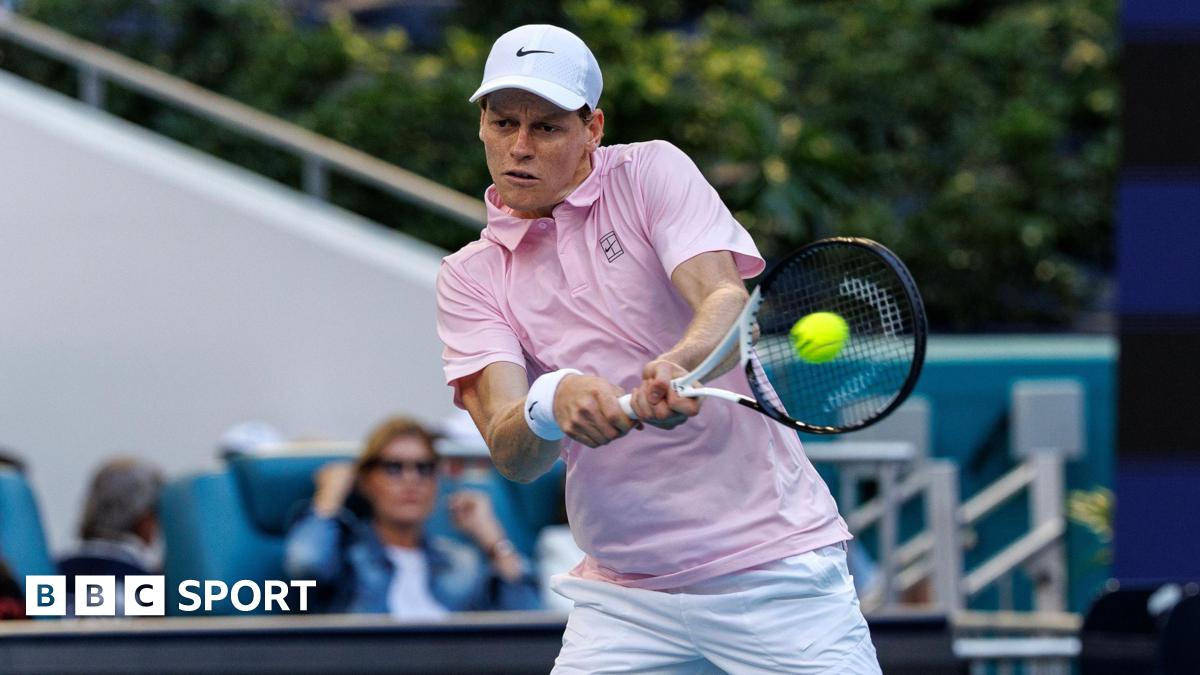
Jannik Sinner extended his remarkable run with a 7-5 7-6 (7-4) win over Alex Michelsen at the Miami Open.

The Italian world number two claimed his 25th and 26th consecutive set wins at ATP Masters 1,000 events during his win over Corentin Moutet on Monday – setting a new record.

Sinner made it 28 sets in a row by beating Michelsen but did not have it all his own way. Having taken the first set, he fell 5-2 down in the second before coming back to win on a tie-break.

The four-time Grand Slam winner has triumphed at the past two Masters 1,000 tournaments – at Indian Wells earlier this month and Paris in November – without losing a set.

In the women’s draw, Coco Gauff takes on Belinda Bencic in a quarter-final later on Tuesday, while Karolina Muchova was the first to power into the semis with a 7-5 7-6 (7-5) win against Canada’s Victoria Mboko.

Third seed Elena Rybakina ended Talia Gibson’s run late on Monday with a comprehensive 6-2 6-2 win to move into the last eight.

The 21-year-old Australian had won 11 of her past 12 matches but was outclassed by two-time Grand Slam champion Rybakina, who will face fifth seed Jessica Pegula on Wednesday.

Source link

Parsi: No deal ‘’without both sides giving something to the other’ | US-Israel war on Iran

NewsFeed

Trita Parsi, Vice President of the Quincy Institute, argues that Iran is unlikely to agree to end the war without sanctions relief, while there is little sign Donald Trump is willing to offer meaningful concessions, adding that a deal remains unlikely until then.

Source link

OpenAI pulls AI video app Sora as concerns grow on deepfake videos | Social Media News

This is first big step by the ChatGPT maker to focus its business on potentially more lucrative areas, such as coding tools.

OpenAI is shutting down its social media app Sora, which went viral towards the end of last year as a place to share short-form videos generated by artificial intelligence but also raised alarms in Hollywood and elsewhere.

OpenAI said in a brief social media message on Tuesday that it was “saying goodbye to the Sora app” and that it would share more soon about how to preserve what users had already created on the app.

Recommended Stories

list of 4 itemsend of list

“What you made with Sora mattered, and we know this news is disappointing,” it said.

The company behind ChatGPT released Sora in September as an attempt to capture the attention, and potentially advertising dollars, that follow short-form videos on TikTok, YouTube or Meta-owned Instagram and Facebook.

But a growing chorus of advocacy groups, academics and experts expressed concerns about the dangers of letting people create AI videos on just about anything they can type into a prompt, leading to the proliferation of nonconsensual images and realistic deepfakes in a sea of less harmful “AI slop”.

OpenAI was forced to crack down on AI creations of public figures – among them, Michael Jackson, Martin Luther King Jr and Mister Rogers – doing outlandish things, but only after an outcry from family estates and an actors’ union.

Disney, which made a deal with OpenAI last year to bring its characters to Sora, said in a statement on Tuesday that it respects “OpenAI’s decision to exit the video generation business and to shift its priorities elsewhere”.

But Disney did not see the move coming, the Reuters news agency reported.

On Monday evening, Walt Disney and OpenAI teams were working together on a project linked to Sora. Just 30 minutes after the meeting, the Disney team was blindsided with word that OpenAI was dropping the tool altogether, a person familiar with the matter said.

OpenAI announced the move publicly on Tuesday.

“It was a big rug-pull,” according to the person, who requested anonymity to discuss the matter.

Messy process

The move is the first big step by the ChatGPT maker to focus its business on potentially more lucrative areas, such as coding tools and corporate customers.

But the abrupt cancellation of Sora illustrates how messy the streamlining process may become as OpenAI prepares for a stock market debut that could come as early as later this year.

The Sora decision means the end of a blockbuster $1bn deal between Disney and the ChatGPT maker that was announced a little more than three months ago. As part of the three-year deal, Disney said it would invest $1bn in OpenAI and lend more than 200 of its iconic characters to be used in short, AI-generated videos.

But the transaction between the companies never closed, two other people familiar with the matter said, and no money changed hands.

Source link

Watch the moment pregnant Molly-Mae Hague is left speechless as Tommy calls her a ‘piece of a***’ in front of baby Bambi

MOLLY-Mae Hague was left speechless after boyfriend Tommy Fury called her a “piece of a***” in front of their daughter Bambi.

The Love Island icon, 26, is currently pregnant with their second baby after the couple got back together last year.

Molly-Mae was left shocked by a cheeky comment made by Tommy FuryCredit: YouTube / Tommy Fury
The saucy star made the comment with Bambi in the backseatCredit: YouTube / Tommy Fury
Molly called Tommy ‘terrible’ after his commentCredit: YouTube / Tommy Fury

The couple are getting ready to welcome baby number two, after their daughter Bambi, three, was born in 2023.

Molly-Mae and Tommy often keep fans up-to-date with their family life at home, since reuniting after their split.

Today they shared a hilarious moment in the boxer’s latest YouTube vlog called: “Spend a weekend with me.”

In the video the couple were seen in the car with Bambi in the backseat.

BALM GOOD

Molly Mae’s go-to cleanser is slashed on Amazon — it left my skin glowing


PERRIE EXCITING

Perrie Sian reveals four property empire with £1.1 mansion & Spanish villa

The conversation then turned to Molly saying that she “never looked worse”.

Tommy then quickly said that he “disagreed”.

“I think you look very beautiful. All of your luscious long blonde locks.” the boxer told Molly.

“And it’s very nice to have a piece as good as you in the front seat of the car.”

Molly then quickly asked; “A piece? What do you mean a piece?

To which Tommy replied with a grin: “One piece of a**!”

Molly then chuckled: “Babe, I’m your pregnant missus!”

She then added: “Terrible!”

It comes as Molly-Mae and Tommy quietly broke their baby news to family and close pals months ago, but shared a surprise video with fans in February.

The mum posted a sweet black and white clip on Instagram filmed on January 23, captioning it: “Soon to be four.”

Molly and Tommy welcomed Bambi in 2023Credit: Instagram

It included Bambi who was wearing a “big sister” jumper.

Molly had previously expressed her desire to expand her family with Tommy in scenes aired on her Amazon Prime documentary in January.

Opening up about the future, she revealed: “All I want in this life is to be with him, and to have another baby with him, and to grow old as a family.

“And to live in a nice house together and have a nice life together. That’s all I want.”

Molly-Mae revealed she was expecting her second child in a sweet video last monthCredit: Instagram
The proud mum has been showing off her baby bumpCredit: Instagram

Molly also dropped various clues about her pregnancy before announcing her joyous news, which is said to have strengthened her relationship with boxer Tommy.

A source told The Sun: “Finding out Molly is pregnant has really helped bring them close together again.

“Tommy is determined to do things right this time he has cancelled all of his summer trips with his friends, as he wants to stand by Molly every step of the way.

“Their new home is in a better place for both of them and has more than enough space for two children.”

The couple co-parented Bambi following their messy split in August 2024 – following reports Tommy cheated on her during a lads’ holiday.

Molly-Mae and Tommy Fury’s relationship timeline

From Love Island to a diamond ring and baby – we look at how Molly and Tommy have got to where they are today.

Source link

Plans for forum to replace scrapped USC governor’s debate fall apart

A proposed gubernatorial forum hastily cobbled together in the hours after USC canceled its Tuesday debate fell apart because the candidates of color who were excluded from the previously planned event were unable to show up in person at KNBC-TV’s studio in Universal City, according to multiple sources.

Facing mounting pressure that its debate selection criteria excluded every candidate of color, the university canceled its debate late Monday. On Tuesday morning, billionaire Tom Steyer — a Democrat — proposed holding an alternative face-off, with KNBC moderating. But the candidates who had not been invited to the USC debate had already made other commitments.

“A lot of this came out of nowhere — there’s a debate and you’re not invited, followed by there’s no debate, and then maybe we should all hang out and have a conversation,” said Kyle Layman, a strategist advising former U.S. Health and Human Services Secretary Xavier Becerra.

USC officials declined to comment on Tuesday’s developments — as did KABC-TV, one of the broadcast partners of the canceled debate. KNBC did not respond to a request for comment, but someone involved with planning a potential debate there said pulling together such an event in just a few hours was impossible, and also unfair to the candidates who had made other plans after initially being excluded from the USC debate.

“We looked into the possibility of doing something. It just wasn’t possible because of the last-minute logistics. It was not feasible,” said the person, who asked for anonymity to speak candidly. “We couldn’t get everybody here.”

The fact that the candidates excluded from the USC debate couldn’t find a way to participate in Tuesday evening’s alternative forum irritated some people involved in the planning, however. Becerra, state Supt. of Public Instruction Tony Thurmond, former Los Angeles Mayor Antonio Villaraigosa and former state Controller Betty Yee had loudly protested not being invited to the USC event.

“This is like probably one of the last opportunities they have to be with other leading contenders of the race, so why not take this opportunity?” said someone who took part in conversations about the proposed last-minute debate, who asked for anonymity to speak openly. “If the whole thing is about bringing your message to the voters, making sure voters have as much information as possible, talking about the issues that matter, wouldn’t you want to take every opportunity to do that?

“If you’re going to talk a big game about taking your message to voters, the importance of debates, why not do it?” this person said.

Becerra, Thurmond, Villaraigosa and Yee have reportedly formed an informal pact not to participate in any debate that does not include all of them, which Yee referenced in a Tuesday afternoon news conference.

“The idea that none of the candidates of color are going to be joining a debate is just inappropriate for a state like California,” Yee said. “We also need to have a commitment from all of the debate sponsors that they will include all of us going forward.”

Yee and Thurmond were not invited to the next major televised debate, which will take place April 1 at Fresno State University. Becerra and Villaraigosa had previously confirmed their attendance, according to a news release from the Western Growers Assn., one of the event’s sponsors.

And all four candidates of color, along with San José Mayor Matt Mahan, were not invited to a debate on April 22 in San Francisco that will be hosted by KRON-TV and broadcast on Nexstar Media Group stations throughout California.

“We don’t need gatekeepers,” Mahan said in a statement Tuesday evening. “I’m calling on my fellow candidates to work together to organize our own debates — so we can take our ideas for a better California to every corner of California. Let’s let the voters truly decide.”

The scrapped USC debate was going to be hosted by the institution’s Dornsife Center for the Political Future and co-sponsored by KABC and Univision. Six candidates had been invited to participate: Democrats Rep. Eric Swalwell (D-Dublin), former Orange County Rep. Katie Porter, Mahan and Steyer; along with the leading Republicans, conservative commentator Steve Hilton and Riverside County Sheriff Chad Bianco.

Candidates and elected officials called the criteria used to determine participation in the debate biased because it included Mahan, a white candidate who is polling near the bottom of the pack but is supported by notable names in the USC community. Hours after the debate was canceled, Steyer’s campaign sought to create an alternate event that would include all of the candidates.

“We were trying to do the right thing upon learning that the debate was canceled at USC,” said a member of Steyer’s campaign who asked for anonymity to speak candidly. “Tom immediately was like, ‘We can do something alternative.’ People want to hear from the gubernatorial candidates. It was on the table. It was offered.

“NBC couldn’t get all the candidates here, but we tried,” this person said. “Given the short amount of time we were trying to put this together, it ultimately could not happen because not all the candidates could get to the studio.”

Thurmond, who was in Sacramento and Richmond on Tuesday, joined a political influencer on YouTube Tuesday evening, while Yee attended previously scheduled events with the East Area Progressive Democrats and a women’s group in the L.A. area. Villaraigosa had lined up other interviews at his Wilshire campaign office, Becerra was traveling, and Porter was scheduled to host a livestream on her Instagram account Tuesday evening.

Source link

Prep baseball: ECR wins first game of series against Birmingham

Since he became head coach at Birmingham in 2007, Matt Mowry is 0 for 18 when it comes to winning a West Valley League baseball title. He’s won five City titles but the Patriots haven’t been able to figure out how to win a league title.

A showdown against defending City champion El Camino Real on Tuesday didn’t start or end well for the Patriots. The Royals (10-3, 4-0) scored five runs in the first inning on six hits and coasted to an 8-3 win over Birmingham (10-2, 3-1).

The big hits in the first inning were an RBI double by JJ Saffie, a two-run double by Blake Dubin and an RBI single by Ryan Hauptman. For the second consecutive game, Birmingham pitcher Nathan Soto couldn’t make it out of the first inning. ECR starter Jackson Sellz, celebrating his 17th birthday, threw six innings before Hauptman came in to get the save. Ryan Glassman, Macai Friedman and Shane Bogacz each had two hits.

Birmingham is getting help starting Friday when transfers Masen Ruiz (Chatsworth), Toni Mendoza (Chatsworth) and Larkin Fleming (Sherman Oaks Notre Dame) become eligible. All could become starters. The two teams play again twice next month.

Fullerton 7, Ocean View 5: Luke Gonzalez had two doubles to help Fullerton come back from a 5-3 deficit.

Los Alamitos 4, Marina 0: Ryan Deck struck out seven, walked none and gave up two hits in the shutout. Cruz Derrico finished with three hits.

St. Bernard 5, Bishop Amat 4: Juan Sandoval struck out five in a complete game for St. Bernard.

Newport Beach 9, Edison 0: Gavin Guy struck out six in 5 1/3 innings and also hit a three-run home run.

Santa Margarita 2, Servite 0: Sophomore Tyler George struck out four, walked none and threw a two-hit shutout. He also hit a home run.

Santa Monica 10, Leuzinger 1: Ryan Breslo had three hits for Santa Monica.

Oaks Christian 5, Newbury Park 2: Luke Puls, Ryan Sheffer and Oliver Dauskurdas each had two hits for Oaks Christian (9-2).

Calabasas 10, Thousand Oaks 9: The Coyotes handed Thousand Oaks its first defeat after 10 consecutive victories in a wild Marmonte League opener. The Lancers wiped out an 8-1 deficit with seven runs in the fifth inning to tie the score. Conner Kingston ended the game with a scoreless seventh for the save. Landon Carson had four RBIs for the Lancers. Michael Morales had three hits for the Coyotes.

Westlake 2, Agoura 1: Jaxson Neckien had two hits for the Warriors.

Sherman Oaks Notre Dame 10, Crespi 0: Malakye Matsumoto hit a grand slam and threw two scoreless innings of relief for 11-0 Notre Dame. Beckett Berg threw five scoreless innings with four strikeouts.

Sierra Canyon 8, Chaminade 2: Isaias Tirado and Aiden Jahng each hit home runs and Armando Solorio threw four shutout innings.

St. Francis 6, Bishop Alemany 4: Daniel Izaguirre had three hits for St. Francis in the Mission League win. Brody Thompson, Chase Stevenson and Alex Noble hit home runs for Alemany.

La Mirada 5, Gahr 1: Jacob Oropeza threw 3 2/3 innings of scoreless relief.

El Modena 3, Villa Park 0: Three pitchers combined on a no-hitter.

Softball

Huntington Beach 17, Fountain Valley 0: Bree Carlson hit three home runs for the Oilers.

Murrieta Mesa 7, Great Oak 0: Lilly Hauser struck out 13 and also had a two-run double to lead unbeaten Murrieta Mesa.

Oaks Christian 9, Newbury Park 3: Giabella Otani had two hits and three RBIs.

Source link

Another projectile strikes premises of Iran’s Bushehr Nuclear Power Plant, Iran says

Iran said Tuesday that a projectile hit within the premises of its nuclear power plant in Bushehr, southern Iran. Photo by Abedin Taherkenareh/EPA

March 24 (UPI) — An unidentified projectile struck the grounds of Iran’s Bushehr nuclear power plant on Tuesday night, according to Iran’s Atomic Energy Organization, the second time in a little more than two weeks that the facility has been threatened by the ongoing war.

The projectile struck at 9:08 p.m. local time, resulting in no casualties or damage, it said in a statement.

“Attacking peaceful nuclear facilities is not only a violation of international regulations and rights, but also seriously endangers #regional security,” Iran’s AEO said in a post tagging the United Nations nuclear watchdog, the International Atomic Energy Agency.

“It is expected that international institutions will adopt a responsible and transparent stance in response to such actions.”

The IAEA said it was informed of the incident by Iran, adding that the plant was operating normally.

The agency’s director-general, Rafael Grossi, reiterated his call “for maximum restraint to avoid nuclear safety risks during conflict,” the IAEA said in a statement.

The incident comes eight days after an unidentified projectile struck near the plant on March 17, the first reported strike near Bushehr since the war between Iran and the United States and Israel began late last month.

Located near Bushehr city on Iran’s southwest Persian Gulf coast, the Bushehr plant began construction in 1975, but its original German contractor abandoned the project following the Islamic Revolution four years later. In the mid-1990s, Russia agreed to complete Bushehr Unit 1, Iran’s first reactor, which began operating in 2011, according to the U.S. Congressional Research Service.

Source link

What we know about the US’s 15-point plan Iran proposal | US-Israel war on Iran

NewsFeed

US media is reporting the Trump administration has proposed a temporary ceasefire and a 15-point plan to end the war on Iran. The reports emerge as Trump claims the US is already talking to Iranian officials – a claim Iran has vehemently denied.

Source link

Zendaya shows off ‘wedding ring’ as she wears yet another white gown after ‘secret wedding to Tom Holland’

ZENDAYA fuelled speculation she’s tied the knot with Tom Holland again tonight as she wore a gold wedding band to the Paris premiere of her new film The Drama.

She’s certainly lived up to the film’s name in recent weeks as the world clamours to know if she and fellow A-lister Tom, 29, are in fact man and wife.

Zendaya looked incredible at the Paris premiere of The DramaCredit: Getty
A gold band was visible on her ring finger fuelling marriage rumoursCredit: Getty
Tom Holland and Zendaya have been together for five yearsCredit: Getty

White was once more her colour of choice tonight in the French capital as she posed with co-star Robert Pattinson, 39.

The pair recreated their goofy on-screen chemistry as they high-fived and smiled in front of the cameras and were suitably dressed for the occasion; the new film is about a couple unravelling on their wedding week.

Stunning Zendaya, 29, looked a Hollywood siren through and through with her short curls and glamorous jewellery. Robert was groom-like in his stylish black suit.

Her golden band was previously on show at the 19th annual Essence Black Women in Hollywood earlier this month.

WEDDED SURPRISE

Zendaya breaks silence on secret wedding to Tom Holland – & shares ‘proof’


FROZEN IN TIME

Zendaya drops hint about tying knot with Tom Holland at premiere of new film

And Zendaya addressed speculation during a recent appearance on Jimmy Kimmel Live.

The host asked the star if she was aware of AI photos circulating of her and Tom’s so-called ‘wedding’.

Zendaya replied: “Many people have been fooled by them.

“While I’ve been out and about in real life and people are like ‘oh my god your wedding photos are gorgeous’ and I was like ‘babe they’re AI’.

“They’re not real! They’re not real!”

Zendaya admitted that some loved ones had been fooled by them and also supposedly unhappy they were not invited.

Robert Pattinson and Zendaya are the lead roles in The DramaCredit: Getty

The US actress wore a bridal-style gown at the Los Angeles premiere. In fact it was the same frock she wore to the Oscars in 2015.

She claimed that she only chose the strapless Vivienne Westwood number to promote the movie — and to relive her first appearance at the Academy Awards as a teenager.

Zendaya told interviewer Maura Higgins, 35, on the red carpet: “We just happened to be wearing white a lot.

“But I didn’t want that to be the only theme.

“And I know that the phrase is, ‘Something old, something new, something borrowed, something blue.’ So I started with something old.

“This is a dress that I wore when I was 18 years old to the Oscars actually — my very first Oscars.

“It was a very important moment for me in my life and my career but also for my family, for my folks.

“So that moment meant a lot for me so this felt like the right time to bring this one out of the archive.

“And also, it happened to be a wedding dress, so that worked out too.”

Zendaya has been dating her Spider-Man co-star Tom since 2021.

Her stylist Law Roach first started wedding rumours, claiming the couple had tied the knot in secret.

He said: “The wedding has already happened. You missed it.”

The pair showed their goofy on-screen chemistry is very much realCredit: Getty

Source link

Rubio testifies he didn’t know of allegations an ex-lawmaker was lobbying for Venezuela’s Maduro

Secretary of State Marco Rubio testified in court that he had no knowledge that former Florida congressman David Rivera was lobbying on behalf of Venezuela’s government — as prosecutors later alleged — when he met with his longtime friend to discuss U.S. policy toward the South American country several times at the start of the first Trump administration.

“I would’ve been shocked” had I known, Rubio said in almost three hours of testimony Tuesday at Rivera’s federal trial in Miami.

Rivera and an associate were charged in 2022 with money laundering and failing to register as a foreign agent after being awarded a $50-million lobbying contract by Nicolás Maduro’s government.

Prosecutors allege that the goal of the lobbying effort was to persuade the White House to normalize relations with Venezuela, while Rivera’s attorneys argue that the three-month contract, which ended before Rivera met with Rubio, was focused exclusively on luring Exxon Mobil back to Venezuela — commercial work that is generally exempt from the Foreign Agents Registration Act.

As part of his work, Rivera and his co-defendant are accused of trying to arrange meetings for then-Foreign Minister Delcy Rodríguez — now Venezuela’s acting president — in Dallas, New York, Washington and Caracas, Venezuela, with White House officials, members of Congress and the chief executive of Exxon.

Rubio testifies, an unusual move

In sometimes deeply personal testimony Tuesday, Rubio discussed at length friendships that date back to the start of his political career as an aide to Bob Dole’s 1996 presidential campaign and a West Miami council member.

Testifying in a packed courtroom with heightened security, Rubio said he and Rivera became “very close” when they overlapped as members of the Florida Legislature. The two Cuban American Republicans co-owned a house in Tallahassee, celebrated family events together and ardently opposed Venezuela’s socialist government when both went to Washington at the same time — Rubio elected to the Senate, Rivera to the House.

So when Rivera texted Rubio in July 2017 that he needed to see him urgently to discuss Venezuela, they agreed to meet the next day, a Sunday, at a friend’s home in Washington where the then-senator was staying with his family, Rubio said.

At the meeting, Rivera informed Rubio that he was working with Raul Gorrín, a media magnate in Venezuela, on what he described as a plan for Maduro to step aside.

“I was skeptical,” said Rubio, adding that the Maduro government was full of “double dealers” constantly pitching unrealistic plans to unseat Maduro. “But if there was a 1% chance it was real, and I had a role to play alerting the White House, I was open to doing that.”

Rubio said he had no knowledge Rivera was himself working for Maduro, as prosecutors would later allege. Rubio said he doubted Gorrín would betray Maduro even when the former congressman opened his laptop and showed millions of dollars in a Chase bank account that he was told were payments from the businessman to Venezuela’s opposition.

“It was an impressive amount,” Rubio said. “He didn’t tell me whose account it was. He said it was to support the opposition.”

Two days later, borrowing talking points provided by Rivera, Rubio wrote and delivered a speech on the Senate floor signaling the U.S. would not retaliate against Venezuelan insiders who worked to push Maduro from power.

“He provided me with insight into some of the key phrases that regime insiders would’ve wanted to hear to know this was serious,” Rubio testified. “No vengeance, no retribution.”

Rubio also spoke to Trump, alerting the president in his first term that there may be something “brewing” with Venezuela.

‘A total waste of my time’

But the peacemaking effort collapsed almost immediately. At a second meeting at a Washington hotel, Gorrín failed to produce a promised letter from Maduro to Trump that he wanted Rubio to hand-deliver to the president.

“It was a total waste of my time,” Rubio testified.

Shortly afterward, Trump imposed heavy sanctions on Maduro and members of his inner circle for their decision to go forward with what Rubio called a “fake election” to empower a constituent assembly that undercut the opposition-controlled legislature.

By that time, the senator hewed closely to the Trump administration’s hard line. He taped a rare 10-minute address to the Venezuelan people in July 2017, a day after the divisive election, that was broadcast exclusively on Gorrín’s Globovision network.

“For Nicolás Maduro, who I am sure is watching, the current path you are on will not end well for you,” Rubio said in the televised address.

On the stand, Rubio said that had he known Rivera was working with Gorrín on behalf of Maduro, he never would have agreed to deliver the address on the network.

But Rivera said Rubio’s testimony backed his defense that as a lifelong opponent of communism he never worked to strengthen Maduro’s grip on power.

“Marco Rubio made it abundantly clear today that everything we worked on together in 2017 was meant to remove Maduro from power in Venezuela,” he said in a statement.

Throughout his testimony Rubio, a lawyer, spoke calmly and in command of granular details of U.S. policy toward Venezuela over the past decade, even as he struggled to recall the specifics of his text exchanges with Rivera on Venezuela matters.

His testimony was highly unusual. Not since Labor Secretary Raymond Donovan testified at a Mafia trial in 1983 has a sitting member of the president’s Cabinet taken the stand in a criminal trial.

As if to underscore the uniqueness of his appearance in federal court, Rivera’s attorney, Ed Shohat, asked Rubio to sign a copy of his 2012 autobiography, “An American Son,” at the conclusion of his testimony.

Rivera and his co-defendant, political consultant Esther Nuhfer, are among a small number of friends and family Rubio thanks in the acknowledgment section of his memoir.

Goodman writes for the Associated Press.

Source link