Call them the Geek Squad, the Surfer Dudes or the Genius Squad from Redondo Union High.
In an unprecedented achievement, three starters for the Sea Hawks’ 13-2 volleyball team — Tommy Spalding, Vaughan Flaherty and Carter Mirabal — are headed to MIT this fall.
Their final assignment in Advanced Placement Physics 2 should be figuring out the astronomical odds of how three best friends from the same volleyball team could be admitted to one of the most prestigious universities in the world.
“There’s no way,” was the reaction of Mirabal’s father when he heard the news.
“It’s crazy,” coach Kevin Norman said.
Steve Jobs and Steve Wozniak founded Apple hanging out in a garage. Who knows what inventions, ideas or technological feats will be imagined in gyms or on surfboards as these three Southern California teenagers unleash their brain power and love for having fun on the East Coast.
“Probably twice a week, I’ll call him, ‘Yo, I have this idea,’” Spalding said of his conversations with Mirabal. “Ninety-nine percent of the time, we usually don’t do anything about it. But it’s throwing ideas out there and hopefully one is going to stick.”
One Spalding idea: “When I was driving home from Joshua Tree, I was stuck in traffic. I was like, ‘Dude, what if we made a Google Maps type of app that utilized AI and had a camera in your car that analyzed the road, tells you what lane to be in to go the fastest and also be able to look at the traffic lights and tell you if this left arrow is red, then go straight, turn left at the next street.”
Elon Musk, beware.
MIT-bound Redondo Union volleyball players Tommy Spalding, left, Vaughan Flaherty and Carter Mirabal.
(Eric Sondheimer / Los Angeles Times)
They’ve formed a band, “Ratiohead,” a parody of the English rock band Radiohead, with lyrics from math. They’re preparing for the battle of the bands. Spalding is the vocalist, Maribal is on keyboard and Flaherty, the 6-foot-5 redhead, plays guitar.
“We’re looking for a drummer,” Spalding said.
Spalding has a 4.65 GPA and 1490 SAT score. Flaherty is at 4.4 and 1560. Mirabal is at 4.4 and 1510. Spalding said his hardest class was AP European history. Mirabal chose honors chemistry. Each received one B in four years of high school. Flaherty has received multiple Bs and said, “I think it goes to show you that you don’t have to be perfect to get into these schools if you have the potential and you’re willing to work hard and be a good fit.”
Flaherty is so witty he might be able to do a comedy routine, with Spalding serving as his wing man.
“Someone might have messed up, but I’m not going to tell them,” Flaherty said of the threesome earning a spot in the MIT class of 2030.
“Maybe it was chemistry,” Spalding quipped.
If they can make a movie, “The Social Network,” about the invention of Facebook. and a TV series, “Big Bang Theory,” about smart geeks, just wait until someone figures out the entertainment value following around this threesome.
Coming Wednesday in L.A. Times is one of my favorite stories. How 3 Redondo Union volleyball players were accepted to . . . MIT. Yes, it’s hard to believe and the players are talented in many things. Here’s Tommy Spalding and Carter Miribal, part of the new band, “Ratiohead.” pic.twitter.com/MBWvPXvIxF
Spalding has all the attributes of a future entrepreneur and loves tinkering with cars. He sent a two-minute video to MIT as part of his application process that showed himself and his father, Michael, turning a 2002 yellow school bus into an RV.
Mirabal has his own YouTube channel, “Carter’s Stuff Review.” He wants to be a mechanical engineer and explore the business side. Flaherty would be happy sending rockets and satellites into space while living near the beach.
All three hang out at the beach, either playing volleyball or surfing. Spalding brought his grandfather’s ping-pong table to the volleyball room at school for more fun. Cornhole is another game they play.
None set out at the beginning of high school seeking a path that leads to MIT, which accepts only about five students for every 100 applicants. “We weren’t taking the classes because we want to go to MIT,” Spalding said. “We just enjoy the subjects.”
There are smart genes in their families. Spalding’s parents are both educators, one an AP physics teacher at Peninsula High, the other a middle school vice principal. Mirabal’s father is an accountant. Flaherty’s father owns two Handel’s ice cream stores (everyone wants to hang out with Flaherty on a hot day).
Each has a story to tell about how they learned of being accepted to MIT.
Mirabal was playing volleyball in his backyard on Dec. 15 with teammates. He was going to wait until his friends left to check the email for fear of rejection. Instead, with them huddled around, he opened the email and everyone started screaming, “Yo!”
Spalding was with Mirabal and headed home to share the moment with his parents when he received a text from the MIT volleyball coach walking out the door congratulating him. “Welcome to the MIT family,” it read.
Flaherty had to wait until March 14 — Pi Day — to see if he was going to make it three for three.
He was driving home from Joshua Tree national park with his girlfriend and Tommy’s girlfriend in the car. The traffic was so bad it came to a standstill so he checked his cellphone.
“I opened it up. I saw the confetti but didn’t realize what it meant until I got a couple lines down,” he said. “The first reaction was disbelief because I thought there was no chance after these two got in.”
In fact, Flaherty said the person doing the MIT interview admitted later, “I’m not going to lie. I thought that was the killer for your application.”
They’ll be playing NCAA Division III volleyball. Mirabal and Spalding will be roommates. “Vaughan will room with someone else because he said he’d be too comfortable with us and be a bad roommate,” Spalding said.
So are they really OK leaving Southern California?
“I wouldn’t say OK with it,” Spalding said.
“It is a sacrifice,” Mirabal said.
Just know the beach will always draw them back to sunny Southern California as the three sat in the Redondo Union volleyball locker room wearing shorts, sandals and their MIT shirts.
“As much as we study, I feel at the end of the day we want to have fun,” Spalding said.
They’re not expecting to re-create “Animal House” at MIT, but let’s see what happens when three surfer dudes from the same high school in California show up with open minds and lots of ideas to explore.
South Korean chipmaker SK hynix Inc. said Wednesday it has begun taking steps for listing on the U.S. stock market. This file photo, taken Jan. 29, 2026, shows the company’s headquarters in Icheon. File Photo by Yonhap
SK hynix Inc. said Wednesday it has begun taking steps for listing on the U.S. stock market as the chipmaker aims to improve access to global investors amid its artificial intelligence (AI) drive.
The South Korean chipmaker filed a “confidential submission” to the U.S. Securities and Exchange Commission (SEC) the previous day, with a goal to have its American depositary receipts (ADRs) listed on the U.S. stock exchange within the year, it said in a regulatory filing.
“We are preparing with the goal of listing in the second half,” Chief Executive Officer (CEO) Kwak Noh-jung said during a general shareholders meeting in Icheon, some 50 kilometers southeast of Seoul.
“As the issuance size and method have not yet been finalized and the listing review process has begun, I cannot disclose specific details in accordance with domestic and international laws and regulations,” he said. “We plan to proceed in a way that helps enhance shareholder value.”
ADRs refer to securities issued in the U.S. stock market that allow the trading of shares in foreign firms. They allow companies to attract U.S.-based investors without a full listing of common shares.
The size, schedule and other details of the process have not yet been confirmed and will largely be determined by market environments, the company noted, adding the final decision will be made by the SEC.
SK hynix’s move is expected to help the chipmaker broaden its funding base in overseas markets, industry watchers said.
The chipmaker said it plans to make another related regulatory filing within six months or earlier if there are further updates.
Separately, Kwak outlined plans to secure more than 100 trillion won (US$66.8 billion) in net cash to support long-term strategic investment for further growth.
“Financial soundness that enables stable investment is essential to respond to structural demand growth and maintain competitiveness,” Kwak said. “We will secure world-class financial strength to lay the foundation for long-term growth.”
According to an annual report, SK hynix maintained net cash of 12.7 trillion won as of end-2025.
Kwak added the company will continue shipments of its high bandwidth memory (HBM) chips as planned this year and aims to release samples of the next-generation HBM4E product later this year.
“HBM3E chips remain the mainstay, and shipments of HBM4 will increase in the second half. Our overall shipment schedule remains largely unchanged,” he said. “We plan to present samples of HBM4E within the year.”
Copyright (c) Yonhap News Agency prohibits its content from being redistributed or reprinted without consent, and forbids the content from being learned and used by artificial intelligence systems.
For a long time, people in Bultu-Briya have lived in anguish; their environment seems to be at war with them, and they spend most of their lives fighting back. Climate crises like desert encroachment is eating deep into the community, killing fertile lands, and uprooting trees and homes. Drought has brought a plague to the land, drying up rivers and wells in the locality and across many communities in the Yusufari Local Government Area of Yobe State, northeastern Nigeria.
The climate crisis has triggered food and water scarcity, forcing villagers to move to urban areas in Lagos and Abuja, while hundreds of others have migrated to neighbouring countries like the Niger Republic and Cameroon. Those who refused to leave became the victims of the climate crisis. In far-to-reach communities like Tulo-Tulo and Bula-Tura, dunes have moved so close that hundreds of families have been displaced into the shadows of despair. Thirty miles away, in Zakkari town, locals say they have not harvested in more than seven years. Farmers have had to abandon farming for other menial jobs, as famine crept into the communities.
The curious cases of terrorism and insurgency have made lives even more difficult for people battling environmental crises. Thousands have been killed and displaced in the northeastern region due to recurring attacks from terrorists subjugating communities under the influence of radical Islamist ideologies. Local and state authorities appear to have lost touch with remote villages affected by the climate crisis, transforming once-populated areas into ghost communities.
The scourge of extreme weather and ecological collapse in the region has exacerbated a vicious cycle of poverty, food insecurity, and mass displacement, providing a fertile environment for extremist groups like Boko Haram to thrive. Environmental shifts have devastated climate-sensitive industries such as farming and fishing, which support 70 per cent of the regional workforce, leaving the youth highly vulnerable to radicalisation as a means of survival, according to a study by the Growing Thought Leadership Award.
“Climate change seems to act as a threat multiplier, since it worsens every component of the cycle of issues harming the area of Lake Chad,” said Camilla Carlesi, the author of the study. “The tendency to produce suicide bombers is greater in a community defined by mass misery and joblessness than in one in which the basic needs of food, education, health, housing, and sanitation are met.”
The reporting approach
For six months in 2025, HumAngle travelled to the fringes of villages affected by drought and desertification in Yobe State. Working with local journalists in Cameroon and the Niger Republic, we tracked the stories of Nigerian climate migrants seeking greener pastures in the neighbouring countries.
What we found shows that state authorities’ mismanagement of climate funding has left communities helpless amid harsh environmental realities. Our reporting has however triggered some positive action by the government.
An expanse of deserted land in Yusufari, Yobe State. Photo: HumAngle.
Our reporting documented first-hand accounts from villagers in the affected area. Most of them told HumAngle that contaminated water sources and barren fields have led to forced migration. HumAngle also conducted cross-border reporting across the Sahel, spotlighting the lives of climate migrants who are lost in host communities. We documented journeys into Libya, Cameroon, and Niger Republic, exposing the realities of forced migration as a transnational crisis rather than a localised problem.
Using satellite imagery and land-cover analyses from sources such as NASA’s GRACE mission and Landsat datasets, we validated villagers’ testimonies by showing vegetation loss, shrinking water bodies, and advancing desert dunes. The report also blends local testimonies, expert analysis, and UN predictions to triangulate the findings. For instance, villagers’ accounts of poisoned wells are juxtaposed with UNHCR warnings about climate-driven displacement, and expert commentary from the Global Centre for Climate Mobility provides policy-oriented perspectives.
By tracking billions of naira earmarked for climate adaptation projects and contrasting them with the absence of results on the ground, the investigation exposes governance gaps and leadership failures in the state.
Strategy for impact
An expanse of land in the Yusufari area of Yobe State. Photo: HumAngle.
To reach a wider audience, the investigation was produced in English, French, and Hausa, across four media organisations in Nigeria, Cameroon, and the Niger Republic.
We published on HumAngle to target policymakers in the disaster and humanitarian sectors across the Sahel. TheCable, the Nigerian online newspaper, syndicated the story to a broader Nigerian audience. Echo Du Niger published the story in French to grab the attention of the Niger Republic audience. In Cameroon, we published both online and print versions via the Guardian Post to target young and traditional news consumers. We also produced a short video explainer in English and Hausa to reach local audiences.
These distribution plans were effective in educating locals and prompting them to hold the government accountable. Following the investigation, we launched online campaigns for change in local languages. One such campaign by HumAngle’s local reporting partner, Usman Adamu, caught attention on Facebook, garnering thousands of reactions and comments. In October 2025, Usman addressed the locals’ concerns about contaminated water in their rivers and wells, which was making life even more challenging. He noted that in the past, a local from Bultu-Briya village in Yusufari LGA had called him in a state of extreme distress and panic, about their current situation, as their water source had become completely contaminated – as we reported.
“As it stands, the residents have to travel long distances to various valleys or neighbouring villages just to find water for their daily use and consumption,” Usman said.
HumAngle’s impact-driven reporting caught the attention of state and local officials, who reached out, promising to swing into action. For months, we didn’t just rely on their promises; we followed up with calls and messages.
A flicker of hope
A donkey sniffing through shrinking green land in the Yusufari desert. Photo: HumAngle.
In December 2025, the Yobe State Government, through the Agro-Climatic Resilience in Semi-Arid Landscapes (ACReSAL) project, handed over 10 designated sites for the construction of hybrid solar-powered boreholes across 10 oasis communities in the Yusufari LGA to cushion the effects of climate-induced crises contaminating water sources in the area. State officials said the intervention would enhance access to clean water, support livelihoods, and strengthen environmental stability in areas severely affected by water scarcity and climate-induced challenges.
Shehu Mohammed, the ACReSAL State Project Coordinator, remarked that the initiative aligns with Governor Mai Mala Buni’s directive to focus on communities without dependable water sources and those facing severe shortages. He said the effort is part of a broader strategy to restore oases and improve the living conditions of rural households.
“Let me assure you that by the grace of Almighty God, your communities will have access to safe and clean water within the next three months. This intervention is a direct response to the governor’s commitment to addressing water scarcity and improving community resilience,” Shehu stated.
The benefiting communities include Kafi-Kere, Boridi, Gaptori, Bula Ariye, Lawan Ganari, and Bulamari, all in Yusufari LGA. They were selected based on their urgent need for sustainable water solutions. Speaking on behalf of the contracting firm, AI-Import & Export, Mohammed Ali, the project manager, assured ACReSAL and the state government of quality service delivery and timely completion of the project. He emphasised the company’s commitment to carrying out the borehole operations in full compliance with the contract’s technical specifications.
Although the project has not been completed as of the time of reporting, locals told HumAngle that the initiative has given them a flicker of hope that a good water system will be installed in their communities after decades of drinking from contaminated wells.
Get our in-depth, creative coverage of conflict and development delivered to you every weekend.
Subscribe now to our newsletter!
A poisoned well in Bultu-Briya, Yobe State. Photo: HumAngle.
Following HumAngle’s investigation, the Yusufari LGA chairperson, Adam Jibrin, said that at the local level, his government is committed to building solar-powered water systems in communities not covered by ACReSAL’s interventions. Adam wondered why the state government refused to work with them on the ACReSAL’s solar-powered water system projects.
“There hasn’t been effective stakeholder engagement before deciding to construct the boreholes. As LG officials, we are supposed to be contacted because we are closer and more aware of the needs of our citizens,” he said.
Adam had reached out to the affected communities spotlighted in HumAngle’s investigation to understand how to intervene. He said he had lobbied for more funding to execute massive water projects in the area, but there had been delays until recently. Adam became the LGA chairperson in December 2025, after the sudden death of his predecessor, who had laid the groundwork for the water projects upon reading HumAngle’s story.
“As I speak to you, I am in Damaturu to follow up about it so that the approval will be given. But even without the approval, we look at other opportunities to see how we can support our communities,” he told HumAngle. “You know the water issue is very broad and big in Yusufari. Since I became the chairman following my predecessor’s death, we have rebuilt many boreholes to use solar power. And of all the communities we have visited, they are severely in need of the water (like in Bultu-Briya).”
In Yusufari, hand pumps were installed in many communities, but the LGA chairperson said he has directed the Department of Works to conduct an assessment to convert all of them to solar-powered water systems. Adam said that when he went to Bultu-Briya, he confirmed HumAngle’s report that water sources are causing diarrhoea and stomach pain.
“You know this is government work, and we are only doing what is possible within our means; there’s a lot of concern regarding this water issue,” he added. “I know some used to travel far to get it, while others will not get it even if they travel. For Bultu-Briya, we reached out to them a few weeks ago to construct a hand pump, but they said they don’t want a hand pump; they want a solar-powered borehole.”
He noted that, following HumAngle’s story, the late LGA chairperson had ordered someone to go to Bultu-Briya to assess the need for a hand pump, but the villagers insisted they wanted a solar-powered one. “After my swearing in, the people of Bultu-Briya have come to my office regarding the water issue. I told them that, since they don’t want the hand pump, I will mobilise funds to construct the borehole to their needs. You know, the terrain of the place is also an issue, but that will not deter us from doing what is expected.”
The local administrator made these commitments when contacted over the phone earlier in March. Later that month, however, Yusuf Abdullahi, a community stakeholder in Bultu-Briya, told HumAngle that plans to install a solar-powered water system in the village had commenced. He said engineers have recently visited the construction sites and have pledged to complete the project as soon as possible.
Amid these developments at the local level, some climate migrants who left Nigeria for Cameroon joined hundreds of refugees repatriated into the country. About 300 Nigerians taking refuge in Cameroon’s Far North, including climate migrants, have voluntarily left the Minawao refugee camp to return home. On Jan. 27, they were transported in five buses, as part of an ongoing scheme to repatriate a total of 3,122 refugees from the camp. Most of them were displaced many years ago by a hail of insurgency and environmental collapse in the northeastern region.
This Morning star Sharon Marshall has spoken out for the first time, revealing she was taken to hospital in an ambulance after her severe hay fever saw her almost go into cardiac arrest
12:18, 25 Mar 2026Updated 12:18, 25 Mar 2026
Sharon Marshall reveals hay-fever led to her ‘going into cardiac arrest’
This Morning star Sharon Marshall has revealed for the first time her terrifying health ordeal, as she was carted off in an ambulance over fears she was in cardiac arrest – but she was actually suffering from hay fever.
Sharon, 54, spoke candidly about how her complex hay fever – which was misdiagnosed as adult asthma – once saw her collapse in the doctors office, which lead her to being rushed to hospital in an ambulance as paramedics feared she was going into cardiac arrest. The Queen of Soaps sat on the This Morning sofa today to reveal her complex health woes and how the ordeal unfolded.
Speaking to Ben Shephard and Cat Deeley on the This Morning sofa, alongside Professor Adam Fox, Sharon revealed she got ill when she was training to run the marathon and initially ruled out symptoms as being unfit. She recalled waking up in the middle of the night not being able to breathe – which Sharon didn’t realise was an asthma attack at the time.
**Ensure our latest headlines always appear at the top of your Google Search by making us a Preferred Source. **Click here to activate** or add us as your Preferred Source in your Google search settings.**
Sharon explained that the ordeal happened in the middle of the night so she decided to wait until the morning to see the doctor. She recalled: “I remember sort of waiting until nine o’clock, ringing the doctor’s surgery and they were like, ‘oh God, come in immediately,’ going out the flat and luckily a black cab came past, got me in the back, took me in and he helped me to the door. And I don’t really remember much past that because I just collapsed in the doctor’s surgery and I came round in the back of an ambulance.”
She continued: “I said, ‘Oh what’s happening’ and they said, ‘we’re taking you to hospital’ and my first reaction was, ‘will I be going back’ and I they said, ‘No probably not’ and I said, ‘well can I just go by the house and feed my cat’. And this lovely guy who was just saying: ‘You’re going into cardiac arrest, we’re trying to take you into hospital to save your life no you can’t feed your cat’.”
Sharon stayed in hospital for a week but doctors struggled to get to the root cause. Sharon was then diagnosed with adult onset asthma. She explained: “So for years and years, I started taking asthma inhaler and then every year, not realising pollen season would come around and I would start getting asthmatic again. I was on the strongest asthma inhaler every single day. I was going through an asthma inhaler set in a week – horrible steHowever, Sharon revealed that every spring she would continue to get “really breathless and really ill”. Sharon continuned to go to the doctors in search for more answers and even struggled to wak up the stairs in the doctor’s surgery.
At one point, Sharon was even tested for lung cancer. She revealed: “So every year it was just this terrifying thing of, ‘I can’t breathe’ – stronger and stronger steroids and asthma inhalers.” Sharon revealed a visit to the This Morning studios changed her health for good.
Sharon had come into the studio and struggled to breathe while having her makeup done, which saw the crew call a medic as she was going into another asthma attack.
She added: “And, lukcily, in the studio, doing an item about allergies was our lovely professor here, who was able to work out, ‘Oh there’s a time of year that this seems to be happening’.”roids, Mysoline [an anticonvulsant medication] and all these things.”
However, Sharon revealed that every spring she would continue to get “really breathless and really ill”. Sharon continuned to go to the doctors in search for more answers and even struggled to wak up the stairs in the doctor’s surgery.
At one point, Sharon was even tested for lung cancer. She revealed: “So every year it was just this terrifying thing of, ‘I can’t breathe’ – stronger and stronger steroids and asthma inhalers.” Sharon revealed a visit to the This Morning studios changed her health for good.
Sharon had come into the studio and struggled to breathe while having her makeup done, which saw the crew call a medic as she was going into another asthma attack.
She added: “And, luckily, in the studio, doing an item about allergies was our lovely professor here, who was able to work out, ‘Oh there’s a time of year that this seems to be happening’.”
Professor Adam then explained Sharon has seasonal allergic asthma. Professor Adam then explained: “So the problem isn’t chronic all the time asthma, it’s just that when your hay fever is bad enough, if you imagine the lining of your nose is connected to the lining of your lungs. So if your upper airway because of the hayfever is really angry, can send really angry signals down to your lower airway, your lungs, and give you what listens will be an asthma attack. And of course, that can be very, very severe.”
Professor Adam then explained: “So the problem isn’t chronic all the time asthma, it’s just that when your hay fever is bad enough, if you imagine the lining of your nose is connected to the lining of your lungs. So if your upper airway because of the hayfever is really angry, can send really angry signals down to your lower airway, your lungs, and give you what listens will be an asthma attack. And of course, that can be very, very severe.”
Professor Adam then explained Sharon was then treated using ‘desensitisation’, which is a treatment that retrains to immune system to tolerate pollen. Sharon said of the new treatment: “It’s miraculous, it’s completely life changing.”
A POPULAR train station is getting a long-awaited, multi-million pound upgrade.
South Kensington is often called a ‘museum hub’ by being the gateway to three free attractions – the V&A, Science Museum and the Natural History Museum.
Sign up for the Travel newsletter
Thank you!
South Kensington Station is getting a huge makeoverCredit: TFLThe train station will get a £120million upgradeCredit: TFLIt includes step free access and a reopened platformCredit: TFL
And the train station is about to get a huge makeover to make it much easier to travel to and from.
The new plans revealed by TFL will see the Grade II listed station be modernised.
This includes step free entrances, and a new eastbound platform for the Circle and District lines.
Being the busiest London Underground station with no accessible entrance, it is though as many as 500,000 journeys aren’t made to the station because of it.
Around 30million passengers use the station every year, with the Circle, District and Piccadilly line stopping there.
Works are set to start later this year, and will be completed by 2029.
Bruno Carr, head of investment planning at TfL, said: “This transformational scheme will deliver much-needed step-free access to this station, while also making the area around it more pleasant for the millions who visit the nearby attractions and museums every year.”
Scott Anderson, head of property development at Places for London, said the upgrade would make the station the “jewel of the Tube network”.
Part of the station opened in 1868, with the Metropolitan line (no longer running there) and the District line.
The train station’s crowds are expected to continue, especially after the nearby Natural History Museum was named the most popular attraction in the UK.
Overtaking the British Museum, more than 7.1million people visited last year.
Millions a year also visit the V&A and Science Museum in South Kensington along with the Royal Albert Hall.
The outcome was one few anticipated, with Gray Davis romping to victory in the Democratic primary, then winning the governorship in a landslide.
Less than three months before the June primary, Davis had been running dead last, behind two well-heeled Democrats and the eventual GOP nominee. The number of people who told him to quit would have filled the L.A. Coliseum, Davis recalled this week. But he never considered dropping out; the pressure only made him more determined.
“Sometimes it’s meant to be. Sometimes you get every break,” Davis said. “Sometimes it’s not meant to be and you get no breaks.”
His bottom line: “Anything can happen.”
Of course, no two campaigns are the same.
This gubernatorial contest is being conducted under a system in which the top two vote-getters, regardless of party, will advance to a November runoff. In 1998, California held an “open primary,” under rules later voided by the Supreme Court. All candidates appeared on the same ballot, with the top finishers in each party guaranteed a spot in November.
Beyond that, the world has vastly changed: politically, socially, culturally. (Google is now one of the most valuable companies on the planet, pulling in a record $403 billion in revenue in fiscal 2025.)
Voter attitudes are different. One of Davis’ greatest assets was his position as lieutenant governor; that currency — incumbency and government know-how — no longer trade at the same high value.
The media landscape has fractured — back then newspapers set the political agenda, fewer than half of voters were online and streaming was something mostly done by water. Californians aren’t nearly as tuned in to the governor’s race as they were then.
“There’s a sideshow going on internationally and nationally and people are like, ‘Oh, right, there’s a governor’s race happening,’” said Paul Maslin, who was Davis’ pollster and is now working for Democratic gubernatorial hopeful Betty Yee. “Whereas in ‘98, that was clearly the big act in town.”
Having said all that, luck and an opportune break or two are still key ingredients to political success, as Davis suggested.
Feinstein, the state’s senior U.S. senator, had nearly been elected governor in 1990 and her lengthy deliberations froze out other potentially strong contenders. Had Feinstein run, she very probably would have blown away the field and made history by becoming the state’s first female governor.
Davis also greatly benefited when a federal court tossed out strict contribution limits, allowing him to go from collecting bite-size donations to much greater sums. Though he was vastly outspent by his two rich Democratic opponents, multimillionaire Al Checchi and then-Rep. Jane Harman, the decision allowed Davis to remain competitive and eventually pay for the statewide ad blitz that is indispensable in California.
Checchi, in particular, barraged voters with an unrelenting flood of ads. (Shades of the omnipresent Tom Steyer.) In one of them, a spot attacking Harman, Checchi included a photo of the lieutenant governor — and not a bad-looking one at that. The glimpse reminded voters that Davis, who was husbanding his resources for a late advertising push, was still in the race. He enjoyed a significant boost in polls.
Still, Checchi and Harman saw each other as the main opponent and their strategists acted — and tailored their advertising and campaign messaging — accordingly. The result was “a murder-suicide, as the term went at the time,” said Garry South, who managed Davis’ campaign. “They decided to focus so much fire on each other and ignore us that we simply slipped through the hole.”
Davis can well relate to those gubernatorial hopefuls in the position he once was — dissed, dismissed and bumping along near the bottom of horse-race polls. Speaking from his law office in Century City, he had this simple advice:
“Follow your heart,” he said. “Do what you think is right.”
“It’s fine for someone else to tell you you should get out, but that’s not their business,” Davis said. “You’re the candidate, and if you think for whatever reason you want to stay in the race, you should stay in the race.”
But Davis isn’t too worried about that happening. Moreover, he said, it’s easy for those watching from the sidelines to take potshots and offer unsolicited — and not particularly empathetic — advice.
“They’re not running for office,” he said. “Other people are putting themselves on the line. … [If] people have the wherewithal, the courage and the dedication it takes to put themselves in a position to run for office, if they really believe it’s the right thing to do, they should. They should follow their dream.”
Besides which, you never know what might happen come June.
For Nareg Kopooshian, the basketball coach at AGBU High in Canoga Park, there’s a big summer ahead. He’s going to be the head coach for the U16 Armenian national team in the FIBA U16 EuroBasket competition July 4-12 in Yerevan.
It’s the first time Armenia is hosting the event.
Los Angeles has the largest Armenian community in the United States with as many as 700,000 people.
Players selected for the training camp in Armenia include Anthony Sarkesian (Chaminade), Anthony Karayan (Village Christian), Ethan Kazanjian (AGBU), Edward Gemjian (La Canada) and Jivan Dorian (AGBU).
This is a daily look at the positive happenings in high school sports. To submit any news, please email eric.sondheimer@latimes.com.
Counter-terrorism police in London arrested two men in raids in the capital early Wednesday on suspicion of arson with intent to endanger life two days after an attack that burnt out four ambulances belonging to a Jewish community charity. Photo by Andy Rain/EPA
March 25 (UPI) — British counter-terrorism police made two arrests early Wednesday in connection with an arson attack that destroyed four Jewish volunteer ambulances parked outside a synagogue in London.
The men, aged 47 and 45, were arrested in dawn raids at addresses in northwest London and central London on suspicion of arson with intent to endanger life and taken to a London police station, where they are being held in custody, the Metropolitan Police said in a news release.
The Met said it was continuing to work to identify another suspect, one of three captured on CCTV pouring accelerant onto the ambulances in the Golders Green area of north London before igniting it in the early hours of Monday.
The fires caused oxygen cylinders inside the vehicles to explode, shattering windows in nearby residential properties and forcing the evacuation of at least 34 people, but no one was injured.
Calling it an “appalling attack,” Commander Helen Flanagan, Head of Counter Terrorism Policing London, said officers had been working the case around the clock.
“This appears to be an important breakthrough in the investigation, but we’re also mindful that CCTV footage of the incident suggests there were at least three people involved. We fully recognise the local community will still be concerned and our investigation very much remains active and we will continue to work to identify and seek to arrest all of those who may have been involved,” Flanagan said.
More than 260 additional police officers, backed by firearms teams, have been deployed on the streets of Golders Greens and other areas of London with sizable Jewish populations to provide protection and reassurance to those communities.
Police do not routinely carry guns in the United Kingdom.
“We know that community concerns remain heightened and I want to reassure the community that an enhanced, bespoke policing plan and activity, which is particularly focused around vulnerable areas right across London, will continue over coming days and weeks,” said Detective Chief Superintendent Luke Williams.
“This includes specialist officers and capability being deployed alongside local officers to help protect certain locations and will also involve highly visible armed police patrols to serve as a deterrent to anyone seeking to cause our communities harm. I must stress that these are precautionary and not in response to any specific threat, and we continue to work alongside our colleagues in Counter Terrorism policing to support their investigation,” added Williams who is responsible for policing north west London.
The incident is being treated as an anti-Semitic hate crime, not terrorism, but the Met is investigating a claim made online by an Iranian-linked Islamist group that it carried out the attack.
Speaking during a visit to Washington on Monday, Met Commissioner Sir Mark Rowley warned of what he said was the “rapid growth” of threats from the Iranian regime but said it was “too early” to place the blame on Tehran.
Sir Mark said police were pursuing several leads, including “an online claim of responsibility by an Islamist group who have claimed other attacks across Europe and have potential Iranian state links.”
The ambulances belonged to Hatzola Trust, a non-profit volunteer-run Jewish community group providing first responder medical care and hospital transportation free of charge to residents of north London of all religions.
Hatzola works alongside about 2,000 ambulances and support vehicles operated by the London Ambulance Service which is part of the free National Health Service.
Founder of the Women’s Tennis Association and tennis great Billie Jean King (C) smiles with representatives after speaking during an annual Women’s History Month event in celebration of the 50th anniversary of Title IX in Statuary Hall at the U.S .Capitol in Washington on March 9, 2022. Women’s History Month is celebrated every March. Photo by Bonnie Cash/UPI | License Photo
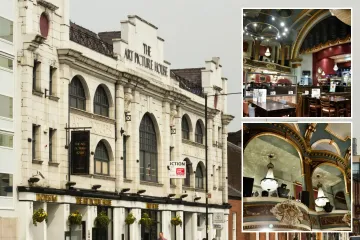
People are raving about a Wetherspoons pub which they say feels like being in a fancy hotelCredit: JD WetherspoonsHamilton Hall is found in London Liverpool Street StationCredit: JD WetherspoonsMany of the original features have been restoredCredit: JD Wetherspoons
Named after Great Eastern Railway Company Lord Claud Hamilton, it became a Wetherspoons in 1991.
It was both the first central London Wetherspoons and the first in a train station.
While the hotel itself is still open – you can stay at what is now the Andaz London Liverpool Street for £260 a night – many of the original features remain in the pub.
This includes the ornate mouldings and frescos, as well as the celling decorations, and artwork.
It is popular with train travellers and football fansCredit: AlamyIt was the first central London Wetherspoons to open more than 20 years agoCredit: JD Wetherspoons
The award-winning series returns for its fifth and final season soon, with fans calling it ‘awesome’
The series stars Jean Smart as Deborah Vance(Image: HBO MAX)
Fans of the series are wishing it would never end.
Fans of comedy dramas are in for a delight as an acclaimed dark comedy is poised to return with a brand new season soon.
The series first premiered on HBO Max back in 2021 and it charts the journey of a stand-up comedian and her comedy writer as they grapple with the shifting dynamics of their partnership.
The popular comedy was renewed for a fifth and concluding season, set to air on April 9, and it features Jean Smart as Deborah Vance and Hannah Einbinder as Ava Daniels.
HBO Max has just unveiled the trailer for the final season of Hacks, and within 24 hours it amassed over a million views.
Fans flocked to the YouTube comments to express their opinions, with one viewer exclaiming: “I never want it to end!!!”
Another commented: “I love when a series announces the final season, even though I adore Hacks, to end it’s inevitable, and to conclude with full control and a solid script is even better.”
A third chimed in: “I freaking love this show, I can’t wait for this final season.” Whilst a fourth enthused: “This is gonna be amazing!!!!!!”
A fifth declared: “Hands down, one of the best comedy series ever! Why does it have to end?”
Whilst numerous fans were disheartened that the series was drawing to a close, others were content that the show was concluding on its own terms.
One stated: “I’m so glad they’re going to be able to finish it knowing it’s the end.”
Get HBO Max free with Sky
This article contains affiliate links, we will receive a commission on any sales we generate from it. Learn more
Sky is giving away free subscriptions to HBO Max with its Ultimate TV bundle, which also includes Netflix, Disney+, discovery+, Hayu, and around 135 channels at no extra cost.
Season five was confirmed to be the final season at the 2025 Emmy Awards, with star Hannah Einbinder revealing: “I think it will feel different.
“We’re going to start [filming] next week, and knowing it’s the last season is really bittersweet. But I think it’s right, you know?”
Einbinder expressed that it was the appropriate time to conclude the show, stating it’s crucial not to “overstay your welcome.
“I think it’s nice to do something as many times as it should be done,” she further commented. “Not overstay your welcome. Rip it and do it and laugh and cry.”
All four preceding seasons of Hacks have garnered critical praise and on the review aggregation website Rotten Tomatoes, the series as a whole boasts an impressive 99 per cent rating.
Reports say that even police have been called in to deal with angry holidaymakers in TenerifeCredit: AlamyThere have been reports of further travel chaos at Tenerife South due to EESCredit: Alamy
EES is replacing the need for a passport stamp by automatically checking when a person enters and exits an EU country.
Non-EU nationals – which includes Brits – are required to register their details like fingerprints, facial images and scan passports on their first visit to a Schengen area country.
But at Tenerife South, passengers say that only a handful of these EES machines are working with some rejecting fingerprints.
Passengers are even saying they’ve missed flights due to delays in getting through controls.
Some Brits are warning to give as much as three hours before a flight just in case.
One Brit wrote on social media: “The key is to arrive three hours early so at least you are in the front of the queue when problems start.”
Another added: “Love Tenerife but HATE the airport.”
Police have reportedly been called in to the South Airport on several occasions to calm the crowds of angry passengers.
With bad weather and storms hitting the Canary Islands, those who miss flights are having to sleep inside the airport overnight before catching another plane home.
On one particular day, around 100 passengers were stranded there and many were unable to find overnight accommodation, so stayed in the terminal.
Passengers are blaming lack of staff and proper organisation for the chaos, with computers not working.
“Passport control is a disaster,” posted another Brit. “One person for thousands of travellers.”
Only 20 per cent of the biometric machines are working and officials admitted to the Spanish media that there were “computer failures.”
The chaos has been going on for months and tourism chiefs and hoteliers say the island’s reputation is being hit, compounded by the bad weather.
Since last week, the Canary Islands, including Tenerife, have also been struck with flash flooding and snow as a result of Storm Therese.
Even without bad weather, many airports have experienced delays caused by the new travel requirement of EES registration.
Due to their small size, airports on the Canary Islands have seen reports of long queues.
Governing, the political sages tell us, is all about making choices, particularly when leadership faces finite resources and the choices are between war and peace; this is the “guns or butter” balancing raised by Lyndon Johnson’s pursuit of the Vietnam War and, appropriately, by President Trump’s Iran war.
Thus far, according to budget experts and the Trump administration itself, the war has cost Americans about $25 billion, with the White House reportedly preparing to seek $200 billion more in military funding. That points to the obvious question of what the U.S. could buy if it stopped spending on the Iran adventure.
Here’s the short answer: Medicaid coverage, free school lunches, and housing, child care and community college assistance for tens of millions of Americans. Those estimates come from Bobby Kogan, senior director for federal budget policy at the liberal Center for American Progress.
$11.3 billion would have fully funded the training of 100,000 new nurses to solve our staffing crisis. Instead, it was spent in just six days on an illegal war with no endgame.
Democrats in Congress have offered their own juxtapositions: “$11.3 billion would have fully funded the training of 100,000 new nurses to solve our staffing crisis,” Rep. Diana DeGette (D-Colo.) observed on social media. “Instead, it was spent in just six days on an illegal war with no endgame.” (She wrote when that was the government’s estimate on spending in only the first week of the Iran war.)
Get the latest from Michael Hiltzik
Commentary on economics and more from a Pulitzer Prize winner.
By continuing, you agree to our Terms of Service, which include arbitration and a class action waiver. You agree that we and our third-party vendors may collect and use your information, including through cookies, pixels and similar technologies, for the purposes set forth in our Privacy Policy such as personalizing your experience and ads.
Details will follow. But first, a reminder that the “peace dividend” — that is, the surge of available resources for socially beneficial spending after the cessation of hostilities — has always been an elusive concept.
In part that’s because it invariably gets tied up in conflicts over precisely what peacetime programs political leaders wish to fund, and that often involves tougher decisions than whether to mount a bombing campaign against a perceived adversary.
“What happened to the peace dividend?” economist Augusto Lopez-Claros asked last year, referring to the supposed surfeit of funds that was to flow after the end of the Cold War. His answer was that there were always alternatives, many of them militaristic in nature, in the wings to suck up the funds that had been spent in the past.
The issue has especially acute significance today, not merely because of the Iran war. The Trump administration and Republicans in Congress have been campaigning to cut federal spending, almost entirely on social programs such as Medicaid and on Social Security and Medicare benefits, ostensibly because they contribute heavily to our “unaffordable” federal budget deficits.
Never mind that the largest single contributor to the deficit is the massive tax cut enacted by Republicans in 2017, during the first Trump term, which were made permanent by the GOP’s budget bill last year.
Placing military spending in the context of alternatives is typically shunned by Republicans and conservatives. The Wall Street Journal editorial board derided the exercise as “dorm room politics,” referring specifically to an estimate by Rep. Ro Khanna (D-Fremont) that the $200 billion reportedly sought by the White House “would pay for free college for every American,” and more.
That doesn’t mean the exercise isn’t worthwhile, however. Kogan acknowledges that it wouldn’t be up to the Pentagon to redirect its budget to the social programs that could be funded with its funding request, but his point in making the comparisons is “to get a sense of scale.”
So let’s dive in, starting with Kogan’s work. He matched the cost of several social services against the $25 billion estimated to be spent on the war through the end of this week and the $200-billion new request. He also broke down some of the spending by ordnance. The price of one Tomahawk missile, invoiced about $3.5 million each, could cover Medicaid for a year for 275 people, for example; the U.S. has fired an estimated 300 of them in the Iran war so far, for more than $1 billion.
Kogan calculated that more than 3.1 million people could be covered by Medicaid for $25 billion, and 24.8 million could be covered for $200 billion. He based this estimate on the Congressional Budget Office’s finding that the federal share of Medicaid came last year to $668 billion to cover about 82 million adult and child enrollees, or about $8,048 per person annually.
Then there’s free school lunches, which the government has pegged at up to $4.69 per day for about 30 million children receiving meals in school. If they all received free lunch, that would come to a little over $25 billion, based on a 180-day school year. (Only about two-thirds of those children receive free meals, with the rest receiving cut-price meals or paying full price.)
Child care isn’t typically a governmental responsibility (though it should be); Kogan uses an estimate from the nonprofit organization Child Care Aware that care cost Americans about $13,128 on average in 2024; inflating that to a 2026 figure yields an average of $14,048, meaning that 1.78 million households could be covered for about $25 billion, and about 14.2 million for $200 billion.
Tuition for a two-year path to an associate degree in community college, that portal to higher education for millions of Americans, will cost an average of $8,700 this year by Kogan’s reckoning, based on the College Board’s estimate of $8,300 for 2025. That means that about 2.87 million Americans could have their tuition fully covered for about $25 billion, and nearly 23 million students could be covered for $200 billion.
The progressive Century Foundation contributed estimates of how much in social program spending could be accommodated for $200 billion. Its roster includes the cancellation of all medical debt for the 100 million Americans shouldering about $194 billion in medical debt. The enhanced Affordable Care Act premium subsidies that expired this year could be continued for almost six years for about $200 billion, extrapolating from the 10-year, $350-billion estimate produced by the CBO. “Ensuring health coverage for all Americans,” the foundation noted, “could save an estimated 68,000 lives per year.”
The foundation also notes that $200 billion could ameliorate the draconian cuts in Medicaid imposed by the preposterously named One Big Beautiful Bill that the GOP enacted as a budget measure in July. The work requirement in that bill is estimated to reduce Medicaid spending by $326 billion over 10 years, according to the CBO, mostly by throwing enrollees out of the program. The work rules, which as I’ve reported do nothing to enhance employment, could be deferred for six years, preventing the loss of coverage for about 5.2 million Americans.
Mother Jones reported soberly that $200 billion would cover the wages of 2.8 million public school teachers, based on an average salary of $72,030, as reported by the National Education Assn.
The publication took a rather more fanciful approach for some calculations. It reported that $200 billion would pay for 2,666 sequels to the “Melania” documentary, based on the $75-million reported cost of its production and marketing by Amazon, its sponsor. And 500 more White House ballrooms, based on the latest projection of $400 million for just one.
Obviously all these calculations are somewhat chimerical. No one really believes that if Congress rejects the $200-billion ask, that money would be redeployed for any of these social programs, at least while the GOP remains in control of the government purse strings. The basic arithmetic itself is subject to cavils resulting from the murkiness of some of the cost calculations and projections.
But they’re not far wide off the mark in terms of orders of magnitude. Millions of dollars in social spending could be covered by billions of dollars in military spending, and much more productive investments could be made in the years and decades to come.
The lost “peace dividend” encompasses not just domestic needs, but also “the potentially catastrophic risks that we are taking on in the future because we are misallocating resources now,” Lopez-Claros observed — “spending massively on defense while leaving unattended climate change mitigation, pandemic preparedness, the shamefully high levels of malnourishment in the world, among others. We may well come to regret this and by then, unfortunately, it might be too late.”
Even before the first bombs fell on Iran, after all, the U.S. was shortchanging all those imperatives. “Just last July, Trump signed into law the biggest cuts to the social safety net in all U.S. history,” Kogan says, including “the biggest cuts to Medicaid ever, and the biggest cuts to SNAP, ever.” (The GOP budget bill cut SNAP, the food stamp program, by $186 billion, leaving “nearly 3 million young adults ages 18 to 24 who receive SNAP vulnerable to losing that assistance,” the Urban Institute estimated after the bill was signed.
At their heart, these calculations are not really about dollars and cents. The financial figures just help us keep score of the choices that define us as a nation.
The Major League Baseball Players Assn. is arguably the strongest union in the United States whose members include some of the most conservative athletes in professional sports. The owners of Major League Baseball’s 30 teams, who made their wealth through the workings of free enterprise capitalism, want to limit what players can be paid. This apparent political and philosophical irony will most likely lead to a shutdown of baseball at the end of this season.
Wednesday is opening day for the 162-game major league season. The 2025 season ended Nov. 1 with an 11-inning Dodgers victory over the Toronto Blue Jays in what was one of the most mesmerizing World Series ever. Last season, the Dodgers attracted more than 4 million fans for the first time. The Dodgers weren’t alone. More than 71 million fans attended major league games — the third straight season of growth. Over the last decade, league revenue has increased 33%.
And yet, despite all this good news about the health of baseball’s finances, team owners have threatened to lock the players out — essentially an ownership strike — at the end of this season over terms of a new collective bargaining agreement soon to be negotiated with the players union.
Major League Baseball, unlike the NFL, the NBA and the NHL, does not have a hard salary cap that limits what teams can spend on players. This is the key issue for the 30 team owners and Commissioner Rob Manfred, who argues that the system is “broken.” Small-market teams can’t effectively compete, Manfred insists, with economic behemoths like the Dodgers and Yankees. But over the past 10 seasons, 14 teams have made it to the World Series, so the league is not dominated by only a few big spenders.
Major leaguers and fans have weathered five player strikes and four owner lockouts since 1972. The 1994-95 strike lasted 232 days, canceling more than 900 games, including the World Series. Unlike in the NFL, where top players like San Francisco 49ers quarterback Joe Montana crossed a picket line during the 1987 NFL Players Assn. strike, unionized baseball players have remained united. So far, no star players have been strikebreakers in baseball. Both Paul Skenes of the Pittsburgh Pirates and Tarik Skubal of the Detroit Tigers — the 2025 Cy Young Award winners for their respective leagues — also serve in players union leadership roles.
A recent report analyzing major league ballplayers’ political affiliation found that among those who live in states that allow public access to voter registration records, nearly 54% of the players were Republicans compared with 8% Democrats. Why does a rightward-leaning membership retain such strong union loyalties?
For Miami Marlins pitcher Pete Fairbanks, who is also a member of the players union leadership, it comes down to recognizing that they stand on the shoulders of players who challenged the baseball establishment.
“If you look at the history of the union, we’ve had a foundation set for us,” Fairbanks said. “They fought for players’ rights and for the general betterment of the whole and it’s the job of the veteran players to pass that history on to the younger players.”
Marvin Miller, a former Steelworkers Union leader, revolutionized the players’ union and baseball when he led the association from 1966 to 1982. He told the New York Times in 1999 that he was “irked” that many players did not know that it was the union that made their enormous salaries and benefits, arbitration and free agency possible. “When you don’t know your history, you tend to relive it,” Miller said.
Miller, who died in 2012, was a labor history buff who realized that highly skilled workers often developed elaborate ethical codes that promoted solidarity with other employees.
Bruce Meyer, the current executive director of the players association, puts the union’s fractious history with the owners at the center of his communications with players. He spent weeks talking with union members during spring training in Florida and Arizona, emphasizing the importance of unity in the ranks. “The bottom line is that our players have always been of the view that they are fighting not just for themselves but for their teammates and for the players that come after them,” Meyer said.
Manfred’s strategy as commissioner of Major League Baseball has been to talk directly with the players himself, especially the lower-earning younger players who he claims are being shortchanged. He argues that “10% of our players make 72% of the money,” numbers that Meyer disputes.
The commissioner is essentially telling players that their union has engaged in malpractice, losing touch with its own members while the economics of baseball changed around them. Meyer regards Manfred’s attempt to divide players as “standard management-labor tactics.”
Top agent Scott Boras said that, unlike in the NFL, baseball’s open salary system works for players because “your talent allows you to earn what you can earn without taking money from anybody else’s pocket.”
Paradoxically, the union has embraced the principles of Adam Smith: Let the free market work. No one forced the Dodgers to pay Shohei Ohtani $700 million. Good for Ohtani, great for Dodger fans. And this year, the Japanese clothing retailer Uniqlo will be a field sponsor at Dodger Stadium. The owners, who embrace team revenue sharing and luxury taxes and demand restrictions on salary competition, sound like socialists.
When labor-management disputes interrupt baseball, many fans undoubtedly feel like they are victims of a squabble between “millionaires and billionaires.” Ryan Long, a 26-year-old minor league pitcher in the Baltimore Orioles system and a union leader, thinks the players association should try to understand how regular working people feel about a potential lockout. “Whether it’s people selling hot dogs at stadiums or cleaning rooms at local hotels, the union should help in whatever way it can for other workers who may be hurt if baseball shuts down,” he said.
In late February at the Yankees spring training field in Tampa, I spoke with season ticket holder Richard Barnitt, who wore a shirt designed like a baseball, looking like he could be scuffed up and pitched. “There has to be some kind of cap because the Dodgers and the New York Mets had unlimited money,” he said. Another fan, Carlos Rodriquez, an airplane mechanic living in Tampa, disagreed. “I don’t think a salary cap would be fair to the players,” he said. “The players association does magical work for those guys.”
If locked out, the players are going to want support from fans, to whom a salary cap might sound reasonable. Owners will do what owners do: maximize profits and franchise values. The players union should find ways to show the fans they are not forgotten.
During a previous owners lockout, the association created a million-dollar fund to help pay the bills of stadium concession workers who were thrown out of work. They can do the same again, letting fans know that they understand that most Americans struggle paycheck to paycheck. And maybe Ohtani can chip in a couple hundred bucks — like former Dodger Mike Piazza did decades ago — for each home run.
Kelly Candaele produced the documentary “A League of Their Own,” about his mother’s years playing in the All-American Girls Professional Baseball League.
U.S. Army Paratroopers from the 82nd Airborne Division arrive at Ali Al..Salem Air Base, Kuwait, in January 2020. It was reported Tuesday that the Pentagon was to send a contingent of paratroopers from the division to the Middle East. File Photo by Tech. Sgt. Daniel Martinez/U.S. Air Force/UPI
March 25 (UPI) — The Pentagon has ordered paratroopers to the Middle East, as President Donald Trump pursues a diplomatic solution to the war with Iran while declining to rule out the possibility of launching ground operations, according to reports.
The contingent of paratroops to be deployed are from the Army’s 82nd Airborne Division, out of Fort Bragg, N.C., and will include Maj. Gen. Brandon Tegtmeier, the division commander, The New York Times, CNN and CBS News reported, citing unidentified sources.
The soldiers are specifically members of the 82nd Division’s Immediate Response Force, The Times, CNN and The Washington Post reported. According to the U.S. Army, the Immediate Response Force is its only division capable of beginning an airborne assault operation anywhere in the world within 18 hours of receiving orders.
Rep. Jason Crow, a Democrat from Colorado and a former paratrooper with the 82nd Airborne, lambasted Trump over the announcement Tuesday night.
“These paratroopers, and the American people, deserve better,” he said in a statement. “We must protect our service members and stop spending billions of dollars a day fighting overseas wars of choice, especially as folks back home can’t afford gas, groceries or healthcare.”
The announcement comes as Iran’s claimed closure of the Strait of Hormuz, through which flows about 20% of the world’s oil supplies, has seen energy prices surge and nations scrambling to mitigate the effects on their economies.
It was unclear exactly how many the paratroops would be deployed or where they would be sent, but their deployment could give Trump a rapid-response force in the region, while representing an escalation in the conflict.
Earlier this month, U.S. Central Command said it had struck more than 90 military targets on the Kharg Island, a key location in Iran’s ability to enforce its maritime blockade, including naval mine storage facilities, missile storage bunkers and other military sites.
Trump described the strike as “one of the most powerful bombing raids in the History of the Middle East, and totally obliterated every MILITARY target in Iran’s crown jewel, Kharg Island.”
“For reasons of decency, I have chosen NOT to wipe out the Oil infrastructure on the Island,” he wrote on his Truth Social platform. “However, should Iran, or anyone else, do anything to interfere with the Free and Safe Passage of Ships through the Strait of Hormuz, I will immediately reconsider this decision.”
Trump on Saturday had given Iran a 48-hour ultimatum to open the strait or the U.S. military would “obliterate” its power plants, to which Iran’s parliament speaker, Mohammad Bagher Ghalibaf, responded that if the American president makes good on his threat, critical and energy infrastructure and oil facilities would be “irreversibly destroyed.”
On Monday, Trump announced that he had extended the ultimatum five days after having what he called “very good and productive conversations” on a solution to the war with Iran.
Trump said Tuesday that negotiations with Iran were underway and that the Iranians “want to make a deal.”
Police source tells Al Jazeera the attack hits positions of the Iran-aligned PMF, which the US has increasingly targeted.
Published On 25 Mar 202625 Mar 2026
An aerial attack on a military base in western Iraq’s Anbar province has killed seven fighters and wounded 13, according to Iraq’s Ministry of Defence.
The strikes on Wednesday targeted the military healthcare clinic at the base in Habbaniyah, according to the ministry. It called the attack “a heinous crime” that violated “all international laws and norms”.
Recommended Stories
list of 3 itemsend of list
An Iraqi police source told Al Jazeera the attack targeted positions of the Iraqi military’s Popular Mobilisation Forces (PMF), a paramilitary force that includes some Iran-aligned brigades and reportedly shares the base with members of Iraq’s regular army.
“What we understand from the military here is that air strikes were carried out and then further strikes carried out on that same position,” said Al Jazeera’s Assed Baig, reporting from Baghdad. He said it appeared to be the first time the PMF was hit alongside the broader Iraqi military.
Iraq has denounced the attack as the country has been dragged into the United States-Israeli war on Iran. On Tuesday, Iraqi Prime Minister Mohammed Shia al-Sudani’s office said Baghdad would summon the Iranian and US ambassadors over the recent strikes.
‘Right to respond’
A security official quoted by the AFP news agency said the strike occurred at the same base that suffered a deadly attack the day before.
Tuesday’s strike, which the PMF blamed on the US, was the deadliest in Iraq since the start of the war on Iran on February 28, It killed 15 fighters, including a commander.
The attack prompted Iraq’s government to grant the PMF a “right to respond” to any attack against it, a position Baghdad reaffirmed on Wednesday.
“We reserve our full right to take all necessary measures to respond to this aggression within the established legal frameworks,” the Defence Ministry said.
Since the war began, pro-Iran armed groups have claimed responsibility for attacks on US interests in Iraq and across the region while strikes have also targeted these groups, including at government-linked positions.
The US Department of Defense has acknowledged that combat helicopters have carried out strikes against pro-Iran armed groups in Iraq during the current conflict.
Baig said the latest strikes demonstrate “an escalation in terms of the PMF being targeted”.
“Increasingly, Iraq is becoming a battlefield between Iraqi armed factions and the United States,” he said.
One of the most painstaking architectural renewals in recent Los Angeles memory has finally pulled a world-class jewel of modern architecture from obscurity.
Designed by pioneering Modernist architect Richard Neutra in 1928, with limited collaboration from another Modernist icon, Rudolph Schindler, the Jardinette Apartments had been hiding in plain sight on an unassuming Hollywood street for nearly a century. The complex was a technical and spatial breakthrough, and quickly gained international renown as one of the earliest International Style structures in the United States, not to mention Neutra’s first L.A. commission.
But the building’s original owner, Joseph H. Miller, went bankrupt during construction and skipped town to avoid his creditors, and the Jardinette slipped from view. “After that early burst, it just disappeared,” said Barbara Lamprecht, historical consultant for the Jardinette’s rehabilitation, which is just now wrapping up.
For decades the building stood quietly along West Marathon Street: an austere, four-story complex that most people passed without a second glance. Wedged between Western Avenue and Manhattan Place, amid stucco apartment blocks and scrappy bungalows, the edifice had, until recently, grown increasingly shabby as time and neglect took their unforgiving toll.
That changed with the intervention of a newcomer to historic preservation named Cameron Hassid. For years the tireless local developer and his tenacious team have willed the Herculean restoration project to the finish line. Hassid plans to bring the apartments to market before the end of the month.
Property owner Cameron Hassid, left, and Neema Ahadian, commercial real estate agent for Hassid, on the scenic rooftop of the Richard Neutra-designed Jardinette Apartments in Los Angeles. Neutra imagined the Jardinette Apartments as a prototype for future garden apartment buildings. Nearly 100 years later, the Jardinette is set to reopen after a lengthy redevelopment.
(Myung J. Chun / Los Angeles Times)
A Radical Design
When the Jardinette first opened it was featured prominently in a seminal survey of early avant-garde apartment housing called “The Modern Flat,” while European architectural publications from Paris to Moscow showcased it as an exemplar of functionalist design, noted Nicholas Olsberg, an architectural historian and curator who has written extensively about Neutra. “It was seen worldwide as one of the signal examples of the new architecture,” Olsberg added.
The Northeast corner of the Jardinette Apartments, circa 1930. When the building first opened in 1928 it was a technical and spatial breakthrough—but it suffered from years of neglect after falling from view.
(Richard and Dion Papers, Collection 1179, UCLA Special Collections)
Built inside and out with reinforced concrete — a modern industrial material that had rarely been employed for housing— the sculpted, U-shaped building, whose jogging corners, projecting sills and swaths of dark and light paint gave it a powerful visual rhythm, used its structural heft to liberate its facade.
Long horizontal bands of easy-to-open steel casement windows, some complemented with concrete balconies, drew daylight and air deep into its 43 efficiently organized units — studios and one bedrooms, ranging from about 400 to 700 square feet — and opened them to wide views of the street and, on higher floors, the Hollywood Hills. Hallways and stairs were saturated with natural light thanks to skylights and strategically placed windows. At the forecourt a modest garden, then dominated by a huge cedar tree, softened the building’s mass, giving the project its name: Jardinette, the little garden.
A roof covered the original skylights in the Jardinette Apartments, but they are now fully exposed.
(Myung J. Chun / Los Angeles Times)
“Arguably my father had more influence on apartment design than he did on house design,” said Neutra’s son Raymond, pointing to several Neutra designs offering indoor/outdoor lifestyles via “garden apartments.” Raymond, who was on site a few weeks ago, has toured the rehabilitation multiple times.
The Jardinette was listed on the National Register of Historic Places in 1986 and designated a Los Angeles Historic-Cultural Monument two years later. Yet despite its formal protections, the building continued its long drift into disrepair.
In 2016 Jardinette’s previous owner, Robert Clippinger, began reviving it, hiring Lamprecht’s firm, Modern Resources, as well as June Street Architecture and land use consultants Cali Planners. The team filed a comprehensive Historic Structure Report that helped secure much-needed tax relief via the Mills Act, a state preservation program. But Clippinger soon faltered under the weight of the many developmental requirements to bring the historic building back. Lawsuits followed. Financing collapsed.
A carpeted hallway beneath an original skylight at the Richard Neutra-designed Jardinette Apartments in Los Angeles. The Jardinette was listed on the National Register of Historic Places in 1986 and designated a Los Angeles Historic-Cultural Monument two years later.
(Myung J. Chun / Los Angeles Times)
Hassid bought the building in December 2020, in the thick of the COVID-19 pandemic, keeping Clippinger’s core designers and consultants in place.
Decades of negligence and neglect had proved both a curse and a blessing. Many original steel windows had been swapped out for cheap vinyl replacements. Larger units had been subdivided. At one point the building had been repainted an unfortunate pastel peach and green. Electrical systems dated back nearly a century. Gas water heaters punched vents through the concrete walls.
Yet because the building never attracted a well-funded modernization campaign, much of its essential fabric remained intact.
“Had it been owned by people with more resources,” noted Lamprecht, “there might have been upgrades that blurred the sense of history.”
Corey Miller, a principal at June Street Architecture, described his first encounter with the almost empty property: “There had been 43 units with 43 different people who had been left to their own devices,” Miller said. “Every time we peeled back a layer, there was something worse.”
Unit 302, inhabited for four decades by a single tenant, retained the most original fabric, including an early icebox cabinet. But it also contained endless layers of grime and clutter. It was “disgusting,” Miller said bluntly, but invaluable as forensic evidence. Much of it — like tiles, windows and millwork — were reproduced around the building.
The 128 Jardinette Apartments were painstakingly restored with an eye toward preserving original details including kitchen cabinets, sinks and iceboxes.
(Myung J. Chun / Los Angeles Times)
The perils of rehabilitating a historic treasure
When Hassid called Miller to ask about buying the building, Miller remembers his response clearly. “You probably have no idea what you’re getting yourself into,” he told him.
Hassid’s love of early modern architecture began as a child. His grandparents lived at 848 N. Kings Road in West Hollywood, with a balcony overlooking Schindler’s famed house. So Hassid was familiar with Jardinette’s geometric forms and clean lines. His mother reacted with angry skepticism when he first raised the idea of acquiring the building, but encouraged him to buy it after she learned about the connection.
Nostalgia did not make the rehabilitation any easier. Technical plans required approval, and fixes weren’t straightforward within a protected treasure. “You can’t just go into a historic building with a sledgehammer,” Hassid said. Every move had to align with federal preservation standards and the commitments embedded in the Mills Act contract. Lambert Giessinger, Los Angeles’ historic architect and Mills Act administrator, acted as liaison. Inspections were frequent. Conditions were exacting.
“It’s stressful to have people looking at everything,” Miller admitted. But he credits both Giessinger and Lamprecht with pragmatism. “They were under no illusion that this was going to be done 100% perfect,” he added.
“There’s a lot of wonky stuff in this building that will remain wonky forever,” noted Lamprecht, pointing to settling areas and imperfect details.
Michael Norberg, a land use consultant for the Jardinette Apartments preservation project, stands on the balcony of a unit at the Richard Neutra-designed complex, which will soon reopen after prolonged development issues.
(Myung J. Chun / Los Angeles Times)
The astonishingly complex rehabilitation revealed a simple-looking building that was anything but. The board-formed concrete carried a subtle wood-grain texture, which had to be left intact, even as seismic reinforcements were added beneath the surface. The finish on white stucco shifted from smooth to pebbled on the walls’ higher reaches, and this had to be carefully re-created.
Original trim had to be salvaged and repaired wherever possible. Kitchens were rebuilt based on archival drawings and surviving fragments. Bathrooms, originally designed around tubs, required discrete tile extensions to accommodate modern showers. The paint scheme, which has been returned to a warm, off-white concrete field with blackish-green bands emphasizing the window walls, had to be reconstructed from historic photographs. Wine red concrete lobby floors were revealed under ungainly tile. Large stairwell skylights were uncovered, while unique, cube-shaped stair post lights were rehabilitated.
Plenty of white tiles replicate the original look in this bathroom in the historic Richard Neutra-designed Jardinette Apartments. One floor of the newly preserved 1928 complex features original doors and kitchen cabinets.
(Myung J. Chun / Los Angeles Times)
Support infrastructure, threaded through the thick concrete frame, was perhaps the messiest challenge. Fire sprinklers, mandated by code, had to remain visible because they could not run through joists without compromising historic fabric. New electrical, plumbing and ventilation had to snake around (or burrow through) beams that original plans didn’t note.
Hassid chose to add air conditioning, and the resulting electrical loads required a 13-foot-deep vault beneath the courtyard. That addition will limit what can be planted in the central garden.
The view from the large windows in a newly restored unit of the Richard Neutra-designed Jardinette Apartments. Original skylights were also preserved during a remarkably complex historic preservation effort.
(Myung J. Chun / Los Angeles Times)
The team preserved as many original steel casement windows as possible on the primary north-facing facade. These are interspersed with custom reproductions throughout.
The rehabilitation costs climbed past $5 million — accounting for structural analysis, waterproofing, electrical overhaul, plumbing, mechanical, windows, flooring, sprinklers, cabinetry, landscaping — an ever expanding list.
“If I knew then what I know now,” Hassid said with a weary laugh, “I’m not sure I would have done it.” He paused. “But listen, I’m happy I did.”
Today, the building’s value is clear. The courtyard, with vegetation still waiting to grow, is again a communal garden framed by cantilevered balconies. The flat facades have regained their subtle play of depth and shadow. New systems hum quietly, concealed as carefully as possible.
But the building’s renewal has not made it immune to its surroundings. Portions of the exterior were tagged during construction, and some windows have even been shot out by BB guns. As it reemerges, Jardinette could become a lightning rod for those who fear gentrification.
Modernist architect Richard Neutra imagined his first Los Angeles project, the Jardinette Apartments, as a prototype for future garden apartment buildings, but the building fell into disrepair and obscurity for decades. A newly completed historic preservation project will allow it to reopen soon.
(Myung J. Chun / Los Angeles Times)
Hassid, who initially planned to keep the building, is now testing the waters for a sale with the help of local broker Neema Ahadian of Marcus & Millichap. He said he’s already gotten calls from potential buyers in both the affordable and market-rate sectors. Affordable housing, he added, would be fitting because the smaller units were originally used that way — often for people working in nearby Hollywood studios. The building’s lack of parking could be another factor pushing the sale in that direction.
“I want to leave my options open,” said Hassid. “It’s bittersweet, because we put so much into it.”
Despite swearing off the project more than once, he is hooked by the process.
“I’m looking for my next historic building. After doing it, I know the mistakes I made and how to minimize the lag,” he said.
“This is such a good niche. Others run away from it. I love it because I love the challenge.”
IF you thought being able to lay down on a plane was just for first and business class, think again.
United Airlines is introducing a new ‘Relax Row’ making travel in economy much more comfortable.
Sign up for the Travel newsletter
Thank you!
United Airlines is adding ‘lie-flat beds’ and ‘couches’ into economy for 2027Credit: AlamyThe Relax Row of seats can be turned into a couch or bedCredit: United Airlines
Launching in 2027, the Relax Row is a dedicated row of three seats that can transform into a ‘couch’, or lie-flat bed.
The seats will be designed with adjustable leg rests that can fold up and mattress pad placed on top.
Travellers can then stretch out whether they want to spend their journey sleeping or watching a film.
The airline said: “The United Relax Row is ideal for families traveling with small children, solo travelers and couples who want the value of United Economy but with a little extra comfort.”
Along with a mattress pad, those on the Relax Row will get blankets, extra pillows, a toy and children’s travel kit.
The new Relax Row will appear on United Airlines aircraft in 2027.
By 2030, the airline said it will be on more than 200 of its Boeing 787 and Boeing 777 widebody aircraft with 12 Relax Row sections on each plane.
Andrew Nocella, United’s Executive Vice President and Chief Commercial Officer said: “Customers traveling in United Economy on long-haul flights deserve an option for more space and comfort, and this is one way we can deliver that for them.
“United is the only North American airline offering a product like the United Relax Row and is one of the many reasons why we’re continuing to win brand loyal customers.”
The cost of the new seat option is yet to be confirmed.
United Airlines has other perks for families including free family seating, which allows children under 12 to sit next to an accompanying adult for free at time of booking.
And while United Airlines will be the first North American airline to offer lie-flat seats in economy, there other airlines who already offer this for their passengers.
Air New Zealand has its Skycouch which is the same – a row of three economy seats that transform into a lie-flat bed.
Lufthansa have what they call the Sleeper’s Row which is for long-haul flights that are over 11 hours long.
Passengers get a full row of three or four seats with a mattress topper, pillow, and blanket at the airport.
The additional charge for this is between €169–€249 (£146.28-£215.52).
The Foreign Office has updated its travel advice for Brits heading to Portugal ahead of the school holidays, with warnings around new rules on how long you can stay
Brits heading to Portugal should take note of the fresh advice(Image: Getty Images)
The Foreign, Commonwealth and Development Office (FCDO) has issued advice for Brits travelling to Portugal.
To ensure that Brits are aware of any warnings, entry requirements, security, safety, or health risks before travelling to destinations across the globe, the Foreign Office is constantly updating its travel advice. The advice can change rapidly, or remain the same for months, but just last week, a change was made for those visiting Portugal.
In an update on Friday, 20 March, which is still current as of 25 March, the FCDO updated the entry requirements for Brits heading to the popular European destination, which offers sprawling beaches and vibrant cities. The government stated that if you’re staying for longer than 90 days, within a 180-day period, and need to extend in “exceptional circumstances”, you must take action.
The FCDO website stated: “If you’re visiting Portugal and need to extend your visa-free stay for exceptional reasons, such as a medical emergency, you must apply to AIMA using their contact form (access is only available to users in Portugal). If you’re in Portugal with a residence permit or long-stay visa, this does not count towards your 90-day visa-free limit.
“If you’re in Portugal with a residence permit or long-stay visa, this does not count towards your 90-day visa-free limit.”
As it stands, UK residents with a British passport can travel to Portugal without a visa for up to 90 days in any 180-day period. This applies if you are a tourist, visiting friends or family, attending a business meeting, cultural or sports events, or visiting for short-term studies or training.
This also applies to Brits visiting the Schengen area, which comprises 29 European countries, who can travel without a visa for up to 90 days in any 180-day period. Countries in the Schengen area include: Austria, Belgium, Bulgaria, Czechia, Croatia, Denmark, Estonia, Finland, France, Germany, Greece, Hungary, Iceland, Italy, Latvia, Lithuania, Liechtenstein, Luxembourg, Malta, Norway, the Netherlands, Poland, Portugal, Romania, Slovakia, Slovenia, Spain, Sweden and Switzerland.
However, the FCDO outlined: “If you’re travelling to other Schengen countries as well, make sure your whole visit is within the 90-day visa-free limit. Visits to Schengen countries in the 180 days before you travel count towards your 90 days. If you overstay the 90-day visa-free limit, you may be banned from entering Schengen countries for up to 3 years.”
Additionally, from 10 April 2026, the European Union’s (EU) new Entry/Exit System (EES) is expected to be fully rolled out. This means that when travelling into the Schengen area for short stays, you may be required to register your biometric details, such as fingerprints and a photo, which is done at the border on arrival for free.
Brits travelling to the Schengen area must also be aware of the passport requirements. The government states that the passport must:
Have a ‘date of issue’ less than 10 years before the date you arrive – if you renewed your passport before 1 October 2018, it may have a date of issue that is more than 10 years ago
Have an ‘expiry date’ at least 3 months after the day you plan to leave the Schengen area (the expiry date does not need to be within 10 years of the date of issue)
If your passport does not meet the requirements above, you may be denied entry to the country and turned away at the airport. You can renew or replace your passport online through the government website.
Brits are advised to renew or replace their passports as soon as possible, as processing can take around three weeks and sometimes longer during the peak travel season. For more information on Portugal’s entry requirements, visit the government’s foreign travel advice page.
Do you have a travel story to share? Email webtravel@reachplc.com
HIGH SCHOOL BASEBALL, SOFTBALL SCORES Tuesday’s Results
BASEBALL
CITY SECTION El Camino Real 8, Birmingham 3
SOUTHERN SECTION AAE 19, Victor Valley Christian 5 Adelanto 11, Silverado 3 Alhambra 8, Bell Gardens 0 Aliso Niguel 7, Tesoro 4 Arcadia 10, Pasadena 0 Alta Loma 6, Colony 5 Beverly Hills 5, Lawndale 4 Buena 4, Ventura 0 Burbank Burroughs 6, Muir 0 Cajon 7, Riverside Prep 3 Calabasas 10, Thousand Oaks 9 Capistrano Valley 14, El Toro 8 Capistrano Valley Christian 6, Western Christian 4 Cathedral 1, Bishop Montgomery 0 Cerritos 7, Artesia 0 Charter Oak 13, Walnut 5 Chino 5, Montclair 4 Chino Hills 12, La Serna 3 CIMSA 12, Silver Valley 5 Claremont 12, Rowland 0 Colton 5, Fontana 2 Culver City 11, Inglewood 3 Damien 8, La Habra 3 Desert Christian 6, Vasquez 1 Desert Hot Springs 5, Banning 4 Diamond Bar 7, Knight 0 Don Lugo 11, Diamond Ranch 1 Downey Calvary Chapel 7, Fairmont Prep 6 El Modena 3, Villa Park 0 Elsinore 9, Temescal Canyon 1 Environmental Charter 17, Compton Early College 7 Fallbrook 8, Rancho Buena Vista 5 Firebaugh 6, Lynwood 5 Fountain Valley 1, Corona del Mar 0 Fullerton 7, Ocean View 5 Glenn 4, Whitney 3 Grace 14, Cate 2 Granite Hills 6, Victor Valley 1 Hawthorne 3, Compton Centennial 2 Irvine 3, Woodbridge 2 Laguna Beach 17, St. Margaret’s 2 Laguna Hills 3, Costa Mesa 1 La Mirada 5, Gahr 1 La Salle 15, Gardena Serra 0 La Sierra 11, West Valley 2 Los Alamitos 4, Marina 0 Los Altos 13, West Covina 2 Los Amigos 15, Santa Ana Valley 9 Magnolia 8, Graden Grove Santiago 4 Maranatha 14, Heritage Christian 2 Mary Star of the Sea 23, St. Genevieve 11 Montebello 13, Mark Keppel 0 Murrieta Valley 6, Murrieta Mesa 5 Newport Harbor 9, Edison 0 Norte Vista 22, Bethel Christian 1 Norwalk 7, Mayfair 4 Nuview Bridge 20, California Military Institute 0 Oaks Christian 5, Newbury Park 2 Oakwood 15, Milken 10 Ontario 5, Chaffey 0 Orange 7, Anaheim 5 Oxnard 3, Santa Barbara 1 Oxnard Pacifica 9, Rio Mesa 2 PACS 14, Faith Baptist 3 Paraclete 13, St. Anthony 1 Paramount 9, Dominguez 6 Riverside North 5, Vista del Lago 1 Rosamond 2, California City 1 Royal 8, Foothill Tech 1 Sage Hill 1, Irvine University 0 San Juan Hills 3, Mission Viejo 2 San Marino 4, Monrovia 1 Santa Monica 10, Leuzinger 1 Savanna 7, Loara 5 Schurr 10, San Gabriel 0 Segerstrom 8, Buena Park 6 Shalhevet 7, Animo leadership 0 Sherman Oaks Notre Dame 10, Crespi 0 Sierra Canyon 8, Chaminade 2 South Hills 4, San Dimas 0 St. Bernard 5, Bishop Amat 4 St. Bonaventure 8, Thacher 3 St. Francis 6, Alemany 4 St. Monica 21, Pasadena Marshall 3 St. Pius X-St. Matthias Academy 19, Verbum Dei 0 Tahquitz 3, San Jacinto 1 Temecula Prep 16, United Christian Academy 4 Temecula Valley 13, Chaparral 0 Trabuco Hills 8, San Clemente 1 Tustin 11, Santa Ana Calvary Chapel 6 Village Christian 13, Valley Christian 11 Vista Murrieta 4, Great Oak 2 Warren 2, Bellflower 0 Westlake 2, Agoura 1 Westminster La Quinta 7, Century 2 Whittier Christian 11, St. Paul 3 YULA 8, Santa Monica Pacifica Christian 7
INTERSECTIONAL Anza Hamilton 17, Bonsall 7 Bishop Union 11, Frazier Mountain 0 Boron 17, Desert 1 Carson 4, Ramona 3 Eastvale Roosevelt 3, Nevada McQueen 1 Esperanza 14, Arkansas Prairie Grove 4 Grand Terrace 6, Nevada McQueen 0 Immanuel Christian 21, Trona 9 Missouri Lincoln 13, Grand Terrace 1 Northview 10, Spanish Springs 4 Oregon Lakeridge 5, La Palma Kennedy 4 Oregon West Linn 3, Citrus Valley 2
Quartz Hill 15, Oregon Bend 2
SOFTBALL
CITY SECTION CALS Early College 0, East College Prep 0 Central City Value 40, Discovery 11
SOUTHERN SECTION Alemany 4, Vasquez 0 Aliso Niguel 11, Redondo Union 4 Anaheim Canyon 7, Segerstrom 1 Ayala 5, Bonita 0 Banning 8, Desert Hot Springs 3 Barstow 14, Ridgecrest Burroughs 7 Beaumont 6, Rancho Cucamonga 2 Bell Gardens 14, San Gabriel 3 Bethel Christian 26, Norte Vista 4 California City 15, Rosamond 3 California Military 21, Nuview Bridge 2 Cantwell-Sacred Heart 9, St. Monica 4 Cerritos 11, El Rancho 4 Channel Islands 15, Carpinteria 4 Chino 11, Montclair 0 Chino Hills 12, Temescal Canyon 5 CIMSA 19, Silver Valley 4 Claremont 6, Northview 4 Cornerstone Christian 14, Packinghouse Christian 8 Corona Santiago 8, Colony 5 Covina 4, Buena Park 3 Cypress 8, El Modena 2 Don Lugo 3, Diamond Ranch 2 Downey 10, Corona 2 Edison 9, Corona del Mar 0 El Dorado 3, Yorba Linda 0 El Toro 2, Tesoro 1 Esperanza 21, Troy 2 Fillmore 5, Santa Paula 4 Hart 11, Golden Valley 1 Hawthorne 15, Compton Centennial 0 Hueneme 11, Nordhoff 5 Huntington Beach 17, Fountain Valley 0 La Habra 9, Garden Grove Pacifica 4 Lakewood 15, Long Beach Cabrillo 1 La Palma Kennedy 2, Gahr 0 La Salle 11, Flintridge Sacred Heart 3 Lawndale 30, Beverly Hills 20 Lennox Academy 14, HMSA 3 Long Beach Poly 15, Long Beach Wilson 5 Los Alamitos 10, Newport Harbor 0 Los Altos 12, Alta Loma 0 Maranatha 15, Duarte 5 Mary Star of the Sea 21, St. Anthony 5 Mira Costa 7, South Torrance 2 Mission Viejo 5, Sunny Hills 3 Montebello 10, Mark Keppel 9 Monrovia 4, San Marino 3 Murrieta Mesa 7, Great Oak 0 Murrieta Valley 13, Temecula Valley 2 Oak Park 16, Royal 12 Oaks Christian 9, Newbury Park 3 Ontario 11, Chaffey 1 Placentia Valencia 8, Tustin 4 Ramona Convent 10, Bishop Conaty-Loreto 0 Rio Hondo Prep 12, Mayfield 8 Rio Mesa 14, Oxnard Pacifica 0 Rosary Academy 7, Irvine University 6 Sacred Heart of Jesus 12, St. Pius X-St. Matthias Academy 1 Santa Ana Foothill 6, Crean Lutheran 1 Santa Clara 4, Foothill Tech 2 Santa Monica 8, Leuzinger 4 Saugus 11, West Ranch 8 Schurr 11, Alhambra 1 Serrano 14, Riverside Notre Dame 4 Sierra Canyon 4, Chaminade 3 Silverado 22, Adelanto 3 Simi Valley 8, Camarillo 2 St. Genevieve 18, St. Bernard 3 St. Paul 14, Bishop Montgomery 2 Temecula Prep 16, Santa Rosa Academy 7 Thousand Oaks 30, Calabasas 0 Valencia 8, Castaic 6 Ventura 12, Buena 7 Victor Valley 8, Granite Hills 4 Westlake 1, Agoura 0 Westminster 15 Long Beach Jordan 5 Whittier Christian 16, Village Christian 5 Wiseburn-Da Vinci 22, Downey Calvary Chapel 1
INTERSECTIONAL Boron 16, Desert 1 Canyon Country Canyon 15, Arleta 5 Compton Early College 23, Environmental Charter 19 Immanuel Christian 12, Trona 10 Jesuit 5, Trabuco Hills 4 Santa Margarita 1, Jesuit 0
Some 450,000 people without electricity in Belgorod region, while power cut off for 150,000 consumers in Chernihiv.
Published On 25 Mar 202625 Mar 2026
Russia and Ukraine have targeted each other’s energy facilities in tit-for-tat attacks, leaving hundreds of thousands of people without power, officials from both countries said, as the world’s attention has shifted to the US-Israel war on Iran.
Nearly half a million people were left without electricity in Russia’s Belgorod region, while 150,000 consumers in the city of Chernihiv and surrounding areas were without power on Wednesday.
Recommended Stories
list of 3 itemsend of list
The electricity distribution company in Ukraine’s northern Chernihiv region said on Wednesday that the energy facility was damaged and repair work would begin as soon as the security situation allowed.
Belgorod Governor Vyacheslav Gladkov said power outages affected some 450,000 people across several districts, including the regional capital of Belgorod, with many residents also facing disruption to heating and water supply. The temperature in Belgorod hovers around 0C (32F).
Gladkov said repair works have already started, but that it would take several days to complete.
Belgorod, which lies about 40km (25 miles) from the border with Ukraine, has been a frequent target of Ukrainian drone and missile attacks in the four years since Russia invaded its neighbour.
In Ukraine’s southern region of Odesa, Russian attacks late on Tuesday killed one person and wounded another, emergency services said.
The attack damaged a private house, sparking a fire, and caused damage to six buildings nearby. Photos posted on Telegram by emergency services showed firefighters putting out flames in a partially destroyed building.
Meanwhile, in Russia, officials said on Wednesday a Ukrainian drone attack targeting a major oil export hub sparked a fire at the Baltic Sea port of Ust-Luga.
Alexander Drozdenko, governor of Russia’s Leningrad region, said the fire was being brought under control and that no casualties had been reported.
Iran’s military has said the United States is failing in its war and negotiating with itself to save face, dismissing claims by US President Donald Trump that talks are under way to end the conflict.
“Has the level of your inner struggle reached the stage of you negotiating with yourself?” Ebrahim Zolfaqari, spokesperson for the unified command of Iran’s armed forces, Khatam al-Anbiya Central Headquarters, said on Wednesday in comments carried by Iran’s semiofficial Fars news agency.
Recommended Stories
list of 3 itemsend of list
“Don’t call your failure an agreement,” he added, mocking US leadership.
The statement is the latest official Iranian denial that Tehran is engaged in diplomacy with Washington, even as Trump insists talks are ongoing and reports circulate of the US sending a peace proposal.
Speaking to reporters at the White House yesterday, the US president said Washington is speaking to the “right people” in Iran, which he claimed wants to make a deal “so badly”.
“They are talking to us, and they’re making sense,” said Trump.
Trump’s position marks a stark shift from days earlier, when he threatened to strike Iran’s power plants if Tehran did not fully reopen the Strait of Hormuz, where it has threatened vessels from “enemy” nations. Hours before the ultimatum expired on Monday – and US markets reopened for the trading week – Trump said he would delay any planned attack by five days, citing diplomatic progress. Iranian officials denied this.
Zolfaqari said there would be no return to previous oil prices or the prior regional order “until our will is done”.
‘Obscurity in Iran’
Questions over possible diplomacy were amplified by US media reports that Washington had sent Tehran a 15-point plan to end the war.
The Wall Street Journal, quoting unnamed officials, reported that the plan calls on Iran to dismantle its three main nuclear sites, end any enrichment on its soil, suspend its ballistic missile programme, curb support for its regional allies and fully reopen the Strait of Hormuz. In return, Iran would have nuclear-related sanctions lifted and the US would assist the country’s civilian nuclear programme, according to the Journal.
Al Jazeera’s Mohamed Vall, reporting from Tehran, said there is “total confusion” in Iran over the status of potential negotiations.
“Contrary to the clarity with which Donald Trump seems to speak, there is obscurity in Iran,” said Vall. “What we hear instead are the officials and politicians here saying the complete opposite. They say there is no negotiation.
“There is total confusion, total obscurity, and it’s really making this situation very interesting and very strange,” he added.
While there is a “cloud of mistrust” between the US and Iran, Tehran is engaged diplomatically with several regional countries, including Pakistan, said Al Jazeera’s Tohid Asadi, also reporting from Tehran. Islamabad, which appears to have emerged as a possible mediator in the conflict, delivered the US’s plan to Tehran, according to The New York Times.
Israel, Iran trade strikes
Amid the competing claims about negotiations, Israel continued to strike Iran, and the US reportedly prepared to send more troops to the Middle East.
Israel’s military said it carried out a series of late-night strikes on infrastructure in Tehran. Iran’s Fars news agency reported at least 12 people killed and 28 wounded in an “enemy attack” on the residential area of Varamin in southern Tehran.
Iran, for its part, claimed to fire more missiles at Israel, including targeting a military base in the northern Israeli city of Safad, as well as sites in the cities of Tel Aviv, Kiryat Shmona and Bnei Brak. There were no immediate reports of casualties from that missile salvo, though an earlier rocket attack by Hezbollah killed one woman in northern Israel.
Meanwhile, the US was expected to send at least 1,000 soldiers from the Army’s elite 82nd Airborne Division to the Middle East, adding to some 50,000 US soldiers already in the region, the Reuters and AP news agencies reported.
“As the US is preparing for peace talks, it’s also preparing for war,” said Al Jazeera’s John Hendren from Washington, DC. “Diplomacy and military moves are going on at the same time.”