
Month: March 2026

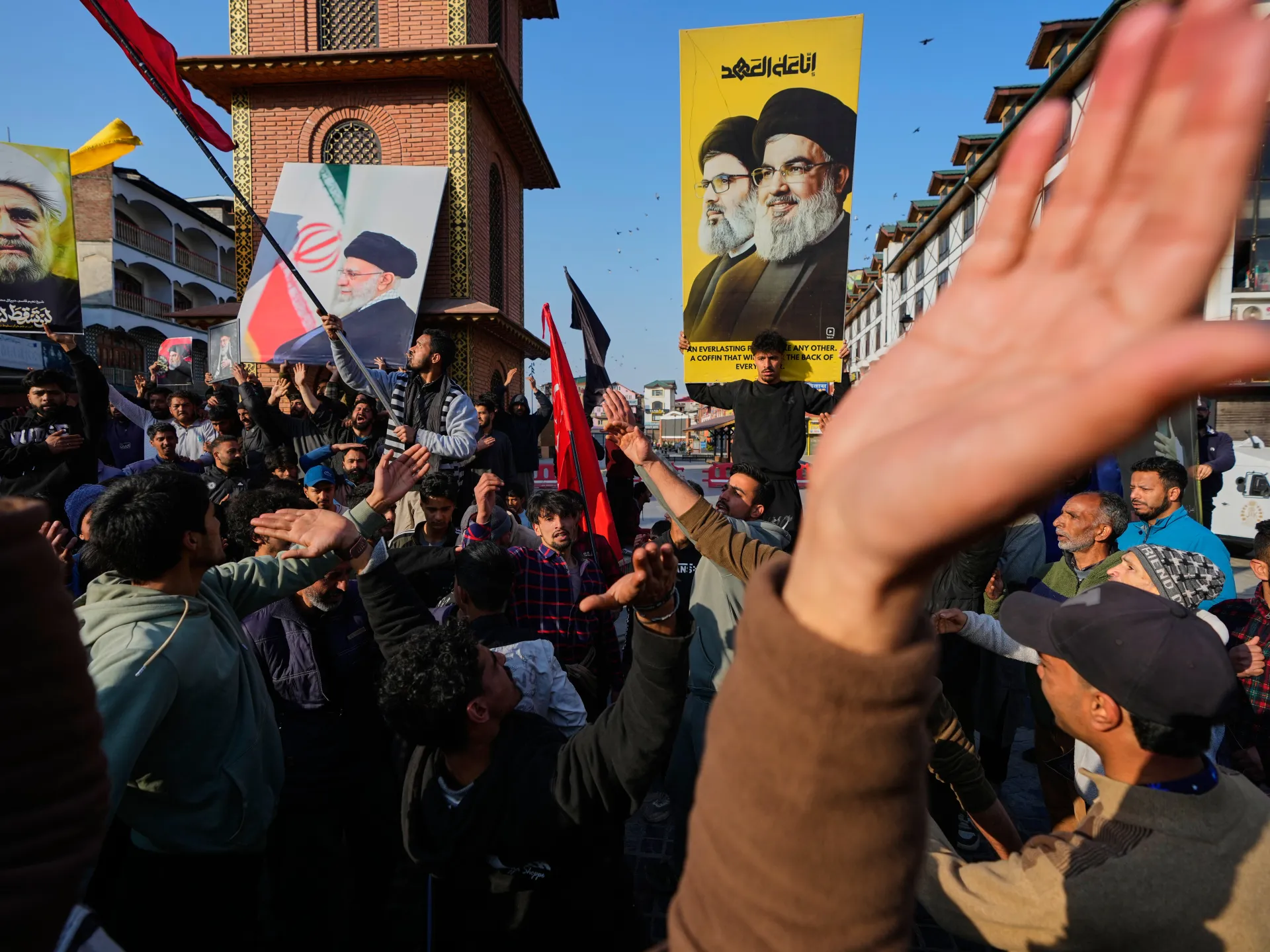
Israeli military attacks Hezbollah in Lebanon

A damaged apartment in a building following an Israeli airstrike in Al Jamous, in Dahieh, southern suburbs of Beirut, Lebanon, on Monday, March 2, 2026. Photo by Wael Hamzeh/EPA

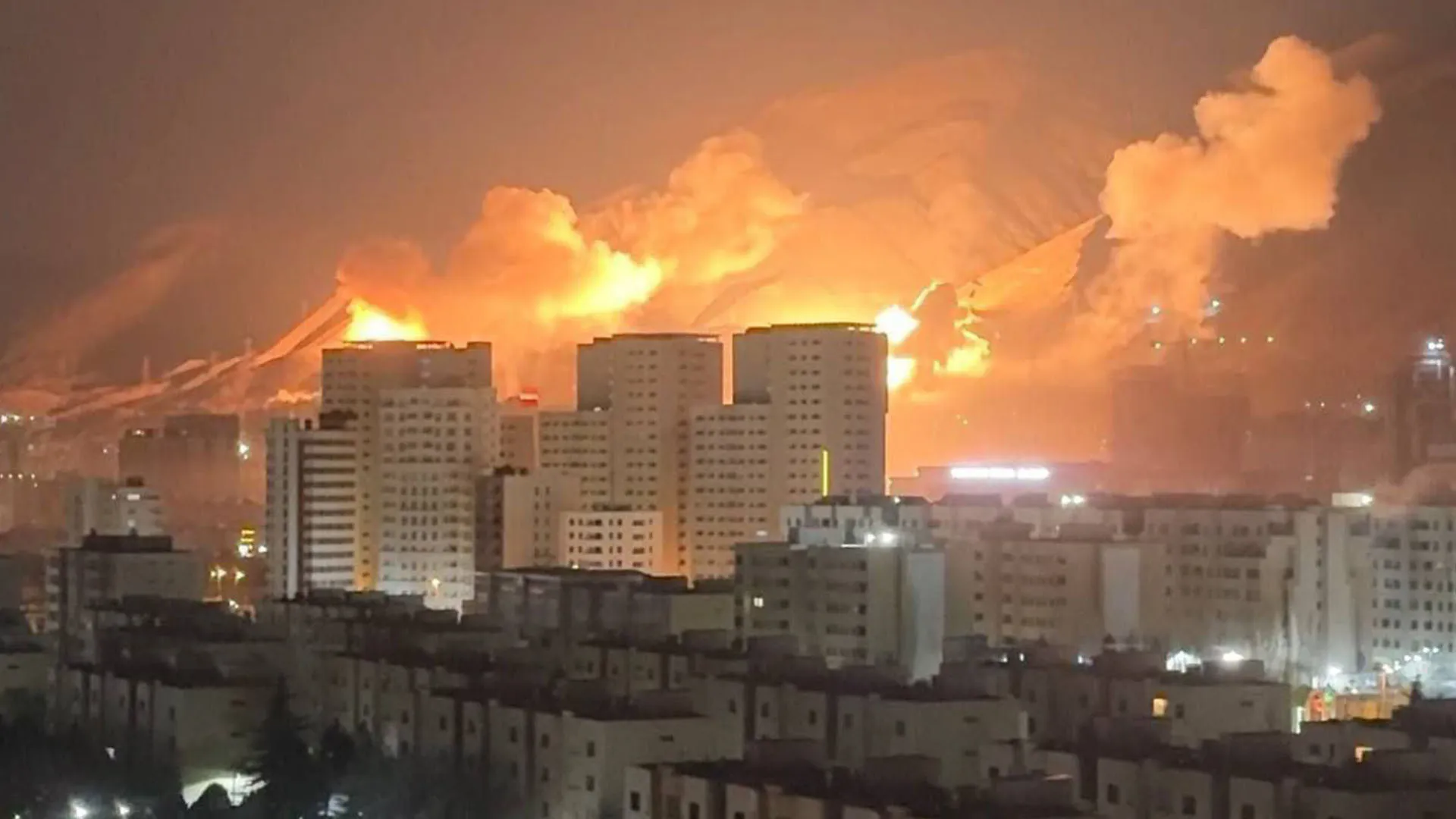
March 1 (UPI) — The Israeli military was attacking Hezbollah targets in neighboring Lebanon, amid worries that its war with the United States against Iran may escalate and spill across the region.

The Israel Defense Forces announced its military offensive hours after sirens triggered by projectiles launched from Lebanon sounded throughout northern Israel.

The Israeli strikes were retaliatory, the IDF said in a statement.

Strikes targeted senior Hezbollah operatives in the capital, Beirut, according to the Israeli Air Force, which said it also struck “a key terrorist” in southern Lebanon.

“Hezbollah opened a campaign against Israel overnight, and is fully responsible for any escalation,” IDF Chief of General Staff Lt. Gen. Eyal Zamir said in a statement.

“Any enemy that threatens our security will pay a heavy price — we will not allow any harm to come to the people of Israel and our northern border.”

In an update, the IDF said targets included command and control centers, launch sites and senior Hezbollah operatives.

In the recorded statement, an IDF spokesperson said they were prepared for a Hezbollah response prior to attacking Iran on Saturday.

The spokesperson said Israeli fighter jets were continuing to strike Iran.

According to Lebanon’s Health Ministry, at least 31 people were killed and 149 wounded in the overnight attacks in the country’s south and Beirut’s Dahiyeh district, the state-run National News Agency reported.

It said 11 were killed and 58 injured in south Lebanon and 20 killed and 91 injured in the southern suburbs.

The strikes come less than 48 hours after the United States and Israel began their military operation to force regime change in Iran. Iran’s spiritual leader, Ayatollah Ali Khamenei, was killed in the strikes, along with other senior officials. Iran will form a three-member interim council until a new leader is chosen, according to the semi-official Tasnim News Agency.

Iran has responded by attacking U.S. bases throughout the Middle East. Tehran’s proxy militias have also launched attacks, including Hezbollah.

Three U.S. service members were killed and five seriously injured in Kuwait. At least nine Israelis were killed in strikes in Beit Shemesh, located about 20 miles west of Jerusalem, Israel’s Magen David Adom emergency service said in a statement. More than 20 were injured in the strike.

In Iran, more than 200 people have been killed, according to state media citing the Red Crescent. The Iran Mission to the United Nations said more than 150 school children were killed in a strike on a school in the southern city of Minab.

Lebanese Prime Minister Nawaf Salam condemned the launching of rockets from southern Lebanon toward Israel.

He described the Hezbollah strikes as “an irresponsible and suspicious act that endangers Lebanon’s security and safety and provides Israel with pretexts to continue its attacks.”

“We will not allow the country to be dragged into new adventures, and we will take all necessary measures to stop the perpetrators and protect the Lebanese.”

Source link

Turkey and Cyprus travel advice for Brits as Foreign Office issues warning

The Foreign Office has updated its travel advice for Turkey and Cyprus amidst the ongoing conflict between Iran, the US and Israel

Travel warnings have been issued for Brits in both Cyprus and Turkey as the conflict between Iran, the US and Israel enters its fourth day.

A huge swathe of the global airspace has been shut down completely as the conflict spreads further across the region. Israel and Hezbollah in Lebanon have exchanged strikes, with the Lebanese health ministry announcing that Israeli attacks in Beirut and southern Lebanon have killed at least 31 people, with 149 injured

On Sunday, an Iranian missile strike killed nine people in the Israeli city of Beit Shemesh, while Iranian officials reported that at least 153 people were killed after a strike on a girls’ school. Iran’s President Masoud Pezeshkian called the incident a “barbaric act”.

Have you been impacted by the conflict? If you’re safe to do so, please contact webtravel@reachplc.com

READ MORE: ‘Several’ US military jets crash in Kuwait as smoke seen near embassyREAD MORE: Death toll of Ian strikes so far as US continues combat operations and more countries are hit

It is important to note that at the time of writing, the Foreign, Commonwealth and Development Office (FCDO) has not issued ‘do not travel’ warnings for either Turkey or Cyprus. Such alerts are key because they signal extremely high risks – such as conflict, terrorism, or civil unrest – that often instantly invalidate travel insurance, leaving tourists personally liable for accidents or medical bills.

However, the FCDO does advise against all travel to within 10km of the border with Syria “due to fighting and a heightened risk of terrorism”, warning that “your travel insurance could be invalidated if you travel against advice from the FCDO.”

On Sunday, the FCDO updated its Turkey travel advice for those planning to cross the border from Iran to Turkey. The border remains open visa-free for people travelling on UK or Iranian passports.

“If you are a British national intending to cross the land border from Iran into Turkey, you must request facilitation from the British Embassy in Ankara by contacting the FCDO before travelling to the border. You must state which border point you intend to use and provide personal details (name, date of birth, details of travel document used to enter Turkey). Also indicate whether you are contacting from Iran or from the UK on behalf of a relative,” the FCDO update reads.

“If you intend to leave Iran overland, you do so at your own risk. In Iran, holding a British passport or having perceived connections to the UK can be reason enough for the Iranian authorities to detain you. “

Concerns are also growing for Cyprus, which sits less than 100km from the coasts of Lebanon and Syria. This morning it was reported that the RAF base Akrotiri in Cyprus has been hit by a one-way attack drone. No one was reported injured.

In response to the attack, the base is moving families and temporarily relocating non-essential staff. Around 30,000 Brits live in Cyprus and 1.3million visit from the UK each year.

The Foreign Office travel advice for Cyprus was updated this morning (March 2). The latest advice reads: “On 2 March 2026, the Sovereign Base Areas Administration confirmed a suspected drone impact at RAF Akrotiri. British nationals in the Sovereign Base Areas should follow instructions from the Sovereign Base Areas Administration British Bases Cyprus Facebook. British nationals in the Republic of Cyprus should follow any instructions from Cypriot local authorities.”

The FCDO has also issued general advice for people in the region. It urges British nationals to take “sensible precautions, considering their own individual circumstances.” These include:

  • Read if you’re affected by a crisis abroad – GOV.UK. This includes guidance on “how to prepare for a crisis” with suggestions on what you might include in your emergency supplies and “what to do in a crisis”
  • Sign up to FCDO Travel Advice email alerts
  • Monitor local and international media for the latest information
  • Sign up to local information alerts/resources and follow the instructions of the local authorities

The governmental body has also launched a central advice hub where all the latest updates can be found. British nationals in Bahrain, Israel, Kuwait, Palestine, Qatar and United Arab Emirates can register their presence to receive direct updates from the Foreign Office.

Make sure to check the Foreign Office advice regularly if you’re travelling to or are in the region. The advice is updated often.

Source link

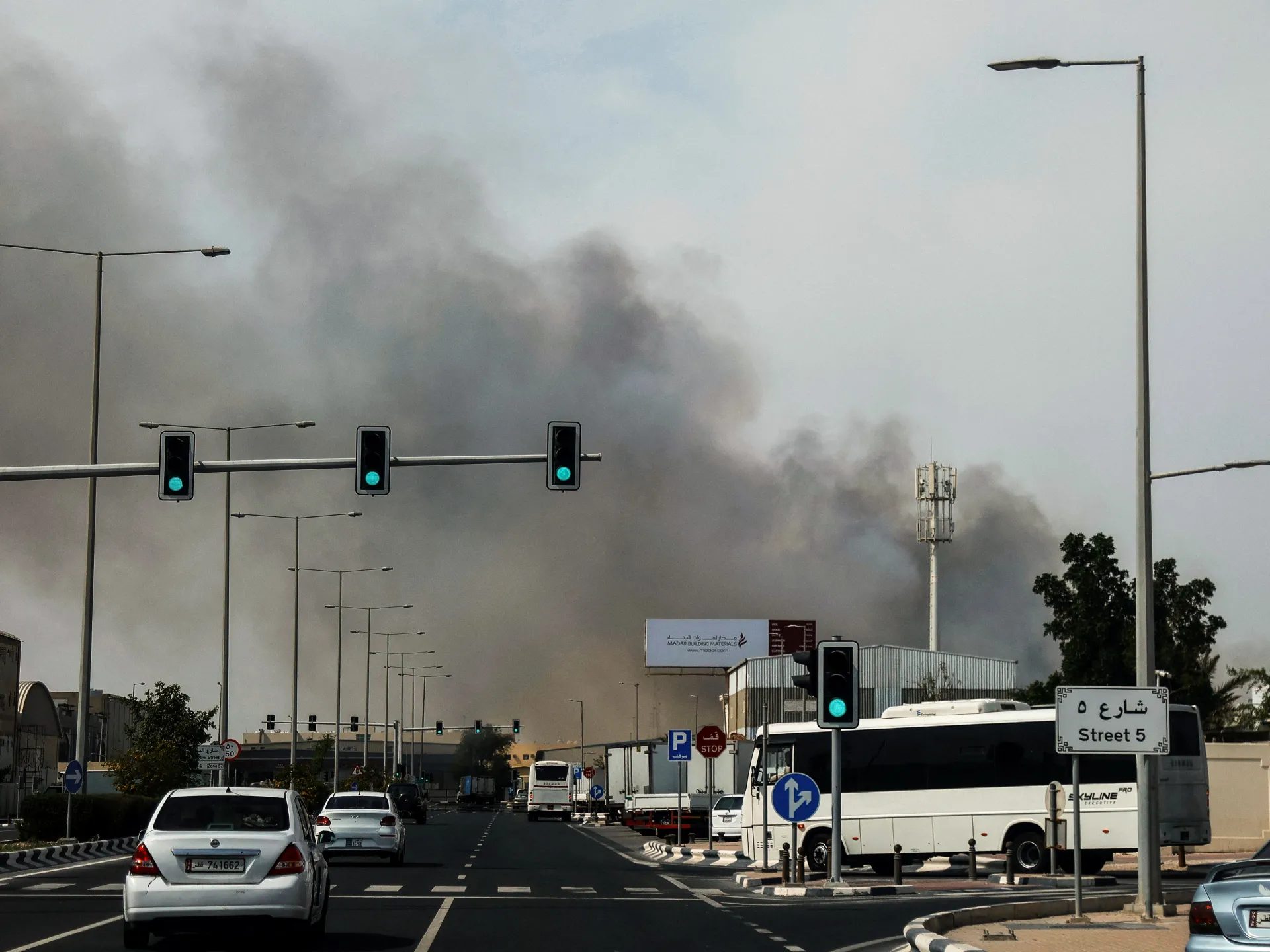
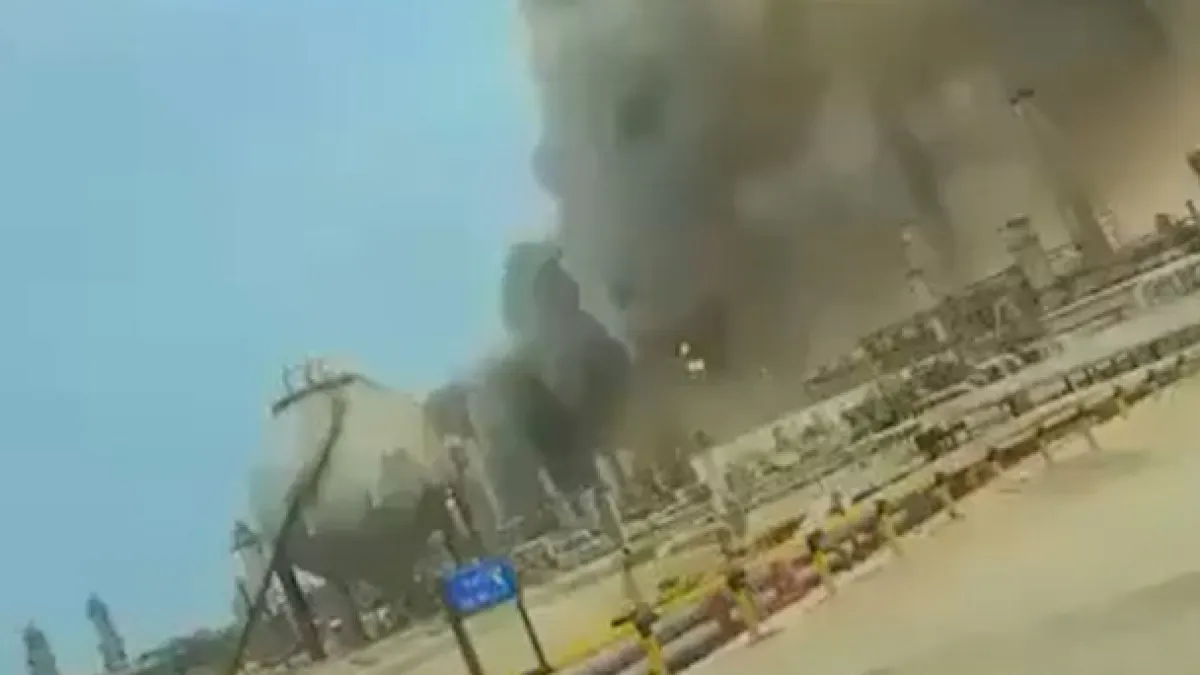
‘Missile debris’ sparks fire at Saudi’s Aramco oil Refinery | Israel-Iran conflict

NewsFeed

Videos show smoke rising from a refinery operated by Saudi Aramco after a fire broke out, which Saudi officials say was caused by debris from an intercepted Iranian missile. Oil prices have surged sharply amid the disruption and the closure of the Strait of Hormuz, raising fears over global supply.

Source link

Sydney Sweeney flashes thong as she straddles a chair to in sizzling new SYRN lingerie collection

SYDNEY Sweeney gave a cheeky flash of her thong as she modelled her glam new lingerie collection.

The Housemaid actress, 28, proved the perfect face for her latest SYRN range, which saw her sport a trendy monochrome two piece that showcased her abs.

Sydney Sweeney sizzled in a new lingerie drop for her brand SYRNCredit: SYRN
She flashed her derriere as she showcased a black thong from the rearCredit: @syrn / instagram
The Housemaid actress, 28, revealed her new business venture earlier this yearCredit: SYRN

Sydney, who unveiled her SYRN range with a raunchy campaign earlier this year, continued with her sexy promo shots for her The Do What Makes You Naked drop.

After giving a glimpse of her black and white bra with matching knickers, both emblazoned with the brand logo, she stripped to a dark thong.

The Euphoria screen star posed with her rear to the camera as she modelled the new garment, which she wore with a pair of semi sheer black tights.

She perched on a chair and held some additional lingerie up to the sky for the image, before posting a close-up version.

GOAL-DEN GIRL

Sydney Sweeney hits Bruno celebration in outing at European giants’ stadium


SYRN SONG

Sydney Sweeney goes topless in just a thong and tights then rolls around in bed

The second image captured her blonde hair in the perfect bouncy blow dry style, flowing over her shoulders,

On her Instagram page for her business, which features the strapline “Born to be a SYRN”, she uploaded the snaps.

Sydney added the words: “The Do What Makes You Naked collection is made from our Seamless Stretch fabric that’s soft, stretchy and made to move without thinking about it”.

One fan was quick to comment on the new snaps and put: “She’s fabuloaasss!!”

A second posted: “Stop Bae”.

When opening up on the reason for her new business venture, Sydney previously revealed she was a 32DD at 12.

She told Cosmopolitan: “I remember going to the store to get my first wire bra.

“It was silk and the only bra I felt good in.

“I literally wore it to the point that it had holes in it.”

Her new SYRN range include bras up to size 42DDD.

Sydney said she still had her first bra, adding: “It has stood by my side my entire life.

“I want to make bras that stay with women.”

She previously revealed the sheer bra, thong and suspender stockings contained within the glam range.

Taking to Instagram to reveal her “secret” business, Sydney previously revealed she was launching Syrn with a slew of sexy snaps.

In the caption, she penned, “The secret is finally out… say hello to @syrn. This is lingerie you wear for YOU, no explanation, no apology.

“SYRN is coming for you on 1.28 sign up now for early access at SYRN.com there’s soo much more I can’t wait to show you.”

Sydney said she wants to ‘make bras that stay with women’Credit: Instagram/sydney_sweeney
She has proved the perfect model for her new rangeCredit: SYRN By Sydney Sweeney
SYRN is the actress’ new side hustle away from the screenCredit: Getty

Source link

Chávez’s Communal State is a Failure. Mérida Shows Why

After the fraudulent election of July 28, 2024, Nicolás Maduro announced he would deepen the “Communal State” as a model of popular participation. In his words, it was necessary to “accelerate the construction of popular power” and “transfer more powers to the communes.” The implicit promise: more communes, more consultations, and more participation should equal more solutions.

I put that promise to the test with data from Mérida, a state where public services (especially water and electricity) fail every day. In mid-2024, power outages were almost four hours a day, enough to ruin an entire family.

In May of that year, a professor at the University of the Andes, Israel José Ramirez, died in the building where I lived with my family. That day, the power went out as well. The professor was inside an elevator that became trapped between the first and second floors. When he forced the mechanical lock on the door to try to get out, he found himself facing a void: the elevator car wasn’t at the floor’s level. He tried to jump but couldn’t reach. He fell to the bottom of the elevator shaft, about three stories high. He died on impact.

Electricity in that part of the city usually took four to eight hours to return. That day, it only took half an hour. The desperation of a prolonged power outage led Professor Ramírez to open the elevator doors, and his life ended there. This tragedy was a partial motivation for conducting this research.

Between August and July 2025, I did an internship at the National Institute of Statistics. There, I was able to review the records of 198 projects from the Concrete Action Agendas (ACA in Spanish) in 64 communes in the state of Mérida. The ACAs are the central mechanism of the chavista Communal State for participatory planning: consultations in which the communes identify their priority problems (called “critical nodes”) and vote on the projects they want the State to implement. These 64 communes represented 82% of the 78 registered in the state. The remaining 14 were excluded from the analysis because the officials responsible for transcribing the community assessments into the databases made so many errors that the information was unusable.

The communes understand the workings of the State better than many public officials.

Official reports stated: “Project in progress” or “Project completed.” But something didn’t add up. Local communities kept voting on the same service problems year after year. Someone was lying.

I needed to separate the propaganda from reality. I did something simple: I took each problem that a commune voted on in 2022 and tracked it for four years. If it stopped appearing in subsequent consultations, the government could claim it had been resolved. If it continued to appear year after year, it meant that people had been shouting the same thing for four years. And if it disappeared without explanation (neither resolved nor voted on again), nobody knew what had happened. The State simply ignored it.

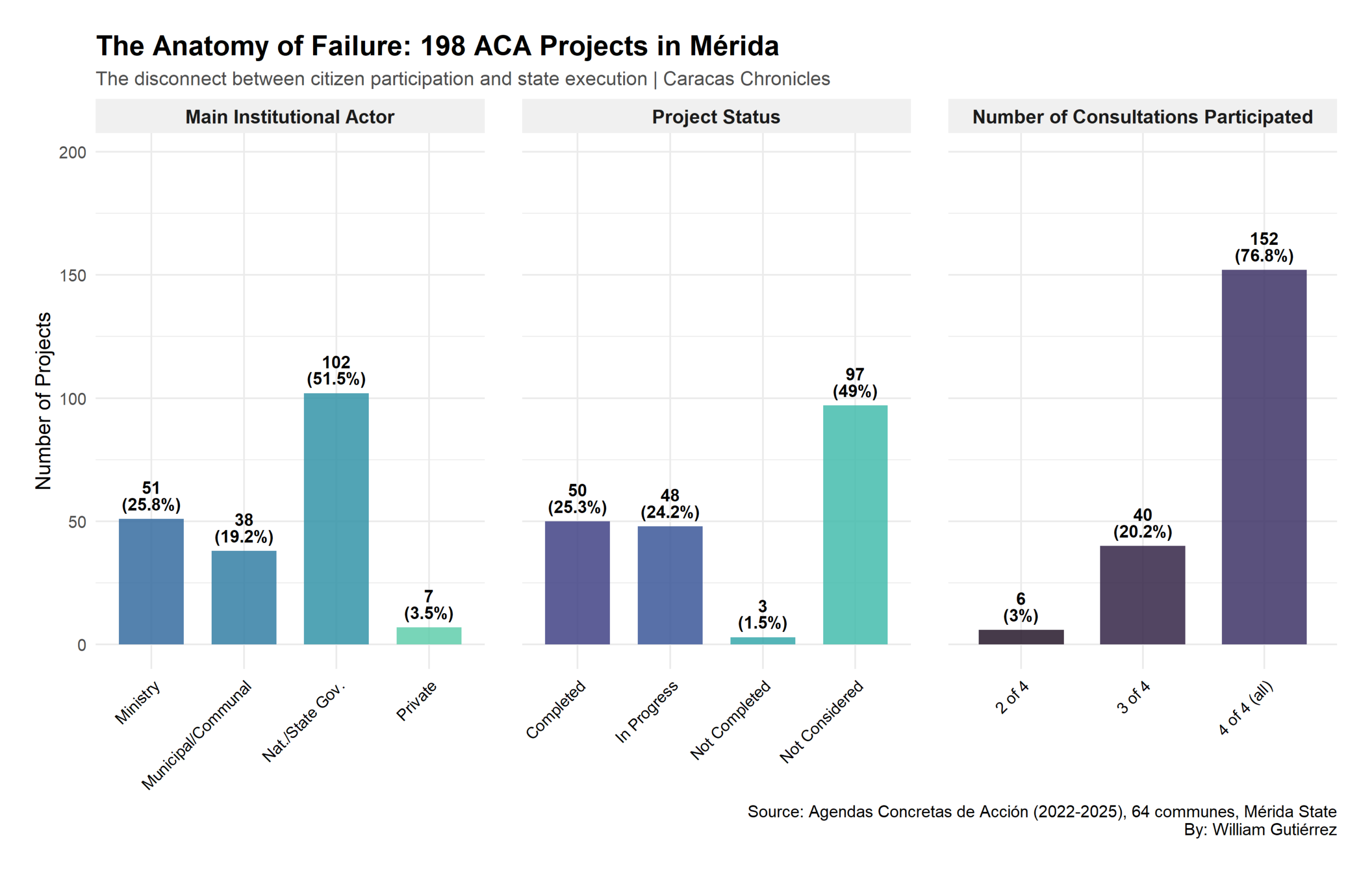
Using this detector, I audited 198 projects. The results are summarized in the following graphs:

These charts reveal three dimensions of failure.

First of all, who decides: of the 198 projects, 51.5% (102) were assigned to ministries and the national government for implementation, while another 25.8% (51) fell to the Mérida governorship. The communes diagnose the needs, but Caracas decides whether to open or close the tap of resources. Only 19.2% (38 projects) remained under municipal or communal control.

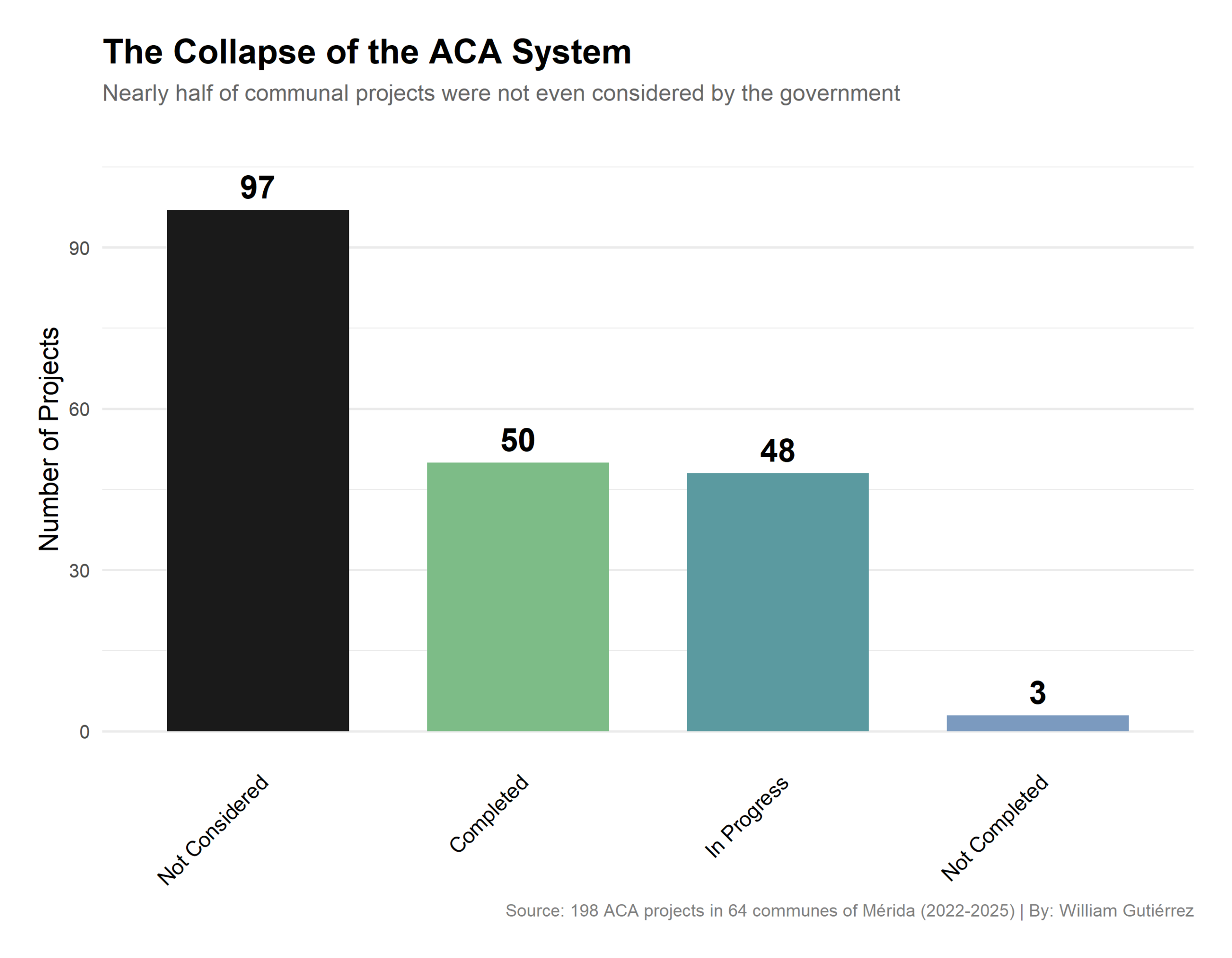
Second, what happened to them: almost half of the projects were not even considered. Only a quarter (50 projects, 25.3%) were completed after years of consultations. The State received the diagnosis, knew exactly what the people needed, and decided to do nothing. Third, participation wasn’t the problem: 76.8% of the communes (152 projects) participated in all four national consultations, from the first in 2022 to the last in 2025. The core chavista voter base mobilized, filled out forms, and voted. The system didn’t fail due to a lack of participation. The problem isn’t that the communities don’t know how to organize themselves. The problem is that when they do organize, the system ignores them.

Now, what problems are the communes identifying? These are summarized in the following chart:

This chart’s revelation is devastating: two out of every three communes in Mérida (43 out of 64, or 67%) identified water as their priority problem. This isn’t an isolated issue affecting just one or two communes. It’s a systemic crisis impacting the entire state. Four problems (water, roads, housing, and electricity) account for 60% of all project requests in Mérida.

Now, we can see how the ACA projects are distributed in Mérida in the following chart:

Of the 198 projects analyzed, 54 are related to water. More than a quarter (27%) of all projects. The first four categories (water, roads, housing, and electricity) account for 62.63% of all projects. The Pareto principle applied to poverty: 20% of the causes explain 80% of the problems. And how many of those 54 water projects were actually implemented?

Behind these figures are real families, of course. Take the example of the Doña Simona commune in Lagunillas, Mérida, which has a serious drinking water problem. In 2022, they voted for water in the first referendum. In 2023, they voted for water again. In 2024, the same. And in 2025, four years later, they were still voting for water. Four referendums. The same problem. Why? In a conversation with the Mérida’s INE office, where I did a summer internship, they revealed the number that explains everything: $10,000. That’s the budget per project. Always. It doesn’t matter if the community asks for an aqueduct or paint for a school.

With $10,000 you can’t build an aqueduct. It’s barely enough for 200 meters of pipe. You can’t dredge a river. You can’t pave a road. You can’t solve a water crisis that affects 43 of the state’s 64 communes. The communes learned this lesson. If you need water but it costs $50,000, you’re better off asking for paint. At least that’s something they will greenlight.

Four years of voting for water. And in the end, paint for the walls of a run-down public school.

So, what happened in Doña Simona? In the third and fourth consultations, the community changed its vote. They no longer asked for the aqueduct they needed. They voted for something “realistic”: participating in the Bricomiles, the program where soldiers paint school facades and repair sports field roofs. It’s not that the people of Doña Simona are unaware of what’s happening in their community, but rather that they’ve learned to play the system: the State only funds projects that cost less than $10,000. “Citizen participation” then revealed itself not as empowerment, but as an exercise in adjusting real needs to the ridiculously small budget the government is willing to provide. Four years of voting for water. And in the end, paint for the walls of a run-down public school.

However, one thing is certain: the communes of Mérida are always right. When the problem is electricity, they assign it to Corpoelec. When it’s water, to Aguas de Mérida. When it’s housing, to the Ministry of Housing. I reviewed 198 projects and didn’t find a single exception. The communes understand the workings of the State better than many public officials.

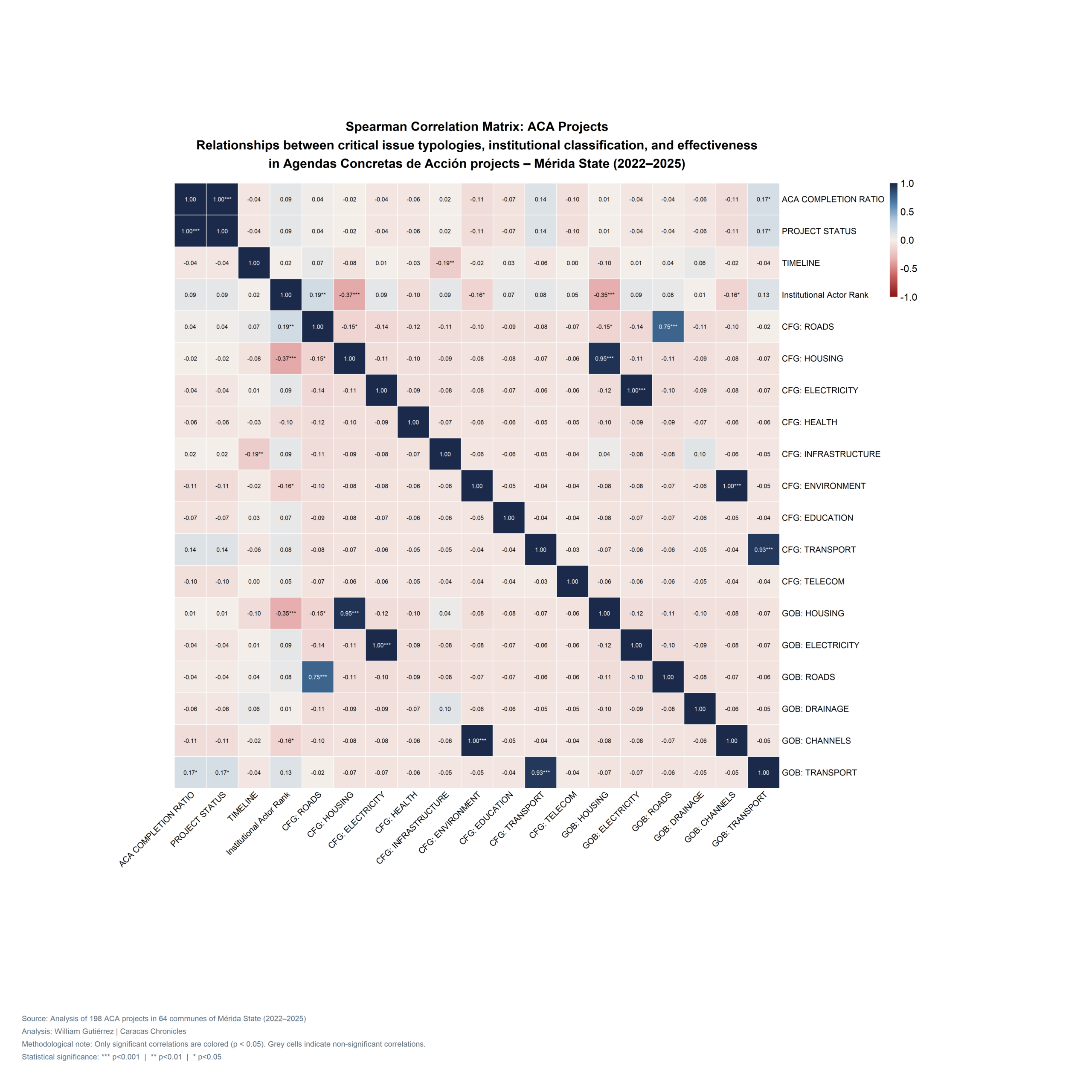
This accuracy remained consistent across all 64 communes, throughout the four consultations, and in all 198 projects. Then I thought: if the diagnosis is so precise, if the communes are doing their job, the system should be producing results. Water flowing through pipes. Paved streets. Stable electricity. I measured the relationship between the quality of the diagnosis and the effective resolution of problems. This graph shows the main conclusion of this research, which I call the Great Disconnect.

The dark blue cells confirm what we already saw: the communes diagnose with surgical precision. The system works like clockwork in the diagnostic phase. So I asked the obvious question: if the communities diagnose perfectly, does the State provide solutions?

The answer was once again devastating. There is no correlation. None. The gray cells say it all: a commune correctly identifying its problem predicts absolutely nothing about whether that problem will be solved. Neither the accuracy of the diagnosis, nor the urgency of the problem, nor how many times people have voted for the same thing matters. None of that matters.

The factors that determine whether a project is implemented operate completely outside the formal Commune Action Board (CAB) system. They are external, opaque, probably related to circumstantial political will, erratic budgets, or the constant turnover of officials.

This is the Great Disconnect: a system that diagnoses with surgical precision and does nothing.

My data shows what that means: more people shouting in empty rooms. The communes are just an authoritarian excuse to overrepresent their political power.

The success or failure of a project doesn’t depend on whether the commune identified its need, whether the responsible institution was selected correctly, how urgent the problem is, or how many times people have voted for the same thing. What determines whether a project is implemented operates entirely outside the formal CAB system. These are external, opaque factors, probably related to short-term political will, erratic budgets, or the constant turnover of officials. The communities do their part. The Venezuelan State does not.

The problem with the Communal State in Mérida isn’t one of scale, it’s structural. There’s no shortage of communes: 64 are already functioning. There’s no lack of participation: 76.8% of the communes participated in the four consultations. The system works exactly as it was designed, mobilizing the chavista base to diagnose problems, making them believe they are participating, and then systematically ignoring their demands. It’s not a failure. It’s the design.

My data shows what that means: more people shouting in empty rooms. The communes are just an authoritarian excuse to overrepresent their political power. The reality is that the wife of Professor Israel Ramírez found him dead in the elevator shaft because there was no electricity in the building that day. In some neighborhoods of Mérida, people probably voted for electricity in 2022, 2023, 2024, and 2025. And in 2026, if this policy continues, they will continue to vote for it.

Source link

Lionel Messi scores twice in Inter Miami’s comeback win

Lionel Messi scored twice as Inter Miami fought back from two goals down to beat Orlando City 4-2 in the Florida derby.

The reigning champions, who lost their season opener against Los Angeles FC last month, looked set for another defeat when goals from Marco Pasalic and Martin Ojeda put Orlando 2-0 up inside 25 minutes.

But after midfielder Mateo Silvetti’s stunning 25-yard drive just after half-time gave Miami hope in Orlando, the Argentina legend grasped control of the game.

The 38-year-old scored his first goal of the season to equalise in the 57th minute with a left-footed strike from the edge of the area, then set up midfielder Telasco Segovia to score with five minutes remaining.

Messi sealed victory in the 90th minute when his low free-kick crept past Maxime Crepeau and he celebrated with a signing gesture towards the touchline.

“He’s the best player to ever play this sport. He’s a leader, and as a leader, he inspires others, but he also often needs to be inspired himself,” said Miami coach Javier Mascherano.

“He has the ability to create chances like no-one else, and that’s what allowed us to turn the game around.”

The eight-time Ballon d’Or winner has now scored 898 goals for club and country, including 79 in 90 appearances for Miami.

The win was Miami’s first in nine trips to Orlando, and they now face a game away at DC United on Saturday.

Source link

‘Not again’: Gaza rushes to stockpile amid Iran war, crossing closures | Israel-Palestine conflict

Deir el-Balah/Gaza City – When Hani Abu Issa headed to the Deir el-Balah market on Saturday morning, he was not carrying a long shopping list. He had only intended to buy ingredients for his family’s Ramadan iftar meal, nothing more.

But the sight of crowds gathered in front of grocery shops caught him by surprise and prompted him to ask what was happening.

Recommended Stories

list of 4 itemsend of list

A passer-by told him that Israel had struck Iran and war had broken out.

Hani was shocked as he watched people around him leaving one after another, carrying sacks of flour on their shoulders, and buying whatever food supplies and goods they could manage.

That was how the first hours of the military confrontation between Israel, joined by the United States, and Iran unfolded in Gaza.

The scene in the enclave changed completely as people everywhere rushed to the market to buy sugar, flour, cooking oil and yeast.

Shelves began to empty, and the price of essential goods increased.

A father of five children, 51-year-old Hani told Al Jazeera that he believes the Israel-US war with Iran “will not directly affect Gaza”. But he admits that people in Gaza are no longer able to react calmly to any military development in the region.

“People have become afraid of everything. Since the morning, everyone rushed to the markets to stockpile, and that led to shortages of many goods and rising prices,” he said, while standing in front of food stalls in the Deir el-Balah market, in central Gaza.

Anxiety among residents intensified after COGAT, the Israeli body managing the Palestinian territory, released a statement on its Facebook page on Saturday evening announcing the closure of crossings leading to Gaza and the occupied West Bank “until further notice”, in light of security developments related to the war with Iran.

Hani said the possibility of crossings remaining closed deeply worried him.

“Flour, sugar, cooking oil, and yeast… those were the first things to disappear from the market because of the heavy demand,” he said.

“I lived through famine [during Israel’s genocidal war on Gaza] like everyone else. The worst days were when I had to buy a sack of flour for more than 1,000 shekels [$319]. I don’t want to relive that experience.”

He said that stockpiling while the crossings remained closed was not a viable solution.

“Goods run out quickly, and the conditions we live in may spoil whatever we store. All we need is for someone to reassure us that the closure of the crossings will not last.

“For someone to tell us that we will not be affected.”

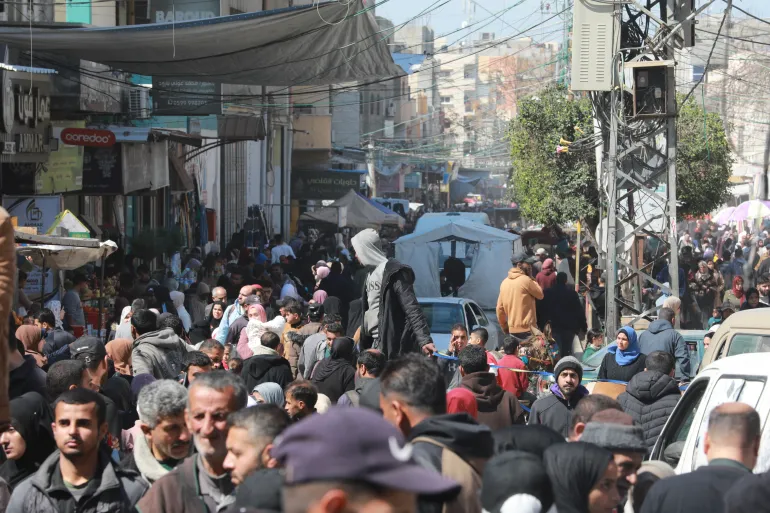
Crowds filled Gaza’s markets as residents rushed to stockpile food after news of the Iran war and the closure of Gaza and West Bank crossings [Abdelhakim Abu Riash/ Al Jazeera]
Crowds filled Gaza’s markets as residents rushed to stockpile food after news of the war with Iran and the closure of Gaza and West Bank crossings [Abdelhakim Abu Riash/ Al Jazeera]

Local sources reported that the crossing closures were linked to the Jewish holiday of Purim, which created confusion over how long they would last.

“We cannot be certain or confirm anything. Israel’s word cannot be relied upon, and no specific duration was given,” Hani added in frustration.

“Gaza has not recovered from two years of war and famine. All I think about now is traveling and leaving with my two daughters to live in another country. That is enough.”

At around the same time last year, during Ramadan last March, Palestinians in Gaza endured one of the harshest phases of the war after crossings were closed and goods were prevented from entering for extended periods, leading to shortages of food supplies and price hikes that resulted in the spread of famine.

Israel’s policy of starvation at the time faced widespread condemnation. Markets turned into empty spaces, flour prices soared to record highs, and people died due to severe malnutrition.

Omar Al-Ghazali sells groceries from his food stall in Nuseirat market in central Gaza [Abdelhakim Abu Riash/ Al Jazeera]
Omar Al-Ghazali sells groceries at his food stall in the Nuseirat market in central Gaza [Abdelhakim Abu Riash/ Al Jazeera]

Justified fear

In the Nuseirat market, where people are still frantically buying groceries, 28-year-old seller Omar Al-Ghazali told Al Jazeera that the famine experience has left a deep psychological impact.

“People’s fear is completely justified. They were shocked and frightened and want to secure themselves. They learned from the previous famine experience and from fears of trader hoarding,” the father of four said.

“Today, although the war is not taking place on Gaza’s land, the fear of repeating the famine scenario appears stronger than any logical analysis of the regional situation,” he added.

“We cannot tell people not to buy. What they went through was extremely difficult. We try to convince ourselves that things are fine and that no one will be affected, but fear is stronger.”

‘Where would we even store it?’

Not everyone can afford to stockpile.

Asmaa Abu Al-Khair, 38, was wandering through the Gaza City market on Sunday,  visibly confused. A mother of eight, she wants to stock up, but lacks both the financial ability and the space.

“Where would we store it? And what would I even store? We need everything, and we can barely provide our daily food during Ramadan,” she told Al Jazeera as she walked empty-handed through the market.

“I feel great anxiety. Everyone is talking about it – about Iran’s strike and the closure of the crossings – and I cannot afford to buy what I need, while at the same time, I am afraid of famine returning. I have young children,” she said sorrowfully.

Asmaa said many displaced families living in nearby tents were facing the same reality as they “do not have the money to buy supplies, nor the space to store them inside the tents”.

“We endured so much hardship during the war, and it barely ended with the announcement of a ceasefire. So why close the crossing now? What do we have to do with what is happening? Is what we witnessed not enough? Why play with people’s nerves?”

Until yesterday evening, Asmaa had hoped the crossings would not be closed and that things would continue as they were. Then, the announcement came.

“It felt like a stab in my heart. I went to sleep with deep frustration,” she said bitterly.

Mohammed Daher chose not to stockpile, saying he is exhausted by the repeated Israeli crossing closures, particularly those that coincided with Ramadan last year [Abdelhakim Abu Riash/ Al Jazeera]

Mohammed Daher, 46, from Jabalia, who is now displaced and living in Deir el-Balah, said he had been living the spirit of Ramadan “calmly and peacefully”, without war or gunfire for the first time in two years, until the news of war with Iran.

“I found myself lost again. But I decided not to stockpile anything,” he told Al Jazeera while looking around the market.

“We are exhausted. I reached a point where I have grown used to all scenarios,” he said despairingly. “Israel is looking for any pretext to starve Gaza’s residents again and deepen their humanitarian crisis.”

Daher said he had spent most of his money during the previous famine buying basic food items at inflated prices.

“Everything was priced like gold… if you could even find it. Today, I have no energy left to endure that torment again. Let whatever happens, happen.”

Deepening Gaza’s humanitarian crisis

There were widespread reactions to the Israeli closure decision on social media, as Palestinians questioned whether they were on the brink of an even harsher phase of Israel’s treatment. Many people accused Israel of closing the crossings to push Palestinians towards further starvation and collective suffering.

Some wondered whether Israel was using the moment to create more suffering for Palestinians in Gaza while the world was distracted by the war with Iran.

Ali al-Hayek, a member of the Palestinian Businessmen Association in Gaza, warned that closing the crossings could halt aid distribution to struggling families and put a pause on charitable kitchens. It would also obstruct urgent medical travel abroad, particularly for those who are wounded, in critical condition or living with chronic diseases, such as cancer.

He pointed out that Gaza’s economy has already contracted by more than 85 percent because of Israel’s genocidal war, with the majority of the population pushed below the poverty line, unemployment reaching nearly 80 percent, and more than 97 percent of industrial facilities ceasing operations.

Al-Hayek called on the international community to intervene immediately and pressure the Israeli side to reopen the crossings and restore their normal operations, while ensuring freedom of movement for individuals and goods.

But he also said it is important that traders not use the shortage to increase prices. It’s Ramadan time, he emphasised, and Palestinians should demonstrate solidarity now more than ever.

Source link

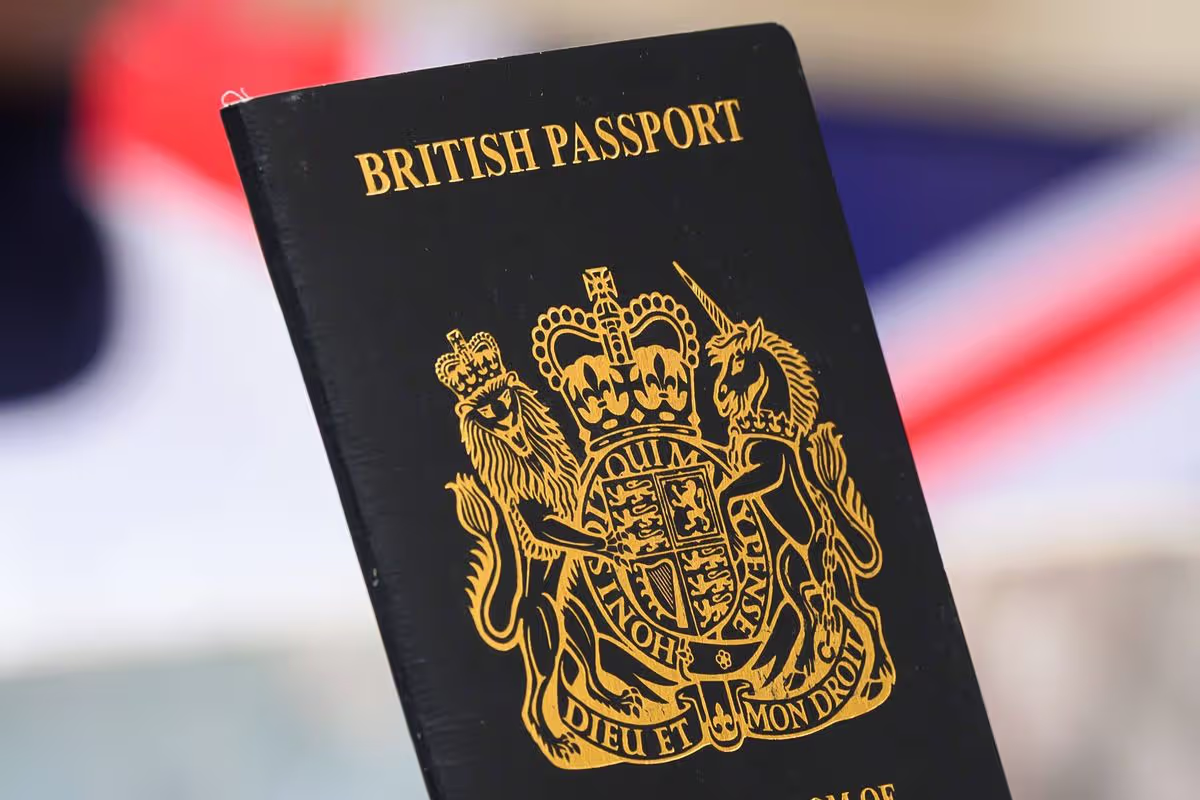
Latest UK passport rules for holidaymakers with £235 warning

UK travellers may not be aware of certain rules

Those planning a holiday are being urged to check their passports, due to lesser-known travel rules that have come into effect post-Brexit. Anyone living in the UK will require a valid passport for international travel.

You can apply for a British passport if you’re a British citizen, a British overseas territories citizen, a British overseas citizen, a British subject, a British national (overseas), or a British protected person. To obtain a new or replacement document, an application must be submitted to HM Passport Office, with the current average processing time standing at three weeks or less.

Travellers should check their passport well ahead of any holiday plans. This is because you could be turned away at the airport if yours isn’t valid.

Alvaro Iturmendi from Confused.com said: “It is easier to get caught out than you might think. Our research found that less than half (43%) holidaygoers, know that if you are heading to the EU, your passport must have been issued less than 10 years before your departure date.”

As Mr Iturmendi pointed out, all UK passport holders heading to the Schengen zone must make certain their passport’s “date of issue” is within 10 years of their arrival date. Furthermore, the passport’s “expiry date” must be at least three months beyond their intended departure from the Schengen zone

Should your passport fall short of entry requirements, you’ll almost certainly be refused boarding at your departure airport. So it’s absolutely worth double-checking yours immediately.

And if you need a replacement passport in a hurry, it could cost you as much as £235. The current estimated processing time is a maximum of three weeks, though government officials say it can sometimes take longer “if we need more information, or we need to interview you”.

Those to whom this applies will be contacted within the three-week timeframe. A standard adult passport, for those aged 16 and above, costs £94.50 when applying online, or £107 when using the paper application form.

If you need a passport urgently, a one-week fast track document costs up to £191 for an adult. A one-day premium service costs up to £235.

Source link

Blasts shake Qatar, UAE, Kuwait as Iran’s retaliatory strikes continue | News

Tehran’s retaliatory attacks on US assets in the Gulf region continue for a third day as fears of a prolonged conflict rise.

Loud explosions were heard in Dubai in the United Arab Emirates and the Qatari capital ‌of Doha for a third consecutive day of ⁠Iranian retaliatory strikes on neighbouring Gulf states in response to ongoing attacks by the United States and ⁠Israel on Iran.

Loud bangs and sirens were also heard in Kuwait early on Monday morning, with a witness quoted by Reuters news agency saying smoke was seen rising from near the US embassy.

Recommended Stories

list of 4 itemsend of list

Kuwaiti air defences intercepted the majority of the ⁠drones near Rumaithiya and ⁠Salwa neighbourhoods, the state-run Kuwait News Agency reported, quoting the director general of civil defence.

Tehran said it ⁠would target US military assets in the region after the ⁠US-Israeli ⁠strikes on Iran continued for the third day on Monday.

Iran has hit a range of civilian and commercial areas across ‌Gulf cities, widening the conflict’s impact on key regional aviation and trade hubs.

Meanwhile, Bahrain’s Ministry of Interior said it activated air raid alerts and urged residents to head to the nearest safe place.

It said the Shaikh Khalifa bin Salman Bridge linking the capital, Manama, to nearby towns was closed and urged “residents to use main roads only when necessary”.

At least one person has been killed in Kuwait, three have been killed in the UAE, and 16 people have been injured in Qatar.

Meanwhile, at least 201 people have been killed in Iran in US-Israeli attacks, with 747 wounded, while at least nine have been killed and 121 wounded in Israel.

Iran ‘attacking American targets’

The US, Bahrain, Jordan, Kuwait, Qatar, Saudi Arabia and the UAE issued a joint statement on Sunday condemning Iranian attacks across the region and affirming their right to self-defence.

Gulf countries “will take all necessary measures to defend their security and stability and to protect their territories, citizens, and residents, including the option of responding to the aggression”, the statement released after a meeting said.

However, Iranian Foreign Minister Abbas Araghchi on Sunday stressed that Tehran is not seeking confrontation with its Gulf neighbours, telling Al Jazeera that Tehran has “no problem with the countries on the other side of the Persian Gulf”, referring to the Gulf, which is also known as the Arabian Gulf.

Iran maintains “friendly and good neighbourly relations with all of them”, which it is determined to continue, he added.

“What we are doing is in fact an act of self-defence and retaliation to the American aggression against us,” Araghchi said.

“We are not attacking our brothers in the Persian Gulf, we are not attacking our neighbours, but we are attacking American targets,” he added.

Source link

Neighbours legend’s dream of representing Australia at Eurovision comes true as she’s announced as 2026 entrant

A NEIGHBOURS legend’s dream of representing Australia at Eurovision has comes true as she’s announced as the 2026 entrant.

The star has had a hugely successful recording career since leaving the iconic Aussie soap.

Delta Goodrem has been revealed as Australia’s entry for Eurovision 2026Credit: Getty
Delta rose to fame as Nina Tucker on NeighboursCredit: Rex
Delta previously spoke about her dream of representing her country at the annual music competitionCredit: Getty

But Delta Goodrem still had one major career goal on her list; to represent her country at Eurovision.

On Sunday, Australian network SBS announced that Delta, 41, would be the act performing in Vienna, Austria.

Delta will take to the stage at the Wiener Stadthalle this May with her new single Eclipse.

Delta said: “I’m so honoured to represent Australia on one of the biggest and most iconic music stages in the world at Eurovision!

EUR-NO-VISION

Why UK pop stars are running a mile from taking part in Eurovision


LOOK MUM IM ON EUROVISION

Who is Britain’s Eurovision entrant Look Mum No Computer?

As a singer-songwriter, music has been my lifelong passion. I’ve always loved the creativity, individuality, and joy Eurovision brings, connecting and uniting people across the globe through music; the universal language.

I can’t wait to arrive in Vienna and make Australia proud.”

Last year, Delta exclusively told The Sun about her dream to appear on Eurovision.

She said: “Of course I would do Eurovision. I love it!” 

Delta said she was thrilled when Australia was allowed into the contest in 2015, adding: “I’m obsessed. I flew into London and watched some of the semi-finals. 

“I loved Scott Mills and Rylan’s commentary. I love the creativity of it all.  You discover some amazing talents.”

Delta released her single Eclipse on Sunday, which she also wrote alongside Ferras Alqaisi, Jonas Myrin and Michael Fatkin.

Delta starred in Neighbours as Nina Tucker from 2002 to 2005 before making cameo appearances in 2015 and 2022.

She signed her first record deal at the age of 15 and released her debut album, Innocent Eyes, in 2003.

Delta also acted as a coach on The Voice Australia for eight seasons from 2012 to 2020.

Source link

Clippers end losing streak with 20-point win over the Pelicans

Kawhi Leonard scored 23 points, and the Clippers beat the New Orleans Pelicans 137-117 on Sunday night to end a three-game losing streak.

Ninth in the Western Conference, the Clippers improved to 28-31. The Pelicans are 13th in the West at 19-43.

New Orleans star Zion Williamson sat out after injuring his right ankle at Utah on Saturday night. He had played a career-high 35 straight games.

The Clippers never trailed. They led 43-32 after the first quarter and had a 76-70 advantage at the half. It was 107-94 after three, and the Clippers stretched the margin to 26 in the fourth.

Jordan Miller added 19 points for the Clippers. Derrick Jones Jr. had 17, Brook Lopez 16 and John Collins 15.

While Leonard went one for seven from three-point range, the Clippers were 17 for 36 overall. Lopez was four for six, and Jones and Kobe Sanders both were three for four.

Jeremiah Fears led New Orleans with 28 points, hitting five of six three-pointers. Derik Queen scored 19 points, Dejounte Murray had 17, and Trey Murphy III added 16 after missing five games because of a right shoulder injury.

Source link

On This Day, March 2: Texas declares independence from Mexico

March 2 (UPI) — On this date in history:

In 1836, Texas proclaimed independence from Mexico.

In 1899, President William McKinley signed legislation establishing Mount Rainier National Park in Washington. The park received record flooding in November 2006, resulting in more than $36 million in damage.

In 1949, a U.S. Air Force plane piloted by Capt. James Gallagher completed the first non-stop around-the-world flight in just over 94 hours.

In 1962, Philadelphia’s Wilt Chamberlain set the single-game NBA scoring record with 100 points against the New York Knicks.

In 1974, the cost of a U.S. first class postage stamp was increased to 10 cents, up from 8 cents.

File Photo by Kevin Dietsch/UPI

In 1983, the compact disc and player are released in the United States, beginning the slow decline of the cassette tape and launching the digital audio revolution.

In 2007, U.S. Army Secretary Francis J. Harvey announced his resignation amid charges of poor conditions for patients at Walter Reed Army Medical Center in Washington.

In 2008, outgoing Russian President Vladimir Putin’s choice as his successor, Dmitry Medvedev, was elected president in a landslide. Putin remained in power as prime minister.

File Photo by Anatoli Zhdanov/UPI

In 2011, the U.S. Supreme Court ruled 8-1 that an anti-gay Kansas church had a constitutional right to stage a peaceful protest at the funeral of a U.S. Marine killed in Iraq.

In 2017, Attorney General Jeff Sessions announced he would not participate in any federal investigation into allegations the Russian government interceded in the 2016 presidential election, sparking the ire of President Donald Trump.

In 2023, Los Angeles Lakers icon LeBron James became the first NBA player to reach 40,000 regular-season points. He broke the previous record — 38,387 by Kareem Abdul-Jabbar — in 2023.

In 2025, Anora won Best Picture at the Academy Awards along with Best Actress for Mikey Madison, Best Director for Sean Baker, Best Original Screenplay and Best Editing.

Best performance by an actor in a leading role Oscar winner Adrien Brody of “The Brutalist” celebrates backstage with best performance by an actress in a leading role winner Mikey Madison of “Anora” and best actress in a supporting role Oscar winner Zoe Saldana of “Emilia Perez” with Kieran Culkin, Oscar winner for best actor in a supporting role (L-R) during the 97th Academy Awards in the Hollywood section of Los Angeles, on March 2, 2025. File Photo by Pat Benic/UPI

Source link

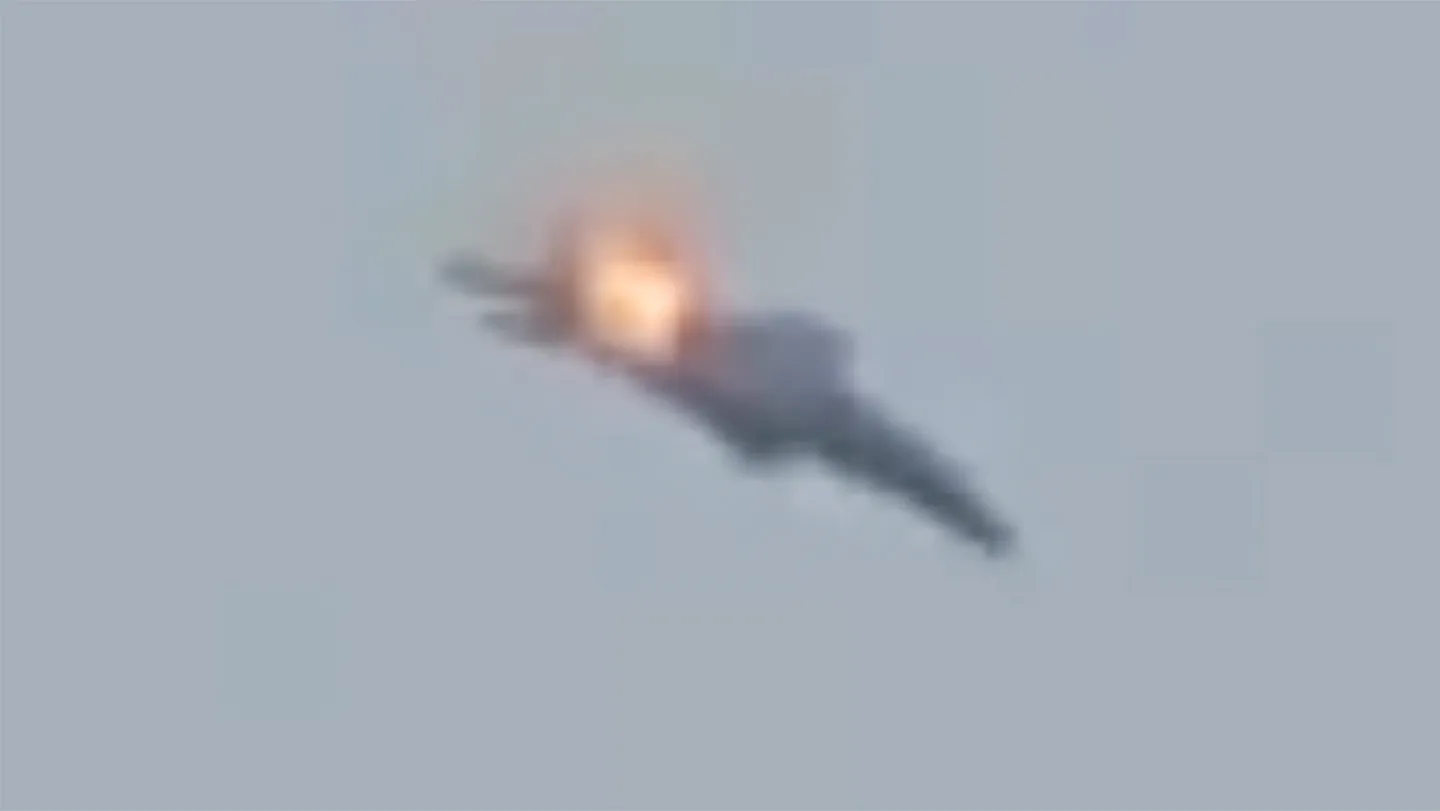
F-15 Spins Into The Ground While On Fire In Middle East

Details remain very limited at this time, but an F-15 went down in the Middle East. Accounts online claim it occurred over Kuwait. Videos show the aircraft in a flat spin while ablaze, with its vertical tails missing and fire coming from its empennage, before crashing into the ground. At least one crewman safely ejected.

Unconfirmed reports say it was a friendly fire incident, but we cannot confirm that nor who the jet belongs to. The Israeli Air Force or the USAF are highly active over the area to access Iran (primarily via eastern Iraq), as well defend against incoming drones. Both countries fly F-15s. Saudi Arabia and Qatar also fly the F-15 in the region. The aircraft involved looks like it could be Strike Eagle derivative, which is flown by all the countries listed, but that is also inconclusive at this time. Israel and Saudi Arabia also fly single seat F-15A/Cs. No USAF F-15Cs are deployed to the CENTCOM area of responsibility.

Footage of an F-15 falling out of the sky this morning over Kuwait, in an apparent “friendly fire” incident involving the U.S. Air Force. pic.twitter.com/GQvryfJ4C4

— OSINTdefender (@sentdefender) March 2, 2026

A video shows one crewman, without any visible insignia on his uniform, on the ground and standing near his parachute. Another view shows him or another crew member in the back of an SUV in relatively good condition, at least by the looks of it.

The U.S. F-15 fighter jet pilot who was down over Kuwait moments ago in a friendly fire incident is alive.
He ejected and is now being taken care of by a group of Kuwaitis pic.twitter.com/mmAAFeZyl0

— NationSnap (@NationSnapIndia) March 2, 2026

The battlespace is extremely complex and the threat of friendly fire is very real considering how many missiles and drones Iran is firing west and how much damage those weapons can do, as well as all the tactical aircraft coming and going. It isn’t clear if the incident had anything to do with Arab countries such as Saudi Arabia signaling they may jump into the fight, even in a defensive manner. Doing so is more complicated than it sounds and the U.S. and Israel may push to see this does not happen as deconflicting the airspace and integrating other allies into carefully crafted battle plans is extremely challenging at this stage and fraught with risk. This is exactly what I mentioned on X earlier tonight prior to this incident.

Easier said than done. They have very capable aircraft, but deconflicting air operations and altering planning may be more trouble than it’s worth and invite risk, at least at this stage. https://t.co/uhKS4CwT7L

— Tyler Rogoway (@Aviation_Intel) March 2, 2026

At the same time, mechanical failures of a catastrophic nature also happen. We just don’t know what occurred at this time.

If this was a USAF or IAF jet, it would be the first known coalition aircraft loss of the war.

Once again, the details could and are likely to change as we find out more about what happened and who was involved.

UPDATE: 2:02 AM EST—

Additional videos and images are emerging, but we cannot verify them, so they must be treated as unconfirmed.

One video shows what is claimed to be the moment the F-15 was hit or had a detonation of some kind. Again, we cannot confirm the authenticity of the short clip:

Additional stills, claim to show two other crewman, a female aviator and another male with a bloody hand, on the ground. There are claims that two aircraft were shot down, not just one. Again, this should be treated as unconfirmed at this time.

Iran just shot down 2 US F-15 jets.

What’s going on?

I heard one of the pilots didn’t make it.

These are not friendly fires.. https://t.co/NeR9EALdA1

— Ariel Cohen (@ArielCohen46) March 2, 2026

Another image claims to show the moment one of the crewmen was approached by locales who demanded they surrender. The ejection seat’s life raft can be seen in the foreground:

Contact the author: Tyler@TWZ.com

Tyler’s passion is the study of military technology, strategy, and foreign policy and he has fostered a dominant voice on those topics in the defense media space. He was the creator of the hugely popular defense site Foxtrot Alpha before developing The War Zone.


Source link

Michael B. Jordan wins lead Actor Award for ‘Sinners’

Michael B. Jordan’s awards are stacking up.

The “Sinners” star won the Actor Award for lead actor for portraying the film’s twin ex-mob enforcers turned juke joint owners, Smoke and Stack.

“I wasn’t expecting this at all,” Jordan said as he accepted his award Sunday evening. “I’m so honored and privileged to be nominated in categories with people and actors and humans that I love.”

“I love their work and what you contribute to to our craft, and this ride has been unbelievable,” he said. “So thank you for welcoming me in and making me feel seen.”

Jordan went on to reminisce about his time as an entry-level SAG-AFTRA member, aspiring toward truly belonging to “this club that I wanted to be in so bad.”

“Those guys that were talking on stage with the awards and nice suits, talking, being in fancy places like that,” the actor said. “That’s what I always wanted and that kid from Newark, New Jersey’s standing here right now.”

The “Creed” alum went on to thank his mother for driving him to his earliest auditions and director Ryan Coogler for “giving me the opportunity to show what I can do and to be fearless and to create a safe space for us to find the truth.”

Finally, Jordan extended gratitude to his fellow actors and his fans, “who’ve seen me grow up in front of the camera and in these rooms.”

Jordan’s triumph over his fellow nominees, particularly “Marty Supreme” star Timothée Chalamet, is a positive sign as the actor looks toward the Academy Awards later this month.

“Sinners” received a record 16 nominations, many of which are sure to turn into wins at the March 15 ceremony.

Source link

High school soccer: Boys and girls regional playoff pairings

SOUTHERN CALIFORNIA REGIONAL PAIRINGS

FIRST ROUND

TUESDAY

(Games at 5 p.m. unless noted)

BOYS

DIVISION I

#8 Santa Monica at #1 Mater Dei

#5 Placentia Valencia at #4 El Camino Real

#6 JSerra at #3 Del Norte

#7 St. Augustine at #2 Orange Lutheran

DIVISION II

#8 Sultana at #1 Torrey Pines

#5 Anaheim Canyon at #4 Pascual

#6 Hilltop at #3 Fontana

#7 Birmingham at #2 Mira Monte

DIVISION III

#8 Godinez at #1 Bishop Amat

#5 Bakersfield Liberty vs. #4 Palisades, 4:30 p.m. at Birmingham

#6 Los Alamitos at #3 Bonita Vista

#7 Mt. Carmel at #2 Newport Harbor

DIVISION IV

#8 Animo Leadership at #1 Irvine University

#5 Chatsworth at #4 Bakersfield

#6 Santa Ana Valley at #3 La Jolla

#7 Esperanza vs. #2 Granite Hills at Newton Bass Stadium

DIVISION V

#8 LA Roosevelt at #1 Ontario Christian

#5 Kern County Taft at #4 North Hollywood

#6 Orange County Pacifica Christian at #3 Garfield

#7 San Diego Lincoln at #2 Pasadena Poly

GIRLS

DIVISION I

#8 Eastvale Roosevelt at #1 Santa Margarita, 4 p.m.

#5 Redondo Union vs. #4 Cleveland, 6 p.m. at Taft

#6 Oaks Christian at #3 Mt. Carmel

#7 North County San Marcos at #2 Mater Dei

DIVISION II

#8 Westview at #1 Newport Harbor

#5 Sherman Oaks Notre Dame at #4 Carlsbad

#6 Granada Hills at #3 Garces Memorial

#7 La Costa Canyon vs. #2 Westlake at Cal Lutheran

DIVISION III

#8 Palisades at #1 Del Norte, 4:30 p.m.

#5 El Diamante at #4 Quartz Hill

#6 Crescenta Valley at #3 Ayala

#7 Tulare Western at #2 Millikan

DIVISION IV

#8 Segerstrom at #1 Birmingham, 7 p.m.

#5 Coachella Valley at #4 Ramona

#6 Mission Vista at #3 San Jacinto

#7 Del Sol vs. #2 Immaculate Heart at Rio Mesa

DIVISION V

#8 Coastal Academy at #1 Ocean View

#5 Bravo at #4 Webb

#6 Marquez at #3 Delano Kennedy

#7 Sun Valley Poly vs. #2 Santa Monica Pacifica Christian at Lincoln Middle School

Note: Semifinals 1 p.m. or 5 p.m. Thursday at higher seeds; Finals 1 p.m. or 5 p.m. Saturday at host sites; State Championships March 13-14 at Matomas High in Sacramento (times TBA).

Source link

Japan on alert over Hormuz as oil risks mount3

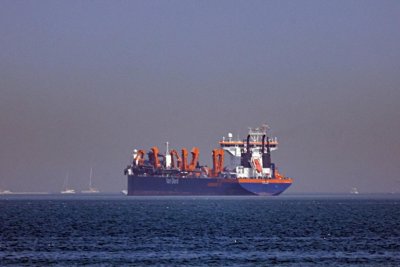
A vessel is seen anchoring off the coast of Dubai, United Arab Emirates, 01 March 2026. Following a joint Israel-US military operation targeting multiple locations across Iran in the early hours of 28 February 2026 and Iran’s retaliatory attacks across the region, many ships are anchored as Iran threatened to close the Strait of Hormuz, where hundreds of ships carrying oil pass daily, potentially affecting worldwide trade. Photo by STRINGER / EPA

March 1 (Asia Today) — Japan is closely monitoring the risk of a potential blockade of the Strait of Hormuz as tensions surrounding Iran intensify, with officials and media warning of possible energy supply disruptions similar to those faced by South Korea.

Japan relies on the Middle East for about 90% of its crude oil imports, most of which passes through the narrow waterway connecting the Persian Gulf to global markets. South Korea imports roughly 70% to 90% of its crude from the same region, making both economies vulnerable to prolonged instability.

Japanese newspapers including The Asahi Shimbun and The Yomiuri Shimbun reported Saturday that shipping traffic in the strait has already been affected following recent U.S. and Israeli strikes on Iran. According to Asahi, Iran’s Revolutionary Guard has broadcast warnings to vessels transiting the strait, prompting some tankers to halt operations or reroute. British maritime authorities said several ships reported receiving notifications that the waterway was “blocked,” though the actual status could not be independently confirmed.

About 20 million barrels of crude oil pass through the Strait of Hormuz each day, making it one of the world’s most critical energy chokepoints. The Yomiuri said roughly 80% of tankers bound for Japan transit the strait, raising concerns that a prolonged disruption could lead to supply shortages and sharp price increases.

The Japanese government convened a National Security Council meeting Friday night to assess the situation, focusing on the safety of Japanese nationals and potential economic fallout. The Foreign Ministry issued an advisory urging about 200 Japanese citizens in Iran to consider evacuation while commercial flights remain available.

Japan’s trade ministry said the country holds combined public and private petroleum reserves equivalent to about 254 days of domestic consumption as of the end of December, providing a short-term buffer against supply shocks. However, media outlets warned that stockpiles would not shield consumers from rising fuel costs.

On commodity markets, West Texas Intermediate crude has risen about 17% over the past two months, with the April contract settling at $67.83 on Feb. 27, the highest level in six months. Japanese analysts cited projections that oil could exceed $100 per barrel if Hormuz traffic is severely disrupted, potentially shaving 0.3% to 0.6% off Japan’s gross domestic product.

Analysts note that South Korea shares similar structural exposure, as most of its Middle Eastern oil imports also pass through Hormuz and the Strait of Malacca, underscoring the broader regional economic risks tied to escalating tensions.

— Reported by Asia Today; translated by UPI

© Asia Today. Unauthorized reproduction or redistribution prohibited.

Original Korean report: https://www.asiatoday.co.kr/kn/view.php?key=20260301010000068

Source link

My search for the perfect brown bar in Amsterdam | Amsterdam holidays

Is there anything better than a good old British pub? Well, a Dutch person may prefer a bruine kroeg (brown bar). Often nondescript from the outside and thus easy to miss, these cosy, homely, rustic cafe-style bars typically have plain dark-wood furniture, candles on the tables, aged knick-knacks and faded pictures. There will be dim lighting, usually from antique-style lamps, and they make ideal hubs – they are often referred to as a “surrogate living room”.

The name comes from the venues’ tobacco-stained walls and ceilings, which since the smoking ban started in 2008 have been topped up by dark brown paint. Beers and jenevers (Dutch gins) are the most popular drinks, and snacks such as bitterballen (meat ragout croquettes), boiled eggs and borrelnootjes (nuts with a crispy coating) are often available too. The choice of background music is a vital component; soft vintage jazz is ideal, so when I visited Cafe ’t Hooischip the Michael Jackson and Culture Club soundtrack jarred somewhat with the cosy, historic setting.

These drinking rooms used to be all-male hangouts, but today everyone, young and old, flocks to them. Few places encapsulate Dutch culture and tradition like the bruine kroegen. But in recent years they have come under threat from ever-rising rates, property prices and modern bars that are able to generate greater income.

They are still found throughout the Netherlands but it is estimated that more than a quarter have closed since 2010. That said, those I visited in the centre of Amsterdam (the city has the highest density, and boasts hundreds) appeared to be thriving.

This one, in the Jordaan district, has the usual enticing brown bar attributes and features a cute curved wooden staircase leading to a cubby-hole room above with further seating. The crowd is mainly Dutch, but I deduct a point because it feels a little too polished for a brown bar. Even worse, the English couple next to me are discussing their Ocado order for their return to London, which completely ruins the ambience. 7/10

Photograph: Ger Bosma/Alamy

It is delightful to approach a building so wonky that the leaded windows are positioned at a striking slant. So it is disappointing to then learn that the previous owner of Café Pieper installed them on purpose to accentuate the historic feel of this venue, which has been trading since 1665. That’s the main quandary when embarking on a brown bar crawl – how much of the old-time feel is genuine, how much is manufactured?

However, once inside the small, low-ceilinged venue, which seats about 25 with room for a few more at the bar, there is a lovely feeling of gezelligheid (conviviality) and cosiness. Locals tend to visit in the evening, tourists in the day. It’s heartening to see that here, as in most of the brown bars I visited, there’s a strong contingent of young people.

“It’s like a second home for our regulars; we know exactly what they like to drink,” says manager Chag Walvisch, who was a regular himself for 10 years before being asked to work here two years ago. “They appreciate the considerably higher service level you get in a brown bar. We are always welcoming and relaxed about guests starting a tab rather than having to pay each time they buy a round – that sort of thing. You can come here alone and easily get into a conversation; you just don’t get all that in a normal bar. We had some Americans come in for four days in a row last week because they loved it so much.” 8/10

Photograph: Koen Smilde

It’s quite remarkable that a bar so homely, cosy and frozen in time is only moments from Centraal Station at the end of Warmoesstraat, one of the most garishly touristy streets in Amsterdam, stuffed with fast-food restaurants and neon signs.

Dating from 1519, it’s among the oldest bars in Amsterdam, with a name that translates as “in the monkey”, apparently evolving from when sailors would return from the East Indies with pet monkeys, sometimes paying their tabs with them, and as a result the bar would be full of apes. Around the dark, wooden bar are displays of vintage clay beer bottles, a model boat – and lots of statues and posters of monkeys, of course.

“There’s no threat to brown bars, at least in the centre of the city,” says bartender Richard Krelekamp, as he pours me a Wolf white beer for €6, although two of those euros seem to be for froth, due to the way beers in these parts are served with a big head. “If anything, more and more people are coming here,” says Krelekamp. “They are fed up of fancy bars and expensive cocktails they’ve never heard of. About half of our customers are tourists, the other half locals.” 8/10

Photograph: Ben West

From the outside, Café Eijlders looks like any touristy cafe, but step inside and you are transported back to the 1940s, when it opened as a meeting place for Dutch artists, writers, and bohemians in occupied Amsterdam. Centred around the semicircular bar, where stools, chairs and banquettes fan outwards, are two raised tables.

The colour scheme is in various shades of dark brown and dark red, from the burgundy upholstery on the chairs to the garish and dated floor tiles. A soundtrack of Nina Simone and Nat King Cole plays softly in the background. There’s not a tourist in sight despite this bar being metres from the hellish tourist trap that is Leidseplein. 7/10

Photograph: Koen Smilde

Considered to be the smallest bar in Amsterdam, Café De Dokter has no more than 20 seats in total. The chandelier above my head, covered in dust and cobwebs, has a Miss Havisham vibe, while there’s no way of telling the time from the clock on the wall as it is so deeply layered in grime. There are several paintings, but again I have no clue what they depict due to the heavy layers of dust. The ceiling and walls look as if they haven’t been cleaned since the place opened in 1798.

And that is exactly why I love it – Café De Dokter oozes character. I love it even though the woman at the bar is terse, whereas all the staff I’ve encountered at other brown bars have been very friendly. Despite the dust, the glasses are spotless, and the floor and furniture sparkling clean. And there’s some sleepy vintage jazz playing, which is entirely appropriate for the setting. 9/10

The trip was provided by I Amsterdam. Eurostar has direct trains from London to Amsterdam from £57. Hotel Jakarta has doubles from €218 B&B; Conscious Hotel Museum Square has doubles from €114 room-only

Source link

Analysis: Khamenei’s killing leaves Iran’s ‘axis’ in disarray | Hezbollah

The killing of Iranian Supreme Leader Ali Khamenei in a United States-Israeli air campaign has sent shockwaves through the Middle East, decapitating the leadership of the “axis of resistance” at its most critical moment.

For decades, this network of groups allied with Iran was Tehran’s forward line of defence. But today, with its commander-in-chief dead and its logistical arteries cut, the alliance looks less like a unified war machine and more like a series of isolated islands.

Recommended Stories

list of 4 itemsend of list

Hassan Ahmadian, a professor at the University of Tehran, warned that the era of strategic patience is over and the Iranian government is now prepared to “burn everything” in response to the attacks.

While Tehran promised to retaliate against the US and Israel “with a force they have never experienced before”, the reaction from its key proxies in Lebanon, Yemen and Iraq revealed a deep hesitation driven by local existential threats that may outweigh their ideological loyalty to a fallen leader.

Hezbollah: Walking between raindrops

In Beirut, the response from Hezbollah, long considered the crown jewel among Iran’s regional allies, has been cautiously calibrated.

After Sunday’s announcement of Khamenei’s death, the group issued a statement condemning the attack as the “height of criminality”. However, Al Jazeera correspondent in Beirut Mazen Ibrahim noted that the language used was defensive, not offensive.

“If one dismantles the linguistic structure of the statement, the complexity of Hezbollah’s position becomes clear,” Ibrahim said. “The secretary-general spoke of ‘confronting aggression’, which refers to a defensive posture. … He did not explicitly threaten to attack Israel or launch revenge operations.”

This caution is rooted in a new strategic reality. Since the collapse of Bashar al-Assad’s government in Syria in late 2024, the “land bridge” that supplied Hezbollah has been severed. Ali Akbar Dareini, a Tehran-based researcher, noted that this loss “cut the ground link with Lebanon”, leaving the group physically isolated.

Now with top leaders of Iran’s Islamic Revolutionary Guard Corps (IRGC) killed alongside Khamenei, Hezbollah appears paralysed – caught between a battered domestic front in Lebanon and a vacuum of orders from Tehran.

The Houthis: Solidarity meets survival

In Yemen, the Houthis face an even more volatile calculus.

In his first televised address after the strikes on Iran began on Saturday, the group’s leader, Abdel-Malik al-Houthi, declared his forces “fully prepared for any developments”. Yet his rhetoric notably emphasised that “Iran is strong” and “its response will be decisive,” a phrasing that analysts interpreted as an attempt to deflect the immediate burden of war away from the Houthis.

The Houthis are under immense pressure. While they have successfully disrupted Red Sea shipping and fired missiles at Tel Aviv, they now face a renewed threat at home.

The internationally recognised Yemeni government, having won a power struggle against southern separatists, has sensed a shift in momentum. Defence Minister Taher al-Aqili recently declared: “The index of operations is heading towards the capital, Sanaa,” which the Houthis control. The statement signalled a potential ground offensive to retake Houthi territory.

This places the Houthis in a bind. While Houthi negotiator Mohammed Abdulsalam recently met with Iranian official Ali Larijani in Muscat, Oman, to discuss “unity of the arenas”, the reality on the ground is different. Engaging in a war for Iran could leave the Houthis’ home front exposed to government forces backed by regional rivals.

“Expanding the circle of targeting will only result in expanding the circle of confrontation,” the Houthi-affiliated Supreme Political Council warned in a statement that threatened escalation but also implicitly acknowledged the high cost of a wider war.

Iraq: The internal time bomb

Perhaps nowhere is the dilemma more acute than in Iraq, where the lines between the state and the “resistance” are dangerously blurred.

Iran-aligned militias, many of which operate under the state-sanctioned Popular Mobilisation Forces, are now caught in a direct standoff with the US. Tensions have simmered since late 2024 when Ibrahim Al-Sumaidaie, an adviser to Iraq’s prime minister, revealed that Washington had threatened to dismantle these groups by force, a warning that led to his resignation under pressure from militia leaders.

Today, that threat looms larger than ever. Unlike Hezbollah or the Houthis, these groups are technically part of the Iraqi security apparatus. A retaliation from Iraqi soil would not just risk a militia war but also a direct conflict between the US and the Iraqi state.

With the IRGC commanders who once mediated these tensions now dead, the “restraining hand” is gone. Isolated militia leaders may now decide to strike US bases of their own accord, dragging Baghdad into a war the government has desperately tried to avoid.

Resistance without a head

Khamenei’s assassination has essentially shattered the command-and-control structure of the “axis of resistance”.

The network was built on three pillars: the ideological authority of the supreme leader, the logistical coordination of the IRGC and the geographic connection through Syria. Today, all three are broken.

“The most important damage to Iran’s security interests is the severing of the ground link,” Dareini said. With Khamenei gone, the “spiritual link” is also severed.

What remains is a fragmented landscape. In Lebanon, Hezbollah is too exhausted to open a northern front. In Yemen, the Houthis face a potential domestic offensive. In Iraq, militias risk collapsing the state they live in.

When the dust settles in Tehran, the region will face a dangerous unpredictability. The “axis of resistance” is no longer a coordinated army. It is a collection of angry, heavily armed militias, each calculating its own survival in a world where the orders from Tehran have suddenly stopped coming.

Source link

What 2026 Actor Awards mean for the Oscar race

There were tears (and cheers) for Catherine O’Hara. Rhea Seehorn explained “Pluribus,” or at least tried to. Harrison Ford was celebrated at the “half-point of his career.” And, because the show’s on Netflix, there were a few well-placed F-bombs, not including the swears muttered by the actors who didn’t win.

The 32nd Actor Awards — or the very first Actor Awards, since for the previous 31 years this ceremony has been known as the Screen Actors Guild Awards — went off without a hitch Sunday, and ended with a bang, scrambling a best picture race that felt settled after “One Battle After Another” won the top prize at the Producers Guild Awards on Saturday.

There were TV awards presented too. But we pay attention to the Actor Awards because the show takes place while Oscar ballots are out and are, for the most part, a reliable precursor to the Academy Awards. How trustworthy will they be for the acting winners this year? Let’s take a look.

Sign up for The Envelope

Get exclusive awards season news, in-depth interviews and columnist Glenn Whipp’s must-read analysis straight to your inbox.

By continuing, you agree to our Terms of Service and our Privacy Policy.

Cast in a motion picture

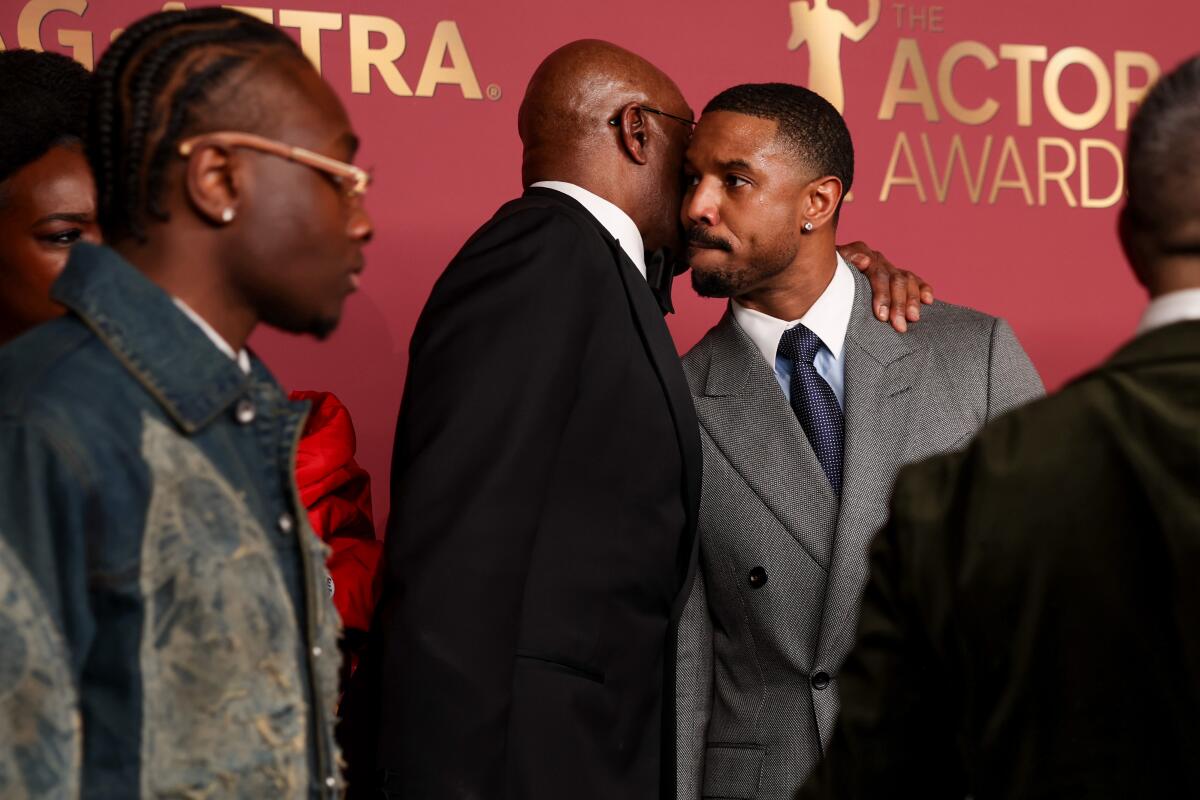
Delroy Lindo whispers in the ear of Michael B. Jordan backstage at the 2026 Actor Awards.

(Kayla Bartkowski / Los Angeles Times)

Winner: “Sinners”

The past: The winner of this award has gone on to take the best picture Oscar in 15 of 30 years, making it basically a coin flip and easily the Actor Awards’ least trustworthy Oscar precursor. (The ensemble prize wasn’t awarded in 1994, the ceremony’s first year.) Oscar also-ran “Conclave” won last year, ending a three-year streak — “CODA,” “Everything Everywhere All at Once” and “Oppenheimer” — where the winner of the cast prize went on to take best picture.

Will history repeat itself? If “Sinners” had simply taken this award and nothing else, I would say “One Battle After Another” would still be the overwhelming favorite to win the best picture Oscar. But snagging this prize and Michael B. Jordan winning lead actor gives one pause, doesn’t it? Again, the cast award is not a reliable best picture precursor. A Ryan Coogler movie (“Black Panther”) won in 2019, but lost the Oscar to “Green Book.” And while “Sinners” did haul in a record-breaking 16 Oscar nominations, “One Battle” wasn’t far behind with 13, just one shy of the previous record. It’s easy to get carried away with the way the room exploded when Samuel L. Jackson announced the winner, but “One Battle’s” Producers Guild win carries more weight. I’ll need a couple of days to sit with this.

Female actor in a leading role

Jessie Buckley poses with the award for Outstanding Performance by a Female Actor in a Leading Role for "Hamnet."

(Kayla Bartkowski / Los Angeles Times)

Winner: Jessie Buckley, “Hamnet”

The past: SAG and the academy have matched 21 of 31 years. The last two years have seen the groups split, with Emma Stone (“Poor Things”) winning her second Oscar over SAG winner Lily Gladstone (“Killers of the Flower Moon”) in 2024 and Mikey Madison prevailing for “Anora” over Demi Moore, who won over SAG-AFTRA voters and earned a huge standing ovation when she took the stage for her gonzo comeback turn in the body horror movie “The Substance.”

Will history repeat itself? Buckley has been a lock for the lead actress Oscar since “Hamnet” premiered in September at the Telluride Film Festival, her searching, searing turn as the film’s grieving mother producing the kind of visceral reaction that guts audiences and wins awards. And, boy, has she won awards these last few months, taking pretty much everything save for the major critics groups. The naysayers decried the acting as overripe, sniffing instead of sniffling. Monsters. There’s no denying Buckley goes big with her emotions here, but the magic in her work also can be seen in a much-used still photo from “Hamnet,” the one where she’s resting her elbows on the Old Globe stage, hands clasped, face transfixed, heart opened. You know the shot. And you’re probably getting a little verklempt just thinking about it.

Male actor in a leading role

Michael B. Jordan holds his Actor Award for Outstanding Performance by a Male Actor.

(Kayla Bartkowski / Los Angeles Times)

Winner: Michael B. Jordan, “Sinners”

The past: This category has been the most reliable indicator of Oscar victory, with SAG and the academy matching 24 of 31 times. There are exceptions, though, such as just last year when Adrien Brody won the Oscar for “The Brutalist,” prevailing over SAG winner Chalamet (“A Complete Unknown”).

Will history repeat itself? Entering the month of February, it looked like Timothée Chalamet was a shoo-in for playing a talented, self-promoting ping-pong player in “Marty Supreme.” In fact, some know-it-all called this race more or less over just a week ago. (That was me.) Chalamet could still win. Maybe SAG-AFTRA voters didn’t want to give him the award again, just a year after they honored him for his lead turn in “A Complete Unknown.” Maybe SAG-AFTRA voters felt he was a bit, shall we say … “brash” in the way he marketed the movie and needed to be taken down a peg.

So now, entering March, it’s looking like “Marty Supreme” could be this year’s version of “The Irishman,” a film that earns a lot of nominations (in this case, nine) and comes away with nothing.

Meanwhile, Jordan’s big swing movie star turn in “Sinners,” playing twin brothers Smoke and Stack, was the best work of his career. That scream that Viola Davis let out when she opened the envelope spoke to the enthusiasm in the room both for the actor and the film. Momentum definitely seems to be on Jordan’s side right now.

Female actor in a supporting role

Amy Madigan with the 2026 Actor Award for Female Actor in a Supporting Role.

(Kayla Bartkowski / Los Angeles Times)

Winner: Amy Madigan, “Weapons”

The past: The Actor Award winner has gone on to take an Oscar 23 of 31 times, including last year, when Zoe Saldaña won for “Emilia Pérez,” one of countless prizes she won that season. (Note: One of those 23 winners, “The Reader’s” Kate Winslet, was nominated for — and won — the 2009 Oscar for lead actress for that performance.)

Will history repeat itself? Who knows? This category has been all over the place, but as Madigan said in her speech, she’s been doing this a “long ass time” and there’s a lot of love for this 75-year-old acting great. Teyana Taylor (“One Battle After Another”) took the Golden Globe, and Wunmi Mosaku (“Sinners”) won at the British Academy Film Awards. And the “they’re due” narrative doesn’t always play at the Oscars. (Just ask Demi Moore or Glenn Close.) Will a “One Battle” sweep carry both Taylor and Sean Penn? Or is there room for an outlier? It’s tempting to lean toward Madigan.

Male actor in a supporting role

Sean Penn, with Teyana Taylor, in "One Battle After Another."

Winner: Sean Penn, “One Battle After Another”

The past: The SAG winner has gone on to win the Oscar 22 times in 31 years, including the last dozen, the longest streak of any category.

Will history repeat itself? Penn did not attend the Actor Awards, the only thing less surprising than this win. Coming on the heels of taking the supporting actor prize from BAFTA last weekend (Penn didn’t go to that ceremony either), it’s looking likely now that Penn will win his third Oscar. He’s barely campaigned and remains a divisive figure. But his menacing turn as the outrageous Col. Steven J. Lockjaw, a man given to zealotry and tight T-shirts, is the best work he has done in years. Will he go to the Oscars, if only to collect the trophy so he can give another statue to Ukranian President Volodymyr Zelensky? We’ll soon see.

Source link

Oil prices rise as escalating Iran conflict spurs energy supply concerns

Published on

Oil prices climbed on Monday morning as investors assessed the economic impact of US and Israeli attacks on Iran, which triggered swift retaliation from Tehran targeting assets in multiple Middle Eastern countries.


ADVERTISEMENT


ADVERTISEMENT

In early trade, the price of a barrel of US benchmark crude initially surged by about 8%. It later traded 5.9% higher at $71.00 per barrel. Brent crude rose 6.2% to $77.38 per barrel.

Traders were betting that oil supplies from Iran and elsewhere in the Middle East could slow or grind to a halt. Attacks across the region, including on two vessels travelling through the Strait of Hormuz — the narrow mouth of the Persian Gulf — have restricted countries’ ability to export oil to the rest of the world.

“Roughly one-fifth of global oil and LNG (liquefied natural gas) flows squeeze through the Strait of Hormuz. This is not an obscure canal. It is the aorta of the global energy system,” Stephen Innes of SPI Asset Management said in a commentary note.

A prolonged war would likely result in higher prices for other fuels and petrol, and could ripple through the global economy, adding to overall production costs.

Likewise, prolonged interruptions to oil flows through the Middle East would have “huge implications for oil and LNG and every market everywhere if it occurs. Energy is an input to all production,” RaboResearch Global Economics & Markets said in a report.

Iran exports roughly 1.6 million barrels of oil a day, mostly to China. Beijing may need to look elsewhere for supply if Iran’s exports are disrupted — another factor that could push energy prices higher.

However, China has ample oil reserves of up to 1.5 billion barrels and could offset a decline in Iranian oil by increasing imports from Russia, said Michael Langham of Aberdeen Investments.

The attacks had been anticipated, following a significant build-up of US forces in the Middle East, so traders had already adjusted their positions to account for that risk.

In other early trading on Monday, the price of gold — usually viewed as a safe haven in times of uncertainty — rose 2.4% to about $5,371 per ounce.

Elsewhere, futures for the S&P 500 and the Dow Jones Industrial Average were down about 0.8% by mid-morning in Bangkok.

Asian shares also opened lower. Japan’s Nikkei 225 initially fell more than 2%. In Hong Kong, the Hang Seng lost 1.6% to 26,215.91, while the Shanghai Composite was flat at 4,163.01.

Taiwan’s benchmark index fell 0.6% and Singapore’s dropped 1.9%. In Bangkok, the SET declined 2.1%, while Australia’s S&P/ASX 200 shed 0.3% to 9,173.50.

Source link