Andrew Mountbatten Windsor, the former UK prince and younger brother of King Charles, has been arrested on suspicion of misconduct in public office as police investigate claims he shared confidential material with convicted sex-offender Jeffrey Epstein.
California may be losing two of the state’s most famed residents and generous political donors.
Filmmaker Steven Spielberg recently moved to New York and Facebook co-founder Mark Zuckerberg is eyeing purchasing a new property in Florida, stirring speculation about whether their decisions are tied to a proposed new tax on California billionaires to fund healthcare for the state’s most vulnerable residents.
Although a handful of prominent conservatives who bolted out of California noisily blamed their departure on the controversial wealth tax measure, as well as the state’s liberal ways and what they describe as cumbersome business regulations, neither Zuckerberg nor Spielberg has given any indication that the tax proposal is the reason for their moves.
A spokesperson for Spielberg, who has owned homes on both the East and West coasts since at least the mid-1990s, said the sole motivation for Spielberg and his wife, actor Kate Capshaw, decamping to Manhattan was to be near family.
“Steven’s move to the East Coast is both long-planned and driven purely by his and Kate Capshaw’s desire to be closer to their New York based children and grandchildren,” said Terry Press, a spokesperson for the prodigious filmmaker. She declined to answer questions about his position on the proposed ballot measure.
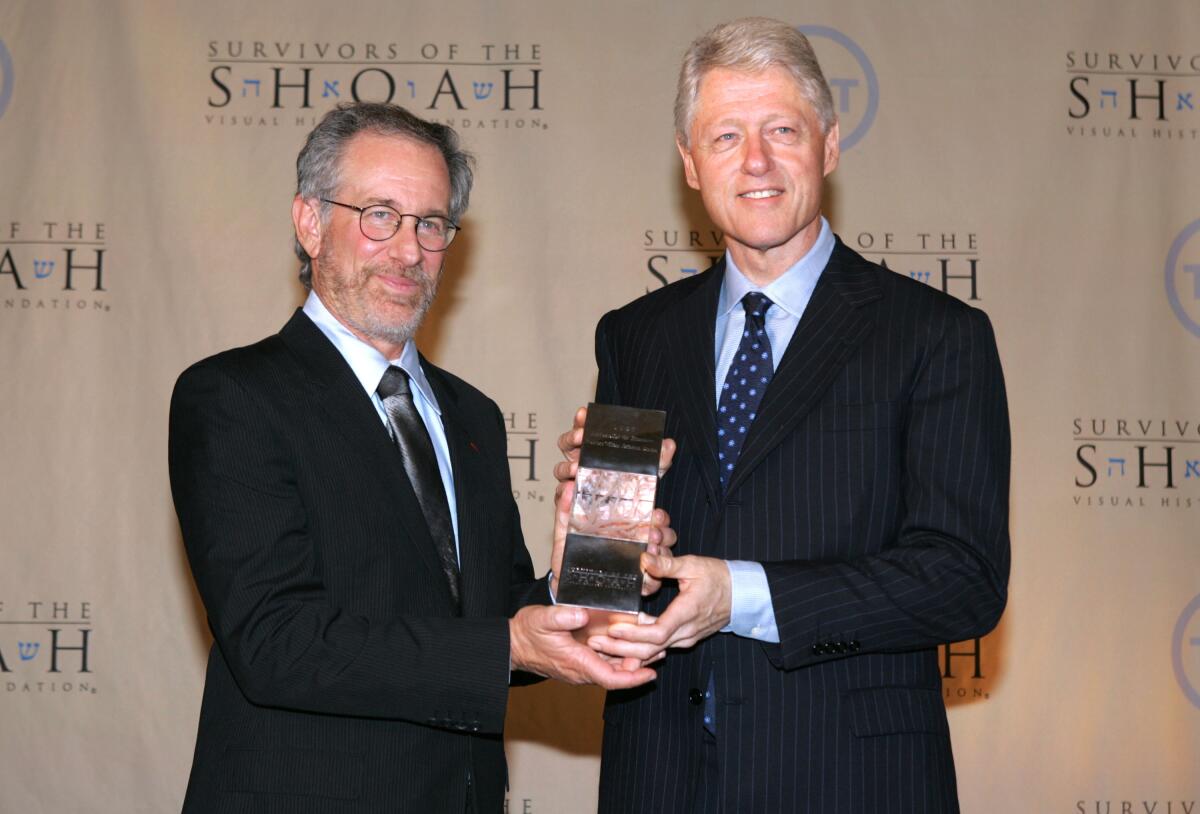
Director Steven Spielberg presents president Bill Clinton with the Ambassadors Humanity award at the 5th Annual Ambassadors for Humanity Dinner Honoring former President Bill Clinton to support the Survivors of the Shoah Visual History Foundation held at the Amblin theatre Universal Studios on February 17, 2005 in Los Angeles, California.
(Frazer Harrison / Getty Images)
On Jan. 1, Spielberg and Capshaw officially became residents of New York City, settling in the historic San Remo co-op in Central Park West. The storied building is among the most exclusive in Manhattan, having been home to Bono, Mick Jagger, Warren Beatty, Tiger Woods and many other celebrities. On the same day, Spielberg’s Amblin Entertainment opened an office in New York City.
Zuckerberg and his wife, pediatrician Priscilla Chan, are considering buying a $200-million waterfront mansion in South Florida, the Wall Street Journal first reported this month. The property is located in Miami’s Indian Creek, a gated barrier island that is an alcove of the wealthy and the influential, including Amazon founder Jeff Bezos and Trump’s daughter Ivanka and her husband, Jared Kushner.
Representatives for Zuckerberg declined to comment.
The billionaires’ moves raised eyebrows because they take place as supporters of the proposed 5% one-time tax on the assets of California billionaires and trusts are gathering signatures to qualify the initiative for the November ballot. Led by the Service Employees International Union-United Healthcare Workers West, they must gather the signatures of nearly 875,000 registered voters and submit them to county elections officials by June 24.
If approved, the tax would raise roughly $100 billion that would largely pay for healthcare services, as well as some education programs. Critics say it would drive the wealthy and their companies out of the state. On Dec. 31, venture capitalist David Sacks announced that he was opening an office in Austin, Texas, the same day PayPal co-founder Peter Thiel publicized that his firm had opened a new office in Miami.
The proposed ballot measure, if it qualifies for the ballot and is approved by voters, would apply to Californians who are residents of the state as of 2026. But residency requirements are murky. Among the factors considered by the state’s Franchise Tax Board are where someone is registered to vote, the location of their principle residence, how much time they spend in California, where their driver’s license was issued and their cars registered, where their spouse and children live, the location of their doctors, dentists, accountants and attorneys, and their “social ties,” such as the site of their house of worship or county club.
It’s unclear whether the proposal will qualify for the November ballot, and if it does, whether voters will approve it. However, a mass exodus of a number of the state’s billionaires — more than 200 people — would have a notable effect on state revenue, regardless. The state’s budget volatility is caused by its heavy reliance on taxes paid by the state’s wealthiest residents, including from levies on capital gains and stock-based compensation.
“The highest-income Californians pay the largest share of the state’s personal income tax,” according to Gov. Gavin Newsom’s 2026-27 budget summary that was published in January. “The significant share of personal income taxes — by far the state’s largest General Fund revenue source — paid by a small percentage of taxpayers increases the difficulty of forecasting personal income tax revenue.”
This reliance on wealthy Californians is among the reasons the proposed billionaires tax has created a schism among Democrats and is a source of discord in the 2026 governor’s race to replace Newsom, who cannot seek another term and is weighing a presidential bid. He opposes the proposal; Sen. Bernie Sanders (I-VT.) campaigned for it Wednesday evening at the Wiltern in Los Angeles.
“I am not only supportive of what they’re trying to do in California, but we’re going to introduce a wealth tax for the whole country. We have got to deal with the greed, the extraordinary greed, of the billionaire class,” Sanders told reporters Feb. 11.
Zuckerberg and Spielberg are both prolific political donors, though it is difficult to fully account for their contributions to candidates, campaigns and other entities because of how they or their affiliates donate to them as well as the intricacies of campaign finance reporting.
Spielberg, 79, a Hollywood legend, is worth more than $7 billion, according to Forbes. He and his wife have donated almost universally to Democratic candidates and causes, according to Open Secrets, a nonprofit, nonpartisan tracker of federal campaign contributions, and the California secretary of state’s office.
The prolific filmmaker, who won acclaim for movies such as “Schindler’s List,” “Jaws,” “Jurassic Park” and the “Indiana Jones” trilogy, was born in Ohio and lived with his family in several states before moving to California. He attended Cal State Long Beach but dropped out after Universal Studios gave him a contract to direct television shows.
Zuckerberg, 41, launched Facebook while in college and is worth more than $219 billion, making him among the world’s richest people, according to Forbes.
His largest personal federal political donation appears to be $1 million to FWD.us, a group focused on criminal justice and immigration reform nationwide, according to Open Secrets.
Zuckerberg, who is currently a registered Democrat in Santa Clara County, has donated to politicians across the partisan spectrum, including Democrats such as former House Speaker Nancy Pelosi and current Senate Minority Leader Chuck Schumer to Republicans such as President Trump’s Secretary of State Marco Rubio when he ran for the White House and Chris Christie during his New Jersey gubernatorial campaign.
Both men’s personal donations don’t include their other effects on campaign finances — Spielberg has helped countless Democratic politicians raise money in Hollywood; Zuckerberg’s company has made other contributions. Meta — the parent company of Facebook, Instagram and WhatsApp — donated $1 million to Trump’s inauguration committee in December 2024. Zuckerberg later attended the president’s swearing in at the U.S. Capitol Rotunda.
Zuckerberg, born in White Plains, N.Y., created an early prototype of Facebook while at Harvard University and dropped out to move to Silicon Valley to complete the social media platform, as depicted in the award-winning film “The Social Network.”
He still owns multiple properties in California and elsewhere, including a controversial, massive compound on Kauai that includes two mansions, dozens of bedrooms, multiple other buildings and recreational spaces — and an underground bunker that features a metal door filled with concrete, according to a 2023 investigation by Wired. The cost of land acquisition and construction reportedly has topped $300 million.
Meta is based in Menlo Park, Calif., though it has been incorporated in Delaware since Facebook’s founding in 2004.
Times staff writer Queenie Wong contributed to this report.
A travel expert who has visited over 60 countries has shared that an everyday item most people pack for their holidays is weighing them down
Holidaymakers should remove 1 common item from their suitcase to travel lighter and easier(Image: Getty)
February is a dreary month, with never-ending grey skies, and many of us begin browsing holiday offers to find somewhere more appealing to visit in the summer. However, people often overlook how stressful packing can be, and there is nothing worse than lugging a heavy suitcase whilst rushing around to catch a flight or train.
Amanda Williams, a travel expert and founder of Dangerous Business, has visited over 60 countries, and the biggest mistake to make whilst travelling is packing too many pairs of jeans. She said: “You may have learned this the hard way already, but actual denim is HEAVY, bulky, and slow to dry if you have to wash it on the road. If you’re going to pack jeans on a trip, I recommend only taking one or two pairs max, along with some non-denim pants or bottoms.”
Jeans are a dependable everyday staple at home, which often makes them seem like a sensible choice for a holiday.
However, denim is a thick fabric that does not fold easily, so even a few pairs of jeans can take up a lot of space and add considerable weight to a suitcase.
They are also uncomfortable in warm weather or when sitting for extended periods, making them unsuitable for most summer destinations, reports the Express.
Most people only wear jeans once or twice whilst on holiday, and it will be more practical in the long run to pack just one pair if you are going somewhere warm. Instead, consider packing lightweight trousers that dry swiftly, such as chinos, shorts, dresses, skirts or even jeggings, as it will make lugging a suitcase considerably easier.
It’s also preferable to avoid packing a different outfit for every day, and instead select pieces that can be combined and coordinated to conserve space.
Amanda said: “My rule is usually four bottoms, five to seven tops, two layering pieces (like cardigans), and two to three dresses. Add in accessories like jewellery or maybe a scarf, and you can get a lot of outfits out of that amount of clothing!”
Only pack items you’re sure you’ll use, as travellers often squander space bringing things like hiking boots when they’ve made no firm plans to go mountain climbing.
Similarly, avoid packing gym clothes unless you regularly exercise at home, as you’re unlikely to feel inspired to work out whilst unwinding on holiday.
It may seem straightforward, but investing time to evaluate how practical each garment will be whilst travelling can save suitcase space and prevent exceeding luggage weight restrictions.
DIVISION 8 University Prep 45, Yucca Valley 41 Orange 48, Riverside Notre Dame 20 Schurr 52, CAMS 34 Chadwick 53, Santa Monica Pacifica Christian 48
DIVISION 9 Vista del Lago 41, Santa Clarita Christian 39 Desert Hot Springs 50, Channel Islands 39 La Sierra 30, Redlands Adventist 20 Sierra Vista 71, Western 34
Note:Semifinals Saturday; Finals 8 p.m. Feb. 27 or 28.
Make sure when visiting to see Jeff Koons’ Puppy, which is the world’s biggest flower statue with more than 38,000 flowers that are even changed twice a year.
The museum costs £13.10 per person to visit.
Whilst visiting, you should also head to Casco Viejo, which is the city’s medieval old town and is filled with shops, cafes and the Santiago Cathedral.
It is a great spot for food lovers as there are lots of restaurants and bars offering pintxos (small snack dish) along with txikitos (small glasses of wine).
Pintxos usually cost from £1.80.
Of course, whilst you are in the city, take a stroll along the Nervion River to see views of Zubizuri Bridge, Iberdrola Tower and the San Mames Stadium.
Spain‘s famous Rioja region is also nearby, so wine lovers can head off on a day trip to tour one of the historic wineries and have a taste of the local wine.
If you want to see the city from a different angle, then head on the Funicular de Artxanda and you will travel to the top of Mount Artxanda, which has amazing panoramic views of the city.
For dinner, check out Mercado de la Ribera, which is Europe’s largest covered market serving fresh food.
Temperatures in the summer hit around 26C with lots of sunshine.
Visitors can head to the famous Guggenheim MuseumCredit: AlamyOr explore Casco Viejo, which is the city’s medieval old town and is filled with shops, cafes and also the Santiago CathedralCredit: Alamy
Two night breaks with return UK flights can be found for just £127pp when travelling next month.
TUI’s commercial director Chris Logan said: ”Bilbao offers a truly special city break.
“With incredible art, fantastic food and beautiful scenery all in one trip, it’s ideal for customers who want the authentic taste of Spain.
“Outside peak summer, it’s fantastic value too with great hotels, unforgettable experiences and some of the best food in the country, all in a walkable city.”
Trump’s tariffs, Greenland and defence spending are testing US-Europe alliance.
United States President Donald Trump has imposed tariffs on European goods, made a bid to take over Greenland and demanded Europe foot the bill for its own defence. European leaders now fear the era of US-led security protections may be over. They’re accelerating efforts to reduce their military and economic dependence on the US.
At the Munich Security Conference, US Secretary of State Marco Rubio insisted his nation is not walking away from its allies. But few in the room were convinced. Instead, leader after leader took to the podium with the same message: Europe must stand on its own.
A KIDS attraction based on a popular bunny character has closed its doors just a few years after opening.
The Peter Rabbit Explore & Play attraction in Blackpool has stopped taking bookings and revealed that it won’t reopen in 2026.
Sign up for the Travel newsletter
Thank you!
The attraction was popular for families who loved the children’s story Peter RabbitCredit: Merlin Entertainments There were themed play areas around the attractionCredit: Unknown
The experience that cost £1million to set up first opened in 2022 as one of Merlin Entertainments’ attractions.
There were interactive play areas, like Jeremy Fisher’s Pond which was a sensory area with musical instruments.
At Mr McGregor’s Garden were fun slides and tunnels. Mr Bouncer’s Invention Workshop was filled with hosepipe telephones and even x-ray glasses for looking into the vegetable garden.
At The Burrow, kids could help set the table for dinner, and even transform into one of the Peter Rabbit family.
Inside the Secret Tree house were the ‘real’ Peter Rabbit and Lily Bobtail so children could meet the characters.
However, in November 2025, the attraction closed its doors and hasn’t reopened since.
The website is still up and running, but visitors are unable to make bookings.
A spokesperson for Blackpool Tourism Ltd told local media: “We can confirm that Peter Rabbit™: Explore and Play closed in November and will not reopen for the 2026 season.
“The attraction sits within the same building as Madame Tussauds Blackpool, which we have operated since August.
“Since taking over, we have been reviewing refurbishment options for Madame Tussauds and are considering a number of options for the future use of the space.”
If little ones still want to explore the world of Peter Rabbit, there are a few other themed-attractions dotted around the country.
One is found at Willows Farm in St Albans where children can explore the Peter Rabbit Adventure Playground, watch live shows and meet the characters.
It also has funfair rides, adventure play, tractor ride and farmyard animals – day tickets start rom £13.95.
There are some other Peter Rabbit-themed attractions around the UKCredit: Refer to Source
There’s a Secret Treehouse, Benjamin Bunny’s Treetop Trail, Jeremy Fisher’s musical pond, and children can try their hand at painting at Pig Robinson’s Farm.
Mr Tod’s Lair has secret passages and there’s a character meet and greet too.
Flamingo Land theme park reopens on March 21, 2026 with tickets starting from £29.
Spending on AI is forecast to skyrocket to $2.5 trillion in 2026, dwarfing even the largest scientific and infrastructure projects.
World leaders and tech executives are convening in New Delhi for the India-AI Impact Summit 2026, focusing on the role of artificial intelligence in governance, job disruption and global collaboration.
However, behind these discussions lies the financial reality. Over the past decade, AI has drawn one of the largest waves of private investment in modern history, totalling trillions of dollars.
According to Gartner, a United States-based business and technology insights company, worldwide spending on AI is forecast to total $2.5 trillion in 2026, a 44 percent increase over 2025.
To understand the magnitude of these investments, Al Jazeera visualises the staggering amounts by comparing them with some of the largest projects ever created by humanity. We also highlight which countries are spending the most on AI and provide insights into expenditures on data centres, models, services, and security.
What does $1bn look like?
To help understand a trillion dollars, it is useful to first visualise what millions and billions of dollars look like by using a stack of US dollar bills.
If you break these amounts down using $100 bills, here is how they stack up:
$1,000 would form a stack about 1cm (0.393-inch) high.
$10,000 would form a stack approximately 10cm (3.93-inch) high.
$1m would fit inside a briefcase.
$10m would fit inside a very large suitcase.
$100m would fit on an industrial pallet stacked waist-high.
$1bn would create a building approximately 5.2 metres (17 feet) high, with a width and a length of about 2 metres (6.6 feet) each.
Another way to think of it is if you spent $1 every second, it would take:
11.5 days to spend $1m
31 years to spend $1bn
31,000 years to spend $1 trillion
In more tangible terms, $1bn is roughly equivalent to:
The estimated cost of the Grand Egyptian Museum in Giza, one of the largest archaeological museums in the world
The cost of constructing two to three modern football stadiums, depending on size and design
Buying 10 luxury private jets (at $100m each)
Buying 6.3 tonnes of gold (at $5,000 per ounce)
Buying 1 million high-end iPhones at retail price
$1.6 trillion already spent on AI
Over the past decade, AI-related investments have surged nearly 13-fold.
According to the 2025 AI Index Report by Stanford University, between 2013 and 2024, total global corporate investment in AI reached $1.6 trillion. This substantial expenditure dwarfs even the largest scientific and infrastructure projects of the 20th and 21st centuries.
To put the scale of AI investment into perspective, consider how it compares with some of the most ambitious and expensive projects in modern history. All figures are adjusted to 2024 US dollars:
The Manhattan Project (1942-46): $36bn
The International Space Station (1984-2011): $150bn
The Apollo Program (1960-73): $250bn
The US Interstate Highway System (1956-92): $620bn
In just over a decade, investment in AI has surpassed the cost of developing the first atomic bomb, landing humans on the moon and the decades-long effort to build the 75,440km (46,876-mile) US interstate highway network.
Unlike these landmark projects, AI funding has not been driven by a single government or wartime urgency. It has flowed through private markets, venture capital, corporate research and development, and global investors, making it one of the largest privately financed technological waves in history.
Global corporate investments in AI cover a vast array of operations, including mergers and acquisitions, minority stakes, private investments, and public offerings. These monumental expenditures highlight the extensive financial commitment to advance AI.
Which countries are spending the most on AI?
The AI investment surge is concentrated in just a few countries, where private capital has fuelled thousands of startups and shaped global innovation hubs.
The US has dominated AI spending, accounting for roughly 62 percent of total private AI funding since 2013. Between 2013 and 2024, US companies spent $471bn on AI. Chinese companies are the second-largest spenders at $119bn, followed by the United Kingdom at $28bn.
These figures exclude government spending, such as the US CHIPS Act or European national AI subsidies.
Global private investment in AI by country, 2013-24:
US: $471bn, supporting 6,956 newly funded AI companies
China: $119bn, 1,605 startups
UK: $28bn, 885 startups
Canada: $15bn, 481 startups
Israel: $15bn, 492 startups
Germany: $13bn, 394 startups
India: $11bn, 434 startups
France: $11bn, 468 startups
South Korea: $9bn, 270 startups
Singapore: $7bn, 239 startups
Others: $58bn
AI spending to total $2.5 trillion in 2026
AI spending is forecast to skyrocket to $2.5 trillion in 2026, driven by a massive global build-out of data centres and services, according to Gartner.
The bulk of the spending is expected to go towards:
AI infrastructure: $1.37 trillion
AI services: $589bn
AI software: $452bn
AI cybersecurity: $51bn
AI platforms for data science and machine learning: $31bn
AI models: $26bn
AI application development platforms: $8.4bn
AI data: $3bn
By 2027, Gartner is forecasting that AI spending will surpass $3.3 trillion.
POP superstar Lady Gaga is set to release a concert film about her record breaking Mayhem Ball.
The Sun can reveal the Abracadabra hitmaker, 39, has secretly enlisted British director Sam Wrench to help bring her vision to life.
Sign up for the Showbiz newsletter
Thank you!
Lady Gaga is filming a concert special in Los Angles this weekCredit: Getty
The special is set to be filmed over Lady Gaga’s four nights at the Kia Forum in Los Angeles this week.
While no release date is set, the film is expected to be released later this year after being snapped up by streaming bosses following a fierce bidding war.
Sam is no stranger to concert documentaries, having previously worked with Taylor Swift on her 2023 Eras Tour film.
Not only was the film released on Disney+ but it also was rolled out across cinemas – breaking box office records in the process.
It’s not the first time Gaga and Sam have worked together.
They previously teamed up on Gaga’s 2024 Chromaica Ball HBO special which documented her 2022 stadium tour of the same name.
A source said: “Gaga has poured her heart and soul into The Mayhem Ball.
“She is so proud of everyone who has helped make the tour what it is and is keen to give it the full concert film treatment.
“Not only is it arguably her most elaborate show of all time, it’s also reminded the world that almost two decades into her career she is still at the top of her game.”
The insider added: “Gaga and Sam have a close working relationship so bringing him on board was a no brainer.
“The show will be filmed across her four dates in Los Angeles and is pencilled in for release late 2026.”
The Sun understands Sam is joining the creative team headed up by the superstar.
He will sit alongside Gaga’s fiance Michael Polansky, 42, and her choreographer Parris Goebel, 34, who are also helping creatively manage the project.
Michael is now an integral part of the Poker Face singer’s inner circle.
He was listed as an Executive Producer alongside Gaga on Mayhem – as well as landing a number of writing credits including on the record’s lead single Disease.
Gaga previously said: “Michael was in the studio every day with me. “He oversaw the whole process of making the record, completing it, helping me shape the sound of the record creatively.
“It was an amazing thing to do with your partner, because when I start to doubt myself, there is nobody that’s going to call me on it better than he is”.
Kicking off in July last year, The Mayhem Ball is one of Gaga’s biggest ever tours, seeing her play 87 dates across four continents.
Last September and October Gaga played four sold out shows at London’s O2 before a further two dates at Manchester’s Co-op Live.
By the time she takes her final bow at Madison Square Garden in April, she will have played to over 1.3million fans.
The concert film comes off the back of an already packed 2026 for Gaga.
Despite only being weeks into the year the singer has already filmed a concert special for Apple Music, performed at the Grammys and the Super Bowl and wrapped up the Asian leg of The Mayhem Ball.
Next week she will go head to head with some of the biggest artists in the world at the 2026 Brit Awards.
While she is unable to attend the ceremony due to playing a show in Texas on the same date, she is up for two of the biggest gongs of the night.
Gaga is nominated for International Artist of the Year and International Song of the Year thanks to her Bruno Mars collaboration Die With A Smile
It marks the first time in over a decade she has been nominated.
Lady Gaga’s Mayhem Tour is one of the biggest of her careerCredit: GettyLady Gaga is set to release the concert special later this yearCredit: Getty
He’s had a terrible season by his standards and is only the 41st-ranked midfielder in FPL but…
In the four games since his return from the Africa Cup of Nations, the signs are there that a haul is imminent.
Salah’s had 14 shots in that time (more than anyone else in the league), 12 in the box, three big chances yet no goal to show for it. He does have three assists.
Forest have been flakey to say the least this season and Liverpool are hitting a bit of form.
Fernandes has been fantasy gold dust since his return from injury in gameweek 21 so don’t let his blank at West Ham last time out put you off.
The Portuguese has 44 points in those six games and there’s not even a penalty in there. By contrast, Cole Palmer has the same amount of points in six games but with four penalties.
Fernandes’ potential is off the charts and Everton have only one clean sheet in their past seven.
Newly released satellite images show that Iran has recently built a concrete shield over a new facility at a sensitive military site and covered it in soil, advancing work at a location reportedly bombed by Israel in 2024 amid soaring tensions with the United States and the threat of regional war.
The images also show that Iran has buried tunnel entrances at a nuclear site bombed by Washington during Israel’s 12-day war with Iran last year – which the US joined on Israel’s behalf – fortified tunnel entrances near another, and has repaired missile bases struck in the conflict.
Recommended Stories
list of 4 itemsend of list
They offer a rare glimpse of Iranian activities at some of the sites at the centre of tensions with Israel and the US.
Some 30km (20 miles) southeast of Tehran, the Parchin complex is one of Iran’s most sensitive military sites. Western intelligence has suggested Tehran carried out tests relevant to nuclear bomb detonations there more than 20 years ago. Iran has always denied seeking atomic weapons and says its nuclear programme is purely for civilian purposes.
Neither US intelligence nor the UN nuclear watchdog found any evidence last year that Iran was pursuing nuclear weapons.
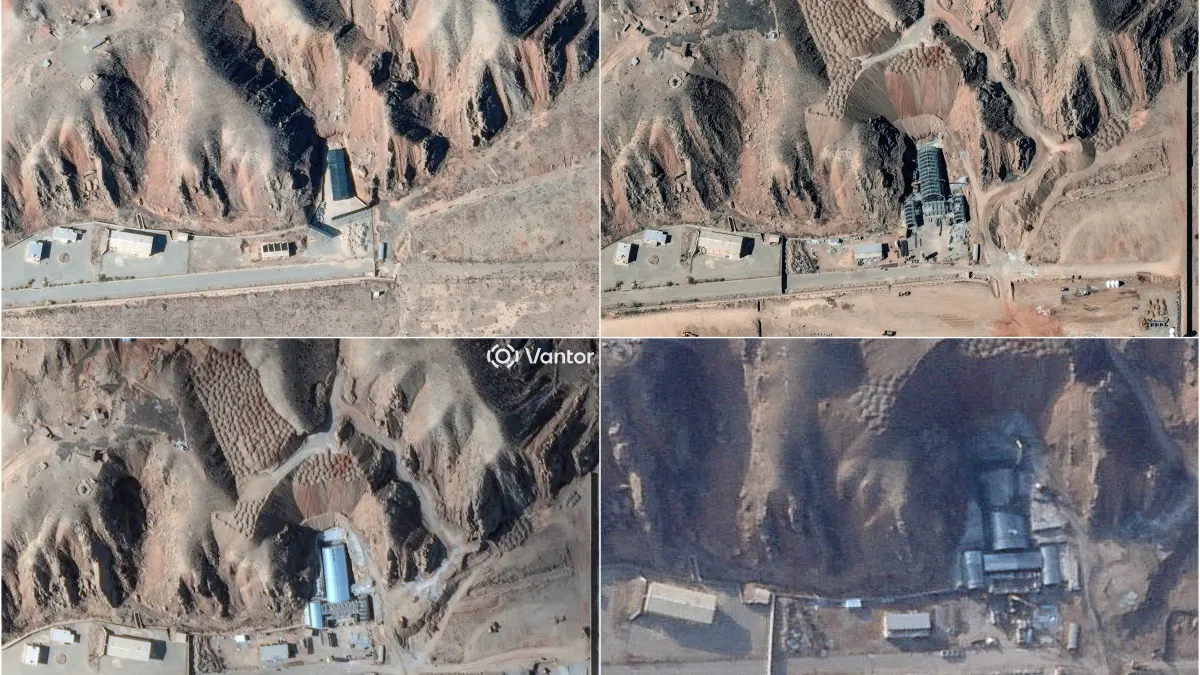
Israel reportedly struck Parchin in October 2024. Satellite imagery taken before and after that attack shows extensive damage to a rectangular building at Parchin, and apparent reconstruction in images from November 6, 2024. Imagery from October 12, 2025, shows development at the site, with the skeleton of a new structure visible and two smaller structures adjacent to it.
Progress is apparent in imagery from November 14, with what appears to be a metallic roof covering the large structure. By February 16, it cannot be seen at all, hidden by what experts say is a concrete structure.
The Institute for Science and International Security (ISIS), in a January 22 analysis of satellite imagery, pointed to progress in the construction of a “concrete sarcophagus” around a newly built facility at the site, which it identified as Taleghan 2.
ISIS founder David Albright wrote on X: “Stalling the negotiations has its benefits: Over the last two to three weeks, Iran has been busy burying the new Taleghan 2 facility … More soil is available and the facility may soon become a fully unrecognizable bunker, providing significant protection from aerial strikes.”
The institute also reported in late January that satellite images showed new efforts to bury two tunnel entrances at the Isfahan complex – one of the three Iranian uranium-enrichment plants bombed by the US in June during the war. By early February, ISIS said all entrances to the tunnel complex were ”completely buried”.
Other images point to ongoing efforts since February 10 to “harden and defensively strengthen” two entrances to a tunnel complex under a mountain some 2km (1.2 miles) from Natanz – the site that holds Iran’s other two uranium enrichment plants.
This comes as Washington seeks to negotiate a deal with Tehran on its nuclear programme while threatening military action if talks fail.
On Tuesday, US and Iranian representatives reached an understanding on main “guiding principles” during a meeting in Geneva, but felt short of achieving any breakthrough. The meeting in the Swiss city came after a first round of talks in Oman on February 6.
Reports suggest that Tehran would make detailed proposals in the next two weeks to close gaps. Among the many hurdles in the negotiations is the US push to widen the scope of the deal to include restrictions on Iran’s ballistic arsenal and support for its allies in the region.
That is fuelled by Israel’s demands and regional narrative, with Israeli Prime Minister Benjamin Netanyahu repeatedly pressing US President Donald Trump to shift from nuclear-only parameters.
Tehran has insisted that these provisions are non-negotiable but that it is open to discuss curbs on its nuclear programme in exchange for sanctions relief.
A previous negotiating effort collapsed last year when Israel launched attacks on Iran, triggering the 12-day war that Washington joined in by bombing key Iranian nuclear sites.
As diplomacy forges a path, both parties are ramping up military pressure.
The Islamic Revolutionary Guard Corps (IRGC) held a series of war games on Monday and Tuesday in the Strait of Hormuz to prepare for “potential security and military threats”.
On Wednesday, Tehran announced new joint naval drills with Russia in the Sea of Oman. Rear Admiral Hassan Maqsoudlou said the exercises were aimed at preventing any unilateral action in the region, and enhancing coordination against threats to maritime security, including risks to commercial vessels and oil tankers.
The US has also escalated its military build-up in the region. Trump has ordered a second aircraft carrier to the region, with the first, the USS Abraham Lincoln and its nearly 80 aircraft, positioned about 700 kilometres (435 miles) from the Iranian coast as of Sunday, according to satellite imagery.
The Trump administration also issued new threats against Tehran with White House press secretary Karoline Leavitt saying on Wednesday that “Iran would be very wise to make a deal” with the US. Trump escalated his rhetoric on social media.
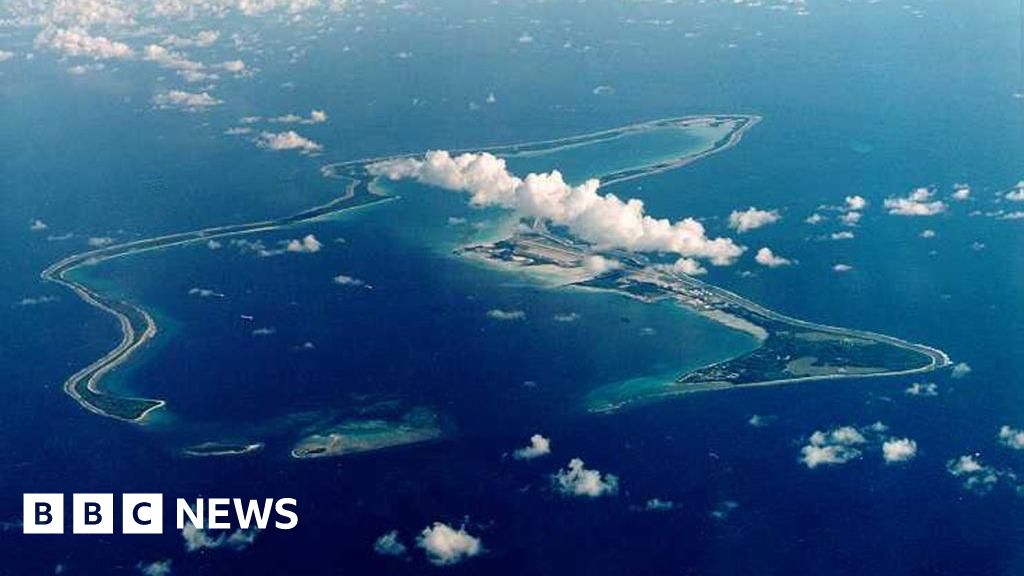
“Should Iran decide not to make a Deal,” the US may need to use an Indian Ocean airbase in the Chagos Islands, “in order to eradicate a potential attack by a highly unstable and dangerous Regime”, he wrote on his Truth Social platform.
Posting on the Truth Social platform on Wednesday, Trump wrote: “I have been telling Prime Minister Keir Starmer, of the United Kingdom, that Leases are no good when it comes to Countries, and that he is making a big mistake by entering a 100 Year Lease…”
Despite Linda Carter and Max Branning sharing a kiss and his claims that he loves her – to his daughter’s disbelief – another woman seems set to become his new love interest
08:52, 19 Feb 2026Updated 08:52, 19 Feb 2026
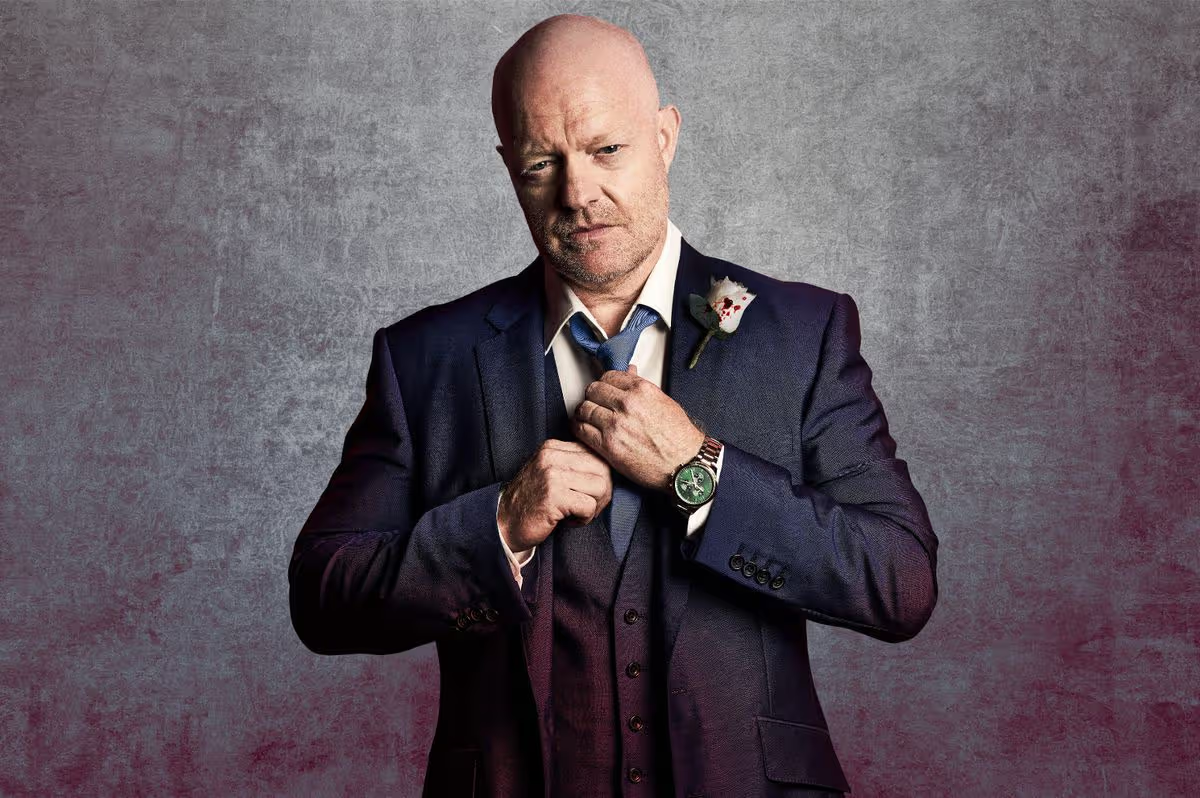
EastEnders fans ‘work out’ who Max’s bride is – and it’s not Linda(Image: CREDIT LINE:BBC/Kieron McCarron)
The Walford Womaniser has struck again! While Max Branning seems convinced he’s in love with his ex Linda Carter, he’s found himself in another flirty interaction with a different woman has led EastEnders fans to say they know who his next love interest is.
Since he returned, many have thought Max (Jake Wood) might eventually marry his former flame Linda (Kellie Bright) in 2027. In the flashforward to next year, he was about to walk down the aisle to a mystery woman, and Linda was teased to be one of them.
But, during Tuesday’s episode (17 February), Max had a date with Linda that couldn’t be described as anything other than a disaster. For starters, Linda didn’t even know it was a date. When Max turned up with flowers and tried to kiss her, she firmly rejected him, leaving the worst philanderer in Walford to dejectedly lick his wounds.
The devastated Max then gave the flowers to Gina Knight (Francesca Henry), wishing her a happy birthday. The brief interaction had many thinking Gina would be the next woman added to Max’s long list of lovers.
“They’re gonna do max and gina as a couple,” said one fan. Another added: “I do think there’s something in Max giving Gina the flowers.” Others, though convinced that the show was hinting and a Max and Gina romance, were clear that they did not want it to happen.
Ensure our latest headlines always appear at the top of your Google Search by making us a Preferred Source. Click here to activate or add us as your Preferred Source in your Google search settings.
“I refuse to be in a reality where Gina and Max have a baby,” a fan said, referring to the pregnant woman seen in Max’s bed during the flashforward.
Another said: “Please for the love of god do not put Gina and Max together – he’s got form for younger women and Gina is already in a complex relationship with Harry after George and Nicola’s baby news. Gina can do better then him and he’s too much baggage for her.”
A third posted a TikTok where they pointed out that Max had previously had a relationship with Gina’s half sister Lucy Beale (Hetti Bywater) just before she died. At the time, Lucy was 21 and Max was not only 45, but her best friend’s father. The TikTok poster said: “Ewww were these scenes foreshadowing Max trying it on with Gina or something?
“Is that why Peter [Beale, Gina and Lucy’s brother] is p***ed off at him in the flashforward and why Cindy [Beale, their mother] didn’t look happy with him? As if getting with Lucy wasn’t bad enough…”
Max has been romantically linked to many women over the years and has a tendency to go for younger women. One of his major storylines in the late 2000s involved an affair with Stacey Slater (Lacey Turner), who was his own son’s wife.
Jake Wood, who plays Max, has previously said that he thinks Stacey is the love of Max’s life. When asked at a press event who Max’s true love is, Jake mentioned Tanya (Jo Joyner), the mother of three of his children, but settled on Stacey.
The actor said: “Obviously, Tanya is very high, but I think probably Stacey as well. I think we saw that when Max came back a couple of months ago. The connection is still really strong between the pair of them; they really understand each other. I think wherever they are in different parts or wherever they are in their lives, they’d always have that connection. So, if you asked Max, he would probably say Stacey.”
Ryanair has lowered the price of a number of its basic fares
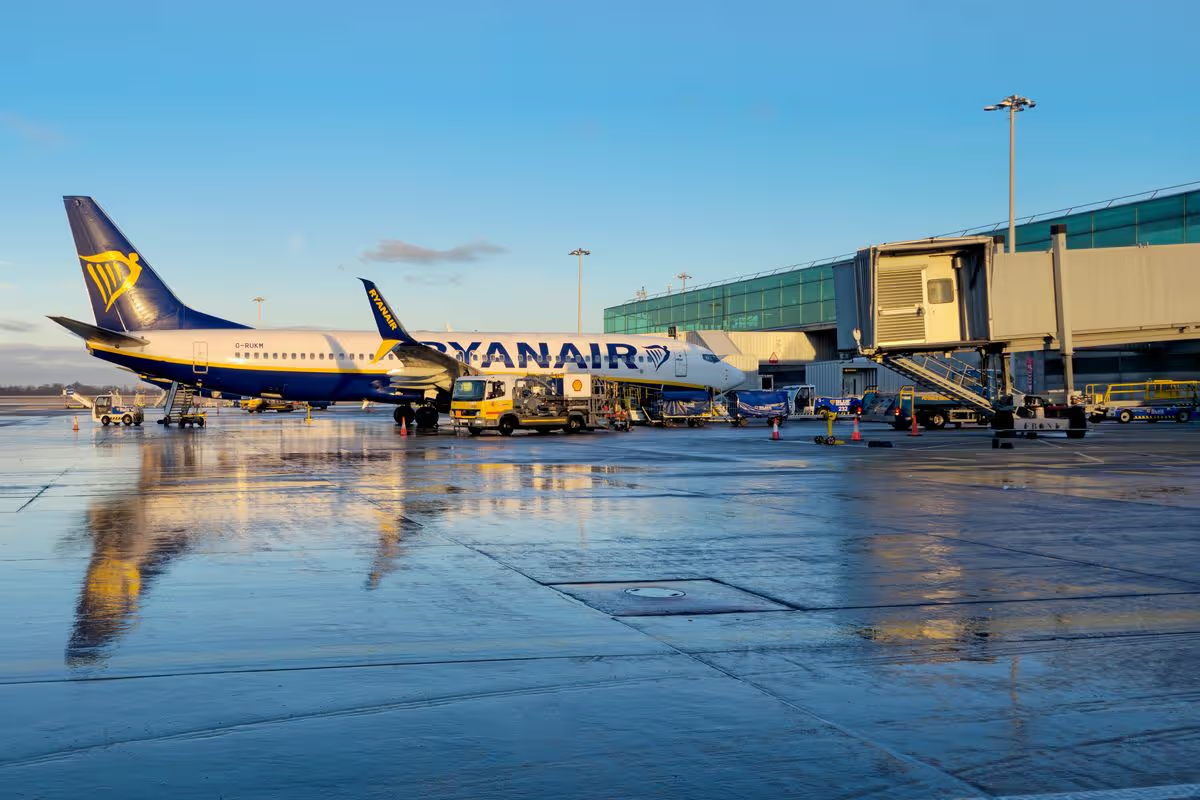
Many people are likely now dreaming of a holiday abroad(Image: Getty/Antony Whittaker)
With the winter now feeling like it’s rumbled on for almost an eternity, many people will be looking ahead to the warmer seasons and dreaming of a holiday abroad. But if you have school-aged children, you’ll probably be painstakingly aware of how much the cost can rise when the kids break up.
Amid the ongoing cost of living crisis, it can be hard to pay for an overseas family trip. With this in mind, we’ve taken a look at some of the cheapest Ryanair flights to Spain for this year’s summer holidays.
And if you’re not picky about where you go, you may be able to save some money. For instance, travellers flying from London Luton can travel to Palma de Mallorca from £26 one-way.
The cheapest return fare for is £109, departing on August 26 and returning on September 3. From Manchester, we found a one-way flight to Castellon (Valencia) for £23, departing on August 27.
A return fare on September 3 is available for £27, meaning you could travel both there and back for £50 each. And from Birmingham, holidaymakers can book a return trip to Santander for £85 each.
The outgoing flight departs on August 17 and returns on September 3. Travellers flying from Aberdeen to Alicante can get a return journey for £86 when leaving on August 19 and returning on August 25.
If you do book with Ryanair it’s important to remember that baggage and other add-ons come at an additional fee. Only one ‘personal’ bag is permitted with each basic fare.
As of last summer, following an EU rule change, the dimensions for this bag are 40cm x 30cm x 20cm and the bag must weigh less than 10kg. All flight prices were correct at the time of publication.
So much has happened over the past seven days, including two Premier League managers departing, the second round of the Six Nations and many medals being won at the Winter Olympics.
About 9% of you got full marks in last week’s edition. How will you do this week?
After more quizzes? Go to our dedicated Football Quizzes and Sports Quizzes pages and sign up for notifications to get the latest quizzes sent straight to your device.
Feb. 19 (UPI) — More than 550 commercial driver’s license schools were cited for safety violations, including employing unqualified teachers, using improper vehicles, failing to properly test students, among other violations, according to the Trump administration, which said the “sham” institutions received notice they would be removed from the federal government’s National Training Provider Registry.
The Department of Transportation said Wednesday that more than 300 investigators conducted 1,426 on-site inspections of driver training schools across the country in a five-day sting operation. The Commercial Vehicle Training Association said the inspections took place during the week of Dec. 8.
The DOT said more than 550 schools were found in violation of the Federal Motor Carrier Safety Administration’s safety standards. Of those, 109 training providers agreed to voluntarily remove themselves from the registry, while an additional 97 schools remain under investigation.
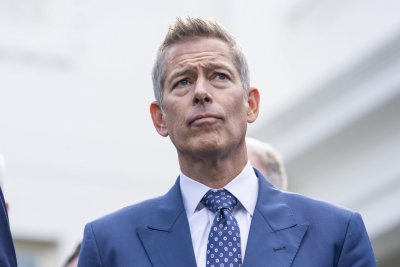
“For too long, the trucking industry has operated like the Wild, Wild, West, where anything goes and nobody asks any questions. The buck stops with me,” Transportation Secretary Sean Duffy said in a statement.
“American families should have confidence that our school bus and truck drivers are following every letter of the law and that starts with receiving proper training before getting behind the wheel.”
The department said some of the schools lacked qualified instructors, used fake addresses or failed to properly train drivers in the transportation of hazardous materials. One school provided training for school bus drivers, the department said.
Following the inspections, CVTA, the largest association of commercial truck driver training programs, said in a statement that it welcomed the initiative, saying it strengthened “the integrity of commercial driver education and reaffirmed the critical role high-quality training plays in protecting the motoring public.”
The routine of gently but skillfully pushing wooden canoes into the water body at the shores of Kainji Lake each dawn has been part of the lives of generations of fishermen in North-central Nigeria.
The lake was not always calm – vigorously exhaling and flooding the banks, then intermittently receding – but was inevitably connected to the lives that many communities have held firmly to across Kebbi, Niger, and Kwara states.
Today, that ancestral connection between the communities and the lake is evaporating rapidly. And it is not merely ecological. In some villages where government presence is absent, and terrorists have assumed authority, fishermen now wait for permission from non-state actors before casting their nets. In other areas within the Kainji region, they pay informal levies to armed groups operating from the forests. For decades, Nigeria’s national parks were imagined as spaces apart: buffers of nature against human pressure and political failure. Sambisa Forest shattered that illusion long ago when the Boko Haram terror group took control of it, transforming from a conservation zone into the most notorious symbol of jihadist insurgency in the country. Now, further west, a quieter but no less consequential transformation is unfolding.
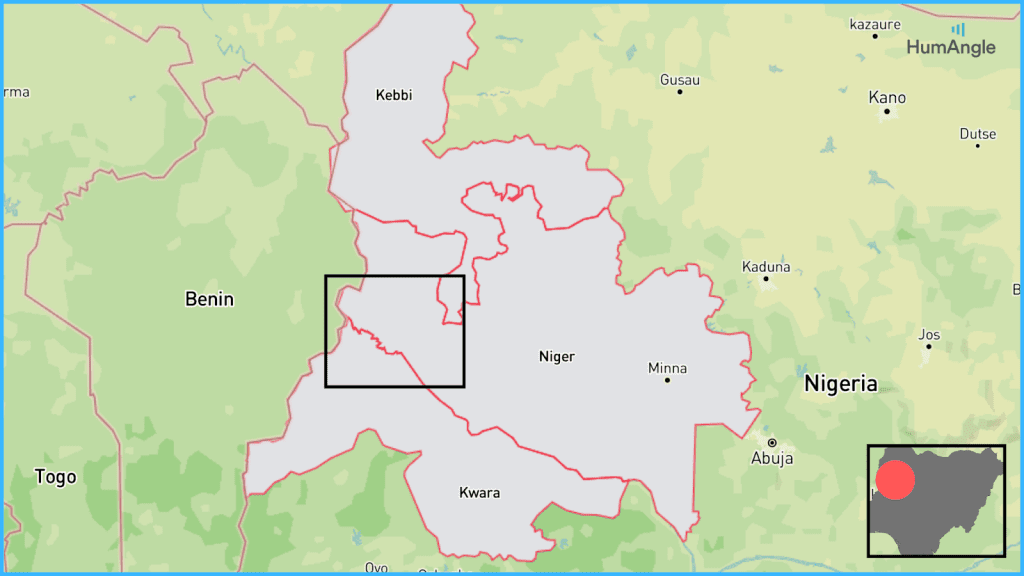
The Kainji Lake National Park (KLNP), sprawling across three states and bordering Benin, has slipped from a wildlife sanctuary into a strategic corridor where poverty, climate stress, criminal enterprises, violence, jihadist ideology, and Sahelian militancy intersect.
Kainji Lake National Park spans three states in Nigeria’s northern region and borders two countries. Map illustration: Mansir Muhammed/HumAngle.
A corridor
Security analysts increasingly describe Sambisa as a “fortress-base” model of insurgency: entrenched, ideological, territorially assertive. Kainji Lake fits a different and more elusive pattern—a “corridor-node” model.
Here, armed actors do not raise flags or announce governance structures. They pass through, networking, training, recruiting, and trading, before vanishing. The park links Nigeria’s troubled North West to the Middle Belt and, increasingly, to the destabilised Sahel. It connects Kebbi to Benin Republic’s Alibori and Atacora regions, Niger State to Niger Republic’s Tillabéri zone, and local grievances to transnational jihadist ambitions.
This distinction matters. Sambisa attracted relentless military pressure for more than a decade because it became a visible symbol of territorial breach. Kainji Lake did not. It appeared peripheral, quiet, manageable. In that absence of sustained attention, the park matured into something arguably more dangerous: a fluid connector for multiple armed actors rather than a single-group stronghold.
Communities along the lake, from Yauri and Ngaski in Kebbi to Borgu in Niger State and Kaiama in Kwara, depend on a fragile interweaving of fishing, floodplain farming, pastoralism, and cross-border trade. Fishing sustains thousands of households. Smoked and dried fish move through informal networks to Ilorin, Ibadan, southern Niger, and beyond. Seasonal farming follows the lake’s unpredictable pulse: millet, sorghum, maize, rice, and cowpea are cultivated on land that appears and disappears with the water’s rise and fall.
Fishing sustains thousands of households. Map illustration: Mansir Muhammed/HumAngle
Pastoralism runs through it all. Herders move cattle along routes that long predate colonial borders, grazing across Nigeria, Benin Republic, and Niger Republic as if the lines on maps were suggestions rather than laws. Weekly markets in Bagudo, Wawa, Babana, Kaiama, and Borgu draw traders from Benin’s north and Niger’s Tillabéri. Grain, livestock, fuel, kola nuts, dried fish, and cloth circulate through these hubs. Some of it is smuggling.
These networks matter because armed groups do not need to invent new pathways. They insert themselves into existing ones. The same tracks used by herders and traders now carry militants, arms couriers, recruiters, and ideological emissaries.
Climate stress as an accelerant
Climate change has exacerbated existing security vulnerabilities around Kainji Lake.
Erratic rainfall patterns and fluctuating water levels have made fishing yields unpredictable. Floodplains that once reliably supported seasonal farming now vanish early or arrive late. Pasture availability shifts without warning, intensifying competition between herders and farmers. Each shock further compresses livelihoods, forcing households to adapt through debt, migration, or risk-taking.
In this environment, armed groups offer something deceptively valuable: predictability. Access to grazing land. Protection from rivals. Permission to fish or farm. Even informal dispute resolution. Where the state provides uncertainty – sporadic enforcement, unclear rules, delayed response – armed actors provide immediate answers, enforced by violence if necessary.
Climate stress, in this sense, is not just an environmental issue but a governance crisis multiplier.
Fieldwork conducted by HumAngle across several local government areas in Kebbi, Niger, and Kwara states identified at least five active extremist factions operating within and around the park. These include the Mahmudawa (Mahmuda faction), Lakurawa, elements of Ansaru and Jama’atu Ahlis Sunna Lidda’awati wal-Jihad (JAS) led by Sadiku and Umar Taraba, and a newly emerged cell linked to Jama’at Nusrat al-Islam wal-Muslimin.
The groups do not operate in isolation. Many originate from northwest Nigeria and southern Niger, with local cover, as they undertake terror attacks in distant locations and return to their various hideouts within the region. What has emerged is a hybrid threat ecosystem where ideology, criminality, climate stress, and grievance reinforce one another.
Brokers, enforcers, and ideologues
The Mahmudawa illustrate the new logic of this ecosystem. Despite sustained air and ground operations by the Federal Government between September and December 2025, the group remains influential. Fragmented into smaller camps, some closer to the Benin border, they act as brokers linking criminal networks of jihadist actors. They facilitate training, arms movement, ransom negotiations and sanctuary for fighters arriving from outside the region.
Official claims regarding the arrest of their leader, Malam Mahmuda, remain unconfirmed in border communities, where continued attacks and coordinated leadership are still attributed to the group.
If the Mahmudawa are brokers, the Lakurawa are enforcers. With an estimated 300 fighters, they have become one of the most active jihadist–terrorist hybrids affecting Kebbi’s border communities. Operating from within and around KLNP, they routinely launch incursions into Bagudo and Suru LGAs, combining attacks on military targets with ideological messaging aimed at delegitimising the Nigerian state.
Their leadership shows signs of Sahelian exposure. Their fighters are drawn from local nomadic tribal networks and northwest terrorist pools. Kebbi, long considered peripheral, is now firmly part of the frontline.
Get our in-depth, creative coverage of conflict and development delivered to you every weekend.
Subscribe now to our newsletter!
The relocation of Sadiku and Umar Taraba, both veteran jihadist operatives, to the Kainji axis in 2024 marked a shift. Their presence injected technical expertise into a space previously dominated by loosely organised armed groups.
IED knowledge, structured training, and a sharper focus on high-value targets followed. Collaboration with criminal terrorist groups deepened. The abduction of foreign nationals near Bode Sa’adu illustrated this fusion starkly: JAS elements, Mahmudawa fighters, and allied terrorists executing a single operation where ideology and profit were indistinguishable.
JNIM’s shadow on the lake
The most alarming development emerged in late November 2025: the appearance of a group believed to be affiliated with JNIM along the Kebbi–Benin border corridor.
Witnesses describe predominantly foreign fighters, many believed to be Tuareg, moving at night in disciplined formations, wearing military-style uniforms with turbans on their heads, and engaging communities with a calculated restraint unfamiliar to local armed groups. So far, they have avoided major attacks.
That restraint is likely strategic.
Their presence suggests Kainji Lake could become a staging ground for Sahelian expansion into northwestern Nigeria — a shift that would fundamentally alter the region’s security calculus. Unlike local groups, JNIM brings external financing, battlefield experience, and a long-term vision.
Communities adapting under pressure
Communities in the lake basin are not passive observers. They are recalibrating in real time. Some negotiate access quietly to avoid displacement. Others maintain layered loyalties, sharing information selectively as a survival strategy. Vigilante groups that once patrolled forest edges retreat under sustained pressure. Traditional rulers face coercion or marginalisation. In certain settlements, schools and community buildings are repurposed by armed actors for operational use.
Access to fishing grounds, farmlands, and trade routes increasingly depends on permissions issued by commanders operating from forest camps rather than on decisions by local councils or chiefs. Authority has shifted, not through formal declaration, but through incremental control of movement and livelihoods.
How conservation and governance hollowed the ground
The transformation of Kainji Lake into a security corridor is as much the product of ideology as it is the cumulative outcome of governance failure layered over decades.
The creation of Kainji Lake National Park in 1976 displaced communities and restricted access to land and water without meaningfully integrating residents into conservation planning. Fishing zones were closed, grazing was curtailed, and farming was criminalised in places where alternatives did not exist. Promised livelihoods rarely materialised.
Park rangers – tasked with enforcing vast conservation boundaries – were underpaid, poorly equipped, and often absent. Their presence, when felt, was frequently punitive rather than protective.
Local governments in Bagudo, Suru, Kaiama, Borgu, and Ngaski remain chronically weak.
When armed violence escalated across the northwestern region, security deployments focused on Zamfara, Katsina, and parts of Niger State. Kebbi’s borderlands were treated as peripheral, stable, and low-risk. That assumption proved costly.
Border governance failed as well. Coordination with Benin and the Niger Republics remains distant, reactive, and politicised. Joint patrols are rare. Intelligence sharing is uneven. Communities know this. Armed actors understand it better.
Armed groups arrived first as guests, then as protectors, and finally as power brokers, filling gaps the state created—sometimes violently, sometimes persuasively.
Poverty caused by the absence of authority
In the absence of legitmate sate authority, people seek alternative systems of order. Armed groups exploit this vacuum expertly. They tax, regulate, punish, and reward. In some communities, the question is no longer whether armed groups are legitimate, but whether they are avoidable. Increasingly, they are not.
The Kainji axis experienced seven major attacks between 2025 and Feb. 2026: The Nov. 2025 abduction of 303–315 students from St. Mary’s School in Papiri (Niger State); the market raid in Kasuwan Daji that claimed the lives of about 30-42 people on Jan. 3, 2026; the Jan. 23 park ambush killing six; the Feb. 1 raids in Agwara and Mashegu (dynamiting a police station and church), and the Feb. 4 massacre in Kaiama. Map illustration: Mansir Muhammed/HumAngle.
Once a symbol of Nigeria’s conservation ambition, KLNP has become a largely ungoverned hub exploited by a mix of violent actors: jihadist cells, armed terrorist factions, and transnational militants with roots beyond Nigeria’s borders.
From the northwest’s perspective – particularly Kebbi State – the park functions as a rear operational hub. Armed groups operating in border local governments use it for recruitment, logistics, training, and cross-border movement into the Benin Republic. Its sheer size, rugged terrain, and weak oversight enable a dangerous convergence: criminal armed groups blending with jihadism.
This shift carries national implications
Kainji’s forests and waterways provide mobility, with the lake economy providing revenue streams and border proximity offering escape and reinforcement routes.
While Sambisa became synonymous with territorial insurgency, Kainji signals the maturation of a corridor-based conflict economythat binds Nigeria’s northwest to wider Sahelian instability through forest reserves and lake communities.
When conservation spaces double as conflict connectors, the impact extends beyond biodiversity loss. Human buffers weaken first as communities negotiate survival under parallel authorities. Ecological buffers follow as enforcement fractures and resource exploitation become embedded in armed group financing.
Communities adapt under the rule of local armed terror groups in the absence of state and local government authorities. Density map of settlements in the Kainji axis where terrorists control.
The lake basin lies close to Kainji dam, a critical energy infrastructure, touches sensitive international borders, and anchors trade and livelihood systems that extend deep into the country’s interior.
In 2026, the geographic corridor surrounding the lake and its forest reserves recorded some of the highest levels of mass killings and large-scale abductions in Nigeria. Armed groups operate with increasing confidence, widening their reach across rural settlements and mobility routes connecting Niger State to Kebbi, Zamfara, and beyond toward the Sahelian belt.
The warning signs are not limited to a single park
In April 2025, the Conservator-General of Nigeria’s National Park Service, Ibrahim Musa Goni, told HumAngle that six national parks across the country were overrun by terrorists. Two years earlier, the federal government had created 10 additional parks to prevent further takeovers. However, only four of those new parks are currently operational. In addition to the seven existing parks, only eleven national parks are currently functioning nationwide.
Even where reclamation has occurred, the process is complex. The Conservator General pointed to Kaduna State as an example, describing what he termed a “mutual understanding” between authorities and armed groups.
“They have agreed to resolve their issues,” he said. “[As a result], most of the forest and game reserves, and even the national park in Kaduna State, have today been freed of banditry.” This, he argued, has brought “relative peace” and enabled forest and game guards, including officers in Birnin Gwari, to resume operations.
The National Park Service has also redefined its institutional posture. “The government classified the National Park Service as a paramilitary organisation,” Goni explained. “And as a paramilitary organisation, the act provides that we can bear arms.” Rangers affiliated with the Service have received training from the United Nations Office on Drugs and Crime to address wildlife crime and respond to terror-related takeovers. According to Goni, this training has strengthened Nigeria’s capacity to confront forest-based criminality linked to armed groups and insurgents.
The approach is not solely security-driven. The Service engages surrounding communities through alternative livelihood programmes, skills training, and starter packs intended to reduce dependence on park resources. “This has, in a great deal, diverted the attention of most of them from the resources of the national parks,” Goni said, adding that it has helped contain hunting and wildlife trafficking.
Yet resource limitations remain significant. “Apart from managing wild animal resources and the plants, we also have to manage the human population,” he acknowledged, noting that the Service cannot meet the needs of every community bordering the parks.
A YOUNG rapper signed has died days after releasing a new single, at just 25 years old.
Janarious Mykel Wheeler, known by fans as Lil Poppa, died at 11:23am on Wednesday, according to the medical examiner.
Sign up for the Showbiz newsletter
Thank you!
Lil Poppa began releasing music in 2017, when he was just a teenagerCredit: TikTok / lilpoppaHe had more than 600,000 monthly listeners on SpotifyCredit: Getty
According to his Spotify profile Poppa began releasing music in 2017, when he was just a teenager.
When rumours of his death first circulated, fans flooded his social media begging for answers, however the young rapper’s cause of death is currently unknown.
At the time of his death Lil Poppa had more than 600,000 monthly listeners on Spotify and over 960 thousand followers on Instagram.
In a now-tragic final post shared on his Instagram story Tuesday night, Poppa appeared to be riding in a car as he listened to Letting it go by Rod Wave.
Lil Poppa, was born in Jacksonville, Florida, where he first started rapping at church with a group of friends and his older brother.
And at just 12 years old Poppa built a makeshift studio in the closet of his bedroom and started recording his music using just a laptop and a Radio Shack mic.
His big break came in 2018, when his independently released single Purple Hearts hit 2.3 million views on YouTube.
Since then he has released several albums with his label Collective Music Group, which has signed other industry heavyweights like GloRilla.
What was Lil Poppa’s cause of death?
The Fulton County Medical Examiner in Atlanta,Georgia, announced the tragedy, but didn’t give a cause of death,TMZreported.
According the a medical examiner, the young rapper’s time of death was 11.23am, but his cause of death is currently unknown.
Fans began expressing their concerns about rumours of his death online when the news first started spreading.
A distraught fan wrote: “poppa please say something this can’t be happening.”
What song made Lil Poppa famous?
Lil Poppa wrote songs about relationships, mental health, and love.
The artist was best known for his tracks including “Love & War,” “Mind Over Matter,” and “HAPPY TEARS”.
Just days before his death Poppa released a new single called “Out of Town Bae”.
“And I can’t change how I’m living, I ain’t got no feelings, I pour drank in my kidney, And it’s only for the healing” he sings in his most played song on Spotify, “Eternal Living”.
Lil Poppa wrote songs about relationships, mental health, and loveCredit: GettyJust days before his death Poppa released a new singleCredit: TikTok / lilpoppa
Feb. 19 (UPI) — Several victims of an avalanche that hit Northern California’s backcountry on Tuesday were connected to a private school for competitive skiers, the institution said.
Officials with Sugar Bowl Academy in Norden, Calif., confirmed Wednesday that multiple victims were either members or had strong connections with the school. They said they would not release the names of the victims and survivors.
“We are an incredibly close and connected community. This tragedy has affected each and every one of us,” Stephen McMahon, executive director of Sugar Bowl Academy, said in a statement.
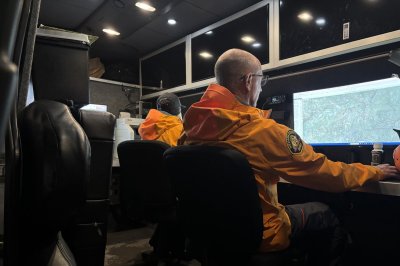
A group of 15 skiers, including four guides, set off Sunday for a three-day backcountry trip, and were returning amid dangerous conditions Tuesday when they were hit by an avalanche near Castle Peak in California’s mountainous Nevada County at about 11:30 a.m. PST.
Six members of the party became stranded, taking refuge in makeshift shelters. The remaining nine were unaccounted for.
Search teams were deployed, and the six surviving members — one guide and five clients — were rescued late Tuesday, according to authorities, who said the search for those missing would continue.
Authorities earlier Wednesday announced that eight of the unaccounted for had been confirmed dead and one was still missing. The deceased included three professional guides with Blackbird Mountain Guides, and one person was the spouse of a member of a deployed rescue team.
Of the six survivors, three were injured, including two who were unable to walk, authorities added.
The party consisted of nine men and six women whose ages ranged from 30 to 55.
Zeb Blais, founder of Blackbird Mountain Guides, which had organized the expedition, said all guides with the group were trained or certified in backcountry skiing and each was an instructor with the American Institute for Avalanche Research and Education.
“There’s still a lot that we’re learning about what happened,” Blais said in a statement. “It’s too soon to draw conclusions, but investigations are underway.”
Blackbird Mountain Guides has suspended field operations through Sunday at a minimum, according to Blais.
“Our most important focus is on those directly impacted and supporting their needs,” Blais said.
“We ask that people following this tragedy refrain from speculating. We don’t have all the answers yet, and it may be some time before we do. In the meantime, please keep those impacted in your hearts.”
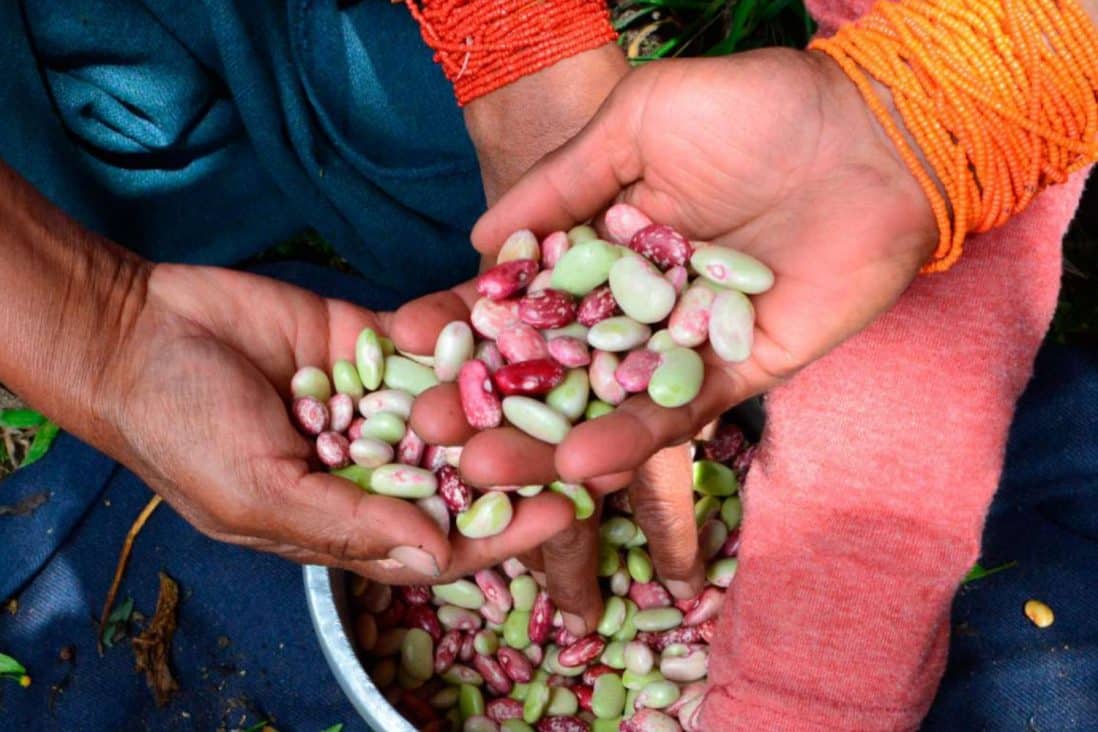
Venezuelan popular power organizations have developed creative solutions to advance food sovereignty while under the US blockade. (FAO)
Natalia Burdynska Schuurman defended her MsC thesis at the University of Edinburgh on Venezuela’s struggle for food security and food sovereignty amid wide-reaching US-led unilateral sanctions.
See below for the abstract, research questions, and the full text.
Abstract
As global development actors grapple with mounting pressures to feed the world population, growing enforcement of unilateral coercive measures jeopardizes efforts to advance Sustainable Development Goal 2 (SDG-2, “Zero Hunger”). This dissertation examines efforts to achieve food security in Venezuela, a state currently targeted by over 1,000 unilateral coercive measures, since its incorporation as a constitutional right in 1999 and how such processes have been shaped by economic sanctions targeting its oil industry introduced by the United States in 2015. It employs a literature review, secondary data analysis and archival research, adopting a political economy and world systems lens as well as a historical, relational and interactive approach to food sovereignty research, centering the perspectives and experiences of Venezuelan communities. This dissertation argues that unilateral sanctions targeting Venezuela’s oil industry triggered the collapse of a political economy of food security structurally dependent on Venezuela’s macroeconomic stability within a dollarized international trade and financial system, catalyzing efforts to rebuild Venezuela’s food and agricultural system that transformed the landscape of national food sovereignty construction. It is hoped that this dissertation yields new insights into challenges and prospects facing national efforts to construct food sovereignty and global efforts to achieve food security today.
[…]
Research questions
This dissertation answers the primary question: How have unilateral sanctions targeting Venezuela’s oil industry shaped efforts to achieve food security in Venezuela?
It addresses the following contributory questions: What was the state of affairs characterizing Venezuela’s food and agricultural system prior to 2015? What advances and setbacks have been identified concerning the national goal to achieve food security, as enshrined in Venezuela’s Constitution of 1999? How have financial and trade sanctions targeting Venezuela’s oil industry introduced by the United States in 2015 correlated with macroeconomic and food security trends in Venezuela? How have financial and trade sanctions targeting Venezuela’s oil industry impacted food production, distribution and access in Venezuela? How have state and societal actors engaged in efforts to achieve food security in Venezuela responded to these consequences?
People are raving on about the drama series which is believed to be a ‘hidden gem’ and it’s available on a number of TV networks, including Disney+. So have you seen this before?
Christine Younan Deputy Editor Social Newsdesk
06:06, 19 Feb 2026
You can view this series on Disney+(Image: Kim Simms/ABC)
Looking for the next big TV series to binge-watch? It can be hard finding a new show to watch, especially if you’ve just finished something decent on Netflix or Amazon Prime.
Now people are raving on about a ‘hidden gem’ they found – and it’s available on a number of TV networks, including Disney+. After one TV fan asked for recommendations in a popular thread, many people flooded the comments section where they offered a number of suggestions, one of them being Will Trent, a American police TV drama. The series follows a Special Agent of the Georgia Bureau of Investigations.
As a child, Trent was abandoned and forced to endure a harsh coming-of-age in Atlanta’s overwhelmed foster care system. It was based on one of prolific New York Times author Karin Slaughter’s bestselling books.
The Reddit post read: “Any current network (CBS, ABC, NBC, etc.) TV shows that are any good? Most of the shows I currently watch are on streaming services and I’m wondering if there’s any hidden gems I’m missing out on.”
Many people shared their suggestions, including High Potential and The Rookie.
But plenty of viewers labelled Will Trent as a must-see. The series, which is also available on other network channels, can be streamed on Disney+ for subscribers.
The series was developed by Liz Heldens and Daniel T. Thomsen which stars Ramón Rodríguez and premiered on January 3, 2023, on ABC.
A year later in April, the series was renewed for a third season which landed on January 7, 2025. Then months later, the series was given the green light for a fourth season which finally premiered on January 6, this year.
The series follows Will who grew up in the Atlanta foster care system after being abandoned as a child. Despite being dyslexic and his upbringing having a lasting effect on him, he became a Special Agent in the Georgia Bureau of Investigation (GBI).
Will, a highly observant character, had been assigned a corruption case involving the Atlanta Police Department which shares an office building with the GBI.
The story also shows his on-again off-again relationship with APD Detective Angie Polaski, a childhood friend from the foster care system.
Will Trent has a 7.7 out of 10 rating on IMDb and 83% on Rotten Tomatoes. To watch it on Disney+, you must have a subscription on the streaming platform.