SACRAMENTO — Every farmer knows there comes a time to thin the crop to allow the most promising plants to grow bigger and reach their potential.
The same is true in politics. And it‘s now time to cull some Democrats from the dense field of candidates for governor.
Put another way, it’s time for some lagging Democrats to step aside and provide more running room for swifter teammates in the race to replace Gov. Gavin Newsom.
You’re reading the L.A. Times Politics newsletter
George Skelton and Michael Wilner cover the insights, legislation, players and politics you need to know in 2024. In your inbox Monday and Thursday mornings.
You’d think that Democratic candidates now plodding behind in the race — with little realistic hope of catching up — would want to avoid having that on their conscience. Party leaders, too.
Until recently, this nightmarish scenario for Democrats seemed inconceivable. After all, California hasn’t elected a Republican to statewide office for 20 years. Roughly 45% of registered voters are Democrats. Only 25% are Republicans. About 23% are independents who lean left.
But do the math. There are nine Democrats running for governor with various degrees of seriousness. There are only two major Republican contenders, plus a third lagging practically out of sight.
Remember, California has a “top two” open primary. The top two vote-getters, regardless of their party, advance to the November election. And only the top two. Write-in candidates aren’t allowed.
It’s a matter of arithmetic.
In the primary, about 60% of voters will choose a Democrat, political data expert Paul Mitchell figures. That number of voters split among nine Democratic candidates could result in all sharing smaller pieces of the pie than what the top two Republicans receive. Mitchell estimates nearly 40% of voters will side with a Republican, with just two candidates splitting most of the smaller GOP pie.
Recent polls have shown three candidates — two Republicans and one Democrat — bunched closely near the top. They’re Republican former Fox News commentator Steve Hilton, Democratic U.S. Rep. Eric Swalwell from the San Francisco Bay Area, and Republican Sheriff Chad Bianco of Riverside County.
Another Democrat, former Rep. Katie Porter of Orange County, has been running close to the top three, followed by Democrat Tom Steyer, a billionaire former hedge fund investor.
It’s not likely that two Republicans will survive the primary and block a Democrat from reaching the general election. But it’s a legitimate possibility — and not worth the risk for the Democratic Party.
“How unlikely does it have to be for Democrats not to be worried?” asks Mitchell, who works primarily for Democrats. “Even if the chances are very small, the consequences could be catastrophic.”
He is constantly running primary election simulations. And last week he calculated the chances of two Republicans gaining the top slots at 18%. Most of his calculations have come out at around 10% to 12%, he says.
“I’m not trying to yell fire in a crowded theater,” Mitchell says. “But I’m trying to install a thermostat.”
He adds: “If there was ever a perfect storm when this could happen, we’re experiencing it now.”
The absence of a gubernatorial candidate heading the Democratic ticket in November, Mitchell says, would result in party damage far beyond the governor’s office.
It would lower Democratic voter turnout and probably cost the party congressional and legislative seats, and also affect ballot measures, Mitchell says.
In fact, it could jeopardize the Democrats’ chances of ousting Republicans and capturing control of the U.S. House.
So which candidates should drop out, not only to avoid embarrassment on election night but to save the party from possible disaster?
Four clearly should stay.
Swalwell has some momentum and is the leading Democrat in most polls, although his numbers are only in the teens. He’s relatively young at 45 and many voters are looking for generational change.
Porter is the leading female — with a chance to become the first woman elected California governor — and has been holding up in the polls despite showing a bad temper in a damaging TV interview last year.
Steyer has loads of his own money to spend on TV ads. But he needs a more coherent, simple message in the spots.
San Jose Mayor Matt Mahan just entered the race, but shows some promise. He’s a moderate with strong Silicon Valley tech support. And he also has youth at 43.
Five others should consider bowing out.
Xavier Becerra has a great resume: Former U.S. health secretary, former California attorney general and longtime congressman. But he hasn’t shown much fire. And his message is muted.
Antonio Villaraigosa also has an impressive resume: Former Los Angeles mayor and state Assembly speaker. He’s running with a strong centrist message. But at 73, voters seem to feel his time is past.
Former state Controller Betty Yee knows every inch of state government, but lacks voter appeal.
State Supt. of Public Instruction Tony Thurmond hasn’t shined in his current job and has no traction in the governor’s race.
Former legislator Ian Calderon isn’t even a blip.
What causes some candidates to stay in a race against long, even impossible odds?
“Hope springs eternal,” says longtime Democratic strategist Darry Sragow. “History is replete with races that turned around on a dime.”
And many feel obligated to their donors and endorsers, he adds.
Also, consultants often “have a vested interest” financially in keeping their clients in the game, he acknowledges.
But currently, Sragow adds, “it’s time for the Democratic Party to get its act together and weed out the field.”
“Party leaders should start cracking the whip. There’s something to be said for decisions being made behind closed doors in a ‘smoke filled room.’ The difference today is that it’s in a smoke-free room.”
The filing deadline for officially becoming a candidate is March 6. After that, a name cannot be removed from the ballot. It’s stuck there — possibly drawing just enough votes to rob another Democrat of the chance to be elected governor in November.
Hi, and welcome to another edition of Prep Rally. I’m Eric Sondheimer. It’s championship week in high school basketball with some big-time semifinal matchups Tuesday in the Southern Section playoffs.
Get our high school sports newsletter
Prep Rally is devoted to the SoCal high school sports experience, bringing you scores, stories and a behind-the-scenes look at what makes prep sports so popular.
Brandon McCoy of Sierra Canyon soars for a tomahawk dunk.
(Steve Galluzzo / For The Times)
The toughest divisions in high school basketball in the state have their semifinals Tuesday for boys and girls. Get ready for intense, crowd-pleasing matchups.
For boys in the Southern Section Open Division, it’s Sierra Canyon hosting Sherman Oaks Notre Dame and Harvard-Westlake hosting La Mirada.
Both games are rematches, so there will be no surprises for the coaches. Sierra Canyon and Harvard-Westlake won the first meetings, so they deserve the favorite’s role to reach Saturday’s championship game at Ontario Arena. But that doesn’t mean the favorites will win.
Notre Dame has athleticism to play with Sierra Canyon, especially if Zach White is rebounding and NaVorro Bowman is hitting threes. Sierra Canyon, though, is 25-1 and surging with its depth. Harvard-Westlake looked done after losing three of its last four regular season games, but has come on to beat Damien, Santa Margarita and Crespi in the Open Division playoffs.
La Mirada is the surprise team, seeded No. 12 and winning every game on the road. The Matadores eliminated Redondo Union in the quarterfinals behind Gene Roebuck. You have to admire La Mirada. Last season they desperately wanted to be in the Open Division, giving up a chance to be in the state playoffs. Now the Matadores are one win away from playing for a section title.
The girls’ competition should draw even bigger crowds than the boys Tuesday, with the featured matchup Etiwanda hosting Sierra Canyon. The two powerhouses have been preparing for this game all season. Jerzy Robinson of Sierra Canyon will try to make sure Etiwanda doesn’t serve as a roadblock to winning the Open Division or state championship. The other semifinal has top-seeded Ontario Christian hosting Sage Hill. If Etiwanda and Ontario Christian win, they’ll get to play in front of lots of fans Saturday night in Ontario.
Boys basketball
Freshman Phillip Reed was in dominant form for Palisades in the City Section Open Division semifinals.
(Steve Galluzzo)
It comes as no surprise that No. 1-seeded Palisades will play No. 2 Cleveland in Friday’s 8 p.m. City Section Open Division final at L.A. Southwest College. They’ve been the top two teams all season. Palisades is the heavy favorite. Here’s a report from the semifinals.
Jack Levey celebrates a big win in the Dolphins’ return to their home court against Western League rival Fairfax.
Sylmar coach Bort Escoto has his team in the City Division II finals. Two of his ex-players at Sylmar, Jeff Bryant and Sam Harris, have their teams in finals. Bryant for Palisades and Harris for Chatsworth in the Division I final.
The Southern Section Division 1 championship game has two surging Orange County schools meeting: JSerra vs. Crean Lutheran.
Division 2 has two surprise finalists in Hesperia taking on Bishop Amat. Hesperia eliminated Mater Dei and Bishop Amat took out defending Open Division and state champion Eastvale Roosevelt.
Etiwanda is ready to take on Sierra Canyon at home on Tuesday night in an Open Division semifinal.
(Nick Koza)
Etiwanda continues to rely on a balanced attack, which should help the Eagles in their showdown semifinal game against Sierra Canyon. Here’s a report from the quarterfinals.
Valencia’s girls basketball team has reached the Southern Section Division 1 semifinals under coach Jared Honig.
(John Duncan)
Valencia has reached the Division 1 final behind coach Jared Honig, who had previous success at Granada Hills. Here’s the report.
In the City Section, top-seeded Westchester and No. 2 Birmingham will play Saturday night at Pasadena City College in the Open Division final. Westchester has the top player in the City in Savannah Myles. Birmingham has used a young team to get better and better.
Baseball
The approaching storm from last week caused South Hills to come up with the novel idea of playing its season opener against Covina early Monday morning before rain came. So the teams began at 12:40 a.m. and finished at 3:34 a.m. in a new way to pull off Midnight Madness. Here’s the report.
Harvard-Westlake unveiled freshman Louis Lappe of El Segundo Little League fame. Here’s the report.
With darkness coming, Huntington Beach took a 7-5 lead over Loyola in the top of the ninth inning. Coach Benji Medure confirmed that he tried to have his players on base get into a triple play to end the inning immediately to try to win the game before the umpires called the game. Two players were tagged out at home plate, but the home-plate umpire stopped everything before a third runner one could be tagged out. It ended up as a 5-5 tie because of darkness.
The first runner tagged out at home was Jared Grindlinger, who responded to Medure’s instructions to get tagged out by saying, “What?” The creativity wasn’t approved by the umpires.
No. 1 St. John Bosco and No. 2 Orange Lutheran begin their seasons this week.
Mike Boehle is entering his 28th season as volleyball coach at Loyola.
(Eric Sondheimer / Los Angeles Times)
The boys volleyball season has begun, and Loyola figures to be one of the title contenders in Division 1 after a rough season last year in which players lost homes to the Palisades fire, their coach had prostate cancer and a classmate was tragically killed.
Huge congratulations to @CDMBoysVball on winning the Redondo Union/Mira Costa Tournament. The Sea Kings swept Mira Costa in the final 25-21, 25-23, handing the Mustangs their first home loss since March 25, 2024.
It’s championship week in high school soccer. Once again, the top two boys teams in the City Section all season face off. El Camino Real will take on South East. Both teams won their semifinal games by scores of 1-0.
In girls, No. 1 Cleveland will face No. 7 Granada Hills in a rematch from their West Valley League battles.
Trinity League rivals Orange Lutheran and Mater Dei have advanced to Saturday’s Southern Section Open Division boys final after beating Placentia Valencia and JSerra, respectively.
The girls final will have Santa Margarita taking on Mater Dei in another Trinity League rematch.
TWICE AS NICE The Oaks Christian Girls’ Water Polo team is the back-to-back CIF-SS Open Division champions. The Lions defeated Mater Dei 11-8 to retain the title. pic.twitter.com/HMmuCOLBi5
Oaks Christian won its second consecutive Southern Section Open Division girls’ water polo championship with an 11-8 victory over Mater Dei. . . .
Senior Jaslene Massey of Aliso Niguel, one of the top girls discus and shotputters in the nation, began her outdoor season with a discus mark of 179-6 to set an Orange County record. . . .
Aaron Riekenberg has resigned after nine years as boys basketball coach at La Habra. . . .
Junior defensive lineman Isaia Vandermade from Division 1 champion Santa Margarita has committed to USC, where his father, Lenny, was a lineman. . . .
Pat Harlow, a former head football coach at JSerra, is returning to serve as an assistant coach under new coach Hardy Nickerson. Harlow is well known for his ability to coach the offensive line. This is the second time he’s come out of retirement. “I really believe in the school,” he said. Also added to the staff is former Servite, Notre Dame and NFL quarterback Steve Beuerlein. . .
Former Gardena Serra and USC star Robert Woods has retired from football. . . .
Former Garfield football coach Lorenzo Hernandez has come out of retirement to become football coach at Whittier. Here’s the report. . . .
Former St. Margaret’s and Long Beach Poly coach Stephen Barbee is the new football coach at Irvine Northwood. . . .
Standout pitcher Jared Grindlinger of Huntington Beach has reclassified from junior to class of 2026, making him eligible for this year’s amateur draft. Here’s the report . . .
Chad Rolison from Oaks Christian baseball has committed to Loyola Marymount. . . .
Twins James and Miles Clark from St. John Bosco baseball have committed to Duke. . . .
For the fifth straight year, NFL receiver Trenton Irwin is holding a camp on March 8 at his alma mater, Hart, for grades four through eight. . . . .
Quentin Hale, a junior receiver who transferred from Cathedral to Corona Centennial, has committed to USC. . . .
Patrick Goodpaster is the new football coach at Narbonne. He’s a Narbonne grad, member of the Gardena Police Department and former football player at Colorado State. He’s been a youth football coach in the area. . . .
From the archives: Russell White
Former Crespi, Cal and Rams running back Russell White, who led Crespi to the 1986 Division 1 football championship.
(Eric Sondheimer / Los Angeles Times)
Russell White was one of the greatest running backs in Southern California history, leading Crespi to the 1986 Big Five Conference championship as a sophomore when the Celts routed St. John Bosco in the final.
He’d go on to star at Cal and get drafted by the Rams. He has been at Flintridge Prep the last 10 years coaching eight-man football but is stepping down to perhaps coach 11-man football. His son, Zach, is a standout basketball player at Sherman Oaks Notre Dame.
From USA Today, a story on South Carolina legislators moving to replace its high school athletic association over transfers and other disagreements.
From CBS, a story on a Florida proposal to allow high school coaches to spend up to $15,000 on player needs known as the Teddy Bridgewater Act.
From KTLA, a story on how AI cameras are helping youth sports parents capture videos.
From the Los Angeles Times, a story on the controversy surrounding trans high school athletes in California.
Tweets you might have missed
Robert Woods has retired from football. This is one of my favorite stories from his high school days at Gardena Serra explaining his inspiration.https://t.co/lihVQqP60f
Former Loyola, Cal and NFL safety Chris Conte has joined JSerra as assistant. There are so many ex-NFL players coaching now in the Trinity League there needs to be an all-star game for coaches only.
A great opening day for the Notre Dame throwers going 1-5 in the shot put at the Eagle Invite in Santa Margarita. 4 boys throwing over 51. Jadin Beckford 53’ 6, Jordan Peck 51’ 9. Alex Parker 51’ 6, Palmer Connery 51’ 4 and Sacha Galatzan 48’ 5. pic.twitter.com/px6aypjzvT
Have a question, comment or something you’d like to see in a future Prep Rally newsletter? Email me at eric.sondheimer@latimes.com, and follow me on Twitter at @latsondheimer.
Did you get this newsletter forwarded to you? To sign up and get it in your inbox, click here.
Samsung SDI Executive Vice President Joo Yong-lak (L) and Columbia University Professor Yuan Yang. Photo courtesy of Samsung SDI
SEOUL, Feb. 23 (UPI) — South Korea’s Samsung SDI said Monday it collaborated with Columbia University to publish a paper on what it described as a major advance in futuristic lithium-metal batteries.
The study, published in Joule, one of the world’s leading peer-reviewed journals in energy science, discussed the development of a new electrolyte formulation designed to improve the lifespan and safety of lithium-metal batteries, according to Samsung SDI.
Lithium-metal batteries have been regarded as a next-generation technology because they can offer very high energy density, around 1.6 times that of conventional lithium-ion batteries.
However, their commercialization has been constrained by limited charge-discharge lifespans. Samsung SDI expected that the new findings could help address the challenges.
Once commercialized, Samsung SDI projected that lithium-metal batteries could bolster industries that require high energy density, including advanced wearable devices.
“The publication in Joule provides academic validation of our technology that improves the safety of lithium-metal batteries, which had long been considered a key weakness,” Samsung SDI Executive Vice President Joo Yong-lak said in a statement.
“We will continue to accelerate the development of next-generation battery technologies based on our global research network,” he added.
Yuan Yang, an associate professor of materials science and engineering at Columbia University, echoed the sentiment.
“This study represents a major improvement in lithium-metal battery performance through a new electrolyte formulation and brings commercialization of next-generation batteries one step closer,” he said.
The share price of Samsung SDI fell.61% on the Seoul bourse Monday. As a major affiliate of Samsung Group, the company is one of the world’s largest battery manufacturers.
Inside its sci-fi trappings — space travel, crazy technology, oodles of extraterrestrials — Pixar’s “Elio” is the story of an outsider kid who finds a new family. That’s true of the protagonist, a lonely boy who longs to leave Earth, and of the film itself.
“Elio’s” original mission was launched by Adrian Molina, co-writer of “Coco,” who worked on writing and directing the project for a couple of years before departing, officially to devote himself to “Coco 2.” Molina was replaced in “Elio’s” director’s chair(s) by Domee Shi, who helmed “Turning Red” and won an Oscar for her short “Bao,” and Madeline Sharafian, a story artist on “Coco” and story lead on “Turning Red.”
“The basic premise from Adrian’s beginning, five years ago, has stayed the same,” says Sharafian: “A lonely, weird little boy gets abducted by aliens and is mistaken for the leader of Earth. The biggest change we made, and everything rippled from there, was that Elio always wanted to be abducted by aliens, to find a place where he belongs.”
Shi says, “Both of us were weirdo kids in our respective hometowns who dreamed of not being the only one. I was one of the only kids in my school that liked anime. When I finally got into animation school, I was like, ‘I found my people, and I didn’t realize how much I wanted this.’ ”
One tectonic shift under Shi and Sharafian came from screenwriter Julia Cho, who co-wrote “Turning Red” with Shi: Instead of Olga (voiced by Zoe Saldaña) being Elio’s mom, she would be his aunt. Elio (voiced by Yonas Kibreab) would lose both parents before the film. That reconfigured his alienation, so to speak. A harsh confrontation between mother and child usually rests on the foundation that they already know and love each other. For an orphaned boy and his guardian aunt, that closeness must be earned.
“That love isn’t a given,” says Sharafian. “There was no assumption it would be there. So when it is, it’s all the more moving.”
“Elio” directors Domee Shi and Madeline Sharafian’s shared “visual language” reshaped the film after they took on the project from its initial director, Adrian Molina.
(Pixar Animation Studios)
Amid the changes, Shi and Sharafian say the working relationship they established on “Turning Red” was invaluable.
Shi says, “Though we have different backgrounds, we grew up watching a lot of the same movies. Both of us love Miyazaki films, we love ‘Sailor Moon,’ we love Disney, Pixar.”
Sharafian adds, “We speak the same visual language. There would be many moments when it was time to come up with a new shot and we both drew the same thing.”
In its 28 previous features, Pixar had dabbled in sci-fi, but “Elio” is immersed in it, with just a soupçon of … horror?
“We’re huge fans of sci-fi horror,” says Shi, “and we wanted to use those moments with Elio’s clone and Olga to have fun, to playfully scare some kids — and some adults too.”
That “clone” is a dead ringer for the protagonist, but it emerged from space goo and formed into an eerily cheerful version of the boy, like something from “Invasion of the Body Snatchers” or “The Stepford Wives,” but nice.
“The movies that impacted me the most as a kid, a lot of them did scare me, but they rewarded me as well,” says Shi. “Our film has this Spielberg-y, comfortable, nostalgic, family sci-fi vibe. So when the audience is at their most comfortable, that’s the perfect opportunity to give ’em a little spook.” Both directors cackle.
Sharafian adds, “ ‘Close Encounters’ is so scary, but in an amazing, tense way, and the musical [phrase] the aliens sent, I was so haunted by that. When we had the universe reach out to Elio, we were like, ‘How do we capture that same feeling — we want to know more, but we’re unsure of their intentions?’ ”
Beyond Steven Spielberg’s “Close Encounters of the Third Kind” and “E.T.,” the shared influences of the sci-fi horror of “The Thing” and “Alien” influenced their choice of a virtual anamorphic lens for their cinematography and aping the visual noise and atmospheric mist in those films.
Among the changes Shi and Sharafian made to “Elio” is its “epic” widescreen aspect ratio.
(Pixar Animation Studios)
Shi adds that they also changed the aspect ratio from 1.85 (standard widescreen) to 2.39:1 (anamorphic widescreen, an ultrawide look): “It helped shots of Elio on Earth feel more lonely, but also made space feel more epic.”
“To lay that on top of” Molina’s existing work, says Sharafian, “completely changed what the movie looked like.”
The directors agree that most of the film seamlessly blends their input, though Shi specialized in the horror and action sequences, while Sharafian leaned into the emotional scenes.
“A lot of Act 1 was you, Maddie,” says Shi, “where he’s feeling soulful and lonely. I love that. Yearning, watching the stars. I feel like that’s probably from your own childhood.”
Sharafian chuckles and says, “Yes, I was very lonely! My sister and I say we had ‘rich inner lives’ because we didn’t have a lot going on outside.”
It’s not “Up”-level gut-wrenching, but the scenes establishing the heartbroken boy’s lingering trauma hit pretty hard.
“I feel like it’s good to be sad,” says Sharafian. “At Pixar, we’re lucky; we get to stay in a childlike headspace for a really long time. I think we forget how deep children’s emotions are and how, when you’re young, you’re already thinking about very sad things and dark things. So I don’t think it’s too much.”
EU Trade Commissioner Maroš Šefčovič is set to meet G7 trade ministers on Monday after United States President Donald Trump upped the pressure on trading partners with a 15% across-the-board tariffs on imports entering the American market.
ADVERTISEMENT
ADVERTISEMENT
Trump’s move came after a US Supreme Court ruling last week struck down several global duties he had imposed from the White House last year, overturning a central part of his trade policy.
Brussels is now demanding legal clarity. The EU is bound to Washington by a trade pact clinched in July 2025 by Commission President Ursula von der Leyen and Trump, setting tariffs on EU exports at 15% while committing the bloc to slash its own duties to zero.
“Full clarity on what these new developments mean for the EU-US trade relationship is the absolute minimum that is required in order for us the EU to make a clear-eyed assessment and decide on next steps,” Commission deputy spokesperson Olof Gill said on Monday.
Key Parliament vote expected
Šefčovič’s G7 talks come ahead of a closed-door meeting of EU ambassadors to assess the fallout from the latest developments in the US.
Some member states, including France, are prepared to deploy the bloc’s Anti-Coercion Instrument – the so-called “trade bazooka” that allows restrictions on public procurement, licenses and intellectual property rights if necessary to push back against external pressure.
Attention is now shifting to the European Parliament, which was set to vote Tuesday on implementing the EU-US agreement by cutting tariffs on US goods, as included in the deal. Instead, MEPs are meeting on Monday afternoon to decide on the future enforcement of the agreement.
The Parliament has led resistance to the US administration, arguing the deal signed in Scotland last summer was unbalanced.
German MEP Bernd Lange, who chairs the Parliament’s Committee on International Trade, said on Sunday that he will urge negotiators to suspend the agreement. But Zeljana Zovko, lead negotiator for the EPP – the Parliament’s largest group – struck a cooler tone, telling Euronews that MEPs “keep calm and do our [their] part.”
“No need to add any more fuel to an already existing fire,” she said.
England and South Africa have postponed a T20 international series which was originally planned for next winter.
The two sides will play three Test matches and three one-day internationals across December 2026 and January 2027.
In addition to the ODIs the white-ball leg of the tour was supposed to include three T20s as per the International Cricket Council’s Future Tours Programme.
Cricket South Africa and the England and Wales Cricket Board are planning to rearrange the 20-over series to a later date.
South Africa’s domestic T20 franchise tournament – the SA20 – is set to be played from 9 January until 14 February 2027 and a number of players from both sides are expected to participate.
“The originally planned T20 series has been removed from the schedule due to scheduling conflicts,” said an ECB statement.
“Both parties are exploring opportunities to reschedule it at a later date.”
England’s Test series in South Africa starts on 17 December at the Wanderers in Johannesburg.
The second Test between the sides will start on 26 December at SuperSport Park at Centurion while the final Test at Newlands in Cape Town begins on 3 January.
The ODI series starts at Boland Park in Paarl on 10 January, with the final two matches of the series at the Manguang Oval in Bloemfontein on 13 and 15 January.
European Union High Representative for Foreign Affairs and Security Policy Kaja Kallas arrives for a Foreign Affairs Council meeting in Brussels on Monday. She vowed to find a solution to a threat by Hungary to veto the bloc’s latest round of sanctions against Russia. Photo by Olivier Matthys/EPA
Feb. 23 (UPI) — A new package of European Union sanctions on Russia over its invasion of Ukraine, the 20th such set of measures, was stalled Monday after being blocked by Hungary, which is demanding Ukraine reopen a pipeline supplying it with Russian oil.
EU foreign policy chief Kaja Kallas said there was “not going to be progress” on the new round of sanctions at Monday’s meeting of EU foreign ministers in Brussels in time for the fourth anniversary of the war, which falls Tuesday.
“We are doing our utmost to have the sanctions package, through, and we are looking for ways how we can do it. But as we have heard some very strong statements from Hungary. I don’t really see they are going to change this unfortunately today,” she said.
“We should not tie together things that are not connected to each other at all. But let us listen to them explaining the reasons why they are blocking, and then see whether there are possibilities to overcome.”
Hungarian Foreign Minister Peter Szijjarto took to social media Sunday to make Hungary’s quid pro quo stance clear.
“The EU aims to adopt the 20th sanctions package at the Foreign Affairs Council. Hungary will block it. Until Ukraine resumes oil transit to Hungary and Slovakia via the Druzhba pipeline, we will not allow decisions important to Kyiv to move forward,” Sijjarto wrote on X.
The pipeline was damaged in a Russian attack, but Hungary insists Ukraine is dragging its feet getting it up and running again.
The financial services, trade and energy sanctions package drawn up by the European Commission would bring in a full maritime services ban for Russian crude oil, reducing its income from energy and making it more difficult to find customers. Access to oil tankers for Russia’s so-called “shadow fleet” will also be tackled, along with measures targeting its gas exports.
Transaction bans will be imposed on 20 more Russian banks as part of an effort to hobble Russian efforts to create its own payment systems to circumvent a ban on using the SWIFT international payments system while tightening restrictions on exports to Russia, including military-use goods and technologies, and import bans on Russian rare earth minerals, metals and chemicals, worth at least $1.1 billion in total.
Hungary’s block drew sharp criticism from Hungary’s EU partners with Swedish Foreign Minister Maria Malmer Stenergard telling Euronews it was a “shame” and a “disgrace.”
“Every delay that we have in the adoption of a sanctions package is a failure for Europe,” she said.
French Foreign Minister Jean-Noel Barrot said he was certain the sanctions package would pass, saying it was a matter of when, not if, while Polish Foreign Minister Radoslaw accused the government of Prime Minister Viktor Orban of leveraging anti-Ukrainian sentiment it had whipped up to boost its fortunes in elections in April.
Hungary announced Friday it would also block a $105 billion EU loan to Ukraine, accusing Ukraine of blackmailing Hungary by shutting off the pipeline and conspiring with Brussels and the Hungarian opposition to “create supply disruptions” in Hungary to push up fuel prices ahead of the election.
Orban previously agreed not to veto the loan, along with Slovakia and the Czech Republic, provided it was exempted from contributing financially.
Populist Orban has been in power since 2010 after a first term between 1998 and 2002 and has been president of his Fidesz, or Hungarian Civic Party, for the past 23 years.
Former South African president Nelson Mandela speaks to reporters outside of the White House in Washington on October 21, 1999. Mandela was famously released from prison in South Africa on February 11, 1990. Photo by Joel Rennich/UPI | License Photo
LONDON has a new cheap hotel chain – and it’s already a huge success in Europe.
BOB W joined the scene back in 2019 , followed by its first hotel in the UK capital in 2024.
Sign up for the Travel newsletter
Thank you!
I tried out Bob W, the new hotel-apartment style accommodation in the UKBob W Hyde Park is inside The Henry HotelThe room was spacious enough for two
It’s a take on pared back hotels, close to an Airbnb but without the hidden fees, as well as much loved extras like gyms, luggage lockers and breakfast options.
I stayed at the newest hotel, Bob W Hyde Park, which only opened earlier this year, and paid £59 for a room for two people.
This was with the five per cent discount you can get when signing up to the free Inner Circle membership of the hotel.
It’s a short walk from Queensway tube station, as well as close to Paddington train station.
Everything is done online, via the website or app, where you’re sent codes to get access to the building and room.
As it is a blend of Airbnb and B&B, but without all the much hated bits of each, this means you can forget the steep cleaning fees – you just pay the room cost.
Before I arrived, I received a phone call: “We’re so sorry but we’ve had to downgrade your room from a spacious to a compact. We will refund the difference but we’re really sorry.”
Slightly frustrating but, as a solo traveller, no biggie (apart from the fact they were the same price, so no refund for me).
However, everything else? Smooth as anything.
Arriving at 3:30pm, I easily entered the building – it is in the Henry Hotel but with Bob W posters to reassure you you’re in the right place.
There’s no lobby for guests, although there was a man behind the desk for the hotel guests themselves.
I personally love a lobby reception, as I’m often down there when my key doesn’t work, I have questions about the area or just need someone on hand.
But if you are someone who hates the awkward interactions then its the hotel for you.
Another nice touch within the lobby filled with sofas and chairs was a cupboard with free extras, such as toilet roll, ear plugs and spare tea and and coffee pods, as well as leaflets and London hotel guides.
The room was perfect too – clean, spacious, and modern.
A coffee pod machine and kettle were joined by complimentary towels, as well as a hairdryer, ironing board and safe, along with a huge TV.
Despite being the ‘compact’ room, it had a desk for working too.
The bathroom looked recently renovated with a big walk in shower and complimentary toiletries.
The bathroom looked brand newHairdryers, ironing boards and irons are all includedYou can get as much tea and coffee as you want
Some of the hotels have added extras too, like kitchenettes and washing areas, which make them ideal for longer stays.
One downside was that it comes with “complimentary gym access,” but this was just a pass to one that was 45 minutes away at another Bob W hotel, so I didn’t end up going.
Breakfast is extra – I paid £13 – and it includes food and drink at a choice of cafes as well, although only up to this price (any bill over £13, the difference needs to be covered).
If you are on a budget you can easily skip this and just buy some snacks at a nearby bakery or corner shop, but if you want a proper breakfast, it definitely wasn’t overpriced.
I also loved getting to know the cafe owner, as it was a proper local caf so ended up chatting for ages.
So what’s the verdict?
I was seriously impressed with the whole process. Emails were sent promptly, check in was easy, the rooms were clean and the location can’t be beaten.
One of the biggest problems with Airbnbs is the lack of luggage storage, especially if need somewhere to leave it before a flight or train, so I’m glad this wasn’t a problem here.
Even with the smaller niggles, a room for £30 each in central London? I’m not sure I’ve seen a price like that in years – at least for a place as chic as this.
Other cheap dates still available:
March 3-4 at Bob W Earls Court – £61 a night (£30.50 each)
March 16-17 at Bob W London Olympia – £79 a night (£39.50 each)
March 25-26 at Bob W London Kensington – £77 a night (£38.50 each)
April 12-13 at Bob W London Holland Park – £76 a night (£38 each)
Dark Merlin is one of two designs that the USAF has officially chosen for development and flight testing under the first increment of its CCA program, which intends to give fighter aircraft a ‘loyal wingman’ uncrewed companion.
(General Atomics)
General Atomics gives its reasoning for the naming as such:
“Dark merlins, deadly falcons known for their black feathers and devouring of other falcons as prey, often collaborate in groups for maximum effect against their targets. The Cornell Lab of Ornithology describes the merlin as a “small, fierce falcon that uses surprise attacks” to bring down its prey in flight. The dark merlin is native to the Pacific Northwest of the United States, often migrating into southern California, where bird spotters routinely report seeing them near the YFQ-42A’s manufacturing home in San Diego.”
The 1962 book “Profiles of the Future” imagined global technological marvels yet to change the world, offering that “any sufficiently advanced technology is indistinguishable from magic.” It’s no coincidence that the Dark Merlin name also reflects the wizardry of Merlin from Arthurian legend, paying homage to the somewhat supernatural new era of semi-autonomous air combat.
“Dark merlins are hunting machines, built for speed and aerodynamics,” said GA-ASIPresident David R. Alexander. “They harass other falcons for fun, and they eat what they kill. The name sums up our new uncrewed fighter perfectly.”
The name is a very welcome development. We have discussed internally in our newsroom on multiple occasions that the designations for the CCAs, the other being Anduril’s YFQ-44A, which goes by the nickname Fury, carried over from its roots as a ‘red air’ training drone, are a bit hard for the public to follow. Now, with General Atomics giving their ‘fighter drone’ a unique nickname, referring to them as Dark Merlin and Fury will be a bit easier.
YFQ-42A, now known as the Dark Merlin, taking to the skies. (General Atomics)
The naming also comes after it was announced that the Marines will use Dark Merlin as a testing surrogate for its own CCA program, which could possibly open the door to the Corps purchasing the ‘drone fighters’ for operational use.
David Gardner appears to have taken a sly swipe at Brooklyn to mark Cruz’s 21stCredit: InstagramAward-winning Marc Anthony was at the centre of the Beckham wedding feudCredit: Getty
The sports agent, 49, shared the photo on social media standing with a suited-and-booted Cruz and Marc Anthony.
The long-time family friend wrote: “Have a great day mate. Love ya Cruzie.”
He was joined by his parents as well as siblings Romeo, 23 and Harper, 14, as well as his girlfriend Jackie Apostel, 30 and Romeo’s partner, Kim Turnball, 24.
Meanwhile Brooklyn was busy hosting his very own food festival in Miami, Florida.
Proud dad David appeared to take a swipe at Brooklyn as he praised his youngest son Cruz as “fiercely loyal to family” in a birthday tribute.
Proud dad David shared a heartfelt caption for his boy as he began: “Happy 21st birthday to my little boy – not so little anymore but the proudest thing that I am of you is the person and the man that you have become.
Seemingly taking a dig at Brooklyn, he continued: “You are kind, considerate and fiercely loyal to your family, friends and everyone around you which makes you a very special person.”
Picture-posting Dave‘s exes include actressLiv Tyler and former Hollyoaks star Davinia Taylor – who he both shares children with.
Dave met his pal David during his stint at Manchester United Youth Club and the pair have been close from the age of 14.
The footie star was also best man at his wedding in 2003 and made godfather to his son.
Marc previously told The Hollywood Reporter: “They’re a wonderful, wonderful family. I’ve known them since before the kids were born. I’m godfather to Cruz.
“I’m really close to the family. But I have nothing to say about what happened there. It’s extremely unfortunate how it’s playing out — but (how it’s playing out) is hardly the truth.”
Brooklyn appeared on stage in Miami and did not attend Cruz’s birthdayCredit: APBrooklyn vowed to ‘forever protect’ his wife Nicola in a Valentine’s Day tributeCredit: InstagramDavid wished his son Cruz a happy 21st with family snaps featuring BrooklynCredit: InstagramThe Beckham family were seen at Paris Fashion Week amidst the Brooklyn dramaCredit: SplashThe Beckham clan have appeared strong during the family feudCredit: Instagram
For a true sense of freedom and escape, nothing quite compares with an island getaway. Whether it’s island hopping in Greece, exploring a Scandinavian archipelago by kayak or simply getting on a ferry to the Isle of Wight, we’d love to hear about your favourite European islands.
The best tip of the week, chosen by Tom Hall of Lonely Planetwins a £200 voucher to stay at a Coolstays property – the company has more than 3,000 worldwide. The best tips will appear in the Guardian Travel section and website.
Keep your tip to about 100 words
If you have a relevant photo, do send it in – but it’s your words we will be judgingfor the competition.
We’re sorry, but for legal reasons you must be a UK resident to enter this competition.
The competition closes on Monday 2 March at 10am GMT
The fear is a one-minute absence would make it far more likely a team could concede a goal when down to 10 players.
Thirty seconds already causes frustration among supporters – and unintended consequences of goals conceded could add further pressure on to officials.
There is an acceptance players use supposed injuries as a way of breaking up play, but it is felt extending the time limit could unduly penalise genuinely injured players.
There are a few exceptions.
If the opponent is shown a yellow or red card the injured player does not need to stay off. Goalkeepers are also exempt, while a penalty taker would be able to stay on.
However, Ifab is not expected to pass any resolution to tackle the tactical timeout. This is when a goalkeeper goes down off the ball in order for a coach to get new instructions to the team.
Ifab’s advisory panels have discussed the issue at some length but, so far, there has been no agreement on a solution.
Following the success of the eight-second rule for goalkeepers holding the ball, new countdown measures are set to be approved.
A similar process will be added to goal-kicks and throw-ins, with possession changing to the opposition if it takes too long.
A 10-second limit will also be applied to substituted players – if they do not get off the pitch the replacement will not be allowed to come on.
A team would have to play with 10 players until the next stoppage, and that must be after at least 60 seconds.
Ifab is expected to approve video assistant referee reviews for wrongly awarded second yellow cards and, as a competition opt-in, corners.
Currently, approximately 90,000 properties across the Balearic Islands are owned by foreign nationals
The move has been suggested amid anger about over-tourism(Image: Getty)
British purchasers could find themselves locked out of some of Spain’s most desirable locations under proposals to prohibit non-residents from buying properties.
Lawmakers in Mallorca, Menorca and Ibiza, the Balearic Islands, are set to consider legislation that would prevent property acquisitions by anyone who hasn’t resided on the islands for at least five years. The measure, put forward by Left-wing party Més per Mallorca, is directly targeting overseas purchasers – including thousands of Britons who acquire holiday homes in the Mediterranean sunshine.
Currently, approximately 90,000 properties across the Balearic Islands are owned by foreign nationals – representing 16% of all housing stock. Additionally, nearly 12,000 Spanish properties were purchased by British buyers in 2024, according to property portal Idealista.
Activists argue that the extent of foreign ownership is eroding local communities and making housing unaffordable for residents. The islands attracted 19 million tourists last year, intensifying frustration about excessive tourism and the transformation of residential properties into holiday rentals and second homes.
Lluís Apesteguia, MP for Més per Mallorca, said “extraordinary measures were necessary” to tackle the pressures. He said: “We have to prioritise the houses that are for living in – not for those who want to speculate and continue with this game of Monopoly.”
If given the green light, the measure could serve as a template for similar restrictions across other parts of Spain. Advocates highlight Denmark’s regulations, which require UK-born buyers to have resided in the country for at least five consecutive years before purchasing property.
Opposition parties remain doubtful the plan would withstand legal challenge. Sebastià Sagreras, spokesman for Centre-Right party People’s Party (PP), said EU regulations meant the plans “cannot be fulfilled” and confirmed his party would vote against them.
Marc Pons of Spanish Socialist Workers’ Party (PSOE) said that whilst the policy could ease price rises, the regional government could “not rely solely on this solution to the problems”.
The debate comes against a backdrop of soaring property values. The average price of a 90-square-metre home in the Balearics has climbed to €461,269 (£403,265) up from €283,825 (£248142) in 2020 – a rise of more than 62%. Foreign buyers accounted for 13.8% of all Spanish property sales last year, totalling almost 97,300 transactions – a record for non-Spanish nationals, according to Idealista.
Ferran Rosa, MP in the Balearic parliament, said: “Housing is certainly the largest problem for Mallorcans, as prices have been rising for years and more and more houses are devoted to non-residential uses.
“Our plan is to ensure that houses are used for living, rather than ‘tourist’ uses, considering second homes for non-residents a tourist use. In this respect, we base our bill in similar regulations existing across the EU that intend to guarantee the right to housing.”
Ensure our latest headlines always appear at the top of your Google Search by making us a Preferred Source.Click here to activate or add us as your Preferred Source in your Google search settings.
1 of 6 | Farmer Ma Yong-un, seen here in his apple orchard in November, is one of five plaintiffs in a landmark civil suit against state-owned utility KEPCO for climate-related agricultural damages. Photo by Thomas Maresca/UPI
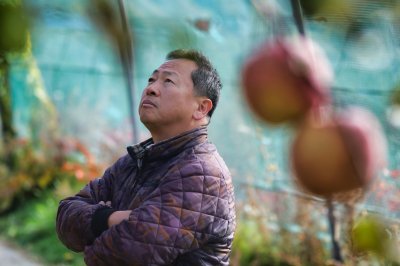
HAMYANG, South Korea, Feb. 23 (UPI) — As harvest season approached last November, farmer Ma Yong-un walked through his apple orchard in southern South Korea with a growing sense of dread.
The Fuji apples hanging from the trees were pale, lacking the deep red color that signals sweetness and commands a good price. To make matters worse, many were splitting open as they ripened.
An unusually rainy fall had blocked the sunlight needed for proper coloring, following one of the hottest summers on record.
“I had never seen this kind of cracking before,” Ma, 55, told UPI on his farm in Hamyang, a rural county in South Gyeongsang Province. “I was so stressed. I was worried about my family’s survival.”
A late dry spell before the harvest helped salvage some color, but another year of punishing weather had taken its toll. Ma estimated that half his apples were not of good quality.
Across South Korea, similar stories have become increasingly common. Farmers are facing mounting losses from heat waves, heavy rainfall, droughts and shifting growing seasons — impacts scientists widely link to climate change.
Now, their experiences are moving from fields and paddies into a courtroom.
Ma is one of five plaintiffs in a civil lawsuit filed against state-owned utility Korea Electric Power Corporation, or KEPCO, and five of its power-generation subsidiaries. The suit seeks financial compensation for climate-related agricultural damages and asks whether a major corporate emitter can be held legally responsible for the downstream effects of climate change.
The case is the first of its kind in South Korea, according to Yeny Kim, an attorney with the Seoul-based nonprofit Solutions for Our Climate, which is representing the plaintiffs.
“Agriculture is an industry that is absolutely dependent on climate conditions,” Kim told UPI. “As the climate changes, we’re reaching a point where certain crops can no longer be grown. That leads to damages to farmland, reduced yields and increased costs just to grow the same amount of crops.”
Filed in August, the lawsuit argues that KEPCO’s greenhouse gas emissions materially contributed to climate change and, in turn, to the plaintiffs’ economic losses.
Quantifying climate damage
The case is based on an analysis estimating $72.9 billion in climate-related economic damages linked to KEPCO’s emissions between 2011 and 2023. During that period, KEPCO and its subsidiaries accounted for roughly 27% of South Korea’s total greenhouse gas emissions, making the utility the single largest corporate emitter in the country.
Globally, the companies’ emissions represented about 0.39% of cumulative worldwide emissions over the same timeframe — a figure the plaintiffs argue is sufficient to establish measurable responsibility for climate-driven harm.
“In a court of law, quantifiable harm means legal liability,” Kim said.
The lawsuit draws on the “polluter pays” principle, which holds that those responsible for pollution should bear the costs of the damage it causes. While widely used in environmental law, applying it to climate change remains largely untested in Korean courts.
Each plaintiff is seeking an initial 5 million won — about $3,400 — in damages, an amount that could be adjusted as the case proceeds. They are also requesting an additional 2,035 won, roughly $1.40, as symbolic compensation for the emotional and psychological toll they say climate change has imposed on their lives.
Hwang Seong-yeol, a rice farmer and fellow plaintiff, said anxiety and a sense of helplessness now shadow every growing season.
“We just look at the sky and wonder what the weather is going to be like,” Hwang said at a press briefing in Seoul in November. “Being stressed from physical labor is something we can endure. But the stress caused by climate change is completely unbearable.”
The suit’s first hearing took place at Gwangju District Court last month. Court records show the defendants have submitted multiple written responses contesting the claims. The next hearing is scheduled for April 23.
KEPCO did not respond to a request for comment. The company has pledged to achieve carbon neutrality by 2050, in line with South Korean government policy.
An economy at risk
South Korea has lagged other developed countries in transitioning away from fossil fuels. Government data show just 10.7% of the country’s electricity came from renewable sources in 2024, well below the global average of roughly 32%.
The country is also particularly exposed to climate disruptions abroad. South Korea imports the vast majority of its food — its calorie self-sufficiency rate stood at just 32.5% in 2023, roughly half the level recorded in 1990, according to the Korea Rural Economic Institute. The broader grain self-sufficiency rate, including animal feed, has fallen to 22.2%, among the lowest of any OECD country.
Nam Jae-Chol, a professor at Seoul National University and former administrator of the Korea Meteorological Administration, told UPI that dependence leaves the country vulnerable when climate shocks hit major exporters.
“When exporting countries begin to limit shipments because of climate impacts, that’s when the problem becomes visible,” Nam said. “If agricultural imports suddenly decline because of climate change, prices will skyrocket. In extreme cases, exports could even stop.”
“In 10 or 20 years, we’re going to face a serious crisis due to climate change,” Nam added. “It’s inevitable.”
In South Korea, warming temperatures have already pushed traditional crop-growing zones northward, forcing farmers to adapt — changing what they grow, how they manage water and how they run their operations, Nam said.
Ma said he first felt the full weight of climate change in 2018, when severe cold and frost tore through his orchard, a moment that convinced him the changes were accelerating.
Since then, he has cut his use of chemical fertilizers and tried more eco-friendly practices to improve soil health. He has also begun to consider whether he may eventually need to change crops or even move his orchard entirely — decisions that carry steep costs and uncertainty.
“The compensation is 5 million won, but the damages I suffered this fall alone were ten times more than that,” Ma said. “So the amount itself doesn’t really mean much.”
What he hopes, he said, is that the lawsuit makes those struggles harder to ignore.
“Climate change is already having a huge impact on our agriculture, and people need to see that,” Ma said. “KEPCO cannot continue operating this way, and Korea needs to change its energy policy toward something more sustainable.”
IT IS starting to feel like we are never going to escape the doom and gloom of winter – but next week, you could jet off somewhere on a short flight for some 20C heat.
With February feeling as long as January and rain continuing across the UK, the memories of warm weather and sunshine seem distant.
Sign up for the Travel newsletter
Thank you!
A number of destinations less than five hours from the UK are hitting 20C or more next weekCredit: GettyFor example, you could head to Marrakech in Morocco which is reaching up to 24C and has £14 flightsCredit: Getty
And unfortunately for us Brits, we have still got a while to go until we see the budding and blooming of spring.
So, why not just forget about it for the week and head somewhere next week for cheap to catch some rays? Here are some destinations all under five hours away, with weather at least 20C.
Marrakech, Morocco
Marrakech in Morocco will reach temperatures of up to 24C next week.
On March 3, you could fly from London Stansted to Marrakech for just £14 one-way.
RYANAIR has warned it’s planning on axing even MORE routes to Spain next year.
This comes after the budget airline announced it would be cutting 1.2million seats from popular destinations this summer.
Sign up for the Travel newsletter
Thank you!
The airline is planning on cutting seats to Spain due to Aena proposing a hike in feesCredit: GettyFlights to Tenerife (North Airport) were suspended over the winter monthsCredit: Getty
Ryanair has already revealed that this year it plans to axe over a million seats to certain Spanish routes, with some routes being cut down.
Others could be axed completely – and there could be more to come.
This is in response to Aena – the state-controlled airport operator in the country – increasing its fees for airlines.
The operator has proposed an increase in passenger fees, meaning airlines would be paying 21 per cent more from 2027 to 2031.
CEO of Ryanair, Eddie Wilson has now said: “Next winter we will make further cuts to regional airport services and I remind you that our total traffic in Spain for this summer will only grow by 0.5 per cent compared to 9 per cent in Italy, 11 per cent in Morocco or 20 per cent in Poland.”
He added: “Aena’s proposal to increase fares by 21 per cent is regrettable, but not surprising, as this airport monopoly has a history of applying the highest fares at the expense of traffic development, especially at Spain’s regional airports, which are 70 per cent empty.”
Eddie Wilson continued to say that if the fees were to be increased it would “make even the most popular airports in Spain uncompetitive.”
He said that Ryanair’s aircraft would end up going to “other places in Europe where rates are more competitive” instead.
Ryanair isn’t the only airline hitting back at the proposals from Aena.
According to Business Travel News Europe, “‘airline groups are objecting to proposed increases” and have called for an “annual reduction in the fees.”
Rafael Schvartzman, IATA’s regional vice president for Europe, called AENA’s proposed level of increases “unsustainable and unrealistic”.
After the proposals were announced, Ryanair last year revealed cancellations of its routes to Vigo and Santiago.
Vigo is another destination that will no longer be served by RyanairCredit: Getty
The airline is also reducing its capacity at Santander, the Canary Islands, and Zaragoza.
It is also significantly scaling back its operations at Santiago de Compostela.
Elsewhere in Spain, Ryanair is halting all flights to Asturias and Vigo, and the base in Jerez will remain closed in 2026.
Other axed routes last year include those to French airports like Bergerac, Brive, and Strasbourg.
This means that your trip to Tenerife could become more expensive – and if so, you should take a look at Morocco instead.
Cities around the North African country could be set to get cheaper flights as Ryanair has said that the capacity removed from Spanish airports will be reallocated to more competitive European markets, including Morocco.
“We were sunbathing on the roof of our riad in the Medina in glorious 22 degree temperatures – and I loved the amazing desert landscapes just 40 minutes from the hustle and bustle of the souks.
“Tourism is booming in the city and while the streets are as colourful and chaotic as ever, the influx of visitors has brought some gorgeous new bars, restaurants and stunning hotels.“
Remarks from Ministry of Foreign Affairs come after Trump says he is considering an attack if a nuclear deal is not reached.
As a new round of talks between the United States and Iran is scheduled to take place in Geneva, Tehran has reiterated that it wants to find a diplomatic solution with the US on its nuclear programme but will defend itself if Washington resorts to military action.
Iran’s Ministry of Foreign Affairs spokesman Esmaeil Baghaei said on Monday that any US attack, including limited strikes, would be considered an “act of aggression” that would precipitate a response after US President Donald Trump said he was considering a limited strike on Iran.
Recommended Stories
list of 4 itemsend of list
“An act of aggression would be regarded as an act of aggression. Period. And any state would react to an act of aggression as part of its inherent right of self-defence ferociously, so that’s what we would do,” Baghaei said during a media briefing.
Trump said on Friday that he was considering a limited strike if Tehran did not reach a deal with the US. “I guess I can say I am considering that,” he said in reply to a question from a reporter.
On Sunday, Iranian President Masoud Pezeshkian said nuclear talks with the US have produced “encouraging signals” but warned that Tehran is prepared for any scenario in advance of another round of negotiations set for Thursday.
“Iran is committed to peace and stability in the region,” Pezeshkian wrote on X.
The two countries concluded a second round of indirect talks in Switzerland on Tuesday under Omani mediation against the backdrop of the largest US military build-up in the region since the 2003 Iraq war. They resumed talks in Oman this month.
A third round of indirect talks is scheduled for Thursday in Geneva, but the US has yet to confirm. Oman said on Sunday that the talks are set “with a positive push to go the extra mile towards finalising the deal”.
Iranian Foreign Minister Abbas Araghchi has been leading the negotiations for Iran while the US is represented by envoy Steve Witkoff and Trump’s son-in-law Jared Kushner.
‘Iranians had never capitulated’
Baghaei dismissed any claim that a temporary agreement had been reached with Washington, adding that speculation on the nuclear talks is not uncommon.
“We do not confirm any of the speculation. The details of any negotiation process are discussed in the negotiating room. The speculation raised about an interim agreement has no basis.”
Al Jazeera’s Tohid Asadi, reporting from Tehran, said there was a “mixture of optimism and pessimism” in Iran’s capital.
“Let’s call it a pragmatically calibrated cautiousness that we see when it comes to Iran’s statements over the past few weeks, specifically following the major military build-up by the Americans in the region,” he said.
He said Iran is considering both scenarios “on the basis of readiness for diplomatic engagement on the one hand and regional confrontation on the other hand”.
The Trump administration said it has been intensifying its build-up of an array of military assets in the Middle East during the talks with Iran. In an interview with the Fox News TV channel on Sunday, Witkoff said Trump was wondering why Iran has not “capitulated” in the face of the military deployment.
Baghaei on Monday stressed that Iranians had never capitulated at any point in their history.
“This is not the first time we have encountered contradictory claims,” the Foreign Ministry spokesman said.
“We leave the judgement to the discerning people of Iran and the country’s political elites to decide about Iran’s negotiating approach and, in turn, the negotiating approach of the United States,” he added.
“No negotiation that begins with an imposed burden and prejudgement will naturally reach a result,” the official said.
He also stressed that Iran’s positions on its nuclear programme and sanctions relief are clear-cut.
“Any negotiation process requires joint action, and there is hope for results if there is goodwill and seriousness on both sides,” Baghaei said.
When the pandemic hit, and reality settled in that life would be isolated and mostly inside, Grammy winner Anderson .Paak found himself on the outside looking in, in a way he didn’t anticipate. “I was the odd man out. My son was 8, and BTS took over the whole house,” .Paak explained in an interview with The Times at his WeHo lounge, Andy’s. “It was a K-pop storm. Before that, me and my son were bonding off of my music.”
.Paak’s son, Soul Rasheed, and his now ex-wife originally from Korea, Jaylyn Chang, had become obsessed with K-pop alongside much of America, which reminded .Paak of the intensity of Beatlemania. Black American music influenced the birth of a new style, which formed and expanded across oceans, then returned to the U.S. and exploded. This effect in the .Paak household was palpable, causing Soul and Chang to deeply bond in a new way. .Paak himself, as a soul, R&B and hip-hop aficionado, was tapped into the source, but not the reinterpreted subject. So he had to find a way in.
Soul, at the time, like many 8-year-olds, had also become obsessed with becoming a YouTuber. Besides .Paak’s music, the father-and-son duo had also previously connected over humor, so .Paak started there. They began with funny skits and eventually fused them with BTS dances. Soon, there were even videos featuring them comedically educating each other about their individual music tastes. “I loved it,” .Paak recalled, getting lost in the memory. “I was getting to know him more, and he was getting to know me. My mom would always say, ‘It’s one thing for your kids to love you, but it’s another to share things you’re interested in.’ It wasn’t like I was being Anderson .Paak, I was just Dad.”
“I was getting to know him more, and he was getting to know me,” .Paak said of bonding with his son, Soul.
(Carlin Stiehl / For The Times)
Through this exploration and the realization of a potential continued familial bond, a story idea emerged, then a treatment for a K-pop-centered film that .Paak would direct and he and Soul would both star in. .Paak then began directing a slew of music videos as the pandemic began to fade, building a portfolio and gaining experience in the medium. But he could start to sense Soul’s interest fading as time passed. After a few failed pitch attempts, .Paak urgently enlisted the help of one of his oldest friends and fellow entertainer, Jonnie “Dumbfoundead” Park, who brought .Paak and the idea to Stampede Ventures.
“The pitch was from an idea that Anderson had, and [to introduce it], we showed them this TikTok that he had with his son,” Park recalled over Zoom. “Anderson was like, ‘Do you know anything about BET, son?’ And [Soul] was like, ‘No, but I know BTS.’ Then they were just going back and forth, arguing about BET and BTS. That was literally the deck, [us saying] we would take that energy and put it into a two-hour film. They loved it. As soon as we walked out of the office, Anderson looked over like, ‘Are we greenlit?!’ They just understood it, the whole intergenerational, intercultural element of Black and Korean.” Stampede combined forces on the project with Live Nation Studios and .Paak’s debut feature “K-Pops!” was off to the races.
It’s important to note that .Paak is himself Black and Korean. His mother was adopted from Korea by a SoCal Black American military family and .Paak’s father was also a Black military officer. Thus, while his mother was born in Korea, he was raised almost entirely within a Black cultural space. .Paak didn’t experience much direct exposure to Korean culture until his 20s, when he met Chang at the Musicians Institute in Hollywood. As an immigrant directly from Korea, Chang showed him the fortitude of structure amid her community. He was also taken by their inherent family value system. “In Korean households, you stay in the house until you get older so you can take care of your parents, and your parents can help take care of the kids,” .Paak explained. “There’s an infrastructure that’s worked out. Also, Korean food is important, as is learning the language. I was drawn to that. My son didn’t eat anything outside of Korean food for so long, and he’s just now getting into tacos.”
.Paak then further explored his Korean side through a burgeoning friendship with Park, which happened a bit later, after Chang had already given birth to Soul. Park introduced .Paak to K-town-based Korean culture through their shared music scene. “The people that came from K-town had a lot of Latino and Black influences as well,” .Paak remembered. “There was a little more of a melting pot, and it was more urban. But in a similarly communal way [to Koreans from Korea], they were all hanging out in K-town with other Korean friends. They’d drink soju, and go to after-hours where you had to have somebody Korean with you.”
While .Paak had some opportunities in adulthood to grasp a bit of his Korean heritage, in “K-Pops!,” through his main character BJ, he also got to actualize what his mother may have missed. In the film, BJ, a failed karaoke bar R&B musician, gets a lucky chance to go to Korea and be the drummer for a popular K-pop competition series. There, he bumps into his estranged ex-girlfriend’s son, Tae Young (played by Soul), who is competing on the show. He then finds out that the kid is his. While a messy transition ensues, BJ and Tae Young eventually get to galavant around Korea and work together to try to win the competition. Through this exploration, BJ finds out he can thrive in Korea while still holding onto his Blackness. .Paak’s mother’s dive back into her roots had a different result. “My mom went abroad and spent a year in Korea, but when she went there, she just didn’t like it,” .Paak explained. “In the movie, initially, BJ doesn’t really have any connection to his Korean side and doesn’t really care to know, but then he finds a bridge.” That bridge is music.
Actor Yvette Nicole Brown, who in “K-Pops!” plays BJ’s mother, proclaimed over Zoom that, “Everything about the film and the music in it is Blasian, every culture is celebrated and massaged and made into something beautiful.” .Paak made a concerted, intentional effort to explore both the Black and Korean sides of K-pop in two scenes.
The first is an early breakdown initiated by Soul’s character, Tae Young, who explains the structured roles of a K-pop group, which may be fun for superfans and educational for laypeople to the genre. The next is a winding presentation by BJ to Tae Young about the influence of Motown groups like the Jackson 5 and boy bands like New Edition on the momentum of K-pop’s rise. It’s particularly poignant because it is all shot at a record store on the streets of Korea, where .Paak explained he actually found the records he was referencing. “There’s nothing wrong with people doing their interpretation of Black music, as long as you pay homage and as long as you respect it and take care of it,” .Paak declared. “Because [if you do], then they’ll take care of you, but the moment you don’t, you’ll see what happens … I wanted to explain that history because that’s how I saw it.”
Real-life father and son, Anderson .Paak, left, and Soul Rasheed, co-star in “K-Pops!”
(Jake Giles Netter)
”K-Pops!” has as much of who .Paak and Soul are as father and son as he could fit in. There are appearances by legacy Black artists like Earth, Wind & Fire, as well as K-pop stars like Vernon from Seventeen. There are original songs co-written and co-produced by .Paak and musician Dem Jointz, that feature K-pop fused with soul and funk, one of which Tae Young performs as his finale competition number (soundtrack arriving soon). The film was shot in both L.A. and Korea and provided ample time for bonding (especially during scenes filled with off-the-cuff humor) that .Paak envisioned from the beginning. Yet still, at the time they were about to shoot, .Paak almost couldn’t get Soul on board because he had turned 11 and wasn’t as into K-pop or acting comedically anymore; he insisted he was instead “into Slipknot.”
The duo did find their footing, though, and executed a winding story that centers on their connection. As a burgeoning teenager in 2024, Soul went with his father to the world premiere at the Toronto International Film Festival, along with a plethora of Korean relatives from his mom’s side. .Paak anxiously awaited their full reaction to the culmination of his quest for a deeper bond.
“Everybody really enjoyed it,” .Paak remembered, relieved. “[Soul] was like, ‘I’m proud of you, Dad.’ I asked him, ‘You think you would ever do part two?’ He was like, ‘Nah, I don’t think acting is my passion, but I’ll never forget those moments … You know what? On second thought, it depends on the script.’ But I think he’s really proud of it. I think it’s something like, when he gets older, he’ll see how special it is as well. But yeah, he didn’t say it’s cringe.”
“K-Pops!” has its L.A. premiere on Tuesday and debuts in select theaters Friday.
DAKAR, Senegal — Being gay in Morocco is illegal and punishable by up to three years in prison. But it was the violence from her family that forced Farah, a 21-year-old gay woman, to flee the country.
After a long journey to the United States and a third-country deportation by the Trump administration, however, Farah said she is now back in Morocco and in hiding.
“It is hard to live and work with the fear of being tracked once again by my family,” she told the Associated Press, in rare testimony from a person deported via a third country despite having protection orders from a U.S. immigration judge. “But there is nothing I can do. I have to work.”
She asked to be identified only by her first name for fear of persecution. The AP saw her protection order and lawyers verified parts of her account.
Farah said that before she fled, she was beaten by her family and the family of her partner when they found out about their relationship. She was kicked out of the family home and fled with her partner to another city. She said her family found her and tried to kill her.
Through a friend, she and her partner heard about the opportunity to get visas for Brazil and fly there with the aim of reaching the United States, where they had friends. From Brazil, she trekked through six countries for weeks to reach the U.S. border, where they asked for asylum.
“You get put in situations that are truly horrible,” she recalled. “When we arrived [at the U.S. border], it felt like it was worth the trouble and that we got to our goal.”
They arrived in early 2025. But instead of finding the freedom she envisioned, Farah said she was detained for almost a year, first in Arizona, then in Louisiana.
“It was very cold,” she said of detention. “And we only had very thin blankets.” Medical care was inadequate, she said.
She was denied asylum, but in August she received a protection order from a U.S. immigration judge, who ruled she cannot be deported to Morocco because that would endanger her life. Her partner, denied asylum and a protection order, was deported.
Farah said she was three days from a hearing on her release when she was handcuffed by Immigration and Customs Enforcement and put on a plane to an African country she had never visited, and one where homosexuality is illegal: Cameroon. She was put in a detention facility.
“They asked me if I wanted to stay in Cameroon, and I told them that I can’t stay in Cameroon and risk my life in a place where I would still be endangered,” she said. She was flown to Morocco.
Most deportees had protection orders
She is one of dozens of people confirmed to be deported from the U.S. by the Trump administration to third countries despite being granted legal protection by U.S. immigration judges. The actual number is unknown.
The administration has used third-country deportations to pressure migrants who are in the U.S. illegally to leave on their own, saying they could end up “in any number of third countries.”
The detention facility in Cameroon’s capital of Yaounde, where Farah was held, currently has 15 deportees from various African countries who arrived on two flights, and none is Cameroonian, according to lawyer Joseph Awah Fru, who represents them.
Eight of the deportees on the first flight in January, including Farah, had received a judge’s protection orders, said Alma David, an immigration lawyer with the U.S.-based Novo Legal Group who has helped deportees and verified Farah’s case. The AP spoke to a woman from Ghana and a woman from Congo, who both said they had protection orders, speaking on condition of anonymity for fear of retaliation.
Another flight Monday brought eight more people. Three freelance journalists reporting on the deportations to Cameroon for the AP were briefly detained there.
Deporting people to a third country where they could be sent home was effectively a legal “loophole,” said David.
“By deporting them to Cameroon, and giving them no opportunity to contest being sent to a country whose government hoped to quietly send them back to the very countries where they face grave danger, the U.S. not only violated their due process rights but our own immigration laws, our obligations under international treaties and even DHS’ own procedures,” David said.
The U.S. Department of Homeland Security earlier confirmed there were deportations to Cameroon in January.
“We are applying the law as written. If a judge finds an illegal alien has no right to be in this country, we are going to remove them. Period,” it said, and asserted that the third-country agreements “ensure due process under the U.S. Constitution.”
Asked about the deportations to Cameroon, the U.S. State Department on Friday told the AP it had “no comment on the details of our diplomatic communications with other governments.” It did not reply to further questions.
Cameroon’s Foreign Ministry didn’t respond to a request for comment.
‘Impossible choices’
Farah was one of two women from the first group of deportees to return to Morocco.
“They were given two impossible choices,” David said, asserting that claiming asylum was not clearly presented as one of them. “This was before the lawyer had access to them.”
She said International Organization for Migration staff in the facility did not give them any indication that there was a viable option other than going back to their home countries.
Fru said he has not been granted access to the deportees. He said the assistant to the country director for the IOM, a U.N.-affiliated organization, told him he must apply to speak to them. Fru plans to do that Monday.
The IOM told the AP it was “aware of the removal of migrants from the United States of America to some African countries” and added that it “works with people facing difficult decisions about whether to return to their country of origin.” It said its role is providing accurate information about options and ensuring that “anyone who chooses to return does so voluntarily.”
The IOM said the facility in Yaounde was managed by the authorities in Cameroon. It did not respond to further questions.
African nations are paid millions
Cameroon is one of at least seven African nations to receive deported third-country nationals in a deal with the U.S. Others include South Sudan, Rwanda, Uganda, Eswatini, Ghana and Equatorial Guinea.
Some have received millions of dollars in return, according to documents released by the State Department. Details of other agreements, including the one with Cameroon, have not been released.
The Trump administration has spent at least $40 million to deport about 300 migrants to countries other than their own, according to a report released last week by the Democratic staff of the Senate Foreign Relations Committee.
According to internal administration documents reviewed by the AP, 47 third-country agreements are in various stages of negotiation.
In Morocco, Farah said, it was hard to hear U.S. officials refer to people like her as a threat.
“The USA is built on immigration and by immigrant labor, so we’re clearly not all threats,” she said. “What was done to me was unfair. A normal deportation would have been fair, but to go through so much and lose so much, only to be deported in such a way, is cruel.”
Pakistan players do not play in the Indian Premier League (IPL) amid ongoing political tensions between the two countries, and that trend is reflected at IPL-owned franchises around the world.
MI London, Manchester Super Giants, Sunrisers Leeds and Southern Brave are all now part or fully-owned by IPL sides after the England and Wales Cricket Board (ECB) sold stakes in the teams last year.
Trent Rockets, London Spirit, Birmingham Phoenix and Welsh Fire are the non IPL-owned teams.
Farhan is currently the leading run-scorer at the T20 World Cup and scored a century against Namibia in the group stage.
He has registered for the auction at a base price of £50,000 – half the amount of some players.
“I’m very hopeful,” he said.
“Because every player wants to play every league, play in the good leagues.
“The Hundred is one of the best leagues. So I hope for the best.”
Pakistan play England in the T20 World Cup in Sri Lanka on Tuesday.
Thirteen of their 15-strong squad registered for the auction with batter Fakhar Zaman and former captain Babar Azam, who is likely to be with the Test squad during the Hundred, the only absentees.
Left-arm seamer Shaheen Afridi and fellow quick Haris Rauf, who have played in the Hundred previously, and all-rounder Saim Ayub are among those to have signed up with the highest base price of £100,000.
England captain Harry Brook said last week it would be “a shame” if Pakistan players were not involved.
This article outlines the historical evolution and modern observance of Defender of the Fatherland Day in Russia. Originally established in 1922 to commemorate the birth of the Red Army, the holiday has undergone several name changes reflecting the nation’s shifting political landscape. The text tracks its journey from a Soviet military celebration to its current status as a public holiday honoring national protectors. Today, the occasion is marked by official ceremonies at the Tomb of the Unknown Soldier and spectacular firework displays in major cities. Ultimately, the source provides a chronological overview of how a 1918 emergency draft transformed into a significant cultural traditio …