Slovakia had issued a two-day ultimatum to Ukraine to reopen the Soviet-era Druzhba pipeline so that it could receive Russian oil deliveries.
Published On 23 Feb 202623 Feb 2026
Share
Slovak Prime Minister Robert Fico has said his country will halt emergency electricity supplies to Ukraine until Kyiv reopens a key pipeline transporting Russian oil to Slovakia, making good on an ultimatum he issued to Ukrainian President Volodymyr Zelenskyy.
Fico’s announcement on Monday came two days after he warned Zelenskyy on social media that he would ask state-owned company SEPS to halt emergency supplies of electricity if flows of Russian crude oil via the Soviet-era Druzhba pipeline crossing Ukraine did not resume.
Recommended Stories
list of 3 itemsend of list
“As of today, if the Ukrainian side turns to Slovakia with a request for assistance in stabilising the Ukrainian energy grid, such assistance will not be provided,” Fico said in a video on his Facebook page.
Ukrainian grid operator Ukrenergo said in a statement that it had not been officially informed yet, but that it would “not affect the situation in the unified power system of Ukraine”.
“The last time Ukraine requested emergency assistance from Slovakia was over a month ago and in a very limited volume,” it said.
Fico said the stoppage would be lifted “as soon as the transit of oil to Slovakia is restored”.
“Otherwise, we will take further reciprocal steps,” he said, adding his country would also reconsider “its previously constructive positions on Ukraine’s EU membership”.
He said the stalled oil supply was a “purely political decision aimed at blackmailing Slovakia over its international positions on the war in Ukraine”.
Slovakia and neighbouring Hungary, which have both remained dependent on Russian oil since the Kremlin launched its invasion of Ukraine almost four years ago, have become increasingly vocal in demanding that Kyiv resume deliveries through the Druzhba pipeline, which was shut down after what Ukraine said was a Russian drone strike hit infrastructure in late January.
Ukraine says it is fixing the damage on the pipeline, which still carries Russian oil over Ukrainian territory to Europe, as fast as it can.
Slovakia and Hungary say Ukraine is to blame for the prolonged outage and have declared emergencies over the cut in oil deliveries.
The EU imposed a ban on most oil imports from Russia in 2022, but the Druzhba pipeline was exempted to give landlocked Central European countries time to find alternative oil supplies.
Meanwhile, the European Union failed to agree on new sanctions on Russia for the fourth anniversary of Europe’s biggest war since World War II, after Hungary vetoed the move.
Hungary’s Prime Minister Viktor Orban – the friendliest EU leader to the Kremlin – is stalling the sanctions and a 90-billion-euro ($106bn) EU loan to Ukraine until Kyiv reopens the oil pipeline.
Fico also said he has refused to “involve the Slovak Republic” in the latest EU loan due to Zelenskyy’s “unacceptable behaviour”, alluding to Ukraine’s earlier halting of Russian gas supplies after a five-year-old transit agreement expired on January 1, 2025, which Fico claimed is costing Slovakia “damages of 500 million [euros; $590m] per year”.
Hungary and Slovakia have accounted for 68 percent of Ukraine’s imported power this month, according to Kyiv-based consultancy ExPro. It was not immediately clear if emergency electricity supplies were included in that figure.
GARY “MANI” MOUNFIELD’s legacy lives on thanks to a huge vault of unreleased music.
The rocker was laid to rest in December following his sudden death the month before.
Sign up for the Showbiz newsletter
Thank you!
Gary ‘Mani’ Mounfield’s legacy lives on thanks to a huge vault of unreleased musicCredit: Shutterstock EditorialRock bassist Mani sadly lost his wife Imelda to cancer in 2023Credit: Shutterstock EditorialThe rocker had been preparing to go out on a solo next summerCredit: Getty – Contributor
I’m told there have been talks with his Stone Roses bandmates about releasing a song dedicated to him.
A source said: “Tracks Mani recorded with the band after their reunion in 2011, along with songs he made with Primal Scream, are all in a vault which could soon be opened.
“Mani was one of the most prolific musicians around and as well as playing with The Roses and Primal Scream, he was involved in numerous side projects.
“There are tracks featuring him by The Stone Roses, Primal Scream, Free Bass and Mantra Of The Cosmos.
“The hope is that these tracks will come out in tribute to him, possibly even as a compilation. It’s all early days but there are ongoing discussions about how best to pay tribute to his music legacy.”
After The Stone Roses reformed for concerts in 2011, they went into the studio to record new material and released two singles, All For One and Beautiful Thing.
But a third album never materialised, despite there being more songs.
Zak Starkey, son of BeatleRingo Starr, revealed Mani agreed to be the bass player for Mantra Of The Cosmos but had to walk away after initial sessions to care for his wife Imelda, who died in 2023.
Drummer Zak said: “Due to his amazing strong woman Imelda being very sick, he couldn’t commit to Mantras.
“There was no substitute for Mani so we never had a bass player, it just wouldn’t have been right.”
Bella in nightclub hold-up
IT’S not often we see celebs falling out of nightclubs these days, given they’re more prone to neck a protein milkshake than a martini.
But Bella Hadid almost took a tumble outside the Chateau Marmont Hotel in Los Angeles.
Bella Hadid almost took a tumble outside the Chateau Marmont Hotel in Los AngelesCredit: BackGridBella shared snaps from her night out at the trendy hauntCredit: BackGridThe star was pictured grabbing on to a handily parked 4×4 car to keep her uprightCredit: BackGrid
Luckily for Bella, all those years walking in heels on catwalks means she’s a pro at keeping her balance – and she grabbed on to a handily parked 4×4 car to keep her upright.
Bella shared snaps from her night out at the trendy haunt and revealed she was with New York designer Noah Ruttenberg and her stylist Mimi Cuttrell before making this spectacular exit.
He got the part of Nick Tilsley in 1997, and went on to have a No5 song with his debut single I Breathe Again in 1999.
But after album Good Times limped in at No41, he was dropped from his label.
Adam said online about going back into the studio: “We did a version of Breathe Again, which was nice. We’ve got a really good song idea. We’re going to record a new song.”
He told Roxie Nafousi’s Rise With Roxie podcast: “I remember I got an email from J-Lo’s team.
Celeb hairdresser Chris Appleton thought Jennifer Lopez was a scammer when he first got an email from herCredit: Getty
“It was like, ‘Jennifer Lopez is doing her Vegas tour and she would, you know, want to work with you.’ I remember I ignored the first email because I thought, ‘Oh this is probably just spam or something’. And then I got another one and I remember thinking, ‘How does J-Lo know who I am?’.”
Unluckily for Chris, who counts Kim Kardashian among his famous clients, he ended up missing the boat because he failed to respond.
BANDS including A Day to Remember, The Primals and Creeper have joined the list of rock gods playing Download Festival.
The mega event taking place at Donnington Park from June 10 to 14 will also feature acts such as headliners Limp Bizkit, Guns n’ Roses, Linkin Park, plus Cypress Hill, Trivium, Bad Omens and Pendulum.
Tickets for the festival in Leicestershire will go on sale at 10am tomorrow.
JAIL JOB STIRS UP MARCUS
MARCUS MUMFORD says working with jail inmates gave him inspiration for new album Prizefighter.
The Mumford And Sons frontman said: “Alley Cat, I wrote in a prison actually. I go into prison and do poetry workshops and that came out of one of those sessions with the lads.
Marcus Mumford says working with jail inmates gave him inspiration for new album PrizefighterCredit: Getty
“I felt slightly conflicted about it to start with.”
While the track hasn’t yet been picked as a single, the record is going down a storm.
Prizefighter is on course to give Mumford And Sons their fourth UK No1 album on Friday, after topping the chart in the midweek update.
Marcus has been volunteering in prisons since the end of lockdown.
The singer added: “If all of us were defined by the worst thing we ever did, we’d all be f***ed.
“I believe in grace, I believe in mercy, I believe in responsibility, choices, consequences, of course.”
THE Canary Island favourite is always a good bet for sun as March arrives, with temperatures averaging in the low 20s.
The family-friendly 4-star Alexandre Gala near Playa de las Americas on the sun-drenched south-west coast has two outdoor pools, one of which is heated year-round.
Tenerife is always a good bet for sun as March arrives, with temperatures averaging in the low 20sCredit: Getty
As well as a buffet restaurant and two bars, there is a spa and sports facilities.
Its central location means it is close to the beach, bars and restaurants and just 1km from the Siam Park water park.
GO: Seven nights’ half-board at the Alexandre Gala is from £677pp including flights from Birmingham on March 4. See thomascook.com.
WARMING up nicely in March, Cyprus offers average highs of 20C.
Set on the beachfront of Kato Paphos, the 5-star Ivi Mare hotel is designed exclusively for adults.
Warming up nicely in March, Cyprus offers average highs of 20CCredit: Getty
There are three restaurants — buffet, Mediterranean and Japanese — as well as two bars, two outdoor freshwater pools and an indoor one.
There also a spa with sauna, steam room and Jacuzzi plus treatments for a pamper between sunbathing sessions.
GO: Seven nights’ B&B at the Ivi Mare is from £969pp including flights from Gatwick on March 2 and transfers. See easyjet.com/en/holidays and ivimarepaphos.com.
YOU are guaranteed tropical sunshine on the Caribbean coast of Mexico — and the all-inclusive 5-star AVA Resort Cancun makes the most of it, with all rooms and suites featuring panoramic ocean views.
The 2.8-acre beachfront lagoon is perfect for sailing, kayaking and paddleboarding, while another six pools offer more water fun.
You are guaranteed tropical sunshine on the Caribbean coast of MexicoCredit: Getty
There are nine fine-dining restaurants and eight casual options, including street food and ice cream salons.
There are also bars, cocktail lounges and nightlife venues.
GO: Seven nights’ all-inclusive is from £2,175pp, including flights from Gatwick on March 11 and transfers. See ba.com and avaresortcancun.com.
AGADIR’S beaches are a hit with surfers thanks to the year-round swells.
And with temperatures sizzling in the high 20s around now, there is no better place to kick back on a sunlounger with a beer.
Agadir’s beaches are a hit with surfers thanks to the year-round swellsCredit: Getty
At this time of year, stays at the 5-star Hyatt Place Taghazout Bay are a steal, with luxurious rooms overlooking the ocean, two outdoor pools and a sandy beach just a 1.4km stroll away.
While golf enthusiasts are getting in the swing at the on-site 18-hole course, those seeking relaxation can book in at the Moroccan-themed spa.
GO: Seven nights’ B&B at the Hyatt Place Taghazout Bay is from £449pp with Luton flights on March 10. See loveholidays.co.uk.
ALL you will see from your room is blue at the 4-star Fuerteventura Princess, where four sprawling outdoor pools look on to the ocean.
Lush palm trees, volcanic mountains and hot weather make the island seem like a far-flung tropical escape, yet it is just a four-ish hour flight.
All you will see from your room is blue at the 4-star Fuerteventura Princess, where four sprawling outdoor pools look on to the oceanCredit: Roberto Moiola / Sysaworld
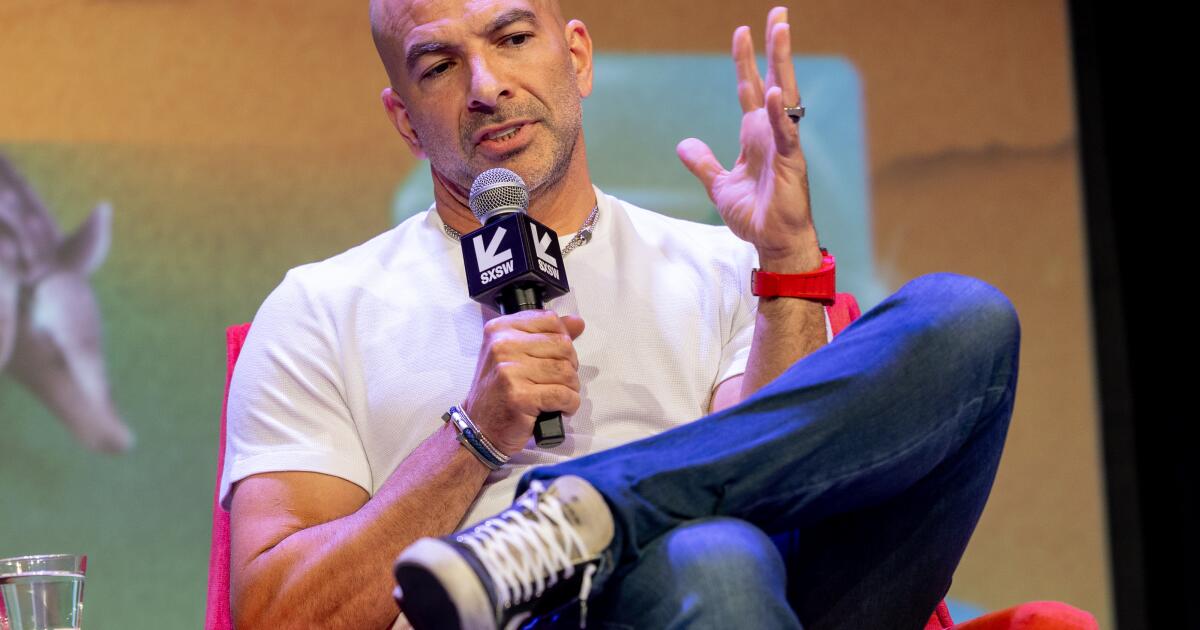
After some initial resistance, CBS News has cut ties with contributor Peter Attia, whose name appears more than 1,700 times in the files of pedophile Jeffrey Epstein.
Attia, a physician who specializes in longevity medicine, was among the 19 contributors named last month by CBS News editor in chief Bari Weiss. A CBS News executive confirmed Attia’s departure Monday.
Attia’s resignation was agreed upon after discussions with Weiss, according to one of her associates. He had not appeared on the network since the announcement of his hiring in January.
Once Attia’s name showed up in the cache of Epstein files released by the Department of Justice earlier this month, it seemed as though cutting him loose would be a no-brainer for the news division.
But Weiss, who came to CBS News when parent company Paramount acquired her contrarian digital site the Free Press last fall, is highly skeptical of cancel culture and resisted immediate action, according to people familiar with her thinking.
A representative for Attia said he quit because “he wanted to ensure his involvement didn’t become a distraction from the important work being done at CBS.”
Any appearance on the network probably would have generated a spate of negative stories.
Attia’s email exchanges with Epstein included a crude discussion about female genitalia.
Another message showed Attia expressing dismay that he could not discuss Epstein’s activities. “You [know] the biggest problem with becoming friends with you? The life you lead is so outrageous, and yet I can’t tell a soul …,” Attia wrote.
In 2008, Epstein pleaded guilty to state charges of soliciting prostitution, including from a minor. He was found dead in his jail cell in 2019, about a month after being arrested on federal sex-trafficking charges
From a business standpoint, keeping Attia at CBS was untenable. Health-related segments are attractive to advertisers and it’s highly unlikely that any sponsor would want their commercials adjacent to him.
Attia had already been dropped by AGI, a company that makes powdered supplements,where he was a scientific advisor. He also stepped away from his role as chief science officer for David, a protein bar maker.
CBS News pulled an October “60 Minutes” profile of Attia that was scheduled to re-air this month.
Attia apologized for his interactions with Epstein. He said he had not been involved in any criminal activity and had never visited Epstein’s island.
“I apologize and regret putting myself in a position where emails, some of them embarrassing, tasteless, and indefensible, are now public, and that is on me,” Attia wrote. “I accept that reality and the humiliation that comes with it.”
Attia wrote the bestselling book “Outlive: The Science and Art of Longevity” and hosts a popular podcast. His company, Early Medical, offers a program that teaches people to live healthier as they age.
It will be the American’s first professional fight since beating mixed martial arts fight Conor McGregor with a 10th-round technical knockout in 2017.
Eight-weight world champion Pacquiao retired from the sport to focus on his political career in 2021 but returned to the ring last July to fight WBC welterweight champion Mario Barrios, who retained his title after a draw.
Mayweather and Pacquiao first met in 2015, in what was billed as the ‘Fight of the Century’.
It was Mayweather who emerged victorious, beating Pacquiao via a wide unanimous decision in Las Vegas.
Pacquiao said: “Floyd and I gave the world what remains the biggest fight in boxing history.
“The fans have waited long enough. They deserve this rematch.
“I want Floyd to live with the one loss on his professional record and always remember who gave it to him.”
Mayweather said: “I already fought and beat Manny once. This time will be the same result.”
Diplomacy continues despite the significant United States military build-up.
More talks are planned for Thursday between Iran and the United States, which is mobilising its largest military force since the invasion of Iraq more than two decades ago.
Amid mixed messages from US President Donald Trump, Tehran says it wants talks, but is ready for war, too.
So, where do both sides stand?
Presenter: James Bays
Guests:
Jamal Abdi – President of the National Iranian American Council
Hassan Ahmadian – Associate professor at the University of Tehran
Richard Weitz – Senior fellow at the NATO Defense College
At the BAFTA Film Awards, a guest with Tourette syndrome involuntarily shouted a racial slur during the BBC’s tape-delayed broadcast, prompting apologies after it aired unedited. The BBC did cut filmmaker Akinola Davies Jr.’s “free Palestine” line, sparking criticism.
SIR David Beckham shared sweet snaps with daughter Harper at an exclusive ski resort and spoke of “making memories” with his kids amid his family feud with eldest son Brooklyn.
Becks, 50, is in Courchevel, France, with Harper, 14, and it looks like they’ve had a fun-filled week of fine-dining and snowy exploration.
Sign up for the Showbiz newsletter
Thank you!
David and Harper Beckham have been holidaying in CourchevelCredit: InstagramBecks spoke of the importance of making memories with his kidsCredit: InstagramThe father and daughter duo explored the exclusive French resortCredit: Instagram
Proud David shared a selection of their photos and wrote: “Creating memories with the kids either together or one on one has always been been important to me.
“So this week Me and Harper created a few more memories. Love you pretty lady @harperbeckham.”
It comes a day after David came to the aid of a Brit tourist who fell over on the slopes in the French Alps.
A source said: “David saw the woman hit her head and was worried about her.
“He took her skis off and made sure she was OK – he was a true gentleman.
“David was incredibly lovely, and so was the ski guide with him.”
Meanwhile, Harper recently reached out to estranged brother Brooklyn on Instagram sparking hopes she could be the one to thaw frosty relations.
She posted pictures showing her with Brooklyn and her other brothers Romeo and Cruz.
In one Valentine’s Day post she wrote, “I love you all so much, words can’t describe it” — while in another she called them “the best big brothers in the whole wide world”.
Harper’s posts were at first seen only by the 93 followers of her private account — but mum Victoria, 51, then reshared them with her 33.5million followers.
David enjoyed a glass of white wine in a rustic lodgeCredit: InstagramHarper warmed up with a glass of hot chocolateCredit: Instagram
Brooklyn, 26, and Harper are not believed to be in touch, despite him reportedly feeling “protective” over her.
He does not follow her on Instagram and it is unclear if he has blocked her.
Last month Brooklyn posted a statement online blasting his parents and claiming brothers Romeo, 23, and Cruz, 20, had been “sent to attack me on social media, before they ultimately blocked me”.
He accused mum Victoria of “hijacking” his wedding day and “embarrassing” him with “inappropriate” dancing.
Harper was not mentioned. It is hoped that she, and other members of the wider family, may be able to ease relations with Brooklyn and his actress wife Nicola Peltz, 31.
Though he seemingly ignored his sister’s messages, sharing only a belated Valentine’s post in tribute to Nicola, in which he vowed to “forever protect and love you”.
Brooklyn has cut off his famous familyCredit: APHe accused mum Victoria of ;hijacking’ his wedding to Nicola PeltzCredit: Getty
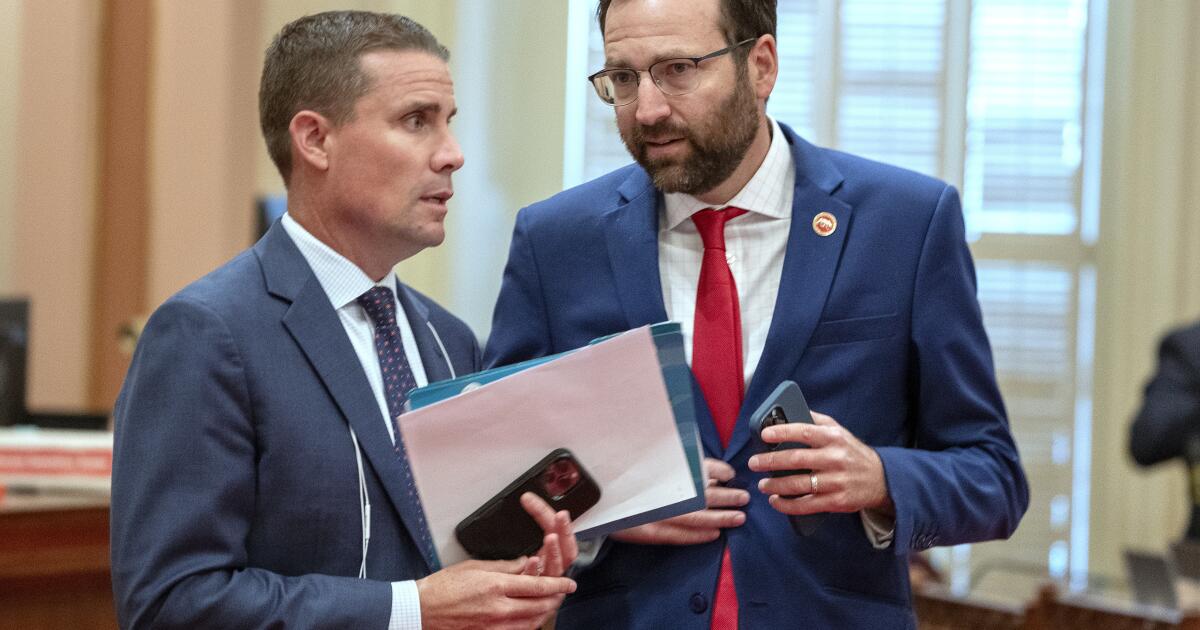
None of the Democratic candidates running for California insurance commissioner won the party’s endorsement at its convention over the weekend, but two surged far ahead of the field in votes.
Sen. Benjamin Allen (D-Santa Monica), won a plurality of votes with 1,056, or 41.7%, of the ballots cast by delegates at the Moscone Center in San Francisco on Saturday.
Trailing closely behind was former San Francisco Supervisor Jane Kim, who received 1,018, or 40.2%, of the ballots. To win an endorsement a candidate needed to reach a 60% threshold.
Splitting up the remainder of the ballots was former state Sen. Steven Bradford, who represented South Los Angeles County and the South Bay in the Legislature. He won 221, or 8.7%, of the votes, while San Francisco businessman Patrick Wolff, a political newcomer, got 153, or 6%, of the votes cast.
Candidates who win an endorsement benefit from the party’s voter outreach through media such as mailers, door hangers and other advertising.
The GOP field includes businessman Robert Howell, who lost by 20 points in the 2022 general election to current Insurance Commissioner Ricardo Lara. Also running are insurance agent Stacy Korsgaden from Grover Beach, and attorney Merritt Farren, whose Pacific Palisades home burned down. The Republic Party convention is April 10-12 in San Diego.
The candidates will now gear up for the June 2 primary election, with the general election set for Nov. 3.
The race for insurance commissioner typically draws little attention, but that changed after the Jan. 7, 2025, wildfires that swept through Los Angeles County, damaging or destroying more than 18,000 homes and killing 31 people.
Allen, whose district includes the Palisades fire zone, has a platform that calls stabilization of the insurance market, which has seen carriers drop policyholders in fire-prone neighborhoods, while cracking down on insurer wrongdoing.
Despite his narrow margin over Kim, Allen released a statement saying, “Today, California Democratic Party delegates and activists sent a clear message: proven leadership and real results matter.”
Kim, who announced her candidacy in January, has garnered attention with an endorsement from U.S. Sen. Bernie Sanders of Vermont, and a proposal to cover disasters such as wildfires through a state-run program, rather than the private market.
“Despite Kim entering the race just a few weeks ago she virtually tied Allen for the most delegate votes. Everyone at the convention could see that Kim was the clear grassroots candidate,” said Kim spokesperson Catie Stewart.
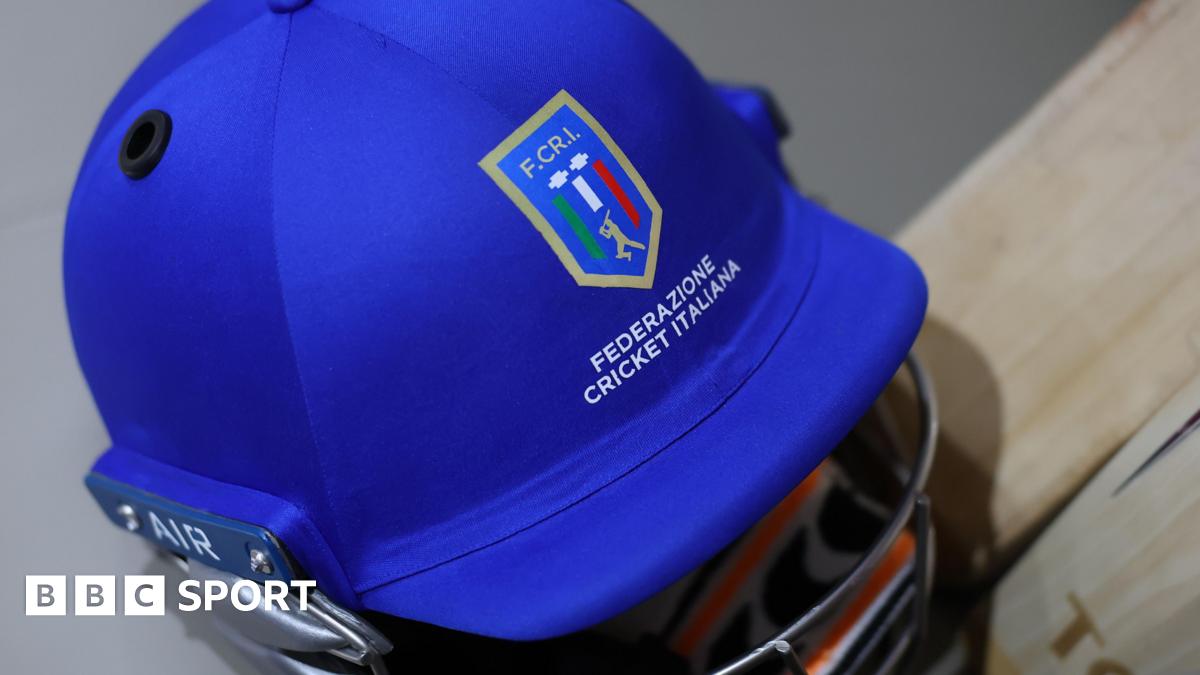
Italian cricket is in crisis days after the country’s T20 World Cup debut, as it emerged that a senior national governing body official has been investigated over a sexual assault allegation.
Federazione Cricket Italiana (FCRI) women’s cricket co-ordinator Prabath Ekneligoda, 57, was the subject of a criminal investigation relating to a claim he inappropriately touched a member of the Azzurri women’s national team.
Multiple members of the Italy board are said to have resigned over this case and other governance issues, BBC Sport has been told.
The sexual assault allegation was made to police in Rome in March last year by a player who has represented the national team.
The player, whose identity is protected for legal reasons, alleged that the sexual assault occurred during a massage on a knee injury at a training session, and she had been scared to report the incident because she feared it would cost her a spot in the team.
An investigation was concluded by a Rome prosecutor in November 2025 and Ekneligoda was interviewed by police the following month.
A decision is now set to be made on whether there is sufficient evidence to bring it to trial. Ekneligoda’s lawyer said his client denies the allegations, that there are ulterior motives to the allegations, and that a witness supports his version of events.
FCRI said in a statement to BBC Sport it “noted proceedings are currently under way before the federal prosecutor’s office” and will “co-operate with the relevant authorities”.
“The Italian Cricket Federation reiterates that its conduct is guided by principles of fairness, transparency and the protection of its registered members, as well as by the ethical and civic standards that underpin the sporting system,” added the statement.
“The federation therefore defers to the competent judicial authorities for any determinations arising from the matter.”
Ekneligoda, who is originally from Sri Lanka, was suspended from his role with the FCRI in November but has remained a visible presence on the Italian cricket scene.
He is the partner of FCRI president Maria Lorena Haz Paz and accompanied her to India for the men’s T20 World Cup.
BBC Sport has seen evidence that Ekneligoda attended Italy’s matches wearing official accreditation and was permitted to sit with the rest of the FCRI party.
Ekneligoda was also seen at various events laid on for Italy’s cricket delegation, including a reception at the Italian consulate in Kolkata for officials, players and coaching staff.
The FCRI, its president Haz Paz, and safeguarding officers, had full knowledge of the seriousness of the claims made against Ekneligoda before the World Cup.
As of Monday, Ekneligoda was still listed as the women’s cricket coordinator on the FCRI website.
Sources have told BBC Sport that some members of the FCRI’s board have resigned over the matter, and other governance issues, which has placed Haz Paz’s position under greater scrutiny.
Senior officials in Italian cricket fear potential reputational damage, and the possibility of legal cases, will hamper opportunities to capitalise on their debut T20 World Cup appearance and grow the game further in the country.
Haz Paz was appointed president of the Italian cricket federation in February 2025 until 2028.
Italy’s debut at the T20 World Cup, and the stories of some of their players, had captured the imagination of the cricket world.
The White House is set to impose a 15 percent tariff through Section 122 of the Trade Act of 1974 after the US Supreme Court ruled against Donald Trump’s use of the International Emergency Economic Powers Act of 1977.
United States President Donald Trump has ramped up tariff threats following last week’s US Supreme Court decision that ruled that Trump’s sweeping global tariffs, imposed under the International Emergency Economic Powers Act, were unlawful.
On Monday, Trump said that any countries that wanted to “play games” after the high court’s ruling would be hit “with a much higher tariff ” in a post on his social media platform Truth Social.
Recommended Stories
list of 4 itemsend of list
In a separate post on the platform, Trump claimed that he does not need the approval of the US Congress for tariffs.
“As President, I do not have to go back to Congress to get approval of Tariffs . It has already been gotten, in many forms, a long time ago! They were also just reaffirmed by the ridiculous and poorly crafted supreme court decision!” Trump said in the post.
Trump does have some authority to impose other tariffs, but they are much more limited.
Following the court’s 6–3 decision on Friday, the president said he would introduce a 10 percent tariff, raising it to 15 percent by Saturday under Section 122 of the 1974 Trade Act, the maximum limit under the statute that enables the White House to impose tariffs for 150 days.
The statute only requires a presidential declaration and does not require further investigation. Section 122 is only temporary; the tariffs would then expire unless Congress extends them.
Trump’s tariffs are overwhelmingly unpopular. A new Washington Post-ABC News-Ipsos poll found that 64 percent of Americans disapprove of the president’s handling of tariffs.
Looming uncertainty
Experts warn that Trump’s newly imposed tariffs will fuel further economic uncertainty.
“What we do know is that it would continue to require all those parties affected to continue to live in uncertainty and, as many have already pointed out, such uncertainty is not good for our economy and has negative impacts on American consumers,” Max Kulyk, partner and CEO of Chicory Wealth, a private wealth advisory firm, told Al Jazeera.
“It’s impossible to plan. You hear that tariffs are off, and you are considering how to get refunds. Then a few hours later, it’s 10 percent. Then it’s 15 percent the next day…. Not having that stable framework is hurtful for activity, hiring, investment,” Gregory Daco, chief economist at EY-Parthenon, told the Reuters news agency.
Gold, which is considered a safe investment in times of economic uncertainty, surged by 2 percent on Monday, hitting a three-week high as tariff pressures remain unclear.
US markets are also taking a hit. The tech-heavy Nasdaq is down 1.1 percent in midday trading. The S&P 500 is also down by 1 percent, and the Dow Jones Industrial Average slumped by 1.5 percent since the market opened on Monday.
Stalling trade deals
Trump’s erratic approach has also deterred movement on looming trade deals.
On Monday, the European Parliament opted to postpone voting on a trade deal with the US. It is the second time the bloc has pushed back the vote. The first was in protest against Trump’s unsolicited attempts to acquire Greenland.
The assembly had been considering removing several European Union import duties on US goods. Committee chair Bernd Lange said the new temporary US tariff could mean increased levies for some EU exports, and no one knew what would happen after they expire in 150 days. EU lawmakers will reconvene on March 4 to assess if the US has clarified the situation and confirmed its commitment to last year’s deal.
Mexican President Claudia Sheinbaum says that calm is being restored and that improvised cartel roadblocks are being removed.
Published On 23 Feb 202623 Feb 2026
Share
Mexican President Claudia Sheinbaum has sought to assuage fears following a government raid that killed one of the country’s most-wanted drug trafficking leaders, prompting a series of violent outbursts by cartels across the country.
Speaking alongside Sheinbaum during a press conference on Monday, Security Secretary Omar Garcia Harfuch said that 25 members of the National Guard had been killed in fighting with criminal groups in the state of Jalisco after the raid.
Recommended Stories
list of 3 itemsend of list
“What is important now is to guarantee peace and security of all the population, of all of Mexico,” Sheinbaum said, adding that conditions have improved and Mexico “is calm” after the Sunday raid that killed Nemesio Oseguera, also known as “El Mencho”, of the Jalisco New Generation Cartel.
The killing of Mencho comes as Mexico is under growing pressure from the United States to take a more aggressive stance towards drug-trafficking groups, although the killing of top-level cartel figures in the past has had little impact on the drug trade and has often created a leadership vacuum that others violently act to fill.
The raid also set off a wave of reprisal attacks and impromptu roadblocks that have spread fear and uncertainty through Mexico, where criminal groups violently jostle for control of territory.
Garcia Harfuch said that the 25 members of the National Guard were killed in six incidents across Jalisco, adding that 30 people he described as criminal suspects were also killed in the clashes, along with four in Michoacan.
“First there was a huge gun battle, and then another, and another,” an anonymous resident of the town of Aguililla in Michoacan told the news service AFP, saying that cartel gunmen attacked a local outpost of soldiers on Sunday. “But they couldn’t advance because the soldiers stopped them.”
Defence Secretary Ricardo Trevilla said that an additional 2,500 security force members would be sent to Jalisco to reinforce the armed forces already deployed there, and Sheinbaum said that all of the more than 250 roadblocks erected across 20 states in response to the raid have been removed.
Mexican officials have sought to downplay the prospect of long-term disruptions stemming from the raid, with Sheinbaum saying that flights to and from Puerto Vallarta, located in the state of Jalisco, are expected to resume on Monday or Tuesday.
“In Puerto Vallarta, flights continue to be disrupted due to availability of flight crews. The Embassy is in close contact with airlines to monitor their plans,” the US Department of State Consular Affairs said in a social media post on Monday. “All other airports in Mexico are open, and most airports are operating normally. If you are traveling via any airport other than Guadalajara or Puerto Vallarta, we have received no indication of any security-related flight disruptions.”
The Mexican embassy to the US has shared social media posts debunking online rumours of attacks on civilians at Guadalajara airport and US tourists being held hostage.
LILY Allen has finally confirmed she’s in a relationship with Jonah Freud – a year on from her high profile split from ex-husband David Harbour.
The pop star has been pictured looking close with Jonah numerous times in the past few months, though hasn’t publicly addressed her relationship status… until now.
Sign up for the Showbiz newsletter
Thank you!
Lily Allen has confirmed Jonah Freud is her boyfriendCredit: SplashLily and Jonah pictured together in ParisCredit: Splash
In a new interview with Grazia, Lily, 40, was asked who the last person she texted was, to which she replied: “My boyfriend.”
The smitten pair have recently spent time together in the romantic cities of Paris and Rome.
Jonah, who is great-great-grandson of Austrian neurologist Sigmund Freud, sipped coffee outside acafée with Lily by his side in the Italian capital last month.
The couple stayed at the Hotel Locarno where they splashed out on a £800-a-night suite.
An eyewitness said: “We walked past her and it was my daughter-in-law who recognised her and went, ‘Oh my God, it’s Lily Allen’.
“We did a double take, and it was definitely her.
“She was with Jonah Freud. They were just having a coffee and a cigarette together.”
Days later they went to Paris for Fashion Week and were seen leaving an apartment together.
Lily confirmed she was dating again in October though coyly stopped short of confirming if she was seeing anyone seriously.
In a candid chat with Interview, she spoke of the pitfalls of dating apps when bouncing back from heartache.
She said: “They’re awful, especially if you’re going through heartbreak.
“There is nothing more depressing than hundreds of people that are nothing like the person that you’re missing. It’s just like, ‘No, that’s not him. That’s not him. That’s not him’.”
Lily used her relationship breakdown as inspiration for her critically-acclaimed album West End Girl.
She recently told Vice: “I don’t think that it’s a particularly self-aware record. It’s a really angry record – and it’s a lot more about rage directed towards other people.”
On it, she appeared to accuse her Stranger Things star ex David, 50, of having an affair with a woman called Madeline.
Following the album’s release,the real life ‘Madeline’ spoke out, with New Orleans based costume designer Natalie Tippett, 34, claiming to have been involved in the fling.
Davidand Natalie reportedly began an affair while working on 2021 film We Have A Ghost, and he later allegedly flew Natalie to his home in Atlanta, Georgia.
He had married Lily the previous year in a Las Vegas ceremony.
Lily split from husband David Harbour early last yearCredit: GettyLily confirmed she was dating again back in OctoberCredit: Getty
WASHINGTON — New whistleblower documents detail substantial cuts by the Trump administration to the training requirements for new immigration officers.
Among the cuts are the elimination of practical exams, use of force and legal training courses, and an overall reduction in training time, contrary to an official’s testimony to Congress earlier this month.
The documents, provided to Sen. Richard Blumenthal (D-Conn.) by whistleblowers from the Department of Homeland Security, were publicly revealed ahead of a forum Monday afternoon with congressional Democrats — the third in recent weeks probing what the members view as abusive and illegal tactics used by federal agents.
Lauren Bis, deputy assistant public affairs secretary at DHS, said no training hours have been cut.
“Our officers receive extensive firearm training, are taught de-escalation tactics, and receive 4th and 5th Amendment comprehensive instruction,” she said. “The training does not stop after graduation from the academy. Recruits are put on a rigorous on-the-job training program that is tracked and monitored.”
Blumenthal’s office also disclosed the identity of one whistleblower: Ryan Schwank, an attorney who most recently served as an instructor for new Immigration and Customs Enforcement recruits at the ICE Academy within the Federal Law Enforcement Training Center in Georgia. Schwank, who resigned Feb. 13, is scheduled to testify at the forum.
Schwank is one of two whistleblowers who made a confidential disclosure to Blumenthal’s office last month regarding an ICE policy allowing agents to enter people’s homes without a judicial warrant.
In excerpted quotes from Schwank’s prepared testimony shared with The Times, he calls the training program “deficient, defective and broken.”
“Deficient training can and will get people killed,” he wrote. “It can and will lead to unlawful arrests, violations of constitutional rights, and a fundamental loss of public trust in law enforcement. ICE is lying to Congress and the American people about the steps it is taking to ensure its 10,000 new officers faithfully uphold the Constitution and can perform their jobs.”
Blumenthal’s office did not confirm whether Schwank or the other, still anonymous whistleblower provided the documents released Monday in a 90-page memorandum from minority staff of the Senate Permanent Subcommittee on Investigations.
The documents show ICE has eliminated more than a dozen practical exams that ICE officers previously needed to graduate. In July 2021, a cadet needed to pass 25 practical exams to graduate. Now, nine are required.
Eliminated exams include “Judgment pistol shooting,” “Criminal encounters,” and “Determine removability.”
“All of these are now instead evaluated, if at all, mainly by open-book, multiple-choice written exams and without any graded practical examinations,” the memo states.
Comparisons between the program’s syllabus table of contents and general information sections from July 2025 — before the surge in hiring — and this month show that ICE appears to have cut whole courses, such as use of force simulation training, U.S. government structure, criminal vs. removal proceedings, and use of force.
Earlier this month, acting ICE Director Todd Lyons testified to Congress that while the agency had reduced the number of training days to 42 from 75, “We went from five days a week to six days a week. Five days a week was five eight-hour days. We’ve gone to six 12-hour days.”
But the documents appear to contradict Lyons’ testimony.
“The schedules reflected on these documents indicate that current ICE recruits receive nearly 250 fewer hours of training than previous cohorts of recruits,” the memo states.
The training reductions come as ICE plans to bring up more than 4,000 new Enforcement and Removal Operations officers this fiscal year, which ends in September. One of the documents notes that ICE had graduated 803 new officers in 2026 as of Jan. 29 and projected 3,204 more graduates by the end of the fiscal year.
In a written statement, Blumenthal encouraged more whistleblowers to come forward.
“We know about the Trump Administration’s decimation of training for immigration officers and its secret policy to shred your Constitutional rights because of the brave Americans who are speaking out today,” he wrote. “They are coming to Congress because we have the responsibility to not only bear witness to these crimes, but to do something to make sure they don’t happen again.”
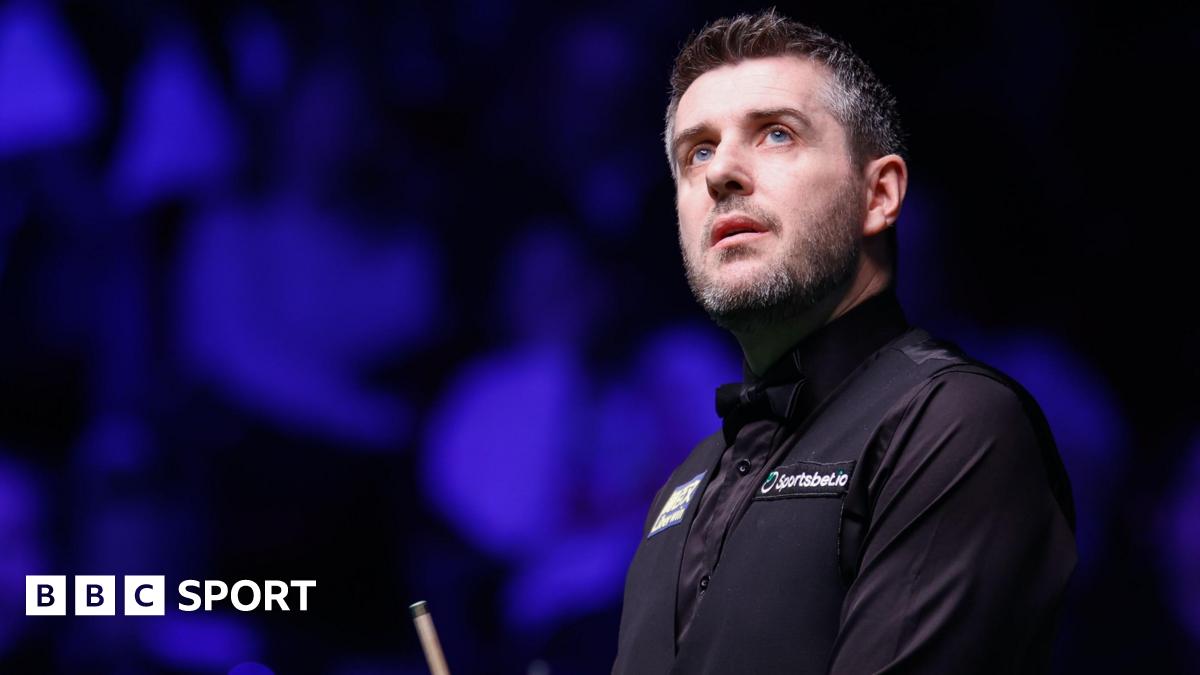
It was an excellent first day for the Welsh players, as Jak Jones, Dylan Emery and Mark Williams all won their first-round matches.
Jones took a comfortable 4-1 win over England’s Liam Highfield, while Emery shocked China’s Lei Peifan with a deciding-frame victory.
Home favourite Williams – who was the last Welsh player to win the title back in 1999 – overcame Michael Holt to win 4-2 and set up a second-round match against Martin O’Donnell or Tom Ford.
England’s Robbie Williams knocked out world number 16 Si Jiahui with a 4-2 win.
Williams will face last year’s runner-up and former Welsh Open winner Stephen Maguire in the second round after his come-from-behind win over Ricky Walden.
Barry Hawkins was forced to go the distance against fellow Englishman David Lilley, though the 12th seed came out on top with a 4-3 win, sealing his win with a 108 break in the decider.
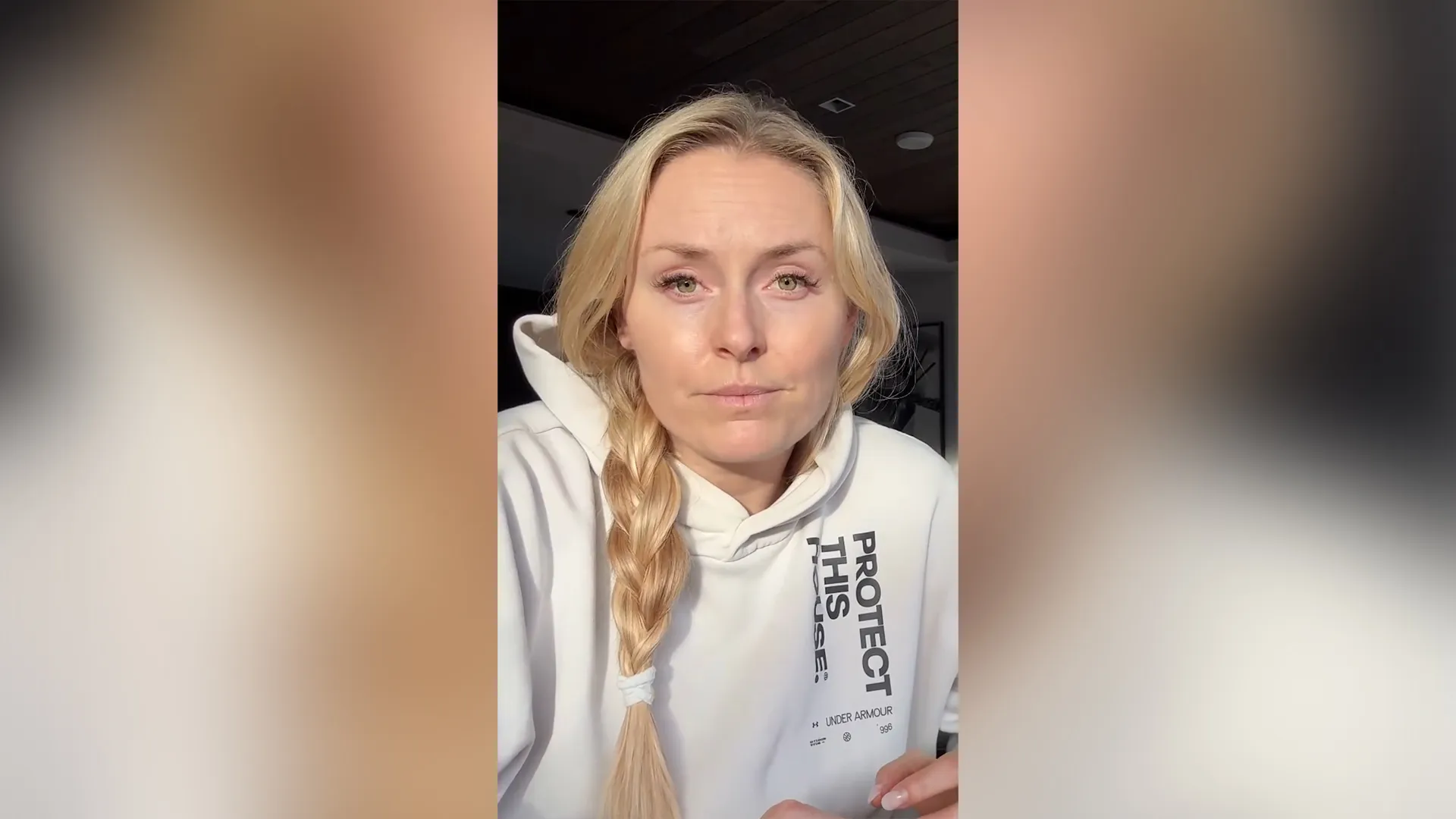
US skier Lindsey Vonn revealed that her leg was injured so severely in her Olympic crash that amputation was a possibility until her doctor was able to relieve the traumatic injury.
Attack on Nablus-area mosque is latest in surge of Israeli settler and military violence targeting Palestinians.
Israeli settlers have defaced and set fire to a mosque in the occupied West Bank during the Muslim holy month of Ramadan, marking the latest incident in a wave of Israeli violence against Palestinians in the territory.
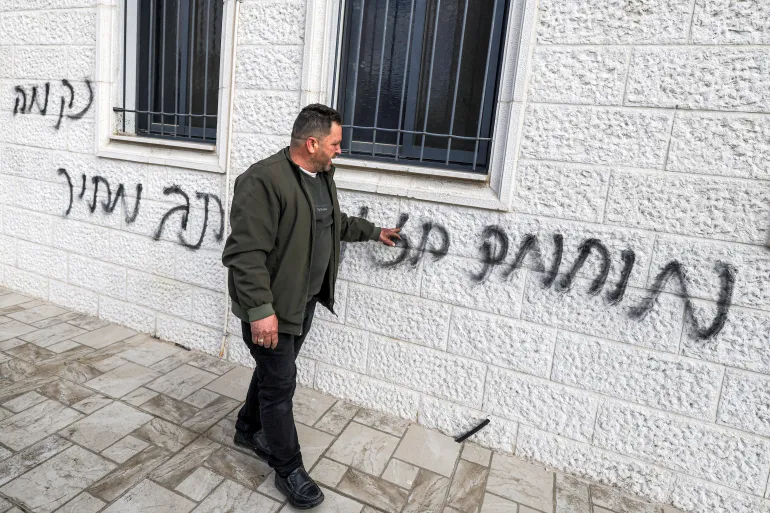
The Wafa news agency reported on Monday that settlers graffitied racist slogans on the walls of Abu Bakr as-Siddiq Mosque, located between the towns of Sarra and Tal, near Nablus in the north of the West Bank.
Recommended Stories
list of 3 itemsend of list
Worshippers arriving for the day’s first prayers found the damage and a smouldering fire that spewed black smoke across the mosque’s entrance and stained the ornate doorway, The Associated Press reported.
“I was shocked when I opened the door,” Munir Ramdan, who lives nearby, told the news agency. “The fire had been burning here in the area, the glass was broken here and the door was broken.”
Ramdan told AP that security camera footage showed two people walking towards the mosque carrying gasoline or petrol and a can of spray paint, and running away a few minutes later.
The attackers spray-painted graffiti denigrating the Prophet Muhammad, as well as the words “revenge” and “price tag” – a term used to describe attacks by Israeli settlers against Palestinians and their property.
A man inspects Hebrew graffiti on the walls outside the Abu Bakr as-Siddiq Mosque after the attack [AFP]
The assault comes amid a wave of intensified Israeli settler and military violence across the West Bank in the shadow of Israel’s genocidal war against Palestinians in the nearby Gaza Strip.
At least 1,094 Palestinians have been killed by Israeli troops and settlers in the West Bank since the Gaza war began in October 2023, according to the latest United Nations figures.
Last week, the UN Human Rights Council warned in a new report (PDF) that Israeli policies in the West Bank – including “the systematic unlawful use of force by Israeli security forces” and unlawful demolitions of Palestinian homes – aim to uproot Palestinian communities.
“These violations, together with pervasive and growing settler violence committed with impunity, are fundamental to the coercive environment that induces forced displacement and forcible transfer, which is a war crime,” the report said.
It added that these policies are aimed at “altering the character, status and demographic composition of the occupied West Bank, raising serious concerns of ethnic cleansing”.
Back in the West Bank village of Tal on Monday, resident Salem Ishtayeh told AP that the Israeli settlers’ assault on the local mosque was “directed especially” at Palestinians who are fasting during Ramadan.
“So they like to provoke you with words. It’s not that they are attacking you personally, they are attacking your religion, the Islamic faith,” Ishtayeh said.
A Palestinian man inspects the debris at the mosque that was attacked by Israeli settlers [Mohamad Torokman/Reuters]
According to the Palestinian Authority’s Ministry of Religious Affairs, settlers vandalised or attacked 45 mosques in the West Bank last year.
The Israeli military and police said they responded to the latest incident and were searching for suspects.
But human rights groups say the Israeli authorities have allowed the settlers to operate with total impunity in their attacks against Palestinians.
Israeli organisation B’Tselem has accused Israel of actively aiding the settlers’ violence “as part of a strategy to cement the takeover of Palestinian land”.
The UN also warned last year that settler attacks were being carried out “with the acquiescence, support, and in some cases participation, of Israeli security forces”.
MAYA Jama has signed up for another series of Love Island — putting an end to speculation.
The host, 31, last night wrapped on the All Stars’ spin-off and will officially be back this summer.
Sign up for the Showbiz newsletter
Thank you!
Maya Jama has signed up for another series of Love Island — putting an end to speculationCredit: ITVMaya has been hosting Love Island UK since January 2023, beginning with the show’s ninth seriesCredit: Instagram
A source said: “Love Island wouldn’t be the same without Maya so bosses are thrilled to confirm she’ll be in Majorca this summer.
“She remains one of the most-loved things about the show.”
Maya has been hosting Love Island UK since January 2023, beginning with the show’s ninth series.
Penned over a screenshotted DM of a fan saying, “Have I missed a chapter?? You’ve moved from London?” in response to one of her past Instagram stories, Maya explained how she’s bought multiple houses.
“To answer my dms right now lol I also bought a house in the Cotswolds last year so I’ll be there sometimes, maybe I need to do a lil catch up life update vid or something soon.”
Maya followed up the post with a quick video where she’s utterly beaming about the news.
Switching out her usual glam for a maroon hoodie with a yellow graphic, she addressed the camera candidly saying: “Writing it like that just makes you sound like a braggy f**k but I’m very proud of myself.
“Council house Queen to multiple property owner.
“Honey, thank you!!!”
Maya was born and raised in Brisol and has Somali descent as well as Swedish.
She moved to London at the age of 16 to pursue a career as an actress, even auditioning for Skins.
WASHINGTON — A trio of Senate Democrats is calling for the government to start refunding roughly $175 billion in tariff revenues that the Supreme Court ruled were collected because of an illegal set of orders by President Trump.
Sens. Ron Wyden of Oregon, Ed Markey of Massachusetts and Jeanne Shaheen of New Hampshire are unveiling a bill on Monday that would require U.S. Customs and Border Protection to issue refunds over the course of 180 days and pay interest on the refunded amount.
The measure would prioritize refunds to small businesses and encourages importers, wholesalers and large companies to pass the refunds on to their customers.
“Trump’s illegal tax scheme has already done lasting damage to American families, small businesses and manufacturers who have been hammered by wave after wave of new Trump tariffs,” said Wyden, stressing that the “crucial first step” to fixing the problem begins with “putting money back in the pockets of small businesses and manufacturers as soon as possible.”
The bill is unlikely to become law, but it reveals how Democrats are starting to apply public pressure on a Trump administration that has shown little interest in trying to return tariff revenues after the Supreme Court announced its 6-3 ruling on Friday.
Because of the ruling, going into November’s midterm elections for control of Congress, Democrats have begun telling the public that Trump illegally raised taxes and now refuses to repay the money back to the American people.
Shaheen said that repairing any of the damage caused by the tariffs in the form of higher prices starts with “President Trump refunding the illegally collected tariff taxes that Americans were forced to pay.” Markey stressed that small business tend to have ”little to no resources” and a “refund process can be extremely difficult and time consuming” for companies.
The Trump administration has asserted that its hands are tied, because any refunds should be the responsibility of further litigation in court.
That message could put Republicans on the defensive as they try to explain why the government isn’t proactively seeking to return the money. GOP lawmakers had planned to try to preserve their House and Senate majorities by running on the income tax cuts that Trump signed into law last year, saying that tax refunds this year would help families.
Treasury Secretary Scott Bessent told CNN on Sunday that it’s “bad framing” to raise the question of refunds because the Supreme Court ruling did not address the issue. The administration’s position is that any refunds will be decided by lawsuits winding their way through the legal system, rather than by a president who has repeatedly stressed to voters that he has the ability to act with speed and resolve.
“It is not up to the administration — it is up to the lower court,” Bessent said, stressing that rather than offer any guidance he would “wait” for a court opinion on refunds.
Trump has defended his use of the 1977 International Emergency Economic Powers Act to impose broad tariffs on almost every U.S. trading partner, saying that his ability to levy taxes on imports had helped to end military conflicts, bring in new federal revenues and apply pressure for negotiating trade frameworks.
The University of Pennsylvania’s Penn Wharton Budget Model released estimates that the refunds would total $175 billion. That’s the equivalent of an average of $1,300 per U.S. household. But determining how to structure reimbursements would be tricky, as the costs of the tariffs flowed through the economy in the form of customers paying the taxes directly as well as importers passing along the cost either indirectly or absorbing them.
The president has previously claimed that refunds would drive up U.S. government debt and hurt the economy. On Friday, he told reporters at a briefing that the refund process could be finished after he leaves the White House.
“I guess it has to get litigated for the next two years,” Trump said, later amending his timeline by saying: “We’ll end up being in court for the next five years.”
Milan-Cortina Olympics hero Jack Hughes is likely looking at a dental implant to replace teeth knocked from his mouth in the third period of the men’s hockey final between the United States and Canada on Sunday.
Once the euphoria of scoring the winning goal in overtime subsides and celebrations cease, Hughes will undergo a surgical procedure that most dentists agree is far superior to alternatives such as dental bridges or partial dentures.
Titanium posts will be inserted into his jawbone, serving as new roots for the teeth. Once the posts are secure and his mouth has healed, custom crowns matched to his natural teeth in shape, color, and size will be placed on top of each post.
Hughes, who is in year four of an eight-year, $64 million contract with the New Jersey Devils of the NHL, has no worries about affording the best care possible. Sure, health care is free in Italy and he could have remained there for the procedure, but he told reporters he wants it done on home turf.
The United States’ Jack Hughes reacts after receiving his gold medal after Team USA defeated Canada in the men’s ice hockey gold medal game.
(Luca Bruno / AP)
“I’m lucky I’m from the best country in the world, and we’ve got great dentists there, too,” Hughes said while caressing the gold medal hanging from his neck. “I’m lucky I’m American, and they’re gonna fix me right up.”
When Canadian forward Sam Bennett’s high stick slammed into his mouth in the third period, Hughes looked down and rolled his eyes.
“I looked on the ice and saw my teeth,” said Hughes, who had a tooth knocked out in an NHL game a few years ago. “I was like, ‘Here we go again.’ The last time that happened, it wasn’t very fun.”
Losing teeth is an occupational hazard for hockey players. They know implants can be as good as the real thing. Hughes played on even while resembling a Jack-o-lantern.
“Who cares at this point, to be honest?” U.S. teammate Matt Boldy said. “I think more people are looking at his medal than his teeth. I’m sure he’ll be OK.”
Attention certainly focused on Hughes’ heroics in overtime. He re-entered the game a minute into the 3-on-3 overtime and quickly found himself the only U.S. player between Canadian superstar Connor McDavid and the goal.
Oh, and McDavid had the puck on his stick.
Hughes retreated slightly, bracing for another painful collision by using his body as a barrier. McDavid couldn’t get off a clean shot and goaltender Connor Hellebuyck — whose game-long heroics will forever be remembered — slapped the puck away.
Less than a minute later, Hughes fielded a cross-ice pass from Zach Werenski and fired it past Canadian goaltender Jordan Binnington. Game over.
“I got it to the right guy,” Werenski said. “He’s been hot all tournament.”
That hasn’t been true for long. Hughes underperformed in last year’s 4 Nations Face-Off — which Canada won — before shoulder surgery ended his NHL season. This season, he missed five weeks with the Devils after slicing his right thumb open on broken glass at a team dinner.
His older brother and teammate Quinn Hughes, who led the U.S. team with eight points during the Olympics, knows the emotional roller-coaster that Jack has endured. The thrill ride couldn’t have ended any better.
“[Jack] is an animal,” Quinn said. “He’s gone through a lot with his shoulders. He takes a lot of [crap]. No one loves the game more than him. He’s got so much passion. He’s a gamer. He made it happen.”
Their parents, Jim and Ellen, were in attendance. Ellen Weinberg-Hughes is a Player Development Consultant for the U.S. women’s hockey team, which also won gold. No doubt mom will be scheduling that dentist appointment for Jack sooner than later.
Feb. 23 (UPI) — Nearly $273 million in annual Ecuadorian exports are at stake if a reciprocal 30% tariff announced by Ecuador and Colombia takes effect, according to the Ecuadorian Federation of Exporters, Fedexpor.
The trade group said 580 Ecuadorian companies export to Colombia and warned that for several of them, the impact of new tariffs could be devastating, as up to half of their revenue depends on that market.
Although the tariff has not been implemented, Fedexpor said uncertainty is already affecting business decisions. Colombian buyers are reluctant to close deals amid the possibility that the measure could made formal in the short term, local newspaper Primicias reported.
The government of President Daniel Noboa announced Jan. 21 that Ecuador would impose a 30% tariff, described as a “security fee,” on imports from Colombia. Quito said the move responds to what it considers a lack of commitment by the government of President Gustavo Petro to border security.
Colombia responded the following day by announcing a reciprocal 30% tariff on 20 products imported from Ecuador. It also decided to cut off electricity supplies to Ecuador.
The 30% tariffs were scheduled to take effect Feb. 1, but were not implemented.
Xavier Rosero, president of Fedexpor, said there remains a “window of time” for both governments to reach an agreement on security and trade matters.
Industrial products such as fats, vegetable oils, canned tuna, plastics and rubber face high uncertainty. Orders for these goods, which are key in bilateral trade, are currently on hold, Rosero told digital outlet El Oriente.
He added that Colombian buyers are already seeking alternative suppliers in China, Brazil and Mexico to replace Ecuadorian products, a shift that could result in market losses that are difficult to recover.
Ecuadorian palm oil is among the most affected products, valued at roughly $96 million annually.
The palm oil sector generates 110,000 jobs across 14 provinces, mainly in border areas. It exports between 6,000 and 8,000 metric tons per month to the Colombian market — volumes that could be redirected to other destinations, though that would not be easy, according to Ecuavisa.
Fedexpor estimates about 40,000 jobs are tied to Ecuadorian companies with significant sales to Colombia. Once the tariff is applied, it could affect more than 50 Ecuadorian products.
Rosero acknowledged as “legitimate” the Noboa government’s concern over security conditions along the shared border with Colombia, describing it as “a key space for trade, but also one that has been vulnerable to illicit activities.”
The dispute is now under review by the Andean Community’s courts after complaints filed by Colombia and counterclaims from Ecuador, in a process that could prolong commercial uncertainty.
Weekly insights and analysis on the latest developments in military technology, strategy, and foreign policy.
Amid the steady drumbeat of reports pointing to the growing likelihood of strikes on Iran, there are indications that officials from Washington and Tehran will meet this week for another round of talks centered on the Iranian nuclear program. While the two sides remain generally at loggerheads, Iranian officials are now openly talking about possible concessions on their nuclear program in return for sanctions relief and the right to enrich uranium for peaceful purposes.
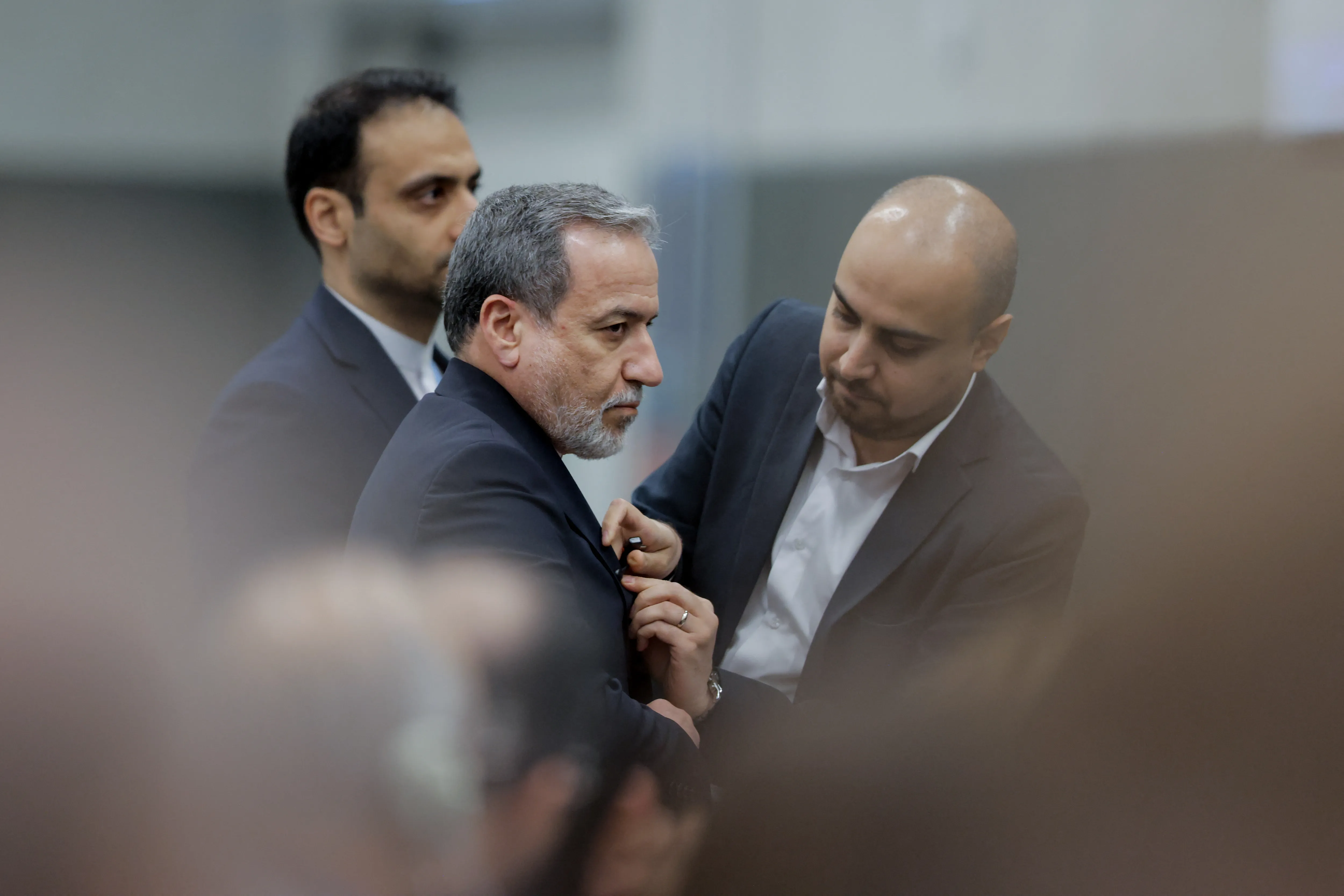
The Iranian foreign minister, Abbas Araghchi, told CBS over the weekend that U.S. and Iranian negotiators would likely hold more discussions in Geneva on Thursday, with the aim of making “a fast deal.” Iran and the United States resumed negotiations earlier this month.
Iranian Foreign Minister Abbas Araghchi (center) before delivering a speech during a session of the United Nations Conference on Disarmament, on the sidelines of a second round of U.S.-Iranian talks with Washington, in Geneva, on February 17, 2026. Photo by Valentin Flauraud / AFP
Now, Araghchi says that he thinks there is still a good chance of finding a diplomatic solution in planned talks with U.S. special envoy Steve Witkoff. However, he added that “If the United States attacks us, then we have every right to defend ourselves.” Iran has repeatedly threatened to strike U.S. bases in the region if it is attacked.
Aragachi raised the possibility of a new nuclear deal that would see Iran committing to keep its nuclear program “peaceful forever.” This would be a major advance over the previous, time-limited agreement, which was negotiated by the Obama administration in 2015, but from which U.S. President Donald Trump withdrew in 2018, during his first term in office.
Araghchi’s growing importance reflects the belief of U.S. officials that Iran’s supreme leader, Ali Khamenei, together with the country’s president, Masoud Pezeshkian, are increasingly being marginalized within the negotiations.
BREAKING: Iran’s Supreme Leader Ali Khamenei was the target of an internal effort to sideline him, allegedly led by former President Hassan Rouhani, just before the January 8–9 crackdown when protests were at their peak, Le Figaro reports.
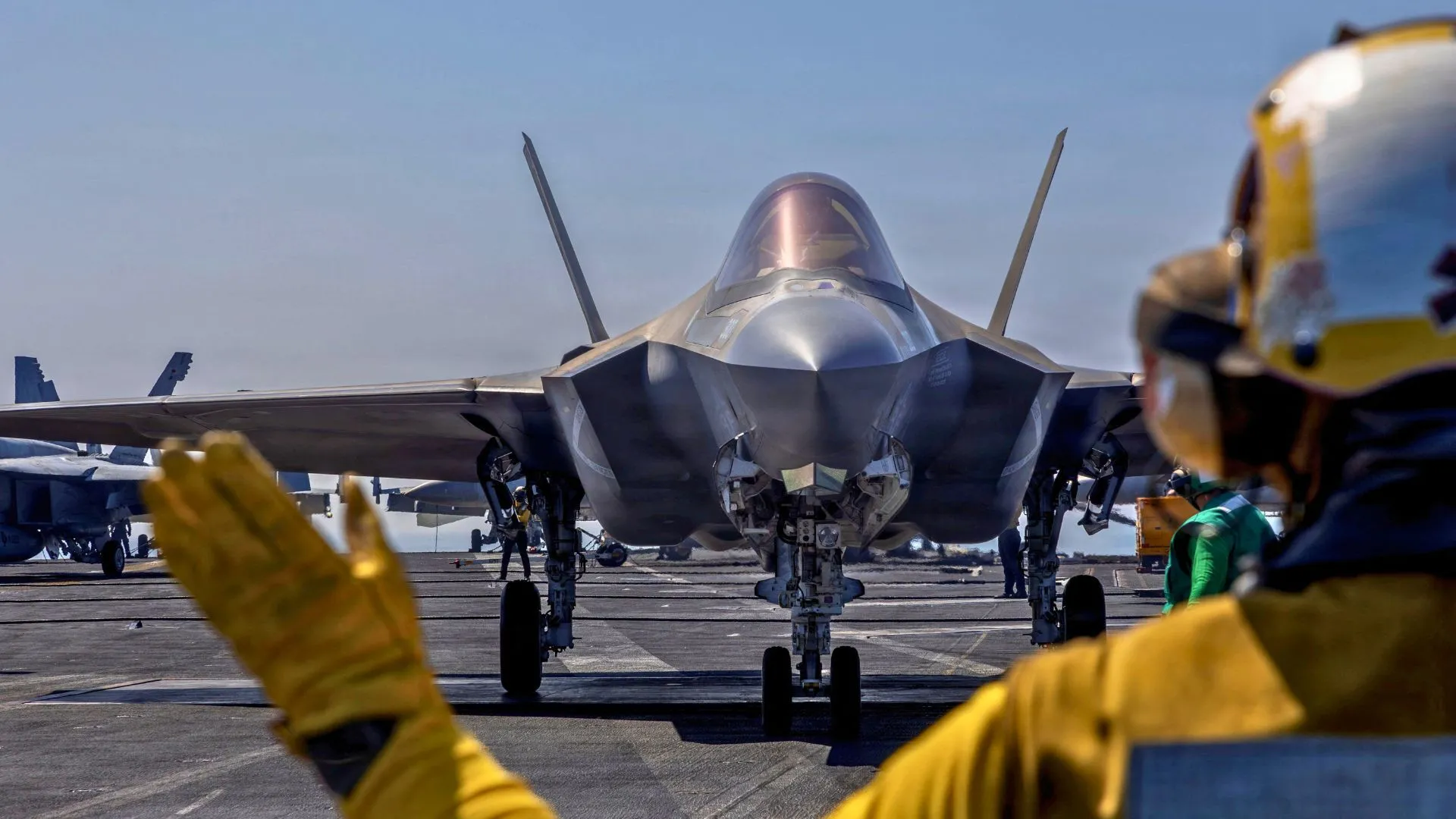
Among the latest movements, it appears that additional U.S. Air Force KC-135 Stratotankers are being repositioned from the Indo-Pacific region and closer to the Middle East. These refueling assets would be vital to sustaining any kind of air campaign against Iran.
Other tankers and transports also continued to pour into the wider region after transatlantic flights over the weekend.
In terms of aircraft basing, the apparent postponement of planned runway reconstruction work at Diego Garcia in the Indian Ocean might point to one of the windows of opportunity for U.S. airstrikes. Work at the base, which could be important to any U.S. plans for a sustained campaign of airstrikes against Iran, has been pushed back successively from February to March, and now to April, according to notices to airmen (NOTAMs). As well as the long-range bombers that periodically operate out of Diego Garcia, the facility would need to host cargo and refueling support aircraft, as well as assets to defend the island from possible Iranian attack. As we reported last week, the United Kingdom has apparently said it would not allow the use of the island for strikes on Iran, although this position could certainly change. It is worth noting, too, that satellite imagery available to TWZ does not reveal any visible changes in terms of deployments to Diego Garcia.
Construction on Diego Garcia’s runway was initially expected to begin in February, then moved to March, and is now delayed again until April 2.
RWY 13/31 will close weekdays (0700–1700 local) for ~80 working days, according to the latest NOTAM pic.twitter.com/4q35SOfwHh
There are also reports, currently unconfirmed, from Israel’s Channel 12, of U.S. Air Force KC-135s at Ben Gurion Airport in Israel. Photos apparently show at least two of the tankers on the tarmac at the civilian airport, one of them wearing the markings of the 452nd Air Mobility Wing from March Air Reserve Base, California. The presence of U.S. KC-135s in Israel reflects the fact that Israel will likely be fully integrated into any upcoming operation against Iran, so putting tankers or even fighter aircraft there makes sense. Moreover, the United States has limited basing options in the region, including countries that have said they would not allow operations to run out of their airspace. Meanwhile, the threat of Iranian short-range missiles and drone strikes also limits where these U.S. assets can go.
לגבי מטוסי התדלוק האמריקאים בנתבג, לפחות אחד מהם (הקדמי – מס זנב 58-0052) הגיע לפה מקטאר
At least one of the two USAF kc135r photographed at Tel Aviv airport has arrived from Al-Udeid, Qatar
Elsewhere in Israel, Prime Minister Benjamin Netanyahu today delivered brief remarks in the Israeli parliament. He said Israel is facing “complex and challenging days,” but expressed confidence in the public. “We have pushed back an existential threat from the Iranian tyrant,” Netanyahu continued. “No one knows what tomorrow will bring. We are keeping our eyes open.”
Netanyahu delivers rare brief speech on Iran: ‘We are in complex days’
‘No one knows what tomorrow will bring,’ Netanyahu said in a rare brief Knesset speech a day after Cabinet talks, amid reports of US preparations for a strike …https://t.co/orF04TqzD7pic.twitter.com/1CliDX4eVQ
Meanwhile, the aircraft carrier USS Gerald R. Ford, its embarked airwing, and elements of its carrier strike group (CSG) are still in transit. Last Friday, TWZ reported on its transit into the western Mediterranean via the Strait of Gibraltar. As of today, the carrier was in Souda Bay, Crete, in the eastern Mediterranean. The Ford CSG will eventually be joining the Lincoln CSG, already deployed to the Middle East, as well as other Navy ships and scores of tactical jets, surveillance planes, tankers, airborne early warning and control aircraft, and additional air defense assets.
President Trump has consistently refused to rule out potential strikes against Iran, while stressing that no final decision has been made.
“The most I can say — I am considering it,” Trump said last Friday when asked if he was thinking about a “limited strike” against Iran. The president did not provide details of what that could entail or when it might be launched.
As to how “limited” a strike on Iran might be, the Washington-based Center for Strategic and International Studies (CSIS) think tank assesses that the assets currently deployed would not be sufficient for an extended, multi-week air campaign.
Good analysis. US build-up largest in 23 years, but smaller than 1991, 1998 or 2003. “there are not enough forces for an extended, multi-week air campaign. That would require a substantial logistical buildup, which…would take additional time.” https://t.co/tMsOVBxfw6pic.twitter.com/nzJCpGYz9g
Indicative of growing fears of a new conflict in the region, it was reported today that the U.S. Embassy in Beirut had evacuated “dozens” of non-essential personnel as “a precautionary measure due to anticipated regional developments.”
APNewsAlert: WASHINGTON (@AP) — State Department orders nonessential US diplomats and families to leave Lebanon as tensions with #Iran soar.
In contrast, in other public statements, Trump and administration officials have been pushing for a diplomatic resolution to the current Iranian crisis.
Speaking over the weekend, special envoy Witkoff said that the U.S. president was unsure why Iran had not yet yielded to U.S. pressure to curb its nuclear ambitions. “He’s curious as to why they haven’t … I don’t want to use the word ‘capitulated,’ but why they haven’t capitulated,” Witkoff told Fox News.
“Why, under this pressure, with the amount of sea power and naval power over there, why haven’t they come to us and said, ‘we profess we don’t want a weapon, so here’s what we’re prepared to do’?”
And there you have it: Witkoff says that Trump is frustrated/curious as to why Iran has not “capitulated” yet, despite massive US military threats.
This is the core of the matter: As I have written extensively, Israel and pro-Israeli voices have sold Trump a narrative that… pic.twitter.com/HkQlBJ6fqY
Also this weekend, the New York Times published a report stating that Trump is eyeing a smaller initial set of strikes in order to pressure Iran to make a deal, prior to a much larger follow-on campaign if that pressure didn’t work. Our analysis sees that as being either unlikely to be true or a very poor decision if it is indeed in the works as reported.
The limited strike to pressure Iran to make a deal with the threat of more seems extremely problematic on so many levels. Messaging that now is a sign of weakness in the negotiations. Sorry, that’s the reality. I can’t believe military commanders would recommend this. https://t.co/1R5TwcRhOZ
Breaking News: President Trump told advisers he would consider a larger attack on Iran if diplomacy or a targeted strike failed to deter its nuclear program. https://t.co/dsVODr28du
However, the fact that more talks are being lined up suggests that the U.S. government is more confident that Iran will demonstrate that it’s not seeking to develop a nuclear weapon, including a commitment to diluting its stockpile of highly enriched uranium, which is critical to producing such a device.
Iran wants to retain the right to enrich uranium for peaceful purposes. This would involve a new verification process overseen by the International Atomic Energy Agency (IAEA), the United Nations nuclear inspectorate. As well as diluting its highly enriched uranium, the process would provide the IAEA with access to Iranian nuclear facilities, while sanctions placed on Tehran would be eased. The Iranian facilities would include the three nuclear sites that were targeted by U.S. strikes in June last year.
Last year, the IAEA estimated that Iran had stockpiled more than 970 pounds of uranium enriched to up to 60 percent fissile purity. A purity of 90 percent is considered weapons-grade.
Why Iran 2.0? Because the US was never going to have the intel after the Fordo strike to identify what happened to the 60% enriched uranium. After 8 months, there has been plenty of time to clandestinely speed forward — as Iraq did after Israel’s Osirak attack in 1981. pic.twitter.com/xznZsywpbh
According to Reuters, one option includes Tehran sending half of its most highly enriched uranium abroad, while the remainder is diluted, as well as establishing a regional enrichment consortium.
A senior Iranian official also toldReuters that Iran is willing to offer U.S. companies the opportunity to participate as contractors in its oil and gas industries.
With the possibility of a new nuclear deal, Republican lawmakers who have been pushing for a new military campaign against Iran are finding themselves being increasingly sidelined.
However, the Iranian government remains worried that, despite apparent progress being made on the nuclear issue, the Trump administration may still sanction an attack.
As well as U.S. pressure on its nuclear program, the Iranian regime is also facing serious problems closer to home, including a wave of protests, with violent clashes between demonstrators and the state-backed Basij militia. Most recently, violence has flared at universities in Tehran and the northeastern city of Mashhad.
Students chanted “Basij, Guards, you are our Daesh,” during a rally at Ferdowsi University in the northeastern city of Mashhad on Monday.pic.twitter.com/cDJ7Tbdzf2
Thousands of deaths have been reported in Iran since the protests began in December.
The full extent of the violence remains unclear, however, since the Iranian government has refused to permit a UN-led fact-finding team access to the country.
When the protests began, Trump made statements in support, telling the protesters that “help is on its way.” So far, however, a threatened military intervention has not materialized.
Now, Iran’s nuclear program is the subject of renewed focus, with talks likely later this week. Meanwhile, a significant U.S. military presence remains in the region, meaning that a large-scale attack on Iran is very much still an option.
For the time being, it looks like Iran’s offer of new concessions may be a last-ditch effort to keep diplomacy alive and avoid the prospect of a new military conflict.