
A half dozen little kids have come out of the bleachers seeking high fives from any Palisades High basketball player. Jack Levey, the smallest player on the court, responds to the delight of the fanatics. Receiving recognition and giving back to those rooting for you is among the most memorable parts of the high school sports experience.
Palisades is on the verge of winning its first upper division City Section basketball championship since 1969. The Dolphins will play Cleveland on Friday night at 8 p.m. at L.A. Southwest College for the Open Division title.
Levey, a 5-foot-10 junior guard, is the secret weapon who shows up when the Dolphins’ three stars — freshman Phillip Reed and junior twins EJ and OJ Popoola — need a little help.
“All the attention is on them,” he said. “I’m always open.”
His contribution comes in the form of making three-pointers.
“I practice all the time,” Levey said. “Any time I’m in the gym, I’m shooting threes. That’s why I know if I’m going to play in college, I have to be able to shoot threes.”
If he’s not shooting 400 threes a day at practice, he’s in the backyard at home in Westchester shooting threes on a hoop, with his father feeding him passes.
He has made 103 threes this season. During Palisades’ 71-56 semifinal victory over San Pedro on Saturday night, he stole the ball and was leading the fast break for what looked like could have been a breakaway layup. Instead, he pulled up on the wing and made a three.
“I’m more comfortable shooting a transition three than getting to the basket,” he said. “I feel like a three is a layup.”
Coach Jeff Bryant has given him the green light to pretty much shoot from anywhere. In a game against Westchester this season, he was 11 for 12 from three-point range.
Jack Levey celebrates a big win in the Dolphins’ return to their home court against Western League rival Fairfax.
(Steve Galluzzo / For The Times)
“I couldn’t miss,” he said. “It was so fun. It was the best.”
Other coaches in the Western League know they must pay attention to Levey or suffer the consequences.
“He’s one person we game plan for to limit his looks,” University coach Steve Ackerman said. “He’s an exceptional three-point shooter and has even improved over last season.”
Levey’s journey wasn’t necessarily supposed to turn him into a three-point shooter. Growing up, he was usually the tallest player on his youth team. Then he stopped growing and saw others pass him by. When he entered high school, he had to re-invent himself.
“I thought I was going to be 6-3,” he said. “I have to be able to shoot the ball.”
You’d have to know nothing about basketball these days to fail to guess who his favorite player is.
“Steph Curry,” he said. “That’s my GOAT.”
In a season where the overall talent level in City Section basketball probably reached a new low, the young talent at Palisades provides a starting point to move forward. Reed, the talented freshman, had 29 points Saturday in the semifinals.
And from a fan perspective, waiting for Levey to launch one of his threes offers a moment of excitement and entertainment that even makes little kids look up and put down their video games to see if the ball goes in.
US President Donald Trump writes on Truth Social that a ‘great hospital boat’ is going to Greenland as he mocks its healthcare system.
Published On 22 Feb 202622 Feb 2026
Share
Greenland said “no thanks” to US President Donald Trump’s plan to send a hospital ship to the Arctic island after he repeatedly threatened to seize the Danish autonomous territory for “national security” reasons.
Prime Minister Jens-Frederik Nielsen said in a post on Facebook on Sunday that Trump’s proposal to send the US medical vessel had been “noted”.
Recommended Stories
list of 4 itemsend of list
“But we have a public healthcare system where treatment is free for citizens. It is a deliberate choice,” Nielsen said, reiterating Greenland remained open to dialogue and cooperation.
“But talk to us instead of just making more or less random outbursts on social media,” he added.
The historically strong bilateral ties after World War II between NATO allies Denmark and the United States have come under severe strain in recent months as Trump ratcheted up talk of a possible US takeover of the mineral-rich and strategically located Arctic island.
Danish Defence Minister Troels Lund Poulsen told Danish broadcaster DR that the population of Greenland “receives the healthcare it needs”.
“They receive it either in Greenland or, if they require specialised treatment, they receive it in Denmark,” he said. “It’s not as if there’s a need for a special healthcare initiative in Greenland.”
On Saturday, Trump said in a post on his Truth Social account – with an AI-generated image of the US Navy vessel the USNS Mercy – that it was on its way to Greenland to treat those being medically neglected.
“We are going to send a great hospital boat to Greenland to take care of the many people who are sick, and not being taken care of there. It’s on the way!!!” Trump wrote.
Trump has repeatedly expressed his interest in the US taking control of Greenland, citing it as a way to secure US national security. However, Greenland and Europe rejected the US desire to take the Arctic island and have upheld Greenlandic sovereignty.
Danish Prime Minister Mette Frederiksen said she was “happy to live in a country where access to healthcare is free and equal for all”.
Greenland is a place “where insurance or wealth does not determine whether one receives dignified treatment,” she added in an apparent criticism of the US healthcare system, which is not universal.
Threats to take Greenland ebbed after Trump struck a “framework” deal with NATO Secretary-General Mark Rutte in January to ensure greater US influence.
Israel to join with India, Greece, Cyprus and other Arab, African, Asian countries that ‘see eye to eye’, says PM.
Published On 22 Feb 202622 Feb 2026
Share
Israeli Prime Minister Benjamin Netanyahu has announced that Israel plans to build a network of allied nations in or around the Middle East to collectively stand against what he called “radical” adversaries.
Netanyahu made the comments on Sunday while announcing the upcoming visit to Israel of Indian Prime Minister Narendra Modi, whose country the Israeli leader said would be part of the “axis of nations that see eye to eye” with Israel.
Recommended Stories
list of 3 itemsend of list
Netanyahu, who is wanted by the International Criminal Court on war crimes charges, also referred to Greece, Cyprus and other unnamed Arab, African and Asian countries.
“In the vision I see before me, we will create an entire system, essentially a ‘hexagon’ of alliances around or within the Middle East,” Netanyahu said, according to the Times of Israel.
“The intention here is to create an axis of nations that see eye to eye on the reality, challenges, and goals against the radical axes, both the radical Shia axis, which we have struck very hard, and the emerging radical Sunni axis.”
Modi said he fully agrees with Netanyahu on the “bond between India and Israel”, including the “diverse nature of our bilateral relations”.
“India deeply values the enduring friendship with Israel, built on trust, innovation and a shared commitment to peace and progress,” Modi wrote in a post on X.
Since the start of Israel’s genocidal war on Gaza, its assaults have been weakening the Iran-led “axis of resistance”, including Hezbollah in Lebanon. Israel and Iran also directly clashed last June in a 12-day war, in which the US military also joined to attack Iran’s nuclear sites.
Netanyahu did not elaborate on what he meant by “emerging radical Sunni axis”, but he has previously identified the Muslim Brotherhood as its leading element.
Relations between Israel and several predominantly Sunni Muslim states have soured amid the bloodshed in Gaza, including with Turkiye, whose President Recep Tayyip Erdogan has sharply criticised Netanyahu, and Saudi Arabia, which has accused Israel of genocide.
Prospects for normalisation between Israel and Saudi Arabia also appear to be eroding. In recent months, the kingdom has rebuked Israel’s recognition of Somalia’s breakaway region, Somaliland, as well as the Israeli moves towards annexation in the occupied West Bank.
Since 2020, Israel has pushed to establish formal ties with Arab and Muslim states as a way to shore up its regional standing as part of the US-backed so-called “Abraham Accords”.
Under that framework, Israel has been enjoying close relations with the United Arab Emirates, Bahrain and Morocco.
Jennifer Hudson raised more then a few eyebrows in 2022 when she was close to realizing her dream — becoming a daytime talk show host.
At the time, she had just become the youngest member of the small elite group of artists who are EGOT — Emmy, Grammy, Oscar and Tony award — winners. She was also aware that the highly competitive daytime talk show arena had been a notorious minefield for several top stars, leading to quick failure.
“This is going to be such a gift,” she said near the set of the show at Warner Bros., which produces the series. “If I were not working on my birthday, that is what I would be wishing for — performing on a stage or a platform … I love a challenge … It is a difficult arena. You will always see me try.”
The entertainer expressed even more excitement Thursday after her syndicated show was renewed for a fifth season, bringing some welcome sunlight to the afternoon landscape which has been shaken in the last several weeks by the upcoming departures of popular hosts Kelly Clarkson and Sherri Shepherd.
Hudson and Drew Barrymore, who has hosted her own eponymous show since 2020, are now the sole survivors in the celebrity-oriented afternoon talk genre. (The talk show hosted by Tamron Hall is more focused on topical issues and trends.)
Insiders say the continuing economic difficulties in Hollywood and the explosion of video podcasts hosted by stars such as Amy Poehler, Conan O’Brien, Dax Shepard and the “Smartless” trio consisting of actors Jason Bateman, Will Arnett and Sean Hayes has substantially crippled the traditional daytime talk format.
Shock waves have resonated through the daytime TV industry since early February when Clarkson said she would be ending her Emmy-winning talk show at the conclusion of its current seventh season for personal reasons. Just hours later, producers of “Sherri” announced they were pulling the plug on that series, attributing the cancellation to “the evolving daytime television landscape.” Shepherd in recent days has said she was fighting to save the show.
Rumors about the future of Hudson’s show have been circulating since those announcements. Although some insiders considered Hudson an unlikely entrant in daytime, she has established herself as an engaging and warm host, connecting with her enthusiastic studio audience and highlighting the show with musical performances and duets with her guests.
The show has also aggressively employed social media to promote its “Spirit Tunnel,” where staff members lining a corridor greet celebrities with chants on their way to the stage. Producers say the ritual has surpassed 6 billion views.
“The Jennifer Hudson Show” replaced Ellen DeGeneres’ talk show, which ended in 2022, had run for nearly 20 years and was produced by Warner Bros.
Experts say the current landscape is indicative of the cyclical nature of daytime talk, recalling the era of “trash talk” during the 1990s when afternoon talk shows such as “Sally,” “Jerry Springer” and others emphasized fierce confrontations and provocative, often sexually oriented topics.
“Daytime has always gone through these cycles, so this is nothing new,” said Rachel Schwartz, head of the Daytime Emmys and Children & Family Emmy. And video podcasts appear to be part of this latest cycle.
“Now audiences are proving that they are really hungry for podcasts, which is impacting the landscape of daytime TV,” she said. “The podcast can be narrowly focused on one celebrity. It’s like the listener is sitting down with a friend. And the guest can be more comfortable.”
Pamela Rutledge, director of the Media Psychology Research Center, which explores the psychology of human interaction with media and technology, said that while daytime talk shows offer familiarity with the same host, tone and daily presence, podcasts give celebrities more control, intimacy and influence without the constraints and pressures of broadcast TV.
“Podcast hosts tend to be partners in conversation, not ‘hosts’ or moderators,” she said. “Talk shows are in the middle of the voyeurism spectrum — too curated by time, pacing and commercial interruptions to feel really intimate and too restrained to be thrilling.”
Rutledge added that maintaining TV studios, crews and accommodating large audiences is becoming increasingly costly for producers, who are looking more to other types of digital and social platforms that are more attractive to advertisers.
Recreational activities combined with yoga in Gaza help children recover a sense of normalcy despite war, teacher says.
Gaza City – In northern Gaza, a Palestinian teacher has transformed a tent into a small space for yoga classes, offering children moments of peace from the hardships of daily life in the besieged enclave.
The idea to bring the practice to Gaza City came from Hadeel al-Gharbawi, who has been working on finding ways to help children cope with trauma. Through simple movements and breathing, the class offers moments of calm, safety and joy.
Recommended Stories
list of 3 itemsend of list
Children sit cross-legged on a thick mat, eyes shut. Some concentrate, while others fight back shy smiles, sneaking sideways glances to see whether their classmates are following the teacher’s instructions, amused by the unfamiliar exercise.
“I wanted to expand the activities I do with children beyond drawing and colouring. I searched online and discovered that yoga can help children recover from trauma,” al-Gharbawi told Al Jazeera.
“Since yoga isn’t widely available here in Gaza, I decided to learn online and practice it with the children. Through yoga, they can release stress and cope with the difficult life around them.”
Children in Gaza have been exposed to continuous cycles of violence and trauma, profoundly affecting their mental health, according to a report by the World Health Organization.
The constant bombing, displacement, loss of family members and physical pain of Israel’s two-year war on Gaza have caused emotional distress, social withdrawal and grief, among other symptoms, the report says.
International organisations have been warning that the conflict will leave a long-lasting impact.
“All children in Gaza require mental health, and psychosocial support services after two years of horrific war, displacement, and exposure to traumatic events,” the United Nations Children’s Fund (UNICEF) said earlier this month.
This is why yoga classes are more than physical exercise in Gaza; they allow children to step away from fear, release emotions, and feel in control, even for a few minutes, the participants say.
“We come here to do yoga, to learn and to do art,” Suwar, a displaced student, told Al Jazeera. “These activities allow us to forget, even for a short time, the war, the harsh weather and the queues for water. Yoga, in particular, gives us a moment of calm and helps us feel safe and happy.”
Alongside yoga, the tent offers educational and recreational programmes that al-Gharbawi said aim to activate the children’s imaginations.
“Combining learning with playful and therapeutic activities helps the children deal with trauma and regain a sense of normalcy,” al-Gharbawi said.
Greenland’s PM reminded Trump of its free healthcare, after Trump said he was sending a boat to aid people who were allegedly “not being taken care of”.
Despite the string of storms that have hit the Los Angeles region in recent days, the skies cleared up long enough on Wednesday for thousands of aspiring actors to swarm a beachfront in Marina del Rey and take their shot at landing a role in the upcoming “Baywatch” reboot.
The open casting call brought old Hollywood magic to Los Angeles, as the show intensified its search for raw and local talent, reminiscent of how original “Baywatch” stars were discovered, said Brittainy Roberts, the vice president of casting at Fox.
The soapy drama series, which premiered in 1989 and ran for 11 seasons, followed the lives and relationships of lifeguards who patrolled L.A. County beaches (and later Hawaii). It was not only a hit stateside — internationally it was a success, becoming the most-watched show in the world at the time. A film adaptation starring Dwayne Johnson and Zac Efron was released in 2017, and despite negative reviews, it was considered a commercial success, signaling an appetite for more.
Share via
The casting team has “big bathing suits to fill,” Roberts said. The show famously created a slew of stars, including Pamela Anderson and Carmen Electra, who got their start on the show, and catapulted David Hasselhoff to new heights of fame.
Uncommon in a post-pandemic era of self-tape auditions, the open and in-person auditions attracted actors hungry for their big break and locals hoping to leave with a fun story to tell. Many donned “Baywatch” visors and sweaters while others sported bright red bathing suits, popularized by the original show. It was “an opportunity to really get people in the room in a large-scale way,” and allow “people an opportunity that maybe they aren’t getting in this new landscape of auditioning,” Roberts said.
The casting team saw live auditions from about 2,000 “Baywatch” hopefuls, and about 14,000 applications were submitted, said Joseph McGinty Nichol, known as McG, the reboot’s executive producer who will direct the first episode. His past projects include the “Charlie’s Angels” movie and “The O.C.”
Pat “The Jaguar” Uland, 31, of San Francisco, on the red carpet at the “Baywatch” open casting call.
(Allen J. Schaben / Los Angeles Times)
Beach-ready candidates filed in and out of a Marriott hotel in Marina del Rey for the in-person auditions. The casting call, which ran late into the night, embodied the joy of Hollywood, McG said.
Bri Ana Wagner, a 29-year-old living in Los Angeles, has been pursuing acting for around a decade. The open casting call was a reminder that the Hollywood “dream is alive,” she said.
“It’s like the way it used to be and the way it should be,” McG said. “You can come to a Marriott in Marina del Rey and change your life and blow it wide open.”
Hopefuls try to catch a break
David Chokachi hadn’t acted much before auditioning for “Baywatch” in the 1990s. Douglas Schwartz, one of the show’s original creators, and his wife, Deborah, had seen just about a thousand auditions for the role of Cody Madison. None of the actors matched the couple’s vision for the character, until Chokachi strolled in.
“It’s one of the most surreal things that’s ever happened in my life,” said Chokachi, the only actor from the original series confirmed for the reboot.
David Chokachi, who was on the original “Baywatch,” is reprising his role as Cody Madison.
(Allen J. Schaben / Los Angeles Times)
The aspiring actors who auditioned Wednesday hoped to get their chance at a big break similar to the one Chokachi got decades ago. Casting for the reboot began late last year, Roberts said, and people “have come out of the woodwork” since, with some messaging her directly on social media.
“The fact that we’re shooting in L.A., it’s certainly ignited a flame for a lot of agents and managers in town hoping to get their clients working here,” Roberts said.
The casting executive was hopeful that Wednesday’s auditions would bring together a talented pool of actors that the show can continue to pull from.
Massiel Taveras was among the many in attendance at the casting call: “I belong to this group. I belong to the show. I just feel it.”
(Allen J. Schaben / Los Angeles Times)
Massiel Taveras was crowned Miss Dominican Republic in 2007 and has pursued acting since, finding success in the Latino market. She arrived to the Marriott hotel sporting a bright red sports bra and leggings, paired with a large fur coat to shield her from the beach chill.
“I just love the show so much … It’s iconic. It’s something that everybody loves,” Taveras said. “I belong to this group. I belong to the show. I just feel it.”
Meanwhile, Dominique Lopez, a broadcast student from Monrovia, had never been to an audition before her boyfriend Colin Bolick, an actor, convinced her to attend the casting call together. The experience was “super easygoing” and intimate, she said as she walked out of the audition room.
“It’s making the industry exciting again. It’s putting people in the mind space of … ‘Let me put myself out there,’” said Lopez, 25. “Just for that, I feel like a better person, that I went and did something new.”
Could ‘Baywatch’ could help revive Hollywood?
Marko Dobrasinovic, 24, who made the trek from Chicago to audition, bumped into an old high school classmate, Alyssa Frey, while in line to check in. The pair attended the same high school as Hasselhoff, who played Mitch Buchannon on “Baywatch,” one of the actor’s best-known roles.
The impromptu reunion felt like a full-circle moment, said Frey, who moved to Los Angeles to pursue acting about two years ago. She landed in the city just as the actors’ and writers’ strikes froze Hollywood. Wednesday’s casting call was “one of the few opportunities to get in front of someone,” she said.
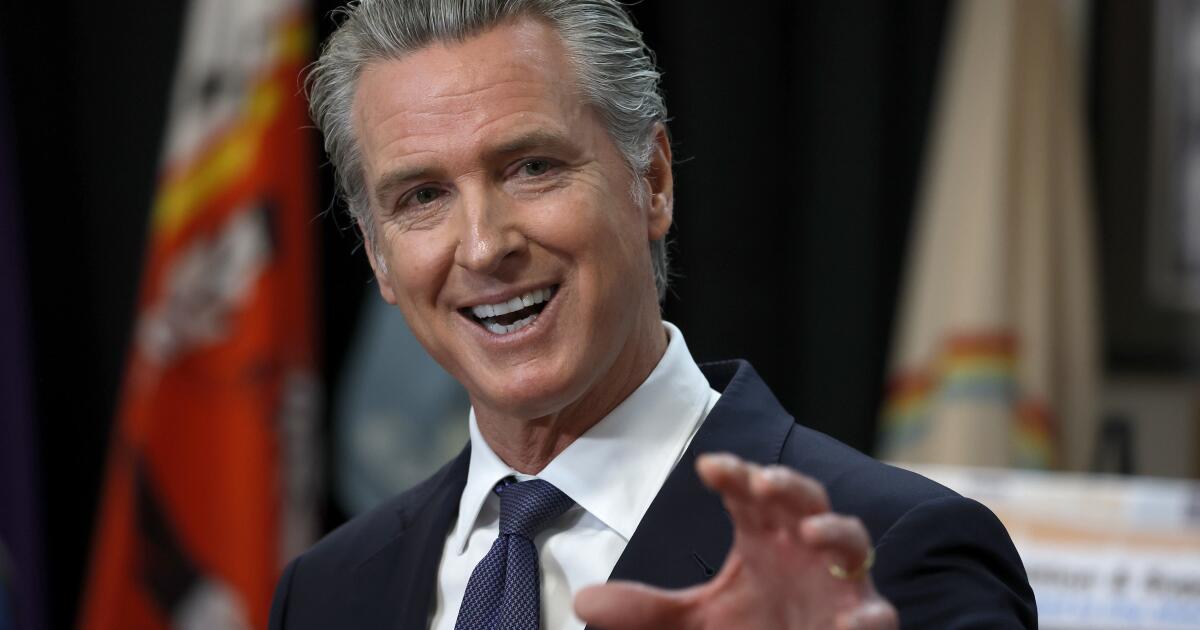
It was one that almost slipped away from the city. Showrunners were eyeing Australia as an alternative to filming in L.A., until Gov. Gavin Newsom and state legislators granted the production, along with 16 others, California’s film and TV tax incentive in November. Hollywood has struggled to return to its former status as a production mecca after the COVID-19 pandemic and 2023’s dual strikes. The wildfires early last year, coupled with studio spending cuts, added another blow to L.A.‘s waning film and TV industry.
The open casting call was a rare event in Los Angeles, as the TV and film industry struggles to recover.
(Allen J. Schaben / Los Angeles Times)
Chantal Groves left a stable job in international relations around two years ago, setting her sights set on Los Angeles. The 25-year-old, originally from the Dominican Republic, said acting was always her true passion. The career change has been fulfilling, but navigating such a fraught industry is difficult, she said.
“It’s basic laws of supply and demand,” Groves said. “There’s not a lot out there. There’s not a lot casting, and so just in general, it’s a really hard time to start in the industry.”
The “Baywatch” reboot received a $21-million credit, aimed at revamping the state’s entertainment industry.
“This was about keeping an iconic, world-famous brand right here in L.A.,” said Traci Park, a councilmember for District 11 who helped lead efforts to secure the tax incentive and attended the event. “We have the talent, we have the resources, we have the sets … it is exactly why we are fighting so hard to keep these productions in Los Angeles.”
A love letter to Los Angeles
“Baywatch” showrunner Matt Nix was in the middle of fighting off the wildfire that ravaged his Altadena neighborhood and got dangerously close to his home when he first got the call to lead the reboot. His house survived the fires, and he says a show like “Baywatch” felt like exactly what the city needed after such tragedy.
“This is a show about paradise and the people who keep it that way,” Nix said. “There’s something fundamentally earnest and positive about ‘Baywatch,’ the idea of heroes on the beach taking care of each other and the people that they protect.”
Others can relate to that sentiment. “Baywatch” was “right up my alley,” said Ava Cherlyn, a 19-year-old from Newport Beach. The aspiring actor, who moved to Hollywood six months ago, was a lifeguard growing up and played water polo competitively.
“I’m surprised that I haven’t been nervous,” Cherlyn said as she posed for photos in a red bathing suit.
Aspiring actor Ava Cherlyn, 19, in a red swimsuit made iconic in “Baywatch.”
(Allen J. Schaben / Los Angeles Times)
The original show attracted a worldwide audience because of its focus on “heroic people with complicated and interesting lives” while still feeling like an easygoing “hour-long vacation,” Nix said.
That nostalgic magic won’t be lost in the upcoming season, which Nix said is more of a continuation rather than a reboot. It will follow Hobie Buchannon, Mitch’s son, a character featured in the original series, played by “Arrow” protagonist Stephen Amell.
Hobie’s life will be derailed when he meets Charlie, a 21-year-old daughter he never knew he had who’s eager to continue the family’s legacy by becoming a Baywatch lifeguard. Hobie, now a Baywatch captain, will navigate the familial troubles throughout the season, Nix said.
“I don’t want to imply that ‘Baywatch’ is going to save the world or save America,” Nix said. “But, at the same time, I think it’s a good time for an unapologetically heroic show about people who care about each other and the people that they’re trying to save.”
An unidentified man gained unauthorized access to the secure perimeter at President Donald Trump’s Mar-a-Lago resort in West Palm Beach, Florida, carrying a shotgun and a gas can. He was shot and killed by law enforcement after raising the gun into a firing position. File Photo by Gary I Rothstein/UPI | License Photo
Feb. 22 (UPI) — The U.S. Secret Service early Sunday morning shot a man who was trying to access President Donald Trump‘s Mar-a-Lago resort while appearing to carry a shotgun and a gas can.
The individual, a man in his early 20s, attempted to access the property from its north gate and entered the secure perimeter before he was shot and killed, the Secret Service said in a post on X.
Although Trump often spends the weekend at his West Palm Beach, Florida, resort, he is in Washington, D.C., this weekend and, according to officials, no other protectees were at the property, either.
“U.S. Secret Service agents and a Palm Beach County Sheriff’s Office deputy confronted the individual and shots were fired by law enforcement during the encounter,” Anthony Guglielmi, communications chief for the Secret Service, said in the post.
Guglielmi said the man was observed around 1:30 a.m. EDT on Sunday morning making his way into the perimeter of Mar-a-Lago
Agents and PBSO encountered the man, carrying the shotgun and gas can, and ordered him to put down the gun and can.
He put the can down, but then raised the shotgun into a “firing position,” at which time the agents and deputy opened fire at the man, Palm Beach County Sheriff Ric Bradshaw said at a press conference on Sunday morning.
The identity of the man is being withheld until his family is notified, and is also being held back during an investigation of the incident.
The Secret Service said that no law enforcement personnel were injured in the incident and that during the investigation the two federal agents have been placed on routine administrative leave.
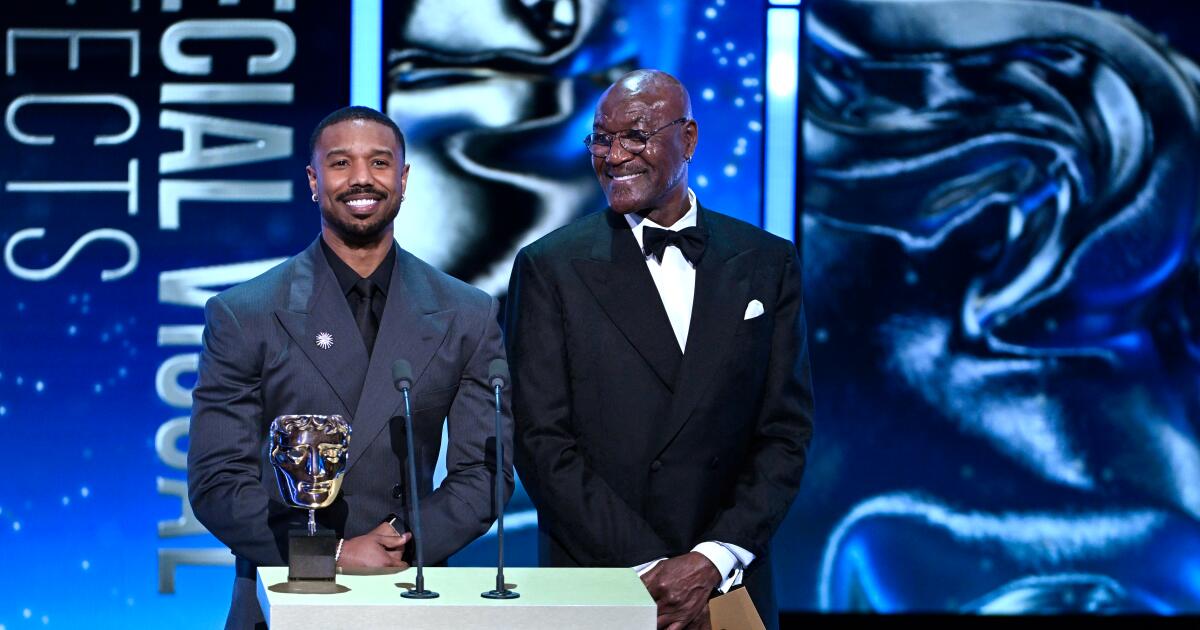
Bobby Cannavale and Rose Byrne attend the BAFTA Film Awards Nominees Party at the National Gallery in London, England, on February 21, 2026. Photo by Rune Hellestad/UPI | License Photo
China adopts a stance rejecting the US militarization of the Middle East, viewing the increasing American bases and military buildup in the region as a strategy of containment and undermining Chinese influence. Beijing seeks to achieve regional balance through counter-diplomacy, both economic and security, and sees the American escalation as a threat to global stability, prompting it to strengthen its partnerships to protect its interests in the region. The Chinese perspective on the militarization of the region is that the American strategy in the Middle East is an extension of the policy of deterrence and containment, which extends from the Pacific to broader spheres of influence. China views American bases, such as Al Udeid Air Base in Qatar, Muwaffaq Salti Air Base in Jordan, and other US military bases in Kuwait and the UAE, as an indirect tool to undermine Chinese economic and geopolitical stability. China considers the American military bases in the Middle East as instruments of hegemony and an attempt to contain and diminish its influence. Therefore, Beijing seeks to strengthen its military, diplomatic, and economic presence in the region as a strategic alternative, expanding its influence through its Belt and Road Initiative.
China adopts an approach that opposes the American military presence in the Middle East, prioritizing economic stability to serve its interests. This opposition manifests itself in several ways: supporting parallel security partnerships with Iran and Saudi Arabia, pressuring host countries like the UAE to prevent American expansion, and pursuing civil-military integration in strategic ports. The Egyptian researcher will attempt to identify and present specific examples of China’s rejection of the American military presence in the Middle East, such as China’s obstruction of the UAE’s F-35 deals. Beijing exerted pressure and raised security concerns that led to the stalling of negotiations for the UAE to acquire American F-35 fighter jets, due to Washington’s apprehension about the growing Chinese presence at the UAE’s Khalifa Port. Another example is China’s intensification of joint military exercises with Washington’s and Israel’s adversaries: China has increased its naval and air military exercises with Iran, a direct rival of the American presence in the region, thus posing a strategic challenge to American hegemony. China has also tried to secure oil routes away from Washington’s protection: China seeks to secure its oil interests through independent partnerships in the Strait of Hormuz and Gulf ports, reducing the Arab states’ need for American security protection and reinforcing Beijing’s vision of rejecting American “hegemony.” With (China’s criticism of the US “offensive strategy”): Chinese diplomacy criticizes the excessive US presence and instead calls for diplomatic solutions and “civil-military integration” through infrastructure investment, thus undermining traditional US bases. Here, China uses “soft power” and economic investments in ports, such as those in Israel, Egypt, Saudi Arabia, the UAE, and Iran, as tools to diminish the strategic importance of US military bases.
The Chinese perspective is that US bases are used to restrict its movement in vital maritime routes and are viewed as tools of deterrence within the context of great power competition. Therefore, China seeks to secure its economic interests by ensuring its oil and gas import routes and protecting its projects, which has led it to strengthen its military presence, including its base in Djibouti, to match its economic influence. With China offering a “developmental and security alternative”: By enhancing its influence through massive investments and security and technology partnerships, such as developing Huawei’s 5G digital infrastructure and China’s defense partnerships with Egypt, Iran, and the Gulf states, to serve as an alternative to direct military presence. Here, China seeks to achieve “absolute security” by protecting its supply chains and projects without directly engaging in managing regional crises in the American manner, preferring instead to project geoeconomic influence.
Here, China adopts a stance rejecting the US militarization of the Middle East, deeming it an “adventure” that threatens stability and pushes the region toward the brink. Beijing instead seeks to enhance its influence through diplomacy and economics, with Chinese efforts aimed at undermining the American military presence and supporting regional stability through initiatives like the Belt and Road Initiative. The most prominent features of China’s rejection of the US militarization of the Middle East are China’s opposition to the “militarization” of the region and China believes that US strategies based on military bases and deterrence, particularly against Iran, increase instability. (China’s focus on finding a diplomatic and economic alternative): China focuses on comprehensive economic partnerships, such as the Belt and Road Initiative, and prioritizes diplomacy to resolve conflicts, making it appear as a strategic alternative to the US “gunboat diplomacy.” The US “gunboat diplomacy” is a declared strategy of President Trump to counter Beijing’s influence in the Western Hemisphere. To counter this, China is focusing on partnerships and economic interests. From the Chinese perspective, regional stability ensures secure energy supplies and massive infrastructure investments in the region.
This coincides with China’s exploitation of the American retreat in the region. China seeks to capitalize on the relative decline in American strategic interest to act as a balancing power, without direct involvement in crisis management, but with an increasing role in maintaining regional equilibrium. Conversely, China fears that American policies will lead to its encirclement and the curtailment of its economic influence, prompting it to strengthen its military ties with certain regional actors as a form of indirect response.
Therefore, China rejects the principle of American militarization of the Middle East. China seeks to find alternatives to American hegemony by strengthening its diplomatic and economic presence, especially given the recent escalation of American military activity. Chinese military analyses indicate that the recent American military buildup, including aircraft carriers and air forces in the region, increases the likelihood of widespread regional conflicts. To that end, China promotes the concept of “common security,” directly rejecting American military involvement that puts pressure on China’s traditional allies in the region, such as Iran.
Concerned circles in Beijing view the American militarization of the Middle East as a perpetuation of a “Cold War mentality.” This is evident in China’s rejection of the ongoing military alliances established by Washington, which Beijing considers attempts to contain its rising influence and force regional states into alignment, a situation Beijing describes as “American hypocrisy.” The Chinese alternative to American militarization in the region is centered on its strategy of “development over militarization.” China seeks to market itself as a “peaceful partner” focused on development and infrastructure, capitalizing on the partial American retreat to expand its diplomatic and economic influence. Beijing adopts a policy of “cautious neutrality,” committing to “non-interference” in regional conflicts and avoiding replacing the American role as the region’s policeman militarily, preferring instead to focus on its strategic interests in the Indo-Pacific. While fully aware that the militarization of the region impacts China’s energy security, China prefers to address this through diplomacy and economic partnerships rather than direct military presence. China aims to protect its interests by deepening its economic engagement, thereby prompting a gradual US withdrawal, especially as China continues to present itself as a “responsible power” in the Global South.
RAPPER Wiz Khalifa filmed himself punching his son in the stomach 13 times in a sick birthday tradition that he shared on Instagram.
In the shocking clip shared to his stories, the 38-year-old lands a series of blows on his son Sebastian who grimaces and tries to grab the wall behind him to brace for the impact.
Sign up for The Sun newsletter
Thank you!
Wiz Khalifa shared a video of himself punching his son 13 times in a sick birthday traditionCredit: InstagramThe rapper praised his son for ‘taking it like a G’Credit: Instagram
His father repeatedly tells him to raise his arms above his head for each punch – one for every year of his life.
“We still doin’ birthday licks in this house!” he wrote in a caption with the video.
“Took it like a g tho.”
Just before the second blow, Sebastian can be seen lowering his arms and grabbing the wall behind him before his dad tells him “hands up,” looks directly at the camera and punches him in the stomach before laughing.
Meanwhile, his son puts his hands on his stomach and grimaces.
“You’ve got to take it like a G, you’re 13 years old,” Khalifa tells him.
“That’s only four, tighten your stomach,” he later told his son who groaned and fell away from the wall on the fourth punch.
He gave his struggling son bizarre and twisted advice, telling him, “every time you get hit, breathe out,” as he continued to hit him.
Most read in Entertainment
Wiz, whose real name is Cameron Jibril Thomaz, shares Sebastian with his ex-wife and model Amber Rose.
The pair celebrated their son’s 13th birthday on Saturday night with a basketball-themed bash packed with friends and family.
“He’s officially a teenager. We are so proud of you and we love you,” his dad said during a speech shared by Amber on her Instagram stories.
More to follow…
The boy could be seen grabbing his stomach and the wall behind him in between blowsCredit: InstagramAmber and her rapper ex-husband joined together to throw their son a huge basketball themed birthday bashCredit: Instagram/@amberrose
An armed man drove into the secure perimeter of Mar-a-Lago, President Trump’s resort in Florida, as another vehicle was exiting before being shot and killed early Sunday morning, according to a spokesman for the U.S. Secret Service.
The man, who was in his early 20s and from North Carolina, had a gas can and a shotgun, according to Anthony Guglielmi, the Secret Service spokesman. The man had been reported missing by his family a few days ago, and investigators believe he headed south and picked up the shotgun along the way.
Guglielmi said a box for the weapon was discovered in the man’s vehicle after the incident, which took place around 1:30 a.m.
The man killed was identified by investigators as 21-year-old Austin Tucker Martin, according to a person familiar with the matter. The person spoke on condition of anonymity because they were not authorized to publicly discuss details of the investigation.
Trump has faced threats to his life before, including two assassination attempts during the 2024 campaign. Although the president often spends weekends at his resort, he and First Lady Melania Trump were at the White House when the breach at Mar-a-Lago occurred.
After entering near the north gate of the property, the man was confronted by two Secret Service agents and a Palm Beach County sheriff’s deputy, according to Palm Beach County Sheriff Ric Bradshaw.
“He was ordered to drop those two pieces of equipment that he had with them. At which time he put down the gas can, raised the shotgun to a shooting position,” Bradshaw said at a news conference. The two agents and the deputy “fired their weapons to neutralize the threat.”
The FBI asked residents who live near Mar-a-Lago to check any security cameras they may have for video that could help investigators.
Investigators are working to compile a psychological profile, and a motive is still under investigation. Asked whether the individual was known to law enforcement, Bradshaw said, “Not right now.”
The incident comes as the country has been rocked by spasms political violence.
Trump survived an assassination attempt during a 2024 campaign rally in Butler, Pa. The gunman fired eight shots, one grazing Trump’s ear, before being killed by a Secret Service counter-sniper.
A few months later, a man tried to assassinate Trump while he played golf at his West Palm Beach club, a few miles from Mar-a-Lago. A Secret Service agent spotted that man, Ryan Routh, aiming a rifle through the shrubbery before Trump came into view. Officials said Routh aimed his rifle at the agent, who opened fire and caused Routh to drop his weapon.
Routh was found guilty last year and sentenced this month to life in prison.
The White House referred all questions to the Secret Service and FBI.
There have been other recent incidents of political violence as well.
In the last year, there was the assassination of conservative activist Charlie Kirk; the assassination of the Democratic leader in the Minnesota state House and her husband and the shooting of another lawmaker and his wife; and an arson attack at the official residence of Pennsylvania Gov. Josh Shapiro.
Five days ago, a Georgia man armed with a shotgun was arrested as he sprinted towards the west side of the U.S. Capitol.
And on Jan. 6, 2021, a violent pro-Trump mob attacked the Capitol and tried to stop Congress’ certification of Joe Biden’s presidential election victory.
Price writes for the Associated Press. AP writer Alanna Durkin Richer contributed to this report.
The final medals of the Milan-Cortina Games were handed out Sunday and these Olympics truly saved the best for last, with the U.S. men’s hockey game grabbing the last gold with a 2-1 overtime win over Canada.
Of course it went to overtime. How else should a U.S.-Canada final end?
Jack Hughes, left alone on the left wing, provided the winning goal 1:41 into overtime, beating Canadian goalie Jordan Binnington cleanly and setting off a wild celebration that left the ice littered with U.S. gloves, sticks and helmets. The Canadian players watched from the bench, many with their heads in their gloves hands.
The other goals came from Matt Boldy, who gave the U.S. a lead early in the first period, and Cale Makar, who evened things for Canada late in the second.
The medal was the 33rd of these Games for the U.S. and the 12th gold, most by an American team in the Winter Olympics. They finished second to Norway, which won a record 41 medals, 18 of them gold.
The title was the Americans’ first in men’s hockey since 1980 and it came on the 46th anniversary of the “Miracle On Ice” win over the mighty Soviets, in what was essentially a semifinal in the Lake Placid Games.
The Canadian team the U.S. beat Sunday was no less mighty. It scored 27 times on its unbeaten run to the final, with Connor McDavid getting 13 points, a record for an Olympic tournament featuring NHL players. And with the NHL players returning to the Winter Games for the first time in 12 years, Canada may have had more elite-level marquee players than any team in Olympic history.
U.S. players celebrate immediately after beating Canada in overtime for the gold medal at the Milan-Cortina Olympic Games on Sunday.
(David J. Phillip / Associated Press)
But it was the U.S. that drew first blood, scoring in the sixth minute on a brilliant individual effort from Boldy. The play started with Toronto Maples Leafs captain Auston Matthews digging the puck out along the boards in the U.S. end. He then fed Boldy, a Minnesota Wild forward, who flipped the puck ahead of him as he entered the Canadian zone.
Boldy had Makar and Devon Toews to beat, which he did by skating between them before backhanding the puck by Binnington for his second goal of the tournament.
Back in the Catman Cafe in Mansfield, Mass., where Boldy’s mom Jen works as a bartender, the crowd came to its feet and cheered. It was the third time in as many elimination games that Canada trailed entering the second period.
The turning point in regulation came in a three-minute span in the middle of the second period. First, U.S. goalie Connor Hellebuyck stopped McDavid at the end of a breakaway it. Then less than a minute later, the U.S. took two penalties 28 seconds apart, giving Canada a five-on-three power play.
U.S. goaltender Connor Hellebuyck blocks a shot by Canada’s Macklin Celebrini during the third period Sunday.
(Carolyn Kaster / Associated Press)
With the crowd chanting “USA! USA!,” Hellebuyck, who stopped 41 shots in a phenomenal effort, came up big again and the Americans killed both penalties. The U.S. was 18 for 18 on the penalty kill in the tournament.
Makar, however, wouldn’t be denied later in the period, sending a blistering wrister from the center of the right circle just over Hellebuyck’s arm 84 seconds before the intermission. The score stayed that way until Hughes’ goal.
The game was arguably the most-anticipated event of the Milan-Cortina Games — in North America, if not in Italy. Hundreds of bars and restaurants in the U.S. and Canada were packed for early morning viewing parties. In Toronto, Scotiabank Arena, home to the Maple Leafs, opened its doors at 7 a.m. and sold $15 tickets to people to watch the game on TV. In Lake Placid, N.Y., the Olympic Center cafe opened to fans at 8 a.m. while in Milan, the 14,000 people packed into the Santa Giulia Arena were a sea of red Canadian jerseys and white American ones.
Six times the U.S. has finished second to Canada in an Olympic hockey tournament, the last in 2010 when Sidney Crosby’s goal in overtime gave Canada a record ninth gold medal. Crosby, Canada’s captain, did not dress for Sunday’s game after sustaining a lower-body injury earlier in the tournament.
United States players celebrate after defeating Canada for the gold medal at the Milan-Cortina Games on Sunday.
(Hassan Ammar / Associated Press)
That wasn’t the only sign this game would be different for the Americans. As the team was wrapping up its final practice in Milan on Saturday, a spider dropped from the ceiling. Don’t kill it, a local volunteer warned the players. In Italy, the appearance of a spider is considered a sign of coming good fortune.
With the U.S. beating Canada in overtime in the women’s gold-medal last Thursday, the Milan-Cortina Games marked the first time the Americans have beaten Canada in both hockey finals. Canada has swept the men’s and women’s gold three times, in 2002, 2010 and 2014.
Jim O’Neill, the economist who coined the term ‘BRIC’ 25 years ago, argues that the group is losing its relevance.
At its peak, the BRICS coalition of economies – Brazil, Russia, India, China and South Africa – was seen as a serious attempt to move away from the United States dollar and the domination of Western economic institutions like the World Bank, Group of Seven (G7), and International Monetary Fund (IMF).
But BRICS members have different political agendas, and new forces are at play, argues economist Jim O’Neill, a member of Britain’s House of Lords.
O’Neill, who coined the term “BRIC” 25 years ago, tells host Steve Clemons that the US’s economic policies may be the driver of its own decline, coupled with the economic rise of China and India.
Time to turn my 20-month-old Lena into the next big thing on snow.
La Rosiere doesn’t mess about. Its ESF ski school’s Galopins Club had Lena on a snowboard-sled hybrid that looked utterly adorable.
Between snow play sessions they kept the kids busy with crafts and stories. Half-day or full-day options with lunch meant I could hit the slopes guilt-free.
Founded by shepherds in the 1960s, the resort has somehow kept its cosy village vibe while going all-in on the family market.
The revamped beginner zone at Les Eucherts features a toddler-friendly four-seater chair lift and a covered mountain picnic area – genius for when your hangry three-year-old has a meltdown in ski boots.
For families, here’s where La Rosiere gets clever. Its X-periences pass costs £59 extra on top of a six-day ski pass but throws in ice skating, cinema, laser tag, paintball, and something called X’treme Luge that sounds like it should come with a waiver.
Evolution 2, the resort’s adventure school gets kids playing at being ski patrol, opening slopes, and doing outdoor escape games.
While Lena was learning not to face-plant, I got to explore the Espace San Bernardo area – 96 miles linking La Rosiere with Italy’s La Thuile.
The new Mont Valaisan lift opens up serious back country at 2,800 metres, and I lucked out with blue-sky powder days.
The south-facing slopes make for sun-soaked days with stunning views of the Haute Tarentaise valley.
And with 80 per cent of the slopes above 1,850m, snow conditions were fantastic throughout our stay. Time of her life
My base at Lodge Hemera (booked through Peak Retreats) was ski-in, ski-out luxury with a kitchen that saved my family a fortune.
On the nights we didn’t feel like cooking, we went to Le Comptoir, a family-friendly bar with great pizza.
Did Lena become the next Shaun White? Not exactly. She spent more time eating snow than shredding it.
But La Rosiere delivered: World-class childcare that let me remember why I love snowboarding, while my toddler had the time of her life playing in the snow.
So no, I won’t be posting videos of my prodigy daughter doing backflips.
But at least I can say we tried – and I got a decent ski holiday out of it. In the Instagram parenting Olympics, I see that as a win
GO: La Rosiere
GETTING THERE: British Airways flies from London City to Chambery, from £80 return. See ba.com.
STAYING THERE: Seven nights’ self-catering with Peak Retreats at Le Lodge Hemera in a two-bedroom apartment is from £468pp based on five sharing.
Price includes return Eurotunnel crossing, with a free FlexiPlus upgrade (except on some school holiday dates), peakretreats.co.uk.
Uganda Ministry of Foreign Affairs says Mohamed Dagalo’s meeting with President Yoweri Museveni focused on ending war.
Sudan has condemned Uganda for hosting the head of the paramilitary Rapid Support Forces (RSF), Mohamed Hamdan Dagalo, as an “insult” to humanity and the Sudanese people.
In a statement on Sunday, Sudan’s Ministry of Foreign Affairs denounced the reception of Dagalo, also known as “Hemedti”, in the “strongest terms” and his meeting on Friday with Ugandan President Yoweri Museveni.
Recommended Stories
list of 3 itemsend of list
“This unprecedented step insults humanity before it insults the Sudanese people, and at the same time, it disregards the lives of innocent people killed due to the behaviour of Hemedti and his terrorist militia,” the Foreign Ministry wrote.
Rights groups and international organisations have accused the RSF of war crimes and targeting civilians in Sudan.
Khartoum said hosting Dagalo “disregards” human values.
It “completely disregards the laws governing relations between member states of regional and international organisations that prohibit providing any support for rebel forces against a legitimate, internationally recognised government”, the Foreign Ministry added.
In 2023, Sudan was plunged into a civil war between the Sudanese army, led by Abdel Fattah al-Burhan, and the RSF.
According to the Office of the United Nations High Commissioner for Refugees (UNHCR), at least 11.7 million people have been displaced by the conflict and an estimated 150,000 people have been killed.
Last week, the United States imposed sanctions on three RSF commanders over their alleged roles in the 18-month siege and capture of el‑Fasher, the capital of North Darfur State in western Sudan.
In a statement, the US Department of the Treasury accused the RSF of perpetrating “a horrific campaign of ethnic killings, torture, starvation, and sexual violence” during the siege and capture of el-Fasher, which fell to the RSF in October.
Separately, a UN mission found that the RSF campaign in el-Fasher was a “planned and organised operation that bears the defining characteristics of genocide”.
‘Poisonous’ identity politics
Uganda’s Ministry of Foreign Affairs issued its own statement on Dagalo’s visit and said his meeting with Museveni focused on “ending the ongoing conflict in Sudan and restoring regional stability”.
Museveni reiterated in his remarks to Hemedti that peace in Sudan could only be achieved through dialogue and warned against what he described as identity politics.
“When I last came to Sudan, I met [former] President [Omar al-] Bashir and advised against the politics of identity instead of the politics of interest,” Museveni said.
“Identity politics is poisonous. It does not yield good results. What is important are shared interests that unite people,” he said while calling for both parties to prioritise “peace over military confrontation”.
For his part, Dagalo thanked Museveni and said he shares the Ugandan president’s “principles and your commitment to peace”, according to a statement released by the Ugandan government.
“He noted that Sudan continues to face serious humanitarian and institutional challenges as a result of the conflict and stressed the need for a peaceful resolution,” the statement added.
If you buy books linked on our site, The Times may earn a commission from Bookshop.org, whose fees support independent bookstores.
“That’s my pot dealer!” exclaimed Michelle Phillips in a crowded movie theater in 1977. Months earlier, the Mamas & the Papas singer had only known Harrison Ford as a stoner-carpenter with a few bit parts to his credit. Now he was Han Solo in “Star Wars,” directed by a young upstart, George Lucas. Clearly the world was changing.
How much, though? Conventional wisdom about the Hollywood renaissance of the ‘60s and ‘70s suggests that starting with “Bonnie and Clyde” and “Easy Rider,” a batch of emerging auteurs shook the studios out of a rut and transformed American film. There’s plenty of truth to that: Francis Ford Coppola’s shift in 10 years from a director-for-hire on an old-hat musical, “Finian’s Rainbow,” to the auteur behind “Apocalypse Now” is just one of the era’s most remarkable achievements.
A pair of new books, though, suggest that the overall shift was only so modest, ultimately shoring up not just the old-school studio system but the social norms the interlopers were supposed to be upending.
Paul Fischer’s lively history of the new wave of California directors, “The Last Kings of Hollywood,” concentrates on Lucas, Coppola and Steven Spielberg. (New York contemporaries like Martin Scorsese and Brian De Palma are present but relatively off-screen.) Fischer has a gift for highlighting the ways that moments that we now accept as inevitable were often the product of dumb luck, pyrrhic victories and tough decisions. Coppola made “The Godfather” out of financial desperation, averse to adapting a mob novel; Spielberg’s “Jaws” was beset with mishaps, from a foolhardy attempt to train a real shark to its malfunctioning mechanical one; only when Lucas learned that the rights to Flash Gordon were unavailable did he pursue a space-opera concept all his own.
Their brashness and can-do spirit were worth cheering for: As the trio delivered films that broke box office records — ”The Godfather,” “American Graffiti,” “Jaws” and more — there were reasons to believe that big-budget films could operate outside the studio system. Lucas in particular was driven as much by resentment of the old as passion for the new. He never forgot how Warner Bros. manhandled his debut feature, “THX 1138” and was driven to muscle “Graffiti” into existence to spite the suits who said he couldn’t. In 1969, Coppola and Lucas launched their own studio, American Zoetrope, in San Francisco, with a passel of scripts in progress (including “Apocalypse Now” and “The Conversation”) and a $300,000 investment from Warner Bros. But Coppola wasn’t much of a businessman, and he had an easier time putting the office’s fancy espresso machine to work than the suite of state-of-the-art editing bays: “He ran his business like he ran a film set — on vibes,” Fischer writes.
A decade later, both Coppola and Zoetrope would declare bankruptcy, and he would split with Lucas, who’d used the success of “Star Wars” to cut his own path as a Hollywood kingmaker via his own production company, Lucasfilm. It allowed him to indulge his love of classic cliffhanger serials, and he tapped Spielberg to direct “Raiders of the Lost Ark.” But Fischer frames Lucas’ career arc as a disappointment, despite all those dollar figures — Lucas wanted to return to artsier “THX”-style fare, but needed cash flow. “If George was ever going to be independent from Hollywood, he thought he wouldn’t get there by making abstract mood poems,” Fischer writes. By the ‘80s, with two “Star Wars” sequels done, Lucas was out of the mood-poem business entirely.
While “Last Kings” focuses exclusively on directors’ relationship to movie economics, Kirk Ellis’ “They Kill People” considers “Bonnie and Clyde” and the New Hollywood from a variety of angles — filmmaking, the social turmoil of the ‘60s, America’s complex relationship with outlaws in general and guns in particular. It’s a meaty yet accessible book that captures the lightning-in-a-bottle nature of the generation’s ur-text, capturing the unlikely nature of its creation and the somewhat dodgy nature of its legacy.
“Bonnie” was such a provocation — nakedly, almost giddily violent — that its studio, Warner Bros, all but willed it not to exist. It was given a shoestring budget, was mocked by studio chief Jack Warner (who sarcastically referred to director Arthur Penn and producer-star Warren Beatty as “the geniuses”), and initially released largely in Southern drive-ins. “They figured the redneck kids would like the guns,” Penn said.
Everybody liked the guns. A few scolding critics lamented the film’s violence, especially its then-shocking bloody finale, but Beatty and co-star Faye Dunaway were deeply seductive onscreen. (Ellis notes that the two are always the best-dressed characters in the film.) And its outlaw sensibility resonated with young audiences in the late‘60s. Moreover, writes Ellis (a historical-drama screenwriter best known for “John Adams”), it represented the culmination of decades of American culture that equated American gun culture with freedom — a notion that would’ve baffled the founding fathers, who dwelled little on gun-rights matters in the Federalist Papers and other constitutional drafting documents, but gained traction thanks to gun manufacturers. “In the printed legend of American history, guns and freedom have become synonymous,” Ellis writes, but it was a new legend — stoked in part by “Bonnie and Clyde” — not America’s origin story.
It’d be a mistake to reduce the New Hollywood to the filmmakers highlighted by these two books — though, focused as they are on white men, they echo the way women and people of color were largely shut out of the system, or relegated to more marginal blaxploitation work. Artists looking to operate outside the system have plenty of inspiration to draw from in the ‘70s. Yet the books also expose how commerce does what it always does — take provocations and sand the edges off of them, then look for ways to make them profitable. In the early ‘80s, a decade after Coppola and company stormed the barricades, Paramount chief Michael Eisner shared a fresh and contradictory vision, such as it was: “We have no obligation to make history. We have no obligation to make art. We have no obligation to make a statement. To make money is our only objective.”
It would take another decade — and auteurs on the East Coast — to launch another attack on that sensibility, via films like “Do the Right Thing” and “sex, lies, and videotape.” They would help usher in the Miramax era — but that’s another story, with its own problematic twists.
A superb bowling performance breathed life into England’s T20 World Cup campaign as Harry Brook’s side beat co-hosts Sri Lanka by 51 runs in their opening match of the Super 8s phase.
England remained unconvincing with the bat in posting 146-9 but their bowlers took full advantage of a tricky surface to knock over their hosts for 95.
Jofra Archer dismissed key batter Pathum Nissanka and fellow opener Kamil Mishara but even more impressive were the three wickets for all-rounder Will Jacks inside the powerplay.
Jacks, who has struggled with the ball at times in this tournament, removed Kusal Mendis and Pavan Rathnayake in consecutive deliveries and added the scalp of Dunith Wellalage as Sri Lanka crumbled to 34-5 under the pressure of a chase.
After Kamindu Mendis chipped back a catch to Liam Dawson and Dushan Hemantha hit his own wicket, Jacks combined with Tom Banton to complete a fine relay catch on the boundary to dismiss Dasun Shanaka, Sri Lanka’s captain and the last recognised batter, for 30.
That England’s batting remains far from perfect is pushed to another day. Jos Buttler made a tortured seven from 14 balls, Jacob Bethell fell to a wild slog and Tom Banton ran himself out.
Phil Salt’s 62 and 21 from Jacks, who was the next highest scorer in a fine all-round display, were crucial.
England play Pakistan on Tuesday and New Zealand on Friday in their remaining Super 8s matches.
One win should be enough to qualify for the semi-finals.
Hundreds of far-right anti-Islam marched through Manchester on Saturday, demanding mass deportations of migrants and Muslims from the UK. Al Jazeera’s Nils Adler spoke to protesters and counter-protesters at the rally.
The incident in Florida took place on Sunday when US President Donald Trump was in Washington, DC.
Published On 22 Feb 202622 Feb 2026
Share
The United States Secret Service says its agents have shot and killed a man who attempted to break into a secure perimeter at President Donald Trump’s Mar-a-Lago resort in Florida.
The man, in his 20s, appeared to be armed with a shotgun and fuel can, according to the Secret Service’s communications chief Anthony Guglielmi. He was shot at about 1:30am Sunday morning (06:30 GMT).
Trump was in Washington, DC, not Mar-a-Lago, when the incident took place. No other individuals under Secret Service protection were present, said the agency.
Guglielmi said Secret Service agents and a deputy from the Palm Beach County Sheriff’s Office confronted the armed individual, whose identity has not yet been disclosed, after he approached Mar-a-Lago’s north gate. The individual was pronounced dead after being shot by law enforcement officials.
“The incident, including the individual’s background, actions, potential motive and the use of force, is under investigation by the FBI, the US Secret Service and the Palm Beach County Sheriff’s Office,” said Guglielmi.