WASHINGTON — President Trump will deliver his annual State of the Union address Tuesday night at a moment of unusual upheaval, confronting a cascade of crises that have left Washington unsettled and his own political standing diminished early in his second term.
When lawmakers gather to hear the president’s agenda for the year ahead, the scene is expected to reflect an undeterred president under increasing political strain.
Adding to the turbulent atmosphere is the economic unease in an election year. The president, who a year ago promised to bring down prices for consumers, insisted Monday that America has “the greatest economy we’ve ever had” even though public polling shows economic pressures are worrying a majority of Americans.
Trump said he plans to talk about the country’s economic successes in his speech, saying “it is going to be a long speech because we have so much to talk about.”
Republicans have recently pushed Trump to focus on the push to lower costs, a message they see as crucial to help them keep control of Congress. What remains to be seen is how much of Trump’s economic message will be colored by a Supreme Court decision last week that struck down his use of tariffs, a key portion of his economic agenda. In recent days, the president has remained defiant on the issue, lashing out at the justices for delivering a legal setback on his tariffs, and looking to impose new global tariffs in a different way.
Trump said Monday he does not need to seek congressional approval to impose new levies, even though the nation’s highest court ruled his tariffs cannot stand without the approval of Congress.
“As president, I do not have to go back to Congress to get approval of Tariffs,” Trump wrote on Truth Social. “It has already been gotten, in many forms, a long time ago!”
Trump’s rebuke underscores the president’s increasingly combative posture toward both the judiciary and Congress, at a time when he is heavily relying on his executive authority to advance sweeping policies on immigration, trade and national security.
At home, Trump has said he thinks the federal government should assert control over state elections as he continues to push false claims of a stolen 2020 election.
Whether that will happen remains to be seen as Republican leaders, and other conservative lawmakers, voice opposition to some of the president’s legislative pitches.
In recent months, Congress has tried to reassert its authority over the executive branch — in some cases led by small Republican defections by lawmakers who have grown concerned about the president’s involvement in foreign wars and his economic policies.
One of the most notable rebukes to Trump’s authority occurred late last year, when a bipartisan group of lawmakers secured legislation that forced the Trump administration to release investigative files related to convicted sex offender Jeffrey Epstein.
While Trump maintains the release of those files cleared him of wrongdoing, the findings have so far ensnared key figures in Trump’s political orbit and reinforced a sense of scandal that continues to loom over his administration. Anger over the administration’s handling of the Epstein case has led to bipartisan backlash, even prompting some conservatives to call for U.S. Atty. Gen. Pam Bondi to resign.
Another sign of the polarized moment Trump will face Tuesday night will be led by Democrats.
About a dozen Democrats in the Senate and House of Representatives plan to boycott the president’s speech and participate in what they have dubbed the “People’s State of the Union.”
“I will not be attending the State of the Union,” U.S. Sen. Adam Schiff (D-Calif.) said in a social media video over the weekend. “We cannot treat this as normal. This is not business as usual. I will not give him the audience he craves for the lies that he tells.”
In recent years, lawmakers who wished to disavow the president’s address would typically stand and shout in protest, disrupt the remarks or coordinate outfits to signal their opposition.
In 2020, for example, former House Speaker Nancy Pelosi (D-San Francisco) stood behind Trump at the podium as he delivered his remarks and then shredded a copy of his script. She later called it a “manifesto of mistruths.”
This year, even the president’s allies appear to be on notice.
While it is a long-standing custom for the Supreme Court justices to attend the president’s annual address, Trump told reporters on Friday that the six justices who voted against his tariffs policy were “barely” invited to the event.
“Three of them are invited,” he said.
Trump’s State of the Union remarks will be dissected to see how he intends to advance his agenda and to deal with a divided Congress that remains at a standstill over how to fund the Department of Homeland Security.
The partial government shutdown was triggered by partisan tensions over Trump’s aggressive immigration crackdown in Minneapolis, where two U.S. citizens were shot and killed by federal agents.
At a White House event Monday, Trump lamented that public polling shows waning support for federal immigration agents.
“It just amazes me that there is not more support out there,” Trump said. “We actually have a silent support, I think it is silent.”
In a video posted to Instagram on Monday, the U.S. ski racing legend said she has been released from the hospital more than two weeks after suffering a complex tibia fracture and other damage that led to compartment syndrome in the leg.
Vonn credited Dr. Tom Hackett, an orthopedic surgeon who works for Vonn and Team USA, for saving the leg. She also gave indirect credit to the complete rupture of the anterior cruciate ligament in her left knee that occurred during another crash on Jan. 30, just a week before the start of the Winter Olympics.
“I always talk about everything happens for a reason,” Vonn said. “If I hadn’t torn my ACL … Tom wouldn’t have been there. He wouldn’t have been able to save my leg.”
Vonn has won 84 World Cup races and three Olympic medals, including gold in the downhill at the 2010 Vancouver Games. She returned to competitive skiing last year after a six-year hiatus. Vonn did not allow the torn ACL to prevent her from competing in what she has called her “fifth and final Olympics.”
Despite completing multiple test runs, Vonn lasted 13 seconds in the Feb. 8 downhill race before she crashed. She was airlifted from the Olimpia delle Tofane course in Cortina d’Ampezzo, Italy.
From Jack Vita: There are expectations surrounding new Dodgers right fielder Kyle Tucker — not surprising for someone with a four-year, $240-million contract.
But first things first.
“Last year I got one hit in spring, so hopefully I get more than that,” Tucker said, sharing a laugh with reporters after grounding out and walking in two plate appearances in his Cactus League debut Sunday. “So, that’s the goal. But I mean, just feeling comfortable.”
In a clubhouse full of superstar players, the feeling seems mutual with his teammates.
“I’m glad he’s with us,” Dodgers catcher Will Smith said, adding: “There might be other superstars on this team, but it’s not really anyone’s focus here. It’s all about getting in every day, working hard, helping us win a ballgame that day and working toward the ultimate goal of winning the World Series.”
The aging greats will have their rematch Sept. 19 live on Netflix in the first boxing match held at the Las Vegas Sphere.
Mayweather defeated Pacquiao by unanimous decision on May 2, 2015 in the “Fight of the Century” at the MGM Grand Garden Arena in Las Vegas. That fight generated 4.6 million pay-per-view buys and a live gate of $72 million, both of which are records.
It was a long-awaited matchup between two of the biggest names in the boxing world that ultimately earned Mayweather the World Boxing Council, World Boxing Assn. and World Boxing Organization welterweight titles.
“I already fought and beat Manny once,” Mayweather said in a statement released by Netflix. “This time will be the same result.”
1960 — Bill Cleary’s four goals lead the United States to a 9-1 victory over West Germany in the hockey championship round of the Winter Olympics in Squaw Valley, Calif.
1967 — Wilt Chamberlain of Philadelphia shoots 18-for-18 from the field against the Baltimore Bullets, an NBA record for field goals in a game without a miss.
1978 — Kevin Porter of the New Jersey Nets sets an NBA record with 29 assists in a 126-112 victory over the Houston Rockets.
1980 — The United States hockey team wins the gold medal with a 4-2 victory over Finland at the Winter Olympics in Lake Placid, N.Y.
1982 — Wayne Gretzky scores NHL-record 78th goal of season en route to 92.
1985 — Jim Kelly of the Houston Gamblers passes for a USFL-record 574 yards and five touchdowns in a 34-33 comeback-win over the Los Angeles Express. Kelly completes 35 of 54 passes, including three for touchdowns in the final 10 minutes.
1988 — An unprecedented winner of the 90-and 70-meter individual events, Matti Nykanen becomes the Winter Olympics’ first triple gold medalist in Nordic skiing when Finland wins the new 90-meter team ski jumping event.
1993 — Steve Yzerman of the Detroit Red Wings scores his career point with two goals and two assists in a 10-7 loss to Buffalo Sabres.
1994 — Lipscomb’s John Pierce becomes college basketball’s career scoring leader with 33 points in his regular-season finale, a 119-102 win over Cumberland. Pierce’s 4,110 points break former roommate Phil Hutcheson’s record of 4,106.
2002 — Svetlana Feofanova breaks the pole vault indoor world record for the fourth time this month, clearing 15 feet, 6 1/2 inches at the Gaz de France meet.
2002 — Canada beats the United States 5-2 for the gold medal in men’s hockey at the Winter Olympics. It’s the seventh time Canada has won the gold in its national sport, but the first since 1952.
2006 — Julia Mancuso earns a stunning victory in the giant slalom to salvage a disappointing Olympics for the U.S. women in their final Alpine event of the Turin Games. Mancuso gives the American women their first Olympic Alpine medal since Picabo Street’s gold in the super-G at the 1998 Nagano Games.
2012 — Missy Parkin becomes the first woman to reach the match play finals in the 69th U.S Open at Brunswick Zone-Carolier. Shafer, a 25-year Professional Bowlers Assn. Tour veteran, completes the 26-game qualifying portion of the U.S. Open with a total of 5,825 pins, averaging at a 224.04 pace.
2018 — Ester Ledecka wins the second leg of an unheard-of Olympic double, taking the gold medal in snowboarding’s parallel giant slalom to go with her surprise skiing victory in the Alpine super-G earlier in the games. The Czech star is the first to win gold medals in both sports.
2018 — The United States wins the Olympic gold medal in men’s curling in a decisive upset of Sweden. John Shuster skips the United States to a 10-7 victory for only the second curling medal in U.S. history.
2020 — Memorial service for NBA star Kobe Byrant held at the Staples Center in Los Angeles.
Compiled by the Associated Press
Until next time…
That concludes today’s newsletter. If you have any feedback, ideas for improvement or things you’d like to see, email me at houston.mitchell@latimes.com. To get this newsletter in your inbox, click here.
Feb. 24 (UPI) —Peter Mandelson, Britain’s former ambassador to the United States, was released on bail in the early hours of Tuesday after being arrested in London on suspicion of misconduct in public office related to his relationship with convicted sex offender Jeffrey Epstein.
The Metropolitan Police said in a news update that it released a 72-year-old-man arrested at an address in the Camden area of north London earlier on Monday evening, pending further investigation.
The force said the man had been taken to a London police station for questioning after search warrants were executed at two addresses in Wiltshire and Camden on Feb. 6.
Mandelson is 72-years-old and owns homes in Wiltshire and Camden.
The Met launched an investigation amid allegations that Mandelson passed details of confidential government documents when he was serving as Business Secretary in the cabinet of former Prime Minister Gordon Brown in 2009 after the latest tranche of Epstein files released by the Department of Justice show email exchanges in which Mandelson appears to share market-sensitive information.
In one email in 2009, Mandelson appeared to send Epstein information regarding Britain’s response to the then-financial crisis, including an “asset sales plan.”
In 2010, he apparently shared information about a “tax on bankers’ bonuses” and gave Epstein advance notice of a bailout package for the Euro, a day before it was announced.
The alleged emails were sent after Epstein’s conviction for sex offenses in the United States in 2008.
The BBC said it understands that Mandelson denies he acted in a criminal way or for personal financial gain in his relationship with Epstein, although he has not commented publicly in months.
Mandelson’s arrest came four days after the former Prince Andrew, now known as Andrew Mountbatten-Windsor, was arrested and released under investigation by Thames Valley Police in a parallel but separate misconduct in public office probe in connection with his friendship with Epstein.
Mandelson was fired as Britain’s U.S. ambassador by Prime Minister Keir Starmer in September after files from the U.S. House Oversight Commttee emerged showing the “depth and extent” of Mandelson’s relationship with Epstein was “materially different from that known at the time of his appointment.”
Andrew, who settled a sexual assault civil suit brought by the late Virginia Giuffre in 2022 for an undisclosed eight figure sum out-of-court, has also denied any wrongdoing — but has remained silent on the latest slew of allegations from 2010 and 2011 when he was Britain’s Trade Envoy.
Seven other police forces across the country are running live investigations into Epstein’s links to Britain including allegations he trafficked women and girls to and via Britain on private aircraft after Prime Minister Brown spoke about Epstein’s “Lolita Express” and its use of U.K. airports.
At least 87 flights that were related to Epstein arrived at or departed from U.K. airports between the early 1990s and 2018, according to an investigation by the BBC.
Sky Roberts and Amanda Roberts, Giuffre’s brother and sister-in-law, praised Britain’s proactive approach in investigating possible wrongdoing revealed in the files and criticized U.S. authorities for not doing more.
“As Virginia Roberts Giuffre’s family, we commend the British authorities for taking meaningful action and treating the Epstein files with the urgency they demand. While these arrests aren’t for the underlying exploitation, they are a crucial step toward truth and accountability,” they said in a statement Monday.
“The contrast with the continued inaction in the United States is undeniable. Survivors deserve transparency, swift investigation, and real justice, no matter who is implicated.”
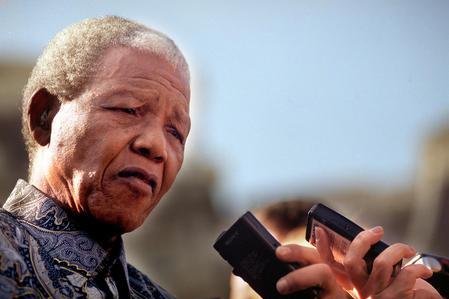
Former South African president Nelson Mandela speaks to reporters outside of the White House in Washington on October 21, 1999. Mandela was famously released from prison in South Africa on February 11, 1990. Photo by Joel Rennich/UPI | License Photo
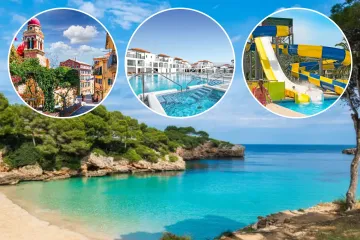
WHEN it comes to Spanish islands, trying to avoid the crowds can be near impossible.
But Menorca in the Balearics has far fewer tourists than some of it’s neighbours, and is a great alternative according to a TUI travel agent who has been in the biz for over 25 years.
Sign up for the Travel newsletter
Thank you!
Menorca is a great alternative to the likes of Ibiza and TenerifeCredit: AlamyTUI Travel Agent Claire Moye has worked in travel for 26 yearsCredit: TUI
Each year, Menorca welcomes around 1.5million tourists – a fraction of Ibiza that sees up to 4million visitors, or Majorca‘s 13million.
TUI Travel agent Claire Moye, who has worked in travel for 26 years, has booked over 1,000 trips to Menorca and has even dubbed it a great alternative to the lively Ibiza.
So why visit what Claire called ‘Ibiza’s chilled-out sister’?
In the summertime, Menorca can see highs of 30C, and thanks to the island’s smaller size, airport transfers are short.
Not to mention it can be less expensive too. Claire revealed: “In peak summer, Menorca can work out cheaper than some of the more established hotspots.
“A casual meal out for a family of four typically costs less in Menorca, with families often spending around €60 – €90 compared with €90 – €120 in busier hotspots. And a pint of beer can be a few euros less too.”
If that hasn’t sold you on a trip yet, check out Claire’s top beaches, restaurants and her favourite hidden gems…
Best beaches
“If you love those picture-perfect Ibiza beaches like Cala Comte or Cala d’Hort, then Cala Macarella is Menorca’s answer.
“It’s got those similar limestone cliffs and the most incredible turquoise water – honestly, it’s just as stunning but without lots of people fighting for a spot.
“The smaller sister cove, Macarelleta, is even more secluded and feels really special. I always tell couples to head there if they want that romantic, intimate vibe – although it is a nudist-friendly beach, so just be aware of that before you go.
“Cala Turqueta is another absolute stunner – the water is so clear you can see straight to the bottom, and there are pine trees for shade which is a godsend in the midday heat.
“And if you want something a bit different, Cala Pregonda has this gorgeous reddish-golden sand that you won’t find anywhere else. It’s a bit of a walk to get there, but that’s what makes it feel like a proper hidden gem.”
Bars and nightlife
Claire says if you’re after the party life of Ibiza with all its superclubs like the newly reopened UNVRS, then Menorca might not be for you.
But there is one very unique bar that is worth checking out – and it has plenty of room for dancing.
“Cova d’en Xoroi, is just magical. It’s a bar built into caves on the cliffsides, and watching the sunset there with a cocktail in hand is just so beautiful.
“They do have DJ nights too, so be prepared to bring out your Ibiza-style moves once the dance floor opens at 11pm.
Cala Pregondo is a unique beach with reddish golden sandsCredit: AlamyCova d’en Xoroi is a bar built into the cliffside in MenorcaCredit: Alamy
“The port of Mahon also has a lovely string of bars along the waterfront where you can have drinks with beautiful harbour views.
“It’s not about clubbing until dawn, but there’s definitely a buzz in the evenings and it has a lot in common with Ibiza old town – both are working natural harbours packed with history perfect for evening promenades.
“I tell all of my customers to try a pomada while they’re there – it’s the local cocktail made with Menorcan gin and lemonade.
“The island actually produces its own gin called Xoriguer, and the gin and tonics there are massive.”
Restaurants
“For restaurants, Café Balear in Ciutadella port is legendary – it’s right on the harbour and the seafood is incredible. You’ll see locals queuing up alongside tourists, which is always a good sign.
“It actually started out as a tavern in the harbour back in the 70s, mainly for seafarers who would drop by in the early hours before they went to work. Nowadays I’d recommend booking ahead because it gets packed!
“Also in Ciutadella, for those who want Michelin standard fine dining like Ibiza’s famous La Gaia or Amante, you should book well ahead for Smoix; set inside a former shoe factory it’s called out as one of the island’s best eateries.
“Or for Ibiza countryside-luxury vibes head for Cala en Porter and the Torralbenc Restaurant, set in a restored finca with vineyard and sea views, for organic farm to table food.”
Cala Macarelleta is a picture-perfect beach on the southern coastCredit: Alamy Stock PhotoOne strange hidden gem is Lithica Pedreres de s’Hostal – an abandoned quarryCredit: Alamy Stock Photo
Shopping
Make sure to take time away from the hotels and the beaches to explore the shops.
Claire said: “The markets in Menorca are brilliant. Mercat des Claustre in Mahón is a traditional covered market where you can get local cheeses, fresh fruits and sobrassada (which is a type of sausage that’s spreadable, a bit like pate).
“Like Ibiza’s best markets, it’s less about shopping and more about soaking up everyday island life. It’s my personal favourite, and ideal for putting together a picnic or picking up gifts to take home.”
Hidden Gems
“One of my favourite hidden gems is Lithica Pedreres de s’Hostal – it’s an abandoned quarry that’s been transformed into gardens with a bit of a maze carved into the stone walls.
“It has the same slightly surreal, unexpected feel as some of Ibiza’s ‘alternative’ cultural spaces. It honestly looks a bit dystopian, but they often host concerts and events there.
“It’s the kind of place that surprises people because they don’t expect to find something so unique on a small island.”
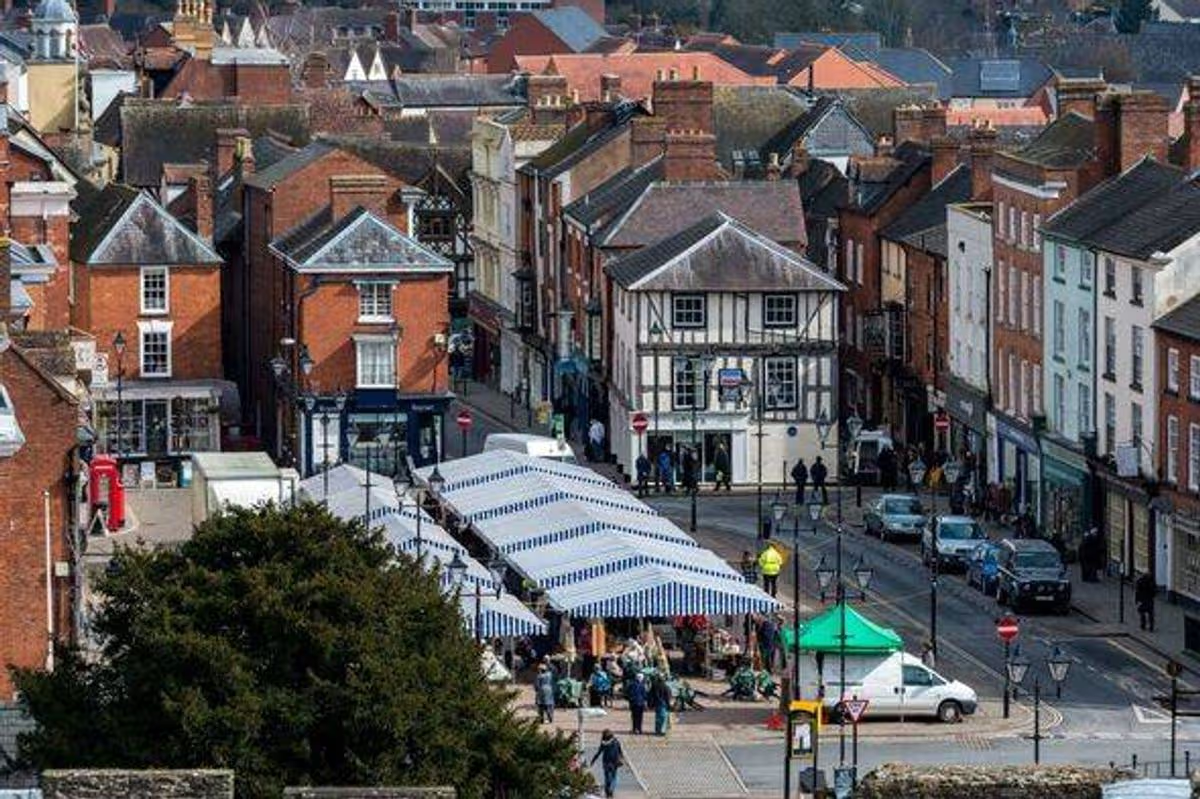
The historic market town earned five stars for food quality in a Which? Travel survey and has been celebrated as the ‘food and drink capital of the Marches’
The pretty market town with the UK’s best food known as the ‘loveliest town in England’(Image: Getty)
Long hailed by poet John Betjeman as “the loveliest town in England,” Ludlow has also earned global recognition as a culinary and beverage hotspot. Boasting over 500 listed buildings and a skyline crowned by a Norman castle, Ludlow blends historic fairy-tale character with contemporary allure.
Winding cobbled lanes guide visitors to delicatessens, artisan bakeries, welcoming pubs, and celebrated eateries. Frequently dubbed the ‘ food and drink capital of the Marches’, Ludlow’s hospitality sector flourishes thanks to its abundant locally-sourced offerings.
A Which? Travel poll of over 9,000 participants asked respondents to evaluate the culinary credentials of their preferred inland destinations.
Ludlow emerged victorious as the country’s top-rated food and drink location. It stood alone as the sole inland town achieving a perfect five-star rating for cuisine, reports the Express.
As Which? Travel observed, “Instead of a handful of high-end eateries, there’s a culture of local produce as well as numerous pubs and cafes, served by people who care about the food.”
This philosophy translates directly onto diners’ plates, emphasising fresh, locally-sourced ingredients and seasonally-rotating menus.
TripAdvisor presently places Old Downton Lodge at the summit of Ludlow’s restaurant rankings. Waterside favourite CSONS represents another cherished destination for laid-back, high-quality dining, alongside Kin Kitchen and Baker’s of Tower Street for casual cafe-style fare.
Pub enthusiasts face an embarrassment of riches with The Queens and The Boot Inn, both receiving strong ratings on TripAdvisor. Experts from Ludlow Distillery highlight that the town’s gastronomic reputation rests upon a robust network of food and beverage producers, encompassing everything from artisan cheese and bread makers to craft breweries and distilleries.
They explained: “The strength of this offering is best seen (and tasted) by a visit to the Local to Ludlow Market in the Castle Square (where growers and makers based within 30 miles of the town sell a range of high-quality and carefully selected produce), and the award-winning Broad Bean fine food delicatessen on Broad Street.”
Ludlow has embraced the ‘Slow Food’ philosophy, a worldwide grassroots initiative with thousands of supporters globally that connects culinary enjoyment with community engagement.
In recent years, the Ludlow branch of this movement has flourished considerably. Slow Food Ludlow Marches provides year-round activities, featuring site visits, presentations, cookery demonstrations, dining experiences and Taste Workshops during the Ludlow Food Festival each September.
The Ludlow Food Festival stands as one of the town’s premier annual occasions, consistently attracting approximately 15,000 people to Ludlow Castle across a three-day period.
Plan your trip for either the second or fourth Thursday of each month to explore the Ludlow Local Produce Market, which celebrates food and beverages crafted within a 30-mile radius.
Vendors prioritise sustainability and seasonal offerings, transforming an ordinary shopping trip into a delightful culinary experience.
Looking beyond Shropshire, Wells secured the runner-up position for inland dining according to Which? Travel.
Additional accolades went to Lavenham in Suffolk, Llangollen in Denbighshire, Stamford in Lincolnshire and Cartmel in Cumbria, with each destination providing its own distinctive gastronomic getaway.
Egypt is known for its bounteous history, incredible architecture and stunning Nile River – but there’s a hidden side to the country, as Jess Phillips found out during a recent trip
12:50, 24 Feb 2026Updated 12:55, 24 Feb 2026
This article contains affiliate links, we will receive a commission on any sales we generate from it. Learn more
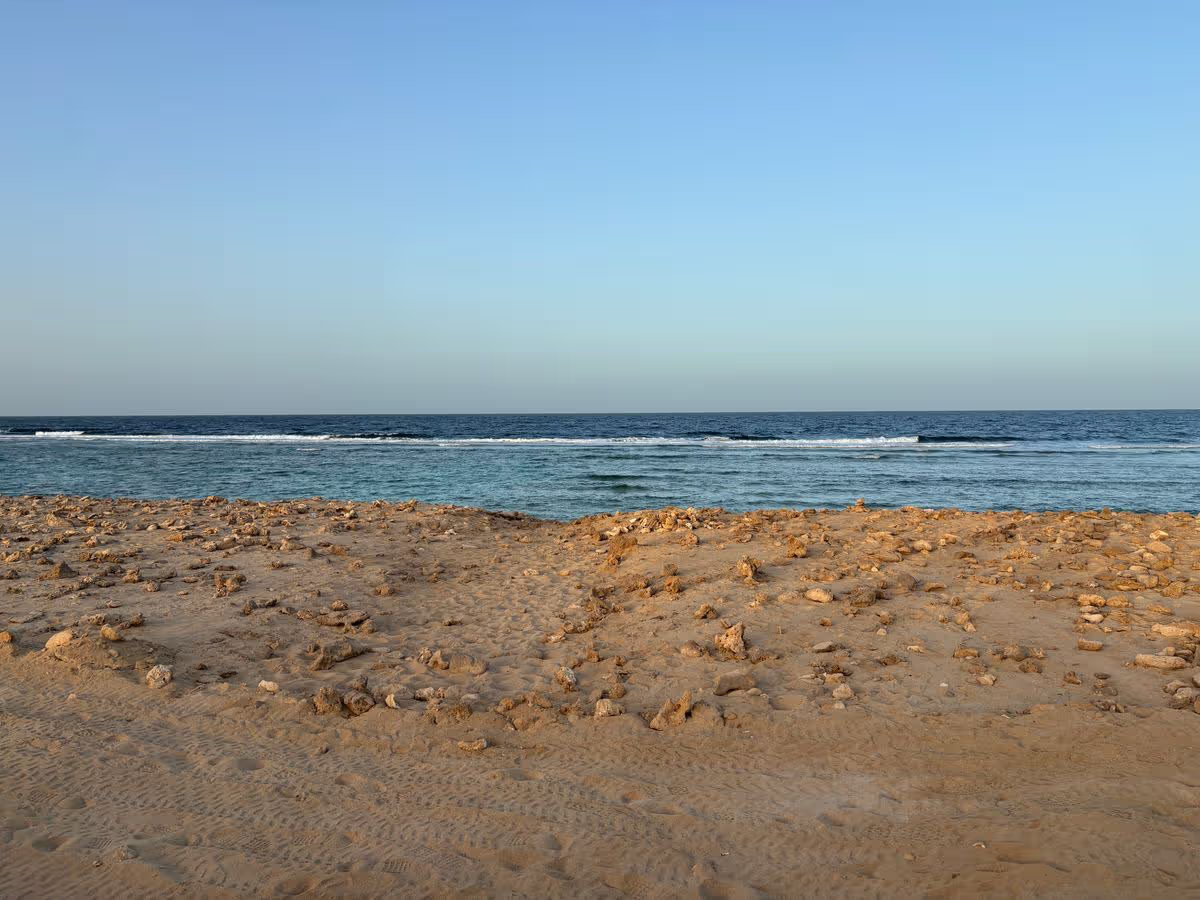
Between the haze of desert dust kicked up by the row of quad bikes in front of me and the glowing orange of the setting sun against the horizon, it’s easy to miss the rapidly approaching ocean, those last dying rays of sunlight reflecting off the rolling waves.
I’d be forgiven, I’m sure, for not quite expecting to stumble across the Red Sea in the middle of the desert.
Regardless, that’s exactly what happened when I found myself riding a quad bike through the Marsa Alam sands. Our group pulled up to the shore to look for shells and coral, and for a moment, it felt as though I was on another planet entirely.
Let’s back up for a second. Before last year, I’d never even heard of Marsa Alam. I’m ashamed to say that I couldn’t have pointed it out on a map if you’d paid me for the pleasure.
Now, however, all of that has changed. I genuinely feel as though I discovered one of Egypt’s best-kept secrets after jetting off from London Gatwick on a direct TUI flight to Marsa Alam International – the country’s first privately owned and operated international airport, which opened in 2003.
Marsa Alam is a burgeoning coastal resort catering to tourists from around the world. The area is still actively developing – though that definitely doesn’t mean it’s lacking in things to do – and offers the best of both worlds: incredible beaches, perfect blue water, and the more traditional Egyptian desert experiences.
Though the flight itself was over five hours, the transfer time to my hotel was gratifyingly brief – a mere 15 minutes by TUI-operated minibus. Having arrived at night, it was impossible to make out much of the surrounding scenery as we entered the hotel complex.
The Jaz hotel group is a giant in Egypt. You’ll find their properties tucked away in every nook and cranny. My destination was the Jaz Elite Amara, one of TUI’s all-inclusive offerings for UK visitors. Boasting seven public pools and 18 swim-up rooms, the hotel’s water theme hits straight from the lobby, where you’ll find quietly tinkling fountains as soon as you step through the doors.
Bright and early the next morning, I was ready to experience everything Marsa had to offer. Situated on the coast of the Red Sea, I’d already managed to grab a glimpse of the ocean on my first night, but seeing those turquoise waters up close was truly something else. So how better than to start my trip with a bout of snorkelling, taking off from the nearby resort town of Port Ghalib?
TUI’s snorkelling excursions take off from the port town and take visitors out onto the Red Sea by boat, before stopping over the gorgeous coral reefs to allow intrepid adventurers to spot dugong – better known as sea cows – and turtles frolicking in the clear blue water.
The highlight of my trip to Marsa Alam, however? Exploring the desert.
I headed off on another TUI excursion, a 20-minute drive from the Amara, over to The Camel Yard. The desert safari company offers everything from quad biking and buggy driving to traditional Bedouin experiences, and I was ready for it all.
Our group started off by getting kitted out for the journey – you’ll want to bring sunglasses due to the dust, but the company does provide goggles and scarves to keep the sand out of your face.
Prior to this, I’d never ridden a quad bike, but our instructor – who joyfully told us to refer to him as ‘habibi’, meaning ‘my friend’ in Arabic – made it simple, showing us how to start the engines and accelerate and brake. The bikes don’t have gears, so it was a totally freeing feeling to push the throttle across the dunes and in wide, arcing circles with the rest of my group.
After around an hour and a half on the bikes, with stops by the sea and in the dunes to see the incredible landscape, we headed back to the main tent for our Bedouin evening. If I was impressed by the desert itself, that was nothing compared to learning about the traditional pharmaceutical practices of the nomadic Arab tribes who traverse the desert by camel.
We sampled wellness blends containing eucalyptus to menthol crystals, which did wonders for clearing out the airways, along with spritzing ourselves with Egyptian perfumes, all available to purchase in glass bottles afterwards.
The night was far from over, however, as the desert excursion also included an incredible buffet meal consisting of roast lamb, chicken and an epic array of Egyptian salads, all with a strong blend of spices that made even the blandest foods – potatoes, cucumber, bread – stand out as a new favourite.
While we ate, we were entertained by a belly dancer and the whirling of the Tanoura. Afterwards, we trooped outside to enjoy some stargazing in the pitch black of the night, where Jupiter and Saturn were clearly visible through a telescope.
There was something truly magical about standing under the night sky, with Orion’s Belt and the Big Dipper both visible in the sky. Far from the light pollution of cities like Cairo and Luxor, Marsa Alam felt like an undisturbed paradise, one which transformed from looking like something out of an old episode of Star Trek in the daytime to an ethereal expanse of unbroken sands in the moonlight.
I can sum up Marsa Alam in two simple words – majestic and otherworldly. You’ll find something incredible around every corner, away from the hustle and bustle of city bazaars and ancient Egyptian ruins.
TUI’s all-inclusive bundles are perfect to get a feel for the area, with plenty of excursions and activities to keep you occupied while you explore the hotel complex.
I’d go back in a heartbeat.
Book it
TUI offers weekly flights to Marsa Alam from London Gatwick Airport during winter, as well as its trips to Sharm el-Sheikh, Hurghada, Luxor and Cairo. TUI Hotels & Resorts has 57 hotels with more than 17,100 rooms across Egypt.
TUI offers a seven-night holiday to Marsa Alam staying at 5T Jaz Elite Amara on an all-inclusive basis from £1,371 per person. Price is based on two adults sharing a Superior Double Room with Limited Sea View and Balcony departing from London Gatwick Airport on the 19 of April 2026 with 20kgs luggage included. To find out more about this holiday or to book go to tui.co.uk.
Appearing in a London court, Brand denies accusations of raping one woman and sexually assaulting another in 2009.
Published On 24 Feb 202624 Feb 2026
Share
British comedian and actor Russell Brand has pleaded not guilty to two further charges of rape and sexual assault nearly two decades ago.
Brand appeared at Southwark Crown Court in London on Tuesday and denied accusations of raping one woman and sexually assaulting a second woman in 2009.
Recommended Stories
list of 4 itemsend of list
Once one of the United Kingdom’s most high-profile broadcasters, he was charged last year with two counts of rape, one count of indecent assault and two counts of sexual assault against four women between 1999 and 2005.
Brand pleaded not guilty in May last year to those five charges and is due to stand trial in June. A hearing will be held next month to decide whether the new allegations should be joined to that case, with Brand’s lawyer saying his client needs more time to address the latest offences.
“These new charges are in relation to two further women and are in addition to the charges issued to Brand in April 2025, which involved four women,” London’s Metropolitan Police said in a statement in December.
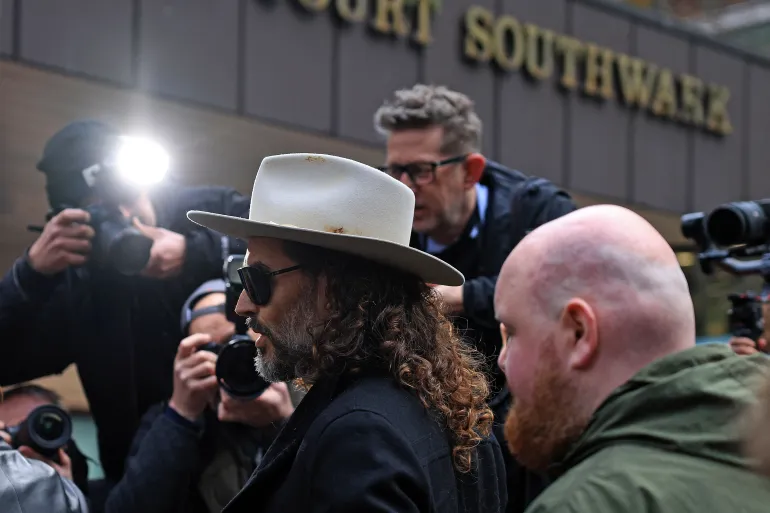
Russell Brand arrives at Southwark Crown Court in south London [Adrian Dennis/AFP]
Brand, 50, arrived at court wearing a white cowboy hat and sunglasses. Asked how he was feeling, the actor, who said in 2024 he had become a Christian, told reporters he was feeling “blessed”.
Born in 1975 to working-class parents in Essex, east of London, Brand began his stand-up career as a teenager, eventually working as an MTV presenter and host of a reality TV series.
A regular on British screens in the 2000s, he was known for his flamboyant style and appearance. He also worked as a radio presenter for the BBC.
Brand starred in several films, including Get Him to the Greek in 2010, the same year he married American pop star Katy Perry. They divorced in 2012 after 14 months of marriage.
By the early 2020s, Brand had faded from mainstream culture and has since largely appeared online, airing his views on US politics and free speech.
Kelly Osbourne has denied the use of fat jabs yet is still receiving swarms of abuse onlineCredit: GettyKelly Osbourne received comments from nasty trolls after attending the Royal Ascot Millinery Collective during London Fashion Week at Claridge’sCredit: GettyKelly has been submitted to a slew of abuse over her weight and appearance since her dad passedCredit: Splash
Kelly, 41,has denied the use of weight loss jabs, but has become the target of a slew of online abuse.
The singer and TV star has now called out the vicious online trolls for subjecting her to the string of vile comments.
Posting an unsavoury comment to her social media where a cyber bully claimed she “looked like a dead body”, Kelly responded: “Literally can’t believe how disgusting some human beings are! No one deserves this sort of abuse!”
Alongside her statement, she posted a collection of fans comments sticking up for the star and slamming the awful message.
Kelly continued sticking up for herself as she posted yet another comment dissecting her weight loss and appearance.
She said: “This too shall pass, but like, holy f**k.”
The TV legend has bee forced to fend off a torrent of online abuse since the tragic passing of her dad Ozzy Osbourne.
But, things escalated when snaps of Kelly at the Royal Ascot Millinery Collective at Claridge’s emerged.
Kelly has often been candid about struggling with her weight, telling fans her insecurity developed in her teen years – while starring on the hit reality show The Osbournes.
Talking on The Osbournes podcast last year, Kelly said: “I got pulled into the head of the agency’s office and he … gave me a whole speech about how I was too fat for TV and I needed to lose weight, and that if I lost weight, I would look better.
Jack Osbourne, Sharon Osbourne and Kelly Osbourne walked back to their car after viewing tributes to the late Ozzy Osbourne from fans, as his funeral cortege travelled through his home city of BirminghamCredit: GettyKelly Osbourne recently penned a heartfelt post about grief seven months after her dad, Ozzy’s tragic deathCredit: Instagram/kellyosbourne
“And he was just saying, ‘You’re not a movie star, but you could be one if you lost weight.’”
Kelly recently penned an emotional message about grief seven months after 76-year-old Ozzy’s death.
She said: “Some grief doesn’t end. It changes shape. It becomes a weight you learn to carry, the ache woven it your day. Making it through doesn’t mean leaving it behind.
“It means finding strength to live and love and keep going even with forever resting heavily on your heart…”
The Black Sabbath singer died at home with wifeSharon, 73, and his kids by his side, back in July 2025.
UK holidaymakers travelling to popular destinations like Spain and Greece could be turned away at airports
12:43, 24 Feb 2026Updated 13:08, 24 Feb 2026
If you have a British passport you’ll need to follow this rule(Image: Andy Soloman via Getty Images)
British holidaymakers jetting off to Spain, Greece and many other countries must follow a post-Brexit rule – or be refused boarding at the airport. While the prospect of an overseas getaway is thrilling, it’s important for travellers to be aware of all requirements before setting off.
This has become especially vital following Brexit, which has introduced new regulations in recent years. Prior to Britain’s departure from the European Union (EU), UK passport holders could visit the Schengen Area without requiring passport stamps and weren’t subject to any time limits on their stays.
However, British visitors are now limited to a maximum of 90 days during any 180-day period. To assist with this, an application called Schengen Simple has been developed.
George Cremer, founder of Schengen Simple, said: “We built a travel app that handles the 90/180 calculation for exactly this reason. The tricky part most people miss is that it’s a rolling 180-day window, not a fixed calendar period.
“So someone who did a long summer trip to Spain might unknowingly be restricted on a winter break months later. The European Commission has its own calculator, but it only looks backwards.
“It tells you how many days you’ve used, not how many you have left for a future trip. That’s the gap we fill. Users enter past and upcoming travel and can see exactly how long they can stay without risking an overstay.”
The Foreign Office’s guidance for all Schengen nations warns: “If you overstay the 90-day visa-free limit, you may be banned from entering Schengen countries for up to 3 years.”
The Schengen area consists of: Austria, Belgium, Bulgaria, Czechia, Croatia, Denmark, Estonia, Finland, France, Germany, Greece, Hungary, Iceland, Italy, Latvia, Lithuania, Liechtenstein, Luxembourg, Malta, Norway, The Netherlands, Poland, Portugal, Romania, Slovakia, Slovenia, Spain, Sweden and Switzerland.
HALF-TERM may be over but it doesn’t mean the fun has to be as there are lots of free activities taking place across this week.
Whether you want to head out for a walk to make the most of the sunshine or are wanting to pick up a new artwork for your home, this week has a great range of indoor and outdoor activities.
Sign up for the Travel newsletter
Thank you!
With the sun starting to peek through the clouds, this week is the ideal time to get out and about and enjoy some free activitiesCredit: Getty
Europe’s largest artist and designer fair, London
This weekend you can head to Europe’s largest artist and designer fair at Chelsea Town Hall in London.
The Parallax Art Fair features over 10,000 works of art and design, that are all marked 40 per cent off of their usual price for the weekend.
The fair will also be playing music and there’s even a cinema.
The BRITs Art Trail, Manchester
Until March 16, you can explore a citywide art trail in Manchester with 21 artists.
The trail features wall murals, immersive window installations and billboards.
Visitors can explore the art and the city in the lead up to the BRIT Awards, with art in some of the city’s most loved spots.
Beryl Cook Sculpture Trail, Plymouth
In Plymouth, Devon, you can currently discover a series of life-sized Beryl Cook sculptures.
As if they have stepped straight out of the artist’s paintings, the sculptures celebrate humour and love for everyday life.
There are four sculptures to find before the end of July.
Wedding Showcase at Natural History Museum
Future brides and grooms can head to the Natural History Museum to catch the Wedding Showcase this weekend.
It starts at 7:30pm on Saturday and you will get to see what a wedding is like at the Natural History Museum.
There will be entertainment, dining experiences and even bridal styling.
You must book ahead of the event, but it is free to attend.
For example, you could head to a wedding show at the Natural History MusuemCredit: Getty
Viking Experience Day – Great North Museum: Hancock, Newcastle
On Friday, head to the Great North Museum in Newcastle to enjoy a day all about vikings.
Visitors will get to meet real-life Vikings as well as Viking experts.
For little ones, there will be storytelling sessions and riddles to solve as well as the opportunity to make your own rune stone to take away with you.
Fairy House Trail at Saltram House, Devon
At Saltram House in Devon, you can head on a fairy house trail until this Sunday.
Hidden around the garden of Saltram House you will find tiny fairy homes.
There are 10 in total to spot and as you discover them there are also some magical activities to participate in as well.
Or find hidden fairy houses at Saltram House in DebvonCredit: Alamy
After Dark Festival, London
On February 26, make sure to head to UEL’s After Dark festival to see a number of outdoor performances and installations that have all been inspired by the four elements.
The festival takes place at the Docklands Campus and includes light, fire and circus performances such as illuminated acrobatics and a glowing parade.
It will run from 5pm to 8pm.
Bristol Light Festival
Bristol Light Festival will finish at the end of this week, so make sure to explore the trail before it disappears.
There are different installations across the city to check out including a cluster of illuminated hot air balloons.
There’s also a wider event programme with walkabout performers such as stilt-walkers and jugglers.
And for adults there are comedy shows and a night market as well.
There’s also Bristol Light Festival this week, which has a whole events programmeCredit: Alamy
Big Days Out: Underwater Worlds – Baltic Centre for Contemporary Art, Newcastle
From Wednesday February 25 to Friday February 27, between 10am and 6pm visitors can head to the Baltic Centre for Contemporary Art in Newcastle for Underwater Worlds.
Visitors can explore the ocean by building underwater worlds and even having a dance at the Cereal Disco – where you can grab breakfast and have a boogie at the same time.
There will be a marine biologist on hand too for you to learn about marine life from.
At the Baltic Centre for Contemporary Art in Newcastle you can head to a Cereal DiscoCredit: Alamy
Mini-museum hunt for 50 years of Aardman at Bristol Museum & Art Gallery
Love Wallace and Gromit? Then head to the Bristol Museum & Art Gallery to go on a treasure hunt around the museum.
Lots of tiny creations from the animation studio Aardman have been hidden around the museum, which guests can look for.
You can grab a map which helps you tick off each treasure.
Wallace and Gromit fans should head to Bristol Museum & Art Gallery to find hidden Aardman treasuresCredit: PA:Press Association
Cardiff Music City, Wales
To celebrate St David’s Day, head to Cardiff Music City festival, which features free performances at a number of venues.
For example, you could head to Cardiff Market on Saturday and Sunday between 5pm and 10pm for street food, independent traders and performances by Radio Sudd.
Heritage Weekend at Lauderdale House and Waterlow Park, London
Over at Lauderdale House and Waterlow Park this weekend, you can experience the annual Highgate Heritage Weekend.
On Saturday, the Local Heritage Fair Day will be on with 20 local organisations and special talks throughout the afternoon.
Then Sunday is the family day, with activities for all ages.
All this is happening even as birthrates have plummeted in this country for decades, reaching their lowest point ever in 2024. A reduced population tends to relegate countries to economic and demographic doom — look at Japan and Russia. That’s why one of Trump’s big campaign promises was to Make America Fertile Again.
“I’ll be known as the fertilization president and that’s OK,” he boasted last spring during a women’s history event at the White House.
But even as this administration urges families to grow and single people to marry and welcome little ones into their lives, it’s persecuting children in the name of Trump’s deportation deluge.
While the president told a crowd last October, “We want more babies, to put it nicely” while announcing cheaper in vitro fertilization drugs, the New York Times found his administration was keeping an average of 175 children a day in immigration detention — a 700% increase from the end of the Biden administration.
As Vice President JD Vance bragged during a March for Life rally in January that he “practices what he preaches” by expecting a fourth child this year, 5-year-old U.S. citizen Génesis Ester Gutiérrez Castellanos was adjusting to life in Honduras along with her deported mother.
On the same day last month that Transportation Secretary Sean Duffy posted on social media, “My greatest job is being a dad to my nine kids and family will always come first,” a federal judge ordered the release of 5-year-old Liam Conejo Ramos, an Ecuadorean preschooler grabbed outside his Minneapolis home along with his father in what the jurist described as a “perfidious lust for unbridled power.”
Just last week, Alaska resident Sonia Espinoza Arriaga and her sons, ages 5 and 16, were dumped in Tijuana by la migra even though the family had an active case to determine whether they qualified for asylum. And Trump’s campaign against undocumented children is just beginning on multiple fronts.
Ayaan Moledina protests against Immigration and Customs Enforcement as they march toward the South Texas Family Residential Center on Jan. 28 in Dilley, Texas.
(Joel Angel Juarez / Getty Images)
The Supreme Court has scheduled hearings in April for Trump’s lawsuit seeking to end birthright citizenship for people born to parents who aren’t citizens or permanent residents. U.S. Atty. Gen. Pam Bondi is suing to end policies that protect immigrant children in custody.
Thousands more agents are expected to storm our streets in the coming weeks while the Department of Homeland Security spends billions of dollars to build or retrofit warehouses to stuff with the people they grab. Reports are already emerging from the South Texas Family Residential Center an hour south of San Antonio, which ICE uses to house children slated for removal from this country, of rancid food and overcrowded cells.
Trump’s apologists will claim there’s nothing racist or heartless about removing youngsters in this country illegally — or if their parents are in the U.S. without documentation — while asking citizens to have bigger families, even as the main proponents of the so-called pronatalist movement are white conservatives while nearly all of the kids la migra are booting are Latinos.
But an administration that can’t treat these children humanely shouldn’t be trusted with taking care of even American-born children. And one can’t separate Trump’s supposed pro-baby policies from what this country has historically inflicted on Latino families.
American authorities forced U.S.-born children to leave for Mexico with their parents during the Great Depression, arguing they would become a welfare burden at the expense of white children. Doctors were sterilizing Latinas without their consent in the name of population control as recently as the 1970s. Popular culture ridiculed large Latino families as backward and destined for poverty.
I grew up in a California where politicians railed against Mexican American kids like myself for supposedly overwhelming schools, parks, medical clinics and streets with our numbers. We were supposedly the ground troops in a nefarious conspiracy called Reconquista that sought to return the American Southwest to Mexico.
By the time I reached high school in the 1990s, voters began to pass laws that sought to make life miserable for undocumented immigrants like my father and other relatives, with a special punitive focus on their progeny. The infamous Prop. 187, which passed in 1994, would’ve banned undocumented children from attending California public schools from kindergarten to higher education. Five years later, the Anaheim Union High School District, whose schools I attended, passed a resolution seeking to sue Mexico for $50 million for educating the children of undocumented immigrants.
Board president Harald Martin — who migrated to this country from Austria as a 2-year-old — appeared on NPR to justify his actions by comparing the students he was in charge of to Tribbles, furry little aliens that starred in a famous “Star Trek” episode when they bred in such numbers that the Starship Enterprise was overwhelmed.
“They were so cute and fluffy, nice little things when there were four or five of them,” Martin said. “Then it got to the point down the road when it wasn’t so nice. They were getting in the way because there now were thousands of them on the ship.”
Martin’s example was not only wildly racist, it ignored the reality that Latinos were on the same road to assimilation as other previous immigrant groups ridiculed for their large families. While a March of Dimes study released last year shows Latinas had more children than any other ethnic group in this country as of 2023, the Latina birthrate declined by a third since 2003 — by far the largest drop of those groups.
I’ve seen this play out in my own family. I have 16 aunts and uncles who lived to adulthood and am the oldest of four children born to my parents — but my dad has just one grandchild and probably isn’t getting any more. I agree with Trump, Vance and the rest of them that children bring magic and vitality to communities — but what Latino family would want to raise a family where everything is far more expensive and the threat of deportation is never far away?
In this photo released by U.S. Rep. Joaquin Castro (D-Texas), Adrian Conejo Arias and his son, 5-year-old Liam Conejo Ramos, are seen in San Antonio on Jan. 31 after being released from the Dilley detention center.
(U.S. Rep. Joaquin Castro)
Fatherhood wasn’t in the cards for me, but I love being Tío Guti to my nephew and the children of my friends. That’s why my heart breaks when I hear them say that their classmates left the United States and my blood boils when I hear Vance, Trump and others urge Americans to have more kids. Trumpworld isn’t looking to increase the number of people who look like my loved ones — and that’s something that should frighten us all.
During the early1980s, under coach Craig Raub and with the help of the DeCree sisters, Toya, Fonda and Diane, Granada Hills Kennedy was the best basketball program in the City Section and one of the best in Southern California. Toya, Fonda and Diane ended up playing for Arizona State, Oregon State and Texas A&M, respectively. Toya became a coach and the mother of the NBA Holiday boys, Justin, Jrue and Aaron.
Kennedy won a City Division II title in 2023, but the Golden Cougars are trying to return to relevancy this season having advanced to the City Section Division I final on Saturday against El Camino Real at 4 p.m. at Pasadena City College.
One of the standouts is Abbigail Gomez, a transfer from Highland who’s averaging 15 points. Her parents played football and soccer at San Fernando High. She also plays for Kennedy’s flag football team.
She made a game-clinching three in the fourth quarter on Saturday to help beat San Pedro. Afterward, she turned to the crowd and blew a kiss.
“That’s for my close friends and family,” she said.
She might be even more excited if the Golden Cougars can win a City title on Friday.
This is a daily look at the positive happenings in high school sports. To submit any news, please email eric.sondheimer@latimes.com.
This breathtaking train journey is right beside the sea, where you can see black swans, quaint villages, and even see waves crashing into the tracks.
For just £8 you can enjoy miles of stunning views(Image: Getty)
It is often said that the journey matters just as much as the destination – and across the UK, certain train routes are so stunning they become an attraction in themselves. The Riviera Line is a railway route in Devon, England, renowned for its spectacular scenery, as it is one of the few railways in Britain that runs directly alongside the sea.
This train journey covers 28 miles from Exeter city centre to the town of Paignton, taking approximately 50 to 60 minutes. It is one of the most affordable ways to soak up the most picturesque landscapes of the English Riviera, where waves are known to crash across the train tracks.
A single ticket costs around £8 for an adult, with most websites pricing them at £8.40, and returns available at £10.70.
It has also been recognised as one of the “most scenic train journeys” in Britain by National Geographic, which highlights that it showcases “the best views the English Riviera has to offer.”
They said: “South Devon’s Riviera Line connects Exeter with Paignton, threading its way past towering cliffs, numerous estuaries (look out for egrets, one of the UK’s rarest birds), quaint market towns and Powderham Castle, with its deer-filled grounds.”
What can you see on the Riviera Line?
Once you depart Exeter, the train hugs the Exe Estuary, a vast expanse of water where the River Exe meets the English Channel, reports the Express.
Passengers are treated to breathtaking views of the shimmering sea, whilst numerous boats can be spotted making their way along the riverbanks. Have your camera at the ready the moment you arrive at Starcross, a tranquil rural village, as you’ll encounter the renowned sea wall at Dawlish.
Waves frequently crash spectacularly straight over the railway line, creating a stunning sight, and you’ll also witness the iconic sandstone cliffs, celebrated for their vivid rusty red hue.
Dawlish is equally famous for its black swans, though the region serves as a sanctuary for distinctive birdlife as you can regularly observe egrets, herons and waders along the coastline.
The train also passes through Teignmouth, a seaside resort recognised for its vibrant houses and enormous Victorian pier extending into the sea.
You’ll then sweep past the English countryside, where you’ll observe abundant green woodland, agricultural land, tiny hamlets, and you’ll also catch sight of the Dartmoor hills on the horizon
.
As you near Paignton, you’ll begin to notice palm trees as the locale is renowned for having gentler weather than the rest of Britain and enjoys summers warm enough for tropical vegetation.
Be sure to sit on the right-hand side of the train at Exeter for the finest views, and you’ll be able to savour the best of Britain’s coastal landscape without requiring a car or ferry.
A number of European leaders prayed with Ukraine’s President Volodymyr Zelenskyy in Kyiv, during a service to mark the fourth anniversary of Russia’s full-scale invasion.
WHILE Greggs is a quintessential part of British culture, there is bizarrely a similar version of it more than 1,500 miles away.
The famous food chain recently revealed that it sells more sausage rolls at Newcastle Airport than at any of its other UK branches throughout the UK – suggesting that people really miss their pastries when going abroad.
Sign up for the Travel newsletter
Thank you!
I tried the ‘Greggs of Greece’ during a recent trip to AthensCredit: Ryan GrayGregory’s opened 20 years after the UK GreggsCredit: Ryan Gray
And having recently visited Athens, I stumbled across the coincidentally named Gregory’s, which has more than 300 branches throughout Greece (as well as a few in Cyprus, Romania and Germany).
Serving a suspiciously similar fare, albeit with a bit of a Greek twist, a cursory Google search assured me that no plagiarism took place and that it is merely a happy quirk of fate that Greggs and Gregorys share such similar titles.
Both chains got their names from their respective founders, with John Gregg opening the first of the UK chain’s branches in Gosforth, near Newcastle, in 1951, while Grigoris Georgatos launched the first Gregory’s in Athens back in 1972.
Nevertheless, the similarities are so obvious that I decided to put the Greek chain up against its UK namesake, to see if it satisfies in quite the same way.
I ventured to one of the many Gregory’s branches found along the streets of Athens, easily recognisable by their twisty green neon signs.
The first thing I noticed is that, in comparison to Greggs, it has a much more extensive range of items.
If you’re there for breakfast, you can get all the typical morning pastries, from croissants to pain-au-chocolat and cinnamon rolls.
However, they also have some less expected choices, like toasted sandwiches filled with peanut butter and banana, catering for those with not quite so conventional tastes.
But I was there mainly to see if its pastry game was up to scratch and asked the woman behind the counter what the most popular items were.
She informed me that the plain cheese and the cheese and spinach pies were among their best sellers, so I followed her advice and ordered one of each, for the princely sums of £2 and £2.90.
The cheese and spinach stuffed pastry is a typically Greek choice, commonly known as a spanakopita.
And actually, it was more or less on par with some of the other spanakopita I tried from more reputable and higher priced establishments during my visit to the Greek capital.
However, I’m not sure it’s a filling that would be racing off the shelves in Greggs, were it to be given a chance back in the UK, and would arguably be more at home in the Marks and Spencer food hall.
Sadly the sausage roll options in Greece leave plenty to be desired.
The Gregory’s version of the iconic British stalwart was a poor imitation, instead being a hot dog sausage ‘pie’ wrapped in a crust for £2.90 (more than double the UK’s £1.35, even after a recent price increase).
It looked so hard and crunchy that I didn’t think it would be worth risking my teeth ordering one.
That was certainly the biggest disparity between the two, however, with the sweet options, the sandwiches and the hot drinks all very much on a level playing field with the Greggs I know and love.
Their version of the sausage roll looked a lot less appealingI was impressed with the rest of their pastries, howeverCredit: Ryan Gray
Afterwards, I still had room for one of their apricot tarts, which was tasty if unspectacular at £2.40, and pretty much what I was expecting from the outset.
Nevertheless, I don’t really have too many bad words to say about Gregorys, even with their weak sausage roll options taken into consideration.
In Greece, pastries are a big part of the local cuisine, and it provided me with an affordable and unpretentious way of introducing myself to this world I previously knew very little about.
While I’m certain there are better places to try these foods, this certainly opened the door and showed me what the basic level should be, and for that, it serves a great purpose.
It’s like a Greek person going to a Wetherspoons for a Sunday roast dinner or a Full English – it’s not going to be the best one they’ll ever try, but it does a job of demonstrating (in a round about way) something that is much less accessible back home.
Although it didn’t stop me grabbing another Greggs for the road trip home from the airport…
I swapped grey British skies for 23°C sunshine in a beautiful city this February
I visited a paradise 3 hours away
February in Britain typically brings relentless grey skies, persistent rain and blustery conditions whilst we eagerly await the arrival of spring. The dreary weather and bitter temperatures can make winter seem interminable. Yet just three hours away, I discovered myself soaking up 23°C sunshine in a destination many describe as “paradise.”
Determined to unwind beside a pool, I traded my heavy winter coat for summer dresses and sunglasses during my visit to Marrakech, Morocco. With quieter tourist numbers, exciting excursions, affordable accommodation and flights available from just £23.99 in March through Easyjet, here’s why you ought to consider a trip yourself.
Why it’s called paradise
When journeying to Morocco, fellow travellers may advise “you must stay in a riad” rather than a hotel to experience authentic Moroccan hospitality. The term riad means “garden” or “paradise” in Arabic.
“Moroccan riads were meant to represent the Muslim vision of paradise,” reported Moroccan Zest. “They were built and decorated by the best craftsmen from all over the Mediterranean area and enriched by Andalusian art to become the Moorish-style palaces we know today.”
My family and I ultimately chose a five-star establishment called El Olivar Palace in Marrakech, which featured private sections functioning as miniature riads, and it truly was paradise. The architecture was utterly stunning, whilst the entire hotel grounds radiated luxury and tranquillity.
This hotel provided an all-inclusive package featuring unlimited buffet dining with breakfast, lunch, dinner, and pudding. Despite being situated in a Muslim nation, the establishment continued to serve alcoholic beverages in the restaurant and at the outdoor bar.
The hotel boasts three swimming pools: two outdoor and one indoor, all surrounded by comfortable sun loungers. In the evenings, entertainment takes place in their indoor lounge, though throughout this quieter season it tends to be more peaceful, with reduced visitor numbers.
Moroccan tradition places great importance on warmth and hospitality. The hotel team were outstanding, incredibly friendly, and helpful. For most of our stay, we hardly needed to do anything as the staff attended to our every need as though we were VIPs.
Not only was our accommodation remarkable, but Morocco itself feels like an exotic haven wherever you venture. Despite the bustling streets of Marrakech, the city brimmed with vibrant culture and stunning views.
My preferred element was strolling past orange and olive trees, when suddenly you’d spot a lorry with a flock of goats or a donkey transporting merchandise. There were countless horses, cats, monkeys and snake charmers simply present in the town centre whilst motorbikes and scooters whizzed through the crowds.
When the sun starts to descend and the golden hour arrives, the country truly shines at its finest. The sky becomes the most magnificent sight to behold as its blue and orange shades blend together.
As the cotton-candy-like Atlas Mountains become increasingly visible, the large, luminous moon begins to appear. Once darkness falls, the sheer number of stars in Marrakech’s sky instils a tranquil serenity unmatched by any other location.
Morocco is also known as Al-Maghrib, translating to ‘the place in the West’. “In its simplest definition, the Arabic word maghrib means sunset,” as per The National News – an apt descriptor for this nation indeed.
Here’s my 72-hour itinerary
Like any holiday, venturing into a new country, it’s best to divide your time between adventurous pursuits, delving into the history and culture, and a day of relaxation. We spent five days in Marrakech, but this itinerary could easily be condensed into 72 hours.
For the first day, or rather the sunniest day of your trip, I’d suggest embarking on the desert excursion. We arranged this through Get Your Guide and paid a mere £15 for four activities spanning the entire day.
This included a visit to an Argan Oil Women’s Cooperative, where we savoured tea and bread with a variety of scrumptious dips (do try the peanut butter, it’s life-changing), followed by a tour and informative talk on the benefits of argan oil.
Next, you’ll embark on a camel ride; this was an utterly surreal and exhilarating experience, akin to riding a towering horse that moves like a seesaw. I’d recommend investing in a headscarf, as the sand can infiltrate your system.
Following that, you’ll team up for an exhilarating quad biking adventure, which proved an absolute thrill and a brilliant opportunity to bond with fellow travellers. Afterwards, you’ll tuck into a sumptuous three-course feast showcasing authentic Moroccan dishes.
To cap off the evening, you’ll witness a captivating, mesmerising fire performance that I promise will stay with you forever. For day two, I’d suggest taking things at a gentler pace. You ought to experience a hammam, an age-old, customary steam bath centred on purification and renewal.
This might sound extraordinary, but you’re instructed to undress entirely and provided with merely a modest cloth to preserve your modesty and a plush bathrobe that remains so toasty it feels freshly tumble-dried each time you slip it on. You’ll subsequently be bathed and thoroughly exfoliated before unwinding in the steam chamber.
Afterwards, you’ll be served tea and treated to a massage. I emerged from this experience feeling utterly refreshed, spotless and at peace.
Most residents indulge in this ritual weekly, and I completely understand why it’s become such a cherished custom. Next, make your way to Henna cafe for a stunning temporary hand design (resist anyone approaching you on the street offering it; visit a legitimate establishment to ensure you receive organic, genuine henna).
Finally, on your closing day, embark on a city tour and discover the captivating history of Marrakech. My personal highlight was the Bahia Palace.
Afterwards, wander through the souks, but stay alert to avoid being overcharged; negotiate firmly if you’re tempted to purchase anything! I spent £20 on a small kitchen bowl, and I’m still annoyed with myself for not insisting on a better price.
Three words: Morocco is paradise
I’ve never felt so calm and revitalised before, and I came back to a somewhat dreary UK looking radiant and recharged. February proved the ideal time to visit as there weren’t excessive numbers of tourists and the climate was favourable.
There were spells of rain as anticipated, but it felt crisp and pleasant after landing on a warm, sunny day. According to BBC News, this week the city is experiencing temperatures of 26°C, and it’s expected to climb higher as days progress.
I’d suggest packing a jacket, as evenings can turn cool, but I predominantly enjoyed wearing modest dresses and sandals.
Reflecting on our trip, my cousin Keisha remarked, “It was paradise, everything about it felt perfect, even the rain. Being there felt surreal and beautiful. Definitely worth another visit in the future.”
Hauwa Abdulkarim was inside her house when the violence began.
As evening settled over Woro, a village in Kaiama Local Government Area (LGA) of Kwara State, North Central Nigeria, on Feb. 3, the terrorists descended on motorcycles like a sudden storm. What began as a seemingly ordinary evening quickly turned into chaos, with about 170 people killed, their homes set ablaze, celebrations interrupted, and families forced to flee.
“Most of the youths were at the field playing football [on a school field close to the house]. Then we saw people running back home with the news that kidnappers had entered the town,” Hauwa recounted.
At first, she did not panic. The terrorists had sent word days earlier, a letter to the district head saying they were coming to “preach”. When the motorcycles rolled in, there was confusion and fear.
Then the shooting started.
“Upon entering the village [around 5 p.m.], they started shooting at people,” she said. The football field emptied in seconds. Inside her house, Hauwa and her husband tried to gather their children, counting them quickly and realising some were still outside.
“We were thinking about some of our children who were outside and those that went to the football field. The shooting continued until 5 a.m., the next day,” Hauwa added.
But the terror was not continuous. It came in waves.
“When it was time for the call to prayer, they suddenly stopped,” she recalled. “They made the call to prayer for Maghrib and called out people to pray.”
The silence was almost as frightening as the gunfire. After the prayer, the shooting resumed. “They did the same for the late-night prayer, stopping briefly to make the call to prayer and observe it. Afterwards, they resumed shooting through the night,” Hauwa told HumAngle.
Hauwa’s mother, Hajiya Aisha (in pink), and her neighbour also escaped the massacre in Woro. Photo: Isah Ismaila/HumAngle.
Later that night, everything suddenly became quiet: the gunshots stopped. That was when the residents began to hear the call to come out and extinguish the blazing fires.
Many were confused and afraid, unsure whether to come out to help put out the flames, flee, or stay hidden.
Hauwa and her husband came out with other residents, but they were ambushed. “We thought they had gone, so we came out with buckets to save our homes. That was when they opened fire again. It was a trap and my husband was almost killed in that encounter. He hid in a ditch, as I ran inside to stay with my children,” she recounted.
By dawn, the village was scarred by destruction — dead bodies with gunshot wounds to the head and cuts to their necks, houses reduced to ashes, the district head’s residence consumed by fire, and families shaken by the night’s events.
The alternating rhythm of violence and prayer created a chilling atmosphere that has left Hauwa to grapple with both physical loss and psychological trauma. She described the ordeal as a mix of terror and deception, designed to lure people into vulnerability.
The attack on Woro and neighbouring Nuku communities has displaced at least 941 persons and exposed glaring intelligence failures, despite prior warnings, and the growing influence of terror groups operating from the Kainji Lake National Park axis. HumAngle met with some of the survivors in Wawa, a town in nearby Niger State.
Victoria and her children fled Woro on the night of terror. They walked 42 kilometres before reaching Wawa town. Photo: Isah Ismaila/HumAngle.
Ibrahim Ismail Dan’umar, a community leader in Wawa who serves as the coordinator of the displaced persons, told HumAngle that the community has been providing the families with relief materials and accommodation, as there is no designated camp for them.
“On our records, we have people from Plateau, Nasarawa, Kebbi, Kwara, and Niger,” he noted. “We decided to organise a breakfast for them and announced that anyone offering shelter to the displaced should bring them to the gathering. On the first day, we had 381 people, even though we only projected for 200.”
“The next day, we distributed food items, and by the third day, the Emir of Borgu and representatives of Kaiama Local Government came with support, which we shared among them. Now, we have 941 displaced persons — adults and children — here in Wawa,” he explained.
Amnesty International, a global human rights organisation, described the killings as evidence of systemic neglect of rural communities. In a statement, the organisation condemned the attacks as “vicious” and criticised the Nigerian government for leaving rural communities at the mercy of rampaging terrorists.
Get our in-depth, creative coverage of conflict and development delivered to you every weekend.
Subscribe now to our newsletter!
One of the hosts of displaced persons from Woro, Oga Pepe at his residence in Wawa town. Photo: Isah Ismaila/HumAngle.
Following the deadly attacks, the Nigerian military has formally launched a multi-agency offensive in Kwara and Niger states, code-named ‘Operation Savannah Shield’, designed to dismantle terrorist networks and restore security in the region.
The initiative was flagged off on Thursday, Feb. 19 at Sobi Barracks in Ilorin by the Chief of Defence Staff, General Olufemi Oluyede, the Chief of Army Staff, Lieutenant General Waidi Shaibu, and the Kwara State Governor, AbdulRahman AbdulRazaq.
Unmasking those behind the terror
This attack is one of the deadliest this year.
In the weeks leading up to the Woro massacre, Sadiku’s faction of Boko Haram had already reached out to the community.
According to the village head, Salihu Umar, a letter dated Jan. 8 — written in Hausa and bearing the signature of JAS (Jama’atu Ahlis Sunna Lidda’adati wal-Jihad) — was delivered to him. The message requested a “private” meeting with local leaders for preaching and assured residents that no harm would come to them.
Umar said he made copies of the letter and forwarded them to both the Kaiama Emirate and the Department of State Services (DSS) office in Kaiama. Despite this warning, no preventive measures were taken, raising questions about Nigerian security intelligence.
However, security sources revealed that the killings are part of a jihadist campaign commanded by Malam Sadiku, a notorious terrorist whose influence has steadily expanded across multiple parts of Nigeria’s North Central region.
HumAngle has extensively documented how Sadiku, once closely aligned with Boko Haram founder Muhammad Yusuf and later Abubakar Shekau, has re-emerged at the forefront of a dangerous wave of insurgency.
After a stint with the Darul Islam sect, he returned to Boko Haram with renewed zeal, positioning himself as one of Shekau’s most loyal comrades. Sadiku’s financial windfall from the infamous Kaduna train abduction gave him the means to expand his influence, strengthen his network, and spread Boko Haram’s radical ideology across Niger State and neighbouring states.
With resources and reputation firmly behind him, Sadiku built a growing base of followers and fighters. Under his leadership, extremist teachings were not only revived but embedded into local communities, turning quiet rural villages into recruitment and indoctrination centres.
His trajectory, security analysts such as Yahuza Getso of Eagle Integrated Security note, reflects a long-term strategy of territorial control and ideological entrenchment, with this latest attack underscoring both the scale of his operations and the devastating impact on local communities.
But he is not alone.
Malam Mahmuda, the leader of the Mahmudawa (an Ansaru faction), has also turned the Kainji Forest into a safe haven for his fighters. Despite previous arrests of their leaders, the group has replenished its ranks and rearmed its foot soldiers.
According to Ahmad Salkida, HumAngle’s founder, who is one of the foremost experts on the protracted Boko Haram insurgency and the complex conflicts in the Lake Chad region, “The relocation of Sadiku and Umar Taraba, both veteran jihadist operatives, to the Kainji axis in 2024 marked a shift. Their presence injected technical expertise into a space previously dominated by loosely organised armed groups.”
He added that they are fragmented into smaller camps: some closer to the Benin border, acting as brokers linking criminal networks of jihadist actors. The Mahmudawa are said to facilitate training, arms movement, ransom negotiations, and sanctuary for fighters arriving from outside the region.
“Official claims regarding the arrest of their leader, Malam Mahmuda, remain unconfirmed in border communities, where continued attacks and coordinated leadership are still attributed to the group,” he noted.
“If the Mahmudawa are brokers, the Lakurawa are enforcers. With an estimated 300 fighters, they have become one of the most active jihadist–terrorist hybrids affecting […] border communities. Operating from within and around Kainji Lake National Park, they routinely launch incursions into Bagudo and Suru LGAs, combining attacks on military targets with ideological messaging aimed at delegitimising the Nigerian state.”
Security sources and community accounts indicate that Sadiku’s group and Mahmudawa, linked to jihadist networks across West Africa, have long operated in the dense Kainji Lake National Park and Borgu Reserve, straddling Niger and Kwara states. According to the sources, this is an attempt to create another Sambisa: a hotbed for Boko Haram in the North East.
Local residents have repeatedly warned authorities about the presence of terrorist camps in the forest, but responses have been slow. Between September and December 2025, the Federal Government carried out aerial and ground operations in the area, yet the group remains influential. The forest’s vast terrain and porous borders have provided cover for training, recruitment, and staging raids.
Getso believes that Sadiku’s Boko Haram has rebranded and reorganised remnants of Ansaru and JNIM cells, consolidating them into a formidable force in North Central Nigeria. He also revealed that the Woro massacre underscores the growing threat posed by Sadiku’s network.
“Nigeria’s current counter-terrorism strategy is insufficient. There is a need for a comprehensive review of military doctrine and intelligence operations,” Getso noted.
A dream on hold
At just 22 years old, Ibrahim Ishaq Woro had recently graduated from the School of Health in New Bussa, Niger State. He had only returned home to Woro a year earlier and was in the process of applying for jobs when the attack shattered his community.
On the day of the assault, Ibrahim was sitting at a tea stall when he spotted the terrorists approaching. Recognising them from a previous encounter, he fled — but minutes later, gunfire erupted across the village.
That day was meant to be joyous, with three weddings taking place, including his cousin’s. Instead, the celebrations turned into a massacre.
“The wedding was taking place at our house. Yahaya, my cousin, was killed. His wife and children were abducted and taken to the forest,” Ibrahim recalled.
Like Hauwa, who described how false calls to prayer lured residents into ambushes, Ibrahim witnessed the same deception. “Those who hid inside were warned: ‘you either come outside or burn in your houses.’ Those who opened their doors out of fear were kidnapped,” he said.
By dawn, Ibrahim returned to find the bodies of women, children, and men scattered across the community. His closest friends — Zakari, Habib, and Shamsudeen — were among the dead.
Ibrahim witnessed the massacre before fleeing to a nearby forest. His mother and three siblings are among those who were abducted. Photo: Isah Ismaila/HumAngle.
His mother, three siblings, and several family members who came for the wedding were taken captive. “Personally, we lost 20 people from my extended family and about 50 are still missing,” he said quietly, while looking away.
Like Hauwa, Ibrahim and other survivors fled Woro to Wawa and other neighbouring communities, with their belongings in wheelbarrows and on their heads, trekking for about 42 kilometres with swollen feet in search of refuge.
Now displaced, their only plea is for the government to secure the release of kidnapped women and children, and restore safety so families can return home.
“For those we have lost, we can only pray for eternal peace. But we need our loved ones back. That is why we are afraid to even return home,” Ibrahim said.
Officials in Wawa town, speaking on condition of anonymity, said discussions are ongoing with the district head to facilitate the safe return of displaced residents. The move, they explained, would allow survivors to access federal and state-level interventions more effectively once back home.
“If I love you, I have to make you conscious of the things you don’t see.”
James Baldwin’s quote about the artist’s role in society is emblazoned on billboards across Los Angeles this winter. Created by artist Patrick Martinez, the purpose of the signage is two-fold: to promote Frieze Los Angeles and, in the case of neon signs at the art fair’s entrance, to stand as a discrete work of art on its own.
Martinez, an East Los Angeles-based artist, has long translated protest language into storefront-style neon, a strategy he now extends into a broader campaign tied to Frieze, which runs Feb. 26 through March 1 at the Santa Monica Airport and features more than 100 galleries.
This year, however, some of the fair’s most compelling work may be happening outside the tent. Frieze Projects’ “Body & Soul” features eight installations staged across Santa Monica’s Airport Park and beyond. The initiative is intended, organizers say, to broaden the fair’s reach beyond its art world audience — positioning Frieze as a civic platform rather than a purely commercial event.
In addition to Martinez’s creations, “Body & Soul” brings together site-specific works including Amanda Ross-Ho’s durational performance rolling a 16-foot inflatable Earth around the perimeter of a nearby soccer field; Cosmas & Damian Brown’s interactive fountain installation incorporating ceramic heads, incense and water; and Shana Hoehn’s first large-scale public sculpture, fabricated from a fallen tree sourced through Santa Monica’s Urban Forest program. Off campus, Kelly Wall extends the program to a former Westwood Village newsstand, where glass “magazines” will be displayed — 136 in all, priced at $300, with 15 given away.
Martinez’s billboards bearing 2024’s “If I Love You (James Baldwin)” serve as the most highly visible part of the fair’s public outreach. His neon installations respond to ICE raids and immigrant rights, placing protest at the literal threshold of one of Los Angeles’ most visible art events.
L.A. artist Patrick Martinez’s work is featured on billboards around the city, as well as at the entrance to Frieze Los Angeles.
(David Butow / For The Times)
The public art program acts as “a way that we can bring in people who may not be just the ticket goers or the VIP,” said Christine Messineo, Frieze’s director of Americas.
It also serves to amplify the city’s cultural temperature.
“Our job is to represent what’s happening in our community,” Messineo said, adding that immigration and social impact are not anomalies at the fair but part of its foundation.
Some of Martinez’s neon entrance signs — including “Abolish ICE” (2018), “No Body Is Illegal” (2021) and “Then They Came for Me 2” (2025) — predate the current political moment. Instead, they emerge from years of observation and protest.
The artist credits Messineo with approaching him last summer to utilize what he calls his “urgent warning signs” as the face of the fair. Demonstrators also carried signs bearing Martinez’s imagery last June during protests against ongoing federal immigration crackdowns in downtown Los Angeles.
Those events, Martinez says, are not experienced evenly across the city — particularly by the well-heeled audience that attends Frieze and spends $85 to $106 for weekend general admission tickets.
Patrick Martinez, “If I Love You (James Baldwin),” 2024.
(artwork Patrick Martinez / photo Paul Salveson)
Martinez wants his signs to unsettle viewers who are insulated from the city’s unrest.
“The Westside people aren’t even going to see any of that, right? So it’s bringing that kind of mindfulness to that space.”
“It felt prescient then,” Messineo said of engaging Martinez last year, “and I think even more so now.”
Frieze has integrated public art into its Los Angeles fair since its 2019 debut. But the works in “Body & Soul,” produced with the nonprofit Art Production Fund, lean into the particular conditions of public space.
The exhibition brings together Los Angeles artists exploring ideas of memory, community and collective experience — often in quieter ways than Martinez’s overt messaging.
Additional participants include Dan John Anderson, Polly Borland and Kohshin Finley.
Casey Fremont, Art Production Fund’s executive director, said most of the works are newly commissioned.
The program is designed to prioritize innovation over sales. “It isn’t transactional. It’s really just about experimenting and giving the public the opportunity to experience art like they’ve never experienced before.”
Artists scale up — and slow down
“Body & Soul” marks several participants’ first ventures into public work, including Hollywood artist Finley, whose “The Piano Player” will be installed near the corner of Airport Avenue and Donald Douglas Loop. Finley’s piece arranges ceramic vessels inside shadow-box shelving that the artist describes as containers for memory — some “you love to take out and peek into,” others that “should just stay shut forever.”
Kohshin Finley’s “The Piano Player” arranges ceramic vessels inside shadow-box shelving that the artist describes as containers for memory.
(Micaiah Carter)
The title references the film “Casablanca,” and its piano player, Sam, whose music stirs up memories of the central love story.
Finley said the public setting creates an unusually direct encounter as he, like many of his fellow artists, will be standing with his work.
“A lot of people have never seen a living artist,” he said.
Ross-Ho takes visibility even further with her inflatable soccer ball Earth, which weighs 78 pounds. The familiar “blue marble” image will no doubt draw spectators at the Airport Park Soccer Field outside the Frieze tent.
Amanda Ross-Ho is creating a durational performance on a soccer field by Frieze Los Angeles.
(Jennelle Fong for ILY2)
Ross-Ho’s performance, “Untitled Orbit (MANUAL MODE),” functions as an endurance test that is a response to what she calls “the temporal container of the art fair” — and to the pressures of contemporary life.
“Gesture and duration are the ways that I could achieve scale rather than something that was materially constrained like a giant sculpture,” she said.
Designing for gathering
Brown’s installation, “Fountain: Sources of Light,” invites guests to congregate. Positioned between the Airport Park playground and dog park, it combines running water, ceramic vessels, incense and sound.
“I really wanted to make a fountain because I thought that [it’s] something that … people tend to gravitate to,” he said.
The work will incorporate metal plates and bowls created by participants in the youth workshop Art Sundae, taking place Feb. 28 at Airport Park.
Near Brown’s fountain, Echo Park artist Hoehn will present “Deadfall,” a massive fallen fig tree embedded with carved cheerleader legs and skirts — imagery drawn from her Texas upbringing.
Shana Hoehn with one of her carved wooden sculptures.
(Josh Cohen)
“I’ve been working with cheerleading iconography for the past few years,” she said, linking the imagery to what she calls an omnipresent football culture layered with “American patriotism and militaristic qualities.”
Hoehn acknowledged that the fair’s four-day window and limited nearby parking may keep the audience closer to fair-goers than the broader public the program aims to reach.
Beyond the airport fence
A few miles away in Westwood Village, Mar Vista artist Wall will extend the program beyond the airport campus with “Everything Must Go,” installed at a defunct newsstand and on view from 5:48 p.m. (sunset) to 8 p.m. during the fair.
Where magazines and newspapers once were, glass stand-ins bearing skyline imagery will occupy illuminated lightbox shelves. As the glass “magazines” are removed, glowing silhouettes mark their absence.
Kelly Wall, ‘Everything Must Go’.
(Kelly Wall)
Wall’s related project will appear on the Frieze campus with found newspaper boxes transformed into lightbox displays for her glass publication.
“In things coming to an end, there is no real end … there’s transformation,” she said. “How you might see [the piece] may differ depending on different times — or where you’re personally at in your life.”
This article explores the historical significance and modern celebration of Estonian Independence Day, observed annually on February 24th. It chronicles the nation’s journey from its 1918 declaration of sovereigntyto its eventual re-establishment of freedom in 1991 following decades of Soviet occupation. The text highlights how Estonians utilize patriotic rituals, such as flag-hoisting ceremonies, military parades, and the “Singing Revolution,” to honor their cultural resilience. Beyond official state events, the source details how citizens engage in local traditions, including sharing a classic sprat sandwich known as kiluvõileib. By focusing on both the capital of Tallinn and the wider countryside, the narrative illustrates a d …
Emerging markets are roaring back in 2026, staging a rally that has surprised investors not only for its speed — unmatched in decades — but also for the broader global context in which it is unfolding.
ADVERTISEMENT
ADVERTISEMENT
While US software stocks reel from artificial intelligence disruption fears and the S&P 500 remains broadly flat year-to-date, emerging markets are decoupling.
In a reversal of long-standing market dynamics, the asset class is briefly playing an unexpected role: that of a relative safe haven.
The rally is broad, persistent and increasingly supported by flows, macro conditions and structural shifts in global trade.
Emerging markets dominate global performance rankings
Data from CountryETFTracker show that the five best-performing country-specific exchange traded funds so far this year all belong to emerging markets.
Leading the rally is South Korea’s iShares MSCI South Korea ETF (EWY), up 43.28% year-to-date after a 96% surge in 2025.
The gains reflect the dominance of chipmakers such as Samsung Electronics and SK Hynix, which are benefiting from strong global demand for AI-related memory and advanced semiconductors, lifting exports and corporate earnings.
It is followed by Peru’s iShares MSCI Peru ETF (EPU), which has gained 25.31%, Brazil’s iShares MSCI Brazil ETF (EWZ) at 22.03%, Thailand (THD) at 21.38% and Turkey (TUR) at 21.32%.
The broader MSCI Emerging Markets Index, tracked by the iShares MSCI Emerging Index Fund (EEM), is up nearly 13% year-to-date.
Two elements stand out here: the scale of the relative strength and the remarkable consistency of the rally.
Over the past two months, EEM has achieved the strongest relative surge against the S&P 500 since 2008. Over 12 months, the performance gap has widened to 25 percentage points — the largest divergence since January 2010.
Emerging markets have also recorded 13 positive months out of the last 14 and closed higher for nine consecutive weeks — a streak not seen since 2005.
There is, unmistakably, a structural trend under way.
Record inflows toward geographic capital reallocation
The rally is not only price-driven but also flow-driven.
The iShares MSCI Emerging Markets ETF attracted more than $4bn (€3.7bn) in January 2026, its strongest month for inflows since 2015.
South Korea alone drew $1.6bn (€1.5bn) in January and over $1bn (€0.9bn) in February, while Brazil attracted nearly $1bn (€0.9bn) in January.
The surge in allocations suggests that institutional investors are actively increasing exposure to emerging markets.
Importantly, flows appear broad-based rather than concentrated in a single thematic trade.
While Asia-focused markets have benefited from AI supply-chain positioning, Latin American funds have drawn support from commodities and cyclical exposure.
Why is this happening?
1) Rotation away from crowded US tech
Much of 2026’s market narrative has centred on artificial intelligence disruption, particularly in long-duration US software stocks.
After years of heavy concentration in mega-cap American technology names, investors are reassessing exposure as valuations look stretched and volatility rises.
Emerging markets, by contrast, began the year trading at sizeable discounts to developed peers.
Capital is rotating away from crowded US growth trades into cyclicals, commodities and regions directly exposed to AI hardware demand.
Ed Yardeni of Yardeni Research highlighted that while the US economy still remains exceptional, emerging economies benefit from expanding middle classes, rising industrial output and export growth that increasingly outpaces advanced economies.
2) Dollar weakness supports emerging markets
Currency dynamics are reinforcing the move towards emerging markets.
Jeff Buchbinder, Chief Equity Strategist at LPL Financial, indicates that the US Dollar Index is close to breaking its long-term uptrend, with expectations of further Federal Reserve rate cuts adding pressure.
Central banks’ gradual diversification away from the US dollar towards gold, alongside a persistent US trade deficit that continues to expand the global supply of dollars, is also exerting downward pressure on the greenback.
For emerging markets, a softer dollar eases financing conditions and improves relative returns.
Bank of America strategist David Hauner describes the near-certainty of the next Fed move being a cut as a ‘volatility compressor’ — a backdrop that has historically supported EM assets.
3) AI hardware boom supports Asia
While AI concerns weigh on US software, the hardware backbone of artificial intelligence is largely produced in Asia.
Taiwan dominates advanced semiconductor production, and South Korea’s Samsung Electronics remains a global leader in memory chips.
In Taiwan, technology-related goods now account for roughly 80% of exports and the bulk of recent growth. Revenue at TSMC continues to track the island’s export momentum, with analysts expecting another year of solid expansion in 2026.
4) Commodities and cyclicals add further support
The strength is not confined to technology exporters. Commodity-linked economies such as Brazil and Peru are benefiting from firm metals and agricultural demand, while Thailand and Turkey are gaining from improved financial conditions and cyclical recovery dynamics.
Against a backdrop of stabilising global growth and easing US monetary policy expectations, emerging markets combining export momentum with improving external balances are regaining investor attention.
Why this matters
The resurgence of emerging markets is more than a short-term performance story.
After a decade dominated by US exceptionalism, the current rally points to a potential broadening of global leadership — driven by currency dynamics, shifting capital flows and the geography of AI-driven production.
If sustained, the move could reshape portfolio allocations and challenge the long-standing concentration of global equity returns in a narrow group of US mega-cap stocks.
On January 20, 2004, I took a seat in the gallery of the House of Representatives to hear President Bush deliver his State of the Union address. The seat came courtesy of House Minority Leader Nancy Pelosi. Ten months earlier, Bush had made the decision to invade Iraq after his administration’s historic campaign of lies convinced the American people that Saddam Hussein possessed weapons of mass destruction. We would not extricate ourselves from that costly conflict for another seventeen years. Much of his speech that night was a further attempt to sell to the nation the justification for his war. “Had we failed to act, the dictator’s weapons of mass destruction programs would continue to this day,” Bush said. He characterized the Patriot Act, which had unleashed a new magnitude of spying on American citizens, as “one of those essential tools” in the war on terror.
“Young Man in a Hurry: A Memoir of Discovery” by Gavin Newsom
(Penguin Press)
On the Shelf
Young Man in a Hurry: A Memoir of Discovery
By Gavin Newsom Penguin Press: 304 pages, $30
If you buy books linked on our site, The Times may earn a commission from Bookshop.org, whose fees support independent bookstores.
The rest of his speech was standard fare, ho-hum really, until he reached a section near the end about American values and the need for us to “work together to counter the negative influences of the culture and to send the right messages to our children.” He said he was troubled by activist judges in activist states who were threatening to undo the Defense of Marriage Act signed into law by his predecessor, President Bill Clinton. We had to “defend the sanctity of marriage” as the union of one man and one woman, he said. If need be, he would seek a constitutional amendment to ban same-sex marriage.
As I was leaving the chamber, a middle-aged couple next to me was talking about how pleased they were that their president was finally confronting the “homosexual agenda.” The word homosexual came out of their mouths bent by contempt. I was supposed to head downstairs for a reception with Congresswoman Pelosi and a delegation of California Democrats, but I needed a breath of fresh air. Outside the Capitol, I kept walking and muttering to myself. “These are my people Bush is attacking. My constituents. My staff. My closest advisers.” In the cold and dark of Washington, I called one of my aides back in San Francisco and pledged that I was “going to do something about it” as soon as I returned home.
The law in our state was no different from the law in every other state. Same-sex unions could not be recognized by the local assessor-recorder’s office. They were illegal. As I explained to aides my willingness to now defy that law, I held up a copy of the California Constitution. In Article I, the first section promises that “all people are by nature free and independent and have inalienable rights.” Among these rights are pursuing and obtaining “safety, happiness and privacy.” It was not until Section 7.5 that these rights were then abridged: “Only a marriage between a man and a woman is valid or recognized in California.” This not only contradicted the first section but was discriminatory on its face.
My top staff didn’t disagree with my reading, but almost to a person they were opposed to my taking on the issue. Steve Kawa, my chief of staff, a gay Bostonian whose accent cut through all nonsense, pulled me aside and spoke from his heart. His father had renounced him for being gay, and he wanted nothing more than to live in an America where homophobia was no longer the norm. But swinging open the doors to the city clerk’s office and inviting gay men and lesbian women to the marriage altar was political suicide, he argued. We were new to office, for one thing. And polls showed that less than one third of Californians supported gay marriage.
The “go it slow” admonition was the mother’s milk of Democratic politics. In the endless battle for the hearts and minds of moderates, it seemed the only feasible way for a Democrat to get elected and govern. But this was San Francisco, and we were talking about equal protection under the law for a class of people whose ostracism by family, friends, and community had brought them to San Francisco in the first place. If not here, where? Eric Jaye, one of my campaign consultants, could see my quandary. I was caught between my conscience and the sound political advice of the people closest to me. We had several late-night conversations on the phone. “What the f— are you doing here? Why did we work so hard to win if you can’t do something bold?” he asked. “This is a short life, Gavin. Your time as a politician to get things done is just a blip.”
I thought back to my model for the wine store. The entire purpose was to turn the staid on its head and create a new reality. I called Joyce Newstat, my policy director, who was also gay. “We need to do this,” I told her. She could hear in my voice that I had made up my mind. “OK, but we can’t afford to take a wrong step,” she said. “Gays and lesbians have a history of being blindsided, and you don’t want to become part of that narrative. Give me a week or two to reach out to the community.” Joyce sat down with Kate Kendell, the brilliant executive director of the National Center for Lesbian Rights, based in San Francisco. “Who is this guy?” Kendell wondered. “He can’t just come waltzing in here and upset the delicate balance we’ve taken years to achieve.” Joyce told her I couldn’t be talked out of it, that it had become internalized after I had gone to Washington and heard the words of bigotry ring out in the Capitol. “Well, OK. But if he’s going to do it, he has to do it right,” Kendell said. She directed her attorneys at the center to work with our team on fashioning a plan.
I then went to Mabel Teng, my former colleague on the board of supervisors who was now the assessor-recorder of San Francisco. I asked her what complications would be presented to her official duties if we allowed same-sex marriages at city hall. Mabel, who began her career in politics as an activist with Jesse Jackson’s Rainbow Coalition, did not surprise me with her reply. “It would be no problem at all, Mayor.” The marriage of a man and a man, or a woman and a woman, would require hardly any change to the paperwork. Rather than “man and wife,” they would show up in her computer as “Applicant One” and “Applicant Two.”
Alarmed by my plans, my father and Uncle Brennan and their close friend Joe Cotchett — each one steeped in law and politics but only Joe standing six foot four and a former Special Forces paratrooper —attempted a last-minute intervention. They lured me to the Balboa Cafe for dinner and wine. They weren’t the kind to beat around the bush. Did I realize that I was about to torpedo my political career?
Joe got right in my face. “Why are you doing this, Gavin?”
“I’ll tell you why I’m doing this,” I said defiantly. “Because it’s the right thing to do.”
I could not have given him a more simple and true answer, and it seemed to hit Joe, who had built his career out of representing the underdog, right in the gut.
“OK,” he said in a different voice. “Then let’s do it.”
With that, my father and uncle went quiet. Not another word was said about it. I left there that night thinking that even my Newsom kin, the ones who had my best interests at heart, could get it wrong from time to time. While I was open to skepticism and second-guessing, indeed I welcomed such a process, in the end I had to trust my own gut. On the matter of civil rights for all Californians, there was no turning back. As for big Joe Cotchett, he ended up joining the ranks of lawyers fighting for the legal right to same-sex marriage.
Wine merchant Zyw explained that injury denied him the able-bodied snowboarding career he had craved since taking up the sport at the dry slope in the north of Edinburgh.
“I’ve been a snowboarder all my life,” he said. “Me and my twin brother, we started on a Hillend dry slope when we were 12 or 13.
“I’ve been obsessed with snowboarding my entire life. A knee injury took me away from the slopes and into a career in wine.
“But the fact my diagnosis of being with an incurable degenerative neurological condition has brought me back to my childhood dream of being a snowboarder.”
Zyw only decided to put himself forward for the Games in winter 2024 and has financed competing through crowdfunding and support of his employer.
“There’s like a tragic beauty in this situation,” he added.
“Above all, what I love about being on my board, being on the slopes, being in that competition mind zone is, you know, the disability, the daily challenges of MND, of living with this disease are gone and there’s so much freedom in there.
“When I’m dropping in, when I’m strapping, when I’m in the starting gate, MND is, it might be the reason I’m there, but it couldn’t be further removed from what I’m thinking about in that moment.
“I’m thinking about the course in front of me and how I’m going to rip down it the best I can.”