Month: February 2026

Luxury and AI stocks drive European markets to record highs

Published on

European shares extended gains to new highs by early afternoon on Thursday, as strong corporate earnings from luxury and industrial groups fuelled a broad rally across the region’s equity markets.


ADVERTISEMENT


ADVERTISEMENT

The pan-European STOXX 600 was up about 0.5% to 624.67 points by midday, holding near the all-time high level as investors digested a heavy slate of earnings updates.

Major benchmarks also hovered near record levels, with France’s CAC 40 up more than 1.4% on the day and London’s FTSE 100 trading around a record intraday high near 10,535 points.

Luxury stocks were among the biggest drivers of gains, with the sector rising about 1.5%.

Shares in Hermès climbed to a near one-month high after the French fashion house reported stronger-than-expected quarterly sales, backed by robust demand in the United States and Japan.

The results helped lift sentiment across the high-end consumer segment, which has faced concerns over slowing growth in China and more cautious spending among middle-income shoppers.

AI-adjacent industries jump

Industrial companies linked to artificial intelligence and data-centred demand were another key pillar of the rally.

French electrical equipment maker Legrand jumped about 5.8% after reporting strong demand tied to data-centre projects.

German engineering giant Siemens also rose sharply, climbing more than 6% after raising its full-year profit outlook, citing strong orders linked to AI-driven automation and digital infrastructure.

Analysts say the surge in AI-related industrial stocks reflects expectations that global spending on data centres, automation and electrification, will continue to accelerate as companies invest heavily in artificial intelligence capacity.

Stronger-than-expected corporate earnings updates were seen as the main catalyst for the rally.

Broader market sentiment was also supported by a robust US jobs report, which eased concerns about a slowdown in the world’s largest economy and reinforced expectations that growth will remain steady.

Source link

Why my favourite city is the best spot for family half-term day trips

WHEN it comes to day trips some places leave you disappointed – but one place that has never let me down whatever the weather is Cambridge.

From tucking into sticky Chelsea buns to exploring the famous colleges and free museums, you can easily spend a day here – so here are my top tips for a half-term staycation.

The city of Cambridge has lots to see – including the green spaces near the River CamCredit: Alice Penwill
Or head towards the market square and shopping centreCredit: Alamy

Out & About

Depending on whether you want a day bracing the outdoors, or tucked up inside, there’s so much you can do Cambridge.

And one thing the city is so famous for is punting – which you can do year-round.

So if you want to head out on the water, you can opt to go with a guide (which I’d recommend), or have a go yourself.

Lots of different companies offer tours, but if you book through Cambridge Punt Company you can join a shared tour which takes you along the Cambridge Backs.

GO SEA IT

£9.50 holiday spot with shipwrecks, seals offshore & horseshoe-shaped waterfalls


SIGHT SEA

£9.50 holidaymakers’ favourite Skegness activities… away from the beach

Experts talk about the colleges, share stories and it only lasts around 50-minutes.

Prices for shared tours start at around £15 per adult – if you book online you can save 15 per cent on morning tours.

If you want to go it on your own at your own pace then you can go for a self-hire punt which with Punting in Cambridge are priced at £32 per hour.

Just a warning for the self-conscious, a favourite pastime of tourists and locals is to watch first-timers attempt punting and get stuck – so you might spot some giggling onlookers.

If you’re around the punting area, then you may as well take a look around the colleges.

Cambridge is well-known for its prestigious university, and it does no harm that it looks like a set from Harry Potter either.

You can book an official tour with college alumni – although it might not be the most interesting for small children.

If you want to poke your head in, lots of the colleges offer free entry to the public like Pembroke, Christ’s, Magdalene, and Peterhouse.

While you’re there, have a look at the very strange-looking Corpus Clock with a grasshopper on the top.

From there, head into the centre for a walk around the market which is open everyday with stalls selling street food, clothes, jewellery and books.

For some shopping, head into the Grand Arcade or walk across the park to the Grafton Centre.

You can either go punting or watch them go by along the River CamCredit: Alice Penwill
See some skeletons at the Museum of Zoology CambridgeCredit: Alamy

Free Activities

There are some great places in the city where you don’t have to spend any money at all.

If the weather holds out, the parks are lovely places to go and there are some huge ones in Cambridge like Parker’s Piece and Jesus Green.

Christ’s Pieces is a Victorian park and yes, kids can run about in the open space – but they can also try their hand at table tennis.

On the green are three outdoor tables and you can collect bats and balls from the neighbouring coffee kiosk – free of charge.

Lammas Land has a huge adventure playground with lots of swings, slides and climbing frames to play on.

If it’s a bit chilly then parents can warm up with a hot drink at the cafe which is usually open until 6pm in the winter.

If punting isn’t your thing, but you still want to wander by the water, you can easily take a walk along the River Cam.

You can pick how long you walk for but trails go for miles – some good routes are Magdalene Bridge to Silver Street.

Or the riverside trail through Midsummer Common to Jesus Green.

Play on the outdoor table tennis for free at Christ’s PiecesCredit: Alamy

Sadly there won’t be any cows grazing on the commons in February – but if you return later in the year, you’ll be able to spot them usually near Mill Pond.

Usually they’re there from April until October.

If the weather doesn’t play ball, Cambridge has plenty of museums to take a gander around – and most are free entry.

I remember going into the Fitzwilliam Museum on a school trip and it’s filled with all sorts of artefacts that span across three floors.

It’s currently got an exhibit on Ancient Egypt too (although you’ll have to pay from £14.50 to see this).

The Museum of Zoology is also free and a great one for fans of the Natural History Museum.

Here you can see skeletons of a 21-metre long fin whale, an Asian elephant, Komodo dragon, Goblin shark and even a giant clam.

Check the ‘what’s on’ page as they often hold events and workshops through the year.

Pop into some popular chains like Bill’s for a big brunchCredit: Alice Penwill

Food & Drink

The only struggle you’ll have in Cambridge is deciding where to eat because there are so many good cafes and restaurants.

There are lots of your classic chains that are a hit with kids like Las Iguanas, Zizzi, Honest Burger and Bill’s (who I have to say do a great brunch).

Of course, the city is filled with plenty of fab pubs too.

The Eagle is possibly the most famous as it’s where the finding of the DNA was first announced by  Francis Crick and James Watson in 1953.

They serve up food like Chicken Kyiv, mac and cheese, fish and chips, burgers, as well as lighter options like salads and toasted sandwiches.

Head to The Mill for a fishfinger, sausage or brie sandwich.

A little outside of the city centre is the Milton Arms which has special offers on Pie Tuesdays, Pizza Wednesdays, and Burger Thursdays.

If you get peckish and want something sweet, I cannot recommend Fitzbillies enough.

There are three bakeries around Cambridge and they’re known for their enormous and delicious Chelsea Buns.

The original bakery is the one on Trumpington Street opposite the Fitzwilliam Museum with the other two on Bridge Street and King’s Parade.

You can pick up an original Chelsea bun for around £4.

But there are plenty of other flavours to try like blueberry cheesecake, Nutella, and cinnamon buns.

Or even savoury choices like cheese and marmite, or tomato, basil and pesto.

You can’t go to Cambridge without trying a Chelsea bun from FitzbilliesCredit: Alamy

Getting There

When it comes to getting into Cambridge, if you’re heading there by car it can be very busy with car park prices being extortionate.

The worst by far being the Grand Arcade – if you’re there for over five hours it will set you back £36.10.

A great option, and one I used to go all the time as a child is hop on the Park and Ride.

My family would park the car at Trumpington and hop on the bus.

It’s free to park for up to 18 hours and then it’s £4 to the city centre and back for adults.

Up to four children (under 5) go free with each fare-paying adult.

Otherwise, for children aged between 5-15 years it’s just £1 for a return ticket.

The bus will drop you right outside the Grand Arcade shopping centre in the middle of the city too.

There’s also a train station – but for families be warned it’s around a 20-minute walk into the city centre.

But there are buses and taxis you can hop into – or request an Uber.

For more on Cambridge, check out this pretty hotel that’s perfect for city exploring with a beautiful bar and free walking tour.

And here’s a quiet village just 15 minutes from Cambridge that’s the backdrop of an ITV drama.

The city of Cambridge is a great day trip destination come rain or shineCredit: Alamy

Source link

Super Bowl ads show the U.S. has abandoned green-energy transition

These days, almost every cultural or news event seems fleeting. But there’s one thing that feels nearly as momentous as it did 20 years ago: the Super Bowl.

From a personal point of view, I can say that despite basically divesting myself from football (I haven’t watched a non-Super Bowl NFL game in well over a decade, and haven’t played fantasy football for just as long), I still participate in what has become, essentially, a national holiday. Maybe that’s just it: In the ideologically fractured world of 2026, there’s something to be said for having at least one relatively universal experience.

You’re reading Boiling Point

The L.A. Times climate team gets you up to speed on climate change, energy and the environment. Sign up to get it in your inbox every week.

By continuing, you agree to our Terms of Service and our Privacy Policy.

In any case, such a uniquely shared media event inevitably reflects the cultural milieu of the moment. That’s why, for a while now, I’ve been tracking how many of the commercials that air during each year’s Super Bowl have some relation to the environmental issues that I’ve been covering for most of my career as a journalist. I started this project when I was an editor at Time magazine, and thought it merited revisiting this year. Here’s what I found.

During Super Bowl LX on Sunday, there were just two commercials that focused in a meaningful way on products that would advance a transition to a fossil-fuel-free economy. One was for the 2026 Jeep Cherokee Hybrid. The other was for a Chinese supercar made by a vacuum-cleaner company.

It wasn’t long ago that domestic manufacturers were marketing a future based on electric vehicles of all shapes and sizes. During the 2022 Super Bowl, the second year of Joe Biden’s presidency, seven different ads focused specifically on existing and new EV models. Those were in some ways the halcyon days of American EV manufacturing, following the passage of the Biden administration’s Inflation Reduction Act, which, in part, offered a $7,500 tax credit to anyone who bought a new electric car.

The second Trump administration quickly put an end to that; the credit was nixed as of Sept. 30 last year. That was just one of many moves Trump has made since retaking office to anesthetize the United States’ nascent green economy. Over the last year, the Trump administration has tried to shut down offshore wind energy projects while demanding the growth of the coal industry; reversed key policies that previously established legal precedent for the public health impact of greenhouse gases; and generally tried to undermine efforts by many states, California especially, to establish and regulate policies meant to make their infrastructure less dependent on fossil fuels.

So it’s no surprise that in 2026, the second year of Trump’s second presidency, there was just one Super Bowl ad for a domestically produced green product — and it wasn’t even entirely green. Indeed, it reflects a recent trend across the U.S.: Since the federal clean-vehicle tax credits expired in September, sales of purely electric vehicles have plummeted, while those of hybrids have continued to grow, according to the U.S. Energy Information Administration.

Tellingly, four different companies — Cadillac, Toyota, Volkswagen and Chevrolet — had ads that showed an EV but didn’t mention it. It’s become more something to hide than to promote.

Then there’s the one other green-energy ad this year, which, honestly, you could quibble with categorizing it as “green.” It’s a reportedly $10-million spot for an electric sports car, theoretically to be made by the Chinese company Dreame, which to date has primarily produced robotic vacuum cleaners. I say theoretical because it seems somewhat unlikely that an outfit that made its nut building knockoff Roombas will be selling an electric super car anytime soon. (As of writing, Dreame has not responded to emailed questions.)

Nevertheless, it is indicative of another trend: Tesla is down; BYD is up. U.S. car companies like Ford can’t seem to figure out how to transition to a gas-less (or, at least, less gas-forward) future, while many Chinese firms, some without any automotive heritage, such as the consumer-tech company Xiomai, are already driving laps around U.S. and European competitors in what is clearly the race for the future of global car-manufacturing dominance.

In 2025, more than half the cars made in China were EVs. And China is working to power those electric cars with renewable energy, while the U.S. is largely swimming against the tide. In 2025, China installed an estimated 315 gigawatts of solar and 119 gigawatts of wind capacity; the U.S. added an estimated 60 gigawatts of solar and 7 gigawatts of wind capacity in the same time.

Green tech doesn’t seem to have much cultural currency right now in the U.S., at least based on the Super Bowl ad lineup. What does, though, is artificial intelligence. There were at least eight different Super Bowl commercials for AI products, and many more that obviously used AI in their production.

Even setting aside the many intellectual-property and ethical issues they raise, there’s the reality that these AI tools rely on data centers that, in turn, require a huge amount of energy to operate — energy that should, ideally, be coming more and more from renewable sources.

Maybe it’s not all that sexy to advertise solar panels or wind turbines — but it also wasn’t that long ago that a pitch about talking to your hand-held computer to help with your scheduling would have seemed pretty lame.

More in climate and culture

One more thing about the Super Bowl: In this pretty cool video, Pearl Marvell, an editor at Yale Climate Connections, broke down the climate change references in Bad Bunny’s halftime performance.

In other sports+climate news, my colleague Kevin Baxter, reporting from Italy, wrote about the impact climate change is having on this — and future — Winter Olympics. The bottom line: Athletes are going to have to expect less fresh powder, and deal with more dangerous, icy conditions.

Last sports-related story of the week: My former colleague Sammy Roth recently wrote a nice profile of Jacquie Pierri, who plays for the Italian women’s hockey team and moonlights as a sustainable-energy engineer and climate activist. Italy plays the U.S. in the quarterfinals on Friday.

On a different note, on the podcast Zero, Akshat Rathi this week interviewed composer Julia Wolfe about how she uses classical music to work through, and communicate, her feelings about the climate crisis.

A couple of last things in climate news this week

California created a program meant to encourage the development of electric semi-trucks. But, as my colleague Tony Briscoe reported a few days ago, Tesla took advantage of it, claiming most of the money while failing to deliver and essentially bullying smaller manufacturers out of the space.

The Trump administration has indicated that it plans this week to rescind the so-called endangerment finding, a policy establishing the fact that greenhouse gases endanger public health, and that essentially acts as the legal underpinning for many climate regulations passed in recent years. Stay tuned — our reporters will have more on this as the story develops.

This is the latest edition of Boiling Point, a newsletter about climate change and the environment in the American West. Sign up here to get it in your inbox. And listen to our Boiling Point podcast here.

Source link

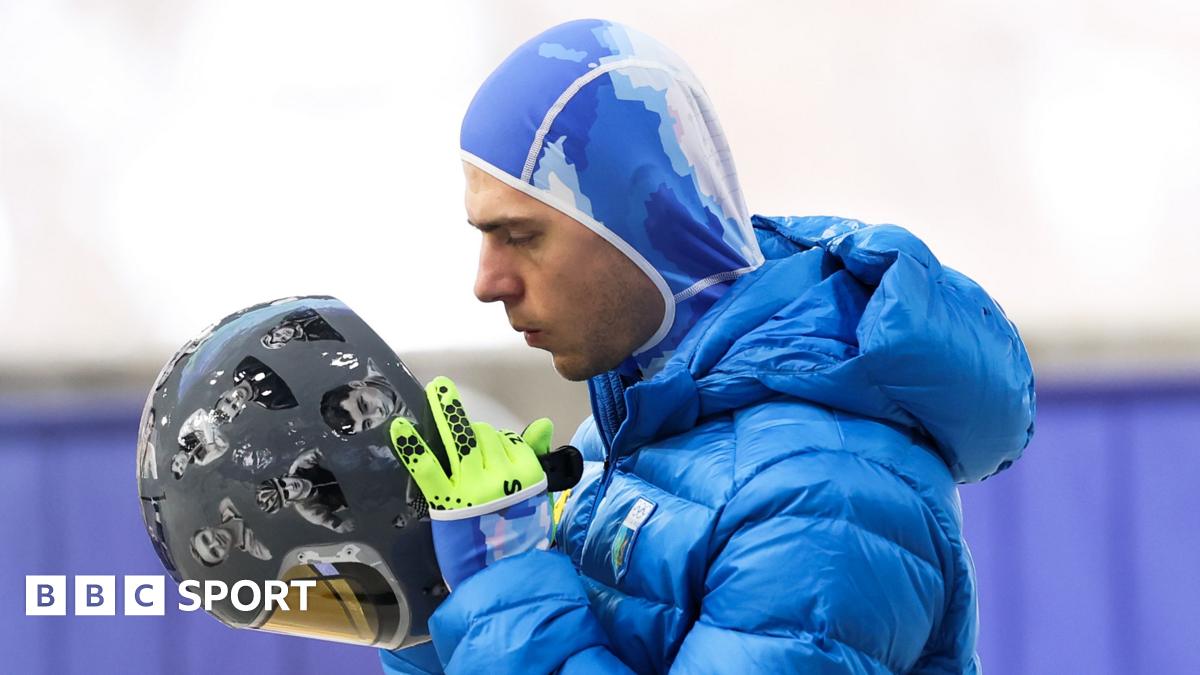
2026 Winter Olympics: Why Vladyslav Heraskevych was banned for remembrance helmet

The decision to ban Heraskevych has drawn shock and condemnation from many former and current Olympic athletes.

Lizzy Yarnold, Team GB’s two-time Olympic skeleton gold medallist, told BBC Sport: “I think it is actually quite shocking. Within the sliding community there is shock and confusion.

“This [wearing the helmet] was a reaction to something which was an act of memorial and incredibly emotionally important to him.

“I think the IOC owe him an apology and this was the wrong decision.”

Two-time Olympic bobsledder John Jackson was equally unimpressed with the IOC.

Jackson, who also served as a Royal Marines commando, told the BBC: “His approach to that is about remembering those who have fallen.

“For me, being military and now a veteran, remembrance is really important to all veterans. We have all lost friends and colleagues in conflict, and we all know someone who isn’t here and paid the ultimate sacrifice.

“I support him in what he was trying to achieve. It is really important to remember those who have given their life for something that ultimately doesn’t need to happen.”

Heraskevych meanwhile told the BBC that being banned only left him feeling “emptiness.”

“Yesterday and before yesterday I was training good. I could be among the medallists for this event, but suddenly because of some interpretation of the rules that I do not agree with, I am not able to compete,” he said.

“Expression guidelines – what do you consider as expression? Many others here in this arena have helmets with different colours and I believe that is also a kind of expression.

“Some others had national symbols, that is also expression. For some reason, their helmets weren’t checked and they were allowed to compete but I am not.

“I believe they [those who have fallen] deserve to be here because of their sacrifice. I want to honour them and their families.”

Heraskevych’s international team mates showed their support throughout Thursday’s competition in Italy.

Alpine skier Dmytro Shepiuk displayed a note reading “Ukrainian heroes with us” after competing, while luger Olena Smaha also voiced support for Heraskevych wearing a glove reading: “Remembrance is not a violation.”

Ukraine president Volodymyr Zelensky accused the IOC of “playing into the hands of the Russian aggressor” after Heraskevych’s disqualification

“Sport shouldn’t mean amnesia, and the Olympic movement should help stop wars, not play into the hands of aggressors,” he wrote on X, external.

“Unfortunately, the decision of the International Olympic Committee to disqualify Ukrainian skeleton racer Vladyslav Heraskevych says otherwise.”

Source link

Trains axed to major UK airport with ‘all lines blocked’ sparking hours of delays

RAIL services to and from a major UK airport are currently down, sparking travel chaos.

Passengers are facing major disruptions and delays due to a points failure on the line.

Two trains stopped at Manchester Piccadilly mainline railway station, with passengers on the platforms and a wide shot of the station's roof architecture.
Train services are currently down between Manchester Picadilly and Manchester AirportCredit: Getty

All trains between Manchester Piccadilly and Manchester Airport are currently cancelled.

Trains are currently unable to run in either direction, with Northern, TransPennine Express, and Transport for Wales services all affected by the issue.

The points failure has occurred near Heald Green, approximately half way between the two stations, according to National Rail.

Passengers are advised to use the Metrolink or buses to travel between Manchester city centre and the airport this afternoon.

OFF THE RAILS

Brazen Brit fare dodger spared jail after owing over £30K in unpaid tickets


ON TRACK

UK’s busiest train station FINALLY gets go ahead for £1.2billion expansion

National Rail said “major disruption” is expected until at least 5pm today.

Network Rail confirmed it is “on site to investigate and resolve the issue”.

Failure to operate points correctly creates difficulties in safely switching tracks and avoiding rerouting trains.

One broken part can trigger larger, systemwide service outages.

The disruption comes ahead of planned engineering works on rail lines in the area scheduled to begin this weekend.

Anyone planning to travel should should check real-time updates through the official websites and apps of the applicable rail operators and consider alternative routes. 

Source link

Syrian army takes control of al-Tanf military base as US troops pull out | ISIL/ISIS News

Syria’s defence ministry says its forces have taken control of the strategic base amid coordination with the US.

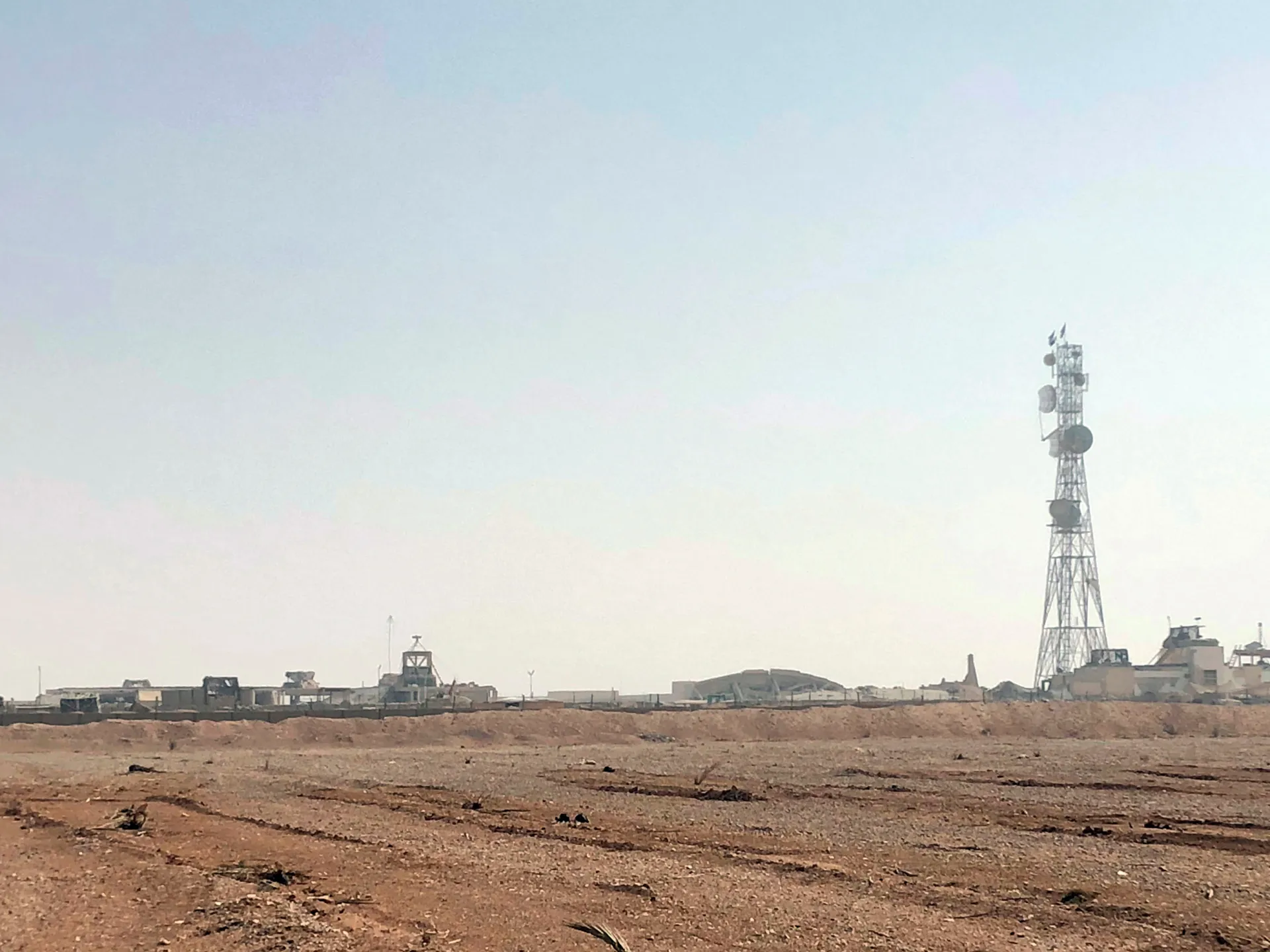
Syrian ⁠forces ⁠have taken control of the strategic al-Tanf military base near the border with Iraq and Jordan, the Syrian defence ministry has said, amid the withdrawal of a longstanding United States troop presence at the base.

The ministry said in a statement on Thursday that Syrian Arab Army units had taken control of al-Tanf, securing the base and its surroundings, “through coordination between the Syrian and American sides”.

Recommended Stories

list of 4 itemsend of list

Army units had “begun deploying along the Syrian-Iraqi-Jordanian” border nearby, the ministry said, while border guards would be deployed in the coming days.

The base was established during Syria’s civil war in 2014 as a ‌key hub for operations by the global coalition against ISIL (ISIS), which at the time controlled large areas of Syria and Iraq until the group was vanquished in 2017.

The US withdrawal from the base comes months after Syrian President Ahmed al-Sharaa, the former leader of the armed group Hayat Tahrir al-Sham, who the US once deemed a “Specially Designated Global Terrorist”, joined the anti-ISIL coalition in November.

The US military has not officially commented on the pullout, but Trump has expressed an interest in withdrawing US troops from Syria since his first term.

Syrian government expands control

The pullout also follows ⁠a US-brokered deal to integrate the Kurdish-led Syrian Democratic Forces – a key US partner in the fight against ISIL – into Syrian government institutions, an agreement the US hailed as a major step towards national unity and ⁠reconciliation in Syria.

Last month, as al-Sharaa’s government pushed to expand its control over the country, Syrian government forces captured large areas of previously Kurdish-held territory in northeast Syria, amid deadly clashes with the SDF.

A ceasefire was later struck between the sides.

Amid the advance of Syrian forces, the US military has been transferring thousands of ISIL prisoners from jails previously run by the SDF in northeastern Syria, as the facilities were transferred to Syrian government control.

US drawdown

While the size of the US deployment in Syria has fluctuated over the years, with precise figures often unclear due to the classified nature of many operations, a Pentagon announcement in July 2025 said there were about 1,500 American soldiers in Syria.

The size of the deployment currently stands at 900, The Associated Press reported.

Earlier this month, an Al Jazeera correspondent on the ground reported that US military personnel appeared to be drawing down their presence from watchtowers surrounding a military installation in the al-Shaddadi area in northeastern Hasakah province.

Soldiers were also seen lowering the US flag from one tower, while equipment used to manage aircraft takeoffs and landings at the base’s airstrip was no longer visible.

The US carried out a round of “large-scale” attacks against ISIL in Syria in January following an ambush that killed two US soldiers and a civilian interpreter in the city of Palmyra in December.

Source link

British Airways launches £2 flights to two European destinations

FANCY a cheap holiday? Well, British Airways has flights for a couple of quid, but there is a catch.

British Airways has released its latest batch of Avios-Only flights to two picturesque European destinations.

British Airways has launched Avios-Only flights to Spain and FranceCredit: Getty

Avios-Only flights are where all of the seats on the plane are Reward Seats.

And the latest version of this offer includes flights from London City Airport to Madrid in Spain and Toulon Saint-Tropez in France.

But you will need to be a member of the British Airways Club to get the offer.

Seats included in the offer will be available to book from February 12, with return prices starting just £2 plus 21,500 Avios for Toulon and £2 plus 28,000 Avios for Madrid.

Read more on travel inspo

CHEAP BREAKS

UK’s best 100 cheap stays – our pick of the top hotels, holiday parks and pubs


ALL IN

I found the best value all inclusive London hotel… just £55pp with free food & booze

The flights include 23kg checked baggage as well.

For Club Europe (business class) the Avios-Only flights to and from Madrid cost from £30 and 49,000 Avios.

The flight departs on May 22 at 11am and arrives in Madrid at 2:20pm.

The return flight is then on May 25, leaving Madrid at 3:10pm and landing down at London City Airport at 4:30pm.

For the Toulon St-Tropez Avios-Only flight, Club Europe costs from £30 and 36,000 Avios for a return flight.

The flight will leave London City Airport on June 13, arriving into Toulon at 10am.

The return flight will be on June 20, leaving Toulon at 10:45am and landing down back in London at 11:50am.

Travellers that also have a British Airways American Express Credit Card can use their Companion Vouchers on these flights.

These allow members to get a second seat for no extra points – all you have to pay are the taxes and fees.

Colm Lacy, British Airways’ chief commercial officer, said: “These flights are always incredibly popular, and we’re delighted to give our loyal customers even more opportunities to enjoy the benefits of the British Airways Club.”

Travellers can get return flights to Madrid for as little as £2 and 28,000 AviosCredit: Alamy

Adam Daniels, IAG Loyalty’s CEO, said: “With all seats onboard only available to book with Avios, the initiative shows the continued power of loyalty, and opens up greater redemption opportunities for customers during the peak summer months.”

The British Airways Club is free to join and when you fly with British Airways or its partner airlines, you collect Avios.

You can also collect them by shopping at over 2,000 retailers.

The points can then be used towards flights.

In other flight news, hundreds of flights cancelled at short notice in Europe with thousands of Brits hit.

Plus, a budget airline is scrapping six routes from Europe – including a mega-cheap UK flight.

Or you could head to Toulon St-Tropez from £2 and 21,500 Avios for a return flightCredit: Alamy

Source link

‘Best TV series of all time’ finds new streaming home after Netflix axe

Friends fans were left stunned when Netflix announced the beloved sitcom would be axed in December, but the series will return to UK screens in March

Netflix subscribers were left unimpressed after the streaming platform confirmed it would be dropping sitcom Friends from its catalogue in December.

The beloved series, which originally broadcast on NBC from 1994 to 2004, had been available on the platform since 2018, with all ten seasons ready to watch.

Following its departure from the streaming giant on December 30, UK audiences of the iconic 1990s series won’t have to wait long before it returns to their television screens.

Friends, starring Jennifer Aniston, Lisa Kudrow, Courtney Cox, Matt Le Blanc, David Schwimmer and Matthew Perry, follows the lives of six mates living in New York.

It boasts a staggering 236 episodes, offering fans more than 88 hours of content. At the time, Netflix fans shared the reaction to the show getting removed as one user vented on X: “You cannot take Friends off Netflix. Every night without fail I watch it.”

Echoing these sentiments, a fourth added: ‘How can Netflix be taking Friends off in the UK? Literally the ONLY thing I go onto Netflix everyday for, I watch it non stop back to back, my absolute comfort show, may as well cancel my subscription.’

A fifth concluded: “Genuinely heartbroken Friends is being taken off of Netflix. Best TV show of all time.”

However it’s not all bad as all ten seasons will shortly be available to stream on HBO Max, which launches in the UK on March 26 – having operated stateside since 2020.

The platform, which also streams other popular series including Game of Thrones and Succession, will be accessible in the UK and Ireland from just £4.99.

Beyond Friends, the streaming service will also feature programmes produced by HBO, Warner Bros, DC Studios and Max Originals.

The return of Euphoria, House of the Dragon and The Comeback, alongside the forthcoming Harry Potter TV series, and DC Studios series Lanterns, will all be available on the platform.

Oscar-nominated films Sinners and One Battle Another, which appeared in cinemas last year, will also be offered. HBO-produced shows have previously been available to stream in the UK through Sky and NOW – However, from 26 March onwards, content produced by HBO will be exclusive to HBO Max subscribers.

The two companies have reached an agreement that enables members to bundle both NOW and HBO Max subscriptions together, a change that all NOW Entertainment subscribers will be automatically transitioned to.

This arrangement ensures that HBO Max will be available for streaming in over 10 million households on its launch day.

Friends will be available to stream on HBO Max on its launch on March 26

**For the latest showbiz, TV, movie and streaming news, go to the new ** Everything Gossip ** website**

Source link

T20 World Cup: Italy complete shock 10-wicket win over Nepal

Co‑hosts Sri Lanka produced a commanding display to claim a massive 105‑run victory against Oman, making it two wins from two matches at the T20 World Cup.

Rapid half-centuries from Pavan Rathnayake, Kusal Mendis and captain Dasun Shanaka helped Sri Lanka post a formidable 225 – the highest total at the 2026 tournament so far.

Associate nation Oman mustered little response with the bat as they huffed and puffed to 120-9.

Walking in with Sri Lanka at 136-3 in the 14th over, Shanaka, under pressure after recent poor form, unleashed a sensational late surge, smashing two fours and five sixes on his way to a19-ball 50.

It was the fastest fifty by a Sri Lankan in T20 internationals, surpassing his own previous mark of 20 balls against India in Pune in 2023.

Earlier, after losing openers Pathum Nissanka and Kamil Mishara inside the powerplay, Rathnayake’s 28-ball 60 and Kusal Mendis’ composed 61 off 45 had set the perfect platform for Shanaka’s onslaught as he took them to 225-5, the second‑highest total for Sri Lanka in T20 World Cup history.

Already staring at a huge defeat at the halfway stage, only two batters reached double figures for Oman – Muhammad Nadeem and Wasim Ali.

While 40-year-old Nadeem needed 52 runs to reach his half-century and remained unbeaten on 53, Wasim departed for a 20-ball 27 as Oman fell well short of the target.

Sri Lanka, who beat Ireland by 20 runs in their opener, will take on Australia next at the same venue on Monday while Oman, who suffered their second defeat, will face Ireland in Colombo on Saturday.

Source link

N. Korea in process of designating leader’s daughter Ju-ae as successor: NIS

North Korea appears to have begun designating leader Kim Jong-un’s (R) daughter Ju-ae (C) as successor, Seoul’s spy agency told lawmakers Thursday. In this photo, Ju-ae is seen with her parents at a New Year’s event on Dec. 31, 2025. File Photo by KCNA/EPA

North Korea appears to have entered the stage of designating leader Kim Jong-un’s daughter Ju-ae as the successor, the spy agency was quoted as saying by lawmakers Thursday, marking a stepped-up assessment from its earlier evaluation of her as the “most likely successor.”

The National Intelligence Service (NIS) cited signs of Ju-ae expressing her views on certain state policies as one of the grounds for its latest assessment during a closed-door briefing to the parliamentary intelligence committee, Reps. Park Sun-won and Lee Seong-kweun told reporters.

“As Kim Ju-ae has shown her presence at various events, including the founding anniversary of the Korean People’s Army and her visit to the Kumsusan Palace of the Sun, and signs have been detected of her voicing her opinion on certain state policies, the NIS believes she has now entered the stage of being designated as successor,” Lee said.

Lee said the latest assessment marked a step forward from the agency’s previous views when it described Ju-ae as being “trained” to become a successor, to now assessing her as being at the stage of “successor designation.”

The NIS also said it will keep close tabs on whether she attends the North’s key party congress late this month.

In January 2024, the NIS assessed Ju-ae, believed to be born in 2013, as the North’s “most likely successor” in its first evaluation of her possible succession in the reclusive regime.

Earlier in January, Ju-ae paid tribute at the Kumsusan Palace of the Sun, the Kim family’s mausoleum, for the first time, together with her parents amid growing speculation about her potential succession.

If Ju-ae appears at the party congress or is awarded with an official title at the event, speculation about her being groomed as Kim’s successor will likely gain traction.

Meanwhile, on talks between the United States and North Korea, the NIS noted, “There is a possibility that North Korea could respond to dialogue with the U.S. if certain conditions are met.

“North Korea has expressed dissatisfaction with the U.S. over the South Korea-U.S. fact sheet or the deployment of U.S. strategic assets on the Korean Peninsula, but it has not ruled out the possibility of talks with the U.S. and has refrained from criticizing President Donald Trump,” the spy agency said.

The NIS also noted that the North has refrained from firing intercontinental ballistic missiles (ICBMs) apparently to avoid provoking Trump, who is sensitive to such missile launches.

Around 10,000 North Korean combat troops and 1,000 engineer troops are currently deployed in the front-line Kursk region of Russia to support Moscow’s war with Ukraine, the spy agency said, with an estimated 6,000 North Korean soldiers killed or injured.

Some 1,100 combat and engineer troops that returned to the North last December could be dispatched again, it added.

“Despite suffering 6,000 casualties, the North Korean military has achieved the results of acquiring modern combat tactics and data in the battlefield, as well as upgrading its weapons systems with technical assistance from Russia,” the NIS said.

The agency also noted that Pyongyang has established a new department on unmanned aerial vehicles and is accelerating efforts to set up a system capable of developing and mass-producing drones.

As for inter-Korean relations, the NIS said North Korea is continuing to maintain its rhetoric of defining the two Koreas as “two hostile states,” adding that it has recently given guidelines to its officials and overseas missions to avoid engagement with South Korea.

On North Korea’s ties with China, the agency said they have “not gained momentum yet.”

“Although trade between North Korea and China reached US$3 billion last year, the highest in six years, this is only half the level before the imposition of sanctions,” it said.

Meanwhile, the intelligence committee discussed the issue of repatriating two North Korean soldiers held by Ukrainian forces.

The government is making every effort to assist their defection to South Korea as they have expressed their willingness to defect to the South, the NIS said.

Source link

New travel warning as Brits told to avoid all holidays to Caribbean’s biggest island

NEW travel advice has been issued warning Brits not to travel to a major destination in the Caribbean.

The UK Foreign Office (FCDO) is advising against all but essential travel to Cuba – the Caribbean’s biggest island – as flights get cancelled.

The UK Foreign Office (FCDO) is warning against all but essential travel to CubaCredit: Getty

On Gov.uk, the FCDO states: “Cuba is experiencing severe and worsening disruption to essential infrastructure, persistent nationwide power outages, fuel shortages, and increasing safety risks.

“These conditions significantly affect the ability of visitors to access reliable transport, medical care, communications, and basic services.

“Authorities have introduced fuel rationing, scaled back public services, and made temporary changes to healthcare, education, transport and tourism operations in order to conserve severely limited energy supplies.

“Flight schedules are also being disrupted due to aviation fuel shortages, with some airlines reviewing routes or temporarily cancelling services which risk visitors being unable to leave the country.”

Read more on travel inspo

CHEAP BREAKS

UK’s best 100 cheap stays – our pick of the top hotels, holiday parks and pubs


SUN SWAP

I’ve visited Florida 50 times… my holiday costs less than a European all-inclusive

Flight cancellations include to and from Havana, with aviation authorities warning that no fuel will be available for the next month.

The shortage comes after the US sanctioned the Venezuelan president, Nicolas Maduro, as Venezuela is key supplier of oil to Cuba.

President Donald Trump later claimed that the “policies, practices and actions of Cuba directly threaten the safety, national security and foreign policy of the United States“.

He added that he would place tariffs as a punishment on any country that directly or indirectly sells or gives oil to Cuba.

And as a result, the country’s supply has run dry.

This has then impacted flights into and out of the country.

From February 10, jet fuel has been unavailable and this is expected to go on until March 11.

The notice was given by the island’s aviation authorities and impacts Havana, Varadero, Santiago de Cuba, Holguin, Santa Clara, Cayo Coco and other airports.

For example, Air Canada has been forced to cancel its weekly programme of 32 flights.

Brits often travel via Canada to get to Cuba and if you have an upcoming flight with Air Canada or WestJet, you can get a full refund.

Air Canada has cancelled flights and is offering refundsCredit: Alamy

Anyone currently in Cuba who is due to fly home is having to catch ‘ferry flights’, with Air Canada carrying extra fuel to manage both outward and return flights.

For those travelling from Europe, flights are usually with Air Europa or Iberia from Madrid to Havana.

Alternatively, you can get a flight from Paris to Havana on Air France or from Istanbul on Turkish Airlines or from Moscow on Rossiya.

However, these flights are likely to be forced into making technical stops for more fuel.

If you already have a flight booked to Cuba and the flight will still be taking off, you unfortunately have no right to cancel and won’t get a refund.

The same goes for if you have a holiday booked with a travel firm and they can still provide the holiday that you booked.

However, if it becomes impossible to carry out your trip itinerary – such as certain activities – travellers should be given the option to cancel.

When FCDO advises against travel, your travel insurance will typically not cover you.

It comes after the US announced that it would place tariffs on any country that supplied oil to CubaCredit: Getty

For package holidays, you are generally entitled to a full refund or alternative holiday when the FCDO issues advice against all but essential travel.

The FCDO adds: “If you are currently in Cuba, carefully consider if your presence is essential.

“Take precautions by conserving fuel, water, food and mobile phone charge, and be prepared for significant disruption.

“Check for messaging from your airline or tour operator.”

In other travel news, travel expert warns of scary holiday scam which could see you out of pocket and out on the street.

Plus, travel expert reveals five hidden risks on trips and how to stay safe when you’re enjoying your time abroad this summer.

And as a result, the country’s oil supply has ran dryCredit: Getty

Source link

The cheap European country with 30C weather that makes it EASY for Brits to move there… here’s how I did it

HAVE you ever dreamed of packing your bags and jetting off to find a place in the sun in Europe, but thought it wasn’t possible post- Brexit?

You might be surprised to learn how easy it is for British passport-holders to secure a visa to live in Portugal.

I love that Portugal is now my home – and have no regrets!Credit: Katie Wright
You can easily move to Portugal if you meet certain conditions – here’s how to do itCredit: Alamy

That’s exactly what I did last year, when, as a 39-year-old singleton, I rented out my one-bedroom flat in London and moved to Lisbon to work remotely on the D7 visa.

Here’s everything you need to know about why you should choose Portugal – and how to do the same thing I did.

Why move to Portugal?

When people ask me why I wanted to move to Portugal, I always say the same thing: the amazing weather!

I was thrilled to discover that temperatures reach 30C or more in July and August and rarely dip below 10C even in January, which makes a wonderful change from the endless rain and freezing winters that were really getting me down back home.

Plus, the nearest beaches to Lisbon are a 20-minute train ride along the coast at Carcavelos – or I can share an Uber with friends over the Tagus River to reach the stunning beaches at Costa da Caparica,
which is also a popular surfing spot.

I love having the culture and nightlife of the capital city on my doorstep.

But if you prefer a quieter life, you might want to head to the seaside suburb of Cascais, the picturesque former fishing town of Ericeira or the southern coastal region of the Algarve, which is particularly popular with Brits.

Wherever you go, the cost of living is much lower in Portugal than in the UK.

The rent for my modern two-bedroom apartment with a balcony and sunset views is around £1,100 a month – while I rent out my one-bedroom flat in London for £1,800.

Eating out is astonishingly cheap. I rarely pay more than £25 for two tasty courses and a couple of drinks.

A glass of delicious Portuguese white wine is around £2.50, and you can even get a whole bottle for the same price in supermarkets.

Taxis – a luxury I rarely enjoyed in London – are much more affordable too, with ride-hailing apps Uber and Bolt regularly applying automatic discounts of up to 45 per cent to try to attract customers.

My last trip back from the airport cost £6.50 for a 25-minute ride across the city.

Finally, it’s the slower pace of life that I love here.

The locals are friendly, it’s easy to make friends within the large expat community and the city is wonderfully walkable, so you don’t have to spend hours on public transport to get to work or meet up with friends (but if you do take the Metro or bus that’s super cheap too).

Since I quit my full-time job to go freelance and swapped dreary weather for sunshine and blue skies, my stress levels have plummeted and I couldn’t be happier that I chose to make Portugal my home.

What is the D7 visa?

Introduced in 2019 to attract foreign residents, the D7 is a passive income visa which requires you to prove you have an income of €10,440 (£8,825) a year from sources such as rental income, pensions or investment dividends – which works out to around £735 per month.

If, like me, you own a property in the UK and can make £735 a month in rent, you may be eligible for the D7 visa, which requires you to pay taxes in Portugal and stay in the country for eight months out of each year (or six months consecutively).

In Portugal, the locals are friendly and it’s easy to make friends within the large expat communityCredit: Katie Wright
The temperature in sunny Lisbon often gets up to 30CCredit: Getty
The country boasts stunning beachesCredit: Alamy

To apply for the two-year visa, you’ll first need proof of your passive income, such as a rental agreement, pension or investment statement.

You’ll need to obtain a NIF or Número de Identificação Fiscal (taxpayer identification number), open a Portuguese bank account and deposit savings of €10,440 (£8,825) for the first adult applying, plus 50 per cent of this amount for each additional adult and 30 per cent for each child, to prove you can support yourself or
your family financially.

You must show that you have secured one year’s accommodation in Portugal.

This could be a rental agreement or 12 months of Airbnb bookings, or if you happen to know someone who already lives in Portugal they can fill in what’s called a Term of Responsibility form to say you’ll be living with them.

You will also need six months of travel insurance and a DBS criminal record check issued by the UK government within two months of your visa application appointment.

Once you’ve ticked all these boxes, the next step is to make an appointment at the VFS Global centre Manchester or London to submit all your documents.

You will also have to hand over your passport, so make sure you don’t have any travel planned in the following 60 days, which is how long VFS Global estimates it takes to process a D7 visa.

However, my passport arrived back with my visa inside after just 22 days last May.

The D7 visa application process isn’t complicated but is time-consuming, so make a detailed to-do list that you can work through methodically.

I found Facebook groups such as ‘D7 Move to Portugal’ handy for asking questions whenever they cropped up during the six-month process.

For example, I learned there’s a branch of Portuguese bank Millennium BCP in London where you can open an account in person.

The hardest part for me was finding my apartment in Lisbon.

I viewed 17 flats during a 10-day trip, landing mine after applying for three flats in different neighbourhoods.

But now that I’m happily settled into my new life, I realise it was worth all the effort and admin.

My advice if you’re tempted to make the move and think you might be eligible for the D7 visa? Go for it!

Portugal is home to stunning architecture and attractions, like Lisbon’s famous Belem towerCredit: Getty

Source link

ITV show dealt major blow as series ‘shelved’ despite high ratings

The show proved to be a hit with ITV viewers but the show is now reportedly facing an uncertain future

There’s bad news for fans of the reality show, The Fortune Hotel, as it’s been reported ITV has “shelved” the show with no confirmed plans for its comeback.

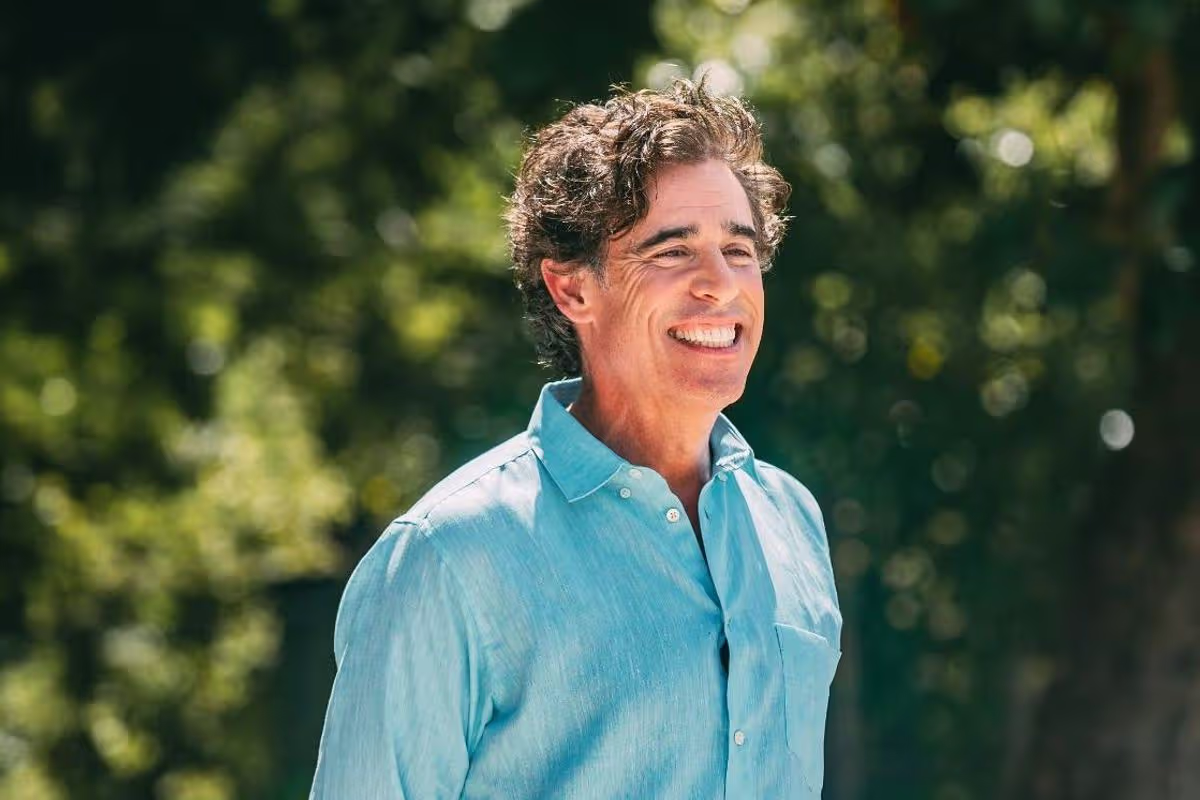
The series, fronted by Stephen Mangan, debuted in May 2024 with a second run following in August 2025, and was branded as the broadcaster’s rival to The Traitors.

The format brings together 10 pairs of contestants at The Fortune Hotel, where each receives a crucial briefcase. One case conceals the grand prize of £250,000 in cash, eight contain nothing, and one holds the feared Early Checkout Card.

Whichever duo ends up with that particular case at each episode’s conclusion will face an abrupt and dramatic exit from the competition. Daily, the contestants get opportunities to deduce who possesses which case by tackling engaging challenges, as the puzzle intensifies for those staying at the hotel.

Each episode reaches its tension-filled peak during the case exchange in the alluring Lady Luck bar, where every pair must choose whether to retain or switch their briefcase, reports the Manchester Evening News.

Audiences are kept guessing whether the couple holding the fortune managed to deceive their rivals and deflect attention, or whether their case will be mercilessly snatched away.

Home viewers remain informed throughout, privy to every scheme and tactic as events unfold. The well-received programme attracted substantial audiences but now faces an unclear path forward despite its millions of fans.

The Mirror has contacted ITV for comment. Nella and Tope emerged victorious in the latest series, walking away with an impressive £210,000. The pair triumphed over rivals Fred and Min, as well as Martina and Briony.

During the finale, the Hotel Game saw contestants frantically tackle a cunning puzzle in their rooms before dashing across the Caribbean Sea in the series’ final Day Trip Challenge.

Yet only one duo could depart with the prize money, and fortune favoured Nella and Tope in the concluding Night Cap. As Stephen Mangan congratulated the victorious pair, ITV viewers flocked to social media to express their reactions to the outcome.

Taking to X, formerly known as Twitter, one fan wrote: “Fair play, they played a consistently strong game. #TheFortuneHotel.”

Another added: “I wanted Nella and Tope to win, and they won.” A third person said: “LET’S GO TOPE AND NELLA #thefortunehotel.”

A fourth social media user said: “Aww Nella and Tope ! ! I’m so happy for you #TheFortuneHotel #FortuneHotel. “Nella and Tope well well deserved. They played a great game,” a fifth person said.

Meanwhile, Sheffield mother and son duo Jo-Anne and Will claimed victory in the inaugural series, securing an impressive £210,000.

The Fortune Hotel is available to stream on ITVX

**For the latest showbiz, TV, movie and streaming news, go to the new **Everything Gossip** website

Source link

World’s Best Trade Finance Providers 2026

Digitalization, AI, and tokenization are the most visible changes, but sustainability and a new focus on market and segment specialization are now fundamental as well.

Trade finance is undergoing a deep, multi-faceted transformation, shifting from its historic reliance on paper and manual processes into a future dominated by digital ecosystems, AI, and new technological instruments. Defining the field today are rapid innovation, a concerted push for sustainability, and a strategic focus on connecting emerging markets to global supply chains.

The strongest near-term trend is digital transformation and automation, whereby institutions are going “digital to the core” to eradicate paper-heavy tasks and eliminate centuries-old bottlenecks.

Initiatives like DBS Bank’s DBS DigiDocs, which reduces document processing time, and UniCredit’s harmonization of core processes across 18 countries, underscore a global commitment to operational efficiency. Software providers like CGI, with its Trade360 SaaS platform, and Surecomp, with its trade finance-as-a-service (TFaaS) solution, are building core interoperable, cloud-based infrastructure that allows multiple banks to share investments and streamline back-office operations.

Building on digitization, AI integration is becoming central to competitive advantage. Banks like DBS are leveraging sophisticated AI intelligence layers to power real-time credit approval and complex internal processes, including data-driven account planning and generative AI systems for automating intricate operational tasks. Standard Chartered is piloting an AI engine for augmented document checking, focused on helping clients detect and fix discrepancies before submission, while Surecomp offers AI-powered text validation for bank guarantees and letters of credit. Innovations such as these are dramatically increasing operational speed and accuracy while mitigating risk.

In parallel, blockchain and tokenization are rewiring even the most traditional trade instruments, promising a future in which they are secure, digital, and self-executing. Citi’s pilot Citi Token Services for Trade aims to replace traditional bank guarantees and letters of credit, utilizing tokenized deposits held in a smart contract where the payment is programmable. Once verified trade data, such as a shipping confirmation, is fed into the system, the smart contract instantly triggers the release of funds, providing near-instant liquidity and eliminating long settlement delays associated with manual document verification.

Beyond Tech

The transformation of trade finance is not only technological. Sustainable finance, as a component of ESG strategies, is now a fundamental element of trade strategy. While the initial rapid momentum toward sustainable trade finance is encountering practical, geopolitical, and economic challenges, major institutions are maintaining significant, long-term commitments.

Societe Generale is aiming for €500 billion in sustainable trade finance by 2030, offering instruments such as green bank guarantees and sustainability-linked facilities. Standard Chartered has established a regularly updated Transition Finance Framework, which guides clients toward a low-carbon economic model and sets specific, tailored expectations for emerging markets—where sustainable finance is growing fastest—to ensure trade finance aligns with global climate and social objectives.

The future of trade finance is also likely to reflect a specialized focus on key markets and segments.

DBS supports small and midsized enterprises with solutions focused on supply chain resilience and financing access. Ecobank acts as a pan-African bridge, managing risk across 33 countries alongside its Structured Trade & Commodity Finance service while Alteia Fund facilitates Middle East-Sub-Saharan Africa trade. Banks are also leveraging specific regional corridors, including Santander (Europe-Latin America), Raiffeisen Bank International (Central and Eastern Europe), and DBS, which supports China +1 business strategies across Asia-Pacific.

While rapid, tech-driven evolution—accelerating from paper to digital, from manual processes to AI automation, and from traditional instruments to tokenized, programmable contracts—is the most dramatic facet of the transformation of trade finance, it is not the only one. By integrating sustainability and strengthening regional expertise, the industry is going beyond optimization to build a more efficient, inclusive, and globally connected future.

Methodology

Global Finance editors select the winners of the Trade Finance Awards and Supply Chain Finance Awards with input from industry analysts, corporate executives, and technology experts. The editors consider entries as well as independent research, including both objective and subjective factors. It is not necessary to enter to win, but the additional information in an entry can increase the chance of success. This year’s ratings, which cover eight regions and approximately 100 countries, territories, and districts, were based on performance from the fourth quarter of 2024 through the third quarter of 2025. Global Finance uses a proprietary algorithm that incorporates criteria such as knowledge of customer needs, financial strength and safety, strategic relationships, capital investment, and innovation. The algorithm incorporates these ratings into a single numeric score, with 100 equivalent to perfection. When more than one institution earns the same score, we favor local over global providers and those privately over government owned.

Meet The Winners

Global Winners
Africa
Asia-Pacific
Ban Reservas
Caribbean
Central & Eastern Europe
Latin America
Bank ABC Arab banking corporation company logo
Middle East
BNY logo is seen in a cell phone with a chart in the background.
North America
UniCredit
Western Europe

Source link

Trump’s deportations are losing him the ‘Mexican Beverly Hills’

Carlos Aranibar is a former Downey public works commissioner and remains involved in local Democratic politics. But until a few weeks ago, the son of Bolivian and Mexican immigrants hadn’t joined any actions against the immigration raids that have overwhelmed Southern California.

Life always seemed to get in the way. Downey hadn’t been hit as hard as other cities in Southeast L.A. County, where elected officials and local leaders urged residents to resist and helped them organize. Besides, we’re talking about Downey, a city that advocates and detractors alike hyperbolically call the “Mexican Beverly Hills” for its middle-class Latino life and conservative streak.

Voters recalled a council member in 2023 for being too wokosa, and the council decided the next year to block the Pride flag from flying on city property. A few months later, Donald Trump received an 18.8% increase in voters compared to 2020 — part of a historic shift by Latino voters toward the Republican Party.

That’s now going up in flames. But it took a while for Aranibar to full-on join the anti-migra movement — and people like him are shaping up to be a real threat to President Trump and the GOP in the coming midterms and beyond.

On Jan. 27, Aranibar saw a Customs and Border Protection truck on the way home from work. That jolted Aranibar, an electrician with the International Brotherhood of Electrical Workers’ Local 11, into action.

“It’s not something like that I was in a bubble and I was finally mad — I’ve been mad,” the 46-year-old said. “But seeing [immigration patrols] so close to my city, I thought ‘That’s not cool.’”

He Googled and called around to see how best to join others and resist. Someone eventually told him about a meeting that evening in a downtown Downey music venue. It was happening just a few days after Border Patrol agents shot and killed Minneapolis resident Alex Pretti after he tried to shield a fellow protester from pepper spray, and a few weeks after immigration agents tried to detain two Downey gardeners with legal status before residents hounded them away and recorded the encounter.

Aranibar joined more than 200 people standing shoulder to shoulder for the launch of a Downey ICE Watch group. They learned how to spot and track immigration agents and signed up for email updates. A box of whistles was passed around so people could alert their neighbors if la migra was around.

“Who here has been a member of a patrol?” an organizer asked from the stage.

Only a few people raised their hands.

“I saw familiar faces and new faces, energized — it was really nice,” Aranibar said afterward. “I got the sense that people in Downey have been fired up to do something, and now it was happening.”

A similarly unexpected political awakening seemed to be happening just down the street at Downey City Hall, on the other side of the political aisle.

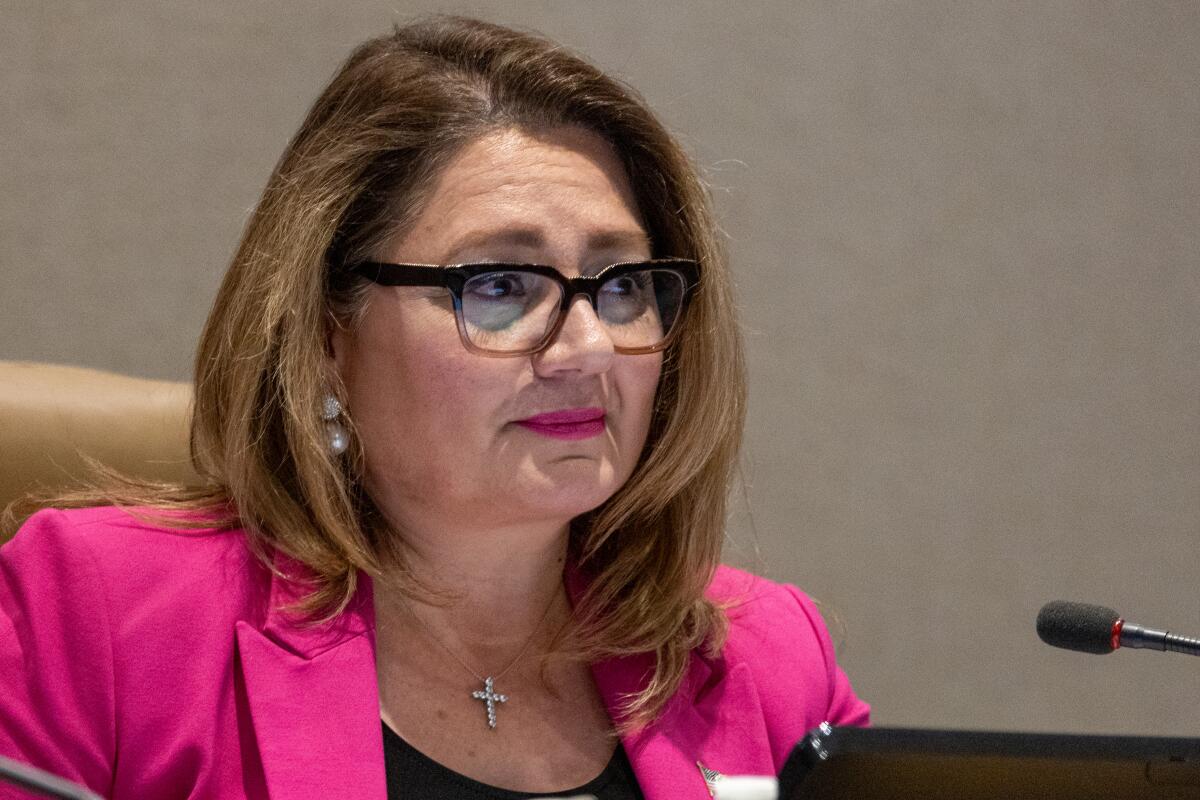
Mayor Claudia Frometa set tongues wagging across town after video emerged of her whooping it up with other Latino Trump supporters the night he won his reelection bid. Activists since have demanded she speak out against the president’s deportation deluge, protesting in front of City Hall and speaking out during council meetings when they didn’t buy her rationale that local government officials couldn’t do much about federal actions.

“Mayor Frometa is not a good Californian right now,” councilmember Mario Trujillo told me before the Jan. 27 council meeting. During the previous meeting, Frometa cut off his mic and called for a recess after Trujillo challenged Frometa to talk to “her president” and stop what’s going on. “It’s not a time to deflect, it’s not a time to hedge — it’s a time to stand up. She’s giving us a bulls—t narrative.”

Downey Mayor Claudia Frometa listens to public testimony

Even Downey Mayor Claudia Frometa, a supporter of President Trump, has called out his immigation policies.

(Ronaldo Bolanos/Los Angeles Times)

That night, Frometa listened to critics like Trujillo slam her anew while wearing a wearied smile. When it was her turn to speak at the end of the night, she looked down at her desk as if reading from prepared remarks — but her voice and gesticulations felt like she was speaking from somewhere deeper.

“This issue [of deportations] which we have been seeing unfold and morph into something very ugly — it’s not about politics anymore,” Frometa said. “It’s about government actions not aligning with our Constitution, not aligning with our law and basic standards of fairness and humanity.”

As she repeatedly put on and removed her glasses, Frometa encouraged people to film immigration agents and noted the council had just approved extra funding for city-sponsored know-your-rights and legal aid workshops.

“This is beyond party affiliation,” the mayor concluded, “and we will stand together as a community.”

Suddenly, the so-called “Mexican Beverly Hills” was blasting Trump from the left and the right. Among Latinos, such a shift is blazing around the country like memes about Bad Bunny’s Super Bowl halftime show. Trump’s support among former voters has collapsed to the point that Florida state senator Ileana Garcia, co-founder of Latinas for Trump, told the New York Times that the president “will lose the midterms” because of his scorched-earth approach to immigrants.

Former Assembly member Hector de la Torre said he’s not surprised by what’s happening in a place like Downey.

“When it hits home like that, it’s not hypothetical anymore — it’s real,” he said. De La Torre was at the Downey ICE Watch meeting and works with Fromenta in his role as executive director of the Gateway Cities Council of Governments, which advocates for 27 cities stretching from Montebello to Long Beach to Cerritos and all the southeast L.A. cities.

“People are coming out the way they maybe didn’t in the past “ he continued. “It’s that realization that [raids] can even happen here.”

Mario Guerra is a longtime chaplain for the Downey police department and former mayor who remains influential in local politics — he helped the entire council win their elections. While he seemed skeptical of the people who attended the Downey ICE Watch — “How many of then were actual residents?” — he noted “frustration” among fellow Latino Republicans over Trump and his raids.

“I didn’t vote for masked men picking people up at random,” Guerra said before mentioning the migra encounter with the gardeners in January. “If that doesn’t weigh on your heart, then you’ve got some issues. All this will definitely weigh on the midterms.”

Even before Frometa’s short speech, I had a hint of what was to to come. Before the council meeting, I met with the termed-out mayor in her office.

The 51-year-old former Democrat is considered a rising GOP star as one of the few Republican Latino elected officials in Los Angeles and the first California Republican to head the nonpartisan National Assn. of Latino Elected and Appointed Officials. Her family moved to Downey from Juarez, Mexico when she was 12. Whites made up the majority of the suburban city back then, and it was most famous in those days as the land that birthed the Carpenters and the Space Shuttle.

Now, Downey is about 75% Latino, and four of its five council members are Latino.

So what did Frometa expect of Trump in his second term?

“I was expecting him to enforce our laws,” she replied. “To close our border so that we didn’t have hundreds of thousands coming in unchecked. I was expecting him to be tough on crime. But the way it’s being played out with that enforcement and the tactics is not what we voted for. No. No.”

Over our 45-minute talk, Frometa described Trump’s wanton deportation policy as “heartbreaking,” “racial profiling,” “problematic,” “devastating” and “not what America stands for.” The mayor said Republicans she knows feel “terrible” about it: “You cannot say you are pro-humanity and be OK with what’s happening.”

Asked if she was carrying a passport like many Latinos are — myself included — she said she was “almost” at that point.

Neighbors walk past a home with signs showing support for then president-elect Trump

A home in Downey shows support for Trump in 2024.

(Gina Ferazzi/Los Angeles Times)

Frometa defended her relative silence compared to other Latino elected officials over the matter.

“We live in a time that is so polarizing that people want their elected officials to come out fighting,” she said. “And I think much more can be accomplished through different means.”

Part of that is talking with other Southern California Republicans “at different levels within the party” about how best to tell the Trump administration to “change course and change fast,” although she declined to offer details or names of other GOP members involved.

I concluded our interview by asking if she would vote for Trump again if she had the chance.

“It’s a very hard — It’s a hard question to answer,” Frometa said with a sigh. “We want our communities to be treated fairly, and we want our communities to be treated humanely. Are they being treated that way right now? They’re not. And I’m not OK with that.”

So right now you don’t know?

“Mm-hmm.”

You better believe there’s a lot more right-of-center Latinos right now thinking the same.

Source link

Teacher wounded in Thai school hostage incident dies

Feb. 12 (UPI) — A teacher who was among three people injured during a hostage situation at her school in southern Thailand has died, provincial officials announced Thursday.

Sasiphat Sinsamosorn was pronounced dead at 2:06 a.m. local Thursday at Hat Yai Hospital, where she was receiving treatment for wounds sustained a day earlier when a gunman allegedly entered Patongprathankiriwat School, in Hat Yai District, located in the southern Thailand province of Songkhla.

Authorities have identified the alleged gunman as a 17-year-old boy. Provincial officials alleged the boy, “acting in a deranged state and armed with a firearm,” entered the school at about 4 p.m. Wednesday afternoon.

Preliminary findings show that the suspect had attacked a police officer with a knife, wresting away the government-issued 9mm firearm before entering the school, where he took Sinsamosorn and several students hostage.

A standoff ensued.

At about 6:15 p.m., police confronted the boy. During the confrontation, Sinsamosorn and a 16-year-old student were struck by gunfire. The boy, who was also injured, was then subdued by police, ending the two-hour standoff.

Sinsamosorn and the alleged assailant were transported to Hat Yai Hospital, while two students, both girls, were transported to Songklanagarind Hospital.

Officials said Sinsamosorn was shot in the left side of the chest and underwent surgery, but died early Thursday from severe blood loss.

A formal funeral rite bathing ceremony of the deceased presided over by Education Minister Narumon Pinyosinwat was scheduled for 4:30 p.m. Thursday, the Songkhla Provincial Public Relations Office said in a statement.

Sinsamosorn was a teacher and director at the school.

Officials have identified the two injured students as Nattawan Thongphasmkaew, a 16-year-old girl who was shot in the left side of her waist, and 19-year-old Manassanum Anyphonphalakarn, who sustained minor injuries to her chin and neck when she jumped from the second floor of the school building out of panic amid the incident.

The provincial government said Thongphasmkaew underwent surgery and is in stable condition. “Fortunately, the bullet did not strike any vital organs,” the Songkhla Provincial Public Relations Office said Thursday.

Anyphonphalakarn was discharged from the hospital, according to officials.

The Ministry of Education said it is preparing to propose a special salary promotion and a request for the bestowal of a royal decoration for Sinsamosorn.

Authorities said the alleged assailant has a history of psychiatric treatment related to substance abuse and was discharged from hospital in December.

A motive is under investigation, with preliminary information indicating that the alleged attacker’s young sister was enrolled at the school.

Source link

Beautiful UK market town has £160k homes, cosy pubs and Harry Potter links

A charming UK market town boasts, historic pubs, Europe’s largest secondhand bookstore, and affordable three-bedroom homes from £160,000 – as well as Harry Potter links

Nestled in the Northumberland countryside lies a delightful market town, brimming with winding cobbled streets that lead to eccentric bookshops, independent boutiques, and snug cafés.

A bi-weekly market continues to draw visitors, while an imposing castle and steam railway keep the town’s intriguing history alive.

Despite its allure, Alnwick in Northumberland was often bypassed as a tourist spot until its castle featured in a globally renowned film. Alnwick Castle morphed into Hogwarts for the Harry Potter films, with Quidditch matches shot on its outer green and memorable scenes like the flying car crash unfolding within its grounds.

Regardless of whether you’re a Harry Potter fan, Alnwick Castle is a must-see. Dating back to the 12th-century, this majestic edifice is the second largest inhabited castle in England after Windsor, opening its gates to the public during the summer months.

In the town centre, remnants of Alnwick’s fortifications can be seen in the town walls, erected in the 15th century for protection. Bondgate Tower, with its robust stone walls and narrow tunnel, was heavily guarded during wartime.

However, while it served a purpose centuries ago, in today’s world, it tends to cause traffic congestion as only one vehicle at a time can navigate through its tight passage.

Harry Potter isn’t the only literary link the town can claim. It’s also home to Barter Books, one of Europe’s largest secondhand bookshops, housed within a former railway station.

Best Northumberland holiday cottage deals

Sykes Cottages

From £38 per night

Sykes Cottages

See the deals

Northumberland is famed for its rugged coastline, ancient castles and unspoiled natural beauty. Sykes Cottages has a range of places to stay starting from £38 per night

Among countless shelves of books, visitors will discover armchairs and crackling fireplaces, creating an inviting spot to while away an afternoon. Meanwhile, rival shop The Accidental Bookshop boasts what it claims is Britain’s tallest bookshop bookshelf, meaning staff assistance may be required for anything perched at the top.

Alnwick features numerous delightful independent shops tucked along the town’s winding narrow streets. Markets take place on Thursdays and Saturdays, with a well-attended farmers’ market on the final Friday of each month.

The cobbled Market Place transforms into a bustling hub of vibrant stalls offering fresh produce, flowers, crafts and food, with numerous vendors selling locally-made Northumberland goods.

An excellent way to explore the surrounding countryside is aboard the Aln Valley Railway, which operates seasonally. Comprising restored diesel and steam locomotives, it transports passengers on a 30-minute journey through lush landscapes.

Alnmouth Beach sits just 15 minutes away by car, offering an extensive sandy shoreline that welcomes dogs and provides various walking trails and birdwatching opportunities. After a full day of sightseeing, Alnwick boasts plenty of traditional, welcoming pubs where visitors can settle in for a pint or a hearty meal.

Despite its somewhat off-putting name, Dirty Bottles has an intriguing backstory rooted in local folklore. Trapped between two window panes are some aged, dusty bottles.

According to legend, more than two centuries ago, a publican met his demise whilst tampering with these bottles, prompting his widow to declare that anyone who disturbed them would meet a similar end. Consequently, the bottles remain safely encased, allowing patrons to savour traditional British pub grub or relax in the sunny beer garden without any supernatural worries.

Real ale enthusiasts flock to The John Bull Inn, celebrated for its impressive whisky collection. Tucked away on a quiet residential lane, it’s a true hidden treasure.

The Plough is another essential stop for those who appreciate historic watering holes, and whilst the interior has been updated, the façade retains its stunning 19th-century stonework and ornate carvings.

One might expect that residing in such a delightful town would command premium prices, yet whilst the UK’s average house price hovers around £300,000, Alnwick offers numerous three-bedroom properties for under £200,000. Current Rightmove listings feature a terraced house at £160,000 and another property complete with garage and driveway for £189,950, significantly undercutting the national average.

Of course instead of committing to a full move, you can just book a short break and enjoy everything Alnwick has to offer. Sykes Holiday Cottages has a wide array of beautiful cottages in and around Alnwick, while Lastminute.com can be a useful source for cheap hotels from £36 a night.

Source link

‘I moved 5,500 miles across the world for a man I’d only met four times’

Gillian Philip met Henry during a solo trip and it changed her life

A teacher who met her now-husband on a solo trip in China and moved more than 5,500 miles – 9,000 kilometres – across the world after only meeting him four times in person has said “you will find love when you least expect it”. Gillian Philip, a teacher from Scotland, decided to “give up on dating” when she turned 30 and moved to South Korea to start a new chapter, where she could focus on herself and “enjoy (her) life”.

In October 2019, however, Gillian, now 39, found herself on a Flash Pack trip to China after her original holiday plans fell through – and this is when she met Henry Philip, 42, a software developer, also from Scotland. They soon formed a bond while exploring Beijing, riding motorbikes and watching the sunrise at the Great Wall, describing the trip as “unforgettable”, but they both “didn’t expect to meet anyone” romantically.

Despite living in different countries, they kept in contact via messaging and video calls, and Gillian decided to move across the world to be with him in July 2021 after only seeing him in person four times. Now living in Edinburgh together, they have since married and welcomed their first child, and Gillian wants to encourage others to travel the world and “dream big”.

Speaking about an amusing anecdote, Gillian said: “I remember talking to one of Henry’s best friends, and he said to me, ‘So what’s going on with you two?’. I said, ‘Well, it’s probably just a holiday fling that’s overrun’, and he went, ‘Why do you say that?’.

“I just said, ‘We live 9,000 kilometres apart, there’s a nine-hour time difference in our relationship. In reality, it’s going to go nowhere’. What’s funny is I said that to the person who ended up being the best man at our wedding.”

Gillian explained that she had a long-term relationship while at university but, otherwise, she tried the usual avenues for dating in her 20s. She downloaded various dating apps, including Tinder, signed up for online platforms such as Plenty of Fish, and her friends tried to set her up with potential partners – but without success.

“I’d go on a date and I’d be thinking, ‘I could genuinely be doing anything else with my time right now’,” Gillian said. “I could be getting my marking done, I could be sorting out my emails instead of sitting in this pub.”

When she turned 30, Gillian decided to move to South Korea to teach at an international school. Although “terrifying” at first, she said she wanted to focus on herself and enjoy activities such as walking, swimming and travelling.

“I just thought, I’m going to stop trying to do this stereotypical route – you work hard in your profession, you work up the ladder, then you buy a house, you meet a partner, you get married etc.,” she said. “I just wanted to go and enjoy my life.”

While in South Korea, Gillian said she ventured on her first solo Flash Pack trip to Vietnam and Cambodia in 2018. Flash Pack is a social adventure travel company which specialises in creating bucket-list experiences for like-minded solo travellers, and Gillian thoroughly enjoyed the trip. Then in 2019, she decided to go on another Flash Pack holiday after other plans fell through – this time, to China.

“In 2019, I was originally meant to be going to the Rugby World Cup in Japan with my sister and her husband, but they couldn’t go in the end,” Gillian said. “I didn’t know if I wanted to do that by myself, so I just thought, ‘Actually, while I’m here, I’m not far from Beijing and I know Flash Pack’s a great company, so let’s just go and do that trip’.”

Gillian booked her spot in September and Henry booked his in August, and they both flew out separately to China in October that year with no expectations to meet anyone. The 12-day adventure included seeing the Great Wall at sunrise, exploring Beijing and being invited into the homes of locals to make dumplings by hand, along with seeing the Terracotta Warriors in Xi’an.

The group practised tai chi, explored lantern-lit streets, visited various food markets, travelled on high-speed trains, rode motorbikes, saw pandas and journeyed by boat in Shanghai. It was on this trip that she met fellow adventurer Henry, but she admits it was not love at first sight.

“The first time I met him, it was in a group in the evening, when everyone is introducing themselves,” Gillian explained. “It wasn’t like, ‘Oh, wow, he’s amazing’, it was more, ‘He seems like a nice person’.”

Gillian remembers spending time with Henry one afternoon when they had time to do some shopping, and he helped her pick out a jumper as she had only brought 6kg of hand luggage for the trip. They then ended up “sitting and chatting” on various train journeys and visiting food markets, allowing them to form a closer bond, and Gillian said he was “really kind and really easy to talk to”.

“I thought by fluke we just ended up sitting next to each other on every train journey, but I found out later he planned some of that,” Gillian said. “It was nice to just sit and chat and, as we chatted, we realised we had a few mutual friends in common.”

In Shanghai, they ended up “staying up all night talking to each other”, and they shared their first kiss there before flying home. However, Gillian did not think they would see each other again and even considered setting Henry up with one of her friends in Edinburgh.

“I knew he was a great guy, but we lived so far apart,” Gillian said. “We did say that we travel really well together, so it would be great to travel again, but it was one of those things where you say that and don’t know if it will ever happen.”

Despite living 9,000 kilometres apart, they maintained contact and managed to meet up a few times in December 2019, where they visited the Christmas markets in Edinburgh and spent New Year together. Then, after months of not seeing each other because of Covid-19, countless messages and an “I love you” moment over a video call, Gillian decided to quit her job and move across the world in July 2021.

“If any of my female friends said they’re moving halfway around the world for a guy they’d met four times, I’d say, ‘What are you doing?’,” Gillian said. “Surprisingly, only two people turned around to me and said, ‘I don’t think that’s a wise idea’… but a part of me thought, if I don’t give this a go, I’ll always regret it.”

After moving in together in Edinburgh, Henry proposed in May 2022, they got married in July 2023 and they have since welcomed their first child, who is now 17 months old. They have continued to travel together, visiting Alaska for their honeymoon and other places such as Toronto, Vancouver and Croatia, and they love “spending time as a family”.

Reflecting on how they met and her advice to others, Gillian said: “Henry and I say to each other, if we saw each other in a bar, I don’t think either of us would have had the confidence to go up to each other. Our paths were meant to cross, we just took the long way round to get there. It’s the old cliche which people used to say to me and I hated them saying it, but you will find love when you least expect it.”

Source link

Africa must boycott the 2026 World Cup | World Cup 2026

On January 6, a group of 25 British members of parliament tabled a motion urging global sporting authorities to consider excluding the United States from hosting the 2026 FIFA World Cup until it demonstrates compliance with international law. It followed weeks of mounting pressure across Europe over the political climate surrounding a tournament expected to draw millions of viewers and symbolising international cooperation.

Dutch broadcaster Teun van de Keuken has backed a public petition urging withdrawal from the competition while French parliamentarian Eric Coquerel has warned that participation risks legitimising policies he argued undermine international human rights standards.

Much of the scrutiny has focused on US President Donald Trump’s immigration crackdown and broad assaults on civil liberties. The deaths of Minneapolis residents Renee Nicole Good and Alex Pretti during immigration enforcement operations in January triggered nationwide outrage and protests. In 2026, at least eight people have been shot by federal immigration agents or died in immigration detention.

These developments are serious, but they point to a broader question about power and accountability – one that extends beyond domestic repression and into the consequences of US policy abroad. The war in Gaza represents a far deeper emergency.

For decades, Washington has served as Israel’s most influential international ally, providing diplomatic protection, political backing and roughly $3.8bn in annual military assistance. That partnership finances and shapes the destruction now unfolding across Palestinian territory.

Since the day the war began on October 7, 2023, Israel’s military has killed more than 72,032 Palestinians, wounded 171,661 and destroyed or severely damaged the vast majority of Gaza’s housing, schools, hospitals, water systems and other basic civilian infrastructure. Nearly 90 percent of Gaza’s population – about 1.9 million people – has been displaced, many repeatedly, as bombardments move across the enclave. Meanwhile, Israeli forces and armed settlers have intensified raids, farmland seizures and sweeping movement restrictions across Palestinian communities in Jenin, Nablus, Hebron and the Jordan Valley in the occupied West Bank.

By many accounts, Israel is carrying out a genocide.

Across the African continent, this grave assault carries profound historical resonance because organised sports competitions have often been inseparable from liberation struggles.

On June 16, 1976, 15-year-old Hastings Ndlovu joined thousands of schoolchildren in Soweto protesting against the imposition of Afrikaans language education. By the end of the day, he was dead, shot by police as officers opened fire on unarmed pupils marching through their own neighbourhoods.

Hastings was murdered by a regime that viewed African children as political threats rather than students or even human beings. Police killed 575 youths and injured thousands more that day, yet the bloodshed failed to disrupt diplomatic and sporting relations between the apartheid state and several Western allies.

Weeks later, as families buried their children in solemn funerals, New Zealand’s national rugby team, the All Blacks, landed at Jan Smuts Airport in Johannesburg on June 25, ready to play competitive matches inside the segregated republic.

The tour provoked fury among many young African governments. Within weeks, the backlash reached the 1976 Montreal Olympic Games in Canada. Twenty-two African countries withdrew after President Michael Morris and the International Olympic Committee chose not to act against New Zealand.

Athletes who had trained for years packed their bags and left the Olympic Village in Montreal, some after already competing. Morocco, Cameroon, Tunisia and Egypt began the Games before withdrawing as their delegations were urgently recalled by their governments.

Nigeria, Ghana and Zambia pulled out of the men’s football tournament, collapsing first-round fixtures at Montreal’s Olympic Stadium and Varsity Stadium mid-competition. Television viewers worldwide watched empty lanes and abandoned tracks replace what had been promoted as a global event. More than 700 athletes forfeited Olympic participation, including world-record holders Filbert Bayi (1,500 metres) of Tanzania and Uganda’s John Akii-Bua (400-metre hurdles).

African leaders recognised the scale of the decision. Nonetheless, they concluded that their countries’ Olympic participation would give “comfort and respectability to the South African racist regime and encourage it to continue to defy world opinion”.

That moment offers a defining lesson for 2026: Boycotts come at a cost. They demand sacrifice, coordination and political courage. History shows that collective refusal can redirect global attention and force both institutions and spectators to confront injustices they might otherwise overlook.

Nearly five decades later, Gaza presents a similar test amid a deepening and seemingly endless catastrophe.

Take what happened to Sidra Hassouna, a seven-year-old Palestinian girl from Rafah.

She was killed along with members of her family during an Israeli air strike on February 23, 2024, when the home they had sought shelter in was struck amid intense shelling in southern Gaza.

Sidra’s story mirrors thousands of others and reveals the same truth: childhoods erased by bombardment.

These killings have unfolded before a global audience. Unlike apartheid South Africa, Israel’s destruction of Gaza is being transmitted in real time, largely through Palestinian journalists and citizen reporters, nearly 300 of whom have been killed by Israeli air and artillery strikes.

At the same time, the US continues supplying Israel with weapons, diplomatic cover and veto protection at the United Nations. While Trump’s civil liberties abuses are serious, they are not comparable in scale to the devastation endured by Palestinians in Gaza.

The humanitarian toll is measured in destroyed hospitals, displaced families, enforced hunger and children buried beneath collapsed apartment blocks.

The central question now is whether football can present itself as a weeks-long celebration of sporting prowess across 16 host cities in the United States, Canada and Mexico from June to July while the United States continues to sustain large-scale civilian destruction abroad.

African political memory understands these stakes. The continent has witnessed how stadiums and international competitions can project political approval and how withdrawal can destroy that image.

A coordinated boycott would require joint decisions by governments representing the qualified teams – Morocco, Senegal, Algeria, Tunisia, Egypt, Ivory Coast, Ghana, Cape Verde and South Africa – supported by the African Union, regional institutions and the Confederation of African Football.

The consequences would be immediate.

The tournament would lose its claim to global inclusivity, and corporate sponsors would be compelled to confront questions they have long avoided.

Most importantly, international attention would shift.

Boycotts do not end conflicts overnight. They accomplish something different: They remove the comfort of pretending injustice does not exist. The 1976 Olympic withdrawal did not dismantle apartheid instantly, but it accelerated isolation and broadened the universal coalition opposing it.

At present, FIFA’s longstanding political contradictions intensify the need for external pressure. At the World Cup draw in Washington, DC, on December 5, its president, Gianni Infantino, awarded Trump a “peace prize” for his efforts to “promote peace and unity around the world”.

The organisation cannot portray itself as a neutral body while extending symbolic legitimacy to a leader overseeing mass civilian death.

In that context, nonparticipation becomes a critical moral position.

It would not immediately end Gaza’s calamity, but it would challenge US support for the sustained military onslaught and honour children like Hastings and Sidra.

Although separated by decades and continents, their lives reveal a shared historical pattern: Children suffer first when imperial systems determine that Black and Brown lives hold absolutely no value.

Africa’s stand in 1976 reshaped international resistance to apartheid. A comparable decision in 2026 could strengthen opposition to contemporary systems of domination and signal to families in Gaza that their suffering is recognised across the continent.

History remembers those who reject injustice – and who choose comfort while children die under relentless air strikes and occupation.

If African teams compete in the 2026 World Cup as if nothing is happening in Gaza City, Rafah, Khan Younis, Jenin and Hebron, their involvement risks legitimising colonial power structures.

While European critics urge authorities to exclude the US, our history demands a complete withdrawal.

Football cannot be played on the graves of Palestinian martyrs.

Africa must boycott the 2026 World Cup.

The views expressed in this article are the author’s own and do not necessarily reflect Al Jazeera’s editorial stance.

Source link