Month: January 2026

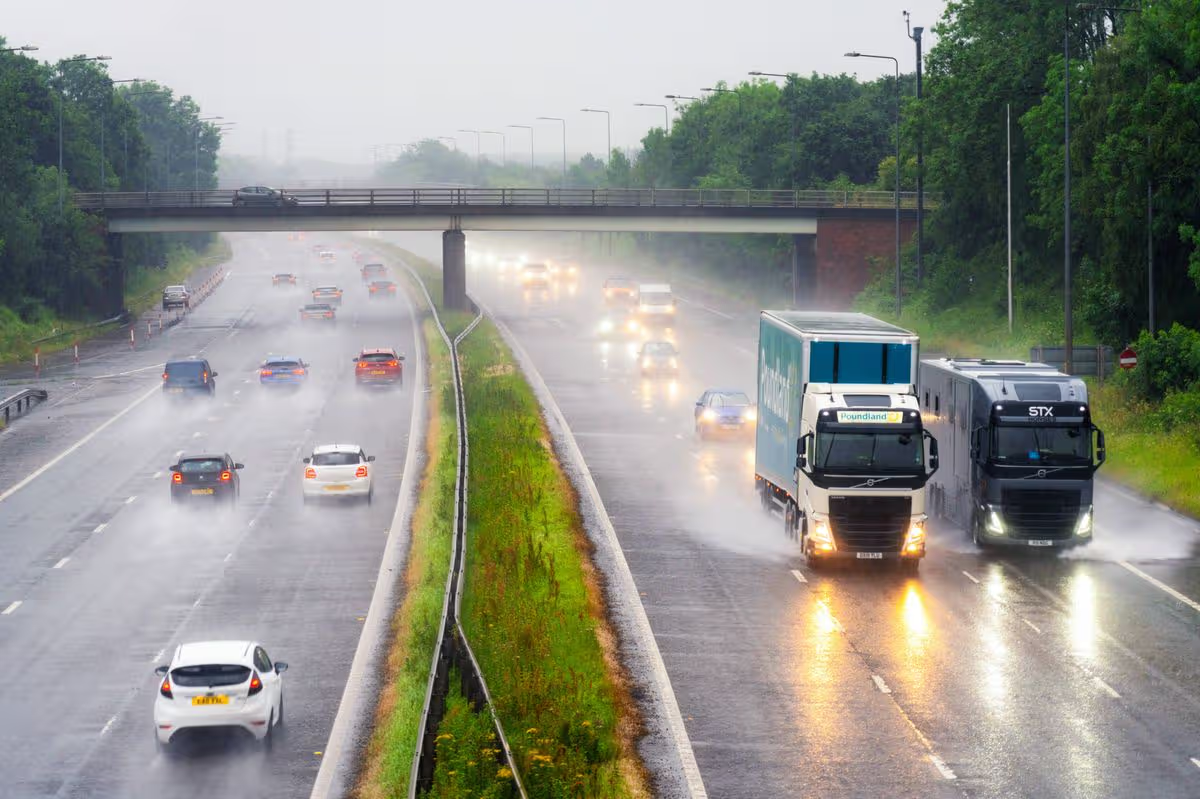
Driving instructor shares 3 rules to follow on roads during Storm Chandra

A driving instructor has shared three important rules for staying safe on the roads as Storm Chandra brings amber weather warnings, 290 flood alerts and winds of up to 80mph

A driving instructor has issued three crucial safety tips motorists must follow this week as Storm Chandra batters the UK. The Met Office has put an amber weather warning in place, with 290 flood alerts active as of Tuesday morning (January 27) and gusts reaching up to 80mph forecasted in certain areas.

A number of major roads and bridges have already closed in both directions due to the treacherous conditions. “In these kind of conditions there’s a lot of spray and surface spray, so it’s a good idea to put your headlights on,” advised instructor Mark Zondo, who shares driving tips as Theory Test Hero on social media.

He added: “With dipped headlights, this way it is going to be easier for other drivers to see you.”

Mark also highlighted that failing to switch on your lights – even during daylight hours – makes it significantly harder for lorry drivers to spot you, especially when they’re switching lanes.

Regarding spacing between vehicles, meanwhile, he recommended keeping a “nice” distance from the motor ahead. “You can’t really see much for one, there’s a lot of spray and also the road is very slippery because of the wet and so you don’t want to be too close in case you have to brake suddenly,” he explained.

Content cannot be displayed without consent

Demonstrating his final piece of advice, Mark eased his foot off the accelerator gradually instead of hitting the brake sharply to decelerate his vehicle safely amid the torrential rain.

The initial weather alerts took effect at midnight on Tuesday and are set to remain active for 17 hours.

Forecasters are predicting rainfall totals of 20-30mm across the impacted regions, with some spots potentially seeing between 40-50mm.

The Met Office has also cautioned that there will be a “sharp increase” in snow accumulation at higher altitudes, with the likelihood of two to five centimetres settling in areas above roughly 300m, five to 10cm above 400m, and 10-20cm above 500m.

In response to Storm Chandra, National Highways has issued its own guidance. “Road users are advised to plan ahead, avoid unnecessary travel where possible, and allow extra time for journeys,” they stated.

“Drivers should be aware that surrounding local roads may also be affected by flooding and should not attempt to drive through floodwater.”

Speaking more widely about the flooding concerns, National Highways revealed that expert crews will be checking carriageway drainage infrastructure, including gullies, culverts and ditches, looking for obstructions from leaves, silt and debris swept along by heavy downpours.

“If drainage systems are overwhelmed or obstructed, water cannot recede naturally, prolonging closure times,” the transport body warned.

Source link

Saudi Arabia ‘scaling back 100-mile-long megacity to something “far smaller”‘ amid spiralling costs

Plans for the city of Neom, once envisioned as the future of Saudi Arabia, have reportedly been dealt another blow, with Crown Prince Mohammed bin Salman, ordering a reevaluation of the project

Ambitious, controversial, and startlingly futuristic in its design, the city of Neom was intended to drastically change the future of Saudi Arabia, helping the country diversify beyond its oil-dependent economy.

Now, plans for the uniquely striking metropolis have been scaled back considerably, with spiralling costs and mounting delays meaning the extortionate project may well now be “far smaller” in scale. Launched by Crown Prince Mohammed bin Salman, with an eyewatering budget of £365bn, the £6.8tn mega-city was initially given a deadline of 2030, with the most striking feature set to be The Line.

In a design straight out of a sci-fi film, The Line was intended to be a row of mirror-clad skyscrapers, stretching 125 miles across the desert, and connected by leafy walkways. Reaching a half-kilometre into the sky, these bold structures were intended to accommodate some nine million residents, meeting the needs of a country whose booming population of 35 million is now outgrowing existing cities.

READ MORE: Huge £6.8tn mega-city spanning 125 miles of desert faces massive issue

Built on just 34 square kilometres, these properties were designed with “a reduced infrastructure footprint” in mind, “creating never-before-seen efficiencies in city functions”. According to the Neom website, “The ideal climate all year round will ensure that residents can enjoy the surrounding nature. Residents will also have access to all daily essentials within a five-minute walk, in addition to high-speed rail, with an end-to-end transit of 20 minutes.”

Unfortunately for Saudi Arabia, which has already poured billions into this project, the practical realities of such an endeavour have hampered the original vision, and it’s believed construction could now be significantly cut back.

As reported by The Times, the Crown Prince has grown increasingly frustrated about delays to his grand plan for diversifying the nation’s economy over the course of the next decade, and has already postponed or scrapped various other projects.

Now, the de facto ruler has ordered a reevaluation of Neom, which he has previously hailed as a way to “tackle the challenges facing humanity in urban life today” and to “shine a light on alternative ways to live”. It’s thought likely this lofty mission will now change tack somewhat, focusing on smaller-scale goals such as artificial intelligence data centres.

One source familiar with the ongoing matter told the publication that this review is still in progress, and that it is not currently clear whether or not The Line would continue on as a more modest, manageable project.

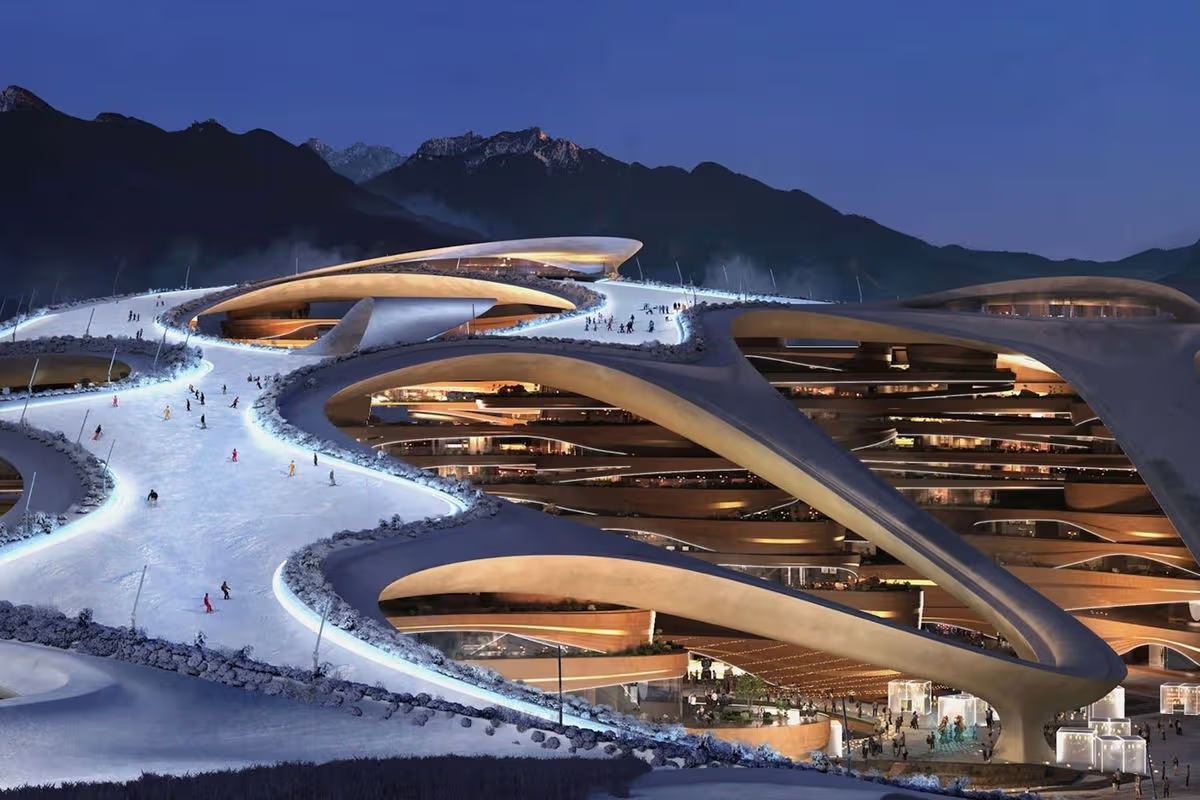
Neom was initially envisioned as including a 6,500 square kilometre nature reserve, alongside the mountainous retreat Trojena, anticipated to feature Saudi Arabia’s debut outdoor ski slopes, freezing winter conditions and a “moderate year-round climate”.

However, while Trojena had originally been scheduled to welcome the 2029 Asian Winter Games, officials have acknowledged it won’t be completed on time. Indeed, at the time of writing, the only part of the project to open so far is the Red Sea yachting resort of Sindalah, widely regarded as a costly failure, which ultimately led to the firing of Neom’s chief executive.

The extravagant launch party, which saw 40 private yachts docked at the resort, while guests were treated to performances from Will Smith and Alicia Keys. Crown Prince Mohammed reportedly wasn’t pleased by the outcome, however, and had questions about the steep price tag.

The Mirror has reached out to Neom for comment.

Do you have a story to share? Email me at julia.banim@reachplc.com

READ MORE: ‘I haven’t used the sink’ since getting no-plumbing dishwasher now £50 off

Source link

TUI launches new holidays to stunning winter sun destination nicknamed ‘mother of the world’ and it’s 26C this week

NEW city break packages have been launched by TUI – to a destination set to be even bigger this year.

The new packages, on sale now, will connect Brits to the city of Cairo in Egypt.

TUI has launched city break packages to CairoCredit: Alamy

The latest in its city break packages, flights will operate from London Heathrow, London Gatwick and Manchester.

Passengers will travel on British Airways, easyJet or Egyptair flights.

Five night holidays start from £696pp, which includes return flights, transfers, luggage and stays at Nile Sky Suites Hotel with breakfast.

TUI’s Commercial Director Chris Logan said: “With winter sun, world-famous sights and great value all in one trip, it’s ideal for customers who are after sunshine but want more than a beach holiday.

DECKS APPEAL

I went on the all-inclusive TUI cruise that stops in Europe’s prettiest cities


DREAM ISLAND

Safest African country is tropical island with TUI packages and 60p meals

Egypt is one of the best-value winter sun destinations. You get brilliant hotels, unforgettable experiences and fantastic value for money, especially during the winter months” added Logan.”

The city of Cairo’s nickname, especially by locals, is ‘mother of the world’ for many believing it is the centre of civilisation.

Its main attraction is the Pyramids of Giza – the only remaining ancient wonder of the world – as well as the Great Sphinx.

There is also the newly opened Grand Egyptian Museum, the largest of its kind in the world.

The Sun’s Dean Agius visited soon after it opened.

He explained: “The enormous building, covering an area of 470,000 square metres, houses more than 50,000 artefacts — and the centre­piece of its collection will bring all 5,000-plus treasures from Tutankhamun’s tomb together for the first time.

“Stepping through its pyramid-shaped entrance, the 3,200-year-old, 83-ton statue of Egyptian pharaoh Ramses II sits in GEM’s soaring central atrium.”

TUI also said there are “lesser-known hidden gems” in Cairo too, including the green oasis Al-Azhar Park, which has amazing city views.

Cairo remains around 20C in winter, although is hitting highs of 26c this week – making it an ideal winter sun holiday destination around five hours from the UK.

Summer temperatures can hit around 36C.

A popular attraction is the Pyramids of GizaCredit: Alamy
The Grand Egyptian Museum also recently openedCredit: Alamy

Brits can also explore the rest of Egypt, with other popular experiences including Nile River cruises.

There is the city of Luxor, home to Luxor Temple and the famous Valley of the Kings.

Otherwise popular beach resorts include Sharm el Sheikh and Hurghada, including the nearby El Gouna.

TUI has restarted flights to Sharm el Sheikh from East Midlands, taking off later this year.

Egypt has long been a popular, affordable holiday destination for Brits.

However, its affordability is seeing it boom even more this year, according to experts.

Jet2 boss Steve Heapy said earlier this week: “North Africa is performing well, with […] Egypt standing out.”

The airline will restart flights to two destinations in Egypt in 2027.

After scrapping routes back in 2011, the new flights will connect to both Sharm El Sheikh and Hurghada.

It is even 26C this weekCredit: Alamy

Source link

Minnesota’s Fortune 500 companies speak out on ICE, not loudly enough

Here are a couple of points about the business community of Minnesota you may not have known.

First, it’s home to a surprisingly large cadre of 17 major corporations, members of Fortune’s roster of the 500 largest U.S. companies.

Some of America’s best-known consumer companies, including UnitedHealth Group, Target, Best Buy, 3M and General Mills have chosen the windy, cold and snowy — but heretofore tranquil — state for their headquarters.

To get all 60 of the major CEOs to sign onto a statement was a remarkable feat.

— Bill George, former Minnesota corporate executive

Second, this collection of elite businesses largely has been silent about the federal government’s assault on the people of Minneapolis, which has been going on since the beginning of December. The silence ended Sunday, when 60 Minnesota businesses issued a joint statement through the state Chamber of Commerce calling for “an immediate deescalation of tensions.”

That so many businesses came together for the statement was an achievement, given the customary reluctance of corporate leaders to address incendiary political issues. But in terms of its actual content, the statement was pretty thin gruel, bristling with public relations-style circumlocution and vagueness.

Get the latest from Michael Hiltzik

If anything, the Minnesota statement underscores the quandary facing American corporations in the Age of Trump, when the president viciously and publicly attacks anyone he deems to be a personal adversary. For a business, that can translate into a threat to the top and bottom lines.

Business leaders faced with a choice between going along with Trump, or poking him with a stick, almost invariably have chosen the first path.

That Minnesota’s businesses even went as far as they did does suggests the tide may have turned on challenges to Trump’s policies. Even so, we’re still standing only on the edge of the water.

The refusal of the American business community to take a strong stand against Trump’s policies has been a long-lasting scandal.

“This shows the greatest cowardice in the history of the Business Roundtable,” says Jeffrey Sonnenfeld, the Yale School of Management’s expert in corporate leadership, referring to the organization of corporate chief executives that should carry the flag of backlash against Trump’s actions.

I asked the Roundtable to comment on the chaos in Minneapolis. It replied with a statement from CEO Joshua Bolten, a former White House aide to George W. Bush, endorsing the Minnesota Chamber’s call for “cooperation between state, local, and federal authorities to immediately de-escalate the situation in Minneapolis.”

Is that sufficient?

What’s needed is for leaders to name names and demand concrete steps, at least as long as our political leaders remain missing in action. In Minnesota — indeed, wherever Trump policies trample norms and values — the situation has become a moral crisis for all American society, including the commercial.

That said, it isn’t surprising that Minnesota’s big corporations, like almost all American corporations, have been gun-shy about confronting a political issue like this head-on. They can properly feel that they’ve been burned before.

Target, the second-largest public corporation headquartered in the state (after UnitedHealth), experienced a front-page blowback from political controversies twice in recent years.

In 2023, as I reported then, the company capitulated when a braying mob of anti-LGBTQ+ reactionaries targeted it for displaying Pride-themed merchandise in its stores during June’s Pride Month observances.

Target, which had proudly displayed such merchandise in previous years, told personnel in many stores to shrink or even eliminate their Pride-themed merchandise displays or move them to less conspicuous sections of the stores. Some LGBTQ+ designers discovered that their products had been taken off the shelves.

Last year, only days after Trump launched his second term with a flurry of antidiversity executive orders, Target announced it was “concluding our three-year diversity, equity and inclusion goals.” The company also withdrew from “all external diversity-focused surveys,” including a widely followed Corporate Equality index sponsored by the Human Rights Campaign, which tracks corporate policies on LGBTQ+ rights and inclusion.

The backtracking backfired. Target’s sales cratered, in part because consumers were angry about its DEI reversals. During a conference call with Wall Street analysts following its first-quarter earnings report, CEO Brian Cornell attributed the company’s ugly performance to factors including “the reaction to the updates we shared … in January,” an allusion to its ending of DEI initiatives.

The escalating crisis in Minneapolis seems to have been the trigger for the state’s business leaders to issue their joint statement. “To get all 60 of the major CEOs to sign onto a statement was a remarkable feat,” says Bill George, a former CEO of Minneapolis-based medical device maker Medtronic and a former Target board member.

“Maybe some people wanted it to be stronger,” George told me, “but I believe a statement signed by every Minnesota CEO of size represents a turning point in the whole discussion between the federal government and the state government.” He hoped that it would be enough to prompt Trump to simply “declare victory” in Minnesota and “move on to other challenges.”

Still, the text of the Minnesota chamber’s communique illustrates that corporate America still is reluctant to confront Trump directly.

The statement refers, vaguely, to “the recent challenges facing our state,” which “created widespread disruption and tragic loss of life.”

In other words, the statement alludes to something having happened, but doesn’t identify who did it or even what it was. A “tragic loss of life,” after all, can befall people slipping on the ice and cracking their head, as well as someone being shot 10 times in an unprovoked attack.

The statement asserts that “for the past several weeks, representatives of Minnesota’s business community have been working every day behind the scenes with federal, state and local officials to advance real solutions. These efforts have included close communication with the Governor, the White House, the Vice President and local mayors. There are ways for us to come together to foster progress.”

It calls for “an immediate deescalation [sic] of tensions and for state, local and federal officials to work together to find real solutions.”

Lacking are specifics. What “real solutions” are on the table in these “close communications” with public officials? Who is in on these behind-the-scenes conversations? What actions would bring about “an immediate deescalation of tensions”?

I asked the Chamber of Commerce to answer those questions, but a spokesman told me the statement would have to stand by itself.

The statement doesn’t even mention Renee Good and Alex Pretti, whose killing finally provoked the Chamber’s members to speak out. Nor does it address the unmistakable discrepancies between how the Trump administration described the killings and their victims, and what millions of people can see in videos.

What’s infuriating is that for many Americans — including, notably, Minnesota Gov. Tim Walz and Minneapolis Mayor Jacob Frey — the solution to this crisis is crystal clear: Get ICE and the Border Patrol out of Minneapolis neighborhoods. That even occurred to the editorial board of the Wall Street Journal, which on Sunday advised Trump to “pause ICE enforcement in the Twin Cities to ease tensions and consider a less provocative strategy.”

One might have thought that Minnesota companies would be among the leaders pushing back against Trump policies, especially those unfolding in their front yards.

“Minnesota in general has been the hotbed of traditional progressive politics,” Sonnenfeld says. “The Minnesota business community was always the paragon of social investment — very philanthropic and socially responsible — and had soaring performance to show for it. Minneapolis was always the model showing that doing good is not antithetical to doing well.”

Minnesota business leaders clearly were becoming concerned that Trump’s anti-immigrant surge threatened their ability to do well.

“This situation is very harmful to their businesses,” George says. “It’s extremely important that their employees feel that they are safe and secure in their place of work, and that their corporate leaders have their back.”

Some Minnesota companies feared Trump’s immigration crackdown could make it harder to recruit executives.

“If this drags on, it will have a devastating effect on Minnesota companies’ ability to attract people from around the world,” George told me. “They depend upon bringing executives in from New York and L.A., but also from China, Japan and Europe. This situation is really a deterrent to that.”

Whether Minnesota’s corporate pushback will move the needle on Trump’s policy isn’t clear, though there are faint signs that he recognizes he isn’t winning fans on the issue.

On Monday he assigned his border czar, Tom Homan, to take charge of the Minnesota surge — not that Homan has the reputation of a peacemaker on immigration issues.

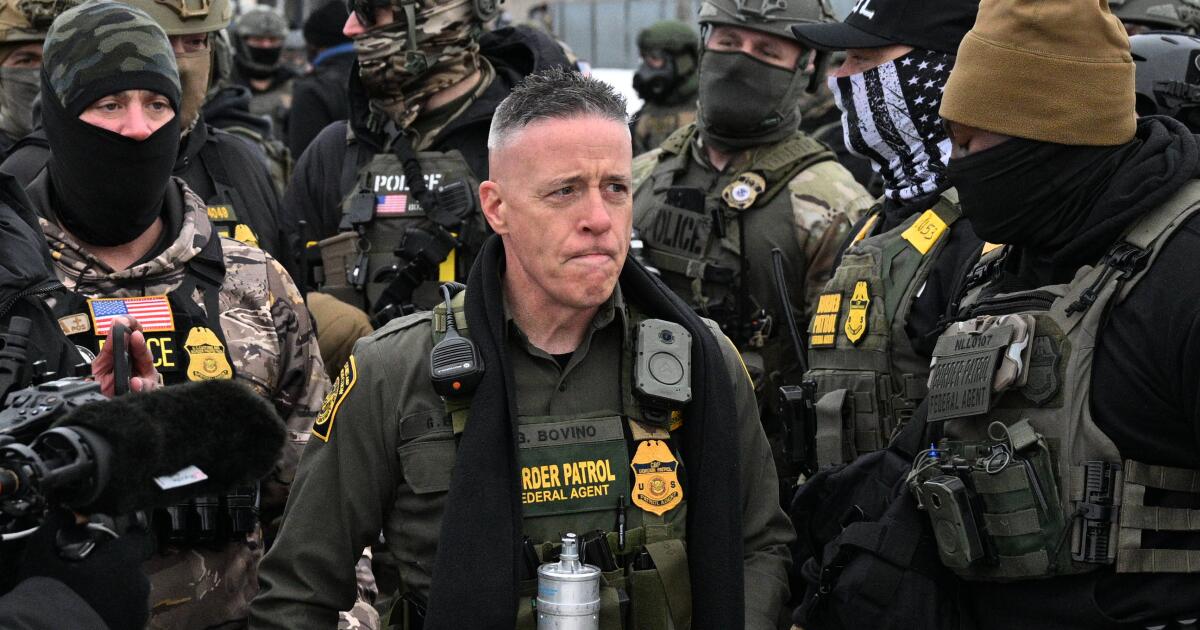
According to Border Patrol official Gregory Bovino, up to now the face of the surge, the agents involved in Saturday’s killing, including the two known to have fired gunshots at Pretti, are still on the job, though he said they were transferred out of Minneapolis “for their safety.” (There were reports Monday that Bovino is being sent out of Minnesota and back to his prior post in California.)

Nor are there signs that the surge is over. ICE and the Border Patrol are still on the streets of Minneapolis, so further mayhem is possible.
Source link

The Hundred 2026: Inaugural IPL-style player auction to be held in London on 11-12 March

Squads will be made up of between 16 to 18 players, while there is a salary cap limit along with a salary collar, a minimum amount teams must spend.

The salary pot in the men’s competition for 2026 has risen by 45% to £2.05m per side, and the fund for women’s teams has increased by 100% to £880,000.

The minimum salary for a female player has also risen by 50% to £15,000, while the number of overseas players permitted in both competitions increases from three to four.

Franchises were permitted to sign or retain up to four players each prior to the auction.

Fixtures for the 2026 edition of The Hundred have also been announced.

The opening men’s and women’s double-header will take place on 21 July at The Oval between MI London v Sunrisers Leeds, two franchises with IPL ownership links.

A total of 64 matches, external take place in the group stage, split equally between the men’s and women’s competitions.

The final round of group fixtures will be played on 12 August, with the Eliminator two days later and the final on Sunday, 16 August.

Both the Eliminator and final will have reserve days in place in the event of bad weather.

Every game will be live on BBC Sounds, with highlights on BBC iPlayer and the BBC Sport website, plus 16 matches will also be available to watch live on BBC television.

Source link

Jet2 boss reveals the three cheap holiday destinations that Brits are booking over Spain this summer

SPAIN has always been a top holiday destination for Brits – but is quickly being taken over by a number of other destinations.

According to Jet2 CEO Steve Heapy, Spain has lost its appeal to holidaymakers with other destinations coming for its crown thanks to rising costs.

Spain is losing its appeal to Brits according to Jet2 boss thanks to rising costsCredit: Alamy
Mr Heapy predicts Brits will ditch Spain for Morocco, Tunisia and EgyptCredit: Alamy

In an interview with Hosteltur, Mr Heapy predicted that Brits are ditching Spain for other destinations, all in North Africa.

The reason being? Money.

Mr Heapy explained: “Price is critical; inflation has affected Spain more than other emerging markets, making the destination more expensive.

“Tourist taxes don’t help either; paying an additional five euros per person per night on top of the trip cost represents a significant expense.”

TAKE THE CREDIT

List of 50 cheap, £1 or FREE family days out if you get Universal Credit


WINTER WINS

50 incredible free or heavily discounted UK family days out this winter

In places like Barcelona, the surcharge for overnight stays is rising to €5 £4.34) per night.

In the Balearic Islands like Majorca and Ibiza, there’s an eco-tax added to accommodation which ranges between €1 (87p) to €4 (£3.47)pppn.

It will soon also be more expensive to fly to Spain, as previously reported, Aena, which operates the majority of airports in Spain, is increasing its airport charges by 6.44 per cent in 2026.

With the increase in cost, Mr Heapy said that Brits are heading to other locations instead – which are still just a few hours away from the UK.

He said: “North Africa is performing well, with Morocco, Tunisia, and Egypt standing out.”

Morocco is a great option for Brits, especially those seeking winter sun – and some destinations are less than an hour from the UK.

A flight from the UK to the vibrant city of Marrakesh takes just three hours and 40 minutes.

In February there are highs of 21C – much warmer than being in the UK at that time of year.

It’s cheap too, according to Skyscanner you can fly with Ryanair from London Stansted from just £15 on February 23, 2026.

On that same day, it’s more expensive to fly to Madrid which is £17 – and the journey is one hour less.

Head of Sun Travel Lisa Minot recently visited the Moroccan city where she discovered desert landscapes, colourful streets and new bars, restaurants and hotels.

Other popular destinations in Morocco include Agadir which has beautiful golden beaches, the country’s capital Rabat, Essaouira on the southern coast, Fez and Tangier.

Marrakesh has lots of vibrant streets and souks to exploreCredit: Alamy
The Red Sea coast promises warm weather to Brits wanting guaranteed sunCredit: Alamy

Tunisia is also back in the game according to Jet2’s Mr Heapy.

The number of Brits heading on holiday there has risen significantly with around 350,000 British visiting in 2024 – 65 per cent more than the previous year.

And numbers are rising thanks to its great weather, short flights and beautiful beaches.

And according to TravelSupermarket, Tunisia offers some of the very cheapest 5-star holidays on the market, averaging at £614pp.

Egypt has plenty of beautiful beachside resorts that will appeal to Brits seeking a fly and flop holiday.

You’ve got beach resorts like Sharm El Sheikh and Hurghada, or if you want more of the city life, head to Cairo of Luxor & Aswan.

With loveholidays, breaks to Sharm El Sheikh including breakfast and flights start from as little as £219pp.

There were other Mediterranean destinations that Mr Heapy said are keeping a good level of tourism – like Greece.

There you get the best of both worlds from ancient cities to beautiful islands.

It’s also home to the world’s best island for 2025 – Paros, where travellers will find secret beach clubs and incredible restaurants where holidaymakers dance on tables.

The Algarve is still popular and is very cheap according to one writer who lives thereCredit: Alamy

Spain’s neighbour, Portugal, is also continuing to be popular especially in places like Lisbon, Porto and the Algarve region.

One writer who relocated from London to Lisbon still can’t believe how cheap it is.

You can pick up booze for less than £5 – from local beer to wine, she said “you can still purchase a top-quality house white or red for just a few euros.”

Coffee can be bought up for around 80p if you like an espresso – or coffee with milk – called a ‘galão’ – will usually come in at under two euros.

For more on Portugal, here’s the secret side of the country crowned one of the best places in Europe to visit.

And hear from one Greece expert who names four better value islands where locals go on holiday with Santorini-like houses and secluded beaches.

Tunisia is another destination rising in popularity for 2026Credit: Alamy

Source link

S. Korea calls China’s removal of steel tower in Yellow Sea ‘meaningful progress’

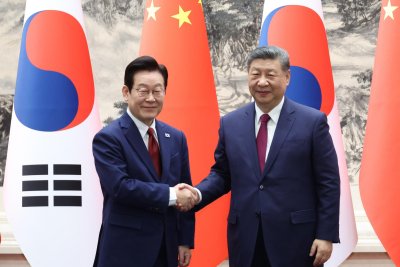
South Korea on Tuesday called China’s decision to remove a disputed steel structure from overlapping waters in the Yellow Sea “meaningful progress.” The subject came up during President Lee Jae Myung’s (L) summit with Chinese President XI Jinping in Beijing in early January. Photo by Yonhap/EPA

Jan. 27 (UPI) — South Korea on Tuesday called China’s decision to remove one of the disputed steel structures from their overlapping waters in the Yellow Sea “meaningful progress” that would help advance bilateral ties.

The foreign ministry made the comment after Being announced that work was in progress to remove part of the three steel structures built in the sea zone where the two countries’ exclusive economic zones (EEZs) overlap.

China built two semi-submersible buoys in 2018 and 2024 and a fixed steel platform in 2022 in the Provisional Maritime Zone (PMZ). The issue has been a source of tensions in bilateral relations, as Seoul has regarded the installations as Beijing laying the potential groundwork for future territorial claims.

“As we have continued talks with China on the matter based on our consistent position that we oppose the unilateral installations of the structures in the PMZ, we assess the latest move as meaningful progress,” Kang Young-shin, director general for Northeast and Central Asia affairs, told reporters.

“The measure can be seen as a change that would help advance South Korea-China relations,” Kang said.

Another ministry official said China would be moving the management platform out of the PMZ, with the operation expected to begin at 7 p.m. Tuesday (local time) and run through Saturday, citing the notice from China’s maritime authorities.

“We have maintained our constructive dialogue with the Chinese side and will continue to seek further progress going forward,” Kang added.

Chinese foreign ministry spokesperson Guo Jiakun said in a briefing that a Chinese company was carrying out the work to remove the management platform, an autonomous operation in progress led by the company in line with its management and development needs.

Seoul and Beijing have agreed to draw the PMZ line as a tentative measure amid the stalled talks over EEZ demarcation in order to allow fishing vessels to operate safely and jointly manage marine resources in the area, while prohibiting activities beyond navigation and fishing.

South Korea has argued that China’s installations of the steel structures run counter to such efforts.

Following the summit talks in Beijing with Chinese President Xi Jinping earlier this month, President Lee Jae Myung said China was expected to remove one of the three steel platforms from the Yellow Sea.

Beijing’s move came after the two countries reportedly reached an understanding that the management platform should first be pulled out of the PMZ, following concerns raised in Seoul over the possibility that the structure could be diverted for other uses.

The platform that China claims to be a management facility for the fish farm is believed to be a repurposed decommissioned oil rig.

Copyright (c) Yonhap News Agency prohibits its content from being redistributed or reprinted without consent, and forbids the content from being learned and used by artificial intelligence systems.

Source link

Why neoliberalism can’t build peace | Israel-Palestine conflict

Over the past year, United States President Donald Trump has pursued “peace-making” all across the world. A prominent feature of his efforts has been the belief that economic threats or rewards can resolve conflicts. Most recently, his administration has put forward economic development plans as part of peace mediation for Israel’s genocidal war on Gaza, the war in Ukraine and the conflict between Israel and Syria.

While some may see Trump’s “business” approach to “peace-making” as unique, it is not. The flawed conviction that economic development can resolve conflicts has been a regular feature of Western neoliberal peace initiatives in the Global South for the past few decades.

Occupied Palestine is a good example.

In the early 1990s, when the “peace process” was initiated, Israeli Foreign Minister Shimon Peres started advocating for “economic peace” as part of it. He sold his vision of the “New Middle East” as a new regional order that would guarantee security and economic development for all.

The project aimed to place Israel at the economic centre of the Arab world through regional infrastructure — transport, energy and industrial zones. Peres’s solution for the “Israeli-Palestinian conflict” was Palestinian economic integration. The Palestinians were promised jobs, investment, and improved living standards.

His argument was that economic development and cooperation would foster stability and mutual interest between Israelis and Palestinians. But that did not happen. Instead, as the occupation continued to entrench itself after the US-brokered Oslo Accords and the establishment of the Palestinian Authority (PA), anger in the Palestinian streets grew and eventually led to the outbreak of the second Intifada.

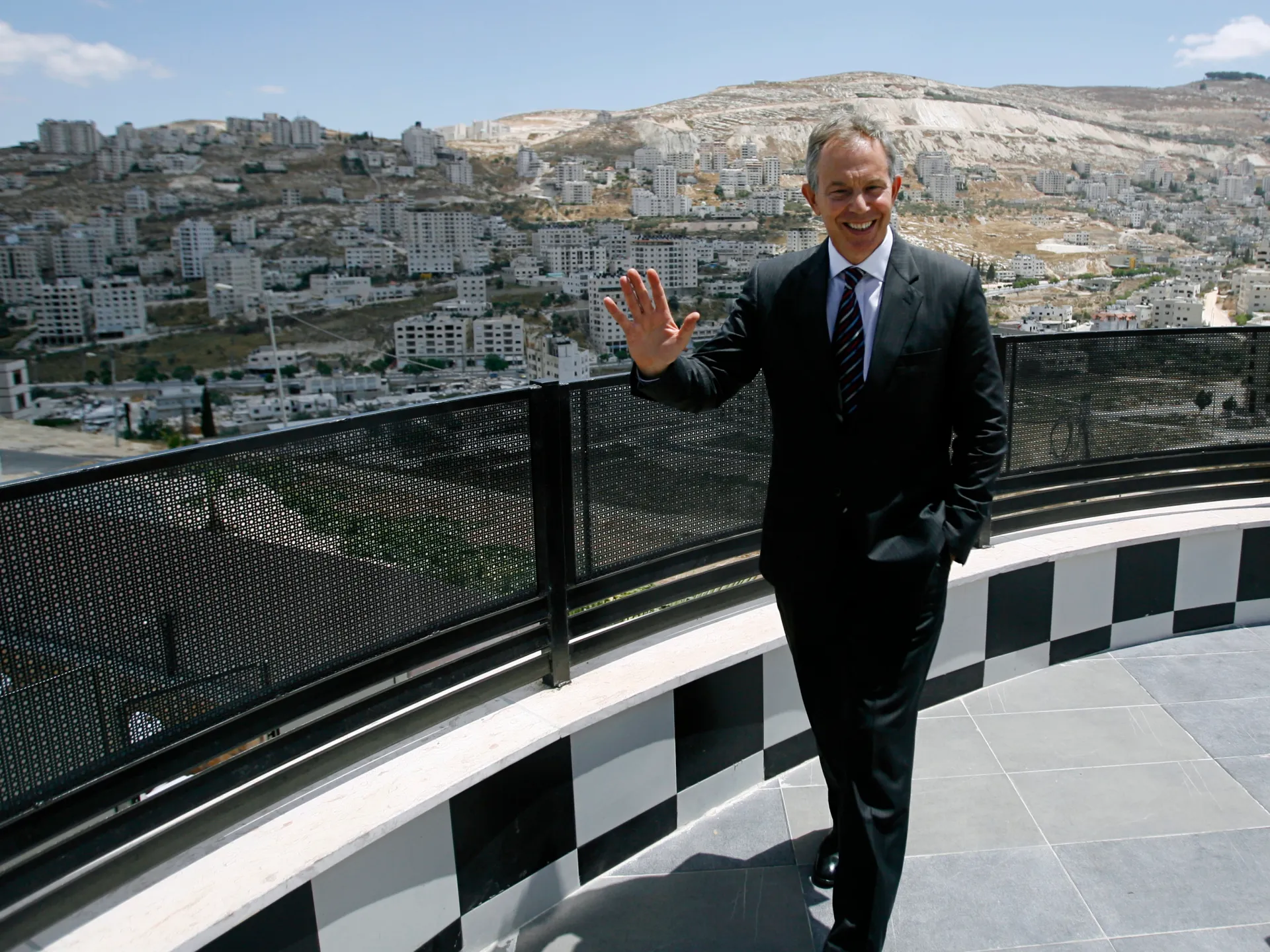
This neoliberal approach was tested again by the Quartet – consisting of the United Nations, the European Union, the US and Russia – and its envoy Tony Blair in 2007. By then, the Palestinian economy had collapsed, losing 40 percent of its gross domestic product (GDP) in eight years and plunging 65 percent of the population into poverty.

Blair’s “solution” was to propose 10 “quick impact” economic projects and fundraise for them in the West. This went hand-in-hand with the policies of then-Palestinian Prime Minister Salam Fayyad, in what came to be known as “Fayyadism”.

Fayyadism was sold to Palestinians as a pathway to statehood through institution-building and economic growth. Fayyad focused on generating short-term economic gains in the occupied West Bank while simultaneously rebuilding the Palestinian security apparatus to meet Israeli security demands.

This model of economic peace never addressed the root cause of Palestinian economic stagnation: the Israeli occupation. Even the World Bank warned that investment without a political settlement ending Israeli control would fail in the medium and long term. Yet the approach persisted.

There were Palestinians who benefitted from it, but they were not common Palestinians. They were a narrow elite: security officials who gained privileged access to financial institutions, contractors tied to Israeli markets, and a handful of large investors. For the wider population, living standards remained precarious.

Rather than preparing Palestinians for statehood, Fayyadism replaced liberation with management, sovereignty with security coordination, and collective rights with individual consumption.

This economic approach to conflict resolution merely gave Israel time to entrench its colonial enterprise by expanding its settlements on Palestinian land.

The latest economic plan for Gaza, presented by Trump’s adviser and son-in-law Jared Kushner, is unlikely to bring economic prosperity to the Palestinians either. The project reflects two deeply contradictory dynamics: it foregrounds opportunities for investment and profit for global and regional oligarchies while systematically ignoring the fundamental national and human rights of the Palestinian people.

Security is framed exclusively around the needs of the occupying power, while Palestinians are compartmentalised, securitised, and surveilled — reduced to a depoliticised labour force stripped of social and national identity.

This approach views people as individuals rather than as nations or historically established communities. Under this logic, individuals are expected to acquiesce to oppression and dispossession once they obtain jobs and improve their living standards.

These strategies are failing to build peace not just in Palestine.

In the Israeli-occupied Golan Heights, the US has proposed expanding the demilitarised zone and converting it into a joint economic zone, featuring a ski resort. The US approach seems designed not only to pressure Syria to relinquish its sovereign rights over the territory, but also to recast it as a security project in ways that primarily benefit Israel. Under this framework, the US would act as the security guarantor. Its close alliance with Israel, however, puts its impartiality and true intentions in doubt.

In Ukraine, the US has proposed a free economic zone in parts of the Donbas region, from which the Ukrainian army would have to withdraw. This would allow Moscow to expand its influence without direct military confrontation, creating a buffer zone favourable to Russian security interests.

The Donbas has historically been one of Ukraine’s industrial bases, and transforming it into a free economic zone would deprive Ukraine of a critical economic resource. There are also no guarantees that the Russian army would not simply advance after the Ukrainian withdrawal and take the whole region.

These neoliberal “solutions” to the conflicts in Gaza, the Donbas and the Golan Heights are doomed to fail just like the economically-driven peace initiatives of the 1990s and 2000s in occupied Palestine.

The main problem is that the US cannot really provide credible guarantees that the areas would remain stable, so investors can secure returns on their investments. That is because no solid political settlement would be in place, given the fact that these proposals ignore the political, cultural and most importantly, national interests of the people living in these regions. As a result, no serious or independent investor would commit capital to such an arrangement.

Nations are not made up of consumers or labourers; they are made up of people with a common identity and national aspirations.

Economic incentives should follow, not precede, a political resolution that secures the self-determination of indigenous peoples. Any conflict-resolution framework that ignores collective rights and international law is therefore bound to fail. Political settlements must prioritise these rights, a requirement that stands in direct opposition to the logic of neoliberalism.

The views expressed in this article are the author’s own and do not necessarily reflect Al Jazeera’s editorial policy.

Source link

How old is Free Bert’s Ava Ryan who plays comedian’s daughter?

The young cast member steals the show according to fans

Content cannot be displayed without consent

One of the cast members of a new hit Netflix series is a former social media star making her professional screen debut on the show.

Six-part comedy series Free Bert is one of the most watched shows on the platform since it released. According to the synopsis provided by the streamer, Bert Kreischer, shirtless comedian, party legend, perpetual wildcard, finds himself in uncharted territory when his daughters are accepted to an elite Beverly Hills private school. When his unbridled antics turn his family into outcasts, he decides to “put on a shirt” and stifle his true nature to better fit in.

While it doesn’t have enough critic reviews to warrant a Rotten Tomatoes score, fans have sung its praises online. Many sharing their thoughts have singled out the performances from the younger members of the cast.

One person posted: “It’s very funny, very watchable and very good. The cast is outstanding, especially the girls playing his daughters.”

But who is Ava Ryan who plays the eldest daughter? And how old is she? Here’s everything you need to know.

For the latest showbiz, TV, movie and streaming news, go to the new ** Everything Gossip ** website.

How old is Free Bert star Ava Ryan?

Ava Ryan is one of the breakout stars of Free Bert. She plays one of the on-screen daughters of Bert Kreischer.

The character is very much based on the comedian’s real life eldest child Georgia. Ava makes her professional screen debut with the role.

While Bert’s real children are now aged 19 and 21 respectfully, the series portrays them as High School age. According to the website Famous Birthdays, Ava Ryan was born February 21, 2010 and is 15 years old.

She is a social media star who has appeared in posts and videos alongside her mother since she was a baby. Her mum shared clips of Ava on Instagram, Vine, Facebook and YouTube. One of their most popular posts was a video of Ava saying “I smell like beef” which gained millions of views.

Now a teenager with her own account, Ava boasts more than 1 million followers on her own Instagram account. Her on-screen mother played by comedian Arden Myrin recently shared a tribute to Ava on social media.

She said: “Have you watched Free Bert yet on Netflix? I love these girls so much. Lilou Lang and Ava Ryan both had their first professional acting jobs on this show and they hit it out of the park. And more importantly, they are as funny and kind and warm as they are talented. It was a joy getting to work with them. Ava and Lilou feel like my family even though they are just my TV family.”

Free Bert is streaming on Netflix.


Source link

A guide to Monrovia: Best things to do, see and eat

Many Angelenos have never set foot in Monrovia, the mountain-view town nestled in the San Gabriel foothills, or even heard of it — unless they read their Trader Joe’s labels, many of which name the city as the distribution site. It’s still a bit of an insider’s secret, which locals like myself tend to appreciate.

Get to know Los Angeles through the places that bring it to life. From restaurants to shops to outdoor spaces, here’s what to discover now.

Monrovia embodies the word “picturesque” in a way Thornton Wilder would’ve appreciated: Neat little historic homes — many designed in the Arts and Crafts and New Mediterranean architectural styles — line neighborhood streets abundant with native plants. Residents, by turns sweet and quirky, seem like they could be plucked right out the “Gilmore Girls” town of Stars Hollow: You might meet an award-winning whistler who hosts an annual music festival in Library Park or a mayor whose husband campaigns for her by strolling the streets wearing a sandwich board. Monrovians are intensely proud of their city, telling their stories through a historical museum and an archive called the Legacy Project. On Friday evenings, they often come together in Old Town Monrovia, where four blocks of the main thoroughfare of Myrtle Avenue are shut down to traffic for a street fair complete with bounce houses, food trucks and a petting zoo. Their event calendars are peppered with frequent festivals in Library Park and the county fair-esque Monrovia Days town birthday celebration.

Los Angeles County’s fourth-oldest city, Monrovia was incorporated in 1887 after William N. Monroe, a former superintendent for Southern Pacific rail company, along with James F. Crank, Edward F. Spence and John D. Bicknell, plotted a 120-acre town centered at Orange (now Colorado Boulevard) and Myrtle Avenue. Historic gems can be found all around: You can still admire the Mayan Revival-style architecture of the century-old Aztec Hotel or look for the brass plaques displayed on more than 40 of Monrovia’s “first houses” built before the end of 1887. Just be on the lookout for the bears: They’re the unofficial mascot of Monrovia, since they languidly amble our streets, inspire our art (you’ll find bear murals and sculptures throughout town) and even bathe in our hot tubs.

In general, daily life in Monrovia feels mellow, slow and friendly. Seeing and being seen isn’t as much of an objective as savoring a breakfast of runny eggs while reading a newspaper, meandering by the lit-up park fountain or hiking through the 80 acres of wilderness at Monrovia Canyon Park. Don’t expect to get anywhere in town fast, especially during rush hour along Huntington Drive, Foothill Boulevard or the 210. In getting around, public transit can come to the rescue: the GoMonrovia Lyft Pass offers $6 local Lyft rides, and the city is connected by Metro to Pasadena, Highland Park, Union Station, Azusa, Long Beach and other locations. Monrovia isn’t for everyone but it’s as close to paradise as anything I’ve ever found in Los Angeles County. I hope to someday be considered one of the city’s quirky characters who has long called this place home.

What’s included in this guide

Anyone who’s lived in a major metropolis can tell you that neighborhoods are a tricky thing. They’re eternally malleable and evoke sociological questions around how we place our homes, our neighbors and our communities within a wider tapestry. In the name of neighborly generosity, we may include gems that linger outside of technical parameters. Instead of leaning into stark definitions, we hope to celebrate all of the places that make us love where we live.

Our journalists independently visited every spot recommended in this guide. We do not accept free meals or experiences. What L.A. neighborhood should we check out next? Send ideas to guides@latimes.com.


Source link

Los Angeles coffee shops that double as art galleries

Eclectic and cozy define the spirit of this North Hollywood coffee shop owned by Jennifer Jackson and Libby Ward. The name (and whale logo) is a playful twist on corporate giant Starbucks (with “Starbuck” being a character in “Moby Dick”), and the satire extends to the names of the drink sizes: guppy (small), trout (medium) and whaley (large).

Inside, the whimsical nautical vibe continues in the front room with a floor mural, resembling the deep blue sea and various colorful sea creatures, done by local illustrator Tak Sparks.

Three back rooms with bold colored walls — green, blue, yellow and orange — feel like living rooms with wooden stools, desks, chairs and tables, area rugs, upholstered armchairs and worn leather seats. Out back, a shaded patio strung with Edison bulbs extends the seating.

The walls recently featured art by local comic artist/illustrator Josh Maikis, as well as art by two of the shop’s employees’ parents, J.H. Smith’s ink and intaglio prints and Carolyn Root’s wildlife paintings.

In the front space, bags of free coffee grounds are available for customers to take home for composting. There’s also a propagation station where you can leave or take plant clippings.

Beyond seasonal drinks and espresso-based drinks, try unusual signature offerings like the Shiny Squirrel, a blended espresso with caramel, whipped cream, white and dark chocolate, and sprinkles on top. Or, if coffee isn’t your thing, there are smoothies, hot chocolate and Italian sodas, and a wide array of teas. Jackson is also an herbalist and makes some of them, including Good Night Moon and Frankie Goes to Hollywood, with her own herbs.

Here, the coffee doesn’t stop at the beverages. Even a caprese sandwich has coffee in the balsamic vinegar.

Source link

Teair Tart agrees to three-year contract extension with Chargers

Defensive lineman Teair Tart is returning to the Chargers with a three-year contract extension.

The Chargers announced the deal Monday night for Tart, who joined the team in August 2024 after he was released by the Miami Dolphins. Tart quickly became a contributor to Los Angeles’ defense, and he started all 18 games this season in the middle of the Bolts’ line.

Tart has 61 tackles, nine tackles for loss, one sack and an interception in his two seasons with the Chargers. He has been particularly effective in run defense, stepping up to fill a need created when Poona Ford left last year to sign with the Rams.

Tart began his NFL career as an undrafted free agent with the Tennessee Titans in 2020. The Florida International product also briefly played for Houston.

The Chargers likely will have some new defensive concepts next season after defensive coordinator Jesse Minter was hired to be the Baltimore Ravens’ head coach. Minter was coach Jim Harbaugh’s coordinator for his first two seasons in Los Angeles, producing one of the NFL’s top five units in scoring defense, total defense and passing defense.

The Bolts went 11-6 and lost in the wild-card round of the playoffs in each of Harbaugh’s first two seasons. Harbaugh hired former Dolphins coach Mike McDaniel as his offensive coordinator earlier Monday.

Source link

ICE agents from US set to help with security at Winter Olympics in Italy | Winter Olympics News

The 2026 Milano Cortino Winter Olympics are set to begin on February 6, with shock at the late news of ICE involvement.

Agents from the United States’ divisive Immigration and Customs Enforcement (ICE) will help support US security operations for the Winter Olympic Games in Italy next month, a spokesperson told the AFP news agency.

“At the Olympics, ICE’s Homeland Security Investigations is supporting the US Department of State’s Diplomatic Security Service and host nation to vet and mitigate risks from transnational criminal organisations,” the agency said in a statement.

Recommended Stories

list of 4 itemsend of list

“All security operations remain under Italian authority.”

It added: “Obviously, ICE does not conduct immigration enforcement operations in foreign countries.”

The potential presence of ICE agents at the February 6-22 Milano-Cortina Games has prompted huge debate in Italy, following the outcry over the deaths of two civilians during an immigration crackdown in Minneapolis.

Italian authorities initially denied the presence of ICE and then sought to downplay its role, suggesting its agents would only help in security for the US delegation.

US Vice President JD Vance and Secretary of State Marco Rubio are attending the opening ceremony in Milan on February 6.

On Monday, the president of the northern Lombardy region, which is hosting several of the Olympic events, said ICE’s involvement would be limited to monitoring Vance and Rubio.

“It will be only in a defensive role, but I am convinced that nothing will happen,” Attilio Fontana told reporters.

However, his office then issued a statement saying he did not have any information on their presence, but was responding to a hypothetical question.

Thousands of ICE agents have been deployed by President Donald Trump in various US cities to carry out a crackdown on undocumented immigration.

Their actions have prompted widespread protests, and the recent killings of US citizens Renee Good and Alex Pretti, both 37, on the streets of Minneapolis, has led to outrage.

The US will host the 2028 Summer Olympics, with the Games being staged in Los Angeles.

Source link

Amanda Bynes looks unrecognizable as she shows off weight loss after Ozempic admission

CHILD star Amanda Bynes looks slimmer than ever in a new video after revealing she has been using weight loss jabs.

At the end of last year, Amanda, 39, revealed that she had been using a GLP-1 to shed weight – and now she is flaunting the results.

Amanda Bynes looks unrecognizable after her recent Ozempic admissionCredit: Instagram
She took to Instagram to share a slew of snaps this weekCredit: Instagram

She posted a paparazzi photo on her Instagram stories and revealed she had lost 28lbs since starting Ozempic.

“I usually don’t like paparazzi pictures bc I was 180lbs but now I’ve lost 28lbs on ozempic!

“I’m down to 152lbs.

“I know I still look big but this photo is really inspiring to me!”

‘THIS IS SO SAD’

Amanda Bynes sparks concern with swollen lips and chopped bangs in video

But now Amanda looks far slimmer after proudly showing off her weight loss in a new video shared on her Instagram page.

In the video, Amanda looked slender as she flaunted her flat stomach in a tiny pair of shorts, a pattern-adorned cropped top and some knee-high boots.

She wore a face mask, a hood and a blue sparkly sheer jacket to complete the look.

Amanda also held onto a black Dior handbag.

Showing off her outfit, Amanda posed up a storm as fans were left gobsmacked by her new look.

One fan commented, “YOU LOOK AMAZING LOVE! The fit is perfect.”

“GIRLLLL U GETTING SKINNNYYYYY,” said another.

A third added, “OMG YOU LOOK SO GOOD!!!!!!”

“I see side abs!! Keep up the good work,” penned a fourth.

“Looking fantastic girl,” wrote a fifth.

Amanda’s appearance has changed drastically over the yearsCredit: X
She is known for thick brows and bleached hair in recent timesCredit: TikTok / @amanda.bynes1986

“Your eyebrows look good and what you’re wearing is cute,” added a sixth.

While a seventh penned, “We are so proud of you Amanda. We love you.”

And an eighth said, “You’re actually looking gorgeous, I hope you can see that too.”

Amanda, who shot to fame in The Amanda Show, She’s The Man and Hairspray, had a troubled life after shooting to stardom.

She was arrested for a DUI in 2012; she has alleged that she was abused by her father; she was put under a conservatorship from 2014 to 2022; and she checked into a mental health facility in 2020.

Despite her struggles, Amanda has recently been determined to get her life back on track.

In 2018, the former movie star attended and graduated from the Fashion Institute of Design and Merchandising but decided not to go down that road.

In 2022, she announced that she was headed to cosmetology school.

Unfortunately, Amanda revealed that she did not pass her manicurist license exam.

But her weight loss seems to be a success, which could lead to improvements in other areas of Amanda’s life.

Amanda was a huge film and TV star in the noughtiesCredit: AP:Associated Press

Source link

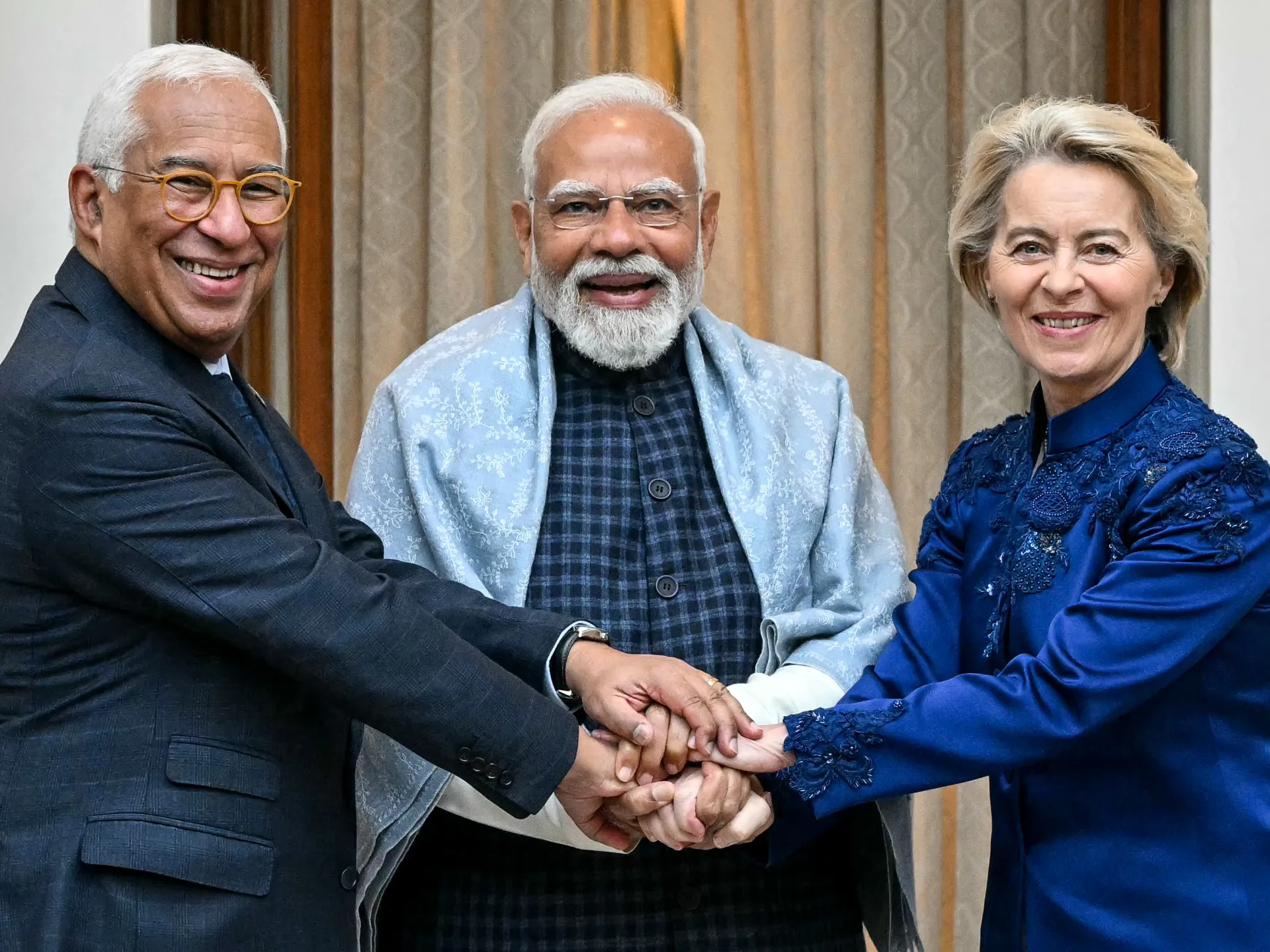
EU inks ‘mother of all trade deals’ with India amid global turmoil

After months of intense negotiations, the European Commission concluded on Tuesday a free-trade deal with India which sharply reduces tariffs on EU products from cars to wine as the world looks for alternative markets following President Donald Trump’s tariff hit.

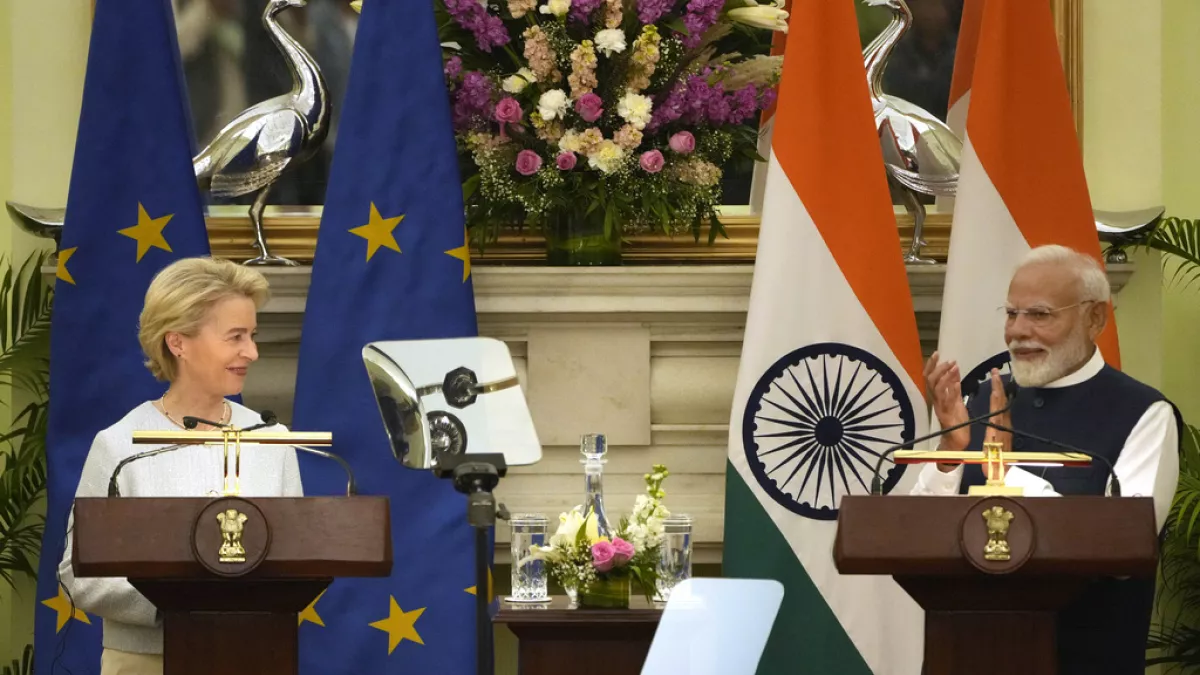
The announcement was made during a high-level visit by European authorities including Commission President Ursula von der Leyen. Both countries hailed a “new chapter in strategic relations” as the two looks for alternatives to the US market.

India is currently facing tariffs of 50% from the Trump administration, which has severely dented its exports. After sealing the Mercosur deal with Latin American countries earlier this month, the EU has said it aims to speed up its trade agenda with new partners.

“We did it – we delivered the mother of all deals,” von der Leyen said after the deal was announced. “This is the tale of two giants who choose partnership in a true win-win fashion. A strong message that cooperation is the best answer to global challenges.”

Talks went down to the wire with negotiators meeting over the weekend and in the early hours of Monday. The deal says it will bolster the “untapped” potential of their combined markets but did not include politically sensitive sectors such as agriculture.

The EU’s powerful trade chief Maroš Šefčovič, who in charge of negotiating on behalf of the 27 EU member states, said Brussels aims for a fast implementation by 2027.

In an interview with Euronews from Delhi after the deal was announced, Šefčovič said the India deal showcases the EU’s new approach when it comes to trade: more pragmatic on deliverables, rather than getting stuck on political red lines.

“We resumed negotiations with a new philosophy, being very clear in saying: if this is sensitive for you, let’s not touch it,” Šefčovič told Euronews, describing the strategy as a gamechanger.

A win for European exports looking to tap Indian market

Under the agreement, the EU aims to double goods exports to India by 2032 by cutting tariffs on approximately 96% of EU exports to the country, saving around €4 billion a year in duties. At its full potential, the deal creates a market of 2 billion people.

Europe’s carmakers emerge as beneficiaries, with Indian customs duties gradually reduced from 110% to 10% under a quota system. Tariffs in sectors including machinery, chemicals and pharmaceuticals will also be almost entirely eliminated.

Wine and spirits, key exports for countries like France, Italy and Spain, will see duties reduced from 150% to around 20 to 30%. Olive oil duties will be cut to zero from 40%.

After years of tensions with EU farmers, the Commission said sensitive agricultural products had been excluded from the agreement, leaving out beef, chicken, rice and sugar.

When it comes to India, the agreement keeps trade terms on dairy and grain untouched in line with the demands of the Indian authorities, which saw it as a red line.

The Commission, which negotiated the deal on behalf of the EU’s 27 member states, said it included a dedicated sustainable development chapter “which enhances environmental protection and addresses climate change.”

The agreement does not cover geographical indications, another contentious area for negotiators, which will be addressed in a separate deal aimed at protecting EU products from imitation on the Indian market.

Deal cut under pressure from Trump’s tariffs

The timing of the deal is important as the two sides look to de-risk their economies from the threat of Trump’s tariffs.

The EU saw tariffs triple to 15% last year under a contentious deal and India is currently operating under a 50% tariff regime from Washington.

The Trump administration slapped an additional 25% duty on India last year as punishment for buying Russian oil, which India has defended citing a need for cheap energy to power a country of 1.4 billion people.

Talks between the EU and India first began in 2007 but quickly ran into hurdles.

Negotiations were relaunched in 2022 and talks intensified last year as the two sought to cushion the impact of Trump’s return to the White House.

After the deal was signed during a two-day trip on Tuesday, in which the chiefs of the Commission and the European Council were guest of honour, the EU said the deal showcases that “rules-based cooperation” remains the preferred path for the bloc – and a growing number of partners from Latin America to India.

Before the deal can be implemented, the European Council and the European Parliament will have to ratify it, which can become an arduous process.

The Commission hopes to begin implementing the agreement from January 2027.

This story has been updated with comments by Commissioner Šefčovic to Euronews. Watch online and on television.

Source link

Beautiful ‘hidden gem’ is one of Britain’s ‘poshest villages’ with lovely cottages

A pretty English village looks like a postcard, but it’s also one of the UK’s most expensive

Tucked away in a tranquil corner of the Salcombe-Kingsbridge estuary lies a charming village that’s earned a reputation as one of Britain’s “poshest villages”. South Pool in Devon boasts picture-perfect cottages with thatched roofs, set against a backdrop of lush, verdant hillsides.

Those who’ve visited describe “glorious Devon countryside” as well as praising the unique free house pub located here. This diminutive village is home to around 150 residents, guaranteeing plenty of peace and tranquillity.

Yet property prices in this idyllic spot average around £410,000 based on the past year’s sales figures, according to Zoopla. The village recently secured its place among Britain’s 48 “poshest villages” in The Telegraph’s rankings. South Pool also featured in Condé Nast Traveller’s 2022 list of the UK’s 20 most stunning villages.

Despite its modest size, the village boasts rich heritage, with its historic buildings and meandering lanes “would befit any chocolate box or postcard”, according to local holiday lettings company Toad Hall Cottages. They’ve also dubbed the village one of the area’s “hidden gems”, reports the Express.

At the village’s highest point stands a Grade-I listed church, believed to have been built in 1318. There’s also the Millbrook Inn, a celebrated gastropub that’s accessible on foot, by car and, unusually, by boat.

Tucked away where land meets water, perched at the head of a tidal inlet on the Salcombe estuary, the Millbrook Inn bills itself as a “hidden haven” where visitors arriving by canoe, boat and even paddle board can stop off for a pint of local brew or a freshly prepared pub favourite.

A recent visitor to the much-loved pub reviewed their experience on TripAdvisor, writing: “A return visit for a spot of lunch at this wonderful freehouse village pub. Situated by the stream in the centre of South Pool, probably one of the prettiest villages deep in the glorious Devon countryside.

“A hearty soup of the day with crusty fresh bread and a decent amount of butter. Quality paper napkins. It’s the little things that count. Log fire, doggy friendly cosy bar area. “

The surrounding picturesque English countryside provides the perfect setting for this charming village and pub, with rolling fields and lush greenery stretching to the horizon. The panoramic vistas are especially breath-taking during summer when sunshine bathes the nearby hills in golden light.

Given its proximity to the tranquil backwaters of the South Hams, aquatic pursuits prove hugely popular locally, from guided canoe excursions to stand-up paddle boarding adventures. The settlement also offers convenient access to nearby coastal spots, such as Lancombe Beach, South Sands Beach and Salcombe North Sands.

Naturally, rural life comes with a hefty price tag. The Telegraph reports that some of the area’s priciest homes have changed hands for as much as “£844,429”.

Village life in this sought-after location commands a premium when buying a home in the vicinity, with the equally pricey Devon town of Salcombe neighbouring South Pool.

Several of the properties in these locations, once family homes not so long ago, are now listed as “secret getaways” on short lettings sites such as Airbnb.

Source link

Full list of airports that have scrapped the strict 100ml liquid rule after 20 years… and the ones that haven’t

AFTER 20 years of strict liquid rules, airports are finally starting to scrap them.

The rule, introduced back in 2006 after a foiled liquid explosive bombing at London Heathrow, has long caused problems for unaware travellers heading abroad.

London Heathrow is the fifth UK airport to scrap all 100ml liquid rules

However, new CT scanners are slowly being rolled out across the UK, which will eventually end the rules that require liquids to be under 100ml, and fit in a small plastic bag.

Earlier this week, London Heathrow became the latest to lift some of the rules.

Despite this, there is some confusion – some airports no longer require liquids to be taken out of the bag, but still be 100ml, while others now allow up to 2l.

So we’ve rounded up all of the airport rules to explain which ones have lifted which rules, as well as which are yet to.

PACK IT IN

Major UK airport introduces new liquid rules after £1billion upgrade


FLY AWAY

UK gets new flight route to world’s best airport – less than 4 hours from the UK

(And don’t forget to check the rules of your return airport too, as many across Europe still follow the 100ml guidelines).

London Heathrow

The UK’s busiest airport is the latest to scrap the requirement 100ml liquid requirement.

Following a £1billin upgrade, the new advance scanners have been rolled out across all four terminals.

Passengers can now carry liquids up to 2l through airport security, and can keep them in their bags.

London Gatwick

The 100m liquid rules were scrapped at London Gatwick Airport last year across both terminals.

Passengers can take liquids up to 2l in their hand luggage and can keep them in their bag when going through security.

Birmingham

Birmingham Airport also lifted the strict 100ml liquid rules last year back in July.

Up to 2 litres of liquid can be taken in hand luggage, with no need for plastic bags and can stay in hand luggage.

Bristol

Bristol Airport passengers can ditch the small 100ml bottles in favour of 2 litre bottles of liquids.

They can also be kept in bags when going through airport security.

Birmingham Airport scrapped the 100ml rule in July 2025Credit: Alamy

Edinburgh

The first Scottish airport to lift the rules, Edinburgh scrapped the 100ml liquid rule back in July 2025.

The new 2 litre rule now applies.

And the airports yet to lift the rules…

The below airports are yet to lift the strict 100ml restriction in favour of the 2 litre limit.

However, they have all scrapped the requirement for them to fit in a plastic bag, and they can all be kept in hand luggage at airport security.

  • London City
  • London Luton
  • London Stansted
  • London Southend
  • Manchester
  • East Midlands
  • Leeds Bradford
  • Liverpool John Lennon
  • Newcastle
  • Teeside
  • Norwich
  • Southampton
  • Bournemouth
  • Newquay
  • Cardiff
  • Aberdeen
  • Glasgow Internatinal and Glasgow Prestwick
  • Inverness

Here are some of the airlines that are banning passengers from using power banks onboard.

And here is all of the food and drink which is banned from being taken on flights.

Only five airport allow two litres of liquids through airport security in the UKCredit: Alamy

Source link

Mattias Ekholm and Oilers end the Ducks’ 7-game winning streak

Mattias Ekholm scored a hat trick and the Edmonton Oilers rode a dominant second period to a 7-4 victory over the Ducks on Monday.

Zach Hyman and Connor McDavid each added a goal and an assist for the Oilers, Spencer Stastney scored his first in an Edmonton jersey and Darnell Nurse also scored.

Leon Draisaitl contributed four assists and Tristan Jarry stopped 36 of the 40 shots he faced.

Three of the Ducks’ four goals came from Mikael Granlund on the power play, starting with his 10th tally of the season 3:24 into the game.

His linemate Alex Killorn added an even-strength tally 55 seconds into the second period, Beckett Sennecke notched two assists, and Ville Husso made 25 saves in the loss.

The result broke a seven-game win streak for the Ducks, who downed the Calgary Flames 4-3 in overtime on Sunday.

The Oilers got some fresh faces into the lineup with winger Kasperi Kapanen returning after missing three games with an injury and center Josh Samanski made his NHL debut.

Cutter Gauthier helped out on Granlund’s first goal of the night and extended his point streak to five games with three goals and four assists across the stretch.

Source link

South Korea to send delegation to U.S. after Trump’s tariff hike

SEOUL, Jan. 27 (UPI) — South Korea will dispatch a delegation of senior trade and industry officials to Washington after U.S. President Donald Trump announced a sharp increase in tariffs on Korean goods, the Ministry of Trade, Industry and Resources said Tuesday.

Trade Minister Yeo Han-koo and Industry Minister Kim Jung-kwan will travel to the United States to meet their counterparts for talks on the tariff hike, the ministry said in a press release.

The decision was made at an emergency interagency meeting chaired by presidential chief of staff for policy Kim Yong-beom, convened hours after Trump’s surprise announcement on social media.

Trump said he was raising his so-called “reciprocal” tariffs on South Korea from 15% to 25%, accusing Seoul’s National Assembly of failing to act quickly enough to implement a bilateral trade deal finalized late last year.

“South Korea’s Legislature is not living up to its Deal with the United States,” Trump wrote earlier Tuesday on his Truth Social platform.

He said the higher tariffs would apply to automobiles, lumber, pharmaceuticals and other goods covered by the agreement.

The legislation to implement the deal was submitted to the National Assembly by the ruling Democratic Party in November but has yet to be passed.

Kim, who is currently in Canada, will travel to Washington as soon as his schedule allows to meet with U.S. Commerce Secretary Howard Lutnick, according to the ministry. Yeo will depart from Seoul to hold talks with U.S. Trade Representative Jamieson Greer.

Trump and South Korean President Lee Jae Myung finalized trade negotiations on the sidelines of the Asia-Pacific Economic Cooperation forum in Gyeongju on Oct. 29.

The two sides released a fact sheet in November detailing the terms of the deal, under which Trump’s tariffs on South Korean goods, including automobiles, would be reduced from 25% to 15%.

In exchange for the lower tariffs, South Korea pledged to invest $350 billion in the United States, including $150 billion in the U.S. shipbuilding sector and $200 billion for strategic industries under a memorandum of understanding to be signed by the two governments.

The fact sheet also formalized Washington’s approval of Seoul’s long-sought plan to build nuclear-powered submarines, a capability South Korean officials have framed as part of broader industrial and security cooperation with the United States.

The tariff move comes amid a dispute involving a South Korean regulatory probe into Coupang, a U.S.-listed e-commerce company, following a large-scale data breach.

On Friday, South Korean Prime Minister Kim Min-seok said he addressed the matter directly in talks with U.S. Vice President JD Vance, stressing that American firms had not been unfairly targeted.

“I made it clear that there has been no discriminatory treatment against U.S. companies,” Kim told Korean correspondents in Washington, D.C.

Following Tuesday’s emergency meeting, South Korea’s presidential office said it would react “calmly” to the announced tariff increase.

“Since the tariff increase will only take effect after administrative procedures such as publication in the Federal Register, the Korean government plans to calmly respond while conveying its commitment to implementing the tariff agreement to the U.S. side,” presidential spokeswoman Kang Yu-jung said in a written briefing.

South Korean stocks initially fell on the tariff news, with the benchmark KOSPI dropping by 0.84% in the first 15 minutes of trading before reversing early losses to gain 2.73% and close at an all-time high of 5,084.85.

Source link

India, EU agree on ‘mother of all’ trade deals | International Trade News

India and the European Union have agreed on a huge trade deal creating a free trade zone of two ‌billion people, European ​Commission President Ursula ‍von der Leyen and Indian Prime Minister Narendra Modi have said.

In a post on X during her visit to New Delhi on Tuesday, von der Leyen said the two parties were “making history today”.

Recommended Stories

list of 4 itemsend of list

“We have concluded the mother of all ​deals. ‌We have created a free trade zone of two ‌billion people, with ‌both sides ⁠set to benefit,” she added.

Modi said the landmark agreement, following nearly two decades of on-and-off ​negotiations, had been reached, hailing its benefits before a meeting with von der Leyen and European Council President Antonio Costa.

“This deal will bring many opportunities for India’s 1.4 billion and many millions of people of the EU,” he said.

The deal will cover about 25 percent of the global gross domestic product (GDP), Modi said, adding that India will get a boost in sectors including textiles, gems and jewellery, and leather goods.

The trade pact comes amid a push by Brussels and New Delhi to open up new markets in the face of tariffs imposed by the United States and Chinese export controls.

It will pave the way for ‍India, the world’s most populous nation, to open up its huge, protected market to free trade with the 27-nation EU, its biggest trading partner.

The EU views India as an important market for the future, while New Delhi sees Europe as an important potential source of technology and investment.

The formal signing of the deal will take ‌place after legal vetting, expected to last five to six months, the Reuters news agency reported, quoting an Indian government official aware of the matter. The official said the deal was expected to be implemented within a year.

EU exports ‘expected to double’

The EU said it expected its exports to India to double by 2032 as a result of the deal.

Bilateral trade between India and the EU in goods has already grown by nearly 90 percent over the past decade, reaching 120 billion euros ($139bn) in 2024, according to EU figures. Trade in services accounts for a further 60 billion euros ($69bn), EU data shows.

Under the agreement, tariffs on 96.6 percent of EU goods exports to India would be eliminated or reduced, EU officials said. The deal would save up to 4 billion euros ($4.74bn) a year in duties on European products, officials said.

Among the products that would have tariffs all or mostly eliminated were machinery, chemicals and pharmaceuticals.

Tariffs on cars would gradually reduce to 10 percent with a quota of 250,000 vehicles a year, officials said, while EU service providers would gain privileged access to India in key areas such as financial and maritime services. Tariffs on EU aircraft and spacecraft would be eliminated for almost all products.

Tariffs would be cut to 20-30 percent on EU wine, 40 percent on spirits, and 50 percent on beer, while tariffs on fruit juices and processed food would be eliminated.

“The EU stands to gain the highest level of access ever granted to a trade partner in the traditionally protected Indian market,” von der Leyen said on Sunday. “We will gain a significant competitive advantage in key industrial and agri-good sectors.”

Last-minute talks on Monday had focused on several sticking points, including the impact of the EU’s carbon border tax on steel, sources familiar with the discussions told the AFP news agency.

Talks on the India-EU trade deal were launched in 2007, but for many years made little progress. However, Russia’s full-scale invasion of Ukraine led to the relaunch of talks in 2022, while United States President Donald Trump’s aggressive tariff policy spurred rapid progress in negotiations.

India and the EU also announced the launch of a security and defence partnership, similar to partnerships the EU has with Japan and South Korea, as von der Leyen said Brussels and New Delhi would grow their strategic partnership further.

The moves come as India, which has relied on Russia for key military hardware for decades, has tried to reduce its dependence on Moscow by diversifying imports and pushing its domestic manufacturing base, while Europe is doing the same with regard to Washington.

The EU-India deal comes days after Brussels signed a key pact with the South American bloc Mercosur, following deals last year with Indonesia, Mexico and Switzerland. During the same period, New Delhi ​finalised pacts with the United Kingdom, New Zealand and ‌Oman.

Source link

Ye, a.k.a. Kanye West, apologizes for antisemitic acts in WSJ ad

Ye, the provocative rapper formerly known as Kanye West, explains himself once again — this time in a full-page ad in Monday’s issue of the Wall Street Journal.

The Grammy-winning musician penned a lengthy apology in the advertisement, voicing regrets for his social media attacks on Jewish people and his public embracing of Nazism in recent years. He began his letter detailing injuries from a 2002 car accident, including a frontal-lobe injury he says led to his bipolar type-1 diagnosis. Ye wrote that, in the throes of the disorder, “I gravitated toward the most destructive symbol I could find, the swastika.”

He said: “I lost touch with reality. Things got worse the longer I ignored the problem. I said and did things I deeply regret.”

The “Power” and “I Love Kanye” musician, 48, has long had a history of stirring controversy, but notably began facing waves of scrutiny for embracing white supremacy, fawning over Adolf Hitler and threatening violence to Jewish people on social media in late 2022. Though his professional life seemed to take blows, West continued embracing Nazi symbolism in the following years, in 2025 selling a swastika-bearing T-shirt and releasing a single titled “Heil Hitler.” West had also allegedly told a former employee, who is Jewish, that he was a “Nazi” and compared himself to their leaderAdolf Hitler, according to a lawsuit filed last year.

“Some of the people I love the most, I treated the worst,” he continued. “You endured fear, confusion, humiliation, and the exhaustion of trying to love someone who was at times, unrecognizable. Looking back, I became detached from my true self.”

The musician said his disorder led him to moments of “poor judgment and reckless behavior,” some he said he can’t recall. The rapper said he is “committed to accountability, treatment, and meaningful change” and denied that he is “a Nazi or an antisemite.”

West also extended his apologies to the Black community, which he wrote is the “foundation of who I am.”

West (he legally changed his name to Ye in 2021) wrote that early last year he experienced a “four-month manic episode of psychotic, paranoid and impulsive behavior that destroyed my life.” He said there were moments during this episode when “I didn’t want to be here anymore.” West said after “hitting rock bottom” he began seeking help, with the encouragement of wife Bianca Censori. He said he also has since found solace in Reddit, where he said users shared their experiences with manic and depressive episodes.

West said he is moving forward with “much-needed clarity” reached by a routine of medication, therapy, exercise and “clean living.” He added that he is also focused on “positive, meaningful art” including music, clothing and other ventures “to help the world.” He said he is not seeking “sympathy, or a free pass,” but rather forgiveness and patience “as I find my way home.”

West previously opened up about his mental state last year, telling “The Download” podcast that he learned “it’s really a case of autism that I have.” At the time, he also told podcast host Justin Laboy that he had stopped taking his bipolar medication since learning it wasn’t the “right diagnosis.”

Days after his podcast interview, West fired off several antisemitic tweets that have since been deleted. In other posts, he also called for the release of Sean “Diddy” Combs amid the mogul’s sex trafficking case and declared his “dominion” over Censori. Following those posts, Ye returned to X (formerly Twitter) and thanked the app’s owner Elon Musk for giving him a platform.

“It has been very cathartic to use the world as a sounding board,” the rapper said at the time.

Source link

Six Nations 2026: Ireland target fast start after France loss last year left ‘sour taste’

Doris, who has made 23 Six Nations appearances, will lead Ireland out against a France side shorn of some high-profile players.

While fit-again captain Antoine Dupont is back, head coach Fabien Galthie opted not to select France’s all-time top try-scorer Damian Penaud, veteran centre Gael Fickou and back row Gregory Alldritt, who skippered the side in Dupont’s absence last year.

Having faced Alldritt on several occasions for both club and country, Doris admits he was surprised by the 28-year-old’s omission.

“If you look at the Top 14 week in, week out, there’s so many quality players at the top level, they’ve got an abundance of talent to choose from,” added Doris.

I was surprised Alldritt wasn’t in it. I obviously faced him and La Rochelle a few weeks ago. I rate him very highly but they’ve got quality across the back row and I’m sure [Anthony] Jelonch will represent the eight shirt very well.

“It’s always a big threat playing against France, especially away from home at a hostile place like Stade de France, so looking forward to it.”

Source link