Renee Good and Alex Pretti were shot and killed this month in Minnesota. Silverio Villegas González was shot and killed in September in a Chicago suburb. Keith Porter Jr. was gunned down on New Year’s Eve in front of the Northridge apartment building where he lived.
All of them were slain by ICE agents.
In the past few months alone, America has repeatedly witnessed — from multiple angles and at varying playback speeds — groups of aggressive, twitchy, masked men conduct immigration sweeps on the order of President Trump and his Department of Homeland Security. The scenes are the stuff of nightmares, and even villainy.
After agent Jonathan Ross shot legal observer Good three times, including once in the head, he mumbled the expletives “f— b—” as her SUV drifted into a light post. Two weeks later, at least one ICE agent was seen clapping after Pretti was shot multiple times as he lay pinned on the ground.
If the intention of the Stephen Miller-run White House was to crush the resistance with violence, it has backfired. The number of protests in cities around the nation has grown in size and frequency. And local networks that offer instruction and training for how to legally observe ICE raids are proliferating by the day. In short, as ICE has ramped up its operations, so too has the resistance.
Now, a consortium of various civil rights and advocacy groups is calling for the largest anti-ICE demonstration to date, a national shutdown. “The people of the Twin Cities have shown the way for the whole country — to stop ICE’s reign of terror, we need to SHUT IT DOWN,” reads nationalshutdown.org. “On Friday, January 30, join a nationwide day of no school, no work and no shopping.”
Given the sense of urgency triggered by the invasive and deadly tactics of federal officers over the past few months, Friday’s planned shutdown could be huge. But unlike other major demonstrations, like the “No Kings” marches, it asks folks to take off work, school and stop shopping (yes, even online) in the name of democracy.
Taking time off work is not economically feasible for many Americans, especially given today’s affordability crisis (a concept that Trump believes was invented by Democrats). With that in mind, it may not be the most effective way to show solidarity with Minneapolis, Chicago, L.A. and other cities where a trip to Home Depot might include getting caught in an immigration raid. But it might be the safest option in an otherwise dangerously heated time, when peaceful protests are ending in violent killings.
We’ve been here before, even if the current images of killer goons in mismatched military gear might seem foreign and dystopian. Peaceful Civil Rights-era marches and protests often turned into bloody, brutal and murderous affairs, fueled by inhumane law enforcement tactics and vigilantes operating with impunity. But the majority of Americans — i.e. those who weren’t Black — didn’t see folks who looked like them slain by government agents who also looked like them. The naive notion that America protects its own has remained largely intact, until the current administration declared that anyone who’s not with them is against them.
Today, Washington’s on-high interpretation of Us and Them equals those who are pro-Trump (Us) and those who are not (Them). There are, of course, plenty of racist and bigoted caveats within that lunk-headed quotient, but generally, one side is dispensable while the other is not.
The Trump administration has characterized Pretti, who was carrying a concealed, permitted weapon at the time of his killing, as a domestic terrorist who essentially got what he deserved: “You cannot bring a firearm loaded with multiple magazines to any sort of protest that you want. It is that simple,” said FBI Director Kash Patel.
But when then-17-year-old Kyle Rittenhouse shot three #BLM protesters, killing two, at a 2020 Kenosha, Wis., demonstration decrying police brutality, he was — and still is —canonized as a hero by Trump and the right.
Historical data shows that when 3.5% of a population is actively involved in peaceful, sustained resistance, they can influence significant political shifts. Those numbers likely don’t differentiate between who makes it out of the peaceful protest alive and who emerges as a martyr for the cause. But one shouldn’t have to choose between exercising their 1st Amendment rights and making it home alive.
A week’s hiking in Jotunheimen national park (230 miles north of Oslo) last summer brought me tranquillity and peace. During four days of challenging hiking and wild camping through the area we saw hardly anyone else, having entire lush green valleys and still glacial lakes to ourselves. We were fortunate to have stunning weather throughout and, despite it being July, still had a reasonable amount of snow to traverse. Norway has a fantastic network of signposted trails and huts which can be found on the Norwegian Trekking Association website. Ben
An arty cabin break near Aarhus
The Kunstmuseum’s walkway. Photograph: Wirestock/Alamy
We had an amazing family holiday on the Jutland coast neat Aarhus, Denmark’s second city. We stayed in a cabin among pine trees and swam every day. We found helpful swimming jetties, making it simple to get into the sea – they even have hooks for towels. The beaches were wild and so quiet we often had them to ourselves. For an urban fix, Aarhus was a joy to visit. The Aarhus Kunstmuseum is definitely worth checking out for contemporary art lovers, followed by lunch at Cafe Folkeven. Ben Dunne
Urban Scandi beauty in Stavanger
Gamle Stavanger –the city’s ‘old town’ Photograph: Andrey Khrobostov/Alamy
Stavanger, on the south-west coast of Norway, feels like the picture-perfect example of Scandinavian urban beauty. The city is welcoming, with quaint Gamle Stavanger (the old town) full of shops selling wool and cute bars serving up local beer (my favourite is bookshop cum bar Bøker og Børst). Head further south to Boresanden if you fancy braving the cold with a surf and follow up with a sauna. For further adventure, head east for Preikestolen for awe-inspiring views over the fjord. Finally, take the ferry to Flor og Fjære to wander round the tropical gardens (opens 9 May). Anisa
Profile
Readers’ tips: send a tip for a chance to win a £200 voucher for a Coolstays break
Show
Guardian Travel readers’ tips
Every week we ask our readers for recommendations from their travels. A selection of tips will be featured online and may appear in print. To enter the latest competition visit the readers’ tips homepage
–
Frozen lakes, coffee and a sauna in Finnish Lakeland
A cafe on the shore of Lake Vesijärvi. Photograph: David Borland/Alamy
In the south of Finnish Lakeland is Lahti, a town that feels a world away from Helsinki despite its excellent rail link to the capital. Lahti is full of charming little cafes and quiet, down-to-earth people, not to mention scenes straight from a fairytale. I spent a month studying here as a student nurse and was equally amazed by the Finnish approach to public health as I was by how comfortable -22C can feel. Between days on placement, I spent time going for long walks over the frozen Lake Vesijärvi (a truly surreal experience) before enjoying Finnish coffee culture at Kahvila Kariranta, a former railway station turned cafe. There’s lots of ice skating and cross-country skiing, or, if you’re looking to unwind, you’re never far from a sauna, which in Finland is viewed as a necessity not a luxury. Esther
A horse ride through Norwegian mountains
Rondane national park. Photograph: Norphoto/Alamy
Why hike when you can horse ride? To get off the tourist trail, we opted to explore Norway’s Rondane national park on smallish but strong dole horses (a Norwegian breed) last summer. The horses were gorgeous, incredibly patient – although I can ride, my friend had barely sat on a horse since riding ponies on the beach as a kid – and really sure-footed as they navigated the mountain paths. It was a brilliant way to get deeper into the countryside and take things at a slower pace, giving us plenty of time to take in the views and hear stories about the area from our guide. The holiday was organised by Gutsy Girls. Fliss
Island of sunshine in Denmark
Bornholm enjoys above average sunshine hours for the Baltic region. Photograph: Image Professionals /Alamy
Bornholm island is Danish, but set in the middle of the Baltic between Poland and Sweden. It has beaches of fine white sand and secluded coves – perfect in summer when the island enjoys sunnier weather than most of the surrounding region. History is everywhere, from one of the largest ruined medieval castles in Europe – Hammershus – to remnants of Soviet occupation in 1945-46 and distinctive circular churches. Fish smokeries offer herring, salmon and eel, while bakeries provide the best Danish pastries. Stay at one of Bornholm’s seaside hotels, enjoy the sunsets and you will never want to leave. Robert Gilchrist
Sweden’s wooden wonder
Nora is one of three ‘wooden towns’. Photograph: Mikdam/Getty Images
The lakeside town of Nora, 130 miles inland from Stockholm, is one of Sweden’s three “wooden towns” (along with Eksjö and Hjo), where all the buildings are made of timber from the surrounding forests. The town and its surrounding area have a timeless feel of a wealthy bygone age belonging to Nordic nobility. I strolled around Nora’s cobblestone streets and visited the perfectly preserved 19th-century villa Göthlinska Gården. I spent another afternoon in Glasstorget (Ice-Cream Square) to try the local ice-cream, Noraglass. On another day, I wandered around the streets of the Kvarteret Bryggeriet creative quarter – full of independent shops, eateries and with a fascinating microbrewery. The nearby lakes (Norasjön, Fåsjön and Usken) are gorgeous and great for swimming and picnics. Jo
Design gems near Copenhagen
The petrol station designed by Arne Jacobsen, with hints of the Starship Enterprise. Photograph: Niels Quist/Alamy
A great advantage in revisiting a city is venturing further afield, beyond the obvious tourist sights. Returning to Copenhagen, we went in search of one of its most famous architects, Arne Jacobsen, travelling just 6 miles outside the centre. At Bellevue Beach, Klampenborg, an area perfect for summer promenading, Jacobsen built an iconic theatre, a restaurant, the angular Søholm houses, and gleaming-white Bauhaus-influenced apartment buildings. But that’s not all – he even designed the local kiosks and blue-striped lifeguard towers. Twenty minutes stroll down the coast, there’s also a striking Jacobsen petrol station (now part ice-cream parlour) with oval-shaped canopy somewhat reminiscent of the Starship Enterprise. David M
Quietly thrilling Finnish design
‘Gentle colour palettes’ at the Paimio sanatorium
Visiting Alvar Aalto’s Paimio sanatorium is a quietly thrilling pilgrimage. Set among pine forests in south-west Finland, the building feels tuned to light, air and human dignity. Designed in the 1930s for tuberculosis patients, every detail tells a story: gentle colour palettes to soothe minds, silent sinks to aid rest, chairs shaped for easier breathing. Walking its corridors offers deep insight into Finnish culture – pragmatic, compassionate, nature-led. History lingers in patient rooms and sun balconies, yet the place feels timelessly modern. For design lovers and curious travellers alike, it’s an energising, moving visit, worth seeking out on any trip. Stephen Edwards
Winning tip: explore Oslo’s diverse islands
Small houses close to Oslo on Bleikøya island. Photograph: zkk600/Getty Images
Spend a blissful summer day island-hopping in the inner Oslofjord. The five islands closest to the capital are all easily accessible by regular ferries, and each has its own personality. Langøyene has a broad sandy beach (and a separate nudist option if you like), Hovedøya has the ruins of an 1147 Cistercian monastery (founded by monks from Lincolnshire) and Bleikøya is dotted with colourful Nordic summerhouses. Using the Ruter app will give you 24 hours’ travel for about £10. Budget a bit more if you’d like a drink from the 1930s cafe on the island of Gressholmen. Pack a swimming costume and a picnic basket and marvel in the variety so close to the capital. Olivia
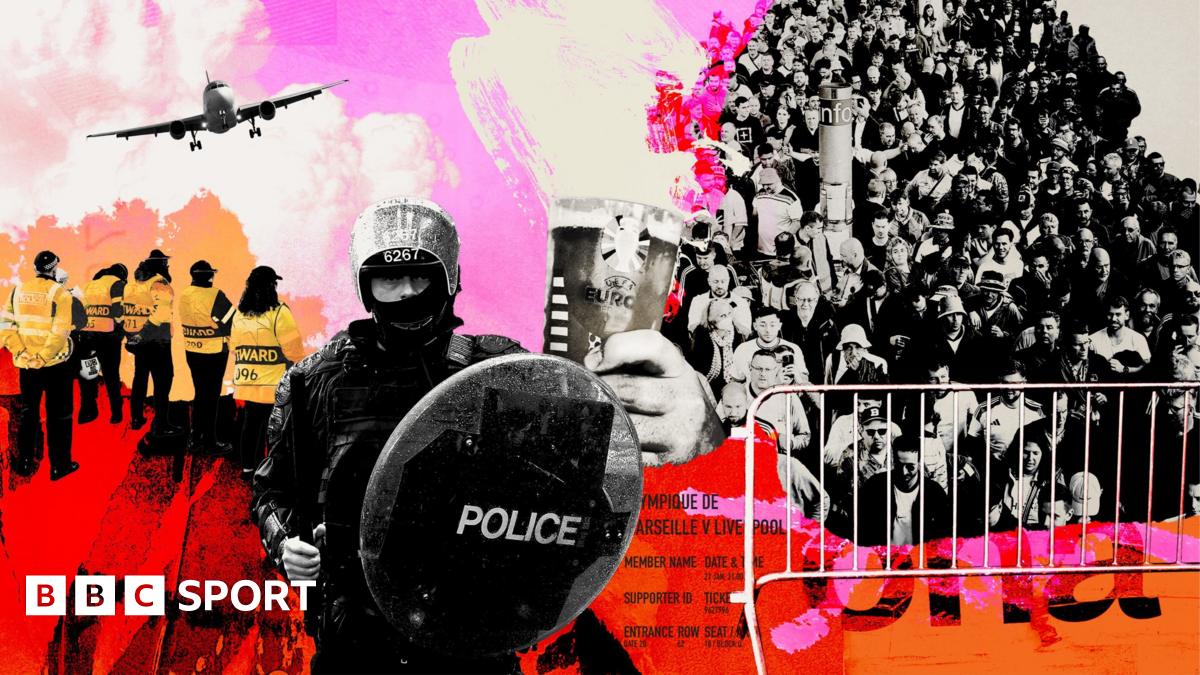
“The cage was locked for most of the match, and I was the furthest one along – I couldn’t get out to use the toilet until half time and I don’t know what I would have done if there was a fire or something. I felt quite claustrophobic. It was unsettling.
“My personal assistant was separated from me, outside the cage, and I was worried about my phone dying in an emergency because I wasn’t allowed to take a power bank in.
“I know in theory the cage is for our safety from home fans, getting to and from the stadium was efficient, and the police and stewards were very friendly, but it’s 2026 – there has to be a better way than this.”
Jane Boland, 61, Liverpool fan in Marseille, France: “The riot police made entering and exiting the stadium really hard work. After being told to arrive at a designated meeting point more than four hours before kick off, we were held in overcrowded areas and made to wait for ages, sometimes with difficult or no toilet access.
“Leaving the stadium took over two hours after full time – by far the longest I’ve ever experienced. We were stood packed on stairwells for what felt like forever, and I had awful back pain afterwards. I understand that someone passed out and needed medical attention, and in retrospect I’m surprised it was only one.
“After two days of everything being great and nothing but friendly interaction between the two sets of fans, we were treated like cattle.
“I probably spent about £1000 on the trip, most of that in Marseille itself, so it smarts to be treated so badly as a ‘customer’.”
Sue Fox, 68, Spurs fan in Frankfurt, Germany: “Transport was pretty efficient, overall. The meeting point was well organised and the police gave clear instructions.
“Then we took a train and they marched us through a very dark, muddy forest for about half an hour. When we arrived at the ground the gates were locked so we had to queue for an hour, and we were all packed very close together. It was uncomfortable and inappropriate.
“The men were able to go to the toilet in the bushes, but what were we supposed to do? It was nearly two hours without being able to go.
“Inside, the only women’s toilet was in the home end, so we had to use the one there, which felt wrong and had the potential to be unsafe.”
A bowl of leftover pap saved Audu Gimba* from being abducted, but his wife, children, and relatives were not as fortunate.
On Jan. 18, Audu’s family found their way to the Cherubim & Seraphim (C&S) Movement Church, Number 2, Kurmin Wali, Kaduna State, northwestern Nigeria, like they do every Sunday morning. Around 10:30 a.m., warning cries interrupted their service.
Terrorists had surrounded Kurmin Wali from all angles, unleashing their horrors on the worshippers of C & S 1 and 2 and the Evangelical Church Winning All (ECWA) Church in the same community. They would later make away with 177 people in total, according to Audu and some media reports.
“We tried to run out but discovered we were surrounded. Even if you run, they chase you down,” he recalled the horrors of that morning. He said the terrorists were also collecting phones and cash from the victims. Before they got to him, he threw his phone into the bushes, planning to retrieve it after he escaped.
The terrorists divided the captives into batches, with Audu and four others placed at the front.
“As we were walking, I saw one of my brothers being beaten by the terrorists. They demanded that he get them food from his house. He told them he only had leftover pap, and when he brought it to them, their attention shifted to it, including the terrorists holding us hostage. When I noticed that, I used that opportunity to run and hide, but the rest were taken into the forest,” he told HumAngle.
From his hiding spot, Audu watched as the terrorists brought out the remaining church members who had been hiding, made them lie on the ground, and then herded them into the forest.
“The terrorists were holding guns, which were similar to the ones soldiers use,” he told HumAngle. “All of them had weapons. They came out through three angles; even if you run, you will run into them from all angles.” Although no one was shot, the presence of the firearms and the terrorists’ known ruthlessness were enough to force the villagers into submission. They wore no masks, and the survivors who spoke to HumAngle said they did not recognise them as familiar faces.
They came in through the forest and returned through the same path, this time with unwilling villagers, leaving behind a trail of fear and heartbreak.
Illustration: Akila Jibrin/HumAngle
“My in-laws and two other women were heavily pregnant. My second wife and another in-law had daughters under two years old. My daughter was one year and two months old, and my three sons and their wives were all taken away into the forest. The children are not even old enough to walk on their own,” his voice cracked as he named his losses.
He admitted that revisiting the events of that day makes him want to break down and cry.
It wasn’t just his losses, he said, but also the reaction of the military, those meant to protect them, that further pushed him into despair.
“The day the soldiers arrived, we told them the path they followed. When one of my brothers insisted on showing them the way, one of the soldiers even threatened to slap him. I don’t think any soldiers walked for 10 minutes between the village and the forest. They just stood there watching us,” he lamented.
Security officials first dismissed the attack as a falsehood spread to cause chaos, only to later confirm it. The Kaduna State Governor, Uba Sani, said the reason for the denial was “to confirm details first before making any statements”.
“We need help,” Audu cried. “We don’t have anything to do unless the government helps us. What can I possibly do to help them come out? It’s just my wife and me; they have taken everyone else away.”
A recurring problem
For the people of Kurmin Wali, this is not the first of such attacks. Eight days earlier, on Jan. 11, another mass abduction of about 21 people occurred. The people were released four days later, only after a ransom of ₦2.6 million was paid, according to another villager, Moses Noma*.
Attacks on the village remain largely underreported. Online searches for Kurmin Wali mostly return reports of the most recent abduction, belatedly drawing attention to yet another community Nigeria has failed to protect.
Moses escaped the latest attack, but his family had been directly affected by the previous one. The incident occurred at night.
“They entered my house and my brother’s house,” he recounted. “Twelve people from my family were kidnapped. I barely escaped with my wife. When I returned, I heard my mum crying. She had been badly beaten with metal and was injured. I picked her up along with my injured uncle and took them to the hospital.”
When Moses arrived, his mother was in a pool of her blood. He thinks the kidnappers must have assumed she died due to how badly she was bleeding. Even when he heard her cries, he hid until he was sure the terrorists had gone before he went to her side. Fortunately, her injuries were treatable, and she was able to return to her family.
Get our in-depth, creative coverage of conflict and development delivered to you every weekend.
Subscribe now to our newsletter!
Usually, when attacks like this occur, residents say they report them to military personnel stationed along nearby roads. However, soldiers often arrive late, if at all, and little is done until kidnappers demand ransom and eventually release victims on their own. In some cases, soldiers show up a day after the attack, claiming they did not receive permission to respond earlier, residents said.
“Even as we speak, we are currently patrolling the streets because no security forces have been dispatched,” the 30-year-old man explained a week after the attack, despite the governor’s visit four days earlier.
According to Moses, the village has been under constant threats and attacks for about three years. “Even in February last year, they came and kidnapped people,” he noted.
After such attacks, some residents flee to other parts of Kaduna, such as Marraraban Kajuru, Kasuwan Magani, and neighbouring towns, and return after some time. Moses, like others, usually finds his way back home, but the terror never stops.
Government intervention?
James Kura* says it was the stars that guided him home that night.
“We were in church. We stationed some people outside to ensure security. When they saw them coming, they raised an alarm. We ran out, but soon discovered they had circled us. They put us together and collected all our money and phones in front of the church. Then they started to march us into the forest,” he narrated.
Illustration: Akila Jibrin/HumAngle
At one point, the terrorists stopped and started to beat them heavily with sticks before continuing with the march. James was injured during the assault.
They later arrived at Sabon Gida, a nearby village that has been deserted due to the constant terror attacks, one of the many ghost communities in Kaduna State. Some captives managed to escape there. But it was much later that James found the chance.
“I noticed I was lagging behind and the kidnappers were distracted, so I used that opportunity to hide somewhere in the bushes until they left. I started to walk into the forest and eventually found my way home by following the stars,” he recalled. James got home around 9 p.m. that night.
Despite his escape, many of his relatives and friends remain in captivity.
James and ten other escapees were taken to Barau Dikko Teaching Hospital in Kaduna town on Jan. 23, following the governor’s visit. Before then, James had tried to treat his injuries at a chemist’s shop in the village.
The hospital’s Chief Medical Director, Abdulqadir Musa, said the victims would receive maximum care and attention and would “leave the hospital smiling”.
Even so, this was not the first time James had been kidnapped. In 2021, he was abducted from his home and held captive for days, and the horrors of that experience fueled his determination to escape repeating it.
“They demanded a ransom of ₦1 million then, and they demanded other items like phones, which amounted to almost ₦200,000 extra,” he recalled.
Although the current ransom demand has not been formally communicated, James told HumAngle that the kidnappers are demanding 17 motorcycles, which they claimed were left behind after the attack. Residents say only three were found, some of them already stripped of parts such as headlights.
A separate report corroborates James’ account, adding that ₦250 million and three more motorcycles, bringing the total to 20, have been demanded by the terrorists.
For a community already struggling to survive, residents say such demands are difficult to meet. The Kaduna State government has said it will work with security operatives to ensure the victims are rescued unhurt.
“We have been collaborating with the relevant security agencies, both the military, the DSS, the police, and the Office of National Security Adviser, to ensure the quick return and recovery of our people that were abducted in this very important community,’’ Uba Sani said during his visit to Kurmin Wali.
The fear of the future
Survivors like James are worried and concerned about their future security, the fate of their loved ones who are still in captivity, and the ransoms they may be forced to pay.
Nigeria has criminalised ransom payments, with violators facing at least 15 years in prison. Yet kidnapping continues to surge nationwide, with few successful rescue operations, leaving families with little choice.
On social media, people, including former top government officials, have crowdfunded for ransom. About ₦2.23 trillion in ransom payments was made between May 2023 and April 2024 in Nigeria, according to the National Bureau of Statistics.
“When the governor visited, he promised he would bring us security. The government is taking care of our hospital bills and feeding. But in addition to that, the most important thing we need now is financial support because we know we would have to pay ransom,” he added.
As for tightened security in the village, Audu said some military officials were stationed in front of their church during their morning service on Jan. 25. However, they are unaware of any action or movement to retrieve their loved ones, whose situation remains unknown.
*Names marked with an asterisk are pseudonyms we’ve used to protect the identities of those interviewed.
Bruce Springsteen released a new protest song Wednesday condemning “King Trump” and the violence perpetrated by his “federal thugs” — referring to immigration officers — in Minnesota.
“I wrote this song on Saturday, recorded it yesterday and released it to you today in response to the state terror being visited on the city of Minneapolis,” Springsteen wrote on his social media platforms, sharing his new song, “Streets of Minneapolis.” “It’s dedicated to the people of Minneapolis, our innocent immigrant neighbors and in memory of Alex Pretti and Renee Good.”
Good, a 37-year-old mother of three, was shot multiple times and killed by a U.S. Immigration and Customs Enforcement officer during an immigration raid on Jan. 7. Pretti, a 37-year-old ICU nurse at a VA hospital who had protested President Trump’s immigration crackdown and Good’s killing, was shot and killed by ICE agents on Jan. 24.
Both Minnesotans are memorialized by name in Springsteen’s new rock song, which describes the immigration crackdowns and the protests by those who live there. His scathing lyrics also denounce Trump advisor Stephen Miller and Homeland Security Secretary Kristi Noem for their statements following the killings, which were contradicted by eyewitness accounts and video.
“Their claim was self-defense, sir / Just don’t believe your eyes,” Springsteen sings with his familiar rasp. “It’s our blood and bones / And these whistles and phones / Against Miller and Noem’s dirty lies.”
Both Miller and Noem justified the shootings in the immediate aftermath. Miller called Pretti “a would-be assassin,” and Noem accused Good of committing “an act of domestic terrorism.” Videos later surfaced contradicting their statements.
Springsteen, who has long been an outspoken critic of President Trump, also calls out immigration officials for their racism and for claiming “they’re here to uphold the law” yet “trample on our rights” in his new song.
In a statement to the New York Times, White House spokesperson Abigail Jackson said that “the Trump administration is focused on encouraging state and local Democrats to work with federal law enforcement officers on removing dangerous criminal illegal aliens from their communities — not random songs with irrelevant opinions and inaccurate information.”
Multiple celebrities, including Olivia Rodrigo, Pedro Pascal, Billie Eilish and Hannah Einbinder, have also spoken out against ICE and the immigration crackdowns in Minneapolis.
Gold has risen more than 20% since the start of the year, surpassing the significant $5,500 milestone this week.
The precious metal’s rally, seen alongside a lift in commodities such as silver and platinum, is driven by a number of interlinking factors — including geopolitical tensions, rising government debt, and an uncertain outlook for interest rates and inflation.
Gold’s appeal is linked to the narrative that it is a safe haven asset, acting as a “hedge against inflation”. It typically increases in value when the dollar declines, it’s easily sold, and it’s also a tangible, finite commodity.
These factors are significant at a time when questions are being raised about the dollar, as well as fiat currencies like the Japanese yen. As government debt rises, so do fears around inflation and fiscal stability.
In the US, incendiary policies from the Trump administration are increasing market jitters around the health of the economy, prompting what some analysts view as a “sell America” trade. In recent weeks, the president has threatened to conquer Greenland, hinted at US intervention in Iran, sought to influence policy at the Federal Reserve, and launched an attack on Venezuela. To top that off, he’s also threatened more tariffs on trading partners, bringing back a well-worn tactic from 2025.
Although analysts argue that the dollar will not be unseated as the world’s reserve currency anytime soon, it seems investors are diversifying away from the greenback. The US’ next moves remain uncertain, and no one wants to be caught in the crosshairs. As an alternative to fiat currencies, gold may seem like a strong portfolio option.
“Investors previously bought US Treasuries as they were viewed as being quite risk-free. But especially because of the way that some wealth has been weaponised, certain countries are becoming more careful about how they allocate their capital,” said Simon Popple, managing director at Brookville Capital. “The dollar debasement helps the gold price,” he told Euronews.
Even so, Popple and other analysts stress that a major factor lifting the bullion price is far less complicated. As gold continues to make headlines, investors are caught up in the momentum, sparking a buying frenzy.
“People are naturally drawn to things they see moving and they’ve seen gold have an astonishing rally,” said Chris Beauchamp, chief market analyst at IG. “It’s bound to lead to an ignition of interest.”
He added that while gold has beneficial investment properties, the metal’s ability to hold its value is overstated, particularly in the short term. Gold’s position in the market notably shifted after former US president Richard Nixon decided to end direct dollar convertibility to gold in 1971. Put simply, countries no longer fixed their currencies to a specified amount of the precious metal.
“The gold standard is still invoked to suggest the metal is some kind of totemic asset we should have because it’s a fixed store of value. It’s not,” concluded Beauchamp.
Kenneth Lamont, a principal in Morningstar’s Manager Research Department, reiterated this message, also drawing comparisons between gold and crypto. While both are limited in supply, they are both “incredibly volatile”, he stressed.
“If you’re using either crypto or gold to buy something, it might be 30% less from one day to the next. It’s not actually a good store of value in the short term.”
While gold is much more established than bitcoin, and it has historically performed well over the long term, analysts stress that the unpredictability of both assets means the death knell is not yet ringing for fiat currencies.
Whether bullion’s price will continue to climb in the immediate future is a guessing game. Even so, given the precarious nature of global politics, it seems the metal may still have further to run.
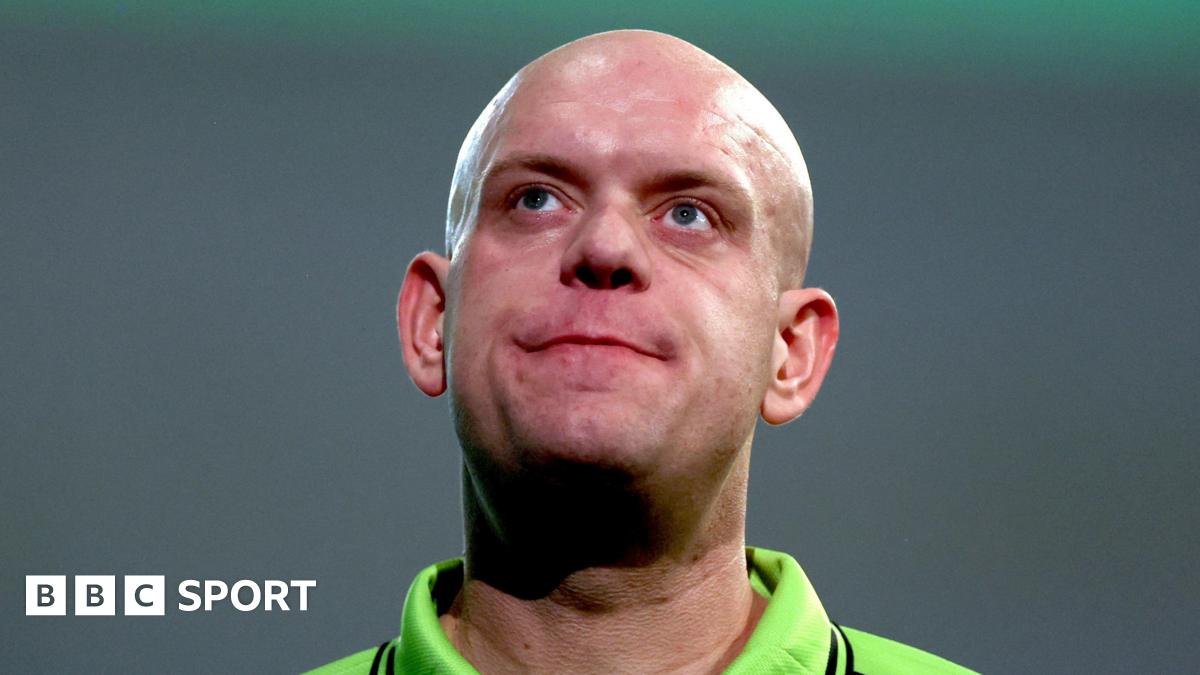
Three-time world champion Michael van Gerwen was knocked out by Damon Heta on the opening night of the World Masters in Milton Keynes.
The 36-year-old Dutchman – who won the Masters five times in a row between 2015 and 2019 – lost 3-1 to Australian number one Heta, who checked out 101 to seal his victory.
World Championship runner-up Gian van Veen was solid on his Masters debut, progressing 3-1 past Ryan Joyce despite losing the first set, while former world champion Gerwyn Price racked up a three-dart average of 108.51 to defeat in-form James Hurrell.
Jonny Clayton – last year’s beaten Masters finalist – saw off Wessel Nijman 3-1, with Nathan Aspinall defeating Shane McGuirk by the same scoreline.
Defending Masters champion Luke Humphries and world champion Luke Littler – the world number one – both enter the tournament on Friday.
Jan. 30 (UPI) — President Donald Trump on Thursday night said he was decertifying all Canada-made aircraft and threatened a 50% tariff on all planes sold to the United States, further deepening the fissure in U.S.-Canada relations created under Trump’s second term in office.
Trump made the threat in a post on his Truth Social platform, stating the threat was in response to Canada’s alleged refusal to certify several Gulfstream jet series.
“We are hereby decertifying their Bombardier Global Expresses and all Aircraft made in Canada, until such time as Gulfstream, a Great American Company, is fully certified, as it should have been many years ago,” Trump said.
“Further, Canada is effectively prohibiting the sale of Gulfstream products in Canada through this very same certification process. If, for any reason, this situation is not immediately corrected, I am going to charge Canada a 50% Tariff on any and all Aircraft sold in the United States of America.”
By law, aircraft certification, which includes safety and airworthiness determinations, is governed by the Federal Aviation Administration, and it was not clear if the president has the power to decertify already approved aircraft by presidential action.
UPI contacted the FAA for clarification and was directed to speak with the White House, which has yet to respond to questions about decertification and its process.
Bombardier, the Montreal-based aerospace company, said it has “taken note” of Trump’s social media post and is in contact with the Canadian government.
“Our aircraft, facilities and technicians are fully certified to FAA standards and renowned around the world,” Bombardier said in a statement.
Bombardier said it employs more than 3,000 people across nine facilities in the United States and creates “thousands of jobs” there through its 2,800 suppliers. It said it is also “actively investing” in expanding its U.S. operations.
Relations between the United States and Canada have precipitously dropped since Trump returned to the White House in January 2025.
Trump’s threats to annex Canada, impose unilateral tariffs and take Greenland — territory of a NATO ally — by force if needed has prompted Ottawa to pivot toward Europe and Asia.
The announcement comes on the heels of reports stating that the Trump administration has been in talks with the Alberta Prosperity Project separatist organization.
According to The Financial Times, the first to report on the development Thursday, separatist leaders in the western Canadian province met with U.S. officials in Washington three times since spring.
The APP has said that its leadership has taken “several strategic trips” to Washington, D.C., to foster discussions on Alberta’s potential as an independent nation.
Jeffry Rath, a separatist supporter who participated in the talks, said U.S. officials are “very enthusiastic about Alberta becoming an independent country,” according to the APP.
The meetings were swiftly and widely condemned in Canada.
“I expect the U.S. administration to respect Canadian sovereignty,” Prime Minister Mark Carney of Canada told reporters on Thursday.
“I’m always clear in my conversations with President Trump to that effect, and then move on to what we can do together.”
Premier David Eby of British Columbia called the meetings “treasonous activity.”
“I’m not talking about debates that we have inside the country among Canadians, about how we order ourselves, our relationships between the federal government, the provinces, referenda that might be held. I’m talking about crossing the border, soliciting the assistance of a foreign government to break up this country,” Eby said during the same press conference.
Ukraine’s Zelenskyy welcomed possible one-week pause after Russian attacks left homes with no heat in plummeting temperatures.
Published On 30 Jan 202630 Jan 2026
Share
Ukrainian President Volodymyr Zelenskyy has welcomed United States President Donald Trump’s announcement that Russia will not attack Kyiv and “various” Ukrainian towns for seven days as civilians struggle with a lack of heating amid freezing winter temperatures.
In a post on social media on Thursday, Zelenskyy said that Trump’s comments earlier in the day were an “important statement” about “the possibility of providing security for Kyiv and other Ukrainian cities during this extreme winter period”.
Recommended Stories
list of 4 itemsend of list
Zelenskyy said that the pause in bombing had been discussed by negotiators during recent ceasefire talks in the United Arab Emirates, and that they “expect the agreements to be implemented”.
“De-escalation steps contribute to real progress toward ending the war,” the Ukrainian leader added.
Trump said earlier on Thursday that Russian President Vladimir Putin had agreed to his request not to fire on Ukraine’s capital Kyiv for a week due to severely low temperatures.
“I personally asked President Putin not to fire into Kyiv and various towns for a week, and he agreed to do that,” Trump said at a cabinet meeting, citing the “extraordinary cold” in the region.
The announcements came as Kyiv Mayor Vitali Klitschko said on the Telegram messaging app on Thursday that 454 residential buildings remain without heating in the city, as the Ukrainian capital struggles to restore power to homes following repeated Russian bombings targeting power and heating infrastructure in recent weeks.
Temperatures are forecast to drop to -23 degrees Celsius (-9.4 degrees Fahrenheit) overnight in the Ukrainian capital this week.
Russia’s capital Moscow has experienced its heaviest snowfall in 200 years during the month of January, the meteorological observatory of Lomonosov Moscow State University said on Thursday, according to Russia’s state TASS news agency.
Russia and Ukraine also exchanged the bodies of soldiers killed in the war on Thursday, officials from both countries confirmed.
Similar exchanges have been agreed to during previous rounds of ceasefire talks. However, a breakthrough on ending Russia’s nearly four-year war on Ukraine has remained elusive.
Russian Foreign Minister Sergey Lavrov continued to pour cold water on ceasefire prospects on Thursday, saying that Moscow had yet to see a 20-point ceasefire plan that he said had been “reworked” by Ukraine and its allies.
Russia’s top diplomat also claimed that Ukraine had used brief pauses in fighting to “push” people to the front lines, according to TASS.
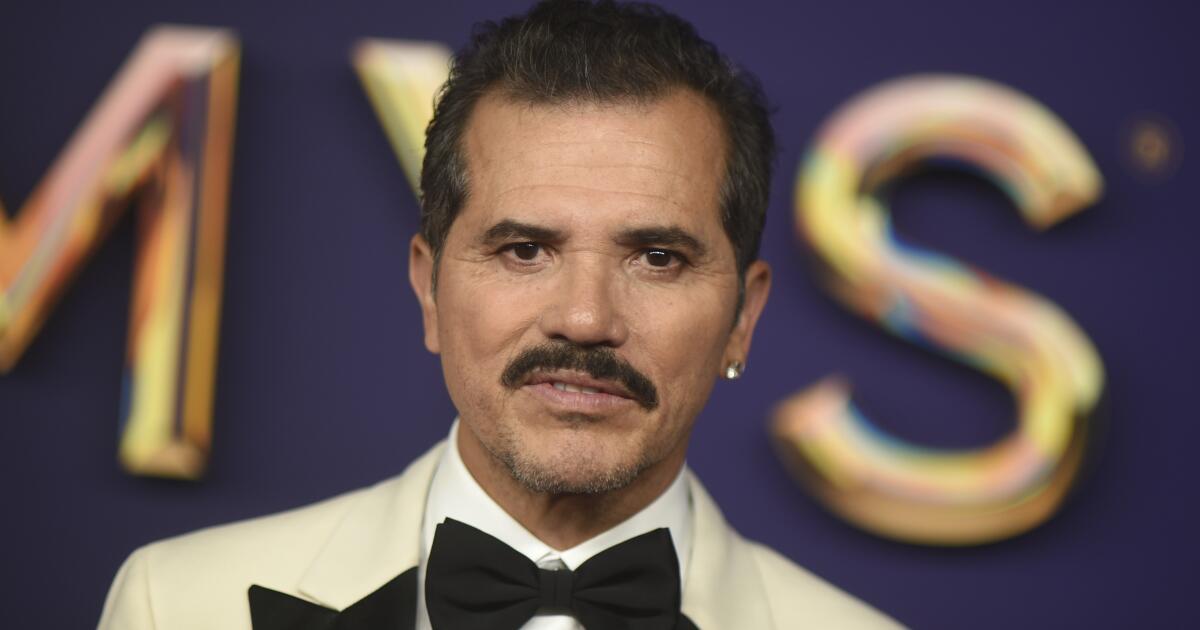
Actor John Leguizamo, a longtime vocal critic of President Trump and his administration, says he’s showing a section of his social media following the door amid the federal government’s relentless crackdown on immigration.
The “Romeo + Juliet” and “Moulin Rouge!” acting veteran, who is Latino, on Wednesday issued a brief and blunt Instagram video message to followers who also support the immigration agency. “If you follow ICE, unfollow me,” he said in his post.
“Don’t come to my shows, don’t watch my movies,” he added. Leguizamo, an Emmy winner, captioned his post: “Abolish ice!”
The actor-comedian, also known for the “Ice Age” films and cult classic “To Wong Foo, Thanks for Everything! Julie Newmar,” is among the Hollywood stars vehemently speaking out against U.S. Immigration and Customs Enforcement and other federal agents amid recent killings. An ICE agent fatally shot Renee Good earlier this month in Minneapolis, where Border Patrol agents on Jan. 24 shot and killed Alex Pretti. An off-duty federal immigration agent fatally shot Keith Porter Jr. in Northridge on Dec. 31. They are among the 20-plus people who have died in a wave of aggressive immigration operations launched by the Trump administration last year.
Fellow actors also using social media to speak out against ICE and other federal immigration agents are Pedro Pascal, Mark Ruffalo and Ayo Edebiri. Musicians including Olivia Rodrigo, Bruce Springsteen, Lady Gaga, Katy Perry, Billie Eilishand Tyler, the Creator have also condemned federal officers.
White House border policy advisor Tom Homan said Thursday during a press conference that street operations in Minneapolis would wind down if agents were allowed into local jails instead and asserted the federal government was not backing down on its aggressive immigration agenda.
“We are not surrendering our mission at all,” he said. “We are not surrendering the president’s mission of immigration enforcement: Let’s make that clear.”
Staff writers Malia Mendez and Jenny Jarvie contributed to this report.
The schism between Democratic environmental ideals and California voters’ anxiety about affordability, notably gas prices, were on full display during an environmental policy forum among some of the state’s top Democratic candidates for governor on Wednesday.
The Democrats questioned the economic impact Californians could face because of Gov. Gavin Newsom’s goal to have the state transition to zero-emission vehicles, a policy that would ban the sale of new gas-powered cars and trucks by 2035. The Trump administration has attempted to negate the policy by canceling federal tax credits for the purchase of such vehicles along with invalidating California’s strict emission standards.
“It’s absolutely true that it’s not affordable today for many people to choose” an electric vehicle, said former Rep. Katie Porter of Irvine. “It’s the fact that, particularly with expiring federal subsidies and the cuts that [President] Trump has made, an electric vehicle often costs $8,000 or $10,000 more. If we want people to choose EVs, we have to close that gap.”
Both Porter and rival Democratic candidate Xavier Becerra, who served as Health and Human Services secretary under former President Biden, said that as governor they would focus on making low-emission vehicles more affordable and practical. Porter said the cost of buying a zero-emission car needs to be comparable with those that run on gas, and Becerra said California needs to have enough charging stations so drivers “don’t have to worry can they get to their destination.”
“We know our future is in clean energy and in making our environment as clean as possible,” Becerra said. “We’ve got to make it affordable for families.”
Porter and Becerra joined two other Democrats in the 2026 California governor’s race — former hedge fund founder turned environmental advocate Tom Steyer and Rep. Eric Swalwell of Dublin — at the Pasadena event hosted by California Environmental Voters, UC Berkeley’s Center for Law, Energy & the Environment, the Climate Center Action Fund and the Natural Resources Defense Council Action Fund. The Democrats largely agreed about issues such as combating climate change, accelerating the transition to clean energy and protecting California’s water resources.
The coalition invited the six candidates with greatest support in recent public opinion polls. Republicans Chad Bianco, the Riverside County sheriff, and Steve Hilton, a former Fox News commentator, did not respond to an invitation to participate in the forum, which was moderated by Sammy Roth, the writer of Climate-Colored Goggles on Substack, and Louise Bedsworth, executive director of the UC Berkeley center.
Newsom, who has acknowledged that he is considering a run for president in 2028, is serving the final year of his second term as governor and is barred from running again.
The state’s high cost of living, including high gas prices, continues to be a political vulnerability for Democrats who support California’s progressive environmental agenda.
In another controversial issue facing the state, most of the Democratic candidates on Wednesday distanced themselves from the Sacramento-San Joaquin River Delta tunnel, a massive and controversial proposal to move water to Southern California and the Central Valley. Though it has seen various iterations, the concept dates back to Gov. Jerry Brown’s first foray as California governor more than four decades ago.
Despite Newsom’s efforts to fast-track the project, it has been stalled by environmental reviews and lawsuits. It hit another legal hurdle this month when a state appeals court rejected the state’s plan to finance the 45-mile tunnel.
Swalwell, Porter and Steyer argued that there are faster and less expensive ways to collect and deliver water to thirsty parts of California.
“We have to move much faster than the Delta tunnel could ever move in terms of solving our water problems,” Steyer said, adding that data and technology could be deployed to more efficiently deliver water to farms.
Swalwell said he does not support the project “as it’s designed now” and proposed covering “400 miles of aqueducts” with solar panels.
During Wednesday’s forum, Becerra also committed a gaffe as he discussed rooftop solar programs for Californians with a word that some consider a slur about Jewish people.
“We need to go after the shysters,” Becerra said. “We know that there are people who go out there to swindle families as they talk about rooftop solar, so we have to make sure that that doesn’t happen so they get the benefit of solar.”
The term is not viewed as derogatory as other antisemitic slurs and was routinely used in past decades, a spokesperson for the Becerra campaign noted after the event.
“Secretary Becerra never knew this word to be offensive and certainly he meant no disrespect to anyone,” said a campaign spokesperson. “He was talking about protecting the hardest-working and lowest-paid Californians who are often taken advantage of by unscrupulous actors.”
After a remarkable night of drama in the Champions League on Wednesday, it’s fair to say Thursday night was a more low-key affair in the Europa League as far as qualification for the play-off round was concerned.
Of the 16 teams that occupied positions nine to 24 before a ball was kicked, 14 of them sealed a place in the play-offs when the full-time whistles sounded out across the continent.
The two exceptions to that trend were Porto and Young Boys.
In the case of the Portuguese giants, it was in joyful circumstances as a 3-1 home win against Rangers was enough to fire them up to fifth and secure direct qualification to the last-16 stage.
But it was contrasting emotions for Young Boys
The Swiss side started the night in 23rd place and appeared on course for a place in the play-offs until they suffered a cruel 3-2 defeat in the last minute against Stuttgart.
The loss – which came after Gerardo Seoane’s side fought from 2-0 down – saw them finish the eight-game league phase in 25th place.
Elsewhere, Celtic ensured they would be one of the 16 clubs in the hat for Friday’s draw as they held off a second-half fightback from Utrecht to claim a 4-2 win at Parkhead.
The win moved Celtic up three positions to 21st – and sees them join fellow British side Nottingham Forest in the play-off round.
Two-time European champions Forest recorded an emphatic 4-0 win over Ferencvaros to climb to 13th in the table.
Despite the win, not enough results went in their favour for them to be able to sneak automatic qualification to the knockout round.
The two British clubs will be joined by Genk, Bologna, Stuttgart, Ferencvaros, Viktoria Plzen, FK Crvena Zvezda, Celta Vigo, PAOK, Lille, Fenerbahce, Panathinaikos, Ludogorets, Dinamo Zagreb and Brann.
The draw for the Europa League play-off round takes place in Switzerland on Friday.
Koo Yun-cheol, South Korean finance minister and deputy prime minister for economic affairs, speaks during a meeting of economic ministers at the government complex in Seoul, South Korea, 28 January 2026. Photo by YONHAP / EPA
Jan. 29 (Asia Today) — South Korea’s Ministry of Economy and Finance on Wednesday designated 11 new public institutions, bringing the total to 342, while postponing a decision on whether to classify the Financial Supervisory Service as a public institution until next year.
The decision was made at a meeting of the Public Institution Management Committee chaired by Deputy Prime Minister and Finance Minister Koo Yoon-cheol at the Government Complex Seoul.
The newly designated institutions met statutory criteria, including receiving government support exceeding 50% of total revenue, the ministry said.
They include the Korea Customs Information Service, Gadeokdo New Airport Construction Corporation, Child Support Enforcement Agency, National Incheon Maritime Museum, Korea Sports & Leisure, Korea Statistics Promotion Agency, Spatial Information Industry Promotion Agency, Korea Water Technology Certification Agency, National Agricultural Museum, Central Social Service Agency and the National Disaster Relief Association.
The ministry said designation of the Financial Supervisory Service was deferred to prioritize substantive operational reforms over formal classification. Officials cited concerns that adding public institution oversight could overlap with existing supervisory structures and undermine the watchdog’s autonomy and expertise.
As conditions for reconsideration, the government ordered the Financial Supervisory Service to strengthen democratic oversight by its supervising ministry, including mandatory consultation on personnel and organizational changes, expanded management disclosure through ALIO, and full implementation of the Financial Consumer Protection Improvement Roadmap announced last year.
The Public Institution Management Committee plans to review progress on those measures and reassess the watchdog’s designation status in 2027.
Koo said that while public institution designation could enhance transparency and public accountability, it could also create inefficiencies if layered on top of the existing supervision system.
“There is concern that overlapping management structures could weaken autonomy and professional expertise,” Koo said.
Separately, the ministry said it will disclose, for the first time since enactment of the Public Institutions Act in 2007, a list of entities that met designation criteria but were not classified as public institutions, along with the reasons.
The committee also approved changes to designation categories for the Korea Broadcasting Advertising Corporation and the Korea Legal Protection and Welfare Foundation.
Koo said the expanded disclosures are intended to make public institution management more transparent and easier for citizens to understand, while strengthening trust in the public sector.
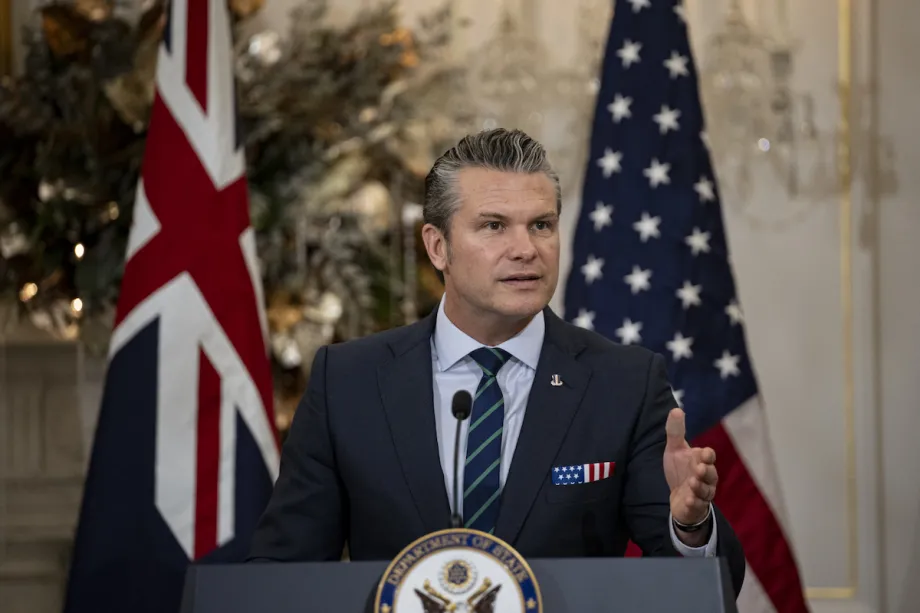
US Defense Secretary Pete Hegseth said Thursday the US is prepared to use “all options” to prevent Iran from pursuing nuclear weapons, while emphasizing that Washington is still leaving room for a diplomatic deal, Anadolu reports.
“With Iran right now, ensuring that they have all the options to make a deal. They should not pursue nuclear capabilities,” Hegseth said at a Cabinet meeting along with US President Donald Trump.
Trump reiterated Wednesday that a “massive armada” is headed to Iran, expressing hope that Tehran will “come to the table” and negotiate with Washington.
Hegseth stressed that the Pentagon stands ready to carry out any directives issued by Trump, signaling that military options remain firmly on the table if diplomacy fails.
“We will be prepared to deliver whatever this president expects of the War Department, just like we did this month,” he said, referring to the US capture of Venezuelan President Nicolas Maduro on Jan. 3.
Iranian officials, meanwhile, have reacted strongly to the latest threat issued by Trump, as a US military fleet moves toward Iranian waters amid escalating tensions between the longtime adversaries.
As is always the case, the Grammys this year will be dominated by pop, rap, country and rock. But the best races often lie in the less mainstream genres. Take best jazz vocal album, where Samara Joy, Dee Dee Bridgewater and Bill Charlap, Michael Mayo, Terri Lyne Carrington and Christie Dashiell and Nicole Zuraitis are competing for the honor.
The highly impressive group reflects the current state of jazz, where both young guns and veterans are combining to bring the music to a new swell of fans. To talk about the present state of jazz, The Times brought together 26-year-old Joy and 75-year-old Bridgewater. What followed is an incredible conversation on politics, race, equality and mutual fandom.
You both have had Grammy success. But is it still just as thrilling to be nominated?
Dee Dee Bridgewater: I can speak on that because I haven’t been nominated in years. And yeah, it’s a thrill when you’re nominated and you haven’t been and you’ve done something that your peers think is Grammy worthy. I don’t know about Samara, but for me, I don’t do any of my recorded projects with the intention of getting a Grammy nomination, which seems to be the goal of a lot of younger artists. So that me doing something that I just was trying to chronicle and because of this work that Bill and I have been doing off and on for the last few years, it’s like the icing on the cake. It’s wonderful.
Samara Joy: Agreed, when I say I’m just grateful to be here, like in this space, being able to talk about this in this way, I mean it. It wasn’t the intention behind making the music that I love to make with the people I love to make it with. And when kids come up to me and they say, “Because of you, now my goal is to be a Grammy winner.” I’m like, “You’ve already strayed way off course. We need to come back.” And realize that the accolades and the awards and the acknowledgment is beautiful because it’s coming from your peers and we’re celebrating each other. It’s amazing, it’s exciting, it’s wonderful. I’m grateful for it. But at the same time, the other 364 days of the year, we’re working and we’re touring and we’re performing because we love it. And it’s with the intention of seeing what else we can learn and express and finding new ways to do that. I’m grateful to be in the conversation, but also I’m using it even more as an opportunity to thank the people who support us and who listen to the music and who come to the concerts to say that that’s what I love. So, the fact that people have connected with it enough to acknowledge it on such a high level is amazing, but the love of it never goes away.
Bridgewater: Yes, I agree with that, Samara. When I do my work, because I like to call myself an artist who flies under the radar, I’m basically out there trying to bring joy to people. With the music that I do, I try to change up the projects depending on what is going on in the world or depending on what I’m thinking about and feeling about society and just trying to make a connection with people and be a conduit for the people and speak through the songs, things that I think will bring them joy or get them to think about some things that they are not wanting to say out loud. So, that’s what I’m doing right now. Then with my music, what I’m trying to do is bring more attention to women in jazz. For the last few years, aside from my occasional concerts with Bill [Charlap], I have been working with women. I have created a band. I call it We Exist! We are doing socially conscious music, some protest songs, and that is what I’m taking around the world. Generally, people come up to me and say, “Thank you so much for saying these things for us. We need to hear this.” My concern at my older age, now that I’m in my golden years, is the state of society and the world and this political crisis that we are in. So, I’m trying to speak about this in a way that people can hear it without getting on some kind of political bandstand and speaking in that way. I think that the world is in danger politically and I think our democracy is in danger. That’s my concern and that’s what I’m trying to do through my music. Also, I want people to see more women in the jazz space, and I think as an elder it’s almost an obligation of mine to lead that front and present this and present this image. I get many women that come up and say, “Thank you so much for doing this for women.” So, that’s where my head is right now.
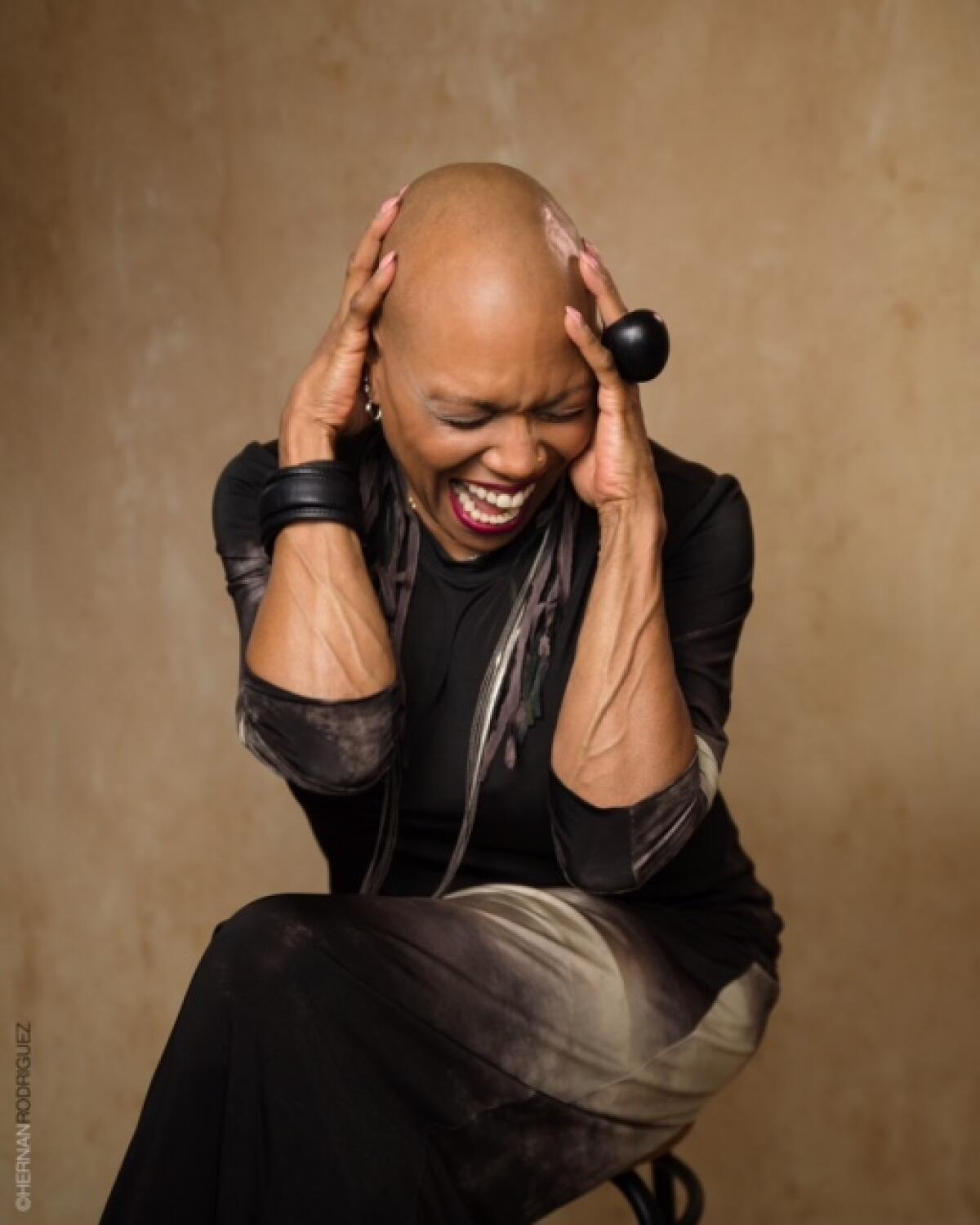
Dee Dee Bridgewater
(Hernan Rodriguez)
How exciting is it to see that, of the jazz vocal nominees, four of the five are women?
Bridgewater: Yeah, and isn’t that wonderful? But I can say this, for vocal jazz, it usually is women. This has been the place where we have been allowed to shine as vocalists. It’s been for many, many years, the only place where we’re allowed to shine. So, when you get female instrumentalists besides Terri Lyne [Carrington] because Terri Lyne broke through in a period of when there were not a lot of jazz drummers, so that she worked with Herbie [Hancock] and she worked with Wayne [Shorter]. They gave her a platform that most women are not granted. Of course, also, one has to be extremely talented. And Terri Lyne can stand beside any man and hold her own and outdo many men. That’s not the point. The point is that she had that opportunity. They gave her that opportunity and then she’s been able to pay it forward. But to see instrumentalists like Lakecia Benjamin who has really come to the forefront as an alto saxophonist and to see her get Grammy nominations, that’s something that, for me, is huge.
Samara, talk about what you’re seeing in the scene today in terms of gender disparity and overall vibe.
Joy: I’ve had the opportunity to play with some amazing ones. I went to the Vanguard a few weeks ago and sat in with [Christian] McBride and Savannah Harris was on drums. I played with Alexandra Ridout, who is an incredible trumpet player as well. Although I understand the disparity in the current time and throughout history, I also understand that I might be living through a privileged time where I just kind of see women around me everywhere. So, I don’t understand what it’s like to be without it on the scene. I can read about the fact that maybe at a time saxophone was taking precedence over jazz vocals or with each era, there’s a new focus. But I guess on the scene now I’m proud to be able to see all of these wonderful women composers and instrumentalists stepping to the forefront.
Both of you have made music that is very uplifting as well. In these difficult times, music is something that can lift the spirits and bring people together. For each of you talk about making music that uplifts because there are so many great jazz standards that have the point of lifting up the world.
Bridgewater: I’m here in town at Birdland with Bill Charlap and we are doing songs from the American Songbook primarily and Duke Ellington. It has nothing to do with anything that’s going on today, politically speaking. Last night was our first show and the audience just loved it. So, there is that side that one can take. And I’ve been very apolitical. It’s just since the two Trump administrations and the Gaza war that happened and some other things that I’ve seen going on outside of the United States that have really incensed me that I felt the need to speak out in the way that I am, you know. But it is wonderful to go to a show and have people come to see a show and be able to completely lose themselves and be outside of what is going on for that span of time that they are with the artists. For the other side, when I do these socially conscious songs, people come and say, “Oh my God, thank you. I needed to hear that. I needed to hear someone.” Because my point at the end of my show is I say, “We the people have the power, we can’t forget that. We are the people that can motivate the change and protect our democracy because we see democracy being chipped away around the world.” I grew up in an era where there was a distinct difference between Black and white and I was not able to be served when I would go to sit at a lunch counter as a little Black girl. So, I’ve experienced both sides. My awareness is different than Samara’s and I feel the alarms. The alarm bells are just ringing for me. But when I come back and I do a show with Bill, sometimes it’s difficult for me to get into these sweet, innocent songs because they don’t have the gravitas that I’m experiencing doing a Nina Simone song like “Mississippi Goddam.” For me, artistically speaking, it’s been interesting to find a balance. Samara, you do these beautiful songs with that stunning voice of yours. Your take is totally different. And you’ve grown up in another era.
Joy: This is the first time in my life that I have not only been aware of what’s happening in the world but also feel compelled. Like, I have a responsibility to do something about it because I’ve never been so aware of what is happening around me as I am right now. I don’t know if that’s a good thing or bad thing but I just feel like, ”OK, I’m an adult and this is the world that I live in and I have a responsibility as one of the people living in this world to not only do something about it right now but do something for the next generation of people who are going to have to live in the world that results in what we do right now.” It’s scary. I don’t know how people do it, especially because it’s not as difficult right now. It’s not as difficult for me to say something that might have been for an Abbey Lincoln or Nina Simone or whoever. I’m also living in a sort of luxury in that way that I don’t have to speak out and be the only one who is doing so and then be proven right later. In that way, I’m like, “I have to because of all these women who have gone before me, who made that difference and who stood and didn’t get appreciated or thanked for it in the moment, have made it so that the world that I live in now, as crazy as it is, I’m able to have a platform in the first place and be able to lead some sort of charge — or at least spread some sort of message so that the world that we’re building for the ones who come later. It’s not just about me right now, it’s all interconnected.” It feels a little heavy, a little scary. I’m still trying to figure out where my voice fits.
Bridgewater: You know what, honey, I get that. When I was your age, I honestly was not at all concerned about politics and what was going on. I was concerned about my Blackness because I’ve experienced our people being named four different times. When I was a little girl, I was colored, then I was Negro, and when they said Black, I was incensed because your hair is black. Our skin is brown. But I understand where you’re coming from because you are coming up in a different time. And you are just beginning to navigate all of the politics, so you’re going to probably go through a similar kind of thing that I went through when I was young, and I concentrated on just writing my music and things that spoke to me. You’re fine where you are and you’re going to learn to navigate all of this in time and what I would hope for you is that you don’t feel a weight. We’re all going to feel this heaviness because of the situation that we’re in but as an artist, I want you to feel free to discover and do the things that you feel in your spirit and not feel led to do something because it’s what’s going on around you. You’ve got to continue to stay true to yourself, which you’ve been doing, which is wonderful. I’m at a different stage in my life. I’m in the last quarter of my life. I’m 75 and I’ve been through all of this stuff. I feel like I’m at a place where if I want to say something instead of not like I’ve done in the past, I’m going to speak my mind. I want to say this to Samara and I’ve said this to her before. But I am so proud of you and what you are doing. And you have a voice that the gods have blessed you with, Samara. At my age to be in the same space with you for the Grammys, I am so tickled. I love you so dearly. I truly do, and you know that. The times that we’ve been on stage together, it’s been wonderful for me. I want you to know that there are people who are your elders who, besides loving you like we do, we depend on you, Samara. You have been able to enter the space and bring jazz to the world in a way that we were not.
Joy: I love you too. I’m sitting here thinking about one of the first times I got the chance to see you perform at Blue Note. I was there with my professor at the time. I was so nervous, but I’m so honored to know you. I’m so honored to have loved you from afar and now get the chance to love you up close and honor you and appreciate you and shower you just as you have showered me.
If you were going to do one song together at the Grammys, what would you want to do?
Joy: “I Wish I Knew How it Would Feel to be Free,” [Nina Simone].
Bridgewater: That’s in my repertoire. I do that. That would be a great one, Samara. I’m on board. We would tear it up.
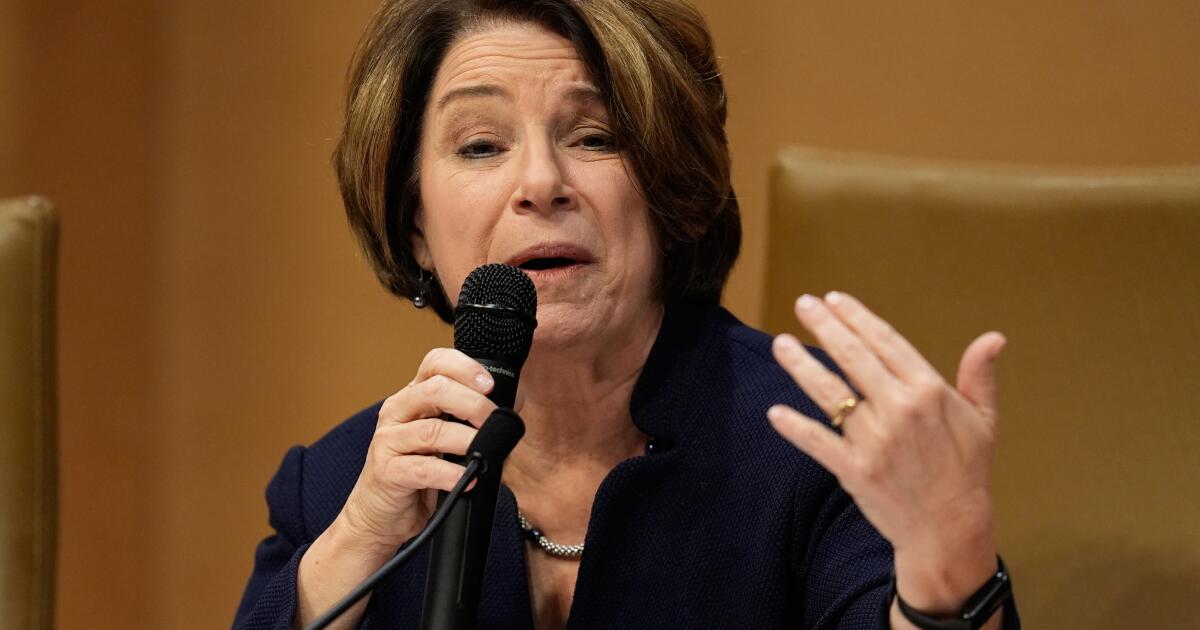
MINNEAPOLIS — U.S. Sen. Amy Klobuchar said Thursday she is running for governor of Minnesota, promising to take on President Trump while unifying a state that has endured a series of challenges even before the federal government’s immigration crackdown.
Klobuchar’s decision gives Democrats a high-profile candidate and proven statewide winner as their party tries to hold on to the office occupied by Gov. Tim Walz. The 2024 Democratic vice presidential nominee, Walz abandoned his campaign for a third term this month amid criticism over mismanagement of taxpayer funding for child-care programs.
“Minnesota, we’ve been through a lot,” Klobuchar said in a video announcement. “These times call for leaders who can stand up and not be rubber stamps of this administration — but who are also willing to find common ground and fix things in our state.”
Klobuchar cited Trump’s immigration crackdown in Minnesota, federal officers killing two Minnesotans, the assassination of a state legislative leader and a school shooting that killed multiple children — all within the last year. She avoided direct mention of ongoing fraud investigations into the child-care programs that Trump has made a political cudgel.
“I believe we must stand up for what’s right and fix what’s wrong,” Klobuchar said.
Klobuchar becomes the fourth sitting senator to announce plans to run for governor in 2026. The other races are in Alabama, Colorado and Tennessee.
Multiple Minnesota Republicans are campaigning in what could become a marquee contest among 36 governorships on the ballot in November. Among them are MyPillow founder and Chief Executive Mike Lindell, a 2020 election denier who is close to Trump; state House Speaker Lisa Demuth; Dr. Scott Jensen, a former state senator who was the party’s 2022 gubernatorial candidate; and state Rep. Kristin Robbins.
Immigration and fraud will be at issue
The Minnesota contest is likely to test Trump and his fellow Republicans’ uncompromising law-and-order approach and mass deportation program against Democrats’ criticisms of his administration’s tactics.
Federal agents have detained children and adults who are U.S. citizens, entered homes without warrants and engaged protesters in violent exchanges. Renee Good was shot three times and killed by an Immigration and Customs Enforcement officer in early January. On Saturday, federal officers fatally shot intensive care unit nurse Alex Pretti during an encounter.
Many Democrats on Capitol Hill, in turn, have voted against spending bills that fund Trump’s Department of Homeland Security. A standoff over the funding could lead to a partial government shutdown.
Trump and other Republicans also will try to saddle Klobuchar — or any other Democrat — with questions about the federal investigation into Minnesota’s child-care programs and its Somali community. Trump also has made repeated assertions of widespread fraud in state government, and his administration is conducting multiple investigations of state officials, including Walz. The Democrat has maintained that Walz’s administration has investigated, reduced and prosecuted fraud.
Demuth was quick to release a new video and a webpage that illustrate what’s likely to be another main line of her campaign: that Klobuchar cannot be trusted to end the fraud in public programs or curb the growth of government. “Minnesotans only need to look at her record to know that she simply cannot deliver the change that our state needs, and would be nothing more than a third term of Tim Walz,” Demuth said in a statement.
Klobuchar has won across Minnesota
Now in her fourth Senate term, Klobuchar is a former local prosecutor and onetime presidential candidate who positions herself as a moderate and has demonstrated the ability to win across Minnesota.
She won her 2024 reelection bid by nearly 16 percentage points and received 135,000 more votes than Democratic presidential nominee Kamala Harris. Harris outpaced Trump by fewer than 5 percentage points.
Klobuchar gained attention during Trump’s first term for her questioning of his judicial nominees, including now-Supreme Court Justice Brett M. Kavanaugh. At his acrimonious confirmation hearings, she asked Kavanaugh, who had been accused of sexual assault as a teenager, whether he ever had so much to drink that he didn’t remember what happened. Kavanaugh retorted, “Have you?”
The senator, who had talked publicly of her father’s alcoholism, continued her questioning. Kavanaugh, who was confirmed by a single vote, later apologized to Klobuchar. Kavanaugh has denied that the alleged assault occurred.
After Trump’s first presidency, Klobuchar was among the most outspoken lawmakers during bipartisan congressional inquiries of the insurrection on Jan. 6, 2021, when Trump supporters attacked the U.S. Capitol during certification of Democrat Joe Biden’s victory in the 2020 election. As Senate Rules Committee chair, she pressed Capitol Police, administration officials and others for details of what authorities knew beforehand and how rioters breached the Capitol.
“It’s our duty to have immediate responses to what happened,” she said after helping write a report focused not on Trump’s role but on better security protocols for the seat of Congress.
2020 presidential bid
Klobuchar sought the presidential nomination in 2020, running as a moderate in the same political lane as Biden. She launched her campaign standing outside in a Minnesota snowstorm to promote her “grit” and Midwestern sensibilities that have anchored her political identity.
As a candidate, Klobuchar faced stories of disgruntled Senate staffers who described her as a difficult boss but also distinguished herself on crowded debate stages as a determined pragmatist. She outlasted several better-funded candidates and ran ahead of Biden in the Iowa caucuses and the New Hampshire primary. But Biden, then a former vice president, trounced her and others in the South Carolina primaries, prompting her to drop out and join others in closing ranks behind him.
After Biden’s victory, Klobuchar would have been well positioned for a Cabinet post, perhaps even attorney general. But the Senate’s 50-50 split made it untenable for Biden to create any opening for Republicans to regain control of the chamber.
Klobuchar announced in 2021 that she had been treated for breast cancer and in 2024 announced that she was cancer-free but undergoing another round of radiation.
Barrow and Karnowski write for the Associated Press. Barrow reported from Atlanta. AP writer Maya Sweedler in Washington contributed to this report.
Aston Villa match-winner Jamaldeen Jimoh-Aloba is described as “shy and nervous” by Morgan Rogers – but the teenager announced himself on the European stage.
United States Secretary of the Treasury Scott Bessent speaks as US President Donald J Trump participates in a Cabinet meeting in the Cabinet Room of the White House in Washington, DC on Thursday, January 29, 2026. Photo by Aaron Schwartz/UPI | License Photo
Jan. 29 (Asia Today) — U.S. Treasury Secretary Scott Bessent said Tuesday that Washington does not recognize any trade agreement with South Korea unless it is ratified by the South Korean National Assembly, reaffirming that higher tariffs would remain in place until legislative approval is secured.
In an interview with CNBC, Bessent said the absence of parliamentary ratification meant no valid agreement existed between the two countries.
“Because the South Korean National Assembly has not passed the trade agreement, there is no trade agreement with South Korea until they approve it,” Bessent said, repeatedly emphasizing the need for lawmakers to ratify the deal.
Asked whether South Korea would face 25% tariffs until ratification, Bessent replied, “I think that helps move the situation forward,” a comment widely interpreted as signaling tariff pressure aimed at accelerating legislative action.
His remarks clarified the backdrop to Donald Trump’s announcement Sunday that the United States planned to raise reciprocal tariffs on South Korean exports, including automobiles, timber and pharmaceuticals, from 15% to 25%.
In a post on Truth Social, Trump said the South Korean legislature had failed to enact what he described as a “historic trade agreement.” No executive order or formal notice has yet been issued to implement the tariff increase.
Trump later suggested negotiations could still resolve the issue, saying Monday that Washington would “work with South Korea to find a solution.”
Pressure from the Trump administration has extended beyond tariffs. The Wall Street Journal reported that Washington has raised concerns over South Korea’s regulatory treatment of U.S. technology companies. According to the report, J.D. Vance told South Korean Prime Minister Kim Min-seok during a White House meeting last week that the administration wanted meaningful de-escalation in how U.S. tech firms are regulated.
South Korea has fully mobilized its trade channels to assess Washington’s intentions. Trade Minister Kim Jeong-kwan is scheduled to travel to Washington later Tuesday after completing meetings in Canada, where he is expected to meet U.S. Commerce Secretary Howard Lutnick. Trade Negotiations Commissioner Yeo Han-koo also plans consultations with the U.S. trade representative.
Weekly insights and analysis on the latest developments in military technology, strategy, and foreign policy.
As both sides in the war in Ukraine continue their campaigns of long-range drone attacks, the Ukrainian government’s internal security agency has released a compilation of strikes directed against Russian airbases. The video, published by the Security Service of Ukraine (SBU), records drone strikes against Russian military aircraft by its special forces unit, the “Alpha Group,” also known as “A” Special Operations Center.
“The enemy is used to feeling safe in the deep rear. But for the special forces of “Alpha,” distance has long ceased to matter,” the SBU wrote in a post accompanying the video on social media.
The footage shows several Russian aircraft being targeted, from the perspective of the attacking drones. It appears that most, if not all, of these strikes were previously claimed, and some have been previously seen in the form of video stills. But the end result is certainly impressive, presuming all of the targeted aircraft were damaged or destroyed — which is far from clear from these videos.
An-26 under attack, apparently at Kirovskoye Air Base. It appears to have been damaged beyond repair. SBU screencapA Russian Navy Su-30SM under attack, apparently at Saky Air Base. SBU screencap
The SBU claims that the total value of the damage was more than $1 billion, although it’s far from clear how this was calculated, especially since some of the airframes in question are decades old and no longer in production. It’s also notable that the SBU figure includes damage inflicted on ammunition and fuel depots at the airfields in question.
Regardless, the 15 aircraft claimed targeted by the SBU appear to comprise:
From what can be seen, the An-26 appears to have been damaged beyond repair, while one Su-24 seems to have had at least its tail section damaged; available satellite imagery may show a destroyed Su-24, but the quality of the imagery means that it can’t be determined for sure.
A MiG-31, armed with R-73 missiles, under attack, apparently at Belbek Air Base. SBU screencap
These aircraft were targeted at five different airfields, the SBU stated, without disclosing their exact locations.
However, based on open-source analysis, it seems that the targeted bases included Belbek, Kirovskoye, Saky, and Simferopol, all in Russian-occupied Crimea.
Su-24 under attack, apparently also at Saky Air Base. SBU screencap
The growing threat of attacks like these on airbases has prompted Russia to build new hardened aircraft shelters and embark on additional construction to help shield aircraft from drone strikes and other indirect fire. This is part of a broader push by the Russian military to improve physical defenses at multiple airfields following the launch of the full-scale invasion of Ukraine.
The highlighted airfield raids in the video are part of a wider Ukrainian drone campaign carried out last year, in which the SBU also targeted Russian air defense systems, radar installations, and critical energy infrastructure.
As far as air defense systems are concerned, the SBU claims that it destroyed Russian equipment worth an estimated $4 billion last year. These included S-300, S-350, and S-400 surface-to-air missile systems, as well as advanced radar systems such as the Nebo-M, Podlet, and Protivnik-GE.
In 2025, Ukraine also carried out the spectacular Operation Spiderweb, a large-scale Ukrainian drone strike against airbases across Russia in June. This targeted Moscow’s fleet of strategic bombers and saw a reported 117 drones launched against at least four airfields.
New footage from Ukraine’s Operation Spiderweb hitting Russian bombers
Notable also is the fact that the specific Ukrainian campaign against Russian airfields is something that was brought up by U.S. President Donald Trump in a telephone call with his Russian counterpart, Vladimir Putin, last summer. The timing of that call suggests that Operation Spiderweb prompted that discussion.
Lots of people are reposting this Trump Truth Social post as if it’s recent (in part because Ukraine just released another video of hitting parked Russian warplanes), but it is in fact from last summer. pic.twitter.com/8jodT8bm7H
Meanwhile, SBU is continuing its long-range drone strikes.
Overnight on January 13, the security agency teamed up with the Ukrainian Navy to attack a drone production facility in Taganrog, where several production halls appear to have been destroyed, based on satellite analysis.
Ukrainian Defenders destroyed several warehouses of Atlant Aero plant in Taganrog, Russia. Combat drones and their parts were produced there.
The facility in question, the Atlant Aero factory, is responsible, among others, for producing Russia’s Molniya loitering munition, widely used in Ukraine.
Ukrainian forces reportedly hit a Russian drone factory in the city of Taganrog tonight, setting it ablaze.
Multiple explosions were reported at the Atlant drone company, manufacturer of the Molniya-series attack drones. pic.twitter.com/yr3SA3b7gV
Drones being used to strike enemy facilities producing drones is very much indicative of the path the war has taken, when it comes to the increasing use and diversity of uncrewed systems across all fronts.
For its part, Russia employed a BM-35 loitering munition to attack what was claimed by some observers to be a Ukrainian F-16 fighter at Kanatove Air Base in Ukraine’s Kirovohrad region, on January 26. In fact, the target was either a decoy or a ground-instructional aid, something that even Russia’s Rubicon Drone Operations Center attested to.
This is not the first time that a Russian drone strike has claimed a Ukrainian aircraft mock-up, but again demonstrates the potential vulnerability of airfields to these kinds of attacks.
Notably, too, the BM-35 drone used in the strike is reported to use satellite connectivity via Starlink, allowing operators to control it in real time over long distances.
The SBU’s latest ‘greatest hits’ compilation underscores how drone attacks on Russian military aircraft are one of its highest priorities and one that we will certainly see targeted again in the months to come.
Ray J is under doctor’s orders to stay on bed rest, take all his prescribed medications and avoid drinking alcohol or smoking because of his damaged heart.
The R&B singer, who revealed this week that his heart is pumping at far below capacity because of damage from his heavy use of alcohol and other substances, shared those directives with TMZ in an interview published Thursday. Doctors told him he likely has only months to live, with the former “Love & Hip-Hop: Hollywood” star predicting that he would die by 2027.
Doctors told Ray J — real name William Ray Norwood Jr. — that he should prepare for the chance that he might need a pacemaker or defibrillator soon, the singer told the celebrity site. He expects to get an update when he goes back in two weeks for a check-up.
The brother of actor-singer Brandy said that if he manages to survive his current health crisis, he expects to emerge a “stronger and a better person.”
Ray J told followers in a video posted Sunday that he wanted to “thank everyone for praying for me.”
“I was in the hospital,” he said. “My heart is only beating like 25%, but as long as I stay focused and stay on the right path, then everything will be all right.”
He said elsewhere that his heart was beating at 60%. The number likely refers to Ray J’s heart’s ejection fraction, which measures the volume of blood coming out of the heart’s left ventricle or being drawn into the right ventricle when the heart beats. Right-sided heart failure is far less common, according to WebMD.
The man who was with Kim Kardashian in her career-launching sex tape said in other video livestreams that the right side of his heart was “black. It’s like done.”
“I thought I could handle all the alcohol, I could handle all the Adderall,” he said. Now, he told TMZ, he’s been taking eight different drugs, including Lipitor, Jardiance and Entresto, and physicians’ warnings for him to avoid smoking and drinking are a challenge.
Doctors have told him he has only months to live, Ray J said in his recent livestreams, and he believes he won’t last past this calendar year.