Insurance Commissioner John Garamendi, continuing his assault on spiraling workers’ compensation insurance costs, on Friday announced a three-pronged reform program designed to curb fraudulent and unwarranted claims.
As part of the plan. Garamendi endorsed legislation introduced by Assemblyman Burt Margolin (D-Los Angeles) that would eliminate a “guaranteed cap” on insurers’ expenses. The bill would give Garamendi greater discretion to reduce workers’ compensation rates for employers.
Garamendi also announced the creation of a new workers’ compensation fraud investigation team and an outreach program to employers to educate them on new insurance fraud laws.
“California businesses are being strangled by exorbitant workers’ compensation insurance premiums,” Garamendi said. “Workers’ compensation costs have gotten out of control, especially in the areas of insurer expenses and fraud.”
Margolin’s bill, introduced in the Legislature on Friday, aims to eliminate the “guaranteed expense cap,” an arbitrary measure of workers’ compensation carrier costs. This cap was one of the primary reasons that Garamendi late last year turned down an 11.9% rate increase request from the Workers’ Compensation Insurance Rating Bureau, which determines what minimum rates should be for the industry. Garamendi only allowed a 1.2% increase.
The cap allows workers’ compensation carriers to claim that their expenses amount to 32.8% of premiums, no matter what their true expenses are, when they request rate increases. Actual expenses are far lower–about 20% to 25% of premiums, Garamendi said.
“This bill is a way to guarantee that California employers are not charged excessive premiums by workers’ compensation carriers,” Margolin said. “This bill would allow Garamendi to address what an appropriate expense load would be.”
Insurance representatives Friday criticized the proposed expense cap limitations.
“A panel that Garamendi helped form has been studying workers’ compensation rating practices for over a year, and they are set to give their recommendations in March,” said Richard Wiebe, spokesman for the American Insurance Assn. in Sacramento. “Garamendi has apparently decided their recommendations are irrelevant.”
Insurers are more supportive of Garamendi’s efforts to combat fraud. Robert Gore, vice president of the Assn. of California Insurance Cos., noted that the new fraud unit is made possible by a law partially written and supported by the insurance industry.
Garamendi said he was creating a new workers’ compensation fraud investigation unit, funded by legislation that took effect Jan. 1. The law is designed to target doctors, attorneys and medical care workers who encourage the filing of fraudulent workers’ compensation claims.
Under the tough new law, making false statements to support fraudulent workers’ compensation claims is a felony. Convictions can be punished by up to five years in prison and fines equaling twice the fraud.
“The people who are committing workers’ compensation fraud now think they can do it with impunity, but that has changed,” Margolin said. “If you commit workers’ compensation fraud, you go to jail.”
Garamendi also said he plans to step up a public information campaign about the new workers’ compensation fraud law. The campaign will be conducted through partnerships with other state agencies, such as the Employment Development Department and local chambers of commerce.
New England Patriots wide receiver Stefon Diggs was charged with felony strangulation or suffocation and misdemeanor assault and battery at a court hearing Tuesday. The alleged victim in the Dec. 2 incident was his private chef, according to a report taken by police in Dedham, Mass.
Through his attorney, Diggs has denied the allegations. The name of the woman was redacted from the police report.
The chef reported the incident Dec. 16, telling police that she and Diggs had a dispute over pay after he told her via text that her services weren’t needed the week of Nov. 7 and she replied that she should be paid for the week.
The woman told police that Diggs entered her unlocked bedroom in his house and “smacked her across the face.” She tried to push him away and he “tried to choke her using the crook of his elbow around her neck.”
She said that she had trouble breathing and felt like she could have blacked out. “As she tried to pry his arm away, he tightened his grip,” she told police.
The woman told police she had redness on her upper chest area after the incident occurred but did not take photos. She returned to Diggs’ house Dec. 9 to retrieve personal belongings and he instructed her to speak with his assistant about getting paid, she told police. The assistant told her Diggs had requested she sign a non-disclosure agreement, but she refused.
Diggs’ girlfriend is rapper Cardi B, who gave birth to their son in November. Cardi B, born Belcalis Almánzar, is not mentioned by name in the police report, although the woman told police Dec. 20 that a few days earlier “she received a voice mail and text messages from a female that she believed to be Diggs girlfriend. Based on these messages, [the alleged victim] believed that Diggs somehow knew the police were contacted. The messages stated something to the effect of ‘You don’t need to do all this. It’s not that big of a deal.’”
The woman, who had worked as Diggs’ private chef since July, initially did not want the police to file charges against the two-time All-Pro receiver but changed her mind Dec. 23.
Diggs’ lawyer David Meier said in a statement that his client “categorically denies these allegations. They are unsubstantiated, uncorroborated, and were never investigated — because they did not occur.
“The timing and motivation for making the allegations is crystal clear: they are the direct result of an employee-employer financial dispute that was not resolved to the employee’s satisfaction. Stefon looks forward to establishing the truth in a court of law.”
Meier also said Diggs has made a financial offer to the woman, telling the judge at the hearing Tuesday, “As we speak, they’re working to come to an agreement on that.”
According to the police report, Diggs did not return calls from investigators and the criminal complaint was “based on [the alleged victim’s] statement.”
Diggs, 32, has been one of the NFL’s top receivers since beginning his career with the Minnesota Vikings in 2015. He ranks fifth among active players with 939 career receptions, including 82 this season for 970 yards.
This is his first season with the Patriots, who have clinched the AFC East title and will begin the playoffs with a wild card home game the weekend of Jan. 10. Diggs is in the first year of a three-year, $69-million contract.
“We support Stefon,” the Patriots said in a statement. “We will continue to gather information and will cooperate fully with the appropriate authorities and the NFL as necessary. Out of respect for all parties involved, and given that this is an ongoing legal matter, we will have no further comment at this time.”
Diggs’ arraignment is scheduled for Jan. 23. Meier asked the judge Tuesday that the proceeding be delayed until March but no ruling was made.
An arrested sign was on display during a press conference at the Department of Justice Headquarters in Washington, D.C., on Dec. 4. Brian Cole Jr. is scheduled for a detention hearing Tuesday afternoon. Photo by Bonnie Cash/UPI | License Photo
Dec. 30 (UPI) — Attorneys for Brian Cole Jr., the man accused of building and laying pipe bombs in Washington, D.C., at two political party headquarters, are arguing for his pre-trial release.
Cole, 30, has autism spectrum disorder and obsessive-compulsive disorder, his attorneys said in a Monday night filing. He is scheduled for a detention hearing on Tuesday afternoon.
The attorneys argued that “government-induced excitement” around Cole’s arrest is premature and potentially violates court rules.
“The question is whether there is a present danger — a contention the government never actually makes, and something belied by the past four years in which Mr. Cole has lived without incident,” Cole’s attorneys argued in their filing. “No device detonated, no person was injured, and no property was damaged.”
“Whatever risk the government posits is theoretical and backward-looking, belied by the past four years where Mr. Cole lived at home with his family without incident. All of this weighs heavily against an inference of current danger to the community at large,” his attorneys wrote.
Cole was arrested Dec. 4 and hasn’t entered a plea. He is accused of placing two pipe bombs — that never detonated — outside of the Democratic National Committee headquarters and the Republican National Committee headquarters in Washington.
He faces charges of transporting an explosive device and attempted malicious destruction by means of explosive materials. The charges have a maximum sentence of 30 years.
Assistant U.S. Attorney Charles Jones filed a request Sunday to keep Cole in jail while he awaits trial.
Cole is from Woodbridge, Va., where he lives with his mother and other family members.
President Donald Trump holds a signed executive order reclassifying marijuana from a schedule I to a schedule III controlled substance in the Oval Office of the White House on Thursday. Photo by Aaron Schwartz/UPI | License Photo
Mamady Doumbouya faced eight rivals for the presidency, but the main opposition leaders were barred from running.
Published On 30 Dec 202530 Dec 2025
Share
Guinea coup leader Mamady Doumbouya has been elected president, according to provisional results, paving the way for a return to civilian governing after a military takeover nearly five years ago.
The provisional results announced on Tuesday showed Doumbouya winning 86.72 percent of the vote held on December 28 – an absolute majority that allows him to avoid a runoff.
Recommended Stories
list of 4 itemsend of list
The Supreme Court has eight days to validate the results in the event of any challenge.
Doumbouya, 41, faced eight rivals for the presidency, but the main opposition leaders were barred from running and had urged a boycott of the vote.
The former special forces commander seized power in 2021, toppling then-President Alpha Conde, who had been in office since 2010. It was one in a series of nine coups that have reshaped politics in West and Central Africa since 2020.
THE Government is launching a week long sale on train tickets that could save you up to 70 per cent on transport.
Running from 6-12 January millions of train tickets will be discounted to help make half term activities, weekend getaways and commuting more affordable.
Sign up for the Travel newsletter
Thank you!
The routes span the length and breadth of BritainCredit: Alamy
The reduced fares can be used to travel on thousands of popular routes between 13 January and 25 March 2026.
The routes span the length and breadth of Britain as nearly all train operators are taking part.
Make the most of the £10 fares from south coast destinations such as Portsmouth to London Waterloo by booking a big day out or catch up with a city friend.
If you’re planning a holiday abroad you could maximise your savings by booking it between January and March as journeys from Manchester Piccadilly to Manchester Airport will cost just £1.20, down from £2.90.
This is the fourth year of the Rail Sale and last year over 1 million ticketswere sold, bringing in over £9 million in ticket sale revenue for the industry.
Passengers last time saved an average of £8 per journey.
Transport Secretary, Heidi Alexander, said: “The Rail Sale is back – and it means further discounts for passengers as we freeze rail fares for the first time in three decades to help ease the cost of living.
“We all want to see cheaper rail travel, so whether you’re planning a half term getaway, or visiting friends or family, this sale offers huge reductions.
“It’s all part of our plans to build a railway owned by the public, that works for the public.”
This is the fourth year of the Rail SaleCredit: Alamy
Bridgerton actress Adjoa Andoh who plays Lady Danbury, has made big promises ahead of series four and revealed that her husband Howard Cunnell has never seen the show
Bridgerton’s Adjoa Andoh says husband has ‘never seen a second’ of hit show(Image: LIAM DANIEL/NETFLIX)
Bridgerton actress Adjoa Andoh says husband Howard Cunnell has ‘never seen a second’ of the hit Netflix show, despite it being the network’s “biggest series ever”.
In 2021, the streamer said 82 million households around the world tuned into the show in its first 28 days online. It hit the number one spot in 83 countries, including the US, UK, India, France and Brazil.
Series four will hit screens in January, with the network confirming the storyline will zoom in on the friendship between Adjoa’s character, Lady Danbury, and Golda Rosheuvel’s Queen Charlotte. But in spite of its success, Adjoa says the show isn’t her husband’s “thing”.
She told Good Housekeeping: “My husband has never seen a second of Bridgerton. It’s not his thing.” The star, 62, promises viewers will get “more bang for [their] buck” when the new series drops on January 29th.
She said: “Everyone knows it’s Benedict’s story, but I can also say that we’re expanding the ‘Bridgeverse’ in terms of where the focus is storytelling-wise. If you love Bridgerton , you’ll get more of the same – but you’ll also get more bang for your buck. Take that as you please.”
She also reflected on the show becoming an overnight hit back in December 2020. She explained: “Everyone was at a low ebb that Christmas. The combination of Covid, the success of platform streaming and the particular brand of storytelling adopted by [Shonda Rhimes-founded production company] Shondaland made Bridgerton this remarkable thing. And, of course, there was the sex!
“It had historic frothiness, it looked incredible and the casting was unprecedented; the genie is out of the bottle with Bridgerton ’s way of framing historical romantic drama. The rest of the streamers have caught up now, but Bridgerton is still holding its place in the market, which is quite something.”
Adjoa Andoh previously called for Black women in the entertainment industry to “celebrate who they are as artists” and remember that they are not just there to “fly the flag” for others.
Speaking at the Pride of Britain Awards, Adjoa praised the next generation of young Black women for being “very thoughtful and wise”, but warned they shouldn’t forget they are also just “creative human beings” in their own right.
She said: “We are there to say, ‘a door can open wider’, we are there to say, ‘stay in it’, ‘keep going’, ‘pick your battles’, ‘think about who you want to be’.
“But also: ‘celebrate what you do as artists, you’re not just there to fly the flag, you’re there as a creative human being’.”
The full interview can be read now in the February issue of Good Housekeeping UK.
From the neon lights of Seoul to the waterfalls of El Salvador, from the ancient vinyards of Georgia to the UK’s first spacesport, there is a lot to choose from when it comes to travel in 2026
This story was reported by Glenn Bunting, Ralph Frammolino, Mark Gladstone, Alan Miller and David Willman and written by Miller
WASHINGTON — The White House provided trips on Air Force One or presidential helicopters to 56 campaign donors and fund-raisers in 1995 and 1996, administration officials said Monday.
In addition, leading campaign fund-raisers appeared on a “must consider” list for positions in the newly elected Clinton administration in 1992, according to newly released Democratic National Committee documents. Some later became ambassadors and other high-level appointees.
The White House and the national committee provided the new information as the Justice Department and congressional committees continued their investigations into Democratic fund-raising practices and White House perquisites provided to major financial benefactors.
The national committee documents included more than 10,000 pages about controversial fund-raiser John Huang’s employment by the national committee.
Among those on the “must consider” list for appointments was Huang himself, who received a mid-level Commerce Department job in 1994 after helping raise money for Clinton in the 1992 campaign.
Major donors and fund-raisers have been given jobs and political appointments for years by both Democratic and Republican administrations, but rarely have documents spelling out the practice been publicly available.
Huang’s activities at the national committee are at the center of the inquiries, particularly allegations that overseas interests, including the Chinese government, may have sought to channel contributions to the Democrats.
The documents detail contacts between Huang and the Chinese embassy and Chinese government officials as well as new information about his contacts with certain donors whose money the Democrats have decided to return as potentially improper.
White House and Democratic officials said there was nothing wrong with the Clintons’ use of Air Force One or with recommending supporters for appointments.
“We believe there is nothing inappropriate or unusual about the president of the United States inviting guests to be on his plane on official trips,” said Lanny J. Davis, a special White House counsel.
“As long as that privilege isn’t abused, we don’t believe the American people would object to that. And we believe that these numbers suggest it was very modest as an exercise of that prerogative.”
The cost of political travel is billed directly to the campaign, the DNC or the guest. But if a guest was on an official trip or leg of a trip, the individual was not required to pay air fare.
All told, Clinton took at least 477 guests on his 103 trips aboard Air Force One and presidential helicopter Marine One between Jan. 1, 1995, and Nov. 6, 1996, according to records compiled by the White House.
The White House defined “financial supporters” of the president as those who contributed $5,000 or more to the Democrats or raised $25,000 or more for the party or the Clinton-Gore campaign in the 1996 election cycle.
Vice President Al Gore, meanwhile, took 17 such donors on his 169 trips on Air Force Two or Marine Two.
Among those who made multiple flights were Terence McAuliffe, the Clinton-Gore finance chairman and his top aide, Laura Hartigan, and three Democratic officials: Finance Chairman Marvin Rosen, Finance Director Richard Sullivan and Treasurer Scott Pastrick.
A trip aboard Air Force One is among the most highly prized perquisites offered to major donors and fund-raisers. Supporters who flew with the president said that they were given “Welcome to Air Force One” name tags and sat in the VIP section equipped with large cabin-cruiser seats and telephones.
“It’s a tremendous ego boost,” said a Democratic official who participated in several trips. “The most exciting part for these people was to fly into their city and be able to get off the plane with all the local dignitaries on the tarmac.”
The guests on Air Force One in 1995 and 1996 contributed a total of $9.2 million to Democratic candidates and party committees since 1991, when Clinton first sought the party’s presidential nomination, according to an analysis by the Campaign Study Group. Of this total, $6.7 million went to the Democratic National Committee and the Clinton-Gore committees in the two races.
Twenty-one of the Air Force One guests and their companies each donated more than $100,000. One of those was Stanley Chesley, a Cincinnati attorney. He and his law firm gave $581,450. Another was Rashid Chaudry. His company, the Raani Corp. of Bedford Park, Ill., contributed $401,819.
Three of the Air Force One guests, all major Democratic givers, also provided employment to Clinton friend Webster L. Hubbell after Hubbell’s resignation from a top Justice Department position because of improprieties in his previous law practice.
Independent counsel Kenneth W. Starr is investigating whether administration officials and supporters arranged employment deals for Hubbell to dissuade him from providing Whitewater prosecutors with damaging information about Mrs. Clinton, his former law partner in Little Rock.
Those who arranged deals and rode on Air Force Once included Truman Arnold, a Texas oil executive and longtime Clinton friend; Wayne Reaud, a Beaumont, Texas, lawyer who paid Hubbell a total of $36,000 in 1994; and Bernard Rapoport, a Waco, Texas, insurance executive.
The rewarding of campaign donors with high-level political appointments is a staple of any administration. However, the Democrats had criticized previous Republican administrations for some of these practices–such as giving ambassadorships to big-dollar contributors.
The first Democratic memo about jobs for financial backers was sent to Michael Whouley, a Clinton campaign aide who was in charge of providing names to the transition team, on Dec. 21, 1992, a month before Clinton’s inauguration.
“We urge you to consider strongly the following leading national fund-raisers who are interested in serving in the White House,” the memo said. “We are pleased to sponsor these ‘must considers.’ ”
Among those named were Erskine Bowles, who obtained the post he sought as head of the Small Business Administration. He is now Clinton’s chief of staff. Also recommended was Arthur Levitt, who was proposed as a possible ambassador to Germany or a member of the National Economic Council. He became chairman of the Securities and Exchange Commission.
Those touted for ambassadorships and receiving postings, though not necessarily in their first-choice countries, were Alan Blinken in Belgium; Donald Blinken, Hungary; Clay Constantinou, Luxembourg; and Thomas Siebert, Sweden.
Huang, then an executive in Los Angeles with the Indonesian-based Lippo conglomerate, was recommended for a position of “under- or assistant secretary for international affairs” in an unspecified agency. He was ultimately appointed deputy assistant Commerce secretary for East Asia and the Pacific in 1994.
“We make no apologies for trying to get jobs for those who were helpful in trying to elect this president,” said Democratic Communications Director Amy Weiss Tobe. “It is not unusual for somebody who is helpful to end up on a list for a must consider for a top position.”
Democrats noted that more than a dozen of those on the Republicans’ major donor group known as Team 100 received ambassadorships and sub-Cabinet positions in the Bush administration.
The documents also reveal that Huang was extensively involved in Chinese organizations and participated in events at the Chinese embassy in Washington. Included were numerous business cards from representatives of Chinese groups and invitations to events. Huang also is listed as a director of the Committee of 100, a New York-based nonprofit group of Chinese-Americans who are active in public affairs.
A handwritten note that was faxed to Huang by Haipei Xue, an official with the Council on U.S.-China Affairs in Washington, reads: “What follows is an update on strategies & programs I drafted for discussion with our partners, like Boeing in this case, & with the Embassy. Although you are not directly involved in U.S.-China . . . your Committee of 100 and often yourself, I believe, will be engaged in it.”
DNC officials said that they were unable to determine whether any of Huang’s Chinese-related activities while he was employed by the party raised concerns because they did not know the context of the documents.
Times researchers Edith Stanley and D’Jamila Salem-Fitzgerald contributed to this story.
* RENO DENIES COUNSEL BID: Attorney general denies request for outside counsel on donations. A14
* SUBPOENA MIX-UP: Investigators issue subpoenas for the wrong DNC donor. A16
Curt Cignetti knows winning. No matter where he finds himself, whether it’s James Madison or with the Division II IUP Crimson Hawks, success follows him. Since getting the opportunity to lead a program, Cignetti has never had a losing season.
When Indiana hired him in November 2023, the Hoosiers were the program with the most all-time losses in college football history, and ended the season with a 3-9 record under Tom Allen.
It wasn’t a work in progress, the Hoosiers football program needed to be rebuilt.
On New Year’s Day, Indiana will face Alabama in the highly anticipated Rose Bowl matchup. The Crimson Tide have a rich postseason history and a tradition of championships, but the Hoosiers are the favorites to win.
That is the Cignetti effect.
In two years, he transformed the program from an unranked team, spending most of its time at the bottom of the Big Ten Conference, to the No. 1 team in the country with a Heisman-winning quarterback, Fernando Mendoza.
“When he speaks, it means something,” Indiana linebacker Isaiah Jones said.
“He’s not gonna go around and hype you up, tell you something you want to hear, he’ll tell you what you need to hear and that’s what makes him so special as a coach.”
That kind of tough love echoes throughout the team, Jones said. Whether it’s the fifth-string linebacker or the starting linebacker, Cignetti and his staff coach everyone the same way. That is one of the reasons his players trust him and bought into his philosophy.
“All the coaches want to see you be the best version of yourself,” Jones said. “But you can’t do that if you’re sugarcoating it.”
Cignetti’s coaching style has turned a starting lineup that consists of more lightly recruited players than five-star prospects into the nation’s No. 1 team.
Their surprise arrival at college football’s biggest stage has fired up the Hoosiers.
Indiana defensive back D’Angelo Ponds answers questions during a new conference at the Rose Bowl on Tuesday.
(Marcio Jose Sanchez / Associated Press)
“It’s definitely a chip on our shoulder,” Indiana cornerback D’Angelo Ponds said. “Just to prove to the coaches that they missed out on the opportunity with us.”
The Hoosiers had the past three weeks off, earning a first-round College Football Playoff bye. Leading up to their quarterfinal showdown with Alabama in Pasadena, before their opponent was known, Cignetti made it a point to focus on how the Hoosiers could feature the best offense and defense in the country. He wanted players to focus on their own work rather than who they would be playing.
“In every single phase, in every single facet of the way that we practice and prepare, it’s all about being the best version of us, and not so much our opponent,” Indiana linebacker Aiden Fisher said.
But as soon as Alabama clinched its ticket to the Rose Bowl, the preparation flipped.
“Once we understood who the opponent was, it just kind of upped a notch,” Fisher said. “[Cignetti’s] done a great job of blocking out the noise, we don’t hear anything in the media, really.”
He wants his team to be present during their preparation, never taking a day for granted and getting their bodies and mindset right.
“He always says, at the later points in the season, it’s about who shows up ready to play, who’s the most prepared,” Indiana center Pat Coogan said.
The success of the team started with his recruitment. Regardless of which players leave or enter the locker room, Cignetti makes sure everyone is focused on the same end goal — winning.
“We are all cut from the same cloth,” Coogan said. “That’s why I think this locker room bonds so well, and why we’ve had success, no matter how many people have transferred.”
Fans flying into Pasadena talk about the ghost of the past, Fisher said. The Hoosiers last made an appearance in the Rose Bowl in 1968 when they lost to USC. A win on New Year’s Day will help bolster the football culture in Indiana, but the team understands it needs to focus on Thursday’s game against Alabama and ignore the bigger picture.
“It’s a privilege and honor to play in the Rose Bowl,” Fisher said. “But we’re still playing a football game of four quarters that we have to go and win.”
Sapang Kawayan, Philippines – Two hours north of the capital, Manila, on the vast grounds of a former United States military base, the Philippine government is pushing ahead with plans for a multibillion-dollar “smart city” that President Ferdinand Marcos Jr hopes to turn into a future “mecca for tourists” and a “magnet for investors”.
The New Clark City, which is being built on the former Clark Air Base, is central to the government’s effort to attract foreign investment and ease congestion in Manila, where nearly 15 million people live.
Recommended Stories
list of 4 itemsend of list
To accompany the city’s development, the government has also laid out an ambitious slate of projects at a nearby airport complex — new train lines, expanded airport runways, and a $515m stadium that officials hope will be enticing enough to draw the global pop singer Taylor Swift.
Caught between the rising new city and the site of the proposed stadium lies the Indigenous Aeta village of Sapang Kawayan. For the roughly 500 families who live there, in houses of nipa grass and rattan, the developments spell disaster.
“We were here before the Americans, even before the Spanish,” said Petronila Capiz, 60, the chieftain of the Aeta Hungey tribe in Sapang Kawayan. “And the land continues to be taken from us.”
Historians say American colonisers, who seized the Philippines from Spain in 1898, took over the 32,000-hectare (80,000-acre) tract that became Clark Air Base in the 1920s, dispossessing the Aetas, a seminomadic and dark-skinned people thought to be among the archipelago’s earliest inhabitants.
Many were displaced, though some moved deeper into the jungle inside the base and were employed as labourers.
The US turned over the base to the Philippine government in 1991, some four decades after granting the country independence. Since then, the Bases Conversion and Development Authority, or BCDA, has managed the complex. Some 20,000 Aetas are thought to remain in the Clark area today, spread across 32 villages.
But most of their claims to the land are not recognised.
In Sapang Kawayan, residents fear the government’s development boom means they could be pushed out long before they can establish such claims. The community – along with other Aeta villages in Clark – is working with researchers from the University of the Philippines to expedite a long-pending application for a Certificate of Ancestral Domain Title, or CADT — the only legal mechanism that would allow them to assert rights to their territory and its resources.
In January, July and September, Aetas young and old gathered under makeshift wooden shelters in Sapang Kawayan, assembling family trees and sharing stories and photographs. Volunteers documented each detail in hopes of demonstrating that the community there predates colonial rule.
Their 17,000-hectare claim overlaps with nearly all of the 9,450 hectares designated for New Clark City, while 14 kilometres to the south is the airport complex where the new railway line, runway and stadium are slated to rise.
Together, the new city and airport complex “will eat up the fields where we farm, the rivers where we fish and the mountains where we get our herbs”, Capiz said.
Aetas work with researchers at the University of the Philippines to expedite their application for an ancestral land title [Michael Beltran/Al Jazeera]
‘Taylor Swift-ready’
The Philippine government first announced plans for New Clark City under then-President Rodrigo Duterte, promoting it as a solution to the crippling congestion in Metro Manila. The BCDA describes the development as a “green, smart and disaster-resilient metropolis”.
Construction began in 2018 with major roads and a sports complex that hosted the Southeast Asian Games in 2019.
Designed to accommodate 1.2 million people, the city is expected to take at least 30 years to complete.
The BCDA is now building three highways linking New Clark City to the airport complex, where the “Taylor Swift–ready” stadium is planned. Officials have hyped that the stadium, to be built by 2028, will lure Swift after she skipped the Philippines during the South Asian leg of her Eras tour last year.
“One of the main elements that make Clark so attractive to investors is its unmatched connectivity,” the BCDA’s president, Joshua Bingcang, said this year, citing the airport, a nearby seaport and major expressways. “But we need to further build on this connectivity and invest more in infrastructure.”
That expansion has come at a cost for Aeta communities.
Counter-Mapping PH, a research organisation, and campaigners estimate that hundreds of Aeta families have been displaced since construction of the city began, including dozens of families who were given just a week in 2019 to “voluntarily” vacate ahead of the Southeast Asian Games.
They warn that thousands more could be uprooted as development continues.
The BCDA has offered financial compensation of $0.51 per square metre as well as resettlement for affected families. In July, it broke ground on 840 housing units, though it is unclear whether they are intended for displaced Aetas.
The agency maintains that no displacement has occurred because Aetas have no proven legal claim to the area. In a statement to Al Jazeera, the BCDA said it “upholds the welfare and rights of Indigenous peoples” and acknowledges their “long historical presence” in central Luzon, where Clark is located. However, it noted that Clark’s boundaries follow “long-established government ownership” dating to the US military base, and that the New Clark City does not encroach on any recognised ancestral domains.
The BCDA also contended that it is the National Commission on Indigenous Peoples (NCIP) that deals with the applications for a Certificate of Ancestral Domain Title, and stressed that it respected “lands awarded to Indigenous peoples”.
The Clark International Airport Corporation, which oversees the airport complex, offered similar assurances, stating that “there are no households or communities existing in the said location”. The group added that while the extended Clark area has Aeta communities, none exist within the airport complex itself.
Labourers work on buildings in the games village for the Southeast Asian Games (SEA Games) in New Clark City in Capas town, Tarlac province, north of Manila, on July 19, 2019 [Ted Jibe/AFP]
‘Since time immemorial’
Only a handful of Aeta tribes have been awarded CADTs.
Two certificates have been granted on the outskirts of Clark, while the application filed by Sapang Kawayan and other villages inside the base have languished since 1986.
Marcial Lengao, head of NCIP’s Tarlac office, told Al Jazeera that to grant Aetas in Clark a CADT they must “prove that they have been there since time immemorial”, meaning, during or before the arrival of the Spanish colonisers to the archipelago 400 years ago.
The commission, he said, specifies minimum requirements for a CADT: a genealogy of at least five clans dating back at least three generations or to the precolonial period, testimonies from elders, a map of the domain and a census of the current population.
Lengao said Sapang Kawayan’s application has yet to complete these.
But even if the application is granted, the village faces another unique hurdle. Because the BCDA owns land rights to Clark, any CADT approved by the commission in the area must then be deliberated by the executive branch or the president’s office.
“They will be responsible for finding a win-win solution,” Lengao said.
Activists, however, denounced the NCIP’s requirements as onerous and warned that the longer Aetas remain without a CADT, the more vulnerable they are to losing their lands.
“Without a CADT and without genuine recognition from the government, the Aetas will continue to be treated like squatters on their own land,” said Pia Montalban of Karapatan-Central Luzon, a local rights group.
‘Among the most abused Indigenous Filipinos’
The Aetas, who rely on small-scale subsistence farming, are among the most historically disenfranchised Indigenous peoples in the Philippines. No official data exists on the Aeta population, but the government believes them to be a small subset of the Philippines’s Indigenous peoples, numbering in the tens of thousands nationwide.
The Aeta Tribe Foundation describes them as among the “poorest and least educated” groups in the nation.
“They are among the most abused Indigenous Filipinos,” said Jeremiah Silvestre, an Indigenous psychology expert who worked closely with Aeta communities until 2022 while teaching at the Tarlac State University. “Partly because of their good-natured culture, many have taken advantage of Aetas. Worse, they live off a land that is continuously taken from them.”
Silvestre, too, described the CADT process as “unnecessarily academic”, saying it required Indigenous elders to present complete genealogies and detailed maps to government officials in what he likened to “defending your dissertation”.
Changes in government personnel can restart the entire process, he noted.
A World Bank report last year found that Indigenous peoples in the Philippines “often face insurmountable bureaucratic hurdles in their efforts to process CADTs”. The report called recognising and protecting Indigenous land rights a “crucial step in addressing poverty and conflict”.
For the families of Sapang Kawayan, experts fear the lack of formal recognition could lead to displacement and homelessness.
“There’s no safety net,” Silvestre said. “We may see more Aetas begging on the street if this continues. Systemic poverty will also mean the loss of an Indigenous culture.”
Victor Valantin, an Indigenous Peoples Mandatory Representative for Tarlac Province, which includes parts of Clark, fears that the territory for the Aetas in the former base is shrinking as the new projects accelerate.
“We’ll have to move and move,” he said. “Shopping centres won’t move for us.”
Valantin went on to lament what he sees as a familiar imbalance.
“BCDA projects happen so fast,” he said. “But anything for us will be awfully slow.”
The UAE says it’s withdrawing all ‘counterterrorism’ units from Yemen after a Saudi-led coalition launched air strikes on a port in southern Yemen. Riyadh has accused the Emiratis of shipping weapons and military vehicles to aid Yemen’s separatist movement, an accusation Abu Dhabi denies.
Welcome to Screen Gab, the newsletter for everyone who is mindlessly scrolling on their phones before the futile New Year’s resolution to curb the habit begins.
In our annual year-end edition, we expand our usual “ICYMI” feature, highlighting 2025’s most-read stories about film and television. It’s a hearty mix of celebrity profiles, insightful criticism and deep dives into the most talked-about pop culture that defined the year.
And we couldn’t do it without the support of our subscribers. We know there’s an endless stream of TikToks, Reels, articles and, ahem, other newsletters competing for your attention in any given minute — not to mention, TV and movies! — so we’re incredibly thankful for the time you choose to give this newsletter each week. We hope to continue guiding you through all the exciting film and television that greets us in 2026.
Until then, happy reading and happy watching! See you in the new year!
Take care,
Yvonne Villarreal
(The writer who tries to pull this whole thing together each week, with the help of my tag-team partner Maira Garcia.)
P.S.: Shout out to my amazing colleagues who never make me grovel for contributions, even with their demanding work loads. And to the copy editors who remain the true heroes of this place.
A look at the scene outside the El Capitan Entertainment Centre, where the late-night show “Jimmy Kimmel Live!” is staged, in the wake of the show getting pulled from ABC.
The Environmental Protection Agency under President Trump has cut federal limits on air and water pollution and promoted fossil fuels, a metamorphosis that clashes with the agency’s stated mission — to protect human health and the environment.
The administration says its actions will “unleash” the American economy, but environmentalists say the agency’s abrupt change in focus threatens to unravel years of progress on climate-friendly initiatives that could be hard or impossible to reverse.
“It just constantly wants to pat the fossil fuel business on the back and turn back the clock to a pre-Richard Nixon era” when the agency didn’t exist, said historian Douglas Brinkley.
A lot has happened this year at “Trump’s EPA,” as Administrator Lee Zeldin frequently calls the agency. Zeldin proposed overturning the landmark finding that climate change is a threat to human health. He pledged to roll back dozens of environmental regulations in “the greatest day of deregulation our nation has seen.” He froze billions of dollars for clean energy and upended agency research.
Zeldin has argued the EPA can protect the environment and grow the economy at the same time. He announced “five pillars” to guide the EPA’s work; four were economic goals, including energy dominance — President Trump’s shorthand for more fossil fuels — and boosting the auto industry.
A former New York congressman who had a record as a moderate Republican on some environmental issues, Zeldin said his views on climate change have evolved. Many federal and state climate goals are unattainable in the near future — and come at a huge cost, he said.
“We should not be causing … extreme economic pain for an individual or a family” because of policies aimed at “saving the planet,” he told reporters at EPA headquarters in early December.
But scientists and experts say the EPA’s new direction comes at a cost to public health and would lead to far more pollutants in the environment, including mercury, lead and especially tiny airborne particles that can lodge in lungs. They also note higher emissions of greenhouse gases will worsen atmospheric warming that is driving more frequent, costly and deadly extreme weather.
Christine Todd Whitman, a longtime Republican who led the EPA under President George W. Bush, said watching Zeldin attack laws protecting air and water has been “just depressing.”
“It’s tragic for our country. I worry about my grandchildren, of which I have seven. I worry about what their future is going to be if they don’t have clean air, if they don’t have clean water to drink,” said Whitman, who joined a centrist third party in recent years.
The history behind EPA
The EPA was launched under Nixon in 1970 at a time when pollution was disrupting American life, some cities were suffocating in smog and industrial chemicals turned some rivers into wastelands. Congress passed laws then that remain foundational for protecting water, air and endangered species.
The agency’s aggressiveness has always seesawed depending on who occupies the White House. The Biden administration boosted renewable energy and electric vehicles, tightened restrictions on motor-vehicle emissions and proposed greenhouse gas limits on coal-fired power plants and oil and gas wells. Industry groups called rules overly burdensome and said the power plant rule would force many aging facilities to shut down. In response, many businesses shifted resources to meet the more stringent rules that are now being undone.
“While the Biden EPA repeatedly attempted to usurp the U.S. Constitution and the rule of law to impose its ‘Green New Scam,’ the Trump EPA is laser-focused on achieving results for the American people while operating within the limits of the laws passed by Congress,” EPA spokeswoman Brigit Hirsch said.
Zeldin’s list of targets is long
Zeldin has announced plans to abandon soot pollution rules, loosen rules around harmful refrigerants, limit wetland protections and weaken gas mileage rules. Meanwhile, he would exempt polluting industries and plants from federal emissions-reduction requirements.
Much of the EPA’s new direction aligns with Project 2025, the conservative Heritage Foundation road map that argued the agency should gut staffing, cut regulations and end what it called a war on coal or other fossil fuels.
“A lot of the regulations that were put on during the Biden administration were more harmful and restrictive than in any other period. So that’s why deregulating them looks like EPA is making major changes,” said Diana Furchtgott-Roth, director of Heritage’s Center for Energy, Climate, and Environment.
But Chris Frey, an EPA official under Biden, said the regulations Zeldin has targeted “offered benefits of avoided premature deaths, of avoided chronic illness … bad things that would not happen because of these rules.”
Matthew Tejada, a former EPA official under both Trump and then-President Biden who now works at the Natural Resources Defense Council, said of the revamped EPA: “I think it would be hard for them to make it any clearer to polluters in this country that they can go on about their business and not worry about EPA getting in their way.”
Zeldin also has shrunk EPA staffing by about 20% to levels last seen in the mid-1980s.
Justin Chen, president of the EPA’s largest union, called the staff cuts “devastating.” He cited the dismantling of research and development offices at labs across the country and the firing of employees who signed a letter of dissent opposing EPA cuts.
Relaxed enforcement and cutting staff
Many of Zeldin’s changes aren’t in effect yet. It takes time to propose new rules, get public input and finalize rollbacks.
It’s much faster to cut grants and ease up on enforcement, and Trump’s EPA is doing both. The number of new civil environmental actions is roughly one-fifth what it was in the first eight months of the Biden administration, according to the nonprofit Environmental Integrity Project.
“You can effectively do a lot of deregulation if you just don’t do enforcement,” said Leif Fredrickson, visiting assistant professor of history at the University of Montana.
Hirsch said the number of legal filings isn’t the best way to judge enforcement because they require work outside the EPA and can bog staff down with burdensome legal agreements. She said the EPA is “focused on efficiently resolving violations and achieving compliance as quickly as possible” and not making demands beyond what the law requires.
EPA’s cuts have been especially hard on climate change programs and environmental justice, the effort to address chronic pollution that typically is worse in minority and poor communities. Both were Biden administration priorities. Zeldin dismissed staff and canceled billions in grants for projects that fell under the “diversity, equity and inclusion” umbrella, a Trump administration target.
Zeldin also spiked a $20-billion “green bank” set up under Biden’s landmark climate law to fund qualifying clean energy projects. The EPA chief argued the fund was a scheme to funnel money to Democratic-aligned organizations with little oversight — allegations a federal judge rejected.
Pat Parenteau, an environmental law expert and former director of the Environmental Law School at Vermont Law & Graduate School, said the EPA’s shift under Trump left him with little optimism for what he called “the two most awful crises in the 21st century”: biodiversity loss and climate disruption.
“I don’t see any hope for either one,” he said. “I really don’t. And I’ll be long gone, but I think the world is in just for absolute catastrophe.”
Phillis, John and Daly write for the Associated Press.
Aided by aggressive offensive rebounding, Rolling Hills Prep led from start to finish to hand Arcadia only its second defeat of the season 50-37 in a semifinal game of the Classic at Damien Gold Division on Monday.
Rolling Hills Prep (13-2) appears to have found itself after back-to-back losses earlier this month to Los Alamitos and Loyola. The arrival of sit-out period transfer point guard Carter Fulton certainly has helped. He had 10 points on Monday. The Huskies opened a 25-8 lead midway through the second quarter. Arcadia dropped to 11-2.
Kawika Suter had a big game for the Huskies with 22 points and 16 rebounds. Nick Welch Jr. had 16 points and 11 rebounds. Rolling Hills Prep will play Folsom at 7 p.m. on Tuesday.
Redondo Union 79, Crean Lutheran 55: SJ Madison had 23 points for Redondo Union, which will face Phoenix (Ariz.) Sunnyslope in Tuesday’s Plantium Division championship game. Redondo Union has a win this season over Sunnyslope. Sunnslope defeated Crespi 65-48 in the other semifinal.
St. Pius X-St. Matthias 68, Francis Parker 63: Dominic Gallardo scored 18 points and Dayvion Gates had 17 points for 9-4 PMA.
Inglewood 92, Austin (Tx.) St. Michael’s 80: Jason Crowe Jr. scored 54 points and passed the 4,000-points mark in win.
Brentwood 70, Dublin 64: The Eagles (16-1) made it to their divisional final at Damien. Auggie Sugarman had 16 points and Ethan Hill added 15 points and 14 rebounds. They will face Long Beach Millikan, a 68-62 winner over Hesperia in which Jeremiah Hunt had 26 points and freshman Quali Giran added 20 points.
San Gabriel Academy 60, Arizona Mesa 57: Mahamadou Diop had 21 points and nine rebounds for San Gabriel Academy.
Damien 57, Phoenix Sandra Day O’Connor 51: Eli Garner finished with 30 points for Damien.
La Mirada 62, Utah American Fork 46: Gene Roebuck scored 22 points and Jordyn Houston 17 for the Matadores.
Corona Centennial 64, Dallas Parish Episcopal 61: Jayden Yim had 17 points for the 15-3 Huskies.
Etiwanda 67, Loyola 64: Devin Mitchell contributed 18 points and nine rebounds for 16-1 Etiwanda in an overtime victory. Deuce Newt had 29 points for Loyola.
Layton Christian (Utah) 70, Eastvale Roosevelt 59: Jackson Higgins had 18 points for Roosevelt.
Richmond Salesian 61, St. John Bosco 58: Christian Collins led the Braves with 26 points and 11 rebounds. Gavin Dean-Moss had nine assists.
Cleveland 71, Redwood 62: Emmitt Claiborne had 20 points and Charlie Adams 19 for the Cavaliers, who will play in the Silver consolation championship game on Tuesday at San Dimas.
Eastside 82, West Ranch 60: Wydell James had 26 points for 12-2 Eastside at St. Francis.
St. Anthony 77, Washington Mercer Island 49: The Saints advanced to the championship game of the Tustin tournament. Jamil House had 19 points.
Mater Dei 88, Nevada Clark 74: Luke Barnett made seven threes and finished with 28 points.
Mayfair 52, Crossroads 48: Josiah Johnson had 15 points for 7-3 Mayfair.
St. Bernard 82, Democracy Prep 75: Chris Rupert scored 23 points, Gary Ferguson 18 and Jordan Ballard 16 for St. Bernard.
Summit 67, Viewpoint 48: Solomon Clanton Jr. had 18 points for Viewpoint.
St. Francis 74, Calabasas 59: The Golden Knights advanced to the championship game of their own tournament. Cherif Millogo had 25 points, 14 rebounds and seven blocks. Will Ellien added 23 points.
Harvard-Westlake 94, Nevada Democracy Prep 52: Pierce Thompson had 21 points for the 16-2 Wolverines.
Sherman Oaks Notre Dame 81, Hyattsville (Md.) DeMatha 62: NaVorro Bowman scored 20 points, Caleb Ogbu 17, Josiah Nance 15 and Zach White had 11 points and 10 rebounds.
San Pedro 67, Merced Stone Ridge Christian 40: AJ Bobich led the Pirates (11-3) with 14 points.
JSerra 63, Mission Bay 50: Jaden Bailes and Micah Cunningham each scored 14 points for JSerra.
Santa Margarita 80, Washington Puyallup 52: The Eagles improved to 16-2. Kaiden Bailey had 23 points and Brayden Kyman 22 points.
Girls basketball
Brentwood 46, Bothell (Wash.) 32: Logan Scott had 12 points and Mikaella Kawahito 11 for the Eagles in the semifinals of the WNBA Gold in San Diego.
Oak Park 57, La Jolla Country Day 53: Maya Deshautelle and Ava Rogerson each scored 14 points for Oak Park.
Ontario Christian 76, Houston Summer Creek 54: The Knights improved to 15-0. Dani Robinson had 22 points and Tatianna Griffin 18.
Bishop Montgomery 53, Alameda 39: Sophia Dignadice had 15 points for the Knights.
Windward 64, Bakersfield Christian 52: The Wildcats went 4-0 in Las Vegas. Charis Rainey had 27 points and 13 rebounds.
Sierra Canyon 77, Washington Bellevue 57: Cherri Hatter had 27 points for Sierra Canyon.
Senegal beat Benin 3-0 to top AFCON 2025 group, while DR Congo beat Botswana, setting up a mouth-watering Algeria tie.
Published On 30 Dec 202530 Dec 2025
Share
Senegal saw off Benin on Tuesday to go through to the last 16 of the Africa Cup of Nations as winners of Group D, leaving the Democratic Republic of the Congo (DRC) to settle for second place, which means they will play Algeria in a heavyweight tie in the next round.
Sadio Mane’s Senegal, the 2022 African champions, came into the final round of group games needing to beat Benin in Tangier, and hope their Congolese rivals have not managed to move above them on goal difference.
Recommended Stories
list of 4 itemsend of list
Senegal ran out 3-0 winners against Benin, with Abdoulaye Seck and Habib Diallo scoring before skipper Kalidou Koulibaly was sent off in the second half. Cherif Ndiaye then added a late penalty.
The DRC beat the already-eliminated Botswana 3-0 at the same time in Rabat, meaning the leading duo both finished with seven points from three games, but Pape Thiaw’s Senegal topped the section by a difference of two goals.
As a result, Senegal have a far kinder path in the knockout phase and will remain in Tangier for a last-16 tie on Saturday against the third-place finisher in Group E.
That will be either Burkina Faso or Sudan, who play each other in Casablanca on Wednesday.
The Leopards, in contrast, must play the 2019 champions Algeria in the last 16 next Tuesday, with the winner of that potentially having to face Nigeria in the quarterfinals.
Benin’s three points, courtesy of a solitary 1-0 win over Botswana, are enough for them to go through as one of the best third-placed teams.
It will be just their second appearance in the AFCON knockout stages, and their reward is a meeting with Mohamed Salah’s Egypt in Agadir on Monday.
Israel-based centre-back Seck headed Senegal into the lead from Krepin Diatta’s free kick on 38 minutes, and their second goal arrived just after the hour, when a superb cutback by Mane was turned in by Diallo.
Skipper Koulibaly was then sent off after a yellow card was upgraded to red following a VAR review, leaving the Lions of Teranga to play out the final 19 minutes plus stoppage time a man down.
Ndiaye’s 97th-minute penalty made it 3-0 and ended any doubt about Senegal’s final position in the group.
Playmaker Gael Kakuta, once of Chelsea and now playing in Turkiye, was in outstanding form for the DRC against Botswana at Al Medina Stadium, as his back heel set up Nathanael Mbuku for the opener.
Kakuta then converted a penalty shortly before half-time and got his second and his team’s third on the hour mark from Theo Bongonda’s assist.
Another goal at that point could have left the DRC and Senegal with identical records and facing a possible drawing of lots to determine their final group positions.
The DRC thought they had it when Fiston Mayele put the ball in the net on 64 minutes.
Somali President Hassan Sheikh Mohamud has accused Israel of violating international law and of ‘illegal aggression’.
Turkish President Recep Tayyip Erdogan has condemned Israel’s decision to recognise Somaliland as a sovereign state, calling the move “illegitimate and unacceptable”.
At a joint news conference with Somali President Hassan Sheikh Mohamud in Ankara on Tuesday, Erdogan warned that Israel’s recognition of the breakaway region of Somalia could destabilise the Horn of Africa.
Recommended Stories
list of 4 itemsend of list
He added that Turkiye and Somalia were deepening energy cooperation after promising signs from joint offshore exploration efforts.
“Preserving the unity and integrity of Somalia in all circumstances holds special importance in our view. Israel’s decision to recognise Somaliland is illegitimate and unacceptable,” Erdogan said.
“The Netanyahu government has the blood of 71,000 of our Palestinian brothers and sisters on its hands. Now it is trying to destabilise the Horn of Africa as well, after its attacks on Gaza, Lebanon, Yemen, Iran, Qatar and Syria,” he added, referring to Israel’s genocidal war on Gaza.
Israel became the first and only country to formally recognise Somaliland last Friday, describing the move as being in the spirit of the Abraham Accords, which normalised ties between Israel and several Arab nations.
Somalis step on an image depicting Israeli Prime Minister Benjamin Netanyahu during a demonstration in Mogadishu [Feisal Omar/Reuters]
‘Illegal aggression’
Somaliland unilaterally declared independence from Somalia in 1991, following the collapse of the central government after a civil war. Despite maintaining its own currency, passport and army, it has failed to gain international recognition.
Standing alongside Ergogan, Mohamud accused Israel of “illegal aggression”, saying the recognition breaches the United Nations charter and African Union agreements.
“Israel is exporting its problems in Gaza and Palestine, and it is trying to divert the attention of the entire world, including the Arab and Islamic world,” he later told Al Jazeera in an interview.
“Israel will resort to forcibly displacing Palestinians in Somalia. It also wants to control strategically important waterways that connect vital seas, both commercially and economically, between the Red Sea, the Gulf, and the Gulf of Aden.”
Destabilising Africa
Mohamud warned that the move would have international consequences and also said it could mark the beginning of instability in the Horn of Africa, particularly in Somalia.
He recalled that Turkiye had previously played a mediating role between Somalia and Somaliland and continues to support efforts to resolve the dispute peacefully.
Abdinor Dahir, an independent researcher, said that Turkiye has invested heavily in Somalia, supporting its security forces and political process, while mediating talks between Somalia and Somaliland.
Israel’s recognition “threatens Turkiye’s economic interests” and presence in the country and “poses a direct challenge to Somalia’s sovereignty”, he told Al Jazeera.
Dahir warned that Somalia, which has endured years of civil war and continues to fight armed groups including al-Shabab and ISIL (ISIS), has made progress on security, which could be undermined by the move.
The recognition risks “destabilising the wider African region, and could transfer the Middle East conflict into the Horn of Africa”, he said.
Walt Disney Co. is on track to fully integrate its streaming platforms Hulu and Disney+ in 2026.
Hulu isn’t disappearing; Disney hasn’t set a date to retire the stand-alone app. But the Burbank entertainment giant is making progress on its plan to fold Hulu content into the Disney+ platform sometime next year.
The Burbank entertainment giant announced last summer that it was merging Hulu programming onto Disney+. Executives declined Tuesday to provide a timetable for the launch of the integrated platform.
“We are building on Disney’s value proposition in streaming by combining Hulu into Disney+ to create a unified app experience featuring branded and general entertainment, news, and sports, resulting in a one-of-a-kind entertainment destination for subscribers,” Disney Chief Executive Bob Iger told Wall Street analysts during an August earnings call.
Until 2019, Hulu was owned by Comcast’s NBCUniversal, Disney and Fox.
Earlier this month, Disney engineers refreshed the Disney+ homepage to allow users to seamlessly move among its various catalogs — Disney+, Hulu and ESPN.
Disney has said Hulu will live on as the global brand for general entertainment, with such shows as “Only Murders in the Building,” “Paradise” and “The Secret Lives of Mormon Wives.”
As part of the Mouse House’s choreographed months-long rollout, the company switched the Star tile for international Disney+ customers in October. Now, the green Hulu logo appears for those users. (Star, a popular television service in India, was also among the Fox assets that Disney acquired nearly seven years ago.)
Disney separately operates Hulu + Live TV, a pay-TV service with popular broadcast and cable channels, including ABC, CBS, CNN, Fox and ESPN. Eventually, that service will be folded into the Disney+ app.
Hulu subscribers will continue to be able to access the app well into next year.
After the launch of the combined platform, Hulu subscribers will be able to watch Hulu-branded shows, but Disney is designing the experience to entice users to upgrade to a Disney bundle. The company’s goal is for fewer subscribers to drop their plans and, instead, spend more time on the Disney+ app.
As the year draws to a close, Disney is celebrating a successful year at the box office. It released two movies that surpassed $1 billion in global ticket sales: “Zootopia 2,” and “Lilo & Stitch.” The James Cameron movie “Avatar: Fire and Ash,” which debuted this month, so far has made more than $750 million worldwide.
The company’s TV programmers are under pressure to boost their slate of original television and streaming shows.
Disney mustered just three entries in Nielsen’s Streaming Top 10 for the last week of November, according to the rating agency’s most recent report.
All were acquired shows, including “Homeland,” a decade-old Showtime production that runs on both Hulu and Netflix. “Homeland,” starring Claire Danes and Mandy Patinkin, was ranked fifth for that week, lagging well behind Netflix’s “Stranger Things,” which broke records. Paramount+’s “Landman,” from Taylor Sheridan, was the second-most popular streaming show.
“Bob’s Burgers,” a show created for Fox and available on Hulu, ranked seventh. “Bluey,” an Australian cartoon distributed by Disney+ was the eighth most popular streaming show.
MINNEAPOLIS — A surge of federal officers in Minnesota follows new allegations of fraud by day care centers run by Somali residents.
President Trump has previously linked his administration’s immigration crackdown against Minnesota’s large Somali community to a series of fraud cases involving government programs in which most of the defendants have roots in the east African country.
Surge in federal officers
Department of Homeland Security Secretary Kristi Noem and FBI Director Kash Patel both announced an increase in operations in Minnesota this week. The move comes after a right-wing influencer posted a video Friday claiming he had found that day care centers operated by Somali residents in Minneapolis had committed up to $100 million in fraud.
Tikki Brown, commissioner of the Minnesota Department of Children, Youth, and Families, said at a Monday news conference that state regulators took the influencer’s allegations seriously.
Noem posted on social media that officers were “conducting a massive investigation on childcare and other rampant fraud.” Patel said the intent was to “dismantle large-scale fraud schemes exploiting federal programs.”
Past fraud in Minnesota
Minnesota has been under the spotlight for years for Medicaid fraud, including a massive $300-million pandemic fraud case involving the nonprofit Feeding Our Future. Prosecutors said it was the country’s largest COVID-19-related fraud scam and that defendants exploited a state-run, federally funded program intended to provide food for children. In 2022, during President Biden’s administration, 47 people were charged. The number of defendants has grown to 78 throughout the ongoing investigation.
So far, 57 people have been convicted, either because they pleaded guilty or lost at trial.
Most of the defendants are of Somali descent.
Numerous other fraud cases are being investigated, including new allegations focused on child care centers.
In news interviews and releases over the summer, prosecutor Joe Thompson estimated the loss from all fraud cases could exceed $1 billion. Earlier this month, a federal prosecutor alleged that half or more of the roughly $18 billion in federal funds that supported 14 programs in Minnesota since 2018 may have been stolen.
Crackdown targeting Somalis
Trump’s immigration enforcement in Minnesota has focused on the Somali community in the Minneapolis-St. Paul area, which is the largest in the country.
Trump labeled Minnesota Somalis as “garbage” and said he didn’t want them in the United States.
About 84,000 of the 260,000 Somalis in the U.S. live in the Minneapolis-St. Paul area. The overwhelming majority are U.S. citizens. Almost 58% were born in the U.S and 87% of the foreign-born are naturalized citizens.
Among those running schemes to get funds for child nutrition, housing services and autism programs, 82 of the 92 defendants are Somali Americans, according to the U.S. attorney’s office for Minnesota.
Republicans have tried to blame Walz
Minnesota Gov. Tim Walz, the 2024 Democratic vice presidential nominee, has said fraud will not be tolerated and his administration “will continue to work with federal partners to ensure fraud is stopped and fraudsters are caught.”
The fraud could be a major issue in the 2026 gubernatorial race as Walz seeks a third term.
Walz has said an audit due by late January should give a better picture of the extent of the fraud but allowed that the $1-billion estimate could be accurate. He said his administration is taking aggressive action to prevent additional fraud. He has long defended how his administration responded.
Minnesota’s most prominent Somali American, Democratic U.S. Rep. Ilhan Omar, has urged people not to blame an entire community for the actions of a relative few.
It’s the final days before the Alamo Bowl, the last gasps of USC’s football season, and Rock Hanson is still getting over a fever.
For USC offensive line coach Zach Hanson and his wife, Annie, who previously was Trojans recruiting director, the timing isn’t ideal to be tending to a sick 1-year-old. The Trojans are shorthanded in trying to finish out a 10-win season on Tuesday against Texas Christian. The transfer portal opens three days after that. And the coaching carousel is already in full swing, with one assistant already gone and Zach garnering outside interest, namely from his alma mater, Kansas State.
But they’ve been parenting long enough now to know not to stress over a fever. And they’ve been working in college football long enough to know the timing is never ideal. Their past decade together has been a testament to that. Last December, Rock was born on early-signing day, hours after Annie had wrapped up USC’s 2025 recruiting class. Two weeks after that, Zach was thrust into a new role as USC’s offensive line coach. They spent the bowl season in a Las Vegas hotel, walking the Strip with a three-week old, in a new-parent-induced delirium, their whole lives having suddenly turned upside down.
“It was a lot of learning on the fly,” Zach said. “We were figuring all of that out together.”
Rock Hanson, son of USC assistant coach Zach Hanson, wears a Trojans jersey while sitting on the team’s practice field.
(Courtesy of Hanson family)
There aren’t many in college football who have navigated all that the Hansons have during the past two seasons at USC. But their resilience has been the beating heart behind an unexpectedly strong season for a Trojans offensive line that overcame its own harrowing hurdles. Even as injuries forced USC to reshuffle the line on a near weekly basis, Zach still guided the group to its best season since 2022.
“To lose all that we lost, then to have all the reshuffling on the offensive line we had, normally that could almost be a death sentence for an offense,” coach Lincoln Riley said. “We’ve had some big challenges. We’ve been able to respond.”
That’s a credit not only to Zach, who has become one of the most critical assistants on USC’s coaching staff, but also to Annie, who has remained an essential part of the program, albeit now in a more unofficial capacity.
That they’ve proven so adept at navigating such adverse circumstances should come as no surprise considering the uphill climb they faced from the start of their relationship. When they first met on a blind date at an Eric Church concert in 2014, Annie worked at Oklahoma in the development office. Zach was a graduate assistant at Kansas State, a five-hour drive away in Manhattan, near where Annie grew up. They hit it off so well right away that both knew they had to make it work. A year in, just as Zach planned to propose, Annie got a job in Chapel Hill, N.C., leading the Tar Heels recruiting office.
For years, they toiled away, rising through the ranks, hoping their paths would converge. They never did for long. They spent the 2015 season apart, before Zach got the job as North Carolina’s special teams assistant coach in 2016. They spent a year together, then hired Annie was hired to run recruiting at Oklahoma in 2017. They spent another season apart, before Zach returned to Kansas State and that same five-hour drive into Oklahoma.
When Kansas State coach Bill Snyder retired, Zach joined Riley’s staff as a grad assistant in 2019, finally back at the same school as his wife. But in 2020, Tulsa offered him a job two hours away, coaching the offensive line. He took it. They bought a house. And Annie drove two hours every day, there and back, to work in Norman.
It felt, by then, like a blessing.
“You just find a way, right?” Annie says.
Zach dreamed one day of being a head football coach. Annie had gotten into college athletics to someday be an athletic director. At USC, they could pursue those paths for the first time together. Zach coached tight ends while Annie ran the recruiting office. For the first time, it felt like they might stay in the same place for a while. They decided to start a family.
Annie got pregnant in 2024. Then last September, just before the start of the football season, she started to experience serious pain in her leg. One doctor brushed it off. But eventually she went back to the hospital. Another doctor discovered a significant blood clot running from the middle of her calf, all the way up near her belly.
Emergency surgery was scheduled for the very next morning. Annie spent the next six weeks relegated to a wheelchair or a walker. With her husband in the throes of the football season, the Riley family insisted Annie live in the casita of their Palos Verdes home. So for six weeks, while she recovered, Riley’s wife, Caitlin, waited on her every need. “I mean, [she did] everything you could think of,” Annie says, still blown away by the kindness.
After all that, having a baby didn’t feel so daunting. Riley told her to take the time after Rock was born. She still worked from home, setting up recruiting visits for January. She didn’t want other women in the business to think you couldn’t have a baby and run recruiting for a major college football program. But one day, she came into USC’s football office and set Rock up in a pack-and-play in one room while she ran a staff meeting in another. As she spoke to her staff, Rock wailed silently on the baby monitor app on her phone. She couldn’t take it.
USC assistant coach Zach Hanson embraces his wife, Annie, and son, Rock, share a hug on the field at the Coliseum after a USC football game.
(Courtesy of Hanson family)
“I turned to my counterpart [current director of USC recruiting strategy] Skyler [Phan] and said, ‘Girl, it’s your turn. You’ve got it,’” Annie recalled.
She’d already told Riley she was thinking about stepping away. Actually doing so “was incredibly difficult” for Annie, Zach said.
She made it official in March; though, she maintains it’s just temporary.
“My time in college football is not over,” Annie says. “I truly believe whenever I do return, I’ll be a much better leader now that I’m a mom.”
Just as Annie stepped away, Zach set out to put his imprint on USC’s offensive line. Immediately upon taking over the group, he started switching up combinations, to ensure that each linemen learned multiple positions, never knowing which combinations he might need.
He’d also learned over the course of his career how critical chemistry could be up front. If it was off, it could sink the whole season. So he made a concerted effort from the start to bring the group together outside of football.
USC offensive line coach Zach Hanson; his wife, Annie; and son, Rock, join linemen and staff for a group photo in the Trojans’ locker room.
(Courtesy of Hanson family)
“One of the coaches I worked for several years ago told me, the players aren’t just going to come to you,” Zach said. “You’ve got to bring them in.”
So they hosted dinners at their house. Annie baked every lineman their favorite cake on their birthdays. They wanted the linemen to know that they cared about them as more than just football players.
“He’s a great coach,” guard Alani Noa said. “There’s nothing too personal. There’s nothing out of whack. Everything is open as far as conversations.”
They’ve even taken to holding Rock, who’s now already 33 pounds.
“It’s so important to Zach,” Annie says, “that those kids understand, like, ‘You can do this, and we believe in you, and we are going to prepare you to a point of trusting your training. So when you get out on that field, like there’s not even a question, you know, and I think that those guys very much played that way this year.”
USC was without stalwart left tackle, Elijah Paige, for half the season. Starting center, former walk-on Kilian O’Connor, played in eight games. And just two of its starting lineman — Tobias Raymond and Justin Tauanuu — started all 12 games heading into the Alamo Bowl.
USC offensive lineman Alani Noa (77), Amos Talalele (75) and Kilian O’Connor (67) warm up before facing Notre Dame at the Coliseum on Nov. 30.
(Gina Ferazzi/Los Angeles Times)
“This is a position group where it’s not always the most talented guys you throw out there,” Zach said. “It’s the five guys who played best together.”
Zach managed to keep finding those five all season, keeping the front steady all season in spite of injuries. USC gave up just 15 sacks, fewer than all but 14 teams in college football. The line also cleared the way to average 5.29 yards per carry, the highest rushing clip at the school in over a decade.
Other schools are starting to notice. At Kansas State, his alma mater, Hanson’s name has been mentioned as a potential offensive coordinator under newly hired coach Collin Klein, who Hanson described to The Times as “one of my best friends” whose “family is like family to us”. Annie’s family also hails from just outside of Manhattan, Kan.
“That place is certainly a place that’s special to us,” Zach said of Kansas State.
But in the same breath, Zach says he’s “extremely happy [at USC] doing what we’re doing.” It’s not lost on the Hansons how much the Rileys have done for them.
In the coming days, those questions will surely come up again. But for now, the Hansons were more preoccupied with kicking a 1-year-old’s fever and preparing USC to play Texas Christian without three of its top seven linemen.
“Our philosophy has always been, as a family, we’re going to be all in no matter where we’re at,” Zach says.
At USC, that has certainly been the case. That includes Rock, who is a perfect 9-0 at USC games he’s attended heading into Tuesday’s Alamo Bowl — and can now say the word “ball.”
Whether he’ll get to build on that record beyond the bowl game remains to be seen. But there have been other options elsewhere before. Options closer to family, for childcare purposes.
But USC, Annie says, “has made our experience so incredible and worth the sacrifices.”
“We’ve chosen to stay because of how special this place is, you know?”
Footage shows a massive hole in the vault of Sparkasse Bank in Gelsenkirchen, Germany, where thieves made off with valuables estimated to be worth between 10 and 90 million euros ($11.7 to 105.7 million), police said. Angry customers assembled outside the bank on Tuesday demanding answers.
Israel says it will suspend more than two dozen humanitarian organisations, including Doctors Without Borders, for failing to meet its new rules for aid groups working in the war-ravaged Gaza Strip.
Organisations facing bans starting on Thursday didn’t meet new requirements for sharing information on their staffs, funding and operations, Israeli authorities said.
Recommended Stories
list of 4 itemsend of list
Other major organisations affected include the Norwegian Refugee Council, CARE International, the International Rescue Committee and divisions of major charities such as Oxfam and Caritas.
Israel accused Doctors Without Borders, known by its French acronym MSF, of failing to clarify the roles of some staff members, alleging they cooperated with Hamas.
“The message is clear: Humanitarian assistance is welcome. The exploitation of humanitarian frameworks for terrorism is not,” Diaspora Affairs Minister Amichai Chikli said.
MSF – one of the largest medical groups operating in Gaza, where the health sector has been targeted and largely destroyed – said Israel’s decision will have a catastrophic impact on its work in the enclave, where it supports about 20 percent of the hospital beds and one-third of births. The organisation also denied Israel’s accusations about its staff.
“MSF would never knowingly employ people engaging in military activity,” it said.
International organisations said Israel’s rules are arbitrary. Israel said 37 groups working in Gaza didn’t have their permits renewed.
‘Appalling conditions’
Aid organisations help with a variety of social services, including food distribution, healthcare, mental health and disability services, and education.
Amjad Shawa from the Palestine NGOs Network said the decision by Israel is part of its ongoing effort “to deepen the humanitarian catastrophe” in Gaza.
“The limitations on the humanitarian operations in Gaza are in order to continue their project to push out the Palestinians, deport Gaza. This is one of the things Israel continues doing,” Shawa told Al Jazeera.
Israel’s move comes as at least 10 countries expressed “serious concerns” about a “renewed deterioration of the humanitarian situation” in Gaza, describing it as “catastrophic”.
“As winter draws in civilians in Gaza are facing appalling conditions with heavy rainfall and temperatures dropping,” Britain, Canada, Denmark, Finland, France, Iceland, Japan, Norway, Sweden and Switzerland said in a joint statement.
“1.3 million people still require urgent shelter support. More than half of health facilities are only partially functional and face shortages of essential medical equipment and supplies. The total collapse of sanitation infrastructure has left 740,000 people vulnerable to toxic flooding.”
The countries urged Israel to ensure international NGOs can operate in Gaza in a “sustained and predictable” way and called for the opening of land crossings to boost the flow of humanitarian aid.
Israel’s Ministry of Foreign Affairs called the joint statement “false but unsurprising” and “part of a recurring pattern of detached criticism and one-sided demands on Israel while deliberately ignoring the essential requirement of disarming Hamas”.
‘Needs in Gaza are enormous’
Four months ago, more than 100 aid groups accused Israel of obstructing life-saving aid from entering Gaza and called on it to end its “weaponisation of aid” as it refused to allow aid trucks to enter the battered Gaza Strip.
More than 71,000 Palestinians have been killed since Israel launched its genocidal war on Gaza in October 2023. Hundreds have died from severe malnutrition and thousands more from preventable diseases because of a lack of medical supplies.
Israel claims it’s upholding the aid commitments laid out in the latest ceasefire, which took effect on October 10, but humanitarian groups dispute Israel’s numbers and say a lot more aid is desperately needed in the devastated enclave of more than two million Palestinians.
Israel changed its registration process for aid groups in March, which included a requirement to submit a list of staff, including Palestinians in Gaza.
Some aid groups said they didn’t submit a list of Palestinian staff for fear those employees would be targeted by Israel.
“It comes from a legal and safety perspective. In Gaza, we saw hundreds of aid workers get killed,” said Shaina Low, communications adviser for the Norwegian Refugee Council.
Desperately needed lifelines
The decision not to renew aid groups’ licences means their offices in Israel and occupied East Jerusalem will close and organisations won’t be able to send international staff or aid into Gaza.
“Despite the ceasefire, the needs in Gaza are enormous, and yet we and dozens of other organisations are and will continue to be blocked from bringing in essential lifesaving assistance,” Low said. “Not being able to send staff into Gaza means all of the workload falls on our exhausted local staff.”
Israel’s decision means the aid groups will have their licences revoked on Thursday and, if they are located in Israel, they will need to leave by March 1, according to the ministry.
This isn’t the first time Israel has tried to crack down on international humanitarian organisations. Throughout the war, it accused the United Nations agency for Palestinian refugees, UNRWA, of being infiltrated by Hamas and Hamas of using UNRWA’s facilities and taking its aid. The UN has denied that.
In October, the International Court of Justice issued an advisory opinion saying Israel must support UN relief efforts in Gaza, including those conducted by UNRWA.
The court found Israel’s allegations against UNRWA – including that it was complicit in the Hamas-led October 7, 2023, attacks on Israel – were unsubstantiated.
The court also said Israel, as the occupying power, must ensure the “basic needs” of the Palestinian population of Gaza are met, “including the supplies essential for survival”, such as food, water, shelter, fuel and medicine.
A number of countries halted funding for UNRWA after Israel’s accusations, jeopardising one of Gaza’s most desperately needed lifelines.
The DIY SOS team stepped in to help a youth club in East Yorkshire on Tuesday
DIY SOS star Nick Knowles fought back tears as he unveiled the “most challenging” build on Tuesday (December 30).
The latest episode of the hit BBC programme saw Nick and the team step in to help a youth club that had lost its home in the town of Beverley, East Yorkshire.
The Cherry Tree Community Centre once gave local children a safe place to meet up and find support, but when the pandemic hit, the building was turned into a food hub for families, leaving the kids out in the cold.
With another harsh winter on the way, Nick, designer Gabrielle Blackman and the DIY SOS regulars enlisted the help of local tradespeople to construct a new, purpose-built youth centre on the edge of the park. They were joined by Gladiators stars Jodie Ounsley, Tom Wilson, Lystus Ebosele and Jamie Christian-Johal – aka Fury, Hammer, Cyclone and Giant.
Just before the build began, Nick fought back tears as he shared the importance of the project, after growing up on an estate himself.
“I grew up in a place like this. The kind of places that people say, ‘Oh, don’t bother building anything nice there, it will just get destroyed,'” he said.
“You have to build stuff in tough places, you have to make a difference,” Nick continued, before pausing as he became emotional.
The crowd began clapping, before Nick said: “I didn’t expect it to get me. You will make this happen, you will change the futures of young people round here with what we’re about to do.”
This is a breaking showbiz story and is being constantly updated. Please refresh the page regularly to get the latest news, pictures and videos.
You can also get email updates on the day’s biggest stories straight to your inbox by signing up for our newsletters




























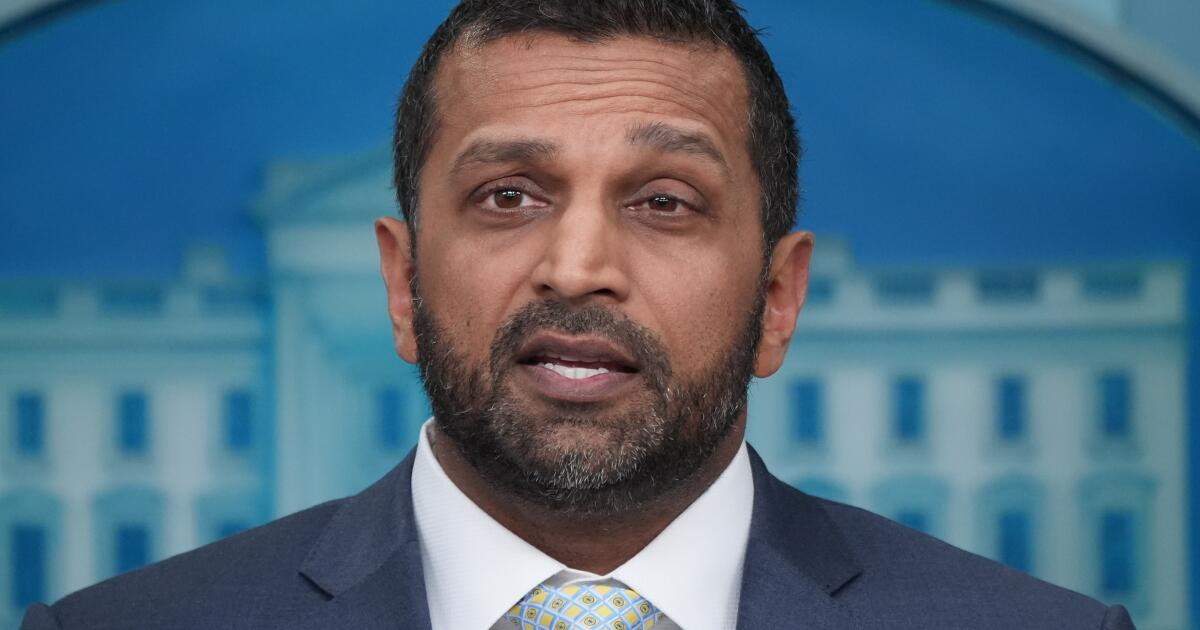






![[Al Jazeera]](https://i0.wp.com/www.aljazeera.com/wp-content/uploads/2025/04/Interactive_Gaza_foodaid_timeline-1742987531-1744365779.webp?w=640&ssl=1)