Here are some other top tips of what to do in Palermo.
MUST SEE/DO
Palermo is often said to be one of the most conquered places in the world, with stints under the Romans and Normans as well as the Spanish and French.
One of the most interesting places that shows this is the cathedral. Built in 1184, it has both Arab and Norman influences, and stands on the site of a Muslim mosque.
Make sure to also head over to Quattro Canti, a beautiful octagonal plaza with fountains and live music surrounded by restored historic buildings.
HIDDEN GEM
If you want to grab a bargain, then Palermo has some of the best markets where you are more likely to spot a local than a tourist.
One of the biggest is Mercato Antico, which takes place every Sunday. You can find everything from jewellery and artwork to books and rugs, and most of it is fairly affordable.
Or for real secret finds, tucked down Piazza Domenico Peranni are hidden antique stalls selling handcrafted homeware.
BEST VIEW
For 360-degree views of the city you will want to head up the Torre di San Nicolo.
Costing just a few euros, you can enjoy the scene of the winding streets being overlooked by Mount Pellegrino.
RATED RESTAURANT
If you want a slice of Sicilian island life on a budget then brave the chaotic street stalls.
Trattoria del Carmine has loads of atmosphere and buzz, from pumping music to the smoky grills barbecuing meat.
San Domenico Square is a great free attractionCredit: Alamy
Make sure to try one of their huge arancini balls of risotto rice, as well as local classic stigghiola – a skewer of lamb intestines.
Vegetarians are well catered for too, with snacks including parmigiana di melanzane – a roll filled with tomato and aubergine.
BEST BAR
Bar Timi is said to have the island’s best negroni, serving it to tiny tables on the street.
It was the drink of choice, with every table opting for the classic cocktail that is the perfect mix of sweet and bitter.
Don’t worry if you aren’t a negroni fan, their Aperol spritz is just as good.
Want to drink on a budget? Head to any pop-up stall in the city and you’ll find a pomegranate spritz for just €3 (£2.62).
HOTEL PICK
One of Palermo’s newest hotels is NH Collection Palermo Palazzo Sitano, which opened during the summer.
The brand’s second offering on the island, the 86-room hotel is in a converted 18th century residence.
Many of the Baroque features remain, especially in the stunning hotel bar and restaurant.
Rooms start from around £110 per night.
The city is often overlooked as a destination for a quick tripCredit: Alamy
An Al Jazeera Arabic investigation obtains recordings of Suheil al-Hassan discussing Israeli support, regrouping efforts.
An Al Jazeera Arabic investigation has uncovered a plot by the aides of ousted leader Bashar al-Assad to destabilise Syria, featuring leaked recordings that suggest coordination with Israel.
The revelations, set to be broadcast on the programme Al-Mutahari, or The Investigator, on Wednesday evening, are based on more than 74 hours of leaked audio recordings and hundreds of pages of documents obtained in the investigation.
The leaks implicate al-Assad’s high-ranking officers, specifically Suheil al-Hassan, the brigadier-general who commanded the notorious Quwwat al-Nimr (Tiger Forces), an elite unit in the former regime’s army.
‘Israel will stand with you’
The investigation uncovers attempts by these officers to regroup, gather funding, and secure weapons to undermine stability in the country following the ousting of al-Assad.
In one of the most significant recordings, a source — identified in the leaks as a hacker or intermediary — is heard assuring al-Hassan of Israeli backing.
“The State of Israel, with all its capabilities, will stand with you,” the source tells al-Hassan.
“There is a level higher than me, Mr Rami is the one who coordinates,” al-Hassan is heard saying. “And I have dangerous intelligence information.”
It has been a year since a lightning offensive by allied rebel groups, led by current President Ahmed al-Sharaa, ended the Assad dynasty’s 54-year reign, forcing Bashar al-Assad into Russian exile.
Yet, as the regime collapsed, Israel seized on the instability by significantly escalating its military campaign in Syria, targeting much of its neighbour’s military infrastructure, including main airports, air defence systems, fighter planes, and other strategic facilities, as well as occupying more of Syria’s Golan Heights, and bombing the capital, Damascus, in July.
Over the past year, Israel has launched more than 600 air, drone or artillery attacks across Syria, averaging nearly two a day, according to a tally by the Armed Conflict Location and Event Data (ACLED).
‘The feeling of the coast’
The recordings also feature Ghiath Dalla, a former brigadier-general in al-Assad’s forces, who appears to validate al-Hassan’s position as a representative of the regime’s traditional strongholds.
“My Master, Suheil the Tiger, spoke the feeling of the whole mountain and the whole coast,” Dalla is heard saying, referring to the coastal and mountainous regions that were long considered the heartland of support for the al-Assad family.
The leaked conversations also capture al-Hassan expressing disdain for current developments, referred to as “the flood”.
“Our prayers for you all are that this foolishness, this evil, and this blackness called the flood ends,” al-Hassan says in the recording.
Investigation to air
The full extent of the plot will be detailed in the upcoming episode of The Investigator, hosted by Jamal el-Maliki.
Parts of the leaks are airing on Al Jazeera’s platforms on Wednesday, with the complete investigation scheduled for release in mid-January.
Bangladesh bade farewell to former Prime Minister Khaleda Zia in a state funeral that drew vast crowds mourning a towering political figure whose leadership shaped the nation for decades.
Zia, the first woman to serve as prime minister in the South Asian nation of 170 million people, died on Tuesday aged 80. Flags flew at half-mast across the country on Wednesday as thousands of security personnel lined Dhaka’s streets while her flag-draped coffin travelled through the capital.
Massive crowds gathered outside Bangladesh’s parliament building for the funeral prayers. People from Dhaka and beyond streamed towards Manik Mia Avenue, where the parliament building is located, since early morning to pay their last respects.
Retired government official Minhaz Uddin, 70, came despite never having voted for her. “I came here with my grandson, just to say goodbye to a veteran politician whose contributions will always be remembered,” he said, watching from behind a barbed wire barricade.
Zia entered politics following her husband’s death and rose to prominence opposing a military ruler who was ultimately ousted in a 1990 mass uprising. She first became prime minister in 1991 after a landslide victory when parliamentary democracy was introduced, and remained leader of the Bangladesh Nationalist Party until her death.
Known for her calm demeanour, Zia maintained a strong political rivalry with her archrival Sheikh Hasina, who led the Bangladesh Awami League party and ruled for 15 years before being ousted in a 2024 mass uprising.
Security was extensive, with authorities deploying approximately 10,000 personnel, including soldiers, to maintain order. Nobel Peace Prize laureate Muhammad Yunus’s interim government announced three days of mourning and declared Wednesday a public holiday to honour the three-time prime minister’s legacy.
As an editor, the lion’s share of my job is about identifying the awards season’s most compelling stories and conveying them to our readers. But I do reserve a small sliver of time for the joys of advocacy, championing work that I love and hoping that converts readers into viewers, and perhaps even voters.
So, with no new issue this week, my New Year’s Eve newsletter felt like the perfect time to reflect on the movies and TV shows that moved me in 2025. And if you give them another look before you cast your awards ballots, all the better.
MOVIES
1. ‘A Little Prayer’ and ‘The Testament of Ann Lee’
David Strathairn and Jane Levy in “A Little Prayer.”
(Music Box Films)
I am not terribly spiritual myself, but I encountered transcendence twice at the movies this year. As quiet and beseeching as its title, Angus MacLachlan’s chamber drama “A Little Prayer,” about a family man (David Strathairn) navigating marital trouble between his son (Will Pullen) and his daughter-in-law (Jane Levy), uncovers varieties of religious experience in 19th century landscape painting and small, memorable kindnesses. As sweeping as the extraordinary life it depicts, Mona Fastvold’s biographical portrait “The Testament of Ann Lee,” which follows the Shaker leader (Amanda Seyfried) and her devotees from the textile mills of Manchester to the wilderness of colonial New York, carves sensuous art from the exalted song and dance of evangelical faith. But whether the scale is intimate or epic, both capture, to quote “A Little Prayer,” that rare thing: “a powerful sense of the sublime.”
2. ‘Sinners’
Michael B. Jordan in “Sinners.”
(Warner Bros. Pictures)
“Sinners” has rightly been praised for its novel twist on the vampire genre, its deep investment in African and African American music, its blockbuster box office in an era largely dominated by franchise IP. But perhaps the highest compliment I can give director Ryan Coogler may be that the Jim Crow Mississippi he conjures is so richly textured, so allergic to cant or cliche, that I’d have been just as riveted if the bloodsuckers had never shown up. That’s what it’s like to be in the hands of a master.
3. ‘Sorry, Baby’
Eva Victor in “Sorry, Baby.”
(Philip Keith / A24)
Eva Victor is not the first filmmaker to face trauma with a sense of humor, but few have done it with such a gentle, humane touch. As Victor’s Agnes moves through life in the aftermath of a sexual assault on her college campus, the writer-director-star focuses squarely on the slow, ungainly, ultimately profound work of healing — and includes some of the best gags about academia this reformed graduate student has ever seen. No apology needed: “Sorry, Baby” marks the arrival of a major talent.
4. ‘One Battle After Another’
Leonardo DiCaprio in “One Battle After Another.”
(Warner Bros. Pictures)
With elements of action, satire, political thriller and family melodrama, Paul Thomas Anderson’s wild yarn about the members of a revolutionary group — and the fallout that comes when the past catches up with them — is well-nigh indescribable. But it’s also unforgettable. Combining high-wire filmmaking with electric performances, it never relinquishes its grip on the viewer and invites multiple viewings. Which is just as well, considering that this one is going to be on the tip of our tongues all the way through the Oscars.
5. ‘Nouvelle Vague’
Zoey Deutch as Jean Seberg and Guillaume Marbeck as Jean-Luc Godard in “Nouvelle Vague.”
(Jean-Louis Fernandez)
The purest delight of the season is Richard Linklater’s mash note for the French New Wave, a zippy comedy of errors about the making of one of the most influential films of all time. As Jean-Luc Godard (the rakishly charming Guillaume Marbeck) tries to put “Breathless” together with spit, glue and attitude on the streets of Paris, “Nouvelle Vague” becomes as confident a caper as the original, with Jean-Paul Belmondo (Aubry Dullin) and Jean Seberg (a beguiling Zoey Deutch) as the French director’s oft-befuddled collaborators — and sometimes foils. To overlook a film with this much cinematic joie de vivre would be a crime.
6. ‘Sirât’
The rave sequence that opens “Sirât.”
(Neon)
The less said the better about Spain’s acclaimed Oscar submission, which takes such twists and turns as it wends its way through the Moroccan desert that it left me frozen, after my first screening, in a sort of defensive crouch. I simply suggest that you go on the journey with filmmaker Oliver Laxe as he follows a father (Sergi López) and son (Bruno Núñez Arjona) on their search for a missing loved one, beginning with a rave so lifelike it almost had me dancing in the aisles.
7. ‘Hedda’
Tessa Thompson, center, in “Hedda.”
(Matt Towers / Prime Video)
I must admit I went warily into “Hedda.” An awards-season Ibsen adaptation had, I feared, all the makings of a fusty, dour costume drama. Mea culpa, Nia DaCosta. Mea culpa. The filmmaker’s sharp, fresh take on “Hedda Gabler,” featuring mesmerizing performances from Tessa Thompson as the devious title character and Nina Hoss as her (gender-swapped) former lover, renders the play as provocatively, and vividly, for today’s viewer as it must have been for attendees at the Munich premiere in 1891 — and in the process reminds us why the original is an enduring classic.
8. ‘Sentimental Value’
Stellan Skarsgård and Elle Fanning in “Sentimental Value.”
(Kasper Tuxen)
No film this year has left me more eager for a rewatch than Joachim Trier’s delicate family drama, and I was rewarded with the sense that “Sentimental Value” is really two films, woven together so deftly that they can’t quite be unraveled. One is the story of two sisters (Renate Reinsve and Inga Ibsdotter Lilleaas) bonded by generational trauma. The other is about a filmmaker, their father (Stellan Skarsgård), recruiting a sympathetic outsider (Elle Fanning) to tell the story of his own. By the time these strands reach their conclusion, on a soundstage built to resemble the family manse, Trier’s thoughtful architecture pays off in the understanding that you really can go home again, because home is a state of mind.
9. ‘The Alabama Solution’
A still from “The Alabama Solution.”
(HBO Documentary Films)
In an especially strong year for documentaries, particularly those that appreciate, emulate or chronicle the work of investigative journalism, it seems a shame to single out just one. But from the moment of its Sundance Film Festival premiere, the movie by Andrew Jarecki and Charlotte Kaufman registered as a prime example of nonfiction storytelling’s unmatched ability to “comfort the afflicted and afflict the comfortable,” starting with its unflinching use of Alabama state prison inmates’ contraband cellphone footage of the shocking conditions they’re forced to endure. As advocacy, as exposé, as portrait of the fight for justice, no documentary has stuck with me this year quite like “The Alabama Solution.”
10. ‘All That’s Left of You’ and ‘The Voice of Hind Rajab’
Scenes from “All That’s Left of You,” left, and “The Voice of Hind Rajab.”
(Watermelon Pictures; Venice Film Festival)
One expands its tale of the Palestinian experience across continents and decades, the other condenses its saga to just 90 minutes, balanced on a knife’s edge between documentary and drama. But for all their stark stylistic differences, both “All That’s Left of You” and “The Voice of Hind Rajab” — along with films such as “Palestine 36” and “Put Your Soul on Your Hand and Walk” — urgently communicate, in specific human terms, the life-and-death consequences of a struggle for self-determination too often abstracted in the West to its “complicated” or “thorny” geopolitics. Whether the setting is Jaffa or Gaza, the subject a multigenerational family pushed to its breaking point or the fate of a single little girl, both will leave you shaken. As they should.
TV SHOWS
1. ‘Andor’
Diego Luna and Genevieve O’Reilly in “Andor.”
(Lucasfilm Ltd. / Disney)
Turning its portrait of reluctant rebel Cassian Andor (Diego Luna) into a kaleidoscopic thriller about a simmering revolution reaching the boil — and the authoritarian forces set on stopping them — “Andor’s” second season emerged, by degrees, as the year’s most astounding political allegory — on any size of screen. Aided by an ingenious structure, which divided its four-year arc into four, three-episode miniseries, it ensnared even avowed “Star Wars” skeptics, and featured both the best action set piece and the best monologue of the year.
2. ‘The Rehearsal’
Nathan Fielder in “The Rehearsal.”
(John P. Johnson / HBO)
Another sophomore step up, this iteration of “The Rehearsal” — which bordered on cavalier about its civilian subjects in Season 1 — finds impresario Nathan Fielder with more skin in the game, and so becomes a revelatory meta-comedy that lives up to its immense ambition. Come for the elaborate re-creation of American airports, stay for a surprisingly vulnerable Fielder investigating the possibility that he’s on the autism spectrum, and be wowed by the series’ real-world implications for pilot communication. Whatever aspect of “The Rehearsal” grabs you first, it’s the inimitable, inexpressible whole that makes it essential viewing.
3. ‘Adolescence’
Stephen Graham, left, and Owen Cooper in “Adolescence.”
(Netflix)
It would be easy to be jaded about “Adolescence,” which seems likely to follow in the footsteps of “Baby Reindeer” and win just about every award it’s eligible for. (It’s already notched eight Emmys.) But from the moment I first laid eyes on its extraordinary one-shots, I was persuaded that the series’ technical wizardry was no gimmick. As written by Jack Thorne and Stephen Graham and directed by Philip Barantini, in style and substance “Adolescence” captures polite society’s hold on young men spiraling out of control — and invests its central figure, Owen Cooper’s 13-year-old Jamie, with both the childishness and the menace to match.
4. ‘Elsbeth’
Carrie Preston in “Elsbeth.”
(Michael Parmelee / CBS)
I was glad to hear that CBS plans to campaign “Elsbeth” as a comedy at the Emmys in 2026, in part because it may improve Carrie Preston’s chances at a nod for her turn as irrepressible investigator Elsbeth Tascioni, and in part because the designation highlights what has always shined most in the legal universe of Robert and Michelle King. Here, it’s broader and brighter than the acerbic satire of “The Good Wife” and “The Good Fight,” and embedded in a “Columbo”-esque case-of-the-week structure, but the pair’s sense of humor — always keyed to punching up — continually works wonders, especially in a world where so much crime media is unrelentingly grim.
5. ‘The Pitt’
Noah Wyle in “The Pitt.”
(Warrick Page / HBO Max)
Given that “ER” was the first show my mom let me stay up late to watch, I wasn’t surprised to like “The Pitt.” But even with my high expectations, I was dazzled by the series’ ability to introduce such a wide array of characters in the pilot episode, and then to develop them all in a seemingly infinite variety of directions while solving one medical crisis after another. Indeed, forced by its “real-time” structure to keep the focus tight even as the stakes ratchet skyward, “The Pitt” registers as even richer, subtler and more relevant than its predecessor. May its heyday last just as long.
6. ‘Dying for Sex’
Jenny Slate, left, Sissy Spacek and Michelle Williams in “Dying for Sex.”
(Sarah Shatz / FX)
Since first seeing it in the spring, I haven’t been able to get out of my head the most hilarious moment in “Dying for Sex.” When Molly (Michelle Williams), early in a journey of sexual self-discovery prompted by a recurrence of cancer, falls victim to an online ransomware scam, she drops to the floor to escape the sight of her laptop camera — soon to be joined by her loyal but scattered bestie, Nikki (Jenny Slate), who is not much help but is great company. It had me doubled over with laughter, like so much of Liz Meriwether and Kim Rosenstock’s adaptation of the real-life story. The miniseries never pulls a comic punch despite the heavy subject matter, and is peppered with idiosyncratic choices and memorable performances that make it sing. Special shout out to Rob Delaney for turning a total slob named Neighbor Guy into one of the romantic heroes of the year.
7. ‘Forever’
Michael Cooper Jr. and Lovie Simone in “Forever.”
(Elizabeth Morris / Netflix)
The Emmy success of “The Studio” and the buzz around “I Love L.A.” may have somewhat overshadowed “Forever,” but they have given me consistent opportunities in 2025 to recommend my favorite L.A.-set show of the year. Mara Brock Akil’s warmhearted, meticulously wrought teen romance, channeling Judy Blume’s condescension-free interest in young people, paints a portrait of places in the city where those other series rarely go, and does so with uncommon sensitivity. I could watch “Forever,” well, forever. Plus, it features one of the year’s finest dramatic performances: Like the series as a whole, Karen Pittman’s protective mother transforms an archetype that could easily ring with cliches into a lived-in, multilayered portrait. Give me more, Netflix!
8. ‘The Gilded Age’
Audra McDonald, left, and Denée Benton in “The Gilded Age.”
(Karolina Wojtasik / HBO)
After two enjoyably low-stakes seasons, HBO’s New York-set spin on the upstairs/downstairs drama, created by “Downton Abbey’s” Julian Fellowes, breaks out of the (opera) box in Season 3. With ruined women, roguish men and more geegaws than you can shake a stick at — not to mention a character known to the internet as Clock Twink (Ben Ahlers) — the series remains a deliciously campy prime-time soap, but it now features moments of genuine romance, or regret, to accompany the social climbing. With Peggy (Denée Benton) finding love, Ada (Cynthia Nixon) finding fortune and conniver in chief Bertha Russell (Carrie Coon) finding herself on the outs with her wealthy husband (Morgan Spector), “The Gilded Age” has reached glorious maturity by developing a subplot for just about every taste, even one as lofty as the Van Rhijns’.
9. ‘The Paper’
Domhnall Gleeson in “The Paper.”
(Aaron Epstein / Peacock)
Call me a homer if you like for putting a show about the survival of local newspapers on this list. And when it comes to the indignities of 21st century journalism, “The Office” spin-off, from Greg Daniels and Michael Koman, certainly passes my fact-check. But more importantly, and sustainably, Peacock’s mockumentary treats the Toledo Truth Teller as the setting for a rock-solid workplace comedy, replete with a winsome editor in chief (Domhnall Gleeson), an ace reporter (Chelsea Frei) and a perfect foil, in the form of managing editor/aspiring influencer Esmeralda Grand (Sabrina Impacciatore, in perhaps the year’s funniest performance). Sure, I’m liable to root for any film of TV show that qualifies as a “love letter” to my chosen profession, but you can’t fake credibility. “The Paper” has the goods.
10. ‘Pluribus’ and ‘Paradise’
Sterling K. Brown in “Paradise,” and Rhea Seehorn in “Pluribus.”
(Disney; Apple TV)
One is full of jaw-dropping plot twists, the other meditative, often silent. One imagines the end of the world as we know it in terms of natural disaster, the other in the form of an extraterrestrial’s utopia. What Dan Fogelman’s “Paradise” and Vince Gilligan’s “Pluribus” share, though, is far more important than what sets them apart: a commitment to postapocalyptic storytelling rooted in flawed, compelling characters, not the minutia of megavolcanoes and mRNA. Indeed, as “Paradise’s” hero, Xavier Collins (Sterling K. Brown), squares off against the power-mad Sinatra (Julianne Nicholson) in an underground bunker, or “Pluribus’” Carol Sturka (Rhea Seehorn) clashes with stubborn ally Manousos Oviedo (Carlos Manuel Vesga) on an Earth overtaken by happy lemmings, what becomes clear about both series — and I mean this as a high compliment — is how ordinary they are. If you want to know how you might handle doomsday, you could do worse than starting here.
WASHINGTON — Defense Secretary Dick Cheney predicted Thursday that the Soviet Union will withdraw all of its troops from Europe by 1995, a forecast that prompted key Senate Democrats to question whether President Bush’s new proposal for cutting U.S. forces should be faster and deeper.
As the Senate Armed Services Committee opened congressional debate on reshaping the nation’s military structure, Cheney and the chairman of the Joint Chiefs of Staff, Gen. Colin L. Powell, were repeatedly challenged on the Administration’s troop-reduction plans.
195,000 Force Level
Cheney, disclosing the Pentagon’s rough timetable for cuts in Europe, testified that it may take a year or two to carry out any U.S.-Soviet agreement on the issue.
Bush announced Wednesday night that he was recommending that each side cut its combat forces in Central Europe to 195,000, with the United States allowed to have an additional 30,000 elsewhere in Europe. Currently, the United States has 305,000 troops on the continent.
Sen. Alan J. Dixon (D-Ill.), sharply criticizing the pace of negotiations, declared that he would push the subcommittee he heads to legislate an immediate reduction of 50,000 American troops in Europe and 10,000 in Korea.
Dixon said events are overtaking negotiations, with NATO allies West Germany and Belgium already planning their own deep cuts and Soviet forces certain to be kicked out by new governments in Eastern Europe.
“I’m not saying we should strip until we’re naked,” Dixon said. “There are reasonable, moderate, fair reductions we can make.”
Later, Committee Chairman Sam Nunn (D-Ga.) applauded Bush for going beyond his proposal of last May and advocating the withdrawal of 80,000 U.S. troops, not just the 30,000 he called for then. He called it “much more relevant to the changes in Europe and to the budget realities here at home.”
But Nunn voiced strong concern when Cheney seemed to advocate keeping 225,000 U.S. troops in Europe indefinitely, despite his prediction that the Soviets would pull all of its forces out of Eastern Europe and the two Germanys would be reunited.
Nunn warned that unless the United States had plans to make substantial withdrawals in such a case, it could wind up supplying most of the ground forces for NATO as other allies disbanded their units.
The influential senator got Cheney to concede that the Administration would “take another look” at U.S. troop levels in the event of a sweeping Soviet pullback and German reunification.
Despite Cheney’s expression of flexibility, the defense secretary firmly defended Bush’s new plan. He asserted that any effort by Congress to make unilateral troop cuts before the conclusion of U.S.-Soviet arms control talks would undermine the NATO alliance and encourage greater instability in Europe.
“We are on the verge of winning one of the greatest victories in the history of the world without a shot being fired,” Cheney said. “We should not unilaterally bring them (U.S. troops) home before we get an agreement.”
Republicans Cautious
Several Republicans on the committee strongly backed that position.
“We cannot let the euphoria sweeping this nation drive us to unilateral and hasty reductions in these forces,” Sen. Strom Thurmond (R-S. C.) said.
Although members of both parties warmly pledged to work cooperatively with Cheney and Powell in the battles ahead, several Democrats served notice that they would press for deep cuts in the Administration’s proposals for increased spending on strategic weapons programs.
Sen. Edward M. Kennedy (D-Mass.) proposed a “Democratic alternative” that he said would carve a $169-billion “peace dividend” out of the defense budget over the next five years, more than quadrupling the savings proposed by Bush for the same period.
Kennedy singled out the B-2 Stealth bomber, the “Star Wars” anti-missile program and other major programs for deep slashes. He argued that Bush’s budget fails to reflect a dramatically diminished Soviet military threat and a massive upgrading of U.S. strategic weapons in the last decade.
“We have to have a modernization program,” he said, “but does it have to be at the madcap pace of the 1980s?”
Cheney, while acknowledging major changes in the world, said that the Soviets continue to modernize their own strategic arsenal. “The Soviet Union remains the only nation on earth capable of destroying the United States,” he said.
Powell likewise contended that this was no time for the nation to let down its guard.
“I never want to return to that leisurely, comfortable ‘From Here to Eternity’ attitude of the 1930s that helped invite global conflict to an unsuspecting world,” he said.
The Lakers are still searching for an identity after 31 games, a task complicated by injuries that have depleted their rotation for much of the season.
They’re lacking a defensive personality. They haven’t been a physical team, an overly athletic team or a fast team.
The Lakers got a close look at a team that embodies all of those characteristics in a 128-106 loss to the Detroit Pistons on Tuesday night at Crypto.com Arena.
Coach JJ Redick acknowledged the Lakers are still trying to figure out who they are and how they can fix their issues after losing for the fourth time in five games.
Lakers star LeBron James is fouled by Detroit Pistons guard Javonte Green (31) in the first half Tuesday.
(Gina Ferazzi / Los Angeles Times)
“The players, staff, everybody, we’ve really tried to play the right way every night and have the right intent,” Redick said. “The flow of lineups and rotations and all that has been challenging for everybody, not just the coaches. It’s a challenge for the players. And building an identity is difficult.”
“I think that’s hard to figure out with this team right now.”
It’s been hard because starters Austin Reaves (calf) and Rui Hachimura (calf) are out. Key rotation player Gabe Vincent (back) is also out. In addition, LeBron James missed the first 14 games with sciatica.
The Lakers’ roster has been completely healthy for just two games this season.
“We got some very important guys out right now,” said James, who scored 17 points on his 41st birthday. “So that’s very hard to get a rhythm of chemistry on the floor with guys that you know you’re gonna play with every night. Guys you know are going to come in with the subs and patterns and things like that.
“But still no excuse. We still got to go out and execute and I think we did that tonight. I thought, like I said, the turnovers were too many pick-sixes, but we came in, we played hard, we executed. The better team tonight won.”
What the Lakers (20-11) haven’t done much all season is play defense at a high level.
That was the case against the Pistons (25-8), who shot 63% from the field and 46% from three-point range. They had 74 points in the paint, getting inside with ease. They also had 31 fast-break points. The Lakers had 21 turnovers, eight coming from Luka Doncic, who finished with 30 points and 11 assists.
“We’ve got to definitely match their physicality,” Doncic said. “That’s the whole point. We got to match how they play.”
The Lakers’ 11 losses have been by an average of 20.3 points per game.
The Lakers got better on defense in the third quarter. After giving up 36 points in the first quarter and 34 in the second, the Lakers gave up 26 in the third and were down 96-88.
But they fell apart in the fourth, giving up an 18-6 run that put them in a 20-point hole midway through the quarter. The Lakers turned the ball over six times during that stretch, leading Redick to call a timeout with six minutes remaining.
That still didn’t stop the Pistons from building a 26-point lead and coasting to victory.
“Yeah, I think we just let off of the rope a little bit,” Doncic said. “Like I said, I think we played good basketball for three quarters, physical basketball. We just kind of let go of the rope.”
Lakers guard Luka Doncic, right, inadvertently hits Detroit Pistons forward Ronald Holland II (5) in the face after Holland steals the ball in the second half Tuesday night.
South Korean Minister of Unification Chung Dong-young speaks during a parliamentary inspection of his agency by the Diplomacy and Unification Committee at the National Assembly in Seoul, South Korea, 14 October 2025. File Photo by YONHAP / EPA
Dec. 30 (Asia Today) — South Korea’s Unification Ministry said Tuesday it will begin using the term “North Korean migrants” starting Jan. 1 in government and local authorities as a replacement for “North Korean defectors,” saying it will seek broader social consensus before pursuing a legal change.
Vice Unification Minister Kim Nam-joong said at a briefing at the Government Complex Seoul that the current term has long been debated because of what officials view as negative connotations and stigmatizing effects.
“The term ‘North Korean defectors’ has been subject to ongoing discussions for change due to its negative connotations and stigmatizing effects,” Kim said. He called on North Koreans who have resettled in the South to participate in using the new term so they can feel “even a little warmth” from society.
Kim said use of the new term would not be mandatory and the ministry would first apply it within government and local authorities before expanding it more broadly. He said the ministry plans to keep listening to views from North Koreans living in South Korea and to explain the government’s intent.
The ministry said it would push to adopt the term as a legal designation if it gains wider traction, after earlier efforts to shift terminology failed.
However, the ministry acknowledged resistance among North Koreans who have resettled in the South. In a survey conducted from Sept. 26 to Oct. 5 of 1,000 South Korean adults and 1,000 North Korean defectors, 53.4% of defectors opposed changing the term, while 63.5% of the general public supported a change, the ministry said.
Among defectors, the most preferred alternative was “freedom citizens” at 30.5%, followed by “northern migrants” at 29.8%, “unification citizens” at 18.8% and “northern immigrants” at 12.7%, the ministry said. Among the general public, “North Korean migrants” was the top choice at 31.8%, followed by “Northbound citizens” at 27.7% and “free citizens” at 22.2%.
A senior ministry official said the new term reflects what the ministry described as a “dual identity,” referring to North Korea as a homeland while recognizing citizenship in South Korea. The official said the ministry also gathered expert opinions in reaching its decision.
The ministry also announced additional measures related to resettlement support. It said educational smartphones will be provided individually to North Korean defectors during training at Hanawon and that it plans to allow autonomous internet use after work hours to expand access to information and enable family calls.
It also said visitation policies for Hanawon trainees will be expanded to include friends and acquaintances, with broader weekend visitation.
The ministry said Hanawon operations will be consolidated as the number of entrants declines, with the Hwacheon branch to be integrated into the main Anseong campus.
Already sick of the cold weather? Luckily, there are options for inexpensive holidays in January from the Canary Islands to Africa and beyond which offer warm weather without a huge price tag
Adam Peaty’s sister Bethany (right) has revealed the lavish bridesmaid gift from Holly RamsayCredit: GettyThe Olympic swimmer tied the knot with Gordon Ramsay‘s daughter on SaturdayCredit: SplashAdam’s parents were uninvited from the weddingCredit: Instagram
But the nuptials had been overshadowed by Adam’s ongoing feud with his family, including his parents who were uninvited from the wedding.
Adam’s older sister Beth was the only family member to be invited to the big day – and along with Holly’s sisters Tilly, 24 and Megan, 27, she was one of the three bridesmaids.
Beth has now revealed the generous bridesmaid gift she received prior to the wedding.
She took to Instagram to share personalised items Holly had sent her, including a pot of Charlotte Tilbury Magic Cream, which retails for £79.
She was also treated to personalised pillow cases with her name on it and the word ‘Bridesmaid’, as well as matching tote bags for her and her partner Dan.
Beth shared a snap of her pre-wedding prep which also included a pair of black pyjamas, a sleep mask and a handkerchief which was embodied with the words ‘Beth Bridesmaid 27.12.2025.”
The lead up to their nuptials was fraught with drama, after Adam, 31, uninvited his mum Caroline when a feud erupted over her failing to be invited to Holly’s hen do.
It was then revealed that Adam had said his dad Mark could attend the wedding – but he would have to sit at the back of the church.
Unsurprisingly, Mark chose not to attend, as did Adam’s brothers James and Richard.
Now, The Sun can reveal that his great aunt Janet, 73, and uncle Eddie were uninvited in a very brutal way just four days before the ceremony.
A source said: “They got an automated message basically saying they were off the guest list and to respect Adam and Holly’s decision.
“It was so impersonal, and just four days before the big day.”
The brutal text came despite the fact the couple had already shelled out hundreds of pounds on accommodation, outfits and gifts.
His words left Caroline “outraged and hurt” with an insider telling the Daily Mail: “Caroline can’t believe Gordon brought their family troubles up his speech. It is outrageous and very hurtful.
“By him saying Tana will be a good mum to them both makes Caroline sound like a bad mum. It was a cruel dig at her.
“She has always done her best for all her children. She is a very good mum.”
However, the newlyweds brushed off any further drama as they were pictured leaving Gordon’s London home on Monday to jet off on honeymoon.
A British expat has shared an insight into what Benidorm is like in the winter season and she offered a worrying reason why some tourists may be avoiding the streets
Liam McInerney Content Editor
09:58, 31 Dec 2025
Lucy went for a walk along the empty strip (Image: benidorm stuff/Youtube)
An expert on all things Benidorm has shared insight into what the popular Spanish resort is like in the winter months – declaring that it is “completely dead”.
Expat Lucy Young runs the Benidorm Stuff YouTube channel and she recently toured the usually bustling strip that looked more like a ghost town.
Starting her vlog, she said: “It’s very quiet… in fact it’s dead! Pretty much as dead as it gets. There are plenty of places open but there are just not many people around. So let’s go for a wander and see if we can find any life in December. The whole of Benidorm is just completely dead at this time of year.”
Lucy, who has lived there for over 20 years and is known as the Benidorm Enthusiast, began her stroll on a Tuesday night just after 10pm and she told her 75,900 subscribers it was as deserted as they would ever see.
However, being low season, she acknowledged that the empty bars and quiet streets were as expected, but she still sometimes forgets just how silent it gets.
She added that she highlights just how “absolutely wild” the resort is during high season, and therefore it was important to show it at its quietest period too.
During her walk past bars that are usually heaving with partygoers, Lucy shed some insight into the different reasons why the streets were almost empty.
She explained how Levante Beach remained a hive of activity during the day time in winter and that the Old Town has got a buzz about it in the afternoon – but where does everyone go when the sun drops?
She said: “Many tourists that come in December just stay in their hotels. It can get pretty nippy and I don’t think people realise just how nippy it can get.”
The content creator said temperatures drop rapidly by 10 degrees or so once night falls and there is no escaping the chill.
She added that hotel rooms were warm, cosy and provided entertainment, and therefore many tourists preferred to simply stay put.
Citing a more worrying reason, she hinted that the strip was not as safe as it could be, and some folk were unwilling to venture out too late.
She explained: “I think it is down to the age group as well. We do get a slightly more mature age group at this time of year and I think sadly some just don’t feel particularly safe around here late at night anymore.
“It is a real shame because this area used to be welcoming for all ages at all times of the year really. But I think in recent years most people will agree that this area has changed and not for the better.
“If you are not a hardcore partygoer you may well be put off by this area these days. Even I can feel a little bit intimidated walking around here and I know these streets like the back of my hand.”
She added that the liveliest parts of Bendiron were around the Hotel California bar and The Crown pub where a few people were gathered for drinks.
Lucy later joked that she expected to see tumble weeds rolling down the road by the time she reached the end of the strip because of how quiet it was.
The YouTuber acknowledged that some people will prefer Benidorm this way, usually because they can get a seat for entertainment shows that are performed all year without having people talk over them.
But as for anyone coming in winter, she advised them not to expect the strip to be “absolutely bouncing” before emphasising one final time: “The strip at night? It is pretty dead and deserted.”
After posting the video, which you can watch here in full, one person commented: “Omg don’t think I have ever saw it so empty Lucy.”
Another wrote: “Coming out for the new year, really looking forward to it and hope it’s worth it.”
A third said: “Still love Benidorm at New Year it will be so different then.”
One person added: “Why is it like this? I live 45 minutes away, never seen it like that since lockdown.”
WHEN it comes to food, there’s much more to Lincolnshire than sausages and seafood (although you should try those, too!).
This is of course home to delicious local sausage rolls (made with Lincolnshire sausages, of course) and fish and chips fresh from the coast.
The fun Admiral Benbow Beach Bar in Chapel St Leonards is named after the inn in the book Treasure IslandCredit: admiralbenbowbeachbar.co.ukColourful beach huts line the seafront in MablethorpeCredit: Alamy
But there’s more on offer – from vintage tea shops to village pubs dating back hundreds of years.
You’ll also find plenty of wallet-friendly options along the coast, as well as restaurants that welcome families with kids’ menus and even pirate-themed animations.
We’ve chosen some of our favourite places to eat and drink that are all within easy reach of your £9.50 Holiday in Lincolnshire.
As well as our expert picks, we’ve asked Sun readers who have holidayed here and local holiday park staff for their recommendations, including their favourite chippies, pubs and coastal cafes.
Best local pub
Joanne Green, General Manager at Parkdean’s Sunnydale holiday park, recommends The New Inn in Saltfleet, which is within walking distance of the holiday park.
She said: “It’s popular with the locals. They’re a seasonal pub so they usually close over the winter.
There’s also The Axe and Cleaver in North Somercotes, which has good food that is reasonably priced.”
Tip: Make the most of The Axe and Cleaver “pie and pint night” on Thursdays (£12.95 for a pie, sides and a pint of ale or a wine).
Meanwhile, Alex Trembath, creator of the Lincoln and Beyond blog, recommends heading to Theddlethorpe village for the King’s Head Inn.
He said: “It’s a 16th-century thatched pub run by a local couple, with big portions at reasonable prices.”
The Blitz Tea Room in Mablethorpe is designed like it would have been during The Blitz with taped windows and a retro interiorCredit: facebook
Favourite brunch spot
If you’re staying near Sunnydale, Sun reader Linda McDonnell, 71, recommends GiGi, an Italian restaurant in North Somercotes, less than three miles away.
Linda, from Lincoln, said: “You will get the most amazing experience there, and it’s not overly dear.
“From the front, it’s a very unassuming little place – but when you enter it, it’s done beautifully with wooden beams, exposed bricks and a relaxed, Italian atmosphere.
“As soon as you go in, you’re greeted and taken to your table. It’s child-friendly and the food is exceptional.
It’s a very nice place to go, whether you want to go for a romantic meal or meal with a family.”
GiGi has a brunch menu (10.30am until 4pm, Thursday to Sunday) – including Italian eggs benedict (£8.90) and a gourmet cheeseburger (£13.90).
They also serve a brilliant range of pizzas (from £10.90), fresh meats and kebabs. Kids meals cost £8.95 and come with a free scoop of ice cream.
Favourite place for a cheap eat
On the seafront at Mablethorpe,The Beck is very popular. Linda McDonnell said: “They do a carvery every day throughout the year and it’s great value, especially for kids (£3 for under-twos).
You can choose from three different sized carveries, depending on how many slices of meat you want (£8.99 for small, £9.99 for medium, £13.99 for large).
They also have lots of special offers, like two-for-one meals.”
Further down the coast in Skegness, The family-run Cosy Corner Cafe is a great value breakfast spot, with a Full English from £6.60 and kids’ breakfasts costing £4.50.
They also offer a two-for-one breakfast special (Tuesday to Friday mornings) for £11.95.
The Trawler’s Catch, a pirate-themed fish and chip shop in SkegnessCredit: Facebook
John, who is from Sheffield and was staying nearby at Golden Palm Resort on his most recent £9.50 Holiday, said: “It’s a great chippy. Fish and chips is no longer a cheap meal anywhere, but Marina’s is worth paying for.
“It’s better than the chippies in Skegness.”
Marina’s cod and freshly-cut chips cost £9.49. A mini fish deal (mini fish, small chips and a side) costs £6.99.
Best for a pint on the beach
John Ellis recommends checking out the pubs on the seafront of Chapel St Leonards, like the fun Admiral Benbow Beach Bar.
He said: “It’s a bar in a boat on the beach and it has a fun atmosphere.”
The main building has previously served as everything from a public toilet to a workman’s hut and is named after the inn in the book Treasure Island.
This is also a good option for dog walkers, as it’s dog-friendly inside or you can enjoy an alfresco pint in the outdoor beach bar.
The Admiral Benbow Beach Bar is a good option for dog walkers, as it’s dog-friendly inside or you can enjoy an alfresco pint in the outdoor beach barCredit: admiralbenbowbeachbar.co.uk
Best quirky cafe
If you want to step back in time, Linda McDonnell recommends Maplethorpe, saying: “It’s a nice place to sit and have a coffee and people watch.
“The town is quite small, and very quaint. It hasn’t changed a lot, and they keep it nice.
“I like The Blitz Tea Room – it’s designed like it would have been during The Blitz with taped windows and retro interior.”
The World War II theme includes walls decorated with posters and artefacts and tea served old school-style (as loose-leaf tea in a teapot with a strainer).
Food also harks back to old-fashioned British choices like stew with doorstep bread and steamed pudding and custard.
For more vintage feels, head to Lady B’s Tea Room down the road – perfect for afternoon tea or cocktails with an antique twist.
Best place to take the kids
Alex Trembath reckons families should hot-foot it to The Trawler’s Catch, a pirate-themed fish and chip shop in Skegness.
He said: “Portions are generous and kids will love the animated fire cannons.”
Holidaymakers enjoying the sunshine refreshments at Mablethorpe in LincolnshireCredit: Getty
As New Yorkers watched California grapple with recall politics in recent months, many chortled over what they called democracy run amok. But now a controversy over ballot measures and voting procedures is giving the Big Apple its own electoral black eye — a case, some say, of democracy under wraps.
It started during the summer when Mayor Michael R. Bloomberg, a Republican in a heavily Democratic town, placed an initiative on the city’s Nov. 4 ballot that would ban partisan local elections. The mayor has contributed $2 million of his own money to pass the measure, which would reduce the traditional clout of the Democratic Party in New York City politics.
He also took steps to block voters from considering an initiative signed by 115,000 residents that would compel the city to form a commission on chronic overcrowding in public schools. Bloomberg, like other mayors before him, invoked a little-known state law that bars other initiatives from appearing on a municipal ballot once a charter-reform measure is placed on it.
New York’s powerful teachers union challenged the decision, saying the law was unconstitutional. But the state’s highest court upheld the exclusion last week, effectively killing the issue for next week’s election. In their arguments, city attorneys contended that voters might be confused by too many measures on a ballot at once.
“It’s as if we have no right to direct democracy here, and some people think we’re probably too stupid to focus on more than one issue at once,” said Wayne Barrett, a New York historian and journalist. “Those of us who believe in real democracy would have to say Californians are now way ahead of us. At least they’re alive out there.”
Unlike California, where disparate ballot measures seem to blossom each election season, the process of putting initiatives before voters is rarely seen in New York. But it’s not due to a lack of grass-roots energy. Activists have been complaining for years about the crucial “home rule” law, passed decades ago, which gives New York City mayors power to decide what will appear on a ballot.
Like other mayors, Bloomberg used the vehicle of a Charter Reform Commission to exercise these powers. He formed a panel this year to study the idea of banning partisan local elections — a move that would prevent candidates from running as the nominee of a particular party — and to no one’s surprise the panel voted to put the measure on the Nov. 4 ballot, along with two other city reform proposals.
Mayor Rudolph W. Giuliani, who preceded Bloomberg, used a similar strategy in 1998. He formed a charter commission at a time when City Council leaders had backed a ballot initiative opposing Giuliani’s unpopular plan to build a new stadium in Manhattan for the New York Yankees. The panel placed several measures before voters, thus knocking the baseball measure off the municipal ballot.
“We should know by now that mayors will always use this charter commission strategy to control the ballot,” said Doug Israel, political director of the Citizens Union Foundation, an activist group that opposes Bloomberg’s nonpartisan proposal. “And what’s really undemocratic is that a mayor could spend unlimited amounts on a proposal, while keeping other initiative proposals away from New York City voters.”
Stung by criticism of his campaign for nonpartisan elections, Bloomberg told a news conference last week that he was determined to eliminate decades of party-based corruption at City Hall. He said nonpartisan elections would pave the way for more minority candidates, freeing them from the need to win party nominations.
“This has nothing to do about me,” he said, rejecting criticism of his willingness to devote huge amounts of personal funds to the campaign, as he did in spending $75 million to be elected mayor two years ago. “Nonpartisan elections is something I have believed in for a long time. We’ve seen scandal after scandal in the newspapers of party bosses taking away the public’s choice. And that’s not democracy.”
A Quinnipiac Poll released last week suggested that New Yorkers are evenly divided over the proposal. But 55% said the voting should be delayed because people have not had enough time to consider the measure; a majority of voters also told pollsters they were critical of Bloomberg spending his own money on the campaign.
To be sure, Democratic activists have also raised funds to fight the measure, and top party officials say Bloomberg’s proposal would hurt minority candidates, who have been heavily backed by New York’s Democratic organizations in past elections.
The mayor has also drawn fire from Randi Weingarten, president of the United Federation of Teachers, who backed the initiative on classroom size. She was incensed when Bloomberg argued that the teachers union — locked in bitter wage talks with the city — had mounted the grass-roots campaign as a “publicity stunt.”
Longtime city observers differ over the merits of nonpartisan elections and a move to regulate classroom size via the ballot. Some note, for example, that most of the nation’s largest cities — including Los Angeles and Chicago — have nonpartisan elections, and that these communities have elected African American mayors.
But many experts are troubled by New York’s long-standing barriers to getting initiatives on a ballot and say sweeping legislative changes are overdue.
“When activists tell me they want to put something on the local ballot, I tell them I hope they have a lot of money to spend on lawyers,” said Gene Russianoff, senior attorney for the New York Public Interest Group. “It’s a huge uphill battle here.”
One of the few success stories, he noted, came in 1993, when millionaire businessman Ron Lauter spent an estimated $150,000 on legal fees to overcome City Hall objections to a measure imposing term limits. The initiative eventually passed.
The main roadblocks seem to come from state legislators, who would have to pass any laws making it easier to put initiatives on city or state ballots. They have voiced long-standing opposition to California-style ballot measures, Russianoff said, because such proposals would so often create an end run around their power.
As the city’s ballot wrangling continues, many New Yorkers might agree on this much: For now at least, those California jokes don’t seem quite as funny.
“It doesn’t speak well for us here in New York City when 115,000 people can sign a petition to raise an issue and they can be so completely denied,” said veteran political consultant Hank Sheinkopf. “In California, they’d never stand for this.”
We need to talk about Hull City. No, we really do.
Four wins during a five-match unbeaten run have been eye-catching enough but when you consider those victories have come against Wrexham, Millwall, West Bromwich Albion and Middlesbrough it is time we took notice.
Those victories have also come without the Championship’s joint second top scorer, Joe Gelhardt, who may still be out for at least another fortnight before he can add to his 10 goals, while winger Mohamed Belloumi has also joined the casualty list.
Under their previously unheralded boss Sergej Jakirovic, the Tigers have quietly sneaked into fourth place, two points outside the automatic promotion places.
“I’m very pleased because we are playing well and we will try to push this but it will not be easy because everyone is struggling with injuries,” said Jakirovic after Monday’s win at Middlesbrough.
A title winner in his native Bosnia as well as Croatia, he knows how to get the job done but sustaining it with limited trading ability in the January transfer window will be a test of his skills.
Also, before any fans in East Yorkshire get too excited they may like to look at Thursday’s opponents Stoke when they arrive at the MKM Stadium (15:00 GMT).
Second at the end of November, the Potters’ poor run of five defeats from their past seven outings finds them now in 10th place, four points short of the top six.
Fortunes can fluctuate quickly in football, particularly in the chaos that is the Championship.
Job seekers look at job postings during a job fair at the COEX Magok Convention Center in western Seoul, South Korea, on 21 October 2025. File Photo by YONHAP /EPA
Dec. 30 (Asia Today) — South Korean companies plan to hire fewer workers through early next year, extending a cooling trend in the job market, the Labor Ministry said Tuesday.
The Ministry of Employment and Labor said in its 2025 second-half labor force survey that businesses with at least one employee planned total hiring of 467,000 for the fourth quarter of 2025 through the first quarter of 2026. That was down 64,000, or 12.1%, from the same period a year earlier.
The ministry also reported slower labor demand. As of Oct. 1, the number of workers businesses said they needed for normal operations stood at 449,000, down 78,000, or 14.8%, year-on-year. The labor shortage rate fell 0.4 percentage points to 2.4%.
Hiring plans diverged by company size. Firms with fewer than 300 employees planned to hire 410,000, down 69,000, or 14.4%, from a year earlier. Firms with 300 or more employees planned to hire 57,000, up 5,000, or 9.2%.
By industry, planned hiring fell in manufacturing, transportation and warehousing, construction and wholesale and retail trade. Manufacturing alone was down 15,000, the ministry said. Hiring plans rose in business facility management, business support and leasing services, as well as finance and insurance.
Other indicators also pointed to weakening momentum. In the third quarter, the number of job openings stood at 1.206 million, down 90,000 from a year earlier, while hires fell 68,000 to 1.105 million, the ministry said. Both measures increased among firms with 300 or more employees, widening the gap between large companies and small and medium-sized businesses.
A ministry official said overall hiring conditions have contracted as labor shortages eased, with the downturn most pronounced among smaller firms.
ANOTHER rival to Eurostar and Virgin has revealed they will be launching new trains between the UK and Europe.
Ferrovie dello Stato Italiane (FS Group) are Italy‘s state-owned railway operator, and previously bid to launch trains from London to Paris.
Sign up for the Travel newsletter
Thank you!
FS Group could take on Eurostar and Virgin in new plansCredit: AFP
However, they were beaten by Virgin to become the first rival to Eurostar since it launched back in the 1990s.
Despite this, new plans revealed by The Telegraph has shown that they still plan to run routes between the two European capitals.
Instead of keeping trains at the UK Temple Mills International depot used by Eurostar and soon by Virgin, they will instead build a new £87million facility just outside Paris.
This will allow them to keep 10 Channel Tunnel trains there, without facing problems of capacity in the UK.
The initial direct routes will be to Paris, Brussels and Amsterdam, which Eurostar currently operates to and from.
However, there are future plans for trains to France, Germany and Switzerland.
Both Ashford International and Ebbsfleet International stations would also get Virgin trains, with both having Eurostar trains until the pandemic.
Virgin boss Sir Richard Branson said: It’s time to end this 30-year monopoly and bring some Virgin magic to the cross-Channel route.
“Virgin is no stranger to delivering award-winning rail services, and just as we have successfully challenged incumbents in air, cruise and rail, we’re ready to do it again.
“We’re going to shake-up the cross-Channel route for good and give consumers the choice they deserve.”
Another year of football is over and it’s time to start looking ahead to 2026.
The Premier League will reach its conclusion in May, with Arsenal looking to win their first title in over two decades – but can the Gunners see the job through this time?
Could Chelsea‘s hold over the Women’s Super League be set to end? Manchester City, now under the guidance of Andree Jeglertz, lead the way in an enthralling title race.
The World Cup, expanded to 48 teams and complete with a round of 32 for the first time, is bigger than ever before – but who will come out on top?
The winners of the Women’s Champions League, Ballon d’Or and Scottish Premiership will also be known.
So now it’s over to you, the BBC Sport audience… Here is your chance to predict who will win the biggest of trophies, both domestically and globally, in 2026.
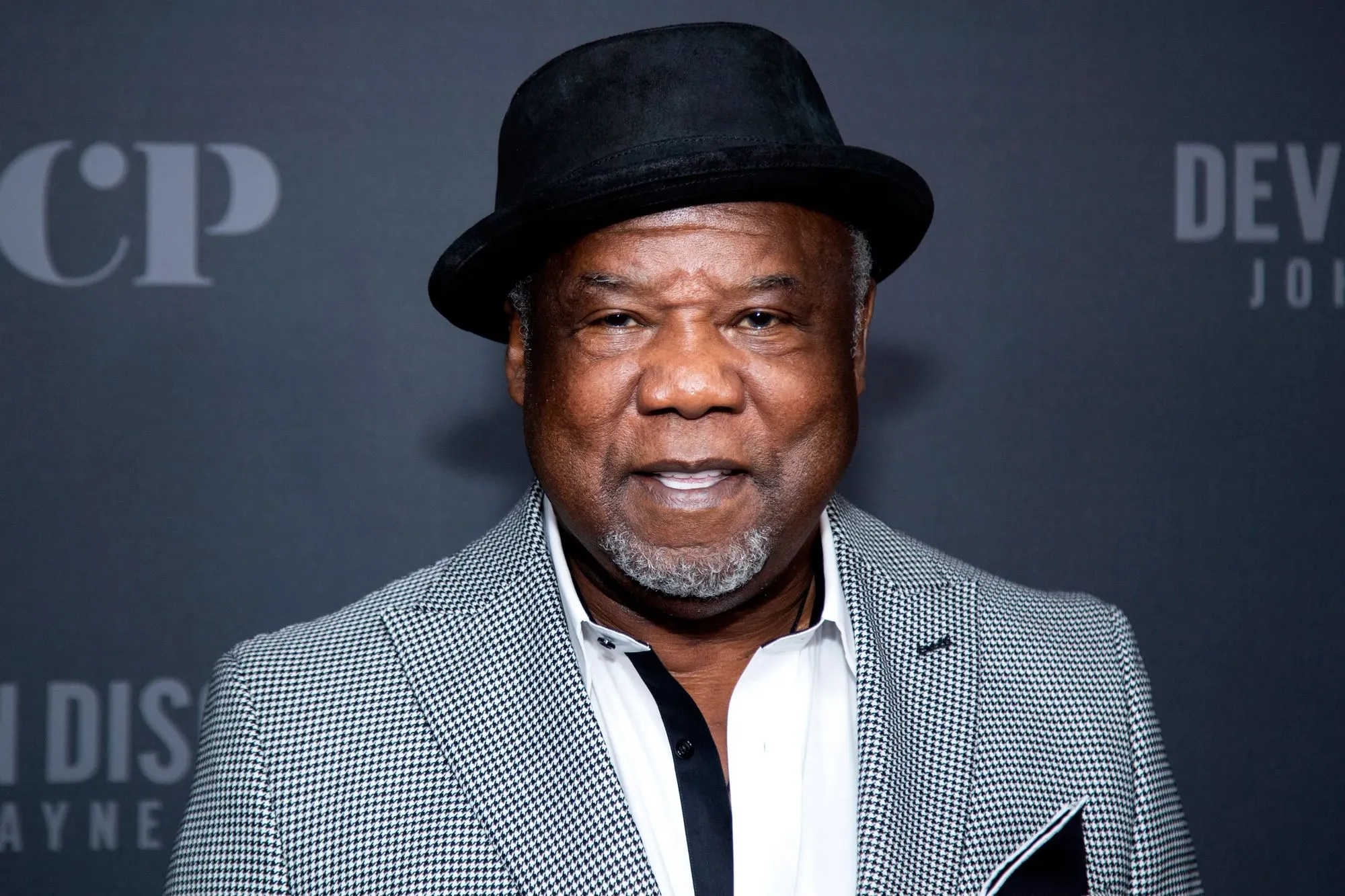
ACTOR Isiah Whitlock Jr – whose starring role in The Wire launched an iconic catchphrase – has died aged 71.
Whitlock Jr was best known for his recurring roles in Law & Order and Veep as well as being a regular in Spike Lee films.
Sign up for the Showbiz newsletter
Thank you!
Isiah Whitlock Jr. has tragically diedCredit: GettyIsiah Whitlock Jr played Clay Davis (right) opposite Idris Elba (left) in The WireCredit: HBOHis most recent TV appearance was on the Netflix original The Residence, where he (left) played Larry Dokes on the showCredit: ERIN SIMKIN/NETFLIXWhitlock Jr appeared on TV screens for 35 yearsCredit: Getty
His iconic catchphrase “Sh*******t” was also enshrined into pop-culture after he first delivered the line in 25th Hour.
In an interview in 2008, Whitlock Jr revealed he had picked up the phrase from his uncle Leon.
“I did it there, and I did it in She Hate Me,” he said.
“But then, when I got on to The Wire, I saw a couple of opportunities where I could do it, and I did.
“And they started writing it in.”
Whitlock Jr was born in South Bend, Indiana, and began his acting career after graduating from college, when he joined San Francisco’s American Conservatory Theater.
The star first appeared on screen in 1987 in a guest role on CBS’Cagney & Lacey.
He continued to appear on TV for the following 35 years, starring in the Law & Order franchise in multiple episodes of Special Victims Unit and Criminal Intent.
Best known for his role as corrupt State Senator R. Clayton “Clay” Davis in The Wire, he appeared in all five seasons of the popular crime drama.
Whitlock Jr later got to play a man obsessed with The Wire in the 2011 comedy Cedar Rapids.
The star was confirmed dead on Tuesday by his long-time manager Brian Liebman.
“Isiah was a brilliant actor and even better person,” Liebman told Deadline.
“He was loved by all who had the pleasure to work with or know him.
“He will be greatly missed.”
A fan favourite on HBO’s political comedy Veep, he played Secretary of Defence General George Maddox.
Whitlock Jr was a series regular on Showtime’s legal thriller Your Honor, where he portrayed a politician with connections in organised crime.
In the film Cedar Rapids, (2011), he played a man obsessed with The WireCredit: HandoutWhitlock Jr. also appeared in Spike Lee’s BlacKkKlansman (2018)Credit: Alamy
His final TV role was in the Netflix murder mystery series The Residence, where he depicted the Chief of Police, opposite Uzo Aduba.
The show premiered in March.
The star had a long-standing relationship with Spike Lee, appearing in six of the Oscar-winning filmmaker’s movies: 25th Hour (2002), She Hate Me (2004), Red Hook Summer (2012), Chi-Raq (2015), BlacKkKlansman (2018) and Da 5 Bloods (2020).
He also appeared as a doctor in Martin Scorsese’s Goodfellas, as well as roles in Chappelle’s Show, Pieces of April, Enchanted and Pixar’s Cars 3 and Lightyear.
On the big screen, Whitlock Jr was most recently seen in Elizabeth Banks’ black comedy Cocaine Bear.
His voice will also be heard as part of the voice cast in the Pixar/Disney animated feature Hoppers, which is slated for release in March, 2026.
He voiced the character River Scott in Cars 3Credit: Kobal Collection – Shutterstock
It is worth checking the airport’s rules before travelling as some have already scrapped the 100ml rule.
For example, London Gatwick now allow passengers to bring liquids up to 2 litres with them, while London Heathrow are still following the 100ml rules.
And you will have to follow the rules of the airport you are flying from as well, whether it be Europe or further afield.
If you’re unsure, it is best to keep liquids under 100ml, and fitting in a plastic bag.
Can you fly when pregnant?
(4,400 searches per month)
If you want to sneak in a last minute flight while pregnant, you might be surprised by the rules.
Most airlines no longer allow pregnant people to fly if they are past 36-37 weeks, although this goes down to 32 weeks if pregnant with more than one baby.
Up until this point, it is okay to fly unless there are medical concerns.
And it is advised to check with your doctor ahead of booking your holiday too, just in case.
How long do you need on your passport to travel?
(3,600 searches per month)
Knowing how many months you need on your passport is a complex issue, so it’s no wonder people have headed straight to Google for the answers.
The answer is, it depends per country, with the usual time being between three months and six months.
Most of Europe requires Brits to have at least three months, while places like Egypt, Thailand and Indonesia require six months.
Some don;t require any – places like Barbados simply require you to have a valid passport, with no additional months enforced.
It is best to visit the UK FCO website and check the entry requirements before booking a holiday.
How much is travel insurance?
(2,900 searches per month)
Travel insurance doesn’t have to be expensive, but it does change depending on a number of factors.
Some of the cheapest prices can found for under £5, if you are going somewhere deemed safe, for a short trip.
However, the price of insurance can go up for a number reasons.
Older travellers or those with diagnosed medical conditions will have to pay more, as well as those going somewhere more dangerous or doing extreme sports.
And of course if you are paying for an annual insurance, or going away for longer than the standard holiday, these all make it more expensive.
It is best to go on a comparison website to find the best option.
You might need to have up to six months on your passportCredit: Alamy
These range from Sundays in January during the sales, or timing it six to 12 weeks before your holiday.
It all depends on your destination as well, as it can depend on the school break season where you are going.
Sadly, there is no straight answer for this, and instead you are better using a flight price tracker, so you are alerted to any big price drops so you can then grab a bargain.
Where to travel in February?
(2,400 searches per month)
February can be a great month for a holiday, as it is still off-season but most people have since had their first paycheck since Christmas.
If you want somewhere warm and not too far, the Spanish islands are a great bet – Lanzarote is often one of the warmest.
Or you can head to some of the nearer African destinations like Morocco and Cape Verde, with the later reaching 27C.
If you don’t mind going a bit further, it is one of the best seasons to visit Thailand and Vietnam too.
Lanzarote is a great short haul February destinationCredit: Alamy
What does travel insurance cover?
(1,900 searches per month)
This all depends on what kind of insurance you buy.
The cheapest is likely to cover lost luggage and basic medical expenses, as well as cover you for any last minute emergencies like cancelling your holiday.
This can include losing your passport, last minute hotels or cancelled flights.
Otherwise upgraded insurance policies can also cover for extreme sports or winter sports.
How to pack your suitcase
(1,900 searches per month)
If you want to stop paying for checked in luggage, there are some great tips on how to pack a suitcase.
One is to always roll your item, as you can fit in a lot more than if you fold.
Packing cubes are also a huge help in compressing your clothes down to fit more in.
And of course stuff your shoes where you can, to make up for the lost pace inside.
Keep some of your liquids in your handbag just in case – and remember to wear your bulkiest items on the plane.
Rolling and packing cubes are your friend for packingCredit: Alamy
For decades, international payments were powered by linear models designed for batch processing, correspondent banking and office-hour settlement cycles. That architecture was effective in a world of physical documents, fixed hour clearing and unilateral data ownership. Today’s global economy moves differently. Commerce flows through digital platforms, e-marketplaces and 24/7 ecosystems. Data travels instantly but value moves in uneven intervals.
The World Bank estimates the global real-time payments market will grow at a compound annual growth rate of 35.5% from 2023 to 2030. Asia sits at the centre of this shift. Outbound cross-border payments from the region are expected to almost double from USD 12.8 trillion in 2024 to USD 23.8 trillion by 2032, with APAC’s share of global outflows rising from 32% to nearly 37% over the same period. As supply chains diversify and digital commerce scales, the demand for a new payment architecture becomes structural rather than optional.
Rachel Chew, Chief Operating Officer, Global Transaction Services, DBS Bank
From Rails to Networks
Over the past decade, Asia has led the world in building real-time domestic payment systems. Mobile adoption, QR standardisation and digital wallets have created new expectations around immediacy. The focus is now shifting to interoperability across borders. Bilateral linkages, such as Singapore’s PayNow with Thailand’s PromptPay, India’s UPI and Malaysia’s DuitNow, have enabled small businesses and individuals to receive foreign payments with only a mobile number. DBS has observed a nearly three-fold increase in cross-border DBS PayLah! QR transactions year-on-year, showing the scale of latent demand once the experience becomes instant.
Work is also advancing on multilateral infrastructure. Project Nexus, driven by the Bank for International Settlements, aims to connect the instant payment systems of India, Malaysia, Philippines, Singapore and Thailand through a single access framework. This signals movement toward shared standards, not just bilateral bridges. The European Central Bank and Bank Indonesia have also joined as observers, underscoring the model’s global relevance.
Financial institutions remain central to this transition. Their role is evolving from operating individual rails to enabling network-level access to liquidity, compliance and settlement. DBS, for example, provides near-instant to same-day payments across the globe through a combination of proprietary and external payment networks, including cross-border transfers to digital wallets to support rising e-commerce flows. In the emerging landscape, the competitive advantage is not who owns the rail, but who orchestrates the movement of value across multiple rails.
The Rising Premium on Trust
Instant settlement accelerates money movement but also risk. In response, the industry is shifting from compliance as primarily a post-event control to one that is embedded within payments architecture. AI-based screening, inline anomaly detection and immutable audit records are transforming verification from a checkpoint into an inherent design feature. The objective is no longer to slow a payment to ensure it is safe, but to make a safe payment flow at full speed.
This shift has triggered a deeper rethink of what a payment represents. Rather than being the end of a commercial process, payments are now seen as the synchronising layer between liquidity, working capital, data and supply-chain assurance. A cross-border transfer that is inexpensive to send but expensive to reconcile merely shifts cost. True optimisation is therefore not about speed alone, but the alignment of money flows with the movement of data, risk and decision-making.
Tokenisation and Blockchain Technology
Even as the industry enhances existing payment rails, new technologies such as tokenisation and blockchains have emerged, promising to enable the speed, cost, transparency and access required by modern commerce.
Although these technologies are not novel, we are at a pivotal moment of convergence. With experience gathered from years of pilots and sandboxes, traditional financial institutions and corporations are actively exploring the use of distributed ledger technology (DLT) and new instruments such as tokenised deposits and stablecoins for international payments.
The benefits of tokenisation are compelling. Tokenised forms of money can be transferred 24/7, with near-instant atomic settlement. Leveraging a common, immutable ledger for value transfer increases transparency and reduces manual reconciliation. Transaction costs and settlement times are reduced, unlocking trapped liquidity. In addition, tokenised money is programmable. Smart contracts can be embedded to automate processes and rules, allowing greater control and efficiency.
Tesy Mathew, Group Head of Cash Product Management, Global Transaction Services, DBS Bank
Last year, DBS launched a suite of blockchain-enabled services, offering institutions instant, 24/7 real-time payments using the bank’s permissioned blockchain. By integrating these capabilities with the bank’s core payment engine and market payment infrastructures, these services are scalable and enable institutions access to millions of customers and merchants. Institutional clients can leverage smart contracts to automate fund movements based on predefined conditions, ensuring compliance, security and transparency.
However, while the vision of using tokenised money and public permissioned blockchains for international payments is powerful, challenges remain. Regulatory developments across major jurisdictions have yet to be harmonised. While improvements have been made to expand transaction capacities on major public blockchains, the ecosystem remains fragmented and lacks interoperability. Enabling instantaneous atomic swaps of tokenised money across different currencies for FX markets remains complex. Ultimately, moving tokenised money beyond native crypto ecosystems and into mainstream payments requires universal trust.
The formation of the current global correspondent banking network was an organic process that took decades, evolving alongside trade, bilateral relationships, trust and standardisation. Change needs time. Scaling new technologies requires navigating the same challenges of standardisation, regulation, trust and achieving the network effects that shaped the correspondent banking world.
Such initiatives have already begun. In September 2025, the Society for Worldwide Interbank Financial Telecommunication (SWIFT) – the world’s leading provider of secure financial messaging services – announced it will develop a blockchain-based digital ledger together with a consortium of over 30 banks, including DBS. The ledger, to be accessible by Swift’s global banking network, aims to make instant, always-on cross-border transactions a reality, while remaining interoperable with traditional correspondent banking rails.
Converging Toward a New Operating Rhythm
The future belongs to those capable of integrating the integrity of existing systems with the intelligence of emerging ones. In such a model, value creation is no longer measured by fee compression but by capability expansion, with liquidity that moves continuously rather than being pre-funded and compliance that is automated rather than layered.
The industry is not moving toward disruption, but toward a redesigned operating model where the transfer of value is inseparable from the transfer of certainty and information. That is the point at which transformation, trust and value transfer converge, and the point at which international payments become not just faster, but foundational to the next phase of global economic growth.
WASHINGTON — A bipartisan federal commission, in an unprecedented effort to save money and consolidate the nation’s sprawling complex of military bases, recommended Thursday that Defense Secretary Frank C. Carlucci shut 86 bases and partly close another five, yielding a savings of $700 million a year.
The commission called for six California bases to be closed, including the historic Presidio in San Francisco and two Air Force bases in San Bernardino County. It recommended also that the Navy halt construction of a new station at Hunters Point in San Francisco and that ships slated to have been based there be transferred instead to ports at San Diego, Long Beach and Pearl Harbor in Hawaii.
Cleanup Problems Seen
If approved by Carlucci and not overruled by Congress, the panel’s recommendations could move more than 17,000 Defense Department employees out of California and lead to the sale of thousands of acres of military warehouses and airfields–as well as environmental cleanup problems–to new owners in the private sector across the country.
Moreover, approval of the commission’s recommendations would mark the first time in a decade that the Defense Department has overcome political obstacles to base closures and shut any major military facility in the United States.
In presenting the report, former Rep. Jack Edwards (R-Ala.)–co-chairman of the 12-man President’s Commission on Base Realignment and Closure with former Sen. Abraham Ribicoff (D-Conn.)–called the report “a totally nonpartisan effort” and added that in reaching its conclusions, “we didn’t accept any list from anybody.”
The panel’s findings met mixed reaction on Capitol Hill, where several members of the California delegation complained that the state would be unfairly affected by the closures. But congressional leaders predicted that the recommendations would be implemented despite the objections.
Congress, which established the panel last May to hold down the rising cost of maintaining the nation’s military bases, will have 45 days from March 1 to reject the entire list by voting a measure of disapproval in both houses. A two-thirds’ vote is required. Unless it does so, the Defense Department is expected to move quickly to implement the commission’s recommendations, with official base closures beginning in January, 1990.
Won’t Give Up Fight
Representatives from hard-hit states, however, were not yet ready to give up their home-state military facilities without a fight. Illinois Democratic Sens. Alan J. Dixon and Paul Simon criticized the commission for not recommending closures of U.S. bases overseas.
“How can we justify closing military bases in our own back yard when we don’t even consider a single one of the 1,500 overseas U.S. military facilities?” Dixon asked.
Still, the vast majority of House members will support the base-closing recommendation, in large part because their districts are not affected, House Armed Services Committee Chairman Les Aspin (D-Wis.) said. Most of the 86 bases slated for closing have fewer than 30 employees, Aspin noted.
“We’re really talking about a universe of only 27 communities that will be hit markedly,” Aspin said. “I would say the chances of overturning this process are not high.”
In the Senate, Armed Services Committee Chairman Sam Nunn (D-Ga.) praised the commission for its “workman-like approach” to the task of closing unneeded bases and predicted that the recommendations will not be overturned by Congress.
Neither Aspin’s Wisconsin district nor Nunn’s home state of Georgia is affected by the base-closing plan, which would provide an estimated savings of $5.6 billion over 20 years.
Edwards defended the heavy hits against California bases–which represented a little more than 7% of the total closures–saying that the state’s high economic growth and its large military presence made it a likely site for some shutdowns.
“We found over 300,000 military and civilian people in California,” Edwards said. “When you’ve got that kind of activity in a state, it’s not unlikely that you’re going to have some activity on this committee on that state.”
New Hampshire, New Jersey and Illinois, states with a much smaller military presence than California, were hit hardest by the initiatives. With the closure of Pease Air Force Base, New Hampshire would lose almost half of its military population. With the proposed closure of Chanute Air Force Base and Ft. Sheridan in Illinois and Ft. Dix in New Jersey, those states’ military populations would be cut by 9.7%. By contrast, California would lose 5% of its military population.
Citing air traffic congestion and encroachment by the surrounding civilian communities, the commission recommended the closure of George Air Force Base and Norton Air Force Base in San Bernardino County.
March Would Grow
The move would draw 6,653 military and civilian workers from Norton and 5,358 from George. But March Air Force, 9 miles southeast of Riverside, would pick up an additional 3,420 military and civilian employees from proposed consolidations, many of them from Norton.
In both cases, the panel contended that the actions would have a “minimal impact on local employment,” though its members conceded that those affected by the recommendations might differ with that assessment. The commission noted that Norton and George have had trouble recruiting civilian workers from the local population because of competition from the high-technology private firms operating in and around the Apple Valley.
The closure of Norton could cost $132 million, according to commission estimates. But the panel believes that the move would save the Air Force $68 million annually in operating costs, yielding savings within three years. The closure of George, estimated to cost $37 million early in the process, would result in quicker returns because the Defense Department will save $70 million in operating costs once it is shut.
The panel urged also the closure of Mather Air Force Base, 12 miles southeast of Sacramento, a move that would take away about 3,000 military and civilian employees and a payroll of $242.3 million.
The Pentagon tried unsuccessfully to shut Mather in January, 1987, but was prevented by Reps. Robert T. Matsui and Vic Fazio, both Democrats from Sacramento, who won backing for an amendment forbidding the use of appropriated funds for the closure.
The closure of the Presidio–1,416 acres of land at the base of the Golden Gate Bridge in San Francisco–may be one of the commission’s most lucrative recommendations. All but 32.5 acres of the land by law must be turned over to the National Park Service. The rest of the land, which houses a hospital, under current law is to be offered for lease to the city of San Francisco for use in treating victims of acquired immune deficiency syndrome.
“The full value of the 36.5 acres could be realized if the legislation on lease of Presidio lands were repealed,” the commission report notes, adding that closure will save $314 million initially and $74 million in yearly operating costs.
In recommending that the Navy discontinue construction of a new home port at Hunters Point in San Francisco, the commission anticipates that the Defense Department will save $8 million annually “forever,” Edwards said. The panel proposed that the Navy shift to Pearl Harbor a battleship and two cruisers to have been based at Hunters Point, send one cruiser to Long Beach and one cruiser, two destroyers and two frigates to San Diego.
Although Congress’ acquiescence to the recommendations is expected, the Defense Department must count on more than that if it is to carry out the panel’s proposals, lawmakers said. Edwards said that Congress will have to approve $300 million next year “to prime the pump” with funds until the proceeds from early land sales, which will help pay the initial costs of closures, become available.
It is during the annual appropriations fight that dissident members of the Senate and House may try to win back funding for bases in their states.
“Watch out for appropriations,” Aspin warned. “I’m going to be watching for any such shenanigans. And I hope the press and public will keep an eye out, too.”
Borussia Dortmund lead the race for Oscar Bobb, Marc Guehi has his eye on a move to Real Madrid in the summer, while Juventus want to sign Guido Rodriguez from West Ham.
Liverpoolremain interested in signing Crystal Palace‘s England defender Marc Guehi next summer, but he will prioritise a move to Real Madrid, who are also keen on the 25-year-old. (AS – in Spanish), external
Roma want to sign a new defender and are eyeing two Premier League players, including Tottenham‘s 23-year-old Romania international Radu Dragusin and Chelsea‘s 27-year-old France centre-back Axel Disasi. (Sky in Italy), external
Real Madrid have entered the race for Borussia Dortmund defender Nico Schlotterbeck, 26, with the Bundesliga club valuing the German at around £60m. (Sport – in Spanish), external
AC Milan’s 20-year-old Italian full-back Davide Bartesaghi is one of a number of players being monitored by Arsenal before the January transfer window. (CaughtOffside), external