TYLER Perry is facing a second sexual assault claim from an actor who is seeking $77 million in a new lawsuit.
Mario Rodriguez, who had a minor role in Tyler’s 2016 movie Boo! A Madea Halloween, has alleged the actor sexually assaulted him and made unwanted sexual advances while promising him future movie roles.
Sign up for the Showbiz newsletter
Thank you!
Tyler Perry has been faced with a second sexual assault claimCredit: APModel and actor Mario Rodriguez has filed a lawsuit against the actor and filmmakerCredit: Getty
The model is being represented by attorney Jonathan J. Delshad, who also represented Derek Dixon, another actor who made allegations against the 56-year-old earlier this year.
However, Tyler’s attorney has claimed the lawsuit is a “failed money grab.”
Alex Spiro said in a statement: “Having recently failed in another matter against Mr. Perry, the very same lawyer has now made yet another demand from more than a decade ago which will also be a failed money grab.”
According to PEOPLE, who obtained the lawsuit, Mario has alleged that he was approached by a trainer while at a gym in Los Angeles who said Tyler wanted to meet him.
He said that the two ended up having a conversation on the phone and he was offered the role of Frat Guy #10 in the Halloween film.
The lawsuit alleges that in November 2018, Perry allegedly “grabbed [Rodriguez’s] penis” and he “repeatedly told Mr Perry to stop” and he had to “physically struggle to get away”.
Mario goes on to claim that Perry would allegedly tell him to “let it happen” and “if you were to be with me, I would take care of you.”
The lawsuit claims that after two incidents, Tyler reportedly apologized, handed him $5,000 “and sent him away”.
The pair allegedly had their final encounter in April 2019 where Mario has claimed: “More than ever before, it was clear that Mr. Perry would do whatever he wanted, whenever he wanted, to whomever he wanted no matter how many times he was rejected.”
The U.S. Sun have contacted Tyler’s representatives for a comment.
The lawsuit comes after the media mogul was sued by actor Derek Dixon after the pair two worked together on his show, The Oval.
Derek accused Tyler of sexual assault, sexual harassment and sexual battery, with his team denying all allegations and labelling the lawsuit as a “scam”.
The Hollywood star was officially handed the papers at his lavish mansion on August 25.
The filing listed his description and stated he received the documents while he was home at 2:29 pm.
His lawyer Matthew Boyd said in a statement at the time: “This is an individual who got close to Tyler Perry for what now appears to be nothing more than setting up a scam.
“Tyler will not be shaken down, and we are confident these fabricated claims of harassment will fail.”
Derek, who is seeking $260 million in damages, originally filed the lawsuit in Los Angeles Supreme Court.
However, it’s since been transferred to federal court in Georgia, where Tyler Perry Studios is headquartered.
Actor Derek Dixon previously made sexual assault allegations against TylerCredit: ABC News
What comes next is a mystery, but I’d like to share a note of appreciation as 2025 fades into history.
If you came to Greater Los Angeles from Mexico, by way of Calexico, Feliz Navidad.
If you once lived in Syria, and settled in Hesperia, welcome.
If you were born in what once was Bombay, but raised a family in L.A., happy new year.
I’m spreading a bit of holiday cheer because for immigrants, on the whole, this has been a horrible year.
Under federal orders in 2025, Los Angeles and other cities have been invaded and workplaces raided.
Immigrants have been chased, protesters maced.
Livelihoods have been aborted, loved ones deported.
With all the put-downs and name-calling by the man at the top, you’d never guess his mother was an immigrant and his three wives have included two immigrants.
Not to be outdone, Homeland Security chief Kristi Noem proposed a travel ban on countries that are “flooding our nation with killers, leeches and entitlement junkies.”
The president’s shtick is to rail mostly against those who are in the country without legal standing and particularly those with criminal records. But his tone and language don’t always make such distinctions.
The point is to divide, lay blame and raise suspicion, which is why legal residents — including Pasadena Mayor Victor Gordo — have told me they carry their passports at all times.
In fact, thousands of people with legal status have been booted out of the country, and millions more are at risk of the same fate.
In a more evolved political culture, it would be simpler to stipulate that there are costs and benefits to immigration, that it’s human nature to flee hardship in pursuit of better opportunities wherever they might be, and that it’s possible to enact laws that serve the needs of immigrants and the industries that rely on them.
But 2025 was the year in which the nation was led in another direction, and it was the year in which it became ever more comforting and even liberating to call California home.
The state is a deeply flawed enterprise, with its staggering gaps in wealth and income, its homelessness catastrophe, housing affordability crisis and racial divides. And California is not politically monolithic, no matter how blue. It’s got millions of Trump supporters, many of whom applauded the roundups.
But there’s an understanding, even in largely conservative regions, that immigrants with papers and without are a crucial part of the muscle and brainpower that help drive the world’s fourth-largest economy.
That’s why some of the state’s Republican lawmakers asked Trump to back off when he first sent masked posses on roundups, stifling the construction, agriculture and hospitality sectors of the economy.
When the raids began, I called a gardener I had written about years ago after he was shot in the chest during a robbery attempt. He had insisted on leaving the hospital emergency room and going back to work immediately, with the bullet still embedded in his chest. A client had hired him to complete a landscaping job by Christmas, as a present to his wife, and the gardener was determined to deliver.
When I checked in with the gardener in June, he told me he was lying low because even though he has a work permit, he didn’t feel safe because Trump had vowed to end temporary protected status for some immigrants.
“People look Latino, and they get arrested,” he told me.
He said his daughter, whom I’d met two decades ago when I delivered $2,000 donated to the family by readers, was going to demonstrate in his name. I met up with her at the “No Kings” rally in El Segundo, where she told me why she wanted to protest:
“To show my face for those who can’t speak and to say we’re not all criminals, we’re all sticking together, we have each other’s backs,” she said.
Mass deportations would rip a $275-million hole in the state’s economy, critically affecting agriculture and healthcare among other industries, according to a report from UC Merced and the Bay Area Council Economic Institute.
“Deportations tend to raise unemployment among U.S.-born and documented workers through reduced consumption and disruptions in complementary occupations,” says a UCLA Anderson report.
I’m a California native whose grandparents were from Spain and Italy, but the state has changed dramatically in my lifetime, and I don’t think I ever really saw it clearly or understood it until I was asked in 2009 to address the freshman convocation at Cal State Northridge. The demographics were similar to today’s — more than half Latino, 1 in 5 white, 10% Asian and 5% Black. And roughly two-thirds were first-generation college students.
I looked out on thousands of young people about to find their way and make their mark, and the students were flanked by a sprinkling of proud parents and grandparents, many of whose stories of sacrifice and yearning began in other countries.
That is part of the lifeblood of the state’s culture, cuisine, commerce and sense of possibility, and those students are now our teachers, nurses, physicians, engineers, entrepreneurs and tech whizzes.
If you left Taipei and settled in Monterey, said goodbye to Dubai and packed up for Ojai, traded Havana for Fontana or Morelia for Visalia, thank you.
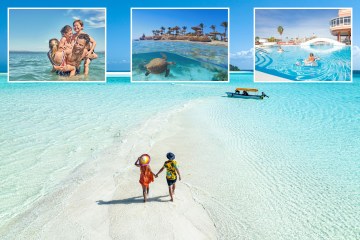
LYING by the pool, white wine in hand, I wonder if the Seaside Palm Beach hotel might be the most beautiful resort I’ve ever stayed in.
In front of me, hundreds of wild palm trees — the tallest I’ve ever seen — sway in the afternoon breeze as canaries sing in the shade below.
Sign up for the Travel newsletter
Thank you!
Relax by the pool at Seaside Palm Beach HotelCredit: SuppliedEnjoy breath-taking views on the desert-like sandsCredit: GettyWatch the stunning sunset as the day draws to an end over MaspalomasCredit: Getty
The scene marked the start of a calm and relaxed weekend on the tranquil Spanish island of Gran Canaria, where temperatures can easily reach the 20s in the winter months.
Just a four-hour flight from the UK (costing less than £30 each way with easyJet from Luton), this trip was the ultimate warm oasis retreat . . . without the jet lag.
The 5-star hotel, situated on the south east coast in Maspalomas, is a haven of luxury.
The serene spa is home to a new sauna, cold plunge and hydrotherapy suite, where guests have the option to strip off completely for an authentic wellness experience.
While my pal and I weren’t that brave, we did manage to plunge ourselves into the freezing ice bath (a welcome break from the October sunshine) before treating ourselves to a massage (99 euros for one dreamy hour) in the garden rooms, which have views of the botanical plants.
After a quick dip in the pool to wake ourselves up, we headed to the terrace for lunch of prawn caesar salad, calamari and homemade bread, with an ice-cold beer to wash it down.
Unlike most all-inclusive hotels I’ve stayed in, the Palm Beach offers guests the option to order lunch a la carte from the poolside restaurant as opposed to being stuck with just the buffet area, making it a much more intimate and luxurious experience.
Dinner was an equally impressive affair, with both a la carte and buffet options available on different nights.
Highlights included the Italian barbecue, with a homemade pasta station and a selection of fresh meat and fish grilled to order.
Outside of the hotel, local Italian restaurant il PosTo served us a delicious Neapolitan pizza for 18 euros, with a night cap of limoncello on the house.
The strip here is small but buzzing, with sunset beach bars lining the boardwalk, perfect for a pre-dinner cocktail with stunning views of the Atlantic ocean.
But the most impressive place we visited had to be the natural wonder of the Maspalomas sand dunes. This protected nature reserve is home to 400 hectares of desert-like dunes and lagoons.
A ten-minute walk from the hotel, it is the perfect place to explore in the early-evening golden hour when the heat of the day has died down.
For those wanting something a little more buzzy, the resort of Puerto Rico is a 20-minute drive south.
Here you’ll find shopping malls, discos and a wider selection of restaurants, as well as dozens of daily boat excursions to explore the local coastline.
The Sun’s Jess, left, and pal in MaspalomasCredit: SuppliedDine at the lively Maspalomas restaurantsCredit: Alamy
For 40 euros, we hopped aboard Spirit of the Seas’ whale and dolphin watching tour — a 2.5-hour excursion with local experts who have worked on the sea here for 25 years.
We weren’t fortunate enough to see any marine mammals, but the company offers visitors a free voucher to go out again if there are no sightings — so it’s worth doing this excursion at the start of your trip to allow time to try again.
The next town along, Mogan, is also well worth a visit.
We paid a visit to the Hotel Cordial Mogan Playa, one of the grandest in the town, which offers day passes for 55 euros per adult and 27.50 euros for kids, including lunch.
The terracotta hotel blocks surround a garden spa featuring luxurious day beds, an outdoor heated hydrotherapy pool, hot tub and hot and cold foot spas.
After enjoying a fresh juice here, we tried the volcanic lava exfoliation treatment inside.
The 40-minute session started with a full-body exfoliation using black sand from the island’s northern beaches, followed by a massage using locally-sourced aromatic oils.
It was the perfect end to a three-day retreat — a break I will definitely want to repeat in the cold, dark winter months.
GO: GRAN CANARIA
GETTING THERE: EasyJet flies from Luton, Manchester and Birmingham, among other airports, from £28.99 each way. See easyjet.com.
STAYING THERE: Rooms at the Seaside Palm Beach hotel cost from £192 per night including breakfast.
All-inclusive rates start from £350 per night. See hotel-palm-beach.com. For information on Hotel Cordial Mogan Playa, see hotelsone.com.
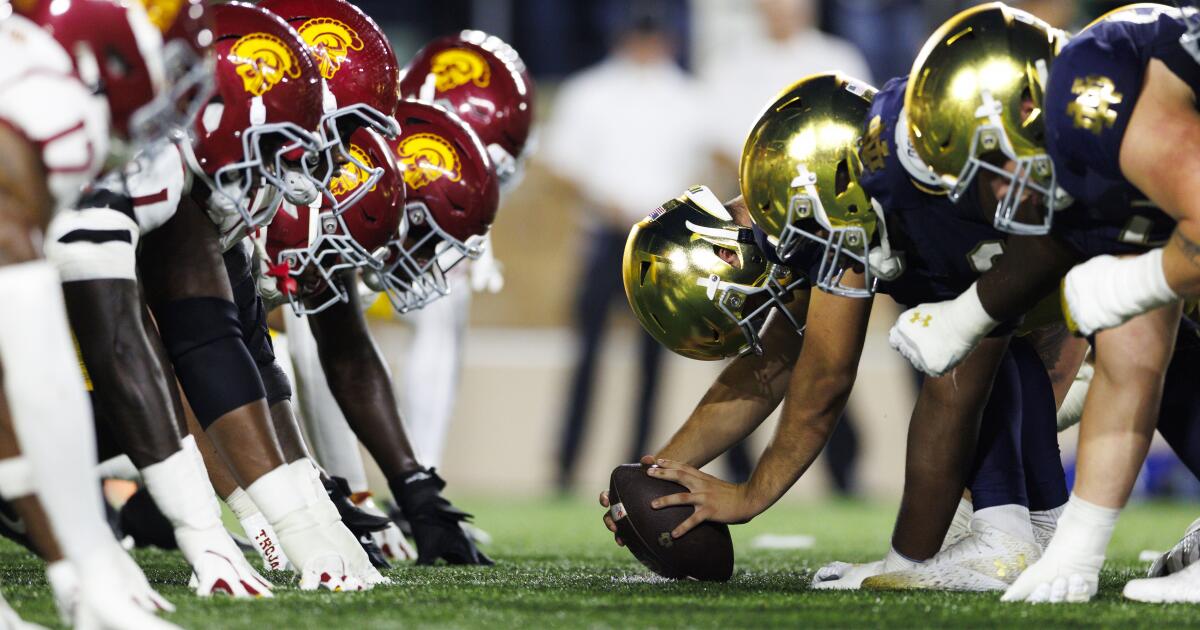
Bill Plaschke writes, “If the Trojans truly want to return to greatness, being selected for the CFP is the goal. Not beating Notre Dame. Not even beating UCLA.” That’s 100% wrong.
As a USC alum (1965) and longtime fan, those are the only things that do matter. I have often said that if USC beats UCLA or Notre Dame, the coach deserves another season. To give up this grand tradition in pursuit of the arguably artificial and profit-driven CFP would be an unforgivable sin.
Noel Park Rancho Palos Verdes
A USC national football championship without playing Notre Dame rings hollow — an asterisked title, a meal that never satisfies, a taste you can’t quite wash away. It may shine in the record books, but it will always feel unfinished to those who know what real college football tradition demands. Earth to Lincoln Riley: an undefeated season is still a loss without playing the Fighting Irish. What’s next? If UCLA becomes competitive, then there will be no crosstown game?
Jeff Black Los Angeles
So the Fighting Irish own a series edge of 53-37, have won 3 in a row, 7 of the last 8, and 11 of the last 15 games. Yet Bill Plaschke now claims that Notre Dame is running away from the series and is afraid of “Ole SC.” To paraphrase the late, great Jim Healy, Plaschke is on the Leonard Tose highway!
Jerome M. Jackson El Segundo
Notre Dame is the Burger King of college football — always having it their way. From backdoor deals with the corrupt [CFP] guaranteeing a playoff spot if they finish ranked in the top 12 to refusing to join a conference so that they can pocket all bowl game money, the Irish are treated like college football royalty. Glad USC told the Irish toddlers they can’t have ice cream for breakfast!
Mark S. Roth Playa Vista
“USC and Notre Dame recognize how special our rivalry is to our fans …” A joint statement by the athletic directors of the two schools. Really? Fake news!
Wayne Muramatsu Cerritos
No USC-Notre Dame football game! Who’s next to be cut from the Notre Dame football schedule, Navy? Oh wait, the Irish can’t afford to drop Navy. That might hurt their chance$ at a playoff berth.
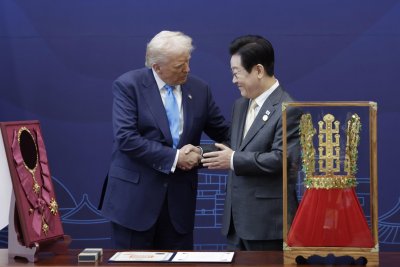
South Korean President Lee Jae Myung (R) shakes hands with US President Donald Trump (L) after conferring the state-awarded Grand Mugunghwa Medal, South Korea’s highest order of civil merit, on Trump ahead of their talks at the National Museum in Gyeongju, North Gyeongsang Province, southeastern South Korea, 29 October 2025. In front of Lee is a replica of a Korean gold crown from a royal tomb of the Silla Kingdom (57 B.C.–A.D. 935) that was gifted to the US leader. Photo by YONHAP/EPA
Dec. 26 (Asia Today) — US President Donald Trump has presented South Korean President Lee Jae-myung with a symbolic “Key to the White House,” returning a diplomatic gesture after receiving a replica of a Silla-era gold crown earlier this year.
Kang Hoon-sik, chief of staff at the presidential office, said on Facebook on Tuesday that Trump sent Lee one of only five specially made golden keys associated with the White House, noting it was the final remaining piece. Trump reportedly decided to send the gift after receiving a particularly meaningful present during his visit to South Korea in October.
During the October APEC summit in Gyeongju, Lee presented Trump with a model of the gold crown excavated from Cheonmachong, a royal tomb from the ancient Silla Kingdom, as part of a bilateral summit between the two leaders.
According to Kang, the golden key was delivered on Dec. 16 when South Korea’s ambassador to the United States, Kang Kyung-wha, met Trump for talks. During the meeting, Trump was quoted as saying, “I really like him,” referring to Lee, and highlighting what he described as a strong cooperative relationship between the two presidents.
The White House golden key is said to have been personally designed by Trump to be given only to select guests of special significance. The key presented to Lee is engraved with the U.S. presidential seal and the words “Key to the White House.”
The honor places Lee among a small group of recipients that includes Israeli Prime Minister Benjamin Netanyahu, former Japanese Prime Minister Taro Aso, Tesla CEO Elon Musk, and football star Cristiano Ronaldo.
Kang also recalled an anecdote from a memoir by Trump’s son-in-law, Jared Kushner, which described Trump jokingly telling Netanyahu that even after leaving office, showing the key at the White House gate would grant him entry.
“This golden key, carrying special meaning, is hoped to become a symbol of the strong South Korea-U.S. relationship,” Kang said, adding that the administration would continue working toward a solid future for the bilateral alliance.
Gaza City – Dr Hussam Abu Safia, 52, remains in an Israeli prison a year after Israel detained him without charges or trial.
His family and supporters are demanding his release as his health deteriorates amid reports of the inhumane conditions under which he is being held.
Recommended Stories
list of 3 itemsend of list
Abu Safia, known for his steadfast presence as director of Kamal Adwan Hospital in Beit Lahiya, north of Gaza City, has become central in international discussions on the protection of medical personnel in armed conflicts.
He insisted on staying at the hospital, along with several medical staff, despite continuous Israeli attacks on the facility.
Israel eventually surrounded the hospital and forced everyone to evacuate. Since then, Abu Safia has been in detention, and the hospital has been out of service.
He was transferred between Israeli prisons, from the notorious Sde Teiman holding facility to Ofer Prison, being mistreated continuously.
No charges have been brought against Abu Safia, who is held under the “unlawful combatant” law, which allows detention without a standard criminal trial and denies detainees access to the evidence against them.
A family’s suffering
Abu Safia is being held in extreme conditions and, according to lawyers, has lost more than a third of his body weight.
His family is worried about him as he also suffers from heart problems, an irregular heartbeat, high blood pressure, skin infections and a lack of specialised medical care.
His eldest son, Ilyas, 27, told Al Jazeera via Zoom from Kazakhstan, where the family fled a month ago, about their grief over Abu Safia’s detention, adding that his father’s only “crime” was being a doctor.
Ilyas, his mother Albina and four siblings stayed with his father at Kamal Adwan through the Israeli attacks, despite opportunities to leave Gaza, especially as Albina is a Kazakh citizen.
On October 26, 2024, Israel killed Ilyas’s brother, Ibrahim, 20, while it shelled the hospital.
“The entire medical staff cried in grief for [my father] and for Ibrahim,” Ilyas said.
The taking of Dr Abu Safia
At dawn on December 27, 2024, the hospital woke up to a tightened Israeli siege with tanks and quadcopter drones.
Israeli tanks had been around Kamal Adwan since mid-October 2024, gradually moving closer – destroying parts of the infrastructure like water tanks – until that day when they were so close nobody could move outside.
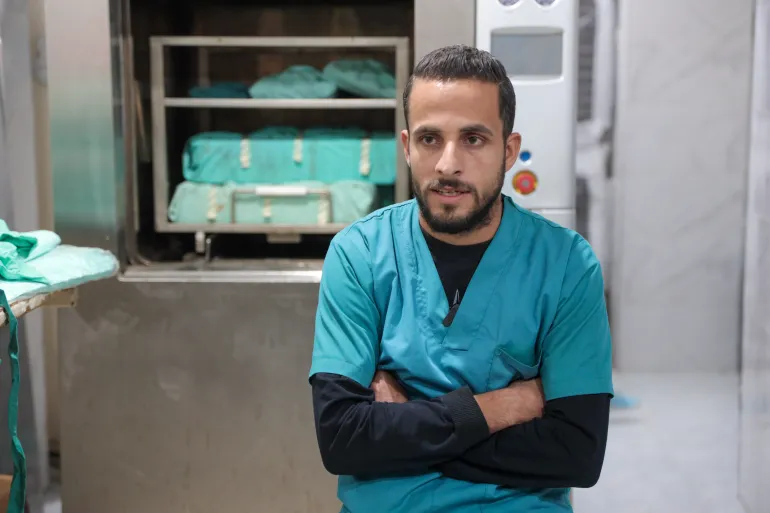
Dr Walid al-Badi remained with Abu Safia in Kamal Adwan until they were forced to evacuate [Abdelhakim Abu Riash/ Al Jazeera]
Patients and staff gathered in the emergency reception corridor, according to Dr Walid al-Badi, 29, who stayed with Abu Safia until his arrest, and spoke to Al Jazeera on December 25 at the Baptist Hospital in Gaza City.
“The situation was extremely tense, loudspeakers were calling on everyone to evacuate, but Dr Abu Safia asked us to remain calm. Then the loudspeakers called Dr Abu Safia to come to the tank.”
Abu Safia was ordered to enter an armoured vehicle. According to al-Badi, the doctor returned carrying a sheet of instructions, dishevelled, his clothes dusty and a bruise under his chin.
Everyone rushed to check on him, and he told them that he had been assaulted.
“Israeli media showed a video claiming they … treated him with respect, but they didn’t show … how he was assaulted in the tank, threatened,” al-Badi said.
Abu Safia was ordered by the Israelis to prepare a list of everyone in the hospital, which he did and returned to the armoured vehicle, where he was told that only 20 staff could remain. The rest had to leave.
“Around 10am, the Israelis allowed some ambulances to take patients, wounded people, some displaced civilians, and the doctor’s family to the Indonesian Hospital [about 1km away] while the medical teams left on foot,” al-Badi recounts.
However, several patients remained, besieged along with the medics.
“The doctor told me to go, but I told him I would stay with him until the end.”
The only female medic who remained was intensive care unit head, Dr Mai Barhouma, who spoke to Al Jazeera from the Baptist Hospital.
Barhouma had been working with critical patients dependent on medical equipment and oxygen, and her conscience would not allow her to leave, despite Abu Safia asking her to.
The Israeli army repeatedly summoned Abu Safia for new instructions, once, according to Drs Barhouma and al-Badi, offering a safe exit for him alone.
He refused, insisting that he would stay with his staff. At about 10pm, the quadcopters ordered everyone to line up and evacuate.
During this time, Israel shelled and set fire to the upper floors and turned off the electricity.
“We were heartbroken as Dr Abu Safia led [us] out,” al-Badi recalled. “I hugged Dr Abu Safia, who was crying as he left the hospital he tried so hard to stay in.”
Testimonies from that day say medical staff were taken to al-Fakhoura School in Jabalia, where they were beaten and tortured by Israeli soldiers during interrogations.
Barhouma left in an ambulance with an ICU patient, but the ambulance was held for hours at the school.
Dr Mai Barhouma, who oversaw the ICU at Kamal Adwan Hospital, insisted on staying with Dr Abu Safia until the moment the hospital was evacuated [Abdelhakim Abu Riash/ Al Jazeera]
“The soldiers bound our hands and forced us to walk towards al-Fakhoura school, [2km away] from the hospital. Our colleagues who had left in the morning were still there, being tortured,” al-Badi recalled, adding that they arrived at about midnight.
“They ordered us to strip down to our underwear, tied our hands and began severely beating us with boots and rifle butts, insulting and verbally abusing us.”
The interrogation and beatings of the medics in the freezing cold continued for hours while Barhouma was in the ambulance with the critically ill patient.
“The oxygen ran out, so I started using a manual resuscitation pump. My hands swelled from pumping nonstop, terrified that the patient would die,” she said.
She described hearing the screams of the male medics being tortured, and then being ordered out of the ambulance by Israeli soldiers.
“The soldier asked for my ID and took an eye scan, then ordered me to get out, but I refused and told him I had a critical patient who would die if I left them.”
Eventually, the Israelis released the medics, including al-Badi and Abu Safia, ordering them to head for western Gaza, while sending the ambulance with Barhouma in it on an alternate route westwards.
But the relief didn’t last. They had only walked a few metres when an Israeli officer called out to Abu Safia.
“Our faces froze,” al-Badi said. “The doctor asked what was wrong. The officers said: ‘We want you with us in Israel.’”
Al-Badi and a nurse tried to pull the doctor away, but he rebuked them and told them to keep walking.
“I was crying like a child being separated from his father as I watched the doctor being arrested and dressed in the white nylon uniform for detainees.”
Calls for his release
Abu Safia’s family are appealing to human rights and legal bodies for his immediate release.
“My father’s lawyers visited him around seven times over the past year, [each visit allowed only] after exhausting attempts with the prison administration. Each time, my father’s condition has deteriorated significantly,” Ilyas told Al Jazeera.
Ilyas Abu Safia, Abu Safiya’s eldest son, speaking to Al Jazeera via Zoom from Kazakhstan about the latest updates on his father’s case and detention conditions [Abdelhakim Abu Riash/ Al Jazeera]
“[He] has fractures in his thigh and shrapnel in his foot from an injury while at the hospital before his arrest. He also suffers other health problems and is subjected to severe psychological and physical abuse that does not befit his age.
“Israel is trying to criminalise my father’s work, his continued service to people and his efforts to save the wounded and the sick in an area Israel itself considered a ‘red zone’ at the time.
“My father’s presence and steadfastness inside the hospital posed a major obstacle to the Israeli army and its plan to empty the north of its residents.”
Ilyas is proud of his father.
“My father is a doctor who will be held up worldwide as an example of adherence to medical ethics and courage.
“I am proud beyond words, and I hope to embrace him soon and see him emerge from the darkness of prison safe and well.”
Following a $1-billion-grossing, Oscar-winning smash could have left writer and director Jared Bush and director Byron Howard feeling like rabbits in the headlights, but they seem to have outfoxed the challenge. “Zootopia 2” has already stampeded past $1 billion to surpass its predecessor, and the awards nominations have just begun slithering in. But how did the sequel survive such high expectations, stay as socially relevant as the original and navigate the peril of too many cooks in the kitchen?
“Animation’s a team sport,” says Howard, referring to the sheer number of people who worked on the film over five years. “It’s 700 in the crew, but in this building, it’s about 1,000 and another 300 in Vancouver. So it’s everyone’s collective ideas, saying, ‘Here’s where we can do better.’ So everyone has skin in the game and they all want these movies to be great. It’s an emotional investment.”
The creative team screened “Zootopia 2” for all of Disney Animation multiple times in various stages of development. A feedback system enabled every employee to respond.
Bush says Disney regularly seeks internal reactions after screenings, “but we asked way more direct questions for this one, like at an audience preview. Then we shared that feedback, unfiltered, with the entire building. That allowed people to see that their feedback mattered because you could actually see ideas that came in [manifest] from screening to screening.”
Bush and Howard acknowledge that having that many collaborators keeps the inspiration flowing but also allows fragments of the colossal group brain to sneak into the film unnoticed. Even they aren’t sure where all the in-jokes are planted.
A “story jam” — reminiscent of a TV writers room — was just one of many avenues for collaboration in the making of “Zootopia 2.”
(Disney)
Like its predecessor, the sequel is packed with movie references and animal puns — “A Moose Bouche”; “Gnu Jersey” — and the directors are quick to spread the credit (or blame). “ ‘A Moose Bouche’ — we’ve gotten emails about that one,” says Howard. “Cory Loftis, our production designer, came up with it.”
There’s a “Star Wars” cantina bit, a soupçon of James Bond in the score at a fancy gala and dashes of Steven Spielberg in the camerawork. It’s easy to spot “Ratatouille” when an animal chef is revealed to have a rat under its hat, but Bush asserts there’s a second reference in that moment — the animal declaring “I knew it!” isn’t just any raccoon, but “Raccacoonie” from “Everything Everywhere All at Once.” That character is itself a “Ratatouille” reference (and, Bush points out, “EEAAO’s” Oscar-winning supporting actor Ke Huy Quan voices “Zootopia 2’s” lead snake, Gary). So it’s a reference coupled with another reference to another film’s reference to the first reference. Whew.
Those Easter eggs, including an extended callback to Stanley Kubrick’s “The Shining” — the realization of which they credit to animator Louaye Moulayess, a “Shining” superfan — speak to a willingness to cater to audiences beyond kids. Presumably, most children attending “Zootopia 2” haven’t watched Kubrick’s film. That’s a shoutout to the grown-ups for bringing the kids and, hopefully, discussing the historical practice of redlining with them after the show.
Byron Howard, left, and Jared Bush.
(Christina House / Los Angeles Times)
The first “Zootopia” was not notable just for funny talking animals but also the fact that the funny animals were talking about bigotry and stereotyping. Perceptive viewers may have noticed a mammalian bias in the original — there were no reptiles to be found in its near-perfect society. It turns out they were discriminated against as a class and denied their rightful place as residents, as we learn in “Zootopia 2.” Bush said that concept fit right in with “continuing this discussion about how we as human beings have a hard time looking past each other’s differences.”
Howard says the diversity-as-strength theme plays out not just in grand terms but also in the dynamic between the two protagonists, Judy (a rabbit, voiced by Ginnifer Goodwin) and Nick (a fox, voiced by Jason Bateman): “Nick and Judy are such different, contrast[ing] characters that are really stronger [together] because of those differences, and that speaks to something we really value, which is differences between each other as a working pair,” he gestures to Bush and himself. “We continue to thrive in that way.”
Howard agrees with the comparison of him and Bush to conductors of a giant orchestra, listening for notes being played just right. He thinks of composer Michael Giacchino “onstage with those virtuosos at their respective instruments; we work with masters all around us, so we have a lot of trust in them.”
However, he admits with all those voices, “Writers have a tough time here because we scrutinize these movies and redo them over and over and over again. Jared is a great example of someone who thrives in this environment.”
Bush, explaining he came from the culture of TV sitcoms and all their constant revisions in writers rooms, says, “We have this amazing luxury of being able to rewrite and rethink and absorb these better ideas over years. It is an extreme luxury.
“There’s nothing else like this in Hollywood that I’ve seen — that level of deep collaboration and iteration. There’s no place I’m ever going to be that I will love as much as this.”
THERE’S no shortage of brilliant pubs dotted across the UK – and we’ve rounded up some of the very best.
We’ve scoured the UK to find places that are great for kids, have brilliant beer gardens and most importantly – won’t break the bank.
Sign up for the Travel newsletter
Thank you!
There’s more than colouring to keep the kids entertained at these kid-friendly spotsCredit: Getty
With family-friendly options and some of the most affordable pints in the UK, these pubs tick every box.
From the Scottish Highlands down to Cornish beaches, here’s some of the top picks for pints.
Best for families
Ailean Chraggan, Highlands
When bringing the whole family along to the pub, it’s always a bonus to find yourself in one with cheap children’s meals and plenty of activities to keep the kids busy.
Luckily, we’ve found pubs all across the UK that cater to kids brilliantly.
Scottish blogger Adele Murray from Aberfeldy recommends a cosy pub in the heart of the Highlands.
“One of my family’s favourite pubs is Ailean Chraggan” she says, a spot known as “The Crags” by locals.
“It’s great for families, with a beer garden and outdoor play area”.
Most read in Best of British
When it comes to food, the kid’s menu is simple and well-priced.
A children’s mac and cheese dish costs £6.25, and garlic ciabatta costs £3.50.
Plus, there’s some delicious and locally-sourced options for adults too.
“The Scottish mussels are delicious and come from the west coast” (£9.50 as a starter, £18.95 as a main).
The Tree House, Ayr
The Tree House in Ayr is also another great option for families.
Their “Little Foodies” offer for kids includes a main, drink and ice cream for only £3.50!
Just make sure you’re visiting between 3 – 5pm if it’s term time, or between 12 – 7pm if it’s during the school holidays.
The Mermaid, Cornwall
Down in the south of England, Sun reader Anne Walton recommends The Mermaid on the beach of Porth, Cornwall.
“You can just put the kids on the beach and watch them while you’re having a drink” she says. “They do a very nice Chicken New Yorker“.
“It’s also great for kids as they serve little meals – it was perfect for my granddaughter who’s only 11 months old”.
The Treehouse Pub has pretty green and blue interiorsCredit: instagram/@thetreehouse_ayrIn springtime when the sun comes out, The Jolly Sailors opens up its colourful beach hut barCredit: The Jolly Sailors
Jolly Sailers, Norfolk
Over in East Anglia, the Jolly Sailors in Brancaster Staithe is a fantastic option for families in North Norfolk.
The pub has a massive garden with a wooden playground, colouring and is dog-friendly if you’re coming in from a family beach walk with your pet.
Plus for adults there’s a beach hut bar with a humungous rum menu with delicious rum cocktails that opens up in the summer.
You’ll also find events with live sea shanty music, quizzes, festivals and bouncy castles depending on when you visit – Easter family fun days are particularly great for kids.
There’s also a beach hut serving ice cream flavours that kids go crazy for, from bright-blue bubble gum to the swirly pink “unicorn” flavour.
Food is super affordable, with the “Little Sailors” menu offering tomato pasta with cheese for £6.25 or a sizeable kids margherita for £6.95.
The Brewdog Pub in Waterloo is a great spot for both adults and kids to enjoyCredit: Ray CollinsBrewdog in Waterloo has it’s own indoor slideCredit: Linkedin
Brewdog, London
And if you’re in or around London, Sun Head of Digital Travel Caroline McGuire found the capital’s most family-friendly pub.
Brewdog at London Waterloo station has a massive slide and duckpin bowling lanes inside.
There’s a great kids menu with cheap pizza and chicken nugget meals, and even an in-house ice cream van.
Best for cheap eats
The Beck, Mablethorpe
There’s nothing worse than strolling into an unassuming pub only to be faced with a menu showing £20 mains and £7 pints.
Sometimes all you want is a pit-stop for some cheap and cheerful pub grub and a drink.
Sun reader Linda McDonnell recommends The Beck in Mablethorpe, Lincolnshire.
“They do a carvery every day throughout the year and it’s great value, especially for kids” she says (under-twos can eat for just £3).
The Beck also has a Thursday curry menuCredit: The Beck PubThe Beck Pub is known for it’s yummy yet affordable carveryCredit: The Beck Pub
When it comes to carvery there’s three tiers, and they’re all cheap: costing £8.99 for a small portion, £9.99 for medium and just £13.99 to go large.
“They also have lots of special offers” she says, “like two-for-one meals.”
The Two Tubs, Bury
And if you’re after a cheap pint, Bury in Greater Manchester was found to be the cheapest town to buy a beer in England.
The average cost of a pint here is just £2.75, compared to the national average of £5.17.
One of the best pubs to visit in this area is The Two Tubs, a family-run joint that won a ‘Community Hero’ award in hospitality due to its welcoming atmosphere and great prices.
They even offer a free hot meal and a shot of port for serving soldiers and veterans on “Military Monday”.
The Two Tubs Pub is one of the cheapest places for a pintCredit: The Two Tubs
The only catch is that they don’t serve any food here – the focus is on having a cheap pint and a good time relaxing or watching sports.
The Sandringham, Hull
Another cheap option would be in Hull – where the average cost of a pint is just £3.68.
The Sandringham on Paragon Street offers a pint of Carling for just £3.10, serving beers cheaper than Wetherspoons.
The pub was opened in 2024 by ex-lorry driver Lee Cunningham, who has made it his mission to pull cheap pints for the people.
Best with beer gardens
The Old Mill, Perthshire
Sitting outside and sipping on a well-poured pint is a pretty unbeatable feeling.
And luckily across the UK we’ve got some pretty spots to sit outdoors, no matter the weather.
Christopher Hill, an Administration Manager from Tummel Valley Holiday Park in Perthshire has a few great picks in Pitlochry.
“My favourites are The Old Mill Inn, Victoria’s and The Auld Smiddy Inn” he says.
The Old Mill is a cosy and traditional choiceCredit: instagram/@theoldmillpitlochryRoasts at The Old Mill come with a giant Yorkshire puddingCredit: instagram/@theoldmillpitlochry
“The Old Mill has a great setting, with a watermill outside and a nice beer garden“.
The Woolpack Inn, Romney Marsh
Over in Suffolk, Sun reader Nora Hinds recommends visiting The Woolpack Inn in Romney Marsh.
“Their food is good but they have a wonderful garden. If it’s a nice day we tend to go there on our way down and stop for lunch” she says.
“I’ve had their fish pie that is really good. The grilled salmon fillet is also delicious” (costing £16.95).
Church House Inn, Devon
Plus, Sun travel reporter (and Devon local) Cyann Fielding recommends the beer garden at the Church House Inn in Devon.
“The Inn has a wide variety of beverages and also hosts regular events and themed nights” she says.
“The village green is also located just across the road for a nice stroll”.
The Wool Pack Inn is especially cosy in the colder monthsCredit: .instagram/@woolpackinnbrookland
Tickled Trout, Wye
Meanwhile, the Tickled Trout in the village of Wye in Ashford has outdoor seating overlooking a pretty river.
It’s a quaint 400 year-old pub with a cosy wooden-beamed interior, and it serves up some great seafood.
Visit in the summer for some amazing live music too.
Best traditional pubs
The Treguth Inn, Cornwall
Putting your finger on what makes a “good” pub is often down to its traditional atmosphere.
Sun reader Anne Walton from Newport in Wales, suggests visitingThe Treguth Inn– a coastal spot inHolywell Bay, Cornwall.
“It’s a very local, old thatched pub with a great atmosphere” she said.
“It’s very cosy, dog-friendly and they do nice food. We used to go to their Wednesday Quiz Nights.”
You can spot The Treguth Inn from afar with its signature thatched roofCredit: The Treguth InnThe Treguth Inn is close to the picturesque Holywell Bay in Newquay, CornwallCredit: Supplied
The traditional pub is close to the harbour, and is a great spot for all with its tasty local ales, family-friendly atmosphere and sports games showing on the TV.
Visitors can tuck into a delicious cod and chips for just £14.50, or a warming pie of the day for £11.95.
“It’s always been a friendly pub,” Nora says.
The Axe and Cleaver, Lincolnshire
Over in North Somercotes, Lincolnshire, Joanne Green recommends The Axe and Cleaver.
“There’s also the Victoria Inn, which is popular with a lot of people going there to eat. It’s dog friendly and backs onto Borth Beach“.
The Jolly Sailors has some great pints…and pupsCredit: instagram/@thejollysailorsIf you’re in the area, give one of these top-rated pubs a tryCredit: Getty
FOREIGN tourists may have to provide five years of their social media history before visiting America. These blemishes on your account could see you banned for life.
Posting a selfie with Sabrina Carpenter
After Sabrina Carpenter slammed the Trump administration over the ‘evil’ use of her song, any association with the pop star will be seen as aligning yourself with a terrorist organisation in the eyes of the White House. Tourists will stand a better chance of entering America if they follow Hezbollah, share 9/11 memes and pop the Islamic State flag in their bio.
Publicly speculating about Melania
It’s grossly offensive to ponder about the relationship between the president and the first lady on a public forum. So what if they barely spend any time together and she visibly seethes in his presence? Any married couple will tell you that’s the sign of a healthy relationship. Only people who love each other deeply give the impression that they’re locked in a loveless nightmare from which there is no escape.
Giving any mention of the piss tape a like
Upon landing in America, customs officers will be at liberty to seize your phone and check your social media for you propagating the dubious but persistent story about Trump and two Russian ladies. If they find out you’ve endorsed rumours of this kompromat, you’ll be put on the next plane home. If you’re clean, your phone will be returned and you’ll be told not to Google what it’s all about. For your own sanity, follow their instructions.
Spreading non-misinformation about Trump
Trump has worked hard to cultivate a post-truth world, and the last thing he needs is you undermining his lies. People who expose Trump’s fibs about Tylenol, his claim that Ukraine started the war with Russia, or his clueless shit-talking about countless other subjects, will automatically be denied entry. This might actually be a relief for tourists as it won’t be long before every famous landmark has been replaced by some horrible gold monstrosity Trump has thought of himself.
Sharing smug holiday photos
If you’re someone who posts endless photos reminding people you’re on an amazing and expensive holiday, with smug captions like ‘Not a bad place to spend the week!’, the US authorities may decide there’s too much of a risk of you capturing something untoward in the background, such as ICE agents arresting a small child at gunpoint. You’ll be on the next plane home, and for once this is a draconian rule your friends will approve of.
Nottingham Forest striker Chris Wood is set for a further spell on the sidelines after undergoing surgery.
The New Zealand striker has been out since mid-October with a knee problem and is yet to feature under Sean Dyche since he replaced Ange Postecogolou as manager.
The 34-year-old excelled at the City Ground last term, scoring 20 times in 40 appearances as they qualified for Europe.
His playing time has been more limited this campaign, with Wood having managed two goals in nine appearances.
Wood did not specify the nature of his surgery, but he has been seen wearing a knee brace while watching recent Forest matches.
“The Christmas I didn’t expect, you can never know what football throws at you,” Wood wrote on Instagram.
“From the highs of last season to now the battles and the lows personally of this season. You have to be ready for anything.
“Truly gutting and frustrating that I’ll be on the sideline for another period of time. It’s what’s needed to come back stronger and better to help my team-mates do the job needed in the Premier League and in Europe.”
Wood’s last appearance came in Postecoglou’s final game in charge, the 3-0 defeat by Chelsea on 18 October.
Hanwha Group Vice
Chairman Kim Dong-kwan, second from right, explains the conglomerate’s
shipbuilding facilities to US Navy Secretary John Phelan, far right, at Hanwha’s
Geoje shipyard in South Korea, Wednesday. Photo courtesy of Hanwha Ocean
Dec. 26 (Asia Today) — Hanwha Group is positioning itself as a central player in the United States’ drive to revive its shipbuilding industry, with its Philadelphia shipyard emerging as a key operational base for Washington’s plan to restore naval power under President Donald Trump’s so-called “Golden Fleet” initiative.
Hanwha hosted a media day on Dec. 22 at its Hanwha Philly Shipyard in Pennsylvania, showcasing not just facilities but what executives described as a ready-to-execute platform aligned with U.S. national strategy to rebuild shipbuilding capacity and strengthen naval forces.
The significance of the site was underscored the same day when Trump publicly announced his Golden Fleet vision – aimed at countering China’s expanding naval power – and explicitly cited cooperation with South Korean conglomerate Hanwha. Trump recalled that during World War II, the United States built more than four ships a day on average, vowing to restore that capability.
Industry officials say the Philadelphia shipyard represents the point where political ambition meets practical execution.
Tom Anderson, head of shipbuilding at Hanwha Defense USA, said the shipyard should be seen not as a future possibility but as a fully prepared asset. The Golden Fleet concept centers on large, potentially nuclear-capable platforms and advanced surface vessels, while also elevating domestic production capacity as a political priority.
Rather than limiting cooperation to a single frigate program, Anderson said Hanwha is targeting the U.S. Navy’s core platform – the Virginia-class nuclear-powered submarine. “Hanwha Philly Shipyard has the capability to build nuclear-powered submarines,” he said, stressing that readiness extends beyond any single model to the entire class of nuclear-propulsion platforms.
The U.S. Navy currently requires two submarines per year but produces only about 1.2 due to capacity bottlenecks. To address this gap, Anderson proposed leveraging proven designs instead of starting from scratch, applying South Korea’s shipbuilding expertise in shortening construction timelines to the Virginia-class framework.
Acknowledging the complexity of nuclear submarine construction, Anderson outlined key prerequisites: workforce expansion, deployment of skilled Korean technicians, recruitment of personnel with Virginia-class experience, and close coordination with the U.S. Navy’s Naval Reactors program.
On the sensitive issue of nuclear material control, Anderson drew clear boundaries. “The reactor compartment is provided by the U.S. government,” he said, adding that strict safeguards and procedures for nuclear material management are already in place. Hanwha, he said, would comply with the same standards applied to all U.S. nuclear-submarine shipyards.
Questions at the briefing focused on timing. While declining to commit to a specific schedule, Anderson emphasized Hanwha’s readiness to move quickly once government decisions are made. “We fully recognize the urgency of submarine production,” he said.
Supply-chain resilience also emerged as a key theme. Anderson said Hanwha plans to integrate South Korea’s robust shipbuilding supply network to stabilize schedules and accelerate delivery, while maintaining the principle of “Made in the USA” production. In effect, Korean suppliers would serve as the arteries supporting U.S.-built vessels.
Cho Jong-woo, head of Hanwha Philly Shipyard, said expanded shipbuilding in the United States would allow Korean component makers and partner firms to enter global supply chains and grow alongside the U.S. naval buildup.
As Washington seeks to turn shipbuilding revival from slogan into strategy, Hanwha’s U.S. foothold is increasingly viewed as a critical pillar in rebuilding America’s maritime power.
‘Debris was burning’.
Nigerians have described what they witnessed in US strikes on the town of Jabo, which President Donald Trump says were targeting ISIL.
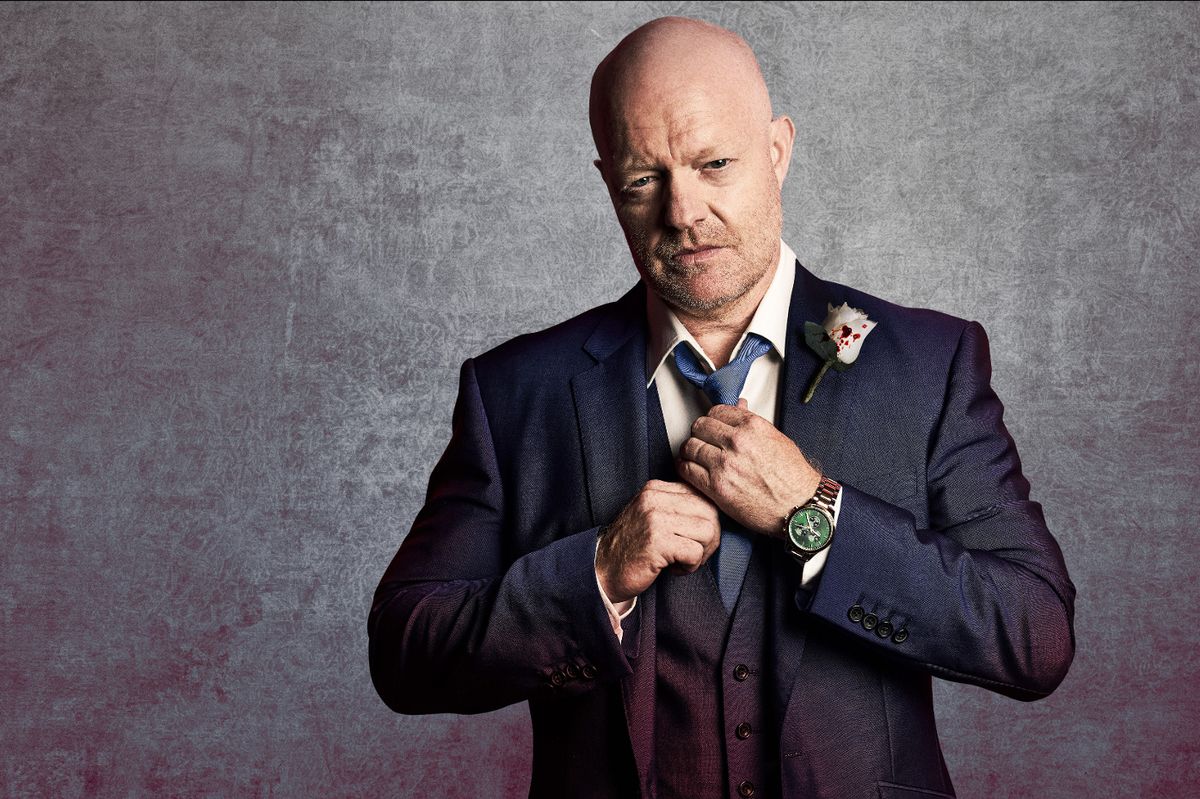
EastEnders flashes forward to New Year’s Eve 2026 showing Max Branning getting married, but even the cast don’t know who the bride will be
EastEnders will air a special flashback episode on New Year’s Day(Image: Mark Rogers)
New Year’s Eve in Walford is always more explosive than a firework display, but this year is set to bring a fresh set of mysteries to its celebrations, as EastEnders jumps a year into the future.
During the Christmas specials, viewers watched as Chrissie Watts (Tracy Ann-Oberman) revealed she’d been the one tormenting Zoe Slater (Michelle Ryan). But now the countdown to New Year’s Eve is on, and it’s all about the Brannings.
In the upcoming episode, the show will flash forward a year in time to New Year’s Eve 2026. As Walford prepares to ring in 2027, Max Branning (Jake Wood) is getting married. But to whom? What does his daughter Lauren (Jacqueline Jossa) think? And what has his year been like up until then?
Ahead of the New Year’s episode, Mirror hears from Jake and Jacqueline. “I think Max is probably at an all-time low on New Year’s Eve,” Jake says. It’s not hard to imagine – in the lead up to Christmas, Max discovered he had a secret daughter that Lauren had lied to him about. “And then we go into the flash forward and it’s in such stark contrast. So see a man who’s maybe at his lowest we’ve ever seen him and then we flash forward and things are maybe not quite as bad.”
He added that he was really excited about new love interests who will be introduced for his character and shared that even he didn’t know who his character would marry in 2027.
Fans have already started speculating about it, especially as a drunken Max slept with Cindy Beale (Michelle Collins) over Christmas. Some wonder if Cindy, who didn’t realise it was Max, will be the bride – despite the fact that she blames Max for her son Stephen’s death.
Jake’s onscreen daughter Jacqueline Jossa also said she had “so many questions” and that none of the cast know who Max is set to marry. “I haven’t got a clue so we’ll find out next year probably with all of you lot.”
She revealed that though she got a full script for the New Year’s episode, it had so many gaps, she still didn’t know what would happen in 2026. “Obviously we’ll get the answers as we go which means every time I get a script now, I’m looking for the answer.” But this wasn’t easy: “There’s so many questions and no answers.”
Over Christmas Eve and Christmas Day, viewers watched as Jasmine (Indeyarna Donaldson-Holness) met up with Chrissie Watts (Tracy-Ann Oberman), revealing that the evil murderer was the true mastermind tormenting Zoe ( Michelle Ryan ). Why did the two team up? Jasmine felt abandoned by the mother who walked out on her and her brother when she was an infant, and Chrissie felt Zoe hadn’t paid for her part in Den Watts’ (Leslie Grantham) murder 20 years ago.
Since she returned, Zoe, who believed her daughter had died, has been looking for her son – something Jasmine has resented. But some fans think all Zoe will find is a grave. Writing on Reddit, one fan said, “I said it on another thread, but I think the boy twin is dead.
“I think he’ll have needed a transplant of some sort, and Jasmine wasn’t a match – but Zoe could have been. But because she abandoned the babies at the hospital and they had no record of her, no one was able to find her, and the twin died. Hence why Jasmine is angry as f***.”
Fans replied to the post, agreeing it was an “interesting theory”. If true, it could explain why Zoe’s private investigator never managed to find any further details about her son and his current whereabouts.
Jasmine hasn’t yet offered any new information about her brother or her life before arriving in Walford a few months ago. Nor has she revealed why she has been so obsessed with Cindy Beale (Michelle Collins).
Now, the New Year will focus on Max Branning and the flash forward episode.
“IF you go above 50mph, a monkey will jump out and give you a speeding ticket.”
I have been warned, but it certainly feels like I’m going that fast as I whizz through the jungle on a zipline.
Sign up for the Travel newsletter
Thank you!
Try out some dazzling parasailing over the CaribbeanCredit: St Kitts Tourism BoardHorse riding the scenic island is also popular with travellersCredit: St Kitts Tourism Board
Thankfully the monkeys keep to themselves, although you’ll often see them popping out from the trees while in St Kitts.
The Caribbean island is definitely one for the adventure-seekers. At least that’s what I’m told as I zoom down The Boss zipline, speeding through the tree canopies around me.
My grin is ear to ear as I throw my hands out, flying along like a bird. When I come back to earth with a massive spring cushioning my fast fall, I’m sad it’s over — but there’s so much more to come.
Next up is hiking the live volcano Mount Liamuiga. It’s not for the faint-hearted, as the six-hour trek is up 2,000ft, with the majority of it scrabbling up rocks and tree roots.
Even as someone relatively fit, it was a battle of my will to get all the way up.
Thankfully, the view was worth it as I overlooked the grassy crater while perched on the edge of a rock. Even the hazy clouds covering the top couldn’t stop me feeling proud of the achievement.
But those clouds soon turned into some of the heaviest rain our guide said he’d seen outside of hurricane season.
Those tropical storms that just last an hour? Not this one.
The already treacherous walk down was made all the harder when the steep route was turned into a waterfall.
Soaked in minutes, it’s no surprise I walked (slid) down to the bottom in half the time it took to go up. I was only too grateful for the very deep tissue massage waiting for me at the beautiful Belle Monte Hotel at the end.
But if you are desperate for that knockout island view, there is a much easier way to get it.
At the very south of the island is Cockleshell Beach, home to all of the island’s top watersports. And it’s how I found myself 60ft in the air during my first attempt at parasailing.
The view from up there let me see both St Kitts and its neighbouring island, Nevis, uninterrupted, as my pro captain sped along the waves. Evening smores
And I spotted his cheeky grin as he dunked us in the water “accidentally” when bringing us back to the boat.
Evening smores
Most of our travel went through the middle of the island, where the Atlantic Ocean and Caribbean Sea meet.
On the Atlantic side is the St Kitts Marriott Resort, which overlooks a sandy beach. The rooms are simple, but large, so more than enough room to spread out.
And the rest of the hotel will keep you occupied, with a huge central pool complete with swim-up bar, volleyball nets and enough sun loungers for everyone.
A couple are guided through the rainforestCredit: St Kitts Tourism Board
There’s also tennis courts, ice-cream parlours, shops and the island’s only casino.
Make sure to check the board for activities too — we missed the live bands but managed some evening smores over the outdoor fire pit.
While you can eat at the hotel restaurants, most resorts in St Kitts aren’t all-inclusive.
It’s a good thing, though, with amazing diners dotted throughout the island.
There is Shipwreck, a pirate-like bar on Frigate Bay that serves the best jerk chicken and rice I’ve ever had.
Or head to Rock Lobster for a beautifully rich lobster thermidor.
Or for something fancier there is Carambola, with a huge fresh sushi bar as well as delicious surf and turf.
But I barely scratched the surface when it comes to island thrills.
Rooms at St Kitts Marriott Resort & The Royal Beach Casino cost from £184Credit: St Kitts Tourism Board
There’s snorkelling and catamarans, beach horse-riding, jet skis and even retro train rides.
“It’s an island where you can do something different every day,” my boat captain tells me during an impromptu sailing lesson.
After a week of ziplining, hiking and paragliding, it might just be the first holiday I came home fitter from than when I left.
GO: St Kitts
GETTING THERE: Return flights from Gatwick with British Airways are from £420.
Cardiff and Llanelli played host to derbies on 26 December and the action will be in Newport and Bridgend on New Year’s Day.
The Arms Park was packed before Christmas to see Scarlets edge out the hosts, and this time a packed house saw the Blue and Blacks sneak victory.
A sold-out figure of 12,125 tickets issued was announced by Cardiff, with Dragons head coach Filo Tiatia lauding the atmosphere.
“The crowd was amazing, for Cardiff and the Dragons,” said Tiatia, an Ospreys legend from his playing days. “It became a singing contest at the end.
“It was pleasing to see where the game is at with local derbies and fans coming out to support their teams.
“That’s what we want for derbies – that they are competitive, grounds are sold out and the game is growing. It’s all around the tribalism of the regions.”
There were more than 12,000 at Parc y Scarlets as well, with victorious Ospreys head coach Jones hoping there are more occasions like this as the WRU looks to cut a men’s professional side.
“You could tell it was a west Wales derby and long may they continue,” said Jones.
“These occasions are massive. Just at the end of the game, to see your players and coaches going over to meet their families over in the terrace over the far side.
“With so many of them and fans turning up when they could be doing all sorts at this time of the year, but they choose to come down and support their team.
“It is amazing. We talked about the emotional side of the game in the derby and how you have to use the emotion.
“I thought the boys used the emotion incredibly well and the Scarlets did the same. I thought their care for their shirt was equally good.”
South Korean President Lee Jae Myung delivers a speech during a press conference to mark his first 30 days in office at the Yeongbingwan (state guest house) of the Blue House, in Seoul, South Korea, 03 July 2025. Photo by Kim Min-Hee /EPA
Dec. 26 (Asia Today) — President Lee Jae-myung has ordered a formal review of lowering the age threshold for juvenile offenders exempt from criminal punishment, reviving a long-running debate amid growing public concern over youth crime. Legal experts broadly support the intent but caution that the move may have only limited deterrent effects.
During a policy briefing with the Ministry of Justice on Dec. 19, Lee instructed officials to place the issue of lowering the minimum age for criminal responsibility on the Cabinet agenda, according to officials.
Under South Korea’s Criminal Act, established in 1953, children aged 10 to under 14 are classified as juvenile offenders and are exempt from criminal punishment, instead receiving protective measures focused on education and rehabilitation. The system was designed to prioritize the reformability of minors over punitive sanctions.
Critics argue, however, that crimes committed by juvenile offenders have risen sharply in both number and severity. According to the Supreme Court’s Judicial Yearbook 2025, 7,294 juvenile offenders received protective dispositions in 2024, more than double the 3,465 recorded in 2020.
Serious offenses, including sexual crimes and acts of extreme violence, have also increased. Police data show that between Jan. 1 and Sept. 10, 2024, juveniles under 14 accounted for about 20 percent – 63 out of 318 suspects – arrested in deepfake-related sexual crimes, highlighting concerns over new forms of digital abuse.
Many in the legal community agree that the age standard should reflect changes in adolescents’ physical and mental maturity as well as the social environment. Kim Ji-yeon, an attorney with Lawyers for a New Future for Youth, said the widespread perception that offenders under 14 cannot be criminally punished has been exploited. “Some youths commit serious crimes like deepfake offenses believing authorities cannot punish them,” she said, noting that the non-disclosure of juvenile criminal records has also been abused.
Kim added that lowering the age by about one year could help address these problems, even if it partially conflicts with the system’s rehabilitative purpose. “In reality, victims are often even younger, and protecting minor victims must be a priority,” she said.
Shin Hye-sung, a lawyer at Yulwoo Law Firm and a former juvenile court judge, also voiced support for lowering the age in cases involving sexual crimes. “Many 13-year-olds today are far more mature than in the past and capable of committing serious offenses,” he said. “Allowing the possibility of criminal trials could have a necessary deterrent effect.”
Still, Shin stressed the limits of such a reform. “Lowering the age will not bring dramatic change,” he said, noting that the rise in juvenile cases is largely driven by school violence. “Contrary to public perception, it is extremely rare for children under 14 to commit crimes serious enough to warrant criminal trials. Since such cases are uncommon, the overall impact of an age cut would likely be modest.”
As the issue returns to the National Assembly agenda, attention is focused on whether the proposal – which has repeatedly stalled in the past – can gain enough consensus to move forward this time.
Somalia has demanded Israel reverse its recognition of the breakaway region of Somaliland, condemning the move as an act of “aggression that will never be tolerated”.
Ali Omar, Somalia’s state minister for foreign affairs, told Al Jazeera in an interview on Saturday that the government would pursue all available diplomatic means to challenge what it described as an act of “state aggression” and Israeli interference in the country’s internal affairs.
Recommended Stories
list of 4 itemsend of list
The sharp rebuke came a day after Israel became the first nation in the world to formally recognise Somaliland, triggering swift condemnation across African and Arab nations, and raising concerns about whether the move was part of an alleged Israeli plan to forcibly displace Palestinians.
Somaliland broke away from Somalia in 1991 following a brutal civil war but has never secured recognition from any United Nations member state. The self-declared republic has established its own currency, flag and parliament, though its eastern territories remain disputed.
“This will never be acceptable or tolerable to our government and people who are united in defending our territorial integrity,” Omar said. “Our government strongly advises the State of Israel to rescind its divisive actions and abide by international law.”
Somaliland President Abdirahman Mohamed Abdullahi, known locally as Cirro, had been signalling for weeks that recognition by an unnamed state was imminent, though he didn’t clarify which country. Somaliland’s capital Hargeisa had been dotted with billboards in recent weeks, telling residents that recognition was coming.
Omar said the strategic importance of the Horn of Africa was driving foreign interference and interest. “The importance of this region isn’t new. It is still important for international trade today,” he said.
‘Displacement of Palestinians’
Omar accused Israel of pursuing Somaliland’s recognition in order to further displace Palestinians from Gaza. “One of the motivating factors is the displacement of Palestinians from Gaza,” he told Al Jazeera. “It has been widely known – Israel’s goal on that issue.”
Palestine’s foreign ministry backed Somalia, recalling that Israel had previously identified Somaliland as a potential destination for forcibly displacing Palestinians from Gaza, which it described as a “red line”.
On Saturday, Somaliland’s Cirro defended the Israeli move, insisting it was “not directed against any state, nor does it pose a threat to regional peace”.
Hours after Israeli Prime Minister Benjamin Netanyahu announced the recognition on Friday, Somalia’s prime minister’s office issued a statement describing Israel’s action as a deliberate attack on Somalia’s sovereignty and an unlawful step, and emphasising that Somaliland remains an integral and “inseparable” part of the Somali territory.
Netanyahu framed the diplomatic breakthrough with Somaliland as being in the spirit of the Abraham Accords and said he would champion Somaliland’s cause during his meeting with United States President Donald Trump on Monday. Netanyahu also invited Cirro to Israel, which the latter has accepted.
But Trump has distanced himself from close ally Netanyahu on the issue, telling The New York Post newspaper he would not follow Israel’s lead.
Somalia’s Public Works Minister Ayub Ismail Yusuf welcomed Trump’s stance, writing on social media: “Thank you for your support, Mr. President.”
Trump’s comments marked a shift from August, when he told a news conference his administration was working on the Somaliland issue. In recent weeks, the US president has frequently attacked the Somali community in the US and Somalia.
The US has also expressed frustration with Somalia, saying at a recent UN Security Council meeting that Somali authorities had failed in improving security in the country despite billions in aid, and signalling it will not continue to fund a costly peacekeeping mission.
Meanwhile, the African Union’s chairperson, Mahamoud Ali Youssouf, rejected any initiative aimed at recognising Somaliland as an independent nation, warning it would set a dangerous precedent with far-reaching implications. The continental bloc cited a 1964 decision on the intangibility of borders inherited at a country’s independence as a fundamental principle.
Arab League Secretary-General Ahmed Aboul Gheit also condemned what he described as a provocative Israeli assault on the sovereignty of an Arab and African state. He said the Israeli recognition was a clear violation of international law and a flagrant infringement of the principle of state sovereignty.
Despite the international reactions, thousands poured onto the streets of Hargeisa on Friday to celebrate what many saw as the end of 30 years of diplomatic isolation. The Israeli flag was emblazoned on the national museum as residents welcomed the breakthrough.
Somalia has historically had contentious relations with Israel, stemming from Israel’s historic ties with Somalia’s regional rival, Ethiopia.
During the Cold War, Israel provided Ethiopia with military training, intelligence and weapons, while Somalia, aligned with Arab states hostile to Israel, was defeated in the 1977 Ogaden War, a setback that helped fuel decades of civil unrest.
Somaliland declared independence from Somalia in 1991 following persecution under former leader Mohammed Siad Barre, but Somalia has never recognised the breakaway region.
Earlier this month, Israeli Deputy Foreign Minister Sharren Haskel revealed there had been communication with Somalia’s government about shared concerns over Houthi influence in the region.
But Omar, the Somali state minister for foreign affairs, strongly denied any ties with Israel, stating that the country’s position on Israeli policies remained unchanged.
We might rarely get to see snowfall in Los Angeles, but logging onto social media in December means the arrival of a different kind of flurry. The one where our friends, both close and parasocial, excitedly share the year-end music-listening data dumps of their Spotify Wrapped.
Spotify Wrapped only represents the culmination of our listening habits on a single music platform, but every shared Wrapped post seems to come with some self-evident clarity about our personal identity. Spotify Wrapped bares our souls and provides us the opportunity to see ourselves deconstructed via our musical inclinations. By most accounts, it’s an irresistible delight. Oh, Spotify, you rascal, you’ve got us pegged.
Maybe it’s not such a bad idea to take that temperature check.
But listening to music can be a passive experience — one enjoyed in tandem with folding laundry, or driving a car. To really learn about ourselves and how our year has been, we might want to turn elsewhere, to a habit with more intention. I’m talking, of course, about reading.
While there’s apps for tracking our reading habits, like StoryGraph or Goodreads, I’m devoted to a wholly analogue tracking method that’s helped me churn through books faster and with more intent than ever before: the book stack.
Starting every January, whenever I finish a book, I place it sidelong atop a shelf in the corner of my living room. With each new book I conquer, the stack gets taller, eventually becoming a full tower by December. A book stack, low on analytics, can’t tell me the total number of pages I’ve read, or how many minutes I spent reading, but it’s a tangible monument to my year’s reading progress. Its mere presence prods me into reading more. It calls me a chump when the stack is low and cheers for me when it reaches toward the ceiling.
My first book stack started in 2020, a wry joke to demonstrate the extra time we could all devote to reading books during a pandemic. The joke barely worked. I ended up reading just 19 books that year, only a few more than I had the previous year (though it could’ve been more if one of those books wasn’t “Crime and Punishment”).
Still, the book stack model gamified my reading habits and now I give books time I didn’t feel I had before. I bring books to bars, movie theaters and the DMV. If ever I have to wait around somewhere, you better believe I’ll come armed with a book.
The pandemic may have waned, but my book stack count continued to climb, peaking in 2023 after reading 52 books, averaging one per week.
But, hey, it’s about quality, not quantity, right? If there’s a quality to be gleaned from my 2025 book stack, you’d see that I’ve been looking for hot tips on how to survive times of extreme authoritarian rule. Some were more insightful than others.
In the stack was Carl Bernstein and Bob Woodward’s “All the President’s Men,” a landmark true story about two intrepid reporters who brought down the president of the United States by repeatedly bothering people at their homes for information. Fascinating as it is, it also feels like a relic from a time when doing something like that could still work. Philip Roth’s “The Plot Against America” tells the story of a Jewish New Jersey family in an alternate timeline where an “America First” Charles Lindbergh beats Franklin Roosevelt in the 1940 presidential election, ignoring the threat of Hitler in Europe and giving way to a rise in antisemitism at home. Roth paints a dreary portrait of how that scenario could have played out, but the horrors are resolved by something of a deus ex machina rather than by any one character’s bold, heroic actions. Then there’s Anthony Doerr’s Pulitzer Prize-winning “All the Light We Cannot See,” about the converging stories of a German boy enlisted in Hitler’s army and a blind French girl during World War II. Sadly, this novel reads less like a book about living under fascist rule than a thirsty solicitation to become source material for Steven Spielberg’s next movie.
Each of these titles have merit, but this year’s book stack had two gems for anyone who wants to know how best to resist tyranny. Pointedly, there was Timothy Snyder’s tidy pocket-sized handbook “On Tyranny” filled with 20 short but fortifying chapters of practical wisdom like “Do not obey in advance,” “Defend institutions” and “Believe in truth.” Each is applicable to our current moment, informed by historical precedent set by communist and fascist regimes of the past century. This book — well over a million copies sold — came out at the start of Trump’s first term in 2017, so I came a little late to this party. The fact that Snyder himself moved to Canada this year should give us all pause.
Practical advice can also be found in great fiction, and on that front I found comfort and instruction in Hans Fallada’s “Alone in Berlin” (a.k.a. “Every Man Dies Alone”), based on the true story of a married couple living in Berlin during World War II who wrote postcards urging resistance against the Nazi regime and secretly planted them in public places for random people to discover. Under their extreme political conditions, this small act of civil disobedience means risking death. Not only is the story riveting, there’s also great pleasure in seeing the mayhem each postcard causes and how effective they are at exposing the subordinate class of fascists for what they truly are: nitwits.
Also notable in “Alone in Berlin” is the point of view of both the author and his fictional heroes. Neither a target of persecution, nor a military adversary, Fallada nevertheless endured the amplified hardships of living under Nazi rule during World War II. His trauma was still fresh while writing this book and it’s evident in his prose. He survived just long enough to write and publish “Alone in Berlin” before dying in 1947 at the age of 53.
If I’ve learned anything from these books, it’s that it’s in our best interest to not be afraid. Tyrants feed on fear and expect it. A citizenry without fear is much harder to control. That’s why we need to raise our voices against provocations of our rights, always push back, declare wrong things to be wrong, get in the way, annoy the opposition, and allow yourself to devote time to do things for your own enjoyment.
And in that spirit, my book stack also includes a fair amount of palate cleansers in the mix: Jena Friedman’s “Not Funny,” short stories by Nikolai Gogol, Jhumpa Lahiri’s “The Namesake” (whose main character is named after Gogol), and a pair of Kurt Vonnegut novels. Though it’s hard to read Vonnegut without stumbling upon some apropos nuggets of wisdom, like this one from his novel “Slapstick:” “Fascists are inferior people who believe it when somebody tells them they’re superior.”
Zachary Bernstein is a writer, editor and songwriter. He’s working on his debut novel about a poorly managed remote island society.
“Humidity levels really drop in planes and recirculated air can contribute to overall dryness of our skin”.
In fact, the humidity levels onboard can drop extremely low.
Airplane cabins often have a humidity of around 20 per ent compared to the 40-60 per cent we are used to on the ground.
This is because outside air at 30,000 feet contains almost no moisture.
Therefore when it’s pulled into the cabin and pressurised, it stays dry.
The air is then recirculated within the cabin – without any extra moisture being added back in.
This can lead to your skin feeling more dry than usual.
If you then jump straight into a hot shower, this can dry your skin out even more.
Not only do hot showers post-flight dry out your skin, they can also come with a host of other problems.
One of which is that they can increase your chance of getting acne, explains aesthetician Rhea Souhleris Grous to Apartment Therapy.
They said: “Because dryness triggers the sebaceous glands to produce more sebum, hot water can worsen preexisting acne or cause a breakout”.
Hot water can break down natural oils and kill your skin’s good bacteria, which “play a major role in keeping moisture in – and the bad stuff out”.
To help beat the feeling of “airplane skin“, you can treat it onboard instead of relying on your post-flight shower.
To retain your skin’s moisture levels, experts recommend treating your skin both onboard and also ahead of time.
Packing moisturising products can save your skin onboardCredit: Getty
“To best take care of your skin on a plane, follow a hydrating skincare routine before and during the flight” said celebrity skincare expert Sarah Akram to Vogue.
“Avoid touching your face frequently, and reapply moisturiser and face mist periodically”.
“Also, avoid heavy makeup as it can contribute to dryness and clog pores.”
Your skincare routine could include packing a small bottle of nourishing moisturiser, a moisturising sheet mask, and drinking plenty of water onboard.
And if you like a salty snack from the trolley when flying, it’s even more important to keep hydrated.
“Top this off with reduced water intake and salty foods and it can lead to really dehydrated, parched skin” said dermatologist Cristina.
So next time you’re travelling by air, make sure to drink plenty of water before, during and after your flight.
The recommended amount of water for adults is two litres per day – but it is a good idea to increase your intake on days you’ll be flying.
Qantas customer service manager Travys Carinci flies on average 59,952 miles per month – and swears by drinking plenty of water.
“I start my day with a pint of water before my coffee and try to drink 2.5 litres of water every day” he told CN Traveller.
So if you are set on having a shower after your flight, turn the temperature down to lukewarm or cold – and you won’t strip as much moisture from your skin.
If you do choose to shower after a flight, opt for lukewarm or cold waterCredit: Getty
Speaking after his side were beaten, Smith said he was “not sure” why MCG head groundsman Matthew Page had opted to leave so much grass on the pitch for the Boxing Day Test – a marquee event in the Australian sporting calendar. Page will talk to the media on Sunday.
“We let them judge it and do what they see fit,” said Smith.
“I said before the game it looked like it was going to offer a fair amount and it probably did more than we thought it was going to.
“It’s tough as a groundsman, always looking for the right balance. Maybe if he took it from 10mm to eight it would have been a nice, challenging wicket, maybe a little bit more even. Groundsmen are always learning and maybe he’ll take something from that.”
Former England captain Michael Vaughan had criticised the MCG pitch after day one and said it had “done too much” and the result was an “unfair” contest between bat and ball.
Pitches and outfields that have hosted international matches are given a rating by the International Cricket Council (ICC).
Following the 2017 Ashes Test on this ground, the MCG pitch was given a “poor” rating for being too friendly for batting. Only 24 wickets fell across the entire Test and England’s Alastair Cook made an unbeaten 244.
On this occasion, England batter Joe Root, who also played in 2017, said this pitch was “challenging” to bat on.
“The argument is was it too one-sided – bat v ball? People are more qualified to judge that,” said Root. “It was certainly challenging from my point of view.
“You have a world-class attack and the ball is moving a considerable amount. Your job is to get on the right side of the result.”
A ceasefire between Thailand and Cambodia has come into effect after weeks of deadly fighting across the border. Al Jazeera’s Assed Baig says artillery fire has stopped but the next 72 hours will be a critical test of whether the truce holds. Hundreds of thousands of displaced civilians are hoping it lasts.
1. Boko Haram is Tracking and Assassinating Defectors in Nigeria’s North East. Here’s How by Usman Abba Zanna
Surrendered terrorists now work with state-backed security services to protect communities in Nigeria’s North East. Photo: Usman Abba Zanna/HumAngle.
“I chose this story because it is a vital piece of investigative journalism that brings an urgent human face to a complex security failure. While much of the reporting focuses on the high numbers of Boko Haram fighters surrendering, this article exposes the under-reported risk faced by defectors.
The story, centred on the account of ‘Kakana,’ is a powerful narrative of trauma and betrayal. It highlights how Boko Haram’s successful network of spies tracks and assassinates former high-ranking members, effectively undermining the government’s Operation Safe Corridor and reintegration efforts.
This piece is exceptional because it moves beyond official statistics to show the devastating consequences, constant surveillance, assassination attempts, and social rejection which ultimately lead to the alarming rates of recidivism mentioned in the report.
It forces the reader to confront the reality that defecting is often not the end of the war for these individuals, but the beginning of a desperate, invisible fight for survival.”
–Usman Abba Zanna, Senior Multimedia Reporter.
2. Post-Injection Paralysis: How ‘Medical Errors’ Left Nigerians Paralysed for Life by Isah Ismaila.
Abdulrahman Ibrahim in front of his shoemaking shop in Dagiri, Abuja. Photo: Isah Ismaila/HumAngle.
“My favourite story for this year is one I wrote on how a medical error has left people with scars for life.
When patients are improperly injected in the buttocks, it affects the sciatic nerve, leading to paralysis of the leg.
I love the story because it sheds light on a hidden and unspoken crisis that has long robbed people of their dreams and ambition.
It is not an award-winning report, but receiving a lot of feedback from people thanking me for spotlighting the issue made me extremely excited.”
–Isah Ismaila, Investigations Reporter.
3.The Making and Unmaking of Abubakar Shekau by Ahmad Salkida
Abubakar Shekau
“I chose this story because, beyond the extremism, gruesome murders and deadly lifestyle which I didn’t find shocking, I got to have a glimpse into his intimate life and for a moment, it felt like I was watching a documentary.”
–Saduwo Banyawa, Adamawa/Taraba Correspondent.
4. The Everyday Misogyny Faced by Women Healthcare Workers in Nigeria
Illustration: Akila Jibrin/HumAngle
“I chose this story because I enjoy stories that examine things that happen so often, we forget that they aren’t supposed to. I also have a heart for anything that centres women and their plight, which is exactly what the story does.
Writing-wise, I love that the story highlights how misogyny can never just be casual and following Rahimat’s journey, passions, and misfortunes was a hard but enjoyable read.”
–Azara Mabel Tswanya, NYSC Reporter.
5. The Making and Unmaking of Abubakar Shekau.
Abubakar Shekau
“This story is my absolute favourite because of how it comprehensively captured the life of the late Boko Haram terror leader, Shekau, tracing his life before extremism, the evolution of his extremism, his ideology, the violence he orchestrated, and the circumstances, particularly grievances due to state failures, leading to it. It has been a long time since I read a piece this detailed and analytically rich.
The exposé is especially important as it adds depth to the ongoing discourse because it dismantles the false narrative of a “Christian genocide” in Nigeria. It laid bare the extremist ideology and how everyone, irrespective of religion and tribe, is an infidel and a target if you don’t conform to their practice of Islam.
The author, Salkida, is one of the few journalists who have a comprehensive understanding of the uprising. And this report, as indeed several other of his articles, significantly enriches the body of knowledge on terrorism and extremism studies in the Sahel. An absolute and essential reading for anyone studying these subjects.”
–Al-amin Umar, Specialised Reporter.
Photo: Mohammed Marwa Maitatsine was in police custody shortly before his death, following the violent 1980 uprising in Kano that left thousands dead.
“Reading this story felt like reading a novel, before reality hits you and you remember that this really happened. The way the story describes how the echoes of his ideology literally birthed the existence of the violence we now know as Boko Haram is quite scary, because we don’t know how many other youths are out there striving to become Maitasine or Abubakar Shekau.
Also, the fact that Maitasine and his followers committed their atrocities without modern-day armed weapons but with sticks and stones, yet created such mass slaughter, just goes to show how terribly violent humans can get with the wrong set of thinking and somewhat right set of leadership.
I also particularly liked this story because I love history.”
6. What Resettlement Looks Like When the Gunshot haven’t Stopped by Sabiqah Bello.by Sabiqah Bello.
Fati Bukar inside her room at the Muna Garage IDP Camp in Maiduguri, Borno State. Photo: Sabiqah Bello/HumAngle.
“This story is my favourite because it shows resettlement as more than a government initiative or a practical act of moving; it reveals what that movement does to familial relationships and highlights the tender bond between a mother and her son. It was an especially heartfelt story for me to document and write.”
–Sabiqah Bello, Senior Multimedia Reporter.
7. The Making and Unmaking of Abubakar Shekau by Ahmad Salkida
Abubakar Shekau
“I remember my annual leave had been approved by HR when the boss added me to the Google Docs draft. The story was so interesting that I began to feel conflicted about whether I truly wanted to take a break from work, feeling a strong case of FOMO (Fear of Missing Out). So I found myself in limbo, consuming my approved leave days so that I wouldn’t discourage editors from reaching out to me to contribute anything further to the report if the need arises. I have read the report for my pleasure many times before it was published.”
The HumAngle Media article features investigative reports on pressing issues in Nigeria. One story highlights the dangers faced by defectors from Boko Haram who are tracked and assassinated by the group despite government reintegration efforts. Another report uncovers the severe consequences of medical errors causing paralysis in patients due to improper injections.
Further, the complexities of Abubakar Shekau’s life, the leader of Boko Haram, are explored, providing insights into his rise to extremism and the ideological violence he propagated. Additionally, the challenges women healthcare workers face due to everyday misogyny and the impact of resettlement in conflict zones on familial relationships are also examined. These narratives collectively shed light on the social, political, and health-related challenges in Nigeria.