WASHINGTON — President Trump issued the first vetoes of his second term on Tuesday, rejecting two low-profile bipartisan bills, a move that had the effect of punishing backers who had opposed the president’s positions on other issues.
Trump vetoed drinking water pipeline legislation from Republican Rep. Lauren Boebert of Colorado, a longtime ally who broke with the president in November to release files on convicted sex offender Jeffrey Epstein. He also vetoed legislation that would have given the Miccosukee Tribe of Indians of Florida more control of some of its tribal lands. The tribe was among groups suing the administration over an immigration detention center in the Everglades known as “ Alligator Alcatraz.”
Both bills had bipartisan support and had been noncontroversial until the White House announced Trump’s vetoes Tuesday night.
Trump appeared to acknowledge the tribe’s opposition to the detention facility in a letter to Congress explaining his veto. “The Miccosukee Tribe has actively sought to obstruct reasonable immigration policies that the American people decisively voted for when I was elected,” Trump wrote.
Trump did not allude to Boebert in his veto of her legislation, but raised concerns about the cost of the water pipeline at the heart of that bill.
Boebert, one of four House Republicans who sided with House Democrats early on to force the release of the Epstein files, shared a statement on social media suggesting that the veto may have been “political retaliation.”
“I sincerely hope this veto has nothing to do with political retaliation for calling out corruption and demanding accountability. Americans deserve leadership that puts people over politics,” her statement said. Boebert added in another post: “This isn’t over.”
The Florida legislation had been sponsored by Republican Rep. Carlos Gimenez, whom Trump has endorsed. Gimenez and the Miccosukee Tribe were not immediately available for comment on Wednesday.
When asked whether the vetoes were punishment, the White House did not answer and instead referred to Trump’s statements explaining the vetoes.
Congress can override the vetoes by a vote of two-thirds of the members of the House and the Senate, but it’s unclear if there’s enough support in the Republican-controlled chambers to do so, especially heading into a midterm election year where many of them will be on the ballot and many GOP members will count on Trump’s backing.
Boebert’s legislation, the “Finish the Arkansas Valley Conduit Act,” aimed to improve access to clean drinking water in eastern Colorado.
While the congresswoman has long been a staunch supporter of Trump, she found herself at odds with the president with her support this year for legislation that required the Justice Department to release files related to Epstein.
Trump fought the proposal before reversing in the face of growing Republican support for releasing the files. Members of his administration even met with Boebert in the White House Situation Room to discuss the matter, though she didn’t change her mind.
Republican Rep. Jeff Hurd of Colorado, who co-sponsored the legislation, said he was “deeply disappointed” by Trump’s veto.
“This was a bipartisan, unanimous bill passed by Congress to uphold a long-standing federal commitment to southeastern Colorado,” Hurd said in a statement.
He said the legislation did not authorize any new construction spending or expand the federal government’s original commitment to the pipeline project, but adjusted the terms of repaying its costs.
Price and Kinnard write for the Associated Press. Kinnard reported from Chapin, S.C.
Leicester Tigers stalwart Dan Cole will leave the club after 18 years due to personal reasons.
Cole, 38, played for the Tigers between 2007 and 2025 before taking up the role of recruitment and retention manager after hanging up his boots.
The former prop turned out over 340 times for the club – breaking the record of league appearances for Leicester in 2023-24.
“I am leaving Tigers with a heavy heart,” Cole said.
“This club means everything to me and it has been an honour to represent the badge. Unfortunately, a change in personal circumstances dictates that I cannot give the role the attention it deserves moving forwards so I am stepping away.
“I have no doubt that the club is on strong footing for 2026 and beyond and wish Geoff, the players and everyone at Mattioli Woods Welford Road the best of luck.”
Leicester-born Cole won four Premiership titles during his time at Welford Road.
The United States is the second-largest destination for Chilean cherry exports after China, with shipments exceeding 3.9 million 5-kilogram boxes in 2024. File Photo by Benjamin Hernandez/EPA
SANTIAGO, Chile, Dec. 31 (UPI) — The start of Chile’s new cherry export season is delivering strong results in the United States, where exporters are pursuing a strategy to expand consumption during the Northern Hemisphere winter.
Although the season formally began in December, the first shipments were sent Oct. 20 due to an early harvest, and figures so far are positive, Claudia Soler, executive director of the Cherries Committee of Fruits from Chile, told UPI.
Soler said that as of Dec. 22, Chile had exported 18,282 metric tons of cherries to the United States, about 20,150 tons, representing a 63% increase compared with the same period last season.
The United States is the second-largest destination for Chilean cherry exports after China, with shipments exceeding 3.9 million 5-kilogram boxes in 2024.
Chilean exporters, together with U.S.-based companies, are now working to boost consumption among American consumers, taking advantage of the earlier start of the season for the premium fruit.
Soler said the largest retail chains began promotions Dec. 15.
“They are very important to generate early-season momentum. This year, in particular, we are starting promotions much earlier,” she said.
“In the United States, a significant volume of domestic cherries is consumed during the summer — close to 40 million 5-kilogram boxes. That means there is enormous potential, because the market is still not fully aware that cherries are available during the winter season,” she said.
“We are seeking to increase visibility, awareness and consumption of Chilean cherries during the winter months,” she added, positioning the fruit as an option available from December through February.
“It is a delicious, healthy and premium snack. To achieve this, work is being done both with retailers through in-store promotions and e-commerce platforms, and directly with consumers through social media, traditional media and influencer partnerships,” she said.
North American apple grower and distributor Honeybear Brands, one of the largest importers of Chilean cherries, told Portal Frutícola it expects to import between 125 and 150 cherry shipments this year through the ports of Washington state and Philadelphia, helping to reduce logistics costs and improve stock availability.
Chuck Sinks, Honeybear Brands’ president of sales and marketing, said the company is receiving “slightly better sizing than last year, with good flavor and consistency.”
“We only bring in Chilean fruit. We feel it is a superior product compared with other growing regions in South America,” he said, noting that older consumers account for the bulk of demand.
“Buyers tend to be over 55 years old, live in two-person households and a large share of purchases come from households with annual incomes of around $100,000 or more,” Sinks said.
Chile is the world’s leading producer and exporter of cherries. In 2024, exports totaled $3.091 billion. For the 2025-26 season, production had been forecast at 131 million boxes, equivalent to 655,000 metric tons, compared with 625,000 metric tons in the previous season.
However, initial downward adjustments are being made due to weather conditions.
“According to an internal analysis conducted by the Cherry Committee in late November, exports were revised down by between 10% and 15% compared with the October estimate,” Soler said.
She said the previous season was challenging in terms of profitability due to a combination of factors. Still, “we believe that in China, the United States and other key markets for Chile, there remains significant room to grow consumption.”
According to the Monthly Trade Report from the studies department of Chile’s Subsecretariat for International Economic Relations, the new fresh cherry export season began in November, with shipments totaling $300 million that month, nearly tripling exports from November 2024, which reached $106 million.
Weekly insights and analysis on the latest developments in military technology, strategy, and foreign policy.
Finnish authorities have seized a Turkish-owned cargo vessel suspected of damaging an undersea telecommunications cable running from Helsinki to Talinn, Estonia. This marks the first incident involving suspected sabotage of critical undersea infrastructure in the region since the creation of a NATO task force nearly a year ago to defend those cables, a NATO official told us.
The situation began early Wednesday local time after the Finnish Elisa telecommunications company “detected a fault in its telecommunications cable between Helsinki and Tallinn,” according to the Finnish Border Guard. The cable runs for about 40 miles between the two nations under the strategically important Gulf of Finland, which is bordered by Russia, Finland and Estonia and leads to the Baltic Sea. The damage occurred somewhere in Estonia’s exclusive economic zone (EEZ), officials claim.
“Elisa reported the matter to the Border Guard’s command center. The Border Guard immediately began investigating the damage to the critical underwater infrastructure.”
@Merivartiosto‘n johtokeskus vastaanotti tiedon @ElisaOyj tietoliikennekaapelin vaurioitumisesta Suomenlahdella. VL Turva tavoitti aluksen ja totesi aluksen ankkuriketjun olevan vedessä. Suomen viranomaiset ovat ottaneet aluksen haltuun yhteisoperaationa. pic.twitter.com/YTILoTwExt
The Border Guard’s offshore patrol vessel Turva and a helicopter found the suspect ship, a St. Vincent Grenadines-flagged general cargo vessel named Fitburg, inside Finland’s exclusive economic zone, officials explained. The vessel is “suspected of causing the damage to the cable through its operations,” the Border Guard added.
“The vessel’s anchor chain was found to be in the sea,” the Border Guard noted, adding that it “asked the vessel to stop and raise the anchor chain.”
The Fitburg was then ordered to move to Finnish territorial waters, where Finnish authorities “took possession of the vessel as a joint operation.”
Finnish authorities said that a telecommunications cable running between Finland and Estonia under the Gulf of Finland was damaged by cargo ship.(Google Earth)
“Finnish authorities have inspected the vessel suspected of causing the cable damage in the Gulf of Finland,” Finnish President Alexander Stubb stated on X. “Finland has prepared for various security challenges and we respond to them in the manner required by the situation.”
Responsibility for the case has since been transferred from the Gulf of Finland Coast Guard to the Helsinki Police Department.
“The police have been in contact with the Prosecutor General’s Office and the Prosecutor General has issued a relevant indictment,” the Border Guard stated. “The police are currently investigating the events under the criminal charges of suspected aggravated damage, suspected attempted aggravated damage and suspected aggravated interference with telecommunications.”
The Fitburg is owned and operated by the Turkish Albros Shipping & Trading company, according to BalticShipping.com. We reached out to the company for more details about the incident and will update this story with any pertinent details provided.
As of Wednesday evening local time, Finnish authorities had yet to offer a motive for the cable damage and did not assign any blame beyond the ship itself. However, the damage occurred amid growing concerns about Russian hybrid warfare against NATO nations. That is just below the threshold of armed conflict and comes at a time of mounting tensions between Moscow and the alliance as the war in Ukraine drags on.
Almost exactly a year ago, Finnish authorities seized the Russian-linked oil tanker Eagle S, accusing it of dragging its anchor on the sea floor to break an underwater cable running from Finland to Estonia. The ship was later found to be full of spy equipment. You can see the Eagle S being seized in the following video.
Police in Finland say Eagle S crew detained as Estlink-2 cable damage probe continues
Baltic Sentry has deployed warships and aircraft from several nations to help deter sabotage incidents. In addition, a U.K.-led 10-member consortium of northern European nations called the Joint Expeditionary Force (JEF) reactivated an AI-based system to track suspicious ships in these waters.
A NATO official we spoke with on Wednesday declined to comment on the specifics of today’s telecommunications cable break. However, he did reiterate that Baltic Sentry was created to keep incidents like this from happening
“Since Baltic Sentry began in early 2025, and before this current incident, still under investigation, there have been zero incidents of maligned damage to sea cables in the Baltic Sea,” a NATO official told us Wednesday morning.
NATO’s nearly-year-old Baltic Sentry mission was created to defend undersea infrastructure in the region. (Forsvaret)
“Baltic Sentry plays a role in our deterrence efforts along with expedient responses when suspicious incidents occur,” the official added. “In this case, NATO is supporting Finland with analysis and information exchange from our NATO shipping center to assist Finland with their response.”
“These incidents are more broadly actioned beyond just regional navies and militaries,” the NATO official noted. “As in the case of the current incident, this is a national and local police investigation led by national authorities.”
There is still much we don’t know about this incident. However, regardless of whether this was intentional or not, the episode again highlights the precarious nature of important undersea cables.
TRAVIS Barker’s daughter Alabama has defended her dad in a furious rant after he was accused of buying her racy lingerie for Christmas.
The 20-year-old content creator, who celebrated her birthday on Christmas Eve, previously shared a video showing off her present haul which included sexy lingerie from drummer Travis, 50, and wife Kourtney Kardashian, 46.
Sign up for the Showbiz newsletter
Thank you!
Alabama Barker revealed the sexy lingerie she received for her birthdayCredit: TikTok/alabamabarkerShe vowed never to do a gift haul with fans online ever again after the backlashCredit: TikTok/alabamabarker
After watching the video, some fans took to Reddit to share their thoughts and branded the purchase “disgusting” and “weird”.
Alabama has now moved to clear up any confusion, stating that Kourtney was solely responsible for the Agent Provocateur undies.
She ranted, “Hold on, I have to go on a f*****g rant. Why the f**k are you guys trying to make this lingerie thing a thing. It’s never going to be a thing, Gretchen.
“Kourtney picked out the lingerie. Kourtney! You think my dad’s like, ‘I’m going to pick out my daughter’s lingerie’? No.
“It was on my Christmas list and he wanted to make it happen for me, so he let Kourtney go pick out the lingerie. God forbid a girl wanted cute panties and bras. Literally leave me alone.
“I’m literally never going to do another Christmas haul. I hate you guys.”
Not everything in Alabama’s gift haul was naughty in nature.
She also received a dozen pairs of designer slippers, heels, and sneakers, and a brand-new collection of purses and handbags that she received from family members.
Alabama flashed an array of other pricey merchandise, including clothing, swimwear, perfume, scarves, hats, an iPad, and diamond jewelry.
Last year her present haul totalled an estimated $320,000 including a Hermès Birkin and single bracelet worth over $35,000.
Fashion-loving Kourtney is also a stepmother to Travis’s two older kids, Atiana De La Hoya, 26, and Landon, 22, whom he shares with ex Shanna Moakler.
Additionally, The Kardashians star has kids Mason, 16, Penelope, 13, and Reign, 11, with her ex, Scott Disick.
Fans thought the Poosh founder subtly announced she was expecting last month while sharing a sweet tribute to Travis for his 50th birthday.
One photo in Kourtney’s post showed Travis holding a pair of black Vans trainers with the letter “R” embroidered on the back.
Many wondered if the pic hinted that the couple was expanding their blended family.
Kourtney and Travis had a difficult time getting pregnant with their son, Rocky, after undergoing five failed IVF cycles and three egg retrievals.
They eventually conceived their son naturally after forgoing treatments and focusing on their health and faith.
Alabama’s a huge hit online with 6m TikTok followersCredit: Instagram/alabamaluellabarkerHer dad Travis is the drummer for Blink 182Credit: GettyAlabama revealed mom-in-law Kourtney was behind her lingerie giftCredit: Getty
The chief finance and value management officer at the Johannesburg, South Africa-based bank explains how companies are strengthening liquidity, diversifying funding, and adopting digital tools to manage rising debt pressures and global volatility.
Global Finance: What risk management innovations are corporates pursuing to address rising debt pressures and uncertain trade regimes?
Arno Daehnke: The convergence of rising debt pressures and uncertain trade regimes is driving a wave of innovation in corporate risk management. Financial leaders are increasingly recognizing that traditional approaches, focused narrowly on cost containment and compliance, are insufficient in a world characterized by systemic shocks and structural shifts.
One of the most significant developments in diversifying funding sources is the rise of sustainability-linked financing. Corporates are issuing green bonds, entering sustainability-linked loans, and participating in blended finance structures that tie funding costs to ESG performance. These instruments not only provide access to capital but also align financing with broader strategic goals, including climate resilience, social impact and governance reform. In addition, corporates are increasingly engaging in strategic advisory partnerships to restructure debt, extend maturities, and align funding strategies with macroeconomic realities. This includes exploring alternative financing channels, such as private placements, syndicated loans, and development finance instruments that offer greater flexibility and resilience.
Digitization is also transforming risk management. Corporates are deploying AI-driven credit analytics, real-time liquidity dashboards, and automated risk scoring systems to enhance decision-making and reduce exposure. These tools enable firms to respond more quickly to market shifts, optimize capital allocation, and improve transparency across financial operations.
Together, these innovations reflect a shift from reactive risk management to strategic resilience. Corporates are not just defending against shocks; they are building systems that enable them to thrive in uncertainty.
GF: How might corporates maintain flexible funding and liquidity buffers amid macro and cross-border shocks?
Daehnke: In an era defined by macroeconomic volatility and cross-border disruptions, maintaining flexible funding and liquidity buffers is no longer a best practice, it is a strategic imperative. Corporates must build capital structures that are not only robust but also agile, capable of absorbing shocks and supporting growth in uncertain conditions.
Diversification of funding sources is foundational. Corporates should maintain access to a mix of local and international debt markets, equity financing, and structured instruments such as revolving credit facilities and asset-backed securities. This diversification reduces dependency on any single funding channel and enhances the ability to respond to market dislocations.
Liquidity buffers must be calibrated to operational cycles and stress-tested against multiple scenarios. Advanced cash flow forecasting tools, integrated with treasury management systems, enable firms to anticipate funding gaps and adjust capital deployment proactively. These tools should be complemented by contingency planning frameworks that include access to emergency credit lines and pre-approved facilities.
GF: What other factors should corporates be considering at this point?
Daehnke: Capital discipline is equally important. Corporates must balance dividend policies, capital expenditure plans, and debt servicing obligations to ensure long-term solvency and strategic flexibility. This includes regular reviews of covenant structures, refinancing options, and interest rate exposures.
Strategic advisory support can also play a critical role. Corporates benefit from partnerships that help them align funding strategies with macroeconomic realities, optimize working capital, and restructure liabilities in response to changing conditions. This includes guidance on optimal capital allocation, liquidity management, and risk-adjusted return strategies.
Ultimately, financial resilience is not just about weathering storms, it is about building the capacity to adapt, evolve, and lead in a world of constant change. Corporates that invest in flexible funding structures and dynamic liquidity management will be better positioned to navigate the complexities of global finance and seize opportunities amid disruption.
SACRAMENTO — The Trump administration backed off its effort to block a court order returning control of National Guard troops in Los Angeles to California Gov. Gavin Newsom.
In a brief filing with the U.S. Court of Appeals for the 9th Circuit on Tuesday, Justice Department lawyers said they no longer oppose lifting a partial administrative stay and formally withdrew their request to keep the troops under federal control while the appeal proceeds.
The move follows the U.S. Supreme Court’s decision last week in Trump v. Illinois, which cast new doubt on the administration’s legal theory for using the National Guard in domestic law enforcement operations. Tuesday’s filing with the appeals court does not concede the merits of California’s case brought by Newsom, but it removes a major procedural obstacle to enforcing the lower court’s ruling.
In the filing, federal lawyers said they “do not oppose lifting of the partial administrative stay and hereby respectfully withdraw their motion for a stay pending appeal.”
“This admission by Trump and his occult cabinet members means this illegal intimidation tactic will finally come to an end,” Newsom wrote on X, adding that he is looking forward to the 9th Circuit making an official ruling that would return the California National Guard to state service.
The decision could mark a turning point in a contentious legal fight over Trump’s use of state National Guard troops, which the president said was necessary to quell unrest over immigration enforcement. Justice Department lawyers had argued in court that once federalized, Guard troops could remain under the president’s command indefinitely and that courts had no authority to review their deployment.
Court records show roughly 300 California troops remain under federal control, including 100 of whom were still active in Los Angeles as of earlier this month. In mid-December, video reviewed by The Times showed dozens of troops under Trump’s command quietly leaving the Roybal Federal Building downtown in the middle of the night following an appellate court’s order to decamp. That facility had been patrolled by armed soldiers since June.
Earlier this month, U.S. District Judge Charles R. Breyer ruled that the president had illegally seized control of California’s National Guard during protests over immigration enforcement. Breyer ordered that command of the remaining federalized troops be returned to Newsom, rejecting the administration’s argument that once federalized, Guard units could remain under presidential control indefinitely. He warned that such a theory would upend the constitutional balance between state and federal power.
The Los Angeles case is part of a broader, high-stakes legal battle over the president’s authority to deploy armed forces inside U.S. cities. Similar disputes involving Guard deployments in Oregon and Illinois are moving through the courts, with several judges, including conservative appointees, expressing skepticism about claims that such decisions are beyond judicial review.
Members of Congress have also begun scrutinizing the deployments, raising concerns about civil liberties and the growing use of military forces in civilian settings.
The year 2025 was more tumultuous than any silly football game and its accompanying overwrought metaphors. It was a year that knocked me flat, tearing me apart from so many things that once anchored me, setting me afloat in a sea of guilt and despair and ultimate uncertainty.
Today, I have a home but no home. My days are filled with the beeps and growls of bulldozers. My nights are draped in the silence of emptiness. What was once one of the coolest secrets in Los Angeles has become a veritable ghost town, the vast empty spaces populated by howling coyotes and scrounging bears.
And I’m one of the lucky ones.
A lot has changed in the 12 months since the Eaton Fire spared my house but destroyed my Altadena neighborhood. I say a daily prayer of thanks that I did not endure the horror of the 19 people who lost their lives and thousands more who lost their homes. I am beyond fortunate to live in what was left behind.
But virtually nothing was left behind. Venerable manicured homes have been replaced by weed-choked vacant lots. Familiar local businesses are now empty parking lots. There is the occasional sighting of new construction, but far more prevalent is “For Sale” signs that have seemingly been there for months.
After living in the limbo of hotels and Airbnbs for two months while my home was remediated, I was blessed to return to four walls and running water, but beset with the guilt of having a front-row seat to the pain of so many who lost everything. I was spared, but nobody in Los Angeles was spared, and it wasn’t until halfway through the year that I noticed a consistent light from the strangest source.
Dodgers two-way star Shohei Ohtani points as he rounds the bases after hitting a solo home run during Game 3 of the World Series.
(Gina Ferazzi/Los Angeles Times)
Every night, I would watch the Dodgers. At least once every couple of weeks, I would attend a Sparks game with my daughter, MC. Soon, there would be Saturdays with one of our college football teams, then Sundays with the NFL then, the baseball playoffs, leading to the insane Game 7 and morphing into the annual Lakers winter drama.
By the final weeks of December, I realized that one thing has consistently kept my spirits strong, perhaps the same thing that has helped keep our city upright through trials much tougher than mine.
Sports.
The highs, the lows, the dramatics, the desperation, it was all there when nothing was there, it was the feeling that even with everything gone, you still belonged to something.
UCLA women’s basketball players celebrate as confetti falls after they beat USC to win the Big Ten tournament title.
It is sports that kept me grounded, kept me steady and somehow kept me believing.
In the worst year of my life, it was sports that saved me.
The path back to normalcy began two weeks after the Eaton fire, when I left my temporary hotel room to attend a press conference for the Dodgers’ latest Japanese import, Roki Sasaki.
I came back to the hotel after the press conference, wrote my story then, like thousands of others in my situation, packed up and moved to another hotel.
Lakers guard Luka Doncic claps hands with forward LeBron James during a game against the Clippers on March 2.
(Mark J. Terrill / Associated Press)
Soon thereafter I was awakened late one night with the news of the Lakers stunning acquisition of Luka Doncic. I wrote this column from a rental house while preparing to move to yet another new place. My clothes were in a plastic grocery bag. My house was still in shambles. In Doncic, as least, there was hope.
Several days later I attended the Doncic press conference, asked a question, and Doncic asked me to repeat it. Turns out, it wasn’t a language barrier, it was a sound barrier. I was speaking too softly. It was then I noticed that the trauma from the fire had exacerbated my Parkinson’s Disease, which affected my voice, one of the many symptoms which later led me to acknowledging my condition in a difficult mid-summer column.
Yeah, it was a helluva year.
Good news returned in early March when it was announced that the Dodgers had made Dave Roberts the richest manager in baseball, giving him a new four-year, $32.4 million contract. In a bit of dumb luck that hasn’t stopped me from bragging about it since, 10 years ago I was the first one to publicly push for Roberts’ hiring. In such unstable times in our city, Roberts had become the new Tommy Lasorda, and his presence became a needed jolt of smile.
Dodgers manager Dave Roberts salutes fans during the team’s World Series celebration at Dodger Stadium on Nov. 3.
By then, writing stories about Laker conflicts was a refreshing respite from dealing with fire hassles. We were back in the house, but were we safe? Did we test enough for toxins? And how can we look our next-door neighbor in the eye when she comes to examine the giant empty scar where her house once stood?
Two weeks later I wrote about my new family, the group of boxers I have joined in my fight against Parkinson’s. That was the toughest column I have ever written, as I was acknowledging something I refused to admit for five years. But the fire had seemingly set the disease ablaze, and I could hide it no longer.
All of which led to a series of Dodger playoff columns that hopefully reflected the building energy of a town enthralled. After their Game 7 victory against the Toronto Blue Jays, I was so spent that I hyperventilated for what felt like an hour.
Dodgers pitcher Yoshinobu Yamamoto holds up the MVP trophy after beating the Blue Jays and winning the World Series.
(Robert Gauthier/Los Angeles Times)
“In the end, they not only ran it back, they sprinted it back, they slugged it back, and then, finally, they literally Will-ed it back,” I wrote.
In hindsight those words could have been written not only about a team, but a city, fighting back, staying strong, the results of its struggle mirroring the Dodgers’ consecutive championships, punching through desperation, from struggle to strength.
In 2025, sports showed me that life can get better, life will be better, that if we hang in there long enough we can all hit that Miggy Ro homer, make that Andy Pages catch, stay forever young.
And thus I offer a heartiest and hopeful welcome to 2026.
Israeli Prime Minister Benjamin Netanyahu has reached the end of his latest trip to the United States and appears to have gained what he wants from President Donald Trump.
Trump hailed Netanyahu after their meeting on Monday, calling him a “hero” and saying Israel – and by extension its prime minister – had “lived up to the plan 100 percent” in reference to the US president’s signature Gaza ceasefire.
Recommended Stories
list of 4 itemsend of list
That is despite reports emerging last week that US officials were growing frustrated over Netanyahu’s apparent “slow walking” of the 20-point ceasefire plan – imposed by the US administration in October – suspecting that the Israeli prime minister might be hoping to keep the door open to resuming hostilities against the Palestinian group Hamas at a time of his choosing.
Under the terms of that agreement – after the exchange of all captives held in Gaza, living and dead, aid deliveries into the enclave and the freezing of all front lines – Gaza would move towards phase two, which includes negotiations on establishing a technocratic “board of peace” to administer the enclave and the deployment of an international security force to safeguard it.
US President Donald Trump, right, called Israeli Prime Minister Benjamin Netanyahu a ‘hero’ during his visit to Trump’s Florida estate on December 29, 2025, saying he had lived up to Trump’s ceasefire plan ‘100 percent’ [Jonathan Ernst/Reuters]
So far, Netanyahu has not allowed in all of the required aid that Gaza desperately needs and is also maintaining that phase two cannot be entered into until Hamas returns the body of the last remaining captive. He has also demanded that Hamas disarms before Israel withdraws its forces, a suggestion fully endorsed by Trump after Monday’s meeting.
Hamas has repeatedly rejected disarmament being forced upon it by Israel, and officials have said that the question of arms was an internal Palestinian matter to be discussed between Palestinian factions.
So is Netanyahu deliberately trying to avoid entering the second phase of the agreement, and why would that be the case?
Here are four reasons why Netanyahu might be happy with things just as they are:
He’s under pressure from his right
Netanyahu’s ruling coalition is, by any metric, the most right wing in the country’s history. Throughout the war on Gaza, the support of Israel’s hardliners has proven vital in shepherding the prime minister’s coalition through periods of intense domestic protest and international criticism.
Now, many on the right, including National Security Minister Itamar Ben-Gvir and Finance Minister Bezalel Smotrich, oppose the ceasefire, protesting against the release of Palestinian prisoners and insisting that Gaza be occupied.
Netanyahu’s defence minister, Israel Katz, has also shown little enthusiasm for honouring the deal his country committed to in October. Speaking at a ceremony to mark the expansion of the latest of Israel’s illegal settlements in the occupied West Bank, Katz claimed that Israel’s forces would remain in Gaza, eventually clearing the way for further settlements.
Katz later walked his comments back, reportedly after coming under pressure from the US.
Israeli Defence Minister Israel Katz [Menahem Kahana/AFP]
He doesn’t want an international force in Gaza
Allowing an international force to deploy to Gaza would limit Israel’s operational freedom, constraining its military’s ability to re-enter Gaza, conduct targeted strikes or pursue Hamas remnants within the enclave.
So far, despite the ceasefire, Israeli forces have killed more than 400 people in the enclave since agreeing to halt fighting on October 10.
Politically, agreeing to an international stabilisation force, particularly one drawn from neighbouring states, would broaden what Israel has often seen as a domestic war into an international conflict with many of the strategic, diplomatic and political decisions over that conflict being made by actors outside of its control.
It could also be framed domestically as a concession forced by the US and international community, undermining Netanyahu’s repeated claims of maintaining Israeli sovereignty and strategic independence.
“If Netanyahu allows a foreign military force into Gaza, he immediately denies himself a large degree of his freedom to operate,” Israeli political analyst Nimrod Flaschenberg said from Berlin. “Ideally, he needs things to remain exactly where they are but without alienating Trump.”
Smoke rises from an Israeli strike on Gaza’s Bureij refugee camp on October 19, 2025, in one of the near-daily attacks Israel has carried out since the ceasefire went into effect [Eyad Baba/AFP]
He wants to resist any progress towards a two-state solution
While not explicitly mentioning a two-state solution, the ceasefire agreement does include provisions under which Israel and the Palestinians commit to a dialogue towards what it frames as a “political horizon for peaceful and prosperous co-existence”.
Netanyahu, however, has been arguing against a two-state solution since at least 2015 when he campaigned on the issue.
More recently, at the United Nations in September, he branded the decision to recognise a Palestinian state “insane” and claimed that Israel would not accept the establishment of a Palestinian homeland.
Israeli ministers have also been at work ensuring that the two-state solution remains a practical impossibility. Israel’s plan to establish a series of new settlements severing occupied East Jerusalem – long considered the future capital of any Palestinian state – from the West Bank would make the establishment of a feasible state impossible.
This isn’t just an unfortunate consequence of geography. Announcing the plans for the new settlements in August, Smotrich said the project would “bury the idea of a Palestinian state”.
Israeli Finance Minister Bezalel Smotrich holds a map near the settlement of Maale Adumim showing a land corridor known as E1, in which Israel plans to build thousands of settler homes and which Smotrich says would ‘bury the idea of a Palestinian state’ [Menahem Kahana/AFP]
A resumption of war would benefit him
Netanyahu faces numerous domestic threats, from his own corruption trial to the potentially explosive issue of forcing conscription on Israel’s ultra-religious students. There is also the public reckoning he faces for his own failures before and during the Hamas-led attacks on southern Israel on October 7, 2023, all of which will fall within a critical election year for the prime minister.
Each of these challenges risks fracturing his coalition and weakening his hold on power. All of them, however, could be derailed – or at least politically blurred – by a new conflict either with Hamas in Gaza, Hezbollah in Lebanon or possibly even with Iran.
Renewed fighting would allow him to once more present himself as a wartime leader, limit criticism and rally both his allies and adversaries around the well-worn flag of “national emergency”.
“Bienvenue a Bamako!” The fixer, the minder and the men linked to the Malian government were waiting for us at the airport in Bamako. Polite, smiling – and watchful.
It was late December, and we had just taken an Air Burkina flight from Dakar, Senegal across the Sahel, where a storm of political upheaval and armed violence has unsettled the region in recent years.
Recommended Stories
list of 3 itemsend of list
Mali sits at the centre of a reckoning. After two military coups in 2020 and 2021, the country severed ties with its former colonial ruler, France, expelled French forces, pushed out the United Nations peacekeeping mission, and redrew its alliances
Alongside Burkina Faso and Niger, now also ruled by military governments backed by Russian mercenaries, it formed the Alliance of Sahel States (AES) in September 2023. Together, the regional grouping withdrew from the wider Economic Community of West African States (ECOWAS) bloc, accusing it of serving foreign interests rather than African ones.
This month, leaders from the three countries converged in Bamako for the Confederal Summit of Heads of State of the AES, the second such meeting since the alliance was formed. And we were there to cover it.
The summit was a ribbon-cutting moment. Leaders of the three countries inaugurated a new Sahel Investment and Development Bank meant to finance infrastructure projects without reliance on Western lenders; a new television channel built around a shared narrative and presented as giving voice to the people of the Sahel; and a joint military force intended to operate across borders against armed groups. It was a moment to celebrate achievements more than to sign new agreements.
But the reason behind the urgency of those announcements lay beyond the summit hall.
In this layered terrain of fracture and identity, armed groups have found room not only to manoeuvre, but to grow. Jama’at Nusrat al-Islam wal-Muslimin (JNIM), an al-Qaeda affiliate, has expanded from rural Mali, launching attacks across the region and reaching the coast of Benin, exploiting weak state presence and long-unresolved grievances.
As our plane descended toward Bamako, I looked out at an endless stretch of earth, wondering how much of it was now under the control of al-Qaeda affiliates.
From the airport, our minders drove us fast through the city. Motorbikes swerved around us, street hawkers peddled their wares, and Malian pop blared from speakers. At first, this did not feel like a capital under siege. Yet since September, armed groups have been operating a blockade around Bamako, choking off fuel and goods, the military government said.
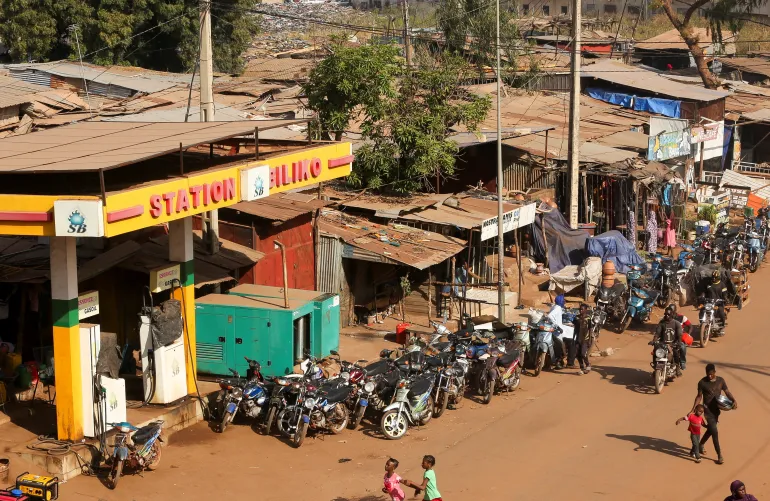
We drove past petrol stations where long queues stretched into the night. Life continued even as fuel grew scarce. People sat patiently, waiting their turn. Anger seemed to have given way to indifference, while rumours swirled that the authorities had struck quiet deals with the very fighters they claimed to be fighting, simply to keep the city moving.
Motorcycles line up near a closed petrol station, amid ongoing fuel shortages caused by a blockade imposed by al Qaeda-linked fighters in early September, in Bamako, Mali [Stringer/Reuters]
‘To become one country, to hold each other’s hand’
Our minders drove us on to the Sahel Alliance Square, a newly created public space built to celebrate the union of the three countries and its people.
On the way, Malian forces sped past, perhaps toward a front line that feels ever closer, as gunmen linked to JNIM have set up checkpoints disrupting trade routes to the capital in recent months. In September 2024, they also carried out coordinated attacks inside Bamako, hitting a military police school housing elite units, nearby neighbourhoods, and the military airport on the city’s outskirts. And yet, Bamako carries on, as if the war were taking place in a faraway land.
At Sahel Alliance Square, a few hundred young people gathered and cheered as the Malian forces went by, drawn by loud music, trivia questions on stage and the MC’s promise of small prizes.
The questions were simple: Name the AES countries? Name the leaders?
A microphone was handed to the children. The alliance leaders’ names were drilled in: Abdourahamane Tchiani of Niger. Ibrahim Traore of Burkina Faso. Assimi Goita of Mali. Repeated again and again until they stuck.
Correct answers won a prize: a T-shirt stamped with the faces of the alliance leaders.
Moussa Niare, 12 years old and a resident of Bamako, clutched a shirt bearing the faces of the three military leaders.
“They’ve gathered together to become one country, to hold each other’s hand, and to fight a common enemy,” he told us with buoyant confidence, as the government’s attempt to sell the new alliance to the public appeared to be cultivating loyalty among the young.
France out, Russia in
While Mali, Burkina Faso and Niger went through separate political transitions, the paths that brought them into a shared alliance followed a similar pattern.
Between 2020 and 2023, each country saw its democratically elected leadership removed by the military, the takeovers framed as necessary corrections.
In Mali, Colonel Goita seized power after months of protest and amid claims that President Ibrahim Boubacar Keita had failed to curb corruption or halt the advance of armed groups.
In Burkina Faso, the army ousted President Roch Marc Christian Kabore in early 2022 as insecurity worsened; later that year, Captain Traore emerged from a counter-coup, promising a more decisive response to the rebellion.
In Niger, soldiers led by General Tchiani detained President Mohamed Bazoum in July 2023, accusing his government of failing to safeguard national security and of leaning too heavily on foreign partners.
What began as separate seizures of power have since become a shared political project, now expressed through a formal alliance. The gathering in Bamako was to give shape to their union.
One of the key conclusions of the AES summit was the announced launch of a joint military battalion aimed at fighting armed groups across the Sahel.
This follows months of escalating violence, as regional armies assisted by Russian mercenaries push back against armed groups who have been launching attacks for over a decade.
Under the previous civilian governments, former colonial ruler France had a strong diplomatic and military presence. French troops, whose presence in the region dates back to independence, are now being pushed out, as military rulers recast sovereignty as both a political and security imperative. The last troops left Mali in 2022, but at its peak, France had more than 5,000 soldiers deployed there. When they withdrew, the country became a symbol of strategic failure for France’s Emmanuel Macron.
But even before that, French diplomacy appeared tone deaf, and patronising at best, failing to grasp the aspirations of its former colonies. The common regional currency, the CFA franc, still anchored to the French treasury, has become a powerful symbol of that resentment.
Now, French state television and radio have been banned in Mali. In what was once the heart of Francophone West Africa, French media has become shorthand for interference. What was lost was not only influence, but credibility. France was no longer seen as guaranteeing stability, but as producing instability.
Across the Sahel and beyond, anti-French sentiment is surging, often expressed in French itself – the language of the coloniser is now also the language of resistance.
Captain Ibrahim Traore of Burkina Faso attends the Alliance of Sahel States (AES) second summit in Bamako, Mali [Mali Government Information Center via AP]
‘Like a marriage of reason’
At the end of the summit, Mali’s Goita was preparing to hand over the AES’s rotating leadership to Traore of Burkina Faso.
Young, charismatic, and the new rock star of Pan-Africanism, Traore, in particular, has captured young audiences with help from a loose ecosystem of pro-Russian messaging and Africanist influencers. Across social media platforms, short videos circulate relentlessly: speeches clipped for virality, images of defiance, and slogans reduced to shareable fragments.
Meanwhile, in Burkina Faso, journalists and civil society actors who have criticised the military rules have been sent to the front line under a conscription policy introduced by Traore. Human rights groups outspoken about alleged extrajudicial killings say they have been silenced or sidelined. But much of it is dismissed as collateral, the price, supporters argue, of sovereignty finally reclaimed.
Before the ceremony, we met Mali’s finance minister. At first, he was confident, rehearsed, assured. But when pressed about financing for the ambitious infrastructure projects the three governments have laid out for the Sahel, his composure faltered and his words stuttered. This was a government official unaccustomed to being questioned. The microphone was removed. Later, away from the camera, he told me, “The IMF won’t release loans until Mali has ironed out its relations with France.”
The spokesperson, irritated by my questions, took me aside. As he adjusted the collar of my suit, slowly and patronisingly, he said he sometimes thought about putting journalists in jail “just for fun”.
He did not question the organisation I worked for. He questioned my French passport; my allegiance. I told him my allegiance was to the truth. He smiled, as if that answer confirmed his suspicions.
In the worldview of Mali’s military government – men shaped by years on the front line, living with a permanent sense of threat – journalists and critics are part of the problem. Creating safety was the challenge. The alliance, the spokesperson explained, was the solution to what they could not find within regional body, ECOWAS.
The half-century-old West African institution is a bloc that the three countries had once helped shape. Now, the AES leaders say its ageing, democratically elected presidents have grown detached, more invested in maintaining one another in office than in confronting the region’s crises. In response, they are promoting the AES as an alternative.
As the Sahel alliance grows, it’s also building new infrastructure.
At its new television channel in Bamako, preparations were under way. The ON AIR sign glowed. State-of-the-art cameras sat on tripods like polished weapons.
The channel’s director, Salif Sanogo, told me it would be “a tool to fight disinformation,” a way to counter Western, and more specifically French, narratives and “give voice to the people of the Sahel, by the people of the Sahel”.
The cameras had been bought abroad. The installation was overseen by a French production company. The irony went unremarked.
To defend the alliance, he offered a metaphor. “It’s like a marriage of reason,” he said. “It’s easier to make decisions when you’re married to three. When you’re married to 15, it’s a mess.” He was referring to the 15 member states of ECOWAS.
‘We will survive this, too’
Two years into the AES alliance, they have moved faster than the legacy regional bloc they left behind. A joint military force now binds their borders together, presented as a matter of survival rather than ambition. A mutual defence pact recasts coups and external pressure as shared threats, not national failures. A common Sahel investment and development bank, meant to finance roads, energy, and mineral extraction without recourse to Western lenders, offers sovereignty, they say, without conditions. A common currency is under discussion.
A shared news channel is intended to project a single narrative outward, even as space for independent media contracts at home. And after withdrawing from the International Criminal Court, they have proposed a Sahel penal court, one that would try serious crimes and human rights violations on their own terms. Justice brought home, or justice brought under control, depending on who you ask.
What is taking shape is not just an alliance, but an alternative architecture, built quickly, deliberately, and in full view of its critics.
Where ECOWAS built norms slowly, through elections, mediation, and consensus, AES is building structure. Where ECOWAS insists on patience, AES insists on speed.
To supporters, this is overdue self-determination, dignity restored after decades of dependency. To critics, it is power concentrated in uniforms, accountability postponed, repression dressed up as emancipation.
From the summit stage as he took over the alliance’s leadership, Traore redrew the enemy: Not al-Qaeda. Not ISIL. Not even France. But their African neighbours, cast as the enemy within. He warned of what he called a “black winter”, a speech that held the room and travelled far beyond it, drawing millions of viewers online.
“Why are we, Black people, trying to cultivate hatred among ourselves,” he asked, “and through hypocrisy calling ourselves brothers? We have only two choices: either we put an end to imperialism once and for all, or we remain slaves until we disappear.”
Away from the summit’s “black winter”, under a sunlit sky in Bamako, life moved on with a quieter rhythm. Music drifted through public squares and streets, carrying a familiarity that cut across the tension of speeches and slogans. It was Amadou and Mariam, Mali’s most internationally known musical duo, whose songs once carried the country’s everyday joys far beyond its borders. Amadou died suddenly this year. But the melody lingers.
Its lyrics hold the secret of the largest alliance of all. Not one forged by treaties or uniforms, but by people, across Mali and the Sahel, in all their diversity.
“Sabali”, Mariam sings.
“Forbearance.
“We have survived worse. We will survive this, too.”
GORDON and Tana Ramsay have paid an emotional tribute to their newly-married daughter Holly and her twin brother Jack on their birthday after the wedding drama.
Holly tied the knot with husband Adam Peaty on Saturday in a lavish ceremony in Bath Abbey but the lead up to the big day didn’t go without some drama.
Sign up for the Showbiz newsletter
Thank you!
Gordon and Tana Ramsay have paid tribute to newly-married daughter Holly on her birthdayCredit: GettyThe pair shared pictures of Holly and her twin Jack to commemorate the occasionCredit: InstagramThe twins looked adorable in the throwback snapsCredit: Instagram
Sharing a joint collaborator post on Instagram, the proud parents posted a series of adorable pictures of their children from their younger years.
They penned: “Happy Birthday to our wonderful twins! @hollyramsaypeaty & Jack, there’s not enough words to explain how proud we are and watching you both grow into incredible individuals is such a joy!
“Love you so much Mum & Dad,” they signed off.
Their followers flocked to the comments section to wish the pair a happy birthday on their special day.
However, he deleted it from his Instagram stories just 15 minutes later.
The photo, which was taken on another occasion and not on the day of the wedding, showed the mother-son duo all dressed up in a suit and dress outside the iconic building.
Her Instagram story re-post read: “I won’t end this year pretending everything was fine.
“I lost a piece of myself this year that I will never get back, and I’m not forcing a smile like it didn’t change me.
“So no…I won’t be saying ‘2026 is going to be my year.’ I’ll be praying that I recover next year, that my heart never has to break like this again, that I never have to survive something like this again.”
Her birthday comes just days after she tied the knot with husband Adam PeatyCredit: SplashAdam uninvited several member of his family including his mum Caroline amid an ongoing feudCredit: Andy Kelvin / Kelvinmedia
WASHINGTON — President Trump’s administration announced late Tuesday that it’s freezing child care funds to Minnesota and demanding an audit of some day care centers after a series of fraud schemes involving government programs in recent years.
Deputy Secretary of Health and Human Services Jim O’Neill said on the social platform X that the move is in response to “blatant fraud that appears to be rampant in Minnesota and across the country.”
Minnesota Gov. Tim Walz pushed back on X, saying fraudsters are a serious issue that the state has spent years cracking down on but that this move is part of “Trump’s long game.”
“He’s politicizing the issue to defund programs that help Minnesotans,” Walz said.
O’Neill referenced a right-wing influencer who posted a video Friday claiming he found that day care centers operated by Somali residents in Minneapolis had committed up to $100 million in fraud. O’Neill said he has demanded Walz submit an audit of these centers that includes attendance records, licenses, complaints, investigations and inspections.
“We have turned off the money spigot and we are finding the fraud,” O’Neill said.
The announcement comes one day after U.S. Homeland Security officials were in Minneapolis conducting a fraud investigation by going to unidentified businesses and questioning workers.
There have been years of investigations that included a $300 million pandemic food fraud scheme revolving around the nonprofit Feeding Our Future, for which 57 defendants in Minnesota have been convicted. Prosecutors said the organization was at the center of the country’s largest COVID-19-related fraud scam, when defendants exploited a state-run, federally funded program meant to provide food for children.
A federal prosecutor alleged earlier this month that half or more of the roughly $18 billion in federal funds that supported 14 programs in Minnesota since 2018 may have been stolen. Most of the defendants in the child nutrition, housing services and autism program schemes are Somali Americans, according to the U.S. Attorney’s Office for Minnesota.
O’Neill, who is serving as acting director of the Centers for Disease Control and Prevention, also said in the social media post Tuesday that payments across the U.S. through the Administration for Children and Families, an agency within the U.S. Health and Human Services Department, will now require “justification and a receipt or photo evidence” before money is sent. They have also launched a fraud-reporting hotline and email address.
The Administration for Children and Families provides $185 million in child care funds annually to Minnesota, according to Assistant Secretary Alex Adams.
“That money should be helping 19,000 American children, including toddlers and infants,” he said in a video posted on X. “Any dollar stolen by fraudsters is stolen from those children.”
Adams said he spoke Monday with the director of Minnesota’s child care services office and she wasn’t able to say “with confidence whether those allegations of fraud are isolated or whether there’s fraud stretching statewide.”
Trump has criticized Walz’s administration over the fraud cases, capitalizing on them to target the Somalia diaspora in the state, which has the largest Somali population in the U.S.
Walz, the 2024 Democratic vice presidential nominee, has said an audit due by late January should give a better picture of the extent of the fraud. He said his administration is taking aggressive action to prevent additional fraud. He has long defended how his administration responded.
Minnesota’s most prominent Somali American, Democratic U.S. Rep. Ilhan Omar, has urged people not to blame an entire community for the actions of a relative few.
Chatsworth 40, Marquez 36 Franklin 69, Sotomayor 38 Garfield 60, Northridge Academy 47 Granada Hills Kennedy 53, Dorsey 42
SOUTHERN SECTION
Alemany 73, West Ranch 53 Anaheim 60, Loara 28 Barstow 52, Bloomington 48 Brea Olinda 68, Rialto 57 Brentwood 75, Millikan 68 Buena Park 61, Linfield Christian 54 Burbank 70, Canyon Country Canyon 66 Calabasas 69, North Torrance 65 Camarillo 74, Aliso Niguel 59 Cantwell-Sacred Heart 59, Mission Viejo 57 Carter 71, Palm Desert 66 Cerritos 53, Irvine 49 Chaffey 75, Bosco Tech 53 Chino 51, Cathedral 50 Chino Hills 72, Alta Loma 47 Citrus Hill 72, Corona 69 Claremont 56, South Torrance 50 Corona Santiago 80, Golden Valley 53 Costa Mesa 60, Nogales 43 Crespi 57, Crean Lutheran 54 Culver City 66, Cajon 62 Desert Hot Springs 67, Desert Christian Academy 55 Edgewood 51, El Monte 20 Esperanza 70, Bonita 62 Estancia 61, Arlington 59 Etiwanda 51, San Gabriel Academy 47 Faith Lutheran 56, Great Oak 52 Fountain Valley 79, Gardens Grove Pacifica 53 Garden Grove Santiago 45, Segerstrom 42 Glendora 61, Colony 41 Godinez 58, Long Beach Cabrillo 57 Hillcrest 72, Yucaipa 64 Jurupa Valley 58, San Gorgonio 50 Kaiser 51, Banning 46 La Canada 65, Walnut 57 Laguna Beach 68, Rancho Alamitos 56 La Habra 64, Rancho Cucamonga 55 La Salle 60, Flintridge Prep 33 La Serna 65, Silverado 61 Legacy Christian Academy 63, Anaheim Canyon 62 Liberty 59, Eastvale Roosevelt 43 Los Altos 87, Schurr 43 Los Amigos 49, Los Osos 40 Los Angeles Wilson 74, Whittier 61 Marina 62, Western 50 Mesa Grande Academy 49, Escondido Adventist Academy 31 Montclair 47, Royal 45 Morro Bay 57, Valley Christian Academy 50 Newport Beach Pacifica Christian 65, Santa Ana Foothill 47 Newport Harbor 61, Woodbridge 35 Norco 60, Salesian 47 Norwalk 46, Santa Fe 24 Orange Vista 61, MSCP 57 Palmdale Aerospace Academy 68, Azusa 59 Paloma Valley 66, St. Paul 54 Pioneer Valley 65, Twentynine Palms 63 Portola 80, Hacienda Heights Wilson 55 Ramona 59, Heritage 56 Rancho Christian 56, California 47 Redlands East Valley 70, Wiseburn Da Vinci 67 Ridgecrest Burroughs 73, Sierra Vista 67 Rio Hondo prep 55, Lone Pine 43 Riverside King 61, Leuzinger 58 Rowland 53, Garden Grove 48 Santa Maria 66, Coastal Christian 58 Saugus 60, Burbank Burroughs 50 Sherman Oaks Notre Dame 74, JSerra 55 Sonora 62, Mission Hills 55 St. Anthony 65, Servite 63 St. Francis 48, Long Beach Poly 43 Summit 75, Rancho Mirage 47 Temecula Prep 66, Western Christian 57 Temple City 85, Duarte 30 Troy 60, Bolsa Grande 44 Warren 80, Compton 65 West Covina 51, Shadow Hills 48 Westlake 51, Eastside 36 Westminster La Quinta 69, Oxford Academy 54 Whitney 55, Santa Paula 39 Windward 90, St. Pius X-St. Matthias Academy 73 Xavier Prep 65, Parlier 41
INTERSECTIONAL
Adelanto 65, Chula Vista LCC 14 AGBU 76, Brawley 41 Allen (TX) 73, Oak Hills 60 American Heritage (UT) 66, Capistrano Valley 62 Arcadia 57, Henderson (NV) Liberty 51 Bakersfield Christian 59, Mayfair 44 Beaumont 64, Hughson 51 Beckman 71, Hawaii Baptist Academy 48 Beverly Hills 75, Birmingham 74 Bishop Diego 63, Davis Sr. 60 Bishop Montgomery 56, Fairfax 33 Bishop’s 55, Bellflower 40 Boulder City (NV) 56, Orange 35 Calexico 49, Moreno Valley 47 Central 76, Fairmont Prep 64 Chaminade 76, Seabury 50 Chowchilla 60, Saddleback 41 Cypress 83, Poway 73 Dallas (TX) Oak Cliff Faith Family 91, Inglewood 65 Dallas (TX) Parish Episcopal 72, Eastvale Roosevelt 56 Desert Pines 76, Laguna Hills 73 Dos Pueblos 58, Saratoga 53 Dougherty Valley 66, San Pedro 46 Douglas 80, Oakwood 70 Edison 78, Fernley 40 El Cerrito 53, Ayala 50 Elk Grove Franklin 81, Oaks Christian 66 Folsom 65, Rolling Hills Prep 60 Gillion Academy National 75, SoCal Academy 72 Glendale 56, Blair 54 Granada 54, Vista Murrieta 42 Harbor Teacher 53, Acaciawood 31 Highland 61, Tennyson 51 Hillcrest Christian 73, WSCA 69 Hoover 69, Bell 32 Horizon Prep 44, Avalon 37 Keppel 54, Crenshaw 51 Lake Washington 87, Corona del Mar 82 La Mirada 65, Meridian (ID) Owyhee 56 Las Vegas (NV) Clark 73, Villa Park 58 Layton Christian Academy (UT) 51, Corona Centennial 48 Littlerock 64, Sylmar 63 Loma Linda Academy 63, Paradise Adventist Academy 50 Los Alamitos 60, Auburn (WA) 53 Los Angeles Wilson 74, Whittier 61 Loyola 64, Mesa (AZ) 62 Maryville (TN) 76, Heritage Christian 69 Mater Dei 108, Bellevue (WA) 80 Meadows School 68, Diamond Bar 58 Menlo School 45, Milken 44 Mira Costa 52, Somerset Academy Losee 48 Mission College Prep 46, Gahr 42 Moorpark 67, Eagle Rock 49 North Hollywood 78, Firebaugh 53 Orange Lutheran 93, Cleveland 87 Orange Vista 61, MSCP 57 Oxnard Pacifica 60, Pinole Valley 54 Palo Verde Valley 81, Cathedral City 47 Pasadena 56, Palisades 43 Pasadena Poly 62, Lakeside 41 Phoenix (AZ) Sunnyslope 71, Redondo Union 63 Ponderosa 75, Northview 37 Rancho Bernardo 65, El Dorado 62 Richmond Salesian College Prep 57, Damien 54 Rosemead 60, Ridgeview 53 Sacramento Adventist 69, Newbury Park Adventist 56 Sage Hill 53, Fort Worth Christian 52 Saint Mary’s 66, Valencia 53 San Diego 60, San Marino 36 San Fernando 86, Santa Clarita Christian 64 San Joaquin Memorial 57, Crossroads 48 San Marcos 63, Granada Hills 42 Santa Barbara 61, Oakland Tech 54 Santa Fe Christian 73, Murrieta Mesa 55 Scripps Ranch 67, Downey 64 Shadow Ridge 73, Long Beach Wilson 68 Sierra Canyon 67, Miami (FL) Columbus 60 Simi Valley 54, Otay Ranch 41 South Gate 40, la Sierra 27 St. Bernard 60, Eastside Catholic 46 St. Bonaventure 73, Van Nuys 38 St. John Bosco 70, Phoenix (AZ) O’Connor 58 St. Monica 78, La Jolla Country Day 51 Sunny Hills 59, Henderson (NV) Basic 57 Temecula Valley 67, Huntington Beach 59 Thousand Oaks 76, College Park 44 Valley Christian Academy 66, Kern County Taft 56 Verbum Dei 75, ALA- West Foothills 61 Village Christian 78, Jesuit 71 Vistamar 84, Paramount 80 Westmont 69, Oak Park 60
GIRLS
CITY SECTION
Verdugo Hills 55, Granada Hills 50
SOUTHERN SECTION
Agoura 47, Simi Valley 38 Aliso Niguel 53, Cantwell-Sacred Heart 29 Apple Valley 45, Orange 34 Aquinas 49, Calvary Baptist 38 Aquinas 58, Citrus Hill 32 Beckman 56, St. Anthony 54 Bishop Diego 50, Santa Monica Pacifica Christian 33 Bishop Diego 62, San Marino 54 Buena Park 53, South Torrance 31 Calvary Baptist 63, Escondido Adventist Academy 50 Campbell Hall 49, Village Christian 37 Chaminade 60, St. Francis 50 Chino 57, Keppel 28 Chino Hills 52, Great Oak 35 Citrus Valley 35, Barstow 23 Corona Santiago 52, Palm Desert 23 Crescenta Valley 56, La Canada 34 Culver City 40, Escondido 29 El Modena 51, West Covina 41 Escondido Adventist Academy 42, Citrus Hill 26 Fillmore 52, PACS 22 Flintridge Prep 75, Pilibos 30 Gahr 46, Coachella Valley 34 Glendora 59, Cerritos 40 Godinez 39, Marina 37 Hacienda Heights Wilson 68, Dos Pueblos 53 Huntington Beach 41, Laguna Beach 21 Irvine 43, Laguna Hills 28 JSerra 51, Fairmont Prep 33 Lakeside 56, Norco 38 La Palma Kennedy 62, Del Sol 58 La Salle 53, Marlborough 43 La Serna 50, Bonita 45 Liberty 49, St. Lucy’s 34 Loma Linda Academy 42, Hesperia Christian 37 Long Beach Jordan 53, Los Alamitos 49 Long Beach Wilson 60, Rosemead 35 Los Osos 53, Sonora 37 Milken 48, Moorpark 37 Montclair 29, Westminster 20 Montebello 35, Monrovia 30 Newbury Park 52, Millikan 50 Newport Beach Pacifica Christian 54, El Rancho 25 Northwood 59, Ocean View 37 Ontario Christian 94, Oak Park 48 Pasadena Poly 43, Corona del Mar 39 Rialto 80, Hesperia 48 Rio Hondo Prep 43, Marina 36 Sage Hill 67, St. Mary’s 58 San Gabriel Academy 34, Lucerne Valley 17 San Jacinto 60, Palm Springs 32 San Marino 31, Madera Liberty 21 Santana 55, Paloma Valley 49 Santa Ana Valley 32, Capistrano Valley Christian 31 Shadow Hills 58, Oakwood 33 Sherman Oaks Notre Dame 72, Santa Monica 21 Sierra Canyon 62, Corona Centennial 55 South Pasadena 60, Rancho Buena Vista 38 St. Bernard’s 43, Santa Fe 36 Victor Valley 50, Riverside Prep 22 Villa Park 67, Valencia 62 Vista Murrieta 57, Alta Loma 45 West Ranch 57, Burbank 55 Whittier Christian 55, Diamond Bar 43 Xavier Prep 47, Desert Christian Academy 43 Yorba Linda 49, Cypress 45 Yucaipa 56, Bishop Amat 48
INTERSECTIONAL
Alemany 57, King/Drew 43 Auburn (WA) 47, El Dorado 30 Bellevue (WA) 73, Camarillo 36 Birmingham 73, Highland 53 Brentwood 55, Piedmont 48 Calexico 37, AGBU 21 California City 39, Antelope Valley 32 Chula Vista Mater Dei 63, Heritage 30 El Capitan 64, St. Pius X-St.Matthias Academy 59 Etiwanda 51, Tualatin (OR) 41 Folsom 42, Ontario 25 Fountain Valley 52, Winslow 44 Fullerton 44, Cerritos Valley Christian 33 Gardena Serra 59, Fallbrook 37 Granada Hills 49, Trinity Classical Academy 46 Granite Hills 35, Maricopa 8 Grant 41, St. Genevieve 39 Harvard-Westlake 72, Leuzinger 37 Heritage Christian 48, Cleveland 44 Lakewood St. Joseph 75, Jesuit 58 Lathrop 54, El Toro 51 Madera Liberty 34, Southlands Christian 20 Mira Costa 56, Philomath 38 Murrieta Valley 57, Watsonville 21 Notre Dame Academy 36, Taft 22 Oceanside 42, Sacred Heart of Jesus 35 Palos Verdes 47, Moreau Catholic 40 Pinole Valley 47, Holy Martyrs Armenian 30 Point Loma 56, Irvine University 10 Punahou (HI) 58, Downey 30 Rancho Christian 84, Redondo Union 73 Rancho Cucamonga 56, Carlsbad 47 Ross Branson 47, Warren 29 Rowland 70, Wilmington Banning 12 Salt Lake City (UT) West 79, Esperanza 42 San Dimas 51, Imperial 38 Santa Margarita 58, Spanish Springs 51 Saugus 56, El Camino Real 36 Shalhevet 67, Arleta 47 Sierra Pacific 67, Anaheim Canyon 30 St. Margaret’s 66, Bellevue (WA) Sammamish 61 Temple City 50, San Pasqual 45 Trabuco Hills 53, Issaquah (WA) Liberty 46 West Jordan (UT) 59, Long Beach Poly 29 Whittier 53, Carson 40
People ride the subway past a euro adoption poster in Sofia, Bulgaria, Monday. Bulgaria is set to become the 21st member of the eurozone on Jan. 1, transitioning from the national lev to the euro amid public concerns that the move could trigger immediate price hikes and a higher cost of living. Photo by Borislav Troshev/EPA
Dec. 31 (UPI) — Bulgaria will begin using the euro as its currency on Thursday, and the country hopes it will bring an economic boost, despite concerns.
Bulgaria joined the European Union in 2007, but it’s only now adopting the currency after strong debate and political turbulence.
It’s the 21st country to join the eurozone, and lawmakers in Brussels and Sofia hope it will boost the economy of the EU’s poorest nation.
European Commission President Ursula von der Leyen called the move one of the EU’s greatest achievements.
“This milestone reflects years of hard work and commitment, overcoming challenges,” she said in a statement. “The euro will bring benefits for the Bulgarian people making payments and travel easier. It will bring new opportunities for Bulgarian businesses, allowing them to seize better the advantages of our common single market. It will further strengthen Bulgaria’s voice in Europe. This step is good for Bulgaria, and it strengthens Europe as a whole. It makes our economy more resilient and competitive globally. Congratulations, Bulgaria! You can be proud of what you achieved.”
The country has had dual displays of prices — in the euro and the Bulgarian lev — since August, and that will continue until August 2026. Consumers can use both currencies beginning Jan. 1 through Jan. 31. On Feb. 1, they must only use the euro. The price displays are a way for consumers to monitor prices and a stopgap to prevent retailers from price gouging.
Bulgarians can exchange their currency at banks and post offices for free until July. After that, they can charge for exchanges.
The country is still divided on whether switching to the euro is a good move.
A recent survey by the Bulgarian ministry of finance showed that 51% of citizens wanted to adopt the euro, and 45% were against it, The Guardian reported.
In June, a fight broke out in the parliament when the measure was adopted by the European Commission. Parliament members from the Revival Party blocked the podium. They also organized protests against euro adoption. Revival is a far-right, pro-Russian political party.
Petar Ganev, senior research fellow at the Institute for Market Economics in Sofia, told The Guardian that the division on the euro highlights the country’s broader political tension.
“This is not surprising. The country is divided on almost everything that you can imagine,” Ganev said. “And after the political instability, we ended up in a very hostile political environment.”
Bulgaria has endured a four-year political crisis with seven parliamentary elections and widespread corruption, which has caused a lack of trust in the government.
Valdis Dombrovskis, European Commission economy minister, said in a November speech in Sofia that the adoption of the euro was especially important during Russia’s war with Ukraine, rising geopolitical tensions and global economic uncertainty.
“Most European countries — including Bulgaria — are far too small to shape today’s world on their own. They only stand to gain necessary weight by fully integrating into the European Union’s larger political and economic structures,” he said.
“The euro area is not just a group of countries sharing a common currency,” Dombrovskis said in his speech. “It is a powerful symbol to the world of European integration, economic stability, and geopolitical strength. It gives Europe a collective economic weight that allows it to shape global trade, investment, and financial markets.”
The latest Eurobarometer, a survey conducted by the EU in Autumn 2025, showed that 74% of Europeans said their country has benefited from being a member of the EU, and 59% are optimistic about the future of the EU.
Many Bulgarians fear that prices will spike during the transition. The average monthly income is about $1,500 in the country, so rising prices could be detrimental to some. But the European Commission has said there is no evidence that inflation will rise.
Victor Papazov, macroeconomist and adviser to the Revival party, claimed Bulgaria was heading for a crisis similar to what Greece endured in 2009.
“Any person in their right mind would oppose adopting the euro,” Papazov said in a written statement to The Guardian. “Joining now will make things worse and faster. In my opinion there is not a single serious positive in adopting the euro.”
Maria Valentinova, 35, a pharmacist from Sofia, told The Guardian that she is glad her young son will grow up in the eurozone. She said the currency “will be good for the economy of the country in the long run.”
Valentinova called the transition period “a bit stressful” but said, “I think it will be a good thing in the end.”
Ganev said Bulgarians will get used to the new currency quickly. “What will happen to our country and if we are going to be a good example in the eurozone or a bad example … depends entirely on us.”
Revelers enjoy the confetti that is tossed in the air as part of the annual New Year’s Eve Confetti Test in Times Square in New York City on December 29, 2025. Photo by John Angelillo/UPI | License Photo
AN Emirates flight attendant has revealed some of her top tips for people planning a trip to Dubai – as well as little-known perks to the job.
Alessandra Piper initially worked in a corporate job in London, before being tempted to become flight crew by a friend already working for the airline.
Sign up for the Travel newsletter
Thank you!
Alessandra has worked for Emirates for 11 years
She told Sun Travel: “The opportunity to explore different cultures while building a career in aviation was incredibly appealing, so I applied, and it’s been the best decision I’ve ever made.”
She has since worked for Emirates for 11 years, where she currently serves the First Class cabin – her role for the past two and a half years.
When it comes to training, it is certainly intense.
She explained: “Emirates places strong emphasis on professional development, with a seven-and-a-half-week world-class training program at the dedicated Cabin Crew Training Academy covering safety, medical, security and hospitality skills.
“Working in First Class allows me to provide a highly personalized experience, dedicating more time to each passenger.
“We also undergo specialized courses such as L’art du vin, Emirates’ expert wine program designed to deepen our understanding of the airline’s extensive collection, including tasting profiles, pairing principles and service techniques.”
She has since been to 87 countries and hundreds of cities – although with 140 places the airlines connects to, she has a long way to go.
Not only that, but flight crew can request specific destination to go to, and head to events sponsored by Emirates which include tennis, football and cricket.
Of course, most of the long-haul routes go via Dubai – where crew are also given fully furnished accommodation, free uniform cleaning and free transport to work.
Here are some of Alessandra’s top tips if heading to Dubai – for first timers and those on a budget.
What top tips would you give to Dubai first timers?
Dubai genuinely has something for everyone, whether you’re looking for beautiful beaches, an incredible dining scene, family-friendly attractions or world-class shopping.
I always suggest booking tickets for popular experiences in advance, as it makes the day much smoother and helps avoid queues.
With malls and attractions open late into the evening, the city offers plenty to enjoy after daylight hours, from waterfront dining to desert experiences, so you can make the most of every day you’re here.
Taxis in Dubai are abundant and affordable, so it’s easy to explore the city.
You can download the Careem or Uber app for even quicker access to taxis.
One practical tip: always carry a light jacket, even during the hotter months, as indoor spaces can be very air-conditioned.
The city can easily be done on a budgetCredit: AlamyPanoramic view of Hatta, a town in the Emirate of Dubai, in the border with OmanCredit: Getty – Contributor
Are there any hidden spots that tourists don’t know about but should?
Dubai’s dining scene is extraordinary.
The city is home to more than 13,000 restaurants and cafés, making it one of the most diverse culinary destinations in the world.
With so much choice, it’s worth exploring beyond the most talked-about spots.
Most high-end restaurants offer business lunch packages – a smaller menu for a very affordable price.
Sushi Samba’s business lunch is my favourite, the restaurant has a 360-degree view of The Palm.
I also love introducing visitors to Jumeirah Al Qasr.
A traditional abra ride through the hotel’s waterways offers beautiful views of the Burj Al Arab, and I usually end the visit with a meal at one of the resort’s restaurants.
Dubai Opera is also a must. Beyond opera, the venue hosts musicals, ballet, theatre and more.
And for those seeking nature, Dubai has much to offer.
You can see flamingos at Ras Al Khor Wildlife Sanctuary or take a day trip to Hatta for kayaking, hiking and mountain scenery, showing an entirely different side of the UAE.
Emirates have flights to Dubai from £519 returnCredit: Alamy
Saudi Arabia’s strike on Mukalla port has triggered tensions with its partner in the Arab coalition in Yemen and its Gulf Arab neighbour, the United Arab Emirates.
The coalition spokesman, Major-General Turki al-Maliki, said two ships entered the port of Mukalla, carrying more than 80 vehicles and containers of weapons and ammunition destined for the Southern Transitional Council (STC), without informing Saudi Arabia or the internationally recognised Yemeni government.
There are serious differences between the two allies in Yemen, and now it is at its peak and perhaps a turning point that would impact Yemen.
The Yemeni government has lost control of events following a military escalation between Saudi Arabia and the UAE in Hadramout governorate, where Mukalla lies, in December.
The Presidential Leadership Council (PLC) is divided into two factions, each loyal to one party in this conflict. The difference had been simmering for years away from the spotlight until it exploded publicly over the past few days.
Saudi Arabia and the UAE are key members of the Arab military coalition in Yemen, formed to confront the Houthis, who took full control of the capital, Sanaa, by force in 2015 and later imposed their own government.
This conflict of interest between Saudi Arabia and the UAE has been escalating gradually since the UAE-backed Southern Transitional Council (STC) formed in 2017 as a separatist political and military force seeking an independent state in the south – South Yemen – an independent state between 1967 and 1990.
Earlier in December, the STC forces crossed red lines by controlling all southern governorates, including Hadramout and al-Mahra governorates. That did not go down well in Saudi Arabia, which considered the move a threat to its national security.
Hadramout also represents economic depth for Yemen with its oil and gas resources and related infrastructure, and also has a vital border crossing with Saudi Arabia, making it part of the equation for border security and trade.
The latest public fallout between Saudi Arabia and the UAE will cast a dark shadow over the situation in Yemen politically, economically, and militarily. The Yemeni political circles were divided into two camps, with the government members each following one of the external parties to the conflict – Saudi and Emirati.
The clearest outcome of the differences would be seen in the eight-member PLC, an internationally recognised body, which is already divided into camps loyal to Saudi Arabia and the UAE.
One camp is headed by Rashad al-Alimi, the PLC president, and includes Sultan al-Arada, Abdullah al-Alimi Bawazir, and Othman Hussein Mujalli. The second is led by the head of the STC force, Aidarus al-Zoubaidi, and includes Abdul Rahman al-Mahrami (also known as Abu Zaraa), Tariq Mohammed Saleh, and Faraj Salmin al-Bahsani.
The leaders of both camps issued two different statements regarding the calls made by al-Alimi for the UAE to withdraw from Yemen following the Saudi strike on the ships carrying weapons to the STC. One was in favour of the UAE’s exit from Yemen, and the other was against — showing they are representing the interests of regional players and at the same time confirming that Yemen is a venue for a proxy war.
Within the Yemeni political landscape, the quick developments and successive events are pushing Yemen into a new phase of an internal war among political and military components that make up the legitimate government, with new internal fighting among many armed factions.
It is also taking the focus away from the Houthi rebellion in the north, which controlled Sanaa and the most populous provinces in Yemen.
The main goal for the legitimate Yemeni government and the Saudi-led Arab coalition was to confront the Houthis’ takeover. Now, the country is on the brink of collapse and a new phase of turmoil after more than a decade of armed conflict, which could help the Houthis to expand their influence beyond their current areas of control.
The latest event will weaken the Saudi-led coalition further and cast doubt over its cohesion and ability to achieve its declared joint goals for Yemen.
The views expressed in this article are the author’s own and do not necessarily reflect Al Jazeera’s editorial stance.
Yes, Oprah Winfrey has discussed her weight loss and weight gain and weight in general before — many, manytimes before. The difference this time around, she says, is how little food noise there is in her daily life, and how little shame. It’s so quiet, in fact, that she can eat a whole croissant and simply acknowledge she had breakfast.
“Food noise,” for those who don’t experience it, is a virtually nonstop mental conversation about food that, according to Tufts Medicine, rarely shuts up and instead drives a person “to eat when they’re not hungry, obsess over meals and feel shame or guilt about their eating habits.”
“This type of obsessive food-related thinking can override hunger cues and lead to patterns of overeating, undereating or emotional eating — especially for people who are overweight,” Tufts said.
Winfrey told People in an exclusive interview published Tuesday that in the past she would have been thinking, “‘How many calories in that croissant? How long is it going to take me to work it off? If I have the croissant, I won’t be able to have dinner.’ I’d still be thinking about that damn croissant!”
What has changed is her acceptance 2½ years ago that she has a disease, obesity, and that this time around there was something not called “willpower” to help her manage it.
The talk show host has been using Mounjaro, one of the GLP-1 drugs, since 2023. The weight-loss version of Mounjaro is Zepbound, like Wegovy is the weight-loss version of Ozempic. Trulicity and Victroza are also GLP-1s, and a pill version of Wegovy was just approved by the FDA.
When she started using the injectable, Winfrey told People she welcomed the arrival of a tool to help her get away from the yo-yo path she’d been on for decades. After understanding the science behind it, she said, she was “absolutely done with the shaming from other people and particularly myself” after so many years of weathering public criticism about her weight.
“I have been blamed and shamed,” she said elsewhere in that 2023 interview, “and I blamed and shamed myself.”
Now, on the eve of 2026, Winfrey says her mental shift is complete. “I came to understand that overeating doesn’t cause obesity. Obesity causes overeating,” she told the outlet. “And that’s the most mind-blowing, freeing thing I’ve experienced as an adult.”
She isn’t even sharing her current weight with the public.
Winfrey did take a break from the medication early in 2024, she said, and started to regain weight despite continuing to work out and eat healthy foods. So for Winfrey the obesity prescription will be renewed for a lifetime. C’est la vie seems to be her attitude.
“I’m not constantly punishing myself,” she said. “I hardly recognize the woman I’ve become. But she’s a happy woman.”
Winfrey has to take a carefully managed magnesium supplement and make sure she drinks enough water, she said. The shots are done weekly, except when she feels like she can go 10 or 12 days. But packing clothes for the Australian leg of her “Enough” book tour was an off-the-rack delight, not a trip down a shame spiral. She’s even totally into regular exercise.
Plus along with the “quiet strength” she has found in the absence of food noise, Winfrey has experienced another cool side effect: She pretty much couldn’t care less about drinking alcohol.
“I was a big fan of tequila. I literally had 17 shots one night,” she told People. “I haven’t had a drink in years. The fact that I no longer even have a desire for it is pretty amazing.”
So back to that croissant. How did she feel after she scarfed it down?
“I felt nothing,” she said. “The only thing I thought was, ‘I need to clean up these crumbs.’”
The scouting report was clear. The Pistons (25-8) were second in the league in points in the paint. They were third in points off turnovers and third in turnovers forced.
The Lakers played directly into Detroit’s hands.
Detroit scored 74 points in the paint, the most allowed by the Lakers all season, and capitalized on 21 Lakers turnovers for 30 points. Entering the game, the Pistons’ 58.1 points in the paint per game were only narrowly behind Oklahoma City’s league-leading 58.2.
“We’ve got to definitely match their physicality,” said Luka Doncic, who led the Lakers with 30 points and 11 assists, but had eight turnovers, which is tied for his second-most in a game this season. “That’s the whole point. We got to match how they play.”
Last week, the Lakers faced Phoenix and Houston, two teams with similar styles to Detroit. The Suns averaged 59 paint points in their two wins over the Lakers in December compared to 44 in the Lakers’ Dec. 14 win. The Rockets poured in 68 paint points on Christmas Day.
The Pistons made more shots in the paint (37) than the Lakers attempted (34) and kept their shooting percentage sky-high when three-pointers started to fall. Detroit, which had been shooting 34.7% from three this season, made 11 of 24 (45.8%) from beyond the arc Tuesday.
“We had a game plan,” James said as the Lakers allowed a season-high 63.2% shooting from the field. “We understand that they’re probably No. 1 in points in the paint in the NBA. They get a lot of their points off fast breaks and in the paint. So we knew we’d try to make them miss from the outside and they made some tonight and that’s OK.”
Marcus Sasser hit four of six from three, all in the second half, to finish with 19 points off the bench. Cade Cunningham starred for the Pistons with 27 points and 11 assists.
Gen. Xavier T. Brunson, commander of the ROK-U.S. Combined Forces Command, delivers a
keynote address at the 2025 second ROK-U.S. Combined Policy Forum at Royal Park Convention in Seoul on Monday. Photo by Hyojoon Jeon/UPI
SEOUL Dec. 31 (UPI) — Against a backdrop of North Korea’s accelerating nuclear program and a fracturing geopolitical landscape, senior military officials and lawmakers from the United States and South Korea gathered in Seoul earlier this week to seek a fundamental redesign of their decades-old military partnership.
The second annual ROK-U.S. Combined Policy Forum, held at the Royal Park Convention, arrived at what participants described as a historical inflection point. As the security environment shifts from traditional border defense to a complex web of regional threats, the discussion centered on transitioning the alliance into a modern, multi-domain force.
“Korea is not simply responding to threats on the peninsula,” Gen. Xavier T. Brunson, commander of the ROK-U.S. Combined Forces Command, said in a keynote address.
He characterized the current era as a “pivotal moment” and stressed that alliance modernization “should be more than a slogan.”
Brunson noted that South Korea now sits at the crossroads of regional dynamics that shape the balance of power across Northeast Asia.
The forum, attended by influential figures including Rep. Yoo Yong-won of the National Assembly’s Defense Committee, reflected a growing urgency to adapt. While the alliance remains anchored by 28,500 U.S. troops, the conversation shifted toward two pressing themes: the expansion of South Korea’s operational role and the credibility of integrated deterrence.
A primary focus was the modernization of the command framework. Experts proposed integrating South Korean forces more deeply into the combined defense system, reflecting Seoul’s desire for a role that matches its military sophistication. This shift is seen as a response to demands for more visible burden-sharing and strategic autonomy.
The afternoon sessions turned to the reality of North Korea’s nuclear advancements. With Pyongyang officially designating the South as its “primary foe,” speakers underscored the need for closer integration of nuclear consultation mechanisms. The goal is to move beyond abstract promises toward a structural reform that addresses “multi-theater” challenges.
As the forum concluded, the underlying message was clear: While the alliance remains the bedrock of security, the status quo is no longer sufficient. Under the administration of Lee Jae Myung, the partnership is attempting to bridge the gap between a 70-year-old treaty and the high-tech, nuclear-charged reality of the 21st century.
In 2025, Israel carried out thousands of attacks in Gaza and the occupied West Bank, with at least 10,600 attacks recorded across multiple countries including Lebanon, Iran, Syria, Yemen and Qatar.
DAVID Beckham shared a sweet family tribute to mark the end of 2025 – but son Brooklyn and his wife Nicola Peltz were noticeably missing.
The former footballer, 50, shared a series of highlights from this year -including pictures of his wife Victoria’s Paris Fashion Week show and him receiving his knighthood.
Sign up for the Showbiz newsletter
Thank you!
David Beckham shared a sweet family tribute to mark the end of 2025Credit: InstagramThe former footballer shared individual snaps with each of his kidsCredit: InstagramBut son Brooklyn and wife Nicola Peltz were missing from the postCredit: Instagram
David also posted snaps of his children Romeo, 22, Cruz, 20 and Harper, 13, on holiday and enjoying quality time together.
Alongside individual pictures with each of his kids, David also shared a family photos alongside wife Victoria from his 50th birthday.
David wrote: “I feel very lucky to have had the year I’ve had in 2025 full of moments that I will never forget from my 50th to my knighthood (still pinching myself ) and then finishing with winning the MLS as an owner.“
Despite not mentioning Brooklyn by name, David sweetly praised his “kids” and shared his love for them.
He added: “I‘m so grateful to my incredible wife, my amazing children, my friends and team I work with every single day nothing would have been possible without you all… But as Sir Alex Ferguson would say ‘Onto the the next‘.
“Thank you for the incredible memories I will forever remember 2025. Victoria I love you & our kids.”
The couple have also shared subtle digs at his family in recent days after his brother Cruz revealed the Beckhams woke up to being blocked by the couple.
In a touching video shared on social media, Victoria and David – who have been together for 28 years – sang to each other as they slowed danced on Christmas Day.
And in what appeared to be a pointed message to their estranged son, Brooklyn the couple delivered the lyric: “And we’ve got nothing to be sorry for…”
They were dancing to Guilty sung by Barbra Streisand and Barry Gibb.
Sharing the video, Victoria penned: “David and Victoria giving their very best Barry and Barbra on Christmas Day xxx kisses from us both xx @davidbeckham.”
David posted a smiling snap of him and Romeo on holidayCredit: InstagramThe sports icon also shared a picture alongside CruzCredit: InstagramDavid posted this family photo as he looked back on his 2025 highlightsCredit: InstagramBrooklyn and Nicola put on a united front in a new post amid their feud with his familyCredit: Instagram
For faith leaders supporting and ministering to anxious immigrants across the United States, 2025 was fraught with challenges and setbacks. For many in these religious circles, the coming year could be worse.
The essence of their fears: President Trump has become harsher with his contemptuous rhetoric and policy proposals, blaming immigrants for problems from crime to housing shortages and, in a social media post, demanding “REVERSE MIGRATION.”
Haitians who fled gang violence in their homeland, as well as Afghans allowed entry after assisting the U.S. in Afghanistan before the Taliban takeover, now fear that their refuge in America may end due to get-tough policy changes. Somali Americans, notably in Minnesota’s Twin Cities, worry about their future after Trump referred to them as “garbage.”
After Trump’s slurs, the chair of the Catholic bishops conference’s subcommittee on racial justice urged public officials to refrain from dehumanizing language.
“Each child of God has value and dignity,” said the bishop of Austin, Texas, Daniel Garcia. “Language that denigrates a person or community based on his or her ethnicity or country of origin is incompatible with this truth.”
Here’s a look at what lies ahead for these targeted immigrant communities, and the faith leaders supporting them.
Haitians in limbo
In 2024, Trump falsely accused Haitians in Springfield, Ohio, of eating their neighbors’ cats and dogs. It worsened fears about anti-immigrant sentiment in the mostly white, blue-collar city of about 59,000, where more than 15,000 Haitians live and work.
Thousands of them settled in Springfield in recent years under the Temporary Protected Status program.
Their prospects now seem dire. The TPS program, allowing many Haitians to remain legally in Springfield and elsewhere, expires in early February.
“It’s going to be an economic and humanitarian disaster,” said the Rev. Carl Ruby, pastor of Central Christian Church — one of several Springfield churches supporting the Haitians.
Ruby and Viles Dorsainvil, a leader of Springfield’s Haitian community, traveled recently to Washington to seek help from members of Congress.
“Every single legislator we’ve talked to has said nothing is going to happen legislatively. Trump’s rhetoric keeps getting harsher,” Ruby said. “It just doesn’t feel like anything is going our way.”
Many Haitians fear for their lives if they return to their gang-plagued homeland.
Faith communities have come together to support immigrants in the face of Trump’s crackdown, Ruby said.
“It’s increasing our resolve to oppose this,” he said. “There are more and more churches in Springfield saying we will provide sanctuary. … We will do whatever it takes to protect our members.”
Afghan refugees
Trump suspended the U.S. refugee program on the first day of his second term. Halting the program and its federal funding affected hundreds of faith-based organizations assisting refugees.
Among them was Lutheran Social Services of the National Capital Area, which serves the region around Washington, D.C., and lost 68% of its budget this year. The organization laid off two-thirds of its staff, shrinking from nearly 300 employees to 100.
Many of its employees and nearly two-thirds of its clients are Afghans. Many worked with the U.S. in Afghanistan and fled after the Taliban’s takeover from a U.S.-backed government in 2021.
The Trump administration announced new immigration restrictions after an Afghan national became the suspect in the Nov. 26 shooting of two National Guard members in Washington.
“It shook up our team. It was awful,” said Kristyn Peck, CEO of LSSNCA.
Peck said there is increased fear among Afghans on her staff and a false public narrative that Afghan immigrants are a threat.
“A whole group of people have now been targeted and blamed for this senseless act of violence,” she said.
She still finds reasons for hope.
“We continue to do the good work,” Peck said. “Even in challenging moments, we just continue to see people putting their faith into action.”
Volunteers have stepped up to provide services that employees no longer have funding to provide, including a program that helps Afghan women with English-language and job-skills training.
U.S.-based World Relief, a global Christian humanitarian organization overseen by the National Association of Evangelicals, has joined left-of-center religious groups decrying the new crackdown on Afghan refugees.
“When President Trump announces his intention to ‘permanently halt’ all migration from ‘Third World countries,’ he’s insulting the majority of the global Church,” declared World Relief CEO Myal Greene. “When his administration halts processing for all Afghans on account of the evil actions of one person, he risks abandoning tens of thousands of others who risked their lives alongside the U.S. military.”
Somalis targeted by Trump
In mid-December, imams and other leaders of Minnesota’s Somali community established a task force to tackle the fallout from major fraud scandals, a surge in immigration enforcement, and Trump’s contemptuous words toward the largest group of Somali refugees in the U.S.
“We’re not minimizing the crime, but we’re amplifying the successes,” said imam Yusuf Abdulle.
He directs the Islamic Association of North America, a network of more than three dozen mostly East African mosques. About half are in Minnesota, which, since the late 1990s, has been home to growing numbers of Somali refugees who are increasingly visible in local and U.S. politics.
“For unfortunate things like fraud or youth violence, every immigrant community has been through tough times,” Abdulle said. “For the number of years here, Somali is a very resilient, very successful community.”
Even though most Somalis in Minnesota are U.S. citizens or lawfully present, Abdulle said, many deserted local businesses and mosques when immigration enforcement surged.
The new task force includes more than two dozen faith and business leaders, as well as community organizers. Addressing their community’s fears is the first challenge, followed by increased advocacy ahead of the 2026 midterm elections.
“Every election year the rhetoric goes up. And so we want to push back against these hateful rhetorics, but also bring our community together,” said community leader Abdullahi Farah.
Faith leaders respond
In mid-November, U.S. Catholic bishops voted overwhelmingly to issue a “special message” decrying developments causing fear and anxiety among immigrants. It marked the first time in 12 years that the bishops invoked this urgent way of speaking collectively.
“We are concerned about the conditions in detention centers and the lack of access to pastoral care,” said the message. “We oppose the indiscriminate mass deportation of people. We pray for an end to dehumanizing rhetoric and violence, whether directed at immigrants or at law enforcement.”
The bishops thanked priests, nuns and lay Catholics accompanying and assisting immigrants.
“We urge all people of goodwill to continue and expand such efforts,” the message said.
The presiding bishop of the Evangelical Lutheran Church in America, Yehiel Curry, issued a similar pastoral message last month thanking ELCA congregations for supporting immigrants amid “aggressive and indiscriminate immigration enforcement.”
“The racial profiling and harm to our immigrant neighbors show no signs of diminishing, so we will heed God’s call to show up alongside these neighbors,” Curry wrote.
HIAS, an international Jewish nonprofit serving refugees and asylum-seekers, has condemned recent Trump administration moves.
“As a Jewish organization, we also know all too well what it means for an entire community to be targeted because of the actions of one person,” HIAS said.
“We will always stand in solidarity with people seeking the opportunity to rebuild their lives in safety, including those being targeted now by harmful policies and hateful rhetoric in the Afghan American and Somali American communities.”
Crary, Dell’Orto, Henao and Stanley write for the Associated Press.

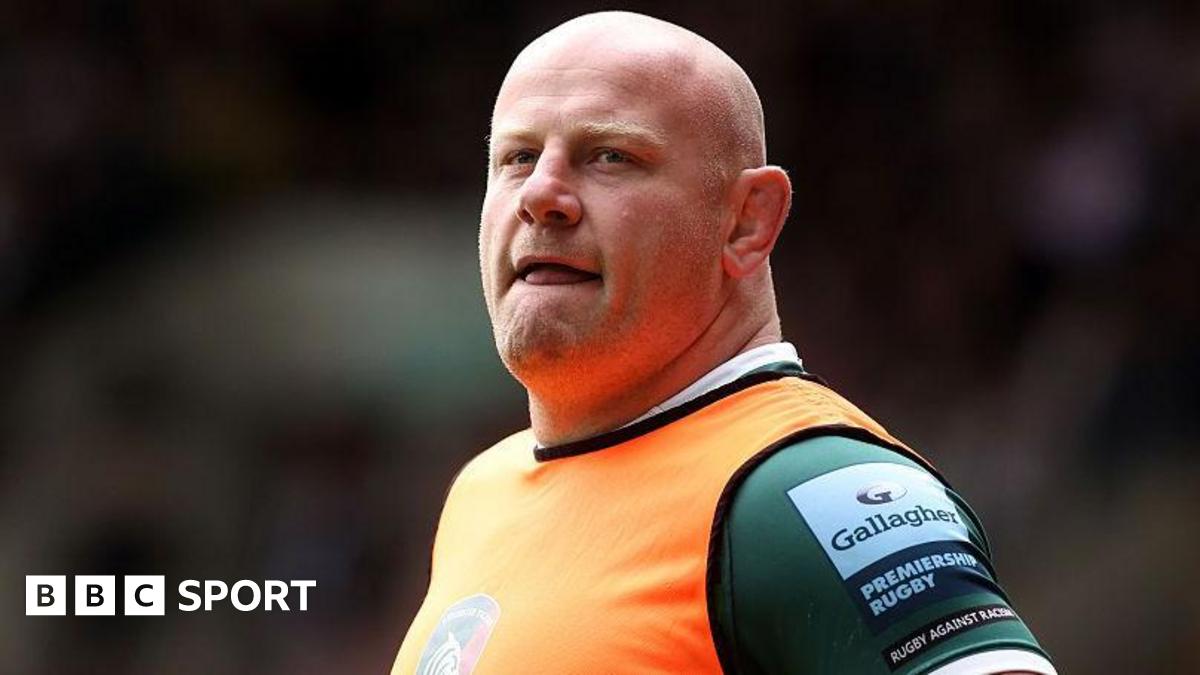





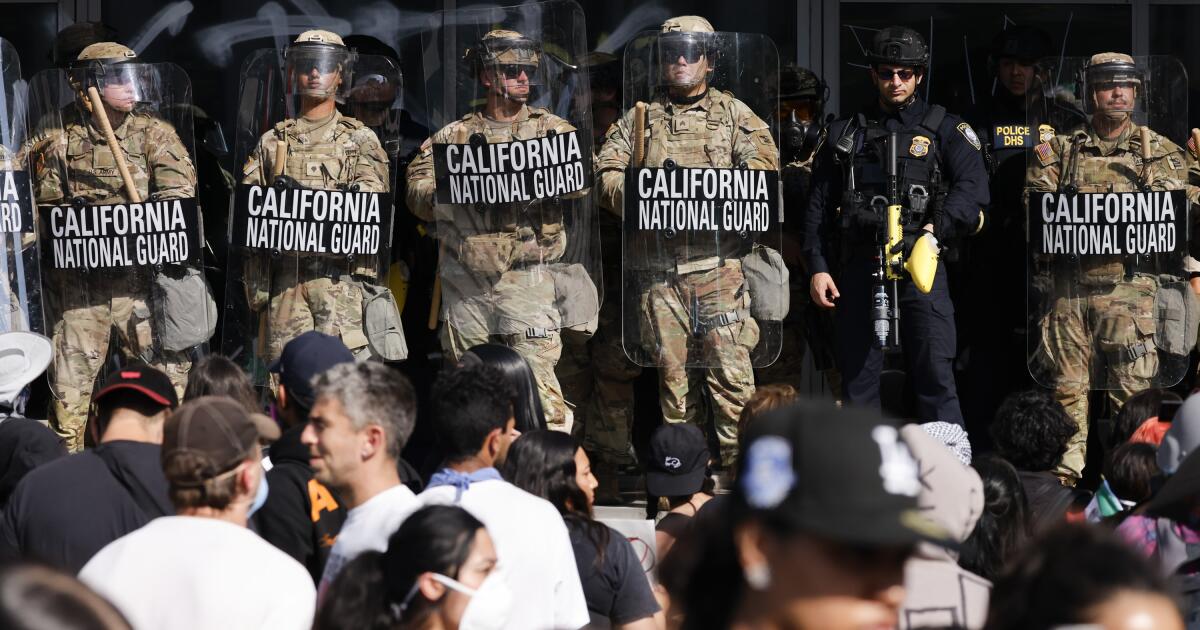



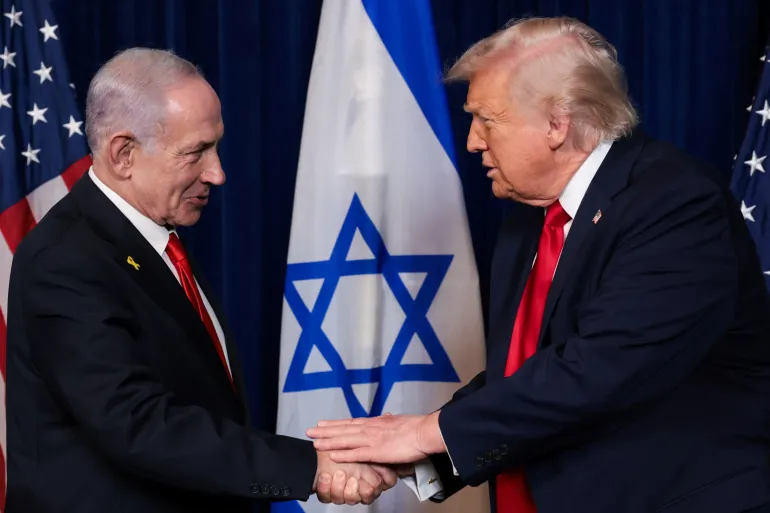


![Israeli far-right Finance Minister Bezalel Smotrich holds a map of an area near the settlement of Maale Adumim, a land corridor known as E1, outside Jerusalem in the occupied West Bank, on August 14, 2025, after a press conference at the site. [Menahem Kahana/AFP]](https://i0.wp.com/occasionaldigest.com/wp-content/uploads/2025/12/AFP__20250814__69HV6DR__v1__HighRes__IsraelPalestinianConflictSettlementPolitics-1755194568.jpg?w=640&ssl=1)