World

Pope Leo XIV resurrects Christmas Mass in St. Peter’s Basilica

Pope Leo XIV presides over a Christmas Mass at St. Peter’s Basilica, Vatican City, late Wednesday night, which is the first held there in 31 years. Photo by Giuseppe Lami/EPA

Dec. 24 (UPI) — Pope Leo XIV brought back the Christmas Mass at St. Peter’s Basilica in Vatican City on Wednesday night, which is the first held there since 1994.

About 11,000 attended the mass, inside and out, despite rainy conditions, the Catholic News Agency reported.

Regarding the birth of Jesus, Pope Leo described it as, “God gives us nothing less than his very self, in order to ‘redeem us from all iniquity and purify for himself a people of his own.'”

To find the savior, he said, “We must look below to find God among us in the manger.”

A baby’s need for care “becomes divine since the son of the father shares in history with all his brothers and sisters,” he continued.

“The omnipotence of God shines forth in the powerlessness of a newborn; the eloquence of the eternal word resounds in an infant’s first cry; the holiness of the Spirit gleams in that small body, freshly washed and wrapped in swaddling clothes.”

Pope Leo also discussed the “infinite dignity of every person” and contrasted that with a world in which humanity often tries become god-like while dominating others, according to Vatican News.

“In the heart of Christ beats the bond of love that unites heaven and Earth, creator and creatures,” the Pope said, adding that the key to changing history is to recognize such realities.

“As long as the night of error obscures this providential truth, then ‘there is no room for others either, for children, for the poor, for the stranger,'” he added, quoting Pope Benedict XIV’s homily at Christmas Mass on Dec. 24, 2012.

“These words of Pope Benedict XVI remain a timely reminder that on Earth, there is no room for God if there is no room for the human person,” the pontiff said.

The pope afterward greeted those standing in the rain in St. Peter’s Square and told them that, while St. Peter’s Basilica is large, it is not large enough to hold all of them.

He thanked those who attended the mass while outside, wished them a merry Christmas and gave them his blessings.

About 6,000 attended the mass that started at 10 p.m. local time in the basilica, while another 5,000 watched on large video screens placed outside in St. Peter’s Square.

Source link

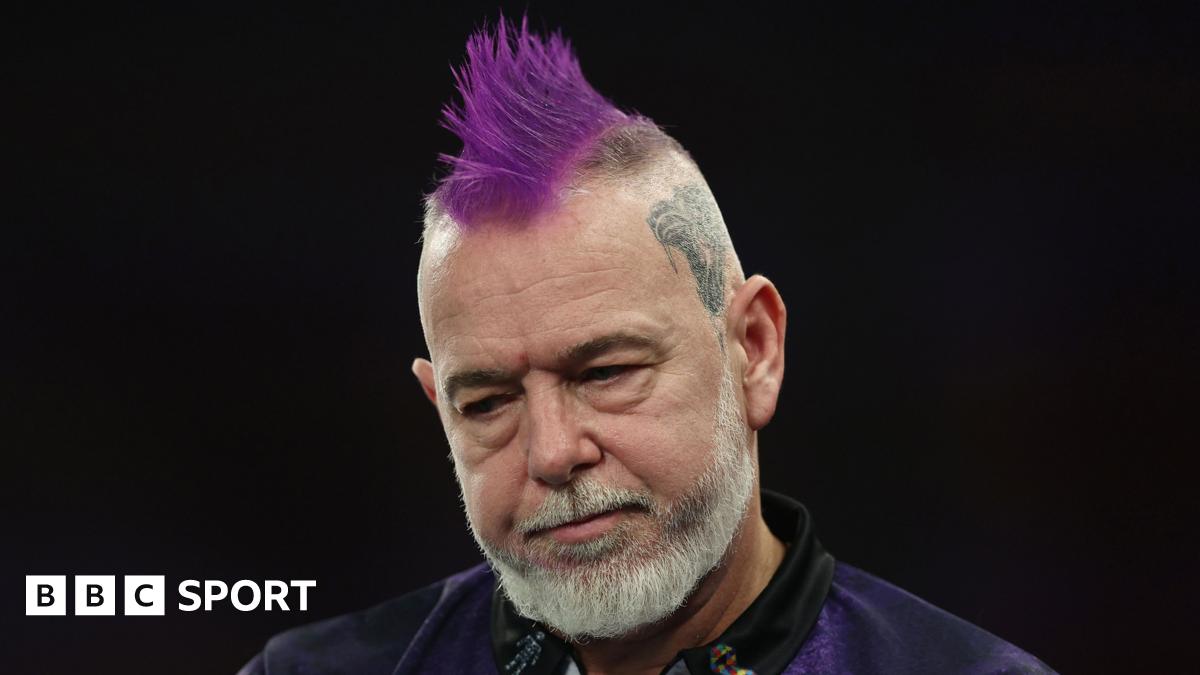
PDC World Championship 2026: Wright should retire – Van Gerwen

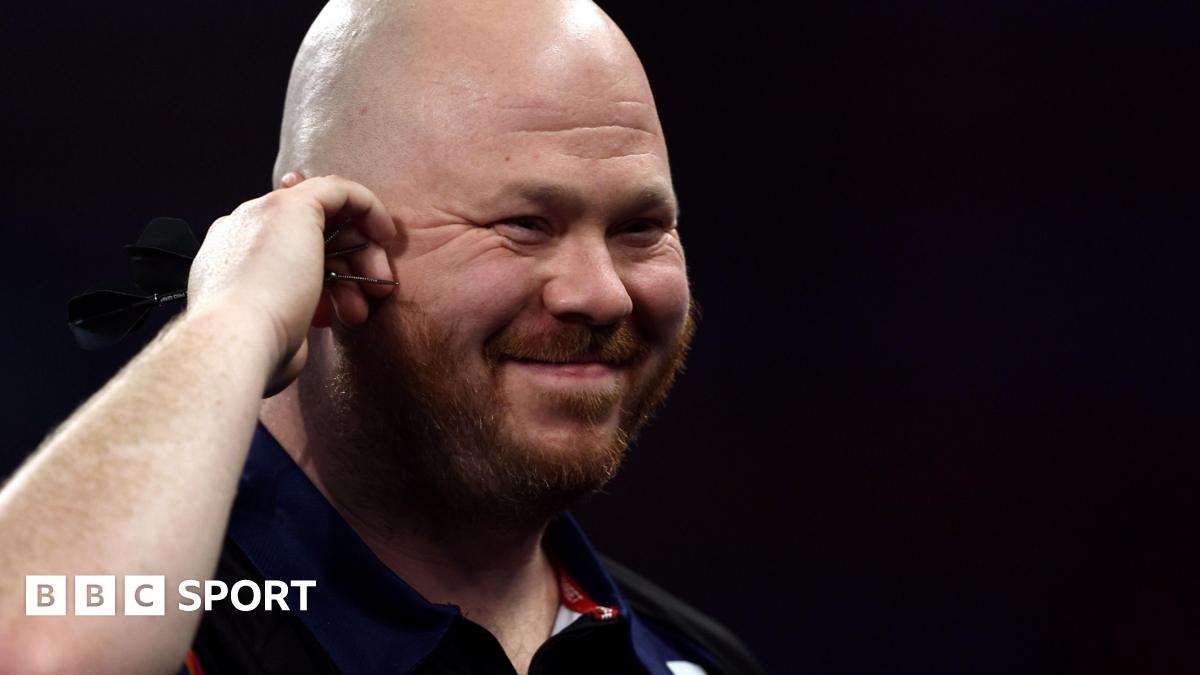
Three-time world champion Michael van Gerwen says Peter Wright should retire following his emphatic defeat in the second round of the PDC World Darts Championship.

Two-time world champion Wright won just two legs and averaged below 80 as he was surprisingly beaten by debutant Arno Merk on Tuesday.

Van Gerwen said he was “not surprised by his performance” given the Scotsman’s inconsistent recent record and added that “it’s time for him to retire anyway”.

The 36-year-old Dutchman beat William O’Connor to reach the third round at Alexandra Palace.

Wright, who became world champion in 2020 and 2022, has not made it past the quarter-finals of any televised ranking tournament in the past two years.

The 55-year-old last won a European Tour event in 2024 and a Players Championship in 2022.

Wright was not selected for the 2025 Premier League Darts season and failed to qualify for the Grand Slam of Darts for the first time since 2012.

The Dutchman’s comments follow Wright’s recent suggestion that Van Gerwen’s “vision is probably going”., external

Source link

U.S. bars former EU commissioner, 4 others from entering country

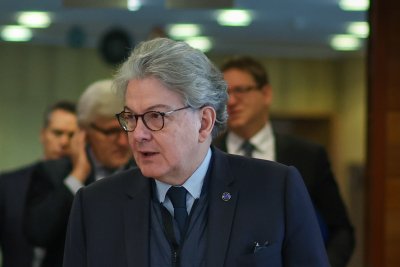
Former EU Commissioner for the Internal Marker Thierry Breton was the chief target of a U.S. travel ban imposed by Washington on European activists campaigning for online safety. File photo by Olivier Hoslet/EPA-EFE

Dec. 24 (UPI) — The United States imposed travel bans on former European Union technology commissioner Thierry Breton and four other campaigners against online hate and disinformation, alleging they had forced U.S. social media platforms to limit Americans’ first amendment rights.

U.S. Secretary of State Marco Rubio said in a statement Tuesday that the five had “led organized efforts to coerce American platforms to censor, demonetize and suppress” the views of Americans with whom they disagreed.

“These radical activists and weaponized NGOs have advanced censorship crackdowns by foreign states — in each case targeting American speakers and American companies,” added Rubio who described the five as “agents of the global censorship-industrial complex.”

Beton was singled out by U.S. Under Secretary of State Sarah Rogers as the “mastermind” of European laws that require social media that operate in the 27-country bloc to adhere to content moderation and other standards to protect users, and children in particular, from harm.

That affects the big U.S. tech players, including Google and Meta, by requiring stricter monitoring of content or face fines up to 1% of global annual turnover.

Rogers named the others banned from entering the United States as Anna-Lena von Hodenberg and Josephine Ballon of Berlin-based non-profit HateAid, Clare Melford, co-founder of the London-headquartered Global Disinformation Index, and Briton, Imran Ahmed, chief executive of the Center for Countering Digital Hate.

Breton, who served as the commissioner for the EU’s internal market from 2019 to 2024, likened the move to McCarthyism in the late 1940s and early 1950s and pointed out that the Digital Services Act was voted into law by 90% of MEPs.

“To our American friends: ‘Censorship isn’t where you think it is,” he said.

Brussels condemned the visa bans, saying Wednesday that freedom of expression was a core value that Europe shared in common with United States, but that the EU had sovereignty in regulating economic activity and that its digital laws were fairly applied without prejudice.

The visa bans also came under strong criticism from French Foreign Minister Jean-Noël Barrot, who said that safeguards on Europe’s digital space, which had been adopted by democratic means in Europe, could not be dictated from the outside.

He insisted the legislation contained no extraterritorial provisions and therefore had no impact on the United States.

The dispute dates back to an August 2024 warning Breton issued to Elon Musk that an interview with then presidential candidate Donald Trump that he planned to stream on his X platform must not breach the Digital Services Act.

According to Rogers, Breton’s letter contained a sinister recap of X’s legal duties under the DSA and referenced ‘formal proceedings’ for alleged ‘illegal content’ and ‘disinformation.'”

Source link

S. Korea moves to rename North Korean defectors as migrants

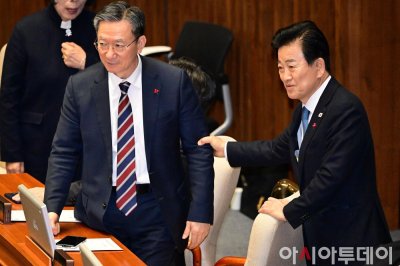
Justice Minister Chung Sung-ho and Unification Minister Chung Dong-young exchange greetings during a plenary session at the National Assembly on the 23rd. Photo by Asia Today

Dec. 23 (Asia Today) — South Korea’s Unification Ministry said Tuesday it will move quickly to decide and implement a change to the official term used for North Korean defectors, replacing it with “North Korean migrants.”

A Unification Ministry official told reporters the ministry plans to reach a conclusion and proceed “as soon as possible” on the terminology change.

The ministry previously said in a work briefing for President Lee Jae-myung on Friday that it would pursue revising the designation. During that briefing, Lee, Prime Minister Kim Min-seok and Unification Minister Chung Dong-young used the term “North Korean migrants” instead of “North Korean defectors,” according to the report.

Chung said at the meeting that defectors broadly reject the current term “defector,” but the report said a significant number are also voicing opposition to “North Korean migrants.”

The Unification Ministry publicly raised the idea of changing the designation in September and conducted opinion polling, but the results have not been released, the report said.

– Reported by Asia Today; translated by UPI

© Asia Today. Unauthorized reproduction or redistribution prohibited.

Source link

Zelensky says ‘significant progress’ made in finalizing peace plan

Ukrainian President Volodymyr Zelensky countenanced giving up territory in exchange for peace for the first time, via a free economic zone mechanism, as he laid out the detail of a plan fleshed out in talks in Florida at the weekend. File photo by Nadja Wohlleben/EPA

Dec. 24 (UPI) — Ukrainian President Volodymyr Zelensky unveiled a 20-point peace plan hammered out in negotiations in Miami over the weekend that provides strong NATO-style security guarantees in exchange for land concessions. He said the plan was now being reviewed by Moscow.

Detailing the plan on Tuesday, Zelensky said “the main framework” included affirmation of Kyiv’s sovereignty, a non-aggression pact, a means to monitor the final border, Ukraine‘s non-nuclear status and limits on its military to 800,000 troops, The Kyiv Independent and RBC-Ukraine reported.

The plan also contains Ukraine-U.S.-Europe security guarantees, U.S.-Ukraine security guarantees, and a 15-year plan for Ukraine’s recovery and economic development involving raising as much as $800 billion.

European Union membership for Ukraine will form part of the security guarantees.

The document, which emerged from a 28-point-plan drafted by the White House and the Kremlin and first floated by President Donald Trump in mid-November, was expected to be delivered to the Kremlin by U.S. officials later Wednesday.

An immediate cease-fire comes into force as soon as Ukraine, the United States, Europe, and Russia sign — with Ukraine commiting to hold elections as soon as possible afterward. Who would sign on behalf of Europe was yet to be decided.

“We have made significant progress toward finalizing the documents,” Zelensky said.

However, Kyiv wants to put the plan to the people of Ukraine in a referendum which would take at least two months.

The main sticking point of territory remains with the plan calling for the frontlines in Donetsk, Luhansk, Zaporizhzhia and Kherson regions to form the de facto border, while Russia will pull out of Ukraine’s Dnipropetrovsk, Mykolaiv, Sumy, and Kharkiv regions.

The United States has proposed a compromise acceptable to both sides under which Ukrainian forces pull out of areas of its Donetsk region that Kyiv still controls in favor of a demilitarized “free economic zone” that Russian forces would not advance into.

“We are in a situation where the Russians want us to withdraw from Donetsk Oblast, while the Americans are trying to find a way for us not to withdraw because we are against withdrawal,” Zelensky said.

“We consider a free economic zone a potential option for a sovereign state to choose such a path. We fought for a single word — ‘potential.’ We believe that such potential economic zones can exist,” he added.

“If all regions are included and if we remain where we are, then we will reach an agreement. That is why it says ‘potential zones’ here. But if we do not agree to ‘remain where we are,’ there are two options: either the war continues, or something will have to be decided regarding all potential economic zones.”

Zelensky’s mention of other potential economic zones refers to his preferred solution to the other big outstanding issue of the Zaporizhzhia Nuclear Power Plant, which has been occupied by Russian forces since shortly after their full-scale invasion in 2022.

Ukraine opposes a U.S. plan under which Ukraine, Russia and the United States share equal control with Washington having overall jurisdiction, with Kyiv instead pushing for a U.S.-Ukraine partnership under which they would split the electricity generated 50-50.

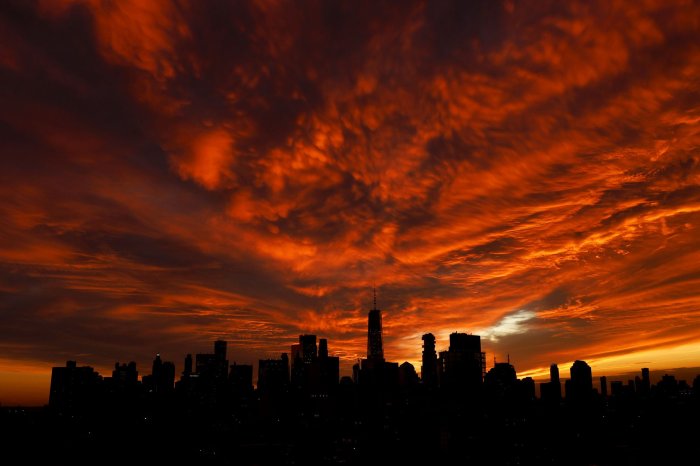
Clouds turn shades of red and orange when the sun sets behind One World Trade Center and the Manhattan skyline in New York City on November 5, 2025. Photo by John Angelillo/UPI | License Photo

Source link

Analysis: Is Lebanon controlled by ‘mini deep states’?

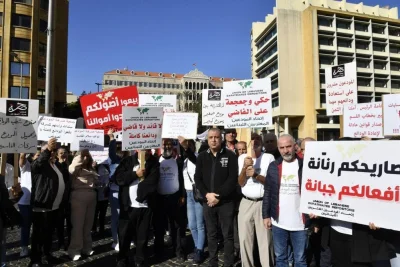
Bank customers and Depositors Association members hold placards during a protest organized by the ‘Depositors’ Outcry’, a group campaigning for the rights of depositors, in Beirut, Lebanon, on Thursday Customers are angry over the continued restrictions that local banks have imposed on withdrawals and transfers since 2019. Photo by Wael Hamzeh/EPA

BEIRUT, Lebanon, Dec. 24 (UPI) — Once hailed as the “Switzerland of the Middle East,” Lebanon has undergone an infernal descent into deeply rooted corruption, financial collapse and state failure, suggesting that the country is governed by a unique model of “mini deep states” that have flourished under its sectarian and clientelist system, political and financial analysts said.

Endemic corruption, misgovernance, sectarianism, wars and political disputes have long fueled Lebanon’s multiple crises.

The 2019 financial collapse — described by the World Bank as a “deliberate depression” and the worst globally since 1850 — was the tipping point that revealed the country’s situation to be far worse than anyone had realized.

Six years later, the situation remains almost unchanged. No one has been charged or put on trial and no official has acknowledged responsibility for the crisis or the estimated $110 billion in bank deposits squandered under state mismanagement.

The first serious attempt to address the financial crisis came Friday, when Prime Minister Nawaf Salam’s government presented a draft law aimed at tackling the financial system’s huge funding gap and enable depositors to gradually regain access to their frozen savings — though probably not in full.

The draft law, yet to be debated and expected to be amended, was quickly met with opposition from the banks and depositors, arguing that its provisions are insufficient or unfair. Crucially, it fails to address corruption as the root cause of the crisis and provides no mechanism for accountability.

However, Lebanon’s problems extend far beyond the recent financial crisis, stemming from a corrupt and inept political elite whose sectarian and clientelist networks consistently put personal gain above the nation’s survival, analysts say.

One of the most striking examples of deliberate systemic failure is the chronic power shortages, which have forced most citizens to rely on private or neighborhood generators — run by what many describe as a “mafia” protected by influential political leaders — since the end of the 15-year civil war in 1990. This has created cumulative deficits of about $43 billion.

The same pattern applies to nearly every other sector and extends to the country’s political system, reflecting the reality that all major political forces have blocked meaningful change and prevented reforms for decades.

Despite their political divisions, these forces share common interests, effectively acting as a deep state rather than merely an elite sectarian cartel.

To Mohammad Fheili, a risk strategist and monetary economist, Lebanon is better understood as a system of “multiple, competing and at times cooperating mini-deep states operating within a consociational (power-sharing) confessional framework.”

Rather than a single hidden chain of command, power, Fheili notes, is distributed across overlapping circuits involving security services, the banking and financial sector, senior judges and prosecutors, and top public officials. These networks outlast governments and are bound together by mutual protection.

“Sectarianism is the main channel of organization and veto, but it is not the only engine,” he told UPI. “It provides quotas, patronage pipelines and narratives of legitimacy. However, the driving incentives are often clientelism, rent extraction, protection from prosecution and control of state resources.”

As a result, the same political establishment came to dominate legislation, government and the economy, with decisive influence over appointments, contracts and financial regulation.

Such a “deep state” is not a new phenomenon. Its roots can be traced back to Lebanon’s founding in 1943, when it developed alongside a “rentier economic model,” according to Makram Rabah, a political activist and history professor at the American University of Beirut.

While the civil war saw the rise of militia leaders who later became powerful political figures in peacetime, Rabah said that Syria’s military presence in Lebanon after 1990 introduced “a kind of dual system, in which local actors were allowed to benefit economically as long as Syria controlled foreign policy and security.”

“This is what gave the system its longevity,” he told UPI.

The civil war also normalized militia power, wartime political economy and impunity, Fheili noted, adding that the post-war order “recycled many wartime actors into peacetime governance through a spoils-and-veto arrangement rather than institutional reconstruction.”

A sectarian cartel, he said, then emerged, dividing ministries, contracts and regulatory favors –and transforming political competition into a struggle over access to the state.

The withdrawal of Syrian troops from Lebanon in 2005 — just a few months after the assassination of Prime Minister Rafik Hariri in Beirut — paved the way for Iran-backed Hezbollah to consolidate its control over the country.

Although the militant group has consistently denied involvement in Lebanon’s entrenched corruption — arguing that its funding from Iran is sufficient — experts contend that it nonetheless benefits from the country’s clientelist system, even operating a shadow parallel economy.

Lebanon’s financial collapse, Rabah argued, revealed Hezbollah as both a beneficiary of and a participant in the system, as many of its institutions faltered during the meltdown. Moreover, the perception that it relied solely on Iranian funding and was free from corruption has proven to be “a fallacy.”

With each sect — Muslims and Christians alike — protecting its own corrupt members, it became impossible to hold anyone accountable or bring them to justice. A few exceptions were recorded, but only because those arrested had lost the political protection of their patrons.

“There are many ministers and officials who are extremely corrupt, but no one dares to act against them, as they are protected by their sect and political leaders,” said Mohammad Chamseddine, policy research specialist at the Information International research and consultancy firm.

Although the Lebanese government adopted a new, anti-corruption law in 2020 and began work on a national anti-corruption strategy, he said these efforts failed to yield any results due to the prevailing sectarianism.

“Such an interaction of religion, politics and money is everywhere and consolidates corruption,” Chamseddine told UPI. “Only a real revolution — when people storm the houses and palaces of the corrupt and put them in jail — can change this.”

Lebanon’s losses from corruption and the deep state, accumulating since the 1990s, are difficult to estimate, exceeding tens of billions of U.S. dollars, according to Chamseddine.

However, dismantling the country’s “mini deep states” and eliminating corruption is possible –even if only partially — but it would require a long process of gradual, progressive steps, starting with an independent judiciary, the analysts said.

Would the disarming of Hezbollah, which was significantly weakened by Israel during last year’s war, be the starting point?

“It may open tactical space, but only if reforms target the entire ecosystem, not just Hezbollah or the banks,” Fheili said.

Source link

Village dubbed ‘food lover’s dream’ and home to ‘strangest place’ in world

Picturesque Yorkshire Dales village is famous for its award-winning cheese from Wensleydale Creamery and unique attractions including The Forbidden Corner

Nestled peacefully along the upper reaches of the River Ure, this idyllic village represents a haven for food enthusiasts.

Whilst Wensleydale is widely recognised for its delicious cheese, there’s far more to explore and experience in this delightful Yorkshire village. Interestingly, Wensleydale stands as one of the few dales not named after its river, deriving its name instead from the historic market town of Wensley. Located within the stunning Yorkshire Dales National Park, it’s home to the renowned Wensleydale Creamery, situated in the Hawes area. Guests can immerse themselves in the award-winning Flagship Cheese Experience and Visitor Centre, which honours a legacy spanning up to 1,000 years of regional artisan cheesemaking.

Employing recipes refined across generations using fresh locally-sourced milk, according to the company’s time-honoured tradition, the practice traces back to when Cistercian monks originally introduced cheesemaking to the locale. The region happens to be an ideally open, expansive valley, carved by glaciers, and its wide river provided the perfect environment for dairy cattle.

A recent visitor to the factory described their visit as a “cheese lover’s dream”. They said: “The cheese is delicious, and you can taste a huge variety both in the tasting room and in the cafe!. Especially enjoyed the traditional Wensleydale cheeses with added dried fruits, including apricots, blueberries and cranberries.

“Next time we’d definitely do the cheese experience and eat in the restaurant too!” The unique terrain of Wensleydale has shaped its most famous export – the cheese beloved by Britons nationwide – whilst its stunning scenery continues to benefit the area every single day.

Among its most breathtaking sights is Aysgarth Falls, a natural wonder that captivates numerous walkers who explore the region. A recent visitor to the location described it as “Beautiful. Unspoiled. Not commercialised.” They shared on TripAdvisor: “It had rained heavily overnight, and the falls were spectacular. Ignore what AI says about the distance from the visitor centre car park – it’s a gentle stroll through woodland to the middle falls.”

During your journey to Wensleydale, you’re also likely to discover “the strangest place” on Earth, better recognised as The Forbidden Corner. This attraction presents an extraordinary maze of tunnels, concealed pathways, sculptures, water installations and various curiosities nestled within its mysterious gardens.

The Yorkshire Dales location boasts peculiar features including a temple of the underworld, a glass pyramid, and sculptures depicting various historical periods. It’s an excellent family outing that keeps you connected with nature whilst offering a far more engaging experience.

With its fascinating heritage, exceptional culinary options and vast countryside, it provides an ideal combination of tradition and charm in the Yorkshire Dales. Who would have thought that so much could be tucked away in the valleys just a stone’s throw from your home, whether it’s for a day trip to one of its numerous attractions or a staycation to discover everything?

Source link

PDC World Championship 2026: Justin Hood beats Danny Noppert in epic, Peter Wright knocked out

World number 86 Justin Hood beat sixth seed Danny Noppert in an Alexandra Palace classic as three more seeds exited the PDC World Championship on the final day of competition before the Christmas break.

Hood won a sudden-death leg of a high-quality match to progress to the last 32, having missed a dart at the bull to win in straight sets.

Noppert fought back to force a decider and, helped by some clutch ton-plus finishes throughout, created a victory chance for himself in a dramatic final set.

But Hood, the 32-year-old debutant, held his nerve in the final leg to land a 78 finish, setting up a third-round tie with fellow English left-hander Ryan Meikle.

Both players averaged more than 102 and hit more than 40% of their attempts at doubles.

Hood told Sky Sports: “It was a good game and I knew it would be because Danny is a class player.

“I don’t worry about the pressure, I just throw the darts and if it’s good enough, it’s good enough. Tonight it was.”

Seventeen of the 32 seeds have been knocked out in the opening two rounds of the tournament, with Noppert the highest-ranked player to fall so far.

Also beaten on Tuesday were two-time former champion Peter Wright, who lost in straight sets to German debutant Arno Merk, and Northern Ireland’s Daryl Gurney, who came out on the wrong side of a deciding set with England’s Callan Rydz.

Source link

Protests over fuel subsidy cut leave police injured in Bolivia

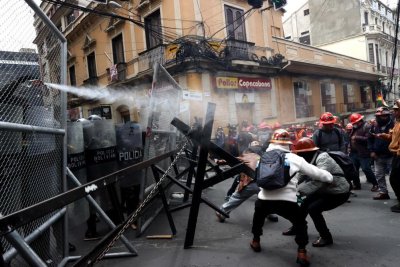
Members of the Bolivian Workers’ Union clash with police during a protest demanding the repeal of a law that removes fuel subsidies in La Paz, Bolivia, on Tuesday. Photo by Luis Gandarillas/EPA

Dec. 23 (UPI) — At least four law officers were injured Tuesday in La Paz during clashes between marchers from the Central Obrera Boliviana, the country’s largest labor federation, and police as protests intensified over the government’s decision to end fuel subsidies.

President Rodrigo Paz issued a decree Dec. 18 eliminating fuel subsidies that had been in place for nearly 20 years. He also declared an “economic, financial and social emergency” to justify the reform and paired the measure with a 20% increase in the minimum wage to cushion its impact.

As a result of the decision, gasoline and diesel stopped being sold at state-controlled prices of about 53 cents per liter and shifted to prices reflecting the real cost of imports, leading to increases of nearly 200% for consumers.

According to reports by the Bolivian newspaper El Deber, the incidents that left police officers injured occurred near Plaza Murillo, close to the government palace, when miners and transport workers attempted to approach areas secured by law offivers.

The Ministry of Government said the injured officers were attacked with stones and blunt objects while carrying out public order duties.

Police said a miner was detained for allegedly throwing fireworks and dynamite. Labor leaders, meanwhile, criticized using tear gas to disperse demonstrators.

Union leaders warned that protests will continue unless their main demand is met — the repeal of the decree that eliminated fuel subsidies.

Bolivia’s Human Rights Ombudsman’s Office said that after the fuel price changes, fares for interdepartmental, interprovincial and urban transportation rose by as much as nearly 200% in several regions, according to La Razón.

After inspections at transport terminals and hubs in La Paz, Cochabamba and Santa Cruz, the ombudsman’s office documented widespread and unilateral fare hikes that in many cases doubled or even tripled prices, directly affecting the cost of living for Bolivian families.

El Deber reported that similar protests were recorded in Santa Cruz, including temporary road blockades and clashes with police, amid growing public anger over the impact of higher fuel prices on transportation and household expenses.

Authorities reiterated calls for dialogue and warned they will not tolerate violence, while unions said they will maintain mobilizations until the government reviews the measure.

Source link

Nearly a century ago, the first World Cup went off with many hitches

Next summer’s World Cup will be the largest, most complex and most lucrative sporting event in history, with 48 teams playing 104 games in three countries. The tournament is expected to draw a global TV audience of nearly 5 billion and FIFA, the event’s organizer, is hoping for revenues of between $10 billion-$14 billion — which is why lower-bowl tickets for Iran-New Zealand at SoFi Stadium cost nearly $700.

All that seemed unlikely after the first tournament in 1930, when the idea of a soccer World Cup was nearly killed in the cradle, the victim from lack of planning, lack of money and lack of interest. That the competition survived, much less thrived, is nothing short of a miracle, says English writer and podcaster Jonathan Wilson, author of the deeply researched “The Power and Glory: The History of the World Cup.”

“1930, it’s incredibly amateurish in many ways,” Wilson said. “It’s got that sort of almost like a school sports day feel to it.”

Only 13 countries took part in the first tournament; it was supposed to be 16 but the Egyptian team missed its boat to Uruguay while Japan and Siam (now Thailand) couldn’t afford the travel costs and pulled out. England, meanwhile, not only refused to play, but the British press ignored the event, as did much of Europe.

That seemed like a wise decision at the time since the first two matches of the inaugural tournament were affected by snow, with one of the opening games drawing just 4,444 fans. The smallest crowd in World Cup history, estimated at about 300, showed up for another first-round game between Romania and Peru and the TV audience … well, there was none since TV had yet to be invented.

The officiating was beyond suspect — Romania’s manager, Constantin Radulescu, also worked two games as a linesman — and the U.S. trainer, Jack Coll, had to be stretchered off the field during his team’s semifinal — yes, the U.S. made the semifinals! — with Argentina when he lost consciousness after inhaling the fumes from a bottle of chloroform that shattered in his pocket.

In another game, the penalty spots were mistakenly marked 16 yards from goal instead of the regulation 12 — and nobody noticed.

“Some of the details don’t make sense,” Wilson said. “The whole thing is so sort of low grade compared to today.”

When Argentine captain Nolo Ferreira left the tournament and returned home to take his law exams his replacement, Guillermo Stábile, scored a tournament-high eight goals in four games — then never played for the national team again (although he did coach it, leading the La Albiceleste to six South American titles and the 1958 World Cup).

Given the farcical nature of the 1930 World Cup, the tournament probably should have ended right there. Instead, 1930 has become the foundation on which next year’s competition was built.

The origins of the tournament, however, actually make sense. Before 1930, FIFA recognized the winner of the Olympic competition as the world champion. But that event was for amateurs, a point on which the International Olympic Committee would not budge.

With professional soccer growing in popularity, FIFA decided to stage its own breakaway event and play it in Uruguay, the country that had won the last two Olympic titles.

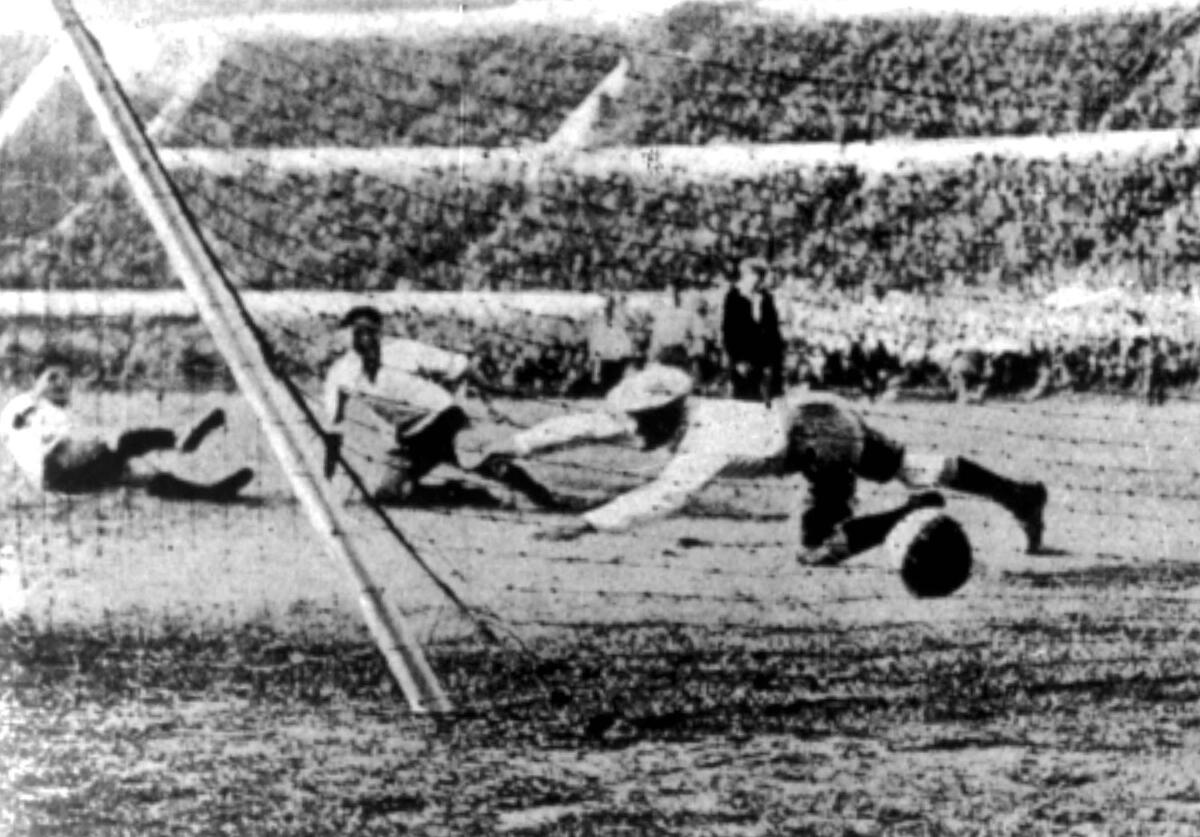
Argentina's goalkeeper (foreground) can't stop a shot by Uruguay during the 1930 World Cup final against Argentina.

Argentina’s goalkeeper can’t stop a shot by Uruguay during the 1930 World Cup final against Argentina in Montevideo, Uruguay.

(Associated Press)

That quickly proved to be a big mistake. The growing effects of the Great Depression left many countries unable to afford the long, slow steamship trip to South America. The first tournament was open to any country that wanted to play, yet two months before the first game no European teams had agreed to come.

“It was taken very seriously by Uruguay and Argentina,” Wilson said, but not by many others.

That changed shortly after Romania’s King Carol II, who ascended to the throne in a coup that deposed his son, personally selected his country’s World Cup roster and sent it on its way. France quickly agreed to go too, entering a makeshift team under pressure from FIFA president Jules Rimet, a Frenchman. Belgium also buckled under FIFA pressure and all three teams boarded the same ship for the trip to Uruguay, working out together on the 15-day voyage aboard the SS Conte Verde, an Italian ocean liner.

“Even the four European nations who go it’s not entirely clear how seriously they took it,” Wilson said. “The French and Romanians, they kept diaries. They seem to have regarded this as a laugh. We’ll try to win but it doesn’t really matter.”

Things didn’t really get loony until the tournament began. The Bolivian team, for example, played in berets, as did an Argentine midfielder, while the 15 referees who worked the games, some of whom had traveled and socialized with the players on the long boat ride from Europe, dressed formally in knickers, long-sleeve shirts, blazers and ties.

The well-dressed officials spent much of the tournament working with police to break up fights; play was so violent at least two players sustained broken legs and the U.S.-Argentina semifinal descended into a full-out brawl, with one American having four teeth knocked out and another hospitalized with injuries to his stomach.

The tournament finally finished with the hosts beating Argentina 4-2, after which the Argentines broke off diplomatic relations with their neighbor and an angry mob in Buenos Aires stoned the Uruguayan embassy.

Uraguay's team before the 1930 World Cup final against Argentina.

Uraguay’s team before the 1930 World Cup final against Argentina.

(Keystone / Getty Images)

Argentina's soccer team before preparing for the 1930 World Cup final.

Argentina’s soccer team before preparing for the 1930 World Cup final.

(Associated Press)

“It ended,” Wilson said of the tournament, “with everybody sort of fighting each other.”

Few disagreed with the Argentine magazine El Gráfico, which seemed to predict there was little future for the fledgling event. “The World Cup is over,” it wrote. “The development of this competition brought not only an unpleasant atmosphere, but also an ungrateful one.”

Yet nearly a century later, the World Cup is still here. And that, too, was foretold in 1930 in the story of Romanian midfielder Alfred Eisenbeisser (who was also known as Fredi Fieraru because, why not?).

On the journey home from the first World Cup, Eisenbeisser contracted pneumonia and a priest was called to administer the last rites. The ship eventually docked in Genoa and he was taken to a sanatorium while the rest of the team continued on to Romania.

Assuming her son had perished in Italy, Eisenbeisser’s mother arranged a wake — only to have her son stroll into the ceremony very much alive, causing the woman to faint. Eisenbeisser would play 12 more years of professional soccer and compete in figure skating in the 1936 Winter Olympics, where he finished 13th in the pairs competition.

Turns out the reports of Eisenbeisser’s demise, like those of the World Cup, were greatly exaggerated.

You have read the latest installment of On Soccer with Kevin Baxter. The weekly column takes you behind the scenes and shines a spotlight on unique stories. Listen to Baxter on this week’s episode of the “Corner of the Galaxy” podcast.

Source link

Presidential office respects parliament on Unification Church probe

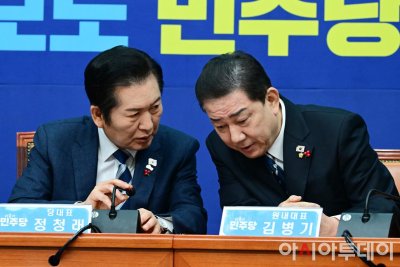
Democratic Party of Korea leader Chung Cheong-rae and floor leader Kim Byeong-gi confer during a Supreme Council meeting at the National Assembly in Seoul on Dec 22. Photo by Asia Today

Dec. 22 (Asia Today) — South Korea’s presidential office said Monday it “respects the National Assembly’s decision” after the ruling Democratic Party backed the opposition’s call for a special prosecutor to investigate matters linked to the Unification Church.

A senior presidential official said the office has consistently supported a thorough investigation regardless of party or religion and described the move as consistent with that stance.

“The presidential office has consistently advocated for a strict investigation regardless of party or religion, so a special prosecutor aligning with that stance is only natural,” the official said, adding that the party’s shift should be seen as reflecting the presidential office’s position.

Democratic Party floor leader Kim Byung-ki said during a Supreme Council meeting at the National Assembly that he supports a special probe that would include politicians from both the ruling and opposition parties.

He said the People Power Party appears to believe the Democratic Party is avoiding a special investigation and urged proceeding with a special prosecutor focused on the Unification Church.

Democratic Party leader Chung Cheong-rae also said there was no reason not to accept the proposal and called for a full accounting that includes any People Power Party figures involved.

— Reported by Asia Today; translated by UPI

© Asia Today. Unauthorized reproduction or redistribution prohibited.

Source link

S Korea’s state oil reserves top 100 million barrels, ministry says

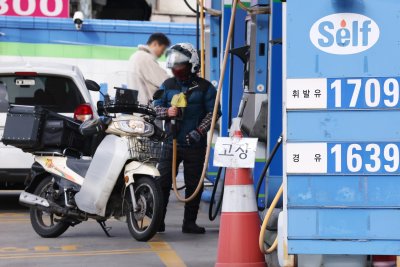
A gas station in Seoul is seen Dec. 14 as weekly average gasoline and diesel prices in South Korea fell for the first time in seven weeks. Photo by Yonhap News Agency

Dec. 22 (Asia Today) — South Korea has surpassed 100 million barrels in government-held oil reserves as it seeks to bolster energy security against global supply disruptions, the industry ministry said Monday.

The Ministry of Trade, Industry and Energy said the government’s secured stockpile exceeded 100 million barrels after the final tanker shipment of the year arrived at the Korea National Oil Corporation’s Geoje oil reserve base.

Including about 95 million barrels held by private companies, South Korea now has enough oil to cover more than 210 days under International Energy Agency standards in an emergency, the ministry said.

South Korea, which relies on imports for its oil, adopted a national stockpiling plan in 1980 and has expanded reserves over about 45 years after experiencing global supply shocks during past oil crises, the ministry said.

The country now holds the fourth-largest oil reserves among the agency’s member countries, the ministry said, describing the stockpile as an energy safety net that can help respond to supply crises.

The ministry said it plans to strengthen crisis response capabilities and shift focus from simply expanding volume to improving the quality of reserves.

In its fifth petroleum stockpiling plan prepared earlier this month, the ministry said it would restructure reserves to prioritize oil grades better suited to domestic demand.

An industry ministry official said oil reserve bases operate under strict safety requirements and the government will phase out aging equipment and strengthen disaster response systems.

– Reported by Asia Today; translated by UPI

© Asia Today. Unauthorized reproduction or redistribution prohibited.

Source link

South Korea names top 100 R&D achievements, highlights K9 engine

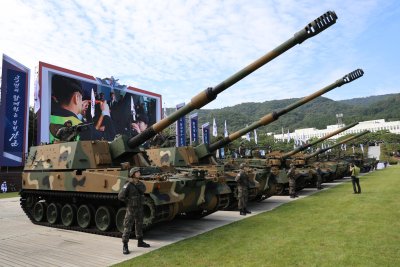
A K9 self-propelled howitzer is displayed during an Armed Forces Day media event in Gyeryong, South Korea, Sept. 29. File Photo by Yonhap News Agency

Dec. 22 (Asia Today) — South Korea’s science ministry said Monday it has selected its 2025 “Top 100 National R&D Achievements,” highlighting projects including a domestically produced 1,000-horsepower engine for the K9 self-propelled howitzer and a high-performance vanadium flow battery stack.

The Ministry of Science and ICT said the program marks its 20th year. Launched in 2006, the cross-government selection aims to raise public awareness of national research and development and recognize scientists and engineers.

The ministry said 970 candidate projects recommended by government bodies were reviewed by a selection committee of 105 experts from industry, academia and research institutes, followed by public verification. The final 100 were chosen across six categories: machinery and materials, life and marine, energy and environment, information and electronics, basic science and infrastructure and convergence.

Among the selections, STX Engine was cited for developing and commercializing a 1,000-horsepower engine for the K9, localizing a system and core components previously dependent on overseas imports. The ministry said the achievement helped address export approval hurdles and supported market expansion, including K9 exports to Egypt equipped with domestically produced engines.

In life sciences, IM Biologics was selected for work on treatments for autoimmune diseases including rheumatoid arthritis. The ministry said the company transferred related technology to U.S.-based Navigator Medicine and China’s Huadong Pharmaceutical in deals totaling 1.7 trillion won ($1.3 billion).

In energy and environment, H2 was cited for developing low-cost, high-power-density stack technology for vanadium flow batteries, a key component used in energy storage tied to solar and wind generation. The ministry said the technology contributed to South Korea’s first export of the stack technology to Germany.

Other selections included the Electronics and Telecommunications Research Institute’s demonstration of 6G wireless transmission technology and the Institute for Basic Science research group’s real-time observation of molecular ion formation and structural transitions, the ministry said.

The ministry said selected projects will receive certificates and plaques in the name of Deputy Prime Minister and Science and ICT Minister Bae Kyung-hoon. The ministry said projects and institutions may receive evaluation advantages under relevant rules and researchers may be recommended for national R&D awards.

Starting next year, the ministry said it will launch follow-up support aimed at boosting technology maturity and commercialization. Each selected project will be eligible for about 1.3 billion won (about $1.0 million) in support over three years, the ministry said.

Park In-gyu, head of the Science and Technology Innovation Headquarters, said the projects reflect sustained challenges and innovation by universities, research institutes and companies and pledged expanded support in coordination with other ministries.

– Reported by Asia Today; translated by UPI

© Asia Today. Unauthorized reproduction or redistribution prohibited.

Source link

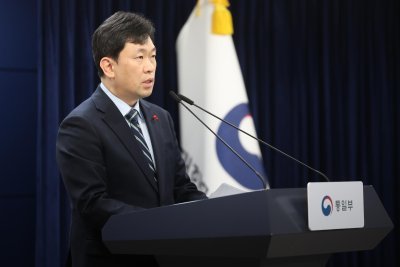
Unification Ministry denies reviewing territorial clause change

Unification Ministry spokesperson Yoon Min-ho briefs reporters at the Government Complex Seoul on Dec 22 Photo by Yonhap News Agency

Dec. 22 (Asia Today) — South Korea’s Ministry of Unification said Monday it has never reported to President Lee Jae-myung on reviewing constitutional amendments tied to a “peaceful two-state” approach as a way to bring North Korea to negotiations.

Unification Ministry spokesperson Yoon Min-ho said at a regular briefing that claims the ministry suggested reviewing constitutional changes during a closed-door work report on Friday were “completely false.”

“Reports saying that the ministry proposed reviewing constitutional amendments to draw North Korea into dialogue are untrue,” Yoon said. He added that the ministry neither raised nor examined such an issue during the briefing.

Earlier Monday, a media report said President Lee took a negative view of a purported ministry suggestion to review changes to Article 3 of the Constitution, which defines the territory of the Republic of Korea as the entire Korean Peninsula, in order to engage Pyongyang.

Yoon reiterated that no such proposal was made and said the ministry has not reviewed the matter.

He also said discussions with the U.S. Embassy on North Korea policy are expected to begin early next year. Preparations are also underway to set a schedule for regular vice-ministerial-level communication with the Foreign Ministry, he said.

On the issue of public access to North Korean media, Yoon said the ministry’s interpretation is that simply viewing North Korean outlets such as Rodong Sinmun does not violate the National Security Act.

– Reported by Asia Today; translated by UPI

© Asia Today. Unauthorized reproduction or redistribution prohibited.

Source link

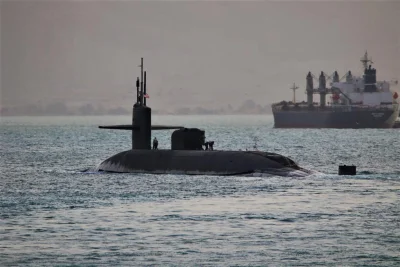
China warns South Korea-U.S. nuclear sub talks risk nonproliferation

The guided-missile submarine USS Florida transits the Suez Canal en route to the Red Sea on Friday amid heightened tensions between the United States and Iran. File U.S. Navy photo by Mass Communication Specialist 2nd Class Elliot Schaudt

Dec. 22 (Asia Today) — China has voiced strong opposition to potential cooperation between South Korea and the United States on nuclear-powered submarines, warning it could undermine the global nuclear nonproliferation regime, Chinese state media reported.

Song Zhongping, a Chinese military analyst, said in an interview published Monday by the Global Times that consultations between Seoul and Washington on nuclear submarine-related cooperation could pose a “serious threat” to nuclear nonproliferation.

The Global Times cited South Korean media reports saying the two countries plan to begin sector-by-sector consultations next year related to leader-level understandings that include nuclear submarine construction, uranium enrichment and spent nuclear fuel reprocessing.

Song said the AUKUS nuclear submarine effort with Australia set a negative precedent and suggested a similar case could emerge with South Korea. He argued that U.S. support for allies’ access to nuclear technology and nuclear fuel would weaken the Nuclear Non-Proliferation Treaty.

Song also said Japan has raised the idea of acquiring nuclear-powered submarines and warned the trend could fuel an arms race. He said more countries operating nuclear-powered submarines would increase the risk of technology leakage and accidents.

He further argued South Korea has limited practical need for nuclear-powered submarines because of its restricted coastline, the report said.

In October, Chinese Foreign Ministry spokesperson Guo Jiakun said at a regular briefing that Beijing hopes South Korea and the United States will fulfill nonproliferation obligations and avoid actions that run counter to regional peace and stability, according to the report.

– Reported by Asia Today; translated by UPI

© Asia Today. Unauthorized reproduction or redistribution prohibited.

Source link

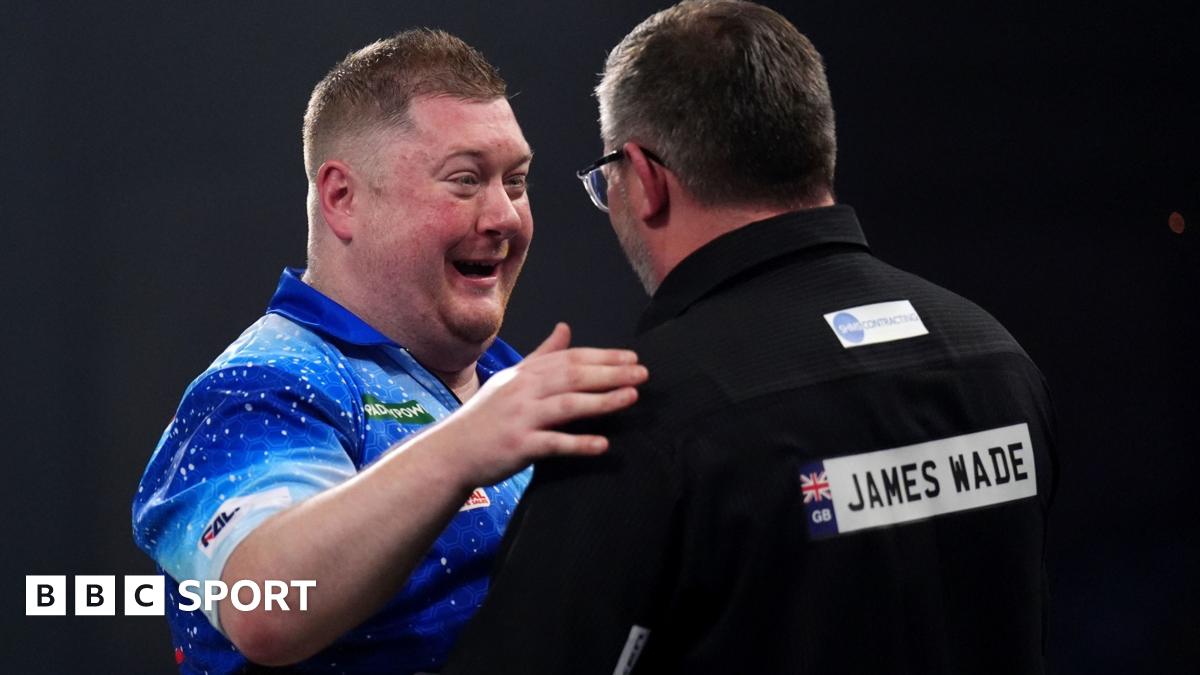
PDC World Championship: Ricky Evans beats James Wade as David Munyua exits in second round

Seventh seed James Wade suffered a fourth successive second-round exit at the PDC World Championship, losing a thrilling tie to fellow Englishman Ricky Evans.

Both players missed match darts in the deciding set, with world number 43 Evans eventually taking it 6-4 in the fifth.

Wade is the highest-ranked seed to be eliminated so far and his defeat, along with Wessel Nijman’s loss earlier on Monday, means 14 of the 32 seeded players have been knocked out.

Dutch 31st seed Nijman lost in straight sets to Germany’s Gabriel Clemens, who reached the semi-finals in 2023.

Elsewhere, Kenyan debutant David Munyua was unable to follow up his shock win over Mike de Decker in round one, winning just two legs in a 3-0 defeat by world number 40 Kevin Doets.

Scotland’s Darren Beveridge was beaten 3-1 by Latvia’s Madars Razma in Monday’s opening match.

Source link

Japan’s TEPCO to restart world’s largest nuclear plant in Niigata

Reactor buildings unit one (L, rear) through unit four (R) pictured Feb. 2015 at Tokyo Electric Power Co.’s Kashiwazaki Kariwa Nuclear Power Plant — the world’s largest nuclear power plant — in Kariwa, Niigata Prefecture, in northern Japan. Photo Provided by Kimimasa Mayama/EPA

Dec. 22 (UPI) — Japan has approved Tokyo Electric Power Co. to restart the Kashiwazaki-Kariwa nuclear site as the world’s largest nuclear power plant.

On Monday, the Niigata assembly backed Governor Hideyo Hanazumi’s decision to stay in office after approving the restart of the Kashiwazaki-Kariwa nuclear plant in its first reactor restart since the Fukushima disaster more than a decade ago.

“We remain firmly committed to never repeating such an accident and ensuring Niigata residents never experience anything similar,” ‌a Tepco spokesperson told The Japan Times.

The decision finalizes local approval to restart the plant.

Hanazumi will meet Economy Minister Ryosei Akazawa on Tuesday to confirm the prefecture’s consent.

TEPCO intends to apply to the Japanese Nuclear Regulation Authority by Wednesday to restart its No. 6 reactor at the Kashiwazaki-Kariwa plant.

The utility aims to resume operations around Jan. 20 marking the facility’s first activity since shut down March 2012 a year after the Fukushima disaster.

On Nov. 21, Hanazumi approved restarting operations but said final approval depended on a vote by the prefectural assembly.

The assembly passed the measure with backing from the Liberal Democratic Party while opposition parties objected and called for a gubernatorial election or public referendum instead.

The Niigata provincial assembly in northern Japan approved a supplementary budget that included public relations funds for Kashiwazaki-Kariwa.

With consent already granted by the Kashiwazaki and Kariwa municipal governments, the vote cleared TEPCO’s final hurdle to resume operations.

Most of the plant’s power supplies the Tokyo area, but electric bills are expected to remain unchanged as TEPCO planned.

Meanwhile, Japan has restarted 14 of its 33 active nuclear plants to reduce reliance on imported fossil fuels.

Clouds turn shades of red and orange when the sun sets behind One World Trade Center and the Manhattan skyline in New York City on November 5, 2025. Photo by John Angelillo/UPI | License Photo

Source link

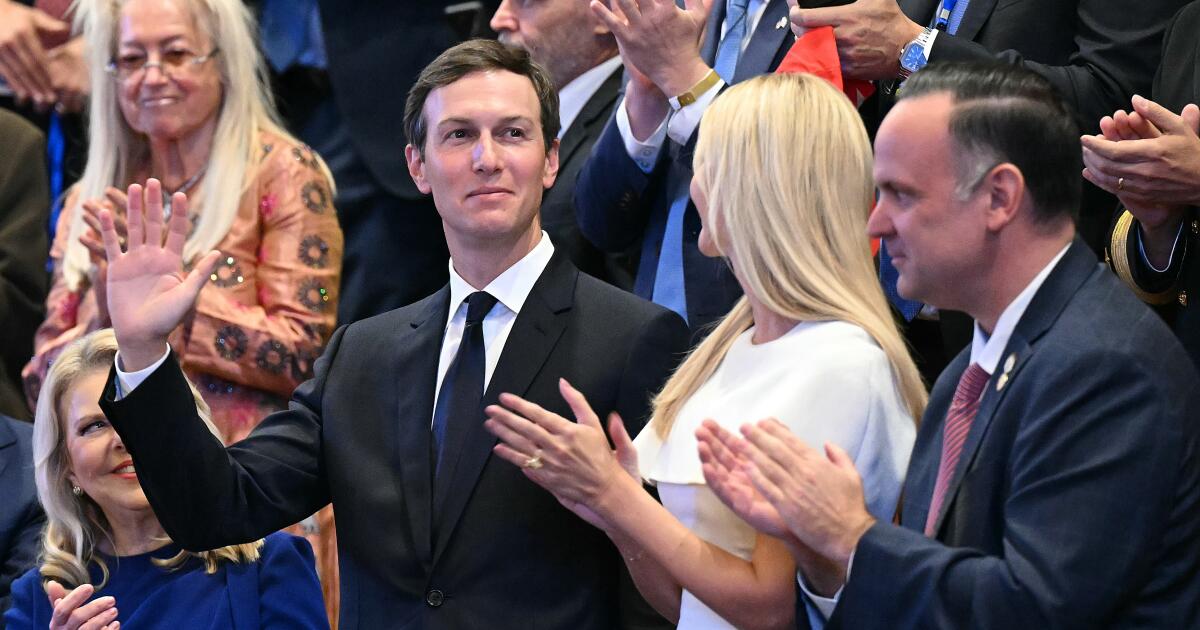
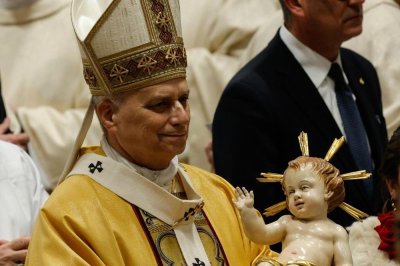
Trump is leaning on son-in-law Jared Kushner for difficult diplomacy

As the dawn rose on President Trump’s second term, one key figure from his first administration stood back, content to focus on his personal business interests and not retake a formal government role.

Now, nearly a year into Trump 2.0, Trump’s son-in-law Jared Kushner has been drawn back into the foreign policy fold and is taking a greater role in delicate peace negotiations. Talks had initially been led almost solo by special envoy Steve Witkoff, a real estate mogul who had no government experience before this year.

The shift reflects a sense among Trump’s inner circle that Kushner, who has diplomatic experience, complements Witkoff’s negotiating style and can bridge seemingly intractable differences to close a deal, according to several current and former administration officials who, like others, spoke on condition of anonymity to discuss the internal deliberations.

That role was on display this weekend as Kushner and Witkoff took part in a blitz of diplomacy in Miami.

On Sunday, they concluded two days of talks with Russian negotiator Kirill Dmitriev in Miami on the latest proposals to end Russia’s war in Ukraine.

The talks with Dmitriev came after they met on Friday in Florida with the Ukrainian negotiating team, led by Rustem Umerov, as well as senior British, French and German national security officials. The Ukrainians and European officials stuck around Florida for more talks with U.S. government officials facilitated by Trump’s envoys.

Witkoff and Kushner also squeezed in meetings on Friday with Turkish and Qatari officials to discuss the fragile truce between Israel and Hamas in Gaza as they look to implement the second phase of Trump’s ceasefire plan.

Kushner and Witkoff employ contrasting styles

Witkoff, a longtime pal of Trump’s, is seen by some inside the administration as an oversize character who has traveled the world for diplomatic negotiations on his private jet and does not miss an opportunity to publicly praise the president for his foreign policy acumen, the officials say.

Kushner has his own complicated business interests in the Middle East and a sometimes transactional outlook to diplomacy that has distressed some officials in European capitals, a Western diplomat said.

Still, Kushner is seen as a more credible negotiator than Witkoff, who is viewed by many Ukrainian and European officials as overly deferential to Russian interests during the war that began with Moscow’s invasion in February 2022, the diplomat said.

“Kushner has a bit more of a track record from the first administration,” said Ian Kelly, a retired career diplomat and former U.S. ambassador to Georgia who now teaches diplomacy at Northwestern University. Kelly stressed, however, that the jury is still out on Kushner’s intervention.

Trump views Kushner as a “trusted family member and talented adviser” who has played a pivotal role in some of his biggest foreign policy successes, said White House deputy press secretary Anna Kelly.

Trump and Witkoff “often seek Mr. Kushner’s input given his experience with complex negotiations, and Mr. Kushner has been generous in lending his valuable expertise when asked,” Kelly added.

State Department spokesman Tommy Pigott called Kushner “a world-class negotiator.” Pigott noted that Secretary of State Marco Rubio is grateful for Kushner’s “willingness to serve our country and help President Trump solve some of the world’s most complex challenges.”

In an interview with CBS’ “60 Minutes” in October, Kushner spoke about his unconventional approach to diplomacy.

“I was trained in foreign policy really in President Trump’s first term by seeing an outsider president come into Washington with a different school of foreign policy than had been brought in place for the 20 or 30 years prior,” he said.

But some Democrats and government oversight groups have expressed skepticism about Kushner’s role in shaping the administration policies in the Middle East while he manages billions of dollars in investments, including from Saudi Arabia and Qatar’s sovereign wealth funds through his firm, Affinity Partners.

Similarly, Witkoff has faced scrutiny for his and his family’s deep business ties to Gulf nations. Witkoff last year partnered with members of Trump’s family to launch a cryptocurrency company, World Liberty Financial, which received a $2 billion investment from a United Arab Emirates-controlled wealth fund.

“What people call conflicts of interests, Steve and I call experience and trusted relationships that we have throughout the world,” said Kushner, who is not drawing a salary from the White House for his advisory role.

White House counsel David Warrington said in a statement that Kushner’s efforts for Trump “are undertaken in full compliance with the law.”

“Given that Jared Kushner was a critical part of the efforts leading to the historic Abraham Accords and other diplomatic successes in the first Trump Administration, the President asked Mr. Kushner to be available as the President engages in similar efforts to bring peace to the world,” Warrington said in a statement, referring to Trump’s first-term effort that normalized relations between Israel and several Arab nations. “Mr. Kushner has agreed to do so in his capacity as a private citizen.”

Kelly and other veterans of U.S. diplomatic encounters with the Russians over many years are also skeptical about Kushner’s ability to secure a Russia-Ukraine deal because Witkoff technically remains in the lead.

“I don’t see that the Witkoff approach is going to work,” Kelly said. “He doesn’t really read the Russians well. He misunderstands what they say and reports the misunderstandings back to Washington and the Europeans.”

“They seem to have this idea that the magic key is money: investment and development,” Kelly said. “But these guys don’t care about that, they are not real estate guys except in the sense that they want the land, period.”

Kushner was out of the spotlight until he wasn’t

For the first half of the year, Kushner stayed out of the spotlight, even as he pushed, unsuccessfully in some cases, to install some former associates — those with whom he worked on negotiating the Abraham Accords — into powerful roles in the new administration, according to the current and former administration officials.

Kushner had told Trump and others that while he would not be joining the second-term White House, he stood ready to offer his counsel if it was desired. That is a role he also played on a few occasions during the Biden years as the Democratic administration tried, without success, to expand the Abraham Accords.

Although Kushner remained an informal sounding board for Trump and top advisers, he resisted getting directly involved, even as the president expanded his peacemaking pursuits, until it became clear to him and others that the job might be too much for Witkoff to seal on his own, the officials said.

As Trump’s efforts to forge an agreement to end the Israel-Hamas war in Gaza faltered over the summer, Kushner came in, trading on his experience and contacts in negotiating the Abraham Accords to help Witkoff push Trump’s plan over the finish line.

Agreed to in late September after frantic talks surrounding the annual U.N. General Assembly, the 20-point plan is still a work in progress, but its implementation is being coordinated by Kushner and numerous members of his Abraham Accords team.

“We always bring Jared when we want to get that deal closed,” Trump told Israel’s parliament, the Knesset, shortly after the agreement. “We need that brain on occasion.”

As soon as the Gaza plan was finalized, Kushner said he was returning to his family and day job in Miami, where he heads a multibillion-dollar private equity firm. His involvement in high-stakes peacemaking was only temporary, Kushner said, joking that his wife, Ivanka, might change the locks if he did not get home soon.

“I’m gonna try to help set it up, and then I’m gonna hopefully go back to my normal life,” Kushner said in October.

But within weeks of shepherding the Gaza ceasefire, Trump turned again to his fixer-in-law to dive into the Russia-Ukraine negotiations. They had been deadlocked for months despite persistent efforts by the White House to lure both Russian President Vladimir Putin and Ukraine’s Volodymyr Zelensky into an agreement.

Trump hinted then that he would continue to lean on Kushner when the stakes are highest, just as he has done.

Lee and Madhani write for the Associated Press.
Source link

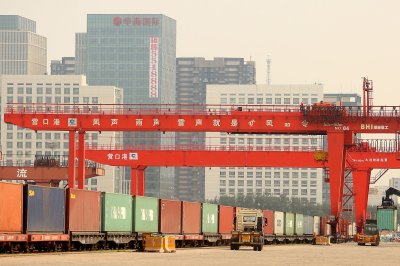
EU dairy sector hit with retaliatory Chinese tariffs of up 42.7%

Dec. 22 (UPI) — Beijing unveiled tariffs as high as 42.7% on imports of European Union dairy products on Monday, saying the subsidies Brussels provided to producers in the 27-country bloc were the cause of “substantial damage” to China’s dairy industry.

The import taxes of between 21.9% and 42.7%, which come into force Tuesday following a 16-month-long anti-subsidy probe by China’s Ministry of Commerce, will affect France’s famous Roquefort, other blue, fresh and processsed cheeses as well as whole and unsweetened milk and cream.

“The investigating authority has preliminarily determined that imported dairy products originating from the European Union were subsidized, causing substantial damage to the relevant dairy product industry in China, and that there is a causal relationship between the subsidies and the substantial damage,” the ministry said in a statement.

It said that the highest levy would be applied to the products of firms that had failed to cooperate with the investigation with firms that had been cooperative only subject to a rate of 28.6%.

Firms named in the ministry list hailed from across the bloc with France, the Netherlands and Belgium heavily represented. Italian and Spanish producers also feature. Most companies were hit with a rate of 28.6% or 29.7%.

The Netherlands’ Friesland Campina and its subsidiary in neighboring Belgium were both hit with the top 42.7% rate along with an “Other EU Companies” grouping, which is not specified. It is unclear if this group is all EU companies not named in the document that export to China.

The EU criticized the action, saying it was neither justified nor warranted.

The move came just over a year after the EU hit China’s massive EV sector with import tariffs of as high as 36.3%, alleging unfair competition due to subsidies provided to the industry by the Chinese government.

Among the big three EV makers — BYD, Geely and SAIC — BYD and Geely were slapped with duties of 17% and 19.3% respectively, along with a 21.3% tariff on other “cooperating companies.”

The top rate was applied to SAIC together with other EV makers deemed not to have cooperated with the EU’s investigation.

The EV tariffs also saw Beijing launch anti-competition probes into Europe’s brandy and pork products industries, leading to accusations the EU was dumping surplus pork production in the Chinese market.

In September, Beijing imposed short-lived tariffs of between 15.6% and 62.4% on EU pork and pig by-product imports, but revised them down to between 4.9% and 19.8% on Tuesday.

Source link

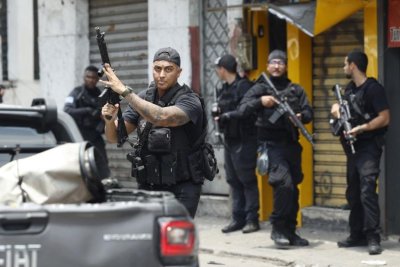
Organized crime drove political shift in Latin America in 2025

Members of the Rio de Janeiro Police carry out an operation in Rio de Janeiro in October. The police launched a major operation in two favelas aimed at arresting the leaders of the Red Command, the largest criminal gang in the city, and to halt its territorial expansion. File Photo by Antonio Lacerda/EPA

SANTIAGO, Chile, Dec. 19 (UPI) — After nearly two decades of relative stability, the advance of organized crime has reshaped security across Latin America.

The expansion of illicit economies, armed disputes over territorial control and rising violence triggered new migration flows and partly explain the region’s political shift toward right-wing governments in 2025.

According to a report by the Global Initiative Against Transnational Organized Crime, 39 organized crime groups are operating across Latin America.

The report said these groups have become more interconnected and sophisticated, “coordinating operations not only at the local level but also across borders and even continents.”

One of the main factors behind the expansion of criminal structures is business diversification, said organized crime specialist Hugo Contreras, who holds a doctorate in social complexity sciences and is a researcher at the School of Government at Universidad del Desarrollo.

“Organized groups stopped being just traffickers and adopted a portfolio of activities such as extortion, contract killings, smuggling, arms trafficking and human trafficking,” Contreras told UPI. “That has multiplied and diversified their sources of illicit income, as well as their territorial control and disputes.”

He said the trend has been compounded by institutional weakness, including collapsed prison systems that have turned into logistical hubs for criminal groups and judicial systems ill-prepared to confront the phenomenon.

“There has been an emergence of more aggressive and sophisticated transnational criminal gangs, with international networks, greater financial capacity and increased firepower,” Contreras said.

He added that the situation has been reinforced by “massive migration flows from different conflict regions, which these groups have exploited to conceal their members, recruit new people and expand their criminal activities into other countries.”

Pablo Carvacho, director of research and development at the Center for Justice and Society at the Pontifical Catholic University of Chile, shared that assessment, noting that organized crime is especially dynamic and adaptable.

“Migratory processes created space for the development of transnational illicit activities such as human trafficking and sexual or labor exploitation, particularly affecting a highly vulnerable group like migrants,” Carvacho told UPI.

“These flows served as an entry point for countries such as Chile, where criminal activity was not as developed as what we are seeing today,” he said.

The new scenario has deeply transformed internal security dynamics across the region, turning local problems into international threats that are more violent and more damaging to social and political stability, Contreras said.

Criminal organizations manage and contest territory, impose their own rules, control prisons and challenge state authority.

“This forces governments to move beyond traditional crime-control strategies and adopt comprehensive responses that combine financial intelligence, border security, international cooperation and prison reform,” he said.

Contreras said the impact varies widely across the region depending on how deeply organized crime has taken root in each country.

In 2025, Mexico, Ecuador, Brazil and Haiti ranked among the world’s 10 most dangerous countries based on indicators such as mortality, risk to civilians, geographic spread of conflict and the number of armed groups, according to a conflict index published by the Armed Conflict Location and Event Data Project, a nongovernmental organization known as ACLED.

The report said rising violence has been a common trend across Latin America this year. However, the sharpest deterioration was recorded in those four countries.

In Mexico, the organization linked the surge in violence to factors including an internal war within the Sinaloa cartel following the July 2024 arrest in the United States of Ismael “El Mayo” Zambada, one of the group’s historic leaders.

In Ecuador, ACLED warned that violence levels are on track to reach record highs in 2025. It said the homicide rate could be the highest in Latin America for a third consecutive year and that gang-related violence has caused more than 3,600 deaths.

In Haiti, gangs have taken advantage of the political instability the country has faced since 2021, expanding their operations from the capital, Port-au-Prince, to other areas.

In a different political context, criminal gangs in Brazil have also fueled major clashes as they fought for territorial control in cities such as Rio de Janeiro. A large-scale police operation in that city targeting the Comando Vermelho, one of the country’s main criminal groups, left 121 people dead.

The rise in violence and organized crime has contributed to at least 10 countries in the region electing right-wing governments in the 2024-2025 period.

Carvacho said more conservative platforms “place greater emphasis on public order and the intensive use of coercive tools, with strategies based on police force, military deployment, harsher criminal penalties and territorial control.”

He said these approaches often rely on emergency measures under states of exception, with rapid executive decisions and reforms, as well as a greater willingness to strengthen ties with foreign intelligence agencies, including those of the United States.

In Carvacho’s view, containing transnational organized crime requires coordination among countries because “emergency policies alone will not stop its advance.”

He said what can truly weaken these organizations is targeting their financial assets and reducing the pool of people, including children and adolescents, vulnerable to recruitment.

“Everything else is treating the symptoms of a disease,” Carvacho said. “It is arriving late to a problem that is not about criminal law but about vulnerability and the lack of opportunities in communities excluded from society. That is where the state must act.”

Source link

Nearly half of Korean exporters cite China’s low-price competition as top challenge

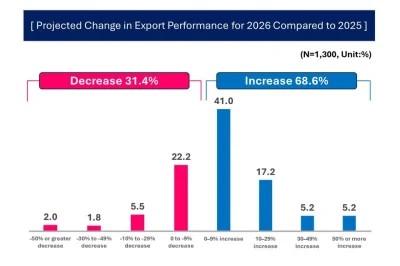
Results of the Korea Federation of SMEs’ “2026 SME Export Outlook Survey.” Graphic by Asia Today and translated by UPI

Dec. 21 (Asia Today) — Nearly half of South Korea’s small and medium-sized exporters expect their overseas shipments to decline next year, with many citing intensifying low-price competition from China as their biggest challenge, a survey released Sunday found.

The Korea Federation of SMEs said its “2026 SME Export Outlook Survey” polled 1,300 exporting SMEs from Dec. 1-12.

In the survey, 68.6% of respondents said they expect exports to increase in 2026 compared with this year, while 31.4% forecast a decrease, the federation said.

Among firms expecting export growth, cosmetics exporters (86.4%) and medical and biotech exporters (86.1%) were the most optimistic, the federation said. The most common reason for expecting export growth, in multiple responses, was improved product competitiveness through new product launches and quality improvements (47.1%), followed by diversification of export markets (29.8%) and improved price competitiveness due to exchange rate appreciation (21.6%).

Among SMEs forecasting weaker exports, 49.3% cited intensifying low-price competition from China as their main export challenge, followed by greater exchange rate volatility (44.6%), sharp increases in raw material prices (37.0%) and uncertainty over U.S. and European Union tariff policies (35.0%), the federation said.

Planned responses to weaker export performance included diversifying export markets (28.2%), improving quality or launching new products (23.0%) and reducing production costs such as labor and raw materials (21.8%), according to the survey.

Despite tariff concerns, the United States ranked first among markets SMEs most want to enter or expand into, at 21.0% when combining first-, second- and third-priority choices, the federation said. Europe followed at 15.2%, with Japan and China tied at 10.6%.

For government priorities to strengthen export competitiveness, respondents most frequently called for expanding support for an export voucher program (53.5%), followed by building a system to counter China’s low-cost offensive (35.8%) and strengthening diplomacy to respond to U.S. and EU tariffs (35.1%), the federation said. Other priorities included expanding support for participation in overseas exhibitions, including in emerging markets (31.5%) and supporting overseas certification and regulatory compliance (27.2%).

Chu Moon-gap, head of the federation’s economic policy division, said it was significant that SMEs are projecting export growth by improving competitiveness despite external headwinds such as tighter export regulations by various countries. He added that companies’ ability to reduce total costs, including production and logistics costs, tariffs and lead times, will be key to export competitiveness and said the government should prepare cost-reduction support measures to help SMEs respond to China’s low-cost competition.

– Reported by Asia Today; translated by UPI

© Asia Today. Unauthorized reproduction or redistribution prohibited.

Source link