World

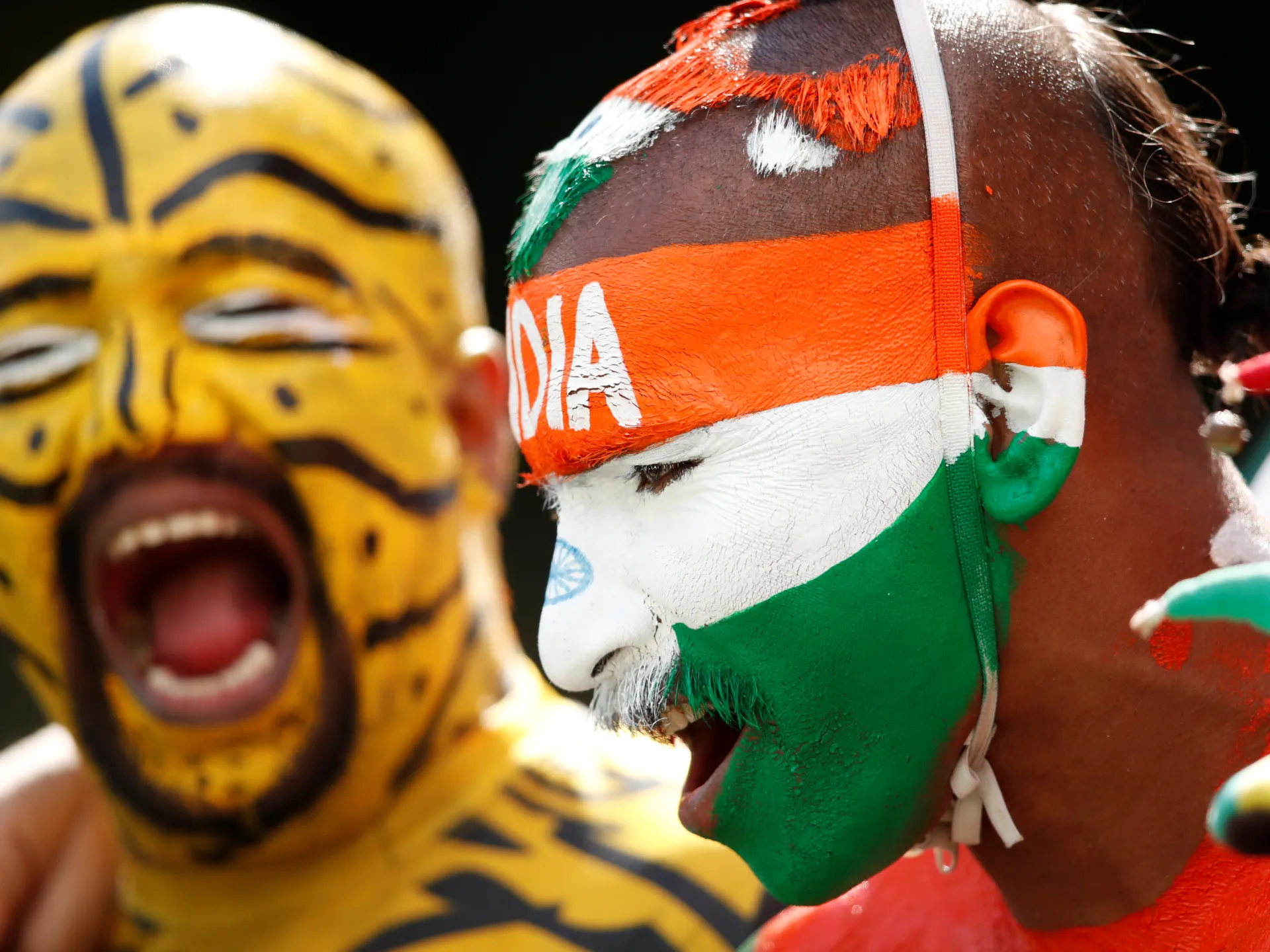
T20 World Cup 2026: Bangladesh refuse to travel to India and request matches be moved amid political tensions

Bangladesh will not travel to India for the T20 World Cup next month “under current conditions” and have requested their matches be moved elsewhere, the country’s cricket board has said.

Bangladesh bowler Mustafizur Rahman was released by his Indian Premier League team at the request of the Indian board amid growing tensions between the countries.

That led to an emergency meeting at the Bangladesh Cricket Board (BCB), who now say they have “formally requested” the International Cricket Council (ICC) moves all Bangladesh’s matches.

“The board believes that such a step is necessary to safeguard the safety and well-being of Bangladeshi players, team officials, board members and other stakeholders and to ensure that the team can participate in the tournament in a secure and appropriate environment,” a statement said.

The move threatens to bring chaos to a competition which begins on 7 February and has already been affected by the political tensions between India and Pakistan.

Bangladesh are due to play all four of their group-stage matches in India, including on the opening day against West Indies and against England in Kolkata on 14 February.

The tournament is being co-hosted by Sri Lanka, where all Pakistan’s matches will be played because of the tensions with India.

The killing of a Hindu man during violent protests in Bangladesh pushed strained ties between Bangladesh and India into a deeper crisis.

The man was accused of blasphemy and beaten to death by a mob in Muslim-majority Bangladesh in an episode that resulted in protests by Hindu nationalist groups in India.

Anti-India sentiment in Bangladesh has grown since former prime minister Sheikh Hasina fled to the country in 2024.

India has not agreed to send her back despite several requests, while violent protests broke out over the murder of Sharif Osman Hadi, a prominent student leader, in Bangladesh.

Mustafizur was withdrawn from an IPL contract with Kolkata Knight Riders on Saturday.

No reason for the decision was given by the Board of Control for Cricket in India (BCCI) but secretary Devajit Saikia referenced “recent developments”.

“The board reviewed the situation in detail, taking into account developments over the last 24 hours and expressed deep concern over the overall circumstances surrounding the participation of the Bangladesh in matches scheduled to be played in India,” said the BCB, who also announced their 15-strong squad on Sunday.

“Following a thorough assessment of the prevailing situation and the growing concerns regarding the safety and security of the Bangladesh contingent in India… the board of directors resolved that the national team will not travel to India for the tournament under the current conditions.”

The ICC has not responded to the BBC’s request for comment.

Bangladesh squad for T20 World Cup: Litton Das (capt), Saif Hassan, Tanzid Hasan, Parvez Hossain Emon, Towhid Hridoy, Shamim Hossain, Nurul Hasan (wk), Mahedi Hasan, Rishad Hossain, Nasum Ahmed, Mustafizur Rahman, Tanzim Hasan Sakib, Taskin Ahmed, Mohammad Saifuddin, Shoriful Islam.

Source link

Bangladesh wants T20 World Cup games shifted from India to Sri Lanka | Cricket News

Amid growing political tension, a Bangladeshi official voices concerns over safety of players in India during the upcoming tournament.

Bangladesh will request the International Cricket Council (ICC) to shift its team’s T20 World Cup fixtures from India to Sri Lanka over concerns about its players’ safety, following the removal of a top Bangladeshi player from the Indian Premier League (IPL), a government official has said.

Amid growing political tension between the South Asian neighbours, the Bangladesh Cricket Board (BCB) has been asked by its government to write to the ICC, requesting a change of venue for its games and seeking clarity on fast bowler Mustafizur Rahman’s abrupt removal from the IPL, youth and sports adviser Asif Nazrul said in a statement on Saturday.

“As the adviser in charge of the Sports Ministry, I have asked the BCB to explain the entire matter to ICC. The board should inform that where a Bangladeshi cricketer cannot play in India despite being contracted, the entire Bangladeshi cricket team cannot feel safe going to play in the World Cup,” Asif wrote in a social media post.

“I have also instructed the board to request that Bangladesh’s World Cup matches should be held in Sri Lanka,” he added.

“We will not accept any insult to Bangladeshi cricket, cricketers and Bangladesh under any circumstances. The days of slavery are over.”

BCB President Aminul Islam Bulbul said the board will hold an emergency meeting later on Sunday.

“The dignity and security of our cricketers are our top priorities, and we will take a decision at the appropriate time, keeping these in mind,” he told reporters late on Saturday.

Defending champions India and 2014 winners Sri Lanka will cohost the ICC Men’s T20 World Cup 2026 from February 7 to March 8.

Bangladesh are scheduled to play all their group-stage matches in India, with three fixtures allocated to Eden Gardens in Kolkata and one to the Wankhede Stadium in Mumbai.

Should the ICC – headed by former BCCI chief Jay Shah – consider the BCB’s request, Bangladesh will become the second country to have its games moved out of India.

Sri Lanka will host all of Pakistan’s matches as the 2009 champions will not travel to India in an ICC-brokered agreement that allows the bitter rivals to avoid travelling across their mutual border.

Earlier on Saturday, the team Kolkata Knight Riders (KKR) confirmed that Mustafizur had been released from the franchise’s squad for IPL 2026 after the BCCI advised it to do so, and the move was confirmed by the Indian cricket board’s secretary, Devajit Saikia.

“Due to the recent developments which are going on all across, BCCI has instructed the franchise KKR to release one of their players, Mustafizur Rahman of Bangladesh, from their squad, and BCCI has also said that if they ask for any replacement, BCCI is going to allow that replacement,” Saikia told Indian news agency ANI.

Political tension spills over into sport

The ongoing tensions between India and Bangladesh have flared in recent weeks after a 25-year-old Hindu man was lynched and burned publicly in Bangladesh following allegations of blasphemy.

India’s Ministry of External Affairs last month condemned what it called “unremitting hostility against minorities”.

A few days later, Hindutva activists tried to storm the Bangladesh High Commission in New Delhi as they rallied against the neighbouring nation for failing to protect its Hindu minorities.

Diplomatic relations between the once-close allies have been sharply tested since August last year, when former Prime Minister Sheikh Hasina fled to New Delhi from Dhaka after an uprising against her rule.

Bangladesh blames India for some of its troubles, including Indian Prime Minister Narendra Modi’s support for Hasina when she was in power.

Political tensions have spilled over into sport in recent months, with the Bangladeshi women’s cricket team’s recent tour of India postponed indefinitely, and the Indian men’s team’s tour of Bangladesh meeting the same fate in August.

The BCCI’s move to have Mustafizur removed from the IPL has met with backlash in Bangladesh, where the popular franchise league may face a blackout.

Bangladeshi government official Nazrul said he had requested the national broadcasting body to “stop broadcasting of IPL tournament in Bangladesh”.

Source link

Argentina OKs allowing undeclared savings into financial system

BUENOS AIRES, Jan. 2 (UPI) — Argentina’s government has enacted the so-called Fiscal Innocence Law, which changes tax evasion thresholds and seeks to encourage declaring and depositing undeclared U.S. dollar savings, commonly known locally as “dollars under the mattress,” into the formal financial system.

Official data show Argentines held about $254 billion outside the banking system as of September, slightly below the $256.5 billion reported at the end of 2023.

The phenomenon reflects decades of mistrust in the financial system after repeated economic crises, bank account freezes and successive currency devaluations. Under previous administrations, the volume of undeclared dollars grew sharply amid restrictions on access to the official foreign exchange market.

The initiative is part of President Javier Milei’s economic agenda. It aims to bring undeclared savings back into the formal economy, broaden the tax base and support economic activity.

The law introduces two main changes.

First, it seeks to protect taxpayers by shifting the legal standard from “guilty until proven innocent” to “innocent until proven guilty.”

Second, it simplifies the tax system by sharply raising the thresholds for pursuing tax evasion, which had not been updated for years. Simple tax evasion will now be investigated starting at $100,000, up from about $1,500, while aggravated tax evasion will apply from $1 million, compared with a previous threshold of about $15,000.

The reform also shortens the statute of limitations for tax crimes from five years to three. Taxpayers who receive a notice of irregularities will be able to normalize their situation by paying what they owe without facing criminal penalties.

The government stressed that the measure is not a tax amnesty, as individuals still must pay taxes owed on previously undeclared income.

“This law is probably one of the most important in Argentina’s recent history,” said Manuel Adorni, the government’s chief spokesman, during a press briefing. He said the reform overturns a legal paradigm in place for more than a century.

“Instead of being treated as suspects, all citizens are presumed innocent until the courts prove otherwise,” Adorni said.

He added that bringing these funds into the formal system could boost investment and deepen capital markets.

Private sector credit in Argentina currently amounts to about 9% of gross domestic product, well below the regional average, which ranges between 60% and 120%. The new law, Adorni said, creates an opportunity to channel savings into investment projects.

Economist Elena Alonso, co-founder and chief executive of Emerald Capital Global, told UPI the reform represents a profound shift in the relationship between the state and taxpayers.

“The core idea is to stop treating everyone as a suspect by default and move to a system where people are considered compliant unless the tax authority proves otherwise,” Alonso said.

Previously, she said, the system placed the burden on taxpayers to prove they had done nothing wrong even in the absence of evidence.

“This does not mean taxes will go unpaid or debts will be forgiven,” Alonso said. “It simply means wrongdoing must be proven first and only then can the state make a claim.”

She said the change would lead to more targeted requests for clarification, focused on proven cases rather than minor or formal errors.

For citizens, Alonso said, the benefits include greater predictability, less fear of administrative mistakes and a more balanced relationship with the state. “That also encourages compliance because the system feels fairer,” she said.

Source link

Yorkshire village with Guinness World Record Sweet Shop and Traditional Cafés

The picturesque Yorkshire village is home to a Guinness World Record-holding sweet shop and traditional cafés serving up delicious treats in the stunning Nidderdale countryside

A stunning Yorkshire village is home to the world’s oldest sweet shop – nestled right in the heart of an Area of Outstanding Natural Beauty.

Hidden away in Nidderdale lies the delightful village of Pateley Bridge, providing a slice of rural Yorkshire life and serving as an ideal starting point for discovering the surrounding area. At its heart, you’ll find the treasure that is The Oldest Sweet Shop, a preserved snapshot of traditional village existence.

Officially recognised by Guinness World Records as the oldest of its kind on the planet, this historic building has been spreading joy through confectionery across multiple generations. Guests can savour the delight of classic and time-honoured sweets in a charming, cottage-style establishment that has devoted its entire existence to sugary delights.

Within, the displays are stocked with nostalgic treats, crafted using recipes dating back to the 19th Century, maintaining their authentic character. Additionally, they stock baked products, whose tastes evoke cherished childhood recollections for numerous patrons.

One recent customer at the establishment wrote on TripAdvisor: “A lovely old shop with ‘old-fashioned’ sweets that children born in the 1960s and onwards will fondly remember, probably even earlier! There are a couple of sweet machines and an old cash till used for pre-decimal coins, including old pounds, shillings, and pence.”.

“We bought some sweets, including a quarter of coconut mushrooms, which I’d not eaten in many years. Thank goodness there are still shops selling sweets from yesteryear!” Another thrilled customer shared: “Upon walking into this delightful little sweet shop, the smell and shelves full of old fashioned sweets brought back lovely childhood memories, it took me some time to make up my mind as to which sweets I should pick. It certainly deserves a visit; you will not be disappointed.”

Beyond this enchanting shop, the village also boasts a charming High Street filled with other shops, galleries and eateries for you to explore. Among these treasures is the quintessentially British café, The Old Granary Tea Shop, offering comforting home-cooked fare.

A pleased visitor shared: “A lovely, friendly, welcoming café with proper homemade chips, delicious local pies, ham, etc., generous portions and reasonable prices. Also dog friendly!” Another customer praised it as being “perfect in all regards”.

For those interested in delving deeper into the village and its surroundings, Nidderdale Museum serves as an ideal stopover for a dose of historical Yorkshire. Spread across 11 rooms, it showcases a wide array of artefacts from bygone eras, including items related to agriculture, religion, transport, education, and more.

The museum continues to operate largely due to the generosity of local volunteers who are passionate about preserving the area’s heritage and fostering community spirit. As such, it charges a £5 entry fee per adult, while children can visit at no cost.

Source link

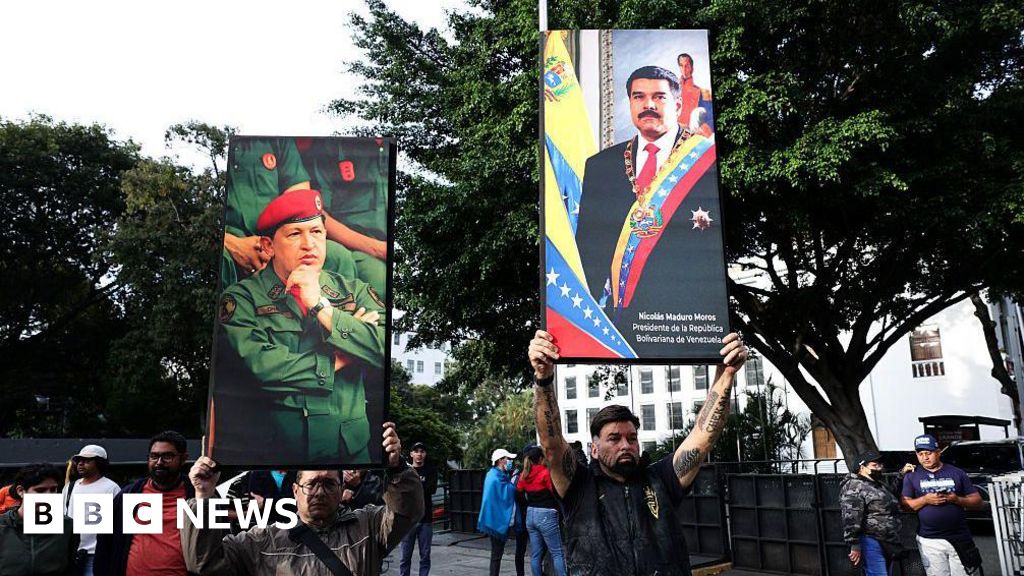
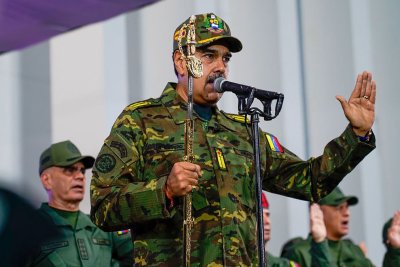
World leaders react to US capture of Venezuelan leader Nicolás Maduro

Leaders around the world have responded with a mix of condemnation and support to the US capture of Venezuela’s President Nicolás Maduro.

Following a large-scale strike on Venezuela on Saturday, Maduro and his wife were captured by US forces and removed from the country. The pair have been indicted on drug charges in New York.

In an initial response, UK Prime Minister Keir Starmer said his government would “shed no tears” for the end of Maduro’s regime.

Neighbouring Latin American countries condemned the actions, as did Venezuela’s long-term allies, Russia and China. China said it was “deeply shocked and strongly condemns” the use of force against a sovereign country and its president.

Russia accused the US of committing “an act of armed aggression”.

Iran, which is locked in its own dispute with Trump over his promise of intervention in its country, called the strikes a “flagrant violation of the country’s national sovereignty”.

Trump said the US will “run” Venezuela “until we can do a safe, proper and judicious transition”.

Many Latin American leaders condemned the US actions.

President Luiz Inacio Lula Da Silva in Brazil wrote on X that the actions “cross an unacceptable line”, adding “attacking countries in flagrant violation of international law is the first step toward a world of violence, chaos, and instability”.

Colombian President Gustavo Petro called the strikes an “assault on the sovereignty” of Latin America, while Cuba’s President Miguel Diaz-Canel described it as a “criminal attack”.

Chile’s President Gabriel Boric expressed “concern and condemnation” on X and called for “a peaceful solution to the serious crisis affecting the country”.

Cuban President Miguel Diaz-Cane accused the US of a “criminal attack”, while Uruguay said in an official statement it was monitoring developments “with attention and serious concern” and “rejects, as it always has, military intervention”.

Trump has indicated that Cuba could become part of a broader US policy in the region, calling it a failing nation. Secretary of State Marco Rubio said Cuba was a disaster run by incompetent leaders who supported Maduro’s administration. He said the government in Havana should be concerned

The Venezuelan Interior Minister Diosdado Cabello urged citizens to remain calm and to trust the country’s leadership and military, saying, “The world needs to speak out about this attack,” according to the Reuters news agency.

But Argentinian President Javier Milei – who Trump has described as his “favourite president” – wrote “Freedom moves forward” and “Long live freedom” on social media.

Meanwhile UK Prime Minister Sir Keir Starmer refused to be drawn into whether or not the military action may have broken international law.

In an interview with the BBC’s Sunday with Laura Kuenssberg programme on Saturday morning, the prime minister did not condemn the US strikes.

He said he was waiting to establish all the facts but would not “shy away from this”, adding he was a “lifelong advocate of international law”.

The UK was not involved in the strikes and Sir Keir said he had not spoken to Trump about the operation.

Later on Saturday, Sir Keir posted on X that the UK “regarded Maduro as an illegitimate president and we shed no tears about the end of his regime”.

“The UK government will discuss the evolving situation with US counterparts in the days ahead as we seek a safe and peaceful transition to a legitimate government that reflects the will of the Venezuelan people,” he added.

The EU’s top diplomat Kaja Kallas reiterated the bloc’s position that Maduro lacks legitimacy, that there should be a peaceful transition of power, and that the principles of international law must be respected.

French President Emmanuel Macron said the transition of power “must be peaceful, democratic, and respectful of the will of the Venezuelan people” in a post on X.

He added he hoped González – the opposition’s 2024 presidential candidate – could ensure the transition.

German Chancellor Friedrich Merz said the legality of the US operation was “complex” and international law in general must apply.

He warned that “political instability must not be allowed to arise in Venezuela”.

UN Secretary General Antonio Guterres said he was “deeply concerned that the rules of international law have not been respected”, his spokesperson said. He was “deeply alarmed” by the strikes, which set a “dangerous precedent”.

He called on all actors in Venezuela to engage in inclusive dialogue, in full respect of human rights and the rule of law”.

In the US, Senate Minority Leader Chuck Schumer, a Democrat, said, “Let me be clear, Maduro is an illegitimate dictator, but launching military action without congressional authorization, without a federal plan for what comes next, is reckless”

Source link

Many U.S. Venezuelans praise Maduro capture, but some protest in Los Angeles

Maria Eugenia Torres Ramirez was having dinner with her family in Los Angeles on Friday night when the flood of messages began. Word had begun to circulate that the U.S. was invading Venezuela and would seize its president, Nicolás Maduro.

Torres Ramirez, 38, fled her native country in 2021, settled in L.A. and has a pending application for asylum. Her family is scattered throughout the world — Colombia, Chile and France. Since her parents died, none of her loved ones remain in Venezuela.

Still, news that the autocrat who separated them had been captured delivered a sense of long-awaited elation and united the siblings and cousins across continents for a rare four-hour phone call as the night unfolded.

“I waited for this moment for so long from within Venezuela, and now that I’m out, it’s like watching a movie,” said Torres Ramirez, a former political activist who opposed Maduro. “It’s like a jolt of relief.”

Many Venezuelans across the U.S. celebrated the military action that resulted in Maduro’s arrest. Economic collapse and political repression led roughly 8 million Venezuelans to emigrate since 2014, making it one of the world’s largest displacement crises.

About 770,000 live in the U.S. as of 2023, concentrated mainly in the regions of Miami, Orlando, Houston and New York. Just over 9,500 live in L.A., according to a 2024 U.S. Census estimate.

In the South Florida city of Doral, home to the largest Venezuelan American community, residents poured into the streets Saturday morning, carrying the Venezuelan flag, singing together and praising the military action as an act of freedom.

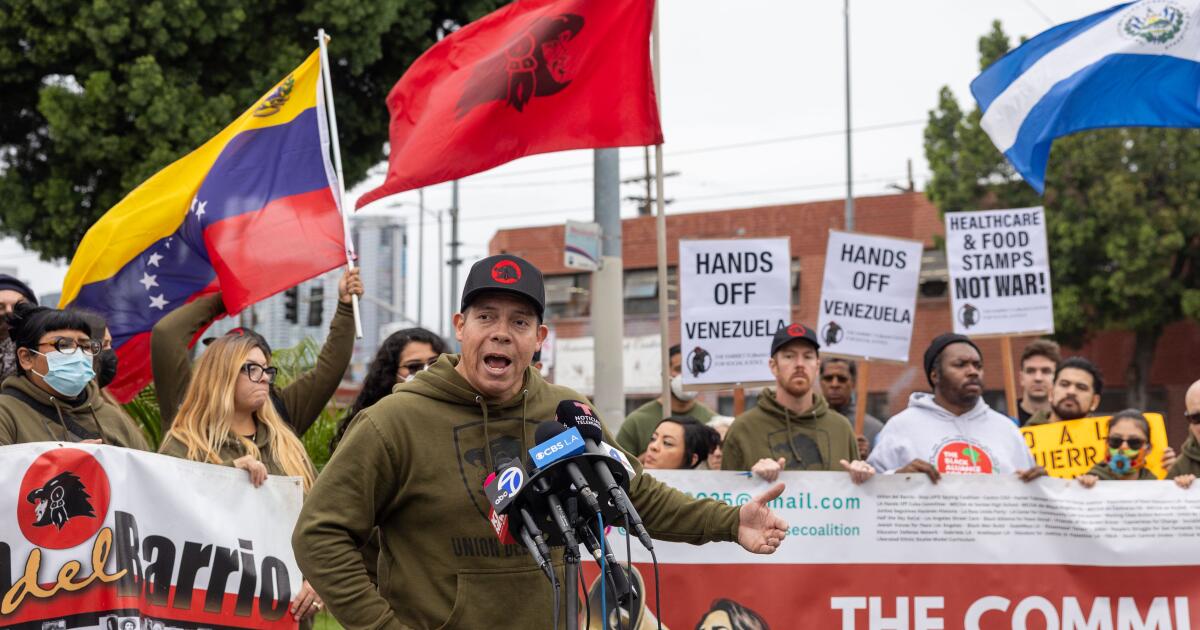
In Los Angeles, a different picture emerged as groups opposed to Maduro’s arrest took to the streets, though none identified themselves as being of Venezuelan descent. At a rally of about 40 people south of downtown Los Angeles, John Parker, a representative of the Harriet Tubman Center for Social Justice, called the raid a “brutal assault and kidnapping” that amounted to a war crime.

The United States’ intervention in Venezuela had nothing to do with stopping the flow of drugs, he said, and everything to do with undermining a legitimate socialist government. Parker called for Maduro to be set free as a few dozen protesters behind him chanted, “Hands off Venezuela.”

Parker said when he visited Venezuela a few weeks ago as part of a U.S. peacemaking delegation, he saw “the love people had for Maduro.”

A later demonstration in Pershing Square drew hundreds out in the rain to protest the U.S intervention. But when a speaker led chants of “No war in Venezuela,” a woman draped in a Venezuelan flag attempted to approach him and speak into the microphone. A phalanx of demonstrators circled her and shuttled her away.

At Mi Venezuela, a restaurant in Vernon, 16-year-old Paola Moleiro and her family ordered empanadas Saturday morning.

A portion of one of the restaurant’s walls was covered in Venezuelan bank notes scrawled with messages. One read: “3 de enero del 2026. Venezuela quedo libre.

Venezuela is free.

Around midnight the night before, Paola started getting messages on WhatsApp from her relatives in Venezuela. The power was out, they said, and they forwarded videos of what sounded like bomb blasts.

Paola was terrified. She’d left Venezuela at age 7 with her parents and siblings, first for Panama and later the U.S., in 2023. But the rest of her family remained in Venezuela, and she had no idea what was going on.

Paola and her family stayed up scanning television channels for some idea of what was happening. Around 1:30 a.m., President Trump announced that U.S. forces had captured Maduro.

“The first thing I did, I called my aunt and said, ‘We are going to see each other again,’” she said.

Because of the Venezuelan state’s control over media, her relatives had no idea their leader had been seized by U.S. forces. “Are you telling me the truth?” Paola said her aunt asked.

Paola hasn’t been home in nine years. She misses her grandmother and her grandmother’s cooking, especially her caraotas negras, or black beans. As a child, she said, certain foods were so scarce that she had an apple for the first time only after moving to Panama.

Paola said she was grateful to Trump for ending decades of authoritarian rule that had reduced her home country to a shell of what it once was.

“Venezuela has always prayed for this,” she said. “It’s been 30 years. I feel it was in God’s hands last night.”

For Torres Ramirez, it was difficult to square her appreciation for Trump’s accomplishment in Venezuela with the fear she has felt as an immigrant under his presidency.

“It’s like a double-edged sword,” she said. “Throughout the course of this whole year, I have felt persecuted. I had to face ICE — I had to go to my appointment with the fear that I could lose it all because the immigration policies had changed and there was complete uncertainty. For a moment, I felt as if I was in Venezuela. I felt persecuted right here.”

During a news conference Saturday morning, Trump said Maduro was responsible for trafficking illicit drugs into the U.S. and the deaths of thousands of Americans. He repeated a baseless claim that the Maduro government had emptied Venezuela’s prisons and mental institutions and “sent their worst and most violent monsters into the United States to steal American lives.”

“They sent everybody bad into the United States, but no longer, and we have now a border where nobody gets through,” he said.

Trump also announced that the U.S. will “run” Venezuela and its vast oil reserves.

“We’ll run it professionally,” he said. “We’ll have the greatest oil companies in the world go in and invest billions and billions of dollars and take that money, use that money in Venezuela, and the biggest beneficiary are going to be the people of Venezuela.”

Torres Ramirez said that while she’s happy about Maduro’s ouster, she’s unsure how to feel about Trump’s announcement saying the U.S. will take over Venezuela’s oil industry. Perhaps it won’t be favorable in the long term for Venezuela’s economy, she said, but the U.S. intervention is a win for the country’s political future if it means people can return home.

Patricia Andrade, 63, who runs Raíces Venezolanas, a volunteer program in Miami that distributes donations to Venezuelan immigrants, said she believes the Trump administration is making the right move by remaining involved until there is a transition of power.

Andrade, a longtime U.S. citizen, said she hasn’t been to Venezuela in 25 years — even missing the deaths of both parents. She said she was accused of treason for denouncing the imprisonment of political opponents and the degradation of Venezuela’s democracy under Maduro’s predecessor Hugo Chavez. She said she worries that Venezuela’s remaining political prisoners could be killed as payback for Maduro’s arrest.

“We tried everything — elections, marches, more elections … and it couldn’t be done,” she said. “Maduro was getting worse and worse, there was more repression. If they hadn’t removed him, we were never going to recover Venezuela.”

While she doesn’t want the U.S. to fix the problems of other countries, she thanked Trump for U.S. involvement in Venezuela.

She said she can’t wait to visit her remaining family members there.

Source link

Magnitude 6.5 earthquake rocks the Acapulco area of Mexico

A magnitude 6.5 earthquake shook buildings in Acapulco, Mexico, on Friday morning but caused no reported casualties or damage. Image Courtesy of the U.S. Geological Survey

Jan. 3 (UPI) — A magnitude 6.5 earthquake was recorded at 7:58 a.m. local time near Rancho Viejo. Mexico on Friday morning and shook buildings in the resort city of Acapulco along the Pacific Coast.

The earthquake, which was linked to more than 500 aftershocks, occurred during Mexican President Claudia Sheinbaum’s first press briefing of 2026, has caused at least two deaths, The Washington Post reported.

The earthquake’s epicenter was 2.5 miles north-northwest of Rancho Viejo and 21.75 miles beneath the Earth’s surface, according to the U.S. Geological Survey.

The USGS reported little to no landsliding was expected and little to no population exposure to landsliding hazards from the event.

Some liquefaction is estimated with limited exposure to local populations, but some ground failure might still occur, according to the USGS.

Rancho Viejo is about 6 miles east of Acapulco in southern central Mexico, and strong shaking was reported in both locales, with some movement also felt 235 miles to the north in Mexico City.

No tsunami warnings were issued, and none occurred, although aftershocks are anticipated and could occur days or possibly weeks afterward and be of a similar magnitude, according to The New York Times.

Carrie Underwood performs in Times Square on New Year’s Eve on December 31, 2024, in New York City. Photo by John Angelillo/UPI | License Photo

Source link

U.S. captures Venezuela’s president Nicolas Maduro

The United States early Saturday morning staged a mission to apprehend Venezuelan President Nicolás Maduro, pictured in November, and his wife, both of whom have been indicated in the United States for narco-terrorism. File Photo by Venezuelan President Office/UPI | License Photo

Jan. 3 (UPI) — The United States early Saturday morning staged a daring “large strike against Venezuela,” during which the country’s president, Nicolas Maduro, was captured and flown out of the country.

President Donald Trump announced on Truth Social that Maduro and Maduro’s wife had been captured, with the New York Times reporting that they were flown by helicopter to the USS Iwo Jima and that both will eventually face charges in the Southern District of New York.

“The United States of America has successfully carried out a large scale strike against Venezuela and its leader, President Nicolas Maduro, who h as been, along with his wife, captured and flown out of the country,” Trump said in the Truth Social post. “This operation was done in conjunction with U.S law enforcement.”

Trump said that a news conference will be held at 11 a.m. EST from Mar-a-Lago, his golf club in Florida.

This is a developing story. Please check back for updates.

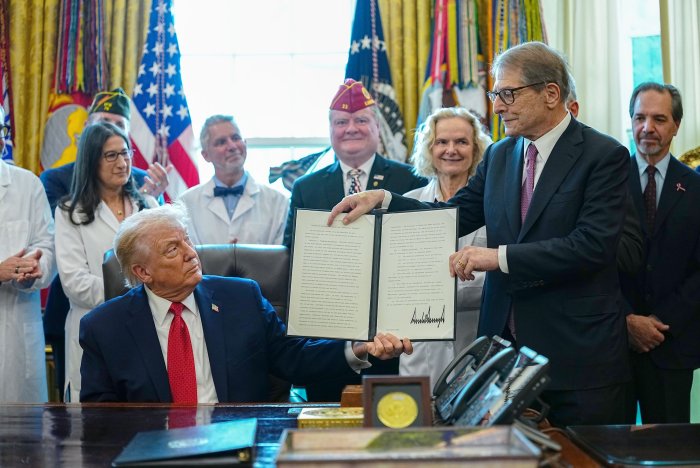
President Donald Trump holds a signed executive order reclassifying marijuana from a schedule I to a schedule III controlled substance in the Oval Office of the White House on Thursday. Photo by Aaron Schwartz/UPI | License Photo

Source link

Venezuelan President Nicolás Maduro denies drug trafficking

Jan. 2 (UPI) — Venezuelan President Nicolás Maduro said claims that his government engages in drug trafficking are lies, and he is willing to meet with President Donald Trump amid rising tensions.

Maduro on Thursday accused the Trump administration of knowingly making false claims of drug trafficking, including recent comments by Trump saying Venezuela’s alleged drug trafficking is akin to using weapons of mass destruction

“Since they cannot accuse me, since they cannot accuse Venezuela of having weapons of mass destruction, since they cannot accuse us of having nuclear rockets, of preparing a nuclear weapon, of having chemical weapons, they invented an accusation that the United States knows is as false as that accusation of weapons of mass destruction, which led them to an eternal war,” Maduro said while referencing the Iraq War.

The Venezuelan president offered to work with U.S. officials to oppose drug trafficking and repeated his prior offers to meet with Trump to discuss the U.S. military targeting alleged drug vessels, seizing oil tankers and blockading Venezuelan ports.

“The U.S. government knows, because we’ve told many of their spokespeople that, if they want to seriously discuss an agreement to combat drug trafficking, we’re ready,” he said in a taped interview on Venezuela’s state-owned channel teleSUR.

The Venezuelan president also suggested his country and the United States could work together to enable U.S. firms to invest in Venezuela’s oil industry “whenever they want it, wherever they want it and however they want it.”

Maduro refused to comment on a recently reported U.S. strike on an alleged drug-processing facility located among docks on Venezuela’s Caribbean coastline.

The CIA also has refused to comment on the strike, which Trump announced on Monday and said “knocked out” a drug facility on Saturday night.

The president in October announced he authorized the CIA to undertake operations in Venezuela but did not say what kind.

The Defense Department also sent a carrier strike group to the Caribbean to stop alleged drug-trafficking fast boats from transporting drugs intended for the United States and Europe and more recently to blockade Venezuelan ports amid seizures of sanctioned vessels.

The White House has said the strikes on the alleged drug boats are intended to stop South American drug cartels from sending drugs to the United States, which has some U.S. officials questioning the legality of such strikes.

The U.S. Southern Command announced two more boat strikes that killed five in international waters on New Year’s Eve.

The United States began striking the alleged drug boats in September and has sunk at least 36 and killed at least 115.

Most of the drug boat strikes, 23, have occurred in the eastern Pacific Ocean and away from Venezuela, while 11 others occurred in the Caribbean Sea, with another two in undisclosed locations.

The United States also has placed a $50 million bounty on Maduro and recently sanctioned some of his family members for their alleged roles in drug trafficking.

Trump also has accused Maduro of intentionally sending criminals and others to the United States during the Biden administration, including members of the Venezuela-based Tren de Aragua gang that he has designated as a foreign terrorist organization.

Source link

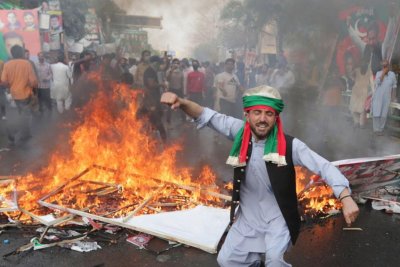
Pakistani court sentences journalists and influencer for ‘digital terrorism’

Seven Pakistanis were tried in absentia and sentenced to life in prison on Friday for “digital terrorism” amid riots following the 2023 arrest of former Pakistan Prime Minister Imran Khan. File Photo by Rahat Dar/EPA

Jan. 2 (UPI) — An anti-terrorism court in Islamabad, Pakistan, on Friday sentenced five journalists, a YouTube influencer and a military officer to two life sentences each for “digital terrorism” crimes.

Anti-Terrorism Court Judge Tahir Sipra announced the verdicts for the defendants, who were tried in absentia.

Pakistani law allows for trials in absentia, but their verdicts must be confirmed by the Islamabad High Court.

Those who were sentenced were Akbar Hussain, Wajahat Saeed Khan, Haider Raza Mehdi, Moeed Pirzada, Shaheen Sehbai, Sabir Shakir and Adil Raja.

Raja is a YouTube influencer, while Khan, Shakir, Sehbai, Mehdi and Pirzada are journalists. Hussain is a former Pakistan army officer.

The court found that the seven defendants encouraged riots on May 9, 2023, after former Pakistani Prime Minister Imran Khan was arrested briefly in Islamabad for alleged corruption.

Imran Khan’s supporters attacked governmental buildings and military facilities in several locations.

Prosecutors brought 24 witnesses against the defendants and said they used their respective digital media channels to incite riots, enable attacks and amplify the violence against governmental institutions.

If their sentences are upheld, each faces up to life in prison plus a $5,500 fine for criminal conspiracy.

Each also could be sentenced to another 10 years in prison and fined more than $2,200 for waging or attempting to wage or abetting in waging war against Pakistan.

Additionally, each defendant has been sentenced to 15 years in prison for three counts of violating the Anti-Terrorism Act of 1997 and fined nearly $7,000.

All sentences are to run concurrently if upheld by the higher court.

Source link

‘Sorcerer’ kicks off 2026 with a bang, plus the best movies in L.A. this week

Hello! I’m Mark Olsen. Welcome to another edition of your regular field guide to a world of Only Good Movies.

One of the bummer parts of any awards season is how it leads to a narrowing down of what movies are getting talked about and subsequently remembered from any given year. There are always way more than five or 10 titles from any given year that deserve the spotlight.

Which is why it was so exciting this week when Envelope editor Matt Brennan chose Mona Fastvold’s “The Testament of Ann Lee” and Angus MacLachlan’s “A Little Prayer” as his favorite movies of the year. “A Little Prayer” first premiered at Sundance in 2023, but didn’t get a theatrical release until this past summer. The delicate jewel of a film features warm, tender performances by David Strathairn and Jane Levy as a man and his daughter-in-law both reconciling themselves to the fallout of problems in her marriage. The movie is available now on digital platforms and is well worth seeking out.

Two family members sit outside on a bench.

David Straithairn and Jane Levy in the movie “A Little Prayer.”

(Music Box Films)

And we talked about “Ann Lee” here last week and will likely have more to say about it as awards season moves on. Matt’s list also included films such as “Sinners,” “One Battle After Another,” “Sentimental Value” and “Sirāt” along with “Sorry, Baby,” “Nouvelle Vague,” “Hedda,” and “The Alabama Solution.”

Meanwhile, with 2026 so fresh and new, it’s almost sacrilegious to start thinking about a future best-of-year list. But we’ve got one anyway: Here are the 14 movies we’re most excited to see in 2026. Christopher Nolan, Greta Gerwig, Steven Spielberg doing aliens again — at least on paper, there’s a lot of promise here.

4K premiere of Friedkin’s ‘Sorcerer’

A truck drives at dawn.

An image from William Friedkin’s 1977 movie “Sorcerer.”

(Criterion Collection)

On Friday night, the American Cinematheque at the Egyptian Theatre will host the West Coast premiere of a new 4K restoration of William Friedkin’s 1977 thriller “Sorcerer” scanned from the original camera negative.

The film was a notorious flop when first released, in part because it had the misfortune of opening a week after the first “Star Wars.” An adaptation of the same novel that spawned Henri-George Clouzot’s 1953 adventure “Wages of Fear,” “Sorcerer” follows four desperate men tasked with transporting a truckload of volatile nitroglycerine through a South American jungle.

Friedkin, who died in 2023, spoke to The Times’ Kenneth Turan in 2013 before receiving a lifetime achievement award from the Venice Film Festival. The only movie shown as part of the tribute was “Sorcerer.” As Friedkin said at the time, “Every one of the films that I made, even the ones that haven’t worked, are films that I had to envision, that I had to see in my mind’s eye. And ‘Sorcerer’ is the film that came closest to my vision of what I wanted to make.”

In a January 1977 interview conducted when he had just completed filming, star Roy Scheider said that working with Friedkin “was not always to my liking as an actor. He is organized and meticulous but difficult, opiniated and tough. He can even be cruel at times. When Friedkin works on a film, nothing gets in his way, including the actors.”

A man stands still with a rifle pointed at him.

Roy Scheider in the movie “Sorcerer.”

(Criterion Collection)

The film’s initial reception is perhaps well summarized by Charles Champlin’s originalLos Angeles Times review, in which he writes, “William Friedkin’s ‘Sorcerer’ is one of those movies that must make executives, no less than critics, shake their heads in stunned glum wonder. What the hell went wrong?

“A first-rate and proven piece of material. Executed with loving and meticulous care on a damn-the-cost basis by a prize-winning director with two large commercial successes behind him. But it all ends up a swollen, leaden and almost totally uninvolving disappointment that seems fairly unlikely to be saved commercially by its detonations, special effects and strenuous physical sequences.”

Champlin did seem to enjoy one element: the synthesizer score by Tangerine Dream (later of “Thief” and “Risky Business”), music that he calls “a new flavor, Latin Anxious, that works well.”

‘The Godfather Part II’

A crime lord testifies in a courtroom.

Al Pacino in the 1974 sequel “The Godfather Part II.”

(Paramount Pictures)

On Friday, Saturday and Sunday, an original I.B. Technicolor 35mm print of Francis Ford Coppola’s “The Godfather Part II” will screen at the New Beverly. It’s a rare and unusual way to see a great movie that can sometimes be flattened by overfamiliarity but remains as fresh and revealing as ever. The movie would go on to win six Oscars including best picture (the first sequel to ever do so).

The story cross-cuts between Al Pacino as Michael Corleone in the 1950s and Robert De Niro playing his father Vito Corleone in the early 1900s. The film shows the growth of the Corleone family empire and what it takes to keep it running.

In a January 1975 interview, Coppola talked about his motivations in approaching the sequel, saying, “The finished film makes what I consider a tough statement for a $13 million mass-audience picture. It says that this country is in danger of losing its soul, like Michael did. That power without humanity is destructive. … I didn’t want Michael to be destroyed by another gang or by a Senate investigation of organized crime. I wanted him to destroy himself. And to juxtapose his fall with flashbacks of his father’s rise a half-century earlier.”

Coppola, candid as ever, continued, “And, to be completely honest, there was the possibility of my making so much money I could bankroll some of my other projects.”

In his original Dec. 1974 review of the film, our Charles Champlin wrote, “In its way, ‘Godfather II’ is more daring than the original … The risks were worth taking, and the reward is that a single monumental segment of the American experience is neither glorified nor patronized, but made comprehensible and real, transmuted into drama of both scope and depth.”

Points of interest

‘The Birds’ in 35mm

A woman and children run away from attacking birds.

Tippi Hedren and children are attacked by crows in a scene from Alfred Hitchcock’s “The Birds.”

(Screen Archives / Getty Images)

On Monday the Academy Museum will show Alfred Hitchcock’s 1963 “The Birds” in 35mm. The film is showing as part of a series about nature’s revenge on humans — a fun group of titles that also includes “Jaws” and “Orca” (both playing in 35mm), “Creature from the Black Lagoon” in 3D, “Alligator” with director Lewis Teague in person and “The Revenant” in 4K.

Transporting Daphne du Maurier’s original story to the setting of Bodega Bay in Northern California, “The Birds” presents a classic, apocalyptic what-if scenario when humans are suddenly attacked from above.

Star Tippi Hedren, who turns 96 later this month, made her movie debut in the film and over the years she has been open about how difficult the process of shooting was for her. In an April 1963 interview with Hedda Hopper, she said, “The Humane Society was there to protect the birds but there was no one to protect me.”

In a March 1963 review, The Times’ Philip K. Scheuer wrote, “Are actors people? No matter. Alfed Hitchcock, who filmed ‘The Birds’ at Universal, was once widely quoted as saying he hated actors. After his 1960 ‘Psycho’ and now ‘The Birds,’ it must be fairly obvious that he has extended his abhorrence to the whole human race.”

Oliver Lax’s ‘Fire Will Come’

Amador Arias, left, and Benedicta Sánchez in 'Fire Will Come'

Amador Arias, left, and Benedicta Sánchez in ‘Fire Will Come’

(KimStim)

Spanish filmmaker Oliver Laxe’s “Sirāt” has become one of the most celebrated films of the year, popping up on critics list and making a strong showing on the recent Oscars shortlists. On Tuesday, Acropolis Cinema will present the Los Angeles premiere of Laxe’s 2019 film “Fire Will Come” at 2220 Arts + Archives (its original release was curtailed by the pandemic). Laxe is scheduled to attend in person.

In the film, Amador (Amador Arias) has just been released from prison for arson, after having started a wildfire that ravaged the local mountains. Living with his mother, he has to overcome the suspicions and distrust of everyone in the community.

Reviewing the film in 2020 for a digital release, Carlos Aguilar called the film “quietly phenomenal,” adding, “Its discourse on forgiveness simmers in one’s mind inextinguishably.”

Joachim Trier tribute

A director wearing eyeglasses smiles.

Director Joachim Trier, photographed at the Los Angeles Times Studios at RGB House during the Toronto International Film Festival in September.

(Christina House / Los Angeles Times)

The American Cinematheque is launching a tribute to Norwegian filmmaker Joachim Trier this week. He will be appearing person with co-writer Eskil Vogt following screenings of “The Worst Person in the World” and his current movie “Sentimental Value.”

These are also rare opportunities to see two of Trier’s earlier films — his 2006 debut “Reprise” and 2011’s devastating “Oslo, August 31st” — in a theater.

“Sentimental Value” directly engages with the legacy of Scandinavian cinema, with Stellan Skarsgård playing an arthouse filmmaker trying to get a new project off the ground with his daughter (“Worst Person” star Renate Reinsve).

Going all the way back to “Reprise.” Trier has been making a case for a new kind of Scandinavian cinema: “I would hope young people would see this not as the old, dreary, dandruff-on-the-shoulders, slow European film,” he said in 2008. “I wanted to make something more sexy and relevant to people.”

Source link

S. Korea raises median income 6.5% in 2026, expanding eligibility

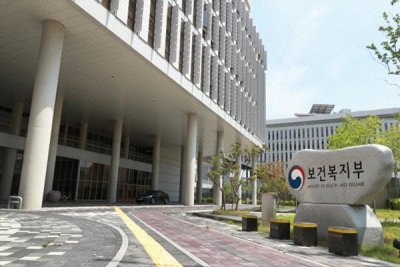
Exterior view of the Ministry of Health and Welfare building in Sejong, South Korea. Photo by Asia Today

Jan. 1 (Asia Today) — South Korea will raise its median income standard by 6.5% this year, the largest increase on record, expanding eligibility for basic livelihood benefits and related support programs, the government said Wednesday.

The Ministry of Health and Welfare said the median income for a four-person household in 2026 will be set at 6,494,738 won per month ($4,900), up 6.51% from a year earlier. The higher benchmark will be used to calculate eligibility for benefits under the National Basic Living Security System.

Under the revised criteria, the selection threshold for a four-person household will rise to 2,078,316 won per month ($1,570), from 1,951,287 won last year. For a one-person household, the threshold will increase to 820,556 won ($620), up from 765,444 won.

Actual benefit payments are determined by subtracting a household’s recognized income from the applicable selection threshold, the ministry said.

The government will also expand income deductions aimed at encouraging youth employment and self-reliance. Eligibility for additional deductions on earned and business income will be extended from those aged 29 and under to those aged 34 and under. The maximum additional deduction will increase to 600,000 won ($450) from 400,000 won.

New special provisions will address state compensation payments. Lump-sum compensation received by beneficiaries who are victims of unlawful state actions will be excluded from asset calculations for three years, a move intended to prevent beneficiaries from losing eligibility due to compensation payouts.

The ministry said it will also tighten oversight of fraudulent benefit claims. Mandatory prosecution will apply to cases where recovered fraudulent payments exceed 10 million won ($7,500), and authorities will be required to submit prosecution results every six months to strengthen supervision and transparency.

Health and Welfare Minister Chung Eun-kyung said the changes are expected to add about 40,000 new recipients in 2026.

“We will continue to closely review and improve the system so that low-income citizens can live stable and dignified lives,” Chung said.

— Reported by Asia Today; translated by UPI

© Asia Today. Unauthorized reproduction or redistribution prohibited.

Source link

New releases lift Korean game makers as IP strategy pays off

Operating profits rise at Nexon, Krafton and Netmarble as expanded and new IPs drive performance, while Kakao Games swings to a loss amid a release gap. Source: FnGuide.
Based on disclosed information; compiled by Asia Today and translated by UPI

Jan. 1 (Asia Today) — Major South Korean game companies posted sharply different results in 2025, with performance largely tied to whether they shipped new titles built on established intellectual property or introduced new franchises, industry officials said.

Nexon is projected to report 2025 revenue of 4.5594 trillion won ($3.16 billion) and operating profit of 1.4112 trillion won ($979 million), up 13.7% and 26.4% from a year earlier, according to industry estimates.

The gains were attributed to the impact of recent releases including Mabinogi Mobile, Maple Raising and The First Berserker: Khazan. Mabinogi Mobile won the top prize at the 2025 Korea Game Awards held at BEXCO in Busan.

Krafton is also expected to top 1 trillion won ($693 million) in operating profit. The company’s 2025 revenue is estimated at 3.09 trillion won ($2.14 billion) with operating profit of 1.301 trillion won ($902 million), up about 14% and 10% on the year.

Krafton’s results were driven by its flagship PUBG: Battlegrounds franchise, with Battlegrounds Mobile India cited as a key growth engine in the Indian market.

Netmarble is projected to post 2025 revenue of 2.79 trillion won ($1.93 billion) and operating profit of 360 billion won ($250 million), up 4.7% and 68% from a year earlier. The company’s new titles based on in-house IP, including Vampyr and Seven Knights Re:Birth Global, were credited with supporting profitability, along with a higher share of self-developed games in its lineup.

NCSoft, which recorded its first loss since its initial public offering last year, is expected to return to profit. The company’s 2025 revenue is estimated at 1.45 trillion won ($1.01 billion) with operating profit of 15 billion won ($10.4 million), with strong early performance of the MMORPG Aion 2 cited as a key factor.

Kakao Games, however, is projected to swing to an operating loss amid delays in new releases. The company’s 2025 revenue is estimated at 470 billion won ($326 million) with an operating loss of 39 billion won ($27.0 million).

An industry official said game makers are leaning more heavily on proven franchises while trying to develop new IP, and that 2026 results will likely depend on whether companies can sustain release momentum.

— Reported by Asia Today; translated by UPI

© Asia Today. Unauthorized reproduction or redistribution prohibited.

Source link

North Korea downplays Xi New Year greeting while touting Putin ties

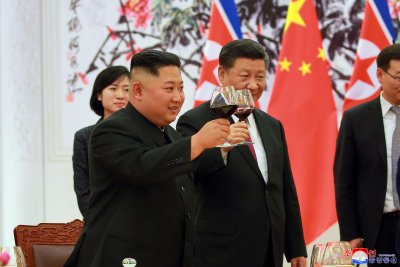
A photo released by the official North Korean Central News Agency (KCNA) shows North Korean leader Kim Jong-un (C-L) and Chinese President Xi Jinping (C-R) toasting during a state dinner at the Great Hall of the People in Beijing, China, 19 June 2018. Kim Jong Un, chairman of the Workers’ Party of Korea and chairman of the State Affairs Commission of the Democratic People’s Republic of Korea, is visiting the People’s Republic of China from 19 to 20 June. Photo by KCNA/EPA

Jan. 1 (Asia Today) — Chinese President Xi Jinping and his wife sent New Year’s greetings to North Korean leader Kim Jong Un but North Korean state media gave the exchange scant attention and did not publish Xi’s message, according to diplomatic sources in Beijing.

The Korean Central News Agency mentioned Xi’s greeting in a roundup of messages from multiple foreign leaders, including Vietnam’s president and Myanmar’s interim president, the sources said. Rodong Sinmun, the newspaper of the ruling Workers’ Party, also carried the item in a brief reference placed low in its coverage.

Neither outlet disclosed the contents of Xi’s greeting, the sources said, in contrast with extensive coverage of Kim’s exchange with Russian President Vladimir Putin.

North Korea reported that Kim sent Putin a New Year’s message Saturday and published it on Rodong Sinmun’s front page, the sources said. North Korea also said Putin sent Kim a New Year’s message Thursday.

The sources said North Korea published the full text of New Year’s letters exchanged by Kim and Putin a year ago, underscoring what it portrayed as close ties between Pyongyang and Moscow.

The muted handling of Xi’s greeting comes despite signs of a thaw in North Korea-China relations after a summit in Beijing on Sept. 3 during China’s Victory Day anniversary events, the sources said. Even so, they said this year’s coverage suggested lingering frictions have not been fully resolved.

The sources said Kim also exchanged New Year’s greetings with Hur Jong-man, chairman of the General Association of Korean Residents in Japan. They added that the General Association of Koreans in China sent Kim a lengthy congratulatory message.

— Reported by Asia Today; translated by UPI

© Asia Today. Unauthorized reproduction or redistribution prohibited.

Source link

AeroMexico named world’s ‘most on-time’ airline

AeroMexico topped the world’s global airlines with an on-time rate of 90.02% in 2025, global airlines analyst Cirium announced on Friday, marking the second straight year the Mexican airline finished at the top. Photo by Jose Mendez/EPA

Jan. 2 (UPI) — Mexico-based AeroMexico won Cirium’s On-Time Performance Review for the second straight year with more than 90% of its flights being on time in 2025.

U.K.-based Cirium is a global aviation analytics firm and made AeroMexico the second global airline to win its On-Time Performance Review in consecutive years since it began the review in 2009, according to Business Wire.

AeroMexico maintained its industry-leading schedule across 188,859 flights in 23 countries with 90.02% completed on time.

Saudi Arabia’s Saudia Airlines finished second with an on-time rate of 86.52%, followed by Scandinavian Airlines’ SAS at 86.09%.

Several regional airlines exceeded AeroMexico’s on-time rating, while claiming regional crowns in Cirium’s annual airline ratings competition.

U.S.-based Delta Airlines won the regional crown in North America for a fifth-straight year with 80.9% of its flights being completed on time, while Copa Airlines secured a record 11th regional win with a 90.74% on-time rate.

International Airline Group’s Iberia Express topped the European market for a third-straight year with an on-time rate of 88.94%, and Philippine Airlines claimed the top spot in the Asia-Pacific region with 83.12% of its flights being completed on time.

In the Middle East and Africa, Safair Airline of South Africa topped the competition with an on-time rate of 91.06%.

Cirium’s platinum award for 2025 goes to Qatar Airways, which logged an on-time rate of 84.42% while completing 198,303 flights across six continents.

U.K.-based Virgin Atlantic secured the most-improved award with a 9.44% on-time rate improvement, from 74.01% in 2024 to 83.45% in 2025.

Among global airports, Santiago Arturo Merino Benitez International Airport in Chile won the large airport category with 87.04% of its flights departing on time.

Among medium-sized airports, Panama’s Tocumen International Airport took the top spot with 93.34% of its flights departing on time.

Turkey’s Istanbul Airport won Cirium’s Airport Platinum Award for its operational services, passenger care during flight disruptions and its general growth.

Source link

South Korea says it respects One China principle ahead of Lee trip

South Korean National security adviser Wi Sung-lac speaks at a press briefing at the Asia-Pacific Economic Cooperation summit in Gyeongju, South Korea on Wednesday, October 29, 2025. Wi Sung-lac told reporters at the Blue House that the government respects the One China principle and is responding in line with that stance on Jan 2, 2026. File. Photo by Thomas Maresca/UPI | License Photo

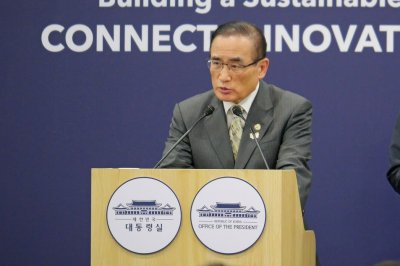
Jan. 2 (Asia Today) — South Korea’s presidential office said Friday it “respects the One China principle” after China urged Seoul to reaffirm its position on Taiwan ahead of President Lee Jae-myung’s planned visit to China.

National Security Office Director Wi Sung-lac told reporters at the Blue House that the government respects the One China principle and is responding in line with that stance.

China’s Foreign Ministry said Chinese Foreign Minister Wang Yi raised the issue during a phone call Wednesday with South Korean Foreign Minister Cho Hyun. Wang also criticized what he described as efforts by some political forces in Japan to revise history and downplay past aggression and colonialism, the ministry said.

The remarks were widely seen as pressure on Seoul to publicly restate its position before Lee’s trip.

China’s Foreign Ministry said Cho told Wang that Lee places importance on cooperation with China and is committed to developing the bilateral strategic cooperative partnership. Cho also said South Korea’s position of respecting the One China principle has not changed, the ministry said.

— Reported by Asia Today; translated by UPI

© Asia Today. Unauthorized reproduction or redistribution prohibited.

Source link

World Darts Championship 2026 results: Luke Littler to face Gian van Veen in final

While Littler cruised through, there was no such luck for Van Veen as he beat his idol Anderson in a remarkable match.

It began with the Scot winning the first set against the darts with a 104 average, but any thoughts that Van Veen, 23, might be overawed in his first world semi-final were quickly forgotten as he hit a 10-darter to start the second set.

A stunning average of 113.35 saw him level it at 1-1 with a 117 checkout and was a taster of what was to come in the sets that followed.

Anderson started the next with a 144 checkout but Van Veen hit back once more, hitting six perfect darts to start the deciding leg on his way to an 11-darter.

Somehow, the fifth set took the match to another level again. First, Anderson broke with a 10-darter and hit a 170 checkout to go 2-0 in legs, and a leg from making it 3-2.

Instead, Van Veen made it 4-1 after a 170 checkout of his own forced a deciding leg. He won it and averaged 111.46, while Anderson was left wondering how he had lost a set in which he averaged 117.44.

The 55-year-old’s resilience shone through, though, and with the crowd behind him, he won the next two sets to make it 4-3 and pile the pressure on his younger opponent – who had missed four darts to make it 5-2.

But while both players showed signs that the unrelenting nature of the contest was taking its toll, Van Veen held firm, got himself 5-3 up and then finished strongly with a 13-darter to clinch his place in the final.

“To be in the World Championship final is not even a dream coming true because I wasn’t able to dream about this,” Van Veen, who had not won a match at the World Championship prior to this event, told Sky Sports.

“Now it’s happened and I’m so happy.”

Source link

Lee to meet Xi in China on Monday, seek progress on culture ban

South Korean President Lee Jae Myung (R) shakes hands with Chinese President Xi Jinping (L) during the second session of the APEC Economic Leaders’ Meeting (AELM), as part of the Asia-Pacific Economic Cooperation (APEC) summit in Gyeongju, South Korea, 01 November 2025. File. Photo by YONHAP/ EPA

Jan. 2 (Asia Today) — South Korean President Lee Jae-myung will meet Chinese President Xi Jinping on Monday during a four-day visit to China aimed at advancing talks on Korean Peninsula peace, economic cooperation and issues including restrictions on Korean cultural content in China, the presidential office said Friday.

National Security Office Director Wi Sung-lac told a briefing at the Blue House that Lee will travel to China from Sunday through Wednesday at Xi’s invitation, visiting Beijing and Shanghai.

Wi said the summit on Monday will include talks, a signing ceremony for nearly 10 memorandums of understanding and a state banquet. He said the main agenda will center on peace and denuclearization on the Korean Peninsula.

“People’s livelihoods and peace cannot be separated,” Wi said, adding that both countries share an interest in peace and stability on the Korean Peninsula and in Northeast Asia. He said Seoul plans to strengthen strategic communication with Beijing and urge China to play a constructive role in helping address Korean Peninsula issues.

Wi said the two sides will also seek progress on what South Korea calls China’s restrictions on Korean cultural content. He said China’s official position is that no such ban exists but that South Korea sees it differently and will pursue broader consensus on cultural exchanges.

Wi said Lee’s team will also raise concerns about Chinese structures in the West Sea, also known as the Yellow Sea. He said the issue was discussed during a South Korea-China summit in Gyeongju in November and working-level consultations have continued.

A K-pop concert that had been discussed in connection with the trip is unlikely to take place this time, Wi said.

Lee will attend a South Korea-China business forum on Monday, the presidential office said. On Tuesday, he is scheduled to have lunch with Chinese Premier Li Qiang and meet Zhao Leji, the chairman of China’s national legislature.

On Wednesday, Lee plans to visit the former Shanghai headquarters of the Provisional Government of the Republic of Korea. Wi said the visit will mark the 150th anniversary of independence activist Kim Gu’s birth and the 100th anniversary of the Shanghai provisional government building, and is intended to honor the independence movement and the countries’ shared historical experience.

— Reported by Asia Today; translated by UPI

© Asia Today. Unauthorized reproduction or redistribution prohibited.

Source link

Analyst: U.S. security strategy signals sharper America First

A photo released by the official Korean Central News Agency (KCNA) shows a new intercontinental ballistic missile (ICBM) during a military parade celebrating the 80th founding anniversary of the Workers’ Party of Korea at the Kim Il Sung Square in Pyongyang, North Korea, 10 October 2025 (issued 11 October 2025). Photo by KCNA /EPA

Jan. 1 (Asia Today) — Kim Tae-woo, director of nuclear security research at the Korea Institute for Military Affairs, said the security outlook on the Korean Peninsula remains grave as North Korea continues missile activity and China advances new weapons systems.

In a column, Kim pointed to North Korea’s missile launches late last year and its unveiling of what he described as a nuclear-powered ballistic missile submarine under construction. He also cited reports of a Chinese hypersonic glide vehicle test.

Kim said the White House in December released a four-chapter National Security Strategy that he described as notably different in tone and language from past versions. He said it explicitly embraces “America First” and frames policy around U.S. national interests.

Kim said the strategy argues that post-World War II U.S. leaders wrongly believed taking on global burdens served U.S. interests. He said it criticizes free trade for weakening U.S. industry and portrays alliances in transactional terms, arguing some allies shifted security costs to Washington or drew it into conflicts not tied to core U.S. interests.

Kim wrote that the strategy’s stated goals include U.S. survival and security, neutralizing external threats and unfair trade, maintaining the strongest military and nuclear arsenal, developing next-generation missile defense, sustaining a dynamic economy, protecting industrial and energy capacity and preserving leadership in science, technology and soft power.

He said the document defines core U.S. interests as maintaining dominance in the Western Hemisphere, protecting freedom of navigation and supply lines in the Indo-Pacific, restoring what it calls Western civilization’s identity and self-reliance in Europe, preventing hostile forces from dominating Middle Eastern energy and preserving U.S. leadership in cutting-edge science.

Kim said the strategy lists U.S. political institutions, economic innovation, financial leadership, technological and military strength, alliance ties, geographic advantages and natural resources as key tools. He said it also lays out guiding principles including a focus on core security interests, “peace through strength,” a preference for non-intervention and demands for greater allied defense spending.

On regional policy, Kim said the strategy describes the Western Hemisphere as a zone where the United States will seek to maintain dominance, prevent external threats and block illegal immigration, drug trafficking and human trafficking, while expanding partnerships and, if needed, redeploying forces to address urgent threats.

For Asia, Kim said the strategy emphasizes economic security and military deterrence while criticizing past assumptions that integrating China into the global economy would lead it to accept a rules-based order. He said it targets China’s state-led industrial practices, intellectual property theft and efforts to restrict access to resources such as rare earths. He added that it also says the United States will not accept persistent trade deficits with allies including Japan, South Korea, Australia, Canada and European partners.

On deterrence, Kim said the document maintains existing U.S. declaratory policy on Taiwan and calls deterring conflict in the Taiwan Strait a U.S. interest, arguing this requires conventional military superiority and greater allied cost-sharing and roles. He said it also warns that rival control of the South China Sea would pose a serious threat to U.S. interests and calls for cooperation from Asian nations from India to Japan to keep sea lanes open.

Kim said the Europe section urges European countries to reclaim identity and self-reliance and criticizes what it calls weakening economic weight and lax immigration policies. He said it presses Europe to pursue strategic stability with Russia, treat NATO less as an ever-expanding alliance and open markets to U.S. goods while offering fair treatment to U.S. companies.

Kim said the Middle East and Africa sections are comparatively brief, focusing on burden-sharing and limiting long-term intervention. He said the document argues the Middle East’s strategic value has declined due to increased U.S. oil production, while emphasizing preventing hostile control of energy and maritime routes such as the Strait of Hormuz, countering terrorism, supporting Israel and expanding the Abraham Accords. On Africa, Kim said it calls for selective engagement tied to resource security.

Kim argued the strategy no longer reflects the image of the United States as an “Uncle Sam” defender of liberal democracy and human rights. He said it does not emphasize strengthened combined defense and extended deterrence, and he wrote that it does not mention North Korea’s nuclear program or the North Korean threat. He said South Korea appears only a few times, largely in contexts that call for greater allied defense burdens and fair trade.

Kim said South Korea has limited options, even if concerns grow about the reliability of U.S. commitments after what he described as a blunt statement that the era of America carrying the world order is over. He wrote that South Korea should treat a “changing America” as the new normal, keep the alliance as the cornerstone of its security and approach talks on tariffs, investment and alliance modernization as critical.

The views expressed in this column are those of the author and do not necessarily reflect those of this publication.

– Reported by Asia Today; translated by UPI

© Asia Today. Unauthorized reproduction or redistribution prohibited.

Source link

Saudi forces strike Yemen separatists amid ‘war’

A news broadcast shows the latest developments in the conflict between Saudi-backed Yemeni government forces and southern separatists in Sanaa, Yemen, on Friday. Photo by Yahya Arhab/EPA

Jan. 2 (UPI) — Saudi Arabia’s military struck United Arab Emirates-backed separatists in Yemen on Friday, prompting an unofficial declaration of “war” from the Southern Transitional Council.

Representatives of the separatist Southern Transitional Council in Yemen’s Hadramout Governorate accused Saudi forces of bombing their fighters while they were near Yemen’s border with Saudi Arabia.

They say a state of war exists in the province, but no casualty reports were provided for the military strike that involved Saudi ground and air forces.

The Hadramout province is situated in eastern Yemen and about 500 miles east of Yemen’s capital city of Sanaa, with Saudi Arabia to its north and the Gulf of Aden to its south.

Hadramout Gov. Salem al-Khanbashi dismissed the STC’s war declaration and said the military operation by Saudi Arabia sought to “peacefully and systematically” regain military bases controlled by the STC, Al Jazeera reported.

The UAE and Saudi Arabia have become involved in the internal conflict in Yemen, with the Saudis backing the Yemeni government and the UAE the STC.

Saudi and Yemeni officials have accused the UAE of arming STC separatists and encouraging them to seize parts of southern Yemen’s Hadramout and al-Mahra provinces.

STC representatives have said they intend to hold a voter referendum in two years to decide if an official declaration of an independent state will be delivered.

Yemen already is in a deadly civil war that started in 2014, and the STC’s planned vote could make the fighting more frequent and intense and worsen conditions in what is considered one of the world’s most impoverished nations.

The civil war has created famine conditions within the nation that already has experienced many deadly conflicts since the civil war began.

Source link

Ukrainian President Volodymyr Zelensky names Kyrylo Budanov as chief of staff

Kyrylo Budanov, 39, has been named President Volodymyr Zelensky’s new chief of staff. File Photo by Sergey Dolzhenko/EPA

Jan. 2 (UPI) — Ukrainian President Volodymyr Zelensky announced Friday that he named spy boss Lt. Gen. Kyrylo Budanov as his chief of staff.

“I had a meeting with Kyrylo Budanov and offered him the role of the Head of the Office of the President of Ukraine. At this time, Ukraine needs greater focus on security issues, the development of the Defense and Security Forces of Ukraine, as well as on the diplomatic track of negotiations, and the Office of the President will primarily serve the fulfillment of these tasks of our state. Kyrylo has specialized experience in these areas and sufficient strength to deliver results,” Zelensky said in a post on X.

Budanov retweeted Zelensky’s post and said he accepted the offer.

“It is both an honor and a profound commitment, especially at this decisive moment in our country’s history, to focus on issues critical to Ukraine’s strategic security,” Budanov said.

“We will continue to do what must be done — to strike the enemy, defend Ukraine, and work tirelessly toward a just peace. Together, we will continue to fight for a free and secure future for Ukraine.”

Zelensky’s former chief of staff, Andriy Yermak, resigned on Nov. 28 after a raid on his home in a sweeping corruption scandal. Yermak was the most powerful political figure in Ukraine behind Zelensky.

Yermak, 54, has not been accused of any wrongdoing, and officials did not explain why they searched his property.

Budanov, 39, has been the leader of the country’s Hur military intelligence agency since 2020. The agency is known as one of the most competent institutions in the country, and Budanov has become a household name, the Kyiv Independent said.

A lawmaker from Zelensky’s party told the Independent that hiring Budanov could indicate that the peace plan for the war between Ukraine and Russia negotiated by President Donald Trump and his team may fall apart.

“We need to prepare for a long, exhausting struggle. And this is exactly the approach that Budanov represents,” the lawmaker said.

Budanov “will need to build his own system, his own vertical of power. I think it will be a different style of leadership for the office,” the source told the Independent. “He’s a spymaster, but he’s not a master of political intrigue.”

Ukrainian demonstrators rally in Kyiv on February 12, 2022 to show unity amid U.S. warnings of an imminent Russian invasion. Photo by Oleksandr Khomenko/UPI | License Photo

Source link

Beautiful English nature reserve that inspired famous writers named ‘2026 Wonder of the World’

IF you fancy visiting one of the ‘Seven Wonders of the World’ – there’s a place right here in the UK that has made it onto a new list.

It might not be one of the classics like the Great Wall of China or Petra, but rather one with modern twist.

The Bradford Pennine Gateway is a Nature Reserve in YorkshireCredit: Alamy
There are 8 sites across the Nature Reserve including Harden ReservoirCredit: Alamy

Condé Nast Traveller declared the Bradford Pennine Gateway in England to be a ‘wonder of the world’ that should be on your must-visit list for this year.

The publication said: “One of the reigning monarch’s ongoing Kings Series of nature reserves, the Bradford Pennines Gateway is part of a nationwide initiative to protect and celebrate the UK’s natural heritage, enhance biodiversity, and give local communities better access to nature.

“Rather like King Charles himself, there’s something stoic and un-showy about this 1,272-hectare region, resided in, and beloved by, the Brontë sisters and encompassing Ilkley Moor, Penistone Hill Country Park, Harden Moor and Bingley North Bog.”

It continued: “These are landscapes of unhurried drama: undulating moors, wind-polished gritstone tors and views that collapse into long, moody distances broken only by the slow, stately flap of a marsh harrier.”

FALL FOR IT

Why Sun readers love Wales – their favourite waterfalls & TV-famous castles


SHORE THING

‘It’s the best beach in England’ – Sun readers’ favourite Sussex seasides

Bradford Pennine Gateway was only declared a Nature Reserve in May 2025.

It forms part of the King’s Series of National Nature Reserves (NNRs) and is the first in West Yorkshire.

These were launched in 2025 to celebrate the Coronation of King Charles III and ‘create a lasting public legacy for people and nature by accelerating the pace of nature recovery in England‘.

The Bradford Pennine Gateway spans 1,274 hectares – twice the size of Ilkley Moor.

Most read in Best of British

The reserve links together eight nature sites within the Bradford and South Pennines area.

The sites include Ilkley Moor, Baildon Moor, Shipley Glen, Trench Meadows, St Ives Estate, Harden Moor and Bingley Bog North.

The Calf and Cow rocks are a famous site along Ilkley Moor

Another is Penistone Country Park which was the home of authors Charlotte, Emily and Anne Bronte.

The natural surroundings which consist of heathlands and wetlands were said to inspire novels like Wuthering Heights and Jane Eyre.

Ilkley Moor is a place to go for panoramic views across the countryside, and is home to rock formations like the Cow and Calf Rocks.

The two rocks got their names because the bigger one looks like a cow and a smaller boulder nearby resembles a calf.

There’s also the ancient site of the 12 Apostles Stone Circle.

Other major sites in the reserve include the Harden Reservoir and the Goit Stock Waterfall.

By 2027, there’s set to be 27 major NNRs across England including the Lincolnshire Coronation Coast National Nature Reserve.

Others are the Mendip National Nature Reserve in Somerset and North Kent Woods and Downs National Nature Reserve.

This quaint English village that inspired one of UK’s top TV soaps…

The village was used for filming the British ITV soap, Emmerdale…

The rural village of Esholt, just outside of Bradford, is an unlikely hotspot for soap fans.

Despite no actors or camera crew setting foot in it for almost 30 years, it regularly attracts crowds of telly addicts because the stone cottages, shops and local farms were used to film exterior scenes in Emmerdale until the nineties.

Esholt, on the outskirts of Shipley in West Yorkshire, was the backdrop for what was then called Emmerdale Farm between the 1970s to the 1990s.

Producers first chose to film Emmerdale in the village because of the classic North Yorkshire village look, and it being a half hour drive from the Leeds studios.

The local pub found on Main Street was originally called The Commercial, but it was later renamed The Woolpack, after the owner got sick of changing the signs back and forth.

The pub is still called The Woolpack to this day, despite production leaving the village in 1996.

Home Farm was based on the real Home Farm on the Esholt Estate, which dates back to 1691. The row of six cottages on Bunkers Hill was used for filming Demdyke Row. Emmerdale stopped using the plot in 1993 when there was a fictional plane crash that demolished the houses.

Plus, discover the UK’s ‘mysterious and untouched’ rainforest that’s now a protected nature reserve.

And here’s the free wildlife reserve in the middle of a UK city – with ‘beast hunting’ and nature trails.

The Bradford Pennine Gateway has been called one of the 7 Wonders of the WorldCredit: Alamy

Source link