Following overnight U.S. airstrikes on Caracas, the seizure of President Nicolás Maduro, and President Donald Trump’s declaration that Washington will take control of Venezuela’s oil and effectively run the country, analysts Steve Ellner and Ricardo Vaz warn that the operation constitutes an unlawful use of force.
They cite the combination of military assault, extraterritorial abduction, resource seizure, and alleged extrajudicial killings at sea as violations of international law and Venezuelan sovereignty.
Russia’s Defence Ministry had published a video of a downed drone it said Ukraine had launched at Putin’s residence, which Kyiv rejected.
Published On 5 Jan 20265 Jan 2026
Share
United States President Donald Trump has dismissed claims that Russian President Vladimir Putin’s residence had been attacked by Ukraine as the war grinds on, saying he did not “believe that strike happened”, after having initially accepted the Kremlin’s version of events at face value.
On Sunday night, Trump, on board Air Force One, told reporters that “nobody knew at that moment” whether a report about the alleged incident was accurate. He added that “something” happened near Putin’s residence, but after US officials reviewed the evidence, they did not believe Ukraine targeted it.
Recommended Stories
list of 3 itemsend of list
Ukraine immediately denied its involvement, accusing Russia of a false-flag type operation to undermine peace negotiations. Moscow promptly said the incident would harden its peace talks stance.
Reports of the attack emerged last week after Russia’s Ministry of Defence published a video of a downed drone it said Kyiv had launched at Putin’s residence in the Novgorod region.
According to the ministry, the residence was not damaged, and Putin was elsewhere at the time.
Alongside Ukraine, its Western allies also heavily disputed that the attack had occurred at all.
The claim of the attack came as Russia and Ukraine work towards agreeing to a ceasefire deal to end the nearly four-year-long war.
European leaders are expected to meet in France on Tuesday for further talks on a US-backed ceasefire plan, which Ukrainian President Volodymyr Zelenskyy said was “90 percent ready”. Territorial issues over ceding land conquered in war or not remain at the heart of the matter.
First civilian deaths in Kyiv in 2026
Ukraine’s authorities reported on Monday morning that an overnight Russian attack on the Kyiv region had killed two people, in the first casualties in the capital in 2026.
According to the State Emergency Service of Ukraine, the Russian attack set a medical facility in the Obolonskyi district in Kyiv’s northern sector, where an inpatient ward was operating, on fire.
The service said once the fire was extinguished, a body was found inside. A woman was also injured, and 25 people were evacuated, the service added on Telegram.
Towns and villages across the Kyiv region were also damaged and critical infrastructure hit, leading to the killing of a man in his 70s in the Fastiv district, southwest of the capital, Governor Mykola Kalashnyk said on Telegram.
Kalashnyk added that small parts of the region were left without power.
Russia has not commented on the overnight strike yet.
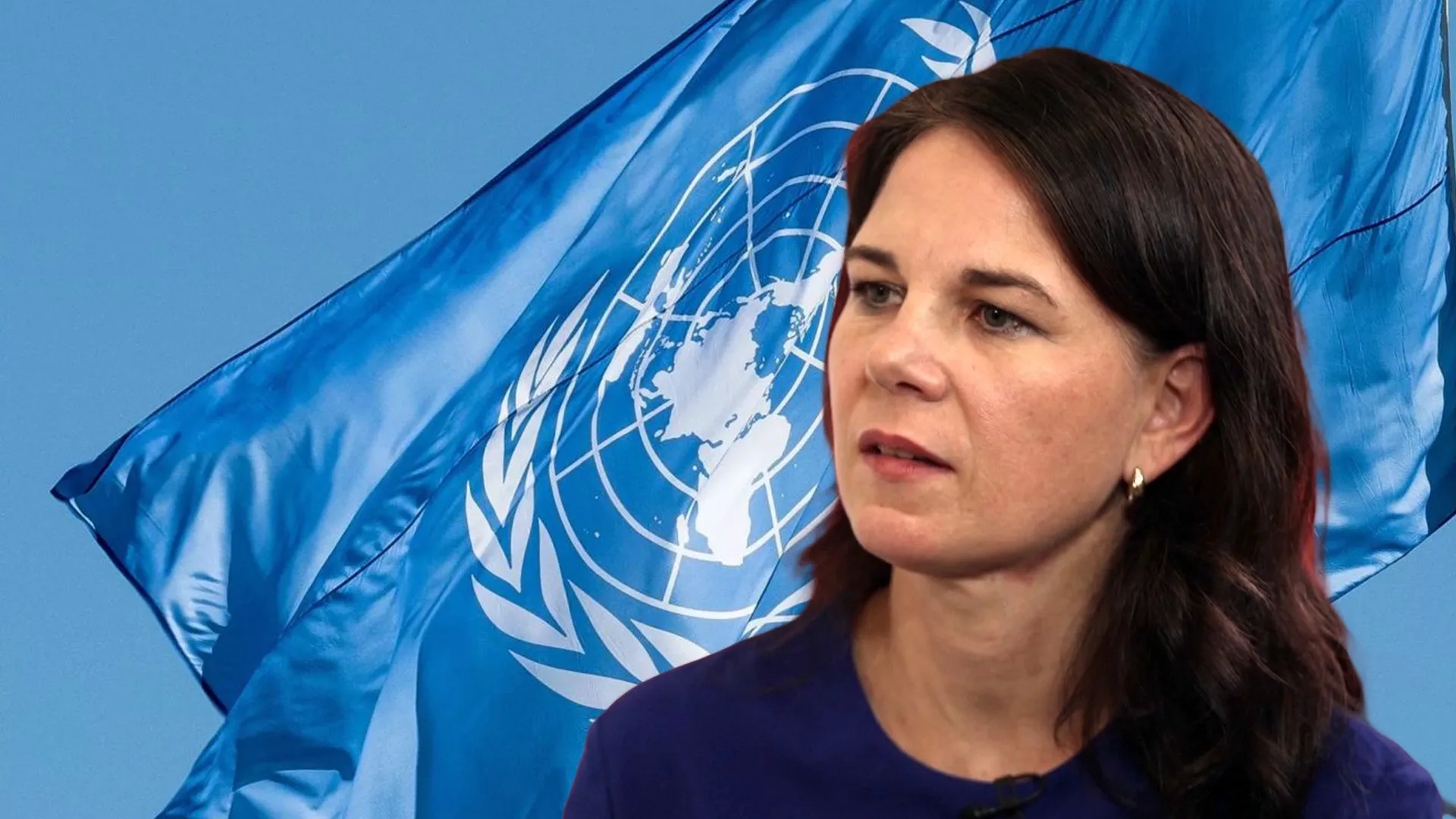
As global crises multiply and trust in international institutions erodes, the United Nations faces growing questions about its relevance and authority. Thirty years after pledges to end hunger and reduce inequality, progress is stalling, wars are spreading, and UN Security Council vetoes are paralysing action.
In this episode of Talk to Al Jazeera, UN General Assembly President Annalena Baerbock reflects on the UN’s credibility, the limits of the UNSC, and whether a more assertive UNGA can drive reform before the 2030 Sustainable Development Goals deadline.
US President Donald Trump and his allies have defended the US attacks on Venezuela and the removal of President Nicolas Maduro from power amid widespread condemnation that the actions violate international law.
Trump told reporters on Saturday that Maduro was “captured” after US military strikes on the Venezuelan capital, Caracas, for carrying out a purported “campaign of deadly narco-terrorism against the United States”.
Recommended Stories
list of 3 itemsend of list
He said the US government would “run” the South American country during a political transition, promising the Venezuelan people that they would become “rich, independent and safe”.
But Claire Finkelstein, a professor of law at the University of Pennsylvania, has rejected the Trump administration’s arguments in defence of the attacks and removal of Maduro, as well as its plans to exert control over Venezuela.
“I don’t think there’s any basis under international law for the action that occurred overnight by the US government,” Finkelstein told Al Jazeera, describing the attacks as an “illegal use of force [and] a violation of Venezuelan sovereignty”.
“Maduro has personal jurisdiction rights, so not only is it a violation of Venezuelan sovereignty, but it’s a violation of his personal, international rights,” she said.
Numerous statutes of international law – including the UN Charter – prohibit states from attacking another country without provocation.
“All Members shall refrain in their international relations from the threat or use of force against the territorial integrity or political independence of any state, or in any other manner inconsistent with the Purposes of the United Nations,” the UN Charter says.
The US actions came amid a months-long pressure campaign against Maduro, whom the Trump administration accused, without evidence, of being linked to drug traffickers.
Washington had carried out deadly strikes on alleged drug-smuggling boats in the Caribbean, seized vessels carrying oil off the Venezuelan coast, sanctioned members of Maduro’s family, and threatened to launch attacks on the country’s soil.
“Nicolas Maduro wasn’t just an illegitimate dictator, he also ran a vast drug-trafficking operation,” US Congressman Tom Cotton, a top Trump ally, wrote on social media on Saturday, welcoming the moves against the Venezuelan leader.
Before he was seized, Maduro had said he was open to dialogue with the US on drug trafficking. He also had accused the Trump administration of seeking to depose him and seize control of Venezuela’s vast oil reserves.
‘No imminent threat’
Democratic Party lawmakers in the US had been demanding answers from the Trump administration about its aims in Venezuela, accusing the Republican president of seeking to unlawfully carry out acts of war without congressional oversight.
Under the US Constitution, only Congress has the power to declare war.
But that authority has been weakened over the last several decades, with the US carrying out military strikes around the world during its so-called “war on terror” based on loosely-interpreted congressional authorisations.
On Saturday, Gregory Meeks, the top Democrat on the House of Representatives Foreign Affairs Committee, said that, despite the Trump administration’s claims, “there was no imminent threat to the United States” from Venezuela, “certainly not one that justified military action without congressional authorization”.
“These actions violate both US and international law and, by Trump’s own admission, this is not a limited operation,” Meeks said in a statement shared on social media.
This was echoed by the University of Pennsylvania’s Finkelstein, who said there was no “immediate threat” to the US that would justify the executive branch carrying out attacks without notifying Congress.
“It was an act of war against Venezuela, and we did not have the kind of self-defence justification that would normally justify bypassing Congress,” she told Al Jazeera.
“Even if you believe the US is at grave danger because of drug trafficking, there isn’t the kind of imminence there that would justify the president moving unilaterally and not turning to Congress and trying to get them on board.”
Finkelstein also rejected Trump’s plans for the US to “run” Venezuela as “incredibly illegal”.
“States have sovereignty rights, and you cannot just invade them and take them over,” she said.
“Even if Maduro were to fall of his own accord and we had not brought that about, we don’t have the right to go in and start running their government,” Finkelstein said.
“Democracy is premised on the idea that the people are sovereign and the people choose their own leaders, and that’s something we should be promoting in Latin and South America, not trying to undermine.”
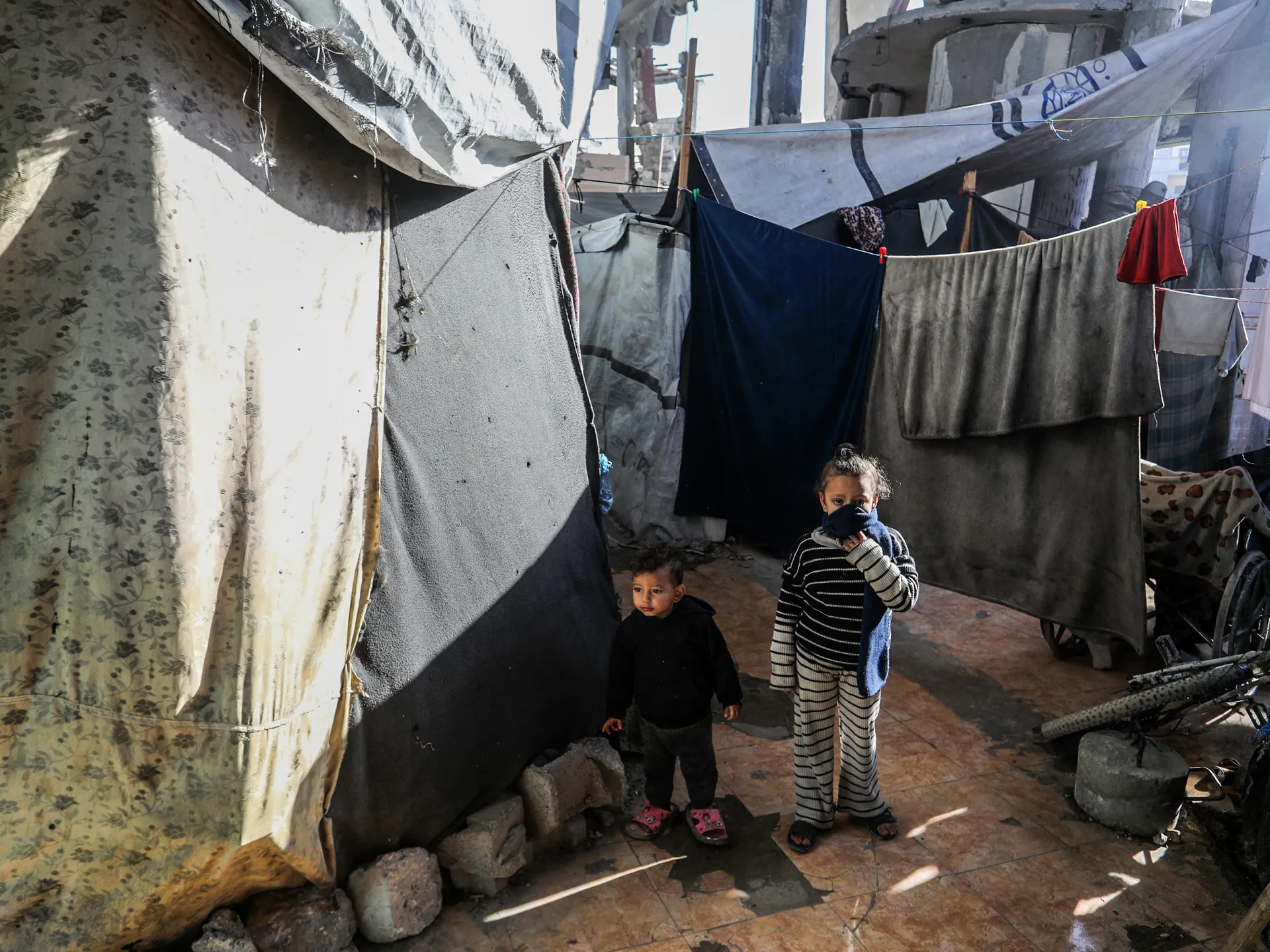
The winter has made a life of relentless suffering worse for the people of Gaza, particularly for the wounded, children and elderly, with hundreds of thousands in the Palestinian territory displaced by Israel’s genocidal war desperately trying to survive on the scant humanitarian aid Israel is allowing in.
Nine-year-old Assad al-Madhna lost his left hand when Israeli fire hit a group of children playing in al-Zuwayda in central Gaza. The same attack also wounded him in the leg.
Recommended Stories
list of 4 itemsend of list
Now, as winter envelops the besieged enclave, Assad’s pain increases as the metal rods and pins holding his leg in place stiffen in the cold, making every step slower and agonising.
“I can’t play with other children as in winter, my legs and hands hurt a lot,” he told Al Jazeera.
“I haven’t received any prosthetic, struggle to change my clothes, and going to the toilet in this cold is a real challenge,” he said, adding: “Without my parents, I can’t manage it. At night, the severe cold becomes unbearable.”
A truce between Israel and Hamas since October 10 has been fragile, a ceasefire in name only, according to Palestinians and rights groups, after two years of destructive war.
Despite the truce, Palestinians in crowded camps – often in damaged tents and surrounded by mud – still face severe humanitarian conditions, trying to survive with few or no resources, making life the hardest for the most vulnerable.
‘No heating at all’
Eighteen-year-old Waed Murad survived an attack that wiped out her entire family – seven relatives in one strike.
She now lives with a life-altering injury, and when the temperatures drop, her nerve pain intensifies, sleep slips away, and the little recovery she had is threatened.
“I can’t keep myself warm because of the severe cold with the metal bars and pins always freezing,” she told Al Jazeera.
“I am living in a tent with no heating at all. Every time I hear the wind, I feel the pain will get worse, as the cold will affect the metal fixation devices even more.”
In the enclave, temperatures at night have ranged between eight and 12 degrees Celsius (46 and 53 degrees Fahrenheit) in recent days.
Nearly 80 percent of buildings in the Gaza Strip have been destroyed or damaged by the war, according to United Nations data.
About 1.5 million of Gaza’s 2.2 million residents have lost their homes, said Amjad Shawa, director of the Palestinian NGO Network in Gaza.
Of more than 300,000 tents requested to shelter displaced people, “we have received only 60,000,” Shawa told the AFP news agency, pointing to Israeli restrictions on the delivery of humanitarian aid into the territory.
Israel slammed for banning NGOs
Meanwhile, the international community has condemned Israel’s recent announcement of a suspension of the operations of several international nongovernmental organisations in the occupied Palestinian territory.
UN Secretary-General Antonio Guterres said he was deeply concerned and called for the measure to be reversed.
“This announcement comes on top of earlier restrictions that have already delayed critical food, medical, hygiene and shelter supplies from entering Gaza.”
“This recent action will further exacerbate the humanitarian crisis facing Palestinians,” Stephane Dujarric, spokesman for the secretary-general, said in a statement.
Several countries in the Middle East and Asia called on Israel to allow “immediate, full, and unhindered” deliveries of humanitarian aid to the Gaza Strip as winter storms lash the bombarded Palestinian enclave.
In a statement on Friday, the foreign ministers of Qatar, Egypt, Jordan, Saudi Arabia, the United Arab Emirates, Turkiye, Pakistan and Indonesia warned that “deteriorating” conditions in Gaza had left nearly 1.9 million displaced Palestinians particularly vulnerable.
“Flooded camps, damaged tents, the collapse of damaged buildings, and exposure to cold temperatures coupled with malnutrition, have significantly heightened risks to civilian lives,” the statement read.
Earlier this month, Gaza experienced a similar spell of heavy rain and cold.
The weather caused at least 18 deaths due to the collapse of war-damaged buildings or exposure to cold, according to Gaza’s civil defence agency.
On December 18, the UN’s humanitarian office said 17 buildings collapsed during the storm, while 42,000 tents and makeshift shelters were fully or partially damaged.
These are the key developments from day 1,409 of Russia’s war on Ukraine.
Published On 2 Jan 20262 Jan 2026
Share
Here is where things stand on Saturday, January 3:
Fighting
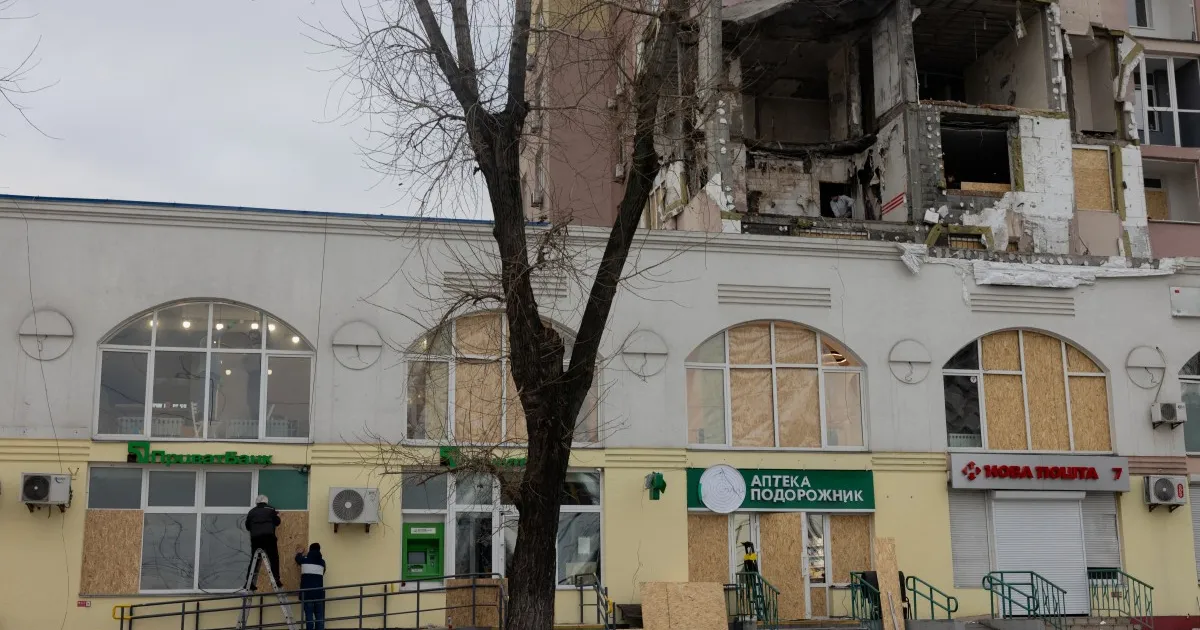
Two people were killed, including a three-year-old child, and at least 31 people were wounded in a Russian ballistic missile attack on a five-storey residential building in the centre of Ukraine’s Kharkiv, the region’s governor Oleh Syniehubov wrote on Telegram.
Russia’s Ministry of Defence denied responsibility for the attack, claiming it was caused by the detonation of Ukrainian ammunition and was meant as a distraction from a deadly attack the day before on the village of Khorly, in a Russian-occupied part of the Kherson region.
The death toll from the drone strike on a hotel and cafe in Khorly rose to 28 people, the region’s Russian-installed governor, Vladimir Saldo, told Russia’s state-run TASS news agency. Saldo also said that more than 60 people were injured in the attack. Ukraine has responded to the strike by saying it does not target civilians.
Ukraine’s Deputy Prime Minister Oleksii Kuleba said in a post on Facebook that Ukrainian authorities have decided to evacuate more than 3,000 children, along with their parents, from 44 front-line settlements in Ukraine’s Zaporizhia and Dnipropetrovsk regions due to Russian aggression.
A Ukrainian attack on the electricity grid in the Russian-occupied Zaporizhia region of Ukraine left 1,777 households without power, Russian-installed regional governor, Yevgeniy Balitsky, wrote on Telegram.
Russian forces shot down 64 Ukrainian drones overnight into Friday, Russia’s Defence Ministry said, according to TASS.
Ukrainian monitoring site DeepState reported Russian forces seized more land in the Myrnohrad and Pokrovsk areas of Ukraine’s Donetsk region, as well as in Svitle in the Ternopil region.
The Russian army captured more than 5,600 square kilometres (2,160 square miles), or nearly 1 percent, of Ukrainian territory in 2025, according to an analysis of data from the Institute for the Study of War (ISW), which works with the Critical Threats Project.
According to the AFP news agency, the land seized by Russian forces last year was more than in the previous two years combined, but less than the 60,000sq km (23,166sq miles) Russia took in 2022, the first year of its all-out invasion.
Politics and diplomacy
Ukrainian President Volodymyr Zelenskyy named Ukraine’s military intelligence chief Kyrylo Budanov as his presidential chief of staff on Friday, in the latest Ukrainian leadership shake-up.
Zelenskyy also nominated Mykhailo Fedorov, a drone and digitalisation specialist who has served as first deputy prime minister and minister of digital transformation, as defence minister. Fedorov, whose appointment must be approved by parliament, will replace Denys Shmyhal, a former prime minister who was being offered a new government post.
RecepTayyip Erdogan, the president of Turkiye, told reporters in Istanbul that he would hold a phone call with United States President Donald Trump on Monday to discuss peace efforts. Turkiye has been hosting intermittent peace talks during Russia’s war on Ukraine.
Erdogan also said Turkiye’s Foreign Minister Hakan Fidan will attend a meeting of the “coalition of the willing”, a group of nations backing Ukraine, in Paris, in the coming days.
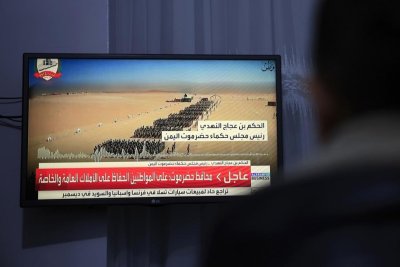
A news broadcast shows the latest developments in the conflict between Saudi-backed Yemeni government forces and southern separatists in Sanaa, Yemen, on Friday. Photo by Yahya Arhab/EPA
Jan. 2 (UPI) — Saudi Arabia’s military struck United Arab Emirates-backed separatists in Yemen on Friday, prompting an unofficial declaration of “war” from the Southern Transitional Council.
Representatives of the separatist Southern Transitional Council in Yemen’s Hadramout Governorate accused Saudi forces of bombing their fighters while they were near Yemen’s border with Saudi Arabia.
They say a state of war exists in the province, but no casualty reports were provided for the military strike that involved Saudi ground and air forces.
The Hadramout province is situated in eastern Yemen and about 500 miles east of Yemen’s capital city of Sanaa, with Saudi Arabia to its north and the Gulf of Aden to its south.
Hadramout Gov. Salem al-Khanbashi dismissed the STC’s war declaration and said the military operation by Saudi Arabia sought to “peacefully and systematically” regain military bases controlled by the STC,Al Jazeera reported.
The UAE and Saudi Arabia have become involved in the internal conflict in Yemen, with the Saudis backing the Yemeni government and the UAE the STC.
Saudi and Yemeni officials have accused the UAE of arming STC separatists and encouraging them to seize parts of southern Yemen’s Hadramout and al-Mahra provinces.
STC representatives have said they intend to hold a voter referendum in two years to decide if an official declaration of an independent state will be delivered.
Yemen already is in a deadly civil war that started in 2014, and the STC’s planned vote could make the fighting more frequent and intense and worsen conditions in what is considered one of the world’s most impoverished nations.
The civil war has created famine conditions within the nation that already has experienced many deadly conflicts since the civil war began.
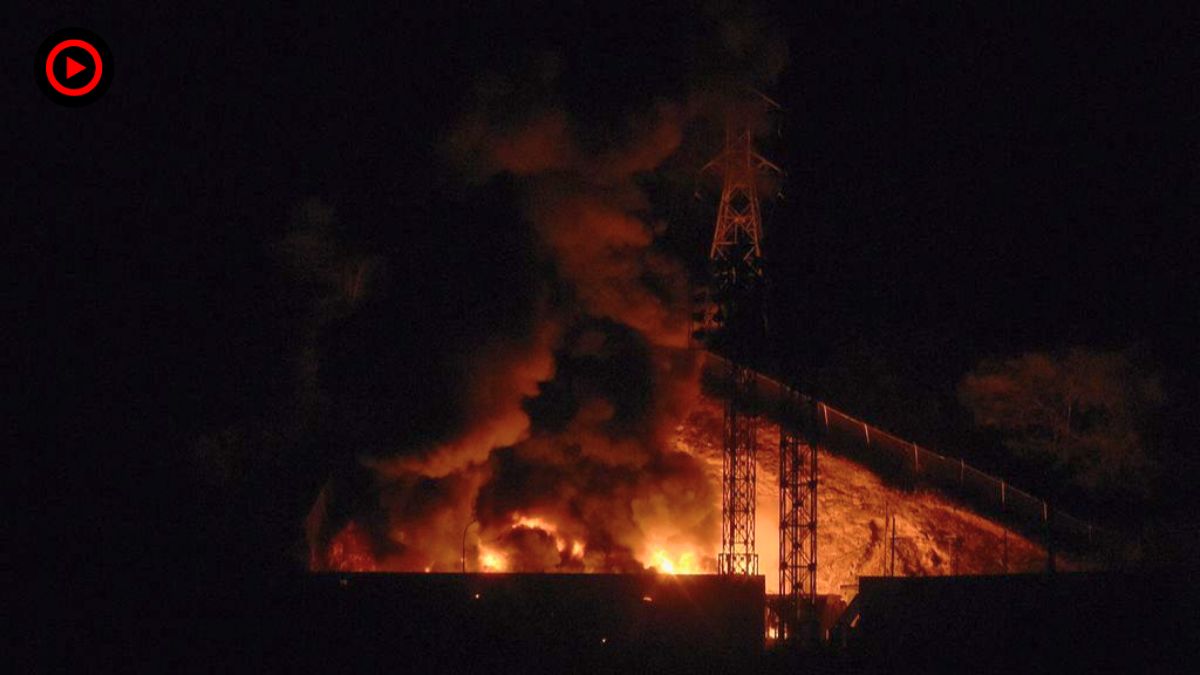
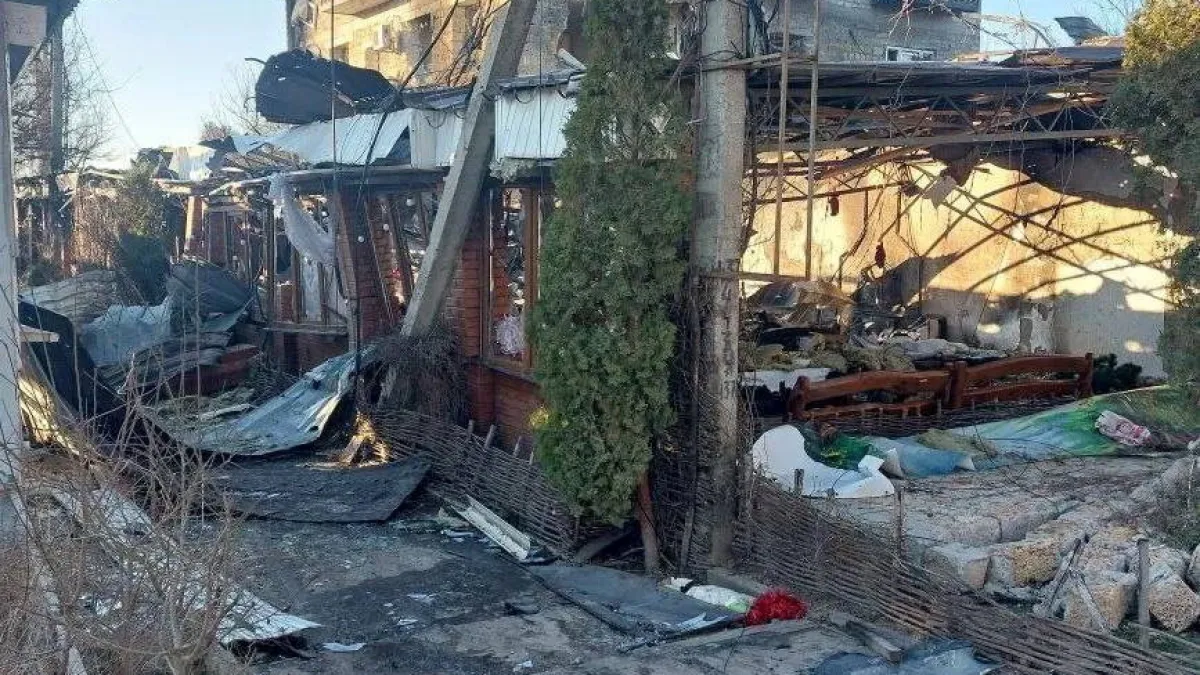
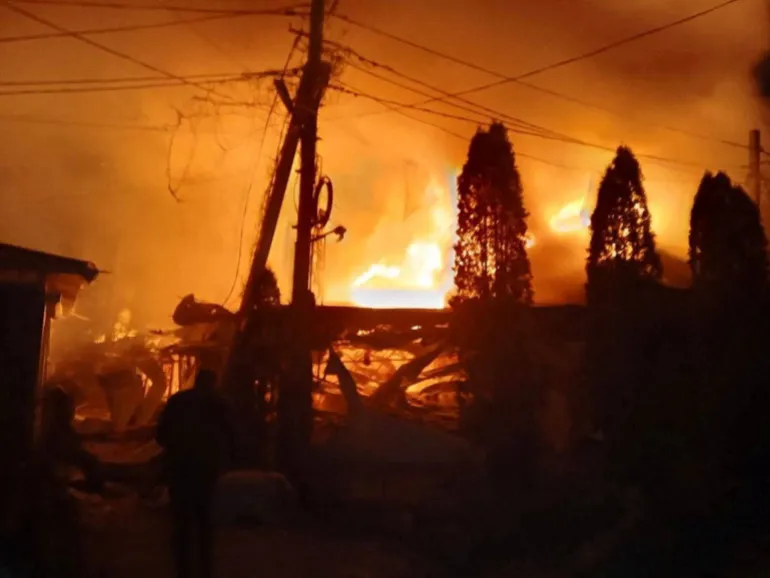
Russia has accused Ukraine of killing at least 24 people, including a child, in a drone attack on a hotel and cafe where New Year celebrations were taking place in a Russian-controlled part of Ukraine’s southern Kherson region.
Vladimir Saldo, the Russian-installed governor of the region, first made the claim in a statement on Telegram before Russia’s Ministry of Foreign Affairs, and senior politicians later accused Ukraine of carrying out “a terrorist attack”.
Recommended Stories
list of 3 itemsend of list
Saldo also published photos of what he wrote was the aftermath of the attack, which Al Jazeera has not been able to verify.
At least one person’s body was visible in the images beneath a white sheet.
The building showed signs that a fierce fire had raged, and there were what appeared to be bloodstains on the ground.
In the statement, Saldo said three Ukrainian drones had struck the site of New Year celebrations in Khorly, a coastal village, in what he said was a “deliberate strike” against civilians. He said many people were burned alive.
Russia’s Foreign Ministry said initial information indicated that 24 people had been killed, and that 50 people had been injured.
“There is no doubt that the attack was planned in advance, with drones deliberately targeting areas where civilians had gathered to celebrate New Year’s Eve,” the ministry said in a statement, calling the attack “a war crime”.
Flames and smoke rise from a fire following what Russian-installed authorities described as an overnight Ukrainian drone attack on a hotel and cafe [Handout/Governor of Kherson on Telegram via Reuters]
Russian Foreign Ministry spokeswoman Maria Zakharova said in a statement on Telegram that Ukraine’s backers in the West were ultimately to blame.
Senior politicians, including the speakers of both houses of Russia’s parliament, condemned Kyiv.
Kherson is one of the four regions in Ukraine that Russia claimed as its own in 2022, a move Kyiv and most Western countries denounced as an illegal land grab.
Ukraine’s military did not comment on Moscow’s claim, but it said it had hit Russia’s Ilsky oil refinery in the Krasnodar region overnight, adding that the results of the attack were still being confirmed.
In a statement on Telegram, the military also said it hit the Almetyevsk oil facility in Russia’s Tatarstan region.
The Almetyevsk facility is more than 965km (600 miles) from the nearest part of Ukraine, and even further from the nearest territory currently controlled by Kyiv.
Russia releases video of ‘attack’ on Putin’s residence
On Tuesday, Moscow claimed that Ukraine launched a long-range drone attack against one of President Vladimir Putin’s official residences in northwestern Russia, which Kyiv has denounced as a “lie”.
Russia’s Defence Ministry released a video on Wednesday of a downed drone it said was involved in the attack.
The night-time clip showed a man in camouflage, a helmet and a Kevlar vest standing near a damaged drone lying in snow.
The man, with his face covered, talks about the drone. Neither the man nor the Defence Ministry provided any location or date.
The video and claims could not be independently verified.
Peace talks
Kyiv has called the allegations of an attack on Putin’s residence a ruse to derail ongoing peace negotiations, which have ramped up in recent weeks on both sides of the Atlantic.
In his New Year’s address, President Volodymyr Zelenskyy said a peace deal was “90 percent ready” but warned that the remaining 10 percent, believed to include key sticking points such as territory, would “determine the fate of peace, the fate of Ukraine and Europe, how people will live”.
Trump’s special envoy Steve Witkoff said on Wednesday that he, Secretary of State Marco Rubio and Trump’s son-in-law Jared Kushner had had a “productive call” with the national security advisers of the United Kingdom, France, Germany and Ukraine to discuss the “European peace process”.
“We focused on how to move the discussions forward in a practical way on behalf of [Trump’s] peace process, including strengthening security guarantees and developing effective deconfliction mechanisms to help end the war and ensure it does not restart,” Witkoff said in a post on X.
Lead Ukrainian negotiator Rustem Umerov also reaffirmed that European and Ukrainian officials plan to meet on Saturday, while Zelenskyy is due to hold talks next week with European leaders.
Russia’s attacks on Ukraine
Elsewhere in Ukraine, Russia attacked the Odesa region overnight, targeting civilian infrastructure in several waves of drone attacks, according to regional head Oleh Kiper.
In a post on Telegram, Kiper said a two-storey residential building was damaged and that a drone hit an apartment on the 17th floor of a high-rise building without detonating. No casualties were reported.
In its daily report, the air force said air defence forces had downed or suppressed 176 of 205 drones targeting Ukraine overnight.
It said 24 drone hits were recorded at 15 locations, and the attack was ongoing.
An Al Jazeera Arabic investigation obtains recordings of Suheil al-Hassan discussing Israeli support, regrouping efforts.
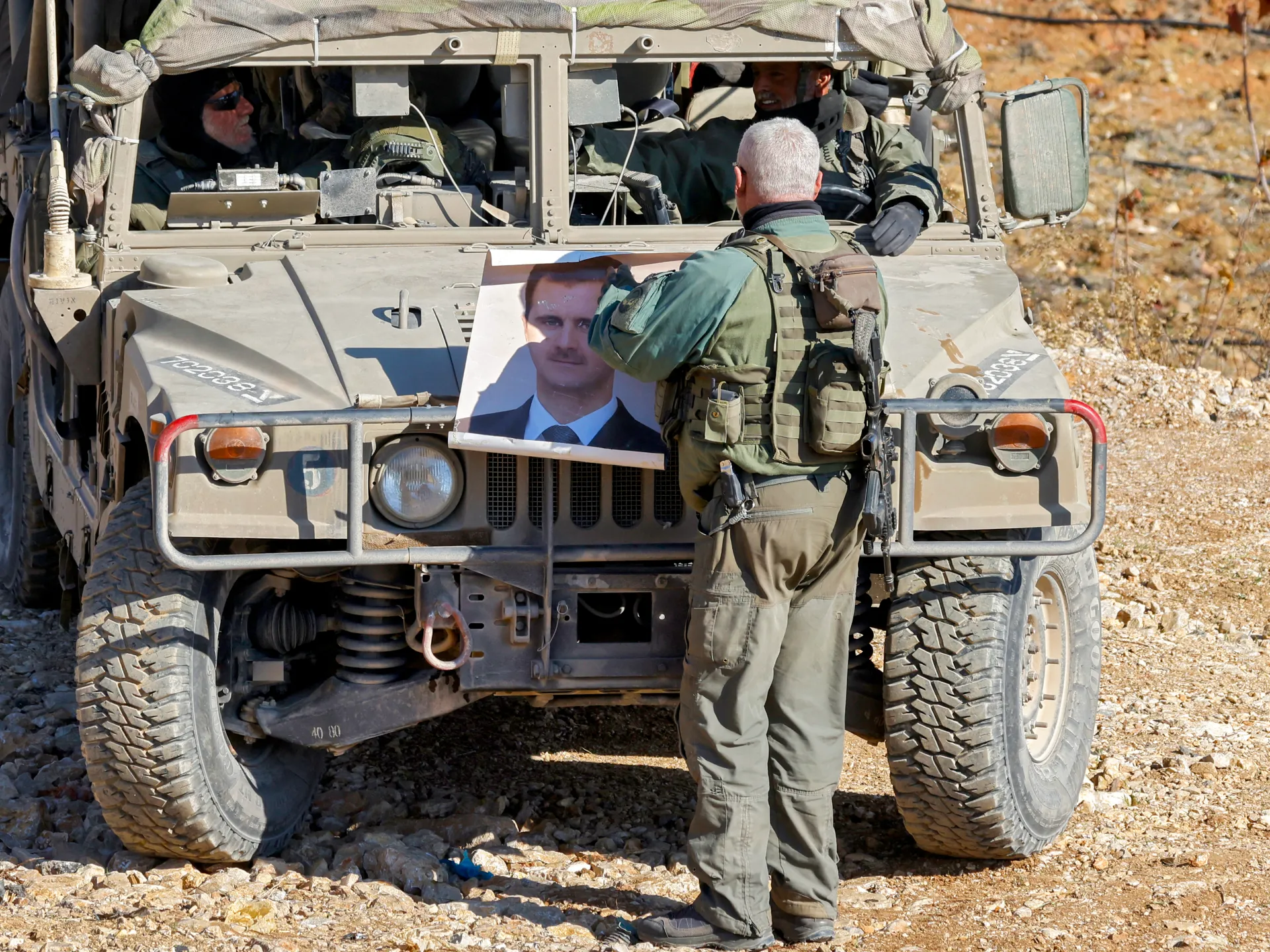
An Al Jazeera Arabic investigation has uncovered a plot by the aides of ousted leader Bashar al-Assad to destabilise Syria, featuring leaked recordings that suggest coordination with Israel.
The revelations, set to be broadcast on the programme Al-Mutahari, or The Investigator, on Wednesday evening, are based on more than 74 hours of leaked audio recordings and hundreds of pages of documents obtained in the investigation.
The leaks implicate al-Assad’s high-ranking officers, specifically Suheil al-Hassan, the brigadier-general who commanded the notorious Quwwat al-Nimr (Tiger Forces), an elite unit in the former regime’s army.
‘Israel will stand with you’
The investigation uncovers attempts by these officers to regroup, gather funding, and secure weapons to undermine stability in the country following the ousting of al-Assad.
In one of the most significant recordings, a source — identified in the leaks as a hacker or intermediary — is heard assuring al-Hassan of Israeli backing.
“The State of Israel, with all its capabilities, will stand with you,” the source tells al-Hassan.
“There is a level higher than me, Mr Rami is the one who coordinates,” al-Hassan is heard saying. “And I have dangerous intelligence information.”
It has been a year since a lightning offensive by allied rebel groups, led by current President Ahmed al-Sharaa, ended the Assad dynasty’s 54-year reign, forcing Bashar al-Assad into Russian exile.
Yet, as the regime collapsed, Israel seized on the instability by significantly escalating its military campaign in Syria, targeting much of its neighbour’s military infrastructure, including main airports, air defence systems, fighter planes, and other strategic facilities, as well as occupying more of Syria’s Golan Heights, and bombing the capital, Damascus, in July.
Over the past year, Israel has launched more than 600 air, drone or artillery attacks across Syria, averaging nearly two a day, according to a tally by the Armed Conflict Location and Event Data (ACLED).
‘The feeling of the coast’
The recordings also feature Ghiath Dalla, a former brigadier-general in al-Assad’s forces, who appears to validate al-Hassan’s position as a representative of the regime’s traditional strongholds.
“My Master, Suheil the Tiger, spoke the feeling of the whole mountain and the whole coast,” Dalla is heard saying, referring to the coastal and mountainous regions that were long considered the heartland of support for the al-Assad family.
The leaked conversations also capture al-Hassan expressing disdain for current developments, referred to as “the flood”.
“Our prayers for you all are that this foolishness, this evil, and this blackness called the flood ends,” al-Hassan says in the recording.
Investigation to air
The full extent of the plot will be detailed in the upcoming episode of The Investigator, hosted by Jamal el-Maliki.
Parts of the leaks are airing on Al Jazeera’s platforms on Wednesday, with the complete investigation scheduled for release in mid-January.
These are the key developments from day 1,406 of Russia’s war on Ukraine.
Published On 31 Dec 202531 Dec 2025
Share
Here is where things stand on Wednesday, December 31:
Fighting
Russian forces shelled the town of Kostiantynivka in Ukraine’s Donetsk region, killing one person, an official said. The deadly attack came a day after an attack in Druzhkivka killed another person and wounded four, according to the Ukrinform news agency.
Russian forces also launched waves of attacks on the Black Sea ports of Pivdennyi and Chornomorsk in Ukraine’s Odesa region, hitting two Panama-flagged civilian vessels – Emmakris III and Captain Karam – as they approached to load wheat, the Ukrainian navy said.
Ukrainian Deputy Prime Minister Oleksii Kuleba said that oil storage tanks were also hit in the port attacks.
Authorities in Ukraine’s northern Chernihiv region introduced a mandatory evacuation order for the residents of 14 border villages in four districts. The order will affect some 300 people who still live in the Novhorod-Siverskyi, Semenivka, Snovsk, and Horodnya communities, which have been experiencing daily shelling, an official said.
Ukrainian Deputy Minister of Energy Olha Yukhymchuk said that 75,000 households in Chernihiv remain without electricity following Russian attacks on energy infrastructure in the region. There were also settlements in the Kharkiv and Sumy regions that were fully or partially without electricity, she said.
Yukhymchuk also said that repair work had been completed on transmission lines near the Zaporizhzhia nuclear power plant to ensure “stable and reliable power supply to the station in the event of damage or shutdown of the Dniprovska overhead line due to” Russian shelling.
Russia’s Ministry of Defence said it had taken control of two more settlements in eastern Ukraine. It identified them as the village of Lukianivske in the Zaporizhia region and the settlement of Bohuslavka in the Kharkiv region.
Russian authorities said that a Ukrainian drone attack on the Russian Black Sea port of Tuapse damaged port infrastructure and a gas pipeline in a residential area there. The regional administration said no injuries were reported.
Other Ukrainian drone attacks on Russia’s Belgorod region killed a woman and wounded four other people, local authorities said.
Alleged attack on Putin’s residence
Kremlin spokesman Dmitry Peskov said that Russia will “toughen” its negotiating position in talks on a deal to end the war in Ukraine as a “diplomatic consequence” of an alleged attempted drone attack on Russian President Vladimir Putin’s residence in northwestern Russia’s Novgorod on Sunday.
Peskov said the attack, which Ukraine denies, was aimed at collapsing the peace talks and accused Western media of playing along with Kyiv’s denial.
Ukraine has dismissed the Russian claim as lies aimed at justifying additional attacks against Kyiv and prolonging the war.
Ukrainian Minister of Foreign Affairs Andrii Sybiha said Russia had not provided any plausible evidence of its accusations. “And they won’t. Because there’s none. No such attack happened,” Sybiha said on X.
Ukrainian President Volodymyr Zelenskyy slammed countries, including India and the United Arab Emirates, that have condemned the alleged attack, which he said “didn’t even happen”. He called the moves “confusing and unpleasant”.
China said “dialogue and negotiation” remain the only “viable way out of the Ukraine crisis”, when asked for a comment on the alleged attack on Putin’s residence.
Lin Jian, a spokesperson for China’s Ministry of Foreign Affairs, also called on “relevant parties to follow the principles of no expansion of the battlefield, no escalation of fighting and no provocation by any party”, to work towards the de-escalation of the situation, and to “accumulate conditions for the political settlement of the crisis”.
The Institute for the Study of War, a Washington, DC-based think tank, said that its analysts found that the “circumstances” of the alleged attack did not fit the “pattern of observed evidence” usually seen “when Ukrainian forces conduct strikes into Russia”.
The US ambassador to NATO, Matthew Whitaker, cast doubt on Russia’s accusation, saying he wants to see US intelligence on the incident. “It is unclear whether it actually happened,” Whitaker told Fox Business’s Varney & Co.
The German government also said it shares Ukraine’s concern that Russian allegations of the attack could be used as a pretext for further escalation of Moscow’s war.
Diplomacy
Zelenskyy said that Ukraine and the Coalition of the Willing group of nations backing Kyiv plan to hold their next meetings at the start of January. Zelenskyy said that the countries’ national security advisers would meet in Ukraine on January 3, and with the leaders in France on January 6.
He also told reporters that Kyiv was discussing with US President Donald Trump the possible presence of US troops in Ukraine as part of security guarantees.
“Of course, we are discussing this with President Trump and with representatives of the [Western] coalition [supporting Kyiv]. We want this. We would like this. This would be a strong position of the security guarantees,” the Ukrainian president said.
Polish Prime Minister Donald Tusk told officials that there is reason to hope for peace in Ukraine quite soon. “Peace is on the horizon; there is no doubt that things have happened that give grounds for hope that this war can end, and quite quickly, but it is still a hope, far from 100 percent certain,” he said.
Tusk said security guarantees offered to Kyiv by the US were a reason to hope the conflict could end soon, but that Kyiv would need to compromise on territorial issues.
The US removed sanctions on Alexandra Buriko, the former chief financial officer of Russia’s state-owned Sberbank, according to the US Treasury Department.
Buriko was among a group of senior executives and board members who resigned from Western-sanctioned Sberbank shortly after Russia’s full-scale invasion of Ukraine in 2022. She sued the Treasury Department in a Washington federal court in December 2024, arguing she had severed ties with Sberbank days after it was sanctioned and that her continued inclusion on the sanctioned list was unlawful.
Weapons
Romania’s Ministry of Foreign Affairs announced that the country would spend 50 million euros ($58m) to support a European initiative to buy weapons made by US companies for Ukraine, known as the Priority Ukraine Requirements List (PURL).
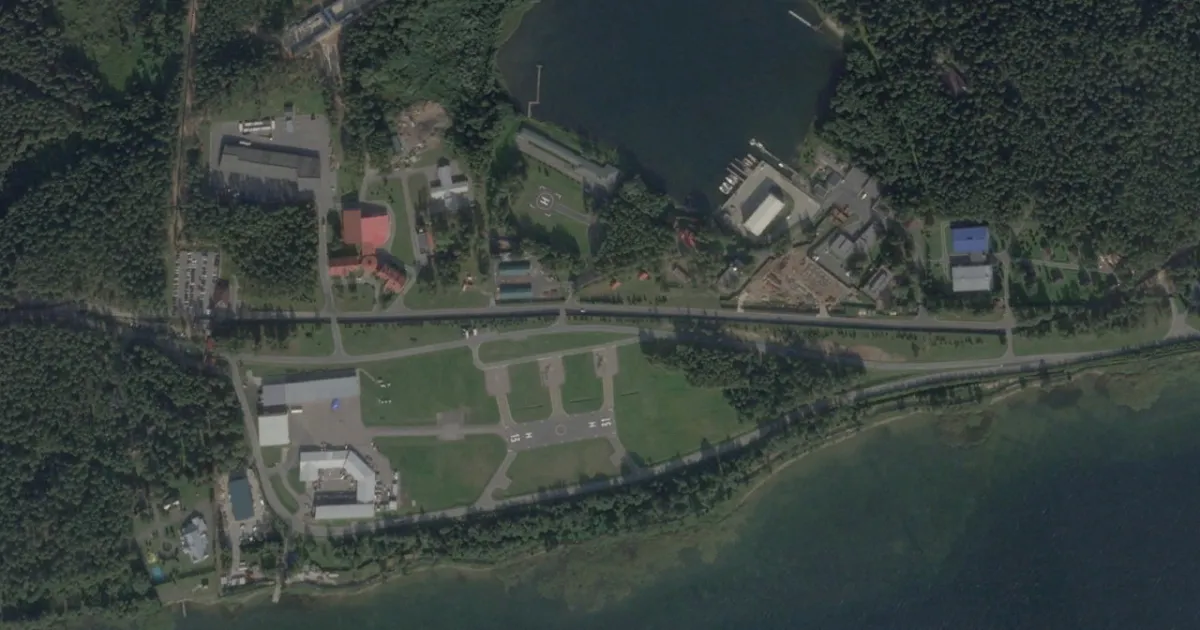
Belarus released a video of what it said was the deployment on its territory of the Russian nuclear-capable hypersonic Oreshnik missile system, a development meant to bolster Moscow’s ability to strike targets across Europe in the event of a war.
Russia has threatened to retaliate against Ukraine after alleging that nearly 100 drones had targeted one of Russian President Vladimir Putin’s residences.
The threat on Monday was made as United States President Donald Trump tries to broker a peace agreement to end the war in Ukraine, which will enter its fifth year in February.
Recommended Stories
list of 4 itemsend of list
What has Russia claimed?
On Monday, Russian Foreign Minister Sergey Lavrov alleged that Ukraine had launched the attack on the Valdai residence, one of Putin’s residences in the Novgorod region in northwestern Russia. The property is 360km (225 miles) north of Moscow.
Lavrov told reporters that Ukraine had launched 91 drones towards the residence. He added that air defence systems shot down the drones and no one was injured.
The Russian Ministry of Defence said 49 of the drones were shot down over the Bryansk region, one was shot down over the Smolensk region and 41 were shot down over the Novgorod region while en route.
“Such reckless actions will not go unanswered,” Lavrov said. “The targets for retaliatory strikes and the timing of their implementation by the Russian armed forces have been determined.”
Russian officials accused Ukraine and its president, Volodymyr Zelenskyy, of carrying out the strike to derail the prospects of a peace agreement.
In an apparent reference to Zelenskyy, Russian Security Council Deputy Chairman Dmitry Medvedev wrote on X: “The stinking Kiev b**tard is trying to derail the settlement of the conflict. He wants war. Well, now at least he’ll have to stay in hiding for the rest of his worthless life.”
Kremlin foreign policy aide Yury Ushakov said the strike took place on Sunday “practically immediately after” talks were held in Florida between Trump and Zelenskyy on ending Russia’s war on Ukraine.
After that meeting, Trump and Zelenskyy had voiced optimism, saying a peace deal between Russia and Ukraine was “close”.
Putin has not publicly commented on the attack yet. It is unclear where Putin was at the time of the attack, but he was holding meetings in the Kremlin on Saturday and Monday.
How has Ukraine responded?
Zelenskyy has strongly denied Russia’s allegation that Ukraine attacked one of Putin’s residences.
“Russia is at it again, using dangerous statements to undermine all achievements of our shared diplomatic efforts with President Trump’s team,” Zelenskyy wrote in an X post on Monday.
“This alleged ‘residence strike’ story is a complete fabrication intended to justify additional attacks against Ukraine, including Kyiv, as well as Russia’s own refusal to take necessary steps to end the war.”
Ukrainian Foreign Minister Andrii Sybiha also condemned Moscow’s claims, saying they were designed to undermine the negotiations.
In a post on X, Sybiha said the claim was intended “to create a pretext and false justification for Russia’s further attacks against Ukraine, as well as to undermine and impede the peace process”.
In another post on Tuesday, Sybiha wrote: “Almost a day passed and Russia still hasn’t provided any plausible evidence to its accusations of Ukraine’s alleged ‘attack on Putin’s residence.’ And they won’t. Because there’s none. No such attack happened.”
How has Trump reacted?
Trump appeared to accept the Russian version of events on Monday when he told reporters: “It’s one thing to be offensive. It’s another thing to attack his house. It’s not the right time to do any of that. And I learned about it from President Putin today. I was very angry about it.”
But when reporters asked Trump if US intelligence agencies had evidence of the alleged attack, Trump said: “We’ll find out.”
Congressman Don Bacon, a member of Trump’s Republican Party, criticised the president for accepting the Russian account of events without assessing the facts.
“President Trump and his team should get the facts first before assuming blame. Putin is a well known boldface liar,” Bacon wrote in an X post.
How have other world leaders reacted?
Like Trump, other leaders appeared to accept the Russian allegations.
In a statement released on Monday, the United Arab Emirates Ministry of Foreign Affairs wrote: “The United Arab Emirates has strongly condemned the attempt to target the residence of His Excellency Vladimir Putin, President of the Russian Federation, and denounced this deplorable attack and the threat it poses to security and stability.”
Indian Prime Minister Narendra Modi wrote in an X post on Tuesday: “Deeply concerned by reports of the targeting of the residence of the President of the Russian Federation.”
Modi added that the ongoing diplomatic engagement being led by the US is the “most viable path” towards achieving peace. “We urge all concerned to remain focused on these efforts and to avoid any actions that could undermine them.”
Pakistani Prime Minister Shehbaz Sharif also condemned the alleged attack.
“Pakistan condemns the reported targeting of the residence of His Excellency Vladimir Putin, President of the Russian Federation. Such a heinous act constitutes a grave threat to peace, security, and stability, particularly at a time when efforts aimed at peace are underway,” Sharif wrote on X.
“Pakistan expresses its solidarity with the President of the Russian Federation, and with the government and people of Russia.”
Have Putin’s residences previously been attacked?
Russia has made previous claims of Ukrainian attacks on Putin’s residences, including on the Kremlin, Putin’s official residence and main workplace.
In May 2023, Moscow alleged that Ukraine had deployed two drones to attack Putin’s residence in the Kremlin citadel but said its forces had disabled the drones. Kyiv denied any involvement.
On December 25, 2024, Russia alleged that it had intercepted and destroyed a Ukrainian drone also targeting the Kremlin. Kyiv again denied responsibility.
Conversely, Ukraine has alleged that Russia has attacked Kyiv and other government buildings in Ukraine.
In September, the Ukrainian military said a Russian drone attack damaged a government building in Kyiv that is home to Ukraine’s cabinet. Plumes of smoke were seen emerging from the building. Russia said it had targeted Ukrainian military infrastructure only.
What has Russia now threatened to do?
While Russia has not outright threatened to end the peace talks, Moscow said it would realign its position in the talks.
“The diplomatic consequence will be to toughen the negotiating position of the Russian Federation,” Kremlin spokesman Dmitry Peskov told reporters on Tuesday.
Russian Ministry of Foreign Affairs spokesperson Maria Zakharova warned that Moscow’s response “would not be diplomatic”. Indeed, it has warned that it plans to hit back militarily but has given no details of how or when it might do this.
Will this derail the US-led peace talks?
Speaking to reporters after his “terrific” meeting with Zelenskyy on Sunday at his Mar-a-Lago residence in Palm Beach, Florida, Trump told reporters that Moscow and Kyiv were “closer than ever” to a peace deal.
But Trump has made this claim several times before. In April, Trump said Russia and Ukraine were “very close to a deal” after Trump’s envoy Steve Witkoff met with Putin in Moscow.
On December 15, Trump also said Russia and Ukraine were “closer than ever” to a deal after talks in Berlin involving Zelenskyy and the leaders of France, Germany, the United Kingdom and NATO.
However, observers and analysts said the issue of territorial concessions remains a major sticking point. Trump’s 28-point peace plan for Ukraine, which he unveiled in November, involved Ukraine ceding large amounts of land that Russia has occupied during nearly four years of war. Zelenskyy has stated on numerous occasions that this is a line Ukraine will not cross.
Most analysts are sceptical that any progress has been made on this point and said the latest accusations against Ukraine will probably have little effect. “I don’t think there is anything to derail at this point,” said Marina Miron, an analyst at King’s College London.
The peace process “is not going well due to disagreements on key issues between Ukraine and Russia”, she told Al Jazeera.
“Trump has repeatedly claimed that a peace deal is close without sustainable agreement,” Keir Giles, a Russian military expert at the London think tank Chatham House, told Al Jazeera this month.
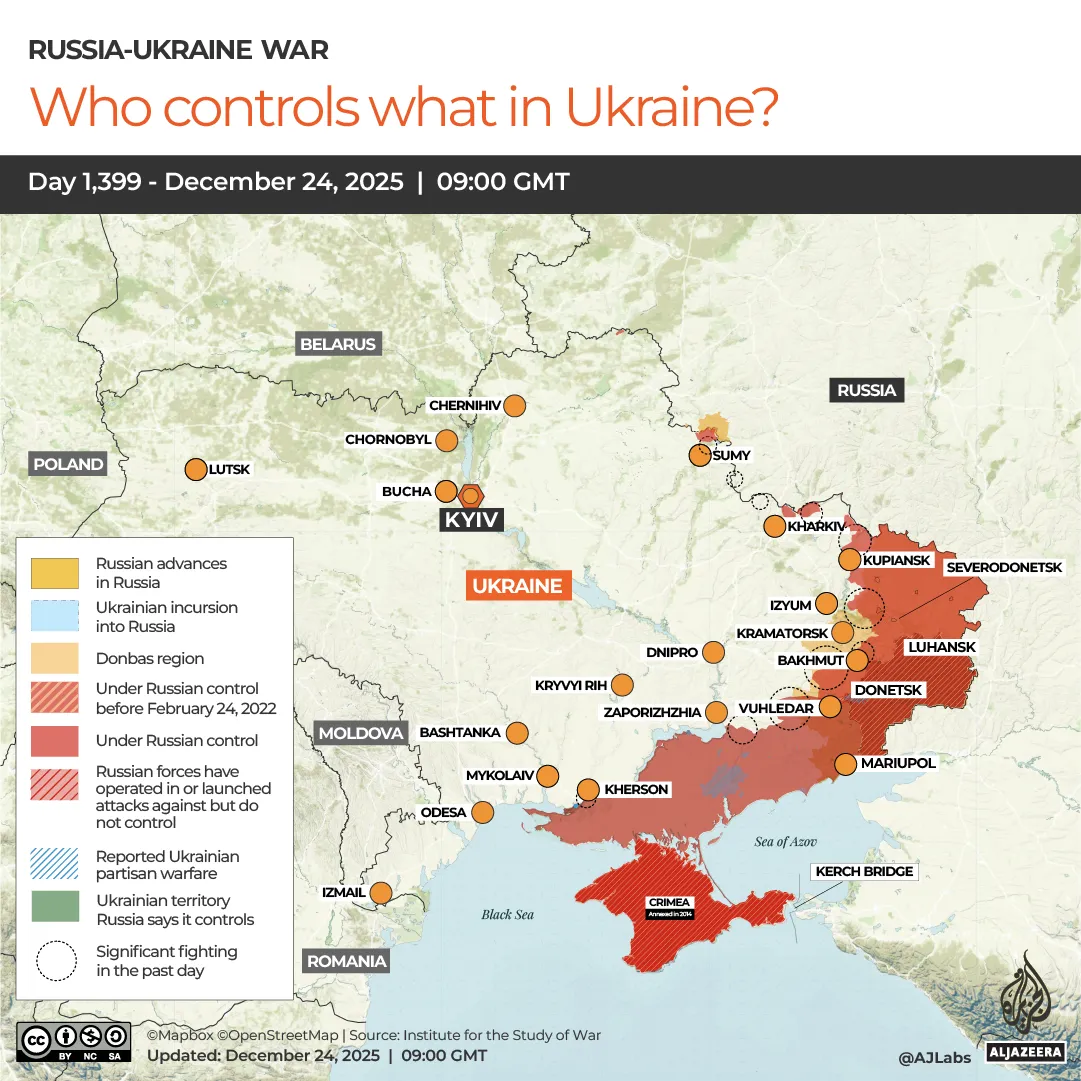
Russia has occupied nearly 20 percent of eastern Ukraine and has been slowly gaining territory as Ukraine’s military has been weakened by desertions, casualties and dwindling military aid. Moscow annexed Ukraine’s Crimean Peninsula in 2014.
(Al Jazeera)
“It’s probably impossible that Ukrainians will voluntarily withdraw from these territories unless we will also see a withdrawal of Russian forces on the other side,” Nathalie Tocci, director at the Rome-based think tank Istituto Affari Internazionali (Institute of International Affairs), told Al Jazeera.
Giles said there are still parallel negotiation tracks, however – one involving the US and Ukraine and another between Ukraine and European nations. He added, however, that there is no clear evidence that these efforts are fully coordinated or aligned in terms of strategy.
Russia says it will take a more hardline stance in negotiations on ending the war in Ukraine after claiming Kyiv tried to attack a Russian presidential residence – allegations Ukraine says Moscow has fabricated to justify further aggression.
Kremlin spokesperson Dmitry Peskov told reporters on Tuesday that the alleged drone attack on one of President Vladimir Putin’s residences in Novgorod, a region in northwestern Russia, had been intended to derail recent diplomatic efforts to negotiate an end to the conflict.
“This terrorist action is aimed at collapsing the negotiation process,” Peskov said, adding that Russia’s military knows when and how it will respond.
“The diplomatic consequence will be to toughen the negotiating position of the Russian Federation.”
Russia said on Monday that Putin’s residence had been targeted by Ukraine with 91 long-range drones that had been shot down by air defence systems with no one injured.
‘No such attack happened’
Ukraine has denied that the attack took place, calling the Russian allegations “false claims” intended to undermine the peace process.
In a post on X, Ukrainian Minister of Foreign Affairs Andrii Sybiha said Moscow had not provided any plausible evidence to back up its accusations.
“And they won’t. Because there’s none. No such attack happened,” he said on Tuesday.
Sybiha said Russia has “a long record of false claims”, calling them its “signature tactic”.
“They also often accuse others of what they themselves plan to do,” he said. “Their words should never be taken at face value.”
He added that Ukraine was ”disappointed and concerned“ by statements by the United Arab Emirates, India and Pakistan expressing concern over what he said was an attack that never happened.
Asked by reporters whether Russia could provide evidence of the drone attack, Peskov said air defences shot the drones down but the question of wreckage was for the Ministry of Defence.
He said attempts by Ukraine and Western media to deny the incident were “insane”.
No evidence has been provided by Russia. The Defence Ministry has issued only a statement that said 91 drones had been shot down while they were heading to Putin’s Novgorod residence, which is about 360km (225 miles) north of Moscow.
Speaking on Monday, United States President Donald Trump, who has spearheaded the push to broker peace in Ukraine, said he had been informed of the alleged attack in a phone call with Putin.
“I was very angry about it,” he said, adding that he would find out whether there was evidence to support the allegation.
European leaders hold talks
The dispute over the attack played out as key leaders from Europe and Canada held discussions on advancing the peace process.
After the talks, German Chancellor Friedrich Merz posted on social media that the group was “moving the peace process forward”.
“Transparency and honesty are now required from everyone – including Russia,” he wrote.
In the wake of the meeting, Polish Prime Minister Donald Tusk said at a government meeting that he believed peace could be achieved in Ukraine in a matter of weeks.
“Peace is on the horizon. There is no doubt that things have happened that give grounds for hope that this war can end, and quite quickly, but it is still a hope, far from 100 percent certain,” Tusk said.
“When I say peace is on the horizon, I’m talking about the coming weeks, not the coming months or years. By January, we’ll all have to come together … to make decisions about the future of Ukraine, the future of this part of the world.”
He said security guarantees offered by Washington to Kyiv gave a reason to believe the conflict could end soon but Ukraine would need to compromise on territorial issues.
Russia wants Kyiv to withdraw its troops from the parts of the Donbas region in eastern Ukraine that Moscow has failed to occupy in almost four years of war.
It remains the key sticking point in the talks, ceding territory or not.
Kyiv wants fighting halted along the current front lines, and Washington has proposed a free economic zone if Ukraine pulls its forces back.
Zelenskyy has insisted Kyiv won’t give up land and the nation’s constitution also forbids it.
Black Sea ports attacked
As leaders met for talks, Kyiv said Russia had attacked infrastructure in the Odesa region, damaging a civilian ship and facilities in the Black Sea ports of Pivdennyi and Chornomorsk, which are crucial for Ukraine’s foreign trade and integral to its wartime economy.
In a post on Telegram, Deputy Prime Minister Oleksii Kuleba said a Panama-flagged civilian ship loaded with grain was damaged and oil storage tanks hit with one person wounded.
“This is yet another targeted attack by Russia on civilian port infrastructure. The enemy is trying to disrupt logistics and complicate shipping,” Kuleba said.
Despite the attacks, both ports continued to operate, he said.
Meanwhile, Ukraine ordered the evacuation of several hundred people from 14 settlements in the northern region of Chernihiv, which borders Moscow-allied Belarus and which, Ukraine said, has been the target of daily Russian shelling.
China has held two-day military drills – Justice Mission 2025 – around Taiwan, marking the sixth round of large-scale war games since 2022, when then-Speaker of the United States House of Representatives Nancy Pelosi visited the island.
The exercise included 10 hours of live fire drills on Tuesday as Chinese forces practised encircling Taiwan and blockading its major ports.
Recommended Stories
list of 4 itemsend of list
What happened during the Justice Mission 2025?
The war games began on Monday in the waters and airspace to the north, southwest, southeast and east of Taiwan’s main island, according to China’s Eastern Theatre Command spokesperson Shi Yi.
The exercises saw China deploy its naval destroyers, frigates, fighter planes, bombers, drones, and long-range missiles to simulate seizing control of Taiwan’s airspace, blockading its ports, and striking critical infrastructure, “mobile ground targets” and maritime targets, Shi said.
The exercises also simulated a blockade of Taiwan and its main ports, Keelung and Kaohsiung.
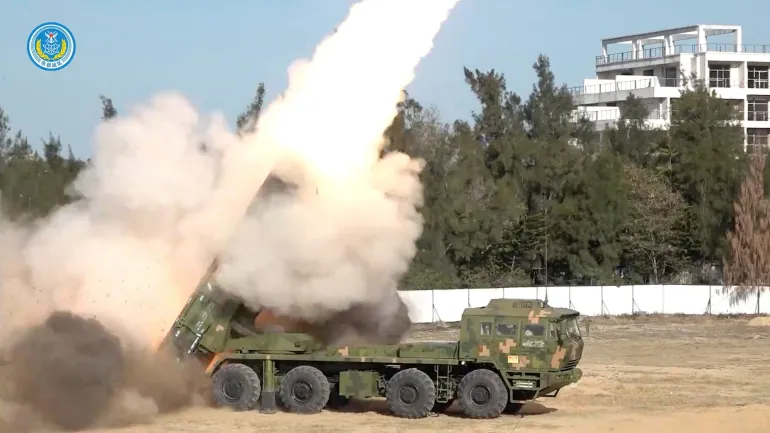
Tuesday’s live-fire drills were held in five zones around Taiwan between 8am and 6pm local time (00:00 GMT and 10:00 GMT), according to the Eastern Theatre Command. Chinese forces fired long-range rockets into the waters around the island, according to a video released by the military on social media.
Taiwan’s coastguard said seven rockets were fired into two drill zones around the main island.
Ground forces take part in long-range live-fire drills targeting waters north of Taiwan, from an undisclosed location in this screenshot from a video released by the Eastern Theatre Command of China’s People’s Liberation Army on December 30, 2025 [Handout/Eastern Theatre Command via Reuters]
Taiwan’s Ministry of Defence said it had tracked 130 air sorties by Chinese aircraft, 14 naval ships and eight “official ships” between 6am on Monday and 6am on Tuesday.
Ninety of the air sorties crossed into Taiwan’s air defence identification zone (ADIZ), an area of land and sea monitored by Taipei, during the 24 hours, in the second-largest incursion of its kind since 2022.
How were the exercises different from last time?
Justice Mission 2025 was the largest war game since 2022 in terms of the area covered, according to Jaime Ocon, a research fellow at Taiwan Security Monitor.
“These zones are very, very big, especially the southern and southeast zones around Taiwan, which actually breached territorial waters,” he told Al Jazeera, referring to the region within 12 nautical miles (22km) of Taiwan’s coast. “That’s a big escalation from previous exercises.”
They also focused explicitly on blockading Taiwan, unlike past iterations, sending a strong message to Taipei and its unofficial allies, particularly the US and Japan.
“This is a clear demonstration of China’s capability to conduct A2/AD – anti-access aerial denial – making sure that Taiwan can be cut off from the world and that other actors like Japan, the Philippines, or the United States cannot directly intervene,” Ocon said.
A blockade would impact not only the delivery of weapons systems but also critical imports, such as natural gas and coal, that Taiwan relies on to meet nearly all its energy needs. It would also disrupt vital global shipping routes through the Taiwan Strait.
Alexander Huang, director-general of Taiwan’s Council on Strategic and Wargaming Studies, told Al Jazeera the drills were similar to those held after Pelosi’s visit in August 2022.
“For this drill, it actually interfered with international civil aviation routes and also maritime shipping routes. In previous drills, they tried to avoid that, but this time they actually disrupted the air and maritime traffic,” he said.
The drills also put pressure on Taiwan’s maritime and transport links to Kinmen and Matsu islands, which are closer to the Chinese mainland.
Why did China stage the exercises now?
China has a history of holding military exercises to express its anger with Taiwan and its allies, but large-scale exercises have become more frequent since Pelosi’s Taiwan visit.
Beijing claims Taiwan as a province and has accused the US of interfering in its internal affairs by continuing to sell weapons to Taipei and supporting its “separatist” government led by President William Lai Ching-te.
Washington does not officially recognise Taiwan, whose formal name is the Republic of China, but it has pledged to help Taipei defend itself under the 1979 Taiwan Relations Act and the 1982 Six Assurances.
The Justice Mission 2025 came just days after Washington approved a record-breaking $11.1bn arms sale to Taiwan.
China’s Ministry of Foreign Affairs said on Monday that the drills were a “punitive and deterrent action against separatist forces who seek ‘Taiwan independence’ through military build-up, and a necessary move to safeguard China’s national sovereignty and territorial integrity”. Beijing sanctioned 30 US firms and individuals over the arms sale.
Experts also say the exercises were linked to a separate but related diplomatic row between China and Japan.
Beijing was angered in November by remarks from Japanese Prime Minister Sanae Takaichi that an attack on Taiwan would be a “survival-threatening situation” for Japan. Such a scenario would legally permit Japan to exercise its “right of collective self-defence” and deploy its military, she said.
Several flights were cancelled at the Taipei airport during China’s latest military drills around Taiwan, December 30, 2025 [Ann Wang/Reuters]
How is Taiwan responding to the drills?
Taiwan cancelled more than 80 domestic flights on Tuesday and warned that more than 300 international flights could be delayed due to flight rerouting during the live-fire drills.
Taiwan’s Defence Ministry said the coastguard monitored the exercises near the outlying islands and that an undisclosed number of naval vessels had also been deployed nearby. Taipei also monitored all incursions into its ADIZ, including the Taiwan Strait, sections of coastal China, and waters around Taiwan.
In a statement on Tuesday, Defence Minister Wellington Koo said, “[Beijing’s] highly provocative actions severely undermine regional peace and stability [and] also pose a significant security risk and disruption to transport ships, trade activities, and flight routes.”
Koo described the exercises as a form of “cognitive warfare” that aimed to “deplete Taiwan’s combat capabilities through a combination of military and non-military means, and to create division and conflict within Taiwanese society through a strategy of sowing discord”.
How did the US respond to the drills?
US President Donald Trump has so far remained quiet about the military drills, telling reporters on Monday that he was “not worried”.
“I have a great relationship with President Xi, and he hasn’t told me anything about it,” Trump said when asked about the exercises during a news conference, according to Reuters. “I don’t believe he’s going to be doing it,” he added, seemingly referring to the prospect of actual military action targeting Taiwan.
William Yang, a senior analyst for Northeast Asia at the International Crisis Group, told Al Jazeera that Trump might avoid saying much about the Justice Mission 2025 exercises as he hopes to meet President Xi Jinping in April to discuss a US-China trade deal. “It’s a diplomatic strategy to make sure the US response is not going to immediately upset the temporary trade truce between the US and China,” Yang said.
“I think it’s quite consistent with how he personally and his administration have been handling the issue of Taiwan by trying to de-prioritise making public statements,” he said.
Alawite protesters confront government supporters in coastal cities.
Syria’s new leader has been trying to stabilise his country and reintegrate it globally since he took office in January.
But outbreaks of sectarian violence are threatening President Ahmed al-Sharaa’s efforts to rebuild the country after 14 years of civil war.
Recommended Stories
list of 4 itemsend of list
The latest flare-up on Sunday saw protesters from the Alawite minority group come face to face with supporters of the government in the coastal cities of Latakia and Tartous. Government troops sent to stop the violence were attacked. The once-powerful community says it is being marginalised.
How big a security threat are the protests and violence?
How can President al-Sharaa calm tensions?
Presenter: Adrian Finighan
Guests:
Fadel Abdulghany – Founder and executive director of the Syrian Network for Human Rights.
Gamal Mansour – Specialist in comparative politics and international relations
Labib Nahhas – Director of the Syrian Association for Citizens’ Dignity
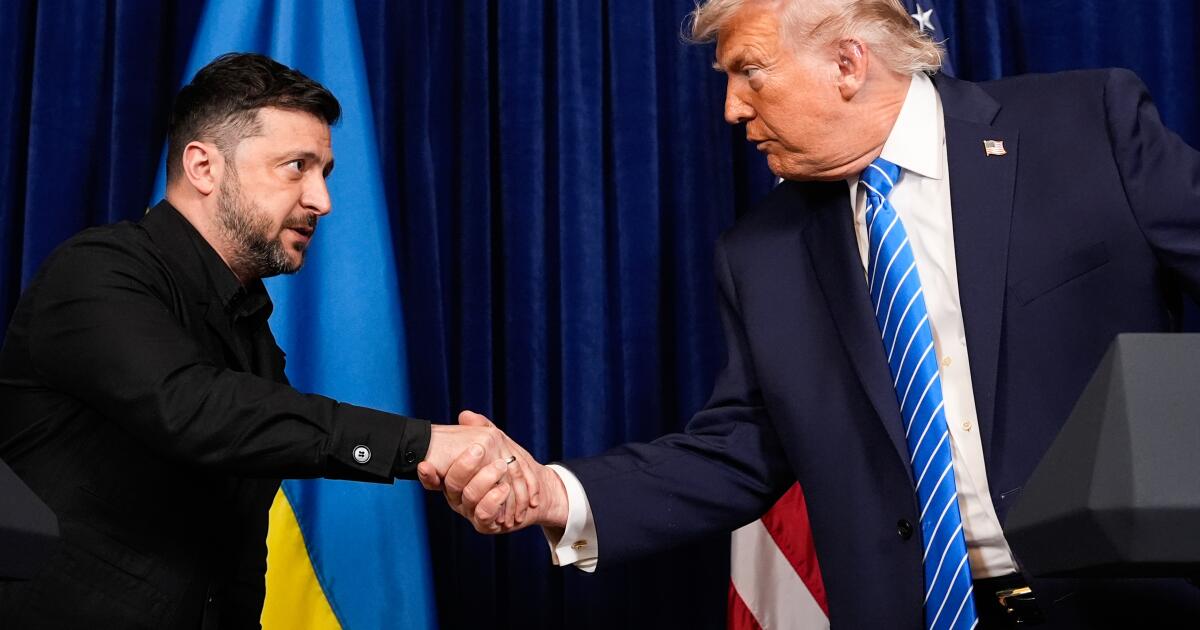
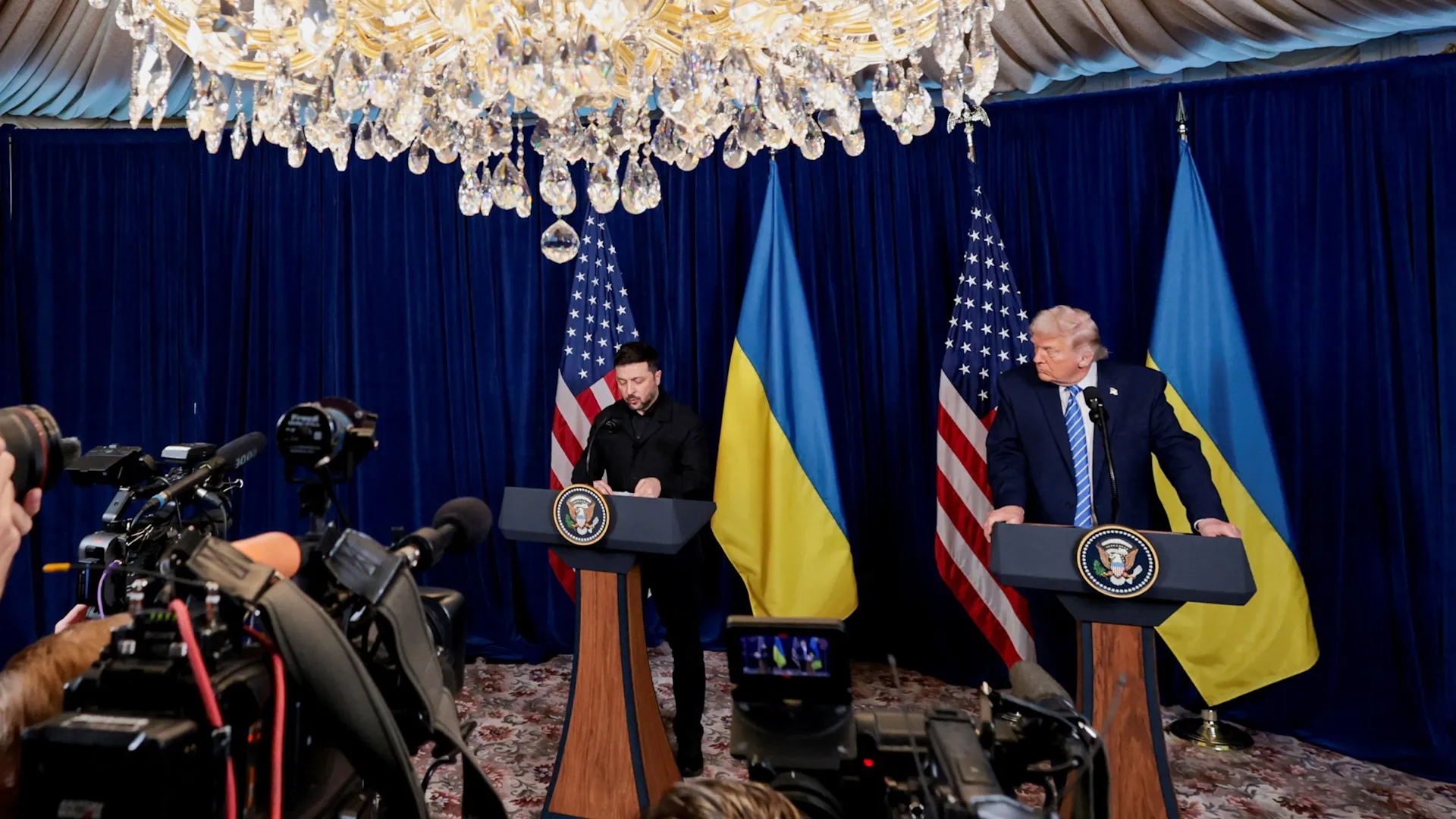
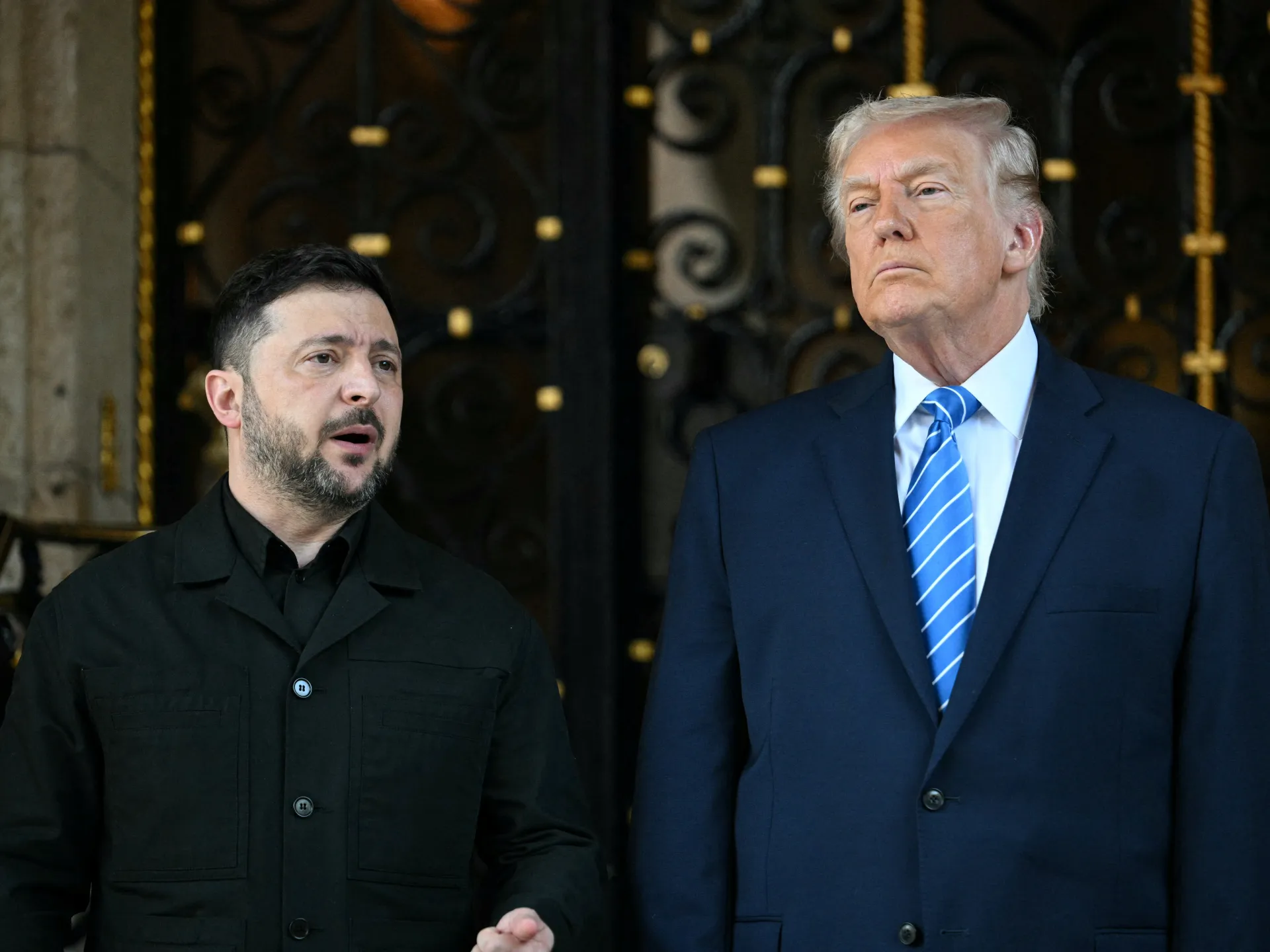
WASHINGTON — Standing alongside President Trump at his Palm Beach estate, Volodymyr Zelensky could only smirk and grimace without overtly offending his host. “Russia wants to see Ukraine succeed,” Trump told reporters, shocking the Ukrainian president before claiming that Vladimir Putin is genuine in his desire for peace.
It was just the latest example of the American president sympathizing with Moscow in its war of conquest in Europe. Yet Zelensky emerged from the meeting Sunday ensuring once again that Ukraine may fight another day, maintaining critical if uneasy support from Washington.
Few signs of progress toward a peace agreement materialized from the meeting at Mar-a-Lago, where Zelensky traveled with significant compromises — including a plan to put territorial concessions to Russia before the Ukrainian people for a vote — in order to appease the U.S. president.
But Zelensky won concessions of his own from Trump, who had for weeks been pushing for a ceasefire by Christmas, or else threatening to cut off Ukraine from U.S. intelligence that would leave Kyiv blind on the battlefield. “I don’t have deadlines,” Trump said Sunday.
Over the course of Trump’s first year in office, Zelensky and other European leaders have repeatedly worked to convince Trump that Russia’s President Putin is, in fact, an aggressor opposed to peace, responsible for an unprovoked invasion that launched the deadliest conflict in Europe since the Second World War.
Each time, Trump has come around, even going as far over the summer as to question whether Ukraine could win back the territories it has lost on the battlefield to Russia — and vowing to North Atlantic Treaty Organization allies, “we’re with them all they way.”
Yet, each time, Trump has changed course within a matter of days or weeks, reverting to an embrace of Putin and Russia’s worldview, including a proposal that Ukraine preemptively cede sovereign territories that Russia has sought but failed to occupy by force.
Zelensky’s willingness to offer concessions in his latest meeting with Trump has, at least temporarily, “managed to keep President Trump from tilting further towards the Russian position,” said Kyle Balzer, a scholar at the conservative American Enterprise Institute. “But Trump’s position — his repeated insistence that a deal is necessary now because time is not on Ukraine’s side — continues to favor Putin’s line and negotiating tactics.”
U.S. intelligence agencies have assessed that Putin’s revanchist war aims — to conquer all of Ukraine and, beyond, to reclaim parts of Europe that once were part of the Soviet empire — remain unchanged.
Yet Trump’s director of national intelligence, Tulsi Gabbard, whose own sympathies toward Russia have been scrutinized for years, recently dismissed the assessments as products of “deep state” “warmongers” within the intelligence community.
On Monday, hours after speaking with Trump, Putin ordered the Russian military to push toward Zaporizhzhia, a city of 700,000 before the war began. The city lies far outside the Donbas region that Moscow claims would satisfy its war aims in a negotiated settlement.
“Trump’s instincts are to favor Putin and Russia,” said Brian Taylor, director of the Moynihan Institute of Global Affairs at Syracuse University. “Ukraine and its European partners still hope to convince Trump of the obvious fact that Putin is not interested in a deal that doesn’t amount to a Ukrainian surrender.
“If Trump was convinced of Putin’s intransigence, he might further tighten sanctions on Russia and provide more assistance to Ukraine to try to pressure Putin into a deal,” Taylor added. “It’s an uphill battle, one might even say Sisyphean, but Zelensky and European leaders have to keep trying. So far, nearly a year into Trump’s second term, it’s been worth it.”
On Monday, Moscow claims that Ukraine orchestrated a massive drone attack targeting Putin’s residence that would force it to reconsider its stance in negotiations. Kyiv denied an attack took place.
“Given the final degeneration of the criminal Kyiv regime, which has switched to a policy of state terrorism, Russia’s negotiating position will be revised,” Sergei Lavrov, Russia’s foreign minister since 2004, said in a Telegram post.
Another senior Russian official said the reported attack shocked and infuriated Trump. But Zelensky, responding on social media, said that Russia was “at it again, using dangerous statements to undermine all achievements of our shared diplomatic efforts with President Trump’s team.”
“We keep working together to bring peace closer,” Zelensky said. “This alleged ‘residence strike’ story is a complete fabrication intended to justify additional attacks against Ukraine, including Kyiv, as well as Russia’s own refusal to take necessary steps to end the war.”
“Ukraine does not take steps that can undermine diplomacy. To the contrary, Russia always takes such steps,” he added. “It is critical that the world doesn’t stay silent now. We cannot allow Russia to undermine the work on achieving a lasting peace.”
Frederick Kagan, director of the Critical Threats Project, which collaborates with the Institute for the Study of War to produce daily battlefield assessments on the conflict, said that the meeting did not appear to fundamentally shift Trump’s position on the conflict — a potential win for Kyiv in and of itself, he said.
“U.S.-Ukraine negotiations appear to be continuing as before, which is positive, since those negotiations seem to be getting into the real details of what would be required for a meaningful set of security guarantees and long-term agreements to ensure that any peace settlement will be enduring,” Kagan said.
Gaps still remain between Kyiv and the Trump administration in negotiations over security guarantees. While Trump has offered a 15-year agreement, Ukraine is seeking guarantees for 50 years, Zelensky said Monday.
“As Trump continues to say, there’s no deal until there’s a deal,” Kagan added. “We’ll have to see how things go.”
US President Donald Trump and Ukrainian leader Volodymyr Zelenskyy are talking up prospects of ending the war with Russia, after meeting in Florida. But they admitted there are ‘thorny issues’ to resolve about the status of the Donbas region which has been annexed by Russia.
The deployment comes after deadly unrest amid protests by the Alawite minority in the coastal cities.
Syrian government troops have been deployed to the coastal cities of Latakia and Tartous after demonstrations led to deadly clashes in which at least three people were killed and 60 were injured.
It’s the latest turmoil to challenge President Ahmed al-Sharaa’s fledgling government, which has been pushing to stabilise the nation and reintegrate internationally after 14 years of ruinous civil war.
Syria’s Ministry of Defence announced on Sunday that army units with tanks and armoured vehicles had entered the centre of the cities in the country’s west in response to attacks by “outlaw groups” against civilians and security forces, with a mission to restore stability.
Syria’s state news agency SANA, quoting officials, reported that the attacks were carried out by “remnants of the defunct regime” of former President Bashar al-Assad during protests in Latakia.
SANA said 60 people were wounded by “stabbings, blows from stones, and gunfire targeting both security personnel and civilians”.
Clashes reportedly broke out as the protesters were confronted by pro-government demonstrators, and masked gunmen opened fire on security personnel.
The Ministry of Interior said in a statement that a police officer had been among those killed. An Al Jazeera team confirmed that gunfire was directed at Syrian security forces at the Azhari roundabout in Latakia, while two security personnel were also wounded in Tartous after unknown assailants threw a hand grenade at the al-Anaza police station in Baniyas.
Alawite protests
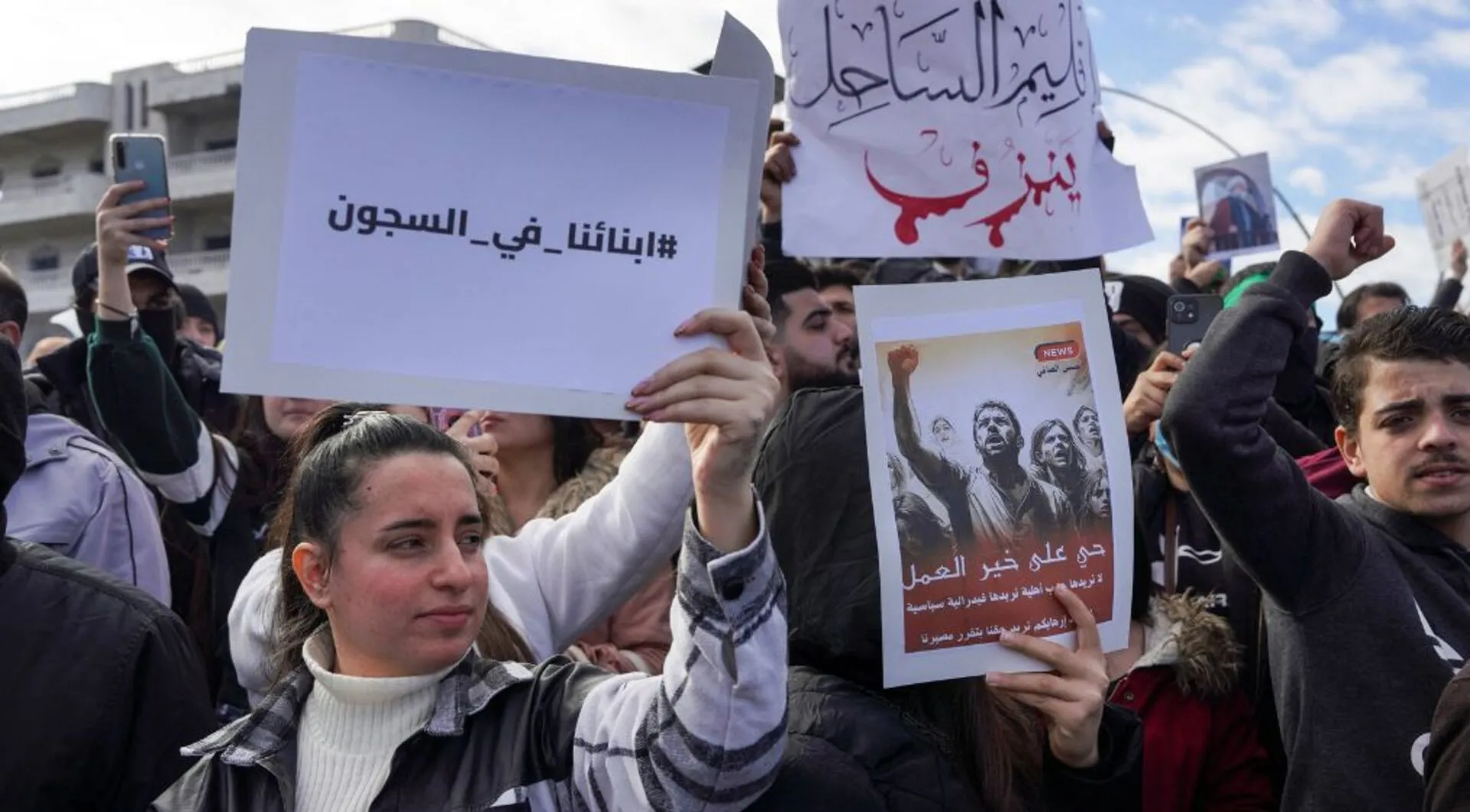
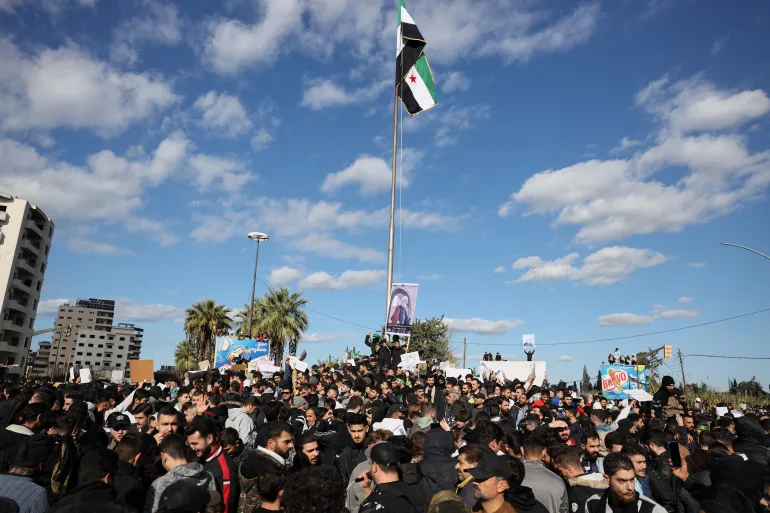
The violence has flared as thousands of Alawite Syrians took to the streets across the religious minority’s heartland in central and coastal parts of Syria on Sunday to protest against violence and discrimination.
The protests were called for by Ghazal Ghazal, an Alawite spiritual leader living outside the country, who had issued a call to “show the world that the Alawite community cannot be humiliated or marginalised” after the deadly bombing of a mosque in Homs on Friday.
The bombing, which killed eight people and was claimed by a Sunni group known as Saraya Ansar al-Sunna, was the latest act of violence against the religious minority, to which the ousted former President al-Assad also belongs and which had huge prominence under his rule.
The protesters also demanded that the government implement federalism – a system that would see power decentralised from Damascus in favour of greater autonomy for minorities – and the release of Alawite prisoners.
“We do not want a civil war, we want political federalism. We do not want your terrorism. We want to determine our own destiny,” Ghazal, head of the Islamic Alawite Council in Syria and abroad, said in a video message on Facebook.
Protesters from the Alawite religious minority demonstrate in Latakia on Sunday, days after a bomb in an Alawite mosque in Homs killed eight people and wounded 18 [Omar Albam/AP]
‘We want federalism’
One of the antigovernment protesters on Sunday, Ali Hassan, said the demonstrators sought an end to the ongoing violence against the Alawite community.
“We just want to sleep in peace and work in peace, and we want federalism,” he said. “If this situation continues like this, then we want federalism. Why is it that every day or every other day, 10 of us are killed?”
A counterprotester, Mohammad Bakkour, said he had turned out to show his support for the government.
“We are here to support our new government, which from the very first day of liberation called for peace and for granting amnesty to criminals,” he said, accusing the antigovernment protesters of seeking to “sabotage the new path toward rebuilding the nation”.
“The entire people are calling for one people and one homeland, but they do not want one people or one homeland – they want sectarianism, chaos, problems, and federalism for their personal interests.”
These are the key developments from day 1,404 of Russia’s war on Ukraine.
Published On 29 Dec 202529 Dec 2025
Share
Here is where things stand on Monday, December 29:
Diplomacy
United States President Donald Trump hosted Ukrainian President Volodymyr Zelenskyy for talks at his Mar-a-Lago resort in Florida and said the two leaders were “getting a lot closer, maybe very close” to a deal to end the war in Ukraine.
Trump and Zelenskyy reported progress on two of the most contentious issues in the peace talks: security guarantees for Ukraine and the division of eastern Ukraine’s Donbas region that Russia has sought to capture.
On security guarantees, Zelenskyy said that a deal had been reached, while Trump said they were 95 percent of the way to such an agreement.
Both Trump and Zelenskyy said that the future of the mostly Russian-occupied Donbas had not been settled, though the US president said discussions were “moving in the right direction”. “It’s unresolved, but it’s getting a lot closer. That’s a very tough issue,” Trump said.
The two leaders did not offer further details or a deadline for completing the deal, but Zelenskyy said any peace agreement would have to be approved by Ukraine’s parliament or by a referendum.
Shortly after the Trump-Zelenskyy meeting, Russian President Vladimir Putin’s special envoy, Kirill Dmitriev, wrote on X that the “whole world appreciates” Trump and his team’s peace efforts.
Ahead of the meeting with Zelenskyy, Trump and Putin spoke for more than two hours on the telephone. The US president described the call as “excellent” and “productive”.
Trump said he would call Putin again after the meeting with Zelenskyy.
Kremlin foreign policy aide Yury Ushakov said the initial call was “friendly” and that Putin had told Trump that a 60-day ceasefire, proposed by the European Union and Ukraine, would simply prolong the war.
Ushakov said that a “bold, responsible, political decision is needed from Kyiv” on the Donbas region and other disputed matters for there to be a “complete cessation” of hostilities.
European leaders, including those from Finland, France, Germany, Poland and the United Kingdom, joined at least part of the Trump-Zelenskyy meeting by phone.
European Commission President Ursula von der Leyen said in a statement that Europe was ready to keep working with Ukraine and the US, and that having ironclad security guarantees would be of “paramount” importance.
French President Emmanuel Macron said that progress had been made on security guarantees at the meeting. Macron said that countries in the so-called “Coalition of the Willing” would meet in Paris in early January to finalise their “concrete contributions”.
Zelenskyy said that Trump had agreed to host European leaders again, possibly at the White House, sometime in January. Trump said the meeting could be in Washington, DC, or “someplace”.
Earlier on Sunday, Russian Minister of Foreign Affairs Sergey Lavrov warned that any European troop contingents deployed to Ukraine would become legitimate targets for Russia’s forces. Lavrov also accused European politicians of being driven by “ambitions” in their relations with Kyiv, and disregarding the people of Ukraine and of their own nations.
Fighting
Russian forces attacked a heating plant in the southern Ukrainian city of Kherson, wounding one person and causing “significant damage” to the facility, state oil and gas firm Naftogaz said.
Ukraine’s leading private energy provider, DTEK, said it had restored power to more than a million households in and around Kyiv a day after a massive Russian air attack had forced emergency outages.
Ukraine’s military said it had struck the Syzran oil refinery in Russia’s Samara region in a drone attack. The strike caused a fire, and damages were still being assessed, the army said in a statement.
The military also said that only part of the southeastern town of Huliaipole was under Russian control, contradicting an earlier claim by Moscow that it had been captured. It added that fighting was also still under way for Stepnohirsk, another town in the southeastern Zaporizhia region that Russia claimed it had captured.
Meanwhile, Russia’s Ministry of Defence said in a statement that its troops had taken control of four other settlements in the Donetsk region. It identified them as Myrnohrad, Artemivka, Rodynske and Vilne.
Diplomacy over the Russia-Ukraine war is in its “final stages”, said US President Donald Trump as he welcomed Ukraine’s leader Volodymyr Zelenskyy to his Florida estate.
The two leaders stood outside the Mar-a-Lago resort on Sunday and addressed reporters as they prepared to discuss a new proposal to end the bloody conflict.
Recommended Stories
list of 4 itemsend of list
The US president has been working hard to end the nearly four-year war in Ukraine for much of his first year back in office, showing irritation with both Zelenskyy and Russian President Vladimir Putin while publicly acknowledging the difficulty of ending the fighting.
“I think we’re … in final stages of talking and we’re going to see. Otherwise, it’s going to go on for a long time, and millions of additional people will be killed,” said Trump, adding he did not have a deadline for the process.
“I do believe that we have the makings of a deal that’s good for Ukraine, good for everybody.”
He added there would be “a strong agreement” to guarantee Ukraine’s security, one that would involve European countries.
“We have two willing parties. We have two willing countries … The people of Ukraine want [the war] to end, and the people of Russia want it to end, and the two leaders want it to end,” Trump said.
Zelenskyy, by Trump’s side, said he and the US president would discuss issues of territorial concessions, which have so far been a red line for his country. He said his negotiators and Trump’s advisers “have discussed how to move step by step and bring peace closer” and would continue to do so in Sunday’s meeting.
During recent talks, the US agreed to offer certain security guarantees to Ukraine similar to those offered to other members of NATO.
The proposal came as Zelenskyy said he was prepared to drop his country’s bid to join the security alliance if Ukraine received NATO-like protection designed to safeguard it against future Russian attacks.
Oleksandr Kraiev, an analyst with the think-tank Ukrainian Prism, said the people of Ukraine are “quite cynical” about the talks brokered by the United States.
“We tried this in 2015, 2016, 2017, and unfortunately each time the Russians broke even the ceasefire regime, not even talking about the peace process,” he told Al Jazeera.
“So we have little faith that a proper peace process will take place. As of now we’re striving for a ceasefire as a precondition for any kind of talks… We cannot trust the Russians with a peace deal, but a ceasefire is something we’re working on.”
‘Blindsided yet again’
Trump’s upbeat tone comes despite widespread scepticism in Europe about Putin’s intentions after Russia carried out another massive bombardment of the Ukrainian capital just as Zelenskyy headed to Florida.
Before Zelenskyy arrived, Trump spoke with Putin by phone for more than an hour and said he planned to speak again after the Zelenskyy meeting – catching Ukrainian leaders off guard, reported Al Jazeera’s Shihab Rattansi.
“From what we’re hearing, the Zelenskyy delegation here have been blindsided yet again by Donald Trump. And according to the Russians, it was at the Americans’ insistence there should be a call with Vladimir Putin the hour before Zelenskyy arrived,” said Rattansi, speaking from Palm Beach, Florida.
Meanwhile, while there is talk about land concessions from Ukraine’s side, they are outside the framework Zelenskyy is hoping for.
The Kremlin gave a more pointed readout of Trump’s talks with Putin, saying the US leader agreed a mere ceasefire “would only prolong the conflict” as it demanded Ukraine compromise on territory.
Zelenskyy said last week that he would be willing to withdraw troops from Ukraine’s eastern industrial heartland as part of a plan to end the war, if Russia also pulls back and the area becomes a demilitarised zone monitored by international forces.
Putin has publicly said he wants all the areas in four key regions captured by his forces, as well as the Crimean Peninsula, illegally annexed in 2014, to be recognised as Russian territory. He also insisted that Ukraine withdraw from some areas in eastern Ukraine that Moscow’s forces have not captured.
Kyiv has publicly rejected all those demands.
Trump has been somewhat receptive to Putin’s conditions, making the case that the Russian president can be persuaded to end the war if Kyiv agrees to cede Ukrainian land in the Donbas region, and if Western powers offer economic incentives to bring Russia back into the global economy.
Fighting has broken out at a demonstration in the city of Latakia in Syria, killing at least three people and injuring dozens. Hundreds of people from the Alawite minority were protesting in coastal and central parts of the country, two days after a mosque was bombed in Homs.
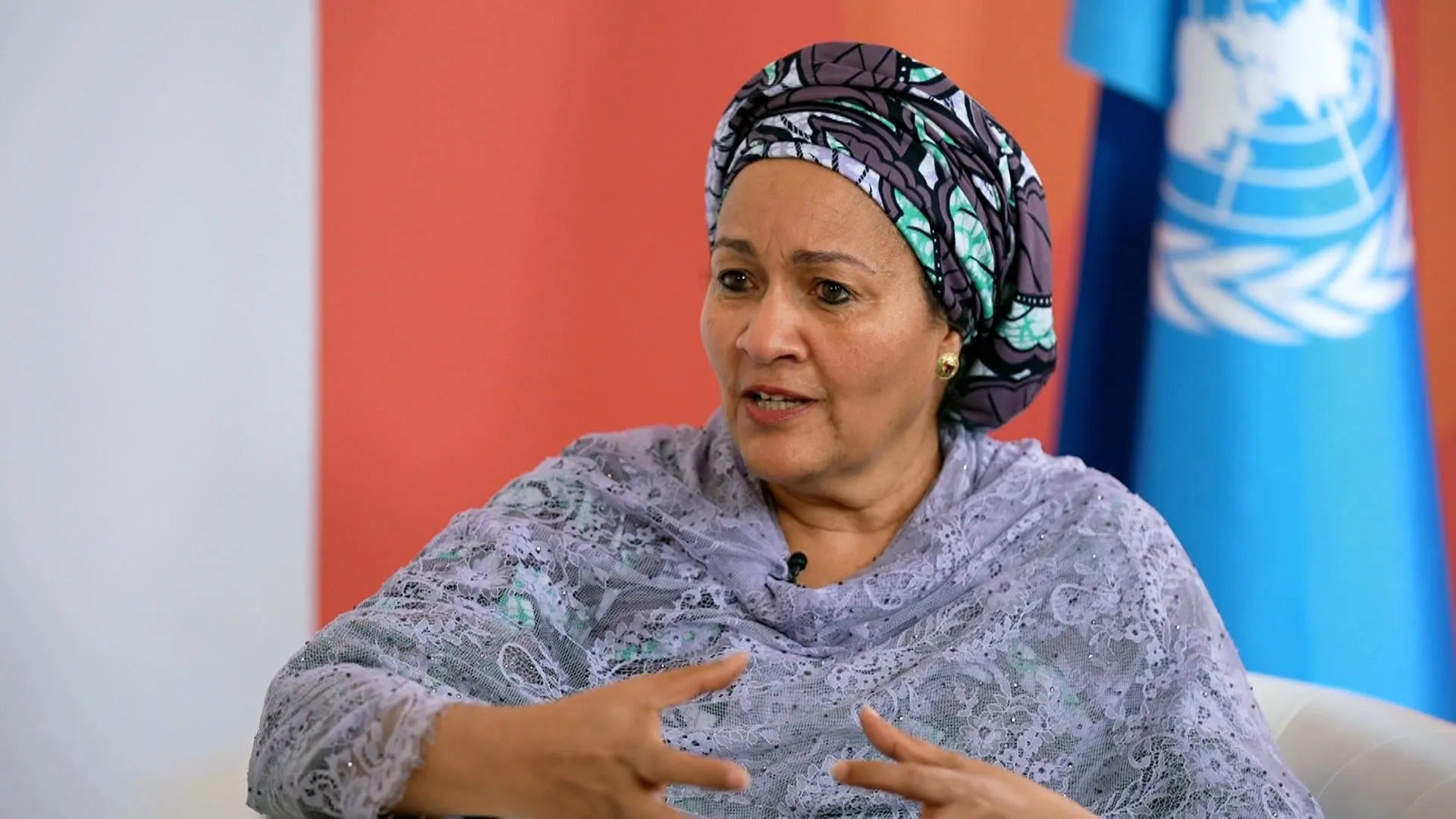
From Sudan to Gaza, impunity for violence against women is fuelling conflict worldwide, the UN’s deputy chief warns.
In today’s conflicts, women and girls are facing escalating violence with near-total impunity. From mass rapes in Sudan to attacks on schools and shelters in Gaza and Syria, and the segregation of women in Afghanistan, protection is collapsing as wars intensify. Speaking to Talk to Al Jazeera, UN Deputy Secretary-General Amina Mohammed warns that violence against women is not a side issue but a front-line threat to peace and development. With funding shrinking and the political will faltering, she confronts hard questions about the world’s failure to protect those most at risk.