Venezuela

Colombia can be “part of solution” for Venezuela transition | US-Venezuela Tensions

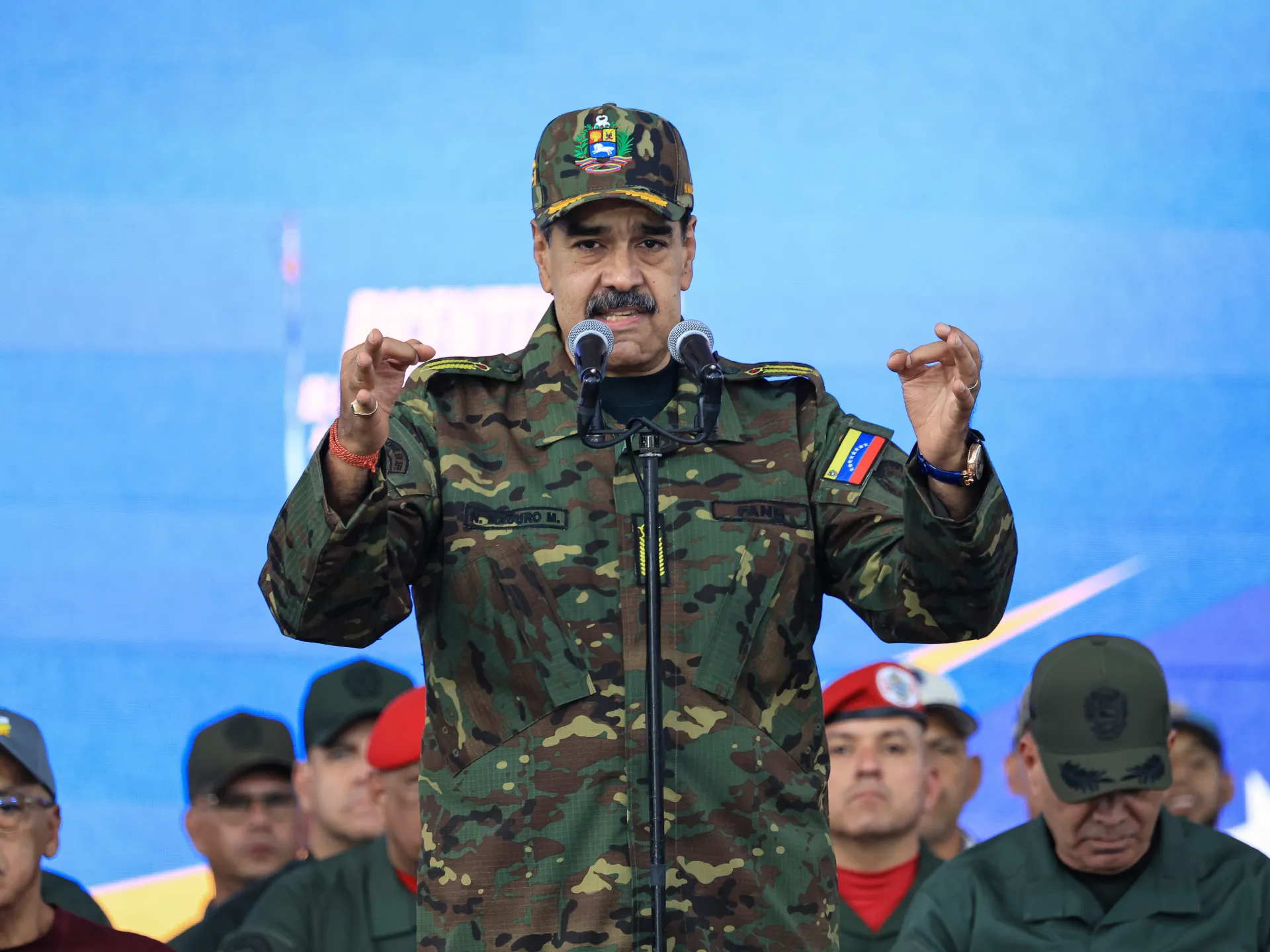
Former Colombian President Ivan Duque Marquez, discusses how Colombia’s could play a supporting role in Venezuela transition after the abduction of Nicolas Maduro. US President Donald Trump has threatened military action against Colombia, accusing its government of making and selling cocaine to the United States.

Source link

Venezuela: Delcy Rodriguez sworn in as president, Maduro due in court

Heavily armed federal law enforcement officers on guard Sunday outside the Metropolitan Detention Center in Brooklyn, where Venezuelan President Nicolas Maduro and first lady Cilia Flores are being held after being seized from the presidential palace in Caracas at the weekend. Photo by Olga Fedorova/EPA

Jan. 5 (UPI) — U.S. President Donald Trump issued a warning to Venezuela’s new president, Delcy Rodriguez, to “do what’s right,” or face a similar or worse fate than President Nicolas Maduro, who is in a U.S. prison after being seized by U.S. Special Forces over the weekend.

“If she doesn’t do what’s right, she is going to pay a very big price, probably bigger than Maduro,” Trump told The Atlantic, adding that regime change remained on the table, saying that it was preferable to the present state of affairs and the situation “can’t get any worse.”

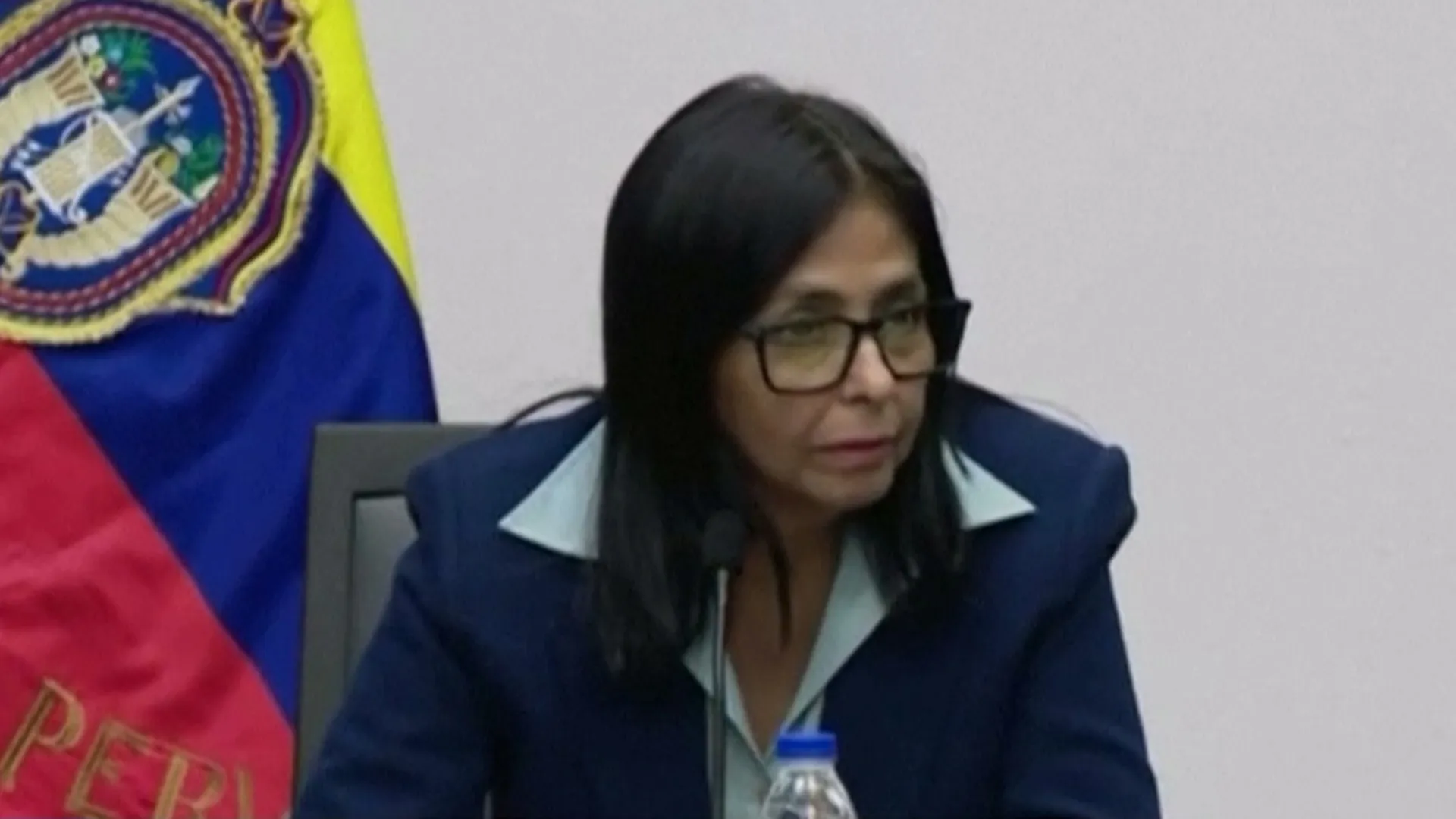
Rodriguez, who was due to be sworn in as president in Caracas at 7 a.m. EST with the support of the country’s military and the supreme court, has said she is willing to cooperate with the United States after initially condemning the arrest of Maduro and his wife, Cilia Flores, and demanding their release.

“We invite the U.S. government to collaborate with us on an agenda of cooperation orientated towards shared development within the framework of international law,” she told her cabinet at her first meeting in charge on Sunday.

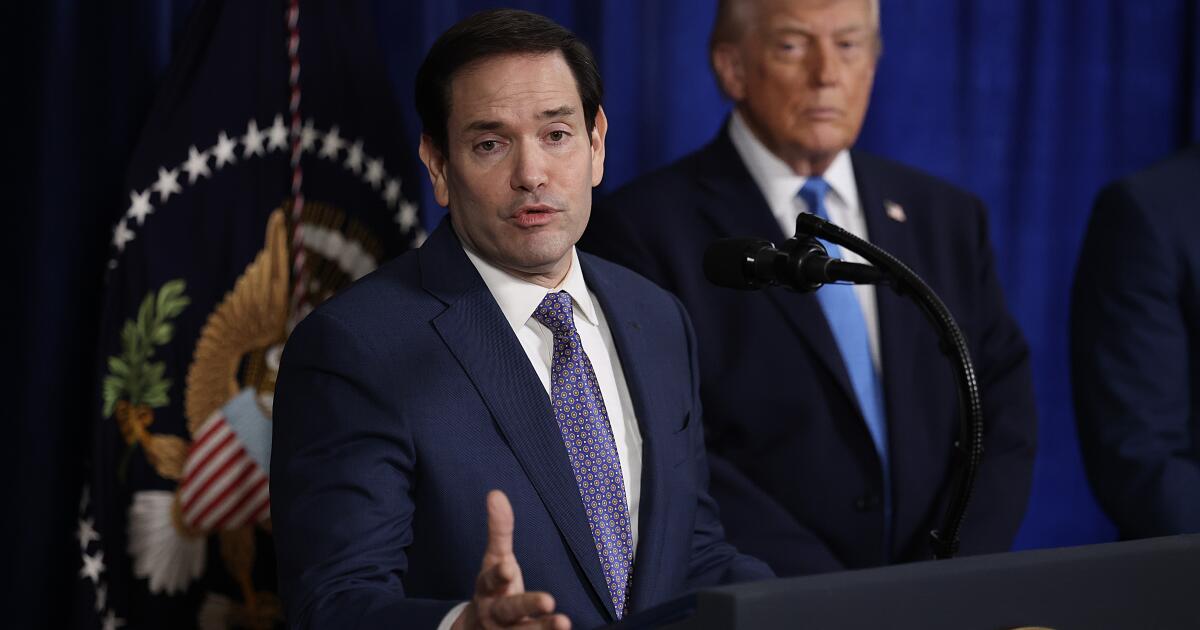
Trump said U.S. Secretary of State Marco Rubio had spoken with Rodriguez and that she was “essentially willing to do what we think is necessary to make Venezuela great again.”

Amid conflicting messaging, it was unclear if that was Trump’s meaning when he said in his news conference Saturday announcing the military operation that the United States was “going to run the country until such time as we can do a safe, proper and judicious transition.”

“We’re going to be running it with a group, and we’re going to make sure it’s run properly,” Trump said.

Rubio clarified Sunday that Trump was talking about exerting control from outside the country to bring about major policy shifts.

He said sanctions were one of the tools at the administration’s disposal to ensure the cooperation of the acting leadership, saying in an American broadcast TV interview that a blockade on Venezuela’s oil exports, being enforced by the U.S. military, would remain in place.

“We continue with that quarantine and we expect to see that there will be changes not just in the way the oil industry is run for the benefit of the people, but also so that they stop the drug trafficking, so that we no longer have these gang problems, so that they kick the [Columbian insurgent groups] FARC and the ELN out, and that they no longer cozy up to Hizballah and Iran in our own hemisphere,” Rubio said.

Meanwhile, Maduro was due to make his first appearance in Federal Court in New York later Monday, where he and Flores will be read a 25-page indictment accusing the pair of accumulating vast wealth from a narco-terrorism conspiracy.

They also face three related charges of cocaine importation conspiracy, possession of machine guns and destructive devices, and conspiracy to possess machine guns and destructive devices.

They are due to be transferred from the Metropolitan Detention Center in Brooklyn, which houses defendants accused of regular crimes, to the U.S. District Court for the Southern District of New York in White Plains, N.Y., to appear at 12 p.m. EST.

Clouds turn shades of red and orange when the sun sets behind One World Trade Center and the Manhattan skyline in New York City on November 5, 2025. Photo by John Angelillo/UPI | License Photo

Source link

Maduro to appear in New York court: What to expect | Courts News

Venezuelan President Nicolas Maduro is to appear in a New York court on Monday, two days after he was abducted by US special forces in a military operation in Caracas.

The US military arrested Maduro and his wife, Cilia Flores, on Saturday and brought them to New York, where they face multiple federal charges, including drugs and weapons charges.

Recommended Stories

list of 4 itemsend of list

Here is more about Maduro’s scheduled court appearance:

When and where will it take place?

Maduro is to appear before a federal judge at noon (17:00 GMT).

The appearance is scheduled to happen in the Daniel Patrick Moynihan United States Courthouse in the Southern District of New York. Maduro is to appear before US District Judge Alvin Hellerstein.

A court spokesperson told NBC News that Flores, who is also listed as a defendant in a US indictment unsealed on Saturday, will appear in court on Monday as well.

What are the charges?

According to the indictment, the US accuses Maduro of being at the forefront of corruption to “use his illegally obtained authority” to “transport thousands of tons of cocaine” to the US with his coconspirators.

Additionally, the indictment alleges that Maduro has “tarnished” every public office he has held. It adds that Maduro “allows cocaine-fueled corruption to flourish for his own benefit, for the benefit of members of his ruling regime, and for the benefit of his family members”.

Maduro faces four counts:

  • Count 1, narcoterrorism conspiracy: US prosecutors say Maduro and his coconspirators knowingly provided something of financial value to US-designated “foreign terrorist organizations” and their members. The indictment lists these organisations as the Revolutionary Armed Forces of Colombia (FARC), a leftist rebel group that signed a peace deal in 2016 but has dissidents who refused to lay down their arms and are still involved in the drug trade; Segunda Marquetalia, the largest dissident FARC group; National Liberation Army, another leftist Colombian rebel group; Mexico’s Sinaloa Cartel; Los Zetas/Cartel del Noreste, another Mexican drug cartel; and Tren de Aragua, a Venezuelan gang.
  • Count 2, cocaine importation conspiracy: It accuses Maduro and his codefendants of conspiring to manufacture, distribute and import cocaine into the US.
  • Count 3, possession of machineguns and destructive devices: The indictment accuses the defendants of possessing, carrying and using machineguns in relation to the above drug‑trafficking counts.
  • Count 4, conspiracy to possess machineguns and destructive devices: It further accuses the defendants of conspiring to use, carry and possess those weapons in furtherance of drug trafficking.

The indictment also says Maduro and his codefendants should forfeit to the US government any proceeds and assets obtained from the alleged crimes.

Is there evidence for these charges?

There is little evidence that drugs are trafficked from Venezuela on a large scale. The 2023 United Nations Office on Drugs and Crime World Drug Report said global cocaine production hit a record of 3,708 tonnes, up nearly one‑third from 2022, with most coca cultivation taking place in Colombia, followed by Peru and Bolivia.

Trafficking routes into the US in 2023-2024 primarily passed through Colombia, Peru and Ecuador, not Venezuela, although it does serve as a minor transit corridor for Colombian cocaine moving into the eastern Caribbean.

Who is named in the indictment?

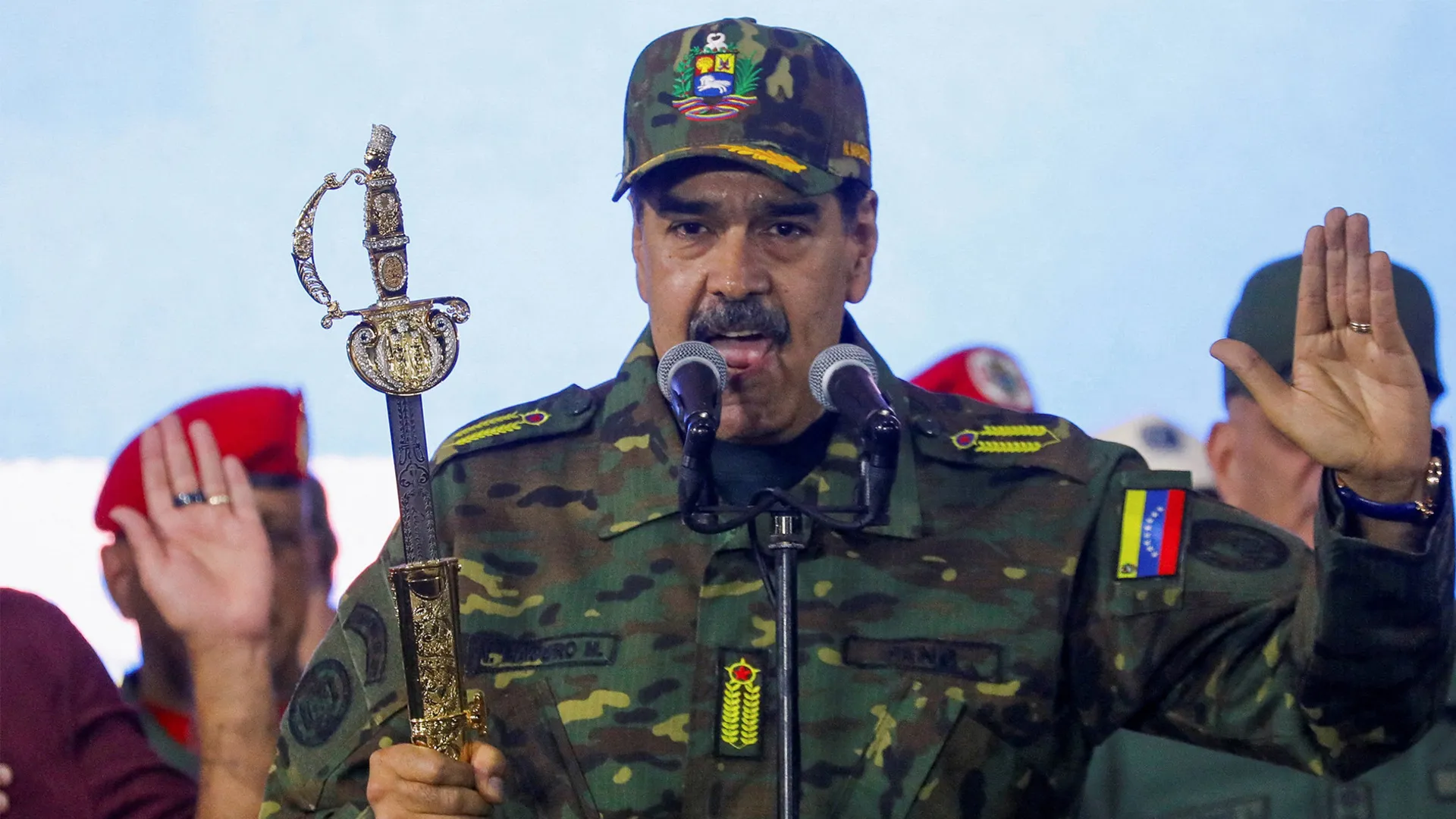
Maduro

Maduro, 63, who became Venezuela’s president in 2013, was declared the winner of 2024’s election. His re-election was rejected as fraudulent by the US and independent observers, such as the Carter Center. A UN expert panel said the 2024 vote failed to meet international standards.

Nine Latin American countries called for a review of the results with independent oversight.

Maduro defended the election results and accused his opponents of undermining the country’s sovereignty.

Since returning to the White House nearly a year ago, US President Donald Trump has expanded sanctions and punitive measures against Maduro and senior officials in his government.

The Trump administration ramped up military pressure starting in August when it deployed warships and thousand of its service members in the Caribbean near Venezuela. It has since carried out dozens of air strikes on alleged Venezuelan drug boats, killing more than 100 people.

Maduro has pushed back by mobilising Venezuelan military personnel.

During this time, the Caracas-based news network Globovision quoted Maduro as saying: “From the north, the empire has gone mad and, like a rotten rehash, has renewed its threats to the peace and stability of Venezuela.”

But a day before Saturday’s US attack on the country, Maduro had offered to hold talks to combat drug trafficking.

Flores

Flores, 69, has been married to Maduro since 2013.

Known as the “first combatant” rather than first lady, Flores is a veteran lawyer and politician who rose to prominence by defending future President Hugo Chavez after his failed 1992 coup. She helped secure his release and later became a key Chavismo figure and the first woman to preside over Venezuela’s National Assembly. Chavismo, which promotes socialism and anti-imperialist politics, is the political movement started by Chavez, Maduro’s mentor.

The indictment accuses Flores of joining Maduro’s cocaine importation conspiracy.

Other defendants

The indictment names four other people as Maduro’s coconspirators, namely Diosdado Cabello, Venezuela’s interior minister; Ramon Rodriguez Chacin, former Venezuelan interior minister; Nicolas Maduro Guerra, Maduro’s son and a Venezuelan politician; and Hector Rusthenford Guerrero Flores, the leader of Tren de Aragua, which was designated as a “foreign terrorist organization” by the US in February. But most experts do not define Tren de Aragua as a “terrorist organisation”.

It is not clear yet who will represent Maduro, Flores and the other defendants.

Who is the judge?

Hellerstein was born in 1933 in New York. He was appointed to the federal bench in 1998 by former President Bill Clinton.

He is likely on Monday to advise Maduro and Flores about their rights and ask them if they want to enter a plea.

What’s at stake?

Maduro’s freedom is primarily at stake. If convicted, he could face 30 years to life in prison.

“This is less about Maduro as it is about access to Venezuela’s oil deposits,” Ilias Bantekas, a professor of transnational law at Hamad Bin Khalifa University in Qatar, told Al Jazeera. “This is the number one target. Trump is not content with just allowing US oil firms to get concessions but to ‘run’ the country, which entails absolute and indefinite control over Venezuela’s resources.”

Venezuela’s oil reserves are concentrated primarily in the Orinoco Belt, a region in the eastern part of the country stretching across roughly 55,000sq km (21,235sq miles).

While the country is home to the world’s largest proven oil reserves – at an estimated 303 billion barrels as of 2023 – it earns only a fraction of the revenue it once did from exporting crude due to mismanagement and US sanctions.

Last month, Trump accused Venezuela in a post on his Truth Social platform of “stealing” US oil, land and other assets and using that oil to fund crime, “terrorism” and human trafficking.

Trump repeated his false claims after Maduro’s arrest. During a news conference on Saturday, Trump said the US would “run” Venezuela until a “safe, proper and judicious transition” could be carried out.

“Given the opposition of all South American states, save for Argentina, to US dominance in the region, Trump’s plan requires a vast military deployment. We need to see how countries like Brazil and Colombia react to this, including also BRICS,” said Bantekas from Hamad Bin Khalifa University.

In a joint statement released on Sunday, the governments of Spain, Brazil, Chile, Colombia, Mexico and Uruguay said the US actions in Venezuela “constitute an extremely dangerous precedent for peace and regional security and endanger the civilian population”.

“If there was an armed conflict between Venezuela and the USA and, given that Maduro is the head of his country’s armed forces, then he would be a legitimate target,” Bantekas said.

“However, under the circumstances there is no armed conflict between the two countries and in the absence of an armed attack by Venezuela against the US, the latter’s invasion in Venezuela violates article 2(4) of the UN Charter, as does the abduction of the country’s President. It is a blatant act of aggression.”

Article 2(4) of the UN Charter bars UN members from the threat or use of force against the territorial integrity or political independence of any state.

A United Nations Security Council meeting on Monday will determine the legality of the US abduction of Maduro.

“Given that Maduro is already in US custody and in the USA, it is in the interests of all parties that he appear before a court. At the very least, Maduro can challenge the legality of his arrest and the jurisdiction of the court,” Bantekas said.

“The court itself has an obligation to decide if it has jurisdiction and as a preliminary issue decide whether Maduro enjoys immunity from criminal prosecution. If these issues are dispensed the court nonetheless finds that it has jurisdiction and that Maduro does not enjoy immunity, then the prosecutor must prove its case.”

What’s next?

The Trump administration has not explicitly stated a clear plan for Venezuela, with analysts saying the administration has sent out confusing signals.

In an interview with the NBC news channels on Sunday, US Secretary of State Marco Rubio suggested that Washington will not govern Venezuela on a day-to-day basis besides enforcing an existing “oil quarantine”.

Rubio told ABC news on Sunday that the US had leverage over Venezuela and the US would “set the conditions” to ensure that Venezuela is no longer a “narco-trafficking paradise”.

But on Sunday, Trump told reporters that the US is ready to carry out a second military strike on Venezuela if its government refuses to cooperate with his plan to ‘resolve’ the situation there.

She could “pay a very big price” if she “does not do what’s right”, Trump said, refering Venezuela’s new leader, Delcy Rodriguez.

During his Saturday conference, Trump said that Rodriguez told Rubio that she will do what the US needs her to. “She really doesn’t have a choice,” Trump had said.

In his first press conference after Maduro’s illegal abduction on Saturday, Trump ruled out the possibility of working with opposition leader and Nobel Prize winner Maria Corina Machado, who was barred from running in the 2024 presidential elections.

Machado, a member of the Venezuelan National Assembly, is seen as the most credible adversary of Maduro’s leftist government.

On Monday, Rodriguez, the interim leader, offered to cooperate with Trump. In a statement posted on social media, she invited Trump to “collaborate” and sought “respectful relations”.

“President Donald Trump, our peoples and our region deserve peace and dialogue, not war,” she wrote.

Her conciliatory tone came a day after she appeared on state TV declaring that Maduro was still Venezuela’s sole legitimate president.
Source link

Lawmakers return to Washington facing Venezuela concerns, shutdown threat

Lawmakers are returning to Washington this week confronting the fallout from the stunning capture of Venezuelan President Nicolás Maduro — and familiar complaints about the Trump administration deciding to bypass Congress on military operations that have led to this moment.

Democratic leaders are demanding the administration immediately brief Congress. Republican leaders indicated over the weekend those plans are being scheduled, but some lawmakers expressed frustration Sunday that the details have been slow to arrive.

President Trump told the nation Saturday that the United States intends to “run” Venezuela and take control over the country’s oil operations now that Maduro has been captured and brought to New York to stand trial in a criminal case centered on narco-terrorism charges.

The administration did not brief Congress ahead of the actions, leaving Democrats and some Republicans expressing public frustration with the decision to sideline Congress.

“Congress should have been informed about the operation earlier and needs to be involved as this situation evolves,” Sen. Susan Collins (R-Maine) said in a social media post Saturday.

Appearing on the Sunday news shows, Senate Minority Leader Chuck Schumer and House Minority Leader Hakeem Jeffries, both of New York, ticked through a growing list of unknowns — and laid out plans for their party to try and reassert Congress’ authority over acts of war.

“The problem here is that there are so many unanswered questions,” Schumer said on ABC’s “This Week.” “How long do they intend to be there? How many troops do we need after one day? After one week? After one year? How much is it going to cost and what are the boundaries?”

Jeffries told NBC’s “Meet the Press” that he was worried about Trump running Venezuela, saying he has “done a terrible job running the United States of America” and should be focused on the job at home.

In the coming days, Jeffries said Democrats will prioritize legislative action to try and put a check on the administration, “to ensure that no further military steps occur absent explicit congressional approval.”

As discussions over Venezuela loom, lawmakers also face major decisions on how to address rising costs of healthcare, prevent another government shutdown and deal with the Trump administration’s handling of the Epstein files.

Much of the unfinished business reflects a Congress that opted to punt some of its toughest and most politically divisive decisions into the new year, a move that could slow negotiations as lawmakers may be reluctant to give the other side high-profile policy wins in the lead-up to the 2026 midterm elections.

First and foremost, Congress faces the monumental task of averting yet another government shutdown — just two months after the longest shutdown in U.S. history ended. Lawmakers have until Jan. 30 to pass spending bills needed to keep the federal government open. Both chambers are scheduled to be in session for three weeks before the shutdown deadline — with the House slated to be out of session the week immediately before.

Lawmakers were able to resolve key funding disputes late last year, including funding for Supplemental Nutrition Assistance Program benefits, also known as food stamps, and other government programs. But disagreements over healthcare spending remain a major sticking point in budget negotiations, intensified now that millions of Americans are facing higher healthcare costs after lawmakers allowed Affordable Care Act tax credits to expire on Thursday.

“We can still find a solution to this,” said Rep. Kevin Kiley (R-Rocklin), who has proposed legislation to extend the tax credits for two years. “We need to come up with ways to make people whole. That needs to be a top priority as soon as we get back.”

Despite that urgency, Republican efforts to be the author of broad healthcare reforms have gotten little traction.

Underscoring the political pressure over the issue, four moderate House Republicans late last year defied party leadership and joined House Democrats to force a floor vote on a three-year extension of the subsidies. That vote is expected to take place in the coming weeks. Even if the House effort succeeds, its prospects remain dim in the Senate, where Republicans last month blocked a three-year extension.

Meanwhile, President Trump is proposing giving more money directly to people for their healthcare, rather than to insurance companies. A White House official said the administration is also pursuing reforms to lower the cost of prescription drugs.

Trump said last month that he plans to summon a group of healthcare executives to Washington early in the year to pressure them to lower costs.

“I’m going to call in the insurance companies that are making so much money, and they have to make less, a lot less,” Trump said during an Oval Office announcement. “I’m going to see if they get their price down, to put it very bluntly. And I think that is a very big statement.”

There is an expectation that Trump’s increasing hostility to insurance companies will play a role in any Republican healthcare reform proposal. If Congress does not act, the president is expected to leverage the “bully pulpit” to pressure drug and insurance companies to lower healthcare prices for consumers through executive action, said Nick Iarossi, a Trump fundraiser.

“The president is locked in on the affordability message and I believe anything he can accomplish unilaterally without Congress he will do to provide relief to consumers,” Iarossi said.

While lawmakers negotiate government funding and healthcare policy, the continuing Epstein saga is expected to take up significant bandwidth.

Democrats and a few Republicans have been unhappy with the Department of Justice’s decision to heavily redact or withhold documents from a legally mandated release of files related to its investigation of Jeffrey Epstein, a convicted sex offender who died in a Manhattan jail awaiting trial on sex trafficking charges.

Some are weighing options for holding Atty. Gen. Pam Bondi accountable.

Rep. Ro Khanna (D-Fremont), who co-sponsored the law that mandated the release with Rep. Thomas Massie (R-Ky.), said he and Massie will bring contempt charges against Bondi in an attempt to force her to comply with the law.

“The survivors and the public demand transparency and justice,” Khanna said in a statement.

Under a law passed by Congress and signed by Trump, the Justice Department was required to release all Epstein files by Dec. 19, and released about 100,000 pages on that day. In the days that followed, the Justice Department said more than 5.2 million documents have been discovered and need to be reviewed.

“We have lawyers working around the clock to review and make the legally required redactions to protect victims, and we will release the documents as soon as possible,” the Justice Department said in a social media post on Dec. 24. “Due to the mass volume of material, this process may take a few more weeks.”

Rep. Robert Garcia, the top Democrat on the House Oversight Committee, told MS NOW last week that pressure to address the matter will come to a head in the new year when lawmakers are back at work.

“When we get back to Congress here in this next week, we’re going to find out really quick if Republicans are serious about actually putting away and taking on pedophiles and some of the worst people and traffickers in modern history, or if they’re going to bend the knee to Donald Trump,” said Garcia, of Long Beach.

Source link

‘We’re Going to Run the Country:’ Preparing an Illegal Occupation in Venezuela

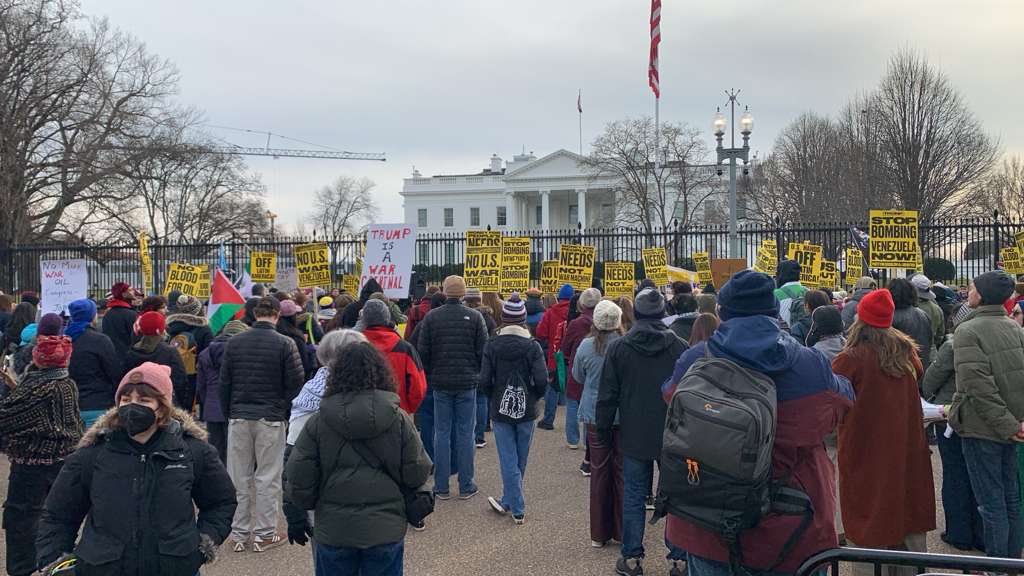
Solidarity movements held an emergency rally in front of the White House. (Archive)

I listened to the January 3 press conference with a knot in my stomach. As a Venezuelan American with family, memories, and a living connection to the country being spoken about as if it were a possession, what I heard was very clear. And that clarity was chilling.

The president said, plainly, that the United States would “run the country” until a transition it deems “safe” and “judicious.” He spoke about capturing Venezuela’s head of state, about transporting him on a U.S. military vessel, about administering Venezuela temporarily, and about bringing in U.S. oil companies to rebuild the industry. He dismissed concerns about international reaction with a phrase that should alarm everyone: “They understand this is our hemisphere.”

For Venezuelans, those words echo a long, painful history.

Let’s be clear about the claims made. The president is asserting that the U.S. can detain a sitting foreign president and his spouse under U.S. criminal law. That the U.S. can administer another sovereign country without an international mandate. That Venezuela’s political future can be decided from Washington. That control over oil and “rebuilding” is a legitimate byproduct of intervention. That all of this can happen without congressional authorization and without evidence of imminent threat.

We have heard this language before. In Iraq, the United States promised a limited intervention and a temporary administration, only to impose years of occupation, seize control of critical infrastructure, and leave behind devastation and instability. What was framed as stewardship became domination. Venezuela is now being spoken about in disturbingly similar terms. “Temporary Administration” ended up being a permanent disaster.

Under international law, nothing described in that press conference is legal. The UN Charter prohibits the threat or use of force against another state and bars interference in a nation’s political independence. Sanctions designed to coerce political outcomes and cause civilian suffering amount to collective punishment. Declaring the right to “run” another country is the language of occupation, regardless of how many times the word is avoided.

Under U.S. law, the claims are just as disturbing. War powers belong to Congress. There has been no authorization, no declaration, no lawful process that allows an executive to seize a foreign head of state or administer a country. Calling this “law enforcement” does not make it so. Venezuela poses no threat to the United States. It has not attacked the U.S. and has issued no threat that could justify the use of force under U.S. or international law. There is no lawful basis, domestic or international, for what is being asserted.

But beyond law and precedent lies the most important reality: the cost of this aggression is paid by ordinary people in Venezuela. War, sanctions, and military escalation do not fall evenly. They fall hardest on women, children, the elderly, and the poor. They mean shortages of medicine and food, disrupted healthcare systems, rising maternal and infant mortality, and the daily stress of survival in a country forced to live under siege. They also mean preventable deaths,  people who die not because of natural disaster or inevitability, but because access to care, electricity, transport, or medicine has been deliberately obstructed. Every escalation compounds existing harm and increases the likelihood of loss of life, civilian deaths that will be written off as collateral, even though they were foreseeable and avoidable.

What makes this even more dangerous is the assumption underlying it all: that Venezuelans will remain passive, compliant, and submissive in the face of humiliation and force. That assumption is wrong. And when it collapses, as it inevitably will, the cost will be measured in unnecessary bloodshed.  This is what is erased when a country is discussed as a “transition” or an “administration problem.” Human beings disappear. Lives are reduced to acceptable losses. And the violence that follows is framed as unfortunate rather than the predictable outcome of arrogance and coercion.

To hear a U.S. president talk about a country as something to be managed, stabilized, and handed over once it behaves properly, it hurts. It humiliates. And it enrages.

And yes, Venezuela is not politically unified. It isn’t. It never has been. There are deep divisions, about the government, about the economy, about leadership, about the future. There are people who identify as Chavista, people who are fiercely anti-Chavista, people who are exhausted and disengaged, and yes, there are some who are celebrating what they believe might finally bring change.

But political division does not invite invasion. 

Latin America has seen this logic before. In Chile, internal political division was used to justify U.S. intervention, framed as a response to “ungovernability,” instability, and threats to regional order, ending not in democracy, but in dictatorship, repression, and decades of trauma.

In fact, many Venezuelans who oppose the government still reject this moment outright. They understand that bombs, sanctions, and “transitions” imposed from abroad do not bring democracy, they destroy the conditions that make it possible. 

This moment demands political maturity, not purity tests. You can oppose Maduro and still oppose U.S. aggression. You can want change and still reject foreign control. You can be angry, desperate, or hopeful, and still say no to being governed by another country.

Venezuela is a country where communal councils, worker organizations, neighborhood collectives, and social movements have been forged under pressure. Political education didn’t come from think tanks; it came from survival. Right now, Venezuelans are not hiding. They are closing ranks because they recognize the pattern. They know what it means when foreign leaders start talking about “transitions” and “temporary control.” They know what usually follows. And they are responding the way they always have: by turning fear into collective action.

This press conference wasn’t just about Venezuela. It was about whether empire can say the quiet part out loud again, whether it can openly claim the right to govern other nations and expect the world to shrug.

If this stands, the lesson is brutal and undeniable: sovereignty is conditional, resources are there to be taken by the U.S., and democracy exists only by imperial consent.

As a Venezuelan American, I refuse that lesson.

I refuse the idea that my tax dollars fund the humiliation of my homeland. I refuse the lie that war and coercion are acts of “care” for the Venezuelan people. And I refuse to stay silent while a country I love is spoken about as raw material for U.S. interests, not a society of human beings deserving respect.

Venezuela’s future is not for U.S. officials, corporate boards, or any president who believes the hemisphere is his to command. It belongs to Venezuelans.

Michelle Ellner is a Latin America campaign coordinator of CODEPINK. She was born in Venezuela and holds a bachelor’s degree in languages and international affairs from the University La Sorbonne Paris IV, in Paris. After graduating, she worked for an international scholarship program out of offices in Caracas and Paris and was sent to Haiti, Cuba, The Gambia, and other countries for the purpose of evaluating and selecting applicants.

The views expressed in this article are the author’s own and do not necessarily reflect those of the Venezuelanalysis editorial staff.

Source link

Trump’s bid to commandeer Venezuela’s oil sector faces hurdles, experts say | Business and Economy

United States President Donald Trump has promised to “take back” Venezuela’s oil reserves and unleash them onto the global market after abducting Venezuelan President Nicolas Maduro.

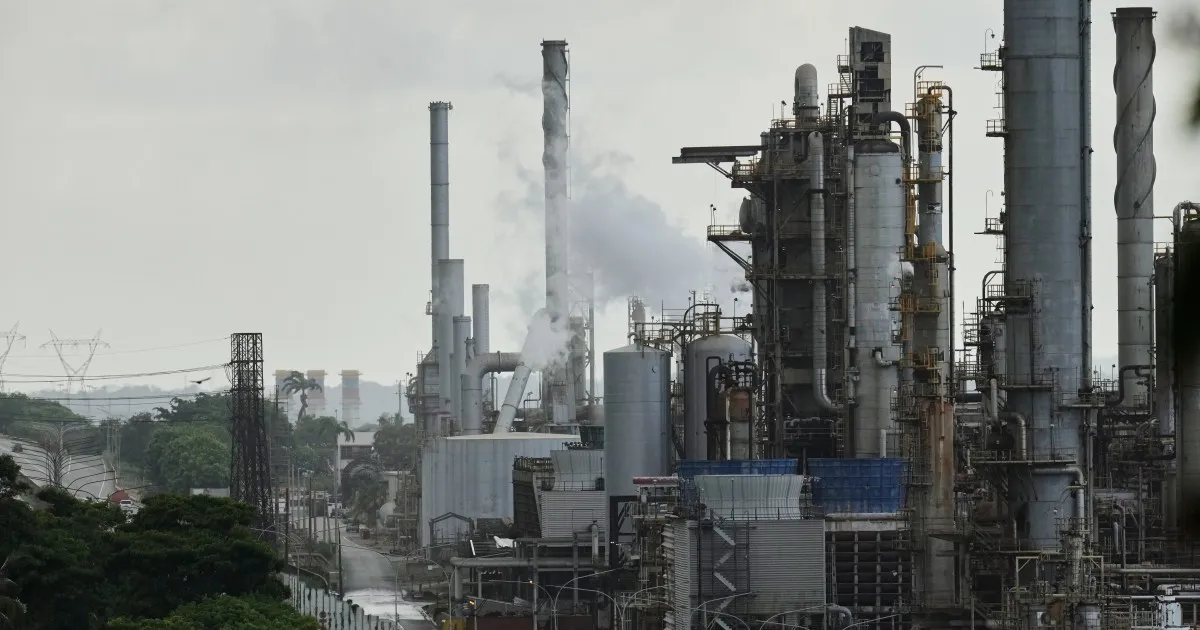
But exploiting the Latin American country’s vast reserves would face a host of big hurdles, from decrepit infrastructure and legal obstacles to leadership uncertainty in Caracas and an excess supply of oil in the global market, experts say.

Recommended Stories

list of 4 itemsend of list

Venezuela possesses the world’s largest known oil reserves – estimated to be some 303 billion barrels – but currently produces only a tiny fraction of global output. Its estimated output was 860,000 barrels per day (bpd) in November, less than 1 percent of the world’s total, compared with 3.7 million bpd during peak production in 1970.

The oil sector’s decline has been blamed on the combined effects of US sanctions and years of underinvestment, mismanagement and corruption under Maduro and his left-wing predecessor, Hugo Chavez.

While the Trump administration could boost supply in the short term by lifting sanctions, restoring Venezuela’s output to anything near peak levels would require huge investment and likely take years, according to energy analysts.

‘Venezuela’s oil infrastructure is in poor shape’

Oil prices moved only slightly in trading on Monday amid market expectations that output would remain largely unchanged for the foreseeable future.

“Venezuela’s oil infrastructure is in poor shape overall, due to lack of maintenance for both equipment and oilfield wells,” Scott Montgomery, a global energy expert at the University of Washington, told Al Jazeera.

“The state oil company, PDVSA, is well known to suffer from corruption and lack of expertise – many well-trained people have left the country to work elsewhere – and has been unable to invest in the country’s petroleum sector,” Montgomery added.

Thomas O’Donnell, an energy and geopolitical analyst based in Berlin, Germany, estimated that Venezuela could return to peak production in five to seven years in the “absolute best” circumstances, including a peaceful transfer of power.

“Longer term, if things are sorted out, yes, Venezuela can become one of the world’s biggest producers of oil. As far as how long that takes, that has all to do with the transition and what is put in place to manage that – both the country’s security and also to manage the investments,” O’Donnell told Al Jazeera.

Mixed messaging from Trump administration

Trump’s administration has provided conflicting messages on Washington’s exact plans for Venezuela and its oil reserves.

On Saturday, Trump said the US would “run” Venezuela and that US oil companies were ready to invest billions of dollars to build up the country’s dilapidated infrastructure and “get the oil flowing”.

In interviews with US media on Sunday, US Secretary of State Marco Rubio sought to downplay Trump’s remarks about controlling the country, saying the president was referring to “running policy” and his plans related to spurring private investment, “not securing the oilfields”.

Trump later on Sunday said Washington was “in charge” of the country and was “dealing with” members of the acting administration without providing details.

Under international law, the US has no claim of ownership over Venezuela’s oil reserves, as sovereign states possess the right to control and use their natural resources under the United Nations-endorsed Principle of Permanent Sovereignty over Natural Resources.

Foreign investors, however, can claim compensation when authorities seize their assets.

ExxonMobil and ConocoPhillips were awarded $1.6bn and $8.7bn, respectively, in international arbitration following the Chavez government’s 2007 nationalisation of the oil sector. Caracas did not pay out in either case.

US oil giants, including Chevron, ExxonMobil, and ConocoPhillips, have not commented directly on Trump’s claims about planned investments in Venezuela.

Chevron is the only large US oil company currently operating in Venezuela, the result of an exemption to US sanctions first granted by the administration of former President Joe Biden.

Consultancy Rystad Energy, based in Oslo, Norway, has estimated that Venezuela’s oil sector would need about $110bn in capital investment to return to its mid-2010s output of about 2 million bpd.

Patrick De Haan, an analyst at energy price tracker GasBuddy, said companies may be reluctant to commit to large investments in the country when global oil prices are hovering around $60 a barrel due to a glut of supply.

“It will take a longer amount of time than many likely realise. Oil companies in a low-priced environment of today would likely be cautious investing billions with oil prices already low,” De Haan told Al Jazeera.

“In addition, Trump seizing Maduro could lead to loyalists sabotaging efforts to increase output. A lot would have to go right to yield the most optimistic timelines.”

US companies are likely to carefully weigh political developments in Venezuela following their experiences with the Chavez government’s expropriation of their assets.

“Oil companies are not likely to rush into a situation where the state is in turmoil, security is lacking, and no clear path forward for political stability exists,” the University of Washington’s Montgomery said.

Maduro due in court in New York

Interim President Delcy Rodriguez, who was Maduro’s deputy, is now leading the country following a ruling by Venezuela’s Supreme Court.

Maduro is scheduled to appear in a New York court on Monday to face charges related to alleged drug trafficking and working with criminal gangs.

Venezuela’s government has condemned the Trump administration over Saturday’s bombing and overthrow of Maduro, labelling his capture a “cowardly kidnapping”.

Russia, China, Iran and Brazil, among other countries, have accused Washington of violating international law, while nations including Israel, Argentina and Greece have welcomed Maduro’s forced removal.

OPEC, which sets limits on production for its 12 members, including Venezuela, is another factor in the Latin American country’s potential oil output.

“Venezuela is a member of OPEC, and like many countries, may become more actively subject to quotas if output climbs,” De Haan said.

Phil Flynn, a market analyst at the Price Futures Group, said reviving Venezuela’s oil production would face “significant challenges”, but he was more bullish about the near-term prospects than other analysts.

He said the market could conceivably see a couple of hundred thousand more barrels a day coming online in the coming months.

“We’ve not had a free Venezuela, and sometimes the US energy industry has the capability to do a lot more than people give them credit for,” Flynn told Al Jazeera.

Source link

Venezuela: Trump’s War for Oil and Domination is a War Crime

Following overnight U.S. airstrikes on Caracas, the seizure of President Nicolás Maduro, and President Donald Trump’s declaration that Washington will take control of Venezuela’s oil and effectively run the country, analysts Steve Ellner and Ricardo Vaz warn that the operation constitutes an unlawful use of force.

They cite the combination of military assault, extraterritorial abduction, resource seizure, and alleged extrajudicial killings at sea as violations of international law and Venezuelan sovereignty.

Source link

Venezuelans reflect on Maduro’s removal, grappling with hope and fear | US-Venezuela Tensions News

It was his 26th birthday, so Wilmer Castro was not surprised by the flurry of messages that lit up his phone.

However, as he began scrolling on Saturday morning, he realised the messages were not birthday wishes, but news of something he had long hoped for: Venezuelan President Nicolas Maduro had been removed from power.

Recommended Stories

list of 3 itemsend of list

“I think it is the best gift that I will ever receive, one I will never forget,” the university student said from Ejido.

Castro told Al Jazeera that he was so elated by the news that he began daydreaming about his future self recounting the story of Maduro’s fall to his grandchildren and great-grandchildren.

“I will tell them that on January 3, 2026, a dictator fell, and [that moment] is going to be very beautiful.”

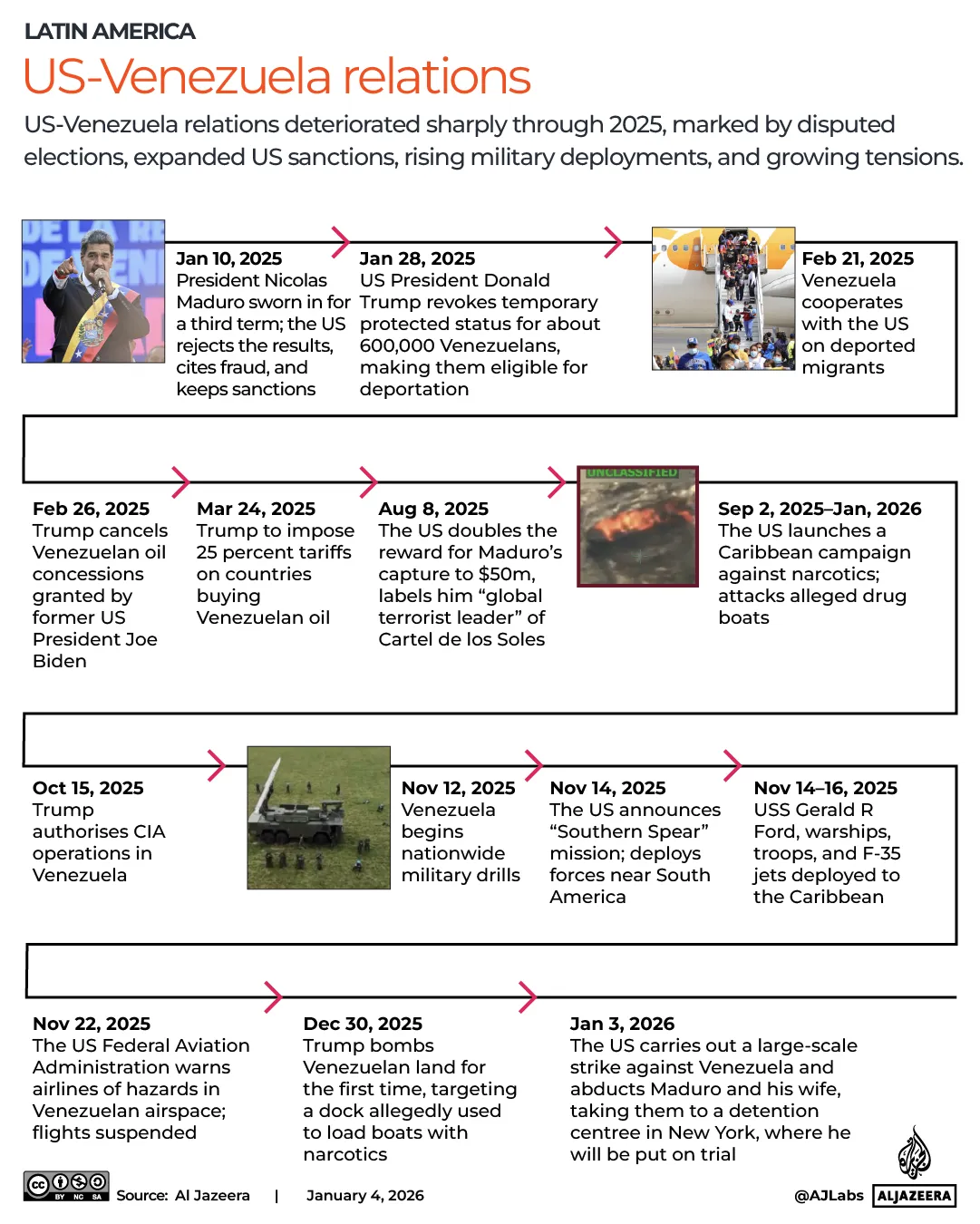
The abduction of Venezuela’s long-time authoritarian leader – and his wife – by the United States followed months of escalating tensions between the two countries, including US strikes on alleged drug-trafficking vessels and the deployment of US ships near Venezuela’s coastal waters.

But by Sunday morning, Castro’s initial jubilation was clouded by a heavy quiet. The weight of uncertainty brought the city to a sombre pause, one that closed in on him and felt unlike anything he had experienced before.

“It’s like being in a field with nothing else around. It’s a mournful silence; I can’t describe it,” he said.

That uncertainty was felt by many Venezuelans on Sunday morning.

Venezuela has had a socialist government since 1999, first under President Hugo Chavez and later Maduro, a period that began with oil-funded social programmes but unravelled into economic mismanagement, corruption and repression – with international sanctions further squeezing the population.

Momentum around the 2024 presidential election raised hopes that the opposition alliance would take control. But when Maduro declared victory, despite opposition claims of a landslide win for Edmundo Gonzalez Urrutia, a crackdown on dissent followed. It left many Venezuelans concluding that any real transition might depend on pressure — or even intervention — from outside the country.

‘Deathly silence’

In southeastern Caracas on Saturday, 54-year-old Edward Ocariz was jolted awake by a loud crash and the vibrating windows of his home near the Fort Tiuna military barracks. He thought it was an earthquake, but when he looked outside, he saw unfamiliar helicopters flying low above smoke rising in the city.

“The noise kept coming,” he said. “I could immediately tell the helicopters were not Venezuelan because I had never seen them here.”

Then, just as suddenly as it had started, it stopped.

“There was a deathly silence,” Ocariz said, adding that the brief suspension of mobile phone services and power outages contributed to the silence. “We were waiting to understand what was happening.”

Fear accompanied the fragments of information that did manage to seep through, Ocariz said. “But it was a fear mixed with joy – tremendous joy. It’s hard to explain.”

On Sunday, when images of a blindfolded and handcuffed Maduro began circulating, Ocariz reflected on the suffering he had endured under the president’s regime.

The human rights activist said he was wrongfully charged with “terrorism” and spent nearly five months as a political prisoner in Tocuyito prison, a maximum-security facility in Carabobo state.

Under Maduro, the country had a long history of jailing those who dissent. After the disputed 2024 election, nearly 2,500 protesters, human rights activists, journalists and opposition figures were arrested. While some were later released, others remain behind bars.

“I felt satisfied. A process of justice is finally beginning,” Ocariz said, fully aware that Maduro will not have to endure the dire prison conditions he did, or be denied food and legal representation.

Despite the joy he and other Venezuelans now feel, Ocariz warns that much remains to be done.

“The population still feels a huge amount of fear [from the authorities] — psychological fear — because it’s well known how the police and justice system use their power to criminalise whoever they choose.”

So far, key institutions remain in the hands of figures from Nicolas Maduro’s inner circle, including Vice President Delcy Rodriguez, who has been named acting president.

But for many Venezuelans — including Castro and Ocariz — seeing a senior Chavista figure still in power is unsettling, particularly as the Trump administration continues to engage with her.

“It is certainly frustrating for me. However, I understand that Venezuela needs to continue with its administrative, functional, and operational management as a country, as a nation,” Ocariz said, adding that the US must maintain some order to control the power vacuum and stamp out repression.

INTERACTIVE - US-Venezuela relations in 2025 - JAN 4, 2026-1767593147

Economic concerns

Venezuela remains heavily militarised, and fears of further unrest linger. During periods of dissent, the authorities relied not only on formal security forces but also on “colectivos”, armed civilian groups accused by rights organisations of intimidation and violence.

Jose Chalhoub, an energy and political risk analyst at Jose Parejo & Associates in Caracas, said he is concerned about the possibility of more attacks and social unrest.

“Any potential new government that will move ahead with the cleansing of the top ranks of the armed forces and security and police forces will lead to the disarmament of the colectivos,” he said, adding that fixing the lingering economic crisis should also be one of the main priorities.

“A new government that applies quick economic measures leading to a recovery will outshine the ideological legacy of the Bolivarian revolution,” he said, referring to the ideology of Chavismo, defined by anti-imperialism, patriotism and socialism.

Those loyal to Maduro have long blamed Venezuela’s economic woes on the US — namely, the sanctions it imposed on the oil sector.

Chalhoub said he believed Trump’s promise to boost the country’s oil production could help the economy, though he found the US president’s assertion that the US will “run the country” baffling.

However, not everyone is happy with the Trump administration’s attack.

Alex Rajoy, a mototaxi driver in Caracas, said the US president was on an imperialist crusade with the goal of “robbing” Venezuela of its natural resources.

Despite his anger, Rajoy said he will stay home over the coming days because he is fearful of further attacks.

“These missiles aren’t aimed only at Chavistas,” he said, referring to those loyal to Venezuela’s socialist ideology.

“They threaten opposition people, too,” he said, adding that anyone supporting foreign intervention amounts to a betrayal. “It’s treason against the homeland,” he said.

What now?

For Castro, the university student, the elation he felt on Saturday has been interrupted by fear for his immediate needs – concerns over whether stores would remain open in Ejido and rising costs. Under Maduro, he has long struggled to afford basic items.

“People in the street were going crazy yesterday,” he said. “Everyone was buying food with half of what they had in their bank accounts, buying what they could, because we don’t know what the future holds.”

The scenes brought back memories of the shortages of 2016, when hyperinflation and scarcity plunged the country into crisis, forcing people to queue for hours and rush between shops with limits on how much each person could buy.

But a day after the attack, Castro said Venezuelans are reflecting on the future of their country and the uncertainty of that future.

“There’s happiness, there’s fear, there’s gratitude, there’s the ‘what will happen next?’” he said. “For my next birthday, I want total freedom for Venezuela – and hopefully, God willing, we will have it.”

Source link

Venezuela: Latin American Countries Jointly Condemn US Attacks as Interim Gov’t Backs Maduro

The Venezuelan armed forces expressed readiness to maintain peace and internal order in the country. (Archive)

Caracas, January 4, 2025 (venezuelanalysis.com) – The governments of Brazil, Chile, Colombia, Mexico, Uruguay, and Spain issued a joint statement Sunday rejecting “unilateral US actions in Venezuelan territory.”

“These actions contravene basic principles of international law and represent a very dangerous precedent for peace and regional security,” the communique read.

The joint statement followed widespread regional and global condemnation of Washington’s January 3 strikes against Venezuelan military sites and kidnapping of President Nicolás Maduro and First Lady Cilia Flores.

The countries went on to issue calls for dialogue and urged the United Nations secretary general and member states to help “de-escalate tensions and preserve peace.” 

In response to US President Donald Trump’s claim that he would “run” Venezuela, the signatories expressed concern over “attempts at foreign government control or seizure of natural resources.” However, the declaration made no mention of Maduro nor called for his release.

The diplomatic response to the US attacks also included an emergency summit of the Community of Latin American and Caribbean nations (CELAC), held on Sunday, January 4. Venezuelan Foreign Minister Yván Gil decried the US actions as blatant violations of international law and the United Nations Charter.

“The US has violated the personal immunity of a sitting head of state,” Gil told regional leaders in the conference call. “Kidnapping a president is kidnapping a people’s sovereignty.”

Venezuela’s top diplomat urged CELAC member-states to “take a step forward,” warning that silence would amount to acceptance of Washington’s unilateral acts.

A number of countries, including Venezuelan allies Russia and China, have forcefully denounced the US military operation. In a Sunday statement, Beijing charged Washington with a “clear violation of international law” and called for Maduro and Flores’ “immediate release.”

The UN Security Council is scheduled to hold an emergency session on Monday.

For her part, Venezuela Vice President and now acting Interim President Delcy Rodríguez reiterated demands for Maduro’s release and vowed that the country would not submit “to any empire.” Rodríguez held a press conference Saturday afternoon and confirmed the enactment of a decree establishing a “state of external commotion.” The instrument grants the executive additional tools, including the ability to mobilize troops or restrict civil liberties, for a period of 90 days that can be extended.

On Saturday night, the Venezuelan Supreme Court ruled that Maduro’s kidnapping and rendition to US soil constituted a temporary absence and that Rodríguez was mandated to take over the presidency on an interim basis.

Footage surfaced Saturday evening showing Maduro being walked out of an airplane in New York. He was later taken to a DEA facility before being moved, along with Flores, to the Metropolitan Detention Center in Brooklyn. He made no statements but greeted DEA officers and appeared upbeat in photos, making a peace sign and holding his thumbs up.

The Venezuelan president was indicted by a New York district court on Saturday, with charges including “narcoterrorism conspiracy” and “possession of machine guns.” A hearing is reportedly scheduled for Monday.

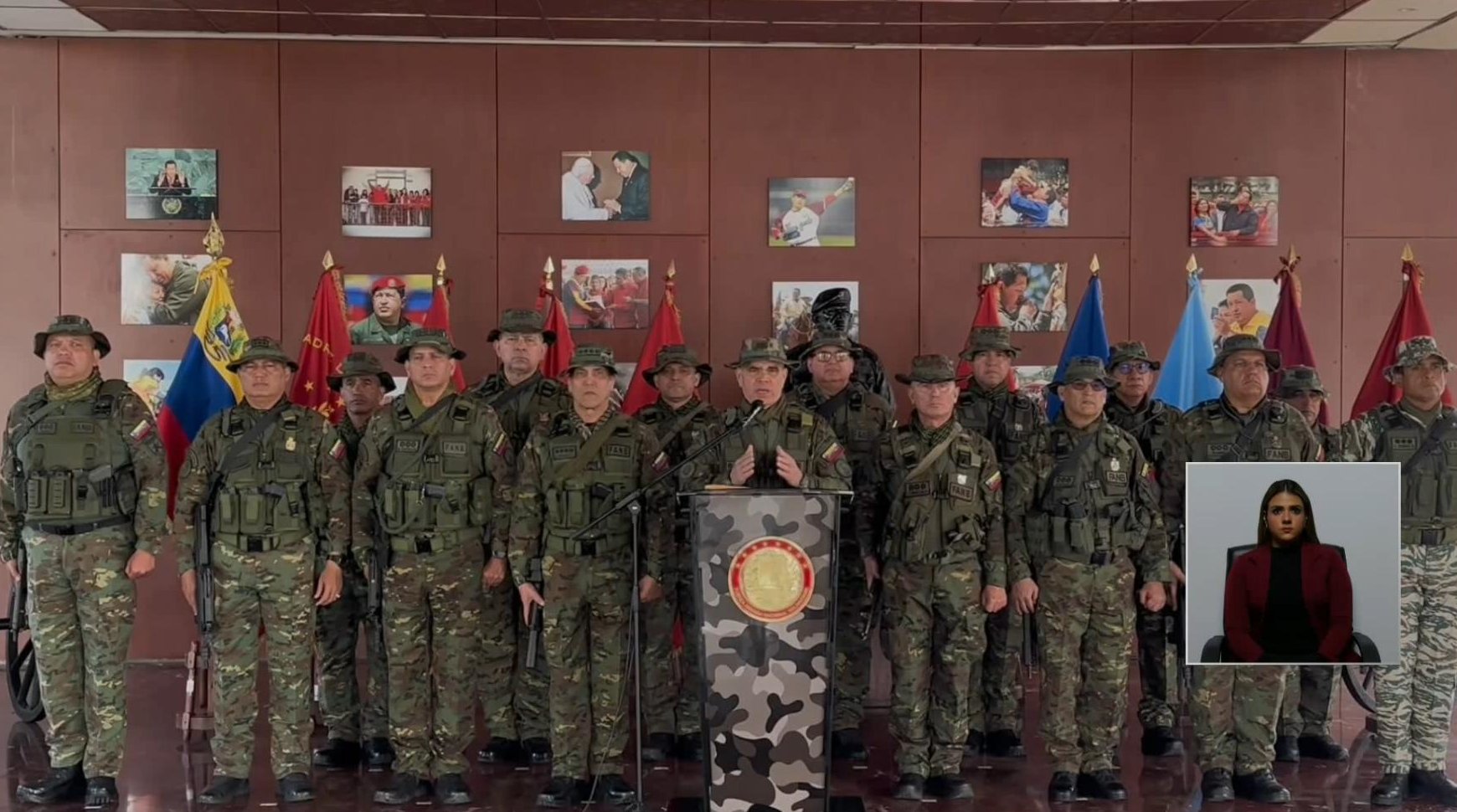
For their part, Venezuela’s National BolivarianArmed Forces (FANB) likewise issued a communique on Sunday, rejecting the “cowardly kidnapping” of Maduro and Flores and reiterating its mission to “confront imperial aggression.”

The FANB voiced support for Rodríguez taking over the presidency on an acting basis and vowed to maintain readiness to preserve “peace and internal order.” 

The Defense Ministry has yet to provide a report on damages and casualties from the US strikes, though Sunday’s communiqué condemned the “cold-blooded murder” of members of Maduro’s security detail. Unconfirmed reports have put forward a figure of 80 deaths.

Venezuelan popular movements and political parties took to the streets for a second consecutive day on Sunday, holding marches and rallies in Caracas and other cities. Public transportation and retail functioned to a greater degree than on Saturday.

The US attacks also spurred numerous international solidarity demonstrations over the weekend. Crowds gathered in dozens of Latin American, European and US cities. A demonstration was called for Sunday outside the Brooklyn detention center where Maduro is being held.

The January 3 operation came on the heels of the largest ever US Caribbean military build-up, with Trump having previously ordered dozebs of strikes against small boats accused of carrying drugs, killing over 100 civilians. The US president has repeatedly expressed intentions of using military threats to extract favorable oil deals for US corporations.

In a Sunday interview, Secretary of State Marco Rubio warned the acting government in Caracas to “make the right decisions” and affirmed that the US retained “leverage” mechanisms, including a naval blockade stopping oil exports.

Source link

IBA: U.S. intervention in Venezuela ‘raises serious’ questions under international law

Jan. 4 (UPI) — The International Bar Association on Sunday expressed concerns over the United States military intervention in Venezuela, stating it “raises serious questions under international law.”

The United States removed Venezuela’s authoritarian president, Nicolas Maduro, and arrested his wife on Saturday in a clandestine military operation following months of speculation amid a U.S. military build in the region.

The Trump administration has framed its military action as a law enforcement operation as Maduro was indicted in the United States on narco-terrorism and drug conspiracy charges in 2020.

While Maduro’s claim to the presidency has been challenged for years following widely disregarded elections, his arrest in Venezuela by the United States has drawn allegations, including from ally France, that his detainment is illegal under international law.

In a statement emailed to UPI on Sunday night, the International Bar Association, the world’s largest association of lawyers, said it “expresses concern” over the U.S. military action in the South American country, while citing the United Nations Charter, which prohibits intervention in matters within domestic jurisdiction, the threat or use of force against the territorial integrity or political independence of any state.

“Measures or policies aimed at coercing political change in another state, when undertaken outside internationally recognized legal frameworks, are inconsistent with these obligations and risk normalizing conduct that international law was designed to prevent,” the IBA said.

“Even in the face of ongoing reprehensible conduct by state leaders, adherence to international law remains essential to preserving the integrity of the rules-based international order.”

Maduro is a long-time foe of U.S. President Donald Trump, who tried to oust the South American leader during his first term.

During his reign as Venezuela’s leader, Maduro has been accused of committing human rights violations against his own people, millions of whom have left the country over the last decade.

The IBA said it is aware of the allegations and conduct of Maduro’s regime that have led to widespread suffering and that they warrant “robust scrutiny and accountability both under domestic and international law, pursued through lawful mechanisms, including international or independent domestic judicial processes.”

“The IBA encourages a democratic transition in Venezuela that respects the rule of law,” it said.

Source link

Trump threatens Colombia’s Petro, says Cuba ‘looks like its ready to fall’ | News

DEVELOPING STORY,

US president says a military operation focused on Colombia’s government ‘sounds good’ to him.

United States President Donald Trump has threatened his Colombian counterpart, Gustavo Petro, in the wake of Washington’s abduction of Venezuela’s leader, and said he believed the government in Cuba, too, was likely to fall soon.

Trump made the comments late on Sunday while speaking to reporters on board Air Force One.

Recommended Stories

list of 4 itemsend of list

“Venezuela is very sick. Colombia is very sick too, run by a sick man who likes making cocaine and selling it to the United States. And he’s not going to be doing it very long. Let me tell you,” the US president said.

When asked if he meant an operation by the US on Colombia, Trump said: “Sounds good to me.”

He added that a US military intervention in Cuba is unlikely because the country appears to be ready to fall on its own.

“Cuba is ready to fall. Cuba, looks like it’s ready to fall. I don’t know how they , if they can hold that, but Cuba now has no income. They got all of their income from Venezuela, from the Venezuelan oil,” Trump said.

“They’re not getting any of it. Cuba literally is ready to fall. And you have a lot of great Cuban Americans that are going to be very happy about this.”

Trump’s comments come a day after US forces captured and detained Maduro and his wife in a surprise attack on Caracas. The Venezuelan leader and his wife, Cilia Flores, are due to appear in court on drug-related charges in New York later on Monday.

Speaking to reporters on Air Force One, Trump also insisted the US was ‘in charge’ of Venezuela, even though the country’s Supreme Court has appointed the country’s Vice President Delcy Rodriguez as interim leader.

He also reiterated a threat to send the US military back to Venezuela if it “doesn’t behave”.

Trump has made no secret of his ambitions to expand US presence in the Western hemisphere and revive the 19th century Monroe Doctrine that states Latin America falls under the US sphere of influence. Trump has called his 21st century version the “Don-roe Doctrine”.

The US president has also previously threatened both Colombia and Cuba. Over the weekend he said that Petro has to “watch his ass” and that the political situation in Cuba was “something we’ll end up talking about because Cuba is a failing nation”.

Source link

Cuba says 32 Cubans killed during US raids on Venezuela | News

DEVELOPING STORY,

Havana declares two days of mourning for the Cubans killed in US’s operation to capture Nicolas Maduro.

The government of Cuba has announced that 32 ⁠of its ​citizens were ‍killed during the raid by the United States to abduct Venezuelan President Nicolas Maduro in Caracas.

It said on Sunday that there would be two days of mourning on ‌January 5 and ‌6 in ⁠honour of those killed and that ‌funeral arrangements would be announced.

More soon…

Source link

Venezuela decries ‘cowardly kidnapping’ as officials back Maduro | US-Venezuela Tensions News

Venezuela’s Defence Minister Vladimir Padrino Lopez has denounced the United States’ move to abduct leader Nicolas Maduro as a “cowardly kidnapping”, adding that some of the president’s bodyguards were killed “in cold blood”, as well as military personnel and civilians on the Venezuelan side.

In his televised statement on Sunday, Padrino Lopez also endorsed a Supreme Court ruling that appointed Vice President Delcy Rodriguez — who also serves as oil minister — as acting president for 90 days.

Recommended Stories

list of 3 itemsend of list

US President Donald Trump threatened that Rodriguez will pay a “very big price” if she doesn’t cooperate with Washington. “If she doesn’t do what’s right, she is going to pay a very big price, probably bigger than Maduro,” Trump told The Atlantic in a telephone interview.

US forces attacked Caracas in the early hours of Saturday, bombing military targets and spiriting away Maduro and his wife to face federal narco-trafficking charges in New York. The Venezuelan president was escorted off a plane at Stewart Air National Guard Base in New York state and taken to a Brooklyn jail.

He is due to make his first appearance on Monday in Manhattan’s federal court.

US to use oil blockade to leverage change in Venezuela

US Secretary of State Marco Rubio on Sunday suggested that Washington would not take a day-to-day role in governing Venezuela other than enforcing an existing “oil quarantine”, using that leverage to press policy changes in the country.

Rubio’s statements seemed designed to temper concerns, a day after Trump announced the US would “run” the oil-rich nation. The Trump administration’s actions drew unease from parts of his own Republican Party coalition, including an “America First” base that is opposed to foreign interventions, as well as from observers who recalled past nation-building efforts in Iraq and Afghanistan.


Rubio dismissed such criticism, saying that Trump’s intent had been misunderstood by a “foreign policy establishment” that was fixated on the Middle East.

Al Jazeera’s Phil Lavelle, reporting from Doral, Florida in the US, said Trump had been elected on an “America First” policy centred around no engagement in foreign wars or sending US service personnel into danger.

“Now we’ve got this situation where he said, less than 24 hours ago, ‘We’re not afraid of putting boots on the ground,’” Lavelle said.

Protests took place in cities across the US against Trump’s military action in Venezuela. Hundreds gathered in the rain in downtown Los Angeles, carrying signs saying “Stop bombing Venezuela now!” and “No blood for oil”.

“I stand against US imperialism altogether. They want oil … They want to help the corporate billionaires. Bombing is just their means to building power like that, of taking control. So again, I’m against it,” said one protester named Niven.

Trump on Saturday delivered a speech in which he made little mention of the so-called “war on drugs” – which for months had been his main justification for bombing Venezuelan ship and assets – but argued that Venezuela had “stolen” oil from the US and that it would now be taken back.

The United Nations special rapporteur on human rights and counterterrorism, Ben Saul, said the US actions in Venezuela were illegal, calling on Trump to be investigated and impeached. “Every Venezuelan life lost is a violation of the right to life. President Trump should be impeached and investigated for the alleged killings,” he said in a social media post.

The UN Security Council (UNSC) was set to meet on Monday to discuss the situation in Venezuela. UN Secretary-General Antonio Guterres said he was “deeply alarmed” by the US strikes, which a spokesperson said could “constitute a dangerous precedent”.

Uncertainty in Venezuela after Maduro’s abduction

Some Venezuelans in Caracas have welcomed the US’s seizure of Maduro, but others said the action could worsen conflict in the country, with protests denouncing the US taking place.

“There should be a positive change for all Venezuelans, because it has been 28 years of government, and now is the time for transition in this country,” said Ronald Gaulee, a motorcycle rider in Caracas.

Merchant Juan Carlos Rincon was more cautious. “The truth is that there is a lot of manipulation behind all this,” he told the Reuters news agency. “We want to be at peace, move forward, and for Venezuela to have, like any other country, the right to choose its own destiny and its own leaders.”

Baker Franklin Jimenez said he would heed the government’s call to defend the country. “If they took him away, I think they shouldn’t have done so, because this will create an even worse conflict than the one we have now,” he said. “And as for the bombings and all that, we have to go out, we all have to go out into the streets to defend our homeland, to defend ourselves.”

Some Venezuelans decided to flee the country amid the uncertainty, crossing the Venezuela-Colombia border to reach the Colombian town of Cucuta. Karina Rey described a “tense situation” in the Venezuelan city of San Cristobal, just across the border.

“There are long lines, and people are very paranoid, or on edge, over food. Supermarkets are closing,” Rey told Al Jazeera. “The lines are very long just to stock up on food, because we don’t know what will happen in the coming weeks. We’re waiting to see what happens.”

Al Jazeera’s Alessandro Rampietti, reporting from Cucuta, said many Venezuelans there initially felt jubilant after Maduro was ousted. “But that quickly shifted to uncertainty,” he said.

“Several people said they expected the United States to immediately bring opposition leader Maria Corina Machado back into the country, along with Edmundo Gonzalez Urrutia, who many Venezuelans believe won the last presidential election,” Rampietti continued.

“Instead, with much of the existing leadership still in place and with Vice President Delcy Rodriguez appointed as interim leader, there is growing fear about what could happen next.”

Tiziano Breda, a senior analyst at the Armed Conflict Location and Event Data Project, said what happens next hinges on the response of Venezuela’s government and armed forces.

“So far, they’ve avoided direct confrontation with US forces, but deployments on the streets point to efforts to contain unrest,” he said. “A smooth transition remains unlikely, and the risk of resistance from pro-regime armed groups – including elements within the military and Colombian rebel networks active in the country – remains high.”

Source link

What might the US do next after Venezuela? | Nicolas Maduro

There are legal concerns about the abduction of Maduro, but little Western criticism.

The United States’ abduction of Venezuela’s President Nicolas Maduro has been sharply criticised by his allies – but not by Western nations, despite questions about its legality.

So, does the operation signal a new aggressive US strategy? And what might the global impact be?

Presenter: Adrian Finighan

Guests:

Charles Shapiro – Former US ambassador to Venezuela under President George W Bush

Stefan Wolff – Professor of International Security at the University of Birmingham in the United Kingdom

Ernesto Castaneda – Director of the Center for Latin American and Latino Studies at the American University in Washington, DC

Source link

To ‘run’ Venezuela, Trump presses existing regime to kneel

Top officials in the Trump administration clarified their position on “running” Venezuela after seizing its president, Nicolás Maduro, over the weekend, pressuring the regime that remains in power there Sunday to acquiesce to U.S. demands on oil access and drug enforcement, or else face further military action.

Their goal appears to be the establishment of a pliant vassal state in Caracas that keeps the current government — led by Maduro for more than a decade — largely in place, but finally defers to the whims of Washington after turning away from the United States for a quarter century.

It leaves little room for the ascendance of Venezuela’s democratic opposition, which won the country’s last national election, according to the State Department, European capitals and international monitoring bodies.

Trump and his top aides said they would try to work with Maduro’s handpicked vice president and current interim president, Delcy Rodríguez, to run the country and its oil sector “until such time as we can do a safe, proper and judicious transition,” offering no time frame for proposed elections.

Trump, Secretary of State Marco Rubio and Homeland Security Secretary Kristi Noem underscored the strategy in a series of interviews Sunday morning.

“If she doesn’t do what’s right, she is going to pay a very big price, probably bigger than Maduro,” Trump told the Atlantic, referring to Rodríguez. “Rebuilding there and regime change, anything you want to call it, is better than what you have right now. Can’t get any worse.”

Rubio said that a U.S. naval quarantine of Venezuelan oil tankers would continue unless and until Rodríguez begins cooperating with the U.S. administration, referring to the blockade — and the lingering threat of additional military action from the fleet off Venezuela’s coast — as “leverage” over the remnants of Maduro’s regime.

“That’s the sort of control the president is pointing to when he says that,” Rubio told CBS News. “We continue with that quarantine, and we expect to see that there will be changes — not just in the way the oil industry is run for the benefit of the people, but also so that they stop the drug trafficking.”

Sen. Tom Cotton (R-Ark.), chairman of the Senate Select Committee on Intelligence, told CNN that he had been in touch with the administration since the Saturday night operation that snatched Maduro and his wife from their bedroom, whisking them away to New York to face criminal charges.

Trump’s vow to “run” the country, Cotton said, “means the new leaders of Venezuela need to meet our demands.”

“Delcy Rodríguez, and the other ministers in Venezuela, understand now what the U.S. military is capable of,” Cotton said, while adding: “It is a fact that she and other indicted and sanctioned individuals are in Venezuela. They have control of the military and security forces. We have to deal with that fact. But that does not make them the legitimate leaders.”

“What we want is a future Venezuelan government that will be pro-American, that will contribute to stability, order and prosperity, not only in Venezuela but in our own backyard. That probably needs to include new elections,” Cotton added.

Whether Rodríguez will cooperate with the administration is an open question.

Trump said Saturday that she seemed amenable to making “Venezuela great again” in a conversation with Rubio. But the interim president delivered a speech hours later demanding Maduro’s return, and vowing that Venezuela would “never again be a colony of any empire.”

The developments have concerned senior figures in Venezuela’s democratic opposition, led by Maria Corina Machado, last year’s Nobel Peace Prize laureate, and Edmundo González Urrutia, the opposition candidate who won the 2024 presidential election that was ultimately stolen by Maduro.

In his Saturday news conference, Trump dismissed Machado, saying that the revered opposition leader was “a very nice woman,” but “doesn’t have the respect within the country” to lead.

Elliott Abrams, Trump’s special envoy to Venezuela in his first term, said he was skeptical that Rodríguez — an acolyte of Hugo Chávez and avowed supporter of Chavismo throughout the Maduro era — would betray the cause.

“The insult to Machado was bizarre, unfair — and simply ignorant,” Abrams told The Times. “Who told him that there was no respect for her?”

Maduro was booked in New York and flown by night over the Statue of Liberty in New York Harbor to the Metropolitan Detention Center in Brooklyn, where he is in federal custody at a notorious facility that has housed other famous inmates, including Sean “Diddy” Combs, Ghislaine Maxwell, Bernie Madoff and Sam Bankman-Fried.

He is expected to be arraigned on federal charges of narco-terrorism conspiracy, cocaine importation conspiracy, possession of machine guns and destructive devices, and conspiracy to possess machine guns and destructive devices as soon as Monday.

While few in Washington lamented Maduro’s ouster, Democratic lawmakers criticized the operation as another act of regime change by a Republican president that could have violated international law.

“The invasion of Venezuela has nothing to do with American security. Venezuela is not a security threat to the U.S.,” said Sen. Chris Murphy, a Democrat from Connecticut. “This is about making Trump’s oil industry and Wall Street friends rich. Trump’s foreign policy — the Middle East, Russia, Venezuela — is fundamentally corrupt.”

In their Saturday news conference, and in subsequent interviews, Trump and Rubio said that targeting Venezuela was in part about reestablishing U.S. dominance in the Western Hemisphere, reasserting the philosophy of President James Monroe as China and Russia work to enhance their presence in the region. The Trump administration’s national security strategy, published last month, previewed a renewed focus on Latin America after the region faced neglect from Washington over decades.

Trump left unclear whether his military actions in the region would end in Caracas, a longstanding U.S. adversary, or if he is willing to turn the U.S. armed forces on America’s allies.

In his interview with the Atlantic, Trump suggested that “individual countries” would be addressed on a case-by-case basis. On Saturday, he reiterated a threat to the president of Colombia, a major non-NATO ally, to “watch his ass,” over an ongoing dispute about Bogota’s cooperation on drug enforcement.

On Sunday morning, the United Nations Security Council was called for an urgent meeting to discuss the legality of the U.S. operation inside Venezuela.

It was not Russia or China — permanent members of the council and longstanding competitors — who called the session, nor France, whose government has questioned whether the operation violated international law, but Colombia, a non-permanent member who joined the council less than a week ago.

Source link

Rubio on Venezuela: U.S. troops off shore are leverage, election talk is premature

Jan. 4 (UPI) — Secretary of State Marco Rubio said in interviews on Sunday that it is “premature” to discuss elections in Venezuela because higher priorities, including reinvigorating the country’s oil industry, must be addressed first.

In interviews with ABC, CBS and NBC, Rubio said that the United States will continue to strike drug boats and detain oil tankers as the Trump administration moves to stabilize and “run” Venezuela after the apprehension of Venezuelan President Nicolas Maduro on Saturday.

The Trump administration plans to keep its “quarantine” of Venezuelan oil in place as it pressures the remainders of Maduro’s government to end their cooperation with South American drug gangs, as well as stop selling oil to the United States’ adversaries, Rubio said.

“As we move forward here, we’ll set the conditions so that we no longer have in our hemisphere a Venezuela that’s the crossroads for many of our adversaries around the world, including Iran and Hezbollah,” Rubio said on ABC News’ “This Week.”

Rubio added that Venezuela would also no longer be “a narcotrafficking paradise for all those drugs coming out of Colombia … and toward the United States.”

Offshore armada is ‘leverage’

In a press conference on Saturday, Trump told reporters that there was a second strike planned in the case that Venezuelan forces responded to Maduro’s capture or the plan was not successful, but U.S. military commanders decided against launching it.

Trump noted Saturday, and Rubio reiterated on Sunday, that the roughly 15,000 troops offshore of Venezuela spread across more than a dozen warships would remain in the Caribbean.

Their objectives, he told CBS’ “Face The Nation,” are striking drug trafficking boats, apprehending tankers suspected to be carrying sanctioned Venezuelan oil and using the armada, as Trump has referred to it, of U.S. military ships offshore to encourage the remaining members of Maduro’s administration to comply with U.S. demands.

“What’s going to happen here is that we have a quarantine on their oil,” Rubio said. “That the means that their economy will not be able to move forward until the conditions that are in the national interest of the United States and of the Venezuelan people are met.”

“So, that leverage remains,” he added. “That leverage is ongoing. And we expect that it’s going to lead to results here.”

No elections yet

Although the Trump administration “cares about elections, we care about democracy, we care about all of that,” the priority is the U.S.’ goals of stopping the flow of drugs into the United States and U.S. “safety, security, well-being and prosperity,” Rubio told NBC News’ “Meet The Press.”

At this point, he said, considering new elections in Venezuela “is premature at this point” as Trump has tasked Rubio with “running policy” in the South American country.

In the next several months, Rubio said that the main priorities are to end entanglements between the Venezuelan government and drug gangs, as well as to prevent Iran, Russia, China and Cuba, among other nations, from investing in the country and gaining a foothold in the Western Hemisphere.

Maduro and his wife, who are in a jail in New York City awaiting trial, along with four other people in the Venezuelan government who were not arrested in Saturday’s raid, have been indicted for allegedly working with Colombian drug gangs and rebel groups to assist them in trafficking cocaine.

The quarantine on ships transporting Venezuelan oil is linked to Trump’s goal of sending U.S. oil companies to inspect and reinvigorate Venezuela’s ailing oil industry, while keeping the oil in the Americas.

While noting that the United States, which is a net oil exporter, does not need the oil, he questioned why Iran, Russia or China should need Venezuelan oil considering all three are nowhere near South America.

“They’re not even in this continent,” Rubio said. “This is where we live, and we’re not going to allow the Western Hemisphere to be a base of operations for adversaries, competitors and rivals of the United States.”

Source link

U.S. national intelligence director is silent on Venezuela operation

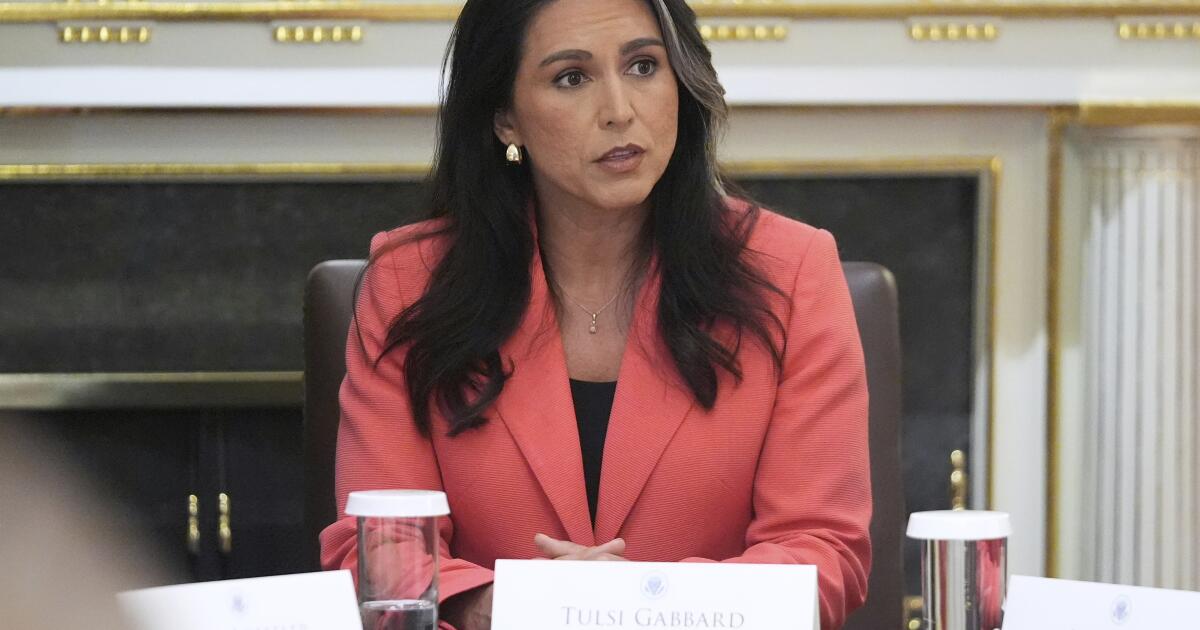
Director of National Intelligence Tulsi Gabbard had yet to weigh in on the U.S. operation to remove Nicolás Maduro from power in Caracas as of Saturday night, more than 24 hours since President Trump approved the audacious mission that captured the Venezuelan leader.

Her silence on the operation surprised some in the U.S. intelligence community, which laid the groundwork for the mission over several months, and which had assets in harm’s way on the ground in Venezuela as the operation unfolded.

CIA Director John Ratcliffe, by contrast, accompanied Trump in Mar-a-Lago throughout the night as the extraction was underway, and stood beside the president as he conducted a news conference announcing the results.

“Teamwork at its finest,” Ratcliffe wrote on social media, posted alongside photos of him with the president’s team in the temporary situation room set up at Trump’s Florida estate.

Gabbard, a native of Hawaii who, according to her X account, spent the holidays in her home state, made a name for herself as a member of Congress campaigning against “regime change wars,” particularly the U.S. war in Iraq that toppled Saddam Hussein.

In a speech at Turning Point USA’s annual conference last month, Gabbard criticized “warmongers” in the “deep state” of the intelligence community she leads trying to thwart Trump’s efforts to broker peace between Russia and Ukraine.

“Too often we, the American people, are told we must choose between liberty or security, and which side often wins out in that proposition,” she told the gathered crowd. “Liberty loses, and the warmongers claim that they are doing what they are doing for the sake of our security. It’s a lie.”

Outside of government, during Trump’s first term, Gabbard also criticized advocates for regime change in Venezuela, writing in 2019, “It’s about the oil … again.”

“The United States needs to stay out of Venezuela,” Gabbard wrote at the time. “Let the Venezuelan people determine their future.

“We don’t want other countries to choose our leaders,” she added, “so we have to stop trying to choose theirs.”

Source link

Missile Fragments Add To Evidence MQ-9 Reaper Drone Carried Out Venezuela Strike

Evidence that the United States employed AGM-114 Hellfire or AGM-179A Joint Air-to-Ground Missiles (JAGM) in a covert strike on a target in Venezuela has now emerged. The U.S. military also recently disclosed an attack on what it says was a trio of drug-smuggling boats sailing in a convoy. Just earlier this week, TWZ highlighted exactly these potential scenarios in the broader context of recent sightings of U.S. MQ-9 Reaper drones flying over the Caribbean with unusually heavy weapons loads.

Spanish-language television network Telemundo, headquartered in Miami, Florida, first broadcast imagery of U.S. missile fragments, which we will come back to in a moment, that it said were recovered in Venezuela’s far northwestern Alta Guajira region. What looks to be the full video clip that those images were taken from is also now circulating online. NBC News had previously reported that members of Venezuela’s Wayuu indigenous community had witnessed a mysterious explosion in Alta Guajira on December 18. U.S. President Donald Trump had first disclosed that the U.S. government had carried out a covert U.S. strike on Venezuelan soil on December 26, but it remains unconfirmed exactly where or when that occurred. Other details, including that the operation targeted a “port facility” or “dock” and that it was carried out by a Central Intelligence Agency (CIA) drone, have been reported since then, as you can read more about here.

Sería el 1er ataque estadounidense, directo, en suelo de #AméricadelSur. Se ven restos de rocket de motor de 52 kilogramos encontrado en la Alta Guajira. Esto es un fragmento del video original donde se infiere inicio de ataques de 🇺🇸 a objetivos terrestres en 🇻🇪 pic.twitter.com/U7uw3SVkgg

— Plácido Daniel Garrido D. (@DanielGarrido) January 1, 2026

Imágenes obtenidas por Telemundo desde la Alta Guajira muestran fragmentos destruidos cuyas características coinciden ampliamente con las de un Hellfire. Este nuevo indicador sugiere que un ataque encubierto de Estados Unidos tuvo lugar al noroeste de Venezuela. pic.twitter.com/wARjIy6mFG

— Daniel Blanco (@DanielBlancoPaz) January 1, 2026

A map highlighting the location of Venezuela’s Alta Guajira region in relation to the rest of the country. Google Maps

Returning to the missile fragments reportedly found in Alta Guajira, they are relatively small, but have distinctive “WARNING” and “52.0” markings that are clearly visible. This is fully consistent with the markings seen on AGM-179A Joint Air-to-Ground Missiles (JAGM), as well as some variants of the AGM-114 Hellfire. Similar fragments have been seen on many occasions following confirmed and reported U.S. drone strikes around the world, including ones tied to the CIA and the U.S. military’s secretive Joint Special Operations Command (JSOC).

A missile fragment reportedly recovered in Venezuela’s Alta Guajira region with “WARNING” visible in lettering. capture via Telemundo/X
Another missile fragment with “52.0” in white letting still legible. capture via X
An example of a similar missile fragment. This one was recovered following the U.S. strike that killed Iranian General Qassem Soleimani in Iraq in January 2020. via X

The AGM-179A is derived directly from the AGM-114R variant, and both missiles share an identical rear body. JAGM’s main area of improvement over its predecessor is its new dual-mode seeker, with laser and millimeter-wave radar guidance modes, which gives it more flexibility to engage targets, as you can read more about here. Every JAGM and Hellfire has a label at the tail end that says “WARNING” and “2-MAN LIFT,” and lists their weight in kilograms and pounds. Each JAGM is roughly 115 pounds (52 kilograms). The stated weight of the baseline R model Hellfire is approximately 110 pounds (49 kilograms). However, there are many subvariants of the AGM-114R, some of which have very different configurations from the standard type. This includes the R9X version, which features an array of pop-out sword-like blades instead of a traditional high-explosive warhead.

A briefing slide showing a general breakdown of the components of the AGM-179A JAGM, including portions directly carried over from the AGM-114R Hellfire. US Army
An official Army infographic that provides details on various Hellfire variants, including their weights. US Army

MQ-9s armed with AGM-114s have been flying from Rafael Hernandez Airport in Aguadilla in Puerto Rico since September 2025, ostensibly in support of expanded counter-drug operations in the Caribbean. Starting last month, local spotters noticed Reapers operating from the airport carrying steadily larger loads of Hellfires, up to as many as 10 at a time. The drones have not been seen with JAGMs, or any other munitions, under their wings. The U.S. military still does not appear to have officially confirmed the integration of JAGM onto the MQ-9, but adding the missiles to the Reaper’s arsenal is at least planned, and there has been evidence in the past that it has already occurred.

New publicly available images show that nine USAF MQ-9As have flown/are flying out of Aguadilla (BQN/TJBQ) 🇵🇷 in support of ongoing counternarcotics ops in the Caribbean.

The nine serials are: 14-4242, 14-4269, 14-4275, 17-4348, 17-4355, 17-4356, 19-4390, 19-4398, 20-4408. https://t.co/1vL60eEoG6 pic.twitter.com/1cUkfIfB2W

— LatAmMilMovements (@LatAmMilMVMTs) December 24, 2025

The U.S. military does have other aircraft, fixed-wing and rotary, that can employ Hellfires and/or JAGMs. However, the MQ-9 would still be particularly well-suited for a covert strike on Venezuela, given the ranges and other likely operational parameters involved.

As TWZ wrote in our recent exploration of Reaper operations in the Caribbean:

“The aforementioned descriptions of the target [of the covert strike] in Venezuela as being a ‘port facility’ and a ‘dock’ would seem to point to something of substantial size. This, in turn, could well have necessitated the employment of a relatively large amount of ordnance, such as what we’ve recently been seeing on Puerto Rico-based MQ-9s, to ensure adequate destruction.”

“More clandestine assets could still have been used instead, but there also would have been no real need to do so if something like a Reaper could have accomplished the job with a reasonable level of survivability. The strike on the target in Venezuela, which did not prompt any kind of immediate response on the part of Venezuelan authorities, at least that we know of, raises additional questions about the effectiveness of the country’s air defenses. Whether or not any standoff electronic warfare support, of which there is plenty in the region currently in the form of Navy EA-18 Growler jets and at least one Air Force EC-130H Compass Call plane, was utilized during the operation is unknown, but this seems likely to have been the case. As TWZ has explored in detail in the past, Venezuela’s air defense capabilities are limited, but could certainly present real threats.”

It is also worth noting here that Colombian President Gustavo Petro separately claimed this week that the United States had struck a target in or around Venezuela’s port city of Maracaibo, which lies to the immediate south of Alta Guajira. Petro described it as a “factory” tied to Colombian leftist guerrilla group Ejército de Liberación Nacional (ELN; National Liberation Army), where “we fear they mix coca paste there to make it cocaine,” according to a machine translation of a post from his official account on X. At the time of writing, this all remains unconfirmed. The ELN is understood to regularly operate in Alta Guajira, which is in close proximity to the Colombian border.

Resulta que muchas lanchas atacadas con misiles, como está pasando en las incautaciones.que hacemos en Colombia o, con ayuda nuestra fuera de Colombia, no llevaban cocaína sino cannabis.

Problema paradójico: en EEUU, en muchísimas partes es legal. Y el Congreso de Colombia no… https://t.co/EJb6yxZKat

— Gustavo Petro (@petrogustavo) December 30, 2025

In addition, Venezuela’s dictatorial president Nicolas Maduro said that he “might discuss” the U.S. government’s direct action against his country “in a few days,” in a recent interview with the Telesur television network. Telesur is jointly sponsored by the governments of Venezuela, Cuba, and Nicaragua. Maduro also took that opportunity to focus blame for drug-trafficking in the region onto Colombian groups, and claim his willingness to work with American authorities on a variety of issues. Maduro is currently under indictment in the United States on charges related to illicit narcotics, including his alleged leadership of a cartel now officially designated as a foreign terrorist organization (FTO).

Asked about a reported CIA drone strike in Venezuela, Maduro declined to comment, saying it “could be something we talk about in a few days.” pic.twitter.com/qC0wlYe3GJ

— Clash Report (@clashreport) January 2, 2026

Maduro:

All of the cocaine that is moved in this region is produced in Colombia. All of it. All of the cocaine.

We’re the victims of Colombian drug trafficking, not from today, from decades. pic.twitter.com/A4SEtafVwp

— Clash Report (@clashreport) January 2, 2026

In TWZ‘s recent detailed look into U.S. MQ-9s flying over the Caribbean with ever-larger loads of AGM-114 Hellfires, we also wrote:

“As already noted, it is not otherwise clear what new mission requirements and/or intelligence streams may have fueled the decision to begin arming MQ-9s flying from Puerto Rico with the significantly larger loads of Hellfires. The need to respond to drug cartels sending out larger waves of boats in order to survive, or to provide armed overwatch due to concerns about surface threats from small boats, are possibilities, but there are no indications so far of either of these being the case.”

On New Year’s Eve, U.S. Southern Command (SOUTHCOM) shared videos of “kinetic strikes against three narco-trafficking vessels traveling as a convoy,” which it said had occurred the day before.

The released footage does include clips that show impacts consistent with aerial gunfire, pointing to the involvement, at least in part, of an Air Force AC-130J Ghostrider gunship. MQ-9s and AC-130Js are among the platforms understood to be involved in this controversial campaign of strikes on alleged drug-smuggling boats, which has been ongoing since September 2025.

On Dec. 30, at the direction of @SecWar Pete Hegseth, Joint Task Force Southern Spear conducted kinetic strikes against three narco-trafficking vessels traveling as a convoy. These vessels were operated by Designated Terrorist Organizations in international waters. Intelligence… pic.twitter.com/NHRNIzcrFS

— U.S. Southern Command (@Southcom) December 31, 2025

SOUTHCOM said the strikes on the trio of boats on December 30 killed “three narco-terrorists,” but that other individuals survived, and that it had contacted the U.S. Coast Guard to conduct a search for survivors. The Coast Guard subsequently confirmed that request, and, by extension, that the strikes had occurred somewhere in the Eastern Pacific Ocean, rather than the Caribbean. At the time of writing, that effort is still ongoing, but there have been no reports of anyone being recovered. Colombian President Petro has also offered his country’s assistance and shared a map showing what he says is the approximate location where the boats were struck.

On Dec. 30th, the @uscg was notified by the @DeptofWar of mariners in distress in the Pacific Ocean.  The U.S. Coast Guard is conducting search and rescue operations. Updates will be provided when available.

— USCG Pacific Area (@USCGPACAREA) January 1, 2026

The Coast Guard is continuing the search for survivors from a U.S. military strike against suspected drug vessels that took place earlier this week. We now know roughly where those strikes took place: Approximately 400 nautical miles southwest of the Mexico/ Guatemala border.

— Idrees Ali (@idreesali114) January 2, 2026

Aviso a todos los gobiernos de la zona. Está parece ser la zona exacta donde cayeron los lancheros que se arrojaron de embarcaciones que fueron bombardeadas.

Se sabe que tres personas murieron, el resto quedó viva porque se arrojaron al mar.

Información conseguida por nuestra… pic.twitter.com/Xj5oJo2AcD

— Gustavo Petro (@petrogustavo) January 2, 2026

SOUTHCOM later announced strikes on two more alleged drug smuggling boats on New Year’s Eve, but did not explicitly say whether they had been sailing together or separately. Where those vessels were targeted is not clear.

On Dec. 31, at the direction of @SecWar Pete Hegseth, Joint Task Force Southern Spear conducted a lethal kinetic strike on two vessels operated by Designated Terrorist Organizations. Intelligence confirmed the vessels were transiting along known narco-trafficking routes and… pic.twitter.com/4AE5u4cEff

— U.S. Southern Command (@Southcom) January 1, 2026

There is certainly a visible trend now toward the targeting of multiple boats in a single day, which would mark a notable uptick in tempo in these operations. As TWZ has previously noted, between September 2 and December 29, the U.S. military is known to have attacked 31 vessels in the Caribbean Sea, as well as the Eastern Pacific Ocean, an average of one strike on a single boat every four days.

This all follows a major, months-long build-up of U.S. air, naval, and ground forces in the region, which is still ongoing. There has also been a steady ratcheting up of the U.S. government’s pressure campaign against Maduro, specifically, now punctuated by at least one covert strike. Whether that may evolve into overt action against the regime in Caracas still remains to be seen.

In the meantime, there is still-growing evidence that the role of U.S. MQ-9 drones in the region is expanding in scale and scope. Altogether, U.S. operations in and around the Caribbean have already taken an increasingly kinetic turn in recent weeks.

Contact the author: joe@twz.com

Joseph has been a member of The War Zone team since early 2017. Prior to that, he was an Associate Editor at War Is Boring, and his byline has appeared in other publications, including Small Arms Review, Small Arms Defense Journal, Reuters, We Are the Mighty, and Task & Purpose.


Source link