Venezuela

‘Act of piracy’ or law: Can the US legally seize a Venezuelan tanker? | Donald Trump News

United States President Donald Trump has said that the US has seized a sanctioned oil tanker close to the coast of Venezuela, in a move that has caused oil prices to spike and further escalates tensions with Caracas.

“We’ve just seized a tanker on the coast of Venezuela, large tanker, very large, largest one ever, actually, and other things are happening,” Trump said on Wednesday.

Recommended Stories

list of 1 itemend of list

The Venezuelan government called the move an act of “international piracy”, and “blatant theft”.

This comes as the US expands its military operations in the region, where it has been carrying out air strikes on at least 21 suspected drug-trafficking vessels since September. The Trump administration has provided no evidence that these boats were carrying drugs, however.

Here is what we know about the seizure of the Venezuelan tanker:

What happened?

The US said it intercepted and seized a large oil tanker off the coast of Venezuela, marking the first operation of its kind in years.

The last comparable US military seizure of a foreign tanker occurred in 2014, when US Navy SEALs boarded the Morning Glory off Cyprus as Libyan rebels attempted to sell stolen crude oil.

The Trump administration did not identify the vessel or disclose the precise location of the operation.

However, Bloomberg reported that officials had described the ship as a “stateless vessel” and said it had been docked in Venezuela.

Soon after announcing the latest operation on Wednesday, US Attorney General Pam Bondi released a video showing two helicopters approaching a vessel and armed personnel in camouflage rappelling onto its deck.

“Today, the Federal Bureau of Investigation, Homeland Security Investigations and the United States Coast Guard, with support from the Department of War, executed a seizure warrant for a crude oil tanker used to transport sanctioned oil from Venezuela and Iran,” Bondi said.

She added that “for multiple years, the oil tanker has been sanctioned by the United States due to its involvement in an illicit oil-shipping network supporting foreign terrorist organisations”.

Experts said the method of boarding demonstrated in the video is standard practice for US forces.

“The Navy, Coast Guard and special forces all have special training for this kind of mission, called visit, board, search, and seizure – or VBSS,” Mark Cancian, a retired Marine Corps colonel and senior adviser at the Center for Strategic and International Studies, told Al Jazeera.

“It is routine, especially for the Coast Guard. The government said it was a Coast Guard force doing the seizure, though the helicopter looks like a Navy SH-60S.”

Which vessel was seized?

According to a Reuters report, British maritime risk firm Vanguard identified the crude carrier Skipper as the vessel seized early Wednesday off Venezuela’s coast.

MarineTraffic lists the Skipper as a very large crude carrier measuring 333m (1,093 feet) in length and 60m (197 feet) in width.

The tanker was sanctioned in 2022 for allegedly helping to transport oil for the Lebanese armed group, Hezbollah, which is backed by Iran, and Iran’s Quds Force.

The Skipper departed Venezuela’s main oil terminal at Jose between December 4 and 5 after loading about 1.8 million barrels of Merey crude, a heavy, high-sulphur blend produced in Venezuela.

“I assume we’re going to keep the oil,” President Trump said on Wednesday.

Before the seizure, the tanker had transferred roughly 200,000 barrels near Curacao to the Panama-flagged Neptune 6, which was headed for Cuba, according to satellite data analysed by TankerTrackers.com.

According to shipping data from Venezuela’s state-owned oil and gas company Petroleos de Venezuela (PDVSA), the vessel also transported Venezuelan crude to Asia in 2021 and 2022.

Where did the seizure take place?

The US said it seized the oil tanker in the Caribbean Sea.

US officials have said the action occurred near Venezuelan territorial waters, though they have not provided precise coordinates.

MarineTraffic data shows the vessel’s tracker still located in the Caribbean.

INTERACTIVE US seizes oil tanker off Venezuela coast map-1765444506

Cancian noted that “seizing sanctioned items is common inside a country’s own territory. It is unusual in international waters”.

He added: “Russia has hundreds of sanctioned tankers sailing today, but they have not been boarded.”

Experts say it is unclear whether the seizure was legal, partly because many details about it have not been made public.

Still, the US could make use of various arguments to justify the seizure if needs be.

One is that the boat is regarded as stateless. Under the UN Convention on the Law of the Sea (UNCLOS), ships need “a nationality”.

The government of Guyana, Venezuela’s neighbour, said the Skipper was “falsely flying the Guyana flag”, adding that it is not registered in the country.

If a vessel flies a flag it is not registered under, or refuses to show any flag at all, states have the “right of visit”, allowing their officials to stop and inspect the ship on the high seas – essentially meaning international waters.

If doubts about a ship’s nationality remain after checking its documents, a more extensive search can follow.

In previous enforcement actions against sanctioned ships, the US has seized not the ship itself but the oil on board. In 2020, it confiscated fuel from four tankers allegedly carrying Iranian oil to Venezuela.

US law also allows the Coast Guard, which carried out this operation, to conduct searches and seizures on the high seas in order to enforce US laws, stating that it “may make inquiries, examinations, inspections, searches, seizures, and arrests upon the high seas” to prevent and suppress violations.

But some legal experts argue that the US has overstepped, as it “has no jurisdiction to enforce unilateral sanctions on non-US persons outside its territory”, according to Francisco Rodriguez, a senior research fellow at the Center for Economic and Policy Research (CEPR).

Rodriguez said the US is relying on maritime rules for stateless vessels “as an entryway to justify enforcing US sanctions outside of US territory”.

“To the extent that the US is able to continue to do so, it could significantly increase the cost of doing business with Venezuela and precipitate a deepening of the country’s economic recession,” he warned in a CEPR article.

How has Venezuela responded to the seizure?

Venezuela’s Foreign Ministry stated that “the true reasons for the prolonged aggression against Venezuela have finally been exposed”.

“It is not migration, it is not drug trafficking, it is not democracy, it is not human rights – it was always about our natural resources, our oil, our energy, the resources that belong exclusively to the Venezuelan people,” the statement said.

The ministry described the incident as an “act of piracy.”

The government added that it will appeal to “all” international bodies to denounce the incident and vowed to defend its sovereignty, natural resources, and national dignity with “absolute determination”.

“Venezuela will not allow any foreign power to attempt to take from the Venezuelan people what belongs to them by historical and constitutional right,” it said.

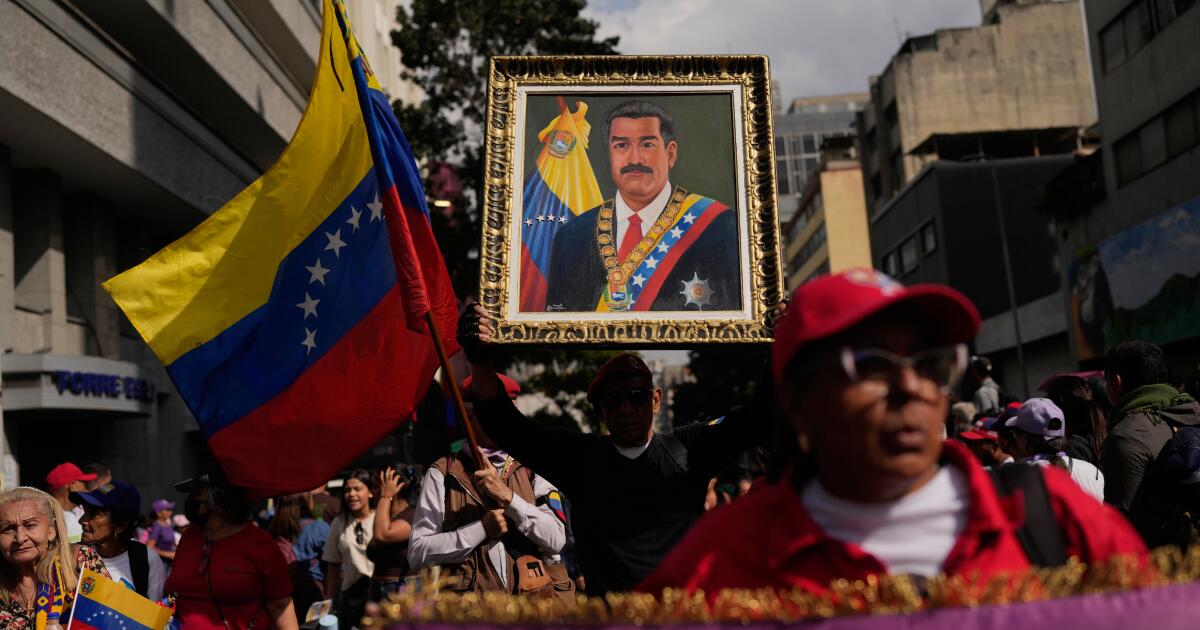
Venezuela's President Nicolas Maduro
Venezuela’s President Nicolas Maduro gestures towards supporters, during a march to commemorate the 1859 Battle of Santa Ines in Caracas, Venezuela, on December 10, 2025 [Gaby Oraa/ Reuters]

What are the potential consequences for Venezuela’s oil exports?

Experts say the seizure could produce short-term uncertainty for Venezuelan oil exports, largely because “this has been the first time [the United States has]… seized a shipment of Venezuelan oil”, Carlos Eduardo Pina, a Venezuelan political scientist, told Al Jazeera.

That may make shippers hesitate, though the broader impact is limited, Pina said, since “the US allows the Chevron company to continue extracting Venezuelan oil”, and US group Chevron holds a special waiver permitting it to produce and export crude despite wider sanctions.

Chevron, which operates joint ventures with PDVSA, said its operations in Venezuela remain normal and continue without disruption.

The US oil major, which is currently responsible for all Venezuelan crude exports to the US, increased shipments last month to 150,000 barrels per day (bopd), up from 128,000 bpd in October.

Inside Venezuela, Pina warned the move could spark financial panic, however: “It could instil fear, trigger a currency run… and worsen the humanitarian crisis.”

How will this affect US-Venezuela relations?

Diplomatically, Pina said he views the action as a political message to Venezuelan President Nicolas Maduro, noting its timing – “the same day that [opposition leader] Maria Corina Machado was awarded the Nobel Prize” – and calling it “a gesture of strength… to remind that [the US is present in the Latin American region].”

Maduro has long argued that the Trump administration’s strikes on boats in the Caribbean and eastern Pacific are not, in fact, aimed at preventing drug running, but are part of a plan to effect regime change in Venezuela. Trump has authorised CIA operations in Venezuela and has given conflicting messages about whether he would consider a land invasion.

Analysts see this latest action as part of a broader strategy to pressure the Maduro government.

“This is certainly an escalation designed to put additional pressure on the Maduro regime, causing it to fracture internally or convincing Maduro to leave,” said Cancian.

“It is part of a series of US actions such as sending the Ford to the Caribbean, authorising the CIA to move against the Maduro regime, and conducting flybys with bombers and, recently, F-18s.”

Cancian added that the broader meaning of the operation depends on what comes next.

“The purpose also depends on whether the US seizes additional tankers,” he said. “In that case, this looks like a blockade of Venezuela. Because Venezuela depends so heavily on oil revenue, it could not withstand such a blockade for long.”


Source link

‘Largest tanker ever seized’ held by U.S. off the coast of Venezuela

Dec. 10 (UPI) — The United States seized a large oil tanker off the coast of Venezuela amid ongoing tensions between President Donald Trump and Venezuelan President Nicolas Maduro.

The tanker was seized during a “judicial enforcement action on a stateless vessel” that had docked in Venezuela, Bloomberg reported.

“Today, the Federal Bureau of Investigation, Homeland Security Investigations and the United States Coast Guard, with support from the Department of War, executed a seizure warrant for a crude oil tanker used to transport sanctioned oil from Venezuela and Iran,” Attorney General Pam Bondi said in a late-afternoon post on X.

U.S. officials sanctioned the oil tanker several years ago due to its “involvement in an illicit oil shipping network supporting foreign terrorist organizations,” Bondi explained.

“This seizure, completed off the coast of Venezuela, was conducted safely and securely — and our investigation alongside the Department of Homeland Security to prevent the transport of sanctioned oil continues.”

U.S. military personnel seized the tanker by fast-roping from a helicopter to board it, Bloomberg reported.

Trump earlier confirmed the tanker’s seizure at the start of a 2 p.m. EST roundtable at the White House.

“We’ve just seized a tanker off the coast of Venezuela — the largest tanker ever seized,” Trump said at the start of the roundtable meeting.

He said “it was seized for a very good reason” and the “appropriate people” would address the matter when asked for more information by a reporter.

The vessel’s seizure occurred as the Trump administration has been applying pressure on Maduro, whom Trump has accused of being a narco-trafficker and of stealing the country’s 2024 presidential election by declaring himself the winner.

The Trump administration has designated Cartel de los Soles aka Cartel of the Sun a foreign terrorist organization that includes many Venezuelan military and government officials among its leadership.

Defense Secretary Pete Hegseth has ordered a carrier strike group to join other U.S. Navy vessels in the Caribbean Sea amid ongoing strikes against small craft departing Venezuela and other nations that are alleged tobe carrying illicit drugs.

The oil tanker’s seizure and the presence of the U.S. military in international waters near Venezuela are likely to discourage oil companies from transporting Venezuelan crude oil.

“Shippers will likely be much more cautious and hesitant about loading Venezuelan crude going forward,” Kpler oil analyst Matt Smith told CNBC.

Rystad Energy’s Jorge Leon, who is in charge of the firm’s geopolitical analysis, told Bloomberg the U.S. seizure of a “Venezuelan tanker” is a “clear escalation from financial sanctions to physical interdiction.”

The seizure “raises the stakes for Caracas and anyone facilitating its exports,” Leon said.

The Trump administration also has advised international airlines to be cautious when approaching Venezuela, which has caused many to suspend operations there.

President Donald Trump walks on the South Lawn of the White House after arriving on Marine One in Washington on Tuesday. Trump said people were “starting to learn” the benefits of his tariff regime. Photo by Graeme Sloan/UPI | License Photo


Source link

Trump says the U.S. has seized an oil tanker off the coast of Venezuela

President Trump said Wednesday that the United States has seized an oil tanker off the coast of Venezuela as tensions mount with the government of Venezuelan President Nicolás Maduro.

Using U.S. forces to seize an oil tanker is incredibly unusual and marks the Trump administration’s latest push to increase pressure on Maduro, who has been charged with narcoterrorism in the United States. The U.S. has built up the largest military presence in the region in decades and launched a series of deadly strikes on alleged drug-smuggling boats in the Caribbean Sea and eastern Pacific Ocean.

“We’ve just seized a tanker on the coast of Venezuela, a large tanker, very large, largest one ever seized, actually,” Trump told reporters at the White House.

Trump said “other things are happening,” but did not offer additional details, saying he would speak more about it later.

The seizure was led by the U.S. Coast Guard and supported by the Navy, according to a U.S. official who was not authorized to comment publicly and spoke on the condition of anonymity. The official added that the seizure was conducted under U.S. law enforcement authority.

Venezuela has the world’s largest proven oil reserves and produces about 1 million barrels a day. Locked out of global oil markets by U.S. sanctions, the state-owned oil company sells most of its output at a steep discount to refiners in China.

The transactions usually involve a complex network of shadowy intermediaries as sanctions scared away more established traders. Many are shell companies, registered in jurisdictions known for secrecy. The buyers deploy so-called ghost tankers that hide their location and hand off their valuable cargoes in the middle of the ocean before they reach their final destination.

During past negotiations, among the concessions the U.S. has made to Maduro was approval for oil giant Chevron Corp. to resume pumping and exporting Venezuelan oil. The corporation’s activities in the South American country resulted in a financial lifeline for Maduro’s government.

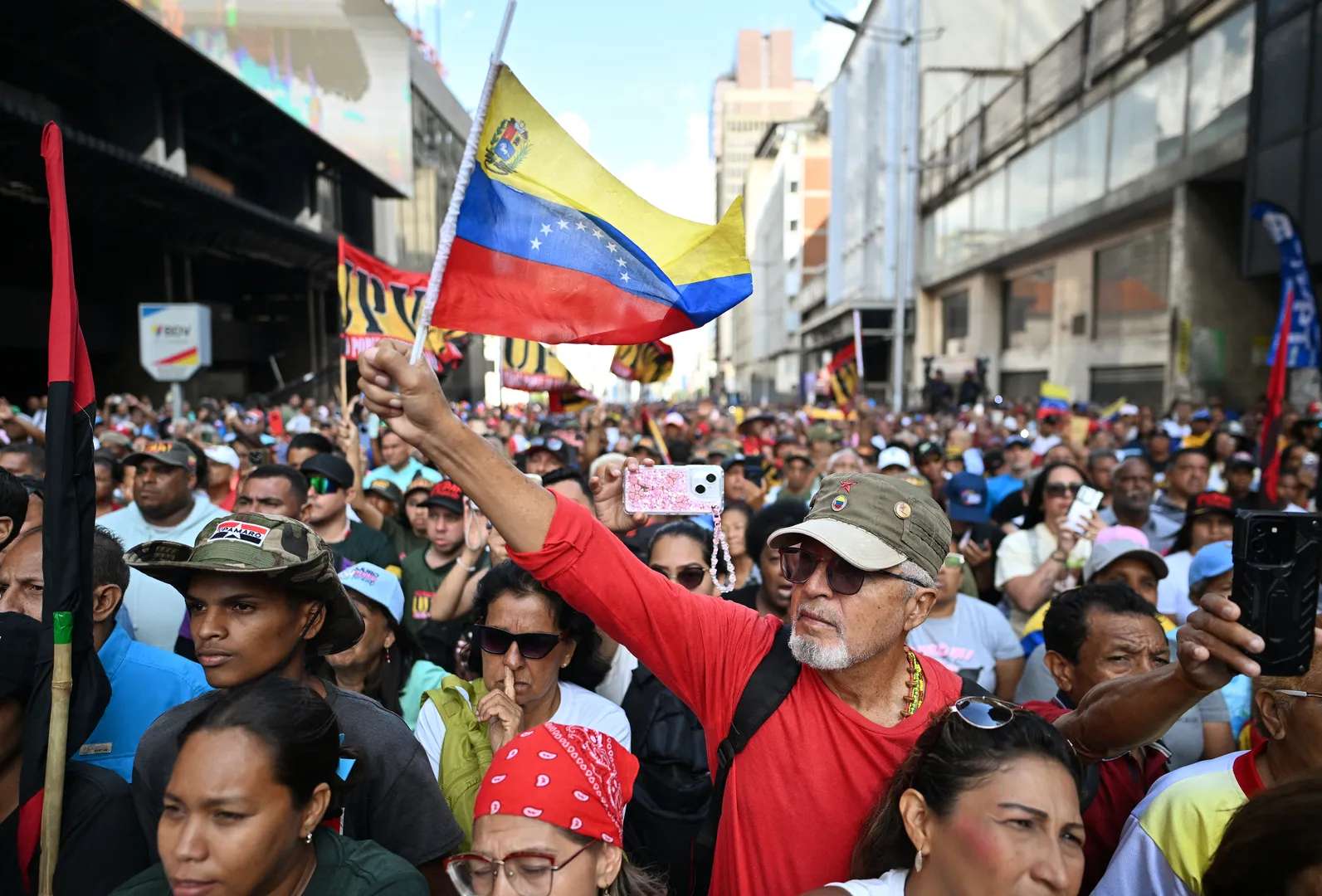
Maduro did not address the seizure during a speech before a ruling-party organized demonstration in Caracas, Venezuela’s capital. But he told supporters that Venezuela is “prepared to break the teeth of the North American empire if necessary.”

Maduro, flanked by senior officials, said that only the ruling party can “guarantee peace, stability, and the harmonious development of Venezuela, South America and the Caribbean.”

The seizure comes a day after the U.S. military flew a pair of fighter jets over the Gulf of Venezuela in what appeared to be the closest that warplanes had come to the South American country’s airspace since the start of the administration’s pressure campaign. Trump has said land attacks are coming soon but has not offered any details on location.

It was not immediately clear who owned the tanker or what national flag it was sailing under. The Coast Guard referred a request for comment to the White House.

Madhani and Toropin write for the Associated Press. AP writer Regina Garcia Cano in Caracas, Venezuela, contributed to this report.

Source link

F/A-18 Super Hornets Were Just Tracked Flying Deep Inside The Gulf Of Venezuela (Updated)

Online flight tracking data shows that a pair of U.S. Navy F/A-18 Super Hornets flew right into the center of the Gulf of Venezuela earlier today, and stayed there for some 40 minutes. This is a relatively small body of water bounded on three sides by Venezuela’s national territory, and is in the same general area where American forces are known to have previously probed that country’s air defenses. The sorties represent a new escalation in the maximum pressure campaign against Venezuelan dictator Nicolas Maduro that President Donald Trump’s administration has been conducting for months now.

The two Super Hornets, callsigns Rhino 11 and Rhino 12, look to have remained in international airspace throughout the duration of their sorties in the Gulf of Venezuela today, though this remains unconfirmed. Spoofing aircraft in open-source flight tracking is possible and does happen, but in this case, considering what we are seeing, and the recent history of certain U.S. platforms making their presence very known off the coast of Venezuela, this seems unlikely.

Even flying tight orbits in the middle of the Gulf could easily have brought the jets close to the Venezuelan coast. The body of water is approximately 75 miles long, north to south, and 150 miles wide, east to west, at its longest points. The opening to the Gulf from the Caribbean Sea to the north is only some 52 miles across, with Venezuela’s national airspace extending 12 miles from either side. Venezuelan authorities have claimed the entire body of water to be internal to the country’s national territory, something the United States has openly challenged for decades.

In addition to the F/A-18s, a pair of Navy EA-18G Growler electronic warfare jets, with the callsigns Grizzly 1 and Grizzly 2, were also tracked flying orbits in the Caribbean just north of the Gulf of Venezuela. One of the Navy’s MQ-4C Triton maritime surveillance drones also flew a mission further out in the Caribbean opposite Venezuela’s coastline at around the same time. It is highly probable that other U.S. military aircraft were also operating in the same broad area, but were not visible online. That the Super Hornets and Growlers were broadcasting their positions means they were intended to be seen, and to send a clear message to authorities in Venezuela.

Junto a los Super Hornet RHINO11 y RHINO12 estaban los EA-18G Growler con códigos de llamada GRIZZLY1 y GRIZZLY2. Son aviones de ataque electrónico aerotransportado. pic.twitter.com/2o31SEZMb2

— 𝘼𝙧𝙧𝙚𝙘𝙝𝙤 (@Arr3ch0) December 9, 2025

Where the F/A-18s or EA-18Gs were operating from during their sorties has not been confirmed. However, these types of aircraft are among those currently embarked on the Navy’s supercarrier USS Gerald R. Ford, which has been sailing in the region since last month.

A US Navy F/A-18E Super Hornet lands on the aircraft carrier USS Gerald R. Ford on November 17, 2025. USN
An EA-18G Growler also seen on the Ford‘s flight deck on November 17, 2025. USN

Ford was recently observed leaving St. Thomas in the U.S. Virgin Islands. U.S. Southern Command (SOUTHCOM) also posted pictures of Super Hornets and Growlers operating from the carrier, all of which were taken back in November, on social media at around the time of today’s flights off the coast of Venezuela.

‼️🇺🇸🇻🇪NEWS: The USS Gerald R. Ford is moving toward Venezuela after leaving St. Thomas yesterday.

The nuclear-powered carrier is heading south as part of Trump’s Operation Southern Spear, marking a major show of force aimed at increasing pressure on Maduro.

See the latest… pic.twitter.com/eNdIYkgyJ2

— The threat of missiles and drones (@StatWatch25) December 8, 2025

Ford-class aircraft carrier USS Gerald R. Ford (CVN 78) conducts flight operations while underway in the Caribbean Sea.

U.S. military forces are deployed to the U.S. Southern Command area of responsibility in support of Operation SOUTHERN SPEAR, Department of War-directed… pic.twitter.com/lVP1zSJgwa

— U.S. Navy (@USNavy) December 9, 2025

Super Hornets from Ford have also been spotted recently at Luis Muñoz Marín International Airport in Puerto Rico. Since September, Marine fighters and other aircraft have been operating from the former Naval Station Roosevelt Roads on the island in support of operations in the Caribbean, as well. TWZ has reached out to the Navy and U.S. Southern Command (SOUTHCOM) for more information about today’s flights near Venezuela.

The combination of F/A-18s and EA-18Gs, with the latter flying in a standoff position, is exactly what one would expect to see during actual strikes on targets in Venezuela. The Growlers would provide electronic warfare support to help cover the Super Hornets penetrating into the threat envelope of hostile air defenses on the way to their targets. Such a mission would also include a host of additional aircraft and other assets providing command and control, aerial refueling, surveillance and reconnaissance, and other support further away from the objective areas.

Whether or not the Venezuelan Air Force made any attempt to intercept any U.S. aircraft flying around the country’s borders today is unclear. The Gulf of Venezuela, as well as Lake Maracaibo, which lies immediately to the south, and the surrounding areas, are all highly strategic locales. Lake Maracaibo, in particular, is the country’s main oil-producing region. Tankers regularly sail in and out of the area, where key refineries are also situated.

As mentioned, this is not the first time that U.S. military aircraft have operated in this same general area, and with the explicit intent of testing and otherwise gathering intelligence about Venezuela’s air defenses. Those assets do present varying degrees of risk, as you can read more about here.

Back on November 20, Navy Super Hornets notably flew just north of the Gulf of Venezuela while a U.S. Air Force RC-135W Rivet Joint intelligence, surveillance, and reconnaissance (ISR) aircraft monitored the situation from a station further out in the Caribbean. Air Force B-52 bombers, which also now regularly take part in shows of force aimed at Venezuela, were tracked in the area at around the same time. One of the main missions of the Air Force’s Rivet Joint fleet is to help in crafting so-called “Electronic Orders of Battle” of enemy or potentially hostile forces in a given area, especially air defense nodes. EA-18Gs can collect information to help with this, as well.

FlightRadar24 has now identified FELIX11, one of the “unknown military aircraft” off the coast of Venezuela, as a U.S. Navy F/A-18E Super Hornet from the USS Gerald R. Ford (CVN-78), meaning that the others; PARTY11, LION11, LION12, as well as others not seen, are also likely… https://t.co/x6kX0H1UZv pic.twitter.com/KSPC4TbG19

— OSINTdefender (@sentdefender) November 20, 2025

“They are normal operational training flights from the aircraft carrier USS Ford and platforms performing training exercises,” a U.S. official told TWZ about those sorties. “They are also testing Venezuelan sensors and responses, and it is part of the pressure campaign to show U.S. capabilities in the Caribbean.”

It should be noted here that there has been a significant buildup of U.S. forces in the Caribbean overall since August, with approximately 15,000 personnel in total now deployed in the region. This includes Ford and a host of other major naval assets, as well as various crewed and uncrewed aircraft, and supporting elements on the ground. Special operations forces are also now heavily deployed in the region. President Trump also previously confirmed he had authorized the Central Intelligence Agency (CIA) to conduct covert operations inside Venezuela.

All of this is ostensibly in support of enhanced counter-narcotics operations, now dubbed Operation Southern Spear. The U.S. government accuses Maduro of being directly involved in drug trafficking in association with an entity referred to as the Cartel of the Suns, which is now also designated as a terrorist organization. Questions have been raised about those links. Maduro has been under indictment in the United States since 2020 on narcotics and other charges, and American authorities currently have a $50 million bounty out for information leading to his arrest.

President Trump ordered action — and the Department of War is delivering.

Today, I’m announcing Operation SOUTHERN SPEAR.

Led by Joint Task Force Southern Spear and @SOUTHCOM, this mission defends our Homeland, removes narco-terrorists from our Hemisphere, and secures our…

— Secretary of War Pete Hegseth (@SecWar) November 13, 2025

The sorties today follow weeks of escalating shows of force, as well as reports that the Trump administration could be getting closer to launching strikes or conducting other direct action missions on targets inside Venezuela. U.S. operations in the Caribbean already now include routine strikes on alleged drug-smuggling boats. Serious questions have been raised about the underlying intelligence behind those strikes, as well as their legality.

“I don’t want to say that,” President Trump said just today when asked about how far he might go to remove Maduro from office during an interview with Politico‘s Dasha Burns.

“His [Maduro’s] days are numbered,” Trump added in response to a follow-up question simply about whether he would like to see Maduro out of power.

He also declined to rule out a ground invasion of Venezuela or any other kind of military action, the potential prospect of which TWZ has recently explored.

During a recent interview Trump is asked about removing Maduro from power,
He refuses to rule out any options and says “Maduros days are numbered”

Trump also added that he wanted
“The people of Venezuela to be treated well”#Venezuela
pic.twitter.com/TPCV0huV6F

— CNW (@ConflictsW) December 9, 2025

If nothing else, today’s sorties in and around the Gulf of Venezuela make clear that the U.S. government remains committed to ratcheting up the pressure on Maduro.

Update, 7:00 PM EST:

There are indications that a new contingent of tactical jets, possibly EA-18G Growlers, has deployed from Naval Air Station Whidbey Island in Washington State to the Caribbean. The aircraft may be headed to the former Naval Station Roosevelt Roads in Puerto Rico based on online flight tracking data. Land-based EA-18Gs, on top of the Growlers already in the region aboard the USS Gerald R. Ford, would not be a typical show of force, but would represent a key force multiplier for any future strike operations.

Does this mean strikes are soon to begin in Venezuela, no it doesn’t, but it is among the most interesting movements we have seen that would point to preparing for this. More on Venezuela’s air defense capabilities here: https://t.co/IYAm9hIu0z

— Tyler Rogoway (@Aviation_Intel) December 9, 2025

And these would likely be land based, not deployed to augment the carrier air wing directly. Standard stuff for the EA community.

— Tyler Rogoway (@Aviation_Intel) December 9, 2025

Update, 12/10/2025:

In response to our queries yesterday, the U.S. Navy directed us to U.S. Southern Command (SOUTHCOM). In turn, a SOUTHCOM spokesperson provided the following statement:

“We conduct routine, lawful operations in international airspace, including over the Gulf of Venezuela. We will continue to fly safely, professionally, and in accordance with international law to protect the homeland, monitor illicit activity, and support stability across the Americas.”

Contact the author: joe@twz.com

Joseph has been a member of The War Zone team since early 2017. Prior to that, he was an Associate Editor at War Is Boring, and his byline has appeared in other publications, including Small Arms Review, Small Arms Defense Journal, Reuters, We Are the Mighty, and Task & Purpose.


Source link

Machado in Oslo, but will not attend Nobel Peace ceremony to receive award | Politics News

The build-up to the ceremony has been tinged with shadowy intrigue, after the Nobel institute earlier said Machado’s whereabouts were unknown.

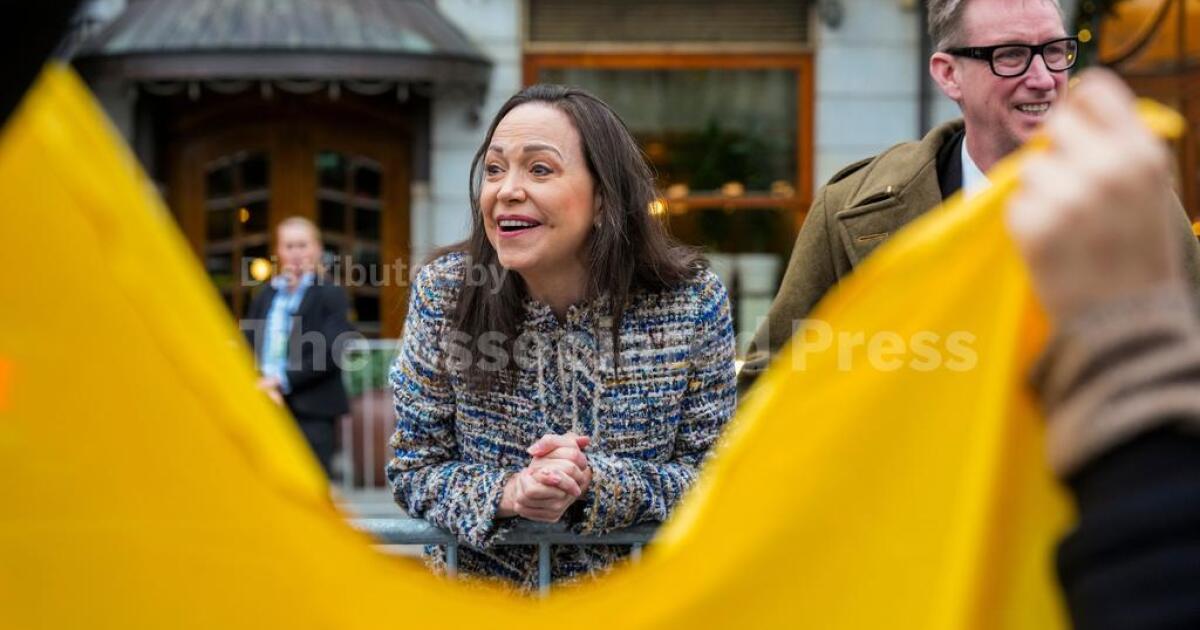
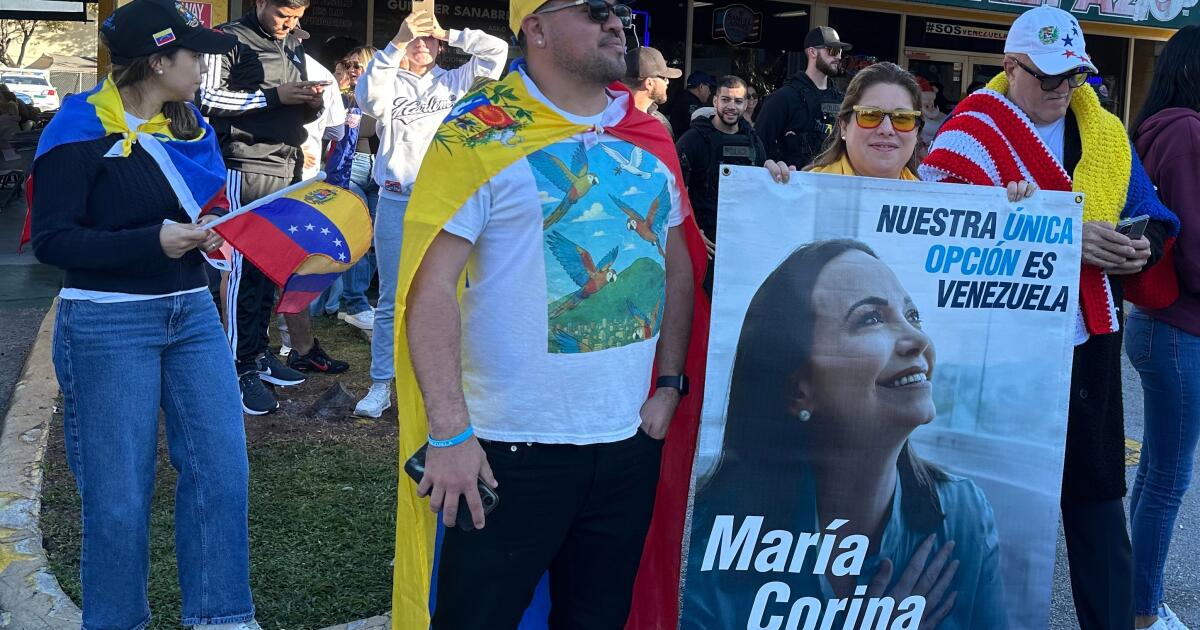
Venezuelan opposition leader Maria Corina Machado will not receive the Nobel Peace Prize in person at an award ceremony in Oslo but she will be in the European city, the director of the Norwegian Nobel Institute has said.

Machado, 58, was due to receive the award on Wednesday at Oslo City Hall in the presence of Norway’s monarchs and Latin American leaders, including fellow right-wing politicians Argentinian President Javier Milei and Ecuadorean President Daniel Noboa.

Recommended Stories

list of 4 itemsend of list

The opposition leader of the Vente Venezuela party was awarded the prize in October, with the Nobel committee praising Machado’s role in the country’s opposition movement and her “steadfast” support for democracy.

Machado, who holds many right-wing views, dedicated it in part to United States President Donald Trump, who has said he, himself deserved the honour and was infuriated that he did not.

“Although she will not be able to reach the ceremony and today’s events, we are profoundly happy to confirm that Machado is safe and that she will be with us in Oslo,” the institute stated.

She is expected to reach Oslo “sometime between this evening and tomorrow morning,” the institute’s director Kristian Berg Harpviken told the AFP news agency on Wednesday, shortly before the 1pm (12:00 GMT) ceremony, at which her daughter, Ana Corina Sosa Machado, is set to accept the award in her place.

“I will be in Oslo, I am on my way,” Machado stated in an audio recording released by the institute.

The announcement was part of a sequence of events more befitting of cloak-and-dagger intrigue, as the institute had earlier stated Machado’s whereabouts were unknown. A planned news conference a day earlier was also cancelled due to her absence.

Machado has a decade-long travel ban on her and has spent more than a year in hiding.

Alignment with right-wing hawks

The political leader has welcomed international sanctions and US military intervention in Venezuela, a move her critics say harkens back to a dark past.

The US has a long history of interference in the region, particularly in the 1980s when it propped up repressive right-wing governments through coups, and funded paramilitary groups across Latin America that were responsible for mass killings, forced disappearances and other grave human rights abuses.

Venezuelan authorities cited Machado’s support for sanctions and US intervention when they barred her from running for office in last year’s presidential election, where she had intended to challenge President Nicolas Maduro. Machado has accused Maduro of stealing the July 2024 election.

Shortly after her Nobel win in October, Machado also voiced support for Israel in a phone call with Prime Minister Benjamin Netanyahu, during its ongoing genocidal war in Gaza.

Machado has previously pledged to move Venezuela’s embassy in Israel to Jerusalem, as Trump did with the US diplomatic presence during his first term in office, if her movement comes to power. This would be on par with other right-wing Latin American leaders who have taken pro-Israel stances, including Argentina’s Milei and former Brazilian President Jair Bolsonaro.

Machado has aligned herself with right-wing hawks close to Trump who argue that Maduro has links to criminal gangs that pose a direct threat to US national security, despite doubts raised by the US intelligence community.

The Trump administration has ordered more than 20 military strikes in recent months against alleged drug-trafficking vessels in the Caribbean and off Latin America’s Pacific coast.

Human rights groups, some US Democrats and several Latin American countries have condemned the attacks as unlawful extrajudicial killings of civilians.

Maduro, in power since 2013 following the death of Hugo Chavez, says Trump is pushing for regime change in the country to access Venezuela’s vast oil reserves. He has pledged to resist such attempts.

Venezuela’s armed forces are planning to mount a guerrilla-style resistance in the event of a US air or ground attack, according to sources with knowledge of the efforts and planning documents seen by the Reuters news agency.

Source link

Congressional lawmakers hear from Navy admiral overseeing boat strikes

The U.S. Navy admiral who is retiring early from command of the campaign to destroy vessels allegedly carrying drugs near Venezuela spoke to key lawmakers Tuesday as Congress seeks more answers on President Trump’s mission, which, in one instance, killed two survivors clinging to the wreckage of an initial strike.

The classified video call between Adm. Alvin Holsey, who will be retiring from U.S. South Command in the coming days, and the GOP chairs and ranking Democrats of the Senate Armed Services Committee represented another determined step by lawmakers to demand an accounting from the Department of Defense on the threats against Venezuela and the strikes, especially after a report that two survivors were killed during one operation in September.

Sen. Roger Wicker of Mississippi, the Republican chair of the Senate Armed Services Committee, declined to discuss the specifics of the call but described Holsey as a “great public servant.”

Congress is also demanding that the Pentagon turn over unedited video of the strikes, as well as the orders authorizing the attacks, as part of its annual defense authorization bill. Wicker said that the Pentagon is weighing whether the video had “classified sections.”

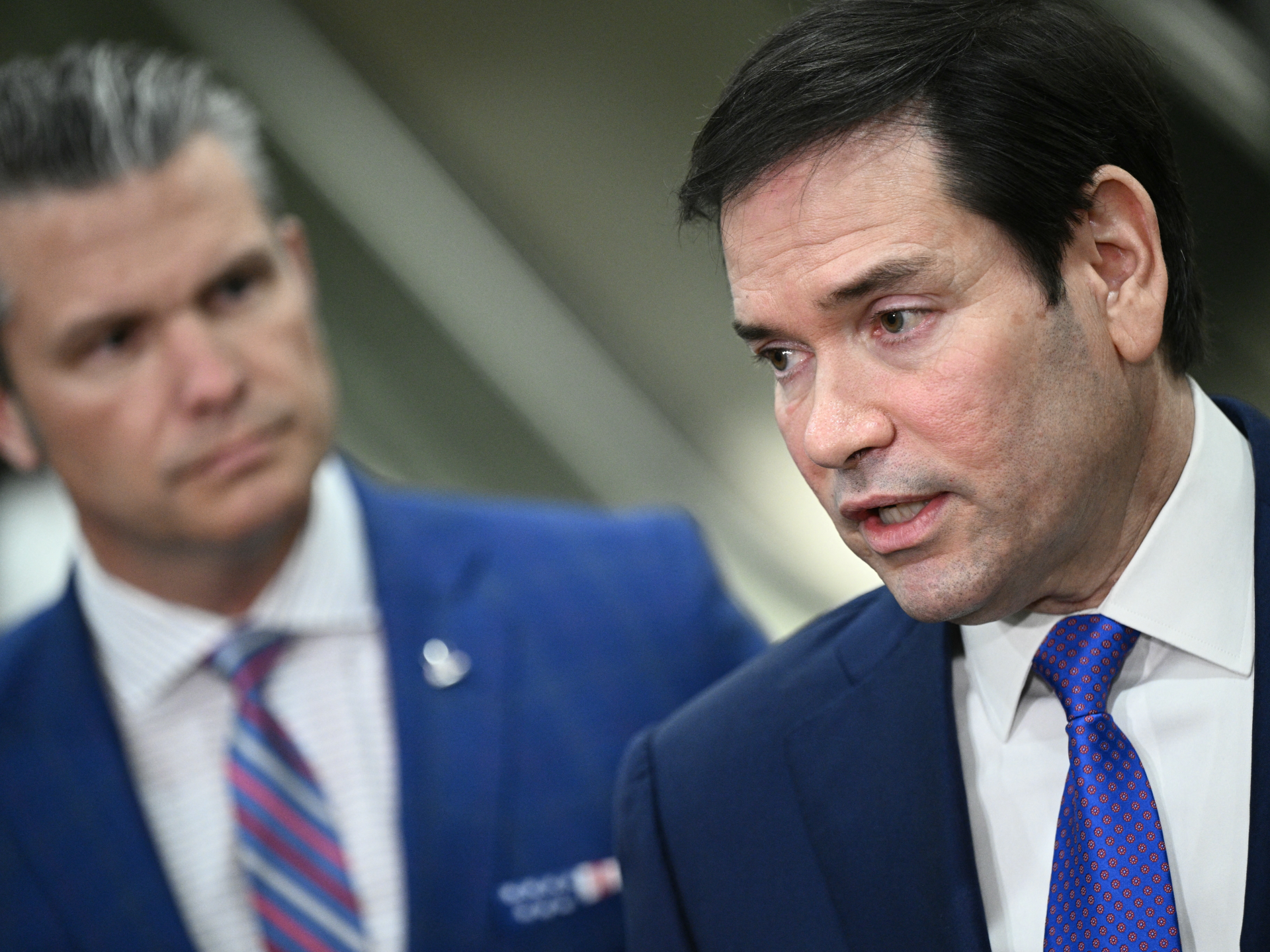
The demands were evidence of the intense scrutiny being placed on the Sept. 2 strike, which legal experts say may have violated the laws governing how the U.S. military uses deadly force. Congressional leaders will also receive a wider foreign policy and national security briefing from Secretary of State Marco Rubio and Defense Secretary Pete Hegseth on Tuesday afternoon.

“They are using expensive, exquisite American military capabilities to kill people who are the equivalent of corner dealers and not making progress interdicting the trafficking by the cartels,” said Sen. Chris Coons, a Delaware Democrat.

Congress presses for more information

What lawmakers learn from Holsey could shed new light on the purpose and parameters of Trump’s campaign, which has struck 22 boats and killed at least 87 people since it started in September. Trump has also been making threats against Venezuelan President Nicolás Maduro, sending a fleet of warships near the South American country, including the largest U.S. aircraft carrier.

Holsey became the leader of U.S. Southern Command just over one year ago, but in October, Hegseth announced that Holsey would be retiring early from his post. As commander of U.S. forces in the region, Holsey oversaw a command structure that has in recent years been mostly focused on building stability and cooperation across much of Latin America.

Trump’s drug boat campaign, however, has added a new, deadly dynamic to its mission. Rather than trying to interdict drug vessels, as forces such as the U.S. Coast Guard have traditionally done, the Trump administration asserts that the drugs and drug smugglers are posing a direct threat to American lives. Officials say they are applying the same rules as the global war on terrorism to kill drug smugglers.

Lawmakers are also questioning what intelligence the military is using to determine whether the boats’ cargo is headed for the U.S. As they have looked closer at the Sept. 2 strike, lawmakers learned that the destroyed boat was heading south at the time of the attack and that military intelligence showed it was headed toward another vessel that was bound for Suriname.

Still, it remains to be seen whether the Republican-controlled Congress will push back on the Trump administration’s campaign.

“I want a full set of data to draw my conclusions from,” said Sen. Thom Tillis, a North Carolina Republican who had demanded accountability after it was revealed that two survivors had been killed.

Trump this week justified the strike by claiming that the two suspected drug smugglers were trying to right part of the boat after it had capsized in the initial attack. However, Adm. Frank “Mitch” Bradley, the special operations commander who ordered the second strike, told lawmakers in a closed-door briefing last week that he ordered the second strike to ensure that the cocaine in the boat could not be picked up later by cartel members.

Groves and Mascaro write for the Associated Press.

Source link