US & Canada

Flights from Aden airport in Yemen halted amid latest tensions | News

STC separatists accuse Saudi Arabia of requiring flights to UAE to land in Jeddah; Saudi source rejects claim.

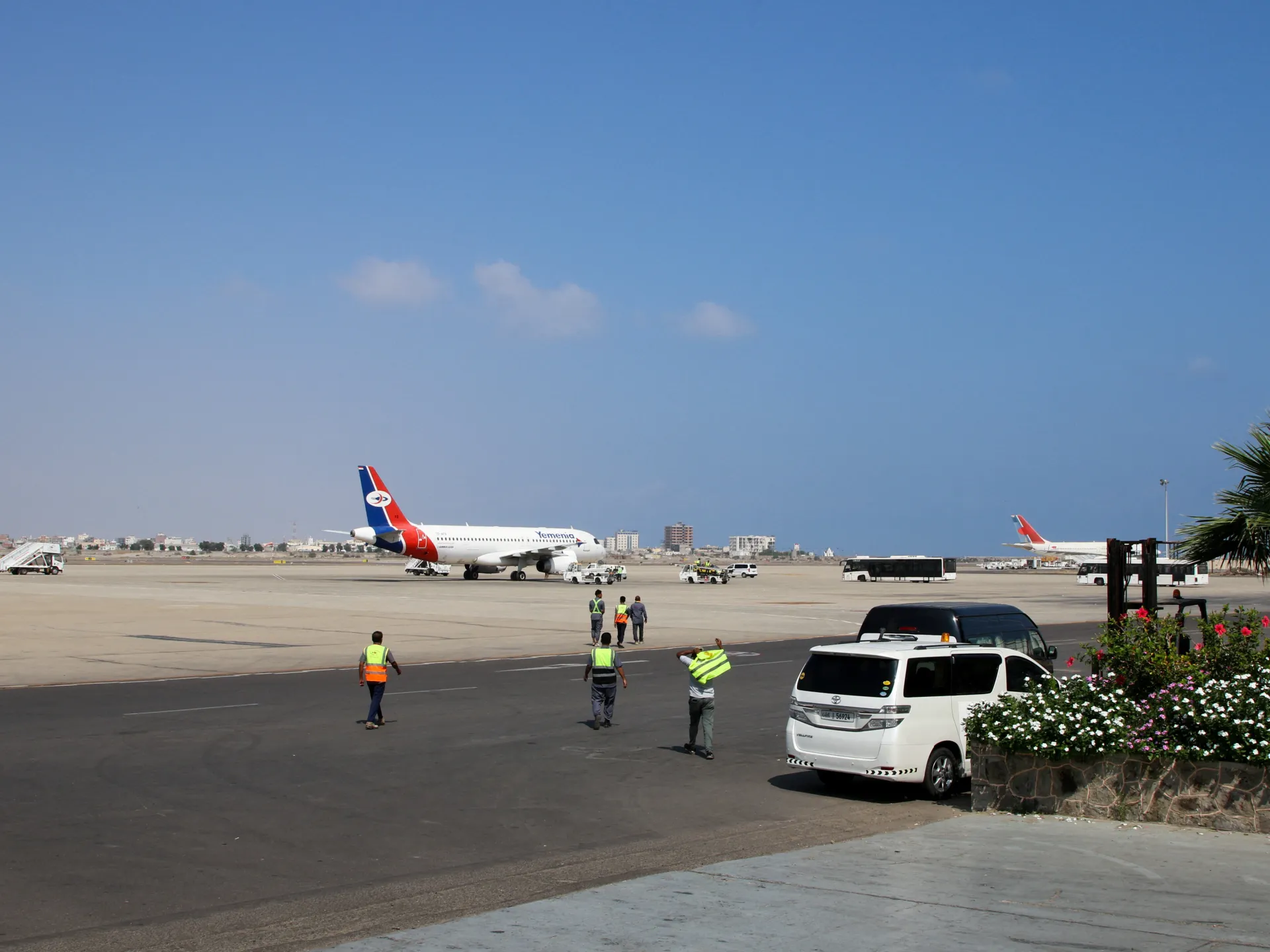
Flights from Aden international airport in Yemen were halted on Thursday amid continuing tensions between the Southern Transitional Council (STC) separatist group and the Saudi Arabia-backed internationally recognised government in Yemen.

Reuters news agency reported that all flights were suspended at the airport on Thursday, although further details of flight operations and possible resumptions remained unclear.

Recommended Stories

list of 3 itemsend of list

The STC has formally been a part of the Saudi-led coalition that, since 2015, has been fighting the Houthi takeover of large parts of Yemen. But the STC also seeks to carve out a separate nation in southern Yemen, and in December, expanded its military operations in Hadramout and al-Mahra provinces that border Saudi Arabia, setting off a rapid escalation in tensions.

Saudi Arabia has accused the United Arab Emirates – also a part of the anti-Houthi coalition – of arming the STC and of encouraging the separatist group to expand into Hadramout and al-Mahra, which Riyadh has said threatens its national security. The UAE has denied those allegations, insisting that it supports Saudi Arabia’s security.

However, while the UAE has since agreed to demands from Yemen’s Riyadh-backed Presidential Leadership Council and Saudi Arabia to withdraw its troops from Yemen, the STC has refused to pull back from Hadramout and al-Mahra.

On Thursday, the STC-aligned Transport Ministry within the internationally recognised government claimed that the stoppage at the airport was a result of Saudi Arabia imposing new requirements mandating that flights to and from Aden airport undergo inspection in Jeddah.

The ministry said it was “shocked” by the move, adding that Saudi authorities later clarified the restriction only applied to flights operating between Aden and the United Arab Emirates.

A Saudi source denied to the Reuters news agency that it was involved in restricting flights, saying Yemen’s internationally recognised government, led by the Presidential Leadership Council, was behind the requirement for UAE-bound flights.

Yemeni presidential adviser, Thabet al-Ahmadi, confirmed to Al Jazeera that it had imposed a requirement that applied to one flight route departing from Aden airport. He said the move was meant to prevent STC money smuggling.

Al-Ahmadi said the government did not support a complete halt to flights, adding it wanted to ensure air traffic continued unimpeded.

Earlier this week, the UAE announced it was voluntarily withdrawing its remaining “counterterrorism” forces from Yemen. That came after Riyadh struck what it claimed to be a UAE-linked weapons shipment in the southern port city of Mukalla.

On Wednesday, Rashad al-Alimi, the head of the internationally recognised government in Yemen, warned that any moves by the STC to further entrench their position in the provinces would have severe consequences.

The STC has, however, remained defiant, saying it would remain in the provinces.

However, STC spokesperson Mohammed al-Naqeeb said the group was coordinating its movements with the Homeland Shield forces, which had been the main security force in the provinces prior to the STC offensive. The Homeland Shield is affiliated with the Yemeni government and the Saudi-led coalition.

Yemen has been embroiled in a civil war since Houthi forces took control of the capital Sanaa in 2014. The group continues to control large swaths of the country’s northwest, with the STC and government contesting the southern and eastern flanks.

Source link

‘We will not wait’: Mamdani kicks off housing plans after inaugural party | Politics News

New York, United States – Sprawling crowds, a seven-block-long party and chants to “tax the rich” in the world’s wealthiest city marked Zohran Mamdani’s public inauguration as New York City mayor on Thursday, as the metropolis welcomed a new year with a new leadership.

Political inaugurations are usually more stolid affairs. But, as he had in his campaign for the mayoralty, Mamdani flipped the script with his swearing-in events.

Recommended Stories

list of 4 itemsend of list

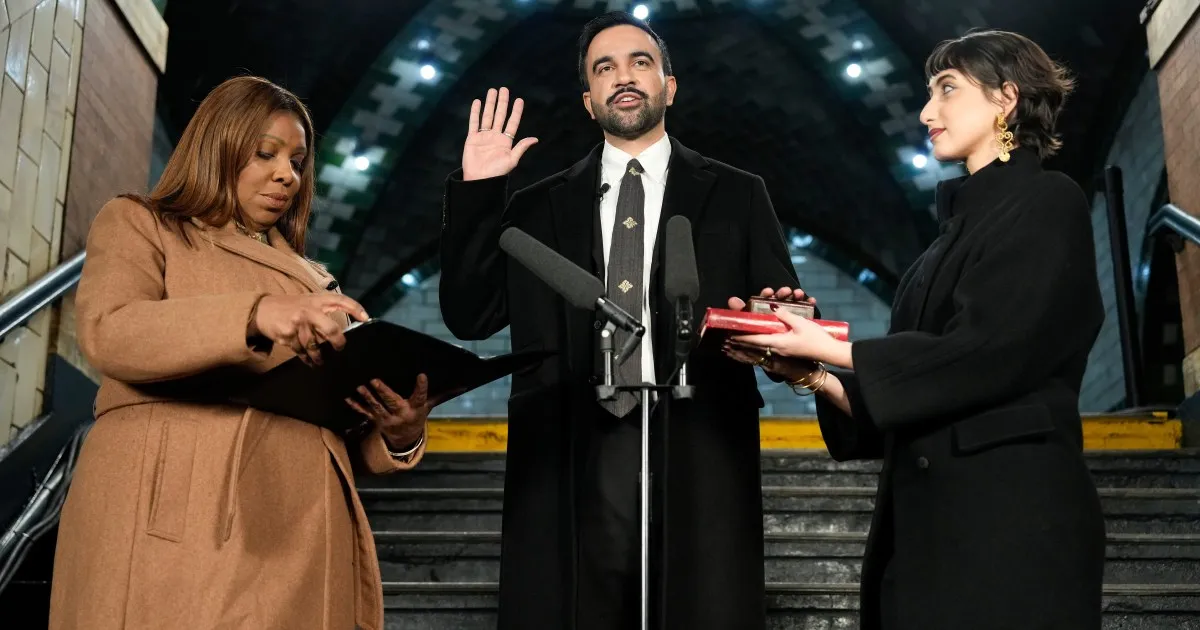
In act one, just after midnight, as the ball dropped in Times Square to ring in 2026, Mamdani took the oath of office in a small ceremony on the steps of the landmark New York City Hall subway station.

New York State Attorney General Letitia James administered the oath as Mamdani stood beside his wife, Rama Duwaji, on a staircase inside the transit hub, which has not been used for passenger service since 1945. He used a historic Quran borrowed from the New York Public Library for his swearing in, and a second one that belonged to his grandfather.

The public celebration arrived later, on New Year’s Day, when Mamdani repeated the oath on the steps of City Hall before a crowd that spilled across the surrounding plaza and into the streets. Despite the blistering cold, tens of thousands of supporters streamed into Lower Manhattan to watch the new mayor – along with the city’s comptroller, Mark Levine, and Public Advocate Jumaane Williams – formally assume office.

National political heavyweights, including Representative Alexandria Ocasio-Cortez and Senator Bernie Sanders of Vermont, flanked the city’s new leadership and delivered speeches outlining the progressive movement’s governing ambitions in New York and the national reverberations the race has already sent to lawmakers across the country.

“The most important lesson that can be learned today is that when working people stand, when they don’t let them [the ultra-wealthy] divide us up, there is nothing that we cannot accomplish,” Sanders said before swearing in Mamdani.

While guests and the press gathered inside the City Hall grounds, the city staged a seven-block-long public block party – a new twist on the traditionally ticketed inauguration format. In addition to a closed event capped at a few thousand attendees, anyone willing to RSVP and endure the frigid air and blustering winds after a night of snowfall could try their luck at getting in.

And many did, bundled New Yorkers shuffled through security checkpoints, hoping to glimpse the swearing-in of a 34-year-old democratic socialist now charged with running the largest city in the United States, streaming on large monitors stationed throughout the surrounding area outside City Hall.

Some supporters told Al Jazeera they waited in line for hours, and many never made it through the checkpoints in time. While crowds cheered and horns blasted in solidarity from a distance, a handful of protesters lingered behind police barricades.

The block party in and of itself was symbolic in its effort to reach more New Yorkers who have normally been left out of the political process, Democratic strategist Nomiki Konst told Al Jazeera.

“It was a way of opening up something that hasn’t been accessible for anybody, you know, that wasn’t part of the inner circle of New York politics and media,” Konst told Al Jazeera.

“It was an opportunity to give back to the people who helped him get into office.”

New Yorkers gathered in a first of its kind inauguration open to the general public [Andy Hirschfeld]
New Yorkers gathered in a first-of-its-kind inauguration open to the general public [Andy Hirschfeld]

A message of unity and affordability

Mamdani, Williams and Levine spoke about unity for all New Yorkers, delivering remarks in English, Spanish, Hebrew and Greek, and appearing alongside faith leaders of several different faiths, including Islam, Christianity and Judaism.

“We have three swearings-in. One by a leader using a Quran, one by a leader using a Christian Bible, and one using a Hebrew Bible. I am proud to live in a city where this is possible,” Levine said after taking the oath of office.

Mamdani echoed that sentiment.

“We will draw this city closer together. We will replace the frigidity of rugged individualism with the warmth of collectivism. If our campaign demonstrated that the people of New York yearn for solidarity, then let this government foster it,” Mamdani said in his address.

“We will deliver nothing less as we work each day to make this city belong to more of its people than it did the day before.”

But the core message, voiced repeatedly by Mamdani, Levine, Williams, Sanders and Ocasio-Cortez, was the same one that defined the campaign: that the ultra wealthy should pay higher taxes.

“Demanding that the wealthy and large corporations start paying their fair share of taxes is not radical. It is exactly the right thing to do,” Sanders said, as supporters chanted, “Tax the rich.”

One of Mamdani’s core promises was to raise the corporate tax rate in New York City from 7.25 percent to 11.5 percent, equivalent to that of neighbouring New Jersey, as well as a 2 percent increase in taxes on those who make more than $1m a year. Any tax plan would need the approval of the governor to move forward.

“This movement came out of eight-and-a-half million somewheres – taxi cab depots and Amazon warehouses, DSA [Democratic Socialists of America] meetings and curbside domino games. The powers that be had looked away from these places for quite some time – if they’d known about them at all – so they dismissed them as nowhere. But in our city, where every corner of these five boroughs holds power, there is no nowhere and there is no no one,” Mamdani said.

Housing policy has been central to that affordability message for Mamdani. One of his signature campaign promises was to freeze the rent on the city’s rental stabilised apartments, which represent about half of the city’s rental housing stock.

“Those in rent-stabilised homes will no longer dread the latest rent hike – because we will freeze the rent,” Mamdani said in his remarks.

Only hours later, Mamdani introduced a slate of executive orders all aimed at housing.

“On the first day of this new administration, on the day when so many rent payments are due, we will not wait to deliver action,” Mamdani said at a news conference.

He announced three executive orders inside a rent-stabilised building in Brooklyn, including the creation of two new city task forces on housing policy: one to take inventory of city-owned land that could be used for housing, and another to identify ways to spur development.

“The housing crisis is at the centre of our affordability crisis. There are a number of things we are going to be focused on: protecting tenants, going after bad landlords, and building more housing. A huge part of how we get out of our housing crisis is to build more affordable housing across the city,” Leila Bozorg, the Deputy Mayor for Housing and Planning, told Al Jazeera on the steps of City Hall hours before announcing the new policies.

“These are policy decisions we can address if we have the political will and if we put the resources behind it. And that is what he [Mamdani] is committed to doing.”

Source link

US federal employees file complaint against Trump’s anti-transgender policy | Donald Trump News

The complaint targets a policy that would nix coverage under federal health insurance for gender-affirming healthcare.

A group of federal government employees in the United States has filed a class action complaint against President Donald Trump’s administration over a new policy that will eliminate coverage for gender-affirming care in federal health insurance programmes.

The policy took effect with the start of the new year, and on Thursday, the Human Rights Campaign Foundation issued the complaint, acting on behalf of the federal employees.

Recommended Stories

list of 3 itemsend of list

The US Office of Personnel Management (OPM) was named as a defendant.

In an August letter, the OPM stated that, as of 2026, “chemical and surgical modification of an individual’s sex traits through medical interventions” would no longer be covered under health insurance programmes for federal employees and US postal workers.

OPM officials could not be reached for immediate comment.

The complaint argues that the policy is discriminatory on the basis of sex. It asks that the policy be rescinded and seeks payment for economic damages and other relief.

If the issue is not resolved with the OPM, the foundation said that plaintiffs will pursue class claims before the Equal Employment Opportunity Commission and potentially continue with a class action lawsuit in federal court.

Separately, a group of Democratic state attorneys general last month sued the Trump administration to block proposed rules that would cut children’s access to gender-affirming care, the latest court battle over Trump’s efforts to eliminate legal protections for transgender people.

US Secretary of Health and Human Services Robert F Kennedy Jr has proposed rules that would bar hospitals that provide gender-affirming care to children from Medicaid and Medicare and prohibit the Children’s Health Insurance Program from paying for it.

Source link

Venezuela releases more prisoners amid US pressure campaign: Rights groups | News

Second release of prisoners related to 2024 election protests seen as possible conciliatory move from Maduro.

The government of Venezuelan leader Nicolas Maduro has released dozens of prisoners held for protesting his disputed victory in the country’s 2024 election.

The release of at least 87 prisoners comes as the administration of United States President Donald Trump has continued its pressure campaign against Caracas.

Recommended Stories

list of 3 itemsend of list

It was the second release within a week, in what some observers have viewed as an effort by Maduro to strike a more conciliatory tone, even as he has accused Trump of seeking to topple his government and seize Venezuela’s vast oil reserves.

Two rights groups, the Committee for the Freedom of Political Prisoners and the Committee of Mothers in Defense of the Truth, confirmed the release on Thursday.

“On the morning of January 1, mothers and relatives reported new releases of political prisoners from Tocoron prison in Aragua state” in northern Venezuela, the Committee for the Freedom of Political Prisoners wrote on social media.

Venezuela’s government had previously announced the release of 99 prisoners on December 25, calling it “a concrete expression of the State’s commitment to peace, dialogue and justice”.

However, Foro Penal, a leading Venezuelan rights group, said afterwards it was only able to verify the release of 61 prisoners at the time.

Maduro claimed victory in the July 2024 vote, maintaining he had secured a third six-year term. The opposition has alleged widespread fraud, publishing results later verified by independent experts showing that Edmond Gonzalez had won by a landslide.

Gonzalez ran in place of opposition leader Maria Corina Machado after she was banned from standing in the election. Machado recently emerged in Oslo, Norway, after spending months in hiding.

The disputed vote prompted widespread protests across the country, resulting in at least 28 deaths and thousands of arrests.

Official records show that at least 2,000 people have since been released, while more than 700 people are still believed to be held for political reasons.

The disputed election has, in part, undergirded the Trump administration’s pressure against Maduro, whom they have accused of running a drug trafficking operation that aims to destabilise the US.

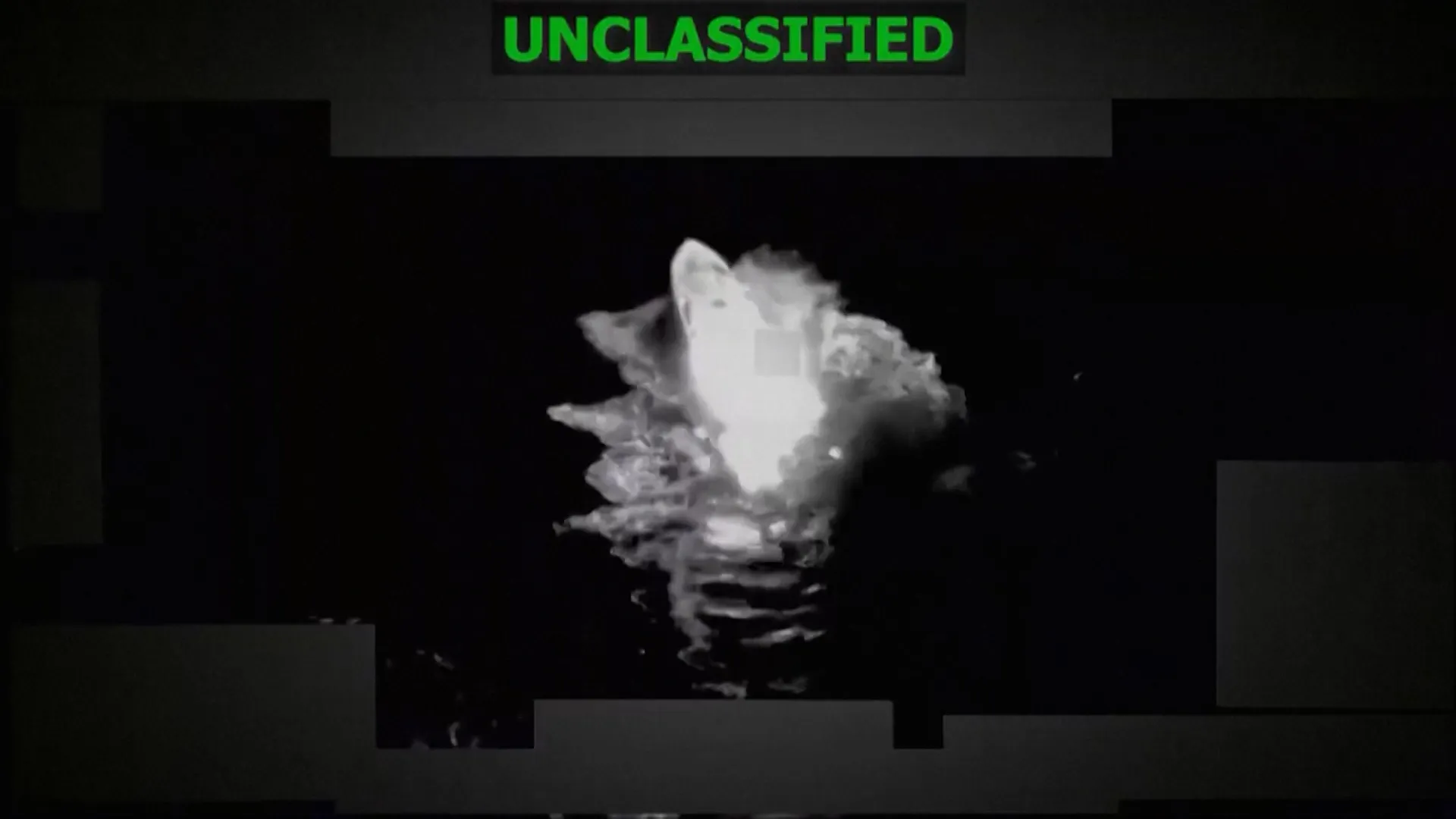
The Pentagon has surged military assets off the coast of Venezuela since August, with Trump earlier this week revealing the first attack on Venezuelan soil targeting a dock allegedly used to load drug boats earlier this week.

The US has also blockaded sanctioned oil tankers entering and exiting Venezuela, while simultaneously carrying out strikes on alleged drug boats in the Caribbean and eastern Pacific, in what rights groups say amount to extrajudicial killings.

More than 100 people have been killed in the strikes so far.

From exile, Machado has vocally supported the US pressure campaign. She has been more circumspect on strikes on Venezuelan territory, while maintaining that Venezuela has been “invaded” by “terrorist groups” and “drug cartels”.

Venezuela experts have warned that many opposition groups in the country oppose US military action.

Source link

US says Chinese military drills around Taiwan cause unnecessary tensions | Conflict News

US recently approved $11bn arms package for Taiwan, which condemned ‘provocative’ Chinese military drills.

The United States has called on China to exercise “restraint” and avoid actions that raise tensions following a series of war games around Taiwan simulating a blockade of the island.

The US Department of State said in a statement on Thursday that China’s bellicose language and military drills, which prompted sharp condemnation from Taipei, were a source of unnecessary strain.

Recommended Stories

list of 3 itemsend of list

“China’s military activities and rhetoric toward Taiwan and others in the region increase tensions unnecessarily. We urge Beijing to exercise restraint, cease its military pressure against Taiwan, and instead engage in meaningful dialogue,” said State Department spokesman Tommy Pigott.

“The United States supports peace and stability across the Taiwan Strait and opposes unilateral changes to the status quo, including by force or coercion,” he added.

China fired missiles and deployed jets and naval vessels earlier this week in a simulation of military actions to encircle Taiwan, which Beijing claims as an integral part of its territory and has vowed to bring under its control.

Chinese military drills have become a frequent occurrence, causing few disruptions to life on the self-governed island, whose status the US has not officially weighed in on.

But Beijing’s assertive stance has prompted angry condemnations from Taiwanese officials, and crackdowns on formerly autonomous areas such as Hong Kong following integration with China have bolstered scepticism about the prospects of possible reunification with Beijing.

“As president, my stance has always been clear: to resolutely defend national sovereignty and strengthen national defence,” Taiwanese President William Lai Ching-te said on Thursday.

Lai has called for a $40bn increase in Taiwan’s military spending, but the proposal is stalled in the country’s legislature, where the opposition party currently holds a majority.

“The coming year, 2026, will be a crucial one for Taiwan,” the president said, adding that Taiwan must “make plans for the worst, but hope for the best”.

While US lawmakers often make strong statements of support for Taiwan, US policy towards the island has been marked by ambiguity for decades and does not include an assurance of military support in the event of an invasion by China.

The US recently approved an $11bn arms package for Taiwan, but President Donald Trump said earlier this week that he did not believe China had plans to launch an invasion of Taiwan in the near future.

“I have a great relationship with [Chinese] President Xi [Jinping]. And he hasn’t told me anything about it. I certainly have seen it,” Trump told reporters on Monday.

“They’ve been doing naval exercises for 20 years in that area. Now people take it a little bit differently,” he added.

Source link

Photos: Zohran Mamdani becomes New York City’s first Muslim mayor | Politics News

Zohran Mamdani was sworn in as New York City’s mayor just after midnight in a historic ceremony at a decommissioned Manhattan subway station.

Making history as the first Muslim to lead the United States’ largest city, Mamdani took his oath with his hand placed on a Quran.

“This is truly the honour and the privilege of a lifetime,” Mamdani said in a brief speech.

The private ceremony, conducted by New York Attorney General Letitia James at the architecturally stunning old City Hall station – one of the city’s original subway stops known for its arched ceilings – marked the official transition of power.

In his inaugural remarks, Mamdani highlighted the venue as a “testament to the importance of public transit to the vitality, the health and the legacy of our city” while announcing Mike Flynn as his new Department of Transportation commissioner.

The mayor concluded his brief address saying, “Thank you all so much, now I will see you later,” before ascending the stairs with a smile.

A more elaborate public inauguration will take place at 1pm (18:00 GMT) at City Hall. A public celebration will follow on Broadway’s “Canyon of Heroes”, famous for hosting ticker-tape parades.

As he steps into one of the US’s most demanding political positions, Mamdani breaks multiple barriers. At 34, he becomes the city’s youngest mayor in generations and the first of Muslim faith, South Asian descent, and African birth.

Source link

Zohran Mamdani sworn in as New York City mayor | Politics News

Zohran Mamdani has been sworn in as mayor of New York City, becoming the first Muslim and the youngest person in generations to take the oath of office in the United States’ biggest city.

Mamdani, a Democrat, was sworn in at a historic, decommissioned subway station in Manhattan just after midnight on Thursday, placing his hand on a Quran as he took his oath.

“This is truly the honour and the privilege of a lifetime,” Mamdani said.

The ceremony, administered by New York Attorney General Letitia James, a political ally, took place at the old City Hall station, one of the city’s original subway stops that is known for its stunning arched ceilings.

He will be sworn in again, in grander style, in a public ceremony at City Hall at 1pm (18:00GMT) by US Senator Bernie Sanders, one of the mayor’s political heroes. That will be followed by what the new administration is billing as a public block party on a stretch of Broadway known as the “Canyon of Heroes,” famous for its ticker-tape parades.

Mamdani now begins one of the most unrelenting jobs in US politics as one of the country’s most-watched politicians.

In addition to being the city’s first Muslim mayor, Mamdani is also its first of South Asian descent and the first to be born in Africa. At 34, Mamdani is also the city’s youngest mayor in generations.

Zohran Mamdani becomes New York City's first Muslim mayor
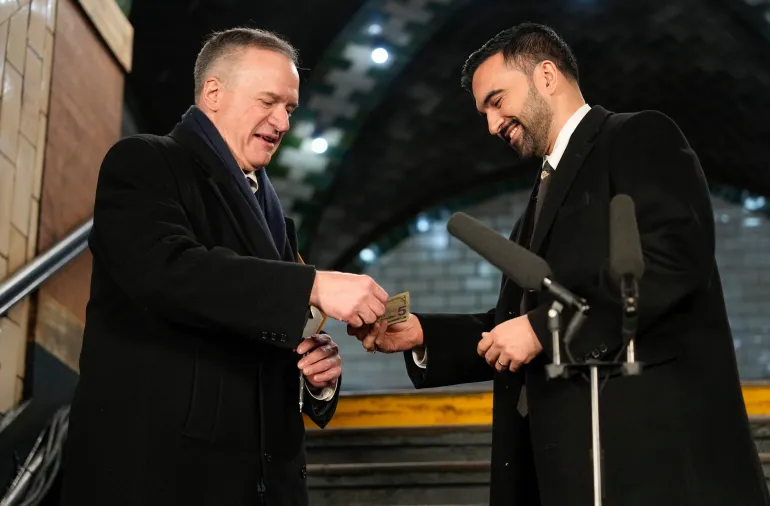
Mamdani, right, hands nine dollars to city clerk Michael McSweeney before signing a registry [Yuki Iwamura/AP]

In a campaign that helped make “affordability” a buzzword across the political spectrum, the democratic socialist promised to bring transformative change with policies intended to lower the cost of living in one of the world’s most expensive cities.

His platform included free child care, free buses, a rent freeze for about 1 million households, and a pilot of city-run grocery stores.

But he will also have to face other responsibilities: handling trash and snow and rats, while getting blamed for subway delays and potholes.

Tensions with Trump

Mamdani will also have to deal with Republican President Donald Trump.

During the mayoral race, Trump threatened to withhold federal funding from the city if Mamdani won and mused about sending National Guard troops to the city and suggested that he should be deported.

He also called Mamdani a “100% Communist Lunatic” in a social media post.

But Trump surprised supporters and foes alike by inviting the Democrat to the White House for what ended up being a cordial meeting in November.

“I want him to do a great job and will help him do a great job,” Trump said in the meeting, and the US president even came to Mamdani’s rescue as the two addressed reporters.

When a journalist asked Mamdani if he continued to view Trump as a fascist, the president stepped in.

“That’s OK. You can just say it. That’s easier,” Trump told Mamdani. “It’s easier than explaining it. I don’t mind.”

Still, tensions between the two leaders remain.

Following the meeting, Mamdani said he still believed Trump is a fascist.

“That’s something that I’ve said in the past; I say it today,” Mamdani told NBC News.

(FILES) US President Donald Trump (R) shakes hands with New York Mayor-elect Zohran Mamdani as they meet in the Oval Office of the White House in Washington, DC, on November 21, 2025.
US President Donald Trump (R) shakes hands with New York Mayor-elect Zohran Mamdani as they meet in the Oval Office of the White House in Washington, DC, on November 21, 2025 [File: AFP]

Mamdani was born in Kampala, Uganda, the son of filmmaker Mira Nair and Mahmood Mamdani, an academic and author. His family moved to New York City when he was 7, with Mamdani growing up in a post-9/11 city where Muslims didn’t always feel welcome. He became an American citizen in 2018.

He worked on political campaigns for Democratic candidates in the city before he sought public office himself, winning a state Assembly seat in 2020 to represent a section of Queens.

Still, Mamdani had minimal name recognition when he launched his mayoral campaign late last year.

However, in the lead-up to the Democratic primary, he quickly rose in the polls with a message focused on lowering the cost of living.

Mamdani ultimately defeated former Governor Andrew Cuomo twice: once to clinch the Democratic nomination in June, and a second time in the November election.

Source link

Zohran Mamdani sworn in as New York mayor with historic Quran | Politics News

The incoming mayor will take his oath of office with two family editions of the Quran and a 19th century edition, symbolising New York City history, in the public ceremony on Friday.

Zohran Mamdani on Thursday became the first New York City mayor to be sworn in using a Quran.

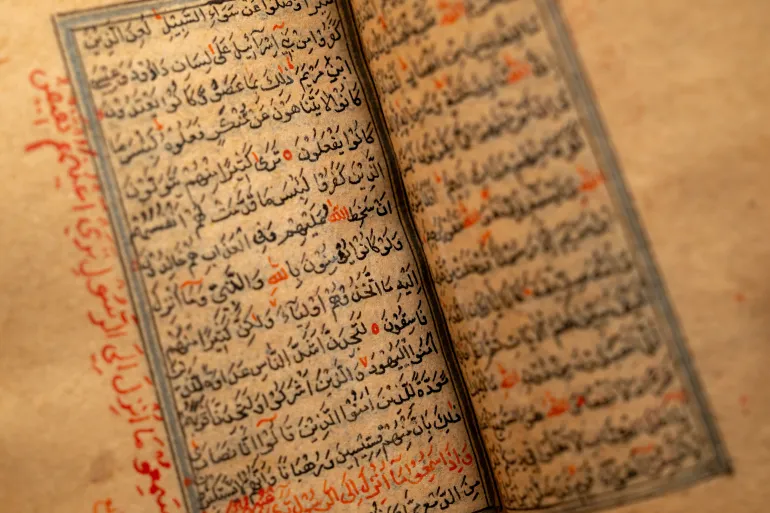
The first Muslim and South Asian mayor of the United States’ biggest metropolis, Mamdani used his grandfather’s Quran and a 200-year-old copy on loan from the New York Public Library (NYPL) for the private swearing-in event held at a disused subway station under Times Square.

Recommended Stories

list of 4 itemsend of list

He then plans to use two copies of the Quran that belonged to his grandfather and grandmother for a daytime ceremony at New York City Hall on Friday.

The historic Quran, borrowed from the library, once belonged to Arturo Schomburg, a Black historian and writer who sold his collection of 4,000 books to the NYPL in 1926. His collection became the Schomburg Center for Research in Black Culture.

Schomburg was born in Puerto Rico in the 1870s to parents of German and Afro-Caribbean descent. He later immigrated to New York and was a key player in the Harlem Renaissance of the 1920s and 1930s – a period of intense cultural and intellectual flourishing within New York’s Black community.

The library praised Mamdani’s decision to use Schomburg’s Quran because of its connection to one of New York’s “most groundbreaking scholars and for its simple, functional qualities”.

This photo provided by The New York Public Library shows the Schomburg Quran on Dec. 16, 2025 in New York. (Jonathan Blanc/The New York Public Library via AP)
This photo provided by the New York Public Library shows the Schomburg Quran on December 16, 2025, in New York [Jonathan Blanc/The New York Public Library via AP Photo]

The small size of the Quran and its black and red ink suggest it was designed for everyday use, the library said. The edition is neither signed nor dated, but its “minute naskh script and its binding, featuring a gilt-stamped medallion filled with a floral composition, suggest it was produced in Ottoman Syria in the 19th century”, the library added.

“The significance of this Quran extends far beyond the beauty of its pages,” said Hiba Abid, curator of Middle Eastern and Islamic studies. “It is a Quran close to the people, not only because of its simple craftsmanship, but also because it is part of the collections of the nation’s largest public library system.”

Anthony W Marx, the library’s president and CEO, said the choice of Quran and its association with Schomburg “symbolises a greater story of inclusion, representation, and civic-mindedness”.

Mamdani is one of only a handful of US politicians to be sworn in with the Quran. New York does not require mayors to take the oath of office with their hand on a religious text, but many past mayors have used a copy of the Bible.

Former New York City Mayor Michael Bloomberg used a 100-year-old family Bible during one ceremony, while Mayor Bill de Blasio used a Bible that once belonged to US President Franklin D Roosevelt. Mamdani’s predecessor, Mayor Eric Adams, also used a family Bible for his oath.

This photo provided by The New York Public Library shows the Schomburg Quran on Dec. 16, 2025 in New York. (Jonathan Blanc/The New York Public Library via AP)
This photo provided by the New York Public Library shows the Schomburg Quran on December 16, 2025, in New York [Jonathan Blanc/The New York Public Library via AP Photo]

Mamdani’s faith and his background as a Ugandan-born American of South Asian descent were front and centre during his campaign, which focused on celebrating the diversity of New York.

In viral social media videos, Mamdani also spoke candidly about the effect of the September 11 terrorist attacks on New York and the subsequent rise in Islamophobia in the US. Other videos featured the experiences of everyday New Yorkers, including many of its Muslim and immigrant communities.

Mamdani has also been a firm critic of Israel’s policies towards Palestinians and its genocidal war on Gaza.

Critics like New York Representative Elise Stefanik homed in on Mamdani’s background and left-wing politics as a Democratic Socialist, calling the incoming mayor a “jihadist Communist” and “terrorist” sympathiser.

Mamdani, however, pledged to never hide from his background during a campaign speech. “I will not change who I am, how I eat, or the faith that I’m proud to call my own,” he said during his campaign. “I will no longer look for myself in the shadows. I will find myself in the light.”

Source link

Trump says ‘removing’ National Guard from Chicago, Los Angeles and Portland | Donald Trump News

US president backs away from troop deployment to US cities amid legal setbacks, vows return when crime ‘begins to soar’.

United States President Donald Trump announced he is ceasing his efforts to deploy federal troops to several Democratic-led cities in a major policy pivot.

The announcement on Wednesday comes amid a series of legal setbacks to Trump’s efforts to deploy National Guard members to Chicago, Illinois; Los Angeles, California; and Portland, Oregon.

Recommended Stories

list of 3 itemsend of list

In a post on Truth Social, Trump said he’s “removing” the National Guard from those cities, although their deployment was already mostly limited by lower courts.

“We are removing the National Guard from Chicago, Los Angeles and Portland, despite the fact that CRIME has been greatly reduced by having these great Patriots in those cities, and ONLY by that fact,” he said.

Despite the claim, the National Guard has been barred from taking direct part in law enforcement, which remains illegal under US law. Trump had not invoked the Insurrection Act of 1807, which allows presidents to deploy troops domestically when “unlawful obstructions, combinations, or assemblages, or rebellion” against the federal government make it “impracticable to enforce” US law “by the ordinary course of judicial proceedings”.

Because of that, troops deployed in or around Los Angeles, Portland and Chicago had been largely tasked with guarding federal buildings and offering support services to immigration enforcement.

About 300 National Guard members remained under federal control in both Los Angeles and Chicago at the time of Trump’s announcement, with 200 more in Portland.

Since first deploying the National Guard in Los Angeles to respond to protests against mass immigration enforcement sweeps, Trump has repeatedly claimed major cities across the US have been plagued by overlapping crime and immigration crises.

Critics have accused Trump of taking part in dangerous political theatre to target opponents.

Trump’s announcement did not reference the ongoing National Guard deployment in Washington, DC, a federal territory, or in New Orleans, Louisiana, which had been specifically requested by the state’s Republican governor.

The president’s move comes amid a series of legal setbacks, topped last week by a Supreme Court order keeping in place a lower court’s ruling barring the president from deploying the National Guard to Chicago.

While members of the federal military, National Guard troops are typically deployed at the request of state governors. Presidents can unilaterally deploy the National Guard, but only in instances when other federal agents can no longer execute the law.

The majority of Supreme Court justices ruled Trump has not yet met that threshold, dealing a major blow to the administration’s justification for similar deployments across the country.

Earlier on Wednesday, Department of Justice lawyers in California withdrew a request to keep troops in the state under federal control as they appealed a lower court’s ruling. That ruling by US District Judge Charles Breyer said the troops must be returned to state control.

In a post on X, the office of California Governor Gavin Newsom, a Democrat and top Trump critic, said the “admission by Trump and his occult cabinet members means this illegal intimidation tactic will finally come to an end”.

Newsom and his staff “look forward” to a more lasting court ruling on the issue.

For his part, Trump, in his Truth Social post, said he would not hesitate to redeploy troops.

“We will come back, perhaps in a much different and stronger form, when crime begins to soar again – Only a question of time!” he said.

Source link

US imposes more sanctions on tankers transporting Venezuelan oil | US-Venezuela Tensions News

The United States Department of the Treasury has issued a new round of sanctions aimed at isolating Venezuela’s oil industry, as part of President Donald Trump’s pressure campaign against the South American country.

The sanctions announced on Wednesday target four companies and their associated oil tankers, which are allegedly involved in transporting Venezuelan oil.

Recommended Stories

list of 3 itemsend of list

Trump has claimed that Venezuelan leader Nicolas Maduro leads a so-called “narco-terrorist” government that seeks to destabilise the US, a charge repeated in the latest sanctions announcements.

“Maduro’s regime increasingly depends on a shadow fleet of worldwide vessels to facilitate sanctionable activity, including sanctions evasion, and to generate revenue for its destabilizing operations,” the Treasury said on Wednesday.

Petroleum is Venezuela’s primary export, but the Trump administration has sought to cut the country off from its international markets.

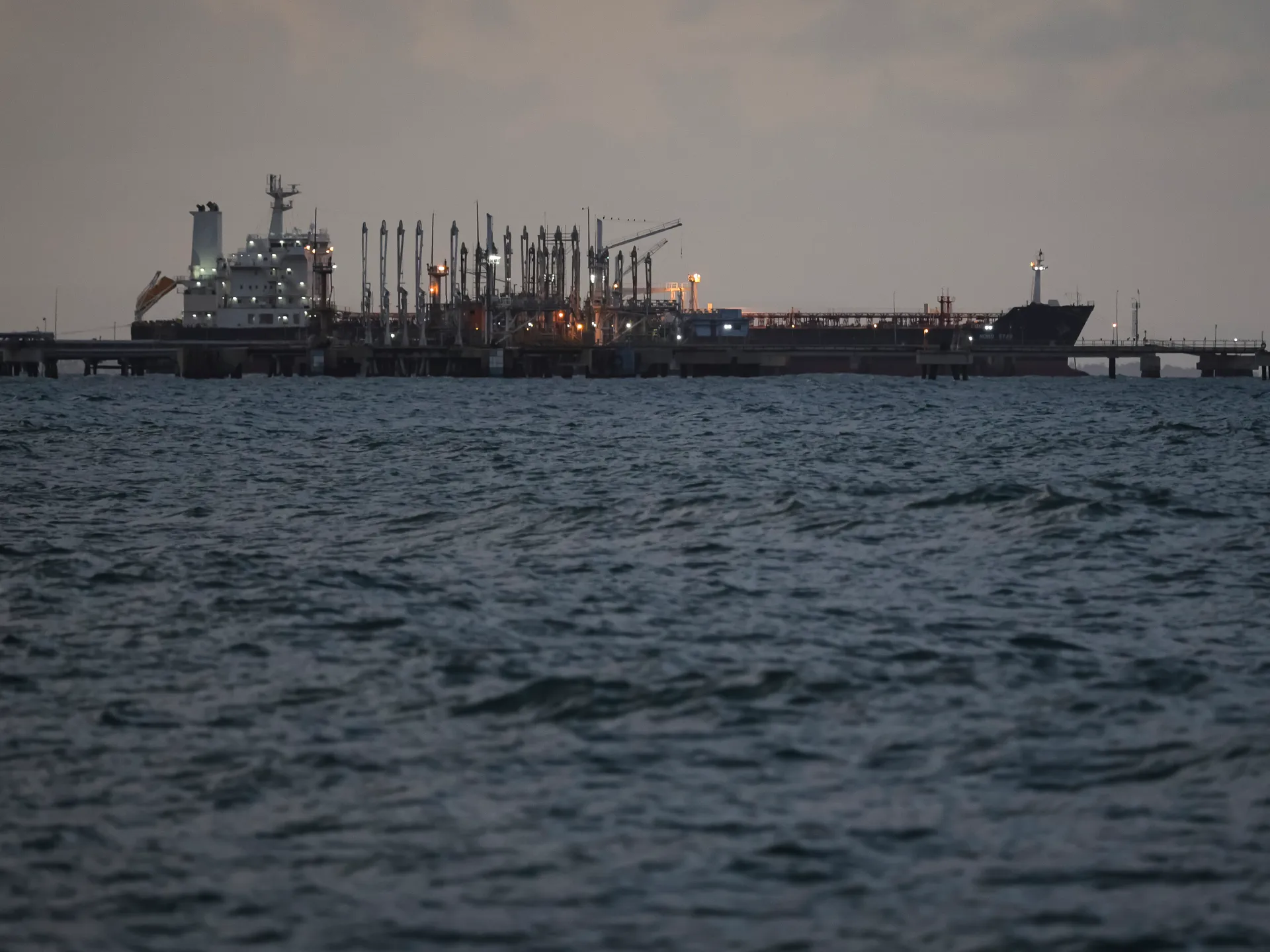
Wednesday’s notice accuses four tankers – the Nord Star, the Rosalind, the Valiant and the Della – of helping Venezuela’s oil sector to circumvent existing sanctions, thereby providing the “financial resources that fuel Maduro’s illegitimate narco-terrorist regime”.

“President Trump has been clear: We will not allow the illegitimate Maduro regime to profit from exporting oil while it floods the United States with deadly drugs,” said Treasury Secretary Scott Bessent.

“The Treasury Department will continue to implement President Trump’s campaign of pressure on Maduro’s regime.”


Claims on Venezuelan oil

The sanctions come a day after Washington imposed sanctions on a separate Venezuelan company it says assembled drones designed by Iran.

In recent months, the Trump administration has cited several motives for ratcheting up pressure against Venezuela, ranging from immigration to Maduro’s contested election in 2024.

Trump, for instance, has framed the pressure campaign as a means of stemming the trade of illegal drugs, despite Venezuela exporting virtually none of the administration’s main target, fentanyl.

Critics have also accused Washington of seeking to topple Maduro’s government to take control of the country’s vast oil reserves.

Trump officials have fuelled those suspicions with remarks seeming to assert ownership over Venezuela’s oil.

On December 17, a day after Trump announced a “total and complete blockade” of sanctioned oil tankers entering and leaving Venezuela, his top adviser, Stephen Miller, claimed that the US “created the oil industry in Venezuela”.

He suggested that the oil was stolen from the US when Venezuela nationalised its petroleum industry, starting in 1976.

That process accelerated after the 1998 election of socialist President Hugo Chavez, who reasserted state control over Venezuela’s oil sector, ultimately leading to the seizure of foreign assets in 2007.

That “tyrannical expropriation” scheme, Miller alleged, “was the largest recorded theft of American wealth and property”.

Still, one major US oil company, Chevron, continues to operate in the country.

Trump has echoed Miller’s claims, writing online that the US “will not allow a Hostile Regime to take our Oil, Land, or any other Assets”.

He added that all of those assets “must be returned to the United States, IMMEDIATELY”.

Military build-up in the Caribbean

In recent months, the Trump administration has tightened its focus on Venezuela’s oil industry, taking a series of military actions against tankers.

On December 10, the administration seized its first tanker, the Skipper, followed by a second seizure 10 days later.

The US military has reportedly been pursuing a third tanker as it crosses the Atlantic Ocean.

The attacks on the oil tankers come several months after the US began surging aircraft, warships and other military assets to the Caribbean region along Venezuela’s coast.

Since September 2, the US military has conducted dozens of bombing campaigns against alleged drug-smuggling boats in international waters in the Caribbean Sea and eastern Pacific, in what rights groups call extrajudicial killings.

More than 100 people have been killed, and the administration has offered scant legal justification for the attacks.

On Monday, Trump told reporters that the US had struck a “dock area” in Venezuela he claimed was used to load the alleged drug boats.

The dock bombing is believed to be the first of its kind on Venezuelan soil, though Trump has long threatened to begin attacking land-based targets.

While the administration has not officially revealed which agency was behind the dock strike, US media has widely reported it was conducted by the Central Intelligence Agency (CIA).

Source link

Four reasons why Benjamin Netanyahu may not want a Gaza ceasefire to hold | Israel-Palestine conflict News

Israeli Prime Minister Benjamin Netanyahu has reached the end of his latest trip to the United States and appears to have gained what he wants from President Donald Trump.

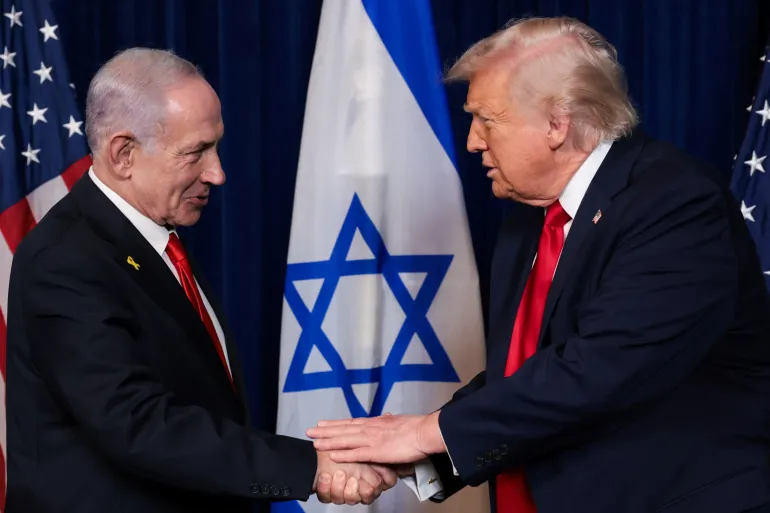
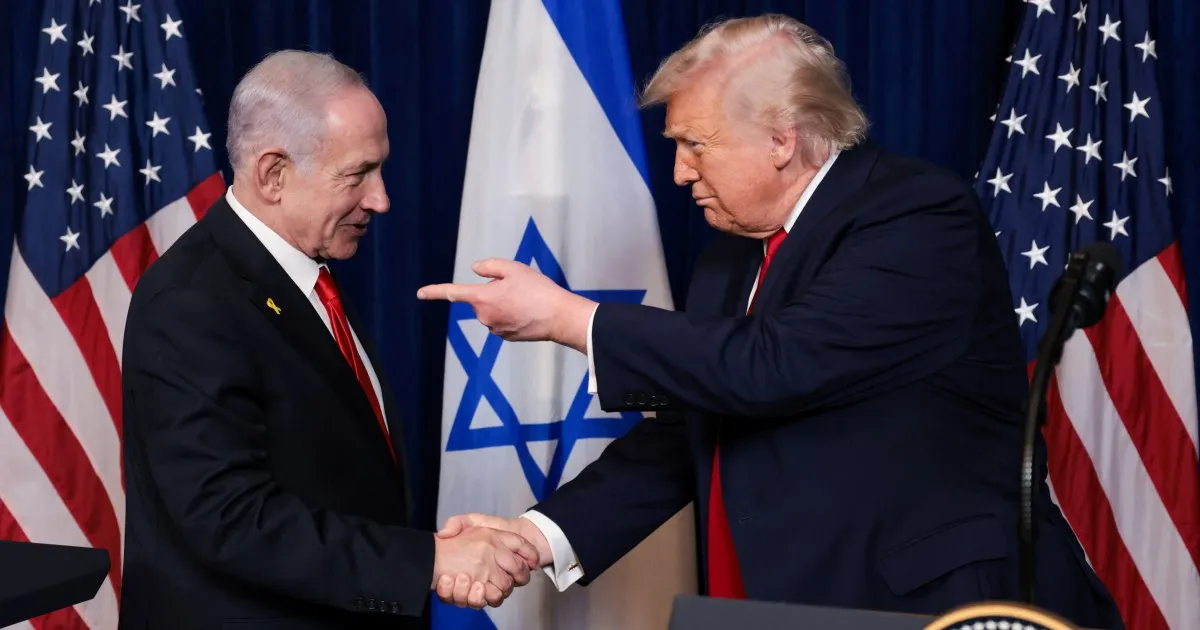
Trump hailed Netanyahu after their meeting on Monday, calling him a “hero” and saying Israel – and by extension its prime minister – had “lived up to the plan 100 percent” in reference to the US president’s signature Gaza ceasefire.

Recommended Stories

list of 4 itemsend of list

That is despite reports emerging last week that US officials were growing frustrated over Netanyahu’s apparent “slow walking” of the 20-point ceasefire plan – imposed by the US administration in October – suspecting that the Israeli prime minister might be hoping to keep the door open to resuming hostilities against the Palestinian group Hamas at a time of his choosing.

Under the terms of that agreement – after the exchange of all captives held in Gaza, living and dead, aid deliveries into the enclave and the freezing of all front lines – Gaza would move towards phase two, which includes negotiations on establishing a technocratic “board of peace” to administer the enclave and the deployment of an international security force to safeguard it.

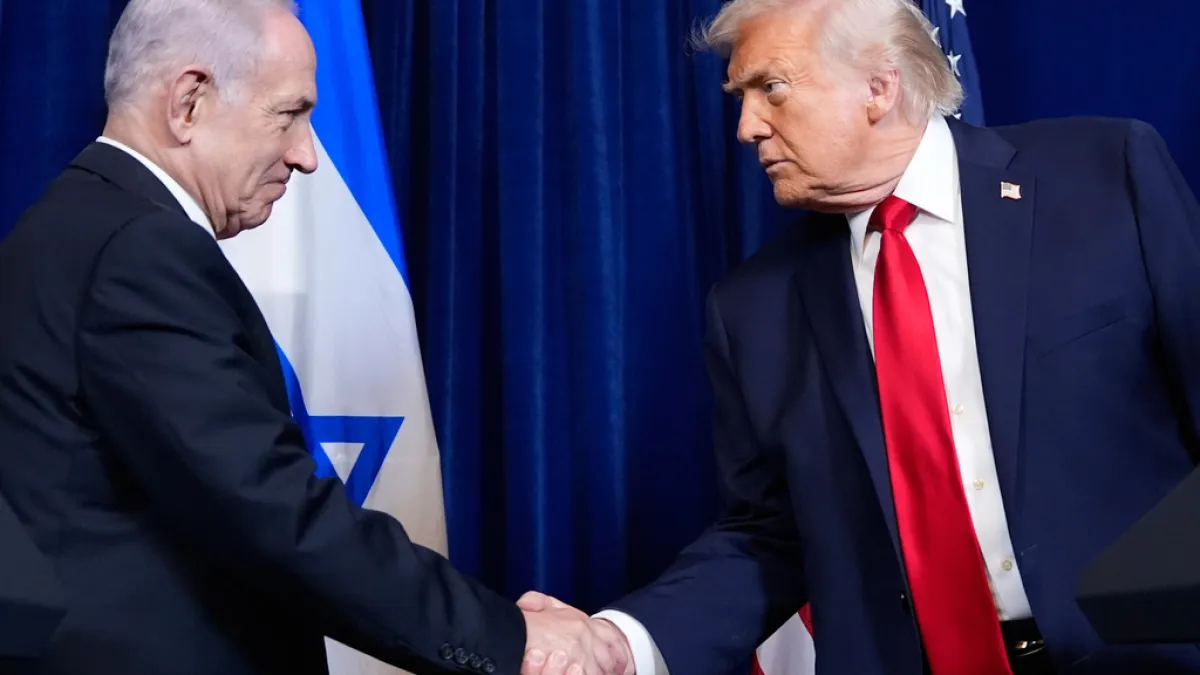
Netanyahu and Trump shake hands in front of Israel flag
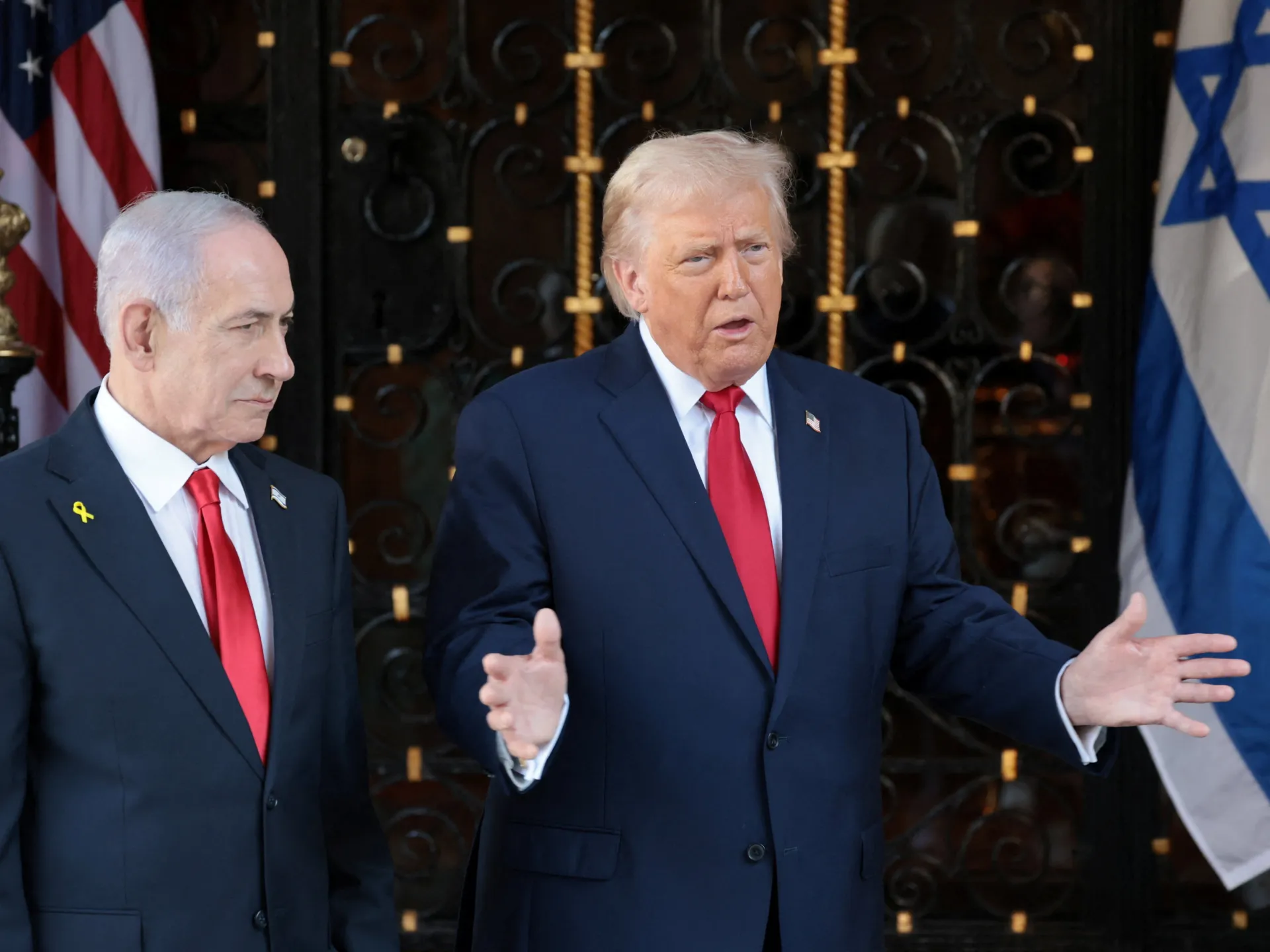
US President Donald Trump, right, called Israeli Prime Minister Benjamin Netanyahu a ‘hero’ during his visit to Trump’s Florida estate on December 29, 2025, saying he had lived up to Trump’s ceasefire plan ‘100 percent’ [Jonathan Ernst/Reuters]

So far, Netanyahu has not allowed in all of the required aid that Gaza desperately needs and is also maintaining that phase two cannot be entered into until Hamas returns the body of the last remaining captive. He has also demanded that Hamas disarms before Israel withdraws its forces, a suggestion fully endorsed by Trump after Monday’s meeting.

Hamas has repeatedly rejected disarmament being forced upon it by Israel, and officials have said that the question of arms was an internal Palestinian matter to be discussed between Palestinian factions.

So is Netanyahu deliberately trying to avoid entering the second phase of the agreement, and why would that be the case?

Here are four reasons why Netanyahu might be happy with things just as they are:

He’s under pressure from his right

Netanyahu’s ruling coalition is, by any metric, the most right wing in the country’s history. Throughout the war on Gaza, the support of Israel’s hardliners has proven vital in shepherding the prime minister’s coalition through periods of intense domestic protest and international criticism.

Now, many on the right, including National Security Minister Itamar Ben-Gvir and Finance Minister Bezalel Smotrich, oppose the ceasefire, protesting against the release of Palestinian prisoners and insisting that Gaza be occupied.

Netanyahu’s defence minister, Israel Katz, has also shown little enthusiasm for honouring the deal his country committed to in October. Speaking at a ceremony to mark the expansion of the latest of Israel’s illegal settlements in the occupied West Bank, Katz claimed that Israel’s forces would remain in Gaza, eventually clearing the way for further settlements.

Katz later walked his comments back, reportedly after coming under pressure from the US.

Israel's Defence Minister Israel Katz
Israeli Defence Minister Israel Katz [Menahem Kahana/AFP]

He doesn’t want an international force in Gaza

Allowing an international force to deploy to Gaza would limit Israel’s operational freedom, constraining its military’s ability to re-enter Gaza, conduct targeted strikes or pursue Hamas remnants within the enclave.

So far, despite the ceasefire, Israeli forces have killed more than 400 people in the enclave since agreeing to halt fighting on October 10.

Politically, agreeing to an international stabilisation force, particularly one drawn from neighbouring states, would broaden what Israel has often seen as a domestic war into an international conflict with many of the strategic, diplomatic and political decisions over that conflict being made by actors outside of its control.

It could also be framed domestically as a concession forced by the US and international community, undermining Netanyahu’s repeated claims of maintaining Israeli sovereignty and strategic independence.

“If Netanyahu allows a foreign military force into Gaza, he immediately denies himself a large degree of his freedom to operate,” Israeli political analyst Nimrod Flaschenberg said from Berlin. “Ideally, he needs things to remain exactly where they are but without alienating Trump.”


Smoke billows following an Israeli strike that targeted a building in the Bureij camp for Palestinian refugees in the central Gaza Strip on October 19, 2025. Gaza's civil defence agency said a series of Israeli air strikes on October 19 killed at least 11 people across the territory, as Israel and Hamas traded blame for violating a ceasefire. (Photo by Eyad BABA / AFP)
Smoke rises from an Israeli strike on Gaza’s Bureij refugee camp on October 19, 2025, in one of the near-daily attacks Israel has carried out since the ceasefire went into effect [Eyad Baba/AFP]

He wants to resist any progress towards a two-state solution

While not explicitly mentioning a two-state solution, the ceasefire agreement does include provisions under which Israel and the Palestinians commit to a dialogue towards what it frames as a “political horizon for peaceful and prosperous co-existence”.

Netanyahu, however, has been arguing against a two-state solution since at least 2015 when he campaigned on the issue.

More recently, at the United Nations in September, he branded the decision to recognise a Palestinian state “insane” and claimed that Israel would not accept the establishment of a Palestinian homeland.

Israeli ministers have also been at work ensuring that the two-state solution remains a practical impossibility. Israel’s plan to establish a series of new settlements severing occupied East Jerusalem – long considered the future capital of any Palestinian state – from the West Bank would make the establishment of a feasible state impossible.

This isn’t just an unfortunate consequence of geography. Announcing the plans for the new settlements in August, Smotrich said the project would “bury the idea of a Palestinian state”.

Israeli far-right Finance Minister Bezalel Smotrich holds a map of an area near the settlement of Maale Adumim, a land corridor known as E1, outside Jerusalem in the occupied West Bank, on August 14, 2025, after a press conference at the site. [Menahem Kahana/AFP]
Israeli Finance Minister Bezalel Smotrich holds a map near the settlement of Maale Adumim showing a land corridor known as E1, in which Israel plans to build thousands of settler homes and which Smotrich says would ‘bury the idea of a Palestinian state’ [Menahem Kahana/AFP]

A resumption of war would benefit him

Netanyahu faces numerous domestic threats, from his own corruption trial to the potentially explosive issue of forcing conscription on Israel’s ultra-religious students. There is also the public reckoning he faces for his own failures before and during the Hamas-led attacks on southern Israel on October 7, 2023, all of which will fall within a critical election year for the prime minister.

Each of these challenges risks fracturing his coalition and weakening his hold on power. All of them, however, could be derailed – or at least politically blurred – by a new conflict either with Hamas in Gaza, Hezbollah in Lebanon or possibly even with Iran.

Renewed fighting would allow him to once more present himself as a wartime leader, limit criticism and rally both his allies and adversaries around the well-worn flag of “national emergency”.

Source link

How Donald Trump launched a new push to amass US government data in 2025 | Donald Trump News

A ‘great leap forward’

But Schwartz told Al Jazeera that the trend towards government data consolidation has continued in the decades since, under both Democratic leaders and Republicans.

“Surveillance is bipartisan, unfortunately,” he said.

With Trump’s second term, however, the process hit warp speed. Schwartz argues that the Trump administration’s actions violate laws like the Privacy Act, marking a “dangerous” shift away from Nixon-era protections.

“The number-one problem with the federal government in the last year when it comes to surveillance is the demolition of the Watergate-era safeguards that were intended to keep databases separated,” he said.

Schwartz noted that Trump’s consolidation efforts have been coupled with a lack of transparency about how the new, integrated data systems are being used.

“Just as the current administration has done a great leap forward on surveillance and invading privacy, so it also has been a less transparent government in terms of the public understanding what it is doing,” Schwartz said.

Already, on March 20, Trump signed an executive order that called on government agencies to take “all necessary steps” for the dissolution of what he called “data silos”.

Shortly afterwards, in April, US Immigration and Customs Enforcement (ICE) inked a deal with the IRS to exchange personal information, including the names and addresses of taxpayers.

The memo was seen as an effort to turn private taxpayer data into a tool to carry out Trump’s goal of deporting immigrants.

A federal court in November paused the agencies’ data-sharing agreement. But other efforts continue.

In June, the Supreme Court ruled in favour of giving DOGE access to sensitive Social Security data. And just this month, the Trump administration pressured states to share information about the recipients of food assistance, or else face a loss of funding.

While immigrants appear to be one of the main targets of the data consolidation project, Venzke said that Americans of all stripes should not be surprised if their personal information is weaponised down the line.

“There is no reason that it will be limited to undocumented people. They are taking a system that’s traditionally limited to non-citizens and vastly expanding it to include all sorts of information on US citizens,” Venzke said.

“That was unthinkable just five years ago, but we’re seeing it happen now, and consequently, its potential abuses are widespread.”

Source link

Disney to pay $10m over alleged breaches of US child privacy laws | Privacy

Settlement comes after US Federal Trade Commission accused the entertainment giant of unlawfully collecting children’s data.

Disney has agreed to pay $10m to settle allegations that it breached child privacy laws in the United States, authorities have said.

A federal court approved the settlement to resolve allegations brought by the US Federal Trade Commission, the Department of Justice said on Tuesday.

Recommended Stories

list of 4 itemsend of list

The order also requires Disney to operate its YouTube channel in accordance with data-protection rules and establish a programme to ensure future compliance.

Disney had agreed to settle the claims brought by the US antitrust watchdog in September.

The civil case stems from allegations that Disney collected children’s personal data without parental consent via its videos on YouTube.

Antitrust officials alleged that Disney had wrongly designated more than 300 YouTube videos, including content from The Incredibles, Toy Story, Frozen, and Mickey Mouse, as not being aimed at children.

YouTube requires content creators to designate videos as “Made for Kids” or “Not Made for Kids” to comply with the Children’s Online Privacy Protection Rule.

Under the rule, companies in the US are prohibited from collecting data from children below 13 without parental notification.

Other major companies that have paid settlements under the rule, which has been amended several times since its enactment in 2000, include Google and Microsoft.

Disney did not immediately respond to a request for comment.

“The Justice Department is firmly devoted to ensuring parents have a say in how their children’s information is collected and used,” Assistant Attorney General Brett A Shumate said in a statement.

“The Department will take swift action to root out any unlawful infringement on parents’ rights to protect their children’s privacy.”

Disney, which has its headquarters in Burbank, California, is one of the world’s largest entertainment companies, with revenue for the fiscal year 2025 reaching $94.4bn.

Source link

How has Trump’s second term transformed the US Justice Department in 2025? | Donald Trump News

A newfound ‘openness’

The trouble with prosecutorial independence, however, is that it has not been codified in US law.

Instead, it is a norm that has developed over more than a century, stretching back to the earliest days of the Justice Department.

While the role of the attorney general dates back to 1789, the Justice Department itself is a more recent creation. It was established in 1870, during the Reconstruction period following the US Civil War.

That period was marked by an increasing rejection of political patronage: the system of rewarding political allies with favours and jobs.

Reformers argued that, rather than having law enforcement officers scattered across various government agencies, consolidating them in one department would make them less susceptible to political influence.

That premise, however, has been tested over the subsequent decades, most notably in the early 1970s under then-President Richard Nixon.

Nixon courted scandal by appearing to wield the threat of prosecutions against his political rivals — while dropping cases that harmed his allies.

In one instance, he allegedly ordered the Justice Department to drop its antitrust case against the company International Telephone and Telegraph (ITT) in exchange for financial backing at the Republican National Convention.

Key Justice Department officials were also implicated in the Watergate scandal, which involved an attempted break-in at Democratic Party headquarters.

But Sklansky, the Stanford Law professor, noted that Nixon tended to operate through back channels. He avoided any public calls to prosecute his rivals.

“He believed that, if he called for that openly, he would’ve been pilloried not just by Democrats but by Republicans,” Sklansky said. “And that was undoubtedly true at the time.”

But Sklansky believes the second Trump administration has abandoned such discretion in favour of a public display of power over the Justice Department.

“Trump’s openness about the use of the Justice Department to go after his enemies is really something that is quite new,” he said.

Source link

US issues Iran-Venezuela sanctions over alleged drone trade | US-Venezuela Tensions News

Washington accuses Tehran and Caracas of ‘reckless proliferation of deadly weapons’ amid spiraling tensions.

Washington, DC – The United States has issued sanctions against a Venezuelan company over accusations that it helped acquire Iranian-designed drones as Washington’s tensions with both Tehran and Caracas escalate.

The penalties on Tuesday targeted Empresa Aeronautica Nacional SA (EANSA), a Venezuelan firm that the US Department of the Treasury said “maintains and oversees the assembly of” drones from Iran’s Qods Aviation Industries, which is already under sanctions by Washington.

Recommended Stories

list of 3 itemsend of list

The department also sanctioned the company’s chairman, Jose Jesus Urdaneta Gonzalez, accusing him of coordinating “with members and representatives of the Venezuelan and Iranian armed forces on the production of UAVs [unmanned aerial vehicles] in Venezuela”.

“Treasury is holding Iran and Venezuela accountable for their aggressive and reckless proliferation of deadly weapons around the world,” Treasury official John Hurley said in a statement.

“We will continue to take swift action to deprive those who enable Iran’s military-industrial complex access to the US financial system,” he said. The sanctions freeze any assets of the targeted firms and individuals in the US and make it generally illegal for American citizens to engage in financial transactions with them.

In its statement, the US alleged Tehran and Caracas have coordinated the “provision” of drones to Venezuela since 2006.

Iran’s Ministry of Defence and Armed Forces Logistics (MODAFL) has been under US sanctions since 2020 for what Washington said is its role in both selling and procuring weapons. The US is by far the largest weapons exporter in the world.

On Tuesday, the US Treasury Department also imposed new sanctions against several Iranians it accused of links to Iran’s arms industry.

The actions came a day after President Donald Trump threatened more strikes against Iran if the country rebuilds its missile capabilities or nuclear programme.

The US had joined Israel in its attacks against Iran in June and bombed the country’s three main nuclear sites before a ceasefire ended a 12-day escalation.

“Now I hear that Iran is trying to build up again, and if they are, we’re going to have to knock them down,” Trump said on Monday during a joint news conference with visiting Israeli Prime Minister Benjamin Netanyahu. “We’ll knock them down. We’ll knock the hell out of them. But hopefully, that’s not happening.”

Iran was quick to respond to Trump’s threats.

“The response of the Islamic Republic of Iran to any oppressive aggression will be harsh and regrettable,” President Masoud Pezeshkian wrote in a social media post.

The Trump administration has also taken a confrontational approach towards Venezuela.

The US president announced this week that the US “hit” a dock in the Latin American country that he said was used to load drug boats. Details of the nature of the strike remain unclear.

Trump and some of his top aides have falsely suggested that Venezuela’s oil belongs to the US. Washington has also accused Venezuelan President Nicolas Maduro, without evidence, of leading a drug trafficking organisation.

The Trump administration has simultaneously been carrying out strikes against what it says are drug-running vessels in the Caribbean Sea and eastern Pacific Ocean, a campaign that many legal experts said violates US and international law and is tantamount to extrajudicial killings.

Over the past month, the US also has seized at least two oil tankers off the coast of Venezuela after Trump announced a naval blockade against the country.

Venezuela has rejected the US moves as “piracy” and accused the Trump administration of seeking to topple Maduro’s government.

Source link

Netanyahu’s Mar-a-Lago win that wasn’t | Israel-Palestine conflict

Yesterday, Israeli Prime Minister Benjamin Netanyahu paid his fifth visit to the United States since President Donald Trump took office in January. Before the meeting between the two, the Israeli press described the prime minister as fully engaged in an attempt to placate his domestic political partners by achieving “concessions” from Trump. What were these concessions? They were predominantly related to denying Turkiye any presence in the Gaza stabilisation force and to US approval for an Israeli strike on Iran.

Netanyahu failed on both counts. Trump specifically referred to his good relationship with Turkish President Recep Tayyip Erdogan, and spoke of “Bibi’s” respect for him, too. With regard to Iran, Trump mentioned Iran’s willingness to “make a deal” and provided clear guidelines for American involvement while saying nothing about authorising a solo Israeli operation. Israeli media suggests that Trump provided Israel with a “green light” for a strike on Iran. That is not reflected in Trump’s official statement in any way.

Trump talked about the reconstruction of Gaza beginning “soon”. When he spoke of the disarmament of Hamas, he said that it must happen or nearly 60 states will make it happen. Hamas has already agreed to disarm if the process is carried out by a Palestinian-led force. Trump said nothing to suggest that he does not agree with Hamas’s logic, especially when one considers the refusal of most participating countries to carry out a violent disarmament of the group. Trump also made no mention of the last hostage body held in Gaza as a necessary condition for moving to “Stage II” of the deal.

Nothing is more significant in Trump’s world than the use of language and symbolic gestures. When Trump referred to Netanyahu as a “great wartime prime minister” as he was discussing his blueprint for “peace”, he made it clear that his guest was running out of time. This was also clearly apparent when Trump said he had spoken with Israel’s official head of state, President Isaac Herzog, about a pardon for Netanyahu and was assured such a pardon was imminent. President Herzog, by the way, categorically denied that such a conversation had taken place.

What may be the best reflection of the Trump-Netanyahu meeting at Mar-a-Lago has to do with a brief conversation over the phone between Trump and Israeli Minister of Education Yoav Kish. The purpose of the call was for Kish to inform Trump that he will be awarded the Israel Prize on Israel’s Independence Day in 2026.

The award is given out by the minister of education in a televised ceremony attended by Israel’s leaders. It marks the official end of Independence Day celebrations. Its recipients are most frequently career academics at a late stage of their careers. The prize reflects a lifetime’s devotion to the expansion of human knowledge. Sometimes, special prizes are awarded in civic categories, most often for what is called a “life’s work”, such as fostering coexistence between Jews and Palestinians, promoting social equality, etc.

The prize, as understood by its name, is nearly always awarded to Israeli citizens but can be awarded to Jews living abroad and even to non-Jews who have made a “special contribution to the Jewish people”.

In other words, the Trump-Netanyahu meeting involved Trump instructing Netanyahu with regard to upcoming measures and Netanyahu snapping to attention and signalling his acceptance by heaping yet another semi-fictitious honour on Trump’s already crowded head.

Yet, despite these clear displays of the unequal nature of their relationships, there have been persistent voices suggesting that Trump and Netanyahu are operating in cahoots. According to such analyses, the United States fully supports the Israeli attempt to “change the Middle East” – Netanyahu’s favourite phrase – as the Americans make a pivot to Asia and the global race for dominance with China.

Israel will “take care” of the “Iranian threat” as the Arabs languish in their own irresolvable internal tensions and competitions. The mobilisation of Arab states after the Israeli strike on Doha is all but ignored.

These voices also point to the fact that Israel continues to completely ignore the “ceasefire” enacted by “Stage I” of the Trump plan, and does so with the full support of the United States. In fact, Trump said that Israel has “lived up” to the ceasefire “100 percent”, and that he has no problems with Israel’s actions in Gaza. These include bombing, destruction of buildings and infrastructure, the blocking of life-saving aid amid harsh weather and many other steps that ensure and expand the ongoing Israeli genocide.

It is indeed extremely difficult to reconcile this with the notion that Israel has run out of options for delaying Stage II and an internationally-brokered solution to Palestinian statehood. After all, one hears repeatedly from Israeli media about initiatives to “settle Gaza”, “relocate” 1.5 million Palestinians to Somaliland and dismantle the Oslo Accords, one ethnically cleansed Palestinian community at a time.

The US and other countries, like Germany and the UK, continue to buy Israeli arms at a massive rate and to equip Israel with arms of their own. How is it possible to reach a conclusion that the Israeli genocide is reaching its endgame?

The short answer is that it is not. Israel continues to kill, destroy, subvert and expand its efforts to destabilise any semblance of regional order. For example, Israel recognised the statehood of Somaliland in order to have a “dumping ground” for ethnically cleansed Palestinians, but also to pit the United Arab Emirates against Saudi Arabia, as both have conflicting interests in Somalia, and, by doing so, ensure that the Palestinian question is not addressed and that everyone remains frozen by fear of Israeli weapons.

The longer answer recognises the effects of this genocide on Israel itself: Genocide consumes genocidaires.

That is not to suggest that justice is assured by cosmic forces; far from it. Justice should be pursued at the most grounded and realistic level, as should the dignity and preservation of Palestinian lives.

However, the genocide has shaped Israel in its image on a daily, immediate level. Violence is rising as quickly as the prices of the staples, democracy is backsliding, and there is no end in sight to the “forever war”. This is not an abstract, “strategic” matter.

While Israel has been actively seeking to delete Palestinian identity for nearly 80 years, it has not succeeded in doing so. Israel’s internal contradictions have surfaced with paralysing force over the past two years.

Israel will not “die” or “recede”, but the gap between Israeli perceptions of the world and global perceptions of Israel has never been wider.

Trump and his vision of America do not appreciate “losers”. Israel no longer has any “wins” in the offing. It can and does kill and burn, procrastinate and obfuscate.

Even Trump recognises that this power has no lasting effects following its own immediate application. Israel has no options. There is no greater loss.

The views expressed in this article are the author’s own and do not necessarily reflect Al Jazeera’s editorial stance.

Source link

Judge blocks Trump effort to strip South Sudan deportation protections | Donald Trump News

Trump is seeking to end protected status for South Sudan, claiming country no longer poses danger to those returning.

A federal judge has blocked the administration of President Donald Trump from stripping temporary protections from deportations for South Sudanese citizens living in the United States.

US District Judge Angel Kelley in Boston, Massachusetts, granted an emergency request on Tuesday in a lawsuit filed by several South Sudanese nationals and an immigrant rights group.

Recommended Stories

list of 3 itemsend of list

The order prevents the temporary protected status (TPS) for South Sudanese citizens from expiring on January 5 as the Trump administration has sought.

The lawsuit, led by the African ‍Communities Together, accuses the US Department of Homeland Security of acting unlawfully in its effort to strip South Sudanese citizens of TPS, a US immigration status granted to citizens of countries experiencing natural disasters, conflict or other extraordinary circumstances that could make return to their homelands dangerous.

The status was initially granted for South Sudan in 2011 when the country officially broke away from Sudan. It has been repeatedly renewed amid repeated bouts of fighting, widespread displacement and regional instability.

​The status allows eligible individuals to work and receive temporary protection from deportation.

The lawsuit further alleged that the Trump administration exposed South Sudan citizens to being deported to a country facing what is widely considered one of the world’s worst humanitarian crises.

Homeland Security Secretary Kristi Noem, in a notice published on November ‌5, had argued the country no longer met the conditions for TPS.

“With the renewed peace in South Sudan, their demonstrated commitment to ensuring the safe reintegration of returning nationals, and improved diplomatic relations, now is the right time to conclude what was always intended to ‌be a temporary designation,” she said, appearing to refer to a tenuous 2018 peace agreement.

The statement contradicted the findings of a panel of United Nations experts, who wrote in a report to the UN Security Council in November that “while the contours of the conflict may be altered, the resulting human suffering has remained unchanged.”

“Ongoing conflict and aerial bombardments, coupled with flooding and the influx of returnees and refugees from the Sudan, have led to near-record levels of food insecurity, with pockets of famine reported in some of the communities most affected by renewed fighting,” it added.

The Trump administration has increasingly targeted TPS as part of its crackdown on immigration and its mass deportation drive.

It has moved to similarly ‌end TPS for foreign nationals from countries including Syria, Venezuela, Haiti, ⁠Cuba and Nicaragua, prompting several court challenges.

It has also sought to deport individuals to countries in Africa, even if they have no ties there.

Source link

Iran warns of ‘severe’ response in wake of Trump’s new strikes threat | Israel-Iran conflict News

US president says he would back attacks if Tehran rebuilds nuclear or missile programmes.

Iran has promised to respond harshly to any aggression after United States President Donald Trump threatened further military action, should Tehran attempt to rebuild its nuclear programme or missile capabilities.

President Masoud Pezeshkian issued the warning on X on Tuesday, a day after Trump met Prime Minister Benjamin Netanyahu at his Florida estate, where he firmly leaned into the Israeli regional narrative yet again.

The US had not previously said it would target Iran’s missile capabilities, which has long been an Israeli aspiration, focusing instead on Tehran’s nuclear programme. Iran has repeatedly said its nuclear activities are for civilian purposes only, and neither US intelligence nor the UN’s nuclear watchdog found any evidence of atomic weapons production before the June attacks by the US and Israel.

Iran has ruled out negotiating over its missile programme.

The leaders’ comments raise the spectre of renewed conflict just months after a devastating 12-day war in June that killed more than 1,100 Iranians and left 28 in Israel dead.

Pezeshkian said the response of Iran to any aggression would be “severe and regret-inducing”. His defiant message came hours after Trump told reporters at his Mar-a-Lago resort that Washington could carry out another major assault on Iran.

“Now I hear that Iran is trying to build up again, and if they are, we’re going to have to knock them down,” Trump said, standing alongside Netanyahu. “We’ll knock the hell out of them.”

The US president said he would support strikes on Iran’s nuclear programme “immediately” and on its missile facilities if Tehran continues developing long-range weapons.

Israeli officials have expressed concern in recent weeks that Iran is quietly rebuilding its ballistic missile stockpile, which was significantly depleted during the June conflict.

“If the Americans do not reach an agreement with the Iranians that halts their ballistic missile program, it may be necessary to confront Tehran,” an Israeli official told Ynet this week.

Pezeshkian recently described the standoff as a “full-scale war” with the US, Israel and Europe that is “more complicated and more difficult” than Iran’s bloody conflict with Iraq in the 1980s, which left more than one million dead.

The June war saw Israel launch nearly 360 strikes across 27 Iranian provinces over 12 days, according to conflict monitoring group ACLED, targeting military installations, nuclear facilities and government buildings.

The assault destroyed an estimated 1,000 Iranian ballistic missiles and killed more than 30 senior military commanders and at least 11 nuclear scientists.

Iran fired more than 500 missiles at Israel during the conflict, with approximately 36 landing in populated areas. While Trump claimed Iranian nuclear capabilities were “completely obliterated” by the strikes, experts disputed that, saying Tehran may have hidden stockpiles of enriched uranium and could resume production within months.

Despite the losses, Iranian officials insist the country is now better prepared for confrontation. In a recent interview, Pezeshkian said Iran’s military forces are “stronger in terms of equipment and manpower” than before the ceasefire.

The war failed to trigger the internal unrest it is suspected that Netanyahu had hoped for. No significant protests materialised, and daily life in Tehran largely continued despite the bombardment.

Source link

How are China’s new war games around Taiwan different from earlier drills? | Military News

China has held two-day military drills – Justice Mission 2025 – around Taiwan, marking the sixth round of large-scale war games since 2022, when then-Speaker of the United States House of Representatives Nancy Pelosi visited the island.

The exercise included 10 hours of live fire drills on Tuesday as Chinese forces practised encircling Taiwan and blockading its major ports.

Recommended Stories

list of 4 itemsend of list

What happened during the Justice Mission 2025?

The war games began on Monday in the waters and airspace to the north, southwest, southeast and east of Taiwan’s main island, according to China’s Eastern Theatre Command spokesperson Shi Yi.

The exercises saw China deploy its naval destroyers, frigates, fighter planes, bombers, drones, and long-range missiles to simulate seizing control of Taiwan’s airspace, blockading its ports, and striking critical infrastructure, “mobile ground targets” and maritime targets, Shi said.

The exercises also simulated a blockade of Taiwan and its main ports, Keelung and Kaohsiung.

Tuesday’s live-fire drills were held in five zones around Taiwan between 8am and 6pm local time (00:00 GMT and 10:00 GMT), according to the Eastern Theatre Command. Chinese forces fired long-range rockets into the waters around the island, according to a video released by the military on social media.

Taiwan’s coastguard said seven rockets were fired into two drill zones around the main island.

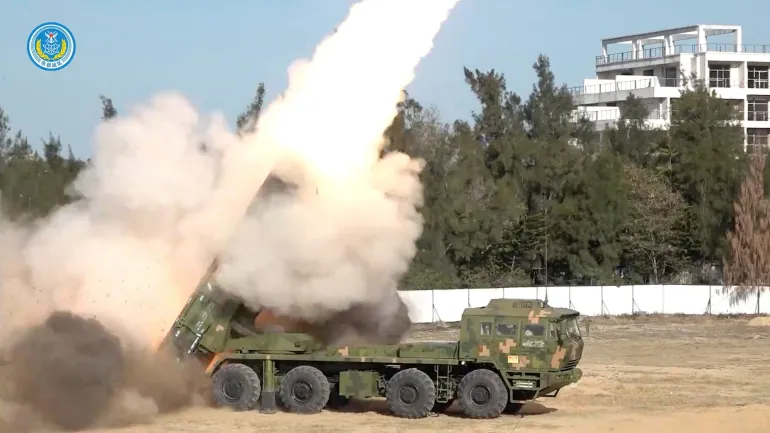
A military equipment of the ground forces takes part in long-range live-fire drills targeting waters north of Taiwan, from an undisclosed location in this screenshot from a video released by the Eastern Theatre Command of China's People's Liberation Army (PLA) on December 30, 2025. Eastern Theatre Command/Handout via REUTERS ATTENTION EDITORS - THIS IMAGE WAS PROVIDED BY A THIRD PARTY. MANDATORY CREDIT. NO RESALES. NO ARCHIVES.
Ground forces take part in long-range live-fire drills targeting waters north of Taiwan, from an undisclosed location in this screenshot from a video released by the Eastern Theatre Command of China’s People’s Liberation Army on December 30, 2025 [Handout/Eastern Theatre Command via Reuters]

Taiwan’s Ministry of Defence said it had tracked 130 air sorties by Chinese aircraft, 14 naval ships and eight “official ships” between 6am on Monday and 6am on Tuesday.

Ninety of the air sorties crossed into Taiwan’s air defence identification zone (ADIZ), an area of land and sea monitored by Taipei, during the 24 hours, in the second-largest incursion of its kind since 2022.

How were the exercises different from last time?

Justice Mission 2025 was the largest war game since 2022 in terms of the area covered, according to Jaime Ocon, a research fellow at Taiwan Security Monitor.

“These zones are very, very big, especially the southern and southeast zones around Taiwan, which actually breached territorial waters,” he told Al Jazeera, referring to the region within 12 nautical miles (22km) of Taiwan’s coast. “That’s a big escalation from previous exercises.”

They also focused explicitly on blockading Taiwan, unlike past iterations, sending a strong message to Taipei and its unofficial allies, particularly the US and Japan.

“This is a clear demonstration of China’s capability to conduct A2/AD – anti-access aerial denial – making sure that Taiwan can be cut off from the world and that other actors like Japan, the Philippines, or the United States cannot directly intervene,” Ocon said.

A blockade would impact not only the delivery of weapons systems but also critical imports, such as natural gas and coal, that Taiwan relies on to meet nearly all its energy needs. It would also disrupt vital global shipping routes through the Taiwan Strait.

Alexander Huang, director-general of Taiwan’s Council on Strategic and Wargaming Studies, told Al Jazeera the drills were similar to those held after Pelosi’s visit in August 2022.

“For this drill, it actually interfered with international civil aviation routes and also maritime shipping routes. In previous drills, they tried to avoid that, but this time they actually disrupted the air and maritime traffic,” he said.

The drills also put pressure on Taiwan’s maritime and transport links to Kinmen and Matsu islands, which are closer to the Chinese mainland.

Why did China stage the exercises now?

China has a history of holding military exercises to express its anger with Taiwan and its allies, but large-scale exercises have become more frequent since Pelosi’s Taiwan visit.

Beijing claims Taiwan as a province and has accused the US of interfering in its internal affairs by continuing to sell weapons to Taipei and supporting its “separatist” government led by President William Lai Ching-te.

Washington does not officially recognise Taiwan, whose formal name is the Republic of China, but it has pledged to help Taipei defend itself under the 1979 Taiwan Relations Act and the 1982 Six Assurances.

The Justice Mission 2025 came just days after Washington approved a record-breaking $11.1bn arms sale to Taiwan.

China’s Ministry of Foreign Affairs said on Monday that the drills were a “punitive and deterrent action against separatist forces who seek ‘Taiwan independence’ through military build-up, and a necessary move to safeguard China’s national sovereignty and territorial integrity”. Beijing sanctioned 30 US firms and individuals over the arms sale.

Experts also say the exercises were linked to a separate but related diplomatic row between China and Japan.

Beijing was angered in November by remarks from Japanese Prime Minister Sanae Takaichi that an attack on Taiwan would be a “survival-threatening situation” for Japan. Such a scenario would legally permit Japan to exercise its “right of collective self-defence” and deploy its military, she said.

A display screen shows information on cancelled flights at Taipei Songshan Airport, as China conducts "Justice Mission 2025" military drills around Taiwan, in Taipei, Taiwan, December 30, 2025. REUTERS/Ann Wang
Several flights were cancelled at the Taipei airport during China’s latest military drills around Taiwan, December 30, 2025 [Ann Wang/Reuters]

How is Taiwan responding to the drills?

Taiwan cancelled more than 80 domestic flights on Tuesday and warned that more than 300 international flights could be delayed due to flight rerouting during the live-fire drills.

Taiwan’s Defence Ministry said the coastguard monitored the exercises near the outlying islands and that an undisclosed number of naval vessels had also been deployed nearby. Taipei also monitored all incursions into its ADIZ, including the Taiwan Strait, sections of coastal China, and waters around Taiwan.

In a statement on Tuesday, Defence Minister Wellington Koo said, “[Beijing’s] highly provocative actions severely undermine regional peace and stability [and] also pose a significant security risk and disruption to transport ships, trade activities, and flight routes.”

Koo described the exercises as a form of “cognitive warfare” that aimed to “deplete Taiwan’s combat capabilities through a combination of military and non-military means, and to create division and conflict within Taiwanese society through a strategy of sowing discord”.

How did the US respond to the drills?

US President Donald Trump has so far remained quiet about the military drills, telling reporters on Monday that he was “not worried”.

“I have a great relationship with President Xi, and he hasn’t told me anything about it,” Trump said when asked about the exercises during a news conference, according to Reuters. “I don’t believe he’s going to be doing it,” he added, seemingly referring to the prospect of actual military action targeting Taiwan.

William Yang, a senior analyst for Northeast Asia at the International Crisis Group, told Al Jazeera that Trump might avoid saying much about the Justice Mission 2025 exercises as he hopes to meet President Xi Jinping in April to discuss a US-China trade deal. “It’s a diplomatic strategy to make sure the US response is not going to immediately upset the temporary trade truce between the US and China,” Yang said.

“I think it’s quite consistent with how he personally and his administration have been handling the issue of Taiwan by trying to de-prioritise making public statements,” he said.

Source link

Five key takeaways from Trump-Netanyahu meeting in Florida | Israel-Palestine conflict News

Israeli Prime Minister Benjamin Netanyahu and US President Donald Trump have presented a united front and heaped praise on each other as they held another meeting to discuss the tensions in the Middle East.

On Monday, Netanyahu paid his fifth visit to the United States since Trump’s inauguration in January, meeting the president at his Mar-a-Lago resort in Florida.

Recommended Stories

list of 3 itemsend of list

Their mutual flattery turned into geopolitical alignment as the two leaders addressed the most pressing issues in the Middle East: Gaza and Iran.

Trump claimed that Israel is helping the people of Gaza and dismissed the near-daily Israeli ceasefire violations.

Here are the key takeaways from Monday’s meeting.

Trump stresses Hamas must disarm

Before and after his meeting with Netanyahu, Trump stressed that Hamas must disarm, issuing a stern threat to the Palestinian group.

Asked what would happen if Hamas refused to give up its weapons, Trump said: “It would be horrible for them, horrible. It’s going to be really, really bad for them.”

Last week, US Secretary of State Marco Rubio said that Washington’s top priority was to move to the second phase of the ceasefire, which would see the establishment of a technocratic Palestinian administration and the deployment of an international police force.

But on Monday, Trump kept the focus on Hamas, reiterating the claim that other countries have offered to “wipe them out” if the group refuses to give up its weapons.

Israel has killed 414 Palestinians in Gaza since the start of the ceasefire in October, and it continues to restrict the flow of international aid into the territory, including temporary shelter provisions, despite people suffering deadly weather conditions in makeshift tents.

Trump, however, said that Israel is fully living up to its commitments under the deal – “100 percent”.

“I’m not concerned about anything that Israel is doing,” he told reporters.

US threatens Iran

Trump suggested that Washington would carry out further military action against Iran if Tehran rebuilds its nuclear programme or missile capacity.

The president kept returning to the oft-cited argument that the US air strikes against Iranian nuclear facilities in June are what paved the way for the ceasefire in Gaza.

“Now I hear that Iran is trying to build up again, and if they are, we’re going to have to knock them down,” Trump said.

“We’ll knock them down. We’ll knock the hell out of them. But, hopefully, that’s not happening.”

In recent weeks, Israeli officials and their US allies have shifted the focus to Iran’s missile programme, arguing it should be dealt with before it poses a threat to Israel.

When asked whether the US would back an Israeli attack targeting Iran’s missile programme, Trump said, “If they will continue with the missiles, yes. The nuclear? Fast. OK? One will be: Yes, absolutely. The other is: We’ll do it immediately.”

Iran has ruled out negotiating over its missile programme, and it has denied seeking to build a nuclear weapon.

Israel, meanwhile, is widely believed to have an undeclared nuclear arsenal.

Bromance festival

Since the early days of Israel’s genocidal war on Gaza, US media reports have suggested that the US president, first Joe Biden, then Trump, was angry or frustrated at Netanyahu.

But the US military and diplomatic support for Israel has never been interrupted.

Ahead of Netanyahu’s visit, similar reports emerged about a potential rift between him and Trump.

Nonetheless, the two leaders put on a show of brotherly romance on Monday.

Trump called Netanyahu a “hero”, stressing that Israel may not have existed without his wartime leadership.

“We’re with you, and we’ll continue to be with you, and a lot of good things are happening in the Middle East,” Trump told Netanyahu.

“We have peace in the Middle East, and we’re going to try and keep it that way. I think we will be very successful in keeping it that way. And you’ve been a great friend.”

The US president also highlighted his efforts to secure a presidential pardon for Netanyahu, who is facing corruption charges in Israel.

The Israeli prime minister announced that the US president will be awarded the Israel Prize, which is normally given to Israeli citizens.

“I have to say that this reflects the overwhelming sentiment of Israelis across the spectrum,” Netanyahu said.

“They appreciate what you’ve done to help Israel, and to help our common battle against the terrorists and those who would destroy our civilisation.”

Netanyahu has notably not been pardoned.

Trump calls for Israel-Syria rapprochement

One area where Trump appeared to press Netanyahu was Syria.

Trump said Netanyahu is “going to get along” with Syria, lauding Syrian President Ahmed al-Sharaa.

Since the fall of former President Bashar al-Assad last year, Israel has expanded its occupation of southern Syria beyond the Golan Heights, seizing large areas in Jabal al-Sheikh. The Israeli military has also been carrying out raids, reportedly abducting and disappearing people in the country.

The new Syrian authorities have stressed that they do not seek conflict with Israel, but talks to reach a security agreement between the two countries have stalled.

“We do have an understanding regarding Syria,” Trump said. “Now, with Syria, you have a new president. I respect him. He’s a very strong guy, and that’s what you need in Syria.”

Netanyahu was non-committal on Israel’s approach to Syria.

“Our interest is to have a peaceful border with Syria,” he said. “We want to make sure that the border area right next to our border is safe — we don’t have terrorists, we don’t have attacks.”

On renewed war in Lebanon: ‘We’ll see about it.’

Since the start of the truce in Gaza, Israel has intensified its attacks in Lebanon, leading to fears that it may re-launch its full-scale war against the country.

Earlier this year, the Lebanese government issued a decree to disarm Hezbollah, but the group pledged to hold onto its weapons to defend the country against Israel.

On Monday, Trump did not rule out renewing the conflict in Lebanon.

“We’ll see about it,” the president said when asked whether he would support more Israeli strikes in Lebanon.

“The Lebanese government is at a little bit of a disadvantage, if you think of it, with Hezbollah. But Hezbollah has been behaving badly, so we’ll see what happens.”

Source link

Trump says US would back strikes against Iran’s missile programme | Donald Trump News

Speaking alongside Benjamin Netanyahu, Trump threatens to ‘knock’ down Iran’s attempts to rebuild nuclear capabilities.

United States President Donald Trump suggested that Washington would consider further military action against Iran if Tehran rebuilds its nuclear programme or missile capacity.

Speaking in Florida on Monday, Trump did not rule out a follow-up attack after the June air strikes that damaged three Iranian nuclear facilities.

Recommended Stories

list of 3 itemsend of list

“Now I hear that Iran is trying to build up again, and if they are, we’re going to have to knock them down,” Trump told reporters. “We’ll knock them down. We’ll knock the hell out of them. But hopefully that’s not happening.”

Trump issued his threat as he welcomed Israeli Prime Minister Benjamin Netanyahu to his Mar-a-Lago estate in Palm Beach, Florida.

Trump said that the US and Israel have been “extremely victorious” against their enemies, referring to the wars in Gaza and Lebanon, and the strikes against Iran in June.

When asked whether the US would back an Israeli attack against Iran targeting Tehran’s missile programme, Trump said, “If they will continue with the missiles, yes; the nuclear, fast. Okay, one will be yes, absolutely. The other is: We’ll do it immediately.”

Another round of strikes against Iran would likely stir internal opposition in the US, including from segments of Trump’s own base of support.

Trump has repeatedly said that the June strikes “obliterated” Iran’s nuclear programme.

With the nuclear issue address, according to Trump, Israeli officials and their US allies have been drumming up concern about Iran’s missiles.

Tehran fired hundreds of missiles at Israel in June in response to the unprovoked Israeli attack that killed the country’s top generals, several nuclear scientists and hundreds of civilians.

Senator Lindsey Graham, an Iran hawk who is close to Trump, visited Israel this month and repeated the talking points about the dangers of Iran’s long-range missiles, warning that Iran is producing them “in very high numbers”.

“We cannot allow Iran to produce ballistic missiles because they could overwhelm the Iron Dome,” he told The Jerusalem Post, referring to Israel’s air defence system. “It’s a major threat.”

Iran has ruled out negotiating over its missile programme, which is at the core of its defence strategy.

On Monday, Trumps said Iran should “make a deal” with the US.

“If they want to make a deal, that’s much smarter,” Trump said. “You know, they could have made a deal the last time before we went through a big attack on them, and they decided not to make the deal. They wish they made that deal.”

The prospect of returning to war in the Middle East comes weeks after the Trump administration released a National Security Strategy calling for shifting foreign policy resources away from the region and focusing on the Western Hemisphere.

In June, Iran responded to the US strikes with a missile attack against a US base in Qatar, which did not result in American casualties. Trump announced a ceasefire to end the war shortly after the Iranian response.

But advocates warn that another episode of attacking Iran may escalate into a longer, broader war.

Trita Parsi, executive vice president at the Quincy Institute, a US think tank that promotes diplomacy, told Al Jazeera last week that the Iranian response would be “much harsher” if the country is attacked again.

“The Iranians understand that unless they strike back hard and dispel the view that Iran is a country that you can bomb every six months – unless they do that – Iran will become a country that Israel will bomb every six months,” Parsi said.

Source link