US & Canada

Delcy Rodriguez sworn in as Venezuela’s president after Maduro abduction | US-Venezuela Tensions News

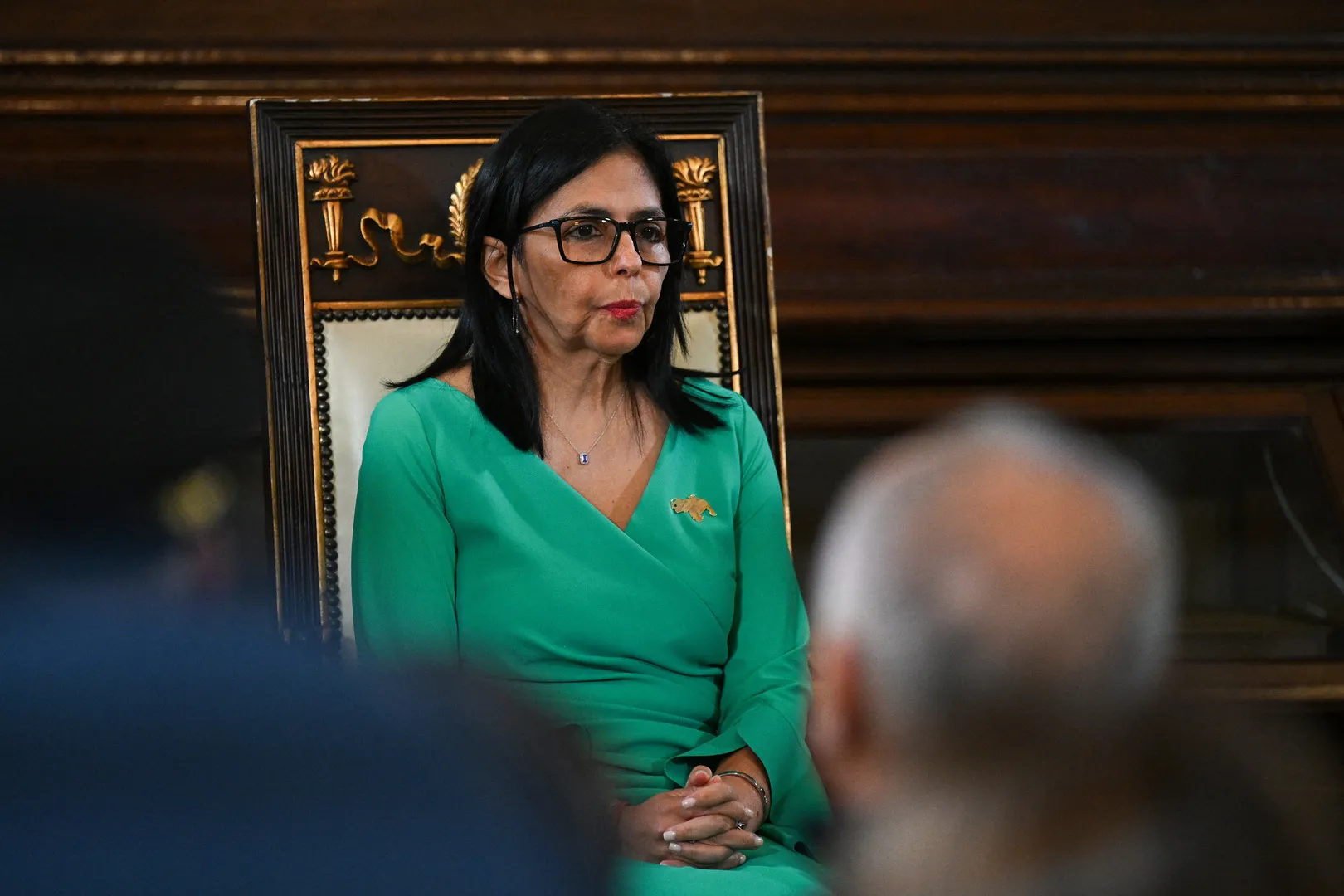
Delcy Rodriguez, formerly Venezuela’s vice president, has been formally sworn in to lead the South American country following the abduction of Nicolas Maduro in a United States military operation.

On Monday, Rodriguez appeared before Venezuela’s National Assembly to take her oath of office.

Recommended Stories

list of 3 itemsend of list

Speaking before the legislative body, composed largely of government loyalists, Rodriguez reaffirmed her opposition to the military attack that led to the capture and removal of Maduro and his wife, Cilia Flores.

“I come with pain over the kidnapping of two heroes who are being held hostage: President Nicolás Maduro and First Lady Cilia Flores,” Rodriguez, 56, told the assembly.

“I swear to work tirelessly to guarantee the peace, spiritual, economic and social tranquillity of our people.”

A former labour lawyer, Rodriguez has been serving as acting president since the early-morning attack that resulted in the abduction. Explosions were reported before dawn on Saturday in the capital, Caracas, as well as at nearby Venezuelan military bases and some civilian areas.

Monday’s swearing-in ceremony was overseen by Rodriguez’s brother – the president of the National Assembly, Jorge Rodriguez – and Maduro’s son, Nicolás Maduro Guerra, who held a copy of the Venezuelan Constitution.

Other members of Maduro’s inner circle, including Interior Minister Diosdado Cabello and Defence Minister Vladimir Padrino, were also in attendance.

The ceremony took place as Maduro, her predecessor and former boss, faced an arraignment proceeding in a New York City courthouse.

Federal prosecutors in the US have charged Maduro with four counts related to allegations he leveraged government powers to export thousands of tonnes of cocaine to North America.

The charges include narco-terrorism conspiracy, cocaine importation conspiracy, the illegal possession of machine guns and other destructive devices, and conspiracy to possess such guns and devices.

Maduro and his wife have pleaded not guilty to the charges, and their allies, including Rodriguez, have denounced the pair’s abduction as a violation of international law, as well as Venezuelan sovereignty.

In court on Monday, Maduro maintained he remained the rightful leader of Venezuela, saying, “I am still president.”

The administration of US President Donald Trump, however, has signalled that it plans to work with Rodriguez for the time being, though Trump himself warned that her tenure as president could be cut short, should she fail to abide by US demands.

“If she doesn’t do what’s right, she is going to pay a very big price, probably bigger than Maduro,” Trump told The Atlantic magazine in a Sunday morning interview.

A day earlier, in a televised address announcing the attack, Trump had said his administration plans “to run the country until such time as we can do a safe, proper, and judicious transition”.

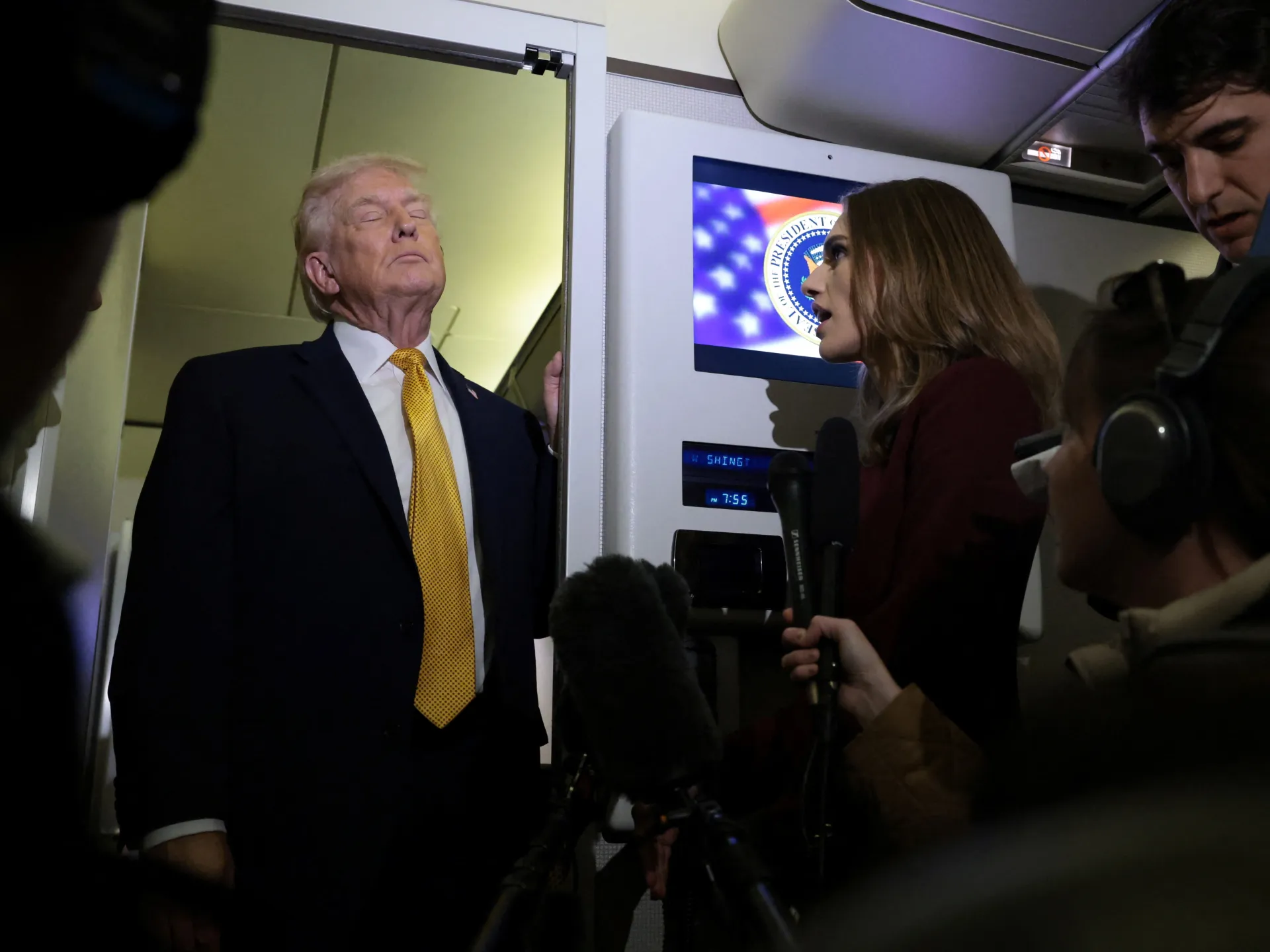
On Air Force One on Sunday, as he flew back to Washington, DC, Trump doubled down on that statement.

“Don’t ask me who’s in charge, because I’ll give you an answer that will be very controversial. We’re in charge,” he told reporters.

He added that Rodriguez is “cooperating” and that, while he personally has not spoken to her, “we’re dealing with the people who just got sworn in”.

The Trump administration’s seeming willingness to allow Rodriguez, a former labour lawyer, to remain in charge has raised eyebrows.

Rodriguez, who served as vice president since 2018, is known to be a stalwart “chavista”: an adherent of the left-wing political movement founded by Maduro’s mentor, the late Hugo Chavez. She has held various ministerial roles under Maduro, including leading the Ministry of Foreign Affairs.

But Trump’s allies in the Republican Party have argued that keeping Rodriguez in place is simply a practical reality.

“We don’t recognise Delcy Rodriguez as the legitimate ruler of Venezuela. We didn’t recognise Nicolas Maduro as a legitimate ruler,” Republican Senator Tom Cotton told CNN on Sunday.

“It is a fact that she and other indicted and sanctioned officials are in Venezuela. They have control over the military and security services. We have to deal with that fact. That does not make them a legitimate leader.”

While on Air Force One, Trump largely avoided committing to new elections in Venezuela, indicating he would instead focus on “fixing” the country and allowing US oil companies access to its vast petroleum reserves.

One reporter on the aeroplane asked, “How soon can an election take place?”

“Well, I think we’re looking more at getting it fixed, getting it ready first, because it’s a mess. The country is a mess,” Trump replied. “It’s been horribly run. The oil is just flowing at a very low level.”

He later added, “We’re going to run everything. We’re going to run it, fix it. We’ll have elections at the right time. But the main thing you have to fix: It’s a broken country. There’s no money.”

Recent presidential elections in Venezuela have been widely denounced as fraudulent, with Maduro claiming victory in each one.

The contested 2018 election, for example, led to the US briefly recognising opposition leader Juan Guaido as president, instead of Maduro.

Later, Maduro also claimed victory for a third term in office during the 2024 presidential race, despite election regularities.

The official vote tally was not released, and the opposition published documents that appeared to show that Maduro’s rival, Edmundo Gonzalez, had won. Protests erupted on Venezuela’s streets, and the nonprofit Human Rights Watch reported that more than 2,000 protesters were unlawfully detained, with at least 25 dead in apparent extrajudicial killings.

The opposition has largely boycotted legislative elections in Venezuela, denouncing them as rigged in favour of “chavistas”.

Monday’s swearing-in ceremony included the 283 members of the National Assembly elected last May. Few opposition candidates were among them.
Source link

Trump administration sets meetings with oil companies on Venezuela: Report | Nicolas Maduro News

The administration of United States President Donald Trump is planning to meet with executives from US oil companies later this week to discuss boosting Venezuelan oil production after US forces abducted its leader, Nicolas Maduro, the Reuters news agency has reported, citing unnamed sources.

The meetings are crucial to the administration’s hopes of getting top US oil companies back into the South American nation after its government, nearly two decades ago, took control of US-led energy operations there, the Reuters news agency report said on Monday.

Recommended Stories

list of 4 itemsend of list

The three biggest US oil companies – Exxon Mobil, ConocoPhillips and Chevron – have not yet had any conversations with the Trump administration about Maduro’s ouster, according to four oil industry executives familiar with the matter, contradicting Trump’s statements over the weekend that he had already held meetings with “all” the US oil companies, both before and since Maduro was abducted.

“Nobody in those three companies has had conversations with the White House about operating in Venezuela, pre-removal or post-removal, to this point,” one of the sources said on Monday.

The upcoming meetings will be crucial to the administration’s hopes to boost crude oil production and exports from Venezuela, a former OPEC nation that sits atop the world’s largest reserves, and whose crude oil can be refined by specially designed US refineries. Achieving that goal will require years of work and billions of dollars of investment, analysts say.

It is unclear what executives will be attending the upcoming meetings, and whether oil companies will be attending individually or collectively.

The White House did not comment on the meetings, but said it believed the US oil industry was ready to flood into Venezuela.

“All of our oil companies are ready and willing to make big investments in Venezuela that will rebuild their oil infrastructure, which was destroyed by the illegitimate Maduro regime,” said White House spokesperson Taylor Rogers.

Exxon, Chevron and ConocoPhillips did not immediately respond to requests for comment from Reuters.

One oil industry executive told Reuters the companies would be reluctant to talk about potential Venezuela operations in group settings with the White House, citing antitrust concerns that limit collective discussions among competitors about investment plans, timing and production levels.

Political risks, low oil prices

US forces on Saturday conducted a raid on Venezuela’s capital, arresting Maduro in the dead of night and sending him back to the US to face narcoterrorism charges.

Hours after Maduro’s abduction, Trump said he expects the biggest US oil companies to spend billions of dollars boosting Venezuela’s oil production, after it dropped to about a third of its peak over the past two decades due to underinvestment and sanctions.

But those plans will be hindered by a lack of infrastructure, along with deep uncertainty over the country’s political future, legal framework and long-term US policy, according to industry analysts.

“While the Trump administration has suggested large US oil companies will go into Venezuela and spend billions to fix infrastructure, we believe political and other risks, along with current relatively low oil prices, could prevent this from happening anytime soon,” wrote Neal Dingmann of William Blair in a note.

Material change to Venezuelan production will take a lot of time and millions of dollars of infrastructure improvement, he said.

And any investment in Venezuelan infrastructure right now would take place in a weakened global energy market. Crude prices in the US are down by 20 percent compared with last year. The price for a barrel of benchmark US crude has not been above $70 since June, and has not touched $80 per barrel since June of 2024.

A barrel of oil cost more than $130 in the leadup to the US housing crisis in 2008.

Chevron is the only US major currently operating in Venezuela’s oil fields.

Exxon and ConocoPhillips, meanwhile, had storied histories in the country before their projects were nationalised nearly two decades ago by former Venezuelan President Hugo Chavez.

Conoco has been seeking billions of dollars in restitution for the takeover of three oil projects in Venezuela under Chavez. Exxon was involved in lengthy arbitration cases against Venezuela after it exited the country in 2007.

Chevron, which exports about 150,000 barrels per day of crude from Venezuela to the US Gulf Coast, meanwhile, has had to carefully manoeuvre with the Trump administration in an effort to maintain its presence in the country in recent years.

A US embargo on Venezuelan oil remained in full effect, Trump has said.

The S&P 500 energy index rose to its highest since March 2025, with heavyweights Exxon Mobil rising by 2.2 percent and Chevron jumping by 5.1 percent.

Source link

Trump has made US militarism worse | US-Venezuela Tensions

For many years before becoming president, Donald Trump publicly criticised the George W Bush administration over its decision to launch the war on Iraq. And yet, today, in his second term as president, he finds himself presiding over a military debacle that is quite reminiscent of Bush’s.

Trump ordered a military intervention to remove an antagonistic foreign leader, based on a flimsy argument of national security, with the goal of accessing that country’s oil. In both cases, we see a naive confidence that the United States can simply achieve its goals through regime change. US intervention into Venezuela reeks of the same hubris that surrounded the Iraq invasion two decades ago.

Yet there are also important differences to consider. The most important distinguishing feature of the operation in Venezuela is its lack of an overarching vision. On Saturday after Trump finished an hour-long news conference alongside his secretaries of defence and state, it was not clear what the plan was for Venezuela going forward, or if there was a plan at all. His statements threatening more attacks in the following days brought no clarity either.

Past instances of US-led regime change fit into the larger ideological visions of the incumbent US commander-in-chief. In 1823, President James Monroe declared the Western Hemisphere off-limits to European colonialism. As the United States spent the 20th century consolidating its sphere of influence across the Americas, the Monroe Doctrine would justify various interventions in Latin America and the Caribbean. The Cold War added new justifications for the United States to overthrow leftist regimes and install friendly governments in the Americas.

As the Cold War ended, President George HW Bush sought to serve as a caretaker for a “new world order” in which the US had emerged as the world’s lone superpower. When Bush sent troops to Somalia in 1992 and his successor Bill Clinton reversed a military coup in Haiti in 1994, they did so under the paradigm of “humanitarian intervention”. When George W Bush ordered the invasion of Iraq, it was done under the umbrella of the post-9/11 “war on terror”. When President Barack Obama intervened against the forces of Libyan leader Muammar Gaddafi in 2011, he was guided by the “responsibility to protect” doctrine concerning civilians in danger.

But in the case of the US attack on Venezuela, there has been no ideological justification. Trump and his team have haphazardly thrown around references to humanitarianism, counterterrorism and more to justify the attack. The president even brought up the Monroe Doctrine. But just as it seemed that he was grounding his foreign policy in a larger ideology, albeit one borrowed from two centuries ago, he made a joke of the concept.

“The Monroe Doctrine is a big deal,” Trump explained on Saturday. “But we’ve superseded it by a lot, by a lot. They now call it the Donroe Doctrine.” Trump did not make up this pun; it was used by the New York Post a year ago to describe Trump’s aggressive foreign policy as he threatened to annex Canada, Greenland and the Panama Canal.

The president’s decision to embrace the tongue-in-cheek term illustrates a disturbing reality of his foreign policy: Any notion that he is promoting an ideological vision is a joke.

The truth is Trump is pursuing an increasingly aggressive and militaristic foreign policy in his second term, not because he wants to impose a grand vision, but because he has discovered he can get away with it.

Striking a variety of foreign “bad guys” who have little capacity to fight back – ISIL (ISIS) affiliates in Nigeria who are “persecuting” Christians and “narcoterrorists” in Latin America – appeals to members of Trump’s base.

After he mentioned the Venezuelan gang Tren de Aragua during Saturday’s news conference, he went on a minutes-long tangent to brag about his military interventions into US cities. While the president’s inability to stay on topic may be concerning for those questioning his health and mental fitness, this digression into domestic affairs had some relevance for his Venezuelan intervention, at least as far as he was concerned: His increasingly militarised war on drugs and crime abroad justifies an increasingly militarised war on drugs and crime at home.

Past presidents have used US power to pursue a wide variety of ideologies and principles. Trump appears to be paying lip service to past ideologies to justify the use of US power. Many times, the “good” intentions of previous  presidents paved the way to hellish outcomes for the peoples who found themselves on the receiving end of US intervention. But those intentions at least created a level of predictability and consistency for the foreign policies of various US administrations.

Trump, by contrast, seems driven solely by immediate political concerns and short-term prospects for glory and profit. If there is a saving grace of such an unprincipled foreign policy, it may be the ephemeral nature of interventions conducted without an overarching vision. An unprincipled approach to military intervention does not foster the kind of ideological commitment that has led other presidents to engage in long-term interventions like the Iraq occupation.

But it also means that Trump could conceivably use military intervention to settle any international dispute or to pursue any ostensibly profitable goal – say assuming control of Greenland from Denmark.

Last year, he decided tariffs were a potent tool for asserting his interests and started applying them almost indiscriminately on allies and adversaries alike. Now that Trump has grown comfortable using the US military to achieve a range of goals – profit, gunboat diplomacy, distraction from domestic scandals, etc – the danger is that he will grow similarly haphazard in his use of force.

That does not bode well for the US nor for the rest of the world. At a time when multiple global crises are overlapping – climate, conflict and impoverishment – the last thing the world needs is a trigger-happy superpower without a clear strategy or a day-after plan.

The views expressed in this article are the author’s own and do not necessarily reflect Al Jazeera’s editorial stance.

Source link

Maduro to appear in New York court: What to expect | Courts News

Venezuelan President Nicolas Maduro is to appear in a New York court on Monday, two days after he was abducted by US special forces in a military operation in Caracas.

The US military arrested Maduro and his wife, Cilia Flores, on Saturday and brought them to New York, where they face multiple federal charges, including drugs and weapons charges.

Recommended Stories

list of 4 itemsend of list

Here is more about Maduro’s scheduled court appearance:

When and where will it take place?

Maduro is to appear before a federal judge at noon (17:00 GMT).

The appearance is scheduled to happen in the Daniel Patrick Moynihan United States Courthouse in the Southern District of New York. Maduro is to appear before US District Judge Alvin Hellerstein.

A court spokesperson told NBC News that Flores, who is also listed as a defendant in a US indictment unsealed on Saturday, will appear in court on Monday as well.

What are the charges?

According to the indictment, the US accuses Maduro of being at the forefront of corruption to “use his illegally obtained authority” to “transport thousands of tons of cocaine” to the US with his coconspirators.

Additionally, the indictment alleges that Maduro has “tarnished” every public office he has held. It adds that Maduro “allows cocaine-fueled corruption to flourish for his own benefit, for the benefit of members of his ruling regime, and for the benefit of his family members”.

Maduro faces four counts:

  • Count 1, narcoterrorism conspiracy: US prosecutors say Maduro and his coconspirators knowingly provided something of financial value to US-designated “foreign terrorist organizations” and their members. The indictment lists these organisations as the Revolutionary Armed Forces of Colombia (FARC), a leftist rebel group that signed a peace deal in 2016 but has dissidents who refused to lay down their arms and are still involved in the drug trade; Segunda Marquetalia, the largest dissident FARC group; National Liberation Army, another leftist Colombian rebel group; Mexico’s Sinaloa Cartel; Los Zetas/Cartel del Noreste, another Mexican drug cartel; and Tren de Aragua, a Venezuelan gang.
  • Count 2, cocaine importation conspiracy: It accuses Maduro and his codefendants of conspiring to manufacture, distribute and import cocaine into the US.
  • Count 3, possession of machineguns and destructive devices: The indictment accuses the defendants of possessing, carrying and using machineguns in relation to the above drug‑trafficking counts.
  • Count 4, conspiracy to possess machineguns and destructive devices: It further accuses the defendants of conspiring to use, carry and possess those weapons in furtherance of drug trafficking.

The indictment also says Maduro and his codefendants should forfeit to the US government any proceeds and assets obtained from the alleged crimes.

Is there evidence for these charges?

There is little evidence that drugs are trafficked from Venezuela on a large scale. The 2023 United Nations Office on Drugs and Crime World Drug Report said global cocaine production hit a record of 3,708 tonnes, up nearly one‑third from 2022, with most coca cultivation taking place in Colombia, followed by Peru and Bolivia.

Trafficking routes into the US in 2023-2024 primarily passed through Colombia, Peru and Ecuador, not Venezuela, although it does serve as a minor transit corridor for Colombian cocaine moving into the eastern Caribbean.

Who is named in the indictment?

Maduro

Maduro, 63, who became Venezuela’s president in 2013, was declared the winner of 2024’s election. His re-election was rejected as fraudulent by the US and independent observers, such as the Carter Center. A UN expert panel said the 2024 vote failed to meet international standards.

Nine Latin American countries called for a review of the results with independent oversight.

Maduro defended the election results and accused his opponents of undermining the country’s sovereignty.

Since returning to the White House nearly a year ago, US President Donald Trump has expanded sanctions and punitive measures against Maduro and senior officials in his government.

The Trump administration ramped up military pressure starting in August when it deployed warships and thousand of its service members in the Caribbean near Venezuela. It has since carried out dozens of air strikes on alleged Venezuelan drug boats, killing more than 100 people.

Maduro has pushed back by mobilising Venezuelan military personnel.

During this time, the Caracas-based news network Globovision quoted Maduro as saying: “From the north, the empire has gone mad and, like a rotten rehash, has renewed its threats to the peace and stability of Venezuela.”

But a day before Saturday’s US attack on the country, Maduro had offered to hold talks to combat drug trafficking.

Flores

Flores, 69, has been married to Maduro since 2013.

Known as the “first combatant” rather than first lady, Flores is a veteran lawyer and politician who rose to prominence by defending future President Hugo Chavez after his failed 1992 coup. She helped secure his release and later became a key Chavismo figure and the first woman to preside over Venezuela’s National Assembly. Chavismo, which promotes socialism and anti-imperialist politics, is the political movement started by Chavez, Maduro’s mentor.

The indictment accuses Flores of joining Maduro’s cocaine importation conspiracy.

Other defendants

The indictment names four other people as Maduro’s coconspirators, namely Diosdado Cabello, Venezuela’s interior minister; Ramon Rodriguez Chacin, former Venezuelan interior minister; Nicolas Maduro Guerra, Maduro’s son and a Venezuelan politician; and Hector Rusthenford Guerrero Flores, the leader of Tren de Aragua, which was designated as a “foreign terrorist organization” by the US in February. But most experts do not define Tren de Aragua as a “terrorist organisation”.

It is not clear yet who will represent Maduro, Flores and the other defendants.

Who is the judge?

Hellerstein was born in 1933 in New York. He was appointed to the federal bench in 1998 by former President Bill Clinton.

He is likely on Monday to advise Maduro and Flores about their rights and ask them if they want to enter a plea.

What’s at stake?

Maduro’s freedom is primarily at stake. If convicted, he could face 30 years to life in prison.

“This is less about Maduro as it is about access to Venezuela’s oil deposits,” Ilias Bantekas, a professor of transnational law at Hamad Bin Khalifa University in Qatar, told Al Jazeera. “This is the number one target. Trump is not content with just allowing US oil firms to get concessions but to ‘run’ the country, which entails absolute and indefinite control over Venezuela’s resources.”

Venezuela’s oil reserves are concentrated primarily in the Orinoco Belt, a region in the eastern part of the country stretching across roughly 55,000sq km (21,235sq miles).

While the country is home to the world’s largest proven oil reserves – at an estimated 303 billion barrels as of 2023 – it earns only a fraction of the revenue it once did from exporting crude due to mismanagement and US sanctions.

Last month, Trump accused Venezuela in a post on his Truth Social platform of “stealing” US oil, land and other assets and using that oil to fund crime, “terrorism” and human trafficking.

Trump repeated his false claims after Maduro’s arrest. During a news conference on Saturday, Trump said the US would “run” Venezuela until a “safe, proper and judicious transition” could be carried out.

“Given the opposition of all South American states, save for Argentina, to US dominance in the region, Trump’s plan requires a vast military deployment. We need to see how countries like Brazil and Colombia react to this, including also BRICS,” said Bantekas from Hamad Bin Khalifa University.

In a joint statement released on Sunday, the governments of Spain, Brazil, Chile, Colombia, Mexico and Uruguay said the US actions in Venezuela “constitute an extremely dangerous precedent for peace and regional security and endanger the civilian population”.

“If there was an armed conflict between Venezuela and the USA and, given that Maduro is the head of his country’s armed forces, then he would be a legitimate target,” Bantekas said.

“However, under the circumstances there is no armed conflict between the two countries and in the absence of an armed attack by Venezuela against the US, the latter’s invasion in Venezuela violates article 2(4) of the UN Charter, as does the abduction of the country’s President. It is a blatant act of aggression.”

Article 2(4) of the UN Charter bars UN members from the threat or use of force against the territorial integrity or political independence of any state.

A United Nations Security Council meeting on Monday will determine the legality of the US abduction of Maduro.

“Given that Maduro is already in US custody and in the USA, it is in the interests of all parties that he appear before a court. At the very least, Maduro can challenge the legality of his arrest and the jurisdiction of the court,” Bantekas said.

“The court itself has an obligation to decide if it has jurisdiction and as a preliminary issue decide whether Maduro enjoys immunity from criminal prosecution. If these issues are dispensed the court nonetheless finds that it has jurisdiction and that Maduro does not enjoy immunity, then the prosecutor must prove its case.”

What’s next?

The Trump administration has not explicitly stated a clear plan for Venezuela, with analysts saying the administration has sent out confusing signals.

In an interview with the NBC news channels on Sunday, US Secretary of State Marco Rubio suggested that Washington will not govern Venezuela on a day-to-day basis besides enforcing an existing “oil quarantine”.

Rubio told ABC news on Sunday that the US had leverage over Venezuela and the US would “set the conditions” to ensure that Venezuela is no longer a “narco-trafficking paradise”.

But on Sunday, Trump told reporters that the US is ready to carry out a second military strike on Venezuela if its government refuses to cooperate with his plan to ‘resolve’ the situation there.

She could “pay a very big price” if she “does not do what’s right”, Trump said, refering Venezuela’s new leader, Delcy Rodriguez.

During his Saturday conference, Trump said that Rodriguez told Rubio that she will do what the US needs her to. “She really doesn’t have a choice,” Trump had said.

In his first press conference after Maduro’s illegal abduction on Saturday, Trump ruled out the possibility of working with opposition leader and Nobel Prize winner Maria Corina Machado, who was barred from running in the 2024 presidential elections.

Machado, a member of the Venezuelan National Assembly, is seen as the most credible adversary of Maduro’s leftist government.

On Monday, Rodriguez, the interim leader, offered to cooperate with Trump. In a statement posted on social media, she invited Trump to “collaborate” and sought “respectful relations”.

“President Donald Trump, our peoples and our region deserve peace and dialogue, not war,” she wrote.

Her conciliatory tone came a day after she appeared on state TV declaring that Maduro was still Venezuela’s sole legitimate president.

Source link

Trump’s bid to commandeer Venezuela’s oil sector faces hurdles, experts say | Business and Economy

United States President Donald Trump has promised to “take back” Venezuela’s oil reserves and unleash them onto the global market after abducting Venezuelan President Nicolas Maduro.

But exploiting the Latin American country’s vast reserves would face a host of big hurdles, from decrepit infrastructure and legal obstacles to leadership uncertainty in Caracas and an excess supply of oil in the global market, experts say.

Recommended Stories

list of 4 itemsend of list

Venezuela possesses the world’s largest known oil reserves – estimated to be some 303 billion barrels – but currently produces only a tiny fraction of global output. Its estimated output was 860,000 barrels per day (bpd) in November, less than 1 percent of the world’s total, compared with 3.7 million bpd during peak production in 1970.

The oil sector’s decline has been blamed on the combined effects of US sanctions and years of underinvestment, mismanagement and corruption under Maduro and his left-wing predecessor, Hugo Chavez.

While the Trump administration could boost supply in the short term by lifting sanctions, restoring Venezuela’s output to anything near peak levels would require huge investment and likely take years, according to energy analysts.

‘Venezuela’s oil infrastructure is in poor shape’

Oil prices moved only slightly in trading on Monday amid market expectations that output would remain largely unchanged for the foreseeable future.

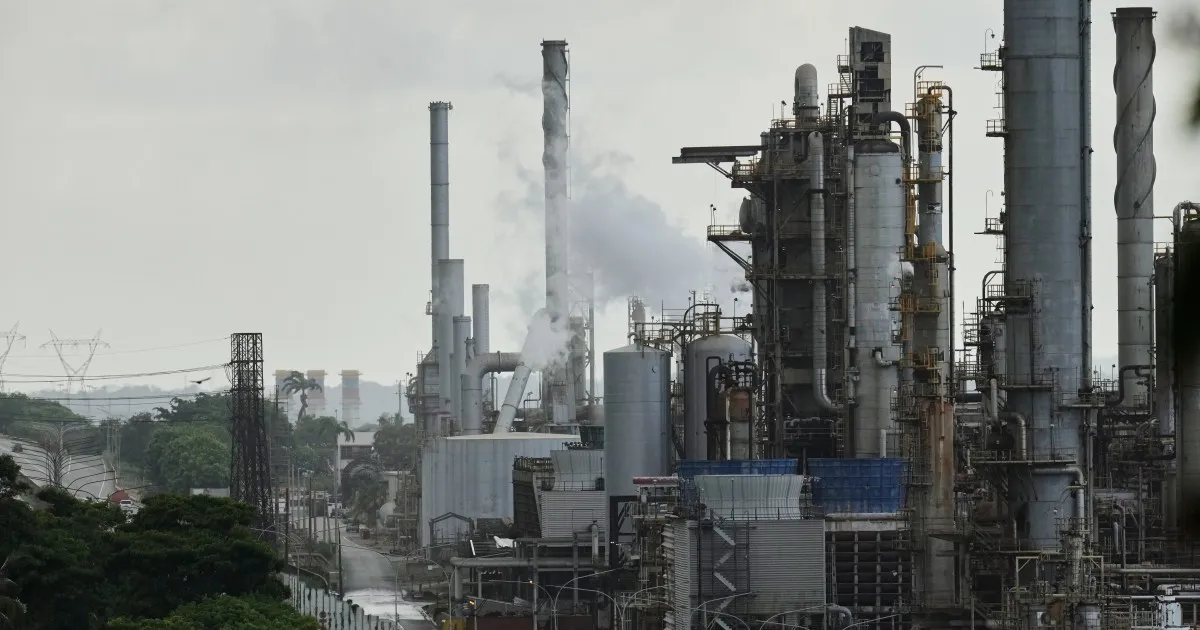
“Venezuela’s oil infrastructure is in poor shape overall, due to lack of maintenance for both equipment and oilfield wells,” Scott Montgomery, a global energy expert at the University of Washington, told Al Jazeera.

“The state oil company, PDVSA, is well known to suffer from corruption and lack of expertise – many well-trained people have left the country to work elsewhere – and has been unable to invest in the country’s petroleum sector,” Montgomery added.

Thomas O’Donnell, an energy and geopolitical analyst based in Berlin, Germany, estimated that Venezuela could return to peak production in five to seven years in the “absolute best” circumstances, including a peaceful transfer of power.

“Longer term, if things are sorted out, yes, Venezuela can become one of the world’s biggest producers of oil. As far as how long that takes, that has all to do with the transition and what is put in place to manage that – both the country’s security and also to manage the investments,” O’Donnell told Al Jazeera.

Mixed messaging from Trump administration

Trump’s administration has provided conflicting messages on Washington’s exact plans for Venezuela and its oil reserves.

On Saturday, Trump said the US would “run” Venezuela and that US oil companies were ready to invest billions of dollars to build up the country’s dilapidated infrastructure and “get the oil flowing”.

In interviews with US media on Sunday, US Secretary of State Marco Rubio sought to downplay Trump’s remarks about controlling the country, saying the president was referring to “running policy” and his plans related to spurring private investment, “not securing the oilfields”.

Trump later on Sunday said Washington was “in charge” of the country and was “dealing with” members of the acting administration without providing details.

Under international law, the US has no claim of ownership over Venezuela’s oil reserves, as sovereign states possess the right to control and use their natural resources under the United Nations-endorsed Principle of Permanent Sovereignty over Natural Resources.

Foreign investors, however, can claim compensation when authorities seize their assets.

ExxonMobil and ConocoPhillips were awarded $1.6bn and $8.7bn, respectively, in international arbitration following the Chavez government’s 2007 nationalisation of the oil sector. Caracas did not pay out in either case.

US oil giants, including Chevron, ExxonMobil, and ConocoPhillips, have not commented directly on Trump’s claims about planned investments in Venezuela.

Chevron is the only large US oil company currently operating in Venezuela, the result of an exemption to US sanctions first granted by the administration of former President Joe Biden.

Consultancy Rystad Energy, based in Oslo, Norway, has estimated that Venezuela’s oil sector would need about $110bn in capital investment to return to its mid-2010s output of about 2 million bpd.

Patrick De Haan, an analyst at energy price tracker GasBuddy, said companies may be reluctant to commit to large investments in the country when global oil prices are hovering around $60 a barrel due to a glut of supply.

“It will take a longer amount of time than many likely realise. Oil companies in a low-priced environment of today would likely be cautious investing billions with oil prices already low,” De Haan told Al Jazeera.

“In addition, Trump seizing Maduro could lead to loyalists sabotaging efforts to increase output. A lot would have to go right to yield the most optimistic timelines.”

US companies are likely to carefully weigh political developments in Venezuela following their experiences with the Chavez government’s expropriation of their assets.

“Oil companies are not likely to rush into a situation where the state is in turmoil, security is lacking, and no clear path forward for political stability exists,” the University of Washington’s Montgomery said.

Maduro due in court in New York

Interim President Delcy Rodriguez, who was Maduro’s deputy, is now leading the country following a ruling by Venezuela’s Supreme Court.

Maduro is scheduled to appear in a New York court on Monday to face charges related to alleged drug trafficking and working with criminal gangs.

Venezuela’s government has condemned the Trump administration over Saturday’s bombing and overthrow of Maduro, labelling his capture a “cowardly kidnapping”.

Russia, China, Iran and Brazil, among other countries, have accused Washington of violating international law, while nations including Israel, Argentina and Greece have welcomed Maduro’s forced removal.

OPEC, which sets limits on production for its 12 members, including Venezuela, is another factor in the Latin American country’s potential oil output.

“Venezuela is a member of OPEC, and like many countries, may become more actively subject to quotas if output climbs,” De Haan said.

Phil Flynn, a market analyst at the Price Futures Group, said reviving Venezuela’s oil production would face “significant challenges”, but he was more bullish about the near-term prospects than other analysts.

He said the market could conceivably see a couple of hundred thousand more barrels a day coming online in the coming months.

“We’ve not had a free Venezuela, and sometimes the US energy industry has the capability to do a lot more than people give them credit for,” Flynn told Al Jazeera.

Source link

Trump threatens Colombia’s Petro, says Cuba ‘looks like its ready to fall’ | News

DEVELOPING STORY,

US president says a military operation focused on Colombia’s government ‘sounds good’ to him.

United States President Donald Trump has threatened his Colombian counterpart, Gustavo Petro, in the wake of Washington’s abduction of Venezuela’s leader, and said he believed the government in Cuba, too, was likely to fall soon.

Trump made the comments late on Sunday while speaking to reporters on board Air Force One.

Recommended Stories

list of 4 itemsend of list

“Venezuela is very sick. Colombia is very sick too, run by a sick man who likes making cocaine and selling it to the United States. And he’s not going to be doing it very long. Let me tell you,” the US president said.

When asked if he meant an operation by the US on Colombia, Trump said: “Sounds good to me.”

He added that a US military intervention in Cuba is unlikely because the country appears to be ready to fall on its own.

“Cuba is ready to fall. Cuba, looks like it’s ready to fall. I don’t know how they , if they can hold that, but Cuba now has no income. They got all of their income from Venezuela, from the Venezuelan oil,” Trump said.

“They’re not getting any of it. Cuba literally is ready to fall. And you have a lot of great Cuban Americans that are going to be very happy about this.”

Trump’s comments come a day after US forces captured and detained Maduro and his wife in a surprise attack on Caracas. The Venezuelan leader and his wife, Cilia Flores, are due to appear in court on drug-related charges in New York later on Monday.

Speaking to reporters on Air Force One, Trump also insisted the US was ‘in charge’ of Venezuela, even though the country’s Supreme Court has appointed the country’s Vice President Delcy Rodriguez as interim leader.

He also reiterated a threat to send the US military back to Venezuela if it “doesn’t behave”.

Trump has made no secret of his ambitions to expand US presence in the Western hemisphere and revive the 19th century Monroe Doctrine that states Latin America falls under the US sphere of influence. Trump has called his 21st century version the “Don-roe Doctrine”.

The US president has also previously threatened both Colombia and Cuba. Over the weekend he said that Petro has to “watch his ass” and that the political situation in Cuba was “something we’ll end up talking about because Cuba is a failing nation”.

Source link

Cuba says 32 Cubans killed during US raids on Venezuela | News

DEVELOPING STORY,

Havana declares two days of mourning for the Cubans killed in US’s operation to capture Nicolas Maduro.

The government of Cuba has announced that 32 ⁠of its ​citizens were ‍killed during the raid by the United States to abduct Venezuelan President Nicolas Maduro in Caracas.

It said on Sunday that there would be two days of mourning on ‌January 5 and ‌6 in ⁠honour of those killed and that ‌funeral arrangements would be announced.

More soon…

Source link

Denmark PM urges Trump to stop ‘threatening’ Greenland | Donald Trump News

The US president’s latest threat comes a day after Washington bombed Venezuela and abducted its president.

Denmark’s prime minister, Mette Frederiksen, has ‍urged US President ‍Donald Trump to stop threatening to take over Greenland, after the latter reiterated his wish to do so following Washington’s abduction of the leader of Venezuela.

“It makes absolutely no sense to talk about the US needing ⁠to take over Greenland. The US has no right to annex any of ​the three countries in the Danish Kingdom,” Frederiksen said in ‍a statement on Sunday.

Recommended Stories

list of 3 itemsend of list

The comments followed an interview published by The Atlantic magazine, in which Trump said: “We do need Greenland, absolutely. We need it for defence.”

On Saturday, the United States bombed Venezuela and toppled President Nicolas Maduro, raising concerns in Denmark that the same could happen with Greenland, a Danish territory.

“I would therefore strongly urge the US to stop the threats against a historically close ally and against another country and another people who have very clearly said that they are not for sale,” Frederiksen said.

The Greenlandic prime minister’s office did not ​immediately comment on Trump’s latest remarks.

The US president has repeatedly called for Greenland, a self-governing Danish territory and NATO member, to become part of the US.

Last month, the Trump administration named Louisiana Governor Jeff Landry, who publicly supports annexation, as special envoy to the mineral-rich Arctic Island.

Greenland’s strategic position between Europe and ⁠North America makes it a key site for the US ballistic missile defence system, and its mineral wealth is attractive, as the US hopes to reduce its reliance on Chinese exports.

Katie Miller, the wife of Trump’s deputy chief of staff, Stephen Miller, posted on Saturday the contentious image of the Danish autonomous territory in the colours of the US flag on her X feed.

Her post had a single word above it: “SOON”.

Stephen Miller is widely seen as the architect of much of Trump’s policies, guiding the president on his hardline immigration and domestic agenda.

Greenland’s prime minister, Jens-Frederik Nielsen, called the post “disrespectful”.

“Relations between nations and peoples are built on mutual respect and international law – not on symbolic gestures that disregard our status and our rights,” he said on X.

But he also said that “there is neither reason for panic nor for concern. Our country is not for sale, and our future is not decided by social media posts”.

Denmark’s ambassador to the US, Jesper Moeller Soerensen, reacted to the post on Sunday by saying, “We expect full respect for the territorial integrity” of Denmark.

Soerensen gave a pointed “friendly reminder” that his country has “significantly boosted its Arctic security efforts” and had worked with the US on that.

“We are close allies, and should continue to work together as such,” he wrote.

Source link

Venezuela decries ‘cowardly kidnapping’ as officials back Maduro | US-Venezuela Tensions News

Venezuela’s Defence Minister Vladimir Padrino Lopez has denounced the United States’ move to abduct leader Nicolas Maduro as a “cowardly kidnapping”, adding that some of the president’s bodyguards were killed “in cold blood”, as well as military personnel and civilians on the Venezuelan side.

In his televised statement on Sunday, Padrino Lopez also endorsed a Supreme Court ruling that appointed Vice President Delcy Rodriguez — who also serves as oil minister — as acting president for 90 days.

Recommended Stories

list of 3 itemsend of list

US President Donald Trump threatened that Rodriguez will pay a “very big price” if she doesn’t cooperate with Washington. “If she doesn’t do what’s right, she is going to pay a very big price, probably bigger than Maduro,” Trump told The Atlantic in a telephone interview.

US forces attacked Caracas in the early hours of Saturday, bombing military targets and spiriting away Maduro and his wife to face federal narco-trafficking charges in New York. The Venezuelan president was escorted off a plane at Stewart Air National Guard Base in New York state and taken to a Brooklyn jail.

He is due to make his first appearance on Monday in Manhattan’s federal court.

US to use oil blockade to leverage change in Venezuela

US Secretary of State Marco Rubio on Sunday suggested that Washington would not take a day-to-day role in governing Venezuela other than enforcing an existing “oil quarantine”, using that leverage to press policy changes in the country.

Rubio’s statements seemed designed to temper concerns, a day after Trump announced the US would “run” the oil-rich nation. The Trump administration’s actions drew unease from parts of his own Republican Party coalition, including an “America First” base that is opposed to foreign interventions, as well as from observers who recalled past nation-building efforts in Iraq and Afghanistan.


Rubio dismissed such criticism, saying that Trump’s intent had been misunderstood by a “foreign policy establishment” that was fixated on the Middle East.

Al Jazeera’s Phil Lavelle, reporting from Doral, Florida in the US, said Trump had been elected on an “America First” policy centred around no engagement in foreign wars or sending US service personnel into danger.

“Now we’ve got this situation where he said, less than 24 hours ago, ‘We’re not afraid of putting boots on the ground,’” Lavelle said.

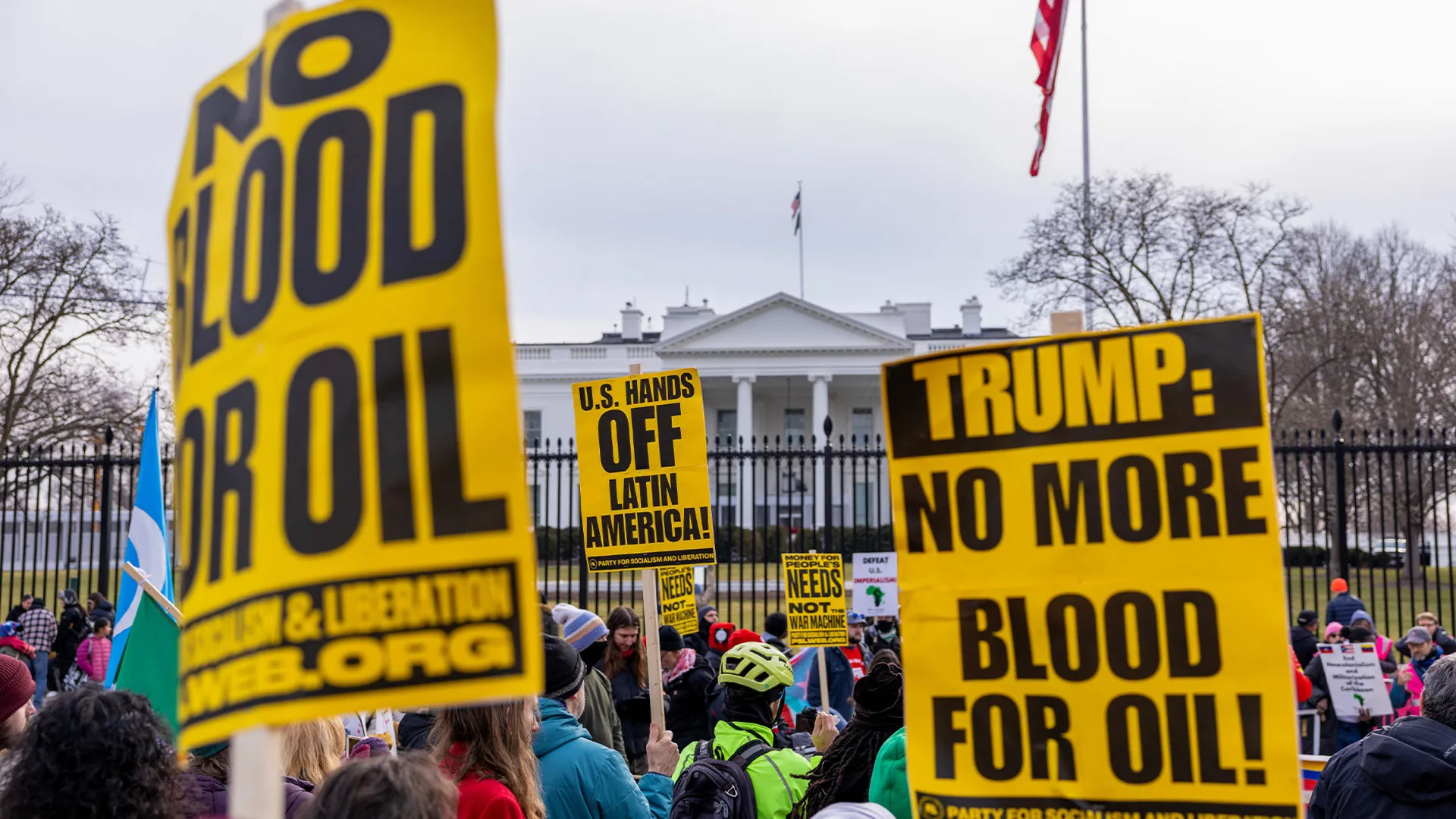
Protests took place in cities across the US against Trump’s military action in Venezuela. Hundreds gathered in the rain in downtown Los Angeles, carrying signs saying “Stop bombing Venezuela now!” and “No blood for oil”.

“I stand against US imperialism altogether. They want oil … They want to help the corporate billionaires. Bombing is just their means to building power like that, of taking control. So again, I’m against it,” said one protester named Niven.

Trump on Saturday delivered a speech in which he made little mention of the so-called “war on drugs” – which for months had been his main justification for bombing Venezuelan ship and assets – but argued that Venezuela had “stolen” oil from the US and that it would now be taken back.

The United Nations special rapporteur on human rights and counterterrorism, Ben Saul, said the US actions in Venezuela were illegal, calling on Trump to be investigated and impeached. “Every Venezuelan life lost is a violation of the right to life. President Trump should be impeached and investigated for the alleged killings,” he said in a social media post.

The UN Security Council (UNSC) was set to meet on Monday to discuss the situation in Venezuela. UN Secretary-General Antonio Guterres said he was “deeply alarmed” by the US strikes, which a spokesperson said could “constitute a dangerous precedent”.

Uncertainty in Venezuela after Maduro’s abduction

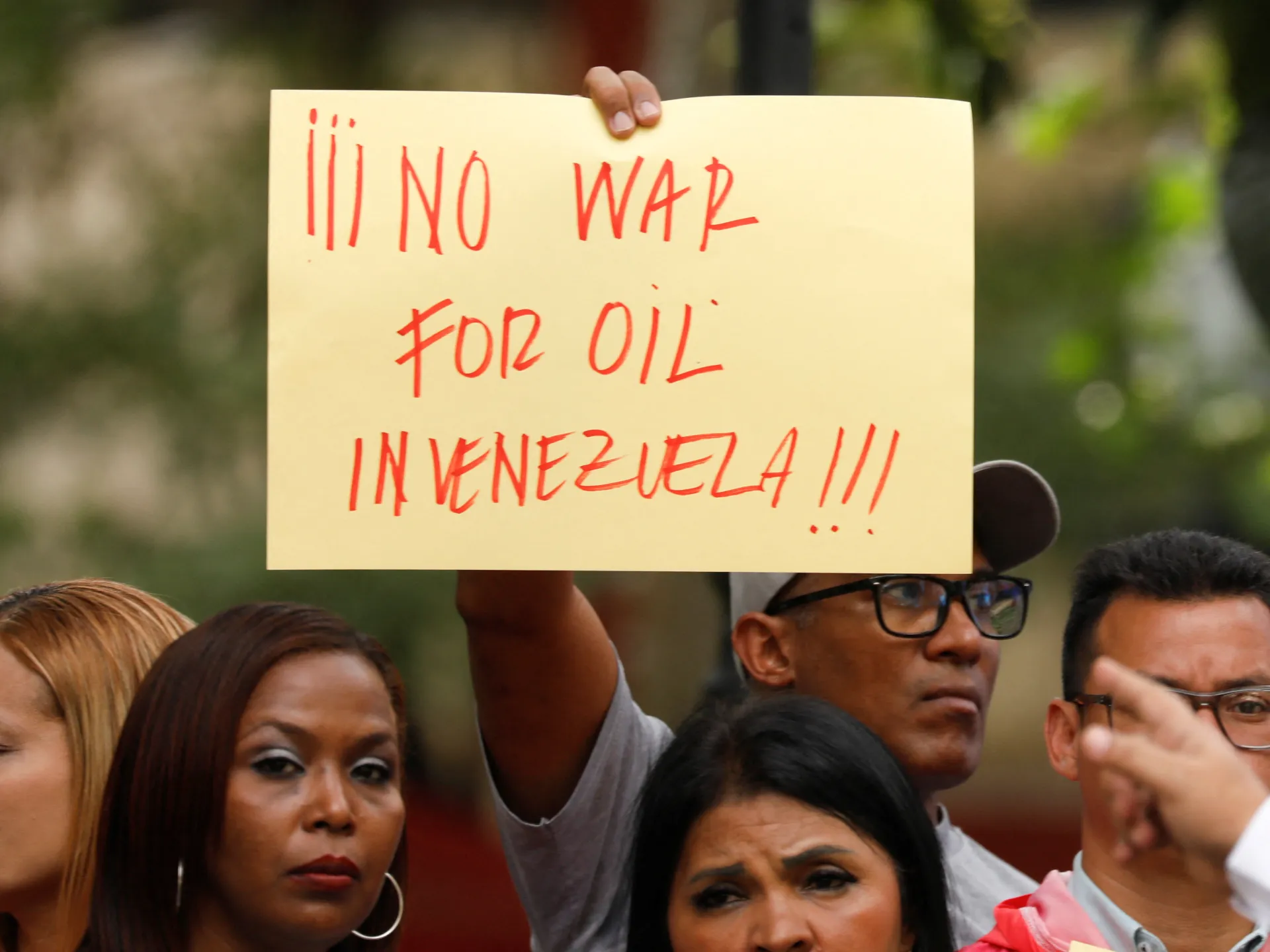
Some Venezuelans in Caracas have welcomed the US’s seizure of Maduro, but others said the action could worsen conflict in the country, with protests denouncing the US taking place.

“There should be a positive change for all Venezuelans, because it has been 28 years of government, and now is the time for transition in this country,” said Ronald Gaulee, a motorcycle rider in Caracas.

Merchant Juan Carlos Rincon was more cautious. “The truth is that there is a lot of manipulation behind all this,” he told the Reuters news agency. “We want to be at peace, move forward, and for Venezuela to have, like any other country, the right to choose its own destiny and its own leaders.”

Baker Franklin Jimenez said he would heed the government’s call to defend the country. “If they took him away, I think they shouldn’t have done so, because this will create an even worse conflict than the one we have now,” he said. “And as for the bombings and all that, we have to go out, we all have to go out into the streets to defend our homeland, to defend ourselves.”

Some Venezuelans decided to flee the country amid the uncertainty, crossing the Venezuela-Colombia border to reach the Colombian town of Cucuta. Karina Rey described a “tense situation” in the Venezuelan city of San Cristobal, just across the border.

“There are long lines, and people are very paranoid, or on edge, over food. Supermarkets are closing,” Rey told Al Jazeera. “The lines are very long just to stock up on food, because we don’t know what will happen in the coming weeks. We’re waiting to see what happens.”

Al Jazeera’s Alessandro Rampietti, reporting from Cucuta, said many Venezuelans there initially felt jubilant after Maduro was ousted. “But that quickly shifted to uncertainty,” he said.

“Several people said they expected the United States to immediately bring opposition leader Maria Corina Machado back into the country, along with Edmundo Gonzalez Urrutia, who many Venezuelans believe won the last presidential election,” Rampietti continued.

“Instead, with much of the existing leadership still in place and with Vice President Delcy Rodriguez appointed as interim leader, there is growing fear about what could happen next.”

Tiziano Breda, a senior analyst at the Armed Conflict Location and Event Data Project, said what happens next hinges on the response of Venezuela’s government and armed forces.

“So far, they’ve avoided direct confrontation with US forces, but deployments on the streets point to efforts to contain unrest,” he said. “A smooth transition remains unlikely, and the risk of resistance from pro-regime armed groups – including elements within the military and Colombian rebel networks active in the country – remains high.”

Source link

What might the US do next after Venezuela? | Nicolas Maduro

There are legal concerns about the abduction of Maduro, but little Western criticism.

The United States’ abduction of Venezuela’s President Nicolas Maduro has been sharply criticised by his allies – but not by Western nations, despite questions about its legality.

So, does the operation signal a new aggressive US strategy? And what might the global impact be?

Presenter: Adrian Finighan

Guests:

Charles Shapiro – Former US ambassador to Venezuela under President George W Bush

Stefan Wolff – Professor of International Security at the University of Birmingham in the United Kingdom

Ernesto Castaneda – Director of the Center for Latin American and Latino Studies at the American University in Washington, DC

Source link

Spanish Empire: Sword and Cross | History

How Spain conquered with armies and missionaries, fusing faith, force and gold into global dominance.

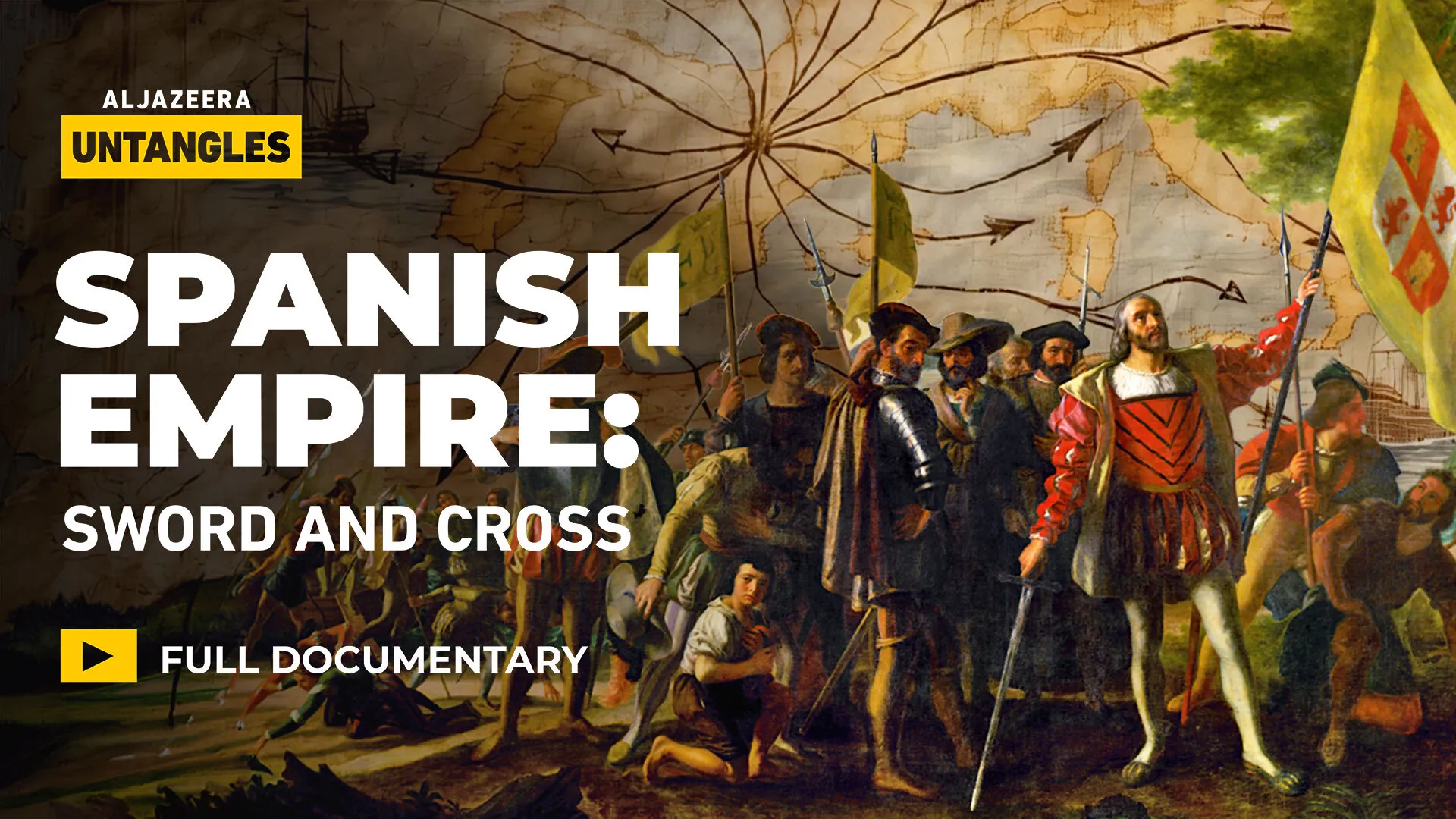
This film explores how the Spanish empire built its global dominance by fusing military conquest, religious conversion and imperial wealth.

At the heart of the Spanish expansion was the close alliance between crown, church and conquest. Military campaigns were inseparable from missionary efforts as conversion to Christianity became both a justification for empire and a tool of control. Faith and force advanced together, reshaping societies across the Americas.

Through the conquests of the Aztec and Incan empires, the documentary shows how Spanish power was established through violence, alliances and religious authority. The mission system spread across the Americas, reorganising Indigenous life around churches, labour regimes and colonial administration. Conversion promised salvation but enforced obedience and cultural destruction.

The film also examines the economic foundations of Spanish imperial power. Vast quantities of gold and silver were extracted from the Americas alongside the exploitation of Indigenous and enslaved labour. These resources fuelled European economies, financed global trade and helped integrate the Americas into an emerging world system built on extraction and inequality.

By tracing how faith, conquest and wealth operated together, the documentary reveals how Spanish colonialism shaped global capitalism, religious power and imperial governance. It shows how the legacies of conquest, forced conversion and resource extraction continue to influence social inequality, cultural identity and economic structures in the modern world and how current global superpowers like the United States and China adopt this model to their benefit. It also draws on the parallels between the erasure of cultural artefacts then and today’s “algorithmic colonisation”.

Source link

Venezuelans divided after US attack and Maduro’s abduction | US-Venezuela Tensions

NewsFeed

Venezuelan officials say US air strikes killed at least 40 people, destroyed parts of the capital and violated their national sovereignty with the abduction of President Nicolas Maduro. Venezuelans are divided between fear of ongoing US intervention and celebrating his removal.

Source link

We just witnessed power kidnapping the law | Nicolas Maduro

The United States intervention in Venezuela to abduct President Nicolás Maduro is not law enforcement extended beyond its borders. It is international vandalism, plain and unadorned.

Power has displaced law, preference has replaced principle and force has been presented as virtue. This is not the defence of the international order. It is its quiet execution. When a state kidnaps the law to justify kidnapping a leader, it does not uphold order. It advertises contempt for it.

The forcible seizure of a sitting head of state by the US has no foothold in international law. None. It is not self-defence under Article 51 of the United Nations Charter. It was not authorised by the UN Security Council. International law is many things, but it is not a roving moral warrant for great powers to perform regime change by abduction.

The claim that alleged human rights violations or trafficking in narcotics justifies the removal of a foreign head of state is particularly corrosive. There is no such rule. Not in treaty law. Not in custom law. Not in any serious jurisprudence.

Human rights law binds states to standards of conduct. It does not license unilateral military seizures by self-appointed global sheriffs. If that were the rule, the world would be in a permanent state of sanctioned chaos.

Indeed, if the US were serious about this purported principle, consistency would compel action far closer to home. By the logic now advanced, there would be a far stronger legal and moral case to seize Israeli Prime Minister Benjamin Netanyahu, given the extensive documentation of mass civilian harm and credible allegations of genocide arising from Israel’s conduct in Gaza.

Yet no such logic is entertained. The reason is obvious. This is not law. It is power selecting its targets.

Regime change is not an aberration in American foreign policy. It is a habit with a long paper trail, from Iran in 1953 to Guatemala in 1954, Chile in 1973 and Iraq in 2003.

But the kidnapping of a sitting president marks a new low. This is precisely the conduct the post-1945 legal order was designed to prohibit. The ban on the use of force is not a technicality. It is the central nervous system of international law. To violate it without authorisation is to announce that rules bind only the weak.

The US understands this perfectly. It is acting anyway and in doing so is conducting the autopsy of the UN Charter system itself.

The rot does not stop there. Washington has repeatedly violated its obligations under the UN Charter and the UN Headquarters Agreement. It has denied entry to officials it disfavours. Preventing the Palestinian president from addressing the UN General Assembly in person last year was not a diplomatic faux pas. It was a treaty breach by the host state of the world’s principal multilateral institution.

The message was unmistakable. Access to the international system and adherence to the UN Charter is conditional on American approval.

The UN was designed to constrain power, not flatter it. Today, it increasingly fails to constrain serious international law violations. Paralysed by vetoes, bullied by its host and ignored by those most capable of violating its charter, the UN has drifted from the supposed guardian of legality to a stage prop for its erosion.

At some point, denial becomes self-deception. The system has failed in its core promise. Not because international law is naive but because its most powerful beneficiary has decided it is optional.

It is, therefore, time to say the unsayable: The UN should be permanently relocated away from a host state that treats treaty obligations as inconveniences. And the international community must begin a serious, sober conversation about an alternative global structure whose authority is not hostage to one capital, one veto or one currency – or a system whose powers supersede the UN precisely because the UN has been hollowed out from within.

Law cannot survive as a slogan. Either it restrains those who wield the most force, or it is merely rhetoric deployed against those who do not. What the US has done in Venezuela is not a defence of order. It is a confirmation that international order has been replaced by preference. And preferences, unlike law, recognise no limits.

The views expressed in this article are the author’s own and do not necessarily reflect Al Jazeera’s editorial stance.

Source link

How the US attack on Venezuela, abduction of Maduro unfolded | US-Venezuela Tensions News

In a move that stunned the world, the United States bombed Venezuela and toppled President Nicolas Maduro amid condemnation and plaudits.

In a news conference on Saturday at his Mar-a-Lago resort in Florida, President Donald Trump praised the operation to seize Maduro as one of the “most stunning, effective and powerful displays of American military might and competence in American history”.

Recommended Stories

list of 4 itemsend of list

It was the riskiest and most high-profile military operation sanctioned by Washington since the US Navy’s SEAL team killed al-Qaeda leader Osama bin Laden in a safe house in Pakistan’s Abbottabad in 2011.

News of the 63-year-old Maduro being abducted took over the global news cycle.

After months of escalation and threats over Maduro’s alleged involvement in shipping drugs to the US, the Trump administration had increased pressure on Caracas with a military build-up in the Caribbean and a series of deadly missile attacks on alleged drug-running boats that had killed more than 100 people and whose legality has been heavily questioned by the United Nations and legal experts.

The US had also previously offered a $50m reward for information leading to Maduro’s arrest.

But while the military was conducting operations in the Caribbean, US intelligence had been gathering information about Maduro, his eating habits, and special forces covertly rehearsed a plan to remove him from power forcibly.

Here’s everything we know about how Maduro and his wife, Cilia Flores, were “captured”.

How was Maduro abducted?

The operation, named “Absolute Resolve”, was carefully rehearsed for months, according to General Dan Caine, chairman of the Joint Chiefs of Staff, who spoke at Trump’s news conference.

Trump also told Fox News that US forces had practised their extraction of Maduro on a replica building.

“They actually built a house which was identical to the one they went into with all the same, all that steel all over the place,” Trump said.

At 11:46pm local time on Friday (03:46 GMT on Saturday), Trump gave the green light.

On Friday night, Caine said, “the weather broke just enough, clearing a path that only the most skilled aviators in the world could move through”, with about 150 aircraft involved in the operation, taking off from 20 different airbases across the Western Hemisphere.

As part of the operation, US forces disabled Venezuela’s air defence systems, with Trump saying the “lights of Caracas were largely turned off due to a certain expertise that we have”, without elaborating.

Several deafening explosions rang out across the capital, with Pete Hegseth, the defence secretary, describing it as part of a “massive joint military and law enforcement raid” that lasted less than 30 minutes.

US helicopters then touched down at Maduro’s compound in the capital at 2:01am (06:01 GMT) on Saturday, with the president and his wife then taken into custody.

There has been no readout on whether there was an exchange of fire, in a chaotic scramble, or if they were taken without a struggle.

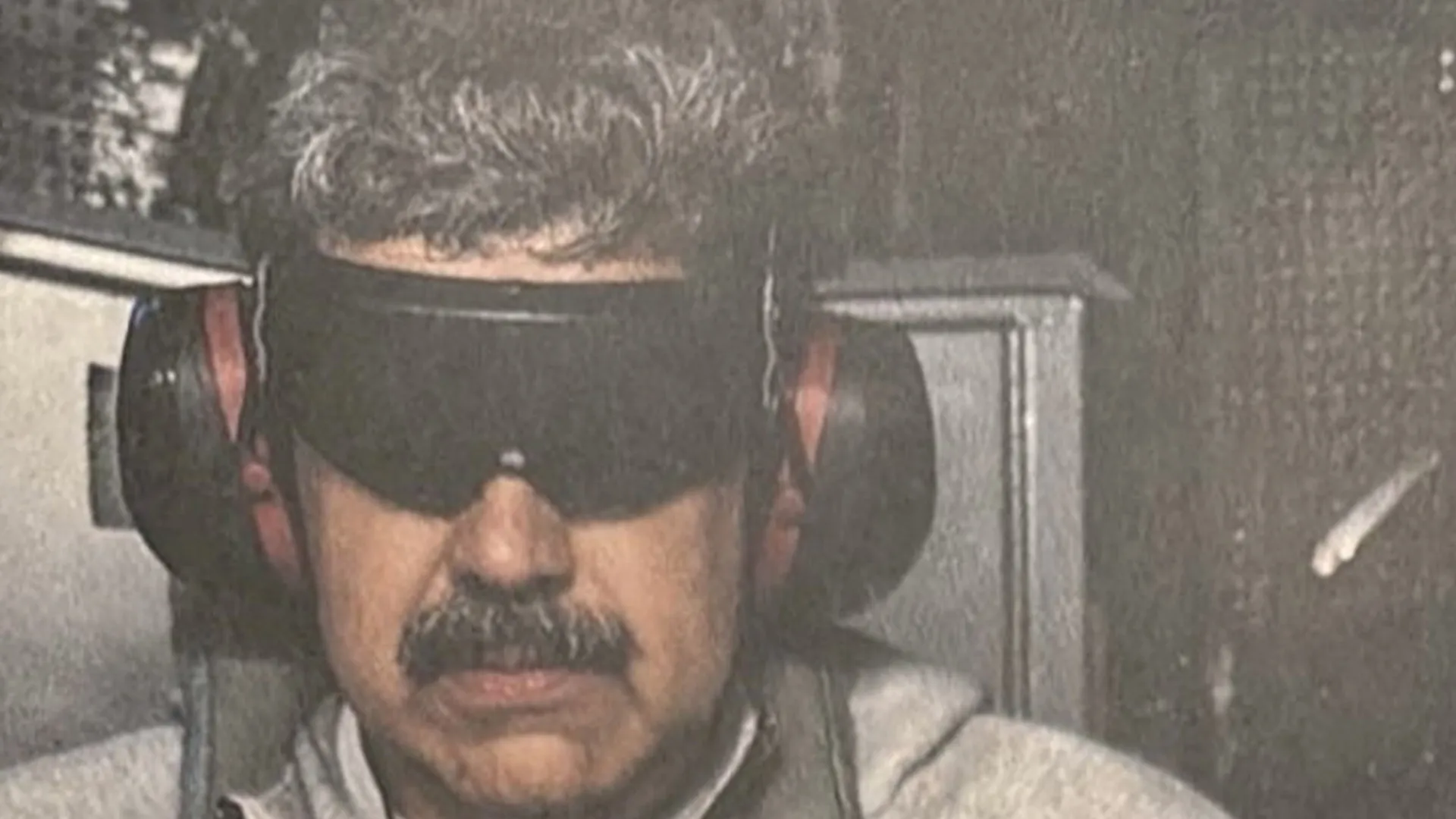
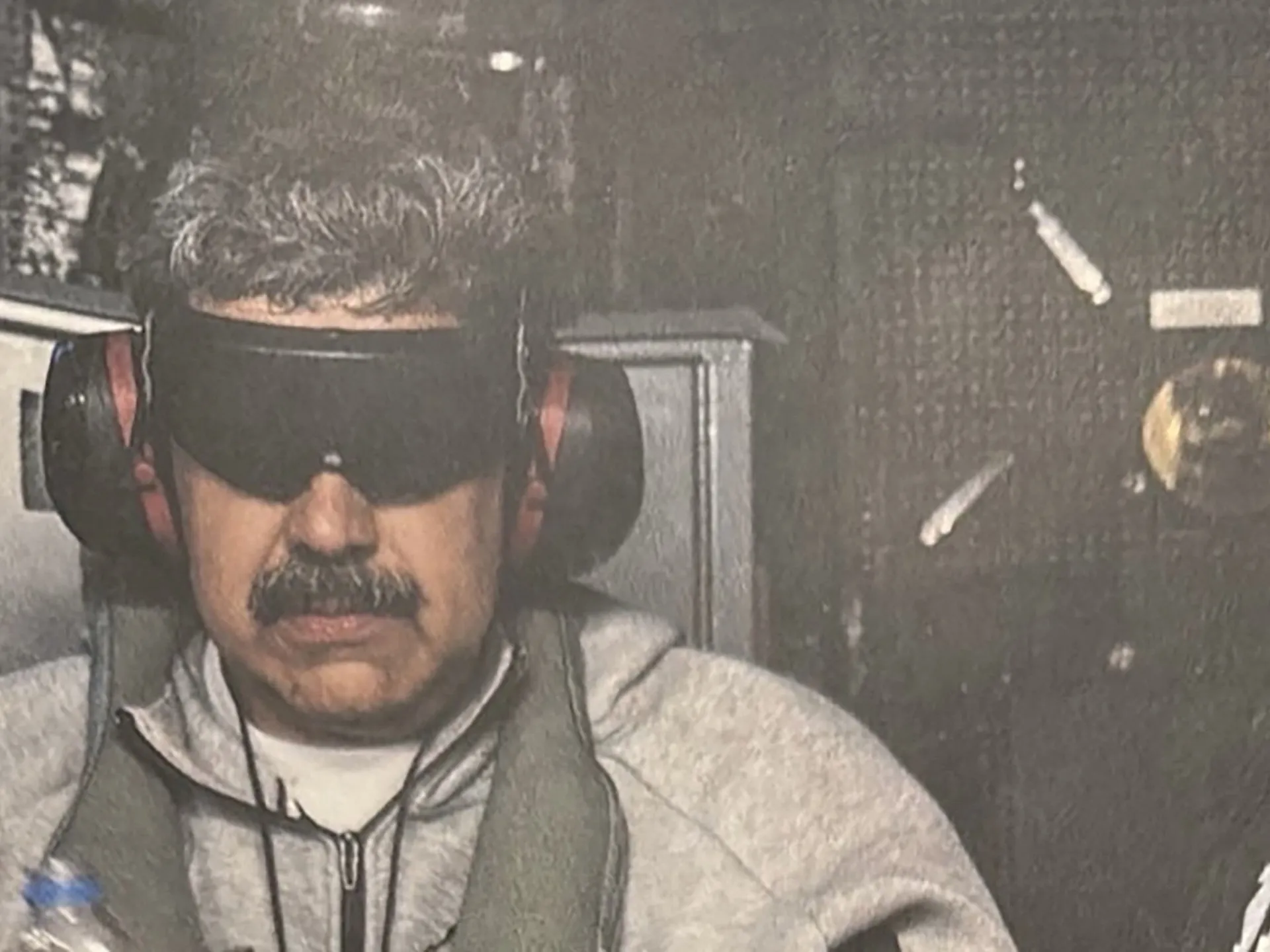
At 4:29am (08:29 GMT), just two and a half hours later, Maduro was put on board a US aircraft carrier, en route to New York. Trump later posted a photograph of the Venezuelan leader on his Truth Social social media platform, blindfolded, wearing a grey tracksuit.

After departing the USS Iwo Jima, US forces escorted Maduro on a flight, touching down in New York’s Stewart Air National Guard Base at about 4:30pm (21:30 GMT).

How many people were killed in the US strikes on Venezuela?

The US strikes hit Caracas as well as the states of Miranda, Aragua and La Guaira, according to the Venezuelan government.

To Linda Unamumo, a public worker, the US attacks caused an explosion that was so strong it destroyed the roof of her house.

“Even up until a little while ago, I was still crying … I was crying because I was so scared … I had to leave my house with my daughter, with my family, and go to another house, a neighbour’s house. It was really traumatic. I wouldn’t wish it on anyone, really,” she told the AFP news agency.

While official casualty counts have yet to be released, an official told The New York Times newspaper on condition of anonymity that at least 40 people had been killed in the attacks.

According to Trump, a few US members were injured in the operation, but he believed no one was killed.

What’s next for Venezuela?

During his news conference on Saturday, Trump announced that the US would “run” the country until a new leader was chosen.

“We’re going to make sure that country is run properly. We’re not doing this in vain,” he said. “This is a very dangerous attack. This is an attack that could have gone very, very badly.”

The president did not rule out deploying US troops in the country and said he was “not afraid of boots on the ground if we have to”.

Trump also, somewhat surprisingly, ruled out working with opposition figure and Nobel Peace Prize winner Maria Corina Machado, who had dedicated her prize, which he so wanted to win himself, to the US president.

“She doesn’t have the support within or the respect within the country,” he said.

The Constitutional Chamber of Venezuela’s Supreme Court ordered Vice President Delcy Rodriguez to serve as acting president following the US’s abduction of Maduro.

The court ruled that Rodriguez will assume “the office of President of the Bolivarian Republic of Venezuela, in order to guarantee administrative continuity and the comprehensive defence of the Nation”.

The court also said it would work to “determine the applicable legal framework to guarantee the continuity of the State, the administration of government, and the defense of sovereignty in the face of the forced absence of the President of the Republic”.

Trump had said earlier on Saturday that the US would not occupy Venezuela, provided Rodriguez “does what we want”.

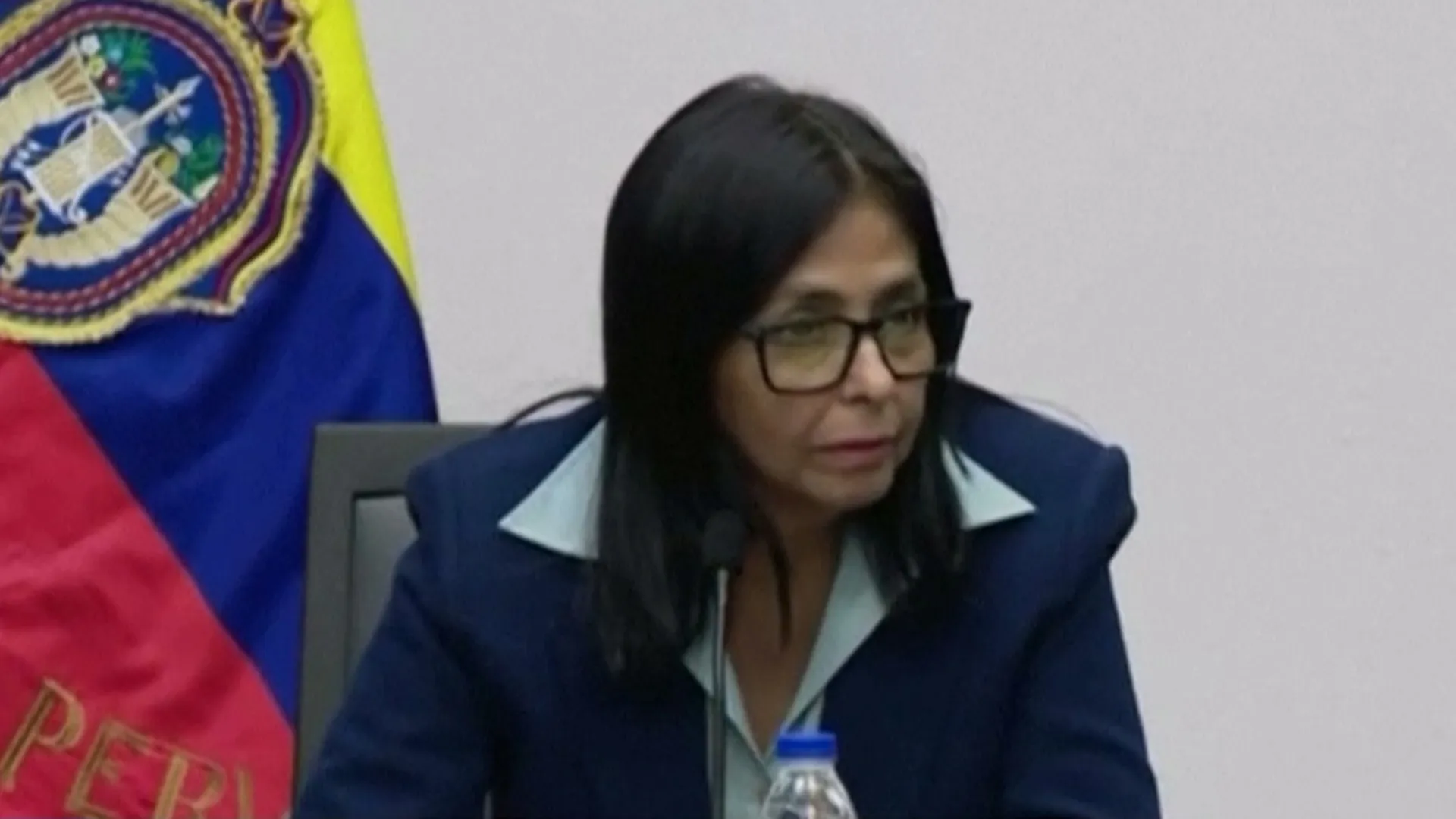
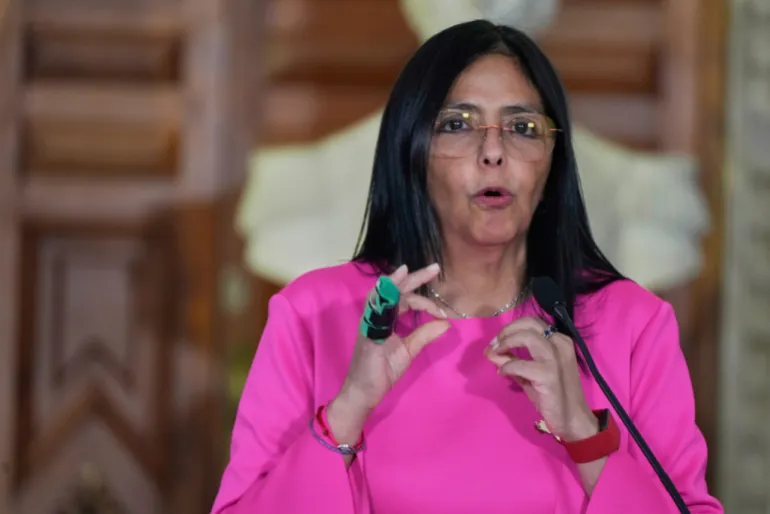
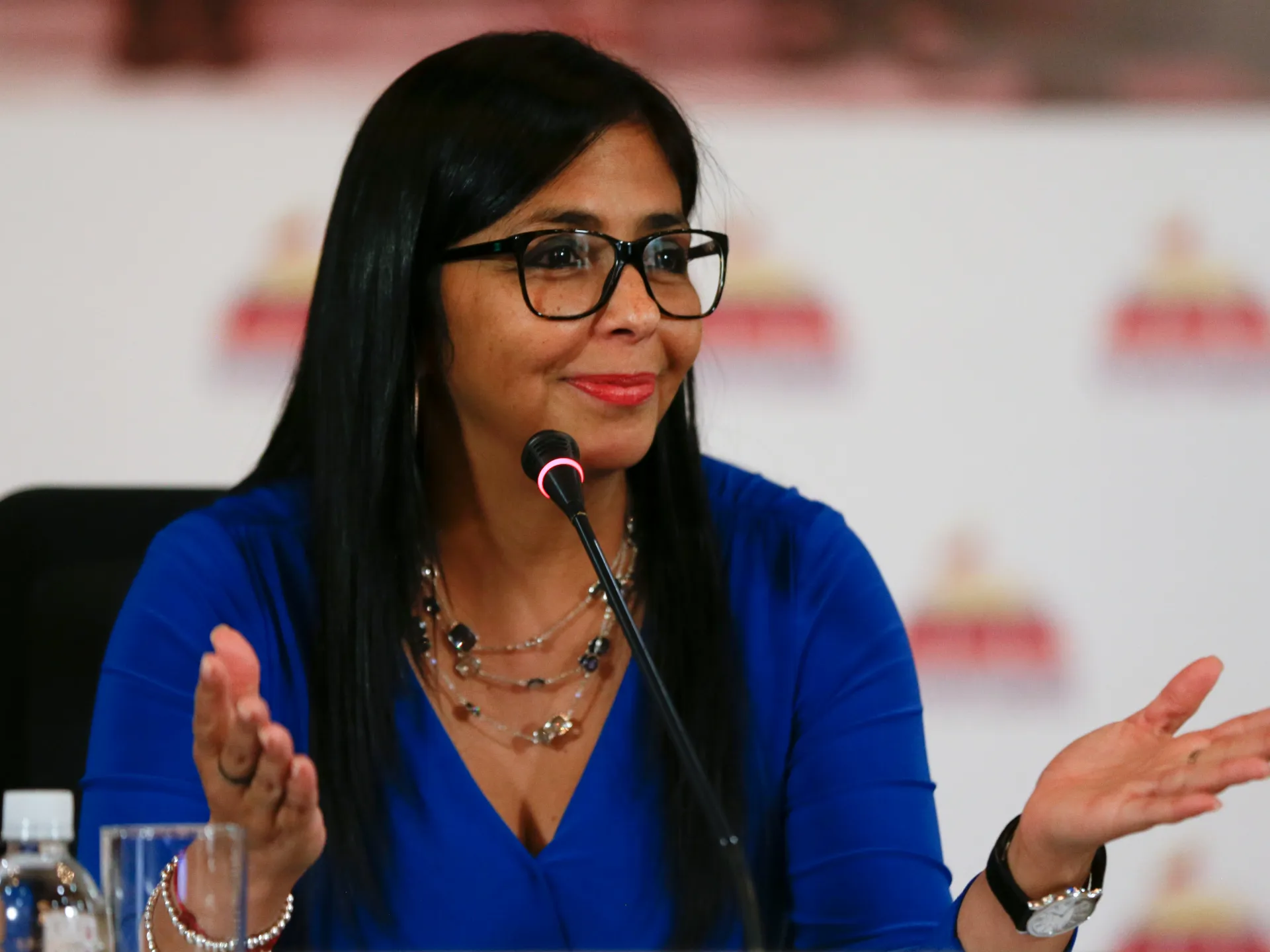
Delcy Rodriguez addresses the press
Venezuelan Vice President Delcy Rodriguez speaks to the press at the Foreign Office in Caracas, Venezuela, on August 11, 2025 [Ariana Cubillos/AP Photo]

Source link

China urges US to ‘stop toppling’ Venezuelan government, release Maduro | Nicolas Maduro News

China has called on the United States to immediately release Venezuelan President Nicolas Maduro after Washington carried out massive military strikes on the capital, Caracas, as well as other regions, and abducted the leader.

Beijing on Sunday insisted the safety of Maduro and his wife Cilia Flores be a priority, and called on the US to “stop toppling the government of Venezuela”, calling the attack a “clear violation of international law“.

Recommended Stories

list of 4 itemsend of list

It was the second statement issued by China since Saturday, after US President Donald Trump said Washington had taken Maduro and his wife and flown them out of the country.

On Saturday, Beijing slammed the US for “hegemonic acts” and “blatant use of force” against Venezuela and its president, urging Washington to abide by the United Nations charter.

China is closely watching developments in Venezuela, according to Andy Mok, a senior research fellow at the Center for China and Globalisation.

Mok told Al Jazeera that a Chinese delegation had met Venezuelan officials just hours before the US action, adding that Beijing was not surprised by Washington’s move, given the scale of US strategic and economic interests in the region.

What did stand out, he said, was how the operation was carried out, as it may “represent the long-term US strategy in the region”.

China is Venezuela’s largest buyer of oil, Mok added, although the country accounts for only 4-5 percent of its total oil imports. Beyond energy, he said, China has growing trade and investment interests across Latin America, meaning Beijing is paying close attention to political shifts in the region.

Mok warned that if a future US administration were to revive a Monroe Doctrine-style policy, it could increase tensions with China, as Latin America is a “pillar of China’s Global South strategy”.

Still, China is likely to limit its response to the events in Venezuela to diplomatic protest rather than hard power, according to China-based analyst Shaun Rein.

“I think China has issued a very strong condemnation of the United States, and they’re working with other Latin American and Caribbean countries to say this isn’t right,” Rein, founder of the China Market Research Group, told Al Jazeera.

Rein said Beijing is deeply alarmed but constrained, and its options are limited.

“There’s not a lot of things that China can do. Frankly, it doesn’t have the military power. It only has two military bases outside of China, while America has 800,” Rein noted, stressing that, “historically, China is not warlike”.

“China is just going to make proclamations criticising the United States’ actions, but they’re not going to push back with military action, and they’re probably not going to push back with economic sanctions.”

Global condemnations, celebrations

World reaction has poured in since the US military action in Venezuela, with opinion firmly split over the intervention.

Left-leaning regional leaders, including those of Brazil, Colombia, Chile and Mexico, have largely denounced Maduro’s ouster, while countries with right-wing governments, from Argentina to Ecuador, have largely welcomed it.

Australian Prime Minister Anthony Albanese on Sunday said he backed a “peaceful, democratic transition” of power in Venezuela, but urged that international law be respected.

His government was “monitoring developments”, he said in a statement.

South Korea also responded on Sunday, calling for a de-escalation of tensions.

“Our government urges all involved parties to make utmost efforts toward easing regional tensions. We hope for a quick stabilisation of the situation via dialogue, ensuring democracy is restored, and the will of the Venezuelan people is honoured,” its Ministry of Foreign Affairs said.

Venezuela has been increasingly isolated, particularly after Maduro’s contested election in 2024.

China and Russia, however, continue to maintain strong economic and strategic ties, and alliances have grown with Iran over their shared opposition to US policy.

Source link