US & Canada

Nick Reiner’s lawyer resigns amid court proceedings for Rob Reiner’s murder | Crime News

Alan Jackson steps down as lawyer for Nick Reiner, who is accused of killing his mother and father in December.

The high-profile lawyer representing Nick Reiner, who allegedly killed his father, director Rob Reiner, and mother Michele Singer Reiner in December, has resigned.

The announcement that lawyer Alan Jackson would step down from the case means that the younger Reiner will, at least for the time being, be represented by a public defender provided by the state.

Recommended Stories

list of 3 itemsend of list

During a news conference on Wednesday, Jackson did not provide a reason for his departure, instead citing the legal and ethical reasons he could not provide more details.

“Circumstances beyond our control and, more importantly, circumstances beyond Nick’s control have dictated that, sadly, it’s made it impossible to continue our representation of Nick,” Jackson said.

He added that, after weeks of investigation, “what we’ve learned, and you can take this to the bank, is that pursuant to the laws of this state, pursuant to the law of California, Nick Reiner is not guilty of murder. Print that.”

Jackson did not elaborate.

The lawyer had first appeared in court to represent the 32-year-old suspect just days after Rob Reiner and his wife were found dead on December 14 in their home in the upscale Brentwood neighbourhood of Los Angeles, California.

The cause of death was determined to be “multiple sharp force injuries”, another term for stab wounds.

Jackson, whose past clients include producer Harvey Weinstein and actor Kevin Spacey, did not explain how he was hired or who hired him after Nick Reiner was arrested for the killings.

On Wednesday, Deputy Public Defender Kimberly Greene took over Nick Reiner’s defence in the case.

That came as the defendant, standing behind glass in a custody area of the courtroom and wearing brown jail garb and with his hair shaved, briefly appeared in a Los Angeles court, where he was meant to be arraigned and enter a plea to two charges of first-degree murder.

Instead, the arraignment was postponed to February 23.

“The Public Defender’s Office recognises what an unimaginable tragedy this is for the Reiner family and the Los Angeles community,” Deputy Los Angeles Public Defender Ricardo Garcia said in a statement following the hearing.

“Our hearts go out to the Reiner family as they navigate this difficult time. We ask for your patience and compassion as the case moves through the legal process.”

Rob Reiner’s killing resonated across the world, reflecting the global impact of his films, which included the coming-of-age drama Stand By Me, the courtroom thriller A Few Good Men and the romantic comedy When Harry Met Sally.

Rob and Nick Reiner had previously worked together on a film, Being Charlie, which was partially based on the younger Reiner’s struggles with drug addiction and mental health.

Source link

US says it will control Venezuela’s oil sales ‘indefinitely’ | Oil and Gas News

The United States says it will control sales of Venezuelan oil “indefinitely” and decide how the proceeds of those sales are used, as President Donald Trump’s administration consolidates control over the South American country after abducting its president.

The US Department of Energy said on Wednesday that it had “begun marketing” Venezuelan oil on global markets and all proceeds from the sales “will first settle in US-controlled accounts at globally recognized banks”.

Recommended Stories

list of 4 itemsend of list

“These funds will be disbursed for the benefit of the American people and the Venezuelan people at the discretion of the US government,” it said.

“These oil sales begin immediately with the anticipated sale of approximately 30-50 million barrels. They will continue indefinitely.”

The announcement comes just days after the Trump administration abducted Venezuelan President Nicolas Maduro on Saturday in what legal experts say was a clear violation of international law.

The US has said it plans to “run” the country and take control of its vast oil reserves, with Trump saying on social media on Tuesday that Caracas would hand between 30 and 50 million barrels of oil over to Washington.

The US actions against Venezuela come amid a months-long pressure campaign by the Trump administration against Maduro, who has been charged in New York with drug trafficking offences that he denies.

That has included a partial US naval blockade against Venezuela and the seizure of several vessels that the Trump administration says were transporting oil to and from the country in violation of US sanctions.

Earlier on Wednesday, US special forces seized two Venezuela-linked vessels – including a Russian-flagged ship in the North Atlantic – for allegedly breaching those sanctions.

The seizures came as senior US officials briefed lawmakers on Capitol Hill about the Trump administration’s plans in Venezuela.

Reporting from Washington, DC, Al Jazeera’s Alan Fisher said most Republicans have backed Trump’s actions while Democrats have raised a slew of questions.

That includes “how long this operation in Venezuela will continue, what it will cost, [whether] any American servicemen actually be deployed on the ground in Venezuela, and what is the Venezuelan reaction,” Fisher explained.

“The Trump administration [is] hoping to get everyone on side before the end of the day,” he added.

Democratic Senator Elizabeth Warren wrote on social media that Wednesday’s briefing was “worse” than imagined.

“Oil company executives seem to know more about Trump’s secret plan to ‘run’ Venezuela than the American people. We need public Senate hearings NOW,” she said.

Three-phased plan

US Secretary of State Marco Rubio told reporters on Wednesday that the Trump administration is pursuing a three-phased plan that begins with the sales of Venezuelan oil.

“That money will then be handled in such a way that we will control how it’s dispersed in a way that benefits the Venezuelan people, not corruption, not the regime,” Rubio said.

The second phase would see US and other companies gain access to the Venezuelan market, and “begin to create the process of reconciliation nationally … so that opposition forces can be amnestied and released from prisons or brought back to the country”.

“And then the third phase, of course, would be one of transition,” Rubio added.

Gregory Brew, a senior analyst on Iran and energy at Eurasia Group, said the US announcement about controlling Venezuelan oil sales hints at “a return to the concessionary system” in place before the 1970s.

Brew explained in a social media post that, under that system, “producer states own the oil but it is Western firms that manage production and marketing, ultimately retain the bulk of the profits”.

A group of United Nations experts also warned that recent statements from Trump and other administration officials about plans to “run” Venezuela and exploit its oil reserves would violate international law.

Specifically, the experts said the US position contravenes “the right of peoples to self-determination and their associated sovereignty over natural resources, cornerstones of international human rights law”.

“Venezuela’s vast natural resources, including the largest proven oil reserves in the world, must not be cynically exploited through thinly veiled pretexts to legitimise military aggression, foreign occupation, or regime-change strategies,” they said.

Political situation unstable

Renata Segura, the Latin America and Caribbean programme director at the International Crisis Group, noted Venezuelan authorities have not commented on the US saying it plans to control sales of the country’s oil.

“And so we have to assume that either [the Venezuelan authorities] have accepted these terms, or that they’re just going to be forced to accept them,” Segura told Al Jazeera.

Venezuelan Vice President Delcy Rodriguez was sworn in as president earlier this week following Maduro’s abduction, stressing on Tuesday that “there is no foreign agent governing Venezuela” despite US claims to “run” the country.

Segura explained, “There’s a lot of debate within the [Venezuelan] regime itself about how to move forward” amid the US pronouncements, stressing the political situation remains far from stable.

“It’s very important what the army might do,” she said.

“The military forces in Venezuela control enormous amounts of power – both economic but also on the streets – and there might be a moment in which they think they’re not going to be on board with this particular arrangement that the United States is presenting.”

Source link

Warner Bros again rejects latest hostile bid from Paramount | Media News

The board of Warner Bros Discovery (WBD) has unanimously turned down Paramount Skydance’s latest attempt to acquire the studio, saying its revised $108.4bn hostile bid amounted to a risky leveraged buyout that investors should reject.

In a letter to shareholders on Wednesday, the WBD board said Paramount’s offer hinges on “an extraordinary amount of debt financing” that heightens the risk of closing. It reaffirmed its commitment to streaming giant Netflix’s $82.7bn deal for the film and television studio and other assets.

Recommended Stories

list of 4 itemsend of list

Some investors, however, pushed back on Warner Bros. Pentwater Capital Management CEO Matthew Halbower said that the media giant’s board had “made an error” by not considering Paramount’s bid.

On CNBC on Wednesday, Halbower called the deal “economically superior”.

Paramount’s financing plan would saddle the smaller Hollywood studio with $87bn in debt once the acquisition closes, making it the largest leveraged buyout in history, the Warner Bros board told shareholders after voting against the $30-per-share cash offer on Tuesday. The letter accompanied a 67-page amended merger filing that laid out its case for rejecting Paramount’s offer.

Paramount deal ‘remains inadequate’

The revised Paramount offer “remains inadequate particularly given the insufficient value it would provide, the lack of certainty in Paramount Skydance ability to complete the offer, and the risks and costs borne by WBD shareholders should Paramount Skydance fail to complete the offer”, the Warner Bros board wrote.

Paramount, which has a market value of about $14bn, proposed to use $40bn in equity, which would be personally guaranteed by Oracle’s billionaire co-founder Larry Ellison, whose son David is Paramount’s CEO, and $54bn in debt to finance the deal.

Its financing plan would further weaken its credit rating, which S&P Global already rates at junk levels, and strain its cash flow – heightening the risk that the deal will not close, the Warner Bros board said. Netflix, which has offered $27.75 a share in cash and stock, has a $400bn market value and investment-grade credit rating.

The decision keeps Warner Bros on track to pursue the deal with Netflix, even after Paramount amended its bid on December 22 to address the earlier concerns about the lack of a personal guarantee from Ellison, who is Paramount’s controlling shareholder.

Paramount and Netflix have been vying to win control of Warner Bros, and with it, its prized film and television studios and its extensive content library. Its lucrative entertainment franchises include  Harry Potter, Game of Thrones, Friends, and the DC Comics universe; as well as coveted classic films such as Casablanca and Citizen Kane.

Netflix applauds

Netflix co-CEOs Ted Sarandos and Greg Peters welcomed Warner Bros’ decision on Wednesday, saying it recognises the streaming giant’s deal “as the superior proposal that will deliver the greatest value to its stockholders, as well as consumers, creators and the broader entertainment industry”.

Warner Bros Chairman Samuel Di Piazza told CNBC that the company was not currently in talks with Paramount but remains open to a transaction with the Ellison-led firm, and both the deals have a path to regulatory approval.

“From our perspective, they’ve got to put something on the table that is compelling,” he said, referring to the Paramount offer.

Wednesday’s filing said Warner Bros’ board met on December 23 to review Paramount’s amended offer and noted some improvements, including Ellison’s personal guarantee and a higher reverse termination fee of $5.8bn, but found “significant costs” associated with Paramount’s bid compared with a Netflix deal.

Warner Bros would be obligated to pay the streaming service a $2.8bn termination fee for abandoning its merger agreement with Netflix, $1.5bn in fees to its lenders and about $350m in additional financing costs. Altogether, Warner Bros said it would incur about $4.7bn in additional costs to terminate its deal with Netflix, or $1.79 per share.

The board repeated some concerns it had laid out on December 17, such as that Paramount would impose operating restrictions on the studio that would harm its business and competitive position, including barring the planned spin-out of the company’s cable television networks into a separate public company, Discovery Global.

Paramount offered “insufficient compensation” for the damage done to the studio’s business, if the Paramount deal failed to close, Warner Bros said.

Paramount “repeatedly failed to submit the best proposal” to Warner Bros shareholders, the board wrote, “despite clear direction” on the deficiencies in its bid and potential solutions.

The jockeying for Warner Bros has become Hollywood’s most closely watched takeover battle, as studios race to scale up amid intensifying competition from streaming platforms and volatile theatrical revenues.

While Netflix’s offer has a lower headline value, analysts have said it presents a clearer financing structure and fewer execution risks than Paramount’s bid for the entire company, including its cable TV business.

“WBD does not want to sell to Paramount, so it will keep rejecting Paramount as long as it is able to,” said Ross Benes, an analyst at eMarketer.

“But this process is not over … Paramount will have opportunity to make further attempts.”

Harris Oakmark, Warner Bros’ fifth-largest investor, previously told Reuters that Paramount’s revised offer was not “sufficient”, noting it was not enough to cover the breakup fee.

Paramount has argued its bid would face fewer regulatory obstacles, but a combined Paramount-Warner Bros entity would create a formidable competitor to industry leader Disney and merge two major television operators and two streaming services.

The valuation of Warner Bros’ planned Discovery Global spin-off, which includes cable television networks CNN, TNT Sports and the Discovery+ streaming service, is seen as a major sticking point. Analysts peg the cable channels’ value at up to $4 per share, while Paramount has suggested just $1.

Lawmakers from both parties have raised concerns about further consolidation in the media industry, and US President Donald Trump has said he plans to weigh in on the landmark acquisition.

On Wall Street, Warner Bros Discovery is up 0.3 percent in midday trading amid the news of the rejected bid. Netflix is also up 0.3. Meanwhile, Paramount is down 0.1 percent.

Source link

Trump says he wants to free up Venezuelan oil flow. What was blocking it? | US-Venezuela Tensions News

United States President Donald Trump and Secretary of State Marco Rubio say they want to free up the flow of Venezuelan oil to benefit Venezuelans after US forces abducted President Nicolas Maduro from Caracas.

“We’re going to rebuild the oil infrastructure, which requires billions of dollars that will be paid for by the oil companies directly,” Trump said at a media briefing at his Mar-a-Lago estate in Florida hours after Maduro was seized on Saturday. “They will be reimbursed for what they’re doing, but it’s going to be paid, and we’re going to get the oil flowing.”

Then, on Tuesday, the US president said he wanted to use proceeds from the sale of Venezuelan oil “to benefit the people of Venezuela and the United States”. Rubio has echoed Trump in his comments in recent days.

But what has been holding back the flow of Venezuelan oil, preventing the country from attracting investments and driving the country into poverty?

A key reason is one that Trump and Rubio have been silent about: Washington’s own efforts to strangle Venezuela’s oil industry and economy through sanctions, which also have set off a refugee crisis.

What has Trump said about Venezuelan oil?

In a post on his Truth Social platform on Tuesday night, Trump said Venezuela will turn over 30 million to 50 million barrels of sanctioned oil to the US.

Trump wrote: “This Oil will be sold at its Market Price, and that money will be controlled by me, as President of the United States of America, to ensure it is used to benefit the people of Venezuela and the United States!”

Trump added that he had directed his energy secretary, Chris Wright, to execute the plan “immediately”.

“It will be taken by storage ships, and brought directly to unloading docks in the United States,” Trump wrote.

During the news conference on Saturday, Trump said US oil companies would fix Venezuela’s “broken infrastructure” and “start making money for the country”.

Earlier Trump had accused Venezuela in a Truth Social post of “stealing” US oil, land and other assets and using that oil to fund crime, “terrorism” and human trafficking. Top Trump adviser Stephen Miller has made similar claims in recent days.

What does it mean for the US to take Venezuelan oil?

Oil is trading at roughly $56 per barrel.

Based on this price, 30 million barrels of oil would be worth $1.68bn and 50 million barrels of oil would be worth $2.8bn.

“Trump’s statement about oil in Venezuela is beyond an act of war; it is an act of colonisation. That is also illegal based on the UN Charter,” Vijay Prashad, the director of the Tricontinental Institute for Social Research based in Argentina, Brazil, India, and South Africa, told Al Jazeera.

Ilias Bantekas, a professor of transnational law at Hamad Bin Khalifa University in Qatar, told Al Jazeera that the US involvement in Venezuela was “less about Maduro as it is about access to Venezuela’s oil deposits”.

“This [oil] is the number one target. Trump is not content with just allowing US oil firms to get concessions but to ‘run’ the country, which entails absolute and indefinite control over Venezuela’s resources.”

According to the website of the US Energy Information Administration, the US consumed an average of 20.25 million barrels of petroleum per day in 2023.

What has Rubio said about Venezuelan oil?

In an interview on the NBC TV network’s Meet the Press programme that aired on Sunday, Rubio said: “We are at war against drug trafficking organisations. That’s not a war against Venezuela.”

“No more drug trafficking … and no more using the oil industry to enrich all our adversaries around the world and not benefitting the people of Venezuela or, frankly, benefitting the United States and the region,” Rubio said.

Rubio said in the interview that since 2014, about eight million Venezuelans have fled the country, which he attributed to theft and corruption by Maduro and his allies. According to a report by the Office of the UN High Commissioner for Refugees from May, nearly 7.9 million people have indeed left Venezuela.

But he was silent on the US’s own role in creating that crisis.

What are the US sanctions against Venezuela’s oil?

Venezuela nationalised its oil industry in 1976 under then-President Carlos Andres Perez during an oil boom. He established the state-owned Petroleos de Venezuela SA (PDVSA) to control all oil resources.

Venezuela continued to be a major oil exporter to the US for some years, supplying 1.5 million to 2 million barrels per day in the late 1990s and early 2000s.

After President Hugo Chavez took office in 1998, he nationalised all oil assets, seized foreign-owned assets, restructured the PDVSA and prioritised using oil revenue for social programmes in Venezuela.

From 2003 to 2007, Venezuela under Chavez managed to cut its poverty rate in half – from 57 percent to 27.5 percent. Extreme poverty fell even more sharply, by 70 percent.

But exports declined, and government authorities were accused of mismanagement.

The US first imposed sanctions on Venezuela’s oil in retaliation for nationalising US oil assets in 2005.

Under US sanctions, many senior Venezuelan government officials and companies have been barred from accessing any property or financial assets held in the US. They cannot access US bank accounts, sell property or access their money if it passes through the US financial system.

Critically, any US companies or citizens doing business with any sanctioned individual or company will be penalised and risk becoming subject to enforcement actions.

Maduro took over as president in 2013 after Chavez’s death. In 2017, Trump, during his first term in office, imposed more sanctions and tightened them again in 2019. This further restricted sales to the US and access for Venezuelan companies to the global financial system. As a result, oil exports to the US nearly stopped, and Venezuela shifted its trade mainly to China with some sales to India and Cuba.

Last month, the Trump administration imposed yet more sanctions – this time on Maduro family members and Venezuelan tankers carrying sanctioned oil.

Today, the PDVSA controls the petroleum industry in Venezuela, and US involvement in Venezuelan oil drilling is limited. Houston-based Chevron is the only US company that still operates in Venezuela.

How have sanctions hurt Venezuela’s oil flows?

Trump might today be interested in getting Venezuelan oil flowing, but it is US sanctions that blocked that flow in the first place.

Venezuela’s oil reserves are concentrated primarily in the Orinoco Belt, a region in the eastern part of the country stretching across roughly 55,000sq km (21,235sq miles).

While the country is home to the world’s largest proven oil reserves – at an estimated 303 billion barrels – it earns only a fraction of the revenue it once did from exporting crude.

[BELOW: The sentence above promises statistics that will show how much oil exports have dropped, but the next graf doesn’t deliver. We should add that figure]

According to data from the Observatory of Economic Complexity, Venezuela exported $4.05bn of crude oil in 2023. This is far below other major exporters, including Saudi Arabia ($181bn), the US ($125bn) and Russia ($122bn).

How have US sanctions hurt Venezuelans and the country’s oil infrastructure?

The US sanctions on Venezuelan oil prevent US and non-US companies from doing business with the PDVSA. Because the US is a market no one wants to lose, firms, including banks, are wary of taking any steps that could invite Washington’s sanctions.

In effect, that has meant Venezuela’s oil industry has been almost entirely deprived of international financial investment.

The sanctions additionally restrict Venezuela from accessing oilfield equipment, specialised software, drilling services and refinery components from Western companies.

This has resulted in years of underinvestment in the PDVSA’s infrastructure, leading to chronic breakdowns, shutdowns and accidents.

The sanctions have also resulted in broader economic turmoil.

The country’s gross domestic product per capita stood at about $4,200 in 2024, according to World Bank data, down from more than $13,600 in 2010.

From about 2012, the economy went into a sharp decline, driven by domestic economic policies, a slump that was later deepened by US sanctions. The resulting hardships have pushed millions of Venezuelans to leave the country – the same people who Trump and Rubio now argue should benefit from Venezuela’s oil revenues.

Does the US have any claim to Venezuelan oil?

US companies began drilling for oil in Venezuela in the early 1900s.

In 1922, vast petroleum reserves were initially discovered by Royal Dutch Shell in Lake Maracaibo in Zulia state in northwestern Venezuela.

At this point, US companies ramped up their investments in the extraction and development of Venezuelan oil reserves. Companies such as Standard Oil led development under concession agreements, propelling Venezuela to a position as a key global supplier, especially for the US.

Venezuela was a founding member of OPEC, joining at its creation on September 14, 1960. OPEC is a group of major oil-exporting countries that work together to manage supply and influence global oil prices.

But the claims by Trump and Miller that Venezuela somehow “stole” US oil are baseless under international law, experts said.

The principle of permanent sovereignty over natural resources, adopted by the UN General Assembly in a resolution in 1962, is clear that sovereign states have the inherent right to control, use and dispose of their resources for their own development.

In other words, Venezuela alone owns its oil.

Source link

Do Russia and China pose a national security threat to the US in Greenland? | Donald Trump News

US President Donald Trump sees Greenland as a United States national security priority to deter Washington’s “adversaries in the Arctic region”, according to a White House statement released on Tuesday.

The statement came days after Trump told reporters that the US needs Greenland from a national security perspective because it is “covered with Russian and Chinese ships”.

Recommended Stories

list of 4 itemsend of list

Here’s what you need to know about what Trump said, whether Russia and China are present in Greenland, and whether they do pose a threat to American security.

What has Trump recently said about Greenland?

“Right now, Greenland is covered with Russian and Chinese ships all over the place. We need Greenland from the standpoint of national security,” Trump told reporters aboard Air Force One on January 4.

The White House statement on Tuesday fleshed out further details on how the US would go about its acquisition of Greenland.

“The president and his team are discussing a range of options to pursue this important foreign policy goal, and of course, utilizing the US military is always an option at the commander-in-chief’s disposal,” the White House statement says.

Over the course of his second term, Trump has talked about wanting Greenland for national security reasons multiple times.

“We need Greenland for international safety and security. We need it. We have to have it,” he said in March.

Since 1979, Greenland has been a self-governing territory of Denmark, and since 2009, it has had the right to declare independence through a referendum.

Trump has repeatedly expressed a desire to take control of the island, which hosts a US military base. He first voiced this desire in 2019, during his first term as US president.

As a response, leaders from Greenland and Denmark have repeatedly said that Greenland is not for sale. They have made it clear that they are especially not interested in becoming part of the US.

On January 4, Denmark’s Prime Minister Mette Frederiksen said, “It makes absolutely no sense to talk about the US needing to take over Greenland.”

“The US has no right to annex any of the three countries in the Danish kingdom,” she said, alluding to the Faroe Islands, which, like Greenland, are also a Danish territory.

“I would therefore strongly urge the US to stop the threats against a historically close ally and against another country and another people who have very clearly said that they are not for sale,” Frederiksen said.

US special forces abducted Venezuelan President Nicolas Maduro during an operation in the Venezuelan capital, Caracas, on January 3.

Hours later, Katie Miller, the wife of close Trump aide and US Homeland Security Advisor Stephen Miller, posted a photo on X showing the US flag imposed on the map of Greenland.

Greenland’s Prime Minister Jens-Frederik Nielsen hit back in an X post, writing, “Relations between nations and peoples are built on mutual respect and international law – not on symbolic gestures that disregard our status and our rights.”

Why does Trump want Greenland so badly?

The location and natural resources of the Arctic island make it strategically important for Washington.

Greenland is geographically part of North America, located between the Arctic Ocean and the North Atlantic Ocean. It is home to some 56,000 residents, mostly Indigenous Inuit people.

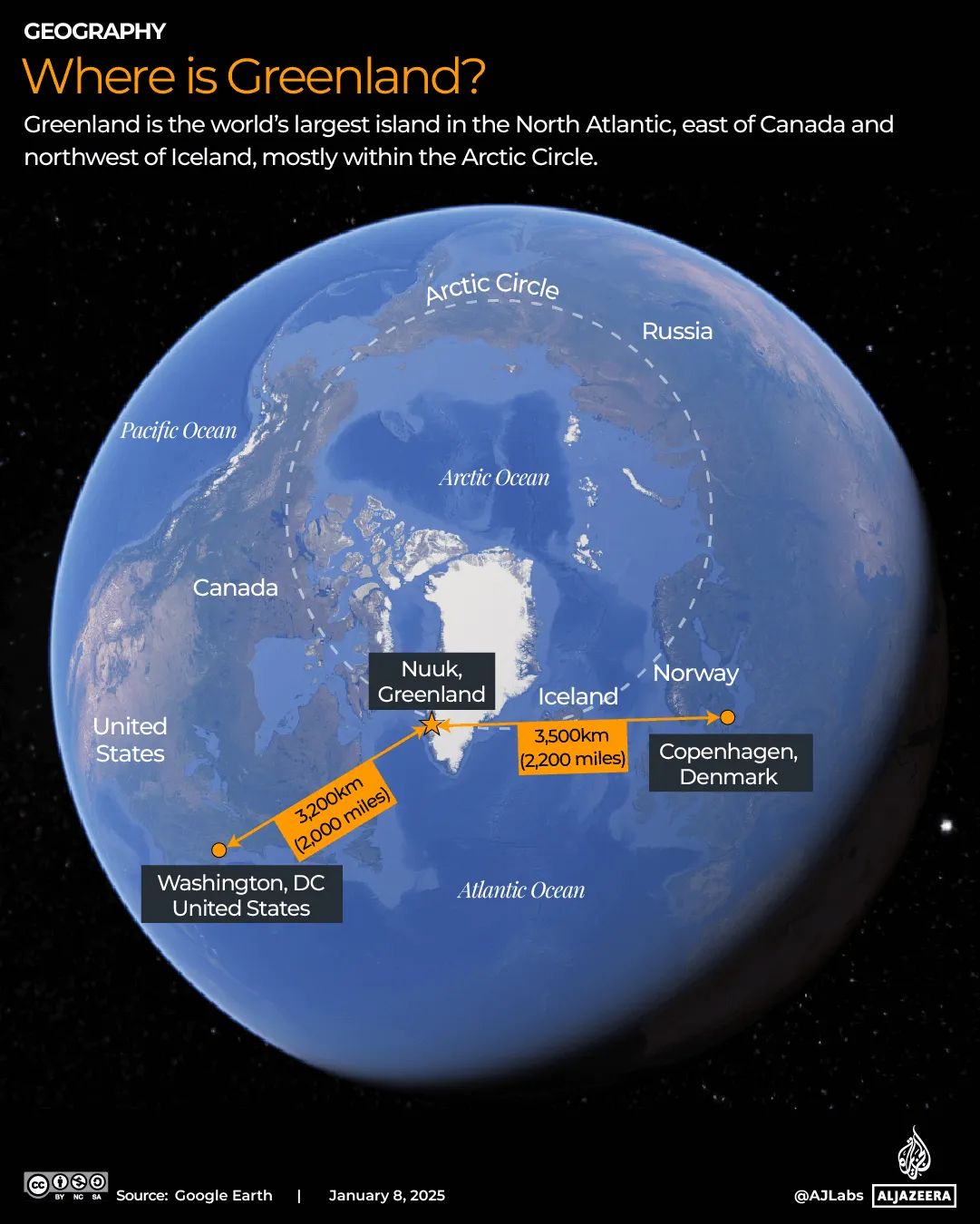
It is the world’s largest island. Greenland’s capital, Nuuk, is closer to New York City  – some 2,900km (1,800 miles) away – than the Danish capital Copenhagen, which is located 3,500km (2,174 miles) to the east.

Greenland, a NATO territory through Denmark, is an EU-associated overseas country and territory whose residents remain European Union citizens, having joined the European Community with Denmark in 1973 but having withdrawn in 1985.

“It’s really tricky if the United States decides to use military power to take over Greenland. Denmark is a member of NATO; the United States is a member as well. It really calls into question what the purpose of the military alliance is, if that happens,” Melinda Haring, a senior fellow at the Atlantic Council Eurasia Center, told Al Jazeera.

Greenland offers the shortest route from North America to Europe. This gives the US a strategic upper hand for its military and its ballistic missile early-warning system.

The US has expressed interest in expanding its military presence in Greenland by placing radars in the waters connecting Greenland, Iceland and the United Kingdom. These waters are a gateway for Russian and Chinese vessels, which Washington aims to track.

The island is also incredibly rich in minerals, including rare earth minerals used in the high-tech industry and in the manufacture of batteries.

According to a 2023 survey, 25 of 34 minerals deemed “critical raw materials” by the European Commission were found in Greenland.

Greenland does not carry out the extraction of oil and gas, and its mining sector is opposed by its Indigenous population. The island’s economy is largely reliant on its fishing industry.

INTERACTIVE - Where is Greenland Map

Are Chinese and Russian ships swarming Greenland?

However, while Trump has spoken of Russian and Chinese ships around Greenland, currently, facts don’t bear that out.

Vessel tracking data from maritime data and intelligence websites such as MarineTraffic do not show the presence of Chinese or Russian ships near Greenland.

Are Russia and China a threat to Greenland?

The ships’ location aside, Trump’s rhetoric comes amid a heightened scramble for the Arctic.

Amid global warming, the vast untapped resources of the Arctic are becoming more accessible. Countries like the US, Canada, China and Russia are now eyeing these resources.

“Russia has never threatened anyone in the Arctic, but we will closely follow the developments and mount an appropriate response by increasing our military capability and modernising military infrastructure,” Russian President Vladimir Putin said during an address in March 2025 at the International Arctic Forum in the Russian city of Murmansk, the largest city within the Arctic Circle.

During this address, Putin said that he believed Trump was serious about taking Greenland and that the US will continue with efforts to acquire it.

In December 2024, Canada released a policy document detailing plans to ramp up its military and diplomatic presence in the Arctic. Russia is also constructing military installations and power plants in the region.

Meanwhile, Russia and China have been working together to develop Arctic shipping routes as Moscow seeks to deliver more oil and gas to China amid Western sanctions while Beijing seeks an alternative shipping route to reduce its dependence on the Strait of Malacca.

The Northern Sea Route (NSR), a maritime route in the Arctic Ocean, is becoming easier to navigate due to melting ice. The NSR can cut shipping trips significantly short. Russia is hoping to ramp up commerce through the NSR to trade more with Asia than Europe due to Western sanctions. Last year, the number of oil shipments from Russia to China via the NSR rose by a quarter.

China is also probing the region, and has sent 10 scientific expeditions to the Arctic and built research vessels to survey the icy waters north of Russia.

Source link

How strong are Latin America’s military forces, as they face US threats? | Military News

Over the weekend, the United States carried out a large-scale military strike against Venezuela and abducted President Nicolas Maduro in a major escalation that sent shockwaves across Latin America.

On Monday morning, US President Donald Trump doubled down, threatening action against the governments of Colombia, Cuba and Mexico unless they “get their act together”, claiming he is countering drug trafficking and securing US interests in the Western Hemisphere.

The remarks revive deep tensions over US interference in Latin America. Many of the governments targeted by Trump have little appetite for Washington’s involvement, but their armed forces lack the capacity to keep the US at arm’s length.

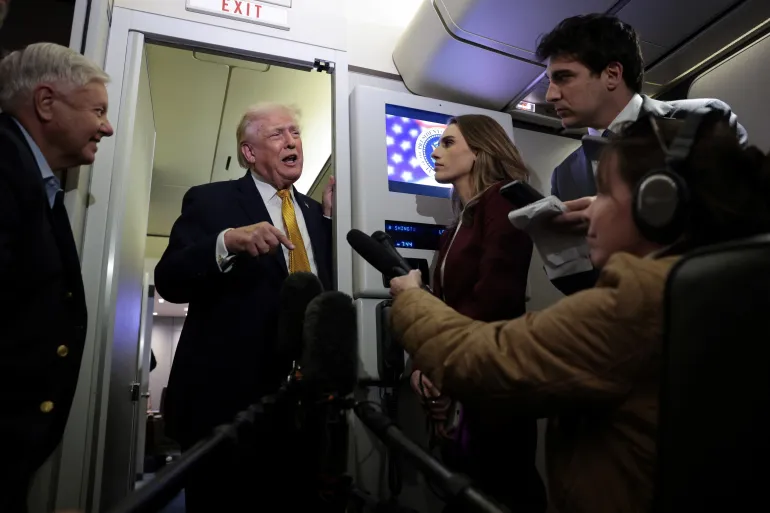
U.S. President Donald Trump speaks to reporters aboard Air Force One en route from Florida to Joint Base Andrews, Maryland, U.S., January 4, 2026. REUTERS/Jonathan Ernst
US President Donald Trump issues warnings to Colombia, Cuba and Mexico while speaking to reporters on Air Force One while returning from his Florida estate to Washington, DC, on January 4, 2026 [Jonathan Ernst/Reuters]

Latin America’s military capabilities

The US has the strongest military in the world and spends more on its military than the total budgets of the next 10 largest military spenders combined. In 2025, the US defence budget was $895bn, roughly 3.1 percent of its gross domestic product.

According to the 2025 Global Firepower rankings, Brazil has the most powerful military in Latin America and is ranked 11th globally.

Mexico ranks 32nd globally, Colombia 46th, Venezuela 50th and Cuba 67th. All of these countries are significantly below the US military in all metrics, including the number of active personnel, military aircraft, combat tanks, naval assets and their military budgets.

In a standard war involving tanks, planes and naval power, the US maintains overwhelming superiority.

The only notable metric that these countries have over the US is their paramilitary forces, which operate alongside the regular armed forces, often using asymmetrical warfare and unconventional tactics against conventional military strategies.

INTERACTIVE - Latin America military capabilities - JAN6, 2026-1767695033
(Al Jazeera)

Paramilitaries across Latin America

Several Latin American countries have long histories of paramilitary and irregular armed groups that have often played a role in the internal security of these countries. These groups are typically armed, organised and politically influential but operate outside the regular military chain of command.

Cuba has the world’s third largest paramilitary force, made up of more than 1.14 million members, as reported by Global Firepower. These groups include state-controlled militias and neighbourhood defence committees. The largest of these, the Territorial Troops Militia, serves as a civilian reserve aimed at assisting the regular army against external threats or during internal crises.

In Venezuela, members of pro-government armed civilian groups known as “colectivos” have been accused of enforcing political control and intimidating opponents. Although not formally part of the armed forces, they are widely seen as operating with state tolerance or support, particularly during periods of unrest under Maduro.

In Colombia, right-wing paramilitary groups emerged in the 1980s to fight left-wing rebels. Although officially demobilised in the mid-2000s, many later re-emerged as criminal or neo-paramilitary organisations, remaining active in rural areas. The earliest groups were organised with the involvement of the Colombian military following guidance from US counterinsurgency advisers during the Cold War.

In Mexico, heavily armed drug cartels function as de facto paramilitary forces. Groups such as the Zetas, originally formed by former soldiers, possess military-grade weapons and exercise territorial control, often outgunning local police and challenging the state’s authority. The Mexican military has increasingly been deployed in law enforcement roles in response.

History of US interference in Latin America

Over the past two centuries, the US has repeatedly interfered in Latin America.

In the late 19th and early 20th centuries, the so-called Banana Wars saw US forces deployed across Central America to protect corporate interests.

In 1934, President Franklin D Roosevelt introduced the “Good Neighbor Policy”, pledging nonintervention.

Yet during the Cold War, the US financed operations to overthrow elected governments, often coordinated by the CIA, founded in 1947.

Panama is the only Latin American country the US has formally invaded, which occurred in 1989 under President George HW Bush. “Operation Just Cause” ostensibly was aimed at removing President Manuel Noriega, who was later convicted of drug trafficking and other offences.

Source link

Rodriguez says ‘no foreign agent’ running Venezuela, US role still unclear | US-Venezuela Tensions News

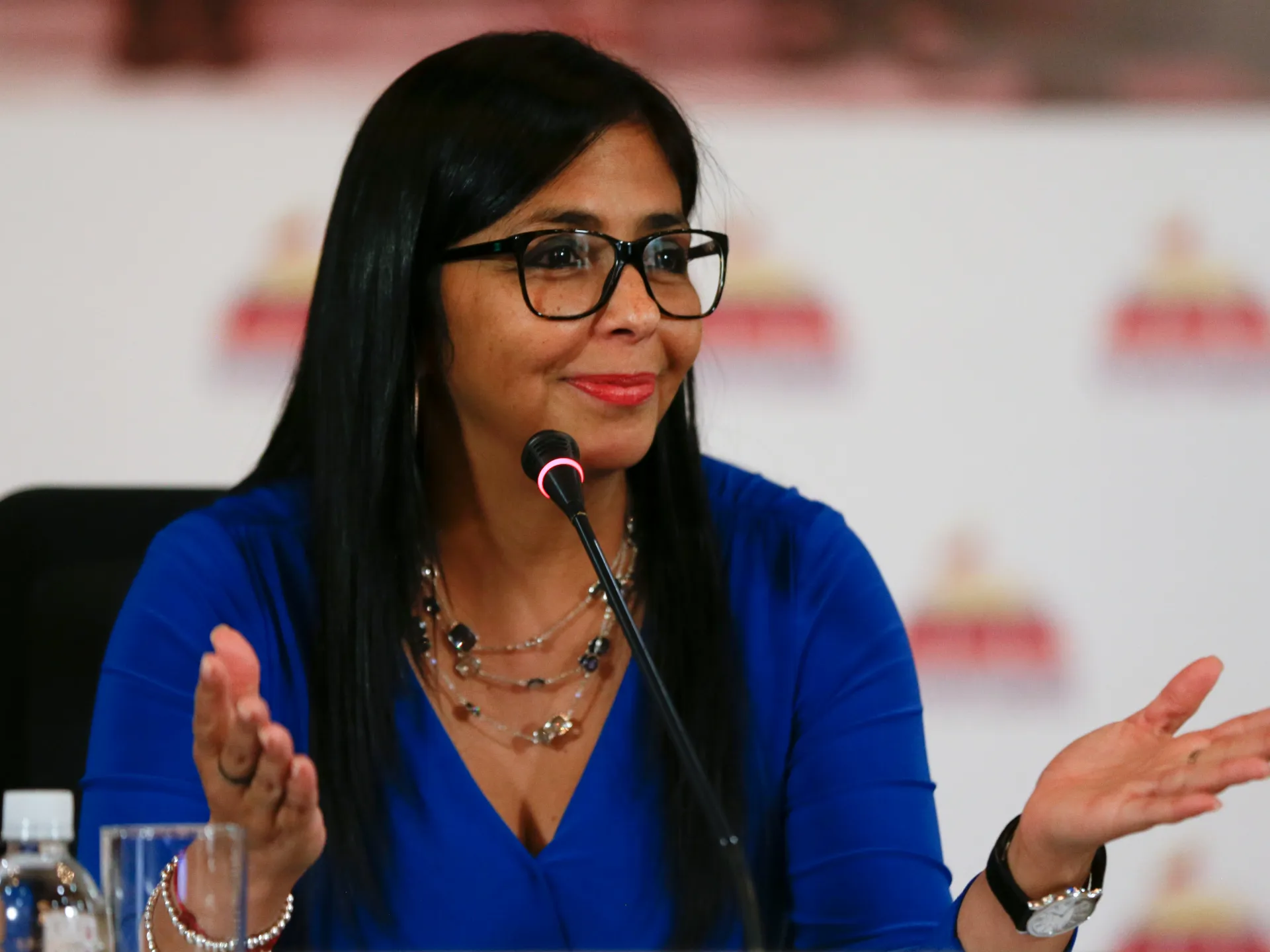
Venezuela’s interim leader, Delcy Rodriguez, has said that “no foreign agent” is running Venezuela in the wake of Nicolas Maduro’s abduction by United States military forces.

Rodriguez, who had been Maduro’s vice president before his abduction, spoke during a televised event on Tuesday, a day after Maduro and his wife, Cilia Flores, pleaded not guilty in a New York court to drug-trafficking conspiracy charges.

Recommended Stories

list of 3 itemsend of list

“The government of Venezuela is in charge in our country, and no one else. There is no foreign agent governing Venezuela,” Rodriguez said.

Venezuela’s prosecutor general, meanwhile, called for the immediate release of Maduro and his wife.

“The military operation, without a declaration of war or a UN Security Council resolution, represents an illegal act of armed aggression of a terrorist nature,” Tarek William Saab said.

The statements come amid the continuing fallout from Saturday’s military operation, which left dozens of people in Venezuela dead. The offensive has been broadly condemned as a violation of international law.

Venezuela on Tuesday released a list of the 24 soldiers killed in the predawn assault. Cuba also announced that 32 members of its military had died. Rodriguez declared a seven-day period of mourning to commemorate the fallen military members.

Since seizing Maduro from his residence, the administration of US President Donald Trump has offered little clarity about its plans for Venezuela.

Trump said on Saturday that the US would “run” Venezuela, a statement US Secretary of State Marco Rubio walked back the next day.

The top diplomat instead said that US officials would guide the “direction” of how the country is run and use sanctions and an ongoing embargo to force more access to Venezuela’s oil industry.

Rubio, US Secretary of Defense Pete Hegseth and Chairman of the Joint Chiefs of Staff Dan Caine briefed a bipartisan group of Congress members on Monday about the Venezuela operation.

But several lawmakers said that the administration had offered scarce insight into its justification for conducting the strike without first seeking approval from Congress, much less its plans for Venezuela’s future.

“This briefing, while very extensive and long, posed far more questions than it ever answered,” Senate Minority Leader Chuck Schumer said afterwards.

On Tuesday, Senate Majority Leader John Thune, a Trump ally in the Republican Party, said the next few days would show Venezuela’s “government structure and how willing they are to work with the US”.

In a social media post, Thune called Rodriguez a “practical person, pragmatic person” who “will understand the importance of figuring out a path forward to where America’s national security priorities can be prioritized by Venezuela”.

Trump, meanwhile, offered few new details on the operation during a retreat with Republicans on Tuesday, beyond praising the abduction as an “amazing military feat” and “brilliant tactically”.

Speaking from exile in Miami, Florida, former Venezuelan opposition leader Juan Guaido said the country had a “wonderful and incredible opportunity”.

Guaido, who fled Venezuela in 2023, said that rebuilding the country’s democracy would allow millions of Venezuelans to return, and help “bring back to life the oil fields” and restore prosperity.

He condemned Rodriguez as “an acting dictator”, describing the current period as “a phase of transition” that will only be complete “once the rule of law has been reinstalled”.

Unease in Caracas

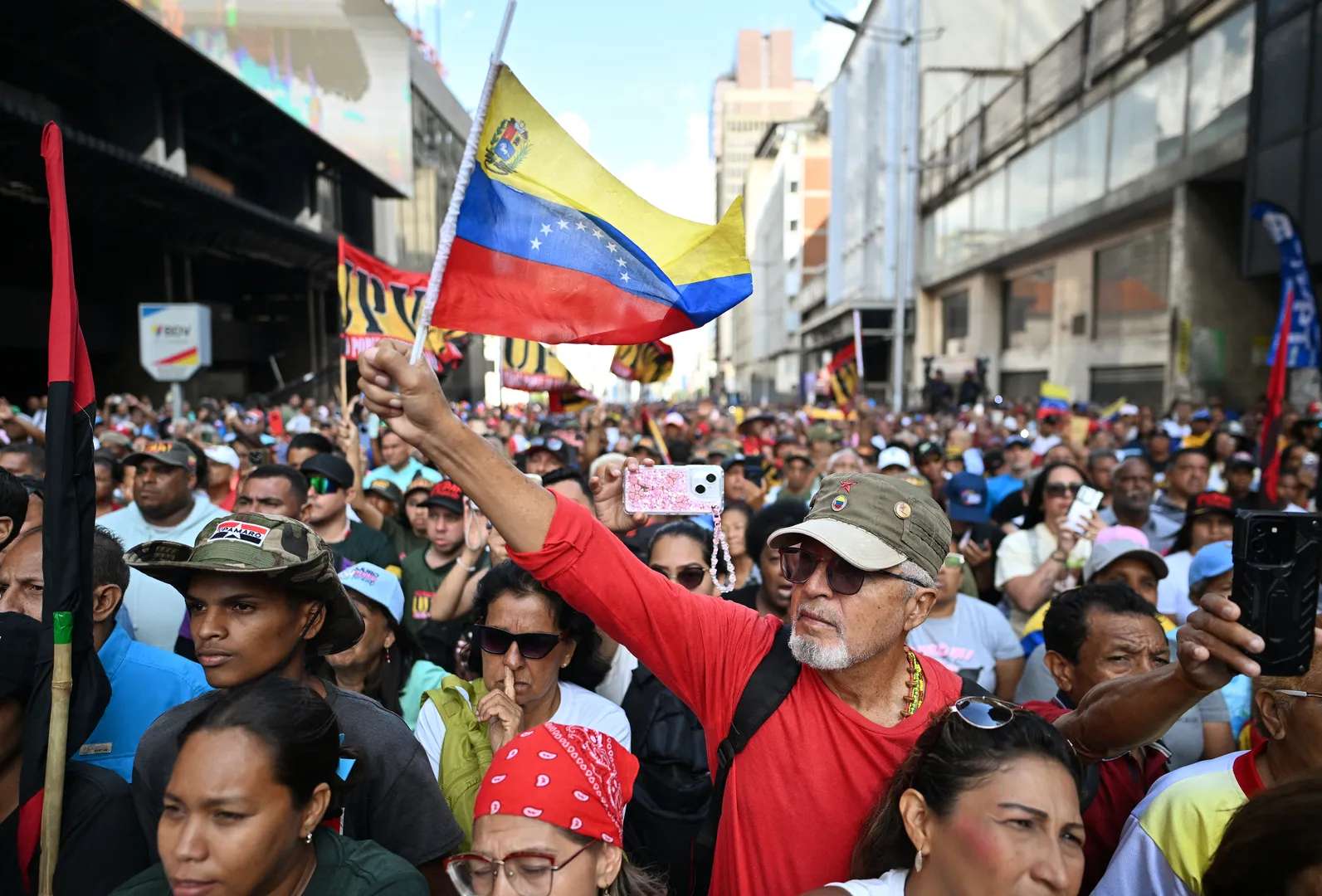
In Venezuela’s capital, Caracas, crowds gathered on Tuesday for a state-organised display of support for the government.

Some marchers flashed “V” victory signs. Hardline Minister of Interior Diosdado Cabello – who, like Maduro, has been indicted by the US Department of Justice – was seen wading through the gathering. He wore a blue cap emblazoned with the slogan, “To doubt is to betray.”

But Noris Argotte Soto, a Venezuelan reporter in Caracas, told Al Jazeera that the situation in the capital continues to be tense, with most residents staying inside their homes.

“In the peripheral areas of the city, everybody remains at home. The tension is rising; people are on edge. And people are very much afraid of going out into the streets, mostly because [of] the security forces that we see at the main points of the city,” she said.

Soto added that government-aligned paramilitaries have been working alongside the military in recent days to maintain security and crack down on potential dissent.

“They were working yesterday with the security forces,” she said.

“They were basically bullying people, intimidating people, searching their cars, even demanding their cell phones to check their messages, check their social media.”

Regional uncertainty

Anxiety was also felt across the region, as the Trump administration has upped its threats against Venezuela’s neighbour, Colombia, as well as the island of Greenland in the northern Atlantic.

In the aftermath of Saturday’s attack, Trump said he had not ruled out an attack on Colombia for allegedly failing to tamp down on the illegal drug trade.

He described the country’s president, Gustavo Petro, who has been a vocal critic of US operations in Venezuela, as a “sick man who likes making cocaine and selling it to the United States”.

On Tuesday, Colombia’s Foreign Affairs Minister Rosa Yolanda Villavicencio announced she will meet with the US Embassy’s charge d’affaires in Bogota to present a formal complaint over the recent US “threats”.

Villavicencio said she hopes to reassure the Trump administration “about all that we are doing in the fight against drug trafficking”.

Greenland and Denmark also called for an expedited meeting with Rubio on Tuesday to “discuss the significant statement made by the United States”, Greenland’s foreign minister, Vivian Motzfeldt, wrote on social media.

In the wake of Maduro’s abduction, Trump again floated taking control of Greenland, which is an autonomous territory of Denmark.

Trump aide Stephen Miller later said that Washington has a right to seize sovereign territories if it deems such moves to be in its national interest.

The statement was in line with a White House national security strategy released in December, which pledged to re-establish US “pre-eminence” in the Western Hemisphere.

The White House on Tuesday again said it was exploring options to seize Greenland, adding that “utilizing the US military is always an option”.

An array of European countries, as well as Canada, have rushed to support Greenland, noting that Denmark is a NATO member. Therefore, an attack on the island would constitute an attack on the entire bloc.

On Tuesday, the leaders of France, Germany, Italy, Poland, Spain and the United Kingdom joined with Denmark to issue a joint statement denouncing Trump’s remarks.

“Greenland belongs to its people. It is for Denmark and Greenland, and them only, to decide on matters concerning Denmark and Greenland,” the statement said.

Source link

US says military ‘always an option’ in Greenland as Europe rejects threats | Donald Trump News

The United States has raised the prospect of using military force to take control of Greenland as leaders in Europe and Canada rallied behind the Arctic territory, saying it belongs to its people.

In a statement on Tuesday, the White House said that US President Donald Trump sees acquiring Greenland, which is part of Denmark, as a national security priority, necessary to “deter our adversaries in the Arctic region”.

Recommended Stories

list of 4 itemsend of list

“The president and his team are discussing a range of options to pursue this important foreign policy goal, and of course, utilizing the ​US military is always an option at the commander-in-chief’s disposal,” it said.

Any attempt by the US to seize Greenland from longtime ally Denmark would send shockwaves through the NATO alliance and deepen the divide between Trump and European leaders.

The opposition has not deterred Trump, however.

His interest in Greenland, initially aired in 2019 during his first term in office, has been rekindled following the US’s abduction of Venezuelan President Nicolas Maduro in an attack on Caracas.

Emboldened by the operation, Trump has said that “American dominance in the Western Hemisphere will never be questioned again”, and has stepped up pressure on both Colombia and Cuba. He has also argued that controlling Greenland is vital to US national security, claiming the island “is covered with Russian and Chinese ships” and that Denmark lacks the capacity to protect it.

Greenland, the world’s largest island, but with a population of just 57,000 people, has repeatedly said it does not ‍want to be part of the US.

Its strategic location between Europe and North America makes it a critical site for the US ballistic missile defence system, while its mineral wealth aligns with Washington’s ambition to reduce reliance on Chinese exports.

Greenland ‘belongs to its people’

The White House statement on Tuesday came as leaders of France, Germany, Italy, Poland, Spain and the United Kingdom joined Danish Prime Minister Mette Frederiksen in issuing a statement reaffirming that Greenland “belongs to its people”.

“It is for Denmark and Greenland, and them only, to decide on matters concerning Denmark and Greenland,” they said.

Canadian Prime Minister Mark Carney also voiced support, announcing that Governor General Mary Simon, who is of Inuit descent, and Minister of Foreign Affairs Anita Anand would visit Greenland early next month.

In a separate statement, Nordic foreign ministers – from Finland, Iceland, Norway, Sweden and Denmark – also stressed Greenland’s right to decide its own affairs. They also noted they had increased their investments in Arctic security, and offered to do more in consultation with the US and other NATO allies.

Polish Prime Minister Donald Tusk also warned that threats against a NATO member undermined the alliance’s credibility. “No member should attack or threaten another ‌member of the North Atlantic Treaty Organisation. Otherwise, NATO would lose its meaning,” he said.

Greenland Prime Minister Jens-Frederik Nielsen welcomed the European leaders’ pledge of solidarity and renewed his ‌call to the US for a “respectful dialogue”.

Denmark, meanwhile, rejected Trump’s assertion that it is unable to protect Greenland.

“We do not share this image that Greenland ‍is plastered with Chinese investments… ⁠nor that there are Chinese warships up and down along Greenland,” Danish Minister for Foreign Affairs Lars Lokke Rasmussen said, adding that the US was welcome to invest more on the island.

Greenland’s government said it had asked for an urgent meeting with US Secretary of State Marco Rubio, together with Rasmussen, to discuss the situation.

Also on Tuesday, Louisiana Governor Jeff Landry, whom Trump appointed last month as US special envoy to Greenland, said he was not interested in talking to people in Denmark or European diplomats over Greenland.

Instead, he said he wants to have conversations directly with residents of Greenland. “I want to talk to people who want an opportunity to improve the quality of life in Greenland,” the Republican said on a Fox News radio show.

Separately, The Wall Street Journal reported that Rubio had told US lawmakers during a congressional briefing that the recent threats did not signal an imminent invasion of Greenland and that the goal is to ‌buy the island from Denmark.

The White House deputy chief of staff, Stephen Miller, also dismissed concerns about Danish sovereignty.

“You can ⁠talk all you want about international niceties and everything else,” Miller told CNN. “But we live in a world, in the real world, that is governed by strength, that is governed by force, that ​is governed by power.”

Members of Congress, including some of Trump’s fellow Republicans, pushed back.

“When Denmark and Greenland make it clear that Greenland is not for sale, the United States must honour its treaty obligations and respect the sovereignty and ‌territorial integrity of the Kingdom of Denmark,” said Democratic Senator Jeanne Shaheen and Republican Senator Thom Tillis, the co-chairs of the Senate NATO Observer Group.

Source link

US Supreme Court expected to rule on tariffs on Friday | Business and Economy News

The United States Supreme Court is expected to rule on a case about the legality of President Donald Trump’s tariffs.

The high court on Tuesday added a non-argument/conference date on its website, indicating that it could release its ruling, although the court does not announce ahead of time which rulings it intends to issue.

Recommended Stories

list of 4 itemsend of list

The challenge to Trump’s tariffs has been one of the most closely watched cases on the court’s docket amid the broader impact on the global economy.

In a social media post on Friday, Trump said such a ruling would be a “terrible blow” to the US.

“Because of Tariffs, our Country is financially, AND FROM A NATIONAL SECURITY STANDPOINT, FAR STRONGER AND MORE RESPECTED THAN EVER BEFORE,” Trump said in another post on Monday.

However, data on this is mixed. The US gross domestic product (GDP) grew by 4.3 percent in the third quarter of 2025, marking the biggest increase in two years. Meanwhile, US job growth has slowed, with sectors heavily exposed to tariffs seeing little to no job growth.

“Jobs in sectors with higher import exposure grew more slowly than jobs in sectors with lower import exposure, suggesting tariffs may have weighed on employment,” Johannes Matschke, senior economist for the Kansas City branch of the Federal Reserve, said in an analysis in December.

Trump invoked the International Emergency Economic Powers Act (IEEPA) in February 2025 on goods imported from individual countries to address, what he called, a national emergency related to US trade deficits.

Arguments challenging the legality of the decision began in November. At the time, the court’s liberal and some conservative justices had doubts about the legality of using the 1977 act.

Justice Neil Gorsuch, whom Trump appointed during his first term, was among those sceptical.

“Congress, as a practical matter, can’t get this power back once it’s handed it over to the president,” Gorsuch said at the time.

Chief Justice John Roberts told Solicitor General D John Sauer, who argued on behalf of the administration, that imposing tariffs and taxes “has always been the core power of Congress”.

The act grants broad executive authority to wield economic power in the case of a national emergency.

The matter reached the Supreme Court after the lower courts ruled against the Trump administration, finding that the use of the law exceeded the administration’s authority.

Among the courts that ruled against the White House was the Court of International Trade. In May, the New York court said that Congress, and not the executive branch, has “exclusive authority to regulate commerce”. This decision was upheld in a Washington, DC, appeals court in August.

Legal experts believe it is likely that the high court will uphold lower court decisions.

“My sense is that, given the different justices’ concerns, the Supreme Court will decide that IEEPA does not provide the ability for the Trump administration to adopt the tariffs,” Greg Shaffer, a law professor at Georgetown University, told Al Jazeera.

If the Trump administration were to lose the case, the US would need to refund some of the tariffs.

“It [ruling against the administration] would mean that those who paid tariffs that were imposed illegally would have to be reimbursed. I would think that that would be the outcome,” Shaffer added.

In September, Secretary of the Treasury Scott Bessent said on NBC’s Meet the Press that the US would “have to give a refund on about half the tariffs”.

The Trump administration has said that if the Supreme Court does not rule in its favour, it will use other statutes to push through tariffs.

Source link

Maduro abduction shows influence, limits of US Secretary of State Rubio | Donald Trump News

Washington, DC – United States Secretary of State Marco Rubio has not been shy about his desire to see the toppling of Venezuelan President Nicolas Maduro.

Infamously, the former Florida senator even posted a series of photos of slain deposed leaders, including a bloodied former Libyan leader Muammar Gaddafi, as tensions with the US and Maduro’s government spiked in 2019.

Recommended Stories

list of 3 itemsend of list

But it wasn’t until the second administration of US President Donald Trump that Rubio’s vision of a hardline approach to Latin America and his longtime pressure campaign against leftist leaders was realised – culminating on Saturday with the illegal abduction of longtime Venezuelan leader Maduro.

Experts say Rubio has relied on an ability to capitalise on the overlapping interests of competing actors within the Trump administration to achieve this, even as his broader ideological goals, including the ousting of Cuba’s communist government, will likely remain constrained by the administration’s competing ambitions.

“It took a tremendous amount of political skill on his part to marginalise other voices in the administration and elsewhere who were saying: ‘This is not our conflict. This is not what we stand for. This is going to upset our base,’” Alejandro Velasco, an associate professor of history at New York University, told Al Jazeera.

Those agendas included US President Donald Trump’s preoccupation with opening Venezuela’s nationalised oil industry, US Secretary of Defense Pete Hegseth’s desire for a more pugilistic military approach abroad, and adviser Stephen Miller’s fixation on migration and mass deportation.

“So that’s the way that Rubio was able to bring into line not quite competing, but really divergent agendas, all of them to focus on Venezuela as a way to advance a particular end,” Velasco said.

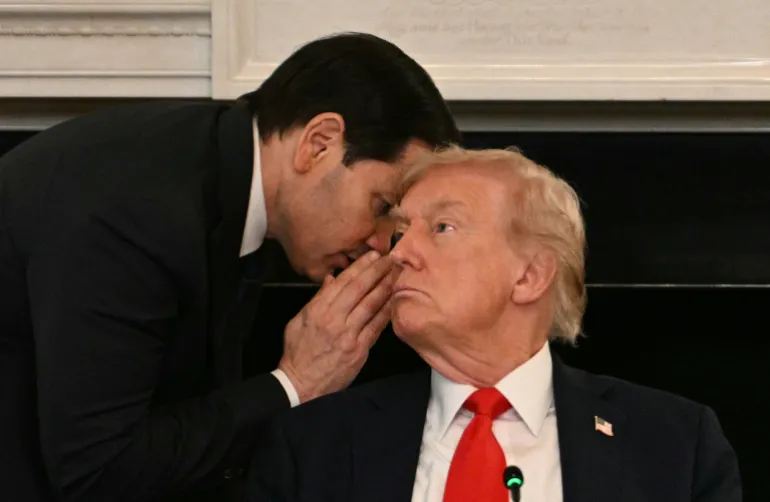
AFP PICTURES OF THE YEAR 2025 US Secretary of State Marco Rubio whispers in the ear of President Donald Trump during a roundtable about Antifa in the State Dining Room of the White House in Washington, DC, on October 8, 2025. (Photo by Jim WATSON / AFP) / NO USE AFTER JANUARY 31, 2026 23:00:00 GMT - AFP PICTURES OF THE YEAR 2025
US Secretary of State Marco Rubio whispers in the ear of President Donald Trump during a roundtable discussion about antifa in the State Dining Room of the White House in Washington, DC, on October 8, 2025 [File: Jim Watson/AFP]

A hawk in ‘America First’

A traditionalist hawk who has regularly supported US military intervention in the name of spreading Western democracy and human rights abroad, Rubio initially appeared to be an awkward fit to be Trump’s top diplomat in his second term.

His selection followed a campaign season defined by Trump’s vow to end foreign wars, eschew US-backed regime change, and pursue a wider “America First” pivot.

But the actual shape of Trump’s foreign policy has borne little resemblance to that vision, with the administration adopting a so-called “Peace Through Strength” doctrine that observers say has resulted in more room for military adventurism. That has, to date, seen the Trump administration launch bombing campaigns against Yemen and Iran, strike armed groups in Nigeria and Somalia, and attack alleged drug smuggling boats in the Caribbean.

The approach of Trump 2.0 has more closely aligned with Rubio’s vision of Washington’s role abroad, which has long supported maximum-pressure sanctions campaigns and various forms of US intervention to topple governments.


The US secretary of state’s personal ideology traces to his South Florida roots, where his family settled in the 1960s after leaving Cuba three years before the rise of Fidel Castro, in what Velasco described as an “acerbically anti-communist” political environment.

“I think for him, it started as a question of finally making real the hopes and dreams of Cubans in Florida and elsewhere to return to their homeland under a capitalist government,” Velasco explained.

“It went from that to what this could represent, if we think about it more hemispherically – a bigger shift that would not only increase, but in fact ensure, US hegemony in the region for the 21st century.”

‘Vacuum was his to fill’

After tangling with Trump in the 2016 presidential election, in which the future president deridingly dubbed his opponent “Little Marco” while Rubio decried him as a “con man”, the pair forged a pragmatic working relationship.

Rubio eventually endorsed Trump ahead of the 2016 vote, helping to deliver Florida. In Trump’s first term, Rubio came to be seen as the president’s “shadow secretary” on Latin America, an atypical role that saw the lawmaker influence Trump’s eventual recognition of Juan Guaido as interim president in opposition to Maduro.

Analysts note Rubio’s approach to Venezuela has always been directly aimed at undermining the economic support it provides to Cuba, with the end goal of toppling the island’s 67-year-old Communist government. Following Maduro’s abduction on Saturday, Rubio quickly pivoted to the island nation, telling reporters: “If I lived in Havana and I was in the government, I’d be concerned”.

Still, in the early months of Trump’s second term, Rubio appeared largely sidelined, with the president instead favouring close friends and family members to spearhead marquee negotiations on ceasefires in Gaza and Ukraine.

During this time, Rubio was slowly amassing a sizeable portfolio. Beyond serving as secretary of state, Rubio became the acting administrator of the Trump-dismantled US Agency for International Development (USAID) and the acting archivist of the US National Archives. Most notably, he became the acting director of National Security, making him the first top US diplomat to also occupy the impactful White House role since Henry Kissinger.

epaselect epa12624353 Venezuelans in Miami hold a picture of US Secretary of State Marco Rubio while taking part in a rally in response to the US military strikes in Venezuela, Miami, Florida, USA, 03 January 2026. President Trump announced that US forces have successfully captured Venezuelan President Nicolas Maduro and his wife during a series of large-scale strikes on Caracas on 03 January 2026. EPA/CRISTOBAL HERRERA-ULASHKEVICH
A Venezuelan in Miami holds a picture of US Secretary of State Marco Rubio during a rally in response to US military strikes in Venezuela; in Miami, Florida, the US, January 3, 2026 [Cristobal Herrera-Ulashkevich/EPA]

Rubio eventually found himself in a White House power vacuum, according to Adam Isacson, the director of defence oversight at the Washington Office on Latin America (WOLA).

“Rubio’s somebody who understands Washington better than the Grenells and Witkoffs of the world,” Isacson told Al Jazeera, referring to Trump’s special envoys Richard Grenell and Steve Witkoff.

“At the same time, other powerful figures inside the White House, like Stephen Miller and [Director of the Office of Management and Budget] Russ Vought haven’t cared as much about foreign policy,” he said, “so the vacuum was his to fill.”

Meanwhile, Rubio showed his ability to be an “ideological weather vane”, pivoting regularly to stay in Trump’s good graces, Isacson said. The National Security Strategy released by the White House in December exemplified that approach.

The document, which is drafted by the National Security adviser with final approval from the president, offered little in tough language towards Russia, despite Rubio’s previous hard lines on the war in Ukraine. It supported the gutting of US foreign aid, despite Rubio’s years-long support for the system. It offered little of the human-rights language with which Rubio had earlier in his career styled himself as a champion.

It did, however, include a “Trump corollary” to the Monroe Doctrine, which dovetailed with Rubio’s worldview by calling for the restoration of US “preeminence” over the Western Hemisphere.

A pyrrhic victory?

To be sure, the toppling of Maduro has so far proved a partial, if not pyrrhic victory for Rubio, far short of the comprehensive change he has long supported.

In a news conference immediately following Maduro’s abduction, Trump doused support for exiled opposition leader Maria Corina Machado, who has hewed close to Rubio’s vision for a future Venezuela. Several news agencies have since reported that US intelligence assessed that installing an opposition figure would lead to widespread chaos in the country.

Rubio has so far been the point man in dealing with Maduro’s former deputy and replacement, Delcy Rodriguez, who has been a staunch supporter of the Hugo Chavez-founded Chavismo movement that Rubio has long railed against. Elections remain a far-off prospect, with Trump emphasising working with the government to open the oil industry to the US.

The secretary of state has not been officially given a role connected to the country, but has earned the less-than-sincere title in some US media of “viceroy of Venezuela”.

On news shows, Rubio has been tasked with walking back Trump’s claim that the US would “run” the South American country, while selling the administration’s oft-contradicted message that the abduction of Maduro was a law enforcement action, not regime change, an act of war, or a bid for the country’s oil.

“I think he’s sort of lying through his teeth,” Lee Schlenker, a research associate at the Quincy Institute for Responsible Statecraft, told Al Jazeera.

“Even he doesn’t seem to believe a lot of the sort of rhetorical and discursive pretexts that have been deployed about drugs, about narco-terrorism, about a law enforcement-only operation, about just sort of enforcing a Department of Justice indictment,” he said.

Having to work with Rodriguez, and reportedly, Venezuela’s security czar and Minister of Interior Diosdado Cabello, has been a “bucket of cold water on Rubio’s broader illusions”, Schlenker added, noting that Rubio’s end goal still remains “the end of the Chavista project”.

Rubio is also likely to face further reality checks when it comes to his expected attempts to pitch the overthrow of what he will likely argue is a weakened Cuba.

The island, without the economic resources of Venezuela and no known drug trade, is seen as far less appealing to Trump and many of his allies.

“Compared to Venezuela,” Schlenker said, “there are a lot more reasons why Trump would have less interest in going after Cuba.”

Source link

Congress’s role questioned as Democrats vow to rein in Trump on Venezuela | Donald Trump News

Washington, DC – It has become a familiar pattern. United States presidents conduct unilateral military actions abroad. Congress shrugs.

On Saturday, in the hours after the US military abducted Venezuelan leader Nicolas Maduro, Democrats in the Senate pledged to raise yet another resolution to rein in US President Donald Trump’s military actions.

Recommended Stories

list of 4 itemsend of list

Chuck Schumer, the top Democrat in the chamber, has said the party will push for a vote within the week. By all accounts, the odds of its success remain long.

Since Trump took office for a second term in 2025, Congress has weighed multiple bills that would force him to seek legislative approval before initiating a military strike.

But the latest attack on Venezuela offers a stark instance of presidential overreach, one that is “crying out for congressional action”, according to David Janovsky, the acting director of the Constitution Project at the Project on Government Oversight.

Experts say it is also one of the clearest tests in recent history of whether Congress will continue to cede its authority to check US military engagement abroad.

“There are a lot of angles where you can come at this to say why it’s a clear-cut case,” Janovsky told Al Jazeera.

He pointed out that, under the US Constitution, Congress alone wields the authority to allow military action. He also noted that the Venezuela attack “is in direct contravention of the UN Charter, which is, as a treaty, law in the United States”.

“Any of the fig leaves that presidents have used in the past to justify unilateral military action just don’t apply here,” Janovsky added. “This is particularly brazen.”

An uphill battle

Since August, the Trump administration has signalled plans to crank up its “maximum pressure” campaign against Venezuela.

That month, Trump reportedly signed a secret memo calling on the US military to prepare for action against criminal networks abroad. Then, on September 2, the Trump administration began conducting dozens of strikes on alleged drug-smuggling boats off the Venezuelan and Colombian coasts.

That deadly bombing campaign was itself condemned as a violation of international law and an affront to Congress’s constitutional powers. It coincided with a build-up of US military assets near Venezuela.

Trump also dropped hints that the US military campaign could quickly expand to alleged drug-trafficking targets on Venezuelan soil. “When they come by land, we’re going to be stopping them the same way we stopped the boats,” Trump said on September 16.

The strikes prompted two recent votes in the House of Representatives in December: one that would require congressional approval for any land strikes on the South American country, and one that would force Trump to seek approval for strikes on alleged drug-smuggling boats.

Both resolutions, however, failed roughly along party lines. A similar resolution in the Senate, which would have required congressional approval before any more attacks, also fell short in November.

But speaking to reporters in a phone call just hours after the US operation on Saturday, Senator Tim Kaine said he hoped the brashness of Trump’s latest actions in Venezuela would shock lawmakers into action.

Republicans, he said, can no longer tell themselves that Trump’s months-long military build-up in the Caribbean and his repeated threats are a “bluff” or a “negotiating tactic”.

“It’s time for Congress to get its a** off the couch and do what it’s supposed to do,” Kaine said.

In an interview with CNN’s Dana Bash, US Senator Chris Murphy also agreed that it was “true” that Congress had become impotent on matters of war, a phenomenon that has spanned both Democratic and Republican administrations.

Bash pointed to former President Barack Obama’s 2011 military deployment to Libya, which went unchecked by Congress.

“Congress needs to own its own role in allowing a presidency to become this lawless,” Murphy responded.

Republicans ho-hum about resolutions

Under the US Constitution, only Congress can declare war, something it has not done since World War II.

Instead, lawmakers have historically passed Authorizations for Use of Military Force (AUMFs) to approve committing troops to recent wars, including the US invasions of Iraq and Afghanistan and the strikes on alleged al-Qaeda affiliates across the Middle East, Africa and Asia.

No AUMFs have been passed that would relate to military action in Venezuela.

When lawmakers believe a president is acting beyond his constitutional power, they can pass a war powers resolution requiring Congressional approval for further actions.

Beyond their symbolism, such resolutions create a legal basis to challenge further presidential actions in the judiciary.

However, they carry a high bar for success, with a two-thirds majority in both chambers of Congress needed to override a presidential veto.

Given the current makeup of Congress, passage of a war powers resolution would likely require bipartisan support.

Republicans maintain narrow majorities in both the House and Senate, so it would be necessary for members of Trump’s own party to back a war powers resolution for it to be successful.

In November’s Senate vote, only two Republicans — co-sponsor Rand Paul of Kentucky, and Lisa Murkowski, of Alaska — split from their party to support the resolution. It failed by a margin of 51 to 49.

December’s vote on a parallel resolution in the House only earned 211 votes in favour, as opposed to 213 against. In that case, three Republicans broke from their party to support the resolution, and one Democrat opposed it.

But Trump’s abduction of Maduro has so far only received condemnation from a tiny fragment of his party.

Overall, the response from elected Republicans has been muted. Even regular critics of presidential adventurism have instead focused on praising the ouster of the longtime Venezuelan leader, who has been accused of numerous human rights abuses.

Senator Todd Young, a Republican considered on the fence ahead of November’s war powers vote, has praised Maduro’s arrest, even as he contended the Trump administration owed Congress more details.

“We still need more answers, especially to questions regarding the next steps in Venezuela’s transition,” Young said.

Some Democrats have also offered careful messaging in the wake of the operation.

That included Debbie Wasserman Schultz, a Democrat who represents a large Venezuelan diaspora community in Florida.

In a statement on Saturday, Wasserman Schultz focused on the implications of Maduro’s removal, while avoiding any mention of the military operation that enabled it. Instead, she asserted that Trump owed Congress an explanation about next steps.

“He has failed to explain to Congress or the American people how he plans to prevent the regime from reconstituting itself under Maduro’s cronies or stop Venezuela from falling into chaos,” she wrote.

In December, however, Wasserman Schultz did join a group of Florida Democrats in calling for Congress to exercise its oversight authority as Trump built up military pressure on Venezuela.

What comes next?

For its part, the Trump administration has not eased up on its military threats against Venezuela, even as it has sought to send the message that Maduro’s abduction was a matter of law enforcement, not the start of a war.

Trump has also denied, once again, that he needed congressional approval for any further military action. Still, in a Monday interview with NBC News, he expressed optimism about having Congress’s backing.

“We have good support congressionally,” he told NBC. “Congress knew what we were doing all along, but we have good support congressionally. Why wouldn’t they support us?”

Since Saturday’s attack and abduction, Trump has warned that a “second wave” of military action could be on the horizon for Venezuela.

That threat has extended to the potential for the forced removal of Maduro’s deputy, Delcy Rodriguez, who was formally sworn in as the country’s interim president on Monday.

“If she doesn’t do what’s right, she is going to pay a very big price, probably bigger than Maduro,” Trump told The Atlantic magazine.

The administration has also said that strikes on alleged drug-smuggling boats near Venezuela will continue and that US military assets will remain deployed in the region.

Constitutional expert Janovsky, however, believes that this is a critical moment for Congress to act.

Failure to rein in Trump would only further reinforce a decades-long trend of lawmakers relinquishing their oversight authorities, he explained. That, in turn, offers tacit support for the presidency’s growing power over the military.

“To say this was a targeted law enforcement operation — and ignore the ongoing situation — would be a dangerous abdication of Congress as a central check on how the United States military is used,” Janovsky said.

“Continued congressional inaction does nothing but empower presidents to act however they want,” he added.

“To see Congress continue to step back ultimately just removes the American people even farther from where these decisions are actually being made.”
Source link

Alarms raised as Trump’s CDC cuts number of suggested vaccines for children | Health News

Leading medical groups in the United States have raised alarm after the Centers for Disease Control and Prevention (CDC) under President Donald Trump took the unprecedented step of cutting the number of vaccines it recommends for children.

Monday’s sweeping decision, which advances the agenda of Trump-appointed Secretary of Health Robert F Kennedy Jr, removes the recommendation for rotavirus, influenza, meningococcal disease and hepatitis A vaccines for children.

Recommended Stories

list of 3 itemsend of list

It comes as US vaccination rates have been slipping, and the rates of diseases that can be protected against with vaccines, such as measles and whooping cough, are rising across the country, according to government data.

“This decision protects children, respects families, and rebuilds trust in public health,” Kennedy said in a statement on Monday.

In response, the American Medical Association (AMA) said it was “deeply concerned by recent changes to the childhood immunisation schedule that affects the health and safety of millions of children”.

“Vaccination policy has long been guided by a rigorous, transparent scientific process grounded in decades of evidence showing that vaccines are safe, effective, and lifesaving,” Sandra Adamson Fryhofer, a doctor and AMA trustee, said in a statement posted on the group’s website.

She pointed out that major policy changes needed “careful review” and transparency, which are lacking in the CDD’s decision.

“When longstanding recommendations are altered without a robust, evidence-based process, it undermines public trust and puts children at unnecessary risk of preventable disease,” she said.

The change was effective immediately and carried out following the approval by another Trump appointee, CDC acting director Jim O’Neill, without the agency’s usual outside expert review.

The changes were made by political appointees, without any evidence that the current recommendations were harming children, Sean O’Leary, chair of the American Academy of Pediatrics, said.

“It’s so important that any decision about the US childhood vaccination schedule should be grounded in evidence, transparency and established scientific processes, not comparisons that overlook critical differences between countries or health systems,” he told journalists.

Protections against those diseases are only recommended for certain groups deemed high risk, or when doctors recommend them in what’s called “shared decision-making”, the new CDC guidance stated.

States, not the federal government, have the authority to require vaccinations for schoolchildren.

But CDC requirements often influence the state regulations, even as some states have begun creating their own alliances to counter the Trump administration’s guidance on vaccines.

Kennedy, the US health secretary, is a longtime vaccine sceptic.

In May, Kennedy announced that the CDC would no longer recommend COVID-19 vaccines for healthy children and pregnant women, a move immediately questioned by public health experts who saw no new data to justify the change.

In June, Kennedy fired an entire 17-member CDC vaccine advisory committee, later installing several of his own replacements, including multiple vaccine sceptics.

In August, he announced that the US is to cut funding for mRNA vaccine development, a move health experts say is “dangerous” and could make the US much more vulnerable to future outbreaks of respiratory viruses like COVID-19.

Kennedy in November also personally directed the CDC to abandon its position that vaccines do not cause autism, without supplying any new evidence to support the change.

Trump, reacting to the latest CDC decision on his Truth Social platform, said the new schedule is “far more reasonable” and “finally aligns the United States with other Developed Nations around the World”.

Source link

US critics and allies condemn Maduro’s abduction at UN Security Council | Nicolas Maduro News

Denmark and Mexico, also threatened by US President Donald Trump, warn that the US violated international law.

Members of the United Nations Security Council (UNSC), including key US allies, have warned that the abduction of Venezuelan President Nicolas Maduro and his wife by US special forces could be a precedent-setting event for international law.

The 15-member bloc met for an emergency meeting on Monday in New York City, where the Venezuelan pair were also due to face drug trafficking charges in a US federal court.

Recommended Stories

list of 4 itemsend of list

Venezuela’s ambassador to the UN, Samuel Moncada, condemned the US operation as “an illegitimate armed attack lacking any legal justification”, in remarks echoed by Cuba, Colombia and permanent UNSC members Russia and China.

“[The US] imposes the application of its laws outside its own territory and far from its coasts, where it has no jurisdiction, using assaults and the appropriation of assets,” Cuba’s ambassador, Ernesto Soberon Guzman, said, adding that such measures negatively affected Cuba.

Russia’s ambassador, Vassily Nebenzia, said the US cannot “proclaim itself as some kind of a supreme judge, which alone bears the right to invade any country, to label culprits, to hand down and to enforce punishments irrespective of notions of international law, sovereignty and non-intervention”.

Notable critics at the emergency session included traditional US allies, Mexico and Denmark, both of whom Trump has separately threatened with military action over the past year.

Mexico’s ambassador, Hector Vasconcelos, said that the council had an “obligation to act decisively and without double standards” towards the US, and it was for “sovereign peoples to decide their destinies,” according to a UN readout.

His remarks come just days after Trump told reporters that “something will have to be done about Mexico” and its drug cartels, following Maduro’s abduction.

Denmark, a longstanding US security ally, said that “no state should seek to influence political outcomes in Venezuela through the use of threat of force or through other means inconsistent with international law.”

“The inviolability of borders is not up for negotiation,” Denmark’s ambassador, Christina Markus Lassen, told the council in an oblique reference to Trump’s threat that the US would annex Greenland, a self-governed Danish territory.

France, another permanent member of the UNSC, also criticised the US, marking a shift in tone from French President Emmanuel Macron’s initial remarks that Venezuelans “can only rejoice” following Maduro’s abduction.

“The military operation that has led to the capture of Maduro runs counter to the principle of peaceful dispute resolution and runs counter to the principle of non-use of force,” said the French deputy ambassador, Jay Dharmadhikari.

Representatives from Latvia and the United Kingdom, another permanent UNSC member, focused on the conditions in Venezuela created by Maduro’s government.

Latvia’s ambassador, Sanita Pavļuta-Deslandes, said that Maduro’s conditions in Venezuela posed “a grave threat to the security of the region and the world”, citing mass repression, corruption, organised crime and drug trafficking.

The UK ambassador, James Kariuki, said that “Maduro’s claim to power was fraudulent”.

The US ambassador, Mike Waltz, characterised the abduction of Maduro and his wife as a “surgical law enforcement operation facilitated by the US military against two indicted fugitives of American justice”.

The White House defended its wave of air strikes on Venezuela, and in the waters near it, and Maduro’s abduction as necessary to protect US national security, amid unproven claims that Maduro backed “narcoterrorist” drug cartels.

Source link

Americans evenly split on Maduro’s abduction, poll shows | Donald Trump News

One in three Americans opposes the Venezuelan leader’s abduction by US forces, a poll shows, while others are unsure.

Americans are evenly split in their support for the US military operation to abduct Venezuelan President Nicolas Maduro, an opinion poll has found.

Thirty-three percent of Americans support Maduro’s abduction, compared with 34 percent who are against it and 32 percent who are not sure, the Reuters/Ipsos poll showed on Monday.

Recommended Stories

list of 4 itemsend of list

Supporters of President Donald Trump’s Republican Party are much more likely to support the military operation, with 65 percent in favour, compared with 11 percent of Democrats and 23 percent of independents.

On the question of who should govern Venezuela, Americans lean against Washington taking control of the country, according to the poll.

Forty-three percent oppose Washington governing Venezuela until a new government is established in Caracas, compared with 34 percent in favour and 20 percent who are unsure.

Americans lean against the US stationing troops in Venezuela – 47 percent to 30 percent – according to the poll.

More Americans than not also oppose the Trump administration taking control of Venezuela’s oil fields, with 46 percent against the idea and 30 percent in favour.

On the question of whether the US could become “too involved” in the Latin American country, 72 percent are very or somewhat concerned.

Trump said on Saturday that the US would “run” Venezuela, though officials in his administration have sought to downplay the prospect of Washington occupying the country.

On Sunday, Trump threatened further military action against Venezuela if it “doesn’t behave”.

Maduro, who was abducted in a raid by US special forces over the weekend, on Monday made his first court appearance to face charges related to “narcoterrorism”, drug trafficking and weapons possession.

Maduro pleaded not guilty to all charges, declaring himself the victim of a kidnapping and a “decent man”.

“I am still president of my country,” Maduro told a US federal court in New York through an interpreter.

Maduro, his wife, Cilia Flores, son Nicolás Ernesto Maduro Guerra, and three others face the possibility of life in prison if convicted.

On Monday, Maduro’s deputy, Vice President Delcy Rodríguez, was sworn in as Venezuela’s interim president.

“I come with pain over the kidnapping of two heroes who are being held hostage: President Nicolás Maduro and First Lady Cilia Flores,” Rodriguez said during a swearing-in ceremony at Venezuela’s National Assembly.

Source link

Delcy Rodriguez sworn in as Venezuela’s president after Maduro abduction | US-Venezuela Tensions News

Delcy Rodriguez, formerly Venezuela’s vice president, has been formally sworn in to lead the South American country following the abduction of Nicolas Maduro in a United States military operation.

On Monday, Rodriguez appeared before Venezuela’s National Assembly to take her oath of office.

Recommended Stories

list of 3 itemsend of list

Speaking before the legislative body, composed largely of government loyalists, Rodriguez reaffirmed her opposition to the military attack that led to the capture and removal of Maduro and his wife, Cilia Flores.

“I come with pain over the kidnapping of two heroes who are being held hostage: President Nicolás Maduro and First Lady Cilia Flores,” Rodriguez, 56, told the assembly.

“I swear to work tirelessly to guarantee the peace, spiritual, economic and social tranquillity of our people.”

A former labour lawyer, Rodriguez has been serving as acting president since the early-morning attack that resulted in the abduction. Explosions were reported before dawn on Saturday in the capital, Caracas, as well as at nearby Venezuelan military bases and some civilian areas.

Monday’s swearing-in ceremony was overseen by Rodriguez’s brother – the president of the National Assembly, Jorge Rodriguez – and Maduro’s son, Nicolás Maduro Guerra, who held a copy of the Venezuelan Constitution.

Other members of Maduro’s inner circle, including Interior Minister Diosdado Cabello and Defence Minister Vladimir Padrino, were also in attendance.

The ceremony took place as Maduro, her predecessor and former boss, faced an arraignment proceeding in a New York City courthouse.

Federal prosecutors in the US have charged Maduro with four counts related to allegations he leveraged government powers to export thousands of tonnes of cocaine to North America.

The charges include narco-terrorism conspiracy, cocaine importation conspiracy, the illegal possession of machine guns and other destructive devices, and conspiracy to possess such guns and devices.

Maduro and his wife have pleaded not guilty to the charges, and their allies, including Rodriguez, have denounced the pair’s abduction as a violation of international law, as well as Venezuelan sovereignty.

In court on Monday, Maduro maintained he remained the rightful leader of Venezuela, saying, “I am still president.”

The administration of US President Donald Trump, however, has signalled that it plans to work with Rodriguez for the time being, though Trump himself warned that her tenure as president could be cut short, should she fail to abide by US demands.

“If she doesn’t do what’s right, she is going to pay a very big price, probably bigger than Maduro,” Trump told The Atlantic magazine in a Sunday morning interview.

A day earlier, in a televised address announcing the attack, Trump had said his administration plans “to run the country until such time as we can do a safe, proper, and judicious transition”.

On Air Force One on Sunday, as he flew back to Washington, DC, Trump doubled down on that statement.

“Don’t ask me who’s in charge, because I’ll give you an answer that will be very controversial. We’re in charge,” he told reporters.

He added that Rodriguez is “cooperating” and that, while he personally has not spoken to her, “we’re dealing with the people who just got sworn in”.

The Trump administration’s seeming willingness to allow Rodriguez, a former labour lawyer, to remain in charge has raised eyebrows.

Rodriguez, who served as vice president since 2018, is known to be a stalwart “chavista”: an adherent of the left-wing political movement founded by Maduro’s mentor, the late Hugo Chavez. She has held various ministerial roles under Maduro, including leading the Ministry of Foreign Affairs.

But Trump’s allies in the Republican Party have argued that keeping Rodriguez in place is simply a practical reality.

“We don’t recognise Delcy Rodriguez as the legitimate ruler of Venezuela. We didn’t recognise Nicolas Maduro as a legitimate ruler,” Republican Senator Tom Cotton told CNN on Sunday.

“It is a fact that she and other indicted and sanctioned officials are in Venezuela. They have control over the military and security services. We have to deal with that fact. That does not make them a legitimate leader.”

While on Air Force One, Trump largely avoided committing to new elections in Venezuela, indicating he would instead focus on “fixing” the country and allowing US oil companies access to its vast petroleum reserves.

One reporter on the aeroplane asked, “How soon can an election take place?”

“Well, I think we’re looking more at getting it fixed, getting it ready first, because it’s a mess. The country is a mess,” Trump replied. “It’s been horribly run. The oil is just flowing at a very low level.”

He later added, “We’re going to run everything. We’re going to run it, fix it. We’ll have elections at the right time. But the main thing you have to fix: It’s a broken country. There’s no money.”

Recent presidential elections in Venezuela have been widely denounced as fraudulent, with Maduro claiming victory in each one.

The contested 2018 election, for example, led to the US briefly recognising opposition leader Juan Guaido as president, instead of Maduro.

Later, Maduro also claimed victory for a third term in office during the 2024 presidential race, despite election regularities.

The official vote tally was not released, and the opposition published documents that appeared to show that Maduro’s rival, Edmundo Gonzalez, had won. Protests erupted on Venezuela’s streets, and the nonprofit Human Rights Watch reported that more than 2,000 protesters were unlawfully detained, with at least 25 dead in apparent extrajudicial killings.

The opposition has largely boycotted legislative elections in Venezuela, denouncing them as rigged in favour of “chavistas”.

Monday’s swearing-in ceremony included the 283 members of the National Assembly elected last May. Few opposition candidates were among them.

Source link

Trump administration sets meetings with oil companies on Venezuela: Report | Nicolas Maduro News

The administration of United States President Donald Trump is planning to meet with executives from US oil companies later this week to discuss boosting Venezuelan oil production after US forces abducted its leader, Nicolas Maduro, the Reuters news agency has reported, citing unnamed sources.

The meetings are crucial to the administration’s hopes of getting top US oil companies back into the South American nation after its government, nearly two decades ago, took control of US-led energy operations there, the Reuters news agency report said on Monday.

Recommended Stories

list of 4 itemsend of list

The three biggest US oil companies – Exxon Mobil, ConocoPhillips and Chevron – have not yet had any conversations with the Trump administration about Maduro’s ouster, according to four oil industry executives familiar with the matter, contradicting Trump’s statements over the weekend that he had already held meetings with “all” the US oil companies, both before and since Maduro was abducted.

“Nobody in those three companies has had conversations with the White House about operating in Venezuela, pre-removal or post-removal, to this point,” one of the sources said on Monday.

The upcoming meetings will be crucial to the administration’s hopes to boost crude oil production and exports from Venezuela, a former OPEC nation that sits atop the world’s largest reserves, and whose crude oil can be refined by specially designed US refineries. Achieving that goal will require years of work and billions of dollars of investment, analysts say.

It is unclear what executives will be attending the upcoming meetings, and whether oil companies will be attending individually or collectively.

The White House did not comment on the meetings, but said it believed the US oil industry was ready to flood into Venezuela.

“All of our oil companies are ready and willing to make big investments in Venezuela that will rebuild their oil infrastructure, which was destroyed by the illegitimate Maduro regime,” said White House spokesperson Taylor Rogers.

Exxon, Chevron and ConocoPhillips did not immediately respond to requests for comment from Reuters.

One oil industry executive told Reuters the companies would be reluctant to talk about potential Venezuela operations in group settings with the White House, citing antitrust concerns that limit collective discussions among competitors about investment plans, timing and production levels.

Political risks, low oil prices

US forces on Saturday conducted a raid on Venezuela’s capital, arresting Maduro in the dead of night and sending him back to the US to face narcoterrorism charges.

Hours after Maduro’s abduction, Trump said he expects the biggest US oil companies to spend billions of dollars boosting Venezuela’s oil production, after it dropped to about a third of its peak over the past two decades due to underinvestment and sanctions.

But those plans will be hindered by a lack of infrastructure, along with deep uncertainty over the country’s political future, legal framework and long-term US policy, according to industry analysts.

“While the Trump administration has suggested large US oil companies will go into Venezuela and spend billions to fix infrastructure, we believe political and other risks, along with current relatively low oil prices, could prevent this from happening anytime soon,” wrote Neal Dingmann of William Blair in a note.

Material change to Venezuelan production will take a lot of time and millions of dollars of infrastructure improvement, he said.

And any investment in Venezuelan infrastructure right now would take place in a weakened global energy market. Crude prices in the US are down by 20 percent compared with last year. The price for a barrel of benchmark US crude has not been above $70 since June, and has not touched $80 per barrel since June of 2024.

A barrel of oil cost more than $130 in the leadup to the US housing crisis in 2008.

Chevron is the only US major currently operating in Venezuela’s oil fields.

Exxon and ConocoPhillips, meanwhile, had storied histories in the country before their projects were nationalised nearly two decades ago by former Venezuelan President Hugo Chavez.

Conoco has been seeking billions of dollars in restitution for the takeover of three oil projects in Venezuela under Chavez. Exxon was involved in lengthy arbitration cases against Venezuela after it exited the country in 2007.

Chevron, which exports about 150,000 barrels per day of crude from Venezuela to the US Gulf Coast, meanwhile, has had to carefully manoeuvre with the Trump administration in an effort to maintain its presence in the country in recent years.

A US embargo on Venezuelan oil remained in full effect, Trump has said.

The S&P 500 energy index rose to its highest since March 2025, with heavyweights Exxon Mobil rising by 2.2 percent and Chevron jumping by 5.1 percent.

Source link

Trump has made US militarism worse | US-Venezuela Tensions

For many years before becoming president, Donald Trump publicly criticised the George W Bush administration over its decision to launch the war on Iraq. And yet, today, in his second term as president, he finds himself presiding over a military debacle that is quite reminiscent of Bush’s.

Trump ordered a military intervention to remove an antagonistic foreign leader, based on a flimsy argument of national security, with the goal of accessing that country’s oil. In both cases, we see a naive confidence that the United States can simply achieve its goals through regime change. US intervention into Venezuela reeks of the same hubris that surrounded the Iraq invasion two decades ago.

Yet there are also important differences to consider. The most important distinguishing feature of the operation in Venezuela is its lack of an overarching vision. On Saturday after Trump finished an hour-long news conference alongside his secretaries of defence and state, it was not clear what the plan was for Venezuela going forward, or if there was a plan at all. His statements threatening more attacks in the following days brought no clarity either.

Past instances of US-led regime change fit into the larger ideological visions of the incumbent US commander-in-chief. In 1823, President James Monroe declared the Western Hemisphere off-limits to European colonialism. As the United States spent the 20th century consolidating its sphere of influence across the Americas, the Monroe Doctrine would justify various interventions in Latin America and the Caribbean. The Cold War added new justifications for the United States to overthrow leftist regimes and install friendly governments in the Americas.

As the Cold War ended, President George HW Bush sought to serve as a caretaker for a “new world order” in which the US had emerged as the world’s lone superpower. When Bush sent troops to Somalia in 1992 and his successor Bill Clinton reversed a military coup in Haiti in 1994, they did so under the paradigm of “humanitarian intervention”. When George W Bush ordered the invasion of Iraq, it was done under the umbrella of the post-9/11 “war on terror”. When President Barack Obama intervened against the forces of Libyan leader Muammar Gaddafi in 2011, he was guided by the “responsibility to protect” doctrine concerning civilians in danger.

But in the case of the US attack on Venezuela, there has been no ideological justification. Trump and his team have haphazardly thrown around references to humanitarianism, counterterrorism and more to justify the attack. The president even brought up the Monroe Doctrine. But just as it seemed that he was grounding his foreign policy in a larger ideology, albeit one borrowed from two centuries ago, he made a joke of the concept.

“The Monroe Doctrine is a big deal,” Trump explained on Saturday. “But we’ve superseded it by a lot, by a lot. They now call it the Donroe Doctrine.” Trump did not make up this pun; it was used by the New York Post a year ago to describe Trump’s aggressive foreign policy as he threatened to annex Canada, Greenland and the Panama Canal.

The president’s decision to embrace the tongue-in-cheek term illustrates a disturbing reality of his foreign policy: Any notion that he is promoting an ideological vision is a joke.

The truth is Trump is pursuing an increasingly aggressive and militaristic foreign policy in his second term, not because he wants to impose a grand vision, but because he has discovered he can get away with it.

Striking a variety of foreign “bad guys” who have little capacity to fight back – ISIL (ISIS) affiliates in Nigeria who are “persecuting” Christians and “narcoterrorists” in Latin America – appeals to members of Trump’s base.

After he mentioned the Venezuelan gang Tren de Aragua during Saturday’s news conference, he went on a minutes-long tangent to brag about his military interventions into US cities. While the president’s inability to stay on topic may be concerning for those questioning his health and mental fitness, this digression into domestic affairs had some relevance for his Venezuelan intervention, at least as far as he was concerned: His increasingly militarised war on drugs and crime abroad justifies an increasingly militarised war on drugs and crime at home.

Past presidents have used US power to pursue a wide variety of ideologies and principles. Trump appears to be paying lip service to past ideologies to justify the use of US power. Many times, the “good” intentions of previous  presidents paved the way to hellish outcomes for the peoples who found themselves on the receiving end of US intervention. But those intentions at least created a level of predictability and consistency for the foreign policies of various US administrations.

Trump, by contrast, seems driven solely by immediate political concerns and short-term prospects for glory and profit. If there is a saving grace of such an unprincipled foreign policy, it may be the ephemeral nature of interventions conducted without an overarching vision. An unprincipled approach to military intervention does not foster the kind of ideological commitment that has led other presidents to engage in long-term interventions like the Iraq occupation.

But it also means that Trump could conceivably use military intervention to settle any international dispute or to pursue any ostensibly profitable goal – say assuming control of Greenland from Denmark.

Last year, he decided tariffs were a potent tool for asserting his interests and started applying them almost indiscriminately on allies and adversaries alike. Now that Trump has grown comfortable using the US military to achieve a range of goals – profit, gunboat diplomacy, distraction from domestic scandals, etc – the danger is that he will grow similarly haphazard in his use of force.

That does not bode well for the US nor for the rest of the world. At a time when multiple global crises are overlapping – climate, conflict and impoverishment – the last thing the world needs is a trigger-happy superpower without a clear strategy or a day-after plan.

The views expressed in this article are the author’s own and do not necessarily reflect Al Jazeera’s editorial stance.

Source link