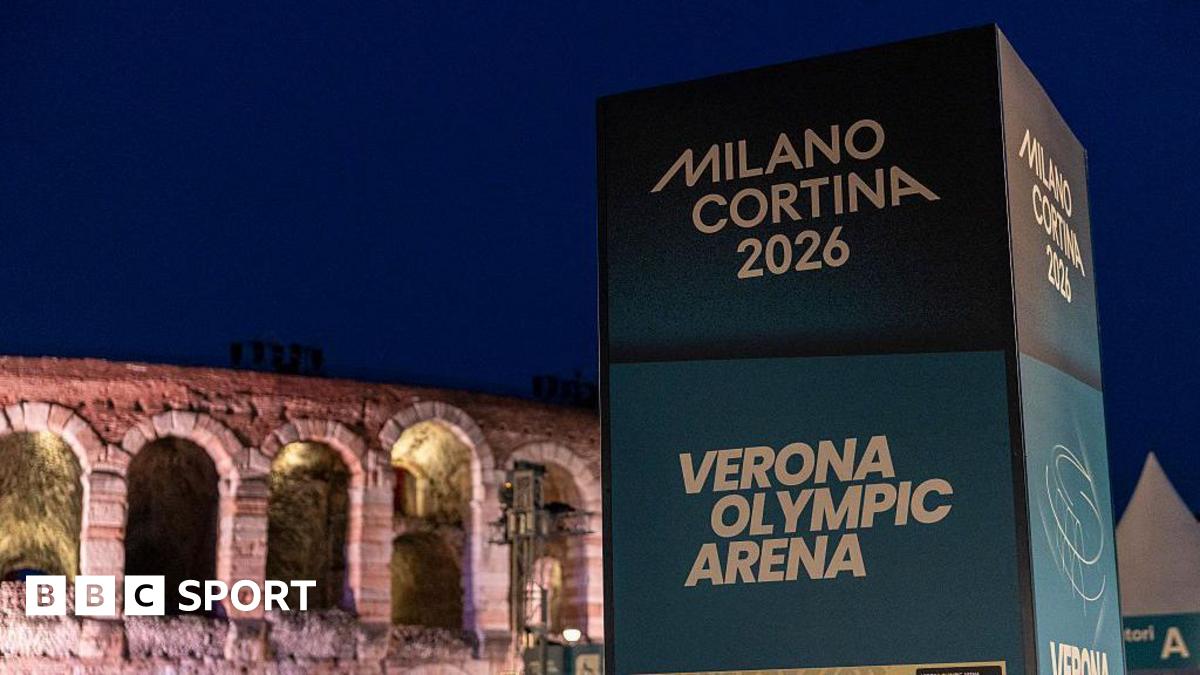
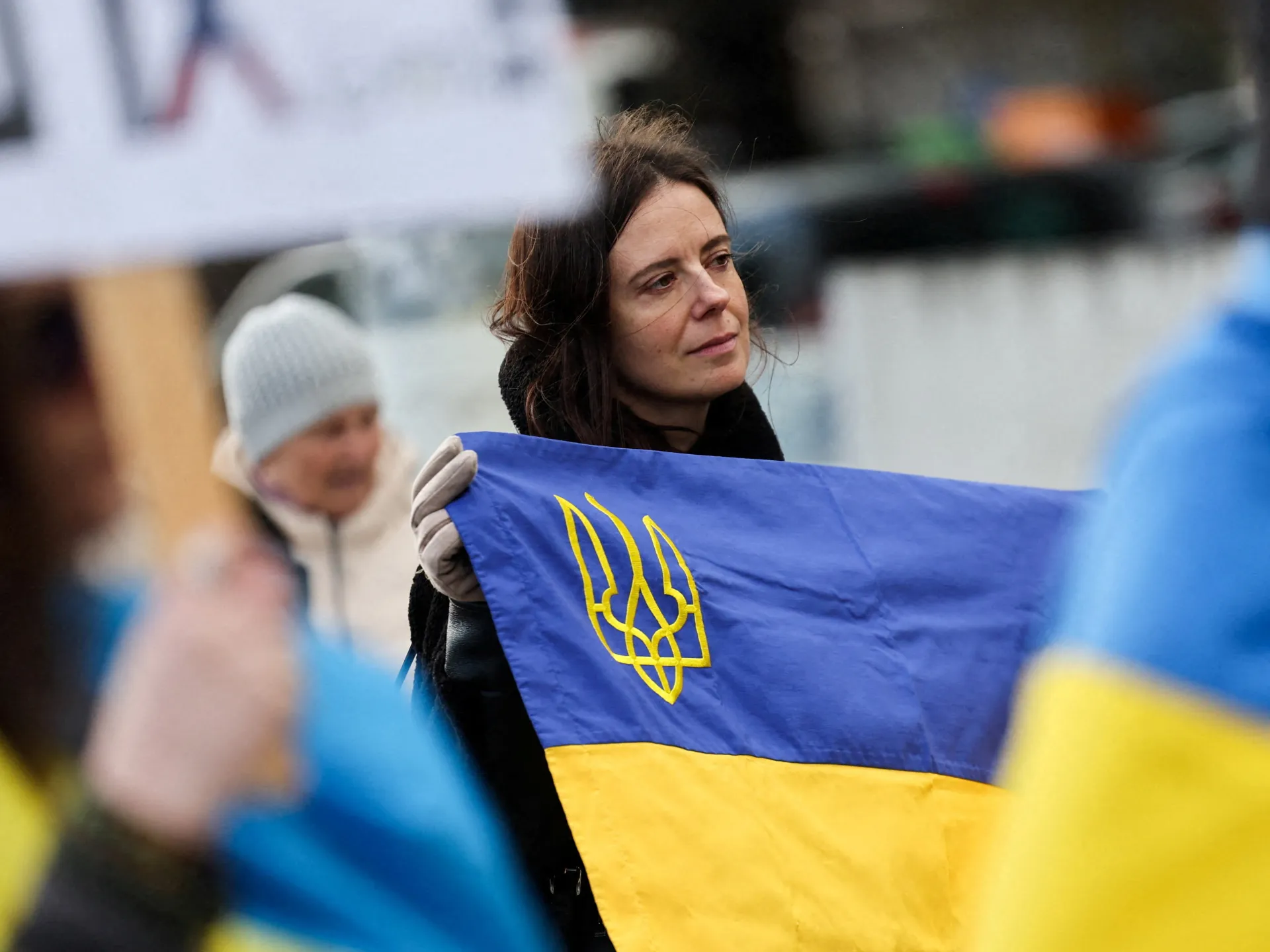
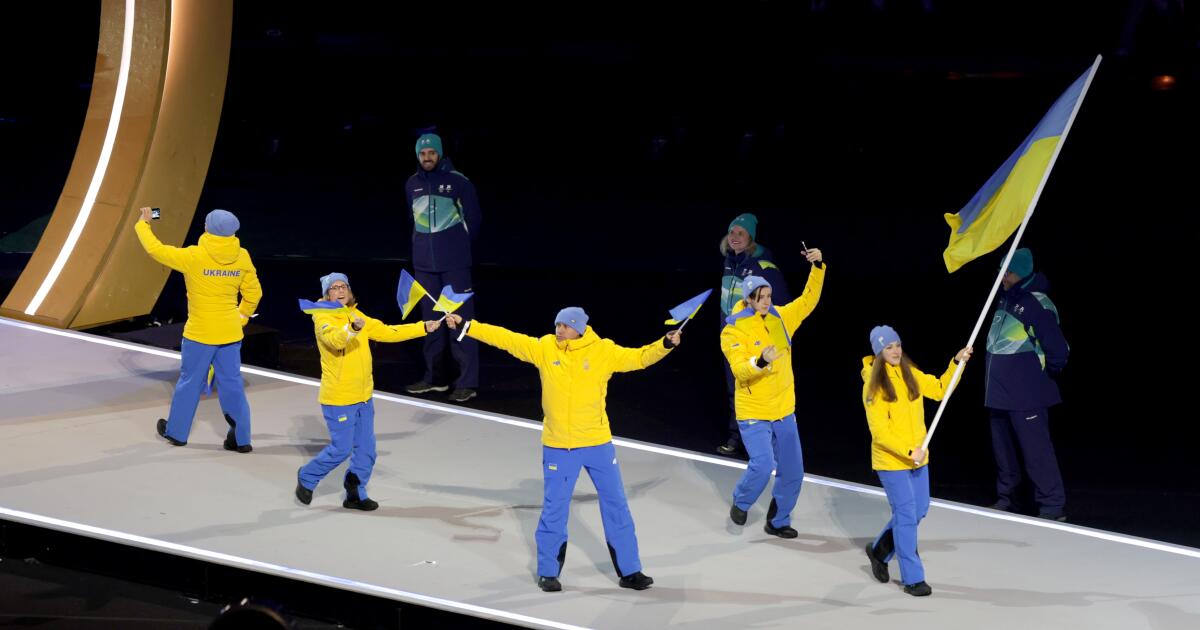
Ukraine’s Winter Paralympics team will boycott the event’s opening ceremony next month after Russian and Belarusian athletes were invited to compete under their national flags.
Both countries had previously been suspended from Paralympic competition after Russia’s invasion of Ukraine in 2022, with Belarus an ally of Russia.
In September, the International Paralympic Committee (IPC) lifted its ban on athletes from the two countries competing at the Games.
However, the IPC does not govern the six sports contested at the Paralympics and despite the individual bodies, including the International Ski and Snowboard Federation (FIS), refusing to lift their own bans, Russia and Belarus won an appeal to the Court of Arbitration of Sport against FIS.
As a result, athletes have been able to return to FIS competitions and the 10 Paralympians have been awarded bipartite commission invitations to compete in Italy.
The organisation has also made a “demand that the Ukrainian flag not be used”.
The team will still compete in the Games and “fight for the sporting victories of Ukrainian athletes”.
Earlier this week in its response to criticism over the decision to allow the Russian and Belarussian athletes to compete, the IPC said it was a “democratic organisation and the decision to lift the partial suspension of NPCs Belarus and Russia was taken by IPC member organisations at the 2025 General Assembly”.
These are the key developments from day 1,457 of Russia’s war on Ukraine.
Published On 20 Feb 202620 Feb 2026
Share
Here is where things stand on Friday, February 20:
Fighting
Russian forces launched 448 attacks on 34 settlements in Ukraine’s front-line Zaporizhia region in a single day, injuring a six-year-old child and damaging homes, cars and other infrastructure, regional governor Ivan Fedorov wrote on the Telegram app.
Russian drone, missile and artillery attacks on Ukraine’s Kherson region injured five people and damaged homes, including seven high-rise buildings, the local military administration said on Telegram.
Russian attacks also continued in Ukraine’s Dnipropetrovsk and Sumy regions, but local officials there noted that “fortunately, no people were injured”. According to the Kyiv Independent news outlet, overnight was “unusually quiet” following weeks of “heavy fire” in the two regions.
A man was killed by shrapnel from a Ukrainian drone attack on Sevastopol, in Russian-occupied Crimea, Governor Mikhail Razvozhayev said on Telegram.
A Ukrainian drone attack caused a fire at an oil depot in Velikiye Luki in Russia’s Pskov region, local official Mikhail Vedernikov said, according to Russia’s state TASS news agency.
Russian forces shot down 301 Ukrainian drones, 10 missiles and two guided bombs in a 24-hour period, Russia’s Ministry of Defence said, according to TASS.
Peace process
United States President Donald Trump’s Board of Peace held its first meeting in Washington, DC, without Belarus participating, despite Trump extending an invitation to the Russian ally.
Belarus’s Ministry of Foreign Affairs said in a statement that its delegation to the meeting did not receive the necessary visas to enter the US “despite carrying out all the required procedures”.
The Foreign Ministry questioned, “What kind of peace and what kind of sequence of steps are we talking about if the organisers cannot even complete basic formalities for us to take part?”
France’s Ministry of Foreign Affairs spokesperson Pascal Confavreux expressed surprise to see the European Commission had sent a commissioner to participate in Trump’s meeting, noting that it “does not have a mandate from the [European] Council to go and participate”.
Confavreux also said France would not take part in Trump’s initiative until the Board of Peace returned its focus to Gaza in line with a United Nations Security Council resolution.
Several European Union member states have said they will not participate in the peace board after Trump extended an invitation to Russian President Vladimir Putin, who launched the invasion of Ukraine in 2022 and is subject to an arrest warrant by the International Criminal Court.
Regional Security
Dutch intelligence services AIVD and MIVD said on Thursday that European countries, including the Netherlands, were facing increased hybrid threats from Russia, including cyberattacks, sabotage, influence campaigns and disinformation.
Energy
Ukraine’s Russian-held Zaporizhzhia nuclear power plant is operating on its sole remaining main power line after losing its only backup power line more than a week ago, head of the International Atomic Energy Agency, Rafael Grossi, said in a statement.
Hungary is considering halting power and gas exports to Ukraine and will take such steps unless Ukraine resumes the flow of crude oil shipments via the Druzhba pipeline, Prime Minister Viktor Orban’s chief of staff told a briefing.
The Druzhba pipeline, parts of which run through Ukraine, is crucial for the transfer of Russian crude oil to Hungary and Slovakia. Oil flows have reportedly halted since an attack on the pipeline in January, which Kyiv has blamed on Russia.
France’s Minister of the Economy, Finance and Industry Roland Lescure said his country would provide 71 million euros ($83.5m) in additional funding for Ukraine for services including energy, health and clearing land mines.
Politics and diplomacy
The head of Russia’s FSB security service accused Telegram messaging app founder Pavel Durov of condoning criminal activity on the platform, in an escalation of Moscow’s rhetoric as it moved to restrict the service that is used by many Russians and Ukrainians to communicate about the war.
Dismissing a Russian government allegation that foreign intelligence services are able to see messages sent by Russian soldiers on Telegram, the popular platform said it had not found any breaches of its encryption codes and called Russia’s claims a “deliberate fabrication”, according to the Reuters news agency.
Military aid
Sweden announced a 12.9 billion crown ($1.42bn) military aid package for Ukraine that will include air defences, drones, long-range missiles and ammunition.
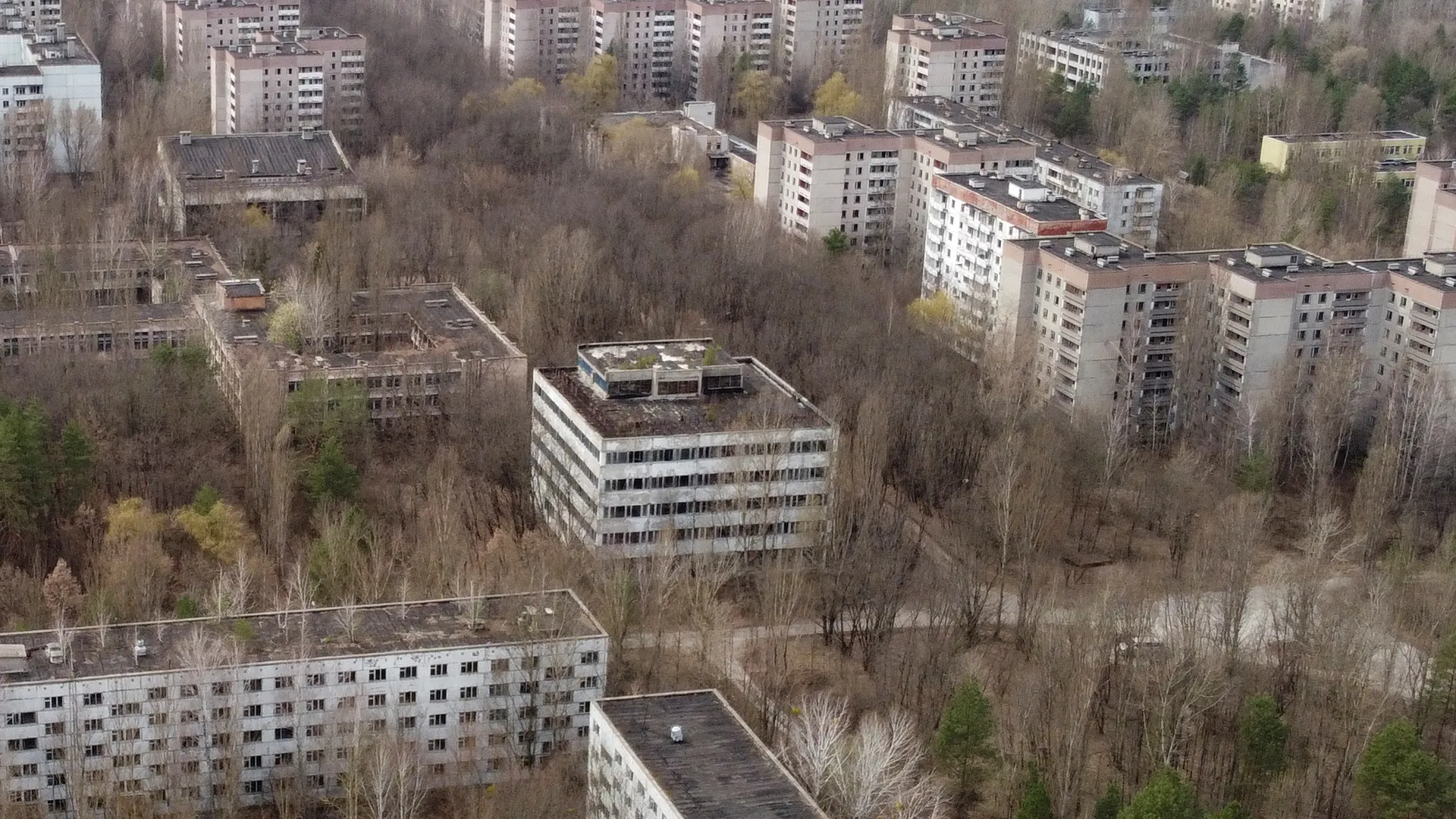
Few places in Ukraine have been spared from the impact of the Ukraine war, including the radioactive exclusion zone around the Chernobyl nuclear plant. Al Jazeera’s Nils Adler has been seeing how the site of the world’s worst nuclear disaster has been affected by the war.
These are the key developments from day 1,456 of Russia’s war on Ukraine.
Published On 19 Feb 202619 Feb 2026
Share
Here is where things stand on Thursday, February 19:
Fighting
Russian forces launched multiple attacks on Ukraine’s Zaporizhia region, killing one person and injuring seven others over the past day, the region’s military administration said on the Telegram messaging platform.
The attacks involved 448 drones as well as 163 artillery strikes, causing damage to 136 homes, cars and other structures, the military administration said.
Russian forces also continued shelling Ukraine’s Donetsk region, forcing 173 people, including 135 children, to evacuate front-line areas over the past day, regional governor Vadym Filashkin said on Telegram.
A 54-year-old man was killed in a Russian attack in the Nikopol district of Ukraine’s Dnipropetrovsk region, Governor Oleksandr Hanzha said on Telegram.
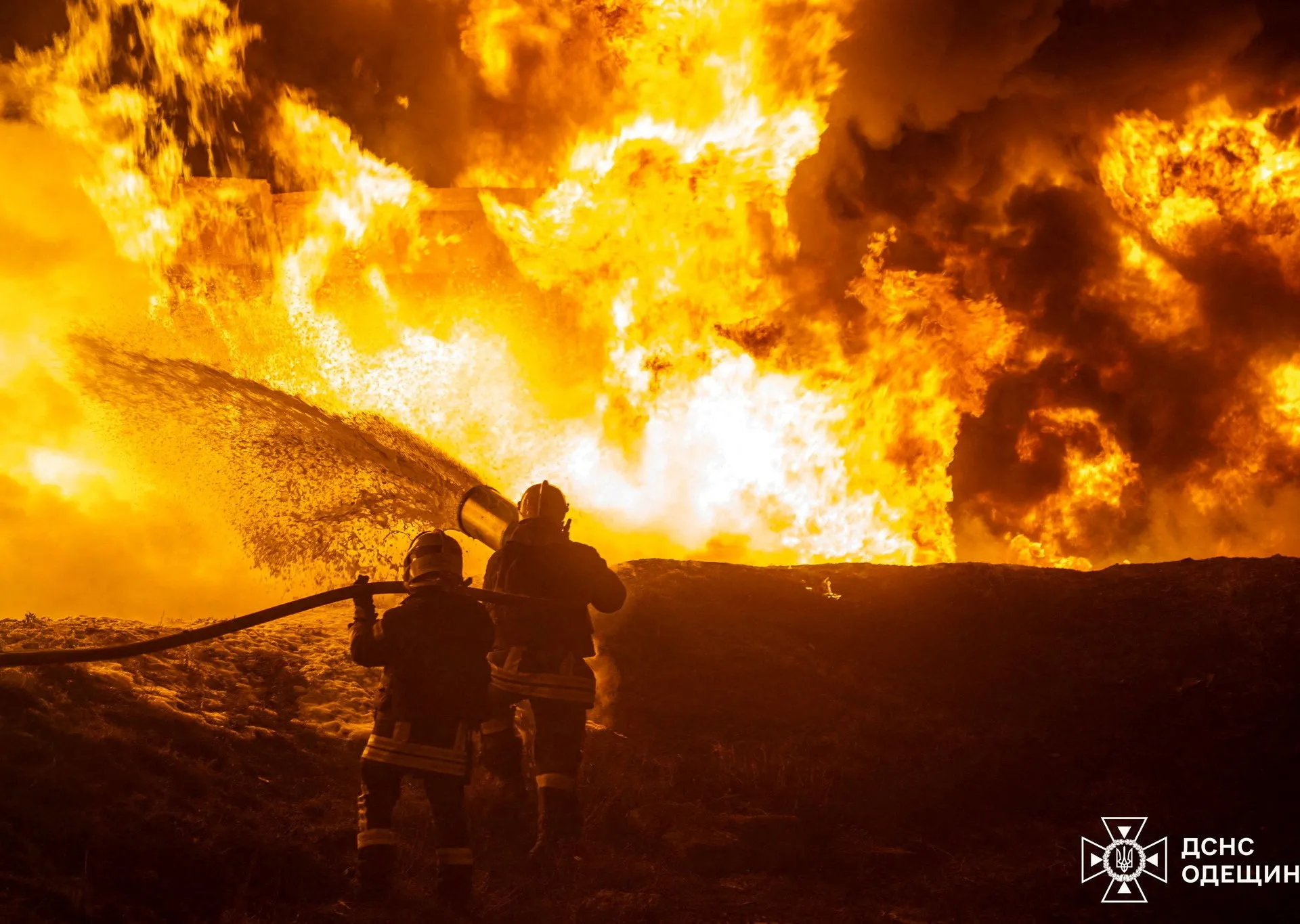
Russian attacks also left many people without electricity across Ukraine, according to the Ministry of Energy, including more than 99,000 households in the Odesa region.
In Russia, one person was killed in a Ukrainian drone attack on the village of Aleynikovo in the country’s Bryansk region, Governor Alexander Bogomaz said.
Russia’s Ministry of Defence said that Russian forces seized the village of Kharkivka in Ukraine’s Sumy region and Krynychne in the Zaporizhia region, according to Russia’s state news agency TASS.
Ukrainian battlefield monitoring site DeepState said that Russian forces advanced in Nykyforivka in Ukraine’s Donetsk region.
Russian forces shot down 155 Ukrainian drones, 11 rocket launchers, and two guided aerial bombs in a 24-hour period, Russia’s Defence Ministry said, according to TASS.
Peace talks
Negotiators from Russia and Ukraine concluded the second of two days of US-mediated talks in Geneva, with both sides describing the negotiations as “difficult”.
Ukrainian President Volodymyr Zelenskyy said that although “progress has been made … for now, positions differ because the negotiations were difficult”.
President Zelenskyy later told the Piers Morgan Uncensored current affairs show that Russia and Ukraine were close to defining terms for how a potential ceasefire would be monitored, but progress on “political” issues had been slower, including on the most divisive issue of control of territory.
In Washington, White House spokeswoman Karoline Leavitt said there was “meaningful progress made” with pledges “to continue to work towards a peace deal together”, and more talks are expected in the near future.
Vladimir Medinsky, Russia’s top negotiator, said the two days of talks in Geneva were “difficult but businesslike,” telling reporters that further negotiations would be held soon, without specifying when.
Rustem Umerov, the head of Kyiv’s negotiating team, said that the second day had been “intensive and substantive” and that both sides were working towards decisions that can be sent to their presidents, he said.
Politics and diplomacy
Ukraine imposed sanctions against Belarusian President Alexander Lukashenko, promising to “increase countermeasures” against Minsk for supporting Russia’s war against Ukraine, including through providing relay stations for Russian drone attacks on Ukraine, Zelenskyy said on social media.
United States Senator Jeanne Shaheen of New Hampshire along with three other US senators from the Democratic Party visited Kyiv.
Shaheen told reporters that she “would hope that we would see a stronger effort and some real work when we get back to put pressure on Putin”.
Sport
Estonian Foreign Minister Margus Tsahkna said in a post on Telegram that “allowing Russian and Belarusian athletes to participate in the Milano-Cortina Paralympics while Russia continues its full-scale war against Ukraine is a disgrace”.
Estonian Public Broadcasting company Eesti Rahvusringhaaling announced it would not broadcast the games in protest at the decision to allow the Russian and Belarusian athletes to compete under their own flags.
“The talks have not broken down, but they have not really yielded any results.” Al Jazeera’s Osama Bin Javaid explains what happened—and what didn’t—at the third round of peace talks between Ukraine and Russia.
One week ahead of the fourth anniversary of Moscow’s full-scale invasion of Ukraine, United States-led peace talks in Geneva ended for the day earlier than scheduled on Wednesday.
The talks, which are being mediated by Steve Witkoff, US President Donald Trump’s special envoy, and Jared Kushner, Trump’s son-in-law, are just the latest of a number of attempts to end the deadliest fighting in Europe since World War II – and none have reached a breakthrough.
During his presidential campaign in 2024, Trump claimed repeatedly that he would broker a ceasefire in Ukraine within “24 hours”. However, he has been unable to fulfil this promise.
Here is a timeline of the mediation efforts to end the Russia-Ukraine war, which has killed more than a million people, as it heads towards its fifth year.
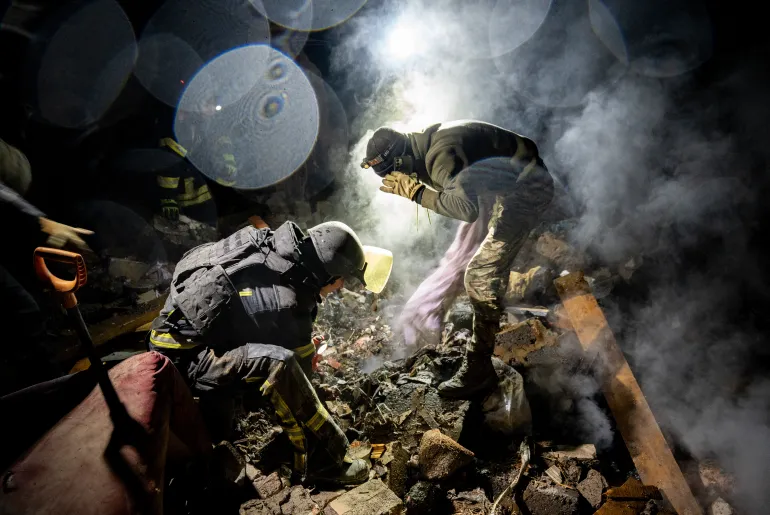
Ukrainian rescuers work at the site of a Russian strike on a private residential building in Kramatorsk, Donetsk region, eastern Ukraine, on February 12, 2026, amid the ongoing Russian invasion [Tommaso Fumagalli/EPA]
February 28, 2022 – direct talks
The first ceasefire talks between Russia and Ukraine took place just four days after Moscow’s full-scale invasion in February 2022.
The meeting lasted about five hours, and featured high-level officials, but with diametrically opposing goals. Nothing came of their talks.
Then, the two sides held three rounds of direct talks in Belarus, ending on March 7, but, again, nothing was agreed.
March-April 2022 – regional talks in Antalya
On March 10, the foreign ministers of Ukraine and Russia, Dmytro Kuleba and Sergey Lavrov, met for the first time since the war started, on the sidelines of the Antalya Diplomacy Forum in Turkiye.
A second meeting between senior leaders in Istanbul towards the end of the month failed to secure a ceasefire.
Then, the withdrawal of Russian forces in early April from parts of Ukraine revealed evidence of massacres committed against the Ukrainian civilian population in Bucha and Irpin near Kyiv, in northern Ukraine.
Ukraine’s President Volodymyr Zelenskyy said this would make negotiations much more difficult, but that it was necessary to persist with the dialogue. Russian President Vladimir Putin later declared the negotiations were at a “dead end” as a result of Ukraine’s allegations of war crimes.
A serviceman of Ukraine’s coast guard mans a gun on a patrol boat as a cargo ship passes by in the Black Sea, amid Russia’s attack on Ukraine, February 7, 2024 [Thomas Peter/Reuters]
July 2022 – Black Sea Grain Initiative, Istanbul
In July 2022, the Black Sea Grain Initiative was signed by Ukraine and Russia with Turkiye and the United Nations in Istanbul. It was the most significant diplomatic breakthrough for the first year of the war.
The agreement aimed to prevent a global food crisis by designating a safe maritime humanitarian corridor through the Black Sea for cargoes of millions of tons of grain stuck in Ukrainian ports.
November 2022 – Ukraine’s peace plan
Ukraine’s Zelenskyy presented a 10-point peace proposal at the Group of 20 (G20) summit in Indonesia, within which he called for Russia’s withdrawal from all Ukrainian territory as well as measures to ensure radiation and nuclear safety, food security, and protection for Ukraine’s grain exports.
He also demanded energy security and the release of all Ukrainian prisoners and deportees, including war prisoners and children deported to Russia.
Russia rejected Zelenskyy’s peace proposal, reiterating that it would not give up any territory it had taken by force, which stood at about one-fifth of Ukraine by then.
February 2023 – China’s peace plan
China proposed a 12-point peace plan calling for a ceasefire and the end of “unilateral sanctions” that had been imposed by Western nations on Russia. Beijing urged both sides to resume talks on the basis that “the sovereignty, independence and territorial integrity of all countries must be effectively upheld”.
The proposal was criticised by Western allies of Kyiv for not acknowledging “Russia’s violation of Ukrainian sovereignty”.
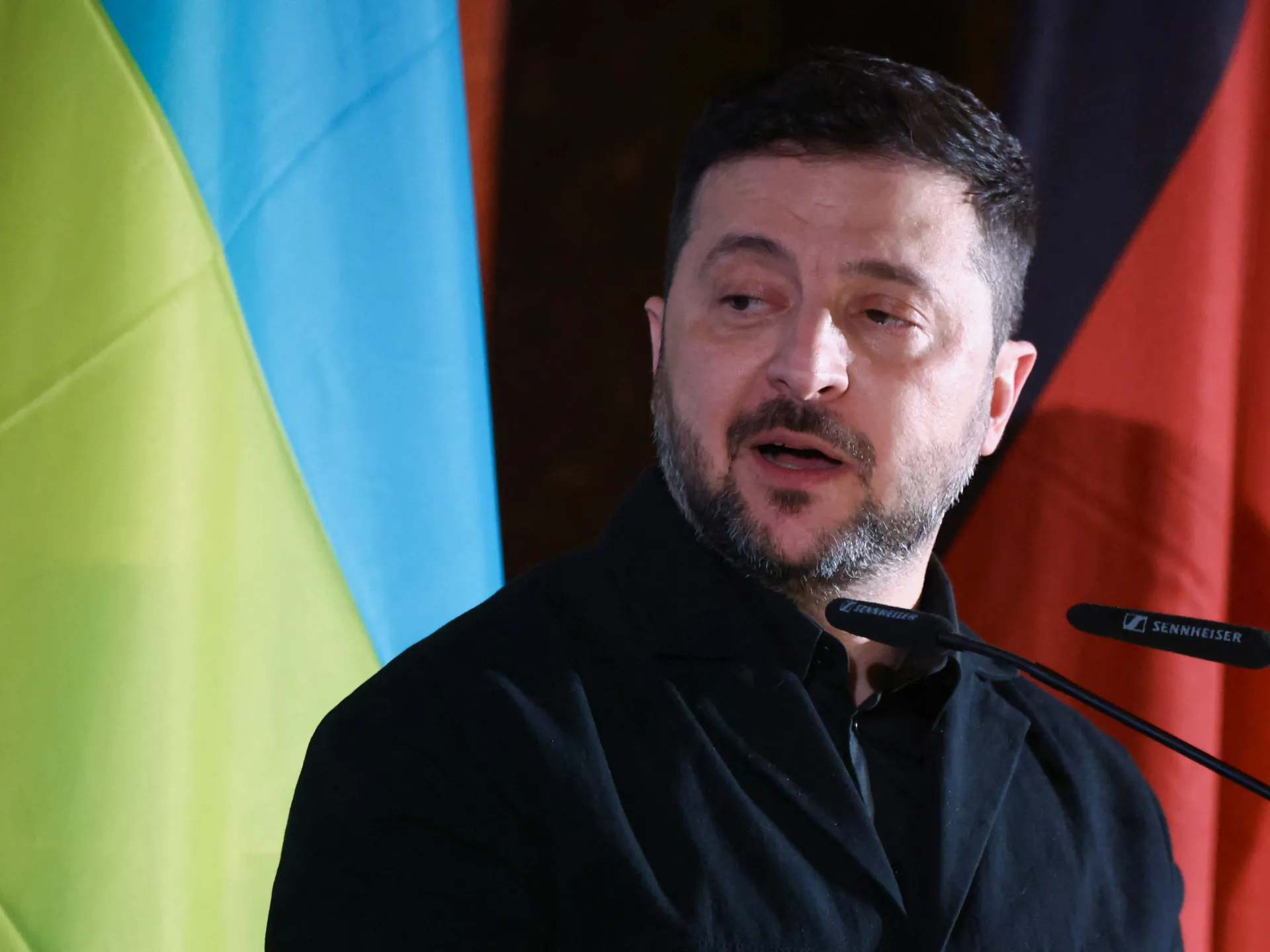
Ukraine’s President Volodymyr Zelenskyy addresses the audience during a session at the Munich Security Conference in Munich, Germany, Saturday, February 14, 2026 [File: Michael Probst/AP]
June 2023 – Africa’s peace plan
In June 2023, a high-level delegation of African leaders, led by South African President Cyril Ramaphosa and including the presidents of Senegal and Zambia, visited both Kyiv and St Petersburg to present a 10-point plan focusing on de-escalation and grain exports.
Analysts said it was driven largely by the war’s impact on African food security and fertiliser prices.
But Ukrainian President Zelenskyy rejected the call for “de-escalation”, arguing that a ceasefire without a Russian withdrawal would simply “freeze” the war.
The following month, President Putin pulled Russia out of the Black Sea Grain Initiative.
August 2023 – Jeddah summit
Saudi Arabia hosted representatives from 40 countries to discuss Zelenskyy’s “Peace Formula”, but no final agreement or joint statement was reached.
In a major surprise, Beijing sent its special envoy, Li Hui, to the talks. But Russia was not invited, and the Kremlin said the efforts would fail.
People walk among debris of a local market close to damaged residential buildings at the site of a Russian attack in Odesa, Ukraine on February 12, 2026 [File: Oleksandr Gimanov/AFP]
June 2024 – Switzerland peace summit
The June 2024 Summit on Peace in Ukraine, held at Switzerland’s Burgenstock resort, brought together more than 90 nations to discuss a framework for ending the conflict in Ukraine. The summit focused on nuclear safety, food security and prisoner exchanges, though Russia was not invited, and several nations, including India and Saudi Arabia, did not sign the final joint communique.
February 2025 – Trump-Putin call
A month after beginning his second term as US president, Trump posted on his Truth Social platform that he held a long phone call with his Russian counterpart, Putin, in a bid to restart direct negotiations aimed at ending the war.
On February 18, delegations from Washington and the Kremlin, including US Secretary of State Marco Rubio and Russian Foreign Minister Lavrov, met in Saudi Arabia.
They laid the groundwork for future negotiations, but the talks raised significant concerns in Kyiv and Brussels, as both Ukraine and the European Union had been sidelined from the meeting.
February 2025 – Zelenskyy goes to the White House
Ten days later, on February 28, there came a saturation point at the White House.
In one of the most confrontational moments in modern diplomacy, President Trump and Vice President JD Vance berated President Zelenskyy in a televised meeting in the Oval Office.
Zelenskyy – called out for not wearing a suit and not expressing enough gratitude to the US – found himself cornered.
President Donald Trump, right, meets with Ukrainian President Volodymyr Zelenskyy in the Oval Office at the White House, Friday, February 28, 2025, in Washington, DC [File: Mystyslav Chernov/AP]
August 2025 – Witkoff goes to Moscow
Trump envoy Steve Witkoff travelled to Moscow to meet Putin on August 6. It was his third trip to Moscow and came amid renewed Western threats of sanctions on Russian oil exports and US threats of “secondary” trade tariffs.
Trump said afterwards that the meeting was “highly productive” and that “everyone agrees this war must come to a close”. Nothing more concrete came out of this meeting, however.
August 15, 2025 – Alaska summit
Trump dropped his sanctions threat and met Putin in person on August 15, 2025, at Joint Base Elmendorf-Richardson in Alaska.
But no deal was reached.
US President Donald Trump stands with Russian President Vladimir Putin as they meet to negotiate an end to the war in Ukraine, at Joint Base Elmendorf-Richardson in Anchorage, Alaska, on August 15, 2025 [File: Kevin Lamarque/Reuters]
August 18, 2025
Trump hosted Zelenskyy and other European leaders in Washington and said he would ask Putin to agree to a trilateral summit.
But nothing came out of this visit, either.
November 2025 – Geneva talks
In November 2025, the Geneva talks became a flashpoint for Western unity, as the Trump administration’s controversial 28-point plan leaked to the press, reportedly involving a cap on Ukraine’s military and a freeze on NATO membership. It also suggested that Ukraine should cede territory to Russia.
Reportedly authored by US envoy Witkoff along with Russian envoy Kirill Dmitriev, the draft sparked accusations that the US was drafting a “capitulation” for Ukraine.
No deal was reached after revisions were made to the draft proposal.
Servicemen of the 13th Operative Purpose Brigade ‘Khartiia’ of the National Guard of Ukraine prepare targets with images depicting Russian President Vladimir Putin during shooting practice between combat missions in the Kharkiv region, Ukraine, on December 10, 2025 [File: Sofia Gatilova/Reuters]
December 2025 – Berlin and Miami talks
On December 14 and 15 last year, President Zelenskyy travelled to Berlin to meet US envoys Witkoff and Kushner, alongside a powerful group of European leaders, including Germany’s Chancellor Friedrich Merz, the United Kingdom’s Prime Minister Keir Starmer, and France’s President Emmanuel Macron.
Following this, US negotiators optimistically claimed that 90 percent of the issues between the two sides had been resolved.
Then, later in the month, Witkoff and Kushner hosted another session of talks in Miami, Florida in the US. But the issues around sovereignty over Ukraine’s Donbas region and the exact line of demarcation proved impossible to bridge.
And no deal was reached.
January 2026 – Abu Dhabi talks
On January 23, high-level delegations from the US, Ukraine and Russia sat face to face to hold trilateral talks for the first time since the 2022 invasion.
Hosted at the Al Shati Palace in Abu Dhabi, talks were mediated by the United Arab Emirates.
Another round of talks was held on February 4, reaching an agreement on a major prisoner exchange but leaving key political and security issues unresolved.
The delegations agreed to exchange 314 prisoners of war – 157 each – the first such swap in five months.
February 17-18, 2026: Geneva talks
Talks in Geneva are currently under way.
Senior military figures from both Ukraine and Russia have attended the second three-way effort, along with the US, to end the war in Ukraine. These have largely stalled so far due to Russia’s insistence on keeping territory it has seized from Ukraine.
Feb. 18 (UPI) — U.S. Special Envoy Steve Witkoff early Wednesday reported “meaningful progress” in tri-lateral U.S.-Russian-Ukraine talks in Switzerland on ending the war.
Crediting U.S. President Donald Trump‘s “success in bringing both sides of this war together” to enable the progress to be made in the U.S.-moderated talks in Geneva, Witkoff provided no details of what had been achieved.
“Both parties agreed to update their respective leaders and continue working towards a deal,” he wrote X.
The accounts of Russia and Ukraine of Tuesday’s talks, which lasted six hours, were less positive with Russia’s state-run TASS news agency reporting they were “very tense” while Ukrainian President Volodymyr Zelensky said they were “difficult” and accused Moscow of playing for time.
“Yesterday’s meetings were indeed difficult, and we can state that Russia is trying to drag out the negotiations, which could already have moved to the final stage. We are grateful to the American side for their attention to detail and patience in talks with the current Russian representatives,” said Zelensky in a post on X.
A source in the Russian delegation told TASS that all sides had, however, agreed to continue the talks on Wednesday.
The negotiations are being held against the backdrop of the fourth anniversary of Russia’s full-scale invasion of Ukraine on Feb. 24, with no sign of any let up in hostilities.
At least two people were killed and 25 injured in strikes across five eastern, southern and central Ukrainian provinces overnight after Russian forces launched 126 drones and one ballistic missile, according to a Ukrainian Air Force update on social media.
Russia’s Defense Ministry said one person was injured in the city of Cheboksary, 440 miles east of Moscow, after Ukraine launched a large-scale airborne assault into Russian territory overnight using attack drones. The defense ministry said air defenses downed 43 of the drones.
Two previous rounds of talks, in Abu Dhabi in January and earlier this month, were unable to gain traction in overcoming the main stumbling blocks of Russia’s demand that Ukraine cede territory and Ukraine’s insistence on cast-iron Western security guarantees.
The negotiations are based on a heavily revised version of a 28-point plan, first drawn up by Witkoff’s team and Russian officials in November, under which Ukraine would give up Luhansk and Donetsk, including areas its forces still control, in exchange for security guarantees.
Kyiv has ruled out giving up territory it still occupies but the Americans are pushing a compromise solution that would see those areas become a demilitarized “special economic” buffer zone.
However, the security guarantees remain the potentially most intractable issue with Moscow adamant they cannot involve Western boots on the ground — something Ukraine believes must be permissable for any guarantee to be credible.
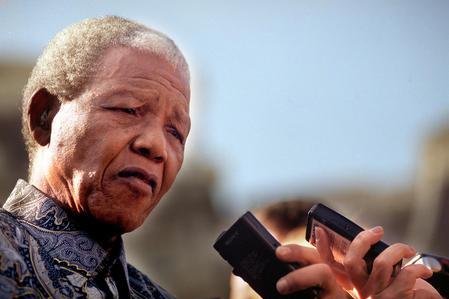
Former South African president Nelson Mandela speaks to reporters outside of the White House in Washington on October 21, 1999. Mandela was famously released from prison in South Africa on February 11, 1990. Photo by Joel Rennich/UPI | License Photo
Delegations from Russia and Ukraine are set to meet for another round of peace talks in Geneva, as United States President Donald Trump pushes for an end to Europe’s biggest conflict since World War II.
The two-day talks, which begin on Tuesday, are likely to focus on the issue of territory and come just days before the fourth anniversary, on February 24, of Russia’s full-scale invasion of Ukraine.
Recommended Stories
list of 4 itemsend of list
Trump is pressing Moscow and Kyiv to reach a deal soon, though Ukrainian President Volodymyr Zelenskyy has complained that his country is facing the greatest pressure from Washington to make concessions.
Russia is demanding that Kyiv cede the remaining 20 percent of the eastern region of Donetsk that Moscow has failed to capture – something Kyiv refuses to do.
Trump again increased the pressure on Ukraine late on Monday.
When asked about the talks on board Air Force One, he described the negotiations as “big” and said, “Ukraine better come to the table, fast.” He did not elaborate further, saying, “That’s all I am telling you.”
The talks, which the Kremlin said will be held behind closed doors and with no media present, come after two earlier rounds held this year in Abu Dhabi. Those talks did not yield a breakthrough.
“This time, the idea is to discuss a broader range of issues, including, in fact, the main ones,” Kremlin spokesman Dmitry Peskov told reporters on Monday. “The main issues concern both the territories and everything else related to the demands we have put forward,” he said.
Ukraine, meanwhile, said Russia was unwilling to compromise and wants to keep fighting.
“Even on the eve of the trilateral meetings in Geneva, the Russian army has no orders other than to continue striking Ukraine. This speaks volumes about how Russia regards the partners’ diplomatic efforts,” Zelenskyy said in a social media post on Monday.
“Only with sufficient pressure on Russia and clear security guarantees for Ukraine can this war realistically be brought to an end,” he added.
‘Serious’ intentions
The Russia-Ukraine war has spiralled into Europe’s deadliest conflict since 1945, with tens of thousands killed, millions forced to flee their homes and many Ukrainian cities, towns and villages devastated by the fighting.
Russia occupies about one-fifth of Ukraine, including Crimea and parts of the eastern Donbas region seized before the 2022 invasion. It wants Ukrainian troops to withdraw from swaths of heavily fortified and strategic territory as part of any peace deal. Kyiv has rejected the demand, which would be politically and militarily fraught, and has instead demanded robust security guarantees from the West.
The Kremlin said the Russian delegation would be led by Vladimir Medinsky, an aide to President Vladimir Putin.
However, the fact that Ukrainian negotiators have accused Medinsky in the past of lecturing them about history as an excuse for Russia’s invasion has further lowered expectations for any significant breakthrough in Geneva.
Military intelligence chief Igor Kostyukov will also take part in the talks, while Putin’s special envoy Kirill Dmitriev will be part of a separate working group on economic issues.
Vladmir Sotnikov, a political scientist based in Moscow, said the Russian team will consist of about 20 people, many more than delegations in previous rounds of talks.
“I think the Russian intentions are serious. Because you know, the situation here in Russia is that ordinary people are just tired of this war,” he told Al Jazeera.
Kyiv’s delegation will be led by Rustem Umerov, the secretary of Ukraine’s national security and defence council, and Zelenskyy’s chief of staff, Kyrylo Budanov. Senior presidential aide Serhiy Kyslytsya will also be present.
Before the delegation left for Geneva, Umerov said Ukraine’s goal of “a sustainable and lasting peace” remained unchanged.
As well as land, Russia and Ukraine also remain far apart on issues such as who should control the Zaporizhzhia nuclear power plant and the possible role of Western troops in post-war Ukraine.
US envoys Steve Witkoff and Jared Kushner will represent the Trump administration at the talks, according to the Reuters news agency. They are also attending talks in Geneva this week with Iran.
Iran’s top diplomat says he hopes to ‘achieve a fair and equitable deal’ before high-stakes talks are held on Tuesday.
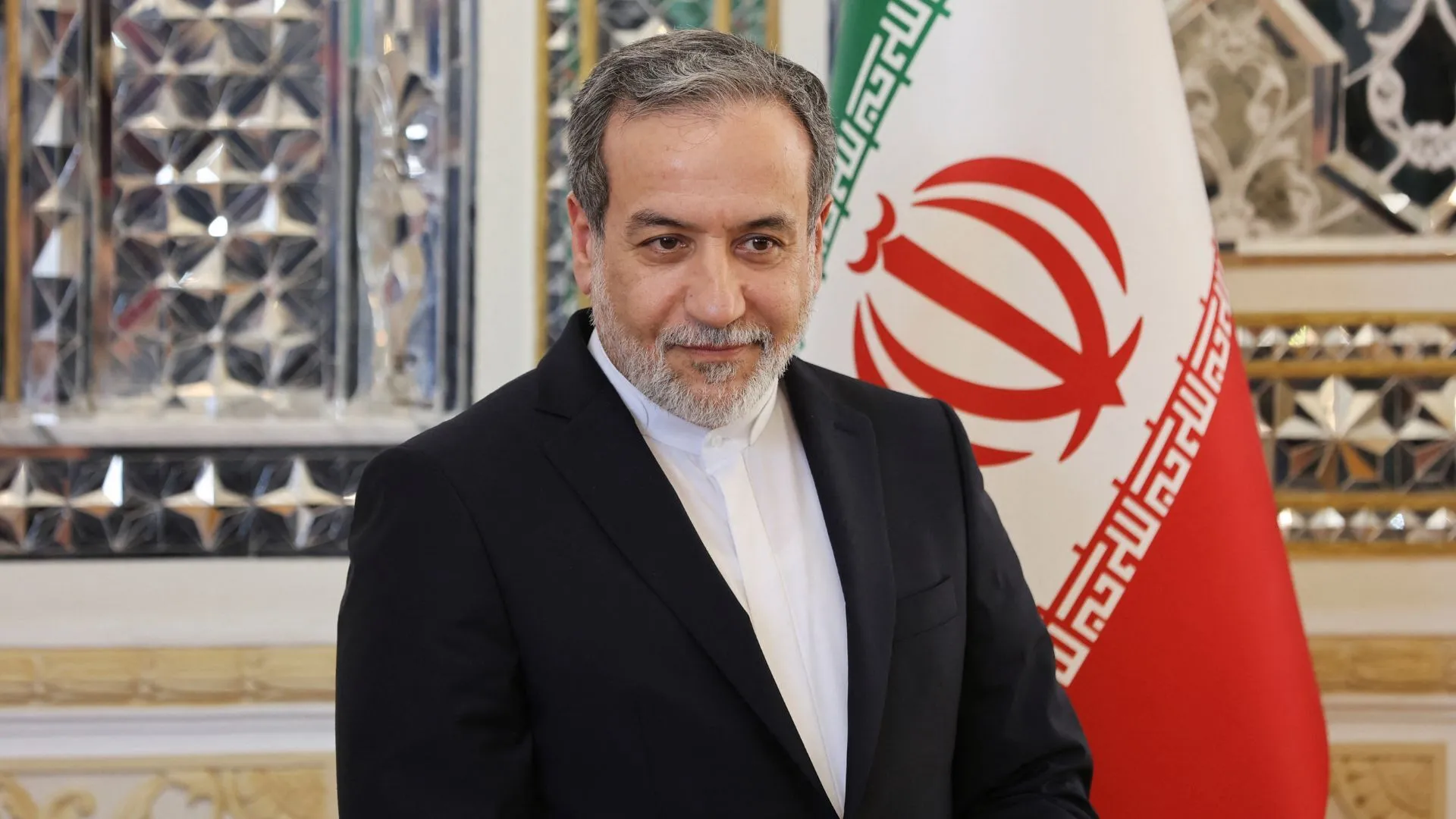
Iranian Foreign Minister Abbas Araghchi has arrived in Geneva for high-stakes second round of nuclear talks with the United States aimed at reducing tensions and avert a new military confrontation that Iran’s Supreme Leader Ayatollah Ali Khamenei has warned could turn into a regional conflict.
“I am in Geneva with real ideas to achieve a fair and equitable deal,” Araghchi wrote on X on Monday. “What is not on the table: submission before threats.”
Recommended Stories
list of 4 itemsend of list
Iran and the US renewed negotiations earlier this month to tackle their decades-long dispute over Tehran’s nuclear programme as US deploys warships, including a second aircraft carrier, to the region as mediators work to prevent a war.
Araghchi met with Rafael Grossi, the head of the International Atomic Energy Agency (IAEA), on Monday, after saying his team nuclear experts for a “deep technical discussion”.
The United Nations nuclear watchdog has been calling for access to Iran’s main nuclear facilities that were bombed by the US and Israel during the 12-day war in June. Tehran has said there might be a risk of radiation, so an official protocol is required to carry out the unprecedented task of inspecting highly enriched uranium ostensibly buried under the rubble.
Speaking to state-run IRNA news agency on Monday, foreign ministry spokesman Esmail Baghaei said the IAEA will play “an important role” in upcoming mediated talks between Iran and the US. But he also renewed Tehran’s criticism of Grossi for the director’s refusal to condemn military strikes on Iranian nuclear sites that are protected under agency safeguards as part of the Non-Proliferation Treaty (NPT).
Araghchi also said he would meet his Omani counterpart, Badr bin Hamad al-Busaidi, who mediated the first round of talks between Iran and the US since the war earlier this month.
Iran has repeatedly emphasised that it will not agree to Washington’s demand for zero nuclear enrichment, and considers its missile programme a “red line” that cannot be negotiated.
Meanwhile, the US continues to build up its military presence in the region, with President Donald Trump saying a change of power in Iran “would be the best thing that could happen” and sending in a second aircraft carrier.
Trump is again likely to send his special envoy Steve Witkoff and his son-in-law Jared Kushner to represent the White House in the Geneva talks. Brad Cooper, the most senior US military commander in the region, had unexpectedly joined the US delegation during the Muscat talks on February 6.
The talks also come over a month after Iran’s deadly crackdown against nationwide protests, with Iranian officials claiming “terrorists” and “rioters” armed and funded by the US and Israel were behind the unrest.
The UN and international human rights organisations have blamed Iranian authorities for the widespread use of lethal force against peaceful protesters, which killed thousands, mainly on the nights of January 8 and 9.
But the hardliners in Tehran are more concerned about any potential concessions that could be given during upcoming talks with the US.
Addressing an open session on Monday, one of the most hardline lawmakers in Iran’s parliament cautioned security chief Ali Larijani against giving inspection access to the IAEA befire ensuring Iran’s territorial integrity, the security of nuclear sites and scientists, and use of peaceful nuclear energy for civilian purposes under the NPT.
“When US warships have opened their arms to embrace Iranian missiles, US bases have opened arms to take our missiles, and the homes of Zionist military personnel are anticipating the sound of the air raid sirens, it is obvious that such conditions cannot be met at the moment,” said Hamid Rasaei, a cleric close to the hardline Paydari (Steadfastness) faction.
In the other diplomatic track pursued in Switzerland on Tuesday, officials will be discussing ways of ending the Ukraine war, which is approaching the end of its fourth year after Russia’s full-scale invasion in 2022.
But no immediate breakthrough appears in sight, with Ukrainian President Volodymyr Zelenskyy telling the annual Munich Security Conference on Saturday that Kyiv has “too often” been asked to make concessions.
The support for Ukrainian athletes at the Milan-Cortina Games suggests there may be challenges with reinstating Russia and Belarus for the LA28 Olympics.
WASHINGTON — President Biden is considering a ban on imports of Russian oil while weighing actions that would boost energy production by autocracies in the hopes of mitigating the effects on American consumers and global energy markets, U.S. officials said.
“What the president is most focused on is ensuring we are continuing to take steps to deliver punishing economic consequences on [Russian President Vladimir] Putin while taking all action necessary to limit the impact to prices at the gas pump,” White House Press Secretary Jen Psaki said Monday.
Until now, the economic strangulation of Russia by the West over its unprovoked invasion of Ukraine has avoided its robust energy sector, with administration officials suggesting that such a move could weaken the global economy.
But as Russia increases its unrelenting bombardment of Ukrainian cities, political pressure on the West has grown to do more to put pressure on Putin to stop the onslaught. U.S. officials said the Biden administration is considering easing restrictions on imports of oil from Venezuela to alleviate the void left by Russian oil bans, a politically problematic step.
It has also sought to convince Saudi Arabia, which has been under fire from U.S. and European officials over its human rights record, to boost oil production.
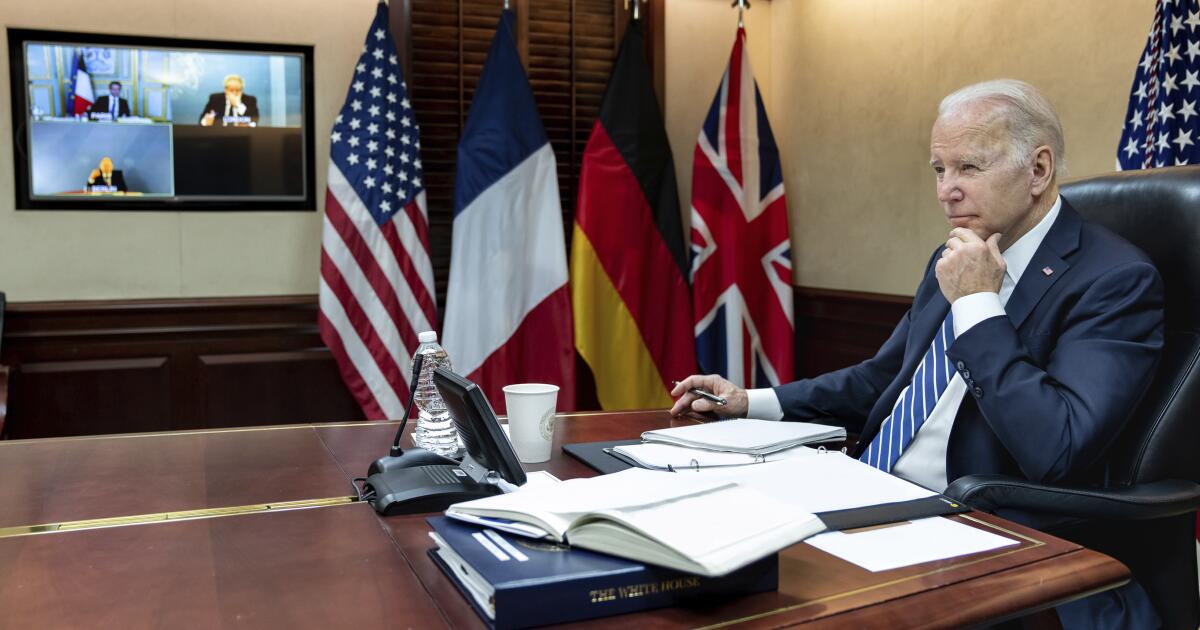
Biden spoke Monday for more than an hour with German Chancellor Olaf Scholz, French President Emmanuel Macron and British Prime Minister Boris Johnson, although the official White House readout of the conversation did not explicitly state that they discussed a ban on Russian energy.
According to the White House, “the leaders affirmed their determination to continue raising the costs on Russia for its unprovoked and unjustified invasion of Ukraine. They also underscored their commitment to continue providing security, economic and humanitarian assistance to Ukraine.”
Psaki said administration officials were also discussing whether the U.S. would send military aircraft to Poland should its leaders provide Soviet-era bombers to support Ukraine, but noted that the White House was not “preventing or blocking or discouraging” officials in Warsaw. “They are a sovereign country. They make their own decisions, but it is not as easy as just moving planes around,” she said.
The U.S. has been reluctant to get ahead of European allies in responding to Putin’s aggression. And while an oil embargo from Washington would have some effect, doing so in concert with Europe would deliver a far greater impact. Europe imports 4 million barrels of Russian oil a day, compared with 700,000 barrels imported daily by the U.S.
U.S. Secretary of State Antony J. Blinken said Sunday during an interview with CNN that the administration was indeed exploring the “prospect” of an energy ban “in a coordinated way” with allies, although he did not rule out the possibility that Washington could act on its own to bar Russian oil.
The administration may not have much of a choice. Members of both political parties have introduced bills in both houses of Congress to block such imports.
“We may have to pay more at the pump because of this attack and our bipartisan response, but it is worth it to ensure that Putin pays the price for his paranoid adventurism and his attack on a peaceful democracy,” Rep. Jimmy Panetta (D-Carmel Valley), who has co-sponsored a bill to ban Russian oil, said in a statement.
Rep. Lou Correa (D-Santa Ana), who supports the measure, said a Russian oil ban may only have limited success if the U.S. cannot persuade other countries to join the effort.
“I don’t believe Europe and some of the other countries are ready to say no to Russian energy, so that’s the challenge right now,” Correa said in an interview. “Not only does Russia have nukes, but also people have to buy their energy from the Russians.”
Congress is weighing an oil ban as it pushes to pass a measure to send Ukraine billions of dollars in emergency assistance. Senate Majority Leader Charles E. Schumer (D-N.Y.) on Monday called for passage of a $12-billion aid package this week, saying it “will provide both humanitarian and military assistance for Ukraine: funding for refugees, medical supplies, emergency food supplies, as well as funding to support weapons transfers into Ukraine, and help for our eastern flank NATO allies.”
In a letter to House Democrats on Sunday, House Speaker Nancy Pelosi (D-San Francisco) said Congress intended to pass $10 billion in emergency aid for Ukraine as part of a larger government funding measure. The House is also exploring legislation that would “further isolate” Russia from the world economy, Pelosi said.
Banning Russian oil imports would probably lead to higher prices at the pump in the U.S. and globally. Gas is averaging $4 a gallon nationwide, up from $2.77 a year ago, according to AAA. The average price of gas in California during that same period has risen from $3.75 to $5.34.
In a clear signal of how seriously the Biden administration is considering a Russian oil ban, U.S. officials traveled over the weekend to Caracas, Venezuela, for talks about potentially easing sanctions imposed on the South American nation by the Trump administration in 2019. President Trump took that step after declaring President Nicolas Maduro’s election victory a sham and recognizing another politician, Juan Guaido, as the country’s rightful leader, a position Biden has affirmed.
Those measures built upon similar sanctions imposed by President Obama, signaling the long history of trouble Washington has had with Caracas and its socialist leaders.
The Venezuela economy is reeling, despite sitting on some of the world’s largest oil reserves, and Maduro is likely eager to be free of the sanctions. However, his economy and many of his government agencies are deeply intertwined with Russian assets and advisors. Any lenience by the White House toward Maduro, even if it’s driven by a desire to crack down on Putin, could undercut Biden’s messaging about the existential threat that autocracies present to democracies.
Psaki on Monday batted away questions about a potential rapprochement with Caracas, telling reporters that any easing of sanctions was “leaping several stages ahead” of where talks currently stand.
Complicating matters has been Venezuela’s decision to imprison six executives from the Citgo oil company for the last four years. Five are U.S. citizens and the sixth a U.S. permanent resident. They were convicted in show trials on trumped-up embezzlement charges and other crimes, according to their families and human rights activists.
Psaki said discussions about the release of the men and sanctions relief were taking place “in different channels,” and not tied together.
Republicans, who have seized on the potential energy crisis to call for stepping up domestic fossil fuel production, have already made clear that they will hit the White House hard should it look to offset any ban on Russian oil by looking to foreign suppliers.
Florida Sen. Marco Rubio criticized Biden in a tweet Sunday, saying: “Rather than produce more American oil, he wants to replace the oil we buy from one murderous dictator with oil from another murderous dictator.”
These are the key developments from day 1,453 of Russia’s war on Ukraine.
Published On 16 Feb 202616 Feb 2026
Share
Here is where things stand on Monday, February 16:
Fighting
Russian forces launched attacks across Ukraine on Sunday, wounding six people in the central-eastern Dnipropetrovsk region, three in the northeastern Sumy region, and two in the southeastern city of Zaporizhzhia, the Ukrinform news outlet reported, citing local officials.
Ukrainian President Volodymyr Zelenskyy said Russia has launched about 1,300 drones, 1,200 guided aerial bombs and dozens of ballistic missiles at Ukraine over the past week alone.
About 1,600 buildings in the Ukrainian capital, Kyiv, remained without heat on Sunday following recent Russian attacks on Ukraine’s energy infrastructure, officials said.
Deputy Prime Minister Oleksii Kuleba said Russian strikes overnight on Sunday had damaged railroad infrastructure in the southern region of Odesa and the Dnipropetrovsk region.
The Ukrainian military said in a statement that it hit a key oil terminal in southern Russia, near the Moscow-annexed Crimean Peninsula, on Sunday. The attack was on the Tamanneftegaz oil terminal near the village of Volna in the Krasnodar region.
Ukrainian forces also launched a drone attack on the Russian Black Sea port of Taman, which handles oil products, grain, coal and commodities, causing damage and triggering several fires, according to Veniamin Kondratyev, the governor of Russia’s Krasnodar region. He said more than 100 people were working to put out the fires.
Kondratyev said there were more Ukrainian attacks on the Russian resort city of Sochi and the village of Yurovka, close to the seaside town of Anapa. They caused less significant damage, he added.
Russian air defences downed five drones approaching the Russian capital, Moscow, according to Mayor Sergei Sobyanin.
A Ukrainian attack also left five municipalities in the Russian border region of Bryansk and parts of its capital without heat and electricity, Governor Alexander Bogomaz said.
Russia’s Ministry of Defence said on Sunday that its troops had taken the village of Tsvitkove in the southeastern Zaporizhia region, according to the TASS news agency. Russia controls about 75 percent of the Zaporizhia region, but battle lines had been largely static since 2022 until recent Russian advances.
Russia’s army chief, Valery Gerasimov, said on Sunday that Russian troops had seized a dozen villages in eastern Ukraine in February. He made the announcement while visiting Russian troops in Ukraine, the AFP news agency reported.
Politics and diplomacy
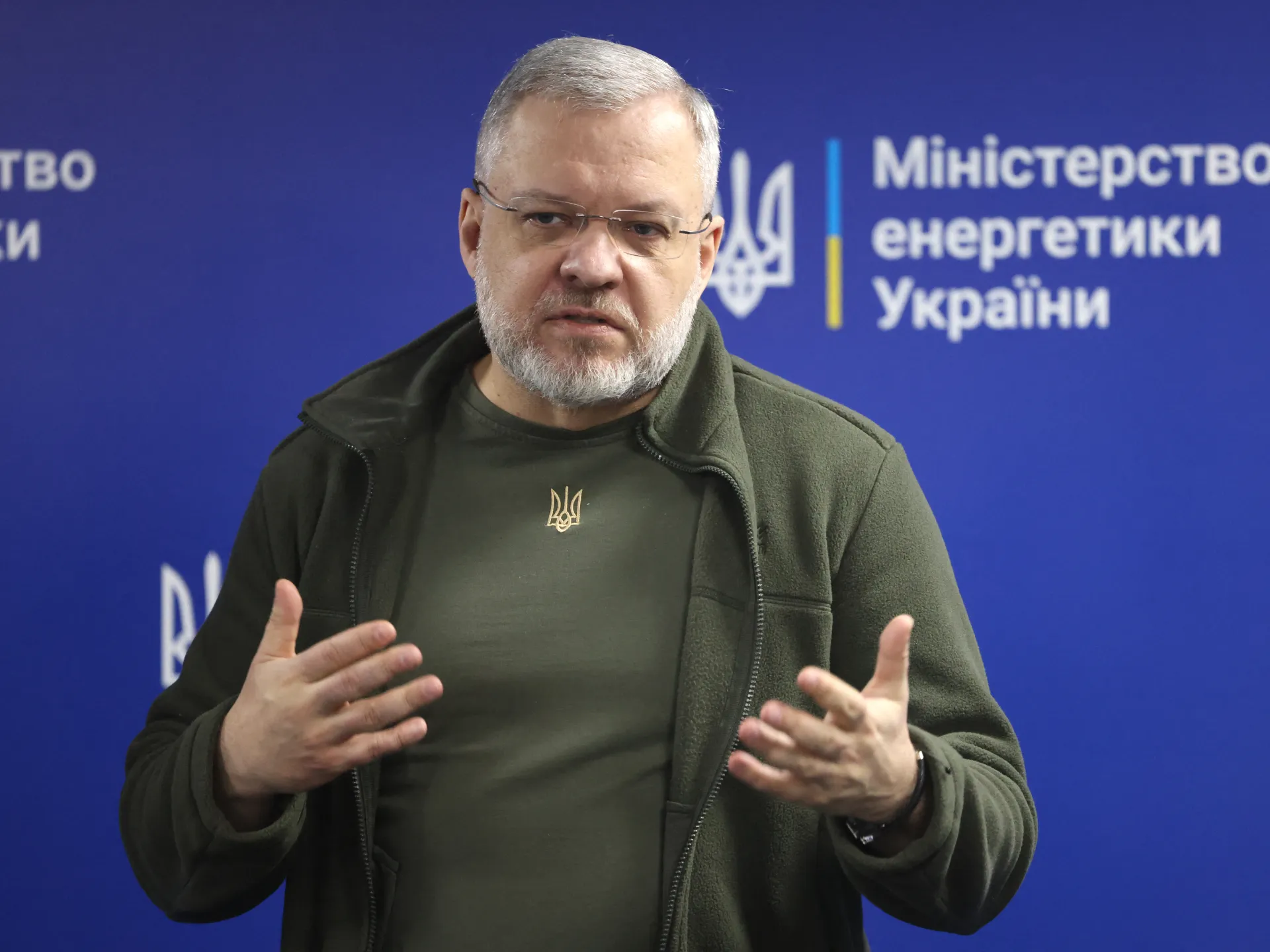
Ukraine’s National Anti-Corruption Bureau arrested the country’s former energy minister, German Galushchenko, who resigned in November amid a huge corruption scandal, as he tried to cross Ukraine’s border.
Zelenskyy said in a statement that Ukraine has agreed to new energy and military support packages with European allies.
The European Union’s foreign policy chief, Kaja Kallas, said she felt that the bloc’s governments were not ready to give Ukraine a date for membership into the EU, despite demands from Zelenskyy.
Latvian President Edgars Rinkevics echoed Kallas’s comments, saying that “there is no readiness to accept a date” for Ukrainian membership. He added that he has little hope of an imminent peace deal between Russia and Ukraine.
Slovak Prime Minister Robert Fico has accused Ukraine of delaying the restart of a pipeline carrying Russian oil to Eastern Europe via Ukraine to “blackmail” Hungary to drop its opposition to Ukraine’s future EU membership.
North Korean leader Kim Jong Un presided over the completion ceremony of a new housing district in Pyongyang for families of troops who died in overseas military operations, state media KCNA reported. It is believed that more than 6,000 North Korean soldiers were killed while fighting alongside Russian troops in Ukraine.
Russia will not end the militarisation of its economy after fighting in Ukraine ends, the head of Latvia’s intelligence agency, Egils Zviedris, told the AFP news agency on the sidelines of the Munich Security Conference, which ended on Sunday.
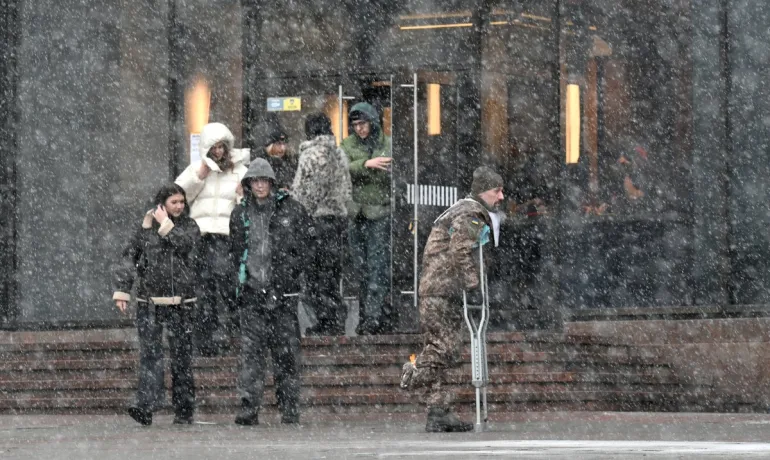
A wounded Ukrainian serviceman walks in a street in Kyiv during snow fall on Sunday, February 15 [Sergei Supinsky/AFP]
German Galushchenko was detained by Ukraine’s anti-corruption bureau while trying to leave the country.
Published On 15 Feb 202615 Feb 2026
Share
Ukraine’s National Anti-Corruption Bureau (NABU) says it has arrested the country’s former energy minister, German Galushchenko, who resigned in November amid a massive corruption scandal, as he tried to cross Ukraine’s border.
“Today, while crossing the state border, NABU detectives have detained the former Minister of Energy as part of the ‘Midas’ case,” the NABU said in a statement.
Recommended Stories
list of 4 itemsend of list
It did not name Galushchenko in its statement, but he served as the country’s energy minister last year and resigned in November.
“Initial investigative proceedings are ongoing, carried out in accordance with the requirements of the law and court sanctions. Details to follow,” the NABU added.
Galushchenko was one of several ministers who resigned in 2025 as the NABU unveiled an alleged money-laundering conspiracy in the country’s energy sector that investigators believe was orchestrated by an ally of President Volodymyr Zelenskyy.
According to Ukraine’s Specialised Anti-Corruption Prosecutor’s Office (SAPO), the alleged $100m scheme was orchestrated by businessman Timur Mindich.
SAPO’s investigators say Galushchenko helped Mindich manage illicit financial flows in the energy sector, while contractors working with Energoatom were forced to pay bribes of 10 to 15 percent to avoid losing contracts or facing payment delays.
Ukraine’s previous two energy ministers had resigned amid the fallout from the scandal, which also claimed the job of Zelenskyy’s chief of staff.
The two ministers and the chief of staff have all denied wrongdoing.
Battling corruption is a key priority in Ukraine’s reform effort as it eyes membership in the European Union, which requires the country to shake off a decades-old scourge of graft.
Ukrainian President Volodymyr Zelenskyy has expressed hope for United States-brokered peace talks with Russia next week, but warned that Kyiv was being asked “too often” to make concessions and pressed his allies for “clear security guarantees”.
Zelenskyy’s speech at the annual Munich Security Conference on Saturday came as US President Donald Trump seeks to broker a deal to end Europe’s biggest war since 1945.
Recommended Stories
list of 3 itemsend of list
Ukraine and Russia, which invaded its neighbour in February 2022, have engaged in two recent rounds of talks mediated by Washington in Abu Dhabi, UAE, described by the parties as constructive but achieving no breakthroughs.
The three sides are due to sit down in Geneva, Switzerland, again this week.
In his speech, Zelenskyy said he hoped the trilateral talks in Geneva on Tuesday and Wednesday “will be serious, substantive” and “helpful for all of us”.
“But honestly, sometimes it feels like the sides are talking about completely different things,” Zelenskyy said.
“The Americans often return to the topic of concessions, and too often those concessions are discussed only in the context of Ukraine, not Russia,” he said.
The Ukrainian leader also argued that there would be a greater chance of ending the war if European countries had a seat at the negotiating table, something Moscow has opposed.
“Europe is practically not present at the table. It’s a big mistake to my mind,” he said. And Ukraine, he said, “keeps returning to one simple point”.
“Peace can only be built on clear security guarantees. Where there is no clear security system, war always returns,” Zelenskyy said.
Among the most contentious issues in the negotiations is Russia’s demand for a full withdrawal of Ukrainian troops from the remaining parts of Ukraine’s eastern region of Donetsk that it still controls. Ukraine has rejected a unilateral pullback, while also demanding Western security guarantees to deter Russia from relaunching its invasion if a ceasefire is reached.
Zelenskyy, in remarks to reporters, said the US had proposed a security guarantee lasting for 15 years after the war, but Ukraine wanted a deal for 20 years or longer. He added that Putin opposes the deployment of foreign troops in Ukraine, as it would deter any future aggression by Russia.
Zelenskyy said Russia had to accept a ceasefire monitoring mission and an exchange of prisoners of war. He estimated that Russia currently has about 7,000 Ukrainian soldiers, while Kyiv has more than 4,000 Russian personnel.
He also acknowledged feeling “a little bit” of pressure from Trump, who on Friday urged him not to miss the “opportunity” to make peace and told him “to get moving”. Zelenskyy also called for greater action from Ukraine’s allies to press Russia into making peace, both in the form of tougher sanctions and more weapons supplies.
Trump has the power to force Putin to declare a ceasefire and needs to do so, Zelenskyy said. Ukrainian officials have said a ceasefire is required to hold a referendum on any peace deal, which would be organised alongside national elections.
Zelenskyy also expressed surprise at Russia’s decision to change its delegation to the Geneva talks and said it suggested to him that Russia wanted to delay any decisions from being agreed.
The Kremlin had said the Russian delegation would be led by Putin’s adviser Vladimir Medinsky, a change from negotiations in Abu Dhabi, where military intelligence chief Igor Kostyukov was in the lead. Ukrainian officials have criticised Medinsky’s handling of previous talks, accusing him of delivering history lessons to the Ukrainian team instead of engaging in constructive negotiations.
In his main speech at the Munich event, Zelenskyy also denounced Putin as a “slave to war”.
He drew parallels between the current talks and the 1938 Munich Agreement, when European powers let Hitler take part of the erstwhile Czechoslovakia, only for World War II to break out the following year.
“It would be an illusion to believe that this war can now be reliably ended by dividing Ukraine, just as it was an illusion to believe that sacrificing Czechoslovakia would save Europe from a great war,” he warned.
A deadly exchange of drone strikes has killed one person in Ukraine and one in Russia and cast doubts on the prospects of a ceasefire before another round of negotiations to end the war next week.
News of the deaths comes as Ukrainian President Volodymyr Zelenskyy and US Secretary of State Marco Rubio signalled hurdles to reaching an agreement in Geneva as the conflict is about to enter its fifth year.
Recommended Stories
list of 4 itemsend of list
Zelenskyy told world leaders at the Munich Security Conference on Saturday while he hopes “substantive” progress will be reached during the trilateral meeting next week, it often feels like the two sides “are talking about different things” in negotiations.
“The Americans often return to the topic of concessions, and too often those concessions are discussed only in the context of Ukraine, not Russia,” Zelenskyy said.
Rubio said it’s unclear if Moscow truly wants to make a peace deal.
“We don’t know if the Russians are serious about ending the war,” he said before the same Munich event. “We’re going to continue to test it.”
Among the most contentious issues in the negotiations is Russia’s demand for a full withdrawal of Ukrainian troops from the remaining parts of Ukraine’s eastern region of Donetsk that it still controls.
Ukraine has rejected a unilateral pullback and wants Western security guarantees to deter Russia from relaunching its invasion if a ceasefire is reached.
Rubio did not attend a Ukraine-focused meeting with European and NATO leaders held on the sidelines of the first day of the Munich conference on Friday, citing scheduling issues.
In Munich on Saturday, Zelenskyy insisted Russia should not get away with its attack on Ukraine. He said he hoped the United States would stay involved in the peace negotiations and European countries would deepen their involvement.
Dutch Foreign Minister David van Weel told Al Jazeera while US President Donald Trump should be credited with moving talks forward, he should put more pressure on Russian President Vladimir Putin instead of Zelenskyy.
“Putin has shown no goodwill to come to the table and make a serious deal. The Ukrainians are ready,” van Weel said.
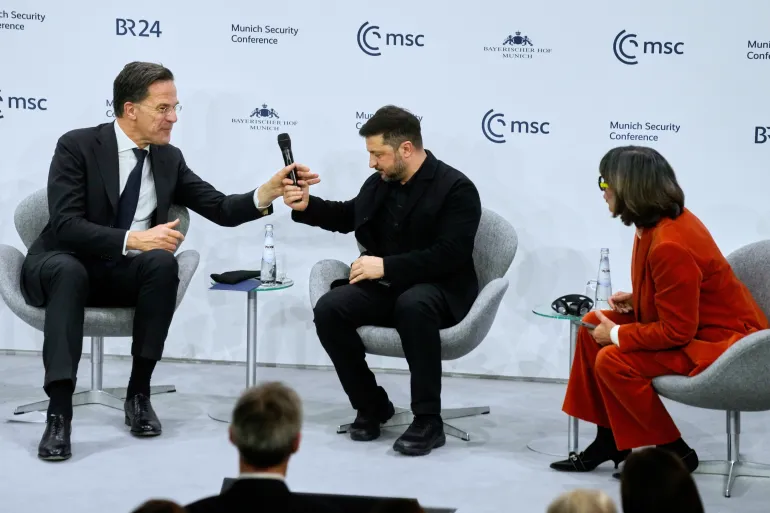
NATO Secretary-General Mark Rutte, left, and Ukrainian President Volodymyr Zelenskyy, centre, speak to journalist Christiane Amanpour at the Munich Security Conference on Saturday [Michael Probst/AP]
Last week, Zelenskyy said the US had given the warring parties a June deadline to reach a deal, although Trump’s previous ultimatums have not resulted in a breakthrough.
Two previous rounds of trilateral talks in Abu Dhabi, led by US envoys Steve Witkoff and Jared Kushner, reportedly focused on military issues such as a possible buffer zone and ceasefire monitoring.
Hundreds of thousands of soldiers and tens of thousands of civilians have been killed since Russia launched its full-scale invasion of Ukraine on February 24, 2022, according to many estimates, making the war Europe’s deadliest since World War II.
Russia is suffering “crazy losses” in Ukraine with about 65,000 soldiers killed on the battlefield over the last two months, NATO Secretary-General Mark Rutte told the conference.
Separately, Rutte told a media roundtable the NATO alliance is strong enough that Russia would not currently try to attack it. “We will win every fight with Russia if they attack us now, and we have to make sure in two, four, six years that same is still the case.”
Among the latest casualties was an elderly woman killed on Saturday when a Russian drone hit a residential building in the Black Sea port city of Odesa, Ukraine’s State Emergency Service said.
On Wednesday, Russian strikes also killed three children, including two-year-old twins and their father in the northeastern region of Kharkiv.
In January alone, Russia launched more than 6,000 drone attacks against Ukraine, according to Zelenskyy. But he added Ukraine will soon produce enough interceptors to make Russia’s Iran-made Shahed drones “meaningless”.
He also told the Munich conference that every power plant in Ukraine has been damaged in Russian attacks.
In Russia, a civilian was killed in a Ukrainian drone strike on a car in the border region of Bryansk, Governor Alexander Bogomaz said.
The attacks came a day after a Ukrainian missile strike on the Russian city of Belgorod near the border with Ukraine killed two people and wounded five, according to Governor Vyacheslav Gladkov.
Gladkov earlier said the attack also caused serious damage to energy facilities and electricity, heating and water supplies were cut off. Three apartment buildings in the city sustained damage, he said.
Ukrainian member of parliament Oleksiy Goncharenko, meanwhile, accused Moscow of launching “energy terror” with attacks on electricity facilities in the heart of winter.
“I can’t call it any other way because when it is minus 20 Celsius in Kyiv and you don’t have heating, you don’t have electricity in your apartment, you’re just freezing and that is awful,” Goncharenko told Al Jazeera in Munich.
“I think it’s time for the United States to put real pressure on Russia. Yes, they are at the table, but it’s time to put real pressure to make them have real negotiations, because what we have today is not real negotiations.”
Ukraine’s Vladyslav Heraskevych had his appeal dismissed as images on his helmet breached an Olympic ‘sacred principle’.
Published On 13 Feb 202613 Feb 2026
Share
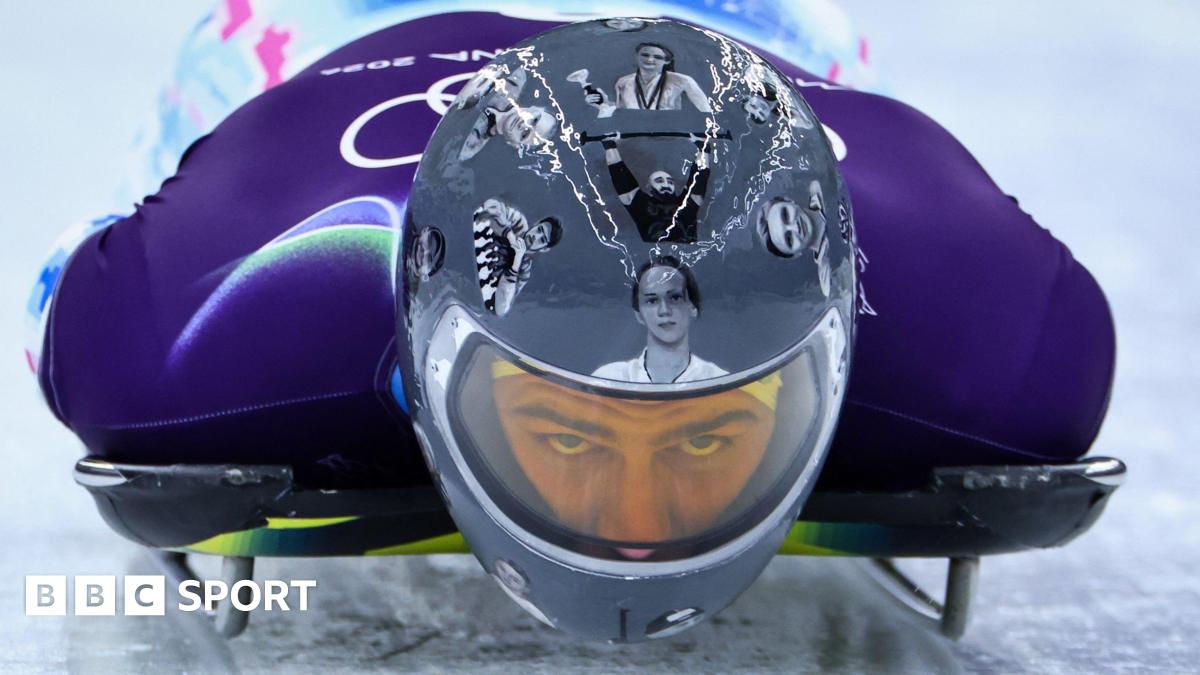
The Court of Arbitration for Sport on Friday dismissed an appeal by Ukrainian skeleton racer Vladyslav Heraskevych to be reinstated in the Milano Cortina Olympics after he was disqualified over his “helmet of remembrance”.
The 27-year-old was removed from the Olympic programme on Thursday when the International Bobsleigh and Skeleton Federation jury ruled that imagery on the helmet — depicting athletes killed since Russia invaded Ukraine in February 2022 — breached rules on political neutrality.
Recommended Stories
list of 4 itemsend of list
“The CAS ad Hoc division dismissed the application and found that freedom of expression is guaranteed at the Olympic Games but not on the field of play which is a sacred principle,” CAS Secretary-General Matthieu Reeb said, reading from a statement following an eight-hour hearing.
Heraskevych, who was seeking reinstatement or at least a CAS-supervised run, pending a decision by sport’s highest court in advance of the final two runs set for Friday evening, said he would look at his legal options now.
“CAS has failed us. We will consider our next steps,” Heraskevych told Reuters.
The case has dominated headlines in the first week of the Olympics, with the International Olympic Committee President Kirsty Coventry meeting the athlete on Thursday morning at the sliding venue in Cortina d’Ampezzo in a last-minute attempt to broker a compromise and have him race without the specific helmet.
The IOC instead offered that he wear a black armband and display the helmet before and after the race, but said using the helmet in competition breached its rules on political protests and slogans in the field of play.
In a statement, CAS said the IOC guidelines for athletes’ expression in the Games were fair.
“The Sole Arbitrator found these limitations reasonable and proportionate, considering the other opportunities for athletes to raise awareness,” CAS said.
“The Sole Arbitrator considers these Guidelines provide a reasonable balance between athletes’ interests to express their views, and athletes’ interests to receive undivided attention for their sporting performance on the field of play.”
Ukraine’s Olympic Committee has backed their athlete, who is also the team’s flagbearer for the Games and also displayed a “No War in Ukraine” sign at the Beijing 2022 Olympics, days before Russia’s invasion. Heraskevych has also received support from Ukrainian President Volodymyr Zelenskiy.
CAS was established in 1984 by the International Olympic Committee as an independent judicial authority to settle sports disputes worldwide.
The case has dominated headlines in the first week of the Olympics.
Ukrainian skeleton racer Heraskevych says 2006 Winter Olympics ‘acts as propoganda for Russia’ after IOC decision.
Published On 13 Feb 202613 Feb 2026
Share
The Court of Arbitration for Sport (CAS) began hearing Ukrainian skeleton racer Vladyslav Heraskevych’s appeal on Friday, with a decision expected later in the day on whether he can return to competition at the Milano Cortina Olympics after his disqualification over his “helmet of remembrance”.
The 27-year-old was removed from the Olympic programme on Thursday when the International Bobsleigh and Skeleton Federation jury ruled that imagery on the helmet — depicting athletes killed since Russia invaded Ukraine in February 2022 — breached rules on political neutrality at the Games.
Recommended Stories
list of 4 itemsend of list
Heraskevych is seeking reinstatement or at least a CAS-supervised run, pending a decision by sport’s highest court in advance of the final two runs set for Friday evening.
“I’m pretty positive about how it went,” he told reporters outside the office of CAS in Milan following his appearance before the court. “I hope the truth will prevail, and I know that I was innocent.”
The racer said he was now getting threats from Russians and blamed the IOC’s decision for that.
“I believe that these Games now and this act of the IOC also serves as an instrument of propaganda for Russia,” Heraskevych said. “I still receive a lot of threats from the Russian side.”
The IOC, whose president, Kirsty Coventry, met Heraskevych on Thursday in a last-ditch effort to break the impasse, has allowed the athlete to keep his credentials despite his disqualification, so he can stay at the Milano Cortina Games.
“For me, sitting down with Vladyslav and his dad, the conversation was extremely respectful,” Coventry told a news conference on Friday. “After that, I asked the disciplinary commission to re-look at not pulling his accreditation, out of respect for him and his dad. I thought that was the right thing to do.”
The case has dominated headlines in the first week of the Olympics.
CAS Secretary-General Matthieu Reeb could not say exactly when they were likely to reach a decision, despite the tight schedule.
“We hope to have a final decision announced today, but it’s difficult for me to say when,” Reeb told reporters. “Obviously, we know the schedule of the competition, and it is an objective for CAS to be able to run the decision before the start of the race, but we don’t know how long the hearing will take.
“We have only one arbitrator from Germany, and she will be in charge of this case. We have participants attending in person, like the IOC, the athlete is here, the father of the athlete is here.
“We have a representative of IBSF attending remotely. The athlete is also assisted by legal counsel speaking from Kyiv.”
These are the key developments from day 1,450 of Russia’s war on Ukraine.
Published On 13 Feb 202613 Feb 2026
Share
Here is where things stand on Friday, February 13 :
Fighting
Russia launched a barrage of ballistic missiles and drones at Ukrainian cities in overnight attacks on Thursday, officials reported, as Ukrainian President Volodymyr Zelenskyy said Moscow was “hesitating” about another round of United States-brokered talks on stopping the war.
Russian forces launched 219 drones and 24 ballistic missiles on Thursday night, causing injuries, deaths and damage to energy infrastructure in Kyiv, Odesa and Dnipro, President Zelenskyy wrote on the Telegram messaging app.
Two people were killed and six more wounded in an attack on the railway hub of Lozova in the northeastern Kharkiv region bordering Russia, local prosecutors said.
Kyiv’s Mayor Vitali Klitschko said on Telegram that close to 2,600 high-rise apartment buildings were left without heating following the latest Russian attacks, particularly in the capital’s Desnyanskyi, Dniprovskyi, Pecherskyi and Solomyanskyi districts.
The attack on the capital came as 1,100 high-rise buildings in the Dniprovskyi and Darnytskyi districts were already “without heat after the previous shelling”, Klitschko said, as temperatures in Kyiv are forecast to fall as low as -13 degrees Celsius (8.6 degrees Fahrenheit) this week.
More than 220,000 people in Russia’s Belgorod region have been left without electricity after a Ukrainian attack caused an accident at a substation, regional governor Vyacheslav Gladkov said.
In Odesa, the State Emergency Service said that Russian drones hit a nine-storey residential building, an outdoor market and a supermarket, causing multiple fires to break out. The drone attack also damaged energy infrastructure, the emergency service added in a post on Facebook.
Ukraine’s General Staff said that, according to preliminary reports, Ukrainian forces hit an oil refinery in Ukhta in Russia’s Komi Republic, about 1,750km (1,087 miles) from the border with Ukraine, causing a fire to break out.
A Russian attack last month on the Ukrainian branch of the Soviet-built Druzhba oil pipeline halted the transit of Russian oil to eastern Europe, Ukraine’s Foreign Minister Andrii Sybiha said. Despite its war with Russia, Ukraine continues to transport Russian oil to Slovakia and Hungary even though it stopped the transit of Russian gas last year.
Ukraine said the bodies of two Nigerians fighting for Russia have been found in the east of the country. Hamzat Kazeem Kolawole and Mbah Stephen Udoka both served in the 423rd Guards Motor Rifle Regiment of the armed forces of the Russian Federation, according to a statement by Ukrainian intelligence.
Military aid
Ukraine’s allies have pledged about $35bn in military aid to Kyiv this year, British Defence Minister John Healey said. The figure includes new commitments by individual countries, but also previous promises of weapons made by Ukraine’s allies, including the 11.5 billion euros ($13.6bn) already announced by Germany, a diplomat told the Reuters news agency.
German Defence Minister Boris Pistorius said his country was ready to deliver five new PAC-3 interceptors for Ukraine’s air defence, provided Ukraine’s other allies deliver at least 30 more of their own.
Norway announced it was buying a “large volume” of French glide bombs as part of a bilateral agreement to support Ukraine militarily against Russia’s invasion.
The United Kingdom announced it will “urgently provide” air defence missiles and systems worth more than 500 million British pounds ($681m) “to protect Ukraine from [Russian President Vladimir] Putin’s brutal attacks on energy sites and homes”.
US military aid to Ukraine fell by 99 percent in 2025 compared with 2024, according to a report from the Kiel Institute for the World Economy, a think tank based in Germany. “European military aid rose by 67 percent above the 2022–2024 average” in 2025, the Kiel report found.
Peace talks
Kremlin spokesman Dmitry Peskov said that another round of talks on ending the war in Ukraine was expected “soon” but gave no further details.
Ukrainian Foreign Minister Sybiha said that Russia’s more recent overnight attacks on Ukraine further undermined efforts to end the war through dialogue. “Each such strike is a blow to peace efforts aimed at ending the war. Russia must be forced to take diplomacy seriously and de-escalate,” Sybiha wrote on X.
Regional security
Estonia is to buy 12 more Caesar self-propelled howitzer artillery pieces from France to strengthen its defence capabilities.
European Union leaders broadly agreed Thursday on a plan to restructure the 27-nation bloc’s economy to make it more competitive as they face antagonism from US President Donald Trump, strong-arm tactics from China and hybrid threats blamed on Russia.
Ukraine will begin exporting weapons, including drones, in the coming weeks, Ukrainian Defence Minister Mykhailo Fedorov said in a news conference, according to Ukraine’s Ukrinform news agency.
Energy
Power plants in Ukraine that have been damaged by Russian missile and drone attacks continue to produce far too little electricity to supply the country’s citizens, Ukraine’s Energy Minister Denys Shmyhal told a parliamentary energy committee.
Politics and diplomacy
French President Emmanuel Macron said there was no rush to open dialogue with Russian leader Putin, stressing the need for Europeans to fine-tune their objectives. Macron raised the prospect of reviving dialogue with Putin in an interview published on Tuesday by several newspapers.
Six more Russian and Ukrainian children are being reunited with their families, Washington and Moscow said. One child would return to Russia, and five children would be reunited with their families in Ukraine, Russia’s presidential commissioner for children’s rights, Maria Lvova-Belova, said in a post on Telegram.
Ukraine has accused Russia of abducting thousands of children, and the International Criminal Court has called for the arrest of President Putin and Lvova-Belova on suspicion of unlawful deportation of children.
US Secretary of State Marco Rubio said he would have a chance to meet Zelenskyy at this week’s Munich Security Conference.
Sport
Ukrainian athlete Vladyslav Heraskevych has lodged an appeal with the Court of Arbitration for Sport (CAS) after he was barred from competing in the Milano Cortina Winter Olympics. The skeleton racer was banned over a dispute concerning a helmet he wanted to wear in the event to honour Ukrainian athletes killed in the war with Russia.
The International Olympic Committee (IOC) said in a statement: “[The decision] was taken by the jury of the International Bobsleigh and Skeleton Federation (IBSF) based on the fact that the helmet he intended to wear was not compliant with the rules.”
Zelenskyy reacted to the decision, accusing the IOC of playing “into the hands of aggressors” as Ukraine’s Sport Minister Matviy Bidnyi said Ukraine would go through legal channels to reverse the decision.
“We are proud of Vladyslav and of what he did. Having courage is worth more than any medal,” Zelenskyy said.
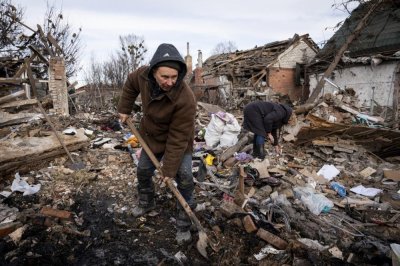
Local people clear debris at the site of a Russian airstrike in the Sloviansk, Donetsk region, on Wednesday after Russia resumed its attacks on Monday. Photo by Tommaso Fumagalli/EPA
Feb. 11 (UPI) — Local officials said a Russian drone strike on Ukraine‘s northeastern Kharkiv region killed three toddlers and their father, and injured their pregnant mother Wednesday.
The family was spending its first night in their new home in Bohodukhiv when it was struck during a drone and missile attack, regional leader Oleh Synegubov announced, the BBC reported.
The attack killed 2-year-old twins Ivan and Vladislav, their 1-year-old sister, Myroslava, and their father, Gryhoriy, 34.
The family’s 35-year-old injured mother, Olha, was 35 weeks pregnant and sustained burns and head injuries as the home was completely destroyed, local officials said.
Bohodukhiv Mayor Volodymyr Belyi called the aerial attack a “crime that is beyond human comprehension,” as reported by CNN.
“We lost the most precious thing we had — our future,” Belyi added.
The family recently evacuated the town of Zolochiv, which is located near the Russian border, due to ongoing shelling and sought refuge in Bohodukhiv, which is located 38 miles west of Kharkiv.
The attack shows that Russia has no intention of ending the war that it started by invading Ukraine on Feb. 24, 2022, Ukrainian President Volodymyr Zelensky said.
“Each Russian strike undermines confidence in everything that is being done diplomatically to end this war,” Zelensky said in a statement.
He said Russia deployed 129 attack drones during the overnight hours that struck Kharkiv, Dnipropetrovsk, Poltava and Zaporizhzhia.
The aerial attacks carried into the daytime hours on Wednesday and included a strike on a medical vehicle that was carrying five healthcare professionals and civilians. One woman died in that attack.
Russian forces also launched two ballistic missiles that targeted the area near Lviv on Wednesday afternoon, but Ukrainian aerial defenses intercepted and destroyed them.
Russia had paused the aerial attacks for a week amid extremely cold weather, but Monday’s resumption killed a 10-year-old boy and a 41-year-old woman in Bohodukhiv.
The town has been targeted every day so far this week as Russian forces seek to damage energy and transport infrastructure with drones and ballistic missiles.
The strikes caused Ukrainian officials to declare a state of emergency due to the effect on local energy sources.
Tens of thousands of Ukrainians are without power and lack heat and running water during the frigid winter weather.
Russia’s resumption of attacks comes as Ukrainian and Russian officials are considering meeting in Washington, D.C., to further discuss a potential cease-fire and plan for peace.
Ukrainian skeleton racer Vladyslav Heraskevych says he will wear his helmet of remembrance on race days “because these athletes deserve to be on the track” – despite the International Olympic Committee banning him from doing so.
Heraskevych wore the helmet, which features images of athletes killed during Russia’s invasion of his home country, during a training session on Thursday after being told it was not allowed.
The IOC says the helmet breaks the rules laid down in the Olympic Charter and suggests he could instead wear a black armband to pay tribute.
Heraskevych says he does not believe the IOC will impose sanctions on him for continuing to wear it, adding: “I believe we have all the rights to wear this helmet in competition because it is fully compliant with the rules.
“I believe the IOC doesn’t have enough black bands to honour all of the athletes.”
The IOC has not confirmed whether it would disqualify Heraskevych for continuing to wear the helmet, saying it is “not helpful to look at hypotheticals”.
Rule 50.2 of the Olympic Charter states “no kind of demonstration or political, religious or racial propaganda is permitted in any Olympic sites, venues or other areas”.
Mark Adams, a spokesperson for the IOC, said they will contact Heraskevych on Thursday to “reiterate his many opportunities to express his grief”.
The men’s skeleton heats begin on Thursday with the final runs on Friday and Adams says he can show the helmet in mixed zones and on social media but “the field of play is sacrosanct”.
“We really want him to compete, we want all athletes to have their moment,” Adams said.
“[It’s] not helpful to look at hypotheticals. It’s not helpful to speculate now, but there are rules and regulations the athletes want us to enforce. In the end it would be an IOC matter.
“We don’t want to prosecute this issue in public – the way we hope we can deal with this is on a human level. It is in everyone’s interest for him to compete.”
Heraskevych said that many of those pictured on his helmet were athletes, including teenage weightlifter Alina Peregudova, boxer Pavlo Ishchenko and ice hockey player Oleksiy Loginov, and some of them were his friends.
“With this helmet we keep memories about these athletes,” he said.
“Some of them were part of the Olympic movement – they were part of the Olympic family. I believe they deserve to be here.”
The IOC has previously disqualified athletes for displaying political messages.
Afghan breakdancer Manizha Talash, who represented the Refugee Olympic Team at the 2024 Paris Games, was disqualified for displaying a ‘Free Afghan Women’ slogan on her cape during a pre-qualifier dance battle.
These are the key developments from day 1,448 of Russia’s war on Ukraine.
Published On 11 Feb 202611 Feb 2026
Share
Here is where things stand on Wednesday, February 11:
Fighting
A Russian attack killed four people, including three small children, in the Ukrainian city of Bohodukhiv, west of Kharkiv, regional governor Oleh Syniehubov said on the Telegram messaging app early on Wednesday.
“Two one-year-old boys and a two-year-old girl died as a result of an enemy strike,” as well as a 34-year-old man, Syniehubov said. A 74-year-old woman was also injured, he added.
Russian attacks on energy infrastructure left the Lozova community in the Kharkiv region without electricity, local official Serhii Zelenskyy said. Syniehubov later declared an energy emergency, citing “constant enemy fire” across the region.
A Russian missile attack killed a mother and her 11-year-old daughter, and injured 16 people, the Donetsk Regional Prosecutor’s Office said in a post on Facebook.
Five people were killed in a Ukrainian attack on Vasylivka, in a Russian-occupied area of Ukraine’s Zaporizhia region, Moscow-appointed local official Natalya Romanichenko told Russia’s TASS state news agency.
A priest was killed in a Ukrainian attack on a funeral procession in Skelki, also in Russian-occupied Zaporizhia, according to TASS, citing Russian officials who widely condemned the attack.
Ukrainian attacks caused power outages in Russian-occupied areas of Zaporizhia and heating outages in Enerhodar, also in Russian-occupied Zaporizhia, Russian-appointed officials said, according to TASS.
One of two external power lines supplying the Zaporizhzhia nuclear power plant, occupied by Russia, has been cut as a result of a Ukrainian attack, the Russian-installed management of the power station said on Tuesday.
A man was killed in a Ukrainian drone attack on a van in the Shebekinsky district of Russia’s Belgorod region, Governor Vyacheslav Gladkov said.
Russian air defence systems shot down three guided aerial bombs and 72 Ukrainian drones in one day, TASS reported.
Military aid
The US ambassador to NATO, Matthew Whitaker, said in an online briefing that 21 NATO allies and two partners have pledged to buy more than $4.5bn in US weapons through the Prioritised Ukraine Requirements List (PURL) initiative. Whitaker said he expects more announcements of pledges to buy weapons for Kyiv when defence ministers meet in Brussels on Thursday.
Ukrainian forces received an additional injection of 4.5 billion Ukrainian hryvnias ($104.5m) to order drones and electronic warfare systems over the past month, Ukraine’s Ministry of Defence said in a statement.
Politics and diplomacy
South African President Cyril Ramaphosa expressed his country’s support for efforts to end Russia’s war on Ukraine in a phone call with Russian President Vladimir Putin on Tuesday, the president’s office said. The Kremlin also confirmed that the two leaders discussed the war.
Kremlin spokesman Dmitry Peskov told reporters that France has not officially re-established relations with Russia, but that Moscow had “noted Mr Macron’s statement on the need to restore relations with Russia”, referring to French President Emmanuel Macron. “We are impressed by such statements,” Peskov added.
Moscow’s communications watchdog Roskomnadzor said it would further restrict the Telegram platform in Russia, saying the messaging app was not “observing” Russian law, that “personal data is not protected”, and that the app has “no effective measures to counter fraud and the use of the messaging app for criminal and terrorist purposes”.
Telegram’s Russian-born founder, Pavel Durov, defended the app, which is used widely in Ukraine and Russia, saying Telegram would remain committed to protecting freedom of speech and user privacy, “no matter the pressure”.
Sanctions
The management of the PCK Schwedt refinery in Germany, controlled by Russia’s Rosneft energy company, made an “urgent appeal” to German Minister for Economic Affairs and Energy Katherina Reiche, saying the threat of US sanctions could harm fuel supply to Berlin and the region. Berlin had secured a sanctions exception for the refinery, but it is set to expire on April 29.
Kyiv, Ukraine – A heavy Russian Geran drone struck a fast-moving train in northern Ukraine on January 27, killing five, wounding two and starting a fire that disfigured the railway carriage.
Such an attack was impossible back in 2022, when Russia started dispatching roaring swarms of Shaheds, the Geran-2’s Iranian prototypes.
Recommended Stories
list of 4 itemsend of list
Ukrainian servicemen ridiculed them for their slow speed and low effectiveness – and shot them down with their assault rifles and machineguns.
But the Geran kamikaze drones have undergone countless modifications, becoming faster and deadlier – and some were equipped with Starlink satellite internet terminals.
The terminals made them immune to Ukrainian jamming and even allowed their Russian operators to navigate their movement in real time.
Western sanctions prohibit the import of the notebook-sized terminals operated by Elon Musk’s SpaceX company to Russia.
But Moscow has allegedly smuggled thousands of them via ex-Soviet republics and the Middle East, notably Dubai, using falsified documents and activation in nations where the use of Starlink is legal, according to Russian war correspondents and media reports.
Russian forces were able to counter the use of Starlink by Ukrainian forces as the terminals linked to SpaceX’s satellite armada orbiting the Earth allowed faster communication and data exchange, as well as greater precision.
In early February, SpaceX blocked the use of every Starlink geolocated on Ukrainian territory, including the ones used by Ukrainian forces.
Only after a verification and inclusion into “white lists” that are updated every 24 hours can they be back online.
But any terminal will be shut down if moving faster than 90km/h (56mph) to prevent drone attacks.
“Looks like the steps we took to stop the unauthorized use of Starlink by Russia have worked,” Musk wrote on X on February 1.
The step is ascribed to Ukraine’s new defence minister, Mykhailo Fedorov, a 35-year-old who had served as the minister of digital transformation. He introduced dozens of innovations that simplified bureaucracy and business, according to a four-star general.
“Fedorov managed to sort it out with Musk – somehow, because we couldn’t do it earlier,” Lieutenant General Ihor Romanenko, a former deputy head of Ukrainian armed forces, told Al Jazeera.
He said the shut-off “significantly lowered” the effectiveness of Russia’s drone attacks and disrupted the communication of small groups of Russian soldiers trying to infiltrate Ukrainian positions.
The effect was so devastating that it made Russian forces “howl” with despair, said Andriy Pronin, one of the pioneers of military drone use in Ukraine.
“They’re like blind kittens now,” he told Al Jazeera.
Russian servicemen in places like the contested eastern town of Kupiansk are now “deprived of any way of getting in touch with mainland”, one of them complained on Telegram on February 4.
Other servicemen and war correspondents decried the shortsightedness of Russian generals who built communications around Starlink and did not create an alternative based on Russian technologies and devices.
However, the shutdown affected Ukrainian users of Starlink that were not supplied to the Defence Ministry but were procured by civilians and charities.
“The communications were down for two days until we figured out the white list procedure,” Kyrylo, a serviceman in the northern Kharkiv region, told Al Jazeera. He withheld his last name in accordance with the wartime protocol.
The effect, however, is short-term and is unlikely to turn the tables in the conflict that is about to enter another year.
“It’s not a panacea, it’s not like we’re winning the war,” Pronin said. “It will be hard [for Russians], but they will restore their communications.”
According to Romanenko, “it’ll take them several weeks to switch to older” communication devices such as radio, wi-fi, fibre optic or mobile phone internet.