Motor oil on display and ready to be sold in Nov. 2021 at a gas station in New York City, N.Y. U.S. crude was down about 23% this year at its steepest annual drop since 2018. Meanwhile, AAA reported that U.S. gasoline fell below $3 a gallon to its lowest in four years. File Photo by John Angelillo/UPI | License Photo
Dec. 16 (UPI) — U.S. crude fell below $55 a barrel Tuesday to its lowest since early 2021 as markets reacted to surplus concerns and potential peace deal in Ukraine.
West Texas Intermediate fell to a low of $54.98 a barrel to its weakest level since early February 2021, and recently traded near 55.16, down about 2.9%.
Brent crude, meanwhile, slipped to $58.88 a barrel in a nearly 3% drop. It slid roughly 21%, marking its weakest year since 2020.
U.S. crude was down about 23% this year at its steepest annual drop since 2018.
The AAA reported that U.S. gasoline had fallen below $3 a gallon, the lowest in four years.
Oil prices were sliding as OPEC boosted output after years of restraint, while investors bet on easing geopolitical tensions as U.S. President Donald Trump pushes for some kind of Russia-Ukraine peace deal.
It also arrived as the Trump administration advances drilling licenses on public lands in opposition to environmental groups.
“Oil markets will be watching developments closely, given the significant supply risk from sanctions on Russia. While Russian seaborne oil exports have held up well since the imposition of sanctions on Rosneft and Lukoil, this oil is still struggling to find buyers,” two ING commodity strategists wrote Tuesday in a note.
The president has stated a deal supposedly could be “closer now than we have been ever.”
“The result is a growing volume of Russian oil at sea. India, a key buyer of Russian oil since the Russia/Ukraine war began, will reportedly see imports of Russian crude fall to around 800k b/d this month, down from around 1.9m b/d in November,” they added.
President Donald Trump and first lady Melania Trump attend the Congressional Ball in the Grand Foyer of the White House on Thursday. Photo by Shawn Thew/UPI | License Photo
Dec. 16 (UPI) — The Powerball jackpot soared to an estimated $1.25 billion for next drawing now offering players a $572.1 million cash option and a holiday shot at winning the big prize, the multi-state lottery association said Tuesday.
Wednesday’s jackpot will be the second-largest Powerball prize this year. It marks only the second time in Powerball history it generated back-to-back billion-dollar payloads.
“Powerball has only seen back-to-back to billion-dollar jackpots twice, and this one has arrived just in time for the holidays,” according to Matt Strawn, Iowa Lottery CEO and Powerball’s product group chair.
On Monday, the jackpot rolled after no ticket matched all six numbers drawn: white balls 23, 35, 59, 63, 68 and red Powerball 2.
U.S. lottery officials reminded players to check tickets carefully to see if they have won any cash prizes.
Two tickets — one each in Arizona and California — matched all five white balls to win $1 million. The drawing also yielded 43 $50,000 winners and 14 $200,000 winners.
Wednesday marked the 44th drawing in the current Powerball run which was a record for the longest jackpot streak.
The last jackpot hit on Sept. 6 when winning tickets in Missouri and Texas shared a $1.787 billion payout.
Wednesday’s jackpot winner can pick between an annuity worth an estimated $1.25 billion or lump-sum payment of about $572.1 million before taxes.
Powerball, meanwhile, is available in 45 states, Washington, D.C., Puerto Rico and the Virgin Islands.
But the odds of winning the jackpot are 1 in 292.2 million, according to Powerball.
Powerball drawings take place live from the Florida Lottery studio in Tallahassee every Monday, Wednesday and Saturday at 10:59 p.m. EDT and can also be livestreamed on Powerball.com.
Strawn from the Iowa Lottery reiterated his excitement seeing the jackpot climb to its new level but advised the public to “please remember to play responsibly.”
“A single $2 ticket gives you a chance to win, while also supporting good causes in your community,” he added.
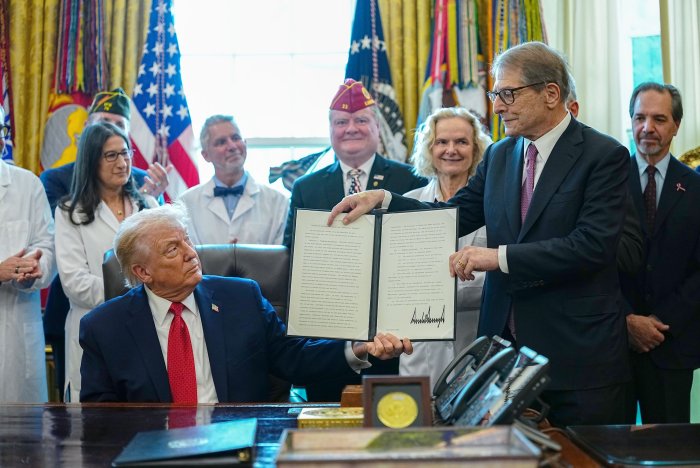
Dec. 16 (UPI) — President Donald Trump has awarded 13 soldiers and Marines the newly established Mexican Border Defense Medal for their contributions to safeguarding the U.S. southern border.
The service members are the first to receive the commendation, created Aug. 13 in a memo signed by Defense Secretary Pete Hegseth to honor those deployed to the U.S.-Mexico border.
The commander-in-chief awarded the medals to the service members at the White House.
“On day one of my administration, I signed an executive order making it [the] core mission of the United States military to protect and defend the homeland. And today, we’re here to honor our military men and women for their central role in the protection of our border,” Trump said during the ceremony.
Since returning to the White House in January, Trump has overseen crackdowns on immigration and crime that have included the deployment of troops to the U.S.-Mexico border.
More than 10,000 U.S. military service members attached to Joint Task Force Southern Border have been deployed to the U.S.-Mexico border in support of the Department of Homeland Security, with the missions to secure the border, disrupt transnational criminal organizations and respond to national security threats.
Trump said Monday that more than 25,000 service members have served in this “incredible and historic operation,” which has overseen 13,000 patrols along the border.
“They’ve spent night and day enduring scorching hot and bitter cold, and they’ve given up their holidays and their weekends, working with the offices of Customs and Border Protection,” Trump said.
“And today, we give these great warriors the recognition that they have earned — and they have really earned it.”
The medal, according to the Department of Defense, is identical to the Mexican Border Service Medal awarded for service in 1916 and 1917 in the Mexican state of Chihuahua as well as the U.S.-Mexico border regions in New Mexico and Texas.
It is bronze with a sheathed Roman sword hanging on a tablet on the front, which bears an inscription that reads: “For Service on the Mexican Border.”
Those eligible for the award must have been permanently assigned to a designated Department of Defense military operation supporting CBP within the area of eligibility for at least 30 consecutive or non-consecutive days from Jan. 20 of this year.
“We’re proud of this mission,” Hegseth said during the White House event. “We’re proud to defend the American people and pinning these medals on is an example of how important it is to us.”
The Trump administration states that its crackdown has resulted in more than 2.5 million undocumented migrants removed from the United States and the lowest level of illegal border crossings since 1970.
Dec. 15 (UPI) — The trial for Milwaukee County Circuit Court Judge Hannah Dugan began Monday, with prosecutors playing audio of the judge saying she’ll “get the heat” by showing an undocumented defendant how to leave her courtroom to avoid immigration officials.
Dugan pleaded not guilty earlier this year to federal charges including one count of obstructing and official proceeding and concealing a person from arrest and another of concealing an individual to prevent his discovery and arrest.
The case stems from an incident on April 18, when Immigration and Customs Enforcement officials came to her courtroom and notified her they planned to arrest undocumented immigrant Eduardo Flores-Ruiz. They said she sent the agents to the chief judge’s office before going back to her courtroom, pushing Flores-Ruiz’s case to the front of her docket, then helped him and his lawyer leave from a private jury door.
The ICE agents ultimately found and arrested Flores-Ruiz.
During Monday’s trial, Assistant U.S. Attorney Keith Alexander played audio from the day appearing to depict Dugan speaking with the court reporter, Joan Butz, who offers to show Flores-Ruiz the private door. Dugan says, “I’ll do it. I’ll get the heat.”
Alexander said Dugan’s actions were tantamount to formulating an escape plan for Flores-Ruiz, according to the Milwaukee Journal Sentinel.
“The judicial robe the defendant wore that morning did not put her above the law,” Alexander said in his opening statements.
Dugan’s lawyer, former U.S. Attorney Steven Biskupic, said the private jury door Dugan showed Flores-Ruiz wasn’t hidden and was less than 12 feet away from the public doors of the courtroom. He said she didn’t seek to thwart ICE agents.
“Not even as far as your jury box,” he said. “There was a federal agent to the left and to the right.”
Biskupic said that instead of arresting Flores-Ruiz, the federal agents chose to follow him outside and arrest him after a foot chase, NBC News reported.
“Now, after the fact, everyone wants to blame Judge Dugan,” he said.
Dec. 15 (UPI) — A judge in Connecticut on Monday ordered the disbarment of Hunter Biden after his convictions on federal gun and tax charges and then pardoned by his father, Joe Biden, as president.
In Waterbury, Judge Trial Referee Patrick Carroll III suspended him from practicing law in the state after finding he violated the rules of professional conduct for attorneys.
In April, Biden voluntarily surrendered his license to practice law in Washington, D.C.
The judge found he violated several ethical rules for lawyers, including engaging in conduct for “dishonesty, fraud, deceit or misrepresentation. Carroll also cited the Washington disbarment in his decision.
During the virtual hearing, Biden, 55, didn’t contest the decision and didn’t speak. He appeared with his lawyer, Ross Garber.
Biden graduated from Yale Law School and passed the bar one year later in 1997. But Biden apparently hadn’t practiced law in recent years with no cases in state or civil court.
A reciprocal discipline was imposed in the District of Columbia, where Biden lives and consented to disbarment. There were two other grievances filed by private individuals after Biden’s federal convictions on tax and gun charges last year.
Paul Dorsey, a private attorney who filed a grievance, objected to the proposed resolution because Biden does not admit to the criminal acts.
“It was very frustrating, very odd, and frankly, I don’t think the court should accept the proposed disposition as it is written because it doesn’t comply with the Practice Book. He has to admit to it, and he’s not doing that,” Dorsey said.
The proposed disposition does not include the admission of a crime because of Biden’s pardon by his father on Dec. 1, Leanne M. Larson, first assistant chief disciplinary counsel, said.
In Delaware federal court, he was found guilty of purchasing a gun in 2018 while allegedly lying on a federal form about not illegally using or being addicted to drugs. He was scheduled to be sentenced before the pardon, facing up to 25 years in prison. As a first-time offender, he could have stayed out of prison.
Biden also faced charges in California for not paying at least $1.4 million in federal taxes. He agreed to plead guilty to misdemeanor and felony charges hours before jury selection was scheduled to begin in September 2024.
After the pardon, U.S. District Judge Maryellen Noreika closed the gun case, though she didn’t toss out the conviction.
The federal pardon covered the gun and tax offenses and any “offenses against the United States which he has committed or may have committed or taken part in during the period from January 1, 2014, through December 1, 2024.”
“Today, I signed a pardon for my son Hunter,” Biden said in a statement. “From the day I took office, I said I would not interfere with the Justice Department’s decision-making, and I kept my word even as I have watched my son being selectively, and unfairly, prosecuted.”
Biden said it was clear that his son was “treated differently” than other people who have faced similar circumstances, and that Hunter Biden was “singled out because he is my son.”
The younger Biden said in a statement that he has taken accountability and responsibility for his mistakes “during the darkest days of my addiction.”
“I will never take the clemency I have been given today for granted and will devote the life I have rebuilt to helping those who are still sick and suffering,” he said.
Dec. 15 (UPI) — Florida Gov. Ron DeSantis on Monday said President Donald Trump’s executive order last week seeking national rules on artificial intelligence doesn’t prevent states from imposing laws on the use of the technology.
Speaking at an AI event at Florida Atlantic University, DeSantis said Florida will move forward on AI policies he has dubbed a “Citizen Bill of Rights for Artificial Intelligence.”
“The president issued an executive order. Some people were saying, ‘well, no, this blocks the states,'” DeSantis said, according to The Hill. “It doesn’t.”
Trump signed an executive order Thursday seeking to give the United States a “global AI dominance through a minimally burdensome national policy framework.”
“To win, United States AI companies must be free to innovate without cumbersome regulation,” the order says. “But excessive state regulation thwarts this imperative.”
Politico reported the Trump administration has said it’s prepared to file lawsuits and without funding to states that interfere with federal AI plans.
DeSantis said, though, that an executive order can’t block states.
“You can preempt states under Article 1 powers through congressional legislation on certain issues, but you can’t do it through executive order,” he said.
“But if you read it, they actually say a lot of the stuff we’re talking about are things that they’re encouraging states to do. So even reading very broadly, I think the stuff we’re doing is going to be very consistent. But irrespective, clearly we have the right to do this.”
Dec. 15 (UPI) — Trinidad and Tobago announced Monday that it will open up its airport to U.S. military flights as tensions escalate between the United States and Venezuela.
The country’s foreign ministry announced it has “granted approvals” to military jets to use its airports, adding that the United States said the flights would be “logistical in nature, facilitating supply replenishment and routing personnel rotations.”
“The Ministry of Foreign and CARICOM Affairs maintains close engagement with the United States Embassy in Trinidad and Tobago,” an announcement from Trinidad and Tobago said.
“The honorable prime minister, Kamla Persad-Bissessar, has affirmed the government’s commitment to cooperation and collaboration in the pursuit of safety and security for Trinidad and Tobago and the wider region. We welcome the continued support of the United States.”
At its closest point, Trinidad is just 7 miles from Venezuela.
The country allowed the USS Graverly to dock Oct. 26 and conducted joint military drills with the U.S. 22 Marine Expeditionary Unit in October and November.
The U.S. military also installed a high-tech radar unit, AN/TPS-80 G/ATOR at the ANR Robinson International Airport in Crown Point, on Tobago, ostensibly to combat drug trafficking.
Persad-Bissessar initially denied reports of Marines being in Trinidad and Tobago. She retracted those statements last month, saying there were Marines working on the radar, runway and road.
Some on the island have expressed concern that it could be used as a launchpad for fighting with Venezuela, but Persad-Bissessar has denied that. She has voiced support of the U.S. attacks on boats in the Caribbean.
The United States has placed a large number of ships in the Caribbean, including warships, fighter jets, Marines and the USS Gerald R. Ford to show force against Venezuelan President Nicolas Maduro, a foe of President Donald Trump.
A banner advertising Spotify’s public trading debut hangs in April 2018 from the facade of the NYSE in New York City, N.Y. The streaming platform Spotify experienced a brief disruption to its services in the morning hours, according to social media updates. File Photo by Monika Graff/UPI | License Photo
Dec. 15 (UPI) — Spotify said Monday an unknown glitch hampered service for thousands of users of the music streamer.
The streaming platform Spotify experienced a brief disruption to its services in the morning hours, according to updates on social media.
“All clear! Thanks for your patience,” Spotify Status posted on X at 10:34 a.m. local time.
Spotify first acknowledged the issue around 9:45 a.m. local time. But the cause remains unclear.
“We’re aware of some issues right now and are checking them out!” officials wrote in the morning.
At one point, Downdetector showed more than 10,000 reports on the issue.
The company followed up roughly an hour later confirming the outage had been resolved by 10:34 a.m. local time.
In May, Spotify announced that Apple had approved its app update following a federal court ruling that found the tech giant in violation of an earlier injunction.
Meanwhile, Spotify said Monday if users still experience issues they can find out more on a community support thread page it posted.
Company Kawasaki Heavy Industries presents its latest humanoid robot, “RHP Kaleido 9,” during the 2025 International Robot Exhibition in Tokyo on December 3, 2025. Photo by Keizo Mori/UPI | License Photo
Cazzu made a special announcement Monday: Come 2026, she will be touring in the U.S. for the first time.
The Argentine singer will kick off her seven-show U.S. tour April 30 with a performance at the San Jose Civic in San José. Her jaunt across the country will end May 10 at the 713 Music Hall in Houston.
Along the way, the “Loca” artist will stop at the Cal Coast Credit Union Open Air Theater in San Diego on May 1 before performing at the YouTube Theater in Inglewood on May 2.
Her debut U.S. tour is an extension of her ongoing Latin American tour, which just wrapped up its most recent leg earlier this month with a concert in her native Argentina.
Before landing in the U.S., Cazzu will play a handful of shows in Argentina in January and February, and will also perform at the Isle of Light Music Festival in the Dominican Republic on March 7.
All her previous and upcoming shows are in promotion of her fifth studio album, “Latinaje,” which was released April 24. The project infused a unique blend of the sounds of South America that helped inform Cazzu’s musical tastes, including Argentine chacareras, cumbias santafesinas, tango and Brazilian funk.
Inspired by Puerto Rican and Mexican musicians who have incorporated regionally specific sounds into their music, Cazzu aimed to highlight elements of Argentine folk music in her latest offering. “Perhaps there is a space where us Argentines can showcase our roots to the world,” she told The Times.
Hailing from the environmentally diverse Jujuy region of Argentina, Cazzu said her hometown of Fraile Pintado is a far cry from the metropolitan life of Buenos Aires.
“It’s a region that has a mixture of cultures,” Cazzu noted. “It’s my identity as a person but also as an artist. The folklore is alive there, [as well as] Andean folklore.”
Her homages to several traditional Indigenous and Argentine songs connect the new-age sounds that Cazzu has frequently employed to the lush history of a country with a rich musical background.
“It’s beautiful to give these songs a second life,” Cazzu said. “In 80 years, when I am no longer here, it would be beautiful if someone would revive something of mine.”
Dec. 15 (UPI) — An individual detained by police as a person of interest in the Brown University shooting will be released, authorities said late Sunday as the investigation into the crime continues.
The person of interest was taken into police custody early Sunday following a tip that led police to a Hampton Inn in the Rhode Island town of Coventry.
The announcement of the person’s imminent release was made before midnight Sunday in a social media statement from Providence Police.
“We know that this is likely to cause fresh anxiety for our community, and we want to reiterate what we said earlier, which remains true, which is ever since the initial call a day and a half ago, we have not received any credible or specific threats to the Providence community,” Providence Mayor Brett Smiley said during a late Sunday press conference about the individual’s release.
“And so the status of safety in our community remains unchanged and we believe that you remain safe in our community.”
Rhode Island Attorney General Peter Neronha explained that evidence initially pointed toward the individual taken into police custody, but as the investigation has continued, the evidence “now points in a different direction.”
“So, what that means is that this person of interest needs to be — and should be — released,” he said.
Police are continuing to investigate and develop leads as they hunt for a suspect, he said, as he asked the public to be patient as investigators comb through the facts.
“There is too much at stake for the victims of this horrific crime and their families to take chances with respect to this investigation,” he said.
Providence Police Chief Oscar Perez added that neither the individual’s apprehension nor their release was the result of an error, noting that such developments are part of the investigative process.
“Investigations will tell us whether something is valid or not, whether something needs to be ruled out. It’s not a mistake. It’s just how investigations work,” he said. “And our responsibility is to make sure that we conduct the proper investigations.”
Two people were killed and eight were injured in a late Saturday afternoon shooting at the Brown University campus as students were taking exams in the Barus and Holley Engineering Building.
Police had initially taken another person into custody, but later released them after determining they were not a suspect.
Authorities have released a short, 10-second clip from surveillance video showing a person of interest in the shooting.
During the Sunday press conference, Perez said the individual seen in the clip is not the person who was detained and is being released.
“I would describe that person as a person of interest,” Neronha added.
“There are a lot of unknowns in this case, and that’s one unknown … that what we’re working towards,” he said.
Brown University said in a late Sunday statement that Providence police have kept officials informed of their search efforts.
“We know that this update may prompt numerous questions,” the university said in a statement. “We continue to make every effort to ensure the safety and security of the campus. We are also advising every member of the Brown community to be vigilant in their own activities on campus.”
Powerball lottery ticket cards are on a rack at a gas station in Houston, Texas, in 2022. The Powerball jackpot reached an estimated $1.1 billion for Monday’s pick after 42 consecutive drawings with no winner. File Photo by John Angelillo/UPI | License Photo
Dec. 14 (UPI) — The Powerball jackpot has risen to an estimated $1.1 billion after there was no winner in Saturday’s drawing, among the largest prizes in the game’s history. The next drawing is scheduled for Monday night.
While there was no Powerball grand prize winner Saturday, ticket holders in 7 states won at least $1 million. Those tickets were sold in California. Florida, Michigan, New Jersey, North Carolina, Pennsylvania and Virginia.
Monday’s Powerball winner, should there be one, would have the choice between annual payments totaling $1.1 billion, or a one-time $503.4 million lump sum payout.
Two tickets in Missouri and Texas split the $1.787 billion Powerball prize on Sept. 6, the last time anyone claimed the grand prize. Since then, there have been 42 consecutive drawings with no winners.
The odds of winning the jackpot are 1 in 292.2 million, according to Powerball. Tickets are $2 each. Monday’s drawing is scheduled to happen just before 11 p.m. EST in the Florida Lottery draw studio in Tallahassee.
Powerball is available in 45 states, Washington, D.C., Puerto Rico and the Virgin Islands.
A Lululemon store pictured Dec. 2019 in Lynnfield, Mass. On Friday, the Canada-based company’s sock value spiked more than 9% in premarket trading following its announcement CEO Calvin McDonald will step down next month. Photo Provided by CJ Gunther/EPA
Dec. 12 (UPI) — Shares of Lululemon stock surged Friday after CEO Calvin McDonald announced his retirement.
The Canada-based company’s stock value spiked more than 9% in premarket trading following its announcement that McDonald was resigning from his role.
“The timing is right for a change,” McDonald said on a call. “I’ve described being CEO of Lululemon as my dream job. It truly has lived up to every expectation and given me the opportunity of a lifetime.”
McDonald expects a Jan. 31 departure from the athleisure company and will cap more than a year of lackluster performance.
Lululemon’s NYSE shares climbed 9.35% to $204.50 in recent trading, following a roughly 10% surge the day prior.
The company disclosed McDonald’s exit alongside fiscal third-quarter earnings and another batch of disappointing guidance.
According to the company, Lululemon’s board has engaged an unnamed “leading” executive search firm to replace McDonald.
The outgoing CEO will remain as senior adviser until March 31.
Lululemon named CFO Meghan Frank and Chief Commercial Officer Andre Maestrini as interim co-CEOs while it hunts for a permanent leader.
Meanwhile, Board chair Marti Morfitt will assume an expanded role as executive chair.
“As we look to the future, the board is focused on identifying a leader with a track record of driving companies through periods of growth and transformation to guide the company’s next chapter of success,” said Morfitt.
Lululemon reported quarterly revenue of $2.57 billion, up from $2.40 billion the same period last year.
McDonald pointed to a robust Thanksgiving weekend demand that helped the company clear outdated inventory through discounts.
He said early holiday results were “encouraging” as it looked ahead to the current quarter.
“I also want to acknowledge we’ve seen trends slow a bit since Thanksgiving, which we’ve taken into account in our Q4 guidance,” McDonald continued.
But he added it projected revenue of $3.50 billion to $3.59 billion, which was slightly under Wall Street forecasts.
Lululemon has grappled with mounting pressures over the past year, including competition and tariffs imposed by U.S. President Donald Trump.
Belarusian President Alexander Lukashenko, pictured at a press conference in January, agreed to release 123 political prisoners on Saturday in exchange for the United States dropping its crippling sanctions against the potash industry in Belarus. File Photo by Belarus President Press Service/EPA-EFE
Dec. 13 (UPI) — President Donald Trump on Saturday ended U.S. sanctions on potash fertilizers from Belarus in exchange for Belarusian President Alexander Lukashenko releasing 123 political prisoners.
Lukashenko freed the prisoners, who include Nobel Peace Prize laureate Ales Bialiatski and political opposition figure Maria Kolesnikova, in an effort to improve the Russia-allied nation’s relations with the United States, Bloomberg and the Los Angeles Times reported.
“In accordance with President Trump’s instructions, the United States is lifting sanctions on potash,” U.S. Special Envoy John Coale told Belta, Belarus’ official news agency.
“I believe this is a very good step by the United States for Belarus,” Coale said. “We are lifting them now.”
Belarus has been sanctioned by the U.S. and other Western nations since 2021 because of Lukashenko’s authoritarian rule and decades of political repression.
Sanctions have ramped up since 2022 because Lukashenko also allowed Russian President Vladimir Putin to launch his invasion of Ukraine from Belarus.
In 2024, Lukashenko started releasing prisoners in order to appease Western leaders, including Trump, and get sanctions lifted that have crippled the Belarusian potash industry.
Since July 2024, before Saturday’s prisoner release, Belarus has freed more than 430 political prisoners.
According to Coale, the United States is “constantly talking” to Belarus and lifting the U.S. sanctions on potash — European sanctions, which have been called more consequential than the U.S. sanctions, remain in place — is a step toward reaching a point where all sanctions against the country have been removed.
“As relations between the two countries normalize, more sanctions will be lifted,” Coale said.
Dec. 13 (UPI) — U.S. officials unsealed the warrant issued for the seizure of the shadow fleet oil tanker The Skipper, which the U.S. military seized in international waters earlier this week.
A federal magistrate judge with the U.S. District Court for the District of Columbia signed the seizure warrant on Nov. 26, which U.S. forces presented upon its seizure on Wednesday in the operation led by the Coast Guard.
“As the premier United States Attorney’s office leading efforts to intercept ghost vessels as well as sanctioned products, we remain committed to legally supporting President [Donald] Trump’s efforts to make the world a safer place,” U.S. Attorney Jeanine Pirro said in a news release on Friday.
Pirro called the tanker’s seizure an “enforcement action.”
The seizure led Cuban officials to denounce the action as an “act of piracy and maritime terrorism” that is a “serious violation of international law,” The Guardian reported.
“This action is part of the U.S. escalation aimed at hampering Venezuela’s legitimate right to freely use and trade its natural resources with other nations, including the supplies of hydrocarbons to Cuba,” officials with Cuba’s Foreign Ministry said Friday in a statement.
The tanker’s seizure negatively impacts Cuba and “intensifies the United States’ policy of maximum pressure and economic suffocation” against the island nation, the Cuban officials said.
The Skipper’s captain had listed its destination as Cuba’s port of Matanzas, but the vessel offloaded about 50,000 barrels of oil to another ship, which carried that oil to Cuba as The Skipper sailed east toward Asia, according to The New York Times.
About 80% of Venezuelan oil shipments go to China, but Venezuelan President Nicolas Maduro and former President Hugo Chavez have shipped oil to Cuba for decades.
In exchange for low-cost Venezuelan oil, Cuban officials provide security personnel for Maduro and thousands of medical staff and sports instructors to Venezuela.
Most of the oil sent to Cuba does not stay there and instead is sold to China to help fund the Cuban government, The Times reported.
The vessel was sanctioned by the United States and flying a Guyana flag when it was seized, but Guyana government officials said they have no record of the vessel being registered there.
U.S. officials said they will keep the oil carried by the 1,092-foot tanker, which is being taken to Galveston, Texas.
Weekly insights and analysis on the latest developments in military technology, strategy, and foreign policy.
The U.S. Navy says it is aiming to have the first of a new class of frigates based on an existing American design “in the water” by 2028. The U.S. Coast Guard’s Legend class National Security Cutter is reportedly the basis for the design in question. This all follows a decision to cancel the Constellation class frigate, a program marred by major delays and cost growth, which has now further exposed a highly concerning gap in the service’s future force structure plans. Constellation, meant to right the wrongs of the disastrous Littoral Combat Ship (LCS) program by buying a largely off-the-shelf frigate, had turned into a boondoggle of its own.
Navy Secretary John Phelan had announced the cancellation of Constellation just over two weeks ago. The Navy had awarded the first contract for a fleet of at least 10 of those warships in 2020. The service picked a design based on the existing Franco-Italian FREMM frigate, with the expectation that only relatively minor changes would be needed, and that this would help keep the program on track. However, over the past five years, the Constellation design morphed into almost a completely different vessel with only 15 percent commonality with its ‘parent.’ As of April, construction of the future USS Constellation was only around 10 percent complete, and the delivery timeline had slipped to 2029.
Navy Secretary John Phelan seen here speaking at a Marine Corps 250th anniversary event in October 2025. DoW
“We believe the future frigate can be in the water in 2028,” Jason Potter, the official currently performing the duties of the Assistant Secretary of the Navy for Research, Development, and Acquisition, told attendees at the U.S. Naval Institute’s annual Defense Forum Washington on Wednesday, according to Breaking Defense.
“We will be building a frigate. It will be based on an American design,” Phelan had said last weekend at the Reagan National Defense Forum, according to Defense One. “It is something we can build that we think, actually, will be done before the old Constellation.”
Phelan also said the follow-on frigate effort was part of a larger naval force structure and shipbuilding plan the Navy has been crafting under the current Trump administration, referred to as the “Golden Fleet.”
In addition, Breaking Defensereported that Phelan recently told individuals at a private dinner that the Legend class National Security Cutter, developed by U.S. shipbuilder Huntington Ingalls Industries (HII), would be the basis of the new frigate, citing two unnamed sources. That outlet said the Navy and HII declined to confirm or deny any connection between the National Security Cutter design and the post-Constellation frigate plans.
The Coast Guard’s Legend class cutter USCGC Hamilton. USCG
TWZ has also reached out for more information. In response to our queries, HII declined to speak to the Navy’s current frigate plans.
Starting with the National Security Cutter, 10 of which were built for the Coast Guard between 2005 and 2024, would not necessarily be a surprising choice. HII notably entered a variation of its Patrol Frigate concept, derived from the National Security Cutter, into the Navy’s FFG(X) competition that led to the Constellation class, something we will come back to later on.
A US Navy MH-60R Seahawk helicopter seen embarked on the Coast Guard’s Legend class cutter USCGC Midgett for an exercise in 2022. USCG
At the same time, the National Security Cutter design would have been modified significantly to meet Navy mission requirements for a frigate. The primary armament of each one of the Coast Guard’s Legend class cutters consists of a single 57mm gun in a turret on the bow. They also have a Phalanx Close-In Weapon System (CIWS) with a 20mm Vulcan cannon, and mounts for crew-operated machine guns at various points around the ship. The possibility of arming them with Harpoon anti-ship cruise missiles has come up in the past, but there has been no actual movement to integrate that capability.
In comparison, the Constellation class frigate design, with a displacement approaching 7,300 tons (at least per the original target), included a 32-cell Vertical Launch System (VLS) intended to fire SM-2 Block IIICs and Evolved Sea Sparrow Missiles (ESSM). These are both surface-to-air missiles. Some of those VLS cells were also expected to be loaded with a vertically-launched anti-submarine warfare weapon, likely a member of the RUM-139 Vertical Launch Anti-Submarine Rocket (VL-ARSOC) family or a follow-on design. All variants of the VL-ARSOC carry lightweight anti-submarine torpedoes as their payloads. There had been talk of integrating SM-6 multi-purpose missiles and Tomahawk land attack cruise missiles onto Constellation in the future.
There had been much discussion in the past about whether even the 32-cell VLS was sufficient for the Constellation‘s expected combination of anti-air, anti-surface warfare, and anti-submarine mission profiles, as you can read more about in detail in this past TWZ feature.
A rendering of a Constellation class frigate. The design’s 32-cell VLS array is seen right in front of the main superstructure. USN
Beyond the VLS, each Constellation class frigate was set to be armed with launchers for 16 RGM-184 Naval Strike Missile (NSM) cruise missiles (which have anti-ship and land-attack capabilities), a single launcher loaded with RIM-116 Rolling Airframe Missiles (RAM) for close-in defense, a 57mm main gun, and mounts for multiple crew-operated machine guns.
Navy requirements for sensors and other systems missions, as well as other design features, would also differ from what the Coast Guard has laid out for the Legend class, which would require significant changes to the existing design. As one example, the Constellation class frigates were expected to feature a version of the Aegis Combat System, a key capability not found on the Coast Guard’s cutters.
There is also the matter of the Navy’s distinct shipbuilding and survivability standards for surface warships. Power generation, cooling, and even tweaks to propulsion could be needed.
It is important to remember, as mentioned, that a central factor in the collapse of the Constellation class program was the excessive changes between that design and the Franco-Italian FREMM (which stands for Fregata Europea Multi-Missione, meaning European Multi-Mission Frigate in English), from which it was derived. The Navy had expressly intended to reduce risks for that program by starting with a proven, in-production warship.
An infographic from circa 2021 with details about how significantly the Constellation class design differed from its ‘parent’ design, the Franco-Italian Fregata Europea Multi-Missione (FREMM). USN via CRS
As mentioned, HII has already done significant design work on the Patrol Frigate concept over the past decade or so. HII has put forward multiple variations of that design, including ones with 12 and 16-cell VLS arrays, as well as various other weapons and mission systems beyond what are found on the Legend class configuration.
Patrol Frigate Variants – Information Video
“Regarding the original frigate competition, we did bid a variation of the NSC [National Security Cutter] that was lethal, low risk, and affordable,” an HII spokesperson had told Breaking Defense when asked about Phelan’s reported comments. “We look forward to partnering with the Navy on designs for the ships they need.”
There is also a question of whether the Navy might be able to more directly leverage the Coast Guard’s National Security Cutter program in its new frigate plans. In June of this year, HII confirmed to USNI News that it had stopped work on what was expected to be the 11th member of the Legend class, set to be named the USCGC Friedman, following the settlement of a contract dispute with the Coast Guard. How far along work on that ship was at the time, and whether it would be feasible to complete it in a new Navy-specific configuration, is unclear. Fabrication of the future Friedmanhad started in 2021. In addition, Congress previously approved funding for the Coast Guard to purchase long lead time materials in relation to an option to buy a 12th Legend class cutter, which has never been executed.
A picture HII release in 2021 showing workers cutting steel for the future USCGC Friedman. HII
The National Security Cutter’s career with the Coast Guard to date has not been entirely smooth sailing, either. The service has been open about the challenges it has been facing in operating and sustaining its Legend class ships.
“When a National Security Cutter pulls into port, we do a controlled parts exchange, which is a fancy term for cannibalizing our readiness,” Acting Coast Guard Commandant Adm. Kevin Lunday had said at the Navy League’s annual Sea Air Space conference earlier this year. “You can only cannibalize your readiness and eat your own readiness for so long in that downward death spiral, and that’s where we’re at.”
Lunday made clear that this was reflective of broader readiness issues facing his service, compounded by budgetary challenges. The Navy fielding a fleet of National Security Cutter-derived frigates might help here by spreading cost burdens differently across a shared supply chain. The Navy already has a history of cooperating with the Coast Guard on major shipbuilding efforts.
Though the Navy’s plan to use the National Security Cutter as a starting place for a new frigate does remain unconfirmed, it’s unclear what other options there might even be for a new warship in this category that is “based on an American design.” The U.S. subsidiary of Australian shipbuilder Austal and Lockheed Martin did compete for FFG(X) with expanded versions of their respective Independence and Freedom class Littoral Combat Ships (LCS). Lockheed Martin dropped out of the running early, reportedly because it could not rework the Freedom design enough to meet the Navy’s requirements. Austal USA had continued on, but the Navy passed on its offer, as well. Variations of the Freedom class LCS are still being built, including four Multi-Mission Surface Combatant (MMSC) derivatives for Saudi Arabia. The last Independence class LCS was delivered to the Navy earlier this year.
A Navy briefing slide highlighting the FFG(X) competitors. In addition to the FREMM, Independence class, Freedom class, and Patrol Frigate-based designs, General Dynamics’ Bath Iron Works (BIW) had submitted an offer in partnership with Spanish shipbuilder Navantia. USN
It should also be noted that there are several modern frigate designs available on the open market elsewhere in the world. Japan’s futuristic Mogami class stands out particularly in this regard, with examples of an expanded version with a larger 32-cell VLS array now being built and a historic export deal for additional hulls for Australia secured earlier this year. This means two U.S. allies in the Pacific are now set to have fleets of these ships, which could offer operational and sustainment benefits, especially in the context of a major conflict or other contingency that both nations might find themselves involved in. Finding ways to maximize that kind of commonality would also be advantageous for the U.S. Navy when selecting a new frigate.
A rendering of a Type 26 frigate. BAE SystemsThe South Korean Batch II Daegu class frigate ROKS Chuncheon. South Korean Defense Acquisition Program AdministrationThe first F110 frigate for the Spanish Navy seen being launched earlier this year. Navantia
A version of the Type 26 now in development for Canada, called the River class, as well as the F110, both notably feature the Aegis Combat system, as well as versions of Lockheed Martin’s still very new AN/SPY-7 radar. It’s also worth pointing out that the Canadian armed forces also refer to the future River class warships as destroyers rather than frigates, reflecting a particular view of their expected capabilities and mission sets. In the context of the U.S. Navy’s new frigate plans, being able to leverage an existing design that already has key desired systems baked in, at least in certain subvariants, could be highly beneficial. Integrating Aegis, and the radar arrays that go along with it, in particular, is a major design driver for any warship, and having to modify an existing type to incorporate those features would come along with costs and complexities.
This all can only prompt questions about whether the Navy may be hamstringing itself now by centering its new frigate plans on an existing American design. The U.S. shipbuilding sector, overall, faces significant challenges at present, especially around workforce retention, after decades of contracting in size. This contributed to delays with Constellation, and continues to impact other Navy shipbuilding programs. These issues have become increasingly concerning from a broad national security perspective, especially given the huge gap now that exists in shipbuilding capacity compared to that of China, and the U.S. government has been trying to take steps to reverse the worrisome trends. The prospect of leveraging foreign yards to help build future Navy warships, as well as sustain existing fleets, has been raised. American authorities have also been courting foreign investment in the shipbuilding industry in the United States. A U.S.-South Korean trade agreement announced in November notably included a pledge by the latter country to pump $150 billion into America’s shipbuilding sector.
Given what happened with the Constellation class, any future Navy frigate program is likely to face significant scrutiny, including from Congress, in general, and be seen as a major test of the service’s ability to avoid past pitfalls. Since he was confirmed to the post in March, Navy Secretary Phelan has been consistently pledging to shake up how the service buys ships and submarines, especially when it comes to accelerating delivery timelines and cutting costs.
From day one I made it clear: I won’t spend a dollar if it doesn’t strengthen readiness or our ability to win.
To keep that promise, we’re reshaping how we build and field the Fleet—working with industry to deliver warfighting advantage, beginning with a strategic shift away… pic.twitter.com/pbTpIPDfR8
“The requirements are going to be put in and done before we start building the first one,” Phelan also said about the new frigate plans at the Reagan National Defense Forum this past weekend, according to The Washington Times. “When we start building the first one, any change order will have to be put through me.”
“The Constellation class frigate was canceled because, candidly, it didn’t make sense anymore to build it,” Phelan also said. “It was 80 percent of the cost of a destroyer and 60 percent of the capability. You might as well build destroyers.”
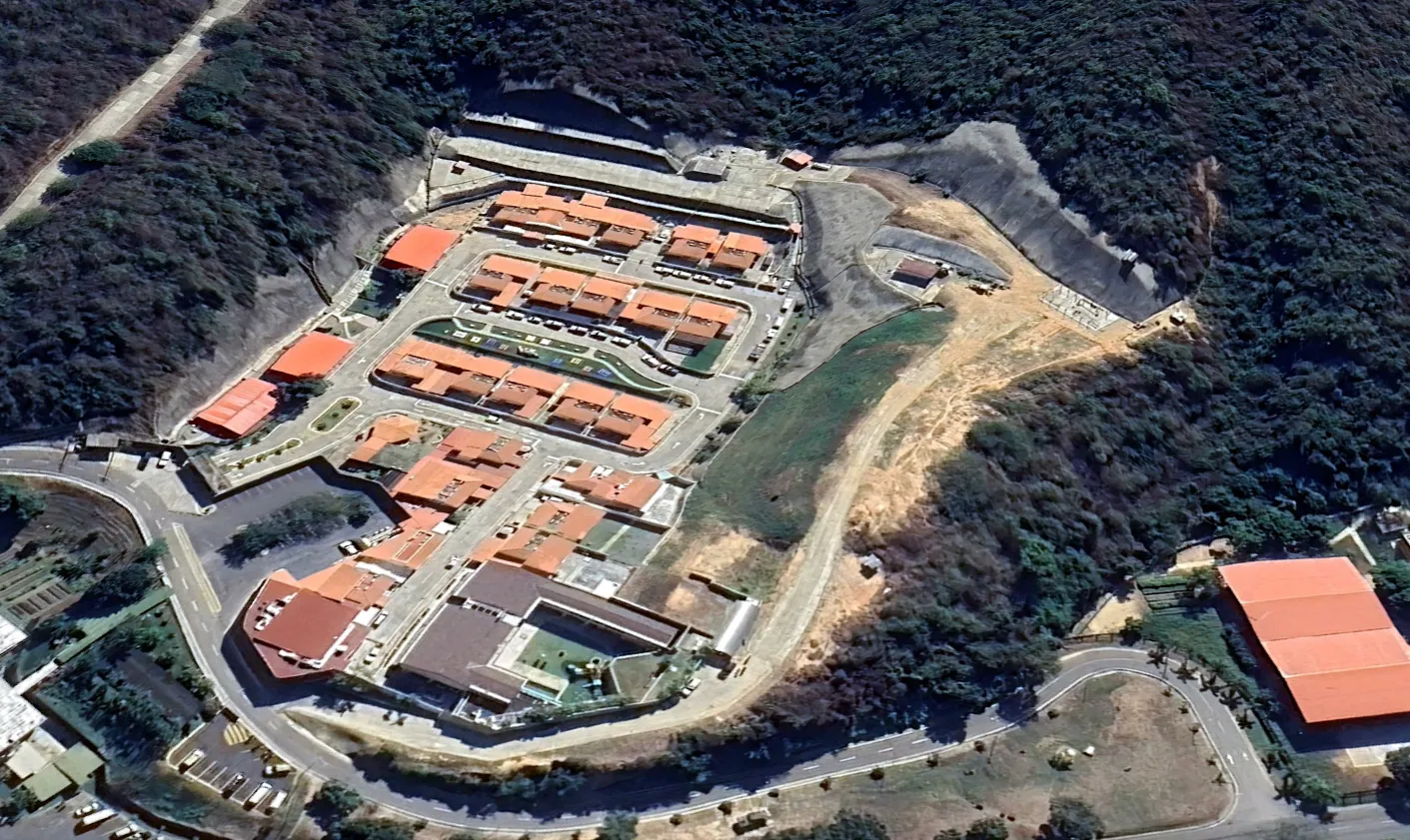
Locking in the design of any future class of frigates for the Navy, and doing so relatively quickly, will be absolutely key to avoiding what happened with Constellation. This, in turn, will require the service to accept the fact that frigates are not destroyers, and the tradeoffs and risks that come with that, especially when it comes to potentially employing the ships more independently in a higher threat environment.
Plenty of good frigate designs to put directly into production with MINOR subsystem tweaks to meet U.S. Navy’s basic needs. Rapid design lock prior to construction.
They could have spiraled in new capabilities and done an expanded variant down the line. They just couldn’t keep their hands out of the cookie jar. Even after LCS and DDG-1000 disasters, they couldn’t help themselves and went totally against the programs core objective.
How the Navy proceeds in its push now to right the wrongs of the Constellation class program, and have the first example of a still sorely needed class of new frigates launched by 2028, will be an area of keen interest going forward.
On Dec. 3, the group released a cache of images from Epstein’s private island in the U.S. Virgin Islands, Little St. James.
Rep. Robert Garcia, D-Calif., said in a statement that the latest release from the estate included “over 95,000 photos, including images of the wealthy and powerful men who spent time with Jeffrey Epstein” and “thousands of photographs of women and Epstein properties.”
“It is time to end this White House cover-up and bring justice to the survivors of Jeffrey Epstein and his powerful friends,” Garcia said in a statement. “These disturbing photos raise even more questions about Epstein and his relationships with some of the most powerful men in the world. We will not rest until the American people get the truth. The Department of Justice must release all the files, NOW.”
The committee spokesperson accused Democrats of “cherry-picking photos and making targeted redactions to create a false narrative about President Trump.”
“We received over 95,000 photos and Democrats released just a handful. Democrats’ hoax against President Trump has been completely debunked. Nothing in the documents we’ve received shows any wrongdoing. It is shameful Rep. Garcia and Democrats continue to put politics above justice for the survivors,” the spokesperson said.
Gates has previously told CNN’s Anderson Cooper that “It was a huge mistake to spend time with [Epstein], to give him the credibility of being there.”
Speaker of the House Mike Johnson, R-La., departs a closed-door meeting with Republican leadership about health care negotiations at the US Capitol on Friday. Johnson and House Republicans hope to hold a vote next week on their own health care program. Photo by Jim Lo Scalzo/UPI | License Photo
Dec. 12 (UPI) — President Donald Trump has voiced support for reclassifying cannabis and making it a legally obtainable drug — possibly as soon as next week.
The president might sign an executive order to reclassify cannabis as a Schedule III drug as soon as Monday, accordingto CNBC, but no later than early next year, Axios reported.
Trump has a team examining the matter, but no decision has been made as of Friday morning.
The president also met with House Speaker Mike Johnson, R-La., earlier this week to discuss the matter and is considering signing an executive order compelling federal agencies to reclassify cannabis as a Schedule III drug.
The federal government currently has cannabis classified as a Schedule I drug with no known medical uses and a strong potential for abuse and dependency, as defined by the Controlled Substances Act.
Other drugs similarly classified include LSD, heroin and MDMA.
A Schedule III drug is one with recognized medicinal use and a low potential for abuse and dependency. Examples include ketamine, opioids and anabolic steroids, all of which require prescriptions to obtain legally.
Food and Drug Administration and the Drug Enforcement Agency, with assistance from the Health and Human Services Department, mostly determine how various drugs are scheduled by the federal government.
The push for reclassification of cannabis comes as more U.S. adults are using cannabis, while moving away from alcohol and tobacco products.
Reclassifying cannabis would not make marijuana legal for recreational use, but it would become legal for medicinal purposes and require a prescription.
Reclassification also would make it legal for cannabis producers to transport their products between states and enable federally chartered banks to process financial transactions related to legal cannabis sales.
Cannabis producers and retailers also could benefit from federal tax breaks.
News of a potential change in federal cannabis laws and enforcement boosted related stocks on Friday.
Cannabis stocks surged upward upon the prospect of cannabis becoming a legally obtainable substance at the federal level, in addition to respective states that have enacted recreational or medical marijuana laws, and many times both.
Several cannabis stocks posted respective gains ranging from more than 10% to about 35% during trading on Friday, CNBC reported.
Two dozen states, three U.S. territories and the District ofColumbia have legalized the medicinal and recreational use of cannabis, and a recent Gallup poll showed 64% or respondents support legalization, according to Axios.
At the federal level, the House of Representatives briefly considered decriminalizing cannabis during President Trump’s first term in office but delayed the matter until after the 2020 general election.
Legalization also could lessen the profit potential for drug cartels, which spurred Colombian President GustavoPetro in March to urge the Colombian Congress to legalize cannabis.
He said the nation’s continued prohibition against cannabis “only brings violence” among its drug cartels.
Speaker of the House Mike Johnson, R-La., departs a closed-door meeting with Republican leadership about health care negotiations at the US Capitol on Friday. Johnson and House Republicans hope to hold a vote next week on their own health care program. Photo by Jim Lo Scalzo/UPI | License Photo
Admiral Alvin Holsey relinquished his leadership of U.S. Southern Command on Friday ahead of his pending retirement after serving 37 years in the Navy. Photo by Mariano Macz/EPA
Dec. 12 (UPI) — U.S. Southern Command leader Adm. Alvin Holsey relinquished his command on Friday amid his pending retirement from the Navy after 37 years of service.
Holsey announced his pending retirement in October without giving a reason, CBS News reported.
He relinquished his command over military forces in South America during a ceremony Friday at Southern Command headquarters.
“We have worked hard and tirelessly to build relationships and understand requirements across the region,” Holsey said during a command-change ceremony.
“That work must continue across the whole government to deliver at the point of need to respond to shared threats in our neighborhood — the time is now.”
Joint Chiefs of Staff Chairman Gen. Dan Caine bestowed the Defense Distinguished Service Medal upon Holsey during the ceremony and included a citation that was signed by Defense Secretary Pete Hegseth.
“One of Adm. Holsey’s most significant achievements was the transformation of USSOUTHCOM into a more agile, capable and operationally present force,” U.S. Southern Command officials said Thursday in a news release, as reported by The Hill.
“Under his leadership, the command expanded from roughly 3,500 personnel to nearly 15,000 personnel in direct support of operations in the region,” the release said.
“The operational impact was immediately felt, with the expanded U.S. presence across the region, improving responsiveness and strengthening deterrence.”
Holsey initially was scheduled to lead Southern Command for four years, but stepped down amid the U.S. military buildup in the region after taking command in November 2024.
Holsey and Hegseth have had disagreements regarding strikes on alleged drug vessels and other actions that have raised tensions between the United States and Venezuelan President Nicolas Maduro, according to CBS News.
The U.S. military has targeted at least 22 vessels in strikes that have killed at least 87 crew members deemed “narco-terrorists” by the Trump administration and Hegseth since the strikes began in September.
Hegseth also accused Holsey of moving too slowly in developing options to ensure the United States has unhindered access to the Panama Canal, which President Donald Trump has said the nation should reclaim from Panama, according to The Wall Street Journal.
Air Force Lt. Gen. Evan Pettus is scheduled to replace Holsey as acting commander of Southern Command.
The staff of a Goodwill store in Palatka, Fla., found a live hand grenade among donations that a local bomb squad recovered and safely detonated at a secure location on Thursday. Photo by Bonnie Cash/UPI. | License Photo
Dec. 12 (UPI) — Staff at a Goodwill store in Palatka, Fla., found a live grenade among donations, which prompted the store’s evacuation on Thursday.
A store employee discovered the grenade in a bin near a door reserved for donations at the Goodwill store at 103 South State Road 19 in Palatka.
Officials for the Palatka (Fla.) Police Department said they responded immediately upon the grenade being reported and evacuated the building, First Coast News reported.
Personnel with the St. Johns County Sheriff’s Office Bomb Squad removed the grenade and remotely detonated it in a secure location.
A Goodwill spokeswoman Liz Morgan said the grenade was not placed on the store’s retail floor and said it’s important for people to ensure they don’t accidentally donate dangerous items.
“We want to remind the community to thoroughly check all items before donating, ensuring that hazardous items, such as explosives, firearms or ammunition, are not accidentally included,” the Palatka Police said in a prepared statement shared with NBC News.
“If you ever locate something that appears to be a hand grenade or other explosive device, do not touch it or handle it,” the PPD statement said. “Immediately evacuate the area and call law enforcement.”
Palatka is located in northeastern Florida and about 60 miles south of Jacksonville.
DORAL, Fla. — A U.S. Navy admiral who oversees military operations in Latin America handed off command responsibilities Friday as scrutiny increases over the Trump administration’s deadly strikes on alleged drug boats in the region.
Adm. Alvin Holsey has retired one year into a posting that typically lasts three to four years and transferred leadership duties to his top military deputy, Air Force Lt. Gen. Evan Pettus, during a ceremony at U.S. Southern Command headquarters near Miami.
In farewell remarks, Holsey did not mention the military operations or the reasons for his early retirement. But he urged his successor to uphold longstanding partnerships in the region by standing firmly behind the shared values of democracy and support for the rule of law.
“To be a trusted partner, we must be credible, present and engaged,” Holsey said.
Holsey’s shock retirement was announced by the Pentagon in October, over a month into the Trump administration’s strikes on suspected drug boats in the Caribbean Sea and the eastern Pacific Ocean that have killed at least 87 people. With the campaign facing growing scrutiny by Congress, Holsey briefed key lawmakers earlier this week.
Long-term replacement for Holsey hasn’t yet been named
The ceremony Friday was more subdued than past retirements, held outdoors amid a small crowd of mostly Southern Command staff and without Defense Secretary Pete Hegseth, because President Trump has yet to nominate Holsey’s replacement.
Gen. Dan Caine, chairman of the Joint Chiefs of Staff, made no mention of the military operations in Latin America as he thanked Holsey for his 37 years of service. Caine referred to Holsey as a “stoic” leader and “quiet professional” who always leads with his heart and head.
“It’s never been about you, it’s been about people, it’s been about others,” Caine said. “You’ve never said ‘I’ in all the conversations we’ve had. You’ve always said ‘we.’ … The impact you’ve had will last for a long time.”
Holsey is departing as Congress is scrutinizing the boat attacks, including one that killed two survivors clinging to the wreckage of an initial strike. Secretary of State Marco Rubio, Hegseth and other top officials have given classified briefings on Capitol Hill this week.
Holsey also spoke this week to key lawmakers overseeing the U.S. military by classified video call. Sen. Jack Reed, the top Democrat on the Senate Armed Services Committee, said afterward that Holsey answered senators’ questions but that “there are still many questions to be answered.” Reed later added that Holsey did not give a reason for his retirement other than saying it was a personal decision.
Boat strike scrutiny increases
Experts in the rules of warfare, human rights groups and even some of Trump’s allies in Congress have questioned the legality of the attacks on those accused of ferrying drugs. For decades, they were arrested at sea by the Coast Guard and brought to the U.S. for criminal prosecution.
The 22 known strikes against alleged drug-smuggling vessels are being supported by a giant flotilla of U.S. warships, attack helicopters, thousands of troops and even the nation’s most advanced aircraft carrier.
Trump’s Republican administration has defended its aggressive tactics, designating several drug cartels in Latin America as foreign terrorist organizations and declaring that the U.S. is in armed conflict with those criminal organizations, relying on a legal argument that gained traction after the Sept. 11, 2001, attacks.
The campaign has ramped up pressure on Venezuelan President Nicolás Maduro, who has been charged with narcoterrorism in the U.S. In a sharp escalation Wednesday, U.S. forces seized a sanctioned oil tanker that the Trump administration has accused of smuggling illicit crude. Sale of that oil on global energy markets is critical to Maduro’s grip on power.
Maduro has insisted the real purpose of the U.S. military operations is to force him from office.
Holsey’s departure is the latest in a long line of sudden retirements and firings that have befallen the military’s top ranks since Hegseth took charge of the Pentagon.
A native of rural Fort Valley, Ga., whose father and several uncles served in Vietnam, Holsey relinquished his command to Pettus to a soulful rendition of “Midnight Train to Georgia.”
Pettus, a fighter jet pilot with combat experience in Afghanistan and Iraq, had been serving as Holsey’s top deputy since late 2024. However, it’s unclear how long the Arkansas native will remain in the job. Whomever Trump nominates must be confirmed by the Senate.
California and a coalition of other states are suing the Trump administration over a policy charging employers $100,000 for each new H-1B visa they request for foreign employees to work in the U.S. — calling it a threat not only to major industry but also to public education and healthcare services.
“As the world’s fourth largest economy, California knows that when skilled talent from around the world joins our workforce, it drives our state forward,” said California Atty. Gen. Rob Bonta, who announced the litigation Friday.
President Trump imposed the fee through a Sept. 19 proclamation, in which he said the H-1B visa program — designed to provide U.S. employers with skilled workers in science, technology, engineering, math and other advanced fields — has been “deliberately exploited to replace, rather than supplement, American workers with lower-paid, lower-skilled labor.”
Trump said the program also created a “national security threat by discouraging Americans from pursuing careers in science and technology, risking American leadership in these fields.”
Bonta said such claims are baseless, and that the imposition of such fees is unlawful because it runs counter to the intent of Congress in creating the program and exceeds the president’s authority. He said Congress has included significant safeguards to prevent abuses, and that the new fee structure undermines the program’s purpose.
“President Trump’s illegal $100,000 H-1B visa fee creates unnecessary — and illegal — financial burdens on California public employers and other providers of vital services, exacerbating labor shortages in key sectors,” Bonta said in a statement. “The Trump Administration thinks it can raise costs on a whim, but the law says otherwise.”
Taylor Rogers, a White House spokeswoman, said Friday that the fee was “a necessary, initial, incremental step towards necessary reforms” that were lawful and in line with the president’s promise to “put American workers first.”
Attorneys for the administration previously defended the fee in response to a separate lawsuit brought by the U.S. Chamber of Commerce and the Assn. of American Universities, arguing earlier this month that the president has “extraordinarily broad discretion to suspend the entry of aliens whenever he finds their admission ‘detrimental to the interests of the United States,’” or to adopt “reasonable rules, regulations, and orders” related to their entry.
“The Supreme Court has repeatedly confirmed that this authority is ‘sweeping,’ subject only to the requirement that the President identify a class of aliens and articulate a facially legitimate reason for their exclusion,” the administration’s attorneys wrote.
They alleged that the H-1B program has been “ruthlessly and shamelessly exploited by bad actors,” and wrote that the plaintiffs were asking the court “to disregard the President’s inherent authority to restrict the entry of aliens into the country and override his judgment,” which they said it cannot legally do.
Trump’s announcement of the new fee alarmed many existing visa holders and badly rattled industries that are heavily reliant on such visas, including tech companies trying to compete for the world’s best talent in the global race to ramp up their AI capabilities. Thousands of companies in California have applied for H-1B visas this year, and tens of thousands have been granted to them.
Trump’s adoption of the fees is seen as part of his much broader effort to restrict immigration into the U.S. in nearly all its forms. However, he is far from alone in criticizing the H-1B program as a problematic pipeline.
Critics of the program have for years documented examples of employers using it to replace American workers with cheaper foreign workers, as Trump has suggested, and questioned whether the country truly has a shortage of certain types of workers — including tech workers.
There have also been allegations of employers, who control the visas, abusing workers and using the threat of deportation to deter complaints — among the reasons some on the political left have also been critical of the program.
“Not only is this program disastrous for American workers, it can be very harmful to guest workers as well, who are often locked into lower-paying jobs and can have their visas taken away from them by their corporate bosses if they complain about dangerous, unfair or illegal working conditions,” Sen. Bernie Sanders (I-Vt.) wrote in a Fox News opinion column in January.
In the Chamber of Commerce case, attorneys for the administration wrote that companies in the U.S. “have at times laid off thousands of American workers while simultaneously hiring thousands of H-1B workers,” sometimes even forcing the American workers “to train their H-1B replacements” before they leave.
They have done so, the attorneys wrote, even as unemployment among recent U.S. college graduates in STEM fields has increased.
“Employing H-1B workers in entry-level positions at discounted rates undercuts American worker wages and opportunities, and is antithetical to the purpose of the H-1B program, which is ‘to fill jobs for which highly skilled and educated American workers are unavailable,’” the administration’s attorneys wrote.
By contrast, the states’ lawsuit stresses the shortfalls in the American workforce in key industries, and defends the program by citing its existing limits. The legal action notes that employers must certify to the government that their hiring of visa workers will not negatively affect American wages or working conditions. Congress also has set a cap on the number of visa holders that any individual employer may hire.
Bonta’s office said educators account for the third-largest occupation group in the program, with nearly 30,000 educators with H-1B visas helping thousands of institutions fill a national teacher shortage that saw nearly three-quarters of U.S. school districts report difficulty filling positions in the 2024-2025 school year.
Schools, universities and colleges — largely public or nonprofit — cannot afford to pay $100,000 per visa, Bonta’s office said.
In addition, some 17,000 healthcare workers with H-1B visas — half of them physicians and surgeons — are helping to backfill a massive shortfall in trained medical staff in the U.S., including by working as doctors and nurses in low-income and rural neighborhoods, Bonta’s office said.
“In California, access to specialists and primary care providers in rural areas is already extremely limited and is projected to worsen as physicians retire and these communities struggle to attract new doctors,” it said. “As a result of the fee, these institutions will be forced to operate with inadequate staffing or divert funding away from other important programs to cover expenses.”
Bonta’s office said that prior to the imposition of the new fee, employers could expect to pay between $960 and $7,595 in “regulatory and statutory fees” per H-1B visa, based on the actual cost to the government of processing the request and document, as intended by Congress.
The Trump administration, Bonta’s office said, issued the new fee without going through legally required processes for collecting outside input first, and “without considering the full range of impacts — especially on the provision of the critical services by government and nonprofit entities.”
The arguments echo findings by a judge in a separate case years ago, after Trump tried to restrict many such visas in his first term. A judge in that case — brought by the U.S. Chamber of Commerce, the National Assn. of Manufacturers and others — found that Congress, not the president, had the authority to change the terms of the visas, and that the Trump administration had not evaluated the potential impacts of such a change before implementing it, as required by law.
Joining in the lawsuit — California’s 49th against the Trump administration in the last year alone — are Arizona, Colorado, Connecticut, Delaware, Hawaii, Illinois, Maryland, Massachusetts, Michigan, Minnesota, North Carolina, New Jersey, New York, Oregon, Rhode Island, Vermont, Washington and Wisconsin.
WINOOSKI, Vt. — A small school district in Vermont was hit with racist and threatening calls and messages after a Somali flag was put up a week ago in response to President Trump referring to Minnesota’s Somali community as “ garbage.”
The Winooski School District began to display the flag Dec. 5 to show solidarity with a student body that includes about 9% people of Somali descent.
“We invited our students and community to come together for a little moment of normalcy in a sea of racist rhetoric nationally,” said Winooski School District Supt. Wilmer Chavarria, himself a Nicaraguan immigrant. “We felt really good about it until the ugliness came knocking Monday morning.”
The Somali flag was flown alongside the Vermont state flag and beneath the United States flag at a building that includes K-12 classrooms and administrative offices. Somali students cheered and clapped, telling administrators the flag flying meant a great deal to them, he said.
What ensued was a deluge of phone calls, voicemails and social media posts aimed at district workers and students. Some school phone lines were shut down — along with the district website — as a way to shield staff from harassment. Chavarria said videos of the event did not also show the U.S. and Vermont flags were still up and spread through right-wing social media apps, leaving out the important context.
“Our staff members, our administrators and our community are overwhelmed right now, and they are being viciously attacked. The content of those attacks is extremely, extremely deplorable. I don’t know what other word to use,” Chavarria said Tuesday.
Mukhtar Abdullahi, an immigrant who serves as a multilingual liaison for families in the district who speak Somali and a related dialect, said, “no one, no human being, regardless of where they come from, is garbage.” Students have asked if their immigrant parents are safe, he said.
“Regardless of what happens, I know we have a strong community,” Abdullahi said. “And I’m very, very, very thankful to be part of it.”
The district is helping law enforcement investigate the continued threats, Chavarria said, and additional police officers have been stationed at school buildings as a precaution.
Winooski, a former mill town of about 8,000 people, is near Burlington, about 93 miles south of Montreal.
Somali refugees came to the area beginning in 2003 as part of a U.S. government approved resettlement plan, according to the Somali Bantu Community Assn. of Vermont.
White House spokesperson Abigail Jackson called the calls and messages the school received “the actions of individuals who have nothing to do with” Trump.
“Aliens who come to our country, complain about how much they hate America, fail to contribute to our economy, and refuse to assimilate into our society should not be here,” Jackson said in an email late Thursday. “And American schools should fly American flags.”
Federal authorities last week began an immigration enforcement operation in Minnesota to focus on Somali immigrants living unlawfully in the U.S. Trump has claimed “they contribute nothing ” and said, “I don’t want them in our country.” The Minneapolis mayor has defended the newcomers, saying they have started businesses, created jobs and added to the city’s cultural fabric. Most are U.S. citizens and more than half of all Somali people in Minnesota were born in the U.S.
At the school district in Vermont, Chavarria said his position as superintendent gave him authority to fly the flag for up to a week without the school board’s explicit approval.
The school district also held an event with catered Somali food, and Chavarria plans to continue to find ways to celebrate its diversity.
“I felt sorrow for the students, the families, the little kids that are my responsibility to keep safe. And it’s my responsibility to make them feel like they belong and that this is their country and this is their school district. This is what we do,” he said.
Swinhart and Scolforo write for the Associated Press. Scolforo reported from Harrisburg, Penn.