Dec. 27 (UPI) — President Donald Trump and Treasury Sec. Scott Bessent urged an end to the Senate filibuster rule ahead of an anticipated budget battle in January.
Bessent submitted an op-ed that The Washington Post published on Saturday and blames Senate Democrats and the filibuster for blocking passage of a resolution to keep the federal government open while negotiating the 2026 fiscal year budget and causing a record 43-day shutdown of the federal government.
“The American people are just now emerging from the longest and most devastating government shutdown in U.S. history,” Bessent said.
“While the blame lies squarely with Senate Democrats, we cannot ignore the weapon they used to hold the country hostage: the legislative filibuster,” Bessent wrote.
With the continuing resolution expiring on Jan. 30, Bessent said there is a strong likelihood that Senate Democrats again will use the filibuster to block passage of a budget and force the government to close again.
“Democrats inflicted tremendous harm on the nation, including $11 billion in permanent economic damage” as the federal government was “held for ransom by the left’s demands,” Bessent said.
He said the shutdown caused the nation to lose 1.5 percentage points in gross domestic product growth during the fourth quarter, triggered 9,500 canceled flights and caused 1.4 million federal workers to miss their paychecks.
He called the filibuster a “historical accident that has evolved into a standing veto for the [Senate] minority and a license for paralysis.”
The Constitution does not mention a filibuster, and its “framers envisioned debate, but they expect majority rule,” Bessent said.
He said the filibuster has its roots in an 1806 Senate rules decision that deleted a “previous question” motion, which unintentionally removed the Senate’s mechanism for ending debate with a majority vote.
Senators later realized they could “delay or block” legislative action with unending debate, and just the threat of a filibuster is enough to trigger the filibuster rule requiring a supermajority of 60 votes to end it, Bessent explained.
He said it is likely that Senate Democrats again will force the federal government to shut down at the end of January by blocking the 2026 fiscal year budget vote.
President Barack Obama called the filibuster a “‘Jim Crow relic,'” but Bessent said Senate Democrats always use it to their advantage whenever possible, and the president agrees.
“It’s time to end the filibuster,” Trump said while agreeing with Bessent in a social media post that includes Bessent’s op-ed.
He also told Politico that the GOP must end the filibuster when interviewed on Friday night.
Doing so will help his administration to undo damage that he said was caused by the Biden administration and led to very high inflation that he is trying to fix to make life more affordable in the United States, Trump said.
The president has urged Senate Republicans to end the filibuster as soon as possible and said Senate Democrats will do it the first chance that they get when they eventually win a majority in the Senate.
Senate Democrats in September and afterward overwhelmingly opposed a clean continuing resolution to keep the federal government open and instead submitted a resolution that would add $1.5 trillion in spending over the next 10 years to extend Affordable Care Act subsidies that expire at the end of December.
Senate Democrats control 47 seats, including two occupied by independents who caucus with Senate Democrats, while the GOP controls 53 seats, so neither party can overcome the filibuster rule without help from the other.
The Senate GOP could not muster the 60 votes needed to overcome the filibuster rule until eight Senate Democrats joined with most Senate Republicans to support the continuing resolution to end the 43-day government shutdown that began when the 2026 fiscal year started on Oct. 1.
Senate Democrats in 2022 tried to end the filibuster rule but could not obtain a simple majority due to opposition from Sens. Kyrsten Sinema of Arizona and Joe Manchin of West Virginia, both of whom were Democrats but have retired from politics.
Reporting from Sacramento — Sworn in Tuesday as California’s attorney general, Xavier Becerra said he will team up with his counterparts in other states to form a united front to defend state policies against any challenge from the administration of President Trump.
The Los Angeles Democrat, who resigned Tuesday from Congress to become California’s top lawyer, was appointed by Gov. Jerry Brown to counter Trump proposals that are expected to include mass deportations, a roll-back of environmental laws and the dismantling of the national healthcare system that Californians have come to rely on.
“I don’t think California is looking to pick a fight, but we are ready for one,” Becerra told reporters Tuesday at his first news conference as attorney general.
One of Becerra’s first actions will be to arrange meetings with like-minded attorneys general in other states to “start charting a path together as a team on how we deal with representing our people.”
Becerra is supported by Democratic lawmakers as “the tip of the spear” for California in a coming legal battle with the federal government. Some observers see the state becoming the leading antagonist of the Trump administration in much the same way Republican elected officials in Texas were a leading counterforce to the administration of former President Obama.
At the same time, Becerra has been counseled by former top officials of the state attorney general’s office to avoid suing the federal government “early and often” because it could result in legal precedents that they say might hurt California for decades.
“Becerra will need to box, not brawl,” former state attorney general’s office advisors Michael Troncoso and Debbie Mesloh wrote in a recent op-ed piece published by The Times.
Becerra, 58, is the state’s first Latino attorney general and supports California policies that provide immigrants in the country illegally with driver’s licenses, college financial aid and legal services to appeal deportations.
He weighed in quickly Tuesday with concerns about a Trump administration proposal to deport criminals in the country illegally who could pose a threat to the community. While committed to removing dangerous people from California streets, Becerra worried that any eventual deportation orders may be too broad, unfairly catching in the net those with minor offenses who are otherwise productive members of society.
“Is someone who has a broken tail light a criminal?” he asked. “I hope that’s not the definition that the administration in Washington, D.C., will use.”
Becerra was given the oath of office at the Capitol by Brown, who said that he “will be a champion for all Californians.” The ceremony was held before Brown delivered his annual State of the State address, and a day after Becerra received final confirmation by the state Senate.
Becerra was accompanied at the ceremony by his wife, physician Carolina Reyes, two of his three daughters, and his parents, both immigrants from Mexico.
Brown noted his appointee’s background during his speech.
“Like so many others, he is the son of immigrants who saw California as a place where, through grit and determination, they could realize their dreams,” Brown said.
Arturo Vargas, executive director of the National Assn. of Latino Elected and Appointed Officials, congratulated Becerra for making history as the first Latino in the post, and predicted he “will set the gold standard for defending the values of the Golden State and fighting for the rights of Latinos and all Californians.”
Asked what it means to have a Latino become attorney general, Becerra said “It’s about time.”
Brown appointed Becerra to fill a vacancy created when former state Atty. Gen. Kamala Harris won election to a seat in the U.S. Senate.
Becerra, who did not attend the Trump inauguration, said he would take direction from Brown’s speech Tuesday.
“You heard the governor,” Becerra said later to reporters. “He laid out a game plan that’s forward leaning. It’s clear that we’re going to move forward and we’re not stopping.”
The new attorney general said he planned to meet with staff at the state Department of Justice on Tuesday. He said he also looks forward to working together with former U.S. Atty. Gen. Eric Holder, whose law firm was hired by the California Legislature to provide advice in dealing with potential threats from the federal government over conflicting policies.
“The more we prove that we are ready to take on any battle, the better off we will be,” Becerra said.
Becerra met with some county sheriffs on Monday, but plans to meet with more of them next week to talk about law enforcement issues facing the state. His first meetings with residents, civic leaders and others in coming weeks will be in the state’s Central Valley, he said.
“Some people think that California revolves around Los Angeles, San Francisco, sometimes Sacramento. There are a whole bunch of phenomenal Californians who often feel neglected,” Becerra said of people who live in the central part of the state.
The initial focus on local law enforcement in the Central Valley was welcomed by Kern County Sheriff Donny Youngblood, president of the California State Sheriffs’ Assn.
“He wants to start with law enforcement in the San Joaquin Valley, and I think that’s a really positive step,” Youngblood said. “I’m impressed with his credentials. I’m impressed with his background, and I think he’s going to be a good attorney general.”
Becerra will fill out the last two years of Harris’ term before the next election. He said he plans to run to keep the post in the 2018 election.
“I will officially open an account and do everything it takes to be a candidate for this office,” he said. “I hope that I can prove to the people of this state that I will be able to earn their support to be reelected.”
After 12 terms in Congress, Becerra’s appointment represents a homecoming, he told reporters.
“It’s nice to be here in Sacramento, where I grew up,” he said. “It’s nice to be in California. It’s nice not to have to do red-eye flights. It’s great to be home.”
South Korean President Lee Jae Myung (R) shakes hands with US President Donald Trump (L) after conferring the state-awarded Grand Mugunghwa Medal, South Korea’s highest order of civil merit, on Trump ahead of their talks at the National Museum in Gyeongju, North Gyeongsang Province, southeastern South Korea, 29 October 2025. In front of Lee is a replica of a Korean gold crown from a royal tomb of the Silla Kingdom (57 B.C.–A.D. 935) that was gifted to the US leader. Photo by YONHAP/EPA
Dec. 26 (Asia Today) — US President Donald Trump has presented South Korean President Lee Jae-myung with a symbolic “Key to the White House,” returning a diplomatic gesture after receiving a replica of a Silla-era gold crown earlier this year.
Kang Hoon-sik, chief of staff at the presidential office, said on Facebook on Tuesday that Trump sent Lee one of only five specially made golden keys associated with the White House, noting it was the final remaining piece. Trump reportedly decided to send the gift after receiving a particularly meaningful present during his visit to South Korea in October.
During the October APEC summit in Gyeongju, Lee presented Trump with a model of the gold crown excavated from Cheonmachong, a royal tomb from the ancient Silla Kingdom, as part of a bilateral summit between the two leaders.
According to Kang, the golden key was delivered on Dec. 16 when South Korea’s ambassador to the United States, Kang Kyung-wha, met Trump for talks. During the meeting, Trump was quoted as saying, “I really like him,” referring to Lee, and highlighting what he described as a strong cooperative relationship between the two presidents.
The White House golden key is said to have been personally designed by Trump to be given only to select guests of special significance. The key presented to Lee is engraved with the U.S. presidential seal and the words “Key to the White House.”
The honor places Lee among a small group of recipients that includes Israeli Prime Minister Benjamin Netanyahu, former Japanese Prime Minister Taro Aso, Tesla CEO Elon Musk, and football star Cristiano Ronaldo.
Kang also recalled an anecdote from a memoir by Trump’s son-in-law, Jared Kushner, which described Trump jokingly telling Netanyahu that even after leaving office, showing the key at the White House gate would grant him entry.
“This golden key, carrying special meaning, is hoped to become a symbol of the strong South Korea-U.S. relationship,” Kang said, adding that the administration would continue working toward a solid future for the bilateral alliance.
‘Debris was burning’.
Nigerians have described what they witnessed in US strikes on the town of Jabo, which President Donald Trump says were targeting ISIL.
Ramped up economic sanctions could lead to a quick deterioration of living standards. (Meridith Kohut)
The loudest question in Washington right now is whether Donald Trump is going to invade Venezuela. The quieter, and far more dangerous, reality is this: he probably won’t. Not because he cares about Venezuelan lives, but because he has found a strategy that is cheaper, less politically risky at home, and infinitely more devastating: economic warfare.
Venezuela has already survived years of economic warfare. Despite two decades of sweeping U.S. sanctions designed to strangle its economy, the country has found ways to adapt: oil has moved through alternative markets; communities have developed survival strategies; people have endured shortages and hardship with creativity and resilience. This endurance is precisely what the Trump administration is trying to break.
Rather than launching a military invasion that would provoke public backlash and congressional scrutiny, Trump is doubling down on something more insidious: total economic asphyxiation. By tightening restrictions on Venezuelan oil exports, its primary source of revenue, Trump’s administration is deliberately pushing the country toward a full-scale humanitarian collapse.
In recent months, U.S. actions in the Caribbean Sea, including the harassment and interdiction of oil tankers linked to Venezuela, signal a shift from financial pressure to illegal maritime force. These operations have increasingly targeted Venezuela’s ability to move its own resources through international waters. Oil tankers have been delayed, seized, threatened with secondary sanctions, or forced to reroute under coercion. The objective is strangulation.
This is illegal under international law.
The freedom of navigation on the high seas is a cornerstone of international maritime law, enshrined in the UN Convention on the Law of the Sea. Unilateral interdiction of civilian commercial vessels, absent a UN Security Council mandate, violates the principle of sovereign equality and non-intervention. The extraterritorial enforcement of U.S. sanctions, punishing third countries and private actors for engaging in lawful trade with Venezuela, has no legal basis. It is coercion, plain and simple. More importantly, the intent is collective punishment.
By preventing Venezuela from exporting oil, which is the revenue that funds food imports, medicine, electricity, and public services, the Trump administration is knowingly engineering conditions of mass deprivation. Under international humanitarian law, collective punishment is prohibited precisely because it targets civilians as a means to achieve political ends. And if this continues, we will see horrific images: empty shelves, malnourished children, overwhelmed hospitals, people scavenging for food. Scenes that echo those coming out of Gaza, where siege and starvation have been normalized as weapons of war.
U.S. actions will undoubtedly cause millions of Venezuelans to flee the country, likely seeking to travel to the United States, which they are told is safe for their families, full of economic opportunities, and security. But Trump is sealing the U.S. border, cutting off asylum pathways, and criminalizing migration. When people are starved, when economies are crushed, when daily life becomes unlivable, people move. Blocking Venezuelans from entering the United States while systematically destroying the conditions that allow them to survive at home means that neighboring countries like Colombia, Brazil, and Chile will be asked to absorb the human cost of Washington’s decisions. This is how empire outsources the damage. But these countries have their own economic woes, and mass displacement of Venezuelans will destabilize the entire region.
Venezuela is a test case. What is being refined now—economic siege without formal war, maritime coercion without declared blockade, starvation without bombs—is a blueprint. Any country that refuses compliance with Washington’s political and economic demands should be paying attention. This will be the map for 21st-century regime change.
And this is how Trump can reassure the United States Congress that he is not “going to war” with Venezuela. He doesn’t need to. Economic strangulation carries none of the immediate political costs of a military intervention, even as it inflicts slow, widespread devastation. There are no body bags returning to U.S. soil, no draft, no televised bombing campaigns. Just a steady erosion of life elsewhere.
Trump’s calculation is brutally simple: make Venezuelans so miserable that they will rise up and overthrow Maduro. That has been the same calculation behind U.S. policy toward Cuba for six decades—and it has failed. Economic strangulation doesn’t bring democracy; it brings suffering. And even if, by some grim chance, it did succeed in toppling the government, the likely result would not be freedom but chaos—possibly a protracted civil war that could devastate the country, and the region, for decades.
People in Venezuela celebrate Christmas and New Year’s gathered around the table to eat hallacas wrapped with care, slices of pan de jamón, and dulce de lechoza. They will share stories, dance to gaitas, and make a toast with Ponche Crema.
But if this economic siege continues, if Venezuelan oil is fully cut off, if the country is denied the means to feed itself, if hunger is allowed to finish what bombs are no longer politically useful to accomplish, then this Christmas may be remembered as one of the last Venezuelans were able to celebrate in anything resembling normal life, at least in the near future.
Polls consistently show that nearly 70 percent of people in the United States oppose a military intervention in Venezuela. War is recognized for what it is: violent, destructive, unacceptable. But sanctions are treated differently. Many people believe they are a harmless alternative, a way to apply “pressure” without bloodshed.
That assumption is dangerously wrong. According to a comprehensive study in medical journal The Lancet, sanctions increase mortality at levels comparable to armed conflict, hitting children and the elderly first. Sanctions do not avoid civilian harm – they systematically produce it.
If we oppose war because it kills, we must also oppose sanctions that do the same, only more quietly, more slowly, and with far less accountability. If we don’t act against economic warfare with the same urgency we reserve for bombs and invasions, then sanctions will remain the preferred weapon: politically convenient but equally deadly.
Michelle Ellner is the Latin America Campaign Coordinator at CODEPINK. Born in Venezuela, she holds a bachelor’s degree in Languages and International Affairs from Université Paris-Sorbonne (Paris IV). Her work focuses on U.S. foreign policy, economic sanctions, and solidarity with Latin America and the Caribbean.
The views expressed in this article are the author’s own and do not necessarily reflect those of the Venezuelanalysis editorial staff.
Dec. 26 (UPI) — A federal judge has blocked the deportation of a British man targeted by President Donald Trump.
Imran Ahmed, founder and CEO of the Center for Countering Digital Hate, was one of five people placed on a visa ban after the government accused him of censorship.
Ahmed filed suit against Secretary of State Marco Rubio and Attorney General Pam Bondi to prevent “the imminent prospect of unconstitutional arrest.”
The suit said the case comes from “the federal government’s latest attempt to abuse the immigration system to punish and punitively detain noncitizens for protected speech and silence viewpoints with which it disagrees.”
Ahmed is a legal permanent resident of the United States, where he lives with his American wife and child. He praised the judge’s decision.
“I will not be bullied away from my life’s work of fighting to keep children safe from social media’s harm and stopping antisemitism online,” Ahmed said.
The speed of the judge’s decision was telling, said his lawyer Roberta Kaplan.
“The federal government can’t deport a green card holder like Imran Ahmed, with a wife and young child who are American, simply because it doesn’t like what he has to say,” the BBC reported she said.
Rubio said in a statement Tuesday that the five had “led organized efforts to coerce American platforms to censor, demonetize and suppress” the views of Americans with whom they disagreed.
“These radical activists and weaponized NGOs have advanced censorship crackdowns by foreign states — in each case targeting American speakers and American companies,” Rubio said. He described the five as “agents of the global censorship-industrial complex.”
The others included in the ban are former European Union technology commissioner Thierry Breton; Anna-Lena von Hodenberg and Josephine Ballon of Berlin-based non-profit HateAid; Clare Melford, co-founder of Global Disinformation Index.
Ahmed told The Guardian that it was another attempt to deflect accountability and transparency.
“This has never been about politics,” he said. “What it has been about is companies that simply do not want to be held accountable and, because of the influence of big money in Washington, are corrupting the system and trying to bend it to their will, and their will is to be unable to be held accountable. There is no other industry that acts with such arrogance, indifference and a lack of humility and sociopathic greed at the expense of people.”
Ahmed said he had not formally received any notification from the government.
“I’m very confident that our first amendment rights will be upheld by the court,” he told The Guardian.
He is expected to be in court Monday, when the protective order will be confirmed.
In 2023, Elon Musk‘s company X sued the CCDH after it reported on a rise in hate speech on the platform since Musk’s takeover. The case was dismissed but X appealed the decision.
Simon Cowell, the judge on the TV series “American Idol” strangles the show’s host Ryan Seacrest during the May 15, 2003 photo op for the 2003 Fox Upfront at New York’s Grand Central Station in New York City. Photo by Ezio Petersen/UPI | License Photo
Ukrainian president highlights ‘significant progress’ in talks, but Moscow says Kyiv is working to ‘torpedo’ deal.
Published On 26 Dec 202526 Dec 2025
Share
Ukrainian President Volodymyr Zelenskyy is to meet with his United States counterpart, Donald Trump, in Florida on Sunday to discuss territorial disputes that continue to block progress towards ending Russia’s war on Ukraine.
Announcing the meeting on Friday, Zelenskyy said the talks could be decisive as Washington intensifies its efforts to broker an end to Europe’s deadliest conflict since World War II. “A lot can be decided before the New Year,” Zelenskyy said.
Recommended Stories
list of 3 itemsend of list
Territory remains the most contentious issue in the negotiations. Zelenskyy confirmed he would raise the status of eastern Ukraine and the Zaporizhzhia Nuclear Power Plant, which has been under Russian control since the early months of Russia’s invasion.
“As for the sensitive issues, we will discuss both Donbas and the Zaporizhzhia Nuclear Power Plant. We will certainly discuss other issues as well,” he told reporters in a WhatsApp chat.
Moscow has demanded that Kyiv withdraw from parts of the Donetsk region still under Ukrainian control as it pushes for full authority over the wider Donbas area, which includes Donetsk and Luhansk. Ukraine has rejected that demand, instead calling for an immediate halt to hostilities along the existing front lines.
Territorial concessions
In an attempt to bridge the divide, the US has floated the idea of establishing a free economic zone should Ukraine relinquish control of the contested area although details of how such a plan would operate remain unclear.
Zelenskyy reiterated that any territorial concessions would require public approval. He said decisions on land must be made by Ukrainians themselves, potentially through a referendum.
Beyond territory, Zelenskyy said his meeting with Trump would focus on refining draft agreements, including economic arrangements and security guarantees. He said a security pact with Washington was nearly finalised while a 20-point peace framework was close to completion.
Ukraine has sought binding guarantees after previous international commitments failed to prevent Russia’s invasion, which began in February 2022.
Trump has previously voiced impatience with the pace of negotiations, but he has indicated he would engage directly if talks reached a meaningful stage.
Last week, US Secretary of State Marco Rubio said his country is the only mediator that can speak to both sides to secure a peace agreement. At the same time, he downplayed the importance of the conflict for Washington.
“It’s not our war. It’s a war on another continent,” he said.
Zelenskyy said European leaders could join Sunday’s discussions remotely and confirmed he had already briefed Finnish President Alexander Stubb on what he described as “significant progress”.
Despite Zelenskyy’s assertion, Russian Deputy Foreign Minister Sergey Ryabkov accused Ukraine of working to “torpedo” the peace talks, saying a revised version of the US peace plan promoted by Kyiv was “radically different” from an earlier version negotiated with Washington.
“Our ability to make the final push and reach an agreement will depend on our own work and the political will of the other party,” he said during a television interview on Friday.
Ryabkov said any agreement must remain within the parameters set out between Trump and Russian President Vladimir Putin during a summit in August, which Ukraine and European partners have criticised as overly conciliatory towards Russia’s war aims.
On the ground, Moscow has intensified strikes on Ukraine’s energy infrastructure and the southern port city of Odesa while an attack on Kharkiv on Friday killed two people.
The US defence department posted a short video that appears to show a missile being launched from a military vessel
President Donald Trump has said the US launched a “powerful and deadly strike” against the Islamic State (IS) group in north-western Nigeria.
The US leader described IS as ” terrorist scum”, accusing the group of “targeting and viciously killing, primarily, innocent Christians”.
Trump said the US military “executed numerous perfect strikes”, while the US Africa Command (Africom) later reported that Thursday’s attack was carried out in co-ordination with Nigeria in the Sokoto state.
Nigerian Foreign Minister Yusuf Maitama Tuggar told the BBC it was a “joint operation” targeting “terrorists”, and it “has nothing to do with a particular religion”.
Without naming IS specifically, Tuggar said the operation had been planned “for quite some time” and had used intelligence information provided by the Nigerian side.
The minister did not rule out further strikes, adding that this depended on “decisions to be taken by the leadership of the two countries”.
In his post on Truth Social late on Thursday, Trump said that “under my leadership, our Country will not allow Radical Islamic Terrorism to prosper”.
He did not say at the time which killings he was referring to, but claims of a genocide against Nigeria’s Christians have been circulating in recent months in some right-wing US circles.
Meanwhile, US Defence Secretary Pete Hegseth said on Thursday that he was “grateful for Nigerian government support & cooperation”.
“Merry Christmas!” he added, writing on X.
AFP via Getty Images
President Trump last month ordered the US military to prepare for action in Nigeria
The US Department of Defense later posted a short video that appeared to show a missile being launched from a military vessel.
On Friday morning, the Nigerian foreign ministry said in a statement that the country’s authorities “remain engaged in structured security co-operation with international partners, including the United States of America, in addressing the persistent threat of terrorist and violent extremism.
“This has led to precision hits on terrorist targets in Nigeria by air strikes in the North West,” the statement said.
Groups monitoring violence say there is no evidence to suggest that Christians are being killed more than Muslims in Nigeria, which is roughly evenly divided between followers of the two religions.
An adviser to Nigerian President Bola Tinubu told the BBC at the time that any military action against the jihadist groups should be carried out together.
Daniel Bwala said Nigeria would welcome US help in tackling the Islamist insurgents but noted that it was a “sovereign” country.
He also said the jihadists were not targeting members of a particular religion and that they had killed people from all faiths, or none.
President Tinubu has insisted there is religious tolerance in the country and said the security challenges were affecting people “across faiths and regions”.
Trump earlier announced that he had declared Nigeria a “country of particular concern” because of the “existential threat” posed to its Christian population. He said “thousands” had been killed, without providing any evidence.
This is a designation used by the US state department that provides for sanctions against countries “engaged in severe violations of religious freedom”.
Following this announcement, Tinubu said his government was committed to working with the US and the international community to protect people of all faiths.
Jihadist groups such as Boko Haram and Islamic State West Africa Province have wrought havoc in north-eastern Nigeria for more than a decade, killing thousands of people – however most of these have been Muslims, according to Acled, a group which analyses political violence around the world.
In central Nigeria, there are also frequent clashes between mostly Muslim herders and farming groups, who are often Christian, over access to water and pasture.
Deadly cycles of tit-for-tat attacks have also seen thousands killed – but atrocities have been committed on both sides.
Human rights groups say there is no evidence that Christians have been disproportionately targeted.
The US Central Command (Centcom) said fighter jets, attack helicopters and artillery “struck more than 70 targets at multiple locations across central Syria”. Aircraft from Jordan were also involved.
This was not the Christmas that Mariela Gomez would have imagined a year ago.
Or the one that thousands of other Venezuelan immigrants in the United States would have thought. But Donald Trump returned to the White House in January and quickly ended their US dream.
Gomez found herself spending the holiday in northern Venezuela for the first time in eight years. She dressed up, cooked, got her son a scooter and smiled for her in-laws. Hard as she tried, though, she could not ignore the main challenges facing returning migrants: unemployment and poverty.
“We had a modest dinner, not quite what we’d hoped for, but at least we had food on the table,” Gomez said of the lasagne-like dish she shared with her partner and in-laws instead of the traditional Christmas dish of stuffed corn dough hallacas. “Making hallacas here is a bit expensive, and since we’re unemployed, we couldn’t afford to make them.”
Gomez, her two sons and her partner returned to the city of Maracay on October 27 after crossing the US-Mexico border to Texas, where they were quickly swept up by US Border Patrol amid the Trump administration’s crackdown on immigration. They were deported to Mexico, from where they began the dangerous journey back to Venezuela.
They crossed Central America by bus, but once in Panama, the family could not afford to continue to Colombia via boat in the Caribbean. Instead, they took the cheaper route along the Pacific’s choppy waters, sitting on top of sloshing petrol tanks in a cargo boat for several hours and then transferring to a fast boat until reaching a jungled area of Colombia. They spent about two weeks there until they were wired money to make it to the border with Venezuela.
Gomez was among the more than 7.7 million Venezuelans who left their home country in the last decade, when its economy came undone as a result of a drop in oil prices, corruption and mismanagement. She lived in Colombia and Peru for years before setting her sights on the US with hopes of building a new life.
Steady deportations
Trump’s second term has dashed the hopes of many like Gomez.
As of September, more than 14,000 migrants, mostly from Venezuela, had returned to South America since Trump moved to limit migration to the US, according to figures from Colombia, Panama and Costa Rica. In addition, Venezuelans were steadily deported to their home country this year after President Nicolas Maduro, under pressure from the White House, did away with his longstanding policy of not accepting deportees from the US.
Immigrants arrived regularly at the airport outside the capital, Caracas, on flights operated by a US government contractor or Venezuela’s state-owned airline. More than 13,000 migrants returned this year on the chartered flights.
Gomez’s return to Venezuela also allowed her to see the now 20-year-old daughter she left behind when she fled the country’s complex crisis. They talked and drank beer during the holiday, knowing it might be the last time they shared a drink for a while – Gomez’s daughter will migrate to Brazil next month.
Gomez is hoping to make hallacas for New Year’s Eve and is also hoping for a job. But her prayers for next year are mostly for good health.
“I ask God for many things, first and foremost life and health, so we can continue enjoying our family,” she said.
US president says ‘deadly strike’ in Nigeria targeted ISIL fighters who had killed ‘primarily, innocent Christians’.
Published On 25 Dec 202525 Dec 2025
Share
The United States has carried out an air strike against ISIL (ISIS) fighters in northwest Nigeria, US President Donald Trump said.
“Tonight, at my direction as Commander in Chief, the United States launched a powerful and deadly strike against ISIS Terrorist Scum in Northwest Nigeria,” Trump said in a post on his Truth Social platform on Thursday evening.
Recommended Stories
list of 4 itemsend of list
Trump said ISIL fighters had “targeted and viciously” killed “primarily, innocent Christians, at levels not seen for many years, and even Centuries!”
“I have previously warned these Terrorists that if they did not stop the slaughtering of Christians, there would be hell to pay, and tonight, there was,” Trump said.
The US military’s Africa Command (AFRICOM), which is responsible for operations in Africa, said in a post on X that the air strike was carried out “at the request of Nigerian authorities” and had killed “multiple ISIS terrorists”.
“Grateful for Nigerian government support & cooperation,” US Secretary of Defense Pete Hegseth wrote on social media, warning also of “more to come”, without providing details.
In a statement, AFRICOM said the strike occurred in “Soboto state,” an apparent reference to Nigeria’s Sokoto state.
[Al Jazeera]
The US military action comes weeks after Trump said he had ordered the Pentagon to begin planning for potential military action in Nigeria following claims of Christian persecution in the country.
Nigeria’s government has said armed groups target both Muslim and Christian communities in the country, and US claims that Christians face persecution do not represent a complex security situation and ignore efforts by Nigerian authorities to safeguard religious freedom.
Al Jazeera’s Shihab Rattansi, reporting from Washington DC, said the threat of US military action in Nigeria had been “percolating for some time” and Donald Trump had accused Nigeria of not doing enough to protect its Christian community in his first term as president.
“But in the last two months or so, with congressional pressure and the State Department, they declared Nigeria a particular country of concern when it came to the rights of Christians and we had heard that the US had begun overflight surveillance of Nigeria from an airbase in Accra, in Ghana, over the last several weeks. And now we have this,” Rattansi said.
“On Christmas day, the Trump administration acts. This will go down very well with Trump’s Christian evangelical base, I am sure,” he said.
Trump issued his attack statement on Christmas Day while he was at his Palm Beach, Florida, Mar-a-Lago Club, where he has been spending the holiday.
The National Capital Planning Commission will review the Trump administration’s plans to modernize the White House’s East Wing, including ballroom construction, during a Jan. 8 meeting. File Photo by Bonnie Cash/UPI | License Photo
Dec. 25 (UPI) — The National Capital Planning Commission has added the East Wing Modernization Project at the White House to its Jan. 8 agenda to review construction of a new ballroom and other improvements.
Trump administration officials will provide the commission with an informational presentation on the ballroom construction and other planned improvements, according to The Hill.
No public testimony will be heard and no vote taken on the project during the meeting, according to the NCPC.
“This is an opportunity for the project applicant to present the project and for commissioners to ask questions and provide general observations prior to formal review, which we anticipate this spring,” the NCPC said in a FAQ published on the commission’s website.
The NPC has no authority over White House demolitions or site preparations and only reviews building exteriors, per the National Capital Planning Act, but it does review proposed new construction or permanent site improvements.
The National Environmental Policy Act does give the NCPC the authority to review projects within the District of Columbia to ensure compliance with the NEPA.
The National Historic Preservation Act, though, does not apply in the matter as the White House and its grounds are excluded from its provisions.
The Trump administration initially said the construction of a new ballroom in the East Wing of the White House would cost $200 million, and said that the project will be funded by private donations.
President Donald Trump last week said the project could cost twice that amount but that donors would cover all additional costs, too.
The president earlier announced the ballroom construction, which he said is needed to provide a modern event space inside the White House.
Officials with the National Trust for Historic Preservation challenged the construction in federal court and sought an injunction to halt all work.
A federal judge denied the injunction request but ordered the Trump administration to undergo a review process for the project.
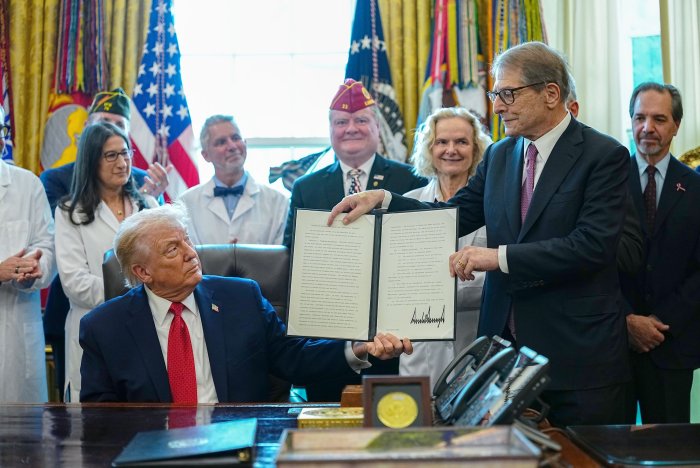
President Donald Trump holds a signed executive order reclassifying marijuana from a schedule I to a schedule III controlled substance in the Oval Office of the White House on Thursday. Photo by Aaron Schwartz/UPI | License Photo
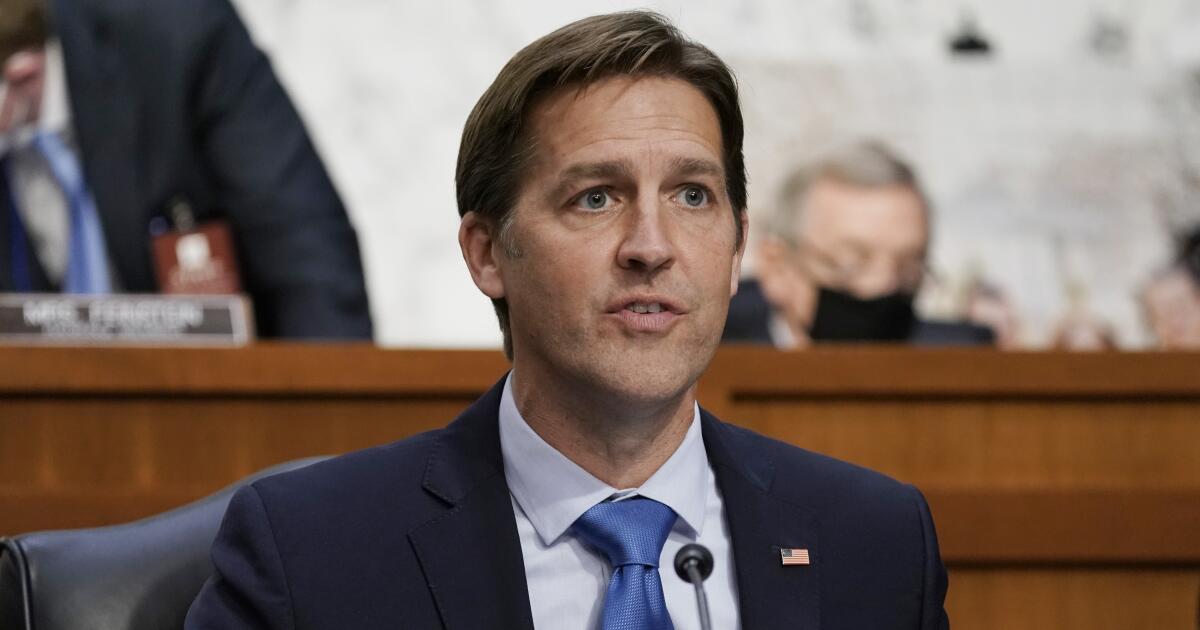
WASHINGTON — Republican Sen. Ben Sasse told Nebraska constituents in a telephone town hall meeting that President Trump has “flirted with white supremacists,” mocks Christian evangelicals in private and “kisses dictators’ butts.”
Sasse, who is running for a second term representing the reliably red state, made the comments in response to a question about why he has been willing to publicly criticize a president of his own party. He also criticized Trump’s handling of the coronavirus crisis and said Trump’s family has treated the presidency “like a business opportunity.”
The comments were first reported by the Washington Examiner after it obtained an audio recording of the senator’s comments, which has been posted on YouTube. Sasse spokesman James Wegmann said the call occurred Wednesday.
Other Nebraska Republicans, including U.S. Rep. Dan Bacon and state GOP executive director Ryan Hamilton, told the Omaha World-Herald that they disagree with Sasse’s characterizations of the president.
“Sen. Sasse is entitled to his own opinion,” U.S. Rep. Adrian Smith, another Nebraska Republican, said in a statement. “I appreciate what President Trump has accomplished for our country and will continue to work with him on efforts which help Nebraska.”
Trump campaign spokesman Tim Murtaugh declined to comment on Sasse’s remarks, the World-Herald said.
Sasse has positioned himself as a conservative willing to criticize Trump at times, and he is seen as a potential presidential candidate for 2024. His comments Wednesday were in response to a caller who asked about his relationship with the president, adding, “Why do you have to criticize him so much?” Trump carried Nebraska by 25 percentage points in 2016.
The senator said he has worked hard to have a good relationship with Trump and prays for the president regularly “at the breakfast table in our house.” He praised Trump’s judicial appointments.
But he said he’s had disagreements with Trump that do not involve “mere policy issues,” adding, “I’m not at all apologetic for having fought for my values against his in places where I think his are deficient, not just for a Republican, but for an American.”
Sasse began his list with, “The way he kisses dictators’ butts,” and said Trump “hasn’t lifted a finger” on behalf of pro-democracy protesters in Hong Kong.
“I mean, he and I have a very different foreign policy,” Sasse said. “It isn’t just that he fails to lead our allies. It’s that we, the United States, regularly sells out our allies under his leadership.”
Sasse said he criticizes Trump for how he treats women and because Trump “spends like a drunken sailor,” saying he criticized Democratic President Obama over spending.
“He mocks evangelicals behind closed doors,” Sasse said. “At the beginning of the COVID crisis, he refused to treat it seriously. For months, he treated it like a news-cycle-by-news-cycle PR crisis rather than a multiyear public health challenge, which is what it is.”
The Trump administration is escalating its “maximum pressure” sanctions campaign by targeting shipping companies. (Reuters)
Caracas, December 12, 2025 (venezuelanalysis.com) – The US Treasury Department levied new sanctions against the Venezuelan oil industry as the Trump White House looks to strangle the Caribbean nation’s most important revenue source.
On Thursday, the Treasury’s Office of Foreign Assets Control (OFAC) blacklisted six shipping companies for allegedly transporting Venezuelan crude. OFAC likewise identified six tankers, one from each sanctioned firm, as blocked property.
“Today’s action also targets Venezuela’s oil sector, which continues to fund Maduro’s illegitimate regime,” the US Treasury stated in a press release.
The Trump administration’s latest coercive measures mark an escalation in its efforts to target Venezuela’s oil industry. During his first term, Trump introduced a “maximum pressure” campaign that included financial sanctions, an export embargo and secondary sanctions against Venezuela’s oil sector.
In his second term, the White House withdrew Chevron’s license to extract and export crude from its ventures in Venezuela before issuing a new, limited waiver in May.
The latest sanctions come amid a large-scale US military buildup and deadly operations in the Caribbean under a self-declared anti-narcotics mission. However, reports from specialized agencies have contradicted the White House’s “narcoterrorism” accusations against Caracas.
Trump has issued repeated threats to attack purported drug targets inside Venezuelan territory. Analysts and political figures have argued that Washington’s true goal is regime change in order to take control of Venezuelan natural resources.
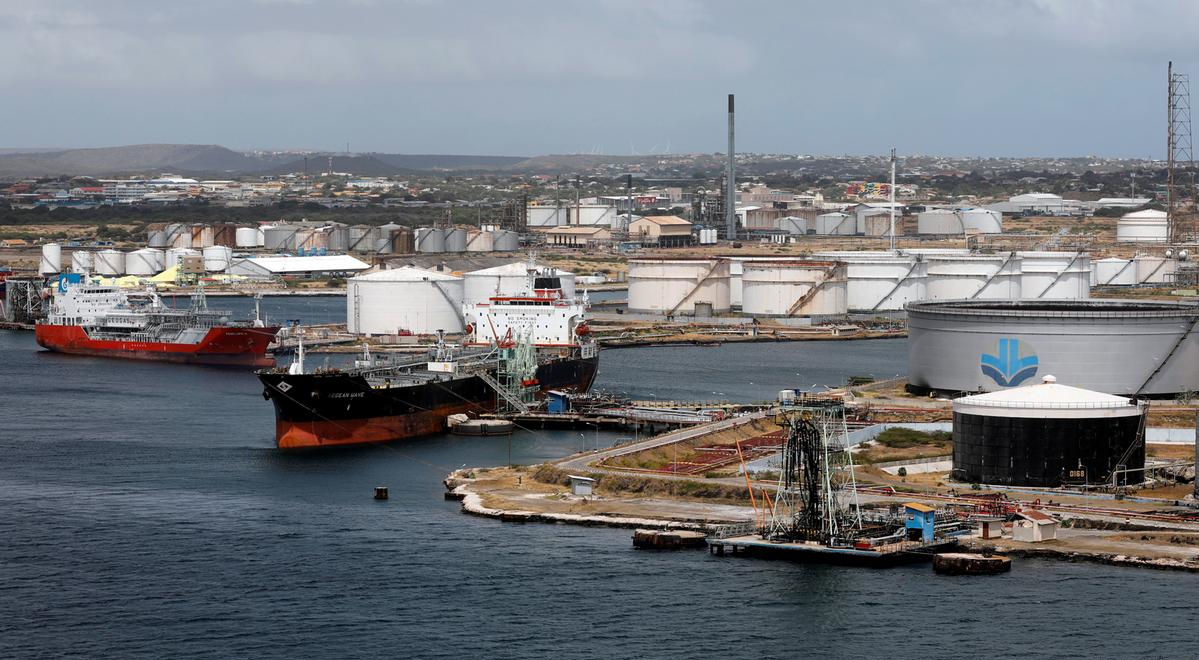
On Wednesday, the US Coast Guard led the seizure of an oil tanker carrying Venezuelan crude. The Skipper, which had been blacklisted by the US Treasury in 2021 for allegedly transporting Iranian crude, was commandeered in international waters while carrying an estimated 1.6 million barrels of crude bound for Asian markets.
Caracas condemned the move as “international piracy” and vowed to denounce it before international bodies. US officials told Reuters that more seizures are expected in the near future, while former Biden administration advisor Juan González raised the prospect of a naval blockade against the South American country.
Washington’s tanker drew widespread rejection, with US anti-war collective Code Pink calling it “21st century piracy.” The American Association of Jurists likewise issued a statement condemning US actions as illegal and a violation of international law.
US authorities had previously seized Venezuela-bound Iranian fuel in 2020. In November, a US warship blocked the path of a Russian tanker, forcing it to make a U-turn before eventually reaching its destination in eastern Venezuela.
Thursday’s coercive measures likewise included individual sanctions against Ramón Carretero, Carlos Malpica, Efrain Campo and Franqui Flores. Carretero, a Panamanian national, was targeted for alleged involvement in Venezuelan oil sales.
Malpica, Campo and Flores are nephews of Venezuelan First Lady and National Assembly Deputy Cilia Flores. Malpica had been previously designated in 2017 before being withdrawn from OFAC’s List of Specially Designated Nationals and Blocked Persons (SDN List) in 2022. Campo and Flores were serving 18-year sentences on drug trafficking charges when they were released by the Biden administration in a prisoner exchange in 2022.
The sanctioned companies and individuals will see any US-based assets frozen, while US persons and firms are barred from conducting any business with them.
Oil production remains stable
Amidst recent US threats and escalatory actions, Venezuela’s oil sector has maintained a steady output level.
According to OPEC, production stood at 934,000 barrels per day (bpd) in November, slightly below 961,000 bpd in October, as measured by secondary sources. Venezuela’s oil industry recovered from decades-low output levels in 2020 but has not managed to surpass the 1 million bpd threshold.
In contrast, state oil company PDVSA reported a higher output of 1.14 million bpd in November. The direct and secondary measurements have differed over time due to disagreements on the inclusion of natural gas liquids and condensates.
The recent tanker seizure is expected to hit Venezuelan oil revenues through higher shipping and insurance costs. PDVSA is forced to rely on intermediaries and levy significant discounts in order to place crude cargoes in international markets.
An oversupply of sanctioned crude from Iran and Russia has likewise cut into PDVSA’s profit margins in recent weeks.
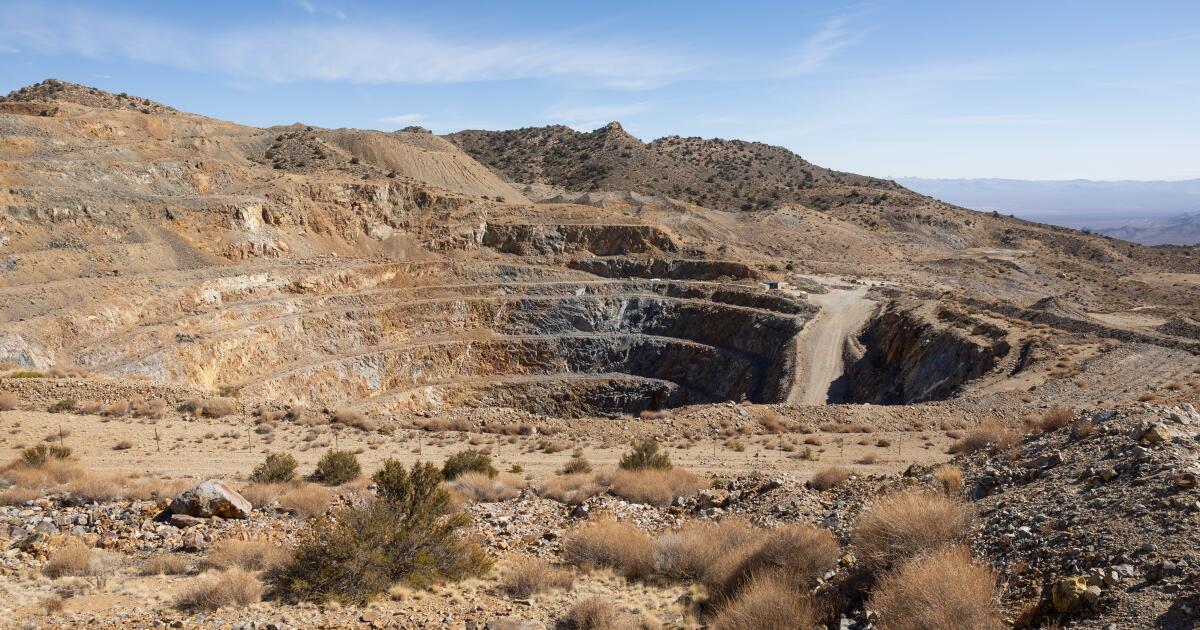
Last February, I climbed into a Jeep and rumbled up a rocky shelf road that took me high above a breathtaking corner of the Mojave National Preserve. At the top was an old gold mine where an Australian company had recently restarted activities, looking for rare earth minerals.
The National Park Service had been embroiled in a years-long dispute with the company, Dateline Resources Ltd., alleging that it was operating the Colosseum Mine without authorization and had damaged the surrounding landscape with heavy equipment. Dateline said it had the right to work the mine under a plan its prior operators had submitted to the Bureau of Land Management decades before.
President Trump had taken office just weeks before my visit. Environmentalists told me the conflict posed an early test of how his administration would handle the corporate exploitation of public lands.
You’re reading Boiling Point
The L.A. Times climate team gets you up to speed on climate change, energy and the environment. Sign up to get it in your inbox every week.
At the time, observers weren’t sure how things would shake out. Conserving public lands is one of the rare issues that’s popular on both sides of the political aisle, they pointed out.
Almost a year later, it’s clear that the Trump administration has sided with the corporations.
Trump directed the Department of Interior to inventory mineral deposits on federal lands and prioritize mining as the primary use of those lands. He instructed officials to dramatically fast-track permitting and environmental reviews for certain types of energy and critical minerals projects — and designated metallurgical coal a critical mineral, enabling companies that mine it to qualify for a lucrative tax credit.
His budget bill lowered the royalty rates companies must pay the government to extract coal, oil or gas from public lands and provided other financial incentives for such projects while reducing the authority of federal land managers to deny them.
Under the president’s direction, the DOI has opened up millions of acres of federal land to new coal leasing and moved to rescind both the 2021 Roadless Rule, which protects swaths of national forest lands from extractive activities by barring most new road construction, and the 2024 Public Lands Rule, which puts conservation and restoration on par with other uses of BLM land like mining, drilling and grazing.
Altogether, the Trump administration and its legislative allies have taken steps to reduce or eliminate protections for nearly 90 million acres of public land, according to the Center for American Progress, a progressive think tank. That figure rises to more than 175 million acres if you include the habitat protections diminished by the administration’s moves to weaken the Endangered Species Act, the organization notes.
“All of these things represent in some ways the largest attack on our public lands and giveaway to large multinational mining corporations that we’ve seen probably since the 19th century,” said U.S. Rep. Melanie Stansbury of New Mexico, who likened the level of resource exploitation to “something like what happened during the robber baron era when there was no regulation or protection for our communities or the environment.”
Stansbury has introduced legislation that would increase the fees mining companies must pay to sit on speculative claims on federal lands and require those funds be used for conservation. She told me it’s just a tiny contribution to a larger effort to push back against the administration’s approach to initiate extraction on public lands, which she described as so frequent and pervasive that “it’s a bit like whack-a-mole.”
“So much damage has been done, both administratively and legislatively, over the last 11 months since Trump took office,” she said.
As for the Colosseum Mine, the DOI sided with its operators back in the spring, saying Dateline Resources did not have to seek authorization from the Park Service to keep mining. The announcement was followed by public endorsements from Trump and Interior Secretary Doug Burgum. The company’s stock value soared, and by September, it had kicked off a major drilling blitz.
The company has already uncovered high-grade gold deposits. It’s taking a break for Christmas, but is expected to resume drilling in the new year.
More recent land news
The Pacific Forest Trust returned nearly 900 acres of land near Yosemite National Park to the Southern Sierra Miwuk Nation in a transfer partially financed by the state,reports Kurtis Alexander of the San Francisco Chronicle. Members of the Indigenous group were forced off their ancestral lands during the California Gold Rush, when state-sponsored militias undertook efforts to exterminate them. Some now hope the new property will bolster their decades-long push for federal recognition.
California State Parks is violating the Endangered Species Act by allowing offroaders to drive over dunes that are home to western snowy plovers, a judge recently ruled in a long-running legal case over the use of Oceano Dunes State Recreation Area along the Central Coast. Edvard Pettersson of the Courthouse News Service reports that State Parks will need a federal “take” permit to continue to allow offroading at the popular beachside spot.
California lawmakers introduced legislation to conserve more than 1.7 million acres of public lands across the state, in part by expanding the Los Padres National Forest and the Carrizo Plain National Monument, according to Stephanie Zappelli of the San Luis Obispo Tribune.
President Trump’s media company is merging with a nuclear fusion energy firm in a $6-billion deal that some analysts have described as a major conflict of interest, my colleague Caroline Petrow-Cohen reports.
House Republicans pushed through a bill that would overhaul the federal environmental review process in a way that critics say could speed up the approval process for oil and gas projects while stymieing clean energy, report Aidan Hughes and Carl David Goette-Luciak of Inside Climate News.
The iconic chasing-arrows recycling symbol is likely to be removed from California milk cartons, my colleague Susanne Rust reports. The decision exposes how used beverage packaging has been illegally exported to East Asia as “recycled” mixed paper, violating international environmental law.
Wind energy is again under attack from the Trump administration, which this week ordered all major wind construction projects to halt. As The Times’ Hayley Smith notes, the White House has been consistent in slowing down clean energy development in 2025, but offshore wind has been a particular bête noire for the President.
We’ve published a comprehensive collection of stories looking back on thewildfires that burned though Altadena and Pacific Palisades last January and all that’s happened since, which columnist Steve Lopez calls “one of the most apocalyptic years in Southern California history.” Check out After the Fires here.
This is the latest edition of Boiling Point, a newsletter about climate change and the environment in the American West. Sign up here to get it in your inbox. And listen to our Boiling Point podcast here.
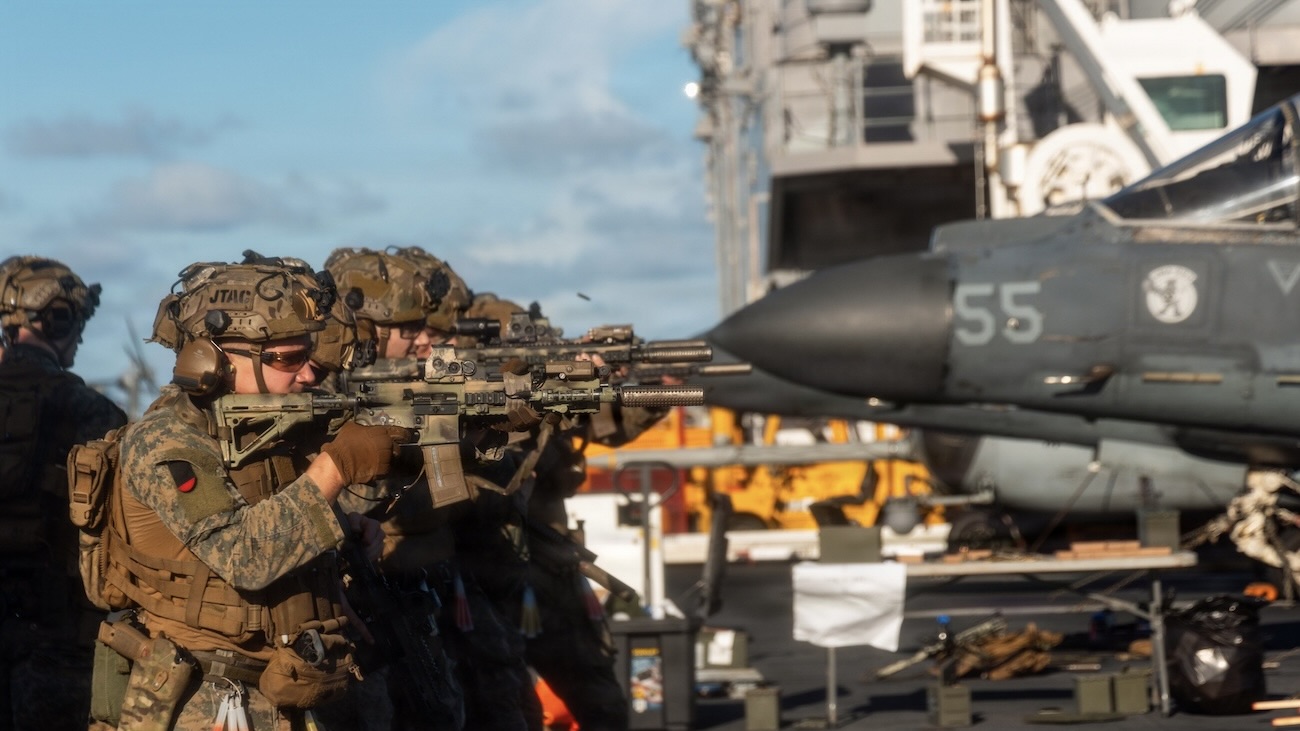
US Marines carrying out exercises on USS Iwo Jima as part of SOUTHCOM’s Operation Southern Spear in the Caribbean Sea. (SOUTHCOM)
Ever since Hugo Chávez came to power in 1998, the United States has attempted to overthrow the Bolivarian Revolution. They have tried everything short of a full-scale military invasion: a military coup, selecting a substitute president, cutting off access to the global financial system, imposing layers of sanctions, sabotaging the electricity grid, sending in mercenaries, and attempting to assassinate its leaders. If you can think of a method to overthrow a government, the United States has likely tried it against Venezuela.
However, in 2025, the escalation became unmistakable. The US sent its warships to patrol Venezuela’s coast, began sinking small boats and killing those on board as they left the South American mainland, and seized an oil tanker bound for Cuba. The quantity of attacks on Venezuela has increased, suggesting the quality of the threats has now reached a different magnitude. It feels as if the United States is preparing for a full-blown invasion of the country.
Donald Trump came to office saying that he was opposed to military interventions that did not further US interests, which is why he called the illegal US war on Iraq a waste of “blood and treasure”. This does not mean Trump is against the use of the US military – he deployed it in Afghanistan (remember the “Mother of all Bombs”) and Yemen, and has fully backed the US/Israeli genocide against the Palestinians. His formula is not for or against war categorically, but about what the US would gain from it. With Iraq, he stated that the problem was not the war itself, but the failure to seize Iraqi oil. Had the US taken Iraq’s oil, Trump would likely have been in Baghdad, ready to build – with Iraqi treasure – a Trump hotel on one of the former presidential properties.
Naturally, the US military buildup in the Caribbean is about Venezuelan oil – the largest known reserves in the world. The US-backed politician, Maria Corina Machado, awarded the Nobel Peace Prize just this week after supporting the Israeli genocide and calling for a US invasion of her own country, is on record promising to open up her country’s resources to foreign capital. She would welcome the extraction of Venezuela’s wealth rather than allow its social wealth to better the lives of its own people, as is the goal of the Bolivarian Revolution started by Hugo Chávez. A hypothetical “President Machado” would immediately surrender any claim to the Essequibo region and grant ExxonMobil full command of Venezuela’s oil reserves. This is certainly the prize.
But it is not the immediate spur. A close reading of the 2025 National Security Strategy of the United States shows that there is a renewed emphasis on the Western Hemisphere. The Trump Corollary to the 1823 Monroe Doctrine is clear: the Western Hemisphere must be under US control, and the United States will do what it takes to ensure that only pro-US politicians hold power. It is worth reading that section of the National Security Strategy:
“After years of neglect, the United States will reassert and enforce the Monroe Doctrine to restore American pre-eminence in the Western Hemisphere, and to protect our homeland and our access to key geographies throughout the region. We will deny non-Hemispheric competitors the ability to position forces or other threatening capabilities, or to own or control strategically vital assets, in our Hemisphere. This ‘Trump Corollary’ to the Monroe Doctrine is a common-sense and potent restoration of American power and priorities, consistent with American security interests.”
When Argentina faced local elections, Trump warned that the US would cut off external financing if candidates opposing pro-US President Javier Milei lost. In Honduras, Trump intervened directly to oppose the Libre Party, even offering to release a convicted drug trafficker (and former President). The United States is moving aggressively because it has accurately assessed the weakness of the Pink Tide and the strength of a new, far-right “Angry Tide”. The emergence of right-wing governments across South America, Central America, and the Caribbean has emboldened the US to squeeze Venezuela and thereby weaken Cuba – the two major poles of the Latin American left. Overturning these revolutionary processes would allow a full-scale Monroe Doctrine domination of Latin America and the Caribbean.
Since the 1990s, the United States began to speak of Latin America as a partner for shared prosperity, emphasizing globalization over direct control. Now, the language has changed. As the Trump Corollary asserts: “We want a Hemisphere that remains free of hostile foreign incursion or ownership of key assets and that supports critical supply chains…We want to ensure our continued access to key strategic locations.” Latin America is seen as a battlefield for geopolitical competition against China and a source of threats like immigration and drug trafficking. The attack on Venezuela and Cuba is not merely an assault on these two countries; it is the opening salvo of direct US intervention on behalf of the Angry Tide. This will not deliver better lives for the population, but greater wealth for US corporations and the oligarchies of Latin America.
Trump is ready to revive the belief that any problem can be solved by military force, even when other tools exist. The Trump Corollary promises to use its “military system superior to any country in the world” to steal the hemisphere’s resources.
The aggression against Venezuela is not a war against Venezuela alone. It is a war against all of Latin America.
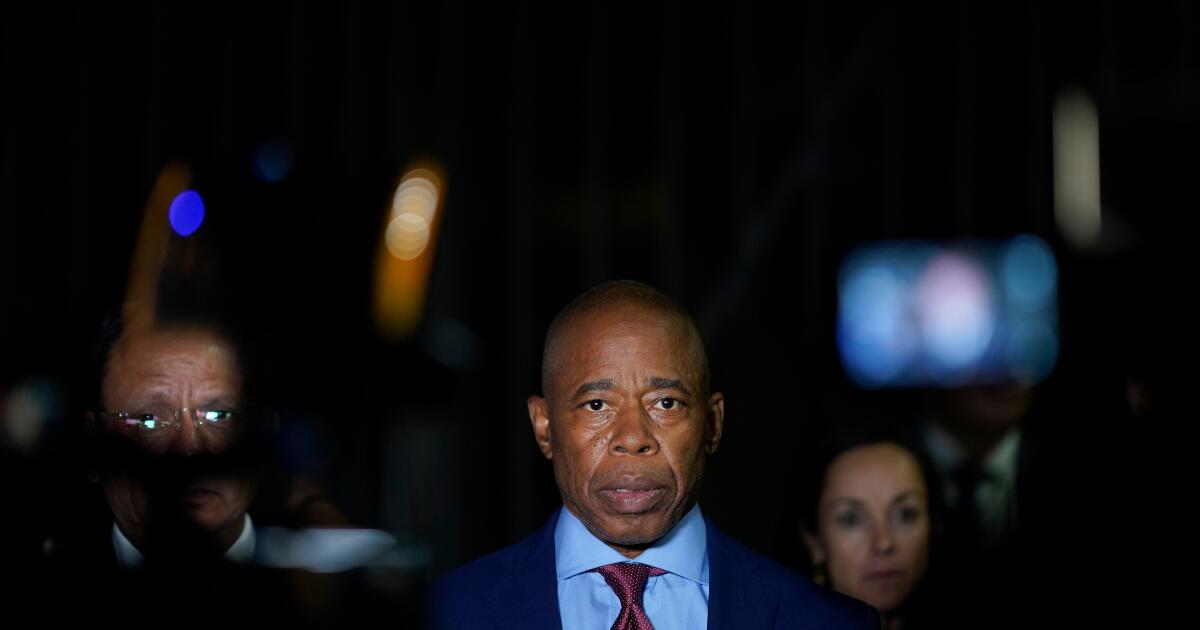
NEW YORK — Four years ago, New York City Mayor Eric Adams swept into office with swaggering confidence, pledging to lead a government unlike any other in history and declaring himself the “future of the Democratic Party.”
On the first promise, the mayor more than delivered. But as his tumultuous term comes to an end, Adams, 65, finds himself in the political wilderness, his onetime aspirations as a party leader now a distant memory.
Instead, he has spent his final weeks in power wandering the globe, publicly mulling his next private sector job and lashing out at the “haters” and “naysayers” whom he accuses of overlooking his accomplishments.
For many of his supporters, the Adams era will be looked back on as a missed opportunity. Only the second Black mayor in city history, he helped steer New York out of the throes of the COVID-19 pandemic, often linking the city’s comeback to his own rise from humble roots in working-class Queens.
At a moment when many Democrats were struggling to address voter concerns about public safety, he drew national attention for a “radically practical” agenda focused on slashing crime and reactivating the economy.
But while most categories of crime returned to pre-pandemic levels, Adams will probably be remembered for another superlative: He is the only New York City mayor of the modern era to be indicted while in office.
“That’s a disappointment for voters, especially for Black voters, who had high expectations and aspirations,” said Basil Smikle, a political strategist who served as executive director of the state’s Democratic Party. “He entered with a lot of political capital, and that was squandered, in part because of his own hubris.”
Equally memorable, perhaps, were the strange subplots along the way: his hatred of rats and fear of ghosts; the mysteries about his home, his diet, his childhood; and his endless supply of catchphrases, gestures and head-scratching stories that could instantly transform a mundane bureaucratic event into a widely shared meme.
“So many mayors want to be filtered, they want to pretend who they are and act like they are perfect,” Adams said during a recent speech at City Hall, a freewheeling affair that ended with the mayor burying a time capsule of his achievements beneath a Manhattan sidewalk. “I am not.”
Swagger versus seriousness
Adams took over from Mayor Bill de Blasio in January 2022, amid a COVID-19 spike that was killing hundreds of New Yorkers every day, along with a worrisome uptick in both violent crime and unemployment.
Adams, a former police captain, Brooklyn borough president and state senator, increased patrols on streets and subways, brought back a controversial anti-crime unit and appointed the department’s first female police commissioner. He also raised eyebrows for installing many of his former Police Department allies, including some ex-officials with histories of alleged misconduct.
As he encouraged New Yorkers to return to their pre-pandemic lives, Adams made an effort to lead by example, frequenting private clubs and upscale restaurants in order to “test the product” and “bring swagger back” to the city, he said.
But if New Yorkers initially tolerated Adams’ passion for late-night partying, there seemed to be a growing sense that the mayor was distracted, or even slacking off, according to Hank Sheinkopf, a longtime Democratic consultant and supporter of Adams.
“There was a tension between swagger and seriousness,” Sheinkopf said. “New Yorkers wanted to see more seriousness. They didn’t want to see him out partying at some club they couldn’t afford to go into.”
It didn’t help that Adams often declined to say who was footing the bills for his meals, his entry into private clubs or his flights out of the city. When reporters staked out his nighttime activities, they found that Adams, who long professed to be a vegan, regularly ordered the branzino.
Asked about his diet, the mayor acknowledged that he ate fish and occasionally “nibbled” on chicken, describing himself, as he often would in the coming years, as “perfectly imperfect.”
City Hall in crisis
The corruption investigation into Adams’ campaign, launched quietly in the early stages of his mayoralty, first spilled into public view in the fall of 2023, as federal agents seized the mayor’s phones as he was leaving an event. It loomed for nearly a year, as Adams faced new struggles, including a surge of migrants arriving in the city by bus.
Then, on Sept. 26, 2024, federal prosecutors brought fraud and bribery charges against Adams, accusing him of allowing Turkish officials and other businesspeople to buy his influence with illegal campaign contributions and steep discounts on overseas trips.
Investigators also seized phones from the mayor’s police commissioner, schools chancellor and multiple deputy mayors. Each denied wrongdoing, but a mass exodus of leadership followed, along with questions about the mayor’s ability to govern.
Adams insisted, without evidence, that he had been politically targeted by the Biden administration for his criticism of its immigration policy. But his frequently invoked mantra — “stay focused, no distractions, and grind” — seemed to lose potency with each new scandal.
Among them: a chief adviser indicted by state prosecutors in a separate alleged bribery scheme involving a bike lane and minor TV role; another longtime adviser forced to resign after handing a chip bag filled with cash to a reporter; and a string of abuse and corruption allegations within the Police Department, many of them linked to longtime friends Adams had installed in high-ranking positions.
Looking back at what went wrong, both supporters and critics of the mayor tend to agree on at least one point: Adams could be loyal to a fault, refusing to distance himself from long-serving allies even after they appeared to cross ethical lines.
“There was one City Hall made up of dedicated and competent leaders focused on executing his priorities,” said Sheena Wright, Adams’ former first deputy mayor. “There was another City Hall made up of people who knew the mayor for a long time, and who were allowed to operate outside the norms of government.”
‘A nuclear bomb’
Facing a plummeting approval rating and the prospect of years in prison, Adams began aligning himself with President Trump, going to great lengths to avoid criticizing the Republican and even leaving open the possibility of switching parties.
That seemed to work: Weeks after Trump took office, the Justice Department dismissed the corruption case, writing in a two-page memo that it had interfered with Adams’ ability to help with the president’s immigration agenda.
But in the view of Evan Thies, one of Adams’ closest advisers at the time, that was the moment that sealed Adams’ fate as a one-term mayor.
“The memo hit like a nuclear bomb,” Thies said.
The damage worsened a few days later, when Adams appeared on “Fox & Friends” alongside Trump’s border director Tom Homan, who threatened to “be up his butt” if the mayor didn’t comply with Trump’s agenda.
“It seemed to confirm the belief that he had traded his duty to New Yorkers for his personal freedom,” Thies recalled. “It wasn’t true, but that was perception.”
Adams adamantly denied striking a deal with the Trump administration. He has continued to suggest a broad conspiracy against him, at times blaming bureaucrats in the “deep state.”
Even with his case behind him, Adams struggled to build a reelection campaign. Earlier this year, his approval rating sank to a record low. In September, he abandoned his efforts, throwing his support behind former Gov. Andrew Cuomo, a onetime rival he’d recently referred to as a “snake and a liar.”
As of late December, Adams’ plans for life after he leaves office remain uncertain.
“I did what I had to do, I left everything I had on the ice, and I’m looking forward to the next step of my journey,” he said during a farewell speech at City Hall.
Then, for the third time in as many months, Adams took off on an international trip. This time, the destination was Mexico.
US Justice Department says it requires weeks to process newly found Epstein-related files under transparency and court rules.
Published On 24 Dec 202524 Dec 2025
Share
More than a million additional documents that are potentially related to late sex offender and financier Jeffrey Epstein have been uncovered, according to the United States Department of Justice (DOJ).
In a social media post on Wednesday, the DOJ said it is reviewing the documents and will need “a few more weeks” before proceeding with a congressionally mandated release of the information.
Recommended Stories
list of 3 itemsend of list
“The US Attorney for the Southern District of New York and the FBI have informed the Department of Justice that they have uncovered over a million more documents potentially related to the Jeffrey Epstein case,” the DOJ said in a statement, adding that more time is needed to comply with the Epstein Files Transparency Act, the law enacted last month that requires the government to open its files on Epstein and his longtime confidante Ghislaine Maxwell.
The DOJ insisted in its statement that its lawyers are “working around the clock” to review those documents and make the redactions required under the law, passed nearly unanimously by Congress.
“Due to the mass volume of material, this process may take a few more weeks. The Department will continue to fully comply with federal law and President [Donald] Trump’s direction to release the files,” the DOJ said.
Full disclosure
A dozen US senators are calling on the Justice Department’s watchdog to examine the department’s failure to release all records pertaining to Epstein by Friday’s congressionally mandated deadline, saying victims “deserve full disclosure” and the “peace of mind” of an independent audit.
Senator Lisa Murkowski, a member of Trump’s Republican Party, joined 11 Democrats in signing a letter on Wednesday urging Acting Inspector General Don Berthiaume to audit the Justice Department’s compliance with the Epstein Files Transparency Act.
“Given the [Trump] Administration’s historic hostility to releasing the files, politicisation of the Epstein case more broadly, and failure to comply with the Epstein Files Transparency Act, a neutral assessment of its compliance with the statutory disclosure requirements is essential,” the senators wrote.
Full transparency, they said, “is essential in identifying members of our society who enabled and participated in Epstein’s crimes”.
Republican Representative Thomas Massie, a co-sponsor of the transparency act, posted on Wednesday on X: “DOJ did break the law by making illegal redactions and by missing the deadline.”
Despite the deadline, the Justice Department has said it plans to release records on a rolling basis. It blamed the delay on the time-consuming process of obscuring survivors’ names and other identifying information.
More batches of records were released over the weekend and on Tuesday. The department has not given any notice when more records might arrive.
“The reason why we are still reviewing documents and still continuing our process is simply to protect victims,” Deputy Attorney General Todd Blanche told the NBC television network’s Meet the Press programme on Sunday.
“So the same individuals that are out there complaining about the lack of documents that were produced on Friday are the same individuals who apparently don’t want us to protect victims,” he argued.
WASHINGTON — A federal judge has blocked the Trump administration from enforcing a March presidential memorandum to revoke the security clearance of prominent Washington attorney Mark Zaid, ruling that the order — which also targeted 14 other individuals — could not be applied to him.
The decision marked the administration’s second legal setback on Tuesday, after the Supreme Court declined to allow Trump to deploy National Guard troops in the Chicago area, capping a first year in office in which President Trump’s efforts to impose a sweeping agenda and pursue retribution against political adversaries have been repeatedly slowed by the courts.
U.S. District Judge Amir Ali in Washington granted Zaid’s request for a preliminary injunction, after he sued the Trump administration in May over the revocation of his security clearance. Zaid’s request called it an act of “improper political retribution” that jeopardized his ability to continue representing clients in sensitive national security cases.
The March presidential memorandum singled out Zaid and 14 other individuals who the White House asserted were unsuitable to retain their clearances because it was “no longer in the national interest.” The list included targets of Trump’s fury from both the political and legal spheres, including former Deputy Attorney General Lisa Monaco, New York Attorney General Letitia James, former President Joe Biden and members of his family.
The action was part of a much broader retribution campaign that Trump has waged since returning to the White House, including directing specific Justice Department investigations against perceived adversaries and issuing sweeping executive orders targeting law firms over legal work he does not like.
In August, the Trump administration said it was revoking the security clearances of 37 current and former national security officials. Ordering the revocation of clearances has been a favored retributive tactic that Trump has wielded — or at least tried to — against high-profile political figures, lawyers and intelligence officials in his second term.
Zaid said in his lawsuit that he has represented clients across the political spectrum over nearly 35 years, including government officials, law enforcement and military officials and whistleblowers. In 2019, he represented an intelligence community whistleblower whose account of a conversation between Trump and Ukrainian President Volodymyr Zelenskyy helped set the stage for the first of two impeachment cases against Trump in his first term.
“This court joins the several others in this district that have enjoined the government from using the summary revocation of security clearances to penalize lawyers for representing people adverse to it,” Ali wrote in his order.
Ali emphasized that his order does not prevent the government from revoking or suspending Zaid’s clearance for reasons independent of the presidential memorandum and through normal agency processes. The preliminary injunction does not go into effect until January 13.
Zaid said in a statement, “This is not just a victory for me, it’s an indictment of the Trump administration’s attempts to intimidate and silence the legal community, especially lawyers who represent people who dare to question or hold this government accountable.”
Cappelletti writes for the Associated Press. AP reporter Eric Tucker contributed to this report.
UN experts criticise US blockade for endangering human rights and call for an investigation into alleged violations.
Published On 24 Dec 202524 Dec 2025
Share
Four United Nations human rights experts have condemned the partial naval blockade of Venezuela by the United States, finding it an illegal armed aggression and calling on the US Congress to intervene.
“There is no right to enforce unilateral sanctions through an armed blockade,” the UN experts said in a joint statement on Wednesday.
Recommended Stories
list of 3 itemsend of list
The US has deployed a major military force in the Caribbean and intercepted oil tankers as part of a naval blockade against Venezuelan vessels it considers to be under sanctions.
A blockade is a prohibited use of military force against another country under the UN Charter, they added.
“It is such a serious use of force that it is also expressly recognised as illegal armed aggression under the General Assembly’s 1974 Definition of Aggression,” the experts said. “The illegal use of force, and threats to use further force at sea and on land, gravely endanger the human right to life and other rights in Venezuela and the region.”
US President Donald Trump accuses Venezuela of using oil, the South American country’s main resource, to finance “narcoterrorism, human trafficking, murders and kidnappings”.
Caracas denies any involvement in drug trafficking. It says Washington is seeking to overthrow its president, Nicolas Maduro, to seize Venezuela’s oil reserves, the largest in the world.
Since September, US forces have launched dozens of air strikes on boats that Washington alleges were transporting drugs. It has yet to provide evidence for those accusations. More than 100 people have been killed.
‘US Congress should intervene’
“These killings amount to violations of the right to life. They must be investigated and those responsible held accountable,” the experts said.
“Meanwhile, the US Congress should intervene to prevent further attacks and lift the blockade,” they added.
They called on countries to take measures to stop the blockade and illegal killings and bring the perpetrators to justice.
The four who signed the joint statement are: Ben Saul, special rapporteur on protecting human rights while countering “terrorism”; George Katrougalos, an expert on promoting a democratic and equitable international order; development expert Surya Deva; and Gina Romero, special rapporteur on the right to freedom of peaceful assembly and association.
Weekly insights and analysis on the latest developments in military technology, strategy, and foreign policy.
The U.S. Navy has confirmed to TWZ that construction of the first two Trump class “battleships” is not expected to start until the early 2030s. While cost estimates are still being firmed up, the service is moving now to award sole-source contracts to Bath Iron Works, Huntington Ingalls Industries, and Gibbs & Cox for initial design and other work related to these large surface combatants. Readers can first get up to speed on what is already known about the plans for these ships and the glaring questions surrounding them in our initial reporting here.
President Donald Trump officially rolled out the Trump class warship plan at his Mar-a-Lago estate in Palm Beach, Florida, last night. With displacements of at least around 35,000 tons, the vessels are set to be armed with an array of nuclear and conventional missiles, as well as electromagnetic railguns, traditional 5-inch naval guns, laser directed energy weapons, and more. Production is supposed to start with two ships, the first of which will be named USS Defiant, out of a planned initial batch of 10 hulls. Trump has said that the total fleet size might eventually grow to 20 to 25 examples.
A rendering the White House shared yeterday of the future Trump class USS Defiant. White House/USN
“Design efforts are underway with start of construction planned for the early 2030s,” a U.S. Navy official told TWZ. “Design studies are ongoing to refine Navy cost estimates. These details will be available in the PB FY27 [President’s Budget for Fiscal Year 2027] budget request.”
Another individual familiar with the program also told TWZ that work to build the first Trump class ships is not expected to begin until the early 2030s. They also told us that the new “battleship” plan is supplanting the Navy’s DDG(X) next-generation destroyer effort, and will leverage work already done on that design concept.
“We’re going to start almost immediately, and we’re probably talking about two and a half years,” Trump had said at yesterday’s rollout when asked to give a timeline for work on the first two Trump class ships. However, it is unclear what part of the process he might have been referring to. TWZ has reached out to the White House for more information.
Reporter: What is the timetable for these first two ships?
Trump: We’re going to start almost immediately, we are probably talking about 2.5 years. pic.twitter.com/9tT6j8OcQ1
As already noted, the Navy did put out two contracting notices regarding what is also referred to as the BBG(X) guided missile battleship program following the rollout last night.
“Naval Sea Systems Command (NAVSEA) intends to contract on a sole source basis with General Dynamics Bath Irons [sic] Works Corporation (BIW) and Huntington Ingalls Industries-Ingalls Shipbuilding (HII Ingalls) for BBG(X) guided missile battleship design, engineering, and design analysis requirements. This includes shipbuilder engineering and design analysis necessary to produce BBG(X) design products in support of Navy-led design for BBG(X), including Preliminary Design (PD) and Contract Design (CD),” one of the notices says. “BIW and HII Ingalls will assist the Government design team in maturing a total ship design through a rigorous systems engineering process, including, but not limited to, preplanned reviews such as System Functional Review (SFR) and Preliminary Design Review (PDR). The estimated period of performance for these efforts is 72 months.”
In addition, NAVSEA “intends to contract on a sole source basis with Leidos Gibbs & Cox for surface combatant ship design engineering (SC SDE) efforts to support future Navy surface combatants. As part of these efforts, Leidos Gibbs & Cox will primarily execute design activity in support of Preliminary Design (PD), Contract Design (CD), and other design efforts needed to support the BBG(X) guided missile battleship program,” per the other notice. “As the SC SDE contractor, Leidos Gibbs & Cox will serve as an extension of the Government’s ship design team, delivering specialized expertise in early-stage design analysis and requirements definition. This early design phase support is crucial for ensuring the feasibility, affordability, and performance of the ship design prior to detail design and construction. The estimated period of performance for this contract is 72 months.”
For reference, 72 months is six years. If that timeline were to start next month, the period of performance would run into 2032. This aligns directly with the expected start of actual construction in the early 2030s.
Another rendering of a Trump class large surface combatant. White House/USN
“We are committed to continue our work with the Navy and our industry partners to expand the Navy’s Fleet,” an HII spokesperson told TWZ when asked for more information. “We maintain a full range of engineering and design capabilities and are looking forward to providing the benefit of their experience and expertise to this effort, building on the work done to date in support of the DDG(X). We respectfully defer to Navy on the selection criteria and any details on requirements.”
“We are proud to have built the Navy’s most technologically advanced surface combatants and our shipbuilders are committed to continuing that work in lock step with the Navy to expand their Fleet,” Chris Kastner, President and CEO of HII, had also told TWZ in a statement yesterday. “We understand the urgency and have taken a number of actions to increase the speed at which we can deliver. We have seen improvements in our labor and throughput and expect these to continue in 2026. These efforts combined with our distributed shipbuilding network are working, and more capacity is being created to meet these critical requirements.”
Bath Iron Works also deferred to the Navy when asked for more details.
“General Dynamics Bath Iron Works stands ready to fully support the Navy in the design and construction of this important new shipbuilding program,” Charles Krugh, President of Bath Iron Works, had separately said in a statement to USNI News yesterday.
TWZ has also reached out to Gibbs & Cox for more details.
It’s also interesting to note here that 2032 was when the Navy originally hoped to see construction of new DDG(X) destroyers begin. As of January of this year, that timeline had been pushed back to 2034 at the earliest.
A graphic the US Navy previously released showing a notional DDG(X) design. USN
With BBG(X) still in the very early design phase, the U.S. Navy official also told TWZ that there is currently no timeline for when the future USS Defiant will actually be launched. It would then take some amount of time after that to complete the vessel’s construction, conduct initial sea trials, and then commission it into service.
In the meantime, NAVSEA has shared some additional details about the expected capabilities of the Trump class warships. As it stands now, the vessels are set to be between 840 and 880 feet long, have a beam (the widest point in the hull) between 105 and 115 feet, displace at least 35,000 tons, and be able to reach a top speed greater than 30 knots.
A graphic detailing the current expected specifications of the Trump class design. USN via USNI News
For comparison, the Navy’s newest Flight III Arleigh Burke class destroyers and its Ticonderoga class cruisers have stated displacements of 10,864 tons and 10,752 tons, respectively, with full combat loads. Both of those ships are also hundreds of feet shorter and dozens of feet narrower than the planned BBG(X).
The Navy’s last true battleships, the four members of the Iowa class that were built during World War II and served for decades afterwards, had full combat displacements of around 57,540 tons and were nearly 888 feet long. Those ships were also extremely heavily armored and at times had as many as 2,700 personnel on board.
The BBG(X) design will feature 128 Mk 41 Vertical Launch System (VLS) cells spread across two separate arrays, one at the bow and another at the stern. Nuclear-armed sea-launched cruise missiles, or SLCM-Ns, will be among the munitions loaded into those cells. The total number of Mk 41 cells is notably low for a ship of this size. As additional points of comparison, the Navy’s Flight IIA and Flight III Arleigh Burke class destroyers both have 96 Mk 41 VLS cells, while there are 122 on itsTiconderoga class cruisers.
An annotated graphic highlighting various capabilities set to be found on the Trump class design. Note that the mention here of “28 Mk 41 VLS” cells appears to be a typo, as other official information from the US Navy says the ships will have 128 such cells. USN via USNI News
The ship’s main gun armament will consist of a 32-megajoule electromagnetic railgun along with two 5-inch naval guns. How the Navy will source the railgun is unclear. The service halted its most recent work on naval railguns, at least publicly, in the early 2020s.
The vessels will have four Mk 38 weapon systems armed with 30mm automatic cannons and two launchers for RIM-116 Rolling Airframe Missiles (RAM) for close-in defense. Two unspecified dedicated counter-drone systems will be part of the armament package on the ships, as well.
The BBG(X) plans call for two laser directed energy weapons in the 300 to 600 kilowatt power range, as well as four lower-powered AN/SEQ-4 Optical Dazzling Interdictors (ODIN). As its name indicates, ODIN is a laser ‘dazzler’ designed primarily to blind adversarial optics, including optical seekers on incoming missiles or drones, rather than cause any kind of physical damage.
An AN/SEQ-4 ODIN laser ‘dazzler’ is seen here installed in front of the main superstructure of the US Navy’s Arleigh Burke class destroyer USS Stockdale. USN
In terms of other systems, NAVSEA says the BBG(X)s will feature an AN/SPY-6(V)1 Air and Missile Defense Radar (AMDR), an AN/SLQ-32(V)7 Surface Electronic Warfare Improvement Program (SEWIP) Block III electronic warfare suite, and an extensive array of command and control capabilities. Between 650 and 850 personnel are expected to be necessary to crew the BBG(X)s, far more than the standard complement found on any existing Navy destroyers or cruisers.
AsTWZ highlighted yesterday, there are major questions about the Trump class warship plan, including how much the ships might cost to produce, as well as operate and maintain. Though the Navy has yet to share an official figure, there have been reports already offering a very wide range of estimates for basic unit costs from $5 to $15 billion. The future DDG(X) destroyers had been expected to cost the service between $3.3 and $4.4 billion. As another point of reference, the price tag of each of the Navy’s Zumwalt class destroyers has ballooned to more than $10 billion, which factors in research and development costs, per the Government Accountability Office (GAO). It is also worth noting that the Zumwalt program’s cost growth is in large part due to the decision to slash purchases of those ships from 32 down to three.
The US Navy’s Zumwalt class destroyer USS Michael Monsoor seen taking part in an exercise in 2021. USN
“At the same time, what capabilities the Trump class might truly be able to bring to bear will be dependent on a host of factors, especially if they are only ever fielded in relatively smaller numbers. And regardless of how capable any warship is, it can only ever be in one place at one time, which is more often than not in port.”
“On the other hand, there are concerning VLS cell gaps that are fast approaching on the horizon. The service is set to retire the last of its Ticonderoga class cruisers, each one of which has 122 VLS cells, at the end of the decade. The Navy will also need to make up for the impending loss of the huge missile launch capacity offered by its four Ohio class nuclear guided missile submarines, which are also set to be decommissioned before 2030. The Trump class will clearly feature a massive set of VLS arrays that could help offset some of this deficit.”
The capacity of America’s shipbuilding industrial base to support the Trump class plans in addition to its current demands, something that has become increasingly concerning from a national security perspective in recent years, is another open question. The expected sole-source contracts to Bath Iron Works and HII underscore that those are the only two companies in the United States with any real experience producing large-displacement surface warships of any kind.
Given the timeline laid out now, the Trump class will have to survive multiple presidential administrations and congresses, too. The program could well see significant changes, or even be canceled, even before a single piece of steel is laid down, but still after billions are spent in development costs.
By its own admission, the Navy is still very much in the early stages of work on the Trump class. With the construction of the future USS Defiant not expected to even begin until the early 2030s, the planned fleet of these warships looks to be very far out on the horizon.
The Bella 1 tanker has reportedly avoided capture. (MarineTraffic)
Caracas, December 23, 2025 (venezuelanalysis.com) – US President Donald Trump made new regime change threats against Venezuela and President Nicolás Maduro.
In a Monday press conference, Trump answered “probably” when asked if Washington intended to oust the Venezuelan leader but said it was up to Maduro to leave power.
“That’s up to him what he wants to do. I think it’d be smart for him to do that. But again, we’re gonna find out,” the US president told reporters in Mar-a-Lago, Florida.
Trump went on to warn the Venezuelan president not to “play tough.” “If he plays tough, it’ll be the last time he’s ever able to play tough,” he said.
The US president also said that land strikes against alleged drug cartels would start soon. He has issued such a threat on repeated occasions since September. He likewise repeated past unfounded claims that Venezuela sent “millions of people” to the US, many of them prisoners and mental patients.
Trump’s escalated rhetoric against Caracas followed ramped-up efforts to enforce a naval blockade and paralyze Venezuelan oil exports. On Saturday, the US Coast Guard boarded and seized the Centuries tanker east of Barbados in the Caribbean Sea.
The Panama-flagged ship had recently loaded a reported 1.8 million barrels of Merey crude at José terminal in eastern Venezuela for delivery in China. According to maritime vessel sources, the tanker is owned by a Hong Kong company and had transported Venezuelan oil several times in recent years.
The takeover operation was led by the US Coast Guard, with White House officials sharing footage of the boarding on social media.
The Centuries’ seizure followed a similar operation targeting the Skipper tanker on December 10. However, unlike the Skipper, the Centuries was not blacklisted by the US Treasury Department.
US officials referred to the tanker as transporting “sanctioned oil.” Analysts argued that the ambiguous definition is meant to allow US authorities to go after any vessel moving Venezuelan crude in an effort to drive shipping companies away from the Caribbean nation’s oil sector.
The White House’s threats and vessel seizures have already led several tankers to reverse course while en route to Venezuela, with customers reportedly demanding greater oil discounts in Venezuelan crude purchases. The South American oil industry might soon be forced to cut back production if it runs out of storage space.
On Sunday, US forces attempted to board a third tanker, the Guyana-flagged Bella 1 that was headed to Venezuela to load oil. However, the ship’s captain allegedly refused to allow the US Coast Guard’s boarding and turned the vessel back toward the Atlantic Ocean. According to reports, US forces continue to pursue the Bella 1.
Trump announced a naval blockade while demanding that Venezuela return “oil, land and other assets” that were “stolen,” in reference to nationalizations in past decades. Foreign corporations that saw their assets expropriated either agreed to compensation or pursued international arbitration.
The tanker seizures, alongside renewed sanctions targeting the Venezuelan oil industry, came amid a massive US military deployment in the Caribbean on the edge of Venezuelan territory. The build-up was originally declared as an anti-narcotics mission before Washington shifted the discourse toward oil and regime-change.
China and Russia express support
The Venezuelan government has condemned the US military threats and attacks against the oil industry. In a communique issued on Saturday, Caracas decried the second tanker seizure as a “serious act of piracy” and vowed to denounce it before multilateral bodies.
In recent days, the Maduro government received backing from China and Russia, two of its most important allies.
In a Monday press conference, Chinese Foreign Ministry spokesperson Lin Jian criticized the tanker seizures as violations of international law and stated Beijing’s opposition to “unilateral and illegal actions.” The official urged a response from the international community.
Likewise on Monday, Venezuelan Foreign Minister Yván Gil held a phone call with Russian counterpart Sergei Lavrov. According to Gil, Moscow’s top diplomat reiterated support for Venezuela in the face of “US hostilities.”
The UN Security Council is scheduled to meet on Tuesday afternoon at Venezuela’s request to address the most recent US escalations.
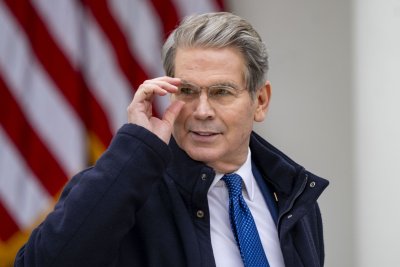

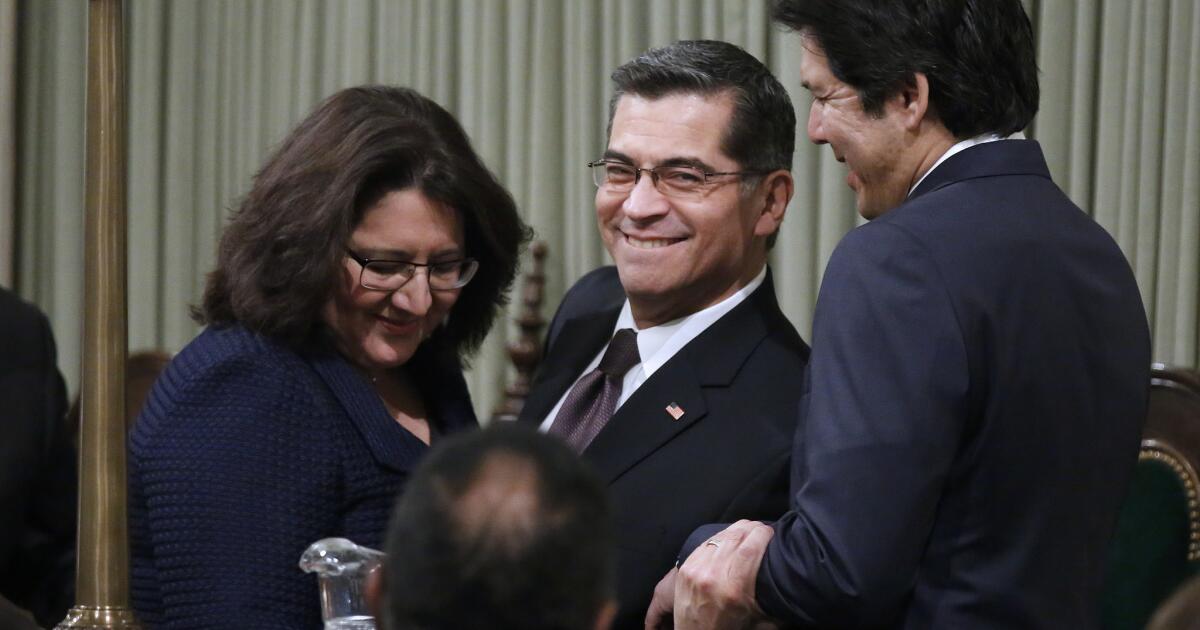
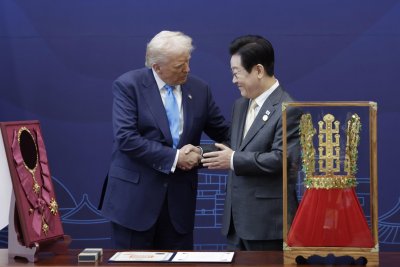





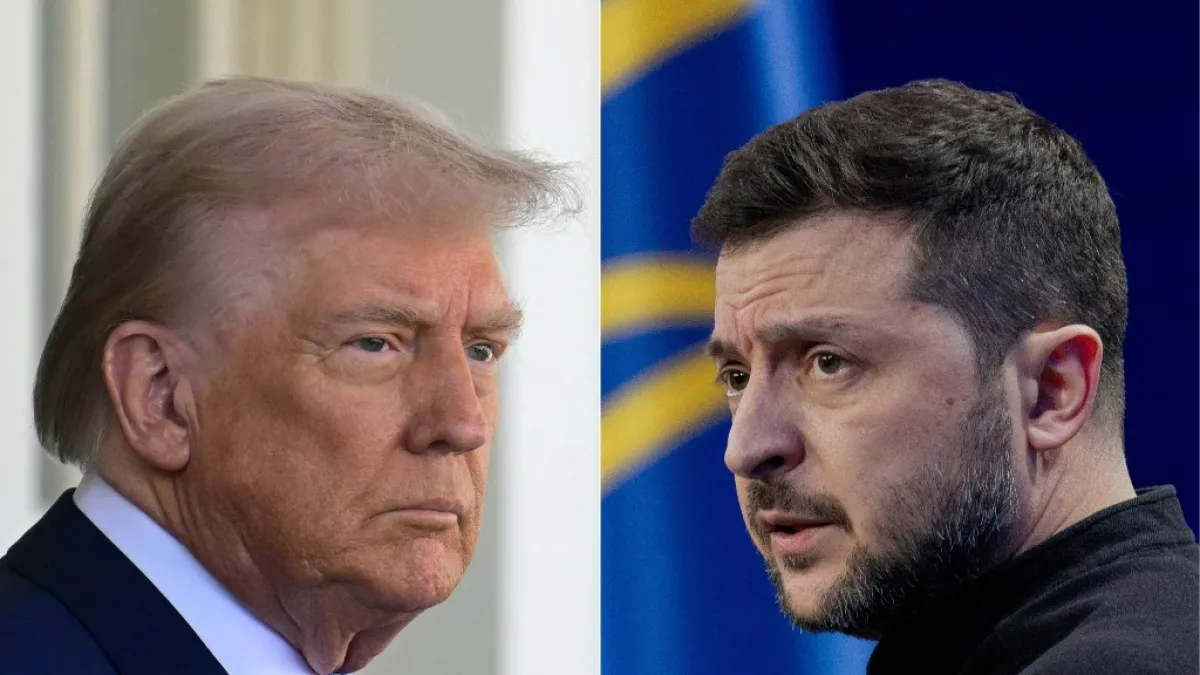





![[Al Jazeera]](https://i0.wp.com/occasionaldigest.com/wp-content/uploads/2025/12/WEB-MAP-NIGERIA-SOKOTO-1000X562-1766711326.jpg?w=640&ssl=1)