Trump

Issa becomes second California Republican to announce retirement as Democrats look to reclaim House

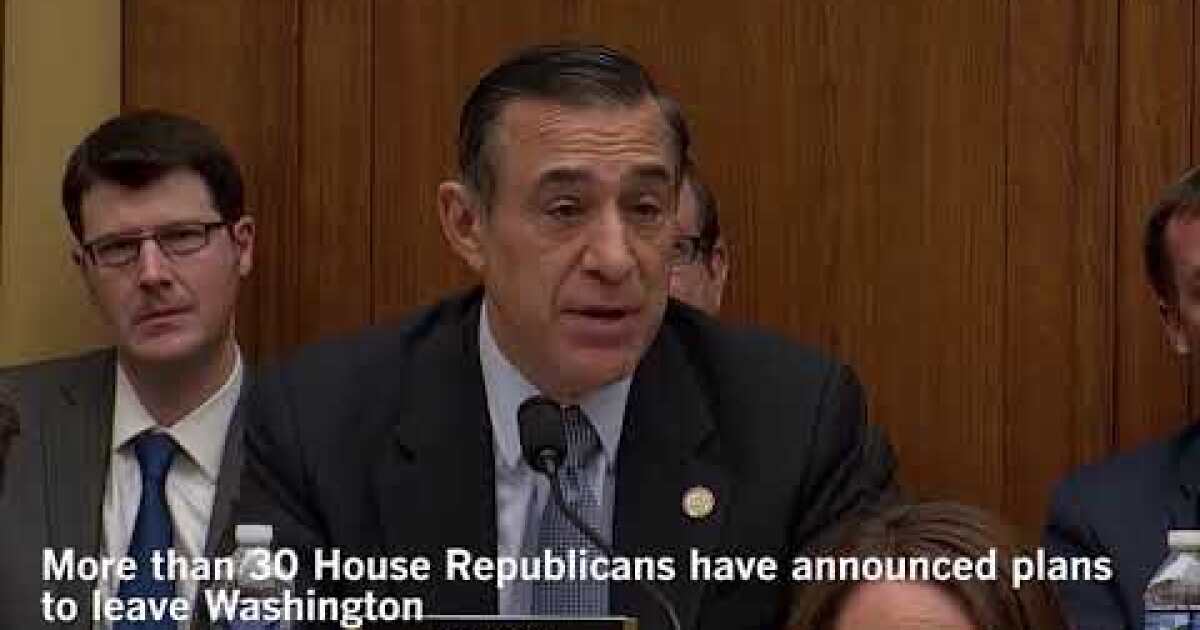
Rep. Darrell Issa (R-Vista) will not run for a 10th term in Congress, he announced Wednesday morning, becoming the second California Republican to retire this week as Democrats strive to retake control of the U.S. House.

On Monday, Republican Rep. Ed Royce of Fullerton also announced he would not seek reelection.

Beyond shaking up the California political landscape, the two retirements are a signal that the GOP fears a Democratic wave election that could sweep them from power this fall.

Royce and Issa represent districts that are changing, with more Latino and Asian voters, and where Hillary Clinton defeated Donald Trump in the 2016 presidential election.

Democrats have made clear their path to reclaiming the U.S. House majority must pass through Southern California, and open-seat races could make that task a bit easier. On the other hand, Republicans could recruit strong and experienced candidates who might fare better against a crowded field of Democratic hopefuls, many of whom are seeking office for the first time.

With Issa’s announcement, more than 30 House Republicans have announced plans to leave Washington, and Democrats need to secure just 24 more seats to retake control.

Without incumbents in those races, it also will be more difficult for the Democrats to deploy their national strategy of tying the Republican candidate to Trump, who is widely unpopular in California.

In contrast to most of his California GOP colleagues, Issa showed a willingness to moderate his stances to placate invigorated Democrats, but perhaps found it wasn’t enough to offset his reputation as a conservative bulldog in an increasingly liberal district.

Issa, former chairman of the House Oversight Committee, won reelection in 2016 by just over half a percent — about 1,600 votes — and was widely considered the most vulnerable Republican in the House going into this year’s election. In Issa’s northern San Diego and southern Orange County district, nearly 38% of registered voters are Republicans, with 31% registered as Democrats and 26% not registered with any political party, who often lean Democratic at the polls in California.

Still, the announcement was a surprise. A source close to Issa said he was talking about his reelection campaign with friends as recently as Tuesday night. Issa’s statement on Wednesday did not say why he decided to retire, just that he had the support of family in making the decision.

“I am forever grateful to the people of San Diego, Orange and Riverside counties for their support and affording me the honor of serving them all these years,” Issa said. “Representing you has been the privilege of a lifetime.”

The richest man in Congress, Issa, 64, already had drawn a handful of well-funded Democratic opponents, including his 2016 challenger, Doug Applegate, Orange County environmental lawyer Mike Levin, San Diego real estate investor Paul Kerr and Sara Jacobs, who has drawn the endorsement of Emily’s List. Issa had $852,028 in cash on hand as of September. Levin has led in fundraising with $530,326 in the bank. Applegate and Kerr each had a bit more than $200,000.

The Democratic Congressional Campaign Committee said Issa’s retirement “means we are in a strong position to elect a Democrat to the 49th District this fall.”

But the National Republican Congressional Committee said Democrats are setting themselves up for an internal fight in Issa’s 49th District, adding, “We look forward to facing whoever limps out of the Democrats’ battle royale: black and blue, and broke.”

Hours after Issa’s announcement, GOP Assemblyman Rocky Chavez of Oceanside announced he would run for the seat. Other Republicans who could run in Issa’s place include Diane Harkey, chair of the state Board of Equalization and a former assemblywoman, and GOP Senate leader Pat Bates. All three represent significant portions of Issa’s district.

Analysts for Larry J. Sabato’s Crystal Ball at the University of Virginia Center for Politics quickly changed their appraisal of the race from a toss-up to the “leans Democratic” category, saying Issa’s close 2016 win showed voters may be more willing to consider a Democrat. The 39th District remains a toss-up because Royce won by 15 percentage points in 2016, Crystal Ball managing editor Kyle Kondik said. At least one other prognosticator moved Royce’s district to “leans Democratic” as soon as he announced his retirement on Monday.

As chairman of the committee charged with overseeing the executive branch, Issa was known as President Obama’s toughest critic because of his aggressive pursuit of alleged fraud and abuse by the administration. It made him a hero in conservative circles, and before his narrow 2016 win, Issa had gotten at least 58% of the vote in his eight previous campaigns.

But Issa walked a shakier line with the new administration. He appeared to moderate some of his rhetoric last year. Though he insisted he had not changed, he was more willing to buck his party on important votes. He voted against the tax bill in December, saying it would harm his constituents.

For a year, hundreds of activists have appeared weekly outside Issa’s Vista office to protest. At first, Issa regularly engaged with them on the street and in town halls, but his frustrations with the ongoing protests grew and he stopped talking with them.

On Tuesday, activists with a local Indivisible group huddled under umbrellas outside Issa’s office for a premature “retirement party” for the congressman, complete with festive signs and a cake shaped like a Hawaiian shirt. The song they sang seem ominous in retrospect: “Issa, you’ll retire, your situation’s dire, we will soon replace you, never fear. Now we must report, now your time is short, Issa you’ll retire this year.”

Born in Cleveland as the second of six children in a Lebanese American family, Issa dropped out of high school at 17 to join the Army. While there, he got his GED and went on to earn degrees from Kent State University and Siena Heights College before returning to the Army as an officer.

Issa bought a struggling Cleveland electronics business in 1980 and within a decade transformed it to produce the popular Viper automobile anti-theft device, with Issa’s famous voice as the warning to would-be thieves to “stand back.” In 1986, he and his wife, Kathy, moved the business to Vista, where it continued to grow. His net worth was estimated at more than quarter of a billion in 2015, according to financial disclosures.

After years participating behind the scenes in local politics, Issa’s first foray as a candidate came in 1998 when he spent $9.8 million in the Republican primary for the chance to challenge Barbara Boxer for her Senate seat, but lost to Matt Fong. He was elected to the House in 2000 with 61% of the vote, and three years later, he spent $1.7 million to get signatures for the recall election of then-Democratic Gov. Gray Davis. He had hoped to replace Davis himself, but abruptly quit during a tearful news conference when Arnold Schwarzenegger entered the race, saying he had been assured a quality candidate was running.

Assistant managing editor Christina Bellantoni contributed to this report.

sarah.wire@latimes.com

Follow @sarahdwire on Twitter

Read more about the 55 members of California’s delegation at latimes.com/politics

ALSO:

California could flip the House, and these 13 races will make the difference

Updates on California politics


UPDATES:

2:50 p.m.: This article was updated with Assemblyman Rocky Chavez’s announcement that he will run for Issa’s seat.

1:30 p.m.: This article was updated with additional biographical details.

11:15 a.m.: This article was updated with more information about Issa’s district.

9:40 a.m.: This article was updated with additional information about Issa and the battle for control of the House.

This article was originally published at 8:20 a.m.


Source link

‘Trump’s EPA’ in 2025: A fossil fuel-friendly approach to deregulation

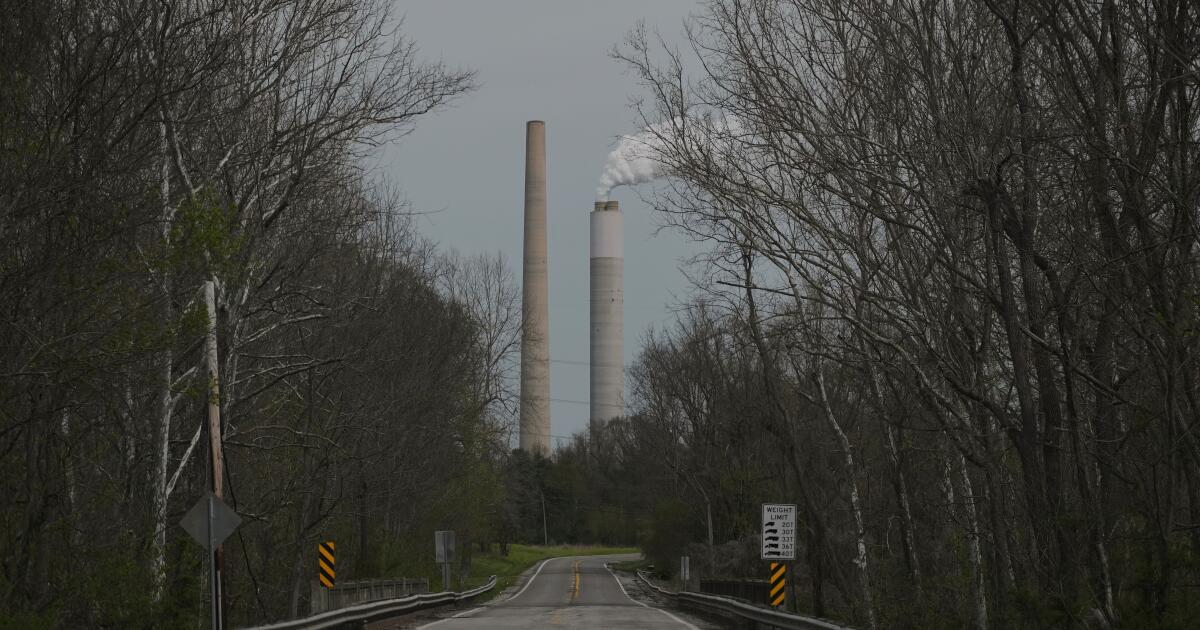
The Environmental Protection Agency under President Trump has cut federal limits on air and water pollution and promoted fossil fuels, a metamorphosis that clashes with the agency’s stated mission — to protect human health and the environment.

The administration says its actions will “unleash” the American economy, but environmentalists say the agency’s abrupt change in focus threatens to unravel years of progress on climate-friendly initiatives that could be hard or impossible to reverse.

“It just constantly wants to pat the fossil fuel business on the back and turn back the clock to a pre-Richard Nixon era” when the agency didn’t exist, said historian Douglas Brinkley.

A lot has happened this year at “Trump’s EPA,” as Administrator Lee Zeldin frequently calls the agency. Zeldin proposed overturning the landmark finding that climate change is a threat to human health. He pledged to roll back dozens of environmental regulations in “the greatest day of deregulation our nation has seen.” He froze billions of dollars for clean energy and upended agency research.

Zeldin has argued the EPA can protect the environment and grow the economy at the same time. He announced “five pillars” to guide the EPA’s work; four were economic goals, including energy dominance — President Trump’s shorthand for more fossil fuels — and boosting the auto industry.

A former New York congressman who had a record as a moderate Republican on some environmental issues, Zeldin said his views on climate change have evolved. Many federal and state climate goals are unattainable in the near future — and come at a huge cost, he said.

“We should not be causing … extreme economic pain for an individual or a family” because of policies aimed at “saving the planet,” he told reporters at EPA headquarters in early December.

But scientists and experts say the EPA’s new direction comes at a cost to public health and would lead to far more pollutants in the environment, including mercury, lead and especially tiny airborne particles that can lodge in lungs. They also note higher emissions of greenhouse gases will worsen atmospheric warming that is driving more frequent, costly and deadly extreme weather.

Christine Todd Whitman, a longtime Republican who led the EPA under President George W. Bush, said watching Zeldin attack laws protecting air and water has been “just depressing.”

“It’s tragic for our country. I worry about my grandchildren, of which I have seven. I worry about what their future is going to be if they don’t have clean air, if they don’t have clean water to drink,” said Whitman, who joined a centrist third party in recent years.

The history behind EPA

The EPA was launched under Nixon in 1970 at a time when pollution was disrupting American life, some cities were suffocating in smog and industrial chemicals turned some rivers into wastelands. Congress passed laws then that remain foundational for protecting water, air and endangered species.

The agency’s aggressiveness has always seesawed depending on who occupies the White House. The Biden administration boosted renewable energy and electric vehicles, tightened restrictions on motor-vehicle emissions and proposed greenhouse gas limits on coal-fired power plants and oil and gas wells. Industry groups called rules overly burdensome and said the power plant rule would force many aging facilities to shut down. In response, many businesses shifted resources to meet the more stringent rules that are now being undone.

“While the Biden EPA repeatedly attempted to usurp the U.S. Constitution and the rule of law to impose its ‘Green New Scam,’ the Trump EPA is laser-focused on achieving results for the American people while operating within the limits of the laws passed by Congress,” EPA spokeswoman Brigit Hirsch said.

Zeldin’s list of targets is long

Zeldin has announced plans to abandon soot pollution rules, loosen rules around harmful refrigerants, limit wetland protections and weaken gas mileage rules. Meanwhile, he would exempt polluting industries and plants from federal emissions-reduction requirements.

Much of the EPA’s new direction aligns with Project 2025, the conservative Heritage Foundation road map that argued the agency should gut staffing, cut regulations and end what it called a war on coal or other fossil fuels.

“A lot of the regulations that were put on during the Biden administration were more harmful and restrictive than in any other period. So that’s why deregulating them looks like EPA is making major changes,” said Diana Furchtgott-Roth, director of Heritage’s Center for Energy, Climate, and Environment.

But Chris Frey, an EPA official under Biden, said the regulations Zeldin has targeted “offered benefits of avoided premature deaths, of avoided chronic illness … bad things that would not happen because of these rules.”

Matthew Tejada, a former EPA official under both Trump and then-President Biden who now works at the Natural Resources Defense Council, said of the revamped EPA: “I think it would be hard for them to make it any clearer to polluters in this country that they can go on about their business and not worry about EPA getting in their way.”

Zeldin also has shrunk EPA staffing by about 20% to levels last seen in the mid-1980s.

Justin Chen, president of the EPA’s largest union, called the staff cuts “devastating.” He cited the dismantling of research and development offices at labs across the country and the firing of employees who signed a letter of dissent opposing EPA cuts.

Relaxed enforcement and cutting staff

Many of Zeldin’s changes aren’t in effect yet. It takes time to propose new rules, get public input and finalize rollbacks.

It’s much faster to cut grants and ease up on enforcement, and Trump’s EPA is doing both. The number of new civil environmental actions is roughly one-fifth what it was in the first eight months of the Biden administration, according to the nonprofit Environmental Integrity Project.

“You can effectively do a lot of deregulation if you just don’t do enforcement,” said Leif Fredrickson, visiting assistant professor of history at the University of Montana.

Hirsch said the number of legal filings isn’t the best way to judge enforcement because they require work outside the EPA and can bog staff down with burdensome legal agreements. She said the EPA is “focused on efficiently resolving violations and achieving compliance as quickly as possible” and not making demands beyond what the law requires.

EPA’s cuts have been especially hard on climate change programs and environmental justice, the effort to address chronic pollution that typically is worse in minority and poor communities. Both were Biden administration priorities. Zeldin dismissed staff and canceled billions in grants for projects that fell under the “diversity, equity and inclusion” umbrella, a Trump administration target.

Zeldin also spiked a $20-billion “green bank” set up under Biden’s landmark climate law to fund qualifying clean energy projects. The EPA chief argued the fund was a scheme to funnel money to Democratic-aligned organizations with little oversight — allegations a federal judge rejected.

Pat Parenteau, an environmental law expert and former director of the Environmental Law School at Vermont Law & Graduate School, said the EPA’s shift under Trump left him with little optimism for what he called “the two most awful crises in the 21st century”: biodiversity loss and climate disruption.

“I don’t see any hope for either one,” he said. “I really don’t. And I’ll be long gone, but I think the world is in just for absolute catastrophe.”

Phillis, John and Daly write for the Associated Press.

Source link

How has Trump’s second term transformed the US Justice Department in 2025? | Donald Trump News

A newfound ‘openness’

The trouble with prosecutorial independence, however, is that it has not been codified in US law.

Instead, it is a norm that has developed over more than a century, stretching back to the earliest days of the Justice Department.

While the role of the attorney general dates back to 1789, the Justice Department itself is a more recent creation. It was established in 1870, during the Reconstruction period following the US Civil War.

That period was marked by an increasing rejection of political patronage: the system of rewarding political allies with favours and jobs.

Reformers argued that, rather than having law enforcement officers scattered across various government agencies, consolidating them in one department would make them less susceptible to political influence.

That premise, however, has been tested over the subsequent decades, most notably in the early 1970s under then-President Richard Nixon.

Nixon courted scandal by appearing to wield the threat of prosecutions against his political rivals — while dropping cases that harmed his allies.

In one instance, he allegedly ordered the Justice Department to drop its antitrust case against the company International Telephone and Telegraph (ITT) in exchange for financial backing at the Republican National Convention.

Key Justice Department officials were also implicated in the Watergate scandal, which involved an attempted break-in at Democratic Party headquarters.

But Sklansky, the Stanford Law professor, noted that Nixon tended to operate through back channels. He avoided any public calls to prosecute his rivals.

“He believed that, if he called for that openly, he would’ve been pilloried not just by Democrats but by Republicans,” Sklansky said. “And that was undoubtedly true at the time.”

But Sklansky believes the second Trump administration has abandoned such discretion in favour of a public display of power over the Justice Department.

“Trump’s openness about the use of the Justice Department to go after his enemies is really something that is quite new,” he said.

Source link

Judge blocks Trump effort to strip South Sudan deportation protections | Donald Trump News

Trump is seeking to end protected status for South Sudan, claiming country no longer poses danger to those returning.

A federal judge has blocked the administration of President Donald Trump from stripping temporary protections from deportations for South Sudanese citizens living in the United States.

US District Judge Angel Kelley in Boston, Massachusetts, granted an emergency request on Tuesday in a lawsuit filed by several South Sudanese nationals and an immigrant rights group.

Recommended Stories

list of 3 itemsend of list

The order prevents the temporary protected status (TPS) for South Sudanese citizens from expiring on January 5 as the Trump administration has sought.

The lawsuit, led by the African ‍Communities Together, accuses the US Department of Homeland Security of acting unlawfully in its effort to strip South Sudanese citizens of TPS, a US immigration status granted to citizens of countries experiencing natural disasters, conflict or other extraordinary circumstances that could make return to their homelands dangerous.

The status was initially granted for South Sudan in 2011 when the country officially broke away from Sudan. It has been repeatedly renewed amid repeated bouts of fighting, widespread displacement and regional instability.

​The status allows eligible individuals to work and receive temporary protection from deportation.

The lawsuit further alleged that the Trump administration exposed South Sudan citizens to being deported to a country facing what is widely considered one of the world’s worst humanitarian crises.

Homeland Security Secretary Kristi Noem, in a notice published on November ‌5, had argued the country no longer met the conditions for TPS.

“With the renewed peace in South Sudan, their demonstrated commitment to ensuring the safe reintegration of returning nationals, and improved diplomatic relations, now is the right time to conclude what was always intended to ‌be a temporary designation,” she said, appearing to refer to a tenuous 2018 peace agreement.

The statement contradicted the findings of a panel of United Nations experts, who wrote in a report to the UN Security Council in November that “while the contours of the conflict may be altered, the resulting human suffering has remained unchanged.”

“Ongoing conflict and aerial bombardments, coupled with flooding and the influx of returnees and refugees from the Sudan, have led to near-record levels of food insecurity, with pockets of famine reported in some of the communities most affected by renewed fighting,” it added.

The Trump administration has increasingly targeted TPS as part of its crackdown on immigration and its mass deportation drive.

It has moved to similarly ‌end TPS for foreign nationals from countries including Syria, Venezuela, Haiti, ⁠Cuba and Nicaragua, prompting several court challenges.

It has also sought to deport individuals to countries in Africa, even if they have no ties there.

Source link

Kennedy Center renaming prompts new round of cancellations from artists

More artists have canceled scheduled performances at the Kennedy Center following the addition of President Donald Trump’s name to the facility, with jazz supergroup The Cookers pulling out of a planned New Year’s Eve concert, and the institution’s president saying the cancellations belie the artists’ unwillingness to see their music as crossing lines of political disparity.

The fresh round of cancellations after Trump put his name of the building follows an earlier artist backlash in spring. After Trump ousted the Kennedy Center board and named himself the institution’s chairman in February, performer Issa Rae and the producers of “Hamilton” cancelled scheduled engagements while musicians Ben Folds and Renee Flaming stepped down from advisory roles.

The Cookers, a jazz supergroup performing together for nearly two decades, announced their withdrawal from “A Jazz New Year’s Eve” on their website, saying the “decision has come together very quickly” and acknowledging frustration from those who may have planned to attend.

The group didn’t mention the building’s renaming or the Trump administration but did say that, when they return to performing, they wanted to ensure that “the room is able to celebrate the full presence of the music and everyone in it,” reiterating a commitment “to playing music that reaches across divisions rather than deepening them.”

The group may not have addressed the Kennedy Center situation directly, but one of its members has. On Saturday, saxophone player Billy Harper said in comments posted on the Jazz Stage Facebook page that he “would never even consider performing in a venue bearing a name (and being controlled by the kind of board) that represents overt racism and deliberate destruction of African American music and culture. The same music I devoted my life to creating and advancing.”

According to the White House, Trump’s handpicked board approved the renaming. Harper said both the board, “as well as the name displayed on the building itself represents a mentality and practices I always stood against. And still do, today more than ever.”

Richard Grenell, a Trump ally whom the president chose to head the Kennedy Center after he forced out the previous leadership, posted Monday night on X that “The artists who are now canceling shows were booked by the previous far left leadership,” intimating the bookings were made under the Biden administration.

In a statement to the Associated Press, Grenell said Tuesday the ”last minute cancellations prove that they were always unwilling to perform for everyone — even those they disagree with politically,” adding that the Kennedy Center had been “flooded with inquiries from real artists willing to perform for everyone and who reject political statements in their artistry.”

There was no immediate word from Kennedy Center officials if the entity would pursue legal action against the group, as Grenell said it would after musician Chuck Redd canceled a Christmas Eve performance. Following that withdrawal, in which Redd cited the Kennedy Center renaming, Grenell said he would seek $1 million in damages for what he called a “political stunt.”

President John F. Kennedy was assassinated in 1963, and Congress passed a law the following year naming the center as a living memorial to him. Scholars have said any changes to the building’s name would need congressional approval; the law explicitly prohibits the board of trustees from making the center into a memorial to anyone else, and from putting another person’s name on the building’s exterior.

Kinnard writes for the Associated Press. AP writers Steven Sloan and Hillel Italie contributed to this report.

Source link

After quiet off-year elections, Democrats renew worries about Trump interfering in the midterms

If history is a guide, Republicans stand a good chance of losing control of the House of Representatives in 2026. They have just a slim majority in the chamber, and the incumbent party usually gives up seats in midterm elections.

President Trump, whose loss of the House halfway through his first term led to two impeachments, is trying to keep history from repeating — and doing so in ways his opponents say are intended to manipulate next year’s election landscape.

He has rallied his party to remake congressional maps across the country to create more conservative-leaning House seats, an effort that could end up backfiring on him. He’s directed his administration to target Democratic politicians, activists and donors. And, Democrats worry, he’s flexing his muscles to intervene in the midterms like no administration ever has.

Democrats and other critics point to how Trump has sent the military into Democratic cities over the objections of Democratic mayors and governors. They note that he’s pushed the Department of Homeland Security to be so aggressive that at one point its agents handcuffed a Democratic U.S. senator. And some warn that a Republican-controlled Congress could fail to seat winning candidates if Democrats reclaim the House majority, recalling Trump’s efforts to stay in power even after voters rejected him in 2020, leading to the violent attack by his supporters on the U.S. Capitol.

Regarding potential military deployments, Ken Martin, chairman of the Democratic National Committee, told The Associated Press: “What he is going to do is send those troops there, and keep them there all the way through the next election, because guess what? If people are afraid of leaving their house, they’re probably not going to leave their house to go vote on Election Day. That’s how he stays in power.”

Military to the polls, or fearmongering?

Democrats sounded similar alarms just before November’s elections, and yet there were no significant incidents. California Gov. Gavin Newsom, a frequent Trump antagonist who also warns about a federal crackdown on voting in 2026, predicted that masked immigration agents would show up at the polls in his state, where voters were considering a ballot measure to counter Trump’s redistricting push.

There were no such incidents in November, and the measure to redraw California’s congressional lines in response to Trump’s efforts elsewhere won in a landslide.

White House spokeswoman Abigail Jackson said the concerns about the midterms come from Democratic politicians who are “fearmongering to score political points with the radical left flank of the Democrat party that they are courting ahead of their doomed-to-fail presidential campaigns.”

She described their concerns as “baseless conspiracy theories.”

Susie Wiles, Trump’s chief of staff, denied that Trump was planning to use the military to try to suppress votes.

“I say it is categorically false, will not happen. It’s just wrongheaded,” she told Vanity Fair for an interview that was published earlier in December.

DNC litigation director Dan Freeman said he hasn’t seen an indication that Trump will send immigration enforcement agents to polling places during the midterms, but is wary.

He said the DNC filed public records requests in an attempt to learn more about any such plans and is drafting legal pleadings it could file if Trump sends armed federal agents to the polls or otherwise intervenes in the elections.

“We’re not taking their word for it,” Freeman said in an interview.

States, not presidents, run elections

November’s off-year elections may not be the best indicator of what could lie ahead. They were scattered in a handful of states, and Trump showed only modest interest until late in the fall when his Department of Justice announced it was sending federal monitors to California and New Jersey to observe voting in a handful of counties. It was a bureaucratic step that had no impact on voting, even as it triggered alarm from Democrats.

Alexandra Chandler, the legal director of Defend Democracy, a group that has clashed with Trump over his role in elections, said she was heartened by the lack of drama during the 2025 voting.

“We have so many positive signs we can look to,” Chandler said, citing not only a quiet election but GOP senators’ resistance to Trump’s demands to eliminate the filibuster and the widespread resistance to Trump’s demand that television host Jimmy Kimmel lose his job because of his criticism of the president. “There are limits” on Trump’s power, she noted.

“We will have elections in 2026,” Chandler said. “People don’t have to worry about that.”

Under the Constitution, a president has limited tools to intervene in elections, which are run by the states. Congress can help set rules for federal elections, but states administer their own election operations and oversee the counting of ballots.

When Trump tried to singlehandedly revise election rules with a sweeping executive order shortly after returning to office, the courts stepped in and stopped him, citing the lack of a constitutional role for the president. Trump later promised another order, possibly targeting mail ballots and voting machines, but it has yet to materialize.

DOJ voter data request ‘should frighten everybody’

Still, there’s plenty of ways a president can cause problems, said Rick Hasen, a UCLA law professor.

Trump unsuccessfully pushed Georgia’s top election official to “find” him enough votes to be declared the winner there in 2020 and could try similar tactics in Republican-dominated states in November. Likewise, Hasen said, Trump could spread misinformation to undermine confidence in vote tallies, as he has done routinely ahead of elections.

It’s harder to do that in more lopsided contests, as many in 2025 turned into, Hasen noted.

“Concerns about Trump interfering in 2026 are real; they’re not frivolous,” Hasen said. “They’re also not likely, but these are things people need to be on guard for.”

One administration move that has alarmed election officials is a federal demand from his Department of Justice for detailed voter data from the states. The administration has sued the District of Columbia and at least 21 states, most of them controlled by Democrats, after they refused to turn over all the information the DOJ sought.

“What the DOJ is trying to do is something that should frighten everybody across the political spectrum,” said David Becker, a former Justice Department voting rights attorney and executive director of the Center for Election Innovation & Research. “They’re trying to use the power of the executive to bully states into turning over highly sensitive data — date of birth, Social Security numbers, driver’s license, the Holy Trinity of identity theft — hand it over to the DOJ for who knows what use.”

‘Voter protection’ vs ‘election integrity’

Voting rights lawyers and election officials have been preparing for months for the midterms, trying to ensure there are ways to counter misinformation and ensure state election systems are easy to explain. Both major parties are expected to stand up significant campaigns around the mechanics of voting: Democrats mounting what they call a “voter protection” effort to monitor for problems while Republicans focus on what they call “election integrity.”

Freeman, the DNC litigation director who previously worked in the DOJ’s voting section, said his hiring this year was part of a larger effort by the DNC to beef up its in-house legal efforts ahead of the midterms. He said the committee has been filling gaps in voting rights law enforcement that the DOJ has typically covered, including informing states that they can’t illegally purge citizens from their voter rolls.

Tina Barton, co-chair of the Committee on Safe and Secure Elections, a coalition of law enforcement and election officials who advise jurisdictions on de-escalation and how to respond to emergencies at polling places, says interest in the group’s trainings has “exploded” in recent weeks.

“There’s a lot at stake, and that’s going to cause a lot of emotions,” Barton said.

Riccardi writes for the Associated Press. AP writers Marc Levy in Harrisburg, Penn., Julie Carr Smyth in Columbus, Ohio, and Ali Swenson in New York contributed to this report.

Source link

Trump says he’s not worried about China’s blockade drills of Taiwan

A passenger looks at an LED board showing delayed flights during the Chinese military live-fire drills around Taiwan, in Taipei, Taiwan, Tuesday. China is conducting live-fire drills in five designated maritime and airspace zones around Taiwan. Photo by Richie B. Tongo/EPA

Dec. 30 (UPI) — China continued its live-fire drill called “Justice Mission 2025,” on Tuesday creating a blockade around Taiwan and disrupting flights, but President Donald Trump said he’s not worried.

Reporters asked Trump about the drills Monday, and he said he has a “great relationship with President Xi [Jinping], and he hasn’t told me anything about it.”

“I certainly have seen it … I don’t believe he is going to be doing it,” Trump said. He didn’t elaborate on what he meant that Xi could do. “Nothing worries me.”

“They’ve been doing naval exercises for 20 years in that area,” he told reporters.

Trump is expected to make a formal visit to Beijing next year.

Though Taiwan is a self-governing democracy, China claims it is a Chinese province. China has been pushing for a “peaceful reunification” with Taiwan. But it hasn’t ruled out taking the island nation by force.

On Friday, China sanctioned U.S. companies and their leadership after the United States announced an $11.1 billion arms deal with Taiwan on Dec. 18.

Taiwan’s Ministry of National Defense said it detected 130 Chinese military aircraft and 22 naval and coast guard vessels in the past 24 hours up to 6 a.m. Tuesday.

“China ignores the expectations of the international community for peace and persists in destroying regional stability with military threat, which is a blatant provocation to regional security and international order, and I would like to express my strongest condemnation,” President Lai Ching-te said Tuesday in a Facebook post.

Lai also said the drills were disrupting trade and air traffic.

“China’s military provocations along the First Island Chain severely disrupt global maritime trade, air traffic and regional peace. #Taiwan continues to act responsibly, neither escalating tensions nor yielding to threats – we will steadfastly defend our freedom against coercion,” he said on X.

Taiwan Defense Minister Wellington Koo said the drills disregarded international norms and “clearly aim to achieve cognitive warfare and deplete Taiwan’s combat capabilities … and to create division and conflict within Taiwanese society,” The Guardian reported.

This exercise is the sixth of its kind since 2022, though it’s the largest. In 2022, the drills were in retaliation for then-Speaker of the House Nancy Pelosi‘s visit. But this is the first time since then that China has created “maritime exclusion zones.” Planes and boats were not allowed to pass during the drills.

Source link

Trump regime’s lies against immigrants in 2025 even did Frank Sinatra dirty

This is a column about lies. Big lies. Presidential lies. Dumb lies. The type of lies that have made life in the United States a daily dumpster fire of bad news. The kind of lies that would’ve made Frank Sinatra want to knock out a palooka.

More on Ol’ Blue Eyes in a bit.

For now let me tell you about one victim of President Trump’s mountain of lies whose brush with the administration defined our 2025.

On June 7, Brayan Ramos-Brito drove east on Alondra Boulevard from Compton toward a Chevron in Paramount to buy some snacks. It was his day off. It also was the weekend when Trump unleashed his deportation Leviathan on Southern California in a campaign that hasn’t stopped.

Ramos-Brito, a cook, had no idea that was going on as traffic froze on Alondra in front of a Home Depot. A “stay-at-home type of guy,” he didn’t even vote in the 2024 election because “politics isn’t my thing.”

But as the slender 30-year-old sat in his car, he saw federal immigration agents who had gathered across the street from the Home Depot fire flash-bang grenades at protesters who were screaming at them to leave. That’s when the moment “got to me.”

Ramos-Britos, a U.S citizen, got out of his car to yell at la migra, accusing those who looked Latino of being a “disgrace.” He said one of them shoved him into a scrum of protesters. After that, “all I remember were knees and kicks” by agents before they dragged him on the pavement and into the back of a van.

For hours Ramos-Brito and others stayed zip-tied inside as “craziness” erupted outside. Hundreds more residents arrived, as did L.A. County sheriff’s deputies. Smoke from blazes set by the former and tear gas canisters tossed by the latter seeped inside the van — “we kept telling agents we couldn’t breath, but they just ignored us.”

Photos and footage from the Paramount protest went viral and sparked an even bigger rally the following day near downtown L.A. that devolved into torched Waymo cars and concrete blocks hurled at California Highway Patrol vehicles. Soon, Trump called up the National Guard and Marines to occupy the City of Angels under the pretense that anarchy now ruled here — even though protests were confined to pockets of the metropolis. Siccing the National Guard on cities is something Trump has since tried to replicate across the country in any place that has dared to push back against immigration sweeps.

Ramos-Brito spent two weeks in a detention facility in Santa Ana stuffed in a cell with undocumented immigrants facing deportation. He faced federal felony charges of assaulting a federal agent and was accused of being one of the Paramount protest’s ringleaders as well.

Prosecutors tried to scare him into pleading guilty with threats of years in prison. Despite having no money to hire a lawyer, he refused: “I wasn’t going to take the blame for something I didn’t do.”

Federal public defender Cuauhtémoc Ortega represented Ramos-Brito during a two-day September trial. Ortega screened video footage to the jury that proved his client’s version of what happened and easily caught federal agents contradicting each other and their own field reports.

The jury took about an hour to acquit Ramos-Brito on misdemeanor assault charges. He wants to move on — but the mendacity of the administration won’t let him.

The lies it used to try to railroad an innocent man turned out not to be an aberration but a playbook for Trump’s 2025.

A stretch of Alondra Boulevard in Paramount

The stretch of Alondra Boulevard in Paramount where a June 7 protest against immigration agents resulted in the arrest of 30-year-old Compton resident Brayan Ramos-Brito on allegations he assaulted one of them. A jury found him not guilty.

(Gary Coronado/For The Times)

Lies, of course, have fueled the president’s career from the days he was was a smarmy New York developer riding the coattails of his daddy. This year he and his apologists employed them like never before to try to consolidate their grip on all aspects of American life. They lied about the economy, about the contents of the Epstein files, about the efficacy of vaccines, the worth of diversity, equity and inclusion initiatives, our supposed noninterventionist foreign policy and so much more.

Above all, or at least most malignantly, Trump and his crew lied about immigrants. The big lie. The lie they thought everyone would believe and thus would excuse all the other lies. They have lied about and maligned just about anyone they don’t see worthy of being a so-called “heritage American,” aka white.

Trump ran for reelection on a promise to focus on targeting “the worst of the worst” but has shrugged his shoulders as most of the people swept up in raids have no criminal record and are sometimes even citizens and permanent residents. He vowed that deporting people would improve the economy despite decades of studies showing the opposite. Trumpworld insists immigrants are destroying the United States — never mind that the commander in chief is the son of a Scotswoman and is married to a Slovenian while vice president JD Vance’s in-laws are from India.

The administration maintains unchecked migration is cultural suicide even as cabinet members sport last names — Kennedy, Rubio, Bondi, Loeffler — once seen by Americans of past generations as synonymous with invading hordes.

This is where Frank Sinatra comes in.

Over the Christmas weekend, White House deputy chief of staff Stephen Miller posted on social media that his family watched a Christmas special starring the Chairman of the Board and his fellow paisan, Dean Martin.

“Imagine watching that and thinking America needed infinity migrants from the third world,” Miller sneered. It didn’t matter that the crooners were proud children of Italian immigrants who arrived during a time where they were as demonized as Venezuelans and Somalis are now.

Take it from Sinatra himself.

In 1945 he released “The House I Live In,” a short film in which he tells a group of boys chasing one of their Jewish peers to embrace a diverse America. In 1991 as his Republican Party was launching an era of laws in California targeting illegal immigrants, Sinatra penned a Fourth of July essay for The Times opposing such hate.

“Who in the name of God are these people anyway, the ones who elevate themselves above others?” Sinatra wrote. “America is an immigrant country. Maybe not you and me, but those whose love made our lives possible, or their parents or grandparents.”

As 2025 went from one hell month to another, it really felt like Trumpworld’s lies would loom over the land for good. But as the year ends, it seems truth finally is peeking through the storm clouds, like the blue skies Sinatra sang about so beautifully.

Trump’s approval ratings have dropped greatly since his inauguration even among those who voted for him, with his deportation disaster playing a role. Judges and juries are beginning to swat away charges filed against people like Ramos-Brito like they were flies swarming around a dung pile. Under especial scrutiny is Border Patrol commander Gregory Bovino, the public face of Trump’s deportation ground game.

In November, U.S. District Judge Sara L. Ellis ruled the federal government had to stop using excessive force in Chicago after months of agents firing pepper balls and tear gas at the slightest perceived insult. Her decision reasoned that Bovino’s sworn testimony about a Chicago under siege by pro-immigrant activists was “not credible” because he provided “cute” answers when he wasn’t “outright lying.”

Among the victims of those lies: Scott Blackburn, who was arrested for allegedly assaulting Bovino during an immigration raid even though videos showed the migra man tackle Blackburn like they were playing sandlot football, and Cole Sheridan, whom Bovino claimed injured his groin while arresting him during a protest; federal prosecutors quickly dropped all charges against Sheridan when they realized there was a lack of evidence to back up Bovino’s story.

And then there is Ramos-Brito, who had to endure a federal trial that hinged on Bovino insisting he was guilty of assaulting a federal agent in Paramount. He shook his head in disgust when I told him about Bovino’s continued tall tales.

“Justice was served for me,” Ramos-Brito said, “but not for others. I got lucky.”

Brayan Ramos-Brito, 30, of Compton

Brayan Ramos-Brito, 30, of Compton, was found not guilty of assaulting a federal agent during June’s immigration enforcement protests in Los Angeles County.

(Gary Coronado/For The Times)

We spoke in front of the Home Depot where the June 7 protest happened, where Trump’s year of immigration lies went into overdrive. The day laborers who used to gather there for years weren’t around. The gate where la migra and protesters faced off was closed.

Ramos-Brito still drives down that stretch of Alondra Boulevard for his snacks from the Chevron station that stands a block away from where his life forever was changed. It took him months to go public with his story. Scars remain on his ribs, back and shoulders.

“There’s times when little moments come through my head,” he acknowledged.

What finally convinced him to speak up was think about others out there like him. He now realizes speaking out against Trump’s lies is the only way to stop him for good.

“Whoever is going through the same that I did, keep fighting,” Ramos-Brito said softly. “They should look at my experience to give them hope.”

Source link

Trump confirms strike on alleged drug port in Venezuela

Dec. 29 (UPI) — President Donald Trump on Monday confirmed that the United States struck a “dock area” that officials believe is used to transfer drugs to boats for international distribution.

The U.S. military has struck dozens of ships in the Caribbean near Venezuela, as well as in the Pacific, that are allegedly shipping drugs from South America to the United States and other countries, but the dock would be the first time that an onshore target has been struck.

Trump said Friday in a radio interview that a “big facility” had been “knocked out” in Venezuela that was not widely publicized until Monday when reporters at Mar-a-Lago asked him about it, ABC News and The New York Times reported.

According to CNN, the dock was targeted by the CIA in a drone strike based on intelligence from the U.S. Special Forces that it was being used by the Venezuelan gang Tren de Aragua as a shipping facility for drugs.

A spokesperson for U.S. Special Operations Command told CNN that “Special Operations did not support this operation to include intel support,” the network noted, adding that the Special Operations Forces continue to be involved in Venezuela.

Despite officials offering few details about the strike, Trump, on Monday, appeared to confirm that U.S. forces struck a dock in Venezuela and why it was targeted.

“There was a major explosion in the dock area where they load up the boats with drugs,” Trump told reporters. “They load the boats up with drugs. So we hit all the boats, and now we hit the area, it’s the implementation area, that’s where they implement, and that is no longer around.”

The U.S. military for months has built up a military presence in the Caribbean in international waters offshore of Venezuela, culminating in the arrival of the USS Gerald R. Ford aircraft carrier and its carrier strike group in November.

A month before that, in mid-October, Trump told reporters that he had authorized the CIA to conduct operations in Venezuela, and noted that they had been doing so for months at that point.

He said at the time that the military had been striking ships because “a lot of Venezuelan drugs come in through the sea, so you see it,” but that the United States would “stop them by land, also” — acknowledging that the administration was considering strikes inside Venezuela.

The Ford’s presence, in addition to more than a dozen other warships, has built up a 15,000 troop presence in the Caribbean that the Pentagon has dubbed Operation Southern Spear.

In addition to striking alleged drug boats in the Caribbean and Pacific, Trump also has ordered a naval blockade to prevent Venezuela from shipping its sanctioned oil to Iran and China.

The administration so far has apprehended three oil tankers leaving Venezuela.

Trump has said he is aiming to depose Venezuelan President Nicolas Maduro based on accusations that Maduro runs the Tren de Aragua gang, has emptied the country’s prisons and sent criminals to the United States to wreak havoc in the country, and is pumping drugs into the United States.

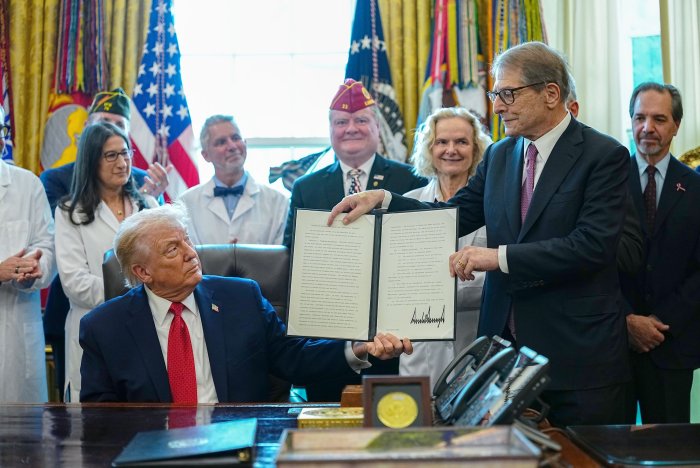
President Donald Trump holds a signed executive order reclassifying marijuana from a schedule I to a schedule III controlled substance in the Oval Office of the White House on Thursday. Photo by Aaron Schwartz/UPI | License Photo

Source link

Trump administration awards $50B for rural healthcare

Dec. 29 (UPI) — The Trump administration on Monday announced it will distribute $50 billion dollars to expand access to rural healthcare across all 50 states with investments in growing the workforce, modernizing facilities and introducing new models of care delivery.

States are set to receive first-year awards next year of roughly $200 million under the Rural Health Transformation Program, which Congress authorized earlier this year as part of the Working Families Tax Cuts bill, the Centers for Medicare and Medicaid Services said in a press release.

“More than 60 million Americans living in rural areas have the right to equal access to quality care,” said Robert F. Kennedy, Jr., secretary of the Department of Health and Human Services.

“This historic investment puts local hospitals, clinics and health workers in control of their communities’ health care,” Kennedy said.

The CMS is set to distribute the $50 billion dollars over the next five years, from 2026 through 2030, as part of the program established by the bill, which is more commonly known as the One Big Beautiful Bill Act.

Each year, $5 billion will be distributed equally to each of the 50 states, while another $5 billion will be allocated based on the proportion of rural health facilities, situations at specific facilities in the state and other factors, the agency said on the program website.

The CMS announced each state’s 2026 allocation — Washington, D.C., and U.S. territories are not eligible for the funds — in the release, with the awards ranging from New Jersey’s $147 million to Texas’ $281 million.

The funds are meant to accomplish a range of goals to “make rural America healthy again,” including:

  • expanding access to preventive, primary, maternal and behavioral health services;
  • strengthening, growing and sustaining the clinical work force in rural areas;
  • modernizing health infrastructure and technology;
  • driving structural efficiency through streamlining operations and working to make more services available locally;
  • and testing new primary care and value-based care models of delivery and payment.

The announcement comes after the American Hospital Association estimated earlier this year that rural hospitals could lose $50.4 billion in revenue from federal Medicaid funds over the next 10 years.

The reason is based on a Congressional Budget Office estimate earlier this year that the $1 trillion that was cut from Medicaid in the One Big Beautiful Bill Act could result in more than 7.8 million more people across the country becoming uninsured.

This loss of Medicaid coverage for patients affects revenue for healthcare providers, and the effects will be felt most acutely in rural areas.

These areas of the country currently include an estimated 16.1 million people with Medicaid coverage. Sparsely populated states such as Montana, Wyoming and Alaska have more than 50% of Medicaid recipients living in rural areas, the American Hospital Association says.

For many rural health facilities, a mixture of Medicare and Medicaid patients help them stay open, Sarah Hohman, director of government affairs for the National Association of Rural Health Clinics, told UPI in July.

“If the coverage losses pan out as they are estimated, that would mean that they are treating fewer patients that are covered by insurance,” Hohman said. “The more you have uncompensated care and individuals not able to pay, your balance gets concerning pretty quickly. That really threatens the financial viability in these areas.”

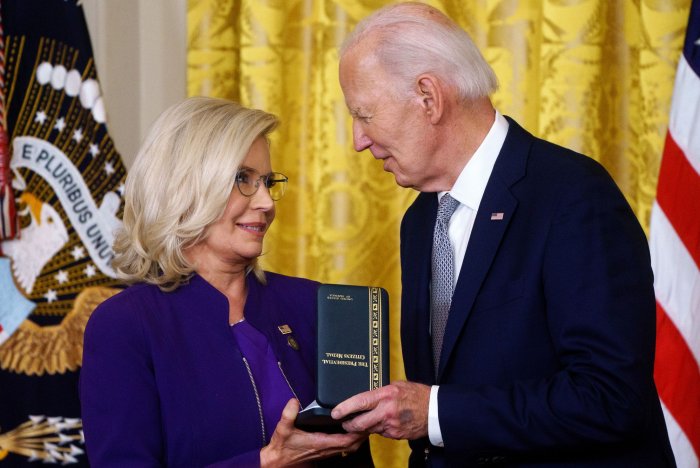
Former President Joe Biden presents the Presidential Citizens Medal to Liz Cheney during a ceremony in the East Room of the White House in Washington, on January 2, 2025. The Presidential Citizens Medal is bestowed to individuals who have performed exemplary deeds or services. Photo by Will Oliver/UPI | License Photo


Source link

U.S. pledges $2 billion for U.N. humanitarian aid as Trump warns agencies must ‘adapt or die’

The United States on Monday announced a $2-billion pledge for U.N. humanitarian aid as President Trump’s administration slashes U.S. foreign assistance and warns United Nations agencies to “adapt, shrink or die” in a time of new financial realities.

The money is a small fraction of what the U.S. has contributed in the past but reflects what the administration believes is still a generous amount that will maintain America’s status as the world’s largest humanitarian donor.

“This new model will better share the burden of U.N. humanitarian work with other developed countries and will require the U.N. to cut bloat, remove duplication, and commit to powerful new impact, accountability and oversight mechanisms,” Secretary of State Marco Rubio said on social media.

The pledge creates an umbrella fund from which money will be doled out to agencies and priorities, a key part of U.S. demands for drastic changes across the U.N. that have alarmed many humanitarian workers and led to severe reductions in programs and services.

The $2 billion is only a sliver of traditional U.S. humanitarian funding for U.N.-coordinated programs, which has run as high as $17 billion annually in recent years, according to U.N. data. U.S. officials say only $8 billion to $10 billion of that has been in voluntary contributions. The United States also pays billions in annual dues related to its U.N. membership.

“The piggy bank is not open to organizations that just want to return to the old system,” Jeremy Lewin, the State Department official in charge of foreign assistance, said at a press conference Monday in Geneva. “President Trump has made clear that the system is dead.”

The State Department said “individual U.N. agencies will need to adapt, shrink, or die.” Critics say the Western aid cutbacks have been shortsighted, driven millions toward hunger, displacement or disease, and harmed U.S. soft power around the world.

A year of crisis in aid

The move caps a crisis year for many U.N. organizations, including its refugee, migration and food aid agencies. The Trump administration has already cut billions in U.S. foreign aid, prompting the agencies to slash spending, aid projects and thousands of jobs. Other traditional Western donors have reduced outlays, too.

The U.S. pledge for aid programs of the United Nations — the world’s top provider of humanitarian assistance and biggest recipient of U.S. humanitarian aid money — takes shape in a preliminary deal with the U.N. Office for the Coordination of Humanitarian Affairs, or OCHA, run by Tom Fletcher, a former British diplomat and government official.

Fletcher, who has spent the past year lobbying U.S. officials not to abandon U.N. funding altogether, appeared optimistic at the deal’s signing in Geneva.

“It’s a very, very significant landmark contribution. And a month ago, I would have anticipated the number would have been zero,” he told reporters. “And so I think, before worrying about what we haven’t got, I’d like to look at the millions of people whose lives will be saved, whose lives will be better because of this contribution, and start there.”

Even as the U.S. pulls back its aid contributions, needs have ballooned worldwide: Famine has been recorded this year in parts of conflict-ridden Sudan and Gaza, and floods, drought and natural disasters that many scientists attribute to climate change have taken many lives or driven thousands from their homes.

The cuts will have major implications for U.N. affiliates like the International Organization for Migration, the World Food Program and refugee agency UNHCR. They have already received billions less from the U.S. this year than under annual allocations from the Biden administration — or even during Trump’s first term.

Now, the idea is that Fletcher’s office — which has aimed to improve efficiency — will become a funnel for U.S. and other aid money that can be redirected to those agencies, rather than scattered U.S. contributions to a variety of individual appeals for aid.

Asked by reporters if the U.S. language of “adapt or die” worried him, Fletcher said, “If the choices are adapt or die, I choose adapt.”

U.S. seeks aid consolidation

U.S. officials say the $2 billion is just a first outlay to help fund OCHA’s annual appeal for money. Fletcher, noting the upended aid landscape, already slashed the request this year. Other traditional U.N. donors like Britain, France, Germany and Japan have reduced aid allocations and sought reforms this year.

“This humanitarian reset at the United Nations should deliver more aid with fewer tax dollars — providing more focused, results-driven assistance aligned with U.S foreign policy,” U.S. Ambassador to the United Nations Mike Waltz said.

At its core, the changes will help establish pools of funding that can be directed either to specific crises or countries in need. A total of 17 countries will be initially targeted, including Bangladesh, the Democratic Republic of the Congo, Haiti, Syria and Ukraine.

Two of the world’s most desperate countries, Afghanistan and Yemen, are not included, with U.S. officials citing aid diversion to the Taliban and Houthi rebels as concerns over restarting contributions.

Also not mentioned on the list are the Palestinian territories, which officials say will be covered by money stemming from Trump’s as-yet-incomplete Gaza peace plan.

The U.N. project, months in the making, stems from Trump’s longtime view that the world body has great promise but has failed to live up to it and has — in his eyes — drifted too far from its original mandate to save lives while undermining American interests, promoting radical ideologies and encouraging wasteful, unaccountable spending.

“No one wants to be an aid recipient. No one wants to be living in a UNHCR camp because they’ve been displaced by conflict,” Lewin said. “So the best thing that we can do to decrease costs, and President Trump recognizes this and that’s why he’s the president of peace, is by ending armed conflict and allowing communities to get back to peace and prosperity.”

Keaten and Lee write for the Associated Press. Lee reported from Washington. AP writer Farnoush Amiri contributed to this report from New York.

Source link

Trump Doubles Down On Claim U.S. Attacked Inside Venezuela

U.S. President Donald Trump added new details on Monday to his claim that the U.S. carried out an attack last week inside Venezuela; however he did not provide any proof. If true, such a strike would mark a significant escalation of a months-long pressure campaign on Venezuelan dictator Nicolas Maduro and the cartels. Until now, U.S. publicly acknowledged kinetic actions have been limited to attacks on alleged drug-running boats, even as Washington’s military presence in the region continues to grow.

You can catch up with our most recent coverage of Operation Southern Spear here.

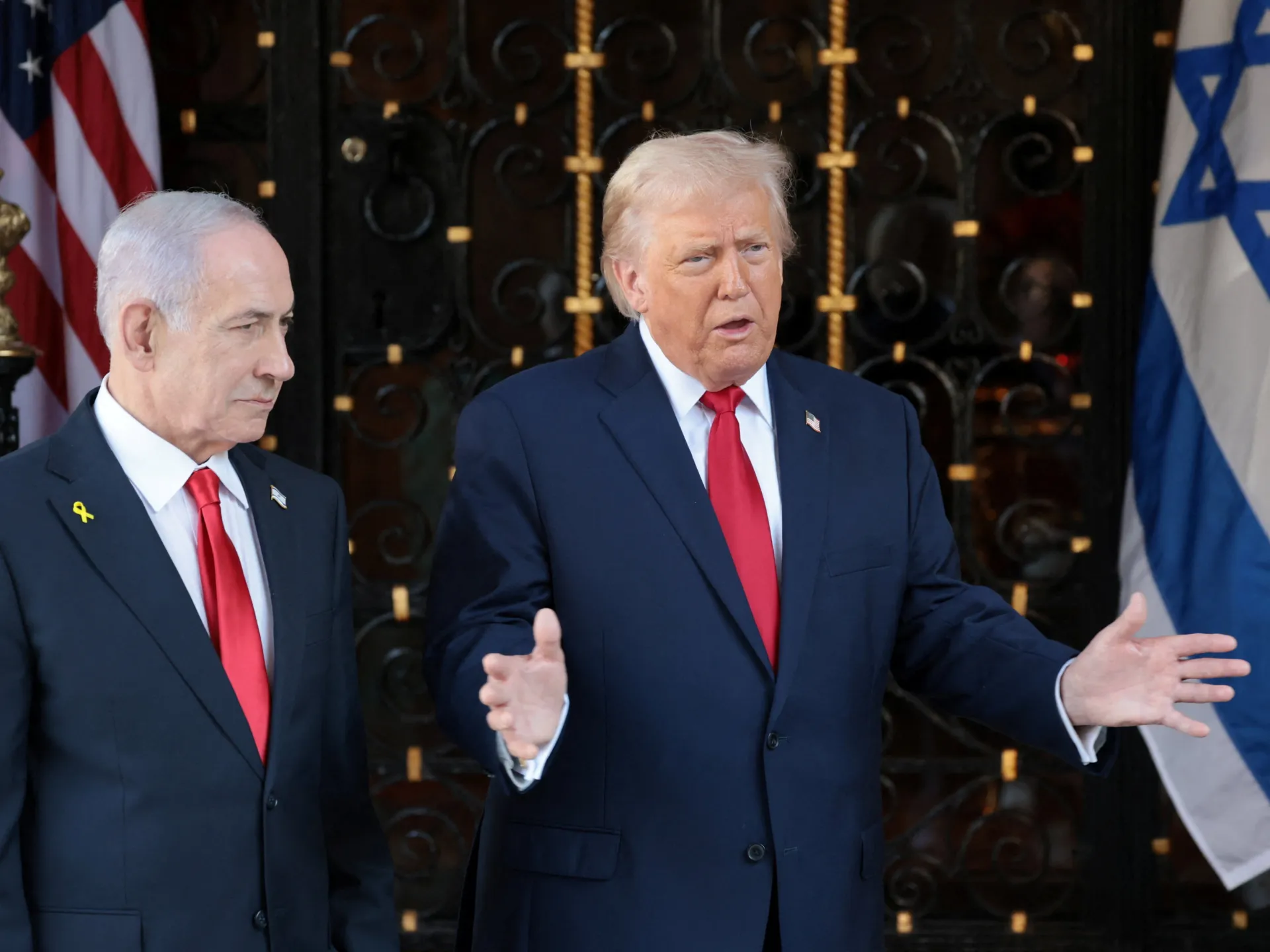
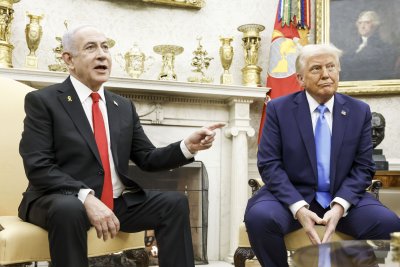
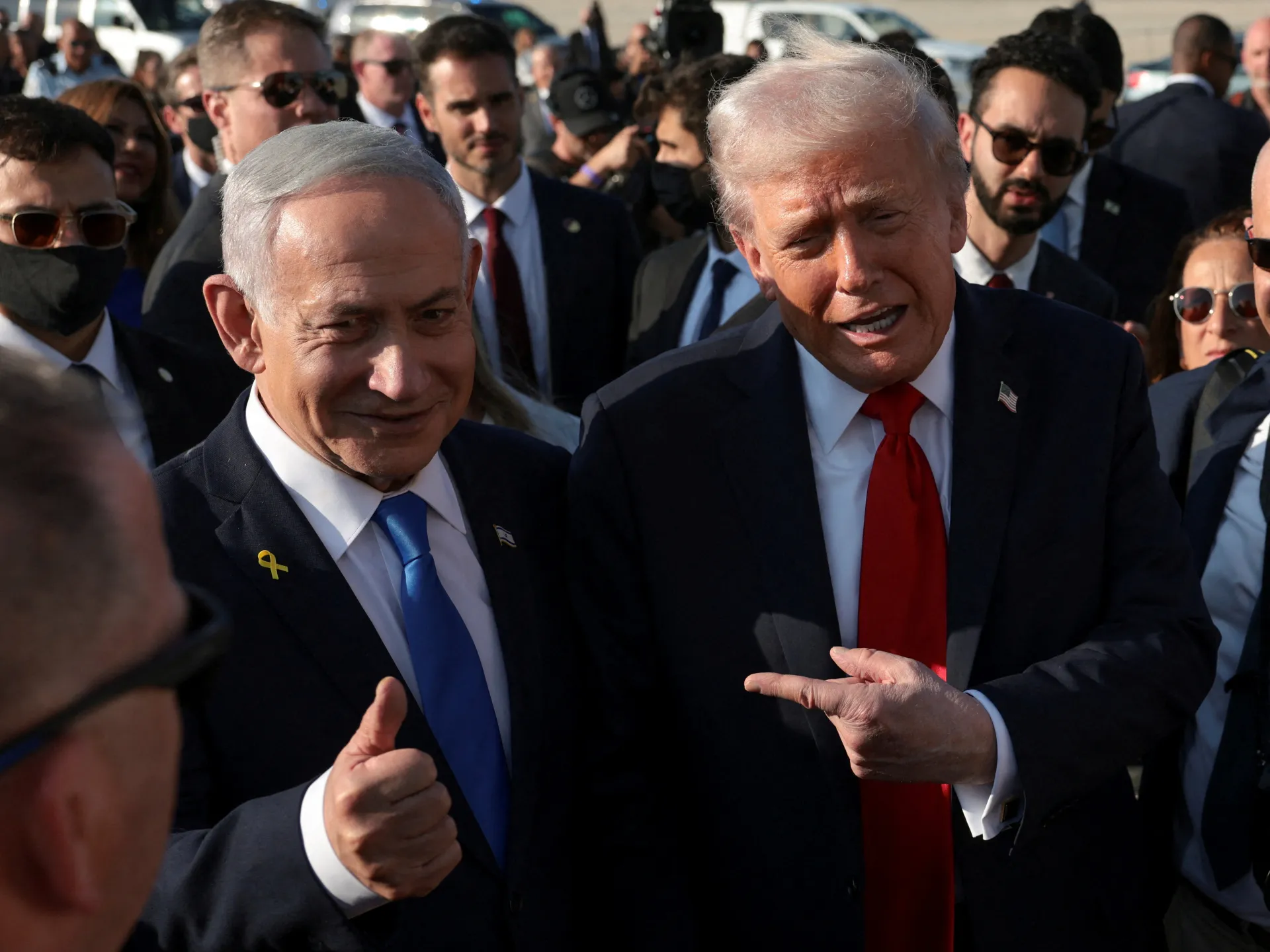
“We hit all the boats and now we hit the area, it’s the implementation area. That’s where they implement,” the president said while at Mar-a-Lago, standing alongside Israeli Prime Minister Benjamin Netanyahu. “And that is no longer around.”

🚨 BREAKING: TRUMP CONFIRMS FIRST U.S. LAND STRIKE ON VENEZUELA DRUG DOCK – THIS IS A GAME-CHANGER! 💥

Meeting with Netanyahu, Trump just revealed: U.S. forces obliterated a key Venezuelan dock used for loading drug boats – FIRST LAND ATTACK after months of sea ops.

This… pic.twitter.com/qIJHgLzsez

— Javier Fernandez (@itshabeeair) December 29, 2025

Trump declined to say whether it was the U.S. military or the CIA that carried out the attack.

Asked by @Kevinliptakcnn if strike was carried out by US military or CIA, Trump says:

“I don’t want to say that. I know exactly who it was, but I don’t want to say who it was. But you know, it was along the shore.” https://t.co/hF5Vd3fvoa

— Zachary Cohen (@ZcohenCNN) December 29, 2025

Trump first made the claim of the attack inside Venezuela last week during a phone call with WABC radio in New York.

“I don’t know if you read or you saw, they have a big plant, or a big facility where they send the, you know, where the ships come from,” Trump told John Catsimatidis, the billionaire Trump supporter who owns the radio station. “Two nights ago, we knocked that out. So we have hit them very hard, but drugs are down over 97% Can you believe it?”

president trump: united states has “just knocked out a big facility where the ships come from” in a strike on venezuelan territory (at 3:10 in call)

don’t understand why this isn’t being reported widely. https://t.co/1mvWgNDdxL

— ian bremmer (@ianbremmer) December 28, 2025

Trump has yet to offer proof of any attacks inside Venezuela. During their conversation, Catsimatidis didn’t press him on the matter. Anonymous American officials told The New York Times that the president was “referring to a drug facility in Venezuela and that it was eliminated, but provided no details.”

The White House has not responded to requests from The War Zone and many other news organizations for corroboration of an attack inside Venezuela. U.S. Southern Command, which oversees Southern Spear, declined to comment to us. The Pentagon referred us to the White House. The Central Intelligence Agency (CIA), which Trump previously authorized to conduct covert operations inside Venezuela, did not immediately respond to questions about whether it was involved in this claimed attack.

There have been no official comments from Venezuelan authorities about this alleged attack and no independent confirmation from people near the facility. However, videos emerged online suggesting that an explosion and fire at a Primazol chemical plant near Lake Maracaibo may have been the target of a U.S. attack.

Me pregunto si ésta explosión a las ~2am del 24 de Diciembre en galpones de la empresa Primazol, compañía dedicada a producción de productos químicos localizada en Zona Industrial del municipio San Francisco, estado Zulia, es el ataque al que se refirió Trump en el programa de… https://t.co/d9g5YxvR14 pic.twitter.com/T2elsWI219

— 𝘼𝙧𝙧𝙚𝙘𝙝𝙤 (@Arr3ch0) December 28, 2025

While the incident at the chemical plant lines up with the strike timeline proffered by Trump, the company pushed back against suggestions it was attacked.

“We categorically reject the versions circulating on social media that seek to damage the reputation of our founder and the organization,” Primazol explained in a statement. “We responsibly clarify that these claims have no relation whatsoever to the incident and are neither official nor verified.”

The War Zone cannot independently verify any connection, and we reached out to Primazol for more information.

🚨 | Compañía Primazol, cuya sede en Zulia estalló en la madrugada del 24 de diciembre, “rechaza” la versión de que su edificio fue víctima de un ataque de EEUU.

Sin embargo, no deja claro cuál es la razón de la explosión del edificio. En un primer comunicado dice que fue un… pic.twitter.com/GvXuhhT4sg

— Orlando Avendaño (@OrlvndoA) December 29, 2025

In a post on X, Jhorman Cruz, a local journalist, cautioned against making a connection between Trump’s claim and the fire.

“Residents DID NOT see anything unusual, nor drones, nor cars, nor the presence of foreigners,” he stated. “Be careful with strange hypotheses.”

El 24Dic reportamos el incendio de la empresa Primazol en la zona industrial de San Francisco, Zulia. Es prudente decir que aún no sabemos qué inició el fuego.

Pobladores NO vieron nada extraño, ni drones, ni carros, ni presencia de extranjeros. Cuidado con raras hipótesis. pic.twitter.com/2zy2yZKVKy

— Jhorman Cruz (@Jhormancruz1) December 29, 2025

Trump’s radio interview followed his Christmas Eve phone call to sailors aboard the USS Gerald Ford, the world’s largest aircraft carrier, which is now deployed to the Caribbean. Trump called the region an “interesting place” to be, and said once again that the U.S. would be “going after the land.” He offered no further explanations.

Trump’s claim about the facility strike inside Venezuela was prefaced by a short discussion with the radio station owner about the destruction of alleged drug smuggling vessels. Trump repeated his claim that each drug boat attack saves 25,000 lives in the U.S. To date, SOUTHCOM has hit more than two dozen of these vessels in the Caribbean and eastern Pacific, killing more than 100. The strikes have generated a great deal of controversy, with claims they violate the rules of armed conflict and have been carried out without Congressional or judicial approval. The White House and Pentagon have pushed back on those claims. Earlier this month, Congress closed out investigations into the first of these attacks, on Sept. 2, which were called after it was revealed that survivors of the first strike were killed in a follow-on attack.

.

On Dec. 22, at the direction of @SecWar Pete Hegseth, Joint Task Force Southern Spear conducted a lethal kinetic strike on a low-profile vessel operated by Designated Terrorist Organizations in international waters. Intelligence confirmed the low-profile vessel was transiting… pic.twitter.com/LGzEaQSTiR

— U.S. Southern Command (@Southcom) December 23, 2025

Regardless of Trump’s attack claim, the U.S. continues to grow its military presence in the Caribbean and especially its special operations forces (SOF). Over the weekend, aircraft spotters said they saw at least 10 MC-130J Commando II multi-mission combat transport planes at Rafael Hernandez International Airport (RHIA) in Puerto Rico. That’s double the amount seen at the airport last week

At least five of the MC-130Js appear to be outfitted with the full Capability Release 2 (CR-2) set of modifications, which includes Raytheon’s new AN/APQ-187 Silent Knight terrain-following/terrain avoidance radars, a satellite communications system, and other equipment.

Recent images from Reuters show that at least five of the ten MC-130Js deployed to Puerto Rico are in full CR-2 configuration.

Capability Release 2 (CR-2) includes:
– AN/APQ-187 Silent Knight Radar
– Honeywell JetWave SATCOM
– AN/ALQ-251 Radio Frequency Countermeasures (RFCM) https://t.co/puF2NxdDRK pic.twitter.com/QkJEVSX6Ns

— LatAmMilMovements (@LatAmMilMVMTs) December 29, 2025

In addition, satellite imagery, which you can also see below, now shows at least 11 Air Force Special Operations Command CV-22B Osprey tilt-rotor aircraft there as well. We previously reported the presence of nine or 10 Ospreys at RHIA. U.S. Special Operations Command declined comment and Air Force Special Operations Command has not returned a request for comment. You can read more about the significance of these aircraft and the growing SOF presence in the Caribbean to Southern Spear in our story here.

As we previously noted, the airport also plays host to MQ-9 Reaper drones, images of which first began appearing online in September. MQ-9s have been used in boat attacks as well.

🔎🇺🇸Reapers in the Caribbean
Unclassified satellite imagery reveals two MQ-9 Reaper drones at Coast Guard Air Station Borinquen in Puerto Rico (Aguadilla).

With a long endurance and advanced sensors, these assets are critical for counter-narcotics and maritime surveillance,… pic.twitter.com/MUq70nhxNC

— MT Anderson (@MT_Anderson) September 11, 2025

In an apparent effort to keep its assets out of the public eye, personnel have been seen obstructing the fence through which photographers have been capturing images of aircraft gathered at RHIA.

As we previously noted, a compendium of satellite imagery dating back to early October shows a large-scale construction project at the airport

(PHOTO © 2025 PLANET LABS INC. ALL RIGHTS RESERVED. REPRINTED BY PERMISSION)

Satellite imagery also shows increasing expansion at the Jose Aponte de la Torre Airport in Puerto Rico. The former Roosevelt Roads Navy base has become a key staging ground for U.S. aircraft and troops deployed for Southern Spear.

As of Saturday, an E-11A Battlefield Airborne Communications Node, or BACN was tracked by aircraft spotters to Luis Munoz Marine International Airport in San Juan, Puerto Rico’s largest.

BACN07 (22-9047) the U.S. Air Force E-11A (Battlefield Airborne Communications Node) is still located at at Luis Muñoz Marín International Airport in San Juan.

It was tracked on the ground today at 12:35(EST)/17:35(UTC). pic.twitter.com/Rr3xIjp4sv

— FrozenFrequency (@FrozenFrequency) December 27, 2025

Meanwhile, as the Trump administration increases military pressure on Maduro, it is also continuing to take aim at Venezuelan oil shipments in an effort to squeeze him economically as well. As one of the world’s largest oil producers, Venezuela relies heavily on it. Since Trump enacted a blockade on sanctioned ships entering or leaving Venezuela, the U.S. has seized two and has pursued a third.

“The United States hasn’t given up its pursuit of the massive, rusted oil tanker it chased into international waters near Venezuela last weekend, and officials are now contemplating moving additional resources into the area to forcibly board the ship,” CNN reported on Friday, citing people familiar with the matter. 

Last known visual we have of BELLA 1 (9230880) is from five days ago, when it was spotted in satellite imagery. Here’s older footage from the bridge. pic.twitter.com/l7ml2gOyu9

— Christiaan Triebert (@trbrtc) December 24, 2025

Russian Foreign Ministry spokesperson Maria Zakharova denounced the blockade and seizures on Sunday.

“In principle, we reject attempts to exert pressure on sovereign countries in general, including in the energy sector,” she said. “We understand that behind such a policy there is only a neo-colonial desire to achieve economic advantages through non-competitive political methods.”

“We trust that the Administration of U.S. President Donald Trump will refrain from sliding further into a large-scale armed conflict, which threatens to have unpredictable consequences for the entire Western Hemisphere,” she added.

MOSCOW, RUSSIA - DECEMBER 24: Russian Foreign Affairs Ministry's Spokeswoman Maria Zakharova speaks during an award ceremony at the Kremlin, on December 24, 2025 in Moscow, Russia. Putin awarded four dozen artists, actors, film directors, entrepreneurs and other persons prior to the celebrations of 2025 New Year Eve. (Photo by Contributor/Getty Images)
Russian Foreign Affairs Ministry’s Spokesperson Maria Zakharova denounced U.S. actions in the Caribbean. (Photo by Contributor/Getty Images) Contributor#8523328

Satellite images captured on Dec. 24 show elements of the Iwo Jima Amphibious Ready Group (ARG) in close proximity to the M/V Ocean Trader, a special operations mothership. It should be noted that most of the ARG’s aviation combat element (ACE) was moved to Roosevelt Roads several weeks ago and remains there. The presence of these ships so close together, and the aircraft, landing equipment and troops embarked on board, is another indication that U.S. is poised for action beyond hitting suspected drug boats.

Most, if not all, of the aviation combat element (ACE) assigned to the 22nd MEU aboard the Iwo Jima ARG was moved to the former NAS Roosevelt Roads, PR several weeks ago, and remain there.

2/https://t.co/FUGtfOW5qZ

— TheIntelFrog (@TheIntelFrog) December 24, 2025

Much about Trump’s claim that the U.S. attacked inside Venezuela remains unknown. Regardless, the large U.S. military presence in the Caribbean seems to be coalescing toward additional kinetic action.

Contact the author: howard@thewarzone.com

Howard is a Senior Staff Writer for The War Zone, and a former Senior Managing Editor for Military Times. Prior to this, he covered military affairs for the Tampa Bay Times as a Senior Writer. Howard’s work has appeared in various publications including Yahoo News, RealClearDefense, and Air Force Times.


Source link

Zelensky works yet again to break Putin’s hold on Trump

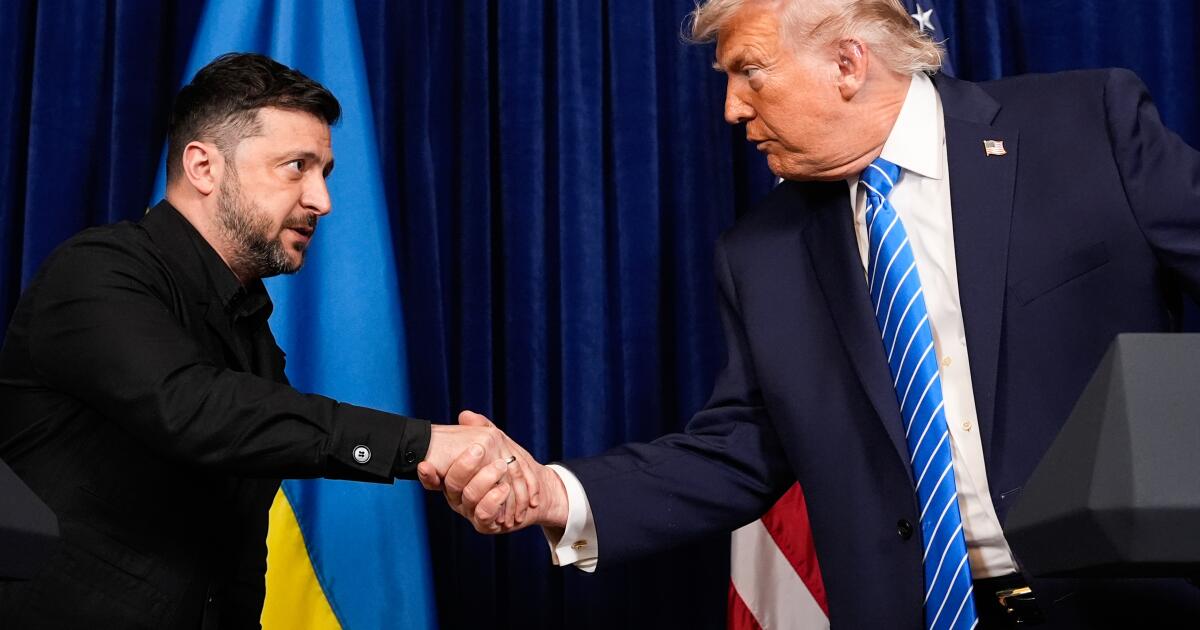
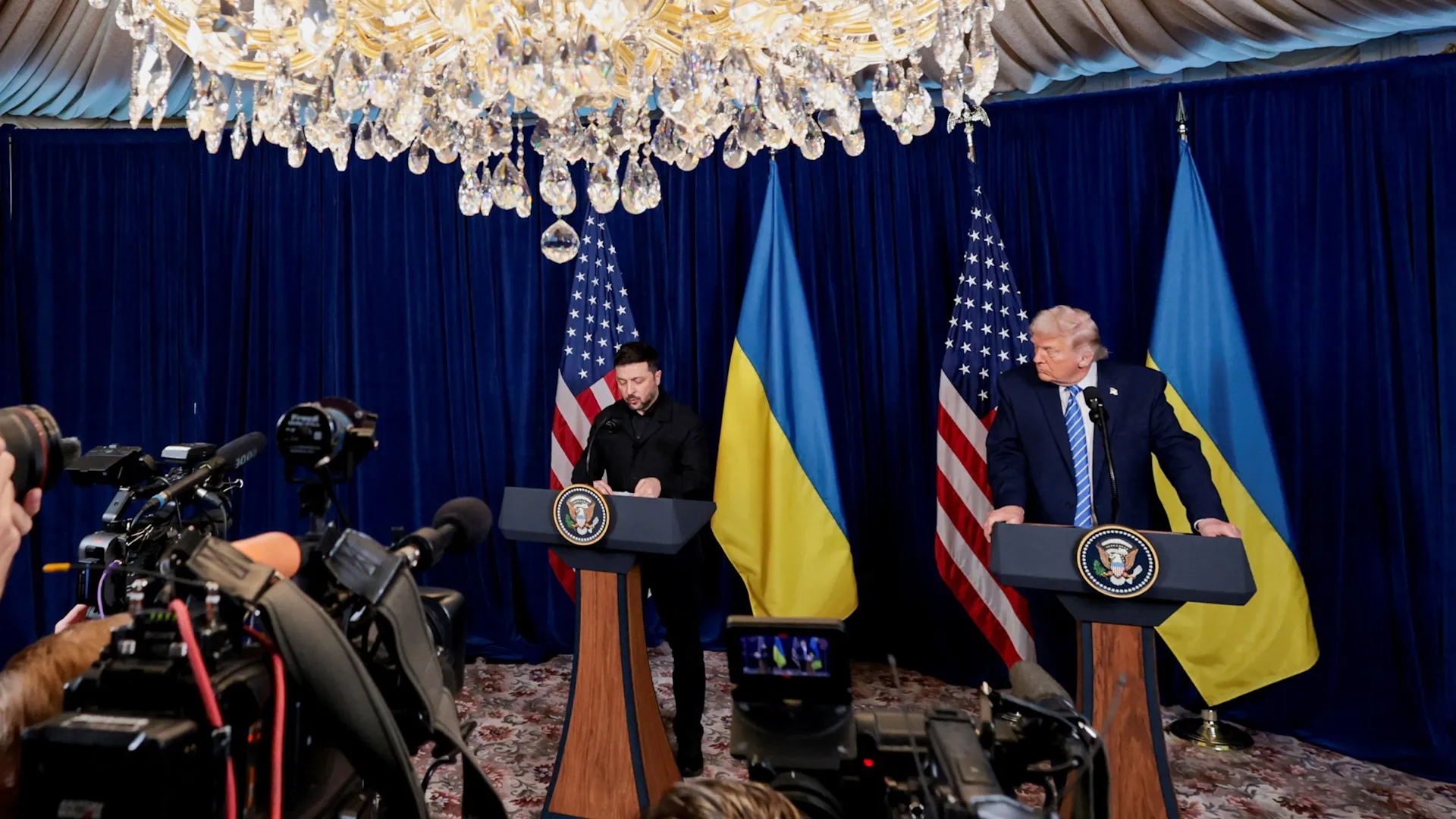
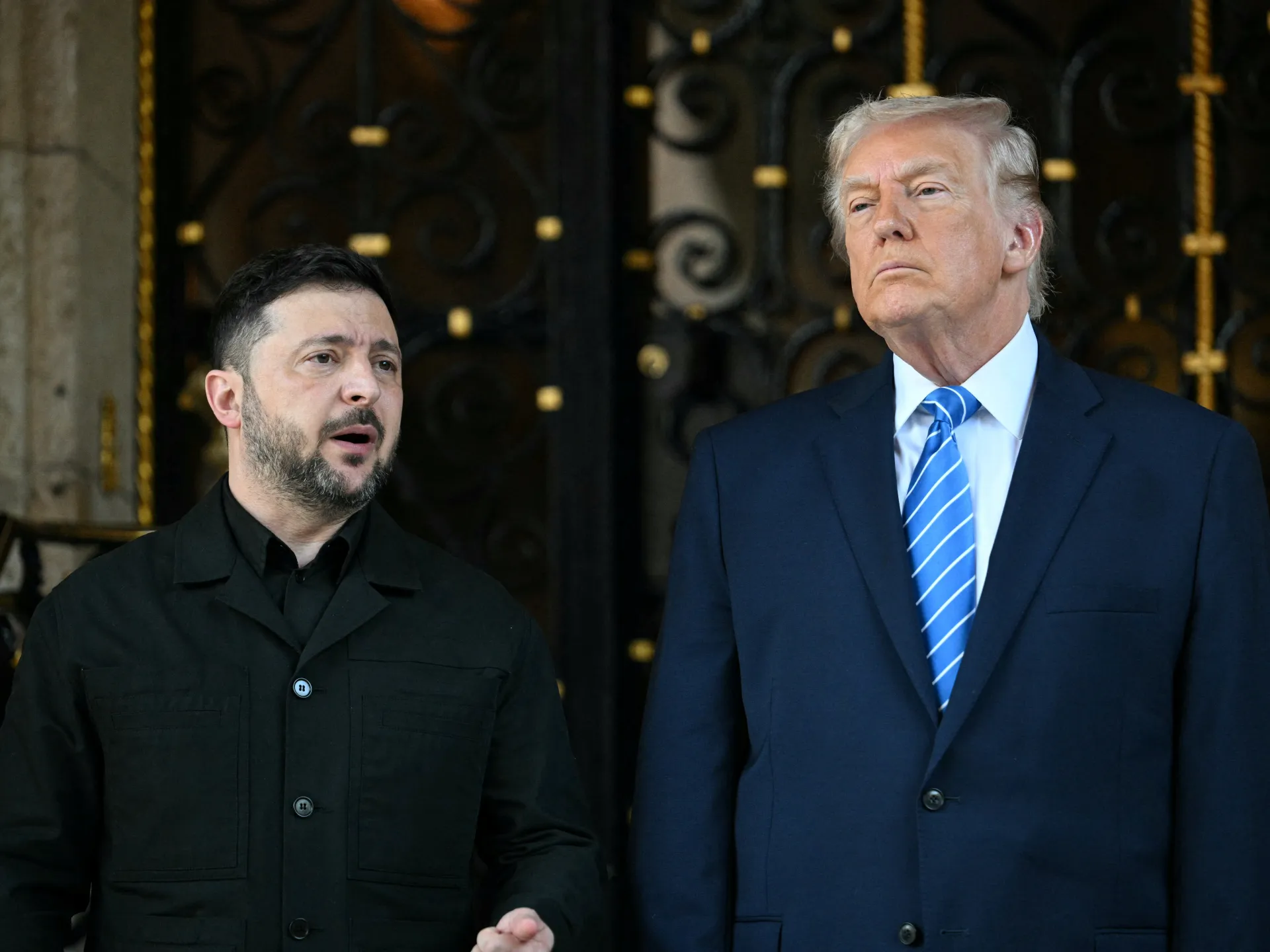
Standing alongside President Trump at his Palm Beach estate, Volodymyr Zelensky could only smirk and grimace without overtly offending his host. “Russia wants to see Ukraine succeed,” Trump told reporters, shocking the Ukrainian president before claiming that Vladimir Putin is genuine in his desire for peace.

It was just the latest example of the American president sympathizing with Moscow in its war of conquest in Europe. Yet Zelensky emerged from the meeting Sunday ensuring once again that Ukraine may fight another day, maintaining critical if uneasy support from Washington.

Few signs of progress toward a peace agreement materialized from the meeting at Mar-a-Lago, where Zelensky traveled with significant compromises — including a plan to put territorial concessions to Russia before the Ukrainian people for a vote — in order to appease the U.S. president.

But Zelensky won concessions of his own from Trump, who had for weeks been pushing for a ceasefire by Christmas, or else threatening to cut off Ukraine from U.S. intelligence that would leave Kyiv blind on the battlefield. “I don’t have deadlines,” Trump said Sunday.

Over the course of Trump’s first year in office, Zelensky and other European leaders have repeatedly worked to convince Trump that Russia’s President Putin is, in fact, an aggressor opposed to peace, responsible for an unprovoked invasion that launched the deadliest conflict in Europe since the Second World War.

Each time, Trump has come around, even going as far over the summer as to question whether Ukraine could win back the territories it has lost on the battlefield to Russia — and vowing to North Atlantic Treaty Organization allies, “we’re with them all they way.”

Yet, each time, Trump has changed course within a matter of days or weeks, reverting to an embrace of Putin and Russia’s worldview, including a proposal that Ukraine preemptively cede sovereign territories that Russia has sought but failed to occupy by force.

Zelensky’s willingness to offer concessions in his latest meeting with Trump has, at least temporarily, “managed to keep President Trump from tilting further towards the Russian position,” said Kyle Balzer, a scholar at the conservative American Enterprise Institute. “But Trump’s position — his repeated insistence that a deal is necessary now because time is not on Ukraine’s side — continues to favor Putin’s line and negotiating tactics.”

U.S. intelligence agencies have assessed that Putin’s revanchist war aims — to conquer all of Ukraine and, beyond, to reclaim parts of Europe that once were part of the Soviet empire — remain unchanged.

Yet Trump’s director of national intelligence, Tulsi Gabbard, whose own sympathies toward Russia have been scrutinized for years, recently dismissed the assessments as products of “deep state” “warmongers” within the intelligence community.

On Monday, hours after speaking with Trump, Putin ordered the Russian military to push toward Zaporizhzhia, a city of 700,000 before the war began. The city lies far outside the Donbas region that Moscow claims would satisfy its war aims in a negotiated settlement.

“Trump’s instincts are to favor Putin and Russia,” said Brian Taylor, director of the Moynihan Institute of Global Affairs at Syracuse University. “Ukraine and its European partners still hope to convince Trump of the obvious fact that Putin is not interested in a deal that doesn’t amount to a Ukrainian surrender.

“If Trump was convinced of Putin’s intransigence, he might further tighten sanctions on Russia and provide more assistance to Ukraine to try to pressure Putin into a deal,” Taylor added. “It’s an uphill battle, one might even say Sisyphean, but Zelensky and European leaders have to keep trying. So far, nearly a year into Trump’s second term, it’s been worth it.”

On Monday, Moscow claims that Ukraine orchestrated a massive drone attack targeting Putin’s residence that would force it to reconsider its stance in negotiations. Kyiv denied an attack took place.

“Given the final degeneration of the criminal Kyiv regime, which has switched to a policy of state terrorism, Russia’s negotiating position will be revised,” Sergei Lavrov, Russia’s foreign minister since 2004, said in a Telegram post.

Another senior Russian official said the reported attack shocked and infuriated Trump. But Zelensky, responding on social media, said that Russia was “at it again, using dangerous statements to undermine all achievements of our shared diplomatic efforts with President Trump’s team.”

“We keep working together to bring peace closer,” Zelensky said. “This alleged ‘residence strike’ story is a complete fabrication intended to justify additional attacks against Ukraine, including Kyiv, as well as Russia’s own refusal to take necessary steps to end the war.”

“Ukraine does not take steps that can undermine diplomacy. To the contrary, Russia always takes such steps,” he added. “It is critical that the world doesn’t stay silent now. We cannot allow Russia to undermine the work on achieving a lasting peace.”

Frederick Kagan, director of the Critical Threats Project, which collaborates with the Institute for the Study of War to produce daily battlefield assessments on the conflict, said that the meeting did not appear to fundamentally shift Trump’s position on the conflict — a potential win for Kyiv in and of itself, he said.

“U.S.-Ukraine negotiations appear to be continuing as before, which is positive, since those negotiations seem to be getting into the real details of what would be required for a meaningful set of security guarantees and long-term agreements to ensure that any peace settlement will be enduring,” Kagan said.

Gaps still remain between Kyiv and the Trump administration in negotiations over security guarantees. While Trump has offered a 15-year agreement, Ukraine is seeking guarantees for 50 years, Zelensky said Monday.

“As Trump continues to say, there’s no deal until there’s a deal,” Kagan added. “We’ll have to see how things go.”

Source link

Trump says US would back strikes against Iran’s missile programme | Donald Trump News

Speaking alongside Benjamin Netanyahu, Trump threatens to ‘knock’ down Iran’s attempts to rebuild nuclear capabilities.

United States President Donald Trump suggested that Washington would consider further military action against Iran if Tehran rebuilds its nuclear programme or missile capacity.

Speaking in Florida on Monday, Trump did not rule out a follow-up attack after the June air strikes that damaged three Iranian nuclear facilities.

Recommended Stories

list of 3 itemsend of list

“Now I hear that Iran is trying to build up again, and if they are, we’re going to have to knock them down,” Trump told reporters. “We’ll knock them down. We’ll knock the hell out of them. But hopefully that’s not happening.”

Trump issued his threat as he welcomed Israeli Prime Minister Benjamin Netanyahu to his Mar-a-Lago estate in Palm Beach, Florida.

Trump said that the US and Israel have been “extremely victorious” against their enemies, referring to the wars in Gaza and Lebanon, and the strikes against Iran in June.

When asked whether the US would back an Israeli attack against Iran targeting Tehran’s missile programme, Trump said, “If they will continue with the missiles, yes; the nuclear, fast. Okay, one will be yes, absolutely. The other is: We’ll do it immediately.”

Another round of strikes against Iran would likely stir internal opposition in the US, including from segments of Trump’s own base of support.

Trump has repeatedly said that the June strikes “obliterated” Iran’s nuclear programme.

With the nuclear issue address, according to Trump, Israeli officials and their US allies have been drumming up concern about Iran’s missiles.

Tehran fired hundreds of missiles at Israel in June in response to the unprovoked Israeli attack that killed the country’s top generals, several nuclear scientists and hundreds of civilians.

Senator Lindsey Graham, an Iran hawk who is close to Trump, visited Israel this month and repeated the talking points about the dangers of Iran’s long-range missiles, warning that Iran is producing them “in very high numbers”.

“We cannot allow Iran to produce ballistic missiles because they could overwhelm the Iron Dome,” he told The Jerusalem Post, referring to Israel’s air defence system. “It’s a major threat.”

Iran has ruled out negotiating over its missile programme, which is at the core of its defence strategy.

On Monday, Trumps said Iran should “make a deal” with the US.

“If they want to make a deal, that’s much smarter,” Trump said. “You know, they could have made a deal the last time before we went through a big attack on them, and they decided not to make the deal. They wish they made that deal.”

The prospect of returning to war in the Middle East comes weeks after the Trump administration released a National Security Strategy calling for shifting foreign policy resources away from the region and focusing on the Western Hemisphere.

In June, Iran responded to the US strikes with a missile attack against a US base in Qatar, which did not result in American casualties. Trump announced a ceasefire to end the war shortly after the Iranian response.

But advocates warn that another episode of attacking Iran may escalate into a longer, broader war.

Trita Parsi, executive vice president at the Quincy Institute, a US think tank that promotes diplomacy, told Al Jazeera last week that the Iranian response would be “much harsher” if the country is attacked again.

“The Iranians understand that unless they strike back hard and dispel the view that Iran is a country that you can bomb every six months – unless they do that – Iran will become a country that Israel will bomb every six months,” Parsi said.

Source link

Trump indicates the U.S. ‘hit’ a facility in South America that he tied to alleged drug boats

President Trump has indicated that the U.S. has “hit” a facility in South America as he wages a pressure campaign on Venezuela, but the U.S. offered no other details.

Trump made the comments in what seemed to be an impromptu radio interview Friday.

The president, who called radio host John Catsimatidis during a program on WABC radio, was discussing U.S. strikes on alleged drug-carrying boats in the Caribbean Sea and eastern Pacific Ocean, which have killed at least 105 people in 29 known strikes since early September.

“I don’t know if you read or saw, they have a big plant or a big facility where they send the, you know, where the ships come from,” Trump said. “Two nights ago, we knocked that out. So, we hit them very hard.”

Trump did not offer any additional details in the interview, including what kind of attack may have occurred. The Pentagon on Monday referred questions to the White House, which did not immediately respond to a message seeking comment.

Defense Secretary Pete Hegseth or one of the U.S. military’s social media accounts has in the past typically announced every boat strike in a post on X, but they have not posted any notice of any strike on a facility.

The press office of Venezuela’s government did not immediately respond Monday to a request for comment on Trump’s statement.

Trump for months has suggested he may conduct land strikes in South America, in Venezuela or possibly another country, and in recent weeks has been saying the U.S. would move beyond striking boats and would strike on land “soon.”

In October, Trump confirmed he had authorized the CIA to conduct covert operations in Venezuela. The agency did not immediately respond to a message seeking comment Monday.

Along with the strikes, the U.S. has sent warships, built up military forces in the region, seized two oil tankers and pursued a third.

The Trump administration has said it is in “armed conflict” with drug cartels and seeking to stop the flow of narcotics into the United States.

Venezuelan President Nicolás Maduro has insisted the real purpose of the U.S. military operations is to force him from power.

White House chief of staff Susie Wiles said in an interview with Vanity Fair published this month that Trump “wants to keep on blowing boats up until Maduro ‘cries uncle.’”

Price writes for the Associated Press. AP writers Konstantin Toropin in Washington and Regina Garcia Cano in Caracas, Venezuela, contributed to this report.

Source link

Trump and Netanyahu are to meet in Florida at a crucial moment for the U.S.-backed Gaza ceasefire

President Trump is scheduled to meet with Israeli Prime Minister Benjamin Netanyahu Monday, as Washington looks to create fresh momentum for a U.S.-brokered ceasefire in Gaza that could be in danger of stalling before a complicated second phase.

Trump could use the face-to-face at his Mar-a-Lago estate in Florida to try to leverage his strong relationship with Netanyahu and look for ways to speed up the peace process. Before that, Netanyahu met separately with Secretary of State Marco Rubio.

The ceasefire between Israel and Hamas that Trump championed has mostly held, but progress has slowed recently. Both sides accuse each other of violations, and divisions have emerged among the U.S., Israel and Arab countries about the path forward.

The truce’s first phase began in October, days after the two-year anniversary of the initial Hamas-led attack on Israel that killed about 1,200 people. All but one of the 251 hostages taken then have been released, alive or dead.

The Israeli leader has signaled he is in no rush to move forward with the next phase as long as the remains of Ran Gvili are still in Gaza. Netanyahu’s office said he met with Gvili’s parents in Florida.

Now comes the next, far more complicated part. Trump’s 20-point plan — which was approved by the U.N. Security Council — lays out an ambitious vision for ending Hamas’ rule of Gaza.

Iran and other topics likely to come up

The two leaders also are expected to discuss other topics, including Iran, whose nuclear capabilities Trump insists were “completely and fully obliterated” after U.S. strikes on its nuclear sites in June. Israeli officials have been quoted in local media as expressing concern about Iran rebuilding its supply of long-range missiles capable of striking Israel.

There are many key facets of the ceasefire’s second phase that Israel’s leader doesn’t support or has even openly opposed, said Mona Yacoubian, director and senior adviser of the Middle East program at the Center for Strategic and International Studies.

“This is going to be a really tall order, I think, for President Trump to get Netanyahu to agree,” she said.

“How he does that, what kind of pressure he puts on Netanyahu, I think, is going to be important to watch for,” said Yacoubian, who also said the two could exhibit ”a broader clash of approaches to the region.”

Next phase is complex

If successful, the second phase would see the rebuilding of a demilitarized Gaza under international supervision by a group chaired by Trump and known as the Board of Peace. The Palestinians would form a “technocratic, apolitical” committee to run daily affairs in Gaza, under Board of Peace supervision.

It further calls for normalized relations between Israel and the Arab world, and a possible pathway to Palestinian independence. Then there are thorny logistical and humanitarian questions, including rebuilding war-ravaged Gaza, disarming Hamas and creating a security apparatus called the International Stabilization Force.

The Board of Peace would oversee Gaza’s reconstruction under a two-year, renewable U.N. mandate. Its members had been expected to be named by the end of the year and might even be revealed after Monday’s meeting, but the announcement could be pushed into next month.

Netanyahu was the first foreign leader to meet Trump at the White House in his second term, but this will be their first in-person meeting since Trump went to Israel in October to mark the start of the ceasefire’s initial phase. Netanyahu has been to Mar-a-Lago before, including in July 2024 when Trump was still seeking reelection.

Much remains unsettled

Their latest meeting comes after U.S. Mideast envoy Steve Witkoff and the president’s son-in-law, Jared Kushner, recently huddled in Florida with officials from Egypt, Qatar and Turkey, which have been mediating the ceasefire.

Two main challenges have complicated moving to the second phase, according to an official who was briefed on those meetings. Israeli officials have been taking a lot of time to vet and approve members of the Palestinian technocratic committee from a list given to them by the mediators, and Israel continues its military strikes.

Trump’s plan also calls for the stabilization force, proposed as a multinational body, to maintain security. But it, too, has yet to be formed. Whether details will be forthcoming after Monday’s meeting is unclear.

A Western diplomat said there is a “huge gulf” between the U.S.-Israeli understanding of the force’s mandate and that of other major countries in the region, as well as European governments.

All spoke on the condition of anonymity to provide details that haven’t been made public.

The U.S. and Israel want the force to have a “commanding role” in security duties, including disarming Hamas and other militant groups. But countries being courted to contribute troops fear that mandate will make it an “occupation force,” the diplomat said.

Hamas has said it is ready to discuss “freezing or storing” its arsenal of weapons but insists it has a right to armed resistance as long as Israel occupies Palestinian territory. One U.S. official said a potential plan might be to offer cash incentives in exchange for weapons, echoing a “buyback” program Witkoff has previously floated.

Questions about Gaza reconstruction

One displaced man in Khan Yunis, Iyad Abu Sakla, said Trump needed to urge Netanyahu to allow Palestinians to return to their homes. Under the agreement, most Palestinians are permitted in a zone just under half the size of Gaza.

“We are exhausted. This displacement is bad; it’s cold and freezing. Enough lying to us and enough insulting our intelligence,” Sakla said.

Israeli bombardment and ground operations have transformed neighborhoods across Gaza into rubble-strewn wastelands, with blackened shells of buildings and mounds of debris stretching in all directions.

Egypt, Qatar, Saudi Arabia and Turkey are pressing for a negotiated deal on disarming Hamas and on additional Israeli withdrawal from Gaza before moving to next elements of the plan, including deployment of the international security force and reconstruction, three Arab officials said.

Three other officials, including two Americans, said the United Arab Emirates has agreed to fund reconstruction, including new communities, although they said plans have not been settled.

All the officials spoke on condition of anonymity to discuss internal deliberations between the various countries. The UAE did not respond to multiple requests for comment.

Weissert, Mednick and Magdy write for the Associated Press. AP writers Darlene Superville in Washington and Lee Keath and Fatma Khaled in Cairo contributed to this report.

Source link

Netanyahu, Trump set to discuss Gaza peace plan at Mar-a-Lago

Israeli Prime Minister Benjamin Netanyahu and President Donald Trump talk with reporters at the White House in Washington, D.C., in February. Netanyahu is scheduled to visit Trump Monday in Florida. File Photo by Shawn Thew/UPI | License Photo

Dec. 29 (UPI) — Israeli Prime Minister Benjamin Netanyahu will visit with President Donald Trump Monday in Florida to discuss the peace plan with Gaza.

Netanyahu is also likely to lobby the president for help with Iran as it continues its work on nuclear weapons.

The meeting will happen at Trump’s Mar-a-Lago resort in Palm Beach, Fla. On Sunday, Trump met with Ukrainian President Volodymyr Zelensky at the resort to continue working on a peace plan between Ukraine and Russia.

Local officials have said that more than 400 people have been killed in Gaza since the cease-fire, NBC News reported.

The Trump administration wants to see progress on the plan’s second phase in January. That means a Palestinian technocratic government would be created. Hamas would disarm, and the Israeli Defense Forces would pull out of Gaza.

But some believe that Netanyahu will stall the process and demand Hamas fully disarm before the IDF withdraws. Hamas has said it will disarm as progress moves toward an independent Palestinian state.

Netanyahu and his staff have repeatedly rejected Palestinian statehood since October.

Israeli Defense Minister Israel Katz said last week that Israel will build settlements in Gaza and “never fully withdraw” even as Hamas disarms, the BBC reported. This would violate the cease-fire agreement.

Secretary of State Marco Rubio will meet with Netanyahu before Trump’s meeting.

Two other tenets of the cease-fire haven’t yet emerged: A “Board of Peace” led by Trump is planned for governance of Gaza, and the International Stabilization Force, led by the United Nations, which will help with peacekeeping in Gaza.

Rubio has said those measures will be in place “very soon.”

Israeli officials are concerned that Iran is moving forward with its plans for ballistic missiles, and Netanyahu is expected to discuss options with Trump at Monday’s meeting.

Israel damaged the operations in June, but it wants to attack again, NBC News reported.

Source link

2025: Trump’s year of ’emergency’, ‘invasion’ and ‘narcoterrorism’ | Donald Trump News

Washington, DC – For United States President Donald Trump, 2025 was a year of crisis.

Roaring into office on January 20 on the heels of a raucous political comeback, the president’s own telling describes a series of actions that have been swift and stark.

Recommended Stories

list of 3 itemsend of list

To name a few, he has envisioned rooting out a migrant “invasion” that includes staunching legal immigrants, and, potentially, targeting US citizens; he has touted a hard reset of uneven trade deals that pose “an unusual and extraordinary threat to the national security”; and, in the final months of the year, he has gone on the military offensive against “narcoterrorists” that he claims seek to topple the US through illicit drugs, possibly used as “weapons of mass destruction”.

For legal observers, Trump’s approach has been a yet-undecided stress test on presidential power, cranked by the gears of broadly interpreted emergency statutes and untrammelled executive authority.

Decisions by the court, lawmakers and voters in the 2026 midterm elections could determine how that strategy resonates or is restrained.

“The use or abuse of emergency powers is only one corner of a larger picture,” Frank Bowman, professor emeritus of law at the University of Missouri, told Al Jazeera.

“In many cases, the administration is simply doing stuff that certainly any pre-existing understandings of executive authority would have said you cannot do,” he said.

Emergency powers and ‘national security’

The US Constitution, unlike many countries, has no catch-all emergency power authorisation for presidents.

In fact, the US Supreme Court ruled in 1952 that presidents have no such implied authorities, explained David Driesen, professor emeritus at Syracuse University College of Law. Still, Congress has passed “numerous statutes that grant the president limited emergency powers under limited circumstances to do specific things”.

Nearly every modern president has used emergency powers with varying degrees of gusto, with Congress and the Supreme Court historically wary of reining in those actions.

Like many US presidents, Trump has also used broad and ambiguous national security claims to justify expanding his reach.

But several factors have set Trump’s second term apart, most notably the lack of distinct inciting events for many of the powers claimed, Driesen said.

“I’ve never seen a president invoke emergency powers to justify practically all of this policy agenda,” he told Al Jazeera, “and I’ve also never seen a president use them to seize powers that really are not in the statutes at all.”

Put simply, he added, “to Trump, everything is an emergency”.

The tone was set on day one, with Trump’s broad executive order declaring that irregular crossings at the southern border meant nothing less than “America’s sovereignty is under attack”. The order has been used to indefinitely suspend US asylum obligations, surge forces to the border, and seize federal land.

The same day, Trump declared a national emergency under the International Emergency Economic Powers Act (IEEPA) to designate Tren de Aragua (TdA) and La Mara Salvatrucha (MS-13) as “foreign terrorist organizations”, posing a threat to the “national security, foreign policy, and economy” of the US.

The administration has, in part, relied on and expanded that order in efforts to circumvent due process in its mass deportation push and to rhetorically justify a militaristic approach to Latin America.

Simultaneously, Trump also declared a wide-ranging energy emergency on his first day in office, laying the groundwork to bypass environmental regulations.

To be sure, as Bowman explained, Trump’s use of official emergency statutes has been only a piece of the puzzle, combined with his broad interpretation of constitutionally mandated power to reshape the government in ways big and small.

That has included cleaving civil servants from congressionally created government departments via the Department of Government Efficiency (DOGE), trying to fire heads of independent agencies, renaming institutions – possibly illegally – in his likeness, and allegedly bypassing required approvals to physically transform the White House.

But the invocation of emergency statutes has remained a backbone of his second term. Trump invoked an emergency to justify sanctioning the International Criminal Court (ICC) for its investigations into Israeli war crimes in Gaza.

He used the “emergency” of fentanyl smuggling to justify tariffs on Canada, Mexico and China, later unilaterally labelling the drug “weapons of mass destruction”.

In April, in one of his most challenged uses of an emergency authority, Trump cited an emergency statute to impose sweeping reciprocal tariffs against nearly all US trading partners.

A ‘mixed picture’

In review, 2025 has shown virtually no willingness from Congress, where both chambers remain narrowly controlled by Trump’s Republican Party, to challenge the president.

Rulings from lower federal courts, meanwhile, have offered a “mixed picture”, according to the University of Missouri’s Bowman, while the country’s top court has left wider questions unanswered.

Bowman noted the six conservative members of the nine-judge panel ascribe to varying degrees to the “unitary executive theory”, which argues the drafters of the constitution envisioned a strong consolidation of presidential power.

“On the one hand, Trump is obviously willing to declare emergencies where no rational person would really believe they exist,” Bowman said.

“On the other hand, at least the lower courts have pushed back, but it remains to be seen whether the Supreme Court will back them up.”

For example, Trump has been temporarily allowed to continue the deployment of National Guard troops in Washington, DC, a federal district where he declared a “crime emergency” in August. City officials have said the characterisation defies facts on the ground.

Despite claiming similar overlapping crime and immigration crises in liberal-led cities in states across the country, Trump has had far less success. Lower courts have limited deployments of the National Guard in California, Illinois, and Oregon.

Trump has also floated, but not yet invoked, the Insurrection Act, another law in the crisis portfolio dating back to 1792 that allows the president to deploy the military for domestic law enforcement to “suppress insurrections and repel invasions”.

A judicial response to the tactics behind Trump’s deportation drive has also been mixed.

Trump’s use of the Alien Enemies Act – a 1798 law designed to quickly expel foreign nationals during times of war – to swiftly deport undocumented individuals without due process has been constrained, but allowed to proceed by the Supreme Court with limited due process protections.

In one of the most-watched cases on the docket, the Supreme Court is expected to make a ruling when it returns to session in January on the legal justification of Trump’s reciprocal tariffs.

A lower court has previously ruled that Trump deployed the emergency statute illegally. Some conservative justices on the top court have also expressed wariness over the president’s claim.

The panel has appeared more amenable in a landmark case determining whether Trump can fire heads of independent agencies, also set to be decided in the new year.

The spectre of war

When it comes to unilaterally making war, Trump has been bounding down a well-trodden path of misused presidential power, according to Matt Duss, the executive vice president of the Washington, DC-based Center for International Policy.

The end of the year has been marked by US military strikes on alleged drug smuggling boats from Venezuela, decried by rights groups as extrajudicial killings.

The administration has claimed, without evidence, that over 100 people killed had sought to destabilise the US by flooding it with drugs. Trump has made a similar claim about the Nicolas Maduro-led government in Venezuela, as he has continued to rattle the sabre of land strikes.

The actions have been accompanied by a pugilistic rebranding of the Department of Defense as the Department of War, a reframing of criminal Latin American cartels as so-called “narcoterrorists” and declaring a new drive to bring the Western Hemisphere firmly under the US sphere of influence.

“We have to understand this in the context of multiple administrations of both parties abusing executive authority to essentially go to war,” said Duss, who explained that the practice accelerated in the so-called “global war on terror” post-September 11, 2001 attacks.

Most recently, Republicans – and a handful of Democrats – in the House of Representatives voted down two separate war powers resolutions that would require congressional approval for future strikes on alleged drug boats or on Venezuelan territory.

The vote, Duss said, underscored “Trump’s near-total control of the Republican Party despite the fact that he is blatantly violating his own campaign promises to end wars, rather than to start them”.

Public opinion

Trump’s control over his party and his influence writ-large over the country will largely be tested in next year’s midterm elections. The vote will determine control of the House and the Senate.

A slate of polls has indicated at least some degree of wariness in Trump’s use of presidential power.

In particular, a Quinnipiac poll released in mid-December found 54 percent of voters think Trump is going too far in his authority claims, while 37 percent think he is handling the role correctly. Another 7 percent believe Trump should go further in using the power of the presidency.

Another Politico poll in November found that 53 percent of US residents think Trump has too much power, while the president has seen an overall slump in his approval ratings since taking office.

To be sure, a panoply of factors determine US elections, and it remains unclear if voters were more likely to respond to the results of Trump’s approach to the presidency, or to the approach itself.

“Does the average person really think much about any of the theoretical bases for the things Trump is doing? And frankly, would the average person care very much if the results were, in the short term, results of which they approved?” University of Missouri’s Bowman mused.

“I don’t know the answer … How all this is perceived across the country, and what’s going to happen next, is anybody’s guess.”

Source link

Video: Trump and Zelenskyy hail ‘progress’ on Russia-Ukraine peace plan | Russia-Ukraine war

NewsFeed

US President Donald Trump and Ukrainian leader Volodymyr Zelenskyy are talking up prospects of ending the war with Russia, after meeting in Florida. But they admitted there are ‘thorny issues’ to resolve about the status of the Donbas region which has been annexed by Russia.

Source link

Ukraine’s Zelensky meets with Trump at Mar-a-Lago

Ukrainian President Volodymyr Zelensky, pictured during a meeting at the White House with U.S. President Donald Trump in August, arrived at Mar-a-Lago on Sunday morning to work on a proposed 20-point peace plan between Russia and Ukraine. File Photo by Aaron Schwartz/UPI | License Photo

Dec. 28 (UPI) — Ukrainian President Volodymyr Zelensky on Sunday arrived at Mar-a-Lago in Palm Beach, Florida, to meet with U.S. President Donald Trump about a proposal for a cease-fire and end to Russia’s war in Ukraine.

Zelensky and his entourage arrived Sunday to discuss a 20-point plan — that may include conceding territory and shared operation of a nuclear power plant — to potentially end the war that started more than three years ago with Russia’s invasion of Ukraine.

Ahead of the meeting, Trump spoke with Russian President Vladimir Putin by phone for more than an hour, during which reportedly agreed that a long-term peace deal is preferable to a cease-fire, with Putin calling for Zelensky to make a “courageous, responsible political decision,” The New York Times reported.

Zelensky arrives for the meeting as Russia has amped up its attacks on Kyiv and other parts of Ukraine in recent days, which some have called a tactic on Russia’s part to force the Ukrainians hand in making a peace deal.

“Given the situation on the front lines, Kyiv must not delay making that decision,” Yuri Ushakov, one of Putin’s foreign policy aides, said during a press briefing on Sunday.

Trump told reporters when he welcomed Zelensky to Mar-a-Lago that he believes “we have the makings of a deal,” and that both Putin and Zelensky are both serious about making a peace deal, CNN reported.

Zelensky, Trump and representatives from both of their administrations are negotiating the 20-point peace plan that Zelensky reworked from a U.S.-proposed 28-point plan earlier this year.

Plans have also been drawn up for a three-party security guarantee between Ukraine, the U.S. and Europe, as well as a bilateral deal with the United States, in addition to economic cooperation to rebuild Ukraine, which has been brutally battered by Russia for the last three years, the Kyiv Independent reported.

According to the BBC, Putin and Trump are likely to speak later on Sunday after the meeting at Mar-a-Lago.

President Donald Trump holds a signed executive order reclassifying marijuana from a schedule I to a schedule III controlled substance in the Oval Office of the White House on Thursday. Photo by Aaron Schwartz/UPI | License Photo

Source link

US President Trump says Russia-Ukraine truce talks in ‘final stages’ | Russia-Ukraine war News

Diplomacy over the Russia-Ukraine war is in its “final stages”, said US President Donald Trump as he welcomed Ukraine’s leader Volodymyr Zelenskyy to his Florida estate.

The two leaders stood outside the Mar-a-Lago resort on Sunday and addressed reporters as they prepared to discuss a new proposal to end the bloody conflict.

Recommended Stories

list of 4 itemsend of list

The US president has been working hard to end the nearly four-year war in Ukraine for much of his first year back in office, showing irritation with both Zelenskyy and Russian President Vladimir Putin while publicly acknowledging the difficulty of ending the fighting.

“I think we’re … in final stages of talking and we’re going to see. Otherwise, it’s going to go on for a long time, and millions of additional people will be killed,” said Trump, adding he did not have a deadline for the process.

“I do believe that we have the makings of a deal that’s good for Ukraine, good for everybody.”

He added there would be “a strong agreement” to guarantee Ukraine’s security, one that would involve European countries.

“We have two willing parties. We have two willing countries … The people of Ukraine want [the war] to end, and the people of Russia want it to end, and the two leaders want it to end,” Trump said.

Russia intensified its attacks on Ukraine’s capital in the days before the Florida meeting.

Zelenskyy, by Trump’s side, said he and the US president would discuss issues of territorial concessions, which have so far been a red line for his country. He said his negotiators and Trump’s advisers “have discussed how to move step by step and bring peace closer” and would continue to do so in Sunday’s meeting.

During recent talks, the US agreed to offer certain security guarantees to Ukraine similar to those offered to other members of NATO.

The proposal came as Zelenskyy said he was prepared to drop his country’s bid to join the security alliance if Ukraine received NATO-like protection designed to safeguard it against future Russian attacks.

Oleksandr Kraiev, an analyst with the think-tank Ukrainian Prism, said the people of Ukraine are “quite cynical” about the talks brokered by the United States.

“We tried this in 2015, 2016, 2017, and unfortunately each time the Russians broke even the ceasefire regime, not even talking about the peace process,” he told Al Jazeera.

“So we have little faith that a proper peace process will take place. As of now we’re striving for a ceasefire as a precondition for any kind of talks… We cannot trust the Russians with a peace deal, but a ceasefire is something we’re working on.”

‘Blindsided yet again’

Trump’s upbeat tone comes despite widespread scepticism in Europe about Putin’s intentions after Russia carried out another massive bombardment of the Ukrainian capital just as Zelenskyy headed to Florida.

Before Zelenskyy arrived, Trump spoke with Putin by phone for more than an hour and said he planned to speak again after the Zelenskyy meeting – catching Ukrainian leaders off guard, reported Al Jazeera’s Shihab Rattansi.

“From what we’re hearing, the Zelenskyy delegation here have been blindsided yet again by Donald Trump. And according to the Russians, it was at the Americans’ insistence there should be a call with Vladimir Putin the hour before Zelenskyy arrived,” said Rattansi, speaking from Palm Beach, Florida.

Meanwhile, while there is talk about land concessions from Ukraine’s side, they are outside the framework Zelenskyy is hoping for.

The Kremlin gave a more pointed readout of Trump’s talks with Putin, saying the US leader agreed a mere ceasefire “would only prolong the conflict” as it demanded Ukraine compromise on territory.

Zelenskyy said last week that he would be willing to withdraw troops from Ukraine’s eastern industrial heartland as part of a plan to end the war, if Russia also pulls back and the area becomes a demilitarised zone monitored by international forces.

Putin has publicly said he wants all the areas in four key regions captured by his forces, as well as the Crimean Peninsula, illegally annexed in 2014, to be recognised as Russian territory. He also insisted that Ukraine withdraw from some areas in eastern Ukraine that Moscow’s forces have not captured.

Kyiv has publicly rejected all those demands.

Trump has been somewhat receptive to Putin’s conditions, making the case that the Russian president can be persuaded to end the war if Kyiv agrees to cede Ukrainian land in the Donbas region, and if Western powers offer economic incentives to bring Russia back into the global economy.

Source link