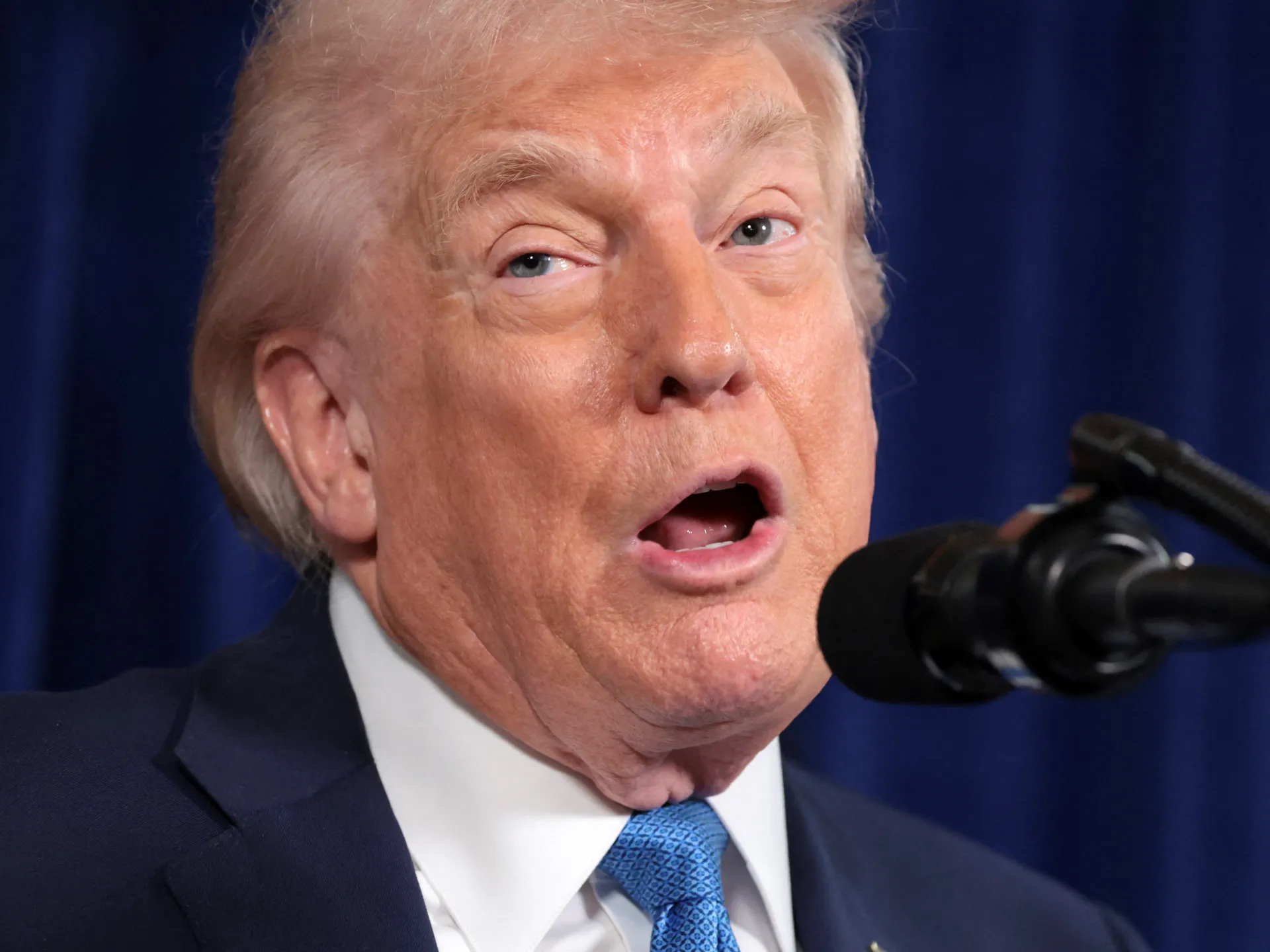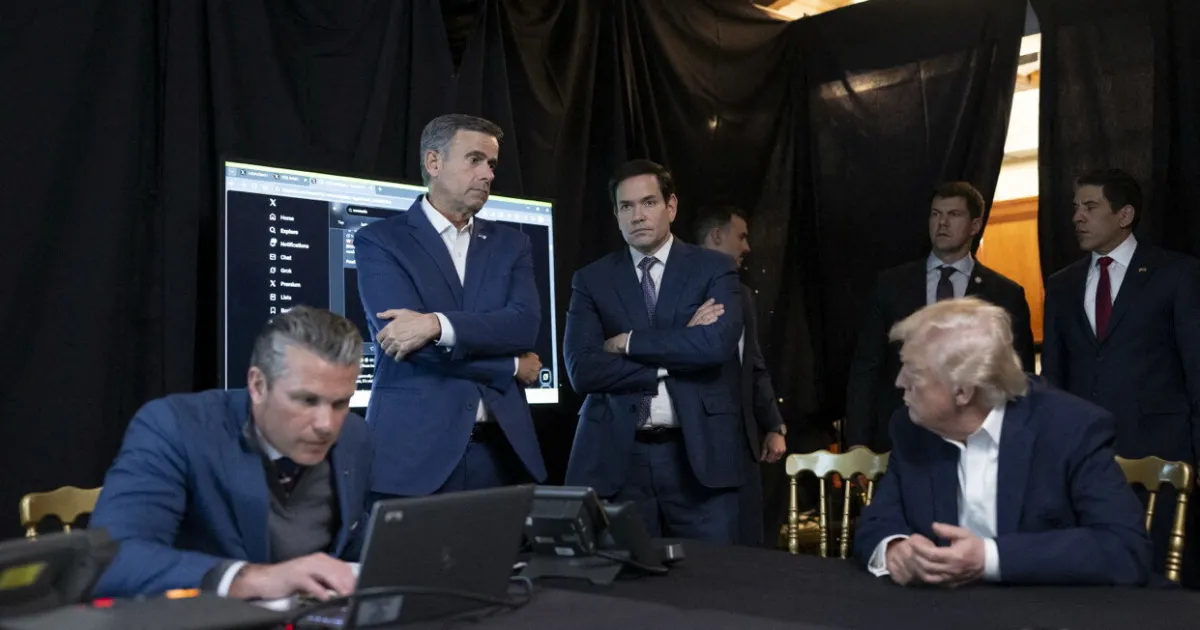
Trump

Trump aims to reform federal cannabis law

Dec. 12 (UPI) — President Donald Trump has voiced support for reclassifying cannabis and making it a legally obtainable drug — possibly as soon as next week.

The president might sign an executive order to reclassify cannabis as a Schedule III drug as soon as Monday, accordingto CNBC, but no later than early next year, Axios reported.

Trump has a team examining the matter, but no decision has been made as of Friday morning.

The president also met with House Speaker Mike Johnson, R-La., earlier this week to discuss the matter and is considering signing an executive order compelling federal agencies to reclassify cannabis as a Schedule III drug.

The federal government currently has cannabis classified as a Schedule I drug with no known medical uses and a strong potential for abuse and dependency, as defined by the Controlled Substances Act.

Other drugs similarly classified include LSD, heroin and MDMA.

A Schedule III drug is one with recognized medicinal use and a low potential for abuse and dependency. Examples include ketamine, opioids and anabolic steroids, all of which require prescriptions to obtain legally.

Food and Drug Administration and the Drug Enforcement Agency, with assistance from the Health and Human Services Department, mostly determine how various drugs are scheduled by the federal government.

The push for reclassification of cannabis comes as more U.S. adults are using cannabis, while moving away from alcohol and tobacco products.

Reclassifying cannabis would not make marijuana legal for recreational use, but it would become legal for medicinal purposes and require a prescription.

Reclassification also would make it legal for cannabis producers to transport their products between states and enable federally chartered banks to process financial transactions related to legal cannabis sales.

Cannabis producers and retailers also could benefit from federal tax breaks.

News of a potential change in federal cannabis laws and enforcement boosted related stocks on Friday.

Cannabis stocks surged upward upon the prospect of cannabis becoming a legally obtainable substance at the federal level, in addition to respective states that have enacted recreational or medical marijuana laws, and many times both.

Several cannabis stocks posted respective gains ranging from more than 10% to about 35% during trading on Friday, CNBC reported.

Two dozen states, three U.S. territories and the District ofColumbia have legalized the medicinal and recreational use of cannabis, and a recent Gallup poll showed 64% or respondents support legalization, according to Axios.

At the federal level, the House of Representatives briefly considered decriminalizing cannabis during President Trump’s first term in office but delayed the matter until after the 2020 general election.

Legalization also could lessen the profit potential for drug cartels, which spurred Colombian President GustavoPetro in March to urge the Colombian Congress to legalize cannabis.

He said the nation’s continued prohibition against cannabis “only brings violence” among its drug cartels.

Speaker of the House Mike Johnson, R-La., departs a closed-door meeting with Republican leadership about health care negotiations at the US Capitol on Friday. Johnson and House Republicans hope to hold a vote next week on their own health care program. Photo by Jim Lo Scalzo/UPI | License Photo

Source link

Trump says he is likely to support ending blanket federal ban on marijuana

President Trump said he likely will support a congressional effort to end the federal ban on marijuana, a major step that would reshape the pot industry and end the threat of a Justice Department crackdown.

Trump’s remarks put him sharply at odds with Atty. Gen. Jeff Sessions on the issue. The bill in question, pushed by a bipartisan coalition, would allow states to go forward with legalization unencumbered by threats of federal prosecution. Sessions, by contrast, has ramped up those threats and has also lobbied Congress to reduce current protections for medical marijuana.

Trump made his comments to a gaggle of reporters Friday morning just before he boarded a helicopter on his way to the G-7 summit in Canada. His remarks came the day after the bipartisan group of lawmakers proposed their measure.

One of the lead sponsors is Sen. Cory Gardner (R-Colo.), who is aligned with Trump on several issues but recently has tangled with the administration over the Justice Department’s threats to restart prosecutions in states that have legalized marijuana.

“I support Sen. Gardner,” Trump said when asked about the bill. “I know exactly what he’s doing. We’re looking at it. But I probably will end up supporting that, yes.”

The legislative proposal, which is also championed by Sen. Elizabeth Warren (D-Mass.), would reshape the legal landscape for marijuana if it becomes law.

California and eight other states, as well as Washington, D.C., have legalized all adult use of marijuana. An additional 20 states permit marijuana for medical use.

But even as states legalize, marijuana has remained a risky and unstable business because of federal law making it illegal. Concerns about federal law enforcement seizures have inhibited most lenders from working with marijuana businesses. And investors have also proceeded cautiously.

“If you are in the marijuana business … you can’t get a bank loan or set up a bank account because of concern over the conflict between state and federal law,” Gardner said at a news conference Thursday to unveil the new bill. “We need to fix this. It is time we take this industry out of the shadows, bring these dollars out of the shadows.”

He called it a “public hypocrisy” that the firms are expected to pay taxes yet are barred from participation in the financial system.

A lifting of the federal prohibition also would bolster efforts to create uniform testing and regulatory standards for marijuana, and potentially free scientists to pursue research into the medical uses of marijuana.

Trump’s support could potentially have a major impact, providing political cover for Republicans who worry about being tagged as soft on drugs. Still, the proposal faces a tough road in Congress.

Even though most lawmakers now represent areas where pot is legal for at least medical use — and public opinion polls show majorities of Democratic and Republican voters nationwide favor legalization — congressional leaders have shown little appetite for loosening restrictions. The House is blocking the District of Columbia from permitting sales of recreational pot, even after its voters chose to legalize. A 2014 budget amendment that protects medical marijuana businesses from Drug Enforcement Administration raids is perpetually under attack.

“It faces tremendous head winds,” John Hudak, a marijuana policy expert at the Brookings Institution in Washington, said, referring to the Gardner-Warren bill.

Trump said he is likely to support the federal legalization effort despite a warning against it from a coalition of narcotics officer groups.

“We urge you to see through the smoke screen and reject attempts to encourage more drug use in America,” they wrote in a letter to Trump Thursday.

The marijuana industry continues to be whipsawed by mixed messages from the administration.

In January, the Justice Department sent pot businesses into a panic by rescinding an Obama-era policy that restricted prosecutors from targeting sellers who operate legally under state laws. Sessions warned at the time that any pot business could find itself in the crosshairs of prosecutors — regardless of whether marijuana was legal in their state.

The move enraged Gardner, who said the administration had earlier given him assurances that there would be no such raids, at least in his state. At Gardner’s behest, Trump in April ordered an abrupt retreat from the announced crackdown. Trump made the order without even consulting Sessions, a sign of their tense relationship.

But prosecutors did back off. During this administration, there have apparently been no federal raids or seizures of pot companies for sales that are legal under state law.

“Remarkably little, if anything, has changed,” said John Vardaman, a former Justice Department attorney who helped draft the Obama-era rules, known as the Cole memo, after former Deputy Atty. Gen. James M. Cole, who issued it. “Almost every U.S. attorney in states where marijuana is legal has decided to apply the same principles as the Cole memo,” said Vardaman, now an executive at Hypur, which sells banking compliance software to marijuana companies.

Banking is the area in which the Gardner bill could most help pot companies.

The Senate proposal, and a companion bipartisan measure in the House, would amend the Controlled Substances Act so that its marijuana provisions do not apply to any person or business that is in compliance with state laws. To put bankers at ease, it specifies that such marijuana sales would not be considered trafficking and do not amount to illegal financial transactions.

“The very people you want involved in this market are the ones who have been most reluctant to get involved because of the banking issue,” said Vardaman. “If you address that, you would have enormous beneficial effects for the industry.”

While Trump’s comments were welcomed by marijuana activists, they remain on edge, especially because of Trump’s spotty record at actually pushing legislation through Congress.

“We have seen this president voice his support for a lot of things related to cannabis, but he has done absolutely nothing to move legislation,” said Hudak. “This is just more empty rhetoric from a president who is vague on this issue.”

Gardner is hoping he can persuade more of his conservative colleagues to join the crusade by framing the issue as one of state’s rights. Several Republicans, including Reps. Dana Rohrabacher of Costa Mesa and Don Young of Alaska, are demanding an end to federal marijuana laws that intrude on the states. Their movement is slowly growing in Congress.

“This is a chance for us to express that federalism works,” said Gardner, who like some other Republicans was not a proponent of marijuana but took up the cause after his state’s voters endorsed legalization, “to take an idea that states have led with and provide a solution that allows them to continue to lead.”

evan.halper@latimes.com

Follow me: @evanhalper


UPDATES:

2:10 p.m.: This article was updated with additional analysis and reaction.

This article was originally published at 8:50 a.m.


Source link

Cambodia claims Thailand still bombing hours after Trump ceasefire call | Border Disputes News

BREAKING,

Cambodia’s Ministry of Defence said Thai F-16 fighter jets continued to bomb targets inside country.

Cambodia has accused Thailand of continuing to drop bombs in its territory hours after United States President Donald Trump said Bangkok and Phnom Penh had agreed to stop fighting.

“On December 13, 2025, the Thai military used two F-16 fighter jets to drop seven bombs” on a number of targets, the Cambodian Defence Ministry said in a post on social media on Saturday.

Recommended Stories

list of 4 itemsend of list

“Thai forces have not stopped the bombing yet and are still continuing the bombing,” the ministry said, listing aerial attacks on hotel buildings and bridges earlier in the morning.

The reports of continued bombing follow after President Trump said that Thailand and Cambodia had agreed “to cease all shooting” on Friday.

“I had a very good conversation this morning with the Prime Minister of Thailand, Anutin Charnvirakul, and the Prime Minister of Cambodia, Hun Manet, concerning the very unfortunate reawakening of their long-running War,” Trump said on his Truth Social platform.

“They have agreed to CEASE all shooting effective this evening, and go back to the original Peace Accord made with me, and them, with the help of the Great Prime Minister of Malaysia, Anwar Ibrahim,” he said.

This is a breaking news story. More to follow soon.

Source link

Admiral hands over leadership of command overseeing the Trump administration’s boat strikes

A U.S. Navy admiral who oversees military operations in Latin America handed off command responsibilities Friday as scrutiny increases over the Trump administration’s deadly strikes on alleged drug boats in the region.

Adm. Alvin Holsey has retired one year into a posting that typically lasts three to four years and transferred leadership duties to his top military deputy, Air Force Lt. Gen. Evan Pettus, during a ceremony at U.S. Southern Command headquarters near Miami.

In farewell remarks, Holsey did not mention the military operations or the reasons for his early retirement. But he urged his successor to uphold longstanding partnerships in the region by standing firmly behind the shared values of democracy and support for the rule of law.

“To be a trusted partner, we must be credible, present and engaged,” Holsey said.

Holsey’s shock retirement was announced by the Pentagon in October, over a month into the Trump administration’s strikes on suspected drug boats in the Caribbean Sea and the eastern Pacific Ocean that have killed at least 87 people. With the campaign facing growing scrutiny by Congress, Holsey briefed key lawmakers earlier this week.

Long-term replacement for Holsey hasn’t yet been named

The ceremony Friday was more subdued than past retirements, held outdoors amid a small crowd of mostly Southern Command staff and without Defense Secretary Pete Hegseth, because President Trump has yet to nominate Holsey’s replacement.

Gen. Dan Caine, chairman of the Joint Chiefs of Staff, made no mention of the military operations in Latin America as he thanked Holsey for his 37 years of service. Caine referred to Holsey as a “stoic” leader and “quiet professional” who always leads with his heart and head.

“It’s never been about you, it’s been about people, it’s been about others,” Caine said. “You’ve never said ‘I’ in all the conversations we’ve had. You’ve always said ‘we.’ … The impact you’ve had will last for a long time.”

Holsey is departing as Congress is scrutinizing the boat attacks, including one that killed two survivors clinging to the wreckage of an initial strike. Secretary of State Marco Rubio, Hegseth and other top officials have given classified briefings on Capitol Hill this week.

Holsey also spoke this week to key lawmakers overseeing the U.S. military by classified video call. Sen. Jack Reed, the top Democrat on the Senate Armed Services Committee, said afterward that Holsey answered senators’ questions but that “there are still many questions to be answered.” Reed later added that Holsey did not give a reason for his retirement other than saying it was a personal decision.

Boat strike scrutiny increases

Experts in the rules of warfare, human rights groups and even some of Trump’s allies in Congress have questioned the legality of the attacks on those accused of ferrying drugs. For decades, they were arrested at sea by the Coast Guard and brought to the U.S. for criminal prosecution.

The 22 known strikes against alleged drug-smuggling vessels are being supported by a giant flotilla of U.S. warships, attack helicopters, thousands of troops and even the nation’s most advanced aircraft carrier.

Trump’s Republican administration has defended its aggressive tactics, designating several drug cartels in Latin America as foreign terrorist organizations and declaring that the U.S. is in armed conflict with those criminal organizations, relying on a legal argument that gained traction after the Sept. 11, 2001, attacks.

The campaign has ramped up pressure on Venezuelan President Nicolás Maduro, who has been charged with narcoterrorism in the U.S. In a sharp escalation Wednesday, U.S. forces seized a sanctioned oil tanker that the Trump administration has accused of smuggling illicit crude. Sale of that oil on global energy markets is critical to Maduro’s grip on power.

Maduro has insisted the real purpose of the U.S. military operations is to force him from office.

Holsey’s departure is the latest in a long line of sudden retirements and firings that have befallen the military’s top ranks since Hegseth took charge of the Pentagon.

A native of rural Fort Valley, Ga., whose father and several uncles served in Vietnam, Holsey relinquished his command to Pettus to a soulful rendition of “Midnight Train to Georgia.”

Pettus, a fighter jet pilot with combat experience in Afghanistan and Iraq, had been serving as Holsey’s top deputy since late 2024. However, it’s unclear how long the Arkansas native will remain in the job. Whomever Trump nominates must be confirmed by the Senate.

Goodman writes for the Associated Press.

Source link

California sues Trump administration over $100,000 fee for H-1B visas

California and a coalition of other states are suing the Trump administration over a policy charging employers $100,000 for each new H-1B visa they request for foreign employees to work in the U.S. — calling it a threat not only to major industry but also to public education and healthcare services.

“As the world’s fourth largest economy, California knows that when skilled talent from around the world joins our workforce, it drives our state forward,” said California Atty. Gen. Rob Bonta, who announced the litigation Friday.

President Trump imposed the fee through a Sept. 19 proclamation, in which he said the H-1B visa program — designed to provide U.S. employers with skilled workers in science, technology, engineering, math and other advanced fields — has been “deliberately exploited to replace, rather than supplement, American workers with lower-paid, lower-skilled labor.”

Trump said the program also created a “national security threat by discouraging Americans from pursuing careers in science and technology, risking American leadership in these fields.”

Bonta said such claims are baseless, and that the imposition of such fees is unlawful because it runs counter to the intent of Congress in creating the program and exceeds the president’s authority. He said Congress has included significant safeguards to prevent abuses, and that the new fee structure undermines the program’s purpose.

“President Trump’s illegal $100,000 H-1B visa fee creates unnecessary — and illegal — financial burdens on California public employers and other providers of vital services, exacerbating labor shortages in key sectors,” Bonta said in a statement. “The Trump Administration thinks it can raise costs on a whim, but the law says otherwise.”

Taylor Rogers, a White House spokeswoman, said Friday that the fee was “a necessary, initial, incremental step towards necessary reforms” that were lawful and in line with the president’s promise to “put American workers first.”

Attorneys for the administration previously defended the fee in response to a separate lawsuit brought by the U.S. Chamber of Commerce and the Assn. of American Universities, arguing earlier this month that the president has “extraordinarily broad discretion to suspend the entry of aliens whenever he finds their admission ‘detrimental to the interests of the United States,’” or to adopt “reasonable rules, regulations, and orders” related to their entry.

“The Supreme Court has repeatedly confirmed that this authority is ‘sweeping,’ subject only to the requirement that the President identify a class of aliens and articulate a facially legitimate reason for their exclusion,” the administration’s attorneys wrote.

They alleged that the H-1B program has been “ruthlessly and shamelessly exploited by bad actors,” and wrote that the plaintiffs were asking the court “to disregard the President’s inherent authority to restrict the entry of aliens into the country and override his judgment,” which they said it cannot legally do.

Trump’s announcement of the new fee alarmed many existing visa holders and badly rattled industries that are heavily reliant on such visas, including tech companies trying to compete for the world’s best talent in the global race to ramp up their AI capabilities. Thousands of companies in California have applied for H-1B visas this year, and tens of thousands have been granted to them.

Trump’s adoption of the fees is seen as part of his much broader effort to restrict immigration into the U.S. in nearly all its forms. However, he is far from alone in criticizing the H-1B program as a problematic pipeline.

Critics of the program have for years documented examples of employers using it to replace American workers with cheaper foreign workers, as Trump has suggested, and questioned whether the country truly has a shortage of certain types of workers — including tech workers.

There have also been allegations of employers, who control the visas, abusing workers and using the threat of deportation to deter complaints — among the reasons some on the political left have also been critical of the program.

“Not only is this program disastrous for American workers, it can be very harmful to guest workers as well, who are often locked into lower-paying jobs and can have their visas taken away from them by their corporate bosses if they complain about dangerous, unfair or illegal working conditions,” Sen. Bernie Sanders (I-Vt.) wrote in a Fox News opinion column in January.

In the Chamber of Commerce case, attorneys for the administration wrote that companies in the U.S. “have at times laid off thousands of American workers while simultaneously hiring thousands of H-1B workers,” sometimes even forcing the American workers “to train their H-1B replacements” before they leave.

They have done so, the attorneys wrote, even as unemployment among recent U.S. college graduates in STEM fields has increased.

“Employing H-1B workers in entry-level positions at discounted rates undercuts American worker wages and opportunities, and is antithetical to the purpose of the H-1B program, which is ‘to fill jobs for which highly skilled and educated American workers are unavailable,’” the administration’s attorneys wrote.

By contrast, the states’ lawsuit stresses the shortfalls in the American workforce in key industries, and defends the program by citing its existing limits. The legal action notes that employers must certify to the government that their hiring of visa workers will not negatively affect American wages or working conditions. Congress also has set a cap on the number of visa holders that any individual employer may hire.

Bonta’s office said educators account for the third-largest occupation group in the program, with nearly 30,000 educators with H-1B visas helping thousands of institutions fill a national teacher shortage that saw nearly three-quarters of U.S. school districts report difficulty filling positions in the 2024-2025 school year.

Schools, universities and colleges — largely public or nonprofit — cannot afford to pay $100,000 per visa, Bonta’s office said.

In addition, some 17,000 healthcare workers with H-1B visas — half of them physicians and surgeons — are helping to backfill a massive shortfall in trained medical staff in the U.S., including by working as doctors and nurses in low-income and rural neighborhoods, Bonta’s office said.

“In California, access to specialists and primary care providers in rural areas is already extremely limited and is projected to worsen as physicians retire and these communities struggle to attract new doctors,” it said. “As a result of the fee, these institutions will be forced to operate with inadequate staffing or divert funding away from other important programs to cover expenses.”

Bonta’s office said that prior to the imposition of the new fee, employers could expect to pay between $960 and $7,595 in “regulatory and statutory fees” per H-1B visa, based on the actual cost to the government of processing the request and document, as intended by Congress.

The Trump administration, Bonta’s office said, issued the new fee without going through legally required processes for collecting outside input first, and “without considering the full range of impacts — especially on the provision of the critical services by government and nonprofit entities.”

The arguments echo findings by a judge in a separate case years ago, after Trump tried to restrict many such visas in his first term. A judge in that case — brought by the U.S. Chamber of Commerce, the National Assn. of Manufacturers and others — found that Congress, not the president, had the authority to change the terms of the visas, and that the Trump administration had not evaluated the potential impacts of such a change before implementing it, as required by law.

The case became moot after President Biden decided not to renew the restrictions in 2021, a move which tech companies considered a win.

Joining in the lawsuit — California’s 49th against the Trump administration in the last year alone — are Arizona, Colorado, Connecticut, Delaware, Hawaii, Illinois, Maryland, Massachusetts, Michigan, Minnesota, North Carolina, New Jersey, New York, Oregon, Rhode Island, Vermont, Washington and Wisconsin.

Source link

Somali flag flown outside Vermont school building over Trump ‘garbage’ slur brings threats

A small school district in Vermont was hit with racist and threatening calls and messages after a Somali flag was put up a week ago in response to President Trump referring to Minnesota’s Somali community as “ garbage.”

The Winooski School District began to display the flag Dec. 5 to show solidarity with a student body that includes about 9% people of Somali descent.

“We invited our students and community to come together for a little moment of normalcy in a sea of racist rhetoric nationally,” said Winooski School District Supt. Wilmer Chavarria, himself a Nicaraguan immigrant. “We felt really good about it until the ugliness came knocking Monday morning.”

The Somali flag was flown alongside the Vermont state flag and beneath the United States flag at a building that includes K-12 classrooms and administrative offices. Somali students cheered and clapped, telling administrators the flag flying meant a great deal to them, he said.

What ensued was a deluge of phone calls, voicemails and social media posts aimed at district workers and students. Some school phone lines were shut down — along with the district website — as a way to shield staff from harassment. Chavarria said videos of the event did not also show the U.S. and Vermont flags were still up and spread through right-wing social media apps, leaving out the important context.

“Our staff members, our administrators and our community are overwhelmed right now, and they are being viciously attacked. The content of those attacks is extremely, extremely deplorable. I don’t know what other word to use,” Chavarria said Tuesday.

Mukhtar Abdullahi, an immigrant who serves as a multilingual liaison for families in the district who speak Somali and a related dialect, said, “no one, no human being, regardless of where they come from, is garbage.” Students have asked if their immigrant parents are safe, he said.

“Regardless of what happens, I know we have a strong community,” Abdullahi said. “And I’m very, very, very thankful to be part of it.”

The district is helping law enforcement investigate the continued threats, Chavarria said, and additional police officers have been stationed at school buildings as a precaution.

Winooski, a former mill town of about 8,000 people, is near Burlington, about 93 miles south of Montreal.

Somali refugees came to the area beginning in 2003 as part of a U.S. government approved resettlement plan, according to the Somali Bantu Community Assn. of Vermont.

White House spokesperson Abigail Jackson called the calls and messages the school received “the actions of individuals who have nothing to do with” Trump.

“Aliens who come to our country, complain about how much they hate America, fail to contribute to our economy, and refuse to assimilate into our society should not be here,” Jackson said in an email late Thursday. “And American schools should fly American flags.”

Federal authorities last week began an immigration enforcement operation in Minnesota to focus on Somali immigrants living unlawfully in the U.S. Trump has claimed “they contribute nothing ” and said, “I don’t want them in our country.” The Minneapolis mayor has defended the newcomers, saying they have started businesses, created jobs and added to the city’s cultural fabric. Most are U.S. citizens and more than half of all Somali people in Minnesota were born in the U.S.

At the school district in Vermont, Chavarria said his position as superintendent gave him authority to fly the flag for up to a week without the school board’s explicit approval.

The school district also held an event with catered Somali food, and Chavarria plans to continue to find ways to celebrate its diversity.

“I felt sorrow for the students, the families, the little kids that are my responsibility to keep safe. And it’s my responsibility to make them feel like they belong and that this is their country and this is their school district. This is what we do,” he said.

Swinhart and Scolforo write for the Associated Press. Scolforo reported from Harrisburg, Penn.

Source link

National Trust files suit against Trump to stop ballroom construction

The demolition of the East Wing of the White House is seen during construction in Washington, D.C., on Nov. 17. The National Trust for Historic Preservation has filed a lawsuit to stop construction of the ballroom. Photo by Bonnie Cash/UPI | License Photo

Dec. 12 (UPI) — The National Trust for Historic Preservation has filed a lawsuit against the President Donald Trump administration to block construction of a ballroom on White House grounds.

The suit claims the ballroom construction is unlawful and asks the court to stop further construction until the plans go through a review process, as required by law.

Former White House attorney under presidents Bill Clinton and Barack Obama, Greg Craig, is representing the Trust. Defendants in the suit include the president, the National Park Service, the Department of the Interior, the General Services Administration and their leaders. The lawsuit was filed Friday in the U.S. District Court for the District of Columbia.

“No president is legally allowed to tear down portions of the White House without any review whatsoever — not President Trump, not President Biden, not anyone else,” the filing said. “And no president is legally allowed to construct a ballroom on public property without giving the public the opportunity to weigh in. President Trump’s efforts to do so should be immediately halted, and work on the ballroom project should be paused until the defendants complete the required reviews — reviews that should have taken place before the defendants demolished the East Wing, and before they began construction of the ballroom — and secure the necessary approvals.”

Trump initially said the project wouldn’t interfere with the building and would be “near it but not touching it.” But then the East Wing was demolished to make way for the ballroom project. The now-$300 million project is being funded by donors, Trump has said.

The National Trust said it sent a letter to the Park Service, the National Planning Commission and the Commission of Fine Arts in October asking them to stop the demolition and begin review procedures. But it didn’t get a response.

“Yet it appears the site preparation and preliminary construction of the proposed new ballroom is proceeding without any review by either commission or by Congress, and without the necessary approvals,” the suit said. “By evading this required review, the defendants are depriving the public of its right to be informed and its opportunity to comment on the defendants’ proposed plans for the ballroom project.”

White House press secretary Karoline Leavitt said in October that the president doesn’t need approval for demolition but only needs it for “vertical construction.”

White House spokesperson Davis Ingle said in a statement Friday: “President Trump has full legal authority to modernize, renovate, and beautify the White House — just like all of his predecessors did.”

Source link

Trump Moves to Reclaim Ceasefire as Thai–Cambodian Clashes Escalate

Border fighting between Thailand and Cambodia has entered its fifth day, marking one of the most violent flare-ups since July. Heavy artillery and rocket exchanges along the 817-km frontier have killed at least 20 people, wounded over 200, and displaced hundreds of thousands.
The clashes come despite a ceasefire earlier this year that U.S. President Donald Trump personally brokered. With the violence worsening, Thailand’s caretaker Prime Minister Anutin Charnvirakul confirmed he will speak with Trump late Friday in an effort to restore calm.

WHY IT MATTERS

The renewed fighting threatens regional stability in mainland Southeast Asia and risks escalating into a broader conflict if not contained. Trump is positioning himself once again as a mediator, eager to revive a fragile ceasefire he sees as a diplomatic accomplishment.
For Thailand and Cambodia both navigating domestic political turbulence U.S. involvement may be one of the few external pressures capable of stopping the conflict quickly.

Trump is doubling down on his role as peace-broker, publicly highlighting past successes and pledging to get the ceasefire “back on track.”
Thailand and Cambodia’s militaries are locked in multi-point battles along the border, with commanders facing pressure to halt the humanitarian crisis unfolding.
Civilians on both sides remain the most vulnerable, with tens of thousands displaced and local communities facing days of bombardment.

WHAT’S NEXT

The scheduled call between Trump and Prime Minister Anutin will be the latest attempt to restart diplomacy. Trump also plans separate calls with Cambodian leadership.
Whether these interventions can end the fighting as they did in July remains uncertain. Much will depend on whether both sides are willing to recommit to a ceasefire and allow international monitoring to stabilise the border.

With information from Reuters.

Source link

Thailand-Cambodia fighting enters 5th day, Thai PM confirms Trump call | Border Disputes News

Fighting between Cambodia and Thailand has entered its fifth day, with Cambodia accusing the Thai military of continued shelling and Thailand’s caretaker Prime Minister Anutin Charnvirakul confirming that he is scheduled to speak with United States President Donald Trump.

Thai forces allegedly carried out new attacks in three Cambodian provinces in the early hours of Friday morning, according to Cambodian news outlet The Khmer Times.

Recommended Stories

list of 3 itemsend of list

The newspaper reported that Thai forces opened fire in the Ta Moan, Ta Kra Bei and Thmar Daun areas of Cambodia’s Oddar Meanchey province.

It also reported Thai shelling in the Phnom Khaing and An Ses areas of the country’s Preah Vihear province, as well as the areas of Prey Chan Village and Boeung Trakuan in nearby Banteay Meanchey province.

No new casualties were reported following the renewed fighting.

At least 20 people have been killed across both countries, with nearly 200 more wounded, since fighting resumed on Monday.

An estimated 600,000 people have also been displaced on both sides of the Thai-Cambodia border since the breakdown of a peace agreement brokered by Trump in October.

Displaced people carry boxes with drinking water distributed at a temporary camp in Cambodia's Oddar Meanchey province on December 11, 2025, amid clashes along the Cambodia-Thailand border. Renewed fighting raged at the border of Cambodia and Thailand on December 11, with combat heard near centuries-old temples, ahead of an expected phone call from US President Donald Trump to the two nations' leaders. (Photo by TANG CHHIN Sothy / AFP)
Displaced people carry boxes with drinking water distributed at a temporary camp in Cambodia’s Oddar Meanchey province on December 11, 2025 [Tang Chhin Sothy/AFP]

In a Facebook post, Cambodia’s Ministry of Defence also rejected as “fake news” a claim from the Thai military that it was using foreign mercenaries to operate suicide drones in its attacks on targets in Thailand.

“The Ministry of National Defence of Cambodia would like to reject propaganda disseminated on the Thai 2nd Army Area Facebook page, which accused Cambodia of using foreigners to help launch FPV [first person view] drones in the Cambodian-Thai border conflict,” the ministry said.

Separately, the ministry also rejected accusations from Thai media outlets alleging that it was preparing to launch Chinese-made PHL-03 missiles in the border dispute.

The PHL-03 is a truck-mounted multiple rocket launcher that can fire guided and unguided rockets with a range of 70km to 130km (43.5 miles to 81 miles), according to a US military database, while Cambodia’s BM-21 Soviet-designed multi-rocket launchers have a range of just 15km to 40km (9.3 miles to 25 miles).

“Cambodia demands the Thai side to deliberately stop spreading false news in order to divert attention to its violations of international law by painting Cambodia as a pretext to use more violent weapons on Cambodia,” the Defence Ministry said.

The Southeast Asian neighbours accuse one another of reigniting the conflict that centres around a centuries-old border dispute along their 800-kilometre (500-mile) frontier, where both sides claim ownership over a smattering of historic temples.

The continued fighting involving artillery, fighter jets, tanks and drones comes as Thailand’s caretaker Prime Minister Anutin confirmed he was scheduled to speak with President Trump at 21:20 local time (14:20 GMT) on Friday.

Trump promised on Wednesday to reach out to the leaders of both countries, saying he thinks he “can get them to stop fighting”.

White House Press Secretary Karoline Leavitt said on Thursday that Trump had yet to call the Thai and Cambodian leadership, but added that “the administration is obviously tracking this at the highest levels and is very much engaged”.

Thailand’s top diplomat Sihasak Phuangketkeow spoke with US counterpart Marco Rubio on Friday ahead of the planned call between Trump and Anutin, Thailand’s foreign ministry said.

Sihasak told Rubio that Thailand was committed to a peaceful resolution, but said sustainable peace must be backed up by actions and genuine commitment, the ministry said in a statement, adding that Rubio confirmed US readiness to constructively promote peace.

Anutin also said his decision to dissolve parliament on Thursday – earlier than expected – would not affect the management of the ongoing border conflict.

The move comes following a breakdown in relations between Anutin’s Thai Pride Party and the opposition People’s Party, the largest bloc in the Thai legislature.

Government spokesperson Siripong Angkasakulkiat said a legislative impasse had paralysed the government’s agenda, meaning Anutin’s party “can’t go forward in parliament”.

Thailand’s King Maha Vajiralongkorn endorsed the dissolution, the country’s official Royal Gazette announced on Friday, making way for early elections.

The national polls must now be held within 45 to 60 days in Thailand.

Source link

Trump signs executive order limiting states ability to regulate AI

An illustration picture shows the introduction page of ChatGPT, an interactive AI chatbot model trained and developed by OpenAI, on its website in Beijing, China, in 2023. President Donald Trump signed an executive order Thursday limiting the ability of American states to regulate AI. File Photo ChatGPT. EPA-EFE/WU HAO

Dec. 11 (UPI) — President Donald Trump signed an executive order Thursday night that limits states’ ability to regulate artificial intelligence companies.

The order is designed “to sustain and enhance the United States’ global AI dominance through a minimally burdensome national policy framework for AI,” according to a release on the White House website.

“To win, United States AI companies must be free to innovate without cumbersome regulation,” the order says. “But excessive State regulation thwarts this imperative.”

Trump has been a strong proponent of U.S. leadership in AI development, and said at the executive order signing ceremony Thursday night that AI companies “want to be in the United States, and they want to do it here, and we have big investment coming. But if they had to get 50 different approvals from 50 different states, you could forget it.”

The order instructs Attorney General Pam Bondi to establish an “AI Litigation Task Force” within 30 days whose “sole responsibility shall be to challenge State AI laws” that don’t align with the Trump administration’s minimal approach to regulation.

It could also revise existing state laws, and directs Commerce Secretary Howard Lutnick to identify state laws that “require AI models to alter their truthful outputs,” which aligns with Trump’s efforts to prevent what he describes as “woke AI.”

Trump has also used federal funding as an incentive to encourage states with such laws not to enforce them. Under terms of the executive order, federal AI law would preempt state regulations. State AI laws designed to protect children would not be affected.

The executive order comes after congress voted in July and November against creating a similar policy.

Critics of the plan created by the executive order call it an attempt to block meaningful regulation on AI and say congress is not equipped to replace state-specific laws with a single, nationwide standard.

Tech companies have been supportive of efforts to limit the power of states to regulate AI. The executive order marks a victory for tech companies like Google and OpenAI, which have launched campaigns through a super PAC, and have as much as $100 million to spend in an effort to shape the outcome of next year’s midterm elections.

The order is also seen as a move to thwart Democrat-led states such as California and New York from exerting state laws over AI development

Source link

Indiana Republicans defy Trump, nix congressional redistricting plan

Indiana’s Republican-led Senate decisively rejected a redrawn congressional map Thursday that would have favored their party, defying months of pressure from President Trump and delivering a stark setback to the White House ahead of next year’s midterm elections.

The vote was overwhelmingly against the proposed redistricting, with more Republicans opposing than supporting the measure, signaling the limits of Trump’s influence even in one of the country’s most conservative states.

Trump has been urging Republicans nationwide to gerrymander their congressional maps in an unprecedented campaign to help the party maintain its thin majority in the House of Representatives. Although Texas, Missouri, Ohio and North Carolina went along, Indiana did not — despite cajoling and insults from the president and the possibility of primary challenges.

“The federal government should not dictate by threat or other means what should happen in our states,” said Spencer Deery, one of the Republican senators who voted no Thursday.

When the proposal failed, 31 to 19, cheers could be heard inside the chamber as well as shouts of “thank you!” The debate had been shadowed by the possibility of violence, and some lawmakers have received threats aimed at persuading them to support the proposal.

Trump tried to brush off the defeat, telling reporters in the Oval Office that he “wasn’t working on it very hard” despite his personal involvement in the pressure campaign.

Two Democratic districts targeted

The proposed map was designed to give Republicans control of all nine of Indiana’s congressional seats, up from the seven they currently hold. It would have essentially erased Indiana’s two Democratic-held districts — splitting Indianapolis among four districts that extend into rural areas, reshaping U.S. Rep. André Carson’s safe district in the city and eliminating the northwest Indiana district held by U.S. Rep. Frank J. Mrvan.

District boundaries are usually adjusted once a decade after a new census. But Trump has cast the issue in existential terms for his party as Democrats push to regain power in Washington.

“If Republicans will not do what is necessary to save our Country, they will eventually lose everything to the Democrats,” Trump wrote on social media the night before the vote.

The president said anyone who voted against the plan should lose their seats. Half of Indiana senators are up for reelection next year, and the conservative organization Turning Point Action had pledged to fund campaigns against them.

David McIntosh, president of Club for Growth, which had backed redistricting, said the vote allowed disloyal Republicans to “stick their finger in the eye of the president of the United States.”

Former Indiana Gov. Mitch Daniels praised the senators for “courageous principled leadership” in rejecting the new map.

A Republican who has vocally criticized Trump, Daniels said the outcome was “a major black eye for him and all the Washington groups that piled in, spent money, blustered and threatened.” He added that “this thing rubbed our state the wrong way and Republicans in our state very wrong from the jump.”

‘A full-court press’

Inside the state Senate chamber, Democratic lawmakers spoke out against redistricting ahead of the vote.

“Competition is healthy, my friends,” Sen. Fady Qaddoura said. “Any political party on Earth that cannot run and win based on the merits of its ideas is unworthy of governing.”

In the hallways outside, redistricting opponents chanted “Vote no!” and “Fair maps!” while holding signs with slogans such as “Losers cheat.”

Three times over the fall, Vice President JD Vance met with Republican senators — twice in Indianapolis and once in the White House — to urge their support. Trump joined a conference call with senators on Oct. 17 to make his own 15-minute pitch.

Behind the scenes, James Blair, Trump’s deputy White House chief of staff for political affairs, was in regular touch with members, as were other groups supporting the effort such as the Heritage Foundation and Turning Point USA.

“The administration made a full-court press,” said Republican Sen. Andy Zay, who said he was on the phone with White House aides sometimes multiple times per week, despite his commitment as a yes vote.

Across the country, mid-cycle redistricting so far has resulted in nine more congressional seats that Republicans believe they can win and six more congressional seats that Democrats think they can win — five in California. Some of the new maps, however, are facing litigation.

In Utah, a judge imposed new districts that could allow Democrats to win a seat, saying Republican lawmakers violated voter-backed standards against gerrymandering.

Republicans were split over plan

Despite Trump’s push, support for gerrymandering in Indiana’s Senate was uncertain. A dozen of the 50 senators had not publicly committed to a stance ahead of the vote.

Republican Sen. Greg Goode signaled his displeasure with the redistricting plan before voting no. He said some of his constituents objected to seeing their county split up or paired with Indianapolis. He expressed “love” for Trump but criticized what he called “over-the-top pressure” from inside and outside the state.

Sen. Michael Young, another Republican, said the stakes in Washington justify redistricting, as Democrats are only a few seats away from flipping control of the U.S. House in 2026. “I know this election is going to be very close,” he said.

Republican Sen. Mike Gaskill, the redistricting legislation’s sponsor, showed senators maps of congressional districts around the country, including several focused on Democratic-held seats in New England and Illinois. He argued that other states gerrymander and that Indiana Republicans should therefore play by the same rules.

The bill cleared its first hurdle Monday with a 6-3 Senate committee vote, although one Republican joined Democrats in opposing it and a few others signaled they might vote against the final version. The state House passed the proposal last week, with 12 Republicans siding with Democrats in opposition.

Among them was state Rep. Ed Clere, who said state troopers responded to a hoax message claiming there was a pipe bomb outside his home Wednesday evening. Indiana state police said “numerous others” received threats but wouldn’t offer details about an ongoing investigation.

In an interview, Clere said these threats were the inevitable result of Trump’s pressure campaign and a “winner-take-all mentality.”

“Words have consequences,” Clere said.

Volmert, Lamy and Beaumont write for the Associated Press and reported from Lansing, Mich., Indianapolis and Des Moines, respectively.

Source link

Trump says he’s he pardoned election denier Tina Peters; Colorado says it’s invalid

Dec. 11 (UPI) — President Donald Trump on Thursday said he granted “a full Pardon” to election denier Tina Peters who was convicted for helping outsiders illegally breach voting machine security, though Colorado officials say he has no power to do so for state crimes.

Peters, a 70-year-old former Mesa County, Colo., clerk, is serving a nine-year prison sentence. She was convicted in August 2024 of attempting to influence a public servant and criminal impersonation for aiding an unauthorized person in copying voting-machine hard-drive data during a 2021 software update.

That data, including sensitive election-system information, was later leaked online by election-fraud conspiracy theorists who claimed it proved Trump’s Big Lie that the 2020 election had been stolen from him.

While maintaining the unfounded claim that the 2020 election was stolen, Trump has been a vocal supporter of the effort to secure Peters’ release, describing Peters as a pro-democracy activist.

“Tina is sitting in a Colorado prison for the ‘crime’ of demanding Honest Elections,” Trump said Thursday evening in a post to his Truth Social account.

“Today I am granting Tina a full Pardon for her attempts to expose Voter Fraud in the Rigged 2020 Presidential Election!”

Colorado state officials have been adamant amid Trump’s demands for Peters’ release that he does not have the authority to pardon her, as she was convicted on state charges.

“Tina Peters was convicted by a jury of her peers, prosecuted by a Republican District Attorney and found guilty of violating Colorado state laws, including criminal impersonation,” Colorado Gov. Jared Polis said in a statement Thursday in response to Trump’s announcement.

“No President has jurisdiction over state law nor the power to pardon a person for state convictions,” Polis continued. “This is a matter for the courts to decide, and we will abide by court orders.”

Trump has feuded with Polis, a Democrat, over Peters’ incarceration, calling the governor a “SLEAZEBAG” earlier this month on Truth Social for refusing “to allow an elderly woman, Tina Peters, who was unfairly convicted of what the Democrats do, cheating on Elections, out of jail!”

Trump’s declaration of Peters’ pardon came hours after her lawyer, Peter Ticktin, announced he had formally asked Trump to pardon his client, whom he called “a necessary witness in exposing election misconduct.”

“Tina Peters is rightfully in Colorado state prison,” Sen. Michael Bennet, D-Colo., said in a statement on X on Thursday.

“Trump’s corrupt and political attempts at a pardon won’t work here. Once again, if you can’t do the time, don’t do the crime.”

Since returning to the White House, Trump has used his powers to issue pardons to many of those connected to the effort to overturn the 2020 election who were convicted on federal charges, including the more than 1,500 people who stormed Congress on Jan. 6, 2021.

Source link

Indiana’s state Senate votes down redistricting bill despite Trump pressure | Donald Trump News

The midwestern state of Indiana has dealt a setback to United States President Donald Trump’s redistricting push ahead of the pivotal 2026 midterm elections, voting down legislation to redraw its congressional map.

Late on Thursday afternoon, Indiana’s state Senate voted 31 to 19 to reject the proposed congressional districts, despite a strong Republican majority in the chamber.

Recommended Stories

list of 3 itemsend of list

Of the state Senate’s 50 seats, 39 are held by Republicans, and the state has voted consistently Republican in every presidential race since 1968, save for a single flip for Democrat Barack Obama in 2008.

The vote is likely to reinforce the sentiment that the Republican Party is fracturing under Trump’s leadership, as his poll numbers slump during the first year of his second term.

Trump was confronted with the results of the Indiana vote at an Oval Office signing ceremony shortly after it happened.

“Just a few moments ago, the Senate there rejected the congressional map to redistrict in that state,” one reporter said. “What’s your reaction?”

Trump responded by touting his successes in pushing other Republican-led states.

“ We won every other state. That’s the only state,” the president said, before referencing his three presidential bids. “It’s funny because I won Indiana all three times by a landslide, and I wasn’t working on it very hard.”

Trump then proceeded to denounce the Indiana Senate president, Rodric Bray, and threatened to support a primary challenge against the Indiana leader.

“He’ll probably lose his next primary, whenever that is. I hope he does,” Trump said.

“It’s, I think, in two years, but I’m sure he’ll go down. He’ll go down. I’ll certainly support anybody that wants to go against it.”

Fractures in the caucus

Currently, Indiana sends nine Congress members to the US House of Representatives, one for each of its nine districts. Two of those seats are currently occupied by Democrats.

Republican leaders in the state, however, had proposed a new map of congressional districts that sought to disempower Democratic voters in the state, clearing the way for conservative candidates to claim all nine seats in next year’s midterm races.

The proposed map was part of a nationwide effort by the Trump administration to defend Republican control in the US Congress.

Already, the partisan map had passed the lower chamber of Indiana’s legislature. On December 5, Indiana’s House of Representatives voted 57 to 41 to send the House Bill 1032 to the state Senate.

The bill had the backing of Indiana’s Republican Governor Mike Braun, who encouraged the state senators to emulate their colleagues in the lower chamber.

But even before the bill arrived in the state Senate, there were cracks in the Republican caucus. Twelve Republicans in the state House broke ranks to vote against the map.

And certain Republican state Senators likewise expressed reticence.

Some Republicans, like Indiana state Senator Greg Walker, had a history of opposing redistricting efforts. He was quoted in the Indiana Capital Chronicle as saying, “I cannot, myself, support the bill for which there must be a legal injunction in order for it to be found constitutional.”

Partisan redistricting has long been a controversial practice in US politics, with opponents calling the practice undemocratic and discriminatory.

Critics also pointed out that the Indiana proposal would force some voters in urban centres like Indianapolis to commute more than 200 kilometres for in-person voting.

Walker joined a total of 21 Republican state Senators, including Bray, in voting against the redistricting bill on Thursday.

A nationwide campaign

But the Trump administration had invested significant time and effort into swaying the vote.

In October, Vice President JD Vance travelled to the Hoosier State to try to convince wary Republicans. US House Speaker Mike Johnson reportedly made personal phone calls to state leaders. And a day before the critical state Senate vote, Trump took to social media with a mixture of cajoling and pressure.

“I love the State of Indiana, and have won it, including Primaries, six times, all by MASSIVE Majorities,” Trump began in a winding, 414-word post.

“Importantly, it now has a chance to make a difference in Washington, D.C., in regard to the number of House seats we have that are necessary to hold the Majority against the Radical Left Democrats. Every other State has done Redistricting, willingly, openly, and easily.”

Currently, the US House of Representatives holds a narrow 220-member Republican majority, out of a total of 435 seats.

All of those seats, however, will be up for grabs in the 2026 midterm elections, and Democrats are hoping to flip the chamber to their control.

Starting in June, reports began to emerge that Trump was petitioning the state legislature in the right-wing stronghold of Texas to redistrict, in an effort to help conservative candidates sweep up five extra congressional seats.

Texas Republicans complied, and in August, the state legislature embraced a new redistricted map, overcoming a walkout from state Democrats.

Republicans in other states, including Missouri and North Carolina, have followed suit, passing new maps that seek to increase right-wing gains in the midterm races.

But Democrats have fired back. In November, California voters passed a referendum to suspend their independent districting commission and adopt a Democrat-leaning map created by state lawmakers.

Indiana, however, appeared poised to buck the redistricting trend. In Wednesday’s lengthy post, Trump warned that the state could put Republican power “at risk” if it failed to pass a new map.

He also called Bray and other Republican splinter votes “SUCKERS” for the Democrats.

“Rod Bray and his friends won’t be in Politics for long, and I will do everything within my power to make sure that they will not hurt the Republican Party, and our Country, again,” Trump wrote.

“One of my favorite States, Indiana, will be the only State in the Union to turn the Republican Party down!”

In the wake of Thursday’s defeat, Trump and his allies doubled down on their threats to remove the 21 Republican state senators who voted against the bill from office.

“I am very disappointed that a small group of misguided State Senators have partnered with Democrats to reject this opportunity,” Governor Braun wrote on social media, calling it a decision to “reject the leadership of President Trump”.

“Ultimately, decisions like this carry political consequences. I will be working with the President to challenge these people who do not represent the best interests of Hoosiers.”

Source link

Judge rules Trump unlawfully ended FEMA disaster prevention programme | Donald Trump News

Twenty states had challenged the end of the programme, meant to make localities more resilient to natural disasters.

A federal judge has said the administration of United States President Donald Trump acted unlawfully in ending a programme aimed at helping communities become more resilient to natural disasters.

The Trump administration had targeted the Building Resilient Infrastructure and Communities (BRIC) programme as part of a wider effort to overhaul the Federal Emergency Management Agency (FEMA).

Recommended Stories

list of 3 itemsend of list

But on Thursday, US District Judge Richard Stearns ruled that the administration lacked the authority to end the grant programme. The decision came in response to a lawsuit filed by 20 states, the majority led by Democrats.

Stearns said the administration’s action amounted to an “unlawful executive encroachment on the prerogative of Congress to appropriate funds for a specific and compelling purpose”.

“The BRIC program is designed to protect against natural disasters and save lives,” Stearns wrote, adding that the “imminence of disasters is not deterred by bureaucratic obstruction”.

Stearns had previously blocked FEMA from diverting more than $4bn allocated to BRIC to other purposes.

Massachusetts Attorney General Andrea Joy Campbell was among the plaintiffs praising the decision.

“Today’s court order will undoubtedly save lives by preventing the federal government from terminating funding that helps communities prepare for and mitigate the impacts of natural disasters,” she said in a statement.

BRIC is the largest resiliency programme offered by FEMA, designed to reduce disaster-related risks and bolster efforts to recover quickly.

The programme is emblematic of efforts under FEMA to take preventive measures to prepare for natural disasters, as climate change fuels more extreme weather across the country.

According to the lawsuit, FEMA approved about $4.5bn in grants for nearly 2,000 projects, primarily in coastal states, over the last four years.

Upon taking office for his second term, Trump initially pledged to do away with FEMA, with the agency sitting at the crossroads of the president’s climate change denialism and his pledge to end federal waste.

Trump has since softened on his position amid pushback from both Republican and Democratic state lawmakers. He has said he plans to reform the agency instead.

In November, acting FEMA head David Richardson stepped down from his post. That came amid internal pushback over Richardson’s lack of experience and cuts to the agency.

In a letter in August, nearly 200 FEMA staffers warned the cuts risked compounding future disasters to a devastating degree.

Upon taking on the role in May, Richardson threatened he would “run right over” anyone who resisted changes to the agency.

Source link

Justice Department drafting a list of ‘domestic terrorists’

Justice Department leadership has directed the FBI to “compile a list of groups or entities engaged in acts that may constitute domestic terrorism” by the start of next year, and to establish a “cash reward system” that incentivizes individuals to report on their fellow Americans, according to a memo reviewed by The Times.

Law enforcement agencies are directed in the memo, dated Dec. 4, to identify “domestic terrorists” who use violence, or the threat of violence, to advance political and social agendas, including “adherence to radical gender ideology, anti-Americanism, anti-capitalism, or anti-Christianity.”

Although the memo does not mention protests against President Trump’s immigration crackdown directly, it says that problematic “political and social agendas” could include “opposition to law and immigration enforcement, extreme views in favor of mass migration and open borders.”

The memo, sent by Atty, Gen. Pam Bondi to federal prosecutors and law enforcement agencies, follows on a presidential memorandum signed by Trump in the immediate aftermath of the killing of Charlie Kirk, a prominent conservative figure, that gave civil rights groups pause over the potential targeting of political activists, donors and nonprofits opposed to the president.

The memo also outlines what it says are causes of domestic terrorist activity, including “hostility towards traditional views on family, religion, and morality.”

“Federal law enforcement will prioritize this threat. Where federal crime is encountered, federal agents will act,” the memo states.

Some national security experts said the memo represents a dramatic operational shift, by directing federal prosecutors and agents to approach domestic terrorism in a way that is “ideologically one-sided.” At worst, critics said, the memo provides legal justification for criminalizing free speech.

“I think this causes a chilling impact, because it definitely seems to be directing enforcement toward particular points of view,” Mary McCord, a former acting assistant attorney general for national security, said in an interview.

The memo, for example, primarily focuses on antifa-aligned extremism, but omits other trends that in recent years have been identified as rising domestic threats, such as violent white supremacy. Since Trump resumed office, the FBI has cut its office designated to focus on domestic extremism, withdrawing resources from investigations into white supremacists and right-wing antigovernment groups.

The memo’s push to collect intelligence on antifa through internal lists and public tip lines also raised questions over the scope of the investigative mission, and how wide a net investigators might cast.

“Whether you’re going to a protest, whether you’re considering a piece of legislation, whether you’re considering undertaking a particular business activity, the ambiguity will affect your risk profile,” Thomas Brzozowski, a former counsel for domestic terrorism at the Justice Department, said in an interview.

“It is the unknown that people will fear,” he added.

Protesters in 1980s style aerobic outfits hold signs reading "Stop ICE Cruelty."

Protesters in 1980s style aerobic outfits work out during a demonstration dubbed “Sweatin’ Out the Fascists” on Sunday in Portland, Ore.

(Natalie Behring / Getty Images)

Groups such as the American Civil Liberties Union have expressed alarm over the new policy, which could be used by the Justice Department to target civil society groups and Democratic individuals and entities with burdensome investigations.

But the White House argues that Democratic appointees under the Biden administration targeted conservative extremists in similar ways.

Members of Trump’s team have embraced political retribution as a policy course. Ed Martin, the president’s pardon attorney, has openly advocated for Justice Department investigations that would burden who Trump perceives as his enemies, alongside leniency for his friends and allies.

“No MAGA left behind,” Martin wrote on social media in May.

Law enforcement agencies are directed in the memo to “zealously” investigate those involved in what it calls potential domestic terrorist actions, including “doxing” law enforcement. Authorities are also directed to “map the full network of culpable actors” potentially tied to crime.

Domestic terrorism is not an official designation in U.S. law. But the directive cites over two dozen existing laws that could substantiate charges against domestic extremists and their supporters, such as conspiracy to injure an officer, seditious conspiracy and mail and wire fraud.

Only in a footnote of the memo does the Justice Department acknowledge that the U.S. government cannot “investigate, collect, or maintain information on U.S. persons solely for the purpose of monitoring activities protected by the First Amendment.”

“No investigation may be opened based solely on activities protected by the First Amendment or the lawful exercise of rights secured by the Constitution or laws of the United States,” the footnote says.

Some tension could arise when citizens report what they believe to be suspected domestic terrorism to the FBI.

The memo directs the FBI online tip line to allow “witnesses and citizen journalists” to report videos, recordings and photos of what they believe to be suspected acts of domestic violence, and establish a “cash reward system” for information that leads to an arrest.

“People will inform because they want to get paid,” Brzozowski said. He added that some information could end up being unreliable and likely be related to other Americans exercising their constitutional rights.

State and local law enforcement agencies that adhere to the Justice Department directive will be prioritized for federal grant funding.

A man dressed as a bee holds an American flag at a No Kings protest.

A man dressed as a bee participates in the No Kings Day of Peaceful Action in downtown Los Angeles on Oct. 18.

(Genaro Molina / Los Angeles Times)

One of the directives in the memo would require the FBI to disseminate an “intelligence bulletin on Antifa and Antifa-aligned anarchist violent extremist groups” early next year.

“The bulletin should describe the relevant organizations structures, funding sources, and tactics so that law enforcement partners can effectively investigate and policy makers can effectively understand the nature and gravity of the threat posed by these extremist groups,” the memo states.

The mission will cross several agencies, with the FBI working alongside joint terrorism task forces nationwide, as well as the Counterterrorism Division and the National Threat Operations Center, among others, to provide updates to Justice Department leadership every 30 days.

Source link

Donald Trump slammed by BBC Question Time MP for ‘trying to divide Europe’

Stephen Flynn, leader of the SNP at Westminster shared his outrage at Donald Trump’s comments about Europe “decaying” on BBC Question Time’s discussion from Paisley tonight

Panelists and audience members on BBC Question Time tonight were fuming with Donald Trump’s claims about Europe “decaying”.

On the panel tonight was Stephen Flynn, leader of the SNP at Westminster, Anas Sarwar MSP, leader of the Scottish Labour party, Russell Findlay, leader of the Scottish Conservative and Unionist Party, Reform UK member, Malcolm Offord and Journalist Angela Haggerty.

After making an important announcement about the show’s future Fiona swiftly moved on to discuss Donald Trump‘s comments towards Europe with the wider audience and the panel. She said: “Donald Trump said about European leaders ‘I think they’re weak and I also think they want to be so politically correct I think they don’t know what to do’. That’s pretty unflattering about Kier Starmer isn’t it?”

READ MORE: Question Time host Fiona Bruce halts show to make huge announcement

READ MORE: Donald Trump unveils new $1million ‘gold card’ for visas amid crackdown on immigration

Stephen Flynn said: “I’m pretty outraged at the fact that when we’re at war on our continent, and we are at war with Russia, our most trusted ally is choosing proactively to try and divide Europe. I think that does the United States of America a massive disservice and I also think it does all of us a disservice.”

An audience member said: “My problem with Donald Trump is we give him too much respect, he doesn’t give us any respect. As the most powerful man in the world supposedly, his behaviour is appalling… to me he’s an absolute disgrace to be the President of the United States.”

Another audience member chimed in saying: “Donald Trump is driven by money, nothing else. He is busy trying to cosy up to Putin because he reckons he’ll get a good deal there… everything he thinks about is money, money, money, how much can he make and apparently he has made an absolute fortune, him and his family.”

Malcolm Offord said: “The American point of view on this is that Europe doesn’t seem to want to defend its own borders and how long does America keep paying for that?”

Russell Findlay refuted Trump’s claims Europe is “decaying” but did address his concerns about the future and the safety in the UK. He said: “Well, the world is incredibly dangerous and volatile, and we should all think very seriously about our safety in this country… I’m deeply, deeply,deeply concerned about the future.”

BBC Question Time returns on January 22 in Macclesfield and then on January 29 in King’s Lynn.

Source link

Justice Department again fails to re-indict New York Atty. Gen. Letitia James, AP source says

A grand jury declined for a second time in a week to re-indict New York Attorney General Letitia James on Thursday in another major blow to the Justice Department’s efforts to prosecute the president’s political opponents.

The repeated failures amounted to a stunning rebuke of prosecutors’ bid to resurrect a criminal case President Trump pressured them to bring, and hinted at a growing public leeriness of the administration’s retribution campaign.

A grand jury rejection is an unusual circumstance in any case, but is especially stinging for a Justice Department that has been steadfast in its determination to seek revenge against Trump foes such as James and former FBI Director James Comey. On separate occasions, citizens have heard the government’s evidence against James and have come away underwhelmed, unwilling to rubber-stamp what prosecutors have attempted to portray as a clear-cut criminal case.

A judge threw out the original indictments against James and Comey in November, ruling that the prosecutor who presented to the grand jury, Lindsey Halligan, was illegally appointed U.S. attorney for the Eastern District of Virginia.

The Justice Department asked a grand jury in Alexandria, Va., to return an indictment Thursday after a different grand jury in Norfolk last week refused to do so. The failure to secure an indictment was confirmed by a person who was not authorized to publicly discuss the matter and spoke on the condition of anonymity.

It was not immediately clear Thursday whether prosecutors would try for a third time to seek a new indictment. A lawyer for James, who has denied any wrongdoing, said the “unprecedented rejection makes even clearer that this case should never have seen the light of day.”

“This case already has been a stain on this Department’s reputation and raises troubling questions about its integrity,” defense attorney Abbe Lowell said in a statement. “Any further attempt to revive these discredited charges would be a mockery of our system of justice.”

James, a Democrat who infuriated Trump after his first term with a lawsuit alleging that he built his business empire on lies about his wealth, was initially charged with bank fraud and making false statements to a financial institution in connection with a home purchase in 2020.

During the sale, she signed a standard document called a “second home rider” in which she agreed to keep the property primarily for her “personal use and enjoyment for at least one year,” unless the lender agreed otherwise. Rather than using the home as a second residence, prosecutors say James rented it out to a family of three, allowing her to obtain favorable loan terms not available for investment properties.

Both the James and Comey cases were brought shortly after the administration installed Halligan, a former Trump lawyer with no previous prosecutorial experience, as U.S. attorney amid public calls from the president to take action against his political opponents.

But U.S. District Judge Cameron McGowan Currie threw out the cases last month over the unconventional mechanism that the Trump administration employed to appoint Halligan. The judge dismissed them without prejudice, allowing the Justice Department to try to file the charges again.

Halligan had been named as a replacement for Erik Siebert, a veteran prosecutor in the office and interim U.S. attorney who resigned in September amid Trump administration pressure to file charges against both Comey and James. He stepped aside after Trump told reporters he wanted Siebert “out.”

James’ lawyers separately argued the case was a vindictive prosecution brought to punish the Trump critic who spent years investigating and suing the Republican president and won a staggering judgment in a lawsuit alleging he defrauded banks by overstating the value of his real estate holdings on financial statements. The fine was later tossed out by a higher court, but both sides are appealing.

Comey was separately charged with lying to Congress in 2020. Another federal judge has complicated the Justice Department’s efforts to seek a new indictment against Comey, temporarily barring prosecutors from accessing computer files belonging to Daniel Richman, a close Comey friend and Columbia University law professor whom prosecutors see as a central player in any potential case against the former FBI director.

Prosecutors moved Tuesday to quash that order, calling Richman’s request for the return of his files a “strategic tool to obstruct the investigation and potential prosecution.” They said the judge had overstepped her bounds by ordering Richman’s property returned to him and said the ruling had impeded their ability to proceed with a case against Comey.

Richer and Kunzelman write for the Associated Press. Richer reported from Washington. AP reporter Eric Tucker in Washington contributed to this report.

Source link

Trump diehard supporter Mike Lindell announces run for Minnesota governor

Dec. 11 (UPI) — Mike Lindell, creator of the MyPillow and a noted conspiracy theorist, has announced he is running for governor of Minnesota.

Lindell is a longtime friend and supporter of President Donald Trump and is known for saying that voting machines in the United States are rigged and can flip elections.

Though he’s lost lawsuits for his election denials, he is still saying that the 2020 election was stolen.

He enters a crowded field of Republicans vying for Gov. Tim Walz’s office, including speaker of the Minnesota House of Representatives Lisa Demuth, former state senator and 2022 Republican nominee for governor Scott Jensen, lawyer Chris Madel and state Rep. Kristin Robbins.

Walz’s campaign is already attacking Lindell for his ties to Trump, labeling him “the far-right CEO, election denier, and Donald Trump’s top ally in Minnesota.”

“Mike Lindell is selling conspiracies, MAGA extremism, and pillows. He has no business holding the highest office in our state,” Walz’s campaign said in a fundraising email last week.

Lindell announced his campaign on Thursday, with an eight-minute video filmed on the factory floor of his MyPillow company. He claimed that the President Joe Biden administration “targeted my banks, they targeted my suppliers, they even took my phone.”

He said he wants to stop the “rampant fraud” in Walz’s administration, stop rising property taxes and “the crime that threatens you and your family.” He also wants to change the state’s voting system so that voters submit paper ballots that are then hand-counted.

The fraud Lindell references comes from an investigation of dozens of people who allegedly stole from the state’s program to feed children during the COVID-19 pandemic. Several Somali immigrants allegedly created small companies that billed state agencies for millions in social services that never went to the intended people. Walz has said that anyone who stole from the government will be prosecuted.

Trump has responded by ending deportation protections for all Minnesota Somalis.

Lindell told the Minneapolis Star Tribune that he told Trump he was thinking of running for governor back in August, but he wouldn’t say what Trump’s response was.

But Trump didn’t back him in his bid for chair of the Republican National Committee in 2023. He only got four votes in that election.

Trump’s former personal lawyer Rudy Giuliani now works for Lindell on his media network, LindellTV, and he’s been giving Lindell political advice.

“He’s been part of many campaigns,” Lindell told the Star Tribune. “He knows what he’s doing.”

LindellTV now has credentials to cover the White House and the Pentagon, The New York Times reported.

Lindell calls his story “the American Dream on steroids,” touting his rise from crack cocaine addiction to successful business owner. He considers himself the frontrunner in the field of candidates and said, “I believe I will stand on my own merit,” Lindell said.

President Donald Trump stands with Saudi Arabia’s Crown Prince Mohammed bin Salman during a black tie dinner at the White House in Washington, on November 18, 2025. Photo by Anna Rose Layden/UPI | License Photo

Source link

In Trump’s regime, Catholics are among the most powerful — and deported

Her brown face, green mantle and forgiving gaze is a mainstay of Southern California: In front yards. As murals. On decals flashing from car windows and bumpers. Sold at swap meets in the form of T-shirts, ponchos, statues, bags and so much more.

Tomorrow, it will be the feast day of Our Lady of Guadalupe, and She couldn’t come soon enough. 2025 will go down as one of the best and worst years ever to be a Catholic in the United States.

Members of my faith are in positions of power in this country like never before. Vice President JD Vance is a convert. A majority of the Supreme Court are practicing Catholics. Names of past Catholic diasporas like Kennedy, Bondi, Loeffler and Rubio dot Trump’s Cabinet. This week, he became the first president to formally recognize the Feast of the Immaculate Conception, a Catholic holy day celebrating Mary, the mother of Jesus.

“For nearly 250 years, Mary has played a distinct role in our great American story,” Trump declared, offering a brief Catholic history of the United States that would’ve made this country’s Puritan forefathers retch. He even shouted out Our Lady of Guadalupe’s feast day, commending the “steadfast devotion to Mary that originated in the heart of Mexico.”

It’s the second year in a row where Trump has wrapped himself in the Empress of the Americas. Last year, he shared Her famous image on social media on Sept. 8, when Catholics celebrate the birth of the Virgin Mary, with the caption “Happy birthday, Mary!”

I wish I could say Guadalupe is changing Trump’s shriveled excuse of a heart. But it’s impossible to reach that conclusion when so many Catholics in the U.S. face unholy persecution because of his deportation deluge.

A study released earlier this year by a coalition of evangelical and Catholic groups found that 61% of immigrants at risk of deportation in this country identify as Catholic, while nearly one-fifth of U.S. Catholics “would be impacted” by someone being deported. The latter figure is nearly three times the rate that evangelicals face and four times the rate of other Christian denominations.

Guadalupanos — people with a special devotion to Guadalupe, the overwhelming majority of whom are Latino — can’t even venerate Her in peace this year because of Trump.

The neighborhood house that I visit every year to pray the novena in honor of Guadalupe with others has seen way fewer people than last year. In Chicago, where immigration agents terrorized residents all fall, officials at the Shrine of Our Lady of Guadalupe in suburban Des Plaines are seeing the same even as they adopt security measures to reassure attendees. Out in the Coachella Valley, a beloved pilgrimage in honor of la guadalupana held for more than 20 years was canceled, with organizers announcing on Facebook in Spanish that the faithful should instead do a “spiritual interior pilgrimage where our mother invites us to keep us united in a secure environment.”

Since July, San Bernardino diocese bishop Alberto Rojas has allowed Catholics to skip Mass because of all the raids in the Inland Empire. He was joined this week by Diocese of Baton Rouge Bishop Michael Duca as la migra now roams Louisiana. “We should be anticipating the joy of Christmas, surrounded by our family in celebration,” Duca wrote, “instead of the experience of anxiety and fear.”

Pope Francis meets with U.S. Vice President JD Vance

The late Pope Francis meets with U.S. Vice President JD Vance and delegation during an audience at Casa Santa Marta on April 20 in Vatican City. A day later, Francis died at age 88.

(Vatican Pool / Getty Images)

That’s the sad irony of seeing Catholicism have such a prominent role in Trump’s second term. The main defamers of Catholics in the United States have been Protestants since the days of the founding fathers. They cast successive waves of immigrants — Irish, Italians, Poles, Mexicans, Vietnamese — as evil, stupid immigrants beholden to Rome. They wrongly predicted each group would ruin the American way of life.

Now that Catholics are at the top, they’re the ones pushing policies that persecute the new generation of immigrants, Catholic and not. They mock the exhortations of church leaders to follow the Bible’s many commands to protect the stranger, the meek, the least and the poor by arguing that deporting the undocumented is somehow righteous.

That’s why, as we end a terrible year and Trump vows to escalate his cruel anti-immigrant campaign in the next one, Catholics and non-Catholics alike need to remember who Our Lady of Guadalupe is like never before. She’s more than just an iconic image; this dark-skinned María stands against everything Trump and his brand of Catholicism preaches.

The faithful believe that Guadalupe appeared in 1531 near modern day Mexico City — not before the conquering Spanish priests who were destroying the old ways of the Aztecs and other Indigenous groups, but to the conquered who looked like her. The manuscript that shared her story with the world quoted her as promising to “hear all their cries … and remedy all their miseries, sorrows, and pains.”

Siding with the underdogs against the elites is why Mexicans carried Guadalupe’s banner in the War of Independence and during the Mexican Revolution. Why Cesar Chavez carried her during United Farm Workers marches and why generations of Chicano artists have reimagined la virgencita as everything from a bikini-clad model to a jogger — the more quotidian, the better.

It’s why there are 19 parishes, sanctuaries and missions named after her in the dioceses of Orange, Los Angeles and San Bernardino — by far the most of any saint, sacrament or Marian apparition in the Southland. It’s why the late Pope Francis regularly celebrated mass in honor of Guadalupe’s feast day at the Vatican and admonished those who wished to “gain ideological advantage over the mystery of Guadalupe” last year during a homily at St. Peter’s Basilica. Presiding over the service was Cardinal Robert Prevost, who is now Pope Leo XIV and whose devotion to Guadalupe is such that he was consecrated as a bishop 11 years ago this Dec. 12.

It’s why Guadalupe has emerged as a symbol against Trump’s deportation Leviathan.

Her message of hope for the poor over the privileged stands in contrast to the limousine Catholics who dominate Trumpland. They’re the ones that have successfully spent millions of dollars to move the church in the United States to the right (55% of Catholics chose Trump last year), repeatedly tried to torpedo the reforms of Pope Francis and are already souring on Pope Leo for describing Trump’s raids as “extremely disrespectful” to the dignity of migrants. They’re the ones who have expressed more outrage over the assassination of conservative firebrand Charlie Kirk this fall than the suffering that millions of their fellow Catholics have endured all year under Trump.

Our Lady of Guadalupe, grant us the strength to fight back against the Herod of our time.

Source link

MyPillow founder and Trump supporter Mike Lindell says he’s running for Minnesota governor in 2026

Mike Lindell, the fervent supporter of President Trump known to TV viewers as the “MyPillow Guy,” officially entered the race for Minnesota governor Thursday in hopes of winning the Republican nomination to challenge Democratic Gov. Tim Walz.

“I’ll leave no town unturned in Minnesota,” Lindell told the Associated Press in an interview ahead of a news conference set for Thursday.

He said he has a record of solving problems and personal experiences that will help businesses and and that he will fight addiction and homelessness as well as fraud in government programs. The fraud issue has particularly dogged Walz, who announced in September that he’s seeking a third term in the 2026 election.

A TV pitchman and election denier

Lindell, 64, founded his pillow company in Minnesota in 2009 and became its public face through infomercials that became ubiquitous on late-night television. But he and his company faced a string of legal and financial setbacks after he became a leading amplifier of Trump’s false claims that the 2020 election was stolen. He said he has overcome those setbacks.

“Not only have I built businesses, you look at problem solution,” Lindell said in his trademark rapid-fire style. “I was able to make it through the biggest attack on a company, and a person, probably other than Donald Trump, in the history of our media … lawfare and everything.”

While no Republican has won statewide office in Minnesota since 2006, the state’s voters have a history of making unconventional choices. They shocked the world by electing former professional wrestler Jesse Ventura as governor in 1998. And they picked a veteran TV pitchman in 1978 when they elected home improvement company owner Rudy Boschwitz as a U.S. senator.

Lindell has frequently talked about how he overcame a crack cocaine addiction with a religious conversion in 2009 as MyPillow was getting going. His life took another turn in 2016 when he met the future president during Trump’s first campaign. He served as a warm-up speaker at dozens of Trump rallies and co-chaired Trump’s campaign in Minnesota.

Trump’s endorsement could be the key to which of several candidates wins the GOP nomination to challenge Walz. But Lindell said he doesn’t know what Trump will do, even though they’re friends, and said his campaign isn’t contingent on the president’s support.

His Lindell TV streaming platform was in the news in November when it became one of several conservative news outlets that became credentialed to cover the Pentagon after agreeing to a restrictive new press policy rejected by virtually all legacy media organizations.

Lindell has weathered a series of storms

Lindell’s outspoken support for Trump’s false claims that the 2020 election was stolen triggered a backlash as major retailers discontinued MyPillow products. By his own admission, revenue slumped and lines of credit dried up, costing him millions. Several vendors sued MyPillow over billing disputes. Fox News stopped running his commercials. Lawyers quit on him.

Lindell has been sued twice for defamation over his claims that voting machines were manipulated to deprive Trump of a victory.

A federal judge in Minnesota ruled in September that Lindell defamed Smartmatic with 51 false statements. But the judge deferred the question of whether Lindell acted with the “actual malice” that Smartmatic must prove to collect. Smartmatic says it’s seeking “nine-figure damages.”

A Colorado jury in June found that Lindell defamed a former Dominion Voting Systems executive by calling him a traitor, and awarded $2.3 million in damages.

But Lindell won a victory in July when a federal appeals court overturned a judge’s decision that affirmed a $5-million arbitration award to a software engineer who disputed data that Lindell claimed proved Chinese interference in the 2020 election. The engineer had accepted Lindell’s “Prove Mike Wrong Challenge,” which he launched as part of his 2021 “Cyber Symposium” in South Dakota, where he promised to expose election fraud.

The campaign ahead

Lindell said his crusade against electronic voting machines will just be part of his platform. While Minnesota uses paper ballots, it also uses electronic tabulators to count them. Lindell wants them hand-counted, even though many election officials say machine counting is more accurate.

Some Republicans in the race include Minnesota House Speaker Lisa Demuth; Dr. Scott Jensen, a former state senator who was the party’s 2022 candidate; state Rep. Kristin Robbins; defense lawyer and former federal prosecutor Chris Madel; and former executive Kendall Qualls.

“These guys haven’t lived what I live,” Lindell said.

Lindell wouldn’t commit to abiding by the Minnesota GOP endorsement and forgoing the primary if he loses it, expressing confidence that he’ll win. He also said he’ll rely on his supporters to finance his campaign because his own finances are drained. “I don’t have the money,” he acknowledged.

But he added that ever since word got out last week that he had filed the paperwork to run, “I’ve had thousands upon thousands of people text and call, saying from all around the country … ‘Hey, I’ll donate.’”

Karnowski writes for the Associated Press.

Source link

Senators clash over Trump’s National Guard deployments as military leaders face first questioning

Members of Congress clashed Thursday over President Trump’s use of the National Guard in American cities, with Republicans saying the deployments were needed to fight lawlessness while Democrats called his move an extraordinary abuse of military power that violated states’ rights.

Top military officials faced questioning over the deployments for the first time at the hearing before the Senate Armed Services Committee. They were pressed by Democrats over the legality of sending in troops, which in some places were done over the objections of mayors and governors, while Trump’s Republican allies offered a robust defense of the policy.

It was the highest level of scrutiny, outside a courtroom, of Trump’s use of the National Guard in U.S. cities since the deployments began and came a day after the president faced another legal setback over efforts to send troops to support federal law enforcement, protect federal facilities and combat crime.

“In recent years, violent crime, rioting, drug trafficking and heinous gang activity have steadily escalated,” said Mississippi Sen. Roger Wicker, the committee chairman. The deployments, he said, are “not only appropriate, but essential.”

Democrats argued they are illegal and contrary to historic prohibitions about the use of military force on U.S. soil.

Sen. Tammy Duckworth, D-Ill., had pushed for the hearing, saying domestic deployments traditionally have involved responding to major floods and tornadoes, not assisting immigration agents who are detaining people in aggressive raids.

“Trump is forcing our military men and women to make a horrible choice: uphold their loyalty to the Constitution and protect peaceful protesters, or execute questionable orders from the president,” said Duckworth, a combat veteran who served in the Illinois National Guard.

Military leaders point to training

During questioning, military leaders highlighted the duties that National Guard units have carried out. Troops are trained in community policing, they said, and are prohibited from using force unless in self-defense.

Since the deployments began, only one civilian — in California — has been detained by National Guard personnel, according to Air Force Gen. Gregory M. Guillot, commander of U.S. troops in North America. Guillot said the troops are trained to de-escalate tense interactions with people, but do not receive any specific training on mental health episodes.

“They can very quickly be trained to conduct any mission that we task of them,” Guillot said.

Republicans and Democrats see the deployments much differently

In one exchange, Sen. Mazie Hirono, D-Hawaii, noted how former Defense Secretary Mark Esper alleged that Trump inquired about shooting protesters during the George Floyd demonstrations. She asked whether a presidential order to shoot protesters would be lawful.

Charles L. Young III, principal deputy general counsel at the Defense Department, said he was unaware of Trump’s previous comments and that “orders to that effect would depend on the circumstances.”

“We have a president who doesn’t think the rule of law applies to him,” Hirono said in response.

Republicans countered that Trump was within his rights — and his duty — to send in the troops.

Republican Sen. Tim Sheehy of Montana, a former Navy SEAL officer, argued during the hearing that transnational crimes present enough of a risk to national security to justify military action, including on U.S. soil.

Sheehy claimed there are foreign powers “actively attacking this country, using illegal immigration, using transnational crime, using drugs to do so.”

Senators also offered their sympathies after two West Virginia National Guard members deployed to Washington were shot just blocks from the White House in what the city’s mayor described as a targeted attack. Spc. Sarah Beckstrom died a day after the Nov. 26 shooting, and her funeral took place Tuesday. Staff Sgt. Andrew Wolfe is hospitalized in Washington.

Hearing follows court setback for Trump

A federal judge in California on Wednesday ruled that the administration must stop deploying the California National Guard in Los Angeles and return control of the troops to the state.

U.S. District Judge Charles Breyer granted a preliminary injunction sought by California officials, but also put the decision on hold until Monday. The White House said it plans to appeal.

Trump called up more than 4,000 California National Guard troops in June without Democratic Gov. Gavin Newsom’s approval to further the administration’s immigration enforcement efforts.

The move was the first time in decades that a state’s National Guard was activated without a request from its governor and marked a significant escalation in the administration’s efforts to carry out its mass deportation policy. The troops were stationed outside a federal detention center in downtown Los Angeles where protesters gathered and were later sent on the streets to protect immigration officers as they made arrests.

Trump also had announced National Guard members would be sent to Illinois, Oregon, Louisiana and Tennessee. Other judges have blocked or limited the deployment of troops to Portland, Oregon, and Chicago, while Guard members have not yet been sent to New Orleans.

Klepper, Finley and Groves write for the Associated Press. AP writer Konstantin Toropin contributed to this report.
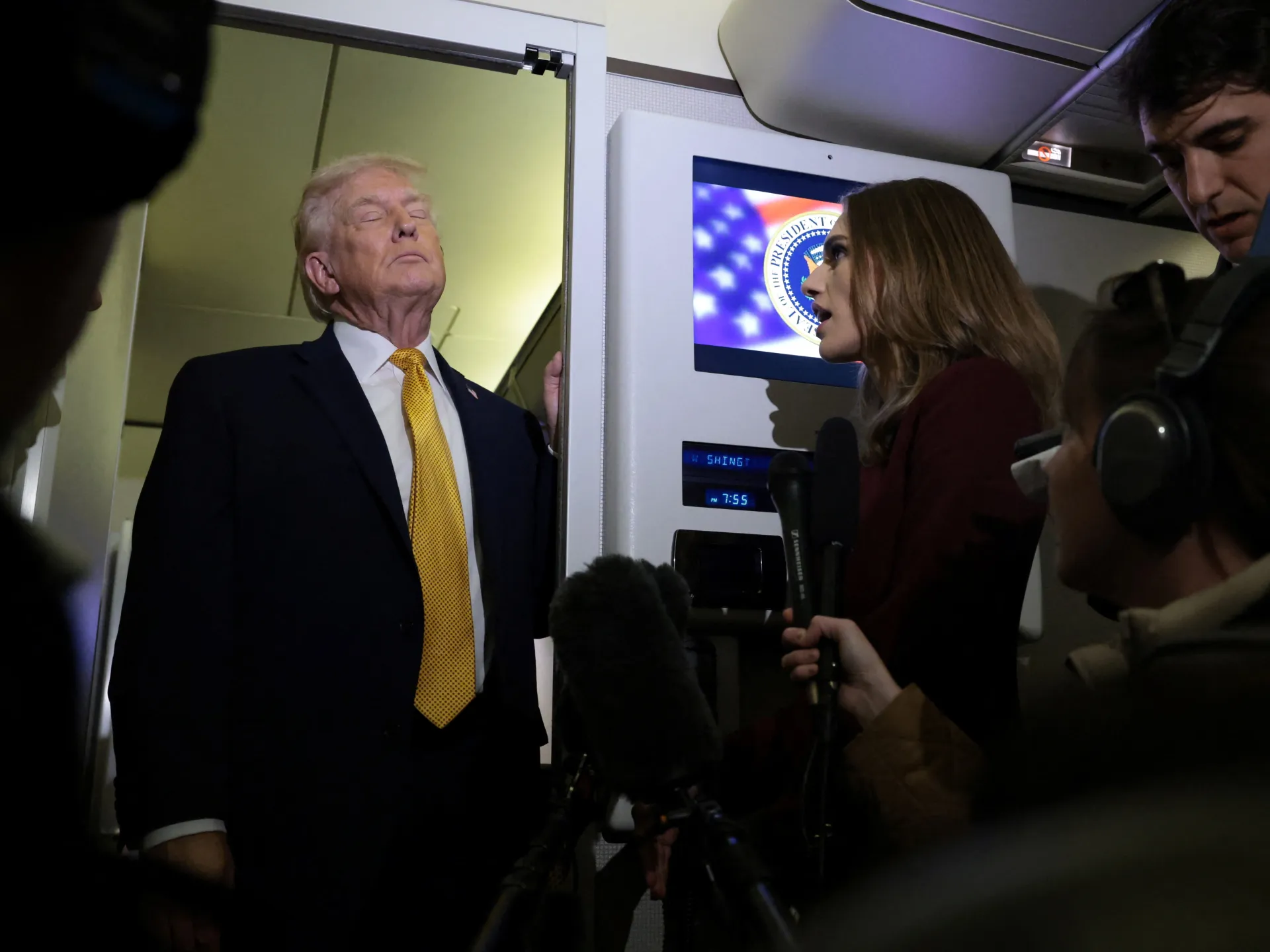
Source link

Trump’s handling of the economy is at its lowest point in AP-NORC polling

President Trump’s approval on the economy and immigration have fallen substantially since March, according to a new AP-NORC poll, the latest indication that two signature issues that got him elected barely a year ago could be turning into liabilities as his party begins to gear up for the 2026 midterms.

Only 31% of U.S. adults now approve of how Trump is handling the economy, the poll from The Associated Press-NORC Center for Public Affairs Research finds. That is down from 40% in March and marks the lowest economic approval he’s registered in an AP-NORC poll in his first or second term. The Republican president also has struggled to recover from public blowback on other issues, such as his management of the federal government, and has not seen an approval bump even after congressional Democrats effectively capitulated to end a record-long government shutdown last month.

Perhaps most worryingly for Trump, who’s become increasingly synonymous with his party, he’s slipped on issues that were major strengths. Just a few months ago, 53% of Americans approved of Trump’s handling of crime, but that’s fallen to 43% in the new poll. There’s been a similar decline on immigration, from 49% approval in March to 38% now.

The new poll starkly illustrates how Trump has struggled to hold onto political wins since his return to office. Even border security — an issue on which his approval remains relatively high — has declined slightly in recent months.

The good news for Trump is that his overall approval hasn’t fallen as steeply. The new poll found that 36% of Americans approve of the way he’s handling his job as president, which is down slightly from 42% in March. That signals that even if some people aren’t happy with elements of his approach, they might not be ready to say he’s doing a bad job as president. And while discontent is increasing among Republicans on certain issues, they’re largely still behind him.

Declining approval on the economy, even among Republicans

Republicans are more unhappy with Trump’s performance on the economy than they were in the first few months of his term. About 7 in 10 Republicans, 69%, approve of how Trump is handling the economy in the December poll, a decline from 78% in March.

Larry Reynolds, a 74-year-old retiree and Republican voter from Wadsworth, Ohio, said he believes in Trump’s plan to impose import duties on U.S. trading partners but thinks rates have spiraled too high, creating a “vicious circle now where they aren’t really justifying the tariffs.”

Reynolds said he also believes that inflation became a problem during the coronavirus pandemic and that the economy won’t quickly recover, regardless of what Trump does. “I don’t think it’ll be anything really soon. I think it’s just going to take time,” he said.

Trump’s base is still largely behind him, which was not always the case for his predecessor, President Joe Biden, a Democrat. In the summer of 2022, only about half of Democrats approved of how Biden was handling the economy. Shortly before he withdrew from the 2024 presidential race two years later, that had risen to about two-thirds of Democrats.

More broadly, though, there’s no sign that Americans think the economy has improved since Trump took over. About two-thirds of U.S. adults, 68%, continue to say the country’s economy is “poor.” That’s unchanged from the last time the question was asked in October, and it’s broadly in line with views throughout Biden’s last year in office.

Why Trump gets higher approval on border security than immigration

Trump’s approval ratings on immigration have declined since March, but border security remains a relatively strong issue for him. Half of U.S. adults, 50%, approve of how Trump is handling border security, which is just slightly lower than the 55% who approved in September.

Trump’s relative strength on border security is partially driven by Democrats and independents. About one-third of independents, 36%, approve of Trump on the border, while 26% approve on immigration.

Jim Rollins, an 82-year-old independent in Macon, Georgia, said he believes that when it comes to closing the border, Trump has done “a good job,” but he hopes the administration will rethink its mass deportation efforts.

“Taking people out of kindergarten, and people going home for Thanksgiving, taking them off a plane. If they are criminals, sure,” said Rollins, who said he supported Trump in his first election but not since then. “But the percentages — based on the government’s own statistics — say that they’re not criminals. They just didn’t register, and maybe they sneaked across the border, and they’ve been here for 15 years.”

Other polls have shown it’s more popular to increase border security than to deport immigrants, even those who are living in the country illegally. Nearly half of Americans said increasing security at the U.S.-Mexico border should be “a high priority” for the government in AP-NORC polling from September. Only about 3 in 10 said the same about deporting immigrants in the U.S. illegally.

Shaniqwa Copeland, a 30-year-old independent and home health aide in St. Augustine, Florida, said she approves of Trump’s overall handling of the presidency but believes his immigration actions have gone too far, especially when it comes to masked federal agents leading large raids.

“Now they’re just picking up anybody,” Copeland said. “They just like, pick up people, grabbing anybody. It’s crazy.”

Health care and government management remain thorns for Trump

About 3 in 10 U.S. adults approve of how Trump is handling health care, down slightly from November. The new poll was conducted in early December, as Trump and Congress struggled to find a bipartisan deal for extending the Affordable Care Act subsidies that will expire at the end of this month.

That health care fight was also the source of the recent government shutdown. About one-third of U.S. adults, 35%, approve of how Trump is managing the federal government, down from 43% in March.

But some Americans may see others at fault for the country’s problems, in addition to Trump. Copeland is unhappy with the country’s health care system and thinks things are getting worse but is not sure of whether to blame Trump or Biden.

“A couple years ago, I could find a dentist and it would be easy. Now, I have a different health care provider, and it’s like so hard to find a dental (plan) with them,” she said. “And the people that do take that insurance, they have so many scheduled out far, far appointments because it’s so many people on it.”

Sanders and Weissert write for the Associated Press. The AP-NORC poll of 1,146 adults was conducted Dec. 4-8 using a sample drawn from NORC’s probability-based AmeriSpeak Panel, which is designed to be representative of the U.S. population. The margin of sampling error for adults overall is plus or minus 4 percentage points.
Source link