Top News

Top news of today about travel

U.N. says U.S. is obligated to continue funding amid withdrawals

Jan. 8 (UPI) — Despite the Trump administration withdrawing the United States from 31 U.N. entities, the U.S. is obligated to continue providing assessed funding amounts, U.N. officials said on Thursday.

Despite the changes, U.N. Secretary-General Antonio Guterres the U.N.’s work will continue, and all member states, including the United States, are obligated to provide assessed contributions to the U.N.’s “regular and peacekeeping budgets” that have been approved by the General Assembly.

U.N. officials said they will continue to “deliver for those who depend on us” and “will continue to carry out our mandates with determination,” spokesman Stephane Dujarric said in a prepared statement.

“The secretary-general regrets the announcement by the White House regarding the United States’ decision to withdraw from a number of United Nations entities,” Dujarric continued.

“Assessed contributions to the United Nations’ regular budget and peacekeeping budget, as approved by the General Assembly, are a legal obligation under the U.N. Charter for all member states, including the United States,” he said.

“All United Nations entities will go on with the implementation of their mandates as given by member states.”

President Donald Trump announced the U.S. is withdrawing its participation in and funding for 66 international organizations, treaties and conventions and signed an executive order proclaiming such on Wednesday.

The decision affects U.S. participation in 31 U.N. entities, including its Population Fund that supports maternal and child health and combats sexual and gender-based violence.

The U.S. also is withdrawing from the U.N. Framework Convention on Climate Change, the U.N. Democracy Fund and other units within the U.N. Secretariat that are based in New York City and elsewhere.

The U.S. withdrawal from the UNFCCC marks a significant change in global cooperation on climate change, UNFCC Executive Sec. Simon Stiell said.

“While all other nations are stepping forward together, this latest step back from global leadership, climate cooperation and science can only harm the U.S. economy, jobs and living standards, as wildfires, floods, mega-storms and droughts get rapidly worse,” Steill said.

“It is a colossal own goal which will leave the U.S. less secure and less prosperous,” he added.

The U.S. also is withdrawing from and ceasing all participation in the U.N.’s regional commissions for the Asia-Pacific, Western Asia, Africa and Latin America and the Caribbean regions.

Source link

Standards for a national AI remain unclear as Upstage, Naver diverge

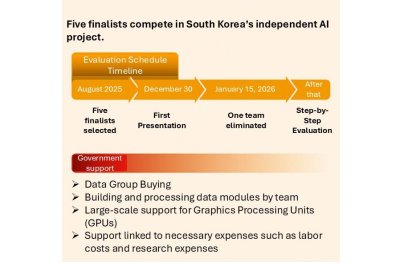
A graphic outlines the evaluation timeline and government support plan for South Korea’s sovereign AI project, including the selection of five teams, a first presentation by Dec. 30, elimination of one team by Jan. 15, 2026, and phased evaluations, alongside support such as joint data purchases, data module construction, large-scale GPU backing and funding for personnel and research costs. Graphic by Asia Today and translated by UPI

Jan. 8 (Asia Today) — South Korea’s push to develop a national artificial intelligence model has exposed a fundamental question the government has yet to answer: What, exactly, qualifies as a “sovereign” or “independent” AI?

A government-backed competition is underway to build a national AI system intended for use across society. The initiative, led by Ha Jung-woo, former Naver executive and now senior secretary for AI future planning at the presidential office, and Bae Kyung-hoon, former head of LG AI Research and now vice minister of science and ICT, aims to secure what officials call “AI sovereignty.” The stated goal is a Korean-built AI developed entirely with domestic technology.

As the competition has intensified, disputes over technical standards have moved to the forefront. The most prominent issue is whether participating models were truly built “from scratch” – a term borrowed from sports that implies starting with no preexisting foundation.

The debate first erupted when the CEO of Syonic AI publicly questioned whether Upstage’s model met that standard. Upstage CEO Kim Sung-hoon responded the following day by opening all training logs, checkpoints and experiment records for public verification. The company live-streamed the session, answered questions without prior preparation and ultimately received a public apology from the original accuser.

Senior Secretary Ha and Vice Minister Bae both praised the process on social media, calling it evidence that the national AI project is fostering a healthy and transparent ecosystem. They commended Upstage for proving the allegations unfounded through verification and credited the accuser for acknowledging the findings.

The controversy did not end there.

Attention soon shifted to Naver’s own “from scratch” claim. The company acknowledged that its model uses an encoder from China’s Qwen but said the component was not significant. In a statement, Naver said it had “strategically adopted a verified external encoder” to ensure compatibility with the global ecosystem and optimize system efficiency.

That explanation has been met with skepticism in the industry. Critics argue that the encoder is a core component of the model and that identical weights suggest a level of dependence comparable to directly adopting a foreign model. Because the entire system was trained around that structure, they say, the dependency cannot simply be removed.

The contrast in responses has drawn sharp comparisons. If a national athlete faces doping suspicions, the burden of proof lies with the athlete. Upstage disclosed everything immediately. Naver, critics argue, has asked for time without offering detailed verification. Post-hoc review, they say, is meaningless once the competition is over.

Naver has countered that innovation does not require building every technology from the ground up, arguing that AI advances by adding unique value atop proven global technologies.

But that raises a larger question: Is that what the government meant by a national AI strategy?

Industry observers say the issue is not a minor technical dispute but a political and strategic one, touching on technological sovereignty, research ethics and industrial trust. Some argue that marketing ambiguous standards risks undermining the very purpose of the project.

National AI systems are expected to underpin public services, defense, finance and other critical sectors. If their core components depend on foreign technology – particularly from countries where security assurances are uncertain – the issue extends beyond competitiveness to national economic and security risks.

What defines a “domestic AI”? Where are public funds and computing resources being directed? Who verifies technological independence, and by what criteria?

These are questions only the government can answer.

The project is officially called the Independent Foundation Model initiative. Without clear standards and qualifications, however, the national AI strategy risks losing both credibility and direction.

– Reported by Asia Today; translated by UPI© Asia Today. Unauthorized reproduction or redistribution prohibited.

Source link

‘Peace’ on paper, but catastrophe continues on the ground in Gaza | News

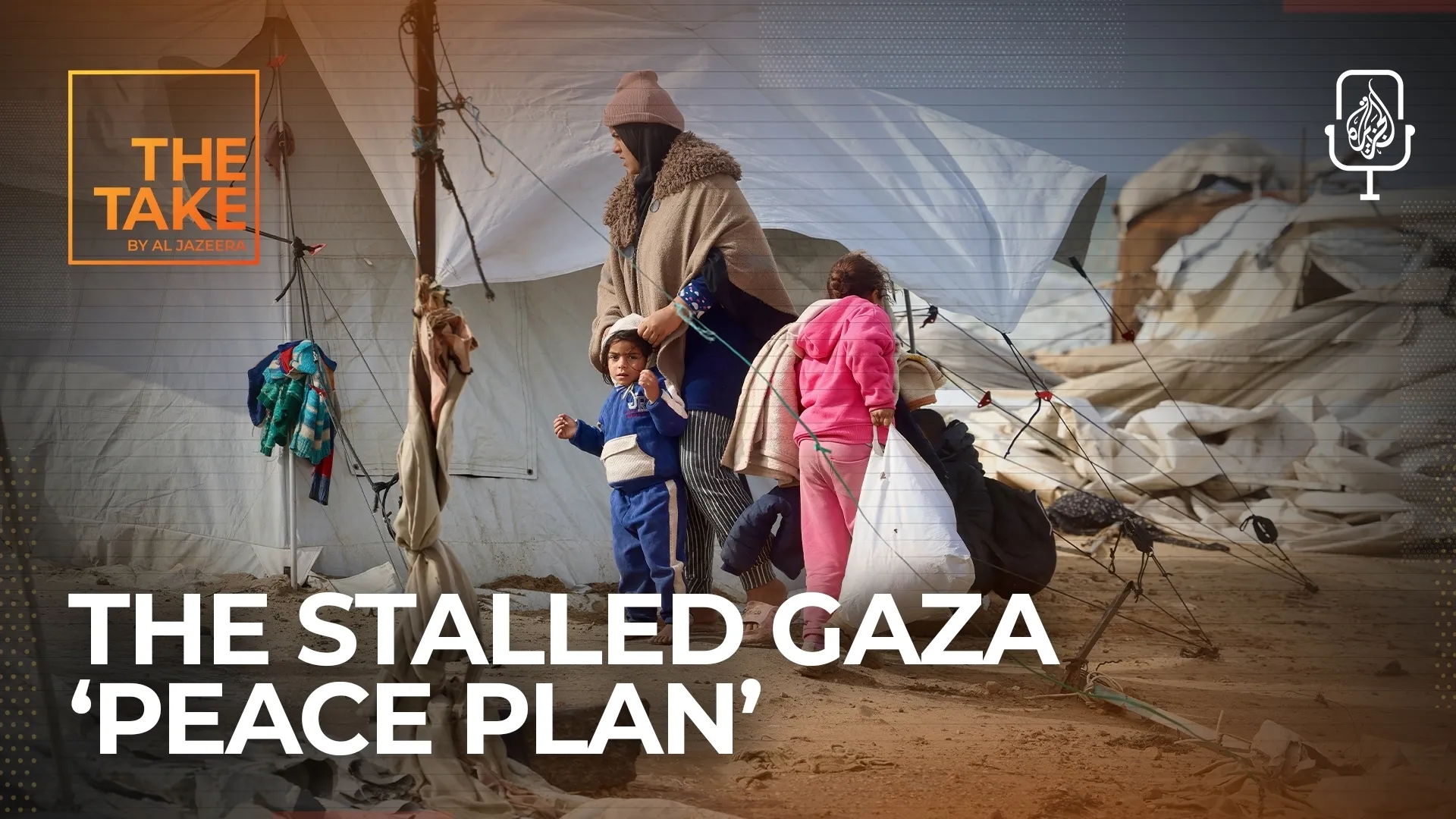
Despite an agreed-upon ‘peace plan’, Israel continues to violate the ceasefire.

In the three months since the United States unveiled a 20-point Gaza plan, more than 400 Palestinians have been killed and thousands injured in near-daily Israeli attacks. Gaza has been fragmented, with Israel controlling more than half its territory. Is this “peace plan” truly about peace?

Source link

Paramount calls $30-per-share for Warner Bros. Discovery ‘superior’

Jan. 8 (UPI) — Officials for the Paramount Skydance Corp. said Thursday their offer of $30 per share to buy Warner Bros. Discovery is “superior” to a competing offer from Netflix.

The Paramount officials made the claim in response to a formal rejection of its offer by WBD officials earlier this week.

“Paramount’s offer is superior to WBD’s existing agreement with Netflix and represents the best path forward for WBD shareholders,” Paramount said in a news release.

“Netflix’s transaction, on the other hand, contains multiple uncertain components and has already decreased in total value,” Paramount said.

“When announced in December, the Netflix transaction offered WBD shareholders $23.25 in cash, $4.50 in Netflix stock and a share in the pending spin-off of Discovery Global,” Paramount added.

“Today, Netflix’s stock price is trading well beneath the low end of its collar, reducing the value offered to WBD shareholders.”

Paramount’s offer includes a guarantee from Larry Ellison, who is the majority shareholder of Paramount’s parent corporation, National Amusements Inc.

WBD officials say the Netflix offer would benefit shareholders the most, CNN reported, but Paramount Skydance might up its offer.

WBD on Wednesday said the Paramount Skydance offer is “inadequate” and “poses materially more risk for WBD and its shareholder” if that offer were to fall through, while the Netflix offer is more certain.

Paramount Skydance Chief Executive Officer David Ellison countered WBD’s comment, saying “our offer clearly provides WDB investors greater value and a more certain, expedited path to completion.”

Paramount and Netflix officials are embroiled in a de facto bidding war for WBD and HBO, which earlier accepted an initial offer from Netflix before Paramount Skydance made its competing offer.

As the impasse continues, Paramount Skydance officials are offering WBD shareholders $30 per share if they reject the WBD board of directors’ advice to stick with the Netflix offer.

Source link

Brazil to send national guard near border with Venezuela | US-Venezuela Tensions News

Tensions rise as Brazil reinforces its northern border following US air strikes in Venezuela and the abduction of its President Nicolas Maduro.

Sao Paulo, Brazil – Brazil plans to send national guard troops to northern Roraima state, which borders Venezuela and has a strong presence of illegal armed groups who traffic drugs and mine illegally on both sides of the international boundary, according to a government decree.

In an official decree published on Thursday, the government authorised an unspecified number of National Public Security Force (FNSP) troops to be sent to Pacaraima, as well as Roraima’s capital, Boa Vista, about 213km (132 miles) from the border.

Recommended Stories

list of 3 itemsend of list

The move comes after the US on Saturday bombed Venezuela and abducted its president, Nicolas Maduro. On Sunday, Brazil temporarily closed its border with Venezuela near Pacaraima.

The decree said the FNSP will support the state’s public security agencies and operate in ways “essential to the preservation of public order and the safety of people and property”.

Brazilian media reported on Wednesday that Venezuela was reinforcing its military presence on the border, and multiple armed groups, including Venezuelan colectivos and Brazilian gangs like the First Capital Command (PCC) and the Red Command (CV), operate in the area.

Gimena Sanchez, Andes director for the Washington Office on Latin America (WOLA), told Al Jazeera that Brazil’s deployment of guard troops to the border is an “appropriate move”. She said that violence caused by Colombian rebel groups active in Venezuela is pushing the population further south towards Brazil.

She added it “makes sense [for Brazil] to reinforce the border”, but noted there still has notbeen a mass displacement of Venezuelans.

Brazil has been a fierce critic of the US attacks. On the social media platform X, its president, Luiz Inacio Lula da Silva, said the US had crossed an “unacceptable line”.

Asked whether President Lula’s comments could provoke Washington, Sanchez said that the US is more concerned with Cuba, Mexico and Colombia at the moment. “Given that context and also that some European countries as well condemned it, I don’t think Brazil is at risk of being the focus of ire of the Trump administration,” she concluded.

Source link

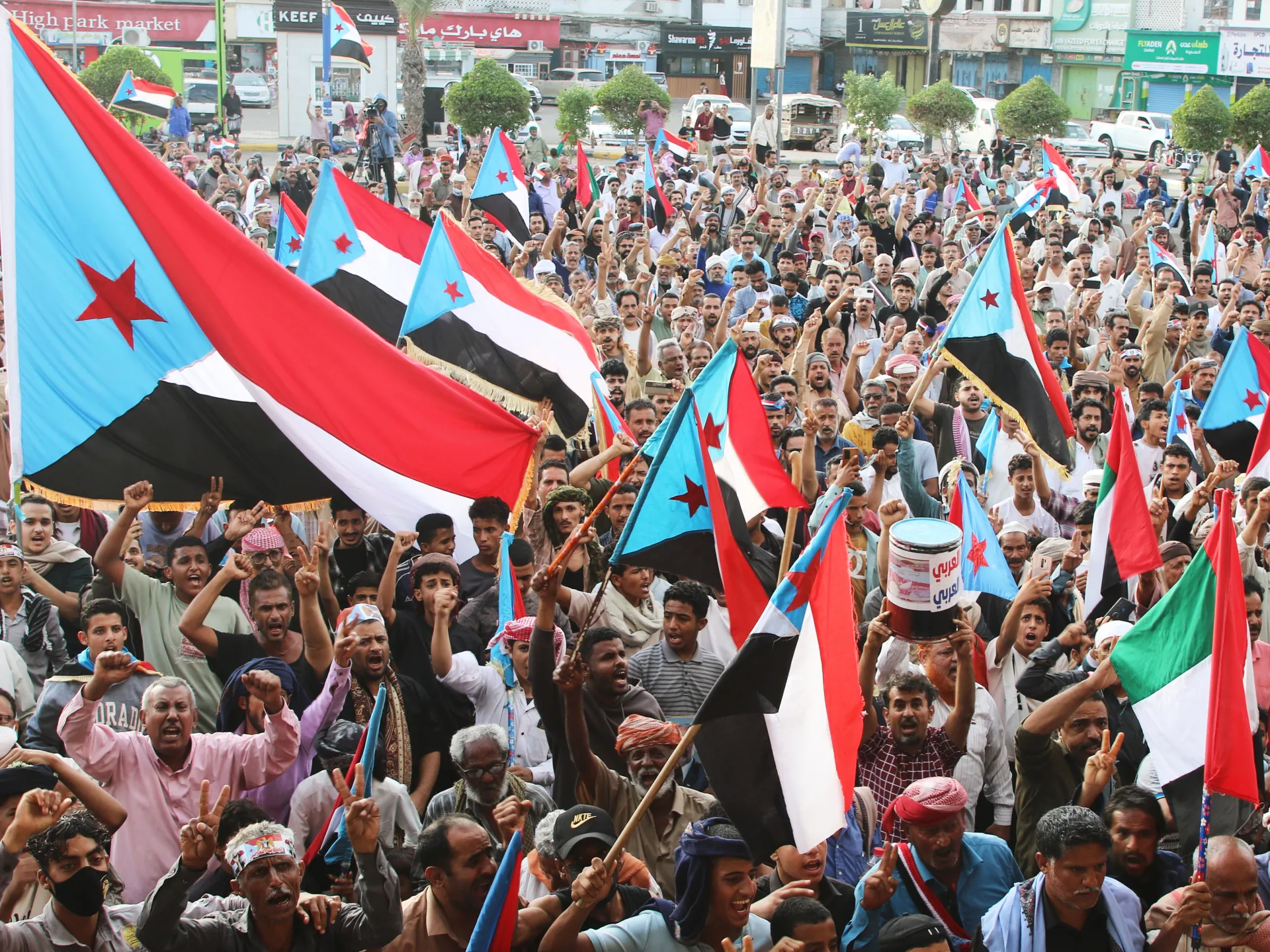
Saudi-led group says separatist leader left Yemen

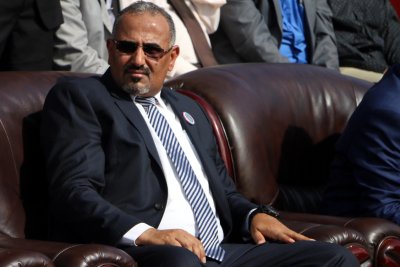
Southern Yemeni leader Aidarous al-Zubaidi fled Yemen with the help of the United Arab Emirates on Tuesday night and did not arrive in Riyadh, Saudi Arabia, on Wednesday for planned peace talks. File Photo by Stringer/EPA

Jan. 8 (UPI) — Separatist leader Aidarous al-Zubaidi exited Yemen with the help of the United Arab Emirates after he was charged with treason and expelled from Yemen’s Presidential Leadership Council.

Al-Zubaidi led the Southern Transitional Council in Yemen, which is supported by the UAE, and a Saudi-led coalition said he left the port city of Aden while aboard a boat on Tuesday night, the BBC reported.

The vessel carried him to the UAE-owned port of Berbera in Somaliland, where he boarded a cargo aircraft that flew him to Mogadishu, Somalia, and then a military airport in Abu Dhabi, according to The Guardian.

Neither the UAE nor the STC commented on the matter, which has raised tensions between officials in Saudi Arabia and the UAE.

The PLC expelled al-Zubaidi on Wednesday and accused him of treason when he did not arrive in the Saudi capital of Riyadh for peace talks.

The STC had sought to have southern Yemen declared an independent state and re-establish a north-south divide within Yemen that existed before the nation was unified in 1990.

The STC has controlled Aden for many years, and its leaders recently vowed to wage a guerrilla campaign while al-Zubaidi and many of his supporters remain safely in the UAE.

The STC, though, is undergoing an internal divide that has weakened it and prompted al-Zubaidi and others to leave Yemen.

Saudi-backed forces have regained territory previously held by the STC.

Tensions between Saudi Arabia and the UAE grew after separatists supported by the UAE captured territory in Yemen that reached the border with Saudi Arabia.

Saudi officials called the action a threat to their national security after earlier opposing Houthi forces in Yemen that are supported by Iran.

The UAE and Saudi Arabia had jointly opposed the Houthis, which gained control of northwestern Yemen in a 2022 cease-fire agreement.

Since then, the Saudis have backed Yemen’s PLC, which is in charge of the internationally recognized government of Yemen, while the UAE supports the separatist STC.

Source link

Trump-Petro call may open path to reset relations with Colombia

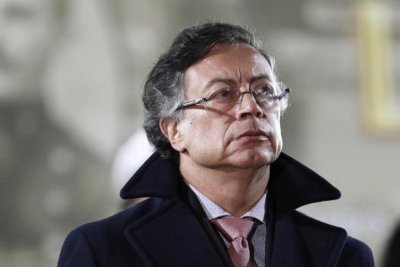
Hours after the call with President Donald Trump, , Colombian President Gustave Petro addressed a rally in Bogotá’s Plaza de Bolívar, convened “in defense of sovereignty,” and acknowledged that he softened a previously tougher attitude toward the American president. Photo by Carlos Ortega/EPA

Jan. 8 (UPI) — U.S. President Donald Trump and Colombian President Gustavo Petro held their first phone call Wednesday since the U.S. leader started his second term — a conversation described as “constructive” that could open a path to rebuilding a historically close relationship shaped by decades of cooperation on security and a fight against drug trafficking.

The more-than-40-minute conversation followed months of verbal escalation and administrative sanctions between the two governments and against a regionally tense backdrop after a U.S. operation led to the Jan. 3 capture in Caracas of Venezuelan President Nicolás Maduro.

Hours after the call, Petro addressed a rally in Bogotá’s Plaza de Bolívar, convened “in defense of sovereignty,” and acknowledged that he softened a previously tougher attitude after speaking with Trump.

“If there is no dialogue, there is war. Colombian history has taught us that,” Petro said, announcing he had requested the restoration of formal communication channels between Colombia’s Foreign Ministry and the U.S. State Department.

During his remarks, the Colombian president said the call covered counternarcotics cooperation and rejected accusations linking him to drug trafficking, stating that for more than two decades, he has confronted criminal organizations and allied politicians, according to Colombian outlet Noticias Caracol.

Petro said he presented Trump with official government figures, including drug seizure levels that he said reached 2,800 metric tons by year’s end, as well as the extradition of hundreds of narcotics leaders.

He also argued that, unlike previous administrations, his government halted the growth of coca crops, which he said doubled under former President Iván Duque, while increasing by no more than 10% during his tenure. Coca leaves are used to make cocaine.

Petro defended voluntary crop substitution over forced eradication, contending the latter increases violence in rural areas.

The Colombian leader added that he briefed Trump on coordination experiences with Venezuela in the fight against drug trafficking in border regions such as Catatumbo, one of the main illicit trafficking corridors, where guerrillas, dissidents and criminal gangs operate.

In a message posted on social media, Trump said it was “a great honor” to speak with Petro and that he looks forward to meeting him “soon.”

In the same message, he said Secretary of State Marco Rubio and Colombia’s foreign minister, Rosa Villavicencio, already are working on arrangements for a White House meeting.

Colombia’s ambassador to the United States, Daniel García-Peña, told Noticias RCN that the communication was facilitated by Republican Sen. Rand Paul, R-Ky., and that Trump extended the invitation to meet in Washington.

The diplomat described the exchange as “an extraordinary call” and said both leaders focused on issues of shared interest.

The conversation took place amid heightened domestic political tension in Colombia, marked by growing polarization and public confrontation on social media, fueled by earlier statements from Trump.

In the preceding days, the U.S. president suggested that an operation similar to the one carried out in Venezuela also “sounds good” for Colombia — rhetoric that drew strong official rebukes in Bogotá.

Petro has been a persistent critic of U.S. operations in the Caribbean Sea and the eastern Pacific, where U.S. forces have intercepted and sunk boats suspected of carrying drugs.

He has questioned that approach for its human cost, citing deaths reported during such operations.

In September, the U.S. government revoked Petro’s visa, and the Treasury Department later placed him, along with people in his inner circle, on the Office of Foreign Assets Control’s sanctions list, known as the “Clinton List,” following accusations made by Trump that the Colombian government rejected and that were not accompanied by public evidence.

Despite recent friction, bilateral ties rest on a solid historical foundation. Colombia has for decades been one of Washington’s main partners in Latin America on security and counternarcotics.

In the early 2000s, cooperation was consolidated under Plan Colombia with an initial U.S.-approved aid package of $1.3 billion in 2000, and in 2022 Washington designated Colombia a “Major Non-NATO Ally,” a status reserved for strategic partners outside the alliance.

Under Petro’s government, that partnership has faced political strain, particularly over differences on counternarcotics policy and bilateral rhetoric in a more volatile regional environment.

Source link

Senate advances resolution to curb Trump’s military authority in Venezuela | News

A resolution that would block US President Donald Trump from taking further military action against Venezuela without congressional authorisation has passed in the Senate by a vote of 52-47.

With the measure receiving a simple majority in Thursday’s vote, it will move ahead to the House.

Days after US forces abducted Venezuelan President Nicolas Maduro in a dramatic military raid in Caracas, senators voted on the latest in a series of war powers measures introduced since the administration ramped up military pressure on the country with attacks on boats off its coast in September.

Republicans have blocked all of the measures, but the last vote was just 49-51, as two senators from Trump’s party joined Democrats in backing a resolution in November. Administration officials had told lawmakers at that time that they did not plan to change the government or conduct strikes on Venezuelan territory.

More to come…

Source link

Senegal’s ‘School of Husbands’ teaches men about gender equality | Gender Equity

NewsFeed

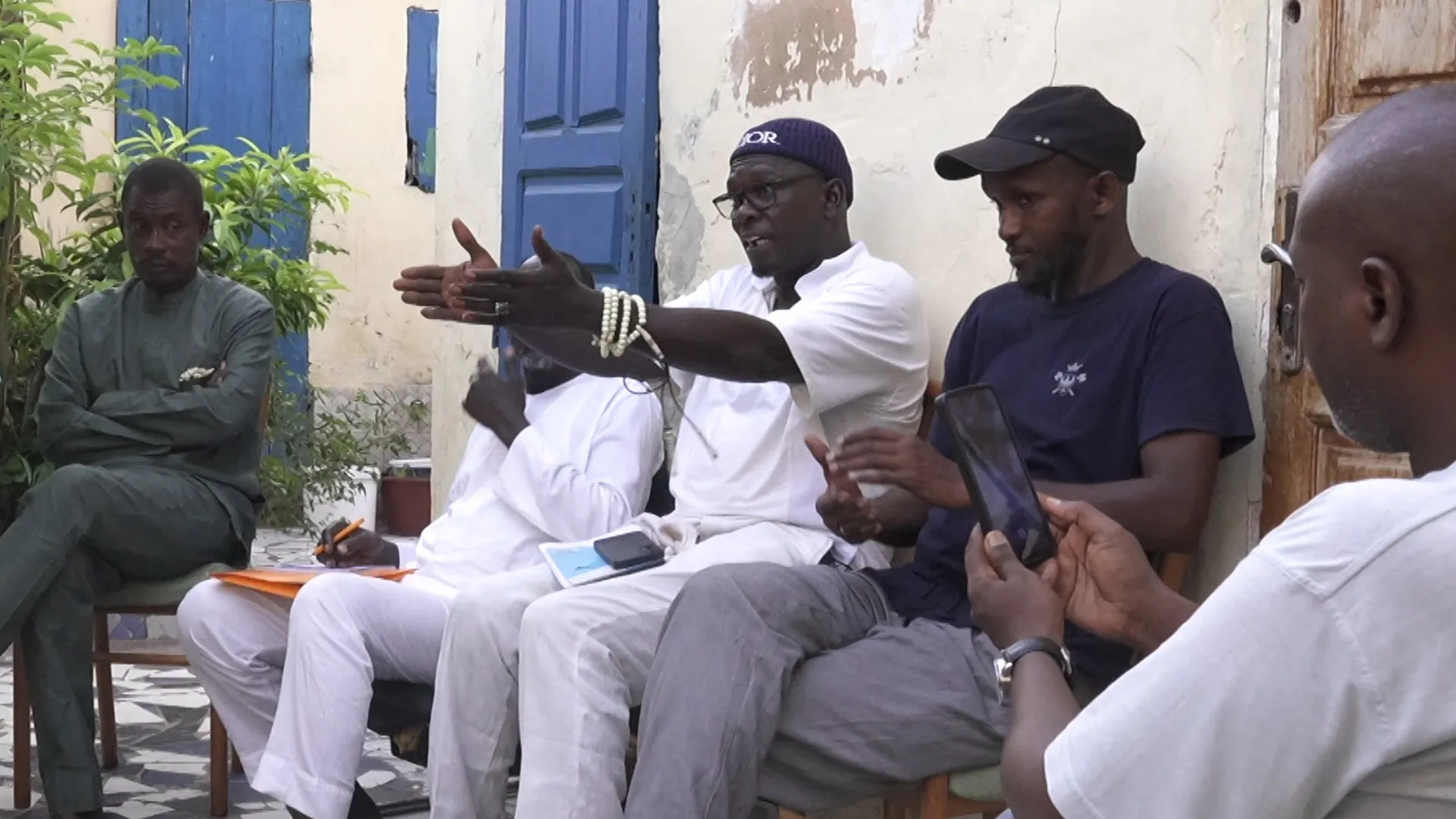
Senegalese men ask all the questions they don’t dare bring up in public at a so-called ‘School of Husbands’ that’s trying to subvert deep-rooted gender bias. Endorsed by the government and backed by the UN, the programme has trained more than 300 men across 20 schools in Senegal. Al Jazeera’s Nicolas Haque visited one school in Pikine.

Source link

House to vote on overriding two Trump vetoes

Jan. 8 (UPI) — The U.S. House will vote Thursday on overriding two vetoes issued by President Donald Trump last week.

Lawmakers in the House are expected to pass the two bills again, based on their overwhelming support when they voted to send them to the president’s desk.

A two-thirds vote in support of the bills is required in the House and Senate to override a presidential veto. Thursday’s vote in the House is the first step toward overriding these vetoes.

The first bill, the “Finish the Arkansas Conduit Act,” would reduce payments for Colorado communities that receive water from a water pipeline tapped into the Pueblo Reservoir. The second, the “Miccosukee Reserved Area Amendments Act,” expands the Miccosukee Tribe’s land in Florida.

Both bills received bipartisan support, including strong support from Republicans in the affected states.

Rep. Lauren Boebert, R-Colo., pushed back on Trump following his veto of the Colorado-focused bill, writing on social media “This isn’t over.”

Boebert, typically a staunch Trump ally, was also one of the first Republicans to sign the petition forcing lawmakers to vote on the release of the Epstein files, despite Trump’s opposition. This was prior to him issuing the veto.

Republican senators in Florida championed the bill to add to Miccosukee Tribe land, including a portion of Everglades National Park. However, Trump has targeted this land to expand the immigrant detention center that opened last year, the Everglades Detention Facility referred to as “Alligator Alcatraz.”

Rep. Carlos Gimenez, R-Fla., introduced the bill to the House.

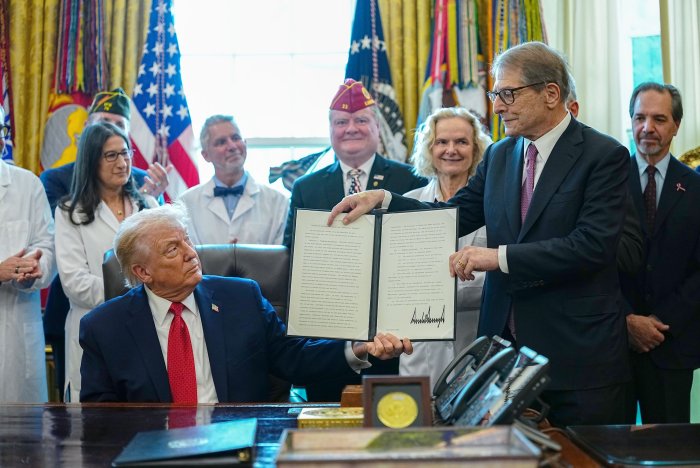
President Donald Trump holds a signed executive order reclassifying marijuana from a schedule I to a schedule III controlled substance in the Oval Office of the White House on Thursday. Photo by Aaron Schwartz/UPI | License Photo

Source link

‘Deliberate torment’: Ukrainians left without heating after Russian attacks | Russia-Ukraine war News

Russia hits Ukraine’s energy infrastructure hard, slams plans for post-ceasefire multinational force in the country.

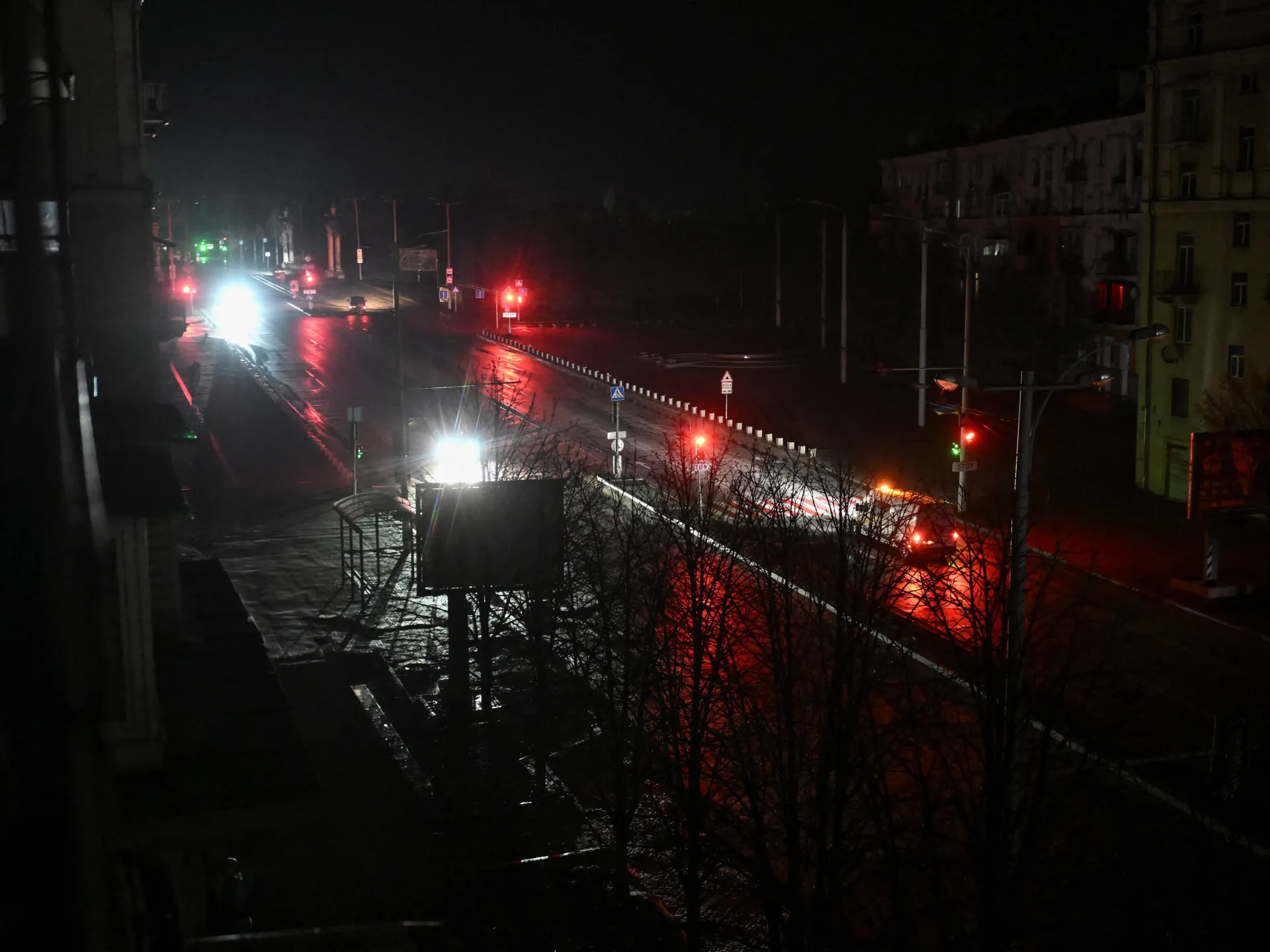
Ukrainian officials are racing to restore power in the southeast after major Russian strikes on critical infrastructure plunged hundreds of thousands into darkness in the depths of winter.

Ukrainian President Volodymyr Zelenskyy said on Thursday that the overnight strikes had aimed to “break” his country, cutting off “electricity, heating and water supplies” in Zaporizhzhia and Dnipropetrovsk, with repair crews still battling to restore services in the latter region.

Recommended Stories

list of 3 itemsend of list

He urged allies to respond to Russia’s “deliberate torment” of Ukraine.

“There is absolutely no military rationale in such strikes on the energy sector and infrastructure that leave people without electricity and heating in wintertime,” he said.

As in previous winters, Russia has intensified its strikes on Ukraine’s energy sites in what Kyiv and its allies call a deliberate strategy to wear down the civilian population, as the fourth anniversary of the Russian invasion looms.

More than 1 million people were affected in the industrialised region of Dnipropetrovsk, according to Ukrainian Deputy Prime Minister Oleksii Kuleba.

Military head Vladyslav Gaivanenko said Dnipropetrovsk’s critical energy infrastructure had been left damaged.

The Ministry of Energy said nearly 800,000 people in the region remained without electricity early on Thursday. Eight mines across the region had faced blackouts, but workers were evacuated.

Mykola Lukashuk, head of the Dnipropetrovsk regional council, said water supplies to the strategic city of Pavlohrad and nearby areas could take up to a day to repair.

Ivan Fedorov, governor of Zaporizhzhia, where power was restored Thursday, said it was the first time in “recent years” that his region had faced a total blackout, but that officials had been quick to respond.

“A difficult night for the region. But ‘light’ always wins,” he wrote on Telegram on Thursday.

Reporting from Kyiv, Al Jazeera’s Audrey MacAlpine said: “It’s not only power, but also the emergency air alarm system that has gone offline. This is an alert system that warns civilians of incoming bomb threats or drone threats.”

MacAlpine said mobile networks in the Zaporizhzhia region were also down. “The regional governor is warning people to limit their mobile phone use as a result of this,” she said.

The Ukrainian air force said on Thursday that Russia attacked with 97 drones, with 70 downed by its air defence system and 27 striking various locations.

‘Axis of war’

Kyiv has responded to the long-running targeting of its energy grid with strikes on Russian oil depots and refineries, seeking to cut off Moscow’s vital energy exports and trigger fuel shortages.

On Thursday, Russia’s Ministry of Foreign Affairs issued a statement that Moscow would consider the presence of any foreign troops in Ukraine “legitimate military targets for the Russian Armed Forces”.

The statement came after Ukraine’s allies said they had agreed on key security guarantees for Kyiv at a summit in Paris this week, with the United Kingdom and France pledging to deploy forces to Ukrainian territory if a ceasefire is reached with Russia.

However, the prospect of a ceasefire remains distant, with Ukraine saying this week that the key issues of territorial control of the eastern Donbas region and the fate of the Russian-occupied Zaporizhzhia nuclear power plant were still unresolved.

Russia said Thursday it had taken the village of Bratske in the Dnipropetrovsk region, where its troops have been advancing for several months, despite Moscow not officially claiming the region.

“The fresh militaristic declarations of the so-called coalition of the willing and the Kyiv regime constitute a veritable ‘axis of war’,” said the Foreign Ministry, labelling the plans for a multinational force in Ukraine as “increasingly dangerous and destructive”.

Source link

Trump says he will seek $1.5T defense budget for 2027

Jan. 8 (UPI) — President Donald Trump said he would ask Congress to approve a massive $500 billion increase in defense spending to fund his “Dream Military,” taking the Pentagon’s 2027 budget to a record $1.5 trillion.

In a post on his Truth Social platform on Wednesday, Trump said “these very troubled and dangerous times” required the 50% hike for the good of the United States and that he had reached his determination after protracted, thorny debate with his cabinet and lawmakers.

“This will allow us to build the ‘Dream Military’ that we have long been entitled to and, more importantly, that will keep us SAFE and SECURE, regardless of foe. If it weren’t for the tremendous numbers being produced by tariffs from other countries, many of which, in the past, have ‘ripped off’ the United States at levels never seen before, I would stay at the $1 trillion dollar number,” he wrote.

The extra funding would pay for new hardware headed by his “Golden Dome” air defense scheme and a new class of guided-missile battleship — items totally out of reach at current budget levels.

Trump said the income that tariffs generated, unthinkable in the past, meant the United States was easily able to afford the $1.5 trillion, while at the same time producing “an unparalleled Military Force,” paying down debt and granting a “substantial dividend” to moderate-income Americans.

That claim was disputed by the Committee for a Responsible Budget, which said tariffs would only generate around half of the estimated $5.8 trillion the higher defense budget would add to the national debt through 2035.

In a post on X, the watchdog said its preliminary calculations showed the spending increase would boost defense spending by $5 trillion, plus $800 billion in interest, while revenue flowing into the Treasury from higher tariffs over the same period would only run $2.5 trillion, or about $3 trillion with interest.

Tariffs are import levies paid by U.S. companies when they bring in goods and materials from other countries, a cost they either absorb or pass onto to their customers in the form of high prices. Overseas companies may also opt to absorb tariff costs to preserve their market in the United States.

Despite Congress having yet to pass a defense spending bill for the $1 trillion Trump is seeking for FY26, was hailed by some Republican lawmakers and Defense Secretary Pete Hegseth who described it as “PEACE through STRENGTH.”

“President Trump is rebuilding our military — larger, stronger and more lethal than ever before,” Hegseth wrote in a post on X.

Raising the budget by such a significant amount will be tough, despite Trump convincing Congress to pass a reconciliation bill topping up this year’s budget by $150 billion, spread over five years, and support from some Republicans pushing for defense spending to rise to 5% of GDP, up from its current 3.5% level.

Rep. Don Bacon, R-Neb., an advocate of higher defense spending, called it “a good news story.”

“We think we need a permanent 4 % or better. That’s what it’s gonna take to build our Navy, our Air Force, our ICBMs, our bombers, and take care of our troops,” said the retired U.S. Air Force Brigadier-General.

Source link

Analysis: Could the Venezuela model be applied to Iran?

The capture of Venezuelan President Nicolas Maduro was a blow for Iran and its main proxy, Lebanon’s Hezbollah, potentially depriving the group of an ally and a foothold, or safe haven, in Latin America. File Photo by Wael Hamzeh/EPA

BEIRUT, Lebanon, Jan. 8 (UPI) — The capture of Venezuelan President Nicolas Maduro in a dramatic military operation ordered by U.S. President Donald Trump represents another blow — a new red flag — for Iran and its main proxy, Lebanon’s Hezbollah, potentially depriving the group of an ally and a foothold, or safe haven, in Latin America.

The predawn raid in Caracas not only sparked renewed U.S. accusations that both entities were involved in drug and arms trafficking, money laundering and evading sanctions, but also raised questions about whether the Venezuela model could be applied to Iran.

“No more drug trafficking, no more Iran‑Hezbollah presence there and no more using the oil industry to enrich all our adversaries around the world,” U.S. Secretary of State Marco Rubio said in summarizing his country’s. goals for Venezuela and its allies.

Venezuela and Iran, which developed deep political, diplomatic, economic and military cooperation under Maduro and his predecessor, Hugo Chavez, as part of an “Axis of Unity” against U.S. influence, have suffered from U.S.-imposed crippling sanctions that have intensified their economic crises.

In June 2022, Iran and Venezuela signed a 20‑year cooperation agreement intended to strengthen their alliance and circumvent U.S. sanctions by expanding collaboration in areas such as energy, oil, petrochemicals, science and technology, and other sectors.

The accord envisaged Iranian assistance with Venezuela’s oil industry and broader technical cooperation, and since then, the two countries have also deepened military cooperation, including links involving drone technology.

Long-standing ties between Iran and Venezuela created conditions in which Hezbollah — through networks embedded in Venezuela and parts of the diaspora — was reportedly able to establish financial and logistical operations in the country.

According to U.S. congressional testimony in October, these activities included fundraising, money transfers, smuggling and using Venezuelan‑issued travel documents.

The Maduro government denied these allegations, but Washington sanctioned Venezuelan officials and businessmen accused of assisting Hezbollah operatives.

Such accusations against Hezbollah, whose military capabilities were significantly degraded during the war with Israel, have been described by analysts in Lebanon as exaggerated and unsupported by clear evidence.

Mohanad Hage Ali, an analyst and fellow at the Beirut-based Carnegie Middle East Center, said Venezuela offered “a window of opportunity” for Hezbollah to be active in a state where the regime is friendly to the group and sympathetic to its ideology. But many claims describing a vital Hezbollah-Venezuela relationship exceeded what publicly available evidence supports.

“This is because what we have seen are instances of involvement by individuals who have relationships with Hezbollah, whether relatives or others, and these relationships and the roles they play seem small compared to Hezbollah’s budgetary needs in Lebanon,” Hage Ali told UPI.

Undoubtedly, he said, Hezbollah has some form of presence, representation, financial and economic activities, or plays a role in drug trafficking, but these are “limited,” as is its ability to expand abroad.

With the militant group relying more on direct funding from Iran, Hage Ali said Hezbollah would be affected in the event of a regime change in Caracas, but added, “I fail to see Venezuela as a crucial part of the overall puzzle of Hezbollah financing.”

It remains to be seen whether Trump can translate or invest the success in capturing Maduro into political gains.

It would not be easy to contain a country such as Venezuela simply by abducting its president, retired Lebanese Brig. Gen. Hassan Jouni argued.

“Would Trump be able to control and subjugate the Venezuelan regime? Would that require boots on the ground– a land invasion?” Jouni asked, warning that such a move would entail significant attrition and deep involvement for the United States, making the operation highly risky.

Snatching Maduro from his home in Caracas and charging him with drug trafficking and terrorism sent a clear message from Trump to countries around the world — especially those opposing his policies, chief among them Iran: Cooperate or face the use of force.

Jouni said the message capped the Dec, 29 meeting between Trump and Israeli Prime Minister Benjamin Netanyahu, with threats that Iran would not be allowed to restart its nuclear program or rebuild its ballistic missile industry.

Could the Venezuela scenario be used for Iran? Could Trump do in Tehran what he did in Caracas — even going so far as to reach and capture Iran’s Supreme leader, Ayatollah Ali Khamenei?

Jouni ruled out such a possibility, explaining that Iran differs from Venezuela because of the nature of its regime, its geographical location and the vast size of the country. Moreover, Khamenei would be protected by an “exceptional protection system.”

“Would Russia and China accept the overthrow of the Iranian regime and its replacement with a pro-U.S. one?” Jouni asked during an interview with UPI, suggesting “under-the-table” coordination with Russia on Ukraine and with China on Taiwan for possible exchanges.

Moreover, Iran would not stand idle and would strike back at Israel — as it did during the 12-day war last June, causing considerable damage — and would likely target U.S. bases across the region.

Kassem Kassir, a political analyst who specializes in Islamic movements and is close to Hezbollah, said Iran is being targeted, whether through economic pressures and sanctions affecting the internal situation, or militarily.

“Today, Tehran is ready for all possibilities, working to contain popular movements and street protests by addressing economic problems,” Kassir told UPI.

With Hezbollah no longer constituting a threat to Israel, a war against Iran, which would require Trump’s approval and his green light for Israel, might not change much, given the fighting round in June, according to Jouni.

A possible way out could be a deal — modeled on the recently forced arrangement with Venezuela regarding its oil, under which Caracas agreed to export up to $2 billion worth of crude to the United States — through which Trump could secure substantial investments in Iran in exchange for eased tensions or dropping threats of regime change.

Whether all these new U.S. interventions could bring stability remains uncertain and doubtful, especially given the chaos unleashed after the 2003 Iraq invasion, when disbanding the army and rebuilding the state from scratch backfired both in the country and across the region, Hage Ali noted.

Source link

Philippine leadership puts ASEAN at center of South China Sea rivalry

The U.S. Navy’s Nimitz-class nuclear-powered aircraft carrier USS George Washington is shown anchored in the waters of Manila Bay, Philippines, in July. The ship was making a a scheduled port visit after its recent patrol in the disputed South China Sea. File Photo by Francis R. Malasig/EPA

Jan. 8 (UPI) — As the Philippines takes over the rotating Association of Southeast Asian Nations chair in 2026, it will do so at a moment of sharpened maritime tension and narrowing diplomatic patience in the South China Sea.

Manila has made clear it intends to prioritize two parallel initiatives that reflect the region’s evolving reality: renewed efforts to finalize a legally binding code of conduct with China and a dramatic expansion of U.S.-Philippines military cooperation, with more than 500 joint activities planned for the year.

Taken together, the dual-track strategy underscores how Southeast Asia’s maritime order is being reshaped. Diplomacy remains essential, but it is increasingly paired with deterrence and preparedness, reflecting a regional judgment that rules alone are insufficient without the capacity to defend them.

The Philippines is moving to fast-track a binding code of conduct after decades of inconclusive talks, using its ASEAN chairmanship to push for enforceable rules rather than voluntary guidelines.

“The Philippines will push for a binding COC at the same time continue to strengthen defense ties with the United States, as well as other partners like Japan, Australia and others,” said Lucio Pitlo III, a foreign affairs and security analyst at Asia-Pacific Pathways for Progress Foundation.

Yet, the limits of ASEAN consensus diplomacy remain evident. Member states hold differing threat perceptions and economic dependencies, while China has resisted provisions that could constrain its operational flexibility or legitimize external involvement.

Analysts have argued that, with Manila chairing, a comprehensive agreement is unlikely to be concluded in 2026 given the temperature of China-Philippines tensions – though the chair can still steer narrower confidence-building steps and agenda-setting wins.

“I would not expect a binding code of conduct in the South China Sea to materialize regardless of who is ASEAN Chair,” said Hunter Marston, senior fellow at the Washington, D.C.-based Center for Strategic & International Studies.

As ASEAN chair in 2026, Manila is expected to press for a more active multilateral role in managing South China Sea disputes, seeking to use regional dialogue to dampen tensions when incidents erupt.

Philippine officials, however, are also likely to lean more heavily on bilateral channels with Beijing to manage flashpoints in real time. Chief among them is the Philippines-China Bilateral Consultative Mechanism, a forum designed to contain maritime flare-ups before they escalate into broader diplomatic or security crises, reflecting Manila’s effort to balance regional solidarity with the practical need for direct engagement with China.

Even so, chairmanship confers agenda-setting power. Manila can steer negotiations toward narrower but meaningful gains, such as clearer incident-avoidance protocols, standardized communications between maritime forces and provisions that explicitly address coast guards and maritime militias, which are now central actors in most confrontations.

In that sense, 2026 may be less about delivering a final document than about clarifying whether a credible code of conduct remains politically attainable.

“The progress on CoC isn’t necessarily hinged heavily on who holds the ASEAN chairmanship, though in some ways the ASEAN member state holding onto this position might influence or shape the direction it takes,” said Colin Koh, senior fellow of the S. Rajaratnam School of International Studies.

That diplomatic push unfolds against a backdrop of persistent friction at sea. Confrontations near Second Thomas Shoal, Sabina Shoal and other contested features have increasingly involved water cannons, ramming incidents and aggressive maneuvering, often targeting Philippine resupply missions and civilian fishing vessels.

Each episode reinforces Manila’s view that restraint has not been reciprocated, and that negotiations conducted without leverage risk entrenching, rather than moderating, coercive behavior.

This is where the second pillar of the Philippines’ 2026 strategy becomes decisive. Plans for more than 500 U.S.-Philippines joint military activities represent a significant escalation in tempo and scope, even in the absence of a single marquee exercise.

The schedule encompasses everything from staff-level planning and logistics coordination to maritime domain awareness, coastal defense drills and repeated operational rehearsals across air, land and sea domains.

“Having the Philippines as chairman, particularly under the U.S. friendly Marcos administration, is useful to the U.S. agenda in the region,” said Elizabeth Larus, adjunct senior fellow at the Pacific Forum.

She also underscored the critical importance of Trump-Marcos security accord in preventing China from displacing the United States as the dominant maritime power in the region.

The scale of this cooperation carries implications that extend well beyond symbolism. A Philippine maritime force that trains continuously with U.S. counterparts becomes harder to coerce at sea, raising the operational and political costs of gray-zone pressure in contested waters. In a region where presence, response time and narrative control often determine outcomes, that shift matters.

“China is likely to emphasize the Philippine defense cooperation with the United States over a Philippine-led ASEAN agenda that emphasizes legal norms and [United Nations Convention on the Law of the Sea],” said Khang Vu, a visiting scholar in political science at Boston College.

The volume of combined activities also accelerates alliance integration in less visible but more consequential ways. Regular staff talks, shared surveillance practices and logistics planning embed interoperability as a standing condition rather than a crisis response.

For regional observers, the message is unmistakable: U.S.-Philippines security cooperation is becoming structural, not episodic, and is likely to endure regardless of short-term political fluctuations.

By pairing expanded readiness with a renewed push for a binding code of conduct, Manila also is reframing diplomacy. The Philippines is signaling to ASEAN partners that engagement with China should proceed from a position of resilience, not restraint alone.

In practice, this reflects a broader regional reassessment that negotiations over the South China Sea will only carry weight if backed by credible capacity to resist coercion when rules are tested.

For ASEAN, the Philippine chairmanship will test the concept of “ASEAN centrality” under far less forgiving conditions than in previous decades.

While ASEAN remains indispensable as a diplomatic convener, the region’s most consequential security dynamics increasingly run through alliances and mini-lateral arrangements rather than consensus forums. The challenge for Manila will be to preserve ASEAN’s relevance without pretending that diplomacy alone can manage today’s risks.

Maritime relations in 2026 will be defined less by stability than by tempo, with a surge in patrols, surveillance flights and military exercises raising the risk of miscalculation and making clear rules of engagement and crisis hotlines more critical than ever.

At the same time, legitimacy at sea is becoming as important as capability. Each encounter is now fought on two fronts: on the water and in the information space.

Competing claims of lawful defense versus provocation, sovereign rights versus external interference, shape international perceptions and diplomatic alignments. How states behave during routine encounters may ultimately matter as much as formal agreements signed at the negotiating table.

The Philippines’ 2026 approach signals that the era of quiet accommodation in the South China Sea is over, with Manila pressing for binding rules while bolstering its military posture.

Whether that strategy stabilizes the region will depend on whether China and other regional actors are willing to translate pledges of restraint into behavior at sea, but the Philippine chairmanship already is set to shape how maritime order is contested in the years ahead.
Source link

Sabalenka hits out at tennis chiefs over ‘insane’ tournament scheduling | Tennis News

The world No 1 expects to ‌skip events again this year and face likely sanctions rather than put her health at risk.

World number one Aryna Sabalenka has accused tennis authorities of “following their interests” and failing to put player welfare first over what she called an “insane” tennis season.

The Belarusian expects to ‌skip events this year rather than put her health at risk over ‍the course of ‍the season, even though she knows she is likely to be sanctioned by the WTA Tour for doing so, the world number one said on Thursday.

Top players are obliged to compete in all four Grand Slams, 10 WTA 1000 ⁠tournaments and six WTA 500 events under WTA rules, with the punishment for missing them ​ranging from rankings points deductions to fines.

In 2025, Sabalenka competed in ‍just three WTA 500 events – Brisbane, Stuttgart and Berlin – making her one of several high-ranked players, including world number two Iga Swiatek, to be docked ranking points.

Asked if she would change ‍her plans for ⁠2026, the four-time Grand Slam champion told reporters: “The season is definitely insane, and that’s not good for all of us, as you see so many players getting injured …

“The rules are quite tricky with mandatory events, but I’m still skipping a couple of events in order to protect my body, because I struggled a lot last season,” she said after beating Sorana Cirstea at the Brisbane ​International.

“Even though the results were really consistent, some of the ‌tournaments I had been playing completely sick or I’d been really exhausted from overplaying. This season, we will try to manage it a little bit better, even though they are going to fine me by ‌the end of the season.

“But it’s tricky to do that. You cannot skip 1000 events. It’s really tricky, and I ‌think that’s insane what they do. I think they ⁠just follow their interests, but they’re not focusing on protecting all of us.”

The number of events in the tennis calendar has been a frequent complaint in recent months among the sport’s biggest names.

Men’s world number one Carlos Alcaraz is another to have voiced concern about the amount of tennis he plays, although he has also signed up to feature in lucrative exhibition matches.

He faces great rival Jannik Sinner in one such event on Saturday in South Korea, barely a week before the Australian Open.

The men’s and women’s circuits have faced criticism due to their 11-month seasons, and both tours came under new scrutiny during the “Asian swing” towards ‌the end of last year, with injuries piling up.

Source link

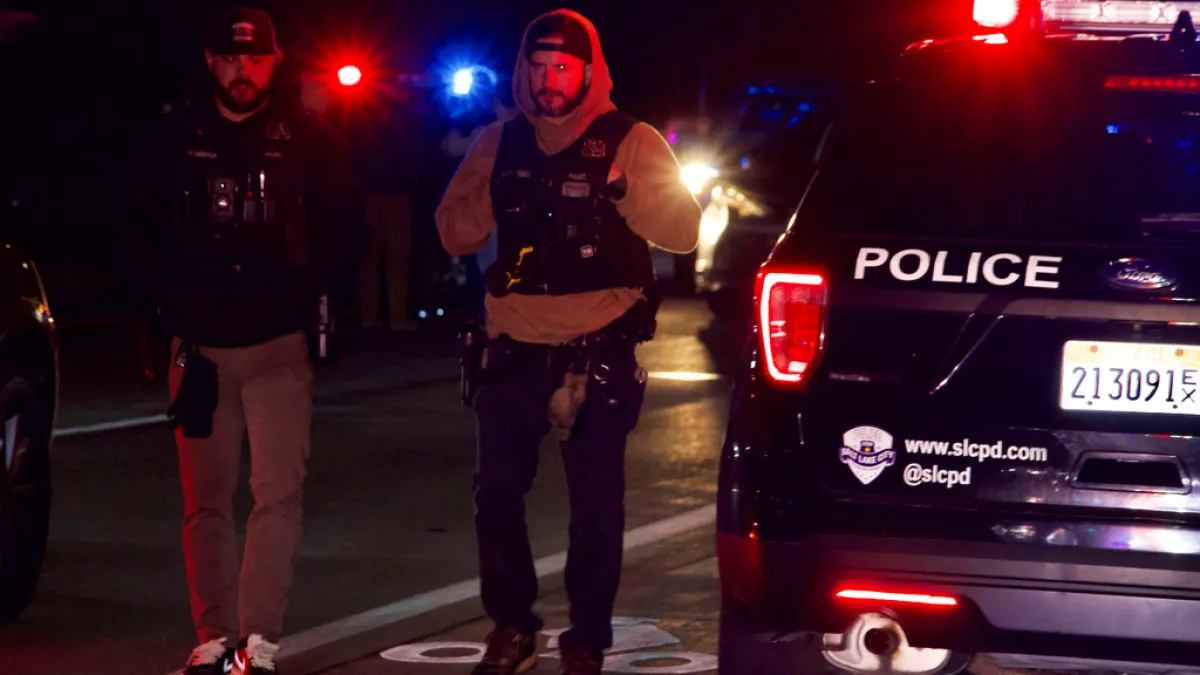
2 dead, 6 wounded in a shooting outside Salt Lake City church

Jan. 8 (UPI) — Salt Lake City police are searching early Thursday for suspects after two people were killed and six others wounded in a shooting outside a church where a funeral was taking place Wednesday evening.

No suspects are in custody, and authorities said they are following leads and won’t stop until those responsible have been apprehended.

“Our officers are working hard, and we will work until we bring these individuals to justice,” Salt Lake City Police Chief Brian Redd told reporters during a press conference.

“We are confident we will bring these individuals to justice.”

Authorities said that the shooting occurred outside The Church of Jesus Christ of Latter-day Saints following an altercation in the parking lot on Redwood Road.

Police are investigating if there were more than one shooter involved, and Redd said they do not believe that the shooting targeted the church.

“It’s probably too early to say it’s gang related, but yes, our gang detectives are here and we are definitely looking at that angle,” he said.

Of the wounded, three were in critical condition, according to a Salt Lake City Police Department statement on X.

Dozens of people were attending the funeral when the shots rang out, and they are currently being interviewed, Redd said.

Salt Lake City Mayor Erin Mendenhall said the shooting should never have happened.

“This should never have happened at a place of worship. It should not have happened at a celebration of life that was occurring inside of the church tonight,” she said.

“Our condolences continue to grow and we know that this impacts not only those victims and their families, the community that was at the church, but the entire community here in Salt Lake City on the West Side.

A spokesman for The Church of Jesus Christ of Latter-day Saints said in a statement to local media that they were aware of the shooting and were cooperating with law enforcement.

According to The Gun Violence Archive, which tallies gun violence in the United States, the incident was the 9th mass shooting to take place in the country so far this year.

There were 406 mass shootings, which involved four or more victims, for all of 2025.


Source link

Two people killed in shooting outside Mormon church in Salt Lake City, US | Gun Violence News

As manhunt is under way, police do not believe attack was random but neither was it likely to be attack on religion.

Two people have been killed and several injured in a shooting in the car park of a Mormon church in the Utah capital of Salt Lake City in the United States.

Police said the shooting occurred on Wednesday in the car park of a meetinghouse of The Church of Jesus Christ of Latter-day Saints, where dozens of people were attending a funeral.

Recommended Stories

list of 3 itemsend of list

Three of the six injured victims are in critical condition.

Police confirmed that no suspect was in custody and have launched a manhunt, with the FBI reportedly offering assistance.

While police said they did not believe the shooting was random, Salt Lake City Police Chief Brian Redd told The Associated Press news agency it did not appear to be a targeted attack against a religion.

Church spokesman Glen Mills told reporters there had been signs of a fracas outside the church, where the funeral was taking place.

“Out in the parking lot, there was some sort of altercation took [place] and that’s when shots were fired,” he said.

About 100 law enforcement vehicles were at the scene in the aftermath, with helicopters flying overhead.

“As soon as I came over, I see someone on the ground… People are attending to him and crying and arguing,” said Brennan McIntire, a local man who spoke to AP.

Salt Lake City Mayor Erin Mendenhall said, “This should never have happened outside a place of worship. This should never have happened outside a celebration of life.”

The church, which has headquarters in Salt Lake City, is cooperating with law enforcement.

About half of Utah’s 3.5 million residents are members of the faith. Churches like the one where the shooting occurred can be found in towns throughout the city and state.

The faith has been on heightened alert since four people were killed when a former Marine opened fire in a Michigan church last month and set it ablaze.

The FBI found that he was motivated by “anti-religious beliefs” against the church.

About 82 percent of mass killings in the US in 2025 involved a firearm, according to a database maintained by AP alongside USA Today and Northeastern University.

The shooting in Salt Lake City occurred amid growing unrest in the US, after a federal officer with Immigration and Customs Enforcement (ICE) fatally shot a woman in Minneapolis amid ongoing protests against an immigration crackdown.

Source link

From ramyeon to haenyeo, eight Korean words enter Oxford English Dictionary

SEOUL, Jan. 8 (UPI) — The Oxford English Dictionary has added eight words drawn from South Korean culture in its latest quarterly update, reflecting the continued influence of Korean food, customs and everyday life on global English usage.

In a press release issued Wednesday, Oxford Languages unveiled the newly added words, highlighting how Korean-language terms have entered English alongside the worldwide popularity of K-culture.

Among the additions are ajumma, a term commonly used to refer to a middle-aged or older woman; sunbae, meaning a senior colleague or mentor; jjimjilbang, a large communal bathhouse offering saunas, lounges and sleeping areas; and officetel, a blend of “office” and “hotel” describing mixed-use residential buildings common in South Korean cities.

Food-related entries include ramyeon, Korea’s version of instant noodles, and bingsu, a shaved-ice dessert topped with ingredients such as red beans, fruit or condensed milk.

The English phrase Korean barbecue was also added for the first time. While specific terms for grilled meat dishes such as samgyeopsal and galbi were already included in the dictionary, this year’s update marks the first formal appearance of the broader English term. Its earliest citation dates to a 1938 article in the Honolulu Star-Bulletin.

Another new entry, haenyeo, refers to the traditional female free divers associated with Jeju Island, whose seafood-harvesting practices have drawn international attention for their cultural significance.

The update continues a recent pattern of Korean-origin words entering the dictionary. Seven Korean words were also added in 2025, following a larger group of 26 terms introduced in September 2021 amid a period of heightened global interest in Korean popular culture.

In an analysis cited by Oxford Languages, scholar Simon Barnes-Sadler examined how Korean-origin words have entered the dictionary in relation to the rise of hallyu, or the Korean Wave.

“While words of Korean origin have been attested in English texts stretching back to the nineteenth century, a large number of such words have been added since 1997, the year to which the beginning of the Korean Wave is conventionally attributed,” Barnes-Sadler wrote.

He added that many Korean-origin words still occur relatively infrequently in the English-language sources tracked by the OED, raising questions about how quickly their emergence will translate into sustained everyday usage.

First published in 1884, the Oxford English Dictionary is widely regarded as the authoritative record of the English language. It contains more than 500,000 words and phrases from past and present English usage and traces their development through millions of quotations drawn from books, academic sources, news reports and social media.

Source link

After STC hubris, dream of South Yemen looks further away | Conflict News

Landing at Aden International Airport on a trip in late 2017, the plane had two flags visible as it moved along the tarmac. One was the flag of the former South Yemen, resurrected as a symbol of Yemen’s secessionist southern movement. The other was of the United Arab Emirates (UAE), the movement’s primary backer.

Passing one checkpoint after another on the road out of Aden, the flag of the actual Republic of Yemen wasn’t visible, and only made an appearance towards the city of Taiz, to the north.

Recommended Stories

list of 3 itemsend of list

The UAE-backed secessionist Southern Transitional Council (STC) had been formed a few months earlier, in May 2017. Headed by Aidarous al-Zubaidi, it made clear that its ultimate goal was separation from the rest of Yemen, even if it found itself on the same side as the Yemeni government in the fight against the Houthi rebels occupying the Yemeni capital Sanaa.

By 2019, the STC and the Yemeni government fought in Aden and other areas of the south. The STC emerged on top, forcing the government out of Aden – the former capital of South Yemen and the city the government had designated as a temporary capital during the conflict against the Houthis.

Momentum continued to be on the STC’s side for the next few years, as it seized more territory. Even after al-Zubaidi joined the Saudi-backed Presidential Leadership Council (PLC) as a vice-president, officially making him a member of the Yemeni government, it was clear that on the ground, the STC had de facto control over much of the former South Yemen.

Al-Zubaidi must have felt close to achieving his goals when he found himself at the United Nations General Assembly in September. Speaking to the international media, he said that the “best solution for Yemen” was a “two-state solution”.

But then he went too far. His move last month to push STC forces into the eastern governorates of Hadhramout and al-Mahra, effectively securing control over all of the former South Yemen, was a red line for Saudi Arabia.

The STC leader is on the run, forces now loyal to the Yemeni government are in control of the majority of southern Yemen, and many of his allies have changed sides.

The UAE, meanwhile, appears to have accepted that Saudi Arabia is the primary foreign actor in Yemen, and has taken a step back – for now.

What now for South Yemen?

In a matter of weeks, secession has gone from a de facto reality to seemingly further away than it has been since the early days of Yemen’s war in the mid-2010s.

It was only last Friday that al-Zubaidi announced a two-year transitional period before a referendum on the independence of southern Yemen and the declaration of the state of “South Arabia”.

A week later, the STC looked divided – with Abdul Rahman al-Mahrami, a PLC member also known as Abu Zaraa, now in Riyadh, appearing to position himself in the Saudi camp.

The Yemeni government, with Saudi support, is attempting to reorganise the anti-Houthi military forces, with the aim of moving them away from being a divided band of groups under different commands to a force unified under the umbrella of the government.

Nods to the “southern issue” – the disenfranchisement of southern Yemen since the country’s brief 1994 north-south civil war – continues, with plans for a conference on the issue in Riyadh.

But the ultimate goal of hardline southerners – secession – is off the table under current circumstances, with consensus instead forming around the idea of a federal republic allowing for strong regional representation.

The Yemeni government also sees an opportunity to now use the momentum gained in the recent successes against the STC to advance against the Houthis, who control Yemen’s populous northwest – even if that remains an ambitious goal.

Of course, this is Yemen, and the winds can always change once again.

Support for the secession of southern Yemen remains strong in governorates like Al-Dhale, where al-Zubaidi is from. Hardcore STC supporters, those who have not been coopted, will be unlikely to simply give up, sowing the seeds for a potential insurgency.

And President Rashad al-Alimi will have to show that his power does not simply rest on Saudi Arabia’s military strength. One of the major tests of his legitimacy is whether he will be able to return with his government to Aden, and finally be based in Yemen for the first time in years.

That will be the ultimate challenge for the Yemeni government. Is it truly capable of being in control once again? Or are current events just a temporary setback for the STC and the cause of southern secession, waiting for the opportunity to rise up again?

Source link

Trump backs bill to sanction China, India over Russian oil, US senator says | Russia-Ukraine war News

Trump has ‘greenlit’ bipartisan push to sanction countries that buy Russian energy exports, Lindsey Graham says.

United States President Donald Trump has backed a bill to impose sanctions on countries that buy Russian oil, including China and India, an influential Republican senator has said.

Lindsey Graham, a senator for the US state of South Carolina, said on Wednesday that Trump had “greenlit” the bipartisan bill following a “very productive” meeting.

Recommended Stories

list of 4 itemsend of list

Graham’s Sanctioning Russia Act, drafted with Democrat Richard Blumenthal, would give Trump the authority to impose a tariff of up to 500 percent on imports from countries doing business with Russia’s energy sector.

“This bill will allow President Trump to punish those countries who buy cheap Russian oil fueling Putin’s war machine,” Graham said in a statement, referring to Russian President Vladimir Putin.

““This bill would give President Trump tremendous leverage against countries like China, India and Brazil to incentivize them to stop buying the cheap Russian oil that provides the financing for Putin’s bloodbath against Ukraine.”

China and Russia continue to be major buyers of Russia’s oil despite US and European sanctions imposed on the Russian energy sector in response to Moscow’s war in Ukraine.

China bought nearly half of Russia’s crude oil exports in November, while India took about 38 percent of exports, according to an analysis by the Centre for Research on Energy and Clean Air. Brazil dramatically ramped up its purchase of subsidised Russian oil after the invasion of Ukraine in 2022, but those imports have fallen substantially in recent months.

The latest US push to increase pressure on Russia comes as Moscow and Kyiv are engaged in Washington-brokered negotiations to bring an end to the nearly four-year war.

On Tuesday, the Trump administration for the first time gave its backing to European proposals for binding security guarantees for Ukraine, including post-war truce monitoring and a European-led multinational force.

Russia, which has repeatedly said that it will not accept any deployment of NATO member countries’ soldiers in Ukraine, has yet to indicate that it would support such security measures.

In his statement on his bill, Graham said the legislation was timely in light of the current situation in Ukraine.

“This will be well-timed, as Ukraine is making concessions for peace and Putin is all talk, continuing to kill the innocent,” he said.

Source link