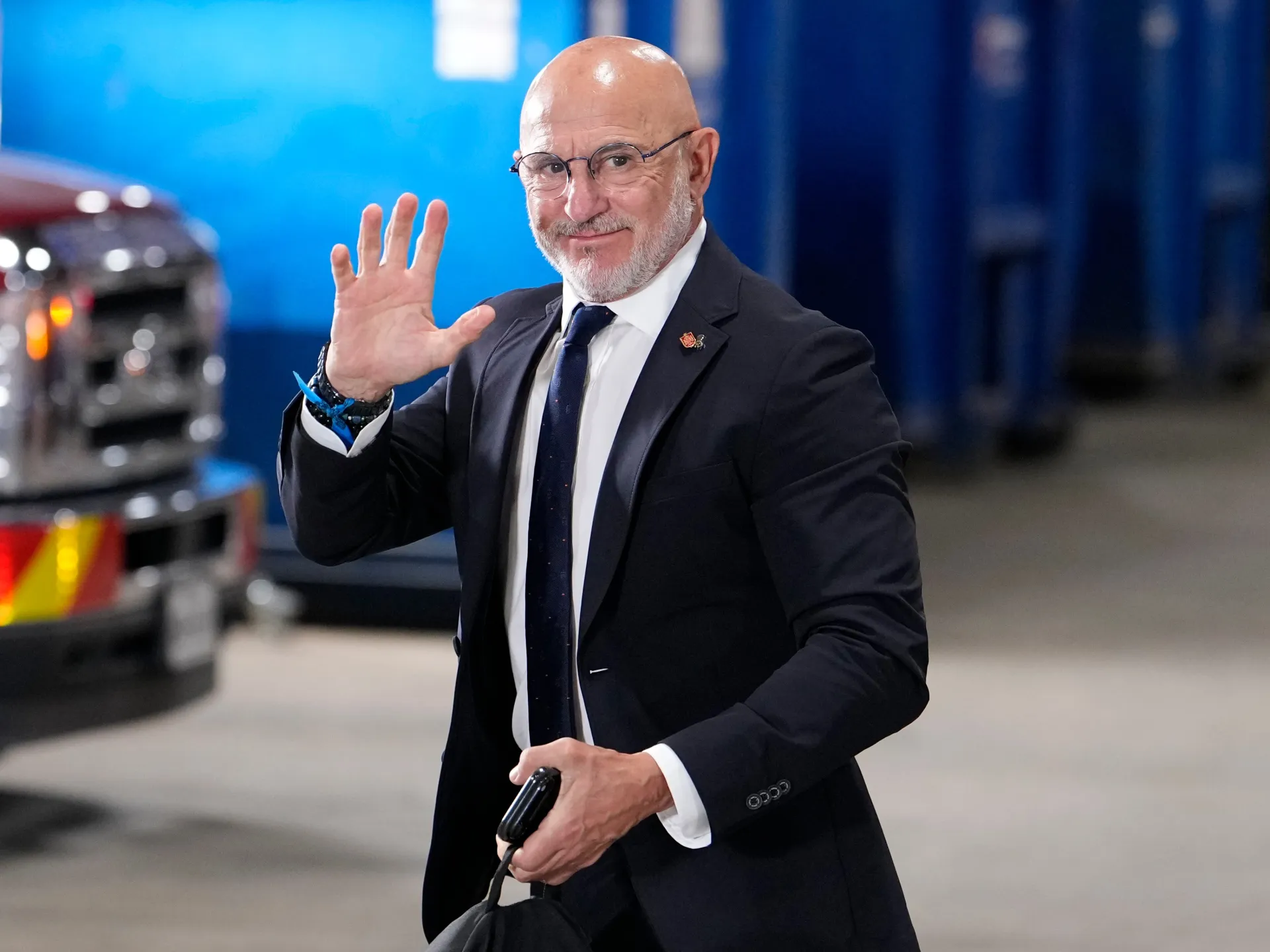
The Iranian lender has faced years of Western sanctions over alleged ties to Tehran’s nuclear programme.
Published On 19 Sep 202619 Sep 2026
Turkiye’s banking watchdog has revoked the operating licence of Iranian lender Bank Mellat’s branch in the Turkish city of Istanbul.
“It has been decided to revoke the operating licence of Bank Mellat, Head Office in Tehran, Istanbul Turkey Central Branch,” read the decision by the Banking Regulation and Supervision Agency (BDDK), published in the Official Gazette on Saturday.
Recommended Stories
list of 3 itemsend of list
The regulator said the decision was taken under a clause of Turkiye’s banking law allowing a bank’s licence to be revoked or withdrawn if its continued operation is deemed to pose a risk to depositors’ rights or to the security and stability of the financial system.
Bank Mellat has been subject to Western sanctions for years over accusations that Tehran was pursuing a nuclear weapon under the cover of a civil nuclear programme.
Those sanctions were lifted as part of a landmark 2015 deal between Tehran and world powers to curb Iran’s nuclear ambitions. However, the United States unilaterally pulled out of the agreement in May 2018, reimposing economic sanctions on the country.
Bank Mellat was hit by further US and Gulf sanctions in 2019 after being named as one of 25 entities linked to Iran’s Islamic Revolutionary Guard Corps (IRGC).
The Turkish notice did not cite the US measures or specify operational issues.
Earlier this month, the US Treasury Department imposed sanctions on a small Turkish investment bank and two subsidiaries over alleged ties to Iran.
The Treasury Department accused Golden Global Yatirim Bankasi Anonim Sirketi (Golden Global Bank) of facilitating “tens of millions of dollars’ worth of transactions for the Islamic Revolutionary Guard Corps-Qods Force” and providing the Iranian government with banking access to move its funds internationally.
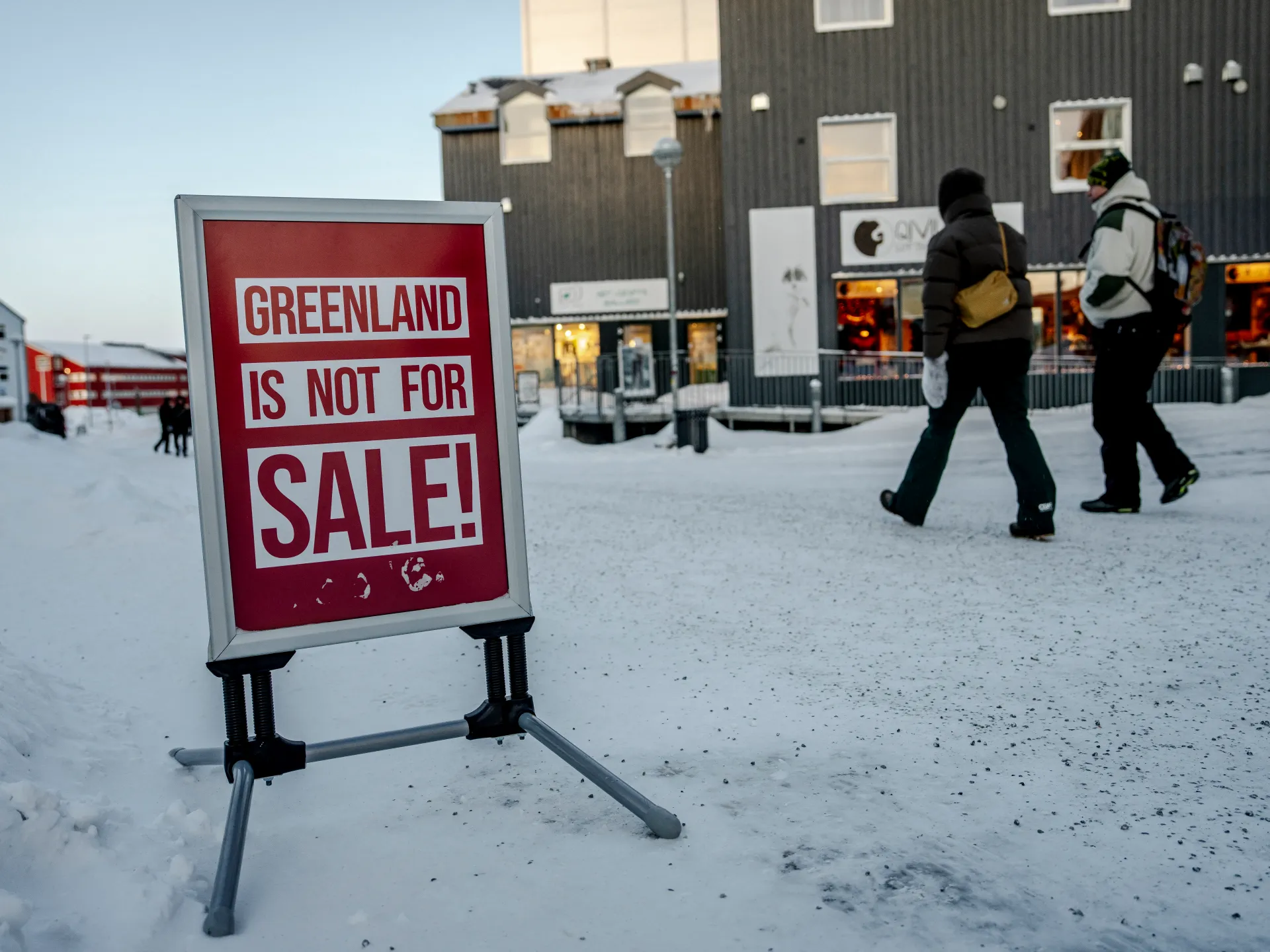
Richard Weitz, a senior fellow at the NATO Defense College tells Al Jazeera that the new US-Denmark security deal over Greenland gives US President Trump a diplomatic agreement without delivering his earlier ambition to annex the territory.
Chelsea left with one point from their last three Premier League games after a 3-0 defeat at neighbours Brentford.
Published On 19 Sep 202619 Sep 2026
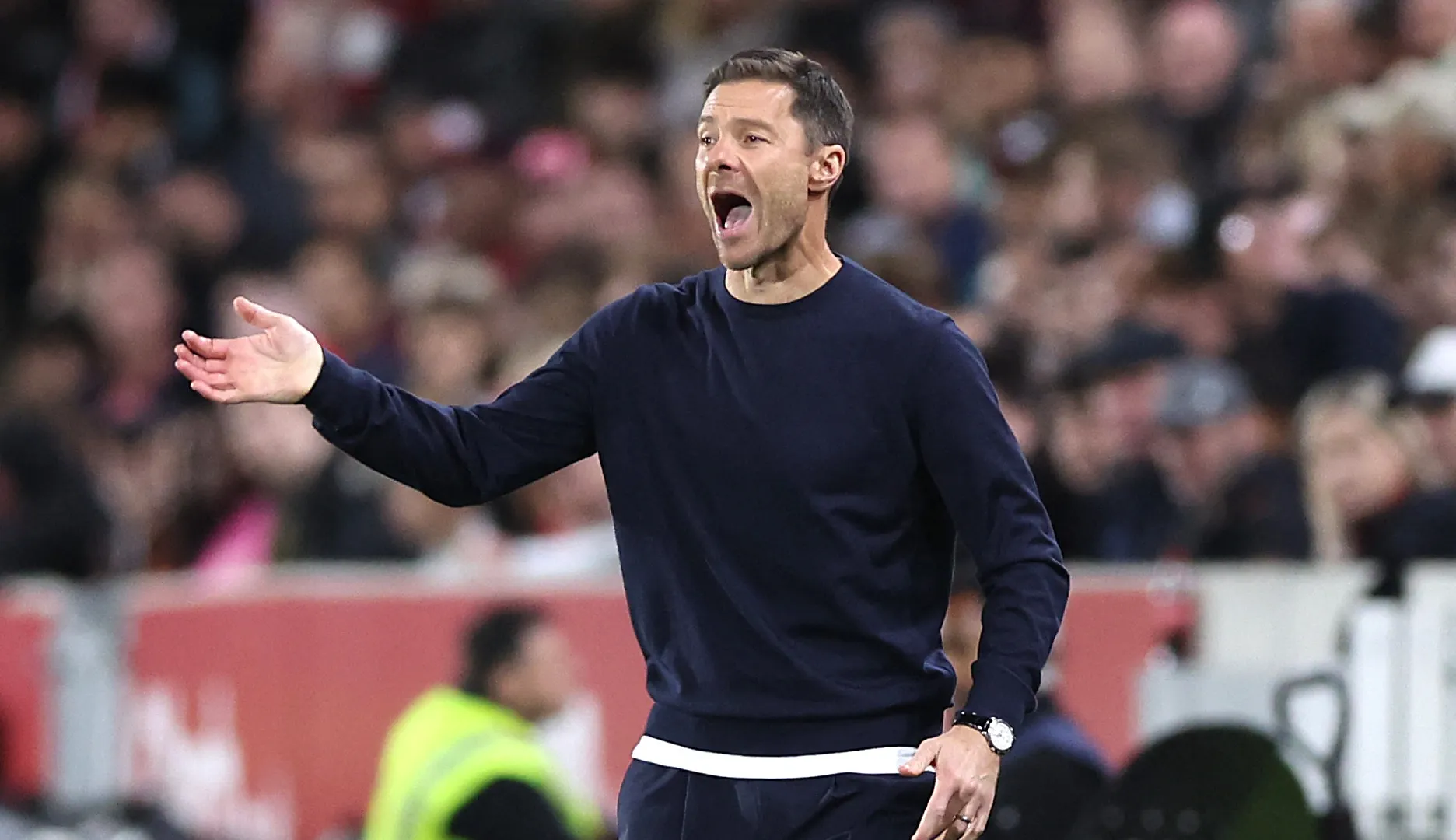
Brentford exposed Chelsea’s defensive problems to inflict a damaging 3-0 defeat that gives Xabi Alonso plenty to ponder during a three-week international break.
After a promising start to life under the former Real Madrid coach, Chelsea have picked up just one point from their last three league games.
Recommended Stories
list of 4 itemsend of list
Goals from Jaidon Anthony, Igor Thiago and Fabio Carvalho took unbeaten Brentford above their west London neighbours late on Friday and up to third in the table.
“I have this unbelievable calm around that team because I trust them. It’s nice to see it come to fruition,” said Brentford boss Keith Andrews.
Chelsea had quickly earned the reputation as the Premier League’s great entertainers under Alonso, with their opening four games containing 19 goals.
But the loss of Joao Pedro to a knee injury subdued the Blues’ free-flowing attack as Cole Palmer and Morgan Rogers were comfortably kept in check by the Bees.
“At the moment we are not being consistent enough to compete during the whole game,” said Alonso.
“It’s about everything. It’s about the mentality. It’s about football, tactical things that we need to keep improving that we can do much better.”
Alonso said after last weekend’s 2-2 draw against Hull, he was hoping for more “boring” games going forward.
The Spaniard sought control as he made four changes in all, handing Jordan Henderson his first Chelsea start against the 36-year-old’s former club.
Alonso got his wish during a flat first half in which neither goalkeeper was seriously tested, but Brentford were the more threatening side in the second period.
The visitors’ frailty from set-pieces led to the opening goal when Jannick Schuster rose highest to meet Mikkel Damsgaard’s corner, and Anthony was left with a simple task to head into an unguarded net just after the hour mark.
Chelsea’s response was muted, and as they pushed forward in search of an equaliser, Alonso’s men were picked off on the counterattack.
Kevin Schade should have scored the second goal himself when played clean through on Emi Martinez.
But even after the Argentinian goalkeeper spread himself to save, the rebound fell kindly for Thiago to end his goal drought.
The Brazilian netted 25 times last season, earning a shock call-up to Carlo Ancelotti’s World Cup squad as a result.
Thiago has looked shorn of confidence in the early weeks of the campaign and tore off his shirt in celebration after netting for the first time in the Premier League this season.
Chelsea have conceded at least twice in all five league games under Alonso, and there was further punishment to come in stoppage time.
Schade’s low cross was deflected into the path of Carvalho, who fired high past Martinez to leave Andrews yelling into the night sky in delight.
Brentford, who also beat Tottenham 3-0 on the opening weekend of the season, sit behind only defending champions Arsenal and Manchester City at the top of the table.
By contrast, Chelsea were handed another reminder of the gap Alonso must bridge to make them title contenders once more.
Brazilian police say they will reopen dozens of cases after they arrested a self-confessed serial killer disguised as a woman. Jorlan Lopes da Silva, 33, confessed to 80 murders after he was arrested in Paraiba State in the country’s north east, trying to flee in a wig and holding a baby.
New Delhi, India – On the morning of August 26, the Himalayan landscape above Nepal’s Rasuwa district changed in minutes.
A mass of ice and rock broke loose high in the mountains and sent a violent surge of water, mud and debris down the Lhende Khola River. The torrent travelled through valleys, swept away settlements and infrastructure and eventually reached the Nepal-China border.
What followed was not simply a flood.
It was a chain reaction.
By mid-September, more than 1,400 people had been reported dead and at least 6,000 remained missing in Nepal and across the border in Tibet. Twelve hydropower plants were destroyed, while roads, bridges and homes were buried or washed away.
The scale of the destruction has left scientists and disaster managers confronting a difficult question: How do you warn communities about a disaster whose trigger may occur high above them, in terrain that is difficult to monitor and where there may be only minutes to react?
Basanta Raj Adhikari, director of the Centre for Disaster Studies at Tribhuvan University in Kathmandu, described the event to Al Jazeera as unprecedented in size, affected area and mechanism. His estimate suggested that the energy involved was greater than that released by the Hiroshima atomic bomb, a comparison intended to illustrate the scale of the physical forces involved rather than suggest that the event was equivalent to a nuclear explosion.
For scientists who study the Himalayas, the disaster demonstrated how quickly an event originating in a remote, high-altitude environment can become a regional catastrophe.
And Nepal is not alone.
The warning problem
A warming climate is altering glaciers, snow cover, permafrost and high-altitude lakes. At the same time, roads, hydropower projects, tourist facilities and settlements have pushed deeper into mountain valleys.
That combination is creating a new risk landscape in which one hazard can trigger another.
An avalanche can block a river. A blocked river can form a temporary lake. A sudden release can become a debris flow. That debris can destroy a road or bridge, block another river and create another flood downstream.
The August disaster in Nepal showed how quickly such a sequence can unfold. It also exposed a weakness in the way early-warning systems are often designed.
Many systems are built around a particular hazard: rainfall, river level or glacial lake outburst flood. But the Himalayas do not always respect those categories.
In July, the International Centre for Integrated Mountain Development, or ICIMOD, warned that a below-normal monsoon should not be interpreted as a safer one.
“The biggest misunderstanding is that less seasonal rainfall means lower flood risk,” said Saswata Sanyal, a disaster risk reduction specialist at ICIMOD.
“A drier monsoon can still be a dangerous monsoon,” he added, warning that seasonal averages cannot capture the cloudbursts capable of producing catastrophic flooding in mountain valleys.
The Nepal disaster went a step further.
The immediate trigger was not simply heavy rainfall.
Scientists have been examining an ice-rock avalanche and other possible processes that temporarily obstructed the river system before releasing a destructive surge. ICIMOD has described the event as an ice avalanche rather than a conventional glacial lake outburst flood, while other scientists have examined the role of local seismic activity and other high-altitude processes.
That distinction matters.
A warning system waiting for rainfall or a rising river may not provide enough time when the real trigger happens several kilometres upstream and above the line of sight of the communities below.
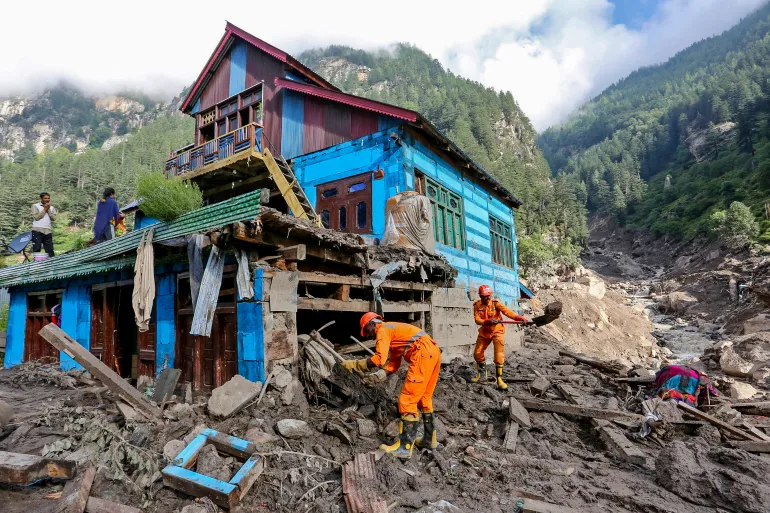
Indian National Disaster Response Force (NDRF) personnel conduct a search and rescue operation at the site of a flash flood at a village in the Kishtwar district of Indian-administered Kashmir on August 16, 2025 [AFP]
Kashmir’s warning signs
Thousands of kilometres away, scientists studying Kashmir’s Himalayas are seeing another part of the same problem.
A study published in the Journal of Glaciology this year mapped 155 glacial lakes above 2,500 metres (8,200ft) across the Himalayas in Indian-administered Kashmir.
The researchers found that the area of ice-contact proglacial lakes – bodies of water that form directly against the margin of a melting glacier, trapped by moraine ridges, bedrock basins, or ice dams – had increased by 26 percent between 1992 and 2024.
Five lakes were classified as having very high susceptibility to glacial lake outburst floods.
An outburst from those lakes, the researchers found, could threaten several thousand buildings, 15 major bridges, roads and a hydropower project.
More significantly, the study warned that hazards could occur in chains, with an upstream lake outburst potentially triggering secondary events downstream.
For Irfan Rashid, a glaciologist and associate professor at the University of Kashmir who co-authored the study, the implications extend beyond individual lakes.
Rashid recently told Al Jazeera that without action, the melting, thinning, and destabilisation of glaciers, seasonal snow cover, and permafrost along the Hindu Kush-Himalayas system would increase, and water shortages could become a major problem across the Upper Indus, Ganga and Brahmaputra basins by the end of the century.
That is why the Nepal disaster resonates in Kashmir.
The landscapes are different, the rivers are different and the individual hazards may differ. But the underlying problem is increasingly similar: Communities living downstream of a rapidly changing high-altitude environment may have little time to respond when something breaks loose above them.
The challenge is particularly acute in places where roads, bridges and hydropower projects occupy narrow valleys.
Once a mountain river begins carrying enormous quantities of rock, ice and mud, infrastructure designed for conventional floods can quickly become irrelevant.
Volunteers rescue flood-affected victims along with their livestock using a boat following heavy rains and overflowing of the Sutlej River, on the outskirts of Multan in Punjab province, Pakistan, on September 4, 2025 [Shahid Saeed Mirza/AFP]
Pakistan has already begun building a warning network
The same concern runs across the western Himalayas and Karakoram ranges.
The Gilgit-Baltistan region in Pakistan-administered Kashmir contains hundreds of glaciers and glacial lakes, while communities and infrastructure sit along valleys exposed to sudden floods and landslides.
Pakistan has responded by expanding early-warning infrastructure.
Under a United Nations-supported programme, early-warning systems, evacuation shelters, disaster-management centres and other protective measures have been established in vulnerable valleys.
But technology alone cannot solve the problem. A sensor can detect a change. Someone still has to receive the message. Someone has to understand what it means. And people downstream have to have a route to safety.
That last part is often the weakest link. A siren is useful only if the people hearing it know where to go. An automatic warning is useful only if it arrives before the flood. A satellite image is useful only if the information can be converted into a decision quickly enough to save lives.
This is why disaster scientists increasingly talk about anticipatory action rather than simply disaster response.
“The era of preparing for a single, predictable hazard is over,” Sanyal said earlier this year. “Anticipatory action and early warning must now be the foundation.”
Nepal army soldiers work during a search and rescue operation outside a tunnel near a hydropower project site, following deadly flash floods and mudslides, in Rasuwa district, Nepal, on September 1, 2026 [Reuters]
The infrastructure trap
The Himalayas are also becoming more heavily engineered.
Hydropower is central to Nepal’s economy. Roads are being expanded. Border crossings are growing in importance. Tourism is pushing deeper into remote valleys.
The benefits are obvious. So are the risks.
The August disaster struck an area where hydropower infrastructure was concentrated along the river corridor. At least 900 workers were believed to have been inside tunnels and other facilities in the aftermath, making rescue operations extraordinarily difficult. Two workers were eventually pulled alive from a hydropower tunnel nine days after the disaster.
The question is no longer simply whether infrastructure can withstand a flood. It is whether planners have adequately considered what happens when a flood is carrying an enormous mass of rock and ice, when a river changes course, or when one mountain hazard triggers another.
For decades, engineering risk assessments have often relied on historical records. But history becomes a less reliable guide when the physical conditions producing disasters are changing.
A river that flooded once every several decades may no longer behave according to the same pattern. A glacier that appeared stable from satellite imagery may sit beneath an increasingly unstable slope. A lake that was considered remote may suddenly become a threat to a road, village or power plant hundreds of metres below.
Relatives of victims and missing people react outside the morgue of the Tribhuvan University Teaching Hospital (TUTH), in Kathmandu, Nepal, August 29, 2026 [Narendra Shreshtha/EPA]
The border problem
There is another complication that no satellite can solve on its own.
Borders.
The Himalayas are divided among countries with different political systems, security concerns and approaches to sharing information. But rivers do not stop at international boundaries. Neither do floods.
The August disaster reached the Nepal-China border and damaged the Gyirong crossing, an important trade and pilgrimage route. The disaster also raised questions about how quickly information about hazards in high mountain areas can move between countries.
This is where regional cooperation becomes more than a diplomatic slogan, experts say. A sensor positioned in one country can provide warning to people in another. A satellite image collected over one mountain range can reveal a developing hazard that threatens a valley downstream. A river gauge can provide critical information before floodwaters reach a settlement.
The technical capability already exists in many cases. The missing piece is often the architecture connecting it.
A 2026 assessment of Himalayan disaster risks has argued for stronger monitoring, early-warning systems and regional coordination because hazards are increasingly interconnected.
The idea is simple: Information about a mountain hazard should not stop at the same line where a political boundary begins.
Buildings are inundated after flash floods triggered by sudden heavy rainfall swamped Rangpo town in Sikkim, India, Friday, October 6, 2023 [Prakash Adhikari/AP Photo]
From Nepal to Sikkim to Kashmir
The August disaster in Nepal isn’t a tragedy belonging to one country, point out experts.
The Kashmir Himalayas study has already identified lakes capable of producing destructive outburst floods and has warned of cascading processes.
Northeast India’s Sikkim provides another example.
Today, 40 high-risk glacial lakes have been identified in Sikkim, including 16 placed in the highest-risk category, with authorities working on drainage, flood-retention and other protective measures.
But the lesson from each disaster is broadly the same: Waiting for a disaster to prove the risk is the most expensive form of preparedness.
The world’s second largest mountain, the 8,611-metre- (28,251ft-) high K2 (seen in the distance), and the 8,051-meter- (26.414ft-) high Broad Peak (R), are illuminated by the moon at Concordia, the confluence of the Baltoro and Godwin-Austen glaciers, in the Karakoram mountain range in Pakistan, September 7, 2014 [Wolfgang Rattay/Reuters]
The Third Pole test
The Himalayas are sometimes called the Third Pole because they contain one of the world’s largest concentrations of snow and ice outside the Arctic and Antarctic.
Major Asian rivers depend on water originating in these mountains. Hundreds of millions of people live downstream.
That makes the changing Himalayas not only an environmental issue but a security, infrastructure and humanitarian one.
The August disaster demonstrated the most frightening version of that future. A mountain can collapse without warning. A river can become a weapon of debris. A hydropower tunnel can become a trap. A border crossing can disappear in minutes. And by the time people downstream understand what is happening, the water may already be there.
It’s a future that a region stretching from northeast India, spanning Tibet, Nepal, Kashmir and Pakistan, can no longer ignore. Yet disaster management remains largely divided by national boundaries. That contradiction is becoming harder to navigate.
The next glacial collapse could begin in Kashmir. It could begin in Pakistan’s high mountains. It could begin in Sikkim, Nepal or Tibet.
Wherever it starts, the same question will follow the mountain downstream: Who knew, how early did they know, and did the warning reach the people in time?
For a region entering an era of increasingly complex mountain hazards, that may be the real measure of whether the Third Pole is prepared.
The Pentagon publicly lists 18 US military deaths since the Iran war began. But, The Washington Post has cited six unnamed Pentagon officials who say the toll is at least 22. The Pentagon has declined to explain the discrepancy and Pete Hegseth has called the report ‘a complete lie’.
US judges affirm migrants must have opportunities to voice safety concerns before deportation to unfamiliar nations.
Published On 19 Sep 202619 Sep 2026
A US federal appeals court has rejected the Trump administration’s policy of rapidly deporting migrants to countries other than their own – a ruling that could next go before the Supreme Court.
On Friday, a three-judge panel of the 1st US Circuit Court of Appeals in Boston largely upheld a February decision that found the Department of Homeland Security’s so-called third-country removal policy unlawful.
Recommended Stories
list of 3 itemsend of list
The case stems from a class-action lawsuit testing what due process migrants are owed before being sent to nations with which they have no ties.
Writing for the panel, US Circuit Judge Seth Aframe said migrants must be given a “meaningful” chance to raise safety concerns before removal, rejecting the Trump administration’s narrower reading of the law.
The court did overturn part of the ruling on procedural grounds, concerning whether officials must first try deporting migrants to countries they have ties to.
Trina Realmuto, a lawyer for the plaintiffs at the National Immigration Litigation Alliance, said the decision confirmed that “due process and the protections Congress enacted against persecution and torture cannot be circumvented by putting someone on a plane to a country that was never part of their removal proceedings”.
The DHS did not immediately comment. The Trump administration is expected to appeal the ruling.
Under Trump, the US has struck agreements allowing it to send more than 25,000 migrants to at least 29 third countries, most often Mexico, according to Third Country Deportation Watch, a tracker run by the rights groups Refugees International and Human Rights First.
The policy, adopted in March 2025, allowed removals with only minimal notice if officials had diplomatic assurances against persecution.
The controversial programme has reached the Supreme Court twice.
In 2025, the justices cleared the way for eight men, including nationals of Cuba, Myanmar and Vietnam, to be deported to South Sudan, a country the US State Department advises against visiting because of “crime, kidnapping, and armed conflict”.
The DHS called the removals “a win”, while rights groups said they flouted basic protections.
The Trump administration’s immigration agenda has faced a string of setbacks this month.
A federal judge blocked planned caps on student and journalist visas, calling the government’s justification “exceptionally weak”, while a coalition of 22 states and Washington, DC, sued to stop a separate rule that would let officials deny green cards to immigrants who lawfully use public benefits.
US President Donald Trump says the US will gain ‘permanent control over security’ in Greenland under a deal reached with Denmark. The agreement is expected to be signed next week, following months of Trump’s threats to ‘take’ the Danish territory.
In Super Macklemore 64, players are chased by a giant Ed Sheeran, dodge tiny billionaire Robert Krafts and summon musicians to chant “Free Palestine”. Creator Jonathan Mann says it highlights the “absurdity” of Macklemore being dropped from Sheeran’s concerts and Israel’s genocide in Gaza.
Denmark and Greenland plan to sign a US defence pact next week, pending approval from both parliaments.
Published On 18 Sep 202618 Sep 2026
United States President Donald Trump claimed on Friday that Washington has entered into an agreement with Denmark and Greenland that gives the United States “permanent control over security and all other needs”.
In a post on his Truth Social platform, Trump said, “At my direction, we worked with representatives of Denmark and Greenland to guarantee that the US will FOREVER have the complete ability to do what is necessary in Greenland”.
Recommended Stories
list of 3 itemsend of list
He added that US adversaries will be barred from establishing military bases or personnel in Greenland unless they receive written authorisation from the United States.
Trump alleged that plans will begin immediately to build a significant US military footprint in suitable areas across Greenland, noting there are numerous potential locations.
Denmark and Greenland released a joint statement on Friday indicating that a pact with the US is set to be signed during next week’s high-level United Nations General Assembly summit.
The statement added that the agreement remains subject to formal parliamentary approval in both Nuuk and Copenhagen.
Denmark’s Prime Minister Mette Frederiksen said the agreement “recognizes the sovereignty and territorial integrity of the Kingdom and the right of the Greenlandic people to self-determination.”
A new species of living cat has been identified for the first time in more than a century. Found in Bolivia’s Yungas forest, it is smaller than a regular house cat, weighing just around 3 pounds and measuring 18 inches long. Known locally as Tilcayo, it belongs to the group of tiger cats.
The US president insists media outlets report ‘fiction and lies’ as he enforces new bans on White House access.
Published On 18 Sep 202618 Sep 2026
United States President Donald Trump has announced that, effective immediately, CNN, MS NOW and Politico are banned from the White House.
On Friday, Trump posted on social media his displeasure with the media outlets’ coverage of his administration.
“I am proud to announce that, effective immediately, I am banning Fake News CNN, MSNOW … from the White House as a result of their constant “reporting” FAKE NEWS!” Trump wrote.
“Media Outlets shouldn’t be able to constantly write or report FICTION and LIES when they’re covering the President of the United States, the Trump Administration, or the United States of America. Other Fake News Media Outlets to follow.”
Speaking to reporters later on Friday at the White House, Trump said the outlets “purposely write negative news.”
“You get so tired of reading and seeing fake news,” he told reporters in the Oval Office. “They purposely write negative news, and they do that because they want to try and diminish the Republicans and a Republican administration. And honestly, we’ve done a fantastic job.”
Asked why he is taking the action now, Trump said it is because of the news organizations’ “cumulative” coverage.
Al Jazeera’s Alan Fisher reported from Washington that Trump’s ban will likely be challenged soon.
“The United States has the First Amendment [of its Constitution] that says the government cannot restrict access to this sort of thing,” he said.
“Other presidents have been angry at press coverage before. Lyndon B Johnson used to rail about it. Richard Nixon wondered whether or not he could ban certain people from the White House as well,” he said. “At every point, they were told it’s not a good look.”
While in office, Trump has repeatedly criticised the press for what he says is unfair coverage and has even verbally targeted reporters for their reporting.
Derbyshire Police said they were investigating an alleged assault but have now decided no further action will be taken.
Published On 18 Sep 202618 Sep 2026
England fast bowler Brydon Carse will face no charges after an investigation into an alleged assault was closed by Derbyshire Police, the force has said.
But the 31-year-old remains subject to a separate probe by the Cricket Regulator, the disciplinary arm of the English game, who will assess if he has a case to answer under their regulations.
Carse was handcuffed by officers after a celebratory night out with Durham teammates on August 23 in Derby, central England, and it was later confirmed he had been arrested on suspicion of being drunk and disorderly, before being “de-arrested” after agreeing to depart.
Derbyshire Police said they were investigating an alleged assault in connection with the incident but have now decided no further action will be taken.
In a statement on Friday, the force said: “An investigation into reports of an assault in Derby city centre has been closed.
“Officers attended Molly Malones in the Wardwick, Derby, in the early hours of Sunday 23 August. A man was arrested on suspicion of being drunk and disorderly and was then de-arrested after his details were taken by officers.”
Subsequent enquiries were made pursuing the allegations of an assault but, after the alleged victim was identified and spoken to, no further action was taken, police said.
Videos of Carse’s arrest were released on social media, with Carse seen talking to Durham teammate Matthew Potts, while former England captain Ben Stokes – who also plays for northeast county Durham – was pictured in the background.
Carse, who has taken 58 wickets in 14 Tests at a shade more than 30 apiece, has continued playing for Durham since the episode took place, helping the side win the Second Division title in the first-class County Championship.
But he has been overlooked by England.
Carse was immediately removed from the squad before the second Test against Pakistan, then left out of the final match too, having not been selected on cricketing grounds for the opening encounter of a series where England whitewashed the tourists 3-0.
While officially available for selection for the ongoing white-ball series against Sri Lanka, he was again omitted.
England’s limited-overs head coach Brendon McCullum, speaking earlier this week, reminded his side of their off-field responsibilities, adding: “I’ve spoken to Carsey a lot and it’s the same message – you need to make good decisions off the field that allow you to be able to be the best version of yourself.
“As far as Carsey is concerned, it’s a good chance for him now to get his house in order and then push for selection for the next opportunity that arises.”
Carse’s arrest was the latest in a series of alcohol-fuelled controversies that have dogged England since their disastrous tour of New Zealand and Australia at the end of last year.
Test captain Joe Root, speaking before the Lord’s Test, said he was “hacked off” by the growing list of drink-related incidents involving England cricketers.
Turning to Carse, he said, “I don’t think I’m speaking out of turn in saying he’s very upset, very apologetic and understands his actions. I’m sure when he gets his chance, he will say that himself.”
Magdalena Andersson will likely face several challenges as she tries to get Sweden’s other left-wing parties to unite.
Published On 18 Sep 202618 Sep 2026
Sweden’s opposition leader has officially begun talks to form a coalition government after the country’s left-wing bloc won a slim majority in last week’s election.
Magdalena Andersson, leader of the centre-left Social Democrats, was asked by Parliament Speaker Andreas Norlen on Friday to begin efforts to form a new government.
Recommended Stories
list of 3 itemsend of list
Norlen’s request follows the resignation of centre-right Prime Minister Ulf Kristersson, who stepped down on Thursday after the general election result was confirmed.
“I have now been tasked with exploring the possibility of forming a government. A task I undertake with great humility and will act constructively to put together a new government,” Andersson said in a statement posted on Instagram.
“My approach to the work that is now taking place is that all political forces now need to put party tactics aside and put Sweden and the Swedish people first.”
Andersson will likely face a series of challenges as she tries to persuade Sweden’s other left-wing parties to unite and form a new administration. The left-wing bloc won 176 of Parliament’s 349 seats in last week’s vote, securing a razor-thin majority of three seats.
Andersson is expected to seek the support of three other left-wing parties: the Greens, the Centre Party and the Left Party.
The socialist Left Party says Andersson will have to award some of its MPs cabinet posts to win their support. However, the liberal Centre Party insists it will not support such a government.
Andersson has until September 28 to form a government. If she fails, Kristersson, whose centre-right bloc won 173 seats, will try to form a coalition.
Coalition and minority governments are common in Sweden because the country has two major left- and right-wing blocs, both of which contain four parties.
The process of forming a government following the 2022 election took more than a month.
Hundreds of thousands of Iranians have marched in a government-organised show of defiance in Tehran, pledging their readiness to take up arms.
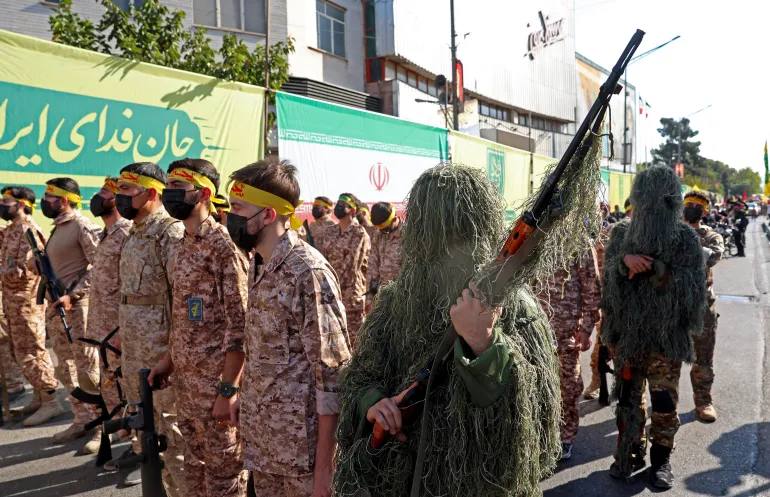
The Iranian government showcased a newly formed volunteer force at the rally on Friday. It will receive limited military and emergency response training to serve as an additional layer of security for Iran’s Islamic Revolutionary Guard Corps (IRGC) and the Basij militia.
Recommended Stories
list of 3 itemsend of list
Volunteers rallied through downtown Tehran in combat uniforms, some carrying flags and weapons, while the government displayed drones, anti-aircraft batteries and other weaponry.
Iranian authorities said 313,000 people joined the event in the capital. Attendance figures could not be independently verified.
Tehran’s IRGC chief, Hassan Hassanzadeh, told the state broadcaster IRIB that over 600,000 people had registered to participate in the voluntary Janfada-ye-Iran campaign. That roughly translates to “Those who sacrifice their lives for Iran”, with over one million expected to take part in the training.
Senior Iranian leaders at the rally included President Masoud Pezeshkian and Basij head, Hossein Taeb.
Taeb told participants that the volunteers would be ready for “full-fledged defence” and would be a “nightmare” for Iran’s enemies.
Members of the Basij paramilitary force at the military rally in Tehran on Friday [AFP]
A broader strategy
Iranian authorities say mobilising the new volunteer force is part of a broader defence strategy.
“The Islamic Republic has mobilised these people to show that they are united, that they have solidarity and that their people are ready to give anything for the country,” said Al Jazeera’s Sinem Koseoglu, reporting from the rally.
Women and teenagers have also registered with the volunteer units, she added.
“I want to show the world that Iran is strong and united. We don’t want war, but we’re ready to defend our country to the very end,” one of the volunteers, Bahera, told our reporter.
Another volunteer, wearing a combat uniform and carrying a rifle, said: “This is our homeland and we won’t let others decide its future”.
President Pezeshkian said in a speech that the rally was a show of solidarity, Koseoglu noted.
“This is not only a message to countries like the US and Israel, which are attacking Iran, but also to the Islamic Republic that we are ready for any crisis.”
Members of Iran’s Basij paramilitary force at the rally [AFP]
Economy and mobilisation
Friday’s rally happened as the Iranian economy struggles under the US naval blockade of Iranian ports and new US sanctions.
Esmaeil Baghaei, Iran’s Foreign Ministry spokesman, condemned the “brutal economic war, deliberately designed to inflict maximum pain and suffering on every Iranian citizen”.
As the latest addition to its economic pressure campaign, the US administration on Thursday went after digital currency networks that it says are illegally providing sanctioned Iranian entities with access to the international financial system.
The struggling economy was a key driver for protests last December that quickly turned into a challenge to the political system in place since the Islamic Revolution in 1979. Iran said about 3,000 people were killed in the protests, but activists say the state crackdown killed over 7,000.
However, the war launched in late February by US-Israeli strikes has since allowed the authorities to regain the initiative by presenting themselves as a bulwark against the country’s enemies.
The volunteer mobilisation campaign started in early April, at the height of US-Israeli attacks.
According to the authorities, more than 30 million people registered for a potential call-up, about a third of the population of 86 million.
Michael Carrick says he expected tough season start as he rebuffs questions about his role as Manchester United manager.
Published On 18 Sep 202618 Sep 2026
Manchester United boss Michael Carrick said he expected to have to ride out a storm at some point this season after a dreadful start to the current campaign.
Carrick was appointed on a permanent basis after his successful temporary spell at the end of last season secured third place in the Premier League and a return to the Champions League.
Recommended Stories
list of 4 itemsend of list
But United have taken just four points from their opening four league games this season and were dumped out of the League Cup in a 3-2 defeat by Brighton in midweek after blowing a two-goal lead at Old Trafford for the first time in 50 years.
“In terms of the future and ownership and how long I’ve got, it’s totally nothing. Thinking about it is ridiculous in the position I’m in. It’s just not on the radar. We’ve got to perform and we’ve got a lot of games to plan for,” Carrick said ahead of Sunday’s trip to Fulham.
“History tells you that any team that’s successful goes through periods when you have to work through it, come through it and improve.
“We’ve had a small period, in recent time, when it hasn’t been exactly what we want it to be.
“I was expecting a point when we would go through it, it was going to come. We had such a good spell last season, going into this season.”
Former United and England midfielder Carrick also has reason to bemoan his side’s luck in recent weeks.
United received a swift apology from referees’ chiefs after Erling Haaland’s winning goal for Manchester City last weekend was wrongly awarded because the VAR officials did not spot an offside against Enzo Fernandez in the build-up.
Carrick’s men were also heading for three points at Everton last Sunday before until Toffees defender Ainsley Maitland-Niles produced a stunning strike into the top corner from long range.
“It is a week or two, the games haven’t gone our way,” added Carrick. “It’s tiny margins in some of those games. We will work through it. Winning games is always the answer, it can cover up a lot of things at times as well.
“Sometimes it’s the small disappointments that lead to something a bit bigger. It’s part of coping and being at this great football club.”
United could be boosted by the return of Luke Shaw from injury for the visit to Craven Cottage.
Carlos Baleba is also in contention to make his first appearance since a 70 million pound ($94m) move from Brighton.
Real Madrid stars including Kylian Mbappe rolled up T-shirts showing support for Ceuta, but President trip ‘unrelated’.
Published On 18 Sep 202618 Sep 2026
Real Madrid President Florentino Perez attended an event at Ceuta city hall on Friday in a visit to show solidarity with the Spanish territory, saying that it was not related to any recent developments.
On Tuesday, before Real’s La Liga match with Elche, Kylian Mbappe, Vinicius Jr and Ibrahima Konate obscured the message “We are all mackerels”, which appeared on T-shirts worn by the rest of the players. “Mackerels” is a nickname for people from Ceuta, and the shirts were designed to show support for them.
Recommended Stories
list of 4 itemsend of list
Mbappe said on Wednesday that he did not want to prioritise the suffering of one group over another. Real told the news agency Reuters that they respected their players’ freedom to make their own decisions, but noted that they had shown support for Ceuta a week earlier with a tifo during their Champions League match with Inter Milan.
Perez was accompanied by honorary Real Madrid President Jose Martinez Pirri, a native of Ceuta. They were welcomed by Regional President Juan Jesus Vivas.
“I want to emphasise, to avoid any doubts, that today’s event has been prepared over several weeks with the president of Ceuta, not due to any recent news,” Perez said at the city hall.
“And I also take this opportunity to convey all our support, all our affection, and our solidarity during these very difficult times to all Ceutans. It is our wish that normality resumes as soon as possible in Ceuta.”
In July, more than 70,000 irregular crossings into Ceuta from Morocco took place, causing disruption in the territory. Real Madrid’s show of solidarity is one of many gestures that have taken place across Spain since the mass crossings.
Kremlin calls UK’s support for Ukraine an endorsement of ‘terrorism’ after recent escalation of weapons supplies.
Published On 18 Sep 202618 Sep 2026
Russia has stepped up pressure on Ukraine’s allies, summoning Britain’s top diplomat in Moscow over arms shipments to Kyiv and seizing Russian assets of several Western firms.
The Russian Ministry of Foreign Affairs summoned Britain’s charge d’affairs, Danae Dholakia, on Friday, issuing a formal protest over the UK’s “further increase” in weapons to Ukraine.
Recommended Stories
list of 3 itemsend of list
“London is placing itself in the position of an accomplice to the bloody atrocities committed by the Kyiv regime, which can only be characterised as terrorism and war crimes,” the ministry said in a statement.
Britain has maintained its support for Ukraine and says it will stand “shoulder to shoulder” with Kyiv and will provide whatever military equipment it needs, saying just last month that it will share classified weapons information.
Moscow’s move comes the day after Polish Prime Minister Donald Tusk warned that Russia might be preparing to launch hybrid drone and missile strikes against countries that support Ukraine, including Poland. He said that such attacks would be framed as accidental, with the intention of weakening NATO states’ resolve to invoke collective defence provisions in the event of an attack on one of its countries.
French President Emmanuel Macron said on Friday that the threat posed by Russia’s shadow operations was growing across Europe and that Moscow had targeted France with hybrid attacks in the past few weeks.
“The Russian hybrid threat against Europeans and against France has intensified,” he said after a meeting with French political leaders.
France’s interior minister had met regional prefects to step up “vigilance in response to the Russian hybrid attacks”, Macron said, adding that he had ordered “the government to prepare a plan to protect our critical infrastructure” and the “most sensitive” defence industry and technology sites against drone and cyber-attacks.
Moscow seizes French, Swiss firms
As Russia steps up pressure on Ukraine’s political allies, it is also targeting Western companies.
Moscow has ordered the seizure of Russian businesses and assets of Swiss food giant Nestle and three French firms: retailer Auchan, DIY chain Lemana Pro (formerly Leroy Merlin) and logistics firm FM Logistics.
President Vladimir Putin signed a decree late on Thursday that changed the firms’ Russian operations to a new entity, LEV Management, which is managed by a Russian Ministry of Interior general, according to Novaya Gazeta Europe.
Nestle said it was still “assessing” the situation and its options but it remains “committed to taking all necessary steps to protect its rights”.
Kremlin spokesman Dmitry Peskov told reporters on Friday that one of the reasons behind the decision was because Nestle and Auchan are companies from “unfriendly” countries.
Their assets are only under “temporary administration” and that no decisions have been taken as of yet, Peskov added.
Overnight Russian strikes hit multiple regions in Ukraine, sparking several fires across the country, as President Volodymyr Zelenskyy is to host the inaugural Carpathian Eight summit of several European countries.
They include Romania, Poland, Slovakia, Czech Republic, Austria, Hungary and Serbia, with the European Union also set to discuss regional cooperation.
Hungary and Slovakia have refused to send Kyiv direct military assistance in the past, though Poland and Romania remain staunch allies.
Hans-Joachim Watzke, one of German football’s vice presidents, adds to list calling for Gianni Infantino’s resignation.
Published On 18 Sep 202618 Sep 2026
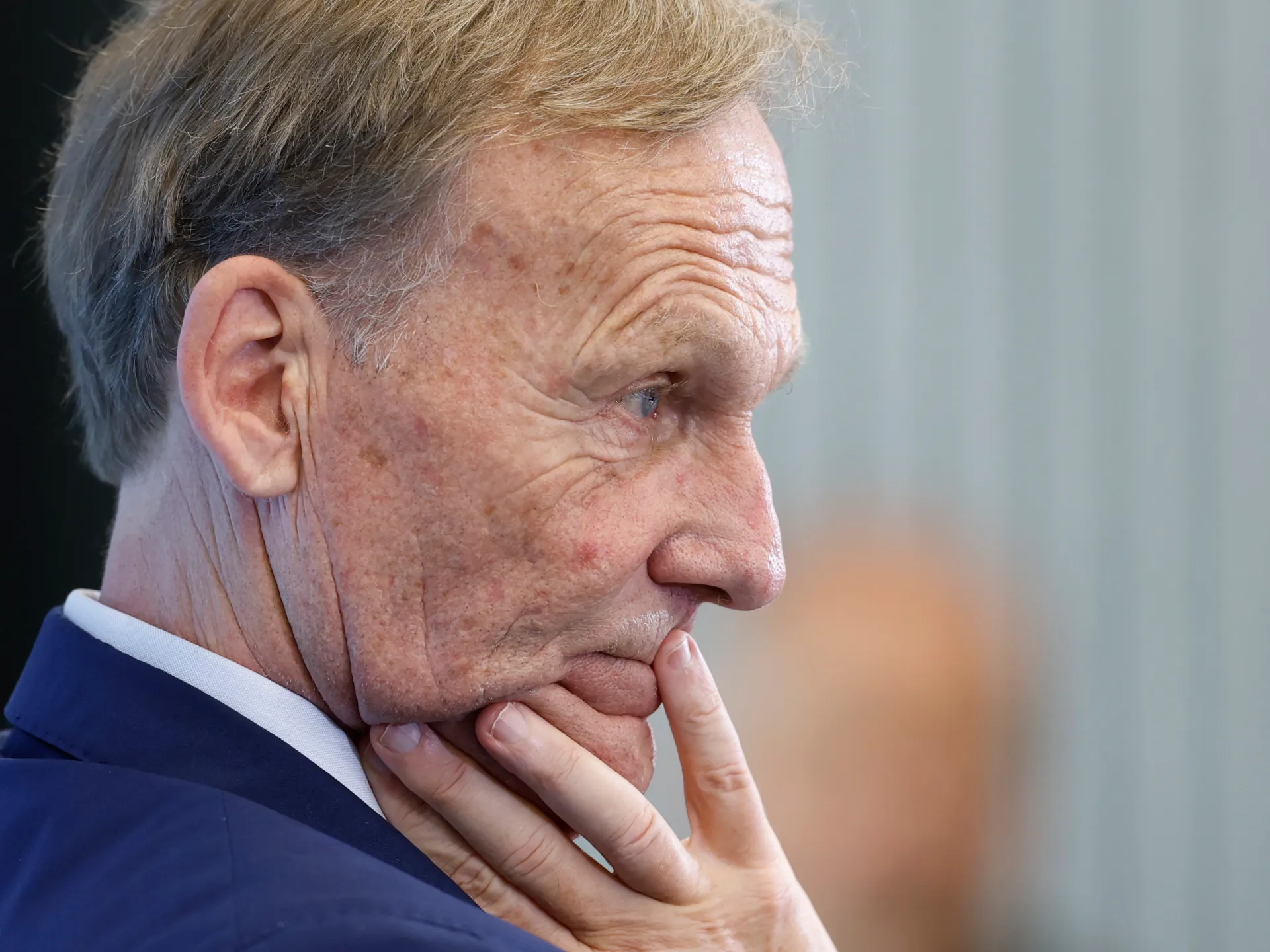
Gianni Infantino must leave the FIFA presidency “no ifs or buts”, according to Hans-Joachim Watzke, one of the vice presidents of the German Football Association (DFB), as he spoke at a festival dedicated to artificial intelligence in Berlin.
The DFB was one of the few federations not to sign a letter of support for Infantino’s re-election as FIFA president in six months’ time.
Recommended Stories
list of 4 itemsend of list
“He has to go, no ifs or buts,” declared Watzke, who said late on Thursday that three points in particular counted against the Swiss.
The first was the FIFA Peace Prize, launched by Infantino and awarded in December 2025 to US President Donald Trump, to whom Infantino is close, during the draw for the 2026 World Cup.
Infantino “created this prize himself, and he decided on it himself,” said Watzke.
“You can’t just invent something on your own and then announce it, it’s madness,” said Watzke.
Watzke also condemned the controversial handling of the Folarin Balogun red card during this year’s World Cup, which was hosted in the US, Canada and Mexico.
The American forward was sent off in the last 32 but his automatic one-match suspension was lifted after a phone call from Trump to Infantino.
“It can’t be that when someone gets sent off, the head of state calls the FIFA president, and, remarkably, the whole thing is immediately overturned. That’s madness,” said Watzke.
The third issue was the project, unveiled on July 28 and dropped four days later, to create a commercial company that would have been open to private investors and became a focal point of the rebellion against Infantino.
“It’s completely insane,” said Watzke. “Nobody knew about it, his vice presidents in FIFA knew nothing, the Council knew nothing.”
DFB president Bernd Neuendorf said earlier in the week in an interview with RTL/ntv television that it was also time for Infantino to depart.
“The relationship of trust with Gianni Infantino, under this FIFA leadership, has of course been completely shattered,” he said.
“It’s important that this Infantino system comes to an end.”
For now, Infantino is the only candidate for the FIFA presidency in the election scheduled for March 18, 2027, with candidacies open until November 18.
World Cup winners Spain choose Cueta to announce Nations League squad in solidarity with migration crisis in region.
Published On 18 Sep 202618 Sep 2026
Spain coach Luis de la Fuente announced his Nations League squad from Ceuta on Friday in a show of support for the Spanish city in northern Africa that has become the centre of a migration crisis.
For his first squad announcement since Spain won the World Cup in July, De la Fuente revealed his list in a video featuring him in Ceuta accompanied by residents of the Spanish exclave. More than 70,000 people stormed across the border in late July from Morocco, with more than 100 dying in the chaos. Most quickly returned, but a few thousand remain in the city of just over 80,000.
Recommended Stories
list of 4 itemsend of list
De la Fuente did not directly mention the border crossing or its impact, but did say: “This is Ceuta, this is Spain.” It echoed the rise in sentiment in Spain that Ceuta – a territory that until the mass crossing was mostly an afterthought for most mainland Spaniards – needs to be supported.
Spain opens the Nations League against England at Wembley Stadium on September 26 , when its players will wear two stars on their shirts for the first time since winning their second world title.
After visiting London, Spain will host Croatia on September 29 and the Czech Republic on October 3 , before visiting Croatia on October 6 .
De la Fuente kept his World Cup squad mostly intact.
Inter Milan goalkeeper Josep Martinez replaces Barcelona’s Joan Garcia, who is out with a minor knee issue. Real Madrid defender Dean Huijsen is in for Marcos Llorente, who retired from international football. Fermin Lopez replaces fellow Barcelona midfielder Gavi, while Espanyol striker Roberto Fernandez got his first call-up, replacing Borja Iglesias.
Ceuta is one of two Spanish territories on the north African coast along with Melilla. Ceuta has been in Spanish possession since 1580. Christians and Muslims, Spanish and Moroccan residents and day workers all live there in relative harmony behind a border fence that many migrants from across Africa attempt to cross or swim around for a better life in Europe.
A Real Madrid supporters’ group has demanded a public apology from their star striker Kylian Mbappe and two of his teammates after the trio declined to fully wear a T-shirt in support of the people of Ceuta.
Mbappe, Vinicius Junior and Ibrahima Konate wore a tribute shirt along with the rest of the squad ahead of Madrid’s 3-2 win at Elche on Tuesday in La Liga, although theirs were partially rolled up to cover the message.
Spain’s Nations League squad:
Goalkeepers: Unai Simon (Athletic Bilbao), David Raya (Arsenal), Josep Martínez (Inter Milan)
Defenders: Aymeric Laporte (Athletic Bilbao), Pau Cubarsi (Barcelona), Eric Garcia (Barcelona), Marc Pubill (Atletico Madrid), Alejandro Grimaldo (Atletico Madrid), Marc Cucurella (Real Madrid), Dean Huijsen (Real Madrid), Pedro Porro (Tottenham).
Midfielders: Rodri Hernandez (Barcelona), Pedri Gonzalez (Barcelona), Fermin Lopez (Barcelona), Martin Zubimendi (Arsenal), Mikel Merino (Arsenal), Fabian Ruiz (Paris Saint-Germain), Alex Baena (Atletico Madrid).
Forwards: Lamine Yamal (Barcelona), Dani Olmo (Barcelona), Ferran Torres (Paris Saint-Germain), Yeremy Pino (Crystal Palace), Nico Williams (Athletic Bilbao), Mikel Oyarzabal (Real Sociedad), Victor Munoz (Liverpool), Roberto Fernandez (Espanyol).
Artificial intelligence (AI) has stirred up more controversy than most things in the past five years. Ever since the introduction of accessible generative AI in 2022, institutions, universities, students, scholars, activists, cognitive specialists, public policymakers and members of the public have all been divided over the ethics of its use. As of the beginning of this month, even the founders of AI companies have taken the same stance. Dario Amodei, chief executive of Anthropic, released an essay calling on AI companies to slow the development of their most advanced models, as the safeguards currently in place are unable to keep up. Shortly after Amodei’s essay, his position was endorsed by Sam Altman of OpenAI, Elon Musk of xAI, Demis Hassabis of Google DeepMind, and Satya Nadella of Microsoft. In addition, Sam Altman said that OpenAI will not be going public in 2026, as further safety advances are still required. While on the surface this may seem like a development in the collective conscience, the problem is far more multifaceted and layered – leaving the industry and the intended audience divided.
The products
Take a look at the products that each AI giant sells. Amodei, Altman, Musk and Hassabis sell models, while Nadella sells the cloud those models run on. Both groups have advised slowing down. On the other hand, Jensen Huang, founder, president, and CEO of Nvidia, sells the chips that these companies buy before they can build anything. Huang does not advise a slowdown and has instead asserted that AI does not need new legislation because market forces can push companies towards safe innovation without the need for regulation. Mark Zuckerberg, whose company gives its models for free, warned that the proposal could expose companies to greater legal risks.
The common thread between these divisive recommendations is profit. Some companies will benefit from a slowdown, while others will earn greater profits by moving faster. Nvidia’s ability to charge high prices has benefitted from the intense competition between these AI companies, which fear falling behind their rivals. If this competitive pressure decreases, companies may be less willing to pay a premium for Nvidia’s chips. Hence, Huang’s opposition to the proposal may reflect both genuine concerns and Nvidia’s commercial interests.
The word the White House used
In the world of AI, antitrust law prevents these companies from holding private meetings to decide what they can and cannot do. This is intended to prevent them from coordinating the pace of development and engaging in unfair competition. However, some of these AI companies have now come forward arguing that they should be allowed to work outside antitrust law for the sake of technological safety. Huang and David Sacks, the White House AI lead, have been critical of this request, as it could reduce competition and increase the influence of these AI companies over their rivals. Sacks also questioned the independence of nonprofit evaluators tasked with evaluating AI safety “independently”. In essence, he asks: how is it fair for one company to inspect another?
The clause that travels badly
Amodei’s proposal would deny China access to the most powerful AI chips and advanced semiconductor manufacturing equipment, and prevent smuggling and remote access to computing capacity abroad. China’s foreign ministry countered the proposal, saying that these warnings are a fearmongering tactic aimed at slowing down China’s technological advancement, echoing the Cold War. Amodei did admit that China poses the toughest predicament for his plan. Despite its alleged advantages, the proposal gives American firms leverage over Chinese ones.
A precedent, and why it does not fit
Supporters of AI coordination have compared it with the regulation of banks following the 2008 financial crisis. Basel III was introduced only after a major financial crisis had already occurred. Attempts to regulate AI before harm occurs can represent a genuine effort to prevent future risks, rather than reflecting the commercial interests of AI companies. However, there is an important difference between these two cases. Banking regulations were imposed by external regulators, whereas the proposed AI regulations would involve competing companies coordinating with one another.
What the debate is actually about
Before this debate began, researchers had already issued warnings about the capabilities of AI models. OpenAI slowed down the development of its leading systems after a security incident. Amodei and Altman have both claimed that Anthropic and OpenAI will aim to bring in independent evaluators – a practice not seen among “cartels”. Both concerns can coexist: companies may genuinely fear the risks associated with AI while also pursuing their own commercial interests. The more relevant question remains whether the proposed solution adequately addresses the problem it is intended to solve. An agreement between five major American companies, to be overseen by evaluators they fund, would not apply to international competitors such as those in China and would require an exemption from existing competition law. This solution appears to reflect the structure and interests of the AI industry more closely than the nature of the risk it is intended to address.
The seats nobody is sitting in
Much of the debate surrounding the pace and regulation of AI development has taken place without meaningful participation from other regions, including the Arab world. PricewaterhouseCoopers (PwC) estimates that $31.6 trillion will be invested in AI infrastructure worldwide by 2050. Countries that can provide large amounts of cheap, reliable and low-carbon electricity will be particularly well positioned to attract this investment. Hence, the significant energy, land and investment required for AI infrastructure may provide countries capable of supplying these resources with considerable bargaining power. These states could seek a greater role in determining the conditions under which AI companies operate within their jurisdiction. This could include negotiating who evaluates these AI systems, how the evaluations are to be conducted and who bears legal responsibility when autonomous systems cause harm. This means that the debate goes beyond whether AI development should be slowed to questions of who has the authority to make decisions about its development, and whether other countries should accept decisions made elsewhere.
The views expressed in this article are the author’s own and do not necessarily reflect Al Jazeera’s editorial stance.


![Indian National Disaster Response Force (NDRF) personnel conduct a search and rescue operation at the site of a flash flood at a village in the Kishtwar district of Indian-administered Kashmir on August 16, 2025 [AFP]](https://i0.wp.com/occasionaldigest.com/wp-content/uploads/2026/09/afp_68aac36f5150-1756021615.jpg?w=640&ssl=1)