Top News

Top news of today about travel

Milei’s government bill cuts state role in Argentina public education

BUENOS AIRES, Dec. 26 (UPI) — Argentine President Javier Milei’s government is promoting a reform that seeks to redefine the role of the state in public education, curb direct government intervention and give families greater control over their children’s schooling.

A proposed law would legalize homeschooling, expand school choice and grant parents a more active role in school governance, including mechanisms to influence the appointment or removal of principals.

The stated goal is to introduce greater competition among educational institutions to attract students. The initiative has been submitted to Congress, and debate could begin in March.

The reform focuses primarily on basic education, which includes preschool, primary and secondary levels, while also introducing changes to the university financing system.

If approved, it would fully replace the current National Education Law in force since 2006.

“Argentina faces a deep educational crisis, as shown by our students’ results in national and international assessments,” a report by the Ministry of Deregulation and the Secretariat of Education said.

Internationally, PISA tests, which measure skills in math, reading and science, show stagnation or a sustained decline in the performance of Argentine students.

“Compared with other countries in the region, Argentina consistently ranks among the worst performers,” the report said.

Domestically, national assessments show that more than 80% of students in their final year of secondary school fail to reach satisfactory levels in math, while more than 40% have difficulties with reading comprehension.

The official diagnosis also describes the system as overly centralized and bureaucratic, with little room for pedagogical innovation and oversight mechanisms considered weak and lacking transparency.

“The family is the natural and primary agent of education; civil society is the space where it develops through various institutions and projects; and the state has the obligation to guarantee access, continuity and completion of studies at all levels,” the draft law says.

At the secondary level, reform would promote agreements between schools, companies and the productive sector to improve general education and vocational guidance.

Basic education also would be declared an essential service, requiring a minimum level of classes.

The bill recognizes multiple teaching modalities, including in-person, hybrid, community-based, home-based and distance learning, all subject to supervision and evaluation under national and local standards.

Julio Alonso, an academic at the University of Buenos Aires, told UPI the education reform is part of a broader package of changes pushed by the government.

“It is not an isolated measure. It is linked to labor and tax reforms,” he said.

According to Alonso, the central change lies in redefining the role of the state relative to that of families.

“The state takes on a subsidiary role. It guarantees access, but the main decisions fall to parents. The family is formally established as the central actor in the education system,” he said.

Another key point, he said, is the abandonment of a unified national curriculum. Provinces and the country’s capital would assume full responsibility for education, while the federal government would be limited to setting common minimum content.

“The idea of a national education project is left behind. In practice, responsibilities are further delegated to provincial governments,” Alonso said.

He added that the initiative also decentralizes education financing by eliminating the legal spending floor equivalent to 6% of gross domestic product.

“Under this reform, provinces would cover costs with their own resources, while the national government would concentrate spending on direct transfers to families,” he said.

A third pillar of the proposal concerns teachers, with greater family participation in evaluation processes, though not in hiring decisions.

Alonso warned, however, that the reform faces political and social obstacles. The ruling coalition lacks a majority in Congress and depends on support from provincial lawmakers — a weakness recently seen during the budget debate.

On the social front, Alonso anticipates strong resistance, particularly over cuts to the university system, with possible strikes and protests.

Source link

Iran’s government budget reveals tough road ahead as currency hits new low | Business and Economy News

Tehran, Iran – Iran’s currency has been registering new lows amid ongoing economic turmoil that is also reflected in a planned budget for next year that effectively shrinks public spending.

Each United States dollar was priced at about 1.36 million rials in the open market on Wednesday in Tehran, its highest rate ever, before the Iranian currency slightly regained ground on Thursday.

Recommended Stories

list of 3 itemsend of list

The embattled national currency has been rapidly declining over recent weeks as the US and its Western allies pile on their sanctions and diplomatic pressure, and the threat of another war with Israel lingers.

President Masoud Pezeshkian this week sent his administration’s finalised proposed budget to the hardline-dominated parliament for the upcoming Iranian calendar year, which starts in late March. The budget will then have to be greenlit by the 12-member Guardian Council before being ratified into law in the coming weeks.

The presented budget nominally grew by just over 5 percent compared with last year, but inflation currently stands at about 50 percent – indicating that the government envisions lower spending while managing a so-called “resistance economy” as it faces a massive budget crunch yet again.

But minimum wages are to be raised far below the inflation rate, too, at only 20 percent, meaning that Iranians are once more guaranteed to have far less spending power next year as the embattled national currency sinks.

epa12605803 Iranians view Yalda decorations as they prepare to celebrate the Yalda feast in Tehran, Iran, 20 December 2025. Yalda is an ancient tradition marking the onset of winter and the longest night of the year. The celebration goes back thousands of years to the time when Zoroastrianism was the predominant religion of ancient Persia. Watermelons and pomegranates, along with dried fruit, are the main specialties of the Yalda feast. EPA/ABEDIN TAHERKENAREH
Iranians view decorations as they prepare to celebrate the Yalda feast, an ancient tradition marking the onset of winter and the longest night of the year, in Tehran, Iran, on December 20, 2025 [Abedin Taherkenareh/EPA]

At the same time, the budget says the government sees taxes rising by a massive 62 percent next year, as authorities try to gradually decrease dependence on oil revenues amid US efforts to drive down Iranian exports, which are carried by a shadow fleet of ships mostly to China.

At the current exchange rate, the whole budget is worth about $106bn, several times lower than the projected 2026 budgets of regional players like Turkiye, Saudi Arabia and Israel.

Iran’s rent-distributing multi-tier exchange rate system is still at play, with the government proposing allocating a rate for customs duties, import valuation and budget accounting tables, and another closer to the open market rate used for oil revenue realisation.

An earlier subsidised exchange rate, which was far lower than the open market rate, has now been abandoned. Any excess cash resulting from this is expected to be doled out to low-income Iranians in the form of electronic coupons that can be used to buy essential items like food.

For the first time, the budget is drafted in new rials as four zeros are expected to be removed from the ailing national currency by the time the budget is operational for next year.

After years of back and forth, the parliament in October approved the government plan to lop off four zeros. The move is only cosmetic and will not help with the runaway inflation, but proponents argued it was necessary after years of currency devaluation.

Budget spells grim outlook

Several major factors have already been raising alarm over how bad the economic situation could become next year.

Iranians online reacted poorly to the fact that the government predicts wages will be far outpaced by inflation and tax collection. Others were concerned that eliminating the subsidised rate for essential goods could cause another price shock in the short term.

Many shared a video of Pezeshkian from last year running for president, when he said during a televised interview that the stark disparity between wage increases and inflation is a “grave injustice” being done to the Iranian people.

“Unfortunately, so long as we do not resolve the structural issues, we are making labourers and government workers poorer by the day while those with money get bigger and bigger,” Pezeshkian said at the time.

“This inflation is an additional tax on the poor and the disenfranchised.”

Iranian women shop in a local market as the value of the Iranian rial drops, in Tehran, Iran, December 20, 2025. Majid Asgaripour/WANA (West Asia News Agency) via REUTERS ATTENTION EDITORS - THIS PICTURE WAS PROVIDED BY A THIRD PARTY
Iranian women shop in a local market as the value of the Iranian rial drops, in Tehran, Iran, on December 20, 2025 [Majid Asgaripour/WANA (West Asia News Agency) via Reuters]

But successive governments have failed to eliminate budget deficits or rein in banks teetering on the brink of insolvency, therefore relying on the central bank to print more money to run the country and, in turn, exacerbate inflation.

Earlier in December, the government proceeded with increasing the price cap of petroleum despite repeated assurances it had no plans to that effect this year. The move has already led to increased transport costs, which will end up taking inflation higher.

There are now four price tiers for petroleum, with the cheapest and lowest quality that is available to most Iranians costing up to 50,000 rials per litre (about $1.19) and higher quality imported fuel delivered this week at 800,000 rials per litre ($19).

Hamid Pourmohammadi, who heads the Plan and Budget Organization of Iran, insisted that the government has devised a 20-point plan to be unveiled soon that will reduce pressure on the livelihoods of Iran’s 90 million population.

“The government is trying to adopt an active approach to address the economic challenges of the people, businesses and economists, so there is no perception of complacency in these economic conditions,” he said.

Source link

Palestinian allegedly kills man, teen girl in Israel

Israeli police pictured in September secure the entrance to the King Hussein Bridge Border Crossing. On Friday, an assailant allegedly ran over a 68‑year‑old man in Beit Shean before driving to Ein Harod, where he fatally stabbed an 18‑year‑old woman and injured a teenager. File Photo by Debbie Hill/ UPI | License Photo

Dec. 26 (UPI) — Israeli police said a Palestinian man from the West Bank killed two people in a so-called “terror attack” in northern Israel on Friday.

The assailant allegedly ran over a 68‑year‑old man in Beit Shean before driving to Ein Harod, where he fatally stabbed an 18‑year‑old woman and injured a teenager.

“This was a rolling terror attack,” police said.

Hebrew-language media identified the victim of the northern Israel terror attack as 19‑year‑old Aviv Maor of Kibbutz Ein Harod. The other victim’s identity was not released.

A civilian shot and wounded the suspect, who was taken to a hospital.

The two victims were declared dead on scene.

Defense Minister Israel Katz ordered a military response in the attacker’s hometown of Qabaitya to prevent further violence.

Meanwhile, Israel’s military stated it was “preparing for an operation” in the area.

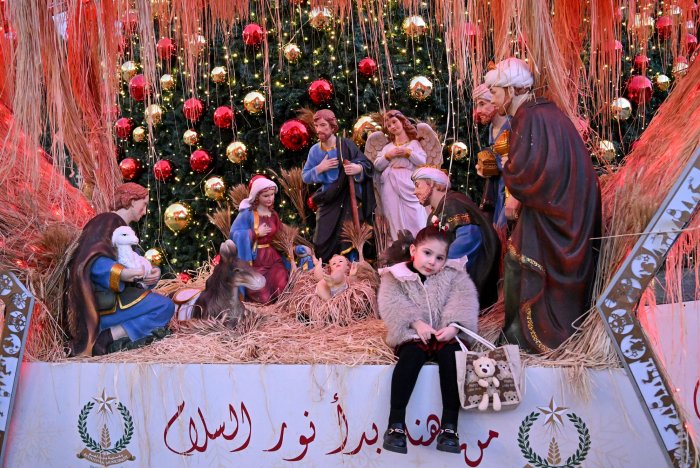
A young girl sits in front of a nativity scene in Manger Square, outside the Church of Nativity, in the biblical town of Bethlehem, West Bank, on December 23, 2025. Photo by Debbie Hill/UPI | License Photo

Source link

Shinhan Card reports massive data breaches

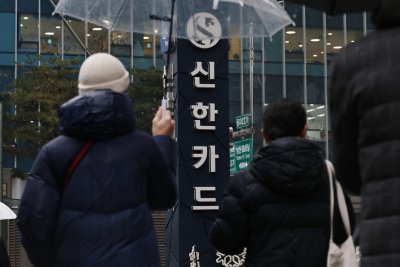
Shinhan Card headquarters in Seoul. The company has reported massive data leaks. Photo by Yonhap

SEOUL, Dec. 26 (UPI) — Shinhan Card, one of the country’s top credit card issuers, reported a massive data leak Tuesday.

The Seoul-based company said more than 190,000 cases of potential data exposure have been identified that involve merchant partners’ personal and business information.

The incident seems to stem from employee actions rather than an external cyberattack. Against this backdrop, Shinhan Card CEO Park Chang-hun issued a formal apology.

“We would like to express our deepest apologies,” he said. “Upon discovering the incident, we immediately took measures to block any further leaks and completed a thorough review of our internal processes.”

“To ensure the protection of personal information in the future, we will conduct a full investigation into the cause and circumstances of the leak and strictly discipline the employees involved,” he said.

Despite the steps, criticism intensified as a series of security failures have taken place throughout this year.

In late November, the country’s leading online retailer, Coupang, acknowledged that the names, email addresses, phone numbers and delivery addresses of 33.7 million customers had been leaked.

The New York Stock Exchange-listed corporation could face fines amounting to a maximum of 3% of its related revenue, which is levied by the state-run Personal Information Protection Commission.

Since Coupang logged sales of some $28 billion in 2024, potential fines could surpass $800 million.

Earlier this year, SK Telecom admitted that a cyberattack had breached its network, exposing sensitive data and compromising critical information of about 23 million subscribers.

As a result, the top mobile operator was fined $92 million and ordered to suspend adding new customers for nearly two months, in accordance with government guidelines.

Criticizing companies that failed to protect customer information, Prime Minister Kim Min-seok vowed to more than triple the fines for similar violations.

“Urgent legislative tasks, such as the introduction of punitive administrative fines, will be swiftly advanced so that they can be passed as soon as possible,” Kim said at a government meeting Wednesday.

“For repeated and serious violations, we will introduce punitive fines of up to 10% of a company’s total revenue and strengthen the obligation to notify individuals of personal data breaches,” he said.

When corporate data leaks are reported, the South Korean government is quick to lash out at companies. However, critics argue that the government and state-operated organizations have failed to adequately protect their own data.

In 2021, the Atomic Energy Research Institute, the state-run outfit responsible for nuclear power research, was breached by a suspected North Korean state-backed group through a virtual private network server.

Last year, police found that North Korean hackers had stolen data from the National Court Administration during June 2021 and January 2023. The compromised data exceeded 1 terabyte, equivalent to more than 1.5 billion pages of documents, including personal information.

Despite these threats, the government is reluctant to spend more money to mitigate cybersecurity risks.

For example, the Seoul administration cut the 2026 budget for the operation and maintenance of integrated security control centers run by local governments by almost 30% compared with this year.

It also reduced the 2026 budget for reinforcing security and protection facilities at government complexes by more than 40%.

This contrasts with the 8.1% year-on-year increase in the national budget for 2026.

“When hacking incidents occur, harsh penalties are imposed on private enterprises. For government agencies, however, it seemingly ends up with only a slap on the wrist. Such asymmetric punishments are not difficult to understand,” economic commentator Kim Kyeong-joon, formerly vice chairman at Deloitte Consulting Korea, told UPI.

“Moreover, the government is required to strengthen the country’s cybersecurity infrastructure. And leaks of public data or documents are even more dangerous when they are related to national defense. I wonder whether our government is doing enough in these areas,” he said.

Park Tae-hwan, head of the AhnLab CyberSecurity Center, called for stronger efforts to counter online threats and data breaches. AhnLab is the country’s leading cybersecurity vendor.

“Following a series of cyber intrusion incidents of late, regulations centered on bigger fines and punitive measures have come to the forefront, raising the burden on companies,” Park told UPI.

“To enable a meaningful shift in perception, a parallel policy approach is needed, like one that provides incentives to companies with strong security practices, thus encouraging greater voluntary investment in cybersecurity by the private sector,” he said.

Source link

Israel becomes first country to recognise Somaliland | Politics News

BREAKING,

Breakaway region achieves diplomatic breakthrough after more than 30 years without international recognition

Israel has become the first nation in the world to formally recognise Somaliland, ending the breakaway region’s three-decade quest for international legitimacy.

Foreign Minister Gideon Saar announced on Friday that Israel and the Republic of Somaliland had signed an agreement establishing full diplomatic relations, including the appointment of ambassadors and the opening of embassies in both countries.

The historic accord marks a significant breakthrough for Somaliland, which declared independence from Somalia in 1991 but has failed to gain recognition from any United Nations member state.

Somaliland controls the northwestern of the former British Protectorate on what is today northern Somalia.

Israeli Prime Minister Benjamin Netanyahu described the new friendship as “seminal and historic” in a video call with Somaliland President Abdirahman Mohamed Abdullahi, inviting him to visit Israel and calling it a “great opportunity to expand their partnership.”

Saar said the agreement followed a year of extensive dialogue between the two governments and was based on a joint decision by Netanyahu and Abdullahi.

“We will work together to promote the relations between our countries and nations, regional stability and economic prosperity,” Saar wrote on social media, adding that he had instructed his ministry to immediately institutionalise ties across a wide range of fields.

More to come…

Source link

Nigerian foreign minister: President Tinubu gave ‘go-ahead’ on U.S. strikes

Dec. 26 (UPI) — Nigerian President Bola Tinubu gave the U.S. government the “go-ahead” to carry out airstrikes on ISIS targets, Nigeria’s foreign minister said Friday.

U.S. President Donald Trump announced the strikes Thursday, calling them retaliation against “ISIS terrorist scum” for violence on “primarily, innocent Christians.”

Nigerian Foreign Minister Yusuf Tuggar told Al Jazeera the country cooperated with the U.S. Defense Department on the “fight against terrorism” in the northwestern region.

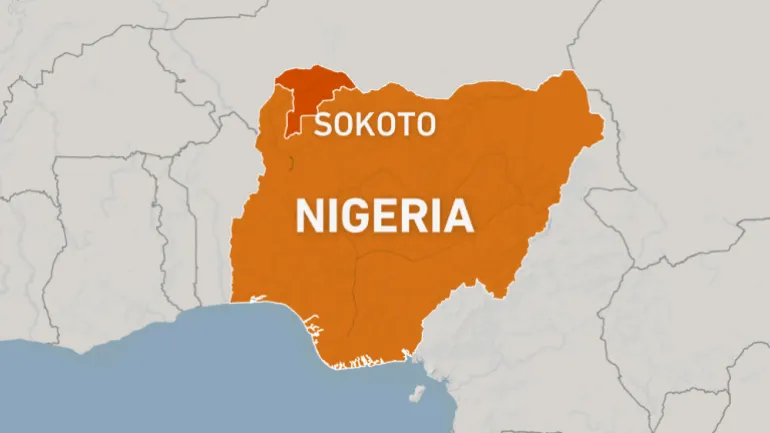
Citing local news sources, the news outlet said at least one missile landed in the village of Jabo in Sokoto state. Residents told Al Jazeera there were no casualties in the village.

“The bomb fell and burst into many pieces. There were two big pieces of debris. One of them was carried by two people,” resident Abdulrahman Mainasara said.

Resident Ismail Umar told the outlet the village hadn’t received any armed attacks from ISIS in more than two years.

Tuggar said the Nigerian government provided intelligence to the U.S. government, and he spoke with U.S. Secretary of State Marco Rubio on the phone twice before the strikes. He added that Tinubu was also involved in the decision-making process.

“Now that the U.S. is cooperating, we would do it jointly, and we would ensure, just as the [Nigerian] president emphasized yesterday before he gave the go-ahead, that it must be made clear that it is a joint operation, and is not targeting any religion nor simply in the name of one religion or the other,” Tuggar said in an appearance on Channels Television‘s Sunrise Daily program.

Tuggar and other officials, though, took issue with Trump’s rhetoric saying that ISIS violence targets only Christians in Nigeria.

“We are a multi-religious country, and we are working with partners like the U.S. to fight terrorism and safeguard the lives and properties of Nigerians,” Tuggar said.

Auwal Musa Rafsanjani, the director of the non-profit organization Civil Society Legislative Advocacy Centre, said suggestions that ISIS is primarily targeting people based on religion could incite ethnic and religious tensions in Nigeria.

“Muslims are being killed and harassed every day by the same criminals,” Rafsanjani said, according to the local news outlet Leadership. “This conversation should be about human life, not religion or geography.”

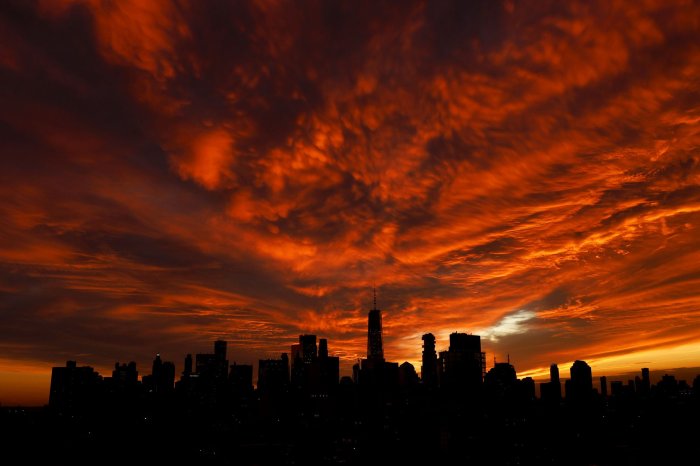
Clouds turn shades of red and orange when the sun sets behind One World Trade Center and the Manhattan skyline in New York City on November 5, 2025. Photo by John Angelillo/UPI | License Photo

Source link

Unification minister vows dialogue to resolve separated families cases

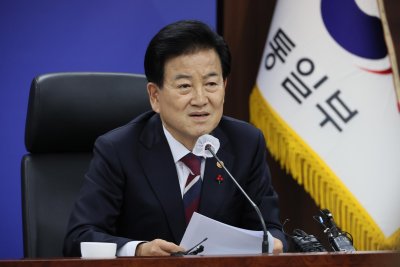
Chung Dong-young, South Korea’s unification minister, speaks during a post-briefing following a policy report at the government complex in Seoul. Dec. 19, 2025. Photo by Yonhap News Agency

Dec. 24 (Asia Today) — Unification Minister Chung Dong-young met separated families ahead of the year-end holidays and said South Korea will seek to resolve humanitarian issues through inter-Korean dialogue, the ministry said Tuesday.

The ministry said Chung visited Kim Bong-hwan, 105, on Tuesday. Kim told Chung he has spent his life hoping to meet younger siblings in North Korea after being separated from his parents and siblings during the Korean War. He asked that authorities at least confirm whether his family members in the North are alive or dead, the ministry said.

Chung said separated families represent one of the deepest tragedies created by the division of the peninsula. With most separated family members elderly, time is short, he said, adding the government will pursue multiple avenues to address humanitarian issues, including inter-Korean dialogue.

The ministry said Chung also delivered New Year’s cards and consolation gifts to 100 elderly separated family members.

It said it plans to continue projects aimed at supporting separated families and expanding the foundation for exchanges, including a Separated Family Day event held annually on the 13th day of the eighth lunar month, invitation events, DNA testing and video letter production.

The ministry said it also visited some families of detainees and abductees during the year-end holiday season.

Families of detainees and abductees said Vice Unification Minister Kim Nam-joong and ministry officials met families of detainees to offer support and that schedules were being coordinated for meetings with families of post-war abduction victims.

However, groups representing families of wartime abductees and Korean War prisoners of war said there has been no discussion or coordination so far on meetings with the ministry around the year-end and New Year holidays.

— Reported by Asia Today; translated by UPI

© Asia Today. Unauthorized reproduction or redistribution prohibited.

Source link

Lawmaker criticizes plan to rename North Korean defectors

People Power Party lawmaker Park Chung-kwon speaks on Ato TV’s “Shin Yul’s Political Check” in Seoul on Wednesday, Dec. 24, 2025. Photo by Asia Today

Dec. 24 (Asia Today) — People Power Party lawmaker Park Chung-kwon, a former North Korean defector, criticized the Unification Ministry’s plan to change the designation for North Korean defectors to “Northbound residents,” calling it “an idea you’d expect from a dictatorship.”

Park made the remarks Wednesday on Ato TV’s “Shin Yul’s Political Check,” saying he felt uneasy about what he described as a political intent to curry favor with the North Korean regime.

Park said some defectors feel discomfort with the current term, but argued the cause was misidentified. Changing the label to “Northbound residents” would not improve matters, he said.

He said the discomfort stems from social prejudice and alienation tied to their identity as people from North Korea, not from the wording itself.

Park said the fundamental solution is for defectors to settle successfully and integrate into South Korean society as citizens. He also claimed most defectors oppose the proposed change.

Park said the term “North Korean defectors” reflects people who came to South Korea seeking freedom and escaping oppression by the North Korean regime, and argued that meaning is not reflected in “Northbound residents.”

He also alleged the Unification Ministry conducted a survey on the name change targeting defectors and provided their personal information to a polling company without their consent. Park said he requested materials related to the survey results but the ministry has not disclosed them. He claimed there was no consensus among defectors and no discussion on the change.

Separately, Park criticized the revised Information and Communications Network Act passed in a National Assembly plenary session Wednesday, saying authorities label information as false to shut down the media and the public when it does not suit the ruling camp.

— Reported by Asia Today; translated by UPI

© Asia Today. Unauthorized reproduction or redistribution prohibited.

Source link

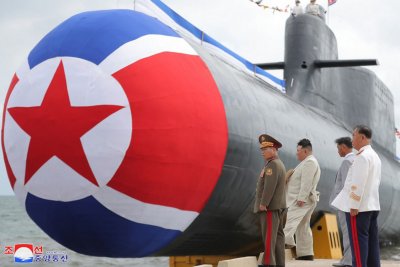
North Korea frames nuclear sub work as response to Seoul debate

Dec. 25 (Asia Today) — North Korea released images of Kim Jong-un inspecting what it called a nuclear-powered submarine construction project, a move analysts said was aimed at casting South Korea’s debate over nuclear-powered submarines as a security threat while justifying Pyongyang’s own push to strengthen its strategic nuclear forces.

The Korean Central News Agency reported Thursday that Kim described South Korea’s pursuit of nuclear-powered submarines as a threat that must be countered and offered remarks defending North Korea’s development of nuclear-powered submarines. Analysts said the message used Seoul’s discussion as a pretext to portray North Korea’s strategic weapons buildup as inevitable.

North Korea has previously unveiled undersea capabilities, including what it called a Sinpo C-class ballistic missile submarine, the “Kim Gun Ok Hero Submarine,” which it claimed was its first “tactical nuclear attack submarine” when it was introduced in September 2024, according to state media.

South Korean maritime defense experts, including Hanyang University professor Moon Geun-sik, said the latest disclosure appears intended to showcase parallel development of what North Korea described as an 8,700-ton nuclear-powered strategic guided missile submarine – believed by analysts to be a ballistic missile submarine – along with an underwater unmanned system, believed to be an underwater drone.

KCNA said Kim called for a “qualitative leap” in maritime nuclear forces and described nuclear-powered submarines as a core pillar of North Korea’s nuclear deterrent.

Experts said North Korea’s claims about a “threat” from South Korea diverge from how Seoul has described its own debate. Moon and Jeong Seong-jang, deputy director at the Sejong Institute, said South Korea’s discussion has not been framed around nuclear armament or preemptive strikes. They said it has been presented as a defensive option to support longer submerged operations and covert tracking to counter North Korea’s nuclear and submarine-launched ballistic missile threats.

North Korea experts also say Pyongyang has pursued sea-based missile capabilities in recent years, including efforts they describe as adapting the KN-23 short-range ballistic missile into a sea-based short-range submarine-launched ballistic missile and conducting an underwater test launch from a new 3,000-ton diesel-electric submarine.

Analysts said Kim’s remarks amount to political framing meant to discredit South Korea’s nuclear submarine discussion while rationalizing North Korea’s strategic weapons development. They said North Korea has steadily unveiled intercontinental ballistic missiles, submarine-launched ballistic missiles and tactical nuclear weapons and is now presenting nuclear-powered submarines as a further step in that progression, with an eye toward both internal cohesion and external pressure.

Attention has also focused on the suspected construction site. Experts reviewing the newly released video and images alongside past satellite analysis pointed to shipyard facilities in the Sinpo area of South Hamgyong Province as the most likely location.

Sinpo is widely viewed by analysts as North Korea’s primary hub for submarine and submarine-launched ballistic missile activity, with infrastructure and specialized personnel linked to construction and testing, including launch test facilities and underwater launch barges.

Some experts urged caution about North Korea’s technical capacity to field and operate an 8,700-ton nuclear-powered submarine, noting it would require reliable reactor miniaturization and shielding, radiation safety and a fuel cycle and maintenance system that can support long-term operations. Jeong and other analysts said it remains unclear whether North Korea has achieved those capabilities on a stable basis.

Still, analysts said the strategic impact can be felt regardless of the project’s maturity. Once North Korea publicly declares a nuclear-powered submarine program, they said, it reduces ambiguity and can heighten instability in the maritime environment around the Korean Peninsula.

Experts said Seoul should avoid being drawn into North Korea’s rhetorical framing while recognizing that sea-based nuclear and missile threats are becoming more entrenched. They said South Korea’s nuclear-powered submarine discussion should be refined as a defensive option within international norms and alliance cooperation and paired with broader maritime deterrence steps, including underwater surveillance, anti-submarine warfare and unmanned systems.

KCNA also reported Thursday that Kim reviewed the progress of what it described as newly developed underwater weapons and outlined plans tied to naval force reorganization and the creation of new units.

Analysts said that while Kim’s statement about South Korea’s nuclear submarine push was directed at Seoul, the broader objective was to justify North Korea’s own strategic weapons advancement. They said South Korea should separate principle from reality in its response and focus on capability building and international legitimacy rather than mirror rhetoric.

— Reported by Asia Today; translated by UPI

© Asia Today. Unauthorized reproduction or redistribution prohibited.

Source link

What is remigration, the far-right fringe idea going mainstream? | Migration News

Last week, Republican Ohio gubernatorial hopeful Vivek Ramaswamy challenged other Republicans over their idea that ancestry or heritage is what makes someone truly American.

“The idea that a ‘heritage American’ is more American than another American is un-American at its core,” Ramaswamy, who was born to Indian immigrant parents, said during Turning Point USA’s annual conference.

Remigration — once a fringe far-right notion advocating the deportation of ethnic minorities — is now gaining traction in United States Republican circles as President Donald Trump’s second term enters the final weeks of its first year.

Earlier this year, reports said that the US State Department was considering creating a department of remigration. A few months later, the Department of Homeland Security posted in favour of remigration online.

But it is not just American far-right figures evoking the idea of remigration; European far-right leaders are also joining in.

Here is a closer look at what remigration means and what its origins are.

What is remigration?

Broadly, remigration refers to when an immigrant voluntarily returns to their country of origin.

However, in the context of far-right movements, remigration is a method of ethnic cleansing.

For white ethnonationalists, remigration is a process through which all non-white people are forcibly removed from traditionally white countries.

What are the origins of remigration?

Ideas of remigration trace back to Nazi Germany in the late 1930s. The Nazis attempted to “remigrate” the Jews in Germany to Madagascar.

But the concept got wind through the work of Renaud Camus, a French novelist who devised the Great Replacement conspiracy theory in his 2011 book, Le Grand Remplacement.

His widely debunked white nationalist theory suggests that elites are replacing white Christians in the West with non-white, primarily Muslim, people through mass migration and demographic changes. Camus calls this “genocide by substitution”.

Far-right nationalists in Europe and beyond have borrowed ideas from this theory.

Heidi Beirich, an expert on the American and European far-right movements, told Al Jazeera that the term remigration is “relatively new” in far-right circles.

Beirich said that the concept was popularised by Martin Sellner.

Sellner, 36, is the leader of Austria’s ultranationalist Identitarian Movement, a far‑right group known for anti-immigration activism and promoting ethnonationalist ideology. Ethnonationalists define the nation primarily by shared ethnicity, ancestry, culture and heritage.

“Remigration advocates the forced removal of non-white people from what Sellner and others with his beliefs view as historically white countries, basically Europe, Canada, the US, Australia and New Zealand,” Beirich explained.

Beirich said remigration in essence, is a “policy solution to the white supremacist ‘Great Replacement’ conspiracy theory”.

Do different groups have different ideas?

There are strands of nationalists beyond ethnonationalism.

Civic nationalists, who also called liberal nationalists or constitutional nationalists, define the nation by shared political values, laws and institutions, regardless of ethnicity. They believe that a person belongs to a country if they hold legal citizenship and are committed to the state’s principles.

While civic nationalists are less enthusiastic about remigration than ethnonationalists, to them, remigration means voluntary return migration. This could mean policies or incentives for immigrants to return to their country of origin if they choose, often for economic, family or cultural reasons.

Why is the idea of remigration becoming mainstream?

Beirich said that Sellner has been pushing this idea with far-right parties in Europe for the past two years.

“The astounding thing is not that a xenophobic political party like AfD in Germany would be open to this, but rather that a white supremacist policy position is now being pushed by the US government.”

The AfD is a far-right party called Alternative for Germany, which is designated an “extremist” organisation in the country.

In May 2025, Axios reported, quoting an unnamed State Department official, that the department is planning to create an “Office of Remigration”.

Then, in an X post on October 14, the Department of Homeland Security wrote “remigrate,” adding a link to its mobile application, which allows US immigrants to self-deport.


Where is the remigration movement picking up?

The idea of remigration has been revived by far-right leaders in Europe as well.

This includes Herbert Kickl, the leader of Austria’s far-right anti-immigration Freedom Party (FPO).

“As People’s Chancellor, I will initiate the remigration of all those who trample on our right to hospitality,” Kickl said in the FPO manifesto ahead of the election in September 2024.

While FPO won most seats in the election, other parties — the conservative People’s Party (OVP), the Social Democrats (SPO) and the liberal NEOS — came together to form a ruling coalition under an early 2025 deal which sidelined the FPO.

Across the border in Germany, Alice Weidel, the leader of the AfD, referred to “remigration” while supporting the closure of the country’s borders to new immigrants at a party conference in January.

In May 2025, a conference called the Remigration Summit was held in Italy. It was attended by far-right activists from across Europe. InfoMigrants, a website which covers migration issues in Europe, estimated that 400 right-wing activists attended the summit.

But Beirich said that remigration, if implemented as a policy, would in effect be an “attempt to create all-white countries through ethnic cleansing”.

Source link

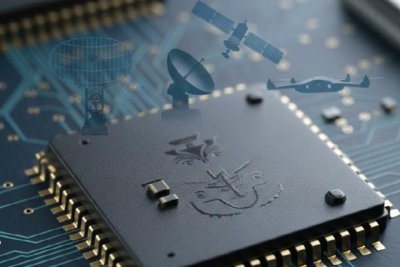
South pushes defense semiconductors to cut reliance on foreign supply

A composite image shows defense semiconductor chips with silhouettes of military platforms such as radars, satellites and drones. Dec 25, 2025. Photo by Asia Today

Dec. 25 (Asia Today) — South Korea’s defense procurement agency is accelerating efforts to develop and certify defense-grade semiconductors, warning that reliance on foreign supply chains for critical chips could delay weapons deployment and weaken long-term competitiveness in arms exports.

Modern weapon systems increasingly depend on semiconductors for core functions including missile guidance and navigation, radar detection and tracking, encrypted military communications and autonomous operation in drones and unmanned platforms, defense officials and industry experts say.

Analysts say dependence on overseas sources for such components creates vulnerabilities that go beyond cost. If access is disrupted by export controls, manufacturing changes or supply discontinuation, military programs can face delays because defense-grade parts often require retesting and recertification even after minor design or packaging changes.

The Defense Acquisition Program Administration said it launched a task force in January 2024 to prepare for a Defense Semiconductor Center and has been building a roadmap for project planning and management along with a dedicated reliability evaluation and certification function, according to a notice posted on the government innovation portal.

In a December policy briefing, the agency said it began research and development projects tied to defense semiconductors, including high-power radio-frequency components for radars and semiconductors for space communications.

Defense semiconductor applications span a growing set of systems, including transmit-receive modules for active electronically scanned array radars, processing chips for synthetic aperture radar on unmanned aerial vehicles, satellite communications components for small satellites and tactical-grade inertial sensors, analysts said.

DAPA has pursued center establishment in parallel with research programs aimed at building a domestic ecosystem. The agency said it selected five core technology projects in May, with four expected to begin within the year. In December, it announced the start of projects including space semiconductors for small satellite communications, tactical-grade gyro sensors, chips for unmanned aerial vehicle synthetic aperture radar and chips for active electronically scanned array radars, emphasizing a goal of reducing reliance on foreign technology.

The agency also held a defense semiconductor development forum in November that brought together government officials, industry and researchers, according to the report.

Experts said the next hurdles are less about initial research and more about building an ecosystem that can certify reliability and support sustained production.

Defense-grade semiconductors must perform under extreme conditions including temperature swings, vibration, shock, electromagnetic exposure and long storage periods, requiring testing infrastructure and standards that differ from civilian certification methods.

Analysts also said South Korea will need an end-to-end supply chain covering design, manufacturing, packaging and verification. Because defense chips are often produced in small volumes across multiple specialized variants, they can be deprioritized on commercial foundry and packaging lines unless trusted production capacity is secured.

Specialized investment will also be needed in areas such as compound semiconductors and radiation-hardened components used in radars, electronic warfare systems and satellites, the report said.

To ensure research translates into deployment, experts said development should be structured around early joint design involving military users, system integrators and component makers.

Analysts said defense semiconductors should be treated as national security infrastructure that affects the speed of force deployment, operational sustainability and export reliability, rather than as an optional industrial policy goal.

– Reported by Asia Today; translated by UPI

© Asia Today. Unauthorized reproduction or redistribution prohibited.

Source link

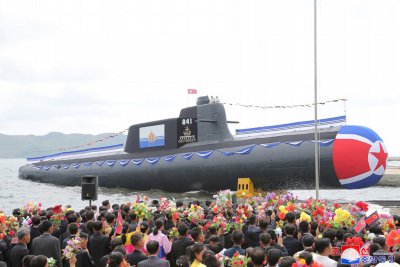
North Korea touts 8,700-ton nuclear sub as deterrence shift

This image, released on September 8, 2023, by the North Korean Official News Service (KCNA), shows North Korean leader Kim Jong Un during the launch of the country’s first tactical nuclear attack submarine at Sinpho shipyard. According to state media, the tactical nuclear attack submarine, No. 841, the first of its kind, was transferred to the East Sea Fleet of the KPA Navy and named the “Hero Kim Kun Ok.” File Photo by KCNA/UPI | License Photo

Dec. 25 (Asia Today) — North Korea’s Rodong Sinmun on Thursday showcased what it described as the construction site of an 8,700-ton “nuclear-powered strategic guided missile submarine,” calling it a “revolutionary change” in the country’s war deterrence capability.

Photos of the vessel suggest the exterior is close to completion and may already include a small reactor, which would be required for operations, analysts said. The conning tower also appeared to show what could be launch tubes for submarine-launched ballistic missiles, or SLBMs, similar in concept to North Korea’s existing 3,000-ton Kim Gun Ok submarine, the report said.

North Korea has pursued nuclear submarine development as a key defense goal since the ruling party’s 2021 congress, when it set out what it called five major tasks for strengthening national defense capabilities, Rodong Sinmun reported.

During the site visit, Kim Jong-un said North Korea had built a “nuclear shield” to safeguard national security and had secured the ability to expand it as much as necessary, according to the newspaper. He said the country would continue pursuing naval nuclear armament on both strategic and tactical levels.

Kim also said there would be no change in North Korea’s security policy and warned that if an adversary threatens what he called the country’s strategic sovereignty and security, it would “pay the price,” the report said.

The disclosure drew attention to whether North Korea can actually operate a nuclear-powered submarine of that size. The report noted questions about whether North Korea has mastered small reactor technology and large submarine construction even as it maintains uranium enrichment capabilities. It said some assessments link the possibility of technological support to North Korea’s closer ties with Russia since the Russia-Ukraine war, including speculation that North Korea could have acquired relevant technology from Russia.

The public rollout also comes as South Korea’s own debate over nuclear-powered submarines has gained momentum, and some analysts viewed North Korea’s disclosure as a show of force aimed at Seoul, the report said.

Cho Han-beom, a senior research fellow at the Korea Institute for National Unification, said the visible SLBM tubes on the conning tower indicate North Korea’s technology remains limited and suggested the disclosure may have been rushed in response to South Korea’s discussion. Yoo Yong-won, a People Power Party lawmaker, said the altered conning tower appears designed to accommodate as many as 10 SLBMs and resembles the Kim Gun Ok submarine, which he said has drawn criticism for its unusual shape.

Rodong Sinmun also reported on a congratulatory message that Russian President Vladimir Putin sent to Kim on Dec. 18, saying Putin praised North Korean troops’ “heroic participation” and highlighted expanded ties across politics, trade and the economy and other areas.

— Reported by Asia Today; translated by UPI

© Asia Today. Unauthorized reproduction or redistribution prohibited.

Source link

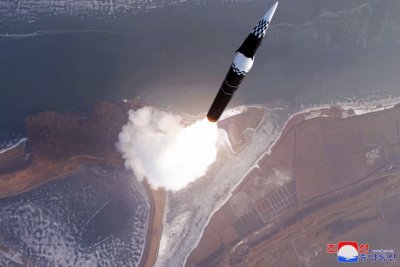
S. Korea sees N. Korea test new long-range air defense missile

This image, released on January 7, 2025, by the North Korean Official News Service (KCNA), shows the test-fire of a new intermediate-range hypersonic ballistic missile on January 6. The launch, which was witnessed by North Korean leader Kim Jong Un, was meant to demonstrate that the country’s “hypersonic missile system will reliably contain any enemies in the Pacific region that can affect the security of our state.” File Photo by KCNA/UPI | License Photo

Dec. 25 (Asia Today) — North Korea said it conducted a first test launch of a high-altitude long-range surface-to-air missile system under development, but a South Korean defense expert said the launch appeared to be a flight test because no interception footage was released.

North Korea’s Korean Central News Agency said the Missile Bureau carried out the test Wednesday to evaluate the system’s tactical and technical characteristics. The agency said the missile hit and destroyed a simulated high-altitude target at a range of 200 kilometers.

The Missile Bureau said the test was part of routine work by the bureau and its research institutes to advance the country’s air defense capabilities. State media said Kim Jong-un observed the launch and praised the results.

The missile was first shown publicly at an event marking the 80th anniversary of North Korea’s air force last month, according to the report.

Shin Jong-woo, secretary general of the Korea Defense and Security Forum, said North Korea claimed it intercepted a simulated target but did not release footage of the intercept. He said that suggests the test focused on flight performance and reflects an effort to develop a new surface-to-air missile as North Korea’s SA-5 long-range system ages.

South Korea’s Joint Chiefs of Staff said it detected the launch Wednesday but did not disclose it publicly at the time.

The Joint Chiefs of Staff said it had detected indications of a launch in advance and was prepared. It said that around 5 p.m. Wednesday it detected multiple projectiles believed to be surface-to-air missiles launched from the Sondok area in South Hamgyong Province toward the East Sea.

The Joint Chiefs of Staff said it is closely monitoring North Korea’s activities under the South Korea-United States combined defense posture and remains ready to respond to any provocation.

— Reported by Asia Today; translated by UPI

© Asia Today. Unauthorized reproduction or redistribution prohibited.

Source link

President Lee attends Christmas service at Incheon church

A handout photo made available by the presidential office shows South Korean President Lee Jae Myung (L) and first lady Kim Hea Kyung (R) participate in a Christmas Mass at Myeongdong Cathedral in central Seoul, South Korea, 25 December 2025. Photo by SK PRESIDENTIAL OFFICE HANDOUT SOUTH KOREA/EPA

Dec. 25 (Asia Today) — President Lee Jae-myung and first lady Kim Hye-kyung attended a Christmas service Thursday with about 130 worshippers at Haein Church in Incheon, the presidential office said.

Spokesperson Kim Nam-joon said in a written briefing that the visit was meant to reflect on the meaning of Christmas, offer a message of comfort and hope to the public beyond religion and reaffirm the value of social integration.

Kim said Lee met Pastor Lee Jun-mo and his wife, Pastor Kim Young-sun, upon arriving at the church and thanked them for the opportunity to share Christmas greetings there.

The pastors offered well-wishes and urged Lee to embrace vulnerable members of society, the spokesperson said.

Haein Church was founded in 1986 as what the presidential office described as a workers-funded “people’s church.” It is located in Gyeyang District, which was Lee’s constituency when he served as a lawmaker. The church is known for community projects supporting people including the homeless and victims of domestic violence, the presidential office said.

After the service, Lee and Kim had bibimbap with church members in the church dining hall, the spokesperson said. They later visited the Notre Dame Convent in Gyeyang District to exchange Christmas greetings.

Lee also attended a Christmas Mass Thursday afternoon at Myeongdong Cathedral in Seoul, which the presidential office said drew about 1,000 worshippers, including Archbishop Chung Soon-taek of Seoul.

— Reported by Asia Today; translated by UPI

© Asia Today. Unauthorized reproduction or redistribution prohibited.

Source link

Polish jets intercept Russian reconnaissance plane spotted near airspace | NATO News

Poland’s defence minister said Russian aircraft was ‘escorted’ from area and did not pose immediate security threat.

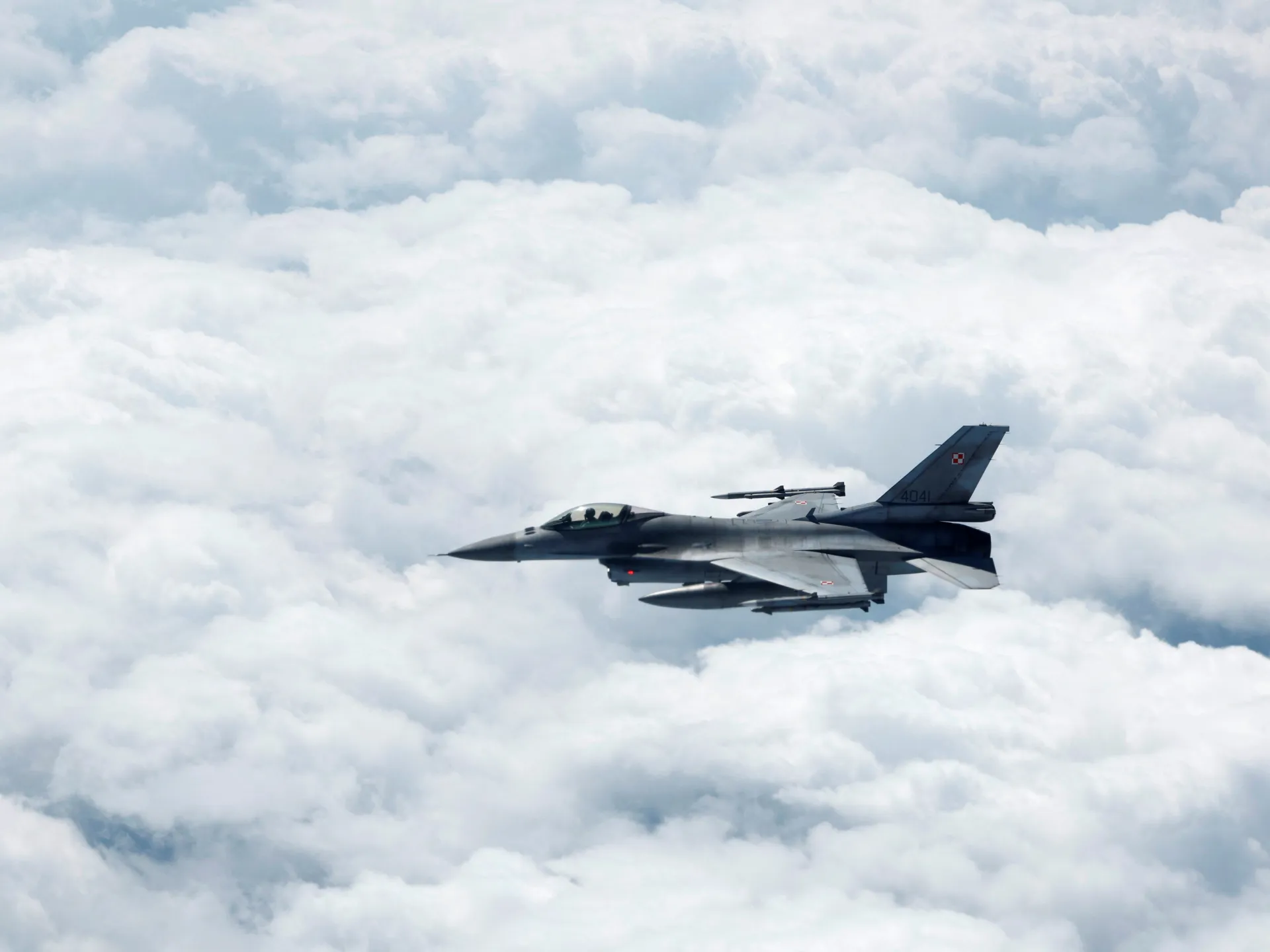
Poland said its air force intercepted a “Russian reconnaissance aircraft” flying near the border of its airspace just hours after tracking suspected smuggling balloons coming from the direction of neighbouring Belarus.

“This morning, over the international waters of the Baltic Sea, Polish fighter jets intercepted, visually identified, and escorted a Russian reconnaissance aircraft flying near the border of Polish airspace from their area of responsibility,” the Operational Command of the Polish Armed Forces said in a post on X on Thursday.

Recommended Stories

list of 4 itemsend of list

Polish forces also tracked unknown “objects” flying in the direction of Poland from Belarus during the previous night, prompting Warsaw to temporarily close civilian airspace in the northeast of the country.

“After detailed analysis, it was determined that these were most likely smuggling balloons, moving in the direction and at the speed of the wind. Their flight was continuously monitored by our radar systems,” Operational Command said.

The post did not disclose any further details about the number or size of the balloons.

Polish Defence Minister Wladyslaw Kosiniak-Kamysz said on X that the incidents did not pose an immediate threat to Poland’s security, and he thanked the “nearly 20,000 of our soldiers who, during the Holidays, watch over our safety”.

“All provocations over the Baltic Sea and near the border with Belarus were under the full control of the Polish Army,” he said.

Translation: Another busy night for the operational services of the Polish Army. All provocations, both over the Baltic Sea and over the border with Belarus, were under full control. I thank nearly 20,000 of our soldiers who, during the Holidays, watch over our safety – and as can be seen – do so extremely effectively.

The Belarusian and Russian ‌embassies in Warsaw did not immediately respond ⁠to the Reuters news agency’s requests for comment.

Smuggler balloons from Belarus have repeatedly disrupted air traffic in neighbouring Lithuania, forcing airport closures. Lithuania says the balloons are sent by smugglers transporting cigarettes and ‌constitute a “hybrid attack” by Belarus, a close ally of Russia. Belarus has denied responsibility for the balloons.

The latest air alerts in Poland came three months after Poland and NATO forces shot down more than a dozen Russian drones as they flew over Polish airspace between September 9 and 10.

The event was the largest incursion of its kind on Polish airspace since Russia invaded Ukraine in February 2022.

Following the incident, NATO-member Poland called an emergency session of the United Nations Security Council to discuss the “blatant violation of the UN Charter principles and the customary law”.

Polish Foreign Minister Radoslaw Sikorski said at the time that Russia was testing how quickly NATO countries could respond to threats.

Source link

Russia-Ukraine war: List of key events, day 1,401 | Russia-Ukraine war News

These are the key developments from day 1,401 of Russia’s war on Ukraine.

Here is where things stand on Friday, December 26:

Fighting

  • Officials in Russia’s Krasnodar region reported a huge fire following a Ukrainian drone strike on two storage tanks holding oil products in the southern Russian port of Temryuk. The blaze spread across roughly 2,000 square metres (some 21,500 square feet).
  • Long-range Ukrainian drones targeted oil storage facilities at Temryuk port, as well as a gas processing plant in Russia’s Orenburg region, Ukraine’s SBU security service said.
  • Ukraine’s General Staff said its military also struck the Novoshakhtinsk oil refinery in Russia’s Rostov region using Storm Shadow missiles, triggering several explosions.
  • The General Staff described the Russian refinery as a major supplier of oil products in southern Russia that supports Moscow’s military operations in Ukraine.
  • Russia’s Ministry of Defence announced that its forces had taken control of the settlement of Sviato-Pokrovske in eastern Ukraine’s Donetsk region, according to reports from Russian state news agencies.

Regional security

  • Poland sent fighter jets to intercept a Russian reconnaissance aircraft flying near its airspace over the Baltic Sea and said dozens of objects entered Polish airspace from Belarus overnight, warning the incidents during the holiday season may signal a provocation.
  • Russia’s Ministry of Foreign Affairs accused the United States of encouraging what it called “piracy” in the Caribbean and Pacific Ocean by blockading Venezuela, while expressing hope that US President Donald Trump’s pragmatism could prevent further escalation.
  • Moscow also reiterated its support for Venezuelan President Nicolas Maduro’s government and its efforts to safeguard national sovereignty amid threats by the US to remove Maduro from power.

Peace talks

  • Ukrainian President Volodymyr Zelenskyy said he spoke with Donald Trump’s special envoy Steve Witkoff and son-in-law, Jared Kushner, for about an hour on how to end the war with Russia and “how to bring the real peace closer”.

  • “Of course, there is still work to be done on sensitive issues,” the Ukrainian leader said. “But together with the American team, we understand how to put all of this in place. The weeks ahead may also be intensive. Thank you, America!”
  • Russia believes negotiations with the US to end the war in Ukraine are making gradual progress, Russian Foreign Ministry spokeswoman Maria Zakharova said. She described the talks as slow-moving but advancing steadily.

Politics and diplomacy

  • Kremlin spokesman Dmitry Peskov said President Vladimir Putin had sent the US president a Christmas greeting along with a congratulatory message.
  •  Russia said it had put forward a proposal to France concerning Laurent Vinatier, a French researcher imprisoned under Russia’s foreign agent laws, adding that the next steps in the Frenchman’s case now rest with Paris.

Sanctions

  • Russia’s target of producing 100 million tonnes of liquefied natural gas annually has been pushed back by several years due to international sanctions, the country’s Deputy Prime Minister Alexander Novak said in comments aired on state television.

Source link

What are the consequences of Israel’s expanding illegal settlements? | Israel-Palestine conflict News

Israel is escalating the confiscation of Palestinian land in the occupied West Bank.

Israel has carried out the biggest land grab in the occupied West Bank since the signing of the Oslo Accords more than three decades ago.

Its right-wing government has accelerated the confiscation of Palestinian land to build new settlements, which are illegal under international law.

Recommended Stories

list of 3 itemsend of list

At the same time, Israeli settler attacks are increasing and intensifying.

For many Palestinians, this means all hopes of peace are dashed and, with them, the prospects of an independent state.

So what are Israel’s plans in the West Bank? And what are the implications of its policies?

Presenter:

Dareen Abughaida

Guests:

Xavier Abu Eid – political analyst and former adviser to the PLO negotiation team

Daniel Levy – president of the US/Middle East Project and a former Israeli negotiator

Yariv Oppenheimer – Israeli human rights activist and board member of the Peace Now advocacy group

Source link

Trump says US launched strike against ISIL in northwest Nigeria | Donald Trump News

DEVELOPING STORY,

US president says ‘deadly strike’ in Nigeria targeted ISIL fighters who had killed ‘primarily, innocent Christians’.

The United ‍States ‍has carried out an air strike against ISIL (ISIS) fighters in northwest Nigeria, US ⁠President Donald Trump ​said.

“Tonight, ⁠at my direction as Commander in Chief, the United States launched a powerful and ​deadly strike ‌against ISIS Terrorist Scum in Northwest Nigeria,” ‌Trump said in a post on his Truth Social platform on Thursday evening.

Recommended Stories

list of 4 itemsend of list

Trump said ISIL fighters had “‌targeted and viciously” killed “primarily, innocent Christians, at ⁠levels not seen for many years, and even Centuries!”

“I have previously warned these Terrorists that if they did not stop the slaughtering of Christians, there would be hell to pay, and tonight, there was,” Trump said.

The US military’s Africa Command (AFRICOM), which is responsible for operations in Africa, said in a post on X that the air strike was carried out “at the request of Nigerian authorities” and had killed “multiple ISIS terrorists”.

“Grateful for Nigerian government support & cooperation,” US Secretary of Defense Pete Hegseth wrote on social media, warning also of “more to come”, without providing details.

In a statement, AFRICOM said the strike occurred in “Soboto state,” an apparent reference to Nigeria’s Sokoto state.

[Al Jazeera]
[Al Jazeera]

The US military action comes weeks after Trump said he had ordered the Pentagon to begin planning for potential military action in Nigeria following claims of Christian persecution in the country.

Nigeria’s government has said armed groups target both Muslim and Christian communities in the country, and US claims that Christians face persecution ‌do not represent a complex security situation and ignore efforts by Nigerian authorities to safeguard religious freedom.

Al Jazeera’s Shihab Rattansi, reporting from Washington DC, said the threat of US military action in Nigeria had been “percolating for some time” and Donald Trump had accused Nigeria of not doing enough to protect its Christian community in his first term as president.

“But in the last two months or so, with congressional pressure and the State Department, they declared Nigeria a particular country of concern when it came to the rights of Christians and we had heard that the US had begun overflight surveillance of Nigeria from an airbase in Accra, in Ghana, over the last several weeks. And now we have this,” Rattansi said.

“On Christmas day, the Trump administration acts. This will go down very well with Trump’s Christian evangelical base, I am sure,” he said.

Trump issued his attack statement on Christmas Day while he was at ‌his Palm Beach, Florida, Mar-a-Lago Club, where he has been spending the holiday.

Source link

Louisiana National Guard deploys in New Orleans

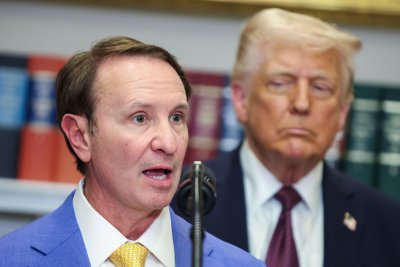
Louisiana Gov. Jeff Landry, left, is deploying up to 350 Louisiana National Guard members to New Orleans through February to ensure safety and assist the Trump administration’s federal immigration law enforcement efforts there. File Photo by Samuel Corum/UPI | License Photo

Dec. 25 (UPI) — Up to 350 Louisiana National Guard members began deploying this week in New Orleans and will stay through February to help maintain peace and safety during New Year’s and special events.

The deployment also comes amid efforts to locate and deport those who illegally are in the United States.

“These National Guard troops will support federal law enforcement partners, including the Department of Justice and the Department of Homeland Security, as they enforce federal law and counter high rates of violent crime in New Orleans and other metropolitan areas in Louisiana,” Defense Department spokesman Sean Parnell said in a prepared statement on Tuesday.

Louisiana Gov. Jeff Landry maintains his command and control of the state’s National Guard, whose mission is to enhance safety.

He said the troops will be fully deployed ahead of New Year’s Eve and will stay in New Orleans at least through February.

The deployment was announced after the Supreme Court on Tuesday struck down President Donald Trump’s effort to deploy the Illinois National Guard in Chicago over the protests of Illinois Gov. J.B. Pritzker and Chicago Mayor Brandon Johnson.

The troops will be tasked with ensuring safety in the French Quarter during New Year’s celebrations and during the Sugar Bowl and Mardi Gras.

“We know how to make cities safe, and the National Guard complements cities that are experiencing high crime,” Landry said during an appearance on The Will Cain Show.

He cited President Donald Trump’s National Guard deployment in Washington, D.C., as an example of how the troops can make cities safer for residents and visitors.

“When he wanted to send the National Guard into Washington, D.C., Louisiana was one of the first to raise its hand and say our troops will go there,” Landry said. “And the city is so much better.”

Source link

Venezuela frees dozens detained during protests against Maduro | Human Rights News

Families celebrate Christmas releases while calling for full freedom of detainees.

Authorities in Venezuela have released at least 60 people arrested during protests against President Nicolas Maduro’s re-election, according to a human rights advocacy group, though campaigners say hundreds remain behind bars.

The releases began early on Thursday, over Christmas, according to the Committee for the Freedom of Political Prisoners, a group of rights activists and relatives of detainees arrested during unrest that followed July’s presidential election.

Recommended Stories

list of 3 itemsend of list

“We celebrate the release of more than 60 Venezuelans, who should never have been arbitrarily detained,” committee head Andreina Baduel told the AFP news agency.

“Although they are not entirely free, we will continue working for their full freedom and that of all political prisoners.”

Maduro secured a third term in office in the July 2024 vote, a result rejected by parts of the opposition amid allegations of fraud. The disputed outcome triggered weeks of demonstrations, during which authorities arrested about 2,400 people. Nearly 2,000 have since been released, according to rights groups.

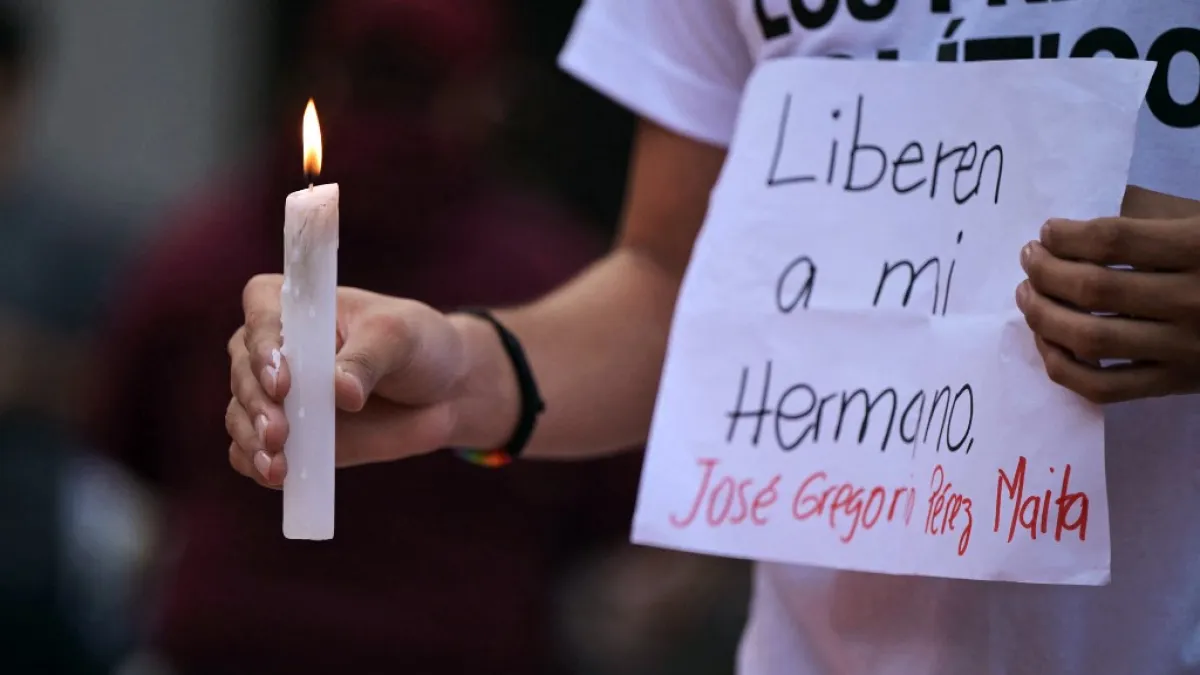
Despite the latest releases, Venezuela still holds at least 902 political prisoners, according to Foro Penal, an NGO that monitors detentions.

Relatives said many of those freed had been held at Tocoron prison, a maximum-security facility in Aragua state, roughly 134km (83 miles) from the capital Caracas. Officials have not publicly clarified the conditions under which detainees were released.

“We must remember that there are more than 1,000 families with political prisoners,” Baduel said. Her father, Raul Isaias Baduel, a former defence minister and once an ally of the late president, Hugo Chavez, died in custody in 2021.

Source link

Trump ballroom plans to undergo review in January

The National Capital Planning Commission will review the Trump administration’s plans to modernize the White House’s East Wing, including ballroom construction, during a Jan. 8 meeting. File Photo by Bonnie Cash/UPI | License Photo

Dec. 25 (UPI) — The National Capital Planning Commission has added the East Wing Modernization Project at the White House to its Jan. 8 agenda to review construction of a new ballroom and other improvements.

Trump administration officials will provide the commission with an informational presentation on the ballroom construction and other planned improvements, according to The Hill.

No public testimony will be heard and no vote taken on the project during the meeting, according to the NCPC.

“This is an opportunity for the project applicant to present the project and for commissioners to ask questions and provide general observations prior to formal review, which we anticipate this spring,” the NCPC said in a FAQ published on the commission’s website.

The NPC has no authority over White House demolitions or site preparations and only reviews building exteriors, per the National Capital Planning Act, but it does review proposed new construction or permanent site improvements.

The National Environmental Policy Act does give the NCPC the authority to review projects within the District of Columbia to ensure compliance with the NEPA.

The National Historic Preservation Act, though, does not apply in the matter as the White House and its grounds are excluded from its provisions.

The Trump administration initially said the construction of a new ballroom in the East Wing of the White House would cost $200 million, and said that the project will be funded by private donations.

President Donald Trump last week said the project could cost twice that amount but that donors would cover all additional costs, too.

The president earlier announced the ballroom construction, which he said is needed to provide a modern event space inside the White House.

Officials with the National Trust for Historic Preservation challenged the construction in federal court and sought an injunction to halt all work.

A federal judge denied the injunction request but ordered the Trump administration to undergo a review process for the project.

President Donald Trump holds a signed executive order reclassifying marijuana from a schedule I to a schedule III controlled substance in the Oval Office of the White House on Thursday. Photo by Aaron Schwartz/UPI | License Photo

Source link

Turkish police arrest 115 ISIS members to thwart Christmas, New Year attacks

Istanbul officials on Thursday announced they detained 115 suspected members of ISIS who were planning terror attacks in Turkey aimed at mostly non-Muslim people at Christmas and New Year events, such as the Christmas mass at Saint Antuan Church pictured in 2022. File Photo by Erdem Sahin/EPA

Dec. 25 (UPI) — Police in Turkey detained 115 people on Thursday suspected of planning to stage terror attacks at Christmas and New Year’s Day celebrations in the country.

The Istanbul Provincial Police Department, on instruction from the city’s Chief Public Prosecutor’s Office, carried out 124 raids targeting 137 suspected members of ISIS, officials said in a press release.

“These suspects were identified as being in contact with conflict zones within the scope of terrorist organization activities,” the prosecutor’s office said in a press release posted to X.

The suspects, prosecutors said, were “planning attacks and issuing calls for action targeting our country — specifically aimed at non-Muslim individuals — within the context of upcoming Christmas and New Year events.”

Officials apprehended 115 of the 137 suspects and seized pistols, cartridges and “numerous organization documents” during the raids.

The Turkish National Intelligence Organization had earlier captured what it said is a senior ISIS figure who is suspected of being sent to carry out a suicide attack in Turkey, the Daily Sabah reported.

Other ISIS operators had as a result been investigated in Turkey after spending time in the Afghanistan-Pakistan border region where they trained and planned for potential security attacks, according to Turkish intelligence figures.

Turkey, which shares a border with Syria, where ISIS continues to operate, has worked with Syria’s new president, as well as officials in the United States and Europe, to investigate and root what is left of the terrorist group, the BBC reported.

A young girl sits in front of a nativity scene in Manger Square, outside the Church of Nativity, in the biblical town of Bethlehem, West Bank, on December 23, 2025. Photo by Debbie Hill/UPI | License Photo

Source link