Top News

Top news of today about travel

Four reasons why Benjamin Netanyahu may not want a Gaza ceasefire to hold | Israel-Palestine conflict News

Israeli Prime Minister Benjamin Netanyahu has reached the end of his latest trip to the United States and appears to have gained what he wants from President Donald Trump.

Trump hailed Netanyahu after their meeting on Monday, calling him a “hero” and saying Israel – and by extension its prime minister – had “lived up to the plan 100 percent” in reference to the US president’s signature Gaza ceasefire.

Recommended Stories

list of 4 itemsend of list

That is despite reports emerging last week that US officials were growing frustrated over Netanyahu’s apparent “slow walking” of the 20-point ceasefire plan – imposed by the US administration in October – suspecting that the Israeli prime minister might be hoping to keep the door open to resuming hostilities against the Palestinian group Hamas at a time of his choosing.

Under the terms of that agreement – after the exchange of all captives held in Gaza, living and dead, aid deliveries into the enclave and the freezing of all front lines – Gaza would move towards phase two, which includes negotiations on establishing a technocratic “board of peace” to administer the enclave and the deployment of an international security force to safeguard it.

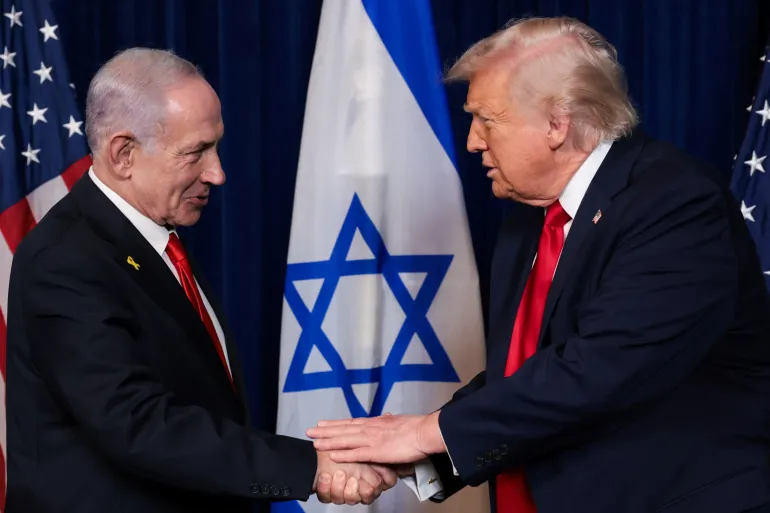
Netanyahu and Trump shake hands in front of Israel flag
US President Donald Trump, right, called Israeli Prime Minister Benjamin Netanyahu a ‘hero’ during his visit to Trump’s Florida estate on December 29, 2025, saying he had lived up to Trump’s ceasefire plan ‘100 percent’ [Jonathan Ernst/Reuters]

So far, Netanyahu has not allowed in all of the required aid that Gaza desperately needs and is also maintaining that phase two cannot be entered into until Hamas returns the body of the last remaining captive. He has also demanded that Hamas disarms before Israel withdraws its forces, a suggestion fully endorsed by Trump after Monday’s meeting.

Hamas has repeatedly rejected disarmament being forced upon it by Israel, and officials have said that the question of arms was an internal Palestinian matter to be discussed between Palestinian factions.

So is Netanyahu deliberately trying to avoid entering the second phase of the agreement, and why would that be the case?

Here are four reasons why Netanyahu might be happy with things just as they are:

He’s under pressure from his right

Netanyahu’s ruling coalition is, by any metric, the most right wing in the country’s history. Throughout the war on Gaza, the support of Israel’s hardliners has proven vital in shepherding the prime minister’s coalition through periods of intense domestic protest and international criticism.

Now, many on the right, including National Security Minister Itamar Ben-Gvir and Finance Minister Bezalel Smotrich, oppose the ceasefire, protesting against the release of Palestinian prisoners and insisting that Gaza be occupied.

Netanyahu’s defence minister, Israel Katz, has also shown little enthusiasm for honouring the deal his country committed to in October. Speaking at a ceremony to mark the expansion of the latest of Israel’s illegal settlements in the occupied West Bank, Katz claimed that Israel’s forces would remain in Gaza, eventually clearing the way for further settlements.

Katz later walked his comments back, reportedly after coming under pressure from the US.

Israel's Defence Minister Israel Katz
Israeli Defence Minister Israel Katz [Menahem Kahana/AFP]

He doesn’t want an international force in Gaza

Allowing an international force to deploy to Gaza would limit Israel’s operational freedom, constraining its military’s ability to re-enter Gaza, conduct targeted strikes or pursue Hamas remnants within the enclave.

So far, despite the ceasefire, Israeli forces have killed more than 400 people in the enclave since agreeing to halt fighting on October 10.

Politically, agreeing to an international stabilisation force, particularly one drawn from neighbouring states, would broaden what Israel has often seen as a domestic war into an international conflict with many of the strategic, diplomatic and political decisions over that conflict being made by actors outside of its control.

It could also be framed domestically as a concession forced by the US and international community, undermining Netanyahu’s repeated claims of maintaining Israeli sovereignty and strategic independence.

“If Netanyahu allows a foreign military force into Gaza, he immediately denies himself a large degree of his freedom to operate,” Israeli political analyst Nimrod Flaschenberg said from Berlin. “Ideally, he needs things to remain exactly where they are but without alienating Trump.”


Smoke billows following an Israeli strike that targeted a building in the Bureij camp for Palestinian refugees in the central Gaza Strip on October 19, 2025. Gaza's civil defence agency said a series of Israeli air strikes on October 19 killed at least 11 people across the territory, as Israel and Hamas traded blame for violating a ceasefire. (Photo by Eyad BABA / AFP)
Smoke rises from an Israeli strike on Gaza’s Bureij refugee camp on October 19, 2025, in one of the near-daily attacks Israel has carried out since the ceasefire went into effect [Eyad Baba/AFP]

He wants to resist any progress towards a two-state solution

While not explicitly mentioning a two-state solution, the ceasefire agreement does include provisions under which Israel and the Palestinians commit to a dialogue towards what it frames as a “political horizon for peaceful and prosperous co-existence”.

Netanyahu, however, has been arguing against a two-state solution since at least 2015 when he campaigned on the issue.

More recently, at the United Nations in September, he branded the decision to recognise a Palestinian state “insane” and claimed that Israel would not accept the establishment of a Palestinian homeland.

Israeli ministers have also been at work ensuring that the two-state solution remains a practical impossibility. Israel’s plan to establish a series of new settlements severing occupied East Jerusalem – long considered the future capital of any Palestinian state – from the West Bank would make the establishment of a feasible state impossible.

This isn’t just an unfortunate consequence of geography. Announcing the plans for the new settlements in August, Smotrich said the project would “bury the idea of a Palestinian state”.

Israeli far-right Finance Minister Bezalel Smotrich holds a map of an area near the settlement of Maale Adumim, a land corridor known as E1, outside Jerusalem in the occupied West Bank, on August 14, 2025, after a press conference at the site. [Menahem Kahana/AFP]
Israeli Finance Minister Bezalel Smotrich holds a map near the settlement of Maale Adumim showing a land corridor known as E1, in which Israel plans to build thousands of settler homes and which Smotrich says would ‘bury the idea of a Palestinian state’ [Menahem Kahana/AFP]

A resumption of war would benefit him

Netanyahu faces numerous domestic threats, from his own corruption trial to the potentially explosive issue of forcing conscription on Israel’s ultra-religious students. There is also the public reckoning he faces for his own failures before and during the Hamas-led attacks on southern Israel on October 7, 2023, all of which will fall within a critical election year for the prime minister.

Each of these challenges risks fracturing his coalition and weakening his hold on power. All of them, however, could be derailed – or at least politically blurred – by a new conflict either with Hamas in Gaza, Hezbollah in Lebanon or possibly even with Iran.

Renewed fighting would allow him to once more present himself as a wartime leader, limit criticism and rally both his allies and adversaries around the well-worn flag of “national emergency”.

Source link

Bulgaria to begin use of the euro Jan. 1

People ride the subway past a euro adoption poster in Sofia, Bulgaria, Monday. Bulgaria is set to become the 21st member of the eurozone on Jan. 1, transitioning from the national lev to the euro amid public concerns that the move could trigger immediate price hikes and a higher cost of living. Photo by Borislav Troshev/EPA

Dec. 31 (UPI) — Bulgaria will begin using the euro as its currency on Thursday, and the country hopes it will bring an economic boost, despite concerns.

Bulgaria joined the European Union in 2007, but it’s only now adopting the currency after strong debate and political turbulence.

It’s the 21st country to join the eurozone, and lawmakers in Brussels and Sofia hope it will boost the economy of the EU’s poorest nation.

European Commission President Ursula von der Leyen called the move one of the EU’s greatest achievements.

“This milestone reflects years of hard work and commitment, overcoming challenges,” she said in a statement. “The euro will bring benefits for the Bulgarian people making payments and travel easier. It will bring new opportunities for Bulgarian businesses, allowing them to seize better the advantages of our common single market. It will further strengthen Bulgaria’s voice in Europe. This step is good for Bulgaria, and it strengthens Europe as a whole. It makes our economy more resilient and competitive globally. Congratulations, Bulgaria! You can be proud of what you achieved.”

The country has had dual displays of prices — in the euro and the Bulgarian lev — since August, and that will continue until August 2026. Consumers can use both currencies beginning Jan. 1 through Jan. 31. On Feb. 1, they must only use the euro. The price displays are a way for consumers to monitor prices and a stopgap to prevent retailers from price gouging.

Bulgarians can exchange their currency at banks and post offices for free until July. After that, they can charge for exchanges.

The country is still divided on whether switching to the euro is a good move.

A recent survey by the Bulgarian ministry of finance showed that 51% of citizens wanted to adopt the euro, and 45% were against it, The Guardian reported.

In June, a fight broke out in the parliament when the measure was adopted by the European Commission. Parliament members from the Revival Party blocked the podium. They also organized protests against euro adoption. Revival is a far-right, pro-Russian political party.

Petar Ganev, senior research fellow at the Institute for Market Economics in Sofia, told The Guardian that the division on the euro highlights the country’s broader political tension.

“This is not surprising. The country is divided on almost everything that you can imagine,” Ganev said. “And after the political instability, we ended up in a very hostile political environment.”

Bulgaria has endured a four-year political crisis with seven parliamentary elections and widespread corruption, which has caused a lack of trust in the government.

Valdis Dombrovskis, European Commission economy minister, said in a November speech in Sofia that the adoption of the euro was especially important during Russia’s war with Ukraine, rising geopolitical tensions and global economic uncertainty.

“Most European countries — including Bulgaria — are far too small to shape today’s world on their own. They only stand to gain necessary weight by fully integrating into the European Union’s larger political and economic structures,” he said.

“The euro area is not just a group of countries sharing a common currency,” Dombrovskis said in his speech. “It is a powerful symbol to the world of European integration, economic stability, and geopolitical strength. It gives Europe a collective economic weight that allows it to shape global trade, investment, and financial markets.”

The latest Eurobarometer, a survey conducted by the EU in Autumn 2025, showed that 74% of Europeans said their country has benefited from being a member of the EU, and 59% are optimistic about the future of the EU.

Many Bulgarians fear that prices will spike during the transition. The average monthly income is about $1,500 in the country, so rising prices could be detrimental to some. But the European Commission has said there is no evidence that inflation will rise.

Victor Papazov, macroeconomist and adviser to the Revival party, claimed Bulgaria was heading for a crisis similar to what Greece endured in 2009.

“Any person in their right mind would oppose adopting the euro,” Papazov said in a written statement to The Guardian. “Joining now will make things worse and faster. In my opinion there is not a single serious positive in adopting the euro.”

Maria Valentinova, 35, a pharmacist from Sofia, told The Guardian that she is glad her young son will grow up in the eurozone. She said the currency “will be good for the economy of the country in the long run.”

Valentinova called the transition period “a bit stressful” but said, “I think it will be a good thing in the end.”

Ganev said Bulgarians will get used to the new currency quickly. “What will happen to our country and if we are going to be a good example in the eurozone or a bad example … depends entirely on us.”

Revelers enjoy the confetti that is tossed in the air as part of the annual New Year’s Eve Confetti Test in Times Square in New York City on December 29, 2025. Photo by John Angelillo/UPI | License Photo

Source link

U.S., South Korean officials seek to modernize aging alliance

Gen. Xavier T. Brunson, commander of the ROK-U.S. Combined Forces Command, delivers a
keynote address at the 2025 second ROK-U.S. Combined Policy Forum at Royal Park Convention in Seoul on Monday. Photo by Hyojoon Jeon/UPI

SEOUL Dec. 31 (UPI) — Against a backdrop of North Korea’s accelerating nuclear program and a fracturing geopolitical landscape, senior military officials and lawmakers from the United States and South Korea gathered in Seoul earlier this week to seek a fundamental redesign of their decades-old military partnership.

The second annual ROK-U.S. Combined Policy Forum, held at the Royal Park Convention, arrived at what participants described as a historical inflection point. As the security environment shifts from traditional border defense to a complex web of regional threats, the discussion centered on transitioning the alliance into a modern, multi-domain force.

“Korea is not simply responding to threats on the peninsula,” Gen. Xavier T. Brunson, commander of the ROK-U.S. Combined Forces Command, said in a keynote address.

He characterized the current era as a “pivotal moment” and stressed that alliance modernization “should be more than a slogan.”

Brunson noted that South Korea now sits at the crossroads of regional dynamics that shape the balance of power across Northeast Asia.

The forum, attended by influential figures including Rep. Yoo Yong-won of the National Assembly’s Defense Committee, reflected a growing urgency to adapt. While the alliance remains anchored by 28,500 U.S. troops, the conversation shifted toward two pressing themes: the expansion of South Korea’s operational role and the credibility of integrated deterrence.

A primary focus was the modernization of the command framework. Experts proposed integrating South Korean forces more deeply into the combined defense system, reflecting Seoul’s desire for a role that matches its military sophistication. This shift is seen as a response to demands for more visible burden-sharing and strategic autonomy.

The afternoon sessions turned to the reality of North Korea’s nuclear advancements. With Pyongyang officially designating the South as its “primary foe,” speakers underscored the need for closer integration of nuclear consultation mechanisms. The goal is to move beyond abstract promises toward a structural reform that addresses “multi-theater” challenges.

As the forum concluded, the underlying message was clear: While the alliance remains the bedrock of security, the status quo is no longer sufficient. Under the administration of Lee Jae Myung, the partnership is attempting to bridge the gap between a 70-year-old treaty and the high-tech, nuclear-charged reality of the 21st century.

Source link

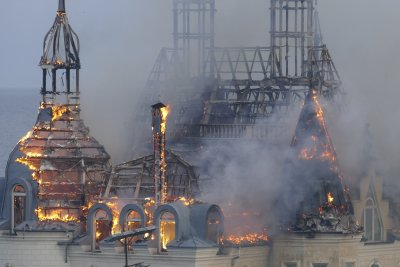
Russian drone strike on Odessa injures 6, including 3 children

Drone strikes on the Ukrainian city of Odessa overnight injured at least 6 people, including 3 children, as Russia doubled down on a month-long campaign targeting the strategically key region on the Black Sea. File photo by Igor Tkachenko/EPA-EFE

Dec. 31 (UPI) — At least six people, three of them children, were injured in the southern Ukrainian port of Odessa in a Russian drone strike overnight that blacked out parts of the city, cutting off electricity, water and heat, said local officials.

The victims, including a 7-month-old infant, an 8-year-old girl and a 14-year-old boy, belonged to two families in the same apartment building after Shahed-type drones targeted residential areas, causing structural damage and setting apartments ablaze.

Four buildings were hit in all, with firefighters rescuing at least eight people from one burning high-rise.

Private energy provider DTEK said two of its facilities in the region had been badly damaged, bringing to 10 the number of its plants attacked since the beginning of December.

Across the province, more than 170,000 people were without power, Deputy Energy Minister Oleksandr Vyazovchenko said.

Elsewhere in Odessa Oblast, logistics warehouses were set on fire in a separate strike.

The attacks came amid a sustained aerial campaign targeting port, energy and civilian infrastructure in the strategically key coastal province, which sits on the Black Sea.

The drones menacing Odessa overnight were among 127 that injured at least five other people across Kyiv, Chernihiv, Dnipropetrovsk and Kherson provinces. The Ukrainian Air Force said it downed or disabled all but 26 of the UAVs.

Over the past day, at least three people were killed by Russian artillery fire in the frontline regions of Sumy, Zaporizhzhia and Kharkiv.

Another three civilians were killed and four were injured in the eastern Donetsk province, where Ukrainian forces are engaged in intense battles with Russian forces to hold onto the remaining territory they control.

The attacks follow claims by the Kremlin of an attempted strike by Ukrainian drones on the state residence of President Vladimir Putin, northwest of Moscow, on Monday.

Russian Foreign Minister Sergey Lavrov vowed the attack, which he described as terrorism, would not go unanswered and warned it would affect the current peace talks.

Kyiv categorically rejected the claim, with President Volodymyr Zelensky calling it a “complete fabrication intended to justify additional attacks against Ukraine” and cover for Moscow’s refusal to take steps to end the war.

Source link

1 killed, at least 40 injured in train crash near Machu Picchu

Peruvian authorities launched an investigation into a deadly train wreck near Machu File after trains operated by two rival companies collided head-on in a remote area. Photo by Ernesto Arias/EPA-EFE

Dec. 31 (UPI) — The driver of a train was killed and at least 40 passengers, including American tourists, were injured when two trains collided head-on near the ancient Incan city of Machu Picchu in southern Peru.

The trains operated by two different rail companies were on the same narrow-gauge line when the crash occurred at the busiest time of day, Tuesday afternoon, near Aguas Calientes, the closest town to Machu Picchu, with no roads nearby, the BBC and El Comercio newspaper reported.

The engineer killed was an employee of Inca Rail. The other train was operated by PeruRail.

Inca Rail said in a statement Wednesday that it was “deeply saddened” by the loss of one of its team and that it was cooperating fully with investigating authorities.

Expressing “deep regret,” PeruRail said in a news update that the injured were evacuated from the crash scene in two railcars to the nearest road, about 10 miles back down the line to Piscacucho station, from where 10 ambulances transported them to hospital in Cusco.

“We deeply regret what has happened. PeruRail staff immediately provided first aid to the train driver, the train conductor and the passengers, activating emergency protocols and mobilizing medical personnel to attend to the most urgent cases.”

Those hurt included Peruvian and foreign tourists.

In a transportation alert, the U.S. Embassy in Lima confirmed that U.S. citizens were among those injured and that services along the Ollantaytambo to Aguas Calientes section of the railway remained suspended.

Footage and images circulating online show two wrecked locomotives in a narrow, rock-walled canyon with chaotic scenes of injured passengers on the ground as others escape from cars via the windows.

An investigation was underway with prosecutors in Cusco looking at human error and signal or mechanical failures as possible causes.

Track operator Ferrocarril Transandino said services on its 75-mile South-Eastern Cusco-Machu Picchu-Hydroelectric Plant line would be suspended “until the evacuation of passengers is complete and the trains are removed from the tracks.”

In July 2018, 15 tourists were injured when two Inca Rail and PeruRail trains were involved in a similar collision.

Tuesday’s crash comes amid ongoing wrangling over area transportation, including rivalries between bus providers who take visitors on the final leg of the journey from Aguas Calientes to Machu Picchu, and the price of trains from Cusco, with a round-trip ticket costing as much as $2,000.

Built around 1450, about 1.5 million visitors a year make the journey to the “lost city of the Incas” and World Heritage Site, which sits at an altitude of 8,200 feet in the Andes.

Overcrowding is a growing challenge with exploding visitor numbers in recent years, along with climate change placing more stress on infrastructure and the environment, triggering protests and feeding into political instability.

Source link

Leaked calls reveal plot by al-Assad regime officers to destabilise Syria | Syria’s War News

An Al Jazeera Arabic investigation obtains recordings of Suheil al-Hassan discussing Israeli support, regrouping efforts.

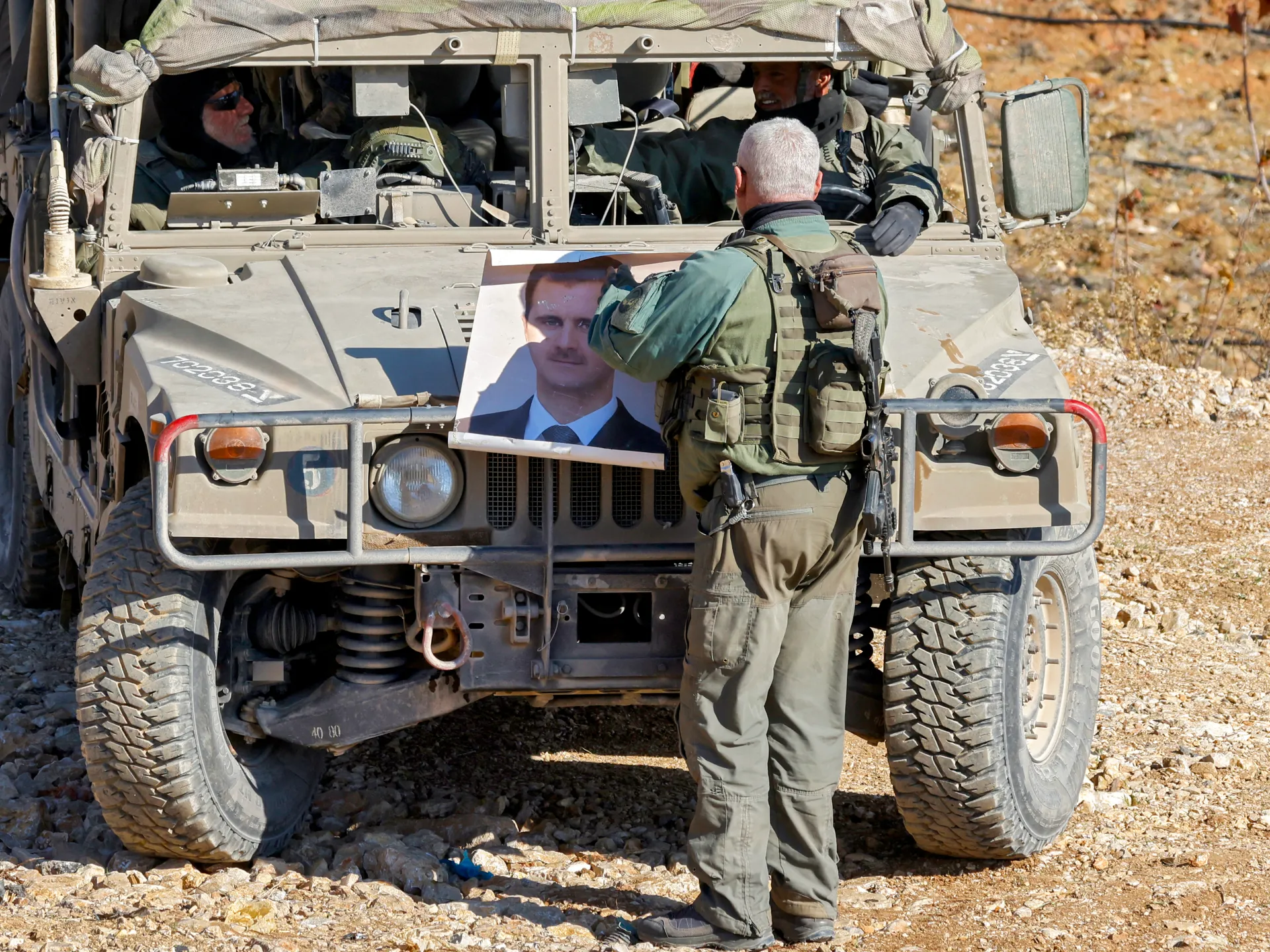
An Al Jazeera Arabic investigation has uncovered a plot by the aides of ousted leader Bashar al-Assad to destabilise Syria, featuring leaked recordings that suggest coordination with Israel.

The revelations, set to be broadcast on the programme Al-Mutahari, or The Investigator, on Wednesday evening, are based on more than 74 hours of leaked audio recordings and hundreds of pages of documents obtained in the investigation.

The leaks implicate al-Assad’s high-ranking officers, specifically Suheil al-Hassan, the brigadier-general who commanded the notorious Quwwat al-Nimr (Tiger Forces), an elite unit in the former regime’s army.

‘Israel will stand with you’

The investigation uncovers attempts by these officers to regroup, gather funding, and secure weapons to undermine stability in the country following the ousting of al-Assad.

In one of the most significant recordings, a source — identified in the leaks as a hacker or intermediary — is heard assuring al-Hassan of Israeli backing.

“The State of Israel, with all its capabilities, will stand with you,” the source tells al-Hassan.

“There is a level higher than me, Mr Rami is the one who coordinates,” al-Hassan is heard saying. “And I have dangerous intelligence information.”

It has been a year since a lightning offensive by allied rebel groups, led by current President Ahmed al-Sharaa, ended the Assad dynasty’s 54-year reign, forcing Bashar al-Assad into Russian exile.

Yet, as the regime collapsed, Israel seized on the instability by significantly escalating its military campaign in Syria, targeting much of its neighbour’s military infrastructure, including main airports, air defence systems, fighter planes, and other strategic facilities, as well as occupying more of Syria’s Golan Heights, and bombing the capital, Damascus, in July.

Over the past year, Israel has launched more than 600 air, drone or artillery attacks across Syria, averaging nearly two a day, according to a tally by the Armed Conflict Location and Event Data (ACLED).

‘The feeling of the coast’

The recordings also feature Ghiath Dalla, a former brigadier-general in al-Assad’s forces, who appears to validate al-Hassan’s position as a representative of the regime’s traditional strongholds.

“My Master, Suheil the Tiger, spoke the feeling of the whole mountain and the whole coast,” Dalla is heard saying, referring to the coastal and mountainous regions that were long considered the heartland of support for the al-Assad family.

The leaked conversations also capture al-Hassan expressing disdain for current developments, referred to as “the flood”.

“Our prayers for you all are that this foolishness, this evil, and this blackness called the flood ends,” al-Hassan says in the recording.

Investigation to air

The full extent of the plot will be detailed in the upcoming episode of The Investigator, hosted by Jamal el-Maliki.

Parts of the leaks are airing on Al Jazeera’s platforms on Wednesday, with the complete investigation scheduled for release in mid-January.

Source link

S. Korea to adopt ‘North Korean migrants’ term in government

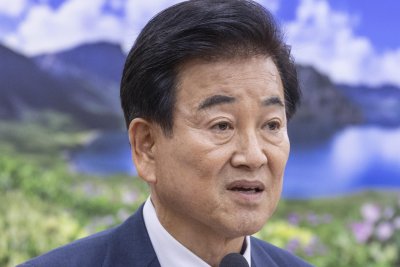
South Korean Minister of Unification Chung Dong-young speaks during a parliamentary inspection of his agency by the Diplomacy and Unification Committee at the National Assembly in Seoul, South Korea, 14 October 2025. File Photo by YONHAP / EPA

Dec. 30 (Asia Today) — South Korea’s Unification Ministry said Tuesday it will begin using the term “North Korean migrants” starting Jan. 1 in government and local authorities as a replacement for “North Korean defectors,” saying it will seek broader social consensus before pursuing a legal change.

Vice Unification Minister Kim Nam-joong said at a briefing at the Government Complex Seoul that the current term has long been debated because of what officials view as negative connotations and stigmatizing effects.

“The term ‘North Korean defectors’ has been subject to ongoing discussions for change due to its negative connotations and stigmatizing effects,” Kim said. He called on North Koreans who have resettled in the South to participate in using the new term so they can feel “even a little warmth” from society.

Kim said use of the new term would not be mandatory and the ministry would first apply it within government and local authorities before expanding it more broadly. He said the ministry plans to keep listening to views from North Koreans living in South Korea and to explain the government’s intent.

The ministry said it would push to adopt the term as a legal designation if it gains wider traction, after earlier efforts to shift terminology failed.

However, the ministry acknowledged resistance among North Koreans who have resettled in the South. In a survey conducted from Sept. 26 to Oct. 5 of 1,000 South Korean adults and 1,000 North Korean defectors, 53.4% of defectors opposed changing the term, while 63.5% of the general public supported a change, the ministry said.

Among defectors, the most preferred alternative was “freedom citizens” at 30.5%, followed by “northern migrants” at 29.8%, “unification citizens” at 18.8% and “northern immigrants” at 12.7%, the ministry said. Among the general public, “North Korean migrants” was the top choice at 31.8%, followed by “Northbound citizens” at 27.7% and “free citizens” at 22.2%.

A senior ministry official said the new term reflects what the ministry described as a “dual identity,” referring to North Korea as a homeland while recognizing citizenship in South Korea. The official said the ministry also gathered expert opinions in reaching its decision.

The ministry also announced additional measures related to resettlement support. It said educational smartphones will be provided individually to North Korean defectors during training at Hanawon and that it plans to allow autonomous internet use after work hours to expand access to information and enable family calls.

It also said visitation policies for Hanawon trainees will be expanded to include friends and acquaintances, with broader weekend visitation.

The ministry said Hanawon operations will be consolidated as the number of entrants declines, with the Hwacheon branch to be integrated into the main Anseong campus.

— Reported by Asia Today; translated by UPI

© Asia Today. Unauthorized reproduction or redistribution prohibited.

Source link

South Korea firms cut hiring plans by 64,000 for early 2026

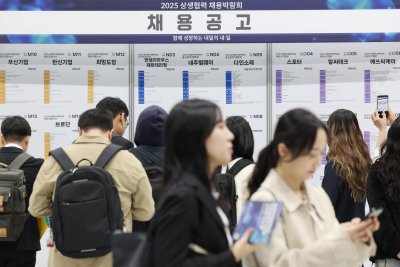
Job seekers look at job postings during a job fair at the COEX Magok Convention Center in western Seoul, South Korea, on 21 October 2025. File Photo by YONHAP /EPA

Dec. 30 (Asia Today) — South Korean companies plan to hire fewer workers through early next year, extending a cooling trend in the job market, the Labor Ministry said Tuesday.

The Ministry of Employment and Labor said in its 2025 second-half labor force survey that businesses with at least one employee planned total hiring of 467,000 for the fourth quarter of 2025 through the first quarter of 2026. That was down 64,000, or 12.1%, from the same period a year earlier.

The ministry also reported slower labor demand. As of Oct. 1, the number of workers businesses said they needed for normal operations stood at 449,000, down 78,000, or 14.8%, year-on-year. The labor shortage rate fell 0.4 percentage points to 2.4%.

Hiring plans diverged by company size. Firms with fewer than 300 employees planned to hire 410,000, down 69,000, or 14.4%, from a year earlier. Firms with 300 or more employees planned to hire 57,000, up 5,000, or 9.2%.

By industry, planned hiring fell in manufacturing, transportation and warehousing, construction and wholesale and retail trade. Manufacturing alone was down 15,000, the ministry said. Hiring plans rose in business facility management, business support and leasing services, as well as finance and insurance.

Other indicators also pointed to weakening momentum. In the third quarter, the number of job openings stood at 1.206 million, down 90,000 from a year earlier, while hires fell 68,000 to 1.105 million, the ministry said. Both measures increased among firms with 300 or more employees, widening the gap between large companies and small and medium-sized businesses.

A ministry official said overall hiring conditions have contracted as labor shortages eased, with the downturn most pronounced among smaller firms.

— Reported by Asia Today; translated by UPI

© Asia Today. Unauthorized reproduction or redistribution prohibited.

Source link

S. Korea to prioritize confirming fate of separated families’ kin in N. Korea

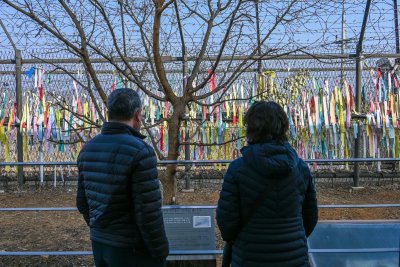
South Korea’s Unification Ministry said Wednesday it would prioritize confirming the fate of separated family members in North Korea if inter-Korean relations improve. In this February 2021 photo, visitors look at ribbons wishing for Korean Unification near the DMZ. File Photo by Thomas Maresca/UPI | License Photo

The unification ministry said Wednesday it will prioritize confirming the fate of separated families’ relatives in North Korea if strained inter-Korean relations begin to improve.

Under the 2026-2028 plan for supporting families separated by the 1950-53 Korean War, the ministry said it will make efforts to resume exchanges between such divided families at the government level and facilitate civilian-level exchanges between them.

“When there is progress over inter-Korean relations, the government will prioritize confirming the fate of the families’ relatives in North Korea,” the ministry said.

Since the first inter-Korean summit in 2000, the two Koreas have held 21 rounds of separated family reunions. Since the last event in August 2018, state-arranged family events have been suspended amid frosty inter-Korean ties.

North Korea dismantled a reunion facility for separated families inside its Mount Kumgang tourist area after North Korean leader Kim Jong-un ordered officials in 2019 to tear down all “unpleasant-looking” facilities built by South Korea at the mountain resort.

The ministry said it will consider measures to replace the family reunions location and seek reciprocal visits to Seoul and Pyongyang by separated families in the two Koreas.

The issue of separated families has taken on urgency as more elderly people have died without having a chance to meet their kin in the North due to Pyongyang’s reluctance to hold family reunion events.

The number of surviving separated family members registered with the government came to 34,658 as of the end of November. Of them, 32 percent are aged 90 and older.

Copyright (c) Yonhap News Agency prohibits its content from being redistributed or reprinted without consent, and forbids the content from being learned and used by artificial intelligence systems.

Source link

Rodong Sinmun access expands to 181 sites in South Korea

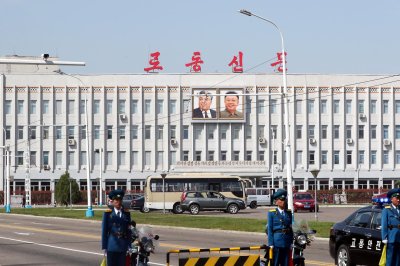
epa07029212 North Korean traffic policemen keep watch at a street in front of the building of the Rodong Sinmun newspaper (back), the official newspaper of the Central Committee of the Workers’ Party of Korea, in Pyongyang, North Korea, 18 September 2018. File Photo by PYONGYANG PRESS CORPS / EPA

Dec. 30 (Asia Today) — South Korea’s Unification Ministry said Tuesday that the public can now read North Korea’s state newspaper Rodong Sinmun at 181 designated outlets without special procedures such as separate identity checks or prior applications.

Vice Unification Minister Kim Nam-joong said at a briefing that visitors to institutions authorized to handle North Korean materials may view Rodong Sinmun “like any other general publication.” He said the ministry plans to broaden access to North Korea-related information so the public can independently compare and assess it.

The ministry said 181 institutions hold copies of Rodong Sinmun, with about 20 purchasing it regularly. It said anyone visiting those outlets may view the copies held there and that some procedures, including requirements tied to copying materials, have been simplified.

Rules governing the import of Rodong Sinmun into South Korea remain unchanged under customs regulations, the ministry said. Institutions not authorized to handle special materials still cannot import the paper, it said, adding it plans to discuss easing related restrictions with other agencies.

The ministry said it also plans to seek legal changes aimed at opening access to Rodong Sinmun and other North Korea-related sites online. About 60 North Korea-linked websites are currently blocked in South Korea, including Rodong Sinmun and the Korean Central News Agency, it said.

Unification Minister Chung Dong-young previously said the government would pursue a legal framework to expand access to North Korean materials, including broadcasts and publications. The ministry said an interagency consultative body met Dec. 26 and notified relevant agencies that Rodong Sinmun had been reclassified as general material, allowing broader public access.

— Reported by Asia Today; translated by UPI

© Asia Today. Unauthorized reproduction or redistribution prohibited.

Source link

Survey: Germans with reunification experience back Korean unification

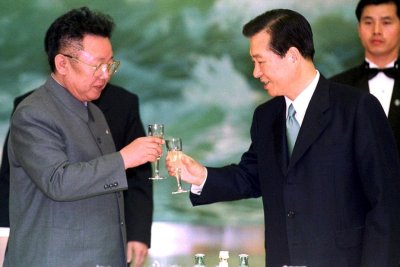
North Korean leader Kim Jong Il and his South Korean counterpart Kim Dae-jung give peace a chance in 2000. File Photo by EPA

Dec. 30 (Asia Today) — More than half of German respondents said they would recommend unification of the Korean Peninsula, drawing on their own country’s experience with reunification, according to a new international survey released Tuesday.

The findings came from the 2025 Global Unification Awareness Survey conducted by the Institute for Unification Studies, which polled 1,000 respondents in each of eight countries.

Among German respondents, 62.2% answered positively when asked whether they would recommend Korean unification based on Germany’s reunification experience. Of those, 17.9% said they “strongly agree,” while 44.3% said they “somewhat agree.”

When asked about the necessity of Korean unification, 55.4% of Germans responded positively. However, only 29.9% said they believe inter-Korean unification is realistically possible, highlighting a significant gap between perceived necessity and feasibility.

A similar pattern appeared in the United States, where 55.6% viewed unification as necessary but only 27.2% believed it was achievable. In Japan, just 29.3% said unification was necessary, and only 13.4% viewed it as possible.

The institute said the results show a consistent divide between recognition of unification’s importance and skepticism about its prospects. It noted that Germany, as a country that has already experienced national reunification, showed a higher perception of necessity than other surveyed nations.

Regarding Japan’s particularly low assessment of the need for Korean unification, the institute said the view appears to stem from a belief that unification would not benefit Japan. It added that, because support from neighboring countries is essential, Seoul should strengthen public diplomacy efforts aimed at improving Japanese perceptions.

On perceptions of North Korea’s nuclear program, Japanese respondents expressed the highest level of concern. A total of 81.5% of Japanese respondents said North Korea’s nuclear weapons pose a serious threat to peace, followed by Americans at 72.9% and Mongolians at 66.5%.

The institute said countries directly affected by North Korea’s nuclear issue – including Japan, the United States and Mongolia – tend to show heightened threat awareness.

Asked about Pyongyang’s motives for developing nuclear weapons, respondents most commonly viewed them as intended for offensive purposes. That perception was strongest in Japan at 71.8%, followed by the United States at 70.9% and Sweden at 70.2%. Excluding Mongolia, only about 20% to 30% of respondents in most countries viewed North Korea’s nuclear program as primarily defensive.

On preferred approaches to denuclearization, 74.6% across all eight countries favored diplomatic negotiations. Support for economic measures such as sanctions stood at 67.7%, while 48.2% supported military options.

The survey also examined national images of the two Koreas. South Korea was generally viewed as a country associated with trust and cooperation, while North Korea was widely perceived as a source of threat and distrust. Japan, however, showed low levels of trust toward both Koreas.

The annual survey was conducted online from Aug. 11 to 18 in Germany, Mongolia, the United States, Sweden, Italy, Japan, Canada and Poland.

— Reported by Asia Today; translated by UPI

© Asia Today. Unauthorized reproduction or redistribution prohibited.

Source link

Germany hunts Christmas thieves after Ocean’s Eleven-style bank heist | Crime News

While a western German city slept through the Christmas holidays, thieves drilled into a bank vault and vanished with millions.

Robbers broke into a vault at a savings bank in western Germany during the Christmas holidays, stealing cash, gold and jewellery estimated to be worth up to $105m, the police and the bank said.

According to police on Tuesday, the perpetrators used a large drill to bore through a thick concrete wall of a branch of Sparkasse bank in the city of Gelsenkirchen, in North Rhine-Westphalia state. Breaking in from an adjacent parking garage, the thieves gained access to an underground vault room and forced open more than 3,000 safe deposit boxes.

Recommended Stories

list of 4 itemsend of list

Thomas Nowaczyk, a police spokesperson, said investigators believe the total value of the stolen items could range between 10 and 90 million euros ($11.7m and $105.7m).

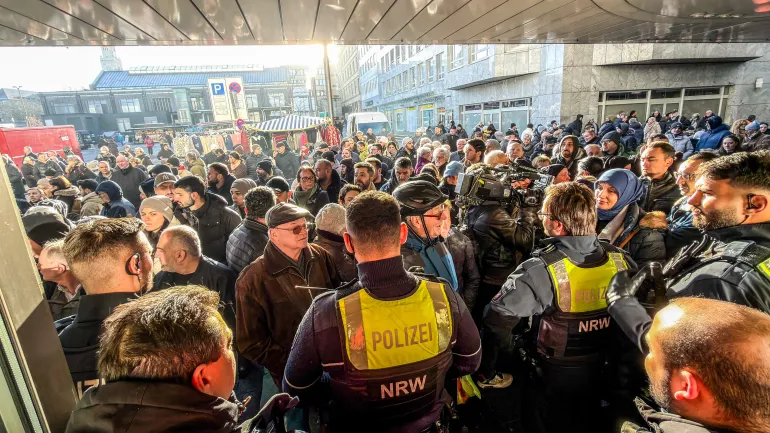
Policemen and concerned bank customers stand in front of a branch of the Sparkasse bank in Gelsenkirchen, western Germany, on December 30, 2025, after the bank was robbed.
Police and concerned bank customers stand in front of a branch of the Sparkasse bank in Gelsenkirchen, western Germany, on December 30, 2025, after the bank was robbed [AFP]

German news agency dpa reported that the robbery may rank among the biggest in the country’s history.

Sparkasse confirmed that the branch had been “broken into over the Christmas holidays”, saying that “more than 95 percent of the 3,250 customer safe deposit boxes were broken into by unknown perpetrators”.

The crime is believed to have taken place while businesses were closed for the extended Christmas break. Police suspect the gang may have remained inside the building for several days, using the long holiday weekend to break into the deposit boxes undetected.

The theft only came to light in the early hours of Monday, when a fire alarm was triggered. Emergency responders who arrived at the scene discovered the hole leading into the vault.

Witnesses later told police they had seen several men carrying large bags through the parking garage stairwell overnight between Saturday and Sunday.

Security camera footage also showed a black Audi RS 6 leaving the garage early on Monday morning, with masked individuals inside. The vehicle was later identified as having a licence plate belonging to a car stolen in Hanover, more than 200km (124 miles) northeast of Gelsenkirchen.

Ocean’s Eleven-esque

A police spokesman described the operation as highly organised, comparing it with a Hollywood-style robbery resembling Ocean’s Eleven.

The break-in was “indeed very professionally executed”, he told the AFP news agency.

“A great deal of prior knowledge and/or a great deal of criminal energy must have been involved to plan and carry this out,” he added.

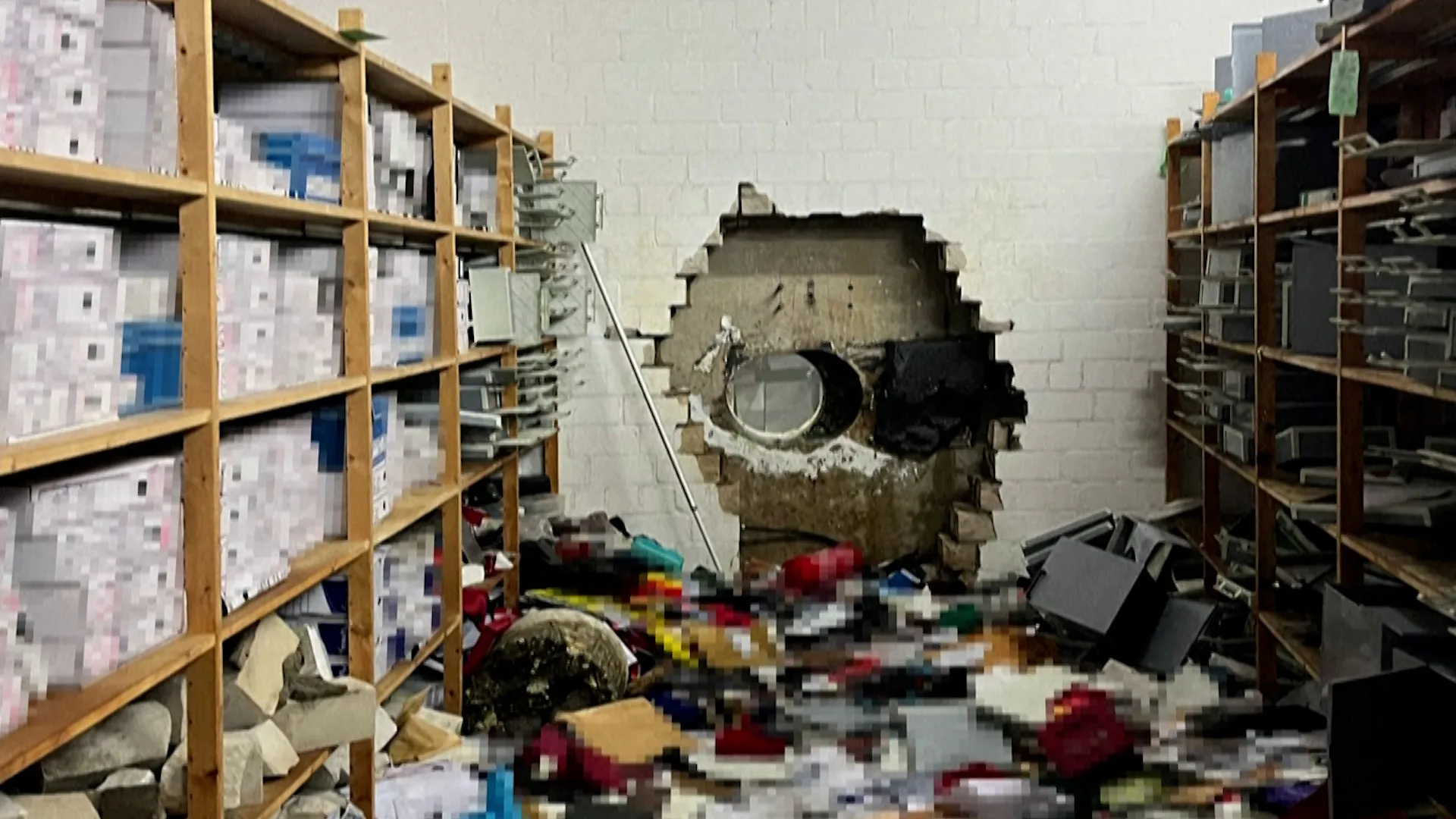
This handout photo taken on December 29, 2025 in Gelsenkirchen, western Germany, and handed out by the Police Gelsenkirchen shows a giant hole in a wall of the bank vault of a Sparkasse bank branch after the unknown perpetrator(s) broke in during the Christmas holidays.
Emergency responders discovered a giant hole in the wall of the bank’s vault after unknown thieves broke into a Sparkasse bank branch during the Christmas holidays [Handout: Police Gelsenkirchen via AFP]

Police said the average insured value of each deposit box was more than 10,000 euros ($11,700). However, officers said several victims had reported that the contents of their boxes were worth significantly more than the insured amount.

On Tuesday, hundreds of customers gathered outside the bank, demanding answers. The branch remained closed for security reasons after threats were reportedly made against staff.

“I couldn’t sleep last night. We’re getting no information,” one man told the Welt broadcaster, saying he had used the safe deposit box for 25 years and stored his retirement savings there.

Nowaczyk, the police spokesperson, said officers remained at the scene to monitor the situation. “We’re still on site, keeping an eye on things,” he said, adding that “the situation has calmed down considerably”.
The bank said it had set up a hotline for affected customers and would contact them in writing as soon as possible. It added that it was working with insurers to determine how compensation claims would be handled.

“We are shocked,” said bank press spokesperson Frank Krallmann. “We are standing by our customers, and hope that the perpetrators will be caught.”

Police said the suspects remain at large, and investigations are ongoing.

A spokesperson for the Sparkasse bank in Gelsenkirchen did not immediately respond to a request for comment.

Source link

Israel’s recognition of Somaliland ‘strange, unexpected’: Somali president | Israel-Palestine conflict News

Hassan Sheikh Mohamud says his country believes the move is linked to Israel’s plans to forcibly displace Palestinians from Gaza.

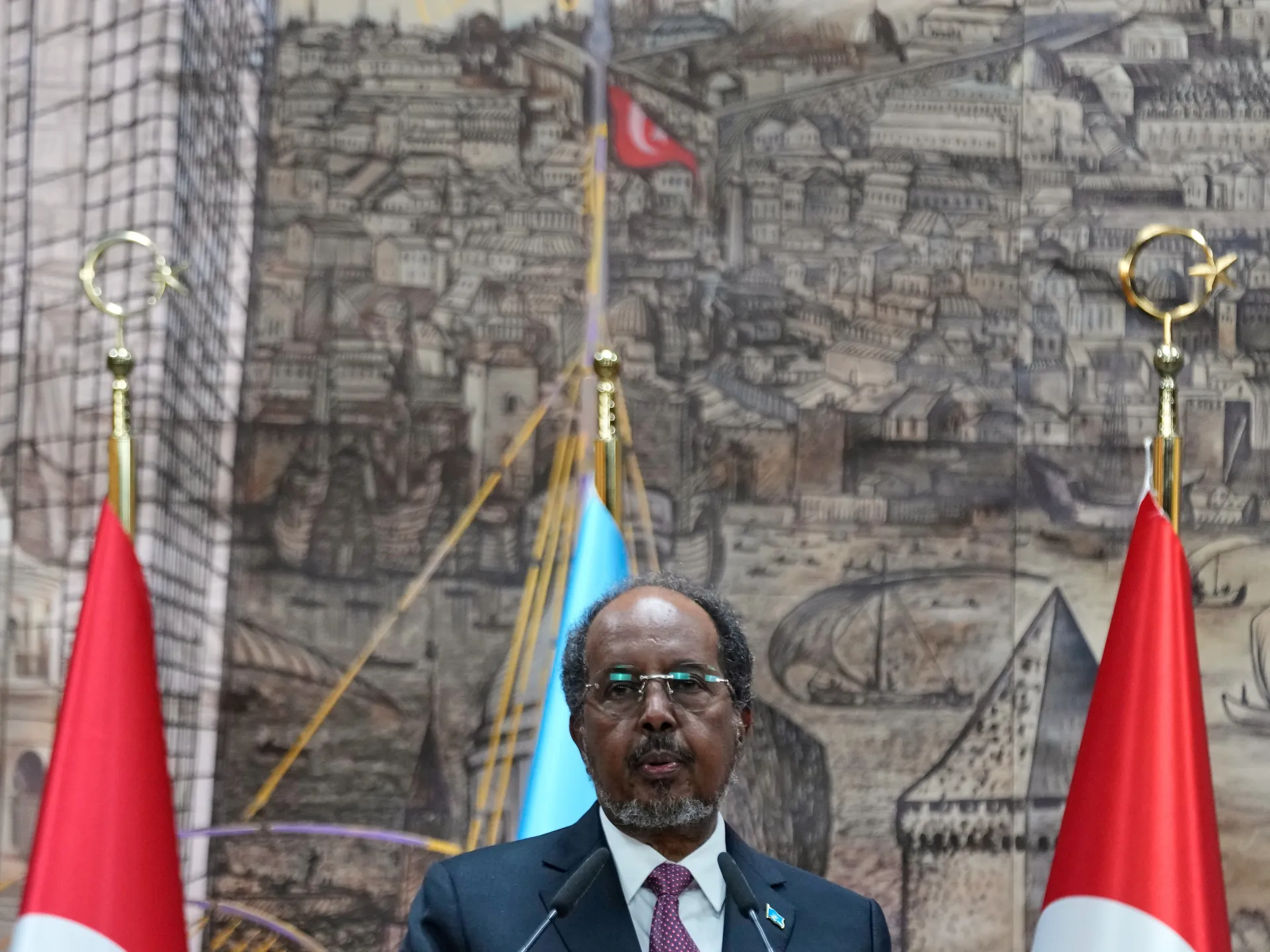
Somali President Hassan Sheikh Mohamud has told Al Jazeera that Israel’s “unexpected and strange” recognition of Somaliland may have implications for Palestinians in Gaza.

“Somaliland has been claiming the secession issue for a long time, over the past three decades, and no one country in the world has recognised it,” Mohamud told Al Jazeera in an exclusive interview from Istanbul, Turkiye, on Tuesday.

Recommended Stories

list of 4 itemsend of list

“For us, we’ve been trying to reunite the country in a peaceful manner,” the Somali leader added. “So, after 34 years, it was very unexpected and strange that Israel, out of nowhere, just jumped in and said, ‘We recognise Somaliland’.”

Israel last week became the first and only country to formally recognise Somaliland, a breakaway region in northwest Somalia, bordering the Gulf of Aden.

Somalia’s president also told Al Jazeera that, according to Somali intelligence, Somaliland has accepted three Israeli conditions in exchange for Israeli recognition: the resettlement of Palestinians, the establishment of an Israeli military base on the coast of the Gulf of Aden, and Somaliland joining the Abraham Accords. The accords are a set of pacts establishing the normalisation of ties between Israel and several Arab states. The UAE, Bahrain, Morocco and Sudan have signed onto the accords.

Mohamud also said that Somalia has intelligence indicating there is already a certain level of Israeli presence in Somaliland, and Israeli recognition of the region is merely a normalisation of what was already happening covertly.

Israel will resort to forcibly displacing Palestinians to Somalia, and its presence in the region is not for peace, the Somali leader added.

A 20-point plan released by the administration of US President Donald Trump ahead of a ceasefire between Israel and Hamas in Gaza said that “no one will be forced to leave Gaza, and those who wish to leave will be free to do so and free to return”.

However, Israel has reportedly continued to explore ways to displace Palestinians from the besieged and occupied territory, including in mysterious flights to South Africa, which has formally accused Israel of committing genocide in Gaza.

Israel is also seeking to control strategically important waterways connecting vital seas of commercial and economic significance, namely the Red Sea, the Gulf and the Gulf of Aden, Mohamud said.

The Somali leader was in Turkiye on Tuesday, where he gave a joint news conference with Turkish President Recep Tayyip Erdogan, with the two leaders warning that Israel’s recognition of the breakaway region could destabilise the Horn of Africa.

Somaliland declared independence from Somalia in 1991, but had failed to gain recognition from any United Nations member state, before Israel changed its position last Friday.

Israel’s move was swiftly condemned, including by most members of the UN Security Council at an emergency meeting convened in New York on Monday.

The United States was the only member of the 15-seat body that defended Israel’s move, although it stressed that the US’s position on Somaliland remained unchanged.

Source link

Disney to pay $10m over alleged breaches of US child privacy laws | Privacy

Settlement comes after US Federal Trade Commission accused the entertainment giant of unlawfully collecting children’s data.

Disney has agreed to pay $10m to settle allegations that it breached child privacy laws in the United States, authorities have said.

A federal court approved the settlement to resolve allegations brought by the US Federal Trade Commission, the Department of Justice said on Tuesday.

Recommended Stories

list of 4 itemsend of list

The order also requires Disney to operate its YouTube channel in accordance with data-protection rules and establish a programme to ensure future compliance.

Disney had agreed to settle the claims brought by the US antitrust watchdog in September.

The civil case stems from allegations that Disney collected children’s personal data without parental consent via its videos on YouTube.

Antitrust officials alleged that Disney had wrongly designated more than 300 YouTube videos, including content from The Incredibles, Toy Story, Frozen, and Mickey Mouse, as not being aimed at children.

YouTube requires content creators to designate videos as “Made for Kids” or “Not Made for Kids” to comply with the Children’s Online Privacy Protection Rule.

Under the rule, companies in the US are prohibited from collecting data from children below 13 without parental notification.

Other major companies that have paid settlements under the rule, which has been amended several times since its enactment in 2000, include Google and Microsoft.

Disney did not immediately respond to a request for comment.

“The Justice Department is firmly devoted to ensuring parents have a say in how their children’s information is collected and used,” Assistant Attorney General Brett A Shumate said in a statement.

“The Department will take swift action to root out any unlawful infringement on parents’ rights to protect their children’s privacy.”

Disney, which has its headquarters in Burbank, California, is one of the world’s largest entertainment companies, with revenue for the fiscal year 2025 reaching $94.4bn.

Source link

HHS freezes Minnesota child care payments amid fraud accusations

Dec. 30 (UPI) — U.S. Department of Health and Human Services officials have frozen federal child care funding to Minnesota amid accusations of fraud in that state and others.

HHS officials announced the action on Tuesday and credited a viral video that suggests rampant fraud is occurring at Minnesota child care centers that provide daycare services for few, if any, children.

“You have probably read the serious allegations that the state of Minnesota has funneled millions of taxpayer dollars to fraudulent daycares across Minnesota over the past decade,” said Jim O’Neill, HHS deputy secretary, in a social media post on Tuesday.

In response to the “blatant fraud that appears to be rampant in Minnesota and across the country,” O’Neill said HHS officials have taken three actions.

One is to require justification and a receipt or photo evidence before sending federal Administration for Children and Family funds to a state.

HHS also launched a fraud-reporting hotline and email address, and identified individuals shown in a viral social media video at Minnesota daycare centers that appeared to have no children.

“I have demanded from [Minnesota] Gov. Tim Walz a comprehensive audit of these centers,” O’Neill said. “This includes attendance records, licenses, complaints, investigations and inspections.”

Conservative activist Nick Shirley recorded and posted the viral video, which, along with FBI evidence, spurred U.S. Department of Homeland Security Sec. Kristi Noem on Monday to launch what she called a “massive investigation on childcare and other rampant fraud,” according to CBS News.

Minnesota Department of Children, Youth and Families Commissioner Tikki Brown told CBS News the department questions “some of the methods used in the video” but takes the fraud concerns raised in Shirley’s video “very seriously.”

State officials visited some of the daycare centers featured in the video and said two of them were closed earlier this year, but officials at one said they intend to resume operations.

CBS News looked at the records for several of the daycares cited and said all but two have active licenses to operate in Minnesota.

State records show all of the active locations had been visited by state regulators over the past six months, with no evidence of fraud found, but citations were issued for staff training, safety, equipment, and cleanliness violations.

The alleged daycare fraud comes amid federal investigations of 14 Medicaid-funded programs in Minnesota, but none involved child care.

Among them is an investigation into the Feeding Our Future program that was intended to feed at-risk children during the COVID-19 pandemic but has triggered dozens of federal fraud convictions and has embroiled Rep. Ilhan Omar, D-Minn., who helped to promote it.

That alleged fraud cost an estimated $250 million and largely occurred within the Somali community in the greater Minneapolis-St. Paul area, which prompted President Donald Trump to halt Temporary Protected Status for Somalians in Minnesota.

Source link

Lee orders probe into claims of Unification Church lobbying

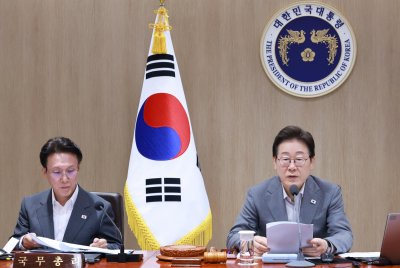
President Lee Jae Myung (R), alongside Prime Minister Kim Min-seok (L), speaks during a Cabinet meeting at the presidential office in Seoul, South Korea, 15 July 2025. File Photo by YONHAP /EPA

Dec. 30 (Asia Today) — President Lee Jae-myung on Tuesday ordered prosecutors and police to investigate allegations that the Unification Church lobbied politicians, directing authorities to begin work even as political parties debate appointing a special prosecutor.

Speaking at a Cabinet meeting at the presidential office, Lee said investigators should coordinate in advance on how the case would be handled if it is later transferred to a special prosecutor.

“Even if it becomes a special prosecutor case during the investigation and is handed over then, it would be better for the prosecution and the Ministry of the Interior and Safety to consult beforehand and decide who will handle it or if they will work together, and form a team,” Lee said. “It doesn’t seem like something we should just wait around for.”

Lee said religious interference in politics, bribery and collusion are serious matters that threaten democracy and the country’s future.

Prime Minister Kim Min-seok also called for a strong response, saying he believes instability in state affairs has been fueled by what he described as “shamanistic politics” and church-state collusion.

Kim said it was timely that discussions are emerging about appointing a special prosecutor to investigate the Unification Church and potentially expanding the scope to include Shincheonji, while warning the process could be derailed by political disputes.

He suggested the government should prepare for the possibility the political process fails to produce an agreement and said authorities could consider setting up a government-level special investigation headquarters.

– Reported by Asia Today; translated by UPI

© Asia Today. Unauthorized reproduction or redistribution prohibited.

Source link

Alleged D.C. pipe-bomber set for detention hearing; lawyers argue for pretrial release

An arrested sign was on display during a press conference at the Department of Justice Headquarters in Washington, D.C., on Dec. 4. Brian Cole Jr. is scheduled for a detention hearing Tuesday afternoon. Photo by Bonnie Cash/UPI | License Photo

Dec. 30 (UPI) — Attorneys for Brian Cole Jr., the man accused of building and laying pipe bombs in Washington, D.C., at two political party headquarters, are arguing for his pre-trial release.

Cole, 30, has autism spectrum disorder and obsessive-compulsive disorder, his attorneys said in a Monday night filing. He is scheduled for a detention hearing on Tuesday afternoon.

The attorneys argued that “government-induced excitement” around Cole’s arrest is premature and potentially violates court rules.

“The question is whether there is a present danger — a contention the government never actually makes, and something belied by the past four years in which Mr. Cole has lived without incident,” Cole’s attorneys argued in their filing. “No device detonated, no person was injured, and no property was damaged.”

“Whatever risk the government posits is theoretical and backward-looking, belied by the past four years where Mr. Cole lived at home with his family without incident. All of this weighs heavily against an inference of current danger to the community at large,” his attorneys wrote.

Cole was arrested Dec. 4 and hasn’t entered a plea. He is accused of placing two pipe bombs — that never detonated — outside of the Democratic National Committee headquarters and the Republican National Committee headquarters in Washington.

He faces charges of transporting an explosive device and attempted malicious destruction by means of explosive materials. The charges have a maximum sentence of 30 years.

Assistant U.S. Attorney Charles Jones filed a request Sunday to keep Cole in jail while he awaits trial.

Cole is from Woodbridge, Va., where he lives with his mother and other family members.

President Donald Trump holds a signed executive order reclassifying marijuana from a schedule I to a schedule III controlled substance in the Oval Office of the White House on Thursday. Photo by Aaron Schwartz/UPI | License Photo

Source link

A Filipino tribe fights to stay as a ‘Smart City’ rises on a former US base | Indigenous Rights News

Sapang Kawayan, Philippines – Two hours north of the capital, Manila, on the vast grounds of a former United States military base, the Philippine government is pushing ahead with plans for a multibillion-dollar “smart city” that President Ferdinand Marcos Jr hopes to turn into a future “mecca for tourists” and a “magnet for investors”.

The New Clark City, which is being built on the former Clark Air Base, is central to the government’s effort to attract foreign investment and ease congestion in Manila, where nearly 15 million people live.

Recommended Stories

list of 4 itemsend of list

To accompany the city’s development, the government has also laid out an ambitious slate of projects at a nearby airport complex — new train lines, expanded airport runways, and a $515m stadium that officials hope will be enticing enough to draw the global pop singer Taylor Swift.

Caught between the rising new city and the site of the proposed stadium lies the Indigenous Aeta village of Sapang Kawayan. For the roughly 500 families who live there, in houses of nipa grass and rattan, the developments spell disaster.

“We were here before the Americans, even before the Spanish,” said Petronila Capiz, 60, the chieftain of the Aeta Hungey tribe in Sapang Kawayan. “And the land continues to be taken from us.”

Historians say American colonisers, who seized the Philippines from Spain in 1898, took over the 32,000-hectare (80,000-acre) tract that became Clark Air Base in the 1920s, dispossessing the Aetas, a seminomadic and dark-skinned people thought to be among the archipelago’s earliest inhabitants.

Many were displaced, though some moved deeper into the jungle inside the base and were employed as labourers.

The US turned over the base to the Philippine government in 1991, some four decades after granting the country independence. Since then, the Bases Conversion and Development Authority, or BCDA, has managed the complex. Some 20,000 Aetas are thought to remain in the Clark area today, spread across 32 villages.

But most of their claims to the land are not recognised.

In Sapang Kawayan, residents fear the government’s development boom means they could be pushed out long before they can establish such claims. The community – along with other Aeta villages in Clark – is working with researchers from the University of the Philippines to expedite a long-pending application for a Certificate of Ancestral Domain Title, or CADT — the only legal mechanism that would allow them to assert rights to their territory and its resources.

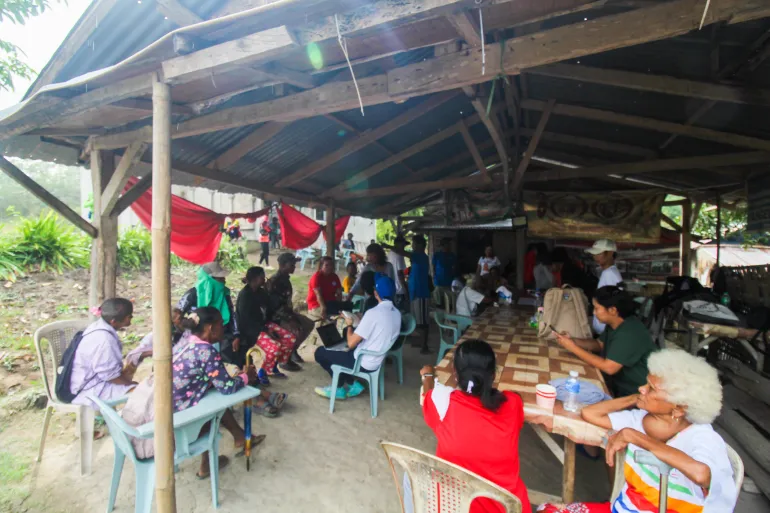
In January, July and September, Aetas young and old gathered under makeshift wooden shelters in Sapang Kawayan, assembling family trees and sharing stories and photographs. Volunteers documented each detail in hopes of demonstrating that the community there predates colonial rule.

Their 17,000-hectare claim overlaps with nearly all of the 9,450 hectares designated for New Clark City, while 14 kilometres to the south is the airport complex where the new railway line, runway and stadium are slated to rise.

Together, the new city and airport complex “will eat up the fields where we farm, the rivers where we fish and the mountains where we get our herbs”, Capiz said.

As part of a requirement to claim their ancestral lands, the Aeta Hungey gather in the village of Sapang Kawayan to trace their genealogy back hundreds of years ago.
Aetas work with researchers at the University of the Philippines to expedite their application for an ancestral land title [Michael Beltran/Al Jazeera]

‘Taylor Swift-ready’

The Philippine government first announced plans for New Clark City under then-President Rodrigo Duterte, promoting it as a solution to the crippling congestion in Metro Manila. The BCDA describes the development as a “green, smart and disaster-resilient metropolis”.

Construction began in 2018 with major roads and a sports complex that hosted the Southeast Asian Games in 2019.

Designed to accommodate 1.2 million people, the city is expected to take at least 30 years to complete.

The BCDA is now building three highways linking New Clark City to the airport complex, where the “Taylor Swift–ready” stadium is planned. Officials have hyped that the stadium, to be built by 2028, will lure Swift after she skipped the Philippines during the South Asian leg of her Eras tour last year.

“One of the main elements that make Clark so attractive to investors is its unmatched connectivity,” the BCDA’s president, Joshua Bingcang, said this year, citing the airport, a nearby seaport and major expressways. “But we need to further build on this connectivity and invest more in infrastructure.”

That expansion has come at a cost for Aeta communities.

Counter-Mapping PH, a research organisation, and campaigners estimate that hundreds of Aeta families have been displaced since construction of the city began, including dozens of families who were given just a week in 2019 to “voluntarily” vacate ahead of the Southeast Asian Games.

They warn that thousands more could be uprooted as development continues.

The BCDA has offered financial compensation of $0.51 per square metre as well as resettlement for affected families. In July, it broke ground on 840 housing units, though it is unclear whether they are intended for displaced Aetas.

The agency maintains that no displacement has occurred because Aetas have no proven legal claim to the area. In a statement to Al Jazeera, the BCDA said it “upholds the welfare and rights of Indigenous peoples” and acknowledges their “long historical presence” in central Luzon, where Clark is located. However, it noted that Clark’s boundaries follow “long-established government ownership” dating to the US military base, and that the New Clark City does not encroach on any recognised ancestral domains.

The BCDA also contended that it is the National Commission on Indigenous Peoples (NCIP) that deals with the applications for a Certificate of Ancestral Domain Title, and stressed that it respected “lands awarded to Indigenous peoples”.

The Clark International Airport Corporation, which oversees the airport complex, offered similar assurances, stating that “there are no households or communities existing in the said location”. The group added that while the extended Clark area has Aeta communities, none exist within the airport complex itself.

Labourers work on buildings in the games village for this year's Southeast Asian Games (SEA Games) in New Clark City in Capas town.
Labourers work on buildings in the games village for the Southeast Asian Games (SEA Games) in New Clark City in Capas town, Tarlac province, north of Manila, on July 19, 2019 [Ted Jibe/AFP]

‘Since time immemorial’

Only a handful of Aeta tribes have been awarded CADTs.

Two certificates have been granted on the outskirts of Clark, while the application filed by Sapang Kawayan and other villages inside the base have languished since 1986.

Marcial Lengao, head of NCIP’s Tarlac office, told Al Jazeera that to grant Aetas in Clark a CADT they must “prove that they have been there since time immemorial”, meaning, during or before the arrival of the Spanish colonisers to the archipelago 400 years ago.

The commission, he said, specifies minimum requirements for a CADT: a genealogy of at least five clans dating back at least three generations or to the precolonial period, testimonies from elders, a map of the domain and a census of the current population.

Lengao said Sapang Kawayan’s application has yet to complete these.

But even if the application is granted, the village faces another unique hurdle. Because the BCDA owns land rights to Clark, any CADT approved by the commission in the area must then be deliberated by the executive branch or the president’s office.

“They will be responsible for finding a win-win solution,” Lengao said.

Activists, however, denounced the NCIP’s requirements as onerous and warned that the longer Aetas remain without a CADT, the more vulnerable they are to losing their lands.

“Without a CADT and without genuine recognition from the government, the Aetas will continue to be treated like squatters on their own land,” said Pia Montalban of Karapatan-Central Luzon, a local rights group.

‘Among the most abused Indigenous Filipinos’

The Aetas, who rely on small-scale subsistence farming, are among the most historically disenfranchised Indigenous peoples in the Philippines. No official data exists on the Aeta population, but the government believes them to be a small subset of the Philippines’s Indigenous peoples, numbering in the tens of thousands nationwide.

The Aeta Tribe Foundation describes them as among the “poorest and least educated” groups in the nation.

“They are among the most abused Indigenous Filipinos,” said Jeremiah Silvestre, an Indigenous psychology expert who worked closely with Aeta communities until 2022 while teaching at the Tarlac State University. “Partly because of their good-natured culture, many have taken advantage of Aetas. Worse, they live off a land that is continuously taken from them.”

Silvestre, too, described the CADT process as “unnecessarily academic”, saying it required Indigenous elders to present complete genealogies and detailed maps to government officials in what he likened to “defending your dissertation”.

Changes in government personnel can restart the entire process, he noted.

A World Bank report last year found that Indigenous peoples in the Philippines “often face insurmountable bureaucratic hurdles in their efforts to process CADTs”. The report called recognising and protecting Indigenous land rights a “crucial step in addressing poverty and conflict”.

For the families of Sapang Kawayan, experts fear the lack of formal recognition could lead to displacement and homelessness.

“There’s no safety net,” Silvestre said. “We may see more Aetas begging on the street if this continues. Systemic poverty will also mean the loss of an Indigenous culture.”

Victor Valantin, an Indigenous Peoples Mandatory Representative for Tarlac Province, which includes parts of Clark, fears that the territory for the Aetas in the former base is shrinking as the new projects accelerate.

“We’ll have to move and move,” he said. “Shopping centres won’t move for us.”

Valantin went on to lament what he sees as a familiar imbalance.

“BCDA projects happen so fast,” he said. “But anything for us will be awfully slow.”

Source link

Senegal beat Benin to claim AFCON group, as DR Congo set up Algeria tie | Africa Cup of Nations News

Senegal beat Benin 3-0 to top AFCON 2025 group, while DR Congo beat Botswana, setting up a mouth-watering Algeria tie.

Senegal saw off Benin on Tuesday to go through to the last 16 of the Africa Cup of Nations as winners of Group D, leaving the Democratic Republic of the Congo (DRC) to settle for second place, which means they will play Algeria in a heavyweight tie in the next round.

Sadio Mane’s Senegal, the 2022 African champions, came into the final round of group games needing to beat Benin in Tangier, and hope their Congolese rivals have not managed to move above them on goal difference.

Recommended Stories

list of 4 itemsend of list

Senegal ran out 3-0 winners against Benin, with Abdoulaye Seck and Habib Diallo scoring before skipper Kalidou Koulibaly was sent off in the second half. Cherif Ndiaye then added a late penalty.

The DRC beat the already-eliminated Botswana 3-0 at the same time in Rabat, meaning the leading duo both finished with seven points from three games, but Pape Thiaw’s Senegal topped the section by a difference of two goals.

As a result, Senegal have a far kinder path in the knockout phase and will remain in Tangier for a last-16 tie on Saturday against the third-place finisher in Group E.

That will be either Burkina Faso or Sudan, who play each other in Casablanca on Wednesday.

The Leopards, in contrast, must play the 2019 champions Algeria in the last 16 next Tuesday, with the winner of that potentially having to face Nigeria in the quarterfinals.

Benin’s three points, courtesy of a solitary 1-0 win over Botswana, are enough for them to go through as one of the best third-placed teams.

It will be just their second appearance in the AFCON knockout stages, and their reward is a meeting with Mohamed Salah’s Egypt in Agadir on Monday.

Israel-based centre-back Seck headed Senegal into the lead from Krepin Diatta’s free kick on 38 minutes, and their second goal arrived just after the hour, when a superb cutback by Mane was turned in by Diallo.

Skipper Koulibaly was then sent off after a yellow card was upgraded to red following a VAR review, leaving the Lions of Teranga to play out the final 19 minutes plus stoppage time a man down.

Ndiaye’s 97th-minute penalty made it 3-0 and ended any doubt about Senegal’s final position in the group.

Playmaker Gael Kakuta, once of Chelsea and now playing in Turkiye, was in outstanding form for the DRC against Botswana at Al Medina Stadium, as his back heel set up Nathanael Mbuku for the opener.

Kakuta then converted a penalty shortly before half-time and got his second and his team’s third on the hour mark from Theo Bongonda’s assist.

Another goal at that point could have left the DRC and Senegal with identical records and facing a possible drawing of lots to determine their final group positions.

The DRC thought they had it when Fiston Mayele put the ball in the net on 64 minutes.

Source link

Federal judge temporarily halts South Sudanese deportations

Dec. 30 (UPI) — A federal judge on Tuesday ordered the Trump administration to reinstate temporary protected status against deportation for citizens of South Sudan.

U.S. District Court of Massachusetts Judge Angel Kelley, in a four-page ruling, ordered an administrative stay of the Trump administration’s decision to end TPS for those from South Sudan as of Jan. 6.

“Because of the serious consequences at stake, both for the plaintiffs and the defendants, the court finds an administrative stay appropriate as it would ‘minimize harm’ while allowing the assigned district court judge the time this case deserves,” Kelley said.

The stay does not represent the merits of the case and instead gives the court time to weigh arguments and evidence before rendering a decision.

Kelley, who was appointed by former President Joe Biden in 2021, gave plaintiffs through Jan. 9 to file their arguments and the Trump administration through Jan. 13.

She will rule on the matter after reviewing the respective arguments.

The federal lawsuit was filed on Dec. 22 by African Communities Together on behalf of four unnamed plaintiffs and all others similarly situated, which makes it a class action.

The defendants are the Department of Homeland Security, Secretary of Homeland Security Kristi Noem, U.S. Citizenship and Immigration Services and the federal government.

African Communities Together says 232 South Sudanese nationals benefit from TPS, plus another 73 who have applied for TPS protection.

The Obama administration first provided TPS protection for those from South Sudan in 2011, and the status repeatedly was extended over the past 14 years.

South Sudan became an independent nation in 2011 in East Africa, but it has been subject to war and conflict since then.

Noem in November announced conditions in South Sudan have changed and no longer merit TPS status for its citizens in the United States.

TPS status enables recipients to stay in the United States and obtain work authorizations when their home countries are subject to armed conflict, environmental disasters and other “extraordinary conditions.”

While the plaintiffs oppose deportations of South Sudanese to their nation of citizenship, the Supreme Court recently approved the Trump administration’s deportation of eight others — seven of whom are citizens of other countries — to South Sudan.

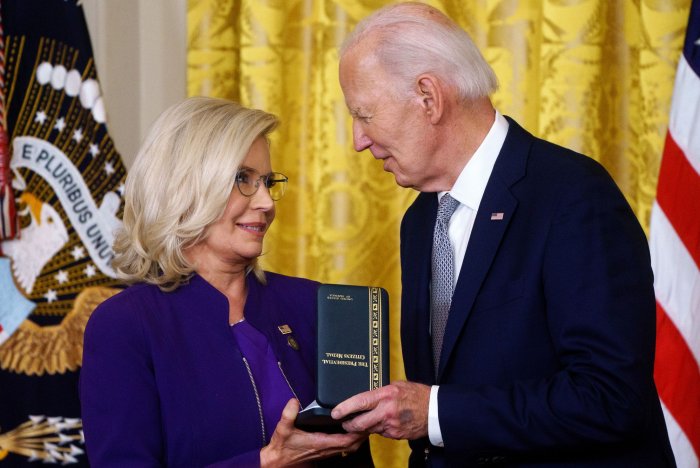
Former President Joe Biden presents the Presidential Citizens Medal to Liz Cheney during a ceremony in the East Room of the White House in Washington, on January 2, 2025. The Presidential Citizens Medal is bestowed to individuals who have performed exemplary deeds or services. Photo by Will Oliver/UPI | License Photo

Source link