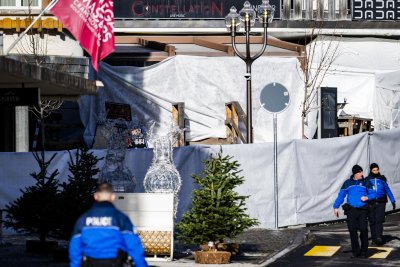
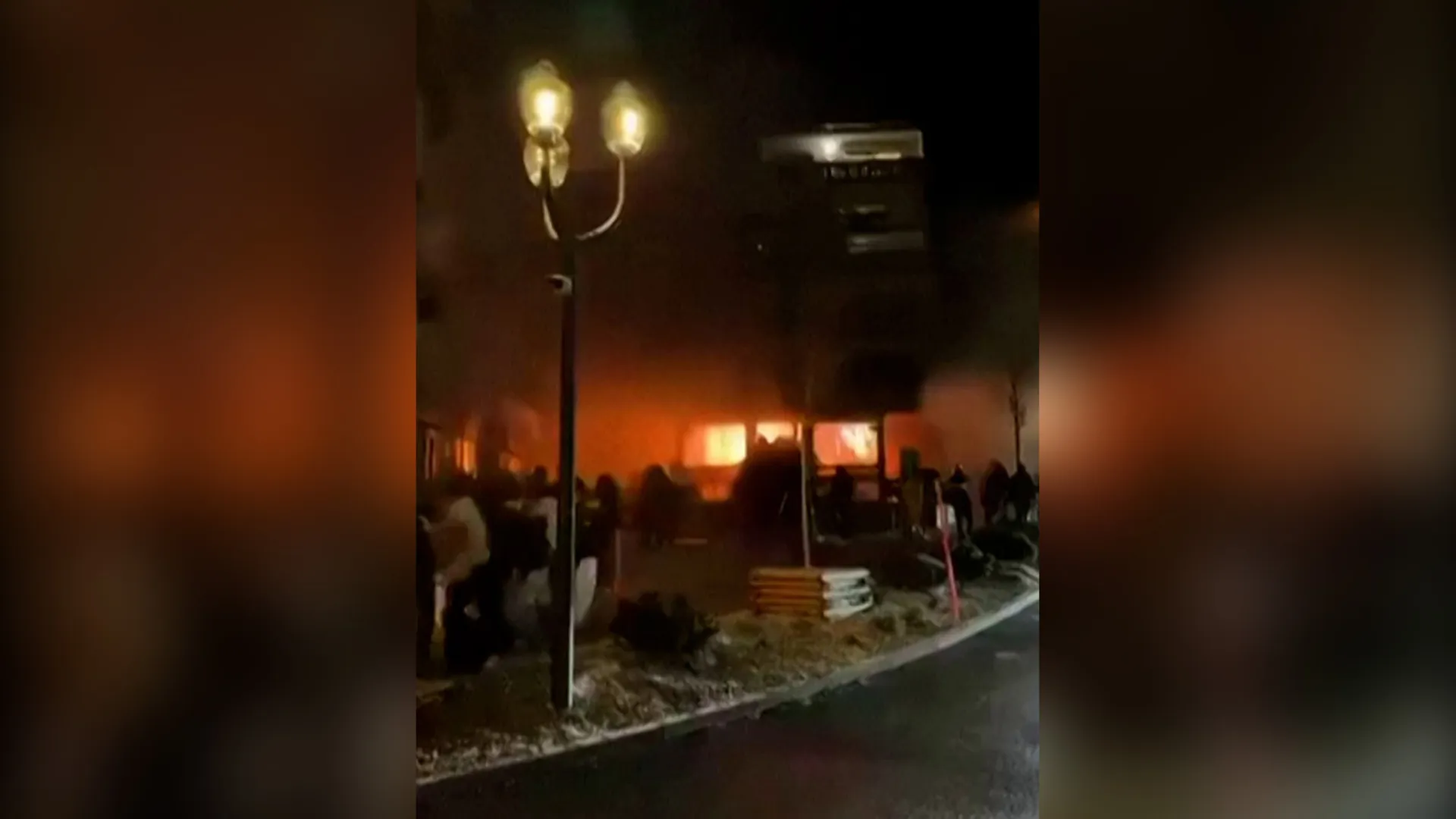
1 of 2 | Police officers inspect the area where a fire broke out at the Le Constellation bar and lounge in the early hours of New Year’s Eve, in Crans-Montana, Switzerland, Thursday. According to the police, several dozen people died in the fire and around 100 people were injured. Photo by Jean-Christophe Bott/EPA
Jan. 1 (UPI) — About 40 people are believed to be dead and about 100 injured — many of them severely — after a fire broke out at a New Year’s Eve celebration at a bar in Switzerland.
The bar, Le Constellation in Crans-Montana in the Swiss Alps, was a popular place for tourists and young people. Many of the injured were between 16 and 26 years old. The victims are believed to be from several different countries.
Smoke began pouring out of the bar at around 1:30 a.m., witnesses said, and emergency services were called soon after. They sent 10 helicopters and 40 ambulances to take the injured to hospitals, officials said at a press conference Thursday morning. The nearest hospital had run out of space in the emergency department and surgical suites. Three specialized planes took burn victims to Zurich, which is about 90 miles away.
Le Constellation had a dance floor in its basement with a narrow stairway, which may have made it difficult for people to escape.
Officials have ruled out the possibility of a terrorist attack, though they haven’t yet determined the cause of the fire.
There was an explosion during the fire, but officials have said it was from a flashover. A flashover is when all combustible materials in a room ignite at once from the heat.
Witnesses said many people struggled after coming out of the heat of the bar and into the outside cold. Victims were treated at makeshift triage centers in a nearby bar and a branch of UBS bank.
“And then it was just ambulances coming back and forth as much as possible,” Dominic Dubois, who witnessed the frantic scenes as the bodies were brought out, told The Guardian.
Doctors and counselors were sent to the area to offer psychological help for the survivors.
“Significant resources have been deployed from a forensic medicine perspective, primarily to identify the victims,” said Beatrice Pilloud, prosecutor general of the canton, at the news conference. Pilloud said that authorities were doing everything they could to get the victims’ bodies to their families.
Crans-Montana is a resort town of about 10,000 people that’s popular among wealthy Europeans. It’s in the canton of Valais in the French-speaking part of Switzerland.
“What was a moment of joy turned into a tragedy in Crans-Montana last night, felt across the country and beyond,” Swiss President Guy Parmelin said on X. “The Federal Council has taken note of this with deep dismay. Its thoughts are with the victims, the injured and their families and it extends its deepest condolences.”
Parmelin postponed a scheduled New Year address because of the fire.
“While this evening should have been a time for celebration and gathering, it turned into a nightmare,” Mathias Reynard, a member of the Swiss National Council from Valais, said at the press conference.
Ban could cut hundreds of thousands of Palestinians in Gaza off from essential care, Doctors Without Borders warns.
Israel faces mounting global condemnation as a ban on dozens of international aid organisations working to provide life-saving assistance to Palestinians in the war-ravaged Gaza Strip has come into effect.
On Thursday, a group of 17 human rights and advocacy organisations in Israel condemned the prohibition, saying it “undermines principled humanitarian action, endangers staff and communities, and compromises effective aid delivery”.
Recommended Stories
list of 3 itemsend of list
“Israel, as the occupying power, has an obligation to ensure adequate supplies to Palestinian civilians. Not only is it failing to fulfil that obligation, but it is also preventing others from filling the gap,” the groups said.
Israel has revoked the operating licences of 37 aid groups, including Doctors Without Borders, known by its French initials MSF, and the Norwegian Refugee Council, for failing to comply with new government regulations.
The new rules require international NGOs working in Gaza and the occupied West Bank to provide detailed information on staff members, as well as their funding and operations.
Israel has defended the move by accusing international organisations that work in Gaza of having links to Hamas and Palestinian Islamic Jihad – without providing any evidence.
But experts say the requirements contravene humanitarian principles and follow a longstanding Israeli government campaign to vilify and ultimately impede the work of aid groups providing assistance to Palestinians.
“The new registration framework violates core humanitarian principles of independence and neutrality,” the Israel-based rights groups, including B’Tselem and Physicians for Human Rights-Israel, said in Thursday’s statement.
“Conditioning aid on political alignment, penalizing support for legal accountability, and requiring the disclosure of sensitive personal data of Palestinian staff and their families all constitute a breach of duty of care and expose workers to surveillance and harm.”
‘Pattern of unlawful restrictions’
The ban comes as Israel has waged a genocidal war against Palestinians in the Gaza Strip, imposing restrictions on food, medicine and other humanitarian aid deliveries to the coastal territory.
Israeli violence has also soared in the occupied West Bank, with the military forcing tens of thousands of Palestinians out of their homes in what Human Rights Watch has described as war crimes and crimes against humanity.
Against that backdrop, United Nations human rights chief Volker Turk said earlier this week that Israel’s NGO ban is “the latest in a pattern of unlawful restrictions on humanitarian access” in the occupied Palestinian territory.
Doctors Without Borders said in a social media post that, as of Wednesday, it was still waiting on the renewal of its registration to operate in Gaza and the West Bank under the new Israeli rules.
“The Palestinian health system is decimated, essential infrastructure is destroyed, and people struggle to meet basic needs. People need more services, not less,” MSF said.
“If MSF and other INGOs lose access, hundreds of thousands of Palestinians would be cut off from essential care.”
Former UN humanitarian chief Martin Griffiths, who sits on the board of the Norwegian Refugee Council, told Al Jazeera he was not optimistic about what will happen next.
“The reality is these agencies are essential to aid delivery – [and] aid delivery in particular in the Gaza Strip,” Griffiths said. “They are the last mile, the phrase used in humanitarian operations to those who actually deliver the aid to the people involved.”
Four members of the Palestine Action group, which has been proscribed as a terrorist organisation in the United Kingdom, are continuing with their hunger strikes in different prisons around the country.
Four other Palestine Action members have ended their hunger strikes – some after being hospitalised.
Recommended Stories
list of 4 itemsend of list
Here is what we know about the four remaining hunger strikers.
Why are the Palestine Action protesters on hunger strike?
Imprisoned Palestine Action members have been on hunger strikes in prisons around the UK for more than 50 days.
The Palestine Action members are being held on remand in prisons over their alleged involvement in break-ins at the UK subsidiary of Elbit Systems in Filton near Bristol, where equipment was reportedly damaged, and at a Royal Air Force base in Oxfordshire, where two military aircraft were sprayed with red paint.
The prisoners deny the charges against them, which include burglary and violent disorder.
Of the four still on hunger strikes, three were imprisoned in November 2024 for their alleged involvement in break-ins at the UK subsidiary of Israeli weapons group Elbit Systems in Filton near Bristol, where equipment was reportedly damaged. One has been in prison since July 2025 for alleged involvement in damage at a Royal Air Force base in Oxfordshire, where two military aircraft were sprayed with red paint.
Palestine Action, a protest group launched in July 2020, describes itself as a movement “committed to ending global participation in Israel’s genocidal and apartheid regime”.
The UK parliament voted in favour of proscribing the group on July 2, 2025, classifying it as a “terrorist” organisation and bringing it into the same category as armed groups like al-Qaeda and ISIL (ISIS). Critics decried the move, arguing that while members of the group have caused damage to property, they have not committed acts of violence that amount to terrorism.
More than 1,600 arrests linked to support for Palestine Action were made in the three months following the ban’s introduction. The ban has been challenged in court.
The hunger strikers have five key demands: immediate bail, the right to a fair trial – which they say includes the release of documents related to “the ongoing witch-hunt of activists and campaigners” – ending censorship of their communications, “de-proscribing” Palestine Action and shutting down Elbit Systems, which operates several UK factories.
“The UK government has forced their bodies to a breaking point,” pro-Palestine activist Audrey Corno told Al Jazeera Mubasher.
“A promise to the government is that the prisoners’ resistance and the people’s resistance against the genocide [in Gaza], Israel’s occupation and apartheid of genocide will not stop until it ends.”
Who are the remaining hunger strikers?
Heba Muraisi, Kamran Ahmed, Teuta Hoxha and Lewie Chiaramello are the four people, aged between 20 and 31, who are continuing their hunger strikes.
Heba Muraisi
Muraisi, 31, was on day 60 of her hunger strike on Thursday. She is being held in HMP [His Majesty’s Prison] New Hall in Wakefield, a prison in West Yorkshire about 180 miles (290km) north of London.
Muraisi was arrested in November 2024 for her alleged role in an August 2024 raid on the Israel-based Elbit Systems in Bristol, which is believed to have cost the Israeli weapons manufacturer more than $1.34m.
According to social media posts, Muraisi is of Yemeni origin. However, Al Jazeera could not independently verify this.
She was transferred to the West Yorkshire prison in October 2025 from HMP Bronzefield in Surrey, about 18 miles from the UK capital.
“Heba is demanding to be transferred back to HMP Bronzefield. She was transferred very suddenly, very far away from her entire support network and family, which is based in London. She’s been experiencing consistent medical negligence. Her body is, as you’d imagine, increasingly weak,” Corno said.
In a statement shared with Al Jazeera on December 29, Muraisi said: “I’ve been force-fed repression and I’m stuffed with rage and that’s why I’m doing what I’m doing now. I am bringing acute awareness to the unjust application of UK laws by our Government and I’m glad that people can now see this after a year of imprisonment and human rights violations. Keep going, keep fighting.”
Muraisi’s trial is set for June 2026, according to the protest group Prisoners For Palestine.
Heba Muraisi [Courtesy of Prisoners for Palestine]
Kamran Ahmed
Ahmed, 28, was also arrested in November 2024 and is being held in HMP Pentonville in north London. He was also arrested for his alleged involvement in the raid on Elbit Systems in Bristol. Ahmed has been on a hunger strike for more than 50 days.
According to a report by Middle East Eye, Ahmed is a mechanic.
Ahmed was hospitalised for a third time on December 20 after he refused food, his sister, Shahmina Alam, told Al Jazeera.
“We know that he’s rapidly been losing weight in the last few days, losing up to half a kilogramme [1.1lbs] a day,” Alam told Al Jazeera in late December.
Ahmed, who is 180cm (5′11′), entered prison at a healthy 74kg (163lbs), but his last recorded weight was 60kg (132lbs).
“Kamran has been hospitalised for the fourth time recently,” Corno said.
Kamran Ahmed [Courtesy of Prisoners for Palestine]
Teuta Hoxha
Hoxha, 29, was on day 54 of her hunger strike on Thursday. She is being held at HMP Peterborough. She was also arrested in November 2024 on allegations of involvement in the Elbit Systems raid.
According to Prisoners for Palestine, Hoxha was moved from HMP Bronzefield on the day UK parliamentarians voted to proscribe Palestine Action – July 2, 2025.
Corno told Al Jazeera that she is in regular contact with Hoxha and that she has been having heart palpitations. “She’s not been able to sleep through the night for weeks on end. I can see her memory start to deteriorate.”
In a statement published on the Prisoners for Palestine website, Hoxha said: “This is a witch hunt, not a fair fight, and that behind the arrests of dissenting voices under counterterrorism powers, holding us on remand without trial for nearly two years and targeting protesters who condemn Palestinian suffering, is the palpably desperate attempt to force us all under the imperial boot of submission.”
Teuta Hoxha [Courtesy of Prisoners for Palestine]
Lewie Chiaramello
Chiaramello, 22, has type 1 diabetes and hence, he has been fasting every other day. He is on day 28 of his hunger strike.
He has been held in HMP Bristol since July 2025 in connection with an incident at RAF Brize Norton, according to Prisoners for Palestine, and faces charges of conspiring to enter a restricted area for purposes harmful to the UK’s safety and interests, as well as conspiracy to commit criminal damage. His trial is set for January 18, 2027.
On June 20, a group of Palestine Action activists broke into RAF Brize Norton, the largest Royal Air Force base in Oxfordshire, and sprayed two military planes with red paint, causing an estimated $9.4m worth of damage.
“He’s been having to manage his insulin intake on his own with no medical supervision,” Corno said.
Lewie Chiaramello [Courtesy of Prisoners for Palestine]
Who else has been on a hunger strike?
Four other imprisoned Palestine Action activists have ended their hunger strikes, mostly after being hospitalised.
This includes Qesser Zuhrah, 20 and Amu Gib, 30, who are being held at Bronzefield prison in Surrey. The pair began their hunger strikes on November 2 to coincide with the Balfour declaration of 1917, when Britain pledged to establish a national home for the Jewish people in Palestine.
Umar Khalid, 22, who has muscular dystrophy, ended his hunger strike after 13 days. Jon Cink ended his hunger strike after 41 days when he was hospitalised. Qesser Zuhrah ended her hunger strike after 48 days and was hospitalised. Amy Gib was also hospitalised.
Move comes nearly two decades after the Balkan country entered the EU as hope for stability clashes with fear of rising prices.
Published On 1 Jan 20261 Jan 2026
Share
Bulgaria has officially adopted the euro, becoming the 21st country to join the single currency nearly two decades after entering the European Union, a move that has led to both celebration and anxiety.
At midnight on Wednesday (22:00 GMT), the Balkan country abandoned the lev, its national currency since the late 19th century.
Recommended Stories
list of 3 itemsend of list
Images of Bulgarian euro coins lit up the central bank’s headquarters in Sofia as crowds gathered in freezing temperatures to mark the new year.
“I warmly welcome Bulgaria to the euro family,” said Christine Lagarde, the president of the European Central Bank.
Some residents welcomed the change with optimism. “Great! It works!” said Dimitar, 43, speaking to The Associated Press after withdrawing 100 euros from a cash machine shortly after midnight.
Successive Bulgarian governments have backed euro adoption, arguing it would strengthen the country’s fragile economy, anchor it more firmly within Western institutions and shield it from what officials describe as Russian influence. Bulgaria, with a population of about 6.4 million, remains the poorest member of the EU.
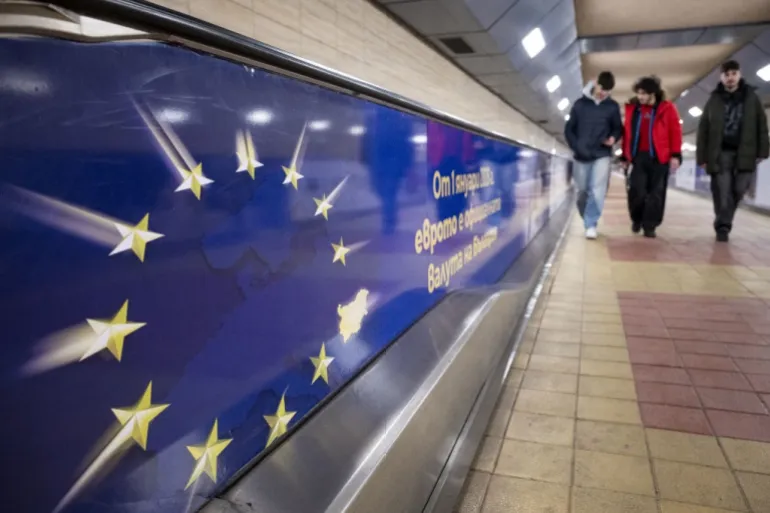
Commuters walk past an advertisement promoting Bulgaria’s entry into the eurozone in Sofia’s subway on December 31, 2025, ahead of the country’s adoption of the euro on January 1, 2026 [Nikolay Doychinov/AFP]
Divided public
Yet public opinion has long remained split. Many Bulgarians fear the euro will drive up prices while wages stagnate, worsening living standards in a country already struggling with political instability.
In a televised address before midnight, President Rumen Radev described the euro as the “final step” in Bulgaria’s integration into the EU.
However, he criticised the absence of a public referendum on the decision.
“This refusal was one of the dramatic symptoms of the deep divide between the political class and the people, confirmed by mass demonstrations across the country,” Radev said.
Bulgaria recently plunged into further uncertainty after anticorruption protests toppled a conservative-led government in December, pushing the country towards its eighth election in five years.
“People are afraid that prices will rise, while salaries will remain the same,” a woman in her 40s told the AFP news agency in Sofia.
At city markets, vendors listed prices in both levs and euros. Not everyone was worried.
“The whole of Europe has managed with the euro, we’ll manage too,” retiree Vlad said.
Maresca exits the club midway through a turbulent season with the team winning just one Premier League game in December.
Published On 1 Jan 20261 Jan 2026
Share
Chelsea have parted ways with Enzo Maresca, a dramatic fall from grace for the Italian who was named Manager of the Month for November before the club won just one of their last seven league games, causing them to fall out of the Premier League title race.
“Chelsea Football Club and head coach Enzo Maresca have parted company,” the club said in a statement on Thursday.
Recommended Stories
list of 3 itemsend of list
Maresca, who joined Chelsea in 2024 after steering Leicester City to Premier League promotion, leaves 18 months to the day since he was tasked with reviving the club’s fortunes after two years of failing to qualify for the Champions League.
He eventually guided the London side to UEFA Champions League qualification with a fourth-placed finish, the Conference League trophy and the Club World Cup title in his first season with a young but expensively built squad.
Poor run of form
However, a poor run of form in December and an uncharacteristic outburst from the Italian prompted the club hierarchy to take action and part ways with the 45-year-old manager.
“With key objectives still to play for across four competitions including qualification for Champions League football, Enzo and the club believe a change gives the team the best chance of getting the season back on track,” the Chelsea statement said.
Chelsea were as high as third in November and were among the title contenders, high on confidence after they had also crushed Barcelona 3-0 in the Champions League at Stamford Bridge.
But they have since slipped to fifth in the league to sit 15 points behind leaders Arsenal at the halfway stage of the season.
Chelsea star Cole Palmer shakes hands with Maresca, left, after being substituted during what turned out to be the Italian’s last match in charge of the club against Bournemouth at Stamford Bridge, London, UK, on December 30, 2025 [Andrew Boyers/Action Images via Reuters]
‘Worst 48 hours’
Last month, Maresca voiced frustration over issues behind the scenes, saying he felt he had a lack of support from the club, describing a period after a 2-0 win over Everton as “the worst 48 hours” of his tenure.
The Italian did not clarify what he meant by the comment, but the damage seemed to have been done as Chelsea’s league form nosedived.
Although Chelsea beat Cardiff City to reach the League Cup semifinals, they picked up only two points in their last three Premier League games.
Off the pitch, there was also the unwelcome distraction of rubbishing links to the Manchester City job as Maresca pointed out that he was committed to Chelsea, where he had a contract until 2029.
But Tuesday’s 2-2 home draw with Bournemouth – where fans chanted, “You don’t know what you’re doing” when he substituted playmaker Cole Palmer while they also booed at the final whistle – proved to be his final match in charge.
The club did not say who would take charge before Sunday’s match against second-placed Manchester City.
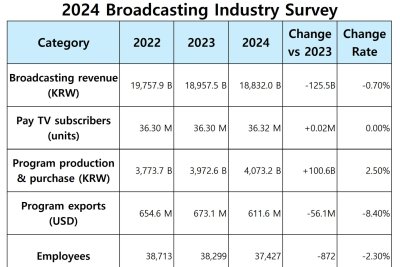
1 of 2 | Key findings from South Korea’s 2024 broadcasting industry survey. Graphic by Asia Today and translated by UPI
Dec. 31 (Asia Today) — South Korea’s broadcasting industry remained in a slump last year, with total revenue declining for a second consecutive year as terrestrial broadcasters posted steep drops in advertising income, regulators said Wednesday.
The Korea Communications Commission said total broadcasting industry revenue in 2024 fell 0.7% from 2023 to 18.832 trillion won (about $14.5 billion) in its “2024 Survey on the Status of the Domestic Broadcasting Industry.” The market first turned negative in 2023 after expanding every year since 2003, the commission said.
Terrestrial broadcasters, including digital multimedia broadcasting, recorded the largest decline by category, with revenue falling 5.4% to 3.5337 trillion won (about $2.7 billion), the commission said. The drop was driven by weaker advertising, historically the biggest income source for terrestrial channels.
Terrestrial advertising revenue declined 9.9% to 835.7 billion won (about $640 million) in 2024 after plunging 23.3% in 2023, according to the survey. Advertising accounted for 23.7% of terrestrial broadcast revenue in 2024, down from 47.4% in 2014, it said.
Cable television operators and satellite broadcasters also posted declines, with revenue down 2.9% and 3.6%, respectively, as subscription fees and home shopping carriage fees weakened, the commission said.
Total revenue for pay-TV operators, including cable and internet protocol television, edged up to 7.2361 trillion won (about $5.6 billion), but growth remained near flat, the survey said. IPTV was the main driver, with revenue rising 1.4% to 5.0783 trillion won (about $3.9 billion), the commission said, citing steady increases in subscription fees and home shopping transmission fees.
Home shopping program providers posted revenue of 3.4168 trillion won (about $2.6 billion), down 2.1% from the previous year, the commission said. TV home shopping sales continued to slide, while data-based home shopping sales rose 1.6% to 774.3 billion won (about $595 million), reversing a decline the year before.
Employment in the broadcasting industry also fell, the survey said, with the number of workers declining to 37,427 in 2024 from 38,299 in 2023. Terrestrial broadcasters recorded the sharpest employment drop, down 4.5%.
Israel currently occupies the Palestinian side of the crossing, choking Gaza of a vital humanitarian entry point.
Published On 1 Jan 20261 Jan 2026
Share
Israel is preparing to reopen the Rafah crossing between the Gaza Strip and Egypt in both directions after Prime Minister Benjamin Netanyahu returns from a visit to the United States, according to Israeli media reports.
Israel’s Kan 11 news reported on Wednesday that the expected decision comes as a result of pressure from US President Donald Trump.
Recommended Stories
list of 3 itemsend of list
For Palestinians in Gaza, the Rafah crossing had long been the only connection to the outside world.
That was until May 2024, when Israeli forces occupied the Palestinian side of the crossing, destroying its buildings, preventing travel and causing a severe humanitarian crisis, especially for patients.
It marked the first time in 20 years that Israeli forces directly controlled the border crossing as they deployed soldiers in a military buffer zone all across the Philadelphi Corridor, where they remain today.
The first phase of Trump’s 20-point plan – imposed by the US administration in October – to end Israel’s genocidal war on Gaza had called for Israeli authorities to let humanitarian aid into the territory and open “the Rafah crossing in both directions”.
Israel, however, has continued to restrict the entry of aid, while a military unit called Israel’s Coordination of Government Activities in the Territories (COGAT) announced in December that the “Rafah Crossing will open in the coming days exclusively for the exit of residents from the Gaza Strip to Egypt”.
The announcement caused concern among mediators, with the foreign ministers of Egypt, Indonesia, Jordan, Pakistan, Qatar, Saudi Arabia, Turkiye and the United Arab Emirates issuing a joint statement that expressed “deep concern” and expressed their “complete rejection of any attempts to displace the Palestinian people from their land”.
Israel’s Kan news reported that discussions about reopening the crossing in both directions had been held before Netanyahu met with Trump in the US, but the move was postponed.
It added that an unnamed US source believed that the announcement about the opening of the crossing would take place in the coming days.
Netanyahu has reached the end of his latest trip to the US, with Trump hailing him as a “hero” and saying Israel – and by extension its prime minister – had “lived up to the plan 100 percent” in reference to the US president’s peace plan.
However, reports emerged last week that suggested US officials are growing frustrated over Netanyahu’s apparent “slow walking” of the 20-point ceasefire plan, suspecting that the Israeli prime minister might be hoping to keep the door open to resuming hostilities against the Palestinian group Hamas at a time of his choosing.
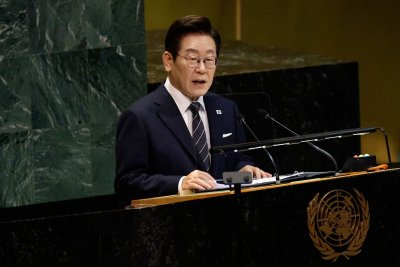
President of the Republic of Korea Jae Myung Lee speaks on the first day of the 80th session of the General Debate in UN General Assembly Hall at the United Nations Headquarters on Tuesday, September 23, 2025 in New York City. Photo by Peter Foley/UPI. | License Photo
Dec. 31 (Asia Today) — South Korea’s two-year term as a non-permanent member of the U.N. Security Council ended Wednesday, with the Foreign Ministry saying Seoul led discussions on international peace and security and raised its profile as a responsible global power.
The ministry said South Korea served as Security Council president in September and used the role to steer talks during the high-level segment of the 80th U.N. General Assembly.
It was South Korea’s third stint as an elected Security Council member after terms in 1996-1997 and 2013-2014, the ministry said.
During the 2024-2025 term, South Korea pushed Council discussions on security threats linked to emerging technologies, including artificial intelligence and cybersecurity, the ministry said. It said President Lee Jae-myung became the first South Korean president to preside over a Security Council meeting, leading a session on AI and international peace and security.
The ministry said South Korea also contributed to talks on peacekeeping and peacebuilding, taking part in decisions related to U.N. peacekeeping operations and serving as a coordinator between the Security Council and the Peacebuilding Commission.
It said Seoul urged greater Council attention to nontraditional security issues including women, peace and security and climate change.
The ministry said the period of South Korea’s membership coincided with conflicts in multiple regions, including the war in Ukraine and tensions in the Middle East, underscoring the Council’s role. It said geopolitical rivalry and eroding trust in multilateralism limited Council action, but Seoul consistently emphasized respect for international law, including the U.N. Charter, and protection of civilians.
The ministry said South Korea worked to strengthen solidarity among elected members and promote dialogue between permanent and nonpermanent members.
It said the government plans to expand contributions to international peace and security based on the experience gained during the term, including efforts tied to what it described as a national policy task of building a “G7+ diplomatic powerhouse” through participation in the international community.
An explosion and fire ripped through a popular bar in the Swiss ski resort of Crans-Montana during New Year’s celebrations. Police say at least 10 people are dead, and many more wounded.
Mali and Burkina Faso have announced they are imposing full visa bans on United States citizens in retaliation for US President Donald Trump’s ban on US visas for their citizens this month.
The two West African countries, which are both governed by the military, on Tuesday became the latest African nations to issue “tit-for-tat” visa bans on the US. These follow Trump’s new visa restrictions, which now apply to 39 countries in Africa, Asia, the Middle East and Latin America. The White House said they were imposed on “national security” grounds.
Recommended Stories
list of 4 itemsend of list
“In accordance with the principle of reciprocity, the Ministry of Foreign Affairs and International Cooperation informs the national and international community that, with immediate effect, the Government of the Republic of Mali will apply the same conditions and requirements to US nationals as those imposed on Malian citizens,” the Malian ministry said in a statement.
Burkina Faso’s foreign minister, Karamoko Jean-Marie Traore, in a separate statement similarly cited a reciprocity rule for his country’s visa ban.
Which countries have issued bans on visas for US citizens?
The US directive issued on December 16 expanded full US visa bans to citizens of five nations other than Mali and Burkina Faso: Laos, Niger, Sierra Leone, South Sudan and Syria.
Travellers holding travel documents issued by the Palestinian Authority were also banned from entering the US under the order.
The US cited the countries’ poor screening and vetting capabilities, information-sharing policies, visa overstay rates and refusal to take back their deported nationals for the ban.
Trump’s order also noted countries were additionally assessed based on whether they had a “significant terrorist presence”.
The US ban takes effect on Thursday.
Mali, Burkina Faso and neighbouring Niger have been plagued by violence from armed groups linked to al-Qaeda and ISIL (ISIS) for years. The violence in those countries has displaced millions of civilians.
On Friday, Niger banned entry for US citizens, also citing the US ban on its citizens. The country is also military-led like its neighbours Mali and Burkina Faso. All three formed the Alliance of Sahel States in July 2024 to tackle security problems and improve trade relations.
In its own reciprocal move, Chad stopped issuing visas to US citizens on June 6 with an exception for US officials. Only US citizens who were issued visas before June 9 are now allowed entry into Chad.
The country was on an initial list of 12 nations whose citizens the Trump administration issued a full visa ban on from June 9.
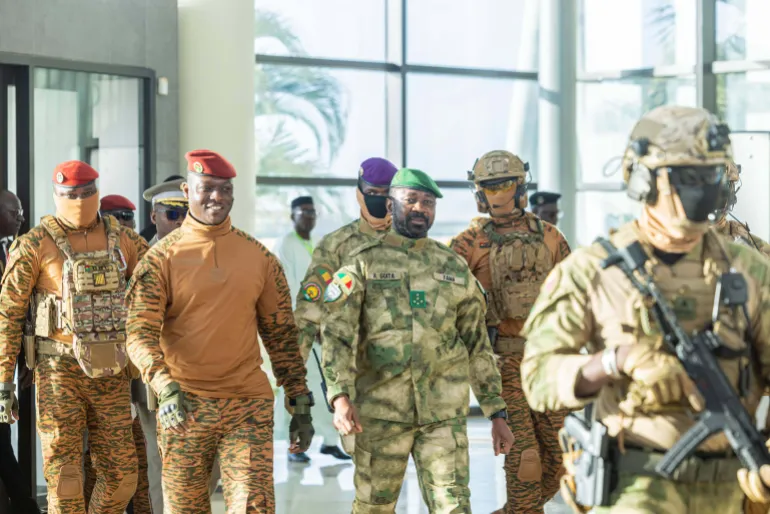
Burkina Faso President Ibrahim Traoré, second from left, walks alongside Malian President Assimi Goïta during an Alliance of Sahel States summit on security and development in Bamako, Mali, on December 23, 2025 [Handout/Mali government information centre via AP]
Which countries are affected by the US visa bans?
Citizens of 39 countries are now under full or partial entry restrictions to the US, according to the US-based Council on Foreign Relations think tank.
Those fully banned are:
Afghanistan
Burkina Faso
Chad
Equatorial Guinea
Eritrea
Haiti
Iran
Laos
Libya
Mali
Myanmar
Niger
Republic of Congo
Sierra Leone
Somalia
South Sudan
Sudan
Syria
Yemen
Holders of travel documents issued by the Palestinian Authority are also fully banned.
Those partially restricted are:
Angola
Antigua and Barbuda
Benin
Burundi
Cuba
Dominica
Gabon
The Gambia
Ivory Coast
Malawi
Mauritania
Nigeria
Senegal
Tanzania
Togo
Tonga
Turkmenistan
Venezuela
Zambia
Zimbabwe
Is Trump specifically targeting African countries with visa bans?
Trump’s approach to Africa regarding visa entries in his second term as US president is similar to that of his first administration when he issued a “Muslim ban”, which included citizens of three African nations – Somalia, Sudan and Libya – as well as Yemen, Syria, Iraq and Iran.
In later updates to the ban, Sudan was removed while Chad was added.
Most countries under US entry restrictions since Trump took office on January 20 are in Africa. Of the 39 affected countries, 26 are African nations.
How have US-Africa trade relations fared under Trump?
Tradewise, the US has shifted away from its preferential African Growth and Opportunity Act (AGOA) trade programme to a tariff-based regime that has also been applied to most other countries around the world under Trump’s tariffs policy.
From 2000, AGOA provided African nations with duty-free access to US markets, bolstering African exports to the US of a wide range of goods, from wine to cars.
AGOA created an estimated 300,000 jobs in African countries and indirectly sustained another 1.2 million jobs, according to the US-based Center for Strategic International Studies.
However, AGOA expired in September after the US Congress failed to renew it. Although the Trump administration said it supported a one-year extension, no steps have been announced to revive the programme.
Instead, African countries now face often steep tariffs as the US sometimes justifies them on political grounds.
South African President Cyril Ramaphosa met with Trump at the White House in May and explained that crime in the country targets the population at large – not just its white citizens – but was unable to persuade Trump.
Trump’s administration is also prioritising its access to critical rare earth minerals, used to develop high-tech devices, in a bid to remain competitive with China, which mines about 60 percent of the world’s rare earth metals and processes 90 percent of them.
Trump took up a mediator role in the conflict between the Democratic Republic of the Congo (DRC) and neighbouring Rwanda this year after the DRC government proposed a minerals deal with the US. The US and United Nations accuse Rwanda of backing a rebellion by the M23 armed group in the eastern DRC.
Trump did not commit to US military intervention in the DRC but successfully secured a peace pact between the two countries on December 4 after applying diplomatic pressure on Rwanda.
Aid groups have since reported rising hunger in northern Nigeria, Somalia and northeastern Kenya.
Health observers and analysts have also raised the alarm about the risk of undoing work to prevent and contain the spread of HIV in Lesotho and South Africa.
In northern Cameroon, officials have reported a spike in malaria deaths as drug supplies fall. This month, the US unilaterally pledged $400m in health funding to the country over the next five years on the condition that Cameroon raises its own annual health spending from $22m to $450m.
African nations were also most affected when Trump recalled 30 career diplomats appointed by former President Joe Biden from 29 countries last week.
Fifteen of them had been stationed in African nations: Algeria, Burundi, Cameroon, Cape Verde, Gabon, Ivory Coast, Egypt, Madagascar, Mauritius, Niger, Nigeria, Rwanda, Senegal, Somalia and Uganda.
Meanwhile, the US has continued to intensify strikes against armed groups linked to ISIL and al-Qaeda, similar to those during Trump’s first term as president from 2017 to 2021.
In Somalia, the US launched strikes in September targeting al-Shabab and the ISIL affiliate in Somalia Province, according to the US-based New America Foundation think tank.
The US also targeted ISIL- and al-Qaeda-linked groups in northwestern Nigeria for the first time on Thursday.
While those strikes were carried out in collaboration with the Nigerian government, a war of narratives prevailed between the two countries.
The US claims to be “saving” Nigerian Christians, who it alleges are experiencing a genocide.
Nigerian authorities, on the other hand, deny claims of genocide and say people of all religions have been badly affected by armed groups operating in the country.
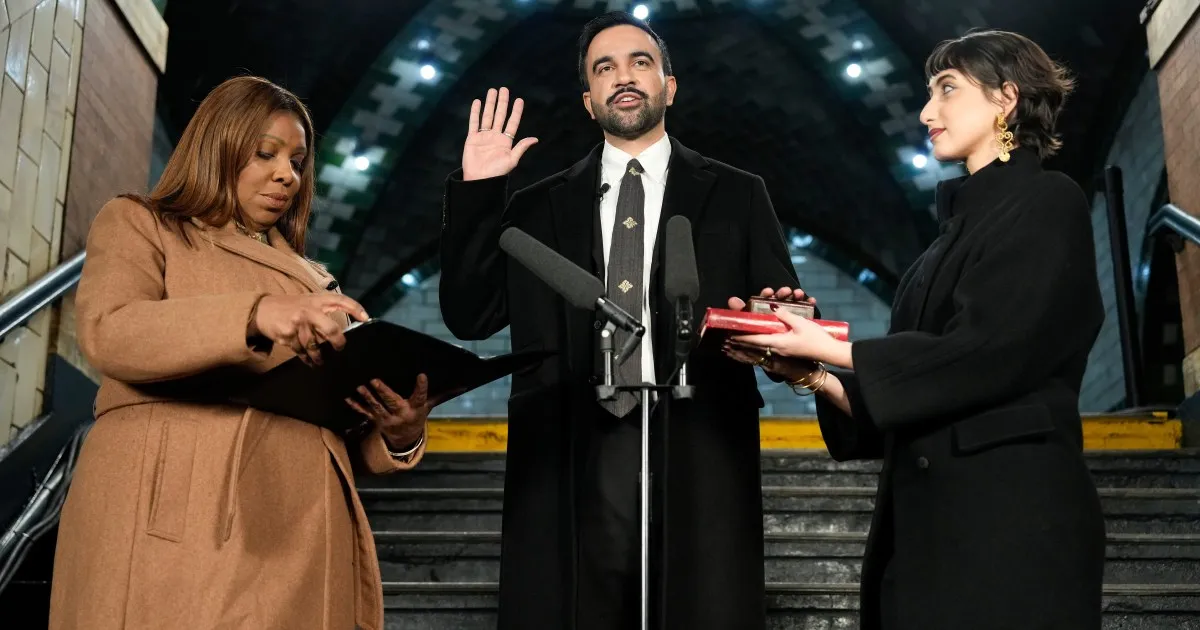
Zohran Mamdani was sworn in as New York City’s mayor just after midnight in a historic ceremony at a decommissioned Manhattan subway station.
Making history as the first Muslim to lead the United States’ largest city, Mamdani took his oath with his hand placed on a Quran.
“This is truly the honour and the privilege of a lifetime,” Mamdani said in a brief speech.
The private ceremony, conducted by New York Attorney General Letitia James at the architecturally stunning old City Hall station – one of the city’s original subway stops known for its arched ceilings – marked the official transition of power.
In his inaugural remarks, Mamdani highlighted the venue as a “testament to the importance of public transit to the vitality, the health and the legacy of our city” while announcing Mike Flynn as his new Department of Transportation commissioner.
The mayor concluded his brief address saying, “Thank you all so much, now I will see you later,” before ascending the stairs with a smile.
A more elaborate public inauguration will take place at 1pm (18:00 GMT) at City Hall. A public celebration will follow on Broadway’s “Canyon of Heroes”, famous for hosting ticker-tape parades.
As he steps into one of the US’s most demanding political positions, Mamdani breaks multiple barriers. At 34, he becomes the city’s youngest mayor in generations and the first of Muslim faith, South Asian descent, and African birth.
The incoming mayor will take his oath of office with two family editions of the Quran and a 19th century edition, symbolising New York City history, in the public ceremony on Friday.
Zohran Mamdani on Thursday became the first New York City mayor to be sworn in using a Quran.
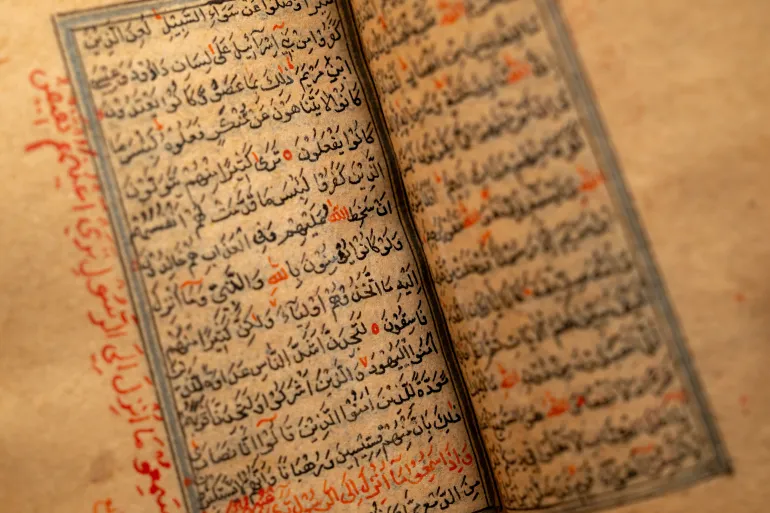
The first Muslim and South Asian mayor of the United States’ biggest metropolis, Mamdani used his grandfather’s Quran and a 200-year-old copy on loan from the New York Public Library (NYPL) for the private swearing-in event held at a disused subway station under Times Square.
Recommended Stories
list of 4 itemsend of list
He then plans to use two copies of the Quran that belonged to his grandfather and grandmother for a daytime ceremony at New York City Hall on Friday.
The historic Quran, borrowed from the library, once belonged to Arturo Schomburg, a Black historian and writer who sold his collection of 4,000 books to the NYPL in 1926. His collection became the Schomburg Center for Research in Black Culture.
Schomburg was born in Puerto Rico in the 1870s to parents of German and Afro-Caribbean descent. He later immigrated to New York and was a key player in the Harlem Renaissance of the 1920s and 1930s – a period of intense cultural and intellectual flourishing within New York’s Black community.
The library praised Mamdani’s decision to use Schomburg’s Quran because of its connection to one of New York’s “most groundbreaking scholars and for its simple, functional qualities”.
This photo provided by the New York Public Library shows the Schomburg Quran on December 16, 2025, in New York [Jonathan Blanc/The New York Public Library via AP Photo]
The small size of the Quran and its black and red ink suggest it was designed for everyday use, the library said. The edition is neither signed nor dated, but its “minute naskh script and its binding, featuring a gilt-stamped medallion filled with a floral composition, suggest it was produced in Ottoman Syria in the 19th century”, the library added.
“The significance of this Quran extends far beyond the beauty of its pages,” said Hiba Abid, curator of Middle Eastern and Islamic studies. “It is a Quran close to the people, not only because of its simple craftsmanship, but also because it is part of the collections of the nation’s largest public library system.”
Anthony W Marx, the library’s president and CEO, said the choice of Quran and its association with Schomburg “symbolises a greater story of inclusion, representation, and civic-mindedness”.
Mamdani is one of only a handful of US politicians to be sworn in with the Quran. New York does not require mayors to take the oath of office with their hand on a religious text, but many past mayors have used a copy of the Bible.
Former New York City Mayor Michael Bloomberg used a 100-year-old family Bible during one ceremony, while Mayor Bill de Blasio used a Bible that once belonged to US President Franklin D Roosevelt. Mamdani’s predecessor, Mayor Eric Adams, also used a family Bible for his oath.
This photo provided by the New York Public Library shows the Schomburg Quran on December 16, 2025, in New York [Jonathan Blanc/The New York Public Library via AP Photo]
Mamdani’s faith and his background as a Ugandan-born American of South Asian descent were front and centre during his campaign, which focused on celebrating the diversity of New York.
In viral social media videos, Mamdani also spoke candidly about the effect of the September 11 terrorist attacks on New York and the subsequent rise in Islamophobia in the US. Other videos featured the experiences of everyday New Yorkers, including many of its Muslim and immigrant communities.
Mamdani has also been a firm critic of Israel’s policies towards Palestinians and its genocidal war on Gaza.
Critics like New York Representative Elise Stefanik homed in on Mamdani’s background and left-wing politics as a Democratic Socialist, calling the incoming mayor a “jihadist Communist” and “terrorist” sympathiser.
Mamdani, however, pledged to never hide from his background during a campaign speech. “I will not change who I am, how I eat, or the faith that I’m proud to call my own,” he said during his campaign. “I will no longer look for myself in the shadows. I will find myself in the light.”
Dec. 31 (UPI) — Two African countries have announced travel bans against U.S. citizens in retaliation for President Donald Trump‘s travel bans against their own people.
The governments of Mali and Burkina Faso said on Tuesday that they were acting “in accordance with the principle of reciprocity.” They said Americans wanting to travel to their countries would see the same impositions that their citizens face in the United States. Niger’s state news agency announced a travel ban on Americans last week, though no official statement was released.
On Dec. 14, Trump announced travel bans on Burkina Faso, Mali, Niger, South Sudan and Syria. He also created new restrictions on people seeking entry from Laos and Sierra Leone, as well as those with travel documents issued by the Palestinian Authority. There are now 19 countries on the list.
Mali’s foreign ministry said in a statement that it “regrets that such an important decision was taken without any prior consultation and in substance deplores the security grounds put forward, which contradict the actual developments on the ground, in an attempt to justify a decision whose motivation lies elsewhere.”
Niger, Mali and Burkina Faso are led by military juntas after recent coups, The New York Times said. Their leaders had all mostly cut ties with the United States and developed closer relations with Russia, China, Turkey and the United Arab Emirates.
A United Nations report published on Dec. 18 said that the Sahel region — Niger, Burkina Faso and Mali — now accounts for more than half of the world’s terrorism-related deaths.
Laos and Sierra Leone were moved from partial travel restrictions to full bans. The administration put partial restrictions on 15 other countries.
The State Department ban does not affect lawful permanent residents, many existing visa holders, diplomats or athletes traveling for major sports events.
Dec. 31 (UPI) — A late-morning threat on Wednesday caused a temporary lockdown at Kansas City International Airport in Missouri that was lifted a little over an hour later.
Kansas City officials said the FBI and airport police were notified of a threat in a particular area within the airport, which was evacuated and searched, KCTV reported.
“Law Enforcement was able to determine no credible threat to the airport or those inside the terminal at this time. Once that determination was made, KCAD staff worked to resume normal operations and minimize disruptions,” city officials said in a statement.
Passengers were evacuated from the area of concern at 11 a.m. CST due to a “potential threat” in an unsecured area of the airport, according to WDAF TV.
They were let back in shortly before noon, and the airport was fully reopened by 12:30 p.m.
The nature of the threat was not announced, and the FBI is continuing to investigate the matter.
A separate threat also was investigated at the West Virginia International Yeager Airport in Charleston on Wednesday morning, WOWK reported.
The threat was “non-credible,” and the affected terminal was not evacuated, but a local bomb squad searched the area to ensure it was safe, local officials said.
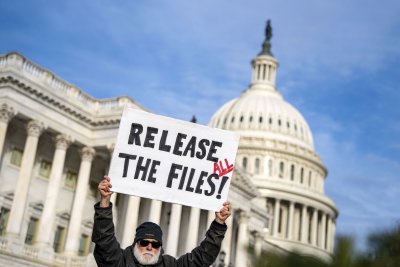
Dec. 31 (UPI) — The Department of Justice is reviewing 5.2 million more pages of the Jeffrey Epstein files, which are to be made public in accordance with the Epstein Files Transparency Act.
The DOJ said it is assigning 400 attorneys to go through the files to review them and make required redactions before they are made available to the general public, NBC News reported. The review likely will run from Monday through Jan. 20.
“It is truly an all-hands-on-deck approach, and we’re asking as many lawyers as possible to commit their time to review the documents that remain,” Deputy Attorney General Todd Blanche said Wednesday in a post on X.
“Required redactions to protect victims take time, but they will not stop these materials from being released,” Blanche said. “The attorney general’s and this administration’s goal is simple: transparency and protecting victims.”
The DOJ is assigning its attorneys and those from the FBI, the Southern District of Florida and the Southern District of New York to review the files ahead of their release, according to The Hill.
Three batches of files totaling hundreds of thousands of pages have been released and can be searched and downloaded online at the DOJ’s Epstein Library.
The DOJ cautions library visitors that some of the contents contain descriptions of sexual assault and might not be appropriate for everyone.
The Epstein Files Transparency Act required the DOJ to make all files in the federal case against financier Jeffrey Epstein publicly available no later than Dec. 19, but the volume of materials and the need to review each for content and redactions delayed the full posting.
DOJ officials on Dec. 24 announced its attorneys were “working around the clock to review and make the legally required redactions to protect victims,” but the number of files was underestimated.
The resulting delay is further complicated by the discovery of the 5.2 million files yet to be reviewed and redacted.
Delays in posting all files by the federally required deadline have Reps. Thomas Massie, R-Ky., and Ro Khanna, D-Calif., considering holding Attorney General Pam Bondi in contempt.
Khanna and Massie co-sponsored the bill that became the Epstein Files Transparency Act.
Epstein was a convicted sex offender who hung himself while jailed in Manhattan and awaiting trial on federal charges accusing him of the sex trafficking of minors.
His assistant and former longtime companion Ghislaine Maxwell was convicted on related federal charges in 2021 and is serving a 20-year sentence in federal prison.
She was convicted of sex trafficking of a minor, transporting a minor for illegal sexual activity and three counts of conspiracy.
Dec. 31 (UPI) — Former special counsel Jack Smith denied targeting President Donald Trump ahead of the 2024 presidential election while testifying before the House Judiciary Committee on Dec. 17.
He firmly denied pursuing the dual prosecutions against Trump for political reasons, Axios reported.
“I entirely disagree with any characterization that our work was in any way meant to hamper him in the presidential election,” Smith said.
The committee hearing was done behind closed doors, but House Judiciary Chairman Rep. Jim Jordan. R-Ohio, on Wednesday released the transcript and a video of the hearing that lasted for 8 hours and 21 minutes.
Smith led the Biden administration’s effort to prosecute Trump for his handling of classified documents and efforts to overturn the 2020 election results after losing to President Joe Biden.
“The decision to bring charges against President Trump was mine, but the basis for nine of those charges rests entirely with President Trump and his actions, as alleged in the 10 indictments returned by grand juries in two different districts,” Smith told House Judiciary Committee members.
He said he was deciding whether to charge alleged co-conspirators for attempting to overturn the 2020 election results, but Trump’s election win in 2024 halted the investigation.
Smith said Rudy Giuliani and Boris Epshteyn were among the Trump associates his prosecutorial team had interviewed but did not charge with alleged crimes.
When asked why he didn’t charge those two and others with lesser crimes to force them to testify against Trump, Smith said the case had plenty of evidence and no other witnesses were needed.
Smith did not offer any information to the committee that was not already publicly available regarding Trump’s handling of classified documents because U.S. District Court of Southern Florida Judge Aileen Cannon ordered him to keep the relevant contents of a 137-page case report private, he told the committee.
He said Giuliani did not believe the claims that he had made regarding voter fraud during the 2020 election and “disavowed a number of the claims,” which he excused as “mistakes or hyperbole,” Smith said.
The former special counsel also acknowledged that testimony by former White House aide Cassidy Hutchinson was based on hearsay and inadmissible in court.
Hutchinson claimed she was told Trump had become very angry when told that his driver was taking him to the White House instead of the Capitol and tried to grab the steering wheel of an SUV in which he was being transported during the Jan. 6, 2021, demonstration at the Capitol that devolved into a riot.
She made the claim privately and before an ad-hoc House select committee, the members of which then-House Speaker Nancy Pelosi, D-Calif., had chosen and mostly were Democrats.
Her account was not corroborated by others with firsthand information, Smith said.
He told the committee that Trump was the most responsible party for the Jan 6 demonstration that became a riot by stirring distrust and making false statements and refused to stop the riot.
Smith said he would pursue charges against the president again if given the chance to do so.
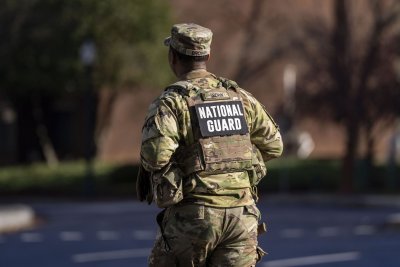
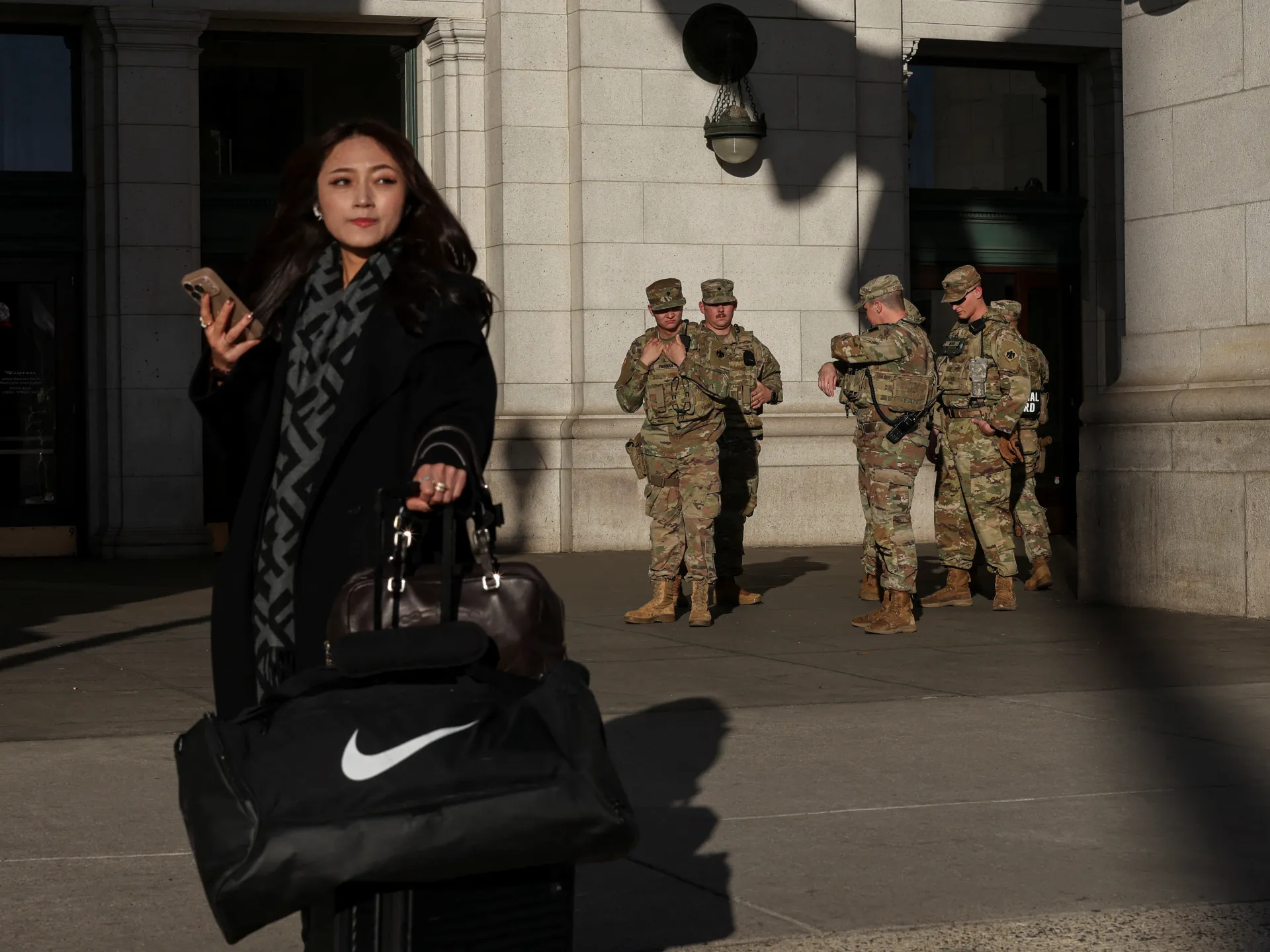
The National Guard will be withdrawn from Chicago, Los Angeles and Portland, Ore., amid legal challenges to their use and a Supreme Court ruling against the Chicago deployment, President Donald Trump said on Wednesday. Photo by Bonnie Cash/UPI | License Photo
Dec. 31 (UPI) — The National Guard will be leaving Chicago, Los Angeles and Portland, Ore., but they likely will return, President Donald Trump said on Wednesday.
Trump announced the withdrawals after the Supreme Court ruled against a National Guard deployment in Chicago and amid legal challenges in California and Oregon.
The Supreme Court last week ruled the federal government cannot take control of respective state National Guard units to protect federal agents as they enforce immigration law, CNN reported.
We are removing the National Guard from Chicago, Los Angeles and Portland, despite the fact that crime has been greatly reduced by having these great patriots in those cities, and only by that fact,” Trump said in a Truth Social post on Wednesday.
Portland, Los Angeles and Chicago were gone if it weren’t for the federal government stepping in,” the president said.
He predicted the National Guard will return to those cities, though.
“We will come back, perhaps in a much different and stronger form, when crime begins to soar again,” Trump said, adding: “Only a question of time!”
Similar National Guard deployments in New Orleans and Memphis would not be affected because the respective governors in those states have okayed the deployments.
The National Guard has been deployed in Memphis to help reduce violent crime there, and National Guard units began arriving in New Orleans ahead of New Year’s Eve, the annual Sugar Bowl and Mardi Gras.
Local, state and federal law enforcement and the Louisiana National Guard seek to prevent a repeat of last year’s lone-wolf attack by an ISIS supporter, WWLTV reported.
Shamsud-Din Jabbar, 42, was a U.S. citizen from Texas who drove to New Orleans and shot and killed 14 during the early morning hours on Jan. 1.
An ISIS flag was found in his truck, along with weapons and a potential improvised explosive device, but local police shot and killed him before he could cause more harm.
He had placed two IEDs on Bourbon Street, where he also opened fire with a rifle and killed 14 before being shot and killed to end the attack.
Federal investigators found bomb-making materials in a rental home that Jabbar briefly occupied and tried to set on fire to conceal his crimes.
Ivorians to face Burkina Faso in last 16 while Cameroon meet South Africa and Mozambique play Nigeria.
Published On 31 Dec 202531 Dec 2025
Share
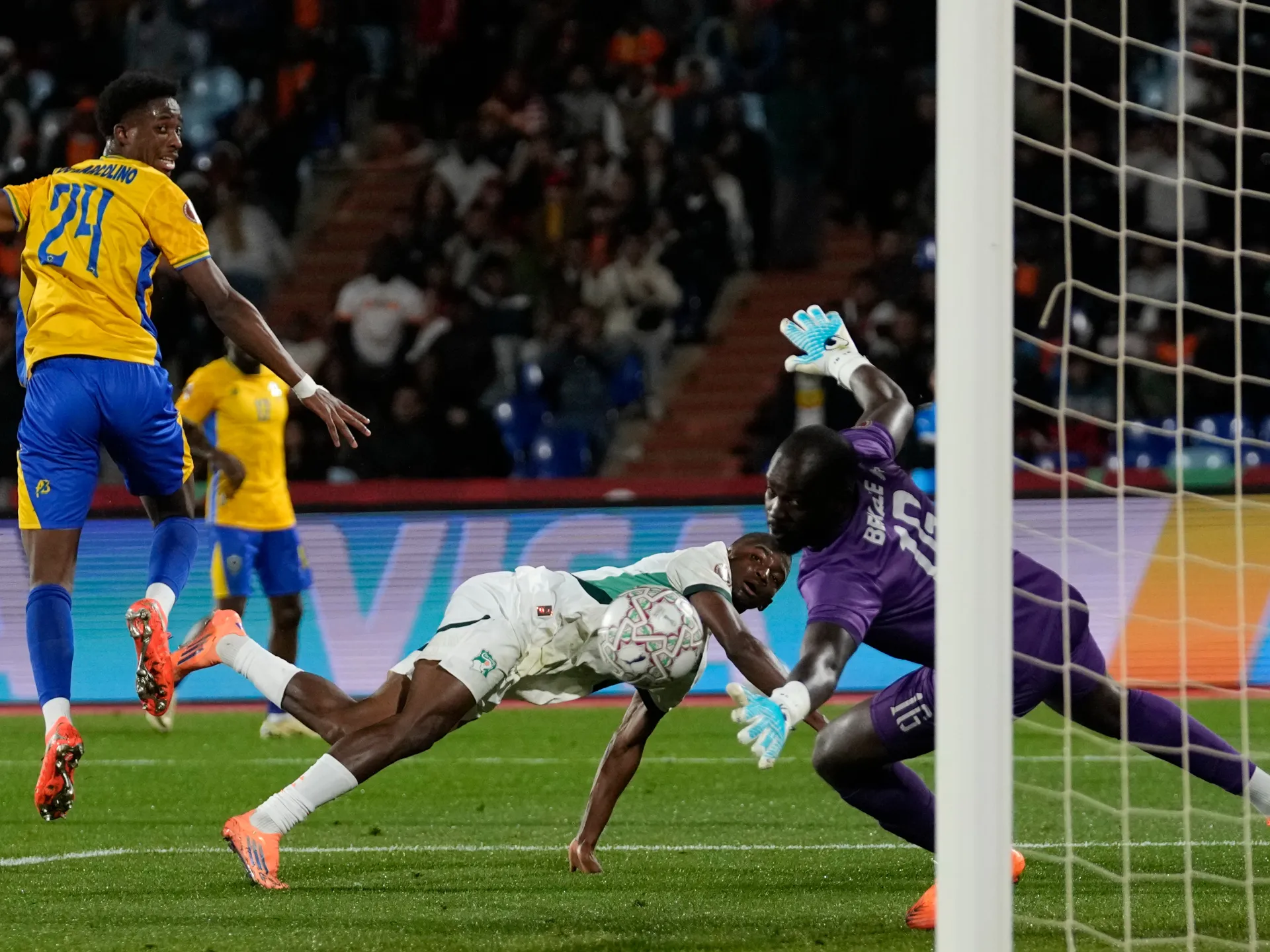
Substitute Bazoumana Toure scored in stoppage time for Ivory Coast, who came from two goals down to beat Gabon 3-2 in Marrakesh and top Group F at the Africa Cup of Nations.
Cameroon also fell behind on Wednesday, against Mozambique in Agadir, but a thunderbolt from Christian Kofane delivered a 2-1 victory.
Recommended Stories
list of 4 itemsend of list
Defending champions Ivory Coast and Cameroon finished level on seven points, and both had a plus-two goal difference. The Ivorians topped the table because they scored five goals and Cameroon four.
The results completed the last 16 lineup. Ivory Coast will face Burkina Faso, Cameroon meet South Africa and Mozambique face Nigeria.
In Marrakesh, Gabon rocked Ivory Coast by building a two-goal lead midway through the first half before the title-holders cut the deficit just before the break to trail 2-1 at half-time.
Guelor Kanga struck after 11 minutes for the Gabonese Panthers, whose best-known footballer, Pierre-Emerick Aubameyang, had returned to France for treatment of a thigh injury.
The 2015 African player of the year scored in a 3-2 loss to Mozambique three days ago that eliminated Gabon from the race to be among the 16 qualifiers for the knockout stage.
Ivory Coast fell further behind on 21 minutes when Los Angeles-based Denis Bouanga claimed his first goal of the tournament.
Ivorian Jean-Philippe Krasso netted on 44 minutes after being set up by Wilfried Zaha, the former Crystal Palace winger recalled for the AFCON after missing the triumphant 2024 campaign.
The defending champions took off captain Franck Kessie and Zaha halfway through the second half, but Amad Diallo, who scored in the first two group matches, remained on the bench.
Manchester United winger Diallo was finally introduced on 76 minutes, replacing Oumar Diakite, who was walking a disciplinary tightrope having been yellow-carded.
It was another substitute, Evann Guessand, who equalised with six minutes of regular time left. The Aston Villa striker was a late inclusion in the squad when injured Sebastien Haller withdrew.
In the southern coastal city of Agadir, Cameroon legends Roger Milla and Samuel Eto’o were among the crowd that saw Mozambique take a surprise lead on 23 minutes.
Geny Catamo from leading Portuguese club Sporting unleashed a low shot that bounced in front of goalkeeper Devis Epassy and flew just inside the left post.
The lead lasted five minutes before five-time champions Cameroon levelled when Feliciano ‘Nene’ Jone conceded an own goal.
Facing two unmarked Cameroonian attackers, goalkeeper Ivane Urrubal blocked the ball, which ran loose to Frank Magri.
Magri hit the post and Nene, attempting to clear, managed only to steer the ball into the Mozambican net.
Cameroon had the ball in the net again 10 minutes later, but the scorer, Germany-based 19-year-old Christian Kofane, was ruled offside.
The teen made up for his disappointment by putting the Indomitable Lions ahead on 55 minutes with a fierce shot from outside the box that flew into the net off the underside of the crossbar.
US president backs away from troop deployment to US cities amid legal setbacks, vows return when crime ‘begins to soar’.
United States President Donald Trump announced he is ceasing his efforts to deploy federal troops to several Democratic-led cities in a major policy pivot.
The announcement on Wednesday comes amid a series of legal setbacks to Trump’s efforts to deploy National Guard members to Chicago, Illinois; Los Angeles, California; and Portland, Oregon.
Recommended Stories
list of 3 itemsend of list
In a post on Truth Social, Trump said he’s “removing” the National Guard from those cities, although their deployment was already mostly limited by lower courts.
“We are removing the National Guard from Chicago, Los Angeles and Portland, despite the fact that CRIME has been greatly reduced by having these great Patriots in those cities, and ONLY by that fact,” he said.
Despite the claim, the National Guard has been barred from taking direct part in law enforcement, which remains illegal under US law. Trump had not invoked the Insurrection Act of 1807, which allows presidents to deploy troops domestically when “unlawful obstructions, combinations, or assemblages, or rebellion” against the federal government make it “impracticable to enforce” US law “by the ordinary course of judicial proceedings”.
Because of that, troops deployed in or around Los Angeles, Portland and Chicago had been largely tasked with guarding federal buildings and offering support services to immigration enforcement.
About 300 National Guard members remained under federal control in both Los Angeles and Chicago at the time of Trump’s announcement, with 200 more in Portland.
Since first deploying the National Guard in Los Angeles to respond to protests against mass immigration enforcement sweeps, Trump has repeatedly claimed major cities across the US have been plagued by overlapping crime and immigration crises.
Critics have accused Trump of taking part in dangerous political theatre to target opponents.
Trump’s announcement did not reference the ongoing National Guard deployment in Washington, DC, a federal territory, or in New Orleans, Louisiana, which had been specifically requested by the state’s Republican governor.
Legal setbacks
The president’s move comes amid a series of legal setbacks, topped last week by a Supreme Court order keeping in place a lower court’s ruling barring the president from deploying the National Guard to Chicago.
While members of the federal military, National Guard troops are typically deployed at the request of state governors. Presidents can unilaterally deploy the National Guard, but only in instances when other federal agents can no longer execute the law.
The majority of Supreme Court justices ruled Trump has not yet met that threshold, dealing a major blow to the administration’s justification for similar deployments across the country.
Earlier on Wednesday, Department of Justice lawyers in California withdrew a request to keep troops in the state under federal control as they appealed a lower court’s ruling. That ruling by US District Judge Charles Breyer said the troops must be returned to state control.
In a post on X, the office of California Governor Gavin Newsom, a Democrat and top Trump critic, said the “admission by Trump and his occult cabinet members means this illegal intimidation tactic will finally come to an end”.
Newsom and his staff “look forward” to a more lasting court ruling on the issue.
For his part, Trump, in his Truth Social post, said he would not hesitate to redeploy troops.
“We will come back, perhaps in a much different and stronger form, when crime begins to soar again – Only a question of time!” he said.
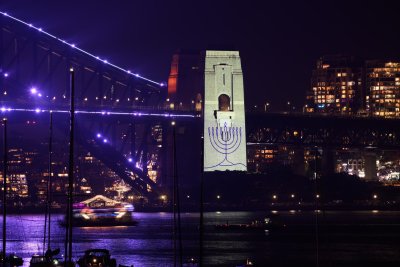
1 of 2 | A menorah is projected onto the pylon of the Sydney Harbour Bridge in Sydney, Australia, during a New Years Eve tribute to the victims of the Bondi Beach mass shooting on Dec. 14. Photo by Dan Himbrechts/EPA
Dec. 31 (UPI) — Australia rang in 2026 with fireworks, solidarity, words of encouragement and heavily armed police officers on New Year’s Eve in the wake of the Bondi Beach shooting.
“Peace” and “unity” were projected onto the Sydney Harbor Bridge, and fireworks exploded to celebrate the new year. The bridge was lit by a white light to symbolize peace, and a menorah was projected onto the bridge pylons as a show of solidarity.
At 11 p.m. AEDT, the festivities paused for a minute of silence for victims of the attack.
New South Wales Police said there were more than 2,500 police officers patrolling the streets of Sydney on Wednesday evening.
The heightened security is in response to the Dec. 14 attack on a Hanukkah celebration at Bondi Beach in Sydney. Two gunmen shot and killed 14 people. One of the gunmen was also killed. There were 42 people injured in the attack.
Chris Minns, premier of NSW, noted that some might find the heavy police presence with guns “confronting.”
“But I make no apology for that,” Minns said. “We want people to be safe in our community.”
Before the event, the New York Times reported Sydney Mayor Clover Moore said, “I invite people at home and around the harbor to join with us by shining their phone torch in solidarity to show the Jewish community that we stand with them, and that we reject violence, fear and antisemitism.”
Joe and Lucy, British tourists, told the BBC that the boost of police presence reassured them. They were in Melbourne when the shooting happened.
“We had our worries about coming for New Year’s Eve,” Joe told the BBC. “But we were reading more recently in the news … how more police were going to be here, it would be a bit safer.”
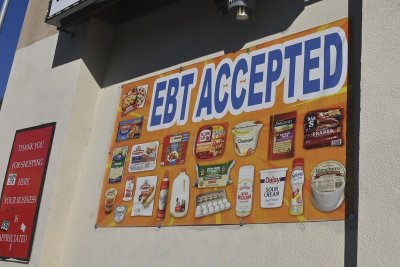
“President Trump has made it clear: we are restoring SNAP to its true purpose — nutrition. Under the [Make America Healthy Again] initiative, we are taking bold, historic steps to reverse the chronic diseases epidemic that has taken root in this country for far too long,” Secretary of Agriculture Brooke Rollins said in a statement.
“America’s governors are answering that call with courage and innovation, offering solutions that honor the generosity of the taxpayer while helping families live longer, healthier lives.
“With these new waivers, we are empowering states to lead, protecting our children from the dangers of highly processed foods and moving one step closer to the President’s promise to Make America Healthy Again.”
About 42 million people, about 12% of the U.S. population, used SNAP benefits each month during the 2024 federal fiscal year, the Department of Agriculture said.
States had to request waivers from the federal government for rules governing how people can spend their SNAP benefits.
Anti-hunger advocacy group Food Research and Action said the new laws in some states are too vague and put the burden to decide what’s allowed on retailers and shoppers.
“The items list does not provide enough specific information to prepare a SNAP participant to go to the grocery store,” the group said in a Monday blog post about Iowa’s new law.
The post pointed out that while a Snickers bar is not eligible, a Twix bar is because it contains flour. It said candy-coated fruit or nuts, including barbecue-coated peanuts and yogurt-coated raisins are not allowed, but cakes and cookies are.
“These restrictions will do nothing to make healthy food more affordable,” said blog authors Luke Elzinga and Gina Plata-Nino of Food Research and Action. “Instead, it will increase stigma for SNAP participants, create confusion at checkout counters [and] raise grocery prices for us all.”
SNAP users have also expressed concern.
“I agree, I would love to eat vegetables, I would love to eat hamburger, but I can’t store it,” said Marc Craig, a homeless Iowa man, USA Today reported. “And if you’re in a shelter, you can’t bring in outside food.
Soft drinks and “sweetened beverages” will be banned in all 18 of the states, though some call them “unhealthy drinks” or add energy drinks to the list.
Candy is banned in Arkansas, Florida, Idaho, Iowa, Indiana, Louisiana, Missouri, North Dakota, Oklahoma, South Carolina, Tennessee and Texas.
Iowa specifically bans any taxable food item, which eliminates vitamins and minerals. Iowans also can’t purchase drinks with 50% or less fruit or vegetable juice.
Florida and Missouri also ban “prepared desserts.”